EP0840491A1 - Système et méthode pour la création automatique de boítes aux lettres électroniques - Google Patents
Système et méthode pour la création automatique de boítes aux lettres électroniques Download PDFInfo
- Publication number
- EP0840491A1 EP0840491A1 EP97308911A EP97308911A EP0840491A1 EP 0840491 A1 EP0840491 A1 EP 0840491A1 EP 97308911 A EP97308911 A EP 97308911A EP 97308911 A EP97308911 A EP 97308911A EP 0840491 A1 EP0840491 A1 EP 0840491A1
- Authority
- EP
- European Patent Office
- Prior art keywords
- mailbox
- message
- address
- exist
- creating
- Prior art date
- Legal status (The legal status is an assumption and is not a legal conclusion. Google has not performed a legal analysis and makes no representation as to the accuracy of the status listed.)
- Withdrawn
Links
- 238000000034 method Methods 0.000 title claims abstract description 75
- 230000008569 process Effects 0.000 claims abstract description 58
- 238000010200 validation analysis Methods 0.000 claims description 6
- 238000012986 modification Methods 0.000 claims description 4
- 230000004048 modification Effects 0.000 claims description 4
- 238000012545 processing Methods 0.000 claims description 4
- 238000012360 testing method Methods 0.000 claims description 3
- 238000012795 verification Methods 0.000 claims description 2
- 238000012790 confirmation Methods 0.000 abstract description 2
- 230000008901 benefit Effects 0.000 description 4
- 230000014759 maintenance of location Effects 0.000 description 4
- 238000010276 construction Methods 0.000 description 2
- 230000000694 effects Effects 0.000 description 2
- 238000005516 engineering process Methods 0.000 description 2
- 230000007246 mechanism Effects 0.000 description 2
- 208000003028 Stuttering Diseases 0.000 description 1
- 230000003213 activating effect Effects 0.000 description 1
- 238000013459 approach Methods 0.000 description 1
- 230000008859 change Effects 0.000 description 1
- 238000004891 communication Methods 0.000 description 1
- 238000012217 deletion Methods 0.000 description 1
- 230000037430 deletion Effects 0.000 description 1
- 238000010926 purge Methods 0.000 description 1
- 230000000717 retained effect Effects 0.000 description 1
- 230000011664 signaling Effects 0.000 description 1
Images



Classifications
-
- H—ELECTRICITY
- H04—ELECTRIC COMMUNICATION TECHNIQUE
- H04M—TELEPHONIC COMMUNICATION
- H04M3/00—Automatic or semi-automatic exchanges
- H04M3/42—Systems providing special services or facilities to subscribers
- H04M3/50—Centralised arrangements for answering calls; Centralised arrangements for recording messages for absent or busy subscribers ; Centralised arrangements for recording messages
- H04M3/53—Centralised arrangements for recording incoming messages, i.e. mailbox systems
- H04M3/533—Voice mail systems
-
- H—ELECTRICITY
- H04—ELECTRIC COMMUNICATION TECHNIQUE
- H04L—TRANSMISSION OF DIGITAL INFORMATION, e.g. TELEGRAPHIC COMMUNICATION
- H04L51/00—User-to-user messaging in packet-switching networks, transmitted according to store-and-forward or real-time protocols, e.g. e-mail
-
- H—ELECTRICITY
- H04—ELECTRIC COMMUNICATION TECHNIQUE
- H04L—TRANSMISSION OF DIGITAL INFORMATION, e.g. TELEGRAPHIC COMMUNICATION
- H04L51/00—User-to-user messaging in packet-switching networks, transmitted according to store-and-forward or real-time protocols, e.g. e-mail
- H04L51/42—Mailbox-related aspects, e.g. synchronisation of mailboxes
-
- H—ELECTRICITY
- H04—ELECTRIC COMMUNICATION TECHNIQUE
- H04L—TRANSMISSION OF DIGITAL INFORMATION, e.g. TELEGRAPHIC COMMUNICATION
- H04L51/00—User-to-user messaging in packet-switching networks, transmitted according to store-and-forward or real-time protocols, e.g. e-mail
- H04L51/21—Monitoring or handling of messages
- H04L51/23—Reliability checks, e.g. acknowledgments or fault reporting
-
- H—ELECTRICITY
- H04—ELECTRIC COMMUNICATION TECHNIQUE
- H04L—TRANSMISSION OF DIGITAL INFORMATION, e.g. TELEGRAPHIC COMMUNICATION
- H04L51/00—User-to-user messaging in packet-switching networks, transmitted according to store-and-forward or real-time protocols, e.g. e-mail
- H04L51/48—Message addressing, e.g. address format or anonymous messages, aliases
-
- H—ELECTRICITY
- H04—ELECTRIC COMMUNICATION TECHNIQUE
- H04M—TELEPHONIC COMMUNICATION
- H04M3/00—Automatic or semi-automatic exchanges
- H04M3/42—Systems providing special services or facilities to subscribers
- H04M3/50—Centralised arrangements for answering calls; Centralised arrangements for recording messages for absent or busy subscribers ; Centralised arrangements for recording messages
- H04M3/53—Centralised arrangements for recording incoming messages, i.e. mailbox systems
- H04M3/537—Arrangements for indicating the presence of a recorded message, whereby the presence information might include a preview or summary of the message
-
- H—ELECTRICITY
- H04—ELECTRIC COMMUNICATION TECHNIQUE
- H04M—TELEPHONIC COMMUNICATION
- H04M7/00—Arrangements for interconnection between switching centres
- H04M7/12—Arrangements for interconnection between switching centres for working between exchanges having different types of switching equipment, e.g. power-driven and step by step or decimal and non-decimal
Definitions
- the present invention is directed to dynamically creating a message mailbox, such as a voice mailbox, as the mailbox is needed and, more particularly, to a system for creating a system-wide mailbox at the system or platform level and at the time the mailbox is actually needed.
- a message mailbox such as a voice mailbox, a facsimile mailbox, a video mailbox, an e-mail mailbox, etc.
- a service provider provisioning mailboxes on a system before the system allows the mailbox to receive messages.
- the provisioning of mailboxes can be accomplished in two general ways: 1. create all the mailboxes that will be needed ahead of time, that is, assume that every telephony customer has a mailbox (universal provisioning); or 2. require that a subscriber contact a customer service representative to subscribe to the service, with the customer service representative creating and activating the mailbox.
- the first method wastes resources because typically much less that 50% of a customer base subscribes to a voice mail service.
- the first method also slows performance because a very large set of subscriber records must be searched each time a mail box is accessed.
- the second method involves a customer service agent, which is costly and time consuming.
- these systems Because the mailbox is created upon arrival, these systems also create a mailbox even when the calling party decides not to leave a message or hangs up after a few seconds of silence. This created mailbox is permanent and remains on the system even if a message is not stored in the mailbox. These systems, like the universal provisioning systems, create mailboxes that are not needed, which wastes system resources.
- non-local subscribers For an extra fee. In such situations it is not practical to provision for all possible message recipients as discussed above.
- Another problem associated with automatically treated mailboxes is that the number of recipients may be incorrect.
- the above objects can be attained by a system that provides default subscriber information to a voice messaging application during the receipt of a message whenever a mailbox does not exist on the system for the recipient.
- the message for the mailbox is temporarily held until the message must be stored in a mailbox. Then, if necessary, the mailbox is created and the message is stored therein.
- the system checks for erroneous mailboxes by requesting confirmation of the recipient telephone number from the telephone system. This check can be performed before the mailbox is created, while the message is being held, or it can be used to delete the mailbox after it is created.
- a message storage and retrieval "platform" or system 10, such as illustrated in figure 1, can have many sources of messages.
- the typical message is produced by a user, a "calling party", using a telephone 12 to telephone another person, a “called party”, over a public switched telephone network (PSTN) 14.
- PSTN public switched telephone network
- the call is handled by a central office (CO) switch 16 until the called party does not answer or a busy is detected by the CO switch 16.
- the call is transferred to the messaging system 10, where the call is routed to one of several application processing units (APU) 20 by a routing device such as a digital switch (SW) 22.
- APU application processing unit
- SW digital switch
- the APU 20 performing a messaging function or process typically checks with and obtains a mailbox address for a message to be recorded from a control unit (CU) 24 or some platform-level process.
- the APU 20 stores the message and informs the CU 24 where the message is stored.
- the telephone number of the called party can be provided via a signaling path (using a well-known communication protocol, such as SMDI, SS7, ISDN, DID or ANI) between the CC 16 and the CU 10 (and the CU 24 provides the number to the APU 20) or the number can be provided directly to the APU 20 by the calling party entering the called telephone number again during call answering and messaging operations performed by the APU 20.
- the entering of the telephone number by the calling party can also occur when a subscriber listening to stored messages decides to send or forward a message to another subscriber.
- a message can also be received as a "transferred message" (using a well known protocol, such as AMID-Analog or AMIS-Digital) that was originally recorded by another message recording system 30.
- transferred messages typically arrive via a network processing unit or network interface unit 32 and are typically processed in much the same manner as messages received through the APU 20.
- Messages can also be recorded through or transferred over other types of networks such as the Internet 34. These messages can be from a telephone or from a computer.
- These messages can be from a telephone or from a computer.
- typical messaging systems such as the preferred CO ACCESS® system and/or the Access NPTM system available from Boston Technology, Inc. of Wakefield, Massachusetts, have a system-level process 40 that interacts with an application-level process 42 to perform the messaging operation.
- the system level process 40 typically runs on the CU 24 or on a database processing unit (not shown) or possibly on both while the application level process 42 runs on the APU 20 or the NIU 32.
- the same unit may be executing all the processes.
- a mailbox address (typically a called party telephone number, an e-mail address, etc. plus a "domain" identifier) for a message to be stored arrives at the application process 42 from one of the sources noted above.
- the message associated with the address can arrive at the same time (in the case of a network message), later (in the case of a later recorded message) or before (in the case of a recorded message to be forwarded) the address is actually received.
- a "check address" process 44 of the application process 42 performs an operation to determine whether the mailbox address is valid.
- the check address process 44 sends a "check address" request 45, which includes a mailbox address (usually the telephone number), to a "mailbox check” process 46 within the system-level processes 40.
- the mailbox check process 46 accesses a subscriber database (not shown) and returns a binary indicator to process 44 indicating whether a mailbox exists for the mailbox address.
- the mailbox check process 46 returns a negative indicator whenever the mailbox was not provisioned and a positive indicator when the mailbox does exist.
- the mailbox check process 46 returns a positive indicator 47, indicating that a mailbox exists, even though a mailbox does not exist, whenever the system is configured to dynamically create mailboxes, i.e., dynamic mailbox creation is in effect.
- the application level process (access user information) 40 typically executes an "access user information" process 48 that accesses user information for this mailbox.
- This user information is sometimes called a subscriber profile.
- the user information, or subscriber profile indicates the status of the mailbox, that is, whether the mailbox has been activated, whether the subscriber is being provided with a level of service that includes voice messaging, etc.
- the access user information process 48 sends an "access user information" request 49, including the mailbox address, to a system level “mailbox information check” process 50.
- This process 50 typically returns a read-only copy of the user information when a mailbox has been activated, etc. and returns a failure indicator otherwise.
- the mailbox check process 50 returns user information 51 to the access user information process 48 by providing "default" user information whenever the mailbox does not exist and dynamic mailbox creation is enabled.
- the default user information includes, among other things, a default name announcement that announces the called telephone number as the name of the mailbox and states that the caller can leave a message.
- the default name announcement is similar to the one used when a subscriber fails to record a name announcement.
- the application-level process 42 performs an "obtain message" process 52 that typically obtains or gets the message that is to be stored.
- this operation involves the APU 20 recording the message, allowing the calling party to change the message, mark it urgent, etc.
- this involves extracting the message from the network message received by the NIU 32. Because the mailbox has not yet been created at this step, if the calling party hangs up prior to recording a message, erases the message before exiting, the application detects that only silence has been recorded, etc. such that a valid message has not been recorded, the system exits to a wait state without completing the mailbox creation process and the message, if any, is discarded.
- the application level process 42 After a message is obtained that is to be stored, the application level process 42 performs a "get user information” process 54 that obtains the user information necessary to store the message.
- This process 54 essentially makes a request 55 ("get user information") to lock out other applications from obtaining the subscriber information, so that the process of storing the message and updating the message information for the subscriber can be executed without errors that can be caused in race situations.
- a "mailbox get information" process 56 typically obtains a lock index 57 for the subscriber record and returns it to the application.
- the present invention Prior to returning the lock index, at this step in process 56, the present invention creates a mailbox that has the default subscriber information previously sent to the application process 42. This creation process also flags the mailbox as having been dynamically created.
- the mailbox is created at the time that a request for the storage of the message is pending.
- Mailboxes are also created for any called parties that are on a group distribution list created by the calling party when the mailboxes do not exist.
- the mailboxes are created at the time the calling party activates the deliver message function after recording a message.
- the application level 42 After the look index 57 is received, the application level 42 performs a "storage process" 58 ("put user information") where; (1) the message is stored in a message file on a nonvolatile storage media, such as a hard disk; (2) a header for the message file is created; (3) the subscriber information is updated by increasing the message count by one; and (4) a pointer to the message file is stored in the subscriber list of messages.
- This updated information 59, along with the lock index, is returned to a "mailbox information put" process 60 at the system-level 40 that typically updates the subscriber database with the updated information and releases the subscriber record lock.
- the message is now ready for delivery 62 to the called party.
- the message can be delivered in one of several ways.
- the presence of the message can be indicated to the called party by, e.g., a "stutter dial tone" or a message light for a telephone.
- the called party can then retrieve the message, either by telephone or computer.
- the message can also be delivered by performing a conventional "outdial" process.
- the message can be transferred to another system 30 via the NIU 32.
- the message can be converted into an e-mail message and transferred through the Internet 34.
- the message can also be converted into a text message and sent by a text facility, such as facsimile (not shown).
- the called party or message recipient's teleptone number or network address can be checked against standard references. For example, a telephone number can be range-checked and checked for sufficient digits. A network address can be domain-name checked. It is also possible, using the outdial process, to dial the called party's number to check for an "operator intercept" tone that indicates that the telephone number is invalid. The system could also send a query to a separate database over a network such as the Internet 34. These approaches to verification could be used to avoid creating the mailbox and storing the message if the address is invalid.
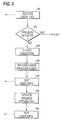
- the present invention will also create a mailbox for a subscriber that is attempting to log-in to the system when the system has not yet been provisioned with a mailbox for the subscriber by the system administrator.
- the user information to particularly obtain the information indicating whether the mailbox has been initiated as depicted in figure 3.
- the application level process checks 63 this information and if the mailbox has been initiated the process exits to the normal log-in procedure. If the mailbox has not been created the subscriber is given the opportunity to choose 64 a password and record 66 a name announcement. Once this is done the user information is obtained 54 as previously discussed.
- the mailbox information such as passcode, name announcement and greeting, is updated 68.
- the updated information is then stored 58, as previously discussed.
- the system only allows a mailbox to be created by a subscriber from their own telephone which is confirmed by the arrival of "automatic number identification" (ANI) information for the subscriber at the CU 24.
- ANI automatic number identification
- pay telephones, and other phones that are not authorized for a mailbox must be configured not to submit ANI when calling message platforms.
- the outdial process can be used to call the recipient's telephone and prompt the person answering the telephone to indicate whether a message stored for the number is valid. This can also be used as an opportunity to obtain the correct subscriber information to substitute for the default information. In a situation where the service provider levies a fee for the messaging service, this can be an opportunity to sign up a new subscriber. If the user does not subscribe to the service the mailbox can be flagged as receive-only and the called party billed for each message received, including the current or subsequent messages whenever they are retrieved.
- FIG. 4 depicts such a validation process 70.
- the validation process 70 is performed preferably at the system-level 40.
- the validation process 70 creates 72 an MWI packet that is sent 74 by the CU 24 to the CO switch 16 via the SMDI link. If the CO switch 16 determines that the address does not correspond to a legitimate telephone subscriber or the address corresponds to a number that should not have a mailbox (e.g. a pay telephone), the CO switch 16 returns a message (an invalid MWI packet) indicating that the address is invalid.
- the system 10 checks 76 this indication and, if the address is not valid, marks 78 the mailbox as disabled, thereby preventing access to the mailbox and preventing additional messages from being saved. The system also sends an alarm to a systems administrator.
- the system 10 can perform an outdial process, or other suitable notification process if the message was received over the Internet 34, to the calling party to inform the calling party with a standard message that the message has not been retrieved.
- This outdial notification can announce the called party's number and play the message for the calling party if desired, thereby returning the unretrieved message.
- the calling party can then be given the opportunity to enter a correct number or delete the message.
- both a mailbox retention time (or a mailbox expiration date) for dynamically-created mailboxes and a mail retention time (or mail expiration date) for messages associated therewith can be provided.
- the time period for messages should be set for less than that of mailboxes.
- the message retention time period expires, the message is set for deletion and the system 10 deletes (purges) the message just as saved messages are deleted at the end of their expiration period.
- the mailbox retention time has elapsed, the record for the dynamically-created mailbox is deleted. If a mailbox is never accessed, and therefor never initialized, and has no messages, the mailbox is deleted.
- Messages that reside in mailboxes that were not dynamically created, that is, that were created by a system administrator or by the subscriber logging-in and initializing a mailbox, are not provided dynamic expiration dates. Instead, these mailboxes receive expiration dates in accordance with the conventional expiration policy configured into the system by the service provider.
- the present invention has been described with respect to creating a mailbox when there is a need to store a message in the mailbox.
- any event that would modify an attribute of a mailbox such as subscriber initialization, could trigger the creation of a mailbox where one has not been previously provisioned when dynamic mailbox creation is enabled.
- the dynamic creation and storage of a message can be prevented, for example, when a telephony service subscriber (such as an elcerly person) does not want voice mail service, by provisioning the mailbox and marking it disabled.
- a telephony service subscriber such as an elcerly person
- the present invention does not create a mailbox until some attribute of the mailbox needs to be updated (a message is to be stored/delivered, the subscriber initializes the mailbox, etc.).
- the system Prior to an attribute modification, the system presents a read only view of the mailbox to the user, but the system does not actually create the mailbox. This has the benefit of not wasting resources on a mailbox until the system knows that a mailbox is required. For example, if a call is forwarded to the system, and the mailbox does not exist, then the system will pretend (from the caller's point of view) that the mailbox exists so that the caller may leave a message. If the caller decides to abort the call, and does not leave a message, then the mailbox is not created.
- a mailbox is created to receive the message left.
- the system creates the mailbox immediately upon call arrival, even to provide the read access for the mailbox.
- the mailbox will exist even if the caller does not leave a message.
- the platform can keep track of whether or not a mailbox attribute was modified during the course of the call (message deposit, subscriber initilization, etc.). If no attribute of the mailbox was modified during the course of the call, then the platform will delete the mailbox after the call is completed. While this wastes some platform resources (needlessly creating and then deleting the mailbox), it achieves a similar goal to the preferred embodiment.
- the system creates the mailbox immediately upon call arrival, even to provide read access for the mailbox (as in the alternate embodiment outlined above), but does not attempt to keep track of whether or not any mailbox attributes were modified during the course of the call. Instead, the system relies on the mechanism outlined in the preferred embodiment which will delete dynamically created mailboxes that are not used during the preset allotted time - and so, the mailbox created for read access - and never modified - is deleted from the system automatically at a later date. While this also wastes system resources, it postpones the impact of the delete operation to a period of low system activity, thus minimizing the system resource expense of deleting the mailbox.
Landscapes
- Engineering & Computer Science (AREA)
- Signal Processing (AREA)
- Computer Networks & Wireless Communication (AREA)
- Data Exchanges In Wide-Area Networks (AREA)
- Telephonic Communication Services (AREA)
Applications Claiming Priority (2)
| Application Number | Priority Date | Filing Date | Title |
|---|---|---|---|
| US743792 | 1996-11-05 | ||
| US08/743,792 US6115455A (en) | 1996-11-05 | 1996-11-05 | Method and apparatus for dynamically creating message mailboxes |
Publications (1)
| Publication Number | Publication Date |
|---|---|
| EP0840491A1 true EP0840491A1 (fr) | 1998-05-06 |
Family
ID=24990200
Family Applications (1)
| Application Number | Title | Priority Date | Filing Date |
|---|---|---|---|
| EP97308911A Withdrawn EP0840491A1 (fr) | 1996-11-05 | 1997-11-05 | Système et méthode pour la création automatique de boítes aux lettres électroniques |
Country Status (5)
| Country | Link |
|---|---|
| US (1) | US6115455A (fr) |
| EP (1) | EP0840491A1 (fr) |
| JP (1) | JPH10247938A (fr) |
| BR (1) | BR9706725A (fr) |
| CA (1) | CA2220322A1 (fr) |
Cited By (8)
| Publication number | Priority date | Publication date | Assignee | Title |
|---|---|---|---|---|
| GB2351869A (en) * | 1999-06-26 | 2001-01-10 | Ibm | Voice processing system |
| WO2001010089A1 (fr) * | 1999-08-03 | 2001-02-08 | Sieberath Roald M | Procede et systeme pour messagerie electronique |
| EP1249981A1 (fr) * | 2001-04-02 | 2002-10-16 | NuMeme Limited | Système et procédé pour système de surveillance de sécurité |
| WO2004025913A3 (fr) * | 2002-09-12 | 2004-04-15 | Navin Communications Inc | Systemes de communications et procedes permettant d'echanger des messages entre des utilisateurs |
| WO2004054214A1 (fr) * | 2002-12-09 | 2004-06-24 | Endmell Pty Ltd | Systeme de service telephonique |
| EP1185068A3 (fr) * | 2000-08-30 | 2005-07-20 | Comverse Network Systems, Ltd. | Méthode et appareil pour messagerie vocale provenant d'un terminal mobile |
| EP3269097A1 (fr) * | 2015-03-09 | 2018-01-17 | Microsoft Technology Licensing, LLC | Architecture destinée à la gestion de grandes quantités de données dans des applications de communication par l'intermédiaire de multiples boîtes aux lettres |
| US10530724B2 (en) | 2015-03-09 | 2020-01-07 | Microsoft Technology Licensing, Llc | Large data management in communication applications through multiple mailboxes |
Families Citing this family (56)
| Publication number | Priority date | Publication date | Assignee | Title |
|---|---|---|---|---|
| US6018575A (en) * | 1997-09-08 | 2000-01-25 | Mci Worldcom | Direct distance dialing (DDD) access to a communications services platform |
| US6757713B1 (en) | 1998-09-23 | 2004-06-29 | John W. L. Ogilvie | Method for including a self-removing indicator in a self-removing message |
| US6324569B1 (en) * | 1998-09-23 | 2001-11-27 | John W. L. Ogilvie | Self-removing email verified or designated as such by a message distributor for the convenience of a recipient |
| US6701347B1 (en) | 1998-09-23 | 2004-03-02 | John W. L. Ogilvie | Method for including a self-removing code in a self-removing email message that contains an advertisement |
| US6928149B1 (en) * | 1999-05-17 | 2005-08-09 | Interwoven, Inc. | Method and apparatus for a user controlled voicemail management system |
| KR100331465B1 (ko) * | 1999-10-26 | 2002-04-09 | 서평원 | 네트워크에서 다중 접속 포트 일원화 장치 |
| US6738458B1 (en) | 1999-11-09 | 2004-05-18 | Bell South Intellectual Property Corporation | Methods and systems for changing the domain association of a mailbox in a messaging system |
| TW454127B (en) * | 2000-01-06 | 2001-09-11 | Global On Line Corp | Mailing method and apparatus of electronic mail (e-mail) |
| US7624172B1 (en) | 2000-03-17 | 2009-11-24 | Aol Llc | State change alerts mechanism |
| US9246975B2 (en) | 2000-03-17 | 2016-01-26 | Facebook, Inc. | State change alerts mechanism |
| US6556662B1 (en) * | 2000-05-04 | 2003-04-29 | Worldcom, Inc. | Method and apparatus for providing dialed number verification |
| US7327832B1 (en) * | 2000-08-11 | 2008-02-05 | Unisys Corporation | Adjunct processing of multi-media functions in a messaging system |
| US6959324B1 (en) * | 2000-09-28 | 2005-10-25 | International Business Machines Corporation | Method and apparatus for adding data attributes to e-mail messages to enhance the analysis of delivery failures |
| US6928465B2 (en) * | 2001-03-16 | 2005-08-09 | Wells Fargo Bank, N.A. | Redundant email address detection and capture system |
| US6778644B1 (en) | 2001-12-28 | 2004-08-17 | Vocada, Inc. | Integration of voice messaging and data systems |
| US7460654B1 (en) | 2001-12-28 | 2008-12-02 | Vocada, Inc. | Processing of enterprise messages integrating voice messaging and data systems |
| US7363345B2 (en) * | 2002-08-27 | 2008-04-22 | Aol Llc, A Delaware Limited Liability Company | Electronic notification delivery mechanism selection based on recipient presence information and notification content |
| US7496631B2 (en) * | 2002-08-27 | 2009-02-24 | Aol Llc | Delivery of an electronic communication using a lifespan |
| US7640306B2 (en) | 2002-11-18 | 2009-12-29 | Aol Llc | Reconfiguring an electronic message to effect an enhanced notification |
| US8005919B2 (en) | 2002-11-18 | 2011-08-23 | Aol Inc. | Host-based intelligent results related to a character stream |
| US7590696B1 (en) | 2002-11-18 | 2009-09-15 | Aol Llc | Enhanced buddy list using mobile device identifiers |
| US7428580B2 (en) | 2003-11-26 | 2008-09-23 | Aol Llc | Electronic message forwarding |
| US8701014B1 (en) | 2002-11-18 | 2014-04-15 | Facebook, Inc. | Account linking |
| US7899862B2 (en) | 2002-11-18 | 2011-03-01 | Aol Inc. | Dynamic identification of other users to an online user |
| US8122137B2 (en) | 2002-11-18 | 2012-02-21 | Aol Inc. | Dynamic location of a subordinate user |
| CA2506585A1 (fr) | 2002-11-18 | 2004-06-03 | Valerie Kucharewski | Listes de personnes |
| US8965964B1 (en) | 2002-11-18 | 2015-02-24 | Facebook, Inc. | Managing forwarded electronic messages |
| US7603417B2 (en) | 2003-03-26 | 2009-10-13 | Aol Llc | Identifying and using identities deemed to be known to a user |
| US7653693B2 (en) | 2003-09-05 | 2010-01-26 | Aol Llc | Method and system for capturing instant messages |
| US8209185B2 (en) * | 2003-09-05 | 2012-06-26 | Emc Corporation | Interface for management of auditory communications |
| US7499531B2 (en) * | 2003-09-05 | 2009-03-03 | Emc Corporation | Method and system for information lifecycle management |
| US8103873B2 (en) | 2003-09-05 | 2012-01-24 | Emc Corporation | Method and system for processing auditory communications |
| US7457396B2 (en) * | 2003-09-05 | 2008-11-25 | Emc Corporation | Automated call management |
| US7257388B2 (en) * | 2003-11-10 | 2007-08-14 | Bayne Anthony J | Pre-paid mobile phone with temporary voice mail |
| KR100663510B1 (ko) * | 2003-11-19 | 2007-01-02 | 삼성전자주식회사 | 이동통신 단말기에 수신된 문자메시지를 삭제하는 장치 및방법 |
| US9268780B2 (en) * | 2004-07-01 | 2016-02-23 | Emc Corporation | Content-driven information lifecycle management |
| US8180743B2 (en) * | 2004-07-01 | 2012-05-15 | Emc Corporation | Information management |
| US8229904B2 (en) * | 2004-07-01 | 2012-07-24 | Emc Corporation | Storage pools for information management |
| US8244542B2 (en) * | 2004-07-01 | 2012-08-14 | Emc Corporation | Video surveillance |
| US8180742B2 (en) | 2004-07-01 | 2012-05-15 | Emc Corporation | Policy-based information management |
| US20060004579A1 (en) * | 2004-07-01 | 2006-01-05 | Claudatos Christopher H | Flexible video surveillance |
| US7707037B2 (en) | 2004-07-01 | 2010-04-27 | Emc Corporation | Archiving of surveillance data |
| US20060004818A1 (en) * | 2004-07-01 | 2006-01-05 | Claudatos Christopher H | Efficient information management |
| US7444287B2 (en) * | 2004-07-01 | 2008-10-28 | Emc Corporation | Efficient monitoring system and method |
| US8626514B2 (en) * | 2004-08-31 | 2014-01-07 | Emc Corporation | Interface for management of multiple auditory communications |
| US8358762B1 (en) | 2005-03-21 | 2013-01-22 | Aol Inc. | Conference calls and meetings via electronic messaging interface |
| JP4345753B2 (ja) * | 2006-02-02 | 2009-10-14 | コニカミノルタビジネステクノロジーズ株式会社 | 画像処理装置 |
| US20080126358A1 (en) * | 2006-05-08 | 2008-05-29 | The Mita Group | Disposal of hosted assets |
| US8270577B2 (en) * | 2007-12-13 | 2012-09-18 | Verizon Patent And Licensing Inc. | Multiple visual voicemail mailboxes |
| US8611510B2 (en) * | 2007-12-20 | 2013-12-17 | Centurylink Intellectual Property Llc | System and method for guest voicemail box |
| US20090177704A1 (en) * | 2008-01-09 | 2009-07-09 | Microsoft Corporation | Retention policy tags for data item expiration |
| US20100042615A1 (en) * | 2008-08-12 | 2010-02-18 | Peter Rinearson | Systems and methods for aggregating content on a user-content driven website |
| US8620869B2 (en) | 2008-09-25 | 2013-12-31 | Microsoft Corporation | Techniques to manage retention policy tags |
| US8090695B2 (en) * | 2008-12-05 | 2012-01-03 | Microsoft Corporation | Dynamic restoration of message object search indexes |
| US8745067B2 (en) * | 2009-08-12 | 2014-06-03 | Google Inc. | Presenting comments from various sources |
| US10409779B2 (en) | 2016-08-31 | 2019-09-10 | Microsoft Technology Licensing, Llc. | Document sharing via logical tagging |
Citations (3)
| Publication number | Priority date | Publication date | Assignee | Title |
|---|---|---|---|---|
| EP0412799A2 (fr) * | 1989-08-10 | 1991-02-13 | Boston Technology | Système de communication téléphonique |
| US5434907A (en) * | 1992-03-13 | 1995-07-18 | Allnet Communication Services Inc. | Voice mail notification system |
| EP0693847A2 (fr) * | 1994-07-22 | 1996-01-24 | Boston Technology Inc. | Réseau d'audio-messagerie |
Family Cites Families (5)
| Publication number | Priority date | Publication date | Assignee | Title |
|---|---|---|---|---|
| US5199062A (en) * | 1988-01-20 | 1993-03-30 | Phone Base Systems Inc. | Telephone communications system including a digital telephone switch, a voice response unit and a stored program sequence for controlling both the switch and the voice response unit |
| US4932042A (en) * | 1989-03-03 | 1990-06-05 | At&T Bell Laboratories | Spontaneous voice and data messaging |
| US5425078A (en) * | 1993-07-19 | 1995-06-13 | Starbro Communications, Inc. | Voice message keepsake system |
| US5646982A (en) * | 1994-12-30 | 1997-07-08 | Linkusa Corporation | System and method for message delivery |
| US5781614A (en) * | 1996-01-19 | 1998-07-14 | Lucent Technologies Inc. | Message retrieval via alternative access |
-
1996
- 1996-11-05 US US08/743,792 patent/US6115455A/en not_active Expired - Lifetime
-
1997
- 1997-11-05 EP EP97308911A patent/EP0840491A1/fr not_active Withdrawn
- 1997-11-05 JP JP9303158A patent/JPH10247938A/ja active Pending
- 1997-11-05 BR BR9706725A patent/BR9706725A/pt not_active IP Right Cessation
- 1997-11-05 CA CA002220322A patent/CA2220322A1/fr not_active Abandoned
Patent Citations (3)
| Publication number | Priority date | Publication date | Assignee | Title |
|---|---|---|---|---|
| EP0412799A2 (fr) * | 1989-08-10 | 1991-02-13 | Boston Technology | Système de communication téléphonique |
| US5434907A (en) * | 1992-03-13 | 1995-07-18 | Allnet Communication Services Inc. | Voice mail notification system |
| EP0693847A2 (fr) * | 1994-07-22 | 1996-01-24 | Boston Technology Inc. | Réseau d'audio-messagerie |
Non-Patent Citations (1)
| Title |
|---|
| SUGGETT ROBERT: "The use of voice mail systems in the hotel market", SPEECH TECHNOLOGY, February 1991 (1991-02-01), pages 93 - 95, XP002055712 * |
Cited By (15)
| Publication number | Priority date | Publication date | Assignee | Title |
|---|---|---|---|---|
| US6873689B1 (en) | 1999-06-26 | 2005-03-29 | International Business Machines Corporation | Voice processing system |
| GB2351869B (en) * | 1999-06-26 | 2003-12-31 | Ibm | A voice processing system |
| GB2351869A (en) * | 1999-06-26 | 2001-01-10 | Ibm | Voice processing system |
| WO2001010089A1 (fr) * | 1999-08-03 | 2001-02-08 | Sieberath Roald M | Procede et systeme pour messagerie electronique |
| EP1185068A3 (fr) * | 2000-08-30 | 2005-07-20 | Comverse Network Systems, Ltd. | Méthode et appareil pour messagerie vocale provenant d'un terminal mobile |
| EP1249981A1 (fr) * | 2001-04-02 | 2002-10-16 | NuMeme Limited | Système et procédé pour système de surveillance de sécurité |
| WO2004025913A3 (fr) * | 2002-09-12 | 2004-04-15 | Navin Communications Inc | Systemes de communications et procedes permettant d'echanger des messages entre des utilisateurs |
| US7995715B2 (en) | 2002-09-12 | 2011-08-09 | Sabeer Bhatia | Communications systems and methods for exchanging messages between users |
| US7505571B2 (en) | 2002-09-12 | 2009-03-17 | Sabeer Bhatia | Communications systems and methods for exchanging messages between users |
| WO2004054214A1 (fr) * | 2002-12-09 | 2004-06-24 | Endmell Pty Ltd | Systeme de service telephonique |
| EP1570634A4 (fr) * | 2002-12-09 | 2006-03-29 | Endmell Pty Ltd | Systeme de service telephonique |
| EP3269097A1 (fr) * | 2015-03-09 | 2018-01-17 | Microsoft Technology Licensing, LLC | Architecture destinée à la gestion de grandes quantités de données dans des applications de communication par l'intermédiaire de multiples boîtes aux lettres |
| US10530724B2 (en) | 2015-03-09 | 2020-01-07 | Microsoft Technology Licensing, Llc | Large data management in communication applications through multiple mailboxes |
| US10530725B2 (en) | 2015-03-09 | 2020-01-07 | Microsoft Technology Licensing, Llc | Architecture for large data management in communication applications through multiple mailboxes |
| EP3269098B1 (fr) * | 2015-03-09 | 2023-06-28 | Microsoft Technology Licensing, LLC | Gestion de grandes quantités de données dans des applications de communication par l'intermédiaire de multiples boîtes aux lettres |
Also Published As
| Publication number | Publication date |
|---|---|
| BR9706725A (pt) | 1999-08-03 |
| CA2220322A1 (fr) | 1998-05-05 |
| US6115455A (en) | 2000-09-05 |
| JPH10247938A (ja) | 1998-09-14 |
Similar Documents
| Publication | Publication Date | Title |
|---|---|---|
| US6115455A (en) | Method and apparatus for dynamically creating message mailboxes | |
| CA2710245C (fr) | Procede et appareil servant a interrompre une session de telephonie active pour delivrer des informations a un abonne | |
| US7995715B2 (en) | Communications systems and methods for exchanging messages between users | |
| US10250743B2 (en) | Sender identification system and method | |
| US6181780B1 (en) | Telephonic voice message store and forward method having network address and voice authentication | |
| US8488751B2 (en) | Unified messenging system and method | |
| US6535585B1 (en) | System and method for notification upon successful message delivery | |
| US7184533B1 (en) | Method and apparatus for mixed media contact notification service | |
| EP1675334A1 (fr) | Enregistrement de listes noires pour la prévention de spam | |
| WO2003026138A2 (fr) | Systeme et procede de transmission sans fil de multimedia | |
| US6865260B1 (en) | System and method for electronic message status certification | |
| JPH10126507A (ja) | 市外フリーのメッセージ返信 | |
| US20070168428A1 (en) | Communications system with direct access mailbox | |
| US7697667B1 (en) | Voicemail recall feature | |
| US20050249209A1 (en) | System and method for control of communications connections and notifications | |
| EP2266303B1 (fr) | Gestion de communications | |
| WO2007126611A2 (fr) | Recuperation de message vocal | |
| JP4417382B2 (ja) | 通話管理システム | |
| WO2004062123A2 (fr) | Envoi a un appelant d'informations de destination d'appel | |
| US7742579B2 (en) | Simplified call answering service | |
| US9544254B1 (en) | Methods and systems for communications processing | |
| US8577009B2 (en) | Automatic complaint registration for violations of telephonic communication regulations | |
| MXPA97008540A (es) | Un metodo y aparato para crear dinamicamente buzones de mensajes | |
| AU2012203330B2 (en) | Sender identification system and method | |
| AU2013204385A1 (en) | Sender identification system and method |
Legal Events
| Date | Code | Title | Description |
|---|---|---|---|
| PUAI | Public reference made under article 153(3) epc to a published international application that has entered the european phase |
Free format text: ORIGINAL CODE: 0009012 |
|
| AK | Designated contracting states |
Kind code of ref document: A1 Designated state(s): DE FR GB IT NL SE |
|
| AX | Request for extension of the european patent |
Free format text: AL;LT;LV;MK;RO;SI |
|
| 17P | Request for examination filed |
Effective date: 19981106 |
|
| AKX | Designation fees paid |
Free format text: DE FR GB IT NL SE |
|
| RBV | Designated contracting states (corrected) |
Designated state(s): DE FR GB IT NL SE |
|
| RAP1 | Party data changed (applicant data changed or rights of an application transferred) |
Owner name: COMVERSE NETWORK SYSTEMS, INC. |
|
| 17Q | First examination report despatched |
Effective date: 20031205 |
|
| STAA | Information on the status of an ep patent application or granted ep patent |
Free format text: STATUS: THE APPLICATION HAS BEEN WITHDRAWN |
|
| 18W | Application withdrawn |
Effective date: 20061020 |