EP0843440A2 - Netzwerkvorrichtung zum Erhalten einer Tabelle mit Vorrichtungsadresse - Google Patents
Netzwerkvorrichtung zum Erhalten einer Tabelle mit Vorrichtungsadresse Download PDFInfo
- Publication number
- EP0843440A2 EP0843440A2 EP97307265A EP97307265A EP0843440A2 EP 0843440 A2 EP0843440 A2 EP 0843440A2 EP 97307265 A EP97307265 A EP 97307265A EP 97307265 A EP97307265 A EP 97307265A EP 0843440 A2 EP0843440 A2 EP 0843440A2
- Authority
- EP
- European Patent Office
- Prior art keywords
- lan
- list manager
- list
- network device
- request
- Prior art date
- Legal status (The legal status is an assumption and is not a legal conclusion. Google has not performed a legal analysis and makes no representation as to the accuracy of the status listed.)
- Withdrawn
Links
- 238000000034 method Methods 0.000 claims abstract description 165
- 230000004044 response Effects 0.000 claims description 99
- 230000002093 peripheral effect Effects 0.000 claims description 48
- 238000004891 communication Methods 0.000 claims description 7
- 238000012544 monitoring process Methods 0.000 claims description 7
- 238000012545 processing Methods 0.000 description 35
- 238000010586 diagram Methods 0.000 description 9
- 230000008569 process Effects 0.000 description 5
- 230000006870 function Effects 0.000 description 4
- 230000004913 activation Effects 0.000 description 2
- 238000010276 construction Methods 0.000 description 2
- 230000002452 interceptive effect Effects 0.000 description 2
- 230000005540 biological transmission Effects 0.000 description 1
- 230000008859 change Effects 0.000 description 1
- 238000013500 data storage Methods 0.000 description 1
- 230000009977 dual effect Effects 0.000 description 1
- 230000008030 elimination Effects 0.000 description 1
- 238000003379 elimination reaction Methods 0.000 description 1
- 238000009434 installation Methods 0.000 description 1
- 230000005055 memory storage Effects 0.000 description 1
- 238000012986 modification Methods 0.000 description 1
- 230000004048 modification Effects 0.000 description 1
- 230000003068 static effect Effects 0.000 description 1
Images





Classifications
-
- H—ELECTRICITY
- H04—ELECTRIC COMMUNICATION TECHNIQUE
- H04L—TRANSMISSION OF DIGITAL INFORMATION, e.g. TELEGRAPHIC COMMUNICATION
- H04L61/00—Network arrangements, protocols or services for addressing or naming
- H04L61/45—Network directories; Name-to-address mapping
-
- H—ELECTRICITY
- H04—ELECTRIC COMMUNICATION TECHNIQUE
- H04L—TRANSMISSION OF DIGITAL INFORMATION, e.g. TELEGRAPHIC COMMUNICATION
- H04L61/00—Network arrangements, protocols or services for addressing or naming
Definitions
- the present invention relates to a network device which operates in two modes: a list manager mode for maintaining a list of device addresses for devices on the network, and a slave mode for providing a device address of the network device to another device on the network which maintains such a list.
- LANs local area networks
- LANs relied on a centralized file server to access files on the LAN.
- Such LANs also used the centralized file server to maintain a list of device addresses for various devices on a network.
- the various network devices were able to retrieve a device address for a device on the LAN, and access the device using the device address.
- More recent LANs such as those using an IP or a NETBIOS protocol (e.g., the Microsoft® Windows95 network), do not rely on a centralized file server for access to files. While the elimination of a centralized file server provides advantages for such LANs, it has also provided at least one drawback. That is, since there is no centralized file server on such a LAN, there is no centralized area on the LAN which stores device addresses for the LAN. As a result, a network device on the LAN may have difficulty retrieving a current address for a device on the LAN.
- IP or a NETBIOS protocol e.g., the Microsoft® Windows95 network
- One conventional solution to the foregoing problem is to provide a centralized address server to maintain a list of device addresses for a LAN. Such a solution is used in the LDAP protocol. This solution, however, introduces an additional file server onto the LAN, thereby increasing both the cost and the complexity of the LAN.
- the present invention addresses the foregoing need by controlling a network device on a LAN to operate as a list manager for the LAN, i.e., to maintain a list of device addresses for the LAN, and to operate as a slave on the LAN, i.e., to provide its device address to another device on the LAN which is operating as the list manager.
- this aspect of the present invention is able to alleviate the need for a file server to maintain such a list.
- this aspect of the invention provides a means of updating the list of device addresses as necessary.
- the present invention is a system, i.e., a method, an apparatus and computer-executable process steps, for controlling a network device on a LAN to operate as a list manager by maintaining a list of device addresses for the LAN, and to operate as a slave by providing its device address to a list manager on the LAN.
- the system determines whether a list manager is operating on the LAN, and controls the network device to operate as a slave on the LAN when it is determined that a list manager is operating on the LAN.
- the system controls the network device to operate as the list manager for the LAN when it is determined that no list manager is operating on the LAN.
- an embodiment of the present invention is able to maintain a current list of device addresses for the LAN.
- the embodiment provides a means for updating a currently-existing list to include a device address of a new network device.
- the system determines whether a second list manager is operating on the LAN and, in a case that a second list manager is operating on the LAN, resolves contention between the second list manager and the network device operating as list manager.
- the present invention By determining whether a second list manager is operating on the LAN and resolving contention between the second list manager and the network device operating as list manager, the present invention reduces confusion which may result from two list managers operating on the LAN concurrently.
- the system determines whether a list manager is operating on the LAN by broadcasting a request for the list manager on the LAN and waiting for a response.
- the system re-broadcasts the request for the list manager periodically, via the network device, in order to determine whether the list manager is still operating. Thereafter, the system determines, after each re-broadcast of the request, whether a new list manager is operating on the LAN and, in a case that a new list manager is operating, provides the device address of the network device to the new list manager.
- a network device using the present invention is able to ensure that its device address will be on the list of device addresses even if the identity of the list manager changes.
- the list manager in response to a request for a list manager, provides a call-back time period.
- the system re-broadcasts the request for the list manager at a frequency corresponding to the call-back time period provided by the list manager.
- the call-back time period increases proportionally to an increase in a number of device addresses in the list of device addresses maintained by the list manager.
- an embodiment of the present invention is able to limit the frequency of responses that the list manager must make in response to re-broadcasts for a list manager. As a result, the list manager has more time for its other tasks.
- the present invention is a system, i.e., a method, an apparatus, and computer-executable process steps, for providing a device address of a network device on a LAN to a list manager on the LAN, the list manager maintaining a list of device addresses for the LAN.
- the system includes broadcasting a request for a list manager over the LAN, and receiving a response from the list manager over the LAN in response to the request.
- the system provides the device address of the network device to the list manager over the LAN.
- the list manager adds the device address of the network device to the list of device addresses maintained by the list manager.
- an embodiment of the present invention is able to include the device address of the network device on a most current list of device addresses in the list manager.
- a network peripheral or the like may then access the network device using the list of device addresses obtained from the list manager.
- the system includes waiting a predetermined period of time for a response from the list manager after the request for the list manager has been broadcasted over the LAN, and repeating the broadcasting and the waiting until the response from the list manager is received.
- the present invention is a system, i.e, a method, an apparatus, and computer-executable process steps, for controlling a network device on a LAN to maintain a list of device addresses for the LAN.
- the system confirms that no other device on the LAN is maintaining a list of device addresses for the LAN, stores a device address of the network device in a list of device addresses on the network device, and monitors the LAN via the network device for requests for the list manager.
- the system responds to requests on the LAN for the list manager by identifying the network device as the list manager, receives device addresses directed to the list manager over the LAN, and stores received device addresses in the list of device addresses in a memory on the network device.
- the present invention is a system, i.e., a method, an apparatus, and computer-executable process steps, for providing a peripheral on a LAN with a list of device addresses for the LAN.
- the list of device addresses is stored in a list manager on the LAN.
- the system includes broadcasting a request over the LAN for the list manager, receiving, over the LAN, a response to the request from the list manager, broadcasting a request over the LAN for the list of device addresses in the list manager, and receiving the list of device addresses from the list manager over the LAN in response to the request for the list of device addresses.
- the system includes displaying the list of device addresses to a user via a display on the peripheral, and/or converting the device addresses in the list of device addresses to a readable form prior to displaying the list of device addresses.
- each of the device addresses in the list of device addresses includes corresponding device identification information.
- the system converts the device identification information for each of the device addresses into a readable form, and displays the converted device identification information to a user.
- an embodiment of the present invention facilitates a user's access to various devices/peripherals on a LAN.
- preferred embodiments of the invention include communicating, via the peripheral, with devices on the LAN having predetermined device identification information using the list of device addresses provided by the list manager.
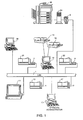
- FIG. 1 is a diagram of a LAN which includes network devices that embody the present invention.
- FIG. 2 is a cut away perspective of a network device which embodies the present invention.
- FIG. 3 is a block diagram showing the architecture of a network device which embodies the present invention.
- FIG. 4 is a diagram showing examples of software modules stored in EPROM, which are used by the network device of the present invention.
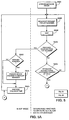
- Figure 5 is a flow diagram showing process steps of the present invention for controlling the network device to operate as either a list manager or a slave on the LAN.
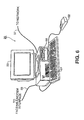
- Figure 6 shows a perspective view of computer hardware used by a peripheral to retrieve a list of device addresses maintained by a network device of the present invention.
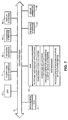
- Figure 7 shows a block diagram of the computer hardware depicted in Figure 6.
- Figure 8 shows a list of device addresses, provided by the network device of the present invention as stored in a memory.
- Figure 9 shows a list of device addresses converted into uniform resource locators displayed alongside a web browser display.
- the present invention is embodied in a network device which is capable of receiving and processing data from a LAN and of transmitting data to the LAN.
- a device can include a network interface device which interfaces a peripheral to the network, or even the peripheral itself.
- an embodiment of the invention is a network device on a LAN, which operates as a list manager for the LAN by maintaining a list of device addresses for the LAN, and which operates as a slave on the LAN by providing a device address to another device on the LAN operating as the list manager.
- the network device includes a memory which stores a device address of the network device and process steps for execution by a processor, and which can store the list of device address for the LAN, a LAN interface which interfaces to the LAN, over which communications are transmitted to an received from the LAN, and a processor which executes the process steps stored in the memory (1) to determine whether a list manager is operating on the LAN, (2) to control the network device to operate as a slave on the LAN when the processor determines that a list manager is operating on the LAN, and (3) to control the network device to operate as the list manager for the LAN when the processor determines that no list manager is operating on the LAN.
- FIG 1 is a diagram of heterogeneous LAN 1, which includes network devices that embody the present invention.
- These network devices include network expansion boards (NEBs) 2 and 4 and network expansion devices (NEDs) 6 and 7 (examples of which are described in co-pending U.S. Patent Application No. 08/489,116, filed June 9, 1995, entitled “Outputting A Network Device Log File”) and network interface board (NIB) 9 (an example of which is described in co-pending U.S. Patent Application No. 08/409,034, filed March 23, 1995, entitled “Network Interface Board For Digital Copier”).
- NEBs network expansion boards
- NBDs network expansion devices
- a LAN such as LAN 1 services a fairly localized group of users such as a group of users on one floor or contiguous floors of a building.
- WAN wide area network
- ISDN integrated services digital network
- LAN 1 may be connected to an external network, such as the World Wide Web, via a modem link or the like (not shown).
- LAN 1 is depicted as an Ethernet medium which has a bus-type architecture, but a Token-ring medium having a ring-type architecture can be used as well.
- PC personal computer
- NEB 2 allows shared access to printer 17
- NEB 4 allows shared access to printer 19
- NED 6 allows shared access to printer 20
- NED 7 allows shared access to printer 21,
- NIB 9 allows shared access to copier 22 via multiple device controller (MDC) 24.
- MDC device controller
- Additional workstations and peripherals of the type described above, such as PC 26, may be added to LAN 1 as well.
- the present invention may be embodied in any type of network device, such as NEB 2, NEB 4, NED 6, NED 7, and NIB 9 mentioned above.
- the present invention is preferably embodied in all network devices on LAN 1, i.e., in each of NEB 2, NEB 4, NED 6, NED 7, NIB 9, and PC 26, since, as described below, an embodiment of the present invention relies on inter-communication between the network devices on LAN 1.
- an embodiment of the present invention is utilized in connection with a network peripheral, such as PC 26, in the manner described below.
- NEB 2 is an interactive network device which couples printer 17 to LAN 1, making printer 17 a responsive and interactive network member. NEB 2 receives print data, status requests, and control commands from LAN 1, transmits print data, status requests, and control commands to printer 17 for execution, and transmits status information back to LAN 1. Thus, NEB 2 can perform not only remote printer services and print server functionalities, but can also offer to network members whatever status and control features are available from the peripheral interface.
- FIG. 2 is a cut-away perspective view showing installation of NEB 2 into printer 17.
- NEB 2 is preferably housed in an internal expansion I/O slot of printer 17, which in a preferred embodiment of the present invention is a Canon LBP 1260 laser printer. This makes NEB 2 an embedded network node having the processing and data storage features described below.
- NEB 2 is connected via peripheral connector 27 to printer interface card 29.
- Printer interface card 29 directly controls the print engine in printer 17.
- Print data and printer status commands are fed to printer interface card 29 from NEB 2 via peripheral connector 27, and printer status information and statistics, e.g., number of pages printed, signals indicating end times of print jobs, etc., are obtained from printer interface card 29 also via peripheral connector 27.
- NEB 2 communicates this information onto LAN 1 via LAN connector 30.
- LAN connector 30 may be either a BNC connector, an RJ-45 connector, or their equivalent.
- a BNC connector is shown in Figure 2.
- NEB 2 includes a central processing unit (CPU) 31, such as an Intel 80C188EA-20 8-bit programmable microprocessor, which is interfaced to computer bus 32. Also interfaced to computer bus 32 is non-volatile RAM (NVRAM) 34, dynamic RAM (DRAM) 36, and electrically erasable programmable read only memory (EPROM) 37. Configuration parameters and other important information that must be stored between power cycles are stored in NVRAM 34. Process steps for the present invention to be executed by microprocessor 31 are stored in EPROM 37, but, in general, before these process steps are executed, they are copied from EPROM 37 into DRAM 36 for execution out of DRAM 36.
- LED indicators 39 are provided so as to give a user a general indication as to the processing status of NEB 2 and may, for example, include indicator LEDs for power and data communication.
- NEB 2 interfaces between LAN 1 and the printer 17, and is therefore provided with LAN connector 30 for connecting to LAN 1 in addition to peripheral connector 27 for connecting to printer 17.
- Network interface controller 40 which is connected to computer bus 32 and to network connector 30, provides a hardware interface for capturing and assembling data packets for receipt from and transmission onto LAN 1, and also provides a hardware interrupt to microprocessor 31 so as to signal that LAN data packets have been captured and are available for use by microprocessor 31.
- Static RAM (SRAM) 41 is provided for network interface controller 40 so as to store, on a temporary basis, such data packets.
- peripheral interface controller 42 which is connected to computer bus 32 and peripheral connector 27, provides a peripheral interface between NEB 2 and a peripheral, such as printer 17, serviced by NEB 2.
- Peripheral interface controller 42 may be any of a variety of different controllers and can, for example, be constructed of a bi-directional interface (such as with a SCSI interface, an IEEE-1284 interface, a dual port RAM interface, a shared RAM interface, an IrDA (Infrared Data Association) interface, or the like) or a uni-directional interface (such as a standard Centronics RS-232 interface, or the like).
- Peripheral interface controller 42 is provided with SRAM 44 for temporary storage of data transmitted to and from NEB 2 and the peripheral serviced by NEB 2.
- microprocessor 31 Software modules executed by microprocessor 31 are stored in EPROM 37. Some low-level modules which are always needed, such as NVRAM read, could be executed directly out of EPROM 37, but for the most part, microprocessor 31 does not execute software modules directly from EPROM 37, but rather selectively loads those modules into DRAM 36 for execution from DRAM 36. This permits flexible configuration of NEB 2 by selection of which modules are to be loaded.
- Figure 4 illustrates examples of blocks of code, or software modules, that are stored in EPROM 37.
- the XPL module provides a standardized interface between printer 17 and NEB 2.
- MLID Multi Link Interface Driver
- MSM Media Support Module
- HSM Hardware Support Module
- LSL Link Support Layer
- CNETX is customized code that turns local DOS-like function calls into network function calls, providing file functions like OPEN, READ, WRITE, and CLOSE.
- the PRETASK module is responsible for identifying what frame types are associated with the various possible protocol stacks. Because NEB 2 supports multiple protocol stacks, such as TCP/IP, NETBIOS, etc., this module exists as long as NEB 2 is running.
- the TCP/IP protocol stack has User Datagram Protocol (UDP), Reverse Address Resolution Protocol (RARP) and BootP support within.
- INTERRUPT is the interrupt handler for the TCP/IP task.
- LPRINTSERVER is the TCP/IP print server application, and also owns the print data lines for the duration of a print job.
- the TCP/IP protocol stack contains process steps of the present invention for determining whether a list manager, i.e., a network device which maintains a list of device addresses for LAN 1, is operating on LAN 1, controlling NEB 2 to provide its device address to a list manager when it is determined that a list manager is operating on the LAN, and controlling NEB 2 to operate as the list manager for the LAN when it is determined that no list manager is operating on the LAN.
- a list manager i.e., a network device which maintains a list of device addresses for LAN 1
- controlling NEB 2 to provide its device address to a list manager when it is determined that a list manager is operating
- These device addresses can include, but are not limited to, a MAC address of NEB 2, or an E-Mail address of a PC, such as PC 26, in a case that the embodiment is connected with workstations on LAN 1.
- Each of the device addresses includes a socket number specific to the present embodiment.
- an example of a device address which could be in a list maintained by the list manager is "146.184.24.51:25", where "25" is the socket number for the present embodiment.
- the CPSOCKET program runs for all protocol stacks. The program responds to requests for connection, requests for data download, or requests for services from remote utilities, and provides status and control to other tasks via interprocess communication. Because CPSOCKET typically owns the status and control lines between NEB 2 and printer 17, it is the only task that has the ability to obtain printer status via the status lines. CPSOCKET is responsible for the network connection and packet contents between the UNIX-oriented status and control utilities (CPUTIL), corresponding NETBIOS client-based software utilities for Microsoft® Windows95, and the like. In preferred embodiments, communication between these process steps and LAN 1 may be affected through CPSOCKET; however, it is noted that such communication may take place without the aid of CPSOCKET as well.
- CPUTIL UNIX-oriented status and control utilities
- NEB 2 when NEB 2 is controlled to operate as the list manager for LAN 1, NEB 2 maintains a list of device addresses in DRAM 36. By storing the list of device addresses in a volatile memory, which erases the list when the device powers-down, NEB 2 ensures that an up-do-date list of device addresses will be maintained for LAN 1, as described in more detail below.
- NEB 2 In a case when NEB 2 is controlled to operate as a slave, i.e., NEB 2 is not the list manager, NEB 2 stores a device address of the current list manager for LAN 1 in DRAM 36. Again, this is to ensure that the device address of the most recent list manager is not maintained through power cycles.
- a list manager on LAN 1 (which may or may not be NEB 2) maintains a list of device addresses from other devices on LAN 1.
- the list typically includes device addresses and corresponding device identification information for each device address, although the device identification information need not be included in the list.
- the device identification information identifies a type of network device, e.g., a printer, a copier, a facsimile machine, etc., for the device at a corresponding address.
- the device identification information can also identify a manufacturer or any other device-specific identifying features. Examples of device addresses and identification information stored in a memory on NEB 2 are shown in Figure 8.
- the list of device addresses can include an expiration time as well (not shown in Figure 8).
- the expiration time lets microprocessor 31 know when a device address in the list of device addresses has expired.
- microprocessor 37 monitors expiration times of device addresses in the list, and based thereon, microprocessor 31 is able to determine when a device address has expired. Thereafter, microprocessor 37 queries a device at the expired address to provide an updated device address, as described in more detail below.
- NEB network identification file
- NIF network identification file
- This information includes a device address for NEB 2, and can also include device identification information, such as that described above, for NEB 2, and device address expiration time.
- NEB 2 will provide the list manager on LAN 1 with information, such as its device address, etc., from the NIF file.
- the NIF file also stores hardware configuration data, board revision number and the like, as well as changeable information such as software version number.
- the information in the NIF data block can be used to ensure that EPROM 37 is not reprogrammed with an incompatible firmware image.
- a program called CPUTIL is resident on LAN 1 (corresponding programs are provided for other environments, such as a NETBIOS environment), usually in a public directory, which can be accessed by network administrator 10 and which allows network administrator 10 to access information contained in NEB 2.
- the CPUTIL program is capable of interfacing with NEB 2 (and other network members) and of performing such functions as displaying current information for a selected network device, such as its device address, interface information, control information, configuration information and statistics.
- CPUTIL may also be used to activate or deactivate applications of NEB 2.
- CPUTIL can be used to change a list of device addresses stored on a list manager on LAN 1, such as NEB 2. Using CPUTIL, the network administrator can remotely access the list of device addresses in NEB 2, and update the list of device addresses manually, if desired.
- CPUTIL communicates with NEB 2 through a special connection with CPSOCKET using a customized client socket. Multiple connections with CPSOCKET are supported.
- CPSOCKET provides client service transactions such as NEB control, device address/information, basic configuration information, application information, statistics, and logging.
- CPUTIL can request that an application be configured or request that an already-configured application be activated or deactivated.
- CPUTIL can be used to force a list manager to discontinue maintaining a list of device addresses.
- CPSOCKET will insure that the appropriate option (protocol stack) is available and configured for an application before allowing the application itself to be configured.
- the CPSOCKET operational module is always activated.
- Figure 5 is a flow diagram which shows process steps of an embodiment of the present invention for controlling a network device, such as NEB 2, NEB 4, NIB 9, NED 6, and NED 7.
- the process steps shown in Figure 5 are stored in computer-readable media such as in EPROM 37 in the TCP/IP (NETBIOS or any other) protocol stack as shown in Figure 4, and are executed by microprocessor 31 from DRAM 36 after being downloaded from EPROM 37.
- TCP/IP NETBIOS or any other
- the process steps shown in Figure 5 define an invention which controls a network device on LAN 1 to operate as a list manager which maintains a list of device addresses for LAN 1, or to operate as a slave which provides a device address of the network device to a list manager over LAN 1.
- the embodiment operates from an activated network device, such as NEB 2, to determine whether a list manager is operating on LAN 1, and to control the activated network device to operate as a slave on LAN 1 when it is determined that a list manager is operating on LAN 1.
- the embodiment controls the activated network device (i.e., NEB 2) to operate as the list manager for LAN 1.
- the method begins at step S501 with activation of NEB 2.
- NEB 2 broadcasts a request over LAN 1 to other network devices (e.g., NEB 4, NEDs 6 and 7, and NIB 9) to determine whether another network device on LAN 1 is operating as list manager for LAN 1. That is, NEB 2 broadcasts a request for a list manager to identify itself in order to determine whether another network device on LAN 1 is maintaining a list of device addresses in its memory.
- network devices e.g., NEB 4, NEDs 6 and 7, and NIB 9
- NEB 2 waits a predetermined period of time for a response from the list manager in step S503.
- this predetermined period of time is set beforehand in microprocessor 31, and can be modified as desired by the network administrator via CPUTIL.
- processing proceeds to step S505, wherein it is determined whether NEB 2 has broadcasted its request for the list manager a predetermined number of times.
- the predetermined number of times is preferably set beforehand in microprocessor 31, and can be modified as desired by the network administrator via CPUTIL.
- step S505 determines that NEB 2 has not broadcasted its request for the list manager the predetermined number of times, processing returns to step S502, whereafter steps S502 to S505 are repeated the predetermined number of times.
- step S505 If it is determined in step S505 that NEB 2 has broadcasted its request for the list manager the predetermined number of times, NEB 2 confirms that no list manager is currently operating on LAN 1. Accordingly, processing proceeds to step S506, in which NEB 2 is designated as list manager for LAN 1. This is done by creating and storing a list of device addresses in a memory on NEB 2, preferably in DRAM 36, as noted above. NEB 2 creates this list of device addresses by putting its own device address, retrieved from the NIF file in EPROM 37, at the top of the list.
- step S507 NEB 2 monitors LAN 1 for requests for the list manager broadcasted by other network devices, such as NED 6, on LAN 1. If, in step S508, NEB 2 receives a request for a list manager from another network device on LAN 1, processing proceeds to step S509 in which NEB 2 responds to the request from the other network device via LAN 1. In this response, NEB 2 identifies itself as list manager by transmitting an identification signal over the LAN. NEB 2's response to the other network device also includes NEB 2's device address, by which the other network devices on LAN 1 will know where to send a device address, and a call-back time period, the use for which is described below. Thereafter, NEB 2 waits for a device address from the other network device.
- Step S510 determines whether NEB 2 has received a device address from another network device that issued a request for a list manager. In step S510, if NEB 2 does not receive a device address from the network device that issued the request, processing returns to step S507, in which NEB 2 continues to monitor LAN 1 for requests for a network device. If, on the other hand, NEB 2 receives the device address of the other network device, processing proceeds to step S511 in which NEB 2 adds the device address of that other network device to the list of device addresses in NEB 2. The device address is preferably added to the bottom of the list, although it may be added elsewhere as desired. As noted above, the device addresses for both NEB 2 and the other network devices may include device identification information, which is also stored in the list, as well as expiration times for each device address in the list.
- step S512 microprocessor 31 monitors the list of device addresses in NEB 2 in order to determine whether any of the device addresses therein have expired. If no device addresses have expired, processing returns to step S507, wherein NEB 2 continues to monitor LAN 1. On the other hand, if a device address in the list of device addresses has expired, processing proceeds to step S513 in which microprocessor 31 requests, via LAN 1, a device address of a network device corresponding to a device address which has expired.
- NEB 2 determines, based on the expiration times in the list of device addresses, that the device address for NED 6 has expired, NEB 2 will issue a request to NED 6 over LAN 1 for NED 6 to provide NEB 2 with NED 6's current device address. Thereafter, NED 6, if operational, will provide NEB 2 with NED 6's address. If NED 6 does not respond within a predetermined period of time, NEB 2 may remove NED 6's address from the list of device addresses, or may store an indicator next to NED 6's device address so as to indicate that the address may not be current. In this manner, NEB 2 is able to keep its list of device addresses current.
- step S513 processing returns to step S507, in which NEB 2 continues to monitor LAN 1.
- Figure 5 shows NEB 2 monitoring expiration times in its list of device addresses after step S511 for the sake of simplicity only, and that NEB 2 may monitor expiration times in its list of device addresses at any point during processing.
- step S514 the embodiment also contains a snoop timer. This snoop timer is used when NEB 2 is controlled to operate as the list manager in order to determine whether another list manager, other than NEB 2, is operating on LAN 1.
- step S514 determines whether a predetermined time period set by the snoop timer has elapsed. If the predetermined time period has elapsed in step S514, processing proceeds to steps S515 to S519 which determine whether a second list manager (i.e., a list manager other than NEB 2) is operating on LAN 1 and, in a case that a second list manager is operating on LAN 1, resolve contention between the second list manager and NEB 2.
- a second list manager i.e., a list manager other than NEB 2
- step S515 broadcasts a request for a list manager from NEB 2 after the predetermined time period set by the snoop timer has elapsed in step S514.
- step S516 NEB 2 determines whether a response has been received from a second list manager, e.g., NED 6, operating on LAN 1. If no response is received from a second list manager within a predetermined period of time, processing returns to step S507. If, however, a response, which includes the device address of a second list manager, is received from the second list manager within the predetermined period of time, NEB 2 knows that a second list manager is operating on LAN 1. Accordingly, processing proceeds to step S517.
- a response which includes the device address of a second list manager
- step S517 NEB 2 determines whether the device address of the second list manager operating on the LAN is higher than its own device address. NEB 2 does this by comparing the device address provided to NEB 2 by the second list manager in step S516 to its own device address. If NEB 2 determines that its own device address is higher than the device address of the second list manager, processing proceeds to step S518 in which NEB 2 sends a command to the second list manager to discontinue maintaining its list of device addresses and to stop operating as list manager for LAN 1.
- NEB 2 determines that its device address is lower than that of the second list manager, processing proceeds to step S519, wherein NEB 2 stores the address of the second list manager, and waits for a command from the second list manager to discontinue maintaining its list and to stop operating as list manager for LAN 1.
- the second list manager issues a command to NEB 2, which NEB 2 receives in step S519, the command instructing NEB 2 to discontinue maintaining its list of device addresses and to stop operating as list manager for LAN 1.
- the present embodiment reduces the period during which more than one list manager is operating on LAN 1 at the same time. It is noted that although the foregoing process is described with respect to resolving contention between two currently operating list managers, the process can be applied equally well when two network devices on a LAN are activated at roughly the same time. Moreover, the same process can be provided for more than two list managers operating on the same LAN.
- NEB 2 is no longer operating as list manager for LAN 1, i.e., NEB 2 is operating as a slave on LAN 1. Accordingly, processing returns to step S502. Thereafter, NEB 2 periodically broadcasts requests for the list manager in order to determine whether the same list manager is still operating. This process is described in detail below.
- step S514 if the predetermined time period maintained by the snoop timer has not elapsed, processing proceeds to step S520.
- steps S508, S514 and S520 are depicted in the foregoing order for the sake of simplicity only, and that these steps, in reality, need not be performed in the order set forth in Figure 5.
- NEB 2 determines whether a peripheral on LAN 1, such as PC 26, has requested the list of device addresses stored in NEB 2. If, in step S520, NEB 2 determines that a peripheral has requested its list of device addresses, NEB 2 provides the peripheral with the list of device addresses in step S521. Thereafter, processing returns to step S507. A detailed description of processing performed in the peripheral on the list of device addresses provided by NEB 2 is provided below.
- NEB 2 when NEB 2 operates as a slave, it periodically broadcasts requests for the list manager in order to determine whether the identity of the list manager has changed. In this regard, as noted above, when NEB 2 determines that it is no longer list manager, it stores the address of the new list manager in a memory, preferably in DRAM 36. Thereafter, NEB 2 performs the following processing to determine whether a new list manager is operating on LAN 1, and to register itself with the new list manager, if necessary. At this point, it should be noted that the following processing is identical to that performed by NEB 2 following its initial power-up.
- step S502 NEB 2 broadcasts a request for a list manager to identify itself, and in step S503 NEB 2 waits a predetermined period of time for a response from the list manager. In the case that a list manager responds to the request to identify itself in step S504, processing proceeds to step S522.
- Step S522 determines whether a new list manager (i.e., a list manager not known to NEB 2) is operating on LAN 1 by comparing a stored list manager device address to the device address provided in response to the broadcasted request for the list manager. If, in step S522, the stored device address of the list manager matches the device address provided in response to the broadcasted request, NEB 2 determines that the list manager for LAN 1 has not changed. Therefore, processing proceeds directly to step S523.
- a new list manager i.e., a list manager not known to NEB 2
- step S522 determines whether the stored device address of the list manager does not match the device address provided in response to the broadcasted request for the list manager, or alternatively that no list manager device address is stored (as would be the case when NEB 2 is initially powered-up).
- step S524 NEB 2 registers itself with the new list manager by providing its device address to the new list manager via LAN 1. As described above, the list manager adds the device address of NEB 2 to the list of device addresses maintained therein.
- step S523 NEB 2 waits for a predetermined call-back time period before broadcasting a new request for a list manager. More specifically, as noted above, a list manager's response to a request from another network device includes a call-back time period.
- the call-back time period corresponds to a frequency at which devices on LAN 1 may issue requests for the list manager.
- the length of the call-back time period provided by the list manager is proportional to a length of a list of device addresses stored in the list manager. Thus, for example, the call-back time period increases proportionally to an increase in a number of device addresses in the list of device addresses maintained by the list manager.
- the list of device addresses maintained by the list manager increases, the number of times the list manager must respond to re-broadcasted requests for the list manager also increases.
- the foregoing variation in the call-back time period is provided so as limit the frequency of responses that the list manager must make.
- step S523 in which NEB 2 waits for the call-back time period to elapse, processing returns to step S502.
- step S502 a request for the list manager is re-broadcasted and the processing shown in Figure 5 is repeated in the manner described above.
- FIG. 6 is a view showing the outward appearance of PC 26, which is a peripheral that could be used in connection with the present invention.
- PC 26 such as a Macintosh or an IBM PC-compatible computer having a windowing environment such as Microsoft® Windows95.
- display screen 50 such as a color monitor
- keyboard 51 for entering text data and programmer commands
- pointing device 52 such as a mouse
- network interface 57 which connects PC 26 to LAN 1.
- PC 26 includes a mass storage device such as computer disk 54 (see Figure 7) for storing a windowing operating system, such as Microsoft® Windows95, applications, such as a web browser (e.g., NETSCAPE, MOSAIC, etc.), platform independent applications, which may be written in the JAVA programming language, and process steps for communicating with the network devices (e.g., NEB 2, NEB 4, NED 6, NED 7, and NIB 9) on LAN 1. These process steps include steps to request a list of device addresses from the list manager. Operations of the process steps and platform independent applications are described in greater detail below.
- a windowing operating system such as Microsoft® Windows95
- applications such as a web browser (e.g., NETSCAPE, MOSAIC, etc.)
- platform independent applications which may be written in the JAVA programming language
- process steps include steps to request a list of device addresses from the list manager. Operations of the process steps and platform independent applications are described in greater detail below.
- PC 26 also includes floppy disk drive interface 56, into which floppy disks can be inserted. Information from such floppy disks can be downloaded to computer disk 54. Such information can include data files and application programs, such as the platform independent applications and the process steps mentioned above. PC 26 can also include a CD-ROM interface (not shown), from which information can also be downloaded to disk 54. Data may also be input into PC 26 from a variety of other sources such as network interface 57 which connects PC 26 to LAN 1, or from other external devices via facsimile/modem interface 59.
- FIG. 7 is a detailed block diagram showing the internal construction of PC 26.
- PC 26 includes a central processing unit (hereinafter "CPU") 60 interfaced with computer bus 61.
- CPU central processing unit
- network interface 62 Also interfaced with computer bus 61 are network interface 62, fax/modem interface 64, display interface 66, keyboard interface 67, mouse interface 69, main memory 70, disk 54 and floppy disk drive interface 71.
- Main memory 70 interfaces with computer bus 61 so as to provide random access memory storage for use by CPU 60 when executing stored program instructions such as Microsoft® Windows95, the platform independent applications and process steps mentioned above, a web browser, and other application programs. More specifically, CPU 60 loads those programs from disk 54, or alternatively, from a floppy disk in floppy disk drive interface 71, into main memory 70 and executes those stored programs out of main memory 70.
- stored program instructions such as Microsoft® Windows95, the platform independent applications and process steps mentioned above, a web browser, and other application programs. More specifically, CPU 60 loads those programs from disk 54, or alternatively, from a floppy disk in floppy disk drive interface 71, into main memory 70 and executes those stored programs out of main memory 70.
- the process steps for communicating with NEB 2 (or any other network device operating as list manager) stored in disk 54 include steps to broadcast a request over LAN 1 for the list manager, to receive, over LAN 1, a response to the request from NEB 2, to broadcast a request over LAN 1 for the list of device addresses in NEB 2, and to receive the list of device addresses from NEB 2 in response to the request for the list of device addresses.
- NEB 2 responds to the request for the list of device addresses by providing its device address to PC 26 (or to any other peripheral that requests the list). PC 26 then uses the device address of NEB 2 to request the list of device addresses from NEB 2. It should be noted that PC 26 can also request the list of device addresses via LAN 1 without first broadcasting a request for the list manager and receiving the device address of the list manager. In any event, once PC 26 has received the list of device addresses from NEB 2, PC 26 may display and process the list as desired.
- PC 26 may execute a platform independent application to generate a display of the list of device addresses, and to display the device addresses on display screen 50.
- the platform independent application may convert the device addresses to a readable form, e.g., to uniform resource locators (URLs), and display the converted list of device addresses on display screen 50.
- the device addresses in the list may include device identification information. This information can be converted as well by the platform independent application, and displayed on display screen 50.
- PC 26 may also use the list of device addresses and the identification information therefor to communicate with only devices on LAN 1 having predetermined device identification information. For example, if the device identification information for the device addresses in the list identifies a type of peripheral, e.g., a copier, a printer, a facsimile machine, etc., PC 26 may traverse the list of device addresses, select only those device addresses that correspond to printers, and communicate only with the printers.
- the device addresses comprise E-Mail addresses of PCs on the network
- PC 26 can select a subset of these peripherals based on identification information therefor, and send E-mail to the selected peripherals only.
- the list of device addresses can be used in conjunction with a web browser. That is, a platform independent application can convert the list of device addresses into a list of URLs, and display the list of URLs. Thereafter, a web browser having a URL entry line can be executed by PC 26 and the entry line displayed on display screen 50. An example of this is shown in Figure 9, which depicts a list of two device addresses converted into URLs and displayed on display 10. Thereafter, a platform independent application can be executed to display a URL in the web browser entry line in response to a selection of a URL in the displayed list, as also shown in Figure 9.
Landscapes
- Engineering & Computer Science (AREA)
- Computer Networks & Wireless Communication (AREA)
- Signal Processing (AREA)
- Small-Scale Networks (AREA)
- Computer And Data Communications (AREA)
Applications Claiming Priority (2)
| Application Number | Priority Date | Filing Date | Title |
|---|---|---|---|
| US749629 | 1996-11-18 | ||
| US08/749,629 US6021429A (en) | 1996-11-18 | 1996-11-18 | Network device which maintains a list of device addresses |
Publications (2)
| Publication Number | Publication Date |
|---|---|
| EP0843440A2 true EP0843440A2 (de) | 1998-05-20 |
| EP0843440A3 EP0843440A3 (de) | 2000-05-10 |
Family
ID=25014533
Family Applications (1)
| Application Number | Title | Priority Date | Filing Date |
|---|---|---|---|
| EP97307265A Withdrawn EP0843440A3 (de) | 1996-11-18 | 1997-09-18 | Netzwerkvorrichtung zum Erhalten einer Tabelle mit Vorrichtungsadresse |
Country Status (3)
| Country | Link |
|---|---|
| US (1) | US6021429A (de) |
| EP (1) | EP0843440A3 (de) |
| JP (1) | JPH10164095A (de) |
Cited By (5)
| Publication number | Priority date | Publication date | Assignee | Title |
|---|---|---|---|---|
| WO2000027094A1 (en) * | 1998-10-30 | 2000-05-11 | Eicon Technology Corporation | Digital network modem with an integrated dhcp server |
| EP1001584A2 (de) | 1998-11-12 | 2000-05-17 | Ricoh Company, Ltd. | Verfahren und Vorrichtung zur automatischen Netzkonfiguration |
| WO2000033540A3 (en) * | 1998-11-30 | 2000-10-19 | Qualcomm Inc | Apparatus and method for address assignments for satellite telephone |
| EP1087590A3 (de) * | 1999-09-27 | 2002-08-07 | Hewlett-Packard Company, A Delaware Corporation | Server von Netzperipheriegeräten |
| EP0998100A3 (de) * | 1998-10-26 | 2002-09-11 | Elsa AG | Verfahren zum Einrichten eines Internet-Protokoll Netzwerkes |
Families Citing this family (79)
| Publication number | Priority date | Publication date | Assignee | Title |
|---|---|---|---|---|
| US5956487A (en) * | 1996-10-25 | 1999-09-21 | Hewlett-Packard Company | Embedding web access mechanism in an appliance for user interface functions including a web server and web browser |
| JP3201319B2 (ja) * | 1997-11-01 | 2001-08-20 | 日本電気株式会社 | ネットワークに接続可能な電子機器 |
| JP4006807B2 (ja) * | 1998-01-19 | 2007-11-14 | ブラザー工業株式会社 | ネットワークシステム、及び端末装置 |
| US20010054080A1 (en) * | 1998-04-10 | 2001-12-20 | William B. May | Extensible storage of network device identification information |
| JP3265573B2 (ja) * | 1998-04-10 | 2002-03-11 | セイコーエプソン株式会社 | 印刷システム及びプリンタ |
| US6470008B1 (en) * | 1998-07-09 | 2002-10-22 | Sprint Communications Company L.P. | Internet routing system |
| US6119160A (en) | 1998-10-13 | 2000-09-12 | Cisco Technology, Inc. | Multiple-level internet protocol accounting |
| US6765919B1 (en) | 1998-10-23 | 2004-07-20 | Brocade Communications Systems, Inc. | Method and system for creating and implementing zones within a fibre channel system |
| US6427174B1 (en) | 1998-11-12 | 2002-07-30 | Cisco Technology, Inc. | Dynamic IP addressing and quality of service assurance |
| US7165122B1 (en) | 1998-11-12 | 2007-01-16 | Cisco Technology, Inc. | Dynamic IP addressing and quality of service assurance |
| US6539431B1 (en) | 1998-11-12 | 2003-03-25 | Cisco Technology, Inc. | Support IP pool-based configuration |
| US6427170B1 (en) | 1998-12-08 | 2002-07-30 | Cisco Technology, Inc. | Integrated IP address management |
| US6718376B1 (en) | 1998-12-15 | 2004-04-06 | Cisco Technology, Inc. | Managing recovery of service components and notification of service errors and failures |
| US7370102B1 (en) | 1998-12-15 | 2008-05-06 | Cisco Technology, Inc. | Managing recovery of service components and notification of service errors and failures |
| US6654801B2 (en) | 1999-01-04 | 2003-11-25 | Cisco Technology, Inc. | Remote system administration and seamless service integration of a data communication network management system |
| US6871224B1 (en) | 1999-01-04 | 2005-03-22 | Cisco Technology, Inc. | Facility to transmit network management data to an umbrella management system |
| US6799297B2 (en) * | 1999-05-10 | 2004-09-28 | Hewlett-Packard Development Company, Lp. | Form printing solutions web server using a java vending machine for pulling a jetsend form print job from a server and outputting to a device |
| US20040030768A1 (en) * | 1999-05-25 | 2004-02-12 | Suban Krishnamoorthy | Unified system and method for downloading code to heterogeneous devices in distributed storage area networks |
| JP3684108B2 (ja) * | 1999-06-11 | 2005-08-17 | キヤノン株式会社 | ネットワークデバイス管理装置及び方法 |
| JP2001034546A (ja) * | 1999-07-22 | 2001-02-09 | Fujitsu Ltd | メッセージ装置 |
| KR100644572B1 (ko) * | 1999-10-02 | 2006-11-13 | 삼성전자주식회사 | 디렉토리 서버에서 단말기 동작 판단장치 및 방법 |
| US6654796B1 (en) | 1999-10-07 | 2003-11-25 | Cisco Technology, Inc. | System for managing cluster of network switches using IP address for commander switch and redirecting a managing request via forwarding an HTTP connection to an expansion switch |
| US6981207B1 (en) * | 2000-01-11 | 2005-12-27 | Ecora Software Corporation | Automatic documentation of configurable systems by outputting explanatory information of configuration parameters in a narrative format and configuration parameters differences |
| US9959115B2 (en) * | 2000-01-11 | 2018-05-01 | Ecora.Com Corp. | Method and system for automatic documentation of configurable systems |
| US6725264B1 (en) | 2000-02-17 | 2004-04-20 | Cisco Technology, Inc. | Apparatus and method for redirection of network management messages in a cluster of network devices |
| US7577725B1 (en) * | 2000-02-25 | 2009-08-18 | Cisco Technology, Inc. | IP address allocation in a network environment |
| US6982953B1 (en) * | 2000-07-11 | 2006-01-03 | Scorpion Controls, Inc. | Automatic determination of correct IP address for network-connected devices |
| US7526438B1 (en) * | 2000-09-18 | 2009-04-28 | Hewlett-Packard Development Company, L.P. | Localizing client purchasing of consumables for hardcody output engine and method |
| US6874012B1 (en) * | 2000-11-01 | 2005-03-29 | Sun Microsystems, Inc. | System and method for a display device using a priority messaging protocol |
| US7047563B1 (en) | 2000-12-07 | 2006-05-16 | Cisco Technology, Inc. | Command authorization via RADIUS |
| US7389354B1 (en) | 2000-12-11 | 2008-06-17 | Cisco Technology, Inc. | Preventing HTTP server attacks |
| US6985935B1 (en) | 2000-12-20 | 2006-01-10 | Cisco Technology, Inc. | Method and system for providing network access to PPP clients |
| US6988148B1 (en) | 2001-01-19 | 2006-01-17 | Cisco Technology, Inc. | IP pool management utilizing an IP pool MIB |
| JP4541579B2 (ja) * | 2001-02-28 | 2010-09-08 | キヤノン株式会社 | 印刷システム、ネットワークインターフェース装置、印刷装置、データ提供方法及び記憶媒体 |
| US7197549B1 (en) | 2001-06-04 | 2007-03-27 | Cisco Technology, Inc. | On-demand address pools |
| US7788345B1 (en) | 2001-06-04 | 2010-08-31 | Cisco Technology, Inc. | Resource allocation and reclamation for on-demand address pools |
| US7089324B1 (en) | 2001-06-14 | 2006-08-08 | Gateway Inc. | Dynamic internet gateway service |
| US7401136B2 (en) | 2001-07-27 | 2008-07-15 | Dell Products L.P. | Powertag: manufacturing and support system method and apparatus for multi-computer solutions |
| US7265858B2 (en) * | 2001-10-03 | 2007-09-04 | Kabushiki Kaisha Toshiba | Method and system to access address books |
| US20030097426A1 (en) * | 2001-11-21 | 2003-05-22 | Parry Travis J. | Imaging device configuration and upgrade |
| US20030097494A1 (en) * | 2001-11-21 | 2003-05-22 | Parry Travis J. | Imaging device list storage |
| US20030195952A1 (en) * | 2002-04-15 | 2003-10-16 | Henry Steven G. | Digital transmitter device configuration |
| US7478139B2 (en) * | 2002-04-29 | 2009-01-13 | International Business Machines Corporation | Shared resource support for internet protocol |
| US6948036B2 (en) * | 2002-06-21 | 2005-09-20 | Hewlett-Packard Development Company, L.P. | System and method for providing multi-initiator capability to an ATA drive |
| US6961813B2 (en) * | 2002-06-21 | 2005-11-01 | Hewlett-Packard Development Company, L.P. | System and method for providing multi-initiator capability to an ATA drive |
| US8488143B2 (en) * | 2002-08-07 | 2013-07-16 | Hewlett-Packard Development Company, L.P. | Method and apparatus for detecting printer internet protocol addresses |
| US7403300B2 (en) * | 2003-03-21 | 2008-07-22 | Toshiba Corporation | Wireless wide area network printing |
| KR100493898B1 (ko) * | 2003-04-16 | 2005-06-10 | 삼성전자주식회사 | 피제어 디바이스의 리스트를 제공하는 네트워크 장치,시스템 및 방법 |
| JP4827388B2 (ja) * | 2003-07-31 | 2011-11-30 | キヤノン株式会社 | 通信システム、情報処理装置、印刷制御方法、及びプログラム |
| US8949304B2 (en) * | 2003-08-20 | 2015-02-03 | Apple Inc. | Method and apparatus for accelerating the expiration of resource records in a local cache |
| EP1578058B1 (de) * | 2004-03-19 | 2011-10-12 | Sap Ag | Verteilen von eindeutigen Kennzeichnern im Rahmen von einem Netzwerk |
| EP2244443A1 (de) * | 2005-06-09 | 2010-10-27 | Whirlpool Corporation | Softwarearchitektursystem und Verfahren zur Kommunikation mit, sowie Verwaltung von, mindestens einer Komponente eines Haushaltsgeräts |
| KR101121157B1 (ko) * | 2005-07-04 | 2012-03-19 | 브이케이알 홀딩 에이/에스 | 마스터 유닛 및 복수의 슬레이브 유닛들을 운영하기 위한시스템 및 방법 |
| CN101218787B (zh) * | 2005-07-04 | 2012-08-29 | Vkr控股公司 | 用于操作多个设备的包括主单元和多个从单元的系统 |
| DE602005011871D1 (de) * | 2005-07-04 | 2009-01-29 | Vkr Holding As | System mit mindestens einer master-einheit und mehreren slave-einheiten |
| CN100454834C (zh) * | 2005-09-08 | 2009-01-21 | 华为技术有限公司 | Ngn网络中媒体流的统计方法 |
| JP4455462B2 (ja) * | 2005-09-12 | 2010-04-21 | キヤノン株式会社 | データ配信装置およびデータ配信方法及びそれを実現するためのプログラム |
| JP4378338B2 (ja) * | 2005-09-22 | 2009-12-02 | キヤノン株式会社 | 情報処理装置、デバイス設定方法、記憶媒体、プログラム |
| FR2895632A1 (fr) * | 2005-12-22 | 2007-06-29 | Gemplus Sa | Controle d'acces a des services en mode multidiffusion dans un dispositif terminal |
| US20070233834A1 (en) * | 2006-03-31 | 2007-10-04 | Tomoki Hattori | Printer driver with print search function |
| US7929552B2 (en) | 2006-10-26 | 2011-04-19 | At&T Intellectual Property I, L.P. | Automated IP pool management |
| US8261259B2 (en) | 2007-03-01 | 2012-09-04 | Ricoh Company, Ltd. | Dynamic printing system, apparatus and method |
| US8838759B1 (en) * | 2007-06-29 | 2014-09-16 | Crimson Corporation | Systems and methods for detecting unmanaged nodes within a system |
| JP4819778B2 (ja) * | 2007-11-05 | 2011-11-24 | 株式会社バッファロー | ネットワーク接続型デバイスおよびプログラム |
| US8862697B2 (en) * | 2009-12-31 | 2014-10-14 | Aten International Co., Ltd. | Intelligent network management platform for IKVM servers |
| US9313085B2 (en) | 2010-12-16 | 2016-04-12 | Microsoft Technology Licensing, Llc | DNS-based determining whether a device is inside a network |
| US8949411B2 (en) * | 2010-12-16 | 2015-02-03 | Microsoft Corporation | Determining whether a device is inside a network |
| KR20120109665A (ko) * | 2011-03-23 | 2012-10-08 | 삼성전자주식회사 | 무선랜 액세스 포인트를 기반으로 하는 정보 푸시 서비스 방법 및 장치 그리고 시스템 |
| CN104412243B (zh) * | 2012-06-26 | 2018-03-30 | 三菱电机株式会社 | 设备管理系统、设备管理装置以及设备管理方法 |
| US9154479B1 (en) * | 2012-09-14 | 2015-10-06 | Amazon Technologies, Inc. | Secure proxy |
| WO2016103221A1 (en) * | 2014-12-23 | 2016-06-30 | Data Locker Inc. | Computer program, method, and system for secure data management |
| US10250437B2 (en) * | 2015-10-29 | 2019-04-02 | Arista Networks, Inc. | Method and system for configuring network devices |
| US11128740B2 (en) | 2017-05-31 | 2021-09-21 | Fmad Engineering Kabushiki Gaisha | High-speed data packet generator |
| US10423358B1 (en) | 2017-05-31 | 2019-09-24 | FMAD Engineering GK | High-speed data packet capture and storage with playback capabilities |
| US11036438B2 (en) | 2017-05-31 | 2021-06-15 | Fmad Engineering Kabushiki Gaisha | Efficient storage architecture for high speed packet capture |
| US12493432B2 (en) | 2017-05-31 | 2025-12-09 | Fmad Engineering (Sng) Pte Ltd. | High speed data packet flow processing with offload |
| US11392317B2 (en) | 2017-05-31 | 2022-07-19 | Fmad Engineering Kabushiki Gaisha | High speed data packet flow processing |
| US10990326B2 (en) | 2017-05-31 | 2021-04-27 | Fmad Engineering Kabushiki Gaisha | High-speed replay of captured data packets |
| US12184520B2 (en) | 2022-02-21 | 2024-12-31 | FMAD Engineering (SNG) Pte. Ltd. | High-speed packet filtering |
Family Cites Families (24)
| Publication number | Priority date | Publication date | Assignee | Title |
|---|---|---|---|---|
| US4596012A (en) * | 1983-05-25 | 1986-06-17 | Reed Lockwood W | Master controller succession system for bus control access for data-communications local area networks |
| JP2938104B2 (ja) * | 1989-11-08 | 1999-08-23 | 株式会社日立製作所 | 共有資源管理法方および情報処理システム |
| US5185860A (en) * | 1990-05-03 | 1993-02-09 | Hewlett-Packard Company | Automatic discovery of network elements |
| US5140585A (en) * | 1990-07-19 | 1992-08-18 | Kabushiki Kaisha Toshiba | Star local-area network system |
| US5727157A (en) * | 1990-09-17 | 1998-03-10 | Cabletron Systems, Inc. | Apparatus and method for determining a computer network topology |
| GB2251532B (en) * | 1990-11-16 | 1995-05-03 | Toshiba Kk | Method of allocating identifiers and apparatus for the same |
| US5542047A (en) * | 1991-04-23 | 1996-07-30 | Texas Instruments Incorporated | Distributed network monitoring system for monitoring node and link status |
| US5321695A (en) * | 1991-05-01 | 1994-06-14 | Hewlett-Packard Company | Port arrival identification for computer network packets |
| US5287103A (en) * | 1991-12-30 | 1994-02-15 | At&T Bell Laboratories | Method and apparatus for providing local area network clients with internetwork identification data |
| US5539881A (en) * | 1992-12-14 | 1996-07-23 | At&T Corp. | Network element including automatic network element identity information registration apparatus and method |
| JPH06205313A (ja) * | 1992-12-28 | 1994-07-22 | Sony Corp | Avシステム |
| KR100297395B1 (ko) * | 1992-12-28 | 2001-10-24 | 이데이 노부유끼 | 통신방법 |
| AU7322694A (en) * | 1993-07-09 | 1995-02-06 | Apple Computer, Inc. | System and method for sending and responding to information requests in a communications network |
| US5588119A (en) * | 1993-08-23 | 1996-12-24 | Vincent; Ronald | Method for correlating logical device names with a hub port in a local area network |
| US5548722A (en) * | 1993-10-14 | 1996-08-20 | Apple Computer, Inc. | User-centric system for choosing networked services |
| US5751967A (en) * | 1994-07-25 | 1998-05-12 | Bay Networks Group, Inc. | Method and apparatus for automatically configuring a network device to support a virtual network |
| US5668952A (en) * | 1994-08-08 | 1997-09-16 | International Business Machines Corporation | Method for resolving network address by sending reresolve request to nodes at selected time period after establishing address table, and updating the table with received reply thereto |
| JPH08242229A (ja) * | 1995-03-01 | 1996-09-17 | Fujitsu Ltd | ネットワーク監視における状態整合処理システム |
| US5687320A (en) * | 1995-04-27 | 1997-11-11 | Hewlett-Packard Company | Indirect method for network peripheral automated detection |
| US5615389A (en) * | 1995-08-04 | 1997-03-25 | International Business Machines Corporation | Method and system for device resource resolution in a data processing system |
| US5838907A (en) * | 1996-02-20 | 1998-11-17 | Compaq Computer Corporation | Configuration manager for network devices and an associated method for providing configuration information thereto |
| US5774667A (en) * | 1996-03-27 | 1998-06-30 | Bay Networks, Inc. | Method and apparatus for managing parameter settings for multiple network devices |
| US5845081A (en) * | 1996-09-03 | 1998-12-01 | Sun Microsystems, Inc. | Using objects to discover network information about a remote network having a different network protocol |
| US5754767A (en) * | 1996-09-04 | 1998-05-19 | Johnson Service Company | Method for automatically determining the physical location of devices on a bus networked control system |
-
1996
- 1996-11-18 US US08/749,629 patent/US6021429A/en not_active Expired - Lifetime
-
1997
- 1997-09-18 EP EP97307265A patent/EP0843440A3/de not_active Withdrawn
- 1997-11-17 JP JP9315692A patent/JPH10164095A/ja not_active Withdrawn
Cited By (10)
| Publication number | Priority date | Publication date | Assignee | Title |
|---|---|---|---|---|
| EP0998100A3 (de) * | 1998-10-26 | 2002-09-11 | Elsa AG | Verfahren zum Einrichten eines Internet-Protokoll Netzwerkes |
| WO2000027094A1 (en) * | 1998-10-30 | 2000-05-11 | Eicon Technology Corporation | Digital network modem with an integrated dhcp server |
| US7636775B2 (en) | 1998-10-30 | 2009-12-22 | Dialogic Corporation | Digital network modem with an integrated DHCP server |
| EP1001584A2 (de) | 1998-11-12 | 2000-05-17 | Ricoh Company, Ltd. | Verfahren und Vorrichtung zur automatischen Netzkonfiguration |
| EP1001584A3 (de) * | 1998-11-12 | 2002-03-06 | Ricoh Company, Ltd. | Verfahren und Vorrichtung zur automatischen Netzkonfiguration |
| US7039688B2 (en) | 1998-11-12 | 2006-05-02 | Ricoh Co., Ltd. | Method and apparatus for automatic network configuration |
| US7577723B2 (en) | 1998-11-12 | 2009-08-18 | Ricoh Co., Ltd. | Method and apparatus for automatic network configuration |
| WO2000033540A3 (en) * | 1998-11-30 | 2000-10-19 | Qualcomm Inc | Apparatus and method for address assignments for satellite telephone |
| EP1087590A3 (de) * | 1999-09-27 | 2002-08-07 | Hewlett-Packard Company, A Delaware Corporation | Server von Netzperipheriegeräten |
| US6581098B1 (en) | 1999-09-27 | 2003-06-17 | Hewlett-Packard Development Company, L.P. | Server providing access to a plurality of functions of a multifunction peripheral in a network |
Also Published As
| Publication number | Publication date |
|---|---|
| US6021429A (en) | 2000-02-01 |
| JPH10164095A (ja) | 1998-06-19 |
| EP0843440A3 (de) | 2000-05-10 |
Similar Documents
| Publication | Publication Date | Title |
|---|---|---|
| US6021429A (en) | Network device which maintains a list of device addresses | |
| US5694537A (en) | Network device which selects a time service provider | |
| EP1450542B1 (de) | Fernwartung und -kundendienst für ein Netzwerkperipheriegerät über das weltweite Netz | |
| EP0868062B1 (de) | Druckerkonfigurationssystem | |
| JP4705272B2 (ja) | プリンタ構成データと状態データを更新する方法及び装置 | |
| EP0843268B1 (de) | Verfahren und Gerät zur Kommunikation mit einer Netzwerkperipherie | |
| JP3305069B2 (ja) | 対話型ネットワーク基板の試験方法及びその試験装置 | |
| US7619765B2 (en) | Client server system, information processing apparatus and control method therefor, and program for executing the control method | |
| EP1357467B1 (de) | Fernerzeugung von Druckerinstanzen auf einem Arbeitsplatz | |
| EP0878935B1 (de) | Verfahren und Vorrichtung zur Steuerung von Netzwerkeinheiten | |
| US8230049B2 (en) | Information processing apparatus, information processing apparatus control method, and storage medium storing computer program | |
| CN100426227C (zh) | 信息处理方法和信息处理设备 | |
| US20050210464A1 (en) | Information processing apparatus, information processing system, control method of information processing apparatus, control method of information processing system, and storage medium having programs capable of being read and stored by computer | |
| US20070297006A1 (en) | Output management device setting apparatus and setting method | |
| EP2474906A2 (de) | Netzwerkvorrichtungsverwaltungssystem, Netzwerkvorrichtungsverwaltungsgerät, Client-Vorrichtung und Netzwerkvorrichtungsverwaltungsverfahren | |
| JP2000033755A (ja) | 周辺装置のネットワ―ク構成方法 | |
| US20020049837A1 (en) | Printing system and method of setting same, information processing apparatus and storage medium | |
| EP1039692A2 (de) | Verfahren zur Ermittlung von peripheren Netzwerkservern | |
| JP2000330742A (ja) | ネットワークプリンタシステム | |
| US20070041388A1 (en) | Device having an embedded Ethernet networking automated link for facilitating configuration of the device and connection of the device to a network | |
| US7185074B2 (en) | Method of discovering and installing clients for digital copier services | |
| US20030041140A1 (en) | Network system that connects a network terminal to another network terminal having a different protocol | |
| JP4649584B2 (ja) | 周辺機器ドライバインストールシステム | |
| JP4298630B2 (ja) | デバイス管理装置及びその制御方法、並びに制御プログラム | |
| US20030188145A1 (en) | Method and system for peripheral device installation |
Legal Events
| Date | Code | Title | Description |
|---|---|---|---|
| PUAI | Public reference made under article 153(3) epc to a published international application that has entered the european phase |
Free format text: ORIGINAL CODE: 0009012 |
|
| AK | Designated contracting states |
Kind code of ref document: A2 Designated state(s): DE FR GB IT |
|
| AX | Request for extension of the european patent |
Free format text: AL;LT;LV;RO;SI |
|
| PUAL | Search report despatched |
Free format text: ORIGINAL CODE: 0009013 |
|
| AK | Designated contracting states |
Kind code of ref document: A3 Designated state(s): AT BE CH DE DK ES FI FR GB GR IE IT LI LU MC NL PT SE |
|
| AX | Request for extension of the european patent |
Free format text: AL;LT;LV;RO;SI |
|
| 17P | Request for examination filed |
Effective date: 20000925 |
|
| AKX | Designation fees paid |
Free format text: DE FR GB IT |
|
| RAP1 | Party data changed (applicant data changed or rights of an application transferred) |
Owner name: CANON KABUSHIKI KAISHA |
|
| STAA | Information on the status of an ep patent application or granted ep patent |
Free format text: STATUS: THE APPLICATION IS DEEMED TO BE WITHDRAWN |
|
| 18D | Application deemed to be withdrawn |
Effective date: 20030401 |