EP0843703B1 - Composition elastomere thermoplastique electroconductrice et son utilisation - Google Patents
Composition elastomere thermoplastique electroconductrice et son utilisation Download PDFInfo
- Publication number
- EP0843703B1 EP0843703B1 EP96926405A EP96926405A EP0843703B1 EP 0843703 B1 EP0843703 B1 EP 0843703B1 EP 96926405 A EP96926405 A EP 96926405A EP 96926405 A EP96926405 A EP 96926405A EP 0843703 B1 EP0843703 B1 EP 0843703B1
- Authority
- EP
- European Patent Office
- Prior art keywords
- electrically conductive
- thermoplastic elastomer
- component
- blend
- conductive thermoplastic
- Prior art date
- Legal status (The legal status is an assumption and is not a legal conclusion. Google has not performed a legal analysis and makes no representation as to the accuracy of the status listed.)
- Expired - Lifetime
Links
Images

Classifications
-
- H—ELECTRICITY
- H01—ELECTRIC ELEMENTS
- H01B—CABLES; CONDUCTORS; INSULATORS; SELECTION OF MATERIALS FOR THEIR CONDUCTIVE, INSULATING OR DIELECTRIC PROPERTIES
- H01B1/00—Conductors or conductive bodies characterised by the conductive materials; Selection of materials as conductors
- H01B1/06—Conductors or conductive bodies characterised by the conductive materials; Selection of materials as conductors mainly consisting of other non-metallic substances
- H01B1/12—Conductors or conductive bodies characterised by the conductive materials; Selection of materials as conductors mainly consisting of other non-metallic substances organic substances
- H01B1/124—Intrinsically conductive polymers
- H01B1/128—Intrinsically conductive polymers comprising six-membered aromatic rings in the main chain, e.g. polyanilines, polyphenylenes
-
- C—CHEMISTRY; METALLURGY
- C08—ORGANIC MACROMOLECULAR COMPOUNDS; THEIR PREPARATION OR CHEMICAL WORKING-UP; COMPOSITIONS BASED THEREON
- C08L—COMPOSITIONS OF MACROMOLECULAR COMPOUNDS
- C08L79/00—Compositions of macromolecular compounds obtained by reactions forming in the main chain of the macromolecule a linkage containing nitrogen with or without oxygen or carbon only, not provided for in groups C08L61/00 - C08L77/00
- C08L79/02—Polyamines
-
- H—ELECTRICITY
- H01—ELECTRIC ELEMENTS
- H01B—CABLES; CONDUCTORS; INSULATORS; SELECTION OF MATERIALS FOR THEIR CONDUCTIVE, INSULATING OR DIELECTRIC PROPERTIES
- H01B1/00—Conductors or conductive bodies characterised by the conductive materials; Selection of materials as conductors
- H01B1/06—Conductors or conductive bodies characterised by the conductive materials; Selection of materials as conductors mainly consisting of other non-metallic substances
- H01B1/12—Conductors or conductive bodies characterised by the conductive materials; Selection of materials as conductors mainly consisting of other non-metallic substances organic substances
Definitions
- the invention is related to electrically conductive elastomer alloys and their use as antistatic materials and/or EMI shielding materials.
- Electrically conductive polymers can be roughly divided in two different categories: filled electrically conductive plastics, which are composed of thermoplastics or thermosets containing electrically conductive fillers like carbon black or soot, carbon fibres, metal powder, etc. and inherently electrically conductive plastics, which are based on polymers that are made electrically conductive by oxidation or reduction (doping).
- the electrical conductivity of filled electrically conductive plastics depends on the physical contacts between the electrically conductive filler particles. In general one needs about 10-50 w-% of well dispersed fillers in order to obtain composites with good conductivity.
- problems with such conductive composites their mechanical and some chemical properties disimprove considerably when increasing the filler content and the electrical conductivity is difficult to control especially in the semiconductive region when the polymer content decreases. Also a long lasting and homogenous dispersion of fillers into the matrix plastic is difficult to obtain.
- Inherently electrically conductive plastics can be made from organic polymers, in which there are long chains with conjugated double bonds or double bonds and hetero-atoms.
- the stable ⁇ - and ⁇ -p-electron-systems in the double bonds and hetero-atoms can be disturbed by adding to the polymer certain doping agents or additives which either attract or repell electrons. In this way holes and/or excess electrons are obtained in the polymer chain, which make it possible for an electrical current to go along the conjugated chain.
- inherently electrically conductive polymers are polyacetylene, poly-p-phenylene, polypyrole, polythiophene and polyaniline.
- polyaniline One technically and commercially promising inherently electrically conductive polymer is polyaniline and its derivatives.
- the aniline polymer is based on an aniline unit, the nitrogen atom of which is bonded to the paracarbon of the benzene ring of the next unit.
- Non-substituted polyaniline can appear in many forms like the leukoemeraldine, protoemeraldine, emeraldine, nigraniline and tolu-protoemeraldine forms.
- polyaniline and its derivatives have been obtained in an easily melt processable form by contacting polyaniline or its derivative and a protonic acid under high shear forces and a temperature of about 80 - 300°C.
- EP-582919 the product based on polyaniline and a protonic acid has been improved by permanently adding a metal compound.
- the electrically conductive and melt processable polyaniline polymer obtained is mixed with a thermoplastic in order to form an electrically conductive plastic blend.
- Thermoplastic blends which have been mentioned are the olefinic polymers, styrenic polymers, vinyl polymers, acrylic polymers and the thermoplastic poly-condenzation polymers.
- the aim with this invention was to obtain an electrically conductive and thermoplastic elastomer blend in which an electrical conductivity of the ESD and EMI level is combined with good mechanical and chemical properties.
- the objective was also to obtain a homogeneous plastic product in which all components are compatible and melt processable.
- an electrically conductive component means a complex based on polyaniline or its derivative as it has been defined in the publications EP-627 745 and EP-582 919 which are enclosed as references.
- thermoplastic elastomer blend can be obtained with very specific combinations, namely by combining a blend of an olefin polymer and a crosslinked elastomer with polyaniline doped with a protonic acid.
- Other types of elastomer components cannot at all be combined with polyaniline which has been doped with a protonic acid and their mixtures or blends are not electrically conductive.
- Such specific combinations could not be foreseen based on the publication FI-923 580.
- the preferred amount of polyaniline or its derivative doped with a protonic acid which can be added to the invented electrically conductive thermoplastic elastomer blend is between 90-5 w-%. It is, however, more preferred if this amount is 40-10 w-% which causes very useful elastomer materials for ESD and EMI applications.
- the electrically conductive thermoplastic elastomer blend contains as the elastomer component a) a blend of an olefin homopolymer or olefin copolymer with a crosslinked elastomer.
- crosslinked means a polymer in which the macromolecules have been linked to each other to form a network either physically, (for instance by crystallization) or chemically (for instance by covalent bonds).
- the elastomer of the invented electrically conductive thermoplastic elastomer blend may be an A-B-A-type styrene-block-copolymer in which A means a polystyrene block and B means a soft or elastic polymer block.
- A means a polystyrene block
- B means a soft or elastic polymer block.
- Covered by the patent application are in principal all styrene-block-copolymers of this type. These are more closely described in the publications Holden, G., Bishop, E. T., and Legge, N.R., J. Polym. Sci. Part C, 26 , 37 (1996) and Morton, M., Rubber Chem. Technol., 56 , 1096 (1983).
- A-B-A-type styrene-block copolymers A is a polystyrene-block and B is a polybutadiene-block (SBS); A is a polystyrene-block and B is a polyisoprene-block (SIS); A is a polystyrene-block and B is a poly (ethylene-co-butylene) block (SEBS); A is a polystyrene-block and B is a polydimethylsiloxane-block; in all cases A can also be a poly ( ⁇ -methyl-styrene) block.
- SBS polybutadiene-block
- SEBS poly (ethylene-co-butylene) block
- SEBS poly (ethylene-co-butylene) block
- A is a polystyrene-block and B is a polydimethylsiloxane
- the electrically conductive thermoplastic elastomer blend contains as the elastomer an A-B-A-type of styrene-block-copolymer in which A is a polystyrene block and B is a poly (ethylene-co-butylene) block (SEBS).
- SEBS poly (ethylene-co-butylene) block
- the elastomer component may also be chosen from the following group: a blend of a polypropylene homopolymer or copolymer and an ethylene-propylene rubber (EPR); a blend of a polypropylene homopolymer or copolymer and an ethylene-propylene-diene rubber (EPDM); a blend of a polypropylene homopolymer or copolymer and an acrylate-rubber; and a blend of a polyethylene homopolymer or copolymer and an acrylate-rubber; in all of which the rubber can be either physically or chemically crosslinked.
- EPR ethylene-propylene rubber
- EPDM ethylene-propylene-diene rubber
- EPDM ethylene-propylene-diene rubber
- EPDM ethylene-propylene-diene rubber
- a blend of a polypropylene homopolymer or copolymer and an acrylate-rubber and a blend of a polyethylene homopolymer or copolymer
- the elastomer component a) is a blend of a polypropylene homopolymer and an ethylene-propylene-diene rubber (EPDM), in which the rubber is crosslinked (vulcanized).
- EPDM ethylene-propylene-diene rubber
- the electrically conductive polymer component dissolves in the polypropylene phase whereby better homogeneity and higher conductivity are obtained with smaller contents.
- the electrically conductive thermoplastic elastomer blend has got an elastomer component a) which in a blend of an olefin homopolymer or an olefin copolymer and a crosslinked acrylate rubber.
- the olefin homopolymer or copolymer component of this blend can for instance be high density polyethylene (HDPE), low density polyethylene (LDPE) and linear low density polyethylene (LLDPE).
- Polyethylene may also contain small amounts of other monomers than ethylene.
- comonomer is vinylacetate, vinylchloride, propylene or some other ⁇ -olefin, C 1 -C 7 -alkylacrylates or -meth-acrylates, acrylic acid and methacrylic acid, hydroxyalkylacrylate or -methacrylate, glycidylacrylate or -methacrylate, a diene like 1,4-hexadiene, 1,5-hexadiene, 1,6-hexadiene, 1,4-2-methylpentadiene 1,7-octadiene, 1,5-6-methylhexadiene or octatriene or polyenes of the bicyclopentadiene type.
- an ethylene-a-olefin-polyene-terpolymer is suitable as the olefin copolymer component for a olefin copolymer acrylate rubber blend.
- a preferred ⁇ -olefin-monomer for such a terpolymer one can mention propylene, butylene, pentene, isoprene, hexene or any combination of these and as a pre-ferred polyenemonomer one can mention 1,4-hexadiene, 1,5-hexadiene, 1,6-heptadiene, 1,4-2-methylpentadiene, 1,7-octadiene, 1,5-6-methylheptadiene, octatriene and bicyclopentadiene.
- the ethylene content must be at least 50 w-% of the copolymer.
- the elastomer component a) of the invented electrically conductive thermoplastic elastomer blend is a blend of an olefin polymer and an acrylate rubber
- the olefin polymer component can also be polypropylene or a propylene copolymer.
- the comonomers one can mention the aforementioned comonomers which can be used together with ethylene. It is important that the concentration of propylene in the propylene copolymer is over 50% by weight.
- the random copolymers and blockcopolymers of propylene and ethylene are examples of propylene and ethylene.
- Most preferred elastomer components a) of the invented electrically conductive thermoplastic elastomer blend are: a blend of poly(ethylene-co-vinylacetate) and acrylate rubber; a blend of poly (ethylene-co-butyl-acrylate) and acrylate rubber; a blend of linear low density polyethylene (LLDPE) and acrylate rubber as well as a blend of polypropylene random copolymer and acrylate rubber.
- LLDPE linear low density polyethylene
- the acrylate rubber of aforementioned elastomer component a) is preferably such an acrylate or methacrylate copolymer that has a low glass transition temperature. It is preferred to have a glass transition temperature below +20°C and most preferred if it is below -20°C.
- the glass transition temperature of the acrylate polymer determines the lower use temperature of the material, because below the glass transition temperature the acrylate polymer is hard and non-elastic, so that the material loses its elastomeric properties.
- an acrylate rubber containing C 1 -C 12 - or more preferred C 2 -C 12 -alkylacrylates or alternatively C 4 -C 14 - or more preferred C 8 -C 14 -alkylmethacrylates.
- Most preferred such acrylate rubbers are ethylhexylacrylate polymers and butylacrylate polymers.
- the monomer of the acrylate rubber can be used alone or as mixtures of two or several.
- comonomers one can also use such acrylates and methacrylates which in addition to the ester bond contain other polar groups, like alkoxy or hydroxy groups.
- By using such comonomers one can improve the oil resistance of the product.
- When making acrylate rubber one can also use comonomers which are not acrylates.
- the elastomer component of the invented electrically conductive thermoplastic elastomer blend is a) a blend of olefin homopolymer or olefin copolymer and acrylate rubber it is advantageous that the portion of acrylate rubber is about 20-90 w-% of the combined weight of olefin homopolymer or olefin copolymer and acrylate rubber.
- a normal way of making such an elastomer component a) which is composed of an olefin homopolymer or olefin copolymer and acrylate rubber is to impregnate the acrylate monomer and its initiating initiator into polyolefin particles after which their polymerisation is done at elevated temperature. If needed the acrylate rubber can be crosslinked by using small amounts of multifunctional acrylates like diacrylates together with the acrylate monomer. Then the other unsaturated group of the acrylate crosslinks the chains into a network.
- crosslinkable acrylate comonomers of this kind are hexanedioldiacrylate or -dimethacrylate, butanedioldiacrylate or -dimethacrylate.
- the amount of crosslinkable monomer is normally 0-15 w-% of the total amount of acrylate.
- the acrylate rubber is normally made by radical polymerisation and one can use as initiator normal peroxides and azo-compounds used in this field.
- the thermoplastic elastomer component is composed of polyaniline or its derivative which has been doped by a protonic acid.
- the aniline polymer is based on an aniline unit the nitrogen atom of which is bonded to the para carbon of the benzene ring of the next unit.
- the aniline polymer can be non-substituted or its benzene ring can have substituents.
- Non-substituted polyaniline can appear in several forms among which one can mention the leukoemeraldine, protoemeraldine, emeraldine, nigraniline and tolu-protoemeraldine forms.
- the inherently electrically conductive polymer component b) is composed of the emeraldine base form of polyaniline which has been doped by a protonic acid.
- This emeraldine base form is normally described by the molecular structure (I). in which X is around 0.5.
- the polyaniline used in the invention is doped by a protonic acid.
- the protonic acid can be any protonic acid which dopes polyaniline or its derivative.
- the inherently electrically conductive polymer component b) is composed of polyaniline or its derivative, which has been doped by a protonic acid chosen from the following group: hydrochloric acid; sulphuric acid; nitric acid; perchloroacid, fluoroboric acid; hexafluorophosphoric acid; hydrofluoric acid; phosphoric acids; sulphonic acid; picric acid; m-nitrobenzoic acid; dichloroacetic acid.
- Preferable protonic acids are the organic sulphonic acids, more preferable the aromatic sulphonic acids and most preferable dodecyl-benzene-sulphonic acid (DBSA).
- the doping of polyaniline or its derivative by a protonic acid is preferably done by contacting polyaniline or its derivative and a protonic acid under high shear forces and at a temperature of about 80-300°C.
- Preferable machines which create high shear forces and elevated temperatures are the ones used in melt processing of plastics like kneaders, mixing extruders and mixers.
- the mixing temperature is preferably between 40-300°C, more preferably between 80-250°C and most preferably 100-200°C.
- the molar ratio of polyaniline or its derivative and protonic acid is preferably between 1:0.1-1:1.1, more preferably between 1:0.5-1:0.7.
- the molar content of polyaniline or its derivative is calculated here as the number of aniline-units.
- Component b) of the invented electrically conductive thermoplastic elastomer blend, the polyaniline or its derivative which has been doped by protonic acid can according to one preferable way of making it also contain a metal compound which affects the protonic acid doped polyaniline or its derivative as a :
- the percolation point is defined as the weight ratio of the conductive compound or component b) which is needed to provide the invented blend with component a) an electrical conductivity of at least 10 -6 S/cm.
- thermoplastic elastomer blend it is a totally polymeric thermoplastic elastomer blend, which has a percolation point as low as about 10 w-%, both with and without the metal compound mentioned above.
- the metal compound component of named component b) or the protonic acid doped polyaniline or its derivative is preferably a metal salt or a reaction product of a metal oxide or metal hydroxide and a protonic acid.
- the most preferable metal compound is the reaction product of zink oxide and dodecylbenzenesulphonic acid (DBSA).
- the invented electrically conductive thermoplastic elastomer blend can be obtained by melt compounding together component a) which is a thermoplastic elastomer component and component b), which is a protonic acid doped polyaniline or its derivative and possibly one or several additives using any kind of melt compounding device.
- component a) which is a thermoplastic elastomer component and component b
- component a) which is an A-B-A type of styrene-block copolymer
- the mixing can be preferably done with an extruder at about 160-210°C and most preferably at a screw rotation speed of about 40-170 l/min.
- thermoplastic elastomer component a) which is an olefin homopolymer or copolymer
- the mixing can be preferably done with an extruder at a temperature of about 165-220°C and most preferably at a screw rotation speed of about 50-200 l/min.
- the invented electrically conductive thermoplastic elastomer blend has such an electrical conductivity which makes it suitable for antistatic protection (ESD) and electromagnetic interference shielding (EMI). Therefore is the invention focusing on these end-uses and especially their applications as connectors, switches, contact mats, sensors as well as seals and electrically conductive rolls. Furthermore there are interesting applications like corrosion protection, glues and coatings, cable shielding as well as packaging, floor mats and other working surfaces and storing applications.
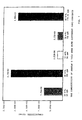
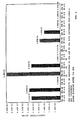
- elastomer matrixes component a: ex. 1 and 7 (reference) Copolyester - TPE (COPE), HYTREL (Du Pont) ex. 2 and 8 (reference) Polyurethane - TPE (TPU) ESTANE (BFGoodrich) ex. 3 and 9 (performance) PP/Vulcanized EPDM - TPE (TPV), SANTOPRENE -64 (AES) ex. 4 and 10 (reference) Styrene block-co-polymer SEBS, KRATON G (Shell) ex. 5 and 11 (reference) Silicone (MQ), SILOPREN LSR (Bayer) ex. 6a and 12a (performance) EBA/pBA PACREL® (Optatech) ex. 6b and 12b (performance) PP/pBA TPE PACREL® (Optatech)
- COPE elastomer grade chosen was HYTREL G3548W which melting point is 156°C, hardness 35 Shore D, tensile strength 10.3 MPa and elongation 200%.
- ESTANE 58206 hardness is 85A, tensile strength 45 MPa and elongation 550%.
- ESTANE 58300 softening temperature is 76°C, hardness 80A, tensile strength 32 Mpa and elongation 700%.
- TPV elastomer grades chosen were SANTOPRENE 210-64 and 210-80.
- SANTOPRENE 210-64 hardness is 64A, tensile strength 6.9 MPa and elongation 330%.
- SANTOPRENE 210-80 hardness is 80A, tensile strength 11.0 MPa and elongation 450% ( values are from a brochure of AES).
- the SEBS elastomer grade chosen was KRATON G 1652 which hardness is 75A, tensile strength 31 MPa and elongation 500% (values are from Shell's brochure).
- the silicon elastomer grade chosen was the two components castabile grade SILOPREN LSR 2050 which hardness is about 50A, tensile strength about 30 MPa and elongation about 500% ( values are from Bayer's brochure).
- thermoplastic polyolefin elastomers belong to the same class of TPE grades as SANTOPRENE, except the manufacturing technique is different and the EPDM elastomer is replaced by polyacrylate rubber (pBA).
- the TPE elastomer matrix EBA/pBA hardness is 73A and tensile strength 5 Mpa.
- the TPE elastomer matrix PP/pBA hardness is 86A and tensile strength 7 Mpa.
- the intrinsically conductive thermoplastic component (component b) is Panisol®, trademark of Neste Oy.
- Panisol (enclosed named as PANI) is a melt processed product of polyaniline and dodecylbenzenesulphonic acid (DBSA).
- DBSA dodecylbenzenesulphonic acid
- HC PANI The melt processed product of a mixture of zincoxide/DBSA.
- the blending was made with a Brabender twoscrew extruder.
- the raw materials were dried in a drier over night at 75°C and then dryblended.
- HC PANI complex was blended with 80 w-% HYTREL G3548W.
- the processing temperatures were 165°C in zone I, 170°C in zone II and 180°C in zone III, when the screw speed was 25 l/min. Because HC PANI was plasticizing the blend, it came out as a melt and the processing temperatures were changed to 145°C for zone I, 150°C for zone II and 150°C for zone III, when the screw speed was 20 l/min.
- the suitable conditions for processing HC PANI complex and KRATON G 1652 was found out.
- 20 w-% HC PANI complex was blended with 80 w-% KRATON G 1652.
- the suitable processing temperatures were found out as 180°C for zone I, 190°C for zone II and 200°C for zone III, when the screw speed was 40 l/min.
- SILOPREN LSR-SILICONE blending was made with a mixer and BRABENDER PLASTICORDER extruder.
- SILOPREN PANT complex was added to the premixed components and to both component before final blending and crosslinking.
- the EBA/pBA and PP/pBA samples were predried for five hours at 70°C before blending.
- a Brabender twinscrew extruder was not suitable for blending PANI complex and SEBS elastomer, because the conductivity of the product was bad and the mixing poor. The shear forces of the screw were not high enough for the PANI complex.
- the two component SILOPREN LSR silicone was not made conducting with the methods used.
- the PANI complex was not mixing well into the silicone pasta and the viscosity increased after adding PANI making the casting impossible.
- the tests should continue with silicone and different types of PANI complex because conductive silicones have been used in interesting and increasing applications.
- Polypropene based PP/pBA (PACREL 122) conductivities were with normal PANI complex, 30% concentration 8.1 E-4 S/cm, with 20% 5.0 E-4 S/cm and even with 10% concentration 4.3 E-5 S/cm.
- HC PANI gave worse conductivities than normal PANI.
- PACREL 122 hardness was nearly the same after blending, strength decreased remarkable with higher PANI concentration and just a little with 10% concentration.
Landscapes
- Chemical & Material Sciences (AREA)
- Physics & Mathematics (AREA)
- Spectroscopy & Molecular Physics (AREA)
- Health & Medical Sciences (AREA)
- Chemical Kinetics & Catalysis (AREA)
- Medicinal Chemistry (AREA)
- Polymers & Plastics (AREA)
- Organic Chemistry (AREA)
- Compositions Of Macromolecular Compounds (AREA)
- Conductive Materials (AREA)
Abstract
Claims (14)
- Mélange élastomère thermoplastique électroconducteur, caractérisé en ce qu'il comprenda) 10-99 % en poids d'un composant élastomère thermoplastique qui est un mélange d'un homopolymère ou d'un copolymère d'oléfines et d'un élastomère réticulé physiquement ou chimiquement,b) et 90-1 % en poids d'un composant polymère naturellement électroconducteur, qui est composé de polyaniline ou d'un de ses dérivés qui a été dopé par un acide protonique.
- Mélange élastomère thermoplastique électroconducteur selon la revendication 1, caractérisé en ce que la proportion du composant b) est de 90-5 % en poids, de préférence 40-10 % en poids, par rapport au mélange élastomère thermoplastique électroconducteur.
- Mélange élastomère thermoplastique électroconducteur selon la revendication 1 ou 2, caractérisé en ce que l'élastomère est un copolymère de blocs de styrène de type A-B-A dans lequel A est un bloc polystyrène et B est un bloc poly(éthylène-co-butylène) (c'est-à-dire SEBS).
- Mélange élastomère thermoplastique électroconducteur selon les revendications 1 et 2, caractérisé en ce que le composant élastomère a) est un mélange d'un homopolymère de propylène et d'un élastomère d'éthylène-propylène-diène (EPDM) dans lequel l'élastomère est réticulé chimiquement (vulcanisé).
- Mélange élastomère thermoplastique électroconducteur selon les revendications 1 et 2, caractérisé en ce que le composant élastomère a) est choisi parmi les types suivants : un mélange de poly(éthylène-co-acétate de vinyle) et d'un élastomère d'acrylate ; un mélange de poly(éthylène-co-acrylate de butyle) et d'un élastomère d'acrylate ; un mélange de polyéthylène linéaire de faible densité (LLPDE) et d'un élastomère d'acrylate ; un mélange de copolymère de polypropylène à répartition aléatoire et d'un élastomère d'acrylate, dans lesquels l'élastomère d'acrylate est de préférence préparé in situ et réticulé.
- Mélange élastomère thermoplastique électroconducteur selon la revendication 5, caractérisé en ce que l'élastomère d'acrylate dans le composant élastomère a) est un polymère d'acrylate d'alkyle en C1-C12, de préférence en C2-C12, ou un polymère de méthacrylate d'alkyle en C4-C14, de préférence en C8-C14, avec une température de transition vitreuse inférieure à +20 °C, de préférence inférieure à -20 °C, de préférence un polymère d'acrylate d'éthyle-hexyle ou un polymère d'acrylate de butyle.
- Mélange élastomère thermoplastique électroconducteur selon les revendications 5 et 6, caractérisé en ce que l'élastomère d'acrylate dans le composant élastomère a) représente 20-90 % en poids du composant a).
- Mélange élastomère thermoplastique électroconducteur selon l'une quelconque des revendications précédentes, caractérisé en ce que le composant polymère naturellement électroconducteur b) est composé de polyaniline à base d'émeraldine qui a été dopée avec de l'acide protonique.
- Mélange élastomère thermoplastique électroconducteur selon l'une quelconque des revendications précédentes, caractérisé en ce que le composant polymère naturellement électroconducteur b) est la polyaniline ou son dérivé, qui a été dopée avec un acide protonique qui est un acide sulfonique organique, de préférence un acide sulfonique aromatique, et de préférence l'acide dodécylbenzène sulfonique (ADBS).
- Mélange élastomère thermoplastique électroconducteur selon l'une quelconque des revendications précédentes, caractérisé en ce que le composant polymère naturellement électroconducteur b) est un produit obtenu à partir de polyaniline ou son dérivé et d'un acide protonique, et préparé par mise en présence de la polyaniline ou son dérivé avec l'acide protonique sous d'importantes forces de cisaillement à une température de 80-250 °C de préférence par mélange dans un appareil de préparation en fusion.
- Mélange élastomère thermoplastique électroconducteur selon l'une quelconque des revendications précédentes, caractérisé en ce que le composant polymère naturellement électroconducteur b) comprend également un composé métallique, qui est de préférence un sel métallique ou un produit de réaction d'un oxyde métallique ou d'un hydroxyde métallique et d'un acide protonique, de préférence le produit de réaction de l'oxyde de zinc et de l'acide dodécylbenzène sulfonique.
- Mélange élastomère thermoplastique électroconducteur selon l'une quelconque des revendications précédentes, caractérisé en ce qu'il est obtenu par traitement en fusion du composant élastomère thermoplastique a) et du composant polymère naturellement électroconducteur b).
- Mélange élastomère thermoplastique électroconducteur selon la revendication 12, caractérisé en ce qu'il est obtenu par traitement en fusion du composant élastomère thermoplastique a) et du composant polymère naturellement électroconducteur b) en utilisant une extrudeuse à une température de 165-220 °C et de préférence à une vitesse de rotation de la vis d'alimentation de 50-200 l/mn.
- Utilisation d'un mélange élastomère thermoplastique électroconducteur selon l'une quelconque des revendications précédentes en tant que matériau antistatique et/ou matériau protecteur contre l'IEM.
Applications Claiming Priority (3)
| Application Number | Priority Date | Filing Date | Title |
|---|---|---|---|
| FI953803 | 1995-08-10 | ||
| FI953803A FI953803L (fi) | 1995-08-10 | 1995-08-10 | Sähköä johtava lämpömuovautuva elastomeeriseos ja sen käyttö |
| PCT/FI1996/000433 WO1997006213A1 (fr) | 1995-08-10 | 1996-08-12 | Composition elastomere thermoplastique electroconductrice et son utilisation |
Publications (2)
| Publication Number | Publication Date |
|---|---|
| EP0843703A1 EP0843703A1 (fr) | 1998-05-27 |
| EP0843703B1 true EP0843703B1 (fr) | 2003-10-22 |
Family
ID=8543856
Family Applications (1)
| Application Number | Title | Priority Date | Filing Date |
|---|---|---|---|
| EP96926405A Expired - Lifetime EP0843703B1 (fr) | 1995-08-10 | 1996-08-12 | Composition elastomere thermoplastique electroconductrice et son utilisation |
Country Status (8)
| Country | Link |
|---|---|
| US (1) | US5993696A (fr) |
| EP (1) | EP0843703B1 (fr) |
| JP (1) | JPH11510839A (fr) |
| KR (1) | KR100491473B1 (fr) |
| AU (1) | AU6660396A (fr) |
| DE (1) | DE69630453T2 (fr) |
| FI (1) | FI953803L (fr) |
| WO (1) | WO1997006213A1 (fr) |
Families Citing this family (19)
| Publication number | Priority date | Publication date | Assignee | Title |
|---|---|---|---|---|
| FI98821C (fi) | 1994-02-10 | 1997-08-25 | Neste Oy | Sähköä johtava elastomeerikoostumus, sen valmistus ja käyttö |
| JP4153577B2 (ja) | 1997-11-28 | 2008-09-24 | 旭化成ケミカルズ株式会社 | 耐油性に優れた熱可塑性エラストマー |
| US5908898A (en) * | 1998-02-12 | 1999-06-01 | Monsanto Company | Intrinsically conductive polymer blends having a low percolation threshold |
| US6164482A (en) * | 1999-04-07 | 2000-12-26 | Calsonic Kansei Corporation | String-attached cap |
| FI20011354A7 (fi) * | 2001-06-25 | 2002-12-26 | Optatech Corp | Lämmön- ja öljynkestävä termoplastinen elastomeeri |
| WO2003018648A1 (fr) * | 2001-08-31 | 2003-03-06 | Tda Research, Inc. | Copolymeres sequences poly(heteroaromatiques) presentant une conductivite electrique |
| US7687582B1 (en) | 2001-08-31 | 2010-03-30 | Tda Research, Inc. | Methods of production, purification, and processing of poly(heteroaromatic) block copolymers with improved solubility or dispersability |
| US7473301B2 (en) * | 2002-09-17 | 2009-01-06 | Euv Llc | Adhesive particle shielding |
| JP4619628B2 (ja) * | 2003-04-24 | 2011-01-26 | 株式会社イノアックコーポレーション | 導電性樹脂組成物およびその製造方法 |
| US7361728B1 (en) | 2004-09-30 | 2008-04-22 | Tda Research, Inc. | Electrically conducting materials from branched end-capping intermediates |
| JP2006169291A (ja) * | 2004-12-13 | 2006-06-29 | Yokohama Rubber Co Ltd:The | 変性導電性高分子並びにそれを用いた導電性部材 |
| KR100889489B1 (ko) | 2008-03-18 | 2009-03-19 | 주식회사하이퍼플렉스 | 도전성 섬유재를 갖는 연성 회로기판 및 이를 갖는전자제품 |
| DE102011017811A1 (de) * | 2011-04-29 | 2012-10-31 | Evonik Degussa Gmbh | Temperierbare Rohrleitung für Offshoreanwendungen |
| EP2639264A1 (fr) * | 2012-03-14 | 2013-09-18 | Nexans | Matériau de calibrage de champs |
| WO2014022641A1 (fr) * | 2012-08-01 | 2014-02-06 | Massachusetts Institute Of Technology | Actionnement et contrôle de la déformation du tampon lors d'une impression par microcontact |
| CN103928077B (zh) | 2013-01-10 | 2017-06-06 | 杜邦公司 | 含有共混弹性体的导电粘合剂 |
| DE102013001135A1 (de) | 2013-01-23 | 2014-08-07 | GIFAS Beteiligungen GmbH | Polymergebundene Antistatikadditive und damit antistatisch ausgerüstete Elastomere und Elastomerbauteile |
| CN106832733A (zh) * | 2017-03-07 | 2017-06-13 | 扬州三涧科贸有限公司 | 一种高介电聚苯胺/弹性体复合材料的制备方法 |
| CN106832920A (zh) * | 2017-03-07 | 2017-06-13 | 扬州三涧科贸有限公司 | 一种可拉伸聚苯胺/弹性体导电复合材料的制备方法 |
Family Cites Families (8)
| Publication number | Priority date | Publication date | Assignee | Title |
|---|---|---|---|---|
| DE69232601T2 (de) * | 1991-12-05 | 2002-12-12 | Neste Oy, Kulloo | Verfahren zur Herstellung von leitfähigem Polyermaterial |
| FI94136C (fi) * | 1992-08-11 | 1995-07-25 | Neste Oy | Neutraloitu sähköä johtava muovimateriaali ja menetelmä sen valmistamiseksi |
| WO1993015510A1 (fr) | 1992-02-04 | 1993-08-05 | Neste Oy | Composes electroconducteurs colores de polyaniline |
| EP0582919B2 (fr) * | 1992-08-11 | 2006-02-15 | Fortum Oil and Gas Oy | Matériau de plastique conducteur et méthode de sa préparation |
| US5340499A (en) * | 1992-08-11 | 1994-08-23 | Neste Oy | Electrically conductive compositions and methods for their preparation |
| FI101077B (fi) * | 1993-06-04 | 1998-04-15 | Neste Oy | Sähköä johtava muovimateriaali ja menetelmä sen valmitamiseksi |
| JPH0710992A (ja) * | 1993-06-04 | 1995-01-13 | Neste Oy | 加工可能な導電性ポリマー材料およびその製造方法 |
| FI98821C (fi) * | 1994-02-10 | 1997-08-25 | Neste Oy | Sähköä johtava elastomeerikoostumus, sen valmistus ja käyttö |
-
1995
- 1995-08-10 FI FI953803A patent/FI953803L/fi unknown
-
1996
- 1996-08-12 WO PCT/FI1996/000433 patent/WO1997006213A1/fr not_active Ceased
- 1996-08-12 EP EP96926405A patent/EP0843703B1/fr not_active Expired - Lifetime
- 1996-08-12 DE DE69630453T patent/DE69630453T2/de not_active Expired - Fee Related
- 1996-08-12 AU AU66603/96A patent/AU6660396A/en not_active Abandoned
- 1996-08-12 US US09/000,237 patent/US5993696A/en not_active Expired - Fee Related
- 1996-08-12 KR KR1019980700981A patent/KR100491473B1/ko not_active Expired - Fee Related
- 1996-08-12 JP JP9508149A patent/JPH11510839A/ja active Pending
Also Published As
| Publication number | Publication date |
|---|---|
| FI953803A0 (fi) | 1995-08-10 |
| FI953803A7 (fi) | 1997-02-11 |
| EP0843703A1 (fr) | 1998-05-27 |
| DE69630453T2 (de) | 2004-08-05 |
| US5993696A (en) | 1999-11-30 |
| WO1997006213A1 (fr) | 1997-02-20 |
| AU6660396A (en) | 1997-03-05 |
| DE69630453D1 (de) | 2003-11-27 |
| FI953803L (fi) | 1997-02-11 |
| KR100491473B1 (ko) | 2005-10-19 |
| KR19990036313A (ko) | 1999-05-25 |
| JPH11510839A (ja) | 1999-09-21 |
Similar Documents
| Publication | Publication Date | Title |
|---|---|---|
| EP0843703B1 (fr) | Composition elastomere thermoplastique electroconductrice et son utilisation | |
| AU2002240535B2 (en) | Semiconducting shield compositions | |
| EP3591010B1 (fr) | Composition de résine électroconductrice, procédé pour la fabriquer et article moulé obtenu à partir de cette dernière | |
| US4576993A (en) | Low density polyethylene polymeric compositions | |
| US4412938A (en) | Semiconducting resin compositions | |
| CN101379126A (zh) | 半导电组合物 | |
| AU2002240535A1 (en) | Semiconducting shield compositions | |
| US20130161059A1 (en) | New composition and use thereof | |
| CN109912881B (zh) | 包含异种橡胶成分的用于包覆电缆的聚烯烃树脂组合物 | |
| US7196267B2 (en) | Electrically insulating resin composition and a DC electric wire or cable both coated therewith | |
| JP7750863B2 (ja) | 無水物基含有ポリプロピレングラフトおよびポリプロピレングラフトの調製方法 | |
| CN112041943A (zh) | 电力电缆 | |
| JPS62201952A (ja) | 熱可塑性エラストマ−組成物の製造法 | |
| JPH039140B2 (fr) | ||
| KR920001654B1 (ko) | 상호분산된 중합체 절연 조성물 | |
| CA1147088A (fr) | Polymeres ignifuges | |
| CN109071720B (zh) | 用于电缆附件的交联聚合物组合物 | |
| EP3960793A1 (fr) | Composition de résine électroconductrice, son procédé de production et objet moulé obtenu à partir de celle-ci | |
| CN112778745B (zh) | 改性聚苯醚和热塑性弹性体及它们的制备方法和应用及用于制备热塑性弹性体的组合物 | |
| Dahman | All polymeric compounds: conductive and dissipative polymers in ESD control materials | |
| CA2267489C (fr) | Cable resitant aux arbres | |
| JPH0320343A (ja) | 半導電性樹脂組成物 | |
| JPH0649222A (ja) | 熱可塑性樹脂組成物 |
Legal Events
| Date | Code | Title | Description |
|---|---|---|---|
| PUAI | Public reference made under article 153(3) epc to a published international application that has entered the european phase |
Free format text: ORIGINAL CODE: 0009012 |
|
| 17P | Request for examination filed |
Effective date: 19980226 |
|
| AK | Designated contracting states |
Kind code of ref document: A1 Designated state(s): DE FR GB IT |
|
| TPAD | Observations filed by third parties |
Free format text: ORIGINAL CODE: EPIDOS TIPA |
|
| TPAD | Observations filed by third parties |
Free format text: ORIGINAL CODE: EPIDOS TIPA |
|
| 17Q | First examination report despatched |
Effective date: 20021017 |
|
| GRAH | Despatch of communication of intention to grant a patent |
Free format text: ORIGINAL CODE: EPIDOS IGRA |
|
| GRAP | Despatch of communication of intention to grant a patent |
Free format text: ORIGINAL CODE: EPIDOSNIGR1 |
|
| GRAS | Grant fee paid |
Free format text: ORIGINAL CODE: EPIDOSNIGR3 |
|
| GRAA | (expected) grant |
Free format text: ORIGINAL CODE: 0009210 |
|
| AK | Designated contracting states |
Kind code of ref document: B1 Designated state(s): DE FR GB IT |
|
| REG | Reference to a national code |
Ref country code: GB Ref legal event code: FG4D |
|
| REF | Corresponds to: |
Ref document number: 69630453 Country of ref document: DE Date of ref document: 20031127 Kind code of ref document: P |
|
| PGFP | Annual fee paid to national office [announced via postgrant information from national office to epo] |
Ref country code: GB Payment date: 20040716 Year of fee payment: 9 |
|
| ET | Fr: translation filed | ||
| PLBE | No opposition filed within time limit |
Free format text: ORIGINAL CODE: 0009261 |
|
| STAA | Information on the status of an ep patent application or granted ep patent |
Free format text: STATUS: NO OPPOSITION FILED WITHIN TIME LIMIT |
|
| 26N | No opposition filed |
Effective date: 20040723 |
|
| PG25 | Lapsed in a contracting state [announced via postgrant information from national office to epo] |
Ref country code: IT Free format text: LAPSE BECAUSE OF NON-PAYMENT OF DUE FEES;WARNING: LAPSES OF ITALIAN PATENTS WITH EFFECTIVE DATE BEFORE 2007 MAY HAVE OCCURRED AT ANY TIME BEFORE 2007. THE CORRECT EFFECTIVE DATE MAY BE DIFFERENT FROM THE ONE RECORDED. Effective date: 20050812 Ref country code: GB Free format text: LAPSE BECAUSE OF NON-PAYMENT OF DUE FEES Effective date: 20050812 |
|
| GBPC | Gb: european patent ceased through non-payment of renewal fee |
Effective date: 20050812 |
|
| PGFP | Annual fee paid to national office [announced via postgrant information from national office to epo] |
Ref country code: DE Payment date: 20070823 Year of fee payment: 12 |
|
| PGFP | Annual fee paid to national office [announced via postgrant information from national office to epo] |
Ref country code: FR Payment date: 20070731 Year of fee payment: 12 |
|
| REG | Reference to a national code |
Ref country code: FR Ref legal event code: ST Effective date: 20090430 |
|
| PG25 | Lapsed in a contracting state [announced via postgrant information from national office to epo] |
Ref country code: FR Free format text: LAPSE BECAUSE OF NON-PAYMENT OF DUE FEES Effective date: 20080901 Ref country code: DE Free format text: LAPSE BECAUSE OF NON-PAYMENT OF DUE FEES Effective date: 20090303 |