EP0843821B1 - Verfahren zur charakterisierung der glycosylierung von glycoproteinen sowie zur in-vitro bestimmung der bioverfügbarkeit von glycoproteinen - Google Patents
Verfahren zur charakterisierung der glycosylierung von glycoproteinen sowie zur in-vitro bestimmung der bioverfügbarkeit von glycoproteinen Download PDFInfo
- Publication number
- EP0843821B1 EP0843821B1 EP96917465A EP96917465A EP0843821B1 EP 0843821 B1 EP0843821 B1 EP 0843821B1 EP 96917465 A EP96917465 A EP 96917465A EP 96917465 A EP96917465 A EP 96917465A EP 0843821 B1 EP0843821 B1 EP 0843821B1
- Authority
- EP
- European Patent Office
- Prior art keywords
- glycoprotein
- determination
- glycosylation
- charge number
- charge
- Prior art date
- Legal status (The legal status is an assumption and is not a legal conclusion. Google has not performed a legal analysis and makes no representation as to the accuracy of the status listed.)
- Expired - Lifetime
Links
- 102000003886 Glycoproteins Human genes 0.000 title claims abstract description 100
- 108090000288 Glycoproteins Proteins 0.000 title claims abstract description 100
- 238000000034 method Methods 0.000 title claims abstract description 35
- 230000008569 process Effects 0.000 title claims abstract description 26
- 230000013595 glycosylation Effects 0.000 title claims abstract description 23
- 238000006206 glycosylation reaction Methods 0.000 title claims abstract description 22
- 238000000338 in vitro Methods 0.000 title claims abstract description 6
- 102000000447 Peptide-N4-(N-acetyl-beta-glucosaminyl) Asparagine Amidase Human genes 0.000 claims description 20
- 108010055817 Peptide-N4-(N-acetyl-beta-glucosaminyl) Asparagine Amidase Proteins 0.000 claims description 20
- 150000004676 glycans Chemical class 0.000 claims description 20
- 238000006698 hydrazinolysis reaction Methods 0.000 claims description 20
- 238000001727 in vivo Methods 0.000 claims description 11
- 201000010099 disease Diseases 0.000 claims description 8
- 208000037265 diseases, disorders, signs and symptoms Diseases 0.000 claims description 8
- 238000004364 calculation method Methods 0.000 claims description 5
- 238000005571 anion exchange chromatography Methods 0.000 claims description 4
- 238000001514 detection method Methods 0.000 claims description 4
- 238000004255 ion exchange chromatography Methods 0.000 claims description 3
- 230000007935 neutral effect Effects 0.000 claims description 3
- 238000002360 preparation method Methods 0.000 claims description 2
- 229940039227 diagnostic agent Drugs 0.000 claims 1
- 239000000032 diagnostic agent Substances 0.000 claims 1
- 108040006852 interleukin-4 receptor activity proteins Proteins 0.000 description 34
- SQVRNKJHWKZAKO-UHFFFAOYSA-N beta-N-Acetyl-D-neuraminic acid Natural products CC(=O)NC1C(O)CC(O)(C(O)=O)OC1C(O)C(O)CO SQVRNKJHWKZAKO-UHFFFAOYSA-N 0.000 description 30
- SQVRNKJHWKZAKO-LUWBGTNYSA-N N-acetylneuraminic acid Chemical compound CC(=O)N[C@@H]1[C@@H](O)CC(O)(C(O)=O)O[C@H]1[C@H](O)[C@H](O)CO SQVRNKJHWKZAKO-LUWBGTNYSA-N 0.000 description 22
- 239000003795 chemical substances by application Substances 0.000 description 16
- OXCMYAYHXIHQOA-UHFFFAOYSA-N potassium;[2-butyl-5-chloro-3-[[4-[2-(1,2,4-triaza-3-azanidacyclopenta-1,4-dien-5-yl)phenyl]phenyl]methyl]imidazol-4-yl]methanol Chemical compound [K+].CCCCC1=NC(Cl)=C(CO)N1CC1=CC=C(C=2C(=CC=CC=2)C2=N[N-]N=N2)C=C1 OXCMYAYHXIHQOA-UHFFFAOYSA-N 0.000 description 16
- 102100031939 Erythropoietin Human genes 0.000 description 14
- UMCMPZBLKLEWAF-BCTGSCMUSA-N 3-[(3-cholamidopropyl)dimethylammonio]propane-1-sulfonate Chemical compound C([C@H]1C[C@H]2O)[C@H](O)CC[C@]1(C)[C@@H]1[C@@H]2[C@@H]2CC[C@H]([C@@H](CCC(=O)NCCC[N+](C)(C)CCCS([O-])(=O)=O)C)[C@@]2(C)[C@@H](O)C1 UMCMPZBLKLEWAF-BCTGSCMUSA-N 0.000 description 13
- 238000001155 isoelectric focusing Methods 0.000 description 12
- 230000009450 sialylation Effects 0.000 description 11
- 230000001225 therapeutic effect Effects 0.000 description 11
- CERZMXAJYMMUDR-QBTAGHCHSA-N 5-amino-3,5-dideoxy-D-glycero-D-galacto-non-2-ulopyranosonic acid Chemical group N[C@@H]1[C@@H](O)CC(O)(C(O)=O)O[C@H]1[C@H](O)[C@H](O)CO CERZMXAJYMMUDR-QBTAGHCHSA-N 0.000 description 8
- WQZGKKKJIJFFOK-QTVWNMPRSA-N D-mannopyranose Chemical compound OC[C@H]1OC(O)[C@@H](O)[C@@H](O)[C@@H]1O WQZGKKKJIJFFOK-QTVWNMPRSA-N 0.000 description 8
- 238000004458 analytical method Methods 0.000 description 8
- 229930182830 galactose Natural products 0.000 description 8
- 238000013507 mapping Methods 0.000 description 8
- 238000005259 measurement Methods 0.000 description 8
- SQVRNKJHWKZAKO-OQPLDHBCSA-N sialic acid Chemical compound CC(=O)N[C@@H]1[C@@H](O)C[C@@](O)(C(O)=O)OC1[C@H](O)[C@H](O)CO SQVRNKJHWKZAKO-OQPLDHBCSA-N 0.000 description 8
- 206010028980 Neoplasm Diseases 0.000 description 7
- 230000029087 digestion Effects 0.000 description 7
- CERZMXAJYMMUDR-UHFFFAOYSA-N neuraminic acid Natural products NC1C(O)CC(O)(C(O)=O)OC1C(O)C(O)CO CERZMXAJYMMUDR-UHFFFAOYSA-N 0.000 description 7
- SQVRNKJHWKZAKO-PFQGKNLYSA-N N-acetyl-beta-neuraminic acid Chemical compound CC(=O)N[C@@H]1[C@@H](O)C[C@@](O)(C(O)=O)O[C@H]1[C@H](O)[C@H](O)CO SQVRNKJHWKZAKO-PFQGKNLYSA-N 0.000 description 6
- 210000004369 blood Anatomy 0.000 description 6
- 239000008280 blood Substances 0.000 description 6
- 241001465754 Metazoa Species 0.000 description 5
- 108020003175 receptors Proteins 0.000 description 5
- 102000005962 receptors Human genes 0.000 description 5
- 210000002966 serum Anatomy 0.000 description 5
- 102000004142 Trypsin Human genes 0.000 description 4
- 108090000631 Trypsin Proteins 0.000 description 4
- 238000012512 characterization method Methods 0.000 description 4
- VHJLVAABSRFDPM-QWWZWVQMSA-N dithiothreitol Chemical compound SC[C@@H](O)[C@H](O)CS VHJLVAABSRFDPM-QWWZWVQMSA-N 0.000 description 4
- 238000002474 experimental method Methods 0.000 description 4
- 108060002885 fetuin Proteins 0.000 description 4
- 102000013361 fetuin Human genes 0.000 description 4
- 210000004185 liver Anatomy 0.000 description 4
- 150000002772 monosaccharides Chemical class 0.000 description 4
- 238000003860 storage Methods 0.000 description 4
- 241000283690 Bos taurus Species 0.000 description 3
- 101001053670 Gallus gallus Ovomucoid Proteins 0.000 description 3
- 206010061218 Inflammation Diseases 0.000 description 3
- 241000699666 Mus <mouse, genus> Species 0.000 description 3
- 238000005349 anion exchange Methods 0.000 description 3
- 230000008901 benefit Effects 0.000 description 3
- 230000004071 biological effect Effects 0.000 description 3
- 230000017531 blood circulation Effects 0.000 description 3
- 238000004587 chromatography analysis Methods 0.000 description 3
- 239000003599 detergent Substances 0.000 description 3
- 238000003745 diagnosis Methods 0.000 description 3
- 239000003814 drug Substances 0.000 description 3
- 108010026195 glycanase Proteins 0.000 description 3
- 238000003306 harvesting Methods 0.000 description 3
- 238000005462 in vivo assay Methods 0.000 description 3
- 230000004054 inflammatory process Effects 0.000 description 3
- 238000004519 manufacturing process Methods 0.000 description 3
- 239000000463 material Substances 0.000 description 3
- 239000000203 mixture Substances 0.000 description 3
- 102000004169 proteins and genes Human genes 0.000 description 3
- 108090000623 proteins and genes Proteins 0.000 description 3
- 230000009467 reduction Effects 0.000 description 3
- 230000001105 regulatory effect Effects 0.000 description 3
- 238000000926 separation method Methods 0.000 description 3
- 238000012525 sialic acid detection Methods 0.000 description 3
- 238000012360 testing method Methods 0.000 description 3
- 229940124597 therapeutic agent Drugs 0.000 description 3
- 239000012588 trypsin Substances 0.000 description 3
- 238000010200 validation analysis Methods 0.000 description 3
- 239000003643 water by type Substances 0.000 description 3
- HNSDLXPSAYFUHK-UHFFFAOYSA-N 1,4-bis(2-ethylhexyl) sulfosuccinate Chemical compound CCCCC(CC)COC(=O)CC(S(O)(=O)=O)C(=O)OCC(CC)CCCC HNSDLXPSAYFUHK-UHFFFAOYSA-N 0.000 description 2
- AZUYLZMQTIKGSC-UHFFFAOYSA-N 1-[6-[4-(5-chloro-6-methyl-1H-indazol-4-yl)-5-methyl-3-(1-methylindazol-5-yl)pyrazol-1-yl]-2-azaspiro[3.3]heptan-2-yl]prop-2-en-1-one Chemical compound ClC=1C(=C2C=NNC2=CC=1C)C=1C(=NN(C=1C)C1CC2(CN(C2)C(C=C)=O)C1)C=1C=C2C=NN(C2=CC=1)C AZUYLZMQTIKGSC-UHFFFAOYSA-N 0.000 description 2
- 238000005160 1H NMR spectroscopy Methods 0.000 description 2
- BFSVOASYOCHEOV-UHFFFAOYSA-N 2-diethylaminoethanol Chemical compound CCN(CC)CCO BFSVOASYOCHEOV-UHFFFAOYSA-N 0.000 description 2
- 238000002965 ELISA Methods 0.000 description 2
- 102000003951 Erythropoietin Human genes 0.000 description 2
- 108090000394 Erythropoietin Proteins 0.000 description 2
- 101000757319 Homo sapiens Antithrombin-III Proteins 0.000 description 2
- 102100039078 Interleukin-4 receptor subunit alpha Human genes 0.000 description 2
- TVVLIFCVJJSLBL-SEHWTJTBSA-N Lacto-N-fucopentaose V Chemical compound O[C@H]1C(O)C(O)[C@H](C)O[C@H]1OC([C@@H](O)C=O)[C@@H](C(O)CO)O[C@H]1[C@H](O)[C@@H](OC2[C@@H](C(OC3[C@@H](C(O)C(O)[C@@H](CO)O3)O)[C@H](O)[C@@H](CO)O2)NC(C)=O)[C@@H](O)[C@@H](CO)O1 TVVLIFCVJJSLBL-SEHWTJTBSA-N 0.000 description 2
- 241000699670 Mus sp. Species 0.000 description 2
- 108010061952 Orosomucoid Proteins 0.000 description 2
- 102000012404 Orosomucoid Human genes 0.000 description 2
- 239000012614 Q-Sepharose Substances 0.000 description 2
- QAOWNCQODCNURD-UHFFFAOYSA-L Sulfate Chemical compound [O-]S([O-])(=O)=O QAOWNCQODCNURD-UHFFFAOYSA-L 0.000 description 2
- 238000012443 analytical study Methods 0.000 description 2
- 239000003957 anion exchange resin Substances 0.000 description 2
- 108010030377 bovine pancreatic ribonuclease B Proteins 0.000 description 2
- 239000000872 buffer Substances 0.000 description 2
- 150000001720 carbohydrates Chemical group 0.000 description 2
- 230000004087 circulation Effects 0.000 description 2
- 239000012141 concentrate Substances 0.000 description 2
- 230000007423 decrease Effects 0.000 description 2
- 230000002255 enzymatic effect Effects 0.000 description 2
- 229940105423 erythropoietin Drugs 0.000 description 2
- 238000004992 fast atom bombardment mass spectroscopy Methods 0.000 description 2
- 238000002290 gas chromatography-mass spectrometry Methods 0.000 description 2
- 102000052834 human SERPINC1 Human genes 0.000 description 2
- 229960004336 human antithrombin iii Drugs 0.000 description 2
- 238000011534 incubation Methods 0.000 description 2
- 238000010172 mouse model Methods 0.000 description 2
- 150000002482 oligosaccharides Polymers 0.000 description 2
- 239000000047 product Substances 0.000 description 2
- 239000000126 substance Substances 0.000 description 2
- NHBKXEKEPDILRR-UHFFFAOYSA-N 2,3-bis(butanoylsulfanyl)propyl butanoate Chemical compound CCCC(=O)OCC(SC(=O)CCC)CSC(=O)CCC NHBKXEKEPDILRR-UHFFFAOYSA-N 0.000 description 1
- 102000011767 Acute-Phase Proteins Human genes 0.000 description 1
- 108010062271 Acute-Phase Proteins Proteins 0.000 description 1
- 208000007848 Alcoholism Diseases 0.000 description 1
- 102100022524 Alpha-1-antichymotrypsin Human genes 0.000 description 1
- 101710104910 Alpha-1B-glycoprotein Proteins 0.000 description 1
- 102100033326 Alpha-1B-glycoprotein Human genes 0.000 description 1
- 102000004411 Antithrombin III Human genes 0.000 description 1
- 108090000935 Antithrombin III Proteins 0.000 description 1
- 108091003079 Bovine Serum Albumin Proteins 0.000 description 1
- 208000014567 Congenital Disorders of Glycosylation Diseases 0.000 description 1
- 201000002200 Congenital disorder of glycosylation Diseases 0.000 description 1
- 102000004190 Enzymes Human genes 0.000 description 1
- 108090000790 Enzymes Proteins 0.000 description 1
- 101000766307 Gallus gallus Ovotransferrin Proteins 0.000 description 1
- 108050005077 Haptoglobin Proteins 0.000 description 1
- 102000014702 Haptoglobin Human genes 0.000 description 1
- 101001033312 Homo sapiens Interleukin-4 receptor subunit alpha Proteins 0.000 description 1
- 102000000588 Interleukin-2 Human genes 0.000 description 1
- 108010002350 Interleukin-2 Proteins 0.000 description 1
- 108010038486 Interleukin-4 Receptors Proteins 0.000 description 1
- SHZGCJCMOBCMKK-DHVFOXMCSA-N L-fucopyranose Chemical group C[C@@H]1OC(O)[C@@H](O)[C@H](O)[C@@H]1O SHZGCJCMOBCMKK-DHVFOXMCSA-N 0.000 description 1
- 241001529936 Murinae Species 0.000 description 1
- 240000007594 Oryza sativa Species 0.000 description 1
- 235000007164 Oryza sativa Nutrition 0.000 description 1
- 206010033128 Ovarian cancer Diseases 0.000 description 1
- 239000012564 Q sepharose fast flow resin Substances 0.000 description 1
- 229920005654 Sephadex Polymers 0.000 description 1
- 239000012507 Sephadex™ Substances 0.000 description 1
- 241000282898 Sus scrofa Species 0.000 description 1
- 101000800135 Sus scrofa Thyroglobulin Proteins 0.000 description 1
- 108010034949 Thyroglobulin Proteins 0.000 description 1
- 102000009843 Thyroglobulin Human genes 0.000 description 1
- 102000003978 Tissue Plasminogen Activator Human genes 0.000 description 1
- 108090000373 Tissue Plasminogen Activator Proteins 0.000 description 1
- 102000004338 Transferrin Human genes 0.000 description 1
- 108090000901 Transferrin Proteins 0.000 description 1
- 238000001042 affinity chromatography Methods 0.000 description 1
- 206010001584 alcohol abuse Diseases 0.000 description 1
- 208000025746 alcohol use disease Diseases 0.000 description 1
- 108010091628 alpha 1-Antichymotrypsin Proteins 0.000 description 1
- 108010050122 alpha 1-Antitrypsin Proteins 0.000 description 1
- 102000015395 alpha 1-Antitrypsin Human genes 0.000 description 1
- 229940024142 alpha 1-antitrypsin Drugs 0.000 description 1
- 108010075843 alpha-2-HS-Glycoprotein Proteins 0.000 description 1
- 102000012005 alpha-2-HS-Glycoprotein Human genes 0.000 description 1
- WQZGKKKJIJFFOK-PHYPRBDBSA-N alpha-D-galactose Chemical compound OC[C@H]1O[C@H](O)[C@H](O)[C@@H](O)[C@H]1O WQZGKKKJIJFFOK-PHYPRBDBSA-N 0.000 description 1
- 108010026331 alpha-Fetoproteins Proteins 0.000 description 1
- 102000013529 alpha-Fetoproteins Human genes 0.000 description 1
- 239000000427 antigen Substances 0.000 description 1
- 102000036639 antigens Human genes 0.000 description 1
- 108091007433 antigens Proteins 0.000 description 1
- 229960005348 antithrombin iii Drugs 0.000 description 1
- 238000013459 approach Methods 0.000 description 1
- 235000015278 beef Nutrition 0.000 description 1
- IEQCXFNWPAHHQR-YKLSGRGUSA-N beta-D-Gal-(1->4)-beta-D-GlcNAc-(1->3)-beta-D-Gal-(1->4)-D-Glc Chemical compound O([C@H]1[C@H](O)[C@H]([C@@H](O[C@@H]1CO)O[C@@H]1[C@H]([C@H](O[C@@H]2[C@H](OC(O)[C@H](O)[C@H]2O)CO)O[C@H](CO)[C@@H]1O)O)NC(=O)C)[C@@H]1O[C@H](CO)[C@H](O)[C@H](O)[C@H]1O IEQCXFNWPAHHQR-YKLSGRGUSA-N 0.000 description 1
- 201000011510 cancer Diseases 0.000 description 1
- 235000014633 carbohydrates Nutrition 0.000 description 1
- 210000004027 cell Anatomy 0.000 description 1
- 210000001175 cerebrospinal fluid Anatomy 0.000 description 1
- 230000008859 change Effects 0.000 description 1
- 238000006243 chemical reaction Methods 0.000 description 1
- 238000005352 clarification Methods 0.000 description 1
- 239000012228 culture supernatant Substances 0.000 description 1
- 230000003247 decreasing effect Effects 0.000 description 1
- 230000022811 deglycosylation Effects 0.000 description 1
- 238000001212 derivatisation Methods 0.000 description 1
- 238000011033 desalting Methods 0.000 description 1
- 238000011161 development Methods 0.000 description 1
- 238000009826 distribution Methods 0.000 description 1
- 230000007717 exclusion Effects 0.000 description 1
- 238000000605 extraction Methods 0.000 description 1
- 239000012894 fetal calf serum Substances 0.000 description 1
- 238000011049 filling Methods 0.000 description 1
- 238000005194 fractionation Methods 0.000 description 1
- PCHJSUWPFVWCPO-UHFFFAOYSA-N gold Chemical compound [Au] PCHJSUWPFVWCPO-UHFFFAOYSA-N 0.000 description 1
- 239000010931 gold Substances 0.000 description 1
- 229910052737 gold Inorganic materials 0.000 description 1
- 229940106780 human fibrinogen Drugs 0.000 description 1
- 238000000099 in vitro assay Methods 0.000 description 1
- 208000027866 inflammatory disease Diseases 0.000 description 1
- 238000002347 injection Methods 0.000 description 1
- 239000007924 injection Substances 0.000 description 1
- 238000011835 investigation Methods 0.000 description 1
- IEQCXFNWPAHHQR-UHFFFAOYSA-N lacto-N-neotetraose Natural products OCC1OC(OC2C(C(OC3C(OC(O)C(O)C3O)CO)OC(CO)C2O)O)C(NC(=O)C)C(O)C1OC1OC(CO)C(O)C(O)C1O IEQCXFNWPAHHQR-UHFFFAOYSA-N 0.000 description 1
- 230000014759 maintenance of location Effects 0.000 description 1
- 125000000311 mannosyl group Chemical group C1([C@@H](O)[C@@H](O)[C@H](O)[C@H](O1)CO)* 0.000 description 1
- 229920001542 oligosaccharide Polymers 0.000 description 1
- 239000000137 peptide hydrolase inhibitor Substances 0.000 description 1
- 125000002467 phosphate group Chemical group [H]OP(=O)(O[H])O[*] 0.000 description 1
- 238000000746 purification Methods 0.000 description 1
- 238000011084 recovery Methods 0.000 description 1
- 238000011160 research Methods 0.000 description 1
- 230000004044 response Effects 0.000 description 1
- 235000009566 rice Nutrition 0.000 description 1
- 125000005629 sialic acid group Chemical group 0.000 description 1
- 238000007086 side reaction Methods 0.000 description 1
- 239000012064 sodium phosphate buffer Substances 0.000 description 1
- 239000000243 solution Substances 0.000 description 1
- 210000002023 somite Anatomy 0.000 description 1
- 241000894007 species Species 0.000 description 1
- 229960002175 thyroglobulin Drugs 0.000 description 1
- 229960000187 tissue plasminogen activator Drugs 0.000 description 1
- 239000012581 transferrin Substances 0.000 description 1
- 230000004614 tumor growth Effects 0.000 description 1
- 238000012418 validation experiment Methods 0.000 description 1
- 210000003462 vein Anatomy 0.000 description 1
Images


Classifications
-
- G—PHYSICS
- G01—MEASURING; TESTING
- G01N—INVESTIGATING OR ANALYSING MATERIALS BY DETERMINING THEIR CHEMICAL OR PHYSICAL PROPERTIES
- G01N33/00—Investigating or analysing materials by specific methods not covered by groups G01N1/00 - G01N31/00
- G01N33/48—Biological material, e.g. blood, urine; Haemocytometers
- G01N33/50—Chemical analysis of biological material, e.g. blood, urine; Testing involving biospecific ligand binding methods; Immunological testing
- G01N33/68—Chemical analysis of biological material, e.g. blood, urine; Testing involving biospecific ligand binding methods; Immunological testing involving proteins, peptides or amino acids
-
- G—PHYSICS
- G01—MEASURING; TESTING
- G01N—INVESTIGATING OR ANALYSING MATERIALS BY DETERMINING THEIR CHEMICAL OR PHYSICAL PROPERTIES
- G01N33/00—Investigating or analysing materials by specific methods not covered by groups G01N1/00 - G01N31/00
- G01N33/48—Biological material, e.g. blood, urine; Haemocytometers
- G01N33/50—Chemical analysis of biological material, e.g. blood, urine; Testing involving biospecific ligand binding methods; Immunological testing
- G01N33/68—Chemical analysis of biological material, e.g. blood, urine; Testing involving biospecific ligand binding methods; Immunological testing involving proteins, peptides or amino acids
- G01N33/6803—General methods of protein analysis not limited to specific proteins or families of proteins
- G01N33/6842—Proteomic analysis of subsets of protein mixtures with reduced complexity, e.g. membrane proteins, phosphoproteins, organelle proteins
-
- G—PHYSICS
- G01—MEASURING; TESTING
- G01N—INVESTIGATING OR ANALYSING MATERIALS BY DETERMINING THEIR CHEMICAL OR PHYSICAL PROPERTIES
- G01N33/00—Investigating or analysing materials by specific methods not covered by groups G01N1/00 - G01N31/00
- G01N33/48—Biological material, e.g. blood, urine; Haemocytometers
- G01N33/50—Chemical analysis of biological material, e.g. blood, urine; Testing involving biospecific ligand binding methods; Immunological testing
- G01N33/68—Chemical analysis of biological material, e.g. blood, urine; Testing involving biospecific ligand binding methods; Immunological testing involving proteins, peptides or amino acids
- G01N33/6803—General methods of protein analysis not limited to specific proteins or families of proteins
Definitions
- the present invention relates to a method for characterization the glycosylation of glycoproteins and an in vitro method for determination the bioavailability of glycoproteins based on the "hypothetical charge number" (hereinafter referred to as "Z") and both for endogenous glycoproteins as well as exogenous glycoproteins can be used.
- Z hyper charge number
- exogenous glycoproteins are e.g. recombinant, from Therapeutic glycoproteins (such as interleukin 2, Erythropoietin, tissue plasminogen activator or antithrombin III). These substances have been of considerable interest in scientific, pharmaceutical and regulatory institutions.
- endogenous glycoproteins are human or non-human (e.g. bovine) serum glycoproteins (such as, for example, human ⁇ 1 -acidic glycoprotein, human transferrrin or bovine fetuin, but also glycoproteins of other species, such as, for example, chicken Ovomucoid or swine thyroglobulin.
- bovine serum glycoproteins such as, for example, human ⁇ 1 -acidic glycoprotein, human transferrrin or bovine fetuin, but also glycoproteins of other species, such as, for example, chicken Ovomucoid or swine thyroglobulin.
- the proportion of sialic acid plays an important role as a parameter, since it is assumed that that the presence or absence of Neu5Ac is the circulation half-life of a glycoprotein in the blood or its clearance.
- the exact examination of the carbohydrate side chains of a glycoprotein requires a very complex and complex analysis, the one a high level of expertise and instrumental infrastructure (such as GC-MS, FAB-MS and high resolution 1H NMR spectroscopy).
- the present invention was therefore based on the technical problem, an in vitro To provide a method which is suitable for the degree of glycosylation of a Determine glycoproteins so easily and reliably that the method is suitable is the known in vivo methods e.g. to determine bioavailability and to replace batch consistency.
- Z correlates excellently and reproducibly with the bioavailability / biological activity of a glycoprotein found in in vivo methods. Because of its good reproducibility and analytical accuracy, Z can advantageously also be used in a method for determining batch consistency.
- glycoprotein The "glycosylation status" of a glycoprotein is understood in context with the present invention the composition of the glycan pool from bi-, tri- and tetraantennary glycans and their respective degree of sialylation (the content of bound N-acetylneuraminic acid) and the content on sulfate or phosphate groups.
- the bioavailability of a glycoprotein therapeutic agent is understood to mean that Ability of the therapeutic agent, its biological activity or therapeutic To be effective in vivo. Accordingly, the bioavailability and the biological activity largely depends on the in vivo clearance behavior, i.e. the distance of the therapeutic agent determined from the blood circulation.
- EPO is known to be absent in the N-glycosidic sugar chains terminally bound N-acetylneuraminic acid very quickly via the so-called "asialo-receptor" is removed from the blood circulation in the liver and therefore cannot develop its biological effectiveness.
- the Z of a therapeutic glycoprotein surprisingly correlates with the in vivo half-life of the glycoprotein and thus represents a completely new one Measurement parameters that allows the therapeutic glycoprotein of Batch to batch expected clearance behavior in a very simple way and Way to estimate in advance.
- Z also enables a statement to be made about the biological to be expected for the glycoprotein from batch to batch Safety and its therapeutic effectiveness. Therefore, one can with determination from Z of a therapeutic glycoprotein from batch to batch z. B. on the very complex, time-consuming, expensive and rather imprecise determination of the therapeutic Effectiveness of glycoprotein in animal experiments (in vivo assay) dispense. This also enables a new and significant contribution to the reduction of animal experiments and thus to improved animal protection.
- the Z is a particularly suitable measure of batch consistency represents.
- endogenous glycoproteins e.g. B. in a human serum glycoprotein, in which the glycosylation varies approximately with a disease
- Z can define as a diagnostic measurement parameter which correlates with the disease and which thus allows a statement about the severity of the disease.
- inflammatory diseases for example for the "acute phase glycoproteins", such as, for. B. ⁇ 1-acid glycoprotein, which is known to change glycosylation with the onset of inflammation (De Graaf et al. (1993) J. Exp. Med. 177, 657-666).
- This is also the case with tumor diseases in which the content of protein-bound sialic acid (and thus the glycosylation) changes with the progression of the tumor disease (Shahangian et al. (1991) Clin. Chem. 37 , 200-204).
- determining the Z of a tumor associated Glycoproteins of a tumor patient make a statement about the stage of the tumor disease make, based on the finding that during tumor growth sialylation changes (Shahangian et al., ibid., p. 200).
- transferrin for the characterization of cerebrospinal fluid, for the diagnosis of secret alcohol abuse and the "carbohydrate deficient glycoprotein syndrome" (De Jong et al., ibid., pp. 219-226) and glycoforms of the ⁇ 1 -acidic glycoprotein for the diagnosis of inflammation and cancer (Mackiewicz & Mackiewicz, ibid., pp. 241-247).
- Z can advantageously be used for determination the stage of illness of a patient.
- Essential to the invention is the knowledge that the distribution of the charge uniform glycan groups, in particular such different degrees of sialylation (asialo to pentasialo), a crucial feature for bioavailability of a glycoprotein and the batch consistency is. It is essential to the invention that the charge-uniform glycan groups accordingly their load, in particular their degree of sialysis, are weighted. These weighted portions are summarized in the Z.
- the Z of a glycoprotein can be determined very well and precisely, e.g. B. by using an optimized and standardized chromatographic method, as it was recently described (Hermentin et al. (1992) Anal. Biochem., 203, 281-289).
- the Asn-linked sugar chains of the glycoproteins can be released in two ways in a manner known per se - namely either chemically (e.g. by means of hydrazinolysis) or enzymatically (e.g. by means of N- Glycanase or PNGase F).
- the enzymatic process requires reaction conditions to be optimized on a case-by-case basis - for example, tryptic digestion of the glycoprotein to be introduced or the addition of a suitable detergent.
- hydrazinolysis also requires special know-how if you want to minimize the side reactions. However, today it can be carried out fully automatically with a device from Oxford GlycoSystems (the GlycoPrep 1000).
- the N-glycans are separated primarily by charge, ie by the number of their sialic acid residues (Hermentin et al. (1992) Anal. Biochem. 203 , 281-289), which is why they are suitable for determining the Z of Glycoproteins are particularly suitable.
- triantennare trisialo- (C3-3 *) - structures such as. B. bovines Fetuin, a Z of about 300 and for a glycoprotein, which predominantly biantennary disialo- (C2-2 *) structures, such as. B. human antithrombin III, a Z of about 200.
- a glycoprotein which, for example, only has asialo structures has, such as. B. bovine pancreatic ribonuclease B, or so-called "trunkated forms" (trunk structures), such as. B. Chicken Ovomucoid you get a Z of about 0.
- HPAE-PAD high-pH anion-exchange chromatography with pulsed amperometric detection
- This process first separates the N-glycans isolated from the glycoprotein according to their charge and thus enables a statement about the composition of the N-glycan pool from neutral (asialo) as well as mono-, di-, tri- and tetrasialo structures (i.e. N- Glycans with zero to four negatively charged neuraminic acid residues).
- the sugar is measured very selectively and sensitively - and without derivatization of the glycans - by pulsed amperometric detection on a gold electrode.
- the glycans were released and isolated from various glycoproteins in a manner known per se either by means of automated hydrazinolysis (using the GlycoPrep 1000 TM, Oxford GlycoSystems, OGS) or by enzymatic means (using PNGase F) or directly by the company GlycoSystems as a glycan Pools purchased and measured using HPAE-PAD in the standard gradient "S" (Hermentin et al. (1992) Anal. Biochem. 203, 281-289).
- N-glycans of a glycoprotein in addition to neuraminic acid e.g. B. also contain sulfate groups
- the determination of Z z. B. so that the charge separate peak groups, which in the chromatogram range from 6 or 7 charges, can be multiplied by 6 or 7.
- N-glycans were released after reduction of the glycoprotein (500 ⁇ g) using dithioerythrol (DTE; 25 ⁇ l of a 0.3 M aqueous DTE solution) during 10 min at 70 ° C.
- DTE dithioerythrol
- the excess of DTE was concentrated in a Centricon cartridge with exclusion limit of 10,000 D (Amicon) removed, and the concentrate was run three times with glycanase digest buffer in the Centricon tube washed.
- the concentrate was placed in an Eppendorf hat transferred and in glycanase digestion buffer (500 ⁇ l) a) with and b) without the presence of 0.5% CHAPS using PNGase F (Boehringer Mannheim; 5 units) in 50 mM sodium phosphate buffer, pH 7.6 digested for 48 h at 37 ° C.
- N-glycans were released analogously to Example 2a) or 2a).
- a preparation of soluble murine interleukin-4 receptor (rmur IL-4R, Behringwerke AG) obtained from BHK cells was separated into 5 fractions Q1-Q5 in a manner known per se using an anion exchange resin (Q-Sepharose, Pharmacia) ( Figure 2 ) .
- the analysis of the individual fractions was carried out in a manner known per se.
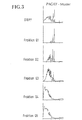
- the IEF band pattern was scanned in a manner known per se using gel analysis software. The band scans obtained are shown in FIG. 3 .
- the analytical data obtained in a manner known per se are shown in Table 3 .
- N-acetylneuraminic acid (Neu5Ac; sialic acid) was determined according to Hermentin and Seidat (in: GBF Monographs, Vol 15, pp 185-188, HS Conradt, ed., VCH, Weinheim / New York / Cambridge)
- the monosacchrid was determined in a manner known per se according to Hardy et al. (Anal. Biochem. (1988) 170, 54-62). The quotient Neu5Ac / Gal (mol / mol) was determined from the result of the monosaccharide analysis.
- the determination of the degree of sialylation turns out to be relatively imprecise, since the variances of the two tests (the Neu5Ac and the Gal determination) add up in the degree of sialylation. Therefore, a more precise parameter is necessary that describes the clearance behavior of a glycoprotein in in vivo application.
- the quotient was also determined from the result of the monosaccharide analysis the molar proportion of mannose and galactose (Man / Gal; mol / mol), which a reference to the composition of the N-glycans from "high-mannose” structures and "complex-type” structures allowed.
- Man / Gal ratio also allows a statement about the expected clearance behavior of a glycoprotein, since glycoproteins with "high mannose” structures also via a receptor in the liver (the so-called “high mannose” receptor) from the blood circulation be removed. Since the content of "high-mannose” structures is included in the calculation of the hypothetical charge number according to equation 1, Z also reflects the content of "high-man structures” and thus also allows a prediction of the clearance via the "high-man"-Receptor".
- mice were injected into mice and the clearance followed by rmur IL-4R from mouse blood in ELISA.
- the clearance rate of IL-4R was determined as follows:
- the sialic acid content increases continuously from fraction Q1 (13.6 ⁇ g / mg) to fraction Q4 (109.5 ⁇ g / mg), whereas it turns out to be practically identical in fractions Q4 and Q5 (Table 3).
- the results of the sialic acid determination therefore correlate well with the results of the isoelectric focusing.
- the degree of sialylation (Neu5Ac / Gal; mol / mol) is a less reliable parameter than the Neu5Ac determination or isoelectric focusing because the inaccuracies of the two individual tests (i.e. the neuraminic acid determination) are in the quotient of the degree of sialylation and monosaccharide component analysis) add.
- the determination of Z very well reflects both the results of the sialic acid determination and the qualitative course of the isoletric focusing and appears to be superior to the determination of the degree of sialylation (Neu5Ac / Gal; mol / mol) (like the Neu5Ac determination and the IEF) .
- the fact that the determination of Z also proves to be superior to the Neu5Ac determination is shown in Example 6 below).
- the clearance behavior (AUD, area under data; ⁇ g / ml * min) of the fractions Q1-Q5 was also determined in a manner known per se.
- the Z therefore has the particular advantage that Z according to equation 1 detects both the expected clearance via the asialo receptor and the expected clearance via the high-man receptor and thus enables a more precise prediction of the expected clearance behavior than any other of the analysis methods mentioned.
- IL-4R storage capacity of IL-4R in the fermenter harvesting medium
- aliquots of the harvest were stored at different temperatures (RT, + 4 ° C, -20 ° C and -70 ° C). Aliquots were taken at zero time and after 1, 2 and 3 months.
- the IL-4R was purified from these aliquots in a manner known per se by means of affinity chromatography on an immobilized anti-IL-4R monoclonal antibody.
- the neuraminic acid content and the Z were determined in each case from the purified IL-4R samples. The results are summarized in Figure 4 .
- the Z proved to be constant for the samples stored at -70 ° C. and -20 ° C., but fell significantly with the storage time at + 4 ° C. and with the samples stored at RT.
- the results of the neuraminic acid determination are of significantly less informative value, although a tendency analogous to the charge number can be seen. It is therefore obvious that the determination of the charge number is analytically superior to the neuraminic acid determination.
- the advantage is based on the high accuracy with which the charge number can be determined - with the particular advantage that - in contrast to the determination of neuraminic acid - the reference to the (glyco) protein concentration is not necessary and thus for the determination of the charge number the inaccuracy of the protein determination is not included in the test result.
- Z is an excellent parameter suitable for checking the storage stability of a glycoprotein.
- N-glycans were released from rhu EPO (BHK) (Merckle AG) using PNGase F in a manner known per se (Nimtz et al., Eur. J. Biochem. (1993) 213, 39-56).
- N-glycans were released from rhu EPO (CHO) (Boehringer Mannheim) using PNGase F in a manner known per se (Nimtz et al., Ibid.).
- Example 10 shows that the incomplete extraction of the N-Glycan pool from AGP (when using PNGase F) can be demonstrated by calculating the charge number (analogously to Example 1):
- N-glycans from AGP isolated after 48 hours of incubation with PNGase F.
- the Z is therefore very advantageously suitable for characterizing the glycosylation status of a glycoprotein.
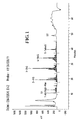
- FIG. 1 shows the N-glycan mapping profile of rhu IL-4R (batch E4-930914) after separation by means of HPAE-PAD under standard conditions according to Hermentin et al., Anal. Biochem. 203 (1992), pp. 281-289.
- FIG. 2 shows the fractionation of rmur IL-4R (lot 018PP) by means of anion exchange chromatography on Q-Sepharose FF.
- FIG. 3 shows the isoelectric focusing (IEF) of the Q-Sepharose fractions of rmur IL-4R batch 018PP obtained according to FIG. 2.
- FIG. 4 a shows the drop in the Z
- FIG. 4 b shows the drop in the NANA content of rhu IL-4R in the culture supernatant when stored at room temperature (RT) + 4 ° C., -20 ° C. and -70 ° C.
Landscapes
- Life Sciences & Earth Sciences (AREA)
- Health & Medical Sciences (AREA)
- Engineering & Computer Science (AREA)
- Molecular Biology (AREA)
- Physics & Mathematics (AREA)
- Biomedical Technology (AREA)
- Chemical & Material Sciences (AREA)
- Immunology (AREA)
- Urology & Nephrology (AREA)
- Hematology (AREA)
- Biophysics (AREA)
- Bioinformatics & Computational Biology (AREA)
- Bioinformatics & Cheminformatics (AREA)
- Microbiology (AREA)
- Biochemistry (AREA)
- Biotechnology (AREA)
- Proteomics, Peptides & Aminoacids (AREA)
- Food Science & Technology (AREA)
- Medicinal Chemistry (AREA)
- Analytical Chemistry (AREA)
- Cell Biology (AREA)
- General Health & Medical Sciences (AREA)
- General Physics & Mathematics (AREA)
- Pathology (AREA)
- Investigating Or Analysing Biological Materials (AREA)
- Peptides Or Proteins (AREA)
- Measuring Or Testing Involving Enzymes Or Micro-Organisms (AREA)
- Preparation Of Compounds By Using Micro-Organisms (AREA)
Applications Claiming Priority (3)
| Application Number | Priority Date | Filing Date | Title |
|---|---|---|---|
| DE19527054A DE19527054A1 (de) | 1995-07-26 | 1995-07-26 | Verfahren zur Charakterisierung der Glycosylierung von Glycoproteinen sowie zur in-vitro Bestimmung der Bioverfügbarkeit von Glycoproteinen |
| DE19527054 | 1995-07-26 | ||
| PCT/EP1996/002319 WO1997005490A1 (de) | 1995-07-26 | 1996-05-30 | Verfahren zur charakterisierung der glycosylierung von glycoproteinen sowie zur in-vitro bestimmung der bioverfügbarkeit von glycoproteinen |
Publications (2)
| Publication Number | Publication Date |
|---|---|
| EP0843821A1 EP0843821A1 (de) | 1998-05-27 |
| EP0843821B1 true EP0843821B1 (de) | 2001-10-04 |
Family
ID=7767674
Family Applications (1)
| Application Number | Title | Priority Date | Filing Date |
|---|---|---|---|
| EP96917465A Expired - Lifetime EP0843821B1 (de) | 1995-07-26 | 1996-05-30 | Verfahren zur charakterisierung der glycosylierung von glycoproteinen sowie zur in-vitro bestimmung der bioverfügbarkeit von glycoproteinen |
Country Status (13)
| Country | Link |
|---|---|
| US (1) | US6096555A (da) |
| EP (1) | EP0843821B1 (da) |
| JP (1) | JP3631495B2 (da) |
| KR (1) | KR19990035943A (da) |
| AT (1) | ATE206524T1 (da) |
| AU (1) | AU6003296A (da) |
| CA (1) | CA2227743C (da) |
| DE (2) | DE19527054A1 (da) |
| DK (1) | DK0843821T3 (da) |
| ES (1) | ES2162652T3 (da) |
| NO (1) | NO980276L (da) |
| PT (1) | PT843821E (da) |
| WO (1) | WO1997005490A1 (da) |
Families Citing this family (17)
| Publication number | Priority date | Publication date | Assignee | Title |
|---|---|---|---|---|
| CA2331674A1 (en) * | 2000-01-28 | 2001-07-28 | Southern Illinois University | Isolated polynucleotides and polypeptides relating to loci underlying resistance to soybean cyst nematode and soybean sudden death syndrome and methods employing same |
| EP1438387A4 (en) * | 2001-09-14 | 2004-10-13 | Momenta Pharmaceuticals Inc | METHODS OF MAKING GLYCOMOLECULES WITH IMPROVED ACTIVITY, AND USES THEREOF |
| WO2003054172A2 (en) * | 2002-01-17 | 2003-07-03 | Lonza Biologics Plc. | Glutamine-auxothrophic human cells capable of producing proteins and capable of growing in a glutamine-free medium |
| WO2004066808A2 (en) * | 2002-12-20 | 2004-08-12 | Momenta Pharmaceuticals, Inc. | Glycan markers for diagnosing and monitoring disease |
| JP4077339B2 (ja) * | 2003-03-06 | 2008-04-16 | 独立行政法人科学技術振興機構 | 高等植物の糖リン酸の網羅的分析法 |
| DE102005050580A1 (de) | 2005-10-21 | 2007-04-26 | Siegfried Biologics Gmbh | Verfahren zur Charakterisierung der Qualität von Sialoglycoproteinen über eine Isoformenzahl I und dessen Verwendung |
| CA2743181A1 (en) * | 2008-12-19 | 2010-06-24 | Momenta Pharmaceuticals, Inc. | Methods related to modified glycans |
| WO2011127322A1 (en) | 2010-04-07 | 2011-10-13 | Momenta Pharmaceuticals, Inc. | High mannose glycans |
| EP2686671A4 (en) | 2011-03-12 | 2015-06-24 | Momenta Pharmaceuticals Inc | N-GLYCANES CONTAINING N-ACETYLHEXOSAMINE IN GLYCOPROTEIN PRODUCTS |
| US20160145589A1 (en) | 2011-06-24 | 2016-05-26 | Green Cross Corporation | Composition and formulation comprising recombinant human iduronate-2-sulfatase and preparation method thereof |
| WO2013181575A2 (en) | 2012-06-01 | 2013-12-05 | Momenta Pharmaceuticals, Inc. | Methods related to denosumab |
| US9150841B2 (en) | 2012-06-29 | 2015-10-06 | Shire Human Genetic Therapies, Inc. | Cells for producing recombinant iduronate-2-sulfatase |
| KR101380740B1 (ko) * | 2012-06-29 | 2014-04-11 | 쉐어 휴먼 제네텍 세러피스, 인코포레이티드 | 이듀로네이트-2-설파타제의 정제 |
| EP2877589B1 (en) | 2012-07-26 | 2024-03-06 | Momenta Pharmaceuticals, Inc. | Glycoproteins with anti-inflammatory properties |
| US10450361B2 (en) | 2013-03-15 | 2019-10-22 | Momenta Pharmaceuticals, Inc. | Methods related to CTLA4-Fc fusion proteins |
| WO2014186310A1 (en) | 2013-05-13 | 2014-11-20 | Momenta Pharmaceuticals, Inc. | Methods for the treatment of neurodegeneration |
| WO2015057622A1 (en) | 2013-10-16 | 2015-04-23 | Momenta Pharmaceuticals, Inc. | Sialylated glycoproteins |
-
1995
- 1995-07-26 DE DE19527054A patent/DE19527054A1/de not_active Withdrawn
-
1996
- 1996-05-30 KR KR1019980700604A patent/KR19990035943A/ko not_active Withdrawn
- 1996-05-30 CA CA002227743A patent/CA2227743C/en not_active Expired - Lifetime
- 1996-05-30 US US09/000,307 patent/US6096555A/en not_active Expired - Lifetime
- 1996-05-30 DK DK96917465T patent/DK0843821T3/da active
- 1996-05-30 JP JP50713697A patent/JP3631495B2/ja not_active Expired - Fee Related
- 1996-05-30 PT PT96917465T patent/PT843821E/pt unknown
- 1996-05-30 AU AU60032/96A patent/AU6003296A/en not_active Abandoned
- 1996-05-30 AT AT96917465T patent/ATE206524T1/de active
- 1996-05-30 ES ES96917465T patent/ES2162652T3/es not_active Expired - Lifetime
- 1996-05-30 DE DE59607840T patent/DE59607840D1/de not_active Expired - Lifetime
- 1996-05-30 WO PCT/EP1996/002319 patent/WO1997005490A1/de not_active Ceased
- 1996-05-30 EP EP96917465A patent/EP0843821B1/de not_active Expired - Lifetime
-
1998
- 1998-01-21 NO NO980276A patent/NO980276L/no not_active Application Discontinuation
Also Published As
| Publication number | Publication date |
|---|---|
| CA2227743C (en) | 2008-01-29 |
| CA2227743A1 (en) | 1997-02-13 |
| DE19527054A1 (de) | 1997-01-30 |
| PT843821E (pt) | 2002-03-28 |
| DK0843821T3 (da) | 2002-01-28 |
| US6096555A (en) | 2000-08-01 |
| AU6003296A (en) | 1997-02-26 |
| NO980276D0 (no) | 1998-01-21 |
| NO980276L (no) | 1998-01-21 |
| ES2162652T3 (es) | 2002-01-01 |
| MX9800690A (es) | 1998-09-30 |
| DE59607840D1 (de) | 2001-11-08 |
| KR19990035943A (ko) | 1999-05-25 |
| WO1997005490A1 (de) | 1997-02-13 |
| EP0843821A1 (de) | 1998-05-27 |
| JP3631495B2 (ja) | 2005-03-23 |
| JP2000503109A (ja) | 2000-03-14 |
| ATE206524T1 (de) | 2001-10-15 |
Similar Documents
| Publication | Publication Date | Title |
|---|---|---|
| EP0843821B1 (de) | Verfahren zur charakterisierung der glycosylierung von glycoproteinen sowie zur in-vitro bestimmung der bioverfügbarkeit von glycoproteinen | |
| DE68918103T3 (de) | Verfahren zur überwachung des kollagenabbaus. | |
| RU2475759C2 (ru) | Исследование n-гликанов с использованием экзогликозидаз | |
| de Jong et al. | Microheterogeneity of human serum transferrin: a biological phenomenon studied by isoelectric focusing in immobilized pH gradients | |
| JP2012515922A (ja) | CHO細胞由来の糖タンパク質産物におけるガラクトース−α−1,3−ガラクトース含有N−グリカン | |
| CH648330A5 (de) | Tumor-spezifische glykoproteine und verfahren zu deren herstellung. | |
| CH627281A5 (da) | ||
| EP2686671A2 (en) | N-acetylhexosamine-containing n-glycans in glycoprotein products | |
| DE69730479T2 (de) | Marker und immunologisches Reagens für Dialyse verbundenen Amyloidosis, Diabetes Mellitus und Diabetes Mellitus-Komplikationen | |
| DE69019375T2 (de) | Verfahren zur detektion von knochen- und anderen bindegewebeerkrankungen bei menschen und tieren. | |
| DE2900546B2 (de) | Verfahren zum Standardisieren einer markierten Bindungskomponente, welche in einem spezifischen Bindungstest-Verfahren mit einem Liganden reagiert, gegen einen Liganden-Referenzstandard und Verwendung der standardisierten markierten Bindungskomponente in spezifischen Bindungstest-Verfahren | |
| DE60035267T2 (de) | Verfahren zur analyse der menge an intraabdominalem fettgewebe | |
| DE3883145T2 (de) | Verfahren zur Messung von humanen Insulin. | |
| Kumarasamy | Oligosaccharide mapping of therapeutic glycoproteins by high-pH anion-exchange high-performance liquid chromatography | |
| Amatayakul-Chantler et al. | Cell surface oligosaccharides on Dictyostelium during development | |
| DE69821485T2 (de) | Test für kohlenhydrat-freies transferrin | |
| DE69730223T2 (de) | Diagnostische methode zum nachweis von isoformen des eosinophilen kationischen proteins | |
| DE60016281T2 (de) | Transferrin-assay | |
| EP0727434B1 (de) | Reinigung von Gewebefaktor | |
| Sun et al. | HPLC determination of the sugar compositions of the glycans on the cationic peanut peroxidase | |
| DE60211714T2 (de) | Isolierung membrangebundener ligandenspezifischer komplexe | |
| DE69324776T2 (de) | Pharmazeutische Zusammensetzung die krebserkennende Antikörper enthält | |
| DE3036184A1 (de) | Reagenz und verfahren zur bestimmung von human-muskeltyp-aldolase | |
| MXPA98000690A (en) | Procedure for the characterization of glycoprotein glicosilation, as well as for the in vitro determination of the biodisponibility of glicoprotei | |
| AT404993B (de) | Verfahren zur bestimmung eines proteins mit einer mutation |
Legal Events
| Date | Code | Title | Description |
|---|---|---|---|
| PUAI | Public reference made under article 153(3) epc to a published international application that has entered the european phase |
Free format text: ORIGINAL CODE: 0009012 |
|
| 17P | Request for examination filed |
Effective date: 19980226 |
|
| AK | Designated contracting states |
Kind code of ref document: A1 Designated state(s): AT BE CH DE DK ES FI FR GB IT LI LU NL PT SE |
|
| GRAG | Despatch of communication of intention to grant |
Free format text: ORIGINAL CODE: EPIDOS AGRA |
|
| 17Q | First examination report despatched |
Effective date: 20001127 |
|
| GRAG | Despatch of communication of intention to grant |
Free format text: ORIGINAL CODE: EPIDOS AGRA |
|
| GRAG | Despatch of communication of intention to grant |
Free format text: ORIGINAL CODE: EPIDOS AGRA |
|
| GRAH | Despatch of communication of intention to grant a patent |
Free format text: ORIGINAL CODE: EPIDOS IGRA |
|
| GRAG | Despatch of communication of intention to grant |
Free format text: ORIGINAL CODE: EPIDOS AGRA |
|
| GRAH | Despatch of communication of intention to grant a patent |
Free format text: ORIGINAL CODE: EPIDOS IGRA |
|
| GRAG | Despatch of communication of intention to grant |
Free format text: ORIGINAL CODE: EPIDOS AGRA |
|
| GRAH | Despatch of communication of intention to grant a patent |
Free format text: ORIGINAL CODE: EPIDOS IGRA |
|
| RAP1 | Party data changed (applicant data changed or rights of an application transferred) |
Owner name: AVENTIS PHARMA DEUTSCHLAND GMBH |
|
| GRAH | Despatch of communication of intention to grant a patent |
Free format text: ORIGINAL CODE: EPIDOS IGRA |
|
| GRAA | (expected) grant |
Free format text: ORIGINAL CODE: 0009210 |
|
| AK | Designated contracting states |
Kind code of ref document: B1 Designated state(s): AT BE CH DE DK ES FI FR GB IT LI LU NL PT SE |
|
| PG25 | Lapsed in a contracting state [announced via postgrant information from national office to epo] |
Ref country code: GB Free format text: LAPSE BECAUSE OF FAILURE TO SUBMIT A TRANSLATION OF THE DESCRIPTION OR TO PAY THE FEE WITHIN THE PRESCRIBED TIME-LIMIT Effective date: 20011004 |
|
| REF | Corresponds to: |
Ref document number: 206524 Country of ref document: AT Date of ref document: 20011015 Kind code of ref document: T |
|
| REG | Reference to a national code |
Ref country code: CH Ref legal event code: EP |
|
| REF | Corresponds to: |
Ref document number: 59607840 Country of ref document: DE Date of ref document: 20011108 |
|
| REG | Reference to a national code |
Ref country code: GB Ref legal event code: IF02 Ref country code: ES Ref legal event code: FG2A Ref document number: 2162652 Country of ref document: ES Kind code of ref document: T3 |
|
| REG | Reference to a national code |
Ref country code: DK Ref legal event code: T3 |
|
| ET | Fr: translation filed | ||
| REG | Reference to a national code |
Ref country code: PT Ref legal event code: SC4A Free format text: AVAILABILITY OF NATIONAL TRANSLATION Effective date: 20011207 |
|
| GBT | Gb: translation of ep patent filed (gb section 77(6)(a)/1977) |
Effective date: 20020516 |
|
| PLBE | No opposition filed within time limit |
Free format text: ORIGINAL CODE: 0009261 |
|
| STAA | Information on the status of an ep patent application or granted ep patent |
Free format text: STATUS: NO OPPOSITION FILED WITHIN TIME LIMIT |
|
| 26N | No opposition filed | ||
| REG | Reference to a national code |
Ref country code: CH Ref legal event code: PFA Owner name: SANOFI-AVENTIS DEUTSCHLAND GMBH Free format text: AVENTIS PHARMA DEUTSCHLAND GMBH#BRUENINGSTRASSE 50#65929 FRANKFURT AM MAIN (DE) -TRANSFER TO- SANOFI-AVENTIS DEUTSCHLAND GMBH##65926 FRANKFURT AM MAIN (DE) |
|
| NLT1 | Nl: modifications of names registered in virtue of documents presented to the patent office pursuant to art. 16 a, paragraph 1 |
Owner name: SANOFI-AVENTIS DEUTSCHLAND GMBH |
|
| REG | Reference to a national code |
Ref country code: FR Ref legal event code: CD |
|
| PGFP | Annual fee paid to national office [announced via postgrant information from national office to epo] |
Ref country code: LU Payment date: 20110531 Year of fee payment: 16 |
|
| PGFP | Annual fee paid to national office [announced via postgrant information from national office to epo] |
Ref country code: DK Payment date: 20120510 Year of fee payment: 17 |
|
| PGFP | Annual fee paid to national office [announced via postgrant information from national office to epo] |
Ref country code: BE Payment date: 20120514 Year of fee payment: 17 Ref country code: SE Payment date: 20120511 Year of fee payment: 17 Ref country code: FI Payment date: 20120510 Year of fee payment: 17 |
|
| REG | Reference to a national code |
Ref country code: NL Ref legal event code: SD Effective date: 20121016 |
|
| REG | Reference to a national code |
Ref country code: CH Ref legal event code: PUE Owner name: PETER HERMENTIN Free format text: SANOFI-AVENTIS DEUTSCHLAND GMBH# #65926 FRANKFURT AM MAIN (DE) -TRANSFER TO- PETER HERMENTIN#FEUERDORNWEG 8#35041 MARBURG (DE) |
|
| REG | Reference to a national code |
Ref country code: GB Ref legal event code: 732E Free format text: REGISTERED BETWEEN 20121011 AND 20121017 |
|
| REG | Reference to a national code |
Ref country code: DE Ref legal event code: R081 Ref document number: 59607840 Country of ref document: DE Owner name: HERMENTIN, PETER, DE Free format text: FORMER OWNER: SANOFI-AVENTIS DEUTSCHLAND GMBH, 65929 FRANKFURT, DE Effective date: 20120918 Ref country code: DE Ref legal event code: R081 Ref document number: 59607840 Country of ref document: DE Owner name: PETER HERMENTIN, DE Free format text: FORMER OWNER: SANOFI-AVENTIS DEUTSCHLAND GMBH, 65929 FRANKFURT, DE Effective date: 20120918 |
|
| REG | Reference to a national code |
Ref country code: ES Ref legal event code: PC2A Owner name: DR. PETER HERMENTIN Effective date: 20121115 |
|
| REG | Reference to a national code |
Ref country code: FR Ref legal event code: TP Owner name: HERMENTIN, PETER, DE Effective date: 20121029 |
|
| REG | Reference to a national code |
Ref country code: AT Ref legal event code: PC Ref document number: 206524 Country of ref document: AT Kind code of ref document: T Owner name: HERMENTIN PETER DR., DE Effective date: 20121024 |
|
| PGFP | Annual fee paid to national office [announced via postgrant information from national office to epo] |
Ref country code: PT Payment date: 20120529 Year of fee payment: 17 |
|
| REG | Reference to a national code |
Ref country code: CH Ref legal event code: NV Representative=s name: PATENTANWAELTE SCHAAD, BALASS, MENZL AND PARTN, CH |
|
| BERE | Be: lapsed |
Owner name: *SANOFI-AVENTIS DEUTSCHLAND G.M.B.H. Effective date: 20130531 |
|
| REG | Reference to a national code |
Ref country code: PT Ref legal event code: MM4A Free format text: LAPSE DUE TO NON-PAYMENT OF FEES Effective date: 20131202 |
|
| REG | Reference to a national code |
Ref country code: SE Ref legal event code: EUG |
|
| PG25 | Lapsed in a contracting state [announced via postgrant information from national office to epo] |
Ref country code: SE Free format text: LAPSE BECAUSE OF NON-PAYMENT OF DUE FEES Effective date: 20130531 Ref country code: PT Free format text: LAPSE BECAUSE OF NON-PAYMENT OF DUE FEES Effective date: 20131202 |
|
| REG | Reference to a national code |
Ref country code: DK Ref legal event code: EBP Effective date: 20130531 |
|
| PG25 | Lapsed in a contracting state [announced via postgrant information from national office to epo] |
Ref country code: BE Free format text: LAPSE BECAUSE OF NON-PAYMENT OF DUE FEES Effective date: 20130531 Ref country code: FI Free format text: LAPSE BECAUSE OF NON-PAYMENT OF DUE FEES Effective date: 20130530 |
|
| PG25 | Lapsed in a contracting state [announced via postgrant information from national office to epo] |
Ref country code: DK Free format text: LAPSE BECAUSE OF NON-PAYMENT OF DUE FEES Effective date: 20130531 |
|
| REG | Reference to a national code |
Ref country code: FR Ref legal event code: PLFP Year of fee payment: 20 |
|
| PG25 | Lapsed in a contracting state [announced via postgrant information from national office to epo] |
Ref country code: LU Free format text: LAPSE BECAUSE OF NON-PAYMENT OF DUE FEES Effective date: 20130530 |
|
| PGFP | Annual fee paid to national office [announced via postgrant information from national office to epo] |
Ref country code: ES Payment date: 20150527 Year of fee payment: 20 Ref country code: CH Payment date: 20150521 Year of fee payment: 20 Ref country code: DE Payment date: 20150528 Year of fee payment: 20 Ref country code: GB Payment date: 20150521 Year of fee payment: 20 |
|
| PGFP | Annual fee paid to national office [announced via postgrant information from national office to epo] |
Ref country code: FR Payment date: 20150521 Year of fee payment: 20 Ref country code: IT Payment date: 20150515 Year of fee payment: 20 Ref country code: NL Payment date: 20150520 Year of fee payment: 20 Ref country code: AT Payment date: 20150521 Year of fee payment: 20 |
|
| REG | Reference to a national code |
Ref country code: DE Ref legal event code: R071 Ref document number: 59607840 Country of ref document: DE |
|
| REG | Reference to a national code |
Ref country code: NL Ref legal event code: MK Effective date: 20160529 |
|
| REG | Reference to a national code |
Ref country code: CH Ref legal event code: PL |
|
| REG | Reference to a national code |
Ref country code: GB Ref legal event code: PE20 Expiry date: 20160529 |
|
| REG | Reference to a national code |
Ref country code: AT Ref legal event code: MK07 Ref document number: 206524 Country of ref document: AT Kind code of ref document: T Effective date: 20160530 |
|
| PG25 | Lapsed in a contracting state [announced via postgrant information from national office to epo] |
Ref country code: GB Free format text: LAPSE BECAUSE OF EXPIRATION OF PROTECTION Effective date: 20160529 |
|
| REG | Reference to a national code |
Ref country code: ES Ref legal event code: FD2A Effective date: 20160906 |
|
| PG25 | Lapsed in a contracting state [announced via postgrant information from national office to epo] |
Ref country code: ES Free format text: LAPSE BECAUSE OF EXPIRATION OF PROTECTION Effective date: 20160531 |