EP0844010A2 - Appareil et méthode pour le contrÔle d'aptitudes d'un caractère de jeu dans un jeu vidéo et support d'enregistrement de jeu vidéo - Google Patents
Appareil et méthode pour le contrÔle d'aptitudes d'un caractère de jeu dans un jeu vidéo et support d'enregistrement de jeu vidéo Download PDFInfo
- Publication number
- EP0844010A2 EP0844010A2 EP96118925A EP96118925A EP0844010A2 EP 0844010 A2 EP0844010 A2 EP 0844010A2 EP 96118925 A EP96118925 A EP 96118925A EP 96118925 A EP96118925 A EP 96118925A EP 0844010 A2 EP0844010 A2 EP 0844010A2
- Authority
- EP
- European Patent Office
- Prior art keywords
- speech
- action
- credits
- control unit
- play character
- Prior art date
- Legal status (The legal status is an assumption and is not a legal conclusion. Google has not performed a legal analysis and makes no representation as to the accuracy of the status listed.)
- Granted
Links
- 238000000034 method Methods 0.000 title claims description 43
- 230000009471 action Effects 0.000 claims abstract description 85
- 230000003340 mental effect Effects 0.000 claims description 14
- 230000008569 process Effects 0.000 description 28
- 210000003205 muscle Anatomy 0.000 description 11
- 238000011084 recovery Methods 0.000 description 10
- 238000011156 evaluation Methods 0.000 description 6
- 208000027418 Wounds and injury Diseases 0.000 description 3
- 230000006378 damage Effects 0.000 description 3
- 230000007423 decrease Effects 0.000 description 3
- 208000014674 injury Diseases 0.000 description 3
- 238000012549 training Methods 0.000 description 3
- 230000003247 decreasing effect Effects 0.000 description 2
- 230000007123 defense Effects 0.000 description 2
- 238000011161 development Methods 0.000 description 2
- 230000002349 favourable effect Effects 0.000 description 2
- 238000012545 processing Methods 0.000 description 2
- 206010047571 Visual impairment Diseases 0.000 description 1
- 230000008859 change Effects 0.000 description 1
- 238000006243 chemical reaction Methods 0.000 description 1
- 238000010586 diagram Methods 0.000 description 1
- 230000000694 effects Effects 0.000 description 1
- 238000012986 modification Methods 0.000 description 1
- 230000004048 modification Effects 0.000 description 1
Images








Classifications
-
- A—HUMAN NECESSITIES
- A63—SPORTS; GAMES; AMUSEMENTS
- A63F—CARD, BOARD, OR ROULETTE GAMES; INDOOR GAMES USING SMALL MOVING PLAYING BODIES; VIDEO GAMES; GAMES NOT OTHERWISE PROVIDED FOR
- A63F13/00—Video games, i.e. games using an electronically generated display having two or more dimensions
- A63F13/30—Interconnection arrangements between game servers and game devices; Interconnection arrangements between game devices; Interconnection arrangements between game servers
- A63F13/35—Details of game servers
- A63F13/355—Performing operations on behalf of clients with restricted processing capabilities, e.g. servers transform changing game scene into an encoded video stream for transmitting to a mobile phone or a thin client
-
- A—HUMAN NECESSITIES
- A63—SPORTS; GAMES; AMUSEMENTS
- A63F—CARD, BOARD, OR ROULETTE GAMES; INDOOR GAMES USING SMALL MOVING PLAYING BODIES; VIDEO GAMES; GAMES NOT OTHERWISE PROVIDED FOR
- A63F13/00—Video games, i.e. games using an electronically generated display having two or more dimensions
- A63F13/30—Interconnection arrangements between game servers and game devices; Interconnection arrangements between game devices; Interconnection arrangements between game servers
- A63F13/35—Details of game servers
- A63F13/358—Adapting the game course according to the network or server load, e.g. for reducing latency due to different connection speeds between clients
-
- A—HUMAN NECESSITIES
- A63—SPORTS; GAMES; AMUSEMENTS
- A63F—CARD, BOARD, OR ROULETTE GAMES; INDOOR GAMES USING SMALL MOVING PLAYING BODIES; VIDEO GAMES; GAMES NOT OTHERWISE PROVIDED FOR
- A63F13/00—Video games, i.e. games using an electronically generated display having two or more dimensions
- A63F13/40—Processing input control signals of video game devices, e.g. signals generated by the player or derived from the environment
- A63F13/42—Processing input control signals of video game devices, e.g. signals generated by the player or derived from the environment by mapping the input signals into game commands, e.g. mapping the displacement of a stylus on a touch screen to the steering angle of a virtual vehicle
-
- A—HUMAN NECESSITIES
- A63—SPORTS; GAMES; AMUSEMENTS
- A63F—CARD, BOARD, OR ROULETTE GAMES; INDOOR GAMES USING SMALL MOVING PLAYING BODIES; VIDEO GAMES; GAMES NOT OTHERWISE PROVIDED FOR
- A63F13/00—Video games, i.e. games using an electronically generated display having two or more dimensions
- A63F13/40—Processing input control signals of video game devices, e.g. signals generated by the player or derived from the environment
- A63F13/42—Processing input control signals of video game devices, e.g. signals generated by the player or derived from the environment by mapping the input signals into game commands, e.g. mapping the displacement of a stylus on a touch screen to the steering angle of a virtual vehicle
- A63F13/424—Processing input control signals of video game devices, e.g. signals generated by the player or derived from the environment by mapping the input signals into game commands, e.g. mapping the displacement of a stylus on a touch screen to the steering angle of a virtual vehicle involving acoustic input signals, e.g. by using the results of pitch or rhythm extraction or voice recognition
-
- A—HUMAN NECESSITIES
- A63—SPORTS; GAMES; AMUSEMENTS
- A63F—CARD, BOARD, OR ROULETTE GAMES; INDOOR GAMES USING SMALL MOVING PLAYING BODIES; VIDEO GAMES; GAMES NOT OTHERWISE PROVIDED FOR
- A63F13/00—Video games, i.e. games using an electronically generated display having two or more dimensions
- A63F13/50—Controlling the output signals based on the game progress
- A63F13/53—Controlling the output signals based on the game progress involving additional visual information provided to the game scene, e.g. by overlay to simulate a head-up display [HUD] or displaying a laser sight in a shooting game
- A63F13/533—Controlling the output signals based on the game progress involving additional visual information provided to the game scene, e.g. by overlay to simulate a head-up display [HUD] or displaying a laser sight in a shooting game for prompting the player, e.g. by displaying a game menu
-
- A—HUMAN NECESSITIES
- A63—SPORTS; GAMES; AMUSEMENTS
- A63F—CARD, BOARD, OR ROULETTE GAMES; INDOOR GAMES USING SMALL MOVING PLAYING BODIES; VIDEO GAMES; GAMES NOT OTHERWISE PROVIDED FOR
- A63F13/00—Video games, i.e. games using an electronically generated display having two or more dimensions
- A63F13/50—Controlling the output signals based on the game progress
- A63F13/53—Controlling the output signals based on the game progress involving additional visual information provided to the game scene, e.g. by overlay to simulate a head-up display [HUD] or displaying a laser sight in a shooting game
- A63F13/537—Controlling the output signals based on the game progress involving additional visual information provided to the game scene, e.g. by overlay to simulate a head-up display [HUD] or displaying a laser sight in a shooting game using indicators, e.g. showing the condition of a game character on screen
-
- A—HUMAN NECESSITIES
- A63—SPORTS; GAMES; AMUSEMENTS
- A63F—CARD, BOARD, OR ROULETTE GAMES; INDOOR GAMES USING SMALL MOVING PLAYING BODIES; VIDEO GAMES; GAMES NOT OTHERWISE PROVIDED FOR
- A63F13/00—Video games, i.e. games using an electronically generated display having two or more dimensions
- A63F13/55—Controlling game characters or game objects based on the game progress
- A63F13/58—Controlling game characters or game objects based on the game progress by computing conditions of game characters, e.g. stamina, strength, motivation or energy level
-
- A—HUMAN NECESSITIES
- A63—SPORTS; GAMES; AMUSEMENTS
- A63F—CARD, BOARD, OR ROULETTE GAMES; INDOOR GAMES USING SMALL MOVING PLAYING BODIES; VIDEO GAMES; GAMES NOT OTHERWISE PROVIDED FOR
- A63F13/00—Video games, i.e. games using an electronically generated display having two or more dimensions
- A63F13/70—Game security or game management aspects
- A63F13/79—Game security or game management aspects involving player-related data, e.g. identities, accounts, preferences or play histories
-
- A—HUMAN NECESSITIES
- A63—SPORTS; GAMES; AMUSEMENTS
- A63F—CARD, BOARD, OR ROULETTE GAMES; INDOOR GAMES USING SMALL MOVING PLAYING BODIES; VIDEO GAMES; GAMES NOT OTHERWISE PROVIDED FOR
- A63F13/00—Video games, i.e. games using an electronically generated display having two or more dimensions
- A63F13/80—Special adaptations for executing a specific game genre or game mode
- A63F13/812—Ball games, e.g. soccer or baseball
-
- A—HUMAN NECESSITIES
- A63—SPORTS; GAMES; AMUSEMENTS
- A63F—CARD, BOARD, OR ROULETTE GAMES; INDOOR GAMES USING SMALL MOVING PLAYING BODIES; VIDEO GAMES; GAMES NOT OTHERWISE PROVIDED FOR
- A63F13/00—Video games, i.e. games using an electronically generated display having two or more dimensions
- A63F13/80—Special adaptations for executing a specific game genre or game mode
- A63F13/828—Managing virtual sport teams
-
- A—HUMAN NECESSITIES
- A63—SPORTS; GAMES; AMUSEMENTS
- A63F—CARD, BOARD, OR ROULETTE GAMES; INDOOR GAMES USING SMALL MOVING PLAYING BODIES; VIDEO GAMES; GAMES NOT OTHERWISE PROVIDED FOR
- A63F2300/00—Features of games using an electronically generated display having two or more dimensions, e.g. on a television screen, showing representations related to the game
- A63F2300/50—Features of games using an electronically generated display having two or more dimensions, e.g. on a television screen, showing representations related to the game characterized by details of game servers
- A63F2300/55—Details of game data or player data management
- A63F2300/5546—Details of game data or player data management using player registration data, e.g. identification, account, preferences, game history
-
- A—HUMAN NECESSITIES
- A63—SPORTS; GAMES; AMUSEMENTS
- A63F—CARD, BOARD, OR ROULETTE GAMES; INDOOR GAMES USING SMALL MOVING PLAYING BODIES; VIDEO GAMES; GAMES NOT OTHERWISE PROVIDED FOR
- A63F2300/00—Features of games using an electronically generated display having two or more dimensions, e.g. on a television screen, showing representations related to the game
- A63F2300/60—Methods for processing data by generating or executing the game program
- A63F2300/6063—Methods for processing data by generating or executing the game program for sound processing
- A63F2300/6072—Methods for processing data by generating or executing the game program for sound processing of an input signal, e.g. pitch and rhythm extraction, voice recognition
-
- A—HUMAN NECESSITIES
- A63—SPORTS; GAMES; AMUSEMENTS
- A63F—CARD, BOARD, OR ROULETTE GAMES; INDOOR GAMES USING SMALL MOVING PLAYING BODIES; VIDEO GAMES; GAMES NOT OTHERWISE PROVIDED FOR
- A63F2300/00—Features of games using an electronically generated display having two or more dimensions, e.g. on a television screen, showing representations related to the game
- A63F2300/60—Methods for processing data by generating or executing the game program
- A63F2300/65—Methods for processing data by generating or executing the game program for computing the condition of a game character
-
- A—HUMAN NECESSITIES
- A63—SPORTS; GAMES; AMUSEMENTS
- A63F—CARD, BOARD, OR ROULETTE GAMES; INDOOR GAMES USING SMALL MOVING PLAYING BODIES; VIDEO GAMES; GAMES NOT OTHERWISE PROVIDED FOR
- A63F2300/00—Features of games using an electronically generated display having two or more dimensions, e.g. on a television screen, showing representations related to the game
- A63F2300/80—Features of games using an electronically generated display having two or more dimensions, e.g. on a television screen, showing representations related to the game specially adapted for executing a specific type of game
- A63F2300/8011—Ball
-
- A—HUMAN NECESSITIES
- A63—SPORTS; GAMES; AMUSEMENTS
- A63F—CARD, BOARD, OR ROULETTE GAMES; INDOOR GAMES USING SMALL MOVING PLAYING BODIES; VIDEO GAMES; GAMES NOT OTHERWISE PROVIDED FOR
- A63F2300/00—Features of games using an electronically generated display having two or more dimensions, e.g. on a television screen, showing representations related to the game
- A63F2300/80—Features of games using an electronically generated display having two or more dimensions, e.g. on a television screen, showing representations related to the game specially adapted for executing a specific type of game
- A63F2300/8052—Ball team management
Definitions
- the present invention relates to a video game apparatus which can be played by a video game player for controlling a play character displayed on a video screen to perform role playing for the video game player to develop a certain ability, which may be a personality, a method of controlling the growth of such a play character, and a medium which stores a game program of such a role playing game.
- the play character experiences more and more fights against the opponent character, the play character develops an increased combat ability.
- the combat ability of the play character increases or decreases with the game playing ability of the video game player, and the factor which governs the growth of the combat ability depends solely on how the play character fights with the opponent character. Consequently, the game ends up with similar results at all times, and fails to interest the game player sufficiently.
- the personality of the play character is established just as instructed by the game player. Therefore, the game player may soon lose interest in this role playing game for lack of variations in selecting play character personalities.
- Another object of the present invention is to provide a method of controlling the growth of a play character in a video game that can be played on such a video game apparatus.
- Still another object of the present invention is to provide a video game medium which stores a game program of such a video game.
- a video game apparatus comprising a display unit for displaying a play character and patterns of speech/action made by the play character, and menus corresponding to the patterns of speech and action, a control unit for selectively indicating the menus, speech/action memory means for storing a pattern of speech/action indicated by the control unit, speech/action control means for reading the pattern of speech/action indicated by the control unit from the speech/action memory means and controlling the play character to perform the pattern of speech/action, credit memory means for storing at least one type of credits given to the play character, credit varying means for increasing or reducing the number of credits of the at least one type depending on the pattern of speech/action indicated by the control unit, probability control means for increasing or reducing the number of credits with a probability depending on the pattern of speech/action indicated by the control unit, ability value memory means for storing a plurality of ability values representing a plurality of abilities of the play character, and ability value distributing means for distributing the credits stored in the credit memory means to the pluralit
- a plurality of menus are displayed on a display screen, and the control unit is operated to select one of the menus.
- a pattern of speech/action corresponding to the selected menu is performed, and the number of credits is increased or reduced with a given probability based on the performance of the pattern of speech/action. Specifically, if the selected pattern of speech/action is preferable, then the number of credits is increased, and if the selected pattern of speech/action is not preferable, then the number of credits is reduced.
- the video game player makes attempts to obtain as many credits as possible and assign the credits to abilities of the play character for thereby increasing ability values for abilities desired by the video game player. The video game player thus finds the video game interesting and can play the video game with a lot of fun.
- the control unit may have at least one type of speech/action governed by an ability of a video game player, and the probability control means may comprise means for varying the probability based on the type of speech/action. Therefore, the video game player may be directly involved in the growth of the play character depending on certain types of speech/action.
- the probability control means may comprise means for varying the probability depending on a plurality of patterns of speech/action indicated by the control unit. Therefore, a history of selected patterns of speech/action may greatly affect the acquisition of credits, causing the video game to develop with much interest and fun.
- the video game apparatus may further comprise timer means for allowing a predetermined period of time to elapse each time the control unit selects one of the menus, the speech/action control means comprising means for randomly varying the pattern of speech/action depending on the passage of the predetermined period of time when the control unit selects one of the menus, the probability control means comprising means for varying the probability depending on the pattern of speech/action randomly varied by the speech/action control means. Since time is reflected as a new element in the development of the video game, the process of growth of the play character simulates an actual growing process more accurately, and the level of difficulty of the video game is made higher, for thereby making the video game more interesting to the video game player.
- the video game apparatus may further comprise physical/mental condition memory means for storing a physical/mental condition of the play character, and physical/mental condition changing means for changing the physical/mental condition of the play character depending on the pattern of speech/action indicated by the control unit, the probability control means comprising means for varying the probability depending on the physical/mental condition of the play character.
- physical/mental condition such as a physical shape or guts
- the process of growth of the play character simulates an actual growing process more accurately, and the level of difficulty of the video game is made higher, for thereby making the video game more interesting to the video game player.
- the video game apparatus may further comprise competing game control means for carrying out a competing game with the display unit, the control unit having means for selecting either one of a mode for growing the play character and a mode for performing the competing game, the competing game control means comprising means responsive to a selection by the control unit of the mode for performing the competing game, for introducing the play character having the ability values into the competing game and controlling the play character to act according to the ability values in the competing game.
- the play character which simulates the video game player is grown to achieve abilities close to those of the video game player, and thereafter participates in a competing game. In the competing game, the play character acts according to the ability values given thereto.
- a method of controlling the growth of a play character in a video game performed by a video game apparatus having a display unit for displaying a play character and patterns of speech/action made by the play character, and menus corresponding to the patterns of speech and action, a control unit for selectively indicating the menus, speech/action memory means for storing a pattern of speech/action indicated by the control unit, and speech/action control means for reading the pattern of speech/action indicated by the control unit from the speech/action memory means and controlling the play character to perform the pattern of speech/action, the method comprising the steps of imparting at least one type of credits to the play character, increasing or reducing the number of credits of the at least one type with a probability depending on the pattern of speech/action indicated by the control unit, storing the increased or reduced number of credits of the at least one type, operating the control unit to distribute the stored number of credits of the at least one type to a plurality of ability values representing a plurality of abilities of the play character, and
- a plurality of menus are displayed on a display screen, and the control unit is operated to select one of the menus.
- a pattern of speech/action corresponding to the selected menu is performed, and the number of credits is increased or reduced with a given probability based on the performance of the pattern of speech/action. Specifically, if the selected pattern of speech/action is preferable, then the number of credits is increased, and if the selected pattern of speech/action is not preferable, then the number of credits is reduced.
- the video game player makes attempts to obtain as many credits as possible and assign the credits to abilities of the play character for thereby increasing ability values for abilities desired by the video game player. The video game player thus finds the video game interesting and can play the video game with a lot of fun.
- a video game medium for use in a video game for displaying patterns of speech/action made by a play character, selectively indicating menus corresponding to the patterns of speech and action with a control unit, and controlling the play character to perform a pattern of speech/action indicated by the control unit
- the video game medium comprising means for imparting at least one type of credits to the play character, means for increasing or reducing the number of credits of the at least one type with a probability depending on the pattern of speech/action indicated by the control unit, means for storing the increased or reduced number of credits of the at least one type, means for operating the control unit to distribute the stored number of credits of the at least one type to a plurality of ability values representing a plurality of abilities of the play character, and means for storing the ability values with the distributed number of credits of the at least one type.
- the video game medium may comprise s cartridge having a recording medium in the form of a ROM or a RAM backed up by a cell, a CD-ROM in the form of a magnetooptical disk, a floppy disk, or the like.
- a game program is stored in the video game medium. When the game program is executed, a pattern of speech/action of the play character is performed, and credits given to the play character can simply be assigned to ability values of the play character by operating the control unit only.
- the video game has various aspects variable with a probability and has a high level of difficulty, it can be performed with ease and gives much interest and fun to the video game player.
- a video game apparatus basically comprises a game device 1, a pair of controllers 2 connected to the game device 1 for sending commands to the game device 1, and a display monitor 3 such as a television receiver or the like connected to the game device 1 for displaying video game images.
- a game cartridge 4 having a read-only memory (ROM) 41 (see FIG. 2) which stores game programs can removably be inserted into a cartridge slot 1a in the game device 1.
- the ROM 41 and other circuits in the game cartridge 4 are electrically connected to an electric circuit (see FIG. 2) in the game device 1.
- the game cartridge 4 also has a random-access memory (RAM) 42 (see FIG. 2) for storing data and a backup cell B (see FIG. 2) for keeping desired data in the RAM 42.
- RAM random-access memory
- Each of the controllers 2 has a start key 21, a reset key 22, a cross key 23 for indicating vertical and horizontal movements for a play character and other related characters displayed on the display monitor 3 and moving a cursor to various menus displayed on the display monitor 3, and a control key 24 for indicating actions for the play character and also indicating a selected menu.
- One or both of the controllers 2 can be connected to the game device 1 so that one or two players can play a video game whose game program is stored in the game cartridge 4.
- the game device 1 houses therein a microcomputer, a ROM 101 and a RAM 102 (see FIG. 2) for processing the video game according to commands transmitted from the controllers 2 based on the game program stored in the ROM 41 and data stored in the RAM 42.
- FIG. 2 shows in block form an electric system of the video game apparatus, including a central processing unit (CPU) 10 of the microcomputer of the game device 1.
- the video game which is stored in the game cartridge 4 and processed by the CPU 10 is a "success" game, described later on, for growing a rookie baseball player (play character).
- another video game e.g., a baseball match game (fight game)
- the electric system of the video game apparatus needs various control means for performing various operations according to the baseball rules.
- FIGS. 3 through 18 show various screen images displayed on the display screen of the display monitor 3, illustrative of how the "success” game proceeds.
- the ROM 41 in the game cartridge 4 has a memory map for storing various game programs, various patterns of speech and action of a play character (see sentences representing speech patterns in FIGS. 8 through 11), actions of the play character and related characters (see FIG. 12), basic screen image data, background image data, and other image data.
- the RAM 42 in the game cartridge 4 has a memory map for storing credits, a table of added and subtracted credits, ability settings, physical and mental conditions (physical shape, guts, etc.) as updated values.
- the ROM 101 which is connected to the CPU 10, stores a program for decoding commands sent from the keys 21 ⁇ 24 of the controllers 2 and forming basic game image data to be sent to the display monitor 3.
- the process carried out by the program stored in the ROM 101 with respect to the controllers 2 and the display monitor 3 is of a basic nature which remains the same irrespective of whether one or different game cartridges 4 are used.
- the RAM 102 which is connected to the CPU 10, serves to temporarily store data which are being processed during the video game.
- the display monitor 3 is connected to a display RAM 11 which is connected to the CPU 10.
- the display RAM 11 stores data of a single screen image at a time. Image data are alternately written into and read out of the display RAM 11 repeatedly at the period of 1/60 second to enable the display monitor 3 to display stable images based on the phenomenon of afterimage.
- a game image forming means 12 determines a game image depending on commands from the controllers 2, a game program stored in the ROM 41, and data stored in the RAM 42, and delivers data of screen images (see FIGS. 3 through 18) to the display RAM 11.
- a game program stored in the ROM 41 and data stored in the RAM 42
- delivers data of screen images see FIGS. 3 through 18
- FIGS. 3 through 18 data of screen images
- the cross key 23 of one of the controllers 2 is operated by the video game player to move the cursor to "success" (indicated by the double lines), and the control key 24 is then pressed. Now, the "SUCCESS" game is started.
- An incrementing/decrementing means 13 adds a predetermined value to "remaining experience credits" (see FIG. 15) when "camp” is selected and various practices are performed, or subtracts a predetermined value from “remaining experience credits” when a negative event occurs.
- a probability changing means 14 serves to randomly determine a probability with which the incrementing/decrementing means 13 adds a predetermined value to or subtract a predetermined value from "remaining experience credits". Specifically, the probability changing means 14 determines a probability in view of changing factors including the types of various practices, the types of various events, the number of months and weeks that have passed, and a history of practices and events that have occurred so far. For example, if these changing factors are of a favorable nature, then they serve to increase the probability, and if they are not, then they serve to reduce the probability, provided a predetermined value is added to "remaining experience credits". Specifically, the probability may be increased or reduced by increasing or reducing the number of numerical values that agree with numerical values in a certain range.
- a remaining experience credits distributing means 15 performs calculations to assign "remaining experience credits” to various "abilities".
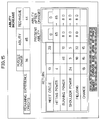
- the "remaining experience credits” are available in three classes: “muscle power”, “agility”, and “technique”. The number of the credits in these classes may be increased depending on the types of practices in "camp” and other factors.
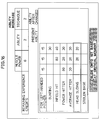
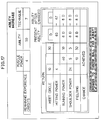
- Tables shown in FIGS. 15 and 16 contain numerical values which represent the numbers of "remaining experience credits” which are required to increase various "abilities” by one point.
- the "muscle power” has 36 “remaining experience credits”
- "batting power” has 65 points
- a month/week changing means 16 serves to spend time by one week each time the control key 24 is pressed once. For example, "February, 1st week” shown in FIG. 6 changes to "February, 2nd week” shown in FIG. 7 and then to "February, 3rd week” shown in FIG. 8, so that time is incremented by one week at a time.
- the number of years spent by the baseball player with a baseball team is also displayed in an upper area on the display screens shown in FIGS. 6 through 11.
- a physical/mental condition changing means 17 serves to represent "physical shape” and "guts" with respective face marks as shown in an upper right area in FIG. 6.
- the "physical shape” can be reduced when the baseball player practices too much in “camp” (see a lower left area in FIG. 6), and can be increased by “recovery” (see the lower left area in FIG. 6), hospitalization, or the like.
- the "guts” can be increased or reduced by "camp", an event, "recovery", or “telephone” (see FIG. 9).
- a sound generating means 18 send signals to a loudspeaker 31 to generate speech sounds and effect sounds.
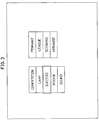
- FIG. 3 shows an initial screen image in which various video games can be selected. If a "success" game is selected in the initial screen image by a cursor as shown in FIG. 3, then a screen image shown in FIG. 4 is displayed on the display monitor 3.
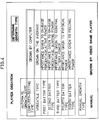
- the screen image shown in FIG. 4 serves to register a rookie baseball player in two alternative modes, i.e., "automatic growth type” and "manual growth type".
- the growth of a registered rookie baseball player is controlled by the microcomputer.
- the “manual growth type” the growth of a registered rookie baseball player is controlled manually by the video game player according to custom settings.
- the "automatic growth type” is selected, there are available seven baseball player types, i.e., a "computer-setting type", a "versatile type”, a "first batter type”, a “second batter type”, a "third batter type", a "fourth batter type", and an "eighth batter type” to choose from.
- the cursor is set to the "computer-setting type”.
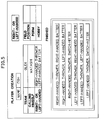
- FIG. 5 shows a next screen image for entering personal data to identify a rookie baseball player.
- the personal data include "name”, “right- or left-handed”, “field position”, “form”, etc.
- An item of data which is being established at present is displayed in an upper right area of the screen image.
- the screen image displays in its lower area data corresponding to data in a location where the cursor is positioned.
- the video game player can select desired data from the data displayed in the lower area of the screen image.
- the cursor is set to "right-handed thrower, left-handed batter".
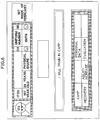
- FIG. 6 shows a next screen image for indicating speech and action.
- the screen image shown in FIG. 6 displays "camp”, “recovery”, “ability increase”, “personal data”, and “evaluation” which can be selected.
- the cursor is set to the "camp”.
- FIG. 7 shows a screen image displayed when the "camp” is selected.
- the screen image contains practices “batting", “teeing”, “dashing” (to which the cursor is set), “running”, “knocking”, fielding", “muscle training”, and “return”.
- the numbers of “remaining experience credits” in the different classes are increased or decreased according to the probability determined by the probability changing means 14. For example, if the practice "muscle training” is selected, then the number of “remaining experience credits” for “muscle power” may increase, but the number of “remaining experience credits” for “technique” may decrease.
- "return” is selected, the displayed image returned to the preceding screen image.
- the practice "batting" depends on the ability of the video game player to increase or decrease the numbers of "remaining experience credits" according to the probability determined by the probability changing means 14.
- a screen image in which a ball is pitched by a batting pitcher similar to a screen image shown in FIG. 12 (described later on), is displayed for the baseball player to practice batting a predetermined number of balls.
- the video game player moves a meet cursor MC (FIG. 12), showing a region where the course of the ball meets the bat, vertically and horizontally with the cross key 23, and operates the control key 24 to hit the ball with the bat.
- the numbers of "remaining experience credits” are increased according to the probability determined by the probability changing means 14. Conversely, if the video game player fails to hit the ball, then the numbers of "remaining experience credits” are decreased according to the probability determined by the probability changing means 14.
- FIG. 8 shows a screen image displayed when "recovery” shown in FIG. 6 is selected.
- the screen image shown in FIG. 8 contains "rest”, “play”, and "return”.
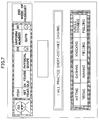
- FIG. 9 shows a screen image similar to the screen image shown in FIG. 6 except that "telephone” which is displayed under various conditions can be selected. If the baseball player is hospitalized due to an injury as a negative event, then "recovery” and “telephone” are displayed and “camp” is not displayed in the screen image shown in FIG. 9. Therefore, "camp” cannot be selected in the screen image shown in FIG. 9.
- FIG. 10 shows a next screen image displayed when "telephone” is selected in the screen image shown in FIG. 9.
- the baseball player can call “coach", “teammate”, or "home”. If the baseball player calls the “coach”, then various conversions are made, and basically the numbers of "remaining experience credits” are increased, but other points fall. If the baseball player calls the "teammate”, then the evaluation by the manager increases. If the baseball player calls the "home”, then the “guts” increases, but other points drop.
- the values of these various factors are controlled by the incrementing/decrementing means 13 according to a change in the probability determined by the probability changing means 14.
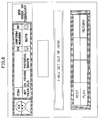
- FIG. 11 shows a displayed screen image showing a conversation in which the baseball player is ordered to play as a starting member of the farm team by the manager based on a favorable evaluation which he has made.
- FIG. 12 shows a screen image displayed next to the screen image shown in FIG. 11.
- the screen image shown in FIG. 12 displays the baseball player as he plays as a batter in a game of the farm team. The more hits the baseball player makes, the greater the evaluations made by the coach and the manager.
- FIG. 13 shows a screen image displayed to show the results of the baseball player played as a starting member of the farm team.
- the evaluations made by the coach and the manager fall, so does the chance of the baseball player to play as a starting member of the farm team.
- These results are read as factors by the probability changing means 14 for affecting subsequent addition and subtraction of "remaining experience credits”.
- FIG. 14 shows a screen image displayed when the baseball player has suffered an injury as a negative event.
- FIG. 16 shows a screen image which is displayed when the table shown in FIG. 15 is scrolled.
- the table displayed in FIG. 16 also contain numerical values which represent the numbers of "remaining experience credits” which are required to increase various "abilities" by one point.
- present and varied numerical values assigned to various "abilities" are omitted from illustration.
- FIG. 18 shows a screen image displayed for registering a play character as a rookie baseball player.
- a rookie baseball player is ordered to go to the major league team by the manager, his name is displayed in one of the boxes in the lower area of the screen image, and he can play in the major league team.
- the initial screen image shown in FIG. 3 is displayed in a step S1. If the video game player moves the cursor to "success" on the initial screen image with the cross key 23 and then operates the control key 24 in a step S3, then a "success” game is initiated (YES in the step S3). Otherwise (NO in the step S3), another game is initiated.
- a screen image displayed for registering a rookie baseball player as shown in FIG. 4 is displayed on the display monitor 3 in a step S7.
- the video game player selects the "manual growth type" or not in steps S9, S11.
- a screen image for entering personal data to identify a rookie baseball player as shown in FIG. 5 is displayed on the display monitor 3 in a step S13.
- the video game player registers desired data at respective items using the cross key 23 and the control key 24.
- “finished” on the screen image is clicked after the registration of the data in a step S15, a screen image for indicating speech and action shown in FIG. 6 is displayed in a step S17 (see FIG. 20).
- FIG. 20 shows a process for indicating speech and action.
- steps S19, S21, S23, S25, S27, and S29 determine whether "camp”, “recovery”, “telephone”, “ability increase”, “personal data”, and “evaluation”, respectively, are selected or not. If they are selected, then corresponding processes are carried out in respective steps S31, S33, S35, S37, S39, and S41. These processes in the steps S31, S33, S35, S37, S39, and S41 will be described in detail below.
- step S43 it is determined whether the baseball player has been instructed to go to the major league team by the manager or not in a step S43. At this time, "No" and “Yes” are displayed. If the video game player selects "Yes” with the cross key 23 and the control key 24, then the "success” game comes to an end, and the process shown in FIG. 20 is finished. Although not shown in FIG. 20, if the video game player wants to interrupt the "success” game, then the video game player resets the game in a given screen image, whereupon the data entered so far are stored and the process shown in FIG. 20 is finished. The process shown in FIG. 20 is also finished when a certain period of time, e.g., 3 years, in the "success" game has elapsed.
- a certain period of time e.g., 3 years
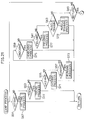
- camp is selected in the step S19 shown in FIG. 20, a screen image shown in FIG. 7 is displayed on the display monitor 3, and a process of "camp” shown in FIG. 21 is executed.
- FIG. 21 it is determined whether either one of the practices "batting", “teeing”, “dashing” (to which the cursor is set), "running”, “knocking”, “fielding”, and “muscle training” is selected in steps S51, S53, S55, S57, S59, S61, and S63. If they are selected, then corresponding processes are carried out in respective steps S67, S69, S71, S73, S75, S77, and S79. If “return” is selected in a step S65, then control goes back to the step S17 (FIG. 20). Until any one of the practices is selected, control is looped, i.e., goes from the step S65 to the step S51. Basically, the probability changing means 14 is set to different probabilities with respect to the respective practices.
- a screen image similar to the screen image shown in FIG. 12 is displayed on the display monitor 3.
- the batting practice is carried out according to a process shown in FIG. 22.
- a batting practice image is displayed, and the batting pitcher throws a ball in the batting practice image in a step S91.
- the video game player moves the meet cursor MC on the batting practice image with the cross key 23, and instructs the displayed baseball player to swing the bat with the control key 24.
- the result of the batting practice is displayed in an image similar to the screen image shown in FIG. 13.
- the result of the batting practice is determined in a step S95.
- An event takes place and is displayed in a step S97, and a probability is established to vary the "remaining experience credits" in a step S99. Specifically, the probability to vary the "remaining experience credits" is changed by the probability changing means 14 based on the result of the batting practice.
- the probability for increasing the number of "remaining experience credits” is increased, i.e., the number of “remaining experience credits” for "technique” is increased by a large number of credits, and the "physical shape” of the baseball player is reduced. As a whole, therefore, the advantages and disadvantages of the baseball player are canceled out.
- the probability for reducing the number of "remaining experience credits” is increased, i.e., the number of “remaining experience credits” for "technique” is reduced.
- the probability for increasing or reducing the number of "remaining experience credits” is varied in small increments or decrements in view of various other factors including "physical shape", “guts”, the number of months and weeks that have passed, and the practicing condition in previous "camp”, etc.
- FIG. 23 shows a process that is carried out when "recovery" on the screen image shown in FIG. 6 is indicated.
- the screen image shown in FIG. 8 is displayed in a step S111. It is determined whether either one of "rest”, “play”, and “return” is selected in steps S113, S115, and S117. If “rest” and “play” are selected in the steps S113, S115, then corresponding processes are carried out in respective steps S119, S121. If “return” is selected in the step S117, then control goes back to the step S113.
- FIG. 24 shows a process that is carried out when "telephone” on the screen image shown in FIG. 9 is indicated.
- the screen image shown in FIG. 10 is displayed in a step S131. It is determined whether either one of "coach”, “teammate”, “home”, and “return” is selected in steps S133, S135, S137, and S139. If “coach”, “teammate”, and “home” are selected in the steps S133, S135, S137, then corresponding processes are carried out in respective steps S141, S143, S145. If “return” is selected in the step S139, then control goes back to the step S133.
- FIGS. 11 through 13 show successive screen images which are displayed when the baseball player is ordered to play as a starting member in a game of the farm team by the manager.
- FIG. 11 shows a screen cage which contains an order from the manager to play as a starting member.
- FIG. 12 shows a screen image in which the baseball player is standing as a batter in a batter's box. In FIG. 12, the video game player moves the meet cursor MC horizontally and vertically with the cross key 23 and causes the batter to swing the bat with the control key 24, trying to hit the ball.
- FIG. 13 shows the batting results of the baseball player. The more the number of hits, the confidence which the coach and the manager has in the baseball player is increased. Otherwise, the confidence in the baseball player is reduced.
- the confidence thus determined is reflected in the "guts" . Since the speech and action of the play character as the baseball player employ elements directly involving the abilities of the video game player, as described above, the video game develops many aspects as the play character grows, and makes itself interesting and gives the video game player a lot of fun.
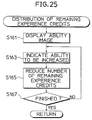
- FIG. 25 shows a process for distributing "remaining experience credits".
- the screen images shown in FIGS. 15 through 17 are displayed in a step S161.
- the present ability increases to the ability after it has changed, by a rank corresponding to the number of times that the control key 24 is pressed.
- the ability is increased, the corresponding number of "remaining experience credits" which the baseball player has is reduced in a step S165. Any of the abilities can be increased until the corresponding "remaining experience credits" are eliminated.
- the video game has been described as a game for growing a baseball player.
- the principles of the present invention are also applicable to various competing games in sports and other fields which require players to have individual abilities and unique characters.
- the data of the play character according to the embodiment may be stored in the RAM of the game cartridge 4 (see FIG. 1), and may be sent, with a password, into a competing game which is played by the video game player and another video game player to enjoy the competing game with the play character and a play character which has been grown by the other video game player.
Landscapes
- Engineering & Computer Science (AREA)
- Multimedia (AREA)
- Physics & Mathematics (AREA)
- Human Computer Interaction (AREA)
- Optics & Photonics (AREA)
- Business, Economics & Management (AREA)
- Computer Security & Cryptography (AREA)
- General Business, Economics & Management (AREA)
- Acoustics & Sound (AREA)
- Theoretical Computer Science (AREA)
- Processing Or Creating Images (AREA)
- Electrically Operated Instructional Devices (AREA)
- Management, Administration, Business Operations System, And Electronic Commerce (AREA)
Priority Applications (3)
| Application Number | Priority Date | Filing Date | Title |
|---|---|---|---|
| EP96118925A EP0844010B1 (fr) | 1996-11-26 | 1996-11-26 | Appareil et méthode pour le contrôle d'aptitudes d'un caractère de jeu dans un jeu vidéo et support d'enregistrement de jeu vidéo |
| DE69628174T DE69628174T2 (de) | 1996-11-26 | 1996-11-26 | Vorrichtung und Methode zur Kontrolle der Fähigkeiten einer Spielfigur in einem Videospiel und Videospielspeichermedium |
| HK98108865.8A HK1008502B (en) | 1998-07-03 | Apparatus for and method of controlling the abilities of play character in video game and video game storage medium |
Applications Claiming Priority (1)
| Application Number | Priority Date | Filing Date | Title |
|---|---|---|---|
| EP96118925A EP0844010B1 (fr) | 1996-11-26 | 1996-11-26 | Appareil et méthode pour le contrôle d'aptitudes d'un caractère de jeu dans un jeu vidéo et support d'enregistrement de jeu vidéo |
Publications (3)
| Publication Number | Publication Date |
|---|---|
| EP0844010A2 true EP0844010A2 (fr) | 1998-05-27 |
| EP0844010A3 EP0844010A3 (fr) | 1998-06-24 |
| EP0844010B1 EP0844010B1 (fr) | 2003-05-14 |
Family
ID=8223434
Family Applications (1)
| Application Number | Title | Priority Date | Filing Date |
|---|---|---|---|
| EP96118925A Expired - Lifetime EP0844010B1 (fr) | 1996-11-26 | 1996-11-26 | Appareil et méthode pour le contrôle d'aptitudes d'un caractère de jeu dans un jeu vidéo et support d'enregistrement de jeu vidéo |
Country Status (2)
| Country | Link |
|---|---|
| EP (1) | EP0844010B1 (fr) |
| DE (1) | DE69628174T2 (fr) |
Cited By (10)
| Publication number | Priority date | Publication date | Assignee | Title |
|---|---|---|---|---|
| GB2334457A (en) * | 1997-10-24 | 1999-08-25 | Rare Limited | Character oriented game memory |
| EP0992927A1 (fr) * | 1998-10-06 | 2000-04-12 | Konami Co., Ltd. | Méthode pour le controle du comportement d'un carectère dans un jeu vidéo, et support d'enregistrement lisible par ordinateur avec le jeu vidéo stocké dedans |
| EP1010445A1 (fr) * | 1998-12-11 | 2000-06-21 | Kabushiki Kaisha Konami Computer Entertainment Osaka | Appareil de jeu vidéo, méthode de contrôle de jeu pour jeu vidéo et support d'enregistrement correspondant |
| EP1010447A1 (fr) * | 1998-12-11 | 2000-06-21 | Kabushiki Kaisha Konami Computer Entertainment Osaka | Appareil de jeu vidéo, méthode de contrôle pour solliciter des charactères vidéo pour joindre une équipe simulée, et support lisible d'enregistrement pour programme de contrôle pour solliciter des charactères vidéo pour joindre une équipe simulée |
| EP1016438A1 (fr) * | 1998-12-28 | 2000-07-05 | Kabushiki Kaisha Konami Computer Entertainment Osaka | Appareil de jeu vidéo, méthode de contrôle de jeu pour jeu vidéo et support d'enregistrement correspondant |
| EP1110586A3 (fr) * | 1999-12-14 | 2001-08-29 | KCEO Inc. | Un appareil de jeu vidéo, une méthode de contrôle pour entrainer un caractère et un support d'enregistrement lisible correspondant |
| EP1160748A3 (fr) * | 2000-03-31 | 2002-02-13 | KCEO Inc. | Système de jeu en réseau, appareil de jeu en réseau, méthode de jeu en réseau et support d'enregistrement lisible comprenant un programme de jeu en réseau |
| EP1078663A3 (fr) * | 1999-07-26 | 2002-11-06 | Konami Corporation | Sytème de jeu vidéo, méthode d'affichage de jeu vidéo et suport lisible d'enregistrement pour programme d'affichage de jeu vidéo |
| EP1051999A3 (fr) * | 1999-05-13 | 2002-12-18 | Konami Co., Ltd. | Dispositif de jeu vidéo de compétition, méthode d'exécution d'un jeu vidéo de compétition et support d'enregistrement lisible par ordinateur mémorisant un programme de jeu vidéo |
| EP1147796A3 (fr) * | 2000-04-20 | 2004-10-13 | KCEO Inc. | Appareil de jeu vidéo, méthode de création d'un nouvel entrainement et support d'enregistrement lisible correspondant |
Family Cites Families (5)
| Publication number | Priority date | Publication date | Assignee | Title |
|---|---|---|---|---|
| JPS5861774A (ja) * | 1981-10-07 | 1983-04-12 | カシオ計算機株式会社 | ゲ−ム機能を備えた小型電子機器 |
| JP2794230B2 (ja) * | 1991-07-16 | 1998-09-03 | 株式会社スクウェア | ビデオ・ゲーム装置,その制御方法および制御ディバイス |
| US5580308A (en) * | 1993-07-14 | 1996-12-03 | Casio Computer Co., Ltd. | Electronic battle game playing apparatus with facial montage generation |
| JPH07155463A (ja) * | 1993-12-09 | 1995-06-20 | Hudson Soft Co Ltd | 対戦型格闘ゲーム装置 |
| JP3757425B2 (ja) * | 1994-06-27 | 2006-03-22 | 株式会社セガ | テレビゲーム装置及びテレビゲーム制御方法 |
-
1996
- 1996-11-26 DE DE69628174T patent/DE69628174T2/de not_active Expired - Lifetime
- 1996-11-26 EP EP96118925A patent/EP0844010B1/fr not_active Expired - Lifetime
Non-Patent Citations (1)
| Title |
|---|
| None |
Cited By (19)
| Publication number | Priority date | Publication date | Assignee | Title |
|---|---|---|---|---|
| GB2334457A (en) * | 1997-10-24 | 1999-08-25 | Rare Limited | Character oriented game memory |
| GB2334456A (en) * | 1997-10-24 | 1999-08-25 | Rare Limited | Character oriented game memory |
| GB2334456B (en) * | 1997-10-24 | 2000-06-21 | Rare Limited | Character oriented game memory |
| EP0992927A1 (fr) * | 1998-10-06 | 2000-04-12 | Konami Co., Ltd. | Méthode pour le controle du comportement d'un carectère dans un jeu vidéo, et support d'enregistrement lisible par ordinateur avec le jeu vidéo stocké dedans |
| US6406370B1 (en) | 1998-10-06 | 2002-06-18 | Konami Co., Ltd. | Method for controlling character behavior in video games, video game machine, and computer-readable recording medium on which video game program is recorded |
| EP1010445A1 (fr) * | 1998-12-11 | 2000-06-21 | Kabushiki Kaisha Konami Computer Entertainment Osaka | Appareil de jeu vidéo, méthode de contrôle de jeu pour jeu vidéo et support d'enregistrement correspondant |
| EP1010447A1 (fr) * | 1998-12-11 | 2000-06-21 | Kabushiki Kaisha Konami Computer Entertainment Osaka | Appareil de jeu vidéo, méthode de contrôle pour solliciter des charactères vidéo pour joindre une équipe simulée, et support lisible d'enregistrement pour programme de contrôle pour solliciter des charactères vidéo pour joindre une équipe simulée |
| US6270402B1 (en) | 1998-12-11 | 2001-08-07 | Kabushiki Kaisha Konami Computer Entertainment Osaka | Video game device, control method for processing of soliciting video characters to join simulated team, and readable recording medium recording control programs for processing of soliciting video characters to join simulated team |
| US6491582B1 (en) | 1998-12-11 | 2002-12-10 | Kabushiki Kaisha Konami Computer Entertainment | Video game device, play control method for video game, and readable recording medium recording the method |
| EP1016438A1 (fr) * | 1998-12-28 | 2000-07-05 | Kabushiki Kaisha Konami Computer Entertainment Osaka | Appareil de jeu vidéo, méthode de contrôle de jeu pour jeu vidéo et support d'enregistrement correspondant |
| US6342008B1 (en) | 1998-12-28 | 2002-01-29 | Kabushiki Kaisha Konami Computer Entertainment Osaka | Video game device, play control method for video game, and readable recording medium recording the method |
| EP1051999A3 (fr) * | 1999-05-13 | 2002-12-18 | Konami Co., Ltd. | Dispositif de jeu vidéo de compétition, méthode d'exécution d'un jeu vidéo de compétition et support d'enregistrement lisible par ordinateur mémorisant un programme de jeu vidéo |
| EP1078663A3 (fr) * | 1999-07-26 | 2002-11-06 | Konami Corporation | Sytème de jeu vidéo, méthode d'affichage de jeu vidéo et suport lisible d'enregistrement pour programme d'affichage de jeu vidéo |
| US6579183B1 (en) | 1999-07-26 | 2003-06-17 | Konami Corporation | Video game system, a video game display method and a readable storage medium storing a video game display program |
| EP1110586A3 (fr) * | 1999-12-14 | 2001-08-29 | KCEO Inc. | Un appareil de jeu vidéo, une méthode de contrôle pour entrainer un caractère et un support d'enregistrement lisible correspondant |
| US7300344B2 (en) | 1999-12-14 | 2007-11-27 | Kceo Inc. | Video game apparatus, a character training controlling method, and a readable storage medium storing character training control programs |
| EP1160748A3 (fr) * | 2000-03-31 | 2002-02-13 | KCEO Inc. | Système de jeu en réseau, appareil de jeu en réseau, méthode de jeu en réseau et support d'enregistrement lisible comprenant un programme de jeu en réseau |
| US6855057B2 (en) | 2000-03-31 | 2005-02-15 | Kceo Inc. | Network game system, network game device, network game method and readable storage medium storing network game program |
| EP1147796A3 (fr) * | 2000-04-20 | 2004-10-13 | KCEO Inc. | Appareil de jeu vidéo, méthode de création d'un nouvel entrainement et support d'enregistrement lisible correspondant |
Also Published As
| Publication number | Publication date |
|---|---|
| HK1008502A1 (en) | 1999-05-14 |
| DE69628174D1 (de) | 2003-06-18 |
| EP0844010B1 (fr) | 2003-05-14 |
| DE69628174T2 (de) | 2004-03-18 |
| EP0844010A3 (fr) | 1998-06-24 |
Similar Documents
| Publication | Publication Date | Title |
|---|---|---|
| US5885156A (en) | Video game apparatus, method of controlling the growth of play character in video game, and video game medium therefor | |
| JP3474506B2 (ja) | ビデオゲーム装置、キャラクタ育成処理制御方法及びキャラクタ育成処理制御プログラムを記録したコンピュータ読み取り可能な記録媒体 | |
| JP3343099B2 (ja) | キャラクタ育成制御プログラムを記録したコンピュータ読み取り可能な記録媒体 | |
| EP1177822B1 (fr) | Méthode de déroulement de jeu, système de jeu et serveur | |
| JP5382292B2 (ja) | ネットワークゲームシステム | |
| JP7697719B2 (ja) | ゲームシステム、ゲームシステムの制御方法、及び、ゲーム装置のプログラム | |
| US20120034981A1 (en) | Game system, game system control method and storage medium | |
| JP6557901B2 (ja) | ゲームシステム、ゲーム制御装置、及びプログラム | |
| US11148053B2 (en) | Game system, game control device, and information storage medium | |
| KR20080094606A (ko) | 네트워트 게임 시스템 | |
| JP6218139B2 (ja) | ゲーム管理装置、ゲームシステム及びプログラム | |
| JP7161786B2 (ja) | ゲーム管理装置、ゲームシステム、ゲーム管理方法及びプログラム | |
| JP2004121420A (ja) | ゲームシステム、ゲームシステムの制御方法及びプログラム | |
| EP0844010B1 (fr) | Appareil et méthode pour le contrôle d'aptitudes d'un caractère de jeu dans un jeu vidéo et support d'enregistrement de jeu vidéo | |
| US20150174491A1 (en) | Updating virtual trading card characteristics | |
| JP6675724B2 (ja) | ゲームプログラムおよびゲームシステム | |
| US20020107059A1 (en) | Method of proceeding with a game while incorporating other elements into the actual game | |
| JP2002101400A (ja) | 実際の競技に他の要素を取り込み競技を進行させる方法 | |
| HK1008502B (en) | Apparatus for and method of controlling the abilities of play character in video game and video game storage medium | |
| JP7045719B2 (ja) | プログラム、ゲーム制御方法、ゲーム制御装置及びゲームシステム | |
| TWI882434B (zh) | 一種競賽評估系統 | |
| JP7168870B2 (ja) | ゲームシステムおよびゲーム制御方法 | |
| US20260102712A1 (en) | Evaluation method for performing competition rankings | |
| JP7316667B2 (ja) | プログラム、ゲーム制御方法、ゲーム制御装置及びゲームシステム | |
| KR20020041588A (ko) | 실제의 경기에 다른 요소를 복합시켜 경기를 진행시키는방법 |
Legal Events
| Date | Code | Title | Description |
|---|---|---|---|
| PUAI | Public reference made under article 153(3) epc to a published international application that has entered the european phase |
Free format text: ORIGINAL CODE: 0009012 |
|
| PUAL | Search report despatched |
Free format text: ORIGINAL CODE: 0009013 |
|
| AK | Designated contracting states |
Kind code of ref document: A2 Designated state(s): DE GB |
|
| AX | Request for extension of the european patent |
Free format text: AL;LT;LV;RO;SI |
|
| AK | Designated contracting states |
Kind code of ref document: A3 Designated state(s): AT BE CH DE DK ES FI FR GB GR IE IT LI LU MC NL PT SE |
|
| AX | Request for extension of the european patent |
Free format text: AL;LT;LV;RO;SI |
|
| 17P | Request for examination filed |
Effective date: 19981119 |
|
| AKX | Designation fees paid |
Free format text: DE GB |
|
| RBV | Designated contracting states (corrected) |
Designated state(s): DE GB |
|
| RAP1 | Party data changed (applicant data changed or rights of an application transferred) |
Owner name: KABUSHIKI KAISHA KONAMI COMPUTER ENTERTAINMENT OSA |
|
| RBV | Designated contracting states (corrected) |
Designated state(s): DE GB |
|
| 17Q | First examination report despatched |
Effective date: 20010423 |
|
| GRAG | Despatch of communication of intention to grant |
Free format text: ORIGINAL CODE: EPIDOS AGRA |
|
| GRAG | Despatch of communication of intention to grant |
Free format text: ORIGINAL CODE: EPIDOS AGRA |
|
| GRAH | Despatch of communication of intention to grant a patent |
Free format text: ORIGINAL CODE: EPIDOS IGRA |
|
| GRAH | Despatch of communication of intention to grant a patent |
Free format text: ORIGINAL CODE: EPIDOS IGRA |
|
| GRAH | Despatch of communication of intention to grant a patent |
Free format text: ORIGINAL CODE: EPIDOS IGRA |
|
| GRAA | (expected) grant |
Free format text: ORIGINAL CODE: 0009210 |
|
| AK | Designated contracting states |
Designated state(s): DE GB |
|
| REG | Reference to a national code |
Ref country code: GB Ref legal event code: FG4D |
|
| RIC1 | Information provided on ipc code assigned before grant |
Ipc: 7A 63F 13/00 A |
|
| REF | Corresponds to: |
Ref document number: 69628174 Country of ref document: DE Date of ref document: 20030618 Kind code of ref document: P |
|
| PLBE | No opposition filed within time limit |
Free format text: ORIGINAL CODE: 0009261 |
|
| STAA | Information on the status of an ep patent application or granted ep patent |
Free format text: STATUS: NO OPPOSITION FILED WITHIN TIME LIMIT |
|
| 26N | No opposition filed |
Effective date: 20040217 |
|
| REG | Reference to a national code |
Ref country code: GB Ref legal event code: 732E Free format text: REGISTERED BETWEEN 20090514 AND 20090520 |
|
| PGFP | Annual fee paid to national office [announced via postgrant information from national office to epo] |
Ref country code: DE Payment date: 20121121 Year of fee payment: 17 |
|
| PGFP | Annual fee paid to national office [announced via postgrant information from national office to epo] |
Ref country code: GB Payment date: 20121120 Year of fee payment: 17 |
|
| GBPC | Gb: european patent ceased through non-payment of renewal fee |
Effective date: 20131126 |
|
| REG | Reference to a national code |
Ref country code: DE Ref legal event code: R119 Ref document number: 69628174 Country of ref document: DE Effective date: 20140603 |
|
| PG25 | Lapsed in a contracting state [announced via postgrant information from national office to epo] |
Ref country code: DE Free format text: LAPSE BECAUSE OF NON-PAYMENT OF DUE FEES Effective date: 20140603 |
|
| PG25 | Lapsed in a contracting state [announced via postgrant information from national office to epo] |
Ref country code: GB Free format text: LAPSE BECAUSE OF NON-PAYMENT OF DUE FEES Effective date: 20131126 |