EP0850974B1 - Polymides ramifiés en forme de H - Google Patents
Polymides ramifiés en forme de H Download PDFInfo
- Publication number
- EP0850974B1 EP0850974B1 EP97122686A EP97122686A EP0850974B1 EP 0850974 B1 EP0850974 B1 EP 0850974B1 EP 97122686 A EP97122686 A EP 97122686A EP 97122686 A EP97122686 A EP 97122686A EP 0850974 B1 EP0850974 B1 EP 0850974B1
- Authority
- EP
- European Patent Office
- Prior art keywords
- building blocks
- polyamides
- amines
- carboxylic acids
- basic building
- Prior art date
- Legal status (The legal status is an assumption and is not a legal conclusion. Google has not performed a legal analysis and makes no representation as to the accuracy of the status listed.)
- Expired - Lifetime
Links
- 229920002647 polyamide Polymers 0.000 title claims description 76
- 239000004952 Polyamide Substances 0.000 title claims description 75
- 150000001412 amines Chemical class 0.000 claims description 34
- 150000001735 carboxylic acids Chemical class 0.000 claims description 31
- 239000000203 mixture Substances 0.000 claims description 21
- 125000000524 functional group Chemical group 0.000 claims description 16
- 238000000465 moulding Methods 0.000 claims description 15
- 238000000034 method Methods 0.000 claims description 13
- 238000006243 chemical reaction Methods 0.000 claims description 11
- 238000004519 manufacturing process Methods 0.000 claims description 9
- 150000003951 lactams Chemical class 0.000 claims description 6
- KXDHJXZQYSOELW-UHFFFAOYSA-N Carbamic acid Chemical class NC(O)=O KXDHJXZQYSOELW-UHFFFAOYSA-N 0.000 claims description 5
- 238000001125 extrusion Methods 0.000 claims description 4
- 239000000835 fiber Substances 0.000 claims description 4
- 238000001746 injection moulding Methods 0.000 claims description 4
- 229910052799 carbon Inorganic materials 0.000 claims description 2
- 239000004135 Bone phosphate Substances 0.000 claims 1
- 238000000071 blow moulding Methods 0.000 claims 1
- 238000009987 spinning Methods 0.000 claims 1
- 229920000642 polymer Polymers 0.000 description 16
- JBKVHLHDHHXQEQ-UHFFFAOYSA-N epsilon-caprolactam Chemical compound O=C1CCCCCN1 JBKVHLHDHHXQEQ-UHFFFAOYSA-N 0.000 description 12
- -1 ε-aminocaproic acid Diethylenetriamine Chemical compound 0.000 description 12
- QMKYBPDZANOJGF-UHFFFAOYSA-N benzene-1,3,5-tricarboxylic acid Chemical compound OC(=O)C1=CC(C(O)=O)=CC(C(O)=O)=C1 QMKYBPDZANOJGF-UHFFFAOYSA-N 0.000 description 10
- 125000002843 carboxylic acid group Chemical group 0.000 description 10
- 239000000155 melt Substances 0.000 description 10
- XLYOFNOQVPJJNP-UHFFFAOYSA-N water Chemical compound O XLYOFNOQVPJJNP-UHFFFAOYSA-N 0.000 description 9
- WNLRTRBMVRJNCN-UHFFFAOYSA-N adipic acid Chemical compound OC(=O)CCCCC(O)=O WNLRTRBMVRJNCN-UHFFFAOYSA-N 0.000 description 8
- 125000003277 amino group Chemical group 0.000 description 7
- NAQMVNRVTILPCV-UHFFFAOYSA-N hexane-1,6-diamine Chemical compound NCCCCCCN NAQMVNRVTILPCV-UHFFFAOYSA-N 0.000 description 7
- WPYMKLBDIGXBTP-UHFFFAOYSA-N benzoic acid Chemical compound OC(=O)C1=CC=CC=C1 WPYMKLBDIGXBTP-UHFFFAOYSA-N 0.000 description 6
- 239000000178 monomer Substances 0.000 description 5
- 238000012545 processing Methods 0.000 description 5
- 150000003839 salts Chemical class 0.000 description 5
- 239000000243 solution Substances 0.000 description 5
- IJGRMHOSHXDMSA-UHFFFAOYSA-N Atomic nitrogen Chemical compound N#N IJGRMHOSHXDMSA-UHFFFAOYSA-N 0.000 description 4
- 239000002253 acid Substances 0.000 description 4
- 239000001361 adipic acid Substances 0.000 description 4
- 235000011037 adipic acid Nutrition 0.000 description 4
- 230000015572 biosynthetic process Effects 0.000 description 4
- 125000004432 carbon atom Chemical group C* 0.000 description 4
- XBDQKXXYIPTUBI-UHFFFAOYSA-N dimethylselenoniopropionate Natural products CCC(O)=O XBDQKXXYIPTUBI-UHFFFAOYSA-N 0.000 description 4
- 239000005711 Benzoic acid Substances 0.000 description 3
- 125000001931 aliphatic group Chemical group 0.000 description 3
- 125000003118 aryl group Chemical group 0.000 description 3
- 235000010233 benzoic acid Nutrition 0.000 description 3
- 238000007872 degassing Methods 0.000 description 3
- 150000004985 diamines Chemical class 0.000 description 3
- 235000014113 dietary fatty acids Nutrition 0.000 description 3
- 238000001035 drying Methods 0.000 description 3
- 239000000975 dye Substances 0.000 description 3
- 239000000194 fatty acid Substances 0.000 description 3
- 229930195729 fatty acid Natural products 0.000 description 3
- 150000004665 fatty acids Chemical class 0.000 description 3
- 239000000945 filler Substances 0.000 description 3
- 238000001595 flow curve Methods 0.000 description 3
- 239000011261 inert gas Substances 0.000 description 3
- 239000012071 phase Substances 0.000 description 3
- 238000006068 polycondensation reaction Methods 0.000 description 3
- 238000002360 preparation method Methods 0.000 description 3
- 238000012546 transfer Methods 0.000 description 3
- QURGMSIQFRADOZ-UHFFFAOYSA-N 5-(3,5-dicarboxyphenyl)benzene-1,3-dicarboxylic acid Chemical compound OC(=O)C1=CC(C(O)=O)=CC(C=2C=C(C=C(C=2)C(O)=O)C(O)=O)=C1 QURGMSIQFRADOZ-UHFFFAOYSA-N 0.000 description 2
- KDCGOANMDULRCW-UHFFFAOYSA-N 7H-purine Chemical compound N1=CNC2=NC=NC2=C1 KDCGOANMDULRCW-UHFFFAOYSA-N 0.000 description 2
- IRIAEXORFWYRCZ-UHFFFAOYSA-N Butylbenzyl phthalate Chemical compound CCCCOC(=O)C1=CC=CC=C1C(=O)OCC1=CC=CC=C1 IRIAEXORFWYRCZ-UHFFFAOYSA-N 0.000 description 2
- RPNUMPOLZDHAAY-UHFFFAOYSA-N Diethylenetriamine Chemical compound NCCNCCN RPNUMPOLZDHAAY-UHFFFAOYSA-N 0.000 description 2
- YLQBMQCUIZJEEH-UHFFFAOYSA-N Furan Chemical compound C=1C=COC=1 YLQBMQCUIZJEEH-UHFFFAOYSA-N 0.000 description 2
- SIKJAQJRHWYJAI-UHFFFAOYSA-N Indole Chemical compound C1=CC=C2NC=CC2=C1 SIKJAQJRHWYJAI-UHFFFAOYSA-N 0.000 description 2
- JHWNWJKBPDFINM-UHFFFAOYSA-N Laurolactam Chemical compound O=C1CCCCCCCCCCCN1 JHWNWJKBPDFINM-UHFFFAOYSA-N 0.000 description 2
- OFOBLEOULBTSOW-UHFFFAOYSA-N Malonic acid Chemical compound OC(=O)CC(O)=O OFOBLEOULBTSOW-UHFFFAOYSA-N 0.000 description 2
- IPRJXAGUEGOFGG-UHFFFAOYSA-N N-butylbenzenesulfonamide Chemical compound CCCCNS(=O)(=O)C1=CC=CC=C1 IPRJXAGUEGOFGG-UHFFFAOYSA-N 0.000 description 2
- UFWIBTONFRDIAS-UHFFFAOYSA-N Naphthalene Chemical compound C1=CC=CC2=CC=CC=C21 UFWIBTONFRDIAS-UHFFFAOYSA-N 0.000 description 2
- JUJWROOIHBZHMG-UHFFFAOYSA-N Pyridine Chemical compound C1=CC=NC=C1 JUJWROOIHBZHMG-UHFFFAOYSA-N 0.000 description 2
- KAESVJOAVNADME-UHFFFAOYSA-N Pyrrole Chemical compound C=1C=CNC=1 KAESVJOAVNADME-UHFFFAOYSA-N 0.000 description 2
- SMWDFEZZVXVKRB-UHFFFAOYSA-N Quinoline Chemical compound N1=CC=CC2=CC=CC=C21 SMWDFEZZVXVKRB-UHFFFAOYSA-N 0.000 description 2
- VYPSYNLAJGMNEJ-UHFFFAOYSA-N Silicium dioxide Chemical compound O=[Si]=O VYPSYNLAJGMNEJ-UHFFFAOYSA-N 0.000 description 2
- KKEYFWRCBNTPAC-UHFFFAOYSA-N Terephthalic acid Chemical compound OC(=O)C1=CC=C(C(O)=O)C=C1 KKEYFWRCBNTPAC-UHFFFAOYSA-N 0.000 description 2
- YTPLMLYBLZKORZ-UHFFFAOYSA-N Thiophene Chemical compound C=1C=CSC=1 YTPLMLYBLZKORZ-UHFFFAOYSA-N 0.000 description 2
- GWEVSGVZZGPLCZ-UHFFFAOYSA-N Titan oxide Chemical compound O=[Ti]=O GWEVSGVZZGPLCZ-UHFFFAOYSA-N 0.000 description 2
- 239000012963 UV stabilizer Substances 0.000 description 2
- 150000001413 amino acids Chemical class 0.000 description 2
- MWPLVEDNUUSJAV-UHFFFAOYSA-N anthracene Chemical compound C1=CC=CC2=CC3=CC=CC=C3C=C21 MWPLVEDNUUSJAV-UHFFFAOYSA-N 0.000 description 2
- 150000004982 aromatic amines Chemical class 0.000 description 2
- WGQKYBSKWIADBV-UHFFFAOYSA-N benzylamine Chemical compound NCC1=CC=CC=C1 WGQKYBSKWIADBV-UHFFFAOYSA-N 0.000 description 2
- 230000000052 comparative effect Effects 0.000 description 2
- PAFZNILMFXTMIY-UHFFFAOYSA-N cyclohexylamine Chemical compound NC1CCCCC1 PAFZNILMFXTMIY-UHFFFAOYSA-N 0.000 description 2
- 239000000412 dendrimer Substances 0.000 description 2
- 229920000736 dendritic polymer Polymers 0.000 description 2
- ZUOUZKKEUPVFJK-UHFFFAOYSA-N diphenyl Chemical compound C1=CC=CC=C1C1=CC=CC=C1 ZUOUZKKEUPVFJK-UHFFFAOYSA-N 0.000 description 2
- POULHZVOKOAJMA-UHFFFAOYSA-N dodecanoic acid Chemical compound CCCCCCCCCCCC(O)=O POULHZVOKOAJMA-UHFFFAOYSA-N 0.000 description 2
- 239000012760 heat stabilizer Substances 0.000 description 2
- 125000000623 heterocyclic group Chemical group 0.000 description 2
- QQVIHTHCMHWDBS-UHFFFAOYSA-N isophthalic acid Chemical compound OC(=O)C1=CC=CC(C(O)=O)=C1 QQVIHTHCMHWDBS-UHFFFAOYSA-N 0.000 description 2
- 238000005259 measurement Methods 0.000 description 2
- 229910052751 metal Inorganic materials 0.000 description 2
- 239000002184 metal Substances 0.000 description 2
- 150000002739 metals Chemical class 0.000 description 2
- YSRFBCIGFNFMPS-UHFFFAOYSA-N naphthalene-1,3,5,7-tetracarboxylic acid Chemical compound C1=C(C(O)=O)C=C(C(O)=O)C2=CC(C(=O)O)=CC(C(O)=O)=C21 YSRFBCIGFNFMPS-UHFFFAOYSA-N 0.000 description 2
- LKKPNUDVOYAOBB-UHFFFAOYSA-N naphthalocyanine Chemical compound N1C(N=C2C3=CC4=CC=CC=C4C=C3C(N=C3C4=CC5=CC=CC=C5C=C4C(=N4)N3)=N2)=C(C=C2C(C=CC=C2)=C2)C2=C1N=C1C2=CC3=CC=CC=C3C=C2C4=N1 LKKPNUDVOYAOBB-UHFFFAOYSA-N 0.000 description 2
- 229910052757 nitrogen Inorganic materials 0.000 description 2
- BDJRBEYXGGNYIS-UHFFFAOYSA-N nonanedioic acid Chemical compound OC(=O)CCCCCCCC(O)=O BDJRBEYXGGNYIS-UHFFFAOYSA-N 0.000 description 2
- 230000003534 oscillatory effect Effects 0.000 description 2
- 238000012856 packing Methods 0.000 description 2
- YNPNZTXNASCQKK-UHFFFAOYSA-N phenanthrene Chemical compound C1=CC=C2C3=CC=CC=C3C=CC2=C1 YNPNZTXNASCQKK-UHFFFAOYSA-N 0.000 description 2
- IEQIEDJGQAUEQZ-UHFFFAOYSA-N phthalocyanine Chemical compound N1C(N=C2C3=CC=CC=C3C(N=C3C4=CC=CC=C4C(=N4)N3)=N2)=C(C=CC=C2)C2=C1N=C1C2=CC=CC=C2C4=N1 IEQIEDJGQAUEQZ-UHFFFAOYSA-N 0.000 description 2
- 239000000049 pigment Substances 0.000 description 2
- 239000004014 plasticizer Substances 0.000 description 2
- 238000006116 polymerization reaction Methods 0.000 description 2
- 239000000047 product Substances 0.000 description 2
- 235000019260 propionic acid Nutrition 0.000 description 2
- CYIDZMCFTVVTJO-UHFFFAOYSA-N pyromellitic acid Chemical compound OC(=O)C1=CC(C(O)=O)=C(C(O)=O)C=C1C(O)=O CYIDZMCFTVVTJO-UHFFFAOYSA-N 0.000 description 2
- IUVKMZGDUIUOCP-BTNSXGMBSA-N quinbolone Chemical compound O([C@H]1CC[C@H]2[C@H]3[C@@H]([C@]4(C=CC(=O)C=C4CC3)C)CC[C@@]21C)C1=CCCC1 IUVKMZGDUIUOCP-BTNSXGMBSA-N 0.000 description 2
- 239000012744 reinforcing agent Substances 0.000 description 2
- CXMXRPHRNRROMY-UHFFFAOYSA-N sebacic acid Chemical compound OC(=O)CCCCCCCCC(O)=O CXMXRPHRNRROMY-UHFFFAOYSA-N 0.000 description 2
- 239000007790 solid phase Substances 0.000 description 2
- 238000003860 storage Methods 0.000 description 2
- TYFQFVWCELRYAO-UHFFFAOYSA-N suberic acid Chemical compound OC(=O)CCCCCCC(O)=O TYFQFVWCELRYAO-UHFFFAOYSA-N 0.000 description 2
- MBYLVOKEDDQJDY-UHFFFAOYSA-N tris(2-aminoethyl)amine Chemical compound NCCN(CCN)CCN MBYLVOKEDDQJDY-UHFFFAOYSA-N 0.000 description 2
- OBETXYAYXDNJHR-SSDOTTSWSA-M (2r)-2-ethylhexanoate Chemical compound CCCC[C@@H](CC)C([O-])=O OBETXYAYXDNJHR-SSDOTTSWSA-M 0.000 description 1
- WRIDQFICGBMAFQ-UHFFFAOYSA-N (E)-8-Octadecenoic acid Natural products CCCCCCCCCC=CCCCCCCC(O)=O WRIDQFICGBMAFQ-UHFFFAOYSA-N 0.000 description 1
- YJTKZCDBKVTVBY-UHFFFAOYSA-N 1,3-Diphenylbenzene Chemical group C1=CC=CC=C1C1=CC=CC(C=2C=CC=CC=2)=C1 YJTKZCDBKVTVBY-UHFFFAOYSA-N 0.000 description 1
- 150000005207 1,3-dihydroxybenzenes Chemical class 0.000 description 1
- 150000005208 1,4-dihydroxybenzenes Chemical class 0.000 description 1
- GOJUJUVQIVIZAV-UHFFFAOYSA-N 2-amino-4,6-dichloropyrimidine-5-carbaldehyde Chemical group NC1=NC(Cl)=C(C=O)C(Cl)=N1 GOJUJUVQIVIZAV-UHFFFAOYSA-N 0.000 description 1
- HASUJDLTAYUWCO-UHFFFAOYSA-N 2-aminoundecanoic acid Chemical compound CCCCCCCCCC(N)C(O)=O HASUJDLTAYUWCO-UHFFFAOYSA-N 0.000 description 1
- YCMLQMDWSXFTIF-UHFFFAOYSA-N 2-methylbenzenesulfonimidic acid Chemical compound CC1=CC=CC=C1S(N)(=O)=O YCMLQMDWSXFTIF-UHFFFAOYSA-N 0.000 description 1
- LQJBNNIYVWPHFW-UHFFFAOYSA-N 20:1omega9c fatty acid Natural products CCCCCCCCCCC=CCCCCCCCC(O)=O LQJBNNIYVWPHFW-UHFFFAOYSA-N 0.000 description 1
- RNLHGQLZWXBQNY-UHFFFAOYSA-N 3-(aminomethyl)-3,5,5-trimethylcyclohexan-1-amine Chemical compound CC1(C)CC(N)CC(C)(CN)C1 RNLHGQLZWXBQNY-UHFFFAOYSA-N 0.000 description 1
- WUPHOULIZUERAE-UHFFFAOYSA-N 3-(oxolan-2-yl)propanoic acid Chemical compound OC(=O)CCC1CCCO1 WUPHOULIZUERAE-UHFFFAOYSA-N 0.000 description 1
- QSBYPNXLFMSGKH-UHFFFAOYSA-N 9-Heptadecensaeure Natural products CCCCCCCC=CCCCCCCCC(O)=O QSBYPNXLFMSGKH-UHFFFAOYSA-N 0.000 description 1
- 239000005995 Aluminium silicate Substances 0.000 description 1
- ROFVEXUMMXZLPA-UHFFFAOYSA-N Bipyridyl Chemical compound N1=CC=CC=C1C1=CC=CC=N1 ROFVEXUMMXZLPA-UHFFFAOYSA-N 0.000 description 1
- OKTJSMMVPCPJKN-UHFFFAOYSA-N Carbon Chemical group [C] OKTJSMMVPCPJKN-UHFFFAOYSA-N 0.000 description 1
- 229920000049 Carbon (fiber) Polymers 0.000 description 1
- 239000004215 Carbon black (E152) Substances 0.000 description 1
- 239000005977 Ethylene Substances 0.000 description 1
- DGAQECJNVWCQMB-PUAWFVPOSA-M Ilexoside XXIX Chemical compound C[C@@H]1CC[C@@]2(CC[C@@]3(C(=CC[C@H]4[C@]3(CC[C@@H]5[C@@]4(CC[C@@H](C5(C)C)OS(=O)(=O)[O-])C)C)[C@@H]2[C@]1(C)O)C)C(=O)O[C@H]6[C@@H]([C@H]([C@@H]([C@H](O6)CO)O)O)O.[Na+] DGAQECJNVWCQMB-PUAWFVPOSA-M 0.000 description 1
- 239000005639 Lauric acid Substances 0.000 description 1
- 239000006057 Non-nutritive feed additive Substances 0.000 description 1
- 239000005642 Oleic acid Substances 0.000 description 1
- ZQPPMHVWECSIRJ-UHFFFAOYSA-N Oleic acid Natural products CCCCCCCCC=CCCCCCCCC(O)=O ZQPPMHVWECSIRJ-UHFFFAOYSA-N 0.000 description 1
- OAICVXFJPJFONN-UHFFFAOYSA-N Phosphorus Chemical compound [P] OAICVXFJPJFONN-UHFFFAOYSA-N 0.000 description 1
- ZLMJMSJWJFRBEC-UHFFFAOYSA-N Potassium Chemical compound [K] ZLMJMSJWJFRBEC-UHFFFAOYSA-N 0.000 description 1
- FDLQZKYLHJJBHD-UHFFFAOYSA-N [3-(aminomethyl)phenyl]methanamine Chemical compound NCC1=CC=CC(CN)=C1 FDLQZKYLHJJBHD-UHFFFAOYSA-N 0.000 description 1
- YKTSYUJCYHOUJP-UHFFFAOYSA-N [O--].[Al+3].[Al+3].[O-][Si]([O-])([O-])[O-] Chemical compound [O--].[Al+3].[Al+3].[O-][Si]([O-])([O-])[O-] YKTSYUJCYHOUJP-UHFFFAOYSA-N 0.000 description 1
- 150000007513 acids Chemical class 0.000 description 1
- KWMYJGSOKLIBMW-UHFFFAOYSA-N acridine-1,3,6,8-tetracarboxylic acid Chemical compound OC(=O)C1=CC(C(O)=O)=CC2=NC3=CC(C(=O)O)=CC(C(O)=O)=C3C=C21 KWMYJGSOKLIBMW-UHFFFAOYSA-N 0.000 description 1
- 239000000654 additive Substances 0.000 description 1
- 150000007933 aliphatic carboxylic acids Chemical class 0.000 description 1
- 150000003973 alkyl amines Chemical class 0.000 description 1
- OBETXYAYXDNJHR-UHFFFAOYSA-N alpha-ethylcaproic acid Natural products CCCCC(CC)C(O)=O OBETXYAYXDNJHR-UHFFFAOYSA-N 0.000 description 1
- 235000012211 aluminium silicate Nutrition 0.000 description 1
- QCTBMLYLENLHLA-UHFFFAOYSA-N aminomethylbenzoic acid Chemical compound NCC1=CC=C(C(O)=O)C=C1 QCTBMLYLENLHLA-UHFFFAOYSA-N 0.000 description 1
- 229960003375 aminomethylbenzoic acid Drugs 0.000 description 1
- 239000003963 antioxidant agent Substances 0.000 description 1
- 239000007864 aqueous solution Substances 0.000 description 1
- 150000001491 aromatic compounds Chemical class 0.000 description 1
- 239000010425 asbestos Substances 0.000 description 1
- IRERQBUNZFJFGC-UHFFFAOYSA-L azure blue Chemical compound [Na+].[Na+].[Na+].[Na+].[Na+].[Na+].[Na+].[Na+].[Al+3].[Al+3].[Al+3].[Al+3].[Al+3].[Al+3].[S-]S[S-].[O-][Si]([O-])([O-])[O-].[O-][Si]([O-])([O-])[O-].[O-][Si]([O-])([O-])[O-].[O-][Si]([O-])([O-])[O-].[O-][Si]([O-])([O-])[O-].[O-][Si]([O-])([O-])[O-] IRERQBUNZFJFGC-UHFFFAOYSA-L 0.000 description 1
- 238000010923 batch production Methods 0.000 description 1
- ZOQOMVWXXWHKGT-UHFFFAOYSA-N benzene-1,3,5-tricarboxylic acid Chemical compound OC(=O)C1=CC(C(O)=O)=CC(C(O)=O)=C1.OC(=O)C1=CC(C(O)=O)=CC(C(O)=O)=C1 ZOQOMVWXXWHKGT-UHFFFAOYSA-N 0.000 description 1
- 239000012965 benzophenone Chemical class 0.000 description 1
- 150000008366 benzophenones Chemical class 0.000 description 1
- 125000003354 benzotriazolyl group Chemical class N1N=NC2=C1C=CC=C2* 0.000 description 1
- 125000001797 benzyl group Chemical group [H]C1=C([H])C([H])=C(C([H])=C1[H])C([H])([H])* 0.000 description 1
- 235000010290 biphenyl Nutrition 0.000 description 1
- 239000004305 biphenyl Substances 0.000 description 1
- BJQHLKABXJIVAM-UHFFFAOYSA-N bis(2-ethylhexyl) phthalate Chemical compound CCCCC(CC)COC(=O)C1=CC=CC=C1C(=O)OCC(CC)CCCC BJQHLKABXJIVAM-UHFFFAOYSA-N 0.000 description 1
- 150000001649 bromium compounds Chemical class 0.000 description 1
- 229910052980 cadmium sulfide Inorganic materials 0.000 description 1
- UHYPYGJEEGLRJD-UHFFFAOYSA-N cadmium(2+);selenium(2-) Chemical compound [Se-2].[Cd+2] UHYPYGJEEGLRJD-UHFFFAOYSA-N 0.000 description 1
- WUKWITHWXAAZEY-UHFFFAOYSA-L calcium difluoride Chemical compound [F-].[F-].[Ca+2] WUKWITHWXAAZEY-UHFFFAOYSA-L 0.000 description 1
- 229910001634 calcium fluoride Inorganic materials 0.000 description 1
- 239000000378 calcium silicate Substances 0.000 description 1
- 229910052918 calcium silicate Inorganic materials 0.000 description 1
- OYACROKNLOSFPA-UHFFFAOYSA-N calcium;dioxido(oxo)silane Chemical compound [Ca+2].[O-][Si]([O-])=O OYACROKNLOSFPA-UHFFFAOYSA-N 0.000 description 1
- 239000004917 carbon fiber Substances 0.000 description 1
- 239000007795 chemical reaction product Substances 0.000 description 1
- 150000001805 chlorine compounds Chemical class 0.000 description 1
- 239000003086 colorant Substances 0.000 description 1
- 238000002425 crystallisation Methods 0.000 description 1
- 230000008025 crystallization Effects 0.000 description 1
- UCVPKAZCQPRWAY-UHFFFAOYSA-N dibenzyl benzene-1,2-dicarboxylate Chemical compound C=1C=CC=C(C(=O)OCC=2C=CC=CC=2)C=1C(=O)OCC1=CC=CC=C1 UCVPKAZCQPRWAY-UHFFFAOYSA-N 0.000 description 1
- 150000001991 dicarboxylic acids Chemical class 0.000 description 1
- DMBHHRLKUKUOEG-UHFFFAOYSA-N diphenylamine Chemical class C=1C=CC=CC=1NC1=CC=CC=C1 DMBHHRLKUKUOEG-UHFFFAOYSA-N 0.000 description 1
- 150000002148 esters Chemical class 0.000 description 1
- 230000008020 evaporation Effects 0.000 description 1
- 238000001704 evaporation Methods 0.000 description 1
- 238000010101 extrusion blow moulding Methods 0.000 description 1
- 239000010433 feldspar Substances 0.000 description 1
- 238000007380 fibre production Methods 0.000 description 1
- 239000003063 flame retardant Substances 0.000 description 1
- 230000009969 flowable effect Effects 0.000 description 1
- 239000007789 gas Substances 0.000 description 1
- 239000003365 glass fiber Substances 0.000 description 1
- 239000008187 granular material Substances 0.000 description 1
- 150000002366 halogen compounds Chemical class 0.000 description 1
- 229930195733 hydrocarbon Natural products 0.000 description 1
- 150000002430 hydrocarbons Chemical class 0.000 description 1
- 125000004435 hydrogen atom Chemical group [H]* 0.000 description 1
- 230000003301 hydrolyzing effect Effects 0.000 description 1
- 150000003949 imides Chemical class 0.000 description 1
- 229910052738 indium Inorganic materials 0.000 description 1
- PZOUSPYUWWUPPK-UHFFFAOYSA-N indole Natural products CC1=CC=CC2=C1C=CN2 PZOUSPYUWWUPPK-UHFFFAOYSA-N 0.000 description 1
- RKJUIXBNRJVNHR-UHFFFAOYSA-N indolenine Natural products C1=CC=C2CC=NC2=C1 RKJUIXBNRJVNHR-UHFFFAOYSA-N 0.000 description 1
- 238000011835 investigation Methods 0.000 description 1
- 150000004694 iodide salts Chemical class 0.000 description 1
- QXJSBBXBKPUZAA-UHFFFAOYSA-N isooleic acid Natural products CCCCCCCC=CCCCCCCCCC(O)=O QXJSBBXBKPUZAA-UHFFFAOYSA-N 0.000 description 1
- NLYAJNPCOHFWQQ-UHFFFAOYSA-N kaolin Chemical compound O.O.O=[Al]O[Si](=O)O[Si](=O)O[Al]=O NLYAJNPCOHFWQQ-UHFFFAOYSA-N 0.000 description 1
- 229910052744 lithium Inorganic materials 0.000 description 1
- ZLNQQNXFFQJAID-UHFFFAOYSA-L magnesium carbonate Chemical compound [Mg+2].[O-]C([O-])=O ZLNQQNXFFQJAID-UHFFFAOYSA-L 0.000 description 1
- 239000001095 magnesium carbonate Substances 0.000 description 1
- 229910000021 magnesium carbonate Inorganic materials 0.000 description 1
- 238000002844 melting Methods 0.000 description 1
- 230000008018 melting Effects 0.000 description 1
- 229910000000 metal hydroxide Inorganic materials 0.000 description 1
- 150000004692 metal hydroxides Chemical class 0.000 description 1
- 239000010445 mica Substances 0.000 description 1
- 229910052618 mica group Inorganic materials 0.000 description 1
- 238000002156 mixing Methods 0.000 description 1
- 239000006082 mold release agent Substances 0.000 description 1
- 150000002762 monocarboxylic acid derivatives Chemical class 0.000 description 1
- ITZPOSYADVYECJ-UHFFFAOYSA-N n'-cyclohexylpropane-1,3-diamine Chemical compound NCCCNC1CCCCC1 ITZPOSYADVYECJ-UHFFFAOYSA-N 0.000 description 1
- ZETYUTMSJWMKNQ-UHFFFAOYSA-N n,n',n'-trimethylhexane-1,6-diamine Chemical compound CNCCCCCCN(C)C ZETYUTMSJWMKNQ-UHFFFAOYSA-N 0.000 description 1
- KYTZHLUVELPASH-UHFFFAOYSA-N naphthalene-1,2-dicarboxylic acid Chemical compound C1=CC=CC2=C(C(O)=O)C(C(=O)O)=CC=C21 KYTZHLUVELPASH-UHFFFAOYSA-N 0.000 description 1
- 125000001624 naphthyl group Chemical group 0.000 description 1
- 239000002667 nucleating agent Substances 0.000 description 1
- 239000003921 oil Substances 0.000 description 1
- ZQPPMHVWECSIRJ-KTKRTIGZSA-N oleic acid Chemical compound CCCCCCCC\C=C/CCCCCCCC(O)=O ZQPPMHVWECSIRJ-KTKRTIGZSA-N 0.000 description 1
- 150000002894 organic compounds Chemical class 0.000 description 1
- 230000003647 oxidation Effects 0.000 description 1
- 238000007254 oxidation reaction Methods 0.000 description 1
- TWNQGVIAIRXVLR-UHFFFAOYSA-N oxo(oxoalumanyloxy)alumane Chemical compound O=[Al]O[Al]=O TWNQGVIAIRXVLR-UHFFFAOYSA-N 0.000 description 1
- 230000000737 periodic effect Effects 0.000 description 1
- 150000002989 phenols Chemical class 0.000 description 1
- 150000003018 phosphorus compounds Chemical class 0.000 description 1
- 229920001343 polytetrafluoroethylene Polymers 0.000 description 1
- 239000004810 polytetrafluoroethylene Substances 0.000 description 1
- 150000004032 porphyrins Chemical class 0.000 description 1
- 239000011591 potassium Substances 0.000 description 1
- 229910052700 potassium Inorganic materials 0.000 description 1
- 230000002265 prevention Effects 0.000 description 1
- 230000001681 protective effect Effects 0.000 description 1
- UMJSCPRVCHMLSP-UHFFFAOYSA-N pyridine Natural products COC1=CC=CN=C1 UMJSCPRVCHMLSP-UHFFFAOYSA-N 0.000 description 1
- CHGYKYXGIWNSCD-UHFFFAOYSA-N pyridine-2,4,6-tricarboxylic acid Chemical compound OC(=O)C1=CC(C(O)=O)=NC(C(O)=O)=C1 CHGYKYXGIWNSCD-UHFFFAOYSA-N 0.000 description 1
- 239000010453 quartz Substances 0.000 description 1
- 229910052895 riebeckite Inorganic materials 0.000 description 1
- 150000003873 salicylate salts Chemical class 0.000 description 1
- 238000000926 separation method Methods 0.000 description 1
- 239000011734 sodium Substances 0.000 description 1
- 229910052708 sodium Inorganic materials 0.000 description 1
- HHJJPFYGIRKQOM-UHFFFAOYSA-N sodium;oxido-oxo-phenylphosphanium Chemical compound [Na+].[O-][P+](=O)C1=CC=CC=C1 HHJJPFYGIRKQOM-UHFFFAOYSA-N 0.000 description 1
- 239000004071 soot Substances 0.000 description 1
- 239000003381 stabilizer Substances 0.000 description 1
- QAOWNCQODCNURD-UHFFFAOYSA-N sulfuric acid Substances OS(O)(=O)=O QAOWNCQODCNURD-UHFFFAOYSA-N 0.000 description 1
- 239000000454 talc Substances 0.000 description 1
- 229910052623 talc Inorganic materials 0.000 description 1
- 229930192474 thiophene Natural products 0.000 description 1
- 239000004408 titanium dioxide Substances 0.000 description 1
- LMYRWZFENFIFIT-UHFFFAOYSA-N toluene-4-sulfonamide Chemical compound CC1=CC=C(S(N)(=O)=O)C=C1 LMYRWZFENFIFIT-UHFFFAOYSA-N 0.000 description 1
- 238000012549 training Methods 0.000 description 1
- ABVVEAHYODGCLZ-UHFFFAOYSA-N tridecan-1-amine Chemical compound CCCCCCCCCCCCCN ABVVEAHYODGCLZ-UHFFFAOYSA-N 0.000 description 1
- 230000007306 turnover Effects 0.000 description 1
- 235000013799 ultramarine blue Nutrition 0.000 description 1
- 229910052882 wollastonite Inorganic materials 0.000 description 1
- 239000010456 wollastonite Substances 0.000 description 1
Images
Classifications
-
- C—CHEMISTRY; METALLURGY
- C08—ORGANIC MACROMOLECULAR COMPOUNDS; THEIR PREPARATION OR CHEMICAL WORKING-UP; COMPOSITIONS BASED THEREON
- C08G—MACROMOLECULAR COMPOUNDS OBTAINED OTHERWISE THAN BY REACTIONS ONLY INVOLVING UNSATURATED CARBON-TO-CARBON BONDS
- C08G69/00—Macromolecular compounds obtained by reactions forming a carboxylic amide link in the main chain of the macromolecule
- C08G69/02—Polyamides derived from amino-carboxylic acids or from polyamines and polycarboxylic acids
- C08G69/36—Polyamides derived from amino-carboxylic acids or from polyamines and polycarboxylic acids derived from amino acids, polyamines and polycarboxylic acids
Definitions
- the invention relates to H-shaped polyamides, processes for their preparation, their use, as well as molding compositions and molded articles therefrom.
- H-shaped Structures are formed from polymers that have more than one branch point have in the polymer chain. Especially with two different ones Branches of the polymer molecule present branching points H-shaped structures are formed. The structures differ thus from the structures of star-shaped polymers, in which all branches start from one point.
- DE-A-2 233 768 describes a process for the preparation of basic modified polyamides known, in which in addition to ⁇ -caprolactam and ⁇ -aminocaproic acid Diethylenetriamine, adipic acid and benzoic acid for training of branching structures are used in the polymer. It will at least 45 ⁇ mol / g polymer of diethylenetriamine.
- the relationship of adipic acid to benzoic acid is chosen so that the equivalent ratio of dicarboxylic acid to monocarboxylic acid is at least 4: 1.
- EP-A-0 345 648 relates to thermoplastically processable polyamides.
- the polyamides are made from ⁇ -caprolactam or an aminocarboxylic acid, predominantly a mixture of trimesic acid and nitrilotriethanamine is used in addition to diamines and monoamines.
- the polymers described above still have an insufficient one Melt viscosity so that the flowability under shear for many applications is too small. In addition, they sometimes show insufficient mechanical properties.
- the object of the present invention is to improve polyamides To provide flowability and very good mechanical properties that avoid the disadvantages of the known polyamides.
- a procedure is also intended be provided for the production of these polyamides.
- polyamides with H-shaped structures have the desired property profile. They show a very good one Flowability under shear and high mechanical strength. they are melt-stable, i.e. the viscosity of the melt of the polyamides does not increase during processing.
- Polyamides with H-shaped structures are from the monomers listed above receive.
- the polyamides according to the invention can thereby be obtained by implementing the basic building blocks (a), (b), (c) and (d) at one temperature from 250 to 300 ° C and a pressure of 1 to 40 bar in the presence of water vapor.
- the polyamides according to the invention are composed of basic building blocks (a), those with at least tri- and di- and monofunctional amines or Carboxylic acids are mixed.
- Suitable basic building blocks (a) are lactams, Aminocarboxylic acids or mixtures thereof. Examples are lactams and Amino acids with 4 to 20 carbon atoms, preferably 4 to 12 carbon atoms. Lactams with 5 carbon atoms are excluded. Examples are ⁇ -caprolactam, ⁇ nanthlactam, Laurinlactam, Dodecalactam, as well as the corresponding ones Amino acids, and aminoundecanoic acid and p-aminomethylbenzoic acid.
- the basic building blocks (b) are at least trifunctional amines or carboxylic acids used. Examples of suitable at least trifunctional amines or carboxylic acids are described in EP-A-0 345 648.
- the at least trifunctional amines have at least three amino groups which are used for Implementation with carboxylic acid groups are capable. They prefer to point no carboxylic acid groups.
- the at least trifunctional carboxylic acids have at least three carboxylic acid groups capable of reaction with amines which, for example, also in the form of their derivatives, such as esters, can be present.
- the carboxylic acids preferably have none for the reaction with amino groups capable of carboxylic acid groups.
- the Basic building blocks (b) soluble in a melt of the basic building blocks (a).
- carboxylic acids (b) are trimesic acid, trimerized fatty acids, for example made from oleic acid can be and can have 50 to 60 carbon atoms, naphthalene polycarboxylic acids, such as naphthalene-1,3,5,7-tetracarboxylic acid.
- carboxylic acids (b) defined organic compounds and no polymeric ones Links.
- N preferably has an integer value of 3 or 4, in particular 3 and x has an integer value of 2 to 6, preferably 2 to 4, in particular 2.
- the radicals R can also have the meanings indicated independently of one another.
- the radical R is preferably a hydrogen atom or a radical - (CH 2 ) n -NH 2 .
- Suitable carboxylic acids are preferably those with 3 to 10 carboxylic acid groups 3 or 4 carboxylic acid groups.
- Preferred carboxylic acids are those with aromatic and / or heterocyclic nuclei. Examples are benzyl, Naphthyl, anthracene, biphenyl, triphenyl or heterocycles such as Pyridine, bipyridine, pyrrole, indole, furan, thiophene, purine, quinoline, phenanthrene, Porphyrin, phthalocyanine, naphthalocyanine.
- 3,5,3 ', 5'-biphenyltetracarboxylic acid phthalocyanine are preferred, Naphthalocyanine, 3,5,3 ', 5'-biphenyltetracarboxylic acid, 1,3,5,7-naphthalenetetracarboxylic acid, 2,4,6-pyridine tricarboxylic acid, 3,5,3'5'-bipyridyltetracarboxylic acid, 3,5,3 ', 5'-benzophenonetetracarboxylic acid, 1,3,6,8-acridine tetracarboxylic acid, particularly preferably 1,3,5-benzene tricarboxylic acid (Trimesic acid) and 1,2,4,5-benzenetetracarboxylic acid.
- Such connections are technically available or can according to the in DE-A-4 312 182 described methods can be produced.
- When using of ortho-substituted aromatic compounds is preferably one Prevention of imide by choosing suitable reaction temperatures.
- the basic building blocks (b) are at least trifunctional, preferably at least tetrafunctional.
- the number of functional groups can be 3 to 16, preferably 4 to 10, particularly preferably 4 to 8. It are either at least trifunctional in the polyamides according to the invention Amines or at least trifunctional carboxylic acids are used, however no mixtures of corresponding amines and carboxylic acids. Low Amounts of at least trifunctional amines can, however, in the trifunctional Carboxylic acids may be included and vice versa.
- the basic building blocks (b) are in an amount of 1 to 50 ⁇ mol / g polyamide, preferably 1 to 35, particularly preferably 1 to 20 ⁇ mol / g polyamide in front.
- the polyamide is the polyamide that comprises components (a) to (d) contains.
- the basic building blocks (b) are preferably in an amount of 3 to 150, particularly preferably 5 to 100, in particular 10 to 70 ⁇ mol / g polyamide equivalents included. The equivalents relate to the Number of functional amino groups or carboxylic acid groups.
- the difunctional basic building blocks (c) are difunctional carboxylic acids or difunctional amines. They thus have 2 carboxylic acid groups that can be reacted with amino groups or 2 amino groups that can be reacted with carboxylic acids. Apart from the carboxylic acid groups or amino groups, the difunctional carboxylic acids or amines contain no further functional groups which can react with amino groups or carboxylic acid groups. They preferably do not contain any further functional groups. Examples of suitable difunctional amines are those which form salts with difunctional carboxylic acids. They can be linear aliphatic, such as C 1-14 -alkylenediamine, preferably C 2-6 -alkylenediamine, for example hexylenediamine. They can also be cycloaliphatic.
- Examples are isophoronediamine, dicycycan, laromin.
- Branched aliphatic diamines can also be used, one example being Vestamin TMD (trimethylhexamethylene diamine, manufactured by Huls AG).
- the diamines can be aromatic-aliphatic, for example m-xylylenediamine can be used.
- the amines mentioned can each be substituted by C 1-12 , preferably C 1-4 alkyl radicals on the carbon skeleton.
- Difunctional carboxylic acids are, for example, those which form salts with difunctional diamines. They can be linear aliphatic dicarboxylic acids, which are preferably C 4-20 dicarboxylic acids. Examples are adipic acid, azelaic acid, sebacic acid, suberic acid. They can also be aromatic. Examples are isophthalic acid, terephthalic acid, naphthalenedicarboxylic acid, as well as dimerized fatty acids.
- Monofunctional basic building blocks (d) are monofunctional carboxylic acids or amines.
- Examples are corresponding water-soluble amines or carboxylic acids, which can be aliphatic, cycloaliphatic or aromatic.
- Examples are lower aliphatic carboxylic acids or amines, fatty acids or fatty amines and aromatic amines, in particular C 2-24 alkyl carboxylic acids, such as propionic acid, lauric acid, 2-ethylhexanoic acid, perlargonic acid, and also benzoic acid.
- Suitable amines are, for example, cyclohexylamine, C 2-24 alkylamines, such as tridecylamine.
- Benzylamine for example, can be used as the aromatic amine.
- the difunctional basic building blocks (c) are preferably in amounts of 1 to 55, particularly preferably 1 to 30, in particular 1 to 15 ⁇ m / g Polymer used.
- the monofunctional building blocks can be used in a lot from 5 to 100, preferably 5 to 60 ⁇ m / g polymer can be used.
- the basic building blocks (b) are carboxylic acids, the basic building blocks (c) and (d) amines. If the basic building blocks (b) are amines, then the basic building blocks are (c) and (d) carboxylic acids.
- Basic building blocks (b) and basic building blocks (c) and (d) therefore always have opposite functionalities.
- the equivalent ratio the functional groups of basic building blocks (b) to the sum the functional groups of basic building blocks (c) and (d) is 60:40 to 40:60, preferably 55:45 to 45:55.
- the equivalent ratio is roughly balanced, i.e. there are about the same number of functional ones Groups in basic building blocks (b) as in basic building blocks (c) and (d) before.
- the sum of the functional end groups of the mono- and difunctional The basic building blocks therefore correspond approximately to the sum of the functional groups of the at least trifunctional basic building blocks.
- the equivalent ratio of the functional groups from (c) to the functional ones Groups (d) is 15:85 to 60:40, preferably 20:80 to 50:50, especially 20:80 to 30:70. An equivalent ratio is particularly preferred from about 20:80 to 25:75.
- the equivalent ratio means that Ratio of the number of the respective functional groups to each other.
- the basic building block (c) is an aliphatic dicarboxylic acid, preferably adipic acid, and the basic building block (d) is an aliphatic monocarboxylic acid, in particular propionic acid.
- the polyamide is preferably otherwise composed of ⁇ -caprolactam as the basic building block (a).
- the basic building blocks (b) to (d) can be referred to as structure regulators, since they influence the formation of the structures present in the polyamides. There are preferably no further structure regulators, in particular no such structure regulators which set the degree of branching of the polyamides.
- the polyamides according to the invention have a zero viscosity comparable to that of linear polyamides with very good flowability.
- the melt viscosity in the range from 10 3 to 10 5 s -1 is low, so that the polyamides are easy to process, in particular by extrusion or injection molding.
- the polyamides according to the invention have very good mechanical properties which make them suitable for a large number of applications.
- the polyamides according to the invention have a very high melt stability on.
- Polyamides in which after drying the zero viscosity, which is rheologically due to oscillatory Shear can be determined after 10 minutes at 280 ° C under a protective gas atmosphere increased by a maximum of 10%.
- the polyamides first dried at 80 ° C for 4 days in order to influence water exclude received result.
- melt-stable polyamides can be used in thermal deformation processes because they no or only a slight change in viscosity when exposed to heat demonstrate.
- the type of production of the polyamides according to the invention can be chosen freely become. All basic components (a) to (d) can be implemented together become the polyamide according to the invention, it can prepolymers of Basic building blocks (a) to (d) are produced, which then up to desired molecular weight or up to the desired viscosity can be implemented further, basic building blocks (a) can be used to form a prepolymer be implemented, which then with the basic building blocks (b) to (d) is implemented or the basic building blocks (b) to (d) can be converted into a finished one Polymer of the basic building blocks (a) can be incorporated. For example done via an extruder.
- the invention also relates to a method for producing the above mentioned polyamides by implementing the basic building blocks (a), (b), (c) and (d) at a temperature of 250 to 300 ° C and, preferably 260 to 280 ° C, in particular 250 to 270 ° C and a pressure of 1 to 40 bar, preferably 1 to 30 bar, in particular 1 to 20 bar in the presence of Steam.
- the pressure is mainly the water vapor pressure.
- the Implementation is a polycondensation when using aminocarboxylic acids as basic building blocks (a) and a polyaddition when using Lactams as basic building blocks (a).
- the basic building blocks (b) to (d) are built into the polymer structure by polycondensation.
- the implementation can also be described as hydrolytic polymerization.
- the basic building blocks are preferably good before implementation mixed up.
- the basic building blocks (a) can be used directly with the other basic building blocks (b) to (d) are implemented, but prepolymerized basic building blocks can also be used (a) can be used in the form of a prepolymer.
- all or part of the basic building blocks (a) become a prepolymer implemented and the prepolymer with the basic building blocks (b), (c) and (d) implemented.
- the implementation is an equilibrium reaction, so that even when completely converted to a prepolymer Basic building blocks (a) by adding basic building blocks (b) to (d) polyamide according to the invention having an H structure is obtained.
- the reaction can be carried out batchwise or continuously become. If it is carried out batchwise, the reaction is preferred take place in an autoclave.
- the basic building blocks (a) to (d) are preferably premixed and continuously in a VK tube to a low viscosity polymerized.
- VK pipes are in Vieweg, Müller; Polyamide, Hauser publishing house 1966, p. 190 ff.
- the viscosity of the polyamides according to the invention is 80 to 350 ml / g, particularly preferably 120 to 280 ml / g.
- the viscosity number according to ISO 1628 on a 0.5 wt .-% solution in concentrated sulfuric acid determined at 23 ° C.
- the end products obtained are extracted continuously with water.
- they are preferably bis polymerized to a viscosity number of 40 to 80 ml / g.
- the production can, for example, according to those in EP-A-0 129 195 and EP-A-0 129 196 described procedures take place.
- an aqueous one Solution of the monomers under increased pressure and under simultaneous Evaporation of water and formation of a prepolymer to a temperature heated from 250 to 300 ° C, then prepolymers and Steam continuously separated and the steam returned.
- the prepolymer is passed into a polycondensation zone and under a Overpressure from 1 to 10 bar and a temperature from 250 to 300 ° C polycondensed.
- the monomer solution is at an overpressure of Heated from 1 to 10 bar within a dwell time of less than 60 seconds, the degree of conversion being preferred when leaving the evaporator zone at least 93% and the water content of the prepolymer at most 7% by weight.
- the aqueous solutions used have in usually a monomer content of 30 to 70 wt.%, In particular 40 to 65% by weight.
- the aqueous monomer solution with a temperature of 50 is preferred up to 100 ° C continuously passed into an evaporator zone, where they are under an overpressure of 1 to 10, preferably 2 to 6 bar to a temperature is heated from 250 to 300 ° C.
- the residence time is preferably 10 to 55, especially 10 to 40 seconds.
- the turnover is preferably 95 to 98%, the water content preferably 2 to 5, in particular 1 to 3% by weight.
- the evaporator zone is preferably a tube bundle educated. Tube bundles in which the cross section is particularly preferred of the individual tubes periodically recurring tubular or is formed in a gap. It may be advantageous to mix the mixture Prepolymer and steam before separating the phases immediately after Evaporator zone through a tubular mass transfer zone with internals is provided to lead.
- the internals like Packing bodies, such as Raschig rings, metal rings or in particular packing bodies Wire mesh, create a large surface.
- the phases i.e. Prepolymers and vapor intimately contacted.
- a residence time of 1 to 15 minutes is established in the mass transfer zone.
- the exiting from the evaporator zone or mass transfer zone two-phase mixture of steam and prepolymers is separated.
- the Separation usually takes place automatically.
- the prepolymers obtained are passed into a polymerization zone, where the reaction at a Temperature from 250 to 300, particularly preferably 260 to 280 ° C below an overpressure of 1 to 10, particularly preferably 2 to 6 bar.
- the residence time is preferably 5 to 30 minutes.
- the polyamide prepolymer thus obtained has a viscosity number of 40 to 80 ml / g, particularly preferably 50 to 75 ml / g.
- the prepolymers obtained in this way can be melted through a discharge zone with simultaneous removal of the residual water contained in the melt be performed.
- Suitable discharge zones are degassing extruders.
- the melt freed from water can be poured into strands and granulated be and in an extruder, preferably twin screw extruder the basic building blocks (b) to (d) are mixed and melted.
- the Polyamide according to the invention is discharged as a strand, cooled and granulated.
- the basic building blocks (b) to (d) can already be in the degassing extruder are given.
- the degassing extruder can also suitable mixing elements, such as kneaders.
- the received Granules can be in the solid phase under inert gas continuously or batchwise at a temperature below the melting point, for example from 170 to 240 ° C, implemented to the desired viscosity or be condensed.
- inert gas continuously or batchwise at a temperature below the melting point, for example from 170 to 240 ° C, implemented to the desired viscosity or be condensed.
- tumble dryers or the continuous reaction with hot inert gas through tempered tubes be used.
- Continuous solid phase conversion is preferred, being nitrogen or in particular superheated steam as the inert gas be used.
- the polyamides according to the invention can be used to produce molding compositions or moldings can be used.
- the invention thus also relates Molding compositions, the polyamides according to the invention described above contain.
- the molding compositions according to the invention can be used for polyamides usual additives and processing aids, such as stabilizers, antioxidants, Heat stabilizers, UV stabilizers, mold release agents, Colorants, such as dyes and pigments, fibrous and powdery fillers and reinforcing agents, nucleating agents, plasticizers, etc. contain.
- the proportion in the molding compositions is usually not more than 80, preferably not more than 50% by weight.
- oxidation retarders and heat stabilizers are salts of Metals of the subgroups, such as copper (I) halides, in particular chlorides, Bromides or iodides, optionally in combination with salts of metals Group I of the Periodic Table of the Elements, such as sodium, potassium and / or lithium halides.
- Salts of Metals of the subgroups such as copper (I) halides, in particular chlorides, Bromides or iodides, optionally in combination with salts of metals Group I of the Periodic Table of the Elements, such as sodium, potassium and / or lithium halides.
- Sterically hindered phenols, Hydroquinones, aromatic secondary amines, such as diphenylamines various Substituted representatives of these groups and their mixtures in concentrations of up to 1% by weight, based on the total weight of the molding composition be used.
- UV stabilizers are, for example, substituted resorcinols, salicylates, Benzotriazoles and benzophenones.
- Organic dyes are for example Nigrosine. Pigments are, for example, titanium dioxide, cadmium sulfide, cadmium selenide, Phthalocyanines, ultramarine blue and soot.
- Examples of fillers and reinforcing agents are carbon fibers, glass fibers, amorphous silica, Asbestos, calcium silicate, wollastonite, aluminum silicate, magnesium carbonate, Kaolin, chalk, powdered quartz, mica and feldspar.
- the amount fillers and dyes are generally up to 50, preferably 20 up to 35% by weight, based on the total weight of the molding composition.
- Talc calcium fluoride, Sodium phenyl phosphinate, aluminum oxide and finely divided polytetrafluoroethylene be used.
- plasticizers are phthalic acid dioctyl ester, phthalic acid dibenzyl ester, Butyl benzyl phthalate, hydrocarbon oils, N- (n-butyl) benzenesulfonamide and o- and p-toluenesulfonamide.
- any shaped body by known methods such as Injection molding, Extrusion, extrusion blow molding can be made.
- the invention relates thus also moldings from the molding compositions and polyamides described.
- the polyamides described can be used in fiber production be used.
- the polyamides according to the invention were prepared in a stirred autoclave by metering the basic building blocks listed in Table 1 in an ⁇ -caprolactam preparation which was polymerized by the batch process described above.
- the zero viscosity and melt viscosity were used to determine the flowability investigated the polyamides.
- the zero viscosity was determined according to ISO 1628, the melt viscosity due to oscillatory shear 250 ° C.
- the melt stability was determined by measuring zero viscosity after a Sample storage in the rheometer measured at 280 ° C for 10 minutes. For investigation Flow curves were determined at 250 ° C. for the melt viscosity a HKV (high pressure) capillary rheometer from Göttfert or in a nitrogen capillary viscometer AVM.
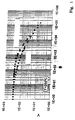
- FIG. 1 flow curves of polyamides shown.
- the viscosity V (in Pas) is plotted against the shear rate S (in 1 / s).
- the flow curves for the polyamides from Comparative Example 1 and Example 1 are shown in the attached FIG. 1. It can be seen from FIG. 1 that the polyamides according to Example 1 have a significantly lower viscosity in the range from 10 1 to 10 5 s -1 than the shear rate compared to the comparative polyamides.
- the mechanical properties of the polyamides are listed in Table 3 below.
- the Charpy impact strength according to ISO 179 / leA (measurement after drying) and the tensile modulus of elasticity, the yield stress and the elongation at break according to ISO 527 (measurement after drying) were determined.
Landscapes
- Chemical & Material Sciences (AREA)
- Life Sciences & Earth Sciences (AREA)
- Proteomics, Peptides & Aminoacids (AREA)
- Health & Medical Sciences (AREA)
- Chemical Kinetics & Catalysis (AREA)
- Medicinal Chemistry (AREA)
- Polymers & Plastics (AREA)
- Organic Chemistry (AREA)
- Polyamides (AREA)
Claims (10)
- Polyamides à base deoù (c) et (d) sont des acides carboxyliques lorsque (b) sont des amines et (c) et (d) sont des amines lorsque (b) sont des acides carboxyliques,lactames, d'acides aminocarboxyliques ou de leurs mélanges en tant qu'élément structurel de base (a),1 à 50 µmol par g de polyamide, d'amines ou d'acides carboxyliques au moins trifonctionnels en tant qu'élément structurel de base (b),des acides carboxyliques ou des amines bifonctionnels en tant qu'élément structurel de base (c) etdes acides carboxyliques ou des amines monofonctionnels tant qu'élément structurel de base (d),le rapport en équivalent des groupements fonctionnels de (b) aux groupements fonctionnels de (c) et (d) ensemble s'élève de 60:40 à 40:60 etle rapport en équivalent des groupements fonctionnels de (c) aux groupements fonctionnels de (d) s'élève de 15:85 à 60:40.
- Polyamides selon la revendication 1, dans lesquels les éléments structurels de base (b) sont au moins tétrafonctionnels.
- Polyamides selon la revendication 2, dans lesquels les éléments structurels de base (b) présente la formule générale IR représente H ou -(CH2)n-NR1 2 avecR1 représentant H ou -(CH2)n-NR2 2 avecR2 représentant H ou -(CH2)n-NR3 2 avecR3 représentant H ou -(CH2)n-NH2,n est un nombre entier de 3 à 6 etx est un nombre entier de 2 à 14.
- Procédé de préparation de polyamides selon l'une quelconque des revendications 1 à 3, par réaction des éléments structurels de base (a), (b), (c) et (d) à une température de 250 à 300°C et sous une pression de 1 à 40 bar en présence de vapeur d'eau.
- Procédé selon la revendication 4, dans lequel on fait réagir les éléments structurels (a) de façon partielle ou totale en un prépolymère et l'on fait réagir le prépolymère avec les éléments structurels (b), (c) et (d).
- Procédé selon la revendication 4 ou 5, dans lequel la réaction est effectuée de façon continue.
- Utilisation de polyamides selon l'une quelconque des revendications 1 à 3 pour la préparation de fibres, de masses à mouler ou de corps moulés.
- Masses à mouler contenant des polyamides selon l'une quelconque des revendications 1 à 3.
- Corps moulés ou fibres à base de masses à mouler selon la revendication 8.
- Procédé de préparation de corps moulés selon la revendication 9 par moulage par injection, moulage par extrusion/soufflage, extrusion, ou de fibres par filage de fibres d'une masse à mouler selon la revendication 8.
Applications Claiming Priority (2)
| Application Number | Priority Date | Filing Date | Title |
|---|---|---|---|
| DE19654179A DE19654179A1 (de) | 1996-12-23 | 1996-12-23 | H-förmige Polyamide |
| DE19654179 | 1996-12-23 |
Publications (2)
| Publication Number | Publication Date |
|---|---|
| EP0850974A1 EP0850974A1 (fr) | 1998-07-01 |
| EP0850974B1 true EP0850974B1 (fr) | 2000-03-01 |
Family
ID=7816117
Family Applications (1)
| Application Number | Title | Priority Date | Filing Date |
|---|---|---|---|
| EP97122686A Expired - Lifetime EP0850974B1 (fr) | 1996-12-23 | 1997-12-22 | Polymides ramifiés en forme de H |
Country Status (3)
| Country | Link |
|---|---|
| US (1) | US5959069A (fr) |
| EP (1) | EP0850974B1 (fr) |
| DE (2) | DE19654179A1 (fr) |
Cited By (1)
| Publication number | Priority date | Publication date | Assignee | Title |
|---|---|---|---|---|
| CN101198638B (zh) * | 2005-06-17 | 2010-12-08 | 帝斯曼知识产权资产管理有限公司 | 本质上不含凝胶的无规支化聚酰胺 |
Families Citing this family (61)
| Publication number | Priority date | Publication date | Assignee | Title |
|---|---|---|---|---|
| US6272648B1 (en) * | 1997-05-13 | 2001-08-07 | Micron Electronics, Inc. | System for communicating a software-generated pulse waveform between two servers in a network |
| NL1010819C2 (nl) † | 1998-12-16 | 2000-06-19 | Dsm Nv | Intrinsiek gelvrij random vertakt polyamide. |
| DE19859929A1 (de) * | 1998-12-23 | 2000-06-29 | Bayer Ag | Verfahren zur Herstellung von verzweigten Polyamiden |
| EP1065048B1 (fr) | 1999-06-29 | 2004-08-04 | Degussa AG | Structure multicouche |
| EP1078949A1 (fr) | 1999-08-26 | 2001-02-28 | Bayer Aktiengesellschaft | Ramification de polyamides à l'aide d'esters d'acide carboxylique |
| US6733780B1 (en) | 1999-10-19 | 2004-05-11 | Genzyme Corporation | Direct compression polymer tablet core |
| DE19957663A1 (de) * | 1999-11-30 | 2001-05-31 | Basf Ag | Verfahren zur kontinuierlichen Herstellung von Copolyamiden, die auf einem Lactam (I), einem Diamin (II) und einer Dicarbonsäure (III) basieren |
| RU2189994C2 (ru) * | 1999-12-24 | 2002-09-27 | Шкуренко Светлана Ивановна | Реакционная смесь для получения сополиамидов |
| DE10064338A1 (de) | 2000-12-21 | 2002-06-27 | Degussa | Formmasse mit guter Blasformbarkeit |
| FR2821088B1 (fr) * | 2001-02-22 | 2003-04-11 | Rhodianyl | Procede de fabrication de fils, fibres et filaments |
| FR2831189B1 (fr) * | 2001-10-23 | 2003-12-12 | Rhodianyl | Procede de fabrication de fils, fibres et filaments |
| WO2002066716A1 (fr) * | 2001-02-22 | 2002-08-29 | Rhodia Polyamide Intermediates | Procede de fabrication de fils, fibres et filaments |
| FR2826661B1 (fr) * | 2001-06-28 | 2003-08-22 | Rhodianyl | Polymere thermoplastique, son application dans des compositions polyamides a hydrophilie et antistaticite ameliorees |
| FR2830255B1 (fr) * | 2001-10-01 | 2004-10-22 | Rhodia Industrial Yarns Ag | Materiaux composites comprenant un materiau de renfort et comme matrice thermoplastique un polyamide etoile, article compose precurseur de ces materiaux et produits obtenus a partir de ces materiaux |
| FR2833015B1 (fr) * | 2001-11-30 | 2005-01-14 | Rhodia Eng Plastics Srl | Compositions thermoplastiques a proprietes mecaniques ameliorees |
| FR2841253B1 (fr) * | 2002-06-21 | 2004-10-22 | Rhodia Polyamide Intermediates | Composition polyamide expansible et mousse polyamide obtenue a partir de cette composition |
| DE10251294B4 (de) * | 2002-11-04 | 2007-05-16 | Ems Chemie Ag | Polyamidformmasse und deren Verwendung |
| FR2847902B1 (fr) * | 2002-11-29 | 2007-02-16 | Rhodia Eng Plastics Srl | Composition a base de matrice thermoplastique |
| FR2851252B1 (fr) * | 2003-02-14 | 2007-03-09 | Rhodianyl | Composition comprenant une matrice polymerique et un additif fonctionnalise et articles realises a partir de cette composition |
| FR2856693B1 (fr) * | 2003-06-26 | 2005-08-26 | Rhodia Eng Plastics Srl | Composition a base de matrice polyamide et/ou polyester et articles realises a partir de cette composition |
| JP4820302B2 (ja) * | 2004-01-22 | 2011-11-24 | ロディア・シミ | 不織布表面の製造方法 |
| US7985418B2 (en) | 2004-11-01 | 2011-07-26 | Genzyme Corporation | Aliphatic amine polymer salts for tableting |
| US8986669B2 (en) | 2005-09-02 | 2015-03-24 | Genzyme Corporation | Method for removing phosphate and polymer used therefore |
| EP3000460A1 (fr) | 2005-09-15 | 2016-03-30 | Genzyme Corporation | Formulation en sachet pour des polymères amines |
| EP2016114A2 (fr) * | 2006-05-05 | 2009-01-21 | Genzyme Corporation | Polymères de condensation d'amines comme agents séquestrants de phosphates |
| FR2903595B1 (fr) * | 2006-07-11 | 2008-08-22 | Rhodia Recherches & Tech | Compositions cosmetiques comprenant une poudre en materiau thermoplastique |
| EP2066293A2 (fr) | 2006-09-29 | 2009-06-10 | Genzyme Corporation | Compositions dendrimères d'amide |
| US8163799B2 (en) | 2006-12-14 | 2012-04-24 | Genzyme Corporation | Amido-amine polymer compositions |
| DE102008043863A1 (de) | 2007-11-19 | 2009-05-20 | Basf Se | Teilaromatische Polyamide mit hyperverzweigten Polyoxazolinen |
| FR2939075B1 (fr) | 2008-12-01 | 2010-12-17 | Rhodia Operations | Realisation d'article par fusion selective de couches de poudre de polymere |
| FR2944288B1 (fr) | 2009-04-10 | 2012-08-17 | Rhodia Operations | Materiau polyamide a proprietes barrieres aux fluides elevees |
| FR2947278B1 (fr) | 2009-06-30 | 2012-06-22 | Rhodia Operations | Composition polyamide modifiee comprenant au moins un compose phenolique |
| PL2448998T3 (pl) | 2009-07-03 | 2018-09-28 | RHODIA OPéRATIONS | Modyfikowany poliamid, sposób jego otrzymywania i wyrób uzyskany z tego poliamidu |
| FR2947556B1 (fr) | 2009-07-03 | 2011-07-15 | Rhodia Operations | Composition polyamide modifiee |
| FR2951452B1 (fr) | 2009-10-16 | 2012-07-27 | Rhodia Operations | Article moule ignifuge a base de polyamide comprenant un revetement intumescent |
| FR2951451B1 (fr) | 2009-10-20 | 2012-10-19 | Rhodia Operations | Composition polyamide modifiee comprenant au moins un compose phenolique |
| FR2953849B1 (fr) | 2009-12-16 | 2012-11-16 | Rhodia Operations | Composition polyamide de faible conductivite thermique |
| FR2958652B1 (fr) | 2010-04-13 | 2013-09-06 | Rhodia Operations | Composition thermoplastique a base de polyamide et de polycetone. |
| DE102010028541A1 (de) | 2010-05-04 | 2011-11-10 | Evonik Degussa Gmbh | Verbund aus einer Polyamidformmasse und vulkanisiertem Elastomer |
| FR2960545B1 (fr) | 2010-05-28 | 2014-11-28 | Rhodia Operations | Polyamide modifie sulfonate aux proprietes barrieres ameliorees |
| FR2968664B1 (fr) | 2010-12-10 | 2014-02-14 | Rhodia Operations | Realisation d'article par fusion selective de couches de poudre de polymere |
| FR2969160B1 (fr) | 2010-12-16 | 2014-04-18 | Rhodia Operations | Copolymere polyamide-polyolefine |
| FR2969162B1 (fr) | 2010-12-21 | 2014-04-18 | Rhodia Operations | Article ignifuge a base de polyamide comprenant un revetement par traitement plasma |
| KR101596180B1 (ko) | 2011-08-26 | 2016-02-19 | 로디아 오퍼레이션스 | 폴리아미드 수지 및 폴리에스테르 수지의 알로이를 포함한 난연성 조성물 |
| DE102011084518A1 (de) | 2011-10-14 | 2013-04-18 | Evonik Industries Ag | Verwendung einer Mehrschichtfolie mit Polyamid- und Polyesterschichten fürdie Herstellung photovoltaischer Module |
| FR2981600B1 (fr) | 2011-10-25 | 2013-11-15 | Rhodia Operations | Procede de preparation de granules de polyamide |
| JP6470972B2 (ja) | 2012-02-24 | 2019-02-13 | ソルベイ スペシャルティ ポリマーズ ユーエスエー, エルエルシー | ソーラーパネルのための骨組構造物 |
| FR2988394B1 (fr) | 2012-03-26 | 2015-12-11 | Rhodia Operations | Agent fluidifiant et procede utilisant cet agent |
| FR2991622A1 (fr) | 2012-06-12 | 2013-12-13 | Rhodia Operations | Procede de traitement thermiques de poudres |
| FR2993270B1 (fr) | 2012-07-12 | 2015-08-07 | Rhodia Operations | Procede de moussage chimique en presence de charges de renfort |
| DE102013201392A1 (de) | 2013-01-29 | 2014-07-31 | Evonik Industries Ag | Haftvermittler- und Primer-Zusammensetzungen für Metall-Kunststoff-Hybridbauteile |
| DE102013201388A1 (de) | 2013-01-29 | 2014-07-31 | Evonik Industries Ag | Verfahren zur Herstellung eines Metall-Kunststoff-Hybridbauteils |
| WO2014121842A1 (fr) | 2013-02-08 | 2014-08-14 | Rhodia Operations | Composition d'un alliage de resines de polyamide et de polyester |
| FR3006318A1 (fr) | 2013-06-03 | 2014-12-05 | Rhodia Operations | Charges en tant qu'agent permettant de diminuer la deterioration de proprietes barrieres |
| EP2848652A1 (fr) | 2013-09-17 | 2015-03-18 | Rhodia Operations | Composition à base de polyamide comprenant polycétone et caoutchouc |
| DE102014206022A1 (de) | 2014-03-31 | 2015-10-01 | Evonik Degussa Gmbh | Metall-Kunststoff-Hybridbauteil |
| EP2998339B1 (fr) | 2014-08-26 | 2019-01-30 | Evonik Degussa GmbH | Tube metallique dote d'une couche hydrostabilisee a partir d'une masse moulee en polyamide |
| FR3030548B1 (fr) | 2014-12-22 | 2018-03-30 | Rhodia Operations | Composition thermoplastique a haute fluidite |
| KR102436777B1 (ko) | 2016-07-13 | 2022-08-26 | 퍼포먼스 폴리아미드 에스에이에스 | 폴리아미드 조성물의 할로겐-함유 산화제에 대한 내성을 증가시키는 방법 |
| DE202016008382U1 (de) | 2016-09-21 | 2017-09-25 | Evonik Degussa Gmbh | Mehrschichtiger Hohlkörper mit hoher Auswaschbeständigkeit |
| EP3299165B1 (fr) | 2016-09-21 | 2020-08-12 | Evonik Operations GmbH | Corps creux multicouches tres resistant au lavage |
Family Cites Families (6)
| Publication number | Priority date | Publication date | Assignee | Title |
|---|---|---|---|---|
| US3687904A (en) * | 1970-12-04 | 1972-08-29 | Ici Ltd | Polyamides |
| DE2233768A1 (de) * | 1972-07-08 | 1974-01-24 | Bayer Ag | Verfahren zur herstellung von basisch modifizierten polyamiden |
| LU67858A1 (fr) * | 1972-07-08 | 1973-08-30 | ||
| US5298595A (en) * | 1987-07-17 | 1994-03-29 | Basf Aktiengesellschaft | Partly aromatic copolyamides of reduced triamine content |
| DE3723688A1 (de) * | 1987-07-17 | 1989-01-26 | Basf Ag | Teilaromatische copolyamide mit verringertem triamingehalt |
| DE3917927C2 (de) * | 1988-06-07 | 1997-12-18 | Inventa Ag | Thermoplastisch verarbeitbare Polyamide und deren Verwendung |
-
1996
- 1996-12-23 DE DE19654179A patent/DE19654179A1/de not_active Withdrawn
-
1997
- 1997-12-22 DE DE59701168T patent/DE59701168D1/de not_active Expired - Fee Related
- 1997-12-22 EP EP97122686A patent/EP0850974B1/fr not_active Expired - Lifetime
- 1997-12-23 US US08/997,394 patent/US5959069A/en not_active Expired - Fee Related
Cited By (1)
| Publication number | Priority date | Publication date | Assignee | Title |
|---|---|---|---|---|
| CN101198638B (zh) * | 2005-06-17 | 2010-12-08 | 帝斯曼知识产权资产管理有限公司 | 本质上不含凝胶的无规支化聚酰胺 |
Also Published As
| Publication number | Publication date |
|---|---|
| DE19654179A1 (de) | 1998-06-25 |
| US5959069A (en) | 1999-09-28 |
| EP0850974A1 (fr) | 1998-07-01 |
| DE59701168D1 (de) | 2000-04-06 |
Similar Documents
| Publication | Publication Date | Title |
|---|---|---|
| EP0850974B1 (fr) | Polymides ramifiés en forme de H | |
| DE2642244C2 (de) | Verfahren zur Herstellung von glasklar durchsichtigen Copolyamiden und deren Verwendung zur Herstellung von Formkörpern | |
| EP0922065B1 (fr) | Procede pour la preparation de polyamides a partir d'aminonitriles | |
| DE69225946T2 (de) | Transparente Polyamid-Mischungen mit hoher Beständigkeit gegenüber chemischen Mitteln | |
| DE69312701T2 (de) | Thermoplastische zusammensetzungen enthaltend mischungen aus polyamiden und amorphen copolyamiden | |
| EP0774480A1 (fr) | Méthode de préparation de polyamides ramifiés | |
| CH667462A5 (de) | Transparente copolyamide, verfahren zu deren herstellung und deren verwendung zur herstellung von formkoerpern. | |
| EP3320024B1 (fr) | Fabrication d'un polyamide contenant 2,5-bis(aminomethyle)furane | |
| EP2376557A2 (fr) | Procédé de préparation continue de copolyamides à partir de lactames et de sels de diamines et d'acides dicarboxyliques | |
| DE3717928A1 (de) | Transparente copolyamide und ihre verwendung | |
| EP0237722A1 (fr) | Procédé de préparation de polyamides aromatiques à mettre en oeuvre thermoplastiquement | |
| EP0360060A1 (fr) | (Co)polyamides réticulés par polycondensation en présence de mélange de composés à base de lysine et d'acides polycarboxyliques | |
| EP0737719B1 (fr) | Compositions thermoplastiques à base de polyamides aromatiques partiels et polyétherimides | |
| EP0725100A1 (fr) | Copolyamides incolores transparents, leur préparation, objets moulés à partir de ceux-ci ou de compositions les contenant | |
| DE4208005C2 (de) | Aromatische Polyamide und Verfahren zu deren Herstellung | |
| EP0288893B1 (fr) | Polyamides à base de diamines/diacides modifiés par de l'alpha-amino-epsilon-caprolactame | |
| EP0702058A1 (fr) | Mélange à mouler composé d'éthers polyaryleniques et de copolyamides | |
| EP0345649B1 (fr) | Procédé de préparation de masses à mouler réticulées en polyamide | |
| EP0615997A1 (fr) | Copolyamides en blocs | |
| EP0728812A1 (fr) | Masses à mouler thermoplastiques à base de copolyamides semi-aromatiques et amorphes | |
| EP0717078A1 (fr) | Masses à mouler thermoplastiques à base de polyamides partiellement aromatiques et de polyméthacrylimides | |
| EP0522307A2 (fr) | Masses moulées à la base de polyarylèneéthers et de copolyamides partiellement aromatiques | |
| DE60114847T2 (de) | Copolyamide und zusammensetzungen auf basis von diesen | |
| DE60112308T2 (de) | Copolyamide und zusammensetzungen auf basis dieser copolyamide | |
| CN111378123A (zh) | 聚酰胺树脂及其制备方法 |
Legal Events
| Date | Code | Title | Description |
|---|---|---|---|
| PUAI | Public reference made under article 153(3) epc to a published international application that has entered the european phase |
Free format text: ORIGINAL CODE: 0009012 |
|
| AK | Designated contracting states |
Kind code of ref document: A1 Designated state(s): AT BE CH DE DK ES FI |
|
| AX | Request for extension of the european patent |
Free format text: AL;LT;LV;MK;RO;SI |
|
| 17P | Request for examination filed |
Effective date: 19980721 |
|
| AKX | Designation fees paid |
Free format text: CH DE FR GB IT LI NL |
|
| RBV | Designated contracting states (corrected) |
Designated state(s): CH DE FR GB IT LI NL |
|
| GRAG | Despatch of communication of intention to grant |
Free format text: ORIGINAL CODE: EPIDOS AGRA |
|
| GRAG | Despatch of communication of intention to grant |
Free format text: ORIGINAL CODE: EPIDOS AGRA |
|
| GRAH | Despatch of communication of intention to grant a patent |
Free format text: ORIGINAL CODE: EPIDOS IGRA |
|
| 17Q | First examination report despatched |
Effective date: 19990512 |
|
| GRAH | Despatch of communication of intention to grant a patent |
Free format text: ORIGINAL CODE: EPIDOS IGRA |
|
| GRAA | (expected) grant |
Free format text: ORIGINAL CODE: 0009210 |
|
| AK | Designated contracting states |
Kind code of ref document: B1 Designated state(s): CH DE FR GB IT LI NL |
|
| REG | Reference to a national code |
Ref country code: CH Ref legal event code: NV Representative=s name: SCHMAUDER & PARTNER AG PATENTANWALTSBUERO Ref country code: CH Ref legal event code: EP |
|
| REF | Corresponds to: |
Ref document number: 59701168 Country of ref document: DE Date of ref document: 20000406 |
|
| GBT | Gb: translation of ep patent filed (gb section 77(6)(a)/1977) |
Effective date: 20000329 |
|
| ITF | It: translation for a ep patent filed | ||
| ET | Fr: translation filed | ||
| PLBE | No opposition filed within time limit |
Free format text: ORIGINAL CODE: 0009261 |
|
| STAA | Information on the status of an ep patent application or granted ep patent |
Free format text: STATUS: NO OPPOSITION FILED WITHIN TIME LIMIT |
|
| 26N | No opposition filed | ||
| REG | Reference to a national code |
Ref country code: GB Ref legal event code: IF02 |
|
| PGFP | Annual fee paid to national office [announced via postgrant information from national office to epo] |
Ref country code: NL Payment date: 20061203 Year of fee payment: 10 |
|
| PGFP | Annual fee paid to national office [announced via postgrant information from national office to epo] |
Ref country code: FR Payment date: 20061208 Year of fee payment: 10 |
|
| PGFP | Annual fee paid to national office [announced via postgrant information from national office to epo] |
Ref country code: DE Payment date: 20061214 Year of fee payment: 10 |
|
| PGFP | Annual fee paid to national office [announced via postgrant information from national office to epo] |
Ref country code: GB Payment date: 20061220 Year of fee payment: 10 |
|
| PGFP | Annual fee paid to national office [announced via postgrant information from national office to epo] |
Ref country code: CH Payment date: 20061227 Year of fee payment: 10 |
|
| PGFP | Annual fee paid to national office [announced via postgrant information from national office to epo] |
Ref country code: IT Payment date: 20061231 Year of fee payment: 10 |
|
| REG | Reference to a national code |
Ref country code: CH Ref legal event code: PL |
|
| GBPC | Gb: european patent ceased through non-payment of renewal fee |
Effective date: 20071222 |
|
| NLV4 | Nl: lapsed or anulled due to non-payment of the annual fee |
Effective date: 20080701 |
|
| PG25 | Lapsed in a contracting state [announced via postgrant information from national office to epo] |
Ref country code: LI Free format text: LAPSE BECAUSE OF NON-PAYMENT OF DUE FEES Effective date: 20071231 Ref country code: DE Free format text: LAPSE BECAUSE OF NON-PAYMENT OF DUE FEES Effective date: 20080701 Ref country code: CH Free format text: LAPSE BECAUSE OF NON-PAYMENT OF DUE FEES Effective date: 20071231 |
|
| REG | Reference to a national code |
Ref country code: FR Ref legal event code: ST Effective date: 20081020 |
|
| PG25 | Lapsed in a contracting state [announced via postgrant information from national office to epo] |
Ref country code: NL Free format text: LAPSE BECAUSE OF NON-PAYMENT OF DUE FEES Effective date: 20080701 |
|
| PG25 | Lapsed in a contracting state [announced via postgrant information from national office to epo] |
Ref country code: GB Free format text: LAPSE BECAUSE OF NON-PAYMENT OF DUE FEES Effective date: 20071222 |
|
| PG25 | Lapsed in a contracting state [announced via postgrant information from national office to epo] |
Ref country code: FR Free format text: LAPSE BECAUSE OF NON-PAYMENT OF DUE FEES Effective date: 20071231 |
|
| PG25 | Lapsed in a contracting state [announced via postgrant information from national office to epo] |
Ref country code: IT Free format text: LAPSE BECAUSE OF NON-PAYMENT OF DUE FEES Effective date: 20071222 |