EP0851281A1 - Verarbeitung von Tonaufzeichnungsträgern mit Stehbildfilmen in Fotobehandlungslabors - Google Patents
Verarbeitung von Tonaufzeichnungsträgern mit Stehbildfilmen in Fotobehandlungslabors Download PDFInfo
- Publication number
- EP0851281A1 EP0851281A1 EP97203938A EP97203938A EP0851281A1 EP 0851281 A1 EP0851281 A1 EP 0851281A1 EP 97203938 A EP97203938 A EP 97203938A EP 97203938 A EP97203938 A EP 97203938A EP 0851281 A1 EP0851281 A1 EP 0851281A1
- Authority
- EP
- European Patent Office
- Prior art keywords
- sound
- film
- order
- batch
- Prior art date
- Legal status (The legal status is an assumption and is not a legal conclusion. Google has not performed a legal analysis and makes no representation as to the accuracy of the status listed.)
- Withdrawn
Links
- 238000012545 processing Methods 0.000 title claims abstract description 20
- 238000000034 method Methods 0.000 claims abstract description 35
- 238000003860 storage Methods 0.000 claims description 15
- 238000012432 intermediate storage Methods 0.000 claims 1
- 238000012546 transfer Methods 0.000 abstract description 8
- 238000010586 diagram Methods 0.000 description 17
- 230000005291 magnetic effect Effects 0.000 description 12
- 238000007639 printing Methods 0.000 description 10
- 230000005540 biological transmission Effects 0.000 description 3
- 238000011161 development Methods 0.000 description 3
- 238000004891 communication Methods 0.000 description 2
- 238000004519 manufacturing process Methods 0.000 description 2
- 241000122205 Chamaeleonidae Species 0.000 description 1
- 238000009825 accumulation Methods 0.000 description 1
- 238000013459 approach Methods 0.000 description 1
- 230000006835 compression Effects 0.000 description 1
- 230000000994 depressogenic effect Effects 0.000 description 1
- 239000000839 emulsion Substances 0.000 description 1
- 238000005516 engineering process Methods 0.000 description 1
- 238000002372 labelling Methods 0.000 description 1
- 238000012986 modification Methods 0.000 description 1
- 230000004048 modification Effects 0.000 description 1
- 238000003672 processing method Methods 0.000 description 1
- 230000002250 progressing effect Effects 0.000 description 1
- 238000012552 review Methods 0.000 description 1
- 238000004804 winding Methods 0.000 description 1
Images







Classifications
-
- G—PHYSICS
- G03—PHOTOGRAPHY; CINEMATOGRAPHY; ANALOGOUS TECHNIQUES USING WAVES OTHER THAN OPTICAL WAVES; ELECTROGRAPHY; HOLOGRAPHY
- G03B—APPARATUS OR ARRANGEMENTS FOR TAKING PHOTOGRAPHS OR FOR PROJECTING OR VIEWING THEM; APPARATUS OR ARRANGEMENTS EMPLOYING ANALOGOUS TECHNIQUES USING WAVES OTHER THAN OPTICAL WAVES; ACCESSORIES THEREFOR
- G03B31/00—Associated working of cameras or projectors with sound-recording or sound-reproducing means
- G03B31/06—Associated working of cameras or projectors with sound-recording or sound-reproducing means in which sound track is associated with successively-shown still pictures
Definitions
- the invention relates generally to the field of photographic still images having recorded sound associated with the still image.
- the invention relates to a photofinishing method and apparatus for obtaining a film with recorded sound order from the consumer, producing the associated prints and/or index print with said sound data extracted and recorded on a memory device attached to the prints, and returning the film and resultant sound-on-print order to the correct consumer.
- Sound with image print technology is known in which the camera records sound on a separate medium and the user then retains possession of the recorded sound on the sound medium while the film is processed and the images printed at a photofinishing lab. The user then reunites the sound medium with the image print when the image prints are retrieved from the photofinisher. This has the drawback that the user must correlate the sound device with prints which can be a cumbersome process.
- US-A-5,313,235 discloses a camera that records sound on a separate medium and exposes an image frame identifying bar code on the film negative. The bar code is subsequently exposed onto the image print during photofinishing. The code serves as a print image identifier which associates the print with a sound segment recorded on the separate medium.
- a sensor connected to a separate playback device reads the code on the print and addresses the associated sound segment in the separate medium for sound playback.
- a problem with this approach is that the identifying code is exposed directly onto the negative. To insure its success it must be exposed in the image area thus winding up as part of the image on the image print. Due to variances in photofinishing printing and user selection of camera orientation during picture taking, the resultant location of the code on the print can vary substantially making its orientation in a code reading device variable thus making it difficult to produce sound based on reading of the code. Another problem is that the card is not directly attached to the image print and is thus susceptible of becoming separated from the associated print and lost.
- US-A- 5,521,663 discloses recording of the sound by the camera directly onto the film using a latent image binary code.
- the binary code is imaged onto the print at the time the print is exposed.
- the code is decoded into sound by a scanner in the playback device. This has the drawback of using up valuable image area on the image print for the sound code.
- Another drawback is that when index print imagettes are produced from images bearing this code, the reduced size of the code on the imagette makes it difficult if not impossible to reproduce the sound from the sound code on the imagette.
- the method also does not readily allow the user to re-record sound for a specific print or to transfer recorded sound from one print to another.
- a further object of the invention is to provide a method for linking sound recorded at a camera on a removable sound recording device with a film photofinishing order in such a manner as to allow the user to retain possession of the sound recording device for re-use with another roll of film.
- a further object of the invention is to provide a method for the retailer to collect and create a batch file of consumer sound orders in which the sound order batch is transmitted via electronic transmission, for example a modem, to the photofinishing site with suitable linking identification so that the photofinisher can link the transmitted sound order batch to the associated batch of consumer film orders.
- Yet another object of the invention is to provide a photofinishing method of producing an index print with the associated sound for all the associated images on the index print as an integral part of the index print.
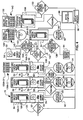
- Fig 1 is a flow diagram showing the steps used in creating a batch of sound-on-print photofinishing orders at the retail counter.
- the customer brings a sound-on-print order 10A to the retail order entry point.
- This may be either an order entry station only, such as a drugstore, where orders are accumulated and batched for submission to a central photofinishing lab. Alternatively, it may be a minilab location at which order entry, film processing and printing are done on location.
- sound-on-print order means a roll of photographic film on which images have been exposed combined with memory means on which sound bites associated with one or more of the images have been recorded.
- the order 10A comprises the customer's roll of film 12A and the customer's sound card 14A, on which sound bites have been recorded at the camera, that corresponds to that roll of film.
- each envelope is identified by a unique 6 digit bar coded and eye-readable order ID number 18A-18D, respectively.
- Each sound card is identified by a unique bar coded and eye-readable number 20A-D, respectively.
- the unique sound card ID number is preferably also encoded electronically in the card to match the bar coded and eye-readable number on the outside of the card.
- the customer's sound card 14 may be placed into the order envelope 16 along with the customer's film 12.
- the sound card can remain in the envelope 16 until the sound is downloaded and transferred to a sound recording medium ("sound chip") for attachment to individual prints or to an index print during photoprocessing as described below.
- sound chip a sound recording medium
- the sound will more likely be downloaded from the customer's sound card 14A by the clerk and stored on a storage medium 32, such as a floppy disk, in the form of a sound file that is electronically linked to the customer's film order envelope 16A containing the customer film 12A via a computer 34.
- the sound card is removable from the camera.
- the sound information can be recorded in an integral memory in the camera.
- the sound is downloaded directly from the camera to a storage medium 32.
- the downloading may be accomplished by, for example, cable link, infrared link or other known forms of electronic communication.
- the linkage between the sound information and the customer's film order relies on using the unique order ID number 18A on the envelope 16A and a unique identification number associated with the sound information.
- this would be sound card ID number 20A on the sound card 14A.
- sound information downloaded as a sound file from integral camera memory it would be a unique number created in the camera memory similar, for example, to a camera serial number.
- the downloaded sound information can be communicated as a sound file with the linking identification number directly to a photofinishing laboratory by modem or other suitable communication means.
- the same procedure is also followed for customers' orders 10B-10D resulting in the downloaded data from the sound cards 14B-D being stored on sound storage medium 32. Further details concerning the order entry procedure for downloading of the sound bites are discussed later.
- Block 42 designates the point at which customer orders 10A-10D being stored at the retail counter storage point 40 are combined into batch 50 for transfer to the photofinishing lab.
- All the sound recordings from sound cards 14A-14D identified by sound card ID numbers 20A-20D corresponding to the orders 10A-10D in envelope batch 52 are combined to form sound order batch 54.
- the envelope batch 52 comprises the customer's envelopes 16A-16D containing the customer's film rolls 12A-12D.
- the orders in envelope batch 52 are linked by the ID number 18A-18D on the envelopes to the corresponding sound card in sound order batch 54 by the unique sound card ID number 20A-20D stored on the storage media 32.
- the sound order batch itself is linked to the storage media 32 and to the envelope order batch by a unique sound order batch number 55.
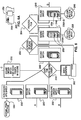
- Fig. 2 illustrates a portion of the flow diagram from the point of reception of the customer orders at the photofinishing lab through order sorting and splicing of film orders for processing (development).
- the envelope sound order batch orders can be transported via van or truck in which case the sound order batch 54 is placed directly with the envelope batch 52 and is now shown as order batch 60.
- Another method of transferring the sound order batch orders to the photofinisher is to transport the envelope batch 52 via van or truck and transmit via modem 62 the sound order batch 54 to the photofinisher as a modem sound order batch 64.
- the modem sound order batch 64 is received by the photofinisher's batch computer 66 and stored in the batch memory 68.
- the batches 60 are sorted at step 70 into non-sound orders 72, orders with sound where the sound will be attached to each print 74, and orders with sound where the sounds will be attached to an index print printed for each order 76.
- Non-sound orders 72 are sent through the normal photofinishing line 78. Orders with sound where the sounds will be attached to an index print printed for each order 76, are sent to the branch designated "C”. Orders with sound where the sound will be attached to each individual print 74, are sent to the splicing operation 80.
- the order sort 70 It is also determined at the order sort 70 if the sound for the sound orders came in with the sound orders on recording media 32 or if the sounds for the orders were transmitted as a modem sound order batch 64 to the batch computer 66 and are now in the batch computer memory 68.
- the film rolls 12A-12D are removed from the envelopes 16A-16D and are spliced together to form spliced film batch 82.
- the envelopes with the film removed now form envelope (without film) batch 84.
- the envelopes 16A-16D are linked to the film rolls 12A-12D via a unique bar coded and eye-readable ID number 86 on each film splice 88 and the 6 digit bar coded and eye-readable number 18A-18D on each envelope.
- Each roll of film has its own unique splice number 86.
- the splice number 86 is linked to the envelope via the batch computer 66. If the sound for each order is on the sound recording medium 32, the sound recording medium remains with the empty envelope batch 84. If the sound for each film order was transmitted from the retailer as a modem sound order batch 64, the sound order batch now also resides in the batch computer memory 68.
- the sound bites for each order in the modem sound order batch 64 is linked via the batch computer 66 by the unique sound order identifier numbers 20A-20D (see Fig 1) with the empty envelope batch 84 via the 6 digit bar coded and eye-readable number 18A-18D on each envelope, respectively, and with the sound order batch number 55.
- the envelopes, films and sounds are linked together by their unique identifying number via the batch computer 66.
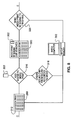
- FIG. 3 there is shown continuation of the photofinishing process from the processing (development) of the film to the final step of returning the completed order to the retail dealer.
- the batch of sound-on-print orders shown in Fig 3 is characterized by the fact the various sound bites associated with individual prints will be attached to each respective print.
- the empty envelope batch 84, sound order batch 54, and spliced film batch 82 (shown in Fig 2) enter the flow diagram at "D".
- the information linking these batches together is stored in the batch memory 68 in the batch computer 66.
- the spliced film batch 82 (shown in Fig 2) is processed at block 90.
- the film negative batch 82 is reunited with the empty envelope batch 84 and with sound order batch 54 containing sounds from sound cards 14A-14D recorded on sound recording medium 32.
- the batches 84,82,54 remain linked in the batch computer 66 by the unique identification numbers 86, 55, and 18A-18D.
- the sound-on-print batch now goes to block 92 where the spiced film negative batch 82 is printed on a continuous web of photographic print paper. A set of prints for each order is made at printing block 92 forming the print order batch 94 on a reel.
- the print order batch 94 is combined with the film negative batch 82 containing the spliced film rolls 12A-12D, (FIG. 2) the envelope batch 84 containing envelopes 16A-16D (FIG.
- EPROM sound chips are created at block 102 in known manner from the sound bites recorded on the sound recording medium 32 contained in sound batch 54. If the retailer chose to send the sound order batch containing the sound recordings derived from sound cards 14A-14D to the photofinisher via a modem creating a modem sound order batch 64 that was stored by the batch control computer 66 in the batch computer memory 68, the sound chips are created at block 104 directly from the sound bites recorded in batch memory 68 utilizing the unique sound card ID numbers 20A-20D (FIG.
- the resultant sound chips are then attached to the back of each print at step 100 to form the individual sound-on-prints.
- the batch of prints with their associated sound chips attached create sound print batch 108 which is combined with the film negative batch 82, and the empty envelope batch 84..
- the combined batches 84, 82, and 108 proceed to the finishing operation block 110.
- the finishing operation 110 the spliced film batch 82 is cut apart into the separate orders 10A-10D, combined with the sound prints and placed into envelopes 16A-16D, respectively, thus forming the completed sound-on-print batch 115 which is then sent back to the retailer at step 120 in normal manner.
- FIG. 4 there is shown a modified continuation of the flow diagram in Fig 2 in which the route taken by a batch of sound-on-print orders though the photofinishing lab. is characterized by the fact that all the sound bites for each order are recorded onto one sound chip that becomes attached to an index print for that order.
- the index print contains all the images in that order.
- the index print envelope batch 76, sound order batch 54, and film batch 82 from FIG. 2 enter the flow diagram of FIG. 4 at "C".
- the information stored in the batch memory 68 of the batch computer 66 links the orders in batch 76 together.
- the spliced film batch 82 is processed at block 120.
- the film negative batch 82 containing the spliced film negative rolls 12A-12D is reunited with the envelope batch 76 containing the empty order envelopes 84 and with sound order batch 54 containing sound bites on sound recording medium 32.
- the batches 82, 76, and 54 remained linked in the batch computer 66 by the unique identification numbers 86, 55, and 18A-18D.
- the sound-on-print batch 84 now goes to block 122 where the spiced film negative batch 82 is printed. A set of prints for each order is made at printing block 122 forming the print order batch 94.
- the print order batch 94 is combined with the film negative batch 82 containing the spliced film rolls 12A-12D, the envelope batch 84 containing envelopes 16A-16D respectively and with sound order batch 54 containing sound bites from on sound recording medium 32.
- the batches 82, 84, and 54 remain linked in the batch computer 66 by the unique identification numbers 86, 25A, and 15A.
- the combined batches 82, 84, 54, and 94 now proceed to block 124 where an index print 126 for each order in batch 76 is printed.
- Each index print 126A-D has a unique identification number 128A-D which links the index print 126A-D to the respective order envelope 16A-D via the order envelope's unique identification number 18A-D.
- the index print's unique identification number 128A-D links the respective index print to the respective unique identification number 20A-D for a specific sound order in sound order batch 54 identifying the sound for that specific order.
- the batch now proceeds to block 130 where a sound chip 132, created in step 134 is added to the index print.
- sound chip 132 is created from the sound bites recorded for each order on the sound recording medium 32. If the retailer had chosen to send the sound order batch containing the sound recordings from sound cards 14A-D to the photofinishing lab via a modem creating a modem sound order batch 64 that was stored by the batch control computer 66 in the batch computer memory 68, the sound chip 132 is created at block 136 directly from the sound recordings stored in memory 68.
- the sound chip 132 is attached to the back of the corresponding index print 126 at block 130 to create the sound-on-index-print 140.
- the completed sound-on-print batch 150 is then sent back to the retailer at block 152.
- FIGS. 5-8 a sound order batch processing method is shown, similar for that of FIGS. 1-4, in which the batching process is tailored to Advanced Photographic System (APS) film which is provided with a magnetic recording layer for recording data on the film in addition to photographic emulsions for capturing images.
- APS Advanced Photographic System
- FIG. 5 is a flow diagram showing the steps used in creating a batch of APS film sound-on-print photofinishing orders at the retail counter.
- the customer hands a cartridge of APS film 202A to the counter clerk and requests processing, indicating that the film contains sound recorded on the film.
- the film 202A together with an order envelope 204A provided by the clerk, comprises a sound-on-print order 200A.
- a sound-on-print order 200A Four separate orders are shown, 200A-D.
- Each order envelope 204A-D is conventionally identified by a unique 6 digit bar coded and eye-readable number 206A-D, respectively.
- each APS film cartridge is conventionally identified by a unique bar coded and eye-readable cartridge identification number 208, as shown in FIG. 5A.
- the cartridge ID number is also encoded magnetically on the APS film to match the external ID number 208.
- the envelope 204 is filled out at step 210.
- An order entry reader unit 212 is provided at the order entry counter.
- the cartridge is inserted and the leader end of the APS film is thrust out from the APS cartridge in a light tight chamber which is provided with a magnetic read head to reading of magnetic information recorded on the film magnetic layer.
- the information is sent to a logic and control computer 216.
- This information consists of the APS sound cartridge's unique ID number and the fact that this is an APS sound film order is determined from encoded information on the film.
- the customer or counter clerk also scans the unique order envelope number 206A into the APS retail order entry unit 212 from which it is sent to the logic and control computer 216 where it is linked in memory directly to the APS sound order cartridge 202. From this point on to arrival at the photofinishing lab, the customer's APS sound film cartridge 202 is inside the envelope 204.
- the enveloped orders are accumulated at the retail counter as indicated by block 220.
- non-sound orders are segregated from sound-on-print orders into batches 226 and 228, respectively, for transfer to the photofinishing lab at steps 230 and 232, respectively.
- FIG. 6 shows the continuation of the APS sound-on-print routine from the receipt of the orders through the processing (development) of the film.
- the APS sound and non-sound order batches 230 and 232 can be transported to the photofinisher via van or truck.
- the batches are sorted at block 240 which represents the sorting of the order into APS non-sound orders 230 sent to normal print routine 242, sound orders 248 in which the sound will be associated with each individual print, and sound orders 250 in which the sound will be associated with an APS index print.
- APS sound order batch 250 are sent to the branch designated "C”.
- APS sound order batch 248 is sent to the detach and splicing operation designated by block 252.
- the cartridges are removed from the envelopes, the films are removed from the cartridges and spliced into a continuous web using splice tape 259 wound on a reel to form a spliced film batch 256.
- the order envelopes are linked via a unique identification number 258 on each film 260 as shown in FIG. 6A.
- the unique identification number 258 on the film 260 matches the unique identification number 208 on the APS sound film cartridge 202 as shown in FIG. 5.
- the unique identification number 258 was printed on the APS sound film 260 at the time of manufacture in bar coded and eye-readable form and is also recorded magnetically on the APS film magnetic layer at the time of manufacturing.
- the ID number 258 is printed on the envelope at the attach/detach splicing station 252 and is also linked to the envelope via a batch computer 262.
- the sound for each order is recorded on the APS sound film in latent image form or in magnetic form at the time the images were taken.
- the APS sound film batch 256 is now processed in a film processor designated by block 264.
- the APS sound film batch 256 now becomes the APS sound negative batch 266.
- the negative batch 266 combined with the envelope batch 248 now branches to "D".
- FIG. 7 there is shown the continuation of the flow diagram through the photofinishing lab to the point at which the completed orders are returned to the retail dealer.
- the APS batch of sound-on-print orders 248/266 are characterized by the fact the sound associated with each print will be attached to the associated print.
- the spliced and processed APS sound film order batch 266 is optically scanned at step 270 using a scanning device such as the Kodak CLAS Digital Film Scanner. During film scanning, the sound data recorded on the APS film is decoded and sent in step 271 to storage in memory of batch computer 262, and is linked to the correct film order using the unique APS film identification number 258.
- the spliced film now goes to block 275 where the image negatives are then printed onto photographic paper. If the sound was magnetically written on the film, the sound is read from the APS magnetic film layer at the magnetic reader, step 272, using the magnetic reader on the Kodak CLAS Film Scanner. A set of prints for each order is made at printing block 273 forming the APS print order batch 274. At the same time an APS index print 280 may be printed at block 278 using an electronic printer driven by the image scan data obtained during the APS negative scanning step at block 270. Following printing, the APS negative batch 266 is reunited with envelop batch 248 which contains the envelopes 204 and the empty APS sound film cartridges 202.
- the envelopes, film and stored sound information remain linked in the batch computer 262 by the unique identification numbers, 206 and 258.
- the combined batches 248, 266 and 274 now proceed to block 284 where EPROM sound chips 286 are created in step 286 from the sounds recorded on the APS sound negatives that were stored in the batch computer 262.
- the sound chips 286 are attached to the back of each print at block 284 creating sound print batch 290.
- the batch 290 of APS sound prints is combined with the APS negative batch 266, containing the spliced APS negative films, and batch 248, containing the envelopes 204. These combined batches proceed to the finishing operation block 292.
- the spliced APS negative batch 266 is de-spliced and each roll is re-attached to and wound into their respective APS sound film cartridge at step 294.
- the re-attached APS negatives with cartridges are reunited with the APS sound prints cut from the print with sound batch 290.
- the APS index print 280 without sound or an APS index print 300 with a sound chip 302 attached as described below is combined with the appropriate order at step 304 and placed into envelopes 204 forming the completed APS sound-on-print batch 308.
- the completed sound-on-print batch 308 is then returned to the retailer at step 310.
- branch "C" of the flow diagram from FIG. 7, shows the route taken by an APS index print though the photofinishing lab for a batch of APS sound-on-print orders characterized by the fact that all the sounds for the order are to be recorded onto one sound chip and attached to an APS index print for that order.
- the APS index print 280 contains all the images for that APS order.
- the APS index print 280, printed at step 278 (FIG. 7), is provided with a unique identification number 312 which links, via batch computer 262, the index print 280 to the envelope ID numbers 206 (FIG. 7) and the film number 258 (FIG. 6A).
- the APS index print 280 now proceeds to block 316 where the sound chip 302 is added to the APS index print 280 to create a combined index print with sound 300.
- sound chip 302 is created from the sound recorded on the APS sound negative which was previously read, decoded, and stored in the batch computer 262 when the APS negative was scanned at block 270 (FIG. 7) or read magnetically at block 272.
- the sound chip 302 is attached preferable to the back the corresponding APS index print 280 at step 316.
- the APS sound index print 300 is sent to step 304 (FIG. 7) for combining with the order batch.
- the sound-on-print order 10 presented to the retail order clerk is presumed to comprise a film cartridge 12 and a sound card 14 on which sound bites associated with one or more images on the film have been recorded at the camera.
- the film cartridge is placed in an order envelope 16 which is identified by a unique 6 digit bar coded and eye-readable number 18.
- Each sound card 14 is identified by a unique bar coded and eye-readable number 20.
- the unique sound card number 20 is also encoded electronically in the card and matches the bar coded and eye-readable number on the outside of the card.
- the envelope 16 is filled out at the customer order entry point 350.
- the retail counter clerk enters the order information into the retail computer/cash register 352.
- the computer 352 uses a File Transfer Protocol (FTP) to create a file using the unique 6 digit bar coded and eye-readable envelope number 18 as the file identifier. This number may be scanned into the computer using a hand-held laser scanning device (not shown).
- FTP File Transfer Protocol
- Several FTP programs are available such as Anarchie and Fetch for Macintosh and Chameleon and Microsoft for PC's.
- the sound is down loaded from the sound card 14 and the file is preferably compressed (step 354) using a loss-less audio compression program such as Zip or Compress.
- the compressed sound file is then stored by the computer 352 under the file identifier number corresponding to the envelope number 18. Each subsequent order is filed in the same manner. After an appropriate number of orders are accumulated, they are combined into a batch (step 356) which is identified with a batch number by the computer 352.
- the batch of compressed sound files is then transmitted via a modem in step 358 to a batch computer 360 at the photofinishing lab using the appropriate FTP program.
- TCP Transmission Control Protocol
- the photofinishing batch computer 360 receives the transmitted sound batch files (step 364) and stores them (step 366) in the batch computer memory 362 using the specific batch number. As the specific orders are handled by the photofinishing lab as indicated by block 370, each piece of equipment uses the unique 6 digit bar coded and eye-readable number 18 to access information about that order.
- the photofinishing batch computer 66 decompressed the appropriate sound file (step 368) and sends the sound file to be programmed into the sound chip.
- FIG. 10 there is shown a sound card reader 380 suitable for use in downloading data from a camera sound card 14.
- the sound card reader is provided with a slot 382 configured to receive sound card 14.
- Operator interface includes a start button 384 and an LED 386 indicating power on status.
- a cable 388 attaches to the computer at the order entry counter that downloads and stores the digital information from the sound card 14.
- Slot 387 is provided for ejecting printed bar code labels internally generated in the sound card reader device.
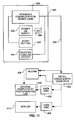
- FIG. 11 a schematic block diagram is shown in which the sound card reader 380 is provided internally with a card interface connector 388 for receiving the sound card inserted in slot 382.
- a feeler switch 400 is employed to sense the presence of a card inserted in slot 382 and provide power to the reader.
- the digital information recorded in the sound card memory chip 406 (FIG. 10) is downloaded to the computer 352 for temporary storage either on an internal hard drive or on conventional removable data disc media 407, 408 or 409.
- the downloaded data can be communicated from computer 352 or directly from the sound card reader 380 via a modem 422 to a central batch computer 410 at a photofinishing lab.
- the downloaded data may also be communicated to a central lab or a minilab 412 via the data disc media transported by van along with the photographic film cartridge batch.
- the computer will activate the conventional bar code labeling device 404 which can be either internal or external to the card reader.
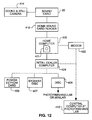
- FIG. 12 shows a modification of the order entry procedure in which the sound card 14 from a sound and still camera 414 is inserted in a basic sound card reader 418 connected to the photographer's home computer 420 for downloading of the sound data to the computer. From there, the data, which includes the unique sound card number, can be communicated directly via modem 422 to the photofinishing lab computer 410 with the cartridge mailed in separately. Alternatively, it can be recorded on removable memory disc 421 which can taken to a retail order entry station 424 for downloading into the dealer computer and batched as described above. Disc 421 may also be mailed with the film cartridge directly to a photofinishing lab.
- FIG. 13 there is shown a diagram of a file structure for a sound data file as it would be transmitted from the retailer to the photofinisher.
- the sound on print sound data is configured to begin with a directory 500.
- the directory identifies the store where the data originated.
- the store ID is made up of eight digits followed by a three digit extension, the time and the date.
- Under the directory are the individual customer sound files 502A-D.
- Each file 502A-D is identified by a customer ID identifying the customer who submitted the order.
- the customer ID is made up of eight digits followed by a three digit extension, and the time and date.
- the eight digits consist of the unique 6 digit bar coded and eye-readable envelope order number 18.
- the other two digits can be used to designate the order as a sound or non-sound order.
- the sound data file structure 504A-D for each order begins with the number of exposures in the order, the offset which tells where the sound data for each image in the order is located in the sound data stream, followed by the sound data itself.
Landscapes
- Physics & Mathematics (AREA)
- General Physics & Mathematics (AREA)
- Projection-Type Copiers In General (AREA)
- Management, Administration, Business Operations System, And Electronic Commerce (AREA)
Applications Claiming Priority (2)
| Application Number | Priority Date | Filing Date | Title |
|---|---|---|---|
| US08/773,158 US5774752A (en) | 1996-12-26 | 1996-12-26 | Processing of sound media with still image films in photofinishing labs |
| US773158 | 1996-12-26 |
Publications (1)
| Publication Number | Publication Date |
|---|---|
| EP0851281A1 true EP0851281A1 (de) | 1998-07-01 |
Family
ID=25097386
Family Applications (1)
| Application Number | Title | Priority Date | Filing Date |
|---|---|---|---|
| EP97203938A Withdrawn EP0851281A1 (de) | 1996-12-26 | 1997-12-15 | Verarbeitung von Tonaufzeichnungsträgern mit Stehbildfilmen in Fotobehandlungslabors |
Country Status (3)
| Country | Link |
|---|---|
| US (1) | US5774752A (de) |
| EP (1) | EP0851281A1 (de) |
| JP (1) | JPH10186543A (de) |
Cited By (1)
| Publication number | Priority date | Publication date | Assignee | Title |
|---|---|---|---|---|
| EP0971260A1 (de) * | 1998-07-08 | 2000-01-12 | Hewlett-Packard Company | Bild mit zugehörigem Ton |
Families Citing this family (30)
| Publication number | Priority date | Publication date | Assignee | Title |
|---|---|---|---|---|
| US6094279A (en) * | 1997-10-28 | 2000-07-25 | Eastman Kodak Company | System and process for non-perceptibly integrating sound data into a printed image |
| JPH11164128A (ja) * | 1997-11-28 | 1999-06-18 | Olympus Optical Co Ltd | 音声コードイメージ付静止画像形成装置 |
| US6147742A (en) * | 1998-02-26 | 2000-11-14 | Eastman Kodak Company | Photofinishing system and method for automated advanced services including image and associated audio data processing |
| US6094541A (en) * | 1998-03-04 | 2000-07-25 | Eastman Kodak Company | System and method for transferring images on an image content of a first format to a photosensitive film of a second format |
| US6104468A (en) * | 1998-06-29 | 2000-08-15 | Eastman Kodak Company | Image movement in a photographic laboratory |
| US20030225572A1 (en) * | 1998-07-08 | 2003-12-04 | Adams Guy De Warrenne Bruce | Selectively attachable device for electronic annotation and methods therefor |
| US6561429B2 (en) | 1998-07-21 | 2003-05-13 | Eastman Kodak Company | Adjustable reader arrangement and method of reading encoded indicia formed on an object |
| US6075950A (en) * | 1998-09-22 | 2000-06-13 | Eastman Kodak Company | Associating a sound record with a film image |
| JP2000206631A (ja) * | 1999-01-18 | 2000-07-28 | Olympus Optical Co Ltd | 撮影装置 |
| US6392757B2 (en) * | 1999-02-26 | 2002-05-21 | Sony Corporation | Method and apparatus for improved digital image control |
| US6381418B1 (en) | 1999-08-11 | 2002-04-30 | Eastman Kodak Company | Print having information associated with the print stored in a memory coupled to the print |
| US6363239B1 (en) | 1999-08-11 | 2002-03-26 | Eastman Kodak Company | Print having attached audio data storage and method of providing same |
| EP2352120B1 (de) * | 2000-01-13 | 2016-03-30 | Digimarc Corporation | Netzbasierter Zugriff auf Zusatzdaten basierend auf steganografischer Information |
| US6785739B1 (en) | 2000-02-23 | 2004-08-31 | Eastman Kodak Company | Data storage and retrieval playback apparatus for a still image receiver |
| US6180312B1 (en) | 2000-03-22 | 2001-01-30 | Eastman Kodak Company | Photographic imaging system incorporating metadata recording capability |
| CN1280740C (zh) * | 2000-04-28 | 2006-10-18 | 松下电器产业株式会社 | 信息分配系统,信息分配装置,声音再生装置,声音信息服务提供方法 |
| CA2347181A1 (en) | 2000-06-13 | 2001-12-13 | Eastman Kodak Company | Plurality of picture appearance choices from a color photographic recording material intended for scanning |
| US6781724B1 (en) * | 2000-06-13 | 2004-08-24 | Eastman Kodak Company | Image processing and manipulation system |
| US7197160B2 (en) | 2001-03-05 | 2007-03-27 | Digimarc Corporation | Geographic information systems using digital watermarks |
| US20040049733A1 (en) * | 2002-09-09 | 2004-03-11 | Eastman Kodak Company | Virtual annotation of a recording on an archival media |
| US20040059504A1 (en) * | 2002-09-20 | 2004-03-25 | Gray Christopher R. | Method and apparatus to automatically prevent aircraft collisions |
| US7233498B2 (en) | 2002-09-27 | 2007-06-19 | Eastman Kodak Company | Medium having data storage and communication capabilities and method for forming same |
| US7145464B2 (en) * | 2003-11-19 | 2006-12-05 | Eastman Kodak Company | Data collection device |
| US7109986B2 (en) * | 2003-11-19 | 2006-09-19 | Eastman Kodak Company | Illumination apparatus |
| US7009494B2 (en) * | 2003-11-21 | 2006-03-07 | Eastman Kodak Company | Media holder having communication capabilities |
| US8953908B2 (en) | 2004-06-22 | 2015-02-10 | Digimarc Corporation | Metadata management and generation using perceptual features |
| US20060002479A1 (en) * | 2004-06-22 | 2006-01-05 | Fernandes Felix C A | Decoder for H.264/AVC video |
| US7454657B2 (en) * | 2004-09-02 | 2008-11-18 | International Business Machines Corporation | Method for self-diagnosing remote I/O enclosures with enhanced FRU callouts |
| US8035482B2 (en) * | 2004-09-07 | 2011-10-11 | Eastman Kodak Company | System for updating a content bearing medium |
| US20060054702A1 (en) * | 2004-09-14 | 2006-03-16 | Tianmo Lei | Method,System and Program to Record Sound to Photograph and to Play Back |
Citations (4)
| Publication number | Priority date | Publication date | Assignee | Title |
|---|---|---|---|---|
| US4223463A (en) * | 1978-09-11 | 1980-09-23 | Tapecon, Inc. | Recording tape carrier |
| FR2712995A1 (fr) * | 1993-11-23 | 1995-06-02 | Henaff | Procédé, dispositif et papier photographique pour la prise de vue et la reproduction de photographie sonore. |
| EP0699941A1 (de) * | 1994-08-30 | 1996-03-06 | Eastman Kodak Company | In einem Photoapparat untergebrachte Spracherkennungsvorrichtung |
| US5521663A (en) * | 1992-10-28 | 1996-05-28 | Norris, Iii; Wyamn J. | Sound system for still film photography |
Family Cites Families (2)
| Publication number | Priority date | Publication date | Assignee | Title |
|---|---|---|---|---|
| US5128700A (en) * | 1989-05-12 | 1992-07-07 | Minolta Camera Kabushiki Kaisha | Camera capable of recording sounds relevant to the photographing |
| US5387955A (en) * | 1993-08-19 | 1995-02-07 | Eastman Kodak Company | Still camera with remote audio recording unit |
-
1996
- 1996-12-26 US US08/773,158 patent/US5774752A/en not_active Expired - Fee Related
-
1997
- 1997-12-15 JP JP9345306A patent/JPH10186543A/ja active Pending
- 1997-12-15 EP EP97203938A patent/EP0851281A1/de not_active Withdrawn
Patent Citations (4)
| Publication number | Priority date | Publication date | Assignee | Title |
|---|---|---|---|---|
| US4223463A (en) * | 1978-09-11 | 1980-09-23 | Tapecon, Inc. | Recording tape carrier |
| US5521663A (en) * | 1992-10-28 | 1996-05-28 | Norris, Iii; Wyamn J. | Sound system for still film photography |
| FR2712995A1 (fr) * | 1993-11-23 | 1995-06-02 | Henaff | Procédé, dispositif et papier photographique pour la prise de vue et la reproduction de photographie sonore. |
| EP0699941A1 (de) * | 1994-08-30 | 1996-03-06 | Eastman Kodak Company | In einem Photoapparat untergebrachte Spracherkennungsvorrichtung |
Cited By (5)
| Publication number | Priority date | Publication date | Assignee | Title |
|---|---|---|---|---|
| EP0971260A1 (de) * | 1998-07-08 | 2000-01-12 | Hewlett-Packard Company | Bild mit zugehörigem Ton |
| WO2000003299A1 (en) * | 1998-07-08 | 2000-01-20 | Hewlett-Packard Company | Selectively attachable sound storage device |
| US6563563B2 (en) | 1998-07-08 | 2003-05-13 | Hewlett-Packard Company | Printing of image with related sound |
| EP1324116A3 (de) * | 1998-07-08 | 2004-12-08 | Hewlett-Packard Company, A Delaware Corporation | Wahlweise befestigbares Tonspeichersystem |
| US6930713B1 (en) | 1998-07-08 | 2005-08-16 | Hewlett Packard Development Company, L.P. | Method and system for providing a printed image with a related sound |
Also Published As
| Publication number | Publication date |
|---|---|
| US5774752A (en) | 1998-06-30 |
| JPH10186543A (ja) | 1998-07-14 |
Similar Documents
| Publication | Publication Date | Title |
|---|---|---|
| US5774752A (en) | Processing of sound media with still image films in photofinishing labs | |
| US5032707A (en) | Bagless film handling system | |
| US6549306B2 (en) | System and method for selecting photographic images using index prints | |
| US5758216A (en) | Pre-recorded MOF layer information processing system | |
| JPH10161227A (ja) | カメラ及び撮影情報入力システム | |
| EP0809149B1 (de) | Fotobehandlungssystem mit einem personalisierten Auftragszahlungsmerkmal für Kunden | |
| US7272574B2 (en) | Method and system for organizing images | |
| US6047140A (en) | Cartridge, laboratory system, image data recording method, camera and photograph processing method | |
| US6515732B1 (en) | Photofinishing method and system | |
| JP2719821B2 (ja) | 処理済フィルムを包装する方法および装置 | |
| US7019862B1 (en) | Kit for organizing a plurality of images | |
| EP0851279A3 (de) | Vorrichtung und Verfahren zur Herstellung von Photographischen Filmeinheiten mit zugehörigen kodierten Informationen | |
| US5426481A (en) | Order finishing | |
| EP1580978B1 (de) | Verfahren und Vorrichtung zur Bilderzeugung | |
| JPH0829920A (ja) | 写真フイルム及びその検査方法 | |
| JP2004046785A (ja) | 携帯端末から写真化作業を注文するためのプロセス及び装置 | |
| US6396564B2 (en) | Photographic printing system and photographic printing method | |
| JPH1138562A (ja) | カートリッジ、ラボシステム及び画像データ記録方法 | |
| JP2005526428A (ja) | 少なくともコードを含む撮像装置 | |
| JPH1152474A (ja) | カメラ及び写真処理方法 | |
| JPH09106012A (ja) | 画像印刷装置 | |
| JPH10104812A (ja) | 現像済写真フィルム使用方法及び写真フィルム使用システム |
Legal Events
| Date | Code | Title | Description |
|---|---|---|---|
| PUAI | Public reference made under article 153(3) epc to a published international application that has entered the european phase |
Free format text: ORIGINAL CODE: 0009012 |
|
| AK | Designated contracting states |
Kind code of ref document: A1 Designated state(s): DE FR GB |
|
| AX | Request for extension of the european patent |
Free format text: AL;LT;LV;MK;RO;SI |
|
| 17P | Request for examination filed |
Effective date: 19981202 |
|
| AKX | Designation fees paid |
Free format text: DE FR GB |
|
| RBV | Designated contracting states (corrected) |
Designated state(s): DE FR GB |
|
| 17Q | First examination report despatched |
Effective date: 20020527 |
|
| STAA | Information on the status of an ep patent application or granted ep patent |
Free format text: STATUS: THE APPLICATION IS DEEMED TO BE WITHDRAWN |
|
| 18D | Application deemed to be withdrawn |
Effective date: 20021008 |