EP0852151B1 - Dispositif et méthodes extracorporelles de filtration de sang utilisant une pompe - Google Patents
Dispositif et méthodes extracorporelles de filtration de sang utilisant une pompe Download PDFInfo
- Publication number
- EP0852151B1 EP0852151B1 EP98300030A EP98300030A EP0852151B1 EP 0852151 B1 EP0852151 B1 EP 0852151B1 EP 98300030 A EP98300030 A EP 98300030A EP 98300030 A EP98300030 A EP 98300030A EP 0852151 B1 EP0852151 B1 EP 0852151B1
- Authority
- EP
- European Patent Office
- Prior art keywords
- filter
- blood
- blood component
- pumping
- pressure
- Prior art date
- Legal status (The legal status is an assumption and is not a legal conclusion. Google has not performed a legal analysis and makes no representation as to the accuracy of the status listed.)
- Expired - Lifetime
Links
Images


Classifications
-
- A—HUMAN NECESSITIES
- A61—MEDICAL OR VETERINARY SCIENCE; HYGIENE
- A61M—DEVICES FOR INTRODUCING MEDIA INTO, OR ONTO, THE BODY; DEVICES FOR TRANSDUCING BODY MEDIA OR FOR TAKING MEDIA FROM THE BODY; DEVICES FOR PRODUCING OR ENDING SLEEP OR STUPOR
- A61M1/00—Suction or pumping devices for medical purposes; Devices for carrying-off, for treatment of, or for carrying-over, body-liquids; Drainage systems
- A61M1/36—Other treatment of blood in a by-pass of the natural circulatory system, e.g. temperature adaptation, irradiation ; Extra-corporeal blood circuits
- A61M1/3621—Extra-corporeal blood circuits
- A61M1/3639—Blood pressure control, pressure transducers specially adapted therefor
-
- A—HUMAN NECESSITIES
- A61—MEDICAL OR VETERINARY SCIENCE; HYGIENE
- A61M—DEVICES FOR INTRODUCING MEDIA INTO, OR ONTO, THE BODY; DEVICES FOR TRANSDUCING BODY MEDIA OR FOR TAKING MEDIA FROM THE BODY; DEVICES FOR PRODUCING OR ENDING SLEEP OR STUPOR
- A61M1/00—Suction or pumping devices for medical purposes; Devices for carrying-off, for treatment of, or for carrying-over, body-liquids; Drainage systems
- A61M1/02—Blood transfusion apparatus
- A61M1/0209—Multiple bag systems for separating or storing blood components
- A61M1/0218—Multiple bag systems for separating or storing blood components with filters
-
- A—HUMAN NECESSITIES
- A61—MEDICAL OR VETERINARY SCIENCE; HYGIENE
- A61M—DEVICES FOR INTRODUCING MEDIA INTO, OR ONTO, THE BODY; DEVICES FOR TRANSDUCING BODY MEDIA OR FOR TAKING MEDIA FROM THE BODY; DEVICES FOR PRODUCING OR ENDING SLEEP OR STUPOR
- A61M1/00—Suction or pumping devices for medical purposes; Devices for carrying-off, for treatment of, or for carrying-over, body-liquids; Drainage systems
- A61M1/02—Blood transfusion apparatus
- A61M1/0209—Multiple bag systems for separating or storing blood components
- A61M1/0231—Multiple bag systems for separating or storing blood components with gas separating means, e.g. air outlet through microporous membrane or gas bag
-
- A—HUMAN NECESSITIES
- A61—MEDICAL OR VETERINARY SCIENCE; HYGIENE
- A61M—DEVICES FOR INTRODUCING MEDIA INTO, OR ONTO, THE BODY; DEVICES FOR TRANSDUCING BODY MEDIA OR FOR TAKING MEDIA FROM THE BODY; DEVICES FOR PRODUCING OR ENDING SLEEP OR STUPOR
- A61M1/00—Suction or pumping devices for medical purposes; Devices for carrying-off, for treatment of, or for carrying-over, body-liquids; Drainage systems
- A61M1/36—Other treatment of blood in a by-pass of the natural circulatory system, e.g. temperature adaptation, irradiation ; Extra-corporeal blood circuits
- A61M1/3621—Extra-corporeal blood circuits
- A61M1/3627—Degassing devices; Buffer reservoirs; Drip chambers; Blood filters
- A61M1/3633—Blood component filters, e.g. leukocyte filters
-
- A—HUMAN NECESSITIES
- A61—MEDICAL OR VETERINARY SCIENCE; HYGIENE
- A61M—DEVICES FOR INTRODUCING MEDIA INTO, OR ONTO, THE BODY; DEVICES FOR TRANSDUCING BODY MEDIA OR FOR TAKING MEDIA FROM THE BODY; DEVICES FOR PRODUCING OR ENDING SLEEP OR STUPOR
- A61M1/00—Suction or pumping devices for medical purposes; Devices for carrying-off, for treatment of, or for carrying-over, body-liquids; Drainage systems
- A61M1/36—Other treatment of blood in a by-pass of the natural circulatory system, e.g. temperature adaptation, irradiation ; Extra-corporeal blood circuits
- A61M1/3621—Extra-corporeal blood circuits
- A61M1/3639—Blood pressure control, pressure transducers specially adapted therefor
- A61M1/3641—Pressure isolators
-
- A—HUMAN NECESSITIES
- A61—MEDICAL OR VETERINARY SCIENCE; HYGIENE
- A61M—DEVICES FOR INTRODUCING MEDIA INTO, OR ONTO, THE BODY; DEVICES FOR TRANSDUCING BODY MEDIA OR FOR TAKING MEDIA FROM THE BODY; DEVICES FOR PRODUCING OR ENDING SLEEP OR STUPOR
- A61M1/00—Suction or pumping devices for medical purposes; Devices for carrying-off, for treatment of, or for carrying-over, body-liquids; Drainage systems
- A61M1/36—Other treatment of blood in a by-pass of the natural circulatory system, e.g. temperature adaptation, irradiation ; Extra-corporeal blood circuits
- A61M1/3621—Extra-corporeal blood circuits
- A61M1/3643—Priming, rinsing before or after use
- A61M1/3644—Mode of operation
- A61M1/3646—Expelling the residual body fluid after use, e.g. back to the body
-
- A—HUMAN NECESSITIES
- A61—MEDICAL OR VETERINARY SCIENCE; HYGIENE
- A61M—DEVICES FOR INTRODUCING MEDIA INTO, OR ONTO, THE BODY; DEVICES FOR TRANSDUCING BODY MEDIA OR FOR TAKING MEDIA FROM THE BODY; DEVICES FOR PRODUCING OR ENDING SLEEP OR STUPOR
- A61M1/00—Suction or pumping devices for medical purposes; Devices for carrying-off, for treatment of, or for carrying-over, body-liquids; Drainage systems
- A61M1/36—Other treatment of blood in a by-pass of the natural circulatory system, e.g. temperature adaptation, irradiation ; Extra-corporeal blood circuits
- A61M1/3693—Other treatment of blood in a by-pass of the natural circulatory system, e.g. temperature adaptation, irradiation ; Extra-corporeal blood circuits using separation based on different densities of components, e.g. centrifuging
- A61M1/3696—Other treatment of blood in a by-pass of the natural circulatory system, e.g. temperature adaptation, irradiation ; Extra-corporeal blood circuits using separation based on different densities of components, e.g. centrifuging with means for adding or withdrawing liquid substances during the centrifugation, e.g. continuous centrifugation
-
- A—HUMAN NECESSITIES
- A61—MEDICAL OR VETERINARY SCIENCE; HYGIENE
- A61M—DEVICES FOR INTRODUCING MEDIA INTO, OR ONTO, THE BODY; DEVICES FOR TRANSDUCING BODY MEDIA OR FOR TAKING MEDIA FROM THE BODY; DEVICES FOR PRODUCING OR ENDING SLEEP OR STUPOR
- A61M1/00—Suction or pumping devices for medical purposes; Devices for carrying-off, for treatment of, or for carrying-over, body-liquids; Drainage systems
- A61M1/02—Blood transfusion apparatus
- A61M1/0209—Multiple bag systems for separating or storing blood components
- A61M1/0218—Multiple bag systems for separating or storing blood components with filters
- A61M1/0222—Multiple bag systems for separating or storing blood components with filters and filter bypass
-
- A—HUMAN NECESSITIES
- A61—MEDICAL OR VETERINARY SCIENCE; HYGIENE
- A61M—DEVICES FOR INTRODUCING MEDIA INTO, OR ONTO, THE BODY; DEVICES FOR TRANSDUCING BODY MEDIA OR FOR TAKING MEDIA FROM THE BODY; DEVICES FOR PRODUCING OR ENDING SLEEP OR STUPOR
- A61M2205/00—General characteristics of the apparatus
- A61M2205/33—Controlling, regulating or measuring
- A61M2205/3306—Optical measuring means
- A61M2205/331—Optical measuring means used as turbidity change detectors, e.g. for priming-blood or plasma-hemoglubine-interface detection
Definitions
- This invention relates to medical equipment, and in particular to apparatus for separating whole blood into components for collection.
- Whole human blood includes predominantly three types of specialized cells: red blood cells, white blood cells, and platelets. These cells are suspended in a complex aqueous solution of proteins and other chemicals called plasma.
- red blood cells white blood cells
- platelets a complex aqueous solution of proteins and other chemicals called plasma.
- plasma a complex aqueous solution of proteins and other chemicals
- the blood components needed for transfusion may be taken from a donor by a process called apheresis in which the desired one, or more, specific components of the whole blood are separated and harvested by a blood-processing machine. The remaining components are returned to the donor.
- apheresis in which the desired one, or more, specific components of the whole blood are separated and harvested by a blood-processing machine. The remaining components are returned to the donor.
- donor connotes anyone from whom blood is drawn for collection or processing, and can include volunteer donors, paid donors or medical patients to whom collected blood components are returned.
- leukocytes provide a host with protection against bacterial and viral infection, their introduction into a transfusion recipient can cause highly adverse reactions not elicited by other blood products. For example, transfused leukocytes can provoke severe immunogenic rejection reactions, viral diseases and organ damage. Accordingly, it is desirable to filter harvested blood fractions such as plasma, platelets or red blood cells to remove leukocytes.
- the blood component resides within a container in fluid communication with the inlet to a leukocyte filter and suspended thereabove; exiting filtrate is collected in a container disposed below the filter and in fluid communication with its outlet.
- the vertical distance between the blood component and the receiving bag is generally 50.8 to 152 cm (20 to 60 inches).
- the flow rate at which filtration occurs may vary considerably as the process proceeds. This is due primarily to gradual plugging of the filter, which increases the resistance to flow. Thus, in many cases, the flow at the onset of filtration is twice that observed at the conclusion.
- the filtration rate can also vary as a result of differences in blood properties among donors.
- leukocyte filters have an appreciable internal volume, and gravity filtration is poorly suited to removing the final quantity of blood product remaining in the filter.
- An auxiliary fluid can, of course, be used to purge the filter and cause exit and collection of this remaining quantity, but the equipment and procedures necessary to implement this are both cumbersome and labor intensive.
- EP-A-349188 describes a method and separator unit for separating blood into blood components. Blood is fed by gravity through a filter into a collection bag. The bag is separated from the filter and centrifugation is performed on the separated bag.
- WO-A-9 301 858 discloses a method of processing whole blood that includes control of a pump for pumping blood through a filter based on measured pressure into the filter.
- an apparatus for processing a blood component as defined in claim 1 and a method of processing a blood component as defined in claim 7.
- Embodiments of the present invention automate the process of filtration in a manner that ensures consistent flow or pressure characteristics through the filter.
- a feedback circuit monitors pressure in the vicinity of the filter inlet.
- the feedback circuit controls the operation of a fluid pump that sends one or more unfiltered blood components into the filter.
- a variety of parameters relating to filtration efficacy can be precisely controlled.
- One such parameter is flow rate; if the displaced volume is not directly determined by the pump rate, pressure can be used as a surrogate to monitor flow rate and control the pump accordingly.
- the pump is a volumetric pump, so that constant flow results directly from a constant pumping rate.
- the controlled parameter is typically filter pressure. It is important, in enforcing a constant flow rate, to avoid imposing excessive pressures on the filter.
- some filters are more sensitive to pressure than flow rate, and may require a constant pressure for optimal performance.
- the feedback circuit may include an alarm that alerts an operator when enforcement of the constant flow rate results in excessive pressures at the filter inlet (corresponding to the trans-filter pressure since, at a constant flow rate, the outlet pressure is substantially constant).
- the feedback circuit can be configured to terminate flow at the pressure limit. In the latter case, the feedback circuit operates the pump so that the pressure at the filter inlet remains constant.
- the pressure alarm limit can be the maximum pressure safely tolerated by the filter, but more commonly will be a value which, when exceeded, compromises the quality of the filtrate.
- Some filters tolerate intermittent pressure spikes, so long as the average pressure over a given volume of flow does not exceed some maximum.
- the feedback circuit integrates pressure readings over a predetermined flow volume and causes actuation of the alarm and/or termination of flow if the average pressure exceeds the maximum limit.
- Embodiments of the invention facilitate convenient purging of the interior filter volume following completion of the filtration process.
- the system includes a selectively connected source of auxiliary fluid, such as saline or a preservation solution, which the pump sends through the filter after exhaustion of the unfiltered blood product.
- auxiliary fluid such as saline or a preservation solution
- Sufficient auxiliary fluid passes through the filter to clear most of the remaining blood product and, if desired, also to rinse the filter.
- Embodiments of the invention facilitate filtration of multiple blood products through the same filter, with the different filtrates each collected in a separate container.
- the feedback circuit accommodates the different flow or pressure characteristics that may be desirable for filtration of the various blood products.
- Embodiments of the invention provide a complete apheresis system for the withdrawal and separation of blood, preceded by filtration of whole blood and/or followed by filtration and collection of the separated fractions.
- the system includes a phlebotomy needle for withdrawing blood from a donor, a centrifuge for separating the blood into components, a filter, pump, a controller and pressure sensor operating, inter alia, as the feedback circuit, and the various containers, plumbing, mechanical and electronic components necessary to effectuate an apheresis procedure according to well-established protocols.
- the invention accordingly includes apparatus configured to operate in accordance with the foregoing principles, as well as methods embodying them.
- FIG. 1 depicts the basic elements of an apparatus, indicated generally at 100.
- the apparatus 100 includes first and second inlets 115, 120 that admit fluid into a pair of blood-compatible tubing branches by way of a pair of valves 115 v , 120 v , respectively.
- the tubing branches join at a Y-connector 122, the outlet of which is fluidly coupled to one inlet of a second Y-connector 124.
- the other inlet of Y-connector 124 is fluidly coupled, via a check valve 126 v , to an air container (not shown) or vent.
- Y-connector 124 Emerging from the outlet of Y-connector 124 is a main blood-compatible tubing line 130 that operatively engages a controllable, bidirectional peristaltic pump 132; pump 132, in turn, determines the fluid direction and flow pressure within tubing 130 and its branches. Air within tubing 130 is sensed by an air detector 134. Tubing 130 divides at a third Y-connector 136, a first outlet of which is fluidly coupled to the inlet of a filter 140. Material exiting filter 140 is conducted to either of two collection bags 145, 150 as determined by the settings of a pair of valves 145 v , 150 v .
- filter 140 depends on the nature of the material being filtered, and may be, for example, a leukocyte filter (e.g., the BPF4 or LRF6 filter marketed by Pall Biomedical Corp., East Hills, NY, or the R200 filter available from Asahi Sepacell, Tokyo, Japan); a viral filter for inactivation or reduction of viruses (e.g., the STERIPATH filter made by Hemasure Inc., Marlborough, MA); a bacterial filter; or a platelet-removal filter. These components are conventional and readily available.
- a leukocyte filter e.g., the BPF4 or LRF6 filter marketed by Pall Biomedical Corp., East Hills, NY, or the R200 filter available from Asahi Sepacell, Tokyo, Japan
- a viral filter for inactivation or reduction of viruses e.g., the STERIPATH filter made by Hemasure Inc., Marlborough, MA
- a bacterial filter e.g., a bacterial filter
- the other outlet of Y-connector 136 leads to a pressure sensor 153, which determines the fluid pressure within the line 130 and its open branches, and produces an electronic signal indicative thereof.
- Sensor 153 preferably includes a hydrophobic filter to isolate the sterile interior environment of apparatus 100 from external pathogens, and may be fluidly segregated from the system during installation by means of a tubing slide clamp154.
- the signal output of sensor 153 is provided to a controller 155, which determines, via suitable electrical connections and control signals, the state of pump 132.
- the system is first purged of air by closing valves 115 v and 120 v and running pump 132 in reverse until a desired internal pressure (e.g., 75 mm Hg below atmospheric), as measured by pressure sensor 153, is reached. Air in the system is rejected through check valve 126 v . Valve 115 v is then opened, allowing one or more blood components (e.g., whole blood, plasma, platelet-rich plasma, etc.) then enter the system through inlet 115. Pump 132 is operated to draw material through inlet 115 and force it through filter 140 into one of the collection bags 145, 150. As this process proceeds, the pressure at the inlet to filter 140 (as measured by sensor 153) increases as filter 140 gradually plugs.
- a desired internal pressure e.g. 75 mm Hg below atmospheric
- controller 155 operates pump 132 in a manner consistent with the capabilities of the invention and the selection of the operator.
- controller 155 may maintain a constant flow but terminate pumping if a maximum pressure is reached; maintain a constant internal pressure by varying the flow; or maintain some combination of a target flow rate and a target or maximum pressure (e.g., controller 155 may enforce a constant flow rate for a given flow volume or period of time, or within a pressure range, then enforce a constant pressure for the remainder of a cycle).
- pump 132 is a volumetric pump
- the flow rate dV/dt follows directly from the pump rotation (pumping) rate.
- Sensor 153 and controller 155 form a feedback circuit that enforces a programmed pressure/flow rate regime. As a result, optimal filter performance may be ensured.
- Controller 155 can also be provided with an alarm function that alerts the system operator (e.g., by means of a light, a display message or an audible signal) and/or shuts down pump 132 if the measured pressure exceeds a maximum limit. For example, blood cells can be physically damaged if flow pressure rises above a maximum tolerance level. This level is programmed into controller 155 and used as the alarm limit.
- Controller 155 may itself be implemented, for example, using a programmable, single-chip microcomputer which incorporates analog-to-digital converters for transforming the signals from sensor 153 into digital signals that may be processed by the microcomputer. Alternatively, the circuitry may be implemented in a custom integrated circuit or in discrete electronics. Controller 100 may also include a keypad or other input/output device for receiving data from the system operator.
- Controller 155 receives, on a frequent or continuous basis, data representing the actual pressure P a at the inlet to filter 140 (as measured by sensor 153) and the actual flow rate F a from pump 132 (which is constant if pump 132 is a volumetric pump, but which may otherwise be calculated from P a ).
- the operator provides controller 155 with values representing one or more of a maximum pressure P max , a target pressure P targ , a pressure tolerance P tol (i.e., an expected deviation arising from, for example, small pressure fluctuations associated with the pump rollers or measurement error, the P tol parameter functioning as a threshold to prevent inappropriately fine pump adjustments), a target flow rate F targ and a minimum flow rate F min .
- P max maximum pressure
- P targ i.e., an expected deviation arising from, for example, small pressure fluctuations associated with the pump rollers or measurement error, the P tol parameter functioning as a threshold to prevent inappropriately fine pump adjustments
- F targ i.e., an expected deviation arising from, for example, small pressure fluctuations associated with the pump rollers or measurement error, the P tol parameter functioning as a threshold to prevent inappropriately fine pump adjustments
- F targ i.e., an expected deviation arising from, for example, small pressure fluctuations associated with the pump rollers or measurement error, the P tol parameter
- Controller continuously analyzes the data it receives (which may change) and the data provided by the operator (which remains constant during a cycle) in accordance with the illustrated logic to determine the state of the system.
- controller 155 causes the system to enter the state 305, corresponding to increasing the speed of pump 132, until P a ⁇ P targ or F a ⁇ F targ , at which point the system enters the state 310, where pump speed is held constant. If, however, P a exceeds P max at any point, the system enters the alarm state 315, where pump 132 is stopped and/or an alarm activated.
- State 310 is maintained until any of three conditions is detected: (1) P a ⁇ P targ -P tol and F, ⁇ F targ , in which case controller 155 causes the system to re-enter state 305; or (2) P, > P targ + P tol and F a > F min , in which case controller 155 causes the system to enter the state 315, corresponding to decreasing the speed of pump 132; or, once again, P a > P max , whereupon the system enters alarm state 315.
- Controller 155 causes the system to leave state 315 upon detection of any of three conditions: (1) P a ⁇ P targ and F a ⁇ F targ ; (2) F a ⁇ F min ; or (3) P a > P max .
- Conditions (1) or (2) cause the system to revert to state 310, while condition (3) results in entry of the alarm state 315.
- the alarm limit may be more complex than a single-valued pressure level.
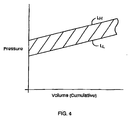
- tolerable filter pressure can be a function of cumulative filtered volume, so that small pressure "spikes" are acceptable so long as the average pressure over a given volume remains within a certain limit L H .
- optimal filtration efficacy may also require a minimum pressure L L , so that a quality filtrate is assured only when the pressure remains within the bounds of L H and L L during operation.
- Excessively high or low pressures can also indicate basic malfunction or defect; for example, insufficient flow resistance may reflect a filter bypass or leak, while excessive resistance may result from mispriming or an inoperative filter. Either condition indicates the need to check the final product for quality.
- a normally closed bypass loop around filter 140 can also be provided so that, if the alarm limit is reached, the path through filter 140 may be closed and unfiltered blood component(s) diverted to a collection container to avoid loss or contamination as a result of contact with a malfunctioning filter.
- Inlet 120 may be used to admit various auxiliary fluids for different purposes during the course of filtration and collection.
- saline solution may be introduced prior to entry of blood component(s) through inlet 115 in order to prime the system tubing and/or filter 140.
- a fluid may be fed through inlet 120 in order to displace into a collection bag material remaining in filter 140, which may have an internal volume on the order of 30 mL.
- pump 132 can be located downstream of filter 140 (i.e., between filter 140 and the Y-connector leading to valves 145 v , 150 v ), drawing blood through filter 140 instead of driving it through.
- An air-elimination vent with a check valve (as described below) to facilitate purging of air may also be added downstream of filter 140, as may a sample bag to collect a small amount of filtrate prior to completion of a cycle.
- the source of blood component(s) will be an apheresis apparatus that collects blood from a donor and separates it into fractions such as plasma, buffy coat, platelets and red blood cells ("RBC"), or some combination thereof.
- FIG. 2 illustrates an embodiment of the present invention that operates as a self-standing apheresis apparatus for collection of red blood cells.
- the device 200 utilizes a conventional centrifuge bowl 210 (in accordance, for example, with U. S. Patent No. 4,983, 158) having an internal fluid capacity preferably on the order of 250 ml, means (not shown) for rotating the bowl, and inlet port PT1 and an outlet port PT2.
- Outlet port PT2 of centrifuge bowl 210 is in fluid communication with the inlet port of a container 212 for collecting plasma and air during the course of operation; container 212 is oriented vertically, as illustrated, so that collected liquid and not air is drained from container 212 in withdrawal modes.
- the fluid path from outlet port PT2 also includes a pressure sensor 214 for monitoring pressure within the system.
- the fluid path from the outlet port of container 212 returns, via a valve 218 v , to the primary peristaltic pumps 232 a , 232 b that implement most system functions, and thereafter, via a pair of valves 220 v , 222 v , to the inlet port of filter 240.
- the fluid path from the outlet port of filter 240 includes a hydrophobic vent 225 and leads, via valves 245 v , 250 v , to first and second collection bags 245, 250. These are used to store filtered red cells obtained from a donor.
- a pair of containers 260 for saline solution
- 262 for a preservation agent
- the preservation agent is an additive for extending the shelf life of RBC, suitable examples of which include SAGM, ADSOL, NUTRICELL, PAGGsM, MAP and glycerol.
- Inlet port PT1 of centrifuge 210 is selectively coupled, via valves 220 v , 222 v and a Y-connector 268, to a phlebotomy needle 266 connected to the system by a slide clamp 269.
- Phlebotomy needle 266 is also in fluid communication with a container 270 for anticoagulant.
- An anticoagulant pump 272 draws anticoagulant solution from container 270; the solution enters the system and mixes with drawn blood via Y-connector 268. All of the containers are typically bags made of a blood-compatible material.
- the depicted fluid flow path is established by suitable lengths of blood-compatible tubing (denoted collectively by reference numeral 230).
- a series of air detectors D1, D2, D3, D4 detect the presence of absence of fluid at various points in the fluid circuit.
- a gross filter 275 (typically having a 170- ⁇ m pore size) removes potential microaggregates from blood returned to the donor.
- a pair of bacterial filters 277, 280 remove bacteria from solutions drawn from containers 260, 262 and 270.
- controller 255 first causes tubing 230 to be primed with preservation solution from container 260 by opening valve 260 v , closing valves 220 v , 222 v and 262 v , and operating pumps 232 a and 232 b (although controller 255 is shown as operatively connected only to the peristaltic pumps, this is for convenience of presentation only; in fact, controller 255 governs the operation of all system elements as herein described).
- Pumps 232 a , 232 b draw preservation solution until it reaches air detector D2, which signals controller 255 as soon as the presence of liquid is sensed; controller 255 thereupon terminates the preservation-solution priming operation by closing valve 260 v .
- valves 245 v and 250 v are kept open, and purged air is sent to filter 240 for accumulation in containers 245, 250.
- valve 262 v is open and valves 220 v , 222 v and 260 v are closed.
- priming ceases when liquid is sensed by detector D2, and purged air is sent to filter 240.
- controller 255 operates pump 272 to prime the tubing 230 and needle 266 with anticoagulant solution from container 270.
- the anticoagulant passes through tubing 230 until it reaches detector D4, which signals controller 255 as soon as the presence of anticoagulant is sensed; controller 255 thereupon terminates the anticoagulant priming operation.
- controller 255 operates pump 232 b in reverse to discharge, into bowl 210 and container 212, air in filter 240 and containers 245, 250. To accomplish this, valves 220 v , 245 v and 250 v are open, and valves 218 v , 222 v , 260 v and 262 v are closed. Pumping continues until a pressure of 75 mm below atmospheric is detected by sensor 253.
- the phlebotomy needle 266 is then inserted within the donor, and controller 255 causes whole blood to be drawn from and mixed with anticoagulant by operating pumps 232 a and 272, pump 272 mixing anticoagulant from container 270 with the drawn whole blood drawn so as to maintain a target ratio (generally 1:16) of anticoagulant to whole blood.
- Valve 222 v is open and valve 220v closed, forcing anticoagulated whole blood into bowl 210 through inlet port PT1.
- Controller 255 then initiates rotation of bowl 210, and centrifugal forces separate the higher density components (mainly RBC) from lower density components (white blood cells, platelets and plasma).
- rotation of the centrifuge bowl concentrates RBC against the outer bowl wall.
- the supernatant comprising lighter blood components, anticoagulant and debris, forms concentric layers that approach the core of the bowl and exit out the outlet port PT2.
- the plasma passes through a line sensor 282 and is collected in plasma container 212, which holds approximately 400-600 ml of plasma.
- controller 255 causes return to the donor of plasma in container 212 (again, the vertical orientation prevents infusion of any stray air) mixed with saline in a predetermined ratio by opening valves 218 v and 262 v and closing valve 260 v ; during this operation, pumps 232 a , 232 b rotate at identical rates, and plasma passes through the Y-connector 290 without passing to PT1.
- the components are preferably returned to the donor at a rapid rate, e.g., 120 ml/min.
- the saline solution is introduced by pump 232 a at a rate of approximately 60 ml/min.
- the addition of saline reduces the citrate effect experienced by the donor and compensates for extracted volume.
- it is possible to return plasma to the donor before completion of the cycle i.e., even while bowl 210 is operating) by opening valves 218 v and 222 v , closing valve 220 v and running pump 232 a at a slightly faster rate than pump 232 b .
- some of the plasma drawn from container 212 will be returned to the donor, and the remainder returned via Y-connector 290 to bowl 210 to continue the separation process.
- the ratio of returned to recirculated plasma is determined by the relative speeds of pumps 232 a , 232 b .
- Blood components remaining in bowl 210 are emptied, via port PT1, through filter 240 by pump 232 b with valve 222 v closed and valve 220 v open.
- valves 245 v and 250 v are kept closed, and pump 232 a is operated to mix preservation solution with the contents of bowl 210; valve 260 v is open and valve 262 v closed.
- the respective rotation rates of pumps 232 a , 232 b are selected such that preservation solution is mixed in at a desired concentration (usually 1/3, so pump 232 a rotates at 1/3 the rate of pump 232 b ).
- air is purged from filter 240 through hydrophobic vent 225.
- the priming operation is terminated by opening one of valves 245 v , 250 v .
- the remaining contents of bowl 210 are then emptied through filter 240 until the absence of liquid is sensed by detector D2 or a predetermined volume has been processed.
- controller 255 alternately opens one of valves 245 v , 250 v with the other valve closed in order to distribute the filtered product into containers 245, 250.
- apparatus 200 begins a second draw cycle identical to that described above.
- Whole blood is again obtained from the donor and mixed with anticoagulant, RBC accumulates in bowl 210, and plasma is returned to the donor.
- the second cycle is terminated (again, by signals provided by line sensor 282), and the phlebotomy needle 266 removed from the donor.
- controller 255 simply operates pumps 232 a , 232 b at the fixed ratio of rotation rates to achieve the target mixture of preservation solution and blood product, thereafter filling containers 245, 250.
- bowl 210 is empty, the interior volume of filter 240 is still filled with the mixture of blood product and preservation solution.
- controller 255 operates pump 232 a to transfer additional preservation solution from container 260 into filter 240. If desired, this operation can be extended beyond what is strictly necessary for displacement, sending still further preservation solution through filter 240 in order to rinse the filter. In this case, the mixing ratio of blood product to preservation solution has been chosen to permit the introduction of this subsequent volume following displacement.
- controller 255 operates pump 232 b in accordance with the principles of the present invention based on the pressure detected by sensor 253.
- controller 255 can ensure a constant flow rate or a constant pressure, can trigger an alarm in response to an excessive or insufficient pressure (instantaneous or averaged over a cumulative volume), and/or can terminate flow (by disabling pump 232 b and/or closing valve 220 v ) in response to an excessive or insufficient pressure.
- Apparatus 200 can, alternatively, be configured and operated to collect multiple blood products.
- the arrangement shown in FIG. 2 can be used to collect a plasma fraction and an RBC fraction as follows. Following collection and separation, plasma from container 212 is sent through filter 240, rather than back to phlebotomy needle 266, by closing valve 222 v and keeping valve 220 v open.
- controller 255 responds to sensor 253 and operates pump 232 b in accordance with the invention, and only one of valves 245 v , 250 v is kept open to retain the plasma in a single collection container.
- valve 218 v When transfer of plasma from container 212 is complete (as indicated by air detection at D2 or the measured weight of container 212), valve 218 v is closed. The currently open one of valves 245 v , 250 v is closed and the other opened. Pumps 232 a , 232 b are then operated to draw RBC from bowl 210 and container 260 in a fixed ratio and force these through filter 240 (again, in accordance with the invention) and into the unfilled one of containers 245, 250. Because controller 255 is programmable, its operation can take account of differences in filter handling requirements for the different blood products; for example, the maximum filter pressure for plasma may be different from the maximum pressure for RBC. It may also be desirable, before drawing material from bowl 210, to rinse filter 240 with a small amount of saline or preservative drawn from one of containers 260, 262.
- vent 225 It is also possible to eliminate vent 225 through the addition, past filter 240 and in parallel with containers 245, 250, of a pouch that is ordinarily sealed off(e.g., by means of a tubing slide clamp) from the system, but is used to collect accumulated air from containers 245, 250 following completion the procedure. This may be accomplished by hanging containers 245, 250 in a vertical orientation and manually forcing air into the pouch.
- this design requires manual intervention, unlike the above-described configuration, it allows purging of air that would otherwise lie beyond vent 225 and thereby remain inaccessible to purging.
Landscapes
- Health & Medical Sciences (AREA)
- Heart & Thoracic Surgery (AREA)
- Vascular Medicine (AREA)
- Hematology (AREA)
- Anesthesiology (AREA)
- Biomedical Technology (AREA)
- Engineering & Computer Science (AREA)
- Life Sciences & Earth Sciences (AREA)
- Animal Behavior & Ethology (AREA)
- General Health & Medical Sciences (AREA)
- Public Health (AREA)
- Veterinary Medicine (AREA)
- Cardiology (AREA)
- External Artificial Organs (AREA)
- Medicines Containing Material From Animals Or Micro-Organisms (AREA)
Claims (23)
- Dispositif de traitement d'au moins un composant sanguin, le dispositif comprenant:a. un moyen (210) pour séparer le sang entier en plusieurs composants, le moyen de séparation (210) comportant une orifice d'entrée (PT1) destiné à recevoir le sang entier;b. un moyen de collecte (245, 250) pour collecter le au moins un composant sanguin;c. un moyen de pompe à commande (232a, 232b) comprenant un moyen pour pomper le sang entier vers ledit moyen de séparation et un moyen pour transférer le au moins un composant de sang du moyen de séparation (210) vers le moyen de collecte;d. un filtre (240) pour filtrer au moins un composant sanguin avant la collecte;e. un moyen (253) pour mesurer la pression dans le filtre (240); etf. un moyen de commande (255) pour contrôler ledit moyen de séparation (210) et ledit moyen de pompe (232a, 232b) afin de séparer et filtrer ledit au moins un composant sanguin, le moyen de commande (255) englobant un moyen à réaction (255) pour contrôler le moyen de pompe (232a, 232b) sur la base de la pression mesurée, pour établir un débit de filtration requis et/ou une pression requise dudit au moins un composant sanguin.
- Dispositif selon la revendication 1, caractérisé en outre par un moyen destiné à prélever du sang entier d'un donneur, ledit moyen comprenant une aiguille de phlébotomie (266).
- Dispositif selon la revendication 2, caractérisé en outre en ce que le au moins un composant séparé suit une trajectoire d'écoulement, du moyen de séparation (210) à travers le filtre (240) et dans le moyen de collecte (245, 250), le moyen à réaction (255) contrôlant la pompe (232a, 232b) de sorte à maintenir: a) un débit programmé à travers le filtre (240); ou b) une pression programmée dans le filtre (240).
- Dispositif selon la revendication 1, caractérisé en outre en ce que le moyen de collecte comprend des premier et deuxième récipients (245, 250) contenant chacun un composant sanguin différent, le dispositif comprenant en outre:a. un moyen (220v, 245v) pour diriger un premier composant sanguin à travers le filtre (240) et dans le premier récipient (245); etb. un moyen (220v, 250v) pour diriger le deuxième composant sanguin à travers le filtre (240) et dans le deuxième récipient (250).
- Dispositif selon la revendication 1, caractérisé en outre en ce que le filtre (240) a un volume interne et en ce qu'au moins un composant séparé suit une trajectoire d'écoulement, du moyen de séparation (210) à travers le filtre (240) et dans le moyen de collecte (245, 350), le dispositif comprenant en outre:a. un moyen (260) destiné à contenir un liquide; etb. un moyen (260v) destiné à être accouplé sélectivement à la trajectoire d'écoulement et à entraíner l'écoulement du liquide à travers celle-ci, pour déplacer pratiquement le au moins un composant sanguin à partir du volume interne du filtre (240).
- Dispositif selon la revendication 3, caractérisé en outre en ce que le filtre (240) est agencé: a) en aval de la pompe (232a; 232b); ou b) en amont de la pompe.
- Procédé d'utilisation du dispositif selon la revendication 1, comprenant un passage d'écoulement du au moins un composant sanguin, du moyen de séparation (210) à travers le filtre (240), pour le traitement d'au moins un composant sanguin à partir de sang entier accumulé, le procédé comprenant les étapes ci-dessous:a. contrôle du fonctionnement du moyen de séparation (210) pour séparer le sang entier accumulé en plusieurs composants, les plusieurs composants englobant le au moins un composant sanguin;b. pompage du au moins un composant sanguin le long du passage d'écoulement vers le filtre (240);c. filtration du au moins un composant sanguin et mesure de la pression dans le filtre (240) au cours de ladite filtration, le pompage étant contrôlé sur la base de la pression mesurée, de sorte à établir un débit de filtration voulu et/ou une pression voulue dudit au moins un composant sanguin; etd. collecte du au moins un composant sanguin dans le moyen de collecte (245, 250).
- Procédé selon la revendication 7, caractérisé en outre en ce que le pompage est contrôlé de sorte à maintenir un débit programmé.
- Procédé selon la revendication 7, caractérisé en outre en ce qu'un moyen d'alarme est actionné lorsque la pression mesurée dépasse une limite maximale et/ou en ce que le pompage est arrêté lorsque la pression mesurée dépasse une limite maximale.
- Procédé selon la revendication 9, dans lequel le pompage est achevé en arrêtant le moyen de pompage.
- Procédé selon la revendication 7, caractérisé en outre en ce qu'un moyen d'alarme est actionné lorsque la pression mesurée, constituant une moyenne pour un volume découlement prédéterminé, tombe hors d'un intervalle prédéterminé.
- Procédé selon la revendication 11, dans lequel le moyen d'alarme est actionné par le moyen à réaction.
- Procédé selon la revendication 7, caractérisé en outre en ce que le pompage est contrôlé pour maintenir une pression programmée à travers le filtre (140, 240).
- Procédé selon la revendication 7, caractérisé en outre en ce qu'au moins deux composants sanguins sont filtrés séparément et comprenant en outre l'étape de collecte séparée de chacun des au moins deux composants sanguins.
- Procédé selon la revendication 14, caractérisé en outre en ce que le premier composant sanguin est constitué par du plasma, le deuxième composant sanguin étant constitué par des globules rouges.
- Procédé selon la revendication 7, caractérisé en outre en ce que le filtre (240) a un volume interne, et comprenant en outre l'étape de pompage d'un liquide à travers le filtre (240) pour déplacer pratiquement le au moins un composant sanguin à partir du volume interne du filtre (240).
- Dispositif selon la revendication 1, caractérisé en outre en ce que le filtre (240) est un filtre quelconque sélectionné parmi les filtres suivants: a) un filtre à leucocytes; b) un filtre bactérien; c) un filtre d'élimination des plaquettes; ou d) un filtre viral.
- Dispositif selon la revendication 1, comprenant en outre un moyen d'alarme (315) répondant à la pression mesurée dépassant une limite maximale.
- Dispositif selon la revendication 18, dans lequel ledit moyen d'alarme sert en outre à arrêter le pompage lorsque la pression mesurée dépasse une limite maximale.
- Dispositif selon la revendication 19, dans lequel ledit moyen d'alarme sert à arrêter le pompage en arrêtant le moyen de pompage.
- Dispositif selon la revendication 1, comprenant en outre un moyen d'alarme répondant à la pression mesurée, constituant une moyenne pour un volume d'écoulement prédéterminé, tombant hors d'un intervalle prédéterminé.
- Dispositif selon la revendication 21, dans lequel le moyen à réaction sert à actionner le moyen d'alarme.
- Dispositif selon la revendication 4, caractérisé en outre en ce que le premier composant sanguin est constitué par du plasma, le deuxième composant sanguin étant constitué par des globules rouges.
Applications Claiming Priority (2)
| Application Number | Priority Date | Filing Date | Title |
|---|---|---|---|
| US08/779,912 US5954971A (en) | 1997-01-07 | 1997-01-07 | Pumped-filter blood-processing apparatus and methods |
| US779912 | 1997-01-07 |
Publications (2)
| Publication Number | Publication Date |
|---|---|
| EP0852151A1 EP0852151A1 (fr) | 1998-07-08 |
| EP0852151B1 true EP0852151B1 (fr) | 2005-11-16 |
Family
ID=25117976
Family Applications (1)
| Application Number | Title | Priority Date | Filing Date |
|---|---|---|---|
| EP98300030A Expired - Lifetime EP0852151B1 (fr) | 1997-01-07 | 1998-01-06 | Dispositif et méthodes extracorporelles de filtration de sang utilisant une pompe |
Country Status (4)
| Country | Link |
|---|---|
| US (1) | US5954971A (fr) |
| EP (1) | EP0852151B1 (fr) |
| JP (1) | JP4623767B2 (fr) |
| DE (1) | DE69832309T2 (fr) |
Cited By (2)
| Publication number | Priority date | Publication date | Assignee | Title |
|---|---|---|---|---|
| US7052606B2 (en) | 2001-12-10 | 2006-05-30 | Gambro, Inc. | Methods and apparatus for leukoreduction of red blood cells |
| US7651474B2 (en) | 1999-10-01 | 2010-01-26 | Caridianbct, Inc. | Method and apparatus for leukoreduction of red blood cells |
Families Citing this family (73)
| Publication number | Priority date | Publication date | Assignee | Title |
|---|---|---|---|---|
| US6632191B1 (en) | 1994-10-13 | 2003-10-14 | Haemonetics Corporation | System and method for separating blood components |
| US6200287B1 (en) | 1997-09-05 | 2001-03-13 | Gambro, Inc. | Extracorporeal blood processing methods and apparatus |
| EP1161270B1 (fr) * | 1999-03-17 | 2007-01-10 | Haemonetics Corporation | Systeme de traitement du sang |
| US6709412B2 (en) * | 1999-09-03 | 2004-03-23 | Baxter International Inc. | Blood processing systems and methods that employ an in-line leukofilter mounted in a restraining fixture |
| US7041076B1 (en) | 1999-09-03 | 2006-05-09 | Baxter International Inc. | Blood separation systems and methods using a multiple function pump station to perform different on-line processing tasks |
| US6875191B2 (en) * | 1999-09-03 | 2005-04-05 | Baxter International Inc. | Blood processing systems and methods that alternate flow of blood component and additive solution through an in-line leukofilter |
| US6723062B1 (en) * | 1999-09-03 | 2004-04-20 | Baxter International Inc. | Fluid pressure actuated blood pumping systems and methods with continuous inflow and pulsatile outflow conditions |
| US20060178612A9 (en) * | 1999-09-03 | 2006-08-10 | Baxter International Inc. | Blood processing systems with fluid flow cassette with a pressure actuated pump chamber and in-line air trap |
| US7686779B1 (en) | 1999-10-01 | 2010-03-30 | Caridian BCT, Inc | Extracorporeal blood processing methods and apparatus |
| DE60039285D1 (de) | 1999-11-17 | 2008-08-07 | Gambro Bct Inc | Verfahren zur leukozytenreduzierung unter roten blutkörperchen |
| US7169352B1 (en) * | 1999-12-22 | 2007-01-30 | Gambro, Inc. | Extracorporeal blood processing methods and apparatus |
| DE60035474T2 (de) | 1999-12-22 | 2008-03-13 | Gambro Inc., Lakewood | Vorrichtung zur extrakorporalen Blutbehandlung |
| US7608053B2 (en) * | 2000-01-10 | 2009-10-27 | Caridianbct, Inc. | Extracorporeal blood processing methods with return-flow alarm |
| WO2001066172A2 (fr) * | 2000-03-09 | 2001-09-13 | Gambro, Inc. | Technique et dispositif de traitement extra-corporel du sang |
| US20030078805A1 (en) * | 2001-04-28 | 2003-04-24 | Baxter International Inc. | A system and method for managing a procedure in a blood component collection facility |
| US6579255B2 (en) * | 2001-07-31 | 2003-06-17 | Advanced Medical Optics, Inc. | Pressurized flow of fluid into the eye using pump and pressure measurement system |
| US8775196B2 (en) | 2002-01-29 | 2014-07-08 | Baxter International Inc. | System and method for notification and escalation of medical data |
| US10173008B2 (en) | 2002-01-29 | 2019-01-08 | Baxter International Inc. | System and method for communicating with a dialysis machine through a network |
| WO2003063930A1 (fr) * | 2002-02-01 | 2003-08-07 | Gambro, Inc. | Procede de prelevement et de traitement de sang total |
| US8234128B2 (en) | 2002-04-30 | 2012-07-31 | Baxter International, Inc. | System and method for verifying medical device operational parameters |
| EP2260890B1 (fr) * | 2002-05-24 | 2012-01-18 | Baxter International Inc. | Systèmes matériels, procédés et appareils d'éxecution de dialyse automatique |
| US6659122B1 (en) * | 2002-09-10 | 2003-12-09 | General Motors Corporation | Dual tank simultaneous fill system |
| ITMI20031715A1 (it) * | 2003-09-05 | 2005-03-06 | Dideco Spa | Dispositivo di comando nella raccolta differenziata dei |
| US7060018B2 (en) * | 2003-09-11 | 2006-06-13 | Cobe Cardiovascular, Inc. | Centrifuge apparatus for processing blood |
| US7704454B1 (en) | 2003-10-08 | 2010-04-27 | Caridianbct, Inc. | Methods and devices for processing blood |
| EP1765228A4 (fr) * | 2004-06-28 | 2009-06-10 | Haemonetics Corp | Systeme de separation de composants sanguins dote d'un compartiment de separation fixe |
| JP2006034467A (ja) * | 2004-07-23 | 2006-02-09 | Terumo Corp | フィルター監視システムおよび血小板採取装置 |
| JP4549122B2 (ja) * | 2004-07-23 | 2010-09-22 | テルモ株式会社 | フィルター監視システムおよび血小板採取装置 |
| JP4861649B2 (ja) * | 2005-07-08 | 2012-01-25 | テルモ株式会社 | 血液成分採取回路および血液成分採取装置 |
| DE102005035528A1 (de) * | 2005-07-26 | 2007-02-01 | Heim Medizintechnik Gmbh | Dampfsterilisierbare Bluttrennvorrichtung |
| DE102005040518B4 (de) * | 2005-08-26 | 2008-04-24 | Fraunhofer-Gesellschaft zur Förderung der angewandten Forschung e.V. | Vorrichtung und Verfahren zur Filtrationsüberwachung von Blutkonserven |
| JP4956528B2 (ja) * | 2006-03-17 | 2012-06-20 | テルモ株式会社 | 血液成分採取装置 |
| JP4607803B2 (ja) * | 2006-03-30 | 2011-01-05 | テルモ株式会社 | 血液成分採取装置 |
| US8409125B2 (en) * | 2006-11-08 | 2013-04-02 | Haemonetics Corporation | Adaptable perioperative cell-salvage system and methods and disposable units for same |
| US20090211985A1 (en) * | 2008-02-27 | 2009-08-27 | Kartike Gulati | Automated Pre-Filtration Air Management and Filtration Systems and Methods |
| US8057679B2 (en) | 2008-07-09 | 2011-11-15 | Baxter International Inc. | Dialysis system having trending and alert generation |
| US10089443B2 (en) | 2012-05-15 | 2018-10-02 | Baxter International Inc. | Home medical device systems and methods for therapy prescription and tracking, servicing and inventory |
| US8123713B2 (en) * | 2008-08-12 | 2012-02-28 | Caridian Bct, Inc. | System and method for collecting plasma protein fractions from separated blood components |
| US8202240B2 (en) * | 2008-08-12 | 2012-06-19 | Caridianbct, Inc. | System and method for collecting plasma protein fractions from separated blood components |
| US8554579B2 (en) | 2008-10-13 | 2013-10-08 | Fht, Inc. | Management, reporting and benchmarking of medication preparation |
| US20110152740A1 (en) * | 2009-12-22 | 2011-06-23 | Caridianbct, Inc. | Methods and apparatus for collection of filtered blood components |
| US9474845B2 (en) * | 2010-03-19 | 2016-10-25 | Asahi Kasei Medical Co. Ltd. | Cell removal method, cell removal system, and white blood cell removal method |
| CN104812421B (zh) | 2012-08-15 | 2017-06-06 | 旋风医疗科技股份有限公司 | 用于从吸收性外科材料中血液回收的系统和方法 |
| KR101695119B1 (ko) | 2012-10-26 | 2017-01-23 | 백스터 코포레이션 잉글우드 | 의료 투여분 조제 시스템을 위한 개선된 이미지 취득 |
| EP3453377B1 (fr) | 2012-10-26 | 2026-04-29 | Baxter Corporation Englewood | Station de travail améliorée pour système de préparation de doses médicales |
| US9205186B2 (en) | 2013-03-14 | 2015-12-08 | Abbott Medical Optics Inc. | System and method for providing pressurized infusion |
| US9968738B2 (en) | 2014-03-24 | 2018-05-15 | Fenwal, Inc. | Biological fluid filters with molded frame and methods for making such filters |
| US10376627B2 (en) | 2014-03-24 | 2019-08-13 | Fenwal, Inc. | Flexible biological fluid filters |
| US9796166B2 (en) | 2014-03-24 | 2017-10-24 | Fenwal, Inc. | Flexible biological fluid filters |
| US9782707B2 (en) | 2014-03-24 | 2017-10-10 | Fenwal, Inc. | Biological fluid filters having flexible walls and methods for making such filters |
| US10159778B2 (en) | 2014-03-24 | 2018-12-25 | Fenwal, Inc. | Biological fluid filters having flexible walls and methods for making such filters |
| JP2017525032A (ja) | 2014-06-30 | 2017-08-31 | バクスター・コーポレーション・イングルウッドBaxter Corporation Englewood | 管理された医療情報交換 |
| US11107574B2 (en) | 2014-09-30 | 2021-08-31 | Baxter Corporation Englewood | Management of medication preparation with formulary management |
| US11575673B2 (en) | 2014-09-30 | 2023-02-07 | Baxter Corporation Englewood | Central user management in a distributed healthcare information management system |
| US10500330B2 (en) | 2014-10-07 | 2019-12-10 | Haemonetics Corporation | System and method for washing shed blood |
| EP3210183B1 (fr) | 2014-10-24 | 2020-09-02 | Baxter Corporation Englewood | Échange automatique d'informations sur les soins de santé pour effectuer des dosages de médicaments |
| EP3937116A1 (fr) | 2014-12-05 | 2022-01-12 | Baxter Corporation Englewood | Analyse de données de préparation de dose |
| CA2978455A1 (fr) | 2015-03-03 | 2016-09-09 | Baxter Corporation Englewood | Gestion de flux de travail en pharmacie avec alertes integrees |
| EP3314488B1 (fr) | 2015-06-25 | 2024-03-13 | Gambro Lundia AB | Système et procédé de dispositif médical comprenant une base de données distribuée |
| US9889244B2 (en) | 2015-12-17 | 2018-02-13 | Fresenius Medical Care Holdings, Inc. | System and method for controlling venous air recovery in a portable dialysis system |
| AU2017231750B2 (en) | 2016-03-08 | 2022-03-03 | Fresenius Medical Care Holdings, Inc. | Methods and systems for detecting an occlusion in a blood circuit of a dialysis system |
| AU2017231675B2 (en) | 2016-03-08 | 2022-03-31 | Fresenius Medical Care Holdings, Inc. | Methods and system of generating rapidly varying pressure amplitudes in fluidic circuits in a dialysis treatment system |
| EP3471793B1 (fr) * | 2016-06-16 | 2023-12-20 | Haemonetics Corporation | Système de traitement du sang avec raccord en y |
| US11541161B2 (en) | 2016-06-24 | 2023-01-03 | Haemonetics Corporation | System and method for continuous flow red blood cell washing |
| KR102476516B1 (ko) | 2016-12-21 | 2022-12-09 | 감브로 룬디아 아베 | 외부 도메인을 지원하는 안전한 클러스터 도메인을 구비한 정보 기술 인프라를 포함하는 의료 장치 시스템 |
| US11357907B2 (en) | 2017-02-10 | 2022-06-14 | Johnson & Johnson Surgical Vision, Inc. | Apparatus, system, and method of gas infusion to allow for pressure control of irrigation in a surgical system |
| US10561778B2 (en) | 2017-03-02 | 2020-02-18 | Fresenius Medical Care Holdings, Inc. | Split reservoir bags and method of using split reservoir bags to improve the heating and generation of dialysate |
| US11110214B2 (en) | 2017-04-07 | 2021-09-07 | Fresenius Medical Care Holdings, Inc. | Methods and systems for measuring and heating dialysate |
| AU2018254601B2 (en) | 2017-04-21 | 2023-02-02 | Terumo Bct, Inc. | System for high-throughput blood component collection |
| US11154421B2 (en) | 2018-04-20 | 2021-10-26 | Johnson & Johnson Surgical Vision, Inc. | System and method for providing pressurized infusion transfer reservoirs |
| EP3593830B1 (fr) * | 2018-07-13 | 2023-11-01 | Fenwal, Inc. | Système et procédé de réglage dynamique de débit de fluide en réponse à la pression |
| WO2021203144A1 (fr) * | 2020-04-02 | 2021-10-07 | Nuwellis, Inc. | Filtration du sang à étages multiples |
| US12564668B2 (en) | 2022-08-02 | 2026-03-03 | Terumo Bct, Inc. | Methods and systems for high-throughput blood component collection |
Family Cites Families (32)
| Publication number | Priority date | Publication date | Assignee | Title |
|---|---|---|---|---|
| CA1258053A (fr) * | 1982-12-13 | 1989-08-01 | Halbert Fischel | Systeme et methode pour le fractionnement du sang |
| FR2548541B1 (fr) * | 1983-07-07 | 1986-09-12 | Rhone Poulenc Sa | Procede de plasmapherese et appareillage utilisable notamment pour ce procede |
| US4565626A (en) * | 1983-11-30 | 1986-01-21 | Takeda Chemical Industries, Ltd. | Apparatus for blood treatment by pressing blood into treating material and then drawing it out |
| DE3570188D1 (en) * | 1984-02-24 | 1989-06-22 | Kuraray Co | Apparatus for the treatment of plasma |
| AU4152085A (en) * | 1984-03-21 | 1985-10-11 | Mclaughlin, W.F. | Method and apparatus for separation of matter from suspension |
| US4678566A (en) * | 1984-07-20 | 1987-07-07 | Terumo Kabushiki Kaisha | Apparatus for separating proteins from blood plasma |
| DE3444671A1 (de) * | 1984-12-07 | 1986-06-12 | Fresenius AG, 6380 Bad Homburg | Haemodiafiltrationsgeraet |
| US4828543A (en) * | 1986-04-03 | 1989-05-09 | Weiss Paul I | Extracorporeal circulation apparatus |
| US4983158A (en) | 1986-07-22 | 1991-01-08 | Haemonetics Corporation | Plasmapheresis centrifuge bowl |
| IL81713A (en) * | 1987-02-27 | 1992-03-29 | Filtration Water Filters For A | Method for filtering a fluid and filter system therefor |
| GB8724914D0 (en) * | 1987-10-23 | 1987-11-25 | Research Corp Ltd | Blood purification apparatus |
| DE68902698C5 (de) * | 1988-06-23 | 2005-07-14 | Asahi Medical Co. Ltd. | Verfahren zur Trennung von Blut in Blutkomponenten und Einheit zur Trennung von Blutkomponenten. |
| ES2047851T3 (es) * | 1989-05-09 | 1994-03-01 | Pall Corp | Dispositivo y metodo para disminuir el contenido de leucocitos de la sangre completa y de componentes de la sangre. |
| US5100564A (en) * | 1990-11-06 | 1992-03-31 | Pall Corporation | Blood collection and processing system |
| US5215519A (en) * | 1990-03-07 | 1993-06-01 | Shettigar U Ramakrishna | Autotransfusion membrane system with means for providing reverse filtration |
| US5112298A (en) * | 1990-06-25 | 1992-05-12 | Baxter International Inc. | Apheresis method and device |
| US5069792A (en) * | 1990-07-10 | 1991-12-03 | Baxter International Inc. | Adaptive filter flow control system and method |
| JPH0720872B2 (ja) * | 1990-09-25 | 1995-03-08 | 旭メディカル株式会社 | 白血球除去フィルターおよび白血球除去方法 |
| CA2074830C (fr) * | 1990-12-20 | 1999-03-02 | Daniel F. Bischof | Systemes et methodes permettant d'eliminer simultanement des contaminants libres ou entraines dans un liquide tel que le sang au moyen d'une therapie photodynamique et de techniques de separation cellulaire |
| DK0531540T3 (da) * | 1991-03-26 | 1996-08-12 | Otsuka Pharma Co Ltd | Fremgangsmåde og apparat til filtrering af plasma |
| CH686027A5 (fr) * | 1991-07-26 | 1995-12-15 | Elp Rochat | Appareil de recuperation et de filtration du sang. |
| US5211850A (en) * | 1991-07-26 | 1993-05-18 | Research Medical, Inc. | Plasma filter sorbent system for removal of components from blood |
| US5211849B1 (en) * | 1991-10-11 | 1997-05-27 | Childrens Hosp Medical Center | Hemofiltration system and method |
| FR2691364B1 (fr) * | 1992-05-19 | 1999-08-20 | Hospal Ind | Rein artificiel avec dispositif de filtration du liquide de dialyse. |
| US5403272A (en) * | 1992-05-29 | 1995-04-04 | Baxter International Inc. | Apparatus and methods for generating leukocyte free platelet concentrate |
| AT406638B (de) * | 1992-07-13 | 2000-07-25 | Pall Corp | Automatisiertes behandlungssystem für biologische fluide und verfahren hiezu |
| WO1994012223A1 (fr) * | 1992-12-01 | 1994-06-09 | Haemonetics Corporation | Appareil et procede de pherese des globules rouges |
| US5427695A (en) * | 1993-07-26 | 1995-06-27 | Baxter International Inc. | Systems and methods for on line collecting and resuspending cellular-rich blood products like platelet concentrate |
| JP4034830B2 (ja) * | 1993-11-17 | 2008-01-16 | 株式会社セルシード | 細胞分離用材料 |
| US5437598A (en) * | 1994-01-21 | 1995-08-01 | Cobe Laboratories, Inc. | Automation of plasma sequestration |
| US5643794A (en) * | 1995-06-07 | 1997-07-01 | W.R. Grace & Co.-Conn. | Apparatus for bioprocessing a circulating fluid |
| US5865785A (en) * | 1996-02-23 | 1999-02-02 | Baxter International Inc. | Systems and methods for on line finishing of cellular blood products like platelets harvested for therapeutic purposes |
-
1997
- 1997-01-07 US US08/779,912 patent/US5954971A/en not_active Expired - Lifetime
-
1998
- 1998-01-06 EP EP98300030A patent/EP0852151B1/fr not_active Expired - Lifetime
- 1998-01-06 DE DE69832309T patent/DE69832309T2/de not_active Expired - Lifetime
- 1998-01-07 JP JP00153398A patent/JP4623767B2/ja not_active Expired - Fee Related
Cited By (3)
| Publication number | Priority date | Publication date | Assignee | Title |
|---|---|---|---|---|
| US7651474B2 (en) | 1999-10-01 | 2010-01-26 | Caridianbct, Inc. | Method and apparatus for leukoreduction of red blood cells |
| US7052606B2 (en) | 2001-12-10 | 2006-05-30 | Gambro, Inc. | Methods and apparatus for leukoreduction of red blood cells |
| US7682329B2 (en) | 2001-12-10 | 2010-03-23 | Caridianbct, Inc. | Methods and apparatus for leukoreduction of red blood cells |
Also Published As
| Publication number | Publication date |
|---|---|
| DE69832309T2 (de) | 2006-08-03 |
| EP0852151A1 (fr) | 1998-07-08 |
| DE69832309D1 (de) | 2005-12-22 |
| JP4623767B2 (ja) | 2011-02-02 |
| JPH10212237A (ja) | 1998-08-11 |
| US5954971A (en) | 1999-09-21 |
Similar Documents
| Publication | Publication Date | Title |
|---|---|---|
| EP0852151B1 (fr) | Dispositif et méthodes extracorporelles de filtration de sang utilisant une pompe | |
| US11938259B2 (en) | Systems and methods for use and control of an automated separator with adsorption columns | |
| US5112298A (en) | Apheresis method and device | |
| JP4043062B2 (ja) | 適応型アフェレーシス装置 | |
| CN100387310C (zh) | 采用流体压力致动泵和阀的血液处理系统和方法 | |
| EP0784496B1 (fr) | Systeme et procede de separation des erythrocytes | |
| EP1058563B1 (fr) | Systemes pour l'obtention d'un volume cible uniforme de globules rouges concentres | |
| JP5038150B2 (ja) | 一定量の全血を少なくとも3つの成分に分離する装置および方法 | |
| US5876611A (en) | Intraoperative blood salvaging system and method | |
| CN1327133C (zh) | 可编程的流体压力致动血液处理系统 | |
| CN100396345C (zh) | 具有完成不同在线任务的多功能泵站的血液处理系统 | |
| US7651474B2 (en) | Method and apparatus for leukoreduction of red blood cells | |
| CN100357599C (zh) | 泵送流体的系统 | |
| US7332125B2 (en) | System and method for processing blood | |
| JP2007014620A (ja) | 血液成分採取回路および血液成分採取装置 | |
| CA2270202A1 (fr) | Procede et appareil permettant de collecter des plaquettes hyperconcentrees | |
| EP1144025B1 (fr) | Procede de leucoreduction de globules rouges | |
| US20240058756A1 (en) | System And Method Of Separating Blood | |
| JP2754093B2 (ja) | アフェリシス装置 | |
| JP5554896B2 (ja) | アフェレーシス装置 | |
| JP4060504B2 (ja) | 血液成分採取装置 |
Legal Events
| Date | Code | Title | Description |
|---|---|---|---|
| PUAI | Public reference made under article 153(3) epc to a published international application that has entered the european phase |
Free format text: ORIGINAL CODE: 0009012 |
|
| AK | Designated contracting states |
Kind code of ref document: A1 Designated state(s): DE FR GB IT |
|
| AX | Request for extension of the european patent |
Free format text: AL;LT;LV;MK;RO;SI |
|
| 17P | Request for examination filed |
Effective date: 19981217 |
|
| AKX | Designation fees paid |
Free format text: DE FR GB IT |
|
| RBV | Designated contracting states (corrected) |
Designated state(s): DE FR GB IT |
|
| 17Q | First examination report despatched |
Effective date: 20020130 |
|
| RTI1 | Title (correction) |
Free format text: PUMPED-FILTER BLOOD-PROCESSING APPARATUS AND EXTRACORPORAL METHODS |
|
| GRAP | Despatch of communication of intention to grant a patent |
Free format text: ORIGINAL CODE: EPIDOSNIGR1 |
|
| GRAS | Grant fee paid |
Free format text: ORIGINAL CODE: EPIDOSNIGR3 |
|
| GRAA | (expected) grant |
Free format text: ORIGINAL CODE: 0009210 |
|
| AK | Designated contracting states |
Kind code of ref document: B1 Designated state(s): DE FR GB IT |
|
| REG | Reference to a national code |
Ref country code: GB Ref legal event code: FG4D |
|
| REF | Corresponds to: |
Ref document number: 69832309 Country of ref document: DE Date of ref document: 20051222 Kind code of ref document: P |
|
| ET | Fr: translation filed | ||
| PLBE | No opposition filed within time limit |
Free format text: ORIGINAL CODE: 0009261 |
|
| STAA | Information on the status of an ep patent application or granted ep patent |
Free format text: STATUS: NO OPPOSITION FILED WITHIN TIME LIMIT |
|
| 26N | No opposition filed |
Effective date: 20060817 |
|
| REG | Reference to a national code |
Ref country code: FR Ref legal event code: PLFP Year of fee payment: 19 |
|
| REG | Reference to a national code |
Ref country code: FR Ref legal event code: PLFP Year of fee payment: 20 |
|
| PGFP | Annual fee paid to national office [announced via postgrant information from national office to epo] |
Ref country code: DE Payment date: 20170125 Year of fee payment: 20 Ref country code: FR Payment date: 20170125 Year of fee payment: 20 |
|
| PGFP | Annual fee paid to national office [announced via postgrant information from national office to epo] |
Ref country code: GB Payment date: 20170127 Year of fee payment: 20 |
|
| PGFP | Annual fee paid to national office [announced via postgrant information from national office to epo] |
Ref country code: IT Payment date: 20170124 Year of fee payment: 20 |
|
| REG | Reference to a national code |
Ref country code: DE Ref legal event code: R071 Ref document number: 69832309 Country of ref document: DE |
|
| REG | Reference to a national code |
Ref country code: GB Ref legal event code: PE20 Expiry date: 20180105 |
|
| PG25 | Lapsed in a contracting state [announced via postgrant information from national office to epo] |
Ref country code: GB Free format text: LAPSE BECAUSE OF EXPIRATION OF PROTECTION Effective date: 20180105 |