EP0860503A1 - Procede et materiau de detection de champignons - Google Patents
Procede et materiau de detection de champignons Download PDFInfo
- Publication number
- EP0860503A1 EP0860503A1 EP97939226A EP97939226A EP0860503A1 EP 0860503 A1 EP0860503 A1 EP 0860503A1 EP 97939226 A EP97939226 A EP 97939226A EP 97939226 A EP97939226 A EP 97939226A EP 0860503 A1 EP0860503 A1 EP 0860503A1
- Authority
- EP
- European Patent Office
- Prior art keywords
- nucleic acid
- nucleotide sequence
- seq
- sequence
- consecutive nucleotides
- Prior art date
- Legal status (The legal status is an assumption and is not a legal conclusion. Google has not performed a legal analysis and makes no representation as to the accuracy of the status listed.)
- Withdrawn
Links
Images

Classifications
-
- C—CHEMISTRY; METALLURGY
- C12—BIOCHEMISTRY; BEER; SPIRITS; WINE; VINEGAR; MICROBIOLOGY; ENZYMOLOGY; MUTATION OR GENETIC ENGINEERING
- C12Q—MEASURING OR TESTING PROCESSES INVOLVING ENZYMES, NUCLEIC ACIDS OR MICROORGANISMS; COMPOSITIONS OR TEST PAPERS THEREFOR; PROCESSES OF PREPARING SUCH COMPOSITIONS; CONDITION-RESPONSIVE CONTROL IN MICROBIOLOGICAL OR ENZYMOLOGICAL PROCESSES
- C12Q1/00—Measuring or testing processes involving enzymes, nucleic acids or microorganisms; Compositions therefor; Processes of preparing such compositions
- C12Q1/68—Measuring or testing processes involving enzymes, nucleic acids or microorganisms; Compositions therefor; Processes of preparing such compositions involving nucleic acids
- C12Q1/6876—Nucleic acid products used in the analysis of nucleic acids, e.g. primers or probes
- C12Q1/6888—Nucleic acid products used in the analysis of nucleic acids, e.g. primers or probes for detection or identification of organisms
- C12Q1/6895—Nucleic acid products used in the analysis of nucleic acids, e.g. primers or probes for detection or identification of organisms for plants, fungi or algae
-
- C—CHEMISTRY; METALLURGY
- C12—BIOCHEMISTRY; BEER; SPIRITS; WINE; VINEGAR; MICROBIOLOGY; ENZYMOLOGY; MUTATION OR GENETIC ENGINEERING
- C12N—MICROORGANISMS OR ENZYMES; COMPOSITIONS THEREOF; PROPAGATING, PRESERVING, OR MAINTAINING MICROORGANISMS; MUTATION OR GENETIC ENGINEERING; CULTURE MEDIA
- C12N15/00—Mutation or genetic engineering; DNA or RNA concerning genetic engineering, vectors, e.g. plasmids, or their isolation, preparation or purification; Use of hosts therefor
- C12N15/09—Recombinant DNA-technology
- C12N15/11—DNA or RNA fragments; Modified forms thereof; Non-coding nucleic acids having a biological activity
-
- C—CHEMISTRY; METALLURGY
- C12—BIOCHEMISTRY; BEER; SPIRITS; WINE; VINEGAR; MICROBIOLOGY; ENZYMOLOGY; MUTATION OR GENETIC ENGINEERING
- C12Q—MEASURING OR TESTING PROCESSES INVOLVING ENZYMES, NUCLEIC ACIDS OR MICROORGANISMS; COMPOSITIONS OR TEST PAPERS THEREFOR; PROCESSES OF PREPARING SUCH COMPOSITIONS; CONDITION-RESPONSIVE CONTROL IN MICROBIOLOGICAL OR ENZYMOLOGICAL PROCESSES
- C12Q1/00—Measuring or testing processes involving enzymes, nucleic acids or microorganisms; Compositions therefor; Processes of preparing such compositions
- C12Q1/68—Measuring or testing processes involving enzymes, nucleic acids or microorganisms; Compositions therefor; Processes of preparing such compositions involving nucleic acids
Definitions
- the present invention relates to a nucleic acid for detecting fungi and a method for detecting fungi using the same.
- Major pathogenic fungi causing deep mycosis include those belonging to the genus Candida (hereinafter referred to as “ C. “ for short), to the genus Aspergillus hereinafter referred to as A. for short) and to the genus “ Cryptococcus “ (hereinafter referred to as “ Cr. “ for short).
- Major pathogenic fungi belonging to the genus Candida include C. albicans , C. kefyr , C. glabrata and C. tropicalis
- major pathogenic fungi belonging to the genus Cryptococcus include Cr. neoformans .
- pathogenic fungi causing deep mycosis which are as important as those belonging to the genus Candida , are those belonging to the genus Aspergillus .
- the species causing deep mycosis, which belong to the genus Aspergillus include A. fumigatus , A. flavus , A. niger and niger group, A. nidulans and A. terreus . It is desired to quickly detect, group and identify these species.
- An object of the present invention is to provide a nucleic acid used for detecting pathogenic fungi causing deep mycosis, especially the fungi belonging to the genus Aspergillus , and to provide a method for detecting pathogenic fungi causing deep mycosis, especially the fungi belonging to the genus Aspergillus , by using the nucleic acid according to the present invention, which method is simple and quick, and has high specificity.
- the present inventors intensively studied the genes of the pathogenic fungi causing deep mycosis, especially the fungi belonging to the genus Aspergillus , and turned attention to the mitochondrial cytochrome b genes.
- the present inventors prepared various nucleic acids for amplifying parts of the mitochondrial cytochrome b genes.
- the present inventors searched primers by which the fungal cytochrome b gene can be amplified. As a result, using the nucleic acids having the nucleotide sequences shown in SEQ ID NOs.
- the present inventors succeeded in amplifying parts of the mitochondrial cytochrome b genes of fungi and in determining the nucleotide sequences of the amplified regions.
- the present inventors further studied based on the determined nucleotide sequences, to discover sequences which are specific to each of the species of the fungi belonging to the genus Aspergillus .
- the present inventors designed primers each of which is specific to the respective species.
- the present inventors provided primers specific to A. fumigatus , which have the nucleotide sequences shown in SEQ ID NO. 10, 65, 68 and 69 in the SEQUENCE LISTING; primers specific to A.
- flavus which have the nucleotide sequences shown in SEQ ID NO. 11, 12, 66 and 67; primer specific to A. niger , which have the nucleotide sequences shown in SEQ ID NO. 13, 64, 70 and 71; primers specific to A. nidulans , which have the nucleotide sequences shown in SEQ ID NO. 14, 63, 72 and 73; and primers specific to A. terreus , which have the nucleotide sequences shown in SEQ ID NO. 15, 62, 74 and 75.
- the present inventors further prepared nucleic acids for detecting, grouping or identifying the fungi belonging to the genus Aspergillus simply, quickly, specifically and with high sensitivity, and established a method for detection using the nucleic acids, thereby completing the present invention.
- the present invention further provides a primer having the nucleotide sequence shown in SEQ ID NO. 57, which is an improvement of the primers having the nucleotide sequences shown in SEQ ID Nos. 1 and 2.
- This primer Cunninghamella bertholletiae and Mucor circinelloides can be detected in addition to the above-mentioned fungi.
- the present invention provides a primer for amplifying a fragment of mitochondrial cytochrome b gene of fungi, consisting essentially of a nucleic acid fragment of which nucleotide sequence is a sequence of not less than 10 consecutive nucleotides in the nucleotide sequence shown in SEQ ID NO. 57 (provided that one or more thymine at optional site(s) may be substituted with uracil) or in the nucleotide sequence complementary thereto.
- the present invention also provides a primers for amplifying a fragment of mitochondrial cytochrome b gene of fungi, consisting essentially of a nucleic acid fragment of which nucleotide sequences are sequences of not less than 10 consecutive nucleotides in the nucleotide sequence shown in SEQ ID NO. 3 or 58-61 (provided that one or more thymine at optional site(s) may be substituted with uracil) or in the nucleotide sequence complementary thereto.
- the present invention also provides nucleic acids for detecting Aspergillus fumigatus (SEQ ID NO. 5), Aspergillus flavus (SEQ ID NO. 6), Aspergillus niger (SEQ ID NO.
- Aspergillus nidulans SEQ ID NO. 8
- Aspergillus terreus SEQ ID NO. 9
- each of which consists essentially of a nucleic acid fragment of which nucleotide sequence is 10 to 100 consecutive nucleotides in the nucleotide sequence shown in SEQ ID NO. 5, 6, 7, 8 or 9 (provided that one or more thymine at optional site(s) may be substituted with uracil) or in the nucleotide sequence complementary thereto.
- the present invention further provides nucleic acids for detection of Aspergillus fumigatus , each of which consists essentially of a nucleic acid fragment of which nucleotide sequence is a sequence of not less than 10 consecutive nucleotides in the nucleotide sequence shown in SEQ ID NO. 5, the 3'-end of said nucleic acid being the 24nt "T", 99nt T , 144nt T , 252nt C , 277nt G , 304nt G , 312nt A or 393nt G in the nucleotide sequence shown in SEQ ID NO.
- the present invention further provides a nucleic acid for detection of Aspergillus flavus , which consists essentially of a nucleic acid fragment of which nucleotide sequence is a sequence of not less than 10 consecutive nucleotides in the nucleotide sequence shown in SEQ ID NO.
- the 3'-end of the nucleic acid being the 174nt "Y" in the nucleotide sequence shown in SEQ ID NO. 6, or each of which consists essentially of a nucleic acid fragment of which nucleotide sequence is a sequence of not less than 10 consecutive nucleotides in the nucleotide sequence complementary to the sequence shown in SEQ ID NO. 6, of which 3'-end is the base that pairs with any of said 3 -ends of said nucleic acids.
- the present invention further provides nucleic acids for detection of Aspergillus niger , each of which consists essentially of a nucleic acid fragment of which nucleotide sequence is a sequence of not less than 10 consecutive nucleotides in the nucleotide sequence shown in SEQ ID NO. 7, the 3'-end of the nucleic acid being the 42nt "A", 69nt C , 126nt C , 207nt A , 213nt A , 246nt A or 396nt G in the nucleotide sequence shown in SEQ ID NO.
- the present invention further provides nucleic acids for detection of Aspergillus nidulans , each of which consists essentially of a nucleic acid fragment of which nucleotide sequence is a sequence of not less than 10 consecutive nucleotides in the nucleotide sequence shown in SEQ ID NO.
- the 3'-end of the nucleic acid being the 60nt "T", 221nt C , 271nt A , 285nt A , 366nt T or 387nt A in the nucleotide sequence shown in SEQ ID NO. 8, or each of which consists essentially of a nucleic acid fragment of which nucleotide sequence is a sequence of not less than 10 consecutive nucleotides in the nucleotide sequence complementary to the sequence shown in SEQ ID NO. 8, of which 3'-end is the base that pairs with any of said 3 -ends of said nucleic acids.
- the present invention further provides nucleic acids for detection of Aspergillus terreus , each of which consists essentially of a nucleic acid fragment of which nucleotide sequence is a sequence of not less than 10 consecutive nucleotides in the nucleotide sequence shown in SEQ ID NO. 9, the 3'-end of the nucleic acid being the 25nt "T", 48nt T , 162nt T , 225nt C , 261nt C , 339nt C , 360nt A , 375nt A or 411nt A in the nucleotide sequence shown in SEQ ID NO.
- nucleic acid fragment of which nucleotide sequence is a sequence of not less than 10 consecutive nucleotides in the nucleotide sequence complementary to the sequence shown in SEQ ID NO. 9, of which 3'-end is the base that pairs with any of said 3 -ends of said nucleic acids.
- the present invention further provides a method for detecting and/or identifying fungi belonging to the genus Aspergillus comprising amplifying a fragment of mitochondrial cytochrome b gene of fungi belonging to the genus Aspergillus by a gene amplification method using at least one forward primer selected from the group consisting of nucleic acid fragments of which nucleotide sequences are sequences of not less than 10 consecutive nucleotides in the nucleotide sequences shown in SEQ ID NOs.
- nucleic acid fragments of which nucleotide sequences are sequences of not less than 10 consecutive nucleotides in the nucleotide sequences complementary to the sequences shown in SEQ ID NOs. 11-15, and 62-65 provided that one or more thymine at optional site(s) may be substituted with uracil.
- the present invention further provides a method for detecting and/or identifying fungi belonging to the genus Aspergillus comprising amplifying a fragment of mitochondrial cytochrome b gene of fungi belonging to the genus Aspergillus by a gene amplification method using at least one forward primer selected from the group consisting of nucleic acid fragments of which nucleotide sequences are sequences of not less than 10 consecutive nucleotides in the nucleotide sequences shown in SEQ ID NOs 66 to 75 (provided that one or more thymine at optional site(s) may be substituted with uracil), and at least one reverse primer selected from the group consisting of nucleic acid fragments of which nucleotide sequences are sequences of not less than 10 consecutive nucleotides in the nucleotide sequences complementary to the sequences shown in SEQ ID NOs.
- the present invention still further provides a method for detecting and/or identifying fungi belonging to the genus Aspergillus comprising amplifying a fragment of mitochondrial cytochrome b gene of fungi belonging to the genus Aspergillus by a gene amplification method using at least one forward primer selected from the group consisting of nucleic acid fragments of which nucleotide sequences are sequences of not less than 10 consecutive nucleotides in the nucleotide sequences shown in SEQ ID NOs.
- nucleic acid fragments of which nucleotide sequences are sequences of not less than 10 consecutive nucleotides in the nucleotide sequences complementary to the sequences shown in SEQ ID NOs. 3, 4, and 58 to 61 (provided that one or more thymine at optional site(s) may be substituted with uracil).
- the present invention detection, grouping and identification of the pathogenic fungi, especially those belonging to the genus Aspergillus , can be made quickly, simply, specifically and with high sensitivity, of which grouping and identification hitherto have been time-consuming.
- the nucleic acids according to the present invention may be used either as primers or as probes for detection. Further, the products amplified by using the primers may be detected with the probes or restriction enzymes, thereby the sensitivity and specificity are further promoted. Thus, the significance of the present invention in the clinical field is large.
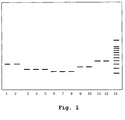
- Fig. 1 is a schematic view showing the electrophoresis pattern obtained by amplifying mitochondrial cytochrome b genes of various fungi by PCR using various primers which are examples according to the present invention, and electrophoresing the amplified product.
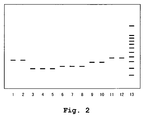
- Fig. 2 is a schematic view showing the electrophoresis pattern obtained by amplifying mitochondrial cytochrome b genes of various fungi by PCR using various primers which are other examples according to the present invention, and electrophoresing the amplified product.
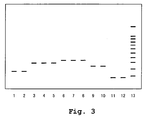
- Fig. 3 is a schematic view showing the electrophoresis pattern obtained by amplifying mitochondrial cytochrome b genes of various fungi by PCR using various primers which are still other examples according to the present invention, and electrophoresing the amplified product.
- Fig. 4 is a schematic view showing the electrophoresis pattern obtained by amplifying mitochondrial cytochrome b genes of various fungi by PCR using various primers which are still other examples according to the present invention, and electrophoresing the amplified product.
- Mitochondrial cytochrome b gene fragment of fungi may be amplified by hybridizing and elongating the chain of a pair of nucleic acids, one of which being selected from the group consisting of the nucleic acids having the nucleotide sequences shown in SEQ ID NOs. 1, 2 and 57, and another one of which being selected from the group consisting of the nucleic acids complementary to the nucleic acids having the nucleotide sequences shown in SEQ ID NOs. 3, 4 and 58 to 61, with the mitochondrial cytochrome b gene of fungi such as those belonging to the genus Aspergillus or Candida; and repeating the cycle including the extension reaction of the primers.
- SEQ ID NOs. 1, 2 and 4 were designed based on the sequence of the mitochondrial cytochrome b gene of A. nidulans (Waring, R.B. et al., Cell 27, 4-11 (1981)) .
- there are a plurality of nucleic acids having the nucleotide sequence shown in SEQ ID NO. 57, 3 or 58-61 (the nucleotide sequences shown in SEQ ID NOs. 57, 3, 58-61 are represented by general formulae, respectively). Although each of the nucleic acids having the sequence shown in one of these SEQ ID NOs.
- nucleic acids shown by each general formula may be used individually, it is preferred to use a mixture of the nucleic acids shown by each general formula. By using the mixture, it was attained for the first time to amplify the mitochondrial cytochrome b gene of fungi other than those belonging to Aspergillus (excluding A. terreus ), for example, A. terreus , those belonging to the genus Candida , Trichophyton , Cunninghamella or Mucor .
- the nucleic acids consisting essentially of a part of the sequence shown in SEQ ID NO. 57, 3 or 58-61, which part is not less than 10 consecutive nucleotides in the respective sequences may be employed as primers. However, it is preferred to employ primers having the full length of the sequences shown in these SEQ ID Nos., respectively.
- fragments of mitochondrial cytochrome b genes of a number of strains of various fungi were amplified and nucleotide sequences thereof were determined.
- the sequences each of which is consentaneous to each species are shown in SEQ ID NOs. 5 - 9.
- the sequences shown in SEQ ID NOs. 5, 6, 7, 8 and 9 are the sequences of the amplified DNA fragments originated from A. fumigatus , A. flavus , A. niger , A. nidulans and A. terreus , respectively.
- amplification of nucleic acids may be carried out.
- PCR-RFLP PCR-RFLP
- nucleic acids consisting essentially of the nucleotide sequences which are optional 10 to 100 consecutive nucleotides, preferably 15 to 30 consecutive nucleotides, in the nucleotide sequences mentioned above may be used as nucleic acids for detection of the above-mentioned fungal species, respectively.
- the nucleic acids for detection include primers for amplifying nucleic acids and probes. In cases where the nucleic acids are used as probes, those labeled by a well-known method are used.
- the present inventors amplified the genes of a number of strains of the fungi belonging to the genus Aspergillus , determined the sequences of the amplified genes and carefully compared the sequences, to discover sites each of which is specific to each species.
- the specific sites (1 base) include the 24nt T , 99nt T , 144nt T , 252nt C , 277nt G , 304nt "G", 312nt A and the 393nt "G” in the sequence shown in SEQ ID NO. 5 for A . fumigatus; the 174nt "Y” in the sequence shown in SEQ ID NO. 6 for A.
- the mitochondrial cytochrome b gene fragment of the corresponding species alone is amplified. Therefore, each species may be specifically detected, in other words, identification of the species may be carried out.
- nucleic acids used as reverse primers
- SEQ ID NOs. 10 - 15 and 62 - 65 The 3'-end of each of these nucleic acids is one of the specific sites mentioned above in the sequences of SEQ ID NOs 5-9, and these nucleic acids have not less than 10 bases. That is, the nucleic acids having the sequence shown in SEQ ID NOs. 10 and 65, respectively (both of these sequences are complementary chains of SEQ ID NO. 5, of which 3 -ends are the C which pairs with the 304nt G of SEQ ID NO.
- nucleic acids having the sequence shown in SEQ ID NOs. 11 and 12, respectively are complementary chains of SEQ ID NO. 6, of which 3 -ends are the G and A , respectively, which pair with the 174nt Y (C or T) of SEQ ID NO. 6
- SEQ ID NO. 13 complementary chain of SEQ ID NO. 7, of which 3 -end is the G which pairs with the 126nt C of SEQ ID NO. 7
- SEQ ID NO. 64 complementary chain of SEQ ID NO.
- the nucleic acids having the sequence shown in SEQ ID NO. 14 (complementary chain of SEQ ID NO. 8, of which 3 -end is the G which pairs with the 221nt C of SEQ ID NO. 8) and SEQ ID NO. 63 (complementary chain of SEC ID NO. 8, of which 3 -end is the T which pairs with the 271nt A of SEQ ID NO. 8) are for detecting Aspergillus nidulans .
- the nucleic acids having the sequence shown in SEQ ID NO. 15 (complementary chain of SEQ ID NO.
- SEQ ID NO. 9 (complementary chain of SEQ ID NO. 9, of which 3 -end is the T which pairs with the 360nt A of SEQ ID NO. 9) are for detecting Aspergillus terreus .
- primers for amplifying nucleic acids may be designed by combining nucleic acids having the sequences shown in SEQ ID NO. 3, 4, 58, 59, 60 and/or 61 (used as reverse primers) and one of the above-mentioned nucleic acids, whose 3'-end is one of the above-mentioned specific sites (1 base).
- the nucleic acid for detecting A may be designed by combining nucleic acids having the sequences shown in SEQ ID NO. 3, 4, 58, 59, 60 and/or 61 (used as reverse primers) and one of the above-mentioned nucleic acids, whose 3'-end is one of the above-mentioned specific sites (1 base).
- fumigatus is selected from the nucleic acids whose 3'-ends are any of the 24nt "T", 99nt T , 144nt T , 252nt C , 277nt G , 304nt G , 312nt A and 393nt G in the sequence shown in SEQ ID NO. 5, which have not less than 10 bases.
- the nucleic acid for detecting A. flavus is selected from the nucleic acids whose 3'-ends are the 174nt "Y" in the sequence shown in SEQ ID NO. 6, which have not less than 10 bases.
- niger is selected from the nucleic acids whose 3'-ends are any of the 42nt A , 69nt "C", 126nt “C”, 207nt "A”, 213nt A , 246nt A and 396nt G in the sequence shown in SEQ ID NO. 7, which have not less than 10 bases.
- the nucleic acid for detecting A. nidulans is selected from the nucleic acids whose 3'-ends are any of the 60nt T , 221nt "C", 271nt A , 285nt A , 366nt T and 387nt A in the sequence shown in SEQ ID NO. 8, which have not less than 10 bases.
- the nucleic acid for detecting A is selected from the nucleic acids whose 3'-ends are any of the 42nt A , 69nt "C", 126nt “C”, 207nt "A”, 213nt A , 246nt A and 396nt
- terreus is selected from the nucleic acids whose 3'-ends are any of the 25nt T , 48nt T , 162nt T , 225nt C , 261nt C , 339nt C , 360nt A , 375nt A and 411nt A in the sequence shown in SEQ ID NO. 9, which have not less than 10 bases.
- Preferred examples of these primers which are used as forward primers are shown in SEQ ID NOs. 66-75.
- the nucleic acids having the sequences shown in SEQ ID NOs. 66 and 67 are for detecting Aspergillus flavus .
- the nucleic acids having the sequences shown in SEQ ID NO. 68 (of which 3 -end is the 304nt G of SEQ ID NO. 5) and SEQ ID NO. 69 (of which 3 -end is the 312nt A of SEQ ID NO. 5) are for detecting Aspergillus fumigatus .
- the nucleic acids having the sequences shown in SEQ ID NO. 70 (of which 3 -end is the 126nt C of SEQ ID NO. 7) and SEQ ID NO. 71 (of which 3 -end is the 213nt A of SEQ ID NO. 7) are for detecting Aspergillus niger .
- SEQ ID NO. 72 (of which 3 -end is the 221nt C of SEQ ID NO. 8) and SEQ ID NO. 73 (of which 3 -end is the 285nt A of SEQ ID NO. 8) are for detecting Aspergillus nidulans .
- the nucleic acids having the sequences shown in SEQ ID NOs. 74 and 75 (both of which 3 -ends are the 375nt A of SEQ ID NO. 9) are for detecting Aspergillus fumigatus .
- oligonucleotides may be used not only as primers, but also as probes specific to each species after attaching an appropriate label thereto.
- the above-mentioned nucleic acids may be used as primers or probes as long as they have consecutive not less than 10 bases starting from the above-mentioned 3'-ends.
- the number of bases of the nucleotides is preferably 10 to 100, more preferably 15 to 30.
- the nucleic acids having the parts of the sequences shown in SEQ ID NOs. 10 - 15 and 62-75 it is preferred that they have the full length of these sequences.
- thymine may be uracil (U). That is, the nucleic acids according to the present invention include both DNAs and RNAs. Further, the nucleic acid according to the present invention may be a DNA which contains uridine residue "U” in place of "T” at optional site(s), and may be an RNA which contains thymine residue "T” in place of "U” at optional site(s). Further, complementary chains of the nucleic acids according to the present invention are also within the scope of the present invention.
- nucleic acids of fungi are double-stranded, so that the complementary chain of the nucleic acid according to the present invention can also hybridize with the complementary chain of the nucleic acid with which the nucleic acid according to the present invention hybridizes. Still further, as long as the nucleic acid can be applied to the above-described uses, the nucleic acids having one or more point mutations such as deletion, insertion and substitution, or those having modified nucleotide(s) are also within the scope of the present invention.
- the method for obtaining the nucleic acids according to the present invention is not restricted. Preferably, they are chemically synthesized. By this method, the nucleic acids with uniform quality may be obtained easily and inexpensively in large scale. Such chemical synthesis may be carried out by a conventional method such as the phosphite method (phosphoamidite method) or the phosphotriester method (phosphoric acid triester method).
- the method for detecting, grouping or identifying a fungus belonging to the genus Aspergillus is characterized by using the above-described nucleic acid for detecting, grouping or identifying a fungus belonging to the genus Aspergillus .
- the method includes (1) the method in which the nucleic acid is used as a probe, so as to detect, group or identify a fungus belonging to the genus Aspergillus , and (2) the method in which the nucleic acid is used as a primer for PCR or the like and the amplified product is measured, so as to detect, group or identify a fungus belonging to the genus Aspergillus .
- the nucleic acid used in these methods may be a labeled nucleic acid.
- the nucleic acid is a labeled nucleic acid because the fungi belonging to the genus Aspergillus may be detected more easily.
- the label include antigens, haptens, enzymes, fluorescent substances, luminescent substances, enzyme substrates, radioactive substances and insoluble carriers.
- the label may be attached to either the end of the nucleic acid or to an inner portion of the sequence.
- the label may be attached to any of the saccharide, phosphate and base moieties.
- the method for detecting, grouping or identifying fungi belonging to the genus Aspergillus using the nucleic acid according to the present invention as probes or primers include, for example, the following methods (1) and (2).
- Nucleic acids are extracted from the sample and nucleic acid-extension reaction such as PCR is carried out using the nucleic acid having the sequence shown in SEQ ID NO. 2 and a mixture of the nucleic acids having the sequences shown in SEQ ID NOs. 10 - 15 as primers.
- nucleic acid-extension reaction such as PCR is carried out using the nucleic acid having the sequence shown in SEQ ID NO. 2 and a mixture of the nucleic acids having the sequences shown in SEQ ID NOs. 10 - 15 as primers.
- nucleic acid having a length of 148 bp is amplified; if A. nidulans exists, a nucleic acid haying a length of 244 bp is amplified; and if A. terreus exists, a nucleic acid having a length of 397 bp is amplified, respectively.
- nucleic acid having a length of 329 bp is amplified; if A. flavus exists, nucleic acid having a length of 193 bp or 194 bp is amplified; if A. niger exists, a nucleic acid having a length of 231 bp is amplified; if A. nidulans exists, a nucleic acid having a length of 294 bp is amplified; and if A.
- nucleic acid having a length of 379 bp is amplified, respectively.
- nucleic acid-extension reaction such as PCR is carried out using the nucleic acid having the sequence shown in SEQ ID NO. 57 (mixture) and a mixture of the nucleic acids having the sequences shown in SEQ ID NOs. 62 - 65 as primers, if A. fumigatus exists in the sample, a nucleic acid having a length of 330 bp is amplified; if A. flavus exists, nucleic acid having a length of 194 bp or 195 bp is amplified; if A.
- nucleic acid having a length of 232 bp is amplified; if A. nidulans exists, a nucleic acid having a length of 295 bp is amplified; and if A. terreus exists, a nucleic acid having a length of 380 bp is amplified, respectively.
- nucleic acid-extension reaction such as PCR is carried out using the nucleic acidS having the sequences shown in SEQ ID NO. 3, 58, 59, 60 and/or 61 (each sequence is a mixture) and a mixture of the nucleic acids having the sequences shown in SEQ ID NOs. 66 - 75 as primers, if A.
- nucleic acidS having lengths of 163 bp (by SEQ ID NO. 68) and 146 bp (by SEQ ID NO. 69) are amplified; if A. flavus exists, nucleic acid having a length of 287 bp is amplified; if A. niger exists, nucleic acids having lengths of 337 bp (by SEQ ID NO. 70) and 245 bp (by SEQ ID NO. 71) are amplified; if A. nidulans exists, nucleic acids having lengths of 236 bp (by SEQ ID NO. 72) and 180 bp (by SEQ ID NO.
- nucleic acids having lengths of 86 bp (by SEQ ID NO. 74) and 83 bp (by SEQ ID NO. 75) are amplified, respectively.
- the nucleic acids having sequences shown in SEQ ID NOs. 66-75 include two primers per each Aspergillus species. Therefore, by selecting one primer per each Aspergillus species, and using the selected totally 5 primers as a mixture, the above-mentioned 5 Aspergillus species may be simultaneously detected and identified.
- the reagent kit for detecting Aspergillus which utilizes the present invention, is characterized by including the nucleic acid for detecting Aspergillus according to the present invention or a labeled nucleic acid obtained by labeling the nucleic acid according to the present invention.
- the kit includes the above-mentioned nucleotide, the kit is within the scope of the present invention, and the kit may further comprise other components such as a reagent for detecting a label, and a buffer solution.
- the nucleic acid in the reagent kit according to the present invention may be used as either a primer or a probe.
- the reagent kit may be used for detection of Aspergillus by the above-described method (1), and in cases where the nucleic acid is used as a primer, the reagent kit may be used for detection of Aspergillus by the above-described method (2).
- the reagent kit according to the present invention may include a reagent for detecting the label and a buffer solution, in addition to the nucleic acid or labeled nucleic acid for detecting Aspergillus .
- the reagent kit according to the present invention may include a nucleic acid-synthesizing enzyme (e.g., DNA polymerase, RNA polymerase, reverse transcriptase and the like), deoxyribonucleotides (dATP, dTTP, dGTP and dCTP), ribonucleotides (ATP, UTP, GTP and CTP), one or more restriction enzymes, buffer solution and the like.
- the nucleic acid according to the present invention may be bound to a solid carrier and used as a capturing probe. In this case, using the capturing probe and a labeled probe in combination, sandwich assay may be carried out.
- the target nucleic acid may be labeled and captured.
- the nucleic acid may be labeled with biotin, and after hybridization, the nucleic acid may be captured by an avidin-bound carrier.
- sandwich assay if the nucleic acid according to the present invention is used as one of the probes, specific measurement may be obtained by virtue of the nucleic acid according to the present invention, so that there is no problem even if the specificity of the other nucleic acid is a little bit low.
- the resultant was centrifuged at 1500 x g for 10 minutes and the recovered supernatant was centrifuged at 20,000 x g for 15 minutes to obtain a precipitate.
- the precipitate was washed with the extraction buffer and centrifuged again at 20,000 x g for 15 minutes, to obtain mitochondrial fragment of each strain of A. fumigatus .
- 0.5 ml of 1 mg/ml of protease K was added and the resultant was incubated at 37°C for 1 hour.
- the resultant was centrifuged at 20,000 x g for 10 minutes to recover a precipitate and this precipitate was washed with 75% ethanol at -20°C, followed by centrifugation at 1500 x g for 10 minutes. The supernatant was discarded to obtain nucleic acids. The obtained nucleic acids were dried and stored at -20°C.
- PCR was performed under the conditions described below, to amplify a part of each cytochrome b gene.
- the PCR was performed using TaKaRa PCR Amplification Kit (R011) commercially available from TAKARA SHUZO CO., LTD. and a DNA amplifier (MIR-D30) commercially available from SANYO.
- the composition of the reaction mixture was as follows: x10 PCR buffer (contained in kit) 5 ⁇ l PCR dNTP mixture solution (contained in kit) 4 ⁇ l Taq DNA polymerase (contained in kit) 1 ⁇ l (2.5 U) DNA 1 1 ⁇ l DNA 3 or 4 1 ⁇ l Mitochondrial DNA 1 ⁇ l Water balance to total volume of 50 ⁇ l
- the reaction conditions were as follows:
- Each of the amplified DNAs was separated and purified by agarose gel electrophoresis and the nucleotide sequence thereof was determined by the following method.
- DNA sequencer (ABI Prism 377) commercially available from PERKIN ELMER, the sequence was determined by the dye terminator method according to the instructions by the manufacturer of the DNA sequencer.
- DNA 2 (SEQ ID NO. 2) was used as the forward primer for sequencing, and DNA 3 (for IFM40804, 40819) or DNA 4 (for IFM40806, 40807, 41206, 41392, 45916, 45917, 46980, 5355) was used as the reverse primer for sequencing.
- the determined nucleotide sequences are shown in SEQ ID NOs. 16 to 25 in the SEQUENCE LISTING.
- parts of the cytochrome b genes of strains of A. flavus ( A. flavus IFM40603, 40800, 41087, 41933, 45909, 45910, 45911, 46870, 5364, 5366) were amplified by PCR and sequences thereof were determined.
- the primer pair the pair of DNA 2 and DNA 3 (for IFM41933, 45910, 5366) or the pair of DNA 2 and DNA 4 (for IFM40603, 40800, 41087, 45909, 45911, 46870, 5364) was used.
- DNA 2 was used as the forward primer and DNA 3 (for IFM41933, 45910, 5366) or DNA 4 (for IFM40603, 40800, 41087, 45909, 45911, 46870, 5364) was used as the reverse primer.
- DNA 3 for IFM41933, 45910, 5366
- DNA 4 for IFM40603, 40800, 41087, 45909, 45911, 46870, 5364 was used as the reverse primer.
- the determined nucleotide sequences are shown in SEQ ID NOs. 26 to 35 in the SEQUENCE LISTING.
- parts of the cytochrome b genes of strains of A. nidulans were amplified by PCR and sequences thereof were determined.
- the primer pair the pair of DNA 2 and DNA 3 (for IFM47004, 47006) or the pair of DNA 2 and DNA 4 (for IFM41094, 46999, 41395) was used.
- DNA 2 was used as the forward primer and DNA 3 (for IFM47004, 47006) or DNA 4 (for IFM41094, 46999, 41395) was used as the reverse primer.
- the determined nucleotide sequences are shown in SEQ ID NOs. 42 to 46 in the SEQUENCE LISTING.
- cytochrome b gene of a strain of Trichophyton rubrum T. rubrum IFM45593
- sequence thereof was determined.
- the primer pair the pair of DNA 1 and DNA 3 prepared in Example 1 was used.
- DNA 2 was used as the forward primer and DNA 3 was used as the reverse primer.
- the determined nucleotide sequence is shown in SEQ ID NO. 56 in the SEQUENCE LISTING.
- cytochrome b genes of A. fumigatus were amplified by PCR as in Example 2 using the solutions of DNA 2 and DNA 10 (SEQ ID NO. 10) prepared in Example 1, and using TaKaRa PCR Amplification Kit (R011) commercially available from TAKARA SHUZO CO., LTD. and a DNA amplifier (MIR-D30) commercially available from SANYO. Nucleic acids of A. fumigatus were extracted by the phenol extraction method. Ten microliters of the solution containing each of the amplified products was electrophoresed on 1% agarose gel and the gel was stained with ethidium bromide, followed by detection of fluorescence during UV irradiation (Fig. 1, lanes 1 and 2).
- the electrophoresis was performed at a constant voltage of 75V for 45 minutes.
- molecular weight markers were also electrophoresed. Based on the relative mobility, the length of the detected nucleic acid fragment was calculated to be about 323 bp.
- cytochrome b gene of Cunninghamella bertholletiae IFM 46114 was amplified and sequenced.
- primers DNA57 and DNA58 were used.
- primers for sequencing DNA57 was used as a forward primer, and DNA58 was used as a reverse primer.
- the determined nucleotide sequence is shown in SEQ ID NO. 76 in the SEQUENCE LISTING.
- cytochrome b gene of Mucor circinelloides IFM 40507 was amplified and sequenced.
- primers DNA57, and DNA60 and DNA61 were used.
- primers for sequencing DNA57 was used as a forward primer, and DNA60 and DNA61 were used as reverse primers.
- the determined nucleotide sequence is shown in SEQ ID NO. 77 in the SEQUENCE LISTING.
- DNA57 was used as one of the primers.
- DNA65 was used for identifying Aspergillus fumigatus
- DNA11 and DNA12 were used for identifying Aspergillus flavus
- DNA64 was used for identifying Aspergillus niger
- DNA63 was used for identifying Aspergillus nidulans
- DNA62 was used for identifying Aspergillus terreus .
- the results of the electrophoresis are shown in Fig. 2.
- the strains of the respective lanes in Fig. 2 are the same as shown in Fig. 1.
- DNA3 was used as one of the primers.
- DNA68 was used for identifying Aspergillus fumigatus
- DNA66 and DNA67 were used for identifying Aspergillus flavus
- DNA70 was used for identifying Aspergillus niger
- DNA72 was used for identifying Aspergillus nidulans
- DNA74 was used for identifying Aspergillus terreus .
- the results of the electrophoresis are shown in Fig. 3.
- the strains of the respective lanes in Fig. 3 are the same as shown in Fig. 1.
- DNA58 was used as one of the primers.
- DNA69 was used for identifying Aspergillus fumigatus
- DNA66 and DNA67 were used for identifying Aspergillus flavus
- DNA71 was used for identifying Aspergillus niger
- DNA73 was used for identifying Aspergillus nidulans
- DNA75 was used for identifying Aspergillus terreus .
- the results of the electrophoresis are shown in Fig. 4.
- the strains of the respective lanes in Fig. 4 are the same as shown in Fig. 1.
- the present invention may be used for detection, grouping and identification of the pathogenic fungi, especially those belonging to the genus Aspergillus , quickly, simply, specifically and with high sensitivity. Therefore, the causative fungi may be rapidly identified for patients infected with pathogenic fungi, and appropriate therapy can be performed.
Landscapes
- Life Sciences & Earth Sciences (AREA)
- Chemical & Material Sciences (AREA)
- Engineering & Computer Science (AREA)
- Health & Medical Sciences (AREA)
- Organic Chemistry (AREA)
- Genetics & Genomics (AREA)
- Zoology (AREA)
- Wood Science & Technology (AREA)
- Biotechnology (AREA)
- Proteomics, Peptides & Aminoacids (AREA)
- Bioinformatics & Cheminformatics (AREA)
- Analytical Chemistry (AREA)
- General Engineering & Computer Science (AREA)
- Molecular Biology (AREA)
- Biochemistry (AREA)
- Physics & Mathematics (AREA)
- Biophysics (AREA)
- Microbiology (AREA)
- General Health & Medical Sciences (AREA)
- Biomedical Technology (AREA)
- Immunology (AREA)
- Mycology (AREA)
- Botany (AREA)
- Plant Pathology (AREA)
- Measuring Or Testing Involving Enzymes Or Micro-Organisms (AREA)
Applications Claiming Priority (3)
| Application Number | Priority Date | Filing Date | Title |
|---|---|---|---|
| JP26031096 | 1996-09-09 | ||
| JP260310/96 | 1996-09-09 | ||
| PCT/JP1997/003164 WO1998010073A1 (fr) | 1996-09-09 | 1997-09-09 | Procede et materiau de detection de champignons |
Publications (2)
| Publication Number | Publication Date |
|---|---|
| EP0860503A1 true EP0860503A1 (fr) | 1998-08-26 |
| EP0860503A4 EP0860503A4 (fr) | 1998-12-09 |
Family
ID=17346256
Family Applications (1)
| Application Number | Title | Priority Date | Filing Date |
|---|---|---|---|
| EP97939226A Withdrawn EP0860503A4 (fr) | 1996-09-09 | 1997-09-09 | Procede et materiau de detection de champignons |
Country Status (5)
| Country | Link |
|---|---|
| EP (1) | EP0860503A4 (fr) |
| KR (1) | KR20000064350A (fr) |
| CA (1) | CA2235630A1 (fr) |
| TW (1) | TW388772B (fr) |
| WO (1) | WO1998010073A1 (fr) |
Cited By (5)
| Publication number | Priority date | Publication date | Assignee | Title |
|---|---|---|---|---|
| FR2796079A1 (fr) * | 1999-07-07 | 2001-01-12 | Foad Chaib | Sequences nucleiques de detection, d'identification et de typage des souches de champignons et en particulier de l'espece aspergillus fumigatus |
| EP1118677A1 (fr) * | 2000-01-17 | 2001-07-25 | Novartis AG | Oligonucleotides pour la detection des champignons pathogenes des plantes resistantes aux fongicides |
| WO2002040663A1 (fr) * | 2000-11-14 | 2002-05-23 | Ssp Co., Ltd. | Acides nucleiques permettant de detecter des champignons et procede de detection de champignons a l'aide desdits acides nucleiques |
| ES2188335A1 (es) * | 2000-10-06 | 2003-06-16 | Consejo Superior Investigacion | Procedimiento para la diferenciacion de microorganismos eucariotas basado en la amplificacion por pcr de zonas variables del dna mitocondrial. |
| WO2003080866A1 (fr) * | 2002-03-26 | 2003-10-02 | Council Of Scientific And Industrial Research | Nouvelles amorces utiles pour identifier les aspergillus aflatoxinogenes et utilisation amelioree de ces dernieres |
Families Citing this family (2)
| Publication number | Priority date | Publication date | Assignee | Title |
|---|---|---|---|---|
| JP4576489B2 (ja) * | 2004-06-07 | 2010-11-10 | 国立大学法人 千葉大学 | 新規ポリヌクレオチド、それを用いた深在性輸入真菌症原因菌ペニシリウム・マルネッフェイ(Penicilliummarneffei)の検出用マーカ、プローブ、プライマー、検出方法およびキット |
| JP5764619B2 (ja) * | 2013-06-24 | 2015-08-19 | 花王株式会社 | アスペルギルス・フミガタス(Aspergillusfumigatus)類縁菌の検出方法 |
Family Cites Families (2)
| Publication number | Priority date | Publication date | Assignee | Title |
|---|---|---|---|---|
| CA2026264A1 (fr) * | 1990-09-26 | 1992-03-27 | William Scott Davidson | Test pour determiner l'identite de l'espece et(ou) de la population d'un organisme par l'analyse directe de la sequence des nucleotides de segments definis du genome |
| US5919617A (en) * | 1994-12-21 | 1999-07-06 | Miami University | Methods and reagents for detecting fungal pathogens in a biological sample |
-
1997
- 1997-09-03 TW TW086112999A patent/TW388772B/zh active
- 1997-09-09 WO PCT/JP1997/003164 patent/WO1998010073A1/fr not_active Ceased
- 1997-09-09 KR KR1019980703458A patent/KR20000064350A/ko not_active Withdrawn
- 1997-09-09 EP EP97939226A patent/EP0860503A4/fr not_active Withdrawn
- 1997-09-09 CA CA002235630A patent/CA2235630A1/fr not_active Abandoned
Cited By (6)
| Publication number | Priority date | Publication date | Assignee | Title |
|---|---|---|---|---|
| FR2796079A1 (fr) * | 1999-07-07 | 2001-01-12 | Foad Chaib | Sequences nucleiques de detection, d'identification et de typage des souches de champignons et en particulier de l'espece aspergillus fumigatus |
| EP1118677A1 (fr) * | 2000-01-17 | 2001-07-25 | Novartis AG | Oligonucleotides pour la detection des champignons pathogenes des plantes resistantes aux fongicides |
| WO2001053521A3 (fr) * | 2000-01-17 | 2002-03-07 | Syngenta Participations Ag | Oligonucleotides identifiant des champignons resistant aux fongicides |
| ES2188335A1 (es) * | 2000-10-06 | 2003-06-16 | Consejo Superior Investigacion | Procedimiento para la diferenciacion de microorganismos eucariotas basado en la amplificacion por pcr de zonas variables del dna mitocondrial. |
| WO2002040663A1 (fr) * | 2000-11-14 | 2002-05-23 | Ssp Co., Ltd. | Acides nucleiques permettant de detecter des champignons et procede de detection de champignons a l'aide desdits acides nucleiques |
| WO2003080866A1 (fr) * | 2002-03-26 | 2003-10-02 | Council Of Scientific And Industrial Research | Nouvelles amorces utiles pour identifier les aspergillus aflatoxinogenes et utilisation amelioree de ces dernieres |
Also Published As
| Publication number | Publication date |
|---|---|
| EP0860503A4 (fr) | 1998-12-09 |
| CA2235630A1 (fr) | 1998-03-12 |
| WO1998010073A1 (fr) | 1998-03-12 |
| KR20000064350A (ko) | 2000-11-06 |
| TW388772B (en) | 2000-05-01 |
Similar Documents
| Publication | Publication Date | Title |
|---|---|---|
| US9194008B2 (en) | Hybridization assay detection probes for detecting human papilloma virus in a sample | |
| EP0359789B1 (fr) | Amplification et detection de sequences d'acides nucleiques | |
| Latouche et al. | Comparison of use of phenotypic and genotypic characteristics for identification of species of the anamorph genus Candida and related teleomorph yeast species | |
| CA2623736C (fr) | Compositions et methodes de detection d'une espece candidat | |
| JP2018516594A5 (fr) | ||
| CA2086136A1 (fr) | Sondes d'adn pour la detection de l'endomycorhize a arbuscules | |
| US5693501A (en) | Compounds and methods to determine presence of Histoplasma capsulatum | |
| EP0860503A1 (fr) | Procede et materiau de detection de champignons | |
| EP0726323B1 (fr) | Amorces d'amplification et sondes d'acides nucléiques pour la détection de coccidioides immites | |
| KR20220073327A (ko) | 형광 프로브를 이용한 칸디다 알비칸, 칸디다 아우리스, 및 칸디다 글라브라타를 감별하여 검출할 수 있는 동시다중 등온증폭반응 프라이머 세트 | |
| KR101515449B1 (ko) | 자바리와 능성어의 식별 방법 및 그 키트 | |
| JP2023534457A5 (fr) | ||
| US20020098487A1 (en) | Materials and methods for detecting fungi | |
| CA2016518A1 (fr) | Systeme de diagnostic a base d'acide nucleique pour la detection de pneumocystis carinii dans les produits sanguins | |
| JP4766878B2 (ja) | ハイブリダイゼーションアッセイを使用する真正細菌群の検出、同定および識別 | |
| JP2002142775A (ja) | カンジダ属真菌検出用核酸及びそれを用いたカンジダ属真菌の検出方法 | |
| CN114317794A (zh) | 水稻snp标记及其应用 | |
| JPWO1998010073A1 (ja) | 真菌類の検出用材料及び検出法 | |
| US7465543B1 (en) | Multiplex DNA identification of clinical yeasts using flow cytometry | |
| EP4198143A1 (fr) | Amorces modifiées pour une amplifciation isothermale amplification induite par boucle et utilisation associée | |
| KR101326159B1 (ko) | 방어와 부시리의 감별 방법 및 그 키트 | |
| JP2002142774A (ja) | 真菌検出用核酸及びそれを用いた真菌の検出方法 | |
| US20020164596A1 (en) | Proccess for finding oligonuclestide sequences for nucleic acid amplification methods | |
| CN118064619A (zh) | 小麦永良4号snp标记及其应用 | |
| KR20250034227A (ko) | 엔테로사이토존 헤파토페나에이 진단용 프라이머 세트 및 이를 포함하는 진단키트 |
Legal Events
| Date | Code | Title | Description |
|---|---|---|---|
| PUAI | Public reference made under article 153(3) epc to a published international application that has entered the european phase |
Free format text: ORIGINAL CODE: 0009012 |
|
| 17P | Request for examination filed |
Effective date: 19980602 |
|
| AK | Designated contracting states |
Kind code of ref document: A1 Designated state(s): AT BE CH DE DK ES FI FR GB GR IE IT LI LU MC NL PT SE |
|
| A4 | Supplementary search report drawn up and despatched | ||
| AK | Designated contracting states |
Kind code of ref document: A4 Designated state(s): AT BE CH DE DK ES FI FR GB GR IE IT LI LU MC NL PT SE |
|
| RHK1 | Main classification (correction) |
Ipc: C12Q 1/68 |
|
| 17Q | First examination report despatched |
Effective date: 20010618 |
|
| STAA | Information on the status of an ep patent application or granted ep patent |
Free format text: STATUS: THE APPLICATION IS DEEMED TO BE WITHDRAWN |
|
| 18D | Application deemed to be withdrawn |
Effective date: 20020808 |