EP0861897A2 - Lipases recombinantes activées par le sel biliaire - Google Patents
Lipases recombinantes activées par le sel biliaire Download PDFInfo
- Publication number
- EP0861897A2 EP0861897A2 EP98200772A EP98200772A EP0861897A2 EP 0861897 A2 EP0861897 A2 EP 0861897A2 EP 98200772 A EP98200772 A EP 98200772A EP 98200772 A EP98200772 A EP 98200772A EP 0861897 A2 EP0861897 A2 EP 0861897A2
- Authority
- EP
- European Patent Office
- Prior art keywords
- bal
- sequence
- cdna
- pro
- human
- Prior art date
- Legal status (The legal status is an assumption and is not a legal conclusion. Google has not performed a legal analysis and makes no representation as to the accuracy of the status listed.)
- Granted
Links
Images




Classifications
-
- A—HUMAN NECESSITIES
- A23—FOODS OR FOODSTUFFS; TREATMENT THEREOF, NOT COVERED BY OTHER CLASSES
- A23C—DAIRY PRODUCTS, e.g. MILK, BUTTER OR CHEESE; MILK OR CHEESE SUBSTITUTES; PREPARATION THEREOF
- A23C9/00—Milk preparations; Milk powder or milk powder preparations
- A23C9/20—Dietetic milk products not covered by groups A23C9/12 - A23C9/18
-
- A—HUMAN NECESSITIES
- A23—FOODS OR FOODSTUFFS; TREATMENT THEREOF, NOT COVERED BY OTHER CLASSES
- A23C—DAIRY PRODUCTS, e.g. MILK, BUTTER OR CHEESE; MILK OR CHEESE SUBSTITUTES; PREPARATION THEREOF
- A23C9/00—Milk preparations; Milk powder or milk powder preparations
- A23C9/12—Fermented milk preparations; Treatment using microorganisms or enzymes
- A23C9/1203—Addition of, or treatment with, enzymes or microorganisms other than lactobacteriaceae
- A23C9/1216—Other enzymes
-
- A—HUMAN NECESSITIES
- A23—FOODS OR FOODSTUFFS; TREATMENT THEREOF, NOT COVERED BY OTHER CLASSES
- A23L—FOODS, FOODSTUFFS OR NON-ALCOHOLIC BEVERAGES, NOT OTHERWISE PROVIDED FOR; PREPARATION OR TREATMENT THEREOF
- A23L33/00—Modifying nutritive qualities of foods; Dietetic products; Preparation or treatment thereof
- A23L33/10—Modifying nutritive qualities of foods; Dietetic products; Preparation or treatment thereof using additives
- A23L33/17—Amino acids, peptides or proteins
-
- A—HUMAN NECESSITIES
- A61—MEDICAL OR VETERINARY SCIENCE; HYGIENE
- A61P—SPECIFIC THERAPEUTIC ACTIVITY OF CHEMICAL COMPOUNDS OR MEDICINAL PREPARATIONS
- A61P1/00—Drugs for disorders of the alimentary tract or the digestive system
- A61P1/14—Prodigestives, e.g. acids, enzymes, appetite stimulants, antidyspeptics, tonics, antiflatulents
-
- C—CHEMISTRY; METALLURGY
- C12—BIOCHEMISTRY; BEER; SPIRITS; WINE; VINEGAR; MICROBIOLOGY; ENZYMOLOGY; MUTATION OR GENETIC ENGINEERING
- C12N—MICROORGANISMS OR ENZYMES; COMPOSITIONS THEREOF; PROPAGATING, PRESERVING, OR MAINTAINING MICROORGANISMS; MUTATION OR GENETIC ENGINEERING; CULTURE MEDIA
- C12N15/00—Mutation or genetic engineering; DNA or RNA concerning genetic engineering, vectors, e.g. plasmids, or their isolation, preparation or purification; Use of hosts therefor
- C12N15/09—Recombinant DNA-technology
- C12N15/63—Introduction of foreign genetic material using vectors; Vectors; Use of hosts therefor; Regulation of expression
- C12N15/79—Vectors or expression systems specially adapted for eukaryotic hosts
- C12N15/85—Vectors or expression systems specially adapted for eukaryotic hosts for animal cells
- C12N15/8509—Vectors or expression systems specially adapted for eukaryotic hosts for animal cells for producing genetically modified animals, e.g. transgenic
-
- C—CHEMISTRY; METALLURGY
- C12—BIOCHEMISTRY; BEER; SPIRITS; WINE; VINEGAR; MICROBIOLOGY; ENZYMOLOGY; MUTATION OR GENETIC ENGINEERING
- C12N—MICROORGANISMS OR ENZYMES; COMPOSITIONS THEREOF; PROPAGATING, PRESERVING, OR MAINTAINING MICROORGANISMS; MUTATION OR GENETIC ENGINEERING; CULTURE MEDIA
- C12N9/00—Enzymes; Proenzymes; Compositions thereof; Processes for preparing, activating, inhibiting, separating or purifying enzymes
- C12N9/14—Hydrolases (3)
- C12N9/16—Hydrolases (3) acting on ester bonds (3.1)
- C12N9/18—Carboxylic ester hydrolases (3.1.1)
-
- C—CHEMISTRY; METALLURGY
- C12—BIOCHEMISTRY; BEER; SPIRITS; WINE; VINEGAR; MICROBIOLOGY; ENZYMOLOGY; MUTATION OR GENETIC ENGINEERING
- C12Y—ENZYMES
- C12Y301/00—Hydrolases acting on ester bonds (3.1)
- C12Y301/01—Carboxylic ester hydrolases (3.1.1)
- C12Y301/01003—Triacylglycerol lipase (3.1.1.3)
-
- A—HUMAN NECESSITIES
- A01—AGRICULTURE; FORESTRY; ANIMAL HUSBANDRY; HUNTING; TRAPPING; FISHING
- A01K—ANIMAL HUSBANDRY; AVICULTURE; APICULTURE; PISCICULTURE; FISHING; REARING OR BREEDING ANIMALS, NOT OTHERWISE PROVIDED FOR; NEW BREEDS OF ANIMALS
- A01K2207/00—Modified animals
- A01K2207/15—Humanized animals
-
- A—HUMAN NECESSITIES
- A01—AGRICULTURE; FORESTRY; ANIMAL HUSBANDRY; HUNTING; TRAPPING; FISHING
- A01K—ANIMAL HUSBANDRY; AVICULTURE; APICULTURE; PISCICULTURE; FISHING; REARING OR BREEDING ANIMALS, NOT OTHERWISE PROVIDED FOR; NEW BREEDS OF ANIMALS
- A01K2217/00—Genetically modified animals
-
- A—HUMAN NECESSITIES
- A01—AGRICULTURE; FORESTRY; ANIMAL HUSBANDRY; HUNTING; TRAPPING; FISHING
- A01K—ANIMAL HUSBANDRY; AVICULTURE; APICULTURE; PISCICULTURE; FISHING; REARING OR BREEDING ANIMALS, NOT OTHERWISE PROVIDED FOR; NEW BREEDS OF ANIMALS
- A01K2227/00—Animals characterised by species
- A01K2227/10—Mammal
-
- A—HUMAN NECESSITIES
- A01—AGRICULTURE; FORESTRY; ANIMAL HUSBANDRY; HUNTING; TRAPPING; FISHING
- A01K—ANIMAL HUSBANDRY; AVICULTURE; APICULTURE; PISCICULTURE; FISHING; REARING OR BREEDING ANIMALS, NOT OTHERWISE PROVIDED FOR; NEW BREEDS OF ANIMALS
- A01K2267/00—Animals characterised by purpose
- A01K2267/01—Animal expressing industrially exogenous proteins
Definitions
- BAL bile salt-activated lipase
- BAL The specificity and kinetics properties of BAL have been reported by Wang, et al., J. Biol. Chem. 256, 10198-10202 (1981); J. Li id Res. 26. 824-830 (1985); J. Biol. Chem. 258, 9197-9202 (1983); and Biochemistry 27, 4834-4840 (1988).
- the binding of bile salts to BAL is essential for the specific hydrolysis of physiological substrates. Bile salts also participate in the substrate binding during the catalysis of BAL.
- BAL cDNA The complete structure of human milk BAL cDNA is disclosed. Eighteen cDNA clones of human milk bile salt-activated lipase (BAL) were identified from lactating human breast cDNA libraries in ⁇ gt11 and ⁇ gt10 using antibody and synthetic oligonucleotides as probes. Four clones were selected for sequence determination. The nucleotide sequences of the cDNA inserts of two clones overlap and together contain 3018 base pairs of BAL cDNA which codes for an open reading frame of 722 amino acid residues between initiation and termination codons. There is a putative signal sequence of 20 residues which is followed by a 722 residue amino-terminal sequence of mature BAL.
- BAL human milk bile salt-activated lipase
- the cDNA sequence also contains a 678-base 5'-untranslated sequence, a 97-base 3'-untranslated region, and a 14-base poly(A) tail.
- the sequence of one clone contains a deletion of 198 bases (Nos. 1966-2163) corresponding to 66 amino acid residues.
- the origin of this shorter version of cDNA is thought to be due to an alternative splicing during the processing of the BAL mRNA.
- the deduced BAL protein structure contains in the carboxyl-terminal region sixteen repeating units of 11 amino acids each.
- the repeating units have the basic structure of Pro-Val-Pro-Pro-Thr-Gly-Asp-Ser-Gly-Ala-Pro-, with only minor substitutions.
- the cDNA is useful for expression of BAL protein, which may be used to improve infant nutrition, and to study of structure, function and the effect of modification or deletion or addition of amino acids, including entire repeating units, and as probes for studies involving BAL or related lipases, including rat pancreatic lysophospholipase, cholinesterase, and acetylcholinesterase.
- Fig. 1 is a schematic presentation of the cDNA structure of human milk bile salt-activated lipase clones from lactating mammary gland.
- A. BAL cDNA structure is established from four clones: G11-1, G10-2. G10-3, and G10-4, as shown in horizontal lines.
- the bar on the top (plate A) represents the entire cDNA with different regions marked: 5'-untranslated region (5'UT), initiation codon, leader sequence, the repeating region (16 repeats), termination codon, 3'-untranslated region (3'UT).
- poly(A) tail (A's) poly(A) tail (A's), and a "Gap" region which is a deletion in clone G10-4A.
- G10-4A The relationships of G10-4A to other clones are indicated in dotted lines.
- the nucleotide numbers and restriction sites are shown on the second line.
- the keys to the restriction sites are: T, TaqI; R, Rsa I; H. Hha I; P, Pst I; and S, Sma I; F, Hin fl; N, Nar I; 3, Sau 3AI.
- Plate B Schematic presentation of sequence data. Horizontal arrows represent the directions and the covering regions of the sequencing data.
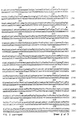
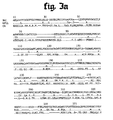
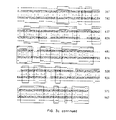
- Figure 2 show the cDNA and amino acid sequences of human milk bile salt-activated lipase.
- Nucleotide sequence is derived from clones G10-2 and G10-3 ( Figure 1). The nucleotide numbers are from 5' end and shown on the right margin of each line. The predicted amino acid sequence is numbered from the known amino terminus position of mature enzyme. A single potential N-linked glycosylation site is marked by an asterisk. The active site serine is marked by a diamond. The region of 198 nucleotides (1966 to 2163) deleted in clone G10-4A ("Gap" region in Figure 1) and the polyadenylation signal are underlined.
- Figure 2 differs in its nucleotide sequences at 2821 to 2886 (amino acids 695 to 716) from the figure as orginally disclosed April 4, 1990, and corresponds to the sequence as originally disclosed June 12, 1990.
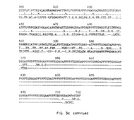
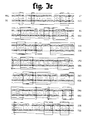
- Figure 3 is a comparison of amino acid sequences of various lipases.
- Plate A The alignment of amino acid sequences of human milk bile salt-activated lipase (BAL), rat pancreatic lysophospholipase (RPLL). and cholinesterase (CE). Identical residues to BAL are marked with dots on RPLL and CE sequences and aligned spaces are represented by dashes.
- Plate B The alignment of sixteen internal repeating sequences of human milk BAL with the corresponding four internal repeats in RPLL.
- C Comparison of primary and secondary structures of human bile salt-activated lipase (BAL, residues 1 to 571) and a region of rat thyroglobulin (TG, residues 396 to 967).
- the present invention is the identification and characterization of at least two cDNAs encoding bile salt-activated lipase.
- the identification of the cDNAs provides the means to produce large scale quantities of BAL for supplementation of non-human milk formulas, the means to selectively modify the genes and proteins expressed therefrom, and the means the means to study and manipulate the structure and function of the proteins.
- the complete structure of human milk BAL cDNA and its relationship with rat pancreatic lysophospholipase (RPLL), acetylcholinesterase, cholinesterase and thyroglobulin are disclosed.
- Human milk BAL was purified as described by Wang and Johnson, Anal. Biochem. 133, 457-461 (1983). Rabbit antiserum against human BAL was prepared as reported by Wang, J. Biol. Chem. 256, 10198-10202 (1981).
- cDNA libraries from lactating human breast tissue in ⁇ gt11 and Xgtl0 were purchased from Clontech. Iodogen was purchased from Pierce Chemical Co.
- the radioisotopes, 125 Iodine, 32 P-ATP, 32 P-dATP, 35 S-dATP, and nylon filters (Hybond-N) were purchased from Amersham.
- the enzymes used in recombinant DNA manipulations were obtained from Bethesda Research Laboratory.
- the DNA sequencing kits and reagents were obtained from United States Biochemical and Boehringer. Other reagents were the highest grade commercially available and used without further purification.
- the cyanogen bromide cleavage of BAL was carried out using the conditions described by Steers et al., J. Biol. Chem. 240, 2478-2484 (1965).
- the heparin-binding CNBr-peptide was purified using affinity chromatography on a heparin-Sepharose column, as described by Wang and Johnson Anal. Biochem. 133, 457-461 (1983). In this procedure, the CNBr-fragments were applied onto a heparin-Sepharose column (2 x 10 cm) preequilibrated with 50 mM NH 4 OH-HCl buffer, pH 8.5. The unretained fraction was eluted with 200 ml of the same buffer.
- the heparin-binding peptide which was monitored by absorbance at 280 nm, was then eluted with the same buffer containing 0.3 M NaCl.
- the fractions containing the heparin-binding peptide were pooled, lyophilized. redissolved with 1 ml of distilled water, and desalted on a Sephadex G-50 column (2 x 25 cm).
- the final yield of lyophilized heparin-binding peptide was about 4 mg.
- the heparin-binding fragment was judged to be pure by sodium dodecyl sulfate-polyacrylamide gel electrophoresis, using the method of Wang and Johnson (1983), with an apparent molecular weight of 12,000.
- the amino-terminal sequence of this fragment was determined by automated Edman degradation in a Beckman Sequencer Model 890C.
- the PTH-amino acids were identified using a Waters Associates HPLC with a reverse-phase 5 ⁇ m C-18 column as described by Takahashi. et al., J. Biol. Chem. 258, 2819-2830 (1983).
- the 61-residue amino-terminal sequence of the peptide was determined to be: A K L G A V Y T E G G F V E G V N K K L G L L G D S V D I F K G I P F A A P T K A L E N P Q P H P G W Q G T L K A K N F K.
- the first 23 residues of this sequence are identical to the amino-terminal sequence for BAL reported by Wang and Johnson (1983) except that the 11th residue is glycine instead of lysine found in the current analysis.
- the above results also indicate that the heparin-binding sequence is located in the amino-terminal region of BAL.
- Probe RP had the repeating unit sequence from clone G11-1 of the ⁇ gt11 library.
- probes were designed and synthesized based on the 61-residue amino acid sequence of the amino-terminal CNBr-fragment.
- the oligonucleotides which produced positive results were: probe RP, 5' - C C C C G G G C C T C A G T G G C A C C C G C G T -3', and probe NT1, 5'-C T G C A G C A A A T G G G A T G C C C T T G / A A A G / A A T G / A T C C / G A C - 3' (based on amino-terminal sequence residues 30-37).
- a second screening of 6 x 10 4 plaques of the Xgtl0 library was carried out using a Sau3AI fragment of clone G10-4A.
- Phage DNA from positive clones obtained from screening was prepared by the plate lysate method of Maniatis, et al., Molecular Cloning. A Laboratory Manual pp. 63-66 (Cold Spring Harbor Laboratories, Cold Spring Harbor, NY 1982), followed by the procedure of Bensen and Taylor, BioTechniques 126-127 (May/June 1984).
- cDNA inserts and their restriction fragments from the positive clones were subcloned using the method of Maniatis, et al., pp. 150-178 (1982), into pUC18, pUC19, M13mp18, and M13mp19 vectors.
- DNA sequencing using single or double strand templates was carried out using the dideoxynucleotide chain-termination method of Sanger, et al., Proc. Natl. Acad. Sci. USA 74, 5463-5468 (1977).
- a total of 18 positive clones were identified from 3 different screenings.
- Five positive clones were obtained from human mammary gland cDNA library in ⁇ gt11 using BAL antibody as probe. From the ⁇ gt10 library, probes RP and NT1 produced three and two positive clones respectively.
- Eight positive clones were obtained from the same ⁇ gt10 library using as probe a 402-base pair Sau3AI fragment (nucleotides 1638 to 2237, without the 'gap' region, as described below) of a partial BAL cDNA obtained above (clone G10-4A). Restriction mapping combined with Southern blots of these clones suggested that all five ⁇ gt11 clones were related.
- the longest clone among these five, G11-1 was about 0.8 kbp. From the two screenings of the Xgtl0 library, the longest clones from each probe were: GT-2 (1.9 kbp, positive with probe NT1), clone G10-4 (4 kbp, positive with probe RP), and G10-3 (1.1 kbp, positive with the Sau 3AI fragment of G10-4A). All four clones overlapped with each other as judged by the mapping and Southern blot results. These clones and various fragments from them were subcloned and the nucleotide sequences determined, as summarized in Figure 1. Clones G10-2, G10-3, and the 5' side of an EcoRI fragment of G10-4 (G10-4A, 1.8 kbp) were completely sequenced ( Figure 1).
- the 3' EcoRI fragment of G10-4 (G10-4B, 2.2 kbp) was downstream from the poly(A) sequence of BAL and is connected to G10-4A by an EcoRI linker sequence. Since G10-4B sequence is totally unrelated to that of BAL, it was clear that the G10-4A and G10-4B were inserted together into clone G10-4 during the ligation step of the library construction, so the sequence of G10-4B was not further studied.
- the partial sequence of G11-1 was identical to the 3'-region sequence of G10-3. Since the latter was completely sequenced, the sequencing of clone G11-1 was not continued.
- BAL cDNA sequence contains a region of sixteen highly similar, internally repeating sequences near the carboxyl-terminus (nucleotides 2353 and 2880).
- the deduced protein structure of this region forms 16 highly similar repeating units of eleven residues each ( Figures 2 and 3).
- About one-third of the amino acids in this region are prolines, accounting for the high proline content of BAL.
- the amino acid composition of the deduced BAL sequence is compared with that from amino acid analysis in Table I.
- Human BAL is known to be a glycoprotein; a potential N-glycosylation site is observed at residue 187.
- the molecular weight of mature BAL calculated from the deduced sequence is 76,282.
- nucleotide sequence of clone G10-4A is identical to the corresponding region of the combined sequence from clones G10-2 and G10-3, as shown in Figure 2, except that a section of 198 bases (nucleotides 1966 to 2163) is absent ( Figures 1 and 2). This represents a deletion of 66 amino acids (residues 410 to 475).
- Several possible origins of this shorter cDNA have been considered. Since the nucleotide sequences of long and short cDNA's are otherwise identical, it suggests that they are the products of the same gene.
- Human BAL sequence is highly similar to the sequence of rat pancreatic lysophospholipase (RPLL), reported by Han, J.H., Stratowa. C., and Rutter, W.J. (Biochemistry 26:1617-1625 (1987)). There is 67% identity between the amino acid residues of the two enzymes. The major difference is in the length of the repeating region. The closeness in structural homology of the two enzymes suggested that RPLL is the bile salt-activated lipase present in the pancreas. Limited amino-terminal sequence of human pancreatic carboxyl ester lipase (CEL) indicates that it is also homologous to BAL.
- CEL carboxyl ester lipase
- BAL and RPLL The most interesting structural feature of BAL and RPLL is the repeats of eleven residues of proline-rich sequences near the carboxyl-terminus of the enzymes.
- the repeat numbers three to ten are highly conserved, with the basic sequence of P V P P T G D S G A P. Two repeats at the beginning and three out of four repeats at the end contain more substitutions.
- the amino acid sequence of BAL is also related to that of acetylcholinesterase, cholinesterase, and thyroglobulin.
- the alignment of choline esterase against BAL produces 27% of identical residues ( Figure 3A). Alignment of BAL with acetylcholinesterase produces similar results. The strongest homology in these sequence comparisons occurs in the region near the active site of the esterases ( Figure 3A). The sequence around the active-site serine, F G E S A G, in acetylcholinesterase is completely conserved in BAL (residue 194) and RPLL.
- the amino-terminal CNBr-fragment was shown to contain the heparin binding site of BAL, as described above.
- the amino acid sequence of this fragment (residues 1-101) was examined for potential heparin binding sequence, based on the known consensus heparin binding sequence of apolipoproteins and lipases reported by Martin, et al., J. Biol. Chem. 263, 10907-10914 (1988).
- a highly basic region with the pattern of BXBXXBBB is located between residues 56 and 63. This appears to be a potential heparin binding site of BAL.
- the cDNA can be labelled for use as probes in assays or to screen for DNA encoding related proteins or proteins containing similar sequences.
- Methods for labelling DNA are well known to those skilled in the art, for example, as described by Maniatis, et al., Molecular Cloning. A Laboratory Manual (Cold Spring Harbor Laboratories, Cold Spring Harbor, NY 1982). Reagents for labelling sequences with fluorescent, radioactive, and enzymatic tags are all available commercially.
- the cDNA's of human BAL can also be used for the cloning and structural determination of human BAL gene or genes using methods known to those skilled in the art.
- a typical route to accomplish this is to screen a human genomic library (typically in lambda bacteriophage. commercially available from Clontech Laboratories, Inc., Palo Alto, CA) using oligonucleotides containing human BAL cDNA sequence.
- the probe can be a restriction enzyme fragment of human BAL cDNA.
- BAL gene it is possible that more than one human BAL gene may be found since many proteins have multiple copies of genes. These genes, if they exist, should direct the synthesis of enzymes with very close structures and activities. BAL gene or genes may also be homologous to some other genes, such as that of acetylcholine esterase, choline esterase, pancreatic BAL, and thyroglobulin, which have amino acid sequences similar to human milk BAL. However, the structures of these proteins should be quite different from those of the BAL gene products.
- both human BAL cDNA and human BAL genomic DNA can be used to direct the synthesis of recombinant human BAL protein(s).
- Human BAL gene(s) are expected to contain in their untranslated region sequences which regulate the expression of the enzyme. These regulatory sequences may even be directly used in the transgenic animal expression.
- recombinant BAL protein can be produced from human BAL cDNA or genes by many different methods. These include the expression of BAL in hosts such as E. coli, Bacillus, yeast, fungi, insect cells, mammalian cells, and transgenic animals. Since prokaryotic hosts cannot excise mammalian introns, it is preferrable to express the cDNA, with appropriate modifications, in procaryotic systems, rather than the gene. However, since procaryotes cannot glycosylate BAL, it is preferable to use eucaryotic systems for expression of BAL. When eukaryotic cells are used as hosts, either human BAL genes or cDNA can be used to direct the synthesis of the enzyme.
- BAL can also properly glycosylate BAL provided that a 'leader' or 'signal' sequence is present to direct newly synthesized BAL to the inside of the rough endoplasmic reticulum. Since the native BAL is a glycoprotein (Wang, C.S., J. Biol. Chem. 256:10198-10202, 1983), it may be important to use a host system that can glycosylate the protein properly.
- active human milk BAL activity can be derived by expressing only part of the cDNA or genes. It is well known that proteins contain some structure not essential for their biological, including enzymatic, activities. It is also possible that some of the amino acids in human milk BAL can be changed and the mutated BAL would still retain similar enzymic activities. Active fragments can be screened for using the same assays as used to measure activity of the intact enzyme. It is a routine procedure to synthesize fragments, then determine which fragments have activity. It is similarly routine to alter nucleotides within the sequences, express the protein and screen the protein for activity. This serves as a useful means for making BAL mutants having properties (enzymic activities, substrate specificities, physical properties, stabilities etc.) which provide advantages in the commercial use of the enzyme.
- the human BAL cDNA or gene can be inserted into appropriate expression vectors containing expression regulatory elements (such as transcription initiation signals, translation initiation signals, starting codon, termination codon, transcription terminating signals, polyadenylation signals, and others). Suitable vectors are commercially available from a variety of companies. After the recombinant vectors containing BAL cDNA or gene is transfected into the host cells, they may remain as extrachromosomal DNA or they may be integrated into the host genome. In either case, they may direct the synthesis of recombinant BAL in the host cells. Some examples for the expression of heterologous genes are described in Methods in Enzymology, Vol. 153, Chapters 23 to 34 (Editors, R. Wu and L.
- BAL BAL synthesizing host cells and the purification of the enzyme may form a cost effective commercial means of production of BAL.
- Methods are well known to those skilled in the art for the large scale production of enzymes.
- the recombinant human milk BAL has a variety of uses.
- the enzyme can be used to supplement infant diet, as described in U.S. Patent No. 4,944,944.
- the enzyme can be used to treat diseases.
- the enzyme can be used in industrial processes involving lipid digestion.
- the enzyme can be used in medical or clinical processes involved in lipid digestion.
- the enzyme may be used as research reagent (chemical) or a research tool (for the study of lipid digestion). Many of these applications were not possible before due to the extremely limited quantities of human BAL that could be extracted from human milk.
- the invention includes an isolated nucleotide sequence encoding bile salt-activated lipase or a polypeptide portion thereof; the sequence encoding a heparin-binding polypeptide; the sequence encoding an amino acid sequence having the pattern B X B X X B B B, wherein B is a basic amino acid residue and X is an uncharged residue; the sequence hybridizing under standard conditions to the sequence in Figure 2, nucleotides 739 to 1041; the sequence encoding amino acid sequence binding bile salts; the sequence hybridizing under standard conditions to the sequence in Figure 2, nucleotides 2353 to 2814; the sequence encoding at least one repeating unit; the sequence wherein the repeating unit is selected from the group consisting of P V P P T G D S E A T, P V P P P T G D S E T A, P V P P P T G D A G P P, P V T P T G D S E T A, P V P P P T G D S E T A, P V P P
- the invention also includes an isolated polypeptide expressed from a nucleotide sequence encoding a portion of bile salt-activated lipase, wherein said polypeptide binds heparin; the polypeptide having the pattern of B X B X X B B B, wherein B is a basic amino acid residue and X is an uncharged residue; the polypeptide having the sequence in Figure 2, amino acids 1 to 101; and an isolated polypeptide expressed from a nucleotide sequence encoding a portion of bile salt-activated lipase, wherein said polypeptide binds bile salts; the polypeptide having the sequence in Figure 2, amino acids 539 to 714; the polypeptide including at least one repeating unit; the polypeptide wherein the repeating unit is selected from the group consisting of P V P P T G D S E A T, P V P P T G D S E T A, P V P P T G D S G A P, P V P P P T G D A G P,
- the invention also includes a bile-salt activated lipase expressed from the cDNA in Figure 2; the lipase in combination with a non-human milk nutritional solution including fats.
Landscapes
- Life Sciences & Earth Sciences (AREA)
- Health & Medical Sciences (AREA)
- Chemical & Material Sciences (AREA)
- Engineering & Computer Science (AREA)
- Genetics & Genomics (AREA)
- Organic Chemistry (AREA)
- Bioinformatics & Cheminformatics (AREA)
- Zoology (AREA)
- Wood Science & Technology (AREA)
- General Engineering & Computer Science (AREA)
- General Health & Medical Sciences (AREA)
- Biomedical Technology (AREA)
- Microbiology (AREA)
- Biotechnology (AREA)
- Food Science & Technology (AREA)
- Biochemistry (AREA)
- Polymers & Plastics (AREA)
- Nutrition Science (AREA)
- Molecular Biology (AREA)
- Veterinary Medicine (AREA)
- Medicinal Chemistry (AREA)
- Physics & Mathematics (AREA)
- Plant Pathology (AREA)
- Biophysics (AREA)
- Proteomics, Peptides & Aminoacids (AREA)
- Mycology (AREA)
- Chemical Kinetics & Catalysis (AREA)
- Nuclear Medicine, Radiotherapy & Molecular Imaging (AREA)
- Pharmacology & Pharmacy (AREA)
- Animal Behavior & Ethology (AREA)
- Public Health (AREA)
- General Chemical & Material Sciences (AREA)
- Enzymes And Modification Thereof (AREA)
- Medicines That Contain Protein Lipid Enzymes And Other Medicines (AREA)
- Measuring Or Testing Involving Enzymes Or Micro-Organisms (AREA)
- Peptides Or Proteins (AREA)
- Immobilizing And Processing Of Enzymes And Microorganisms (AREA)
- Chemical Or Physical Treatment Of Fibers (AREA)
- Saccharide Compounds (AREA)
- Dairy Products (AREA)
Applications Claiming Priority (5)
| Application Number | Priority Date | Filing Date | Title |
|---|---|---|---|
| US50463590A | 1990-04-04 | 1990-04-04 | |
| US504635 | 1990-04-04 | ||
| US537426 | 1990-06-12 | ||
| US07/537,426 US5200183A (en) | 1987-11-19 | 1990-06-12 | Recombinant bile salt activated lipases |
| EP91908492A EP0525076B1 (fr) | 1990-04-04 | 1991-04-04 | Lipases recombinantes activees par le sel biliaire |
Related Parent Applications (1)
| Application Number | Title | Priority Date | Filing Date |
|---|---|---|---|
| EP91908492A Division EP0525076B1 (fr) | 1990-04-04 | 1991-04-04 | Lipases recombinantes activees par le sel biliaire |
Publications (3)
| Publication Number | Publication Date |
|---|---|
| EP0861897A2 true EP0861897A2 (fr) | 1998-09-02 |
| EP0861897A3 EP0861897A3 (fr) | 1999-05-12 |
| EP0861897B1 EP0861897B1 (fr) | 2003-06-11 |
Family
ID=27054892
Family Applications (2)
| Application Number | Title | Priority Date | Filing Date |
|---|---|---|---|
| EP98200772A Expired - Lifetime EP0861897B1 (fr) | 1990-04-04 | 1991-04-04 | Lipases recombinantes activées par le sel biliaire |
| EP91908492A Expired - Lifetime EP0525076B1 (fr) | 1990-04-04 | 1991-04-04 | Lipases recombinantes activees par le sel biliaire |
Family Applications After (1)
| Application Number | Title | Priority Date | Filing Date |
|---|---|---|---|
| EP91908492A Expired - Lifetime EP0525076B1 (fr) | 1990-04-04 | 1991-04-04 | Lipases recombinantes activees par le sel biliaire |
Country Status (9)
| Country | Link |
|---|---|
| US (1) | US5200183A (fr) |
| EP (2) | EP0861897B1 (fr) |
| JP (3) | JP3665329B2 (fr) |
| AT (2) | ATE242813T1 (fr) |
| DE (2) | DE69133279T2 (fr) |
| DK (2) | DK0525076T3 (fr) |
| ES (2) | ES2201401T3 (fr) |
| GR (1) | GR3029711T3 (fr) |
| WO (1) | WO1991015234A1 (fr) |
Cited By (1)
| Publication number | Priority date | Publication date | Assignee | Title |
|---|---|---|---|---|
| CN103562383A (zh) * | 2011-05-18 | 2014-02-05 | 瑞典孤儿比奥维特鲁姆有限公司 | 低pH蛋白质纯化方法 |
Families Citing this family (20)
| Publication number | Priority date | Publication date | Assignee | Title |
|---|---|---|---|---|
| US5173408A (en) * | 1989-11-13 | 1992-12-22 | Lange Louis George Iii | Mammalian pancreatic cholesterol esterase |
| HRP930935A2 (en) * | 1992-06-11 | 1994-12-31 | Astra Ab | New dna sequences |
| IS4130A (is) * | 1993-03-01 | 1994-09-02 | Ab Astra | Ný fjölpeptíð |
| SE9300686D0 (sv) | 1993-03-01 | 1993-03-01 | Astra Ab | Novel polypeptides |
| US5821226A (en) * | 1994-12-01 | 1998-10-13 | Oklahoma Medical Research Foundation | BAL C-tail drug delivery molecules |
| US5681819A (en) * | 1994-12-01 | 1997-10-28 | Oklahoma Medical Research Foundation | Method and compositions for reducing cholesterol absorption |
| US5696087A (en) * | 1994-12-01 | 1997-12-09 | Oklahoma Medical Research Foundation | Method and compositions for reducing cholesterol absorption |
| SE9501939D0 (sv) * | 1995-05-24 | 1995-05-24 | Astra Ab | DNA molecules for expression of polypeptides |
| US6342218B1 (en) | 1997-02-14 | 2002-01-29 | Oklahoma Medical Research Foundation | Method for treatment of SLE |
| US6267952B1 (en) * | 1998-01-09 | 2001-07-31 | Geltex Pharmaceuticals, Inc. | Lipase inhibiting polymers |
| US6299868B1 (en) | 1999-07-14 | 2001-10-09 | Geltex Pharmaceuticals, Inc. | Fat-binding polymers |
| US7048917B1 (en) | 1998-01-09 | 2006-05-23 | Genzyme Corporation | Fat-binding polymers |
| US6264937B1 (en) | 1998-01-09 | 2001-07-24 | Geltex Pharmaceuticals, Inc. | Fat-binding polymers |
| US7041280B2 (en) * | 2001-06-29 | 2006-05-09 | Genzyme Corporation | Aryl boronate functionalized polymers for treating obesity |
| US7049345B2 (en) * | 2001-06-29 | 2006-05-23 | Genzyme Corporation | Fat-binding polymers |
| AU2010362575A1 (en) | 2010-10-21 | 2013-04-11 | Swedish Orphan Biovitrum Ab (Publ) | Method to increase the absorption of unsaturated fatty acids by human infants |
| JP5850940B2 (ja) * | 2010-10-21 | 2016-02-03 | スウェディッシュ オーファン バイオビトラム パブリーク アクチエボラグ | ヒト乳児の発育速度を増大させる方法 |
| BR112014006798A2 (pt) * | 2011-09-26 | 2017-06-13 | Swedish Orphan Biovitrum Ab (Publ) | formulações melhoradas de lípase estimulada por sal billiar humana recombinantes |
| BR112019025973A2 (pt) * | 2017-06-19 | 2020-07-07 | Swedish Orphan Biovitrum Ab (Publ) | proteína de fusão com polipeptídeo de extensão de meia-vida |
| WO2019201855A1 (fr) * | 2018-04-16 | 2019-10-24 | Swedish Orphan Biovitrum Ab (Publ) | Protéine de fusion lysosomale |
Family Cites Families (1)
| Publication number | Priority date | Publication date | Assignee | Title |
|---|---|---|---|---|
| US4944944A (en) * | 1987-11-19 | 1990-07-31 | Oklahoma Medical Research Foundation | Dietary compositions and methods using bile salt-activated lipase |
-
1990
- 1990-06-12 US US07/537,426 patent/US5200183A/en not_active Expired - Lifetime
-
1991
- 1991-04-04 DE DE69133279T patent/DE69133279T2/de not_active Expired - Lifetime
- 1991-04-04 AT AT98200772T patent/ATE242813T1/de not_active IP Right Cessation
- 1991-04-04 ES ES98200772T patent/ES2201401T3/es not_active Expired - Lifetime
- 1991-04-04 ES ES91908492T patent/ES2129026T3/es not_active Expired - Lifetime
- 1991-04-04 DK DK91908492T patent/DK0525076T3/da active
- 1991-04-04 EP EP98200772A patent/EP0861897B1/fr not_active Expired - Lifetime
- 1991-04-04 DK DK98200772T patent/DK0861897T3/da active
- 1991-04-04 DE DE69130735T patent/DE69130735T2/de not_active Expired - Lifetime
- 1991-04-04 JP JP50765191A patent/JP3665329B2/ja not_active Expired - Lifetime
- 1991-04-04 AT AT91908492T patent/ATE175356T1/de not_active IP Right Cessation
- 1991-04-04 WO PCT/US1991/002328 patent/WO1991015234A1/fr not_active Ceased
- 1991-04-04 EP EP91908492A patent/EP0525076B1/fr not_active Expired - Lifetime
-
1996
- 1996-10-09 JP JP8268964A patent/JPH09132597A/ja active Pending
-
1999
- 1999-03-16 GR GR990400798T patent/GR3029711T3/el unknown
-
2000
- 2000-09-08 JP JP2000274215A patent/JP2001112468A/ja not_active Withdrawn
Cited By (1)
| Publication number | Priority date | Publication date | Assignee | Title |
|---|---|---|---|---|
| CN103562383A (zh) * | 2011-05-18 | 2014-02-05 | 瑞典孤儿比奥维特鲁姆有限公司 | 低pH蛋白质纯化方法 |
Also Published As
| Publication number | Publication date |
|---|---|
| ATE175356T1 (de) | 1999-01-15 |
| ES2129026T3 (es) | 1999-06-01 |
| JPH09132597A (ja) | 1997-05-20 |
| EP0861897B1 (fr) | 2003-06-11 |
| HK1021547A1 (en) | 2000-06-16 |
| DE69133279T2 (de) | 2004-05-06 |
| EP0861897A3 (fr) | 1999-05-12 |
| ES2201401T3 (es) | 2004-03-16 |
| JP3665329B2 (ja) | 2005-06-29 |
| ATE242813T1 (de) | 2003-06-15 |
| JPH05508763A (ja) | 1993-12-09 |
| DE69133279D1 (de) | 2003-07-17 |
| WO1991015234A1 (fr) | 1991-10-17 |
| DK0525076T3 (da) | 1999-08-30 |
| EP0525076A1 (fr) | 1993-02-03 |
| JP2001112468A (ja) | 2001-04-24 |
| DE69130735T2 (de) | 1999-06-17 |
| HK1011929A1 (en) | 1999-07-23 |
| US5200183A (en) | 1993-04-06 |
| GR3029711T3 (en) | 1999-06-30 |
| EP0525076A4 (en) | 1993-05-12 |
| DK0861897T3 (da) | 2003-09-29 |
| DE69130735D1 (de) | 1999-02-18 |
| EP0525076B1 (fr) | 1999-01-07 |
Similar Documents
| Publication | Publication Date | Title |
|---|---|---|
| EP0525076B1 (fr) | Lipases recombinantes activees par le sel biliaire | |
| KR100357670B1 (ko) | 형질전이비인간포유류중의재조합인체bssl/cel의제조에사용되는dna서열및유아용조제분유에사용되는그로부터제조된bssl/cel | |
| US7319141B2 (en) | Stem cell growth factor-like polypeptides | |
| KR100357016B1 (ko) | 담즙산염자극 리파아제의 변이체, 이를 코딩하는 데옥시리보핵산 분자, 및 사람을 제외한 형질전환된 포유 동물 | |
| CA2402563A1 (fr) | Nouveaux acides nucleiques et polypeptides | |
| US20020146692A1 (en) | Methods and materials relating to G protein-coupled receptor-like polypeptides and polynucleotides | |
| US6545198B1 (en) | Transgenically produced prolactin | |
| US20030194708A1 (en) | Human homolog of crossveinless materials and methods | |
| US6759214B1 (en) | Methods and compositions relating to CD39-like polypeptides and nucleic acids | |
| US20020142953A1 (en) | Materials and methods relating to lipid metabolism | |
| JPH05508551A (ja) | ガンマーカルボキシラーゼおよび使用の方法 | |
| HK1011929B (en) | Recombinant bile salt activated lipases | |
| HK1021547B (en) | Recombinant bile salt activated lipases | |
| US6783959B1 (en) | Methods and compositions relating to CD39-like polypeptides and nucleic acids | |
| US6888047B1 (en) | Transgenic animals as urinary bioreactors for the production of polypeptide in the urine, recombinant DNA construct for kidney-specific expression, and method of using same | |
| US6326182B1 (en) | Isolated human lipase proteins, nucleic acid molecules encoding human lipase proteins, and uses thereof | |
| WO1998009979A1 (fr) | Compositions relatives a la voie metabolique lipidique et utilisations therapeutiques et diagnostiques de telles compositions | |
| WO1998009979A9 (fr) | Compositions relatives a la voie metabolique lipidique et utilisations therapeutiques et diagnostiques de telles compositions | |
| US6780977B1 (en) | Methods and compositions relating to CD39-like polypeptides and nucleic acids | |
| US20040122220A1 (en) | Methods and materials relating to preadipocyte factor-1-like (pref-1-like) polypeptides and polynucleotides | |
| Leaver et al. | Genetic engineering of milk proteins | |
| Jeng | Chemical and physical properties of bovine alpha-lactalbumin, beta-casein and genetically altered bovine beta-casein produced in the milk of transgenic mice | |
| EP1012233A1 (fr) | Prolactine produite par voie transgenique |
Legal Events
| Date | Code | Title | Description |
|---|---|---|---|
| PUAI | Public reference made under article 153(3) epc to a published international application that has entered the european phase |
Free format text: ORIGINAL CODE: 0009012 |
|
| 17P | Request for examination filed |
Effective date: 19980320 |
|
| AC | Divisional application: reference to earlier application |
Ref document number: 525076 Country of ref document: EP |
|
| AK | Designated contracting states |
Kind code of ref document: A2 Designated state(s): AT BE CH DE DK ES FR GB GR IT LI LU NL |
|
| PUAL | Search report despatched |
Free format text: ORIGINAL CODE: 0009013 |
|
| AK | Designated contracting states |
Kind code of ref document: A3 Designated state(s): AT BE CH DE DK ES FR GB GR IT LI LU NL |
|
| 17Q | First examination report despatched |
Effective date: 20001117 |
|
| GRAH | Despatch of communication of intention to grant a patent |
Free format text: ORIGINAL CODE: EPIDOS IGRA |
|
| GRAH | Despatch of communication of intention to grant a patent |
Free format text: ORIGINAL CODE: EPIDOS IGRA |
|
| RBV | Designated contracting states (corrected) |
Designated state(s): AT BE CH DE DK ES FR GB GR IT LI LU NL SE |
|
| GRAA | (expected) grant |
Free format text: ORIGINAL CODE: 0009210 |
|
| AC | Divisional application: reference to earlier application |
Ref document number: 0525076 Country of ref document: EP Kind code of ref document: P |
|
| AK | Designated contracting states |
Designated state(s): AT BE CH DE DK ES FR GB GR IT LI LU NL SE |
|
| DAX | Request for extension of the european patent (deleted) | ||
| REG | Reference to a national code |
Ref country code: GB Ref legal event code: FG4D |
|
| REG | Reference to a national code |
Ref country code: CH Ref legal event code: EP |
|
| REF | Corresponds to: |
Ref document number: 69133279 Country of ref document: DE Date of ref document: 20030717 Kind code of ref document: P |
|
| REG | Reference to a national code |
Ref country code: SE Ref legal event code: TRGR |
|
| REG | Reference to a national code |
Ref country code: DK Ref legal event code: T3 |
|
| REG | Reference to a national code |
Ref country code: CH Ref legal event code: NV Representative=s name: PATMED AG |
|
| REG | Reference to a national code |
Ref country code: GR Ref legal event code: EP Ref document number: 20030403476 Country of ref document: GR |
|
| REG | Reference to a national code |
Ref country code: ES Ref legal event code: FG2A Ref document number: 2201401 Country of ref document: ES Kind code of ref document: T3 |
|
| ET | Fr: translation filed | ||
| PLBE | No opposition filed within time limit |
Free format text: ORIGINAL CODE: 0009261 |
|
| STAA | Information on the status of an ep patent application or granted ep patent |
Free format text: STATUS: NO OPPOSITION FILED WITHIN TIME LIMIT |
|
| 26N | No opposition filed |
Effective date: 20040312 |
|
| PGFP | Annual fee paid to national office [announced via postgrant information from national office to epo] |
Ref country code: GB Payment date: 20100325 Year of fee payment: 20 |
|
| PGFP | Annual fee paid to national office [announced via postgrant information from national office to epo] |
Ref country code: LU Payment date: 20100506 Year of fee payment: 20 Ref country code: FR Payment date: 20100521 Year of fee payment: 20 Ref country code: ES Payment date: 20100505 Year of fee payment: 20 Ref country code: DK Payment date: 20100412 Year of fee payment: 20 |
|
| PGFP | Annual fee paid to national office [announced via postgrant information from national office to epo] |
Ref country code: NL Payment date: 20100402 Year of fee payment: 20 Ref country code: IT Payment date: 20100417 Year of fee payment: 20 Ref country code: DE Payment date: 20100430 Year of fee payment: 20 Ref country code: AT Payment date: 20100413 Year of fee payment: 20 |
|
| PGFP | Annual fee paid to national office [announced via postgrant information from national office to epo] |
Ref country code: CH Payment date: 20100414 Year of fee payment: 20 Ref country code: BE Payment date: 20100423 Year of fee payment: 20 |
|
| PGFP | Annual fee paid to national office [announced via postgrant information from national office to epo] |
Ref country code: SE Payment date: 20100409 Year of fee payment: 20 |
|
| PGFP | Annual fee paid to national office [announced via postgrant information from national office to epo] |
Ref country code: GR Payment date: 20100317 Year of fee payment: 20 |
|
| REG | Reference to a national code |
Ref country code: DE Ref legal event code: R071 Ref document number: 69133279 Country of ref document: DE |
|
| REG | Reference to a national code |
Ref country code: NL Ref legal event code: V4 Effective date: 20110404 |
|
| REG | Reference to a national code |
Ref country code: CH Ref legal event code: PL |
|
| REG | Reference to a national code |
Ref country code: DK Ref legal event code: EUP |
|
| REG | Reference to a national code |
Ref country code: GB Ref legal event code: PE20 Expiry date: 20110403 |
|
| BE20 | Be: patent expired |
Owner name: OKLAHOMA *MEDICAL RESEARCH FOUNDATION Effective date: 20110404 |
|
| PG25 | Lapsed in a contracting state [announced via postgrant information from national office to epo] |
Ref country code: GB Free format text: LAPSE BECAUSE OF EXPIRATION OF PROTECTION Effective date: 20110403 Ref country code: NL Free format text: LAPSE BECAUSE OF EXPIRATION OF PROTECTION Effective date: 20110404 |
|
| REG | Reference to a national code |
Ref country code: ES Ref legal event code: FD2A Effective date: 20120424 |
|
| PG25 | Lapsed in a contracting state [announced via postgrant information from national office to epo] |
Ref country code: ES Free format text: LAPSE BECAUSE OF EXPIRATION OF PROTECTION Effective date: 20110405 |
|
| PG25 | Lapsed in a contracting state [announced via postgrant information from national office to epo] |
Ref country code: DE Free format text: LAPSE BECAUSE OF EXPIRATION OF PROTECTION Effective date: 20110404 |