EP0865497B1 - Production d'allomelanines - Google Patents
Production d'allomelanines Download PDFInfo
- Publication number
- EP0865497B1 EP0865497B1 EP96942438A EP96942438A EP0865497B1 EP 0865497 B1 EP0865497 B1 EP 0865497B1 EP 96942438 A EP96942438 A EP 96942438A EP 96942438 A EP96942438 A EP 96942438A EP 0865497 B1 EP0865497 B1 EP 0865497B1
- Authority
- EP
- European Patent Office
- Prior art keywords
- acid
- formula
- melanin
- compound
- derivative
- Prior art date
- Legal status (The legal status is an assumption and is not a legal conclusion. Google has not performed a legal analysis and makes no representation as to the accuracy of the status listed.)
- Expired - Lifetime
Links
- 238000004519 manufacturing process Methods 0.000 title description 6
- QAIPRVGONGVQAS-DUXPYHPUSA-N trans-caffeic acid Chemical compound OC(=O)\C=C\C1=CC=C(O)C(O)=C1 QAIPRVGONGVQAS-DUXPYHPUSA-N 0.000 claims description 64
- XUMBMVFBXHLACL-UHFFFAOYSA-N Melanin Chemical compound O=C1C(=O)C(C2=CNC3=C(C(C(=O)C4=C32)=O)C)=C2C4=CNC2=C1C XUMBMVFBXHLACL-UHFFFAOYSA-N 0.000 claims description 54
- 238000000034 method Methods 0.000 claims description 37
- ACEAELOMUCBPJP-UHFFFAOYSA-N (E)-3,4,5-trihydroxycinnamic acid Natural products OC(=O)C=CC1=CC(O)=C(O)C(O)=C1 ACEAELOMUCBPJP-UHFFFAOYSA-N 0.000 claims description 32
- 235000004883 caffeic acid Nutrition 0.000 claims description 32
- 229940074360 caffeic acid Drugs 0.000 claims description 32
- QAIPRVGONGVQAS-UHFFFAOYSA-N cis-caffeic acid Natural products OC(=O)C=CC1=CC=C(O)C(O)=C1 QAIPRVGONGVQAS-UHFFFAOYSA-N 0.000 claims description 32
- 102000004190 Enzymes Human genes 0.000 claims description 30
- 108090000790 Enzymes Proteins 0.000 claims description 30
- KSEBMYQBYZTDHS-HWKANZROSA-M (E)-Ferulic acid Natural products COC1=CC(\C=C\C([O-])=O)=CC=C1O KSEBMYQBYZTDHS-HWKANZROSA-M 0.000 claims description 28
- 235000001785 ferulic acid Nutrition 0.000 claims description 28
- 229940114124 ferulic acid Drugs 0.000 claims description 28
- KSEBMYQBYZTDHS-UHFFFAOYSA-N ferulic acid Natural products COC1=CC(C=CC(O)=O)=CC=C1O KSEBMYQBYZTDHS-UHFFFAOYSA-N 0.000 claims description 28
- QURCVMIEKCOAJU-UHFFFAOYSA-N trans-isoferulic acid Natural products COC1=CC=C(C=CC(O)=O)C=C1O QURCVMIEKCOAJU-UHFFFAOYSA-N 0.000 claims description 28
- NGSWKAQJJWESNS-UHFFFAOYSA-N 4-coumaric acid Chemical compound OC(=O)C=CC1=CC=C(O)C=C1 NGSWKAQJJWESNS-UHFFFAOYSA-N 0.000 claims description 26
- KSEBMYQBYZTDHS-HWKANZROSA-N ferulic acid Chemical compound COC1=CC(\C=C\C(O)=O)=CC=C1O KSEBMYQBYZTDHS-HWKANZROSA-N 0.000 claims description 24
- 238000006243 chemical reaction Methods 0.000 claims description 23
- 102000003992 Peroxidases Human genes 0.000 claims description 22
- 150000001875 compounds Chemical class 0.000 claims description 17
- 108040007629 peroxidase activity proteins Proteins 0.000 claims description 17
- 239000000203 mixture Substances 0.000 claims description 16
- 150000002148 esters Chemical class 0.000 claims description 14
- XLYOFNOQVPJJNP-UHFFFAOYSA-N water Substances O XLYOFNOQVPJJNP-UHFFFAOYSA-N 0.000 claims description 14
- -1 2-ethylhexyl Chemical group 0.000 claims description 13
- 125000004432 carbon atom Chemical group C* 0.000 claims description 12
- 239000000463 material Substances 0.000 claims description 11
- 239000002253 acid Substances 0.000 claims description 10
- 239000002537 cosmetic Substances 0.000 claims description 9
- 125000000956 methoxy group Chemical group [H]C([H])([H])O* 0.000 claims description 9
- 125000002887 hydroxy group Chemical group [H]O* 0.000 claims description 7
- 150000002978 peroxides Chemical class 0.000 claims description 7
- 238000006467 substitution reaction Methods 0.000 claims description 7
- 150000002989 phenols Chemical class 0.000 claims description 6
- 238000010521 absorption reaction Methods 0.000 claims description 5
- 125000000217 alkyl group Chemical group 0.000 claims description 5
- 230000003078 antioxidant effect Effects 0.000 claims description 5
- 125000002496 methyl group Chemical group [H]C([H])([H])* 0.000 claims description 5
- 125000001424 substituent group Chemical group 0.000 claims description 4
- CWVRJTMFETXNAD-FWCWNIRPSA-N 3-O-Caffeoylquinic acid Natural products O[C@H]1[C@@H](O)C[C@@](O)(C(O)=O)C[C@H]1OC(=O)\C=C\C1=CC=C(O)C(O)=C1 CWVRJTMFETXNAD-FWCWNIRPSA-N 0.000 claims description 3
- PZIRUHCJZBGLDY-UHFFFAOYSA-N Caffeoylquinic acid Natural products CC(CCC(=O)C(C)C1C(=O)CC2C3CC(O)C4CC(O)CCC4(C)C3CCC12C)C(=O)O PZIRUHCJZBGLDY-UHFFFAOYSA-N 0.000 claims description 3
- 238000010485 C−C bond formation reaction Methods 0.000 claims description 3
- CWVRJTMFETXNAD-KLZCAUPSSA-N Neochlorogenin-saeure Natural products O[C@H]1C[C@@](O)(C[C@@H](OC(=O)C=Cc2ccc(O)c(O)c2)[C@@H]1O)C(=O)O CWVRJTMFETXNAD-KLZCAUPSSA-N 0.000 claims description 3
- 230000036983 biotransformation Effects 0.000 claims description 3
- CWVRJTMFETXNAD-JUHZACGLSA-N chlorogenic acid Chemical group O[C@@H]1[C@H](O)C[C@@](O)(C(O)=O)C[C@H]1OC(=O)\C=C\C1=CC=C(O)C(O)=C1 CWVRJTMFETXNAD-JUHZACGLSA-N 0.000 claims description 3
- 235000001368 chlorogenic acid Nutrition 0.000 claims description 3
- 229940074393 chlorogenic acid Drugs 0.000 claims description 3
- FFQSDFBBSXGVKF-KHSQJDLVSA-N chlorogenic acid Natural products O[C@@H]1C[C@](O)(C[C@@H](CC(=O)C=Cc2ccc(O)c(O)c2)[C@@H]1O)C(=O)O FFQSDFBBSXGVKF-KHSQJDLVSA-N 0.000 claims description 3
- BMRSEYFENKXDIS-KLZCAUPSSA-N cis-3-O-p-coumaroylquinic acid Natural products O[C@H]1C[C@@](O)(C[C@@H](OC(=O)C=Cc2ccc(O)cc2)[C@@H]1O)C(=O)O BMRSEYFENKXDIS-KLZCAUPSSA-N 0.000 claims description 3
- 239000002904 solvent Substances 0.000 claims description 3
- AAWZDTNXLSGCEK-LNVDRNJUSA-N (3r,5r)-1,3,4,5-tetrahydroxycyclohexane-1-carboxylic acid Chemical group O[C@@H]1CC(O)(C(O)=O)C[C@@H](O)C1O AAWZDTNXLSGCEK-LNVDRNJUSA-N 0.000 claims description 2
- 125000004209 (C1-C8) alkyl group Chemical group 0.000 claims description 2
- AAWZDTNXLSGCEK-UHFFFAOYSA-N Cordycepinsaeure Natural products OC1CC(O)(C(O)=O)CC(O)C1O AAWZDTNXLSGCEK-UHFFFAOYSA-N 0.000 claims description 2
- AAWZDTNXLSGCEK-ZHQZDSKASA-N Quinic acid Natural products O[C@H]1CC(O)(C(O)=O)C[C@H](O)C1O AAWZDTNXLSGCEK-ZHQZDSKASA-N 0.000 claims description 2
- 125000001931 aliphatic group Chemical group 0.000 claims description 2
- 125000002947 alkylene group Chemical group 0.000 claims description 2
- 125000006165 cyclic alkyl group Chemical group 0.000 claims description 2
- HBGGXOJOCNVPFY-UHFFFAOYSA-N diisononyl phthalate Chemical compound CC(C)CCCCCCOC(=O)C1=CC=CC=C1C(=O)OCCCCCCC(C)C HBGGXOJOCNVPFY-UHFFFAOYSA-N 0.000 claims description 2
- 230000003647 oxidation Effects 0.000 claims description 2
- 238000007254 oxidation reaction Methods 0.000 claims description 2
- 125000000896 monocarboxylic acid group Chemical group 0.000 claims 2
- 125000001033 ether group Chemical group 0.000 claims 1
- 229940088598 enzyme Drugs 0.000 description 28
- MHAJPDPJQMAIIY-UHFFFAOYSA-N Hydrogen peroxide Chemical compound OO MHAJPDPJQMAIIY-UHFFFAOYSA-N 0.000 description 22
- 239000000047 product Substances 0.000 description 14
- 241000196324 Embryophyta Species 0.000 description 11
- 108010001336 Horseradish Peroxidase Proteins 0.000 description 10
- LFQSCWFLJHTTHZ-UHFFFAOYSA-N Ethanol Chemical compound CCO LFQSCWFLJHTTHZ-UHFFFAOYSA-N 0.000 description 8
- 0 C*c(cc(C=C*)cc1)c1O[N+](C=CC(C=C1C)=CCC1OC)[O-] Chemical compound C*c(cc(C=C*)cc1)c1O[N+](C=CC(C=C1C)=CCC1OC)[O-] 0.000 description 7
- 238000009472 formulation Methods 0.000 description 7
- 239000004615 ingredient Substances 0.000 description 5
- 239000000049 pigment Substances 0.000 description 5
- 239000000243 solution Substances 0.000 description 5
- VEXZGXHMUGYJMC-UHFFFAOYSA-N Hydrochloric acid Chemical compound Cl VEXZGXHMUGYJMC-UHFFFAOYSA-N 0.000 description 4
- 230000015572 biosynthetic process Effects 0.000 description 4
- HHEAADYXPMHMCT-UHFFFAOYSA-N dpph Chemical compound [O-][N+](=O)C1=CC([N+](=O)[O-])=CC([N+]([O-])=O)=C1[N]N(C=1C=CC=CC=1)C1=CC=CC=C1 HHEAADYXPMHMCT-UHFFFAOYSA-N 0.000 description 4
- 230000000813 microbial effect Effects 0.000 description 4
- 239000000126 substance Substances 0.000 description 4
- QTBSBXVTEAMEQO-UHFFFAOYSA-N Acetic acid Chemical compound CC(O)=O QTBSBXVTEAMEQO-UHFFFAOYSA-N 0.000 description 3
- XEKOWRVHYACXOJ-UHFFFAOYSA-N Ethyl acetate Chemical compound CCOC(C)=O XEKOWRVHYACXOJ-UHFFFAOYSA-N 0.000 description 3
- 244000068988 Glycine max Species 0.000 description 3
- 235000010469 Glycine max Nutrition 0.000 description 3
- KFZMGEQAYNKOFK-UHFFFAOYSA-N Isopropanol Chemical compound CC(C)O KFZMGEQAYNKOFK-UHFFFAOYSA-N 0.000 description 3
- OKKJLVBELUTLKV-UHFFFAOYSA-N Methanol Chemical compound OC OKKJLVBELUTLKV-UHFFFAOYSA-N 0.000 description 3
- HEMHJVSKTPXQMS-UHFFFAOYSA-M Sodium hydroxide Chemical compound [OH-].[Na+] HEMHJVSKTPXQMS-UHFFFAOYSA-M 0.000 description 3
- 239000003963 antioxidant agent Substances 0.000 description 3
- 238000004061 bleaching Methods 0.000 description 3
- 239000003795 chemical substances by application Substances 0.000 description 3
- 239000007979 citrate buffer Substances 0.000 description 3
- 238000001704 evaporation Methods 0.000 description 3
- 230000008020 evaporation Effects 0.000 description 3
- SGNZYJXNUURYCH-UHFFFAOYSA-N 5,6-dihydroxyindole Chemical class C1=C(O)C(O)=CC2=C1NC=C2 SGNZYJXNUURYCH-UHFFFAOYSA-N 0.000 description 2
- IJGRMHOSHXDMSA-UHFFFAOYSA-N Atomic nitrogen Chemical compound N#N IJGRMHOSHXDMSA-UHFFFAOYSA-N 0.000 description 2
- HEDRZPFGACZZDS-UHFFFAOYSA-N Chloroform Chemical compound ClC(Cl)Cl HEDRZPFGACZZDS-UHFFFAOYSA-N 0.000 description 2
- LRHPLDYGYMQRHN-UHFFFAOYSA-N N-Butanol Chemical compound CCCCO LRHPLDYGYMQRHN-UHFFFAOYSA-N 0.000 description 2
- 108700020962 Peroxidase Proteins 0.000 description 2
- PMZURENOXWZQFD-UHFFFAOYSA-L Sodium Sulfate Chemical compound [Na+].[Na+].[O-]S([O-])(=O)=O PMZURENOXWZQFD-UHFFFAOYSA-L 0.000 description 2
- 238000000862 absorption spectrum Methods 0.000 description 2
- 150000001298 alcohols Chemical class 0.000 description 2
- 235000001014 amino acid Nutrition 0.000 description 2
- 150000001413 amino acids Chemical class 0.000 description 2
- 238000003556 assay Methods 0.000 description 2
- 125000003178 carboxy group Chemical group [H]OC(*)=O 0.000 description 2
- 238000005119 centrifugation Methods 0.000 description 2
- 238000012505 colouration Methods 0.000 description 2
- 239000000549 coloured material Substances 0.000 description 2
- 229940079919 digestives enzyme preparation Drugs 0.000 description 2
- 235000013305 food Nutrition 0.000 description 2
- 238000010438 heat treatment Methods 0.000 description 2
- ZSIAUFGUXNUGDI-UHFFFAOYSA-N hexan-1-ol Chemical compound CCCCCCO ZSIAUFGUXNUGDI-UHFFFAOYSA-N 0.000 description 2
- 244000005700 microbiome Species 0.000 description 2
- 239000000178 monomer Substances 0.000 description 2
- 239000000843 powder Substances 0.000 description 2
- 239000002244 precipitate Substances 0.000 description 2
- 239000002243 precursor Substances 0.000 description 2
- 238000002360 preparation method Methods 0.000 description 2
- 239000002994 raw material Substances 0.000 description 2
- 239000000758 substrate Substances 0.000 description 2
- POGSZHUEECCEAP-ZETCQYMHSA-N (2s)-2-amino-3-(3-amino-4-hydroxyphenyl)propanoic acid Chemical compound OC(=O)[C@@H](N)CC1=CC=C(O)C(N)=C1 POGSZHUEECCEAP-ZETCQYMHSA-N 0.000 description 1
- YFTGOBNOJKXZJC-UHFFFAOYSA-N 5,6-dihydroxyindole-2-carboxylic acid Chemical compound OC1=C(O)C=C2NC(C(=O)O)=CC2=C1 YFTGOBNOJKXZJC-UHFFFAOYSA-N 0.000 description 1
- 240000003291 Armoracia rusticana Species 0.000 description 1
- 235000011330 Armoracia rusticana Nutrition 0.000 description 1
- 102000016938 Catalase Human genes 0.000 description 1
- 108010053835 Catalase Proteins 0.000 description 1
- 241000238366 Cephalopoda Species 0.000 description 1
- 241001480714 Humicola insolens Species 0.000 description 1
- WTDRDQBEARUVNC-UHFFFAOYSA-N L-Dopa Natural products OC(=O)C(N)CC1=CC=C(O)C(O)=C1 WTDRDQBEARUVNC-UHFFFAOYSA-N 0.000 description 1
- OUYCCCASQSFEME-QMMMGPOBSA-N L-tyrosine Chemical compound OC(=O)[C@@H](N)CC1=CC=C(O)C=C1 OUYCCCASQSFEME-QMMMGPOBSA-N 0.000 description 1
- 241001465754 Metazoa Species 0.000 description 1
- 101000968511 Mycobacterium tuberculosis (strain ATCC 25618 / H37Rv) Triacylglycerol lipase Proteins 0.000 description 1
- 102000004316 Oxidoreductases Human genes 0.000 description 1
- 108090000854 Oxidoreductases Proteins 0.000 description 1
- 241000187392 Streptomyces griseus Species 0.000 description 1
- NINIDFKCEFEMDL-UHFFFAOYSA-N Sulfur Chemical compound [S] NINIDFKCEFEMDL-UHFFFAOYSA-N 0.000 description 1
- 239000005864 Sulphur Substances 0.000 description 1
- 241000209140 Triticum Species 0.000 description 1
- 235000021307 Triticum Nutrition 0.000 description 1
- 102100039094 Tyrosinase Human genes 0.000 description 1
- 108060008724 Tyrosinase Proteins 0.000 description 1
- 238000002835 absorbance Methods 0.000 description 1
- 150000007513 acids Chemical class 0.000 description 1
- 230000003213 activating effect Effects 0.000 description 1
- 239000000654 additive Substances 0.000 description 1
- 239000000853 adhesive Substances 0.000 description 1
- 230000001070 adhesive effect Effects 0.000 description 1
- 239000010775 animal oil Substances 0.000 description 1
- 229940121363 anti-inflammatory agent Drugs 0.000 description 1
- 239000002260 anti-inflammatory agent Substances 0.000 description 1
- 239000007864 aqueous solution Substances 0.000 description 1
- 238000007080 aromatic substitution reaction Methods 0.000 description 1
- 239000003139 biocide Substances 0.000 description 1
- 239000008280 blood Substances 0.000 description 1
- 210000004369 blood Anatomy 0.000 description 1
- 238000012512 characterization method Methods 0.000 description 1
- 239000002738 chelating agent Substances 0.000 description 1
- 239000004927 clay Substances 0.000 description 1
- 238000004040 coloring Methods 0.000 description 1
- 238000009833 condensation Methods 0.000 description 1
- 230000005494 condensation Effects 0.000 description 1
- 239000008406 cosmetic ingredient Substances 0.000 description 1
- 239000006071 cream Substances 0.000 description 1
- 230000018044 dehydration Effects 0.000 description 1
- 238000006297 dehydration reaction Methods 0.000 description 1
- 239000002274 desiccant Substances 0.000 description 1
- 239000000645 desinfectant Substances 0.000 description 1
- 230000001627 detrimental effect Effects 0.000 description 1
- 235000014113 dietary fatty acids Nutrition 0.000 description 1
- MHUWZNTUIIFHAS-CLFAGFIQSA-N dioleoyl phosphatidic acid Chemical compound CCCCCCCC\C=C/CCCCCCCC(=O)OCC(COP(O)(O)=O)OC(=O)CCCCCCC\C=C/CCCCCCCC MHUWZNTUIIFHAS-CLFAGFIQSA-N 0.000 description 1
- VJNCICVKUHKIIV-UHFFFAOYSA-N dopachrome Chemical compound O=C1C(=O)C=C2NC(C(=O)O)CC2=C1 VJNCICVKUHKIIV-UHFFFAOYSA-N 0.000 description 1
- 238000001035 drying Methods 0.000 description 1
- 239000000839 emulsion Substances 0.000 description 1
- 239000010696 ester oil Substances 0.000 description 1
- 238000005886 esterification reaction Methods 0.000 description 1
- 239000000284 extract Substances 0.000 description 1
- 239000011552 falling film Substances 0.000 description 1
- 239000000194 fatty acid Substances 0.000 description 1
- 229930195729 fatty acid Natural products 0.000 description 1
- 150000004665 fatty acids Chemical class 0.000 description 1
- 108010041969 feruloyl esterase Proteins 0.000 description 1
- 238000001914 filtration Methods 0.000 description 1
- 238000010353 genetic engineering Methods 0.000 description 1
- 150000004820 halides Chemical class 0.000 description 1
- 238000004128 high performance liquid chromatography Methods 0.000 description 1
- 239000001257 hydrogen Substances 0.000 description 1
- 229910052739 hydrogen Inorganic materials 0.000 description 1
- 125000004435 hydrogen atom Chemical class [H]* 0.000 description 1
- 238000011534 incubation Methods 0.000 description 1
- 239000001023 inorganic pigment Substances 0.000 description 1
- 229960004502 levodopa Drugs 0.000 description 1
- 239000006210 lotion Substances 0.000 description 1
- 230000007246 mechanism Effects 0.000 description 1
- 230000008099 melanin synthesis Effects 0.000 description 1
- 238000007069 methylation reaction Methods 0.000 description 1
- 239000002480 mineral oil Substances 0.000 description 1
- 229910052757 nitrogen Inorganic materials 0.000 description 1
- 125000002347 octyl group Chemical group [H]C([*])([H])C([H])([H])C([H])([H])C([H])([H])C([H])([H])C([H])([H])C([H])([H])C([H])([H])[H] 0.000 description 1
- 239000002674 ointment Substances 0.000 description 1
- 239000003960 organic solvent Substances 0.000 description 1
- 230000001590 oxidative effect Effects 0.000 description 1
- 239000003002 pH adjusting agent Substances 0.000 description 1
- 239000002245 particle Substances 0.000 description 1
- 239000008188 pellet Substances 0.000 description 1
- 239000002304 perfume Substances 0.000 description 1
- ISWSIDIOOBJBQZ-UHFFFAOYSA-N phenol group Chemical group C1(=CC=CC=C1)O ISWSIDIOOBJBQZ-UHFFFAOYSA-N 0.000 description 1
- 125000001997 phenyl group Chemical group [H]C1=C([H])C([H])=C(*)C([H])=C1[H] 0.000 description 1
- 239000008363 phosphate buffer Substances 0.000 description 1
- 150000003904 phospholipids Chemical class 0.000 description 1
- 230000019612 pigmentation Effects 0.000 description 1
- 239000000419 plant extract Substances 0.000 description 1
- 239000010773 plant oil Substances 0.000 description 1
- 239000011505 plaster Substances 0.000 description 1
- 229920000642 polymer Polymers 0.000 description 1
- 239000003755 preservative agent Substances 0.000 description 1
- 230000001681 protective effect Effects 0.000 description 1
- 238000003908 quality control method Methods 0.000 description 1
- 230000000171 quenching effect Effects 0.000 description 1
- 150000003254 radicals Chemical class 0.000 description 1
- 239000011541 reaction mixture Substances 0.000 description 1
- 238000011084 recovery Methods 0.000 description 1
- 238000002390 rotary evaporation Methods 0.000 description 1
- 229920006395 saturated elastomer Polymers 0.000 description 1
- 238000000926 separation method Methods 0.000 description 1
- 229920002545 silicone oil Polymers 0.000 description 1
- 239000002884 skin cream Substances 0.000 description 1
- 239000002002 slurry Substances 0.000 description 1
- 229910052938 sodium sulfate Inorganic materials 0.000 description 1
- 235000011152 sodium sulphate Nutrition 0.000 description 1
- 239000007787 solid Substances 0.000 description 1
- 239000007858 starting material Substances 0.000 description 1
- 150000005846 sugar alcohols Polymers 0.000 description 1
- 239000004094 surface-active agent Substances 0.000 description 1
- 238000003786 synthesis reaction Methods 0.000 description 1
- OUYCCCASQSFEME-UHFFFAOYSA-N tyrosine Natural products OC(=O)C(N)CC1=CC=C(O)C=C1 OUYCCCASQSFEME-UHFFFAOYSA-N 0.000 description 1
- 125000004417 unsaturated alkyl group Chemical group 0.000 description 1
- 239000011782 vitamin Substances 0.000 description 1
- 235000013343 vitamin Nutrition 0.000 description 1
- 229940088594 vitamin Drugs 0.000 description 1
- 229930003231 vitamin Natural products 0.000 description 1
- 229920003169 water-soluble polymer Polymers 0.000 description 1
- 239000001993 wax Substances 0.000 description 1
Classifications
-
- A—HUMAN NECESSITIES
- A61—MEDICAL OR VETERINARY SCIENCE; HYGIENE
- A61K—PREPARATIONS FOR MEDICAL, DENTAL OR TOILETRY PURPOSES
- A61K8/00—Cosmetics or similar toiletry preparations
- A61K8/18—Cosmetics or similar toiletry preparations characterised by the composition
- A61K8/30—Cosmetics or similar toiletry preparations characterised by the composition containing organic compounds
- A61K8/64—Proteins; Peptides; Derivatives or degradation products thereof
- A61K8/66—Enzymes
-
- A—HUMAN NECESSITIES
- A61—MEDICAL OR VETERINARY SCIENCE; HYGIENE
- A61K—PREPARATIONS FOR MEDICAL, DENTAL OR TOILETRY PURPOSES
- A61K8/00—Cosmetics or similar toiletry preparations
- A61K8/18—Cosmetics or similar toiletry preparations characterised by the composition
- A61K8/72—Cosmetics or similar toiletry preparations characterised by the composition containing organic macromolecular compounds
-
- A—HUMAN NECESSITIES
- A61—MEDICAL OR VETERINARY SCIENCE; HYGIENE
- A61P—SPECIFIC THERAPEUTIC ACTIVITY OF CHEMICAL COMPOUNDS OR MEDICINAL PREPARATIONS
- A61P17/00—Drugs for dermatological disorders
- A61P17/16—Emollients or protectives, e.g. against radiation
-
- A—HUMAN NECESSITIES
- A61—MEDICAL OR VETERINARY SCIENCE; HYGIENE
- A61Q—SPECIFIC USE OF COSMETICS OR SIMILAR TOILETRY PREPARATIONS
- A61Q19/00—Preparations for care of the skin
- A61Q19/04—Preparations for care of the skin for chemically tanning the skin
-
- A—HUMAN NECESSITIES
- A61—MEDICAL OR VETERINARY SCIENCE; HYGIENE
- A61Q—SPECIFIC USE OF COSMETICS OR SIMILAR TOILETRY PREPARATIONS
- A61Q5/00—Preparations for care of the hair
- A61Q5/10—Preparations for permanently dyeing the hair
-
- C—CHEMISTRY; METALLURGY
- C09—DYES; PAINTS; POLISHES; NATURAL RESINS; ADHESIVES; COMPOSITIONS NOT OTHERWISE PROVIDED FOR; APPLICATIONS OF MATERIALS NOT OTHERWISE PROVIDED FOR
- C09B—ORGANIC DYES OR CLOSELY-RELATED COMPOUNDS FOR PRODUCING DYES, e.g. PIGMENTS; MORDANTS; LAKES
- C09B69/00—Dyes not provided for by a single group of this subclass
- C09B69/10—Polymeric dyes; Reaction products of dyes with monomers or with macromolecular compounds
- C09B69/104—Polymeric dyes; Reaction products of dyes with monomers or with macromolecular compounds containing an indole dye, including melanine derivates
-
- C—CHEMISTRY; METALLURGY
- C12—BIOCHEMISTRY; BEER; SPIRITS; WINE; VINEGAR; MICROBIOLOGY; ENZYMOLOGY; MUTATION OR GENETIC ENGINEERING
- C12P—FERMENTATION OR ENZYME-USING PROCESSES TO SYNTHESISE A DESIRED CHEMICAL COMPOUND OR COMPOSITION OR TO SEPARATE OPTICAL ISOMERS FROM A RACEMIC MIXTURE
- C12P17/00—Preparation of heterocyclic carbon compounds with only O, N, S, Se or Te as ring hetero atoms
Definitions
- the present invention relates to melanins.
- Melanins comprise a family of pigments which are naturally present in the hair, eyes and skin of humans and animals. They command high levels of interest for a variety of reasons. Melanins are polymers derived from phenolic monomers. These highly coloured materials lack well defined chemical and physical characterisation but, nonetheless, generate considerable commercial interest for their social, cosmetic and protective implications.
- melanins are extracted from biological sources such as hair and squid ink.
- biological sources such as hair and squid ink.
- methods of industrially synthesising these materials using oxidative enzymes or genetic manipulation.
- melanins obtained from the amino acids tyrosine and DOPA are produced in this way.
- Such materials have been used in the prior art to produce hair colourings, as antioxidants in skin creams and in other cosmetic formulations.
- WO-A-92/00373 describes melanin production by transformed microorganisms.
- US 5227459 relates to melanins which can be produced by combining dopachrome and an appropriate enzyme, or by incubating 5, 6-dihydroxyindole-2-carboxylic acid alone or with 5, 6-dihydroxyindole or with 3-amino-tyrosine.
- melanins produced industrially in the prior art are black, they may be bleached chemically to an acceptable brown colour.
- bleaching steps are undesirable because they are costly, requiring difficult quality control, and use undesirably harsh chemicals, and the dark brown coloured material obtained is still too highly coloured.
- the purpose of the present invention in one form is to provide melanins which can be lighter in colour than those produced industrially in the prior art and which can therefore be produced by a method which avoids the use of the undesirable bleaching step and also which are more compatible, eg. more soluble in, other ingredients used in cosmetic formulations incorporating such melanins.
- a method of producing a melanin, which melanin is an allomelanin which comprises oxidising a phenolic compound at one or more hydroxyl groups thereof and/or oxidising a phenolic compound by removing protons leading to carbon-carbon bond formation between different molecules, wherein the phenolic compound is selected from one or more compounds of formula (1) as follows and the oxidation is provided by biotransformation in the presence of an isolated peroxidase enzyme. The enzyme acts on peroxide as an acceptor and a peroxide is present in the bioreaction.
- R 1 is H or OH
- R 2 is H, OH or OCH 3
- R 3 is H or OH at least one of R 1 and R 3 being OH
- R 4 is selected from H, R, -COOX and R 7 -COOX, wherein R is an alkyl group having from 1 to 12 carbon atoms, R 7 is an alkylene group having from 1 to 12 carbon atoms and X is selected from H and aliphatic and aromatic ester forming groups; and
- R 5 and R 6 is each independently selected from H, OH, OCH 3 , CH 3 , COOH and alkyl groups having up to 8 carbon atoms.
- the compound of formula (1) may conveniently be selected from 4-hydroxycinnamic acid and esters thereof formed by substitution at its acid moeity, caffeic acid and esters thereof formed by substitution at its acid moeity and ferulic acid and esters thereof formed by substitution at its acid moeity.
- R 4 is COOX or R 7 -COOX
- X may be the same as R as defined hereinbefore or R 8 -O-R 9 where R 8 is selected from the same groups as R 7 and R 9 is selected from the same groups as R.
- R 4 is COOX or R 7 -COOX.
- X may be a cyclic alkyl group optionally containing one or more substituents, especially hydroxyl groups.
- Quinic acid and its esters, eg. chlorogenic acid, and its esters, are especially preferred examples of this form.
- X may alternatively be a group derived from 4-hydroxycinnamic acid (or a ring substituted derivative thereof) substituted in its (ring adjacent) hydroxy group.
- the compounds of formula (1) may be esters of formula: wherein R 10 is selected from H, OH and OCH 3 ; each of R 11 , R 12 , and R13 is independently selected from H, OH, OCH 3 , CH 3 , COOH and C 1 to C 8 alkyl groups; and Q is H, R, COOY or R 14 -COOY, where R 14 is selected from the same groups as R 7 and Y is selected from the same groups as X.
- R 4 or X or Y is R
- R has six to ten carbon atoms.
- a particularly preferred example of R is octyl, especially 2-ethylhexyl.
- R 8 -O-R 9 the total number of carbon atoms in the groups R 8 and R 9 is from two to six.
- R 8 -O-R 9 is -C 2 H 4 -O-C 2 H 5 .
- R 4 includes a group R 7 -COOX or where the group Q includes a group R 14 -COOY
- the groups R 7 and R 14 preferably have from one to four carbon atoms.
- esters having the formulae: and and and wherein R A represents 2-ethylhexyl and wherein R A represents C 2 H 4 -O-C 2 H 5 are especially preferred.
- the enzyme may be selected from the known group of oxidoreductase enzymes which act on peroxide as acceptor.
- the enzyme comprises a peroxidase (the group designated as EC 1.11.1, 1.11.2. etc).
- a peroxide eg. hydrogen peroxide, is required to be present during the bioreaction.
- the peroxidase may for example be a horseradish peroxidase, soy bean peroxidase or a microbial peroxidase.
- the peroxidase enzyme oxidises the substrate by removing protons which leads to carbon-carbon bond formation between different substrate molecules.
- a melanin obtainable by the method according to the first aspect.
- melanins produced by the present invention have antioxidant activity (especially free radical quenching activity) and exhibit UV absorption as exemplified hereinafter.
- melanins produced from caffeic acid and derivatives thereof in accordance with the present invention are light brown and do not require bleaching as in the prior art.
- melanins produced from ferulic acid and derivatives thereof are yellow, ie., lighter than those produced from caffeic acid and its derivatives.
- melanins produced from 4-hydroxycinnamic acid and derivatives thereof can range from yellow to red/brown depending on the enzyme employed.
- Melanins derived from caffeic acid, ferulic acid and their derivatives are of the class known as allomelanins which do not contain sulphur or nitrogen.
- Melanins produced from two or more of caffeic acid and derivatives thereof, ferulic acid and derivatives thereof and 4-hydroxycinnamic acid and derivatives thereof may advantageously be mixed together to provide pigment formulations in which the darkness (or lightness) of the colouration of the pigment can be selected according to the relative amounts of the different types of melanin.
- melanins may be formed biochemically eg. using one or more of the above specified enzymes, from monomers comprising a mixture of caffeic acid and/or ferulic acid and/or 4-hydroxycinnamic acid or derivatives thereof eg. esters thereof, the composition of the mixture being selected according to pigment colouration required of the melanin product.
- melanins produced in accordance with the present invention are generally more soluble in other ingredients conventionally used in the preparation of formulations for cosmetic and other applications than melanins made industrially in the prior art.
- melanins according to the second aspect of the present invention may be prepared under mild conditions using naturally occurring raw materials and enzymes.
- the synthesis of the melanins may be by natural processes that involve the use of enzymes, especially food plant derived enzymes and also natural raw materials especially those derived from food crop or plant sources.
- the compounds of formula (1) occur naturally, eg. in plant material and may be obtained as extracts therefrom or may be obtained by enzyme treatment of naturally occurring materials, eg. plant extracts.
- ferulic acid compounds ie. ferulic acid and derivatives thereof, may be prepared by a direct enzyme conversion of one or more compounds present in the plant cells.
- wheat germ added to water may be treated by the enzyme preparations derived from microbial strains such as Humicola insolens that produce enzyme preparations containing ferulic acid esterase such as the enzyme CelluzymeTM (as described in a copending PCT patent application No. PCT/GB96/01345 by the present applicants) or BiofeedTM to produce ferulic acid directly.
- the ferulic acid compound may be prepared by enzyme conversion of one or more compounds present in plant cells to produce an intermediate such as caffeic acid or a derivative thereof followed by further treatment of the intermediate to produce the required ferulic acid compound.
- an intermediate such as caffeic acid or a derivative thereof
- Preparation of caffeic acid compounds by enzyme treatment of compounds such as chlorogenic acid present in plant cells and tissues is described in our pending International Patent Application PCT/GB95/01324 and is further described on a further copending UK Patent Application of even date by the present applicants.
- the caffeic acid compound prepared thereby may be converted into the required ferulic acid compound by o-methylation of one of the hydroxyl groups of caffeic acid compound. This conversion step may be carried out chemically but is preferably carried out biochemically. For example, we have found that addition of the micro-organism Streptomyces griseus NRRL 8090 to caffeic acid compounds provides the required selective conversion.
- the caffeic acid, ferulic acid or 4-hydroxycinnamic acid molecules may comprise one or more optional ring substituents.
- the substituents may be introduced into the ring of the ferulic acid molecule after the formation thereof.
- the substituted ferulic acid compound is derived from a precursor such as caffeic acid
- the precursor molecule may be substituted prior to conversion into the substituted ferulic acid compound.
- Caffeic acid or ferulic acid or 4-hydroxycinnamic acid as appropriate may be processed by substitution of an electron donating group to one or more of the ortho and/or meta positions on the benzene ring of the core structure of the molecule.
- electron donating groups are OH, OCH 3 , CH 3 , OCOH or a C 1 to C 8 saturated or unsaturated alkyl group.
- the required ortho position may first be hydroxylated in a well known way, eg. according to the process of Ellis and Arheinn, Phytochemistry , 10,3069-3072(1971) or Gestetner and Connee Arch Biochem Biophys, 163, 617-627(1974).
- the hydroxyl group may then be replaced with other electron donating groups by well-known methods, such as those disclosed in Vogels' Textbook of Practical Organic Chemistry by A. Vogel (Longman) or Advanced Organic Chemistry Reaction Mechanisms and Structure, 4th Edition by J. March (John Wiley & Sons).
- direct aromatic substitution can be carried out by known methods.
- the material to be treated by enzyme conversion preferably comprises a plant material which is added to water to form a slurry or semi-solid mass or moist cake.
- the water may be added to the plant material prior to adding the enzyme.
- the enzyme may be present in water when the enzyme and plant material are added to one another.
- the plant material may, for example, be in the form of a dry powder or pellet form and may be added to an aqueous solution of the enzyme.
- the enzyme conversion may suitably be carried out in a bioreactor.
- the pH of the aqueous mixture of plant material and enzyme may suitably be monitored and held at or close to pH7, eg. in the range pH5 to pH9. Heating may be applied so that the bioreaction is carried out at an elevated temperature, e.g. in the range 35°C to 55°C.
- the product formed may be extracted into a simple organic solvent such as ethyl acetate, isopropyl alcohol optionally with water, n-butanol, ethanol, hexanol, chloroform/methanol and the like and thereafter separated from the solvent e.g. in a known way eg. by drying over a drying agent such as sodium sulphate and/or by heating; preferably by evaporation of the solvent under vacuum.
- a simple organic solvent such as ethyl acetate, isopropyl alcohol optionally with water, n-butanol, ethanol, hexanol, chloroform/methanol and the like
- esters of optionally substituted caffeic acid, ferulic acid and 4-hydroxycinnamic acid may be formed from these acids by well known procedures.
- the esterification reaction may be carried out biochemically eg. using a esterase/lipase enzyme.
- chemical conversion by a route well known to those skilled in the art, eg. dehydration by azeotropic water removal, physical or chemical water removal, or condensation via an activated intermediate such as an acid halide or activated ester may be used.
- Biotransformation of one or more compounds of formula (1) in this way using an appropriate enzyme such as horse radish peroxidase is particularly attractive for use in hair colourants since the melanin formed can have a suitable colour depending on the particular enzyme or combination of enzymes employed and can be prepared using less process steps than the prior art.
- melanins by the method according to the first aspect we particularly prefer recovery of the melanin product from the peroxidase reactions by evaporative concentration (as exemplified hereinafter) in a known manner, eg. such as by rotary evaporation, falling film evaporation etc.
- the consumption of starting material eg. caffeic acid etc
- the reaction may be monitored until the reaction is complete after which the reaction may be terminated in a known way.
- the precipitated melanin may be collected by a suitable separation technique, eg. centrifugation.
- the melanins according to the second aspect of the present invention may be made into cosmetic formulations by known methods using other ingredients which are well known in the cosmetics and personal care products field.
- the formulation may be produced as a cream, ointment, lotion, emulsion, adhesive plaster.
- the other ingredients of the formulation may comprise ingredients selected from animal oils, plant oils, mineral oils, ester oils, waxes, higher alcohols, fatty acids, silicone oils, surfactants, phospholipids, alcohols, polyhydric alcohols water soluble polymers, clay and other inorganic pigment particles and water.
- additives may include pH-adjusting agents, antioxidants, chelating agents, preservatives, biocides, colourants, perfumes, blood promoters, disinfectants, antiinflammatory agents, cell activating agents, vitamins, aminoacids, moisture retaining agents and keratin-solubilising agents.
- Ferulic acid (5g) was dissolved in ethanol (100ml) and citrate buffer (500ml, 100mM, pH 5.5) in a 1l Erlenmeyer flask. Horseradish peroxidase (4mg, Sigma) and hydrogen peroxide (22ml, 27.5%) were added and the reaction was incubated for 4 hours at 30°C, shaken at 200 rpm. The reaction immediately formed a vivid yellow colour and was terminated by addition of hydrochloric acid (20ml, 1.0M). The yellow melanin precipitate formed was collected by filtration and air dried. Yield: 1.88g (38%).
- Caffeic acid (500mg) and ferulic acid (500mg) were dissolved in ethanol (20ml) plus citrate buffer (100ml, 100mM, pH5.5) in a 500ml Erlenmeyer flask. Horseradish peroxidase (500 units, Sigmas) and hydrogen peroxidase (5ml, 27.5%) were added and the solution incubated for 2 hours at 30°C, shaken at 200 rpm. Utilization of caffeic acid and ferulic acid was monitored by HPLC (C18 column, 2ml/min, water:acetonitirile (80:20) + acetic acid (1%), 290nm).
- Caffeic acid (10g) was dissolved in water (500ml) in a 11 Erlenmeyer flask and adjusted to pH6.5 using sodium hydroxide (5N). Horseradish peroxidase (8mg, 2400 units/mg, Sigma) and hydrogen peroxide (44ml, 27.5%) were added and the reaction was incubated overnight at 30°C, shaken at 200 rpm. The pH was monitored at pH6.5, catalase (4 mg, Sigma) was added to remove excess excess hydrogen peroxide and the reaction was incubated overnight at room temperature. Product was recovered by evaporation at reduced pressure using a rotary evaporator and oven dried at 50°C to yield a brown coloured powder. Yield: 12.4g(100%).
- Rate x 10 6 (mol DPPH/ min/mg aox) : Rate of DPPH consumed in assay per mg of antioxidant.
- Absorbance spectra (200nm to 500nm) were measured using 0.005% (w/v) solutions of the melanin products in water (caffeic acid derived melanin utilising peroxidase and caffeic acid + ferulic acid derived melanin utilising peroxidase) In all cases absorption was detected over the complete range scanned, ie., 200nm to 500nm, which is indicative of melanin products. Absorption maxima are presented in Table 2 below.
Landscapes
- Health & Medical Sciences (AREA)
- Life Sciences & Earth Sciences (AREA)
- General Health & Medical Sciences (AREA)
- Organic Chemistry (AREA)
- Veterinary Medicine (AREA)
- Public Health (AREA)
- Animal Behavior & Ethology (AREA)
- Chemical & Material Sciences (AREA)
- Engineering & Computer Science (AREA)
- Dermatology (AREA)
- Birds (AREA)
- Epidemiology (AREA)
- Zoology (AREA)
- Wood Science & Technology (AREA)
- Bioinformatics & Cheminformatics (AREA)
- General Chemical & Material Sciences (AREA)
- Chemical Kinetics & Catalysis (AREA)
- Biotechnology (AREA)
- Genetics & Genomics (AREA)
- Biochemistry (AREA)
- Microbiology (AREA)
- General Engineering & Computer Science (AREA)
- Toxicology (AREA)
- Medicinal Chemistry (AREA)
- Nuclear Medicine, Radiotherapy & Molecular Imaging (AREA)
- Pharmacology & Pharmacy (AREA)
- Preparation Of Compounds By Using Micro-Organisms (AREA)
- Cosmetics (AREA)
Claims (25)
- Procédé de fabrication d'une mélanine, laquelle mélanine est une allomélanine, qui comprend l'oxydation d'un composé phénolique sur un ou plusieurs groupes hydroxyles de celui-ci et/ou l'oxydation d'un composé phénolique en enlevant les protons qui induisent la formation d'une liaison carbone-carbone entre différentes molécules, dans lequel le composé phénolique est choisi parmi un ou plusieurs composés de la formule (1) qui suit et l'oxydation est réalisée par biotransformation en présence d'une enzyme peroxydase isolée, dans laquelle l'enzyme agit sur un peroxyde comme un accepteur et un peroxyde est présent dans la bioréaction, ladite formule (I) étant :dans lequel
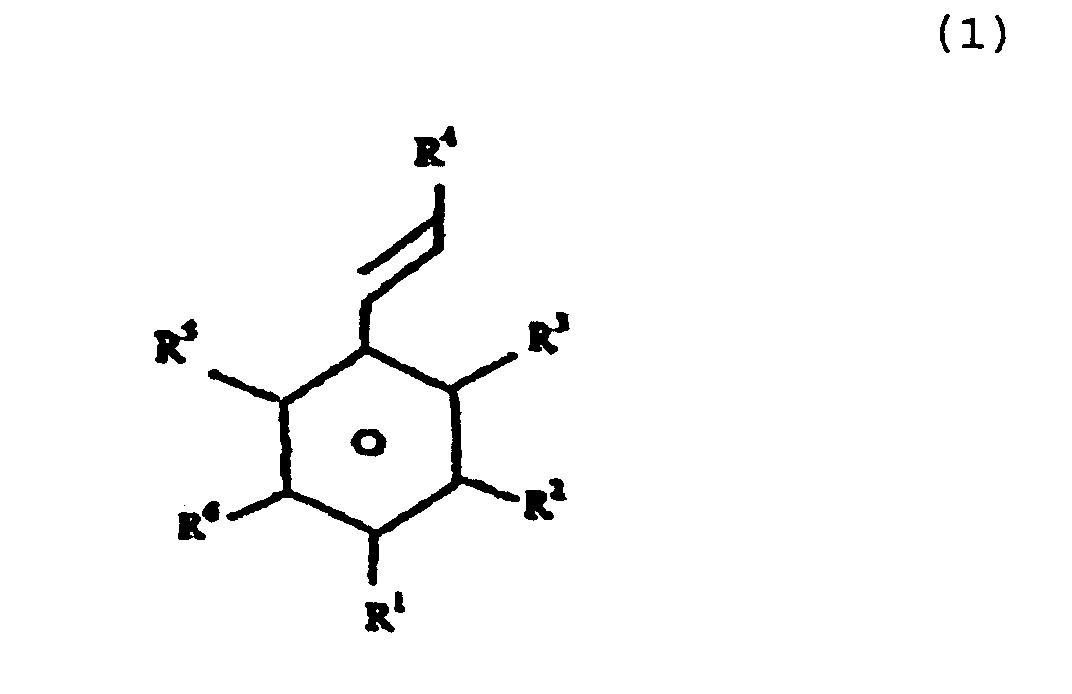
R1 est H ou OH
R2 est H, OH ou OCH3
R3 est H ou OH
au moins un parmi R1 et R3 étant OH
R4 est choisi parmi H, R, -COOX et R7-COOX, dans lequel R est un groupe alkyle possédant de 1 à 12 atomes de carbone, R7 est un groupe alkylène possédant de 1 à 12 atomes de carbone et X est choisi parmi H et des groupes formant des esters aliphatiques et aromatiques ; et
R5 et R6 sont chacun choisi indépendamment parmi H, OH, OCH3, CH3, COOH et des groupes alkyles possédant jusqu'à 8 atomes de carbone. - Procédé selon la revendication 1 et dans lequel le composé de formule (1) est choisi parmi un acide 4-hydroxycinnamique et les esters de celui-ci formés par substitution sur son groupe acide, l'acide cafféique et les esters de celui-ci formés par substitution sur son groupe acide et l'acide férulique et les esters de celui-ci formés par substitution sur son groupe acide.
- Procédé selon la revendication 1 ou la revendication 2 et dans lequel R4 est COOX ou R7-COOX et X est choisi parmi les mêmes groupes que R comme il est spécifié dans la revendication 1 ou est R8-O-R9 où R8 est choisi parmi les mêmes groupes que R7 et R9 est choisi parmi les mêmes groupes que R.
- Procédé selon la revendication 3 et dans lequel X est un groupe alkyle à chaíne linéaire ou ramifiée possédant de un à douze atomes de carbone ou un groupe éther -R8-O-R9 possédant jusqu'à douze atomes de carbone au total.
- Procédé selon la revendication 4 et dans lequel X est soit CH2CH(C2H5)C4H9, soit C2H4-O-C2H5.
- Procédé selon la revendication 1 ou 2 et dans lequel X est un groupe alkyle cyclique comportant éventuellement un ou plusieurs substituants.
- Procédé selon la revendication 6 et dans lequel X est l'acide quinique ou un dérivé de celui-ci.
- Procédé selon la revendication 7 et dans lequel X est l'acide chlorogénique.
- Procédé selon la revendication 1 ou 2 et dans lequel X est un groupe dérivé de l'acide 4-hydroxycinnamique substitué dans son groupe hydroxy adjacent au noyau ou un dérivé substitué au niveau du noyau de celui-ci.
- Procédé selon la revendication 9 et dans lequel le composé de formule (1) est un ester représenté par la formule :dans lequel R10 est choisi parmi H, OH ou OCH3, chacun des R11, R12 et R13 est choisi indépendamment parmi H, OH, OCH3, CH3, COOH et des groupes alkyles de C1 à C8, et Q est H ou COOY où Y est choisi parmi les mêmes groupes que X comme défini dans la revendication 1.

- Procédé selon la revendication 10 et dans lequel Y est le même que R comme défini dans la revendication 1 et Y possède de six à dix atomes de carbone.
- Procédé selon la revendication 11 et dans lequel Y est le 2-éthylhexyle.
- Procédé selon la revendication 10 et dans lequel Y est le même que R8-O-R9 comme défini dans la revendication 4.
- Procédé selon la revendication 13 et dans lequel Y est -C2H4-O-C2H5.
- Procédé selon la revendication 10 et dans lequel le composé de formule (2) est représenté par la formule :dans lequel RA est le 2-éthylhexyle.

- Procédé selon la revendication 10 et dans lequel le composé de formule (2) est représenté par la formule :dans lequel RA représente C2H4-O-C2H5.
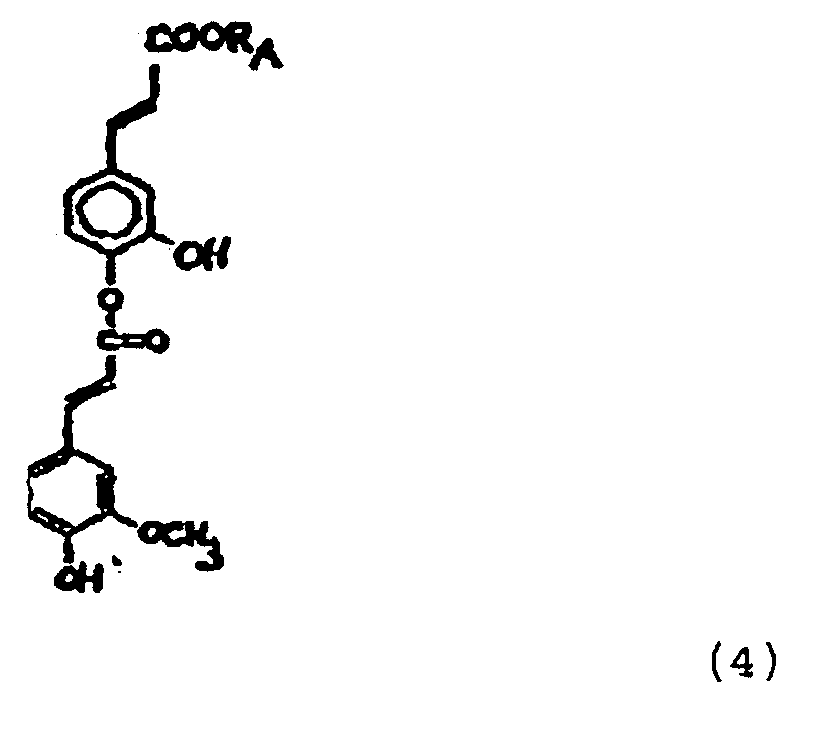
- Procédé selon la revendication 10 et dans lequel le composé de formule (2) possède la formule :

- Procédé selon la revendication 10 et dans lequel le composé de formule (2) possède la formule :

- Procédé selon l'une quelconque des revendications précédentes dans lequel le produit mélanine fabriqué par la réaction de la peroxydase est concentré par évaporation.
- Procédé selon l'une quelconque des revendications précédentes et dans lequel l'acide cafféique ou un dérivé de celui-ci et/ou l'acide férulique ou un dérivé de celui-ci et/ou l'acide 4-hydroxycinnamique ou un dérivé de celui-ci sont biotransformés ensemble.
- Procédé selon la revendication 20 et dans lequel l'acide cafféique ou un dérivé de celui-ci et/ou l'acide férulique ou un dérivé de celui-ci est obtenu à partir du traitement enzymatique d'un matériel végétal.
- Mélanine que l'on peut obtenir au moyen d'un procédé selon l'une quelconque des revendications 1 à 21.
- Composition colorante comportant un mélange de mélanines selon la revendication 22.
- Composition cosmétique comportant une mélanine ou une composition selon la revendication 22 ou la revendication 23.
- Mélanine ou composition de mélanine selon la revendication 22 et qui montre une solubilité croissante dans l'eau et/ou des solvants cosmétiques et/ou est moins hautement colorée et/ou présente une bonne absorption dans les régions des UVA et des UVB et/ou montré une bonne activité antioxydante.
Applications Claiming Priority (5)
| Application Number | Priority Date | Filing Date | Title |
|---|---|---|---|
| GB9524997 | 1995-12-07 | ||
| GBGB9524997.5A GB9524997D0 (en) | 1995-12-07 | 1995-12-07 | Melanins |
| GBGB9525428.0A GB9525428D0 (en) | 1995-12-13 | 1995-12-13 | Melanins |
| GB9525428 | 1995-12-13 | ||
| PCT/GB1996/003015 WO1997020944A1 (fr) | 1995-12-07 | 1996-12-09 | Production de melanines |
Publications (2)
| Publication Number | Publication Date |
|---|---|
| EP0865497A1 EP0865497A1 (fr) | 1998-09-23 |
| EP0865497B1 true EP0865497B1 (fr) | 2002-09-25 |
Family
ID=26308242
Family Applications (1)
| Application Number | Title | Priority Date | Filing Date |
|---|---|---|---|
| EP96942438A Expired - Lifetime EP0865497B1 (fr) | 1995-12-07 | 1996-12-09 | Production d'allomelanines |
Country Status (6)
| Country | Link |
|---|---|
| US (1) | US6303106B1 (fr) |
| EP (1) | EP0865497B1 (fr) |
| JP (1) | JP4021485B2 (fr) |
| AU (1) | AU1181297A (fr) |
| DE (1) | DE69623986T2 (fr) |
| WO (1) | WO1997020944A1 (fr) |
Families Citing this family (7)
| Publication number | Priority date | Publication date | Assignee | Title |
|---|---|---|---|---|
| ES2281425T3 (es) * | 2000-07-21 | 2007-10-01 | Croda Chemicals International Limited | Uso de una alomelanina para el tratamiento de la inflamacion o irritacion provocada por dha y/o un tensioactivo. |
| US8021695B2 (en) * | 2002-02-15 | 2011-09-20 | Arch Personal Care Products, L.P. | Personal care composition containing leghemoglobin |
| CA2594546A1 (fr) * | 2005-01-14 | 2006-07-27 | Lipo Chemicals, Inc. | Composition et procede de traitement d'une peau hyperpigmentee |
| CA2598792A1 (fr) | 2005-03-02 | 2006-09-08 | Metanomics Gmbh | Procede de production de produits chimiques fins |
| US20100168228A1 (en) * | 2006-10-13 | 2010-07-01 | Reliance Life Sciences Pvt. Ltd. | Novel chemotherapeutic agents against inflammation and cancer |
| WO2009082735A1 (fr) * | 2007-12-21 | 2009-07-02 | University Of Chicago | Mélanines synthétisées par voie chimique ou par catalyse enzymatique |
| CN104610054B (zh) * | 2015-02-04 | 2017-01-25 | 中国科学院华南植物园 | 一种咖啡酰对羟基苯酚酯及其制备方法和在制备酪氨酸酶抑制剂中的应用 |
Family Cites Families (18)
| Publication number | Priority date | Publication date | Assignee | Title |
|---|---|---|---|---|
| US4515773A (en) * | 1983-07-05 | 1985-05-07 | Repligen Corporation | Skin tanning composition and method |
| JP2552297B2 (ja) * | 1987-07-03 | 1996-11-06 | ポーラ化成工業株式会社 | 美肌化粧料 |
| US5631151A (en) * | 1988-10-03 | 1997-05-20 | Biosource Technologies, Inc. | Melanin production by transformed organisms |
| US5529909A (en) * | 1988-02-26 | 1996-06-25 | Biosource Technologies, Inc. | Tyrosinase-activator protein fusion enzyme |
| WO1990010430A1 (fr) * | 1989-03-07 | 1990-09-20 | Plough, Inc. | Compositions a base de liposome |
| FR2653336B1 (fr) * | 1989-10-20 | 1994-04-08 | Oreal | Composition pharmaceutique et cosmetiques depigmentantes a base d'acide cafeique. |
| LU87672A1 (fr) * | 1990-02-05 | 1991-10-08 | Oreal | Procede de preparation d'un pigment melanique par voie enzymatique |
| US5218079A (en) * | 1990-05-18 | 1993-06-08 | Yale University | Soluble melanin |
| US5227459A (en) * | 1990-05-18 | 1993-07-13 | Yale University | Synthetic melanin |
| DE69132709T2 (de) * | 1990-06-29 | 2002-06-20 | Large Scale Biology Corp., Vacaville | Melaninproduktion durch transformierte mikroorganismen |
| FR2688136B1 (fr) * | 1992-03-03 | 1995-06-09 | Oreal | Composition cosmetique contenant des pigments melaniques en association avec certains tocopherols, et procede de protection de la peau, des cheveux, des muqueuses et des compositions cosmetiques. |
| WO1993022773A1 (fr) * | 1992-05-04 | 1993-11-11 | Berliner David L | Procede d'absorption de rayonnement ultraviolet au moyen de melanine dispersee |
| DE4221269C1 (de) * | 1992-06-26 | 1993-12-09 | Lancaster Group Ag | Zubereitung zur topischen Anwendung |
| FR2693105B1 (fr) * | 1992-07-01 | 1994-09-02 | Oreal | Composition cosmétique et/ou dermatologique à action dépigmentante contenant un acide di- ou tri-caféoylquinique ou un mélange de ceux-ci. |
| US5744125A (en) * | 1993-08-19 | 1998-04-28 | Yale University | Cosmetic melanins |
| GB9507415D0 (en) | 1994-06-08 | 1995-05-31 | Zylepsis Ltd | Production and uses of caffeic acid and derivatives thereof |
| US6245363B1 (en) | 1995-06-07 | 2001-06-12 | Zylepsis Limited | Methods of treating plant materials with hydrolytic enzymes isolated from humicola species |
| JPH09151130A (ja) * | 1995-12-01 | 1997-06-10 | Yakurigaku Chuo Kenkyusho:Kk | 白毛症および白斑症治療薬 |
-
1996
- 1996-12-09 US US09/077,912 patent/US6303106B1/en not_active Expired - Lifetime
- 1996-12-09 JP JP52109297A patent/JP4021485B2/ja not_active Expired - Fee Related
- 1996-12-09 EP EP96942438A patent/EP0865497B1/fr not_active Expired - Lifetime
- 1996-12-09 AU AU11812/97A patent/AU1181297A/en not_active Abandoned
- 1996-12-09 DE DE69623986T patent/DE69623986T2/de not_active Expired - Lifetime
- 1996-12-09 WO PCT/GB1996/003015 patent/WO1997020944A1/fr not_active Ceased
Also Published As
| Publication number | Publication date |
|---|---|
| DE69623986D1 (de) | 2002-10-31 |
| WO1997020944A1 (fr) | 1997-06-12 |
| EP0865497A1 (fr) | 1998-09-23 |
| JP2000501932A (ja) | 2000-02-22 |
| DE69623986T2 (de) | 2003-05-28 |
| JP4021485B2 (ja) | 2007-12-12 |
| AU1181297A (en) | 1997-06-27 |
| US6303106B1 (en) | 2001-10-16 |
Similar Documents
| Publication | Publication Date | Title |
|---|---|---|
| EP1893555B1 (fr) | Bioprecurseur a base de polyphenol | |
| Ishihara et al. | Structural aspects of acylated plant pigments: stabilization of flavonoid glucosides and interpretation of their functions | |
| KR102783644B1 (ko) | 유산균 유래 세포밖 소포체를 유효성분으로 포함하는 피부 미백용 조성물 | |
| US5466718A (en) | Tyrosinase inhibitors | |
| EP0865497B1 (fr) | Production d'allomelanines | |
| KR101794416B1 (ko) | 아마란스 잎 추출물을 유효성분으로 함유하는 항산화, 피부 미백 및 주름 개선용 복합 기능성 화장료 조성물 및 아마란스 잎 추출물의 제조방법 | |
| KR20160093427A (ko) | 발효된 미선나무 추출물을 유효성분으로 포함하는 화장료 조성물 | |
| JPH1179936A (ja) | マルベリンを含有する美白化粧料 | |
| EP0575454B1 (fr) | Utilisation de la cucurbitine pour la preparation d'une composition cosmetique ou pharmaceutique, notamment dermatologique, anti-allergique, et procede en comportant application | |
| KR102710032B1 (ko) | 유산균에 의해 발효된 쌀 부산물 추출물을 유효성분으로 함유하는 항산화, 피부 미백 및 주름 개선용 복합 기능성 화장료 조성물 | |
| KR20210155987A (ko) | 락토바실러스 브레비스 균주로 발효한 해조류 복합 발효 추출물을 유효성분으로 포함하는 피부 탄력 또는 피부 주름 개선, 항산화 및 피부 보습용 조성물 | |
| FR2751331A1 (fr) | Nouveau derive de l'acide kojique et son utilisation comme agent depigmentant | |
| KR20180128774A (ko) | 꽃차 추출물을 함유하는 항산화, 미백 및 주름 개선을 위한 조성물 | |
| KR20200062446A (ko) | 멜라닌의 탈색 촉진용 조성물 | |
| WO2019066413A1 (fr) | Composition cosmétique multifonctionnelle antioxydante, de blanchiment de la peau et de réduction des rides contenant un extrait de sous-produit de riz fermenté ou une fraction de ce dernier en tant que principe actif | |
| WO2021060714A1 (fr) | Composition cosmétique pour prévenir le vieillissement de la peau et réduire les rides cutanées, comprenant un extrait de selaginella rossii warb. | |
| KR20010114117A (ko) | 멜라닌을 탈색시키는 효소 | |
| EP2611504B1 (fr) | Dérivés carbonates en tant que produits pour le soin de la peau | |
| KR101167606B1 (ko) | 예덕나무 발효액을 포함하는 피부 미백용 화장료 조성물 | |
| JP2002500167A (ja) | アロエシン誘導体の合成方法 | |
| KR100495454B1 (ko) | 피토라이트를 포함하는 미백 화장료 조성물 | |
| KR102062311B1 (ko) | 흰들버섯 추출물 제조방법, 이를 이용한 추출물 및 화장료 조성물 | |
| KR102041699B1 (ko) | 멜라닌 탈색 효능을 가지는 신규 페니오포라속 js17 균주 및 이의 용도 | |
| KR102298453B1 (ko) | 셀로움 발효액을 포함하는 피부 미백용 화장료 조성물 | |
| KR102766536B1 (ko) | 미생물 균주를 이용하여 발효된 산수유 발효물을 포함하는 피부 미백 또는 진정용 화장료 조성물 |
Legal Events
| Date | Code | Title | Description |
|---|---|---|---|
| PUAI | Public reference made under article 153(3) epc to a published international application that has entered the european phase |
Free format text: ORIGINAL CODE: 0009012 |
|
| 17P | Request for examination filed |
Effective date: 19980707 |
|
| AK | Designated contracting states |
Kind code of ref document: A1 Designated state(s): BE DE DK ES FR GB IT LU NL SE |
|
| 17Q | First examination report despatched |
Effective date: 19990930 |
|
| GRAG | Despatch of communication of intention to grant |
Free format text: ORIGINAL CODE: EPIDOS AGRA |
|
| RTI1 | Title (correction) |
Free format text: ALLOMELANIN PRODUCTION |
|
| RTI1 | Title (correction) |
Free format text: ALLOMELANIN PRODUCTION |
|
| GRAG | Despatch of communication of intention to grant |
Free format text: ORIGINAL CODE: EPIDOS AGRA |
|
| GRAG | Despatch of communication of intention to grant |
Free format text: ORIGINAL CODE: EPIDOS AGRA |
|
| GRAH | Despatch of communication of intention to grant a patent |
Free format text: ORIGINAL CODE: EPIDOS IGRA |
|
| GRAH | Despatch of communication of intention to grant a patent |
Free format text: ORIGINAL CODE: EPIDOS IGRA |
|
| GRAA | (expected) grant |
Free format text: ORIGINAL CODE: 0009210 |
|
| AK | Designated contracting states |
Kind code of ref document: B1 Designated state(s): BE DE DK ES FR GB IT LU NL SE |
|
| PG25 | Lapsed in a contracting state [announced via postgrant information from national office to epo] |
Ref country code: NL Free format text: LAPSE BECAUSE OF FAILURE TO SUBMIT A TRANSLATION OF THE DESCRIPTION OR TO PAY THE FEE WITHIN THE PRESCRIBED TIME-LIMIT Effective date: 20020925 Ref country code: IT Free format text: LAPSE BECAUSE OF FAILURE TO SUBMIT A TRANSLATION OF THE DESCRIPTION OR TO PAY THE FEE WITHIN THE PRESCRIBED TIME-LIMIT;WARNING: LAPSES OF ITALIAN PATENTS WITH EFFECTIVE DATE BEFORE 2007 MAY HAVE OCCURRED AT ANY TIME BEFORE 2007. THE CORRECT EFFECTIVE DATE MAY BE DIFFERENT FROM THE ONE RECORDED. Effective date: 20020925 Ref country code: BE Free format text: LAPSE BECAUSE OF FAILURE TO SUBMIT A TRANSLATION OF THE DESCRIPTION OR TO PAY THE FEE WITHIN THE PRESCRIBED TIME-LIMIT Effective date: 20020925 |
|
| REG | Reference to a national code |
Ref country code: GB Ref legal event code: FG4D |
|
| REF | Corresponds to: |
Ref document number: 69623986 Country of ref document: DE Date of ref document: 20021031 |
|
| PG25 | Lapsed in a contracting state [announced via postgrant information from national office to epo] |
Ref country code: LU Free format text: LAPSE BECAUSE OF NON-PAYMENT OF DUE FEES Effective date: 20021209 |
|
| PG25 | Lapsed in a contracting state [announced via postgrant information from national office to epo] |
Ref country code: SE Free format text: LAPSE BECAUSE OF FAILURE TO SUBMIT A TRANSLATION OF THE DESCRIPTION OR TO PAY THE FEE WITHIN THE PRESCRIBED TIME-LIMIT Effective date: 20021225 Ref country code: DK Free format text: LAPSE BECAUSE OF FAILURE TO SUBMIT A TRANSLATION OF THE DESCRIPTION OR TO PAY THE FEE WITHIN THE PRESCRIBED TIME-LIMIT Effective date: 20021225 |
|
| NLV1 | Nl: lapsed or annulled due to failure to fulfill the requirements of art. 29p and 29m of the patents act | ||
| PG25 | Lapsed in a contracting state [announced via postgrant information from national office to epo] |
Ref country code: ES Free format text: LAPSE BECAUSE OF FAILURE TO SUBMIT A TRANSLATION OF THE DESCRIPTION OR TO PAY THE FEE WITHIN THE PRESCRIBED TIME-LIMIT Effective date: 20030328 |
|
| ET | Fr: translation filed | ||
| PLBE | No opposition filed within time limit |
Free format text: ORIGINAL CODE: 0009261 |
|
| STAA | Information on the status of an ep patent application or granted ep patent |
Free format text: STATUS: NO OPPOSITION FILED WITHIN TIME LIMIT |
|
| 26N | No opposition filed |
Effective date: 20030626 |
|
| REG | Reference to a national code |
Ref country code: GB Ref legal event code: 732E |
|
| REG | Reference to a national code |
Ref country code: FR Ref legal event code: TP |
|
| REG | Reference to a national code |
Ref country code: DE Ref legal event code: R082 Ref document number: 69623986 Country of ref document: DE Representative=s name: ANDRAE FLACH HAUG, DE |
|
| REG | Reference to a national code |
Ref country code: DE Ref legal event code: R082 Ref document number: 69623986 Country of ref document: DE Representative=s name: ANDRAE WESTENDORP PATENTANWAELTE PARTNERSCHAFT, DE Effective date: 20130911 Ref country code: DE Ref legal event code: R082 Ref document number: 69623986 Country of ref document: DE Representative=s name: ANDRAE WESTENDORP PATENTANWAELTE PARTNERSCHAFT, DE Effective date: 20130729 Ref country code: DE Ref legal event code: R082 Ref document number: 69623986 Country of ref document: DE Representative=s name: ANDRAE FLACH HAUG, DE Effective date: 20130729 Ref country code: DE Ref legal event code: R082 Ref document number: 69623986 Country of ref document: DE Representative=s name: ANDRAE FLACH HAUG, DE Effective date: 20130911 Ref country code: DE Ref legal event code: R081 Ref document number: 69623986 Country of ref document: DE Owner name: CRODA INTERNATIONAL PLC, GOOLE, GB Free format text: FORMER OWNER: CRODA CHEMICALS INTERNATIONAL LIMITED, GOOLE, EAST YORKSHIRE, GB Effective date: 20130729 Ref country code: DE Ref legal event code: R081 Ref document number: 69623986 Country of ref document: DE Owner name: CRODA INTERNATIONAL PLC, GOOLE, GB Free format text: FORMER OWNER: CRODA EUROPE LTD., GOOLE, EAST YORKSHIRE, GB Effective date: 20130911 Ref country code: DE Ref legal event code: R081 Ref document number: 69623986 Country of ref document: DE Owner name: CRODA INTERNATIONAL PLC, GB Free format text: FORMER OWNER: CRODA EUROPE LTD., GOOLE, GB Effective date: 20130911 Ref country code: DE Ref legal event code: R081 Ref document number: 69623986 Country of ref document: DE Owner name: CRODA INTERNATIONAL PLC, GB Free format text: FORMER OWNER: CRODA CHEMICALS INTERNATIONAL LIMITED, GOOLE, GB Effective date: 20130729 |
|
| REG | Reference to a national code |
Ref country code: FR Ref legal event code: TP Owner name: CRODA INTERNATIONAL PLC, GB Effective date: 20130826 Ref country code: FR Ref legal event code: CD Owner name: CRODA INTERNATIONAL PLC, GB Effective date: 20130826 |
|
| REG | Reference to a national code |
Ref country code: GB Ref legal event code: 732E Free format text: REGISTERED BETWEEN 20130905 AND 20130911 |
|
| REG | Reference to a national code |
Ref country code: FR Ref legal event code: PLFP Year of fee payment: 20 |
|
| PGFP | Annual fee paid to national office [announced via postgrant information from national office to epo] |
Ref country code: GB Payment date: 20151221 Year of fee payment: 20 Ref country code: DE Payment date: 20151211 Year of fee payment: 20 |
|
| PGFP | Annual fee paid to national office [announced via postgrant information from national office to epo] |
Ref country code: FR Payment date: 20151221 Year of fee payment: 20 |
|
| REG | Reference to a national code |
Ref country code: DE Ref legal event code: R071 Ref document number: 69623986 Country of ref document: DE |
|
| REG | Reference to a national code |
Ref country code: GB Ref legal event code: PE20 Expiry date: 20161208 |
|
| PG25 | Lapsed in a contracting state [announced via postgrant information from national office to epo] |
Ref country code: GB Free format text: LAPSE BECAUSE OF EXPIRATION OF PROTECTION Effective date: 20161208 |