EP0865989B1 - Surveillance de l'intégrité d'un joint ainsi que procédé et appareil de contrôle adaptive - Google Patents
Surveillance de l'intégrité d'un joint ainsi que procédé et appareil de contrôle adaptive Download PDFInfo
- Publication number
- EP0865989B1 EP0865989B1 EP98301889A EP98301889A EP0865989B1 EP 0865989 B1 EP0865989 B1 EP 0865989B1 EP 98301889 A EP98301889 A EP 98301889A EP 98301889 A EP98301889 A EP 98301889A EP 0865989 B1 EP0865989 B1 EP 0865989B1
- Authority
- EP
- European Patent Office
- Prior art keywords
- seal
- sealing
- packaging
- monitoring
- signal
- Prior art date
- Legal status (The legal status is an assumption and is not a legal conclusion. Google has not performed a legal analysis and makes no representation as to the accuracy of the status listed.)
- Expired - Lifetime
Links
- 238000000034 method Methods 0.000 title claims description 40
- 238000012544 monitoring process Methods 0.000 title claims description 37
- 230000003044 adaptive effect Effects 0.000 title claims description 22
- 238000007789 sealing Methods 0.000 claims description 103
- 238000004806 packaging method and process Methods 0.000 claims description 85
- 238000013461 design Methods 0.000 claims description 23
- 229920006280 packaging film Polymers 0.000 claims description 12
- 239000012785 packaging film Substances 0.000 claims description 12
- 230000004044 response Effects 0.000 claims description 6
- 230000001419 dependent effect Effects 0.000 claims description 5
- 238000012858 packaging process Methods 0.000 claims description 4
- 230000015572 biosynthetic process Effects 0.000 claims 1
- 150000003839 salts Chemical class 0.000 description 6
- 238000011109 contamination Methods 0.000 description 5
- 238000010586 diagram Methods 0.000 description 5
- 238000004458 analytical method Methods 0.000 description 4
- 230000006872 improvement Effects 0.000 description 4
- 230000004048 modification Effects 0.000 description 4
- 238000012986 modification Methods 0.000 description 4
- 238000005303 weighing Methods 0.000 description 4
- 238000013459 approach Methods 0.000 description 3
- 230000008901 benefit Effects 0.000 description 3
- 235000013606 potato chips Nutrition 0.000 description 3
- 230000009471 action Effects 0.000 description 2
- 230000000712 assembly Effects 0.000 description 2
- 238000000429 assembly Methods 0.000 description 2
- 230000008859 change Effects 0.000 description 2
- 239000000428 dust Substances 0.000 description 2
- 230000006870 function Effects 0.000 description 2
- 230000001360 synchronised effect Effects 0.000 description 2
- 238000009825 accumulation Methods 0.000 description 1
- 230000003466 anti-cipated effect Effects 0.000 description 1
- 239000002131 composite material Substances 0.000 description 1
- 230000001143 conditioned effect Effects 0.000 description 1
- 238000012937 correction Methods 0.000 description 1
- 230000007423 decrease Effects 0.000 description 1
- 230000002939 deleterious effect Effects 0.000 description 1
- 238000011161 development Methods 0.000 description 1
- 230000000694 effects Effects 0.000 description 1
- 235000013305 food Nutrition 0.000 description 1
- 230000003993 interaction Effects 0.000 description 1
- 239000002245 particle Substances 0.000 description 1
- 230000008569 process Effects 0.000 description 1
- 238000012545 processing Methods 0.000 description 1
- 238000010223 real-time analysis Methods 0.000 description 1
- 238000004826 seaming Methods 0.000 description 1
- 230000001052 transient effect Effects 0.000 description 1
- 230000007704 transition Effects 0.000 description 1
Images



Classifications
-
- B—PERFORMING OPERATIONS; TRANSPORTING
- B29—WORKING OF PLASTICS; WORKING OF SUBSTANCES IN A PLASTIC STATE IN GENERAL
- B29C—SHAPING OR JOINING OF PLASTICS; SHAPING OF MATERIAL IN A PLASTIC STATE, NOT OTHERWISE PROVIDED FOR; AFTER-TREATMENT OF THE SHAPED PRODUCTS, e.g. REPAIRING
- B29C66/00—General aspects of processes or apparatus for joining preformed parts
- B29C66/01—General aspects dealing with the joint area or with the area to be joined
- B29C66/05—Particular design of joint configurations
- B29C66/10—Particular design of joint configurations particular design of the joint cross-sections
- B29C66/11—Joint cross-sections comprising a single joint-segment, i.e. one of the parts to be joined comprising a single joint-segment in the joint cross-section
- B29C66/112—Single lapped joints
- B29C66/1122—Single lap to lap joints, i.e. overlap joints
-
- B—PERFORMING OPERATIONS; TRANSPORTING
- B29—WORKING OF PLASTICS; WORKING OF SUBSTANCES IN A PLASTIC STATE IN GENERAL
- B29C—SHAPING OR JOINING OF PLASTICS; SHAPING OF MATERIAL IN A PLASTIC STATE, NOT OTHERWISE PROVIDED FOR; AFTER-TREATMENT OF THE SHAPED PRODUCTS, e.g. REPAIRING
- B29C65/00—Joining or sealing of preformed parts, e.g. welding of plastics materials; Apparatus therefor
- B29C65/74—Joining or sealing of preformed parts, e.g. welding of plastics materials; Apparatus therefor by welding and severing, or by joining and severing, the severing being performed in the area to be joined, next to the area to be joined, in the joint area or next to the joint area
- B29C65/743—Joining or sealing of preformed parts, e.g. welding of plastics materials; Apparatus therefor by welding and severing, or by joining and severing, the severing being performed in the area to be joined, next to the area to be joined, in the joint area or next to the joint area using the same tool for both joining and severing, said tool being monobloc or formed by several parts mounted together and forming a monobloc
-
- B—PERFORMING OPERATIONS; TRANSPORTING
- B29—WORKING OF PLASTICS; WORKING OF SUBSTANCES IN A PLASTIC STATE IN GENERAL
- B29C—SHAPING OR JOINING OF PLASTICS; SHAPING OF MATERIAL IN A PLASTIC STATE, NOT OTHERWISE PROVIDED FOR; AFTER-TREATMENT OF THE SHAPED PRODUCTS, e.g. REPAIRING
- B29C65/00—Joining or sealing of preformed parts, e.g. welding of plastics materials; Apparatus therefor
- B29C65/74—Joining or sealing of preformed parts, e.g. welding of plastics materials; Apparatus therefor by welding and severing, or by joining and severing, the severing being performed in the area to be joined, next to the area to be joined, in the joint area or next to the joint area
- B29C65/745—Joining or sealing of preformed parts, e.g. welding of plastics materials; Apparatus therefor by welding and severing, or by joining and severing, the severing being performed in the area to be joined, next to the area to be joined, in the joint area or next to the joint area using a single unit having both a severing tool and a welding tool
-
- B—PERFORMING OPERATIONS; TRANSPORTING
- B29—WORKING OF PLASTICS; WORKING OF SUBSTANCES IN A PLASTIC STATE IN GENERAL
- B29C—SHAPING OR JOINING OF PLASTICS; SHAPING OF MATERIAL IN A PLASTIC STATE, NOT OTHERWISE PROVIDED FOR; AFTER-TREATMENT OF THE SHAPED PRODUCTS, e.g. REPAIRING
- B29C66/00—General aspects of processes or apparatus for joining preformed parts
- B29C66/40—General aspects of joining substantially flat articles, e.g. plates, sheets or web-like materials; Making flat seams in tubular or hollow articles; Joining single elements to substantially flat surfaces
- B29C66/41—Joining substantially flat articles ; Making flat seams in tubular or hollow articles
- B29C66/43—Joining a relatively small portion of the surface of said articles
- B29C66/431—Joining the articles to themselves
- B29C66/4312—Joining the articles to themselves for making flat seams in tubular or hollow articles, e.g. transversal seams
-
- B—PERFORMING OPERATIONS; TRANSPORTING
- B29—WORKING OF PLASTICS; WORKING OF SUBSTANCES IN A PLASTIC STATE IN GENERAL
- B29C—SHAPING OR JOINING OF PLASTICS; SHAPING OF MATERIAL IN A PLASTIC STATE, NOT OTHERWISE PROVIDED FOR; AFTER-TREATMENT OF THE SHAPED PRODUCTS, e.g. REPAIRING
- B29C66/00—General aspects of processes or apparatus for joining preformed parts
- B29C66/70—General aspects of processes or apparatus for joining preformed parts characterised by the composition, physical properties or the structure of the material of the parts to be joined; Joining with non-plastics material
- B29C66/73—General aspects of processes or apparatus for joining preformed parts characterised by the composition, physical properties or the structure of the material of the parts to be joined; Joining with non-plastics material characterised by the intensive physical properties of the material of the parts to be joined, by the optical properties of the material of the parts to be joined, by the extensive physical properties of the parts to be joined, by the state of the material of the parts to be joined or by the material of the parts to be joined being a thermoplastic or a thermoset
- B29C66/737—General aspects of processes or apparatus for joining preformed parts characterised by the composition, physical properties or the structure of the material of the parts to be joined; Joining with non-plastics material characterised by the intensive physical properties of the material of the parts to be joined, by the optical properties of the material of the parts to be joined, by the extensive physical properties of the parts to be joined, by the state of the material of the parts to be joined or by the material of the parts to be joined being a thermoplastic or a thermoset characterised by the state of the material of the parts to be joined
- B29C66/7373—Joining soiled or oxidised materials
-
- B—PERFORMING OPERATIONS; TRANSPORTING
- B29—WORKING OF PLASTICS; WORKING OF SUBSTANCES IN A PLASTIC STATE IN GENERAL
- B29C—SHAPING OR JOINING OF PLASTICS; SHAPING OF MATERIAL IN A PLASTIC STATE, NOT OTHERWISE PROVIDED FOR; AFTER-TREATMENT OF THE SHAPED PRODUCTS, e.g. REPAIRING
- B29C66/00—General aspects of processes or apparatus for joining preformed parts
- B29C66/80—General aspects of machine operations or constructions and parts thereof
- B29C66/82—Pressure application arrangements, e.g. transmission or actuating mechanisms for joining tools or clamps
- B29C66/822—Transmission mechanisms
- B29C66/8224—Chain or sprocket drives
-
- B—PERFORMING OPERATIONS; TRANSPORTING
- B29—WORKING OF PLASTICS; WORKING OF SUBSTANCES IN A PLASTIC STATE IN GENERAL
- B29C—SHAPING OR JOINING OF PLASTICS; SHAPING OF MATERIAL IN A PLASTIC STATE, NOT OTHERWISE PROVIDED FOR; AFTER-TREATMENT OF THE SHAPED PRODUCTS, e.g. REPAIRING
- B29C66/00—General aspects of processes or apparatus for joining preformed parts
- B29C66/80—General aspects of machine operations or constructions and parts thereof
- B29C66/82—Pressure application arrangements, e.g. transmission or actuating mechanisms for joining tools or clamps
- B29C66/822—Transmission mechanisms
- B29C66/8225—Crank mechanisms
-
- B—PERFORMING OPERATIONS; TRANSPORTING
- B29—WORKING OF PLASTICS; WORKING OF SUBSTANCES IN A PLASTIC STATE IN GENERAL
- B29C—SHAPING OR JOINING OF PLASTICS; SHAPING OF MATERIAL IN A PLASTIC STATE, NOT OTHERWISE PROVIDED FOR; AFTER-TREATMENT OF THE SHAPED PRODUCTS, e.g. REPAIRING
- B29C66/00—General aspects of processes or apparatus for joining preformed parts
- B29C66/80—General aspects of machine operations or constructions and parts thereof
- B29C66/82—Pressure application arrangements, e.g. transmission or actuating mechanisms for joining tools or clamps
- B29C66/824—Actuating mechanisms
- B29C66/8246—Servomechanisms, e.g. servomotors
-
- B—PERFORMING OPERATIONS; TRANSPORTING
- B29—WORKING OF PLASTICS; WORKING OF SUBSTANCES IN A PLASTIC STATE IN GENERAL
- B29C—SHAPING OR JOINING OF PLASTICS; SHAPING OF MATERIAL IN A PLASTIC STATE, NOT OTHERWISE PROVIDED FOR; AFTER-TREATMENT OF THE SHAPED PRODUCTS, e.g. REPAIRING
- B29C66/00—General aspects of processes or apparatus for joining preformed parts
- B29C66/80—General aspects of machine operations or constructions and parts thereof
- B29C66/83—General aspects of machine operations or constructions and parts thereof characterised by the movement of the joining or pressing tools
- B29C66/832—Reciprocating joining or pressing tools
- B29C66/8322—Joining or pressing tools reciprocating along one axis
- B29C66/83221—Joining or pressing tools reciprocating along one axis cooperating reciprocating tools, each tool reciprocating along one axis
-
- B—PERFORMING OPERATIONS; TRANSPORTING
- B29—WORKING OF PLASTICS; WORKING OF SUBSTANCES IN A PLASTIC STATE IN GENERAL
- B29C—SHAPING OR JOINING OF PLASTICS; SHAPING OF MATERIAL IN A PLASTIC STATE, NOT OTHERWISE PROVIDED FOR; AFTER-TREATMENT OF THE SHAPED PRODUCTS, e.g. REPAIRING
- B29C66/00—General aspects of processes or apparatus for joining preformed parts
- B29C66/80—General aspects of machine operations or constructions and parts thereof
- B29C66/84—Specific machine types or machines suitable for specific applications
- B29C66/849—Packaging machines
- B29C66/8491—Packaging machines welding through a filled container, e.g. tube or bag
-
- B—PERFORMING OPERATIONS; TRANSPORTING
- B29—WORKING OF PLASTICS; WORKING OF SUBSTANCES IN A PLASTIC STATE IN GENERAL
- B29C—SHAPING OR JOINING OF PLASTICS; SHAPING OF MATERIAL IN A PLASTIC STATE, NOT OTHERWISE PROVIDED FOR; AFTER-TREATMENT OF THE SHAPED PRODUCTS, e.g. REPAIRING
- B29C66/00—General aspects of processes or apparatus for joining preformed parts
- B29C66/80—General aspects of machine operations or constructions and parts thereof
- B29C66/87—Auxiliary operations or devices
- B29C66/872—Starting or stopping procedures
-
- B—PERFORMING OPERATIONS; TRANSPORTING
- B29—WORKING OF PLASTICS; WORKING OF SUBSTANCES IN A PLASTIC STATE IN GENERAL
- B29C—SHAPING OR JOINING OF PLASTICS; SHAPING OF MATERIAL IN A PLASTIC STATE, NOT OTHERWISE PROVIDED FOR; AFTER-TREATMENT OF THE SHAPED PRODUCTS, e.g. REPAIRING
- B29C66/00—General aspects of processes or apparatus for joining preformed parts
- B29C66/80—General aspects of machine operations or constructions and parts thereof
- B29C66/87—Auxiliary operations or devices
- B29C66/874—Safety measures or devices
- B29C66/8748—Safety measures or devices involving the use of warnings
-
- B—PERFORMING OPERATIONS; TRANSPORTING
- B29—WORKING OF PLASTICS; WORKING OF SUBSTANCES IN A PLASTIC STATE IN GENERAL
- B29C—SHAPING OR JOINING OF PLASTICS; SHAPING OF MATERIAL IN A PLASTIC STATE, NOT OTHERWISE PROVIDED FOR; AFTER-TREATMENT OF THE SHAPED PRODUCTS, e.g. REPAIRING
- B29C66/00—General aspects of processes or apparatus for joining preformed parts
- B29C66/90—Measuring or controlling the joining process
- B29C66/92—Measuring or controlling the joining process by measuring or controlling the pressure, the force, the mechanical power or the displacement of the joining tools
- B29C66/922—Measuring or controlling the joining process by measuring or controlling the pressure, the force, the mechanical power or the displacement of the joining tools by measuring the pressure, the force, the mechanical power or the displacement of the joining tools
- B29C66/9221—Measuring or controlling the joining process by measuring or controlling the pressure, the force, the mechanical power or the displacement of the joining tools by measuring the pressure, the force, the mechanical power or the displacement of the joining tools by measuring the pressure, the force or the mechanical power
- B29C66/92211—Measuring or controlling the joining process by measuring or controlling the pressure, the force, the mechanical power or the displacement of the joining tools by measuring the pressure, the force, the mechanical power or the displacement of the joining tools by measuring the pressure, the force or the mechanical power with special measurement means or methods
-
- B—PERFORMING OPERATIONS; TRANSPORTING
- B29—WORKING OF PLASTICS; WORKING OF SUBSTANCES IN A PLASTIC STATE IN GENERAL
- B29C—SHAPING OR JOINING OF PLASTICS; SHAPING OF MATERIAL IN A PLASTIC STATE, NOT OTHERWISE PROVIDED FOR; AFTER-TREATMENT OF THE SHAPED PRODUCTS, e.g. REPAIRING
- B29C66/00—General aspects of processes or apparatus for joining preformed parts
- B29C66/90—Measuring or controlling the joining process
- B29C66/92—Measuring or controlling the joining process by measuring or controlling the pressure, the force, the mechanical power or the displacement of the joining tools
- B29C66/922—Measuring or controlling the joining process by measuring or controlling the pressure, the force, the mechanical power or the displacement of the joining tools by measuring the pressure, the force, the mechanical power or the displacement of the joining tools
- B29C66/9231—Measuring or controlling the joining process by measuring or controlling the pressure, the force, the mechanical power or the displacement of the joining tools by measuring the pressure, the force, the mechanical power or the displacement of the joining tools by measuring the displacement of the joining tools
- B29C66/92311—Measuring or controlling the joining process by measuring or controlling the pressure, the force, the mechanical power or the displacement of the joining tools by measuring the pressure, the force, the mechanical power or the displacement of the joining tools by measuring the displacement of the joining tools with special measurement means or methods
-
- B—PERFORMING OPERATIONS; TRANSPORTING
- B29—WORKING OF PLASTICS; WORKING OF SUBSTANCES IN A PLASTIC STATE IN GENERAL
- B29C—SHAPING OR JOINING OF PLASTICS; SHAPING OF MATERIAL IN A PLASTIC STATE, NOT OTHERWISE PROVIDED FOR; AFTER-TREATMENT OF THE SHAPED PRODUCTS, e.g. REPAIRING
- B29C66/00—General aspects of processes or apparatus for joining preformed parts
- B29C66/90—Measuring or controlling the joining process
- B29C66/92—Measuring or controlling the joining process by measuring or controlling the pressure, the force, the mechanical power or the displacement of the joining tools
- B29C66/924—Measuring or controlling the joining process by measuring or controlling the pressure, the force, the mechanical power or the displacement of the joining tools by controlling or regulating the pressure, the force, the mechanical power or the displacement of the joining tools
- B29C66/9241—Measuring or controlling the joining process by measuring or controlling the pressure, the force, the mechanical power or the displacement of the joining tools by controlling or regulating the pressure, the force, the mechanical power or the displacement of the joining tools by controlling or regulating the pressure, the force or the mechanical power
-
- B—PERFORMING OPERATIONS; TRANSPORTING
- B29—WORKING OF PLASTICS; WORKING OF SUBSTANCES IN A PLASTIC STATE IN GENERAL
- B29C—SHAPING OR JOINING OF PLASTICS; SHAPING OF MATERIAL IN A PLASTIC STATE, NOT OTHERWISE PROVIDED FOR; AFTER-TREATMENT OF THE SHAPED PRODUCTS, e.g. REPAIRING
- B29C66/00—General aspects of processes or apparatus for joining preformed parts
- B29C66/90—Measuring or controlling the joining process
- B29C66/93—Measuring or controlling the joining process by measuring or controlling the speed
- B29C66/934—Measuring or controlling the joining process by measuring or controlling the speed by controlling or regulating the speed
-
- B—PERFORMING OPERATIONS; TRANSPORTING
- B29—WORKING OF PLASTICS; WORKING OF SUBSTANCES IN A PLASTIC STATE IN GENERAL
- B29C—SHAPING OR JOINING OF PLASTICS; SHAPING OF MATERIAL IN A PLASTIC STATE, NOT OTHERWISE PROVIDED FOR; AFTER-TREATMENT OF THE SHAPED PRODUCTS, e.g. REPAIRING
- B29C66/00—General aspects of processes or apparatus for joining preformed parts
- B29C66/90—Measuring or controlling the joining process
- B29C66/96—Measuring or controlling the joining process characterised by the method for implementing the controlling of the joining process
- B29C66/961—Measuring or controlling the joining process characterised by the method for implementing the controlling of the joining process involving a feedback loop mechanism, e.g. comparison with a desired value
-
- B—PERFORMING OPERATIONS; TRANSPORTING
- B65—CONVEYING; PACKING; STORING; HANDLING THIN OR FILAMENTARY MATERIAL
- B65B—MACHINES, APPARATUS OR DEVICES FOR, OR METHODS OF, PACKAGING ARTICLES OR MATERIALS; UNPACKING
- B65B51/00—Devices for, or methods of, sealing or securing package folds or closures; Devices for gathering or twisting wrappers, or necks of bags
- B65B51/10—Applying or generating heat or pressure or combinations thereof
- B65B51/26—Devices specially adapted for producing transverse or longitudinal seams in webs or tubes
- B65B51/30—Devices, e.g. jaws, for applying pressure and heat, e.g. for subdividing filled tubes
-
- B—PERFORMING OPERATIONS; TRANSPORTING
- B65—CONVEYING; PACKING; STORING; HANDLING THIN OR FILAMENTARY MATERIAL
- B65B—MACHINES, APPARATUS OR DEVICES FOR, OR METHODS OF, PACKAGING ARTICLES OR MATERIALS; UNPACKING
- B65B57/00—Automatic control, checking, warning, or safety devices
- B65B57/10—Automatic control, checking, warning, or safety devices responsive to absence, presence, abnormal feed, or misplacement of articles or materials to be packaged
- B65B57/16—Automatic control, checking, warning, or safety devices responsive to absence, presence, abnormal feed, or misplacement of articles or materials to be packaged and operating to stop, or to control the speed of, the machine as a whole
-
- B—PERFORMING OPERATIONS; TRANSPORTING
- B29—WORKING OF PLASTICS; WORKING OF SUBSTANCES IN A PLASTIC STATE IN GENERAL
- B29C—SHAPING OR JOINING OF PLASTICS; SHAPING OF MATERIAL IN A PLASTIC STATE, NOT OTHERWISE PROVIDED FOR; AFTER-TREATMENT OF THE SHAPED PRODUCTS, e.g. REPAIRING
- B29C65/00—Joining or sealing of preformed parts, e.g. welding of plastics materials; Apparatus therefor
- B29C65/02—Joining or sealing of preformed parts, e.g. welding of plastics materials; Apparatus therefor by heating, with or without pressure
-
- B—PERFORMING OPERATIONS; TRANSPORTING
- B29—WORKING OF PLASTICS; WORKING OF SUBSTANCES IN A PLASTIC STATE IN GENERAL
- B29C—SHAPING OR JOINING OF PLASTICS; SHAPING OF MATERIAL IN A PLASTIC STATE, NOT OTHERWISE PROVIDED FOR; AFTER-TREATMENT OF THE SHAPED PRODUCTS, e.g. REPAIRING
- B29C66/00—General aspects of processes or apparatus for joining preformed parts
- B29C66/90—Measuring or controlling the joining process
- B29C66/93—Measuring or controlling the joining process by measuring or controlling the speed
- B29C66/934—Measuring or controlling the joining process by measuring or controlling the speed by controlling or regulating the speed
- B29C66/93431—Measuring or controlling the joining process by measuring or controlling the speed by controlling or regulating the speed the speed being kept constant over time
-
- B—PERFORMING OPERATIONS; TRANSPORTING
- B29—WORKING OF PLASTICS; WORKING OF SUBSTANCES IN A PLASTIC STATE IN GENERAL
- B29C—SHAPING OR JOINING OF PLASTICS; SHAPING OF MATERIAL IN A PLASTIC STATE, NOT OTHERWISE PROVIDED FOR; AFTER-TREATMENT OF THE SHAPED PRODUCTS, e.g. REPAIRING
- B29C66/00—General aspects of processes or apparatus for joining preformed parts
- B29C66/90—Measuring or controlling the joining process
- B29C66/93—Measuring or controlling the joining process by measuring or controlling the speed
- B29C66/934—Measuring or controlling the joining process by measuring or controlling the speed by controlling or regulating the speed
- B29C66/93441—Measuring or controlling the joining process by measuring or controlling the speed by controlling or regulating the speed the speed being non-constant over time
Definitions
- the present invention relates to the field of form, fill and seal packaging systems, and more particularly to monitoring, analysis and control of seal integrity in a continuous vertical form, fill and seal packaging method/machine and including integrated computer control with adaptive feed back.
- a computer control system wherein a central processing unit (CPU), including at least a 4-axis coordinator, operates the package forming apparatus in a very efficient manner.
- CPU central processing unit
- the combination weigher, the film feeder/seamer, the vibrating clamp for settling the product, and the moving carriage/stripper/sealing jaws are all synchronized in response to the critical parameters of the packaging operation.
- this control routine monitors and coordinates all of the various components and their patterns of movement, so that maximum operating speeds in excess of 140 bags/minute, and even approaching 200 bags/minute, are attainable.
- This advanced system is described and claimed in U.S.
- an important aspect of the present invention is to provide a seal integrity monitoring method/apparatus to evaluate and adaptively control the steps/components of the packaging operation for optimum performance while minimizing seal contamination.
- EP-A-661212 generally discloses a method and related apparatus for determining the existence of product in the seal area of bags produced utilising a form, fill and seal packaging machine.
- the initial monitoring of a physical variable relating to the sealing jaws of the apparatus is used to establish a standard or average value without the presence of products, which is in turn utilised to establish a predetermined range of "allowable values”.
- JP 04142231 discloses a system in which the gap between the sealing jaws whilst a film is being compressed is determined. If the gap is determined to be above a predetermined threshold then a "bad judgement" signal is output, prompting a buzzer to sound and the bag having the "bad" seal is separated.
- Still another object of the present invention is to provide an improved method/apparatus for monitoring seal integrity wherein the sealing jaw engagement pressure is monitored by sensing the torque of the operating servo motor, comparing the monitored pressure/torque to a calculated or learned design threshold, and adaptively adjusting the relative product flow/film feed rate so as to increase the packaging speed and attain an optimum packaging operation.
- an improved seal integrity monitoring and control circuit in a packaging machine or the like for adaptive control of the overall film feeding and packaging method to assure maximum efficiency at the highest packaging speed.
- the method is concerned with monitoring seal integrity and adaptively controlling packaging speeds of substantially loose, free flowing product.
- a method for sealing and monitoring the integrity of a seal in packaging film during forming by opposed sealing jaws during packaging of loose, free flowing product or the like, and for adaptive control thereof comprising the steps of:
- an apparatus for sealing and monitoring the integrity of a seal in packaging film when forming a bag in a form, fill and seal packaging machine comprising:
- the pressure exerted between sealing jaws is monitored and analyzed.
- an input signal is generated and sent to the packaging machine controller or CPU.
- the controller either increases, decreases or maintains the present packaging speed.
- This adaptive control allows the efficiency and overall packaging speed of the packaging machine to be maximized independent of ambient conditions and product variations that tend to cause the deleterious product charge lag or stringout.
- the step of monitoring and analysing the pressure is performed by a dedicated microprocessor that is connected to the packaging machine CPU/controller.
- the sealing pressure or more precisely the motor torque requirement, is analyzed each time the sealing jaws reach the closed position to determine whether a good seal, a marginal seal, or a reject seal is formed. These levels of seal integrity are based on the presence or absence, as well as the amount of product charge matter caught in the seal.
- the step of providing an input signal to the controller is performed.
- the method of sealing/monitoring the seal of the packaging film further includes the step of initially establishing or calculating a design torque threshold. This calculation is performed by simply operating the packaging machine through a predetermined number of cycles while forming perfect seals during which the average of the torque is determined by the CPU/controller. In accordance with the preferred operation, this running average of the torque is then increased by a small fixed percentage in order to provide the threshold against which the forming of each seal is gauged.
- the analyzing step is performed by comparing the input torque signal of the servo motor to the design torque threshold that has been so calculated. If upon performing the comparison, the sensed torque is within a first range that is less than the design torque threshold, then a good seal signal is known to be generated and the CPU/controller is provided with a command to continue machine operation, as is. In practice, it has been found that any seal with charge matter below 1 millimeter is best defined as providing a good seal. In the event that 1-3 millimeters of product charge is trapped in the seal, then the CPU/controller provides a marginal seal signal. In other words, in the range of 1-3 millimeters of charge matter, an increased first range over the design torque threshold is indicated. In this case, the CPU/controller again provides the indication to continue machine operation.
- the sensed torque of the servo motor operating the sealing jaws is elevated to be in a second range greater than the design torque threshold.
- a reject seal is made and the CPU/controller activates an interrupt condition and the machine is stopped.
- the torque to be sensed in the first range is set at approximately 3% above the design torque threshold, and the torque to be sensed in the second range is approximately 6% above the design torque threshold.
- the step of sensing the relative position of the sealing jaws before the sealing pressure is analyzed may be performed through a load cell, radiant energy device, magnostrictive device or an equivalent sensor.
- this sensor generates a pulse signal which is received by the dedicated microprocessor each time the sealing jaws reach the full sealing position.
- the dedicated microprocessor can be used in lieu of the preferred torque transducer connected to the servo motor that drives the sealing jaws. As of the date of filing of this application, sensing the torque of the servo motor is however the preferred embodiment and gives the best overall results.
- the utilization of the CPU/controller that receives an input signal from the torque transducer/microprocessor that is dedicated to sense the servo motor torque allows the control circuit of the present invention to adaptively vary the speed of the packaging method/machine. This is done in order to maximize the overall packaging efficiency while maintaining the highest possible speed of the packaging system. For example, in the event that the CPU/controller senses a long string of packaging cycles where the torque being sensed is consistently less than the design torque threshold so that all of the seals being made are good seals, then a signal is provided through the dedicated microprocessor to the CPU/controller to speed up the packaging film feed.
- this correction to ramp down the speed of the film can also be carried out automatically by the CPU/controller.
- at least one product charge sensor can be provided along the product flow path. The input from this sensor is then compared to a defined time target, and if the charge is lagging behind on successive cycles, the dedicated microprocessor uses this information to further adjust the relative product flow with respect to the operating speed of the film.
- FIG. 1 With reference to the perspective view of FIG. 1, there is shown a preferred embodiment of the bag forming carriage with a stripper, blousing and sealing apparatus 10 for use in a form, fill and seal packaging method/machine.
- a product P is packaged in a bag B formed from a continuous film tube T.
- the product P is potato chips, which inherently includes crumbs, salt particles, dust and the like; however, it is to be understood that packaging other loose, free flowing product, including other foods, is contemplated.
- the carriage generally designated by the reference numeral 12, includes a pair of side rails 14 and a front cross rail 16.
- a support frame 18 forms a part of the packaging machine and receives an oscillating drive shaft 20.
- the carriage 12 oscillates up and down along the tube T. This is more fully explained in the issued U.S. Pat. No. 4,996,825, which is hereby incorporated by reference.
- the shaft 20 is journaled for rotation in the support frame 18, and the carriage 12 is journaled for separate rotation.
- one of the sealing jaws 30 includes a cut-off knife 33 operable in a known fashion to cut and release each formed bag B in the proper timed sequence.
- slidable stripper plates 34, 35 are mounted below the two sealing jaws 30, 32. These stripper plates are spring loaded to their extended position (see FIG. 1A) in a manner well known in the art. In the extended position shown in FIG. 1A, the plates are in a position to fully engage the film tube T (not shown in this figure) and strip the product from the seal area prior to the final movement of the sealing jaws 30, 32 together for sealing (see FIGS. 3A-3C).
- Each of the assemblies includes two bell cranks 38, 40 and pivotally attached to each of the bell cranks is a corresponding drive arm 38a, 40a.
- Attached to each of the outside drive arms 38a is a drive linkage, generally designated by the reference numeral 42.
- a drive linkage 44 attached to each of the inside drive arms 40a is a drive linkage 44.
- the drive linkages 42, 44 are operative to move the sealing jaw support blocks 26, 28 toward and away from each other to form the stripping/sealing operation. This is more fully explained in the issued U.S. Pat. No. 4,751,808, which is hereby incorporated by reference.
- a pair of blousing plates 46, 48 can be mounted on top of the sealing jaws 30, 32, as shown in FIG. 1A. As illustrated, these plates are spaced from the sealing jaws 30, 32 in order to remain substantially insulated therefrom. The air circulating under the plates 46, 48 keeps them relatively cool to allow engagement with the bottom of each formed bag. Unlike the stripper plates 34, 35, the blousing plates 46, 48 are not spring loaded and are positioned so as to be slightly spaced from each other to accommodate the thickness of the packaging tube without tightly engaging the same.
- a jaws hdme sensor 50 (see FIGS. 1 and 2) is provided to sense the relative position of the sealing jaws 30, 32.
- the sensor 50 generates a pulse signal each time the sealing jaws 30, 32 reach a closed/sealing position in readiness to form the seal in the tube T.
- the signal is optically isolated and received by a dedicated microprocessor 51 (see FIG. 2).
- the pulse signal operates as a trigger to perform the real time analysis firmware program embedded in the microprocessor 51 (see FIG. 4). This analysis program of the microprocessor 51 is discussed in greater detail below.
- the oscillating drive shaft 20 is driven by an AC/DC brushless servo motor 52.
- the output shaft of the motor 52 engages a drive belt 53 that in turn operates a matching pulley 54 on the drive shaft 20.
- the servo motor 52 is controlled by CPU/controller 55 with adaptive feed back from the microprocessor 51.
- the pressure exerted between the sealing jaws 30, 32 during forming of the transverse end seal of the bag B is monitored and analyzed as a function of the servo motor torque.
- the servo motor 52 through torque transducer 52a provides proportional input signals for modifying the operation of the packaging system through the microprocessor 51.
- the signal Prior to the microprocessor 51 receiving the torque signal, the signal may be conditioned by a 100 hertz single pole filter (not shown) and may be digitized if desired.
- the microprocessor 51 is a PIC 16C71A single chip microcontroller.
- the sealing jaws 30, 32 are a part of a form, fill and seal packaging machine M, which also includes the appropriate film feed belts 60, a product charge weigher 61 and a product charge sensor 62 positioned along the product charge flow path at a preselected distance above the sealing jaws 30, 32, as fully described in the '946 PCT application.
- the sensor 62 provides a signal through line 63 to the CPU/controller 55 where it is compared to a defined time target for modifying the adaptive control provided by the microprocessor 51.
- the jaws home sensor 50 senses the closed position of the sealing jaws 30, 32 in order to trigger the operation of the microprocessor 51 through line 64, to thus provide the input signal to the CPU/controller 55.
- the servo motor 52 is operated by an imbedded timer that determines the dwell period of the sealing jaws 30, 32 in the closed position. After each sealing operation, the CPU/controller resets the motor 52 through a power-on module 52b.
- the CPU/controller 55 controls the packaging machine M through a standard packaging machine control 70, which is operative to initiate all of the usual operating functions.
- a pause/interrupt operator unit 71, and a machine/man interface 72 are connected to the CPU/controller 52.
- An alarm 73 is provided to alert the human operator when manual intervention is necessary.
- the microprocessor 51 receives the torque signal from the torque transducer 52a when the sealing jaws 30, 32 reach a closed position and a seal is formed. This monitored pressure is then analyzed to evaluate the seal integrity in accordance with any one of the three conditions shown in FIGS. 3A, 3B, 3C, or variations thereof. Depending on the condition of the seal, an input signal is provided to the CPU/controller 55 and a control signal is generated to provide adaptive control of the packaging system, such as through the packaging machine control 70. As a result, the packaging speed and the efficiency can be maximized independent of the ambient conditions that exist and/or product variations that may have affected the film feed through the belts 60 and/or the transitional product flow.
- FIGS. 3A-3C three representative conditions that are commonly encountered in the packaging operation of the present invention are illustrated.
- the product P being packaged is potato chips; the product P being fed as a composite charge from the weigher 61 along a typical transitional flow path, as indicated by the flow arrow A in Figure 3A.
- a good seal has been formed and the next in-line charge of product P' is being positioned above the sealing jaws 30, 32.
- the product is passing the sensor 62 and that the signal sensing the final lagging product piece is sent through the line 63 to the CPU/controller 55.
- a condition is represented where the speed of the film tube T has substantially overrun the transitional product flow so that lagging or trailing chips and/or crumbs C from the product charge P are trapped between the sealing jaws 30,r 32.
- the next-in-line product charge P' is ready to form the next bag and is likely to contribute additional product charge matter between the jaws 30, 32 through the gap formed.
- a reject seal is formed.
- the spacing caused by the trapped product charge matter is greater than before, and thus the torque of the servo motor 52 is raised to an even higher level.
- the trapped charge matter keeps the jaws 30, 32 from fully closing to the pre-set extent, thus raising the torque of the motor 52.
- the microprocessor 51 in response to the elevated torque sensed from the torque transducer 52a, the microprocessor 51 provides a signal to the CPU/controller 55 to activate the interrupt operator unit 71 of the system.
- a manual adjustment of the relative transitional product flow and film movement in the overall packaging operation is made by the human operator, and at least the one or two faulty bags are removed, before the system is once again placed in operation. It will be understood, that the showing of the spacing of the contaminated seal area in FIGS. 3B and 3C is exaggerated for illustrative purposes.
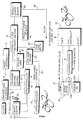
- the firmware routine of the dedicated microprocessor 51 can be more fully described.
- a preselected number of cycles (such as ten cycles) is run to provide an initial calculation fixing the design torque threshold of the system, as indicated by block 80.
- a torque threshold representing a 1 millimeter trapped charge matter, such as the salt grain G of FIG. 3B
- a torque calculation is made as an average over the pre-selected number of predetermined good seal cycles. If desired, this torque level may be calculated through operation of dry cycles of the packaging machine, that is, without product being packaged.
- block 81 representing a torque sensed that is less than the design torque threshold, in which case a good seal is made.
- the routine provides for the machine to continue operation through block 82. In this instance, as the cycle is completed the firmware routine automatically repeats for the next cycle, as indicated.
- the block 85 indicates a reading received by the microprocessor 51 of a torque generated in the servo motor 52 representing a first range greater than the design torque threshold.
- the salt grain and/or crumb G contaminating the seal area can be considered for illustrative purposes, in a range from 1-3 millimeters in thickness.
- the increased torque is approximately 3% above the design torque threshold.
- Such product matter caught in the seal area is still sufficiently insignificant to justify immediate discontinuation of the machine operation, and a continue machine operation command is generated, as indicated in block 86. Again, the routine automatically repeats for the next packaging cycle.
- the routine is now changed by the pre-programming of the microprocessor 51 to activate a pause through the pause/interrupt operator unit 71, as signified by the block 87 in the routine.
- the machine/man interface 72 is addressed, and the alarm 73 is activated so that the human operator can take the desired corrective action to once again place the packaging system back in full operation.
- the microprocessor 51 can provide an input signal that automatically makes an adjustment.
- the change is usually to slow the film speed to eliminate the overrunning condition of the film tube T with respect to the product flow in the transitional area.
- This automatic adjustment allows a return immediately to the optimum speed and efficiency of the packaging system. Again, this condition where change is needed occurs most often during a work shift when the humidity changes and/or the product conditions, such as density, are modified. A usual situation is where the humidity is reduced and the feed belts 60 are allowed to grip better and/or the product density/weight, or product build-up in the system is increased.
- the torque of the servo motor 52 sensed through the transducer 52a is in a second range of approximately 6% greater than the design torque threshold.
- This elevated torque level is thus in a range doubled in terms.of the percentage above the design torque threshold over that of the first range.
- the trapping of whole chips C, or other substantial clumps of charge product causes the microprocessor 51 to recognize in real time that a reject seal is being made.
- the routine initiates an interrupt condition to activate the pause/interrupt operator unit 71.
Landscapes
- Engineering & Computer Science (AREA)
- Mechanical Engineering (AREA)
- Containers And Plastic Fillers For Packaging (AREA)
- Package Closures (AREA)
Claims (13)
- Procédé pour sceller et surveiller l'intégrité d'un scellement d'un film d'emballage (W) pendant la formation par des mâchoires de scellement opposées (30, 32) pendant l'emballage d'un produit désagrégé, s'écoulant librement, ou similaire, et pour la commande adaptative de celui-ci, ledit procédé comprenant les étapes consistant à :caractérisé par le fait qu'il comprend les opérations consistant à :surveiller (80) une pression qui est exercée entre lesdites mâchoires de scellement lorsque lesdites mâchoires de scellement atteignent une position fermée et qu'un scellement est formé ;analyser ladite pression pour évaluer l'intégrité du scellement,ce par quoi la vitesse et le rendement d'emballage peuvent être rendus maximaux indépendamment des conditions ambiantes et des variations du produit.fournir (81) un signal de bon scellement à un contrôleur (55) lorsque la pression est inférieure à un seuil de calcul ;fournir (85) un signal de scellement marginal audit contrôleur lorsque la pression est à l'intérieur d'une première plage au-dessus du seuil de calcul, mais indicative d'un scellement acceptable ; etfournir (90) un signal de scellement de rejet audit contrôleur lorsque la pression est à l'intérieur d'une seconde plage au-dessus de ladite première plage, et indicative d'un scellement inacceptable ; etgénérer (91, 86, 87, 82) un signal de commande par ledit contrôleur pour assurer une commande adaptative dudit emballage,
- Procédé de scellement et de surveillance du scellement pendant l'emballage, selon la revendication 1, dans lequel, pendant la formation du scellement, les étapes supplémentaires sont prévues :actionner un servomoteur (52) couplé auxdites mâchoires de scellement (30, 32) ;déplacer lesdites mâchoires de scellement dans une première direction vers la position fermée de façon à former le scellement ; etdétecter la position relative desdites mâchoires de scellement avant que la pression de scellement ne soit analysée.
- Procédé de scellement et de surveillance du scellement, selon la revendication 2, dans lequel le couple dudit servomoteur (52) est surveillé et est indicatif de la pression qui est exercée entre lesdites mâchoires de scellement (30, 32).
- Procédé de scellement et de surveillance du scellement, selon la revendication 3, dans lequel l'étape d'analyse de la pression pour évaluer l'intégrité du scellement comprend l'analyse du couple dudit servomoteur (52) chaque fois que lesdites mâchoires de scellement (30, 32) atteignent la position fermée.
- Procédé de scellement et de surveillance du scellement, selon la revendication 1, dans lequel ledit seuil de calcul est appris et lesdites première et seconde plages sont fournies par les étapes consistant à :calculer (80) une pression moyenne sur une période prédéterminée de cycles successifs de bon scellement pour générer le seuil de calcul ;ajouter des pourcentages fixes à ladite pression moyenne pour établir lesdites première et seconde plages pendant le processus d'emballage de façon à rendre maximaux la vitesse et le rendement de l'opération d'emballage.
- Procédé de scellement et de surveillance du scellement, selon la revendication 5, dans lequel l'étape (80) de calcul d'une pression moyenne sur une période prédéterminée de cycles successifs de bon scellement pour générer le seuil de calcul comprend en outre les étapes consistant à :mettre à jour ladite pression moyenne après des opérations de scellement successives, ce par quoi le dit seuil de calcul et lesdites première et seconde plages sont adaptés de façon continue.
- Procédé de scellement et de surveillance du scellement, selon la revendication 1, dans lequel l'étape de génération d'un signal de commande pour assurer une commande adaptative de ladite opération d'emballage comprend en outre les étapes consistant à :poursuivre (82) l'opération de ladite machine d'emballage lors de la réception du signal de bon scellement ;réduire la vitesse (87) de ladite machine d'emballage lors de la réception d'au moins deux signaux consécutifs de scellement marginal.
- Procédé de scellement et de surveillance du scellement, selon la revendication 7, dans lequel l'étape de génération d'un signal de commande pour assurer une commande adaptative de ladite opération d'emballage comprend en outre l'étape d'interruption (91) de ladite opération d'emballage lors de la réception dudit signal de scellement de rejet.
- Procédé de scellement et de surveillance du scellement, selon la revendication 7, dans lequel l'étape de poursuite (82) de l'opération de ladite machine d'emballage lors de la réception dudit signal de bon scellement comprend en outre l'étape consistant à :augmenter la vitesse de ladite machine d'emballage lors de la réception d'au moins deux signaux consécutifs de bon scellement.
- Procédé de scellement et de surveillance du scellement, selon la revendication 1, dans lequel pendant la commande adaptative, sont prévues les étapes supplémentaires consistant à :ce par quoi, par l'ajustement de l'écoulement de produit transitoire relatif et du mouvement du film, l'opération globale d'emballage en termes de vitesse et de rendement peut être rendu maximale.déplacer ledit film (W) le long d'un chemin longitudinal ;prendre une charge de produit sensiblement désagrégée, s'écoulant librement, devant être emballée ;introduire la charge de produit le long d'un chemin d'écoulement parallèle défini par rapport audit film ;déterminer la présence ou l'absence de matière provenant de ladite charge dans un scellement qui est formé en réponse au signal d'entrée ; etajuster au moins une étape de fonctionnement parmi les étapes de déplacement du film et d'introduction de la charge de produit conformément à la détermination de la matière de charge dans le scellement,
- Appareil (10) pour sceller et surveiller l'intégrité d'un scellement d'un film d'emballage (W) lors de la formation d'un sac dans une machine (M) formeuse-remplisseuse-scelleuse, comprenant :caractérisé par :des mâchoires de scellement (30, 32) adaptées pour former ledit scellement par déplacement entre des positions fermée et ouverte ;un moyen (42, 44) pour déplacer de façon sélective lesdites mâchoires de scellement dans une première direction vers la position fermée en vue du scellement, et dans une seconde direction vers la position ouverte lors de l'achèvement du scellement ;un détecteur (52a) couplé de façon fonctionnelle avec lesdites mâchoires de scellement pour détecter la position relative pendant la formation du scellement ;ledit détecteur étant effectif pour déterminer la présence ou l'absence de matière de charge de produit dans ledit scellement ; etun processeur (51) pour générer un signal indicatif de l'intégrité du scellement en fonction de la matière de charge de produit dans la région de scellement,un contrôleur (55) pour fournir une commande adaptative de la machine d'emballage en réponse au signal d'entrée représentatif de l'intégrité de scellement relative, l'intégrité de scellement relative étant dépendante de l'un parmi un signal de bon scellement, un signal de scellement marginal ou un signal de scellement de rejet générés par ledit processeur.
- Appareil pour sceller et surveiller l'intégrité d'un scellement, selon la revendication 11, dans lequel ledit détecteur (52a) est opérationnel pour détecter la pression entre lesdites mâchoires de scellement (30, 32).
- Appareil pour sceller et surveiller l'intégrité d'un scellement, selon la revendication 12, dans lequel ledit moyen pour déplacer lesdites mâchoires de scellement est un servomoteur (52) et ledit détecteur est un transducteur de couple (52a) connecté audit moteur.
Applications Claiming Priority (2)
| Application Number | Priority Date | Filing Date | Title |
|---|---|---|---|
| US819895 | 1997-03-18 | ||
| US08/819,895 US5836136A (en) | 1997-03-18 | 1997-03-18 | Seal integrity monitoring and adaptive control method and apparatus |
Publications (3)
| Publication Number | Publication Date |
|---|---|
| EP0865989A2 EP0865989A2 (fr) | 1998-09-23 |
| EP0865989A3 EP0865989A3 (fr) | 2001-05-16 |
| EP0865989B1 true EP0865989B1 (fr) | 2004-04-14 |
Family
ID=25229370
Family Applications (1)
| Application Number | Title | Priority Date | Filing Date |
|---|---|---|---|
| EP98301889A Expired - Lifetime EP0865989B1 (fr) | 1997-03-18 | 1998-03-13 | Surveillance de l'intégrité d'un joint ainsi que procédé et appareil de contrôle adaptive |
Country Status (4)
| Country | Link |
|---|---|
| US (1) | US5836136A (fr) |
| EP (1) | EP0865989B1 (fr) |
| AU (1) | AU726372B2 (fr) |
| DE (1) | DE69823088D1 (fr) |
Families Citing this family (41)
| Publication number | Priority date | Publication date | Assignee | Title |
|---|---|---|---|---|
| JP3983852B2 (ja) * | 1997-07-09 | 2007-09-26 | 四国化工機株式会社 | ウェブのシール方法と装置および包装容器製造方法と包装容器製造装置 |
| US6173210B1 (en) | 1998-03-02 | 2001-01-09 | Northeast Equipment, Inc. | Apparatus and method for selecting a mechanical seal |
| AU765174B2 (en) * | 1998-03-02 | 2003-09-11 | Northeast Equipment, Inc. Doing Business As Delta Mechanical Seals | Apparatus and method for selecting a mechanical seal |
| DE19813215A1 (de) * | 1998-03-26 | 1999-09-30 | Rovema Gmbh | Schlauchbeutelmaschine |
| ATE255035T1 (de) * | 1998-04-15 | 2003-12-15 | Tetra Laval Holdings & Finance | Verfahren zum überwachen der querschweissungen in einer verpackungseinheit zum kontinuierlichen formen von verpackungen mit flüssigen nahrungsmitteln sowie verpackungseinheit |
| WO2000047473A1 (fr) | 1999-02-10 | 2000-08-17 | Ilc Dover, Inc. | Systeme de transfert contenu de particules |
| JP4094166B2 (ja) * | 1999-04-07 | 2008-06-04 | 株式会社イシダ | 包装システム |
| US20020121074A1 (en) | 2001-03-02 | 2002-09-05 | Optima Machinery Corporation | Bag loading method and assembly for a bag filling station |
| US6672038B2 (en) | 2001-03-02 | 2004-01-06 | Optima Machinery Corporation | Bag manipulating method and assembly for a bag filling station |
| JP4557298B2 (ja) * | 2001-06-27 | 2010-10-06 | 株式会社イシダ | 縦型製袋包装機 |
| GB0122681D0 (en) * | 2001-09-20 | 2001-11-14 | Mead Corp | Packaging systems apparatus and method therefor |
| GB0310425D0 (en) | 2003-05-07 | 2003-06-11 | Leuven K U Res & Dev | Inspection system for sealed packages |
| US20050109444A1 (en) * | 2003-11-25 | 2005-05-26 | Skymark Packaging Systems Inc. | Sealing assembly |
| ATE468271T1 (de) | 2004-01-23 | 2010-06-15 | Genesis Machinery Products Inc | Dichtungskraftüberwachungsvorrichtung, system und verfahren zur bestimmung der unversehrtheit von abgedichteten behältern während des prozesses |
| GB0415951D0 (en) * | 2004-07-16 | 2004-08-18 | Meadwestvaco Packaging Systems | A method for identifying abnormal operation of a machine and an apparatus therefor |
| US20060032171A1 (en) * | 2004-07-27 | 2006-02-16 | Weir Charles R | Wall insulation system providing improved moisture control |
| DE102004049376B4 (de) * | 2004-10-09 | 2014-01-09 | Rovema Gmbh | Verfahren zum Erzeugen einer Schweißkraft |
| DE102004049375A1 (de) * | 2004-10-09 | 2006-04-13 | Rovema Verpackungsmaschinen Gmbh | Verfahren und Vorrichtung zum Positionieren einer Schweißbacke |
| DE102005018251A1 (de) | 2005-04-19 | 2006-10-26 | Multivac Sepp Haggenmüller Gmbh & Co. Kg | Verpackungsmaschine |
| US7925884B2 (en) | 2008-06-30 | 2011-04-12 | International Business Machines Corporation | Fraud detection in seals |
| CN103079959B (zh) | 2010-09-06 | 2016-04-13 | 利乐拉瓦尔集团及财务有限公司 | 用于密封容器的开口端的装置 |
| DE102011075424B4 (de) * | 2011-05-06 | 2023-06-15 | Syntegon Packaging Solutions B.V. | Verfahren zum Betreiben einer Quernahtsiegeleinrichtung in einer Schlauchbeutelmaschine und Quernahtsiegeleinrichtung in einer Schlauchbeutelmaschine |
| JP5226854B1 (ja) * | 2011-12-21 | 2013-07-03 | ファナック株式会社 | 放電加工機の加工液濾過装置 |
| NL2008129C2 (nl) | 2012-01-17 | 2013-07-18 | Qipack Bvba | Inrichting en werkwijze voor het detecteren van defecten bij het sealen van een een folie omvattende verpakking. |
| FR2985982B1 (fr) * | 2012-01-19 | 2015-04-17 | Verron Delphine | Thermo-soudeuse equipee d'un systeme de detection et d'ejection d'un objet etranger et procede de detection et d'ejection d'un objet etranger associe |
| DE102012101707A1 (de) * | 2012-03-01 | 2013-09-05 | hawo Gerätebau GmbH & Co Maschinenbau KG | Verfahren zum Betrieb einer Siegeleinrichtung |
| JP2014046965A (ja) * | 2012-08-31 | 2014-03-17 | Nitto Seiko Co Ltd | 包装機 |
| DE102012112918A1 (de) | 2012-12-21 | 2014-06-26 | Baumann Maschinenbau Solms Gmbh & Co. Kg | Schlauchbeutelmaschine |
| US10287046B2 (en) * | 2014-10-28 | 2019-05-14 | Omron Corporation | Control apparatus, system, and program library |
| JP6459686B2 (ja) * | 2014-10-28 | 2019-01-30 | オムロン株式会社 | 制御装置、システム、およびライブラリプログラム |
| EP3205588A1 (fr) * | 2016-02-09 | 2017-08-16 | GEA Food Solutions Weert B.V. | Mâchoire de scellage ayant un capteur |
| DE102017208768A1 (de) * | 2017-05-23 | 2018-11-29 | Rovema Gmbh | Verfahren zur Funktionsüberwachung einer Schlauchbeutelmaschine |
| DE102017208766A1 (de) | 2017-05-23 | 2018-11-29 | Rovema Gmbh | Verfahren zur Funktionsüberprüfung einer Schlauchbeutelmaschine |
| DE102018101180B4 (de) | 2018-01-19 | 2019-10-10 | Rovema Gmbh | Verfahren zum Betrieb einer Verpackungsmaschine |
| US11565844B2 (en) * | 2018-12-21 | 2023-01-31 | S.C. Johnson & Son, Inc. | Methods and apparatus to facilitate plastic film processing |
| EP3939899A1 (fr) * | 2020-07-16 | 2022-01-19 | TriVision A/S | Système et procédé pour l'emballage de produits en sacs séparés |
| JP7705134B2 (ja) * | 2021-07-01 | 2025-07-09 | 株式会社イシダ | 製袋包装機 |
| GB2618980A (en) * | 2022-02-22 | 2023-11-29 | Ishida Europe Ltd | Systems and method for sealing food container |
| BE1030346B1 (nl) * | 2022-03-15 | 2023-10-16 | Engilico Eng Solutions Nv | Werkwijze en inrichting voor detecteren van defecten bij het verzegelen van een folie omvattende verpakking |
| DE102023113936A1 (de) * | 2023-05-26 | 2024-11-28 | Körber Pharma Packaging GmbH | Verfahren und system zur überwachung eines fügeprozesses |
| EP4467321A1 (fr) * | 2023-05-26 | 2024-11-27 | Körber Pharma Packaging GmbH | Procédé et système de surveillance d'un processus d'assemblage |
Family Cites Families (18)
| Publication number | Priority date | Publication date | Assignee | Title |
|---|---|---|---|---|
| US4538692A (en) * | 1982-02-01 | 1985-09-03 | Kliklok Corporation | Method and apparatus for combination weighing with multiple storage cups for each scale hopper |
| US4418771A (en) * | 1982-02-01 | 1983-12-06 | The Woodman Company | Method and apparatus for combination weighing |
| US4511044A (en) * | 1982-02-24 | 1985-04-16 | The West Company | Seal force monitor apparatus, system, and method for in-process determination of integrity of sealed containers |
| US4546596A (en) * | 1984-05-08 | 1985-10-15 | Hayssen Manufacturing Company | Method of and apparatus for forming, filling and sealing packages |
| US5147491A (en) * | 1986-01-31 | 1992-09-15 | Roberts Systems, Inc. | Form, fill and seal process and device |
| US4768327A (en) * | 1987-06-22 | 1988-09-06 | Package Machinery Company | Packaging machine with variable sealing jaw displacement apparatus |
| DE8805783U1 (de) * | 1988-05-02 | 1988-06-16 | Pfaff Industriemaschinen Gmbh, 6750 Kaiserslautern | Vorrichtung zum Verschweißen von Kunststoffolien |
| DE3907208A1 (de) * | 1988-10-18 | 1990-04-19 | Rovema Gmbh | Verfahren und vorrichtung zur steuerung der bewegung von querschweissbacken einer schlauchbeutelmaschine |
| US4996825A (en) * | 1989-01-31 | 1991-03-05 | Kliklok Corporation | Combined blousing, stripping and sealing for bag forming and method |
| US5110381A (en) * | 1990-06-21 | 1992-05-05 | Heckard David P | Ultrasonic welding with controlled seal compression |
| JPH04142231A (ja) * | 1990-09-21 | 1992-05-15 | Anritsu Corp | 包装機 |
| US5322586A (en) * | 1992-05-11 | 1994-06-21 | Reynolds Metals Company | Computer controller heat-sealing machine |
| US5289671A (en) * | 1992-09-30 | 1994-03-01 | Automated Packaging Systems, Inc. | Packaging machine and method |
| JP3662598B2 (ja) * | 1993-09-24 | 2005-06-22 | 日本テトラパック株式会社 | シール状態監視装置 |
| JP3473861B2 (ja) * | 1993-12-28 | 2003-12-08 | 株式会社イシダ | 包材の封止部に介在する介在物の有無の判定方法 |
| US5533322A (en) * | 1994-03-11 | 1996-07-09 | Kliklok Corporation | Continuous vertical form-fill-seal packaging machine with constant motion carriage |
| US5540035A (en) * | 1994-12-07 | 1996-07-30 | Kliklok Corporation | Continuous vertical form-fill-seal packaging machine with synchronized product clamp |
| CA2225723A1 (fr) * | 1995-06-30 | 1997-01-23 | Gary G. Highberger | Ecoulement ameliore du produit de transition et regulation adaptative |
-
1997
- 1997-03-18 US US08/819,895 patent/US5836136A/en not_active Expired - Fee Related
-
1998
- 1998-03-13 EP EP98301889A patent/EP0865989B1/fr not_active Expired - Lifetime
- 1998-03-13 DE DE69823088T patent/DE69823088D1/de not_active Expired - Lifetime
- 1998-03-16 AU AU58458/98A patent/AU726372B2/en not_active Ceased
Also Published As
| Publication number | Publication date |
|---|---|
| AU726372B2 (en) | 2000-11-02 |
| DE69823088D1 (de) | 2004-05-19 |
| EP0865989A2 (fr) | 1998-09-23 |
| EP0865989A3 (fr) | 2001-05-16 |
| US5836136A (en) | 1998-11-17 |
| AU5845898A (en) | 1998-09-24 |
Similar Documents
| Publication | Publication Date | Title |
|---|---|---|
| US5836136A (en) | Seal integrity monitoring and adaptive control method and apparatus | |
| EP0296387B1 (fr) | Machine d'emballage à appareil pour déplacement variable des mâchoires de scellement | |
| EP0794900B1 (fr) | Machine d'emballage a formage-remplissage-scellage dans le sens vertical en continu | |
| CN109606830B (zh) | 自动包装机 | |
| US4546596A (en) | Method of and apparatus for forming, filling and sealing packages | |
| US4563862A (en) | Package forming apparatus with combined holding and stripper mechanism | |
| EP0680880B1 (fr) | Dispositif pour sceller des récipients par l'application d'une feuille de couverture | |
| KR101979966B1 (ko) | 봉지 충전 포장기에서의 초음파 시일장치 | |
| JP4094166B2 (ja) | 包装システム | |
| WO1994010038B1 (fr) | Appareil d'emballage assurant la mise en forme, le remplissage et la fermeture etanche | |
| EP0618869A1 (fr) | Appareil d'emballage assurant la mise en forme, le remplissage et la fermeture etanche | |
| JP6534919B2 (ja) | 製袋包装機 | |
| JP2003011927A (ja) | 縦型製袋包装機 | |
| JP5235459B2 (ja) | 縦型製袋包装システム及びそのタイミング制御方法 | |
| US12130167B2 (en) | Remedy weight judgment system | |
| JP3902569B2 (ja) | 充填包装装置 | |
| JP2019043626A (ja) | 縦型製袋充填包装機 | |
| CN116749589B (zh) | 一种用于包装袋的切割输送装置 | |
| JPH1077002A (ja) | 計量・包装装置および方法 | |
| JP4526199B2 (ja) | 縦形製袋充填包装機の充填サイクル調整装置およびその調整方法 | |
| JP3850010B2 (ja) | 縦形製袋充填包装機における横ヒートシーラの原点復帰制御装置及びその原点復帰制御方法 | |
| CN2134355Y (zh) | 立式连续包装封口装置 | |
| JPS63281934A (ja) | 包装機の横シ−ル装置 | |
| US20250153965A1 (en) | Bagmaking-and-packaging apparatus | |
| GB2127769A (en) | A bag forming and filling machine |
Legal Events
| Date | Code | Title | Description |
|---|---|---|---|
| PUAI | Public reference made under article 153(3) epc to a published international application that has entered the european phase |
Free format text: ORIGINAL CODE: 0009012 |
|
| AK | Designated contracting states |
Kind code of ref document: A2 Designated state(s): DE ES FR GB IT SE |
|
| AX | Request for extension of the european patent |
Free format text: AL;LT;LV;MK;RO;SI |
|
| 17P | Request for examination filed |
Effective date: 19990218 |
|
| PUAL | Search report despatched |
Free format text: ORIGINAL CODE: 0009013 |
|
| AK | Designated contracting states |
Kind code of ref document: A3 Designated state(s): AT BE CH DE DK ES FI FR GB GR IE IT LI LU MC NL PT SE |
|
| AX | Request for extension of the european patent |
Free format text: AL;LT;LV;MK;RO;SI |
|
| AKX | Designation fees paid |
Free format text: DE ES FR GB IT SE |
|
| 17Q | First examination report despatched |
Effective date: 20020801 |
|
| GRAP | Despatch of communication of intention to grant a patent |
Free format text: ORIGINAL CODE: EPIDOSNIGR1 |
|
| GRAS | Grant fee paid |
Free format text: ORIGINAL CODE: EPIDOSNIGR3 |
|
| GRAA | (expected) grant |
Free format text: ORIGINAL CODE: 0009210 |
|
| AK | Designated contracting states |
Kind code of ref document: B1 Designated state(s): DE ES FR GB IT SE |
|
| PG25 | Lapsed in a contracting state [announced via postgrant information from national office to epo] |
Ref country code: IT Free format text: LAPSE BECAUSE OF FAILURE TO SUBMIT A TRANSLATION OF THE DESCRIPTION OR TO PAY THE FEE WITHIN THE PRESCRIBED TIME-LIMIT;WARNING: LAPSES OF ITALIAN PATENTS WITH EFFECTIVE DATE BEFORE 2007 MAY HAVE OCCURRED AT ANY TIME BEFORE 2007. THE CORRECT EFFECTIVE DATE MAY BE DIFFERENT FROM THE ONE RECORDED. Effective date: 20040414 Ref country code: FR Free format text: LAPSE BECAUSE OF FAILURE TO SUBMIT A TRANSLATION OF THE DESCRIPTION OR TO PAY THE FEE WITHIN THE PRESCRIBED TIME-LIMIT Effective date: 20040414 |
|
| REG | Reference to a national code |
Ref country code: GB Ref legal event code: FG4D |
|
| REF | Corresponds to: |
Ref document number: 69823088 Country of ref document: DE Date of ref document: 20040519 Kind code of ref document: P |
|
| PG25 | Lapsed in a contracting state [announced via postgrant information from national office to epo] |
Ref country code: SE Free format text: LAPSE BECAUSE OF FAILURE TO SUBMIT A TRANSLATION OF THE DESCRIPTION OR TO PAY THE FEE WITHIN THE PRESCRIBED TIME-LIMIT Effective date: 20040714 |
|
| PG25 | Lapsed in a contracting state [announced via postgrant information from national office to epo] |
Ref country code: DE Free format text: LAPSE BECAUSE OF FAILURE TO SUBMIT A TRANSLATION OF THE DESCRIPTION OR TO PAY THE FEE WITHIN THE PRESCRIBED TIME-LIMIT Effective date: 20040715 |
|
| PG25 | Lapsed in a contracting state [announced via postgrant information from national office to epo] |
Ref country code: ES Free format text: LAPSE BECAUSE OF FAILURE TO SUBMIT A TRANSLATION OF THE DESCRIPTION OR TO PAY THE FEE WITHIN THE PRESCRIBED TIME-LIMIT Effective date: 20040725 |
|
| PLBE | No opposition filed within time limit |
Free format text: ORIGINAL CODE: 0009261 |
|
| STAA | Information on the status of an ep patent application or granted ep patent |
Free format text: STATUS: NO OPPOSITION FILED WITHIN TIME LIMIT |
|
| PG25 | Lapsed in a contracting state [announced via postgrant information from national office to epo] |
Ref country code: GB Free format text: LAPSE BECAUSE OF NON-PAYMENT OF DUE FEES Effective date: 20050313 |
|
| EN | Fr: translation not filed | ||
| 26N | No opposition filed |
Effective date: 20050117 |
|
| GBPC | Gb: european patent ceased through non-payment of renewal fee |
Effective date: 20050313 |