EP0866865B1 - Chimäre oligomere mit einer rns-spaltungsaktivität - Google Patents
Chimäre oligomere mit einer rns-spaltungsaktivität Download PDFInfo
- Publication number
- EP0866865B1 EP0866865B1 EP96938213A EP96938213A EP0866865B1 EP 0866865 B1 EP0866865 B1 EP 0866865B1 EP 96938213 A EP96938213 A EP 96938213A EP 96938213 A EP96938213 A EP 96938213A EP 0866865 B1 EP0866865 B1 EP 0866865B1
- Authority
- EP
- European Patent Office
- Prior art keywords
- human
- rna
- oligomer
- mrna
- seq
- Prior art date
- Legal status (The legal status is an assumption and is not a legal conclusion. Google has not performed a legal analysis and makes no representation as to the accuracy of the status listed.)
- Expired - Lifetime
Links
- 230000000694 effects Effects 0.000 title claims abstract description 16
- 238000003776 cleavage reaction Methods 0.000 title claims description 112
- 125000003729 nucleotide group Chemical group 0.000 claims abstract description 123
- 239000000758 substrate Substances 0.000 claims abstract description 118
- 239000002773 nucleotide Substances 0.000 claims abstract description 104
- 108091028664 Ribonucleotide Proteins 0.000 claims abstract description 65
- 239000002336 ribonucleotide Substances 0.000 claims abstract description 65
- 125000002652 ribonucleotide group Chemical group 0.000 claims abstract description 62
- 239000005547 deoxyribonucleotide Substances 0.000 claims abstract description 20
- 125000002637 deoxyribonucleotide group Chemical group 0.000 claims abstract description 20
- 230000015572 biosynthetic process Effects 0.000 claims abstract description 11
- 238000009396 hybridization Methods 0.000 claims abstract description 8
- 230000007022 RNA scission Effects 0.000 claims abstract description 7
- 238000000338 in vitro Methods 0.000 claims abstract description 4
- 108091032973 (ribonucleotides)n+m Proteins 0.000 claims description 147
- 108020004999 messenger RNA Proteins 0.000 claims description 137
- 230000007017 scission Effects 0.000 claims description 110
- 241000282414 Homo sapiens Species 0.000 claims description 79
- -1 uracil-5-yl Chemical group 0.000 claims description 40
- 241000251131 Sphyrna Species 0.000 claims description 34
- 229910052760 oxygen Inorganic materials 0.000 claims description 23
- 108090000623 proteins and genes Proteins 0.000 claims description 23
- 238000000034 method Methods 0.000 claims description 22
- 229910052799 carbon Inorganic materials 0.000 claims description 19
- 229910052770 Uranium Inorganic materials 0.000 claims description 16
- 210000004027 cell Anatomy 0.000 claims description 15
- 102000019223 Interleukin-1 receptor Human genes 0.000 claims description 13
- 108050006617 Interleukin-1 receptor Proteins 0.000 claims description 13
- 125000003342 alkenyl group Chemical group 0.000 claims description 12
- 125000003302 alkenyloxy group Chemical group 0.000 claims description 12
- 102000015271 Intercellular Adhesion Molecule-1 Human genes 0.000 claims description 11
- 108010064593 Intercellular Adhesion Molecule-1 Proteins 0.000 claims description 11
- 125000000304 alkynyl group Chemical group 0.000 claims description 11
- 125000005336 allyloxy group Chemical group 0.000 claims description 11
- 230000002779 inactivation Effects 0.000 claims description 11
- 101000599852 Homo sapiens Intercellular adhesion molecule 1 Proteins 0.000 claims description 9
- 102000000588 Interleukin-2 Human genes 0.000 claims description 9
- 108010002350 Interleukin-2 Proteins 0.000 claims description 9
- 125000004432 carbon atom Chemical group C* 0.000 claims description 9
- 102000043559 human ICAM1 Human genes 0.000 claims description 9
- 125000000547 substituted alkyl group Chemical group 0.000 claims description 9
- 101001050288 Homo sapiens Transcription factor Jun Proteins 0.000 claims description 8
- 102100024924 Protein kinase C alpha type Human genes 0.000 claims description 8
- 102100023132 Transcription factor Jun Human genes 0.000 claims description 8
- 125000003903 2-propenyl group Chemical group [H]C([*])([H])C([H])=C([H])[H] 0.000 claims description 7
- 241000341655 Human papillomavirus type 16 Species 0.000 claims description 7
- 239000013543 active substance Substances 0.000 claims description 7
- 125000003545 alkoxy group Chemical group 0.000 claims description 7
- 125000005133 alkynyloxy group Chemical group 0.000 claims description 7
- 239000000203 mixture Substances 0.000 claims description 7
- ZRKFYGHZFMAOKI-QMGMOQQFSA-N tgfbeta Chemical compound C([C@H](NC(=O)[C@H](C(C)C)NC(=O)CNC(=O)[C@H](CCC(O)=O)NC(=O)[C@H](CCCNC(N)=N)NC(=O)[C@H](CC(N)=O)NC(=O)[C@H](CC(C)C)NC(=O)[C@H]([C@@H](C)O)NC(=O)[C@H](CCC(O)=O)NC(=O)[C@H]([C@@H](C)O)NC(=O)[C@H](CC(C)C)NC(=O)CNC(=O)[C@H](C)NC(=O)[C@H](CO)NC(=O)[C@H](CCC(N)=O)NC(=O)[C@@H](NC(=O)[C@H](C)NC(=O)[C@H](C)NC(=O)[C@@H](NC(=O)[C@H](CC(C)C)NC(=O)[C@@H](N)CCSC)C(C)C)[C@@H](C)CC)C(=O)N[C@@H]([C@@H](C)O)C(=O)N[C@@H](C(C)C)C(=O)N[C@@H](CC=1C=CC=CC=1)C(=O)N[C@@H](C)C(=O)N1[C@@H](CCC1)C(=O)N[C@@H]([C@@H](C)O)C(=O)N[C@@H](CC(N)=O)C(=O)N[C@@H](CCC(O)=O)C(=O)N[C@@H](C)C(=O)N[C@@H](CC=1C=CC=CC=1)C(=O)N[C@@H](CCCNC(N)=N)C(=O)N[C@@H](C)C(=O)N[C@@H](CC(C)C)C(=O)N1[C@@H](CCC1)C(=O)N1[C@@H](CCC1)C(=O)N[C@@H](CCCNC(N)=N)C(=O)N[C@@H](CCC(O)=O)C(=O)N[C@@H](CCCNC(N)=N)C(=O)N[C@@H](CO)C(=O)N[C@@H](CCCNC(N)=N)C(=O)N[C@@H](CC(C)C)C(=O)N[C@@H](CC(C)C)C(O)=O)C1=CC=C(O)C=C1 ZRKFYGHZFMAOKI-QMGMOQQFSA-N 0.000 claims description 7
- 125000004178 (C1-C4) alkyl group Chemical group 0.000 claims description 6
- 102000004881 Angiotensinogen Human genes 0.000 claims description 6
- 108090001067 Angiotensinogen Proteins 0.000 claims description 6
- 101000578469 Homo sapiens Arachidonate 12-lipoxygenase, 12R-type Proteins 0.000 claims description 6
- 102000004889 Interleukin-6 Human genes 0.000 claims description 6
- 108090001005 Interleukin-6 Proteins 0.000 claims description 6
- 206010028980 Neoplasm Diseases 0.000 claims description 6
- 230000003197 catalytic effect Effects 0.000 claims description 6
- 102000057688 human ALOX12B Human genes 0.000 claims description 6
- 108091005485 macrophage scavenger receptors Proteins 0.000 claims description 6
- 102000014452 scavenger receptors Human genes 0.000 claims description 6
- 239000000126 substance Substances 0.000 claims description 6
- 125000000229 (C1-C4)alkoxy group Chemical group 0.000 claims description 5
- KDCGOANMDULRCW-UHFFFAOYSA-N 7H-purine Chemical compound N1=CNC2=NC=NC2=C1 KDCGOANMDULRCW-UHFFFAOYSA-N 0.000 claims description 5
- 125000004399 C1-C4 alkenyl group Chemical group 0.000 claims description 5
- 101000732617 Homo sapiens Angiotensinogen Proteins 0.000 claims description 5
- 101001002634 Homo sapiens Interleukin-1 alpha Proteins 0.000 claims description 5
- 101001076408 Homo sapiens Interleukin-6 Proteins 0.000 claims description 5
- 108091028043 Nucleic acid sequence Proteins 0.000 claims description 5
- 229940116886 human interleukin-6 Drugs 0.000 claims description 5
- 229910052739 hydrogen Inorganic materials 0.000 claims description 5
- 125000000956 methoxy group Chemical group [H]C([H])([H])O* 0.000 claims description 5
- 125000002924 primary amino group Chemical class [H]N([H])* 0.000 claims description 5
- 241000894006 Bacteria Species 0.000 claims description 4
- RTZKZFJDLAIYFH-UHFFFAOYSA-N Diethyl ether Chemical compound CCOCC RTZKZFJDLAIYFH-UHFFFAOYSA-N 0.000 claims description 4
- 101001030211 Homo sapiens Myc proto-oncogene protein Proteins 0.000 claims description 4
- 101000979342 Homo sapiens Nuclear factor NF-kappa-B p105 subunit Proteins 0.000 claims description 4
- 102000004887 Transforming Growth Factor beta Human genes 0.000 claims description 4
- 108090001012 Transforming Growth Factor beta Proteins 0.000 claims description 4
- 241000700605 Viruses Species 0.000 claims description 4
- 125000000848 adenin-9-yl group Chemical group [H]N([H])C1=C2N=C([H])N(*)C2=NC([H])=N1 0.000 claims description 4
- 230000015556 catabolic process Effects 0.000 claims description 4
- 125000000847 cytosin-1-yl group Chemical group [*]N1C(=O)N=C(N([H])[H])C([H])=C1[H] 0.000 claims description 4
- 238000006731 degradation reaction Methods 0.000 claims description 4
- 125000003738 guanin-9-yl group Chemical group O=C1N([H])C(N([H])[H])=NC2=C1N=C([H])N2[*] 0.000 claims description 4
- 102000053563 human MYC Human genes 0.000 claims description 4
- 229910052757 nitrogen Inorganic materials 0.000 claims description 4
- 239000002777 nucleoside Substances 0.000 claims description 4
- 239000008194 pharmaceutical composition Substances 0.000 claims description 4
- 125000000845 uracil-1-yl group Chemical group [*]N1C(=O)N([H])C(=O)C([H])=C1[H] 0.000 claims description 4
- MSSXOMSJDRHRMC-UHFFFAOYSA-N 9H-purine-2,6-diamine Chemical group NC1=NC(N)=C2NC=NC2=N1 MSSXOMSJDRHRMC-UHFFFAOYSA-N 0.000 claims description 3
- 208000024827 Alzheimer disease Diseases 0.000 claims description 3
- 102100021569 Apoptosis regulator Bcl-2 Human genes 0.000 claims description 3
- 108010014303 DNA-directed DNA polymerase Proteins 0.000 claims description 3
- 102000001301 EGF receptor Human genes 0.000 claims description 3
- 241000206602 Eukaryota Species 0.000 claims description 3
- 108060002716 Exonuclease Proteins 0.000 claims description 3
- 101000988577 Homo sapiens 3-hydroxy-3-methylglutaryl-coenzyme A reductase Proteins 0.000 claims description 3
- 101000773743 Homo sapiens Angiotensin-converting enzyme Proteins 0.000 claims description 3
- 101000971171 Homo sapiens Apoptosis regulator Bcl-2 Proteins 0.000 claims description 3
- 101000777387 Homo sapiens C-C motif chemokine 3 Proteins 0.000 claims description 3
- 101000898034 Homo sapiens Hepatocyte growth factor Proteins 0.000 claims description 3
- 101000599940 Homo sapiens Interferon gamma Proteins 0.000 claims description 3
- 101001033233 Homo sapiens Interleukin-10 Proteins 0.000 claims description 3
- 101001002657 Homo sapiens Interleukin-2 Proteins 0.000 claims description 3
- 101001002709 Homo sapiens Interleukin-4 Proteins 0.000 claims description 3
- 101000960969 Homo sapiens Interleukin-5 Proteins 0.000 claims description 3
- 101001055222 Homo sapiens Interleukin-8 Proteins 0.000 claims description 3
- 101000938676 Homo sapiens Liver carboxylesterase 1 Proteins 0.000 claims description 3
- 101000620009 Homo sapiens Polyunsaturated fatty acid 5-lipoxygenase Proteins 0.000 claims description 3
- 101001051777 Homo sapiens Protein kinase C alpha type Proteins 0.000 claims description 3
- 101001012157 Homo sapiens Receptor tyrosine-protein kinase erbB-2 Proteins 0.000 claims description 3
- 101000635804 Homo sapiens Tissue factor Proteins 0.000 claims description 3
- 101000636213 Homo sapiens Transcriptional activator Myb Proteins 0.000 claims description 3
- 241000701024 Human betaherpesvirus 5 Species 0.000 claims description 3
- 241000701828 Human papillomavirus type 11 Species 0.000 claims description 3
- 241000341657 Human papillomavirus type 18 Species 0.000 claims description 3
- 241000701818 Human papillomavirus type 8 Species 0.000 claims description 3
- 102000000589 Interleukin-1 Human genes 0.000 claims description 3
- 108010002352 Interleukin-1 Proteins 0.000 claims description 3
- 102000014962 Monocyte Chemoattractant Proteins Human genes 0.000 claims description 3
- 108010064136 Monocyte Chemoattractant Proteins Proteins 0.000 claims description 3
- 108091008606 PDGF receptors Proteins 0.000 claims description 3
- 102000011653 Platelet-Derived Growth Factor Receptors Human genes 0.000 claims description 3
- 102000007568 Proto-Oncogene Proteins c-fos Human genes 0.000 claims description 3
- 108010071563 Proto-Oncogene Proteins c-fos Proteins 0.000 claims description 3
- 230000037396 body weight Effects 0.000 claims description 3
- 239000000872 buffer Substances 0.000 claims description 3
- 201000011510 cancer Diseases 0.000 claims description 3
- 239000003795 chemical substances by application Substances 0.000 claims description 3
- 239000003814 drug Substances 0.000 claims description 3
- 102000013165 exonuclease Human genes 0.000 claims description 3
- 102000052624 human CXCL8 Human genes 0.000 claims description 3
- 102000051957 human ERBB2 Human genes 0.000 claims description 3
- 102000057308 human HGF Human genes 0.000 claims description 3
- 102000043557 human IFNG Human genes 0.000 claims description 3
- 102000052620 human IL10 Human genes 0.000 claims description 3
- 102000055277 human IL2 Human genes 0.000 claims description 3
- 102000055229 human IL4 Human genes 0.000 claims description 3
- 102000056573 human MYB Human genes 0.000 claims description 3
- 102000047410 human NFKB1 Human genes 0.000 claims description 3
- 125000003835 nucleoside group Chemical group 0.000 claims description 3
- 102000005962 receptors Human genes 0.000 claims description 3
- 108020003175 receptors Proteins 0.000 claims description 3
- 108091008146 restriction endonucleases Proteins 0.000 claims description 3
- 229910052717 sulfur Inorganic materials 0.000 claims description 3
- 125000003396 thiol group Chemical group [H]S* 0.000 claims description 3
- 101000611183 Homo sapiens Tumor necrosis factor Proteins 0.000 claims description 2
- 102000003839 Human Proteins Human genes 0.000 claims description 2
- 108090000144 Human Proteins Proteins 0.000 claims description 2
- 206010020772 Hypertension Diseases 0.000 claims description 2
- 208000007766 Kaposi sarcoma Diseases 0.000 claims description 2
- 108091000080 Phosphotransferase Proteins 0.000 claims description 2
- 108700001094 Plant Genes Proteins 0.000 claims description 2
- 201000004681 Psoriasis Diseases 0.000 claims description 2
- 206010052779 Transplant rejections Diseases 0.000 claims description 2
- 108700005077 Viral Genes Proteins 0.000 claims description 2
- 108020000999 Viral RNA Proteins 0.000 claims description 2
- 239000000654 additive Substances 0.000 claims description 2
- 125000000217 alkyl group Chemical group 0.000 claims description 2
- 150000003857 carboxamides Chemical class 0.000 claims description 2
- 125000003178 carboxy group Chemical group [H]OC(*)=O 0.000 claims description 2
- 239000000969 carrier Substances 0.000 claims description 2
- 229940039227 diagnostic agent Drugs 0.000 claims description 2
- 239000000032 diagnostic agent Substances 0.000 claims description 2
- 150000002148 esters Chemical class 0.000 claims description 2
- 229910052736 halogen Inorganic materials 0.000 claims description 2
- 150000002367 halogens Chemical class 0.000 claims description 2
- 102000057041 human TNF Human genes 0.000 claims description 2
- 125000002887 hydroxy group Chemical group [H]O* 0.000 claims description 2
- 238000002347 injection Methods 0.000 claims description 2
- 239000007924 injection Substances 0.000 claims description 2
- 238000004519 manufacturing process Methods 0.000 claims description 2
- 201000009240 nasopharyngitis Diseases 0.000 claims description 2
- 150000004713 phosphodiesters Chemical class 0.000 claims description 2
- 102000020233 phosphotransferase Human genes 0.000 claims description 2
- 125000004545 purin-9-yl group Chemical group N1=CN=C2N(C=NC2=C1)* 0.000 claims description 2
- 239000007921 spray Substances 0.000 claims description 2
- 125000003294 thymin-1-yl group Chemical group [H]N1C(=O)N(*)C([H])=C(C1=O)C([H])([H])[H] 0.000 claims description 2
- 229910052727 yttrium Inorganic materials 0.000 claims description 2
- 108060006698 EGF receptor Proteins 0.000 claims 1
- 101710109947 Protein kinase C alpha type Proteins 0.000 claims 1
- 125000000714 pyrimidinyl group Chemical group 0.000 claims 1
- 238000001727 in vivo Methods 0.000 abstract description 12
- 102000039446 nucleic acids Human genes 0.000 description 35
- 108020004707 nucleic acids Proteins 0.000 description 35
- 150000007523 nucleic acids Chemical class 0.000 description 35
- 238000006243 chemical reaction Methods 0.000 description 29
- UYTPUPDQBNUYGX-UHFFFAOYSA-N guanine Chemical compound O=C1NC(N)=NC2=C1N=CN2 UYTPUPDQBNUYGX-UHFFFAOYSA-N 0.000 description 18
- NYHBQMYGNKIUIF-UHFFFAOYSA-N D-guanosine Natural products C1=2NC(N)=NC(=O)C=2N=CN1C1OC(CO)C(O)C1O NYHBQMYGNKIUIF-UHFFFAOYSA-N 0.000 description 11
- 108091034117 Oligonucleotide Proteins 0.000 description 11
- 108090000994 Catalytic RNA Proteins 0.000 description 10
- 102000053642 Catalytic RNA Human genes 0.000 description 10
- 108091092562 ribozyme Proteins 0.000 description 10
- LFQSCWFLJHTTHZ-UHFFFAOYSA-N Ethanol Chemical compound CCO LFQSCWFLJHTTHZ-UHFFFAOYSA-N 0.000 description 9
- 206010048723 Multiple-drug resistance Diseases 0.000 description 9
- JLCPHMBAVCMARE-UHFFFAOYSA-N [3-[[3-[[3-[[3-[[3-[[3-[[3-[[3-[[3-[[3-[[3-[[5-(2-amino-6-oxo-1H-purin-9-yl)-3-[[3-[[3-[[3-[[3-[[3-[[5-(2-amino-6-oxo-1H-purin-9-yl)-3-[[5-(2-amino-6-oxo-1H-purin-9-yl)-3-hydroxyoxolan-2-yl]methoxy-hydroxyphosphoryl]oxyoxolan-2-yl]methoxy-hydroxyphosphoryl]oxy-5-(5-methyl-2,4-dioxopyrimidin-1-yl)oxolan-2-yl]methoxy-hydroxyphosphoryl]oxy-5-(6-aminopurin-9-yl)oxolan-2-yl]methoxy-hydroxyphosphoryl]oxy-5-(6-aminopurin-9-yl)oxolan-2-yl]methoxy-hydroxyphosphoryl]oxy-5-(6-aminopurin-9-yl)oxolan-2-yl]methoxy-hydroxyphosphoryl]oxy-5-(6-aminopurin-9-yl)oxolan-2-yl]methoxy-hydroxyphosphoryl]oxyoxolan-2-yl]methoxy-hydroxyphosphoryl]oxy-5-(5-methyl-2,4-dioxopyrimidin-1-yl)oxolan-2-yl]methoxy-hydroxyphosphoryl]oxy-5-(4-amino-2-oxopyrimidin-1-yl)oxolan-2-yl]methoxy-hydroxyphosphoryl]oxy-5-(5-methyl-2,4-dioxopyrimidin-1-yl)oxolan-2-yl]methoxy-hydroxyphosphoryl]oxy-5-(5-methyl-2,4-dioxopyrimidin-1-yl)oxolan-2-yl]methoxy-hydroxyphosphoryl]oxy-5-(6-aminopurin-9-yl)oxolan-2-yl]methoxy-hydroxyphosphoryl]oxy-5-(6-aminopurin-9-yl)oxolan-2-yl]methoxy-hydroxyphosphoryl]oxy-5-(4-amino-2-oxopyrimidin-1-yl)oxolan-2-yl]methoxy-hydroxyphosphoryl]oxy-5-(4-amino-2-oxopyrimidin-1-yl)oxolan-2-yl]methoxy-hydroxyphosphoryl]oxy-5-(4-amino-2-oxopyrimidin-1-yl)oxolan-2-yl]methoxy-hydroxyphosphoryl]oxy-5-(6-aminopurin-9-yl)oxolan-2-yl]methoxy-hydroxyphosphoryl]oxy-5-(4-amino-2-oxopyrimidin-1-yl)oxolan-2-yl]methyl [5-(6-aminopurin-9-yl)-2-(hydroxymethyl)oxolan-3-yl] hydrogen phosphate Chemical class Cc1cn(C2CC(OP(O)(=O)OCC3OC(CC3OP(O)(=O)OCC3OC(CC3O)n3cnc4c3nc(N)[nH]c4=O)n3cnc4c3nc(N)[nH]c4=O)C(COP(O)(=O)OC3CC(OC3COP(O)(=O)OC3CC(OC3COP(O)(=O)OC3CC(OC3COP(O)(=O)OC3CC(OC3COP(O)(=O)OC3CC(OC3COP(O)(=O)OC3CC(OC3COP(O)(=O)OC3CC(OC3COP(O)(=O)OC3CC(OC3COP(O)(=O)OC3CC(OC3COP(O)(=O)OC3CC(OC3COP(O)(=O)OC3CC(OC3COP(O)(=O)OC3CC(OC3COP(O)(=O)OC3CC(OC3COP(O)(=O)OC3CC(OC3COP(O)(=O)OC3CC(OC3COP(O)(=O)OC3CC(OC3COP(O)(=O)OC3CC(OC3CO)n3cnc4c(N)ncnc34)n3ccc(N)nc3=O)n3cnc4c(N)ncnc34)n3ccc(N)nc3=O)n3ccc(N)nc3=O)n3ccc(N)nc3=O)n3cnc4c(N)ncnc34)n3cnc4c(N)ncnc34)n3cc(C)c(=O)[nH]c3=O)n3cc(C)c(=O)[nH]c3=O)n3ccc(N)nc3=O)n3cc(C)c(=O)[nH]c3=O)n3cnc4c3nc(N)[nH]c4=O)n3cnc4c(N)ncnc34)n3cnc4c(N)ncnc34)n3cnc4c(N)ncnc34)n3cnc4c(N)ncnc34)O2)c(=O)[nH]c1=O JLCPHMBAVCMARE-UHFFFAOYSA-N 0.000 description 8
- 108010050276 Protein Kinase C-alpha Proteins 0.000 description 7
- 102000040650 (ribonucleotides)n+m Human genes 0.000 description 6
- NYHBQMYGNKIUIF-UUOKFMHZSA-N Guanosine Chemical compound C1=NC=2C(=O)NC(N)=NC=2N1[C@@H]1O[C@H](CO)[C@@H](O)[C@H]1O NYHBQMYGNKIUIF-UUOKFMHZSA-N 0.000 description 6
- IQFYYKKMVGJFEH-XLPZGREQSA-N Thymidine Chemical compound O=C1NC(=O)C(C)=CN1[C@@H]1O[C@H](CO)[C@@H](O)C1 IQFYYKKMVGJFEH-XLPZGREQSA-N 0.000 description 6
- ZMANZCXQSJIPKH-UHFFFAOYSA-N Triethylamine Chemical compound CCN(CC)CC ZMANZCXQSJIPKH-UHFFFAOYSA-N 0.000 description 6
- ISAKRJDGNUQOIC-UHFFFAOYSA-N Uracil Chemical compound O=C1C=CNC(=O)N1 ISAKRJDGNUQOIC-UHFFFAOYSA-N 0.000 description 6
- 230000003993 interaction Effects 0.000 description 6
- 102000004169 proteins and genes Human genes 0.000 description 6
- 238000003786 synthesis reaction Methods 0.000 description 6
- PYMYPHUHKUWMLA-LMVFSUKVSA-N Ribose Natural products OC[C@@H](O)[C@@H](O)[C@@H](O)C=O PYMYPHUHKUWMLA-LMVFSUKVSA-N 0.000 description 5
- HMFHBZSHGGEWLO-UHFFFAOYSA-N alpha-D-Furanose-Ribose Natural products OCC1OC(O)C(O)C1O HMFHBZSHGGEWLO-UHFFFAOYSA-N 0.000 description 5
- 229910052698 phosphorus Inorganic materials 0.000 description 5
- 239000000243 solution Substances 0.000 description 5
- HMFHBZSHGGEWLO-SOOFDHNKSA-N D-ribofuranose Chemical compound OC[C@H]1OC(O)[C@H](O)[C@@H]1O HMFHBZSHGGEWLO-SOOFDHNKSA-N 0.000 description 4
- 241000726445 Viroids Species 0.000 description 4
- 230000008901 benefit Effects 0.000 description 4
- 230000027455 binding Effects 0.000 description 4
- 230000001413 cellular effect Effects 0.000 description 4
- OPTASPLRGRRNAP-UHFFFAOYSA-N cytosine Chemical compound NC=1C=CNC(=O)N=1 OPTASPLRGRRNAP-UHFFFAOYSA-N 0.000 description 4
- 238000003780 insertion Methods 0.000 description 4
- 230000037431 insertion Effects 0.000 description 4
- 229940100601 interleukin-6 Drugs 0.000 description 4
- 239000000047 product Substances 0.000 description 4
- 125000006239 protecting group Chemical group 0.000 description 4
- RWQNBRDOKXIBIV-UHFFFAOYSA-N thymine Chemical compound CC1=CNC(=O)NC1=O RWQNBRDOKXIBIV-UHFFFAOYSA-N 0.000 description 4
- WUDJXXQVXPIXRT-WOUKDFQISA-N (2r,3r,4r,5r)-5-(6-aminopurin-9-yl)-4-(2-hydroxyethoxy)-2-(hydroxymethyl)oxolan-3-ol Chemical compound C1=NC=2C(N)=NC=NC=2N1[C@@H]1O[C@H](CO)[C@@H](O)[C@H]1OCCO WUDJXXQVXPIXRT-WOUKDFQISA-N 0.000 description 3
- WEVYAHXRMPXWCK-UHFFFAOYSA-N Acetonitrile Chemical compound CC#N WEVYAHXRMPXWCK-UHFFFAOYSA-N 0.000 description 3
- MIKUYHXYGGJMLM-GIMIYPNGSA-N Crotonoside Natural products C1=NC2=C(N)NC(=O)N=C2N1[C@H]1O[C@@H](CO)[C@H](O)[C@@H]1O MIKUYHXYGGJMLM-GIMIYPNGSA-N 0.000 description 3
- 241000196324 Embryophyta Species 0.000 description 3
- 102000004190 Enzymes Human genes 0.000 description 3
- 108090000790 Enzymes Proteins 0.000 description 3
- KFZMGEQAYNKOFK-UHFFFAOYSA-N Isopropanol Chemical compound CC(C)O KFZMGEQAYNKOFK-UHFFFAOYSA-N 0.000 description 3
- 241001465754 Metazoa Species 0.000 description 3
- LRHPLDYGYMQRHN-UHFFFAOYSA-N N-Butanol Chemical compound CCCCO LRHPLDYGYMQRHN-UHFFFAOYSA-N 0.000 description 3
- 229940029575 guanosine Drugs 0.000 description 3
- 238000011534 incubation Methods 0.000 description 3
- 239000000178 monomer Substances 0.000 description 3
- BDERNNFJNOPAEC-UHFFFAOYSA-N propan-1-ol Chemical compound CCCO BDERNNFJNOPAEC-UHFFFAOYSA-N 0.000 description 3
- 125000001424 substituent group Chemical group 0.000 description 3
- 229940104230 thymidine Drugs 0.000 description 3
- 229940035893 uracil Drugs 0.000 description 3
- 230000003612 virological effect Effects 0.000 description 3
- LLIPTMWIZVIUSX-XVFCMESISA-N 1-[(2r,3r,4s,5r)-3-amino-4-hydroxy-5-(hydroxymethyl)oxolan-2-yl]pyrimidine-2,4-dione Chemical group N[C@@H]1[C@H](O)[C@@H](CO)O[C@H]1N1C(=O)NC(=O)C=C1 LLIPTMWIZVIUSX-XVFCMESISA-N 0.000 description 2
- FWMNVWWHGCHHJJ-SKKKGAJSSA-N 4-amino-1-[(2r)-6-amino-2-[[(2r)-2-[[(2r)-2-[[(2r)-2-amino-3-phenylpropanoyl]amino]-3-phenylpropanoyl]amino]-4-methylpentanoyl]amino]hexanoyl]piperidine-4-carboxylic acid Chemical compound C([C@H](C(=O)N[C@H](CC(C)C)C(=O)N[C@H](CCCCN)C(=O)N1CCC(N)(CC1)C(O)=O)NC(=O)[C@H](N)CC=1C=CC=CC=1)C1=CC=CC=C1 FWMNVWWHGCHHJJ-SKKKGAJSSA-N 0.000 description 2
- LRSASMSXMSNRBT-UHFFFAOYSA-N 5-methylcytosine Chemical compound CC1=CNC(=O)N=C1N LRSASMSXMSNRBT-UHFFFAOYSA-N 0.000 description 2
- UJBCLAXPPIDQEE-UHFFFAOYSA-N 5-prop-1-ynyl-1h-pyrimidine-2,4-dione Chemical compound CC#CC1=CNC(=O)NC1=O UJBCLAXPPIDQEE-UHFFFAOYSA-N 0.000 description 2
- QNNARSZPGNJZIX-UHFFFAOYSA-N 6-amino-5-prop-1-ynyl-1h-pyrimidin-2-one Chemical compound CC#CC1=CNC(=O)N=C1N QNNARSZPGNJZIX-UHFFFAOYSA-N 0.000 description 2
- 229930024421 Adenine Natural products 0.000 description 2
- GFFGJBXGBJISGV-UHFFFAOYSA-N Adenine Chemical compound NC1=NC=NC2=C1N=CN2 GFFGJBXGBJISGV-UHFFFAOYSA-N 0.000 description 2
- DWRXFEITVBNRMK-UHFFFAOYSA-N Beta-D-1-Arabinofuranosylthymine Natural products O=C1NC(=O)C(C)=CN1C1C(O)C(O)C(CO)O1 DWRXFEITVBNRMK-UHFFFAOYSA-N 0.000 description 2
- 108091027757 Deoxyribozyme Proteins 0.000 description 2
- KCXVZYZYPLLWCC-UHFFFAOYSA-N EDTA Chemical compound OC(=O)CN(CC(O)=O)CCN(CC(O)=O)CC(O)=O KCXVZYZYPLLWCC-UHFFFAOYSA-N 0.000 description 2
- 241000282412 Homo Species 0.000 description 2
- 101000851176 Homo sapiens Pro-epidermal growth factor Proteins 0.000 description 2
- 108010082786 Interleukin-1alpha Proteins 0.000 description 2
- 102000004125 Interleukin-1alpha Human genes 0.000 description 2
- 241000724705 Lucerne transient streak virus Species 0.000 description 2
- TWRXJAOTZQYOKJ-UHFFFAOYSA-L Magnesium chloride Chemical compound [Mg+2].[Cl-].[Cl-] TWRXJAOTZQYOKJ-UHFFFAOYSA-L 0.000 description 2
- SECXISVLQFMRJM-UHFFFAOYSA-N N-Methylpyrrolidone Chemical compound CN1CCCC1=O SECXISVLQFMRJM-UHFFFAOYSA-N 0.000 description 2
- CZPWVGJYEJSRLH-UHFFFAOYSA-N Pyrimidine Chemical compound C1=CN=CN=C1 CZPWVGJYEJSRLH-UHFFFAOYSA-N 0.000 description 2
- XSQUKJJJFZCRTK-UHFFFAOYSA-N Urea Chemical compound NC(N)=O XSQUKJJJFZCRTK-UHFFFAOYSA-N 0.000 description 2
- 229960000643 adenine Drugs 0.000 description 2
- 125000003277 amino group Chemical group 0.000 description 2
- 238000005571 anion exchange chromatography Methods 0.000 description 2
- IQFYYKKMVGJFEH-UHFFFAOYSA-N beta-L-thymidine Natural products O=C1NC(=O)C(C)=CN1C1OC(CO)C(O)C1 IQFYYKKMVGJFEH-UHFFFAOYSA-N 0.000 description 2
- 238000004113 cell culture Methods 0.000 description 2
- 238000005119 centrifugation Methods 0.000 description 2
- 239000003153 chemical reaction reagent Substances 0.000 description 2
- FPUGCISOLXNPPC-IOSLPCCCSA-N cordysinin B Chemical compound CO[C@@H]1[C@H](O)[C@@H](CO)O[C@H]1N1C2=NC=NC(N)=C2N=C1 FPUGCISOLXNPPC-IOSLPCCCSA-N 0.000 description 2
- 230000008878 coupling Effects 0.000 description 2
- 238000010168 coupling process Methods 0.000 description 2
- 238000005859 coupling reaction Methods 0.000 description 2
- 229940104302 cytosine Drugs 0.000 description 2
- 201000010099 disease Diseases 0.000 description 2
- 208000037265 diseases, disorders, signs and symptoms Diseases 0.000 description 2
- FDGQSTZJBFJUBT-UHFFFAOYSA-N hypoxanthine Chemical compound O=C1NC=NC2=C1NC=N2 FDGQSTZJBFJUBT-UHFFFAOYSA-N 0.000 description 2
- 238000012986 modification Methods 0.000 description 2
- 230000004048 modification Effects 0.000 description 2
- GVUGOAYIVIDWIO-UFWWTJHBSA-N nepidermin Chemical compound C([C@@H](C(=O)N[C@@H]([C@@H](C)CC)C(=O)NCC(=O)N[C@@H](CCC(O)=O)C(=O)N[C@@H](CCCNC(N)=N)C(=O)N[C@@H](CS)C(=O)N[C@@H](CCC(N)=O)C(=O)N[C@@H](CC=1C=CC(O)=CC=1)C(=O)N[C@@H](CCCNC(N)=N)C(=O)N[C@@H](CC(O)=O)C(=O)N[C@@H](CC(C)C)C(=O)N[C@@H](CCCCN)C(=O)N[C@@H](CC=1C2=CC=CC=C2NC=1)C(=O)N[C@@H](CC=1C2=CC=CC=C2NC=1)C(=O)N[C@@H](CCC(O)=O)C(=O)N[C@@H](CC(C)C)C(=O)N[C@@H](CCCNC(N)=N)C(O)=O)NC(=O)CNC(=O)[C@@H](NC(=O)[C@@H](NC(=O)[C@H](CS)NC(=O)[C@H](CC(N)=O)NC(=O)[C@H](CS)NC(=O)[C@H](C)NC(=O)[C@H](CC=1C=CC(O)=CC=1)NC(=O)[C@H](CCCCN)NC(=O)[C@H](CC(O)=O)NC(=O)[C@H](CC(C)C)NC(=O)[C@H](C)NC(=O)[C@H](CCC(O)=O)NC(=O)[C@@H](NC(=O)[C@H](CC=1C=CC(O)=CC=1)NC(=O)[C@H](CCSC)NC(=O)[C@H](CS)NC(=O)[C@@H](NC(=O)CNC(=O)[C@H](CC(O)=O)NC(=O)[C@H](CC=1NC=NC=1)NC(=O)[C@H](CC(C)C)NC(=O)[C@H](CS)NC(=O)[C@H](CC=1C=CC(O)=CC=1)NC(=O)CNC(=O)[C@H](CC(O)=O)NC(=O)[C@H](CC=1NC=NC=1)NC(=O)[C@H](CO)NC(=O)[C@H](CC(C)C)NC(=O)[C@H]1N(CCC1)C(=O)[C@H](CS)NC(=O)[C@H](CCC(O)=O)NC(=O)[C@H](CO)NC(=O)[C@H](CC(O)=O)NC(=O)[C@H](CO)NC(=O)[C@@H](N)CC(N)=O)C(C)C)[C@@H](C)CC)C(C)C)C(C)C)C1=CC=C(O)C=C1 GVUGOAYIVIDWIO-UFWWTJHBSA-N 0.000 description 2
- 239000008177 pharmaceutical agent Substances 0.000 description 2
- 239000002244 precipitate Substances 0.000 description 2
- 230000008569 process Effects 0.000 description 2
- 102000004196 processed proteins & peptides Human genes 0.000 description 2
- 108090000765 processed proteins & peptides Proteins 0.000 description 2
- 238000000746 purification Methods 0.000 description 2
- 238000011160 research Methods 0.000 description 2
- 230000035945 sensitivity Effects 0.000 description 2
- 239000007787 solid Substances 0.000 description 2
- 238000010532 solid phase synthesis reaction Methods 0.000 description 2
- 230000001225 therapeutic effect Effects 0.000 description 2
- 229940113082 thymine Drugs 0.000 description 2
- 229940086542 triethylamine Drugs 0.000 description 2
- XLYOFNOQVPJJNP-UHFFFAOYSA-N water Substances O XLYOFNOQVPJJNP-UHFFFAOYSA-N 0.000 description 2
- HNSDLXPSAYFUHK-UHFFFAOYSA-N 1,4-bis(2-ethylhexyl) sulfosuccinate Chemical compound CCCCC(CC)COC(=O)CC(S(O)(=O)=O)C(=O)OCC(CC)CCCC HNSDLXPSAYFUHK-UHFFFAOYSA-N 0.000 description 1
- NGZRTPYYZWYZSO-QCNRFFRDSA-N 1-[(2r,3r,4r,5r)-4-hydroxy-5-(hydroxymethyl)-3-prop-2-enoxyoxolan-2-yl]pyrimidine-2,4-dione Chemical compound C=CCO[C@@H]1[C@H](O)[C@@H](CO)O[C@H]1N1C(=O)NC(=O)C=C1 NGZRTPYYZWYZSO-QCNRFFRDSA-N 0.000 description 1
- TZMSYXZUNZXBOL-UHFFFAOYSA-N 10H-phenoxazine Chemical compound C1=CC=C2NC3=CC=CC=C3OC2=C1 TZMSYXZUNZXBOL-UHFFFAOYSA-N 0.000 description 1
- FPUGCISOLXNPPC-UHFFFAOYSA-N 2'-O-Methyladenosine Natural products COC1C(O)C(CO)OC1N1C2=NC=NC(N)=C2N=C1 FPUGCISOLXNPPC-UHFFFAOYSA-N 0.000 description 1
- YKBGVTZYEHREMT-KVQBGUIXSA-N 2'-deoxyguanosine Chemical group C1=NC=2C(=O)NC(N)=NC=2N1[C@H]1C[C@H](O)[C@@H](CO)O1 YKBGVTZYEHREMT-KVQBGUIXSA-N 0.000 description 1
- QKNYBSVHEMOAJP-UHFFFAOYSA-N 2-amino-2-(hydroxymethyl)propane-1,3-diol;hydron;chloride Chemical compound Cl.OCC(N)(CO)CO QKNYBSVHEMOAJP-UHFFFAOYSA-N 0.000 description 1
- JIMODKDRTREGQH-IOSLPCCCSA-N 2-amino-9-[(2r,3r,4r,5r)-4-hydroxy-3-(2-hydroxyethoxy)-5-(hydroxymethyl)oxolan-2-yl]-3h-purin-6-one Chemical group C1=2NC(N)=NC(=O)C=2N=CN1[C@@H]1O[C@H](CO)[C@@H](O)[C@H]1OCCO JIMODKDRTREGQH-IOSLPCCCSA-N 0.000 description 1
- 108091027075 5S-rRNA precursor Proteins 0.000 description 1
- SUTWPJHCRAITLU-UHFFFAOYSA-N 6-aminohexan-1-ol Chemical compound NCCCCCCO SUTWPJHCRAITLU-UHFFFAOYSA-N 0.000 description 1
- UGZAJZLUKVKCBM-UHFFFAOYSA-N 6-sulfanylhexan-1-ol Chemical compound OCCCCCCS UGZAJZLUKVKCBM-UHFFFAOYSA-N 0.000 description 1
- VHUUQVKOLVNVRT-UHFFFAOYSA-N Ammonium hydroxide Chemical compound [NH4+].[OH-] VHUUQVKOLVNVRT-UHFFFAOYSA-N 0.000 description 1
- 108091035707 Consensus sequence Proteins 0.000 description 1
- 240000006497 Dianthus caryophyllus Species 0.000 description 1
- 235000009355 Dianthus caryophyllus Nutrition 0.000 description 1
- 108090001102 Hammerhead ribozyme Proteins 0.000 description 1
- 102000017013 Heterogeneous Nuclear Ribonucleoprotein A1 Human genes 0.000 description 1
- 108010014594 Heterogeneous Nuclear Ribonucleoprotein A1 Proteins 0.000 description 1
- 101000641177 Human papillomavirus type 16 Major capsid protein L1 Proteins 0.000 description 1
- 101000954519 Human papillomavirus type 18 Protein E6 Proteins 0.000 description 1
- UGQMRVRMYYASKQ-UHFFFAOYSA-N Hypoxanthine nucleoside Natural products OC1C(O)C(CO)OC1N1C(NC=NC2=O)=C2N=C1 UGQMRVRMYYASKQ-UHFFFAOYSA-N 0.000 description 1
- 108700001097 Insect Genes Proteins 0.000 description 1
- 102100023050 Nuclear factor NF-kappa-B p105 subunit Human genes 0.000 description 1
- 108090001074 Nucleocapsid Proteins Proteins 0.000 description 1
- 108010039918 Polylysine Proteins 0.000 description 1
- 239000004793 Polystyrene Substances 0.000 description 1
- 102000004278 Receptor Protein-Tyrosine Kinases Human genes 0.000 description 1
- 108090000873 Receptor Protein-Tyrosine Kinases Proteins 0.000 description 1
- 240000004808 Saccharomyces cerevisiae Species 0.000 description 1
- 108020005543 Satellite RNA Proteins 0.000 description 1
- VMHLLURERBWHNL-UHFFFAOYSA-M Sodium acetate Chemical compound [Na+].CC([O-])=O VMHLLURERBWHNL-UHFFFAOYSA-M 0.000 description 1
- RYYWUUFWQRZTIU-UHFFFAOYSA-N Thiophosphoric acid Chemical group OP(O)(S)=O RYYWUUFWQRZTIU-UHFFFAOYSA-N 0.000 description 1
- 241000723677 Tobacco ringspot virus Species 0.000 description 1
- 239000007983 Tris buffer Substances 0.000 description 1
- 102000018594 Tumour necrosis factor Human genes 0.000 description 1
- 108050007852 Tumour necrosis factor Proteins 0.000 description 1
- XUQUNBOKLNVMMK-UHFFFAOYSA-N [5-[6-[2-cyanoethoxy-[di(propan-2-yl)amino]phosphanyl]oxyhexylcarbamoyl]-6'-(2,2-dimethylpropanoyloxy)-3-oxospiro[2-benzofuran-1,9'-xanthene]-3'-yl] 2,2-dimethylpropanoate Chemical compound C12=CC=C(OC(=O)C(C)(C)C)C=C2OC2=CC(OC(=O)C(C)(C)C)=CC=C2C21OC(=O)C1=CC(C(=O)NCCCCCCOP(N(C(C)C)C(C)C)OCCC#N)=CC=C21 XUQUNBOKLNVMMK-UHFFFAOYSA-N 0.000 description 1
- 230000001133 acceleration Effects 0.000 description 1
- 230000004913 activation Effects 0.000 description 1
- 239000000443 aerosol Substances 0.000 description 1
- MDFFNEOEWAXZRQ-UHFFFAOYSA-N aminyl Chemical compound [NH2] MDFFNEOEWAXZRQ-UHFFFAOYSA-N 0.000 description 1
- QGZKDVFQNNGYKY-UHFFFAOYSA-N ammonia Natural products N QGZKDVFQNNGYKY-UHFFFAOYSA-N 0.000 description 1
- 230000000845 anti-microbial effect Effects 0.000 description 1
- 230000000692 anti-sense effect Effects 0.000 description 1
- 230000000840 anti-viral effect Effects 0.000 description 1
- 238000013459 approach Methods 0.000 description 1
- 125000003118 aryl group Chemical group 0.000 description 1
- 230000004071 biological effect Effects 0.000 description 1
- 239000002775 capsule Substances 0.000 description 1
- 239000004202 carbamide Substances 0.000 description 1
- MPBRYMWMMKKRGC-UHFFFAOYSA-M carbocyanin DBTC Chemical compound [Br-].C1=CC=CC2=C([N+](=C(C=C(C)C=C3N(C4=C5C=CC=CC5=CC=C4S3)CC)S3)CC)C3=CC=C21 MPBRYMWMMKKRGC-UHFFFAOYSA-M 0.000 description 1
- 230000030570 cellular localization Effects 0.000 description 1
- 230000004700 cellular uptake Effects 0.000 description 1
- 150000001875 compounds Chemical class 0.000 description 1
- 238000004590 computer program Methods 0.000 description 1
- 239000005289 controlled pore glass Substances 0.000 description 1
- 239000012043 crude product Substances 0.000 description 1
- 210000000805 cytoplasm Anatomy 0.000 description 1
- 230000007423 decrease Effects 0.000 description 1
- 238000010586 diagram Methods 0.000 description 1
- 229940079593 drug Drugs 0.000 description 1
- 238000001962 electrophoresis Methods 0.000 description 1
- 125000001495 ethyl group Chemical group [H]C([H])([H])C([H])([H])* 0.000 description 1
- GNBHRKFJIUUOQI-UHFFFAOYSA-N fluorescein Chemical compound O1C(=O)C2=CC=CC=C2C21C1=CC=C(O)C=C1OC1=CC(O)=CC=C21 GNBHRKFJIUUOQI-UHFFFAOYSA-N 0.000 description 1
- 238000001917 fluorescence detection Methods 0.000 description 1
- 239000011521 glass Substances 0.000 description 1
- 125000005843 halogen group Chemical group 0.000 description 1
- 239000005556 hormone Substances 0.000 description 1
- 229940088597 hormone Drugs 0.000 description 1
- 230000000415 inactivating effect Effects 0.000 description 1
- 238000010348 incorporation Methods 0.000 description 1
- 238000002955 isolation Methods 0.000 description 1
- 150000002632 lipids Chemical class 0.000 description 1
- MHCFAGZWMAWTNR-UHFFFAOYSA-M lithium perchlorate Chemical compound [Li+].[O-]Cl(=O)(=O)=O MHCFAGZWMAWTNR-UHFFFAOYSA-M 0.000 description 1
- 229910001486 lithium perchlorate Inorganic materials 0.000 description 1
- 125000003588 lysine group Chemical group [H]N([H])C([H])([H])C([H])([H])C([H])([H])C([H])([H])C([H])(N([H])[H])C(*)=O 0.000 description 1
- 229910001629 magnesium chloride Inorganic materials 0.000 description 1
- 125000002496 methyl group Chemical group [H]C([H])([H])* 0.000 description 1
- 230000000813 microbial effect Effects 0.000 description 1
- 150000003833 nucleoside derivatives Chemical class 0.000 description 1
- 125000001181 organosilyl group Chemical group [SiH3]* 0.000 description 1
- 244000052769 pathogen Species 0.000 description 1
- 239000008188 pellet Substances 0.000 description 1
- 150000002972 pentoses Chemical group 0.000 description 1
- 239000000575 pesticide Substances 0.000 description 1
- 229920001308 poly(aminoacid) Polymers 0.000 description 1
- 229920002401 polyacrylamide Polymers 0.000 description 1
- 229920000656 polylysine Polymers 0.000 description 1
- 229920002223 polystyrene Polymers 0.000 description 1
- 239000011148 porous material Substances 0.000 description 1
- 239000000843 powder Substances 0.000 description 1
- 125000001436 propyl group Chemical group [H]C([*])([H])C([H])([H])C([H])([H])[H] 0.000 description 1
- 239000012264 purified product Substances 0.000 description 1
- 239000002719 pyrimidine nucleotide Substances 0.000 description 1
- 150000003230 pyrimidines Chemical class 0.000 description 1
- 230000009467 reduction Effects 0.000 description 1
- 238000012827 research and development Methods 0.000 description 1
- 125000000548 ribosyl group Chemical group C1([C@H](O)[C@H](O)[C@H](O1)CO)* 0.000 description 1
- 210000002966 serum Anatomy 0.000 description 1
- 235000017281 sodium acetate Nutrition 0.000 description 1
- 239000001632 sodium acetate Substances 0.000 description 1
- 239000007790 solid phase Substances 0.000 description 1
- 230000009870 specific binding Effects 0.000 description 1
- 230000000087 stabilizing effect Effects 0.000 description 1
- 238000010186 staining Methods 0.000 description 1
- 238000010561 standard procedure Methods 0.000 description 1
- 125000005415 substituted alkoxy group Chemical group 0.000 description 1
- 239000006228 supernatant Substances 0.000 description 1
- 239000000829 suppository Substances 0.000 description 1
- 239000000725 suspension Substances 0.000 description 1
- LENZDBCJOHFCAS-UHFFFAOYSA-N tris Chemical compound OCC(N)(CO)CO LENZDBCJOHFCAS-UHFFFAOYSA-N 0.000 description 1
Images







Classifications
-
- C—CHEMISTRY; METALLURGY
- C12—BIOCHEMISTRY; BEER; SPIRITS; WINE; VINEGAR; MICROBIOLOGY; ENZYMOLOGY; MUTATION OR GENETIC ENGINEERING
- C12N—MICROORGANISMS OR ENZYMES; COMPOSITIONS THEREOF; PROPAGATING, PRESERVING, OR MAINTAINING MICROORGANISMS; MUTATION OR GENETIC ENGINEERING; CULTURE MEDIA
- C12N15/00—Mutation or genetic engineering; DNA or RNA concerning genetic engineering, vectors, e.g. plasmids, or their isolation, preparation or purification; Use of hosts therefor
- C12N15/09—Recombinant DNA-technology
- C12N15/11—DNA or RNA fragments; Modified forms thereof; Non-coding nucleic acids having a biological activity
- C12N15/113—Non-coding nucleic acids modulating the expression of genes, e.g. antisense oligonucleotides; Antisense DNA or RNA; Triplex- forming oligonucleotides; Catalytic nucleic acids, e.g. ribozymes; Nucleic acids used in co-suppression or gene silencing
-
- A—HUMAN NECESSITIES
- A61—MEDICAL OR VETERINARY SCIENCE; HYGIENE
- A61P—SPECIFIC THERAPEUTIC ACTIVITY OF CHEMICAL COMPOUNDS OR MEDICINAL PREPARATIONS
- A61P17/00—Drugs for dermatological disorders
-
- A—HUMAN NECESSITIES
- A61—MEDICAL OR VETERINARY SCIENCE; HYGIENE
- A61P—SPECIFIC THERAPEUTIC ACTIVITY OF CHEMICAL COMPOUNDS OR MEDICINAL PREPARATIONS
- A61P17/00—Drugs for dermatological disorders
- A61P17/06—Antipsoriatics
-
- A—HUMAN NECESSITIES
- A61—MEDICAL OR VETERINARY SCIENCE; HYGIENE
- A61P—SPECIFIC THERAPEUTIC ACTIVITY OF CHEMICAL COMPOUNDS OR MEDICINAL PREPARATIONS
- A61P31/00—Antiinfectives, i.e. antibiotics, antiseptics, chemotherapeutics
-
- A—HUMAN NECESSITIES
- A61—MEDICAL OR VETERINARY SCIENCE; HYGIENE
- A61P—SPECIFIC THERAPEUTIC ACTIVITY OF CHEMICAL COMPOUNDS OR MEDICINAL PREPARATIONS
- A61P31/00—Antiinfectives, i.e. antibiotics, antiseptics, chemotherapeutics
- A61P31/12—Antivirals
- A61P31/14—Antivirals for RNA viruses
-
- A—HUMAN NECESSITIES
- A61—MEDICAL OR VETERINARY SCIENCE; HYGIENE
- A61P—SPECIFIC THERAPEUTIC ACTIVITY OF CHEMICAL COMPOUNDS OR MEDICINAL PREPARATIONS
- A61P35/00—Antineoplastic agents
-
- A—HUMAN NECESSITIES
- A61—MEDICAL OR VETERINARY SCIENCE; HYGIENE
- A61P—SPECIFIC THERAPEUTIC ACTIVITY OF CHEMICAL COMPOUNDS OR MEDICINAL PREPARATIONS
- A61P37/00—Drugs for immunological or allergic disorders
-
- A—HUMAN NECESSITIES
- A61—MEDICAL OR VETERINARY SCIENCE; HYGIENE
- A61P—SPECIFIC THERAPEUTIC ACTIVITY OF CHEMICAL COMPOUNDS OR MEDICINAL PREPARATIONS
- A61P9/00—Drugs for disorders of the cardiovascular system
-
- A—HUMAN NECESSITIES
- A61—MEDICAL OR VETERINARY SCIENCE; HYGIENE
- A61P—SPECIFIC THERAPEUTIC ACTIVITY OF CHEMICAL COMPOUNDS OR MEDICINAL PREPARATIONS
- A61P9/00—Drugs for disorders of the cardiovascular system
- A61P9/12—Antihypertensives
-
- A—HUMAN NECESSITIES
- A61—MEDICAL OR VETERINARY SCIENCE; HYGIENE
- A61K—PREPARATIONS FOR MEDICAL, DENTAL OR TOILETRY PURPOSES
- A61K38/00—Medicinal preparations containing peptides
-
- C—CHEMISTRY; METALLURGY
- C12—BIOCHEMISTRY; BEER; SPIRITS; WINE; VINEGAR; MICROBIOLOGY; ENZYMOLOGY; MUTATION OR GENETIC ENGINEERING
- C12N—MICROORGANISMS OR ENZYMES; COMPOSITIONS THEREOF; PROPAGATING, PRESERVING, OR MAINTAINING MICROORGANISMS; MUTATION OR GENETIC ENGINEERING; CULTURE MEDIA
- C12N2310/00—Structure or type of the nucleic acid
- C12N2310/10—Type of nucleic acid
- C12N2310/12—Type of nucleic acid catalytic nucleic acids, e.g. ribozymes
- C12N2310/121—Hammerhead
-
- C—CHEMISTRY; METALLURGY
- C12—BIOCHEMISTRY; BEER; SPIRITS; WINE; VINEGAR; MICROBIOLOGY; ENZYMOLOGY; MUTATION OR GENETIC ENGINEERING
- C12N—MICROORGANISMS OR ENZYMES; COMPOSITIONS THEREOF; PROPAGATING, PRESERVING, OR MAINTAINING MICROORGANISMS; MUTATION OR GENETIC ENGINEERING; CULTURE MEDIA
- C12N2310/00—Structure or type of the nucleic acid
- C12N2310/30—Chemical structure
- C12N2310/31—Chemical structure of the backbone
- C12N2310/317—Chemical structure of the backbone with an inverted bond, e.g. a cap structure
-
- C—CHEMISTRY; METALLURGY
- C12—BIOCHEMISTRY; BEER; SPIRITS; WINE; VINEGAR; MICROBIOLOGY; ENZYMOLOGY; MUTATION OR GENETIC ENGINEERING
- C12N—MICROORGANISMS OR ENZYMES; COMPOSITIONS THEREOF; PROPAGATING, PRESERVING, OR MAINTAINING MICROORGANISMS; MUTATION OR GENETIC ENGINEERING; CULTURE MEDIA
- C12N2310/00—Structure or type of the nucleic acid
- C12N2310/30—Chemical structure
- C12N2310/32—Chemical structure of the sugar
- C12N2310/321—2'-O-R Modification
-
- C—CHEMISTRY; METALLURGY
- C12—BIOCHEMISTRY; BEER; SPIRITS; WINE; VINEGAR; MICROBIOLOGY; ENZYMOLOGY; MUTATION OR GENETIC ENGINEERING
- C12N—MICROORGANISMS OR ENZYMES; COMPOSITIONS THEREOF; PROPAGATING, PRESERVING, OR MAINTAINING MICROORGANISMS; MUTATION OR GENETIC ENGINEERING; CULTURE MEDIA
- C12N2310/00—Structure or type of the nucleic acid
- C12N2310/30—Chemical structure
- C12N2310/32—Chemical structure of the sugar
- C12N2310/322—2'-R Modification
-
- C—CHEMISTRY; METALLURGY
- C12—BIOCHEMISTRY; BEER; SPIRITS; WINE; VINEGAR; MICROBIOLOGY; ENZYMOLOGY; MUTATION OR GENETIC ENGINEERING
- C12N—MICROORGANISMS OR ENZYMES; COMPOSITIONS THEREOF; PROPAGATING, PRESERVING, OR MAINTAINING MICROORGANISMS; MUTATION OR GENETIC ENGINEERING; CULTURE MEDIA
- C12N2310/00—Structure or type of the nucleic acid
- C12N2310/30—Chemical structure
- C12N2310/33—Chemical structure of the base
Definitions
- the present invention concerns chimeric oligomers having an RNA-cleavage activity and the use thereof for the cleavage of RNA substrates in vitro and in vivo.
- Hammerhead ribozymes are an example of catalytic RNA molecules which are able to recognize and cleave a given specific RNA substrate (Hotchins et al., Nucleic Acids Res. 14 (1986), 3627; Keese and Symons in: Viroids and viroid - like pathogens, J.J. Semanchik, Publ. (CRC-Press, Boca Raton, Florida, (1987), p. 1 - 47).
- the catalytic centre of hammerhead ribozymes contains three stems and can be formed by adjacent sequence regions of the RNA or also by regions which are separated from one another by many nucleotides.
- Fig 1 shows a diagram of such a catalytically active hammerhead structure.
- the stems have been denoted I, II and III.
- the nucleotides are numbered according to the standard nomenclature for hammerhead ribozymes (Hertel et al., Nucleic Acids Res. 20 (1992), 3252).
- the minus strand of the carnation stunt associated viroid (- CarSV) is quite unusual since it contains both nucleotide insertions i.e.
- this special hammerhead structure exhibits a very effective self-catalytic cleavage despite the more open central stem.
- RNA restriction enzymes range from the isolation of RNA restriction enzymes to the specific inactivation of the expression of genes in cells e.g. in animal, human or plant cells and in prokaryotes, yeasts and plasmodia.
- a particular biomedical interest is based on the fact that many diseases, including many forms of tumours, are related to the expression of specific genes. Inactivating such genes by cleaving the associated mRNA could represent a possible way to control and eventually treat such diseases.
- antiviral or antimicrobial pharmaceutical agents the RNA enzymes possibly being such an agent, since viral expression can be blocked selectively by cleaving viral or microbial RNA molecules.
- oligonucleotides which contain a block of deoxyribonucleotides in the middle region of the molecule. These deoxyribonucleotides form a DNA-RNA hybrid with RNA the RNA strand of which is cleaved by cellular RNAse H.
- a disadvantage of these oligonucleotides for in vivo applications is their low specificity, since hybrid formation and thus cleavage can also take place at undesired positions on the RNA molecules.
- the DNA sequences interact undesirably with cellular proteins.
- DE-OS 42 16 134 describes such chemically modified active substances based on synthetic catalytic oligonucleotide structures with a length of 35-40 nucleotides which are suitable for cleaving a nucleic acid target sequence and contain modified ribonucleotides that contain an optionally substituted alkyl, alkenyl or alkynyl group with 1 - 10 carbon atoms at the 2'-O atom of the ribose. Furthermore oligonucleotides are described which contain the above-mentioned modified nucleotide building blocks and which form a hammerhead structure. These oligonucleotides are able to cleave specific RNA substrates.
- oligonucleotides having an active centre which has a length of 14 nucleotides.
- This active centre contains several ribonucleotides that increase the sensitivity towards enzymes which cleave RNA.
- a further disadvantage is the length of the active centre which can often lead to unspecific hybridization.
- WO 95/11304 describes RNA-cleaving nucleic acids with an active centre that is free of ribonucleotide building blocks but instead contains deoxyribonucleotides.However, the deoxyribonucleotides used in the active centre result in a very low RNA cleavage activity. Thus it was reported that a 13-mer deoxyribozyme of the "GAAA" type based on LTSV was not able to cleave a 41-mer oligoribonucleotide substrate while the corresponding 13-mer ribozyme exhibited an excellent catalytic activity (Jeffries and Symons, Nucleic Acids Res. 17 (1989), 1371-1377).
- the object of the present invention was therefore to provide chimeric oligomers that cleave RNA in which the disadvantages of the state of the art are at least partially eliminated.
- it is intended to provide chimeric RNA-cleaving oligomers which at the same time have a high stability and a high effectivity and specificity as well as being suitable for in vivo applications.
- a chimeric oligomer having RNA cleavage activity which has a structure of formula (I): 5'-X-Z-Y-3'
- the monomeric building blocks of sequences X and Y which flank the active centre are nucleotide or/and nucleotide analogues and are selected in such a way that they specifically hybridize with a given RNA substrate and, together with the active centre Z, form a structure, especially a hammerhead structure which specifically cleaves the RNA substrate.
- the nucleotide building blocks can, on the one hand, be selected from ribonucleotides. However, the number of ribonucleotides should be as small as possible since the presence of ribonucleotide building blocks strongly reduces the in vivo stability of the oligomers.
- the flanking regions X and Y (and also the active centre Z) should in particular not contain any natural ribonucleotide building blocks at the positions taken up by pyrimidine nucleotides but rather modified building blocks.
- flanking sequences X and Y are also less preferred since undesired interactions with proteins can occur or the formation of an RNAse H-sensitive DNA-RNA hybrid.
- flanking sequences each preferably contain at most 1 and particularly preferably no ribonucleotide at all and a consecutive sequence of a maximum of 3 deoxyribonucleotides and especially no more than 2 deoxyribonucleotides.
- the building blocks of the flanking sequences X and Y are preferably selected from nucleotides or/and nucleotide analogues e.g. from building blocks having the structure (II) which are also used for the active centre Z.
- Preferred modified building blocks are those in which W is in each case independently selected from optionally substituted alkyl, alkoxy, alkenyl, alkenyloxy, alkynyl or alkynyloxy residues with 1 - 10 C atoms. Particularly preferred substituents are for example methyl, ethyl, propyl, allyl, methoxy, ethoxy, propoxy, allyloxy, hydroxyethyloxy and methoxyethyloxy.
- other modified building blocks can also be used such as nucleotide analogues which contain amino groups, substituted amino groups, halogen groups or sulfhydryl groups at the 2' position of pentose.
- the internucleosidic linkage between two nucleoside building blocks can be achieved by phosphodiester bonds or by modified phospho bonds such as by phosphorothioate groups or other bonds such as for example those described in DE-OS 42 16 134.
- flanking regions X and Y can also contain nucleotide analogues such as peptidic nucleic acids (see for example Nielsen et al., Science 254 (1991), 1497-1500 and Dueholm et al., J. Org. Chem. 59 (1994), 5767-5773).
- the linkage of individual building blocks can for example be achieved by acid amide bonds.
- the linkage of flanking regions X and Y which are based on peptidic nucleic acids with an active centre Z based on nucleotide building blocks can either be achieved by suitable linkers (see e.g. Petersen et al., BioMed. Chem. Lett. 5 (1995), 1119-1121) or directly (Bergmann et al., Tetrahedron Lett. 36 (1995), 6823-6826.
- flanking regions X and Y preferably contain independently of each other 3 - 40 and particularly preferably 5 - 10 nucleotide or nucleotide analogue building blocks.
- the building blocks of the flanking regions X and Y contain nucleobases or analogues which can hybridize with bases that occur naturally in RNA molecules.
- the nucleobases are preferably selected from naturally occurring bases (adenine, guanine, cytosine, thymine and uracil) as well as analogues thereof e.g. 2,6-diaminopurine, hypoxanthine, 5-methylcytosine, pseudouracil, 5-propynyluracil, 5-propynylcytosine etc. which enable a specific binding to the target RNA.
- a firm binding to the RNA substrate is preferred in the regions X and Y so that the following nucleobases are particularly preferred as building blocks: 2,6-diaminopurineinstead of adenine; thymine or 5-propynyluracil instead of uracil; 5-methylcytosine or 5-propynylcytosine instead of cytosine.
- 2-amino-2'-O-alkyladenosines are preferred (Lamm et al., Nucleic Acids Res. 19 (1991), 3193-3198).
- the 3' end of the oligomer according to the invention can additionally be protected against degradation by exonucleases for example by using a modified nucleotide building block that is also modified at the 3' position of the ribose sugar e.g. by an optionally substituted alkyl, alkoxy, alkenyl, alkenyloxy, alkynyl or alkynyloxy group as defined above.
- An additional possibility of further stabilizing oligomers according to the invention at the 3' end against degradation by exonucleases is a 3'-3'-linked dinucleotide structure or/and the presence of two modified phospho bonds such as two phosphorothioate bonds.
- the chimeric oligomer structure according to the invention can be linked to a prosthetic group in order to improve its cellular uptake or/and to enable a specific cellular localization.
- prosthetic groups are polyamino acids (e.g. polylysine), lipids, hormones or peptides.
- These prosthetic groups are usually linked via the 3' or 5' end of the oligomer either directly or by means of suitable linkers (e.g. linkers based on 6-aminohexanol or 6-mercapto-hexanol etc.). These linkers are commercially available and techniques suitable for linking prosthetic groups to the oligomer are known to a person skilled in the art.
- the increase in the rate of hybridization is particularly important for the biological activity of the oligomers according to the invention since in this way it is possible to achieve a high activity at low concentrations. This is particularly important for short-lived RNA substrates or RNA substrates that occur less often.
- a substantial acceleration of the hybridization can for example be achieved by coupling positively charged peptides, which for example contain several lysine residues, to the end of an oligonucleotide (Corey, J. Am. Chem. Soc. 117 (1995), 9373-9374).
- a chimeric oligomer according to the invention can be simply modified in this manner using the linkers described above.
- the rate of hybridization can also be increased by incorporation of building blocks which contain sperminyl residues (Schmid and Behr, Tetrahedron Lett. 36 (1995), 1447 - 1450).
- Such modifications of the chimeric oligomers also improve the ability to bind to RNA substrates having secondary structures.
- the active centre Z of the chimeric oligomer according to the invention contains nucleotide building blocks which are modified and optionally a small number of natural nucleotides i.e. ribonucleotides or/and deoxyribonucleotides.
- the nucleotide building blocks in the region Z are preferably selected from compounds which can only hybridize weakly with ribonucleotides such as modified nucleotides that contain an optionally substituted alkyl, alkenyl or alkynyl group with preferably 1-5 C atoms at the 2'-C atom of ribose.
- substituents are also preferred which are selected from optionally substituted alkoxy, alkenyloxy or alkynyloxy groups with 1-5 C atoms.
- Particularly preferred nucleobases in the region Z are A or P, U, C and G or I.
- the active centre Z of the chimeric oligomer contains a structure of formulae (IIIa) or (IIIb).
- Such an oligomer can cleave an RNA substrate which contains a structure of formula (Va) or (Vb) : 5'-U 16.1 H 17 -S-C 3 U 4 G 5 A 6 N 7 G 8 A 9 R 10.1 -3' 5'-U 16.1 H 17 -S-C 3 U 4 G 5 A 6 N 7 G 8 A 9 N 9 ⁇ R 10.1 -3' in which N, H, R, S, G, A, U and C represent ribonucleotides and
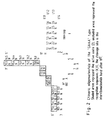
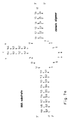
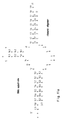
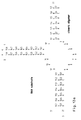
- An oligomer with an active centre (IIIa) or (IIIb) can form the hammerhead structure shown in Fig. 2 with an RNA substrate containing a structure of formulae (Va) or (Vb) in which the nucleotides are numbered according to the standard nomenclature.
- the active centre Z (IIIa) or (IIIb) preferably contains no more than four and particularly preferably no more than two ribonucleotides and most preferably no more than one ribonucleotide.
- oligomers in which G12 is a deoxyribonucleotide, a ribonucleotide or a building block in which W is a C 1 -C 4 alkyl, alkenyl, alkoxy or alkenyloxy group optionally substituted by OH and in particular a (2-hydroxyethyloxy) group.
- a 13 , A 14 cr/and R 15.1 are preferably selected from building blocks in which W is preferably a C 1 -C 4 alkyl, alkenyl, alkoxy or alkenyloxy group optionally substituted by OH and particularly preferably a methoxy, (2-hydroxy-ethyloxy) and allyloxy group.
- oligomer which does not contain any ribonucleotide and any deoxyribonucleotidein the active centre Z.
- This oligomer contains a 2'-O-(2-hydroxyethyl)guanosine at position G 12 and a 2'-O-(2-hydroxyethyl)adenosine at each of the positions A 13 , A 14 and R 15.1 .
- the active centre of the oligomer has a structure of formulae (IVa) or (IVb) and exhibits cleavage activity for an RNA substrate that contains a structure of formula (VIa) or (VIb) : 5'-Y 11.1 G 12 A 13 A 14 R 15.1 -S-U 16.1 H 17 -3' 5'-Y 11.1 N ⁇ 12 G 12 A 13 A 14 R 15.1 -S-U 16.1 H 17 -3' in which N, H, Y, R, S, G, A, U and C represent ribonucleotides and
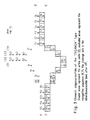
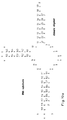
- An oligomer with an active centre (IVa) or (IVb) forms the hammerhead structure shown in Fig. 3 with an RNA substrate containing a structure of formulae (VIa) or (VIb) in which the nucleotides are numbered according to the standard nomenclature.
- the active centre Z preferably contains no pyrimidine ribonucleotides.
- Z preferably contains no more than six and particularly preferably no more than three ribonucleotides.
- one or several building blocks at positions G 5 , A 6 , N 7 (if N 7 is a purine), G 8 , A 9 and N 9 ⁇ (if N 9 ⁇ is present and is a purine) are thus preferably ribonucleotides.
- the building blocks at positions C 3 , U 4 N 7 (if N 7 is a pyrimidine) and N 9 ⁇ (if N 9 ⁇ is present and is a pyrimidine) are preferably nucleotide analogue building blocks in particular such building blocks in which W is an optionally OH-substituted C 1 -C 4 alkyl, alkenyl, alkoxy or alkenoxy group or an NH 2 group.
- Building blocks are especially preferred which can only hybridize very weakly with ribonucleotides in the substrate such as those nucleotide analogues which contain an optionally substituted alkyl, alkenyl or alkynyl group according to formula (II), e.g. an allyl group, at the 2' C atom of the ribose.
- 2'-O-nucleotide analogues are on the other hand also preferred.
- suitable substituents are methoxy, (2-hydroxyethyloxy), allyl, allyloxy and NH 2 .
- N 7 and N 9 ⁇ if they are present, are selected in such a way that a minimum of internal structures can form by internal interactions.
- the preferred nucleobases in the region Z are A or P, U, C and G or I.
- RNA substrates in sequence databases for oligomeric chimeras according to the invention.
- oligomeric chimeras having an active centre GAAR such an algorithm is for example as follows (numbering according to Fig. 2):
- RNA substrates can for example be determined as follows: (numbering according to Fig. 3):
- a program based on these algorithms enables a very efficient search in databases or individual sequences.
- a suitable RNA target sequence in addition to a suitable RNA target sequence, one obtains the sequence of the chimeric oligonucleotide which is necessary to cleave this target sequence.
- the minimum stability requirements for a hammerhead structure are three base pairs in stem I and three base pairs in stem III. Although all motifs which fulfil these minimum requirements can be cleaved, the cleavage efficiency depends on the interaction of the actual recognition sequences and on conserved nucleotides in the active centre.
- the chimeric oligonucleotides containing GAAR seem to be less sensitive to interferences by undesired interactions and are therefore preferred.
- RNA substrates of chimeric oligomers with an active centre which has a structure of formulae (IIIa) or (IIIb) are preferably human cellular transcripts and transcripts of human viruses.
- the RNA substrate is particularly preferably selected from the group comprising human interleukin-2 mRNA, human ICAM-1 mRNA, human TGF- ⁇ mRNA, human tissue factor pre-mRNA, human protein kinase C- ⁇ mRNA, human factor KBF1 mRNA, human 5-lipoxygenase mRNA, human interleukin-8 RNA, human interleukin-5 RNA, human interleukin-1 receptor mRNA, human interleukin-1- ⁇ mRNA, human 12-lipoxygenase mRNA, the transcript of the human cytomegalovirus DNA polymerase gene and a transcript of the human papilloma virus type 8.
- cleavage motifs for oligomers of the "GAAR" type are located at the following positions of these RNA substrates (the name of the respective sequence in the EMBL Nucleotide Sequence Database 43rd Edition is given in brackets).
- a particularly preferred example of a cleavage site in a human mRNA is interleukin-2 mRNA.
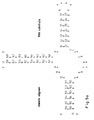
- the cleavage site has the nucleotide sequence shown in SEQ ID NO. 1.
- An oligomer of the "GAAR" type having the nucleotide sequence shown in SEQ ID NO. 2 is also able to efficiently cleave an appropriate RNA substrate.
- This oligomer according to the invention can also cleave a 1.6 kb long IL-2 transcript.
- Human ICAM-1 mRNA is a further particularly preferred example of an RNA substrate which can be cleaved by the chimeric oligomers of the "GAAR" type.
- the region which is sensitive for cleavage has the nucleotide sequence shown in SEQ ID NO. 3.
- An RNA substrate with this sequence can also be efficiently cleaved by an oligomer having the nucleotide sequence shown in SEQ ID NO. 4.
- Human PKC- ⁇ mRNA is a further particularly preferred example of an RNA substrate, which can be cleaved by a chimeric oligomer of the "GAAR" type.
- the region which is sensitive to cleavage has the nucleotide sequence shown in SEQ ID NO. 9.
- This substrate is efficiently cleaved by an oligomer having the nucleotide sequence shown in SEQ ID. N0. 10.
- Human interleukin-1 ⁇ mRNA is a further particularly preferred example of an RNA substrate which can be cleaved by a chimeric oligomer of the "GAAR" type.
- the region which is sensitive to cleavage has the nucleotide sequence shown in SEQ ID NO. 11.
- This substrate is efficiently cleaved by an oligomer having the nucleotide sequence shown in SEQ ID NO. 12.
- RNA substrates for oligomers according to the invention of the "CUGANGA" type are also human cellular transcripts and transcripts of human viruses.
- the RNA substrate is particularly preferably selected from the group comprising human interleukin-6 mRNA, human multiple drug resistance (MDR-1) mRNA, human monocyte chemotactic protein RNA, human macrophage scavenger receptor type II mRNA, human macrophage scavenger receptor type I mRNA, human macrophage inflammatory protein-1 ⁇ mRNA, human p53 RNA, human jun-B mRNA, human c-jun RNA, human interferon ⁇ type II mRNA, human hepatocyte growth factor mRNA, human HER2 mRNA, human Alzheimer's disease amyloid mRNA, human interleukin-1 mRNA, human interleukin-1 receptor mRNA, human 3-hydroxy-3-methylglutaryl coenzyme A reductase RNA, human angiotensinogen mRNA, human
- Suitable substrates are as follows:
- RNA substrate for a chimeric oligomer of the "CUGANGA" type is human interleukin-6 mRNA.
- the region which is sensitive to cleavage has the nucleotide sequence shown in SEQ ID NO. 5.
- An oligomer having the nucleotide sequence shown in SEQ ID NO. 6 can efficiently cleave such a substrate.
- RNA substrate which can be cleaved by an oligomer of the "CUGANGA" type is human MDR-1 mRNA.
- the region which is sensitive to cleavage has the nucleotide sequence shown in SEQ ID NO. 7.
- An oligomer having the nucleotide sequence shown in SEQ ID No. 8 can efficiently cleave such an RNA substrate.
- a 1.6 kb long MDR-1 transcript can also be cleaved by this oligomer.
- RNA substrate which can be cleaved by an oligomer of the "CUGANGA" type is human c-jun RNA.
- the region which is sensitive to cleavage is shown in SEQ ID NO. 13.
- An oligomer having the nucleotide sequence shown in SEQ ID NO. 14 can cleave such a substrate.
- RNA substrate which can be cleaved by an oligomer of the "CUGANGA" type is human IL-1 receptor mRNA.
- the region which is sensitive to cleavage is shown in SEQ ID NO. 15.
- An oligomer having the nucleotide sequence shown in SEQ ID NO. 16 can efficiently cleave such a substrate.
- RNA substrate which can be cleaved by an oligomer of the "CUGANGA" type is human angiotensinogen mRNA.
- the region which is sensitive to cleavage is shown in SEQ ID NO. 17.
- An oligomer having the nucleotide sequence shown in SEQ ID NO. 18 can efficiently cleave such a substrate.
- the chimeric oligomers according to the invention have significant advantages compared to the structures of the state of the art.
- the shortest ribozymes that have been previously used have a minimum length of 15+N+M nucleotides, the active centre being 15 nucleotides long and N and M being the length of the recognition sequences (Benseler et al., J. Am. Chem. Soc. 115 (1993), 8483-8484), and moreover they contain ribonucleotides in at least five positions of the catalytic centre (Paolella et al., EMBO J. 11 (1992), 1913-1919 and Yang et al., Biochemistry 31 (1992), 5005-5009).
- the oligomers according to the invention only contain 4+N+M or 5+N+M nucleotides (in the case of the "GAAR” type) or 7+N+M or 8+N+M nucleotides (in the case of the "CUGANGA” type) in which N and M are preferably numbers in the range of 5-10. Furthermore they can contain a significantly smaller number of natural nucleotides without loss of activity. Due to the reduced length and reduced number of ribonucleotides there are significant advantages with regard to the synthesis of the molecules as well as with regard to the stability in vivo.
- the chimeric oligomer described in example 2 of the present application of the "GAAR" type has a half-life in active 10 % human serum of several days.
- the in vivo stability can be additionally increased by a further reduction in the number of ribonucleotides.
- oligomers according to the invention have a very high in vivo activity since the RNA cleavage is promoted by protein factors that are present in the nucleus or cytoplasm of the cell.
- protein factors which can increase the activity of hammerhead ribozymes are for example the nucleocapsid protein NCp7 of HIVl (Müller et al., J. Mol. Biol. 242 (1994), 422-429) and the heterogeneous nuclear ribonucleoprotein A1 (Heidenreich et al., Nucleic Acids Res. 23 (1995), 2223-2228).
- NCp7 of HIVl Müller et al., J. Mol. Biol. 242 (1994), 422-429
- heterogeneous nuclear ribonucleoprotein A1 Heidenreich et al., Nucleic Acids Res. 23 (1995), 2223-2228.
- a further advantage of the chimeric oligomers according to the invention is the statistically rare occurrence of cleavage motifs of formulae (Va) or (Vb), or (VIa) or (VIb) (approximately one motif/5000 bp)
- This taken together with the individually selected recognition sequences results in the fact that statistically only the target RNA within the entire human RNA pool is cleaved by the respective chimeric oligomer, whereas only an unproductive binding but no cleavage occurs at other potential binding sites.
- the oligomers according to the invention do not activate RNAse H due to their low content of deoxyribonucleotides and thus do not cause any unspecific cleavages.
- RNA substrate forms a large part of the hammerhead structure by which means the dependence of the cleavage activity on the Mg 2+ concentration is positively influenced.
- Yet a further object of the present invention is a pharmaceutical composition that contains one or several chimeric oligomers as the active substance and optionally pharmaceutically acceptable auxiliary substances, additives and carriers.
- This pharmaceutical composition is excellently suitable for the production of an agent to specifically inactivate the expression of genes in eukaryotes, prokaryotes and viruses especially of human genes such as tumour genes or viral genes or RNA molecules in a cell. Further areas of application are the inactivation of the expression of plant genes or insect genes.
- the oligomers according to the invention can be used as a drug for humans and animals as well as a pesticide for plants.
- the active substance is preferably administered at a concentration of 0.01 to 10,000 ⁇ g/kg body weight, particularly preferably of 0.1 to 1000 ⁇ g/kg body weight.
- the administration can for example be carried out by injection, inhalation (e.g. as an aerosol), as a spray, orally (e.g. as tablets, capsules, coated tablets etc.), topically or rectally (e.g. as suppositories).
- the present invention provides a process for the specific inactivation of the expression of genes in which an active concentration of a chimeric oligomer is taken up into a cell (Lyngstadaas et al., EMBO J. 14 (1995) 5224-5229) so that the oligomer specifically cleaves a predetermined RNA molecule which is present in the cell, the cleavage preferably occurring catalytically.
- This process can be carried out in vitro on cell cultures as well as in vivo on living organisms (prokaryotes or eukaryotes such as humans, animals or plants).
- a further object of the present invention is the use of the chimeric oligomers as RNA restriction enzymes as well as a reagent kit for the restriction cleavage of RNA molecules which contains a chimeric oligomer and suitable buffer substances.
- the oligomer and the buffer substances can be present in the form of solutions, suspensions or solids such as powders or lyophilisates.
- the reagents can be present together, separated from one another or optionally also on a suitable carrier.
- the oligomers according to the invention can also be used as a diagnostic agent or to identify the function of unknown genes.
- This invention provides a method of alleviating psoriasis in a subject comprising administering to the subject an effective amount of the chimeric oligomers of this invention capable of cleaving RNAs encoding IL-2, or ICAM-1.
- This invention also provides a method of alleviating common cold in a subject comprising administering to the subject an effective amount of the chimeric oligomers of this invention capable of cleaving RNAs encoding ICAM-1.
- This invention further provides a method of alleviating transplant rejection in a subject comprising administering to the subject an effective amount of the chimeric oligomers of this invention capable of cleaving RNAs encoding ICAM-1.
- this invention provides a method of alleviating Kaposi's sarcoma in a subject comprising administering to the subject an effective amount of chimeric oligomers of this invention capable of cleaving RNAs encoding IL-6.
- This invention also provides a method of treating human cancer in a subject comprising administering to the subject an effective amount of the chimeric oligomers of this invention capable of cleaving RNAs encoding PKC- ⁇ .
- the important role played by PKC- ⁇ in cancer is described in Dean et al. (Cancer Research 56 (1996), 3499-3507) and in McKay et al. (Nucleic Acids Research 24 (1996), 411-417) and in references contained therein.
- this invention provides a method of treating hypertension in a human subject comprising administering to the subject an effective amount of the chimeric oligomers of this invention capable of cleaving RNAs encoding angiotensinogen.
- the T at the end of the nucleotide is in each case coupled via its 3' position to the 3' position of the penultimate nucleotide (iT).
- An interleukin-2 RNA substrate having the nucleotide sequence shown in SEQ ID NO. 1 was produced by chemical solid phase synthesis. Furthermore a chimeric oligomer was synthesized having the nucleotide sequence shown in SEQ ID NO. 2. Synthesis and removal of protecting groups was carried out in the case of the RNA substrate as well as of the chimeric oligomer by means of solid phase techniques (Wincott et al., Nucleic Acids Res. 23 (1995), 2677-2684). Purification was by means of anion-exchange HPLC (Sproat et al., Nucleosides and Nucleotides 14 (1995), 255-273).
- sequences of the chimeric oligomer outside of the active centre are composed of nucleotide analogue building blocks which are modified with a methoxy group at the 2'-C atom of the ribose.
- active centre "GAAA" of the oligonucleotide G 12 at position 1 is a ribonucleotide
- residues A 13 and A 14 at positions 2 and 3 are 2'-methoxy-modifiednucleotides
- a 15.1 at position 4 is a ribonucleotide.
- 400 pmol interleukin-2 substrate was reacted with 400 pmol of the oligomer in the presence of 10 mmol/l MgCl 2 , 50 mmol/l Tris HCl, 1 mmol/l EDTA at pH 7.5 and 37°C in a reaction volume of 100 ⁇ l. Aliquots were taken at certain times and admixed with excess EDTA to prevent further cleavage. The oligomer mixture present at the different times was then separated by electrophoresis on a 20 % polyacrylamide gel in the presence of 7 M urea and made visible by staining with "stains-all".
- An ICAM-1 RNA substrate having the nucleotide sequence shown in SEQ ID NO. 3 and an RNA-cleaving oligomer having the nucleotide sequence shown in SEQ ID NO. 4 were synthesized in an analogous manner to that described in example 1.
- the nucleotide building blocks used for the oligomer were also the same as those described in example 1 except that A 13 and A 14 were ribonucleotides.
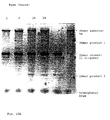
- Fig. 5b The result of the reaction is shown in Fig. 5b.
- the reaction conditions were as described in example 1 except that 1 nmol substrate and 100 pmol chimeric oligomer were used. It can be seen that the band of the substrate (43-mer) disappears as the incubation period increases while the intensity of the bands of the products (34-mer and 9-mer) increases.
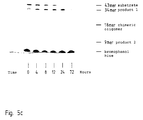
- a chimeric oligomer was synthesized in an analogous manner which contained four ribonucleotides in the active centre Z and 2'-allyloxy-nucleotidesin the flanking regions X and Y. 2'-Allyloxythymidine was used instead of 2'-O-allyl-uridine at the positions in X and Y labelled U. The results of the cleavage of the 43-mer RNA substrate by this oligomer are shown in Fig. 5c.
- Oligomers based on 2'-O-allyloxy-nucleotides are strongly preferred over oligomers based on 2'-methoxy-nucleotides (Iribarren et al., Proc. Natl. Acad. Sci. USA 87 (1990), 7747-7751) especially for therapeutic applications due to their greatly reduced unspecific binding.
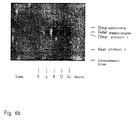
- An interleukin-6 RNA substrate having the nucleotide sequence shown in SEQ ID NO. 5 and a chimeric oligomer having the nucleotide sequence shown in SEQ ID NO. 6 were synthesized in an analogous manner to that described in example 1. 2'-Methoxymodified nucleotides were used in sequences outside the active centre to produce the oligomer. Ribonucleotides were used for the active centre "CUGAUGA".
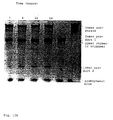
- the reaction was carried out as described in example 1. The result is shown in Fig. 6b.
- the intensity of the bands of the substrate (32-mer) decreases as the incubation period increases and the intensity of the bands of the cleavage products (23-mer and 9-mer) increases.
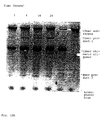
- a 5'-fluorescein labelled substrate having the nucleotide sequence shown in SEQ ID NO. 5 was synthesized using a commercially available fluorescein phosphoramidite monomer, and subjected to cleavage reactions as described above, however using a variety of chimeric oligomers each having the nucleotide sequence shown in SEQ ID N0. 6, all bearing 2'-allyloxy modified nucleotides in regions X and Y but different analogues in the active centre "CUGANGA".
- the reactions were carried out as described in example 1, except that the chimeric oligomer concentration was 10 ⁇ mol/l and the initial substrate concentration was 2 ⁇ mol/l.
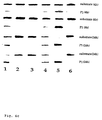
- the time course of the reaction is shown in Fig. 6c using fluorescence detection, so only the full length fluorescein labelled 32mer substrate and the 5'-fluorescein labelled 23mer product 1 are detected.
- the lanes comprised the following:
- Lane 1 Substrate plus chimeric oligomer with 2'-C-allyl-2'-deoxycytidine at position C 3 , 2'-amino-2'-deoxyuridine at positions U 4 and U 7 and ribonucleotides at positions G 5 , A 6 , G 8 , and A 9 in the active centre "CUGANGA".
- Lane 2 Substrate plus chimeric oligomer with 2'-C-allyl-2'-deoxycytidine at position C 3 , 2'-C-allyl-2'-deoxyuridine at positions U 4 and U 7 and ribonucleotides at positions G 5 , A 6 , G 8 , and A 9 in the active centre "CUGANGA".
- Lane 3 Substrate plus chimeric oligomer with 2'-allyloxy-2'-deoxycytidine at position C 3 , 2'-C-allyl-2'-deoxyuridine at positions U 4 and U 7 and ribonucleotides at positions G 5 , A 6 , G 8 , and A 9 in the active centre "CUGANGA".
- Lane 4 Substrate plus chimeric oligomer with 2'-allyloxy-2'-deoxycytidine at position C 3 , 2'-amino-2'-deoxyuridine at positions U 4 and U 7 and ribonucleotides at positions G 5 , A 6 , G 8 , and A 9 in the active centre "CUGANGA".
- Lane 5 Substrate plus chimeric oligomer containing all ribonucleotides in the active centre "CUGANGA”.
- the chimeric oligomer used in lane 5 is clearly the most efficient, however, since it contains pyrimidine ribonucleotides in the active centre "CUGANGA" it is less suitable for in vivo use.
- the chimeric oligomers used in lanes 1 and 4 are somewhat less active, however they contain no pyrimidine ribonucleotides and are thus very well suitable for cell culture and in vivo work.
- a MDR-1 RNA substrate having the nucleotide sequence shown in SEQ ID NO. 7 and an RNA-cleaving oligomer having the nucleotide sequence shown in SEQ ID NO. 8 were synthesized in an analogous manner to that described in example 1.
- the oligomer was synthesized using the nucleotide building blocks stated in example 3.
- the chimeric oligomer 5'-CCCCT*CgaaaT*CAT*GT*C-iT in which capital letters denote 2'-allyloxy-nucleotides (T* is 2'-allyloxythymidine), small letters denote ribonucleotides and -iT denotes a 3'-3'-phosphodiester bond to deoxythymidine, was synthesized according to the "trityl-off" technique by a solid phase- ⁇ -cyanoethyl phosphoroamidite technique (Sinha et al., Nucleic Acids Res.
- the oligomer was cleaved in the synthesis apparatus from the controlled pore glass or polystyrene suppcrt during a period of 2 h using 2 ml 33 % aqueous ammonia/ethanol (3:1 v/v). The solution was then kept at 60°C for 6-8 h in a sealed reaction vessel in order to remove all base-labile protecting groups. The reaction vessel was cooled and the solution was evaporated to dryness.
- Silyl protecting groups were removed by resuspending the residue in 200 ⁇ l dry triethylamine/triethyl-amine ⁇ 3 HF/N-methyl-2-pyrrolidinone (3:4:6 v/v/v) and incubating for 2 h at 60°C (Wincott et al., Supra).
- the chimeric oligomer which had been completely freed of protecting groups was then precipitated by addition of 20 ⁇ l 3 M aqueous sterile sodium acetate and subsequently of 1 ml 1-butanol.
- the reaction vessel was kept at -20°C for 15 minutes and the precipitate was collected by centrifugation for 10 min. The supernatant was carefully removed by decanting, the pellet was taken up in 300 ⁇ l 80 % ethanol and the resulting solution was lyophilized.
- the crude product was firstly analyzed and then purified for 30 min in four aliquots by anion-exchange HPLC on a Dionex Nucleopak PA-100 column (9 x 250 mm) at 55°C using a lithium perchlorate gradient of 70-230 mM in water/acetonitrile (9:1 v/v) containing 25 mM Tris pH 7.0.
- the main peak was collected and the chimeric oligomer was precipitated by addition of 4 volumes of 1-propanol or 2-propanol (Sproat et al., (1995) Supra). The precipitate was collected by centrifugation, washed and then dried in a vacuum.
- the yield of purified product was 2.8 mg.
- a PKC- ⁇ RNA substrate having the nucleotide sequence shown in SEQ ID NO. 9 and an RNA-cleaving oligomer having the nucleotide sequence shown in SEQ ID NO. 10 were synthesized in an analogous manner to that described in example 1.
- the oligomer was synthesized with 2'-allyloxy-modified nucleotides in the sequences outside the active centre, and with ribonucleotides in the active centre "GAAA".
- An IL-1 ⁇ RNA substrate having the nucleotide sequence shown in SEQ ID NO. 11 and an RNA-cleaving oligomer having the nucleotide shown in SEQ ID NO. 12 were synthesized in an analogous manner to that described in example 1.
- the oligomer was synthesized with 2'-methoxy-modified nucleotides in the sequences outside the active centre, and with ribonucleotides in the active centre "GAAA".
- a c-jun RNA substrate having the nucleotide sequence shown in SEQ ID NO. 13 and an RNA-cleaving oligomer having the nucleotide sequence shown in SEQ ID NO. 14 were synthesized in an analogous manner to that described in example 1.
- the oligomer was synthesized with 2'-methoxy-modified nucleotides in the sequences outside the active centre, and with ribonucleotides in the active centre "CUGAUGA".
- the reaction was carried out as described in example 1, except that the chimeric oligomer concentration was 10 ⁇ mol/l and the RNA substrate concentration was 2 ⁇ mol/l. The result is shown in Fig. 10b.
- An IL-1 receptor RNA substrate having the nucleotide sequence shown in SEQ ID NO. 15 and an RNA-cleaving oligomer having the nucleotide sequence shown in SEQ ID NO. 16 were synthesized in analogous manner to that described in example 1.
- the oligomer was synthesized with 2'-allyloxy-modified nucleotides in the sequences outside the active centre, and with ribonucleotides in the active centre "CUGAUGA".
- the reaction was carried out as described in example 1, except that the chimeric oligomer concentration was 10 ⁇ mol/l and the RNA substrate concentration was 2 ⁇ mol/l. The result is shown in Fig. 11b.
- An angiotensinogen RNA substrate having the nucleotide sequence shown in SEQ ID N0. 17 and an RNA-cleaving oligomer having the nucleotide sequence shown in SEQ ID N0. 18 were synthesized in an analogous manner to that described in example 1.
- the oligomer was synthesized with 2'-methoxy-modified nucleotides in the sequences outside the active centre, and with ribonucleotides in the active centre "CUGAUGA".
- the reaction was carried out as described in example 1, except that the chimeric oligomer concentration was 10 ⁇ mol/l and the RNA substrate concentration was 2 ⁇ mol/l. The result is shown in Fig. 12b.
Landscapes
- Health & Medical Sciences (AREA)
- Life Sciences & Earth Sciences (AREA)
- Organic Chemistry (AREA)
- Chemical & Material Sciences (AREA)
- Engineering & Computer Science (AREA)
- General Health & Medical Sciences (AREA)
- Medicinal Chemistry (AREA)
- Pharmacology & Pharmacy (AREA)
- Nuclear Medicine, Radiotherapy & Molecular Imaging (AREA)
- Animal Behavior & Ethology (AREA)
- Public Health (AREA)
- Veterinary Medicine (AREA)
- General Chemical & Material Sciences (AREA)
- Chemical Kinetics & Catalysis (AREA)
- Bioinformatics & Cheminformatics (AREA)
- Genetics & Genomics (AREA)
- Molecular Biology (AREA)
- Biomedical Technology (AREA)
- Cardiology (AREA)
- General Engineering & Computer Science (AREA)
- Zoology (AREA)
- Heart & Thoracic Surgery (AREA)
- Dermatology (AREA)
- Oncology (AREA)
- Communicable Diseases (AREA)
- Wood Science & Technology (AREA)
- Virology (AREA)
- Biotechnology (AREA)
- Plant Pathology (AREA)
- Biophysics (AREA)
- Microbiology (AREA)
- Physics & Mathematics (AREA)
- Immunology (AREA)
- Biochemistry (AREA)
- Medicines That Contain Protein Lipid Enzymes And Other Medicines (AREA)
- Pharmaceuticals Containing Other Organic And Inorganic Compounds (AREA)
- Enzymes And Modification Thereof (AREA)
- Saccharide Compounds (AREA)
- Organic Low-Molecular-Weight Compounds And Preparation Thereof (AREA)
- Measuring Or Testing Involving Enzymes Or Micro-Organisms (AREA)
Claims (42)
- Chimäres Oligomer mit einer Struktur gemäß Formel (I), das RNS-spaltende Aktivität besitzt:wobei X und Y oligomere Sequenzen darstellen, die Bausteine enthalten, die aus nicht modifizierten Nukleotiden oder/und Nukleotidanalogen zusammengesetzt sind und die zur Bildung einer spezifischen Hybridisierung des Oligomeren mit einem RNS-Substrat beitragen,wobei X und Y jeweils mindestens einen Baustein enthalten, der sich von Desoxyribonukleotiden und Ribonukleotiden unterscheidet,wobei Z das aktive Zentrum des chimären Oligomers mit einer Struktur gemäß den Formeln (IIIa), (IIIb), (IVa) oder (IVb) darstellt:wobei die Bausteine mit den Strukturen (IIIa), (IIIb), (IVa), (IVb) aus nicht modifizierten Nukleotiden oder/und Nukleotidanalogen ausgewählt sind,wobei die Bausteine eine Struktur gemäß der Formel (II) haben:
 worin B für einen Rest steht, der eine natürlich vorkommende Nukleobase oder ein funktionales Äquivalent davon ist, der insbesondere aus der Gruppe ausgewählt wird, welche Adenin-9-yl (A), Cytosin-1-yl (C), Guanin-9-yl (G), Uracil-1-yl (U), Uracil-5-yl (ψ), Hypoxanthin-9-yl (I), Thymin-1-yl (T), 5-Methyl-cytosin-1-yl (5MeC), 2,6-Diaminopurin-9-yl (AminoA), Purin-9-yl (P), 7-Deazaadenin-9-yl (c7A), 7-Deazaguanin-9-yl (c7G), 5-Propynylcytosin-1-yl (5-pC), 5-Propynyluracil-1-yl (5-pU), Isoguanin-9-yl, 2-Aminopurin-9-yl, 6-Methyluracil-1-yl, 4-Thiouracil-1-yl, 2-Pyrimidon-1-yl und Quinazolin-2,4-dion-1-yl enthält;V bedeutet unabhängig eine 0-, S-, NH- oder CH2-Gruppe,W bedeutet unabhängig ein H oder OH oder ein geradkettiges oder verzweigtes Alkyl, Alkoxy, Alkenyl, Alkenyloxy, Alkynyl oder Alkynyloxy mit 1 bis 10 C-Atomen, welches gegebenenfalls mit einer oder mehreren Halogen, Cyano, Amino, Carboxy,Ester, Ether, Carboxamid, Hydroxyl oder/und Mercapto-Gruppen substituiert sein kann, oder wird aus -COOH, -CONH2, CONHR1, CONR1R2, -NH2, -NHR1, -NR1R2, -NHCOR1, -SH, SR1, -F, -ONH2,-ONHR1 , -ONR1R2, NHOH, -NHOR1, NR2OH und - NR2OR1 ausgewählt,wobei R1 und R2 unabhängig voneinander unsubstituierte oder substituierte Alkyl-, Alkenyl- oder Alkynyl-Gruppen wie oben definiert bedeuten,D und E sind Reste, welche zusammengenommen eine Phosphodiester- oder Phosphorothioatdiesterbindung zwischen benachbarten Nucleosiden oder deren Analogen bilden, oder welche zusammengenommen ein Analog einer internukleosidischen Bindung bilden, wobei die Strukturen (IIIa) oder (IIIb) insgesamt ein oder zwei Desoxyribonukleotide enthalten und die Strukturen (IVa) oder (IVb) insgesamt ein, zwei, drei oder vier Desoxyribonukleotide enthalten, und worinG jeweils unabhängig einen Baustein gemäß der Formel (II) bedeutet, worin B ein Guanin-9-yl oder ein funktionales Äquivalent davon für jene bestimmte Position in der Kernstruktur des Hammerkopfs ist, welches bevorzugt aus I, c7G und Isoguanin-9-yl ausgewählt ist;A jeweils unabhängig eine Baustein gemäß der Formel (II) bedeutet, worin B ein Adenin-9-yl oder ein fuktionales Äquivalent davon für jene bestimmte Position in der Kernstruktur des Hammerkopfs ist, welches bevorzugt aus AminoA, P, c7A und 2-Aminopurin-9-yl ausgewählt ist;U jeweils unabhängig ein Baustein gemäß der Formel (II) bedeutet, worin B ein Uracil-1-yl oder ein fuktionales Äquivalent davon für jene bestimmte Position in der Kernstruktur des Hammerkopfs ist, welches bevorzugt aus Ψ, T, 5-pU, 6-Methyluracil-1-yl, 4-Thiouracil-1-yl, 2-Pyrimidone-1-yl und Quinazoline-2,4-dion-1-yl ausgewählt ist;C jeweils unabhängig ein Baustein gemäß der Formel (II) bedeutet, worin B ein Cytosin-1-yl oder ein fuktionales Äquivalent davon für jene bestimmte Position in der Kernstruktur des Hammerkopfs ist, welches bevorzugt aus 5MeC, 5-pC und 2-pyrimidone-1-yl ausgewählt ist;R jeweils unabhängig einen Baustein gemäß der Formel (II) bedeutet, worin B unabhängig als G oder A wie oben definiert ist;N jeweils unabhängig einen Baustein gemäß der Formel (II) bedeutet.
- Oligomer gemäß Anspruch 1, wobei die Bereiche X und Y keine Ribonukleotide an Positionen mit Pyrimidin enthalten.
- Oligomer gemäß Anspruch 1 oder 2, wobei die Bereiche X und Y keine Ribonukleotide enthalten.
- Oligomer gemäß einem der Ansprüche 1-3, wobei die Bereiche X und Y hauptsächlich aus Bausteinen mit der Struktur (II) bestehen, wobei W jeweils unabhängig aus gegebenenfalls substituiertem Alkyl-, Alkoxy-, Alkenyl-, Alkenyloxy-, Alkynyl- oder Alkynyloxyresten mit 1 bis 10 C Atomen ausgewählt ist.
- Oligomer gemäß einem der Ansprüche 1-4, wobei die Bereiche X und Y jeweils unabhängig 3 bis 40 Bausteine enthalten.
- Oligomer gemäß einem der Ansprüche 1-5, wobei das aktive Zentrum Z einen oder mehrere Bausteine mit der Struktur (II) enthält, worin W jeweils unabhängig aus gegebenenfalls substituierten Alkyl-, Alkoxy-, Alkenyl-, Alkenyloxy-, Alkynyl- oder Alkynyloxyresten mit 1 bis 5 C Atomen ausgewählt ist.
- Oligomer gemäß einem der Ansprüche 1-6, wobei die Bausteine des aktiven Zentrums Z durch Phosphodiesterbindungen verknüpft sind.
- Oligomer gemäß einem der Ansprüche 1-7, wobei das 3' Ende gegen den Abbau durch Exonuklease geschützt ist.
- Oligomer gemäß einem der Ansprüche 1-8, wobei das aktive Zentrum Z die Struktur (IIIa) oder (IIIb) hat und Spaltungsaktivität gegenüber einem RNS-Substrat aufweist, das eine Struktur gemäß den Formeln (Va) oder (Vb) enthält:N G,A,U oder C bedeutet;H A, C oder U bedeutet;R A oder G bedeutet undS eine RNS-Sequenz bedeutet, die fähig ist, eine Haarnadel Struktur zu bilden.
- Oligomer gemäß Anspruch 9, wobei Z die Struktur (IIIa) oder (IIIb) hat und nicht mehr als zwei Ribonukleotide enthält, bevorzugt nicht mehr als ein Ribonukleotid und noch bevorzugter keine Ribonukleotide und keine Desoxyribonukleotide enthält.
- Oligomer gemäß einem der Ansprüche 9-10,
wobei G12 ein Ribonukleotid, ein Desoxyribonukleotid oder einen Baustein bedeutet, wobei W eine C1-C4 Alkyl-, Alkenyl-, Alkoxy-, oder Alkenyloxygruppe ist, die gegebenenfalls mit OH-, bevorzugt mit einem (2-Hydroxyethoxy) Rest substituiert ist. - Oligomer gemäß einem der Ansprüche 9-11,
wobei A13, A14 oder/und R15.1 aus Bausteinen ausgewählt sind, in denen W bevorzugt eine gegebenenfalls mit OH substituierte C1-C4 -Alkyl-, Alkenyl-, Alkoxy-, oder Alkenyloxygruppe ist. - Oligomer gemäß Anspruch 12,
wobei W aus Methoxy-, (2-Hydroxyethoxy)- und Allyloxyresten ausgewählt ist. - Oligomer gemäß einem der Ansprüche 9-13,
wobei das RNS-Substrat aus einer Gruppe, die menschliche Interleukin-2 mRNS, menschliche ICAM-I mRNS, menschliche TGF-β mRNS, menschliche Gewebefaktor pre-mRNS, menschliche Proteinkinasen C-α mRNS, menschliche Faktor KBF-1 mRNS, menschliche 5-Lipoxygenasen mRNS, menschliche Interleukin-8 RNS, menschliche Interleukin-5 RNS, menschliche Interleukin-1 Rezeptor mRNS, menschliche Interleukin-1-α mRNS, menschliche 12-Lipoxygenase mRNS, das Transkript des DNA-Polymerase Gens des menschlichen Zytomegalovirus und ein Transkript des menschlichen Papilloma Virus Typ 8 umfasst, ausgewählt wird. - Oligomer gemäß einem der Ansprüche 9-14,
wobei das RNS-Substrat einen Bereich der menschlichen Interleukin-2 mRNS, die die in SEQ ID No. 1 gezeigte Nukleotidsequenz hat, der menschlichen ICAM-I mRNS, die die in SEQ ID No. 3 gezeigte Nukleotidsequenz hat, der menschlichen PKC-α RNS, die die in SEQ ID No. 9 gezeigte Nukleotidsequenz hat, und der menschlichen Interleukin-1α mRNS, die die in SEQ ID No. 11 gezeigte Nukleotidsequenz hat, enthält. - Oligomer gemäß Anspruch 15,
worin das Oligomer die in SEQ ID No. 2, SEQ ID No. 4, SEQ ID No. 10 oder SEQ ID No. 12 gezeigte Nucleotidsequenz hat. - Oligomer gemäß einem der Ansprüche 1-8,
wobei das katalytische Zentrum Z die Struktur (IVa) oder (IVb) hat und eine Spaltungsaktivität gegenüber einem RNS-Substrat zeigt, das eine Struktur der Formeln (VIa) oder (VIb) enthält:N G, A, U oder C bedeutet,H A, C oder U bedeutet,R A oder G bedeutet,Y C oder U bedeutet undS eine RNS Sequenz ist, die fähig ist, eine Haarnadelstruktur zu bilden. - Oligomer gemäß Anspruch 17,
wobei Z die Struktur (IVa) oder (IVb) hat und nicht mehr als sechs Ribonukleotide, bevorzugt keine
Pyrimidinribonukleotide, enthält. - Oligomer gemäß einem der Ansprüche 17-18,
wobei ein oder mehrere Bausteine an den Positionen G5, A6,
N7, G8 und A9 Ribonukleotide sind, in denen N7 eine Purinbase, insbesondere A ist. - Oligomer gemäß einem der Ansprüche 17-19,
wobei C3, U4 und Nλ12 aus Bausteinen ausgewählt sind, worin W eine gegebenenfalls mit OH-substituierte C1-C4-Alkyl-,
Alkenyl-, Alkoxy- oder Alkenyloxygruppe, oder eine NH2 Gruppe ist. - Oligomer gemäß Anspruch 20,
wobei W aus Methoxy-, (2-Hydroxyethyloxy)-, Allyloxy-, Allyl- und NH2 Resten ausgewählt ist. - Oligomer gemäß einem der Ansprüche 17-21,
wobei das RNS-Substrat aus der Gruppe, die menschliche Interleukin-6 mRNS, menschliche MDR-I mRNS, menschliche chemotaktisches Monozyten Protein RNS, menschliche Macrophagen Scavenger Rezeptor Typ II mRNS, menschliche Macrophagen Scavenger Rezeptor Typ I mRNS, menschliche Macrophagen Entzündungsprotein-1α mRNS, menschliche p53 RNS, menschliche jun-B mRNS, menschliche c-jun RNS, menschliche Interferon-γ Typ II mRNS, menschliche Hepatozyten Wachstumsfaktor mRNS, menschliche HER2 mRNS, menschliche Alzheimer's Krankheit Amyloid mRNS, menschliche Interleukin-1 mRNS, menschliche Interleukin-1 Rezeptor mRNS, menschliche 3-Hydroxy-3-methylglutaryl Coenzym A Reduktase RNS, menschliche Angiotensinogen mRNS, menschliche angiotensinumwandelndes Enzym mRNS, menschliches Acylcoenzyme A: Cholesterin Acyltransferasen mRNS, menschliche PDGF Rezeptoren mRNS, menschliche TNF Rezeptoren mRNS, menschliche TGF β mRNS, menschliche NF-kappa B p65 Untereinheit mRNS, menschliche c-myc RNS, menschliche 12-Lipoxygenasen mRNS, menschliche Interleukin-4 RNS, menschliche Interleukin-10 mRNS, menschliche basic FGF mRNS, menschliche EGF-Rezeptoren mRNS, menschliche c-myb mRNS, menschliche c-fos RNS, menschliche bcl-2 mRNS, menschliche bcl-1 mRNS, menschliche ICAM-1 mRNS, ein Transkript des menschlichen Papillomavirus Typ 11 und Transkripte des menschlichen Papillomavirus Typ 16 und Typ 18 umfasst, ausgewählt wird. - Oligomer gemäß einem der Ansprüche 17-22,
wobei das RNS-Substrat einen Bereich der menschlichen Interleukin-6 mRNS enthält, die die in der SEQ ID No. 5 gezeigte Nukeotidsequenz hat, menschliche MDR-1 mRNS, die die in der SEQ ID No. 7 gezeigte Nukeotidsequenz besitzt, c-jun RNS, die die in der SEQ ID No. 13 gezeigte Nukeotidsequenz hat, menschliche Interleukin-1 Rezeptoren mRNS, die die in der SEQ ID No. 15 gezeigte Nukeotidsequenz hat, und menchliche Angiotensinogen RNS, die die in der SEQ ID No. 17 gezeigte Nukeotidsequenz hat. - Oligomer gemäß Anspruch 23,
wobei das Oligomer die in der SEQ ID No. 6, SEQ ID No. 8, SEQ ID No. 14, SEQ ID No. 16 und SEQ ID No. 18 gezeigte Nukeotidsequenz enthält. - Oligomer gemäß einem der Ansprüche 1-24,
wobei es mit einer prosthetischen Gruppe verknüpft ist. - Pharmazeutische Zusammensetzung, die ein oder mehrere chimäre Oligomere gemäß einem der Ansprüche 1-25 als aktive Substanz enthält und gegebenenfalls pharmazeutisch akzeptable Hilfsstoffe, Zusatzstoffe und Träger enthält.
- Verwendung eines chimären Oligomers gemäß einem der Ansprüche 1-25 oder einer pharmazeutischen Zusammensetzung gemäß Anspruch 26 zur Herstellung eines Agenzes zur spezifischen Deaktivierung der Exprimierung von Genen in Eukaryonten, Prokaryonten und Viren.
- Verwendung zur Herstellung eines Medikaments gemäß Anspruch 27 zur spezifischen Deaktivierung der Exprimierung von menschlichen Genen in einer Zelle, zur spezifischen Deaktivierung der Exprimierung von Tumorgenen, zur spezifischen Deaktivierung der Exprimierung von viralen Genen oder von RNS-Molekülen in einer Zelle, oder zur spezifischen Deaktivierung der Exprimierung von Pflanzengenen.
- Verwendung gemäß einem der Ansprüche 27-28,
wobei die aktive Substanz in einer Konzentration von 0,01 bis 10.000 µg/kg Körpergewicht verabreicht wird. - Verwendung gemäß einem der Ansprüche 27-29,
wobei die aktive Substanz durch Injektion, Inhalierung, als Spray, oral, topisch oder rektal verabreicht wird. - Verfahren zur spezifischen in vitro Deaktivierung der Exprimierung von Genen, wobei ein chimäres Oligomer gemäß einem der Ansprüche 1-25 in einer aktiven Konzentration in eine Zelle eingeführt wird, so daß das Oligomer ein vorgegebenes, sich in der Zelle befindendes RNS Molekül spezifisch spaltet.
- Verfahren gemäß Anspruch 31, wobei die Spaltung katalytisch erfolgt.
- Verwendung eines chimären Oligomers gemäß einem der Ansprüche 1-25 zur Herstellung eines Medikaments zur spezifischen Deaktivierung der Exprimierung von Genen, wobei das chimäre Oligomer in einer aktiven Konzentration in eine Zelle eingeführt wird, so daß das Oligomer ein vorgegebenes, sich in der Zelle befindendes RNS Molekül spezifisch spaltet.
- Verwendung gemäß Anspruch 33, wobei die Spaltung katalytisch erfolgt.
- Verwendung eines chimären Oligomers gemäß einem der Ansprüche 1-25 als RNS Restriktionsenzym, als diagnostisches Agenz, oder zur Identifizierung der Funktion unbekannter Gene.
- Kit zur Restriktionsspaltung von RNS Molekülen, wobei es ein chimäres Oligomer gemäß einem der Ansprüche 1-25 und geeignete Buffersubstanzen enthält.
- Verfahren zur Herstellung einer Zusammensetzung zur Milderung von Psoriasis, das umfasst das Formulieren einer wirksamen Menge eines aus der Gruppe, die aus den Oligomeren gemäß den Ansprüchen 1-13 und 17-21 ausgewählten Oligomeren besteht, wobei das RNS-Substrat eine IL-2- oder ICAM-1 RNS ist.
- Verfahren zur Herstellung einer Zusammensetzung zur Milderung der gemeinen Erkältung, das umfasst das Formulieren einer wirksamen Menge eines aus der Gruppe bestehend aus den Oligomeren gemäß den Ansprüchen 1-13 und 17-21 ausgewählten Oligomers, wobei das RNS-Substrat eine ICAM-1 RNS ist.
- Verfahren zur Herstellung einer Zusammensetzung zur Milderung von Transplantatabstoßung, das umfasst das Formulieren einer wirksamen Menge eines aus der Gruppe bestehend aus den Oligomeren gemäß den Ansprüchen 1-13 und 17-21 ausgewählten Oligomeren, wobei das RNS-Substrat eine ICAM-1 RNS ist.
- Verfahren zur Herstellung einer Zusammensetzung zur Milderung von Kaposi's Sarcoma, das umfasst das Formulieren einer wirksamen Menge eines aus der Gruppe bestehend aus den Oligomeren gemäß den Ansprüchen 1-13 und 17-21 ausgewählten Oligomeren, wobei das RNS-Substrat eine IL-6 RNS ist.
- Verfahren zur Herstellung einer Zusammensetzung zur Behandlung von Krebs, das umfasst das Formulieren einer wirksamen Menge eines aus der Gruppe bestehend aus den Oligomeren gemäß den Ansprüchen 1-13 und 17-21 ausgewählten Oligomeren, wobei das RNS-Substrat eine PKC-α RNS ist.
- Verfahren zur Herstellung einer Zusammensetzung zur Behandlung von Bluthochdruck, das umfasst das Formulieren einer wirksamen Menge eines aus der Gruppe bestehend aus den Oligomeren gemäß den Ansprüchen 1-13 und 17-21 ausgewählten Oligomeren, wobei das RNS-Substrat eine Angiotensin RNS ist.
Applications Claiming Priority (5)
| Application Number | Priority Date | Filing Date | Title |
|---|---|---|---|
| US612298 | 1984-05-21 | ||
| DE1995142404 DE19542404A1 (de) | 1995-11-14 | 1995-11-14 | Chimäre Oligomere mit RNA-Spaltungsaktivität |
| DE19542404 | 1995-11-14 | ||
| US61229896A | 1996-03-07 | 1996-03-07 | |
| PCT/EP1996/005014 WO1997018312A1 (en) | 1995-11-14 | 1996-11-14 | Chimeric oligomers having an rna-cleavage activity |
Publications (2)
| Publication Number | Publication Date |
|---|---|
| EP0866865A1 EP0866865A1 (de) | 1998-09-30 |
| EP0866865B1 true EP0866865B1 (de) | 2002-02-06 |
Family
ID=26020354
Family Applications (1)
| Application Number | Title | Priority Date | Filing Date |
|---|---|---|---|
| EP96938213A Expired - Lifetime EP0866865B1 (de) | 1995-11-14 | 1996-11-14 | Chimäre oligomere mit einer rns-spaltungsaktivität |
Country Status (7)
| Country | Link |
|---|---|
| EP (1) | EP0866865B1 (de) |
| JP (1) | JP2000501284A (de) |
| AT (1) | ATE213019T1 (de) |
| AU (1) | AU7572096A (de) |
| CA (1) | CA2237528A1 (de) |
| DE (1) | DE69619132T2 (de) |
| WO (1) | WO1997018312A1 (de) |
Families Citing this family (43)
| Publication number | Priority date | Publication date | Assignee | Title |
|---|---|---|---|---|
| US6103890A (en) * | 1994-05-18 | 2000-08-15 | Ribozyme Pharmaceuticals, Inc. | Enzymatic nucleic acids that cleave C-fos |
| US6610478B1 (en) | 1996-08-16 | 2003-08-26 | Yale University | Phenotypic conversion of cells mediated by external guide sequences |
| EP1019497A1 (de) * | 1997-06-19 | 2000-07-19 | Ribozyme Pharmaceuticals, Inc. | Hammerhead ribozyme mit erweiterte schnittregel |
| US6300483B1 (en) | 1997-06-19 | 2001-10-09 | Ribozyme Pharmaceuticals, Inc. | Compositions inducing cleavage of RNA motifs |
| US6410225B1 (en) | 1997-06-27 | 2002-06-25 | Yale University | Purification of oligomers |
| US6518017B1 (en) * | 1997-10-02 | 2003-02-11 | Oasis Biosciences Incorporated | Combinatorial antisense library |
| US20030165888A1 (en) | 2001-07-18 | 2003-09-04 | Brown Bob D. | Oligonucleotide probes and primers comprising universal bases for diagnostic purposes |
| US6013447A (en) * | 1997-11-21 | 2000-01-11 | Innovir Laboratories, Inc. | Random intracellular method for obtaining optimally active nucleic acid molecules |
| US6248525B1 (en) | 1998-03-30 | 2001-06-19 | Yale University | Method for identifying essential or functional genes |
| AU5016200A (en) * | 1999-05-21 | 2000-12-12 | Myriad Genetics, Inc. | Diabetes gene |
| US6902888B1 (en) | 1999-05-21 | 2005-06-07 | Myriad Genetics, Inc. | Diabetes gene |
| JP2003530309A (ja) * | 1999-10-26 | 2003-10-14 | イミューソル インコーポレイテッド | 増殖性皮膚疾患又は増殖性眼疾患を治療するリボザイム療法 |
| JP5305553B2 (ja) | 2000-10-12 | 2013-10-02 | ユニバーシティー オブ ロチェスター | 癌細胞の増殖を阻害する組成物 |
| US9994853B2 (en) | 2001-05-18 | 2018-06-12 | Sirna Therapeutics, Inc. | Chemically modified multifunctional short interfering nucleic acid molecules that mediate RNA interference |
| US7517864B2 (en) | 2001-05-18 | 2009-04-14 | Sirna Therapeutics, Inc. | RNA interference mediated inhibition of vascular endothelial growth factor and vascular endothelial growth factor receptor gene expression using short interfering nucleic acid (siNA) |
| EP1572168B1 (de) | 2002-02-06 | 2010-05-26 | Vicor Technologies, Inc. | Anti-infarkt-moleküle |
| US9657294B2 (en) | 2002-02-20 | 2017-05-23 | Sirna Therapeutics, Inc. | RNA interference mediated inhibition of gene expression using chemically modified short interfering nucleic acid (siNA) |
| US9181551B2 (en) | 2002-02-20 | 2015-11-10 | Sirna Therapeutics, Inc. | RNA interference mediated inhibition of gene expression using chemically modified short interfering nucleic acid (siNA) |
| EP1432724A4 (de) * | 2002-02-20 | 2006-02-01 | Sirna Therapeutics Inc | Durch rna-interferenz vermittelte inhibierung von map-kinase-genen |
| US20050287648A1 (en) | 2002-08-05 | 2005-12-29 | University Of Rochester | Protein Transducing Domain/Deaminase Chimeric Proteins, Related Compounds, and Uses Thereof |
| US8512701B2 (en) | 2002-11-15 | 2013-08-20 | Morehouse School Of Medicine | Anti-CXCL13 and anti-CXCR5 antibodies for the prevention and treatment of cancer and cancer cell migration |
| US8658377B2 (en) | 2002-11-15 | 2014-02-25 | Morehouse School Of Medicine | Detecting cancer with anti-CCL25 and anti-CCR9 antibodies |
| US9233120B2 (en) | 2002-11-15 | 2016-01-12 | Jyant Technologies | Anti-CCL25 and anti-CCR9 antibodies for the prevention and treatment of cancer and cancer cell migration |
| US10508277B2 (en) | 2004-05-24 | 2019-12-17 | Sirna Therapeutics, Inc. | Chemically modified multifunctional short interfering nucleic acid molecules that mediate RNA interference |
| BRPI0606791A2 (pt) | 2005-02-02 | 2010-02-09 | The Uab Research Foundation | métodos de reverter ou prevenir a resistência de uma célula a um agonista do receptor da morte, de triar uma célula quanto a um biomarcador da resistência a um agonista do receptor da morte, de monitorar a resistência a um agonista do receptor da morte em um indivìduo, de induzir seletivamente a apoptose em uma célula alvo expressando um receptor da morte, de tratar de um indivìduo com cáncer, de tratar de um indivìduo com uma doença inflamatória ou autoimune, de bloquear a ligação da proteìna contendo card a um receptor da morte em uma célula, de bloquear a associação de um iap com o receptor da morte e de triar um modulador de uma proteìna contendo card, composição, ácido nucleico isolado, vetor, célula, e, polipeptìdeo isolado |
| EP2551282A3 (de) | 2005-03-23 | 2013-02-13 | Genmab A/S | Antikörper gegen CD38 zur Behandling von multiplem Myelom |
| US7476733B2 (en) | 2005-03-25 | 2009-01-13 | The United States Of America As Represented By The Department Of Health And Human Services | Development of a real-time PCR assay for detection of pneumococcal DNA and diagnosis of pneumococccal disease |
| EP2395076A1 (de) | 2005-10-14 | 2011-12-14 | MUSC Foundation For Research Development | Targeting von PAX2 zur Induktion der DEFB1-vermittelten Tumorimmunität und Krebstherapie |
| US8080534B2 (en) | 2005-10-14 | 2011-12-20 | Phigenix, Inc | Targeting PAX2 for the treatment of breast cancer |
| EP2066812A4 (de) | 2006-09-21 | 2010-04-28 | Univ Rochester | Zusammensetzungen und verfahren in zusammenhang mit proteinverschiebungstherapie für myotone dystrophie |
| WO2008136852A2 (en) | 2006-11-01 | 2008-11-13 | University Of Rochester | Methods and compositions related to the structure and function of apobec3g |
| US9896511B2 (en) | 2007-01-10 | 2018-02-20 | The United States Of America, As Represented By The Secretary, Dept. Of Health And Human Services | Antibodies that bind to TL1A and methods of treating inflammatory or autoimmune disease comprising administering such antibodies |
| WO2010070380A2 (en) | 2007-12-03 | 2010-06-24 | The Government Of The United States Of America, As Represented By The Secretary, Department Of Health Of Human Services, National Institutes Of Health | Doc1 compositions and methods for treating cancer |
| US20110262395A1 (en) | 2008-05-08 | 2011-10-27 | University Of Utah Research Foundation | Sensory receptors for chronic fatigue and pain and uses thereof |
| US20120070443A1 (en) | 2008-12-02 | 2012-03-22 | University Of Utah Research Foundation | Pde1 as a target therapeutic in heart disease |
| WO2011031974A1 (en) | 2009-09-10 | 2011-03-17 | Southern Research Institute | Acridine analogs in the treatment of gliomas |
| US20110207789A1 (en) | 2010-02-19 | 2011-08-25 | Ye Fang | Methods related to casein kinase ii (ck2) inhibitors and the use of purinosome-disrupting ck2 inhibitors for anti-cancer therapy agents |
| WO2012058210A1 (en) | 2010-10-29 | 2012-05-03 | Merck Sharp & Dohme Corp. | RNA INTERFERENCE MEDIATED INHIBITION OF GENE EXPRESSION USING SHORT INTERFERING NUCLEIC ACIDS (siNA) |
| AU2012259312A1 (en) | 2011-05-20 | 2013-12-12 | Government Of The United States, As Represented By The Secretary Department Of Health And Human Services | Blockade of tl1a-dr3 interactions to ameliorate t cell mediated disease pathology and antibodies thereof |
| US10723794B2 (en) | 2015-03-18 | 2020-07-28 | University Of South Carolina | Anti-CcL8 antibodies and uses thereof |
| EP3496736A4 (de) | 2016-08-03 | 2020-05-13 | H. Lee Moffitt Cancer Center And Research Institute, Inc. | Gegen tlr9 gerichtete therapeutika |
| WO2019051355A1 (en) | 2017-09-08 | 2019-03-14 | Ohio State Innovation Foundation | NEW MICROARN INHIBITOR THERAPY FOR SYSTEMIC LUPUS ERYTHEMATOSUS |
| US12492245B2 (en) | 2021-09-21 | 2025-12-09 | University Of South Carolina | Anti-CCL8 antibodies and treatment of lung injury by CCL8 inhibition |
Family Cites Families (6)
| Publication number | Priority date | Publication date | Assignee | Title |
|---|---|---|---|---|
| WO1991019789A1 (en) * | 1990-06-19 | 1991-12-26 | Commonwealth Scientific And Industrial Research Organisation | Endonucleases |
| AU649074B2 (en) * | 1990-10-12 | 1994-05-12 | Max-Planck-Gesellschaft Zur Forderung Der Wissenschaften E.V. | Modified ribozymes |
| US5652094A (en) * | 1992-01-31 | 1997-07-29 | University Of Montreal | Nucleozymes |
| US5985620A (en) * | 1992-11-03 | 1999-11-16 | Gene Shears Pty. Limited | TNF-α Ribozymes |
| GB9225427D0 (en) * | 1992-12-04 | 1993-01-27 | Ribonetics Gmbh | Oligonucleotides with rna cleavage activity |
| US5861288A (en) * | 1993-10-18 | 1999-01-19 | Ribozyme Pharmaceuticals, Inc. | Catalytic DNA |
-
1996
- 1996-11-14 AT AT96938213T patent/ATE213019T1/de not_active IP Right Cessation
- 1996-11-14 WO PCT/EP1996/005014 patent/WO1997018312A1/en not_active Ceased
- 1996-11-14 AU AU75720/96A patent/AU7572096A/en not_active Abandoned
- 1996-11-14 CA CA002237528A patent/CA2237528A1/en not_active Abandoned
- 1996-11-14 JP JP9518590A patent/JP2000501284A/ja active Pending
- 1996-11-14 DE DE69619132T patent/DE69619132T2/de not_active Expired - Fee Related
- 1996-11-14 EP EP96938213A patent/EP0866865B1/de not_active Expired - Lifetime
Also Published As
| Publication number | Publication date |
|---|---|
| DE69619132D1 (de) | 2002-03-21 |
| DE69619132T2 (de) | 2002-07-18 |
| EP0866865A1 (de) | 1998-09-30 |
| JP2000501284A (ja) | 2000-02-08 |
| AU7572096A (en) | 1997-06-05 |
| CA2237528A1 (en) | 1997-05-22 |
| WO1997018312A1 (en) | 1997-05-22 |
| ATE213019T1 (de) | 2002-02-15 |
Similar Documents
| Publication | Publication Date | Title |
|---|---|---|
| EP0866865A1 (de) | Chimäre oligomere mit einer rns-spaltungsaktivität | |
| WO1997018312A9 (en) | Chimeric oligomers having an rna-cleavage activity | |
| US6300483B1 (en) | Compositions inducing cleavage of RNA motifs | |
| US6831171B2 (en) | Nucleic acid catalysts with endonuclease activity | |
| US5334711A (en) | Synthetic catalytic oligonucleotide structures | |
| US6365374B1 (en) | 2′-deoxy-2′-alkylnucleotide containing nucleic acid | |
| EP0638121B1 (de) | Gezielte spaltung von rna mittels eukaryontischer rnase p und externe führungssequenz | |
| US5877162A (en) | Short external guide sequences | |
| CA2295207A1 (en) | Hammerhead ribozymes with extended cleavage rule | |
| AU708995B2 (en) | Optimized minizymes and miniribozymes and uses thereof | |
| EP0725788B1 (de) | 2'-amido-und 2'-peptido-modifizierte oligonukleotide | |
| AU706417B2 (en) | Method and reagent for inhibiting the expression of disease related genes | |
| AU680405B2 (en) | Nucleozymes | |
| US6204027B1 (en) | Ribozymes having 2′-O substituted nucleotides in the flanking sequences | |
| US6001648A (en) | Optimized minizymes and miniribozymes and uses thereof | |
| US5972705A (en) | Sequence-specific methylation of ribonucleic acid | |
| DE19542404A1 (de) | Chimäre Oligomere mit RNA-Spaltungsaktivität | |
| US7148044B1 (en) | Nucleic acid enzyme for RNA cleavage | |
| CA2468048A1 (en) | Process for purifying chemically synthesized rna | |
| AU730347B2 (en) | Base-modified enzymatic nucleic acid | |
| WO2000014219A2 (en) | Peptide nucleic acid-oligoadenylate chimeric molecules | |
| AU4876099A (en) | Method and reagent for inhibiting the expression of disease related genes |
Legal Events
| Date | Code | Title | Description |
|---|---|---|---|
| PUAI | Public reference made under article 153(3) epc to a published international application that has entered the european phase |
Free format text: ORIGINAL CODE: 0009012 |
|
| 17P | Request for examination filed |
Effective date: 19980430 |
|
| AK | Designated contracting states |
Kind code of ref document: A1 Designated state(s): AT BE CH DE DK ES FI FR GB GR IE IT LI NL PT SE |
|
| 17Q | First examination report despatched |
Effective date: 20000407 |
|
| GRAG | Despatch of communication of intention to grant |
Free format text: ORIGINAL CODE: EPIDOS AGRA |
|
| GRAG | Despatch of communication of intention to grant |
Free format text: ORIGINAL CODE: EPIDOS AGRA |
|
| GRAH | Despatch of communication of intention to grant a patent |
Free format text: ORIGINAL CODE: EPIDOS IGRA |
|
| GRAH | Despatch of communication of intention to grant a patent |
Free format text: ORIGINAL CODE: EPIDOS IGRA |
|
| GRAA | (expected) grant |
Free format text: ORIGINAL CODE: 0009210 |
|
| REG | Reference to a national code |
Ref country code: GB Ref legal event code: IF02 |
|
| AK | Designated contracting states |
Kind code of ref document: B1 Designated state(s): AT BE CH DE DK ES FI FR GB GR IE IT LI NL PT SE |
|
| PG25 | Lapsed in a contracting state [announced via postgrant information from national office to epo] |
Ref country code: NL Free format text: LAPSE BECAUSE OF FAILURE TO SUBMIT A TRANSLATION OF THE DESCRIPTION OR TO PAY THE FEE WITHIN THE PRESCRIBED TIME-LIMIT Effective date: 20020206 Ref country code: LI Free format text: LAPSE BECAUSE OF FAILURE TO SUBMIT A TRANSLATION OF THE DESCRIPTION OR TO PAY THE FEE WITHIN THE PRESCRIBED TIME-LIMIT Effective date: 20020206 Ref country code: IT Free format text: LAPSE BECAUSE OF FAILURE TO SUBMIT A TRANSLATION OF THE DESCRIPTION OR TO PAY THE FEE WITHIN THE PRESCRIBED TIME-LIMIT;WARNING: LAPSES OF ITALIAN PATENTS WITH EFFECTIVE DATE BEFORE 2007 MAY HAVE OCCURRED AT ANY TIME BEFORE 2007. THE CORRECT EFFECTIVE DATE MAY BE DIFFERENT FROM THE ONE RECORDED. Effective date: 20020206 Ref country code: GR Free format text: LAPSE BECAUSE OF FAILURE TO SUBMIT A TRANSLATION OF THE DESCRIPTION OR TO PAY THE FEE WITHIN THE PRESCRIBED TIME-LIMIT Effective date: 20020206 Ref country code: FI Free format text: LAPSE BECAUSE OF FAILURE TO SUBMIT A TRANSLATION OF THE DESCRIPTION OR TO PAY THE FEE WITHIN THE PRESCRIBED TIME-LIMIT Effective date: 20020206 Ref country code: CH Free format text: LAPSE BECAUSE OF FAILURE TO SUBMIT A TRANSLATION OF THE DESCRIPTION OR TO PAY THE FEE WITHIN THE PRESCRIBED TIME-LIMIT Effective date: 20020206 Ref country code: BE Free format text: LAPSE BECAUSE OF FAILURE TO SUBMIT A TRANSLATION OF THE DESCRIPTION OR TO PAY THE FEE WITHIN THE PRESCRIBED TIME-LIMIT Effective date: 20020206 Ref country code: AT Free format text: LAPSE BECAUSE OF FAILURE TO SUBMIT A TRANSLATION OF THE DESCRIPTION OR TO PAY THE FEE WITHIN THE PRESCRIBED TIME-LIMIT Effective date: 20020206 |
|
| REF | Corresponds to: |
Ref document number: 213019 Country of ref document: AT Date of ref document: 20020215 Kind code of ref document: T |
|
| REG | Reference to a national code |
Ref country code: CH Ref legal event code: EP |
|
| REF | Corresponds to: |
Ref document number: 69619132 Country of ref document: DE Date of ref document: 20020321 |
|
| PG25 | Lapsed in a contracting state [announced via postgrant information from national office to epo] |
Ref country code: SE Free format text: LAPSE BECAUSE OF FAILURE TO SUBMIT A TRANSLATION OF THE DESCRIPTION OR TO PAY THE FEE WITHIN THE PRESCRIBED TIME-LIMIT Effective date: 20020506 Ref country code: PT Free format text: LAPSE BECAUSE OF FAILURE TO SUBMIT A TRANSLATION OF THE DESCRIPTION OR TO PAY THE FEE WITHIN THE PRESCRIBED TIME-LIMIT Effective date: 20020506 Ref country code: DK Free format text: LAPSE BECAUSE OF FAILURE TO SUBMIT A TRANSLATION OF THE DESCRIPTION OR TO PAY THE FEE WITHIN THE PRESCRIBED TIME-LIMIT Effective date: 20020506 |
|
| NLV1 | Nl: lapsed or annulled due to failure to fulfill the requirements of art. 29p and 29m of the patents act | ||
| REG | Reference to a national code |
Ref country code: CH Ref legal event code: PL |
|
| PG25 | Lapsed in a contracting state [announced via postgrant information from national office to epo] |
Ref country code: ES Free format text: LAPSE BECAUSE OF FAILURE TO SUBMIT A TRANSLATION OF THE DESCRIPTION OR TO PAY THE FEE WITHIN THE PRESCRIBED TIME-LIMIT Effective date: 20020829 |
|
| RAP2 | Party data changed (patent owner data changed or rights of a patent transferred) |
Owner name: RIBOZYME PHARMACEUTICALS, INC. |
|
| PGFP | Annual fee paid to national office [announced via postgrant information from national office to epo] |
Ref country code: FR Payment date: 20021017 Year of fee payment: 7 |
|
| PG25 | Lapsed in a contracting state [announced via postgrant information from national office to epo] |
Ref country code: IE Free format text: LAPSE BECAUSE OF NON-PAYMENT OF DUE FEES Effective date: 20021114 |
|
| PLBE | No opposition filed within time limit |
Free format text: ORIGINAL CODE: 0009261 |
|
| STAA | Information on the status of an ep patent application or granted ep patent |
Free format text: STATUS: NO OPPOSITION FILED WITHIN TIME LIMIT |
|
| 26N | No opposition filed |
Effective date: 20021107 |
|
| REG | Reference to a national code |
Ref country code: IE Ref legal event code: MM4A |
|
| PG25 | Lapsed in a contracting state [announced via postgrant information from national office to epo] |
Ref country code: FR Free format text: LAPSE BECAUSE OF NON-PAYMENT OF DUE FEES Effective date: 20040730 |
|
| REG | Reference to a national code |
Ref country code: FR Ref legal event code: ST |
|
| PGFP | Annual fee paid to national office [announced via postgrant information from national office to epo] |
Ref country code: GB Payment date: 20041110 Year of fee payment: 9 |
|
| PGFP | Annual fee paid to national office [announced via postgrant information from national office to epo] |
Ref country code: DE Payment date: 20041230 Year of fee payment: 9 |
|
| PG25 | Lapsed in a contracting state [announced via postgrant information from national office to epo] |
Ref country code: GB Free format text: LAPSE BECAUSE OF NON-PAYMENT OF DUE FEES Effective date: 20051114 |
|
| PG25 | Lapsed in a contracting state [announced via postgrant information from national office to epo] |
Ref country code: DE Free format text: LAPSE BECAUSE OF NON-PAYMENT OF DUE FEES Effective date: 20060601 |
|
| GBPC | Gb: european patent ceased through non-payment of renewal fee |
Effective date: 20051114 |