EP0866878B1 - Nachweis von brusttumorvirus-artigen sequenzen in brustkrebs bei menschen - Google Patents
Nachweis von brusttumorvirus-artigen sequenzen in brustkrebs bei menschen Download PDFInfo
- Publication number
- EP0866878B1 EP0866878B1 EP96943485A EP96943485A EP0866878B1 EP 0866878 B1 EP0866878 B1 EP 0866878B1 EP 96943485 A EP96943485 A EP 96943485A EP 96943485 A EP96943485 A EP 96943485A EP 0866878 B1 EP0866878 B1 EP 0866878B1
- Authority
- EP
- European Patent Office
- Prior art keywords
- seq
- nucleic acid
- breast cancer
- sequences
- sequence
- Prior art date
- Legal status (The legal status is an assumption and is not a legal conclusion. Google has not performed a legal analysis and makes no representation as to the accuracy of the status listed.)
- Expired - Lifetime
Links
Images






Classifications
-
- C—CHEMISTRY; METALLURGY
- C07—ORGANIC CHEMISTRY
- C07K—PEPTIDES
- C07K14/00—Peptides having more than 20 amino acids; Gastrins; Somatostatins; Melanotropins; Derivatives thereof
- C07K14/005—Peptides having more than 20 amino acids; Gastrins; Somatostatins; Melanotropins; Derivatives thereof from viruses
-
- C—CHEMISTRY; METALLURGY
- C12—BIOCHEMISTRY; BEER; SPIRITS; WINE; VINEGAR; MICROBIOLOGY; ENZYMOLOGY; MUTATION OR GENETIC ENGINEERING
- C12Q—MEASURING OR TESTING PROCESSES INVOLVING ENZYMES, NUCLEIC ACIDS OR MICROORGANISMS; COMPOSITIONS OR TEST PAPERS THEREFOR; PROCESSES OF PREPARING SUCH COMPOSITIONS; CONDITION-RESPONSIVE CONTROL IN MICROBIOLOGICAL OR ENZYMOLOGICAL PROCESSES
- C12Q1/00—Measuring or testing processes involving enzymes, nucleic acids or microorganisms; Compositions therefor; Processes of preparing such compositions
- C12Q1/68—Measuring or testing processes involving enzymes, nucleic acids or microorganisms; Compositions therefor; Processes of preparing such compositions involving nucleic acids
- C12Q1/6876—Nucleic acid products used in the analysis of nucleic acids, e.g. primers or probes
- C12Q1/6883—Nucleic acid products used in the analysis of nucleic acids, e.g. primers or probes for diseases caused by alterations of genetic material
- C12Q1/6886—Nucleic acid products used in the analysis of nucleic acids, e.g. primers or probes for diseases caused by alterations of genetic material for cancer
-
- G—PHYSICS
- G01—MEASURING; TESTING
- G01N—INVESTIGATING OR ANALYSING MATERIALS BY DETERMINING THEIR CHEMICAL OR PHYSICAL PROPERTIES
- G01N33/00—Investigating or analysing materials by specific methods not covered by groups G01N1/00 - G01N31/00
- G01N33/48—Biological material, e.g. blood, urine; Haemocytometers
- G01N33/50—Chemical analysis of biological material, e.g. blood, urine; Testing involving biospecific ligand binding methods; Immunological testing
- G01N33/53—Immunoassay; Biospecific binding assay; Materials therefor
- G01N33/575—Immunoassay; Biospecific binding assay; Materials therefor for cancer
- G01N33/57515—Immunoassay; Biospecific binding assay; Materials therefor for cancer of the breast
-
- C—CHEMISTRY; METALLURGY
- C12—BIOCHEMISTRY; BEER; SPIRITS; WINE; VINEGAR; MICROBIOLOGY; ENZYMOLOGY; MUTATION OR GENETIC ENGINEERING
- C12N—MICROORGANISMS OR ENZYMES; COMPOSITIONS THEREOF; PROPAGATING, PRESERVING, OR MAINTAINING MICROORGANISMS; MUTATION OR GENETIC ENGINEERING; CULTURE MEDIA
- C12N2740/00—Reverse transcribing RNA viruses
- C12N2740/00011—Details
- C12N2740/10011—Retroviridae
- C12N2740/12011—Betaretrovirus, e.g. mouse mammary tumour virus
- C12N2740/12022—New viral proteins or individual genes, new structural or functional aspects of known viral proteins or genes
-
- Y—GENERAL TAGGING OF NEW TECHNOLOGICAL DEVELOPMENTS; GENERAL TAGGING OF CROSS-SECTIONAL TECHNOLOGIES SPANNING OVER SEVERAL SECTIONS OF THE IPC; TECHNICAL SUBJECTS COVERED BY FORMER USPC CROSS-REFERENCE ART COLLECTIONS [XRACs] AND DIGESTS
- Y10—TECHNICAL SUBJECTS COVERED BY FORMER USPC
- Y10S—TECHNICAL SUBJECTS COVERED BY FORMER USPC CROSS-REFERENCE ART COLLECTIONS [XRACs] AND DIGESTS
- Y10S436/00—Chemistry: analytical and immunological testing
- Y10S436/811—Test for named disease, body condition or organ function
- Y10S436/813—Cancer
Definitions
- the present invention relates to materials and methods for diagnosing breast cancer in humans. It is based, at least in part, on the discovery that a substantial percentage of human breast cancer tissue samples contained nucleic acid sequences corresponding to a portion of the mouse mammary tumor virus env gene. In contrast, such sequences were absent in almost all other human tissues tested.
- MMTV Mouse mammary tumor virus
- the MMTV virus does not carry a transforming oncogene, but rather acts as an insertional mutagen with several proviral insertion loci designated int-1 or wnt-1 (Nusse R. et al., 1982, Cell 31:99-109) int-2 (Peters, G. et al., 1983, Cell 33:369-377) int-3 (Gallahan, D. et al., 1987, J. Virol. 61:218-220) int-4 (Roelink, H. et al., 1990, Proc. Natl. acad. Sci. USA 87:4519-4523) and int-5 (Morris, V.L., et al. 1991, Oncogene Research 6:53-63), which encode for growth factors or other related proteins. These genes are not expressed in normal mammary tissue but become activated after integration of MMTV provirus into the adjacent chromosomal DNA.
- the human homolog of the int-2 locus has been located on chromosome 11 (Casey, G. et al., 1986, Mol. Cell Biol. 6:502-510) and has been found amplified (in 15% of the breast cancers) and also expressed (Lidereau, R. et al., 1988, Oncogene Res 2:285-291; Zhou, D.J. et al., 1988, Oncogene 2:279-282; Liscia, D.S. et al., 1989, Oncogene 4:1219-1224; Meyers, S.L. et al., 1990, Cancer Res 50:5911-5918).
- the present invention relates to methods for diagnosing breast cancer in humans in which the presence of mouse mammary tumor virus env gene-like sequences bears a positive correlation to the existence of malignant breast disease. It is based, at least in part, on the discovery that 38 to 40 percent of human breast cancer tissue samples tested contained gene sequences homologous to the mouse mammary tumor virus env gene that are substantially absent from other human tumors and tissues.
- the invention also relates to methods for diagnosing breast caner in humans in which the presence of retrovirus proviral fragments substantially homologous to the env gene and/or 3' LTR sequence of MMTV are detected.
- the molecular probes used in these experiments were designed to avoid cross-hybridization with endogenous human retroviral sequences.
- the present invention further provides for compositions of molecular probes which may be utilized in such diagnostic methods.
- the present invention relates to methods and compositions for diagnosing breast cancer in humans.
- compositions comprising an oligonucleotide that hybridizes under stringent conditions to a nucleic acid having SEQ ID NO:17, but that does not hybridize under stringent conditions to MMTV env gene sequence outside of the region between residues 976 and 1640 of SEQ ID NO:21.
- hybridize is used to refer to routine DNA-DNA or DNA-RNA hybridization techniques under what would be regarded, by the skilled artisan, as stringent hybridization conditions.
- SEQ ID NO : 21 is described by Majors and Varmus, 1983, J. Virol. 47 : 495-504 (Fig. 3) and presents the nucleic acid and encoded amino acid sequences of the env gene and its protein product.
- oligonucleotide which satisfies these requirements may then be used in diagnostic methods which detect the presence of such sequence in human breast tissue by standard techniques, including PCR techniques which assay for the presence of the molecule, but also, where appropriate, Southern blot, Northern blot, or Western blot techniques, to name but a few.
- the present invention relates to a portion of MMTV localized between MMTV env gene sequences 976 and 1640 (Majors, I.E. and Varmus, H.E., 1983, J. Virol. 47:495-504; see Fig. 7).
- the 660 bp sequence has been found to exhibit low (16 percent) homology to the prototype human endogenous retrovirus HERV-K10, using the IBI/Pustell Sequence Analysis Program, and has also been shown to be present in 121 (38.5%) of 314 unselected breast cancer tissue samples, in cultured breast cancer cells, in 2 of 29 breast fibroadenamas (6.9%) and in 2 of 107 breast specimens from reduction mammoplasties (1.8%). The sequence was not found in normal tissues including breast, lymphocytes from breast cancer patients nor in other human cancers or cell lines (see example section, infra ).
- the 250 bp sequence an about 250 bp sequence (hereafter "the 250 bp sequence"), between positions 1388 and 1640 in the env gene, and therefore falling within the 660 bp sequence, was detected in 60 (39.7%) of 151 breast cancer, and in one of 27 normal breast samples assayed from paraffin-embedded sections. Cloning and sequencing of the 660 bp and 250 bp sequences demonstrated that they are 95-99% homologous to MMTV env gene, but not to the known human endogenous retroviruses ("HERs") nor to other viral or human genes ( ⁇ 18%).
- HERs human endogenous retroviruses
- Retrovirus proviral sequences can be detected by PCR technology using primers derived from the MMTV genome.
- primers include primer 5L, containing the nucleotides 7376-7395 of the MMTV BR6 genome (5'-3': CCAGATCGCCTTTAAGAAGG) (SEQ ID NO:11) and primer LTR3, containing nucleotides 9918-9927 of the MMTV BR6 genome (5'-3': CGAACAGACACAAAGCGACG) (SEQ ID NO:19).
- Other primers which correspond to or are homologous to MMTV sequences can be used as primers.
- Nucleotide fragments which correspond to or are homologous to the retroviral sequences isolated from the breast cancer samples can also be used to amplify additional retroviral fragments from the samples. Long PCR techniques can be used to amplify longer stretches of a proviral sequence.
- Nucleic acids having the 660 bp sequence, the 250 bp sequence, or all or part of the about 2.6 kb sequence may therefore be used, according to the invention, to diagnose breast cancer in a subject, using methods which include PCR and Southern blot methods. Where PCR methods are used, primers such as those listed in Table 1, below, may be utilized.
- compositions comprising essentially purified and isolated nucleic acid having the 660 bp sequence or the 250 bp sequence or an at least five bp, and preferably greater than or equal to ten bp, subsequence thereof.
- nucleic acid molecules may preferably contain sequence falling within the 660 bp sequence, but preferably do not contain sequences from other portions of the MMTV genome, which may, undesirably, hybridize to human sequences which are not breast cancer specific, such as HERs.
- the 660 bp sequence may have a number of nucleotide sequences.
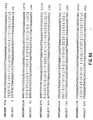
- the 660 bp sequence may have a sequence as set forth in Fig. 8 and designated "MMTENV-like sequence" (SEQ ID NO:17), which depicts the MMTV env sequence between residues 976 and 1640.
- the 660 bp sequence may have a sequence as set forth in Fig. 8 and designated "MS1627" (SEQ ID NO:18), which depicts a predominant sequence for the 660 bp sequence as it has been defined by sequencing analysis of the products of PCR reactions using DNA from human breast cancer tissues.
- the 660 bp sequence may have various other nucleotide sequences obtained by sequencing the results of PCR reactions to detect the presence of 660 bp sequence in human breast cancer tissues.
- the present invention provides for compositions comprising a pair of PCR primers that amplify a nucleic acid fragment from within a region of the MMTV env gene between residues 976 and 1640, but that do not amplify a nucleic acid fragment comprising an MMTV env gene sequence outside of the region between residues 976 and 1640, where the MMTV env gene is SEQ ID NO:21.
- the compositions may comprise one or more of the following primer molecules (5' - 3'):
- the use of such compositions and molecules in PCR and Southern blot techniques is illustrated in the nonlimiting examples set forth below.
- the correlation between the presence of the MMTV-related nucleic acid molecules described above and breast cancer allows such molecules and compositions to be utilized in the diagnosis of breast cancer.
- the present invention provides for a method of diagnosing breast cancer, wherein the hybridization under stringent conditions of such nucleic acid molecules bears a positive correlation to the existence of breast cancer in a human.
- the results of such evaluation, together with additional clinical symptoms, signs, and laboratory test values, may be used to formulate the complete diagnosis of the patient.
- the present invention provides for an essentially purified peptide consisting of an amino acid sequence as set forth in SEQ ID NO:13, SEQ ID NO:19, SEQ ID NO:15 or SEQ ID NO:16.
- the present invention provides for a method of diagnosing breast cancer in a human subject, comprising detecting the binding of a specific antibody to the peptide.
- compositions comprising antibodies which specifically bind to such peptides.
- Such antibodies may be used in methods of diagnosing breast cancer, for example, but not by way of limitation, by Western blot, immunofluorescent techniques, and so forth.
- Certain peptides encoded by portions of the 660 bp sequence have been synthesized. These peptides, which have the sequences LKRPGFQEHEMI (SEQ ID NO:13) and GLPHLIDIEKRG (SEQ ID NO:14), have been used to produce antibodies in rabbits, and the resulting antisera have successfully identified breast cancer cells positive for MMTV env -like sequences by PCR assay.
- Other peptides encoded by 660 bp sequence which may be useful according to the invention include TNCLDSSAYDTA (SEQ ID NO:15) and DIGDEPWFDD (SEQ ID NO:16).
- the DNA was resuspended in a solution containing 0.05 M Tris HCl buffer, pH 7.8, and 0.1 mM EDTA, and the amount of DNA recovered was determined by microfluorometry using Hoechst 33258 dye (Cesarone, C. et al., 1979, Anal Biochem 100:188-197).
- Plasmids containing the cloned genes of MMTV were obtained from the ATCC, propagated in Escherichia coli cultures and purified using anion-exchange minicolumns (Qiagen) or by precipitation with polyethylene glycol (Sambrook J., et al., 1989, in "Molecular Cloning/A Laboratory Manual", Cold Spring Harbor). Oligonucleotide primers were synthesized at the core facilities of the Brookdale Molecular Biology Center at Mount Sinai School of Medicine.
- PCR Polymerase chain reaction
- the ability of the PCR to amplify the selected regions of the MMTV env gene was tested by using as positive templates the cloned MMTV env gene and the genomic DNA of the MCF-7 cell line, since it was shown to express gp52 immunological determinants (Yang, N.S., et al., 1975, J. Natl. Cancer Inst. 61:1205-1208).
- Optimal Mg 2+ primer concentrations and requirements for the different cycling temperatures were determined with these templates.
- the master mix as recommended by the manufacturer was used. To detect possible contamination of the master mix components, a reaction without template was routinely tested. ⁇ DNA and control primers provided by the manufacturer were used as control for polymerase activity.
- amplification of a 120 bp sequence estrogen receptor gene was assayed using primers designed and generously provided by Dr. Beth Schachter, (Mount Sinai School of Medicine, N.Y.). In addition, primers for actin 5 gene amplification were also used.
- the product of the PCR was analyzed by electrophoresis in a 2% agarose gel. A 1 kb DNA ladder (Gibco BRL) was used to identify the size of the PCR product.
- Gabco BRL DNA ladder
- an 18-mer sequence within the env gene was used as a probe for the 660 bp amplified sequence.
- the 18-mer probe was 5' end-labeled with 32 P-ATP using T4 polynucleotide kinase and purified by the NENSORB nucleic acid purification cartridge (NEN). Southern blot hybridization was performed using the conditions described by (Saiki et al.,1985, Science 230:1350-1354).
- the product of the PCR (660 bp or 250 bp) was cloned directly from the reaction mixture into the TA cloning vector (Invitrogen) using the TA cloning kit and following the conditions recommended by the supplier. Direct cloning of the fragment isolated from the gel, was also performed. Plasmid DNA was purified by CsCl density gradient centrifugation or by precipitation with polyethylene glycol (Sambrook et al., 1989, in "Molecular Cloning/A Laboratory Manual", Cold Spring Harbor), restricted with HindIII and EcoRl, electrophoresed in 2% agarose gels and transferred to nitrocellulose filters. Southern blot hybridization was carried out using a 5'-terminal labeled internal probe as described above.
- PCR assays were assembled in a biological hood provided with ultraviolet light. Aerosol resistant tips and dedicated positive-displacement pipettes were used throughout. All equipment used for PCR (microcentrifuge, electrophoresis apparatus, pipettors) was cleaned each time with 10% sodium hypochlorite to assure DNA decontamination (Prince and Andrus, 1992, Biotechniques 12:358-36). After the initial experiments were performed, the plasmid containing the MMTV env gene was frozen and never used again, to avoid contamination. However, to detect plasmid contamination from our own env gene clones, primers were designed to amplify plasmid sequences. All the authentic MMTV env positive samples were then tested and found negative for plasmid contamination.
- Southern blotting and hybridization were performed as described (Southern, E.M., 1975, J. Mol. Biol. 98:503-517), using the 660 bp cloned sequences labeled by the random primer procedure (Feinberg, A.P., et al., 1983, Anal. Biochem. 132:6-13).
- Prehybridization and hybridization were performed in a solution containing 6 x SSPE, 5% Denhardt's, 0.5% SDS, 50% formamide, 100 ⁇ g/ml denaturated salmon testis DNA, incubated for 18 hrs at 42°C, followed by washings with 2 x SSC and 0.5% SDS at room temperature and at 37°C and finally in 0.1 x SSC with 0.5% SDS at 68°C for 30 min (Sambrook et al., 1989, in "Molecular Cloning/A Laboratory Manual", Cold Spring Harbor). For paraffin-embedded tissue sections the conditions described by Wright and Manos (1990, in "PCR Protocols", Innis et al., eds., Academic Press, pp. 153-158) were followed using primers designed to detect a 250 bp sequence.
- primer 4 another primer comprising sequences 1647 to 1661 (primer 4) was synthesized to be used with primer 1 in the first reaction and primers 2 and 3 in the second. Modified primers with GC clamps and extra sequences were also synthesized and used in the PCR (primers la and 3a).
- Another set of primers comprising sequences 974 to 1003 (5L) and 1558 to 1577 (3L) were subsequently developed because their Tm's matched and provided better amplification than the original primers. The sequences are represented in Table 1. All of them were productive in amplification reactions. Table 1.
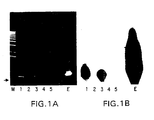
- PCR was performed on DNA extracted from breast cancer tissues, normal breast tissues and from the plasmid containing the env gene of MMTV, using primers 1 and 3. Photographs of the ethidium bromide stained gels of the PCR product reveal the presence of an approximately 660 bp sequence in some of the tumors, (Fig. 1A, lanes 1 and 3) but not in the normal tissue samples (Fig. 1A, lanes 2 and 4). As a positive control the MMTV env gene was also amplified (Fig. 1A, lane E). Similar results were obtained with modified primers 1a, 3a, 3L and 5L. Southern blot hybridization of the gel with 32 P-labeled 18-mer oligonucleotide (primer 2) indicated that this internal sequence was present in the amplified material (Fig. 1B) and that the bands in the gel were not artifactual.
- MMTV env gene-like sequences in human DNA extracted from fresh or frozen tissues
- Sample Number MMTV env gene sequences % Positive Breast Carcinomas 314 121 38.5% Breast Fibroadenomas 29 2 6.9% Normal Breasts 107 2 1.8% *Normal Breasts 4 negative Tumors other than breast 23 negative Normal tissues 20 negative Lymphocytes 26 negative **Lymphocytes 7 negative * Histologically normal tissue from same breast as positive cancer. ** Lymphocytes from breast cancer patients who were positive for MMTV env gene sequences in the tumor. Table 3.
- MMTV env gene sequence MC-7 (breast carcinoma) positive T47-D " " negative BT-20” “ negative MDA-MB-231 “ “ negative ZR-75-1 " " negative SK-BR 3 " “ negative BT474 “ “ negative ED “ " positive MCF-10 (normal breast) negative HB-447 “ " negative HL-60 (promyelocytic leukemia) negative K562 (erythroleukemia) negative Jurkat (T cell leukemia) negative Hep 6-2 (hepatoma) negative
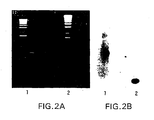
- Fig. 2 results of a representative nested reaction are shown using primers 1 and 4 in the first reaction (Fig. 2A) and 2 and 3 for the 2nd reaction.
- the specificity of the reaction can be seen in the 2nd amplification (Fig. 2B).
- PCR of paraffin-embedded tissue sections was also carried out.
- Primers 2 and 3 were used to amplify a 250 bp sequence within the 660 bp stretch when DNA was extracted from paraffin-embedded tissue sections since larger size sequences are difficult to amplify after fixation.
- Tumor DNA was amplified (Fig. 3A, lanes 2-5) whereas normal breast DNA was not (Fig. 3A, lane 1).
- the identification of this 250 bp sequence with the MMTV-like env gene was confirmed by hybridization with an internal probe (primer 2a) as shown in Fig. 3B.
- This domain of the env gene in the GR strain is 100% homologous to the C 3 H strain and 98% to the BR6 strain (Majors, I.E. and Varmus, H.E., 1983, J. Virol. 47:495-504; Moore, R. et al., 1987, J. Virol. 61:480-490). Evaluation of the clones indicated that homology to MMTV env gene varied from 95% to 99% (Wang et al., 1992, Proc. Amer. Assoc. Cancer Res. 33:A2337; Pogo et al., 1994, Proc. Amer. Assoc. Cancer Res. 35:A130 Wang et al., 1995, Cancer Res.
- the primer 5L contains nucleotides 7370-7395 of the MMTV BR6 genome (5'-3': CCAGATCGCCTTTAAGAAGG) (SEQ ID NO:11) and primer LTR3 contains nucleotides 9918-9927 of the MMTV BR6 genome (5'-3': CGAACAGACACAAAGCGACG) (SEQ ID NO:19).
- the amplified retroviral fragment isolated from the breast cancer sample was cloned into the TA cloning vector (Invitrogen) and automated sequencing was performed as described in Section 6.1.
- sequence homology When compared with the two strains of MMTV C3H and BR6, the sequence homology was 90.8% and 90.7%, respectively, over the MMTV genomic fragment from nucleotides 7370-9937. When compared with the endogenous retroviral sequences (HUMERKA), sequence homology was only 58% in 36 bp and 71% in 74 bp.
- the sequences were found to be highly homologous to MMTV env gene, but not to the endogenous retroviral sequences.
- experiments in which the cloned amplified sequences were used for hybridization with DNA from breast cancer or normal tissues revealed that homologous DNA was only present in breast cancer DNA.
- results also indicate that a human breast carcinoma sample contained an about 2.6 kb MMTV-like fragment comprised of 1,336 bp of the env gene and 1,228 bp of the 3' LTR.
- MMTV env gene sequences in two fibroadenomas out of 29 and in two normal breast tissue samples out of 107 samples is of uncertain significance. Although such results could potentially be artifactual, and thus may represent false positives, they may alternatively indicate the presence of histologically unrecognized cells that were or will be neoplastic.
- MMTV env gene-like and 3' LTR-like sequences found in tumor DNA could be the result of integrated MMTV-like sequences from a human mammary tumor virus.
- Polymorphism of endogenous retroviral sequences is conceivable but can be ruled out because these sequences were not detected in lymphocytes from the positive patients, in sections of the cancerous breast from which abnormal cells were absent, or in normal breast tissue from patients with MMTV env -like positive tumors. Recombination during tumorigenesis between endogenous sequences to resemble the MMTV env genes seems highly unlikely since no known gene or viral sequence is more than 18% homologous to the 660 bp sequence.
- MMTV-like sequences may be correlated with special clinical disease status, may provide another potential molecular marker, and may distinguish a subset of human breast cancer for which viral etiology is tenable. This has implications for epidemiology, therapy and prevention.
Landscapes
- Health & Medical Sciences (AREA)
- Chemical & Material Sciences (AREA)
- Life Sciences & Earth Sciences (AREA)
- Organic Chemistry (AREA)
- Engineering & Computer Science (AREA)
- Immunology (AREA)
- Proteomics, Peptides & Aminoacids (AREA)
- Molecular Biology (AREA)
- Genetics & Genomics (AREA)
- Analytical Chemistry (AREA)
- Pathology (AREA)
- General Health & Medical Sciences (AREA)
- Biochemistry (AREA)
- Biotechnology (AREA)
- Physics & Mathematics (AREA)
- Medicinal Chemistry (AREA)
- Wood Science & Technology (AREA)
- Urology & Nephrology (AREA)
- Microbiology (AREA)
- Hematology (AREA)
- Zoology (AREA)
- Biomedical Technology (AREA)
- Biophysics (AREA)
- General Physics & Mathematics (AREA)
- Gastroenterology & Hepatology (AREA)
- Virology (AREA)
- Hospice & Palliative Care (AREA)
- Oncology (AREA)
- Food Science & Technology (AREA)
- Cell Biology (AREA)
- Bioinformatics & Cheminformatics (AREA)
- General Engineering & Computer Science (AREA)
- Measuring Or Testing Involving Enzymes Or Micro-Organisms (AREA)
- Peptides Or Proteins (AREA)
- Micro-Organisms Or Cultivation Processes Thereof (AREA)
- Medicines Containing Material From Animals Or Micro-Organisms (AREA)
Claims (13)
- Zusammensetzung, umfassend ein Oligonucleotid, das unter stringenten Bedingungen mit einer Nucleinsäure, die SEQ ID NO: 17 aufweist, hybridisiert, jedoch unter stringenten Bedingungen nicht mit der MMTV env-Gensequenz außerhalb des Bereichs zwischen den Resten 976 und 1640 von SEQ ID NO: 21 hybridisiert.
- Zusammensetzung nach Anspruch 1, wobei das Oligonucleotid unter stringenten Bedingungen nicht spezifisch mit menschlichen endogenen Retroviren (HERs) hybridisiert.
- Zusammensetzung nach Anspruch 1, wobei das Oligonucleotid eine Nucleotidsequenz, ausgewählt aus der Gruppe, bestehend aus SEQ ID NO: 1, SEQ ID NO: 2, SEQ ID NO: 3, SEQ ID NO: 4, SEQ ID NO: 5, SEQ ID NO: 6, SEQ ID NO: 7, SEQ ID NO: 8, SEQ ID NO: 9, SEQ ID NO: 10, SEQ ID NO: 11, SEQ ID NO: 12, SEQ ID NO: 17, SEQ ID NO: 18, der SEQ ID NO: 13 codierenden Nucleinsäure, der SEQ ID NO: 14 codierenden Nucleinsäure, der SEQ ID NO: 15 codierenden Nucleinsäure, der SEQ ID NO: 16 codierenden Nucleinsäure, und eine Nucleotidsequenz, die unter stringenten Hybridisierungsbedingungen mit diesen Sequenzen hybridisiert, umfasst.
- Zusammensetzung nach Anspruch 3, wobei das Nucleinsäurefragment die Nucleotidsequenz SEQ ID NO: 17 umfasst.
- Zusammensetzung nach Anspruch 3, wobei das Nucleinsäurefragment die Nucleotidsequenz SEQ ID NO: 18 umfasst.
- Zusammensetzung, umfassend ein Paar von Oligonucleotidprimern, die ein Nucleinsäurefragment von innerhalb eines Bereichs des MMTV env-Gens zwischen den Resten 976 und 1640 amplifizieren, jedoch ein Nucleinsäurefragment, umfassend eine MMTV env-Gensequenz außerhalb des Bereichs zwischen den Resten 976 und 1640 nicht amplifizieren, wobei das MMTV env-Gen SEQ ID NO: 21 ist.
- Zusammensetzung nach Anspruch 6, wobei das Nucleinsäurefragment eine Nucleotidsequenz, ausgewählt aus der Gruppe, bestehend aus SEQ ID NO: 1, SEQ ID NO: 2, SEQ ID NO: 3, SEQ ID NO: 4, SEQ ID NO: 5, SEQ ID NO: 6, SEQ ID NO: 7, SEQ ID NO: 8, SEQ ID NO: 9, SEQ ID NO: 10, SEQ ID NO: 11, SEQ ID NO: 12, SEQ ID NO: 17, SEQ ID NO: 18, der SEQ ID NO: 13 codierenden Nucleinsäure, der SEQ ID NO: 14 codierenden Nucleinsäure, der SEQ ID NO: 15 codierenden Nucleinsäure, der SEQ ID NO: 16 codierenden Nucleinsäure, und eine Nucleotidsequenz, die unter stringenten Hybridisierungsbedingungen mit diesen Sequenzen hybridisiert, umfasst.
- Zusammensetzung nach Anspruch 6, wobei ein Oligonucleotid des Primerpaars SEQ ID NO: 1 umfasst.
- Verfahren zum Diagnostizieren von Brustkrebs bei einer menschlichen Testperson, umfassend:a) das Extrahieren von Nucleinsäure aus einer Brustkrebsgewebeprobe der Testperson; undb) das Hybridisieren der Nucleinsäure mit dem Oligonucleotid nach einem der Ansprüche 1-5 unter stringenten Hybridisierungsbedingungen,wobei die Hybridisierung des Oligonucleotids nach einem der Ansprüche 1-5 unter stringenten Bedingungen auf Brustkrebs hindeutet.
- Verfahren zum Diagnostizieren von Brustkrebs bei einer menschlichen Testperson, umfassend:a) das Extrahieren von Nucleinsäure aus einer Brustkrebsgewebeprobe der Testperson; undb) das Amplifizieren der Nucleinsäure durch die Polymerase-Kettenreaktion mit den Oligonucleotiden nach einem der Ansprüche 6-8 zwecks Erzeugung eines amplifizierten Nucleinsäurefragments,wobei die Erzeugung eines amplifizieilen Nucleinsäurefragments auf Brustkrebs hindeutet.
- Im Wesentlichen gereinigtes Peptid, bestehend aus einer Aminosäuresequenz, wie in SEQ ID NO: 13, SEQ ID NO: 14, SEQ ID NO: 15 oder SEQ ID NO: 16 dargelegt.
- Zusammensetzung, umfassend einen Antikörper, der spezifisch an das Peptid nach Anspruch 11 bindet.
- Verfahren zum Diagnostizieren von Brustkrebs bei einer menschlichen Testperson, umfassend:(a) das Kontaktieren einer der Testperson entnommenen Brustgewebeprobe mit einem Antikörper, der spezifisch ist für das Peptid gemäß Anspruch 11 oder für ein Peptid, umfassend Aminosäuresequenzen, die durch die Nucleinsäure von SEQ ID NO: 17 oder SEQ ID NO: 18 codiert werden; und(b) das Detektieren der Bindung des Antikörpers,wobei die Bindung des Antikörpers auf Brustkrebs hindeutet.
Applications Claiming Priority (3)
| Application Number | Priority Date | Filing Date | Title |
|---|---|---|---|
| US08/555,394 US5686247A (en) | 1995-11-09 | 1995-11-09 | Detection of mammary tumor virus env gene-like sequences in human breast cancer |
| US555394 | 1995-11-09 | ||
| PCT/US1996/017877 WO1997017470A1 (en) | 1995-11-09 | 1996-11-08 | Detection of mammary tumor virus-like sequences in human breast cancer |
Publications (3)
| Publication Number | Publication Date |
|---|---|
| EP0866878A1 EP0866878A1 (de) | 1998-09-30 |
| EP0866878A4 EP0866878A4 (de) | 2002-02-13 |
| EP0866878B1 true EP0866878B1 (de) | 2006-04-12 |
Family
ID=24217097
Family Applications (1)
| Application Number | Title | Priority Date | Filing Date |
|---|---|---|---|
| EP96943485A Expired - Lifetime EP0866878B1 (de) | 1995-11-09 | 1996-11-08 | Nachweis von brusttumorvirus-artigen sequenzen in brustkrebs bei menschen |
Country Status (8)
| Country | Link |
|---|---|
| US (2) | US5686247A (de) |
| EP (1) | EP0866878B1 (de) |
| JP (1) | JP2000500650A (de) |
| AT (1) | ATE323176T1 (de) |
| AU (1) | AU717291B2 (de) |
| CA (1) | CA2236837C (de) |
| DE (1) | DE69636041T2 (de) |
| WO (1) | WO1997017470A1 (de) |
Families Citing this family (9)
| Publication number | Priority date | Publication date | Assignee | Title |
|---|---|---|---|---|
| US20040176314A1 (en) * | 1997-07-07 | 2004-09-09 | Bio Merieux | Endogenetic retroviral sequences, associated with autoimmune diseases or with pregnancy disorders |
| AU8571598A (en) * | 1997-07-17 | 1999-02-10 | Ludwig Institute For Cancer Research | Cancer associated nucleic acids and polypeptides |
| CA2328181A1 (en) * | 1998-04-08 | 1999-10-14 | International Bioimmune Systems, Inc. | Immunomodulatory compositions of mmtv antigens and methods of using same |
| US6686147B1 (en) | 1998-07-15 | 2004-02-03 | Ludwig Institute For Cancer Research | Cancer associated antigens and uses therefor |
| CA2369848C (en) | 1999-06-30 | 2011-09-20 | Robert F. Garry | Human endogenous retrovirus in breast cancer |
| WO2005073728A1 (en) * | 2004-01-29 | 2005-08-11 | Yissum Research Development Company Of The Hebrew University Of Jerusalem | Method for diagnosing and treatment of breast cancer and pharmaceuticals copmsition and kit for same |
| US8093063B2 (en) * | 2007-11-29 | 2012-01-10 | Quest Diagnostics Investments Incorporated | Assay for detecting genetic abnormalities in genomic nucleic acids |
| US12025615B2 (en) | 2017-09-15 | 2024-07-02 | Arizona Board Of Regents On Behalf Of Arizona State University | Methods of classifying response to immunotherapy for cancer |
| EP4038222A4 (de) | 2019-10-02 | 2023-10-18 | Arizona Board of Regents on behalf of Arizona State University | Verfahren und zusammensetzungen zur identifizierung von neoantigenen zur verwendung bei der behandlung und vorbeugung von krebs |
Family Cites Families (1)
| Publication number | Priority date | Publication date | Assignee | Title |
|---|---|---|---|---|
| US4707438A (en) * | 1984-08-22 | 1987-11-17 | Tel Aviv University | Immunoassay for breast cancer employing monoclonal antibodies |
-
1995
- 1995-11-09 US US08/555,394 patent/US5686247A/en not_active Expired - Lifetime
-
1996
- 1996-11-08 DE DE69636041T patent/DE69636041T2/de not_active Expired - Fee Related
- 1996-11-08 EP EP96943485A patent/EP0866878B1/de not_active Expired - Lifetime
- 1996-11-08 AU AU12714/97A patent/AU717291B2/en not_active Ceased
- 1996-11-08 JP JP9518329A patent/JP2000500650A/ja not_active Ceased
- 1996-11-08 AT AT96943485T patent/ATE323176T1/de not_active IP Right Cessation
- 1996-11-08 CA CA002236837A patent/CA2236837C/en not_active Expired - Fee Related
- 1996-11-08 US US08/745,892 patent/US6040146A/en not_active Expired - Lifetime
- 1996-11-08 WO PCT/US1996/017877 patent/WO1997017470A1/en not_active Ceased
Non-Patent Citations (1)
| Title |
|---|
| MAJORS J.E.; VARMUS H.E.: "Nucleotide sequencing of an apparent proviral copy of env mRNA defines determinants of expression of the mouse mammary tumor virus env gene", JOURNAL OF VIROLOGY, vol. 47, no. 3, September 1983 (1983-09-01), pages 495 - 504 * |
Also Published As
| Publication number | Publication date |
|---|---|
| CA2236837C (en) | 2009-01-27 |
| EP0866878A4 (de) | 2002-02-13 |
| CA2236837A1 (en) | 1997-05-15 |
| ATE323176T1 (de) | 2006-04-15 |
| WO1997017470A1 (en) | 1997-05-15 |
| AU717291B2 (en) | 2000-03-23 |
| US5686247A (en) | 1997-11-11 |
| AU1271497A (en) | 1997-05-29 |
| DE69636041T2 (de) | 2006-11-23 |
| US6040146A (en) | 2000-03-21 |
| JP2000500650A (ja) | 2000-01-25 |
| DE69636041D1 (de) | 2006-05-24 |
| EP0866878A1 (de) | 1998-09-30 |
Similar Documents
| Publication | Publication Date | Title |
|---|---|---|
| Wang et al. | Detection of mammary tumor virus env gene-like sequences in human breast cancer | |
| US5057411A (en) | Type-specific papillomavirus DNA sequences and peptides | |
| EP0728217B1 (de) | Die bestimmung von nukleinsäuremutationen durch analyse des sputum | |
| Bell et al. | c-Ki-ras gene mutations in dysplasia and carcinomas complicating ulcerative colitis | |
| Hecht et al. | Genetic characterization of the human papillomavirus (HPV) 18 E2 gene in clinical specimens suggests the presence of a subtype with decreased oncogenic potential | |
| Casas et al. | Asian‐American variants of human papillomavirus type 16 have extensive mutations in the E2 gene and are highly amplified in cervical carcinomas | |
| EP1012336B1 (de) | Screeningverfahren zur identifizierung von personen mit risiko einer krankheit, die mit verschiedenen polymorphen formen des wildtyps des p53 zusammenhängen, zu entwickelen | |
| KR19990077146A (ko) | 유방암의 치료 및 진단용 조성물 및 방법 | |
| JP3207389B2 (ja) | 乳頭腫ウィルス及びその診断方法 | |
| JP4270523B2 (ja) | 乳癌の処置および診断のための組成物および方法 | |
| US5863717A (en) | Use of conserved oligonucleotide primers to amplify human papillomavirus DNA sequences | |
| EP0866878B1 (de) | Nachweis von brusttumorvirus-artigen sequenzen in brustkrebs bei menschen | |
| Soini et al. | Presence of human papillomavirus DNA and abnormal p53 protein accumulation in lung carcinoma. | |
| CA2362527A1 (en) | A novel, prostate-specific gene for diagnosis, prognosis and management of prostate cancer | |
| WO1997017470A9 (en) | Detection of mammary tumor virus-like sequences in human breast cancer | |
| EP0489442A1 (de) | Synthetische zur Diagnose von Infektionen verschiedener Typen von Viren der Papillomagruppe nützliche Oligonukleotide und Verwendung dafür | |
| Bens et al. | Detection of new human papillomavirus sequences in skin lesions of a renal transplant recipient and characterization of one complete genome related to epidermodysplasia verruciformis-associated types. | |
| PALLESEN et al. | Involvement of Aberrant p53 Expression and Human Papillo-mavirus in Carcinoma of the Head, Neck and Esophagus | |
| JP2005508154A (ja) | 外套細胞リンパ腫の外套組織球から単離されたレトロウイルス | |
| Landry et al. | Nucleic acid hybridization in the diagnosis of viral infections | |
| Crépin et al. | Sequences related to mouse mammary tumor virus genome in tumor cells and lymphocytes from patients with breast cancer | |
| Tate et al. | Analysis of HPV-positive and-negative vulvar carcinomas for alterations in c-myc, Ha-, Ki-, and N-ras genes | |
| JP3600616B2 (ja) | ヒトパピローマウイルスを検出するためのプライマーセット、検出方法および検出用dnaアレイ | |
| Larsen et al. | Absence of human papilloma virus DNA in oropharyngeal spindle-cell squamous carcinomas | |
| Jochmus et al. | Detection of antibodies to the E4 or E7 proteins of human papillomaviruses (HPV) in human sera by Western blot analysis: type-specific reaction of anti-HPV 16 antibodies |
Legal Events
| Date | Code | Title | Description |
|---|---|---|---|
| PUAI | Public reference made under article 153(3) epc to a published international application that has entered the european phase |
Free format text: ORIGINAL CODE: 0009012 |
|
| 17P | Request for examination filed |
Effective date: 19980511 |
|
| AK | Designated contracting states |
Kind code of ref document: A1 Designated state(s): AT BE CH DE DK ES FI FR GB GR IE IT LI LU MC NL PT SE |
|
| A4 | Supplementary search report drawn up and despatched |
Effective date: 20020103 |
|
| AK | Designated contracting states |
Kind code of ref document: A4 Designated state(s): AT BE CH DE DK ES FI FR GB GR IE IT LI LU MC NL PT SE |
|
| 17Q | First examination report despatched |
Effective date: 20020403 |
|
| GRAP | Despatch of communication of intention to grant a patent |
Free format text: ORIGINAL CODE: EPIDOSNIGR1 |
|
| GRAS | Grant fee paid |
Free format text: ORIGINAL CODE: EPIDOSNIGR3 |
|
| GRAA | (expected) grant |
Free format text: ORIGINAL CODE: 0009210 |
|
| AK | Designated contracting states |
Kind code of ref document: B1 Designated state(s): AT BE CH DE DK ES FI FR GB GR IE IT LI LU MC NL PT SE |
|
| PG25 | Lapsed in a contracting state [announced via postgrant information from national office to epo] |
Ref country code: NL Free format text: LAPSE BECAUSE OF FAILURE TO SUBMIT A TRANSLATION OF THE DESCRIPTION OR TO PAY THE FEE WITHIN THE PRESCRIBED TIME-LIMIT Effective date: 20060412 Ref country code: IT Free format text: LAPSE BECAUSE OF FAILURE TO SUBMIT A TRANSLATION OF THE DESCRIPTION OR TO PAY THE FEE WITHIN THE PRESCRIBED TIME-LIMIT;WARNING: LAPSES OF ITALIAN PATENTS WITH EFFECTIVE DATE BEFORE 2007 MAY HAVE OCCURRED AT ANY TIME BEFORE 2007. THE CORRECT EFFECTIVE DATE MAY BE DIFFERENT FROM THE ONE RECORDED. Effective date: 20060412 Ref country code: FI Free format text: LAPSE BECAUSE OF FAILURE TO SUBMIT A TRANSLATION OF THE DESCRIPTION OR TO PAY THE FEE WITHIN THE PRESCRIBED TIME-LIMIT Effective date: 20060412 Ref country code: BE Free format text: LAPSE BECAUSE OF FAILURE TO SUBMIT A TRANSLATION OF THE DESCRIPTION OR TO PAY THE FEE WITHIN THE PRESCRIBED TIME-LIMIT Effective date: 20060412 Ref country code: AT Free format text: LAPSE BECAUSE OF FAILURE TO SUBMIT A TRANSLATION OF THE DESCRIPTION OR TO PAY THE FEE WITHIN THE PRESCRIBED TIME-LIMIT Effective date: 20060412 |
|
| REG | Reference to a national code |
Ref country code: GB Ref legal event code: FG4D |
|
| RIC1 | Information provided on ipc code assigned before grant |
Ipc: C07K 5/00 20060101ALI20060220BHEP Ipc: G01N 33/53 20060101ALI20060220BHEP Ipc: C07H 21/04 20060101ALI20060220BHEP Ipc: C07H 21/02 20060101ALI20060220BHEP Ipc: C12P 19/34 20060101ALI20060220BHEP Ipc: C12Q 1/70 20060101ALI20060220BHEP Ipc: C12Q 1/68 20060101AFI20060220BHEP |
|
| REG | Reference to a national code |
Ref country code: CH Ref legal event code: EP |
|
| REF | Corresponds to: |
Ref document number: 69636041 Country of ref document: DE Date of ref document: 20060524 Kind code of ref document: P |
|
| REG | Reference to a national code |
Ref country code: IE Ref legal event code: FG4D |
|
| PG25 | Lapsed in a contracting state [announced via postgrant information from national office to epo] |
Ref country code: SE Free format text: LAPSE BECAUSE OF FAILURE TO SUBMIT A TRANSLATION OF THE DESCRIPTION OR TO PAY THE FEE WITHIN THE PRESCRIBED TIME-LIMIT Effective date: 20060712 Ref country code: DK Free format text: LAPSE BECAUSE OF FAILURE TO SUBMIT A TRANSLATION OF THE DESCRIPTION OR TO PAY THE FEE WITHIN THE PRESCRIBED TIME-LIMIT Effective date: 20060712 |
|
| PG25 | Lapsed in a contracting state [announced via postgrant information from national office to epo] |
Ref country code: ES Free format text: LAPSE BECAUSE OF FAILURE TO SUBMIT A TRANSLATION OF THE DESCRIPTION OR TO PAY THE FEE WITHIN THE PRESCRIBED TIME-LIMIT Effective date: 20060723 |
|
| PG25 | Lapsed in a contracting state [announced via postgrant information from national office to epo] |
Ref country code: PT Free format text: LAPSE BECAUSE OF FAILURE TO SUBMIT A TRANSLATION OF THE DESCRIPTION OR TO PAY THE FEE WITHIN THE PRESCRIBED TIME-LIMIT Effective date: 20060912 |
|
| NLV1 | Nl: lapsed or annulled due to failure to fulfill the requirements of art. 29p and 29m of the patents act | ||
| REG | Reference to a national code |
Ref country code: CH Ref legal event code: NV Representative=s name: BOGENSBERGER PATENT- & MARKENBUERO DR. BURKHARD BO |
|
| PG25 | Lapsed in a contracting state [announced via postgrant information from national office to epo] |
Ref country code: IE Free format text: LAPSE BECAUSE OF NON-PAYMENT OF DUE FEES Effective date: 20061108 |
|
| PG25 | Lapsed in a contracting state [announced via postgrant information from national office to epo] |
Ref country code: MC Free format text: LAPSE BECAUSE OF NON-PAYMENT OF DUE FEES Effective date: 20061130 |
|
| ET | Fr: translation filed | ||
| PLBE | No opposition filed within time limit |
Free format text: ORIGINAL CODE: 0009261 |
|
| STAA | Information on the status of an ep patent application or granted ep patent |
Free format text: STATUS: NO OPPOSITION FILED WITHIN TIME LIMIT |
|
| 26N | No opposition filed |
Effective date: 20070115 |
|
| PGFP | Annual fee paid to national office [announced via postgrant information from national office to epo] |
Ref country code: CH Payment date: 20071129 Year of fee payment: 12 |
|
| PG25 | Lapsed in a contracting state [announced via postgrant information from national office to epo] |
Ref country code: GR Free format text: LAPSE BECAUSE OF FAILURE TO SUBMIT A TRANSLATION OF THE DESCRIPTION OR TO PAY THE FEE WITHIN THE PRESCRIBED TIME-LIMIT Effective date: 20060713 |
|
| PGFP | Annual fee paid to national office [announced via postgrant information from national office to epo] |
Ref country code: GB Payment date: 20071128 Year of fee payment: 12 Ref country code: FR Payment date: 20071119 Year of fee payment: 12 |
|
| PGFP | Annual fee paid to national office [announced via postgrant information from national office to epo] |
Ref country code: DE Payment date: 20071221 Year of fee payment: 12 |
|
| PG25 | Lapsed in a contracting state [announced via postgrant information from national office to epo] |
Ref country code: LU Free format text: LAPSE BECAUSE OF NON-PAYMENT OF DUE FEES Effective date: 20061108 |
|
| REG | Reference to a national code |
Ref country code: CH Ref legal event code: PFA Owner name: HOLLAND, JAMES F. Free format text: HOLLAND, JAMES F.#31 MAMARONECK ROAD#SCARSDALE, NY 10583 (US) -TRANSFER TO- HOLLAND, JAMES F.#31 MAMARONECK ROAD#SCARSDALE, NY 10583 (US) |
|
| REG | Reference to a national code |
Ref country code: CH Ref legal event code: PL |
|
| GBPC | Gb: european patent ceased through non-payment of renewal fee |
Effective date: 20081108 |
|
| REG | Reference to a national code |
Ref country code: FR Ref legal event code: ST Effective date: 20090731 |
|
| PG25 | Lapsed in a contracting state [announced via postgrant information from national office to epo] |
Ref country code: LI Free format text: LAPSE BECAUSE OF NON-PAYMENT OF DUE FEES Effective date: 20081130 Ref country code: DE Free format text: LAPSE BECAUSE OF NON-PAYMENT OF DUE FEES Effective date: 20090603 Ref country code: CH Free format text: LAPSE BECAUSE OF NON-PAYMENT OF DUE FEES Effective date: 20081130 |
|
| PG25 | Lapsed in a contracting state [announced via postgrant information from national office to epo] |
Ref country code: GB Free format text: LAPSE BECAUSE OF NON-PAYMENT OF DUE FEES Effective date: 20081108 |
|
| PG25 | Lapsed in a contracting state [announced via postgrant information from national office to epo] |
Ref country code: FR Free format text: LAPSE BECAUSE OF NON-PAYMENT OF DUE FEES Effective date: 20081130 |