EP0867478A1 - Noirs de carbone à faible teneur en cendre - Google Patents
Noirs de carbone à faible teneur en cendre Download PDFInfo
- Publication number
- EP0867478A1 EP0867478A1 EP98108973A EP98108973A EP0867478A1 EP 0867478 A1 EP0867478 A1 EP 0867478A1 EP 98108973 A EP98108973 A EP 98108973A EP 98108973 A EP98108973 A EP 98108973A EP 0867478 A1 EP0867478 A1 EP 0867478A1
- Authority
- EP
- European Patent Office
- Prior art keywords
- ppm
- carbon black
- carbon blacks
- equal
- ash
- Prior art date
- Legal status (The legal status is an assumption and is not a legal conclusion. Google has not performed a legal analysis and makes no representation as to the accuracy of the status listed.)
- Granted
Links
- 239000006229 carbon black Substances 0.000 title claims abstract description 183
- 235000019241 carbon black Nutrition 0.000 title abstract description 163
- 239000000203 mixture Substances 0.000 claims abstract description 65
- 229910052717 sulfur Inorganic materials 0.000 claims abstract description 58
- NINIDFKCEFEMDL-UHFFFAOYSA-N Sulfur Chemical compound [S] NINIDFKCEFEMDL-UHFFFAOYSA-N 0.000 claims abstract description 54
- 239000011593 sulfur Substances 0.000 claims abstract description 54
- 239000004033 plastic Substances 0.000 claims abstract description 17
- 229920003023 plastic Polymers 0.000 claims abstract description 17
- 229920001971 elastomer Polymers 0.000 claims abstract description 12
- 239000005060 rubber Substances 0.000 claims abstract description 12
- LZZYPRNAOMGNLH-UHFFFAOYSA-M Cetrimonium bromide Chemical compound [Br-].CCCCCCCCCCCCCCCC[N+](C)(C)C LZZYPRNAOMGNLH-UHFFFAOYSA-M 0.000 claims description 26
- 239000000463 material Substances 0.000 claims description 6
- HSFWRNGVRCDJHI-UHFFFAOYSA-N alpha-acetylene Natural products C#C HSFWRNGVRCDJHI-UHFFFAOYSA-N 0.000 abstract description 12
- 125000002534 ethynyl group Chemical group [H]C#C* 0.000 abstract description 12
- 238000000034 method Methods 0.000 description 31
- QLZJUIZVJLSNDD-UHFFFAOYSA-N 2-(2-methylidenebutanoyloxy)ethyl 2-methylidenebutanoate Chemical compound CCC(=C)C(=O)OCCOC(=O)C(=C)CC QLZJUIZVJLSNDD-UHFFFAOYSA-N 0.000 description 29
- 239000005042 ethylene-ethyl acrylate Substances 0.000 description 29
- 229920006244 ethylene-ethyl acrylate Polymers 0.000 description 29
- 239000000567 combustion gas Substances 0.000 description 28
- OKTJSMMVPCPJKN-UHFFFAOYSA-N Carbon Chemical compound [C] OKTJSMMVPCPJKN-UHFFFAOYSA-N 0.000 description 24
- 239000012530 fluid Substances 0.000 description 22
- 238000010791 quenching Methods 0.000 description 22
- 239000003570 air Substances 0.000 description 17
- 238000006243 chemical reaction Methods 0.000 description 17
- DOIRQSBPFJWKBE-UHFFFAOYSA-N dibutyl phthalate Chemical compound CCCCOC(=O)C1=CC=CC=C1C(=O)OCCCC DOIRQSBPFJWKBE-UHFFFAOYSA-N 0.000 description 17
- 238000000197 pyrolysis Methods 0.000 description 16
- 229910052799 carbon Inorganic materials 0.000 description 15
- 238000002485 combustion reaction Methods 0.000 description 15
- 230000008569 process Effects 0.000 description 15
- VNWKTOKETHGBQD-UHFFFAOYSA-N methane Chemical compound C VNWKTOKETHGBQD-UHFFFAOYSA-N 0.000 description 14
- 230000000171 quenching effect Effects 0.000 description 14
- 239000000446 fuel Substances 0.000 description 13
- 229930195733 hydrocarbon Natural products 0.000 description 13
- 150000002430 hydrocarbons Chemical class 0.000 description 13
- PPBRXRYQALVLMV-UHFFFAOYSA-N Styrene Chemical compound C=CC1=CC=CC=C1 PPBRXRYQALVLMV-UHFFFAOYSA-N 0.000 description 12
- 238000004458 analytical method Methods 0.000 description 12
- 238000009616 inductively coupled plasma Methods 0.000 description 11
- KAKZBPTYRLMSJV-UHFFFAOYSA-N Butadiene Chemical compound C=CC=C KAKZBPTYRLMSJV-UHFFFAOYSA-N 0.000 description 10
- 239000004215 Carbon black (E152) Substances 0.000 description 10
- 238000009413 insulation Methods 0.000 description 10
- 239000007800 oxidant agent Substances 0.000 description 10
- 230000001590 oxidative effect Effects 0.000 description 10
- BASFCYQUMIYNBI-UHFFFAOYSA-N platinum Chemical compound [Pt] BASFCYQUMIYNBI-UHFFFAOYSA-N 0.000 description 10
- XLYOFNOQVPJJNP-UHFFFAOYSA-N water Substances O XLYOFNOQVPJJNP-UHFFFAOYSA-N 0.000 description 10
- 229920001577 copolymer Polymers 0.000 description 9
- 230000004907 flux Effects 0.000 description 9
- 239000007789 gas Substances 0.000 description 9
- 238000005453 pelletization Methods 0.000 description 9
- 239000006230 acetylene black Substances 0.000 description 8
- -1 filters Substances 0.000 description 8
- 239000008188 pellet Substances 0.000 description 8
- 229910001868 water Inorganic materials 0.000 description 8
- YXFVVABEGXRONW-UHFFFAOYSA-N Toluene Natural products CC1=CC=CC=C1 YXFVVABEGXRONW-UHFFFAOYSA-N 0.000 description 7
- TZCXTZWJZNENPQ-UHFFFAOYSA-L barium sulfate Chemical compound [Ba+2].[O-]S([O-])(=O)=O TZCXTZWJZNENPQ-UHFFFAOYSA-L 0.000 description 7
- 239000003153 chemical reaction reagent Substances 0.000 description 7
- 150000001875 compounds Chemical class 0.000 description 7
- VEXZGXHMUGYJMC-UHFFFAOYSA-N Hydrochloric acid Chemical compound Cl VEXZGXHMUGYJMC-UHFFFAOYSA-N 0.000 description 6
- GRYLNZFGIOXLOG-UHFFFAOYSA-N Nitric acid Chemical compound O[N+]([O-])=O GRYLNZFGIOXLOG-UHFFFAOYSA-N 0.000 description 6
- VYPSYNLAJGMNEJ-UHFFFAOYSA-N Silicium dioxide Chemical compound O=[Si]=O VYPSYNLAJGMNEJ-UHFFFAOYSA-N 0.000 description 6
- 230000008901 benefit Effects 0.000 description 6
- 238000002347 injection Methods 0.000 description 6
- 239000007924 injection Substances 0.000 description 6
- XEEYBQQBJWHFJM-UHFFFAOYSA-N iron Substances [Fe] XEEYBQQBJWHFJM-UHFFFAOYSA-N 0.000 description 6
- 239000007788 liquid Substances 0.000 description 6
- 239000003345 natural gas Substances 0.000 description 6
- 229910017604 nitric acid Inorganic materials 0.000 description 6
- 235000006650 Syzygium cordatum Nutrition 0.000 description 5
- 240000005572 Syzygium cordatum Species 0.000 description 5
- 239000011575 calcium Substances 0.000 description 5
- 238000004519 manufacturing process Methods 0.000 description 5
- 229910052751 metal Inorganic materials 0.000 description 5
- 239000002184 metal Substances 0.000 description 5
- 238000002156 mixing Methods 0.000 description 5
- 239000000243 solution Substances 0.000 description 5
- 239000012485 toluene extract Substances 0.000 description 5
- 238000002441 X-ray diffraction Methods 0.000 description 4
- 238000010521 absorption reaction Methods 0.000 description 4
- 239000004020 conductor Substances 0.000 description 4
- QDOXWKRWXJOMAK-UHFFFAOYSA-N dichromium trioxide Chemical compound O=[Cr]O[Cr]=O QDOXWKRWXJOMAK-UHFFFAOYSA-N 0.000 description 4
- PSHMSSXLYVAENJ-UHFFFAOYSA-N dilithium;[oxido(oxoboranyloxy)boranyl]oxy-oxoboranyloxyborinate Chemical compound [Li+].[Li+].O=BOB([O-])OB([O-])OB=O PSHMSSXLYVAENJ-UHFFFAOYSA-N 0.000 description 4
- 238000004090 dissolution Methods 0.000 description 4
- 239000012535 impurity Substances 0.000 description 4
- 150000002739 metals Chemical class 0.000 description 4
- PXHVJJICTQNCMI-UHFFFAOYSA-N nickel Substances [Ni] PXHVJJICTQNCMI-UHFFFAOYSA-N 0.000 description 4
- 239000004417 polycarbonate Substances 0.000 description 4
- 229920000515 polycarbonate Polymers 0.000 description 4
- 229910052700 potassium Inorganic materials 0.000 description 4
- UHOVQNZJYSORNB-UHFFFAOYSA-N Benzene Chemical compound C1=CC=CC=C1 UHOVQNZJYSORNB-UHFFFAOYSA-N 0.000 description 3
- 229910001369 Brass Inorganic materials 0.000 description 3
- VGGSQFUCUMXWEO-UHFFFAOYSA-N Ethene Chemical compound C=C VGGSQFUCUMXWEO-UHFFFAOYSA-N 0.000 description 3
- 239000005977 Ethylene Substances 0.000 description 3
- QVGXLLKOCUKJST-UHFFFAOYSA-N atomic oxygen Chemical compound [O] QVGXLLKOCUKJST-UHFFFAOYSA-N 0.000 description 3
- 230000015572 biosynthetic process Effects 0.000 description 3
- 239000010951 brass Substances 0.000 description 3
- 238000004364 calculation method Methods 0.000 description 3
- 230000004927 fusion Effects 0.000 description 3
- 239000001257 hydrogen Substances 0.000 description 3
- 229910052739 hydrogen Inorganic materials 0.000 description 3
- 239000011159 matrix material Substances 0.000 description 3
- 239000001301 oxygen Substances 0.000 description 3
- 229910052760 oxygen Inorganic materials 0.000 description 3
- 229920001155 polypropylene Polymers 0.000 description 3
- 238000010517 secondary reaction Methods 0.000 description 3
- 238000000926 separation method Methods 0.000 description 3
- 239000000377 silicon dioxide Substances 0.000 description 3
- 229910052708 sodium Inorganic materials 0.000 description 3
- VXNZUUAINFGPBY-UHFFFAOYSA-N 1-Butene Chemical compound CCC=C VXNZUUAINFGPBY-UHFFFAOYSA-N 0.000 description 2
- ZGHFDIIVVIFNPS-UHFFFAOYSA-N 3-Methyl-3-buten-2-one Chemical class CC(=C)C(C)=O ZGHFDIIVVIFNPS-UHFFFAOYSA-N 0.000 description 2
- VTYYLEPIZMXCLO-UHFFFAOYSA-L Calcium carbonate Chemical compound [Ca+2].[O-]C([O-])=O VTYYLEPIZMXCLO-UHFFFAOYSA-L 0.000 description 2
- UFHFLCQGNIYNRP-UHFFFAOYSA-N Hydrogen Chemical compound [H][H] UFHFLCQGNIYNRP-UHFFFAOYSA-N 0.000 description 2
- KKCBUQHMOMHUOY-UHFFFAOYSA-N Na2O Inorganic materials [O-2].[Na+].[Na+] KKCBUQHMOMHUOY-UHFFFAOYSA-N 0.000 description 2
- 241000276498 Pollachius virens Species 0.000 description 2
- 239000004743 Polypropylene Substances 0.000 description 2
- 229910000831 Steel Inorganic materials 0.000 description 2
- 230000009471 action Effects 0.000 description 2
- 150000001336 alkenes Chemical class 0.000 description 2
- PNEYBMLMFCGWSK-UHFFFAOYSA-N aluminium oxide Inorganic materials [O-2].[O-2].[O-2].[Al+3].[Al+3] PNEYBMLMFCGWSK-UHFFFAOYSA-N 0.000 description 2
- 150000001408 amides Chemical class 0.000 description 2
- KGBXLFKZBHKPEV-UHFFFAOYSA-N boric acid Chemical compound OB(O)O KGBXLFKZBHKPEV-UHFFFAOYSA-N 0.000 description 2
- 239000004327 boric acid Substances 0.000 description 2
- 229910052791 calcium Inorganic materials 0.000 description 2
- 150000001721 carbon Chemical class 0.000 description 2
- 150000001768 cations Chemical class 0.000 description 2
- 229910052681 coesite Inorganic materials 0.000 description 2
- 238000001816 cooling Methods 0.000 description 2
- 239000010949 copper Substances 0.000 description 2
- 238000012937 correction Methods 0.000 description 2
- 229910052593 corundum Inorganic materials 0.000 description 2
- 229910052906 cristobalite Inorganic materials 0.000 description 2
- 239000008367 deionised water Substances 0.000 description 2
- 229910021641 deionized water Inorganic materials 0.000 description 2
- 150000001993 dienes Chemical class 0.000 description 2
- 238000002845 discoloration Methods 0.000 description 2
- 230000000694 effects Effects 0.000 description 2
- 239000012632 extractable Substances 0.000 description 2
- 238000001125 extrusion Methods 0.000 description 2
- 230000000977 initiatory effect Effects 0.000 description 2
- 150000002500 ions Chemical class 0.000 description 2
- 229910052742 iron Inorganic materials 0.000 description 2
- JEIPFZHSYJVQDO-UHFFFAOYSA-N iron(III) oxide Inorganic materials O=[Fe]O[Fe]=O JEIPFZHSYJVQDO-UHFFFAOYSA-N 0.000 description 2
- 239000000155 melt Substances 0.000 description 2
- 239000000178 monomer Substances 0.000 description 2
- 229920003052 natural elastomer Polymers 0.000 description 2
- 229920001194 natural rubber Polymers 0.000 description 2
- 239000003973 paint Substances 0.000 description 2
- 239000002245 particle Substances 0.000 description 2
- 239000000049 pigment Substances 0.000 description 2
- 229910052697 platinum Inorganic materials 0.000 description 2
- 229920000642 polymer Polymers 0.000 description 2
- 239000000843 powder Substances 0.000 description 2
- 238000002360 preparation method Methods 0.000 description 2
- 238000012545 processing Methods 0.000 description 2
- 238000001179 sorption measurement Methods 0.000 description 2
- 238000002798 spectrophotometry method Methods 0.000 description 2
- 239000010959 steel Substances 0.000 description 2
- 229910052682 stishovite Inorganic materials 0.000 description 2
- 229920003051 synthetic elastomer Polymers 0.000 description 2
- 239000005061 synthetic rubber Substances 0.000 description 2
- 238000010998 test method Methods 0.000 description 2
- 238000012360 testing method Methods 0.000 description 2
- 229910052905 tridymite Inorganic materials 0.000 description 2
- 238000011144 upstream manufacturing Methods 0.000 description 2
- 238000004876 x-ray fluorescence Methods 0.000 description 2
- 229910001845 yogo sapphire Inorganic materials 0.000 description 2
- PRBHEGAFLDMLAL-GQCTYLIASA-N (4e)-hexa-1,4-diene Chemical compound C\C=C\CC=C PRBHEGAFLDMLAL-GQCTYLIASA-N 0.000 description 1
- HECLRDQVFMWTQS-RGOKHQFPSA-N 1755-01-7 Chemical compound C1[C@H]2[C@@H]3CC=C[C@@H]3[C@@H]1C=C2 HECLRDQVFMWTQS-RGOKHQFPSA-N 0.000 description 1
- SMZOUWXMTYCWNB-UHFFFAOYSA-N 2-(2-methoxy-5-methylphenyl)ethanamine Chemical compound COC1=CC=C(C)C=C1CCN SMZOUWXMTYCWNB-UHFFFAOYSA-N 0.000 description 1
- NIXOWILDQLNWCW-UHFFFAOYSA-N 2-Propenoic acid Natural products OC(=O)C=C NIXOWILDQLNWCW-UHFFFAOYSA-N 0.000 description 1
- SBYMUDUGTIKLCR-UHFFFAOYSA-N 2-chloroethenylbenzene Chemical compound ClC=CC1=CC=CC=C1 SBYMUDUGTIKLCR-UHFFFAOYSA-N 0.000 description 1
- YQUDMNIUBTXLSX-UHFFFAOYSA-N 2-ethenyl-5-ethylpyridine Chemical compound CCC1=CC=C(C=C)N=C1 YQUDMNIUBTXLSX-UHFFFAOYSA-N 0.000 description 1
- LCFYCLRCIJDYQD-UHFFFAOYSA-N 2-ethenyl-5-methylpyridine Chemical compound CC1=CC=C(C=C)N=C1 LCFYCLRCIJDYQD-UHFFFAOYSA-N 0.000 description 1
- KGIGUEBEKRSTEW-UHFFFAOYSA-N 2-vinylpyridine Chemical compound C=CC1=CC=CC=N1 KGIGUEBEKRSTEW-UHFFFAOYSA-N 0.000 description 1
- JLBJTVDPSNHSKJ-UHFFFAOYSA-N 4-Methylstyrene Chemical compound CC1=CC=C(C=C)C=C1 JLBJTVDPSNHSKJ-UHFFFAOYSA-N 0.000 description 1
- VJOWMORERYNYON-UHFFFAOYSA-N 5-ethenyl-2-methylpyridine Chemical compound CC1=CC=C(C=C)C=N1 VJOWMORERYNYON-UHFFFAOYSA-N 0.000 description 1
- NLHHRLWOUZZQLW-UHFFFAOYSA-N Acrylonitrile Chemical compound C=CC#N NLHHRLWOUZZQLW-UHFFFAOYSA-N 0.000 description 1
- OYPRJOBELJOOCE-UHFFFAOYSA-N Calcium Chemical compound [Ca] OYPRJOBELJOOCE-UHFFFAOYSA-N 0.000 description 1
- UGFAIRIUMAVXCW-UHFFFAOYSA-N Carbon monoxide Chemical compound [O+]#[C-] UGFAIRIUMAVXCW-UHFFFAOYSA-N 0.000 description 1
- RYGMFSIKBFXOCR-UHFFFAOYSA-N Copper Chemical compound [Cu] RYGMFSIKBFXOCR-UHFFFAOYSA-N 0.000 description 1
- 241000565357 Fraxinus nigra Species 0.000 description 1
- 244000043261 Hevea brasiliensis Species 0.000 description 1
- 101001116774 Homo sapiens Methionine-R-sulfoxide reductase B2, mitochondrial Proteins 0.000 description 1
- 102100024862 Methionine-R-sulfoxide reductase B2, mitochondrial Human genes 0.000 description 1
- 229910003251 Na K Inorganic materials 0.000 description 1
- CTQNGGLPUBDAKN-UHFFFAOYSA-N O-Xylene Chemical compound CC1=CC=CC=C1C CTQNGGLPUBDAKN-UHFFFAOYSA-N 0.000 description 1
- 239000005062 Polybutadiene Substances 0.000 description 1
- 239000004698 Polyethylene Substances 0.000 description 1
- 239000004793 Polystyrene Substances 0.000 description 1
- ZLMJMSJWJFRBEC-UHFFFAOYSA-N Potassium Chemical compound [K] ZLMJMSJWJFRBEC-UHFFFAOYSA-N 0.000 description 1
- BQCADISMDOOEFD-UHFFFAOYSA-N Silver Chemical compound [Ag] BQCADISMDOOEFD-UHFFFAOYSA-N 0.000 description 1
- 239000002253 acid Substances 0.000 description 1
- 150000001252 acrylic acid derivatives Chemical class 0.000 description 1
- 239000000654 additive Substances 0.000 description 1
- 230000000996 additive effect Effects 0.000 description 1
- 150000001298 alcohols Chemical class 0.000 description 1
- 229910052782 aluminium Inorganic materials 0.000 description 1
- 125000003118 aryl group Chemical group 0.000 description 1
- 238000004380 ashing Methods 0.000 description 1
- 238000003705 background correction Methods 0.000 description 1
- 229910052788 barium Inorganic materials 0.000 description 1
- 229910000019 calcium carbonate Inorganic materials 0.000 description 1
- 229910002091 carbon monoxide Inorganic materials 0.000 description 1
- 150000001735 carboxylic acids Chemical class 0.000 description 1
- 229910052804 chromium Inorganic materials 0.000 description 1
- 239000011651 chromium Substances 0.000 description 1
- 238000013329 compounding Methods 0.000 description 1
- 239000011231 conductive filler Substances 0.000 description 1
- 229910052802 copper Inorganic materials 0.000 description 1
- 239000013078 crystal Substances 0.000 description 1
- 238000010790 dilution Methods 0.000 description 1
- 239000012895 dilution Substances 0.000 description 1
- 239000006185 dispersion Substances 0.000 description 1
- 230000009977 dual effect Effects 0.000 description 1
- 230000005611 electricity Effects 0.000 description 1
- 238000000921 elemental analysis Methods 0.000 description 1
- 230000003028 elevating effect Effects 0.000 description 1
- 150000002148 esters Chemical class 0.000 description 1
- HQQADJVZYDDRJT-UHFFFAOYSA-N ethene;prop-1-ene Chemical group C=C.CC=C HQQADJVZYDDRJT-UHFFFAOYSA-N 0.000 description 1
- 239000000945 filler Substances 0.000 description 1
- 238000009472 formulation Methods 0.000 description 1
- 230000005484 gravity Effects 0.000 description 1
- 238000000227 grinding Methods 0.000 description 1
- 238000010438 heat treatment Methods 0.000 description 1
- 239000001307 helium Substances 0.000 description 1
- 229910052734 helium Inorganic materials 0.000 description 1
- SWQJXJOGLNCZEY-UHFFFAOYSA-N helium atom Chemical compound [He] SWQJXJOGLNCZEY-UHFFFAOYSA-N 0.000 description 1
- 150000002431 hydrogen Chemical class 0.000 description 1
- 239000011810 insulating material Substances 0.000 description 1
- 239000012774 insulation material Substances 0.000 description 1
- 230000002452 interceptive effect Effects 0.000 description 1
- 239000003350 kerosene Substances 0.000 description 1
- 229910052749 magnesium Inorganic materials 0.000 description 1
- 239000011777 magnesium Substances 0.000 description 1
- 230000000873 masking effect Effects 0.000 description 1
- 150000001457 metallic cations Chemical class 0.000 description 1
- XJRBAMWJDBPFIM-UHFFFAOYSA-N methyl vinyl ether Chemical class COC=C XJRBAMWJDBPFIM-UHFFFAOYSA-N 0.000 description 1
- 230000000877 morphologic effect Effects 0.000 description 1
- 150000002790 naphthalenes Chemical class 0.000 description 1
- 229910052759 nickel Inorganic materials 0.000 description 1
- 230000037361 pathway Effects 0.000 description 1
- UCUUFSAXZMGPGH-UHFFFAOYSA-N penta-1,4-dien-3-one Chemical class C=CC(=O)C=C UCUUFSAXZMGPGH-UHFFFAOYSA-N 0.000 description 1
- YWAKXRMUMFPDSH-UHFFFAOYSA-N pentene Chemical compound CCCC=C YWAKXRMUMFPDSH-UHFFFAOYSA-N 0.000 description 1
- 230000000704 physical effect Effects 0.000 description 1
- 229920001084 poly(chloroprene) Polymers 0.000 description 1
- 229920002857 polybutadiene Polymers 0.000 description 1
- 229920000573 polyethylene Polymers 0.000 description 1
- 229920001195 polyisoprene Polymers 0.000 description 1
- 229920002223 polystyrene Polymers 0.000 description 1
- 239000011591 potassium Substances 0.000 description 1
- 239000012716 precipitator Substances 0.000 description 1
- QQONPFPTGQHPMA-UHFFFAOYSA-N propylene Natural products CC=C QQONPFPTGQHPMA-UHFFFAOYSA-N 0.000 description 1
- 125000004805 propylene group Chemical group [H]C([H])([H])C([H])([*:1])C([H])([H])[*:2] 0.000 description 1
- 239000002994 raw material Substances 0.000 description 1
- 239000012744 reinforcing agent Substances 0.000 description 1
- 230000003014 reinforcing effect Effects 0.000 description 1
- 239000011369 resultant mixture Substances 0.000 description 1
- 238000005070 sampling Methods 0.000 description 1
- 229930195734 saturated hydrocarbon Natural products 0.000 description 1
- 238000006748 scratching Methods 0.000 description 1
- 230000002393 scratching effect Effects 0.000 description 1
- 238000007789 sealing Methods 0.000 description 1
- 238000010008 shearing Methods 0.000 description 1
- 229910052710 silicon Inorganic materials 0.000 description 1
- 229910052709 silver Inorganic materials 0.000 description 1
- 239000004332 silver Substances 0.000 description 1
- 229910052712 strontium Inorganic materials 0.000 description 1
- 239000000126 substance Substances 0.000 description 1
- 239000011269 tar Substances 0.000 description 1
- 150000003505 terpenes Chemical class 0.000 description 1
- 235000007586 terpenes Nutrition 0.000 description 1
- 238000012956 testing procedure Methods 0.000 description 1
- 238000005979 thermal decomposition reaction Methods 0.000 description 1
- 230000007704 transition Effects 0.000 description 1
- 229910052720 vanadium Inorganic materials 0.000 description 1
- 238000005303 weighing Methods 0.000 description 1
- 239000008096 xylene Substances 0.000 description 1
- 229910052725 zinc Inorganic materials 0.000 description 1
- 239000004711 α-olefin Substances 0.000 description 1
Images
Classifications
-
- C—CHEMISTRY; METALLURGY
- C09—DYES; PAINTS; POLISHES; NATURAL RESINS; ADHESIVES; COMPOSITIONS NOT OTHERWISE PROVIDED FOR; APPLICATIONS OF MATERIALS NOT OTHERWISE PROVIDED FOR
- C09C—TREATMENT OF INORGANIC MATERIALS, OTHER THAN FIBROUS FILLERS, TO ENHANCE THEIR PIGMENTING OR FILLING PROPERTIES ; PREPARATION OF CARBON BLACK ; PREPARATION OF INORGANIC MATERIALS WHICH ARE NO SINGLE CHEMICAL COMPOUNDS AND WHICH ARE MAINLY USED AS PIGMENTS OR FILLERS
- C09C1/00—Treatment of specific inorganic materials other than fibrous fillers; Preparation of carbon black
- C09C1/44—Carbon
- C09C1/48—Carbon black
- C09C1/50—Furnace black ; Preparation thereof
-
- C—CHEMISTRY; METALLURGY
- C08—ORGANIC MACROMOLECULAR COMPOUNDS; THEIR PREPARATION OR CHEMICAL WORKING-UP; COMPOSITIONS BASED THEREON
- C08K—Use of inorganic or non-macromolecular organic substances as compounding ingredients
- C08K3/00—Use of inorganic substances as compounding ingredients
- C08K3/02—Elements
- C08K3/04—Carbon
Definitions
- the present invention relates to new oil furnace carbon blacks having low sulfur and ash levels, which are particularly well suited for use in plastic and rubber compositions intended for cable shielding applications.
- Oil furnace carbon blacks are generally produced in a furnace-type reactor by pyrolyzing an hydrocarbon feedstock with hot combustion gases to produce combustion products containing particulate carbon black.
- a variety of methods for producing carbon blacks by the oil furnace process are generally known and are described in U.S. patents, such as U.S. Patent Nos. 3,922,335; 3,401,020; and 2,785,964.
- An oil furnace process for producing carbon blacks is also described in the commonly assigned U.S. patent application serial number 07/846,644, filed March 5, 1992, the disclosure of which is hereby incorporated by reference.
- a fuel preferably hydrocarbonaceous
- an oxidant preferably air
- a hydrocarbon feedstock in either gaseous, vapor or liquid form is also injected into the first zone whereupon pyrolysis of the hydrocarbon feedstock commences.
- pyrolysis refers to the thermal decomposition of a hydrocarbon.
- the resulting combustion gas mixture in which pyrolysis is occurring, then passes into a reaction zone where completion of the carbon black forming reaction occurs.
- a liquid or gaseous fuel is reacted with an oxidant, preferably air, in the first zone to form hot combustion gases. These hot combustion gases pass from the first zone, downstream through the reactor, into a reaction zone and beyond.
- a hydrocarbonaceous feedstock is injected at one or more points into the path of the hot combustion gas stream.
- the hydrocarbonaceous feedstock may be liquid, gas or vapor, and may be the same or different than the fuel utilized to form the combustion gas stream.
- the hydrocarbons feedstock is a hydrocarbon oil or natural gas, however other hydrocarbonaceous feedstocks such as acetylene are known in the art.
- the first (or combustion) zone and the reaction zone may be divided by a choke or zone of restricted diameter which is smaller in cross section than the combustion zone or the reaction zone.
- the feedstock may be injected into the path of the hot combustion gases upstream of, downstream of, and/or in the restricted diameter zone.
- Furnace carbon black reactors of this type are generally described in U.S. Reissue Patent No. 28,974 and U.S. Patent No. 3,922,335.
- the hot combustion gases are at a temperature sufficient to effect pyrolysis of the hydrocarbonaceous feedstock injected into the combustion gas stream.
- feedstock is injected, at one or more points, into the same zone where combustion gases are being formed.
- injection of the feedstock occurs, at one or more points, after the combustion gas stream has been formed.
- pyrolysis continually occurs as the mixture of feedstock and combustion gases passes through the reaction zone.
- the mixture of feedstock and combustion gases in which pyrolysis is occurring is hereinafter referred to, throughout the application, as "the effluent".
- the residence time of the effluent in the reaction zone of the reactor is sufficient, and under conditions suitable, to allow the formation of carbon blacks.
- "Residence time” refers to the amount of time which has elapsed since the initial contact between the hot combustion gases and the feedstock.
- pyrolysis is stopped when the desired carbon black products have been produced in the reactor.
- One way of determining when pyrolysis should be stopped is by sampling the effluent and measuring its toluene extract level. Toluene extract level is measured by ASTM D1618-83 "Carbon Black Extractables - Toluene Discoloration".
- the quench is generally located at the point where the toluene extract level of the effluent reaches an acceptable level for the desired carbon black product being produced in the reactor.
- the effluent After pyrolysis is stopped, the effluent generally passes through a bag filter system to separate and collect the carbon blacks.
- Carbon blacks may be utilized as pigments, filters, reinforcing agents, and for a variety of other applications. They are widely utilized as filters and reinforcing pigments in the compounding and preparation of rubber compositions and plastic compositions. Carbon blacks are generally characterized on the basis of properties including, but not limited to, surface areas, surface chemistry, aggregate sizes, particle sizes and crystallite dimensions. The properties of carbon blacks are analytically determined by tests known to the art, including cetyl-trimethyl-ammonium bromide adsorption (CTAB) and dibutyl phthalate adsorption (DBP).
- CTAB cetyl-trimethyl-ammonium bromide adsorption
- DBP dibutyl phthalate adsorption
- carbon blacks are generally utilized in compositions intended for use as semi-conductive shielding compounds for electric power cables.
- Electric power cables generally consist of electrically conductive wires surrounded by a dielectric insulating material which prevents escape of electricity to the environment.
- Semi-conductive shields are used to promote longer life in underground power cables. Two semiconductive layers are typically used: 1) the "conductor shield” which surrounds the conductor wires and is in intimate contact with the inside surface of the insulation layer, and 2) the "insulation shield” which surrounds the outer surface of the insulation layer. These shields act to increase cable life by reducing voltage stresses across the insulation layer by providing a smooth interface at both the inner and outer surface of the insulation.
- both shielding layers include a specified degree of conductivity, appropriate mechanical properties, including tensile strength and elongation to break, smooth surface, as well as a high degree of chemical purity.
- the semi-conductive shields are composed of a mixture of a polymer and some type of conductive filter. Carbon black has been found to be conductive filler material that best meets all the requirements for this application.
- a common cause of underground power cable failure is formation of "water trees" in the insulation layer of the cable.
- water trees is believed to be due to the presence of water and water soluble ions, such as sulfur and metallic cations, within the cable. Under the normal voltage gradients which exist in the cable, these ionic materials tend to migrate through the insulation layer. When a continuous pathway of water soluble, conductive ions is formed through the insulation layer, the cable fails.
- concentration of ionic impurities such as sulfur, calcium and the like are higher in water trees and in the insulation near the conductor shield than in the surrounding insulation material.
- One possible source of these ionic impurities is the cabin black filler in the conductor shield compound.
- Carbon blacks with low sulfur and carbon impurity levels are advantageous for use in long-life underground power cable shield compounds.
- the unique class of carbon blacks produced from pure acetylene, referred to as "acetylene blacks" are considered to be the industry standard for having the lowest sulfur and cation impurity levels.
- the calcium carbonate process and the acetylene gas process are generally used to manufacture acetylene black.
- furnace carbon blacks of the present invention achieve this advantage and other advantages that will become apparent from the following discussion and examples.
- the carbon blacks of the present invention contain 30 ppm, or less, ash and 30 ppm, or less, sulfur, and have a L a of 30 ⁇ or less and a L c of 30 angstroms ( ⁇ ) or less.
- the carbon blacks of the present invention contain 10 ppm, or less, ash and 10 ppm, or less, sulfur, and have a L a of 30 ⁇ or less and a L c of 30 angstroms ( ⁇ ) or less.
- sulfur carbon black refers to a carbon black produced in a furnace process wherein a hydrocarbon feedstock is pyrolyzed with hot combustion gases to produce combustion products containing particulate carbon black.
- the new class of carbon blacks may have any combustion of morphological/analytical properties achievable by the oil furnace process.
- the carbon blacks of the present invention are characterized by having the following combination of properties:
- the carbon blacks of the present invention may be produced in a furnace carbon black reactor having a combustion zone, a transition zone, and a reaction zone.
- a carbon black yielding feedstock is injected into a hot combustion gas stream.
- the resultant mixture of hot combustion gases and feedstock passes into the reaction zone.
- Pyrolysis of the carbon black yielding feedstock is stopped by quenching the mixture after the carbon blacks of the present invention have been formed.
- pyrolysis is stopped by injecting a quenching fluid.
- the rubbers and plastics for which the novel carbon blacks of this invention are effective include natural and synthetic rubbers and plastics.
- amounts of the carbon black product ranging from about 5 to about 300 parts by weight can be used for each 100 parts by weight of rubber or plastic (5-300 phr carbon black).
- amounts of the carbon black product ranging from about 40 to about 90 parts by weight can be used for each 100 parts by weight of rubber or plastic (40-90 phr carbon black).
- rubbers or plastics suitable for use with the present invention are natural rubber, synthetic rubber and their derivatives such as chlorinated rubber, copolymers of from about 10 to about 70 percent by weight of styrene and from about 90 to about 30 percent by weight of butadiene such as copolymer of 19 parts styrene and 81 parts butadiene, a copolymer of 30 parts styrene and 70 parts butadiene, a copolymer of 43 parts styrene and 57 parts butadiene and a copolymer of 50 parts styrene and 50 parts butadiene; polymers and copolymers of conjugated dienes such as polybutadiene, polyisoprene, polychloroprene, and the like, and copolymers of such conjugated dienes with an ethylenic group-containing monomer copolymerizable therewith such as styrene, methyl styrene, chlorostyren
- An advantage of the carbon blacks of the present invention is that the carbon blacks are particularly well suited for use in power cable shielding compounds.
- the low sulfur and ash levels of the carbon blacks of the present invention will help promote longer cable life by minimizing the initiation of water trees in the insulation layer of the cable.
- a further advantage of the present invention is that the carbon blacks are more economical to produce than acetylene blacks, which require the use of acetylene as a feedstock.
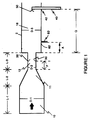
- Figure 1 is a cross-sectional view of a portion of one type of furnace carbon black reactor which may be utilized to produce the carbon blacks of the present invention.
- the present invention is directed to new furnace carbon blacks having the following properties:
- the carbon blacks have the following properties:
- the carbon blacks of the present invention may be produced in a modular, also referred to as "staged", furnace carbon black reactor.
- a section of a typical modular furnace carbon black reactor which may be utilized to produce the carbon black of the present invention is depicted in Figure 1.
- Other details of a typical modular furnace carbon black reactor may be found, for example, in the description contained in U.S. Patent No. 3,922,335, the disclosure of which is herein incorporated by reference; and the description contained in U.S. patent application serial number 07/846,644, filed March 5, 1992, the disclosure of which is hereby incorporated by reference.
- the carbon black furnace is constructed using materials and procedures that minimize the introduction of extraneous ash into the carbon black formation process.
- U.S. patent application serial number 08/846,644 relates to a process for producing carbon blacks wherein an oxidant-containing stream such as air, oxygen-enriched air, or combustion products of hydrocarbon fuel and air, is injected into the reactor in the secondary reaction zone at a point after the primary-reaction zone in order to accelerate the rate of surface modifying reactions in the secondary reaction zone by raising the temperature in the secondary reaction zone without interfering with reactions which normally occur in the primary reaction.
- an oxidant-containing stream such as air, oxygen-enriched air, or combustion products of hydrocarbon fuel and air
- the process is suitable for use in any carbon black reactor wherein the temperature of the effluent stream prior to the downstream oxidant-containing stream injection is greater than 1800°F and less than 2700°F.
- the location of the downstream oxidant-containing stream injection is at any point downstream of the primary reaction zone and upstream of the quench which terminates reactions in the effluent.
- FIG. 1 illustrates a furnace carbon black reactor 2, having a combustion zone 10, which has a zone of converging diameter 11; feedstock injection zone 12; and reaction zone 18.
- the diameter of the combustion zone, 10, up to the point where the zone of converging diameter, 11, begins is shown as D-1; the diameter of zone 12, as D-2, and the diameter of zone 18 as D-3.
- the length of the combustion zone, 10, up to the point where the zone of converging diameter, 11, begins is shown as L-1; the length of the zone of converging diameter is shown as L-2; and the length of the feedstock injection zone is shown as L-3.
- combustion zone 10 To produce carbon blacks hot combustion gases are generated in combustion zone 10 by contacting a liquid or gaseous fuel with a suitable oxidant stream such as air, oxygen, mixtures of air and oxygen or the like.
- a suitable oxidant stream such as air, oxygen, mixtures of air and oxygen or the like.
- the fuels suitable for use in contacting the oxidant stream in combustion zone, 10 are included any of the readily combustible gas, vapor or liquid streams such as natural gas, hydrogen, carbon monoxide, methane, acetylene, alcohols, or kerosene. It is generally preferred, however, to utilize fuels having a high content of carbon-containing components and in particular, hydrocarbons.
- the ratio of air to fuel varies with the type of fuel utilized. When natural gas is utilized to produce the carbon blacks of the present invention, the ratio of air to fuel may be from about 10:1 to about 100:1.
- the oxidant stream may be preheated.
- the hot combustion gas stream flows downstream from zones 10 and 11 into zones 12 and then 18.
- the direction of the flow of hot combustion gases is shown by the arrow in Figure 1.
- Carbon black-yielding feedstock, 30, is introduced at point 32.
- the distance from the end of the zone of converging diameter, 11, downstream to point 32 is shown as F.
- carbon black-yielding feedstock, 30, was injected in the form of a plurality of jets which penetrate into the interior regions of the hot combustion gas stream to insure a high rate of mixing and shearing of the hot combustion gases and the carbon black-yielding feedstock so as to rapidly and completely decompose and convert the feedstock to carbon black particles and aggregates.
- Suitable for use herein as carbon black-yielding hydrocarbon feedstocks include, but are not limited to, the following: olefins such as ethylene, propylene, butylene; aromatics such as benzene, toluene and xylene; certain saturated hydrocarbons; and volatilized hydrocarbons such as kerosenes, naphthalenes, terpenes, ethylene tars, aromatic cycle stocks and the like.
- the mixture of carbon black-yielding feedstock and hot combustion gases flows downstream through zone 12 into zone 18.
- secondary air 62 was injected at point 60 into zone 18. The distance from the beginning of zone 18, to point 60, is shown as "A" in Figure 1.
- Quench 40 located at point 42, injecting quenching fluid 50, is utilized to stop pyrolysis of the carbon black-yielding feedstock when the novel carbon blacks of the present invention are formed.
- Point 42 may be determined in any manner known to the art for selecting the position of a quench to stop pyrolysis.
- One method for determining the position of the quench to stop pyrolysis is by determining the point at which an acceptable toluene extract level for the novel carbon blacks of the present invention is achieved.
- Toluene extract level may be measured by using ASTM Test D1618-83 "Carbon Black Extractables - Toluene Discoloration".
- Q is the distance from the beginning of zone 18 to quench point 42, and will vary according to the position of the quench.
- Suitable quenching fluids for use in producing the novel carbon blacks of the present invention include quenching fluids known in the art, including, but not limited to, water.
- the cooled gases pass downstream into any conventional cooling and separating means whereby the carbon blacks are recovered.
- the separation of the carbon black from the gas stream is readily accomplished by conventional means such as a precipitator, cyclone separator or bag filter. This separation may be followed by pelletizing using, for example, a wet pelletizer. Suitable, pelletizing fluids for use in producing pelleted carbon blacks of the present invention include, but are not limited to, water.
- any of the generally known and utilized carbon black-yielding hydrocarbon feedstocks, quenching fluids and pelletizing fluids may be utilized to produce the carbon blacks of the present invention provided that the ash level of the carbon blacks produced does not exceed 50 ppm; and provided that the sulfur level of the carbon blacks produced does not exceed 50 ppm.
- the levels of ash and sulfur which may be present in the feedstock, quenching fluid and pelletizing fluid utilized in producing the carbon blacks of the present invention may be determined by a material balance around the carbon black production process.
- the input streams in the carbon black production process as the combustion air, the primary fuel, the feedstock, the quenching fluid and, if the carbon blacks are wet pelletized, the pelletizing fluid. If the primary fuel is natural gas that contains no sulfur or ash, then only the feedstock, quenching fluid and pelletizing fluid need to be considered.
- the outputs of the carbon black production process are carbon black and effluent gases.
- the cetyl-trimethylammonium bromide absorption value (CTAB) of the carbon blacks was determined according to ASTM Test Procedure D3765-85.
- the DBP (dibutyl phthalate value) of the carbon blacks was determined according to the procedure set forth in ASTM D3493-86.
- the ash level, sulfur level and crystallite dimensions L a and L c were determined by the following procedures.
- the ash level of the carbon blacks was determined by calculating the ash percentage from a metals analysis of the carbon black.
- the ash level is defined as the sum of the oxides of the following elements: Al, Ba, Ca, Cr, Fe, Mg, Ni, Si, Sr, V, Zn, K and Na.
- the calculation of ash percentage from metals analysis assumes that the metals are present in the ash as oxides and that the thirteen elements measured are the only ones present in the ash at significant concentrations.
- ICP Inductively Coupled Plasma
- AAS Atomic Absorption
- the analysis involves ashing, fusing and dissolving a sample of carbon black followed by the spectrophotometric analysis of the solution. The results are calculated based on the weight of the carbon black.
- the analysis is based on the atomic emission and atomic absorption of cations.
- the ICP was calibrated using the proper procedures for the instrument and checks are made for interferences between elements. Multi-element standards were used to simplify the analysis. Calibration and recalibration are performed by the ICP computer. Each element was divided between four standards with a concentration range as follows: (in ⁇ g/ml) Al 0-50 Mg 0-250 V 0-20 Ba 0-250 Mn 0-20 Zn 0-20 Ca 0-250 Ni 0-20 Zr 0-20 Cr 0-20 Si 0-50 Cu 0-20 Sr 0-250 Fe 0-50 Ti 0-20 The standards were matrix matched to the samples.
- K-Na K-Na STD 1 0.00 ⁇ g/ml STD 5 5.0 ⁇ g/ml 2 0.50 ⁇ g/ml 6 10 ⁇ g/ml 3 1.0 ⁇ g/ml 7 25 ⁇ g/ml 4 2.5 ⁇ g/ml
- the first group of metals were run on the ICP.
- the computer attached to the ICP performs the calculations based on sample weights, dilutions, and volumes.
- the results were element by weight of carbon black. A blank correction was unnecessary if the analysis standards are matrix matched to samples.
- the per cent ash is calculated as follows:
- the ICP results were reported to the nearest ⁇ g/gram.
- the K-Na results are reported to the nearest 0.1 ⁇ g/gram. Be was added as an internal standard to improve the precision of the analysis when using the ICP.
- a wavelength dispersive x-ray fluorescence spectrophotometric procedure was used to measure the total sulfur content of carbon blacks.
- the following equipment and reagents were utilized:
- a 0.25 gram (+/- 0.0010g) sample was weighed into a labeled mixing vial containing two ball pestles and two 1/2 gram boric acid tablets. A sample label was prepared for the vial that could later be transferred to the plastic box. The vial top was taped closed on the vial to prevent leakage.
- the vial and contents were then mixed for 15 minutes using the SPEX mill.
- the ball pestle was removed and the contents of the vial were then poured into the 1/2 inch die and pressed at 20,000 pounds for about 20 seconds.
- the formed pellet was then transferred to the labeled plastic box without scratching the pellet faces.
- the x-ray set up was as follows:
- the crystallite dimensions L a and L c of the carbon black were determined by an x-ray analysis of the carbon blacks.
- the three basic crystallinity parameters that may be obtained from an x-ray diffraction pattern are:
- An x-ray pattern of the pellet was obtained using a standard powder diffraction system with a copper x-ray tube run at 40 KV (kilovolts) and 35 milliamps.
- a step-scan control system was utilized to obtain the diffractogram between 8° and 72°, 2 ⁇ angle increments of 0.05° with a 3 second count interval.
- the digitized raw data was transferred to a VAX computer system for processing and determination of d-spacing, L a and L c .
- An IRB 6 carbon black was analyzed by the same procedure for use as a control standard.
- MFI Melt Flow Index
- the volume resistivity of the compositions was determined in the following manner.
- the electrical resistance was determined as follows. A coupon having a length of 6 inches and a width of 1.5 inches is cut from an extruded tape. Two coupons are needed for each compound and they are cut from the tape so that the length is in the direction of extrusion. A half inch wide strip of silver paint (in this instance DAG#416 from Acheson Dispersions, Port Huron, Michigan was used) is applied to both sides of the end of the coupon. The top, bottom, and edges of the coupon are covered within the half inch dimension. After the paint has dried, the compounds' width, thickness, and the distance between the painted areas is measured using appropriate gauges. The coupons are placed across one 5 inch by 16 inch polycarbonate sheet so that the painted ends are off the polycarbonate sheet.
- the three coupons are arranged so that they are separated at least 0.25 inches from each other.
- Another polycarbonate sheet of the same dimensions is placed on top of the coupons. Both polycarbonate sheets are secured using appropriate fasteners.
- Brass shims. 0.25 inch by 0.5 inch in dimensions, are placed over the painted areas on the top and bottom of the exposed coupon ends. Appropriate clips are attached on the end of the wires to the brass shims.
- a digital multimeter, (in this case a Digitec H10-2120 from United Systems Corp., Dayton, Ohio was used) is utilized to determine the electrical resistance.
- the electrical resistance has units of ohms while A and L have units of square centimeters (cm 2 ) and centimeters (cm), respectively. Therefore the volume resistivity has units of ohms-cm.
- Examples of the novel furnace carbon blacks of the present invention were prepared in a reactor generally described herein, and as depicted in Figure 1, utilizing reactor conditions and geometry set forth in Table 3.
- the fuel utilized in the combustion reaction was natural gas supplied to the reactor at about ambient temperature, approximately 77°F.
- the liquid feedstock utilized in the examples was a commercially available hydrocarbon mixture having the properties indicated in Table 1 below: Feedstock Hydrogen/Carbon Ratio 1.03 Hydrogen (wt.%) 8.00 Carbon (wt.%) 92.4 Sulfur (ppm) ⁇ 20 Ash (ppm) 6 A.P.I.
- Example 1 The carbon blacks produced in Example runs 1-2 were analyzed according to the procedures described herein.
- the properties of the two example carbon blacks, two control carbon blacks and a typical acetylene black are set forth in Table 4 below.
- Carbon Black Analytical Properties Carbon Black Control 1 Example 1 Control 2
- Example 2 Acetylene Black CTAB (m 2 /g) 130 130 35 35 60 DBP (cc/100g) 112 112 124 110 220 Ash (ppm) 90 ⁇ 30 220 ⁇ 30 ⁇ 30 Sulfur (ppm) 200 ⁇ 30 3000 ⁇ 30 ⁇ 30 L a ( ⁇ ) 21.3 21.5 22.5 22.4 33 L c ( ⁇ ) 15.7 15.6 18.1 19.6 34
- Example runs described herein illustrate the effect of feedstock and quenching fluid ash and sulfur levels on carbon black ash and sulfur levels.
- the analytical properties of CTAB and DBP were the same for the Example 1 and the Control 1 carbon blacks.
- the total ash level of the Control 1 carbon black is 90 ppm and the total sulfur level of the Control 1 carbon black is 200 ppm.
- the Example 1 carbon black, a carbon black of the present invention had a total ash level of ⁇ 30 ppm and a total sulfur level of ⁇ 30 ppm.
- the acetylene black is provided in Table 4 for comparison purposes. As shown in Table 4, the Example 1 carbon black and the Example 2 carbon black, carbon blacks of the present invention, have ash and sulfur levels comparable to the acetylene black.
- Ethylene ethyl acrylate (EEA) compositions containing the carbon blacks of Example 1 and Control 1 were prepared and evaluated.
- the EEA utilized has an MFI (melt flow index) of 6 g/10 min, and a density of 0.931 g/cm 3 .
- the compositions consisted of carbon black and EEA only.
- EEA compositions A and B, each containing 38%, by weight, carbon black were prepared using the carbon blacks of Example 1 and Control 1 as shown in Table 5 below.
- EEA Composition Carbon Black Wt. % Carbon Black A Control 1 38 B
- Example 1 38 The EEA compositions were prepared utilizing a Werner-Pfleiderer twin screw mixer.
- Ethylene ethyl acrylate (EEA) compositions containing the carbon blacks of Example 2 and Control 2 were prepared and evaluated.
- the EEA utilized has an MFI (melt flow index) of 6 g/10 min. and a density of 0.931 g/cm 3 .
- compositions consisted of carbon black and EEA only, each containing 40%, by weight, and were prepared utilizing a Banbury mixer.
- the components of the three EEA compositions are shown in Table 7 below: EEA Composition Carbon Black Wt. % Carbon Black C Control 2 40 D Example 2 40 E Acetylene Black 40
- EEA compositions incorporating the carbon blacks of the present invention has a substantially equivalent volume resistivity value, but a lower MFI value in comparison with EEA compositions incorporating a typical acetylene black (EEA Composition E).
- the higher MFI value imparted by the carbon black of the present invention indicates a higher rate of flow which indicates a lower viscosity and in turn indicates that the composition is advantageous for extrusion processing.
- the carbon blacks of the present invention having ash and sulfur levels less than or equal to 50 ppm, it is expected that the carbon blacks of the present invention will minimize the initiation of water trees in compositions intended for use as semi-conductive shielding compounds for electric power cables. Therefore, power cables using wire shielding compositions incorporating the carbon blacks of the present invention would be expected to have longer service lives than power cables using wire shielding compositions incorporating heretofore known non-acetylene carbon blacks.
Landscapes
- Chemical & Material Sciences (AREA)
- Organic Chemistry (AREA)
- Health & Medical Sciences (AREA)
- Chemical Kinetics & Catalysis (AREA)
- Medicinal Chemistry (AREA)
- Polymers & Plastics (AREA)
- Pigments, Carbon Blacks, Or Wood Stains (AREA)
- Carbon And Carbon Compounds (AREA)
- Compositions Of Macromolecular Compounds (AREA)
- Processing Of Solid Wastes (AREA)
- Cookers (AREA)
Applications Claiming Priority (3)
| Application Number | Priority Date | Filing Date | Title |
|---|---|---|---|
| US995408 | 1992-12-18 | ||
| US07/995,408 US5352289A (en) | 1992-12-18 | 1992-12-18 | Low ash carbon blacks |
| EP94901663A EP0674685B1 (fr) | 1992-12-18 | 1993-11-23 | Noirs au four a faible teneur en cendres |
Related Parent Applications (1)
| Application Number | Title | Priority Date | Filing Date |
|---|---|---|---|
| EP94901663.8 Division | 1994-07-07 |
Publications (2)
| Publication Number | Publication Date |
|---|---|
| EP0867478A1 true EP0867478A1 (fr) | 1998-09-30 |
| EP0867478B1 EP0867478B1 (fr) | 2003-02-26 |
Family
ID=25541750
Family Applications (2)
| Application Number | Title | Priority Date | Filing Date |
|---|---|---|---|
| EP94901663A Expired - Lifetime EP0674685B1 (fr) | 1992-12-18 | 1993-11-23 | Noirs au four a faible teneur en cendres |
| EP98108973A Expired - Lifetime EP0867478B1 (fr) | 1992-12-18 | 1993-11-23 | Noirs de carbone à faible teneur en cendre |
Family Applications Before (1)
| Application Number | Title | Priority Date | Filing Date |
|---|---|---|---|
| EP94901663A Expired - Lifetime EP0674685B1 (fr) | 1992-12-18 | 1993-11-23 | Noirs au four a faible teneur en cendres |
Country Status (13)
| Country | Link |
|---|---|
| US (1) | US5352289A (fr) |
| EP (2) | EP0674685B1 (fr) |
| JP (1) | JP3687972B2 (fr) |
| KR (1) | KR100278341B1 (fr) |
| AT (2) | ATE176269T1 (fr) |
| AU (1) | AU662707B2 (fr) |
| BR (1) | BR9306908A (fr) |
| CA (1) | CA2140900C (fr) |
| DE (2) | DE69323327T2 (fr) |
| ES (1) | ES2126736T3 (fr) |
| HU (1) | HU214209B (fr) |
| SG (2) | SG49301A1 (fr) |
| WO (1) | WO1994014900A1 (fr) |
Cited By (2)
| Publication number | Priority date | Publication date | Assignee | Title |
|---|---|---|---|---|
| EP1078958A1 (fr) * | 1999-08-27 | 2001-02-28 | Degussa-Hüls Aktiengesellschaft | Noir de carbone, procédé pour sa préparation ainsi que son utilisation |
| EP1148094A4 (fr) * | 1999-11-02 | 2002-04-17 | Denki Kagaku Kogyo Kk | Composition de caoutchouc a base de chloroprene |
Families Citing this family (67)
| Publication number | Priority date | Publication date | Assignee | Title |
|---|---|---|---|---|
| US5556697A (en) * | 1994-03-24 | 1996-09-17 | Bicc Cables Corporation | Semiconductive power cable shield |
| US5559169A (en) | 1994-12-15 | 1996-09-24 | Cabot Corporation | EPDM, HNBR and Butyl rubber compositions containing carbon black products |
| US5575845A (en) | 1994-12-15 | 1996-11-19 | Cabot Corporation | Carbon black products for coloring mineral binders |
| US5807494A (en) | 1994-12-15 | 1998-09-15 | Boes; Ralph Ulrich | Gel compositions comprising silica and functionalized carbon products |
| US5554739A (en) | 1994-12-15 | 1996-09-10 | Cabot Corporation | Process for preparing carbon materials with diazonium salts and resultant carbon products |
| IL116378A (en) * | 1994-12-15 | 2003-05-29 | Cabot Corp | Non-aqueous coating or ink composition with improved optical properties containing modified carbon product and method of preparation of the composition |
| IL116377A (en) | 1994-12-15 | 2003-05-29 | Cabot Corp | Reaction of carbon black with diazonium salts, resultant carbon black products and their uses |
| IL116379A (en) | 1994-12-15 | 2003-12-10 | Cabot Corp | Aqueous inks and coatings containing modified carbon products |
| US5571311A (en) | 1994-12-15 | 1996-11-05 | Cabot Corporation | Ink jet ink formulations containing carbon black products |
| IL116376A (en) | 1994-12-15 | 2001-03-19 | Cabot Corp | Aqueous ink jet ink compositions containing modified carbon products |
| US5725650A (en) * | 1995-03-20 | 1998-03-10 | Cabot Corporation | Polyethylene glycol treated carbon black and compounds thereof |
| US5622557A (en) | 1995-05-22 | 1997-04-22 | Cabot Corporation | Mineral binders colored with silicon-containing carbon black |
| US6028137A (en) | 1995-05-22 | 2000-02-22 | Cabot Corporation | Elastomeric compounds incorporating silicon-treated carbon blacks |
| CZ368197A3 (cs) | 1995-05-22 | 1998-04-15 | Cabot Corporation | Elastomerní sloučeniny obsahující částečně potažené saze |
| US6323273B1 (en) | 1995-05-22 | 2001-11-27 | Cabot Corporation | Elastomeric compounds incorporating silicon-treated carbon blacks |
| US5958999A (en) | 1996-04-05 | 1999-09-28 | Cabot Corporation | Ink compositions and method for generating images produced therefrom |
| US5747562A (en) | 1996-06-14 | 1998-05-05 | Cabot Corporation | Ink and coating compositions containing silicon-treated carbon black |
| US5698016A (en) | 1996-06-14 | 1997-12-16 | Cabot Corporation | Compositions of modified carbon products and amphiphilic ions and methods of using the same |
| US5707432A (en) | 1996-06-14 | 1998-01-13 | Cabot Corporation | Modified carbon products and inks and coatings containing modified carbon products |
| KR20000016668A (ko) | 1996-06-14 | 2000-03-25 | 마싸 앤 피네간 | 개질 탄소 흡착제 및 이를 사용한 흡착 방법 |
| JP3565994B2 (ja) * | 1996-06-28 | 2004-09-15 | 呉羽化学工業株式会社 | 非水溶媒系二次電池の電極用炭素質材料およびその製造方法、並びに非水溶媒系二次電池 |
| US5919855A (en) | 1997-02-11 | 1999-07-06 | Cabot Corporation | Use of modified carbon black in gas-phase polymerizations |
| FR2772776B1 (fr) | 1997-12-23 | 2002-03-29 | Atochem Elf Sa | Compositions antistatiques a base de polyamide |
| DE19819565A1 (de) * | 1998-04-30 | 1999-11-11 | Inventa Ag | Antistatische und peroxidstabile Formmassen |
| KR100627147B1 (ko) * | 1998-04-30 | 2006-09-22 | 이엠에스-인벤타 아게 | 대전방지성 및 과산화물 안정성을 지닌 성형 화합물 |
| DE19854819A1 (de) * | 1998-11-27 | 2000-05-31 | Degussa | Hohler Artikel mit antistatischen Eigenschaften |
| EP1157063A1 (fr) | 1998-12-08 | 2001-11-28 | Cabot Corporation | Compositions elastomeres avec apparence amelioree |
| CA2332266A1 (fr) | 1999-04-01 | 2000-10-12 | At Plastics Inc. | Compositions semiconductrices de polyolefines et cables enduits desdites compositions |
| CA2393397C (fr) | 1999-12-02 | 2009-05-05 | Cabot Corporation | Noirs de carbone utiles dans des composes pour fils et pour cables |
| WO2002015302A2 (fr) | 2000-08-14 | 2002-02-21 | World Properties Inc. | Composition thermodurcissable pour composants de pile electrochimique et procedes de fabrication associes |
| US6646028B2 (en) | 2000-12-07 | 2003-11-11 | Cid Centro De Investigacion Y Desarrollo Tecnologico, S.A. De C.V. | Rubber and carbon black |
| WO2002080295A2 (fr) * | 2001-01-19 | 2002-10-10 | World Properties Inc. | Appareil et procede destines a des composants de cellules electrochimiques |
| US7138203B2 (en) * | 2001-01-19 | 2006-11-21 | World Properties, Inc. | Apparatus and method of manufacture of electrochemical cell components |
| US20040013599A1 (en) * | 2002-07-19 | 2004-01-22 | Sandeep Bhatt | Carbon blacks and uses thereof |
| ITMI20030627A1 (it) * | 2003-03-31 | 2004-10-01 | Polimeri Europa Spa | Polimeri vinilaromatici espandibili e procedimento per la loro preparazione. |
| US7776603B2 (en) * | 2003-04-01 | 2010-08-17 | Cabot Corporation | Methods of specifying or identifying particulate material |
| US20040197924A1 (en) * | 2003-04-01 | 2004-10-07 | Murphy Lawrence J. | Liquid absorptometry method of providing product consistency |
| US7776602B2 (en) * | 2003-04-01 | 2010-08-17 | Cabot Corporation | Methods of providing product consistency |
| US7776604B2 (en) * | 2003-04-01 | 2010-08-17 | Cabot Corporation | Methods of selecting and developing a particulate material |
| US7000457B2 (en) * | 2003-04-01 | 2006-02-21 | Cabot Corporation | Methods to control and/or predict rheological properties |
| EP1666543B1 (fr) * | 2003-08-05 | 2012-01-11 | Mitsubishi Chemical Corporation | Noir de carbone |
| EP1548752A1 (fr) * | 2003-12-23 | 2005-06-29 | Borealis Technology Oy | Ecran semiconducteur pour cable éléctrique |
| EP1630823B1 (fr) * | 2004-07-22 | 2011-07-20 | Borealis Technology Oy | Composition de polymères semi-conducteurs |
| US7722713B2 (en) * | 2005-05-17 | 2010-05-25 | Cabot Corporation | Carbon blacks and polymers containing the same |
| PL1731558T3 (pl) * | 2005-06-08 | 2009-08-31 | Borealis Tech Oy | Półprzewodnikowa, zdolna do usieciowania kompozycja polimerowa |
| JP2012012450A (ja) * | 2010-06-30 | 2012-01-19 | Denki Kagaku Kogyo Kk | カーボンブラック及びそれを含有してなる低臭性組成物。 |
| US9175150B2 (en) * | 2012-03-02 | 2015-11-03 | Cabot Corporation | Modified carbon blacks having low PAH amounts and elastomers containing the same |
| JP6191549B2 (ja) * | 2013-08-09 | 2017-09-06 | 信越化学工業株式会社 | 導電性液状シリコーンゴム組成物及び高電圧ケーブル用常温収縮ゴム部材 |
| US10370539B2 (en) | 2014-01-30 | 2019-08-06 | Monolith Materials, Inc. | System for high temperature chemical processing |
| US10138378B2 (en) | 2014-01-30 | 2018-11-27 | Monolith Materials, Inc. | Plasma gas throat assembly and method |
| US11939477B2 (en) | 2014-01-30 | 2024-03-26 | Monolith Materials, Inc. | High temperature heat integration method of making carbon black |
| WO2015116943A2 (fr) | 2014-01-31 | 2015-08-06 | Monolith Materials, Inc. | Conception de torche à plasma |
| KR102705340B1 (ko) | 2015-02-03 | 2024-09-09 | 모놀리스 머티어리얼스 인코포레이티드 | 카본 블랙 생성 시스템 |
| CN107709608B (zh) | 2015-02-03 | 2019-09-17 | 巨石材料公司 | 再生冷却方法和设备 |
| CA3032246C (fr) | 2015-07-29 | 2023-12-12 | Monolith Materials, Inc. | Procede et appareil de conception d'alimentation electrique de torche a plasma a courant continu |
| CA2995081C (fr) | 2015-08-07 | 2023-10-03 | Monolith Materials, Inc. | Procede de fabrication de noir de carbone |
| EP3347306A4 (fr) | 2015-09-09 | 2019-04-17 | Monolith Materials, Inc. | Matériaux circulaires à base de graphène à faible nombre de couches |
| CA3034212C (fr) | 2015-09-14 | 2023-08-01 | Monolith Materials, Inc. | Noir de carbone issu du gaz naturel |
| CA3060482C (fr) | 2016-04-29 | 2023-04-11 | Monolith Materials, Inc. | Ajout de chaleur secondaire a un processus de production de particules et appareil |
| US11492496B2 (en) | 2016-04-29 | 2022-11-08 | Monolith Materials, Inc. | Torch stinger method and apparatus |
| CN110603297A (zh) | 2017-03-08 | 2019-12-20 | 巨石材料公司 | 用热传递气体制备碳颗粒的系统和方法 |
| EP3612600A4 (fr) | 2017-04-20 | 2021-01-27 | Monolith Materials, Inc. | Systèmes et procédés particulaires |
| MX2020002220A (es) * | 2017-08-28 | 2020-08-20 | Monolith Mat Inc | Sistemas y metodos de particulas. |
| EP3676335A4 (fr) | 2017-08-28 | 2021-03-31 | Monolith Materials, Inc. | Systèmes particulaires et procédés |
| CN111278767A (zh) | 2017-08-28 | 2020-06-12 | 巨石材料公司 | 用于颗粒生成的系统和方法 |
| WO2019084200A1 (fr) | 2017-10-24 | 2019-05-02 | Monolith Materials, Inc. | Systèmes particulaires et procédés |
| CN110256876A (zh) * | 2019-06-19 | 2019-09-20 | 焦作市和兴化学工业有限公司 | 一种裂解炉及裂解系统 |
Citations (1)
| Publication number | Priority date | Publication date | Assignee | Title |
|---|---|---|---|---|
| JPS60152569A (ja) * | 1984-01-18 | 1985-08-10 | Mitsubishi Petrochem Co Ltd | 新規なカ−ボンブラツク |
Family Cites Families (5)
| Publication number | Priority date | Publication date | Assignee | Title |
|---|---|---|---|---|
| USRE28974E (en) * | 1967-01-03 | 1976-09-21 | Cabot Corporation | Process for making carbon black |
| FR2229744B1 (fr) | 1973-05-15 | 1976-11-12 | Ugine Kuhlmann | |
| US4518434A (en) * | 1983-07-29 | 1985-05-21 | Phillips Petroleum Company | Carbon black and process for preparing same |
| JPH02116608A (ja) * | 1988-10-26 | 1990-05-01 | Tanaka Kikinzoku Kogyo Kk | 炭素素材中に含有するイオウの徐去方法 |
| US5382621A (en) * | 1993-01-21 | 1995-01-17 | Cabot Corporation | Skim compounds incorporating low ash carbon blacks |
-
1992
- 1992-12-18 US US07/995,408 patent/US5352289A/en not_active Expired - Lifetime
-
1993
- 1993-11-23 AU AU56171/94A patent/AU662707B2/en not_active Ceased
- 1993-11-23 BR BR9306908A patent/BR9306908A/pt not_active IP Right Cessation
- 1993-11-23 SG SG1996008914A patent/SG49301A1/en unknown
- 1993-11-23 JP JP51515694A patent/JP3687972B2/ja not_active Expired - Lifetime
- 1993-11-23 HU HU9500231A patent/HU214209B/hu not_active IP Right Cessation
- 1993-11-23 AT AT94901663T patent/ATE176269T1/de not_active IP Right Cessation
- 1993-11-23 EP EP94901663A patent/EP0674685B1/fr not_active Expired - Lifetime
- 1993-11-23 DE DE69323327T patent/DE69323327T2/de not_active Expired - Lifetime
- 1993-11-23 KR KR1019950700479A patent/KR100278341B1/ko not_active Expired - Fee Related
- 1993-11-23 WO PCT/US1993/011376 patent/WO1994014900A1/fr not_active Ceased
- 1993-11-23 AT AT98108973T patent/ATE233299T1/de not_active IP Right Cessation
- 1993-11-23 DE DE69332724T patent/DE69332724T2/de not_active Expired - Lifetime
- 1993-11-23 EP EP98108973A patent/EP0867478B1/fr not_active Expired - Lifetime
- 1993-11-23 CA CA002140900A patent/CA2140900C/fr not_active Expired - Lifetime
- 1993-11-23 SG SG1999003287A patent/SG78373A1/en unknown
- 1993-11-23 ES ES94901663T patent/ES2126736T3/es not_active Expired - Lifetime
Patent Citations (1)
| Publication number | Priority date | Publication date | Assignee | Title |
|---|---|---|---|---|
| JPS60152569A (ja) * | 1984-01-18 | 1985-08-10 | Mitsubishi Petrochem Co Ltd | 新規なカ−ボンブラツク |
Non-Patent Citations (1)
| Title |
|---|
| PATENT ABSTRACTS OF JAPAN vol. 9, no. 317 (C - 319) 12 December 1985 (1985-12-12) * |
Cited By (2)
| Publication number | Priority date | Publication date | Assignee | Title |
|---|---|---|---|---|
| EP1078958A1 (fr) * | 1999-08-27 | 2001-02-28 | Degussa-Hüls Aktiengesellschaft | Noir de carbone, procédé pour sa préparation ainsi que son utilisation |
| EP1148094A4 (fr) * | 1999-11-02 | 2002-04-17 | Denki Kagaku Kogyo Kk | Composition de caoutchouc a base de chloroprene |
Also Published As
| Publication number | Publication date |
|---|---|
| AU662707B2 (en) | 1995-09-07 |
| DE69332724T2 (de) | 2003-12-11 |
| HU214209B (hu) | 1998-01-28 |
| ATE176269T1 (de) | 1999-02-15 |
| DE69323327D1 (de) | 1999-03-11 |
| ES2126736T3 (es) | 1999-04-01 |
| HK1015144A1 (en) | 1999-10-08 |
| BR9306908A (pt) | 1998-12-08 |
| HUT71058A (en) | 1995-11-28 |
| JPH08504868A (ja) | 1996-05-28 |
| SG78373A1 (en) | 2001-02-20 |
| JP3687972B2 (ja) | 2005-08-24 |
| US5352289A (en) | 1994-10-04 |
| EP0674685B1 (fr) | 1999-01-27 |
| KR100278341B1 (ko) | 2001-03-02 |
| WO1994014900A1 (fr) | 1994-07-07 |
| EP0674685A1 (fr) | 1995-10-04 |
| CA2140900C (fr) | 2005-01-25 |
| DE69332724D1 (de) | 2003-04-03 |
| AU5617194A (en) | 1994-07-19 |
| HU9500231D0 (en) | 1995-03-28 |
| CA2140900A1 (fr) | 1994-07-07 |
| EP0867478B1 (fr) | 2003-02-26 |
| KR950703030A (ko) | 1995-08-23 |
| ATE233299T1 (de) | 2003-03-15 |
| DE69323327T2 (de) | 1999-07-15 |
| HK1024926A1 (en) | 2000-10-27 |
| SG49301A1 (en) | 1998-05-18 |
Similar Documents
| Publication | Publication Date | Title |
|---|---|---|
| EP0674685B1 (fr) | Noirs au four a faible teneur en cendres | |
| EP0629222B1 (fr) | Procede de production de noirs de carbone et nouveaux noirs de carbone | |
| KR100423211B1 (ko) | 카본블랙및카본블랙을포함하는조성물 | |
| EP0911371B1 (fr) | Noirs de carbone | |
| CA1040839A (fr) | Fabrication de noir de carbone a grosses molecules | |
| IE50184B1 (en) | Production of high surface area carbon blacks | |
| HK1015144B (en) | Low ash furnace carbon blacks | |
| HK1024926B (en) | Low ash carbon blacks | |
| US4374113A (en) | Production of high surface area carbon blacks | |
| EP1525254B1 (fr) | Noirs de carbone et utilisations associees | |
| KR800001355B1 (ko) | 카본 블랙의 제조방법 | |
| DD114422B3 (de) | Ofengasrussprodukt | |
| GB1564080A (en) | Production of carbon blacks | |
| HK1008540B (en) | Carbon blacks and compositions incorporating the carbon blacks | |
| HK1016417B (en) | Carbon blacks |
Legal Events
| Date | Code | Title | Description |
|---|---|---|---|
| PUAI | Public reference made under article 153(3) epc to a published international application that has entered the european phase |
Free format text: ORIGINAL CODE: 0009012 |
|
| AC | Divisional application: reference to earlier application |
Ref document number: 674685 Country of ref document: EP |
|
| AK | Designated contracting states |
Kind code of ref document: A1 Designated state(s): AT BE CH DE ES FR GB IT LI NL SE |
|
| RIN1 | Information on inventor provided before grant (corrected) |
Inventor name: ZIMMER, JAY Inventor name: SIFLEET, WILLIAM L. Inventor name: SHIEH, CHUNG-HUEI Inventor name: HRACH, FRANCK J., JR. Inventor name: WEAVER, DANIEL W. |
|
| 17P | Request for examination filed |
Effective date: 19990130 |
|
| 17Q | First examination report despatched |
Effective date: 20000120 |
|
| RAP1 | Party data changed (applicant data changed or rights of an application transferred) |
Owner name: CABOT CORPORATION |
|
| GRAH | Despatch of communication of intention to grant a patent |
Free format text: ORIGINAL CODE: EPIDOS IGRA |
|
| GRAH | Despatch of communication of intention to grant a patent |
Free format text: ORIGINAL CODE: EPIDOS IGRA |
|
| GRAA | (expected) grant |
Free format text: ORIGINAL CODE: 0009210 |
|
| AC | Divisional application: reference to earlier application |
Ref document number: 0674685 Country of ref document: EP Kind code of ref document: P |
|
| AK | Designated contracting states |
Designated state(s): AT BE CH DE ES FR GB IT LI NL SE |
|
| PG25 | Lapsed in a contracting state [announced via postgrant information from national office to epo] |
Ref country code: NL Free format text: LAPSE BECAUSE OF FAILURE TO SUBMIT A TRANSLATION OF THE DESCRIPTION OR TO PAY THE FEE WITHIN THE PRESCRIBED TIME-LIMIT Effective date: 20030226 Ref country code: LI Free format text: LAPSE BECAUSE OF FAILURE TO SUBMIT A TRANSLATION OF THE DESCRIPTION OR TO PAY THE FEE WITHIN THE PRESCRIBED TIME-LIMIT Effective date: 20030226 Ref country code: CH Free format text: LAPSE BECAUSE OF FAILURE TO SUBMIT A TRANSLATION OF THE DESCRIPTION OR TO PAY THE FEE WITHIN THE PRESCRIBED TIME-LIMIT Effective date: 20030226 Ref country code: BE Free format text: LAPSE BECAUSE OF FAILURE TO SUBMIT A TRANSLATION OF THE DESCRIPTION OR TO PAY THE FEE WITHIN THE PRESCRIBED TIME-LIMIT Effective date: 20030226 Ref country code: AT Free format text: LAPSE BECAUSE OF FAILURE TO SUBMIT A TRANSLATION OF THE DESCRIPTION OR TO PAY THE FEE WITHIN THE PRESCRIBED TIME-LIMIT Effective date: 20030226 |
|
| REG | Reference to a national code |
Ref country code: GB Ref legal event code: FG4D |
|
| REG | Reference to a national code |
Ref country code: CH Ref legal event code: EP |
|
| REF | Corresponds to: |
Ref document number: 69332724 Country of ref document: DE Date of ref document: 20030403 Kind code of ref document: P |
|
| REG | Reference to a national code |
Ref country code: SE Ref legal event code: TRGR |
|
| NLV1 | Nl: lapsed or annulled due to failure to fulfill the requirements of art. 29p and 29m of the patents act | ||
| PG25 | Lapsed in a contracting state [announced via postgrant information from national office to epo] |
Ref country code: ES Free format text: LAPSE BECAUSE OF FAILURE TO SUBMIT A TRANSLATION OF THE DESCRIPTION OR TO PAY THE FEE WITHIN THE PRESCRIBED TIME-LIMIT Effective date: 20030828 |
|
| ET | Fr: translation filed | ||
| PG25 | Lapsed in a contracting state [announced via postgrant information from national office to epo] |
Ref country code: GB Free format text: LAPSE BECAUSE OF NON-PAYMENT OF DUE FEES Effective date: 20031123 |
|
| PLBE | No opposition filed within time limit |
Free format text: ORIGINAL CODE: 0009261 |
|
| STAA | Information on the status of an ep patent application or granted ep patent |
Free format text: STATUS: NO OPPOSITION FILED WITHIN TIME LIMIT |
|
| 26N | No opposition filed |
Effective date: 20031127 |
|
| GBPC | Gb: european patent ceased through non-payment of renewal fee |
Effective date: 20031123 |
|
| PGFP | Annual fee paid to national office [announced via postgrant information from national office to epo] |
Ref country code: IT Payment date: 20091121 Year of fee payment: 17 |
|
| PG25 | Lapsed in a contracting state [announced via postgrant information from national office to epo] |
Ref country code: IT Free format text: LAPSE BECAUSE OF NON-PAYMENT OF DUE FEES Effective date: 20101123 |
|
| REG | Reference to a national code |
Ref country code: DE Ref legal event code: R082 Ref document number: 69332724 Country of ref document: DE Representative=s name: MEHLER ACHLER PATENTANWAELTE, DE |
|
| PGFP | Annual fee paid to national office [announced via postgrant information from national office to epo] |
Ref country code: FR Payment date: 20121113 Year of fee payment: 20 Ref country code: DE Payment date: 20121130 Year of fee payment: 20 |
|
| PGFP | Annual fee paid to national office [announced via postgrant information from national office to epo] |
Ref country code: SE Payment date: 20121107 Year of fee payment: 20 |
|
| REG | Reference to a national code |
Ref country code: DE Ref legal event code: R071 Ref document number: 69332724 Country of ref document: DE |
|
| REG | Reference to a national code |
Ref country code: SE Ref legal event code: EUG |
|
| PG25 | Lapsed in a contracting state [announced via postgrant information from national office to epo] |
Ref country code: DE Free format text: LAPSE BECAUSE OF EXPIRATION OF PROTECTION Effective date: 20131126 |