EP0868854A2 - Pectine à bas poids moléculaire, et aliment et boisson contenant la pectine à bas poids moléculaire - Google Patents
Pectine à bas poids moléculaire, et aliment et boisson contenant la pectine à bas poids moléculaire Download PDFInfo
- Publication number
- EP0868854A2 EP0868854A2 EP98100456A EP98100456A EP0868854A2 EP 0868854 A2 EP0868854 A2 EP 0868854A2 EP 98100456 A EP98100456 A EP 98100456A EP 98100456 A EP98100456 A EP 98100456A EP 0868854 A2 EP0868854 A2 EP 0868854A2
- Authority
- EP
- European Patent Office
- Prior art keywords
- pectin
- low
- molecular
- jtf
- enzyme
- Prior art date
- Legal status (The legal status is an assumption and is not a legal conclusion. Google has not performed a legal analysis and makes no representation as to the accuracy of the status listed.)
- Withdrawn
Links
Images

Classifications
-
- A—HUMAN NECESSITIES
- A23—FOODS OR FOODSTUFFS; TREATMENT THEREOF, NOT COVERED BY OTHER CLASSES
- A23L—FOODS, FOODSTUFFS OR NON-ALCOHOLIC BEVERAGES, NOT OTHERWISE PROVIDED FOR; PREPARATION OR TREATMENT THEREOF
- A23L2/00—Non-alcoholic beverages; Dry compositions or concentrates therefor; Preparation or treatment thereof
- A23L2/70—Clarifying or fining of non-alcoholic beverages; Removing unwanted matter
- A23L2/84—Clarifying or fining of non-alcoholic beverages; Removing unwanted matter using microorganisms or biological material, e.g. enzymes
-
- A—HUMAN NECESSITIES
- A21—BAKING; EDIBLE DOUGHS
- A21D—TREATMENT OF FLOUR OR DOUGH FOR BAKING, e.g. BY ADDITION OF MATERIALS; BAKING; BAKERY PRODUCTS
- A21D2/00—Treatment of flour or dough by adding materials thereto before or during baking
- A21D2/08—Treatment of flour or dough by adding materials thereto before or during baking by adding organic substances
- A21D2/14—Organic oxygen compounds
- A21D2/18—Carbohydrates
- A21D2/183—Natural gums
-
- A—HUMAN NECESSITIES
- A21—BAKING; EDIBLE DOUGHS
- A21D—TREATMENT OF FLOUR OR DOUGH FOR BAKING, e.g. BY ADDITION OF MATERIALS; BAKING; BAKERY PRODUCTS
- A21D2/00—Treatment of flour or dough by adding materials thereto before or during baking
- A21D2/08—Treatment of flour or dough by adding materials thereto before or during baking by adding organic substances
- A21D2/14—Organic oxygen compounds
- A21D2/18—Carbohydrates
- A21D2/185—Biosynthetic gums
-
- A—HUMAN NECESSITIES
- A23—FOODS OR FOODSTUFFS; TREATMENT THEREOF, NOT COVERED BY OTHER CLASSES
- A23G—COCOA; COCOA PRODUCTS, e.g. CHOCOLATE; SUBSTITUTES FOR COCOA OR COCOA PRODUCTS; CONFECTIONERY; CHEWING GUM; ICE-CREAM; PREPARATION THEREOF
- A23G3/00—Sweetmeats; Confectionery; Marzipan; Coated or filled products
- A23G3/34—Sweetmeats, confectionery or marzipan; Processes for the preparation thereof
- A23G3/346—Finished or semi-finished products in the form of powders, paste or liquids
-
- A—HUMAN NECESSITIES
- A23—FOODS OR FOODSTUFFS; TREATMENT THEREOF, NOT COVERED BY OTHER CLASSES
- A23G—COCOA; COCOA PRODUCTS, e.g. CHOCOLATE; SUBSTITUTES FOR COCOA OR COCOA PRODUCTS; CONFECTIONERY; CHEWING GUM; ICE-CREAM; PREPARATION THEREOF
- A23G3/00—Sweetmeats; Confectionery; Marzipan; Coated or filled products
- A23G3/34—Sweetmeats, confectionery or marzipan; Processes for the preparation thereof
- A23G3/36—Sweetmeats, confectionery or marzipan; Processes for the preparation thereof characterised by the composition containing organic or inorganic compounds
- A23G3/364—Sweetmeats, confectionery or marzipan; Processes for the preparation thereof characterised by the composition containing organic or inorganic compounds containing microorganisms or enzymes; containing paramedical or dietetical agents, e.g. vitamins
- A23G3/366—Sweetmeats, confectionery or marzipan; Processes for the preparation thereof characterised by the composition containing organic or inorganic compounds containing microorganisms or enzymes; containing paramedical or dietetical agents, e.g. vitamins containing microorganisms, enzymes
-
- A—HUMAN NECESSITIES
- A23—FOODS OR FOODSTUFFS; TREATMENT THEREOF, NOT COVERED BY OTHER CLASSES
- A23G—COCOA; COCOA PRODUCTS, e.g. CHOCOLATE; SUBSTITUTES FOR COCOA OR COCOA PRODUCTS; CONFECTIONERY; CHEWING GUM; ICE-CREAM; PREPARATION THEREOF
- A23G3/00—Sweetmeats; Confectionery; Marzipan; Coated or filled products
- A23G3/34—Sweetmeats, confectionery or marzipan; Processes for the preparation thereof
- A23G3/36—Sweetmeats, confectionery or marzipan; Processes for the preparation thereof characterised by the composition containing organic or inorganic compounds
- A23G3/42—Sweetmeats, confectionery or marzipan; Processes for the preparation thereof characterised by the composition containing organic or inorganic compounds characterised by the carbohydrates used, e.g. polysaccharides
-
- A—HUMAN NECESSITIES
- A23—FOODS OR FOODSTUFFS; TREATMENT THEREOF, NOT COVERED BY OTHER CLASSES
- A23G—COCOA; COCOA PRODUCTS, e.g. CHOCOLATE; SUBSTITUTES FOR COCOA OR COCOA PRODUCTS; CONFECTIONERY; CHEWING GUM; ICE-CREAM; PREPARATION THEREOF
- A23G3/00—Sweetmeats; Confectionery; Marzipan; Coated or filled products
- A23G3/34—Sweetmeats, confectionery or marzipan; Processes for the preparation thereof
- A23G3/36—Sweetmeats, confectionery or marzipan; Processes for the preparation thereof characterised by the composition containing organic or inorganic compounds
- A23G3/48—Sweetmeats, confectionery or marzipan; Processes for the preparation thereof characterised by the composition containing organic or inorganic compounds containing plants or parts thereof, e.g. fruits, seeds, extracts
-
- A—HUMAN NECESSITIES
- A23—FOODS OR FOODSTUFFS; TREATMENT THEREOF, NOT COVERED BY OTHER CLASSES
- A23L—FOODS, FOODSTUFFS OR NON-ALCOHOLIC BEVERAGES, NOT OTHERWISE PROVIDED FOR; PREPARATION OR TREATMENT THEREOF
- A23L2/00—Non-alcoholic beverages; Dry compositions or concentrates therefor; Preparation or treatment thereof
- A23L2/52—Adding ingredients
-
- A—HUMAN NECESSITIES
- A23—FOODS OR FOODSTUFFS; TREATMENT THEREOF, NOT COVERED BY OTHER CLASSES
- A23L—FOODS, FOODSTUFFS OR NON-ALCOHOLIC BEVERAGES, NOT OTHERWISE PROVIDED FOR; PREPARATION OR TREATMENT THEREOF
- A23L2/00—Non-alcoholic beverages; Dry compositions or concentrates therefor; Preparation or treatment thereof
- A23L2/52—Adding ingredients
- A23L2/62—Clouding agents; Agents to improve the cloud-stability
-
- A—HUMAN NECESSITIES
- A23—FOODS OR FOODSTUFFS; TREATMENT THEREOF, NOT COVERED BY OTHER CLASSES
- A23L—FOODS, FOODSTUFFS OR NON-ALCOHOLIC BEVERAGES, NOT OTHERWISE PROVIDED FOR; PREPARATION OR TREATMENT THEREOF
- A23L29/00—Foods or foodstuffs containing additives; Preparation or treatment thereof
- A23L29/20—Foods or foodstuffs containing additives; Preparation or treatment thereof containing gelling or thickening agents
- A23L29/206—Foods or foodstuffs containing additives; Preparation or treatment thereof containing gelling or thickening agents of vegetable origin
- A23L29/231—Pectin; Derivatives thereof
-
- C—CHEMISTRY; METALLURGY
- C12—BIOCHEMISTRY; BEER; SPIRITS; WINE; VINEGAR; MICROBIOLOGY; ENZYMOLOGY; MUTATION OR GENETIC ENGINEERING
- C12N—MICROORGANISMS OR ENZYMES; COMPOSITIONS THEREOF; PROPAGATING, PRESERVING, OR MAINTAINING MICROORGANISMS; MUTATION OR GENETIC ENGINEERING; CULTURE MEDIA
- C12N9/00—Enzymes; Proenzymes; Compositions thereof; Processes for preparing, activating, inhibiting, separating or purifying enzymes
- C12N9/14—Hydrolases (3)
- C12N9/24—Hydrolases (3) acting on glycosyl compounds (3.2)
- C12N9/2402—Hydrolases (3) acting on glycosyl compounds (3.2) hydrolysing O- and S- glycosyl compounds (3.2.1)
-
- C—CHEMISTRY; METALLURGY
- C12—BIOCHEMISTRY; BEER; SPIRITS; WINE; VINEGAR; MICROBIOLOGY; ENZYMOLOGY; MUTATION OR GENETIC ENGINEERING
- C12P—FERMENTATION OR ENZYME-USING PROCESSES TO SYNTHESISE A DESIRED CHEMICAL COMPOUND OR COMPOSITION OR TO SEPARATE OPTICAL ISOMERS FROM A RACEMIC MIXTURE
- C12P19/00—Preparation of compounds containing saccharide radicals
- C12P19/14—Preparation of compounds containing saccharide radicals produced by the action of a carbohydrase (EC 3.2.x), e.g. by alpha-amylase, e.g. by cellulase, hemicellulase
-
- C—CHEMISTRY; METALLURGY
- C12—BIOCHEMISTRY; BEER; SPIRITS; WINE; VINEGAR; MICROBIOLOGY; ENZYMOLOGY; MUTATION OR GENETIC ENGINEERING
- C12Y—ENZYMES
- C12Y302/00—Hydrolases acting on glycosyl compounds, i.e. glycosylases (3.2)
- C12Y302/01—Glycosidases, i.e. enzymes hydrolysing O- and S-glycosyl compounds (3.2.1)
- C12Y302/01015—Polygalacturonase (3.2.1.15)
Definitions
- the present invention relates to a low-molecular pectin converted from a pectin while the physiological activity of the pectin as a dietary fiber is maintained, and food and drink which contain the low-molecular pectin.
- Dietary fibers are defined as hard digestive components in foodstuffs which cannot be digested by human digestive enzymes.
- the dietary fibers include non-digestive organic materials such as chitin and chitosan in addition to plant cell wall components such as cellulose, lignin, and pectin.
- these dietary fibers are found to have various activities such as a defecation improving effect and an activity of reducing the cholesterol content of blood and to play an important role in preventing diseases of adult people.
- pectic substances such as a pectin and pectic acid have a strong activity as the dietary fibers.
- Various effects such as a defecation improving effect, an effect of repressing the level of the cholesterol content of blood, an effect of repressing formation of gallstones, and a hypertensive repression effect have been reported.
- pectic substances have been used as stabilizers in jams, fruit jellies, yoghurt drinks, and lactic acid beverages in food industries. Since the pectic substances have the above effects, they are expected as dietary fibers to be added in food and drink.
- a pectic substance is bound with the cellulose in an unripe fruit or plant to be present in the form of a complex called a protopectin.
- the protopectin is contained in citrus fruits, apples, and chinese quinces in large amounts. Although this protopectin is insoluble, it is hydrolyzed to produce a soluble pectin or pectic acid when the fruit is ripened.
- the pectin is a polysaccharide containing galacturonane as a polymer of galacturonic acid as a major component and small amounts of rhamnose, arabinose, xylose, and galactose and having a molecular weigh of 200,000 or more.
- the pectin generally has a low solubility and a high viscosity and tends to gel. For this reason, although the pectin has the various effects as described above, only a small amount of pectin is added to food and drink, and it is difficult to add the pectin in food and drink in an amount enough to expect the activity of the dietary fiber.
- the first object of the present invention to provide a low-molecular pectin which has a high solubility and a low viscosity and maintains the physiological activity as the dietary fiber.
- a pectin is degraded using a pectinase to obtain a low-molecular pectin which has a low viscosity and a high solubility.
- the present inventors made extensive studies on many pectinase on the basis of the above assumption. As a result, the present inventors found that endopolygalacturonases (EC3. 2. 1.
- yeast 15 derived from a yeast (i.e., Kluyveromyces fragilis , JTF-1) belonging to the genus Kluyveromyces , a yeast (i.e., Geotrichum candidum , JTF-2) belonging to the genus Geotrichum , a yeast (i.e., Candida Kefyr , JTF-3) belonging to the genus Candida , and a yeast (i.e., Saccharomyces bayanus , JTF-4) belonging to the genus Saccharomyces were suitable as pectinase.
- a yeast i.e., Kluyveromyces fragilis , JTF-1 belonging to the genus Kluyveromyces
- a yeast i.e., Geotrichum candidum , JTF-2 belonging to the genus Geotrichum
- a yeast i.e., Candida Kefyr , JTF-3
- yeast i.e., Saccharomyces bayan
- the present inventors also found that even if enzymes obtained from the above yeasts were caused to act up to the degradation limit, the decrease in molecular weight of the pectin by degradation was stopped at the molecular weight of about 20,000, and degradation no longer progressed.
- the present inventors also found that low-molecular pectins having molecular weights of 20,000 to 80,000 could be obtained by appropriate reaction condition control.
- the present inventors have deposited the micro-organisms for producing the pectinase (endopolygalacturonases) used in the present invention designated as JTF-1 (accession number: FERM BP-4056) on October 11, 1991, JTF-2 (accession number: FERM BP-4057) on December 19, 1991, JTF-3 (accession number: FERM BP-4058) on March 6, 1992, and JTF-4 (accession number: FERM BP-3916) on July 9, 1992 with the Fermentation Research Institute, Agency of Industrial Science and Technology located at 1-3, Higashi 1-chome, Tukuba-shi, Ibaraki-ken 305, Japan in accordance with the Budapest Treaty on the International Recognition of the Deposit of Microorganisms for the Purposes of Patent Procedures.
- JTF-1 accession number: FERM BP-4056
- JTF-2 accession number: FERM BP-4057
- JTF-3 accession number: FERM BP-4058
- JTF-4 produced an endopolygalacturonase.
- the endopolygalacturonases (the endopolygalacturonases produced from the yeasts JTF-1 to JTF-4 will be referred to as JTFP-1, JTFP-2, JTFP-3, and JTFP-4, respectively) produced from JTF-1, JTF-2, JTF-3, and JTF-4 are caused to act on pectins to obtain low-molecular pectins.
- JTFP-4 An endopolygalacturonase (JTFP-4) derived from JTF-4 belonging the genus Saccharomyces according to the present invention will be described below.
- JTFP-4 as the enzyme of the present invention acts on a pectin and pectic acid to hydrolyze them.
- JTFP-4 has the following physicochemical properties.
- JTFP-4 degrades the pectin and pectic acid, but does not degrade soluble starch, dextrin, and xylan.
- JTFP-4 according to the present invention has an optimal pH near a pH of 4.
- JTFP-4 according to the present invention is stable in the pH range of 4 to 8.
- JTFP-4 The enzymatic activity of JTFP-4 is 33.9 units/mg protein (1 unit: an amount of enzyme for producing 1 ⁇ mol of a reducing group of the hydrolysate per minute at 35°C in the hydrolysis of pectic acid).
- JTFP-4 according to the present invention has an optimal temperature near 45°C.
- JTFP-4 according to the present invention is stable until 45°C.
- JTFP-4 according to the present invention is inhibited by 69% with barium chloride, but is not inhibited with magnesium sulfate.
- JTFP-4 The molecular weight of JTFP-4 is 38,000.
- JTFP-4 has a maximum content of glutamine and glutamic acid in a molecule (130 residues per molecule).
- the endopolygalacturonase is caused to act on the pectin to obtain a low-molecular pectin.
- the endopolygalacturonases generally exist in bacteria, yeasts, fungi, and higher plants. Many steps are required to purify the enzyme from these sources. That is, cells are removed from a culture solution containing microorganisms or the like to obtain a culture supernatant. The culture supernatant is subjected to ammonium sulfate precipitation to salt out only a protein. The protein is separated based on charges thereof using an ion exchange material. The enzyme is separated by gel filtration in accordance with molecular weights, thus purifying the endopolygalacturonase in accordance with such a general enzyme purification process.
- pectinase when a commercially available pectinase is used, purification must be performed to eliminate pectin esterase and hemicellulase from the pectinase.
- the culture supernatant can be directly used as a crude enzyme solution.
- the culture supernatant can be generally obtained such that the yeast is cultured on an agar slant and is then cultured in mass production.
- the resultant cultured product is centrifuged to eliminate the microorganisms. In this manner, the culture supernatant obtained using the yeast can be directly used in an enzymatic reaction, thereby advantageously simplifying the enzyme purification process.
- the culture supernatant is preferably subjected to a simple treatment such as dialysis, ultrafiltration, ion exchange, or gel filtration to eliminate the yeast smell produced in the reaction using this enzyme and to obtain a more transparent solution.
- a simple treatment such as dialysis, ultrafiltration, ion exchange, or gel filtration to eliminate the yeast smell produced in the reaction using this enzyme and to obtain a more transparent solution.
- a low-molecular pectin is obtained such that the purified product, culture supernatant, or its treated product of the endopolygalacturonase obtained as described above is reacted with a suspension obtained by suspending a pectin in a buffer solution such as acetic acid.
- endopolygalacturonase used in the present invention is not limited to a specific one if it reacts with a pectin to produce a low-molecular pectin having a molecular weight of about 20,000 to 80,000.
- JTFP-1 to JTFP-4 free from laborious operations such as enzymatic purification are preferably used.
- pectin used in the present invention any pectin material can be used, and its origin is not limited to a specific one. Therefore, generally known pectins originating from fruits, such as a lemon pectin and an apple pectin can be used.
- a purified product, a culture supernatant (crude enzyme solution), or its treated product may be used to react with the pectin.
- the degradation reaction by the enzyme is preferably performed for a reaction time of 12 to 48 hours when the content of the yeast culture supernatant is 5 to 20 parts by weight with respect to 1 part by weight of the pectin.
- the preferable reaction temperature and pH are those which allow a sufficient reaction and do not inactivate the endopolygalacturonase, i.e., 30 to 50°C and a pH of 4.0 to 8.0.
- the degradation of the pectin is stopped when its molecular weight is about 20,000. Therefore, by controlling the reaction conditions such as the reaction time, a low-molecular pectin having an arbitrary molecular weight falling within the range of about 20,000 to 80,000 can be obtained.
- the low-molecular pectin according to the present invention can have a molecular weight of about 20,000 to 80,000, the molecular weight preferably falls within the range of about 50,000 to 70,000 in view of retention of the physiological activity as the dietary fiber and ease in addition of the low-molecular pectin in food and drink.
- a low-molecular pectin most preferably has a molecular weight of about 60,000.
- the degraded product of the pectin may be directly dried and used, or may be further treated.
- the degraded product of the pectin is purified by dialysis or ultrafiltration to eliminate galacturonic acid and its oligosaccharide in the degraded product and acetic acid used as the buffer solution in the reaction.
- the purified degraded product is precipitated using an organic solvent such as ethanol or acetone or dried by freeze drying or spray drying to obtain a powder for later applications.
- the low-molecular pectin obtained by the above method according to the present invention has a molecular weight falling within the range from that of a polysaccharide such as pectin or agarose to that of an oligosaccharide such as maltooligosaccharide or fructooligosaccharide.
- a polysaccharide such as pectin or agarose
- an oligosaccharide such as maltooligosaccharide or fructooligosaccharide.
- the low-molecular pectin has a lower viscosity and a higher solubility than those of the original pectin, it has a defecation improving effect as one of the physiological activities of the dietary fiber.
- the low-molecular pectin according to the present invention since the low-molecular pectin according to the present invention has the above properties, it can be contained in an amount which allows to maintain the physiological activity as the dietary fiber, i.e., 0.01 to 50 wt%, and preferably 0.1 to 5 wt%, which cannot be conventionally contained, in a variety of food and drink such as juices, candies, breads, and jams.
- the food and drink which contain low-molecular pectins according to the present invention exhibit improved physical properties and an improved palate at the above contents. These physical properties and palate are different from those obtained in a case wherein a conventional pectin is added to food and drink.
- the enzymes (JTFP-1 to JTFP-4) used in the present invention are extracellular enzymes secreted outside the microorganisms, the culture supernatant can be directly used as a crude enzyme solution and in the enzymatic reaction. Therefore, the enzyme can advantageously simplify the enzyme purification process and easily degraded the pectin into a low-molecular pectin.
- the enzymes used in the present invention are caused to act on pectins up to the degradation limit, the decrease in molecular weight of the pectin upon degradation can be stopped at about 20,000, and further degradation cannot progress according to the characteristic feature of the enzyme.
- a low-molecular pectin having a molecular weight falling within the range of about 20,000 to 80,000 can be obtained.
- the resultant low-molecular pectin has a low viscosity and a high solubility and can maintain the physiological activity (e.g., a defecation improving effect) of the dietary fiber, the low-molecular pectin can be easily added in the food and drink in an amount enough to provide the physiological activity as the dietary fiber.
- Parts and percentage represent parts by weight and wt% throughout the examples, unless otherwise specified.
- Kluyveromyces fragilis JTF-1 was cultured on the slant of potato sucrose agar (pH of 5.0) at 27°C for 24 hours.
- the cultured Kluyveromyces fragilis in one platinum loop was inoculated in 50 ml of a medium (pH of 5.0) containing 5% of glucose, 0.2% of ammonium phosphate, 0.1% of potassium primary phosphate, 0.1% of magnesium sulfate, and 0.4% of a yeast extract and was stationarily cultured at 27°C for 3 days.
- This cultured product was inoculated in 1l of a medium having the same composition as above the culture medium and was stationarily cultured at 27°C for 3 days.
- the resultant cultured product was centrifuged at 13,000 rpm for 10 minutes to eliminate JTF-1, thereby obtaining a culture supernatant.
- a culture supernatant was obtained following the same procedures as in (1) except that Geotrichum candidum JTF-2 was used in place of Kluyveromyces fragilis JTF-1.
- Candida Kefyr JTF-3 was cultured on the slant of potato sucrose agar (pH of 5.0) at 22°C for 3 days.
- the cultured Candida Kefyr in one platinum loop was inoculated in 50 ml of a medium (pH of 5.0) containing 5% of glucose, 0.2% of ammonium phosphate, 0.1% of potassium primary phosphate, 0.1% of magnesium sulfate, and 0.4% of a yeast extract and was stationarily cultured at 22°C for 3 days.
- This cultured product was inoculated in 1l of a medium having the same composition as the above culture medium and was stationarily cultured at 22°C for 4 days.
- the resultant cultured product was centrifuged at 8,000 rpm for 10 minutes to eliminate JTF-3, thereby obtaining a culture supernatant.
- Saccharomyces bayanus JTF-4 was cultured on the slant of potato sucrose agar (pH of 5.0) at 28°C for 3 days.
- the cultured Saccharomyces bayanus in one platinum loop was inoculated in 50 ml of a liquid medium (5% of glucose, 0.2% of ammonium phosphate, 0.1% of potassium primary phosphate, 0.1% of magnesium sulfate, and 0.4% of a yeast extract; pH of 5.0) contained in a 200-ml Erlenmeyer flask and was stationarily cultured at 28°C for 3 days.
- a liquid medium 5% of glucose, 0.2% of ammonium phosphate, 0.1% of potassium primary phosphate, 0.1% of magnesium sulfate, and 0.4% of a yeast extract; pH of 5.0
- This cultured product was inoculated in 1l of a medium having the same composition as the above culture medium and contained in a 3-l Erlenmeyer flask and was stationarily cultured at 28°C for 3 days.
- the resultant cultured product was centrifuged at 8,000 rpm for 10 minutes to eliminate JTF-4, thereby obtaining a culture supernatant.
- the culture supernatant obtained in Example 1 was filtered through a millipore filter (pore size: 0.45 ⁇ m) to perfectly eliminate JTF-4.
- the culture filtrate was dialyzed overnight in a 0.02 M acetic acid buffer solution (pH of 5.0) at 5°C.
- About 600 ml of the dialyzed culture supernatant were adsorbed in an ion exchange column (S-Sepharose) and were eluted in accordance with a density gradient method using an aqueous sodium chloride solution. Active fractions were collected, and gel filtration column chromatography (Sephadex G-75) was performed using a 0.02 M acetic acid buffer solution as an eluent. This chromatogram exhibited one highly active peak.
- the fractions corresponding to the highly active peak were collected and dialyzed overnight in distilled water at 5°C.
- the dialyzed product was condensed to 5 ml by gel filtration.
- About 1 mg of a purified enzyme was obtained as a protein from 600 ml of the culture supernatant.
- the enzymatic activity (one unit) was determined by measuring the number of reducing groups in the hydrolysate obtained by the enzymatic reaction in accordance with the Somogyi-Nelson method. That is, one unit is an amount of enzyme for producing 1 ⁇ mol of the reducing groups of the hydrolysate per minute at 35°C (the number of produced reducing groups is figured out as an amount of galacturonic acid). As a result of this measurement, the enzymatic activity according to the present invention was found to be 33.9 units/mg protein.
- Each substrate was added so that the final concentration of a 0.2 M acetic acid buffer solution (pH of 5.0) was set to be 0.2%.
- 0.1 ml of an enzyme solution was added to 0.15 ml of each resultant solution and was reacted therewith at 35°C for 20 minutes.
- the presence/absence of the substrate degradation activity was detected by measuring the number of reducing terminals for each substrate.
- the degradation activity for each substrate is shown in Table 1.
- a mark o in Table 1 represents a substrate degraded by the enzyme, and a mark x represents a substrate not degraded by the enzyme.
- Substrate Specifity Substrate Degradation Pectin o Pectic acid o Dextrin x Starch x Xylan x
- the enzyme of the present invention can degrade the pectin and pectic acid, but does not degrade a soluble starch, dextrin, and xylan.
- Buffer solutions were a 0.2 M McIlvaine buffer solution (pH of 3 to 7) and a phosphoric acid buffer solution (pH of 7 to 10).
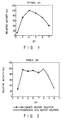
- 0.025 ml of the enzyme of the present invention were added to 0.125 ml of each buffer solution having a pH of 3 to 10 and were treated at 35°C for an hour. 0.15 ml of a 0.5 M acetic acid buffer solution (pH of 5.0) were added to the treated solution to adjust the pH to 5.0. Pectic acid was added to this solution so that the final concentration was adjusted to 0.2%, the resultant solution was reacted at 35°C for 20 minutes, and the activity was measured by the Somogyi-Nelson method. Enzymatic activity values were measured as relative activities when the maximum activity value was defined as 100%. As shown in Fig. 2, the relative activities obtained by the Somogyi-Nelson method were plotted as a function of the pH to obtain a stable pH range. As is apparent from Fig. 2, the enzyme of the present invention was stable within a pH range of 4 to 8.
- 0.02 ml of the enzyme of the present invention were added to 0.23 ml of a 0.2 M McIlvaine buffer solution (pH of 5.0) containing 0.2% of pectic acid and were reacted therewith at a temperature of 20°C to 80°C for 5 minutes, and the activity was measured by the Somogyi-Nelson method. Enzymatic activity values were measured as relative activities when the maximum activity value was defined as 100%. As shown in Fig. 3, the relative activities obtained by the Somogyi-Nelson method were plotted as a function of the temperature to obtain an optimal temperature. As is apparent from Fig. 3, the optimal temperature of the enzyme of the present invention was about 45°C.
- 0.02 ml of the enzyme of the present invention were added to 0.13 ml of a 0.5 M McIlvaine buffer solution (pH of 5.0) and were heat-treated at a temperature of 20°C to 65°C for 60 minutes. After the reaction solution was cooled with ice, 0.1 ml of a 0.5% aqueous pectic acid solution was added to each treated solution and was reacted therewith at 35°C for 20 minutes, and the activity was measured by the Somogyi-Nelson method. Enzymatic activity values were measured as relative activities when the maximum activity value was defined as 100%. As shown in Fig. 4, the relative activities obtained by the Somogyi-Nelson method were plotted as a function of the temperature to obtain a stable temperature range. As is apparent from Fig. 4, the relative activity of the enzyme of the present invention was 73% up to 45°C, but was reduced to about 20% at 65°C. The stable temperature range of this enzyme was limited up to 45°C.
- Influences of a metal ion and an inhibitor on the enzyme of the present invention were examined.
- Each metal ion and the inhibitor in Table 2 were added in 0.15 ml of a 0.2 M acetic acid buffer solution (pH of 5.0) containing 0.002 ml of the purified enzyme solution to obtain a concentration of 1 mM. Each solution was reacted at 35°C for 5 minutes, and 0.1 ml of a 0.5% aqueous pectic acid solution was added thereto. The resultant solution was reacted at 35°C for 20 minutes, and an inhibition ratio was calculated using the Somogyi-Nelson method. Results are shown in Table 2. The inhibition ratio is a relative value with reference to a case (0%) in which a metal or inhibitor is not added.
- this enzyme was most inhibited (74%) by EDTA.
- the enzyme was inhibited by a barium ion (barium chloride) by 69%. No inhibition was found with a magnesium ion (magnesium sulfate).
- the molecular weight of this enzyme obtained in Example 2 was measured by SDS polyacrylamide electrophoresis to be 38,000.
- the enzyme of the present invention was hydrolyzed with 6M hydrochloric acid at 105°C for 24 hours.
- the hydrolysate was analyzed by an amino acid analyzer (Hitachi, Model 835) to measure the amount of constituent amino acid. The measurement was repeated three times, and a ratio of the amino acid contents was calculated to obtain an amino acid composition. Results are shown in Table 3.
- Amino Acid Composition Amino Acid Amino Acid Residue (per molecule) Asparagine + aspartic acid 15 Threonine 11 Serine 43 Glutamine + glutamic acid 130 Glycine 37 Alanine 17 Valine 9 Methionine 1 Isoleucine 6 Leucine 7 Tyrosine 1 Phenylalanine 4 Lysine 8 Histidine 6 Arginine 3 Proline 8 Note) No experiments for detection were performed for tryptophan and cystine.
- the amount of amino acid residue per molecule is largest in the glutamine + glutamic acid and is the second largest in serine.
- 59.25g of a lemon low-molecular pectin were obtained following the same procedures as in (1) except that 1l of the culture supernatant prepared in (2) of Example 1 was used.
- 60.74g of a low-molecular pectin were obtained following the same procedures as in (1) except that 1l of the culture supernatant prepared in (3) of Example 1 was used.
- 70.40g of a low-molecular pectin were obtained following the same procedures as in (1) except that 1l of the culture supernatant prepared in (4) of Example 1 was used.
- the lemon low-molecular pectins obtained in (1) to (4) of a) were subjected to the following measurements (1) to (4).
- the main peak of each lemon low-molecular pectin was measured by HPLC analysis using a TSK-G 4000 PW gel filtration column to calculate its molecular weight using Pullulan (STANDARD P-82, Showa Denko) as the standard sample.
- a 5% solution of each lemon low-molecular pectin according to the present invention was prepared, and its viscosity was measured using an E type viscometer (Tokyo Keiki, VISCONIC ED Type).
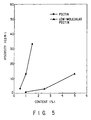
- the viscosity of the lemon low-molecular pectin obtained in (1) of a) was compared with that of a lemon pectin.
- the viscosities were measured using an E type viscometer (50 rpm). Results are shown in Fig. 5.
- the viscosity of the pectin was considerably reduced. Similar results were obtained for other low-molecular pectins.
- 4-week old SD male rats were fed with a commercial solid feed (oriental yeast solid feed MF) for 4 days and were divided into four groups each consisting of five rats.
- a feed containing the low-molecular pectin obtained in (1) of a) and components shown in Table 5, and a solid feed were supplied to each group, and the rats were fed for 9 days.
- the feces of the rats on the ninth day were collected. Results are shown in Table 6.
- the hardness of the feces by the solid feed was used as a reference. The hard feces are - (negative), and the soft feces are + (positive).
- the low-molecular pectin prepared using the yeast of the present invention has a feces softening effect and was found to have a defecation improving effect.
- the juice containing the low-molecular pectin exhibited smooth nector-like physical properties.
- composition material (Table 7) containing 1 part of the low-molecular pectin was used to prepare an apple type hard candy.
- the pectin When 1 wt% of pectin was added to the candy material, the pectin formed a lump of powder and could not be properly dispersed. However, when the low-molecular pectin was added in the same amount as that of the pectin, the low-molecular pectin could be properly dispersed and facilitated the preparation of candies. In addition, the pectin-added candy was too sour and had a strange taste. However, the low-molecular pectin-added candy tasted good.
- Apple low-molecular pectins were prepared from an apple pectin (Wako Junyaku Kogyo) obtained following the same procedures as in (1) of Example 4, using the culture supernatants prepared in (1) and (3) of Example 1. Each of the resultant low-molecular pectins had a molecular weight of 6.6 ⁇ 10 4 .
- a low-molecular pectin was prepared following the same procedures as in Example 4 except that a culture supernatant obtained by dialyzing overnight 1l of the supernatant obtained in the method of (1) of Example 1 against 300l of a 0.025 M acetic acid buffer solution (pH of 4.8) was used in place of the culture supernatant prepared in the method of (1) of Example 1.
- the resultant low-molecular pectin had a molecular weight of 6.6 ⁇ 10 4 .
- a low-molecular pectin was prepared following the same procedures as in Example 4 except that a culture supernatant obtained by dialyzing overnight 1l of the supernatant obtained in the method of (2) of Example 1 against 300l of a 0.025 M acetic acid buffer solution (pH of 4.8) was used in place of the culture supernatant prepared in the method of (2) of Example 1.
- the resultant low-molecular pectin had a molecular weight of 6.6 ⁇ 10 4 .
- a low-molecular pectin was prepared following the same procedures as in Example 4 except that a culture supernatant obtained by dialyzing overnight 1l of the supernatant obtained in the method of (3) of Example 1 against 300l of a 0.025 M acetic acid buffer solution (pH of 4.8) was used in place of the culture supernatant prepared in the method of (3) of Example 1.
- the resultant low-molecular pectin had a molecular weight of 6.6 ⁇ 10 4 .
- a low-molecular pectin was prepared following the same procedures as in Example 4 except that a culture supernatant obtained by dialyzing overnight 1l of the supernatant obtained in the method of (4) of Example 1 against 300l of a 0.025 M acetic acid buffer solution (pH of 4.8) was used in place of the culture supernatant prepared in the method of (4) of Example 1.
- the resultant low-molecular pectin had a molecular weight of 6.6 ⁇ 10 4 .
Landscapes
- Life Sciences & Earth Sciences (AREA)
- Chemical & Material Sciences (AREA)
- Engineering & Computer Science (AREA)
- Health & Medical Sciences (AREA)
- Food Science & Technology (AREA)
- Polymers & Plastics (AREA)
- Organic Chemistry (AREA)
- Zoology (AREA)
- Molecular Biology (AREA)
- Nutrition Science (AREA)
- Wood Science & Technology (AREA)
- Genetics & Genomics (AREA)
- Microbiology (AREA)
- Bioinformatics & Cheminformatics (AREA)
- Inorganic Chemistry (AREA)
- Biochemistry (AREA)
- General Engineering & Computer Science (AREA)
- General Health & Medical Sciences (AREA)
- Biotechnology (AREA)
- Chemical Kinetics & Catalysis (AREA)
- Biomedical Technology (AREA)
- General Chemical & Material Sciences (AREA)
- Medicinal Chemistry (AREA)
- Botany (AREA)
- Dispersion Chemistry (AREA)
- Enzymes And Modification Thereof (AREA)
- Preparation Of Compounds By Using Micro-Organisms (AREA)
- Polysaccharides And Polysaccharide Derivatives (AREA)
- Macromonomer-Based Addition Polymer (AREA)
Applications Claiming Priority (7)
| Application Number | Priority Date | Filing Date | Title |
|---|---|---|---|
| JP02743692A JP3201812B2 (ja) | 1992-01-20 | 1992-01-20 | 低分子ペクチン及びこれを配合してなる飲食品 |
| JP27436/92 | 1992-01-20 | ||
| JP350022/92 | 1992-12-03 | ||
| JP4350022A JPH06169724A (ja) | 1992-12-03 | 1992-12-03 | 低分子ペクチン及びこれを含有する飲食品 |
| JP32416092A JP3101640B2 (ja) | 1992-12-03 | 1992-12-03 | ペクチン分解酵素 |
| JP324160/92 | 1992-12-03 | ||
| EP93100792A EP0552728B1 (fr) | 1992-01-20 | 1993-01-20 | Pectinase nouvelle |
Related Parent Applications (1)
| Application Number | Title | Priority Date | Filing Date |
|---|---|---|---|
| EP93100792A Division EP0552728B1 (fr) | 1992-01-20 | 1993-01-20 | Pectinase nouvelle |
Publications (2)
| Publication Number | Publication Date |
|---|---|
| EP0868854A2 true EP0868854A2 (fr) | 1998-10-07 |
| EP0868854A3 EP0868854A3 (fr) | 1999-05-12 |
Family
ID=27285795
Family Applications (2)
| Application Number | Title | Priority Date | Filing Date |
|---|---|---|---|
| EP98100456A Withdrawn EP0868854A3 (fr) | 1992-01-20 | 1993-01-20 | Pectine à bas poids moléculaire, et aliment et boisson contenant la pectine à bas poids moléculaire |
| EP93100792A Expired - Lifetime EP0552728B1 (fr) | 1992-01-20 | 1993-01-20 | Pectinase nouvelle |
Family Applications After (1)
| Application Number | Title | Priority Date | Filing Date |
|---|---|---|---|
| EP93100792A Expired - Lifetime EP0552728B1 (fr) | 1992-01-20 | 1993-01-20 | Pectinase nouvelle |
Country Status (4)
| Country | Link |
|---|---|
| US (1) | US5807727A (fr) |
| EP (2) | EP0868854A3 (fr) |
| DE (1) | DE69325189T2 (fr) |
| DK (1) | DK0552728T3 (fr) |
Cited By (5)
| Publication number | Priority date | Publication date | Assignee | Title |
|---|---|---|---|---|
| DE10019076A1 (de) * | 2000-04-06 | 2001-10-18 | Lang Christine | Verwendung von Polygalakturoniden als Lebensmittelzusatzstoffe |
| EP1206909A4 (fr) * | 1999-08-27 | 2002-12-04 | Fuji Oil Co Ltd | Aliments proteiques acides, leur procede de fabrication et stabilisateurs |
| US6663717B2 (en) | 1999-09-17 | 2003-12-16 | Danisco Sugar Oy | Process for the fractionation of sugar beet pulp |
| WO2005016027A1 (fr) * | 2003-08-19 | 2005-02-24 | Danisco A/S | Procede pour preparer un produit alimentaire a l'aide de pectine depolymerisee comme stabilisant |
| EP1714562A1 (fr) * | 2005-04-22 | 2006-10-25 | N.V. Nutricia | Procédé de séchage d'oligosaccahrides d'acide uronique |
Families Citing this family (8)
| Publication number | Priority date | Publication date | Assignee | Title |
|---|---|---|---|---|
| EP0868854A3 (fr) * | 1992-01-20 | 1999-05-12 | Japan Tobacco Inc. | Pectine à bas poids moléculaire, et aliment et boisson contenant la pectine à bas poids moléculaire |
| AU6656896A (en) * | 1995-07-14 | 1997-02-18 | Innogenetics N.V. | New saccharomyces cerevisiae pectinase sequences and heterologous expression systems derived therefrom |
| FR2745980B1 (fr) * | 1996-03-15 | 1998-06-05 | Utilisation de pectines depolymerisees d'agrumes et de pommes a titre d'agents emulsifiants et stabilisants d'emulsions | |
| GB2314564B (en) * | 1996-06-29 | 2000-09-27 | Laporte Bsd Limited | Colloidal compositions and their use in the clarification of aqueous liquids |
| EP1290952B1 (fr) | 2000-06-14 | 2005-03-30 | Kao Corporation | Compositions riches en fibres alimentaires |
| US6706305B2 (en) | 2001-10-31 | 2004-03-16 | Conagra Foods Inc. | Low glycemic index bread |
| DK2341136T3 (en) | 2003-04-04 | 2016-09-12 | Basf Enzymes Llc | Pectate lyases, nucleic acids encoding them, and methods of making and using them |
| TWI526162B (zh) * | 2006-08-14 | 2016-03-21 | Dsm智慧財產有限公司 | 經強化之飲品及其製作方法 |
Family Cites Families (23)
| Publication number | Priority date | Publication date | Assignee | Title |
|---|---|---|---|---|
| SU495368A1 (ru) * | 1974-03-20 | 1975-12-15 | Предприятие П/Я Г-4911 | Бак дл закалки листов |
| JPS5277451A (en) * | 1975-12-23 | 1977-06-29 | Mitsubishi Heavy Ind Ltd | Method of treating pectin-containing effluent (or waste solution by tu rning the pectin into low molecule) |
| JPS5626901A (en) * | 1979-08-10 | 1981-03-16 | Takuo Sakai | Preparation of pectin from plant tissue |
| JPS5783286A (en) * | 1980-11-13 | 1982-05-25 | Mitsubishi Chem Ind Ltd | Preparation of enzyme to make protopectin soluble |
| US4820520A (en) * | 1981-03-31 | 1989-04-11 | Asama Chemical Co., Ltd. | Antiseptic agent for food and drink and method of antiseptic treatment thereof |
| JPS57163477A (en) * | 1981-03-31 | 1982-10-07 | Asama Kasei Kk | Preservative for food and drink and preserving method thereof (1) |
| JPS57163478A (en) * | 1981-03-31 | 1982-10-07 | Asama Kasei Kk | Preservative for food and drink and preserving method thereof (2) |
| DE3228231A1 (de) * | 1982-07-28 | 1984-02-02 | Fraunhofer-Gesellschaft zur Förderung der angewandten Forschung e.V., 8000 München | Arzneimittel, calciummischsalze von polymeren, anionischen carbonsaeuren und/oder schwefelsaeureestern, verfahren zu ihrer herstellung und ihre verwendung |
| US5008254A (en) * | 1982-09-03 | 1991-04-16 | Weibel Michael K | Sugar beet pectins and their use in comestibles |
| JPS5971699A (ja) * | 1982-10-18 | 1984-04-23 | Takuo Sakai | ペクチンの製法 |
| FR2545101B1 (fr) * | 1983-04-29 | 1985-08-16 | Agronomique Inst Nat Rech | Procede de modification des pectines de betterave, produits obtenus et leurs applications |
| US4605622A (en) * | 1983-11-15 | 1986-08-12 | Kansai Paint Co., Ltd. | Process for producing granular fixed enzymes or microorganisms |
| US4873095A (en) * | 1984-10-05 | 1989-10-10 | Rundle Kevin W | Extraction of soluble materials from whole citrus fruit |
| US4871544A (en) * | 1985-08-16 | 1989-10-03 | Alza Corporation | Ruminant dispensing device |
| DK157618C (da) * | 1986-05-22 | 1990-06-11 | Kobenhavns Pektinfabrik As | Gummiagtigt stof, baseret paa pektin og gelatine, til brug i konfekturevarer og konfekturevare indeholdende samme |
| SU1495368A1 (ru) * | 1987-11-12 | 1989-07-23 | Институт микробиологии АН СССР | Полиплоидный штамм дрожжей SасснаRомYсеS VINI, используемый дл приготовлени столовых вин |
| JPH0272853A (ja) * | 1988-01-07 | 1990-03-13 | Hiroe Ogawa | 食品用変質防止剤および食品の変質防止方法 |
| JP2754028B2 (ja) * | 1988-02-13 | 1998-05-20 | 博衛 小川 | 食品用変質防止剤および食品 |
| DK350088D0 (da) * | 1988-06-24 | 1988-06-24 | Kobenhavns Pektinfabrik As | Fremgangsmaade til forbedring af hoejforestret pektins geleringsegenskaber |
| FR2635951B1 (fr) * | 1988-09-05 | 1991-03-15 | Agronomique Inst Nat Rech | Produits riches en parois vegetales a fraction hydrosoluble accrue, leur obtention, leur utilisation et compositions les contenant |
| DE68910830T2 (de) * | 1988-09-05 | 1994-04-28 | Agronomique Inst Nat Rech | Verfahren zur herstellung von an pflanzlicher substanz reicher produkte, insbesondere an pektinen, extraktionsrückständen von diesen, ihre verwendung und extraktionsrückständen. |
| JP2902405B2 (ja) * | 1988-09-30 | 1999-06-07 | 大日本製薬株式会社 | 生理活性を有するオリゴガラクツロニドの製造方法 |
| EP0868854A3 (fr) * | 1992-01-20 | 1999-05-12 | Japan Tobacco Inc. | Pectine à bas poids moléculaire, et aliment et boisson contenant la pectine à bas poids moléculaire |
-
1993
- 1993-01-20 EP EP98100456A patent/EP0868854A3/fr not_active Withdrawn
- 1993-01-20 DE DE69325189T patent/DE69325189T2/de not_active Expired - Fee Related
- 1993-01-20 DK DK93100792T patent/DK0552728T3/da active
- 1993-01-20 EP EP93100792A patent/EP0552728B1/fr not_active Expired - Lifetime
-
1995
- 1995-06-02 US US08/458,870 patent/US5807727A/en not_active Expired - Fee Related
Cited By (10)
| Publication number | Priority date | Publication date | Assignee | Title |
|---|---|---|---|---|
| EP1206909A4 (fr) * | 1999-08-27 | 2002-12-04 | Fuji Oil Co Ltd | Aliments proteiques acides, leur procede de fabrication et stabilisateurs |
| US6890578B1 (en) | 1999-08-27 | 2005-05-10 | Fuji Oil Co., Ltd. | Acidic protein foods, process for their production and stabilizer |
| US6663717B2 (en) | 1999-09-17 | 2003-12-16 | Danisco Sugar Oy | Process for the fractionation of sugar beet pulp |
| DE10019076A1 (de) * | 2000-04-06 | 2001-10-18 | Lang Christine | Verwendung von Polygalakturoniden als Lebensmittelzusatzstoffe |
| WO2005016027A1 (fr) * | 2003-08-19 | 2005-02-24 | Danisco A/S | Procede pour preparer un produit alimentaire a l'aide de pectine depolymerisee comme stabilisant |
| AU2004264730B2 (en) * | 2003-08-19 | 2011-02-24 | Dupont Nutrition Biosciences Aps | Process for preparing a food product using depolymerised pectin as stabiliser |
| US8211484B2 (en) | 2003-08-19 | 2012-07-03 | Dupont Nutrition Biosciences Aps | Process for preparing a food product using depolymerised pectin as stabiliser |
| EP1714562A1 (fr) * | 2005-04-22 | 2006-10-25 | N.V. Nutricia | Procédé de séchage d'oligosaccahrides d'acide uronique |
| WO2006112718A3 (fr) * | 2005-04-22 | 2007-03-29 | Nutricia Nv | Procede de sechage des oligosaccharides de l'acide uronique |
| US8048997B2 (en) | 2005-04-22 | 2011-11-01 | N.V. Nutricia | Process for drying uronic acid oligosaccharides |
Also Published As
| Publication number | Publication date |
|---|---|
| EP0552728A1 (fr) | 1993-07-28 |
| US5807727A (en) | 1998-09-15 |
| DK0552728T3 (da) | 1999-11-15 |
| DE69325189T2 (de) | 1999-11-25 |
| EP0868854A3 (fr) | 1999-05-12 |
| DE69325189D1 (de) | 1999-07-15 |
| EP0552728B1 (fr) | 1999-06-09 |
Similar Documents
| Publication | Publication Date | Title |
|---|---|---|
| EP0382577B1 (fr) | Hydrolysat enzymatique d'un dérivé de cellulose | |
| EP2774993B1 (fr) | Utilisation efficace d'une levure et d'un résidu d'extrait de levure | |
| US6268182B1 (en) | Method and producing phosphorylated saccharides | |
| EP0552728B1 (fr) | Pectinase nouvelle | |
| JP3533239B2 (ja) | マルトヘキサオース・マルトヘプタオース生成アミラーゼとその製造方法並びに用途 | |
| US4200694A (en) | Novel pectin esterase, process for its production, and process for producing demethoxylated pectin by the use of said pectin esterase | |
| EP0562171A2 (fr) | Polysaccharide soluble dans l'eau et procédé d'obtention | |
| Ishii et al. | Clarification of fruit juice by pectin trans-eliminase | |
| SI8212812A8 (en) | PROCESS FOR PREPARING OF SPS-ase | |
| JP2938471B2 (ja) | 水溶性食物繊維含有飲食品 | |
| Botvynko et al. | Synthesis of galactooligosaccharides with four β-galactosidases: Structural comparison of the products by HPLC, ESI-MS and NMR | |
| CN116473242A (zh) | 富含大豆多肽的食品添加剂的制备方法及其应用 | |
| WO2019119102A1 (fr) | Procédé de production de galacto-oligosaccharides à partir de lactose | |
| JPH068322B2 (ja) | ペクチンの製造法 | |
| JP3201812B2 (ja) | 低分子ペクチン及びこれを配合してなる飲食品 | |
| FI103583B (fi) | Vesiliukoisesta karboksimetyyliselluloosasta entsymaattisesti valmiste ttu hydrolysaatti | |
| Takata et al. | Improvement of the antitumor activity of black currant polysaccharide by an enzymatic treatment | |
| JP3101640B2 (ja) | ペクチン分解酵素 | |
| JP4971511B2 (ja) | 糖組成物及び飲食品 | |
| KR101386006B1 (ko) | 남태평양 자연산 갈조류 큰 실말(Limu moui)을 이용한 푸코이단 추출과 저분자화 된 푸코이단 제조방법 | |
| CN113373063A (zh) | 一株米曲霉za175及其应用 | |
| JPH0716092A (ja) | ポルフィラン分解酵素、ネオアガロオリゴ糖およびそれらの製造方法 | |
| JPH06169724A (ja) | 低分子ペクチン及びこれを含有する飲食品 | |
| KR102954279B1 (ko) | 코마가테이박터 인터메디우스 균주 및 이를 이용한 식품 조성물 | |
| LU500438B1 (en) | Inonotus Obliquus Enzymatically Hydrolyzed polysaccharide Oral Liquid |
Legal Events
| Date | Code | Title | Description |
|---|---|---|---|
| PUAI | Public reference made under article 153(3) epc to a published international application that has entered the european phase |
Free format text: ORIGINAL CODE: 0009012 |
|
| 17P | Request for examination filed |
Effective date: 19980209 |
|
| AC | Divisional application: reference to earlier application |
Ref document number: 552728 Country of ref document: EP |
|
| AK | Designated contracting states |
Kind code of ref document: A2 Designated state(s): DE DK FR |
|
| PUAL | Search report despatched |
Free format text: ORIGINAL CODE: 0009013 |
|
| RIN1 | Information on inventor provided before grant (corrected) |
Inventor name: HATANAKA, CHITOSHI Inventor name: WATABE, SATOSHI, C/O JAPAN TOBACCO INC., Inventor name: MAEDA, SUSUMU, C/O JAPAN TOBACCO INC. Inventor name: SHIMIZU, NORIKO, C/O JAPAN TOBACCO INC. Inventor name: UCHIDA, SETSUKO, C/O JAPAN TOBACCO INC. Inventor name: YAMAGUCHI, FUMIHIDE, C/O JAPAN TOBACCO INC. |
|
| AK | Designated contracting states |
Kind code of ref document: A3 Designated state(s): DE DK FR |
|
| STAA | Information on the status of an ep patent application or granted ep patent |
Free format text: STATUS: THE APPLICATION HAS BEEN WITHDRAWN |
|
| 18W | Application withdrawn |
Withdrawal date: 20010511 |