EP0873332B1 - Composes de discodermolide et compositions pharmaceutiques contenant ces composes, a utiliser dans la therapie du cancer - Google Patents
Composes de discodermolide et compositions pharmaceutiques contenant ces composes, a utiliser dans la therapie du cancer Download PDFInfo
- Publication number
- EP0873332B1 EP0873332B1 EP96943591A EP96943591A EP0873332B1 EP 0873332 B1 EP0873332 B1 EP 0873332B1 EP 96943591 A EP96943591 A EP 96943591A EP 96943591 A EP96943591 A EP 96943591A EP 0873332 B1 EP0873332 B1 EP 0873332B1
- Authority
- EP
- European Patent Office
- Prior art keywords
- cancer
- cells
- discodermolide
- compounds
- compound
- Prior art date
- Legal status (The legal status is an assumption and is not a legal conclusion. Google has not performed a legal analysis and makes no representation as to the accuracy of the status listed.)
- Expired - Lifetime
Links
- 239000008194 pharmaceutical composition Substances 0.000 title claims description 8
- AADVCYNFEREWOS-OBRABYBLSA-N Discodermolide Chemical class C=C\C=C/[C@H](C)[C@H](OC(N)=O)[C@@H](C)[C@H](O)[C@@H](C)C\C(C)=C/[C@H](C)[C@@H](O)[C@@H](C)\C=C/[C@@H](O)C[C@@H]1OC(=O)[C@H](C)[C@@H](O)[C@H]1C AADVCYNFEREWOS-OBRABYBLSA-N 0.000 title description 48
- 238000011275 oncology therapy Methods 0.000 title 1
- 150000001875 compounds Chemical class 0.000 claims abstract description 62
- 206010028980 Neoplasm Diseases 0.000 claims abstract description 21
- 201000011510 cancer Diseases 0.000 claims abstract description 19
- -1 lactone compounds Chemical class 0.000 claims abstract description 14
- 208000026310 Breast neoplasm Diseases 0.000 claims abstract description 10
- 208000029742 colonic neoplasm Diseases 0.000 claims abstract description 8
- 201000001441 melanoma Diseases 0.000 claims abstract description 8
- AADVCYNFEREWOS-UHFFFAOYSA-N (+)-DDM Natural products C=CC=CC(C)C(OC(N)=O)C(C)C(O)C(C)CC(C)=CC(C)C(O)C(C)C=CC(O)CC1OC(=O)C(C)C(O)C1C AADVCYNFEREWOS-UHFFFAOYSA-N 0.000 claims description 52
- 206010006187 Breast cancer Diseases 0.000 claims description 8
- 239000003814 drug Substances 0.000 claims description 7
- 239000002253 acid Substances 0.000 claims description 6
- 201000007455 central nervous system cancer Diseases 0.000 claims description 6
- 150000003839 salts Chemical class 0.000 claims description 6
- 208000020816 lung neoplasm Diseases 0.000 claims description 5
- 238000004519 manufacturing process Methods 0.000 claims description 5
- 206010009944 Colon cancer Diseases 0.000 claims description 4
- 208000008839 Kidney Neoplasms Diseases 0.000 claims description 4
- 206010058467 Lung neoplasm malignant Diseases 0.000 claims description 4
- 206010033128 Ovarian cancer Diseases 0.000 claims description 4
- 206010061535 Ovarian neoplasm Diseases 0.000 claims description 4
- 206010060862 Prostate cancer Diseases 0.000 claims description 4
- 208000000236 Prostatic Neoplasms Diseases 0.000 claims description 4
- 206010038389 Renal cancer Diseases 0.000 claims description 4
- 125000000217 alkyl group Chemical group 0.000 claims description 4
- 201000010982 kidney cancer Diseases 0.000 claims description 4
- 201000005202 lung cancer Diseases 0.000 claims description 4
- 125000001997 phenyl group Chemical group [H]C1=C([H])C([H])=C(*)C([H])=C1[H] 0.000 claims description 4
- 125000003944 tolyl group Chemical group 0.000 claims description 4
- 125000005023 xylyl group Chemical group 0.000 claims description 4
- LMBFAGIMSUYTBN-MPZNNTNKSA-N teixobactin Chemical compound C([C@H](C(=O)N[C@@H]([C@@H](C)CC)C(=O)N[C@@H](CO)C(=O)N[C@H](CCC(N)=O)C(=O)N[C@H]([C@@H](C)CC)C(=O)N[C@@H]([C@@H](C)CC)C(=O)N[C@@H](CO)C(=O)N[C@H]1C(N[C@@H](C)C(=O)N[C@@H](C[C@@H]2NC(=N)NC2)C(=O)N[C@H](C(=O)O[C@H]1C)[C@@H](C)CC)=O)NC)C1=CC=CC=C1 LMBFAGIMSUYTBN-MPZNNTNKSA-N 0.000 claims description 3
- 239000003937 drug carrier Substances 0.000 claims description 2
- 230000000694 effects Effects 0.000 abstract description 20
- 210000000481 breast Anatomy 0.000 abstract description 7
- 208000032839 leukemia Diseases 0.000 abstract description 7
- 241001290275 Discodermia dissoluta Species 0.000 abstract description 5
- 210000001072 colon Anatomy 0.000 abstract description 3
- 208000037841 lung tumor Diseases 0.000 abstract description 3
- 210000003169 central nervous system Anatomy 0.000 abstract description 2
- 208000025997 central nervous system neoplasm Diseases 0.000 abstract description 2
- 210000004027 cell Anatomy 0.000 description 85
- 229930012538 Paclitaxel Natural products 0.000 description 36
- 229960001592 paclitaxel Drugs 0.000 description 36
- RCINICONZNJXQF-MZXODVADSA-N taxol Chemical compound O([C@@H]1[C@@]2(C[C@@H](C(C)=C(C2(C)C)[C@H](C([C@]2(C)[C@@H](O)C[C@H]3OC[C@]3([C@H]21)OC(C)=O)=O)OC(=O)C)OC(=O)[C@H](O)[C@@H](NC(=O)C=1C=CC=CC=1)C=1C=CC=CC=1)O)C(=O)C1=CC=CC=C1 RCINICONZNJXQF-MZXODVADSA-N 0.000 description 36
- 239000000203 mixture Substances 0.000 description 34
- 238000000034 method Methods 0.000 description 19
- 230000035755 proliferation Effects 0.000 description 16
- OKKJLVBELUTLKV-UHFFFAOYSA-N Methanol Chemical compound OC OKKJLVBELUTLKV-UHFFFAOYSA-N 0.000 description 15
- LFQSCWFLJHTTHZ-UHFFFAOYSA-N Ethanol Chemical compound CCO LFQSCWFLJHTTHZ-UHFFFAOYSA-N 0.000 description 14
- YMWUJEATGCHHMB-UHFFFAOYSA-N Dichloromethane Chemical compound ClCCl YMWUJEATGCHHMB-UHFFFAOYSA-N 0.000 description 11
- 230000022131 cell cycle Effects 0.000 description 11
- 241000243142 Porifera Species 0.000 description 10
- 241001264636 Discodermia sp. Species 0.000 description 8
- 210000004881 tumor cell Anatomy 0.000 description 8
- 230000018199 S phase Effects 0.000 description 7
- 102000004243 Tubulin Human genes 0.000 description 7
- 108090000704 Tubulin Proteins 0.000 description 7
- 230000001028 anti-proliverative effect Effects 0.000 description 7
- 210000004688 microtubule Anatomy 0.000 description 7
- XEKOWRVHYACXOJ-UHFFFAOYSA-N Ethyl acetate Chemical compound CCOC(C)=O XEKOWRVHYACXOJ-UHFFFAOYSA-N 0.000 description 6
- 230000004668 G2/M phase Effects 0.000 description 6
- 102000029749 Microtubule Human genes 0.000 description 6
- 108091022875 Microtubule Proteins 0.000 description 6
- 230000000259 anti-tumor effect Effects 0.000 description 6
- 238000006243 chemical reaction Methods 0.000 description 6
- 239000000126 substance Substances 0.000 description 6
- 241001529936 Murinae Species 0.000 description 5
- 230000002401 inhibitory effect Effects 0.000 description 5
- 238000002360 preparation method Methods 0.000 description 5
- 241000894007 species Species 0.000 description 5
- 230000001225 therapeutic effect Effects 0.000 description 5
- IAZDPXIOMUYVGZ-UHFFFAOYSA-N Dimethylsulphoxide Chemical compound CS(C)=O IAZDPXIOMUYVGZ-UHFFFAOYSA-N 0.000 description 4
- 231100000111 LD50 Toxicity 0.000 description 4
- VYPSYNLAJGMNEJ-UHFFFAOYSA-N Silicium dioxide Chemical compound O=[Si]=O VYPSYNLAJGMNEJ-UHFFFAOYSA-N 0.000 description 4
- 230000003247 decreasing effect Effects 0.000 description 4
- 230000012010 growth Effects 0.000 description 4
- 210000005265 lung cell Anatomy 0.000 description 4
- 229920000642 polymer Polymers 0.000 description 4
- 239000002904 solvent Substances 0.000 description 4
- MQLACMBJVPINKE-UHFFFAOYSA-N 10-[(3-hydroxy-4-methoxyphenyl)methylidene]anthracen-9-one Chemical compound C1=C(O)C(OC)=CC=C1C=C1C2=CC=CC=C2C(=O)C2=CC=CC=C21 MQLACMBJVPINKE-UHFFFAOYSA-N 0.000 description 3
- CSCPPACGZOOCGX-UHFFFAOYSA-N Acetone Chemical compound CC(C)=O CSCPPACGZOOCGX-UHFFFAOYSA-N 0.000 description 3
- WEVYAHXRMPXWCK-UHFFFAOYSA-N Acetonitrile Chemical compound CC#N WEVYAHXRMPXWCK-UHFFFAOYSA-N 0.000 description 3
- UHOVQNZJYSORNB-UHFFFAOYSA-N Benzene Chemical compound C1=CC=CC=C1 UHOVQNZJYSORNB-UHFFFAOYSA-N 0.000 description 3
- RTZKZFJDLAIYFH-UHFFFAOYSA-N Diethyl ether Chemical compound CCOCC RTZKZFJDLAIYFH-UHFFFAOYSA-N 0.000 description 3
- PEDCQBHIVMGVHV-UHFFFAOYSA-N Glycerine Chemical compound OCC(O)CO PEDCQBHIVMGVHV-UHFFFAOYSA-N 0.000 description 3
- YXFVVABEGXRONW-UHFFFAOYSA-N Toluene Chemical compound CC1=CC=CC=C1 YXFVVABEGXRONW-UHFFFAOYSA-N 0.000 description 3
- 238000004458 analytical method Methods 0.000 description 3
- TZSMWSKOPZEMAJ-UHFFFAOYSA-N bis[(2-methoxyphenyl)methyl] carbonate Chemical compound COC1=CC=CC=C1COC(=O)OCC1=CC=CC=C1OC TZSMWSKOPZEMAJ-UHFFFAOYSA-N 0.000 description 3
- 210000004271 bone marrow stromal cell Anatomy 0.000 description 3
- 230000001351 cycling effect Effects 0.000 description 3
- 230000007423 decrease Effects 0.000 description 3
- 239000003085 diluting agent Substances 0.000 description 3
- 229940079593 drug Drugs 0.000 description 3
- 238000000605 extraction Methods 0.000 description 3
- 210000002950 fibroblast Anatomy 0.000 description 3
- 238000009472 formulation Methods 0.000 description 3
- 238000005259 measurement Methods 0.000 description 3
- 230000004048 modification Effects 0.000 description 3
- 238000012986 modification Methods 0.000 description 3
- VLKZOEOYAKHREP-UHFFFAOYSA-N n-Hexane Chemical compound CCCCCC VLKZOEOYAKHREP-UHFFFAOYSA-N 0.000 description 3
- 150000002894 organic compounds Chemical class 0.000 description 3
- 231100000419 toxicity Toxicity 0.000 description 3
- 230000001988 toxicity Effects 0.000 description 3
- 230000004614 tumor growth Effects 0.000 description 3
- OKTJSMMVPCPJKN-UHFFFAOYSA-N Carbon Chemical group [C] OKTJSMMVPCPJKN-UHFFFAOYSA-N 0.000 description 2
- HEDRZPFGACZZDS-UHFFFAOYSA-N Chloroform Chemical compound ClC(Cl)Cl HEDRZPFGACZZDS-UHFFFAOYSA-N 0.000 description 2
- 108020004414 DNA Proteins 0.000 description 2
- OKKJLVBELUTLKV-MZCSYVLQSA-N Deuterated methanol Chemical compound [2H]OC([2H])([2H])[2H] OKKJLVBELUTLKV-MZCSYVLQSA-N 0.000 description 2
- 230000010190 G1 phase Effects 0.000 description 2
- KFZMGEQAYNKOFK-UHFFFAOYSA-N Isopropanol Chemical compound CC(C)O KFZMGEQAYNKOFK-UHFFFAOYSA-N 0.000 description 2
- 241001465754 Metazoa Species 0.000 description 2
- LRHPLDYGYMQRHN-UHFFFAOYSA-N N-Butanol Chemical compound CCCCO LRHPLDYGYMQRHN-UHFFFAOYSA-N 0.000 description 2
- IMNFDUFMRHMDMM-UHFFFAOYSA-N N-Heptane Chemical compound CCCCCCC IMNFDUFMRHMDMM-UHFFFAOYSA-N 0.000 description 2
- HEDRZPFGACZZDS-MICDWDOJSA-N Trichloro(2H)methane Chemical compound [2H]C(Cl)(Cl)Cl HEDRZPFGACZZDS-MICDWDOJSA-N 0.000 description 2
- 239000004480 active ingredient Substances 0.000 description 2
- 230000004071 biological effect Effects 0.000 description 2
- 201000008275 breast carcinoma Diseases 0.000 description 2
- 239000000969 carrier Substances 0.000 description 2
- 238000004113 cell culture Methods 0.000 description 2
- 230000010261 cell growth Effects 0.000 description 2
- 238000004587 chromatography analysis Methods 0.000 description 2
- 231100000135 cytotoxicity Toxicity 0.000 description 2
- 230000003013 cytotoxicity Effects 0.000 description 2
- 102000015694 estrogen receptors Human genes 0.000 description 2
- 108010038795 estrogen receptors Proteins 0.000 description 2
- 239000000284 extract Substances 0.000 description 2
- 238000004128 high performance liquid chromatography Methods 0.000 description 2
- 238000010166 immunofluorescence Methods 0.000 description 2
- 238000000338 in vitro Methods 0.000 description 2
- 238000002955 isolation Methods 0.000 description 2
- 210000004698 lymphocyte Anatomy 0.000 description 2
- 238000009448 modified atmosphere packaging Methods 0.000 description 2
- 235000019837 monoammonium phosphate Nutrition 0.000 description 2
- 229930014626 natural product Natural products 0.000 description 2
- 238000006116 polymerization reaction Methods 0.000 description 2
- BDERNNFJNOPAEC-UHFFFAOYSA-N propan-1-ol Chemical compound CCCO BDERNNFJNOPAEC-UHFFFAOYSA-N 0.000 description 2
- 238000000746 purification Methods 0.000 description 2
- 239000011541 reaction mixture Substances 0.000 description 2
- 239000000377 silicon dioxide Substances 0.000 description 2
- 230000006641 stabilisation Effects 0.000 description 2
- 238000011105 stabilization Methods 0.000 description 2
- 238000006467 substitution reaction Methods 0.000 description 2
- XLYOFNOQVPJJNP-UHFFFAOYSA-N water Substances O XLYOFNOQVPJJNP-UHFFFAOYSA-N 0.000 description 2
- WSLDOOZREJYCGB-UHFFFAOYSA-N 1,2-Dichloroethane Chemical compound ClCCCl WSLDOOZREJYCGB-UHFFFAOYSA-N 0.000 description 1
- 238000001644 13C nuclear magnetic resonance spectroscopy Methods 0.000 description 1
- 238000005160 1H NMR spectroscopy Methods 0.000 description 1
- SXGZJKUKBWWHRA-UHFFFAOYSA-N 2-(N-morpholiniumyl)ethanesulfonate Chemical compound [O-]S(=O)(=O)CC[NH+]1CCOCC1 SXGZJKUKBWWHRA-UHFFFAOYSA-N 0.000 description 1
- HBAQYPYDRFILMT-UHFFFAOYSA-N 8-[3-(1-cyclopropylpyrazol-4-yl)-1H-pyrazolo[4,3-d]pyrimidin-5-yl]-3-methyl-3,8-diazabicyclo[3.2.1]octan-2-one Chemical class C1(CC1)N1N=CC(=C1)C1=NNC2=C1N=C(N=C2)N1C2C(N(CC1CC2)C)=O HBAQYPYDRFILMT-UHFFFAOYSA-N 0.000 description 1
- 241000283690 Bos taurus Species 0.000 description 1
- 0 CCCC[C@@](C)C([C@](C)[C@]([C@](*)CC(C)C[C@@](C)[C@]([C@](C)CC[C@](*)(C[C@@]([C@](C)[C@]([C@@]1C)O)(OC1=O)S)O)(O)I)O)O*(N)=O Chemical compound CCCC[C@@](C)C([C@](C)[C@]([C@](*)CC(C)C[C@@](C)[C@]([C@](C)CC[C@](*)(C[C@@]([C@](C)[C@]([C@@]1C)O)(OC1=O)S)O)(O)I)O)O*(N)=O 0.000 description 1
- 241000243143 Demospongiae Species 0.000 description 1
- 241001264635 Discodermia Species 0.000 description 1
- 241000461881 Heteroscleromorpha Species 0.000 description 1
- 241000282412 Homo Species 0.000 description 1
- NHTMVDHEPJAVLT-UHFFFAOYSA-N Isooctane Chemical compound CC(C)CC(C)(C)C NHTMVDHEPJAVLT-UHFFFAOYSA-N 0.000 description 1
- BZLVMXJERCGZMT-UHFFFAOYSA-N Methyl tert-butyl ether Chemical compound COC(C)(C)C BZLVMXJERCGZMT-UHFFFAOYSA-N 0.000 description 1
- 108020002230 Pancreatic Ribonuclease Proteins 0.000 description 1
- 102000005891 Pancreatic ribonuclease Human genes 0.000 description 1
- 241000233805 Phoenix Species 0.000 description 1
- 231100000632 Spindle poison Toxicity 0.000 description 1
- 229920002472 Starch Polymers 0.000 description 1
- QAOWNCQODCNURD-UHFFFAOYSA-N Sulfuric acid Chemical compound OS(O)(=O)=O QAOWNCQODCNURD-UHFFFAOYSA-N 0.000 description 1
- 241001116498 Taxus baccata Species 0.000 description 1
- 230000021736 acetylation Effects 0.000 description 1
- 238000006640 acetylation reaction Methods 0.000 description 1
- 150000007513 acids Chemical class 0.000 description 1
- 230000009471 action Effects 0.000 description 1
- 239000000443 aerosol Substances 0.000 description 1
- PNEYBMLMFCGWSK-UHFFFAOYSA-N aluminium oxide Inorganic materials [O-2].[O-2].[O-2].[Al+3].[Al+3] PNEYBMLMFCGWSK-UHFFFAOYSA-N 0.000 description 1
- 150000001413 amino acids Chemical class 0.000 description 1
- 230000001093 anti-cancer Effects 0.000 description 1
- 230000000975 bioactive effect Effects 0.000 description 1
- 230000015572 biosynthetic process Effects 0.000 description 1
- 230000000903 blocking effect Effects 0.000 description 1
- 210000004556 brain Anatomy 0.000 description 1
- 230000003197 catalytic effect Effects 0.000 description 1
- 230000006369 cell cycle progression Effects 0.000 description 1
- 230000004663 cell proliferation Effects 0.000 description 1
- 230000001413 cellular effect Effects 0.000 description 1
- 230000008859 change Effects 0.000 description 1
- 239000003153 chemical reaction reagent Substances 0.000 description 1
- 239000003795 chemical substances by application Substances 0.000 description 1
- 238000002512 chemotherapy Methods 0.000 description 1
- 229910052681 coesite Inorganic materials 0.000 description 1
- 238000004185 countercurrent chromatography Methods 0.000 description 1
- 239000006071 cream Substances 0.000 description 1
- 229910052906 cristobalite Inorganic materials 0.000 description 1
- 230000001419 dependent effect Effects 0.000 description 1
- 239000003599 detergent Substances 0.000 description 1
- 230000004069 differentiation Effects 0.000 description 1
- JVSWJIKNEAIKJW-UHFFFAOYSA-N dimethyl-hexane Natural products CCCCCC(C)C JVSWJIKNEAIKJW-UHFFFAOYSA-N 0.000 description 1
- 229930004069 diterpene Natural products 0.000 description 1
- 150000004141 diterpene derivatives Chemical class 0.000 description 1
- 230000000857 drug effect Effects 0.000 description 1
- 238000000635 electron micrograph Methods 0.000 description 1
- 239000003480 eluent Substances 0.000 description 1
- 239000000469 ethanolic extract Substances 0.000 description 1
- 230000005284 excitation Effects 0.000 description 1
- 238000002474 experimental method Methods 0.000 description 1
- 210000003953 foreskin Anatomy 0.000 description 1
- 238000005194 fractionation Methods 0.000 description 1
- 238000002523 gelfiltration Methods 0.000 description 1
- 230000009036 growth inhibition Effects 0.000 description 1
- 230000036541 health Effects 0.000 description 1
- 210000005260 human cell Anatomy 0.000 description 1
- 238000005984 hydrogenation reaction Methods 0.000 description 1
- 230000002519 immonomodulatory effect Effects 0.000 description 1
- 230000028993 immune response Effects 0.000 description 1
- 230000005764 inhibitory process Effects 0.000 description 1
- 230000000977 initiatory effect Effects 0.000 description 1
- 229910052500 inorganic mineral Inorganic materials 0.000 description 1
- 230000003993 interaction Effects 0.000 description 1
- 230000002452 interceptive effect Effects 0.000 description 1
- 239000000543 intermediate Substances 0.000 description 1
- 238000007918 intramuscular administration Methods 0.000 description 1
- 238000007912 intraperitoneal administration Methods 0.000 description 1
- 238000001990 intravenous administration Methods 0.000 description 1
- 230000001788 irregular Effects 0.000 description 1
- 210000004072 lung Anatomy 0.000 description 1
- 239000000463 material Substances 0.000 description 1
- 230000007246 mechanism Effects 0.000 description 1
- 230000010534 mechanism of action Effects 0.000 description 1
- 230000011987 methylation Effects 0.000 description 1
- 238000007069 methylation reaction Methods 0.000 description 1
- 239000011707 mineral Substances 0.000 description 1
- 230000000394 mitotic effect Effects 0.000 description 1
- 239000003068 molecular probe Substances 0.000 description 1
- 208000002154 non-small cell lung carcinoma Diseases 0.000 description 1
- 231100000252 nontoxic Toxicity 0.000 description 1
- 230000003000 nontoxic effect Effects 0.000 description 1
- 239000002773 nucleotide Substances 0.000 description 1
- 125000003729 nucleotide group Chemical group 0.000 description 1
- 150000007524 organic acids Chemical class 0.000 description 1
- 235000005985 organic acids Nutrition 0.000 description 1
- 239000003960 organic solvent Substances 0.000 description 1
- 230000020477 pH reduction Effects 0.000 description 1
- 239000004033 plastic Substances 0.000 description 1
- 229920003023 plastic Polymers 0.000 description 1
- 230000000379 polymerizing effect Effects 0.000 description 1
- 230000002062 proliferating effect Effects 0.000 description 1
- XJMOSONTPMZWPB-UHFFFAOYSA-M propidium iodide Chemical compound [I-].[I-].C12=CC(N)=CC=C2C2=CC=C(N)C=C2[N+](CCC[N+](C)(CC)CC)=C1C1=CC=CC=C1 XJMOSONTPMZWPB-UHFFFAOYSA-M 0.000 description 1
- 230000008707 rearrangement Effects 0.000 description 1
- 238000011084 recovery Methods 0.000 description 1
- 230000002829 reductive effect Effects 0.000 description 1
- 238000011160 research Methods 0.000 description 1
- 229920006395 saturated elastomer Polymers 0.000 description 1
- 239000007787 solid Substances 0.000 description 1
- 239000011877 solvent mixture Substances 0.000 description 1
- 238000010561 standard procedure Methods 0.000 description 1
- 235000019698 starch Nutrition 0.000 description 1
- 239000008107 starch Substances 0.000 description 1
- 239000007858 starting material Substances 0.000 description 1
- 238000007619 statistical method Methods 0.000 description 1
- 229910052682 stishovite Inorganic materials 0.000 description 1
- 238000007920 subcutaneous administration Methods 0.000 description 1
- 239000000758 substrate Substances 0.000 description 1
- 238000003786 synthesis reaction Methods 0.000 description 1
- 238000010189 synthetic method Methods 0.000 description 1
- 230000009897 systematic effect Effects 0.000 description 1
- 238000012360 testing method Methods 0.000 description 1
- 231100001274 therapeutic index Toxicity 0.000 description 1
- 238000002560 therapeutic procedure Methods 0.000 description 1
- 208000008732 thymoma Diseases 0.000 description 1
- 229910052905 tridymite Inorganic materials 0.000 description 1
- 208000029729 tumor suppressor gene on chromosome 11 Diseases 0.000 description 1
Images





Classifications
-
- C—CHEMISTRY; METALLURGY
- C07—ORGANIC CHEMISTRY
- C07D—HETEROCYCLIC COMPOUNDS
- C07D309/00—Heterocyclic compounds containing six-membered rings having one oxygen atom as the only ring hetero atom, not condensed with other rings
- C07D309/16—Heterocyclic compounds containing six-membered rings having one oxygen atom as the only ring hetero atom, not condensed with other rings having one double bond between ring members or between a ring member and a non-ring member
- C07D309/28—Heterocyclic compounds containing six-membered rings having one oxygen atom as the only ring hetero atom, not condensed with other rings having one double bond between ring members or between a ring member and a non-ring member with hetero atoms or with carbon atoms having three bonds to hetero atoms with at the most one bond to halogen, e.g. ester or nitrile radicals, directly attached to ring carbon atoms
- C07D309/30—Oxygen atoms, e.g. delta-lactones
-
- A—HUMAN NECESSITIES
- A61—MEDICAL OR VETERINARY SCIENCE; HYGIENE
- A61K—PREPARATIONS FOR MEDICAL, DENTAL OR TOILETRY PURPOSES
- A61K31/00—Medicinal preparations containing organic active ingredients
- A61K31/33—Heterocyclic compounds
- A61K31/335—Heterocyclic compounds having oxygen as the only ring hetero atom, e.g. fungichromin
- A61K31/365—Lactones
- A61K31/366—Lactones having six-membered rings, e.g. delta-lactones
-
- A—HUMAN NECESSITIES
- A61—MEDICAL OR VETERINARY SCIENCE; HYGIENE
- A61P—SPECIFIC THERAPEUTIC ACTIVITY OF CHEMICAL COMPOUNDS OR MEDICINAL PREPARATIONS
- A61P35/00—Antineoplastic agents
Definitions
- This invention relates to organic compounds and compositions which have useful therapeutic properties. More particularly, the invention concerns novel lactone compounds having immunomodulatory and antitumor activities, pharmaceutical compositions comprising such compounds, methods for the preparation of the novel compounds, and compositions and the use of a discodermolide compound for the manufacture of a medicament for treating a human having a certain type of cancer.
- the diterpene commonly known as taxol isolated from several species of yew trees, is a mitotic spindle poison that stabilizes microtubules and inhibits their depolymerization to free tubulin (Fuchs, D.A., R.K. Johnson [1978] Cancer Treat. Rep. 62:1219-1222; Schiff, P.B., J. Fant, S.B. Horwitz [1979] Nature (London) 22:665-667).
- Taxol is also known to have antitumor activity and has undergone a number of clinical trials which have shown it to be effective in the treatment of a wide range of cancers (Rowinski, E.K. R.C. Donehower [1995] N. Engl. J. Med. 332:1004-1014). See also, e.g., U.S. Patent Nos. 5,157,049; 4,960,790; and 4,206,221.
- Marine sponges have also proven to be a source of biologically active chemical molecules.
- a number of publications have been issued disclosing organic compounds derived from marine sponges including Scheuer, P.J. (ed.) Marine Narural Products, Chemical and Biological Perspectives, Academic Press, New York, 1978-1983, Vol. I-V; Uemura, D., K. Takahashi, T. Yamamoto, C. Katayama, J. Tanaka, Y. Okumura, Y. Hirata (1985) J. Am. Chem Soc. 107:4796-4798; Minale, L. et al . (1976) Fortschr. Chem. org. Naturst. 33:1-72; Faulkner, D.J. (1987) Natural Products Reports 4:539-576, and references cited therein.
- the present invention has added to the arsenal of antitumor compounds by the discovery of new classes of organic compounds possessing, inter alia, useful tubulin-polymerizing and antitumor activities.
- These compounds can be isolated from extracts of the marine sponge, Discodermia dissoluta. See U.S. Patent Nos. 4,939,168 and 5,010,099.
- these compounds can be synthesized by known organic chemistry procedures that are readily understood by persons of ordinary skill in the art. Nerenberg, J.B. et al. (1993) J. Amer. Chem. Soc . 115:12621-12622.
- a principal object of this invention is the provision of novel compositions of biologically active, lactone compounds which can advantageously be used for treating cancer. More specifically, the novel compositions and uses can advantageously be useful in the treatment of a patient hosting cancer cells, for example, inhibiting the growth of tumor cells in a mammalian host. More particularly, the subject compounds, herein referred to as the discodermolides, and compositions comprising the discodermolides can be used for inhibiting in a human the growth of tumor cells, including cells of breast, colon, CNS, or lung tumors, as well as human leukemia or melanoma cells. It is understood that the mechanisms for achieving anticancer activity exhibited by the subject compounds would lead a person of ordinary skill in the art to recognize the applicability of the subject compounds, compositions, and uses with regard to additional types of cancer as described herein.
- methods for inhibiting tumors in a host comprise contacting tumor cells with an effective amount of the new pharmaceutical compositions of the invention.
- the tumor cells inhibited by the invention are those which are susceptible to the subject compounds described herein or compositions comprising those compounds.
- Additional objects of the invention are the provision of methods for producing the new compounds and compositions.
- the present invention relates to the use of a discodermolide compound for the manufacture of a medicament for treating a patient hosting cancer cells, characterized in that the patient is a human and the cancer is selected from lung cancer, colon cancer, CNS cancer, melanoma, ovarian cancer, renal cancer, prostate cancer and breast cancer.
- the objects of the invention are accomplished by the provision of the biologically active compounds that have a structure according to the formula (I), below: wherein:
- the compounds are substantialty pure, i.e. , contain at least 95% of the compound as determined by established analytical methods.
- lactone compounds of the subject invention and methods of preparing those compounds or compositions comprising them, are described in U.S. Patent Nos. 4,939.168 and 5,010,099, which are hereby incorporated by reference.
- Discodermolides can be isolated from the marine sponge Dircodermia dissoluta, can be found by SCUBA off Lucay, Grand Bahama Island, at a depth of 33 meters. Species HBOM No. Location Latitude Longitude Depth Collection Method Discodermia dissoluta 003:00060 003:00876 Lucaya, Grand Bahama Is., Bahamas 26°30'N 78°38'W 100 ft. scuba Discodermia dissoluta 003:00877 Egg Island, Bahamas 25°30'N 76°54'W 110 ft. scuba Discodermia sp.
- IA 003:00854 Goulding Cay, New Buffalo Island, Bahamas 24°46'N 77°24'W 592 ft. manned submersible Discodermia sp.
- IA 003:00855 Goulding Cay, New Buffalo Island, Bahamas 24°60'N 77°33'W 608 ft. manned submersible Discodermia sp.
- IA 003:00858 Goulding Cay, New Buffalo Island, Bahamas 24°60'N 77°33'W 585 ft. manned submersible Discodermia sp.
- IA 003:00858 Sweetings Cay, Grand Bahama Is.
- Discodermia dissoluta Schmidt 1880 (Die spongien des Meerbusen von Mexico (und des Caraibischen Meeres], III Abt Tetractinelliden, Monactinelliden, und Anhang.II Heft. G. Fischer, Jena, pp. 35-90) is an amorphous to lobate sponge, 4 cm in diameter and up to 7 cm thick, dark brown externally and cream-colored internally. The consistency is firm but compressible. The other samples are new, unnamed species.
- Discodermia sp. IA is a cluster of tubes, up to 15 cm high, and joined at the base. The sponges are white or pinkish-white, and are firm but slightly compressible. Discodermia sp.
- suitable organic solvent systems for extraction can be selected from methanol, ethyl acetate, toluene, heptane, hexane, isooctane, acetone, benzene, diethyl ether, t-butyl methyl ether, ethanol, isopropanol, 1,2-dichloroethane, and, especially, chloroform and dichloromethane. Mixtures of two or more of such solvents in various ratios and combinations are advantageous.
- Preferred isolation procedures include various chromatography techniques, e.g., countercurrent chromatography with suitable columns, including multi-layer planetary coil columns.
- solvents are available for use as single or mixed eluents, such as methylene chloride, methanol, ethyl acetate, acetonitrile, n-propanol, n-butanol, water, and equivalent solvents. Further purifications using such procedures may also be carried out on the recovered extractions.
- Preferred isolation techniques for further purification include chromatographic operations such as high-pressure liquid chromatography with suitable columns with suitable solvent, particularly, methylene chloride/methanol or methanol/water mixtures.
- new salts within the scope of the invention are made by adding mineral acids, e.g. , HCl, H 2 SO 4 , etc. , or strong organic acids, e.g. , formic, oxalic, etc., in appropriate amounts to form the acid addition salt of the parent compound or its derivative.
- mineral acids e.g. , HCl, H 2 SO 4 , etc.
- strong organic acids e.g. , formic, oxalic, etc.
- synthesis type reactions may be used pursuant to known procedures to add or modify various groups in the preferred compounds to produce other compounds within the scope of the invention.
- analogs refer to compounds which are substantially the same as another compound but which may have been modified by, for example, adding additional amino acids or side groups.
- analogs also may refer to compounds which are substantially the same as another compound but which have atomic or molecular substitutions at certain locations in the compound.
- a preferred embodiment of the discodermolide compounds comprises the structure shown in structures (IV), (V), and (VI), wherein R is H.
- R is H.
- a preferred embodiment of the discodermolide compounds comprises the structure shown in structures (IV), (V), and (VI), wherein R is H.
- analogs or derivatives of this preferred embodiment can be readily prepared using commonly known, standard reactions. These standard reactions include, but are not limited to, hydrogenation, methylation, acetylation, and acidification reactions.
- An example of one analog which can be made according to the subject invention is octahydrodiscodermolide.
- discodermolide 2.0 mg
- EtOH 4.0 ml
- Pt(IV) oxide a catalytic amount of Pt(IV) oxide
- the product was filtered and concentrated under reduced pressure in a rotavapor maintained at room temperature to give a mixture of hydrogenated products.
- the crude mixture was separated by HPLC (SiO 2 , 5 micron, 250 x 10mm, 3.5% MeOH/CH 2 Cl 2 ) to yield pure octahydrodiscodermolide 20SG721 and its C 14 epimer 20SG724.
- the yield for 20SG721 was 0.1 mg, while the yield for 20SG724 was 0.7 mg.
- Octahydrodiscodermolide two C 14 epimers, 20SG721 and 20SG724.: white solids, molecular formula C 33 H 63 NO 8 .
- the present invention provides a pharmaceutical composition comprising a compound of the formula VII
- the invention also comprises the use of the novel compounds and compositions of the invention, e.g., the use of such compounds and compositions in the manufacture of a medicament for treating a patient hosting cancer cells, characterized in that the patient is a human and the cancer is selected from lung cancer, colon cancer, CNS cancer, melanoma, ovarian cancer, renal cancer, prostate cancer and breast cancer.
- the cancer cells include breast, colon, or lung tumor cells, or leukemia cells.
- the subject compounds have also been shown to be useful for their antiproliferative activity against certain CNS cancer cell lines, melanoma cell lines, ovarian cancer cell lines, renal cancer cell lines, and prostate cancer cell lines. It would be expected, based on the particular antiproliferative modes of action identified herein, that additional cancer cell lines would also be inhibited by these compounds.
- Discodermolide inhibited the proliferation of murine lymphoid and non-lymphoid cell lines with IC 50 values ranging from 3 to 60 nm.
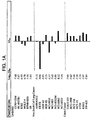
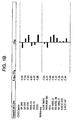
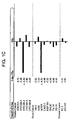
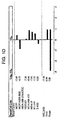
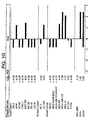
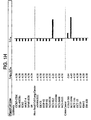
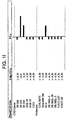
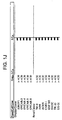
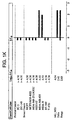
- Discodermolide was additionally evaluated for its anti-proliferative effects utilizing the National Cancer Institute's in vitro tumor cell line panel. The results of these analyses are shown in the mean graphs presented as Figures 1A-1C. The data are presented using known and accepted measurements of "Growth Inhibition-50" (GI 50 ), where growth of 50% of the cells is inhibited; “Total Growth Inhibition” (TGI), where growth of all cells is inhibited, i.e. , cytostasis; and "Lethal Concentration-50" (LC 50 ), where 50% of the cells are killed.
- GI 50 Total Inhibition-50
- TGI Total Growth Inhibition
- LC 50 Lethal Concentration-50
- discodermolide demonstrated selective cytotoxicity (as indicated to the bars of the right of the midline) for 32 cell lines for GI 50 and 18 cell lines for TGI.
- the subject compound tested was particularly effective against human non-small cell lung cancer (NCI-H23), human colon cancers (COLO 205 and HCC-2998), human melanoma (M14), two of six CNS cancer cell lines (SF 295 and SF 539), and two of eight breast cancer cell lines (MDA-MB-435 and MDA-N).
- a statistical analysis of this selective toxicity pattern (the COMPARE algorithm) indicated that discodermolide's cytotoxicity pattern matched that of several previously tested microtubule interactive agents, including the pattern generated by taxol.
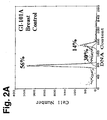
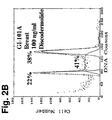
- GI-101A human breast and A549 human lung cells were used as cell cycle targets to compare the effects of discodermolide and taxol on perturbation of the cell cycle.
- Cell cycle analyses were performed as follows: GI-101A and A549 cells were incubated at 37°C in 10% CO 2 in air in the presence or absence of varying concentrations of discodermolide or taxol (purchased from Molecular Probes, Eugene, OR) for 48 hours. Cells were harvested, fixed in ethanol, and stained with 0.5 mg/ml of propidium iodide (P.I.) together with 0.1 mg/ml of RNase A.
- P.I. propidium iodide
- Control cultures of GI-101A breast cells demonstrated a characteristic pattern of cell cycling. Approximately 56% of the control cells comprise the G 1 phase of the cell cycle, and 30% comprise the S phase. Only approximately 14% of cells are demonstrable in the G 2 /M phase in asynchronous cultures at any one time mainly due to their high proliferative rate (Figure 2A). At 24 hours post culture initiation with 100 ng/ml of discodermolide, the percentage of cells in G 1 phase decreased to 22%. The percentage of S phase cells increased from 30% to 41% while the percentage of cells in G 2 /M increased dramatically from 14% in the control to 38% in discodermolide treated cells (Figure 2B), indicating a block at G 2 /M phase of the cell cycle.
- GI-101A cells treated with taxol for 24 hours demonstrated almost identical effects.
- the percentage of cells in G 1 decreased from 56% in the control to 27% in taxol-treated cultures.
- the percentage of S-phase cells increased from 30% to 37%, while the percentage of G 2 /M-phase cells increased from 14% in control to 37% in taxol-treated cultures, indicating a block at G 2 /M ( Figure 2C).
- Discodermolide and taxol were compared for their effects on the proliferation of A549 human lung cells.
- Cell cultures were similarly initiated in the presence and absence of various concentrations of discodermolide or taxol and incubated at 37°C in 10% CO 2 in air for 48 hours. Cells were harvested and stained and analyzed on the flow cytometer as outlined above. Control cultures of A549 cells exhibited normal cycling patterns for this line, with approximately 77% of the cells in G 1 , 19% in S phase, and only 4% present in the G 2 /M phase of the cell cycle (Figure 3A).
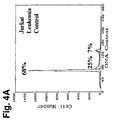
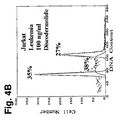
- Discodermolide and taxol were compared for their effects on the proliferation of Jurkat human leukemia cells.
- Cell cultures were similarly initiated in the presence and absence of various concentrations of discodermolide or taxol and incubated at 37°C in 10% CO 2 in air for 48 hours. Cells were harvested and stained and analyzed on a flow cytometer using standard procedures. Control cultures of Jurkat cells exhibited normal cycling patters for this line, with approximately 68% of the cells in G 1 , 25% in S-phase, and 7% present in the G 2 /M-phase of the cell cycle ( Figure 4A).
- the IC 50 for discodermolide was 2.4 nm, similar to the 2.1 nm value obtained with taxol.
- Immunofluorescence patterns of discodermolide-treated cells revealed remarkable rearrangement of cellular microtubules, indicating promotion of microtubule assembly and a taxol-like effect. These patterns appeared at concentrations as low as 10 nm. Similar but less marked changes occurred with taxol treatment, but only at much higher drug concentrations (1 ⁇ m).
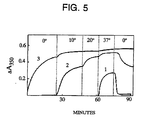
- Discodermolide was analyzed for its interactions with tubulin. Tubulin polymerization was monitored turbidimetrically at 350 nm with an electronic temperature controller. Reaction mixtures contained 0.1 M 4-morpholine-ethanesulfonate (pH 6.9), 1.0 mg/ml (10 ⁇ M) electrophoretically-homogenous bovine brain tubulin freed of unbound nucleotide by gel filtration, 0.5 mg/ml heat-treated MAPs, 100 ⁇ M GTP, and 4% (v/v) dimethylsulfoxide. A concentration of 10 ⁇ M of discodermolide (curve 3) was compared with the same concentration of taxol (curve 2) and no drug (curve 1), as shown in Figure 5.
- Curve 3 A concentration of 10 ⁇ M of discodermolide (curve 3) was compared with the same concentration of taxol (curve 2) and no drug (curve 1), as shown in Figure 5.
- Electron micrographs of polymers of tubulin formed in the presence of discodermolide, taxol, and control showed very similar characteristics, presence of polymers, microtubules, and sheets; however, the taxol-induced polymers were somewhat longer than those induced with discodermolide, and control polymers were even longer than either discodermolide or taxol-induced preparations.
- the compounds of the invention are useful for various non-therapeutic and therapeutic purposes, It is apparent from the testing that the compounds of the invention are effective for inhibiting cell growth. Because of the antiproliferative properties of the compounds, they are useful to prevent unwanted cell growth in a wide variety of settings including in vitro uses. They are also useful as standards and for teaching demonstrations. They can also be used as ultraviolet screeners in the plastics industry since they effectively absorb UV rays. As disclosed herein, they are also useful prophylactically and therapeutically for treating cancer cells in animals and humans.
- the dosage administration to a host in the above indications will be dependent upon the identity of the cancer cells, the type of host involved, its age, weight, health, kind of concurrent treatment, if any, frequency of treatment, and therapeutic ratio.
- compositions of the subject invention can be formulated according to known methods for preparing pharmaceutically useful compositions. Formulations are described in detail in a number of sources which are well known and readily available to those skilled in the art. For example, Remington's Pharmaceutical Science by E.W. Martin describes formulations which can be used in connection with the subject invention. In general, the compositions of the subject invention will be formulated such that an effective amount of the bioactive compound(s) is combined with a suitable carrier in order to facilitate effective administration of the composition.
- compositions comprising, as an active ingredient, an effective amount of one or more of the new compounds and one or more non-toxic, pharmaceutically acceptable carrier or diluent.
- carriers for use in the invention include ethanol, dimethyl sulfoxide, glycerol, silica, alumina, starch, and equivalent carriers and diluents.
- new pharmaceutical compositions of the invention will advantageously comprise between about 0.1% and 45%, and especially, 1 and 15%, by weight of the total of one or more of the new compounds based on the weight of the total composition including carrier or diluent.
- dosage levels of the administered active ingredients can be: intravenous, 0.01 to about 20 mg/kg; intraperitoneal, 0.01 to about 100 mg/kg; subcutaneous, 0.01 to about 100 mg/kg; intramuscular, 0.01 to about 100 mg/kg; orally 0.01 to about 200 mg/kg, and preferably about 1 to 100 mg/kg; intranasal instillation, 0.01 to about 20 mg/kg; and aerosol, 0.01 to about 20 mg/kg of animal (body) weight.
Landscapes
- Chemical & Material Sciences (AREA)
- Health & Medical Sciences (AREA)
- Organic Chemistry (AREA)
- General Health & Medical Sciences (AREA)
- Pharmacology & Pharmacy (AREA)
- Life Sciences & Earth Sciences (AREA)
- Animal Behavior & Ethology (AREA)
- Medicinal Chemistry (AREA)
- Public Health (AREA)
- Veterinary Medicine (AREA)
- Epidemiology (AREA)
- Chemical Kinetics & Catalysis (AREA)
- General Chemical & Material Sciences (AREA)
- Nuclear Medicine, Radiotherapy & Molecular Imaging (AREA)
- Pharmaceuticals Containing Other Organic And Inorganic Compounds (AREA)
- Pyrane Compounds (AREA)
Claims (11)
- Utilisation d'un composé discodermolide pour la fabrication d'un médicament destiné à traiter un patient atteint de cancer, caractérisée en ce que ce patient est un être humain et en ce que le cancer est sélectionné parmi le cancer du poumon, le cancer du colon, le cancer du SNC, le mélanome, le cancer de l'ovaire, le cancer du rein, le cancer de la prostate et le cancer du sein.
- Utilisation selon la revendication 1, caractérisée en ce que le composé discodermolide est choisi parmi ceux de formules I, II et III.

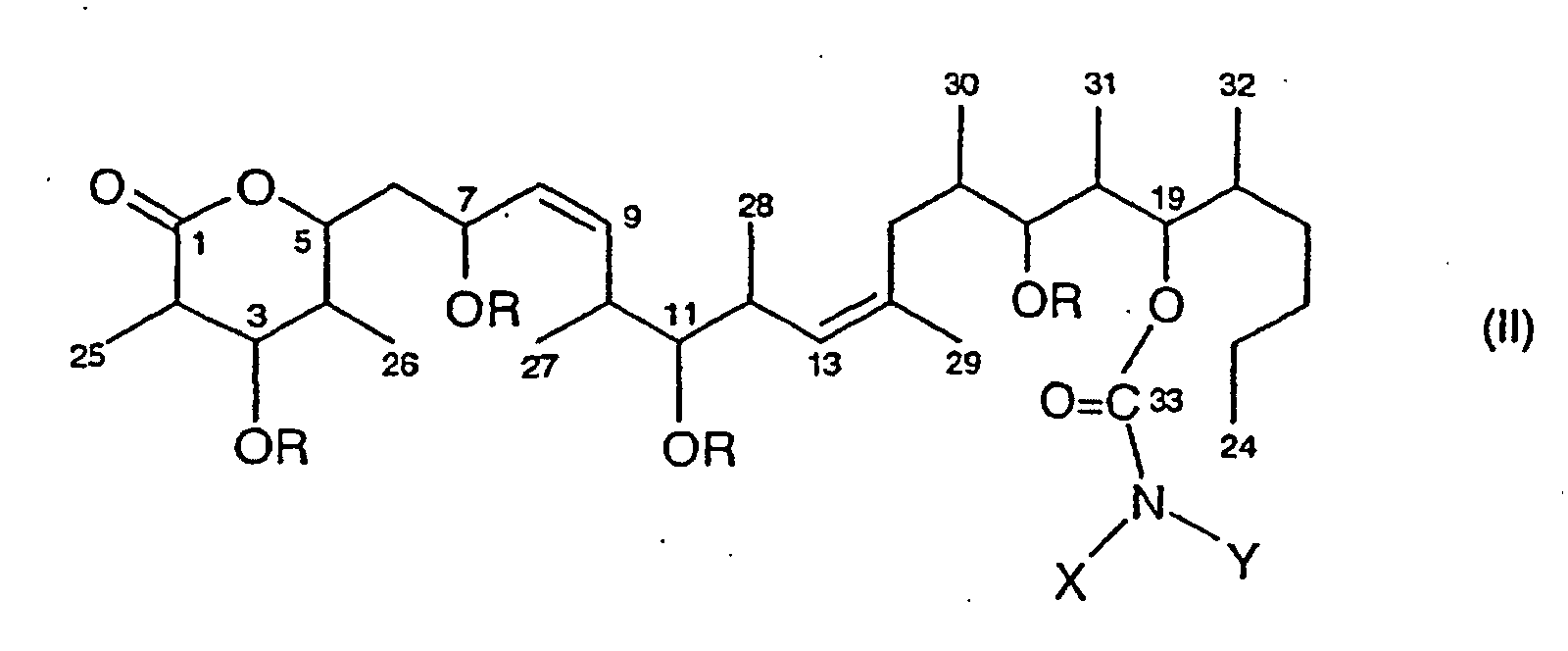 où :
où :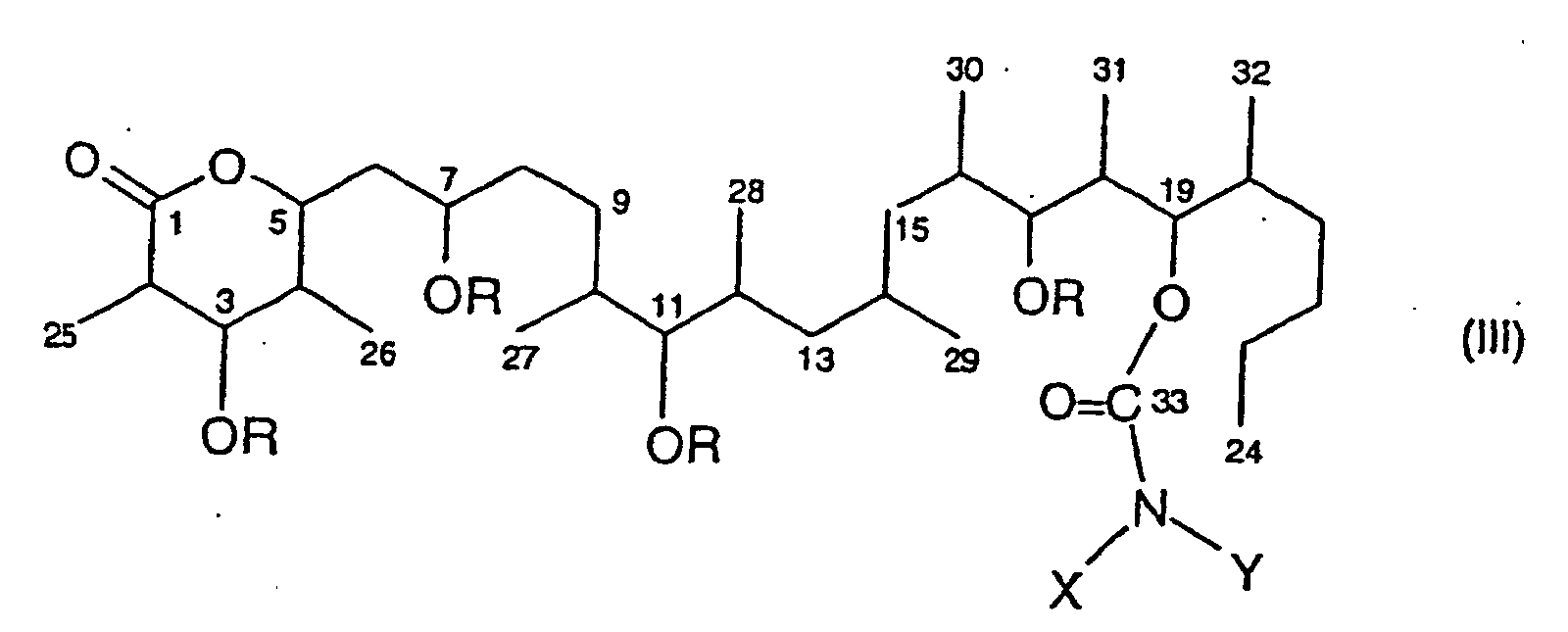 ou leurs sels d'addition d'acide.R = -H, -A, -CH2-Q, -COA, ou -COZA = alkyle inférieurZ = aryle monocycliqueQ = phényle, tolyle, ou xylyleX = -H, -A, -Z ou -CH2-Z et,Y = -H, -A, -Z, -CH2-Z, -COA, ou -COZ ;
 - Utilisation selon la revendication 2, caractérisée en ce que R est H, COCH3 ou CH3 et X et Y sont chacun H.
- Utilisation selon la revendication 2, caractérisée en ce que le composé discodermolide est un composé de formule I et en ce que R, X et Y sont chacun H.
- Utilisation selon la revendication 1, caractérisée en ce que le composé discodermolide est un octahydrodiscodermolide.
- Utilisation selon l'une quelconque des revendications précédentes, caractérisée en ce que le cancer est choisi parmi le cancer du poumon, le cancer du colon, le cancer du SNC, le mélanome et le cancer du sein.
- Composé de formule II tel que défini à la revendication 2.
- Composé selon la revendication 7, caractérisé en ce que R est H, COCH3 ou CH3 et X et Y sont chacun H.
- Composé selon la revendication 8, caractérisé en ce que R est H.
- Composition pharmaceutique comprenant un composé selon l'une quelconque des revendications 7 à 9 et un véhicule pharmaceutiquement acceptable.
- Composition pharmaceutique comprenant un composé de formule VII.

Applications Claiming Priority (3)
| Application Number | Priority Date | Filing Date | Title |
|---|---|---|---|
| US08/567,442 US5681847A (en) | 1995-12-05 | 1995-12-05 | Methods of using discodermolide compounds |
| US567442 | 1995-12-05 | ||
| PCT/US1996/019344 WO1997020835A1 (fr) | 1995-12-05 | 1996-12-05 | Composes de discodermolide et compositions pharmaceutiques contenant ces composes, a utiliser dans la therapie du cancer |
Publications (2)
| Publication Number | Publication Date |
|---|---|
| EP0873332A1 EP0873332A1 (fr) | 1998-10-28 |
| EP0873332B1 true EP0873332B1 (fr) | 2004-03-24 |
Family
ID=24267168
Family Applications (1)
| Application Number | Title | Priority Date | Filing Date |
|---|---|---|---|
| EP96943591A Expired - Lifetime EP0873332B1 (fr) | 1995-12-05 | 1996-12-05 | Composes de discodermolide et compositions pharmaceutiques contenant ces composes, a utiliser dans la therapie du cancer |
Country Status (10)
| Country | Link |
|---|---|
| US (2) | US5681847A (fr) |
| EP (1) | EP0873332B1 (fr) |
| JP (1) | JP3293833B2 (fr) |
| AT (1) | ATE262515T1 (fr) |
| CA (1) | CA2233716C (fr) |
| DE (1) | DE69631975T2 (fr) |
| DK (1) | DK0873332T3 (fr) |
| ES (1) | ES2218608T3 (fr) |
| PT (1) | PT873332E (fr) |
| WO (1) | WO1997020835A1 (fr) |
Families Citing this family (27)
| Publication number | Priority date | Publication date | Assignee | Title |
|---|---|---|---|---|
| US6242616B1 (en) * | 1996-12-03 | 2001-06-05 | The Trustees Of The University Of Pennsylvania | Synthetic techniques and intermediates for polyhydroxy, dienyl lactone derivatives |
| US5789605A (en) * | 1996-12-03 | 1998-08-04 | Trustees Of The University Of Pennsylvania | Synthetic techniques and intermediates for polyhydroxy, dienyl lactones and mimics thereof |
| US20050065353A1 (en) * | 1996-12-03 | 2005-03-24 | Smith Amos B. | Synthetic techniques and intermediates for polyhydroxy dienyl lactones and mimics thereof |
| US6870058B2 (en) * | 1996-12-03 | 2005-03-22 | The Trustees Of The University Of Pennsylvania | Compounds which mimic the chemical and biological properties of discodermolide |
| US6127406A (en) * | 1998-10-09 | 2000-10-03 | Harbor Branch Oceanographic Institution, Inc. | Discodermolide compounds and methods of use |
| US6833373B1 (en) | 1998-12-23 | 2004-12-21 | G.D. Searle & Co. | Method of using an integrin antagonist and one or more antineoplastic agents as a combination therapy in the treatment of neoplasia |
| US6858598B1 (en) | 1998-12-23 | 2005-02-22 | G. D. Searle & Co. | Method of using a matrix metalloproteinase inhibitor and one or more antineoplastic agents as a combination therapy in the treatment of neoplasia |
| US6384187B1 (en) | 1999-05-15 | 2002-05-07 | Harbor Branch Oceanographic Institution, Inc. | Antiproliferative activity of microsclerodermins |
| US6414015B1 (en) | 2000-01-28 | 2002-07-02 | Utah State University | Laulimalide microtubule stabilizing agents |
| CA2401160C (fr) | 2000-03-01 | 2009-09-08 | Harbor Branch Oceanographic Institution, Inc. | Analogues biologiquement actifs de discodermolide |
| WO2001074355A1 (fr) * | 2000-04-04 | 2001-10-11 | Novartis Ag | Procede de traitement pour cellules resistant aux agents antineoplasiques |
| US6774143B1 (en) | 2000-04-04 | 2004-08-10 | Novartis Ag | Method for treating cells resistant to antineoplastic agents |
| CN1541096A (zh) * | 2001-08-07 | 2004-10-27 | ��Ϧ�����Ǵ�ѧ���»� | 模拟迪莫利德的化学性质和生物学活性的化合物 |
| US6833367B2 (en) * | 2001-11-16 | 2004-12-21 | Novartis Ac | Certain substituted polyketides, pharmaceutical compositions containing them and their use in treating tumors |
| TW200408407A (en) * | 2001-11-30 | 2004-06-01 | Dana Farber Cancer Inst Inc | Methods and compositions for modulating the immune system and uses thereof |
| US7342124B2 (en) * | 2003-04-02 | 2008-03-11 | The Trustees Of The University Of Pennsylvania | Synthetic techniques and intermediates for polyhydroxy dienyl lactones and mimics thereof |
| US7348436B2 (en) * | 2004-03-02 | 2008-03-25 | Kosan Biosciences Incorporated | Compounds useful for the synthesis of (+)-discodermolide and methods thereof |
| US7214708B2 (en) * | 2004-11-18 | 2007-05-08 | Kosan Biosciences Incorporated | Synthetic discodermolide analogs |
| US7772177B2 (en) | 2005-05-18 | 2010-08-10 | Aegera Therapeutics, Inc. | BIR domain binding compounds |
| AU2007250443B2 (en) | 2006-05-16 | 2013-06-13 | Pharmascience Inc. | IAP BIR domain binding compounds |
| PT2231633E (pt) | 2007-12-20 | 2014-01-20 | Pharma Mar Sa | Compostos antitumorais |
| FR2937537A1 (fr) * | 2008-10-29 | 2010-04-30 | Centre Nat Rech Scient | Nanoparticules de statine |
| MX358013B (es) | 2009-11-13 | 2018-08-01 | Amgen Inc | Materiales y metodos para el tratamiento o prevencion de enfermedades asociadas al her-3. |
| WO2011098904A1 (fr) | 2010-02-12 | 2011-08-18 | Aegera Therapeutics, Inc. | Composés de liaison au domaine iap bir |
| AU2011286407A1 (en) | 2010-08-06 | 2013-02-21 | Amgen | Use of HER3 binding agents in prostate treatment |
| ES2982231T3 (es) * | 2016-12-09 | 2024-10-15 | Akanocure Pharmaceuticals Inc | Estereotetradas escalables de polipropionato lactona |
| HRP20231233T1 (hr) | 2017-04-27 | 2024-01-19 | Pharma Mar, S.A. | Antitumorski spojevi |
Family Cites Families (5)
| Publication number | Priority date | Publication date | Assignee | Title |
|---|---|---|---|---|
| US4206221A (en) * | 1979-01-03 | 1980-06-03 | The United States Of America As Represented By The Secretary Of Agriculture | Cephalomannine and its use in treating leukemic tumors |
| US5157049A (en) * | 1988-03-07 | 1992-10-20 | The United States Of America As Represented By The Department Of Health & Human Services | Method of treating cancers sensitive to treatment with water soluble derivatives of taxol |
| US4960790A (en) * | 1989-03-09 | 1990-10-02 | University Of Kansas | Derivatives of taxol, pharmaceutical compositions thereof and methods for the preparation thereof |
| US4939168A (en) * | 1989-08-11 | 1990-07-03 | Harbor Branch Oceanographics Institution, Inc. | Discodermolide compounds, compositions containing same and methods of preparation and use |
| US5010099A (en) * | 1989-08-11 | 1991-04-23 | Harbor Branch Oceanographic Institution, Inc. | Discodermolide compounds, compositions containing same and method of preparation and use |
-
1995
- 1995-12-05 US US08/567,442 patent/US5681847A/en not_active Expired - Lifetime
-
1996
- 1996-12-05 WO PCT/US1996/019344 patent/WO1997020835A1/fr not_active Ceased
- 1996-12-05 DE DE69631975T patent/DE69631975T2/de not_active Expired - Lifetime
- 1996-12-05 AT AT96943591T patent/ATE262515T1/de not_active IP Right Cessation
- 1996-12-05 CA CA002233716A patent/CA2233716C/fr not_active Expired - Fee Related
- 1996-12-05 DK DK96943591T patent/DK0873332T3/da active
- 1996-12-05 US US08/761,106 patent/US5840750A/en not_active Expired - Lifetime
- 1996-12-05 ES ES96943591T patent/ES2218608T3/es not_active Expired - Lifetime
- 1996-12-05 JP JP52141097A patent/JP3293833B2/ja not_active Expired - Fee Related
- 1996-12-05 EP EP96943591A patent/EP0873332B1/fr not_active Expired - Lifetime
- 1996-12-05 PT PT96943591T patent/PT873332E/pt unknown
Also Published As
| Publication number | Publication date |
|---|---|
| PT873332E (pt) | 2004-08-31 |
| JP2000501710A (ja) | 2000-02-15 |
| CA2233716C (fr) | 2006-05-09 |
| DK0873332T3 (da) | 2004-07-26 |
| WO1997020835A1 (fr) | 1997-06-12 |
| CA2233716A1 (fr) | 1997-06-12 |
| DE69631975T2 (de) | 2005-01-20 |
| ES2218608T3 (es) | 2004-11-16 |
| DE69631975D1 (de) | 2004-04-29 |
| EP0873332A1 (fr) | 1998-10-28 |
| ATE262515T1 (de) | 2004-04-15 |
| US5681847A (en) | 1997-10-28 |
| JP3293833B2 (ja) | 2002-06-17 |
| US5840750A (en) | 1998-11-24 |
Similar Documents
| Publication | Publication Date | Title |
|---|---|---|
| EP0873332B1 (fr) | Composes de discodermolide et compositions pharmaceutiques contenant ces composes, a utiliser dans la therapie du cancer | |
| WO1997020835A9 (fr) | Composes de discodermolide et compositions pharmaceutiques contenant ces composes, a utiliser dans la therapie du cancer | |
| US6713480B2 (en) | Phenylahistin and the phenylahistin analogs, a new class of anti-tumor compounds | |
| JPH0665675B2 (ja) | 新規なブリオスタチン4〜8 | |
| JP3430322B2 (ja) | スポンギスタチン5、7、8及び9 | |
| US5430053A (en) | Isolation and structure of dictyostatin 1 | |
| KR20100026030A (ko) | 항암 유효성분 추출물, 그 추출방법 및 이를 이용한 항암제 | |
| US6127406A (en) | Discodermolide compounds and methods of use | |
| EP1259502B1 (fr) | Analogues biologiquement actifs de discodermolide | |
| US6476065B2 (en) | Discalamide compounds and their use as anti-proliferative agents | |
| US7626043B2 (en) | Antiproliferative activity of the leiodermatolide class of macrolides | |
| AU2008289616A1 (en) | Antifungal agents | |
| EP1644380B1 (fr) | Composes de neopeltolide biologiquement actifs | |
| US4895852A (en) | Antitumor alkaloids | |
| US4874767A (en) | Discorhabdin D, compositions containing same and methods of preparatio and use thereof | |
| EP1458725B1 (fr) | Derive de sordarine obtenu par fermentation de cultures, convenant comme fongicide | |
| HK1046373A1 (zh) | 用作抗腫瘤劑的二硫雜環戊烯並吡咯酮及其相應的一氧化物和二氧化物 | |
| US6835736B1 (en) | Discorhabdin compounds and methods of use | |
| EP3292132B1 (fr) | Composés inhibiteurs de pi3k pour traiter le cancer | |
| US7053118B1 (en) | Lactone compounds and methods of use | |
| EP0275307A1 (fr) | Compositions antitumorales et procedes d'utilisation | |
| JP2001139577A (ja) | 新規抗生物質pf1185a物質、pf1185b物質及びpf1185c物質、並びにそれらの製造法及びそれらの用途 |
Legal Events
| Date | Code | Title | Description |
|---|---|---|---|
| PUAI | Public reference made under article 153(3) epc to a published international application that has entered the european phase |
Free format text: ORIGINAL CODE: 0009012 |
|
| 17P | Request for examination filed |
Effective date: 19980619 |
|
| AK | Designated contracting states |
Kind code of ref document: A1 Designated state(s): AT BE CH DE DK ES FI FR GB GR IE IT LI LU MC NL PT SE |
|
| 17Q | First examination report despatched |
Effective date: 19991215 |
|
| GRAP | Despatch of communication of intention to grant a patent |
Free format text: ORIGINAL CODE: EPIDOSNIGR1 |
|
| RIC1 | Information provided on ipc code assigned before grant |
Ipc: 7A 61P 35/00 B Ipc: 7A 61K 31/365 B Ipc: 7C 07D 309/30 A |
|
| GRAS | Grant fee paid |
Free format text: ORIGINAL CODE: EPIDOSNIGR3 |
|
| GRAA | (expected) grant |
Free format text: ORIGINAL CODE: 0009210 |
|
| AK | Designated contracting states |
Kind code of ref document: B1 Designated state(s): AT BE CH DE DK ES FI FR GB GR IE IT LI LU MC NL PT SE |
|
| REG | Reference to a national code |
Ref country code: GB Ref legal event code: FG4D |
|
| REG | Reference to a national code |
Ref country code: CH Ref legal event code: EP |
|
| REG | Reference to a national code |
Ref country code: IE Ref legal event code: FG4D |
|
| REF | Corresponds to: |
Ref document number: 69631975 Country of ref document: DE Date of ref document: 20040429 Kind code of ref document: P |
|
| REG | Reference to a national code |
Ref country code: CH Ref legal event code: NV Representative=s name: NOVARTIS AG |
|
| REG | Reference to a national code |
Ref country code: SE Ref legal event code: TRGR |
|
| REG | Reference to a national code |
Ref country code: DK Ref legal event code: T3 |
|
| REG | Reference to a national code |
Ref country code: GR Ref legal event code: EP Ref document number: 20040402199 Country of ref document: GR |
|
| REG | Reference to a national code |
Ref country code: PT Ref legal event code: SC4A Free format text: AVAILABILITY OF NATIONAL TRANSLATION Effective date: 20040616 |
|
| REG | Reference to a national code |
Ref country code: ES Ref legal event code: FG2A Ref document number: 2218608 Country of ref document: ES Kind code of ref document: T3 |
|
| ET | Fr: translation filed | ||
| PLBE | No opposition filed within time limit |
Free format text: ORIGINAL CODE: 0009261 |
|
| STAA | Information on the status of an ep patent application or granted ep patent |
Free format text: STATUS: NO OPPOSITION FILED WITHIN TIME LIMIT |
|
| 26N | No opposition filed |
Effective date: 20041228 |
|
| PGFP | Annual fee paid to national office [announced via postgrant information from national office to epo] |
Ref country code: SE Payment date: 20091207 Year of fee payment: 14 Ref country code: MC Payment date: 20091127 Year of fee payment: 14 Ref country code: LU Payment date: 20091221 Year of fee payment: 14 Ref country code: IE Payment date: 20091215 Year of fee payment: 14 Ref country code: FI Payment date: 20091214 Year of fee payment: 14 Ref country code: DK Payment date: 20091211 Year of fee payment: 14 Ref country code: AT Payment date: 20091211 Year of fee payment: 14 |
|
| PGFP | Annual fee paid to national office [announced via postgrant information from national office to epo] |
Ref country code: NL Payment date: 20091204 Year of fee payment: 14 |
|
| PGFP | Annual fee paid to national office [announced via postgrant information from national office to epo] |
Ref country code: PT Payment date: 20091109 Year of fee payment: 14 |
|
| PGFP | Annual fee paid to national office [announced via postgrant information from national office to epo] |
Ref country code: IT Payment date: 20091218 Year of fee payment: 14 Ref country code: ES Payment date: 20100113 Year of fee payment: 14 |
|
| PGFP | Annual fee paid to national office [announced via postgrant information from national office to epo] |
Ref country code: GR Payment date: 20091112 Year of fee payment: 14 Ref country code: BE Payment date: 20091224 Year of fee payment: 14 |
|
| PGFP | Annual fee paid to national office [announced via postgrant information from national office to epo] |
Ref country code: FR Payment date: 20110107 Year of fee payment: 15 |
|
| PGFP | Annual fee paid to national office [announced via postgrant information from national office to epo] |
Ref country code: CH Payment date: 20101227 Year of fee payment: 15 |
|
| PGFP | Annual fee paid to national office [announced via postgrant information from national office to epo] |
Ref country code: GB Payment date: 20101229 Year of fee payment: 15 |
|
| PGFP | Annual fee paid to national office [announced via postgrant information from national office to epo] |
Ref country code: DE Payment date: 20101229 Year of fee payment: 15 |
|
| REG | Reference to a national code |
Ref country code: PT Ref legal event code: MM4A Free format text: LAPSE DUE TO NON-PAYMENT OF FEES Effective date: 20110606 |
|
| BERE | Be: lapsed |
Owner name: *HARBOR BRANCH OCEANOGRAPHIC INSTITUTION INC. Effective date: 20101231 |
|
| REG | Reference to a national code |
Ref country code: NL Ref legal event code: V1 Effective date: 20110701 |
|
| PG25 | Lapsed in a contracting state [announced via postgrant information from national office to epo] |
Ref country code: PT Free format text: LAPSE BECAUSE OF NON-PAYMENT OF DUE FEES Effective date: 20110606 Ref country code: MC Free format text: LAPSE BECAUSE OF NON-PAYMENT OF DUE FEES Effective date: 20101231 |
|
| REG | Reference to a national code |
Ref country code: DK Ref legal event code: EBP |
|
| PG25 | Lapsed in a contracting state [announced via postgrant information from national office to epo] |
Ref country code: FI Free format text: LAPSE BECAUSE OF NON-PAYMENT OF DUE FEES Effective date: 20101205 Ref country code: AT Free format text: LAPSE BECAUSE OF NON-PAYMENT OF DUE FEES Effective date: 20101205 |
|
| REG | Reference to a national code |
Ref country code: SE Ref legal event code: EUG |
|
| REG | Reference to a national code |
Ref country code: IE Ref legal event code: MM4A |
|
| PG25 | Lapsed in a contracting state [announced via postgrant information from national office to epo] |
Ref country code: SE Free format text: LAPSE BECAUSE OF NON-PAYMENT OF DUE FEES Effective date: 20101206 Ref country code: BE Free format text: LAPSE BECAUSE OF NON-PAYMENT OF DUE FEES Effective date: 20101231 |
|
| PG25 | Lapsed in a contracting state [announced via postgrant information from national office to epo] |
Ref country code: IE Free format text: LAPSE BECAUSE OF NON-PAYMENT OF DUE FEES Effective date: 20101206 |
|
| PG25 | Lapsed in a contracting state [announced via postgrant information from national office to epo] |
Ref country code: GR Free format text: LAPSE BECAUSE OF NON-PAYMENT OF DUE FEES Effective date: 20110704 |
|
| PG25 | Lapsed in a contracting state [announced via postgrant information from national office to epo] |
Ref country code: IT Free format text: LAPSE BECAUSE OF NON-PAYMENT OF DUE FEES Effective date: 20101205 Ref country code: NL Free format text: LAPSE BECAUSE OF NON-PAYMENT OF DUE FEES Effective date: 20110701 |
|
| REG | Reference to a national code |
Ref country code: ES Ref legal event code: FD2A Effective date: 20120206 |
|
| PG25 | Lapsed in a contracting state [announced via postgrant information from national office to epo] |
Ref country code: ES Free format text: LAPSE BECAUSE OF NON-PAYMENT OF DUE FEES Effective date: 20101206 |
|
| REG | Reference to a national code |
Ref country code: CH Ref legal event code: PL |
|
| GBPC | Gb: european patent ceased through non-payment of renewal fee |
Effective date: 20111205 |
|
| REG | Reference to a national code |
Ref country code: FR Ref legal event code: ST Effective date: 20120831 |
|
| PG25 | Lapsed in a contracting state [announced via postgrant information from national office to epo] |
Ref country code: LU Free format text: LAPSE BECAUSE OF NON-PAYMENT OF DUE FEES Effective date: 20101205 |
|
| REG | Reference to a national code |
Ref country code: DE Ref legal event code: R119 Ref document number: 69631975 Country of ref document: DE Effective date: 20120703 |
|
| PG25 | Lapsed in a contracting state [announced via postgrant information from national office to epo] |
Ref country code: GB Free format text: LAPSE BECAUSE OF NON-PAYMENT OF DUE FEES Effective date: 20111205 Ref country code: LI Free format text: LAPSE BECAUSE OF NON-PAYMENT OF DUE FEES Effective date: 20111231 Ref country code: DE Free format text: LAPSE BECAUSE OF NON-PAYMENT OF DUE FEES Effective date: 20120703 Ref country code: CH Free format text: LAPSE BECAUSE OF NON-PAYMENT OF DUE FEES Effective date: 20111231 |
|
| PG25 | Lapsed in a contracting state [announced via postgrant information from national office to epo] |
Ref country code: FR Free format text: LAPSE BECAUSE OF NON-PAYMENT OF DUE FEES Effective date: 20120102 |