EP0874005A1 - Catalyseur pour la polymérisation des alpha-oléfines, composés de métals de transition, procédé pour la polymérisation des oléfines, ainsi que copolymères alpha-oléfine/diène conjugué - Google Patents
Catalyseur pour la polymérisation des alpha-oléfines, composés de métals de transition, procédé pour la polymérisation des oléfines, ainsi que copolymères alpha-oléfine/diène conjugué Download PDFInfo
- Publication number
- EP0874005A1 EP0874005A1 EP98107497A EP98107497A EP0874005A1 EP 0874005 A1 EP0874005 A1 EP 0874005A1 EP 98107497 A EP98107497 A EP 98107497A EP 98107497 A EP98107497 A EP 98107497A EP 0874005 A1 EP0874005 A1 EP 0874005A1
- Authority
- EP
- European Patent Office
- Prior art keywords
- group
- compound
- hydrocarbon
- mmol
- transition metal
- Prior art date
- Legal status (The legal status is an assumption and is not a legal conclusion. Google has not performed a legal analysis and makes no representation as to the accuracy of the status listed.)
- Granted
Links
- 0 CC(*)C1=C(*)C(C)=C(*)**1 Chemical compound CC(*)C1=C(*)C(C)=C(*)**1 0.000 description 19
- YXFVVABEGXRONW-UHFFFAOYSA-N Cc1ccccc1 Chemical compound Cc1ccccc1 YXFVVABEGXRONW-UHFFFAOYSA-N 0.000 description 3
- SNHMUERNLJLMHN-UHFFFAOYSA-N Ic1ccccc1 Chemical compound Ic1ccccc1 SNHMUERNLJLMHN-UHFFFAOYSA-N 0.000 description 2
- LRVAIZCEZBRONK-BUVRLJJBSA-N CCCC1=CC1c(cccc1/C=N/c2cccc3c2cccc3)c1O Chemical compound CCCC1=CC1c(cccc1/C=N/c2cccc3c2cccc3)c1O LRVAIZCEZBRONK-BUVRLJJBSA-N 0.000 description 1
- WTEKVPRGLYTTDZ-KKFHFHRHSA-N CC[C@@H]1[I](c2ccccc2)c(c(I)ccc2)c2OC1(CC)[IH]C Chemical compound CC[C@@H]1[I](c2ccccc2)c(c(I)ccc2)c2OC1(CC)[IH]C WTEKVPRGLYTTDZ-KKFHFHRHSA-N 0.000 description 1
- WLCCAMAGDGDLJV-HNNXBMFYSA-N C[C@H](OC1=CCCC=C1C)[I](C)c1c2ncccc2ccc1 Chemical compound C[C@H](OC1=CCCC=C1C)[I](C)c1c2ncccc2ccc1 WLCCAMAGDGDLJV-HNNXBMFYSA-N 0.000 description 1
- JZKZXTLMVSSANI-PWYSQUBCSA-N C[I](N1c2ccccc2)OC/C1=C\C=C/CI Chemical compound C[I](N1c2ccccc2)OC/C1=C\C=C/CI JZKZXTLMVSSANI-PWYSQUBCSA-N 0.000 description 1
Images

Classifications
-
- G—PHYSICS
- G02—OPTICS
- G02F—OPTICAL DEVICES OR ARRANGEMENTS FOR THE CONTROL OF LIGHT BY MODIFICATION OF THE OPTICAL PROPERTIES OF THE MEDIA OF THE ELEMENTS INVOLVED THEREIN; NON-LINEAR OPTICS; FREQUENCY-CHANGING OF LIGHT; OPTICAL LOGIC ELEMENTS; OPTICAL ANALOGUE/DIGITAL CONVERTERS
- G02F1/00—Devices or arrangements for the control of the intensity, colour, phase, polarisation or direction of light arriving from an independent light source, e.g. switching, gating or modulating; Non-linear optics
- G02F1/01—Devices or arrangements for the control of the intensity, colour, phase, polarisation or direction of light arriving from an independent light source, e.g. switching, gating or modulating; Non-linear optics for the control of the intensity, phase, polarisation or colour
- G02F1/13—Devices or arrangements for the control of the intensity, colour, phase, polarisation or direction of light arriving from an independent light source, e.g. switching, gating or modulating; Non-linear optics for the control of the intensity, phase, polarisation or colour based on liquid crystals, e.g. single liquid crystal display cells
- G02F1/133—Constructional arrangements; Operation of liquid crystal cells; Circuit arrangements
- G02F1/1333—Constructional arrangements; Manufacturing methods
-
- C—CHEMISTRY; METALLURGY
- C08—ORGANIC MACROMOLECULAR COMPOUNDS; THEIR PREPARATION OR CHEMICAL WORKING-UP; COMPOSITIONS BASED THEREON
- C08F—MACROMOLECULAR COMPOUNDS OBTAINED BY REACTIONS ONLY INVOLVING CARBON-TO-CARBON UNSATURATED BONDS
- C08F210/00—Copolymers of unsaturated aliphatic hydrocarbons having only one carbon-to-carbon double bond
- C08F210/02—Ethene
-
- C—CHEMISTRY; METALLURGY
- C07—ORGANIC CHEMISTRY
- C07F—ACYCLIC, CARBOCYCLIC OR HETEROCYCLIC COMPOUNDS CONTAINING ELEMENTS OTHER THAN CARBON, HYDROGEN, HALOGEN, OXYGEN, NITROGEN, SULFUR, SELENIUM OR TELLURIUM
- C07F7/00—Compounds containing elements of Groups 4 or 14 of the Periodic Table
- C07F7/003—Compounds containing elements of Groups 4 or 14 of the Periodic Table without C-Metal linkages
-
- C—CHEMISTRY; METALLURGY
- C07—ORGANIC CHEMISTRY
- C07F—ACYCLIC, CARBOCYCLIC OR HETEROCYCLIC COMPOUNDS CONTAINING ELEMENTS OTHER THAN CARBON, HYDROGEN, HALOGEN, OXYGEN, NITROGEN, SULFUR, SELENIUM OR TELLURIUM
- C07F7/00—Compounds containing elements of Groups 4 or 14 of the Periodic Table
- C07F7/02—Silicon compounds
- C07F7/08—Compounds having one or more C—Si linkages
- C07F7/0803—Compounds with Si-C or Si-Si linkages
-
- C—CHEMISTRY; METALLURGY
- C07—ORGANIC CHEMISTRY
- C07F—ACYCLIC, CARBOCYCLIC OR HETEROCYCLIC COMPOUNDS CONTAINING ELEMENTS OTHER THAN CARBON, HYDROGEN, HALOGEN, OXYGEN, NITROGEN, SULFUR, SELENIUM OR TELLURIUM
- C07F9/00—Compounds containing elements of Groups 5 or 15 of the Periodic Table
- C07F9/005—Compounds of elements of Group 5 of the Periodic Table without metal-carbon linkages
-
- C—CHEMISTRY; METALLURGY
- C08—ORGANIC MACROMOLECULAR COMPOUNDS; THEIR PREPARATION OR CHEMICAL WORKING-UP; COMPOSITIONS BASED THEREON
- C08F—MACROMOLECULAR COMPOUNDS OBTAINED BY REACTIONS ONLY INVOLVING CARBON-TO-CARBON UNSATURATED BONDS
- C08F10/00—Homopolymers and copolymers of unsaturated aliphatic hydrocarbons having only one carbon-to-carbon double bond
-
- C—CHEMISTRY; METALLURGY
- C08—ORGANIC MACROMOLECULAR COMPOUNDS; THEIR PREPARATION OR CHEMICAL WORKING-UP; COMPOSITIONS BASED THEREON
- C08F—MACROMOLECULAR COMPOUNDS OBTAINED BY REACTIONS ONLY INVOLVING CARBON-TO-CARBON UNSATURATED BONDS
- C08F110/00—Homopolymers of unsaturated aliphatic hydrocarbons having only one carbon-to-carbon double bond
- C08F110/02—Ethene
-
- C—CHEMISTRY; METALLURGY
- C08—ORGANIC MACROMOLECULAR COMPOUNDS; THEIR PREPARATION OR CHEMICAL WORKING-UP; COMPOSITIONS BASED THEREON
- C08F—MACROMOLECULAR COMPOUNDS OBTAINED BY REACTIONS ONLY INVOLVING CARBON-TO-CARBON UNSATURATED BONDS
- C08F110/00—Homopolymers of unsaturated aliphatic hydrocarbons having only one carbon-to-carbon double bond
- C08F110/04—Monomers containing three or four carbon atoms
- C08F110/06—Propene
-
- C—CHEMISTRY; METALLURGY
- C08—ORGANIC MACROMOLECULAR COMPOUNDS; THEIR PREPARATION OR CHEMICAL WORKING-UP; COMPOSITIONS BASED THEREON
- C08F—MACROMOLECULAR COMPOUNDS OBTAINED BY REACTIONS ONLY INVOLVING CARBON-TO-CARBON UNSATURATED BONDS
- C08F210/00—Copolymers of unsaturated aliphatic hydrocarbons having only one carbon-to-carbon double bond
- C08F210/16—Copolymers of ethene with alpha-alkenes, e.g. EP rubbers
-
- G—PHYSICS
- G02—OPTICS
- G02F—OPTICAL DEVICES OR ARRANGEMENTS FOR THE CONTROL OF LIGHT BY MODIFICATION OF THE OPTICAL PROPERTIES OF THE MEDIA OF THE ELEMENTS INVOLVED THEREIN; NON-LINEAR OPTICS; FREQUENCY-CHANGING OF LIGHT; OPTICAL LOGIC ELEMENTS; OPTICAL ANALOGUE/DIGITAL CONVERTERS
- G02F2201/00—Constructional arrangements not provided for in groups G02F1/00 - G02F7/00
- G02F2201/50—Protective arrangements
Definitions
- the present invention relates to novel olefin polymerization catalysts, transition metal compounds and processes for olefin polymerization using the olefin polymerization catalysts.
- the present invention also relates to ⁇ -olefin/conjugated diene copolymers which have narrow molecular weight distribution and are favorably used as rubbers.
- Kaminsky catalysts As olefin polymerization catalysts, "Kaminsky catalysts" are well known. The Kaminsky catalysts have extremely high polymerization activities, and by the use of them, polymers of narrow molecular weight distribution can be obtained. Transition metal compounds which are known as those employable for the Kaminsky catalysts are, for example, bis(cyclopentadienyl)zirconium dichloride (see: Japanese Patent Laid-Open Publication No. 19309/1083) and ethylenebis(4,5,6,7-tetrahydroindenyl)zirconium dichloride (see: Japanese Patent Laid-Open Publication No. 130314/1086).
- polyolefins generally have excellent mechanical properties, and therefore they are used in many fields such as fields of various molded products.
- polyolefins of various properties have been desired in recent years.
- increase of productivity has been also desired.
- diene components include conjugated dienes such as 1,3-butadiene and isoprene. Though these conjugated dienes are more inexpensive and have higher reactivity as compared with the conventional non-conjugated dienes, they have problem such that the activities are markedly lowered or only ununiform copolymers of wide composition distribution or wide molecular weight distribution are obtained if the copolymerization is conducted by the use of the conventional Ziegler-Natta polymerization catalysts. In case of a Ziegler-Natta catalyst system using a vanadium compound, the polymerization activities are extremely low, though relatively uniform copolymers are obtainable. In the circumstances, copolymerization of ethylene and butadiene using metallocene catalysts which have been studied extensively and thus known to exhibit high polymerization activities has been investigated (National Publication of International Patent No. 501633/1989).
- the first olefin polymerization catalyst according to the present invention comprises:
- R 6 in the formula (I) is preferably a halogen atom, a hydrocarbon group, a heterocyclic compound residue, an oxygen-containing group, a nitrogen-containing group, a boron-containing group, a sulfur-containing group, a phosphorus-containing group, a silicon-containing group, a germanium-containing group or a tin-containing group.
- the transition metal compound represented by the formula (I) is preferably a transition metal compound represented by the following formula (I-a):
- R 6 is preferably a halogen atom, a hydrocarbon group, a heterocyclic compound residue, a hydrocarbon-substituted silyl group, a hydrocarbon-substituted siloxy group, an alkoxy group, an alkylthio group, an aryloxy group, a arylthio group, an acyl group, an ester group, a thioester group, an amido group, an imido group, an amino group, an imino group, a sulfonester group, a sulfonamido group, a cyano group, a nitro group, a carboxyl group, a sulfo group, a mercapto group or a hydroxyl group.
- transition metal compound represented by the formula (I) is preferably a transition metal compound represented by the following formula (I-a-1):
- R 6 is preferably a halogen atom, a hydrocarbon group, a heterocyclic compound residue, a hydrocarbon-substituted silyl group, a hydrocarbon-substituted siloxy group, an alkoxy group, an alkylthio group, an aryloxy group, an arylthio group, an acyl group, an ester group, a thioester group, an amido group, an imido group, an amino group, an imino group, a sulfonester group, a sulfonamido group, a cyano group, a nitro group or a hydroxyl group.
- the transition metal compound represented by the formula (I) is preferably a transition metal compound represented by the following formula (I-b):
- R 6 is preferably a halogen atom, a hydrocarbon group, a hydrocarbon-substituted silyl group, an alkoxy group, an aryloxy group, an ester group, an amido group, an amino group, a sulfonamido group, a cyano group or a nitro group
- M in the transition metal compound (A) is at least one transition metal atom selected from Groups 3 to 5 and Group 9 of the periodic table.
- the first olefin polymerization catalyst according to the invention may further comprise a carrier (C), in addition to the transition metal compound (A) and at least one compound (B) selected from the organometallic compound (B-1), the organoaluminum oxy-compound (B-2) and the compound (B-3) which reacts with the transition metal compound (A) to form an ion pair.
- a carrier (C) in addition to the transition metal compound (A) and at least one compound (B) selected from the organometallic compound (B-1), the organoaluminum oxy-compound (B-2) and the compound (B-3) which reacts with the transition metal compound (A) to form an ion pair.
- the first process for olefin polymerization according to the present invention comprises polymerizing or copolymerising an olefin in the presence of the above-mentioned olefin polymerization catalyst.
- the second olefin polymerization catalyst according to the present invention comprises:
- At least one of R 6 and R 10 is preferably a halogen atom, a hydrocarbon group, a heterocyclic compound residue, an oxygen-containing group, a nitrogen-containing group, a boron-containing group, a sulfur-containing group, a phosphorus-containing group, a silicon-containing group, a germanium-containing group or a tin-containing group.
- the transition metal compound represented by the formula (II) is preferably a transition metal compound represented by the following formula (II-a).
- At least one of R 6 and R 10 is preferably a halogen atom, a hydrocarbon group, a hydrocarbon-substituted silyl group, an alkoxy group, an aryloxy group, an ester group, an amido group, an amino group, a sulfonamido group, a cyano group or a nitro group.
- M in the transition metal compound (A') is at least one transition metal atom from Groups 4 and 5 of the periodic table.
- the second olefin polymerization catalyst according to the invention may further comprise a carrier (C), in addition to the transition metal compound (A') and at least one compound (B) selected from the organometallic compound (B-1), the organoaluminum oxy-compound (B-2) and the compound (B-3) which reacts with the transition metal compound (A') to form an ion pair.
- a carrier (C) in addition to the transition metal compound (A') and at least one compound (B) selected from the organometallic compound (B-1), the organoaluminum oxy-compound (B-2) and the compound (B-3) which reacts with the transition metal compound (A') to form an ion pair.
- the second process for olefin polymerisation comprises polymerizing or copolymerizing an olefin in the presence of the above-mentioned olefin polymerization catalyst.
- novel transition metal compound according to the present invention is represented by the following formula (III):
- the above-mentioned transition metal compound is preferably a compound represented by the following formula (III-a):
- m is preferably 2.
- the third olefin polymerization catalyst according to the present invention comprises:
- the third olefin polymerization catalyst according to the present invention may further comprise a carrier (C) in addition to the transition metal compound (A'') and at least one compound (B) selected from the organometallic compound (B-1), the organoaluminum oxy-compound (B-2) and the compound (B-3) which reacts with the transition metal compound (A'') to form an ion pair.
- a carrier (C) in addition to the transition metal compound (A'') and at least one compound (B) selected from the organometallic compound (B-1), the organoaluminum oxy-compound (B-2) and the compound (B-3) which reacts with the transition metal compound (A'') to form an ion pair.
- the third process for olefin polymerization comprises polymerizing or copolymerizing an olefin in the presence of the above-mentioned olefin polymerization catalyst.
- the ⁇ -olefin/conjugated diene copolymer according to the present invention is an ⁇ -olefin/conjugated diene copolymer having a molecular weight distribution (Mw/Mn) of not more than 3.5, a content of constituent units derived from an ⁇ -olefin in the range of 1 to 99.9 % by mol and a content of constituent units derived from a conjugated diene in the range of 99 to 0.1 % by mol, in which the polymer chain contains 1,2-cyclopentane skeleton derived from the conjugated diene in an amount of not more than 1 % by mol, and preferably the polymer chain does not substantially contain the 1,2-cyclopentane skeleton.
- Mw/Mn molecular weight distribution
- the content of the constituent units derived from the ⁇ -olefin is in the range of 50 to 99.9 % by mol and the content of the constituent units derived from the conjugated diene is in the range of 50 to 0.1 % by mol.
- the ⁇ -olefin is ethylene and/or propylene and the conjugated diene is butadiene and/or isoprene.
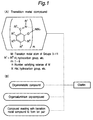
- Fig. 1 shows steps for preparing the first olefin polymerization catalyst according to the invention.
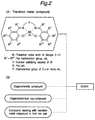
- Fig. 2 shows steps for preparing the second olefin polymerization catalyst according to the invention.
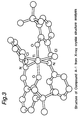
- Fig. 3 shows the structure of transition metal compound A-1 prepared in Synthesis Example 1, which was determined by X-ray structure analysis.
- Fig. 4 shows the structure of transition metal compound B-1 prepared in Synthesis Example 2, which was determined by X-ray crystal structure analysis.
- olefin polymerization catalyst of the present invention and the process for olefin polymerization using the catalyst are described in detail hereinafter.
- the first olefin polymerization catalyst of the invention is formed from:
- the transition metal compound (A) for use in the invention is a compound represented by the following formula (I).
- M is a transition metal atom of Group 3 to Group 11 of the periodic table (Group 3 includes lantanoids), preferably Groups 3 to 9 (Group 3 includes lantanoids), more preferably Group 3 to Group 5 and Group 9, and particularly preferably Groups 4 or 5.
- Specific Examples of transition metal atoms M include scandium, titanium, zirconium, hafnium, vanadium, niobium, tanthalum, cobalt, rhodium, yttriumn, chromium, molybdenum, tungsten, mangafese, rhenium, iron and ruthenium.
- n is an integer of 1 to 6, preferably 1 to 4.
- R 1 to R 6 may be the same or different, and are each a hydrogen atom, a halogen atom, a hydrocarbon group, a heterocyclic compound residue, an oxygen-containing group, a nitrogen-containing group, a boron-containing group, a sulfur-containing group, a phosphorus-containing group, a silicon-containing group, a germanium-containing group or a tin-containing group, and two or more of them may be bonded to each other to form a ring,
- the halogen atom is fluorine, chlorine, bromine or iodine.
- hydrocarbon groups include straight-chain or branched alkyl groups of 1 to 30, preferably 1 to 20 carbon atoms, such as methyl, ethyl, n-propyl, isopropyl, n-butyl, isobutyl, sec-butyl, tert-butyl, neopentyl and n-hexyl;
- the hydrocarbon groups may be substituted with halogen atoms and for such examples halogenated hydrocarbon groups of 1 to 30, preferably 1 to 20 carbon atoms, such as trifluoromethyl, pentafluorophenyl and cholophenyl may be mentioned.
- hydrocarbon groups may also be substituted with other hydrocarbon groups and for such examples aryl-substituted alkyl groups such as benzyl and cumyl may be mentioned.
- the hydrocarbon groups may have heterocyclic compound residues; oxygen-containing groups such as alkoxy, aryl, ester, ether, acyl, carboxyl, carbonato, hydroxy, peroxy and carboxylic acid anhydride groups; nitrogen-containing groups such as ammonium salts of amino, imino, amide, imide, hydrazino, hydrazono, nitro, nitroso, cyano, isocyano, cyanic acid ester, amidino and diazo groups; boron-containing groups such as borandiyl, borantriyl and diboranyl groups; sulfur-containing groups such as mercapto, thioester, dithioester, alkylthio, arylthio, thioacyl, thioether, thiocyanic acid ester, isothiocyanic acid ester, sulfon ester, sulfon amide, thiocarboxyl, dithiocarboxyl, thi
- alkyl groups of 1 to 30, preferably 1 to 20 carbon atoms such as methyl, ethyl, n-propyl, isopropyl, n-butyl, isobutyl, sec-butyl, tert-butyl, neopentyl and n-hexyl; aryl groups of 6 to 30, preferably 6 to 20 carbon atoms, such as phenyl, naphthyl, biphenyl, terphenyl, phenanthryl and antracenyl; and these aryl groups which are substituted with 1 to 5 substituents such as alkyl or arkoxy groups of 1 to 30, preferably 1 to 20 carbon atoms, aryl or aryloxy groups of 6 to 30, preferably 6 to 20 carbon atoms.
- nitrogen-containing groups examples include boron-containing groups, sulfur-containing groups and phosphorus-containing groups.
- heterocyclic residues examples include those of nitrogen-containing compounds (e.g., pyrrole, pyridine, pyrimidine, quincline and triazine), oxygen-containing compounds (e.g., furan and pyran) and sulfur-containing compounds (e.g., thiophene), and these heterocyclic residues, which are substituted with substituents such as alkyl or alkoxy groups of 1 to 20 carbon atoms.
- nitrogen-containing compounds e.g., pyrrole, pyridine, pyrimidine, quincline and triazine
- oxygen-containing compounds e.g., furan and pyran
- sulfur-containing compounds e.g., thiophene
- silicon-containing groups examples include silyl, siloxy, hydrocarbon-substituted silyl groups such as methylsilyl, dimethylsilyl, trimethylsilyl, ethylsilyl, diethylsilyl, triethylsilyl, diphenylmethylsilyl, triphenylsilyl, dimethylphenylsilyl, dimethyl-t-butylsilyl and dimethyl(pentafluorophenyl)silyl, preferably methylsilyl, dimethylsilyl, trimethylsilyl, ethylsilyl, diethylsilyl, triethylsilyl and triphenylsilyl, particularly preferably trimethylsilyl, triethylsilyl, triphenylsilyl and dimethylphenylsilyl, and hydrocarbon-substituted siloxy groups such as trimethylsiloxy.
- the germanium-containing groups and the tin-containing groups include the above-mentioned silicon-containing groups in which silicon is replaced by germanium and tin, respectively.
- alkoxy groups examples include methoxy, ethoxy, n-propoxy, isopropoxy, n-butoxy, isobutoxy and tert-butoxy.
- alkylthio groups examples include methylthio and ethylthio.
- aryloxy groups examples include phenoxy, 2,6-dimethylphenoxy and 2,4,6-trimethylphenoxy.
- arylthio groups examples include phenylthio, methylphenylthio and naphthylthio.
- acyl groups include formyl, acyl, benzoyl, p-chlorobenzoyl and p-methoxybenzoyl.
- ester groups examples include acetyloxy, benzoyloxy, methoxycarbonyl, phenoxycarbonyl and p-chlorophenoxycarbonyl.
- thioester groups examples include acetylthio, benzoylthio, methylthiocarbonyl and phenylthiocarbonyl.
- amido groups examples include acetamido, N-methylacetamido and N-methylbenzamido.
- imido groups examples include acetimido and benzimido.
- amino groups examples include dimethylamino, ethylmethylamino and diphenylamino.
- imino groups examples include methylimino, ethylimino, propylimino, butylimino and phenylimino.
- sulfonester groups examples include methylsulfonato, ethylsulfonato and phenylsulfonato.
- sulfonamido groups examples include phenylsulfonamido, N-methylsulfonamido and N-methyl-p-toluenesulfonamido.
- R 6 is preferably a substituent other than hydrogen. That is, a hydrogen atom, a halogen atom, a hydrocarbon group, a heterocyclic compound residue, an oxygen-containing group, a nitrogen-containing group, a boron-containing group, a sulfur-containing group, a phosphorus-containing group, a silicon-containing group, a germanium-containing group or a tin-containing group, and two or more of them may be bonded to each other to form a ring.
- R 6 is particularly preferably a halogen atom, a hydrocarbon group, a heterocyclic compound residual group, a hydrocarbon-substituted silyl group, a hydrocarbon-substituted siloxy group, an alkoxy group, an alkylthio group, an aryloxy group, an arylthio group, an acyl group, an ester group, a thioester group, an amido group, an imido group, an amino group, an imino group, a sulfonester group, a sulfonamido group, a cyano group, a nitro group or a hydroxyl group.
- hydrocarbon groups available as R 6 include straight-chain or branched alkyl groups of 1 to 30, preferably 1 to 20 carbon atoms, such as methyl, ethyl, n-propyl, isopropyl, n-butyl, isobutyl, sec-butyl, tert-butyl, neopentyl and n-hexyl; cyclic saturated hydrocarbon groups of 3 to 30, preferably 3 to 20 carbon atoms, such as cyclopropanyl, cyclobutanyl, cyclopentanyl, cyclohexyl and adamantyl; aryl groups of 6 to 30, preferably 6 to 20 carbon atoms, such as phenyl, benzyl, naphthyl, biphenyl and terphenyl; and these groups which are substituted with substituents such as alkyl or alkoxy groups of 1 to 30, preferably 1 to 20 carbon atoms, halogenated alkyl groups of
- hydrocarbon-substituted silyl groups as R 6 include methylsilyl, dimethylsilyl, trimethylsilyl, ethylsilyl, diethylsilyl, triethylsilyl, diphenylmethylsilyl, triphenylsilyl, dimethylphenylsilyl, dimethyl-t-butylsilyl and dimethyl(pentafluorophenyl)silyl.
- R 6 is a preferably selected from branched alkyl groups of 3 to 30, preferably 3 to 20 carbon atoms (e.g., isopropyl, isobutyl, sec-butyl and tert-butyl neopentyl), these alkyl groups which are substituted with aryl groups of 6 to 30, preferably 6 to 20 carbon atoms (e.g., cumyl), and cyclic saturated hydrocarbon groups of 3 to 30, preferably 3 to 20 carbon atoms (e.g., adamantyl, cyclopropyl, cyclobutyl, cyclopentyl and cyclohexyl).
- branched alkyl groups of 3 to 30, preferably 3 to 20 carbon atoms e.g., isopropyl, isobutyl, sec-butyl and tert-butyl neopentyl
- aryl groups of 6 to 30, preferably 6 to 20 carbon atoms e.g., cum
- R 6 is an aryl group of 6 to 30, preferably 6 to 20 carbon atoms (e.g., phenyl, naphthyl, fluorenyl, anthranyl or phenanthryl) or a hydrocarbon-substituted silyl group.
- Two or more of the groups R 1 to R 6 may be bonded to each other to form an aliphatic ring, an aromatic ring or a hydrocarbon ring containing a hetero atom such as a nitrogen atom, and these rings may further have a substituent.
- R 1 to R 6 When m is 2 or greater, two of the groups R 1 to R 6 may be bonded to each other, with the proviso that the groups R 1 are not bonded to each other.
- R 1 s, R 2 s, R 3 s, R 4 s, R 5 s, or R 6 s may be the same as or different from each other.
- n is a number satisfying a valence of M, specifically an integer of 0 to 5, preferably 1 to 4, mroe preferably 1 to 3.
- X is a hydrogen atom, a halogen atom, a hydrocarbon group, an oxygen-containing group, a sulfur-containing group, a nitrogen-containing group, a boron-containing group, an aluminum-containing group, a phosphorus-containing group, a halogen-containing group, a heterocyclic compound residue, a silicon-containing group, a germanium-containing group or a tin-containing group, and when n is 2 or greater, plural groups X may be the same or different and may be bonded to each other to form a ring.
- halogen atom examples include fluorine, chlorine, bromine and iodine.
- hydrocarbon groups examples include those exemplified for R 1 to R 6 .
- alkyl groups such as methyl, ethyl, propyl, butyl, hexyl, octyl, nonyl, dodecyl and eicosyl
- cycloalkyl groups of 3 to 30 carbon atoms such as cyclopentyl, cyclohexyl, norbornyl and adamantyl
- alkenyl groups such as vinyl, propenyl and cyclohexenyl
- arylalkyl groups such as benzyl, phenylethyl and phenylpropyl
- aryl groups such as phenyl, tolyl, dimethylphenyl, trimethylphenyl, ethylphenyl, propylphenyl, biphenyl, naphthyl, methylnaphthyl, anthkyl groups, cycloalkyl groups of 3 to
- hydrocarbon groups include halogenated hydrocarbon groups, and more specifically at least one hydrogen of the hydrocarbon groups of 1 to 30 carbon atoms may be substituted with a halogen atom.
- preferable are those of 1 to 20 carbon atoms.
- heterocyclic compound residues examples include those exemplified for R 1 to R 6
- oxygen-containing groups examples include those exemplified for R 1 to R 6 .
- hydroxyl such as methoxy, ethoxy, propoxy and butoxy
- aryloxy groups such as phenoxy, methylphenoxy, dimethylphenoxy and naphthoxy
- arylalkoxy groups such as phenylmethoxy and phenylethoxy
- acetoxy groups and carbonyl group.
- sulfur-containing groups examples include those exemplified for R 1 to R 6 .
- sulfonato groups such as methylsulfonato, trifluoromethanesulfonato, phenylsulfonato, benzylsulfonato, p-toluenesulfonato, trimethylbenzenesulfonato, triisobutylbenzenesulfonato, p-chlorobenzenesulfonato and pentafluorobenzenesulfonato; sulfinato groups, such as methylsulfinato, phenylsulfinato, benzylsulfinato, p-toluenesulfinato, trimethylbenzenesulfinato and pentafluorobenzenesulfinato; alkylthio
- nitrogen-containing groups examples include those exemplified for R 1 to R 6 .
- amino group alkylamino groups, such as methyl amino, dimethylamino; diethylamino; dipropylamino, dibutylamino and dicyclohexylamino; arylamino groups and alkylarylamino groups, such as phenylamino, diphenylamino, ditolylamino, dinaphthylamino and methylphenylamino.
- boron-containing groups examples include BR 4 groups (where R is a hydrogen, an aryl group which may have a substituent, a halogen, etc.).
- silicon-containing groups include those exemplified for R 1 to R 6 .
- hydrocarbon-substituted silyl groups such as phenylsilyl, diphenylsilyl, trimethylsilyl, triethylsilyl, tripropylsilyl, tricyclohexylsilyl, triphenylsilyl, methyldiphenylsilyl, tritolylsilyl and trinaphthylsilyl
- hydrocarbon-substituted silylether groups such as trimethylsilylether
- silicon-substituted alkyl groups such as trimethylsilylmethyl
- silicon-substituted aryl groups such as trimethylsilylphenyl.
- germanium-containing groups examples include those exemplified for R 1 to R 6 . Specifically, there can be mentioned the above-mentioned silicon-containing groups in which silicon is replaced by germanium.
- tin-containing groups examples include those exemplified for R 1 to R 6 .
- silicon-containing groups in which silicon is replaced by tin.
- halogen-containing groups examples include fluorine-containing groups, such as PF 6 and BF 4 ; chlorine-containing groups, such as ClO 4 and SbCl 6 ; and iodine-containing groups, such as IO 4 , but not limited thereto.
- aluminium-containing groups examples include AR 4 groups (where R is a hydrogen, an alkyl group, an aryl group which may have a substituent, a halogen atom, etc.), but not limited thereto.
- plural groups X may be the same or different and may be bonded to each other to form a ring.
- the transition compound represented by the formula (I) is preferably a compound represented by the formula (I-a).
- M is a transition metal atom of Group 3 to Group 11 of the periodic table.
- M include the above-mentioned transition metal atoms.
- n is an integer of 1 to 3, preferably 2.
- R 1 to R 6 may be the same or different, and are each a hydrogen atom, a halogen atom, a hydrocarbon group, a heterocyclic compound residues, a hydrocarbon-substituted silyl group, a hydrocarbon-substituted siloxy group, an alkoxy group, an alkylthio group, an aryloxy group, an arylthio group, an acyl group, an ester group, a thioester group, an amido group, an imido group, an amino group, an imino group, a sulfonester group, a sulfonamido group, a cyano group, a nitro group, a caroboxyl group, a sulfo group, a mercapto group or a hydroxyl group, and two or more of them may be bonded to each other to form a ring.
- R 1 to R 6 include those described above.
- two of the groups R 1 to R 6 may be bonded to each other, with the proviso that the groups R 1 are not bonded to each other.
- n is a number satisfying a valence of M, specifically an integer of 0 to 5, preferably 1 to 4, more preferably 1 to 3.
- X is a hydrogen atom, a halogen atom, a hydrocarbon group, an oxygen-containing group, a nitrogen-containing group, a boron-containing group, a sulfur-containing group, a phosphorus-containing group, a silicon-containing group, a germanium-containing group or a tin-containing group. Examples of X include those described above.
- plural groups X may be the same or different and may be bonded to each other to form a ring.
- the transition metal compound represented by the formula (I) is preferably a compound represented by the following formula (I-a-1).
- R 1 to R 6 , M and X have the same meanings as mentioned above, and are preferably those described below.
- M is a transition metal atom of Group 3 to Group 11 of the periodic table, preferably of Group 3 to Group 5 and Group 9, e.g., scandium, titanium, zirconium, hafnium, vanadium, niobium, tantalum, cobalt or rhodium, more preferably titanium, zirconium, hafnium, cobalt or rhodium, particularly preferably titanium, zirconium or hafnium.
- n is an integer of 1 to 3.
- R 1 to R 6 may be the same or different, and are each a hydrogen atom, a halogen atom, a hydrocarbon group, a heterocyclic compound residues, a hydrocarbon-substituted silyl group, a hydrocarbon-substituted siloxy group, an alkoxy group, an alkylthio group, an aryloxy group, an arylthio group, a thioester group, an ester group, an acyl group, an amido group, an imido group, an amino group, an imino group, a sulfonester group, a sulfonamido group, a cyano group, a nitro group or a hydroxyl group.
- a hydrogen atom particularly preferable is a hydrogen atom, a halogen atom, a hydrocarbon-substituted silyl group, an alkoxy group, an aryloxy group, an ester group, an amido group, an amino group, a sulfonamido group, a cyano group or a nitro group.
- halogen atom examples include fluorine, chlorine, bromine and iodine.
- hydrocarbon groups examples include straight-chain or branched alkyl groups of 1 to 20 carbon atoms, such as methyl, ethyl, n-propyl, isopropyl, n-butyl, isobutyl, sec-butyl, tert-butyl, pentyl and hexyl; straight-chain or branched alkenyl groups of 2 to 20 carbon atoms, such as vinyl, allyl and isopropenyl; straight-chain or branched alkynyl groups of 2 to 20 carbon atoms, such as ethynyl and propargyl; cyclic saturated hydrocarbon groups of 3 to 20 carbon atoms, such as cyclopropyl, cyclobutyl, cyclopentyl, cyclohexyl and adamantyl; aryl groups of 6 to 20 carbon atoms, such as phenyl, benzyl, naphthyl, biphenylyl and triphen
- alkyl groups of 1 to 20 carbon atoms such as methyl, ethyl, n-propyl, isopropyl, n-butyl, isobutyl, sec-butyl, tert-butyl, pentyl and hexyl; aryl groups of 6 to 20 carbon atoms, such as phenyl and naphthyl; and these aryl groups which are substituted with 1 to 5 substituents such as alkyl groups of 1 to 20 carbon atoms, aryl groups of 6 to 20 carbon atoms, alkoxy groups of 1 to 20 carbon atoms and aryloxy groups of 6 to 20 carbon atoms.
- heterocyclic residues examples include residues of nitrogen-containing compounds (e.g., pyrrole, pyridine pyrimidine, quinoline and triazine), oxygen-containing compounds (e.g., furan and pyran) and sulfur-containing compounds (e.g., thiophene), and these heterocyclic residues which are substituted with substituents such as alkyl groups and alkoxy groups fo 1 to 20 carbon atoms.
- nitrogen-containing compounds e.g., pyrrole, pyridine pyrimidine, quinoline and triazine
- oxygen-containing compounds e.g., furan and pyran
- sulfur-containing compounds e.g., thiophene
- hydrocarbon-substituted silyl groups examples include methylsilyl, dimethylsilyl, trimethylsilyl, ethylsilyl, diethylsilyl, triethylsilyl, diphenylmethylsilyl, triphenylsilyl, dimethylphenylsilyl, dimethyl-t-butylsilyl and dimethyl(pentafluorophenyl)silyl.
- particularly preferable are methylsilyl, dimethylsilyl, trimethylsilyl, ethylsilyl, diethylsilyl, triethylsilyl and triphenylsilyl.
- hydrocarbon-substituted siloxy groups examples include trimethylsiloxy.
- alkoxy groups examples include methoxy, ethoxy, n-propoxy, isopropoxy, n-butoxy, isobutoxy and tert-butoxy.
- alkylthio groups examples include methylthio and ethylthio.
- aryloxy groups examples include phenoxy, 2,6-dimethylphenoxy and 2,4,6-trimethylphenoxy.
- arylthio groups examples include phenylthio, methylphenylthio and naphthylthio.
- acyl groups examples include formyl, acetyl, benzoyl, p-chlorobenzoyl and p-methoxybenzoyl.
- ester groups examples include acetyloxy, benzoyloxy, methoxycarbonyl, phenoxycarbonyl and p-chlorophenoxycarbonyl.
- thioester groups examples include acetylthio, benzoylthio, methylthiocarbonyl and phenylthiocarbonyl.
- amido groups examples include acetamido, N-methylacetamido and N-methylbenzamido.
- imido groups examples include acetimido and benzimido.
- amino groups examples include dimethylamino, ethylmethylamino and diphenylamino.
- imino groups examples include methylimino, ethylimino, propylimino, butylimino and phenylimino.
- sulfonester groups examples include methylsulfonato, ethylsulfonato and phenylsulfonato.
- sulfonamido groups examples include phenylsulfonamido, N-methylsulfonamido and N-methyl-p-toluenesulfonamido.
- R 6 is preferably a substituent other than hydrogen. That is, R 6 is preferably a halogen atom, a hydrocarbon group, a heterocyclic compound residues, a hydrocarbon-substituted silyl group, a hydrocarbon-substituted siloxy group, an alkoxy group, an alkylthio group, an aryloxy group, an arylthio group, an acyl group, an ester group, a thioester group, an amido group, an imido group, an amino group, an imino group, a sulfonester group, a sulfonamido group, a cyano group, a nitro group or a hydroxyl group.
- hydrocarbon groups as R 6 include straight-chain or branched alkyl groups of 1 to 20 carbon atoms, such as methyl, ethyl, n-propyl, isopropyl, n-butyl, isobutyl, sec-butyl, tert-butyl, pentyl and hexyl; cyclic saturated hydrocarbon groups of 3 to 20 carbon atoms, such as cyclopropyl, cyclobutnyl, cyclopentyl, cyclohexyl and adamantyl; aryl groups of 6 to 20 carbon atoms, such as phenyl, benzyl, naphthyl, biphenylyl and triphenylyl; andthese groups which are substituted with substituents such as alkyl groups of 1 to 20 carbon atoms, halogenated alkyl groups of 1 to 20 carbon atoms, aryl groups of 6 to 20 carbon atoms, alkoxy groups of 1 to
- hydrocarbon-substituted silyl groups as R 6 include methylsilyl, dimethylsilyl, trimethylsilyl, ethylsilyl, diethylsilyl, triethylsilyl, diphenylmethylsilyl triphenylsilyl, dimethylphenylsilyl, dimethyl-t-butylsilyl and dimethyl(pentafluorophenyl)silyl.
- R 6 is preferably selected from branched alkyl groups of 3 to 20 carbon atoms (e.g., isopropyl, isobutyl, sec-butyl and tert-butyl), these alkyl groups which are substituted with aryl groups of 6 to 20 carbon atoms (e.g., cumyl), and cyclic saturated-hydrocarbon groups of 3 to 20 carbon atoms (e.g., adamantyl, cyclopropyl, cyclobutyl, cyclopentyl and cyclohexyl).
- R 6 is a hydrocarbon-substituted silyl group.
- Two or more groups R 1 to R 6 may be bonded to each other to form an aliphatic ring, an aromatic ring or a hydrocarbon ring containing a hetero atom such as a nitrogen atom, and these rings may further have a substituent.
- R 1 s, R 2 s, R 3 s, R 4 s, R 5 s, or R 6 s may be the same as or different from each other.
- n is a number satisfying a valence of M, specifically an integer of 1 to 3.
- X is a hydrogen atom, a halogen atom, a hydrocarbon group of 1 to 20 carbon atoms, a halogenated hydrocarbon group of 1 to 20 carbon atoms, an oxygen-containing group, a sulfur-containing group or a silicon-containing group, and when n is 2 or greater, plural groups X may be the same or different.
- he halogen atoms examples include fluorine, chlorine, bromine and iodine.
- hydrocarbon groups of 1 to 20 carbon atoms include alkyl groups, cycloalkyl groups, alkenyl groups, arylalkyl groups and aryl groups.
- alkyl groups such as methyl, ethyl, propyl, butyl, hexyl, octyl, nonyl, dodecyl and eicosyl
- cycloalkyl groups such as cyclopentyl, cyclohexyl, norbornyl and adamantyl
- alkenyl groups such as vinyl, propenyl and cyclohexenyl
- arylalkyl groups such as benzyl, phenylethyl and phenylpropyl
- aryl groups such as phenyl, tolyl, dimethylphenyl, trimethylphenyl, ethylphenyl, propylphenyl, biphenyl, naphthyl,
- halogenated hydrocarbon groups of 1 to 20 carbon atoms include the above-mentioned hydrocarbon groups of 1 to 20 carbon atoms which are substituted with halogens.
- oxygen-containing groups examples include hydroxyl; alkoxy groups, such as methoxy, ethoxy, propoxy and butoxy; aryloxy groups, such as phenoxy, methylphenoxy, dimethylphenoxy and naphthoxy; and arylalkoxy groups, such as phenylmethoxy and phenylethoxy.
- sulfur-containing groups include the above-exemplified oxygen-containing groups in which oxygen is replaced with sulfur; sulfonato groups, such as methylsulfonato, trifluoromethanesulfonato, phenylsulfonato, benzylsulfonato, p-toluenesulfonato, trimethylbenzenesulfonato, triisobutylbenzenesulfonato, p-chlorobenzenesulfonato and pentafluorobensenesulfonato; and sulfinato groups, such as methylsulfinato, phenylsulfinato, benzylsulfinato, p-toluenesulfinato, trimethylbenzenesulfinato and pentafluorobenzenesulfinato.
- sulfonato groups such as methylsul
- silicon-containing groups examples include monohydrocarbon-substituted silyl groups, such as methylsilyl and phenylsilyl; dihydrocarbon-substituted silyl groups, such as dimethylsilyl and diphenylsilyl; trihydrocarbon-substituted silyl groups, such as trimethylsilyl, triethylsilyl, tripropylsilyl, tricyclohexylsilyl, triphenylsilyl, dimethylphenylsilyl, methyldiphenylsilyl, tritolylsilyl and trinaphthylsilyl; silyl ether groups of hydrocarbon-substituted silyl, such as trimethylsilyl ether; silicon-substituted alkyl groups, such as trimethylsilylmethyl; and silicon-substituted aryl groups, such as trimethylsilylphenyl.
- preferable groups X are halogen atoms, hydrocarbon atoms of 1 to 20 carbon atoms and sulfonato groups.
- groups X may be bonded to each other to form a ring.
- the compound wherein m is 2 and two of the groups R 1 to R 6 (except for the groups R 1 ) are bonded to each other is, for example, a compound represented by the following formula (I-a-2).
- M, R 1 to R 6 , and X are identical with M, R 1 to R 6 , and X in the formula (I).
- R 1 to R 16 may be the same or different, and are each a hydrogen atom, a halogen atom, a hydrocarbon group, a heterocyclic compound residue, a hydrocarbon-substituted silyl group, a hydrocarbon-substituted siloxy group, an alkoxy group, an alkylthio group, an aryloxy group, an arylthio group, an acyl group, an ester group, a thioester group, an amido group, an imido group, an amino group, an imino group, a sulfonester group, a sulfonamido group, a cyano group or a nitro group, specifically, the same atom or group as described for R 1 to R 6 .
- Two or more of groups R 1 to R 16 preferably adjacent groups, may be bonded to each other to form an aliphatic ring, an aromatic ring or a hydrocarbon ring containing a hetero atom such as a nitrogen
- Y' is a bonding group or a single bond for bonding at least one group selected from R 1 to R 6 to at least one group selected from R 11 to R 16 (except a case of bonding R 1 and R 11 to each other).
- the bonding group Y' is a group containing at least one element selected from among oxygen, sulfur, carbon, nitrogen, phosphorus, silicon, selenium, tin, boron and the like.
- groups include groups containing chalcogen atoms such as -O-, -S- and -Se-; nitrogen- or phosphorus-containing groups, such as -NH-, -N(CH 3 ) 2 , -PH- and -P(CH 3 ) 2 -; hydrocarbon groups of 1 to 20 carbon atoms, such as -CH 2 -, -CH 2 -CH 2 - and -C(CH 3 ) 2 -; residues of cyclic unsaturated hydrocarbons of 6 to 20 carbon atoms, such as benzene, naphthalene and anthracene; residues of heterocyclic compounds having 3 to 20 carbon atoms and containing hetero atoms, such as pyridine, quinoline, thiophene and furan; silicon
- transition metal compounds represented by the formula (I-a-1) are given below, but are not limited thereto.
- M is a transition metallic element, and specifically represents, but not limited to, Sc(III), Ti(III), Ti(IV), Zr(III), Zr(IV), Hf(IV), V(IV), Nb(V), Ta(V), Co(II), Co(III), Rh(II), Ph(III), Ph(IV). Of these, particularly preferable is Ti(IV), Zr(IV) or Hf(IV).
- X is halogen such as Cl or Br, or an alkyl group such as methyl, but not limited thereto. When plural X are present, they may be the same or different.
- Me is methyl
- Et is ethyl
- iPr is isopropyl
- tBu is tert-butyl
- Ph is phenyl.
- transition metal compound (A) is a transition metal compound represented by the following formula (I-b).
- M is a transition metal atom of Group 3 to Group 11 of the periodic table, preferably of Group 4 or Group 9, and particularly preferably, titanium, zirconium, hafnium, cobalt or rhodium.
- n is an integer of 1 to 6, preferably 1 to 4.
- R 1 to R 6 may be the same or different, and are each a hydrogen atom, a halogen atom, a hydrocarbon group, a hydrocarbon-substituted silyl group, an alkoxy group, an aryloxy group, an ester group, an amido group, an amino group, a sulfonamido group, a cyano group or a nitro group.
- a halogen atom a hydrocarbon group, a hydrocarbon-substituted silyl group, an alkoxy group, an aryloxy group, an ester group, an amido group, an amino group, a sulfonamido group, a cyano group or a nitro group.
- Examples of the groups R 1 to R 6 are those exemplified for the transition metal compounds of the formulae (I) and (I-a).
- two or more groups R 1 to R 6 may be bonded to each other to form a ring, with the proviso that the groups R 1 are not bonded to each other.
- transition metal compounds represented by the formula (I-b) are given below, but not limited thereto.
- transition metal compounds wherein cobalt is replaced with titanium, zirconium, hafnium, iron, copper or rhodium in the above-exemplified compounds are also employable.
- transition metal compounds (A) mentioned above are used singly or in combination of two or more kinds, and they can be used in combination with other transition metal compounds, for example known transition metal compounds comprising a ligand which has a hetero atom such as nitrogen, oxygen, sulfur, boron or phosphorus.
- M is a transition metal atom of Group 8 to Group 10 of the periodic table, preferably nickel, palladium or platinum.
- R 21 to R 24 may be the same or different, and are each a hydrocarbon group of 1 to 50 carbon atoms, a halogenated hydrocarbon group of 1 to 50 carbon atoms, a hydrocarbon-substituted silyl group, or a hydrocarbon group substituted with a substituent containing at least one element selected from nitrogen, oxygen, phosphorus, sulfur and silicon.
- Two or more groups, preferably adjacent groups, of R 21 to R 24 may be bonded to each other to form a ring.
- q is an integer of 0 to 4.
- X is a hydrogen atom, a halogen atom, a hydrocarbon group of 1 to 20 carbon atoms, a halogenated hydrocarbon group of 1 to 20 carbon atoms, an oxygen-containing group, a sulfur-containing group, a silicon-containing group or nitrogen-containing group, and when q is 2 or greater, plural groups X may be the same or different.
- M is a transition metal atom of Group 3 to Group 6 of the periodic table, preferably titanium, zirconium or hafnium.
- R' and R'' may be the same or different, and are each a hydrogen atom, a hydrocarbon group of 1 to 50 carbon atoms, a halogenated hydrocarbon group of 1 to 50 carbon atoms, a hydrocarbon-substituted silyl group, or a substituent containing at least one element selected from nitrogen, oxygen, phosphorus, sulfur and silicon.
- n is an integer of 0 to 2.
- n is an integer of 1 to 5.
- A is an atom of Group 13 to Group 16 of the periodic table, specifically boron, carbon, nitrogen, oxygen, silicon, phosphorus, sulfur, germanium, selenium, tin or the like, preferably carbon or silicon.
- n 2 or greater
- plural atoms A may be the same or different.
- E is a substituent containing at least one element selected from carbon, hydrogen, oxygen, halogen, nitrogen, sulfur, phosphorus, boron and silicon.
- groups E may be the same or different, and two or more groups E may be bonded to form a ring.
- p is an integer of 0 to 4.
- X is a hydrogen atom, a halogen atom, a hydrocarbon group of 1 to 20 carbon atoms, a halogenated hydrocarbon group of 1 to 20 carbon atoms, an oxygen-containing group, a sulfur-containing group, a silicon-containing group or nitrogen-containing group.
- p is 2 or greater, plural groups X may be the same or different.
- X is preferably a halogen atom, a hydrocarbon group of 1 to 20 carbon atoms or a sulfonato group.
- M is a transition metal atom of Group 3 to Group 11 of the periodic table; 1 and m are each an integer of 0 or 1; A and A' are each a hydrocarbon group of 1 to 50 carbon atoms, a halogenated hydrocarbon group of 1 to 50 carbon atoms, a hydrocarbon group having a substituent containing oxygen, sulfur or silicon, or a halogenated hydrocarbon group having a substituent containing oxygen, sulfur or silicon; and A and A' may be the same or different.
- B is a hydrocarbon group of 0 to 50 carbon atoms, a halogenated hydrocarbon group of 1 to 50 carbon atoms, R 1 R 2 Z, oxygen or sulfur, where R 1 and R 2 are each a hydrocarbon group of 1 to 20 carbon atoms or a hydrocarbon group having 1 to 20 carbon atoms and containing at least one hetero atom, and Z is carbon, nitrogen, sulfur, phosphorus or silicon.
- n is a number satisfying a valence of M.
- X is a hydrogen atom, a halogen atom, a hydrocarbon group of 1 to 20 carbon atoms, a halogenated hydrocarbon group of 1 to 20 carbon atoms, an oxygen-containing group, a sulfur-containing group, a silicon-containing group or nitrogen-containing group, and when n is 2 or greater, plural groups X may the same or different and may be bonded to form a ring.
- Transition metal compound (I-f) containing at least one hetero atom and containing a ligand having cyclopentadienyl skeleton
- M is a transition metal atom of Group 3 to Group 11 of the periodic table.
- X is an atom of Group 13, Group 14 or Group 15, and at least one of X contains an element other than carbon.
- Each R may be the same or different, and is a hydrogen atom, a halogen atom, a hydrocarbon group, a halogenated hydrocarbon group, a hydrocarbon-substituted silyl group or a hydrocarbon group substituted with a substituent containing at least one element selected from nitrogen, oxygen, phosphorus, sulfur and silicon.
- Two or more of R may be bonded to form a ring, and a is 0 or 1.
- b is an integer of 1 to 4, when b is a number of 2 or greater, the moieties [((R) a ) 5 X 5 ] may be the same or different, and the groups R may be bonded to form a bridge.
- c is a number satisfying a valence of M.
- Y is a hydrogen atom, a halogen atom, a hydrocarbon group of 1 to 20 carbon atoms, a halogenated hydrocarbon group of 1 to 20 carbon atoms, an oxygen-containing group, a sulfur-containing group, a silicon-containing group, or nitrogen-containing group.
- c is a number of 2 or greater, plural groups Y may be the same or different and may be bonded to form a ring.
- M is a transition metal atom of Group 3 to Group 11 of the periodic table
- R is a hydrogen atom, a hydrocarbon group of 1 to 20 carbon atoms or a halogenated hydrocarbon group of 1 to 20 carbon atoms
- Pz is a pyrazolyl group or a substituted pyrazolyl group.
- n is a number satisfying a valence of M.
- X is a hydrogen atom, a halogen atom, a hydrocarbon group of 1 to 20 carbon atoms, a halogenated hydrocarbon group of 1 to 20 carbon atoms, an oxygen-containing group, a sulfur-containing group, a silicon-containing group or nitrogen-containing group, and when n is a number of 2 or greater, plural groups X may be the same or different and may be bonded to form a ring.
- Y 1 and Y 3 are each an element of Group 15 of the periodic table; Y 2 is an element of Group 16 of the periodic table; and R 21 to R 28 may be the same or different, they are each a hydrogen atom, a halogen atom, a hydrocarbon group of 1 to 20 carbon atoms, a halogenated hydrocarbon group of 1 to 20 carbon atoms, an oxygen-containing group, a sulfur-containing group or a silicon-containing group, and two or more of them may be bonded to form a ring.
- Transition metal compound comprising a compound represented by the following formula (I-h) and a transition metal atom of Group VIII
- R 31 to R 34 may be the same or different, they are each a hydrogen atom, a halogen atom, a hydrocarbon group of 1 to 20 carbon atoms or a halogenated hydrocarbon group of 1 to 20 carbon atoms, and two or more of them may be bonded to form a ring.
- M is a transition metal atom of Group 3 to Group 11 of the periodic table.
- n is an integer of 0 to 3.
- n is an integer of 0 or 1.
- p is an integer of 1 to 3.
- q is a number satisfying a valence of M.
- R 41 to R 48 may be the same or different, and are each a hydrogen atom, a halogen atom, a hydrocarbon group of 1 to 20 carbon atoms or a halogenated hydrocarbon group of 1 to 20 carbon atoms, an oxygen-containing group, a sulfur-containing group, a silicon-containing group or nitrogen-containing group, and two or more of them may be bonded to form a ring.
- X is a hydrogen atom, a hologen atom, a hydrocarbon group of 1 to 20 carbon atoms, a halogenated hydrocarbon group of 1 to 20 carbon atoms, an oxygen-containing group, a sulfur-containing group, a silicon-containing group or a nitrogen-containing group, and when q is 2 or greater, plural X may be the same or different and may be bonded to each other to form a ring.
- Y is a group bridging the borata benzen ring, and Y is carbon, silicon or germanium.
- A is an element of Group 14, Group 15 or Group 16 of the periodic table.
- organometallic compound (B-1) As the organometallic compound (B-1), the below-described organometallic compounds of metals of Group 1, Group 2, Group 12 and Group 13 of the periodic table are employable in the invention.
- R a and R b may be the same or different, and are each a hydrocarbon group of 1 to 15 carbon atoms, preferably a hydrocarbon group of 1 to 4 carbon atoms;
- X is a halogen atom;
- (B-1c) Dialkyl compound of Group 2 metal or Group 12 metal, that is represented by the following formula: R a R b M 3 wherein R a and R b may be the same or different, and are each a hydrocarbon group of 1 to 15 carbon atoms, preferably a hydrocarbon group of 1 to 4 carbon atoms; and M 3 is Mg, Zn or Cd.
- organoaluminum compounds (B-1a) examples include the following compounds.
- Organoaluminum compound represented by the following formula: R a m Al(OR b ) 3-m wherein R a and R b may be the same or different, and are each a hydrocarbon group of 1 to 15 carbon atoms, preferably a hydrocarbon group of 1 to 4 carbon atoms; and m is preferably a number satisfying the condition of 1.5 ⁇ m ⁇ 3.
- Organoaluminum compound represented by the following formula: R a m AlX 3-m wherein R a is a hydrocarbon group of 1 to 15 carbon atoms, preferably a hydrocarbon group of 1 to 4 carbon atoms; X is a halogen atom; and m is preferably a number satisfying the condition of 0 ⁇ m ⁇ 3.
- Organoaluminum compound represented by the following formula: R a m AlH 3-m wherein R a is a hydrocarbon group of 1 to 15 carbon atoms, preferably a hydrocarbon group of 1 to 4 carbon atoms; and m is preferably a number satisfying the condition of 2 ⁇ m ⁇ 3.
- organoaluminum compounds (B-1a) include:
- organoaluminum compound (B-1a) is also employable.
- organoaluminum compounds wherein two or more aluminum compounds are combined through a nitrogen atom, such as (C 2 H 5 ) 2 AlN(C 2 H 5 )Al(C 2 H 5 ) 2 .
- organoaluminum compounds (B-1b) examples include LiAl(C 2 H 5 ) 4 and LiAl(C 7 H 15 ) 4 .
- organometallic compounds (B-1) methyllithium, ethyllithium, propyllithium, butyllithium, methylmagnesium bromide, methylmagnesium chloride, ethylmagnesium bromide, ethylmagnesium chloride, propylmagnesium bromide, propylmagnesium chloride, butylmagnesium bromide, butylmagnesium chloride, dimethylmagnesium, diethylmagnesium, dibutylmagnesium and butylethylmagnesium are also employable as the organometallic compounds (B-1).
- combinations of compounds capable of producing the above-mentioned organoaluminum compounds in the polymerization system e.g., a combination of halogenated aluminum and alkyllithium and a combination of halogenated aluminum and alkylmagnesium, are also employable.
- organometallic compounds (B-1) mentioned above the organoaluminum compounds are preferable.
- the organometallic compounds (B-1) can be used singly or in combination of two or more kinds.
- the organoaluminum oxy-compound (B-2) for use in the invention may be conventional aluminoxane or a benzene-insoluble organoaluminum oxy-compound exemplified in Japanese Patent Laid-Open Publication No. 78687/1990.
- the conventional aluminoxane can be prepared by, for example, the following processes, and is generally obtained as a hydrocarbon solvent solution.
- the aluminoxane may contain a small amount of an organometallic component. Further, it is possible that the solvent or the unreacted organoaluminum compound is distilled off from the recovered solution of aluminoxane and the remainder is redissolved in a solvent or suspended in a poor solvent for aluminoxane.
- organoaluminum compounds used for preparing the aluminoxane include the same organoaluminum compounds as described for the organoaluminum compound (B-1a).
- trialkylaluminums and tricycloalkylaluminums are preferable. Particularly preferable is trimethylaluminum.
- the organoaluminum compounds can be used singly or in combination of two or more kinds.
- solvents used for preparing the aluminoxane include aromatic hydrocarbons, such as benzene, toluene, xylene, cumene and cymene; aliphatic hydrocarbons, such as pentane, hexane, heptane octane, decane, dodecane, hexadecane and octadecane; alicyclic hydrocarbons, such as cyclopentane, cyclohexane, cyclooctane and methylcyclopentane; petroleum fractions, such as gasoline, kerosine and gas oil; and halides of these aromatic, aliphatic and alicyclic hydrocarbons, particularly chlorides and bromides thereof. Also employable are ethers such as ethyl ether and tetrahydrofuran. Of the solvents, particularly preferable are aromatic hydrocarbons and aliphatic hydrocarbons.
- the content of Al component which is soluble in benzene at 60 °C is usually not more than 10 %, preferably not more than 5 %, particularly preferably not more than 2 %, in terms of Al atom, and the benzene-insoluble organoaluminum oxy-compound is insoluble or sparingly soluble in benzene.
- the organoaluminum oxy-compound employable in the invention is, for example, an organoaluminum oxy-compound containing boron and represented by the following formula (IV): wherein R 17 is a hydrocarbon group of 1 to 10 carbon atoms; and each R 18 may be the same or different and is a hydrogen atom, a halogen atom or a hydrocarbon group of 1 to 10 carbon atoms.
- the organoaluminum compound containing boron and represented by the formula (IV) can be prepared by causing an alkylboronic acid represented by the following formula (V) to react with an organoaluminum compound in an inert solvent under an inert gas atmosphere at a temperature of -80 °C to room temperature for 1 minute to 24 hours.
- alkylboronic acids represented by the formula (V) include methylboronic acid, ethylboronic acid, isopropylboronic acid, n-propylboronic acid, n-butylboronic acid, isobutylboronic acid, n-hexylboronic acid, cyclohexylboronic acid, phenyboronic acid, 3,5-difluoroboronic acid, pentafluorophenylboronic acid and 3,5-bis(trifluoromethyl)phenylboronic acid.
- methylboronic acid n-butylboronic acid, isobutylboronic acid, 3,5-difluorophenylboronic acid and pentafluorophenylboronic acid.
- alkylboronic acids are used singly or in combination of two or more kinds.
- organoaluminum compounds to be reacted with the alkylboronic acid examples include the same organoaluminum compounds as described for the organoaluminum compound (B-1a).
- trialkylaluminums and tricycloalkylaluminums are preferred. Particularly preferable are trimethylaluminum, triethylaluminum and triisobutylaluminum.
- the organoaluminum compounds can be used singly or in combination of two or more kinds.
- organoaluminum oxy-compounds (B-2) mentioned above are used singly or in combination of two or more kinds.
- the compound (B-3) which reacts with the transition metal compound to form an ion pair (referred to as "ionizing ionic compound” hereinafter), that is used in the invention, is a compound which reacts with the transition metal compound (A) to form an ion pair, and includes Lewis acid, an ionic compound, a borane compound and a carborane compound described in Japanese Patent Laid-Open Publications No. 501950/1989, No. 502036/1989, No. 179005/1991, No. 179006/1991, No. 207703/1991 and No. 207704/1991, and U.S. Patent No. 5,321,106. Further, as ionizing ionic compound, heteropoly-compound or isopoly-compound may be used.
- the Lewis acid is, for example, a compound represented by BR 3 (R is a phenyl group which may have a substituent such as fluorine, methyl or trifluoromethyl, or a fluorine atom).
- R is a phenyl group which may have a substituent such as fluorine, methyl or trifluoromethyl, or a fluorine atom.
- examples of such compounds include trifluoroboron, triphenylboron, tris(4-fluorophenyl)boron, tris(3,5-difluorophenyl)boron, tris(4-fluoromethylphenyl)boron, tris(pentafluorophenyl)boron, tris(p-tolyl)boron, tris(o-tolyl)boron and tris(3,5-dimethylphenyl)boron.
- the ionic compound is, for example, a compound represented by the following formula (VI).
- R 19 is H + , carbonium cation, oxonium cation, ammonium cation, phosphonium cation, cycloheptyltrienyl cation, ferrocenium cation having a transition metal, or the like.
- R 20 to R 23 may be the same or different, and are each an organic group, preferably an aryl group or a substituted aryl group.
- Examples of the carbonium cations include tri-substituted cations, such as triphenylcarbonium cation, tri(methylphenyl)carbonium cation and tri(dimethylphenyl)carbonium cation.
- ammonium cations examples include trialkylammonium cations, such as trimethylammonium cation, triethylammonium cation, tripropylammonium cation and tributylammonium cation; N,N-dialkylanilinium cations, such as N,N-dimethylanilinium cation, N,N-diethylanilinium cation and N,N-2,4,6-pentamethylanilinium cation; and dialkylammonium cations, such as di(isopropyl)ammonium cation and dicyclohexylammonium cation.
- trialkylammonium cations such as trimethylammonium cation, triethylammonium cation, tripropylammonium cation and tributylammonium cation
- N,N-dialkylanilinium cations such as N,N-dimethylanilinium
- Examples of the phosphonium cations include triarylphosphonium cations, such as triphenylphosphonium cation, tri(methylphenyl)phosphonium cation and tri(dimethylphenyl)phosphonium cation.
- R 19 is preferably carbonium cation or ammonium cation, particularly preferably triphenylcarbonium cation, N,N-dimethylanilinium cation or N,N-diethylanilinium cation.
- ionic compound also available as the ionic compound is a trialkyl-substituted ammonium salt, a N,N-dialkylanilinium salt, a dialkylammonium salt and a triarylphosphonium salt.
- trialkyl-substituted ammonium salts include triethylammoniumtetra(phenyl)boron, tripropylammoniumtetra(phenyl)boron, tri(n-butyl)ammoniumtetra(phenyl)boron, trimethylammoniumtetra(p-tolyl)boron, trimethylammoniumtetra(o-tolyl)boron, tri(n-butyl)ammoniumtetra(pentafluorophenyl)boron, tripropylammoniumtetra(o,p-dimethylphenyl)boron, tri(n-butyl)ammoniumtetra(m,m-dimethylphenyl)boron, tri(n-butyl)ammoniumtetra(p-trifluoromethylphenyl)boron, tri(n-butyl)ammoniumtetra(3,5-ditrifluoromethylphenyl)boron
- N,N-dialkylanilinium salts examples include N,N-dimethylaniliniumtetra(phenyl)boron, N,N-diethylaniliniumtetra(phenyl)boron and N,N-2,4,6-pentamethylaniliniumtetra(phenyl)boron.
- dialkylammonium salts examples include di(1-propyl)ammoniumtetra(pentafluorophenyl)boron and dicyclohexylammoniumtetra(phenyl)boron.
- ionic compound is triphenylcarbeniumtetrakis(pentafluorophenyl)borate, N,N-dimethylaniliniumtetrakis(pentafluorophenyl)borate, ferroceniumtetra(pentafluorophenyl)borate, triphenylcarbeniumpentaphenylcyclopentadienyl complex, N,N-diethylaniliniumpentaphenylcyclopentadienyl complex or a boron compound represented by the following formula (VII) or (VIII). wherein Et is an ethyl group.
- borane compounds examples include:
- carborane compounds examples include:
- the heteropoly-compounds comprise a heteroatom such as silicon, phosphorus, titanium, germanium, arsenic or tin, and at least one polyatom selected from vanadium, niobium molybdenum and tungsten.
- a heteroatom such as silicon, phosphorus, titanium, germanium, arsenic or tin
- at least one polyatom selected from vanadium, niobium molybdenum and tungsten for example, phosphovanadic acid, germanovanadic acid, arsenovanadic acid, phosphoniobic acid, germanoniobic acid, siliconomolybdic acid, phosphomolybdic acid, titanomolybdic acid, germanomolybdic acid, arsenomolybdic acid, stannnomolybdic acid, phosphotungstic acid, germanotungstic acid, stannotungstic acid, phosphomolybdovanadic acid, phosphotungstovanadic acid, germanotungstovan
- heteropoly-compounds and isopoly-compounds mentioned above may be used singly or in combination of two or more kind.
- the ionizing ionic compounds (B-3) mentioned above can be used singly or in combination of two or more kinds.
- transition metal compounds according to the invention are used as catalyst in combination with the organoaluminum oxy-compound (B-2) such as methylaluminoxane as a cocatalyst, olefin compounds can be polymerized with high polymerization activities. If the ionized ionic compound (B-3) such as triphenylcarbonium tetrakis(pentafluorophenyl)borate is used as a cocatalyst, polyolefins having a very high molecular weight is produced with good activities.
- organoaluminum oxy-compound (B-2) such as methylaluminoxane
- olefin compounds can be polymerized with high polymerization activities.
- the ionized ionic compound (B-3) such as triphenylcarbonium tetrakis(pentafluorophenyl)borate
- the below-described carrier (C) can be used if necessary, in addition to the above-mentioned transition metal compound (A) and at least one compound (B) selected from the organometallic compound (B-1), the organoaluminum oxy-compound (B-2) and the ionized ionic compound (B-3).
- the carrier (C) for use in the invention is an inorganic or organic compound in the form of granular or particulate solid.
- the inorganic compound porous oxide, inorganic chloride, clay, clay mineral or an ion-exchange layered compound is preferable.
- porous oxides examples include SiO 2 , Al 2 O 3 , MgO, ZrO, TiO 2 , B 2 O 3 , CaO, ZnO, BaO, ThO 2 ; and mixtures containing these oxides, such as SiO 2 -MgO, SiO 2 -Al 2 O 3 , SiO 2 -TiO 2 , SiO 2 -V 2 O 5 , SiO 2 -Cr 2 O 3 and SiO 2 -TiO 2 -MgO.
- Preferable are compounds each containing at least one of SiO 2 and Al 2 O 3 as the main component.
- the inorganic oxides may contain a small amount of carbonate, sulfate, nitrate or oxide component, such as Na 2 CO 3 , K 2 CO 3 , CaCO 3 , MgCO 3 , Na 2 SO 4 , Al 2 (SO 4 ) 3 , BaSO 4 , KNO 3 , Mg(NO 3 ) 2 , Al(NO 3 ) 3 , Na 2 O, K 2 O or Li 2 O.
- carbonate, sulfate, nitrate or oxide component such as Na 2 CO 3 , K 2 CO 3 , CaCO 3 , MgCO 3 , Na 2 SO 4 , Al 2 (SO 4 ) 3 , BaSO 4 , KNO 3 , Mg(NO 3 ) 2 , Al(NO 3 ) 3 , Na 2 O, K 2 O or Li 2 O.
- the carrier preferably used in the invention has a particle diameter of 10 to 300 ⁇ m, preferably 20 to 200 ⁇ m, a specific surface area of 50 to 1,000 m 2 /g, preferably 100 to 700 m 2 /g, and a pore volume of 0.3 to 3.0 cm 3 /g.
- the carrier can be used after calcined at 100 to 1,000 °C, preferably 150 to 700 °C, if desired.
- the inorganic chlorides employable in the invention include MgCl 2 , MgBr 2 , MnCl 2 and MnBr 2 .
- the inorganic chloride may be used as it is, or can be used after pulverized by a ball mill, a vibration mill or the like.
- the inorganic chloride can be used as fine particles of a precipitate obtained by dissolving the inorganic chloride in a solvent such as alcohol and then precipitating using precipitating agent.
- the clay for use in the invention is generally constituted mainly of clay mineral.
- the ion-exchange layered-compound is a compound having a crystal structure wherein planes formed by ionic bonding or the like are laminated in parallel to each other with a weak bond strength, and the ions contained therein are exchangeable.
- Most of clay minerals are ion-exchange layered compounds.
- the clay minerals and the ion-exchange layered compounds not only natural ones but also synthetic ones are employable.
- clay, clay minerals and ion-exchange layered compounds examples include clay, clay minerals and ion crystalline compounds having layered crystal structures such as hexagonal closest packing type, antimony type, CdCl 2 type and CdI 2 type.
- the clay and the clay minerals include kaolin, bentonite, kibushi clay, gairome clay, allophane, hisingerite, pyrophyllite, mica, montmorillonite, vermiculite, chlorite, palygorskite, kaolinite, nacrite, dickite and halloysite.
- ion-exchange layered compounds include crystalline acid salts of polyvalent metals, such as ⁇ -Zr(HAsO 4 ) 2 ⁇ H 2 O, ⁇ -Zr(HPO 4 ) 2 , ⁇ -Zr(KPO 4 ) 2 ⁇ 3H 2 O, ⁇ -Ti(HPO 4 ) 2 , ⁇ -Ti(HAsO 4 ) 2 ⁇ H 2 O, ⁇ -Sn(HPO 4 ) 2 ⁇ H 2 O, ⁇ -Zr(HPO 4 ) 2 , ⁇ -Ti(HPO 4 ) 2 and ⁇ -Ti(NH 4 PO 4 ) 2 ⁇ H 2 O.
- polyvalent metals such as ⁇ -Zr(HAsO 4 ) 2 ⁇ H 2 O, ⁇ -Zr(HPO 4 ) 2 , ⁇ -Zr(KPO 4 ) 2 ⁇ 3H 2 O, ⁇ -Ti(HPO 4 ) 2 , ⁇ -Ti(HAs
- the clay, the clay minerals and the ion-exchange layered compounds preferable are those having a pore volume, as measured on pores having a radius of not less than 20 ⁇ by a mercury penetration method, of not less than 0.1 cc/g, and particularly preferable are those having a pore volume of 0.3 to 5 cc/g.
- the pore volume is measured on the pores having a radius of 20 to 3 x 10 4 ⁇ by a mercury penetration method using a mercury porosimeter.
- the clay and the clay minerals for use in the invention are subjected to chemical treatments.
- a surface treatment to remove impurities attached to the surface and a treatment having an influence on the crystal structure of the clay are both available.
- Examples of such treatments include acid treatment, alkali treatment, salt treatment and organic matter treatment.
- the acid treatment contributes to not only removing impurities from the surface but also eluting cations such as Al, Fe and Mg present in the crystal structure to thereby increase the surface area.
- the alkali treatment destroys the crystal structure of clay to bring about change in the structure of the clay.
- the salt treatment and the organic matter treatment can produce ionic complex, molecular complex or organic derivative to change the surface area or the distance between layers.
- the exchangeable ions between layers can be exchanged with other large and bulky ions utilizing ion exchange properties, whereby a layered compound having enlarged distance between layers can be obtained. That is, the bulky ion plays a pillar-like roll to support the layer structure and is called a "pillar". Introduction of other substances between layers of a layered material is called "intercalation”.
- Examples of the guest compounds to be intercalated include cationic inorganic compounds, such as TiCl 4 and ZrCl 4 ; metallic alcoholates, such as Ti(OR) 4 , Zr(OR) 4 , PO(OR) 3 and B(OR) 3 (R is a hydrocarbon group or the like); and metallic hydroxide ions, such as [Al 13 O 4 (OH) 24 ] 7+ , [Zr 4 (OH) 14 ] 2+ and [Fe 3 O(OCOCH 3 ) 6 ] + . These compounds can be used singly or in combination of two or more kinds.
- Intercalation of these compounds can be carried out in the presence of polymers obtained by hydrolysis of metallic alcoholates such as Si(OR) 4 , Al(OR) 3 and Ge(OR) 4 (R is a hydrocarbon group or the like) or in the presence of colloidal inorganic compounds such as SiO 2 .
- the pillars include oxides produced by intercalation of the above-mentioned hydroxide ions between layers and then dehydration under heating.
- the clay, clay minerals and the ion-exchange layered compounds mentioned above may be used as they are, or may be used after subjected to a treatment of ball milling, sieving or the like. Moreover, they may be used after subjected to water adsorption or dehydration under heating.
- the clay, clay minerals and the ion-exchange layered compounds may be used singly or in combination of two or more kinds.
- clay and clay minerals are preferable, and particularly preferable are montmorillonite, vermiculite, pectolite, teniolite and synthetic mica.
- the organic compound is, for example, a granular or particulate organic compound having a particle diameter of 10 to 300 ⁇ m.
- examples of such compounds include (co)polymers produced using, as main components, ⁇ -olefins of 2 to 14 carbon atoms such as ethylene, propylene, 1-butene and 4-methyl-1-pentene, (co)polymers produced using, as a main component, vinylcyclohexane or styrene, and modified products thereof.
- the below-described specific organic compound (D) can be used if necessary, in addition to the transition metal compound (A), at least one compound (B) selected from the organometallic compound (B-1), the organoaluminum oxy-compound (B-2) and the ionized ionic compound (B-3), and the fine particle carrier (C).
- the organic compound component which can be used if necessary functions to improve polymerizability and properties of the resulting polymers.
- examples of the organic compounds include alcohol, a phenolic compound, a carboxylic acid, a phosphorus compound and sulfonate, but the organic compound employable in the invention is not limited thereto.
- the alcohol and the phenolic compound are represented by R 31 -OH wherein R 31 is a hydrocarbon group of 1 to 50 carbon atoms or a halogenated hydrocarbon group of 1 to 50 carbon atoms.
- the alcohol is preferably a halogen atom-containing hydrocarbon.
- the phenolic compound is preferably a phenolic compound wherein the ⁇ , ⁇ '-position of the hydroxyl group is substituted with a hydrocarbon group of 1 to 20 carbon atoms.
- the carboxylic acid is represented by R 32 -COOH wherein R 32 is a hydrocarbon group of 1 to 50 carbon atoms or a halogenated hydrocarbon group of 1 to 50 carbon atoms, preferably a halogenated hydrocarbon group of 1 to 50 carbon atoms.
- the sulfonate is represented by the following formula (IX): wherein M is an atom of Group 1 to Group 14 of the periodic table; R 33 is a hydrocarbon group of 1 to 20 carbon atoms or a halogenated hydrocarbon group of 1 to 20 carbon atoms; X is a hydrogen atom, a halogen atom, a hydrocarbon group of 1 to 20 carbon atoms or a halogenated hydrocarbon group of 1 to 20 carbon atoms; m is an integer of 1 to 7; and n ⁇ n ⁇ 7.
- Fig. 1 shows steps for preparing the first olefin polymerization catalyst according to the invention.
- the components can be used in any way and in any order. Some examples of the processes are given below.
- An olefin may be prepolymerized onto the solid catalyst component wherein the component (A) and the component (B) are supported on the carrier (C).
- an olefin is polymerized or copolymerized in the presence of the above-described olefin polymerization catalyst to obtain an olefin polymer.
- the polymerization can be carried out as any of liquid phase polymerization, such as solution polymerization or suspension polymerization, and gas phase polymerization.
- Examples of the inert hydrocarbon media used in the liquid phase polymerization include aliphatic hydrocarbons, such as propane, butane, pentane, hexane, heptane octane, decane, dodecane and kerosine; alicyclic hydrocarbons, such as cyclopentane, cyclohexane and methylcyclopentane; aromatic hydrocarbons, such as benzene, toluene and xylene; halogenated hydrocarbons, such as ethylene chloride, chlorobenzene and dichloromethane; and mixtures of these hydrocarbons.
- the olefin itself can be used as the solvent.
- the component (A) is used in an amount of usually 10 -12 to 10 -2 mol, preferably 10 -10 to 10 -3 mol, based on 1 liter of the reaction volume.
- an olefin can be polymerized with high polymerization activities, even if the component (A) is used in a relatively low concentration.
- the component (B-1) is used in such an amount that the molar ratio of the component (B-1) to the transition metal atom (M) in the component (A) ((B-1)/(M)) becomes usually 0.01 to 100,000, preferably 0.05 to 50,000.
- the component (B-2) is used in such an amount that the molar ratio of the aluminum atom in the component (B-2) to the transition metal atom (M) in the component (A) ((B-2)/(M)) becomes usually 10 to 500,000, preferably 20 to 100,000.
- the component (B-3) is used in such an amount that the molar ratio of the component (B-3) to the transition metal atom (M) in the component (A) ((B-3)/(M)) becomes usually 1 to 10, preferably 1 to 5.
- the ratio of the component (D) to the component (B) is as follows.
- the component (B) is the component (B-1)
- the component (D) is used in such an amount that the (D)/(B-1) ratio by mol becomes 0.01 to 10, preferably 0.1 to 5.
- the component (B) is the component (B-2)
- the component (D) is used in such an amount that the molar ratio of the component (D) to the aluminum atom in the component (B-2) ((D)/(B-2)) becomes 0.001 to 2, preferably 0.005 to 1.
- the component (B) is the component (B-3)
- the component (D) is used in such an amount that the (D)/(B-3) ratio by mol becomes 0.01 to 10, preferably 0.1 to 5.
- the temperature for the olefin polymerization using the olefin polymerization catalyst is in the range of usually -50 to 200 °C, preferably 0 to 170 °C.
- the polymerization pressure is in the range of usually atmospheric pressure to 100 kg/cm 2 , preferably atmospheric pressure to 50 kg/cm 2 .
- the polymerization reaction can be carried out by any of batchwise, semi-continuous and continuous processes. The polymerization can be conducted in two or more stages under different reaction conditions.
- the molecular weight of the resulting polymer can be adjusted by allowing hydrogen to exist in the polymerization system or by varying the polymerization temperature. Further, the molecular weight can be adjusted also by using the component (B) of different type.
- polar monomers include ⁇ , ⁇ -unsaturated carboxylic acids, such as acrylic acid, methacrylic acid, fumaric acid, maleic anhydride, itaconic acid, itaconic anhydride and bicyclo(2,2,1)-5-heptene-2,3-dicarboxylic acid; metallic salts of these acids, such as sodium salts, potassium salts, lithium salts, zinc salts, magnesium salts and calcium salts; ⁇ , ⁇ -unsaturated carboxylic esters, such as methyl acrylate, ethyl acrylate, n-propyl acrylate, isopropyl acrylate, n-butyl acrylate, isobutyl acrylate, tert-butyl acrylate, 2-ethylhexyl acrylate, methyl methacrylate, ethyl methacrylate, n-propyl methacrylate, isopropyl methacrylate,
- the diene and the polyene are cyclic or chain compounds having 4 to 30, preferably 4 to 20 carbon atoms and having two or more double bonds.
- examples of such compounds include butadiene, isoprene, 4-methyl-1,3-pentadiene, 1,3-pentadiene, 1,4-pentadiene, 1,5-hexadiene, 1,4-hexadiene, 1,3-hexadiene, 1,3-octadiene, 1,4-octadiene, 1,5-octadiene, 1,6-octadiene, 1,7-octadiene, ethylidene norbornene, vinyl norbornene and dicyclopentadiene;
- the olefin polymerization catalyst of the invention exhibits high polymerization activities, and by the use of the catalyst, polymers of narrow molecular weight distribution can be obtained.
- polymers of narrow molecular weight distribution can be obtained.
- olefin copolymers of narrow composition distribution can be obtained.
- the olefin polymerization catalyst of the invention can be used also for the copolymerization of an ⁇ -olefin and a conjugated diene.
- ⁇ -olefins used herein include the same straight-chain or branched ⁇ -olefins of 2 to 30, preferably 2 to 20 carbon atoms as described above. Of these, preferable are ethylene, propylene, 1-butene, 1-pentene, 1-hexene, 4-methyl-1-pentene and 1-octene. Particularly preferable are ethylene and propylene. These ⁇ -olefins can be used singly or in combination or two or more kinds.
- conjugated dienes examples include aliphatic conjugated dienes of 4 to 30, preferably 4 to 20 carbon atoms, such as 1,3-butadiene, isoprene, chloroprene, 1,3-cyclohexadiene, 1,3-pentadiene, 4-methyl-1,3-pentadiene, 1,3-hexadiene and 1,3-octadiene. These conjugated dienes can be used singly or in combination of two or more kinds.
- non-conjugated diene or polyene is further employable, and examples thereof include 1,4-pentadiene, 1,5-hexadiene, 1,4-hexadiene, 1,4-octadiene, 1,5-octadiene, 1,6-octadiene, 1,7-octadiene, ethylidene norbornene, vinyl norbornene, dicyclopentadiene, 7-methyl-1,6-octadiene, 4-ethylidene-8-methyl-1,7-nonadiene, 5,9-dimethyl-1,4,8-decatriene.
- the second olefin polymerization catalyst according to the invention is formed from:
- the transition metal compound (A') for use in the invention is a transition metal compound represented by the following formula (II): wherein M is a transition metal atom of Group 3 to Group 11 of the periodic table,
- At least one of R 6 and R 10 , especially both of them, in the formula (II) is a halogen atom, a hydrocarbon group, a heterocyclic compound residue, an oxygen-containing group, a nitrogen-containing group, a boron-containing group, a sulfur-containing group, a phosphorus-containing group, a silicon-containing group, a germanium-containing group or a tin-containing group.
- R 1 to R 10 and X in the formula (II) there can be used the same groups as mentioned for M, R 1 to R 6 and X in the formula(I), respectively. Specific examples of Y are described later on.
- the transition metal compound represented by the formula (II) is preferably a transition metal compound represented by the following formula (II-a): wherein M is a transition metal atom of Group 3 to Group 11, preferably Group 4 or 5, more preferably Group 4, of the periodic table, for example titanium, zirconium and halfnium, especially titanium.
- the main chain of the bonding group Y has a structure comprising preferably 3 to 40, more preferably 4 to 10 atoms.
- the bonding group may have a substituent.
- R 6 and R 10 are a halogen atom, a hydrocarbon group, a hydrocarbon-substituted silyl group, an alkoxy group, an aryloxy group, an ester group, an amido group, an amino group, a sulfonamido group, a cyano group or a nitro group.
- X and R 1 to R 10 in the formula (II-a) are the same as mentioned for X and R 1 to R 6 in the formulae (I) and (I-a).
- X is particularly preferably a halogen atom, a hydrocarbon group of 1 to 20 carbon atoms or a sulfinato group.
- n is 2 or greater, plural groups X may be bonded to each other to form a ring such as an aromatic ring or an aliphatic ring.
- divalent bonding groups include chalcogen atoms, such as -O-, -S- and -Se-; nitrogen- or phosphorus-containing groups, such as -NH-, -N(CH 3 )-, -PH- and -P(CH 3 )-; silicon atom-containing groups, such as -SiH 2 - and -Si(CH 3 ) 2 ; tin atom-containing groups, such as -SnH 2 - and -Sn(CH 3 ) 2 ; and boron atom-containing groups, such as -BH-, -B(CH 3 ) and -BF.
- chalcogen atoms such as -O-, -S- and -Se-
- nitrogen- or phosphorus-containing groups such as -NH-, -N(CH 3 )-, -PH- and -P(CH 3 )-
- silicon atom-containing groups such as -SiH 2 - and
- hydrocarbon groups examples include saturated hydrocarbon groups of 3 to 20 carbon atoms, such as -(CH 2 ) 4 -, -(CH 2 ) 5 - and -(CH 2 ) 6 -; cyclic saturated hydrocarbon groups, such as cyclohexylidene and cyclohexylene; groups wherein these saturated hydrocarbon groups are partially substituted with 1 to 10 groups or atoms selected from hydrocarbon groups, halogen atoms (e.g., fluorine, chlorine and bromine) and hetero atoms (e.g., oxygen, sulfur, nitrogen, phosphorus, silicon, selenium, tin and boron); residual groups of cyclic hydrocarbons of 6 to 20 carbon atoms, such as benzene, naphthalene and anthracene; residual groups of cyclic compounds containing hetero atoms and having 3 to 20 carbon atoms, such as pyridine, quinoline, thiophene and furan.
- transition metal compounds represented by the formula (II) are given below, but the transition metal compounds are not limited to those examples.
- Me is methyl
- Ph is phenyl
- transition metal compounds wherein titanium is replaced with other metals than titanium such as zirconium or hafnium, in the above-exemplified compounds are also employable.
- the transition metal compound (A') can be used in combination with other transition metal compounds, as for the aforesaid transition metal compound (A).
- the other transition metal compounds include the aforesaid compounds (a-1) to (a-8).
- examples of the organometallic compounds (B-1), the organoaluminum oxy-compounds (B-2) and the compounds which react with the transition metal compound (A') to form an ion pair include those previously described.
- the aforesaid carrier (C) can be used if necessary, in addition to the abovementioned transition metal compound (A') and at least one compound (B) selected from the organometallic compound (B-1), the organoaluminum oxy-compound (B-2) and the ionized ionic compound (B-3), as in the first olefin polymerization catalyst. Further, the aforesaid specific organic compound (D) can also be used if necessary.
- Fig. 2 shows steps for preparing the second olefin polymerization catalyst according to the invention.
- the second olefin polymerization catalyst according to the invention can be used for polymerizing the same olefins under the same conditions as described for the first olefin polymerization catalyst.
- novel transition metal compound according to the invention is represented by the following formula (III):
- transition metal compound of the formula (III) preferable is a transition metal compound represented by the following formula (III-a).
- M is a transition metal atom of Group 4 or Group 5 of the periodic table, specifically titanium, zirconium, hafnium, vanadium, niobium or tantalum.
- n is an integer of 1 to 3, preferably 2.
- R 1 to R 5 may be the same or different, and are each a hydrocarbon group, an alkoxy group or a hydrocarbon-substituted silyl group.
- R 6 is a halogen atom, a hydrocarbon group, a hydrocarbon-substituted silyl group, an alkoxy group, an alkylthio group or a cyano group.
- R 1 to R 6 may be bonded to each other to form a ring.
- two of the groups R 1 to R 6 may be bonded to each other, with the proviso that the groups R 1 are not bonded to each other.
- n is a number satisfying a valence of M.
- X is a halogen atom, a hydrocarbon group, an oxygen-containing group, a sulfur-containing group, a nitrogen-containing group, halogen-containing group or a silicon-containing group.
- Preferable X is a halogen atom, a hydrocarbon group of 1 to 20 carbon atoms, a halogenated hydrocarbon group of 1 to 20 carbon atoms, an oxygen-containing, a sulfur-containing group or a silicon containing group.
- plural groups X may be the same or different and may be bonded to each other to form a ring.
- R 1 to R 6 and X include those described for the above-mentioned formula (I).
- the transition metal compounds of the formulae (I), (II) and (III) can be prepared by any processes without specific limitation, for example, in the manner as described below.
- the ligand composing the transition metal compound can be obtained by reacting a salicylaldehyde compound with a primary amine compound of the formula R 1 -NH 2 (where R 1 has the meanings as described above), for example an aniline compound or an alkylamine compound.
- R 1 has the meanings as described above
- both starting compounds are dissolved in a solvent, for example those commonly used in such reactions, preferably alcohols such as methanol and ethanol, and hydrocarbon solvents such as toluene.
- the resulting solution is stirred for about 1 to 48 hours at room temperature to a reflux temperature to obtain the corresponding ligand in a good yield.
- catalysts for example acid catalysts such as formic acid, acetic acid and toluenesulfonic acid can be used.
- dehydrating agents such as molecular sieves, magnesium sulfate and sodium sulfate or to perform dehydration by the Dean Stark method.
- the ligand thus obtained can then be reacted with a transition metal M-containing compound, to synthesize the desired transition metal compound.
- the ligand is dissolved in a solvent, and if necessary, is contacted with a base to prepare a phenoxide salt, followed by mixing with a metal compound such as a metallic halide or a metallic alkylate at a low temperature and stirring for about 1 to 48 hours at -78°C to room temperature or under reflux.
- a metal compound such as a metallic halide or a metallic alkylate
- Any solvents usually used in such reactions may be employed and preferable are polar solvents such as ethers, e.g., tetrahydrofuran (THF) and hydrocarbon solvents such as toluene.
- metallic salts such as lithium salts (e.g., n-butyllithium) and sodium salts (e.g., sodium hydride)
- organic bases such as triethylamine and pyridine.
- the step of preparing the phenoxide salt may be omitted, and the ligand can be directly reacted with the metal compound to synthesize the corresponding transition metal compound.
- transition metal M in the synthesized compound is replaced with another transition metal by conventional methods.
- any one of R 1 to R 6 which is H can be substituted by a substituent other than H at any synthesis steps.
- novel transition metal compound represented by the formula (III), preferably the formula (III-a), can be favorably used as an olefin polymerization catalyst.
- transition metal compound is used as an olefin polymerization catalyst, (co)polymers of narrow molecular weight distribution can be synthesized with high polymerization activities.
- the ⁇ -olefin/conjugated diene copolymer according to the invention comprises 1 to 99.9 % by mol of constituent units derived from an ⁇ -olefin and 99 to 0.1 % by mol of constituent units derived from a conjugated diene, and preferably comprises 50 to 99.9 % by mol of constituent units derived from an ⁇ -olefin and 50 to 0.1 % by mol of constituent units derived from a conjugated diene.
- ⁇ -olefins examples include the same straight-chain or branched ⁇ -olefins of 2 to 30, preferably 2 to 20 carbon atoms as described above. Of these, preferable are ethylene, propylene, 1-butene, 1-pentene, 1-hexene, 4-methyl-1-pentene and 1-octene. Particularly preferable are ethylene and propylene. These ⁇ -olefins can be used singly or in combination or two or more kinds.
- conjugated dienes examples include aliphatic conjugated dienes of 4 to 30, preferably 4 to 20, preferably 4 to 20 carbon atoms, such as 1,3-butadiene, isoprene, chloroprene, 1,3-cyclohexadiene, 1,3-pentadiene, 4-methyl-1,3-pentadiene, 1,3-hexadiene and 1,3-octadiene.
- conjugated dienes can be used singly or in combination of two or more kinds.
- non-conjugated diene or polyene is further employable, and examples thereof include 1,4-pentadiene, 1,5-hexadiene, 1,4-hexadiene, 1,4-octadiene, 1,5-octadiene, 1,6-octadiene, 1,7-octadiene, ethylidene norbornene, vinyl norbornene, dicyclopentadiene, 7-methyl-1,6-octadiene, 4-ethylidene-8-methyl-1,7-nonadiene, 5,9-dimethyl-1,4,8-decatriene.
- the content of 1,2-cyclopentane skeleton derived from the conjugated diene is not more than 1 % by mol, preferably such a content that the 1,2-cyclopentadiene skeleton can be regarded to be substantially not contained (i.e., less than 0.1 % by mol).
- the content of the 1,2-cyclopentane skeleton is less than 0.1 % by mol, the content is regarded to be lower than the detection limit and is not introduced into the calculation of all the conjugated diene units.
- the proportion of the 1,2-cyclopentane skeleton to all the diene units is not more than 20 %, preferably not more than 10 %.
- the proportions of other insertions of the dienes (e.g., 1,4-cis, 1,4-trans, 1,2-vinyl) in the ⁇ -olefin/conjugated diene copolymer are arbitrary.
- the proportions can be determined by 13 C-NMR and 1 H-NMR in accordance with the method described in "Die Makromolekulare Chemie", volume 192, p. 2591 (1991).
- the ⁇ -olefin/conjugated diene copolymer has a molecular weight distribution (Mw/Mn) of not more than 3.5 and has a uniform composition distribution.
- the weight average molecular weight (Mw) of the copolymer is not less than 1,000, preferably not less than 5,000.
- the ⁇ -olefin/conjugated diene copolymer has double bonds in its main chain or side chain, it can be variously modified.
- the double bonds can be epoxidized to introduce epoxy groups of high reactivity into the copolymer.
- Such a modification makes the copolymer possible to be used as a thermoplastic resin or a reactive resin.
- the double bonds can also be utilized in the Diels-Alder reaction or the Michael addition reaction.
- the copolymer in case of the copolymer having double bonds in the main chain, the copolymer can be improved in heat resistance and ozone resistance by selectively hydrogenating the double bonds to saturate them.
- the ⁇ -olefin/conjugated diene copolymer of the invention may be modified partially or fully with an unsaturated carboxylic acid, its derivative or an aromatic vinyl compound, and the degree of modification is preferably in the range of 0.01 to 30 % by weight.
- the monomer used for the modification is, for example, an unsaturated carboxylic acid, its derivative or an aromatic vinyl compound.
- unsaturated carboxylic acids include acrylic acid, methacrylic acid, maleic acid, fumaric acid and itaconic acid.
- Examples of the derivatives of unsaturated carboxylic acids include acid anhydrides, esters, amides, imides and metallic salts thereof, such as maleic anhydride, citraconic anhydride, itaconic anhydride, methyl acrylate, methyl methacrylate, ethyl acrylate, ethyl methacrylate, butyl acrylate, butyl methacrylate, glycidyl acrylate, glycidyl methacrylate, monoethyl maleate, diethyl maleate, monomethyl fumarate, dimethyl fumarate, monomethyl itaconate, diethyl itaconate, acrylamide, methacrylamide, maleic acid monoamide, maleic acid diamide, maleic acid-N-monoethylamide, maleic acid-N,N-diethylamide, maleic acid-N-monobutylamide, maleic acid-N,N-dibutylamide, fumaric acid monoamide, fuma
- aromatic vinyl compounds examples include:
- the ⁇ -olefin/conjugated diene copolymer and the graft monomer are heated at a high temperature in the presence or absence of a solvent and in the presence or absence of a radical initiator to perform graft copolymerization.
- the graft monomers may be used in combination.
- a graft-modified ⁇ -olefin/conjugated diene copolymer having a graft ratio of 0.01 to 30 % by weight it is preferable from the viewpoint of industrial production that a graft-modified ⁇ -olefin/conjugated diene copolymer having a high graft ratio is prepared and the thus graft-modified copolymer is then mixed with an unmodified ⁇ -olefin/conjugated diene copolymer to adjust the graft ratio, because the concentration of the graft monomer in the composition can be adjusted as desired. It is also possible that a given amount of a graft monomer is blended with the ⁇ -olefin/conjugated diene copolymer from the first to perform graft modification.
- the graft ratio to the whole resin composition is in the range of preferably 0.01 to 30 % by weight, particularly preferably 0.05 to 10 % by weight.
- the ⁇ -olefin/conjugated diene copolymer of the invention may be blended with (i) a polyolefin resin and optionally, with (ii) a filler to form resin compositions useful for various applications.
- the polyolefin resin (i) which may be blended with the ⁇ -olefin/conjugated diene copolymer of the invention may be any of a crystalline polyolefin and an amorphous polyolefin, or may be a mixture of thse polyolefin resins.
- the crystalline polyolefin is, for example, a homopolymer or a copolymer of an ⁇ -olefin of 2 to 20 carbon atoms or a cycloolefin.
- the amorphous polyolefin is, for example, a copolymer of one or more ⁇ -olefins of 2 to 20 carbon atoms and one or more cycloolefins.
- Examples of the ⁇ -olefins of 2 to 20 carbon atoms include ethylene, propylene, 1-butene, 2-butene, 1-pentene, 1-hexene, 4-methyl-1-pentene, 4,4-dimethyl-1-pentene, 3-methyl-1-pentene, 4-methyl-1-hexene, 3-ethyl-1-hexene, 4-ethyl-1-hexene, 4,4-dimethyl-1-hexene, 1-octene, 3-methyl-1-butene, 1-nonene, 1-decene, 1-undecene, 1-dodecene, 1-tetradecene, 1-hexadecene, 1-octadecene and 1-eicosene.
- cycloolefins examples include cyclopentene, cycloheptene, cyclohexene, norbornene, 5-ethyl-2-norbornene, tetracyclododecene and 2-ethyl-1,4,5,8-dimethano-1,2,3,4,4a,5,8,8a-octahydronaphthalene.
- Examples of the crystalline polyolefin resins include the following (co)polymers (1) to (11). Of the copolymers, particularly preferable are the copolymers (3) and (5).
- ethylene, propylene, 1-butene, 4-methyl-1-pentene, 1-hexene or 1-octene from among the aforesaid examples is preferably employed.
- cycloolefin cyclopentene, cyclohexene, norbornene or tetracyclododecene is preferably employed.
- the crystalline polyolefin resin desirably has a melt flow rate (measured at 230 °C under a load of 2.16 kg in accordance with ASTM D1238-65T) of 0.01 to 100 g/10 min, preferably 0.3 to 70 g/10 min, and a crystallinity, as measured by X-ray diffractometry, of usually 5 to 100 %, preferably 20 to 80 %.
- the crystalline polyolefin resin can be prepared by a conventional process.
- amorphous polyolefin resins examples include the following (co)polymers.
- fillers (ii) which may be blended with the ⁇ -olefin/conjugated diene copolymer of the invention, those generally used can be used without specific limitation.
- inorganic fillers examples include:
- These fillers can be used singly or in combination of two or more kinds.
- the ⁇ -olefin/conjugated diene copolymer is blended with the polyolefin resin (i) and the filler (ii), the ⁇ -olefin/conjugated diene copolymer is desirably contained in an amount of 10 to 90 parts by weight, preferably 15 to 80 parts by weight, more preferably 20 to 75 parts by weight, based on 100 parts by weight of the total of the ⁇ -olefin/conjugated diene copolymer, the polyolefin resin (i) and the filler (ii).
- the ⁇ -olefin/conjugated diene copolymer composition has excellent moldability and is capable of providing molded products having not only excellent impact resistance, weathering resistance and heat stability but also excellent rigidity, strength and heat resistance.
- the polyolefin resin (i) is contained in an amount of 1 to 99 parts by weight, preferably 10 to 85 parts by weight, more preferably 10 to 85 parts by weight, based on 100 parts by weight of the total of the resulting composition.
- the composition having not only excellent impact resistance and cold resistance but also excellent rigidity, strength, heat resistance and moldability can be obtained.
- the filler (ii) is contained in an amount of 0 to 40 parts by weight, preferably 0 to 30 parts by weight, based on 100 parts by weight of the total of the resulting composition. If the filler (ii) is contained in this amount, the composition having excellent rigidity, surface appearance and heat resistance can be obtained.
- additives such as nucleating agents, antioxidants, hydrochloric acid absorbers, heat stabilisers, light stabilizers, ultraviolet light absorbers, lubricants, antistatic agensts, flame retardants, pigments, dyes, dispersants, copper harm inhibitors, neutralizing agents, foaming agents, plasticizers, anti-foaming agents, crosslinking agents, crosslinking aids, crosslinking accelerators, flow property improvers (e.g., peroxide), weld strength improvers, processing aids, weathering stabilizers and blooming inhibitors, may be added in an amount not detrimental to the objects of the invention.
- additives may be added in combination of two or more kinds.
- the olefin polymerization catalyst according to the invention exhibits high polymerization activities on olefins.
- an olefin (co)polymer of narrow molecular distribution can be produced with high polymerization activities.
- an ⁇ -olefin and a conjugated diene are copolymerized, a copolymer containing almost no 1,2-cyclopentane skeleton in the polymer chain can be produced.
- novel transition metal compound according to the invention is useful for an olefin polymerization catalyst, and provides an olefin (co)polymer of narrow molecular weight distribution with high polymerization activities.
- the ⁇ -olefin/conjugated diene copolymer according to the invention has a narrow molecular weight distribution and contains almost no cyclopentane skeleton in the polymer chain.
- Structures of the compounds A-1 and B-1 were further decided by X-ray crystal structure analysis.
- the measurement was made by effecting Mo-K a-ray irradiation using a Rigaku AFC7R four-axis diffractometer.
- the structure analysis was made by a direct method (SIR92), and the structure optimization was made in accordance with TeXan crystal structure analysis program.
- the intrinsic viscosity [ ⁇ ] was measured in decahydronaphthalene at 135 °C.
- the molecular weight distribution (Mw/Mn) was measured by the gas permeation chromatography (GPC) using o-dichlorobenzene as a solvent at 140 °C.
- Ligands L4 to L42 were synthesized in the similar manner as in the forgoing Ligand Synthesis Examples.
- the solution was slowly dropwise added to a mixture of 7.05 ml of a titanium tetrachloride solution (0.5 mmol/ml heptane solution, 3.53 mmol) and 40 ml of diethyl ether which had been been cooled to -78 °C.
- reaction solution was concentrated under reduced pressure, and the solid precipitated was washed with 50 ml of methylene chloride and filtered with a glass filter to remove insolubles.
- the filtrate was concentrated under reduced pressure, and the solid precipitated was dissolved in 30 ml of diethyl ether.
- the solution was allowed to stand for one day at -20 °C in a nitrogen atmosphere to precipitate yellow crystals.
- the solid was separated by filtration, washed with hexane and then vacuum dried to obtain 1.09 g (1.63 mmol, yield: 54 %) of compound B-1 represented by the following formula as fluorescent yellow crystals.
- reaction solution was added 10 ml of tetrahydrofuran, and the mixture was slowly added to a solution of 0.385 g of hafnium tetrachloride (purity: 99.9 %, 3.02 mmol) in 10 ml of tetrahydrofuran which had been cooled to -78 °C. After the addition, the temperature was slowly raised to room temperature. The reaction solution was stirred for 2 hours at room temperature and then further stirred for another 2 hours under heating at 50 °C.
- hafnium tetrachloride purity: 99.9 %, 3.02 mmol
- reaction solution was concentrated under reduced pressure, and the solid precipitated was washed with 20 ml of methylene chloride and filtered with a glass filter to remove insolubles.
- the filtrate was concentrated under reduced pressure, and the solid precipitated was reslurried in 10 ml of diethyl ether at room temperature for 1 hour and separated by filtration.
- the solid was washed with hexane and then vacuum dried to obtain 0.33 g (0.40 mmol, yield: 33 %) of compound C-1 represented by the following formula as fluorescent yellow white crystals.
- reaction solution was slowly added to a solution of 0.385 g of hafnium tetrachloride (purity: 99.9 %, 3.02 mmol) in 10 ml of diethyl ether which had been cooled to -78 °C. After the addition, the temperature was slowly raised to room temperature, and the reaction solution was stirred for 4 hours at room temperature.
- hafnium tetrachloride purity: 99.9 %, 3.02 mmol
- reaction solution was concentrated under reduced pressure, and the solid precipitated was washed with 20 ml of methylene chloride and filtered with a glass filter to remove insolubles.
- the filtrate was concentrated under reduced pressure, and the solid precipitated was dissolved in 1 ml of diethyl ether.
- To the solution was slowly added 10 ml of hexane with stirring to precipitate black green solid.
- the solid was separated by filtration, reslurried and washed with hexane at room temperature for 1 hour and then vacuum dried to obtain 0.55 g (0.88 mmol, yield: 73 %) of compound D-1 represented by the following formula as a blue black powder.
- the solution was cooled to -78°C and then slowly added dropwise to a mixture of 3.0 ml of a titanium tetrachloride solution (0.5 mmol/ml heptane solution, 1.50 mmol) and 10 ml of diethyl ether. After completion of the dropwise addition, stirring was continued while slowly increasing the temperature to room temperature. After further stirring for 8 hours at room temperature, the reaction solution was filtered with a glass filter. The resulting solid was dissolved and washed in 50 ml of methylene chloride, and the insoluble portion was removed by filtration.
- the solution was then slowly added dropwise to a 10 ml tetrahydrofuran solution containing zirconium tetrachloride (0.35 g, 1.50 mmol) which had been cooled to -78°C. After completion of the dropwise addition, stirring was continued while slowly increasing the temperature to room temperature. After further stirring for 8 hours at room temperature, the reaction solution was concentrated to dryness, the residue was dissolved and washed in 50 ml of methylene chloride, and then the insoluble portion was removed by filtration.
- the solution was cooled to -78°C and then 3.0 ml of a titanium tetrachloride solution (0.5 mmol/ml heptane solution, 1.50 mmol) was slowly added dropwise. After completion of the dropwise addition, stirring was continued while slowly increasing the temperature to room temperature. After further stirring for 15 hours at room temperature, the reaction solution was filtered with a glass filter. The resulting solid was dissolved and washed in 50 ml of methylene chloride, and the insoluble portion was removed by filtration.
- a titanium tetrachloride solution 0.5 mmol/ml heptane solution, 1.50 mmol
- the solution was cooled to -78°C, and then 2.00 ml of a titanium tetrachloride solution (0.5 mmol/ml heptane solution, 1.00 mmol) was slowly added dropwise. After completion of the dropwise addition, stirring was continued while slowly increasing the temperature to room temperature. After further stirring for 8 hours at room temperature, the reaction solution was filtered with a glass filter. The resulting solid was dissolved and washed in 50 ml of methylene chloride, and the insoluble portion was removed by filtration.
- a titanium tetrachloride solution 0.5 mmol/ml heptane solution, 1.00 mmol
- the solution was cooled to -78°C and then a 10 ml tetrahydrofuran solution containing a zirconium tetrachloride ⁇ 2THF complex (0.38 g, 1.00 mmol) was added dropwise. After completion of the dropwise addition, stirring was continued while slowly increasing the temperature to room temperature. After further stirring for 10 hours at room temperature and 4 hours at 50°C, the insoluble portion was removed with a glass filter.
- the solution was then slowly added dropwise to a solution containing 2.4 ml of a titanium tetrachloride solution (0.5 mmol/ml heptane solution, 1.20 mmol) and 15 ml of diethyl ether which had been cooled to -78°C. After completion of the dropwise addition, stirring was continued while slowly increasing the temperature to room temperature. After further stirring for 15 hours at room temperature, the solvent of the reaction solution was distilled off, the resulting solid was dissolved in 50 ml of methylene chloride, and the insoluble portion was filtered off with a glass filter.
- a titanium tetrachloride solution 0.5 mmol/ml heptane solution, 1.20 mmol
- diethyl ether diethyl ether
- the solution was then slowly added dropwise to a solution of zirconium tetrachloride ⁇ 2THF (0.42 g, 1.10 mmol) in 20 ml of tetrahydrofuran which had been cooled to -78°C. After completion of the dropwise addition, stirring was continued while slowly increasing the temperature to room temperature. After further stirring for 15 hours at room temperature, the solvent of the reaction solution was distilled off. The resulting solid was dissolved in 50 ml of methylene chloride, and the insoluble portion was filtered off with a glass filter.
- the solution was then slowly added dropwise to a mixed solution of zirconium tetrachloride (0.27 g, 1.15 mmol) and 20 ml of diethyl ether which had been cooled to -78°C. After completion of the dropwise addition, stirring was continued while slowly increasing the temperature to room temperature. After further stirring for 15 hours at room temperature, the insoluble portion was removed with a glass filter.
- the solution was then slowly added dropwise to a mixed solution containing 3.26 ml of a titanium tetrachloride solution (0.5 mmol/ml heptane solution, 1.13 mmol) and 22 ml of diethyl ether which had been cooled to -78°C. After completion of the dropwise addition, stirring was continued while slowly increasing the temperature to room temperature. After further stirring for 15 hours at room temperature, the solvent of the reaction solution was distilled off, the insoluble portion of the reaction solution was filtered off with a glass filter.
- a titanium tetrachloride solution 0.5 mmol/ml heptane solution, 1.13 mmol
- the solution was then slowly added dropwise to a mixed solution containing 4.7 ml of a titanium tetrachloride solution (0.5 mmol/ml heptane solution, 2.35 mmol) and 20 ml of diethyl ether which had been cooled to -78°C. After completion of the dropwise addition, stirring was continued while slowly increasing the temperature to room temperature. After further stirring for 15 hours at room temperature, the reaction solution was filtered, and the filtered substance was dissolved in 50 ml of methylene chloride.
- the solution was then slowly added dropwise to a mixed solution containing 2.2 ml of a titanium tetrachloride solution (0.5 mmol/ml heptane solution, 1.10 mmol) and 10 ml of tetrahydrofuran which had been cooled to -78°C. After completion of the dropwise addition, stirring was continued while slowly increasing the temperature to room temperature. After further stirring for 15 hours at room temperature, the mixture was concentrated to dryness, and the resulting solid was dissolved in 20 ml of methylene chloride.
- the solution was then added dropwise to a solution of zirconium tetrachloride (0.26 g, 1.12 mmol) in 10 ml of tetrahydrofuran which had been cooled to -78°C. After completion of the dropwise addition, stirring was continued while slowly increasing the temperature to room temperature. After further stirring for 8 hours at room temperature, the solvent of the reaction solution was distilled off. The resulting solid was dissolved in 20 ml of methylene chloride, and the insoluble portion was removed with a glass filter.
- the solution was then added dropwise to a solution of zirconium tetrachloride (0.26 g, 1.12 mmol) in 10 ml of tetrahydrofuran which had been cooled to -78°C. After completion of the dropwise addition, stirring was continued while slowly increasing the temperature to room temperature. After further stirring for 15 hours at room temperature, the solvent of the reaction solution was distilled off. The resulting solid was dissolved in 20 ml of methylene chloride, and the insoluble portion was removed with a glass filter.
- the solution was then added dropwise to a solution of zirconium tetrachloride (0.26 g, 1.12 mmol) in 10 ml of tetrahydrofuran which had been cooled to -78°C. After completion of the dropwise addition, stirring was continued while slowly increasing the temperature to room temperature. After further stirring for 15 hours at room temperature, the solvent of the reaction solution was distilled off. The resulting solid was dissolved in 25 ml of methylene chloride, and the insoluble portion was removed with a glass filter.
- the solution was then slowly added dropwise to a mixed solution containing 2.5 ml of a titanium tetrachloride solution (0.5 mmol/ml heptane solution, 1.25 mmol) and 10 ml of diethyl ether which had been cooled to -78°C. After completion of the dropwise addition, stirring was continued while slowly increasing the temperature to room temperature. After further stirring for 8 hours at room temperature, the mixture was concentrated to dryness, and the resulting solid was dissolved in 50 ml of diethyl ether and 60 ml of methylene chloride.
- the solution was then added dropwise to a solution of zirconium tetrachloride (0.36 g, 1.54 mmol) in 10 ml of tetrahydrofuran which had been cooled to -78°C. After completion of the dropwise addition, stirring was continued while slowly increasing the temperature to room temperature. After further stirring for 15 hours at room temperature, the solvent of the reaction solution was distilled off. The residue was dissolved in 20 ml of toluene, and the reaction was continued for 3 hours under reflux conditions. The solvent was distilled off, the resulting solid was dissolved in 50 ml of methylene chloride, and the insoluble portion was removed with a glass filter.
- the solution was then slowly added dropwise to a mixed solution containing 1.77 ml of a titanium tetrachloride solution (0.5 mmol/ml heptane solution, 0.89 mmol) and 50 ml of diethyl ether which had been cooled to -78°C.
- the solution was then added dropwise to a mixed solution of zirconium tetrachloride (0.21 g, 0.99 mmol) in 10 ml of diethyl ether and 60 ml of tetrahydrofuran which had been cooled to -78°C. After completion of the dropwise addition, stirring was continued while slowly increasing the temperature to room temperature. After further stirring for 15 hours at room temperature, the solvent of the reaction solution was distilled off. The resulting solid was reslurried with 70 ml of hexane, and the insoluble portion was separated off with a glass filter. The filtered substance was dissolved in 100 ml of diethyl ether and 70 ml of hexane.
- the solution was slowly added dropwise to a mixed solution containing 2.04 ml of a titanium tetrachloride solution (0.5 mmol/ml heptane solution, 1.02 mmol), 40 ml of diethyl ether and 20 ml of tetrahydrofuran which had been cooled to -78°C. After completion of the dropwise addition, stirring was continued while slowly increasing the temperature to room temperature. After further stirring for 15 hours at room temperature, the solvent of the reaction solution was distilled off. The resulting solid was reslurried with 100 ml of diethyl ether, and the insoluble portion was separated off with a glass filter.
- the solution was then added dropwise to a mixed solution of zirconium tetrachloride ⁇ 2THF complex (0.563 g, 1.49 mmol) in 80 ml of tetrahydrofuran which had been cooled to -78°C. After completion of the dropwise addition, stirring was continued while slowly increasing the temperature to room temperature. After further stirring for 15 hours at room temperature, 50 ml of toluene was added, and the reaction solution was heated at 80°C for 10 hours and then at 90°C for 30 hours while stirring. The solvent of the reaction solution was distilled off, the resulting solid was reslurried with 150 ml of diethyl ether, and the insoluble portion was separated off with a glass filter.
- the solution was slowly added dropwise to a mixed solution containing 1.93 ml of a titanium tetrachloride solution (0.5 mmol/ml heptane solution, 0.97 mmol) and 50 ml of diethyl ether which had been cooled to -78°C. After completion of the dropwise addition, stirring was continued while slowly increasing the temperature to room temperature. After further stirring for 15 hours at room temperature, the reaction solution was filtered with a glass filter, and the filtered substance was washed with diethyl ether and dissolved in methylene chloride.
- the solution was then slowly added dropwise to a mixed solution containing 2.2 ml of a titanium tetrachloride solution (0.5 mmol/ml heptane solution, 1.10 mmol) and 10 ml of tetrahydrofuran which had been cooled to -78°C. After completion of the dropwise addition, stirring was continued while slowly increasing the temperature to room temperature.
- a titanium tetrachloride solution 0.5 mmol/ml heptane solution, 1.10 mmol
- the solution was then slowly added dropwise to a mixed solution containing 1.37 ml of a titanium tetrachloride solution (0.5 mmol/ml heptane, 0.69 mmol) and 40 ml of diethyl ether which had been cooled to -78°C. After completion of the dropwise addition, stirring was continued while slowly increasing the temperature to room temperature. After further stirring for 8 hours at room temperature, the reaction solution was filtered with a glass filter, the filtered substance was washed with diethyl ether, and then the insoluble portion was removed out by filtration. The filtrate was concentrated under reduced pressure, and the deposited solid was washed with hexane and dried under reduced pressure to obtain 0.17 g (0.20 mmol, 29% yield) of compound A-28 as a brown powder.
- a titanium tetrachloride solution 0.5 mmol/ml heptane, 0.69 mmol
- diethyl ether diethyl ether
- the solution was then slowly added dropwise to a mixed solution containing 1.79 ml of a titanium tetrachloride solution (0.5 mmol/ml heptane solution, 0.90 mmol) and 50 ml of diethyl ether which had been cooled to -78°C. After completion of the dropwise addition, stirring was continued while slowly increasing the temperature to room temperature. After stirring for 12 hours at room temperature, the reaction solution was filtered with a glass filter to remove the insoluble portion. The filtrate was concentrated under reduced pressure, and the deposited solid was washed with hexane and dried under reduced pressure to obtain 0.10 g (0.13 mmol, 14% yield) of compound A-29 as a red brown powder.
- the solution was then slowly added dropwise to a solution containing 1.85 ml of a titanium tetrachloride solution (0.5 mmol/ml heptane solution, 0.93 mmol) and 60 ml of tetrahydrofuran which had been cooled to -78°C.
- stirring was continued while slowly increasing the temperature to room temperature. Further stirring for 8 hours at room temperature, the reaction solution was heated at 60°C for 8 hours while stirring, and the solvent was then distilled off.
- the resulting solid was reslurried with diethyl ether and filtered with a glass filter, and the filtered substance was washed with diethyl ether and then dissolved in methylene chloride.
- the solution was added dropwise to a solution of zirconium tetrachloride (0.22 g, 0.94 mmol) in 60 ml of tetrahydrofuran which had been cooled to -78°C. After completion of the dropwise addition, stirring was continued while slowly increasing the temperature to room temperature. After further stirring for 12 hours at room temperature, 60 ml of toluene was added, and the reaction solution was heated at 85°C for 12 hours while stirring.
- the solution was cooled to -78°C, and then 8.78 ml of a titanium tetrachloride solution (0.5 mmol/ml heptane solution, 4.39 mmol) was slowly added dropwise. After completion of the dropwise addition, stirring was continued while slowly increasing the temperature to room temperature. After further stirring for 12 hours at room temperature, the reaction solution was filtered with a glass filter and the filtered substance was washed with diethyl ether followed by dissolution in methylene chloride. After removal of the insoluble portion, the filtrate was concentrated under reduced pressure, and the deposited solid was washed with diethyl ether and dried under reduced pressure to obtain 0.22 g (0.36 mmol, 16% yield) of compound A-33 as a brown powder.
- a titanium tetrachloride solution 0.5 mmol/ml heptane solution, 4.39 mmol
- the solution was then slowly added dropwise to a solution of 0.77 g (2.31 mmol) of a titanium tetrachloride ⁇ tetrahydrofuran complex in 50 ml of tetrahydrofuran while stirring at room temperature. After completion of the dropwise addition, stirring was continued while slowly increasing the temperature to room temperature. After further stirring for 8 hours at room temperature, the reaction solution was filtered with a glass filter and the filtered substance was washed with diethyl ether followed by removal of the insoluble portion. The filtrate was concentrated under reduced pressure, the deposited solid was reslurried with diethyl ether, the reaction solution was filtered with a glass filter.
- the solution was cooled to -78°C, and then 4.50 ml of a titanium tetrachloride solution (0.5 mmol/ml heptane solution, 2.25 mmol) was slowly added dropwise. After completion of the dropwise addition, stirring was continued while slowly increasing the temperature to room temperature. After further stirring for 8 hours at room temperature, the reaction solution was filtered with a glass filter and the filtered substance was washed with diethyl ether and dissolved in methylene chloride. After removal of the insoluble portion, the filtrate was concentrated under reduced pressure, and the deposited solid was washed with hexane and dried under reduced pressure to obtain 0.55 g (0.97 mmol, 44% yield) of compound A-36 as an orange powder.
- a titanium tetrachloride solution 0.5 mmol/ml heptane solution, 2.25 mmol
- the solution was then slowly added dropwise to a solution of 1.19 g (3.15 mmol) of zirconium tetrachloride ⁇ 2THF complex in 50 ml of tetrahydrofuran while stirring at room temperature. After completion of the dropwise addition, stirring was continued while slowly increasing the temperature to room temperature. After further stirring for 8 hours at room temperature, the reaction solution was filtered with a glass filter, the filtered substance was washed with tetrahydrofuran and the insoluble portion was removed.
- the solution was then slowly added dropwise to a solution of 1.03 g (2.73 mmol) of zirconium tetrachloride ⁇ 2THF complex in 50 ml of tetrahydrofuran while stirring at room temperature. After completion of the dropwise addition, stirring was continued while slowly increasing the temperature to room temperature. After further stirring for 8 hours at room temperature, the reaction solution was filtered with a glass filter, the filtered substance was washed with tetrahydrofuran and the insoluble portion was removed by filtration. The filtrate was allowed to stand for 2 hours, upon which a solid was deposited.
- the solution was slowly added dropwise to a mixed solution containing 1.87 ml of a titanium tetrachloride solution (0.5 mmol/ml heptane solution, 0.94 mmol) and 70 ml of diethyl ether which had been cooled to -78°C. After completion of the dropwise addition, stirring was continued while slowly increasing the temperature to room temperature. After further stirring for 8 hours at room temperature, the reaction solution was filtered with a glass filter, and the filtered substance was washed with diethyl ether and then dissolved in methylene chloride.
- the solution was then added dropwise to a solution of zirconium tetrachloride ⁇ 2THF complex (0.352 g, 0.93 mmol) in 50 ml of tetrahydrofuran which had been cooled to -78°C. After completion of the dropwise addition, stirring was continued while slowly increasing the temperature to room temperature. After further stirring for 8 hours at room temperature, the reaction solution was heated at 60°C for 3 hours while stirring, and the solvent was then distilled off. The resulting solid was reslurried with 50 ml of diethyl ether and the insoluble portion was separated off with a glass filter.
- the solution was then slowly added dropwise to a mixed solution containing 2.00 ml of a titanium tetrachloride solution (0.5 mmol/ml heptane solution, 1.00 mmol) and 80 ml of diethyl ether which had been cooled to -78°C. After completion of the dropwise addition, stirring was continued while slowly increasing the temperature to room temperature. After further stirring for 8 hours at room temperature, the reaction solution was filtered with a glass filter, the insoluble portion was removed, and the filtrate was concentrated under reduced pressure. The deposited solid was reprecipitated with hexane at -78°C and dried under reduced pressure to obtain 0.19 g (0.28 mmol, 28% yield) of compound A-40 as a red orange powder.
- the solution was then slowly added dropwise to a mixed solution containing 2.3 ml of a titanium tetrachloride solution (0.5 mmol/ml heptane solution, 1.15 mmol) and 10 ml of diethyl ether which had been cooled to -78°C. After completion of the dropwise addition, stirring was continued while slowly increasing the temperature to room temperature. After further stirring for 8 hours at room temperature, the solvent of the reaction solution was distilled off, and the resulting solid was dissolved in 25 ml of methylene chloride.
- the solution was then slowly added dropwise to a mixed solution containing 2.45 ml of a titanium tetrachloride solution (0.5 mmol/ml heptane solution, 1.23 mmol) and 10 ml of diethyl ether which had been cooled to -78°C. After completion of the dropwise addition, stirring was continued while slowly increasing the temperature to room temperature. After stirring for 8 hours at room temperature, the solvent of the reaction solution was distilled off, and the resulting solid was dissolved in 25 ml of methylene chloride.
- the polymerization activity was 3,400 g/mmol-Ti ⁇ hr, and the intrinsic viscosity [ ⁇ ] of the polyethylene was 8.44 dl/g.
- the polymer suspension obtained was introduced into 1.5 liters of methanol containing a small amount of hydrochloric acid to precipitate a polymer. Then, filtration was effected using a glass filter to remove the solvent. The resulting polymer was washed with methanol and vacuum dried at 80 °C for 10 hours, to obtain 3.30 g of polyethylene.
- the polymerization activity was 3,960 g/mmol-Ti ⁇ hr, and the intrinsic viscosity [ ⁇ ] of the polyethylene was 6.37 dl/g.
- the reaction product was introduced into a large amount of methanol to precipitate a polymer in the whole amount. Then, hydrochloric acid was added, and filtration was effected using a glass filter. The resulting polymer was vacuum dried at 80 °C for 10 hours, to obtain 0.50 g of polyethylene.
- the polymerization activity was 100 g/mmol-Ti ⁇ hr, and the intrinsic viscosity [ ⁇ ] of the polyethylene was 10.6 dl/g.
- the polymer suspension obtained was introduced into 1.5 liters of methanol containing a small amount of hydrochloric acid to precipitate a polymer. Then, filtration was effected using a glass filter to remove the solvent. The resulting polymer was washed with methanol and vacuum dried at 80 °C for 10 hours, to obtain 0.71 g of polyethylene.
- the polymerization activity was 280 g/mmol-Ti ⁇ hr, and the intrinsic viscosity [ ⁇ ] of the polyethylene was 7.22 dl/g.
- the polymerization activity was 14,600 g/mmol-Zr ⁇ hr, and the intrinsic viscosity [ ⁇ ] of the polyethylene was 0.30 dl/g.
- Ethylene polymerization was carried out in the same manner as in Example 7, except that the polymerization conditions were varied to those shown in Table 1. The results are set forth in Table 1.
- the polymer solution obtained was introduced into 1.5 liters of methanol containing a small amount of hydrochloric acid to precipitate a polymer.
- the polymer was washed with methanol and vacuum dried at 80 °C for 10 hours, to obtain 0.99 g of polyethylene.
- the polymerization activity was 2,380 g/mmol-Zr ⁇ hr, and the intrinsic viscosity [ ⁇ ] of the polyethylene was 22.4 dl/g.
- the polymerization activity was 4,080 g/mmol-Zr ⁇ hr, and the intrinsic viscosity [ ⁇ ] of the polyethylene was 12.6 dl/g.
- Ethylene polymerization was carried out in the same manner as in Example 26, except that the polymerisation conditions were varied to those shown in Table 1. The results are set forth in Table 1. Results of ethylene polymerization at normal pressure Ex. Compound Amount (mmol) Cocatalyst Amount (mmol) Temp.
- Ethylene polymerization was carried out in the same manner as in Example 7, except that the compounds shown in Table 2 were used and the polymerization conditions were varied to those shown in Table 2. The results are set forth in Table 2. Results of ethylene polymerization at normal pressure Ex. Compound Amount (mmol) Cocatalyst Amount (mmol) Temp.
- ethylene polymerization was carried out in the same manner as in Example 7, except that the compounds shown in Table 6 were used and the polymerization conditions were varied to those shown in Table 6.
- ethylene polymerization was carried out in the same manner as in Example 26, except that the compounds shown in Table 6 were used and the polymerisation conditions were varied to those shown in Table 6.
- ethylene polymerization was carried out in the same manner as in Example 7, except that the compounds shown in Table 7 were used and the polymerization conditions were varied to those shown in Table 7.
- ethylene polymerization was carried out in the same manner as in Example 26, except that the compounds shown in Table 7 were used and the polymerization conditions were varied to those shown in Table 7.
- the polymer suspension obtained was introduced into 1.5 liters of methanol containing a small amount of hydrochloric acid to precipitate a polymer. Then, filtration was effected using a glass filter to remove the solvent. The resulting polymer was washed with methanol and vacuum dried at 80 °C for 10 hours, to obtain 0.95 g of an ethylene/propylene copolymer.
- the polymerization activity was 760 g/mmol-Ti ⁇ hr
- the propylene content as measured by IR was 4.67 % by mol
- the intrinsic viscosity [ ⁇ ] of the copolymer was 2.21 dl/g.
- the polymer solution obtained was introduced into 1.5 liters of methanol containing a small amount of hydrochloric acid to precipitate a polymer.
- the polymer was washed with methanol and vacuum dried at 130 °C for 10 hours, to obtain 1.63 g of an ethylene/propylene copolymer.
- the polymerization activity was 7,820 g/mmol-Zr ⁇ hr
- the propylene content as measured by IR was 20.7 % by mol
- the intrinsic viscosity [ ⁇ ] of the copolymer was 13.4 dl/g.
- Copolymerization was carried out in the same manner as in Example 132, except that the compound B-1 was used, the flow rates of ethylene and propylene were varied to 50 l/hr and 150 l/hr, respectively, and the polymerization temperature and the amounts of the catalysts were varied to those shown in Table 8.
- Copolymerization was carried out in the same manner as in Example 131, except that the compounds shown in Table 8 were used.
- the polymerization activity per 1 mmol of titanium was 149 g, and the intrinsic viscosity [ ⁇ ] of the copolymer was 1.46 dl/g.
- Example 150 Polymerization was carried out in the same manner as in Example 150, except that a zirconium compound B-1 was used in place of the titanium compound A-1.
- the yield of the copolymer was 2.65 g.
- the polymerization activity per 1 mmol of zirconium was 3,180 g, and the intrinsic viscosity [ ⁇ ] of the copolymer was 0.70 dl/g.
- Polymerization was carried out in the same manner as in Example 151, except that the polymerization time was varied to 20 minutes and the flow rates of ethylene and butadiene were varied to 20 l/hr and 80 l/hr, respectively.
- the yield of the copolymer was 0.74 g.
- the polymerization activity per 1 mmol of Zirconium was 446 g, and the intrinsic viscosity [ ⁇ ] of the copolymer was 0.87 dl/g.
- Polymerization was carried out in the same manner as in Example 151, except that the polymerization time was varied to 5 minutes and the flow rates of ethylene and butadiene were varied to 50 l/hr and 50 l/hr, respectively The yield of the copolymer was 0.57 g.
- the polymerization activity per 1 mmol of zirconium was 342 g, and the intrinsic viscosity [ ⁇ ] of the copolymer was 0.34 dl/g.
- Polymerization was carried out in the same manner as in Example 153, except that the polymerization temperature was varied to 50 °C.
- the yield of the copolymer was 0.627 g.
- the polymerization activity was 1,488 g/mmol-Zr ⁇ hr, and the intrinsic viscosity [ ⁇ ] of the copolymer was 0.16 dl/g.
- Polymerization was carried out in the same manner as in Example 153, except that the polymerization temperature was varied to 50 °C and the flow rates of ethylene and butadiene were varied to 40 l/hr and 60 l/hr, respectively.
- the yield of the copolymer was 0.37 g.
- the polymerization activity was 888 g/mmol-Zr ⁇ hr, and the intrinsic viscosity [ ⁇ ] of the copolymer was 0.17 dl/g.
- Polymerization was carried out in the same manner as in Example 153, except that the polymerization temperature was varied to 60 °C and the flow rates of ethylene and butadiene were varied to 40 l/hr and 60 l/hr, respectively.
- the yield of the copolymer was 0.417 g.
- the polymerization activity was 984 g/mmol-Zr ⁇ hr, and the intrinsic viscosity [ ⁇ ] of the copolymer was 0.12 dl/g.
- the molecular weight distribution (Mw/Mn) as measured by the GPC was 1.85.
- Polymerization was carried out in the same manner as in Example 153, except that the polymerization temperature was varied to 50 °C and the flow rates of ethylene and butadiene were varied to 30 l/hr and 70 l/hr, respectively.
- the yield of the copolymer was 0.24 g.
- the polymerization activity was 576 g/mmol-Zr ⁇ hr, and the intrinsic viscosity [ ⁇ ] of the copolymer was 0.14 dl/g.
- the content of the butadiene units in the copolymer, as determined by NMR analysis, was 6.6 % by mol (1,4-cis form + 1,4-trans form: 6.3 % by mol, 1,2-vinyl form: 0.2 % by mol, cyclopentane skeleton: less than 0.1 % by mol (lower than the detection limit)).
- the molecular weight distribution (Mw/Mn) as measured by the GPC was 2.05.
- the polymer suspension obtained was filtered with a glass filter, washed twice with 500 ml of hexane and vacuum dried at 80 °C for 10 hours, to obtain 8.96 g of polyethylene.
- the polymerization activity was 1,790 g/mmol-Ti ⁇ hr, and the intrinsic viscosity [ ⁇ ] of the polyethylene was 11.7 dl/g.
- the polymer suspension obtained was added little by little to 1 liter of acetone to precipitate a polymer.
- the polymer was separated from the solvent and vacuum dried at 130 °C for 10 hours, to obtain 3.15 g of polyhexene.
- the polymerization activity was 315 g/mmol-Ti ⁇ hr.
- the molecular weight (Mw), as measured by GPC, was 1,460,000 (in terms of polystyrene), and the molecular weight distribution (Mw/Mn) was 2.06.
- the reaction product was introduced into a large amount of methanol to precipitate a polymer in the whole amount. Then, hydrochloric acid was added, and filtration was effected using a glass filter. The resulting polymer was vacuum dried at 80 °C for 10 hours, to obtain 1.481 g of polybutadiene.
- the polymerization activity was 444 g/mmol-Ti ⁇ hr, and the molecular weight (Mw) of the copolymer was 1,760,000 (in terms of polystyrene).
Landscapes
- Chemical & Material Sciences (AREA)
- Organic Chemistry (AREA)
- Health & Medical Sciences (AREA)
- Physics & Mathematics (AREA)
- Polymers & Plastics (AREA)
- Medicinal Chemistry (AREA)
- Chemical Kinetics & Catalysis (AREA)
- Nonlinear Science (AREA)
- Mathematical Physics (AREA)
- Optics & Photonics (AREA)
- General Physics & Mathematics (AREA)
- Crystallography & Structural Chemistry (AREA)
- Transition And Organic Metals Composition Catalysts For Addition Polymerization (AREA)
Applications Claiming Priority (12)
| Application Number | Priority Date | Filing Date | Title |
|---|---|---|---|
| JP109922/97 | 1997-04-25 | ||
| JP10992297 | 1997-04-25 | ||
| JP10992297 | 1997-04-25 | ||
| JP11143997 | 1997-04-28 | ||
| JP111439/97 | 1997-04-28 | ||
| JP11143997 | 1997-04-28 | ||
| JP132333/97 | 1997-05-22 | ||
| JP13233397 | 1997-05-22 | ||
| JP13233397 | 1997-05-22 | ||
| JP50541/98 | 1998-03-03 | ||
| JP5054198 | 1998-03-03 | ||
| JP5054198 | 1998-03-03 |
Publications (2)
| Publication Number | Publication Date |
|---|---|
| EP0874005A1 true EP0874005A1 (fr) | 1998-10-28 |
| EP0874005B1 EP0874005B1 (fr) | 2003-07-23 |
Family
ID=27462519
Family Applications (1)
| Application Number | Title | Priority Date | Filing Date |
|---|---|---|---|
| EP98107497A Expired - Lifetime EP0874005B1 (fr) | 1997-04-25 | 1998-04-24 | Catalyseur pour la polymérisation des alpha-oléfines, composés de métals de transition, procédé pour la polymérisation des oléfines, ainsi que copolymères alpha-oléfine/diène conjugué |
Country Status (7)
| Country | Link |
|---|---|
| US (4) | US6309997B1 (fr) |
| EP (1) | EP0874005B1 (fr) |
| KR (2) | KR100442442B1 (fr) |
| CN (1) | CN100384888C (fr) |
| CA (1) | CA2235905C (fr) |
| DE (1) | DE69816514T2 (fr) |
| TW (2) | TW420693B (fr) |
Cited By (92)
| Publication number | Priority date | Publication date | Assignee | Title |
|---|---|---|---|---|
| WO1999019335A1 (fr) * | 1997-10-11 | 1999-04-22 | Bp Chemicals Limited | Nouveaux catalyseurs de polymerisation |
| EP0953571A1 (fr) * | 1998-04-29 | 1999-11-03 | BP Chemicals Limited | Catalyseurs de polymérisation d'oléfines |
| WO2000024822A1 (fr) * | 1998-10-23 | 2000-05-04 | Mitsui Chemicals, Inc. | Copolymere d'ethylene et son procede de production, composition de resine comprenant ledit copolymere et utilisations dudit copolymere d'ethylene et de ladite composition de resine |
| EP1013674A1 (fr) * | 1998-12-25 | 2000-06-28 | Mitsui Chemicals, Inc. | Catalyseur de polymérisation d'oléfine et procédé de polymérisation d'oléfine utilisant ce catalyseur |
| WO2000044798A1 (fr) * | 1999-01-27 | 2000-08-03 | E.I. Du Pont De Nemours And Company | Regulation du poids moleculaire de polymerisation d'olefines a l'aide d'hydrogene |
| WO2000037512A3 (fr) * | 1998-12-18 | 2000-10-19 | Univation Tech Llc | Catalyseur de polymerisation d'olefine, leur production et leur utilisation |
| US6136743A (en) * | 1996-04-09 | 2000-10-24 | Mitsui Chemicals, Inc. | Olefin polymerization catalyst, olefins polymerization methods, and olefin polymer compositions, and heat molded products |
| WO2000078828A1 (fr) * | 1999-06-17 | 2000-12-28 | Mitsui Chemicals, Inc. | (co)polymeres d'etylene et leur utilisation |
| WO2001025244A1 (fr) * | 1999-10-06 | 2001-04-12 | Sri International | Complexes de metaux de transition de groupes intermediaires et ligands azotes insatures en tant que catalyseurs a site unique |
| WO2001030860A1 (fr) * | 1999-10-22 | 2001-05-03 | Univation Technologies, Llc | Systemes catalyseurs et leur utilisation dans un procede de polymerisation |
| WO2001030861A1 (fr) * | 1999-10-22 | 2001-05-03 | Univation Technologies, Llc | Compositions catalytiques, procedes de polymerisation et polymeres fabriques a partir de ces compositions |
| WO2001040330A1 (fr) * | 1999-12-01 | 2001-06-07 | Univation Technologies, Llc | Alimentation de plusieurs catalyseurs en solution |
| WO2001044321A1 (fr) * | 1999-12-16 | 2001-06-21 | Univation Technologies, Llc | Procede de polymerisation |
| WO2001055231A1 (fr) | 2000-01-26 | 2001-08-02 | Mitsui Chemicals, Inc. | Polymeres olefiniques et leurs procedes de production |
| US6274684B1 (en) | 1999-10-22 | 2001-08-14 | Univation Technologies, Llc | Catalyst composition, method of polymerization, and polymer therefrom |
| EP1043341A3 (fr) * | 1999-04-09 | 2001-09-05 | Mitsui Chemicals, Inc. | Copolymère d' éthylène/alpha-oléfine, sa préparation et son utilisation |
| WO2000050470A3 (fr) * | 1999-02-22 | 2002-01-03 | Eastman Chem Co | Catalyseurs contenant des donneurs d'azote substitues par n-pyrrolyle |
| WO2001068724A3 (fr) * | 2000-03-10 | 2002-01-10 | Du Pont | Polymerisation d'olefines |
| EP1174442A1 (fr) * | 2000-07-20 | 2002-01-23 | Basf Aktiengesellschaft | Complexes et leur Utilisation pour la Polymérisation d' Oléfines |
| WO2002006358A1 (fr) * | 2000-07-17 | 2002-01-24 | Univation Technologies, Llc | Systeme catalyseur et son utilisation dans un procede de polymerisation |
| WO2001044324A3 (fr) * | 1999-12-17 | 2002-02-14 | Du Pont | Polymerisation d'olefines |
| EP1203778A1 (fr) * | 2000-11-06 | 2002-05-08 | Bayer Inc. | Nouveau système catalytique à base de vanadium pour la polymérisation en suspension d'EP(D)M |
| WO2001083571A3 (fr) * | 2000-05-03 | 2002-05-23 | Eastman Chem Co | Catalyseurs contenant des donneurs d'azote a substituants n-pyrrolyle |
| US6399724B1 (en) | 1998-04-16 | 2002-06-04 | Mitsui Chemicals, Inc. | Catalyst for olefin polymerization and method of polymerizing olefin |
| WO2002032908A3 (fr) * | 2000-11-17 | 2002-06-27 | Celanese Ventures Gmbh | Composes non metallocenes, leur procede de production et leur utilisation dans la polymerisation d'olefines |
| US6444742B1 (en) * | 1998-11-26 | 2002-09-03 | China Petrochemical Corporation | Polyolefin/clay nanocomposites and process for the preparation thereof |
| SG91813A1 (en) * | 1998-04-16 | 2002-10-15 | Mitsui Chemicals Inc | Olefin polymerization catalyst and polymerization process |
| WO2002090365A1 (fr) * | 2001-05-10 | 2002-11-14 | Bp Chemicals Limited | Nouveaux catalyseurs de polymerisation |
| WO2003004506A1 (fr) * | 2001-06-22 | 2003-01-16 | Celanese Ventures Gmbh | Non-metallocenes, leur production et leur utilisation pour la polymerisation des olefines |
| US6531555B2 (en) | 2000-12-19 | 2003-03-11 | Univation Technologies, Llp | Olefin oligomerization catalysts, their production and use |
| SG95704A1 (en) * | 2001-09-27 | 2003-04-23 | China Petroleum & Chemical | A bis-schiff base ligand-containing mon-metallocene olefin polymerization catalyst, its preparation process and application |
| US6562930B2 (en) | 2001-09-18 | 2003-05-13 | Cornell Research Foundation, Inc. | Bis(salicylaldiminato)titanium complex catalysts, highly syndiotactic polypropylene by a chain-end control mechanism, block copolymers containing this |
| WO2003040195A1 (fr) * | 2001-11-06 | 2003-05-15 | Dow Global Technologies Inc. | Catalyseurs sur support utilises pour produire des polymeres |
| US6579823B2 (en) | 2000-02-18 | 2003-06-17 | Eastman Chemical Company | Catalysts containing per-ortho aryl substituted aryl or heteroaryl substituted nitrogen donors |
| US6605677B2 (en) | 2000-02-18 | 2003-08-12 | Eastman Chemical Company | Olefin polymerization processes using supported catalysts |
| WO2003072584A1 (fr) * | 2002-02-26 | 2003-09-04 | Celanese Ventures Gmbh | Composes non metallocenes fixes de façon covalente, procede de fabrication de ceux-ci et utilisation pour la polymerisation d'olefines |
| WO2002050138A3 (fr) * | 2000-12-20 | 2003-09-12 | Bp Chem Int Ltd | Nouveaux catalyseurs de polymerisation |
| WO2002053603A3 (fr) * | 2000-12-28 | 2003-09-12 | Univation Tech Llc | Systeme catalyseur de polymerisation, procede de polymerisation, et polymere resultant |
| US6624107B2 (en) | 1999-10-22 | 2003-09-23 | Univation Technologies, Llc | Transition metal catalyst compounds having deuterium substituted ligand and catalyst systems thereof |
| US6706891B2 (en) | 2000-11-06 | 2004-03-16 | Eastman Chemical Company | Process for the preparation of ligands for olefin polymerization catalysts |
| WO2004041796A1 (fr) * | 2002-11-04 | 2004-05-21 | Basf Aktiengesellschaft | Catalyseurs a metal de transition pour la (co)polymerisation de monomeres olefiniques |
| WO2004046214A2 (fr) | 2002-10-15 | 2004-06-03 | Exxonmobil Chemical Patents Inc. | Systeme catalyseur multiple pour la polymerisation d'olefines et polymeres ainsi produits |
| WO2004058777A1 (fr) * | 2002-12-19 | 2004-07-15 | Cornell Research Foundation, Inc. | Catalyseurs centres sur du titane destines a la polymerisation vivante d'olefines |
| US6828454B2 (en) | 2002-02-13 | 2004-12-07 | Basf Aktiengesellschaft | Metal complexes of iminohydroxamic acids |
| US6846771B2 (en) | 2002-02-13 | 2005-01-25 | Basf Aktiengesellschaft | Metal complexes of iminohydroxamic acids |
| WO2005007708A1 (fr) * | 2003-07-14 | 2005-01-27 | Equistar Chemicals, Lp | Polymerisation d'olefines au moyen de catalyseurs a site unique contenant une fraction pyridine |
| RU2248374C1 (ru) * | 2004-01-29 | 2005-03-20 | Институт Катализа Им. Г.К. Борескова Сибирского Отделения Российской Академии Наук | Двухкомпонентный нанесенный катализатор полимеризации этилена, способ его приготовления (варианты) и способ получения полиэтилена с использованием этого катализатора |
| US6900278B2 (en) | 2000-07-20 | 2005-05-31 | Basf Aktiengesellschaft | Ligands, complex compounds and their use for polymerising olefins |
| US6933400B2 (en) | 2001-02-13 | 2005-08-23 | Basf Aktiengesellschaft | Complex compounds and their use in olefin polymerization |
| US6936563B2 (en) | 2001-02-13 | 2005-08-30 | Basf Aktiengesellschaft | Coordination compounds and their use for the polymerization of olefins |
| US6946568B2 (en) | 2001-02-13 | 2005-09-20 | Basell Polyolefine Gmbh | Complexed compounds and use thereof for the polymerization of olefins |
| WO2005097837A1 (fr) * | 2004-04-09 | 2005-10-20 | Gagieva, Svetlana Chermenovna | Catalyseur binucleaire et procede de preparation de polyolefines thermoelastoplastiques |
| WO2005014601A3 (fr) * | 2003-08-04 | 2005-11-03 | Dsm Ip Assets Bv | Procede de preparation d'une polyolefine |
| WO2005014674A3 (fr) * | 2003-08-04 | 2005-11-17 | Dsm Ip Assets Bv | Procede de preparation d'une polyolefine |
| WO2005113622A1 (fr) | 2004-04-15 | 2005-12-01 | Exxonmobil Chemical Patents Inc. | Systeme a catalyseurs et reacteurs multiples pour la polymerisation d'olefines et polymeres produits au moyen de ce systeme |
| US7056996B2 (en) | 2000-02-18 | 2006-06-06 | E. I. Du Pont De Nemours And Company | Productivity catalysts and microstructure control |
| EP1196453A4 (fr) * | 1999-05-25 | 2006-06-07 | Equistar Chem Lp | Catalyseurs supportes pour la polymerisation d'olefines |
| US7074870B2 (en) | 2002-04-12 | 2006-07-11 | Symyx Technologies, Inc. | Styrene polymers and phenol-triazole type complexes, catalysts, and processes for polymerizing |
| WO2006121086A1 (fr) | 2005-05-11 | 2006-11-16 | Mitsui Chemicals, Inc. | Copolymere de polyene cyclique non conjugue/alpha-olefine, son procede de production et composition reticulable contenant le copolymere |
| WO2008016059A1 (fr) | 2006-07-31 | 2008-02-07 | Mitsui Chemicals, Inc. | Film ou stratifié comprenant une résine d'éthylène ou une composition de résine d'éthylène |
| US7452946B2 (en) | 2003-05-20 | 2008-11-18 | Mitsui Chemicals, Inc. | Ethylene polymer |
| WO2009066689A1 (fr) | 2007-11-19 | 2009-05-28 | Mitsui Chemicals, Inc. | Composé métallocène ponté, catalyseur de polymérisation d'oléfines utilisant le composé et polymère de l'éthylène obtenu à l'aide du catalyseur |
| CN100558768C (zh) | 2003-08-04 | 2009-11-11 | 帝斯曼知识产权资产管理有限公司 | 制备聚烯烃的方法 |
| US7705157B2 (en) | 2004-12-16 | 2010-04-27 | Symyx Solutions, Inc. | Phenol-heterocyclic ligands, metal complexes, and their uses as catalysts |
| US7799878B2 (en) | 2005-11-28 | 2010-09-21 | Lg Chem, Ltd. | Dinuclear transition metal compound, catalyst composition comprising the same, method of preparing olefin polymer, and olefin polymer produced using the method |
| USRE41785E1 (en) | 1999-11-08 | 2010-09-28 | Univation Technologies, Llc | Group 15 containing transition metal catalyst compounds, catalyst systems and their use in a polymerization process |
| WO2011040555A1 (fr) | 2009-09-30 | 2011-04-07 | 住友化学株式会社 | Complexe de métaux de transition, procédé de préparation desdits complexes de métaux de transition, catalyseur de trimérisation, procédé de préparation de 1-hexène, procédé de préparation d'un polymère d'éthylène, composé de cyclopentadiène substitué, et procédé de préparation dudit composé de cyclopentadiène substitué |
| US7985811B2 (en) | 2004-01-02 | 2011-07-26 | Univation Technologies, Llc | Method for controlling sheeting in gas phase reactors |
| US8039562B2 (en) | 2004-01-02 | 2011-10-18 | Univation Technologies, Llc | Method for seed bed treatment before a polymerization reaction |
| US8362163B2 (en) | 2007-03-07 | 2013-01-29 | Dow Global Technologies, Llc | Tethered supported transition metal complex |
| WO2013076733A2 (fr) | 2011-10-10 | 2013-05-30 | Reliance Industries Ltd. | Procédé de synthèse de polymères d'éthylène |
| WO2013118140A2 (fr) | 2012-02-08 | 2013-08-15 | Reliance Industries Ltd | Immobilisation de catalyseur monosite sur support d'oxyde inorganique pour la préparation de polyéthylène de très haute masse moléculaire |
| US8535800B2 (en) | 2008-07-17 | 2013-09-17 | Teijin Aramid B.V. | Ballistic resistant articles comprising elongate bodies |
| US8771569B2 (en) | 2009-01-09 | 2014-07-08 | Teijin Aramid B.V. | Polyethylene film and method for the manufacture thereof |
| US8821774B2 (en) | 2008-07-10 | 2014-09-02 | Teijin Aramid B.V. | Method for manufacturing high molecular weight polyethylene fibers |
| WO2014135824A1 (fr) * | 2013-03-08 | 2014-09-12 | University Of Hull | Complexes de niobium et de tantale en tant que catalyseurs pour la polymérisation d'oléfines |
| EP2865512A1 (fr) | 2007-07-09 | 2015-04-29 | Teijin Aramid B.V. | Film de polyéthylène doté d'une résistance à la traction élevée et d'une énergie de rupture élevée |
| WO2016086039A1 (fr) | 2014-11-25 | 2016-06-02 | Univation Technologies, Llc | Procédés de commande de l'indice de fluidité de la polyoléfine |
| EP2986622A4 (fr) * | 2013-04-17 | 2016-10-05 | Reliance Ind Ltd | Nouveau pro-catalyseur à base de métal de transition et son procédé de préparation |
| WO2016207909A1 (fr) | 2015-06-22 | 2016-12-29 | Council Of Scientific & Industrial Research | Catalyseurs pour la préparation de polyéthylène à ultra-haut poids moléculaire (pe-uhmw) et leur procédé de préparation |
| WO2017130103A1 (fr) * | 2016-01-25 | 2017-08-03 | Reliance Industries Limited | Procédé de préparation d'un complexe métal de transition-ligand imine base de schiff |
| US9744714B2 (en) | 2009-01-09 | 2017-08-29 | Teijin Aramid B.V. | Polyethylene film with high tensile strength and high tensile energy to break |
| WO2018022263A1 (fr) | 2016-07-29 | 2018-02-01 | Exxonmobil Chemical Patents Inc. | Procédés de polymérisation utilisant des agents de refroidissement polyhydriques de poids moléculaire élevé |
| WO2019210030A1 (fr) | 2018-04-26 | 2019-10-31 | Exxonmobil Chemical Patents Inc. | Activateurs de type anion non coordonnants contenant un cation ayant des groupes alkyle ramifiés |
| WO2021119089A1 (fr) | 2019-12-11 | 2021-06-17 | Exxonmobil Chemical Patents Inc. | Procédés d'introduction d'activateurs liquides dans des réactions de polymérisation d'oléfines |
| WO2021194831A1 (fr) | 2020-03-25 | 2021-09-30 | Exxonmobil Chemical Patents Inc. | Alkylation de complexes de catalyseurs de coordination de métal de transition |
| WO2021247244A2 (fr) | 2020-06-03 | 2021-12-09 | Exxonmobil Chemical Patents Inc. | Procédé de production de vulcanisats thermoplastiques utilisant des systèmes catalyseurs supportés et compositions fabriquées à partir de ceux-ci |
| WO2021262838A1 (fr) | 2020-06-26 | 2021-12-30 | Exxonmobil Chemical Patents Inc. | Copolymères constitués d'éthylène, d'alpha-oléfine, de diène non conjugué et de styrène substitué et articles fabriqués à partir de ceux-ci |
| WO2022035484A1 (fr) | 2020-08-10 | 2022-02-17 | Exxonmobil Chemical Patents Inc. | Procédés permettant l'administration de solutions non aromatiques à des réacteurs de polymérisation |
| WO2022232760A1 (fr) | 2021-04-30 | 2022-11-03 | Exxonmobil Chemical Patents Inc. | Procédés pour la transition entre différents catalyseurs de polymérisation dans un réacteur de polymérisation |
| US12466902B2 (en) | 2019-08-02 | 2025-11-11 | Exxonmobil Chemical Patents Inc. | Non-coordinating anion type activators for use with polyolefin polymerization catalysts |
| US12503529B2 (en) | 2021-02-26 | 2025-12-23 | Exxonmobil Chemical Patents Inc. | Polymers of 4-substituted hexadiene and processes for production thereof |
Families Citing this family (140)
| Publication number | Priority date | Publication date | Assignee | Title |
|---|---|---|---|---|
| TW420693B (en) * | 1997-04-25 | 2001-02-01 | Mitsui Chemicals Inc | Olefin polymerization catalysts, transition metal compounds, and <alpha>-olefin/conjugated diene copolymers |
| KR100368184B1 (ko) * | 1998-12-11 | 2003-01-30 | 미쓰이 가가쿠 가부시키가이샤 | 올레핀 중합용 촉매 및 올레핀의 중합 방법 |
| US6506704B1 (en) * | 1999-03-23 | 2003-01-14 | Cryovac, Inc. | Olefin polymerization catalysts and processes for making and using same |
| DE60005640T2 (de) * | 2000-03-13 | 2004-07-29 | Repsol Quimica S.A. | Zweizähnige Nickel- und Palladium-komplexe und Polymerisationskatalysatoren |
| US20020034829A1 (en) * | 2000-03-24 | 2002-03-21 | Keith Hall | Combinatorial synthesis and analysis of metal-ligand compositions using soluble metal precursors |
| US7411108B2 (en) * | 2000-06-30 | 2008-08-12 | Chevron Phillips Chemical Company Lp | Process for the removal of conjugated olefins from a monoolefin stream |
| BR0107037A (pt) * | 2000-07-26 | 2003-06-10 | Mitsui Chemicals Inc | Polìmero de poliolefina ramificada e método de preparação da mesma |
| DE60228632D1 (de) * | 2001-03-12 | 2008-10-09 | Tosoh Corp | Katalysator auf Basis einer Übergangsmetallverbindung für die Olefinpolymerisation und Verwendung des Katalysators für die Olefinpolymerisation |
| EP1247573B1 (fr) * | 2001-04-05 | 2009-10-21 | Japan Polypropylene Corporation | Catalyseur pour la polymérisation d'oléfines et procédé de polymérisation d'oléfines |
| FR2840238B1 (fr) * | 2002-05-28 | 2005-02-04 | Inst Francais Du Petrole | Complexes organometalliques comportant des ligands chelatants bidentes associant un heterocycle azote avec un alcool et leur utilisation pour catalyser l'oligomerisation des olefines |
| CN1186125C (zh) * | 2002-06-18 | 2005-01-26 | 中国科学院成都有机化学研究所 | 用于氧化偶联萘酚的手性催化剂 |
| EP1590377B1 (fr) * | 2003-02-07 | 2007-06-13 | Basell Polyolefine GmbH | Catalyseurs de polymerisation, composes de metal de transition organiques, procede de preparation de polyolefines |
| US20060270814A1 (en) | 2003-08-27 | 2006-11-30 | Haruyuki Makio | Polyolefin functional at one end |
| US7323523B2 (en) | 2004-12-07 | 2008-01-29 | Nova Chemicals (International) S.A. | Adjusting polymer characteristics through process control |
| US7321015B2 (en) * | 2004-12-07 | 2008-01-22 | Nova Chemicals (International) S.A. | Adjusting polymer characteristics through process control |
| US7064096B1 (en) * | 2004-12-07 | 2006-06-20 | Nova Chemicals (International) Sa | Dual catalyst on a single support |
| US20090227748A1 (en) * | 2005-09-06 | 2009-09-10 | Basell Polyolefine Gmbh | Process for Preparing Olff in Polymers in the Presence of Catalyst Systems Having Photochromic Groups |
| US7531602B2 (en) * | 2005-10-05 | 2009-05-12 | Nova Chemicals (International) S.A. | Polymer blends |
| DE102005057559A1 (de) * | 2005-11-30 | 2007-05-31 | Basell Polyolefine Gmbh | Übergangsmetallverbindung, Ligandsystem, Katalysatorsystem und Verfahren zur Herstellung von Polyolefinen |
| EP1847552A1 (fr) | 2006-04-18 | 2007-10-24 | Borealis Technology Oy | Système catalytique |
| CN101600743B (zh) * | 2007-01-18 | 2012-08-29 | 普瑞曼聚合物株式会社 | 应力耐久成型体用丙烯均聚物和包含该聚合物的组合物、以及由它们得到的应力耐久成型体 |
| EP2174928B1 (fr) * | 2007-07-04 | 2015-03-11 | Mitsui Chemicals, Inc. | Composé complexe de métal de transition, catalyseur de oligomérisation d'oléfines contenant le composé et procédé servant à produire un oligomère d'oléfine effectué en présence du catalyseur |
| EP2019111A1 (fr) * | 2007-07-24 | 2009-01-28 | Total Petrochemicals Research Feluy | Composants de catalyseur basés sur des complexes de fulvène |
| CN101809052A (zh) * | 2007-09-28 | 2010-08-18 | 三井化学株式会社 | 注射器用聚丙烯树脂及用其作为原料而得到的注射器和预填充注射器制剂 |
| TW200936619A (en) | 2007-11-15 | 2009-09-01 | Univation Tech Llc | Polymerization catalysts, methods of making, methods of using, and polyolefin products made therefrom |
| CN101889029B (zh) * | 2007-12-05 | 2012-09-19 | Lg化学株式会社 | 用于烯烃聚合的含有四唑基团的非茂金属型催化剂和使用该催化剂的烯烃聚合方法 |
| WO2009088033A1 (fr) * | 2008-01-11 | 2009-07-16 | Mitsui Chemicals, Inc. | Résine propylène modifiée |
| WO2009099213A1 (fr) * | 2008-02-08 | 2009-08-13 | Mitsui Chemicals, Inc. | Film pour conditionnement à stérilisation thermique |
| US8572033B2 (en) | 2008-03-20 | 2013-10-29 | Microsoft Corporation | Computing environment configuration |
| EP2113507A1 (fr) * | 2008-04-28 | 2009-11-04 | Total Petrochemicals Research Feluy | Ligands tridentates encombrés et complexes métalliques de naphthoxy-imine |
| JP2009270976A (ja) * | 2008-05-08 | 2009-11-19 | Hitachi High-Technologies Corp | 欠陥レビュー方法および欠陥レビュー装置 |
| CN104193980B (zh) | 2008-05-09 | 2018-11-13 | 康奈尔大学 | 环氧乙烷与二氧化碳的聚合物 |
| US20090286944A1 (en) * | 2008-05-15 | 2009-11-19 | Symyx Technologies, Inc. | Select phenol-heterocycle ligands, metal complexes formed therefrom, and their uses as catalysts |
| US8633123B2 (en) | 2008-08-22 | 2014-01-21 | Novomer, Inc. | Catalysts and methods for polymer synthesis |
| CA2736482C (fr) | 2008-09-08 | 2018-01-02 | Novomer, Inc. | Compositions de polycarbonate-polyol et procedes |
| WO2010033703A1 (fr) | 2008-09-17 | 2010-03-25 | Novomer, Inc. | Purification de polycarbonates |
| CN102164989B (zh) | 2008-09-30 | 2013-11-27 | 三井化学株式会社 | 纤维增强树脂组合物及其成型体 |
| CA2742119C (fr) | 2008-11-01 | 2018-05-29 | Novomer, Inc. | Copolymeres a bloc de polycarbonate |
| KR101630474B1 (ko) | 2009-01-07 | 2016-06-14 | 미쓰이 가가쿠 가부시키가이샤 | 미다공막 형성용 폴리프로필렌 수지 조성물 |
| JP5506701B2 (ja) | 2009-01-27 | 2014-05-28 | 三井化学株式会社 | コンデンサー用プロピレン単独重合体 |
| US8445609B2 (en) | 2009-04-21 | 2013-05-21 | Mitsui Chemicals, Inc. | Method for producing olefin polymer |
| FR2944800B1 (fr) | 2009-04-28 | 2012-10-26 | Michelin Soc Tech | Systemes catalytiques a base d'un complexe de terres rares pour la polymerisation stereospecifique des dienes conjugues |
| RU2444533C2 (ru) * | 2009-10-01 | 2012-03-10 | Закрытое Акционерное Общество "Сибур Холдинг" | Ванадиевая каталитическая система сополимеризации этилена, пропилена и диена (варианты) и способ получения сополимеров этилена с пропиленом и диенами |
| NO2515648T3 (fr) | 2009-12-24 | 2018-01-13 | ||
| CN103140521B (zh) | 2010-07-30 | 2015-07-01 | 株式会社普利司通 | 共聚物中链结构的控制方法 |
| CA2713042C (fr) | 2010-08-11 | 2017-10-24 | Nova Chemicals Corporation | Methode pour controler l'architecture d'un polymere |
| JP5738097B2 (ja) * | 2010-09-10 | 2015-06-17 | 昭和電工株式会社 | ノルボルネン系重合体の製造方法 |
| KR101805648B1 (ko) | 2010-09-14 | 2017-12-14 | 사우디 아람코 테크놀로지스 컴퍼니 | 중합체 합성용의 촉매 및 방법 |
| ES2759521T3 (es) | 2010-09-22 | 2020-05-11 | Saudi Aramco Tech Co | Síntesis de derivados de salicilaldehído sustituidos |
| CN103168052B (zh) | 2010-10-21 | 2015-05-13 | 三井化学株式会社 | 乙烯系聚合物粒子的制造方法以及由该乙烯系聚合物粒子获得的拉伸成型体 |
| US20120116034A1 (en) | 2010-11-08 | 2012-05-10 | Dow Global Technologies, Inc. | Solution polymerization process and procatalyst carrier systems useful therein |
| CN103228682B (zh) | 2010-11-30 | 2015-07-22 | 尤尼威蒂恩技术有限责任公司 | 用经萃取的金属羧酸盐聚合烯烃的方法 |
| MY161763A (en) | 2010-11-30 | 2017-05-15 | Univation Tech Llc | Catalyst composition having improved flow characteristics and methods of making and using the same |
| JP5735004B2 (ja) | 2010-12-09 | 2015-06-17 | 三井化学株式会社 | 変性ポリプロピレン組成物およびそれを用いた積層体 |
| CN103347905B (zh) | 2010-12-22 | 2015-12-16 | 尤尼威蒂恩技术有限责任公司 | 用于聚烯烃聚合方法的添加剂 |
| KR101946659B1 (ko) * | 2011-02-05 | 2019-02-11 | 가부시키가이샤 브리지스톤 | 란타나이드 복합체 촉매 및 이를 이용한 중합 방법 |
| BR112013019814B1 (pt) * | 2011-02-05 | 2022-07-12 | Bridgestone Corporation | Catalisador de complexo de lantanídeo e método de polimerização empregando o mesmo |
| CA2736443C (fr) | 2011-04-06 | 2018-07-10 | Nova Chemicals Corporation | Continuite de reacteur amelioree |
| CA2736685C (fr) | 2011-04-07 | 2018-07-10 | Nova Chemicals Corporation | Systemes de catalyseurs sur support renfermant un heteroligand phosphinimine |
| CA2736674C (fr) | 2011-04-07 | 2018-05-01 | Nova Chemicals Corporation | Systemes de catalyseurs phosphinimine sur support |
| CN106939078B (zh) | 2011-05-09 | 2020-12-11 | 沙特阿美技术公司 | 聚合物组合物及方法 |
| CA2739969C (fr) | 2011-05-11 | 2018-08-21 | Nova Chemicals Corporation | Amelioration de l'operabilite d'un reacteur durant le processus de polymerisation en phase gazeuse |
| RU2598023C2 (ru) | 2011-05-13 | 2016-09-20 | Юнивейшн Текнолоджиз, Ллк | Полученные распылительной сушкой каталитические композиции и способы полимеризации, в которых они применяются |
| CN112979938A (zh) | 2011-07-25 | 2021-06-18 | 沙特阿美技术公司 | 用于聚氨酯的脂族聚碳酸酯 |
| ES2798272T3 (es) | 2011-11-08 | 2020-12-10 | Univation Tech Llc | Métodos de preparación de un sistema catalítico |
| CA2760264C (fr) | 2011-12-05 | 2018-08-21 | Nova Chemicals Corporation | Supports passives pour utilisation avec catalyseurs de polymerisation d'olefine |
| CN102516291A (zh) * | 2011-12-09 | 2012-06-27 | 沈阳工业大学 | 一种含烷氧基团的席夫碱过渡金属配合物、制备方法及其用途 |
| US9403861B2 (en) | 2011-12-11 | 2016-08-02 | Novomer, Inc. | Salen complexes with dianionic counterions |
| KR102093604B1 (ko) | 2011-12-20 | 2020-03-26 | 사우디 아람코 테크놀로지스 컴퍼니 | 폴리머 합성 방법 |
| JP2015514848A (ja) | 2012-04-16 | 2015-05-21 | ノボマー, インコーポレイテッド | 接着剤組成物および方法 |
| ES2707301T3 (es) | 2012-05-24 | 2019-04-03 | Saudi Aramco Tech Co | Sistema de polimerización para la copolimerización de CO2 y epóxidos y método relacionado |
| CA2783494C (fr) | 2012-07-23 | 2019-07-30 | Nova Chemicals Corporation | Ajustement de composition de polymere |
| CN104364321A (zh) | 2012-08-03 | 2015-02-18 | 埃克森美孚化学专利公司 | 含Salan 配体的卤化催化剂 |
| EP2880097B1 (fr) | 2012-08-03 | 2023-10-18 | ExxonMobil Chemical Patents Inc. | Procédé de préparation de polyéthylène terminé par un groupe vinyle avec des ramifications à longue chaîne |
| US8957172B2 (en) | 2012-08-03 | 2015-02-17 | Exxonmobil Chemical Patents Inc. | Nonsymmetric catalysts comprising salan ligands |
| WO2014022008A1 (fr) | 2012-08-03 | 2014-02-06 | Exxonmobil Chemical Patents Inc. | Catalyseurs comprenant des ligands salan |
| US9382349B2 (en) | 2012-08-03 | 2016-07-05 | Exxonmobil Chemical Patents Inc. | Polyalphaolefins prepared using modified Salan catalyst compounds |
| WO2014022013A1 (fr) | 2012-08-03 | 2014-02-06 | Exxonmobil Chemical Patents Inc. | Polyalphaoléfines préparées en utilisant des composés de catalyseur salan modifiés |
| WO2014031811A1 (fr) | 2012-08-24 | 2014-02-27 | Novomer, Inc. | Complexes métalliques |
| WO2014052957A1 (fr) | 2012-09-30 | 2014-04-03 | Bridgestone Corporation | Complexe de catalyseur organométallique et procédé de polymérisation l'employant |
| WO2014055868A1 (fr) | 2012-10-04 | 2014-04-10 | Bridgestone Corporation | Catalyseur de complexe organométallique, et procédé de polymérisation utilisant celui-ci |
| CN104428324B (zh) | 2012-11-02 | 2018-08-17 | 埃克森美孚化学专利公司 | 负载型Salan催化剂 |
| WO2014074706A1 (fr) | 2012-11-07 | 2014-05-15 | Novomer, Inc. | Compositions de mousse de polyuréthane à haute résistance et procédés |
| CN105189566A (zh) | 2013-01-30 | 2015-12-23 | 尤尼威蒂恩技术有限责任公司 | 制造具有改进的流动的催化剂组合物的方法 |
| EP3312200B1 (fr) | 2013-02-08 | 2019-06-19 | Mitsui Chemicals, Inc. | Composition de polyaluminoxane solide, catalyseur de polymérisation d'oléfines, procédé de production de polymère d'oléfine et procédé de production de compositions de polyaluminoxane solide |
| CN105121558B (zh) | 2013-03-13 | 2017-09-26 | 埃克森美孚化学专利公司 | 二苯基胺salan催化剂 |
| CN105392776B (zh) | 2013-06-20 | 2019-02-12 | 埃克森美孚化学专利公司 | 硫代-Salalen催化剂 |
| WO2014204681A1 (fr) | 2013-06-20 | 2014-12-24 | Exxonmobil Chemical Patents Inc. | Catalyseur salen à pontage long |
| US9200099B2 (en) | 2013-06-20 | 2015-12-01 | Exxonmobil Chemical Patents Inc. | Salenol catalyst |
| US9290589B2 (en) | 2013-12-13 | 2016-03-22 | Exxonmobil Chemical Patents Inc. | Cyclopentadienyl-substituted salan catalysts |
| CN106132924B (zh) | 2014-03-31 | 2019-03-19 | 埃克森美孚化学专利公司 | 亚苯基桥连的salalen催化剂 |
| RU2677897C2 (ru) | 2014-04-02 | 2019-01-22 | ЮНИВЕЙШН ТЕКНОЛОДЖИЗ, ЭлЭлСи | Композиции обеспечения непрерывности и способы изготовления и использования таковых |
| ES2837861T3 (es) | 2014-04-03 | 2021-07-01 | Saudi Aramco Tech Co | Composiciones de poliol de policarbonato alifático |
| CN103965233B (zh) * | 2014-05-16 | 2016-08-17 | 吉林大学 | 锆金属配位聚合物及其合成方法和催化乙烯聚合的用途 |
| EP3148937B1 (fr) | 2014-05-30 | 2019-09-18 | Bridgestone Corporation | Complexe métallique servant de catalyseur et procédés de polymérisation l'utilisant |
| EP3738927A1 (fr) | 2014-05-31 | 2020-11-18 | Bridgestone Corporation | Complexe métallique servant de catalyseur, procédés de polymérisation l'utilisant et produits polymères associés |
| WO2016005961A1 (fr) * | 2014-07-11 | 2016-01-14 | Reliance Industries Limited | Catalyseur à site unique immobilisé sur un support d'oxyde inorganique et son procédé de préparation |
| US10471641B2 (en) | 2015-01-21 | 2019-11-12 | Univation Technologies, Llc | Methods for controlling polymer chain scission |
| CA2974122C (fr) | 2015-01-21 | 2023-09-19 | Univation Technologies, Llc | Procedes de reduction de la teneur en gel des polyolefines |
| CA2978925C (fr) | 2015-03-10 | 2023-08-22 | Univation Technologies, Llc | Compositions de catalyseur sechees par pulverisation, procedes de preparation et d'utilisation dans des procedes de polymerisation d'olefines |
| US10533063B2 (en) | 2015-04-20 | 2020-01-14 | Exxonmobil Chemical Patents Inc. | Supported catalyst systems and processes for use thereof |
| SG11201708626SA (en) | 2015-04-27 | 2017-11-29 | Univation Tech Llc | Supported catalyst compositions having improved flow properties and preparation thereof |
| US9879104B2 (en) * | 2015-04-28 | 2018-01-30 | Exxonmobil Chemical Patents Inc. | Process to produce ethylene conjugated diene copolymers and copolymers therefrom |
| CA2891693C (fr) | 2015-05-21 | 2022-01-11 | Nova Chemicals Corporation | Controle du positionnement de comonomere dans un copolymere d'ethylene |
| CA2892552C (fr) | 2015-05-26 | 2022-02-15 | Victoria Ker | Procede de polymerisation dans un reacteur a lit fluidise |
| CA2892882C (fr) | 2015-05-27 | 2022-03-22 | Nova Chemicals Corporation | Copolymeres ethylene/1-butene a capacite de traitement de resine amelioree |
| CN105348415B (zh) * | 2015-10-22 | 2019-01-11 | 北京理工大学 | 一种水杨醛胺基稀土金属催化剂、制备方法及应用 |
| CN106431968A (zh) * | 2016-09-18 | 2017-02-22 | 台州学院 | 一种铂配合物的有机发光材料及其应用 |
| CN106478451A (zh) * | 2016-09-18 | 2017-03-08 | 台州学院 | 一种橙光发光材料及其制备方法 |
| EP3336111A1 (fr) * | 2016-12-16 | 2018-06-20 | ARLANXEO Canada Inc. | Système initiateur de polymérisation cationique d'oléfines |
| WO2018151903A1 (fr) | 2017-02-20 | 2018-08-23 | Exxonmobil Chemical Patents Inc. | Systèmes catalytiques supportés et leurs procédés d'utilisation |
| EP3661981B1 (fr) | 2017-08-04 | 2025-09-17 | ExxonMobil Chemical Patents Inc. | Compositions de polyéthylène et films préparés à partir de celles-ci |
| GB201714267D0 (en) * | 2017-09-05 | 2017-10-18 | Scg Chemicals Co Ltd | Polymerisation of olefins |
| JP2021507017A (ja) | 2017-12-14 | 2021-02-22 | アランセオ・カナダ・インコーポレイテッド | オレフィンのカチオン重合のための開始剤システム |
| CN108395449A (zh) * | 2018-03-27 | 2018-08-14 | 上海化工研究院有限公司 | 双酚氧基亚胺配体锆化合物及其制备方法和应用 |
| EP3781609A1 (fr) | 2018-04-18 | 2021-02-24 | Saudi Aramco Technologies Company | Isomérisation de groupes terminaux de polymères de poly(alkylène carbonate) |
| CN108383864A (zh) * | 2018-04-25 | 2018-08-10 | 上海化工研究院有限公司 | 一种四氢萘氧基亚胺锆配合物及其制备方法和应用 |
| CN112218900B (zh) | 2018-06-04 | 2023-07-04 | 埃克森美孚化学专利公司 | 包括两种二茂铪催化剂化合物的催化剂体系 |
| CN112313254B (zh) | 2018-06-19 | 2023-04-18 | 埃克森美孚化学专利公司 | 聚乙烯组合物和由其制备的膜 |
| CN109021009A (zh) * | 2018-06-22 | 2018-12-18 | 武汉科技大学 | 一类新型苯基取代的水杨醛亚胺金属钛配合物、合成方法和使用方法 |
| WO2020028606A1 (fr) | 2018-08-02 | 2020-02-06 | Saudi Aramco Technologies Company | Compositions polymères durables et procédés |
| EP3856820A1 (fr) | 2018-09-24 | 2021-08-04 | Saudi Aramco Technologies Company | Copolymères séquencés de polycarbonate et procédés associés |
| EP3800208A1 (fr) | 2019-10-04 | 2021-04-07 | University Maastricht | Résine de polyéthylène à poids moléculaire très élevé et corps moulé la comprenant |
| FR3108609A1 (fr) | 2020-03-26 | 2021-10-01 | Compagnie Generale Des Etablissements Michelin | Synthese de polymeres d’olefines |
| FR3108611A1 (fr) | 2020-03-26 | 2021-10-01 | Compagnie Generale Des Etablissements Michelin | Synthese de polymeres d’olefines |
| FR3108610A1 (fr) | 2020-03-26 | 2021-10-01 | Compagnie Generale Des Etablissements Michelin | Complexe organométallique d’yttrium cationique |
| FR3108612A1 (fr) | 2020-03-26 | 2021-10-01 | Compagnie Generale Des Etablissements Michelin | Complexe organométallique d’yttrium cationique |
| FR3109741A1 (fr) | 2020-04-29 | 2021-11-05 | IFP Energies Nouvelles | Nouvelle composition catalytique a base de nickel, d’un complexe cationique d’yttrium et son utilisation pour l’oligomerisation des olefines |
| CN111437879B (zh) * | 2020-04-29 | 2023-03-10 | 陕西延长石油(集团)有限责任公司 | 一种甲酸甲酯与乙炔制备丙烯酸甲酯的催化剂及方法 |
| FR3109740A1 (fr) | 2020-04-29 | 2021-11-05 | IFP Energies Nouvelles | Nouvelle composition catalytique a base de nickel, d’un complexe cationique d’yttrium et son utilisation pour l’oligomerisation des olefines |
| WO2021262842A1 (fr) | 2020-06-26 | 2021-12-30 | Exxonmobil Chemical Patents Inc. | COPOLYMERS D'ÉTHYLÈNE, α-OLÉFINE, DIÈNE NON CONJUGUÉ, ET CYCLOALCÈNE ARYL-SUBSTITUÉ, PROCÉDÉ DE PRODUCTION, MÉLANGES ET ARTICLES OBTENUS À PARTIR DE CEUX-CI |
| CN111943973B (zh) * | 2020-08-25 | 2023-06-09 | 万华化学集团股份有限公司 | 一类苯氧基亚胺配体骨架的双金属配合物、制备方法及应用 |
| US12195576B2 (en) | 2021-06-23 | 2025-01-14 | Saudi Aramco Technologies Company | Polyol compositions and methods |
| TWI791362B (zh) * | 2021-12-27 | 2023-02-01 | 財團法人工業技術研究院 | 有機金屬錯合物、包含其之觸媒組合物、以及聚烯烴的製備方法 |
| CN119143909A (zh) * | 2023-06-15 | 2024-12-17 | 中国石油化工股份有限公司 | 乙烯-含羟基α-烯烃共聚物及其制备方法 |
| CN119143911A (zh) * | 2023-06-15 | 2024-12-17 | 中国石油化工股份有限公司 | 乙烯-环烯烃共聚物及其制备方法 |
| CN119143905A (zh) * | 2023-06-15 | 2024-12-17 | 中国石油化工股份有限公司 | 用于α-烯烃等规聚合的方法和α-烯烃等规聚合物 |
| CN119143912A (zh) * | 2023-06-15 | 2024-12-17 | 中国石油化工股份有限公司 | 乙烯-a-烯烃共聚物及其制备方法 |
| CN119143910A (zh) * | 2023-06-15 | 2024-12-17 | 中国石油化工股份有限公司 | 乙烯-烯丙基三甲基硅烷共聚物及其制备方法 |
| WO2025171254A1 (fr) * | 2024-02-09 | 2025-08-14 | Dow Global Technologies Llc | Catalyseurs pour la polymérisation en phase gazeuse et procédé |
Citations (3)
| Publication number | Priority date | Publication date | Assignee | Title |
|---|---|---|---|---|
| US3965078A (en) * | 1971-11-26 | 1976-06-22 | Snam Progetti S.P.A. | Procedure for the production of polymers and copolymers of isobutylene |
| WO1993003838A1 (fr) * | 1991-08-26 | 1993-03-04 | Research Corporation Technologies, Inc. | Catalyseurs chiraux, reactions d'oxydation et de disproportionnement catalytiques, et procedes de production d'epoxychromannes et de taxol |
| WO1997002298A1 (fr) * | 1995-06-30 | 1997-01-23 | E.I. Du Pont De Nemours And Company | Procede de polymerisation d'olefines |
Family Cites Families (32)
| Publication number | Priority date | Publication date | Assignee | Title |
|---|---|---|---|---|
| US426638A (en) | 1890-04-29 | Belt rest | ||
| GB1390530A (en) | 1972-11-02 | 1975-04-16 | Akad Wissenschaften Ddr | Oligomerisation and co-oligomerisation catalysts |
| US3931127A (en) * | 1973-11-19 | 1976-01-06 | The Firestone Tire & Rubber Company | Cyclized copolymer from a conjugated diene and an alpha olefin, and the production thereof |
| DE3127133A1 (de) | 1981-07-09 | 1983-01-27 | Hoechst Ag, 6000 Frankfurt | Verfahren zur herstellung von polyolefinen und deren copolymerisaten |
| DE3443087A1 (de) | 1984-11-27 | 1986-05-28 | Hoechst Ag, 6230 Frankfurt | Verfahren zur herstellung von polyolefinen |
| US5191052A (en) * | 1985-06-21 | 1993-03-02 | Exxon Chemical Patents Inc. | Copolymers of ethylene and 1,3-butadiene |
| IN172494B (fr) | 1986-12-19 | 1993-09-04 | Exxon Chemical Patents Inc | |
| IL85097A (en) | 1987-01-30 | 1992-02-16 | Exxon Chemical Patents Inc | Catalysts based on derivatives of a bis(cyclopentadienyl)group ivb metal compound,their preparation and their use in polymerization processes |
| PL276385A1 (en) | 1987-01-30 | 1989-07-24 | Exxon Chemical Patents Inc | Method for polymerization of olefines,diolefins and acetylene unsaturated compounds |
| US5225500A (en) | 1988-07-15 | 1993-07-06 | Fina Technology, Inc. | Process and catalyst for producing syndiotactic polyolefins |
| US5155080A (en) | 1988-07-15 | 1992-10-13 | Fina Technology, Inc. | Process and catalyst for producing syndiotactic polyolefins |
| KR930002411B1 (ko) | 1988-09-14 | 1993-03-30 | 미쓰이세끼유 가가꾸고오교오 가부시끼가이샤 | 벤젠불용성 유기알루미늄 옥시화합물 및 그 제조방법 |
| JP2693517B2 (ja) | 1988-09-14 | 1997-12-24 | 三井石油化学工業株式会社 | ベンゼン不溶性の有機アルミニウムオキシ化合物の製造方法 |
| DE69026907T2 (de) | 1989-10-10 | 1996-10-10 | Fina Technology | Metallocenkatalysator mit Lewissäure und Alkylaluminium |
| ATE120768T1 (de) | 1989-10-30 | 1995-04-15 | Fina Technology | Herstellung von metallocenkatalysatoren für olefinpolymerisation. |
| US5387568A (en) | 1989-10-30 | 1995-02-07 | Fina Technology, Inc. | Preparation of metallocene catalysts for polymerization of olefins |
| ATE137247T1 (de) | 1989-10-30 | 1996-05-15 | Fina Technology | Addition von alkylaluminium zum verbessern eines metallocenkatalysators |
| JP2545006B2 (ja) | 1990-07-03 | 1996-10-16 | ザ ダウ ケミカル カンパニー | 付加重合触媒 |
| JP3322877B2 (ja) | 1992-08-06 | 2002-09-09 | スミスクライン・ビーチャム・パブリック・リミテッド・カンパニー | キラル触媒およびその触媒によるエポキシ化反応 |
| IT1273753B (it) | 1994-02-11 | 1997-07-10 | Eniriceche Spa | Sistema catalitico e processo per la produzione di polidiolefine |
| DE4415872A1 (de) | 1994-05-05 | 1995-11-09 | Huels Chemische Werke Ag | Verfahren zur Herstellung von Ethylencopolymeren |
| EP0805826B1 (fr) | 1995-01-24 | 2003-04-23 | E.I. Du Pont De Nemours And Company | Polymeres d'olefines |
| US5665890A (en) | 1995-03-14 | 1997-09-09 | President And Fellows Of Harvard College | Stereoselective ring opening reactions |
| US5637660A (en) * | 1995-04-17 | 1997-06-10 | Lyondell Petrochemical Company | Polymerization of α-olefins with transition metal catalysts based on bidentate ligands containing pyridine or quinoline moiety |
| US5811379A (en) * | 1996-06-17 | 1998-09-22 | Exxon Chemical Patents Inc. | Polymers derived from olefins useful as lubricant and fuel oil additives, processes for preparation of such polymers and additives and use thereof (PT-1267) |
| CA2274817A1 (fr) | 1997-01-14 | 1998-07-16 | E.I. Du Pont De Nemours And Company | Polymerisation d'olefines |
| US6410664B1 (en) | 1997-03-24 | 2002-06-25 | Cryovac, Inc. | Catalyst compositions and processes for olefin polymers and copolymers |
| TW420693B (en) * | 1997-04-25 | 2001-02-01 | Mitsui Chemicals Inc | Olefin polymerization catalysts, transition metal compounds, and <alpha>-olefin/conjugated diene copolymers |
| US6410660B1 (en) * | 1998-03-27 | 2002-06-25 | E. I. Du Pont De Nemours And Company | Polymerization of olefins |
| US6333389B2 (en) * | 1998-12-18 | 2001-12-25 | Univation Technologies, Llc | Olefin polymerization catalysts, their production and use |
| KR20020091120A (ko) * | 2000-03-10 | 2002-12-05 | 이 아이 듀폰 디 네모아 앤드 캄파니 | 올레핀의 중합반응 |
| CN1160381C (zh) * | 2001-09-27 | 2004-08-04 | 中国石油化工股份有限公司 | 含双席夫碱配体的烯烃聚合催化剂及制备方法与应用 |
-
1998
- 1998-04-23 TW TW087106235A patent/TW420693B/zh not_active IP Right Cessation
- 1998-04-23 TW TW089114635A patent/TWI246520B/zh not_active IP Right Cessation
- 1998-04-24 DE DE69816514T patent/DE69816514T2/de not_active Expired - Lifetime
- 1998-04-24 US US09/065,593 patent/US6309997B1/en not_active Expired - Lifetime
- 1998-04-24 EP EP98107497A patent/EP0874005B1/fr not_active Expired - Lifetime
- 1998-04-24 CA CA002235905A patent/CA2235905C/fr not_active Expired - Fee Related
- 1998-04-25 KR KR10-1998-0014875A patent/KR100442442B1/ko not_active Expired - Fee Related
- 1998-04-27 CN CNB981079253A patent/CN100384888C/zh not_active Expired - Fee Related
-
2001
- 2001-08-31 US US09/942,706 patent/US6875718B2/en not_active Expired - Lifetime
- 2001-08-31 US US09/942,636 patent/US6770723B2/en not_active Expired - Lifetime
-
2004
- 2004-02-05 KR KR1020040007462A patent/KR100427471B1/ko not_active Expired - Fee Related
-
2005
- 2005-01-05 US US11/028,923 patent/US7300903B2/en not_active Expired - Fee Related
Patent Citations (3)
| Publication number | Priority date | Publication date | Assignee | Title |
|---|---|---|---|---|
| US3965078A (en) * | 1971-11-26 | 1976-06-22 | Snam Progetti S.P.A. | Procedure for the production of polymers and copolymers of isobutylene |
| WO1993003838A1 (fr) * | 1991-08-26 | 1993-03-04 | Research Corporation Technologies, Inc. | Catalyseurs chiraux, reactions d'oxydation et de disproportionnement catalytiques, et procedes de production d'epoxychromannes et de taxol |
| WO1997002298A1 (fr) * | 1995-06-30 | 1997-01-23 | E.I. Du Pont De Nemours And Company | Procede de polymerisation d'olefines |
Non-Patent Citations (4)
| Title |
|---|
| CHEMICAL ABSTRACTS, vol. 124, no. 5, 29 January 1996, Columbus, Ohio, US; abstract no. 56179m, COZZI, P.G. ET AL.: "(Hydroxyphenyl)oxazoline: a Novel and Remarkably Facile Entry into the Area of Chiral Cationic Alkylzirconium Complexes Which Serve as Polymerisation Catalysts" XP002073730 * |
| HERRMANN W A ET AL: "Multiple bonds between main group elements and transition metals, 154 methylrhenium(V) oxo complexes: derivatives of di(4-t -butylpyridine) dichloromethyloxorhenium(V)", JOURNAL OF ORGANOMETALLIC CHEMISTRY, vol. 511, no. 1, 5 April 1996 (1996-04-05), pages 299-302, XP004036142 * |
| ORGANOMETALLICS, vol. 14, no. 11, 1995, pages 4994 - 4996 * |
| T. REPO ET. AL.: "Ethylenebis(salicylideneiminato)zirconium Dichloride: Crystal Structure and Use as Heterogeneous Catalyst in the Polymerisation of Ethylene", MACROMOLECULES, vol. 30, no. 2, 27 January 1997 (1997-01-27), pages 171 - 175, XP002073729 * |
Cited By (157)
| Publication number | Priority date | Publication date | Assignee | Title |
|---|---|---|---|---|
| US6136743A (en) * | 1996-04-09 | 2000-10-24 | Mitsui Chemicals, Inc. | Olefin polymerization catalyst, olefins polymerization methods, and olefin polymer compositions, and heat molded products |
| WO1999019335A1 (fr) * | 1997-10-11 | 1999-04-22 | Bp Chemicals Limited | Nouveaux catalyseurs de polymerisation |
| EP2050769A3 (fr) * | 1998-04-16 | 2011-08-03 | Mitsui Chemicals, Inc. | Catalyseur de polymérisation d'oléfine et procédé de polymérisation d'oléfine |
| US6399724B1 (en) | 1998-04-16 | 2002-06-04 | Mitsui Chemicals, Inc. | Catalyst for olefin polymerization and method of polymerizing olefin |
| US6593266B1 (en) | 1998-04-16 | 2003-07-15 | Mitsui Chemicals, Inc. | Olefin polymerization catalyst and polymerization process |
| SG91813A1 (en) * | 1998-04-16 | 2002-10-15 | Mitsui Chemicals Inc | Olefin polymerization catalyst and polymerization process |
| EP0990664A4 (fr) * | 1998-04-16 | 2004-08-18 | Mitsui Chemicals Inc | Catalyseur de polymerisation d'olefine et procede de polymerisation d'olefine |
| EP0953571A1 (fr) * | 1998-04-29 | 1999-11-03 | BP Chemicals Limited | Catalyseurs de polymérisation d'oléfines |
| US6333292B1 (en) | 1998-04-29 | 2001-12-25 | Bp Chemicals Limited | Catalysts for olefin polymerization |
| WO2000024822A1 (fr) * | 1998-10-23 | 2000-05-04 | Mitsui Chemicals, Inc. | Copolymere d'ethylene et son procede de production, composition de resine comprenant ledit copolymere et utilisations dudit copolymere d'ethylene et de ladite composition de resine |
| US6444742B1 (en) * | 1998-11-26 | 2002-09-03 | China Petrochemical Corporation | Polyolefin/clay nanocomposites and process for the preparation thereof |
| WO2000037512A3 (fr) * | 1998-12-18 | 2000-10-19 | Univation Tech Llc | Catalyseur de polymerisation d'olefine, leur production et leur utilisation |
| US6333389B2 (en) | 1998-12-18 | 2001-12-25 | Univation Technologies, Llc | Olefin polymerization catalysts, their production and use |
| KR100391486B1 (ko) * | 1998-12-25 | 2003-07-12 | 미쓰이 가가쿠 가부시키가이샤 | 올레핀 중합 촉매 및 올레핀 중합 촉매를 이용한 올레핀중합 방법 |
| US6962890B2 (en) * | 1998-12-25 | 2005-11-08 | Mitsui Chemicals, Inc. | Olefin polymerization catalyst and process for olefin polymerization using the olefin polymerization catalyst |
| SG85157A1 (en) * | 1998-12-25 | 2001-12-19 | Mitsui Chemicals Inc | Olefin polymerization catalyst and process for olefin polymerization using the olefin polymerization catalyst |
| EP1013674A1 (fr) * | 1998-12-25 | 2000-06-28 | Mitsui Chemicals, Inc. | Catalyseur de polymérisation d'oléfine et procédé de polymérisation d'oléfine utilisant ce catalyseur |
| US6303710B1 (en) | 1999-01-27 | 2001-10-16 | E. I. Du Pont De Nemours And Company | Control of olefin polymerization using hydrogen |
| WO2000044798A1 (fr) * | 1999-01-27 | 2000-08-03 | E.I. Du Pont De Nemours And Company | Regulation du poids moleculaire de polymerisation d'olefines a l'aide d'hydrogene |
| US6825356B2 (en) | 1999-02-22 | 2004-11-30 | Eastman Chemical Company | Catalysts containing N-pyrrolyl substituted nitrogen donors |
| US6545108B1 (en) | 1999-02-22 | 2003-04-08 | Eastman Chemical Company | Catalysts containing N-pyrrolyl substituted nitrogen donors |
| US6559091B1 (en) | 1999-02-22 | 2003-05-06 | Eastman Chemical Company | Catalysts containing N-pyrrolyl substituted nitrogen donors |
| WO2000050470A3 (fr) * | 1999-02-22 | 2002-01-03 | Eastman Chem Co | Catalyseurs contenant des donneurs d'azote substitues par n-pyrrolyle |
| US6459005B1 (en) | 1999-04-09 | 2002-10-01 | Mutsui Chemicals, Inc. | Ethylene/α-olefin copolymer, method for producing the same, and use thereof |
| EP1043341A3 (fr) * | 1999-04-09 | 2001-09-05 | Mitsui Chemicals, Inc. | Copolymère d' éthylène/alpha-oléfine, sa préparation et son utilisation |
| EP1876189A3 (fr) * | 1999-04-09 | 2008-04-23 | Mitsui Chemicals, Inc. | Copolymère d'éthylène/alpha-oléfine, son procédé de production, et utilisation correspondante |
| EP1196453A4 (fr) * | 1999-05-25 | 2006-06-07 | Equistar Chem Lp | Catalyseurs supportes pour la polymerisation d'olefines |
| US7335716B1 (en) | 1999-06-17 | 2008-02-26 | Mitsui Chemicals, Inc. | Ethylene (co)polymers and uses thereof |
| US7563849B2 (en) | 1999-06-17 | 2009-07-21 | Mitsui Chemicals, Inc. | Ethylene (co) polymer and its use |
| EP1582533A1 (fr) * | 1999-06-17 | 2005-10-05 | Mitsui Chemicals, Inc. | (Co)Polymère d'éthylène et son utilisation |
| US7687579B2 (en) | 1999-06-17 | 2010-03-30 | Mitsui Chemicals, Inc. | Ethylene (co) polymer and its use |
| WO2000078828A1 (fr) * | 1999-06-17 | 2000-12-28 | Mitsui Chemicals, Inc. | (co)polymeres d'etylene et leur utilisation |
| US6841676B2 (en) | 1999-10-06 | 2005-01-11 | Sri International | Complexes of mid-transition metals and unsaturated nitrogenous ligands as single-site catalysts |
| US6355746B1 (en) | 1999-10-06 | 2002-03-12 | Sri International | Complexes of mid-transition metals and unsaturated nitrogenous ligands as single-site catalysts |
| WO2001025244A1 (fr) * | 1999-10-06 | 2001-04-12 | Sri International | Complexes de metaux de transition de groupes intermediaires et ligands azotes insatures en tant que catalyseurs a site unique |
| US6274684B1 (en) | 1999-10-22 | 2001-08-14 | Univation Technologies, Llc | Catalyst composition, method of polymerization, and polymer therefrom |
| US6841631B2 (en) | 1999-10-22 | 2005-01-11 | Univation Technologies, Llc | Catalyst composition, method of polymerization, and polymer therefrom |
| USRE41897E1 (en) | 1999-10-22 | 2010-10-26 | Univation Technologies, Llc | Catalyst composition, method of polymerization, and polymer therefrom |
| WO2001030861A1 (fr) * | 1999-10-22 | 2001-05-03 | Univation Technologies, Llc | Compositions catalytiques, procedes de polymerisation et polymeres fabriques a partir de ces compositions |
| US6534604B2 (en) | 1999-10-22 | 2003-03-18 | Univation Technologies, Llc | Catalyst composition, method of polymerization, and polymer therefrom |
| WO2001030860A1 (fr) * | 1999-10-22 | 2001-05-03 | Univation Technologies, Llc | Systemes catalyseurs et leur utilisation dans un procede de polymerisation |
| US6624107B2 (en) | 1999-10-22 | 2003-09-23 | Univation Technologies, Llc | Transition metal catalyst compounds having deuterium substituted ligand and catalyst systems thereof |
| US7754840B2 (en) | 1999-10-22 | 2010-07-13 | Univation Technologies, Llc | Bimodal high density polyethlyene |
| US6894128B2 (en) | 1999-10-22 | 2005-05-17 | Univation Technologies, Llc | Catalyst composition, method of polymerization, and polymer therefrom |
| USRE41785E1 (en) | 1999-11-08 | 2010-09-28 | Univation Technologies, Llc | Group 15 containing transition metal catalyst compounds, catalyst systems and their use in a polymerization process |
| US6399722B1 (en) | 1999-12-01 | 2002-06-04 | Univation Technologies, Llc | Solution feed of multiple catalysts |
| WO2001040330A1 (fr) * | 1999-12-01 | 2001-06-07 | Univation Technologies, Llc | Alimentation de plusieurs catalyseurs en solution |
| US6656868B2 (en) | 1999-12-16 | 2003-12-02 | Univation Technologies, Llc | Polymerization catalyst compositions |
| EP1914252A1 (fr) | 1999-12-16 | 2008-04-23 | Univation Technologies, LLC | Procédé de polymérisation |
| US6281306B1 (en) | 1999-12-16 | 2001-08-28 | Univation Technologies, Llc | Method of polymerization |
| WO2001044321A1 (fr) * | 1999-12-16 | 2001-06-21 | Univation Technologies, Llc | Procede de polymerisation |
| WO2001044324A3 (fr) * | 1999-12-17 | 2002-02-14 | Du Pont | Polymerisation d'olefines |
| US6531424B2 (en) * | 1999-12-17 | 2003-03-11 | E. I. Du Pont De Nemours And Company | Polymerization of olefins |
| US7049378B2 (en) * | 1999-12-17 | 2006-05-23 | E. I. Du Pont De Nemours And Company | Polymerization of olefin |
| EP2267041A1 (fr) * | 2000-01-26 | 2010-12-29 | Mitsui Chemicals, Inc. | Copolymère oléfinique multibloc avec très basse polydispersité et procédé pour sa préparation |
| EP2267045A1 (fr) * | 2000-01-26 | 2010-12-29 | Mitsui Chemicals, Inc. | Polymère oléfinique avec très basse polydispersité et procédé pour sa préparation |
| US8338557B2 (en) | 2000-01-26 | 2012-12-25 | Mitsui Chemicals, Inc. | Olefin polymer and process for preparing the same |
| EP2267043A1 (fr) * | 2000-01-26 | 2010-12-29 | Mitsui Chemicals, Inc. | Copolymère oléfinique à séquence progressive avec très basse polydispersité et procédé pour sa préparation |
| US6838540B2 (en) | 2000-01-26 | 2005-01-04 | Mitsui Chemicals, Inc. | Olefin polymer and production processes thereof |
| WO2001055231A1 (fr) | 2000-01-26 | 2001-08-02 | Mitsui Chemicals, Inc. | Polymeres olefiniques et leurs procedes de production |
| EP2267042A1 (fr) * | 2000-01-26 | 2010-12-29 | Mitsui Chemicals, Inc. | Copolymère oléfinique dibloc avec très basse polydispersité et procédé pour sa préparation |
| EP2267044A1 (fr) * | 2000-01-26 | 2010-12-29 | Mitsui Chemicals, Inc. | Polymère oléfinique avec très basse polydispersité et procédé pour sa préparation |
| EP1197500A4 (fr) * | 2000-01-26 | 2006-04-26 | Mitsui Chemicals Inc | Polymeres olefiniques et leurs procedes de production |
| US7566761B2 (en) | 2000-01-26 | 2009-07-28 | Mitsui Chemicals, Inc. | Olefin polymer and process for preparing the same |
| US6579823B2 (en) | 2000-02-18 | 2003-06-17 | Eastman Chemical Company | Catalysts containing per-ortho aryl substituted aryl or heteroaryl substituted nitrogen donors |
| US6605677B2 (en) | 2000-02-18 | 2003-08-12 | Eastman Chemical Company | Olefin polymerization processes using supported catalysts |
| US6946532B2 (en) | 2000-02-18 | 2005-09-20 | Eastman Chemical Company | Catalysts containing per-ortho aryl substituted aryl or heteroaryl substituted nitrogen donors |
| US7056996B2 (en) | 2000-02-18 | 2006-06-06 | E. I. Du Pont De Nemours And Company | Productivity catalysts and microstructure control |
| US6844446B2 (en) | 2000-02-18 | 2005-01-18 | Eastman Chemical Company | Catalysts containing per-ortho aryl substituted aryl or heteroaryl substituted nitrogen donors |
| WO2001068724A3 (fr) * | 2000-03-10 | 2002-01-10 | Du Pont | Polymerisation d'olefines |
| US6562751B2 (en) | 2000-03-10 | 2003-05-13 | E. I. Du Pont De Nemours And Company | Polymerization of olefins |
| WO2001083571A3 (fr) * | 2000-05-03 | 2002-05-23 | Eastman Chem Co | Catalyseurs contenant des donneurs d'azote a substituants n-pyrrolyle |
| WO2002006358A1 (fr) * | 2000-07-17 | 2002-01-24 | Univation Technologies, Llc | Systeme catalyseur et son utilisation dans un procede de polymerisation |
| EP1174442A1 (fr) * | 2000-07-20 | 2002-01-23 | Basf Aktiengesellschaft | Complexes et leur Utilisation pour la Polymérisation d' Oléfines |
| US7022786B2 (en) | 2000-07-20 | 2006-04-04 | Basf Aktiengesellschaft | Ligands, complexes and their use for the polymerization of olefins |
| US6900278B2 (en) | 2000-07-20 | 2005-05-31 | Basf Aktiengesellschaft | Ligands, complex compounds and their use for polymerising olefins |
| EP1203778A1 (fr) * | 2000-11-06 | 2002-05-08 | Bayer Inc. | Nouveau système catalytique à base de vanadium pour la polymérisation en suspension d'EP(D)M |
| US6706891B2 (en) | 2000-11-06 | 2004-03-16 | Eastman Chemical Company | Process for the preparation of ligands for olefin polymerization catalysts |
| WO2002032908A3 (fr) * | 2000-11-17 | 2002-06-27 | Celanese Ventures Gmbh | Composes non metallocenes, leur procede de production et leur utilisation dans la polymerisation d'olefines |
| US6872843B2 (en) | 2000-11-17 | 2005-03-29 | Basell Polyolefine Gmbh | Non-metallocene compounds, method for the production thereof and use of the same for the polymerization of olefins |
| US6531555B2 (en) | 2000-12-19 | 2003-03-11 | Univation Technologies, Llp | Olefin oligomerization catalysts, their production and use |
| WO2002050138A3 (fr) * | 2000-12-20 | 2003-09-12 | Bp Chem Int Ltd | Nouveaux catalyseurs de polymerisation |
| WO2002053603A3 (fr) * | 2000-12-28 | 2003-09-12 | Univation Tech Llc | Systeme catalyseur de polymerisation, procede de polymerisation, et polymere resultant |
| US6878662B2 (en) | 2000-12-28 | 2005-04-12 | Univation Technologies, Llc | Polymerization catalyst system, polymerization process and polymer therefrom |
| US6936563B2 (en) | 2001-02-13 | 2005-08-30 | Basf Aktiengesellschaft | Coordination compounds and their use for the polymerization of olefins |
| US6946568B2 (en) | 2001-02-13 | 2005-09-20 | Basell Polyolefine Gmbh | Complexed compounds and use thereof for the polymerization of olefins |
| US6933400B2 (en) | 2001-02-13 | 2005-08-23 | Basf Aktiengesellschaft | Complex compounds and their use in olefin polymerization |
| WO2002090365A1 (fr) * | 2001-05-10 | 2002-11-14 | Bp Chemicals Limited | Nouveaux catalyseurs de polymerisation |
| US7148174B2 (en) | 2001-06-22 | 2006-12-12 | Celanese Ventures Gmbh | Non-metallocene catalyst system |
| WO2003004506A1 (fr) * | 2001-06-22 | 2003-01-16 | Celanese Ventures Gmbh | Non-metallocenes, leur production et leur utilisation pour la polymerisation des olefines |
| US7119154B2 (en) | 2001-09-18 | 2006-10-10 | Cornell Research Foundation, Inc. | Bis (salicylaldiminato) titanium complex catalysts, highly syndiotactic polypropylene by a chain-end control mechanism, block copolymer containing this |
| US7268243B2 (en) | 2001-09-18 | 2007-09-11 | Cornell Research Foundation, Inc. | Bis(salicylaldiminato)titanium complex catalysts, highly syndiotactic polypropylene by a chain-end control mechanism, block copolymer containing this |
| US6562930B2 (en) | 2001-09-18 | 2003-05-13 | Cornell Research Foundation, Inc. | Bis(salicylaldiminato)titanium complex catalysts, highly syndiotactic polypropylene by a chain-end control mechanism, block copolymers containing this |
| US6787624B2 (en) | 2001-09-18 | 2004-09-07 | Cornell Research Foundation, Inc. | Bis(salicylaldiminato)titanium complex catalysts, highly syndiotactic polypropylene by a chain-end control mechanism, block copolymers containing this |
| US6747105B2 (en) | 2001-09-27 | 2004-06-08 | China Petroleum & Chemical Corporation | Bis-Schiff base ligand-containing mono-metallocene olefin polymerization catalyst, its preparation process and application |
| ES2219158A1 (es) * | 2001-09-27 | 2004-11-16 | CHINA PETROLEUM & CHEMICAL CORPORATION | Un catalizador de la polimerizacion de olefinas monometaloceno que contiene bis-ligando base de schiff, su procedimiento de preparacion y aplicacion. |
| SG95704A1 (en) * | 2001-09-27 | 2003-04-23 | China Petroleum & Chemical | A bis-schiff base ligand-containing mon-metallocene olefin polymerization catalyst, its preparation process and application |
| WO2003040195A1 (fr) * | 2001-11-06 | 2003-05-15 | Dow Global Technologies Inc. | Catalyseurs sur support utilises pour produire des polymeres |
| US6828454B2 (en) | 2002-02-13 | 2004-12-07 | Basf Aktiengesellschaft | Metal complexes of iminohydroxamic acids |
| US6969748B2 (en) | 2002-02-13 | 2005-11-29 | Basf Aktiengesellschaft | Metal complexes of iminohydroxamic acids |
| US6846771B2 (en) | 2002-02-13 | 2005-01-25 | Basf Aktiengesellschaft | Metal complexes of iminohydroxamic acids |
| EP1992630A1 (fr) | 2002-02-26 | 2008-11-19 | Celanese Holding GmbH | Composés non metallocènes fixés de façon covalente, procédé de fabrication de ceux-ci et utilisation pour la polymerisation |
| WO2003072584A1 (fr) * | 2002-02-26 | 2003-09-04 | Celanese Ventures Gmbh | Composes non metallocenes fixes de façon covalente, procede de fabrication de ceux-ci et utilisation pour la polymerisation d'olefines |
| US7157398B2 (en) | 2002-02-26 | 2007-01-02 | Celanese Ventures Gmbh | Covalently fixed nonmetallocenes, process for preparing them and their use for the polymerization of olefins |
| US7074870B2 (en) | 2002-04-12 | 2006-07-11 | Symyx Technologies, Inc. | Styrene polymers and phenol-triazole type complexes, catalysts, and processes for polymerizing |
| WO2004046214A2 (fr) | 2002-10-15 | 2004-06-03 | Exxonmobil Chemical Patents Inc. | Systeme catalyseur multiple pour la polymerisation d'olefines et polymeres ainsi produits |
| WO2004041796A1 (fr) * | 2002-11-04 | 2004-05-21 | Basf Aktiengesellschaft | Catalyseurs a metal de transition pour la (co)polymerisation de monomeres olefiniques |
| US7268095B2 (en) | 2002-11-04 | 2007-09-11 | Basell Polyolefine Gmbh | Transition metal catalysts for (co) polymerizing of olefinic monomers |
| WO2004058777A1 (fr) * | 2002-12-19 | 2004-07-15 | Cornell Research Foundation, Inc. | Catalyseurs centres sur du titane destines a la polymerisation vivante d'olefines |
| US7452946B2 (en) | 2003-05-20 | 2008-11-18 | Mitsui Chemicals, Inc. | Ethylene polymer |
| WO2005007708A1 (fr) * | 2003-07-14 | 2005-01-27 | Equistar Chemicals, Lp | Polymerisation d'olefines au moyen de catalyseurs a site unique contenant une fraction pyridine |
| CN100475857C (zh) * | 2003-07-14 | 2009-04-08 | 伊奎斯塔化学有限公司 | 用含吡啶部分的单中心催化剂的烯烃聚合 |
| US7547751B2 (en) | 2003-08-04 | 2009-06-16 | Dsm Ip Assets B.V. | Process for the preparation of a polyolefin |
| CN100558768C (zh) | 2003-08-04 | 2009-11-11 | 帝斯曼知识产权资产管理有限公司 | 制备聚烯烃的方法 |
| WO2005014601A3 (fr) * | 2003-08-04 | 2005-11-03 | Dsm Ip Assets Bv | Procede de preparation d'une polyolefine |
| WO2005014674A3 (fr) * | 2003-08-04 | 2005-11-17 | Dsm Ip Assets Bv | Procede de preparation d'une polyolefine |
| CN1860142B (zh) * | 2003-08-04 | 2010-12-01 | 帝斯曼知识产权资产管理有限公司 | 制备聚烯烃的方法 |
| US8039562B2 (en) | 2004-01-02 | 2011-10-18 | Univation Technologies, Llc | Method for seed bed treatment before a polymerization reaction |
| US7985811B2 (en) | 2004-01-02 | 2011-07-26 | Univation Technologies, Llc | Method for controlling sheeting in gas phase reactors |
| RU2248374C1 (ru) * | 2004-01-29 | 2005-03-20 | Институт Катализа Им. Г.К. Борескова Сибирского Отделения Российской Академии Наук | Двухкомпонентный нанесенный катализатор полимеризации этилена, способ его приготовления (варианты) и способ получения полиэтилена с использованием этого катализатора |
| WO2005097837A1 (fr) * | 2004-04-09 | 2005-10-20 | Gagieva, Svetlana Chermenovna | Catalyseur binucleaire et procede de preparation de polyolefines thermoelastoplastiques |
| WO2005113622A1 (fr) | 2004-04-15 | 2005-12-01 | Exxonmobil Chemical Patents Inc. | Systeme a catalyseurs et reacteurs multiples pour la polymerisation d'olefines et polymeres produits au moyen de ce systeme |
| US7705157B2 (en) | 2004-12-16 | 2010-04-27 | Symyx Solutions, Inc. | Phenol-heterocyclic ligands, metal complexes, and their uses as catalysts |
| WO2006121086A1 (fr) | 2005-05-11 | 2006-11-16 | Mitsui Chemicals, Inc. | Copolymere de polyene cyclique non conjugue/alpha-olefine, son procede de production et composition reticulable contenant le copolymere |
| EP1881014A4 (fr) * | 2005-05-11 | 2009-06-17 | Mitsui Chemicals Inc | Copolymere de polyene cyclique non conjugue/alpha-olefine, son procede de production et composition reticulable contenant le copolymere |
| US7799878B2 (en) | 2005-11-28 | 2010-09-21 | Lg Chem, Ltd. | Dinuclear transition metal compound, catalyst composition comprising the same, method of preparing olefin polymer, and olefin polymer produced using the method |
| WO2008016059A1 (fr) | 2006-07-31 | 2008-02-07 | Mitsui Chemicals, Inc. | Film ou stratifié comprenant une résine d'éthylène ou une composition de résine d'éthylène |
| US8362163B2 (en) | 2007-03-07 | 2013-01-29 | Dow Global Technologies, Llc | Tethered supported transition metal complex |
| US9393734B2 (en) | 2007-07-09 | 2016-07-19 | Thijin Aramid B.V. | Polyethylene film with high tensile strength and high tensile energy to break |
| EP2865512A1 (fr) | 2007-07-09 | 2015-04-29 | Teijin Aramid B.V. | Film de polyéthylène doté d'une résistance à la traction élevée et d'une énergie de rupture élevée |
| WO2009066689A1 (fr) | 2007-11-19 | 2009-05-28 | Mitsui Chemicals, Inc. | Composé métallocène ponté, catalyseur de polymérisation d'oléfines utilisant le composé et polymère de l'éthylène obtenu à l'aide du catalyseur |
| US8785574B2 (en) | 2007-11-19 | 2014-07-22 | Mitsui Chemicals, Inc. | Bridged metallocene compound, olefin polymerization catalyst containing the same, and ethylene polymer obtained with the catalyst |
| US8821774B2 (en) | 2008-07-10 | 2014-09-02 | Teijin Aramid B.V. | Method for manufacturing high molecular weight polyethylene fibers |
| US8535800B2 (en) | 2008-07-17 | 2013-09-17 | Teijin Aramid B.V. | Ballistic resistant articles comprising elongate bodies |
| US9744714B2 (en) | 2009-01-09 | 2017-08-29 | Teijin Aramid B.V. | Polyethylene film with high tensile strength and high tensile energy to break |
| US8771569B2 (en) | 2009-01-09 | 2014-07-08 | Teijin Aramid B.V. | Polyethylene film and method for the manufacture thereof |
| WO2011040555A1 (fr) | 2009-09-30 | 2011-04-07 | 住友化学株式会社 | Complexe de métaux de transition, procédé de préparation desdits complexes de métaux de transition, catalyseur de trimérisation, procédé de préparation de 1-hexène, procédé de préparation d'un polymère d'éthylène, composé de cyclopentadiène substitué, et procédé de préparation dudit composé de cyclopentadiène substitué |
| WO2013076733A3 (fr) * | 2011-10-10 | 2013-12-12 | Reliance Industries Ltd. | Procédé de synthèse de polymères d'éthylène |
| WO2013076733A2 (fr) | 2011-10-10 | 2013-05-30 | Reliance Industries Ltd. | Procédé de synthèse de polymères d'éthylène |
| WO2013118140A2 (fr) | 2012-02-08 | 2013-08-15 | Reliance Industries Ltd | Immobilisation de catalyseur monosite sur support d'oxyde inorganique pour la préparation de polyéthylène de très haute masse moléculaire |
| US9260538B2 (en) | 2012-02-08 | 2016-02-16 | Reliance Industries Limited | Immobilization of single site catalyst on inorganic oxide support for preparation of UHMWPE |
| WO2014135824A1 (fr) * | 2013-03-08 | 2014-09-12 | University Of Hull | Complexes de niobium et de tantale en tant que catalyseurs pour la polymérisation d'oléfines |
| EP2986622A4 (fr) * | 2013-04-17 | 2016-10-05 | Reliance Ind Ltd | Nouveau pro-catalyseur à base de métal de transition et son procédé de préparation |
| WO2016086039A1 (fr) | 2014-11-25 | 2016-06-02 | Univation Technologies, Llc | Procédés de commande de l'indice de fluidité de la polyoléfine |
| WO2016207909A1 (fr) | 2015-06-22 | 2016-12-29 | Council Of Scientific & Industrial Research | Catalyseurs pour la préparation de polyéthylène à ultra-haut poids moléculaire (pe-uhmw) et leur procédé de préparation |
| WO2017130103A1 (fr) * | 2016-01-25 | 2017-08-03 | Reliance Industries Limited | Procédé de préparation d'un complexe métal de transition-ligand imine base de schiff |
| WO2018022263A1 (fr) | 2016-07-29 | 2018-02-01 | Exxonmobil Chemical Patents Inc. | Procédés de polymérisation utilisant des agents de refroidissement polyhydriques de poids moléculaire élevé |
| WO2019210030A1 (fr) | 2018-04-26 | 2019-10-31 | Exxonmobil Chemical Patents Inc. | Activateurs de type anion non coordonnants contenant un cation ayant des groupes alkyle ramifiés |
| US12466902B2 (en) | 2019-08-02 | 2025-11-11 | Exxonmobil Chemical Patents Inc. | Non-coordinating anion type activators for use with polyolefin polymerization catalysts |
| WO2021119089A1 (fr) | 2019-12-11 | 2021-06-17 | Exxonmobil Chemical Patents Inc. | Procédés d'introduction d'activateurs liquides dans des réactions de polymérisation d'oléfines |
| WO2021194831A1 (fr) | 2020-03-25 | 2021-09-30 | Exxonmobil Chemical Patents Inc. | Alkylation de complexes de catalyseurs de coordination de métal de transition |
| US12528892B2 (en) | 2020-03-25 | 2026-01-20 | Exxonmobil Chemical Patents Inc. | Alkylation of transition metal coordination catalyst complexes |
| WO2021247244A2 (fr) | 2020-06-03 | 2021-12-09 | Exxonmobil Chemical Patents Inc. | Procédé de production de vulcanisats thermoplastiques utilisant des systèmes catalyseurs supportés et compositions fabriquées à partir de ceux-ci |
| WO2021262838A1 (fr) | 2020-06-26 | 2021-12-30 | Exxonmobil Chemical Patents Inc. | Copolymères constitués d'éthylène, d'alpha-oléfine, de diène non conjugué et de styrène substitué et articles fabriqués à partir de ceux-ci |
| WO2022035484A1 (fr) | 2020-08-10 | 2022-02-17 | Exxonmobil Chemical Patents Inc. | Procédés permettant l'administration de solutions non aromatiques à des réacteurs de polymérisation |
| US12503529B2 (en) | 2021-02-26 | 2025-12-23 | Exxonmobil Chemical Patents Inc. | Polymers of 4-substituted hexadiene and processes for production thereof |
| WO2022232760A1 (fr) | 2021-04-30 | 2022-11-03 | Exxonmobil Chemical Patents Inc. | Procédés pour la transition entre différents catalyseurs de polymérisation dans un réacteur de polymérisation |
Also Published As
| Publication number | Publication date |
|---|---|
| US6309997B1 (en) | 2001-10-30 |
| US20050124771A1 (en) | 2005-06-09 |
| TW420693B (en) | 2001-02-01 |
| KR100442442B1 (ko) | 2004-10-20 |
| TWI246520B (en) | 2006-01-01 |
| US6770723B2 (en) | 2004-08-03 |
| DE69816514T2 (de) | 2004-04-22 |
| KR100427471B1 (ko) | 2004-04-28 |
| CA2235905A1 (fr) | 1998-10-25 |
| DE69816514D1 (de) | 2003-08-28 |
| EP0874005B1 (fr) | 2003-07-23 |
| KR19980081756A (ko) | 1998-11-25 |
| CN100384888C (zh) | 2008-04-30 |
| US20020115557A1 (en) | 2002-08-22 |
| US6875718B2 (en) | 2005-04-05 |
| US7300903B2 (en) | 2007-11-27 |
| US20020055600A1 (en) | 2002-05-09 |
| CA2235905C (fr) | 2003-10-21 |
| CN1199052A (zh) | 1998-11-18 |
Similar Documents
| Publication | Publication Date | Title |
|---|---|---|
| EP0874005B1 (fr) | Catalyseur pour la polymérisation des alpha-oléfines, composés de métals de transition, procédé pour la polymérisation des oléfines, ainsi que copolymères alpha-oléfine/diène conjugué | |
| JP3530020B2 (ja) | オレフィン重合用触媒、遷移金属化合物、オレフィンの重合方法およびα−オレフィン・共役ジエン共重合体 | |
| EP0990664B1 (fr) | Catalyseur de polymerisation d'olefine et procede de polymerisation d'olefine | |
| US6593266B1 (en) | Olefin polymerization catalyst and polymerization process | |
| EP1170308B1 (fr) | Procédé de préparation d'un copolymère à base d'une oléfine non-polaire et d'une oléfine polaire | |
| EP1013674B1 (fr) | Catalyseur de polymérisation d'oléfine et procédé de polymérisation d'oléfine utilisant ce catalyseur | |
| KR100368184B1 (ko) | 올레핀 중합용 촉매 및 올레핀의 중합 방법 | |
| JP4237200B2 (ja) | α−オレフィン・共役ジエン共重合体 | |
| EP1243598A1 (fr) | Procede de polymerisation d'olefines | |
| JP2011122146A (ja) | オレフィン重合用触媒およびオレフィン重合体の製造方法 | |
| JP3945559B2 (ja) | オレフィン重合用触媒およびオレフィンの重合方法 | |
| JP3874751B2 (ja) | オレフィン重合用触媒およびオレフィンの重合方法 | |
| JP3930197B2 (ja) | オレフィン重合用触媒および重合方法 | |
| JP3983184B2 (ja) | オレフィン重合用触媒および該オレフィン重合用触媒を用いたオレフィンの重合方法 | |
| JP2003082016A (ja) | オレフィン重合用触媒およびオレフィンの重合方法 | |
| JP2003020306A (ja) | 新規なオレフィン重合用触媒および該触媒を用いたオレフィンの重合方法 | |
| JP2007297453A (ja) | オレフィン重合用触媒およびオレフィンの重合方法 | |
| JP2003082015A (ja) | オレフィン重合用触媒およびオレフィンの重合方法 |
Legal Events
| Date | Code | Title | Description |
|---|---|---|---|
| PUAI | Public reference made under article 153(3) epc to a published international application that has entered the european phase |
Free format text: ORIGINAL CODE: 0009012 |
|
| AK | Designated contracting states |
Kind code of ref document: A1 Designated state(s): DE FR GB IT NL |
|
| AX | Request for extension of the european patent |
Free format text: AL;LT;LV;MK;RO;SI |
|
| 17P | Request for examination filed |
Effective date: 19981222 |
|
| AKX | Designation fees paid |
Free format text: DE FR GB IT NL |
|
| GRAG | Despatch of communication of intention to grant |
Free format text: ORIGINAL CODE: EPIDOS AGRA |
|
| 17Q | First examination report despatched |
Effective date: 20020528 |
|
| GRAG | Despatch of communication of intention to grant |
Free format text: ORIGINAL CODE: EPIDOS AGRA |
|
| GRAG | Despatch of communication of intention to grant |
Free format text: ORIGINAL CODE: EPIDOS AGRA |
|
| GRAH | Despatch of communication of intention to grant a patent |
Free format text: ORIGINAL CODE: EPIDOS IGRA |
|
| GRAH | Despatch of communication of intention to grant a patent |
Free format text: ORIGINAL CODE: EPIDOS IGRA |
|
| GRAA | (expected) grant |
Free format text: ORIGINAL CODE: 0009210 |
|
| AK | Designated contracting states |
Designated state(s): DE FR GB IT NL |
|
| REG | Reference to a national code |
Ref country code: GB Ref legal event code: FG4D |
|
| REF | Corresponds to: |
Ref document number: 69816514 Country of ref document: DE Date of ref document: 20030828 Kind code of ref document: P |
|
| ET | Fr: translation filed | ||
| PLBE | No opposition filed within time limit |
Free format text: ORIGINAL CODE: 0009261 |
|
| STAA | Information on the status of an ep patent application or granted ep patent |
Free format text: STATUS: NO OPPOSITION FILED WITHIN TIME LIMIT |
|
| 26N | No opposition filed |
Effective date: 20040426 |
|
| REG | Reference to a national code |
Ref country code: FR Ref legal event code: PLFP Year of fee payment: 18 |
|
| REG | Reference to a national code |
Ref country code: FR Ref legal event code: PLFP Year of fee payment: 19 |
|
| PGFP | Annual fee paid to national office [announced via postgrant information from national office to epo] |
Ref country code: NL Payment date: 20160420 Year of fee payment: 19 |
|
| PGFP | Annual fee paid to national office [announced via postgrant information from national office to epo] |
Ref country code: DE Payment date: 20160421 Year of fee payment: 19 Ref country code: GB Payment date: 20160421 Year of fee payment: 19 |
|
| PGFP | Annual fee paid to national office [announced via postgrant information from national office to epo] |
Ref country code: IT Payment date: 20160427 Year of fee payment: 19 Ref country code: FR Payment date: 20160421 Year of fee payment: 19 |
|
| REG | Reference to a national code |
Ref country code: DE Ref legal event code: R119 Ref document number: 69816514 Country of ref document: DE |
|
| REG | Reference to a national code |
Ref country code: NL Ref legal event code: MM Effective date: 20170501 |
|
| GBPC | Gb: european patent ceased through non-payment of renewal fee |
Effective date: 20170424 |
|
| REG | Reference to a national code |
Ref country code: FR Ref legal event code: ST Effective date: 20171229 |
|
| PG25 | Lapsed in a contracting state [announced via postgrant information from national office to epo] |
Ref country code: NL Free format text: LAPSE BECAUSE OF NON-PAYMENT OF DUE FEES Effective date: 20170501 Ref country code: FR Free format text: LAPSE BECAUSE OF NON-PAYMENT OF DUE FEES Effective date: 20170502 Ref country code: DE Free format text: LAPSE BECAUSE OF NON-PAYMENT OF DUE FEES Effective date: 20171103 |
|
| PG25 | Lapsed in a contracting state [announced via postgrant information from national office to epo] |
Ref country code: GB Free format text: LAPSE BECAUSE OF NON-PAYMENT OF DUE FEES Effective date: 20170424 |
|
| PG25 | Lapsed in a contracting state [announced via postgrant information from national office to epo] |
Ref country code: IT Free format text: LAPSE BECAUSE OF NON-PAYMENT OF DUE FEES Effective date: 20170424 |