EP0876314B1 - Verfahren zur herstellung von halogenkohlenwasserstoffen und ausgewählte verbindungen und azeotrope mit hf - Google Patents
Verfahren zur herstellung von halogenkohlenwasserstoffen und ausgewählte verbindungen und azeotrope mit hf Download PDFInfo
- Publication number
- EP0876314B1 EP0876314B1 EP96926206A EP96926206A EP0876314B1 EP 0876314 B1 EP0876314 B1 EP 0876314B1 EP 96926206 A EP96926206 A EP 96926206A EP 96926206 A EP96926206 A EP 96926206A EP 0876314 B1 EP0876314 B1 EP 0876314B1
- Authority
- EP
- European Patent Office
- Prior art keywords
- ccl
- kpa
- chf
- cclf
- group
- Prior art date
- Legal status (The legal status is an assumption and is not a legal conclusion. Google has not performed a legal analysis and makes no representation as to the accuracy of the status listed.)
- Expired - Lifetime
Links
- 238000000034 method Methods 0.000 title claims abstract description 90
- 150000001875 compounds Chemical class 0.000 title claims abstract description 56
- 238000004519 manufacturing process Methods 0.000 title description 7
- 150000008282 halocarbons Chemical class 0.000 title 1
- 239000000203 mixture Substances 0.000 claims abstract description 140
- MSSNHSVIGIHOJA-UHFFFAOYSA-N pentafluoropropane Chemical compound FC(F)CC(F)(F)F MSSNHSVIGIHOJA-UHFFFAOYSA-N 0.000 claims abstract description 99
- 239000003054 catalyst Substances 0.000 claims abstract description 45
- 150000001335 aliphatic alkanes Chemical class 0.000 claims abstract description 30
- 229910052801 chlorine Inorganic materials 0.000 claims abstract description 28
- 150000001336 alkenes Chemical class 0.000 claims abstract description 26
- 239000007791 liquid phase Substances 0.000 claims abstract description 19
- RYGMFSIKBFXOCR-UHFFFAOYSA-N Copper Chemical compound [Cu] RYGMFSIKBFXOCR-UHFFFAOYSA-N 0.000 claims abstract description 13
- 239000010949 copper Substances 0.000 claims abstract description 13
- 229910052802 copper Inorganic materials 0.000 claims abstract description 13
- -1 aliphatic heterocyclic compounds Chemical class 0.000 claims abstract description 11
- 239000011541 reaction mixture Substances 0.000 claims abstract description 8
- 125000003118 aryl group Chemical group 0.000 claims abstract description 7
- JRZJOMJEPLMPRA-UHFFFAOYSA-N olefin Natural products CCCCCCCC=C JRZJOMJEPLMPRA-UHFFFAOYSA-N 0.000 claims abstract description 5
- 150000005676 cyclic carbonates Chemical class 0.000 claims abstract description 4
- 125000000623 heterocyclic group Chemical group 0.000 claims abstract description 4
- JBTWLSYIZRCDFO-UHFFFAOYSA-N ethyl methyl carbonate Chemical compound CCOC(=O)OC JBTWLSYIZRCDFO-UHFFFAOYSA-N 0.000 claims abstract description 3
- 238000004821 distillation Methods 0.000 claims description 114
- VZGDMQKNWNREIO-UHFFFAOYSA-N tetrachloromethane Chemical compound ClC(Cl)(Cl)Cl VZGDMQKNWNREIO-UHFFFAOYSA-N 0.000 claims description 84
- 239000000047 product Substances 0.000 claims description 63
- NSGXIBWMJZWTPY-UHFFFAOYSA-N 1,1,1,3,3,3-hexafluoropropane Chemical compound FC(F)(F)CC(F)(F)F NSGXIBWMJZWTPY-UHFFFAOYSA-N 0.000 claims description 49
- 238000006243 chemical reaction Methods 0.000 claims description 45
- BBEAZDGZMVABIC-UHFFFAOYSA-N 1,1,1,3,3,3-hexachloropropane Chemical compound ClC(Cl)(Cl)CC(Cl)(Cl)Cl BBEAZDGZMVABIC-UHFFFAOYSA-N 0.000 claims description 38
- ORTQZVOHEJQUHG-UHFFFAOYSA-L copper(II) chloride Chemical compound Cl[Cu]Cl ORTQZVOHEJQUHG-UHFFFAOYSA-L 0.000 claims description 32
- BTGRAWJCKBQKAO-UHFFFAOYSA-N adiponitrile Chemical compound N#CCCCCC#N BTGRAWJCKBQKAO-UHFFFAOYSA-N 0.000 claims description 28
- 239000002904 solvent Substances 0.000 claims description 26
- LGXVIGDEPROXKC-UHFFFAOYSA-N 1,1-dichloroethene Chemical compound ClC(Cl)=C LGXVIGDEPROXKC-UHFFFAOYSA-N 0.000 claims description 21
- 229910052731 fluorine Inorganic materials 0.000 claims description 18
- 125000000325 methylidene group Chemical group [H]C([H])=* 0.000 claims description 17
- 229910052794 bromium Inorganic materials 0.000 claims description 11
- 238000003682 fluorination reaction Methods 0.000 claims description 11
- 229910052739 hydrogen Inorganic materials 0.000 claims description 11
- 150000005828 hydrofluoroalkanes Chemical class 0.000 claims description 8
- VGGSQFUCUMXWEO-UHFFFAOYSA-N Ethene Chemical compound C=C VGGSQFUCUMXWEO-UHFFFAOYSA-N 0.000 claims description 7
- 229910021591 Copper(I) chloride Inorganic materials 0.000 claims description 6
- 229910021592 Copper(II) chloride Inorganic materials 0.000 claims description 6
- OXBLHERUFWYNTN-UHFFFAOYSA-M copper(I) chloride Chemical compound [Cu]Cl OXBLHERUFWYNTN-UHFFFAOYSA-M 0.000 claims description 6
- 125000001997 phenyl group Chemical group [H]C1=C([H])C([H])=C(*)C([H])=C1[H] 0.000 claims description 6
- RUOJZAUFBMNUDX-UHFFFAOYSA-N propylene carbonate Chemical compound CC1COC(=O)O1 RUOJZAUFBMNUDX-UHFFFAOYSA-N 0.000 claims description 6
- 239000007795 chemical reaction product Substances 0.000 claims description 5
- 229910052740 iodine Inorganic materials 0.000 claims description 5
- BQCIDUSAKPWEOX-UHFFFAOYSA-N 1,1-Difluoroethene Chemical compound FC(F)=C BQCIDUSAKPWEOX-UHFFFAOYSA-N 0.000 claims description 4
- WBLIXGSTEMXDSM-UHFFFAOYSA-N chloromethane Chemical compound Cl[CH2] WBLIXGSTEMXDSM-UHFFFAOYSA-N 0.000 claims description 4
- QTMDXZNDVAMKGV-UHFFFAOYSA-L copper(ii) bromide Chemical compound [Cu+2].[Br-].[Br-] QTMDXZNDVAMKGV-UHFFFAOYSA-L 0.000 claims description 4
- 239000001257 hydrogen Substances 0.000 claims description 4
- FPPLREPCQJZDAQ-UHFFFAOYSA-N 2-methylpentanedinitrile Chemical compound N#CC(C)CCC#N FPPLREPCQJZDAQ-UHFFFAOYSA-N 0.000 claims description 3
- UFHFLCQGNIYNRP-UHFFFAOYSA-N Hydrogen Chemical compound [H][H] UFHFLCQGNIYNRP-UHFFFAOYSA-N 0.000 claims description 3
- 229910052796 boron Inorganic materials 0.000 claims description 3
- ZTOMUSMDRMJOTH-UHFFFAOYSA-N glutaronitrile Chemical compound N#CCCCC#N ZTOMUSMDRMJOTH-UHFFFAOYSA-N 0.000 claims description 3
- 125000004169 (C1-C6) alkyl group Chemical group 0.000 claims description 2
- ZZXUZKXVROWEIF-UHFFFAOYSA-N 1,2-butylene carbonate Chemical compound CCC1COC(=O)O1 ZZXUZKXVROWEIF-UHFFFAOYSA-N 0.000 claims description 2
- GDCJAPJJFZWILF-UHFFFAOYSA-N 2-ethylbutanedinitrile Chemical compound CCC(C#N)CC#N GDCJAPJJFZWILF-UHFFFAOYSA-N 0.000 claims description 2
- OSDWBNJEKMUWAV-UHFFFAOYSA-N Allyl chloride Chemical compound ClCC=C OSDWBNJEKMUWAV-UHFFFAOYSA-N 0.000 claims description 2
- 229910021589 Copper(I) bromide Inorganic materials 0.000 claims description 2
- 229910021595 Copper(I) iodide Inorganic materials 0.000 claims description 2
- 229910021590 Copper(II) bromide Inorganic materials 0.000 claims description 2
- KMTRUDSVKNLOMY-UHFFFAOYSA-N Ethylene carbonate Chemical compound O=C1OCCO1 KMTRUDSVKNLOMY-UHFFFAOYSA-N 0.000 claims description 2
- XNNQFQFUQLJSQT-UHFFFAOYSA-N bromo(trichloro)methane Chemical compound ClC(Cl)(Cl)Br XNNQFQFUQLJSQT-UHFFFAOYSA-N 0.000 claims description 2
- ARUVKPQLZAKDPS-UHFFFAOYSA-L copper(II) sulfate Chemical compound [Cu+2].[O-][S+2]([O-])([O-])[O-] ARUVKPQLZAKDPS-UHFFFAOYSA-L 0.000 claims description 2
- 229910000366 copper(II) sulfate Inorganic materials 0.000 claims description 2
- NKNDPYCGAZPOFS-UHFFFAOYSA-M copper(i) bromide Chemical compound Br[Cu] NKNDPYCGAZPOFS-UHFFFAOYSA-M 0.000 claims description 2
- LSXDOTMGLUJQCM-UHFFFAOYSA-M copper(i) iodide Chemical compound I[Cu] LSXDOTMGLUJQCM-UHFFFAOYSA-M 0.000 claims description 2
- LLEVMYXEJUDBTA-UHFFFAOYSA-N heptanedinitrile Chemical compound N#CCCCCCC#N LLEVMYXEJUDBTA-UHFFFAOYSA-N 0.000 claims description 2
- 125000001449 isopropyl group Chemical group [H]C([H])([H])C([H])(*)C([H])([H])[H] 0.000 claims description 2
- CUONGYYJJVDODC-UHFFFAOYSA-N malononitrile Chemical compound N#CCC#N CUONGYYJJVDODC-UHFFFAOYSA-N 0.000 claims description 2
- BTNXBLUGMAMSSH-UHFFFAOYSA-N octanedinitrile Chemical compound N#CCCCCCCC#N BTNXBLUGMAMSSH-UHFFFAOYSA-N 0.000 claims description 2
- UXPOJVLZTPGWFX-UHFFFAOYSA-N pentafluoroethyl iodide Chemical compound FC(F)(F)C(F)(F)I UXPOJVLZTPGWFX-UHFFFAOYSA-N 0.000 claims description 2
- IAHFWCOBPZCAEA-UHFFFAOYSA-N succinonitrile Chemical compound N#CCCC#N IAHFWCOBPZCAEA-UHFFFAOYSA-N 0.000 claims description 2
- VPAYJEUHKVESSD-UHFFFAOYSA-N trifluoroiodomethane Chemical compound FC(F)(F)I VPAYJEUHKVESSD-UHFFFAOYSA-N 0.000 claims description 2
- OPQARKPSCNTWTJ-UHFFFAOYSA-L copper(ii) acetate Chemical compound [Cu+2].CC([O-])=O.CC([O-])=O OPQARKPSCNTWTJ-UHFFFAOYSA-L 0.000 claims 2
- 230000001747 exhibiting effect Effects 0.000 claims 2
- 150000002431 hydrogen Chemical class 0.000 claims 1
- 239000000460 chlorine Substances 0.000 abstract description 40
- 238000000746 purification Methods 0.000 abstract description 8
- 239000000543 intermediate Substances 0.000 abstract description 5
- ZAMOUSCENKQFHK-UHFFFAOYSA-N Chlorine atom Chemical compound [Cl] ZAMOUSCENKQFHK-UHFFFAOYSA-N 0.000 abstract description 2
- KRHYYFGTRYWZRS-UHFFFAOYSA-N Fluorane Chemical compound F KRHYYFGTRYWZRS-UHFFFAOYSA-N 0.000 description 187
- 229910000040 hydrogen fluoride Inorganic materials 0.000 description 182
- 239000007788 liquid Substances 0.000 description 37
- 238000009835 boiling Methods 0.000 description 30
- OEPOKWHJYJXUGD-UHFFFAOYSA-N 2-(3-phenylmethoxyphenyl)-1,3-thiazole-4-carbaldehyde Chemical compound O=CC1=CSC(C=2C=C(OCC=3C=CC=CC=3)C=CC=2)=N1 OEPOKWHJYJXUGD-UHFFFAOYSA-N 0.000 description 26
- IJGRMHOSHXDMSA-UHFFFAOYSA-N Atomic nitrogen Chemical compound N#N IJGRMHOSHXDMSA-UHFFFAOYSA-N 0.000 description 26
- 238000007792 addition Methods 0.000 description 23
- 230000015572 biosynthetic process Effects 0.000 description 19
- 229910000990 Ni alloy Inorganic materials 0.000 description 17
- 238000000926 separation method Methods 0.000 description 16
- VEXZGXHMUGYJMC-UHFFFAOYSA-N Hydrochloric acid Chemical compound Cl VEXZGXHMUGYJMC-UHFFFAOYSA-N 0.000 description 14
- IXCSERBJSXMMFS-UHFFFAOYSA-N hydrogen chloride Substances Cl.Cl IXCSERBJSXMMFS-UHFFFAOYSA-N 0.000 description 14
- 229910000041 hydrogen chloride Inorganic materials 0.000 description 14
- 229910052757 nitrogen Inorganic materials 0.000 description 13
- 229960003280 cupric chloride Drugs 0.000 description 12
- 238000004817 gas chromatography Methods 0.000 description 12
- 238000003786 synthesis reaction Methods 0.000 description 12
- BOSAWIQFTJIYIS-UHFFFAOYSA-N 1,1,1-trichloro-2,2,2-trifluoroethane Chemical compound FC(F)(F)C(Cl)(Cl)Cl BOSAWIQFTJIYIS-UHFFFAOYSA-N 0.000 description 9
- CURLTUGMZLYLDI-UHFFFAOYSA-N Carbon dioxide Chemical compound O=C=O CURLTUGMZLYLDI-UHFFFAOYSA-N 0.000 description 8
- 235000011089 carbon dioxide Nutrition 0.000 description 8
- 239000012808 vapor phase Substances 0.000 description 8
- 241001184547 Agrostis capillaris Species 0.000 description 7
- 238000010533 azeotropic distillation Methods 0.000 description 7
- NYEZZYQZRQDLEH-UHFFFAOYSA-N 2-ethyl-4,5-dihydro-1,3-oxazole Chemical compound CCC1=NCCO1 NYEZZYQZRQDLEH-UHFFFAOYSA-N 0.000 description 6
- 229910021549 Vanadium(II) chloride Inorganic materials 0.000 description 6
- 239000000243 solution Substances 0.000 description 6
- ZBZJXHCVGLJWFG-UHFFFAOYSA-N trichloromethyl(.) Chemical compound Cl[C](Cl)Cl ZBZJXHCVGLJWFG-UHFFFAOYSA-N 0.000 description 6
- ITAKKORXEUJTBC-UHFFFAOYSA-L vanadium(ii) chloride Chemical compound Cl[V]Cl ITAKKORXEUJTBC-UHFFFAOYSA-L 0.000 description 6
- 238000004364 calculation method Methods 0.000 description 5
- 239000000463 material Substances 0.000 description 5
- 239000012071 phase Substances 0.000 description 5
- 229920006395 saturated elastomer Polymers 0.000 description 5
- 238000003756 stirring Methods 0.000 description 5
- HJRXHKBZNQULJQ-UHFFFAOYSA-N 1,1,1-trichloro-2,2,3,3,3-pentafluoropropane Chemical compound FC(F)(F)C(F)(F)C(Cl)(Cl)Cl HJRXHKBZNQULJQ-UHFFFAOYSA-N 0.000 description 4
- WEVYAHXRMPXWCK-UHFFFAOYSA-N Acetonitrile Chemical compound CC#N WEVYAHXRMPXWCK-UHFFFAOYSA-N 0.000 description 4
- HEDRZPFGACZZDS-UHFFFAOYSA-N Chloroform Chemical compound ClC(Cl)Cl HEDRZPFGACZZDS-UHFFFAOYSA-N 0.000 description 4
- 239000000654 additive Substances 0.000 description 4
- 230000000996 additive effect Effects 0.000 description 4
- 238000013019 agitation Methods 0.000 description 4
- 150000001350 alkyl halides Chemical class 0.000 description 4
- 238000004458 analytical method Methods 0.000 description 4
- 230000008901 benefit Effects 0.000 description 4
- QDOXWKRWXJOMAK-UHFFFAOYSA-N dichromium trioxide Chemical compound O=[Cr]O[Cr]=O QDOXWKRWXJOMAK-UHFFFAOYSA-N 0.000 description 4
- 238000001704 evaporation Methods 0.000 description 4
- 230000008020 evaporation Effects 0.000 description 4
- 239000007787 solid Substances 0.000 description 4
- OCRIFBOVMRCHHI-UHFFFAOYSA-N 1,1,1,3,3,5,5,5-octachloropentane Chemical compound ClC(Cl)(Cl)CC(Cl)(Cl)CC(Cl)(Cl)Cl OCRIFBOVMRCHHI-UHFFFAOYSA-N 0.000 description 3
- LLJWABOOFANACB-UHFFFAOYSA-N 1-chloro-1,1,3,3,3-pentafluoropropane Chemical compound FC(F)(F)CC(F)(F)Cl LLJWABOOFANACB-UHFFFAOYSA-N 0.000 description 3
- 239000005749 Copper compound Substances 0.000 description 3
- BZHJMEDXRYGGRV-UHFFFAOYSA-N Vinyl chloride Chemical compound ClC=C BZHJMEDXRYGGRV-UHFFFAOYSA-N 0.000 description 3
- 229910052787 antimony Inorganic materials 0.000 description 3
- WATWJIUSRGPENY-UHFFFAOYSA-N antimony atom Chemical compound [Sb] WATWJIUSRGPENY-UHFFFAOYSA-N 0.000 description 3
- 239000011651 chromium Substances 0.000 description 3
- 238000007796 conventional method Methods 0.000 description 3
- 150000001880 copper compounds Chemical class 0.000 description 3
- 238000010908 decantation Methods 0.000 description 3
- 230000003247 decreasing effect Effects 0.000 description 3
- 239000012530 fluid Substances 0.000 description 3
- 239000007789 gas Substances 0.000 description 3
- 229910052758 niobium Inorganic materials 0.000 description 3
- 239000010955 niobium Substances 0.000 description 3
- GUCVJGMIXFAOAE-UHFFFAOYSA-N niobium atom Chemical compound [Nb] GUCVJGMIXFAOAE-UHFFFAOYSA-N 0.000 description 3
- 239000000376 reactant Substances 0.000 description 3
- 239000007858 starting material Substances 0.000 description 3
- 229910052715 tantalum Inorganic materials 0.000 description 3
- GUVRBAGPIYLISA-UHFFFAOYSA-N tantalum atom Chemical compound [Ta] GUVRBAGPIYLISA-UHFFFAOYSA-N 0.000 description 3
- BYIWDEFDMKKXBA-UHFFFAOYSA-N 1,3-dichloro-1,1,3-trifluoropropane Chemical compound FC(Cl)CC(F)(F)Cl BYIWDEFDMKKXBA-UHFFFAOYSA-N 0.000 description 2
- WCLQSLQFYZTNCE-UHFFFAOYSA-N 1-chloro-1,1,3,3-tetrafluoropropane Chemical compound FC(F)CC(F)(F)Cl WCLQSLQFYZTNCE-UHFFFAOYSA-N 0.000 description 2
- PLTIOZOVDUUXDQ-UHFFFAOYSA-N 3,3-dichloro-1,1,1-trifluoropropane Chemical compound FC(F)(F)CC(Cl)Cl PLTIOZOVDUUXDQ-UHFFFAOYSA-N 0.000 description 2
- ZGOMEYREADWKLC-UHFFFAOYSA-N 3-chloro-1,1,1,3-tetrafluoropropane Chemical compound FC(Cl)CC(F)(F)F ZGOMEYREADWKLC-UHFFFAOYSA-N 0.000 description 2
- VYZAMTAEIAYCRO-UHFFFAOYSA-N Chromium Chemical compound [Cr] VYZAMTAEIAYCRO-UHFFFAOYSA-N 0.000 description 2
- JPVYNHNXODAKFH-UHFFFAOYSA-N Cu2+ Chemical compound [Cu+2] JPVYNHNXODAKFH-UHFFFAOYSA-N 0.000 description 2
- 239000005977 Ethylene Substances 0.000 description 2
- ZOKXTWBITQBERF-UHFFFAOYSA-N Molybdenum Chemical compound [Mo] ZOKXTWBITQBERF-UHFFFAOYSA-N 0.000 description 2
- PXHVJJICTQNCMI-UHFFFAOYSA-N Nickel Chemical compound [Ni] PXHVJJICTQNCMI-UHFFFAOYSA-N 0.000 description 2
- KDLHZDBZIXYQEI-UHFFFAOYSA-N Palladium Chemical compound [Pd] KDLHZDBZIXYQEI-UHFFFAOYSA-N 0.000 description 2
- 229910004546 TaF5 Inorganic materials 0.000 description 2
- ATJFFYVFTNAWJD-UHFFFAOYSA-N Tin Chemical compound [Sn] ATJFFYVFTNAWJD-UHFFFAOYSA-N 0.000 description 2
- RTAQQCXQSZGOHL-UHFFFAOYSA-N Titanium Chemical compound [Ti] RTAQQCXQSZGOHL-UHFFFAOYSA-N 0.000 description 2
- 239000006227 byproduct Substances 0.000 description 2
- 229910052799 carbon Inorganic materials 0.000 description 2
- 229910052804 chromium Inorganic materials 0.000 description 2
- 238000010276 construction Methods 0.000 description 2
- 230000000694 effects Effects 0.000 description 2
- XUCNUKMRBVNAPB-UHFFFAOYSA-N fluoroethene Chemical compound FC=C XUCNUKMRBVNAPB-UHFFFAOYSA-N 0.000 description 2
- 239000011521 glass Substances 0.000 description 2
- 150000004820 halides Chemical class 0.000 description 2
- 238000010438 heat treatment Methods 0.000 description 2
- 238000007327 hydrogenolysis reaction Methods 0.000 description 2
- 229910052750 molybdenum Inorganic materials 0.000 description 2
- 239000011733 molybdenum Substances 0.000 description 2
- 238000006386 neutralization reaction Methods 0.000 description 2
- 238000006053 organic reaction Methods 0.000 description 2
- YRGLXIVYESZPLQ-UHFFFAOYSA-I tantalum pentafluoride Chemical compound F[Ta](F)(F)(F)F YRGLXIVYESZPLQ-UHFFFAOYSA-I 0.000 description 2
- 230000002277 temperature effect Effects 0.000 description 2
- 229910052718 tin Inorganic materials 0.000 description 2
- 239000011135 tin Substances 0.000 description 2
- 239000010936 titanium Substances 0.000 description 2
- 229910052719 titanium Inorganic materials 0.000 description 2
- XTGYEAXBNRVNQU-UHFFFAOYSA-N 1,1,1,2,2,3,3-heptafluoro-3-iodopropane Chemical compound FC(F)(F)C(F)(F)C(F)(F)I XTGYEAXBNRVNQU-UHFFFAOYSA-N 0.000 description 1
- VVWFZKBKXPXGBH-UHFFFAOYSA-N 1,1,1,3,3-pentachloropropane Chemical compound ClC(Cl)CC(Cl)(Cl)Cl VVWFZKBKXPXGBH-UHFFFAOYSA-N 0.000 description 1
- KJUGUADJHNHALS-UHFFFAOYSA-N 1H-tetrazole Substances C=1N=NNN=1 KJUGUADJHNHALS-UHFFFAOYSA-N 0.000 description 1
- BOLMDIXLULGTBD-UHFFFAOYSA-N 3,4-dihydro-2h-oxazine Chemical compound C1CC=CON1 BOLMDIXLULGTBD-UHFFFAOYSA-N 0.000 description 1
- OKTJSMMVPCPJKN-UHFFFAOYSA-N Carbon Chemical compound [C] OKTJSMMVPCPJKN-UHFFFAOYSA-N 0.000 description 1
- 229910000881 Cu alloy Inorganic materials 0.000 description 1
- 241000196324 Embryophyta Species 0.000 description 1
- PXGOKWXKJXAPGV-UHFFFAOYSA-N Fluorine Chemical compound FF PXGOKWXKJXAPGV-UHFFFAOYSA-N 0.000 description 1
- 229910015221 MoCl5 Inorganic materials 0.000 description 1
- 229910000792 Monel Inorganic materials 0.000 description 1
- 229910019804 NbCl5 Inorganic materials 0.000 description 1
- 229910000831 Steel Inorganic materials 0.000 description 1
- 229910003074 TiCl4 Inorganic materials 0.000 description 1
- 229910021627 Tin(IV) chloride Inorganic materials 0.000 description 1
- CKUAXEQHGKSLHN-UHFFFAOYSA-N [C].[N] Chemical compound [C].[N] CKUAXEQHGKSLHN-UHFFFAOYSA-N 0.000 description 1
- WAIPAZQMEIHHTJ-UHFFFAOYSA-N [Cr].[Co] Chemical compound [Cr].[Co] WAIPAZQMEIHHTJ-UHFFFAOYSA-N 0.000 description 1
- 239000003082 abrasive agent Substances 0.000 description 1
- 238000007259 addition reaction Methods 0.000 description 1
- 229910045601 alloy Inorganic materials 0.000 description 1
- 239000000956 alloy Substances 0.000 description 1
- VMPVEPPRYRXYNP-UHFFFAOYSA-I antimony(5+);pentachloride Chemical compound Cl[Sb](Cl)(Cl)(Cl)Cl VMPVEPPRYRXYNP-UHFFFAOYSA-I 0.000 description 1
- QVGXLLKOCUKJST-UHFFFAOYSA-N atomic oxygen Chemical compound [O] QVGXLLKOCUKJST-UHFFFAOYSA-N 0.000 description 1
- 150000001721 carbon Chemical group 0.000 description 1
- 229960004424 carbon dioxide Drugs 0.000 description 1
- 239000000969 carrier Substances 0.000 description 1
- 238000006555 catalytic reaction Methods 0.000 description 1
- 238000003889 chemical engineering Methods 0.000 description 1
- 239000007805 chemical reaction reactant Substances 0.000 description 1
- 239000000788 chromium alloy Substances 0.000 description 1
- 238000001816 cooling Methods 0.000 description 1
- YOCUPQPZWBBYIX-UHFFFAOYSA-N copper nickel Chemical compound [Ni].[Cu] YOCUPQPZWBBYIX-UHFFFAOYSA-N 0.000 description 1
- 238000005260 corrosion Methods 0.000 description 1
- 230000007797 corrosion Effects 0.000 description 1
- 229940045803 cuprous chloride Drugs 0.000 description 1
- 239000002274 desiccant Substances 0.000 description 1
- 238000010586 diagram Methods 0.000 description 1
- 239000003989 dielectric material Substances 0.000 description 1
- 239000003085 diluting agent Substances 0.000 description 1
- 238000010790 dilution Methods 0.000 description 1
- 239000012895 dilution Substances 0.000 description 1
- 238000006073 displacement reaction Methods 0.000 description 1
- 150000002148 esters Chemical class 0.000 description 1
- 238000002474 experimental method Methods 0.000 description 1
- 239000000706 filtrate Substances 0.000 description 1
- 239000011737 fluorine Substances 0.000 description 1
- 239000004088 foaming agent Substances 0.000 description 1
- 238000005194 fractionation Methods 0.000 description 1
- 229910052736 halogen Inorganic materials 0.000 description 1
- 150000002367 halogens Chemical group 0.000 description 1
- 229910000856 hastalloy Inorganic materials 0.000 description 1
- 150000002391 heterocyclic compounds Chemical class 0.000 description 1
- 150000002460 imidazoles Chemical class 0.000 description 1
- 150000002462 imidazolines Chemical class 0.000 description 1
- 229910001026 inconel Inorganic materials 0.000 description 1
- 239000011261 inert gas Substances 0.000 description 1
- 150000003854 isothiazoles Chemical class 0.000 description 1
- 150000002545 isoxazoles Chemical class 0.000 description 1
- 238000002156 mixing Methods 0.000 description 1
- GICWIDZXWJGTCI-UHFFFAOYSA-I molybdenum pentachloride Chemical compound Cl[Mo](Cl)(Cl)(Cl)Cl GICWIDZXWJGTCI-UHFFFAOYSA-I 0.000 description 1
- 229910052759 nickel Inorganic materials 0.000 description 1
- 229910000623 nickel–chromium alloy Inorganic materials 0.000 description 1
- 150000004866 oxadiazoles Chemical class 0.000 description 1
- 150000004893 oxazines Chemical class 0.000 description 1
- 150000002916 oxazoles Chemical class 0.000 description 1
- 150000002918 oxazolines Chemical class 0.000 description 1
- 230000003647 oxidation Effects 0.000 description 1
- 238000007254 oxidation reaction Methods 0.000 description 1
- 239000001301 oxygen Substances 0.000 description 1
- 229910052760 oxygen Inorganic materials 0.000 description 1
- 229910052763 palladium Inorganic materials 0.000 description 1
- YHBDIEWMOMLKOO-UHFFFAOYSA-I pentachloroniobium Chemical compound Cl[Nb](Cl)(Cl)(Cl)Cl YHBDIEWMOMLKOO-UHFFFAOYSA-I 0.000 description 1
- 229920003023 plastic Polymers 0.000 description 1
- 239000004033 plastic Substances 0.000 description 1
- 238000006116 polymerization reaction Methods 0.000 description 1
- 229920001343 polytetrafluoroethylene Polymers 0.000 description 1
- 239000004810 polytetrafluoroethylene Substances 0.000 description 1
- 239000002243 precursor Substances 0.000 description 1
- 238000002360 preparation method Methods 0.000 description 1
- 239000003380 propellant Substances 0.000 description 1
- 150000003216 pyrazines Chemical class 0.000 description 1
- 150000003217 pyrazoles Chemical class 0.000 description 1
- 150000004892 pyridazines Chemical class 0.000 description 1
- 150000003222 pyridines Chemical class 0.000 description 1
- 238000000197 pyrolysis Methods 0.000 description 1
- 150000003236 pyrrolines Chemical class 0.000 description 1
- 238000007342 radical addition reaction Methods 0.000 description 1
- 239000012429 reaction media Substances 0.000 description 1
- 239000003507 refrigerant Substances 0.000 description 1
- 238000005070 sampling Methods 0.000 description 1
- CMXPERZAMAQXSF-UHFFFAOYSA-M sodium;1,4-bis(2-ethylhexoxy)-1,4-dioxobutane-2-sulfonate;1,8-dihydroxyanthracene-9,10-dione Chemical compound [Na+].O=C1C2=CC=CC(O)=C2C(=O)C2=C1C=CC=C2O.CCCCC(CC)COC(=O)CC(S([O-])(=O)=O)C(=O)OCC(CC)CCCC CMXPERZAMAQXSF-UHFFFAOYSA-M 0.000 description 1
- 229910001220 stainless steel Inorganic materials 0.000 description 1
- 239000010959 steel Substances 0.000 description 1
- 238000003860 storage Methods 0.000 description 1
- 239000006228 supernatant Substances 0.000 description 1
- 150000003536 tetrazoles Chemical class 0.000 description 1
- 125000003831 tetrazolyl group Chemical group 0.000 description 1
- 150000004867 thiadiazoles Chemical class 0.000 description 1
- 150000003557 thiazoles Chemical class 0.000 description 1
- 150000003549 thiazolines Chemical class 0.000 description 1
- HPGGPRDJHPYFRM-UHFFFAOYSA-J tin(iv) chloride Chemical compound Cl[Sn](Cl)(Cl)Cl HPGGPRDJHPYFRM-UHFFFAOYSA-J 0.000 description 1
- XJDNKRIXUMDJCW-UHFFFAOYSA-J titanium tetrachloride Chemical compound Cl[Ti](Cl)(Cl)Cl XJDNKRIXUMDJCW-UHFFFAOYSA-J 0.000 description 1
- KFUSEUYYWQURPO-OWOJBTEDSA-N trans-1,2-dichloroethene Chemical group Cl\C=C\Cl KFUSEUYYWQURPO-OWOJBTEDSA-N 0.000 description 1
- 150000003852 triazoles Chemical class 0.000 description 1
- 125000001425 triazolyl group Chemical group 0.000 description 1
- 150000008648 triflates Chemical class 0.000 description 1
Images

Classifications
-
- C—CHEMISTRY; METALLURGY
- C07—ORGANIC CHEMISTRY
- C07C—ACYCLIC OR CARBOCYCLIC COMPOUNDS
- C07C19/00—Acyclic saturated compounds containing halogen atoms
- C07C19/08—Acyclic saturated compounds containing halogen atoms containing fluorine
- C07C19/10—Acyclic saturated compounds containing halogen atoms containing fluorine and chlorine
-
- C—CHEMISTRY; METALLURGY
- C07—ORGANIC CHEMISTRY
- C07C—ACYCLIC OR CARBOCYCLIC COMPOUNDS
- C07C17/00—Preparation of halogenated hydrocarbons
- C07C17/093—Preparation of halogenated hydrocarbons by replacement by halogens
- C07C17/20—Preparation of halogenated hydrocarbons by replacement by halogens of halogen atoms by other halogen atoms
- C07C17/202—Preparation of halogenated hydrocarbons by replacement by halogens of halogen atoms by other halogen atoms two or more compounds being involved in the reaction
- C07C17/206—Preparation of halogenated hydrocarbons by replacement by halogens of halogen atoms by other halogen atoms two or more compounds being involved in the reaction the other compound being HX
-
- C—CHEMISTRY; METALLURGY
- C07—ORGANIC CHEMISTRY
- C07C—ACYCLIC OR CARBOCYCLIC COMPOUNDS
- C07C17/00—Preparation of halogenated hydrocarbons
- C07C17/26—Preparation of halogenated hydrocarbons by reactions involving an increase in the number of carbon atoms in the skeleton
- C07C17/272—Preparation of halogenated hydrocarbons by reactions involving an increase in the number of carbon atoms in the skeleton by addition reactions
- C07C17/275—Preparation of halogenated hydrocarbons by reactions involving an increase in the number of carbon atoms in the skeleton by addition reactions of hydrocarbons and halogenated hydrocarbons
-
- C—CHEMISTRY; METALLURGY
- C07—ORGANIC CHEMISTRY
- C07C—ACYCLIC OR CARBOCYCLIC COMPOUNDS
- C07C17/00—Preparation of halogenated hydrocarbons
- C07C17/26—Preparation of halogenated hydrocarbons by reactions involving an increase in the number of carbon atoms in the skeleton
- C07C17/272—Preparation of halogenated hydrocarbons by reactions involving an increase in the number of carbon atoms in the skeleton by addition reactions
- C07C17/278—Preparation of halogenated hydrocarbons by reactions involving an increase in the number of carbon atoms in the skeleton by addition reactions of only halogenated hydrocarbons
-
- C—CHEMISTRY; METALLURGY
- C07—ORGANIC CHEMISTRY
- C07C—ACYCLIC OR CARBOCYCLIC COMPOUNDS
- C07C17/00—Preparation of halogenated hydrocarbons
- C07C17/38—Separation; Purification; Stabilisation; Use of additives
-
- C—CHEMISTRY; METALLURGY
- C07—ORGANIC CHEMISTRY
- C07C—ACYCLIC OR CARBOCYCLIC COMPOUNDS
- C07C17/00—Preparation of halogenated hydrocarbons
- C07C17/38—Separation; Purification; Stabilisation; Use of additives
- C07C17/383—Separation; Purification; Stabilisation; Use of additives by distillation
- C07C17/386—Separation; Purification; Stabilisation; Use of additives by distillation with auxiliary compounds
-
- C—CHEMISTRY; METALLURGY
- C07—ORGANIC CHEMISTRY
- C07C—ACYCLIC OR CARBOCYCLIC COMPOUNDS
- C07C19/00—Acyclic saturated compounds containing halogen atoms
- C07C19/08—Acyclic saturated compounds containing halogen atoms containing fluorine
-
- Y—GENERAL TAGGING OF NEW TECHNOLOGICAL DEVELOPMENTS; GENERAL TAGGING OF CROSS-SECTIONAL TECHNOLOGIES SPANNING OVER SEVERAL SECTIONS OF THE IPC; TECHNICAL SUBJECTS COVERED BY FORMER USPC CROSS-REFERENCE ART COLLECTIONS [XRACs] AND DIGESTS
- Y02—TECHNOLOGIES OR APPLICATIONS FOR MITIGATION OR ADAPTATION AGAINST CLIMATE CHANGE
- Y02P—CLIMATE CHANGE MITIGATION TECHNOLOGIES IN THE PRODUCTION OR PROCESSING OF GOODS
- Y02P20/00—Technologies relating to chemical industry
- Y02P20/50—Improvements relating to the production of bulk chemicals
- Y02P20/582—Recycling of unreacted starting or intermediate materials
Definitions
- This invention relates to the manufacture of halogenated alkanes using the catalytic reaction of haloalkanes with halogenated olefins, compounds produced thereby, azeotropic compositions which can be obtained upon fluorination of such compounds.
- haloalkanes e.g., AB, where A is a substituted carbon atom and B is a halogen other than fluorine
- the products i.e., halogenated addition compounds
- telomers e.g., A(CH 2 CHR) n B, where n is equal to 2 or more.
- 2,073,533 discloses a process for the manufacture of CCl 3 CH 2 CCl 3 by reacting carbon tetrachloride with vinylidene chloride using copper catalysts in acetonitrile.
- the selectivity for CCl 3 CH 2 CCl 3 with respect to converted vinylidene chloride was 87%. It has been shown in the art that the major by-product is the C 5 telomer, CCl 3 (CH 2 CCl 2 ) 2 Cl.
- the catalyzed addition of haloalkanes to olefins is done in a homogeneous medium, separation of the catalyst from the product can present difficulties. This is especially so when it is desired to run the reaction in a continuous manner.
- halogenated adducts are useful intermediates for the production of fluoroalkanes, particularly, hydrofluoroalkanes. These latter compounds are useful as refrigerants, fire extinguishants, heat transfer media, propellants, foaming agents, gaseous dielectrics, sterilant carriers, polymerization media, particulate removal fluids, carrier fluids, buffing abrasive agents, displacement drying agents and power cycle working fluids.
- fluoroalkanes particularly, hydrofluoroalkanes.
- WO-A-9504022 discloses a process for the manufacture of CF 3 CH 2 CHF 2 by the steps comprising (1) the formation of CCl 3 CH 2 CCl 3 by the reaction of CCl 4 with vinylidene chloride, (2) the conversion of CCl 3 CH 2 CCl 3 to CF 3 CH 2 CClF 2 by reaction with HF in the presence of a fluorination catalyst selected from TiCl 4 , SnCl 4 and mixtures thereof, and (3) the reduction of CF 3 CH 2 CClF 2 to CF 3 CH 2 CHF 2 .
- a liquid phase process is provided in accordance with this invention for producing halogenated alkane adducts of the formula CAR 1 R 2 CBR 3 R 4 wherein R 1 , R 2 , R 3 , and R 4 are each independently selected from the group consisting of H, Br, Cl, F, C 1 -C 6 alkyl, CN, CO 2 CH 3 , CH 2 Cl, and aryl (e.g., phenyl), provided that when either R 3 or R 4 is selected from the group consisting of C 3 -C 6 alkyl, CN, CO 2 CH 3 , CH 2 Cl, and aryl, then R 1 , R 2 , and the other of R 3 and R 4 are H, and when R 3 and R 4 are selected from the group consisting of Cl, F, CH 3 and C 2 H 5 , then R 1 and R 2 are H, and when either R 1 or R 2 and either R 3 or R 4 are selected from the group consisting of Cl, F, CH 3 and C 2 H 5 , then the other
- a catalyst system containing (i) at least one catalyst selected from the group consisting of monovalent and divalent copper; and optionally (ii) a promoter selected from the group consisting of aromatic or aliphatic heterocyclic compounds which contain at least one carbon-nitrogen double bond in the heterocyclic ring.
- This invention further provides a process for producing hydrofluoroalkanes (e.g., CF 3 CH 2 CHF 2 ).
- AB e.g., CCl 4
- the above processes for producing halogenated alkane adducts and hydrofluoro alkanes comprise the additional steps of purifying at least one compound of the formula CA 1 R 5 R 6 CB 1 R 7 R 8 from a mixture comprising HF and said at least one compound, wherein A 1 is selected from the group consisting of CH 3-a X 1 a and CH c X 1 2-c R 9 where R 9 is C n H (2n+1)-o X 1 b , each X 1 and B 1 is independently selected from the group consisting of Cl and F, R 5 , R 6 , R 7 , and R 8 are each independently selected from the group consisting of H, Cl and F, and a, b, c and n are as defined above, provided that at least one of A 1 , R 5 , R 6 , R 7 , or R 8 comprises hydrogen.
- the purification process comprises (a) subjecting the mixture of HF and said at least one compound to a distillation step in which a composition enriched in either (i) HF or (ii) said at least one compound is removed as a first distillate with the bottoms being enriched in the other of said components (i) or (ii); (b) subjecting said first distillate to an additional distillation conducted at a different pressure in which the component enriched as bottoms in (a) is removed as a second distillate with the bottoms of the additional distillation enriched in the component enriched in the first distillate; and (c) recovering at least one compound of the formula CA 1 R 5 R 6 CB 1 R 7 R 8 essentially free of HF as bottoms from either the distillation of (a) or the distillation of (b).
- New compounds provided in accordance with this invention include CF 3 CF 2 CCl 2 CH 2 CCl 3 and CF 3 CCl 2 CH 2 CHClF. These compounds are useful as intermediates for producing hydrofluorocarbons.
- New compositions produced by this invention include azeotropic compositions of CF 3 CH 2 CHF 2 with HF and azeotropic compositions of CF 3 CH 2 CClF 2 with HF.
- a composition comprising from 44 to 84 mole percent HF and from 56 to 16 mole percent CF 3 CH 2 CHF 2 is provided which, when the temperature is adjusted within the range of -50°C to 130°C, exhibits a relative volatility of 1 at a pressure within the range of 5.5 kPa to 3850 kPa.
- composition comprising from 63.0 to 90.1 mole percent HF and from 37.0 to 9.9 mole percent CF 3 CH 2 CClF 2 is provided which, when the temperature is adjusted within the range of -40°C to 110°C, exhibits a relative volatility of 1 at a pressure within the range of 9.3 kPa to 2194 kPa.
- Fig. 1 is a schematic flow diagram of the embodiment including the purification step, namely, an azeotrope separation process.
- saturated, halogenated alkanes to alkenes to form adducts
- a wide range of saturated, halogenated alkanes may be used in the process of the invention.
- suitable saturated, halogenated alkanes are given by Walling and Huyser in Tables V, VI, VII, and VIII in Chapter 3 of Organic Reactions, Vol. 13 (1963).
- Halogenated alkanes, AB that are particularly useful for the process of this invention include certain compounds where A is selected from the group consisting of CX 3 , CH 3-a X a , C n H (2n+1)-b X b and CH c X 2-c R where each X is Br, Cl or I and R is C n H( 2n+1 ) -b X b (e.g., CF 3 and CCl 2 CF 3 ); and B is Br, F, Cl or I. Included are compounds where A is CX 3 and only one of X is I.
- A is CH 3-a X a where X is B and where when X is Br or Cl, a is 2, and when X is I, a is an integer from 0 to 2. Also included the compounds where A is C n H (2n+1)-b X b , where each X is independently selected from Cl and F, n is an integer from 1 to 6, b is an integer from 1 to 2n+1, and B is I. Also included are compounds where A is CH c X 2-c R wherein c is an integer from 0 to 1.
- saturated, halogenated alkanes suitable for the process of this invention include CCl 4 , CBrCl 3 , CCl 2 FCCl 2 F, CCl 3 CF 3 , CCl 3 CF 2 CF 3 , CCl 3 CH 2 CCl 3 , CCl 3 CH 2 CF 3 , CCl 3 CF 2 CClF 2 , CF 3 I, CF 3 CF 2 I, CF 3 CFICF 3 and CF 3 CF 2 CF 2 I.
- alkenes may be used in the process of the invention.
- suitable alkenes are given by Walling and Huyser in Tables V, VI, VII, and VIII in Chapter 3 of Organic Reactions, Vol. 13 (1963).
- halogenated alkanes to alkenes to form the corresponding adducts is catalyzed by copper compounds in the +1 or +2 oxidation state.
- Preferred copper compounds for the process of this invention include copper(I) chloride, copper(II) chloride, copper(I) bromide, copper(II) bromide, copper(I) iodide, copper(II)acetare and copper(II) sulfate.
- the catalysts are preferably anhydrous; and preferably, the addition is done under substantially anhydrous conditions in the substantial absence of oxygen.
- the effect of the catalyst is to enhance the yield of the 1:1 addition product (i.e., the adduct) of the halogenated alkanes to the alkene relative to higher molecular weight telomers that are known in the art.
- the copper catalyst for the process of the invention may, if desired, be promoted by certain heterocyclic compounds.
- Suitable promoters include those selected from the group consisting of imidazoles, imidazolines, oxadiazoles, oxazoles, oxazolines, isoxazoles, thiazoles, thiazolines, pyrrolines, pyridines, trihydropyrimidines, pyrazoles, triazoles, triazolium salts, isothiazoles, tetrazoles, tetrazolium salts, thiadiazoles, pyridazines, pyrazines, oxazines and dihydrooxazine.
- Preferred promoters include those selected from the group having Formula (I) or Formula (II) as follows: where E is selected from -O-, -S-, -Se-, -CH 2 - and -N(R 8' )-; R 5' is selected from the group consisting of CH 3 and C 2 H 5 (and is preferably CH 3 ); R 6' and R 7' are selected from the group consisting of H, CH 3 , C 6 H 5 (i.e., phenyl), CH 2 C 6 H 5 , CH(CH 3 ) 2 , and fused phenyl. Without wishing to be bound by theory, it is believed that the effect of the promoter is to enhance the rate and selectivity of the reaction.
- the process of this invention is carried out in the presence of a solvent.
- the solvents of this invention divide the reaction mixture into two liquid phases.
- Suitable solvents for the process of the invention thus include those which not only promote the formation of the 1:1 adduct, but also divide the reaction mixture into two liquid phases.
- the product addition compound is preferably concentrated in the lower liquid phase, while the solvent and catalyst are preferably concentrated in the top liquid phase.
- Preferred solvents for the process of this invention include dinitriles and cyclic carbonate esters. These solvents are commercially available.
- solvents for the process of this invention include ethylene carbonate, propylene carbonate, butylene carbonate, 1,2-cyclohexane carbonate, malononitrile, succinonitrile, ethyl succinonitrile, glutaronitrile, methyl glutaronitrile, adiponitrile, pimelonitrile, suberonitrile, and mixtures thereof.
- Preferred solvents for the process of the invention are adiponitrile, glutaronitrile, methyl glutaronitrile, and propylene carbonate.
- Another important criterion for the choice of solvent is the boiling point of the solvent relative to that of the desired addition compounds. It is preferred that the boiling point of the solvent be higher than the boiling point of the adduct so that easy separation of the adduct from the solvent may be made by distillation.
- Another important criterion for the choice of solvent is that it serve as a solvent for the catalyst or catalyst/promoter mixture at the reaction temperature or below.
- the catalyst system comprising the copper compound and the solvent, (and optionally the promoter when present as disclosed above) can be prepared in advance in a suitable mixing vessel and then added to the reaction mixture.
- the individual components of the catalyst system can be added individually to the reactor.
- the process of the present invention is suitably conducted at a temperature in the range of from 90°C to 150°C, preferably from 100°C to 140°C, and most preferably, from 110°C to 130°C.
- the pressure of the process is not critical and can be subatmospheric, atmospheric or superatmospheric, preferably, superatmospheric.
- the pressure in the system is frequently governed by the vapor pressures of the reactants at the temperature of the reaction.
- the reaction may be carried out under a pressure of nitrogen or other inert gas diluent.
- the formation of 2:1 and higher adducts can be further controlled by manipulating reaction variables such as the molar ratio of the halogenated alkane to the alkene.
- reaction variables such as the molar ratio of the halogenated alkane to the alkene.
- Higher molar ratios of halogenated alkane to alkene and dilution of the alkene reduce telomer formation. This can be accomplished by continuously feeding the alkene or mixture of the alkene and of the halogenated alkane to a heel of the halogenated alkane and catalyst mixture.
- the total amount of copper catalyst used in the reaction of this invention is typically at least 5 mmoles, preferably from 5 mmole to 700 mmoles, and more preferably from 10 mmoles to 100 mmoles, per mole of alkene used.
- the amount of optional promoter used in the reaction of this invention is typically at least an amount sufficient to provide 2 mmol of heterocyclic ring which contains carbon-nitrogen double bonding per mmol of copper catalyst.
- typically at least 2 moles of Formula (I) promoter or 1 mole of Formula (II) promoter is typically used per mole of copper catalyst.
- the amount of halogenated alkane used in the reaction of this invention is typically at least 1 mole, and preferably from 2 moles to 10 moles, per mole of alkene used.
- the amount of solvent used in the reaction of this invention is typically at least 5 moles, and preferably from 10 moles to 100 moles, per mole of copper catalyst used.
- the process of the present invention facilitates easy separation of the 1:1 addition product of the halogenated alkane to the alkene by taking advantage of the two phase nature of reaction mixture of this invention. That is, the desired 1:1 addition product tends to accumulate in the lower of the two liquid layers while the solvent and the catalyst tend to accumulate in the upper layer.
- the upper and lower layers may be separated continuously in a separation zone (e.g., a decanter) as is known in the art or on a batch basis by allowing the phases to separate in the reactor and removing the lower layer from the bottom of the vessel.
- the catalyst and solvent in the upper layer may be re-used for subsequent reactions as illustrated in Examples 3, 4, and 5.
- reaction rate is being operated in a continuous manner or if multiple batches are being run with the same catalyst charge, a gradual loss of reaction rate may be observed. A satisfactory reaction rate can often be restored by addition of promoter to the reaction.
- the desired addition product may be separated from any alkene starting material, alkane starting material, solvent, and any higher telomer products by conventional techniques such as distillation.
- the low boiling fraction will typically be the starting halogenated alkane and the alkene which may be recovered and recycled to the reactor.
- Higher boiling material will comprise the solvent and any higher boiling telomer by-products.
- the higher boiling phase may be further refined and the solvent recycled to the reactor.
- the separation of the two liquid phases in the reactor may be done at temperatures between the reaction temperature and ambient temperature; cooling the reaction mixture lower than room temperature is usually not necessary.
- reaction zone and its associated feed lines, effluent lines and associated units should be constructed of materials resistant to corrosion.
- Typical materials of construction include steel reactors lined with poly(tetrafluoro-ethylene) or glass and glass reactors.
- the addition compounds that comprise the products of this invention are useful as intermediates for the formation of hydrofluoroalkanes.
- These addition compounds can be reacted with hydrogen fluoride in either the liquid or vapor phase in the presence of a suitable fluorination catalyst.
- the addition compounds can be reacted with HF in the presence of catalysts selected from the halides of antimony, molybdenum, niobium, tantalum, tin and titanium, and mixtures thereof, preferably, antimony, niobium and tantalum.
- the temperature of the reaction can be in the range of 50°C to 175°C, preferably, 60°C to 150°C.
- the pressure is selected so that the reaction medium is maintained in the liquid state, typically between 101 kPa and 5000 kPa, preferably, 1135 kPa to 3203 kPa.
- 1,1,1,3,3,3-hexachloropropane can be reacted with HF in the liquid phase using halides, fluorosulfonates or triflates of antimony, molybdenum, niobium, tantalum, tin or titanium, or mixtures thereof as catalysts to produce 1,1,1,3,3,3-hexafluoropropane (HFC-236fa).
- 1-Chloro-1,1,3,3,3-pentafluoropropane (HCFC-235fa) can also be prepared from HCC-230fa (e.g., by reacting said CCl 3 CH 2 CCl 3 with HF). The reaction products may be separated by conventional techniques such as distillation.
- Azeotropic compositions of HCFC-235fa and HF can be produced in this manner; and the HCFC-235fa can be further reacted with HF to produce HFC-236fa.
- the HCFC-235fa product can also be hydrodechlorinated using a hydrodehalogenation catalyst to produce 1,1,1,3,3-pentafluoropropane (HFC-245fa). Palladium on acid-washed carbon is a preferred catalyst for the conversion of HCFC-235fa to HFC-245fa.
- carbon tetrachloride can be reacted with vinyl chloride to produce the adduct 1,1,1,3,3-pentachloropropane (i.e., CCl 3 CH 2 CHCl 2 or HCC-240fa).
- CCl 3 CH 2 CHCl 2 can then be reacted with HF (e.g., in the liquid phase using the process described above) to produce CF 3 CH 2 CHF 2 .
- the reaction products may be separated by conventional techniques such as distillation. Azeotropic compositions of HFC-245fa and HF can be produced in this manner.
- the addition compounds can be reacted with HF in the presence of catalysts comprising trivalent chromium.
- Catalysts prepared by pyrolysis of (NH 4 ) 2 Cr 2 O 7 to produce Cr 2 O 3 and pretreated with HF and catalysts prepared by pretreating Cr 2 O 3 having a surface area greater than about 200 m 2 /g with HF are preferred.
- the temperature of the reaction can be in the range of 200°C to 400°C, preferably, 250°C to 375°C.
- the pressure is not critical and is selected so that the reaction starting materials and products are maintained in the vapor state at the operating temperature. For example, it has recently been disclosed in U.S. Patent No.
- 1,1,1,3,3,3-hexafluoropropane may be prepared in high yield from 1,1,1,3,3,3-hexachloropropane by a vapor phase hydrofluorination process in the presence of a trivalent chromium catalyst.
- the 2:1 adducts may also be useful.
- Hydrofluorocarbons such as CF 3 CH 2 CHF 2 and hydrochlorofluorocarbons such as CF 3 CH 2 CClF 2 form azeotropes with HF; and conventional decantation/distillation may be employed if further purification of the hydrofluorocarbons is desired.
- Hydrofluoroalkanes and chloro-precursors thereof provided in the process for producing halogenated alkane adducts described above and/or the process for producing hydrofluoroalkanes described above include compounds of the formula CA 1 R 5 R 6 CB 1 R 7 R 8 .
- these compounds form azeotropes with HF, and the purification step provided herein may be advantageously used for purification of a compound of said formula from its HF azeotrope (e.g., a binary azeotrope of a compound having the formula CA 1 R 5 R 6 CB 1 R 7 R 8 with HF).
- Examples of compounds which can be purified from their binary azeotropes with HF by this purification process include compounds selected from the group consisting of CF 3 CH 2 CHF 2 , CF 3 CH 2 CF 3 , CF 3 CH 2 CClF 2 , CHCl 2 CH 2 CF 3 , CHClFCH 2 CClF 2 , CHClFCH 2 CF 3 , and CHF 2 CH 2 CClF 2 .
- An azeotrope is a liquid mixture that exhibits a maximum or minimum boiling point relative to the boiling points of surrounding mixture compositions.
- a characteristic of minimum boiling azeotropes is that the bulk liquid composition is the same as the vapor compositions in equilibrium therewith, and distillation is ineffective as a separation technique. It has been found, for example, that CF 3 CH 2 CHF 2 (HFC-245fa) and HF form a minimum boiling azeotrope. This azeotrope can be produced as a co-product with HFC-245fa.
- compositions may be formed which consist essentially of azeotropic combinations of hydrogen fluoride with HFC-245fa.
- compositions consisting essentially of from about 44 to 84 mole percent HF and from about 56 to 16 mole percent HFC-245fa (which forms an azeotrope boiling at a temperature between -50°C and 130°C at a pressure between 5.5 kPa and 3850 kPa).
- HFC-245fa which forms an azeotrope boiling at a temperature between -50°C and 130°C at a pressure between 5.5 kPa and 3850 kPa.
- azeotropic compositions of the hydrofluorocarbons and HF are useful as recycle to a fluorination reactor, where the recycled HF can function as a reactant and the recycled HFC-245fa can function to moderate the temperature effect of the heat of reaction.
- distillation including azeotropes with HF can typically be run under more convenient conditions than distillation without HF (e.g., where HF is removed prior to distillation).
- compositions may be formed which consist essentially of azeotropic combinations of hydrogen fluoride with HCFC-235fa. These include a composition consisting essentially of from 63.0 to 90.1 mole percent HF and from 37.0 to 9.9 mole percent HCFC-235fa (which forms an azeotrope boiling at a temperature between -40°C and 110°C at a pressure between 9.3 kPa and 2194 kPa).
- these compositions exhibit a relative volatility of 1 (e.g., between 0.9 and 1.1) at a pressure within the range of 9.3 kPa to 2194 kPa.
- the hydrofluorocarbons e.g., HCFC-235fa
- azeotropic compositions of the hydrofluorocarbons and HF are useful as recycle to a fluorination reactor, where the recycled HF can function as a reactant and the recycled HCFC-235fa can further react to provide HFC-236fa and can function to moderate the temperature effect of the heat of reaction.
- distillation including azeotropes with HF can typically be run under more convenient conditions than distillation without HF (e.g., where HF is removed prior to distillation).
- an azeotrope or an azeotrope-like composition is an admixture of two or more different components which, when in liquid form under given pressure, will boil at a substantially constant temperature, which temperature may be higher or lower than the boiling temperatures of the individual components, and which will provide a vapor composition essentially identical to the liquid composition undergoing boiling.
- azeotrope-like composition means a composition which behaves like an azeotrope (i.e., has constant-boiling characteristics or a tendency not to fractionate upon boiling or evaporation).
- the composition of the vapor formed during boiling or evaporation of such compositions is the same as or substantially the same as the original liquid composition.
- the liquid composition if it changes at all, changes only to a minimal or negligible extent. This is to be contrasted with non-azeotrope-like compositions in which during boiling or evaporation, the liquid composition changes to a substantial degree.
- the essential features of an azeotrope or an azeotrope-like composition are that at a given pressure, the boiling point of the liquid composition is fixed and that the composition of the vapor above the boiling composition is essentially that of the boiling liquid composition (i.e., no fractionation of the components of the liquid composition takes place). It is also recognized in the art that both the boiling point and the weight percentages of each component of the azeotropic composition may change when the azeotrope or azeotrope-like liquid composition is subjected to boiling at different pressures.
- an azeotrope or an azeotrope-like composition may be defined in terms of the unique relationship that exists among components or in terms of the compositional ranges of the components or in terms of exact weight percentages of each component of the composition characterized by a fixed boiling point at a specified pressure. It is also recognized in the art that various azeotropic compositions (including their boiling points at particular pressures) may be calculated (see, e.g., W. Schotte, Ind. Eng. Chem. Process Des. Dev. 1980, 19, pp 432-439). Experimental identification of azeotropic compositions involving the same components may be used to confirm the accuracy of such calculations and/or to modify the calculations for azeotropic compositions at the same or other temperatures and pressures.
- azeotropes of HF and HFC-245fa are formed at a variety of temperatures and pressures. At a pressure of 7.60 psia (52.4 kPa) and -10°C, the azeotrope vapor composition was found to be 74.0 mole percent HF and 26.0 mole percent HFC-245fa. At a pressure of 26.7 psia (184 kPa) and 20°C, the azeotrope vapor composition was found to be 66.1 mole percent HF and 33.9 mole percent HFC-245fa.
- an azeotropic composition of 84.4 mole percent HF and 15.6 mole percent HFC-245fa can be formed at -50°C and 0.80 psia (5.5 kPa) and an azeotropic composition of 44.1 mole percent HF and 55.9 mole percent HFC-245fa can be formed at 130°C and 559 psia (3853 kPa).
- the present invention provides an azeotrope or azeotrope-like composition consisting essentially of from 84.4 to 44.1 mole percent HF and from 15.6 to 55.9 mole percent HFC-245fa, said composition having a boiling point from -50°C at 5.5 kPa to 130°C at 3853 kPa.
- azeotropes of HF and HCFC-235fa are formed at a variety of temperatures and pressures. At a pressure of 33.6 psia (232 kPa) and 30°C, the azeotrope vapor composition was found to be 78.4 mole percent HF and 21.6 mole percent HCFC-235fa. At a pressure of 87.1 psia (600 kPa) and 60°C, the azeotrope vapor composition was found to be 72.4 mole percent HF and 27.6 mole percent HCFC-235fa.
- an azeotropic composition of 90.1 mole percent HF and 9.9 mole percent HCFC-235fa can be formed at -40°C and 1.36 psia (9.4 kPa) and an azeotropic composition of 63.0 mole percent HF and 37.0 mole percent HCFC-235fa can be formed at 110°C and 318 psia (2192 kPa).
- the present invention provides an azeotrope or azeotrope-like composition consisting essentially of from 90.1 to 63.0 mole percent HF and from 9.9 to 37.0 mole percent HCFC-235fa, said composition having a boiling point from -40°C at 9.4 kPa to 110°C at 2192 kPa. intermediates.
- the present invention also provides a process for the separation of an azeotropic mixture of hydrogen fluoride (HF) and 1,1,1,3,3-pentafluoropropane (i.e., CF 3 CH 2 CHF 2 or HFC-245fa) to obtain CF 3 CH 2 CHF 2 essentially free of HF.
- azeotropic mixture of hydrogen fluoride (HF) and 1,1,1,3,3-pentafluoropropane i.e., CF 3 CH 2 CHF 2 or HFC-245fa
- CF 3 CH 2 CHF 2 or HFC-245fa 1,1,1,3,3-pentafluoropropane
- step (b) said azeotrope products from the top of the column in step (a) can be fed to a second distillation column wherein the temperature of the feed inlet to said second distillation column is 19°C and the pressure is 21.2 psia (146 kPa), with azeotrope products containing HF and HFC-245fa being removed as distillate from the top of the second distillation column; and (c) essentially pure HFC-245fa can be recovered from the bottom of the second distillation column in step (b).
- said azeotrope products containing HF and HFC-245fa removed from the top of the second distillation column can be recycled as feed to step (a).
- an initial mixture wherein the molar ratio of HF to HFC-245fa is 1.2:1 or less can be separated by azeotropic distillation in a first distillation column wherein the temperature of the feed inlet to said distillation column is 19°C and the pressure is 21.2 psia (146 kPa) with azeotrope products containing HF and HFC-245fa being removed as distillate from the top of the first distillation column;
- said azeotrope products from the top of the column in step (a) can be fed to a second distillation column wherein the temperature of the feed inlet to said second distillation column is 97.3°C and the pressure is 166.1 psia (1145 kPa), with azeotrope products containing HF and HFC-245fa being removed as distillate from the top of the second distillation column and any high boilers and HF being removed from the bottom of the second distillation column; and
- the above embodiment of this invention involves azeotropic distillation of mixtures of HF and CF 3 CH 2 CHF 2 (HFC-245fa).
- the product mixtures distilled in accordance with this invention can be obtained from a variety of sources. These sources include product mixtures from the following sequence of reactions.
- HCC-240fa CCl 3 CH 2 CHCl 2
- HCC-240fa a compound known in the art, can be prepared from the reaction of carbon tetrachloride with vinyl chloride as disclosed in U.S. Patent No. 3,651,019. HCC-240fa can then be reacted with HF in the vapor or liquid phase to afford HFC-245fa.
- the initial mixture treated in accordance with the present invention can be obtained from a variety of sources, an advantageous use of the instant invention resides in treating the effluent mixtures from the preparation of HFC-245fa as described above.
- the reaction effuents have a molar ratio of HF:HFC-245fa from 0.1:1 to 100:1.
- the preferred HF:HFC-245fa molar ratio is from 1:1 to 10:1 for vapor phase reactions and 1:1 to 50:1 for liquid phase reactions to achieve maximum benefit from the instant process.
- the initial mixture treated in accordance with the invention also contains HCl and possibly other low-boilers , the HCl and other low-boilers are typically removed in another distillation column before feeding the mixture to the azeotrope separation columns.
- High-boilers if present, can be removed in an independent distillation column after separation of the HF from the HFC-245fa.
- Fig. 1 is illustrative of one method of practicing this invention.
- a feed mixture derived from an HFC-245fa synthesis reactor comprising HF and HFC-245fa, wherein the molar ratio of HF:HFC-245fa is greater than 1.2:1, from an HCl removal column (not shown), is passed through line (426) to a multiple stage distillation column (410), operating at a temperature of 75°C and a pressure of 1135 kPa.
- the bottoms of the distillation column (410) which contains HF at a temperature of 104°C and a pressure of 1156 kPa is removed through line (436) and can be recycled back to the HFC-245fa synthesis reactor.
- the distillate from column (410) which contains HF/HFC-245fa azeotrope (HF:HFC-245fa molar ratio is 1.2:1) is removed from the top of the column (410) and sent through line (435) to column (420).
- the distillate from column (420) which contains HF/HFC-245fa azeotrope (HF:HFC-245fa molar ratio is 2.1:1) and is at a temperature of 12°C and a pressure of 136 kPa is removed from the top of column (420) and is recycled through line (445) to column (410).
- column (420) which contains essentially pure HFC-245fa at 26.5°C and 156 kPa is removed from the bottom of column (420) through line (446).
- column (410) operates as a high pressure column.
- Column (420) operates as a low pressure column.
- the bottoms of the distillation column (410) which contains essentially pure HFC-245fa at 28.5°C and 156 kPa is removed from the bottom of column (410) through line (436).
- distillation column (420) which contains HF a temperature of 104°C and a pressure of 1156 kPa is removed through line (446) and can be recycled back to the HFC-245fa synthesis reactor.
- column (410) operates as a low pressure column.
- Column (420) operates as a high pressure column.
- the present invention further provides a process for the separation an azeotropic mixture of hydrogen fluoride (HF) and 1,1,1,3,3-pentafluoro-3-chloropropane (i.e., CF 3 CH 2 CClF 2 or HFC-235fa) to obtain CF 3 CH 2 CClF 2 essentially free of HF.
- HF hydrogen fluoride
- 1,1,1,3,3-pentafluoro-3-chloropropane i.e., CF 3 CH 2 CClF 2 or HFC-235fa
- an initial mixture wherein the molar ratio of HF to HFC-235fa is greater than 2:1 can be separated by azeotropic distillation in a first distillation column wherein the temperature of the feed inlet to said distillation column is 109°C and the pressure is 216.2 psia (1490 kPa), with azeotrope products containing HF and HFC-235fa being removed as distillate from the top of the first distillation column and any high boilers and HF being removed from the bottom of the first distillation column;
- said azeotrope products from the top of the column in step (a) can be fed to a second distillation column wherein the temperature of the feed inlet to said second distillation column is 29°C and the pressure is 21.2 psia (146 kPa), with azeotrope products containing HF and HFC-235fa being removed as distillate from the top of the second distillation column; and
- essentially pure HFC-235fa can be recovered
- an initial mixture wherein the molar ratio of HF to HFC-235fa is 4:1 or less can be separated by azeotropic distillation in a first distillation column wherein the temperature of the feed inlet to said distillation column is 28°C and the pressure is 21.2 psia (146 kPa) with azeotrope products containing HF and HFC-235fa being removed as distillate from the top of the first distillation column;
- said azeotrope products from the top of the column in step (a) can be fed to a second distillation column wherein the temperature of the feed inlet to said second distillation column is 110°C and the pressure is 216.2 psia (1490 kPa), with azeotrope products containing HF and HFC-235fa being removed as distillate from the top of the second distillation column and any high boilers and HF being removed from the bottom of the second distillation column; and
- the initial mixture of HF and HFC-235fa treated in accordance with the present invention can be obtained from a variety of sources. Generally the reaction effuents have a molar ratio of HF:HFC-235fa from 0.1:1 to 100:1. The preferred HF:HFC-235fa molar ratio is from 0.1:1 to 10:1 for vapor phase reactions and 1:1 to about 50:1 for liquid phase reactions to achieve maximum benefit from the instant process.
- the initial mixture treated in accordance with the invention also contains HCl and possibly other low-boilers , the HCl and other low-boilers are typically removed in another distillation column before feeding the mixture to the azeotrope separation columns.
- High-boilers if present, can be removed in an independent distillation column after separation of the HF from the HFC-235fa.
- Fig. 1 is again illustrative of one method of practicing this invention.
- a feed mixture derived from an HFC-235fa synthesis reactor comprising HF and HFC-235fa, wherein the molar ratio of HF:HFC-235fa is greater than 2:1, from an HCl removal column (net shown), is passed through line (426) to a multiple stage distillation column (410), operating at a temperature of 109°C and a pressure of 1490 kPa.
- the bottoms of the distillation column (410) which contains HF at a temperature of 116°C and a pressure of 1500 kPa is removed through line (436) and can be recycled back to the HFC-235fa synthesis reactor.
- the distillate from column (410) which contains HF/HFC-235fa azeotrope (HF:HFC-235fa molar ratio is 2:1) is removed from the top of the column (410) and sent through line (435) to column (420).
- the distillate from column (420) which contains HF/HFC-235fa azeotrope (HF:HFC-235fa molar ratio is 4:1) and is at a temperature of 15°C and a pressure of 136 kPa is removed from the top of the column (420) and is recycled through line (445) to column (410).
- column (420) which contains essentially pure HFC-235fa at 41°C and 156 kPa is removed from the bottom of column (420) through line (446).
- column (410) operates as a high pressure column.
- Column (420) operates as a low pressure column.
- the bottoms of the distillation column (410) which contains essentially pure HFC-235fa at 41°C and 156 kPa is removed from the bottom of column (410) through line (436).
- the distillate from column (410) which contains HF/HFC-235fa azeotrope (HF:HFC-235fa molar ratio is 4:1) at a temperature of 16°C and a pressure of 136 kPa is removed from the top of column (410) and sent through line (435) to column (420).
- distillation column (420) which contains HF at a temperature of 116°C and a pressure of 1500 kPa is removed through line (446) and can be recycled back to the HFC-235fa synthesis reactor.
- column (410) operates as a low pressure column.
- Column (420) operates as a high pressure column.
- the present invention further provides a process for the separation of an azeotropic mixture of hydrogen fluoride (HF) and 1,1,13,3,3-hexafluoropropane (i.e., CF 3 CH 2 CF 3 or HFC-236fa) to obtain CF 3 CH 2 CF 3 essentially free of HF.
- azeotropic mixture of hydrogen fluoride (HF) and 1,1,13,3,3-hexafluoropropane i.e., CF 3 CH 2 CF 3 or HFC-236fa
- an initial mixture wherein the molar ratio of HF to HFC-236fa is greater than 0.85:1 can be separated by azeotropic distillation in a first distillation column wherein the temperature of the feed inlet to said distillation column is 128°C and the pressure is 366.2 psia (2524 kPa), with azeotrope products containing HF and HFC-236fa being removed as distillate from the top of the first distillation column and any high boilers and HF being removed from the bottom of the first distillation column;
- said azeotrope products from the top of the column in step (a) can be fed to a second distillation column wherein the temperature of the feed inlet to said second distillation column is 4.7°C and the pressure is 21.2 psia (146 kPa), with azeotrope products containing HF and HFC-236fa being removed as distillate from the top of the second distillation column; and
- an initial mixture wherein the molar ratio of HF to HFC-236fa is less than 1.18:1 can be separated by azeotropic distillation in a first distillation column wherein the temperature of the feed inlet to said distillation column is 4.3°C and the pressure is 21.2 psia (146 kPa) with azeotrope products containing HF and HFC-236fa being removed as distillate from the top of the first distillation column; (b) essentially pure HFC-236fa can be recovered from the bottom of the first distillation column; and (c) said azeotrope products from the top of the column in step (a) can be fed to a second distillation column wherein the temperature of the feed inlet to said second distillation column is 127.9°C and the pressure is 364.7 psia (2514 kPa), with azeotrope products containing HF and HFC-236fa being removed as distillate from the top of the second distillation column
- the initial mixture of HF and HFC-236fa treated in accordance with the present invention can be obtained from a variety of sources.
- the reaction effuents have a molar ratio of HF:HFC-236fa from 0.1:1 to 100:1.
- the preferred HF:HFC-236fa molar ratio is from 0.1:1 to 10:1 for vapor phase reactions and 1:1 to 50:1 for liquid phase reactions to achieve maximum benefit from the instant process.
- the initial mixture treated in accordance with the invention also contains HCl and possibly other low-boilers, the HCl and other low-boilers are typically removed in another distillation column before feeding the mixture to the azeotrope separation columns.
- High-boilers if present, can be removed in an independent distillation column after separation of the HF from the HFC-236fa.
- Fig. 1 is again illustrative of one method of practicing this invention.
- a feed mixture derived from an HFC-236fa synthesis reactor comprising HF and HFC-236fa, wherein the molar ratio of HF:HFC-236fa is greater than 0.85:1, from an HCl removal column (not shown), is passed through line (426) to a multiple stage distillation column (410), operating at a temperature of 127.9°C and a pressure of 2514 kPa.
- the bottoms of the distillation column (410) which contains HF at a temperature of 140°C and a pressure of 2535 kPa is removed through line (436) and can be recycled back to the HFC-236fa synthesis reactor.
- the distillate from column (410) which contains HF/HFC-236fa azeotrope (HF:HFC-236fa molar ratio is 0.85:1) is removed from the top of the column (410) and sent through line (435) to column (420).
- the distillate from column (420) which contains HF/HFC-236fa azeotrope (HF:HFC-236fa molar ratio is 1.18:1) and is at a temperature of -0.4°C and a pressure of 136 kPa is removed from the top of the column (420) and is recycled through line (445) to column (410).
- column (420) which contains essentially pure HFC-236fa at 9.5°C and 156 kPa is removed from the bottom of column (420) through line (446).
- column (410) operates as a high pressure column.
- Column (420) operates as a low pressure column.
- the bottoms of the distillation column (410) which contains essentially pure HFC-236fa is 9.5°C and 156 kPa is removed from the bottom of column (410) through line (436).
- distillation column (420) which contains HF at a temperature of 140°C and a pressure of 2535 kPa is removed through line (446) and can be recycled back to the HFC-236fa synthesis reactor.
- column (410) operates as a low pressure column.
- Column (420) operates as a high pressure column.
- the distillation equipment and its associated feed lines, effluent lines and associated units should be constructed of materials resistant to hydrogen fluoride, hydrogen chloride and chlorine.
- Typical materials of construction well-known to the fluorination art. include stainless steels, in particular of the austenitic type, and the well-known high nickel alloys, such as Monel® nickel-copper alloys, Hastelloy® nickel-based alloys and, Inconel® nickel-chromium alloys.
- polymeric plastics as polytrifluorochloroethylene and polytetrafluoroethylene, generally used as linings.
- ADN is CN(CH 2 ) 4 CN AN is CH 3 CN
- EOAz is 2-ethyl-2-oxazoline
- the C 3 H 3 ClF 4 isomers are CHClFCH 2 CF 3 and CHF 2 CH 2 CClF 2 .
- the C 3 H 3 Cl 2 F 3 isomers are CHCl 2 CH 2 CF 3 and CHClFCH 2 CClF 2 .
- the catalyst was CuCl 2 .
- 2-ethyloxazoline was used as an additive, the molar ratio of additive to catalyst was 2:1.
- the molar ratio of 230fa:450jfaf is reported as the C 3 :C 5 ratio.
- HastelloyTM C nickel alloy shaker tube was charged with anhydrous cupric chloride (2.18 g, 0.0162 mole), adiponitrile (82.7 g, 0.765 mole), 2-ethyloxazoline (3.2 g, 0.0322 mole), carbon tetrachloride (133.4 g, 0.867 mole), and vinylidene chloride (28.0 g, 0.289 mole).
- the tube was sealed, cooled in a dry ice bath, evacuated, and purged with nitrogen several times. The tube was placed in a heating jacket and agitation begun.
- the tube was heated to 120°C over the course of an hour and then held at 117-120°C for 0.9 hour; during this time the pressure rose to 59 psig (508 kPa) and then dropped to 56 psig (487 kPa). The tube was then cooled to ambient temperature.
- the pressure of the autoclave was adjusted to 0 psig (101 kPa) with nitrogen and stirring set at 500 rpm.
- the contents of the autoclave were heated to 119-120°C for 0.5 hour and then vinylidene chloride was fed to the reactor at a rate of 16 mL per hour for 2.5 hour (48.4 g, 0.499 mole) at 120°C; during this time the pressure rose to 28 psig (294 kPa).
- the vinylidene chloride feed was shut off and the autoclave held at 120°C for another hour; the final pressure was 25 psig (274 kPa).
- the reactor was cooled to ambient temperature and the bottom layer in the autoclave was discharged via a dip leg (248.1 g); the discharged solution consisted of a yellow liquid with a small amount of a dark layer on top.
- the autoclave was then recharged with carbon tetrachloride (240.0 g, 1.56 mole).
- the autoclave was heated to 120°C and the vinylidene chloride feed resumed at 16 mL/hr for 2 h; the pressure rose from 28 (294 kPa) to 35 psig (343 kPa).
- the lower layer was discharged from the reactor as above to afford 283.2 g of product.
- CCl 4 was added three more times to the autoclave (225.6 g, 231.6 g, and 229.4 g) with the bottom layer from the autoclave discharged between additions (271.0 g, 280.5 g, 204.0 g, respectively).
- the total amount of vinylidene chloride fed was 2.20 moles.
- the top layers from the autoclave were combined to give 259.4 g and 2.3 of solid.
- the overall yield of 1,1,1,3,3,3-hexachloropropane was about 89.5% with a vinylidene chloride conversion of 86.4%; the overall ratio of 1,1,1,3,3,3-hexachloropropane to 1,1,1,3,3,5,5,5-octachloropentane was about 18.5.
- the contents of the autoclave were heated to 119-120°C for 0.5 hour and then vinylidene chloride was fed to the reactor at a rate of 16 mL per hour for 2 hours (38.7 g, 0.400 mole) at 120°C; during this time the pressure rose to 43 psig (398 kPa).
- the vinylidene chloride feed was shut off and the autoclave held at 120°C for another 0.5 hour; the final pressure was 39 psig (370 kPa).
- the reactor was cooled to ambient temperature and the bottom layer in the autoclave was discharged via a dip leg (184.7 g); the discharged solution consisted of a yellow liquid with a small amount of a dark layer on top.
- the autoclave was then recharged with carbon tetrachloride (198.5 g, 1.29 mole).
- the autoclave was heated to 120°C and the vinylidene chloride feed resumed at 16 mL/hr for 2 hours; the pressure rose from 29 (301 kPa) to 38 psig (363 kPa).
- the lower layer was discharged from the reactor as above to afford 234.8 g of product.
- CCl 4 was added four more times to the autoclave (191.4 g, 194.3 g, 201.2, and 192.0 g) with the bottom layer from the autoclave discharged between additions (232.1 g, 231.9 g, 246.9 g, and 230.6, respectively).
- the total amount of vinylidene chloride fed was 2.47 moles.
- the top layers from the autoclave were combined to give 286.5 g and 2.3 of solid.
- the overall yield of 1,1,1,3,3,3-hexachloropropane was about 88.5% with a vinylidene chloride conversion of 85.0%; the overall ratio of 1,1,1,3,3,3-hexachloropropane to 1,1,1,3,3,5,5,5-octachloropentane was about 21.
- the contents of the autoclave were heated to 119-120°C for 0.5 hour and then vinylidene chloride was fed to the reactor at a rate of 16 mL per hour for 2 hours (38.7 g, 0.400 mole) at 120°C; during this time the pressure rose to a maximum of 25 psig (274 kPa) and then dropped to 22 psig (253 kPa).
- the vinylidene chloride feed was shut off and the autoclave held at 120°C for another 0.5 hour; the final pressure was 21 psig (246 kPa).
- the reactor was cooled to ambient temperature and the bottom layer in the autoclave was discharged via a dip leg (147.7 g); the discharged solution consisted of an amber liquid with a small amount of a dark layer on top.
- the autoclave was then recharged with carbon tetrachloride (183.3 g, 1.19 mole).
- the autoclave was heated to 120°C and the vinylidene chloride feed resumed at 16 mL/hr for 2 hours; the pressure rose from 22 (253 kPa) to 29 psig (301 kPa).
- the lower layer was discharged from the reactor as above to afford 310.3 g of product.
- CCl 4 was added four more times to the autoclave (200.5 g, 197.8 g, 200.3, and 205.8 g) with the bottom layer from the autoclave discharged between additions (302.5 g, 277.1 g, 261.2 g, and 255.7, respectively).
- the total amount of vinylidene chloride fed was 2.50 moles.
- the top layers from the autoclave were combined to give 144.3 g and 0.3 of solid.
- the overall yield of 1,1,1,3,3,3-hexachloropropane was about 84.3% with a vinylidene chloride conversion of 86.1%; the overall ratio of 1,1,1,3,3,3-hexachloropropane to 1,1,1,3,3,5,5,5-octachloropentane was about 18.
- HastelloyTM C nickel alloy shaker tube was charged with anhydrous cupric chloride (2.18 g, 0.0162 mole), adiponitrile (82.7 g, 0.765 mole), and carbon tetrachloride (133.4 g, 0.867 mole). The tube was sealed, cooled in a dry ice bath, evacuated, and purged with nitrogen. The tube was evacuated once more and charged with 12 g (0.43 mole) of ethylene. The tube was placed in a heating jacket and agitation begun. The tube was heated to 120-121°C over the course of 2 hours.
- HastelloyTM C nickel alloy shaker tube was charged with anhydrous cupric chloride (2.18 g, 0.0162 mole), adiponitrile (82.7 g, 0.765 mole), carbon tetrachloride (133.4 g, 0.867 mole), and trans -1,2-dichloroethylene (28.0 g, 0.289 mole).
- the tube was heated to 128-129°C over the course of 4.1 hours; the pressure range was 93-97 psig (742-770 kPa).
- the tube was cooled overnight and was vented and purged the next morning.
- the product was discharged to afford 235.94 g of a dark red brown top liquid layer over a yellow lower liquid layer.
- HastelloyTM C nickel alloy shaker tube was charged with anhydrous cupric chloride (2.18 g, 0.0162 mole), adiponitrile (82.7 g, 0.765 mole), and carbon tetrachloride (133.4 g, 0.867 mole).
- the tube was cooled in dry ice, evacuated, purged with nitrogen, re-evacuated and charged with vinyl chloride (9 g, 0.14 mole).
- the tube was heated to 128-130°C over the course of 4.1 hours; during this time the pressure decreased from 86 psig (694 kPa) to 45 psig (412 kPa).
- the tube was cooled overnight and was vented and purged the next morning.
- the product was discharged to afford 223.5 g of a dark red brown top liquid layer over a yellow lower liquid layer.
- HastelloyTM C nickel alloy shaker tube was charged with anhydrous cupric chloride (2.18 g, 0.0162 mole), adiponitrile (82.7 g, 0.765 mole), 1,1,1-trichlorotrifluoroethane (162.5 g, 0.867 mole), and vinylidene chloride (28.0 g, 0.289 mole).
- the tube was heated to 127-132°C over the course of 3.1 hours; the pressure dropped from 141 psig (1073 kPa) initially to 124 psig (956 kPa) during the reaction.
- the tube was cooled overnight and was vented and purged the next morning.
- the product was discharged to afford 256.7 g of a dark red brown top liquid layer over an amber lower liquid layer.
- HastelloyTM C nickel alloy shaker tube was charged with anhydrous cupric chloride (2.18 g, 0.0162 mole), adiponitrile (82.7 g, 0.765 mole), 1,1,1-trichloropentafluoropropane (102.8 g, 0.433 mole), and vinylidene chloride (28.0 g, 0.289 mole).
- the tube was heated to 128-133°C over the course of 3.1 h; the pressure dropped from a high of 112 psig (873 kPa) initially to 72 psig (598 kPa) at the end of the reaction.
- the tube was cooled overnight and vented and purged the next morning.
- the product was discharged to afford 205.9 g of a dark red brown top liquid layer over a dark orange lower liquid layer; some brown insolubles were observed in the bottom of the jar.
- HastelloyTM C nickel alloy shaker tube was charged with anhydrous cupric chloride (2.18 g, 0.0162 mole), adiponitrile (82.7 g, 0.765 mole), and carbon tetrachloride (133.4 g, 0.867 mole).
- the tube was cooled in dry ice, evacuated, purged with nitrogen, re-evacuated and charged with vinyl fluoride (7 g, 0.15 mole).
- the tube was heated to 119-120°C over the course of 2.1 hours; during this time the pressure decreased from 174 psig (1301 kPa) to 121 psig (935 kPa).
- the tube was cooled overnight and vented and purged the next morning.
- the product was discharged to afford 212.8 g of a dark red brown top liquid layer over a almost colorless lower liquid layer.
- Hastelloy_C nickel alloy shaker tube was charged with anhydrous cupric chloride (2.18 g, 0.0162 mole), adiponitrile (82.7 g, 0.765 mole), 1,1,1,3,3,3-hexachloropropane (144.9 g, 0.578 mole), and vinylidene chloride (28.0 g, 0.289 mole).
- the tube was heated to 137-140°C over the course of 2.9 hours; the pressure dropped from 38 psig (363 kPa) initially to 16 psig (212 kPa) at the end of the experiment.
- the tube was cooled overnight and vented and purged the next morning.
- the product was discharged to afford 243.1 g of a dark red brown top liquid layer over a dark red brown lower liquid layer.
- HastelloyTM C nickel alloy shaker tube was charged with anhydrous cupric chloride (2.18 g, 0.0162 mole), adiponitrile (82.7 g, 0.765 mole), and 1,1,1-trichlorotrifluoroethane (108.3 g, 0.578 mole).
- the tube was sealed, cooled in a dry ice bath, evacuated, and purged with nitrogen.
- the tube was evacuated once more and charged with 12 g (0.43 mole) of ethylene.
- the tube was placed in the autoclave and agitation begun. The tube was heated to 129-131°C over the course of 2 hours.
- HastelloyTM C nickel alloy shaker tube was charged with anhydrous cupric chloride (2.18 g, 0.0162 mole), adiponitrile (82.7 g, 0.765 mole), and 1-iodoheptafluoropropane (100 g, 0.338 mole).
- the tube was sealed, cooled in a dry ice bath, evacuated, and purged with nitrogen.
- the tube was evacuated once more and charged with 12.8 g (0.20 mole) of vinylidene fluoride.
- the tube was placed in the autoclave and agitation begun.
- the tube was heated to 129-130°C over the course of 4 hours. During this time, the pressure rose to 366 psig (2624 kPa) and dropped steadily to 312 psig (2252 kPa).
- the tube was cooled overnight and vented and purged the next morning.
- the product was discharged to afford 160.6 g of a brown liquid layer over an yellow lower liquid layer.
- HastelloyTM C nickel alloy shaker tube was charged with anhydrous cupric chloride (2.18 g, 0.0162 mole), adiponitrile (82.7 g, 0.765 mole), and 1,1,1-trichlorotrifluoroethane (108.3 g, 0.578 mole).
- the tube was cooled in dry ice, evacuated, purged with nitrogen, re-evacuated and charged with vinyl fluoride (10 g, 0.22 mole).
- the tube was heated to 129-131°C over the course of 2.9 hours; during this time the pressure decreased from 393 psig (2810 kPa) to 304 psig (2197 kPa).
- the tube was cooled overnight and vented and purged the next morning.
- the product was discharged to afford 178.6 g of a dark red brown top liquid layer over a pale yellow lower liquid layer.
- HastelloyTM C nickel alloy autoclave provided with an agitator, condenser operating at -15°C and a back-pressure regulator was charged 120 g (0.48 mole) CCl 3 CH 2 CCl 3 (230fa), prepared by the method of this invention (Examples 1 to 5) and 24 g (0.087 mole) of TaF5.
- the autoclave was sealed and cooled in dry-ice.
- Into the chilled autoclave was condensed 120 g (6.0 moles) of anhydrous HF.
- the back-pressure regulator was set to 500 psig (3548 kPa).
- the autoclave and contents were brought to room temperature and heated with stirring at 75°C (internal temperature) for one hour and at 125°-130°C for two hours using an electrical heater. After this period, the autoclave and contents were brought to room temperature and near atmospheric pressure. A vapor sample was withdrawn and analyzed by gas chromatography. Area % analysis indicated 96% 236fa (CF 3 CH 2 CF 3 ), 2% 235fa (CF 3 CH 2 CF 2 Cl) and 2% other products.
- Example 16 was substantially repeated except that the amount of 230fa charged was 150 g (0.6 mole), TaF5 charged was 3.3 g (0.012 mole) and anhydrous HF charged was 150 g (7.5 moles). Analysis indicated 72% 236fa and 27% 235fa.
- Example 16 was substantially repeated except that the catalyst was SbCl 5 (0.087 mole, 26 g) and the autoclave and contents were maintained at about 70°C for two hours before raising the temperature to 125°-130°C. Analysis indicated 88% 236fa and 12% 235fa.
- Example 16 was substantially repeated except that the catalyst was MoCl 5 (20 g, 0.087 mole) and the autoclave and contents were maintained at 80°C for three hours and the temperature was not raised any further. Analysis indicated 4% 236fa, 11% 235fa and 76% CF 3 CH 2 CCl 2 F (234fb) in addition to small amounts of other products.
- a 160 mL HastelloyTM C nickel alloy Parr reactor equipped with a magnetically driven agitator, pressure transducer, vapor phase sampling valve, thermal well, and valve was charged with 10.5 g (0.039 mole) NbCl 5 in a dry box.
- the autoclave was then removed from the drybox; 50 g (2.5 moles) of HF were added to the autoclave via vacuum transfer.
- the autoclave was brought to 14°C and charged with 10.5 g (0.048 mole) of CCl 3 CH 2 CHCl 2 (prepared according to the procedure described in Example 8 above) via a cylinder pressurized with nitrogen.
- the autoclave was then heated with stirring; within 19 minutes the pressure reached 516 psig (3658 kPa) at 120°C.
Landscapes
- Chemical & Material Sciences (AREA)
- Organic Chemistry (AREA)
- Chemical Kinetics & Catalysis (AREA)
- Organic Low-Molecular-Weight Compounds And Preparation Thereof (AREA)
- Low-Molecular Organic Synthesis Reactions Using Catalysts (AREA)
Claims (30)
- Flüssigphaseverfahren zum Herstellen halogenierter Alkan-Addukte der Formel CAR1R2CBR3R4, worin sind:R1, R2, R3 und R4 jeweils unabhängig ausgewählt aus der Gruppe, bestehend aus H, Br, Cl, F, C1-C6-Alkyl, CN, CO2CH3, CH2Cl und Aryl unter der Voraussetzung, dass, wenn entweder R3 oder R4 aus der Gruppe ausgewählt werden, bestehend aus C3-C6-Alkyl, CN, CO2CH3, CH2Cl und Aryl, dann R1, R2 und die anderen von R3 und R4 H sind; und wenn R3 und R4 ausgewählt sind aus der Gruppe, bestehend aus Cl, F, CH3 und C2H5, dann R1 und R2 H sind; und wenn entweder R1 oder R2 und entweder R3 oder R4 ausgewählt sind aus der Gruppe, bestehend aus Cl, F, CH3 und C2H5, dann die anderen von R1 und R2 und die anderen von R3 und R4 H sind;A ausgewählt aus der Gruppe, bestehend aus CX3, CH3-aXa, CnH(2n-1)-bXb und CHcX2-cR, worin R CnH(2n+1)-bXb ist, jedes X unabhängig ausgewählt ist aus der Gruppe, bestehend aus Br, F, Cl und I, der Wert für a eine ganze Zahl von Null bis 3 ist, der Wert für n eine ganze Zahl von 1 bis 6 ist, b ist eine ganze Zahl von 1 bis 2n+1 und c ist eine ganze Zahl von Null bis 1;und B ausgewählt ist aus der Gruppe, bestehend aus Br, Cl und I; unter der Voraussetzung, dass (1) wenn A CX3 ist, dann lediglich eine der X I ist; (2) wenn A CH3-aXa ist, dann jedes X B ist und a 2 ist, wenn B Br oder Cl ist und a eine ganze Zahl von Null bis 2 ist, wenn B I ist; sowie (3) wenn A CnH(2n-1)-bXb ist, dann jedes X unabhängig ausgewählt ist aus Cl und F; und B I ist, umfassend:Kontaktieren eines halogenierten Alkans der Formel AB mit einem Olefin der Formel CR1R2=CR3R4 in einem Dinitril- oder cyclischen Carbonatester-Lösemittel, welches das Reaktionsgemisch in zwei Flüssigphasen unterteilt, sowie in Gegenwart eines Katalysatorsystems, enthaltend (i) mindestens einen Katalysator, ausgewählt aus der Gruppe, bestehend aus einwertigem und zweiwertigem Kupfer; und wahlweise (ii) einem Promotor, ausgewählt aus aromatischen oder aliphatischen heterocyclischen Verbindungen, die mindestens eine Kohlenstoff-Stickstoff-Doppelbindung in dem heterocyclischen Ring enthalten.
- Verfahren nach Anspruch 1, bei welchem AB ausgewählt ist aus der Gruppe, bestehend aus: CCl4, CBrCl3, CCl2FCCl2F, CCl3CF3, CCl3CF2CF3, CCl3CH2CCl3, CCl3CF2CClF2, CF3I, CCl3CH2CF3, CF3CF2I, CF3CFICF3 und CF3CF2CF2I.
- Verfahren nach Anspruch 2, bei welchem das Olefin ausgewählt ist aus der Gruppe, bestehend aus: CH2=CH2, CH2=CHCl, CH2=CHF, CHCl=CHCl, CH2=CCl2, CH2=CF2, CH2=CHCH3, CH2=CHCH2Cl und CH2=CHC6H5.
- Verfahren nach Anspruch 1, bei welchem der Kupfer-Katalysator ausgewählt ist aus der Gruppe, bestehend aus Kupfer(I)-Chlorid, Kupfer(II)-chlorid, Kupfer(I)-bromid, Kupfer(II)-bromid, Kupfer(I)-iodid, Kupfer(II)-acetat und Kupfer(II)-sulfat.
- Verfahren nach Anspruch 1, bei welchem ein Promotor verwendet wird, der die Formel (I) oder Formel (II) hat:worin E ausgewählt ist aus: -O-, -S-, -Se-, -N(R8')- und -CH2-; R5' ausgewählt ist aus der Gruppe, bestehend aus CH3 und C2H5; R6' und R7' ausgewählt aus der Gruppe, bestehend aus H, CH3, C6H5, CH2C6H5, CH(CH3)2 und kondensiertem Phenyl.
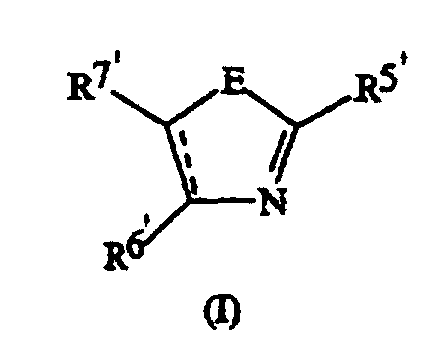
- Verfahren nach Anspruch 1, bei welchem die Reaktion in kontinuierlicher Form ausgeführt wird.
- Verfahren nach Anspruch 1, bei welchem das Lösemittel ausgewählt ist aus der Gruppe, bestehend aus: Ethylencarbonat, Propylencarbonat, Butylencarbonat, 1,2-Cyclohexancarbonat, Malononitril, Succinonitril, Ethylsuccinonitril, Glutaronitril, Methylglutaronitril, Adiponitril, Pimelonitril, Suberonitril und Mischungen davon.
- Verfahren zum Herstellen eines Hydrofluoralkans, umfassend:(a) Erzeugen eines halogenierten Alkanadduktes durch Umsetzen von AB und CR1R2=CR3R4 nach dem Verfahren nach Anspruch 1 unter der Voraussetzung, dass R1, R2, R3 und R4 unabhängig ausgewählt sind aus H, Cl und F, B und X Cl sind und mindestens eines der AB und CR1R2=CR3R4 Wasserstoff enthält; und(b) Umsetzen des in (a) erzeugten Adduktes mit HF.
- Verfahren nach Anspruch 8, bei welchem CF3CH2CHF2 erzeugt wird durch Umsetzen von CCl4 mit CH2=CHCl, um CCl3CH2CHCl2 zu erzeugen, und durch Umsetzen des CCl3CH2CHCl2 mit HF.
- Verfahren nach Anspruch 9, bei welchem das Reaktionsprodukt von (b) abgetrennt wird und eine azeotrope Zusammensetzung von CF3CH2CHF2 und HF erzeugt wird.
- Verfahren zum Herstellen von CF3CH2CHF2, umfassend:(a) Herstellen von CCl3CH2CCl3 durch Umsetzen von CCl4 mit CH2=CCl2 nach dem Verfahren nach Anspruch 1;(b) Herstellen von CClF2CH2CF3 aus dem CCl3CH2CCl3 durch Umsetzen des CCl3CH2CCl3 mit HF; und(c) Hydrodechlorieren des CClF2CH2CF3 unter Verwendung eines Hydrodehalogenierungskatalysatorsn um CF3CH2CHF2 zu erzeugen.
- Verfahren nach Anspruch 11, bei welchem das Reaktionsprodukt von (b) abgetrennt wird und eine azeotrope Zusammensetzung von CF3CH2CClF2 und HF erzeugt wird.
- Zusammensetzung, die erhalten werden kann mit Hilfe des Verfahrens nach Anspruch 8, aufweisend:(a) 44% bis 84 Molprozent HF; und(b) 56% bis 16 Molprozent CF3CH2CHF2; wobei die Zusammensetzung eine relative Flüchtigkeit von 1 bei einem Druck im Bereich von 5,5 bis 3.850 kPa zeigt, wenn die Temperatur in den Bereich von -50° bis 130°C eingestellt ist.
- Azeotrop nach Anspruch 13, erhalten mit Hilfe eines Verfahrens, umfassend das Verfahren nach Anspruch 8, durch Umsetzen von CCl4 mit CH2=CHCl, um CCl3CH2CHCl2 zu erzeugen, und Umsetzen des CCl3CH2CHCl2 mit HF.
- Zusammensetzung, die erhalten werden kann mit Hilfe des Verfahrens nach Anspruch 8, aufweisend:(a) 63,0% bis 90,1 Molprozent HF und(b) 37,0% bis 9,9 Molprozent CF3CH2CClF2; wobei die Zusammensetzung eine relative Flüchtigkeit von 1 bei einem Druck im Bereich von etwa 9,3 bis 2.194 kPa zeigt, wenn die Temperatur in den Bereich von -40° bis 110°C eingestellt ist.
- Azeotrop nach Anspruch 15, die erhalten werden kann mit Hilfe eines Verfahrens, umfassend das Verfahren nach Anspruch 8, durch Umsetzen von CCl4 mit CH2=CCl2, um CCl3CH2CCl3 zu erzeugen; und Umsetzen des CCl3CH2CCl3 mit HF.
- Verbindung, ausgewählt aus der Gruppe, bestehend aus CF3CF2CCl2CH2CCl3 und CF3CCl2CH2CHClF.
- Verfahren nach Anspruch 1 oder 8, gekennzeichnet durch den zusätzlichen Schritt des Reinigens mindestens einer Verbindung der Formel CA1R5R6CB1R7R8, hergestellt nach Anspruch 1 oder Anspruch 8 aus einer Mischung, aufweisend HF und die mindestens eine Verbindung, worin
A1 ausgewählt ist aus der Gruppe, bestehend aus CH3-aX1 a und CHcX1 2-cR9, worin R9 CnH(2n-1)-bX1 b ist, der Wert für a ist eine ganze Zahl von Null bis 3, n ist eine ganze Zahl von 1 bis 6, b ist eine ganze Zahl von 1 bis 2n+1 und c ist eine ganze Zahl von Null bis 1;
jedes X1 und B1 ist unabhängig ausgewählt aus der Gruppe, bestehend aus Cl und F, und R5, R6, R7 und R8 sind jeweils ausgewählt aus der Gruppe, bestehend aus H, Cl und F unter der Voraussetzung, dass mindestens ein A1, R5, R6, R7 oder R8 Wasserstoff aufweist, umfassend:(a) die Mischung von HF und der mindestens einen Verbindung einem Destillationsschritt unterwerfen, worin eine Zusammensetzung, angereichert entweder (i) an HF oder (ii) an der mindestens einen Verbindung als ein erstes Destillat mit den Bodenprodukten entfernt wird, die angereichert sind an der anderen der Komponenten von (i) oder (ii);(b) das erste Destillat einer zusätzlichen Destillation unterwerfen, ausgeführt bei einem Differenzdruck, bei dem die an Bodenprodukten in (a) angereicherte Komponente entfernt wird als ein zweites Destillat mit den Bodenprodukten der zusätzlichen Destillation, angereichert in der Komponente, die in dem ersten Destillat angereichert ist; und(c) Gewinnen mindestens einer Verbindung der Formel CA1R5R6CB1R7R8 weitgehend frei von HF als Bodenprodukte entweder aus der Destillation von (a) oder der Destillation von (b). - Verfahren nach Anspruch 18, bei welchem eine Verbindung der Formel von ihrem HF-Azeotrop gereinigt ist.
- Verfahren nach Anspruch 19, bei welchem eine Verbindung ausgewählt ist aus der Gruppe, bestehend aus CF3CH2CHF2, CF3CH2CF3, CF3CH2CClF2, CHCl2CH2CF3, CHClFCH2CClF2, CHClFCH2CF3 und CHF2CH2CClF2 gereinigt von ihrem binären Azeotrop mit HF.
- Verfahren nach Anspruch 8 zum Herstellen von CF3CH2CHF2, umfassend:Fluorieren von CCl3CH2CHCl2 mit HF, um ein Fluorierungsprodukt zu erzeugen, aufweisend CF3CH2CHF2 und HF;Erhalten eines azeotropen Gemisches von CF3CH2CHF2 mit HF aus dem Fluorierungsprodukt; sowieReinigen von CF3CH2CHF2 aus der Mischung.
- Verfahren nach Anspruch 21, bei welchem das azeotrope Gemisch aufweist: (a) etwa 44% bis 84 Molprozent HF und (b) etwa 56% bis 16 Molprozent CF3CH2CHF2 und eine relative Flüchtigkeit von 1 bei einem Druck im Bereich von 5,5 bis 3.850 kPa zeigt, wenn die Temperatur in den Bereich von -50° bis 130°C eingestellt ist.
- Verfahren nach Anspruch 22, bei welchem das azeotrope Gemisch in einer Hochdruck-Destillationssäule destilliert wird, um ein azeotropes Destillat von HF und CF3CH2CHF2 sowie Bodenprodukte zu liefern, die HF enthalten; und bei welchen das azeotrope Destillat weiter in einer Niederdruck-Destillationssäule destilliert wird, um ein anderes azeotropes Destillat von HF und CF3CH2CHF2 sowie Bodenprodukte zu erhalten, die weitgehend reines CF3CH2CHF2 sind.
- Verfahren nach Anspruch 22, bei welchem das azeotrope Gemisch in einer Niederdruck-Destillationssäule destilliert wird, um ein azeotropes Destillat von HF und CF3CH2CHF2 sowie Bodenprodukte zu liefern, die weitgehend reines CF3CH2CHF2 sind; und bei welchem das azeotrope Destillat weiter in einer Hochdruck-Destillationssäule destilliert wird, um ein anderes azeotropes Destillat von HF und CF3CH2CHF2 sowie Bodenprodukte zu liefern, die HF enthalten.
- Verfahren nach Anspruch 21, bei welchem das CCl3CH2CHCl2 erzeugt wird durch Umsetzen von CCl4 mit CH2=CHCl.
- Verfahren nach Anspruch 8 zum Herstellen von CF3CH2CClF2, umfassend: Fluorieren von CCl3CH2CCl3 mit HF, um ein Fluorierungsprodukt zu erzeugen, das CF3CH2CClF2 und HF aufweist; Erhalten eines azeotropen Gemisches von CF3CH2CClF2 mit HF aus dem Fluorierungsprodukt; sowie Reinigen von CF3CH2CClF2 aus dem Gemisch.
- Verfahren nach Anspruch 26, bei welchem das azeotrope Gemisch aufweist: (a) 63,0% bis 90,1 Molprozent HF und (b) 37,0% bis 9,9 Molprozent CF3CH2CClF2 und eine relative Flüchtigkeit von 1 bei einem Druck im Bereich von etwa 9,3 bis 2.194 kPa zeigt, wenn die Temperatur in den Bereich von -40° bis 110°C eingestellt ist.
- Verfahren nach Anspruch 27, bei welchem das azeotrope Gemisch destilliert wird in einer Hochdruck-Destillationssäule, um ein azeotropes Destillat von HF und CF3CH2CClF2 sowie Bodenprodukte zu liefern, die HF enthalten; und bei welchem das azeotrope Destillat weiter in einer Niederdruck-Destillationssäule destilliert wird, um ein anderes Azeotrop-Destillat von HF und CF3CH2CClF2 sowie Bodenprodukte zu erhalten, die weitgehend reines CF3CH2CClF2 sind.
- Verfahren nach Anspruch 27, bei welchem das azeotrope Gemisch destilliert wird in einer Niederdruck-Destillationssäule, um ein azeotropes Destillat von HF und CF3CH2CClF2 sowie Bodenprodukte zu liefern, die weitgehend reines CF3CH2CClF2 enthalten; und bei welchem das azeotrope Destillat weiter destilliert wird in einer Hochdruck-Destillationssäule, um ein anderes azeotropes Destillat von HF und CF3CH2CClF2 sowie Bodenprodukte zu liefern die HF enthalten.
- Verfahren nach Anspruch 27, bei welchem das CCl3CH2CCl3 bereitgestellt wird, indem CCl4 mit CH2=CCl2 umgesetzt wird.
Applications Claiming Priority (7)
| Application Number | Priority Date | Filing Date | Title |
|---|---|---|---|
| US170295P | 1995-08-01 | 1995-08-01 | |
| US1702P | 1995-08-01 | ||
| US1481096P | 1996-04-04 | 1996-04-04 | |
| US14810P | 1996-04-04 | ||
| US1999496P | 1996-06-18 | 1996-06-18 | |
| US19994P | 1996-06-18 | ||
| PCT/US1996/012547 WO1997005089A1 (en) | 1995-08-01 | 1996-07-31 | Process for the manufacture of halocarbons and selected compounds and azeotropes with hf |
Publications (2)
| Publication Number | Publication Date |
|---|---|
| EP0876314A1 EP0876314A1 (de) | 1998-11-11 |
| EP0876314B1 true EP0876314B1 (de) | 2003-02-26 |
Family
ID=27356974
Family Applications (1)
| Application Number | Title | Priority Date | Filing Date |
|---|---|---|---|
| EP96926206A Expired - Lifetime EP0876314B1 (de) | 1995-08-01 | 1996-07-31 | Verfahren zur herstellung von halogenkohlenwasserstoffen und ausgewählte verbindungen und azeotrope mit hf |
Country Status (12)
| Country | Link |
|---|---|
| US (1) | US6291730B1 (de) |
| EP (1) | EP0876314B1 (de) |
| KR (2) | KR100516407B1 (de) |
| CN (1) | CN1082039C (de) |
| AU (1) | AU6643696A (de) |
| BR (1) | BR9609924A (de) |
| CA (1) | CA2228287C (de) |
| DE (1) | DE69626415T2 (de) |
| ES (1) | ES2190474T3 (de) |
| MX (1) | MX9800871A (de) |
| TW (1) | TW421643B (de) |
| WO (1) | WO1997005089A1 (de) |
Cited By (1)
| Publication number | Priority date | Publication date | Assignee | Title |
|---|---|---|---|---|
| EP1725511A4 (de) * | 2004-01-21 | 2007-11-14 | Great Lakes Chemical Corp | Produktstromverarbeitungsmethoden, produktstromverarbeitungssysteme und mischungen |
Families Citing this family (60)
| Publication number | Priority date | Publication date | Assignee | Title |
|---|---|---|---|---|
| JP2933014B2 (ja) | 1996-01-23 | 1999-08-09 | ダイキン工業株式会社 | ペンタフルオロプロパンとフッ化水素の共沸混合物およびペンタフルオロプロパンの分離精製方法 |
| US5817893A (en) * | 1996-06-18 | 1998-10-06 | E. I. Du Pont De Nemours And Company | Processes for the manufacture and purification of 1,1,2,2,3,3,4,4-octafluorobutane and by-products |
| US6001796A (en) * | 1996-07-03 | 1999-12-14 | Alliedsignal Inc. | Azeotrope-like compositions of 1,1,1,3,3-pentafluoropropane and hydrogen fluoride |
| US6040487A (en) * | 1996-07-31 | 2000-03-21 | E. I. Du Pont De Nemours And Company | Process for the manufacture of halocarbons |
| KR100509313B1 (ko) * | 1997-01-16 | 2005-08-22 | 이 아이 듀폰 디 네모아 앤드 캄파니 | 할로카본의 제조 방법 |
| EP0964845B1 (de) | 1997-02-19 | 2004-07-28 | E. I. du Pont de Nemours and Company | Verfahren für die herstellung von 1,1,1,3,3-pentafluorpropen und 2-chlor-pentafluorpropen |
| US6376727B1 (en) | 1997-06-16 | 2002-04-23 | E. I. Du Pont De Nemours And Company | Processes for the manufacture of 1,1,1,3,3-pentafluoropropene, 2-chloro-pentafluoropropene and compositions comprising saturated derivatives thereof |
| DE69823189T2 (de) * | 1997-05-05 | 2005-04-21 | Solvay Sa Bruessel Bruxelles | Verfahren zur herstellung von haloginierten kohlenwasserstoffen |
| CA2288939A1 (fr) | 1997-05-05 | 1998-11-12 | Solvay (Societe Anonyme) | Procede de preparation de 1,1,1,3,3-pentachlorobutane |
| BE1011319A3 (fr) * | 1997-05-05 | 1999-07-06 | Solvay | Procede de preparation d'hydrocarbures halogenes. |
| US5902912A (en) * | 1997-06-26 | 1999-05-11 | Alliedsignal Inc. | Process for preparing hydrofluorocarbons |
| JP2001513519A (ja) | 1997-08-08 | 2001-09-04 | ソルヴェイ | ハロ炭化水素の製造方法 |
| FR2768717B1 (fr) | 1997-09-24 | 1999-11-12 | Solvay | Procede de separation de fluorure d'hydrogene de ses melanges avec un hydrofluoroalcane contenant de 3 a 6 atomes de carbone |
| WO1999020585A1 (en) * | 1997-10-17 | 1999-04-29 | E.I. Du Pont De Nemours And Company | Separating 1,1,1,3,3-pentafluoropropane from hydrogen fluoride |
| US5918481A (en) * | 1997-11-20 | 1999-07-06 | Alliedsignal Inc. | Process for separating hydrogen fluoride from fluorocarbons |
| US6100229A (en) * | 1998-01-12 | 2000-08-08 | Alliedsignal Inc. | Compositions of 1,1,1,3,3,-pentafluoropropane and chlorinated ethylenes |
| BE1012268A3 (fr) | 1998-11-05 | 2000-08-01 | Solvay | Procede de preparation d'hydrocarbures halogenes. |
| US6521803B1 (en) | 1998-12-18 | 2003-02-18 | Solvay (Societe Anonyme) | Method for separating a mixture comprising at least an hydrofluoroalkane and hydrogen fluoride, methods for preparing a hydrofluoroalkane and azeotropic compositions |
| ES2320850T5 (es) | 1999-10-06 | 2012-07-03 | Solvay (Société Anonyme) | Procedimiento de preparación de hidrocarburos halogenados en presencia de un cocatalizador |
| US6500795B2 (en) * | 2001-01-24 | 2002-12-31 | Honeywell International Inc. | Azeotrope-like composition of 1-chloro-1,3,3,3-tetrafluoropropane and hydrogen fluoride |
| CN101270029A (zh) | 2001-06-01 | 2008-09-24 | 霍尼韦尔国际公司 | 1,1,1,3,3-五氟丁烷与氟化氢的类共沸组合物的应用 |
| US6500995B1 (en) | 2001-06-14 | 2002-12-31 | Vulcan Chemicals | Water-enhanced production of 1,1,1,3,3,-pentachloropropane |
| US20050177012A1 (en) * | 2001-07-20 | 2005-08-11 | Pcbu Services, Inc. | Halocarbon production processes, halocarbon separation processes, and halocarbon separation systems |
| US20030028057A1 (en) * | 2001-07-20 | 2003-02-06 | Stephen Owens | Methods and materials for the preparation and purification of halogenated hydrocarbons |
| US7094936B1 (en) * | 2001-07-20 | 2006-08-22 | Great Lakes Chemical Corporation | Process for preparing halogenated alkanes |
| EP1673324A1 (de) * | 2003-10-14 | 2006-06-28 | E.I. Dupont De Nemours And Company | Verfahren zur herstellung von 1,1,1,3,3,3-hexafluorpropan und wenigstens einer verbindung ausgewählt aus 1,1,1,2,3,3-hexafluorpropan und 1,1,1,2,3,3,3-heptafluorpropan |
| WO2005037743A1 (en) | 2003-10-14 | 2005-04-28 | E.I. Dupont De Nemours And Company | Process for the preparation of 1,1,1,3,3-pentafluoropropane and 1,1,1,2,3-pentafluoropropane |
| KR101125467B1 (ko) | 2003-10-14 | 2012-03-27 | 이 아이 듀폰 디 네모아 앤드 캄파니 | 1,1,1,3,3-펜타플루오로프로판 및1,1,1,3,3,3-헥사플루오로프로판의 제조 방법 |
| US20060036117A1 (en) * | 2004-08-10 | 2006-02-16 | Mitchel Cohn | Catalyst preparation processes, catalyst regeneration processes, halocarbon production processes, and halocarbon production systems |
| US7524999B2 (en) * | 2004-12-22 | 2009-04-28 | E. I. Du Pont De Nemours And Company | Process for the production of 1,1,1,3,3,3-hexafluoropropane |
| DE102005012632A1 (de) * | 2005-03-18 | 2006-09-21 | Infineon Technologies Ag | Verfahren und Schaltungsanordnung zur geschützten Übertragung von Datenworten |
| CA2603818A1 (en) * | 2005-04-29 | 2006-11-09 | Wyeth | Process for preparing 3,3-disubstituted oxindoles and thio-oxindoles |
| US7709438B2 (en) * | 2005-11-01 | 2010-05-04 | E. I. Du Pont De Nemours And Company | Azeotrope compositions comprising nonafluoropentene and hydrogen fluoride and uses thereof |
| US7388117B2 (en) * | 2005-11-01 | 2008-06-17 | E.I. Du Pont De Nemours And Company | Azeotrope compositions comprising 1,2,3,3,3-pentafluoropropene and hydrogen fluoride and uses thereof |
| US20070106099A1 (en) * | 2005-11-10 | 2007-05-10 | Pcbu Services, Inc. | Production processes and systems |
| GB0806422D0 (en) | 2008-04-09 | 2008-05-14 | Ineos Fluor Holdings Ltd | Process |
| JP5416587B2 (ja) | 2006-10-03 | 2014-02-12 | メキシケム、アマンコ、ホールディング、ソシエダッド、アノニマ、デ、カピタル、バリアブレ | プロセス |
| TW200844075A (en) | 2006-10-31 | 2008-11-16 | Du Pont | Processes for the production of fluoropropanes and halopropenes |
| CN103483140B (zh) | 2006-10-31 | 2015-09-09 | 纳幕尔杜邦公司 | 氟丙烷、卤代丙烯以及2-氯-3,3,3-三氟-1-丙烯与hf的共沸组合物和1,1,1,2,2-五氟丙烷与hf的共沸组合物的制备方法 |
| GB0706978D0 (en) | 2007-04-11 | 2007-05-16 | Ineos Fluor Holdings Ltd | Process |
| US8070975B2 (en) * | 2008-02-26 | 2011-12-06 | Honeywell International Inc. | Azeotrope-like composition of 2-chloro-1,1,1,2-tetrafluoropropane (HCFC-244bb) and hydrogen fluoride (HF) |
| GB0806419D0 (en) | 2008-04-09 | 2008-05-14 | Ineos Fluor Holdings Ltd | Process |
| GB0806389D0 (en) | 2008-04-09 | 2008-05-14 | Ineos Fluor Holdings Ltd | Process |
| JP5365064B2 (ja) * | 2008-05-12 | 2013-12-11 | 日本ゼオン株式会社 | 新規含ハロゲン化合物及びそれらの製造方法 |
| US8008243B2 (en) | 2008-10-31 | 2011-08-30 | Honeywell International Inc. | Azeotrope-like compositions of 1,1,2,3-tetrachloropropene and hydrogen fluoride |
| JP2012519654A (ja) * | 2009-03-04 | 2012-08-30 | ダイキン工業株式会社 | 2,3,3,3−テトラフルオロプロペンと1,3,3,3−テトラフルオロプロペンを含む含フッ素プロペンの製造方法 |
| GB0906191D0 (en) | 2009-04-09 | 2009-05-20 | Ineos Fluor Holdings Ltd | Process |
| RU2010147002A (ru) * | 2010-11-17 | 2012-05-27 | Е.И.Дюпон де Немур энд Компани (US) | Каталитический синтез галогенированных углеводородов |
| US9156752B2 (en) * | 2011-01-04 | 2015-10-13 | Honeywell International Inc. | High purity E-1-chloro-3,3,3-trifluoropropene and methods of making the same |
| CN107434759B (zh) * | 2016-05-25 | 2019-12-13 | 浙江省化工研究院有限公司 | 一种制备1,1,3,3,3-五氟丙烯的方法 |
| JP6995108B2 (ja) * | 2016-07-27 | 2022-02-21 | ザ ケマーズ カンパニー エフシー リミテッド ライアビリティ カンパニー | ハロゲン化オレフィンを製造するための方法 |
| GB201615209D0 (en) | 2016-09-07 | 2016-10-19 | Mexichem Fluor Sa De Cv | Catalyst and process using the catalyst |
| GB201615197D0 (en) | 2016-09-07 | 2016-10-19 | Mexichem Fluor Sa De Cv | Catalyst and process using the catalyst |
| CN109721465B (zh) * | 2018-12-17 | 2022-03-15 | 西安近代化学研究所 | 一种制备反式-1,1,1,4,4,4-六氟-2-丁烯的方法 |
| GB2580623A (en) | 2019-01-17 | 2020-07-29 | Mexichem Fluor Sa De Cv | Method |
| JP7697960B2 (ja) * | 2020-03-04 | 2025-06-24 | ザ ケマーズ カンパニー エフシー リミテッド ライアビリティ カンパニー | (z)-1,1,1,4,4,4-ヘキサフルオロ-2-ブテン及び中間体を生成するためのプロセス |
| JP2024515192A (ja) | 2021-04-19 | 2024-04-05 | ザ ケマーズ カンパニー エフシー リミテッド ライアビリティ カンパニー | 3,3,3-トリフルオロプロペン(1243zf)を含有する組成物並びに当該組成物の製造及び使用方法 |
| KR102730416B1 (ko) | 2022-01-25 | 2024-11-15 | 엘지전자 주식회사 | 압축기용 어큐뮬레이터 고정정치 및 이를 구비한 압축기 |
| TW202545866A (zh) * | 2024-01-22 | 2025-12-01 | 美商科慕Fc有限責任公司 | 用於2,2,4-三氯-1,1,1-三氟丁烷的組成物及程序 |
| WO2025264752A1 (en) | 2024-06-21 | 2025-12-26 | The Chemours Company Fc, Llc | Process for producing hydrochloro(fluoro)carbon compounds |
Family Cites Families (29)
| Publication number | Priority date | Publication date | Assignee | Title |
|---|---|---|---|---|
| CA684687A (en) | 1964-04-21 | B. Smith Lee | Manufacture of halopropane | |
| BE622939A (de) | 1961-09-28 | |||
| US4944846A (en) | 1988-08-01 | 1990-07-31 | E. I. Dupont De Nemours And Company | Process for the separation of HF via Azeotropic distillation |
| US5094773A (en) | 1988-08-01 | 1992-03-10 | E. I. Du Pont De Nemours And Company | Azeotropes of HF and process for the separation of HF via azeotropic distillation |
| JPH05500672A (ja) | 1989-10-04 | 1993-02-12 | イー・アイ・デユポン・ドウ・ヌムール・アンド・カンパニー | フルオロカーボン精製方法 |
| GB9105407D0 (en) | 1991-03-14 | 1991-05-01 | Ici Plc | Separation process |
| US5276225A (en) | 1991-04-17 | 1994-01-04 | Elf Atochem S.A. | Process for separating hydrogen fluoride from its mixtures with 1,1,1-trifluoro-2-chloroethane |
| BE1005096A3 (fr) | 1991-07-10 | 1993-04-20 | Solvay | Procede pour la preparation de 1-chloro-1,1,3,3,3-pentafluoropropane et de 1,1,1,3,3,3-hexafluoropropane. |
| JPH05255144A (ja) | 1991-11-15 | 1993-10-05 | Hoechst Ag | 弗化水素および1−クロロ−2,2,2−トリフルオロエタンを含有する混合物の分離方法 |
| US5346595A (en) | 1993-02-23 | 1994-09-13 | Alliedsignal Inc. | Process for the purification of a pentafluoroethane azeotrope |
| JP3163831B2 (ja) | 1993-04-06 | 2001-05-08 | ダイキン工業株式会社 | 1,1−ジフルオロエタンとフッ化水素の共沸混合物および1,1−ジフルオロエタンまたはフッ化水素の回収方法 |
| US5409625A (en) | 1993-05-24 | 1995-04-25 | E. I. Du Pont De Nemours And Company | Azeotropic mixture of linear hydrofluorocarbon and HF |
| US5395997A (en) * | 1993-07-29 | 1995-03-07 | Alliedsignal Inc. | Process for the preparation of hydrofluorocarbons having 3 to 7 carbon atoms |
| JP2690200B2 (ja) * | 1993-07-29 | 1997-12-10 | アライドシグナル・インコーポレーテッド | 1,1,1,3,3−ペンタフルオロプロパンの製造方法 |
| DE69500938T2 (de) | 1994-02-28 | 1998-04-30 | Atochem Elf Sa | Verfahren zur Trennung von Fluorwasserstoff und Difluormethan |
| FR2718437B1 (fr) | 1994-04-11 | 1996-06-28 | Solvay | Procédé de séparation du 1,1-difluoroéthane de ses mélanges avec le fluorure d'hydrogène. |
| US5446217A (en) | 1994-05-16 | 1995-08-29 | Alliedsignal Inc. | Processes for the preparation of fluorinated olefins and hydrofluorocarbons using fluorinated olefin |
| US5563304A (en) | 1994-05-26 | 1996-10-08 | E. I. Du Pont De Nemours And Company | Production of 1,2-dihydro and 2,2-dihydro hexafluoropropanes and azeotropes thereof with HF |
| CZ7197A3 (cs) | 1994-07-11 | 1998-02-18 | Alliedsignal Inc. | Způsob výroby 1,1,1,3,3-pentafluorpropanu |
| US5414165A (en) | 1994-07-29 | 1995-05-09 | E. I. Du Pont De Nemours And Company | Process for the manufacture of 1,1,1,3,3,3,-hexafluoropropane |
| FR2724928B1 (fr) | 1994-09-26 | 1996-10-31 | Atochem Elf Sa | Synthese de 1,1,1,3,3-pentafluoropropane |
| EP0729932A1 (de) | 1995-03-03 | 1996-09-04 | Central Glass Company, Limited | Verfahren zur Herstellung von Halopropan |
| ES2166901T3 (es) | 1995-08-01 | 2002-05-01 | Du Pont | Proceso para la fabricacion de hidrocarburos halogenados. |
| US5616819A (en) | 1995-08-28 | 1997-04-01 | Laroche Industries Inc. | Process for preparing fluorinated aliphatic compounds |
| JP2933014B2 (ja) | 1996-01-23 | 1999-08-09 | ダイキン工業株式会社 | ペンタフルオロプロパンとフッ化水素の共沸混合物およびペンタフルオロプロパンの分離精製方法 |
| US5817893A (en) | 1996-06-18 | 1998-10-06 | E. I. Du Pont De Nemours And Company | Processes for the manufacture and purification of 1,1,2,2,3,3,4,4-octafluorobutane and by-products |
| US6001796A (en) | 1996-07-03 | 1999-12-14 | Alliedsignal Inc. | Azeotrope-like compositions of 1,1,1,3,3-pentafluoropropane and hydrogen fluoride |
| US6040487A (en) | 1996-07-31 | 2000-03-21 | E. I. Du Pont De Nemours And Company | Process for the manufacture of halocarbons |
| KR100509313B1 (ko) | 1997-01-16 | 2005-08-22 | 이 아이 듀폰 디 네모아 앤드 캄파니 | 할로카본의 제조 방법 |
-
1996
- 1996-07-31 WO PCT/US1996/012547 patent/WO1997005089A1/en not_active Ceased
- 1996-07-31 AU AU66436/96A patent/AU6643696A/en not_active Abandoned
- 1996-07-31 DE DE69626415T patent/DE69626415T2/de not_active Expired - Lifetime
- 1996-07-31 ES ES96926206T patent/ES2190474T3/es not_active Expired - Lifetime
- 1996-07-31 EP EP96926206A patent/EP0876314B1/de not_active Expired - Lifetime
- 1996-07-31 KR KR10-2005-7009870A patent/KR100516407B1/ko not_active Expired - Fee Related
- 1996-07-31 MX MX9800871A patent/MX9800871A/es unknown
- 1996-07-31 CA CA002228287A patent/CA2228287C/en not_active Expired - Fee Related
- 1996-07-31 KR KR10-1998-0700702A patent/KR100517576B1/ko not_active Expired - Fee Related
- 1996-07-31 CN CN96197055A patent/CN1082039C/zh not_active Expired - Lifetime
- 1996-07-31 US US09/011,401 patent/US6291730B1/en not_active Expired - Lifetime
- 1996-07-31 BR BR9609924A patent/BR9609924A/pt not_active Application Discontinuation
- 1996-09-03 TW TW085110736A patent/TW421643B/zh not_active IP Right Cessation
Cited By (1)
| Publication number | Priority date | Publication date | Assignee | Title |
|---|---|---|---|---|
| EP1725511A4 (de) * | 2004-01-21 | 2007-11-14 | Great Lakes Chemical Corp | Produktstromverarbeitungsmethoden, produktstromverarbeitungssysteme und mischungen |
Also Published As
| Publication number | Publication date |
|---|---|
| WO1997005089A1 (en) | 1997-02-13 |
| CN1196716A (zh) | 1998-10-21 |
| MX9800871A (es) | 1998-04-30 |
| US6291730B1 (en) | 2001-09-18 |
| KR19990036037A (ko) | 1999-05-25 |
| KR100517576B1 (ko) | 2005-12-21 |
| CA2228287C (en) | 2008-06-10 |
| TW421643B (en) | 2001-02-11 |
| DE69626415D1 (de) | 2003-04-03 |
| KR20050074649A (ko) | 2005-07-18 |
| KR100516407B1 (ko) | 2005-09-27 |
| DE69626415T2 (de) | 2003-09-25 |
| AU6643696A (en) | 1997-02-26 |
| CN1082039C (zh) | 2002-04-03 |
| CA2228287A1 (en) | 1997-02-13 |
| ES2190474T3 (es) | 2003-08-01 |
| BR9609924A (pt) | 1999-06-08 |
| EP0876314A1 (de) | 1998-11-11 |
Similar Documents
| Publication | Publication Date | Title |
|---|---|---|
| EP0876314B1 (de) | Verfahren zur herstellung von halogenkohlenwasserstoffen und ausgewählte verbindungen und azeotrope mit hf | |
| US8884084B2 (en) | Process for the manufacture of halocarbons and selected compounds and azeotropes with HF | |
| MXPA98000871A (en) | Process for manufacturing halocarburs and selected compounds and azeotropes with | |
| PL200329B1 (pl) | Sposób rozdzielania mieszaniny zawierającej co najmniej jeden hydrofluoroalkan i fluorowodór oraz kompozycje azeotropowe lub pseudoazeotropowe | |
| US7947856B2 (en) | Process for the preparation of halogenated hydrocarbons with at least 3 carbon atoms in the presence of iron and a phosphite | |
| KR102685955B1 (ko) | 3,3,3-트라이플루오로프로펜의 제조 방법 | |
| JPH11158089A (ja) | 1,1,1,3,3−ペンタフルオロプロパンの合成 | |
| EP0863862B1 (de) | Verfahren zur herstellung von halogenkohlenwasserstoffen | |
| US6040487A (en) | Process for the manufacture of halocarbons | |
| CA2277169C (en) | Process for the manufacture of halocarbons | |
| JP2004500339A (ja) | ハロゲン化炭化水素の製造方法 | |
| WO2008037657A1 (en) | Process for the preparation of halogenated hydrocarbons with at least 3 carbon atoms in the presence of a ruthenium compound | |
| US6274780B1 (en) | Catalysts for halogenated hydrocarbon processing and their preparation and use | |
| MXPA99006456A (en) | Process for the manufacture of halocarbons |
Legal Events
| Date | Code | Title | Description |
|---|---|---|---|
| PUAI | Public reference made under article 153(3) epc to a published international application that has entered the european phase |
Free format text: ORIGINAL CODE: 0009012 |
|
| 17P | Request for examination filed |
Effective date: 19980112 |
|
| AK | Designated contracting states |
Kind code of ref document: A1 Designated state(s): DE ES FR GB IT NL |
|
| 17Q | First examination report despatched |
Effective date: 19990611 |
|
| GRAG | Despatch of communication of intention to grant |
Free format text: ORIGINAL CODE: EPIDOS AGRA |
|
| GRAG | Despatch of communication of intention to grant |
Free format text: ORIGINAL CODE: EPIDOS AGRA |
|
| GRAG | Despatch of communication of intention to grant |
Free format text: ORIGINAL CODE: EPIDOS AGRA |
|
| GRAH | Despatch of communication of intention to grant a patent |
Free format text: ORIGINAL CODE: EPIDOS IGRA |
|
| GRAH | Despatch of communication of intention to grant a patent |
Free format text: ORIGINAL CODE: EPIDOS IGRA |
|
| GRAA | (expected) grant |
Free format text: ORIGINAL CODE: 0009210 |
|
| AK | Designated contracting states |
Designated state(s): DE ES FR GB IT NL |
|
| REG | Reference to a national code |
Ref country code: GB Ref legal event code: FG4D |
|
| REF | Corresponds to: |
Ref document number: 69626415 Country of ref document: DE Date of ref document: 20030403 Kind code of ref document: P |
|
| ET | Fr: translation filed | ||
| REG | Reference to a national code |
Ref country code: ES Ref legal event code: FG2A Ref document number: 2190474 Country of ref document: ES Kind code of ref document: T3 |
|
| PGFP | Annual fee paid to national office [announced via postgrant information from national office to epo] |
Ref country code: ES Payment date: 20030813 Year of fee payment: 8 |
|
| PLBE | No opposition filed within time limit |
Free format text: ORIGINAL CODE: 0009261 |
|
| STAA | Information on the status of an ep patent application or granted ep patent |
Free format text: STATUS: NO OPPOSITION FILED WITHIN TIME LIMIT |
|
| 26N | No opposition filed |
Effective date: 20031127 |
|
| PG25 | Lapsed in a contracting state [announced via postgrant information from national office to epo] |
Ref country code: ES Free format text: LAPSE BECAUSE OF NON-PAYMENT OF DUE FEES Effective date: 20040802 |
|
| REG | Reference to a national code |
Ref country code: ES Ref legal event code: FD2A Effective date: 20040802 |
|
| PGFP | Annual fee paid to national office [announced via postgrant information from national office to epo] |
Ref country code: GB Payment date: 20120725 Year of fee payment: 17 |
|
| PGFP | Annual fee paid to national office [announced via postgrant information from national office to epo] |
Ref country code: FR Payment date: 20120719 Year of fee payment: 17 Ref country code: IT Payment date: 20120718 Year of fee payment: 17 Ref country code: DE Payment date: 20120725 Year of fee payment: 17 |
|
| PGFP | Annual fee paid to national office [announced via postgrant information from national office to epo] |
Ref country code: NL Payment date: 20120710 Year of fee payment: 17 |
|
| REG | Reference to a national code |
Ref country code: NL Ref legal event code: V1 Effective date: 20140201 |
|
| GBPC | Gb: european patent ceased through non-payment of renewal fee |
Effective date: 20130731 |
|
| REG | Reference to a national code |
Ref country code: FR Ref legal event code: ST Effective date: 20140331 |
|
| PG25 | Lapsed in a contracting state [announced via postgrant information from national office to epo] |
Ref country code: DE Free format text: LAPSE BECAUSE OF NON-PAYMENT OF DUE FEES Effective date: 20140201 Ref country code: GB Free format text: LAPSE BECAUSE OF NON-PAYMENT OF DUE FEES Effective date: 20130731 Ref country code: NL Free format text: LAPSE BECAUSE OF NON-PAYMENT OF DUE FEES Effective date: 20140201 |
|
| REG | Reference to a national code |
Ref country code: DE Ref legal event code: R119 Ref document number: 69626415 Country of ref document: DE Effective date: 20140201 |
|
| PG25 | Lapsed in a contracting state [announced via postgrant information from national office to epo] |
Ref country code: FR Free format text: LAPSE BECAUSE OF NON-PAYMENT OF DUE FEES Effective date: 20130731 Ref country code: IT Free format text: LAPSE BECAUSE OF NON-PAYMENT OF DUE FEES Effective date: 20130731 |