EP0877726B1 - Verfahren zur acylierung einer aromatischen verbindung - Google Patents
Verfahren zur acylierung einer aromatischen verbindung Download PDFInfo
- Publication number
- EP0877726B1 EP0877726B1 EP96932642A EP96932642A EP0877726B1 EP 0877726 B1 EP0877726 B1 EP 0877726B1 EP 96932642 A EP96932642 A EP 96932642A EP 96932642 A EP96932642 A EP 96932642A EP 0877726 B1 EP0877726 B1 EP 0877726B1
- Authority
- EP
- European Patent Office
- Prior art keywords
- radical
- carbon atoms
- process according
- formula
- aromatic
- Prior art date
- Legal status (The legal status is an assumption and is not a legal conclusion. Google has not performed a legal analysis and makes no representation as to the accuracy of the status listed.)
- Expired - Lifetime
Links
- 238000000034 method Methods 0.000 title claims abstract description 59
- 150000001491 aromatic compounds Chemical class 0.000 title claims abstract description 45
- 238000005917 acylation reaction Methods 0.000 title claims abstract description 30
- 230000010933 acylation Effects 0.000 title claims abstract description 22
- 239000003054 catalyst Substances 0.000 claims abstract description 42
- ITMCEJHCFYSIIV-UHFFFAOYSA-N triflic acid Chemical compound OS(=O)(=O)C(F)(F)F ITMCEJHCFYSIIV-UHFFFAOYSA-N 0.000 claims abstract description 30
- 239000003795 chemical substances by application Substances 0.000 claims abstract description 29
- 150000001621 bismuth Chemical class 0.000 claims abstract description 13
- -1 alkylidene radical Chemical class 0.000 claims description 84
- 150000003254 radicals Chemical class 0.000 claims description 69
- 125000004432 carbon atom Chemical group C* 0.000 claims description 65
- 125000003118 aryl group Chemical group 0.000 claims description 32
- 125000004429 atom Chemical group 0.000 claims description 31
- UHOVQNZJYSORNB-UHFFFAOYSA-N Benzene Chemical compound C1=CC=CC=C1 UHOVQNZJYSORNB-UHFFFAOYSA-N 0.000 claims description 28
- YXFVVABEGXRONW-UHFFFAOYSA-N Toluene Chemical compound CC1=CC=CC=C1 YXFVVABEGXRONW-UHFFFAOYSA-N 0.000 claims description 21
- 238000006243 chemical reaction Methods 0.000 claims description 21
- 150000001875 compounds Chemical class 0.000 claims description 19
- 125000002950 monocyclic group Chemical group 0.000 claims description 17
- 125000001424 substituent group Chemical group 0.000 claims description 17
- NYENCOMLZDQKNH-UHFFFAOYSA-K bis(trifluoromethylsulfonyloxy)bismuthanyl trifluoromethanesulfonate Chemical compound [Bi+3].[O-]S(=O)(=O)C(F)(F)F.[O-]S(=O)(=O)C(F)(F)F.[O-]S(=O)(=O)C(F)(F)F NYENCOMLZDQKNH-UHFFFAOYSA-K 0.000 claims description 16
- 125000004435 hydrogen atom Chemical group [H]* 0.000 claims description 16
- 125000005843 halogen group Chemical group 0.000 claims description 15
- RDOXTESZEPMUJZ-UHFFFAOYSA-N anisole Chemical compound COC1=CC=CC=C1 RDOXTESZEPMUJZ-UHFFFAOYSA-N 0.000 claims description 14
- YMWUJEATGCHHMB-UHFFFAOYSA-N Dichloromethane Chemical compound ClCCl YMWUJEATGCHHMB-UHFFFAOYSA-N 0.000 claims description 12
- ZMXDDKWLCZADIW-UHFFFAOYSA-N N,N-Dimethylformamide Chemical compound CN(C)C=O ZMXDDKWLCZADIW-UHFFFAOYSA-N 0.000 claims description 12
- 239000000203 mixture Substances 0.000 claims description 11
- 239000003960 organic solvent Substances 0.000 claims description 11
- 125000003367 polycyclic group Chemical group 0.000 claims description 11
- 229920006395 saturated elastomer Polymers 0.000 claims description 11
- CIUQDSCDWFSTQR-UHFFFAOYSA-N [C]1=CC=CC=C1 Chemical compound [C]1=CC=CC=C1 CIUQDSCDWFSTQR-UHFFFAOYSA-N 0.000 claims description 10
- PASDCCFISLVPSO-UHFFFAOYSA-N benzoyl chloride Chemical compound ClC(=O)C1=CC=CC=C1 PASDCCFISLVPSO-UHFFFAOYSA-N 0.000 claims description 10
- 239000000460 chlorine Substances 0.000 claims description 10
- WKBOTKDWSSQWDR-UHFFFAOYSA-N Bromine atom Chemical compound [Br] WKBOTKDWSSQWDR-UHFFFAOYSA-N 0.000 claims description 9
- 229910052801 chlorine Inorganic materials 0.000 claims description 9
- 125000002023 trifluoromethyl group Chemical group FC(F)(F)* 0.000 claims description 9
- SECXISVLQFMRJM-UHFFFAOYSA-N N-Methylpyrrolidone Chemical compound CN1CCCC1=O SECXISVLQFMRJM-UHFFFAOYSA-N 0.000 claims description 8
- 125000000217 alkyl group Chemical group 0.000 claims description 7
- 125000002947 alkylene group Chemical group 0.000 claims description 7
- 125000002887 hydroxy group Chemical group [H]O* 0.000 claims description 7
- UZKWTJUDCOPSNM-UHFFFAOYSA-N methoxybenzene Substances CCCCOC=C UZKWTJUDCOPSNM-UHFFFAOYSA-N 0.000 claims description 7
- LQNUZADURLCDLV-UHFFFAOYSA-N nitrobenzene Chemical compound [O-][N+](=O)C1=CC=CC=C1 LQNUZADURLCDLV-UHFFFAOYSA-N 0.000 claims description 7
- WFDIJRYMOXRFFG-UHFFFAOYSA-N Acetic anhydride Chemical compound CC(=O)OC(C)=O WFDIJRYMOXRFFG-UHFFFAOYSA-N 0.000 claims description 6
- WEVYAHXRMPXWCK-UHFFFAOYSA-N Acetonitrile Chemical compound CC#N WEVYAHXRMPXWCK-UHFFFAOYSA-N 0.000 claims description 6
- ZAMOUSCENKQFHK-UHFFFAOYSA-N Chlorine atom Chemical compound [Cl] ZAMOUSCENKQFHK-UHFFFAOYSA-N 0.000 claims description 6
- IAZDPXIOMUYVGZ-UHFFFAOYSA-N Dimethylsulphoxide Chemical compound CS(C)=O IAZDPXIOMUYVGZ-UHFFFAOYSA-N 0.000 claims description 6
- ISWSIDIOOBJBQZ-UHFFFAOYSA-N Phenol Chemical compound OC1=CC=CC=C1 ISWSIDIOOBJBQZ-UHFFFAOYSA-N 0.000 claims description 6
- 125000002252 acyl group Chemical group 0.000 claims description 6
- JFDZBHWFFUWGJE-UHFFFAOYSA-N benzonitrile Chemical compound N#CC1=CC=CC=C1 JFDZBHWFFUWGJE-UHFFFAOYSA-N 0.000 claims description 6
- GDTBXPJZTBHREO-UHFFFAOYSA-N bromine Chemical compound BrBr GDTBXPJZTBHREO-UHFFFAOYSA-N 0.000 claims description 6
- 125000005842 heteroatom Chemical group 0.000 claims description 6
- 125000002496 methyl group Chemical group [H]C([H])([H])* 0.000 claims description 6
- 125000000449 nitro group Chemical group [O-][N+](*)=O 0.000 claims description 6
- ABDKAPXRBAPSQN-UHFFFAOYSA-N veratrole Chemical compound COC1=CC=CC=C1OC ABDKAPXRBAPSQN-UHFFFAOYSA-N 0.000 claims description 6
- KZBUYRJDOAKODT-UHFFFAOYSA-N Chlorine Chemical compound ClCl KZBUYRJDOAKODT-UHFFFAOYSA-N 0.000 claims description 5
- 229910052731 fluorine Inorganic materials 0.000 claims description 5
- 238000004519 manufacturing process Methods 0.000 claims description 5
- 229910052760 oxygen Inorganic materials 0.000 claims description 5
- HEDRZPFGACZZDS-UHFFFAOYSA-N Chloroform Chemical compound ClC(Cl)Cl HEDRZPFGACZZDS-UHFFFAOYSA-N 0.000 claims description 4
- YUDRVAHLXDBKSR-UHFFFAOYSA-N [CH]1CCCCC1 Chemical compound [CH]1CCCCC1 YUDRVAHLXDBKSR-UHFFFAOYSA-N 0.000 claims description 4
- 229910052794 bromium Inorganic materials 0.000 claims description 4
- 125000000484 butyl group Chemical group [H]C([*])([H])C([H])([H])C([H])([H])C([H])([H])[H] 0.000 claims description 4
- 125000001495 ethyl group Chemical group [H]C([H])([H])C([H])([H])* 0.000 claims description 4
- 125000000623 heterocyclic group Chemical group 0.000 claims description 4
- GNOIPBMMFNIUFM-UHFFFAOYSA-N hexamethylphosphoric triamide Chemical compound CN(C)P(=O)(N(C)C)N(C)C GNOIPBMMFNIUFM-UHFFFAOYSA-N 0.000 claims description 4
- 125000000959 isobutyl group Chemical group [H]C([H])([H])C([H])(C([H])([H])[H])C([H])([H])* 0.000 claims description 4
- 125000001449 isopropyl group Chemical group [H]C([H])([H])C([H])(*)C([H])([H])[H] 0.000 claims description 4
- 125000000325 methylidene group Chemical group [H]C([H])=* 0.000 claims description 4
- 125000001997 phenyl group Chemical group [H]C1=C([H])C([H])=C(*)C([H])=C1[H] 0.000 claims description 4
- 125000001436 propyl group Chemical group [H]C([*])([H])C([H])([H])C([H])([H])[H] 0.000 claims description 4
- 125000002914 sec-butyl group Chemical group [H]C([H])([H])C([H])([H])C([H])(*)C([H])([H])[H] 0.000 claims description 4
- 125000000999 tert-butyl group Chemical group [H]C([H])([H])C(*)(C([H])([H])[H])C([H])([H])[H] 0.000 claims description 4
- QAEDZJGFFMLHHQ-UHFFFAOYSA-N trifluoroacetic anhydride Chemical compound FC(F)(F)C(=O)OC(=O)C(F)(F)F QAEDZJGFFMLHHQ-UHFFFAOYSA-N 0.000 claims description 4
- JSZOAYXJRCEYSX-UHFFFAOYSA-N 1-nitropropane Chemical compound CCC[N+]([O-])=O JSZOAYXJRCEYSX-UHFFFAOYSA-N 0.000 claims description 3
- FGLBSLMDCBOPQK-UHFFFAOYSA-N 2-nitropropane Chemical compound CC(C)[N+]([O-])=O FGLBSLMDCBOPQK-UHFFFAOYSA-N 0.000 claims description 3
- FXHOOIRPVKKKFG-UHFFFAOYSA-N N,N-Dimethylacetamide Chemical compound CN(C)C(C)=O FXHOOIRPVKKKFG-UHFFFAOYSA-N 0.000 claims description 3
- WETWJCDKMRHUPV-UHFFFAOYSA-N acetyl chloride Chemical compound CC(Cl)=O WETWJCDKMRHUPV-UHFFFAOYSA-N 0.000 claims description 3
- 239000012346 acetyl chloride Substances 0.000 claims description 3
- QVGXLLKOCUKJST-UHFFFAOYSA-N atomic oxygen Chemical compound [O] QVGXLLKOCUKJST-UHFFFAOYSA-N 0.000 claims description 3
- 239000011737 fluorine Substances 0.000 claims description 3
- 150000002430 hydrocarbons Chemical group 0.000 claims description 3
- MCSAJNNLRCFZED-UHFFFAOYSA-N nitroethane Chemical compound CC[N+]([O-])=O MCSAJNNLRCFZED-UHFFFAOYSA-N 0.000 claims description 3
- LYGJENNIWJXYER-UHFFFAOYSA-N nitromethane Chemical compound C[N+]([O-])=O LYGJENNIWJXYER-UHFFFAOYSA-N 0.000 claims description 3
- 239000001301 oxygen Substances 0.000 claims description 3
- 125000004430 oxygen atom Chemical group O* 0.000 claims description 3
- 239000000376 reactant Substances 0.000 claims description 3
- HHVIBTZHLRERCL-UHFFFAOYSA-N sulfonyldimethane Chemical compound CS(C)(=O)=O HHVIBTZHLRERCL-UHFFFAOYSA-N 0.000 claims description 3
- ZHXAZZQXWJJBHA-UHFFFAOYSA-N triphenylbismuthane Chemical compound C1=CC=CC=C1[Bi](C=1C=CC=CC=1)C1=CC=CC=C1 ZHXAZZQXWJJBHA-UHFFFAOYSA-N 0.000 claims description 3
- AVQQQNCBBIEMEU-UHFFFAOYSA-N 1,1,3,3-tetramethylurea Chemical compound CN(C)C(=O)N(C)C AVQQQNCBBIEMEU-UHFFFAOYSA-N 0.000 claims description 2
- WSLDOOZREJYCGB-UHFFFAOYSA-N 1,2-Dichloroethane Chemical compound ClCCCl WSLDOOZREJYCGB-UHFFFAOYSA-N 0.000 claims description 2
- NOGFHTGYPKWWRX-UHFFFAOYSA-N 2,2,6,6-tetramethyloxan-4-one Chemical compound CC1(C)CC(=O)CC(C)(C)O1 NOGFHTGYPKWWRX-UHFFFAOYSA-N 0.000 claims description 2
- JVSFQJZRHXAUGT-UHFFFAOYSA-N 2,2-dimethylpropanoyl chloride Chemical compound CC(C)(C)C(Cl)=O JVSFQJZRHXAUGT-UHFFFAOYSA-N 0.000 claims description 2
- ONIKNECPXCLUHT-UHFFFAOYSA-N 2-chlorobenzoyl chloride Chemical class ClC(=O)C1=CC=CC=C1Cl ONIKNECPXCLUHT-UHFFFAOYSA-N 0.000 claims description 2
- RZNHSEZOLFEFGB-UHFFFAOYSA-N 2-methoxybenzoyl chloride Chemical class COC1=CC=CC=C1C(Cl)=O RZNHSEZOLFEFGB-UHFFFAOYSA-N 0.000 claims description 2
- DGMOBVGABMBZSB-UHFFFAOYSA-N 2-methylpropanoyl chloride Chemical compound CC(C)C(Cl)=O DGMOBVGABMBZSB-UHFFFAOYSA-N 0.000 claims description 2
- 125000003903 2-propenyl group Chemical group [H]C([*])([H])C([H])=C([H])[H] 0.000 claims description 2
- SKDHHIUENRGTHK-UHFFFAOYSA-N 4-nitrobenzoyl chloride Chemical compound [O-][N+](=O)C1=CC=C(C(Cl)=O)C=C1 SKDHHIUENRGTHK-UHFFFAOYSA-N 0.000 claims description 2
- VGCXGMAHQTYDJK-UHFFFAOYSA-N Chloroacetyl chloride Chemical compound ClCC(Cl)=O VGCXGMAHQTYDJK-UHFFFAOYSA-N 0.000 claims description 2
- PXGOKWXKJXAPGV-UHFFFAOYSA-N Fluorine Chemical compound FF PXGOKWXKJXAPGV-UHFFFAOYSA-N 0.000 claims description 2
- 150000001338 aliphatic hydrocarbons Chemical class 0.000 claims description 2
- 125000004450 alkenylene group Chemical group 0.000 claims description 2
- 125000003545 alkoxy group Chemical group 0.000 claims description 2
- KVNRLNFWIYMESJ-UHFFFAOYSA-N butyronitrile Chemical compound CCCC#N KVNRLNFWIYMESJ-UHFFFAOYSA-N 0.000 claims description 2
- 125000001309 chloro group Chemical group Cl* 0.000 claims description 2
- 125000004122 cyclic group Chemical group 0.000 claims description 2
- FBCCMZVIWNDFMO-UHFFFAOYSA-N dichloroacetyl chloride Chemical compound ClC(Cl)C(Cl)=O FBCCMZVIWNDFMO-UHFFFAOYSA-N 0.000 claims description 2
- 125000001153 fluoro group Chemical group F* 0.000 claims description 2
- 125000000524 functional group Chemical group 0.000 claims description 2
- LSACYLWPPQLVSM-UHFFFAOYSA-N isobutyric acid anhydride Chemical compound CC(C)C(=O)OC(=O)C(C)C LSACYLWPPQLVSM-UHFFFAOYSA-N 0.000 claims description 2
- LRDFRRGEGBBSRN-UHFFFAOYSA-N isobutyronitrile Chemical compound CC(C)C#N LRDFRRGEGBBSRN-UHFFFAOYSA-N 0.000 claims description 2
- 125000000654 isopropylidene group Chemical group C(C)(C)=* 0.000 claims description 2
- GRVDJDISBSALJP-UHFFFAOYSA-N methyloxidanyl Chemical compound [O]C GRVDJDISBSALJP-UHFFFAOYSA-N 0.000 claims description 2
- AJFDBNQQDYLMJN-UHFFFAOYSA-N n,n-diethylacetamide Chemical compound CCN(CC)C(C)=O AJFDBNQQDYLMJN-UHFFFAOYSA-N 0.000 claims description 2
- NSNPSJGHTQIXDO-UHFFFAOYSA-N naphthalene-1-carbonyl chloride Chemical class C1=CC=C2C(C(=O)Cl)=CC=CC2=C1 NSNPSJGHTQIXDO-UHFFFAOYSA-N 0.000 claims description 2
- WTBAHSZERDXKKZ-UHFFFAOYSA-N octadecanoyl chloride Chemical compound CCCCCCCCCCCCCCCCCC(Cl)=O WTBAHSZERDXKKZ-UHFFFAOYSA-N 0.000 claims description 2
- SUSQOBVLVYHIEX-UHFFFAOYSA-N phenylacetonitrile Chemical compound N#CCC1=CC=CC=C1 SUSQOBVLVYHIEX-UHFFFAOYSA-N 0.000 claims description 2
- RZWZRACFZGVKFM-UHFFFAOYSA-N propanoyl chloride Chemical compound CCC(Cl)=O RZWZRACFZGVKFM-UHFFFAOYSA-N 0.000 claims description 2
- FVSKHRXBFJPNKK-UHFFFAOYSA-N propionitrile Chemical compound CCC#N FVSKHRXBFJPNKK-UHFFFAOYSA-N 0.000 claims description 2
- RUOJZAUFBMNUDX-UHFFFAOYSA-N propylene carbonate Chemical compound CC1COC(=O)O1 RUOJZAUFBMNUDX-UHFFFAOYSA-N 0.000 claims description 2
- 125000004805 propylene group Chemical group [H]C([H])([H])C([H])([*:1])C([H])([H])[*:2] 0.000 claims description 2
- HXJUTPCZVOIRIF-UHFFFAOYSA-N sulfolane Chemical compound O=S1(=O)CCCC1 HXJUTPCZVOIRIF-UHFFFAOYSA-N 0.000 claims description 2
- 125000000391 vinyl group Chemical group [H]C([*])=C([H])[H] 0.000 claims description 2
- 229920002554 vinyl polymer Polymers 0.000 claims description 2
- WCJYTPVNMWIZCG-UHFFFAOYSA-N xylylcarb Chemical compound CNC(=O)OC1=CC=C(C)C(C)=C1 WCJYTPVNMWIZCG-UHFFFAOYSA-N 0.000 claims description 2
- 229960001760 dimethyl sulfoxide Drugs 0.000 claims 2
- VZGDMQKNWNREIO-UHFFFAOYSA-N tetrachloromethane Chemical compound ClC(Cl)(Cl)Cl VZGDMQKNWNREIO-UHFFFAOYSA-N 0.000 claims 2
- CYSGHNMQYZDMIA-UHFFFAOYSA-N 1,3-Dimethyl-2-imidazolidinon Chemical compound CN1CCN(C)C1=O CYSGHNMQYZDMIA-UHFFFAOYSA-N 0.000 claims 1
- 239000004215 Carbon black (E152) Substances 0.000 claims 1
- SUAKHGWARZSWIH-UHFFFAOYSA-N N,N‐diethylformamide Chemical compound CCN(CC)C=O SUAKHGWARZSWIH-UHFFFAOYSA-N 0.000 claims 1
- MHABMANUFPZXEB-UHFFFAOYSA-N O-demethyl-aloesaponarin I Natural products O=C1C2=CC=CC(O)=C2C(=O)C2=C1C=C(O)C(C(O)=O)=C2C MHABMANUFPZXEB-UHFFFAOYSA-N 0.000 claims 1
- 125000001931 aliphatic group Chemical group 0.000 claims 1
- 125000006615 aromatic heterocyclic group Chemical group 0.000 claims 1
- 125000004106 butoxy group Chemical group [*]OC([H])([H])C([H])([H])C(C([H])([H])[H])([H])[H] 0.000 claims 1
- 239000007810 chemical reaction solvent Substances 0.000 claims 1
- GUVUOGQBMYCBQP-UHFFFAOYSA-N dmpu Chemical compound CN1CCCN(C)C1=O GUVUOGQBMYCBQP-UHFFFAOYSA-N 0.000 claims 1
- 229930195733 hydrocarbon Natural products 0.000 claims 1
- WCYWZMWISLQXQU-UHFFFAOYSA-N methyl Chemical compound [CH3] WCYWZMWISLQXQU-UHFFFAOYSA-N 0.000 claims 1
- 150000002828 nitro derivatives Chemical class 0.000 claims 1
- 239000003880 polar aprotic solvent Substances 0.000 claims 1
- 238000002360 preparation method Methods 0.000 abstract description 8
- 150000008365 aromatic ketones Chemical class 0.000 abstract description 7
- 150000001622 bismuth compounds Chemical class 0.000 abstract description 3
- 239000002904 solvent Substances 0.000 description 19
- VSCWAEJMTAWNJL-UHFFFAOYSA-K aluminium trichloride Chemical compound Cl[Al](Cl)Cl VSCWAEJMTAWNJL-UHFFFAOYSA-K 0.000 description 16
- 239000000758 substrate Substances 0.000 description 16
- XKRFYHLGVUSROY-UHFFFAOYSA-N Argon Chemical compound [Ar] XKRFYHLGVUSROY-UHFFFAOYSA-N 0.000 description 12
- 238000005481 NMR spectroscopy Methods 0.000 description 11
- 238000010992 reflux Methods 0.000 description 10
- 239000003153 chemical reaction reagent Substances 0.000 description 9
- MVPPADPHJFYWMZ-UHFFFAOYSA-N chlorobenzene Chemical compound ClC1=CC=CC=C1 MVPPADPHJFYWMZ-UHFFFAOYSA-N 0.000 description 9
- 239000012074 organic phase Substances 0.000 description 9
- XLYOFNOQVPJJNP-UHFFFAOYSA-N water Substances O XLYOFNOQVPJJNP-UHFFFAOYSA-N 0.000 description 8
- 239000000047 product Substances 0.000 description 7
- 229910052786 argon Inorganic materials 0.000 description 6
- 230000007062 hydrolysis Effects 0.000 description 6
- 238000006460 hydrolysis reaction Methods 0.000 description 6
- RAXXELZNTBOGNW-UHFFFAOYSA-N imidazole Natural products C1=CNC=N1 RAXXELZNTBOGNW-UHFFFAOYSA-N 0.000 description 6
- 150000008064 anhydrides Chemical class 0.000 description 5
- 229910052799 carbon Inorganic materials 0.000 description 5
- PAYRUJLWNCNPSJ-UHFFFAOYSA-N Aniline Chemical compound NC1=CC=CC=C1 PAYRUJLWNCNPSJ-UHFFFAOYSA-N 0.000 description 4
- UXVMQQNJUSDDNG-UHFFFAOYSA-L Calcium chloride Chemical compound [Cl-].[Cl-].[Ca+2] UXVMQQNJUSDDNG-UHFFFAOYSA-L 0.000 description 4
- OKTJSMMVPCPJKN-UHFFFAOYSA-N Carbon Chemical compound [C] OKTJSMMVPCPJKN-UHFFFAOYSA-N 0.000 description 4
- RTZKZFJDLAIYFH-UHFFFAOYSA-N Diethyl ether Chemical compound CCOCC RTZKZFJDLAIYFH-UHFFFAOYSA-N 0.000 description 4
- YCKRFDGAMUMZLT-UHFFFAOYSA-N Fluorine atom Chemical compound [F] YCKRFDGAMUMZLT-UHFFFAOYSA-N 0.000 description 4
- SIKJAQJRHWYJAI-UHFFFAOYSA-N Indole Chemical compound C1=CC=C2NC=CC2=C1 SIKJAQJRHWYJAI-UHFFFAOYSA-N 0.000 description 4
- JUJWROOIHBZHMG-UHFFFAOYSA-N Pyridine Chemical compound C1=CC=NC=C1 JUJWROOIHBZHMG-UHFFFAOYSA-N 0.000 description 4
- KAESVJOAVNADME-UHFFFAOYSA-N Pyrrole Chemical compound C=1C=CNC=1 KAESVJOAVNADME-UHFFFAOYSA-N 0.000 description 4
- 239000001110 calcium chloride Substances 0.000 description 4
- 229910001628 calcium chloride Inorganic materials 0.000 description 4
- 230000003197 catalytic effect Effects 0.000 description 4
- 239000000843 powder Substances 0.000 description 4
- 239000011541 reaction mixture Substances 0.000 description 4
- CRUILBNAQILVHZ-UHFFFAOYSA-N 1,2,3-trimethoxybenzene Chemical compound COC1=CC=CC(OC)=C1OC CRUILBNAQILVHZ-UHFFFAOYSA-N 0.000 description 3
- LKUDPHPHKOZXCD-UHFFFAOYSA-N 1,3,5-trimethoxybenzene Chemical compound COC1=CC(OC)=CC(OC)=C1 LKUDPHPHKOZXCD-UHFFFAOYSA-N 0.000 description 3
- DPZNOMCNRMUKPS-UHFFFAOYSA-N 1,3-Dimethoxybenzene Chemical compound COC1=CC=CC(OC)=C1 DPZNOMCNRMUKPS-UHFFFAOYSA-N 0.000 description 3
- NIEHEMAZEULEKB-UHFFFAOYSA-N 1-ethyl-2-methoxybenzene Chemical compound CCC1=CC=CC=C1OC NIEHEMAZEULEKB-UHFFFAOYSA-N 0.000 description 3
- QTBSBXVTEAMEQO-UHFFFAOYSA-N Acetic acid Chemical compound CC(O)=O QTBSBXVTEAMEQO-UHFFFAOYSA-N 0.000 description 3
- MWPLVEDNUUSJAV-UHFFFAOYSA-N anthracene Chemical compound C1=CC=CC2=CC3=CC=CC=C3C=C21 MWPLVEDNUUSJAV-UHFFFAOYSA-N 0.000 description 3
- 239000008346 aqueous phase Substances 0.000 description 3
- 229910052797 bismuth Inorganic materials 0.000 description 3
- JCXGWMGPZLAOME-UHFFFAOYSA-N bismuth atom Chemical compound [Bi] JCXGWMGPZLAOME-UHFFFAOYSA-N 0.000 description 3
- QARVLSVVCXYDNA-UHFFFAOYSA-N bromobenzene Chemical compound BrC1=CC=CC=C1 QARVLSVVCXYDNA-UHFFFAOYSA-N 0.000 description 3
- 125000002837 carbocyclic group Chemical group 0.000 description 3
- 238000000926 separation method Methods 0.000 description 3
- ODIGIKRIUKFKHP-UHFFFAOYSA-N (n-propan-2-yloxycarbonylanilino) acetate Chemical compound CC(C)OC(=O)N(OC(C)=O)C1=CC=CC=C1 ODIGIKRIUKFKHP-UHFFFAOYSA-N 0.000 description 2
- XEMRAKSQROQPBR-UHFFFAOYSA-N (trichloromethyl)benzene Chemical compound ClC(Cl)(Cl)C1=CC=CC=C1 XEMRAKSQROQPBR-UHFFFAOYSA-N 0.000 description 2
- GETTZEONDQJALK-UHFFFAOYSA-N (trifluoromethyl)benzene Chemical compound FC(F)(F)C1=CC=CC=C1 GETTZEONDQJALK-UHFFFAOYSA-N 0.000 description 2
- QZYDOKBVZJLQCK-UHFFFAOYSA-N 1,2-diethoxybenzene Chemical compound CCOC1=CC=CC=C1OCC QZYDOKBVZJLQCK-UHFFFAOYSA-N 0.000 description 2
- XUIKECLBCZBUCM-UHFFFAOYSA-N 1,2-dipropoxybenzene Chemical compound CCCOC1=CC=CC=C1OCCC XUIKECLBCZBUCM-UHFFFAOYSA-N 0.000 description 2
- CPEDYIVPGWUOGI-UHFFFAOYSA-N 1,3,5-triethoxybenzene Chemical compound CCOC1=CC(OCC)=CC(OCC)=C1 CPEDYIVPGWUOGI-UHFFFAOYSA-N 0.000 description 2
- FTNJQNQLEGKTGD-UHFFFAOYSA-N 1,3-benzodioxole Chemical compound C1=CC=C2OCOC2=C1 FTNJQNQLEGKTGD-UHFFFAOYSA-N 0.000 description 2
- MKGFYMKFBCWNCP-UHFFFAOYSA-N 1,3-diethoxybenzene Chemical compound CCOC1=CC=CC(OCC)=C1 MKGFYMKFBCWNCP-UHFFFAOYSA-N 0.000 description 2
- UTFRNSPYRPYKDV-UHFFFAOYSA-N 1,3-dipropoxybenzene Chemical compound CCCOC1=CC=CC(OCCC)=C1 UTFRNSPYRPYKDV-UHFFFAOYSA-N 0.000 description 2
- OSIGJGFTADMDOB-UHFFFAOYSA-N 1-Methoxy-3-methylbenzene Chemical compound COC1=CC=CC(C)=C1 OSIGJGFTADMDOB-UHFFFAOYSA-N 0.000 description 2
- JWJSKGVHLIHVPB-UHFFFAOYSA-N 1-benzyl-2-methoxybenzene Chemical compound COC1=CC=CC=C1CC1=CC=CC=C1 JWJSKGVHLIHVPB-UHFFFAOYSA-N 0.000 description 2
- JVEQWIQHHWNMQX-UHFFFAOYSA-N 1-bromo-2-ethoxybenzene Chemical compound CCOC1=CC=CC=C1Br JVEQWIQHHWNMQX-UHFFFAOYSA-N 0.000 description 2
- HTDQSWDEWGSAMN-UHFFFAOYSA-N 1-bromo-2-methoxybenzene Chemical compound COC1=CC=CC=C1Br HTDQSWDEWGSAMN-UHFFFAOYSA-N 0.000 description 2
- LQBMPJSTUHWGDE-UHFFFAOYSA-N 1-bromo-3-ethoxybenzene Chemical compound CCOC1=CC=CC(Br)=C1 LQBMPJSTUHWGDE-UHFFFAOYSA-N 0.000 description 2
- PLDWAJLZAAHOGG-UHFFFAOYSA-N 1-bromo-3-methoxybenzene Chemical compound COC1=CC=CC(Br)=C1 PLDWAJLZAAHOGG-UHFFFAOYSA-N 0.000 description 2
- ASJCVVGLGXVRGQ-UHFFFAOYSA-N 1-butyl-2-methoxybenzene Chemical compound CCCCC1=CC=CC=C1OC ASJCVVGLGXVRGQ-UHFFFAOYSA-N 0.000 description 2
- MBSSCIJIRKKVFU-UHFFFAOYSA-N 1-butyl-3-methoxybenzene Chemical compound CCCCC1=CC=CC(OC)=C1 MBSSCIJIRKKVFU-UHFFFAOYSA-N 0.000 description 2
- IRYSAAMKXPLGAM-UHFFFAOYSA-N 1-chloro-2-ethoxybenzene Chemical compound CCOC1=CC=CC=C1Cl IRYSAAMKXPLGAM-UHFFFAOYSA-N 0.000 description 2
- QGRPVMLBTFGQDQ-UHFFFAOYSA-N 1-chloro-2-methoxybenzene Chemical compound COC1=CC=CC=C1Cl QGRPVMLBTFGQDQ-UHFFFAOYSA-N 0.000 description 2
- HNMYSCABMYNGTP-UHFFFAOYSA-N 1-chloro-3-ethoxybenzene Chemical compound CCOC1=CC=CC(Cl)=C1 HNMYSCABMYNGTP-UHFFFAOYSA-N 0.000 description 2
- YUKILTJWFRTXGB-UHFFFAOYSA-N 1-chloro-3-methoxybenzene Chemical compound COC1=CC=CC(Cl)=C1 YUKILTJWFRTXGB-UHFFFAOYSA-N 0.000 description 2
- CMMWEZJMZPQGJL-UHFFFAOYSA-N 1-cyclohexyl-2-methoxybenzene Chemical compound COC1=CC=CC=C1C1CCCCC1 CMMWEZJMZPQGJL-UHFFFAOYSA-N 0.000 description 2
- OSMLONWXLNJOPG-UHFFFAOYSA-N 1-ethoxy-2-ethylbenzene Chemical compound CCOC1=CC=CC=C1CC OSMLONWXLNJOPG-UHFFFAOYSA-N 0.000 description 2
- YYVPGRKKLXODNX-UHFFFAOYSA-N 1-ethoxy-3-ethylbenzene Chemical compound CCOC1=CC=CC(CC)=C1 YYVPGRKKLXODNX-UHFFFAOYSA-N 0.000 description 2
- DWLZULQNIPIABE-UHFFFAOYSA-N 1-ethyl-3-methoxybenzene Chemical compound CCC1=CC=CC(OC)=C1 DWLZULQNIPIABE-UHFFFAOYSA-N 0.000 description 2
- BLMBNEVGYRXFNA-UHFFFAOYSA-N 1-methoxy-2,3-dimethylbenzene Chemical compound COC1=CC=CC(C)=C1C BLMBNEVGYRXFNA-UHFFFAOYSA-N 0.000 description 2
- BCINBJDCXBFCDT-UHFFFAOYSA-N 1-methoxy-2-prop-2-enylbenzene Chemical compound COC1=CC=CC=C1CC=C BCINBJDCXBFCDT-UHFFFAOYSA-N 0.000 description 2
- NNZRVXTXKISCGS-UHFFFAOYSA-N 1-methoxy-2-propan-2-ylbenzene Chemical compound COC1=CC=CC=C1C(C)C NNZRVXTXKISCGS-UHFFFAOYSA-N 0.000 description 2
- RQUBLQRVLBWBLZ-UHFFFAOYSA-N 1-methoxy-2-propylbenzene Chemical compound CCCC1=CC=CC=C1OC RQUBLQRVLBWBLZ-UHFFFAOYSA-N 0.000 description 2
- HWINBBUYLKWIBO-UHFFFAOYSA-N 1-methoxy-3-propan-2-ylbenzene Chemical compound COC1=CC=CC(C(C)C)=C1 HWINBBUYLKWIBO-UHFFFAOYSA-N 0.000 description 2
- NZSPOOBIPDPNNX-UHFFFAOYSA-N 1-methoxy-3-propylbenzene Chemical compound CCCC1=CC=CC(OC)=C1 NZSPOOBIPDPNNX-UHFFFAOYSA-N 0.000 description 2
- YIQUTYFGUKCQCY-UHFFFAOYSA-N 1-tert-butyl-2-methoxybenzene Chemical compound COC1=CC=CC=C1C(C)(C)C YIQUTYFGUKCQCY-UHFFFAOYSA-N 0.000 description 2
- IPGSPXKLIPOGON-UHFFFAOYSA-N 1-tert-butyl-3-methoxybenzene Chemical compound COC1=CC=CC(C(C)(C)C)=C1 IPGSPXKLIPOGON-UHFFFAOYSA-N 0.000 description 2
- SJZAUIVYZWPNAS-UHFFFAOYSA-N 2-methoxy-1,4-dimethylbenzene Chemical compound COC1=CC(C)=CC=C1C SJZAUIVYZWPNAS-UHFFFAOYSA-N 0.000 description 2
- DTFKRVXLBCAIOZ-UHFFFAOYSA-N 2-methylanisole Chemical compound COC1=CC=CC=C1C DTFKRVXLBCAIOZ-UHFFFAOYSA-N 0.000 description 2
- YLQBMQCUIZJEEH-UHFFFAOYSA-N Furan Chemical compound C=1C=COC=1 YLQBMQCUIZJEEH-UHFFFAOYSA-N 0.000 description 2
- UFWIBTONFRDIAS-UHFFFAOYSA-N Naphthalene Chemical compound C1=CC=CC2=CC=CC=C21 UFWIBTONFRDIAS-UHFFFAOYSA-N 0.000 description 2
- OFBQJSOFQDEBGM-UHFFFAOYSA-N Pentane Chemical compound CCCCC OFBQJSOFQDEBGM-UHFFFAOYSA-N 0.000 description 2
- WTKZEGDFNFYCGP-UHFFFAOYSA-N Pyrazole Chemical compound C=1C=NNC=1 WTKZEGDFNFYCGP-UHFFFAOYSA-N 0.000 description 2
- CZPWVGJYEJSRLH-UHFFFAOYSA-N Pyrimidine Chemical compound C1=CN=CN=C1 CZPWVGJYEJSRLH-UHFFFAOYSA-N 0.000 description 2
- SMWDFEZZVXVKRB-UHFFFAOYSA-N Quinoline Chemical compound N1=CC=CC2=CC=CC=C21 SMWDFEZZVXVKRB-UHFFFAOYSA-N 0.000 description 2
- VYPSYNLAJGMNEJ-UHFFFAOYSA-N Silicium dioxide Chemical compound O=[Si]=O VYPSYNLAJGMNEJ-UHFFFAOYSA-N 0.000 description 2
- UIIMBOGNXHQVGW-UHFFFAOYSA-M Sodium bicarbonate Chemical compound [Na+].OC([O-])=O UIIMBOGNXHQVGW-UHFFFAOYSA-M 0.000 description 2
- BNBQRQQYDMDJAH-UHFFFAOYSA-N benzodioxan Chemical compound C1=CC=C2OCCOC2=C1 BNBQRQQYDMDJAH-UHFFFAOYSA-N 0.000 description 2
- YFNONBGXNFCTMM-UHFFFAOYSA-N butoxybenzene Chemical compound CCCCOC1=CC=CC=C1 YFNONBGXNFCTMM-UHFFFAOYSA-N 0.000 description 2
- 125000000113 cyclohexyl group Chemical group [H]C1([H])C([H])([H])C([H])([H])C([H])(*)C([H])([H])C1([H])[H] 0.000 description 2
- 238000004821 distillation Methods 0.000 description 2
- 238000001035 drying Methods 0.000 description 2
- 238000001914 filtration Methods 0.000 description 2
- LHGVFZTZFXWLCP-UHFFFAOYSA-N guaiacol Chemical compound COC1=CC=CC=C1O LHGVFZTZFXWLCP-UHFFFAOYSA-N 0.000 description 2
- PZOUSPYUWWUPPK-UHFFFAOYSA-N indole Natural products CC1=CC=CC2=C1C=CN2 PZOUSPYUWWUPPK-UHFFFAOYSA-N 0.000 description 2
- RKJUIXBNRJVNHR-UHFFFAOYSA-N indolenine Natural products C1=CC=C2CC=NC2=C1 RKJUIXBNRJVNHR-UHFFFAOYSA-N 0.000 description 2
- 239000000543 intermediate Substances 0.000 description 2
- 239000013067 intermediate product Substances 0.000 description 2
- ZLTPDFXIESTBQG-UHFFFAOYSA-N isothiazole Chemical compound C=1C=NSC=1 ZLTPDFXIESTBQG-UHFFFAOYSA-N 0.000 description 2
- CTAPFRYPJLPFDF-UHFFFAOYSA-N isoxazole Chemical compound C=1C=NOC=1 CTAPFRYPJLPFDF-UHFFFAOYSA-N 0.000 description 2
- 150000002576 ketones Chemical class 0.000 description 2
- 229910052751 metal Inorganic materials 0.000 description 2
- 239000002184 metal Substances 0.000 description 2
- 229910052757 nitrogen Inorganic materials 0.000 description 2
- QWVGKYWNOKOFNN-UHFFFAOYSA-N o-cresol Chemical compound CC1=CC=CC=C1O QWVGKYWNOKOFNN-UHFFFAOYSA-N 0.000 description 2
- DLRJIFUOBPOJNS-UHFFFAOYSA-N phenetole Chemical compound CCOC1=CC=CC=C1 DLRJIFUOBPOJNS-UHFFFAOYSA-N 0.000 description 2
- PBMFSQRYOILNGV-UHFFFAOYSA-N pyridazine Chemical compound C1=CC=NN=C1 PBMFSQRYOILNGV-UHFFFAOYSA-N 0.000 description 2
- UMJSCPRVCHMLSP-UHFFFAOYSA-N pyridine Natural products COC1=CC=CN=C1 UMJSCPRVCHMLSP-UHFFFAOYSA-N 0.000 description 2
- 239000000741 silica gel Substances 0.000 description 2
- 229910002027 silica gel Inorganic materials 0.000 description 2
- 229960001866 silicon dioxide Drugs 0.000 description 2
- 239000007787 solid Substances 0.000 description 2
- 125000003944 tolyl group Chemical group 0.000 description 2
- CLYZNABPUKUSDX-UHFFFAOYSA-N trichloromethoxybenzene Chemical compound ClC(Cl)(Cl)OC1=CC=CC=C1 CLYZNABPUKUSDX-UHFFFAOYSA-N 0.000 description 2
- GQHWSLKNULCZGI-UHFFFAOYSA-N trifluoromethoxybenzene Chemical compound FC(F)(F)OC1=CC=CC=C1 GQHWSLKNULCZGI-UHFFFAOYSA-N 0.000 description 2
- YQQKTCBMKQQOSM-UHFFFAOYSA-N trifluoromethylsulfanylbenzene Chemical compound FC(F)(F)SC1=CC=CC=C1 YQQKTCBMKQQOSM-UHFFFAOYSA-N 0.000 description 2
- RELMFMZEBKVZJC-UHFFFAOYSA-N 1,2,3-trichlorobenzene Chemical compound ClC1=CC=CC(Cl)=C1Cl RELMFMZEBKVZJC-UHFFFAOYSA-N 0.000 description 1
- WQONPSCCEXUXTQ-UHFFFAOYSA-N 1,2-dibromobenzene Chemical class BrC1=CC=CC=C1Br WQONPSCCEXUXTQ-UHFFFAOYSA-N 0.000 description 1
- GOYDNIKZWGIXJT-UHFFFAOYSA-N 1,2-difluorobenzene Chemical class FC1=CC=CC=C1F GOYDNIKZWGIXJT-UHFFFAOYSA-N 0.000 description 1
- FLBAYUMRQUHISI-UHFFFAOYSA-N 1,8-naphthyridine Chemical compound N1=CC=CC2=CC=CN=C21 FLBAYUMRQUHISI-UHFFFAOYSA-N 0.000 description 1
- IANQTJSKSUMEQM-UHFFFAOYSA-N 1-benzofuran Chemical compound C1=CC=C2OC=CC2=C1 IANQTJSKSUMEQM-UHFFFAOYSA-N 0.000 description 1
- YRNDGUSDBCARGC-UHFFFAOYSA-N 2-methoxyacetophenone Chemical class COCC(=O)C1=CC=CC=C1 YRNDGUSDBCARGC-UHFFFAOYSA-N 0.000 description 1
- ONNUYWHIJSKABC-UHFFFAOYSA-N 2-methylpropoxybenzene Chemical compound CC(C)COC1=CC=CC=C1 ONNUYWHIJSKABC-UHFFFAOYSA-N 0.000 description 1
- KHOITXIGCFIULA-UHFFFAOYSA-N Alophen Chemical compound C1=CC(OC(=O)C)=CC=C1C(C=1N=CC=CC=1)C1=CC=C(OC(C)=O)C=C1 KHOITXIGCFIULA-UHFFFAOYSA-N 0.000 description 1
- BVKZGUZCCUSVTD-UHFFFAOYSA-L Carbonate Chemical compound [O-]C([O-])=O BVKZGUZCCUSVTD-UHFFFAOYSA-L 0.000 description 1
- VEXZGXHMUGYJMC-UHFFFAOYSA-M Chloride anion Chemical compound [Cl-] VEXZGXHMUGYJMC-UHFFFAOYSA-M 0.000 description 1
- VGGSQFUCUMXWEO-UHFFFAOYSA-N Ethene Chemical compound C=C VGGSQFUCUMXWEO-UHFFFAOYSA-N 0.000 description 1
- 238000005727 Friedel-Crafts reaction Methods 0.000 description 1
- DGAQECJNVWCQMB-PUAWFVPOSA-M Ilexoside XXIX Chemical compound C[C@@H]1CC[C@@]2(CC[C@@]3(C(=CC[C@H]4[C@]3(CC[C@@H]5[C@@]4(CC[C@@H](C5(C)C)OS(=O)(=O)[O-])C)C)[C@@H]2[C@]1(C)O)C)C(=O)O[C@H]6[C@@H]([C@H]([C@@H]([C@H](O6)CO)O)O)O.[Na+] DGAQECJNVWCQMB-PUAWFVPOSA-M 0.000 description 1
- CTQNGGLPUBDAKN-UHFFFAOYSA-N O-Xylene Chemical compound CC1=CC=CC=C1C CTQNGGLPUBDAKN-UHFFFAOYSA-N 0.000 description 1
- QQONPFPTGQHPMA-UHFFFAOYSA-N Propene Chemical compound CC=C QQONPFPTGQHPMA-UHFFFAOYSA-N 0.000 description 1
- CDBYLPFSWZWCQE-UHFFFAOYSA-L Sodium Carbonate Chemical compound [Na+].[Na+].[O-]C([O-])=O CDBYLPFSWZWCQE-UHFFFAOYSA-L 0.000 description 1
- PMZURENOXWZQFD-UHFFFAOYSA-L Sodium Sulfate Chemical compound [Na+].[Na+].[O-]S([O-])(=O)=O PMZURENOXWZQFD-UHFFFAOYSA-L 0.000 description 1
- FAPWRFPIFSIZLT-UHFFFAOYSA-M Sodium chloride Chemical compound [Na+].[Cl-] FAPWRFPIFSIZLT-UHFFFAOYSA-M 0.000 description 1
- YTPLMLYBLZKORZ-UHFFFAOYSA-N Thiophene Chemical compound C=1C=CSC=1 YTPLMLYBLZKORZ-UHFFFAOYSA-N 0.000 description 1
- XTXRWKRVRITETP-UHFFFAOYSA-N Vinyl acetate Chemical compound CC(=O)OC=C XTXRWKRVRITETP-UHFFFAOYSA-N 0.000 description 1
- 229910052769 Ytterbium Inorganic materials 0.000 description 1
- HJPOKQICBCJGHE-UHFFFAOYSA-J [C+4].[Cl-].[Cl-].[Cl-].[Cl-] Chemical compound [C+4].[Cl-].[Cl-].[Cl-].[Cl-] HJPOKQICBCJGHE-UHFFFAOYSA-J 0.000 description 1
- 150000008065 acid anhydrides Chemical group 0.000 description 1
- 230000002378 acidificating effect Effects 0.000 description 1
- 230000003213 activating effect Effects 0.000 description 1
- 125000002070 alkenylidene group Chemical group 0.000 description 1
- 229910052782 aluminium Inorganic materials 0.000 description 1
- XAGFODPZIPBFFR-UHFFFAOYSA-N aluminium Chemical compound [Al] XAGFODPZIPBFFR-UHFFFAOYSA-N 0.000 description 1
- KVLCHQHEQROXGN-UHFFFAOYSA-N aluminium(1+) Chemical compound [Al+] KVLCHQHEQROXGN-UHFFFAOYSA-N 0.000 description 1
- 229940007076 aluminum cation Drugs 0.000 description 1
- 238000004458 analytical method Methods 0.000 description 1
- 150000004945 aromatic hydrocarbons Chemical class 0.000 description 1
- RFRXIWQYSOIBDI-UHFFFAOYSA-N benzarone Chemical compound CCC=1OC2=CC=CC=C2C=1C(=O)C1=CC=C(O)C=C1 RFRXIWQYSOIBDI-UHFFFAOYSA-N 0.000 description 1
- 238000006480 benzoylation reaction Methods 0.000 description 1
- KCXMKQUNVWSEMD-UHFFFAOYSA-N benzyl chloride Chemical class ClCC1=CC=CC=C1 KCXMKQUNVWSEMD-UHFFFAOYSA-N 0.000 description 1
- CCDWGDHTPAJHOA-UHFFFAOYSA-N benzylsilicon Chemical compound [Si]CC1=CC=CC=C1 CCDWGDHTPAJHOA-UHFFFAOYSA-N 0.000 description 1
- 230000015572 biosynthetic process Effects 0.000 description 1
- 239000004305 biphenyl Substances 0.000 description 1
- 229940006429 bismuth cation Drugs 0.000 description 1
- JHXKRIRFYBPWGE-UHFFFAOYSA-K bismuth chloride Chemical compound Cl[Bi](Cl)Cl JHXKRIRFYBPWGE-UHFFFAOYSA-K 0.000 description 1
- JDIBGQFKXXXXPN-UHFFFAOYSA-N bismuth(3+) Chemical compound [Bi+3] JDIBGQFKXXXXPN-UHFFFAOYSA-N 0.000 description 1
- 150000001721 carbon Chemical group 0.000 description 1
- 150000001768 cations Chemical class 0.000 description 1
- 150000005288 chlorofluorobenzenes Chemical class 0.000 description 1
- 238000004587 chromatography analysis Methods 0.000 description 1
- 230000000052 comparative effect Effects 0.000 description 1
- 238000010668 complexation reaction Methods 0.000 description 1
- 238000009833 condensation Methods 0.000 description 1
- 230000005494 condensation Effects 0.000 description 1
- 238000001816 cooling Methods 0.000 description 1
- 238000002425 crystallisation Methods 0.000 description 1
- 230000008025 crystallization Effects 0.000 description 1
- 150000001923 cyclic compounds Chemical class 0.000 description 1
- 150000004816 dichlorobenzenes Chemical class 0.000 description 1
- 125000006575 electron-withdrawing group Chemical group 0.000 description 1
- 230000008030 elimination Effects 0.000 description 1
- 238000003379 elimination reaction Methods 0.000 description 1
- QUPDWYMUPZLYJZ-UHFFFAOYSA-N ethyl Chemical compound C[CH2] QUPDWYMUPZLYJZ-UHFFFAOYSA-N 0.000 description 1
- 238000000605 extraction Methods 0.000 description 1
- 230000006870 function Effects 0.000 description 1
- 239000007789 gas Substances 0.000 description 1
- 238000004817 gas chromatography Methods 0.000 description 1
- 229960001867 guaiacol Drugs 0.000 description 1
- 229910052736 halogen Inorganic materials 0.000 description 1
- 150000002367 halogens Chemical class 0.000 description 1
- 238000010438 heat treatment Methods 0.000 description 1
- 239000002085 irritant Substances 0.000 description 1
- 231100000021 irritant Toxicity 0.000 description 1
- 229910052747 lanthanoid Inorganic materials 0.000 description 1
- 239000007788 liquid Substances 0.000 description 1
- QSHDDOUJBYECFT-UHFFFAOYSA-N mercury Chemical compound [Hg] QSHDDOUJBYECFT-UHFFFAOYSA-N 0.000 description 1
- 229910052753 mercury Inorganic materials 0.000 description 1
- 125000000956 methoxy group Chemical group [H]C([H])([H])O* 0.000 description 1
- 125000000896 monocarboxylic acid group Chemical group 0.000 description 1
- PYLWMHQQBFSUBP-UHFFFAOYSA-N monofluorobenzene Chemical compound FC1=CC=CC=C1 PYLWMHQQBFSUBP-UHFFFAOYSA-N 0.000 description 1
- 150000002825 nitriles Chemical class 0.000 description 1
- 230000003647 oxidation Effects 0.000 description 1
- 238000007254 oxidation reaction Methods 0.000 description 1
- 239000012071 phase Substances 0.000 description 1
- 150000002989 phenols Chemical class 0.000 description 1
- 239000003495 polar organic solvent Substances 0.000 description 1
- 239000002798 polar solvent Substances 0.000 description 1
- 229920001921 poly-methyl-phenyl-siloxane Polymers 0.000 description 1
- 125000004585 polycyclic heterocycle group Chemical group 0.000 description 1
- 235000020004 porter Nutrition 0.000 description 1
- 239000002244 precipitate Substances 0.000 description 1
- 125000002924 primary amino group Chemical group [H]N([H])* 0.000 description 1
- 239000012429 reaction media Substances 0.000 description 1
- 230000009257 reactivity Effects 0.000 description 1
- 239000011347 resin Substances 0.000 description 1
- 229920005989 resin Polymers 0.000 description 1
- 150000003839 salts Chemical class 0.000 description 1
- 229930195734 saturated hydrocarbon Natural products 0.000 description 1
- HZXJVDYQRYYYOR-UHFFFAOYSA-K scandium(iii) trifluoromethanesulfonate Chemical compound [Sc+3].[O-]S(=O)(=O)C(F)(F)F.[O-]S(=O)(=O)C(F)(F)F.[O-]S(=O)(=O)C(F)(F)F HZXJVDYQRYYYOR-UHFFFAOYSA-K 0.000 description 1
- 229920006268 silicone film Polymers 0.000 description 1
- 239000011734 sodium Substances 0.000 description 1
- 229910052708 sodium Inorganic materials 0.000 description 1
- 235000017557 sodium bicarbonate Nutrition 0.000 description 1
- 229910000030 sodium bicarbonate Inorganic materials 0.000 description 1
- 239000011780 sodium chloride Substances 0.000 description 1
- 229910052938 sodium sulfate Inorganic materials 0.000 description 1
- 235000011152 sodium sulphate Nutrition 0.000 description 1
- 229910052717 sulfur Inorganic materials 0.000 description 1
- 238000003786 synthesis reaction Methods 0.000 description 1
- 229930195735 unsaturated hydrocarbon Natural products 0.000 description 1
- 239000008096 xylene Substances 0.000 description 1
- NAWDYIZEMPQZHO-UHFFFAOYSA-N ytterbium Chemical compound [Yb] NAWDYIZEMPQZHO-UHFFFAOYSA-N 0.000 description 1
Classifications
-
- C—CHEMISTRY; METALLURGY
- C07—ORGANIC CHEMISTRY
- C07C—ACYCLIC OR CARBOCYCLIC COMPOUNDS
- C07C45/00—Preparation of compounds having >C = O groups bound only to carbon or hydrogen atoms; Preparation of chelates of such compounds
- C07C45/45—Preparation of compounds having >C = O groups bound only to carbon or hydrogen atoms; Preparation of chelates of such compounds by condensation
- C07C45/46—Friedel-Crafts reactions
-
- C—CHEMISTRY; METALLURGY
- C07—ORGANIC CHEMISTRY
- C07C—ACYCLIC OR CARBOCYCLIC COMPOUNDS
- C07C309/00—Sulfonic acids; Halides, esters, or anhydrides thereof
- C07C309/01—Sulfonic acids
- C07C309/02—Sulfonic acids having sulfo groups bound to acyclic carbon atoms
- C07C309/03—Sulfonic acids having sulfo groups bound to acyclic carbon atoms of an acyclic saturated carbon skeleton
- C07C309/06—Sulfonic acids having sulfo groups bound to acyclic carbon atoms of an acyclic saturated carbon skeleton containing halogen atoms, or nitro or nitroso groups bound to the carbon skeleton
Definitions
- the subject of the present invention is a process for the acylation of a compound aromatic. More specifically, the invention relates to a process for the acylation of a aromatic compound activated or deactivated.
- the invention applies to the preparation of aromatic ketones.
- the invention also relates to the preparation of the catalyst and of new bismuth compounds.
- aromatic compound by the conventional notion of aromaticity as defined in the literature, in particular by Jerry March, Advanced Organic Chemistry, 4th Edition, John Wiley and Sons, 1992, pp. 40 and following.
- deactivated aromatic compound we define an aromatic compound without substituent, such as for example benzene or an aromatic compound comprising one or more substituents deactivating the aromatic ring such than electro-attracting groups.
- activated aromatic compound an aromatic compound comprising one or more substituents activating the aromatic nucleus such as electro-donor groups.
- a conventional process for the preparation of aromatic ketones consists of perform a Friedel-Crafts type acylation reaction.
- the aromatic compound and an acylating agent are reacted, in the presence of a catalyst which is generally aluminum chloride.
- Aluminum chloride is a corrosive and irritant product. Moreover, it is necessary to use a large amount of chloride of aluminum at least equal to the stoichiometry, as a result of the complexation of the ketone formed. Aluminum chloride is therefore not a real catalyst.
- This hydrolysis technique involves the addition of water to the medium reaction which significantly complicates the implementation of the process because the metal cation, and more particularly the aluminum cation then forms presence of water, polyoxo- and / or polyhydroxo- aluminum complexes of milky consistency, then difficult to separate. This results in the need to make a long and expensive treatment comprising after hydrolysis, an extraction of the organic phase, separation of the aqueous and organic phases, or even drying of the latter. The separation of aluminum chloride is therefore long and expensive.
- Atsushi KAWADA et al J. Chem. Soc. Chem. Common. pp. 1157-1158 (1993) and Synlett pp. 545-546 (1994)] proposed to carry out the acylation reaction of an aromatic compound with the anhydride acetic acid in the presence of a catalytic amount of trifluoromethanesulfonate lanthanide, in particular ytterbium or scandium triflate.
- the present invention achieves this objective and provides a method for to obviate the aforementioned drawbacks.
- a process for acylating an aromatic compound which comprises making reacting said aromatic compound with an acylating agent, in the presence of a catalyst characterized in that the acylation reaction is carried out presence of an effective amount of at least one bismuth salt of triflic acid.
- triflic acid means trifluoromethanesulfonic acid CF 3 SO 3 H.
- the invention contemplates, as catalysts, the bismuth tris-trifluoromethanesulfonate but also the catalysts comprising less than 3 trifluoromethanesulfonate anions for a bismuth cation.
- Another subject of the invention is a process for preparing the catalyst for the invention.
- the aromatic compound of formula (I) can carry one or more substituents.
- the number of substituents present on the cycle depends on the condensation in carbon of the cycle and of the presence or not of unsaturations on the cycle.
- One or more carbon atoms can be replaced by a another heteroatom, preferably oxygen.
- the radicals R can represent a methylene dioxy or ethylene dioxy radical.
- the compounds of formula (I) are chosen from which R represents a hydrogen atom, a hydroxyl group, a radical methyl, a methoxy radical or a halogen atom.
- the compounds to which more particularly applies interesting the process according to the invention are benzene, toluene, phenol, anisole and veratrole.
- cyclic substituent is preferably meant a carbocyclic ring saturated, unsaturated or aromatic, preferably cycloaliphatic or aromatic in particular cycloaliphatic comprising 6 carbon atoms in the ring or benzene.
- R 3 represents a linear or branched alkyl radical having from 1 to 12 carbon atoms, preferably from 1 to 6 carbon atoms: the hydrocarbon chain can possibly be interrupted by a heteroatom (for example, oxygen), by a functional group (for example ⁇ CO ⁇ ) and / or carrying a substituent (for example, a halogen or a group CF 3 ).
- R 3 preferably represents an alkyl radical having from 1 to 4 carbon atoms, such as methyl, ethyl, propyl, isopropyl, butyl, isobutyl, sec-butyl, tert-butyl.
- the radical R 3 also preferably represents a phenyl radical which may be optionally substituted. It is necessary that this radical be more deactivated than the aromatic compound because otherwise, we would witness the acylation of the acylating agent itself.
- the preferred acylating agents correspond to formula (II) in which X 'represents a chlorine atom and R 3 represents a methyl or ethyl radical.
- the preferred compounds correspond to formula (II) in which R 3 and R 4 are identical and represent an alkyl radical having from 1 to 4 carbon atoms.
- the acylation reaction is carried out of an aromatic compound in the presence of a catalyst, a bismuth salt of trifluoromethanesulfonic acid.
- Said salt can be used both in anhydrous form and in hydrated form.
- Ar means a carbocyclic radical, aromatic, monocyclic or polycyclic, optionally substituted, having preferably 6 to 18 carbon atoms.
- phenyl or naphthyl radicals optionally substituted, for example, by alkyl or alkoxy radicals having from 1 to 4 carbon atoms, halogen atoms or groups trifluoromethyl.
- Ar radicals a phenyl radical is preferably chosen. or tolyl and even more preferably a phenyl radical.
- the catalysts capable of being used in the process of the invention are both bismuth tris-trifluoromethylsulfonate of formula Bi (OTf) 3 and the intermediates for manufacturing bismuth triflate corresponding to the following formulas: Bi (OTf) Ar 2 (IVa) and Bi (OTf) 2 Ar (IVb) and more particularly Bi (OTf) Ph 2 and Bi (OTf) 2 Ph.
- a bismuth salt of a higher degree of oxidation for example 5, in which a triflate anion can be replaced by an atom of a metal, preferably monovalent and more particularly sodium and / or by an oxygen atom.
- a metal preferably monovalent and more particularly sodium and / or by an oxygen atom.
- this type of catalyst examples include NaBi (SO 3 CF 3 ) 4 and NaBiO (SO 3 CF 3 ) 2 .
- the invention includes any bismuth compound comprising a radical of type R F -SO 3 - in which R F represents a polyfluorinated alkyl radical having at least 1 carbon atom up to a very high number, as well as a polyfluorinated alkyl chain such as that of a perfluorinated resin carrying sulfonic groups.
- the reaction between the compound aromatic and acylating agent can be carried out in the presence or absence an organic solvent: one of the reagents that can be used as a solvent reactive.
- a preferred variant of the process of the invention consists in carrying out the reaction in an organic solvent.
- a solvent for the starting substrate and more preferably, an organic, aprotic, polar solvent.
- aprotic, polar organic solvents which can also be used in the process of the invention, there may be mentioned more particularly linear or cyclic carboxamides such as N, N-dimethylacetamide (DMAC), N, N-diethylacetamide, dimethylformamide (DMF), diethylformannide or 1-methyl-2-pyrrolidinone (NMP); the compounds nitrates such as nitromethane, nitroethane, 1-nitropropane, 2-nitropropane or their mixtures, nitrobenzene; alphatic nitriles or aromatics such as acetonitrile, propionitrile, butanenitrile, isobutanenitrile, benzonitrile, benzyl cyanide; dimethyl sulfoxide (DMSO); tetramethylsulfone (sulfolane), dimethylsulfone, hexamethylphosphotriamide (HMPT); dimethyl ethylene, dimethylpropyleneurea, te
- the preferred solvents are: nitromethane, nitroethane, 1-nitropropane, 2-nitropropane.
- the acylation is carried out of the aromatic compound.
- the hydrolysis of the reaction mass obtained.
- the ratio between the number of moles of aromatic compound and the number moles of acylating agent may vary because the substrate may serve as a solvent reactive. Thus, the ratio can range from 0.1 to 10, preferably between 1.0 and 4.0.
- the amount of catalyst used is determined so that the ratio between the number of moles of catalyst and the number of moles of agent acylation is less than 1.0 and preferably ranges from 0.001 to 0.8, and even more preferably between 0.02 and 0.2.
- the quantity of organic solvent used it is generally chosen so that the ratio between the number of moles of organic solvent and the number of moles of aromatic compound varies, from preferably between 0 and 100 and even more preferably between 0 and 50.
- the temperature at which the acylation reaction is carried out depends the reactivity of the starting substrate and that of the acylating agent.
- reaction is carried out at atmospheric pressure but lower or higher pressures may also be suitable.
- reaction mixture After bringing the reagents into contact, the reaction mixture is brought to the desired temperature.
- Another variant of the invention consists in heating one of the reagents (agent acylation or aromatic compound) with the catalyst, then introduce the other reagent.
- the duration of the reaction is a function of many parameters. most often it is 30 minutes to 8 hours.
- the amount of water used can vary widely.
- the report between the number of moles of water and the number of moles of aromatic compound can vary, between 10 and 100, and preferably between 20 and 30.
- a preferred embodiment of this operation consists in add the reaction mass to a foot of water brought to a temperature between 0 ° C and 100 ° C, preferably between 15 ° C and 30 ° C.
- a variant of the invention consists in replacing the water with a solution basic, usually soda, carbonate or sodium hydrogen carbonate having a concentration of 5 to 20% by weight.
- the catalyst is separated, preferably by filtration.
- the catalyst can be recycled after drying.
- the desired product namely the ketone
- the desired product is recovered aromatic in organic phase.
- the organic phase is washed one or more times, preferably 2 times, with water.
- the aromatic ketone is then recovered from the organic phase according to known techniques, by elimination of the organic solvent by distillation or by crystallization.
- Another variant of the invention consists in recovering the aromatic ketone, directly, by distillation of the organic phase comprising the latter and the catalyst.
- an aromatic ketone which can be represented by formula (III): in said formula (III), A, R, R 3 and n have the meaning given above.
- Another object of the present invention lies in the preparation of a catalyzer corresponding to formula (IV).
- Ar means a carbocyclic radical, aromatic, monocyclic or polycyclic, optionally substituted, having preferably 6 to 18 carbon atoms.
- phenyl or naphthyl radicals optionally substituted, for example, by alkyl or alkoxy radicals having from 1 to 4 carbon atoms, halogen atoms or groups trifluoromethyl.
- Ar radicals a phenyl radical is preferably chosen. or tolyl and even more preferably a phenyl radical.
- Triphenylbismuth is the preferred reagent.
- the amount of reagents used is generally such that the ratio between the number of moles of triflic acid and the number of moles of triarylbismuth is preferably chosen between 0.9 and 3.1.
- a catalyst will be obtained thus comprising more or less triflate anions.
- the amount of triflic acid is from 2.9 to 3.1 moles per mole of triarylbismuth, preferably equal to 3.0.
- intermediate products for the manufacture of bismuth triflate are prepared as new products which more particularly correspond to the following formula: Ar n Bi (OTf) 3-n in which n is equal to 1 or 2 and Ar and OTf having the meaning given above.
- the amount of triflic acid is from 1.9 to 2.1 moles, preferably 2 moles per mole of triarylbismuth.
- the amount of triflic acid is 0.9 to 1.1, preferably 1 mole per mole of triarylbismuth.
- the reaction to prepare the catalyst is generally carried out in a organic solvent.
- aliphatic hydrocarbons are used. halogenated, preferably with dichloromethane, chloroform, tetrachloride carbon, 1,2-dichloroethane.
- Triarylbismuth is present in the organic solvent at a concentration preferably between 0.01 and 1 mole / liter.
- triflic acid is added gradually in the medium comprising the triarylbismuth and the solvent organic.
- reaction temperature it is chosen at a temperature below 0 ° C, and preferably between -100 ° C and -20 ° C.
- reaction mixture is allowed to return to temperature ambient (preferably between 15 ° C and 25 ° C) and a bismuth triflate is obtained of formula (IV) in precipitated form.
- Said precipitate is separated according to conventional separation techniques solid / liquid, preferably by filtration.
- the catalyst thus prepared is used in the acylation process according to the invention.
- the invention provides access to new catalysts, in particular those of formula (IVa) and (IVb).
- Said catalysts exhibit catalytic activity interesting and have the advantage of not being as expensive as tris-trifluoromethanesulfonate of bismuth, due to the implementation of a less amount of trifluoromethanesulfonic acid during their preparation.
- yield number of moles of aromatic ketone formed number of moles of minority reactant %
- minority reactant means either the aromatic substrate or the agent acylation, according to the relative quantities of each introduced.
- the solution is cooled to -78 ° C.
- the reaction mixture is allowed to return to room temperature.
- the solid obtained is filtered under argon and washed with dichloromethane dry to remove traces of triflic acid.
- the powder is introduced into a bicol and dried under reduced pressure (1 mm of mercury), under argon, for 1 hour.
- the catalyst is introduced at a rate of 5 mol% relative to the substrate or 0.16 g.
- reaction temperature generally reflux
- the mixture is heated under reflux for the time indicated in the summary table given below.
- the reaction mixture is placed in an oil bath at 140 ° C: the temperature in the flask is between 100 and 120 ° C.
- the mixture is stirred magnetically for 4 hours.
- reaction crude is filtered through silica gel (Silicagel Merck 60,230-400 mesh) with a pentane / ether mixture (1/1) to remove the catalyst.
- Example 18 we repeat the procedure of Example 1 with the difference except that 1 mmol of triflic acid is introduced in Example 17 and 2 mmol triflic acid in Example 18.
- the reaction temperature is 120 ° C and the duration of 4 hours.
Landscapes
- Chemical & Material Sciences (AREA)
- Organic Chemistry (AREA)
- Chemical Kinetics & Catalysis (AREA)
- Organic Low-Molecular-Weight Compounds And Preparation Thereof (AREA)
- Low-Molecular Organic Synthesis Reactions Using Catalysts (AREA)
Claims (34)
- Verfahren zur Acylierung einer aromatischen Verbindung, bei der diese in Anwesenheit eines Katalysators mit einem Acylierungsmittel umgesetzt wird, dadurch gekennzeichnet, daß man die Acylierungsreaktion in Gegenwart einer wirksamen Menge mindestens eines Bismutsalzes der Triflinsäure durchführt.
- Verfahren nach Anspruch 1, dadurch gekennzeichnet, daß die aromatische Verbindung der allgemeinen Formel (I) entspricht,in der
 A den Rest eines Zyklus symbolisiert, der ganz oder teilweise ein carbocyclisches oder heterocyclisches aromatisches, monocyclisches oder polycyclisches System bildet: wobei der cyclische Rest einen Rest R tragen kann, der ein Wasserstoffatom oder einen oder mehrere gleiche oder verschiedene Substituenten bedeutet,n die Anzahl der Substituenten an dem Zyklus bedeutet.
 - Verfahren nach einem der Ansprüche 1 und 2, dadurch gekennzeichnet, daß die aromatische Verbindung der allgemeinen Formel (I) entspricht, in der der gegebenenfalls substituierte Rest A den Rest darstellt:wobei in den Formeln R0 ein Wasserstoffatom oder einen Alkylrest mit 1 bis 4 Kohlenstoffatomen, ein Cyclohexyl- oder Phenylrest bedeutet.1°- einer monocyclischen oder polycyclischen, carbocyclischen aromatischen Verbindung,2°- einer monocyclischen oder polycyclischen, heterocyclischen aromatischen Verbindung,3°- einer durch Verknüpfung der in den Absätzen 1 und 2 definierten miteinander verbundenen Zyklen gebildete Verbindung,durch eine Valenzbindung,


- Verfahren nach einem der Ansprüche 1 bis 3, dadurch gekennzeichnet, daß die aromatische Verbindung der allgemeinen Formel (I) entspricht, in der der oder die Reste R eine der folgenden Gruppen bedeuten:wobei in den genannten Formeln R1 eine Valenzbindung oder einen zweiwertigen, gerad- oder verzweigtkettigen gesättigten oder ungesättigten Kohlenwasserstoffrest mit 1 bis 6 Kohlenstoffatomen, wie z.B. Methylen, Ethylen, Propylen, Isopropylen, Isopropyliden bedeutet; die gleichen oder verschiedenen Reste R2 ein Wasserstoffatom oder einen linearen oder verzweigten Alkylrest mit 1 bis 6 Kohlenstoffatomen bedeuten; X ein Halogenatom, vorzugsweise ein Chlor-, Brom- oder Fluoratom symbolisiert.ein Wasserstoffatom,einen gerad- oder verzweigtkettigen Alkylrest mit 1 bis 6 Kohlenstoffatomen, vorzugsweise 1 bis 4 Kohlenstoffatomen, wie Methyl, Ethyl, Propyl, Isopropyl, Butyl, Isobutyl, sec-Butyl, tert-Butyl,einen gerad- oder verzweigtkettigen Alkenylrest mit 2 bis 6 Kohlenstoffatomen, vorzugsweise 2 bis 4 Kohlenstoffatomen, wie Vinyl, Allyl,einen gerad- oder verzweigtkettigen Alkoxyrest mit 1 bis 6 Kohlenstoffatomen, vorzugsweise 1 bis 4 Kohlenstoffatomen, wie die Reste Methoxy, Ethoxy, Propoxy, Isopropoxy, Butoxy,einen Cyclohexylrest,einen Acylrest mit 2 bis 6 Kohlenstoffatomen,einen Rest der Formel
- Verfahren nach einem der Ansprüche 1 bis 4, dadurch gekennzeichnet, daß die aromatische Verbindung der allgemeinen Formel (I) entspricht, in der n gleich oder größer 2 ist, wobei zwei Reste R und zwei aufeinander folgende Atome des aromatischen Zyklus untereinander durch einen Alkylen-, Alkenylen- oder Alkenylidenrest mit 2 bis 4 Kohlenstoffatomen verbunden sein können, um einen gesättigten, ungesättigten oder aromatischen Heterozyklus mit 5 bis 7 Kohlenstoffatomen zu bilden: wobei einer oder mehrere Kohlenstoffatome durch ein anderes Heteroatom, vorzugsweise Sauerstoff, ersetzt sein können.
- Verfahren nach einem der Ansprüche 2 bis 5, dadurch gekennzeichnet, daß die aromatische Verbindung der allgemeinen Formel (I) entspricht, in der der oder die Reste R eine der folgenden Gruppen bedeutet:ein Wasserstoffatom,eine OH-Gruppe,einen gerad- oder verzweigtkettigen Alkylrest mit 1 bis 6 Kohlenstoffatomen,einen gerad- oder verzweigtkettigen Alkenylrest mit 2 bis 6 Kohlenstoffatomen,einen gerad- oder verzweigtkettigen Alkoxyrest mit 1 bis 6 Kohlenstoffatomen,eine CHO-Gruppe,eine Acylgruppe mit 2 bis 6 Kohlenstoffatomen,eine Gruppierung -RCOOR2, in der R die obige Bedeutung hat,eine -NO2-Gruppe,eine -NH2-Gruppe,ein Halogenatom, vorzugsweise Fluor, Chlor, Brom,und eine -CF3-Gruppen gleich 0, 1, 2 oder 3 ist.
- Verfahren nach einem der Ansprüche 1 bis 6, dadurch gekennzeichnet, daß die der allgemeinen Formel (I) entsprechende aromatische Verbindung eine monocyclische oder polycyclische, carbocyclische aromatische Verbindung mit Zyklen sein kann, die untereinander ein orthokondensiertes System der Formel (1a) bilden:in der m eine ganze Zahl gleich 0, 1 oder 2 ist, und die gleichen oder verschiedenen Symbole R und n die oben gegebene Bedeutung haben.

- Verfahren nach einem der Ansprüche 1 bis 6, dadurch gekennzeichnet, daß die der allgemeinen Formel (I) entsprechende aromatische Verbindung eine durch die Verknüpfung von zwei oder mehreren monocyclischen aromatischen Carbocyclen gebildete Verbindung der Formel (Ib) ist:in der die gleichen oder verschiedenen Symbole R und n die zuvor gegebene Bedeutung haben, p eine Zahl von 0, 1, 2 oder 3 ist, und B darstellt:
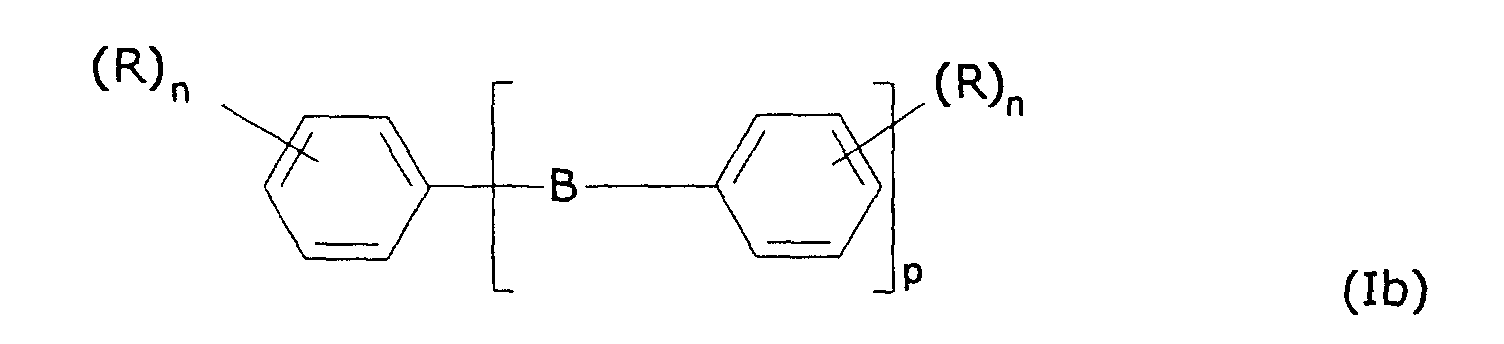 wobei in den Formeln R0 ein Wasserstoffatom oder einen Alkylrest mit 1 bis 4 Kohlenstoffatomen, einen Cyclohexyl- oder Phenylrest bedeutet.eine Valenzbindung,einen Alkylen- oder Alkenylidenrest mit 1 bis 4 Kohlenstoffatomen, vorzugsweise einen Methylen- oder Isopropylidenrest,eine der folgenden Gruppen: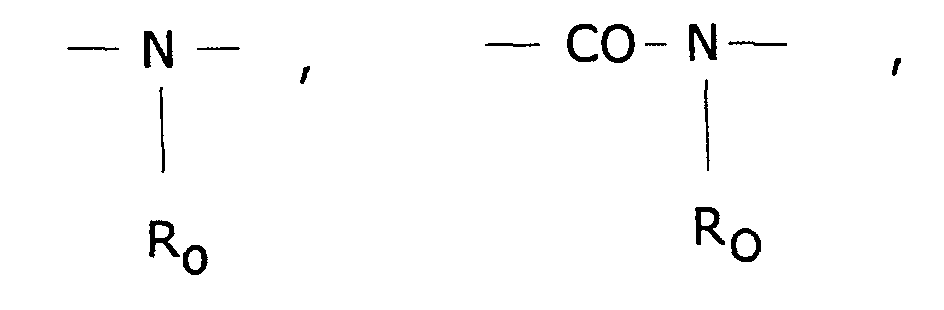
- Verfahren nach einem der Ansprüche 7 oder 8, dadurch gekennzeichnet, daß die aromatische Verbindung der Formel (Ia) oder (Ib) genügt, in der:R ein Wasserstoffatom, eine Hydroxylgruppe, eine CHO-Gruppe, eine -NO2-Gruppe, eine -NH2-Gruppe, einen gerad- oder verzweigtkettigen Alkyl- oder Alkoxyrest mit 1 bis 6 Kohlenstoffatomen, vorzugsweise 1 bis 4 Kohlenstoffatomen, oder ein Halogenatom bedeutet,B eine Valenzbindung, einen Alkylen- oder Alkylidenrest mit 1 bis 4 Kohlenstoffatomen oder ein Sauerstoffatom symbolisiert,m gleich 0 oder 1 ist,n gleich 0, 1 oder 2 ist,p gleich 0 oder 1 ist.
- Verfahren nach einem der Ansprüche 1 bis 9, dadurch gekennzeichnet, daß die aromatische Verbindung der Formel (I) entspricht, in der R ein Wasserstoffatom, eine Hydroxylgruppe, einen Methylrest, einen Methoxyrest oder Halogenatom bedeutet.
- Verfahren nach Anspruch 1 oder 2, dadurch gekennzeichnet, daß die aromatische Verbindung Benzol, Toluol, Phenol, Anisol oder Veratrol ist.
- Verfahren nach einem der Ansprüche 1 bis 11, dadurch gekennzeichnet, daß das Acylierungsmittel der Formel (II) entspricht:in der:
 R3 bedeutet:
 - Verfahren nach Anspruch 12, dadurch gekennzeichnet, daß das Acylierungsmittel der Formel (II) entspricht, in der X' ein Chloratom und R3 einen linearen oder verzweigten Alkylrest mit 1 bis 12 Kohlenstoffatomen bedeutet: wobei die Kohlenwasserstoffkette gegebenenfalls durch ein Heteroatom oder eine funktionelle Gruppe unterbrochen sein oder einen Substituenten tragen kann; R3 einen gegebenenfalls substituierten Phenylrest bedeutet; wobei X' den Rest -O-CO-R3 darstellt, in dem R3 und R4 identisch sind und einen Alkylrest mit 1 bis 4 Kohlenstoffatomen bedeuten.
- Verfahren nach Anspruch 12 oder 13, dadurch gekennzeichnet, daß das Acylierungsmittel ausgewählt ist unter:Acetylchlorid,Monochloracetylchlorid,Dichloracetylchlorid,Propanoylchlorid,Isobutanoylchlorid,Pivaloylchlorid,Stearoylchlorid,Crotonylchlorid,Benzoylchlorid,Chlorbenzoylchloriden,p-Nitrobenzoylchlorid,Methoxybenzoylchloriden,Naphtoylchloriden,Essigsäureanhydrid,Isobuttersäureanhydrid,Trifluoressigsäureanhydrid.Benzoylchlorid.
- Verfahren nach einem der Ansprüche 1 bis 14, dadurch gekennzeichnet, daß das Reaktionslösungsmittel einer der Reagenzien oder ein aprotisches polares organisches Lösungsmittel ist.
- Verfahren nach Anspruch 15, dadurch gekennzeichnet, daß das organische Lösungsmittel unter den linearen oder cyclischen Carboxamiden, wie N,N-Dimethylacetamid (DMAC), N,N-Diethylacetamid, Dimethylformamid (DMF), Diethylformamid oder 1-Methyl-2-Pyrrolidinon (NMP); den Nitroverbindungen wie Nitromethan, Nitroethan, 1-Nitropropan, 2-Nitropropan oder deren Gemischen, Nitrobenzol; den aliphatischen oder aromatischen Nitrilen, wie Acetonitril, Propionitril, Butannitril, Isobutannitril, Benzonitril, Benzylcyanid; Dimethylsulfoxid (DMSO); Tetramethylsulfon (Sulfolan), Dimethylsulfon, Hexamethylphosphotriamid (HMPT); Dimethylethylenharnstoff, Dimethylpropylenharnstoff, Tetramethylharnstoff; Propylencarbonat oder deren Gemischen, gewählt ist.
- Verfahren nach einem der Ansprüche 1 bis 16, dadurch gekennzeichnet, daß das Verhältnis der Mole der aromatischen Verbindung und der Mole des Acylierungsmittels zwischen 0,1 und 10, vorzugsweise zwischen 1,0 und 4, schwankt.
- Verfahren nach einem der Ansprüche 1 bis 17, dadurch gekennzeichnet, daß die Menge des eingesetzten Katalysators so ist, daß das Verhältnis zwischen der Zahl der Mole des Katalysators und der Mole des Acylierungsmittels unter 1 ist und vorzugsweise zwischen 0,001 und 0,8, insbesondere zwischen 0,02 und 0,2 liegt.
- Verfahren nach einem der Ansprüche 1 bis 18, dadurch gekennzeichnet, daß die Temperatur, bei der die Acylierungsreaktion durchgeführt wird, zwischen 20 °C und 200 °C, vorzugsweise zwischen 40 °C und 150 °C, liegt.
- Verfahren nach einem der Ansprüche 1 bis 19, dadurch gekennzeichnet, daß der Katalysator wenigstens ein Bismutsalz der Triflinsäure der allgemeinen Formel (IV) enthält:OTf O3SCF3 bedeutet,Ar einen monocyclischen oder polycyclischen, aromatischen carbocyclischen Rest bedeutet,n gleich 0, 1 oder 2 ist.
- Verfahren nach Anspruch 20, dadurch gekennzeichnet, daß das Bismutsalz der Triflinsäure der Formel (IV) entspricht, in der Ar einen Phenyl- oder Naphtylrest bedeutet, der gegebenenfalls durch Alkyl- oder Alkoxyreste mit 1 bis 4 Kohlenstoffatomen, Halogenatome oder Trifluormethylgruppen substituiert sein kann.
- Verfahren nach einem der Ansprüche 1 bis 21, dadurch gekennzeichnet, daß der Katalysator unter Bi(OTf)3, Bi(OTf)2Ph, Bi(OTf)Ph2 oder deren Gemischen gewählt ist.
- Bismutsalz der Triflinsäure entsprechend der Formel (IV):OTf O3SCF3 bedeutet,Ar einen monocyclischen oder polycyclischen, aromatischen carbocyclischen Rest bedeutet,n gleich 1 oder 2 ist.
- Bismutsalz der Triflinsäure nach Anspruch 23, dadurch gekennzeichnet, daß es der Formel (IV) entspricht, in der Ar einen Phenyl- oder Naphthylrest bedeutet, der gegebenenfalls durch Alkyl- oder Alkoxyreste mit 1 bis 4 Kohlenstoffatomen, Halogenatome oder Trifluormethylgruppen substituiert ist.
- Bismutsalz der Triflinsäure der Formel Bi(OTf)2Ph oder Bi(OTf)Ph2.
- Verfahren zur Herstellung von Bismut-tris-trifluormethansulfonat, dadurch gekennzeichnet, daß man bei einer Temperatur unter 0 °C ein Triarylbismut und Triflinsäure miteinander reagieren läßt.
- Verfahren nach Anspruch 26, dadurch gekennzeichnet, daß das Verhältnis zwischen der Anzahl der Mole der Triflinsäure und der Anzahl der Mole des Triarylbismut zwischen 2,9 und 3,1, vorzugsweise gleich 3,0, gewählt wird.
- Verfahren zur Herstellung eines Bismutsalzes der Triflinsäure entsprechend der Formel (IV), dadurch gekennzeichnet, daß man bei einer Temperatur unter 0 °C ein Triarylbismut und Triflinsäure miteinander reagieren läßt.
- Verfahren nach Anspruch 28, dadurch gekennzeichnet, daß das Verhältnis der Molzahl der Triflinsäure und der Molzahl des Triarylbismut jeweils gewählt ist: zwischen 1,9 und 2,1, vorzugsweise 2,0, für das Bismutsalz der Formel (IV), in der n gleich 1 ist; und zwischen 0,9 und 1,1, vorzugsweise gleich 1, für das Bismutsalz der Formel (IV), in der n gleich 2 ist.
- Verfahren nach einem der Ansprüche 26 bis 29, gekennzeichnet durch die Tatsache, daß das Triarylbismut Triphenylbismut ist.
- Verfahren nach einem der Ansprüche 26 bis 30, dadurch gekennzeichnet, daß man die Triflinsäure nach und nach dem Triarylbismut zusetzt.
- Verfahren nach einem der Ansprüche 26 bis 31, dadurch gekennzeichnet, daß die Reaktion im allgemeinen in einem organischen Lösungsmittel, insbesondere einem halogenierten aliphatischen Kohlenwasserstoff, vorzugsweise Dichlormethan, Chloroform, Tetrachlorkohlenstoff und/oder 1,2-Dichlorethan, durchgeführt wird.
- Verfahren nach einem der Ansprüche 26 bis 32, dadurch gekennzeichnet, daß das Triarylbismut in dem organischen Lösungsmittel in einer Konzentration von vorzugsweise 0,01 bis 1 mol/l vorliegt.
- Verfahren nach einem der Ansprüche 26 bis 33, dadurch gekennzeichnet, daß die Reaktionstemperatur vorzugsweise unter 0 °C, insbesondere zwischen -100 °C und -20 °C, gewählt ist.
Applications Claiming Priority (3)
| Application Number | Priority Date | Filing Date | Title |
|---|---|---|---|
| FR9511250A FR2739098B1 (fr) | 1995-09-25 | 1995-09-25 | Procede d'acylation d'un compose aromatique |
| FR9511250 | 1995-09-25 | ||
| PCT/FR1996/001488 WO1997011930A1 (fr) | 1995-09-25 | 1996-09-24 | Procede d'acylation d'un compose aromatique |
Publications (2)
| Publication Number | Publication Date |
|---|---|
| EP0877726A1 EP0877726A1 (de) | 1998-11-18 |
| EP0877726B1 true EP0877726B1 (de) | 2001-12-12 |
Family
ID=9482908
Family Applications (1)
| Application Number | Title | Priority Date | Filing Date |
|---|---|---|---|
| EP96932642A Expired - Lifetime EP0877726B1 (de) | 1995-09-25 | 1996-09-24 | Verfahren zur acylierung einer aromatischen verbindung |
Country Status (6)
| Country | Link |
|---|---|
| US (1) | US6184418B1 (de) |
| EP (1) | EP0877726B1 (de) |
| AT (1) | ATE210625T1 (de) |
| DE (1) | DE69618016D1 (de) |
| FR (1) | FR2739098B1 (de) |
| WO (1) | WO1997011930A1 (de) |
Cited By (1)
| Publication number | Priority date | Publication date | Assignee | Title |
|---|---|---|---|---|
| KR20230114620A (ko) * | 2022-01-25 | 2023-08-01 | (주)국전약품 | 구아야콜의 제조방법 |
Families Citing this family (12)
| Publication number | Priority date | Publication date | Assignee | Title |
|---|---|---|---|---|
| US6664380B1 (en) | 1999-08-18 | 2003-12-16 | The Institute Of Applied Catalysis | Perfluorosulfonylmethide compounds; use thereof for carbon-carbon bond formation |
| FR2805819B1 (fr) * | 2000-03-03 | 2003-03-14 | Centre Nat Rech Scient | Procede de preparation du tris-trifluoromethanesulfonate de bismuth |
| US6455738B1 (en) * | 2000-07-13 | 2002-09-24 | Rhodia Chimie | Process for the sulfonation of an aromatic compound |
| US6459000B1 (en) * | 2001-03-26 | 2002-10-01 | Council Of Scientific And Industrial Research | Process for the liquid phase acylation of aromatic compounds |
| US6593499B2 (en) * | 2001-08-29 | 2003-07-15 | Council Of Scientific & Industrial Research | Process for the preparation of phenyl ketones |
| WO2005005407A1 (en) * | 2003-07-08 | 2005-01-20 | Dsm Ip Assets B.V. | Manufacture of tocopherols using a bismuth catalyst |
| CN101166722A (zh) * | 2005-04-29 | 2008-04-23 | 惠氏公司 | 制备3,3-二取代的羟吲哚和硫代羟吲哚的方法 |
| US7279604B2 (en) * | 2005-05-31 | 2007-10-09 | The College Of N.J. | Boron carbide as an effective Friedel-Crafts type catalyst |
| US20080058565A1 (en) * | 2006-05-30 | 2008-03-06 | Dumas Philip E | Boron carbide as an effective friedel-crafts type catalyst |
| CA2963784A1 (en) | 2007-06-08 | 2008-12-18 | Mannkind Corporation | Ire-1.alpha. inhibitors |
| US20090062112A1 (en) * | 2007-08-31 | 2009-03-05 | Philip Dumas | Boron carbide as an effective Friedel-Crafts type catalyst |
| FR2963003A1 (fr) | 2010-07-22 | 2012-01-27 | Cdp Innovation | Preparation de sels metalliques de l'acide triflique et de l'acide triflimidique sous ultrasons |
Family Cites Families (2)
| Publication number | Priority date | Publication date | Assignee | Title |
|---|---|---|---|---|
| US3883594A (en) * | 1974-04-11 | 1975-05-13 | Universal Oil Prod Co | Process for the acylation of aromatic hydrocarbons |
| JPS5810525A (ja) * | 1981-06-15 | 1983-01-21 | Sagami Chem Res Center | 光学活性な1−芳香族基置換−1−アルカノン類の製造方法 |
-
1995
- 1995-09-25 FR FR9511250A patent/FR2739098B1/fr not_active Expired - Fee Related
-
1996
- 1996-09-24 EP EP96932642A patent/EP0877726B1/de not_active Expired - Lifetime
- 1996-09-24 DE DE69618016T patent/DE69618016D1/de not_active Expired - Lifetime
- 1996-09-24 AT AT96932642T patent/ATE210625T1/de not_active IP Right Cessation
- 1996-09-24 US US09/101,713 patent/US6184418B1/en not_active Expired - Fee Related
- 1996-09-24 WO PCT/FR1996/001488 patent/WO1997011930A1/fr not_active Ceased
Cited By (2)
| Publication number | Priority date | Publication date | Assignee | Title |
|---|---|---|---|---|
| KR20230114620A (ko) * | 2022-01-25 | 2023-08-01 | (주)국전약품 | 구아야콜의 제조방법 |
| KR102744586B1 (ko) | 2022-01-25 | 2024-12-20 | (주)국전약품 | 구아야콜의 제조방법 |
Also Published As
| Publication number | Publication date |
|---|---|
| EP0877726A1 (de) | 1998-11-18 |
| US6184418B1 (en) | 2001-02-06 |
| FR2739098B1 (fr) | 1997-11-28 |
| ATE210625T1 (de) | 2001-12-15 |
| FR2739098A1 (fr) | 1997-03-28 |
| WO1997011930A1 (fr) | 1997-04-03 |
| DE69618016D1 (de) | 2002-01-24 |
Similar Documents
| Publication | Publication Date | Title |
|---|---|---|
| EP0877726A1 (de) | Verfahren zur acylierung einer aromatischen verbindung | |
| EP0770051B1 (de) | Verfahren zur herstellung von aromatischen ethern | |
| EP2197829B1 (de) | Verfahren zur synthese von arylamin | |
| WO2000040535A1 (fr) | Procede de preparation d'un ether de type benzylique | |
| EP1027326B1 (de) | Verfahren zur funktionalisierung eines mit einer elektronendonor-gruppe substituierten phenols | |
| FR2921921A1 (fr) | Procede de synthese de composes polyhydroxystilbeniques. | |
| FR2730731A1 (fr) | Procede de carboxylation d'un ether aromatique | |
| WO2001055067A1 (fr) | Procede de preparation de cetones alpha-halogenees | |
| FR2768728A1 (fr) | Procede d'acylation d'un compose aromatique | |
| WO2005095307A1 (fr) | Procede de formation d'une liaison carbone-carbone comprenant une reaction d’un arenediazoether | |
| FR2519979A1 (fr) | Procede de preparation de trifluoromethoxy ou trifluoromethylthiophenylsulfones | |
| EP1140813B1 (de) | Verfahren zur herstellung von aromatischen thioethern vom diphenyltyp | |
| FR2877335A1 (fr) | Utilisation d'un acide carboxylique aromatique dans une reaction de catalyse asymetrique | |
| WO1997021656A1 (fr) | Procede de fabrication de fluoroalcanols | |
| WO1996038400A1 (fr) | Procede de preparation d'un compose aromatique meta-dihydroxyle | |
| FR2865204A1 (fr) | Nouveaux composes chiraux derives d'une diamine ou d'un aminoalcool, monosulfonyles et carbonyles porteurs d'un groupe pyrrolidinyle, leur preparation et leurs applications en catalyse asymetrique. | |
| FR2784986A1 (fr) | Procede de preparation d'un compose de type indanone ou thioindanone | |
| CH654570A5 (fr) | Procede de preparation de 3,3'- ou 3,4'-diaminobenzophenone. | |
| EP0606182A1 (de) | Verfahren zur Herstellung einer aromatischen o-dihydroxylierten Verbindung | |
| WO2002006187A1 (fr) | Procede de preparation d'un compose polyaromatique | |
| FR2830861A1 (fr) | Procede de preparation de composes mandeliques et derives | |
| JPH03109342A (ja) | 4.4’―ジヒドロキシジフェニルメタンの製造方法 | |
| FR2738563A1 (fr) | Procede d'ortho-alkylation d'un compose aromatique hydroxyle et ses applications | |
| WO2000018714A1 (fr) | Procede d'arylation de composes de type acetophenone | |
| CA2005392A1 (fr) | Procede de preparation de cetones aryliques trifluoroethoxylees |
Legal Events
| Date | Code | Title | Description |
|---|---|---|---|
| PUAI | Public reference made under article 153(3) epc to a published international application that has entered the european phase |
Free format text: ORIGINAL CODE: 0009012 |
|
| 17P | Request for examination filed |
Effective date: 19980710 |
|
| AK | Designated contracting states |
Kind code of ref document: A1 Designated state(s): AT BE CH DE DK ES FI FR GB IE IT LI NL PT |
|
| 17Q | First examination report despatched |
Effective date: 19990924 |
|
| GRAG | Despatch of communication of intention to grant |
Free format text: ORIGINAL CODE: EPIDOS AGRA |
|
| GRAG | Despatch of communication of intention to grant |
Free format text: ORIGINAL CODE: EPIDOS AGRA |
|
| GRAH | Despatch of communication of intention to grant a patent |
Free format text: ORIGINAL CODE: EPIDOS IGRA |
|
| GRAH | Despatch of communication of intention to grant a patent |
Free format text: ORIGINAL CODE: EPIDOS IGRA |
|
| GRAA | (expected) grant |
Free format text: ORIGINAL CODE: 0009210 |
|
| AK | Designated contracting states |
Kind code of ref document: B1 Designated state(s): AT BE CH DE DK ES FI FR GB IE IT LI NL PT |
|
| PG25 | Lapsed in a contracting state [announced via postgrant information from national office to epo] |
Ref country code: NL Free format text: LAPSE BECAUSE OF FAILURE TO SUBMIT A TRANSLATION OF THE DESCRIPTION OR TO PAY THE FEE WITHIN THE PRESCRIBED TIME-LIMIT Effective date: 20011212 Ref country code: IT Free format text: LAPSE BECAUSE OF FAILURE TO SUBMIT A TRANSLATION OF THE DESCRIPTION OR TO PAY THE FEE WITHIN THE PRESCRIBED TIME-LIMIT;WARNING: LAPSES OF ITALIAN PATENTS WITH EFFECTIVE DATE BEFORE 2007 MAY HAVE OCCURRED AT ANY TIME BEFORE 2007. THE CORRECT EFFECTIVE DATE MAY BE DIFFERENT FROM THE ONE RECORDED. Effective date: 20011212 Ref country code: IE Free format text: LAPSE BECAUSE OF FAILURE TO SUBMIT A TRANSLATION OF THE DESCRIPTION OR TO PAY THE FEE WITHIN THE PRESCRIBED TIME-LIMIT Effective date: 20011212 Ref country code: GB Free format text: LAPSE BECAUSE OF FAILURE TO SUBMIT A TRANSLATION OF THE DESCRIPTION OR TO PAY THE FEE WITHIN THE PRESCRIBED TIME-LIMIT Effective date: 20011212 Ref country code: FI Free format text: LAPSE BECAUSE OF FAILURE TO SUBMIT A TRANSLATION OF THE DESCRIPTION OR TO PAY THE FEE WITHIN THE PRESCRIBED TIME-LIMIT Effective date: 20011212 Ref country code: AT Free format text: LAPSE BECAUSE OF FAILURE TO SUBMIT A TRANSLATION OF THE DESCRIPTION OR TO PAY THE FEE WITHIN THE PRESCRIBED TIME-LIMIT Effective date: 20011212 |
|
| REF | Corresponds to: |
Ref document number: 210625 Country of ref document: AT Date of ref document: 20011215 Kind code of ref document: T |
|
| REG | Reference to a national code |
Ref country code: CH Ref legal event code: EP |
|
| REG | Reference to a national code |
Ref country code: GB Ref legal event code: IF02 |
|
| REG | Reference to a national code |
Ref country code: IE Ref legal event code: FG4D Free format text: FRENCH |
|
| REF | Corresponds to: |
Ref document number: 69618016 Country of ref document: DE Date of ref document: 20020124 |
|
| PG25 | Lapsed in a contracting state [announced via postgrant information from national office to epo] |
Ref country code: PT Free format text: LAPSE BECAUSE OF FAILURE TO SUBMIT A TRANSLATION OF THE DESCRIPTION OR TO PAY THE FEE WITHIN THE PRESCRIBED TIME-LIMIT Effective date: 20020312 Ref country code: DK Free format text: LAPSE BECAUSE OF FAILURE TO SUBMIT A TRANSLATION OF THE DESCRIPTION OR TO PAY THE FEE WITHIN THE PRESCRIBED TIME-LIMIT Effective date: 20020312 |
|
| PG25 | Lapsed in a contracting state [announced via postgrant information from national office to epo] |
Ref country code: DE Free format text: LAPSE BECAUSE OF FAILURE TO SUBMIT A TRANSLATION OF THE DESCRIPTION OR TO PAY THE FEE WITHIN THE PRESCRIBED TIME-LIMIT Effective date: 20020313 |
|
| NLV1 | Nl: lapsed or annulled due to failure to fulfill the requirements of art. 29p and 29m of the patents act | ||
| GBV | Gb: ep patent (uk) treated as always having been void in accordance with gb section 77(7)/1977 [no translation filed] |
Effective date: 20011212 |
|
| PG25 | Lapsed in a contracting state [announced via postgrant information from national office to epo] |
Ref country code: ES Free format text: LAPSE BECAUSE OF FAILURE TO SUBMIT A TRANSLATION OF THE DESCRIPTION OR TO PAY THE FEE WITHIN THE PRESCRIBED TIME-LIMIT Effective date: 20020627 |
|
| REG | Reference to a national code |
Ref country code: IE Ref legal event code: FD4D |
|
| PG25 | Lapsed in a contracting state [announced via postgrant information from national office to epo] |
Ref country code: LI Free format text: LAPSE BECAUSE OF NON-PAYMENT OF DUE FEES Effective date: 20020930 Ref country code: CH Free format text: LAPSE BECAUSE OF NON-PAYMENT OF DUE FEES Effective date: 20020930 Ref country code: BE Free format text: LAPSE BECAUSE OF NON-PAYMENT OF DUE FEES Effective date: 20020930 |
|
| PLBE | No opposition filed within time limit |
Free format text: ORIGINAL CODE: 0009261 |
|
| STAA | Information on the status of an ep patent application or granted ep patent |
Free format text: STATUS: NO OPPOSITION FILED WITHIN TIME LIMIT |
|
| 26N | No opposition filed | ||
| BERE | Be: lapsed |
Owner name: *RHODIA CHIMIE Effective date: 20020930 |
|
| REG | Reference to a national code |
Ref country code: CH Ref legal event code: PL |
|
| NLV1 | Nl: lapsed or annulled due to failure to fulfill the requirements of art. 29p and 29m of the patents act | ||
| PG25 | Lapsed in a contracting state [announced via postgrant information from national office to epo] |
Ref country code: FR Free format text: LAPSE BECAUSE OF NON-PAYMENT OF DUE FEES Effective date: 20030603 |
|
| REG | Reference to a national code |
Ref country code: FR Ref legal event code: ST |