EP0877998B1 - Software für den digitalen fälschungs-schutz von dokumenten - Google Patents
Software für den digitalen fälschungs-schutz von dokumenten Download PDFInfo
- Publication number
- EP0877998B1 EP0877998B1 EP96942881A EP96942881A EP0877998B1 EP 0877998 B1 EP0877998 B1 EP 0877998B1 EP 96942881 A EP96942881 A EP 96942881A EP 96942881 A EP96942881 A EP 96942881A EP 0877998 B1 EP0877998 B1 EP 0877998B1
- Authority
- EP
- European Patent Office
- Prior art keywords
- image
- scrambled
- segments
- elemental
- input
- Prior art date
- Legal status (The legal status is an assumption and is not a legal conclusion. Google has not performed a legal analysis and makes no representation as to the accuracy of the status listed.)
- Expired - Lifetime
Links
Images












Classifications
-
- G—PHYSICS
- G09—EDUCATION; CRYPTOGRAPHY; DISPLAY; ADVERTISING; SEALS
- G09C—CIPHERING OR DECIPHERING APPARATUS FOR CRYPTOGRAPHIC OR OTHER PURPOSES INVOLVING THE NEED FOR SECRECY
- G09C5/00—Ciphering apparatus or methods not provided for in the preceding groups, e.g. involving the concealment or deformation of graphic data such as designs, written or printed messages
-
- H—ELECTRICITY
- H04—ELECTRIC COMMUNICATION TECHNIQUE
- H04N—PICTORIAL COMMUNICATION, e.g. TELEVISION
- H04N1/00—Scanning, transmission or reproduction of documents or the like, e.g. facsimile transmission; Details thereof
- H04N1/44—Secrecy systems
- H04N1/448—Rendering the image unintelligible, e.g. scrambling
-
- H—ELECTRICITY
- H04—ELECTRIC COMMUNICATION TECHNIQUE
- H04N—PICTORIAL COMMUNICATION, e.g. TELEVISION
- H04N1/00—Scanning, transmission or reproduction of documents or the like, e.g. facsimile transmission; Details thereof
- H04N1/44—Secrecy systems
- H04N1/448—Rendering the image unintelligible, e.g. scrambling
- H04N1/4486—Rendering the image unintelligible, e.g. scrambling using digital data encryption
-
- H—ELECTRICITY
- H04—ELECTRIC COMMUNICATION TECHNIQUE
- H04N—PICTORIAL COMMUNICATION, e.g. TELEVISION
- H04N1/00—Scanning, transmission or reproduction of documents or the like, e.g. facsimile transmission; Details thereof
- H04N1/44—Secrecy systems
- H04N1/448—Rendering the image unintelligible, e.g. scrambling
- H04N1/4493—Subsequently rendering the image intelligible using a co-operating image, mask or the like
Definitions
- This invention relates generally to a method and apparatus, as implemented by a software program on a computer system, for producing counterfeit-deterring scrambled or coded indicia images, typically in a printed form.
- This method and system are capable of combining a source image with a latent image so the latent image is visible only when viewed through a special decoder lens.
- indicia or a background pattern provided for sheet materials such as tickets, checks, currency, and the like.
- the indicia or background pattern is imposed upon the sheet material usually by some type of printing process such as offset printing, lithography, letterpress or other like mechanical systems, by a variety of photographic methods, by xeroprinting; and a host of other methods.
- the pattern or indicia may be produced with ordinary inks, from special inks which may be magnetic, fluorescent, or the like, from powders which may be baked on, from light sensitive materials such as silver salts or azo dyes, and the like.
- Most of these patterns placed on sheet materials depend upon complexity and resolution to avoid ready duplication. Consequently, they add an increment of cost to the sheet material without being fully effective in many instances in providing the desired protection from unauthorized duplication or alteration.
- US-A-2952080 discloses a method for encoding a signature wherein the signature is divided into lines which are interspersed with dummy lines. A decoding grid is used to block the dummy lines revealing the encoded signature.
- Photographic, or analog, production of coded indicia images has the drawback of requiring a specialized camera.
- the analog images are limited in their versatility in that an area of scrambled indicia is generally noticeable when surrounded by non-scrambled images.
- a method and apparatus are needed whereby the photographic process and its results are essentially simulated digitally via a computer system and related software. Additionally, a system is needed whereby scrambled latent images can be integrated into a source image, or individual color components thereof, so that the source image is visible to the unaided eye and the latent image is visible only upon decoding. Also needed is the ability to incorporate multiple latent images, representing different "phases", into the source image for added security.
- the present invention provides a method as implemented by a software program on a computer system for digitally producing counterfeit-deterring scrambled, encoded indicia for incorporation on printed matter, said method being comprised of the following steps:
- the present invention further provides a computer system for digitally producing counterfeit-deterring scrambled, encoded indicia for incorporation on printed matter, comprising:
- the latent image is divided up into a higher multiplicity of lines or elements.
- the multiplicity of elements would be a function of the lens density.
- the source image is then rasterized, or divided up into a series of lines equal in number to the lines making up the scrambled latent images.
- the image is made up of a series of "printers dots" which vary in density according to the colors found in the various component parts of the image.
- the software method and apparatus of the present invention takes the rasterized lines of the source image and reforms them into the same general pattern as the lines of the scrambled latent image. Hence, where the source image is darker, the scrambled lines are formed proportionately thicker; where the source image is lighter, the scrambled lines are formed proportionately thinner.
- the resulting combined image appears to the unaided eye like the original source image.
- the present invention also allows the option of flipping each of the elements of the latent image after it has been divided or scrambled into its elemental line parts.
- this unique step produces relatively sharper decoded images when each of the elements is flipped about its axis by one-hundred and eighty (180) degrees.
- This same effect was achieved by the process of U.S. Patent No. 3,937,565, and the cited stereographic cameras therein, through the inherent flipping of an object when viewed past the focal point of a lens.
- the flipped elemental lines are then reformed into the rasterized source image. While enhancing the sharpness of the latent image, the flipping of the elements has no adverse, or even noticeable, effect on the appearance of the final coded source image.
- by combining two images consisting of one image where the elements are flipped and another where they are not flipped the appearance of a spatial separation of the two images will occur upon decoding.
- the source image might simply consist of a solid color tint or a textured background which would contain hidden latent images when viewed through the prober decoder.
- Such solid, tinted areas might frequently be found on checks, currency, tickets, etc.
- Other useful applications might include the latent encoding of a person's signature inside a source image consisting of that person's photograph. Such a technique would make it virtually impossible to produce fake ID's or driver's licenses through the common technique of replacing an existing picture with a false one.
- Other vital information besides the person's signature e.g. height, weight, identification number, etc. might also be included in the latent image for encoding into the source image.
- Still other useful applications might include, for example, the following: credit cards, passports, photo-identification cards, currency, special event tickets, stocks and bond certificates, bank and travelers checks, anti-counterfeiting labels (e.g. for designer clothes, drugs, liquors, video tapes, audio CD's, cosmetics, machine parts, and pharmaceuticals), tax and postage stamps, birth certificates, vehicle restoration cards, land deed titles, and visas.
- anti-counterfeiting labels e.g. for designer clothes, drugs, liquors, video tapes, audio CD's, cosmetics, machine parts, and pharmaceuticals
- tax and postage stamps e.g. for designer clothes, drugs, liquors, video tapes, audio CD's, cosmetics, machine parts, and pharmaceuticals.
- an objective of the present invention is to provide a counterfeit-deterrent method and apparatus, as implemented by a software program on a computer system, for producing scrambled or coded indicia images, typically in a printed form.
- the coded image can then be decoded and viewed through a special lens which is matched to the software coding process parameters.
- a further objective of the present invention is to provide a counterfeit-deterrent method and apparatus, as implemented by a software program on a computer system, wherein a source image is rasterized, and the latent image is broken up into corresponding elemental lines, and the rasterized source image is reconstructed according to the coded pattern of the scrambled image.
- Yet a further objective of the present invention is to provide a counterfeit-deterrent method and apparatus, as implemented by a software program on a computer system, wherein the source image is converted into a grey scale image for incorporation of a latent scrambled image.
- Still another objective of the present invention is to provide a counterfeit-deterrent method and apparatus, as implemented by a software program on a computer system, wherein the grey scale source image is further separated out into its component color parts for possible incorporation of latent scrambled images into each component color part, with the parts being rejoined to form the final encoded source image.
- a related objective of the present invention is to provide a counterfeit-deterrent method and apparatus, as implemented by a software program on a computer system, wherein the elemental lines of the scrambled image may be rotated or flipped about their axis as necessary, or as selected by the user.
- a further objective of the present invention is to provide a counterfeit-deterrent method and apparatus, as implemented by a software program on a computer system, wherein the "single phased" the scrambled image consists of a first latent image which has been sliced and scrambled as a function of a user selected decoder density and scrambling factor.
- Yet another objective of the present invention is to provide a counterfeit-deterrent method and apparatus, as implemented by a software program on a computer system, wherein the "two phased" scrambled image is sliced as a function of a user selected decoder density, and each slice is halved into two sub-slices, and the first and second patent images are alternately interlaced in the sub-slices, with each latent image scrambled by a user selected scrambling factor.
- Still another objective of the present invention is to provide a counterfeit-deterrent method and apparatus, as implemented by a software program on a computer system, wherein the "three phased" scrambled image is sliced as a function of a user selected decoder density, and each slice is divided into three sub-slices, and the first, second, and third latent images are alternately interlaced in the sub-slices, with each latent image scrambled by a user selected scrambling factor.
- Yet another objective of the present invention is to provide a counterfeit-deterrent method and apparatus, as implemented by a software program on a computer system, wherein an "indicia tint" is produced which is similar to a two phased SI, but with one source file, and every second sub-slice of the input image is the complimenter of the first sub-slice.
- a further objective of the present invention is to provide a counterfeit-deterrent method and apparatus, as implemented by a software program on a computer system, wherein the source image consists of a solid color or tint pattern with the scrambled image incorporated therein, but the elemental lines are flipped only where a letter or object occurs in underlying latent image.
- Still another objective of the present invention is to provide a counterfeit-deterrent method and apparatus, as implemented by a software program on a computer system, wherein the latent image is encoded directly into a certain visible figure on the source image, thus creating a "hidden image” effect.
- Yet another objective of the present invention is to provide a counterfeit-deterrent method and apparatus, as implemented by a software program on a computer system, wherein a bitmap source image is used (instead of a grey scale image) to create hidden images behind single color source images or sections of source images.
- Still another related objective of the present invention is to provide a counterfeit-deterrent method and apparatus, as implemented by a software program on a computer system, wherein a multilevel, 3-dimensional relief effect is created by applying different scrambling parameters to an image and its background.
- Another related objective of the present invention is to provide a counterfeit-deterrent method and apparatus, as implemented by a software program on a computer system, wherein "void tint” sections might be produced and the word “void,” or similar such words, would appear across documents if attempts are made to photocopy them.
- Yet another possible objective of the present invention is to use the software program and computer system to produce the equivalent of "water marks" on paper products.
- Still another possible objective of the present invention is to use the software program and computes system to produce, or to aid in producing, holographic images through line diffraction techniques.
- the Scrambled Indicia (SI) process involves rasterizing, or dividing up into lines, a source or visible image according to the frequency (or density) of a lenticular decoder lens.
- the number of lines is also a function of the scrambling factor, or zoom factor, as applied to a latent or secondary image.
- a set of scrambled lines exists which can then be combined into the rasterized lines of the visible image.
- the visible image is thus reformed, or re-rasterized, according to the pattern of the scrambled latent image lines.
- the scrambled lines are made proportionately thicker in re-forming the rasterized lines of the visible image; similarly, where the visible image is lighter, the scrambled lines are made proportionately thinner.
- a new visible image is created, but with the encoded, latent, SI pattern being visible "underneath" when viewed through a transparent decoder lens.
- one latent image is processed into a visible source image, and this process is generally referred to as a "one phase" SI operation.
- an output image is a function of the decoder lens density.
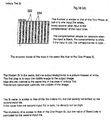
- An output image 2 is shown which is sliced up into elemental slices, or segments, of width h. (See reference 4). Each slice width h is a function of several factors such as density and base code.
- lens density the inventor has assigned reference names to lenses with various frequencies (or line densities per cm), including for instance, the following: D-7X with 69.7 lines per cm (177 lines/inch); D-7 with 59.9 lines per cm (152.5 lines/inch); D-6 with 52.8 lines per cm (134 lines/inch); D-9 with 27.2 lines per cm (69 lines/inch). (See reference 6).
- the software for performing this process also provides an "x2" (or doubling factor, df) option which doubles the effective line density, and hence divides the output image up into twice as many slices. The resulting SI image will still be decidable by the selected lens because the number of lines is an even multiple of the frequency of the lens.
- the output image slice is processed as a function of the input slice width i (see reference 8).
- width i is a function of width h, the lens density, and a base code factor (or scrambling factor) as selected by the user.
- the SI process allows the option of flipping 12 the input slice to affect the sharpness of the image.
- the letter "P" is shown scrambled 30 according to the S.I. process.
- An image 34 enlarge by 400% further shows the characteristic elements 33. In this instance the elements have each been individually flipped 180 degrees about their vertical axis.
- Figure 2(b) shows the same example "P" 32, and enlarged version 36 where the elements have not been flipped.
- the flipped "P" will appear sharper, or more visually distinct, than the unflipped "P".
- the software provides the user the option of flipping or not flipping the elements, as further detailed below.
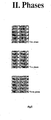
- each slice of width h is further divided into a first and second sub-slice.
- the elemental lines of first and second scrambled images will be stored by the software program in 'source one' and 'source two' files.
- the odd slices 14 are composed of elemental lines from the source one file, and the even slices 16 are from the source two file.
- the first and second scrambled images will appear independently discernable.
- a "three phase” SI process is shown as similar to the one and two phase SI processes.
- width h is divided into three parts.
- the first, second and third scrambled images are stored in three computer source files.
- every third slice 18, 20, and 22 comes from the same respective first, second, or third source file. Again upon decoding, the first, second, and third scrambled images will appear independently discernable.
- FIG 5 a comparison is shown of the one, two, and three phase scrambled results for a given lens density and base code.
- Figure 6 shows a comparison of the scrambled results for a given base code and a varying set of lens densities ranging from 3.9 through 39 lines per cm (10 through 100 lines per inch).
- the lens density is fixed while the zoom factor, or base code, is increased through a series of values ranging from 30 - 250.
- the relative width of each elemental line decreases and causes the scrambled image to be harder to discern.
- the discernability of the scrambled image for a zoom factor of 30 is far greater than for a zoom factor of 250.
- each latent image can be oriented at a different angle for added security.
- Figure 8 a series of two phase images is shown where the first latent image remains fixed and the second latent image is rotated, relative to the first image, through a series of angles ranging from 10-90 degrees.
- a postage stamp is created whereby the S.I. process incorporates two different latent images, oriented 90 degrees to each other, into two different base colors of the visible source image.
- the visible source image -- as comprised of its original RGB colors -- is scanned, as a digital high resolution image, into a program such as ADOBE PHOTOSHOP.
- the image is then divided into its component color "plates" in yet another commonly used color format CMYK, wherein the component images of Cyan 42, Magenta 44, Yellow 46, and Black 48 are shown.
- CMYK yet another commonly used color format
- the latent invisible image 50 with the repeated symbol USPS is scrambled and merged with the Cyan color plate 42.
- the resulting Cyan color plate 52 -- as described above -- will show the original visible image in a rasterized pattern to the unaided eye, but the latent invisible image will be encoded into the rasterized pattern.
- a second latent invisible image 54 with the repeated trademark SCRAMBLED INDICIA (of this inventor) is merged with the Magenta color plate 44 to produce the encoded Magenta image 56.
- the final visible image (similar to 40) will then be re-composed using the original Yellow and Black plates along with the encoded Cyan and Magenta plates.
- the source image is first digitized 41 and then divided out into its component CMYK colors 43.
- Each color plate 45, 47, 49, and 51 can be independently operated on by any of the S.I. process implemented.
- a hidden image technique or rasterization in single color
- the target color plates are rasterized 53, 55 and the S.I. scrambling process is applied to the first latent image 57 and the second latent image 59.
- the first scrambled image is then merged with the rasterized Cyan color plate 61 and the second scrambled image is merged with the rasterized Magenta color plate 63.
- the final output image is a created by re-joining the encoded Cyan and Magenta color plates with the unaltered Yellow and Black color plates 65.
- Cyan and Magenta colors were encoded.
- Other examples might choose to encode one color, three colors, or all four colors.
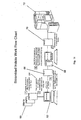
- FIG. 11 Various image files, as stored in "tif" format 60, are fed into a SILICON GRAPHICS INC. (SGI) workstation 62 which runs the S.I. software. While the software might run on any computer capable of handling high resolution graphics, the SGI machine is used because of its superior speed and graphical abilities.
- the files are opened by the S.I. software and the scrambled indicia types, values, and parameters are set by the program user 64. Encoding algorithms are applied by the S.I. software to merge latent images with visible images to create a new scrambled "tif" file 66.
- the new "tif" file is then fed into a MACINTOSH computer 68 for implementation into the final design program, wherein the file is converted into an Encapsulated PostScript (EPS) file format 70.
- EPS Encapsulated PostScript
- the finished design is then sent to an output device of choice 72 which is capable of printing the final image with the resolution necessary to maintain and reveal the hidden latent images upon decoding.
- the preferred output device is manufactured by SCITEX DOLVE.
- a flow chart of the overall operation of the S.I. Software is shown.
- a set of interface settings are either created 82, or read 86 from a default file 84.
- the user is then presented with a series of input screens for selecting the type of S.I. process to perform, along with the related parameters for performing such an operation.
- One option might be to save the settings already selected 90 into a user selected file 92.
- a related option would be to load settings already saved 94 into a user selected file 96.
- the user might choose to perform a one, two, or three phase S.I. process. Accordingly, the user would indicate the appropriate source files on which to perform the S.I. process and indicate that such a one, two, or three phase calculation (shown as 98, 100, and 102) should be performed.
- Other S.I. operations which could be selected for calculation, would include a "tint” method 104, a "hidden” method 106, a "multilevel” method 108, and a "raster” method 110. Otherwise, the user might choose to exit the program 112, or re-enter the selection process 114.
- the program Upon transitioning past the selection process, the program checks 166-128 the various input settings selected the user. The program detects errors 117-129 relating to each selection, and displays an appropriate error message 131 as appropriate. Based upon the input settings selected, the various operations will be performed, e.g.
- the S.I. software uses a variety of user interface screens which facilitates choosing which type of S.I. process will be performed, and under which parametric conditions.
- Figure 13 shows the introductory screen upon entering the SIS program which shows the user the ownership rights associated with the program.
- the user interface for the SIS is based upon the "X window" environment. It is similar to most GUI (Graphical User Interfaces). When the user moves the mouse pointer to a choice field and holds the mouse button down, the user will get a pop down or pop up window. This window will allow the user to make even more choices.
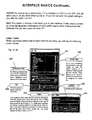
- Figure 14 shows the basic user interface screen associated with performing an SI operation.
- the choices in Figure 14(a will appear (e.g. About SIS, Load Settings, Save Settings, Sourd, and Quit).
- the screen in Figure 14(b) will appear.
- the user may drag the slider bar 200 or click on the arrow keys 201 to move through the list of available files.
- the user can use the directory bar buttons 202 to shift backwards in the shown directory hierarchy.
- the "filter” button 203 brings up another window 204 which allows the user to specify which type of files to view; for instance the "wildcard” designator “*” could be used with "*.tif” to bring up all "tif” files for possible selection from among the listed files.
- the "OK” button 205 accepts and loads/saves the file. Either cancel button 206 ends the current operation.
- the SIS program will provide verbal cues to let the user know what's going on; otherwise, the SIS program will remain silent during operation. The user can quit the SIS software at anytime by selecting quit, or executing an Alt-Q keystroke.
- the "decoder” box 170 shows the type of decoder selected (e.g. D-7X).
- the "type” box shows the scramble type 176 selected (e.g. one phase S.I., two phase S.I., hidden image S.I., etc.).
- the "density” slider bar 172 allows the user to control the line weight of the image that is created during the encoding process. The feature will affect both the "positive” (darkened) and “negative” (white) space of the object being encoded. This value can be adjusted based upon what you are encoding and what the final print destination will be.
- the "base code” slider bar 174 allows the user to control the amount of scramble that is applied during the encoding stage, as described above.
- the "flip" box allows the user to turn each individual scrambled element by 180 degrees about its vertical axis. This option helps hide the original item when that item is of a simple enough nature to see even after the scramble. In other words, sometimes when scrambling a single word or a few characters, the letters are still discernable despite the scrambling process applied. By flipping the elements, a deeper scramble can often be achieved which can still be decoded by the same lens. Also, as mentioned before, flipping the elements often produces a sharper decoded character.
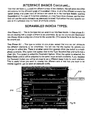
- Figure 15 shows the same basic user interface screen with further explanations of user interface boxes.
- the "source file” box 178 allows the user to directly enter the file name to which the program is applying the scramble.
- the "destination file” box 180 allows the user to directly enter the name of the file for the finished output.
- Both the source file and destination file boxes have "browse” buttons 182 which pull up yet another box 184 ( Figure 15(a)) for selecting possible source and destination files.
- the browse box the user may use arrows, or the slider bar, to scroll through the file directories and locate and select a particular file.
- the "filter” box 185 allows the user to select a specific file name and have the program search for it.
- the "resolution” box 186 indicates the resolution of the final output image.
- the "view” option box 188 allows the user to decide whether or not to see the scrambled image upon completion of the S.I. calculation.
- the "LZW” option box 190 allows the user to save files using compression. Compression keeps the overall size of the files smaller and conserves disk storage space.
- the "calculate” button 192 allows the user to click on this bar when ready to finally apply the S.I. scrambling process.
- Figure 16 shows a similar screen for performing a two phase S.I. operation.
- this screen provides entry boxes for two source files 210, where the latent images are interlaced into a two phased scrambled image.
- the user can select a different base code for each image. This is especially useful when the user wants to create an overlay of two different sets of text that will be viewed together, yet be seen as separate words when decoded.
- a "restraint" option box 212 is provided for linking the first and second images together whereby the same base code will be applied to each image. The remainder of the options are similar to those described above.
- Figure 17 shows a similar screen for performing a three phase S.I. operation.
- This screen provides three source file input boxes 214 wherein each input image can have a different base code applied, or the same base code can be applied to all by activating the restraint option 216.
- FIG 18 the interface screen for performing an "indicia tint” operation is shown. Unlike the hidden image S.I. (below), the indicia tint will flow as smoothly as possible through the image, ignoring tonal variations. This image might be thought of as a "monotone scramble.”
- an output image is shown (similar to Figure 2) which is similar to a two phase S.I., but with only one input file. In this instance, every second sub-slice 222, 224 of the output image is the complimenter of the immediate previous input sub-slice.
- the complimenter means, for example, that when the input is black, the complimenter is white, if the input is red, the complimenter is cyan, etc.
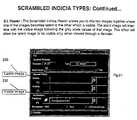
- Figure 19 shows the interface screen for a "hidden image” S.I. operation which provides input boxes for a latent image 218 and a visible image 220.
- This operation allows the user to mix two images together where one of the images becomes latent to the other which is visible. This effect will allow the latent image to be visible only when viewed through the decoder.
- Hidden image S.I. also allows use of an additional file to compensate for image offset.
- the hidden image S.I. is similar to the two phase S.I. (described above) and the indicia tint (below) except that the output background is a picture instead of white.
- the first step is to copy the visible image to the output image. After this, the method is similar to the indicia tint, but the density parameter controls the visibility of the image.
- the hidden image technique is similar to the S.I. Raster (below), but a bitmap (single color) image is used instead of a grey scale image.
- FIG 20 shows the user interface screen for multilevel S.I. operation.
- the multilevel S.I. creates a scrambled image that contains a sense of depth perception. This type of scramble allows the user to set both a minimum base code 226 and a maximum base code 228.
- This particular version of the SIS program uses two images, one image called the texture image 222 and another called a depth image 224. During encoding, the tonal values of the depth image elements will cause a scrambling variant in the elements of the texture image. This variant will give the decoded image the illusion of depth, hence the name multilevel S.I.
- this multilevel technique can simulate a 3-dimensional (“3-D") camera effect by placing a face in the depth image and applying less base code, while flipping the elements for added sharpness.
- the background would be placed in the texture file which would have more base code applied for more scrambling effect, and with no flipping of the elements.
- the decoded face would appear to be sharper and have more depth than the surrounding background. Hence the face would appear to "float", thereby creating a 3-D effect.
- the interface screen for an S.I. Raster operation is shown.
- the S.I. Raster allows the user to mix two images together where one of the images becomes latent 230 to the other which is visible 232.
- the latent image will interlace with the visible image following the grey scale values of that image. This effect will allow the latent image to be visible only when viewed through a decoder.
- the latent image might consist of a one, two, or three multi-phased image as created using previous interface screens for multi-phased images and saved in an appropriate file.
- the visible image is a photograph and the latent image might be a signature of that person.
- the visible image can be rasterized and then the signature image can be scrambled and merged into the visible image raster pattern.
- the resulting encoded image will be a visible image of a person's photograph, which when decoded will reveal that person's signature.
- the latent image might include other vital statistics such as height, weight, etc. This high security encoded image would prove to be extremely useful on such items as passports, licenses, photo II's, etc.
- the example types include: double line thickness modulation; line thickness modulation II; emboss line rastering; relief; double relief; emboss round raster; cross raster; latent round raster oval raster; and cross line raster.
- Another technique, cross embossed rastering might use one frequency of lens density on the vertical plane and yet another frequency on the horizontal plane. The user would then check each latent image by rotating the lens.
- Yet another technique would include lenses which varying in frequency and/or refractive characteristics across the face of a single lens. Hence different parts of the printed matter could be encoded at different frequencies and still be decoded by a single lens for convenience. Undoutbtedly many other rastering types exist which are easily adaptable to the SIS encoding techniques.
- a variety of other security measures could be performed using the SIS program and the underlying principles involved. For instance, the consecutive numbering system found on tickets or money might be scrambled to insure further security against copying.
- the SIS program might also digitally generate scrambled bar encoding.
- a Method and Apparatus For Scrambling and Unscrambling Bar Code Symbols has been earlier described in this inventors U.S. Patent 4,914,700.
- Yet another common security printing technique includes using complex printed lines, borders, guilloches, and/or buttons which are difficult to forge or electronically reproduce.
- the SIS program can introduce scrambled patterns which follow certain lines on the printed matter, hence the inventor refers to this technique as Scrambled Micro Lines.
- the security of the Scrambled Indicia might be further enhanced by making 3 color separations in Cyan, Magenta, and Yellow of the image after the S.I. process has been performed. These colors would then be adjusted to each other so that a natural grey could be obtained on the printed sheet when the colors are recombined.
- the inventor refers to this process as "grey match.” Hence, while the printed image would appear grey to the unaided eye, the decoded image would appear in color.
- the adjustment of the separations to maintain a neutral grey becomes yet another factor to be controlled when using different combinations of ink, paper, and press. Maintaining these combinations adds another level of security to valuable document and currency.
- Still another possible use of the SIS program would be to create interference, or void tint, combinations on printed matter. This technique will conceal certain words, like “void” or “invalid” on items such as concert tickets. If the ticket is photocopied, the underlying word "void” will appear on the copy and hence render it invalid to a ticket inspector.
- the SIS software would provide an efficient and low cost alternative to producing such void tint patterns.
- the SIS program might also be adapted to produce watermark-type patterns which are typically introduced to paper via penetrating oil or varnish. Furthermore, the SIS program might be applicable to producing holograms via line diffraction methods. Again, the SIS program would prove to be more efficient and cost effective for producing such results.
Landscapes
- Engineering & Computer Science (AREA)
- Multimedia (AREA)
- Signal Processing (AREA)
- Physics & Mathematics (AREA)
- General Physics & Mathematics (AREA)
- Theoretical Computer Science (AREA)
- Editing Of Facsimile Originals (AREA)
- Image Processing (AREA)
- Storage Device Security (AREA)
- Traffic Control Systems (AREA)
- Fittings On The Vehicle Exterior For Carrying Loads, And Devices For Holding Or Mounting Articles (AREA)
- Burglar Alarm Systems (AREA)
- Printing Methods (AREA)
- Circuits Of Receivers In General (AREA)
- Facsimile Image Signal Circuits (AREA)
- Holo Graphy (AREA)
- Credit Cards Or The Like (AREA)
Claims (16)
- Verfahren wie von einem Softwareprogramm auf einem Computersystem ausgeführt, zur digitalen Herstellung von fälschungssicher vermischten, verschlüsselten Vermerken zur Aufbringung auf Drucksachen, wobei das Verfahren aus folgenden Schritten besteht:(i) Digitalisieren und Unterteilen eines Eingangsbildes in Elementareingangssegmente in Übereinstimmung mit einem die Anzahl der Segmente festlegenden Grundcodefaktor;(ii) Vermischen der Eingangssegmente durch Verschiebung in Übereinstimmung mit einem Linsen-Dichtefaktor einer zur Entschlüsselung verwendeten Linse, wobei der Mischvorgang vermischte Elementarausgabesegmente erzeugt;(iii) Digitalisieren und Rastern eines Quellbildes in Segmente abhängig von der Anzahl der erzeugten vermischten Elementarausgabesegmente;(iv) Zusammenfügen der gerasterten Quellbildsegmente mit den vermischten Elementarausgabesegmenten, um ein Ausgabebild zu erhalten; und(v) Drucken des Ausgabebildes mit einer Auflösung derart, daß die Entschlüsselungslinse verwendet werden kann, um das Eingangsbild zu erhalten.
- Softwareverfahren nach Anspruch 1, bei dem in Schritt (ii) die Eingangssegmente zusätzlich um 180° um ihre Achse gedreht sind.
- Softwareverfahren nach Anspruch 1 oder 2, bei dem in Schritt (i) die Anzahl der Eingangssegmente ebenfalls durch einen Verdopplungsfaktor definiert ist, der die Anzahl der Eingangssegmente verdoppelt.
- Softwareverfahren nach einem der Ansprüche 1 bis 3, bei dem das Quellbild in digitalisierter Form in Farbkomponenten zerlegt ist, die wieder zusammengesetzt für das bloße menschliche Auge einen Grauton ergeben.
- Softwareverfahren nach Anspruch 4, bei dem das Quellbild in individuelle Farbplatten unterteilt ist, wobei mindestens eine der Farbplatten individuell gerastert ist und ein Eingangsbild mit der Farbpalette oder jeder der Farbplatten vermischt und in das Eingangsbild eingefügt ist, wobei das fertige Ausgangsbild als Ergebnis der wieder zusammengesetzten Farbkomponentenplatten erscheint.
- Softwareverfahren nach Anspruch 1, bei dem das Eingangsbild aus zwei Eingangsbildern besteht, von denen jedes in eine erste und eine zweite Anzahl von Elementen unterteilt wurde und die ersten und zweiten Elemente miteinander zu einem vermischten Elementarausgabeelement für jedes Bild vermischt wurden, wobei die gerasterten Quellbildsegmente zusätzlich in gerade und ungerade Unterstreifen unterteilt sind und die vermischte erste Anzahl von Elementarausgabesegmenten mit den geraden Unterstreifen verschlungen und die vermischte zweite Anzahl von Elementarausgabesegmenten mit den ungeraden Unterstreifen verschlungen sind.
- Softwareverfahren nach Anspruch 1, bei dem das Eingangsbild aus drei Eingangsbildern besteht, von denen jedes in eine erste, zweite und dritte Anzahl von Elementen unterteilt wurde, und die ersten, zweiten und dritten Elemente zu einem gemischten Elementarausgabesegment für jedes Bild vermischt wurden, wobei die gerasterten Quellbildsegmente zusätzlich in erste, zweite und dritte Unterstreifen dreigeteilt sind, die erste Anzahl von Elementarausgabesegmenten mit den ersten Unterstreifen, die zweite Anzahl von Elementarausgabesegmenten mit den zweiten Unterstreifen und die dritte Anzahl von Elementarausgabesegmenten mit den dritten Unterstreifen verschlungen ist.
- Softwareverfahren nach Anspruch 1, bei dem das Ausgangsbild aus N Bildern besteht, von denen jedes in N Elemente entsprechend dem Bruchteil vom Ganzen unterteilt ist und von diesen N Elementen zu vermischten Elementarausgabesegmenten für jedes der N Bilder vermischt sind, wobei die gerasterten Quellbildsegmente weiter in N Unterstreifen unterteilt sind und jedes der N Elementarausgabesegmente mit den folgenden N Unterstreifen verschlungen ist.
- Softwareverfahren nach Anspruch 1, bei dem die gerasterten Quellbildsegmente weiter in gerade und ungerade Unterstreifen unterteilt und die gemischten Elementarausgabesegmente zusätzliche Hälften in den Untersegmenten sind, die einer Hälfte der gemischten Elementarausgabesegmente entsprechen, wobei jedes nachfolgende Untersegment durch den vorangehenden Unterstreifen vervollständigt ist und die gemischten Elmentarausgabesegmente mit den ungeraden Unterstreifen verschlungen sind.
- Softwareverfahren nach Anspruch 1, bei dem die Segmente aus einem Farbmuster bestehen und um 180° um ihre Achse gedreht sind, jedoch nur gedreht werden, wenn ein Buchstabe oder ein Gegenstand in den Elementarausgabesegmenten auftritt.
- Software und Verfahren nach Anspruch 1, bei dem das vermischte Eingangsbild direkt in ein vorherrschendes Merkmal des Quellbildes eingearbeitet ist, wodurch ein verborgenes Bild direkt hinter dem vorherrschenden Merkmal bei der Entschlüsselung und Betrachtung erzeugt wird.
- Softwareverfahren nach Anspruch 1, bei dem das digitalisierte Quellbild in ein einfarbiges Bitmap-Bild gewandelt wird.
- Softwareverfahren nach Anspruch 1, bei dem ein mehrschichtiger, dreidimensionaler Effekt durch ein vermischtes Eingangsbild erzeugt wird, das ein Hintergrundmuster besitzt, welches in einem höheren Grad vermischt ist als ein zweites Bild eines Vordergrundobjekts, wobei das Gesamteingangsbild in das Quellbild eingearbeitet ist und bei dem Entschlüsseln das Vordergrundbild räumlich beabstandet von den Hintergrundmustern erscheint.
- Computerprogramm, das Mittel zur Durchführung sämtlicher Schritte nach einem der Ansprüche 1 bis 13 aufweist, wenn das Programm auf einem Computer abläuft.
- Computerprogrammerzeugnis mit einem Programmcode, der auf einem computerlesbaren Medium zur Durchführung sämtliche Schritte nach einem der Ansprüche 1 oder 13 gespeichert ist, wenn das Programmerzeugnis auf einem Computer abläuft.
- Computersystem zur digitalen Erzeugung von fälschungssicher vermischten, verschlüsselten Vermerken zur Aufbringung auf Drucksachen, mit:(i) Mitteln zum Digitalisieren und Unterteilen eines Eingangsbilds in Elementareingangssegmente in Übereinstimmung mit einem die Anzahl der Segmente festlegenden Basiscodefaktors;(ii) Mitteln zum Mischen der Eingangssegmente durch Verschieben in Übereinstimmung mit einem vom Benutzer definierten Linsen-Dichtefaktor einer zum Entschlüsseln verwendeten Linse, wobei der Mischvorgang vermischte Elementarausgabesegmente erzeugt,(iii) Mitteln zum Digitalisieren und Rastern eines Quellbildes in Segmente abhängig von der Anzahl der erzeugten, vermischten Elementarausgabesegmente,(iv) Mitteln zum Zusammenfügen von gerasterten Quellbildsegmenten mit den vermischten Elementarausgabesegmenten um ein Ausgabebild zu erhalten, und(v) einem hochauflösenden Drucker zum Drucken des Ausgangsbildes mit ausreichender Auflösung, so daß die Entschlüsselungslinse verwendet werden kann, um das Eingangsbild zu erhalten.
Applications Claiming Priority (3)
| Application Number | Priority Date | Filing Date | Title |
|---|---|---|---|
| US564664 | 1983-12-23 | ||
| US08/564,664 US5708717A (en) | 1995-11-29 | 1995-11-29 | Digital anti-counterfeiting software method and apparatus |
| PCT/US1996/019310 WO1997020298A1 (en) | 1995-11-29 | 1996-11-26 | Digital anti-counterfeiting software method and apparatus |
Publications (2)
| Publication Number | Publication Date |
|---|---|
| EP0877998A1 EP0877998A1 (de) | 1998-11-18 |
| EP0877998B1 true EP0877998B1 (de) | 2002-07-17 |
Family
ID=24255391
Family Applications (1)
| Application Number | Title | Priority Date | Filing Date |
|---|---|---|---|
| EP96942881A Expired - Lifetime EP0877998B1 (de) | 1995-11-29 | 1996-11-26 | Software für den digitalen fälschungs-schutz von dokumenten |
Country Status (17)
| Country | Link |
|---|---|
| US (1) | US5708717A (de) |
| EP (1) | EP0877998B1 (de) |
| KR (1) | KR100425967B1 (de) |
| CN (1) | CN1097945C (de) |
| AT (1) | ATE220818T1 (de) |
| AU (1) | AU713560B2 (de) |
| BR (1) | BR9612772A (de) |
| CA (1) | CA2239086C (de) |
| DE (1) | DE69622434T2 (de) |
| HU (1) | HUP9902077A3 (de) |
| IL (1) | IL124682A (de) |
| NO (1) | NO324303B1 (de) |
| NZ (1) | NZ324582A (de) |
| PL (1) | PL182305B1 (de) |
| RU (1) | RU2176823C2 (de) |
| WO (1) | WO1997020298A1 (de) |
| ZA (1) | ZA9610012B (de) |
Cited By (1)
| Publication number | Priority date | Publication date | Assignee | Title |
|---|---|---|---|---|
| DE102004022976B4 (de) * | 2004-05-10 | 2010-09-16 | Clemens Brüntrup Offset-Reproduktion GmbH | Steganographisches Druckverfahren und Verifikationssystem |
Families Citing this family (154)
| Publication number | Priority date | Publication date | Assignee | Title |
|---|---|---|---|---|
| US6449377B1 (en) | 1995-05-08 | 2002-09-10 | Digimarc Corporation | Methods and systems for watermark processing of line art images |
| US6345104B1 (en) | 1994-03-17 | 2002-02-05 | Digimarc Corporation | Digital watermarks and methods for security documents |
| US7286684B2 (en) * | 1994-03-17 | 2007-10-23 | Digimarc Corporation | Secure document design carrying auxiliary machine readable information |
| US20050149450A1 (en) * | 1994-11-23 | 2005-07-07 | Contentguard Holdings, Inc. | System, method, and device for controlling distribution and use of digital works based on a usage rights grammar |
| JPH08263438A (ja) * | 1994-11-23 | 1996-10-11 | Xerox Corp | ディジタルワークの配給及び使用制御システム並びにディジタルワークへのアクセス制御方法 |
| US7117180B1 (en) | 1994-11-23 | 2006-10-03 | Contentguard Holdings, Inc. | System for controlling the use of digital works using removable content repositories |
| US6865551B1 (en) | 1994-11-23 | 2005-03-08 | Contentguard Holdings, Inc. | Removable content repositories |
| US6963859B2 (en) * | 1994-11-23 | 2005-11-08 | Contentguard Holdings, Inc. | Content rendering repository |
| US7654580B2 (en) * | 1995-11-29 | 2010-02-02 | Graphic Security Systems Corporation | Self-authenticating documents with printed or embossed hidden images |
| US7114750B1 (en) * | 1995-11-29 | 2006-10-03 | Graphic Security Systems Corporation | Self-authenticating documents |
| US6006227A (en) * | 1996-06-28 | 1999-12-21 | Yale University | Document stream operating system |
| GB2318324B (en) * | 1996-10-19 | 2001-05-16 | Xerox Corp | Secure printing system |
| US6233684B1 (en) * | 1997-02-28 | 2001-05-15 | Contenaguard Holdings, Inc. | System for controlling the distribution and use of rendered digital works through watermaking |
| JPH114337A (ja) * | 1997-06-11 | 1999-01-06 | Canon Inc | 画像処理装置及び方法 |
| US6104812A (en) * | 1998-01-12 | 2000-08-15 | Juratrade, Limited | Anti-counterfeiting method and apparatus using digital screening |
| GB2375254B (en) * | 1998-04-16 | 2002-12-24 | Digimarc Corp | Marking documents with machine-readable data and watermarks |
| US6325420B1 (en) * | 1998-08-17 | 2001-12-04 | Inspectron Corporation | Method for embedding non-intrusive encoded data in printed matter and system for reading same |
| US7068787B1 (en) | 1998-10-23 | 2006-06-27 | Contentguard Holdings, Inc. | System and method for protection of digital works |
| US6301363B1 (en) | 1998-10-26 | 2001-10-09 | The Standard Register Company | Security document including subtle image and system and method for viewing the same |
| US6539475B1 (en) * | 1998-12-18 | 2003-03-25 | Nec Corporation | Method and system for protecting digital data from unauthorized copying |
| US6246777B1 (en) * | 1999-03-19 | 2001-06-12 | International Business Machines Corporation | Compression-tolerant watermarking scheme for image authentication |
| US6139066A (en) * | 1999-03-26 | 2000-10-31 | The Standard Register Company | Optically decodable security document |
| US6050607A (en) | 1999-03-26 | 2000-04-18 | The Standard Register Company | Security image element tiling scheme |
| US6396594B1 (en) | 1999-03-31 | 2002-05-28 | International Business Machines Corporation | Method for providing flexible and secure administrator-controlled watermarks |
| US7286665B1 (en) | 1999-04-06 | 2007-10-23 | Contentguard Holdings, Inc. | System and method for transferring the right to decode messages |
| US7356688B1 (en) | 1999-04-06 | 2008-04-08 | Contentguard Holdings, Inc. | System and method for document distribution |
| US6937726B1 (en) | 1999-04-06 | 2005-08-30 | Contentguard Holdings, Inc. | System and method for protecting data files by periodically refreshing a decryption key |
| US6859533B1 (en) | 1999-04-06 | 2005-02-22 | Contentguard Holdings, Inc. | System and method for transferring the right to decode messages in a symmetric encoding scheme |
| KR101145534B1 (ko) * | 1999-05-19 | 2012-06-01 | 디지맥 코포레이션 | 컴퓨터들을 제어하거나 물리적 및 전자적 객체들로부터 인터넷 리소스들에 링크하기 위한 방법들 및 시스템들 |
| US20020184152A1 (en) * | 1999-06-30 | 2002-12-05 | Martin David A. | Method and device for preventing check fraud |
| US7266527B1 (en) | 1999-06-30 | 2007-09-04 | Martin David A | Method and device for preventing check fraud |
| US6885748B1 (en) | 1999-10-23 | 2005-04-26 | Contentguard Holdings, Inc. | System and method for protection of digital works |
| US7046804B1 (en) | 2000-04-19 | 2006-05-16 | Canadian Bank Note Company, Ltd | System for producing a printable security device image and detecting latent source image(s) therefrom |
| DE10020556C2 (de) * | 2000-04-27 | 2002-11-21 | Witte Plusprint Druckmedien Gm | Plakette, insbesondere Zulassungs-, Prüf-, Siegel-, oder Mautplakette, für Kraftfahrzeuge |
| US7346184B1 (en) * | 2000-05-02 | 2008-03-18 | Digimarc Corporation | Processing methods combining multiple frames of image data |
| KR20010113075A (ko) * | 2000-06-16 | 2001-12-28 | 김태용 | 빛의 굴절율을 이용한 시스템 보안장치용 암호해독기 |
| GB0015871D0 (en) | 2000-06-28 | 2000-08-23 | Rue De Int Ltd | A security device |
| US7743259B2 (en) | 2000-08-28 | 2010-06-22 | Contentguard Holdings, Inc. | System and method for digital rights management using a standard rendering engine |
| US7269735B2 (en) * | 2000-08-28 | 2007-09-11 | Contentgaurd Holdings, Inc. | Instance specific digital watermarks |
| US6931545B1 (en) | 2000-08-28 | 2005-08-16 | Contentguard Holdings, Inc. | Systems and methods for integrity certification and verification of content consumption environments |
| US7073199B1 (en) | 2000-08-28 | 2006-07-04 | Contentguard Holdings, Inc. | Document distribution management method and apparatus using a standard rendering engine and a method and apparatus for controlling a standard rendering engine |
| WO2002023481A1 (en) * | 2000-09-15 | 2002-03-21 | Trustcopy Pte Ltd. | Optical watermark |
| US6870841B1 (en) * | 2000-09-18 | 2005-03-22 | At&T Corp. | Controlled transmission across packet network |
| US7343324B2 (en) * | 2000-11-03 | 2008-03-11 | Contentguard Holdings Inc. | Method, system, and computer readable medium for automatically publishing content |
| US6912294B2 (en) | 2000-12-29 | 2005-06-28 | Contentguard Holdings, Inc. | Multi-stage watermarking process and system |
| US7206765B2 (en) * | 2001-01-17 | 2007-04-17 | Contentguard Holdings, Inc. | System and method for supplying and managing usage rights based on rules |
| US7028009B2 (en) * | 2001-01-17 | 2006-04-11 | Contentguardiholdings, Inc. | Method and apparatus for distributing enforceable property rights |
| US20030220880A1 (en) * | 2002-01-17 | 2003-11-27 | Contentguard Holdings, Inc. | Networked services licensing system and method |
| US8069116B2 (en) * | 2001-01-17 | 2011-11-29 | Contentguard Holdings, Inc. | System and method for supplying and managing usage rights associated with an item repository |
| US7774279B2 (en) * | 2001-05-31 | 2010-08-10 | Contentguard Holdings, Inc. | Rights offering and granting |
| JP2004519763A (ja) | 2001-01-17 | 2004-07-02 | コンテントガード ホールディングズ インコーポレイテッド | ディジタルコンテンツと関連付けられた使用権を操作して、ディジタルコンテンツを管理するシステム及び方法 |
| US6754642B2 (en) | 2001-05-31 | 2004-06-22 | Contentguard Holdings, Inc. | Method and apparatus for dynamically assigning usage rights to digital works |
| US20030043852A1 (en) * | 2001-05-18 | 2003-03-06 | Bijan Tadayon | Method and apparatus for verifying data integrity based on data compression parameters |
| US8001053B2 (en) * | 2001-05-31 | 2011-08-16 | Contentguard Holdings, Inc. | System and method for rights offering and granting using shared state variables |
| US7725401B2 (en) * | 2001-05-31 | 2010-05-25 | Contentguard Holdings, Inc. | Method and apparatus for establishing usage rights for digital content to be created in the future |
| US8275709B2 (en) * | 2001-05-31 | 2012-09-25 | Contentguard Holdings, Inc. | Digital rights management of content when content is a future live event |
| US6876984B2 (en) | 2001-05-31 | 2005-04-05 | Contentguard Holdings, Inc. | Method and apparatus for establishing usage rights for digital content to be created in the future |
| US6976009B2 (en) | 2001-05-31 | 2005-12-13 | Contentguard Holdings, Inc. | Method and apparatus for assigning consequential rights to documents and documents having such rights |
| US7152046B2 (en) * | 2001-05-31 | 2006-12-19 | Contentguard Holdings, Inc. | Method and apparatus for tracking status of resource in a system for managing use of the resources |
| US20030009424A1 (en) * | 2001-05-31 | 2003-01-09 | Contentguard Holdings, Inc. | Method for managing access and use of resources by verifying conditions and conditions for use therewith |
| US6973445B2 (en) * | 2001-05-31 | 2005-12-06 | Contentguard Holdings, Inc. | Demarcated digital content and method for creating and processing demarcated digital works |
| US8099364B2 (en) * | 2001-05-31 | 2012-01-17 | Contentguard Holdings, Inc. | Digital rights management of content when content is a future live event |
| US7222104B2 (en) * | 2001-05-31 | 2007-05-22 | Contentguard Holdings, Inc. | Method and apparatus for transferring usage rights and digital work having transferrable usage rights |
| US8275716B2 (en) | 2001-05-31 | 2012-09-25 | Contentguard Holdings, Inc. | Method and system for subscription digital rights management |
| US6895503B2 (en) * | 2001-05-31 | 2005-05-17 | Contentguard Holdings, Inc. | Method and apparatus for hierarchical assignment of rights to documents and documents having such rights |
| CN1539117A (zh) * | 2001-06-07 | 2004-10-20 | ��̹�е¿عɹɷ�����˾ | 在数字权利管理系统中支持多个委托区域的方法和装置 |
| WO2002101494A2 (en) | 2001-06-07 | 2002-12-19 | Contentguard Holdings, Inc. | Protected content distribution system |
| BR0210932A (pt) * | 2001-06-07 | 2004-06-08 | Contentguard Holdings Inc | Método e aparelho para gerenciar a transferência de direitos |
| US7774280B2 (en) | 2001-06-07 | 2010-08-10 | Contentguard Holdings, Inc. | System and method for managing transfer of rights using shared state variables |
| EP1421705A4 (de) * | 2001-08-07 | 2009-08-05 | Pacific Holographics Inc | System und verfahren zum codieren und decodieren eines bildes oder dokuments und dadurch codiertes dokument |
| GB0202962D0 (en) * | 2002-02-08 | 2002-03-27 | Ascent Systems Software Ltd | Security printing |
| US6974080B1 (en) | 2002-03-01 | 2005-12-13 | National Graphics, Inc. | Lenticular bar code image |
| EP1514227B1 (de) * | 2002-05-14 | 2013-06-26 | Schreiner Group GmbH & Co. KG | Sichtbare authentifikationsmuster für ein gedrucktes dokument |
| US6782116B1 (en) | 2002-11-04 | 2004-08-24 | Mediasec Technologies, Gmbh | Apparatus and methods for improving detection of watermarks in content that has undergone a lossy transformation |
| US6983048B2 (en) * | 2002-06-06 | 2006-01-03 | Graphic Security Systems Corporation | Multi-section decoding lens |
| DE10237059A1 (de) * | 2002-08-09 | 2004-02-26 | Giesecke & Devrient Gmbh | Datenträger |
| US7976068B2 (en) * | 2002-10-10 | 2011-07-12 | Document Security Systems, Inc. | Double-blind security features |
| US20070241554A1 (en) * | 2002-10-10 | 2007-10-18 | Document Security Systems, Inc. | Survivable security features for image replacement documents |
| US20070029394A1 (en) * | 2005-08-01 | 2007-02-08 | Wicker David M | Covert document system |
| US7396048B2 (en) * | 2002-10-15 | 2008-07-08 | Ncr Corporation | Internet stamp |
| US7295717B2 (en) * | 2002-10-16 | 2007-11-13 | Ecole polytechnique fédérale de Lausanne (EPFL) | Synthesis of superposition images for watches, valuable articles and publicity |
| US7305105B2 (en) * | 2005-06-10 | 2007-12-04 | Ecole polytechnique fédérale de Lausanne (EPFL) | Authentication of secure items by shape level lines |
| US7751608B2 (en) * | 2004-06-30 | 2010-07-06 | Ecole Polytechnique Federale De Lausanne (Epfl) | Model-based synthesis of band moire images for authenticating security documents and valuable products |
| US6886863B1 (en) | 2002-12-19 | 2005-05-03 | The Standard Register Company | Secure document with self-authenticating, encryptable font |
| JP4823890B2 (ja) * | 2003-03-06 | 2011-11-24 | ディジマーク コーポレイション | ドキュメント認証方法 |
| BRPI0408830A (pt) * | 2003-03-27 | 2006-04-04 | Graphic Security Systems Corp | sistema e método para autenticar objetos |
| IL155659A (en) * | 2003-04-29 | 2008-04-13 | Ron Golan | Method and apparatus for providing embossed hidden images |
| AU2003902810A0 (en) * | 2003-06-04 | 2003-06-26 | Commonwealth Scientific And Industrial Research Organisation | Method of encoding a latent image |
| WO2005006025A2 (en) * | 2003-06-30 | 2005-01-20 | Graphic Security Systems Corporation | Illuminated decoder |
| JP2007524281A (ja) * | 2003-07-07 | 2007-08-23 | コモンウェルス サイエンティフィック アンド インダストリアル リサーチ オーガニゼーション | 潜像の符号化方法 |
| AU2003903502A0 (en) * | 2003-07-07 | 2003-07-24 | Commonwealth Scientific And Industrial Research Organisation | A method of forming a diffractive authentication device |
| AU2003903501A0 (en) * | 2003-07-07 | 2003-07-24 | Commonwealth Scientific And Industrial Research Organisation | A method of forming a reflective authentication device |
| US20050041846A1 (en) * | 2003-08-19 | 2005-02-24 | Chen Shih Ping | Document counterfeit protection mechanism |
| US6980654B2 (en) | 2003-09-05 | 2005-12-27 | Graphic Security Systems Corporation | System and method for authenticating an article |
| US7386177B2 (en) * | 2003-09-30 | 2008-06-10 | Graphic Security Systems Corp. | Method and system for encoding images using encoding parameters from multiple sources |
| US7421581B2 (en) * | 2003-09-30 | 2008-09-02 | Graphic Security Systems Corporation | Method and system for controlling encoded image production |
| US20050094811A1 (en) * | 2003-10-10 | 2005-05-05 | Brian Mentz | Invisible encoded indicia comprised of latent image |
| US7839419B2 (en) * | 2003-10-23 | 2010-11-23 | Microsoft Corporation | Compositing desktop window manager |
| US7817163B2 (en) | 2003-10-23 | 2010-10-19 | Microsoft Corporation | Dynamic window anatomy |
| US7114074B2 (en) * | 2003-12-22 | 2006-09-26 | Graphic Security Systems Corporation | Method and system for controlling encoded image production using image signatures |
| US7463774B2 (en) * | 2004-01-07 | 2008-12-09 | Microsoft Corporation | Global localization by fast image matching |
| US7630513B2 (en) * | 2004-04-26 | 2009-12-08 | Graphic Security Systems Corporation | System and method for network-based object authentication |
| US7551752B2 (en) * | 2004-04-26 | 2009-06-23 | Graphic Security Systems Corporation | Systems and methods for authenticating objects using multiple-level image encoding and decoding |
| US7512249B2 (en) * | 2004-04-26 | 2009-03-31 | Graphic Security Systems Corporation | System and method for decoding digital encoded images |
| IL161904A0 (de) | 2004-05-10 | 2005-11-20 | Starboard Technologies Ltd | |
| US7729509B2 (en) * | 2004-06-18 | 2010-06-01 | Graphic Security Systems Corporation | Illuminated lens device for use in object authentication |
| RU2268152C9 (ru) * | 2004-08-11 | 2006-05-20 | Милимарекс Лимитед | Печатная продукция и способ ее изготовления (варианты) |
| JP4632413B2 (ja) * | 2004-09-01 | 2011-02-16 | キヤノン株式会社 | 情報暗号化装置及び情報配信装置並びにそれらの制御方法、並びに、コンピュータプログラム及びコンピュータ可読記憶媒体 |
| AU2005282617A1 (en) * | 2004-09-07 | 2006-03-16 | Document Security Systems, Inc. | Document containing scanning survivable security features |
| US20060284411A1 (en) * | 2004-12-16 | 2006-12-21 | Wu Judy W | Digitally printed anti-copy document and processes and products therefor |
| CN100349159C (zh) * | 2005-01-18 | 2007-11-14 | 北京北大方正电子有限公司 | 一种在页面光栅化时刻附加标记的方法 |
| US20060271915A1 (en) * | 2005-05-24 | 2006-11-30 | Contentguard Holdings, Inc. | Usage rights grammar and digital works having usage rights created with the grammar |
| NO20052656D0 (no) | 2005-06-02 | 2005-06-02 | Lumex As | Geometrisk bildetransformasjon basert pa tekstlinjesoking |
| GB0514701D0 (en) * | 2005-07-18 | 2005-08-24 | Rue De Int Ltd | Decoding device |
| CA2618052A1 (en) * | 2005-08-01 | 2007-02-08 | Document Security Systems, Inc. | Covert document system |
| US7845572B2 (en) * | 2005-08-01 | 2010-12-07 | Document Security Systems, Inc. | Solid-color embedded security feature |
| US7438078B2 (en) * | 2005-08-05 | 2008-10-21 | Peter Woodruff | Sleeping bag and system |
| US7487915B2 (en) | 2005-09-09 | 2009-02-10 | Graphic Security Systems Corporation | Reflective decoders for use in decoding optically encoded images |
| CN101336440A (zh) | 2005-12-05 | 2008-12-31 | 联邦科学和工业研究机构 | 形成安全化图像的方法 |
| CA2651304A1 (en) * | 2006-05-05 | 2007-11-15 | Document Security Systems, Inc. | Security enhanced print media with copy protection |
| RU2318676C1 (ru) * | 2006-06-01 | 2008-03-10 | Федеральное государственное унитарное предприятие "Гознак" | Способ маркировки, шифрования и дешифрования скрытой информации в печатном изображении для идентификации и подтверждения подлинности полиграфической продукции |
| EP2052529A1 (de) * | 2006-07-31 | 2009-04-29 | Document Security Systems, Inc. | Dokument mit verknüpfter viewer-datei für korrelierten druck |
| US7860268B2 (en) * | 2006-12-13 | 2010-12-28 | Graphic Security Systems Corporation | Object authentication using encoded images digitally stored on the object |
| US20090121471A1 (en) * | 2007-01-31 | 2009-05-14 | Gaffney Gene F | Method and system for producing documents, websites, and the like having security features |
| WO2008100171A1 (fr) * | 2007-02-15 | 2008-08-21 | Zuev, Boris Alexandrovich | Articles imprimés |
| WO2008100173A1 (fr) * | 2007-02-15 | 2008-08-21 | Zuev, Boris Alexandrovich | Procédé de fabrication d'articles imprimés et article imprimé fabriqué par ce procédé |
| RU2355034C2 (ru) * | 2007-04-17 | 2009-05-10 | Геннадий Юрьевич Григорьев | Способ защитной маркировки ценных бумаг, культурных ценностей и других предметов |
| JP2009027525A (ja) * | 2007-07-20 | 2009-02-05 | Nec Corp | 光伝送システムおよび光伝送方法 |
| AU2009230885A1 (en) * | 2008-04-03 | 2009-10-08 | Commonwealth Scientific And Industrial Research Organisation | A hidden image method and a hidden image apparatus |
| LT5602B (lt) | 2008-12-03 | 2009-10-26 | Aleksej Zaicevskij | Būdas spausdintos produkcijos autentiškumui nustatyti |
| US8351087B2 (en) * | 2009-06-15 | 2013-01-08 | Ecole Polytechnique Federale De Lausanne (Epfl) | Authentication with built-in encryption by using moire parallax effects between fixed correlated s-random layers |
| RU2431192C1 (ru) * | 2010-01-12 | 2011-10-10 | Корпорация "САМСУНГ ЭЛЕКТРОНИКС Ко., Лтд." | Способ внедрения скрытого цифрового сообщения в печатаемые документы и извлечения сообщения |
| JP2012018324A (ja) * | 2010-07-08 | 2012-01-26 | Sony Corp | 多視点画像記録媒体および真贋判定方法 |
| US9092872B2 (en) | 2010-10-11 | 2015-07-28 | Graphic Security Systems Corporation | System and method for creating an animation from a plurality of latent images encoded into a visible image |
| AU2011316688B2 (en) * | 2010-10-11 | 2014-10-23 | Graphic Security Systems Corporation | Method for constructing a composite image incorporating a hidden authentication image |
| US8792674B2 (en) | 2010-10-11 | 2014-07-29 | Graphic Security Systems Corporation | Method for encoding and simultaneously decoding images having multiple color components |
| JP5715386B2 (ja) * | 2010-11-19 | 2015-05-07 | キヤノン株式会社 | 画像処理装置及びその制御方法、並びにプログラム及び記憶媒体 |
| JP5942367B2 (ja) | 2011-09-08 | 2016-06-29 | オムロン株式会社 | 導体接続器具およびこれを用いた中継ユニット |
| RU2469400C1 (ru) * | 2011-11-17 | 2012-12-10 | Корпорация "САМСУНГ ЭЛЕКТРОНИКС Ко., Лтд." | Способ преобразования растрового изображения в метафайл |
| HUP1200097A2 (hu) * | 2012-02-15 | 2013-08-28 | Glenisys Kft | Biztonsági elem és eljárás nyomat eredetiség ellenõrzésére |
| US9792449B2 (en) | 2012-05-31 | 2017-10-17 | Fleur De Lis Group, Llc | Cryptic notes and related methods |
| US9356784B2 (en) * | 2012-05-31 | 2016-05-31 | Fleur De Lis Group, Llc | Cryptic notes and related apparatus and methods |
| US20140369569A1 (en) * | 2013-06-13 | 2014-12-18 | Document Security Systems, Inc. | Printed Authentication Pattern for Low Resolution Reproductions |
| JP6112357B2 (ja) * | 2013-09-02 | 2017-04-12 | 独立行政法人 国立印刷局 | 偽造防止用潜像画像表出構造 |
| US20150097827A1 (en) * | 2013-10-09 | 2015-04-09 | Adobe Systems Incorporated | Target Region Fill Utilizing Transformations |
| CN103895374B (zh) * | 2013-11-01 | 2016-09-14 | 中钞油墨有限公司 | 具有光变结构的防伪图纹及其制备方法 |
| CN103809926B (zh) * | 2014-02-18 | 2016-08-17 | 深圳市巨鼎医疗设备有限公司 | 一种带标示的喷墨打印的方法 |
| CN104637025B (zh) * | 2015-01-28 | 2018-04-20 | 陕西科技大学 | 一种基于莫尔纹机理的对接防伪方法 |
| JP6394974B2 (ja) * | 2015-02-24 | 2018-09-26 | 独立行政法人 国立印刷局 | 立体画像発現構造 |
| US9349085B1 (en) | 2015-04-16 | 2016-05-24 | Digicomp Inc. | Methods and system to decode hidden images |
| JP6361978B2 (ja) * | 2015-04-21 | 2018-07-25 | 独立行政法人 国立印刷局 | 潜像印刷物 |
| US10286716B2 (en) | 2015-10-27 | 2019-05-14 | Ecole Polytechnique Fédérale Lausanne (EPFL) | Synthesis of superposition shape images by light interacting with layers of lenslets |
| KR102137944B1 (ko) * | 2018-10-25 | 2020-07-27 | 한국조폐공사 | 위조방지용 인쇄물 및 그 제조 방법 |
| CN111768546A (zh) * | 2020-06-30 | 2020-10-13 | 新奥(中国)燃气投资有限公司 | 对异常企业发票自动预警的方法、装置及系统 |
Citations (1)
| Publication number | Priority date | Publication date | Assignee | Title |
|---|---|---|---|---|
| US2952080A (en) * | 1957-09-12 | 1960-09-13 | Teleregister Corp | Cryptic grid scrambling and unscrambling method and apparatus |
Family Cites Families (14)
| Publication number | Priority date | Publication date | Assignee | Title |
|---|---|---|---|---|
| US3675948A (en) * | 1969-09-10 | 1972-07-11 | American Bank Note Co | Printing method and article for hiding halftone images |
| US3937565A (en) * | 1974-06-03 | 1976-02-10 | Alasia Alfred Victor | Process of coding indicia and product produced thereby |
| US5113213A (en) * | 1989-01-13 | 1992-05-12 | Sandor Ellen R | Computer-generated autostereography method and apparatus |
| US5337361C1 (en) * | 1990-01-05 | 2001-05-15 | Symbol Technologies Inc | Record with encoded data |
| RU2022346C1 (ru) * | 1990-03-13 | 1994-10-30 | Владимир Абрамович Скрипко | Устройство защиты информации |
| US5027401A (en) * | 1990-07-03 | 1991-06-25 | Soltesz John A | System for the secure storage and transmission of data |
| US6020894A (en) * | 1990-08-16 | 2000-02-01 | Canon Kabushiki Kaisha | Full-color desktop publishing system |
| US5396559A (en) * | 1990-08-24 | 1995-03-07 | Mcgrew; Stephen P. | Anticounterfeiting method and device utilizing holograms and pseudorandom dot patterns |
| US5311329A (en) * | 1991-08-28 | 1994-05-10 | Silicon Graphics, Inc. | Digital filtering for lenticular printing |
| RU2015575C1 (ru) * | 1992-01-16 | 1994-06-30 | Жуков Игорь Анатольевич | Вычислительное устройство |
| IL100863A0 (en) * | 1992-02-04 | 1993-09-22 | Yitzchak Pomerantz | Apparatus for scrambling and unscrambling documents |
| US5321749A (en) * | 1992-09-21 | 1994-06-14 | Richard Virga | Encryption device |
| US5303370A (en) * | 1992-11-13 | 1994-04-12 | Score Group, Inc. | Anti-counterfeiting process using lenticular optics and color masking |
| ATE176977T1 (de) * | 1992-11-15 | 1999-03-15 | Fontech Ltd | Verfahren zum übertragen und/oder speichern von informationen |
-
1995
- 1995-11-29 US US08/564,664 patent/US5708717A/en not_active Expired - Lifetime
-
1996
- 1996-11-26 AT AT96942881T patent/ATE220818T1/de active
- 1996-11-26 IL IL12468296A patent/IL124682A/en not_active IP Right Cessation
- 1996-11-26 HU HU9902077A patent/HUP9902077A3/hu unknown
- 1996-11-26 RU RU98112241/12A patent/RU2176823C2/ru active
- 1996-11-26 KR KR10-1998-0704011A patent/KR100425967B1/ko not_active Expired - Fee Related
- 1996-11-26 PL PL96326891A patent/PL182305B1/pl not_active IP Right Cessation
- 1996-11-26 CN CN96199795A patent/CN1097945C/zh not_active Expired - Fee Related
- 1996-11-26 DE DE69622434T patent/DE69622434T2/de not_active Expired - Lifetime
- 1996-11-26 WO PCT/US1996/019310 patent/WO1997020298A1/en not_active Ceased
- 1996-11-26 NZ NZ324582A patent/NZ324582A/xx unknown
- 1996-11-26 EP EP96942881A patent/EP0877998B1/de not_active Expired - Lifetime
- 1996-11-26 AU AU11460/97A patent/AU713560B2/en not_active Ceased
- 1996-11-26 CA CA002239086A patent/CA2239086C/en not_active Expired - Fee Related
- 1996-11-26 BR BR9612772-4A patent/BR9612772A/pt not_active IP Right Cessation
- 1996-11-28 ZA ZA9610012A patent/ZA9610012B/xx unknown
-
1998
- 1998-05-28 NO NO19982445A patent/NO324303B1/no not_active IP Right Cessation
Patent Citations (1)
| Publication number | Priority date | Publication date | Assignee | Title |
|---|---|---|---|---|
| US2952080A (en) * | 1957-09-12 | 1960-09-13 | Teleregister Corp | Cryptic grid scrambling and unscrambling method and apparatus |
Cited By (1)
| Publication number | Priority date | Publication date | Assignee | Title |
|---|---|---|---|---|
| DE102004022976B4 (de) * | 2004-05-10 | 2010-09-16 | Clemens Brüntrup Offset-Reproduktion GmbH | Steganographisches Druckverfahren und Verifikationssystem |
Also Published As
| Publication number | Publication date |
|---|---|
| ATE220818T1 (de) | 2002-08-15 |
| IL124682A0 (en) | 1998-12-06 |
| DE69622434D1 (de) | 2002-08-22 |
| HUP9902077A3 (en) | 2000-02-28 |
| AU1146097A (en) | 1997-06-19 |
| RU2176823C2 (ru) | 2001-12-10 |
| PL182305B1 (pl) | 2001-12-31 |
| PL326891A1 (en) | 1998-10-26 |
| HK1017936A1 (en) | 1999-12-03 |
| HUP9902077A2 (hu) | 1999-10-28 |
| CN1097945C (zh) | 2003-01-01 |
| NO324303B1 (no) | 2007-09-17 |
| NO982445D0 (no) | 1998-05-28 |
| CN1207818A (zh) | 1999-02-10 |
| BR9612772A (pt) | 2000-10-24 |
| US5708717A (en) | 1998-01-13 |
| NZ324582A (en) | 1999-01-28 |
| KR19990071733A (ko) | 1999-09-27 |
| EP0877998A1 (de) | 1998-11-18 |
| WO1997020298A1 (en) | 1997-06-05 |
| NO982445L (no) | 1998-07-29 |
| KR100425967B1 (ko) | 2004-05-17 |
| CA2239086C (en) | 2004-03-02 |
| AU713560B2 (en) | 1999-12-02 |
| ZA9610012B (en) | 1997-06-17 |
| IL124682A (en) | 2001-08-08 |
| DE69622434T2 (de) | 2003-02-20 |
| CA2239086A1 (en) | 1997-06-05 |
Similar Documents
| Publication | Publication Date | Title |
|---|---|---|
| AU713560B2 (en) | Digital anti-counterfeiting software method and apparatus | |
| AU748031C (en) | Anti-counterfeiting method and apparatus using digital screening | |
| US8437578B2 (en) | Digital anti-counterfeiting software method and apparatus | |
| KR100562073B1 (ko) | 디지털 스크리닝을 이용한 위조 방지 방법과 장치 | |
| HK1055344A (en) | Anti-counterfeiting decoding method and apparatus | |
| HK1017936B (en) | Digital anti-counterfeiting method and apparatus |
Legal Events
| Date | Code | Title | Description |
|---|---|---|---|
| PUAI | Public reference made under article 153(3) epc to a published international application that has entered the european phase |
Free format text: ORIGINAL CODE: 0009012 |
|
| AK | Designated contracting states |
Kind code of ref document: A1 Designated state(s): AT BE CH DE DK ES FI FR GB GR IE IT LI LU MC NL PT SE |
|
| 17P | Request for examination filed |
Effective date: 19980910 |
|
| 17Q | First examination report despatched |
Effective date: 20001009 |
|
| GRAG | Despatch of communication of intention to grant |
Free format text: ORIGINAL CODE: EPIDOS AGRA |
|
| GRAG | Despatch of communication of intention to grant |
Free format text: ORIGINAL CODE: EPIDOS AGRA |
|
| GRAH | Despatch of communication of intention to grant a patent |
Free format text: ORIGINAL CODE: EPIDOS IGRA |
|
| GRAH | Despatch of communication of intention to grant a patent |
Free format text: ORIGINAL CODE: EPIDOS IGRA |
|
| GRAA | (expected) grant |
Free format text: ORIGINAL CODE: 0009210 |
|
| AK | Designated contracting states |
Kind code of ref document: B1 Designated state(s): AT BE CH DE DK ES FI FR GB GR IE IT LI LU MC NL PT SE |
|
| PG25 | Lapsed in a contracting state [announced via postgrant information from national office to epo] |
Ref country code: NL Free format text: LAPSE BECAUSE OF FAILURE TO SUBMIT A TRANSLATION OF THE DESCRIPTION OR TO PAY THE FEE WITHIN THE PRESCRIBED TIME-LIMIT Effective date: 20020717 Ref country code: IT Free format text: LAPSE BECAUSE OF FAILURE TO SUBMIT A TRANSLATION OF THE DESCRIPTION OR TO PAY THE FEE WITHIN THE PRESCRIBED TIME-LIMIT;WARNING: LAPSES OF ITALIAN PATENTS WITH EFFECTIVE DATE BEFORE 2007 MAY HAVE OCCURRED AT ANY TIME BEFORE 2007. THE CORRECT EFFECTIVE DATE MAY BE DIFFERENT FROM THE ONE RECORDED. Effective date: 20020717 Ref country code: GR Free format text: LAPSE BECAUSE OF FAILURE TO SUBMIT A TRANSLATION OF THE DESCRIPTION OR TO PAY THE FEE WITHIN THE PRESCRIBED TIME-LIMIT Effective date: 20020717 Ref country code: FR Free format text: LAPSE BECAUSE OF FAILURE TO SUBMIT A TRANSLATION OF THE DESCRIPTION OR TO PAY THE FEE WITHIN THE PRESCRIBED TIME-LIMIT Effective date: 20020717 Ref country code: FI Free format text: LAPSE BECAUSE OF FAILURE TO SUBMIT A TRANSLATION OF THE DESCRIPTION OR TO PAY THE FEE WITHIN THE PRESCRIBED TIME-LIMIT Effective date: 20020717 |
|
| REF | Corresponds to: |
Ref document number: 220818 Country of ref document: AT Date of ref document: 20020815 Kind code of ref document: T |
|
| REG | Reference to a national code |
Ref country code: GB Ref legal event code: FG4D |
|
| REG | Reference to a national code |
Ref country code: CH Ref legal event code: EP |
|
| REG | Reference to a national code |
Ref country code: IE Ref legal event code: FG4D |
|
| REF | Corresponds to: |
Ref document number: 69622434 Country of ref document: DE Date of ref document: 20020822 |
|
| PG25 | Lapsed in a contracting state [announced via postgrant information from national office to epo] |
Ref country code: SE Free format text: LAPSE BECAUSE OF FAILURE TO SUBMIT A TRANSLATION OF THE DESCRIPTION OR TO PAY THE FEE WITHIN THE PRESCRIBED TIME-LIMIT Effective date: 20021017 Ref country code: PT Free format text: LAPSE BECAUSE OF FAILURE TO SUBMIT A TRANSLATION OF THE DESCRIPTION OR TO PAY THE FEE WITHIN THE PRESCRIBED TIME-LIMIT Effective date: 20021017 Ref country code: DK Free format text: LAPSE BECAUSE OF FAILURE TO SUBMIT A TRANSLATION OF THE DESCRIPTION OR TO PAY THE FEE WITHIN THE PRESCRIBED TIME-LIMIT Effective date: 20021017 |
|
| PG25 | Lapsed in a contracting state [announced via postgrant information from national office to epo] |
Ref country code: LU Free format text: LAPSE BECAUSE OF NON-PAYMENT OF DUE FEES Effective date: 20021126 Ref country code: IE Free format text: LAPSE BECAUSE OF NON-PAYMENT OF DUE FEES Effective date: 20021126 |
|
| NLV1 | Nl: lapsed or annulled due to failure to fulfill the requirements of art. 29p and 29m of the patents act | ||
| PG25 | Lapsed in a contracting state [announced via postgrant information from national office to epo] |
Ref country code: ES Free format text: LAPSE BECAUSE OF FAILURE TO SUBMIT A TRANSLATION OF THE DESCRIPTION OR TO PAY THE FEE WITHIN THE PRESCRIBED TIME-LIMIT Effective date: 20030130 |
|
| EN | Fr: translation not filed | ||
| PLBE | No opposition filed within time limit |
Free format text: ORIGINAL CODE: 0009261 |
|
| STAA | Information on the status of an ep patent application or granted ep patent |
Free format text: STATUS: NO OPPOSITION FILED WITHIN TIME LIMIT |
|
| PG25 | Lapsed in a contracting state [announced via postgrant information from national office to epo] |
Ref country code: MC Free format text: LAPSE BECAUSE OF NON-PAYMENT OF DUE FEES Effective date: 20030601 |
|
| 26N | No opposition filed |
Effective date: 20030422 |
|
| REG | Reference to a national code |
Ref country code: CH Ref legal event code: NV Representative=s name: KELLER & PARTNER PATENTANWAELTE AG |
|
| REG | Reference to a national code |
Ref country code: IE Ref legal event code: MM4A |
|
| PGFP | Annual fee paid to national office [announced via postgrant information from national office to epo] |
Ref country code: DE Payment date: 20141128 Year of fee payment: 19 Ref country code: GB Payment date: 20141127 Year of fee payment: 19 Ref country code: CH Payment date: 20141127 Year of fee payment: 19 |
|
| PGFP | Annual fee paid to national office [announced via postgrant information from national office to epo] |
Ref country code: AT Payment date: 20141103 Year of fee payment: 19 |
|
| PGFP | Annual fee paid to national office [announced via postgrant information from national office to epo] |
Ref country code: BE Payment date: 20141128 Year of fee payment: 19 |
|
| REG | Reference to a national code |
Ref country code: DE Ref legal event code: R119 Ref document number: 69622434 Country of ref document: DE |
|
| REG | Reference to a national code |
Ref country code: CH Ref legal event code: PL |
|
| REG | Reference to a national code |
Ref country code: AT Ref legal event code: MM01 Ref document number: 220818 Country of ref document: AT Kind code of ref document: T Effective date: 20151126 |
|
| GBPC | Gb: european patent ceased through non-payment of renewal fee |
Effective date: 20151126 |
|
| PG25 | Lapsed in a contracting state [announced via postgrant information from national office to epo] |
Ref country code: CH Free format text: LAPSE BECAUSE OF NON-PAYMENT OF DUE FEES Effective date: 20151130 Ref country code: LI Free format text: LAPSE BECAUSE OF NON-PAYMENT OF DUE FEES Effective date: 20151130 |
|
| PG25 | Lapsed in a contracting state [announced via postgrant information from national office to epo] |
Ref country code: AT Free format text: LAPSE BECAUSE OF NON-PAYMENT OF DUE FEES Effective date: 20151126 |
|
| PG25 | Lapsed in a contracting state [announced via postgrant information from national office to epo] |
Ref country code: GB Free format text: LAPSE BECAUSE OF NON-PAYMENT OF DUE FEES Effective date: 20151126 Ref country code: DE Free format text: LAPSE BECAUSE OF NON-PAYMENT OF DUE FEES Effective date: 20160601 |
|
| PG25 | Lapsed in a contracting state [announced via postgrant information from national office to epo] |
Ref country code: BE Free format text: LAPSE BECAUSE OF NON-PAYMENT OF DUE FEES Effective date: 20151130 |