EP0878532B1 - L' utilisation des compositions additives pour combustible contenant un polyéther alcool et un hydrocarbyl phénol - Google Patents
L' utilisation des compositions additives pour combustible contenant un polyéther alcool et un hydrocarbyl phénol Download PDFInfo
- Publication number
- EP0878532B1 EP0878532B1 EP98303792A EP98303792A EP0878532B1 EP 0878532 B1 EP0878532 B1 EP 0878532B1 EP 98303792 A EP98303792 A EP 98303792A EP 98303792 A EP98303792 A EP 98303792A EP 0878532 B1 EP0878532 B1 EP 0878532B1
- Authority
- EP
- European Patent Office
- Prior art keywords
- use according
- group
- hydrocarbyl
- nitrogen
- fuel
- Prior art date
- Legal status (The legal status is an assumption and is not a legal conclusion. Google has not performed a legal analysis and makes no representation as to the accuracy of the status listed.)
- Expired - Lifetime
Links
- 0 CCN(C)C*(C)C(C)CC*CC(*)CCCC(N=C)=CCCC=* Chemical compound CCN(C)C*(C)C(C)CC*CC(*)CCCC(N=C)=CCCC=* 0.000 description 2
Classifications
-
- C—CHEMISTRY; METALLURGY
- C10—PETROLEUM, GAS OR COKE INDUSTRIES; TECHNICAL GASES CONTAINING CARBON MONOXIDE; FUELS; LUBRICANTS; PEAT
- C10L—FUELS NOT OTHERWISE PROVIDED FOR; NATURAL GAS; SYNTHETIC NATURAL GAS OBTAINED BY PROCESSES NOT COVERED BY SUBCLASSES C10G OR C10K; LIQUIFIED PETROLEUM GAS; USE OF ADDITIVES TO FUELS OR FIRES; FIRE-LIGHTERS
- C10L1/00—Liquid carbonaceous fuels
- C10L1/10—Liquid carbonaceous fuels containing additives
- C10L1/14—Organic compounds
- C10L1/18—Organic compounds containing oxygen
- C10L1/192—Macromolecular compounds
- C10L1/198—Macromolecular compounds obtained otherwise than by reactions involving only carbon-to-carbon unsaturated bonds homo- or copolymers of compounds having one or more unsaturated aliphatic radicals, each having only one carbon to carbon double bond, and at least one being terminated by an acyloxy radical of a saturated carboxylic acid, of carbonic acid
-
- C—CHEMISTRY; METALLURGY
- C10—PETROLEUM, GAS OR COKE INDUSTRIES; TECHNICAL GASES CONTAINING CARBON MONOXIDE; FUELS; LUBRICANTS; PEAT
- C10L—FUELS NOT OTHERWISE PROVIDED FOR; NATURAL GAS; SYNTHETIC NATURAL GAS OBTAINED BY PROCESSES NOT COVERED BY SUBCLASSES C10G OR C10K; LIQUIFIED PETROLEUM GAS; USE OF ADDITIVES TO FUELS OR FIRES; FIRE-LIGHTERS
- C10L1/00—Liquid carbonaceous fuels
- C10L1/10—Liquid carbonaceous fuels containing additives
- C10L1/14—Organic compounds
- C10L1/146—Macromolecular compounds according to different macromolecular groups, mixtures thereof
-
- C—CHEMISTRY; METALLURGY
- C10—PETROLEUM, GAS OR COKE INDUSTRIES; TECHNICAL GASES CONTAINING CARBON MONOXIDE; FUELS; LUBRICANTS; PEAT
- C10L—FUELS NOT OTHERWISE PROVIDED FOR; NATURAL GAS; SYNTHETIC NATURAL GAS OBTAINED BY PROCESSES NOT COVERED BY SUBCLASSES C10G OR C10K; LIQUIFIED PETROLEUM GAS; USE OF ADDITIVES TO FUELS OR FIRES; FIRE-LIGHTERS
- C10L10/00—Use of additives to fuels or fires for particular purposes
- C10L10/06—Use of additives to fuels or fires for particular purposes for facilitating soot removal
-
- C—CHEMISTRY; METALLURGY
- C10—PETROLEUM, GAS OR COKE INDUSTRIES; TECHNICAL GASES CONTAINING CARBON MONOXIDE; FUELS; LUBRICANTS; PEAT
- C10L—FUELS NOT OTHERWISE PROVIDED FOR; NATURAL GAS; SYNTHETIC NATURAL GAS OBTAINED BY PROCESSES NOT COVERED BY SUBCLASSES C10G OR C10K; LIQUIFIED PETROLEUM GAS; USE OF ADDITIVES TO FUELS OR FIRES; FIRE-LIGHTERS
- C10L1/00—Liquid carbonaceous fuels
- C10L1/10—Liquid carbonaceous fuels containing additives
- C10L1/14—Organic compounds
- C10L1/18—Organic compounds containing oxygen
- C10L1/192—Macromolecular compounds
- C10L1/198—Macromolecular compounds obtained otherwise than by reactions involving only carbon-to-carbon unsaturated bonds homo- or copolymers of compounds having one or more unsaturated aliphatic radicals, each having only one carbon to carbon double bond, and at least one being terminated by an acyloxy radical of a saturated carboxylic acid, of carbonic acid
- C10L1/1985—Macromolecular compounds obtained otherwise than by reactions involving only carbon-to-carbon unsaturated bonds homo- or copolymers of compounds having one or more unsaturated aliphatic radicals, each having only one carbon to carbon double bond, and at least one being terminated by an acyloxy radical of a saturated carboxylic acid, of carbonic acid polyethers, e.g. di- polygylcols and derivatives; ethers - esters
-
- C—CHEMISTRY; METALLURGY
- C10—PETROLEUM, GAS OR COKE INDUSTRIES; TECHNICAL GASES CONTAINING CARBON MONOXIDE; FUELS; LUBRICANTS; PEAT
- C10L—FUELS NOT OTHERWISE PROVIDED FOR; NATURAL GAS; SYNTHETIC NATURAL GAS OBTAINED BY PROCESSES NOT COVERED BY SUBCLASSES C10G OR C10K; LIQUIFIED PETROLEUM GAS; USE OF ADDITIVES TO FUELS OR FIRES; FIRE-LIGHTERS
- C10L1/00—Liquid carbonaceous fuels
- C10L1/10—Liquid carbonaceous fuels containing additives
- C10L1/14—Organic compounds
- C10L1/22—Organic compounds containing nitrogen
- C10L1/234—Macromolecular compounds
- C10L1/238—Macromolecular compounds obtained otherwise than by reactions involving only carbon-to-carbon unsaturated bonds
-
- C—CHEMISTRY; METALLURGY
- C10—PETROLEUM, GAS OR COKE INDUSTRIES; TECHNICAL GASES CONTAINING CARBON MONOXIDE; FUELS; LUBRICANTS; PEAT
- C10L—FUELS NOT OTHERWISE PROVIDED FOR; NATURAL GAS; SYNTHETIC NATURAL GAS OBTAINED BY PROCESSES NOT COVERED BY SUBCLASSES C10G OR C10K; LIQUIFIED PETROLEUM GAS; USE OF ADDITIVES TO FUELS OR FIRES; FIRE-LIGHTERS
- C10L1/00—Liquid carbonaceous fuels
- C10L1/10—Liquid carbonaceous fuels containing additives
- C10L1/14—Organic compounds
- C10L1/22—Organic compounds containing nitrogen
- C10L1/234—Macromolecular compounds
- C10L1/238—Macromolecular compounds obtained otherwise than by reactions involving only carbon-to-carbon unsaturated bonds
- C10L1/2383—Polyamines or polyimines, or derivatives thereof (poly)amines and imines; derivatives thereof (substituted by a macromolecular group containing 30C)
Definitions
- the present invention relates to gasoline compositions effective for reducing intake valve deposits and which do not contribute to increased deposit formation in port fuel injected engines.
- One class comprises hydrocarbyl-substituted amines such as those prepared by reacting olefins and olefin polymers with amines (including polyamines). Typical examples of this class are polybutenyl amines.
- Another class of additives comprises the polyetheramines. Usually, these are "single molecule" additives, incorporating both amine and polyether functionalities within the same molecule.
- a typical example is an urethane product comprising repeating butylene oxide units under the trade name "TechronTM” marketed by Chevron.
- polyetheramines are preferred as the oxygenation (from the polyether functionality) is thought to lower particulate matter and nitrogen oxide (NOx) emissions and combustion chamber deposits.
- polyetheramines require little or no additional fluidizer oil to pass certain industry mandated valve stick requirements, resulting in a more economical final package.
- Polyisobutenyl amines do require the addition of fluidizer oil to pass valve stick requirements and in addition are perceived to cause higher combustion chamber deposits than the fuel alone.
- Canadian patent 1021157, reflux et al., November 22, 1977 discloses a motor fuel composition
- a motor fuel composition comprising a mixture of hydrocarbons in the gasoline boiling range containing a minor amount of high molecular weight aliphatic hydrocarbon substituted or alkylated phenol in which the aliphatic hydrocarbon radical has an average molecular weight in the range from about 500-3500.
- This composition is useful in the prevention or inhibition of the formation of intake valve and port deposits in a gasoline engine, and also in enhancing the performance of the fuel composition in an engine designed to operate at significantly higher operating temperatures with a minimum of decomposition and deposit formation in the manifold of the engine.
- U.S. Patent 5,006,130, Aiello et al., Apr. 9, 1991 discloses a fuel additive for reducing intake valve deposits in electronic port fuel injected engines, said additive comprising a mixture of (a) about 2.5 parts per million per weight (ppmw) or higher of basic nitrogen based on the fuel composition in the form of an oil soluble aliphatic alkylene polyamine containing at least one olefinic polymer chain, said polyamine having a molecular weight of about 600 to about 10,000, and (b) from about 75 ppmw to about 125 ppmw based on the fuel composition of certain oil-soluble olefinic polymers, poly(oxyalkylene) alcohol, glycol or polyol or mono or di-ether thereof, non aromatic oils or polyalphaolefins.
- an additive comprising an oil-soluble monobutoxy poly-1,2-oxypropylene glycol having a viscosity of from about 200 to 1000 SUS at 100°F., and a water-miscible lower aliphatic hydrocarbon alcohol having from one to three carbon atoms in an amount within the range from 20%
- U.S. Patent 3,615,295, Manary, Oct. 26, 1971 discloses a fuel composition containing a small but effective amount of a polyalkoxylated alkylphenol of the general formula for reducing the hydrocarbon emission in the exhaust from an internal combustion engine.
- U.S. Patent 4,548,616, Sung et al., Oct. 22, 1985 discloses a fuel composition for reducing gasoline octane requirement, containing an additive, said additive comprising a poly(oxyethylene) poly(oxypropylene) poly(oxyethylene)polyol.
- U.S. Patent 4,877,416, Campbell, Oct. 31, 1989 discloses a synergistic fuel composition containing a hydrocarbyl-substituted amine or polyamine and a poly(oxyalkylene) monool, said composition providing for decrease in deposit formation correlated to Octane Requirement Increase (ORI).
- ORI Octane Requirement Increase
- U.S. Patent 5,427,591, Cherpeck, Jun. 27, 1995 discloses a fuel additive of the formula: or a fuel-soluble salt thereof; wherein R 1 and R 2 are each independently hydrogen, hydroxy, lower alkyl having 1-6 carbon atoms, or lower alkoxy having 1-6 carbon atoms; R 3 and R 4 are each independently hydrogen or lower alkyl having 1 to 6 carbon atoms.
- These poly(oxyalkylene) hydroxyaromatic ethers were disclosed to be useful as fuel additives for the prevention and control of engine deposits.
- EP-A-0 588 429 describes a gasoline composition comprising a major amount of gasoline, a minor amount of a polyalphaolefin, and a minor amount of a polyoxyalkylene compound.
- the composition may optionally further contain a minor amount of a hydrocarbon-soluble ashless dispersant which may be inter alia a hydrocarbon-substituted phenolic dispersant.
- the present invention provides the use of a deposit control fuel additive composition comprising an alkylphenol, a polyether alcohol, and optionally a nitrogen-containing dispersant that has been shown to give lower deposits in the intake valve and combustion chamber.
- the present invention discloses the claim 1.
- compositions of the present invention comprise a major portion of a liquid fuel boiling in the gasoline boiling range as well as a portion of an additive.
- major portion indicates that preferably at least 95% or more preferably at least 99% of the fuel composition will comprise a liquid fuel boiling in the gasoline range.
- liquid fuels of this invention are well known to those skilled in the art and usually contain a major portion of a normally liquid fuel such as hydrocarbonaceous petroleum distillate fuel (e.g., motor gasoline as defined by ASTM Specifications D-439-89) and fuels containing non-hydrocarbonaceous materials such as alcohols, ethers, organo-nitro compounds and the like (e.g., methanol, ethanol, diethyl ether, methyl ethyl ether, nitromethane) are also within the scope of this invention.
- hydrocarbonaceous petroleum distillate fuel e.g., motor gasoline as defined by ASTM Specifications D-439-89
- fuels containing non-hydrocarbonaceous materials such as alcohols, ethers, organo-nitro compounds and the like (e.g., methanol, ethanol, diethyl ether, methyl ethyl ether, nitromethane) are also within the scope of this invention.
- Oxygen containing molecules are compounds covering a range of alcohol and ether type compounds. They have been recognized as means for increasing octane value of a base fuel. They have also been used as the sole fuel component, but more often as a supplemental fuel used together with, for example, gasoline, to form the well-known "gasohol" blend fuels.
- Oxygenated fuel i.e. fuels containing oxygen-containing molecules
- the oxygenated fuel of this invention will typically comprise up to 25% by weight of one or more oxygen-containing molecules. In one embodiment the oxygenated fuel comprises 5 to 15% by weight of one or more oxygen-containing molecules. In another embodiment, the oxygenated fuel comprises 1 to 5% by weight of one or more oxygen-containing molecules.
- Methanol and ethanol are the most commonly used oxygen-containing molecules.
- Other oxygen-containing molecules such as ethers, for example methyl-t-butyl ether, are more often used as octane number enhancers for gasoline.
- liquid fuels are gasoline, that is, a mixture of hydrocarbons having an ASTM boiling point of 60°C at the 10% distillation point to about 205°C at the 90% distillation point, oxygenates, and gasoline-oxygenate blends, all as defined in the aforementioned ASTM Specifications for automotive gasolines. Most preferred is gasoline.
- the first component of the additive of this invention comprises a polyether alcohol of the formula wherein R is a hydrocarbyl group of 1 to 30 carbon atoms; R 1 is hydrogen or a hydrocarbyl group of 1 to 5 carbon atoms or mixtures thereof, provided that no more than about 10% of R 1 is hydrogen, and said polyether alcohol is soluble in gasoline; and x is a number from 4 to 40.
- R is a hydrocarbyl group of 1 to 30 carbon atoms
- R 1 is hydrogen or a hydrocarbyl group of 1 to 5 carbon atoms or mixtures thereof, provided that no more than about 10% of R 1 is hydrogen, and said polyether alcohol is soluble in gasoline
- x is a number from 4 to 40.
- the hydrocarbyl group R will have 10 to 20 carbon atoms, more preferably 12 to 18 carbon atoms.
- the hydrocarbyl group R 1 preferably is methyl or ethyl.
- the polyether alcohols are monohydroxy compounds, often termed monohydroxy polyethers, or "capped" poly(oxyalkylene) glycols and are to be distinguished from the poly(oxyalkylene) glycols (diols), or polyols, which are not hydrocarbyl-terminated, i.e., not capped.
- the polyether alcohols are produced by the addition of lower alkylene oxides, such as ethylene oxide, propylene oxide, the butylene oxides, or the pentylene oxides to the hydroxy compound ROH under polymerization conditions, wherein R is the hydrocarbyl group which caps the poly(oxyalkylene) chain. Methods of production and properties of these polymers are disclosed in U.S.
- a single type of alkylene oxide may be employed, e.g., propylene oxide, in which case the product is a homopolymer, e.g., a poly(oxyalkylene) propanol.
- copolymers are equally satisfactory and random copolymers are readily prepared by contacting the hydroxyl-containing compound with a mixture of alkylene oxides, such as mixture of propylene and butylene oxides.
- Block copolymers of oxyalkylene units also provide satisfactory poly(oxyalkylene) polymers for the practice of the present invention.
- Random polymers are more easily prepared when the reactivities of the alkylene oxides are relatively equal. In certain cases, when ethylene oxide is copolymerized with other oxides, the higher reaction rate of ethylene oxide makes the preparation of random copolymers difficult. In either case, block copolymers can be prepared. Block copolymers can be prepared by contacting the hydroxyl-containing compound with first one alkylene oxide, then the others in any order, or repetitively, under polymerization conditions. For example, ethylene oxide can be polymerized first using a monohydroxy alcohol initiator to form a poly(oxyethylene) alcohol, and then propylene oxide could be polymerized onto the poly(oxyethylene) alcohol.
- the poly(oxyalkylene) polymers are mixtures of compounds that differ in polymer chain length. However, their properties closely approximate those of the polymer represented by the average composition and the polydispersity, which is the ratio of the weight average molecular weight to the number average molecular weight of the polymer.
- the number of oxyalkylene units in the polymer will vary from about 4 to about 40 units.
- the oxyalkylene moiety can comprise a mixture of ethylene oxide, propylene oxide, and butylene oxide repeating units; however no more than 10% of repeat units can be ethylene oxide.
- Another requirement of the polyether alcohol of this invention is that it must be soluble in gasoline, i.e., the polyether alcohol will be homogeneously miscible up to at least 1000 ppm, preferably at least 10,000 ppm based on the total weight of gasoline, at 20°C
- a preferred polyether alcohol of this invention is a polypropylene oxide initiated by a C 13 monohydroxy alcohoL It has a weight average molecular weight of about 900. It has the tradename "EmkaroxTM AF-20", and is manufactured by ICI.
- the second component of the additive of this invention comprises a hydrocarbylphenol having 1-3 hydrocarbyl groups such that the total weight average molecular weight of the hydrocarbyl groups is about 250 to about 6000.
- phenol as used herein to describe hydrocarbylphenol refers to hydroxy aromatic hydrocarbons and not only to hydroxybenzene.
- the hydrocarbylphenol of this invention can include a single aromatic nucleus, such as a benzene nucleus, as well as polynuclear aromatic moieties. Such polynuclear moieties can be of the fused type; that is wherein at least two aromatic nuclei are fused at two points to another nucleus such as found in naphthalene and anthracene.
- the preferred hydrocarbylphenol of this invention is represented by the formula wherein R 2 is a hydrocarbyl group and y is 1 to 3; provided that if y is 1, R 2 has a molecular weight of 500 to 1500; and if y is 2 or 3, then the total molecular weight of all R 2 groups is 500-1500.
- Phenol compounds useful as starting materials for preparing the above compounds include mononuclear monohydroxy aromatic hydrocarbons. Specific compounds within these classes include phenol, xylenol, cresol, and other monohydric phenols. Corresponding compounds having low molecular weight alkyl radicals, such as C 1 to C 4 -alkyl phenols, can also be used as the phenol component. The specific compound, phenol (C 6 H 5 OH) is the preferred hydroxy aromatic compound for the reaction.
- the hydrocarbyl group(s) R 2 attached to the aromatic ring is derived from any natural or synthetic aliphatic hydrocarbon such that the total molecular weight of all R 2 is in the range of 500 to 1500.
- this material can be obtained from mineral oils or other natural hydrocarbons or organic materials. It can also be prepared synthetically.
- polymers, copolymers or the corresponding hydrogenated polymers or copolymers obtained from the polymerization of olefinic hydrocarbons, such as C 2 to C 6 olefins, having the prescribed molecular weight are useful.
- Ethylene, propylene, 1,2-butylene, isobutylene and 2,3-butylene are particularly useful for preparing a suitable aliphatic hydrocarbon.
- R 2 group attached to the substituted phenol will generally be saturated; however a small amount (typically less than 5 mole%) of olefinic unsaturation can be present without undesirable effects.
- a preferred source of the group R 2 is poly(isobutene)s obtained by polymerization of a C 4 refinery stream having a butene content of 35 to 75 weight percent and isobutene content of 30 to 60 weight percent, in the presence of a Lewis acid catalyst such as aluminum trichloride or boron trifluoride. These polybutenes typically contain predominantly (greater than 80% of total repeating units) isobutene repeating units of the configuration
- polybutenes are typically monoolefinic, that is, they contain but one olefinic group per molecule said olefinic group being present as an end group.
- the monoolefinic end groups are vinylidene groups, i.e., groups of the formula although the polybutenes may also comprise other olefinic configurations.
- the polybutene comprises about at least 50%, more preferably at least 80% vinylidene end groups.
- Such materials and methods for preparing them are described in U.S. Patents 5,286,823 and 5,408,018. They are commercially available for example under the tradenames UltravisTM (BP Chemicals) and GlissopalTM (BASF).
- olefin e.g., a polymer containing an olefinic bond, or halogenated or hydrohalogenated analog thereof
- a Lewis acid catalyst e.g., boron trifluoride and its complexes with ethers, phenols, hydrogen fluoride, etc., aluminum chloride, aluminum bromide, zinc dichloride, etc.
- Other equally appropriate and convenient techniques for attaching the hydrocarbyl group R 2 to the aromatic ring will occur readily to those skilled in the art.
- the weight ratio of the polyether alcohol to the hydrocarbylphenol is typically 3:1 to about 1:20. Preferably this ratio is 1:10 to 1:1.
- a third component of the present invention comprises a nitrogen-containing dispersant.
- hydrocarbyl-substituted amine One class of nitrogen-containing dispersants is a hydrocarbyl-substituted amine. These hydrocarbyl substituted amines are well known those skilled in the art. These amines and the methods of making them are disclosed in U.S. Patents 3,275,554; 3,438,757; 3,454,555; 3,565,804; 3,755,433; and 3,822,289. Typically, hydrocarbyl substituted amines are prepared by reacting olefins and olefin polymers, including polyalkenes and halogenated derivatives thereof, with amines (mono- or polyamines).
- hydrocarbyl substituted amines examples include poly(propylene)amine; polybutene amine; N-(2-hydroxypropyl)-N-polybutene amine; N-polybutenemorpholine; N-poly(butene)ethylenediamine; N-poly(propylene)trimethylenediamine; N-poly(butene)diethylenetriamine; N',N'-poly(butene)tetraethylenepentamine; NN-dimethyl-N'poly(propylene)-1,3-propylnediamine and the like.
- the weight average molecular weight of the hydrocarbyl amines will typically range from 500 to 3000, the most preferred range being 1000 to 1500.
- Mannich dispersants are generally formed by the reaction of at least one aldehyde, such as formaldehyde and paraformaldehyde, an amine, and at least one alkyl substituted hydroxyaromatic compound.
- the amounts of the reagents are such that the molar ratio of hydroxyaromatic compound to formaldehyde to amine typically is in the range from (1:1:1) to (1:3:3).
- the hydroxyaromatic compound is generally an alkyl substituted hydroxyaromatic compound, including phenols.
- the hydroxyaromatic compounds are those substituted with at least one, and preferably not more than two, aliphatic or alicyclic groups having from about 6 to 400, or from 30 to 300, or from 50 to 200 carbon atoms. These groups can be derived from one or more olefins or polyalkenes.
- the hydroxyaromatic compound is a phenol substituted with an aliphatic or alicyclic hydrocarbon-based group having a weight average molecular weight (M w ) of 420 to 2000. Mannich dispersants are described in the following U.S. patents: 3,980,569; 3,877,899; and 4,454,059.
- the Mannich dispersants can be post treated with such reagents as urea, thiourea, carbon disulfide, aldehydes, ketone, carboxylic acids, hydrocarbon-substituted succinic anhydrides, nitriles, epoxides, boron compounds, phosphorus compounds and the like to give additional dispersants.
- reagents as urea, thiourea, carbon disulfide, aldehydes, ketone, carboxylic acids, hydrocarbon-substituted succinic anhydrides, nitriles, epoxides, boron compounds, phosphorus compounds and the like.
- Examples of this type of post treated Mannich dispersants can be found in the following U.S. Patents: 3,639,242;3,649,229; 3,649,659; 3,658,836; 3,697,574; 3,702,757; 3,703,536; 3,704,308; and
- acylated nitrogen containing compounds which include amine salts, amides, imides, amidines, amidic acids, amidic salts and imidazolines as well as mixtures thereof.
- one or more acylating agents and one or more amino compounds can be heated, optionally in the presence of a normally liquid, substantially inert organic liquid solvent/diluent, at temperatures in the range of 80°C up to the decomposition point of either the reactants or the carboxylic derivative but normally at temperatures in the range of about 100°C up to 300°C, provided 300°C does not exceed the decomposition point. Temperatures of 125°C to 250°C are normally used.
- a typical acylated nitrogen-containing compound of this class is that made by reacting a poly(isobutene)-substituted succinic acid acylating agent (e.g., anhydride, acid, ester, etc.) wherein the poly(isobutene) substituent has 50 to 400 carbon atoms, with a mixture of ethylenepolyamines having 3 to 7 amino nitrogen atoms per ethylenepolyamine and 1 to 6 ethylene units made from condensation of ammonia with ethylene chloride.
- a poly(isobutene)-substituted succinic acid acylating agent e.g., anhydride, acid, ester, etc.
- acylated nitrogen-containing compounds are also included among acylated nitrogen-containing compounds.
- the lactone is the result of reaction of an alkylphenol with a carboxylic acid.
- the alkylphenol will be a polyisobutenylphenol wherein the molecular weight of the polyisobutenyl group ranges from 300 to 2000; the carboxylic acid is glyoxylic acid, and the amine is a polyamine.
- compositions disclosed in copending U.S. Patent Application 08/694,139, filed August 8, 1996 corresponding to EP-A-0 823 471.
- These compositions include products made by the process of reacting an olefinic compound (such as a polyolefin), with at least one omega-oxoalkanoic acid (such as glyoxylic acid), and an aldehyde (such as formaldehyde) or ketone, followed by reaction with an amine.
- acylated amine compositions disclosed by U.S. Patent Application 08/632570, filed April 15, 1996 (corresponding to EP-A-0 802 255). This application discloses a composition comprising a compound of the formula wherein each of R 1 and R 2 is H or a hydrocarbon based group,
- acylated nitrogen containing compounds are oxazolines and imidazolines as described in U.S. Patent 5,560,755.
- the molecular weight of the acylated nitrogen-containing dispersant will typically range from 500 to 20,000, more preferably from 800 to 10,000 and most preferably from 1000 to 3000.
- nitrogen-containing dispersants is nitrogen-containing carboxylic ester dispersant compositions. These are known in the art, and the preparation of a number of these derivatives is described in, for example, U.S. Patents 3,957,854 and 4,234,435. They are prepared by reacting carboxylic esters with at least one amine and preferably at least one polyamine. The carboxylic esters and methods of making the same are known in the art and are disclosed in U.S. Pat. Nos. 3,219,666, 3,381,022 3,522,179 and 4,234,435.
- aminophenols are also included among nitrogen-containing dispersants.
- such materials are prepared by reducing hydrocarbyl substituted nitrophenols to the corresponding aminophenol.
- Useful aminophenols include those described in US Patents 4,320,000 and 4,320,021. Aminophenols and methods for preparing them are also described in US patents 4,100,082; 4,200,545; 4,379,065; and 4,425,138. It should be noted that the term "phenol" as used here in the context of aminophenols is not intended to limit the compounds referred to in that manner as being only monofunctional hydroxyaromatic derivatives but is also intended to include aromatic hydroxy compounds with more than one hydroxy functionality, such as catechols and others as described in the foregoing patents.
- aminocarbamate dispersants such as those described in US Patent 4,288,612.
- polyetheramines polyoxyalkyleneamines
- They contain primary amino groups attached to the terminus of a polyether backbone.
- the polyether backbone can be based on propylene oxide, ethylene oxide, butylene oxide, or mixtures of these. The most preferred are propylene oxide or butylene oxide or mixture thereof to impart good fuel solubility.
- the polyetheramines can be monoamines, diamines or triamines.
- the mono- and di-polyetheramines can be represented by the structure [H 2 N ⁇ R 3 ⁇ (OCH(R)CH 2 ) n O] y R 4 wherein each n is a number from 4 to 50; R is selected from the group consisting of hydrogen, hydrocarbyl group of 1 to 16 carbon atoms, and mixtures thereof; R 3 is a hydrocarbylene or aminoalkylene group (such as ⁇ (CH 2 ) 3 NH(CH 2 ) 3 ⁇ ) of 2 to 6 carbon atoms; y is 1 or 2; and R 4 is a hydrocarbyl group having a valence of y and containing 1 to about 30 carbon atoms when y is 1 and 1 to about 18 carbon atoms when y is 2. Examples of commercially available polyetheramines are those under the tradename JeffaminesTM available from Huntsman Chemical company. The molecular weight of the polyetheramines will typically range from 500 to 3000.
- Treating levels of the additives used in this invention are often described in terms of pounds per thousand barrels (PTB) of fuel.
- PTB values may be multiplied by four to convert the number to parts per million (by weight) (PPM).
- the fuel compositions of this invention contain from 50 to 800 PPM (12.5 to 200 PTB) of fuel additive, more preferably from 100 to 600 PPM (25 to 125 PTB), and most preferably from 200 to 400 PPM (50 to 10 PTB) of fuel additive based on the total fuel composition weight.
- the nitrogen-containing dispersant if present will be present at a level of 10 to 200 PPM (2.5 to 50 PTB), more preferably from 20 to 100 PPM (5 to 25 PTB) based on the total fuel composition weight.
- the fuel compositions of the present invention can contain other additives which are well known to those of skill in the art. These can include anti-knock agents such as tetra-alkyl lead compounds, lead scavengers such as halo-alkanes, dyes, antioxidants such as hindered phenols, rust inhibitors such as alkylated succinic acids and anhydrides and derivatives thereof, bacteriostatic agents, auxiliary dispersants and detergents, gum inhibitors, fluidizer oils, metal deactivators, demulsifiers, and anti-icing agents.
- the fuel compositions of this invention can be lead-containing or lead-free fuels. Preferred are lead-free fuels.
- the motor fuel compositions of this invention contain an amount of additives sufficient to provide total intake system cleanliness. They are also used in amounts sufficient to prevent or reduce the formation of intake valve or combustion chamber deposits or to remove them where they have formed.
- Table 1 Test Results of Gasoline + Deposit Control Additive Example Hydrocarbyl -phenol (PPM) Polyether fluidizer (PPM) Honda Deposits (mg) IVD (mg) CCD (mg) 1 (Control) 0 0 126 805 1339 2 200 0 5 nd nd 3 100 300 15 115 nd 4 150 50 9 372 nd 5 100 100 20 nd nd 6 120 120 nd 35 1498
- hydrocarbyl substituent or “hydrocarbyl group” is used in its ordinary sense, which is well-known to those skilled in the art. Specifically, it refers to a group having a carbon atom directly attached to the remainder of the molecule and having predominantly hydrocarbon character.
- hydrocarbyl groups include:
- hydrocarbylene substituent or “hydrocarbylene group” is used to refer to a divalent hydrocarbyl group, such as ethylene ( ⁇ CH 2 CH 2 ⁇ ) or propylene group.
- An alkylene group is a limited example of a hydrocarbylene group without the presence of heteroatoms.
Landscapes
- Chemical & Material Sciences (AREA)
- Oil, Petroleum & Natural Gas (AREA)
- Engineering & Computer Science (AREA)
- Organic Chemistry (AREA)
- Chemical Kinetics & Catalysis (AREA)
- General Chemical & Material Sciences (AREA)
- Health & Medical Sciences (AREA)
- Emergency Medicine (AREA)
- Combustion & Propulsion (AREA)
- Liquid Carbonaceous Fuels (AREA)
- Solid Fuels And Fuel-Associated Substances (AREA)
Claims (15)
- Utilisation d'une composition combustible comportant :(a) une partie prépondérante d'un combustible liquide bouillant dans la gamme d'ébullition de l'essence ; et(b) environ 50 à environ 800 parties par million, en se basant sur le poids total de la composition combustible, d'une composition additive, ladite composition additive comprenant :dans laquelle rapport pondéral de l'alcool polyéther à l'hydrocarbylphénol est d'environ 3 :1 à environ 1 :20 ;(i) un alcool polyéther de la formule :dans laquelle R est de l'hydrogène ou un groupe hydrocarbyle de 1 à environ 30 atomes de carbone; R1 est de l'hydrogène ou un groupe hydrocarbyle de 1 à 5 atomes de carbone ou des mélanges de ceux-ci sous la condition que pas plus de 10 % molaire de R1 soit de l'hydrogène, et ledit alcool polyéther est soluble dans l'essence ; et x est un nombre d'environ 4 à environ 40.
 (ii) un hydrocarbylphénol ayant de 1 à 3 groupes hydrocarbyle tels que le poids moléculaire moyen du poids total des groupes hydrocarbyle soit d'environ 250 à environ 6000 ;(iii) facultativement, un troisième composant comportant un dispersant contenant de l'azote ;
pour le contrôle des dépôts sur la soupape d'admission et des dépôts de la chambre de combustion d'un moteur à combustion interne. - Utilisation selon la revendication 1, dans laquelle ledit combustible liquide est un combustible oxygéné qui comporte d'environ 5 % à environ 20 % d'une ou de plusieurs molécules renfermant de l'oxygène.
- Utilisation selon la revendication 1, dans laquelle ledit combustible liquide est un combustible oxygéné qui comporte d'environ 1 % à environ 5 % de molécules renfermant de l'oxygène.
- Utilisation selon l'une quelconque des revendications précédentes, dans laquelle R est un groupe hydrocarbyle d'environ 10 à environ 20 atomes de carbone.
- Utilisation selon l'une quelconque des revendications précédentes, dans laquelle R1 est du méthyle, R est un groupe hydrocarbyle d'environ 12 à environ 18 atomes de carbone et x est un nombre d'environ 10 à environ 20.
- Utilisation selon l'une quelconque des revendications précédentes, dans laquelle R est du nonylphényle.
- Utilisation selon l'une quelconque des revendications précédentes, dans laquelle ledit hydrocarbylphénol est représenté par la formule :dans laquelle R2 est un groupe hydrocarbyle ; et y est de 1 à 3 ; sous la condition que si y est 1, R2 ait un poids moléculaire d'environ 500 à environ 1500 ; et si y est 2 ou 3, le poids moléculaire total de tous les groupes R2 soit d'environ 500 à environ 1500.
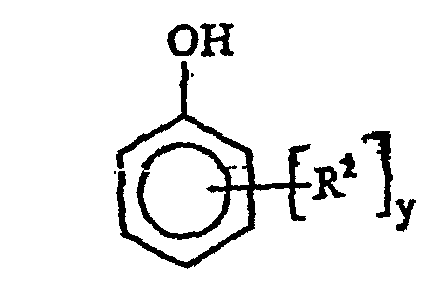
- Utilisation selon la revendication 7, dans laquelle y est 1 et R2 est un groupe polyisobutényle dérivé de l'isobutène, ledit groupe polyisobutényle ayant un groupe terminal oléfine.
- Utilisation selon la revendication 8, dans laquelle au moins 80 % des groupes terminaux oléfines sont de structure vinylidène.
- Utilisation selon l'une quelconque des revendications précédentes, dans laquelle ledit dispersant contenant de l'azote est présent selon une quantité d'environ 10 à environ 200 ppm en se basant sur le poids total de la composition combustible.
- Utilisation selon l'une quelconque des revendications précédentes, dans laquelle ledit dispersant contenant de l'azote est choisi dans le groupe constitué des hydrocarbyl amines, des composés acylés contenant de l'azote, des polyéthéramines et des mélanges de ceux-ci.
- Utilisation selon la revendication 11, dans laquelle ladite hydrocarbyl amine est une polybutène amine.
- Utilisation selon la revendication 11 ou la revendication 12, dans laquelle ledit dispersant contenant de l'azote comporte un mélange de ladite polybutène amine et lesdits composés acylés contenant de l'azote.
- Utilisation selon la revendication 11, dans laquelle le poids moléculaire desdites hydrocarbyl amines est d'environ 500 à 2000, le poids moléculaire desdits composés acylés contenant de l'azote est d'environ 500 à environ 20000 et le poids moléculaire desdites polyétheramines est d'environ 500 à environ 3000.
- Utilisation selon l'une quelconque des revendications 1 à 9, qui est essentiellement exempte de dispersant contenant de l'azote.
Applications Claiming Priority (2)
| Application Number | Priority Date | Filing Date | Title |
|---|---|---|---|
| US08/857,744 US5873917A (en) | 1997-05-16 | 1997-05-16 | Fuel additive compositions containing polyether alcohol and hydrocarbylphenol |
| US857744 | 1997-05-16 |
Publications (2)
| Publication Number | Publication Date |
|---|---|
| EP0878532A1 EP0878532A1 (fr) | 1998-11-18 |
| EP0878532B1 true EP0878532B1 (fr) | 2003-07-30 |
Family
ID=25326658
Family Applications (1)
| Application Number | Title | Priority Date | Filing Date |
|---|---|---|---|
| EP98303792A Expired - Lifetime EP0878532B1 (fr) | 1997-05-16 | 1998-05-14 | L' utilisation des compositions additives pour combustible contenant un polyéther alcool et un hydrocarbyl phénol |
Country Status (5)
| Country | Link |
|---|---|
| US (2) | US5873917A (fr) |
| EP (1) | EP0878532B1 (fr) |
| CA (1) | CA2237750A1 (fr) |
| DE (1) | DE69816707T2 (fr) |
| ES (1) | ES2203891T3 (fr) |
Families Citing this family (53)
| Publication number | Priority date | Publication date | Assignee | Title |
|---|---|---|---|---|
| US6821308B2 (en) * | 1997-04-02 | 2004-11-23 | Bayer Antwerp N.V. | Polyoxyalkylene monoethers with reduced water affinity |
| US5873917A (en) * | 1997-05-16 | 1999-02-23 | The Lubrizol Corporation | Fuel additive compositions containing polyether alcohol and hydrocarbylphenol |
| DE19830818A1 (de) * | 1998-07-09 | 2000-01-13 | Basf Ag | Propoxilat enthaltende Kraftstoffzusammensetzungen |
| US6179885B1 (en) * | 1999-06-22 | 2001-01-30 | The Lubrizol Corporation | Aromatic Mannich compound-containing composition and process for making same |
| FR2797450B1 (fr) * | 1999-08-12 | 2002-12-06 | Inst Francais Du Petrole | Derives de polytetrahydrofuranne utilisables dans des compositions detergentes pour carburants de type essence |
| ATE321111T1 (de) * | 1999-12-13 | 2006-04-15 | Afton Chemical Intangibles Llc | Manganverbindungen enthaltende brennstoffzusammensetzung für benzinmotoren mit direkteinspritzung |
| US6210452B1 (en) | 2000-02-08 | 2001-04-03 | Hhntsman Petrochemical Corporation | Fuel additives |
| US6458172B1 (en) * | 2000-03-03 | 2002-10-01 | The Lubrizol Corporation | Fuel additive compositions and fuel compositions containing detergents and fluidizers |
| DE10102913A1 (de) | 2001-01-23 | 2002-07-25 | Basf Ag | Alkoxylierte Alkyphenole und deren Verwendung in Kraft- und Schmierstoffen |
| US20030029077A1 (en) * | 2001-08-07 | 2003-02-13 | The Lubrizol Corporation, A Corporation Of The State Of Ohio | Fuel composition containing detergent combination and methods thereof |
| US7112230B2 (en) | 2001-09-14 | 2006-09-26 | Afton Chemical Intangibles Llc | Fuels compositions for direct injection gasoline engines |
| US7204863B2 (en) | 2001-12-11 | 2007-04-17 | Exxonmobil Research And Engineering Company | Gasoline additives for reducing the amount of internal combustion engine intake valve deposits and combustion chamber deposits |
| US7226489B2 (en) | 2001-12-12 | 2007-06-05 | Exxonmobil Research And Engineering Company | Gasoline additives for reducing the amount of internal combustion engine intake valve deposits and combustion chamber deposits |
| US20030131527A1 (en) * | 2002-01-17 | 2003-07-17 | Ethyl Corporation | Alkyl-substituted aryl polyalkoxylates and their use in fuels |
| DE10209830A1 (de) * | 2002-03-06 | 2003-09-18 | Basf Ag | Kraftstoffadditivgemische für Ottokraftstoffe mit synergistischer IVD-Performance |
| JP2004210985A (ja) | 2003-01-06 | 2004-07-29 | Chevron Texaco Japan Ltd | 燃料油組成物および燃料添加剤 |
| US20050034360A1 (en) * | 2003-08-13 | 2005-02-17 | Aradi Allen A. | Use of detergent additives in high-ethanol fuels for deposit control |
| US7491248B2 (en) * | 2003-09-25 | 2009-02-17 | Afton Chemical Corporation | Fuels compositions and methods for using same |
| US20050091913A1 (en) * | 2003-10-29 | 2005-05-05 | Aradi Allen A. | Method for reducing combustion chamber deposit flaking |
| US7645728B2 (en) * | 2004-02-17 | 2010-01-12 | Afton Chemical Corporation | Lubricant and fuel additives derived from treated amines |
| EP1591466A1 (fr) * | 2004-04-26 | 2005-11-02 | Basf Aktiengesellschaft | Préparation des compositions comprenant des polyethers |
| US20050268540A1 (en) * | 2004-06-04 | 2005-12-08 | Chevron Oronite Company Llc | Fuel additive composition suitable for control and removal of tenacious engine deposits |
| US20060277820A1 (en) * | 2005-06-13 | 2006-12-14 | Puri Suresh K | Synergistic deposit control additive composition for gasoline fuel and process thereof |
| US20060277819A1 (en) * | 2005-06-13 | 2006-12-14 | Puri Suresh K | Synergistic deposit control additive composition for diesel fuel and process thereof |
| US8222180B2 (en) * | 2005-08-01 | 2012-07-17 | Indian Oil Corporation Limited | Adsorbent composition for removal of refractory sulphur compounds from refinery streams and process thereof |
| US20080289249A1 (en) * | 2007-05-22 | 2008-11-27 | Peter Wangqi Hou | Fuel additive to control deposit formation |
| US20090031614A1 (en) * | 2007-08-01 | 2009-02-05 | Ian Macpherson | Environmentally-Friendly Fuel Compositions |
| EP2025737A1 (fr) | 2007-08-01 | 2009-02-18 | Afton Chemical Corporation | Compositions de combustibles sans danger pour l'environnement |
| US7878160B2 (en) | 2007-09-24 | 2011-02-01 | Afton Chemical Corporation | Surface passivation and to methods for the reduction of fuel thermal degradation deposits |
| US7828862B2 (en) * | 2007-10-31 | 2010-11-09 | Syn-Tech Fine Chemicals Company Limited | Highly effective fuel additives for igniting internal combustion engines, diesel engines and jet propulsion engines |
| WO2009074606A1 (fr) * | 2007-12-11 | 2009-06-18 | Basf Se | Hydrocarbylphénols utilisés comme renforçateurs de nettoyage de soupape d'admission |
| WO2011075536A2 (fr) * | 2009-12-18 | 2011-06-23 | Chevron Oronite Company Llc | Polyoléfines fonctionnalisées par carbonyl-ène |
| US8920524B2 (en) | 2009-12-18 | 2014-12-30 | Chevron Oronite Company Llc | Polyisobutenyl alcohols and fuel compositions |
| BR112013017784A2 (pt) | 2011-01-12 | 2019-09-24 | Lubrizol Corp | lubrificantes de motor contendo um poliéter |
| JP6216883B2 (ja) | 2013-11-18 | 2017-10-18 | アフトン・ケミカル・コーポレーションAfton Chemical Corporation | 吸気弁沈着物制御用の混合洗浄剤組成物 |
| GB201416088D0 (en) * | 2014-09-11 | 2014-10-29 | Bp Oil Int | Additive and fuel compositions |
| US10273425B2 (en) | 2017-03-13 | 2019-04-30 | Afton Chemical Corporation | Polyol carrier fluids and fuel compositions including polyol carrier fluids |
| US20200024536A1 (en) | 2018-07-20 | 2020-01-23 | Afton Chemical Corporation | Fuel-Soluble Synergistic Cleaning Mixture for High Pressure Gasoline Engines |
| US10774722B2 (en) | 2018-09-04 | 2020-09-15 | Afton Chemical Corporation | Predictive methods for emissions control systems performance |
| US10774708B2 (en) | 2018-09-04 | 2020-09-15 | Afton Chemical Corporation | Gasoline particulate filters with high initial filtering efficiency and methods of making same |
| US11390821B2 (en) | 2019-01-31 | 2022-07-19 | Afton Chemical Corporation | Fuel additive mixture providing rapid injector clean-up in high pressure gasoline engines |
| EP3825387A1 (fr) | 2019-11-22 | 2021-05-26 | Afton Chemical Corporation | Inhibiteur de cavitation soluble dans du carburant pour des carburants utilisés dans des moteurs à injection de type rampe commune à haute pression |
| US12024686B2 (en) | 2022-09-30 | 2024-07-02 | Afton Chemical Corporation | Gasoline additive composition for improved engine performance |
| US20220098503A1 (en) * | 2020-09-25 | 2022-03-31 | Exxonmobil Research And Engineering Company | Fuel compositions with gdi deposit fluidizing agents and methods of use thereof |
| US12169192B2 (en) | 2020-11-02 | 2024-12-17 | Afton Chemical Corporation | Methods of identifying a hydrocarbon fuel |
| KR20240076794A (ko) * | 2021-10-06 | 2024-05-30 | 셰브런 오로나이트 컴퍼니 엘엘씨 | 퇴적물 및 미립자 배출물을 줄이기 위한 연료 첨가제 |
| US11873461B1 (en) | 2022-09-22 | 2024-01-16 | Afton Chemical Corporation | Extreme pressure additives with improved copper corrosion |
| US12134742B2 (en) | 2022-09-30 | 2024-11-05 | Afton Chemical Corporation | Fuel composition |
| US11884890B1 (en) | 2023-02-07 | 2024-01-30 | Afton Chemical Corporation | Gasoline additive composition for improved engine performance |
| US11795412B1 (en) | 2023-03-03 | 2023-10-24 | Afton Chemical Corporation | Lubricating composition for industrial gear fluids |
| US12448582B2 (en) | 2023-04-06 | 2025-10-21 | Afton Chemical Corporation | Methods of improving the performance of combustion engine after-treatment devices |
| US12454653B2 (en) | 2023-12-11 | 2025-10-28 | Afton Chemical Corporation | Gasoline additive composition for improved engine performance |
| US12553003B1 (en) | 2025-02-03 | 2026-02-17 | Afton Chemical Corporation | Quaternary ammonium compounds |
Family Cites Families (23)
| Publication number | Priority date | Publication date | Assignee | Title |
|---|---|---|---|---|
| US2807525A (en) * | 1950-10-04 | 1957-09-24 | Standard Oil Co | Additive for motor fuels |
| US2807526A (en) * | 1950-10-04 | 1957-09-24 | Standard Oil Co | Additive for motor fuels and fuel compositions containing the same |
| US3658494A (en) * | 1969-01-21 | 1972-04-25 | Lubrizol Corp | Fuel compositions comprising a combination of monoether and ashless dispersants |
| US3615295A (en) * | 1969-07-18 | 1971-10-26 | Dow Chemical Co | Gasoline fuel containing polyalkoxylated alkylphenol to reduce exhaust emission |
| US3849085A (en) * | 1972-05-08 | 1974-11-19 | Texaco Inc | Motor fuel composition |
| US3901665A (en) * | 1972-10-06 | 1975-08-26 | Du Pont | Multi-functional fuel additive compositions |
| CA1021157A (en) * | 1974-09-23 | 1977-11-22 | Kenneth L. Kreuz | Motor fuel comprising phenolic additive |
| US4384872A (en) * | 1979-03-05 | 1983-05-24 | Institute Of Gas Technology | Stabilized gasoline-alcohol fuel compositions |
| US4548616A (en) * | 1984-06-14 | 1985-10-22 | Texaco Inc. | Gasoline containing as additive poly(oxyethylene) poly(oxypropylene) poly(oxyethylene) polyol to reduce octane requirement increase |
| CA1265506A (fr) * | 1984-11-21 | 1990-02-06 | Kirk Emerson Davis | Compositions a base d'alcoylphenol et de composes amines ainsi que huiles et carburants pour moteurs deux temps les renfermant |
| DE3700363A1 (de) * | 1987-01-08 | 1988-07-21 | Basf Ag | Kraft- oder schmierstoffzusammensetzung und verwendung von polybutyl- oder polyisobutylderivaten in denselben |
| US4877416A (en) * | 1987-11-18 | 1989-10-31 | Chevron Research Company | Synergistic fuel compositions |
| JP2644602B2 (ja) * | 1988-01-27 | 1997-08-25 | ザ ルブリゾル コーポレーション | 燃料組成物 |
| US5006130A (en) * | 1989-06-28 | 1991-04-09 | Shell Oil Company | Gasoline composition for reducing intake valve deposits in port fuel injected engines |
| BE1006694A5 (fr) * | 1991-06-22 | 1994-11-22 | Basf Ag | Procede de preparation de polyisobutenes extremement reactifs. |
| DE4142241A1 (de) * | 1991-12-20 | 1993-06-24 | Basf Ag | Kraftstoffe fuer ottomotoren |
| CA2104825C (fr) * | 1992-09-14 | 2004-01-06 | Joseph Graham | Essence contenant des additifs de polyalphaolefine et de polyoxyalkylene |
| US5427591A (en) * | 1992-12-18 | 1995-06-27 | Chevron Chemical Company | Poly(oxyalkylene) hydroxyaromatic esters and fuel compositions containing the same |
| US5755835A (en) * | 1992-12-28 | 1998-05-26 | Chevron Chemical Company | Fuel additive compositions containing aliphatic amines and polyalkyl hydroxyaromatics |
| US5336278A (en) * | 1993-05-13 | 1994-08-09 | The Lubrizol Corporation | Fuel composition containing an aromatic amide detergent |
| US5405419A (en) * | 1994-05-02 | 1995-04-11 | Chevron Chemical Company | Fuel additive compositions containing an aliphatic amine, a polyolefin and a poly(oxyalkylene) monool |
| US5696067A (en) * | 1996-04-15 | 1997-12-09 | The Lubrizol Corporation | Hydroxy-group containing acylated nitrogen compounds useful as additives for lubricating oil and fuel compositions |
| US5873917A (en) * | 1997-05-16 | 1999-02-23 | The Lubrizol Corporation | Fuel additive compositions containing polyether alcohol and hydrocarbylphenol |
-
1997
- 1997-05-16 US US08/857,744 patent/US5873917A/en not_active Expired - Lifetime
-
1998
- 1998-05-14 DE DE69816707T patent/DE69816707T2/de not_active Expired - Lifetime
- 1998-05-14 EP EP98303792A patent/EP0878532B1/fr not_active Expired - Lifetime
- 1998-05-14 ES ES98303792T patent/ES2203891T3/es not_active Expired - Lifetime
- 1998-05-15 CA CA002237750A patent/CA2237750A1/fr not_active Abandoned
-
1999
- 1999-02-11 US US09/248,463 patent/US6136052A/en not_active Expired - Lifetime
Also Published As
| Publication number | Publication date |
|---|---|
| ES2203891T3 (es) | 2004-04-16 |
| EP0878532A1 (fr) | 1998-11-18 |
| US6136052A (en) | 2000-10-24 |
| US5873917A (en) | 1999-02-23 |
| DE69816707T2 (de) | 2004-05-27 |
| CA2237750A1 (fr) | 1998-11-16 |
| DE69816707D1 (de) | 2003-09-04 |
Similar Documents
| Publication | Publication Date | Title |
|---|---|---|
| EP0878532B1 (fr) | L' utilisation des compositions additives pour combustible contenant un polyéther alcool et un hydrocarbyl phénol | |
| EP1518918B1 (fr) | Compositions de combustibles et méthodes les utilisant. | |
| EP1411105B1 (fr) | Compositions d'additifs pour carburant et compositions de carburant contenant des détergents et des agents de fluidisation | |
| AU2002250378B2 (en) | Gasoline additive concentrate composition and fuel composition and method thereof | |
| EP3071677B1 (fr) | Composition détergente mixte pour lutter contre la formation de dépôts sur les soupapes d'admission | |
| US6743266B2 (en) | Fuel additive composition for improving delivery of friction modifier | |
| KR100533490B1 (ko) | 연소실 침적물 형성의 저감을 위한 연료 조성물용 첨가제 | |
| US7112230B2 (en) | Fuels compositions for direct injection gasoline engines | |
| AU2002250378A1 (en) | Gasoline additive concentrate composition and fuel composition and method thereof | |
| US20050215441A1 (en) | Method of operating internal combustion engine by introducing detergent into combustion chamber | |
| EP2292722A1 (fr) | Procédé de fonctionnement de moteur à combustion interne par l'introduction de détergent dans une chambre de combustion | |
| EP4424801B1 (fr) | Composition d'additif pour essence pour améliorer les performances d'un moteur | |
| EP0444770A1 (fr) | Nouveaux composés polyoxyalkylène esters, et compositions de carburant inhibées contre l'augmentation du besoin en indice d'octane | |
| JPH1161159A (ja) | 脂肪族アミン及びポリ(オキシアルキレン)モノオールを含有する燃料組成物 | |
| EP2479245B1 (fr) | Concentré additif de carburant et essence contenant le concentré | |
| US8070837B2 (en) | Use of fatty acid alkoxylates as a method to remedy engine intake valve sticking | |
| EP3191568B1 (fr) | Utilisations pour maîtriser les émissions de particules dans un moteur à combustion interne | |
| CN117801852A (zh) | 用于改进发动机性能的汽油添加剂组合物 | |
| WO2014184066A1 (fr) | Polyalcénylsuccinimides pour réduire l'encrassement d'injecteurs dans des moteurs à allumage commandé et injection directe |
Legal Events
| Date | Code | Title | Description |
|---|---|---|---|
| PUAI | Public reference made under article 153(3) epc to a published international application that has entered the european phase |
Free format text: ORIGINAL CODE: 0009012 |
|
| AK | Designated contracting states |
Kind code of ref document: A1 Designated state(s): DE ES FR GB IT SE |
|
| AX | Request for extension of the european patent |
Free format text: AL;LT;LV;MK;RO;SI |
|
| 17P | Request for examination filed |
Effective date: 19990514 |
|
| AKX | Designation fees paid |
Free format text: DE ES FR GB IT SE |
|
| 17Q | First examination report despatched |
Effective date: 20000712 |
|
| RTI1 | Title (correction) |
Free format text: THE USE OF FUEL ADDITIVE COMPOSITIONS CONTAINING POLYETHER ALCOHOL AND HYDROCARBYLPHENOL |
|
| GRAG | Despatch of communication of intention to grant |
Free format text: ORIGINAL CODE: EPIDOS AGRA |
|
| GRAG | Despatch of communication of intention to grant |
Free format text: ORIGINAL CODE: EPIDOS AGRA |
|
| GRAH | Despatch of communication of intention to grant a patent |
Free format text: ORIGINAL CODE: EPIDOS IGRA |
|
| GRAG | Despatch of communication of intention to grant |
Free format text: ORIGINAL CODE: EPIDOS AGRA |
|
| GRAH | Despatch of communication of intention to grant a patent |
Free format text: ORIGINAL CODE: EPIDOS IGRA |
|
| GRAH | Despatch of communication of intention to grant a patent |
Free format text: ORIGINAL CODE: EPIDOS IGRA |
|
| GRAA | (expected) grant |
Free format text: ORIGINAL CODE: 0009210 |
|
| AK | Designated contracting states |
Designated state(s): DE ES FR GB IT SE |
|
| REG | Reference to a national code |
Ref country code: GB Ref legal event code: FG4D |
|
| REF | Corresponds to: |
Ref document number: 69816707 Country of ref document: DE Date of ref document: 20030904 Kind code of ref document: P |
|
| REG | Reference to a national code |
Ref country code: SE Ref legal event code: TRGR |
|
| REG | Reference to a national code |
Ref country code: ES Ref legal event code: FG2A Ref document number: 2203891 Country of ref document: ES Kind code of ref document: T3 |
|
| ET | Fr: translation filed | ||
| PLBE | No opposition filed within time limit |
Free format text: ORIGINAL CODE: 0009261 |
|
| STAA | Information on the status of an ep patent application or granted ep patent |
Free format text: STATUS: NO OPPOSITION FILED WITHIN TIME LIMIT |
|
| 26N | No opposition filed |
Effective date: 20040504 |
|
| PGFP | Annual fee paid to national office [announced via postgrant information from national office to epo] |
Ref country code: SE Payment date: 20060530 Year of fee payment: 9 |
|
| EUG | Se: european patent has lapsed | ||
| PG25 | Lapsed in a contracting state [announced via postgrant information from national office to epo] |
Ref country code: SE Free format text: LAPSE BECAUSE OF NON-PAYMENT OF DUE FEES Effective date: 20070515 |
|
| PGFP | Annual fee paid to national office [announced via postgrant information from national office to epo] |
Ref country code: ES Payment date: 20080526 Year of fee payment: 11 |
|
| PGFP | Annual fee paid to national office [announced via postgrant information from national office to epo] |
Ref country code: GB Payment date: 20080529 Year of fee payment: 11 |
|
| GBPC | Gb: european patent ceased through non-payment of renewal fee |
Effective date: 20090514 |
|
| PG25 | Lapsed in a contracting state [announced via postgrant information from national office to epo] |
Ref country code: GB Free format text: LAPSE BECAUSE OF NON-PAYMENT OF DUE FEES Effective date: 20090514 |
|
| REG | Reference to a national code |
Ref country code: ES Ref legal event code: FD2A Effective date: 20090516 |
|
| PG25 | Lapsed in a contracting state [announced via postgrant information from national office to epo] |
Ref country code: ES Free format text: LAPSE BECAUSE OF NON-PAYMENT OF DUE FEES Effective date: 20090516 |
|
| PGFP | Annual fee paid to national office [announced via postgrant information from national office to epo] |
Ref country code: FR Payment date: 20110607 Year of fee payment: 14 |
|
| REG | Reference to a national code |
Ref country code: FR Ref legal event code: ST Effective date: 20130131 |
|
| PG25 | Lapsed in a contracting state [announced via postgrant information from national office to epo] |
Ref country code: FR Free format text: LAPSE BECAUSE OF NON-PAYMENT OF DUE FEES Effective date: 20120531 |
|
| PGFP | Annual fee paid to national office [announced via postgrant information from national office to epo] |
Ref country code: DE Payment date: 20160527 Year of fee payment: 19 |
|
| PGFP | Annual fee paid to national office [announced via postgrant information from national office to epo] |
Ref country code: IT Payment date: 20160520 Year of fee payment: 19 |
|
| REG | Reference to a national code |
Ref country code: DE Ref legal event code: R119 Ref document number: 69816707 Country of ref document: DE |
|
| PG25 | Lapsed in a contracting state [announced via postgrant information from national office to epo] |
Ref country code: DE Free format text: LAPSE BECAUSE OF NON-PAYMENT OF DUE FEES Effective date: 20171201 |
|
| PG25 | Lapsed in a contracting state [announced via postgrant information from national office to epo] |
Ref country code: IT Free format text: LAPSE BECAUSE OF NON-PAYMENT OF DUE FEES Effective date: 20170514 |