EP0878549A2 - Verfahren zur enzymatischen Herstellung von fructosylten Verbindungen - Google Patents
Verfahren zur enzymatischen Herstellung von fructosylten Verbindungen Download PDFInfo
- Publication number
- EP0878549A2 EP0878549A2 EP98106603A EP98106603A EP0878549A2 EP 0878549 A2 EP0878549 A2 EP 0878549A2 EP 98106603 A EP98106603 A EP 98106603A EP 98106603 A EP98106603 A EP 98106603A EP 0878549 A2 EP0878549 A2 EP 0878549A2
- Authority
- EP
- European Patent Office
- Prior art keywords
- fructosyl
- compounds
- acceptor
- reaction
- sucrose
- Prior art date
- Legal status (The legal status is an assumption and is not a legal conclusion. Google has not performed a legal analysis and makes no representation as to the accuracy of the status listed.)
- Granted
Links
Images





Classifications
-
- C—CHEMISTRY; METALLURGY
- C12—BIOCHEMISTRY; BEER; SPIRITS; WINE; VINEGAR; MICROBIOLOGY; ENZYMOLOGY; MUTATION OR GENETIC ENGINEERING
- C12N—MICROORGANISMS OR ENZYMES; COMPOSITIONS THEREOF; PROPAGATING, PRESERVING, OR MAINTAINING MICROORGANISMS; MUTATION OR GENETIC ENGINEERING; CULTURE MEDIA
- C12N9/00—Enzymes; Proenzymes; Compositions thereof; Processes for preparing, activating, inhibiting, separating or purifying enzymes
- C12N9/10—Transferases (2.)
- C12N9/1048—Glycosyltransferases (2.4)
- C12N9/1051—Hexosyltransferases (2.4.1)
- C12N9/1055—Levansucrase (2.4.1.10)
-
- C—CHEMISTRY; METALLURGY
- C07—ORGANIC CHEMISTRY
- C07H—SUGARS; DERIVATIVES THEREOF; NUCLEOSIDES; NUCLEOTIDES; NUCLEIC ACIDS
- C07H3/00—Compounds containing only hydrogen atoms and saccharide radicals having only carbon, hydrogen, and oxygen atoms
- C07H3/02—Monosaccharides
-
- C—CHEMISTRY; METALLURGY
- C12—BIOCHEMISTRY; BEER; SPIRITS; WINE; VINEGAR; MICROBIOLOGY; ENZYMOLOGY; MUTATION OR GENETIC ENGINEERING
- C12P—FERMENTATION OR ENZYME-USING PROCESSES TO SYNTHESISE A DESIRED CHEMICAL COMPOUND OR COMPOSITION OR TO SEPARATE OPTICAL ISOMERS FROM A RACEMIC MIXTURE
- C12P19/00—Preparation of compounds containing saccharide radicals
- C12P19/18—Preparation of compounds containing saccharide radicals produced by the action of a glycosyl transferase, e.g. alpha-, beta- or gamma-cyclodextrins
Definitions
- Fructosyltransferases catalyze the transfer of fructosyl groups from sucrose to an acceptor. The reaction proceeds according to the following scheme:
- fructosyl donor and acceptor of Fructosyl groups The usual donor of fructosyl groups is sucrose.
- Other known fructosyl donors are Sucrose analogs in which the glucose half of the Sucrose through monosaccharides, such as ⁇ -D-galactose, ⁇ -L-arabinose, ⁇ -D-xylose, or by disaccharides, such as lactose, Maltose, isomaltose, melibiosis, or by oligosaccharides, such as oligodextrans or maltodextrins (Hestrin and Avigad, 1958, Biochem., J., Vol. 69, pp. 388-398).
- sucrose A well-known acceptor of the reaction is sucrose.
- Fructosylation of sucrose leads to oiigosaccharides and Polysaccharides (Avigad and Feingold, 1957, Arch. Biochem. Biophys., Vol, 70, pp. 178-184).
- Glucose is released during the reaction and works also in addition to sucrose as an acceptor of Fructosyl groups.
- Glucose analogs such as ⁇ -D-galactose, ⁇ -L-arabinose, ⁇ -D-xylose, or disaccharides, such as lactose, Maltose, isomaltose, melibiosis, or oligosaccharides, such as Oligodextrans, or maltodextrins
- Sucrose analogues can be fructosylated. That reaction was for the production of xylosylfructoside and lactosylfructoside (Hayashibara, EP 0 447 125).
- fructosyl compounds for the production of fructosyl compounds in the sense of Invention is a reaction mixture of sucrose and Acceptor of the enzyme action of a fructosyltransferase exposed.
- the acceptor according to the invention is a compound that according to the application, a particularly desired biological Has an effect, being sugar with 4 or more Carbon atoms that contain only alcohol, aldehyde, Contain keto or hemiacetal functions, as well as C1-C6 aliphatic compounds acting as a functional group only have one or more OH groups, as Acceptors are excluded.
- Substances such as vitamins, hormones, neurological Messenger substances, secondary metabolites from plants or Microorganisms, amino acids, peptides, proteins, Hydroxy acids and ⁇ -hydroxy acids, isoprenoid lipids, mono- or Diglycerides, sphingolipids, poly, oligo- and Mononucleotides, nucleosides, antioxidants, Radical scavengers, drugs, antiseptics, aroma and Flavors, fragrances and colors can be used as Acceptor used in the fructosylation reaction.
- vitamins can be ascorbic acid (vitamin C), vitamins of group B such as cyanocobalamin (B 12 ), riboflavin, and riboflavin monophosphate (B 2 ), pyrodoxin hydrochloride, pyridoxol, pyridoxal (B 6 ), pantothenic acid and panthenol (vitamin B 5 ) and thiamine ( B 1 ), also retinol (vitamin A), 3,4-didehydroretinol (vitamin A 2 ), and 3-dehydroretinol and their aldehydes, acids and esters; Ergocalciferol and its relatives (vitamin D 2 , D 3 and D 4 ), ⁇ -tocopherol (vitamin E), coagulation vitamins such as phytonadiol (dihydrovitamin K 1 ), menaquinone H 2 (dihydrovitamin K 2 ), menadiol (dihydrovitamin K 3 ) and Vitamin K 5 can be
- Steroid hormones such as testosterone, androsterone, estradiol, estriol, corticosterone and cortisone can be used as hormones.
- Other steroids such as cholesterol can also be used in the fructosylation reaction.
- Other hormones such as prostaglandins (prostaglandins E1, E2 and F), peptide hormones such as ocytocin, vasopressin, glucagon, serotonin and insulin, glycoproteins such as LH ( Luteinizing Hormones " ) and FSH ( Follicle-stimulating hormones " ) can also be used in the fructosylation reaction.
- Neurological messenger substances such as Adrenaline, noradrenaline, dopa (3-hydroxytyrosine) and Dopamine, amino acids such as serine, threonine and tyrosine, Peptides containing serine, threonine and tyrosine and Proteins, hydroxy acids and ⁇ -hydroxy acids such as lactic acid, ⁇ -galacturonic acid, 4-hydroxybutanoic acid, 3-hydroxybutanoic acid as well as sphingolipids such as ceramides, glycoceramides and Sphingomyelin can be used.
- amino acids such as serine, threonine and tyrosine
- hydroxy acids and ⁇ -hydroxy acids such as lactic acid, ⁇ -galacturonic acid, 4-hydroxybutanoic acid, 3-hydroxybutanoic acid as well as sphingolipids such as ceramides, glycoceramides and Sphingo
- Poly-, oligo- and mononucleotides such as ribonucleic acid and deoxyribonucleic acid, Adenosine mono-, di- and triphosphate, cyclic Adenosine monophosphate, nucleosides, purine and pyrimidine bases, such as guanine, hypoxanthine, cytosine, uracil and thymine, be used.
- Analogs of these substances like zidovudine, Acyclovir and cytarabine, which have an antimetabolite effect own can also be used.
- acceptors that can be used are substances that contain one or contain several aromatic hydroxylated rings. This are for example phenol, salicylic acid, hydroquinone, Arbutin, pyrocatechol (pyrocatechol), resorcinol, Phloroglucin, pyrogallol, cresol, catechins, tannic acid and Bioflavonoids such as quercetin and luteolin.
- flavors like vanillin, vanillic acid and Ethyl vanillin
- UV filters like esculetin
- dyes like Kermesic acid
- preservatives such as ferulinic acid, Methyl, ethyl and propyl paraben
- hair protection products such as Folescutol and drugs such as alkaloids (e.g. morphine, Cephaelin), haemostatics (e.g.
- adrenaline beta-agonists
- beta-agonists Epinephrine, fenoterol
- antibiotics cloxyquin, Dichlorophen, iodoquinol
- analgesics paracetamol, Gentisic acid
- anti-cancer drugs Mitoxantrone
- adrenergics Octopamine
- antihypertensive Methodhyldopa
- the donor and acceptor of the fructosylation reaction can be used in an aqueous solution.
- organic is also advantageous Solvents. This allows water-insoluble acceptors be solved.
- Another advantage of using organic solvents is the possibility Control water content and water activity what better control of the fructosylation reaction enables. The unwanted fructosylation of water This inhibits (hydrolysis of sucrose). Likewise may cause the undesirable fructosylation of sucrose and the glucose inhibited at low saccharide concentration will.
- the reaction can take place in single-phase solution systems or in Multi-phase solution systems are used. With Multi-phase systems can also tensides the mass transfer improve. When using multiphase systems, this can Enzyme at the interface.
- the reaction can, for example, in the presence of polar Solvents such as acetone, acetonitrile, dimethylformamide, Dimethylacetamide, glyme, methyl ethyl ketone or dioxane be performed.
- polar Solvents such as acetone, acetonitrile, dimethylformamide, Dimethylacetamide, glyme, methyl ethyl ketone or dioxane be performed.
- Apolar solvents such as hexane can also be used.
- the pH and temperature conditions as well as the water activity are set in the cheapest range in which the Fructosyltransferase is active and stable and in which the Reactants are soluble and stable.
- the fructosyl transferase is then added to the medium. It can be obtained microbially from a variety of fungi such as Aspergillus niger and Aureobasidium pullulans , and bacteria such as Bacillus subtils , Erwinia herbicola and Zyomonas mobilis . Immobilized fructosyltransferase and whole cells are also suitable for the method according to the invention.
- the enzyme preparation can advantageously be dried by lyophilization or solvent exchange in such a way that it is efficiently wetted by the solvent. This has the advantage that the starting materials of the reaction can reach the active center of the enzyme.
- the reaction solution is then incubated.
- the incubation period depends on the amount of enzyme used and which Inhibition effects occur due to the medium component. Suitable amounts of enzyme are 0.5-50 U / ml and suitable ones Response times are 2-96 h. In cases of Multi-phase systems must be used during the reaction medium Incubation should be mixed so that the mass transfers be guaranteed between phases.
- the reaction can inexpensive to operate in open systems, with addition of raw materials or delivery of products during the Reaction to be made.
- the manufactured Fructosyl compounds by known methods such as Chromatography with ion exchangers, precipitation by Alcohol or salts, flash chromatography and / or Crystallization extracted from the reaction medium and cleaned.
- the fructosyl compounds are then as needed by crystallization, spray drying or freeze drying represented as powder.
- fructosyl compounds are then as such or used in various preparations.
- Raw materials can be processed through this process Fructosyl derivatives that are made like antibiotics, Vitamins, hormones, amino acids, antioxidants, Pesticides, neurological messengers, secondary metabolites from plants or microorganisms, amino acids, peptides, Proteins, hydroxy acids and ⁇ -hydroxy acids, Isoprenoid lipids, mono- or diglycerides, sphingolipids, Poly, oligonucleotides and mononucleotides, nucleosides, Antioxidants, radical scavengers, drugs, Antiseptics, aromas and flavors, fragrances and Dyes as acceptors in the fructosylation reaction can work.
- the fructosyl compounds of the invention have improved compared to the starting materials Properties regarding solubility, diffusion coefficient, Stability, rate of metabolism. This method can be used, for example, to vectorize drugs be applied.
- Fructosyl derivatives are based on the combination of the Properties of the acceptor molecule with the properties of the Fructosyl group. It was found that in many cases not just the effectiveness of Fructosyl acceptor compound according to the invention in comparison is potentiated to the unfructosylated acceptor molecule, but also the new compounds according to the invention new ones Properties and a new impact profile.
- the compounds according to the invention are particularly suitable as active ingredients for topical use, e.g. B. in cosmetic products.
- Such agents are suitable for anti-inflammatory effects also in particular for the prevention and relief of Skin irritation.
- fructosyl transferase (levans saccharase) was produced from the bacterial strain Microbacterium laevaniformans (DSM 20140).
- a culture medium (volume: 160 ml in a 500 ml flask with yeast extract, 12.5 g / l, casein peptone, 12.5 g / l; sucrose, 50 g / l) and a phosphate buffer solution (volume: 20 ml with Na 2 HPO 4 , 80 g / l; NaH 2 PO 4 , 40 g / l) were prepared, adjusted to pH 7.3 and autoclaved at 121 ° C for 20 min.
- the culture was then at 30-32 ° C and 250 rpm on a incubated rotating shaker. After 24 hours Incubations were pH 5.4 and optical density (Absorbance at 600 nm) of the culture 3.5.
- To the Fermentation solution were 67 g of polyethylene glycol 1500 10 ° C added with stirring. This solution was then at Centrifuged 4200 g and 6 ° C for 30 min. The supernatant was discarded and the levansaccharase-rich lower phase at 15 ml of sodium phosphate buffer (pH 6.5; 50 mM) suspended. This Enzyme preparation was used in fructosyl transfer reactions as Levansaccharase used.
- Levansaccharase activity was determined as follows. The preparation was diluted 1:10 in sodium phosphate 50mM pH 6.0. A medium with 250 ⁇ l sucrose 400 g / l; 50 ⁇ l sodium phosphate buffer 1 M pH 6.0; 500 ⁇ l water and 200 ⁇ l undiluted enzyme preparation were incubated at 30 ° C. A 50 ⁇ l sample was taken every 5 minutes for 20 minutes. drawn and diluted with 200 ul Na 2 CO 3 0.1 M. In these latter solutions and in a standard glucose series (0-4 g / l), the glucose concentration was measured with the Glucose Trinder Reagent (Sigma). A levansaccharase unit (U) was defined as the amount of enzyme that releases one micromole of glucose under the measurement conditions per minute. The Levansaccharase preparation from Microbacterium laevaniformans contained 35 U / ml.
- a medium with sucrose, 1 g; Ascorbic acid, 0.5 g; Na 2 CO 3 , 0.1 g; Water, 2.9 g prepared.
- CO 2 was released, which caused gas formation and corresponded to the neutralization of ascorbic acid by Na 2 CO 3 .
- the medium had a pH of 4.6.
- the fructosylation reaction was started by adding 0.5 ml of Levanssacharase from Microbacterium laevaniformans and the medium was incubated at 30 ° C. for 15 h.
- a culture medium (volume: 1.9 l with yeast extract 3 g; casein peptone 30 g; meat extract 3 g; (NH 4 ) 2 HPO 4 60 g; sucrose 140 g; Tween 80 5 g) was used to enrich Levansaccharase from Bacillus subtilis (DSM 10). and a saline solution (volume: 0.2 l with MgSO 4 x 7H 2 O 600 mg; KCl 1000 mg; CaCl 2 x 2H 2 O 600 mg; MnSO 4 x H 2 O 30 mg; FeSO 4 x 7H 2 O 30 mg ; NaCl 30 mg) prepared. The pH of the medium was adjusted to 7.3 with phosphoric acid.
- the culture medium was autoclaved at 120 ° C for 20 min in a 5 liter fermenter.
- the salt solution was adjusted to pH 2 with hydrochloric acid and autoclaved at 121 ° C. for 20 min. After cooling, the saline solution was sterile added to the culture medium.
- the temperature of the culture was at 30 ° C and the Aeration rate kept at 180 1 / h. During the first 12 hours the fermentation brought the pH to 6.5. Then he became by adding a 12.5% ammonia solution at this value held. The stirrer speed was at the beginning of the Fermentation set at 600 rpm and then after Need increased up to 1200 rpm so the concentration of the dissolved oxygen not less than 20% of that Air saturation fell. Antifoam (M30 Silicone anti-foam emulsion, Sigma) the fermentation medium added.
- the levansaccharase was precipitated.
- the one from it resulting suspension was at 10 ° C overnight ditched.
- the two phases formed were through Decant separately.
- the lower phase rich in levansaccharase 250 ml with 370 ml 50 mM Sodium phosphate buffer (pH 6.0) diluted.
- 230 g of PEG 1500 were dissolved at 10 ° C.
- the resulting suspension was 30 min at 10 ° C and 4200 g centrifuged.
- the lower phase was rich in levansaccharase diluted 1: 2 with 50 mM sodium phosphate buffer (pH 6.0).
- This preparation (212 ml) contained 13 U / ml levan saccharase and was used for the fructosyl transfer reactions.
- a medium with sucrose 100 mg; Arbutin 100 mg; 1 M sodium phosphate buffer pH 6.0 25 ⁇ l; Water 225 ⁇ l prepared.
- the components of the medium were dissolved by heating to 70 ° C.
- the medium was then kept at 50 ° C.
- the pH of the medium, determined by pH indicator paper, was 6 - 6.5.
- the fructosylation reaction was started by adding 50 ⁇ l of levansaccharase from Bacillus subtilis and the mixture was incubated at 50 ° C. for 19 h.
- a weighed sample (approx. 50 mg) of the reaction medium was removed after 19 h of incubation and kept at 100 ° C. for 5 min.
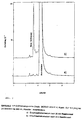
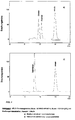
- Example 1 The sample was then diluted 1:20 with approx. 950 ⁇ l water. 200 ⁇ l of this was removed and diluted 1: 5 with 800 ⁇ l 0.1 NH 2 SO 4 . A batch with a thermally denatured enzyme (20 min at 106 ° C.) served as a control. These solutions were analyzed by HPLC (column: BIORAD HPX 87-H, eluent: 0.01 NH 2 SO 4 , detection: refractive index detector and diode array detector) as in Example 1.
- HPLC columnumn: BIORAD HPX 87-H, eluent: 0.01 NH 2 SO 4 , detection: refractive index detector and diode array detector
- the Levansaccharase was obtained according to Example 2.
- the galacturonic acid and sodium carbonate were first dissolved.
- the pH (determined by pH indicator paper) was 4.5.
- the sucrose was then dissolved in the medium.
- the fructosylation reaction was started by adding 50 ⁇ l levansaccharase from Bacillus subtilis .
- the reaction mixture was incubated at 40 ° C for 19 h.
- a weighed sample (approx. 50 mg) of the reaction medium was taken after 19 h of incubation and kept at 100 ° C. for 5 min.
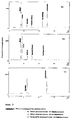
- the sample was then diluted 1:20 with approx. 950 ⁇ l water. 50 ul of this solution were diluted 1:10 with 450 ul water. 50 ⁇ l of this was again pipetted off and diluted 1:20 with 950 ⁇ l of water. A batch with a thermally denatured enzyme (20 min at 100 ° C.) served as a control.
- the solutions were analyzed by ion chromatography with a DIONEX-Carbopack PA-1 column and amperometric detection. Elution was carried out with 0.1 M NaOH and a sodium acetate gradient. The gradient was created from a 0.1 M NaOH solution (A) and a 0.1 M NaOH solution with 1 M NaOAc (B) as follows: Time, min A,% B,% 0 98 2nd 5 91 9 20th 66 34
- the alcohol functions of the Sugar partially ionized as alcoholates.
- the sugar behave anionically and are caused by the Anion exchange column retained.
- the sugar therefore elute more slowly with increasing degree of polymerization.
- the ionizability of the OH group depends on the overall shape of the molecule. The more ionizable the OH groups of a sugar, the stronger the sugar becomes restrained over the pillar. A separation from different sugars with the same degree of polymerization thereby possible.
- the acids are still in this system more ionized than the sugars and are accordingly more restrained.
- the sugars and sugar acids were pulsating through Amperometry detected with a gold electrode. Here they are electrochemically oxidized at high pH, and the corresponding temporal occurrence of the oxidation currents is determined.
- the Levansaccharase was obtained according to Example 2.
- the gluconic acid was used as an acceptor under the conditions of Example 3, such as galacturonic acid.
- the reaction products were analyzed as described in Example 3.
Landscapes
- Chemical & Material Sciences (AREA)
- Organic Chemistry (AREA)
- Life Sciences & Earth Sciences (AREA)
- Health & Medical Sciences (AREA)
- Engineering & Computer Science (AREA)
- Genetics & Genomics (AREA)
- Zoology (AREA)
- Wood Science & Technology (AREA)
- General Health & Medical Sciences (AREA)
- Bioinformatics & Cheminformatics (AREA)
- Biotechnology (AREA)
- Biochemistry (AREA)
- Molecular Biology (AREA)
- General Engineering & Computer Science (AREA)
- Microbiology (AREA)
- Biomedical Technology (AREA)
- Medicinal Chemistry (AREA)
- Chemical Kinetics & Catalysis (AREA)
- General Chemical & Material Sciences (AREA)
- Preparation Of Compounds By Using Micro-Organisms (AREA)
- Pharmaceuticals Containing Other Organic And Inorganic Compounds (AREA)
- Saccharide Compounds (AREA)
Abstract
Description


- Die Saccharose muß darin löslich sein
- Der Akzeptor muß darin löslich sein
- Das Enzym muß im Lösungssystem aktiv und stabil sein
- Das Lösungsmittel darf selber keine oder aber nur eine geringe Wirkung als Akzeptor besitzen.
| Zeit, min | A, % | B, % |
| 0 | 98 | 2 |
| 5 | 91 | 9 |
| 20 | 66 | 34 |
Die Gluconsäure wurde unter den Bedingungen des Beispiels 3 wie Galacturonsäure als Akzeptor eingesetzt. Die Reaktionsprodukte wurden, wie in Beispiel 3 beschrieben, analysiert.
Claims (12)
- Verfahren zur enzymatischen Herstellung von Fructosylverbindungen durch die Einwirkung einer Fructosyltransferase auf eine Lösung von Saccharose und einem Akzeptor, der eine biologisch wirksame Verbindung darstellt, mit Ausnahme von Zuckern mit 4 oder mehr Kohlenstoffatomen, die ausschließlich Alkohol-, Aldehyd-, Keto- oder Hemiacetalfunktionen enthalten, sowie C1-C6 aliphatischen Verbindungen, die als funktionelle Gruppe ausschließlich eine oder mehrere OH Gruppen besitzen.
- Verfahren nach Anspruch 1, dadurch gekennzeichnet, daß die Fructosyltransferase Levansaccharase (E.C.2.4.1.10) ist.
- Verfahren nach Anspruch 1 oder 2, dadurch gekennzeichnet, daß Vitamine, Hormone, neurologische Botenstoffe, sekundäre Metabolite aus Pflanzen oder Mikroorganismen, Aminosäuren, Peptide, Proteine, Hydroxysäuren und α-Hydroxysäuren, Isoprenoidlipide, Mono- oder Diglyceride, Sphingolipide, Poly-, Oligo- und Mononucleotide, Nucleoside, Antioxidationsmittel, Radikalfänger, Arzneistoffe, Antiseptika, Aroma- und Geschmackstoffe, Duftstoffe und Farbstoffe als Akzeptor in der Fructosylierungsreaktion eingesetzt werden.
- Verfahren nach Anspruch 1-3, wobei der Akzeptor mindestens eine OH-Gruppe umfaßt.
- Verfahren nach Anspruch 1-4, dadurch gekennzeichnet, daß der Akzeptor ein Vitamin darstellt.
- Verfahren nach Anspruch 1-4, dadurch gekennzeichnet, daß der Akzeptor ein oder mehrere aromatische hydroxylierte Ringe enthält.
- Verfahren nach Anspruch 1-4, dadurch gekennzeichnet, daß der Akzeptor einen sekundären Metaboliten aus einer Pflanze oder einem Mikroorganismus darstellt.
- Fructosylverbindungen, herstellbar gemäß einem der vorstehenden Ansprüche.
- Fructosylverbindungen der allgemeinen Formel
- Fr
- eine Fructofuranosylgruppe,
- n
- eine ganze Zahl zwischen 0 und 8,
- O
- ein Sauerstoffatom und
- A
- ein Vitamin, Hormon, eine neurologische Botensubstanz, einen sekundären Metaboliten aus Pflanzen oder Mikroorganismen, eine Aminosäure, ein Peptid, Protein, eine Hydroxysäure, α-Hydroxysäure, ein Isoprenoidlipid, Mono- oder Diglycerid, Sphingolipid, Poly-, Oligo- und Mononucleotid, Nucleosid, Antioxidationsmittel, einen Radikalfänger, Arzneistoff, ein Antiseptikum, einen Aroma- und Geschmackstoff, Duftstoff oder Farbstoff darstellt.
- Fructosylverbindung gemäß Anspruch 9, Wobei die Fr-O-Fr-Bindungen (falls n ≥ 1) und die Fr-O-A-Bindung ausschließlich β-Fructosid-Bindungen sind.
- Kosmetische Mittel, enthaltend eine Fructosylverbindung gemäß Anspruch 9 oder 10.
- Arzneimittel enthaltend eine Fructosylverbindung gemäß Anspruch 9 oder 10.
Applications Claiming Priority (2)
| Application Number | Priority Date | Filing Date | Title |
|---|---|---|---|
| DE19716731 | 1997-04-14 | ||
| DE19716731A DE19716731A1 (de) | 1997-04-14 | 1997-04-14 | Verfahren zur enzymatischen Herstellung von Fructosylverbindungen |
Publications (3)
| Publication Number | Publication Date |
|---|---|
| EP0878549A2 true EP0878549A2 (de) | 1998-11-18 |
| EP0878549A3 EP0878549A3 (de) | 2000-09-27 |
| EP0878549B1 EP0878549B1 (de) | 2007-03-07 |
Family
ID=7827233
Family Applications (1)
| Application Number | Title | Priority Date | Filing Date |
|---|---|---|---|
| EP98106603A Expired - Lifetime EP0878549B1 (de) | 1997-04-14 | 1998-04-09 | Verfahren zur enzymatischen Herstellung von Fructosylverbindungen |
Country Status (3)
| Country | Link |
|---|---|
| EP (1) | EP0878549B1 (de) |
| AT (1) | ATE356220T1 (de) |
| DE (2) | DE19716731A1 (de) |
Families Citing this family (2)
| Publication number | Priority date | Publication date | Assignee | Title |
|---|---|---|---|---|
| FR3033800B1 (fr) * | 2015-03-19 | 2020-10-23 | Inst Nat De La Rech Agronomique Inra | Production de synthons glycosyles par voie enzymatique |
| WO2019043069A1 (en) | 2017-08-29 | 2019-03-07 | Julius-Maximilians-Universitaet Wuerzburg | NEW CLASS OF SUCROSE ESTERS AND PREPARATION METHOD THEREOF |
Family Cites Families (6)
| Publication number | Priority date | Publication date | Assignee | Title |
|---|---|---|---|---|
| JPS6277322A (ja) * | 1985-09-30 | 1987-04-09 | Tetsuo Takano | 老化防止剤 |
| JP2781412B2 (ja) * | 1989-06-26 | 1998-07-30 | 塩水港精糖株式会社 | 糖転移活性の強いβ―フラクトフラノシダーゼ、その製造法および該酵素を用いてアルドシルフラクトシドを製造する方法 |
| EP0447125B1 (de) * | 1990-03-08 | 1995-07-19 | Kabushiki Kaisha Hayashibara Seibutsu Kagaku Kenkyujo | Verfahren zur Herstellung eines Pulvers/mit erhöhtem Gehalt an Lactosucrose und Verwendung dieses Pulvers |
| WO1991016449A1 (en) * | 1990-04-16 | 1991-10-31 | The Trustees Of The University Of Pennsylvania | Saccharide compositions, methods and apparatus for their synthesis |
| EP0785988A1 (de) * | 1993-07-15 | 1997-07-30 | Neose Pharmaceuticals, Inc | Verfahren zur synthese von saccharidzusammensetzungen |
| US6004958A (en) * | 1997-02-05 | 1999-12-21 | Fox Chase Cancer Center | Compounds and methods for therapeutic intervention in preventing diabetic complications and procedures for assessing a diabetic's risk of developing complications and determining the efficacy of therapeutic intervention |
-
1997
- 1997-04-14 DE DE19716731A patent/DE19716731A1/de not_active Ceased
-
1998
- 1998-04-09 EP EP98106603A patent/EP0878549B1/de not_active Expired - Lifetime
- 1998-04-09 DE DE59813928T patent/DE59813928D1/de not_active Expired - Fee Related
- 1998-04-09 AT AT98106603T patent/ATE356220T1/de not_active IP Right Cessation
Also Published As
| Publication number | Publication date |
|---|---|
| EP0878549A3 (de) | 2000-09-27 |
| ATE356220T1 (de) | 2007-03-15 |
| DE19716731A1 (de) | 1998-10-15 |
| EP0878549B1 (de) | 2007-03-07 |
| DE59813928D1 (de) | 2007-04-19 |
Similar Documents
| Publication | Publication Date | Title |
|---|---|---|
| EP1299406B1 (de) | Curcumin-derivate mit gegenüber curcumin verbesserter wasserlöslichkeit und diese enthaltende arzneimittel | |
| DE2634499C2 (de) | Tylosin-Acylderivate, Verfahren zu ihrer Herstellung sowie diese Verbindungen enthaltende pharmazeutische Zubereitungen und Tierfutterzubereitungen | |
| Doner | Isomerization of D-fructose by base: Liquid-chromatographic evaluation and the isolation of D-psicose | |
| DE2532568C3 (de) | Aclacinomycin A und B, Verfahren zu ihrer Herstellung und diese Verbindungen enthaltende pharmazeutische Zubereitungen | |
| EP0371414B1 (de) | Glykosphingolipide mit kopplungsfähiger Gruppe im Sphingoidanteil, ihre Herstellung und Verwendung | |
| DE2855409A1 (de) | Neue aminozucker und verfahren zu ihrer gewinnung | |
| DE3045786A1 (de) | Stabile s-adenosyl-l-methionin-formulierung und verfahren zu ihrer herstellung | |
| DE69333723T2 (de) | Pharmazeutische zubereitung auf der basis von rhamnolipid gegen dermatologische erkrankungen | |
| DE2347782B2 (de) | Aminozuckerderivate, Verfahren zu ihrer Herstellung sowie diese Verbindungen enthaltende Arzneimittel | |
| EP2753630A1 (de) | 4-methylcatecholderivate und deren verwendung | |
| Whitehead et al. | Imidazole acrylic acid excretion in kwashiorkor | |
| EP0934327A1 (de) | Saccharid-bibliothek | |
| EP1274712A1 (de) | Neue flavonglykosid-derivate für den einsatz in kosmetika, pharmazeutika und ernährung | |
| EP0878549B1 (de) | Verfahren zur enzymatischen Herstellung von Fructosylverbindungen | |
| EP1124981B1 (de) | Verfahren zur enzymatischen spaltung von rutinosiden | |
| DE3629052C2 (de) | Antitumor-Antibiotika | |
| DE69518246T2 (de) | Aminosäuren konjugaten | |
| DE1643521C3 (de) | 4'-Demethyl-epipodophyllotoxin-ß-Dglucosidderivate sowie ein Verfahren zu ihrer Herstellung und Arzneimittel mit einem Gehalt dieser Verbindungen | |
| EP0173950A2 (de) | Neuer alpha-Glukosidase Inhibitor, Verfahren zur seiner Herstellung, seine Verwendung und pharmazeutische Präparate | |
| DE69329679T2 (de) | Regioselektives verfahren zur racematspaltung von fettsäuremonoestersacchariden | |
| Schriefers et al. | Biosynthese von Steroidglucuroniden bei verschiedenen Stoffwechselzuständen | |
| EP0173948A2 (de) | Neue Pseudooligosaccharide mit alpha-Glukosidase-hemmender Wirkung, Verfahren zur deren Herstellung, deren Verwendung und pharmazeutische Präparate | |
| EP0257418B1 (de) | Oxiran-Pseudooligosaccharide, Verfahren zu deren Herstellung, deren Verwendung und pharmazeutische Präparate | |
| DE3706838C2 (de) | Neue, physiologisch aktive Substanz, die einen Aldose-Reduktaseinhibitor darstellt, und Verfahren zu ihrer Herstellung | |
| DE69122105T2 (de) | Verfahren zur Erlangen von Monosialogangliosiden |
Legal Events
| Date | Code | Title | Description |
|---|---|---|---|
| PUAI | Public reference made under article 153(3) epc to a published international application that has entered the european phase |
Free format text: ORIGINAL CODE: 0009012 |
|
| AK | Designated contracting states |
Kind code of ref document: A2 Designated state(s): AT BE CH DE ES FR GB IT LI NL |
|
| AX | Request for extension of the european patent |
Free format text: AL;LT;LV;MK;RO;SI |
|
| PUAL | Search report despatched |
Free format text: ORIGINAL CODE: 0009013 |
|
| AK | Designated contracting states |
Kind code of ref document: A3 Designated state(s): AT BE CH CY DE DK ES FI FR GB GR IE IT LI LU MC NL PT SE |
|
| AX | Request for extension of the european patent |
Free format text: AL;LT;LV;MK;RO;SI |
|
| 17P | Request for examination filed |
Effective date: 20010305 |
|
| AKX | Designation fees paid |
Free format text: AT BE CH DE ES FR GB IT LI NL |
|
| 17Q | First examination report despatched |
Effective date: 20030715 |
|
| GRAC | Information related to communication of intention to grant a patent modified |
Free format text: ORIGINAL CODE: EPIDOSCIGR1 |
|
| GRAP | Despatch of communication of intention to grant a patent |
Free format text: ORIGINAL CODE: EPIDOSNIGR1 |
|
| RIC1 | Information provided on ipc code assigned before grant |
Ipc: A61K 31/70 20060101ALI20060127BHEP Ipc: A61K 8/60 20060101ALI20060127BHEP Ipc: C08B 37/00 20060101ALI20060127BHEP Ipc: C12N 9/10 20060101ALI20060127BHEP Ipc: C12P 19/44 20060101ALI20060127BHEP Ipc: C12P 19/18 20060101AFI20060127BHEP |
|
| GRAS | Grant fee paid |
Free format text: ORIGINAL CODE: EPIDOSNIGR3 |
|
| GRAA | (expected) grant |
Free format text: ORIGINAL CODE: 0009210 |
|
| AK | Designated contracting states |
Kind code of ref document: B1 Designated state(s): AT BE CH DE ES FR GB IT LI NL |
|
| PG25 | Lapsed in a contracting state [announced via postgrant information from national office to epo] |
Ref country code: NL Free format text: LAPSE BECAUSE OF FAILURE TO SUBMIT A TRANSLATION OF THE DESCRIPTION OR TO PAY THE FEE WITHIN THE PRESCRIBED TIME-LIMIT Effective date: 20070307 |
|
| REG | Reference to a national code |
Ref country code: GB Ref legal event code: FG4D Free format text: NOT ENGLISH |
|
| REG | Reference to a national code |
Ref country code: CH Ref legal event code: EP |
|
| REF | Corresponds to: |
Ref document number: 59813928 Country of ref document: DE Date of ref document: 20070419 Kind code of ref document: P |
|
| RTI2 | Title (correction) |
Free format text: PROCESS FOR THE ENZYMATIC PRODUCTION OF FRUCTOSYL COMPOUNDS |
|
| PG25 | Lapsed in a contracting state [announced via postgrant information from national office to epo] |
Ref country code: ES Free format text: LAPSE BECAUSE OF FAILURE TO SUBMIT A TRANSLATION OF THE DESCRIPTION OR TO PAY THE FEE WITHIN THE PRESCRIBED TIME-LIMIT Effective date: 20070618 |
|
| NLV1 | Nl: lapsed or annulled due to failure to fulfill the requirements of art. 29p and 29m of the patents act | ||
| GBV | Gb: ep patent (uk) treated as always having been void in accordance with gb section 77(7)/1977 [no translation filed] |
Effective date: 20070307 |
|
| EN | Fr: translation not filed | ||
| PG25 | Lapsed in a contracting state [announced via postgrant information from national office to epo] |
Ref country code: GB Free format text: LAPSE BECAUSE OF FAILURE TO SUBMIT A TRANSLATION OF THE DESCRIPTION OR TO PAY THE FEE WITHIN THE PRESCRIBED TIME-LIMIT Effective date: 20070307 |
|
| REG | Reference to a national code |
Ref country code: CH Ref legal event code: PL |
|
| BERE | Be: lapsed |
Owner name: CHEMISCHES LABORATORIUM DR. KURT RICHTER G.M.B.H. Effective date: 20070430 |
|
| PLBE | No opposition filed within time limit |
Free format text: ORIGINAL CODE: 0009261 |
|
| STAA | Information on the status of an ep patent application or granted ep patent |
Free format text: STATUS: NO OPPOSITION FILED WITHIN TIME LIMIT |
|
| PG25 | Lapsed in a contracting state [announced via postgrant information from national office to epo] |
Ref country code: DE Free format text: LAPSE BECAUSE OF NON-PAYMENT OF DUE FEES Effective date: 20071101 |
|
| 26N | No opposition filed |
Effective date: 20071210 |
|
| PG25 | Lapsed in a contracting state [announced via postgrant information from national office to epo] |
Ref country code: CH Free format text: LAPSE BECAUSE OF NON-PAYMENT OF DUE FEES Effective date: 20070430 Ref country code: LI Free format text: LAPSE BECAUSE OF NON-PAYMENT OF DUE FEES Effective date: 20070430 |
|
| PG25 | Lapsed in a contracting state [announced via postgrant information from national office to epo] |
Ref country code: BE Free format text: LAPSE BECAUSE OF NON-PAYMENT OF DUE FEES Effective date: 20070430 |
|
| PG25 | Lapsed in a contracting state [announced via postgrant information from national office to epo] |
Ref country code: IT Free format text: LAPSE BECAUSE OF FAILURE TO SUBMIT A TRANSLATION OF THE DESCRIPTION OR TO PAY THE FEE WITHIN THE PRESCRIBED TIME-LIMIT Effective date: 20070307 Ref country code: FR Free format text: LAPSE BECAUSE OF FAILURE TO SUBMIT A TRANSLATION OF THE DESCRIPTION OR TO PAY THE FEE WITHIN THE PRESCRIBED TIME-LIMIT Effective date: 20071026 |
|
| PG25 | Lapsed in a contracting state [announced via postgrant information from national office to epo] |
Ref country code: AT Free format text: LAPSE BECAUSE OF NON-PAYMENT OF DUE FEES Effective date: 20070409 |
|
| PG25 | Lapsed in a contracting state [announced via postgrant information from national office to epo] |
Ref country code: FR Free format text: LAPSE BECAUSE OF FAILURE TO SUBMIT A TRANSLATION OF THE DESCRIPTION OR TO PAY THE FEE WITHIN THE PRESCRIBED TIME-LIMIT Effective date: 20070307 |