EP0881488A2 - Verfahren zur Bestimmung eines Alkaliions - Google Patents
Verfahren zur Bestimmung eines Alkaliions Download PDFInfo
- Publication number
- EP0881488A2 EP0881488A2 EP98890165A EP98890165A EP0881488A2 EP 0881488 A2 EP0881488 A2 EP 0881488A2 EP 98890165 A EP98890165 A EP 98890165A EP 98890165 A EP98890165 A EP 98890165A EP 0881488 A2 EP0881488 A2 EP 0881488A2
- Authority
- EP
- European Patent Office
- Prior art keywords
- diaza
- general formula
- cryptand
- residue
- mmol
- Prior art date
- Legal status (The legal status is an assumption and is not a legal conclusion. Google has not performed a legal analysis and makes no representation as to the accuracy of the status listed.)
- Withdrawn
Links
Images



Classifications
-
- C—CHEMISTRY; METALLURGY
- C07—ORGANIC CHEMISTRY
- C07D—HETEROCYCLIC COMPOUNDS
- C07D413/00—Heterocyclic compounds containing two or more hetero rings, at least one ring having nitrogen and oxygen atoms as the only ring hetero atoms
- C07D413/02—Heterocyclic compounds containing two or more hetero rings, at least one ring having nitrogen and oxygen atoms as the only ring hetero atoms containing two hetero rings
- C07D413/10—Heterocyclic compounds containing two or more hetero rings, at least one ring having nitrogen and oxygen atoms as the only ring hetero atoms containing two hetero rings linked by a carbon chain containing aromatic rings
-
- G—PHYSICS
- G01—MEASURING; TESTING
- G01N—INVESTIGATING OR ANALYSING MATERIALS BY DETERMINING THEIR CHEMICAL OR PHYSICAL PROPERTIES
- G01N31/00—Investigating or analysing non-biological materials by the use of the chemical methods specified in the subgroup; Apparatus specially adapted for such methods
- G01N31/22—Investigating or analysing non-biological materials by the use of the chemical methods specified in the subgroup; Apparatus specially adapted for such methods using chemical indicators
Definitions
- the Invention also relates to diaza cryptands, which act as luminophore ionophores can be used to determine an alkali ion can.
- PET photoinduced electron transfer
- the PET effect By binding ions to the ionophore, the PET effect partially or completely blocked, causing an increase the luminescence of the luminophoric residue comes.
- the change in luminescent properties i.e. of the Luminescence intensity and / or the luminescence decay time the concentration or the activity of the ion to be determined getting closed.
- Diaza cryptands are known, in which both nitrogen atoms are bound to an aromatic ring, i.e. Aryl nitrogen or aniline type nitrogen. Investigations by the applicant have shown that these Diaza cryptands are not suitable for the determination of potassium ions, if they are in the physiological concentration range and at physiological pH values of the blood (7.0-7.6) are available.
- the present invention therefore has the object that to improve previously known methods or luminophore ionophores to provide that at physiological pH values no significant dependence of the luminescent properties on the Show pH value of the sample and therefore for determination in biological Samples are suitable.
- the method according to the invention is also intended in particular for Presence of physiological alkali ion concentrations can be carried out well be, i.e. a great dependence of the luminescence signal the concentration of the alkali ion to be determined exhibit.
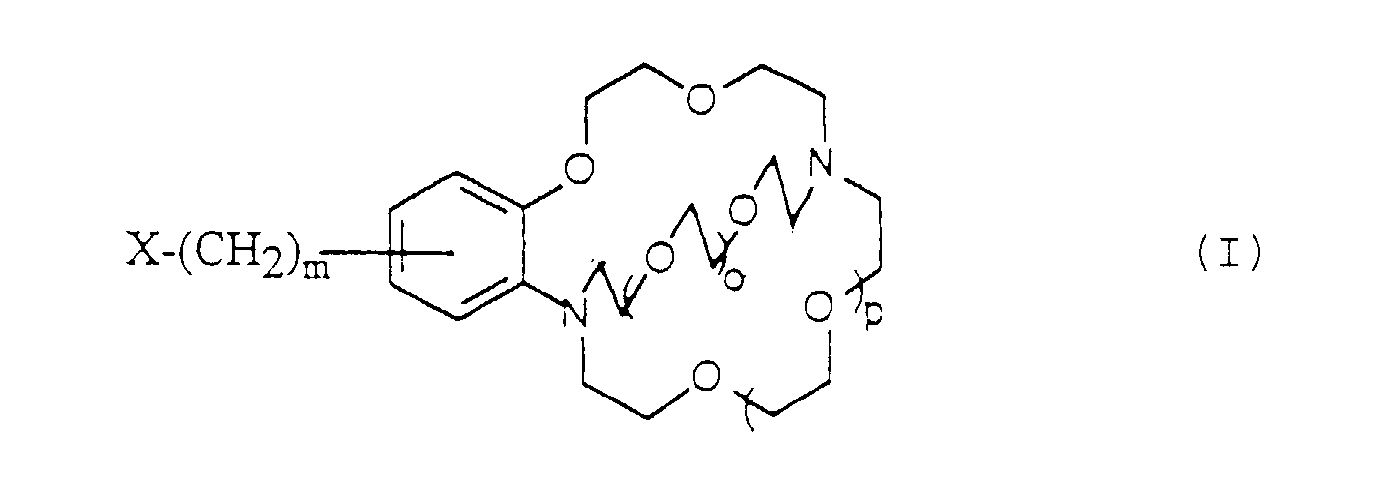
- diaza cryptands with general formula I above are New. It has been shown that these new luminophore ionophores very good for the determination of alkali ions in physiological pH values and at physiological concentrations own.
- Diaza cryptands according to the invention of general formula I are particularly suitable, Lithium ions in the concentration range between 0.30 and 2.1 mmol / l and potassium ions in the concentration range between 1.5 and 8.0 mmol / 1 to be determined.
- Diaza cryptands according to the invention Properties are due to the fact that in the ionophoric Rest of a nitrogen an aryl nitrogen and the other nitrogen is an aliphatic nitrogen.
- an electronic decoupling of the electron donor of the ionophoric residue from the electronic system of the luminophoric residue is particularly important for the creation of a PET effect.
- the function of the spacer is therefore to counteract conjugation of the electron system of the ionophoric residue with the electron system of the luminophoric residue.
- Electronic decoupling is e.g. recognizable by the fact that the absorption and emission spectra with regard to their Do not change the wavelength significantly.
- a diaza cryptand is preferred for the determination of lithium ions of the general formula I, in which o and p are used Numbers 0 and 0 mean.
- a diaza cryptand is preferred for the determination of sodium ions of the general formula I, in which o and p are used Numbers 0 and 1 mean, or the numbers 1 and 0 mean.
- a diaza cryptand is preferred for the determination of potassium ions of the general formula I, in which o and p are used Numbers 1 and 1 mean.
- R 3 or R 4 is the group -NH-, via which the luminophoric radical is bonded to the group - (CH 2 ) m - of general formula I mentioned above.
- Suitable lipophilic groups are e.g. substituted and unsubstituted Alkyl groups and alkoxy groups with up to 20 carbon atoms.
- Suitable hydrophilic groups are e.g. Alkyl groups with 1-17 C atoms which carry at least one hydroxyl group and / or functional groups that dissociate at the pH of the measurement solution Condition, e.g. Carboxylic acids, sulfonic acids and Phosphoric acids.
- Reactive groups for coupling to amino-functionalized polymers e.g. Aminocellulose and amino-functional polyacrylamides, are e.g. from US-A-4,774,339, Table 4.
- luminophoric radicals can be excited with light of a wavelength of> 450 nm.
- the compounds according to the invention for determining the alkali ions can be added to the sample solution in a dissolved form. But they can also be part of a sensor in which it in a layer of e.g. are embedded in a hydrogel, as described below with reference to Figure G.
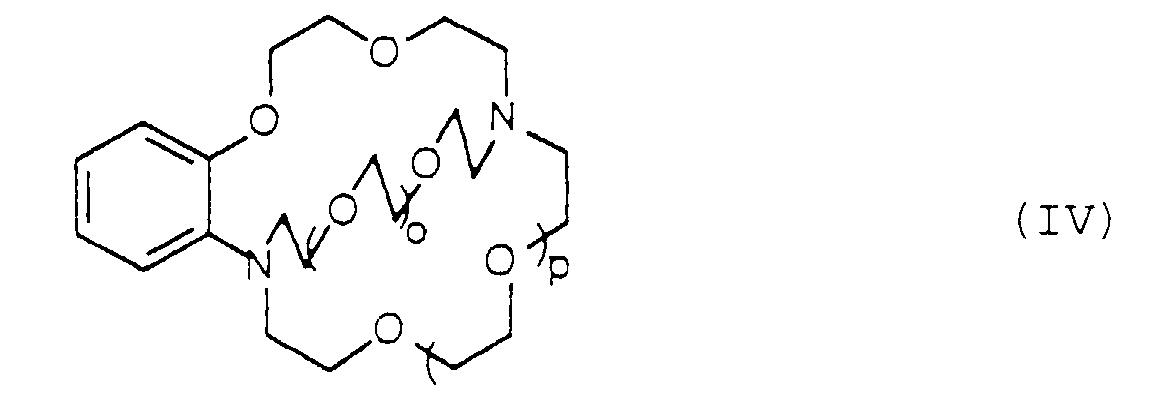
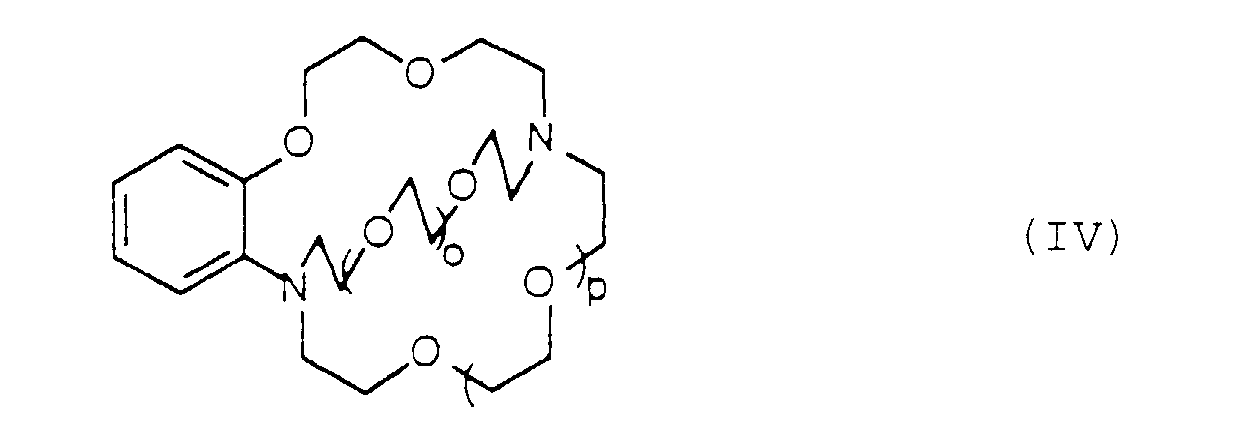
- the invention further relates to a diaza cryptand of the general formula IV where o and p independently of one another represent the numbers 0, 1 or 2.
- This cryptand forms the ionophoric residue of the compounds of general formula I according to the invention.
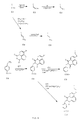
- Compounds according to the invention with a single CH 2 group as a spacer between the luminophoric and the ionophoric radical were prepared by firstly preparing the compound C1, which can be, for example, the compound A13 (FIG. A) in which "Y" stands for A12 the oxime C2 was converted and reduced to the amine C3 using Zn in acetic acid.
- the coupling to the luminophoric radical for the preparation of the compound C9 according to the invention is shown schematically in FIG. B using the amino naphthalimide C8, which was prepared by reacting C6 with C7 in dimethylformamide in the presence of K 2 CO 3 .
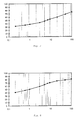
- Figures D, E and F show the luminescent properties of Compounds according to the invention, immobilized on cellulose, in Dependence on the respective concentration of alkali ions.
- the ordinates of the diagrams shown give each relative luminescence intensities.
- Diaza cryptand C9 0.06 g (0.3 mmol) N, N-dicyclohexyl-1,3-carbodiimide, 0.4 g (0.3 mmol) of N-hydroxysuccinimide and 5 g of activated cellulose (produced according to SU-A - 1,028,677, CA 99: 177723h) were dissolved in 2 ml of dimethylformamide 20 Hours suspended.
- the cellulose was then filtered off, 5 times with 5 ml of dimethylformamide, 5 ml of water, 2 times with 5 ml of 0.2 N HCl, 5 ml of water, 2 times with 5 ml of 0.2 N NaOH, 10 times with 5 ml of water, Washed twice with 5 ml acetone and twice with 5 ml ether, and dried for 16 hours at room temperature.
- the cellulose was then sieved (25 ⁇ m).
- the sensor disk obtained was shown schematically in FIG measuring arrangement shown used.
- the reference symbol S stands for a section of the Sensor disc.
- the compound immobilized on the cellulose fibers is designated I and is present in the hydrogel (layer M).
- This layer M is ion permeable and is used by one for the Excitation and measuring radiation permeable carrier T, the one transparent film is worn.
- the compound I can be ion-permeable Matrix directly covalently bound or physically in the matrix are solved.
- the sensor disc was placed in an opaque, thermostated flow cell introduced and with samples P, which had different sodium ion concentrations, in Brought in contact.
- the optical measuring device consisted of a blue LED as Light source A, a photodiode M as a detector, optical Filters A and F to select the wavelengths, a fiber optic Arrangement for guiding the excitation light into the polymer layer M and for directing the emission light to the photodetector M, and a device for electronic signal processing (not shown).
- An interference filter was implemented on the excitation side (Peak transmission at 480 nm) and 520 nm on the emission side cut-off edge filter used.
- FIG. D shows the relative luminescence intensity (ordinate) as a function of different potassium ion concentrations (0.2, 0.6, 1, 3, 5, 7, 9, 20, 50 and 100 mmol / l; abscissa; logarithmic scale) , each in the presence of 145 mmol / l sodium ions.
- the measuring medium was 30 mmol / 1 Tris / HCl buffer, CO 2 -free; pH: 7.4; 37 ° C.
- Figure E was obtained analogously to Figure D, but instead of of the Diaza cryptand C9 the Diaza cryptand C10 was used and the luminescence intensity depending on different ones Potassium ion concentrations (0.2, 0.6, 1, 3, 5, 7, 9, 20, 50 and 100 mmol / l; Abscissa; logarithmic scale), each in the present of 145 mmol / l sodium ions was measured.
- the figure F was obtained analogously to figure D, but instead of of the Diaza cryptand C9 the Diaza cryptand D5 was used and the luminescence intensity depending on different ones Potassium ion concentrations (0.1, 0.5, 1, 3, 5, 10 and 50 mmol / l; Abscissa; logarithmic scale), each in the present of 145 mmol / l sodium ions was measured.
Landscapes
- Chemical & Material Sciences (AREA)
- Organic Chemistry (AREA)
- Life Sciences & Earth Sciences (AREA)
- Health & Medical Sciences (AREA)
- Biochemistry (AREA)
- Molecular Biology (AREA)
- Physics & Mathematics (AREA)
- Analytical Chemistry (AREA)
- Biophysics (AREA)
- General Health & Medical Sciences (AREA)
- General Physics & Mathematics (AREA)
- Immunology (AREA)
- Pathology (AREA)
- Investigating Or Analysing Materials By The Use Of Chemical Reactions (AREA)
- Nitrogen And Oxygen Or Sulfur-Condensed Heterocyclic Ring Systems (AREA)
- Investigating Or Analyzing Non-Biological Materials By The Use Of Chemical Means (AREA)
- Heterocyclic Carbon Compounds Containing A Hetero Ring Having Nitrogen And Oxygen As The Only Ring Hetero Atoms (AREA)
Abstract
Description
als Verbindung (=Luminophor-Ionophor) ein Diaza-Kryptand der allgemeinen Formel I

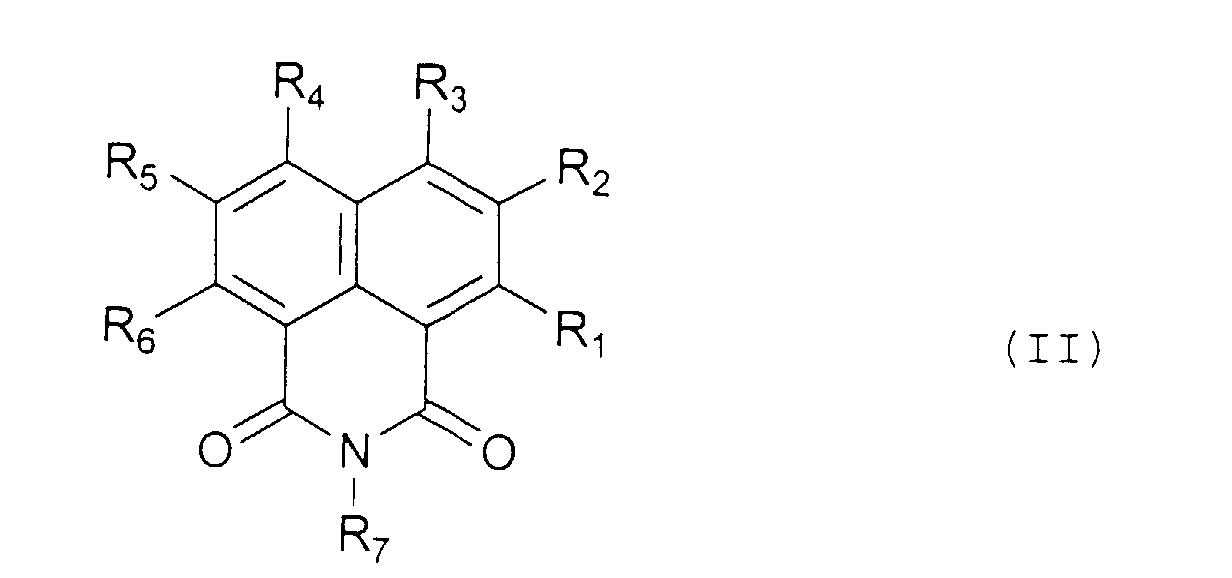
- ein Amino-Naphthalimid-Rest der allgemeinen Formel II
in welcher eine von R1, R2, R3, R4, R5 und R6 eine Gruppe -NH- ist, über welche X an die Gruppe -(CH2)m- der oben genannten Verbindung mit der allgemeinen Formel I gebunden ist, und die anderen und R7 jeweils voneinander unabhängig Wasserstoff, eine lipophile oder hydrophile Gruppe oder eine reaktive Gruppe zur Kopplung an ein Polymer sind, oder
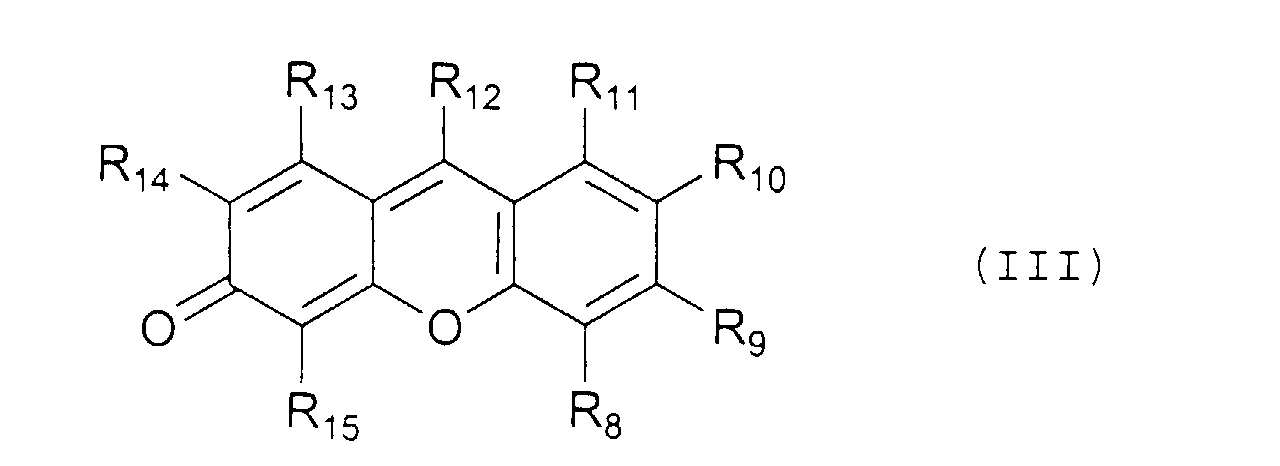
- ein Xanthenon-Rest der allgemeinen Formel III
ist, in welcher eine von R8, R9, R10, R11, R12, R13, R14 und R15 für eine chemische Bindung steht, über welche X direkt (m=0) an den ionophoren Rest der oben genannten Verbindung mit der allgemeinen Formel I gebunden ist, und die übrigen für -OH, -OR16, worin R16 eine hydrophile oder eine lipophile Gruppe ist, -O-R17-G, worin R17 eine hydrophile oder eine lipophile Gruppe und G eine reaktive Gruppe zur Kopplung an ein Polymer ist, oder -(CH2)n-COOH, worin n eine ganze Zahl zwischen 0 und 17 ist, stehen.
N,N-Dicyclohexyl-1,3-carbodiimid, 0,4 g (0,3 mmol) N-Hydroxysuccinimid und 5 g aktivierte Cellulose (hergestellt gemäß SU-A - 1,028,677, CA 99:177723h) wurden in 2 ml Dimethylformamid 20 Stunden suspendiert. Anschließend wurde die Cellulose abfiltriert, 5 mal mit 5 ml Dimethylformamid, 5 ml Wasser, 2 mal mit 5 ml 0,2 n HCl, 5 ml Wasser, 2 mal mit 5 ml 0,2 n NaOH, 10 mal mit 5 ml Wasser, 2 mal mit 5 ml Aceton und 2 mal mit 5 ml Ether gewaschen, und 16 Stunden bei Raumtemperatur getrocknet. Anschließend wurde die Cellulose gesiebt (25 µm).
Claims (7)
- Verfahren zur Bestimmung eines Alkaliions in einer Probe, wobei das Alkaliion mit einer Verbindung, die einen luminophoren Rest und einen ionophoren Rest aufweist, in Kontakt gebracht wird, welcher ionophore Rest mit dem in der Probe enthaltenen Alkaliion reagiert, wobei der luminophore Rest seine Lumineszenzeigenschaften ändert, wonach die Lumineszenz gemessen und mit dem Meßergebnis das Alkaliion bestimmt wird,
dadurch gekennzeichnet, daß
als Verbindung ein Diaza-Kryptand der allgemeinen Formel Iworin X der luminophore Rest ist, m die Zahl 0, 1 oder 2 ist, und o und p unabhängig voneinander die Zahlen 0, 1 oder 2 bedeuten, eingesetzt wird.
- Verfahren nach Anspruch 1, dadurch gekennzeichnet, daß zur Bestimmung von Lithiumionen ein Diaza-Kryptand der allgemeinen Formel I eingesetzt wird, in welcher o und p die Zahlen 0 bzw. 0 bedeuten.
- Verfahren nach Anspruch 1, dadurch gekennzeichnet, daß zur Bestimmung von Natriumionen ein Diaza-Kryptand der allgemeinen Formel I eingesetzt wird, in welcher o und p die Zahlen 0 bzw. 1 bedeuten, oder die Zahlen 1 bzw. 0 bedeuten.
- Verfahren nach Anspruch 1, dadurch gekennzeichnet, daß zur Bestimmung von Kaliumionen ein Diaza-Kryptand der allgemeinen Formel I eingesetzt wird, in welcher o und p die Zahlen 1 bzw. 1 bedeuten.
- Verfahren nach einem der Ansprüche 1 bis 4, dadurch gekennzeichnet, daß der luminophore Rest X in der allgemeinen Formel Ioderein Amino-Naphthalimid-Rest der allgemeinen Formel IIist, in welcher eine von R1, R2, R3, R4, R5 und R6 eine Gruppe -NH- ist, über welche X an die Gruppe -(CH2)m- der im Anspruch 1 genannten Verbindung mit der allgemeinen Formel I gebunden ist, und die anderen und R7 jeweils voneinander unabhängig Wasserstoff, eine lipophile oder hydrophile Gruppe oder eine reaktive Gruppe zur Kopplung an ein Polymer sind,
 ein Xanthenon-Rest der allgemeinen Formel IIIist, in welcher eine von R8, R9, R10, R11, R12, R13, R14 und R15 für eine chemische Bindung steht, über welche X direkt (m=0) an den ionophoren Rest der im Anspruch 1 genannten Verbindung mit der allgemeinen Formel I gebunden ist, und die übrigen für -OH, -OR16, worin R16 eine hydrophile oder eine lipophile Gruppe ist, -O-R17-G, worin R17 eine hydrophile oder eine lipophile Gruppe und G eine reaktive Gruppe zur Kopplung an ein Polymer ist, oder -(CH2)n-COOH, worin n eine ganze Zahl zwischen 0 und 17 ist, stehen.
- Diaza-Kryptand der allgemeinen Formel Iworin X der luminophore Rest ist und insbesondere die in Anspruch 5 angegebene Bedeutung besitzt, m die ganze Zahl 0, 1 oder 2 ist, und o und p unabhängig voneinander die Zahlen 0, 1 oder 2 bedeuten.
- Diaza-Kryptand der allgemeinen Formel IVworin o und p unabhängig voneinander die Zahlen 0, 1 oder 2 bedeuten.
Applications Claiming Priority (3)
| Application Number | Priority Date | Filing Date | Title |
|---|---|---|---|
| AT0093097A AT405462B (de) | 1997-05-30 | 1997-05-30 | Verfahren zur bestimmung eines alkaliions |
| AT93097 | 1997-05-30 | ||
| AT930/97 | 1997-05-30 |
Publications (2)
| Publication Number | Publication Date |
|---|---|
| EP0881488A2 true EP0881488A2 (de) | 1998-12-02 |
| EP0881488A3 EP0881488A3 (de) | 1999-12-29 |
Family
ID=3503128
Family Applications (2)
| Application Number | Title | Priority Date | Filing Date |
|---|---|---|---|
| EP98890164A Expired - Lifetime EP0881487B1 (de) | 1997-05-30 | 1998-05-28 | Verfahren zur Bestimmung eines Alkaliions |
| EP98890165A Withdrawn EP0881488A3 (de) | 1997-05-30 | 1998-05-28 | Verfahren zur Bestimmung eines Alkaliions |
Family Applications Before (1)
| Application Number | Title | Priority Date | Filing Date |
|---|---|---|---|
| EP98890164A Expired - Lifetime EP0881487B1 (de) | 1997-05-30 | 1998-05-28 | Verfahren zur Bestimmung eines Alkaliions |
Country Status (5)
| Country | Link |
|---|---|
| US (2) | US6124135A (de) |
| EP (2) | EP0881487B1 (de) |
| JP (2) | JPH10332591A (de) |
| AT (1) | AT405462B (de) |
| DE (1) | DE59814098D1 (de) |
Cited By (2)
| Publication number | Priority date | Publication date | Assignee | Title |
|---|---|---|---|---|
| EP1081152A1 (de) * | 1999-08-17 | 2001-03-07 | AVL Medical Instruments AG | Ein Triazakryptand und ein Verfahren zur Bestimmung eines Alkaliions |
| US8097725B2 (en) | 2004-12-03 | 2012-01-17 | Roche Diagnostics Operations, Inc. | Luminescent indicator dye and optical sensor |
Families Citing this family (20)
| Publication number | Priority date | Publication date | Assignee | Title |
|---|---|---|---|---|
| US6673352B1 (en) * | 1999-09-14 | 2004-01-06 | The General Hospital Corporation | Use of Mullerian inhibiting substance for treating excess androgen states |
| US7579463B2 (en) * | 2000-12-20 | 2009-08-25 | Life Technologies Corporation | Crown ether derivatives |
| US7129346B2 (en) * | 2000-12-20 | 2006-10-31 | Molecular Probes, Inc. | Crown ether derivatives |
| US6962992B2 (en) * | 2000-12-20 | 2005-11-08 | Molecullar Probes, Inc. | Crown ether derivatives |
| AT410601B (de) * | 2000-12-29 | 2003-06-25 | Hoffmann La Roche | Sensor zur lumineszenz-optischen bestimmung eines analyten sowie reagens, das nach dem fret-prinzip arbeitet |
| US20030211011A1 (en) * | 2001-06-08 | 2003-11-13 | Phillips Terry E. | Ph sensor system and method for using same |
| US7229835B2 (en) * | 2001-10-25 | 2007-06-12 | The University Of Maryland, Baltimore County | Amine detection method and materials |
| US20050118603A1 (en) * | 2002-10-11 | 2005-06-02 | Ahram Biosystems Inc. | Target detection system having a conformationally sensitive probe comprising a nucleic acid based signal transducer |
| JP4310616B2 (ja) * | 2002-10-16 | 2009-08-12 | 泰三 山本 | 扁平錠剤の外観検査機 |
| US20040175821A1 (en) * | 2003-03-07 | 2004-09-09 | Ehman Michael F. | Integrated photodetector for heavy metals and biological activity analysis |
| WO2006023231A2 (en) | 2004-07-27 | 2006-03-02 | Molecular Probes, Inc. | Fluorescent metal ion indicators with large stokes shift |
| US20060121547A1 (en) * | 2004-12-03 | 2006-06-08 | Mcintire Mark | Diffusion layer for an enzyme-based sensor application |
| RU2288289C1 (ru) * | 2005-04-11 | 2006-11-27 | Российская Федерация, от имени которой выступает государственный заказчик Федеральное агентство по атомной энергии | Способ количественного определения лития в сплаве |
| US7858383B2 (en) * | 2006-05-03 | 2010-12-28 | Opti Medical Systems | Chromoionophore and method of determining sodium ions |
| AU2007332902B2 (en) * | 2006-12-08 | 2012-04-26 | Opti Medical Systems | Spreading layer and humidity control layer for enhancing sensor performance |
| WO2012120141A1 (en) | 2011-03-09 | 2012-09-13 | Universität Potsdam | Π (pi)-conjugated fluoroionophores and method for determining an alkali ion |
| EP2795295B1 (de) | 2011-12-12 | 2017-10-11 | Step Ahead Innovations, Inc. | System für Überwachung von Wasserqualität |
| US9360474B2 (en) * | 2012-11-29 | 2016-06-07 | Opti Medical Systems, Inc. | Multi-layer device for selectively determining magnesium ion |
| US8874063B2 (en) | 2013-03-08 | 2014-10-28 | Qualcomm Incorporated | Simultaneous signal receiver with interspersed frequency allocation |
| WO2014205230A1 (en) | 2013-06-19 | 2014-12-24 | Step Ahead Innovations Inc. | Aquatic environment water parameter testing systems and methods |
Family Cites Families (7)
| Publication number | Priority date | Publication date | Assignee | Title |
|---|---|---|---|---|
| GB8528804D0 (en) * | 1985-11-22 | 1985-12-24 | Amersham Int Plc | Compounds |
| US5162525A (en) * | 1987-07-31 | 1992-11-10 | Allied-Signal Inc. | Fluorogenic and chromogenic three-dimensional ionophores as selective reagents for detecting ions in biological fluids |
| US4774339A (en) * | 1987-08-10 | 1988-09-27 | Molecular Probes, Inc. | Chemically reactive dipyrrometheneboron difluoride dyes |
| CA2002917C (en) * | 1988-11-14 | 1998-01-06 | Akwasi Minta | Fluorescent indicator dyes for alkali metal cations |
| US5474743A (en) * | 1993-10-21 | 1995-12-12 | Minnesota Mining And Manufacturing Company | Cation-sensing composite structure and compounds for use therein |
| US5516911A (en) * | 1993-12-30 | 1996-05-14 | The United States Of America As Represented By The Department Of Health And Human Services | Fluorescent intracellular calcium indicators |
| AT405461B (de) * | 1997-05-30 | 1999-08-25 | Avl List Gmbh | Lumineszenzindikator |
-
1997
- 1997-05-30 AT AT0093097A patent/AT405462B/de not_active IP Right Cessation
-
1998
- 1998-05-27 US US09/085,807 patent/US6124135A/en not_active Expired - Lifetime
- 1998-05-27 US US09/085,218 patent/US5952491A/en not_active Expired - Lifetime
- 1998-05-28 DE DE59814098T patent/DE59814098D1/de not_active Expired - Lifetime
- 1998-05-28 EP EP98890164A patent/EP0881487B1/de not_active Expired - Lifetime
- 1998-05-28 EP EP98890165A patent/EP0881488A3/de not_active Withdrawn
- 1998-06-01 JP JP10151737A patent/JPH10332591A/ja active Pending
- 1998-06-01 JP JP15173898A patent/JP4065053B2/ja not_active Expired - Lifetime
Cited By (3)
| Publication number | Priority date | Publication date | Assignee | Title |
|---|---|---|---|---|
| EP1081152A1 (de) * | 1999-08-17 | 2001-03-07 | AVL Medical Instruments AG | Ein Triazakryptand und ein Verfahren zur Bestimmung eines Alkaliions |
| US6211359B1 (en) | 1999-08-17 | 2001-04-03 | Avl Medical Instruments | Triaza-cryptand and method of determining an alkali ion |
| US8097725B2 (en) | 2004-12-03 | 2012-01-17 | Roche Diagnostics Operations, Inc. | Luminescent indicator dye and optical sensor |
Also Published As
| Publication number | Publication date |
|---|---|
| EP0881487A2 (de) | 1998-12-02 |
| EP0881488A3 (de) | 1999-12-29 |
| AT405462B (de) | 1999-08-25 |
| JPH10332591A (ja) | 1998-12-18 |
| EP0881487B1 (de) | 2007-09-26 |
| EP0881487A9 (de) | 2002-08-07 |
| JP4065053B2 (ja) | 2008-03-19 |
| JPH1114545A (ja) | 1999-01-22 |
| EP0881487A3 (de) | 1999-12-29 |
| US5952491A (en) | 1999-09-14 |
| DE59814098D1 (de) | 2007-11-08 |
| ATA93097A (de) | 1998-12-15 |
| US6124135A (en) | 2000-09-26 |
Similar Documents
| Publication | Publication Date | Title |
|---|---|---|
| EP0881225B1 (de) | Lumineszenzindikator | |
| AT405462B (de) | Verfahren zur bestimmung eines alkaliions | |
| DE69731179T3 (de) | Fluorierte xanthenderivate | |
| EP0461392B1 (de) | Testträger zur Bestimmung von Ionen | |
| DE3851502T2 (de) | Fluoreszierende Indikator-Farbstoffe für Kalzium, die bei langen Wellenlängen arbeiten. | |
| DE60123933T2 (de) | Fluoreszierende proben zur quantitativen bestimmung von zink | |
| EP0567622B1 (de) | Neue pentacyclische verbindungen und ihre verwendung als absorptions- oder fluoreszenzfarbstoffe | |
| EP0990643B1 (de) | Lumineszenzindikator zur Bestimmung von Calciumionen | |
| DE10080558B4 (de) | Laser-kompatible NIR-Marker-Farbstoffe | |
| DE60014539T2 (de) | Ein Triazakryptand und ein Verfahren zur Bestimmung eines Alkaliions | |
| DE68919597T2 (de) | Spektrofluorometrisches verfahren und für dieses verfahren wertvolle verbindungen. | |
| EP0656893B1 (de) | Photochrome oxazineverbindungen | |
| DE3853552T2 (de) | Lichtempfindliche Kalzium-Chelatoren. | |
| DE60125958T2 (de) | Reagenzien zur bestimmung von atomaren sauerstoff | |
| EP0008428A2 (de) | Diagnostisches Mittel zum Nachweis von Leukozyten in Körperflüssigkeiten sowie als Chromogene hierfür geeignete Azofarbstoff-Ester, Verfahren zu deren Herstellung sowie deren Verwendung zur Herstellung diagnostischer Mittel zum Nachweis von Leukozyten in Körperflüssigkeiten | |
| EP0007407A1 (de) | Diagnostisches Mittel zum Nachweis von Leukozyten in Körperflüssigkeiten sowie als Chromogene hierfür geeignete Sulfonphthalein-Ester, Verfahren zu deren Herstellung sowie deren Verwendung zur Herstellung diagnostischer Mittel zum Nachweis von Leukozyten in Körperflüssigkeiten | |
| EP0281829B1 (de) | Addukte aus Ketoverbindungen und Anionen von Oxasäuren, Verfahren zu deren Herstellung, deren Verwendung sowie Azoketoverbindungen. | |
| DE69432623T2 (de) | Kationen-Sensor-Verbundstruktur und Verbindungen zur Verwendung darin | |
| DE68925716T2 (de) | Fluoreszierende Indikatorfarbstoffe für Alkalimetall-Kationen, ihre Herstellung und Verwendung | |
| DE69026217T2 (de) | Photochrome und photoempfindliche Spiroindolinoxazinverbindungen und Verfahren zu ihrer Herstellung | |
| DE60010956T2 (de) | Carbodiimidverbindungen, die eine fluoreszierende Gruppe enthalten, deren Vorstufen und Verfahren zu deren Herstellung | |
| DE3623886A1 (de) | Derivate von chromophoren verbindungen, deren herstellung und verwendung | |
| DE4015592A1 (de) | Verfahren zur bestimmung eines ions mit erhoehter empfindlichkeit, verwendung hierfuer geeigneter substanzen und entsprechendes mittel | |
| EP0457184B1 (de) | Naphtholderivate, Verfahren zu deren Herstellung und deren Verwendung | |
| DE102020114139A1 (de) | Thiopolyphenol-basierte Fluoreszenzfarbstoffe |
Legal Events
| Date | Code | Title | Description |
|---|---|---|---|
| PUAI | Public reference made under article 153(3) epc to a published international application that has entered the european phase |
Free format text: ORIGINAL CODE: 0009012 |
|
| AK | Designated contracting states |
Kind code of ref document: A2 Designated state(s): DE FR GB |
|
| AX | Request for extension of the european patent |
Free format text: AL;LT;LV;MK;RO;SI |
|
| PUAL | Search report despatched |
Free format text: ORIGINAL CODE: 0009013 |
|
| AK | Designated contracting states |
Kind code of ref document: A3 Designated state(s): AT BE CH CY DE DK ES FI FR GB GR IE IT LI LU MC NL PT SE |
|
| AX | Request for extension of the european patent |
Free format text: AL;LT;LV;MK;RO;SI |
|
| 17P | Request for examination filed |
Effective date: 20000629 |
|
| AKX | Designation fees paid |
Free format text: DE FR GB |
|
| RAP1 | Party data changed (applicant data changed or rights of an application transferred) |
Owner name: AVL MEDICAL INSTRUMENTS AG |
|
| RAP1 | Party data changed (applicant data changed or rights of an application transferred) |
Owner name: F. HOFFMANN-LA ROCHE AG |
|
| 17Q | First examination report despatched |
Effective date: 20040723 |
|
| STAA | Information on the status of an ep patent application or granted ep patent |
Free format text: STATUS: THE APPLICATION IS DEEMED TO BE WITHDRAWN |
|
| 18D | Application deemed to be withdrawn |
Effective date: 20050203 |