EP0883403B1 - Methode zur behandlung sexueller fehlfunktionen - Google Patents
Methode zur behandlung sexueller fehlfunktionen Download PDFInfo
- Publication number
- EP0883403B1 EP0883403B1 EP97903127A EP97903127A EP0883403B1 EP 0883403 B1 EP0883403 B1 EP 0883403B1 EP 97903127 A EP97903127 A EP 97903127A EP 97903127 A EP97903127 A EP 97903127A EP 0883403 B1 EP0883403 B1 EP 0883403B1
- Authority
- EP
- European Patent Office
- Prior art keywords
- sexual
- compound
- compounds
- sexual dysfunction
- ampa
- Prior art date
- Legal status (The legal status is an assumption and is not a legal conclusion. Google has not performed a legal analysis and makes no representation as to the accuracy of the status listed.)
- Expired - Lifetime
Links
- 201000001880 Sexual dysfunction Diseases 0.000 title claims abstract description 45
- 231100000872 sexual dysfunction Toxicity 0.000 title claims abstract description 45
- 238000000034 method Methods 0.000 title abstract description 18
- 150000001875 compounds Chemical class 0.000 claims abstract description 71
- 238000011282 treatment Methods 0.000 claims abstract description 22
- UUDAMDVQRQNNHZ-UHFFFAOYSA-N (S)-AMPA Chemical compound CC=1ONC(=O)C=1CC(N)C(O)=O UUDAMDVQRQNNHZ-UHFFFAOYSA-N 0.000 claims description 25
- 230000001107 psychogenic effect Effects 0.000 claims description 18
- 230000004044 response Effects 0.000 claims description 16
- 239000007924 injection Substances 0.000 claims description 14
- 238000002347 injection Methods 0.000 claims description 14
- 229910052739 hydrogen Inorganic materials 0.000 claims description 11
- 230000001272 neurogenic effect Effects 0.000 claims description 11
- 125000004169 (C1-C6) alkyl group Chemical group 0.000 claims description 9
- 208000010228 Erectile Dysfunction Diseases 0.000 claims description 8
- 125000004191 (C1-C6) alkoxy group Chemical group 0.000 claims description 7
- 206010057672 Male sexual dysfunction Diseases 0.000 claims description 4
- 239000003446 ligand Substances 0.000 claims description 2
- 102000003678 AMPA Receptors Human genes 0.000 abstract description 13
- 108090000078 AMPA Receptors Proteins 0.000 abstract description 13
- 239000000203 mixture Substances 0.000 abstract description 13
- 230000001747 exhibiting effect Effects 0.000 abstract description 3
- XQYZDYMELSJDRZ-UHFFFAOYSA-N papaverine Chemical compound C1=C(OC)C(OC)=CC=C1CC1=NC=CC2=CC(OC)=C(OC)C=C12 XQYZDYMELSJDRZ-UHFFFAOYSA-N 0.000 description 42
- 230000001568 sexual effect Effects 0.000 description 35
- 239000003814 drug Substances 0.000 description 23
- 230000000848 glutamatergic effect Effects 0.000 description 22
- 229930008281 A03AD01 - Papaverine Natural products 0.000 description 21
- 229960001789 papaverine Drugs 0.000 description 21
- BTCSSZJGUNDROE-UHFFFAOYSA-N gamma-aminobutyric acid Chemical compound NCCCC(O)=O BTCSSZJGUNDROE-UHFFFAOYSA-N 0.000 description 20
- 210000003899 penis Anatomy 0.000 description 19
- 230000000694 effects Effects 0.000 description 18
- 230000000638 stimulation Effects 0.000 description 18
- 230000001965 increasing effect Effects 0.000 description 17
- -1 2,2-diphenyl-1-ethyl Chemical group 0.000 description 16
- HOKKHZGPKSLGJE-GSVOUGTGSA-N N-Methyl-D-aspartic acid Chemical compound CN[C@@H](C(O)=O)CC(O)=O HOKKHZGPKSLGJE-GSVOUGTGSA-N 0.000 description 16
- 241000700159 Rattus Species 0.000 description 16
- 229940079593 drug Drugs 0.000 description 16
- 201000001881 impotence Diseases 0.000 description 14
- 230000009329 sexual behaviour Effects 0.000 description 14
- 125000000217 alkyl group Chemical group 0.000 description 13
- 150000002500 ions Chemical class 0.000 description 13
- IAZDPXIOMUYVGZ-UHFFFAOYSA-N Dimethylsulphoxide Chemical compound CS(C)=O IAZDPXIOMUYVGZ-UHFFFAOYSA-N 0.000 description 12
- 230000037007 arousal Effects 0.000 description 12
- 229940090044 injection Drugs 0.000 description 12
- 210000001367 artery Anatomy 0.000 description 11
- 125000003118 aryl group Chemical group 0.000 description 11
- 210000004556 brain Anatomy 0.000 description 11
- 230000004907 flux Effects 0.000 description 11
- 238000012360 testing method Methods 0.000 description 11
- OGNSCSPNOLGXSM-UHFFFAOYSA-N (+/-)-DABA Natural products NCCC(N)C(O)=O OGNSCSPNOLGXSM-UHFFFAOYSA-N 0.000 description 10
- 241001465754 Metazoa Species 0.000 description 10
- MUMGGOZAMZWBJJ-DYKIIFRCSA-N Testostosterone Chemical compound O=C1CC[C@]2(C)[C@H]3CC[C@](C)([C@H](CC4)O)[C@@H]4[C@@H]3CCC2=C1 MUMGGOZAMZWBJJ-DYKIIFRCSA-N 0.000 description 10
- 229960003692 gamma aminobutyric acid Drugs 0.000 description 10
- 102000005962 receptors Human genes 0.000 description 10
- 108020003175 receptors Proteins 0.000 description 10
- WEVYAHXRMPXWCK-UHFFFAOYSA-N Acetonitrile Chemical compound CC#N WEVYAHXRMPXWCK-UHFFFAOYSA-N 0.000 description 9
- YMWUJEATGCHHMB-UHFFFAOYSA-N Dichloromethane Chemical compound ClCCl YMWUJEATGCHHMB-UHFFFAOYSA-N 0.000 description 9
- WHUUTDBJXJRKMK-VKHMYHEASA-N L-glutamic acid Chemical compound OC(=O)[C@@H](N)CCC(O)=O WHUUTDBJXJRKMK-VKHMYHEASA-N 0.000 description 9
- 239000002253 acid Substances 0.000 description 9
- 230000004064 dysfunction Effects 0.000 description 9
- 229930195712 glutamate Natural products 0.000 description 9
- 210000003169 central nervous system Anatomy 0.000 description 8
- 239000003795 chemical substances by application Substances 0.000 description 8
- 230000007423 decrease Effects 0.000 description 8
- 208000024891 symptom Diseases 0.000 description 8
- LFQSCWFLJHTTHZ-UHFFFAOYSA-N Ethanol Chemical compound CCO LFQSCWFLJHTTHZ-UHFFFAOYSA-N 0.000 description 7
- 241000282412 Homo Species 0.000 description 7
- 241000124008 Mammalia Species 0.000 description 7
- 230000006870 function Effects 0.000 description 7
- 230000001537 neural effect Effects 0.000 description 7
- 210000002569 neuron Anatomy 0.000 description 7
- 238000002360 preparation method Methods 0.000 description 7
- 201000001320 Atherosclerosis Diseases 0.000 description 6
- HEDRZPFGACZZDS-UHFFFAOYSA-N Chloroform Chemical compound ClC(Cl)Cl HEDRZPFGACZZDS-UHFFFAOYSA-N 0.000 description 6
- 206010024419 Libido decreased Diseases 0.000 description 6
- ZMANZCXQSJIPKH-UHFFFAOYSA-N Triethylamine Chemical compound CCN(CC)CC ZMANZCXQSJIPKH-UHFFFAOYSA-N 0.000 description 6
- 108010003205 Vasoactive Intestinal Peptide Proteins 0.000 description 6
- 230000004913 activation Effects 0.000 description 6
- 230000006399 behavior Effects 0.000 description 6
- 125000004432 carbon atom Chemical group C* 0.000 description 6
- 238000006243 chemical reaction Methods 0.000 description 6
- 210000005226 corpus cavernosum Anatomy 0.000 description 6
- 230000006735 deficit Effects 0.000 description 6
- 230000001856 erectile effect Effects 0.000 description 6
- 230000036749 excitatory postsynaptic potential Effects 0.000 description 6
- 238000002474 experimental method Methods 0.000 description 6
- 238000011835 investigation Methods 0.000 description 6
- 238000005259 measurement Methods 0.000 description 6
- 230000018052 penile erection Effects 0.000 description 6
- 239000002504 physiological saline solution Substances 0.000 description 6
- 210000000278 spinal cord Anatomy 0.000 description 6
- FYSNRJHAOHDILO-UHFFFAOYSA-N thionyl chloride Chemical compound ClS(Cl)=O FYSNRJHAOHDILO-UHFFFAOYSA-N 0.000 description 6
- 238000002604 ultrasonography Methods 0.000 description 6
- XEKOWRVHYACXOJ-UHFFFAOYSA-N Ethyl acetate Chemical compound CCOC(C)=O XEKOWRVHYACXOJ-UHFFFAOYSA-N 0.000 description 5
- 102400000015 Vasoactive intestinal peptide Human genes 0.000 description 5
- 150000001408 amides Chemical class 0.000 description 5
- 239000002585 base Substances 0.000 description 5
- 239000002775 capsule Substances 0.000 description 5
- 230000002964 excitative effect Effects 0.000 description 5
- 229940088597 hormone Drugs 0.000 description 5
- 239000005556 hormone Substances 0.000 description 5
- 230000005764 inhibitory process Effects 0.000 description 5
- 239000007926 intracavernous injection Substances 0.000 description 5
- VBUWHHLIZKOSMS-RIWXPGAOSA-N invicorp Chemical compound C([C@@H](C(=O)N[C@@H](CC(C)C)C(=O)N[C@@H](CC(N)=O)C(=O)N[C@@H](CO)C(=O)N[C@@H]([C@@H](C)CC)C(=O)N[C@@H](CC(C)C)C(=O)N[C@@H](CC(N)=O)C(O)=O)NC(=O)[C@H](CCCCN)NC(=O)[C@H](CCCCN)NC(=O)[C@@H](NC(=O)[C@H](C)NC(=O)[C@H](CCSC)NC(=O)[C@H](CCC(N)=O)NC(=O)[C@H](CCCCN)NC(=O)[C@H](CCCNC(N)=N)NC(=O)[C@H](CC(C)C)NC(=O)[C@H](CCCNC(N)=N)NC(=O)[C@@H](NC(=O)[C@H](CC=1C=CC(O)=CC=1)NC(=O)[C@H](CC(N)=O)NC(=O)[C@H](CC(O)=O)NC(=O)[C@@H](NC(=O)[C@H](CC=1C=CC=CC=1)NC(=O)[C@@H](NC(=O)[C@H](C)NC(=O)[C@H](CC(O)=O)NC(=O)[C@H](CO)NC(=O)[C@@H](N)CC=1NC=NC=1)C(C)C)[C@@H](C)O)[C@@H](C)O)C(C)C)C1=CC=C(O)C=C1 VBUWHHLIZKOSMS-RIWXPGAOSA-N 0.000 description 5
- 230000035515 penetration Effects 0.000 description 5
- 230000001242 postsynaptic effect Effects 0.000 description 5
- 230000009782 synaptic response Effects 0.000 description 5
- 239000003826 tablet Substances 0.000 description 5
- 229960003604 testosterone Drugs 0.000 description 5
- DPJNGQJOTVRIPN-UHFFFAOYSA-N 7-chloro-5-ethyl-3-methyl-3,4-dihydro-2h-1$l^{6},2,4-benzothiadiazine 1,1-dioxide Chemical compound N1C(C)NS(=O)(=O)C2=C1C(CC)=CC(Cl)=C2 DPJNGQJOTVRIPN-UHFFFAOYSA-N 0.000 description 4
- ZCYVEMRRCGMTRW-UHFFFAOYSA-N 7553-56-2 Chemical group [I] ZCYVEMRRCGMTRW-UHFFFAOYSA-N 0.000 description 4
- 101000768857 Arabidopsis thaliana 3-phosphoshikimate 1-carboxyvinyltransferase, chloroplastic Proteins 0.000 description 4
- WPYMKLBDIGXBTP-UHFFFAOYSA-N Benzoic acid Natural products OC(=O)C1=CC=CC=C1 WPYMKLBDIGXBTP-UHFFFAOYSA-N 0.000 description 4
- KAKZBPTYRLMSJV-UHFFFAOYSA-N Butadiene Chemical compound C=CC=C KAKZBPTYRLMSJV-UHFFFAOYSA-N 0.000 description 4
- 108091006146 Channels Proteins 0.000 description 4
- RTZKZFJDLAIYFH-UHFFFAOYSA-N Diethyl ether Chemical compound CCOCC RTZKZFJDLAIYFH-UHFFFAOYSA-N 0.000 description 4
- JRNVZBWKYDBUCA-UHFFFAOYSA-N N-chlorosuccinimide Chemical compound ClN1C(=O)CCC1=O JRNVZBWKYDBUCA-UHFFFAOYSA-N 0.000 description 4
- 230000009471 action Effects 0.000 description 4
- 150000008064 anhydrides Chemical class 0.000 description 4
- 230000036528 appetite Effects 0.000 description 4
- 235000019789 appetite Nutrition 0.000 description 4
- 238000003556 assay Methods 0.000 description 4
- 230000003542 behavioural effect Effects 0.000 description 4
- 230000036772 blood pressure Effects 0.000 description 4
- 230000027326 copulation Effects 0.000 description 4
- 239000003623 enhancer Substances 0.000 description 4
- 230000000971 hippocampal effect Effects 0.000 description 4
- 125000004435 hydrogen atom Chemical group [H]* 0.000 description 4
- 239000012528 membrane Substances 0.000 description 4
- 125000002496 methyl group Chemical group [H]C([H])([H])* 0.000 description 4
- 229940100746 papaverine injection Drugs 0.000 description 4
- 230000007170 pathology Effects 0.000 description 4
- 210000001428 peripheral nervous system Anatomy 0.000 description 4
- 201000011264 priapism Diseases 0.000 description 4
- 230000002829 reductive effect Effects 0.000 description 4
- 230000036332 sexual response Effects 0.000 description 4
- 239000000243 solution Substances 0.000 description 4
- 125000003107 substituted aryl group Chemical group 0.000 description 4
- 230000035488 systolic blood pressure Effects 0.000 description 4
- 230000000007 visual effect Effects 0.000 description 4
- 238000005160 1H NMR spectroscopy Methods 0.000 description 3
- QGZKDVFQNNGYKY-UHFFFAOYSA-N Ammonia Chemical compound N QGZKDVFQNNGYKY-UHFFFAOYSA-N 0.000 description 3
- 239000005711 Benzoic acid Substances 0.000 description 3
- ANDGGVOPIJEHOF-UHFFFAOYSA-N CX-516 Chemical compound C=1C=C2N=CC=NC2=CC=1C(=O)N1CCCCC1 ANDGGVOPIJEHOF-UHFFFAOYSA-N 0.000 description 3
- 102000018899 Glutamate Receptors Human genes 0.000 description 3
- 108010027915 Glutamate Receptors Proteins 0.000 description 3
- ZMXDDKWLCZADIW-UHFFFAOYSA-N N,N-Dimethylformamide Chemical compound CN(C)C=O ZMXDDKWLCZADIW-UHFFFAOYSA-N 0.000 description 3
- QZVCTJOXCFMACW-UHFFFAOYSA-N Phenoxybenzamine Chemical compound C=1C=CC=CC=1CN(CCCl)C(C)COC1=CC=CC=C1 QZVCTJOXCFMACW-UHFFFAOYSA-N 0.000 description 3
- 208000006262 Psychological Sexual Dysfunctions Diseases 0.000 description 3
- VYPSYNLAJGMNEJ-UHFFFAOYSA-N Silicium dioxide Chemical compound O=[Si]=O VYPSYNLAJGMNEJ-UHFFFAOYSA-N 0.000 description 3
- 125000002252 acyl group Chemical group 0.000 description 3
- 125000003545 alkoxy group Chemical group 0.000 description 3
- 235000010233 benzoic acid Nutrition 0.000 description 3
- 230000015572 biosynthetic process Effects 0.000 description 3
- 239000008280 blood Substances 0.000 description 3
- 210000004369 blood Anatomy 0.000 description 3
- PFKFTWBEEFSNDU-UHFFFAOYSA-N carbonyldiimidazole Chemical compound C1=CN=CN1C(=O)N1C=CN=C1 PFKFTWBEEFSNDU-UHFFFAOYSA-N 0.000 description 3
- 210000001175 cerebrospinal fluid Anatomy 0.000 description 3
- 239000002872 contrast media Substances 0.000 description 3
- 238000007796 conventional method Methods 0.000 description 3
- 125000004093 cyano group Chemical group *C#N 0.000 description 3
- 150000001993 dienes Chemical class 0.000 description 3
- 208000037265 diseases, disorders, signs and symptoms Diseases 0.000 description 3
- 210000005225 erectile tissue Anatomy 0.000 description 3
- 229910052736 halogen Inorganic materials 0.000 description 3
- 150000002367 halogens Chemical class 0.000 description 3
- 239000001257 hydrogen Substances 0.000 description 3
- 208000017020 hypoactive sexual desire disease Diseases 0.000 description 3
- 150000002466 imines Chemical class 0.000 description 3
- 238000001802 infusion Methods 0.000 description 3
- 239000011630 iodine Substances 0.000 description 3
- 229910052740 iodine Inorganic materials 0.000 description 3
- 239000000463 material Substances 0.000 description 3
- 230000001404 mediated effect Effects 0.000 description 3
- 229910052760 oxygen Inorganic materials 0.000 description 3
- 229960003418 phenoxybenzamine Drugs 0.000 description 3
- 125000002924 primary amino group Chemical group [H]N([H])* 0.000 description 3
- 230000035946 sexual desire Effects 0.000 description 3
- 239000002904 solvent Substances 0.000 description 3
- 239000000126 substance Substances 0.000 description 3
- 229910052717 sulfur Inorganic materials 0.000 description 3
- 210000000225 synapse Anatomy 0.000 description 3
- 210000003708 urethra Anatomy 0.000 description 3
- 238000001644 13C nuclear magnetic resonance spectroscopy Methods 0.000 description 2
- JVSFQJZRHXAUGT-UHFFFAOYSA-N 2,2-dimethylpropanoyl chloride Chemical compound CC(C)(C)C(Cl)=O JVSFQJZRHXAUGT-UHFFFAOYSA-N 0.000 description 2
- QNLRSWXCHRURJQ-UHFFFAOYSA-N 2-amino-5-chloro-3-ethylbenzenesulfonamide Chemical compound CCC1=CC(Cl)=CC(S(N)(=O)=O)=C1N QNLRSWXCHRURJQ-UHFFFAOYSA-N 0.000 description 2
- IKHGUXGNUITLKF-UHFFFAOYSA-N Acetaldehyde Chemical compound CC=O IKHGUXGNUITLKF-UHFFFAOYSA-N 0.000 description 2
- 208000019901 Anxiety disease Diseases 0.000 description 2
- IJGRMHOSHXDMSA-UHFFFAOYSA-N Atomic nitrogen Chemical compound N#N IJGRMHOSHXDMSA-UHFFFAOYSA-N 0.000 description 2
- QOSSAOTZNIDXMA-UHFFFAOYSA-N Dicylcohexylcarbodiimide Chemical compound C1CCCCC1N=C=NC1CCCCC1 QOSSAOTZNIDXMA-UHFFFAOYSA-N 0.000 description 2
- 238000005033 Fourier transform infrared spectroscopy Methods 0.000 description 2
- RRHGJUQNOFWUDK-UHFFFAOYSA-N Isoprene Chemical compound CC(=C)C=C RRHGJUQNOFWUDK-UHFFFAOYSA-N 0.000 description 2
- 239000002841 Lewis acid Substances 0.000 description 2
- FYYHWMGAXLPEAU-UHFFFAOYSA-N Magnesium Chemical compound [Mg] FYYHWMGAXLPEAU-UHFFFAOYSA-N 0.000 description 2
- 208000030431 Male orgasmic disease Diseases 0.000 description 2
- 241000699670 Mus sp. Species 0.000 description 2
- 108090001041 N-Methyl-D-Aspartate Receptors Proteins 0.000 description 2
- MWUXSHHQAYIFBG-UHFFFAOYSA-N Nitric oxide Chemical compound O=[N] MWUXSHHQAYIFBG-UHFFFAOYSA-N 0.000 description 2
- LHNKBXRFNPMIBR-UHFFFAOYSA-N Picrotoxin Natural products CC(C)(O)C1(O)C2OC(=O)C1C3(O)C4OC4C5C(=O)OC2C35C LHNKBXRFNPMIBR-UHFFFAOYSA-N 0.000 description 2
- WYURNTSHIVDZCO-UHFFFAOYSA-N Tetrahydrofuran Chemical compound C1CCOC1 WYURNTSHIVDZCO-UHFFFAOYSA-N 0.000 description 2
- DTQVDTLACAAQTR-UHFFFAOYSA-N Trifluoroacetic acid Chemical compound OC(=O)C(F)(F)F DTQVDTLACAAQTR-UHFFFAOYSA-N 0.000 description 2
- 238000001793 Wilcoxon signed-rank test Methods 0.000 description 2
- 230000003213 activating effect Effects 0.000 description 2
- 239000004480 active ingredient Substances 0.000 description 2
- UCTWMZQNUQWSLP-UHFFFAOYSA-N adrenaline Chemical compound CNCC(O)C1=CC=C(O)C(O)=C1 UCTWMZQNUQWSLP-UHFFFAOYSA-N 0.000 description 2
- 150000001447 alkali salts Chemical class 0.000 description 2
- VSCWAEJMTAWNJL-UHFFFAOYSA-K aluminium trichloride Chemical compound Cl[Al](Cl)Cl VSCWAEJMTAWNJL-UHFFFAOYSA-K 0.000 description 2
- 150000001412 amines Chemical class 0.000 description 2
- 238000010171 animal model Methods 0.000 description 2
- 230000036506 anxiety Effects 0.000 description 2
- 238000013459 approach Methods 0.000 description 2
- 125000003710 aryl alkyl group Chemical group 0.000 description 2
- 150000001558 benzoic acid derivatives Chemical class 0.000 description 2
- 239000002876 beta blocker Substances 0.000 description 2
- 229940097320 beta blocking agent Drugs 0.000 description 2
- 230000008512 biological response Effects 0.000 description 2
- 230000005540 biological transmission Effects 0.000 description 2
- 125000003178 carboxy group Chemical group [H]OC(*)=O 0.000 description 2
- 210000004027 cell Anatomy 0.000 description 2
- 230000001713 cholinergic effect Effects 0.000 description 2
- 238000006352 cycloaddition reaction Methods 0.000 description 2
- 125000000113 cyclohexyl group Chemical group [H]C1([H])C([H])([H])C([H])([H])C([H])(*)C([H])([H])C1([H])[H] 0.000 description 2
- 230000006378 damage Effects 0.000 description 2
- 230000003247 decreasing effect Effects 0.000 description 2
- 230000002950 deficient Effects 0.000 description 2
- 230000002999 depolarising effect Effects 0.000 description 2
- 238000003745 diagnosis Methods 0.000 description 2
- 230000003292 diminished effect Effects 0.000 description 2
- ZUOUZKKEUPVFJK-UHFFFAOYSA-N diphenyl Chemical compound C1=CC=CC=C1C1=CC=CC=C1 ZUOUZKKEUPVFJK-UHFFFAOYSA-N 0.000 description 2
- 208000035475 disorder Diseases 0.000 description 2
- 230000002708 enhancing effect Effects 0.000 description 2
- 230000001787 epileptiform Effects 0.000 description 2
- 235000019439 ethyl acetate Nutrition 0.000 description 2
- 238000009472 formulation Methods 0.000 description 2
- 230000003371 gabaergic effect Effects 0.000 description 2
- 210000004392 genitalia Anatomy 0.000 description 2
- 125000005843 halogen group Chemical group 0.000 description 2
- 210000004295 hippocampal neuron Anatomy 0.000 description 2
- 210000001320 hippocampus Anatomy 0.000 description 2
- 230000003054 hormonal effect Effects 0.000 description 2
- 125000004356 hydroxy functional group Chemical group O* 0.000 description 2
- 230000002102 hyperpolarization Effects 0.000 description 2
- 150000003949 imides Chemical class 0.000 description 2
- 238000000338 in vitro Methods 0.000 description 2
- 201000000068 inhibited male orgasm Diseases 0.000 description 2
- NTHXOOBQLCIOLC-UHFFFAOYSA-N iohexol Chemical compound OCC(O)CN(C(=O)C)C1=C(I)C(C(=O)NCC(O)CO)=C(I)C(C(=O)NCC(O)CO)=C1I NTHXOOBQLCIOLC-UHFFFAOYSA-N 0.000 description 2
- 125000000959 isobutyl group Chemical group [H]C([H])([H])C([H])(C([H])([H])[H])C([H])([H])* 0.000 description 2
- 230000003902 lesion Effects 0.000 description 2
- 150000007517 lewis acids Chemical class 0.000 description 2
- 230000000670 limiting effect Effects 0.000 description 2
- 239000011777 magnesium Substances 0.000 description 2
- 229910052749 magnesium Inorganic materials 0.000 description 2
- 208000015421 male orgasm disease Diseases 0.000 description 2
- 230000013011 mating Effects 0.000 description 2
- 239000003703 n methyl dextro aspartic acid receptor blocking agent Substances 0.000 description 2
- VLKZOEOYAKHREP-UHFFFAOYSA-N n-Hexane Chemical class CCCCCC VLKZOEOYAKHREP-UHFFFAOYSA-N 0.000 description 2
- 125000001624 naphthyl group Chemical group 0.000 description 2
- 210000005036 nerve Anatomy 0.000 description 2
- 210000000653 nervous system Anatomy 0.000 description 2
- 239000002858 neurotransmitter agent Substances 0.000 description 2
- 229910052757 nitrogen Inorganic materials 0.000 description 2
- 210000000056 organ Anatomy 0.000 description 2
- CTSLXHKWHWQRSH-UHFFFAOYSA-N oxalyl chloride Chemical compound ClC(=O)C(Cl)=O CTSLXHKWHWQRSH-UHFFFAOYSA-N 0.000 description 2
- 230000000144 pharmacologic effect Effects 0.000 description 2
- 238000011458 pharmacological treatment Methods 0.000 description 2
- 125000001997 phenyl group Chemical group [H]C1=C([H])C([H])=C(*)C([H])=C1[H] 0.000 description 2
- VJKUPQSHOVKBCO-AHMKVGDJSA-N picrotoxin Chemical compound O=C([C@@]12O[C@@H]1C[C@]1(O)[C@@]32C)O[C@@H]3[C@H]2[C@@H](C(=C)C)[C@@H]1C(=O)O2.O=C([C@@]12O[C@@H]1C[C@]1(O)[C@@]32C)O[C@@H]3[C@H]2[C@@H](C(C)(O)C)[C@@H]1C(=O)O2 VJKUPQSHOVKBCO-AHMKVGDJSA-N 0.000 description 2
- SATCULPHIDQDRE-UHFFFAOYSA-N piperonal Chemical compound O=CC1=CC=C2OCOC2=C1 SATCULPHIDQDRE-UHFFFAOYSA-N 0.000 description 2
- 230000003389 potentiating effect Effects 0.000 description 2
- 238000002810 primary assay Methods 0.000 description 2
- 125000004076 pyridyl group Chemical group 0.000 description 2
- YGSDEFSMJLZEOE-UHFFFAOYSA-N salicylic acid Chemical class OC(=O)C1=CC=CC=C1O YGSDEFSMJLZEOE-UHFFFAOYSA-N 0.000 description 2
- 239000000523 sample Substances 0.000 description 2
- 230000001953 sensory effect Effects 0.000 description 2
- 230000035936 sexual power Effects 0.000 description 2
- 239000007787 solid Substances 0.000 description 2
- 230000004936 stimulating effect Effects 0.000 description 2
- KZNICNPSHKQLFF-UHFFFAOYSA-N succinimide Chemical compound O=C1CCC(=O)N1 KZNICNPSHKQLFF-UHFFFAOYSA-N 0.000 description 2
- 238000001356 surgical procedure Methods 0.000 description 2
- 230000024587 synaptic transmission, glutamatergic Effects 0.000 description 2
- 238000007910 systemic administration Methods 0.000 description 2
- 150000003512 tertiary amines Chemical class 0.000 description 2
- CFMYXEVWODSLAX-QOZOJKKESA-N tetrodotoxin Chemical compound O([C@@]([C@H]1O)(O)O[C@H]2[C@@]3(O)CO)[C@H]3[C@@H](O)[C@]11[C@H]2[C@@H](O)N=C(N)N1 CFMYXEVWODSLAX-QOZOJKKESA-N 0.000 description 2
- 229950010357 tetrodotoxin Drugs 0.000 description 2
- CFMYXEVWODSLAX-UHFFFAOYSA-N tetrodotoxin Natural products C12C(O)NC(=N)NC2(C2O)C(O)C3C(CO)(O)C1OC2(O)O3 CFMYXEVWODSLAX-UHFFFAOYSA-N 0.000 description 2
- 229940086542 triethylamine Drugs 0.000 description 2
- QAEDZJGFFMLHHQ-UHFFFAOYSA-N trifluoroacetic anhydride Chemical compound FC(F)(F)C(=O)OC(=O)C(F)(F)F QAEDZJGFFMLHHQ-UHFFFAOYSA-N 0.000 description 2
- MEFKFJOEVLUFAY-UHFFFAOYSA-N (2,2,2-trichloroacetyl) 2,2,2-trichloroacetate Chemical compound ClC(Cl)(Cl)C(=O)OC(=O)C(Cl)(Cl)Cl MEFKFJOEVLUFAY-UHFFFAOYSA-N 0.000 description 1
- 125000004178 (C1-C4) alkyl group Chemical group 0.000 description 1
- 125000004209 (C1-C8) alkyl group Chemical group 0.000 description 1
- PMJHHCWVYXUKFD-SNAWJCMRSA-N (E)-1,3-pentadiene Chemical compound C\C=C\C=C PMJHHCWVYXUKFD-SNAWJCMRSA-N 0.000 description 1
- PAAZPARNPHGIKF-UHFFFAOYSA-N 1,2-dibromoethane Chemical compound BrCCBr PAAZPARNPHGIKF-UHFFFAOYSA-N 0.000 description 1
- CWKXDPPQCVWXAG-UHFFFAOYSA-N 2,3-dihydro-1,4-benzodioxine-6-carbaldehyde Chemical compound O1CCOC2=CC(C=O)=CC=C21 CWKXDPPQCVWXAG-UHFFFAOYSA-N 0.000 description 1
- NGNBDVOYPDDBFK-UHFFFAOYSA-N 2-[2,4-di(pentan-2-yl)phenoxy]acetyl chloride Chemical compound CCCC(C)C1=CC=C(OCC(Cl)=O)C(C(C)CCC)=C1 NGNBDVOYPDDBFK-UHFFFAOYSA-N 0.000 description 1
- MXUOCYOEJLHSPP-UHFFFAOYSA-N 2-amino-3-ethylbenzenesulfonamide Chemical compound CCC1=CC=CC(S(N)(=O)=O)=C1N MXUOCYOEJLHSPP-UHFFFAOYSA-N 0.000 description 1
- 125000004105 2-pyridyl group Chemical group N1=C([*])C([H])=C([H])C([H])=C1[H] 0.000 description 1
- 125000003349 3-pyridyl group Chemical group N1=C([H])C([*])=C([H])C([H])=C1[H] 0.000 description 1
- ALCHVVTYAHQOFY-UHFFFAOYSA-N 3h-benzimidazole-5-carbaldehyde Chemical compound O=CC1=CC=C2NC=NC2=C1 ALCHVVTYAHQOFY-UHFFFAOYSA-N 0.000 description 1
- 125000000339 4-pyridyl group Chemical group N1=C([H])C([H])=C([*])C([H])=C1[H] 0.000 description 1
- WKBOTKDWSSQWDR-UHFFFAOYSA-N Bromine atom Chemical group [Br] WKBOTKDWSSQWDR-UHFFFAOYSA-N 0.000 description 1
- 206010006784 Burning sensation Diseases 0.000 description 1
- 241000283707 Capra Species 0.000 description 1
- ZAMOUSCENKQFHK-UHFFFAOYSA-N Chlorine atom Chemical group [Cl] ZAMOUSCENKQFHK-UHFFFAOYSA-N 0.000 description 1
- 241000283086 Equidae Species 0.000 description 1
- VGGSQFUCUMXWEO-UHFFFAOYSA-N Ethene Chemical compound C=C VGGSQFUCUMXWEO-UHFFFAOYSA-N 0.000 description 1
- 239000005977 Ethylene Substances 0.000 description 1
- 206010016654 Fibrosis Diseases 0.000 description 1
- 238000005863 Friedel-Crafts acylation reaction Methods 0.000 description 1
- 206010020772 Hypertension Diseases 0.000 description 1
- 208000001953 Hypotension Diseases 0.000 description 1
- 102000004310 Ion Channels Human genes 0.000 description 1
- 108090000862 Ion Channels Proteins 0.000 description 1
- 208000028389 Nerve injury Diseases 0.000 description 1
- 241000283973 Oryctolagus cuniculus Species 0.000 description 1
- 102400000050 Oxytocin Human genes 0.000 description 1
- XNOPRXBHLZRZKH-UHFFFAOYSA-N Oxytocin Natural products N1C(=O)C(N)CSSCC(C(=O)N2C(CCC2)C(=O)NC(CC(C)C)C(=O)NCC(N)=O)NC(=O)C(CC(N)=O)NC(=O)C(CCC(N)=O)NC(=O)C(C(C)CC)NC(=O)C1CC1=CC=C(O)C=C1 XNOPRXBHLZRZKH-UHFFFAOYSA-N 0.000 description 1
- 101800000989 Oxytocin Proteins 0.000 description 1
- 241001494479 Pecora Species 0.000 description 1
- 241001282135 Poromitra oscitans Species 0.000 description 1
- 241000283984 Rodentia Species 0.000 description 1
- 229910006074 SO2NH2 Inorganic materials 0.000 description 1
- KEAYESYHFKHZAL-UHFFFAOYSA-N Sodium Chemical compound [Na] KEAYESYHFKHZAL-UHFFFAOYSA-N 0.000 description 1
- FAPWRFPIFSIZLT-UHFFFAOYSA-M Sodium chloride Chemical compound [Na+].[Cl-] FAPWRFPIFSIZLT-UHFFFAOYSA-M 0.000 description 1
- 241000282887 Suidae Species 0.000 description 1
- 241000906446 Theraps Species 0.000 description 1
- 238000006959 Williamson synthesis reaction Methods 0.000 description 1
- 208000027418 Wounds and injury Diseases 0.000 description 1
- 206010048232 Yawning Diseases 0.000 description 1
- DHKHKXVYLBGOIT-UHFFFAOYSA-N acetaldehyde Diethyl Acetal Natural products CCOC(C)OCC DHKHKXVYLBGOIT-UHFFFAOYSA-N 0.000 description 1
- VRYMTAVOXVTQEF-UHFFFAOYSA-N acetic acid [4-[2-(dimethylamino)ethoxy]-2-methyl-5-propan-2-ylphenyl] ester Chemical compound CC(C)C1=CC(OC(C)=O)=C(C)C=C1OCCN(C)C VRYMTAVOXVTQEF-UHFFFAOYSA-N 0.000 description 1
- 125000002777 acetyl group Chemical class [H]C([H])([H])C(*)=O 0.000 description 1
- 150000007513 acids Chemical class 0.000 description 1
- 239000000674 adrenergic antagonist Substances 0.000 description 1
- 230000016571 aggressive behavior Effects 0.000 description 1
- 230000032683 aging Effects 0.000 description 1
- 150000001299 aldehydes Chemical class 0.000 description 1
- 150000004703 alkoxides Chemical class 0.000 description 1
- 150000001350 alkyl halides Chemical class 0.000 description 1
- 150000001356 alkyl thiols Chemical group 0.000 description 1
- 230000003281 allosteric effect Effects 0.000 description 1
- 230000004075 alteration Effects 0.000 description 1
- 125000003368 amide group Chemical group 0.000 description 1
- 125000004397 aminosulfonyl group Chemical group NS(=O)(=O)* 0.000 description 1
- 229910021529 ammonia Inorganic materials 0.000 description 1
- 239000003708 ampul Substances 0.000 description 1
- 239000000010 aprotic solvent Substances 0.000 description 1
- 239000007864 aqueous solution Substances 0.000 description 1
- 125000006615 aromatic heterocyclic group Chemical group 0.000 description 1
- 230000001623 arteriogenic effect Effects 0.000 description 1
- 150000005840 aryl radicals Chemical class 0.000 description 1
- 230000003143 atherosclerotic effect Effects 0.000 description 1
- 125000004429 atom Chemical group 0.000 description 1
- QVGXLLKOCUKJST-UHFFFAOYSA-N atomic oxygen Chemical compound [O] QVGXLLKOCUKJST-UHFFFAOYSA-N 0.000 description 1
- 230000003190 augmentative effect Effects 0.000 description 1
- 210000003403 autonomic nervous system Anatomy 0.000 description 1
- 230000008901 benefit Effects 0.000 description 1
- 125000004618 benzofuryl group Chemical group O1C(=CC2=C1C=CC=C2)* 0.000 description 1
- PASDCCFISLVPSO-UHFFFAOYSA-N benzoyl chloride Chemical compound ClC(=O)C1=CC=CC=C1 PASDCCFISLVPSO-UHFFFAOYSA-N 0.000 description 1
- 230000000035 biogenic effect Effects 0.000 description 1
- 239000004305 biphenyl Substances 0.000 description 1
- 235000010290 biphenyl Nutrition 0.000 description 1
- 230000000740 bleeding effect Effects 0.000 description 1
- 230000008499 blood brain barrier function Effects 0.000 description 1
- 210000001218 blood-brain barrier Anatomy 0.000 description 1
- 230000003925 brain function Effects 0.000 description 1
- GDTBXPJZTBHREO-UHFFFAOYSA-N bromine Chemical group BrBr GDTBXPJZTBHREO-UHFFFAOYSA-N 0.000 description 1
- 229910052794 bromium Inorganic materials 0.000 description 1
- MIOPJNTWMNEORI-UHFFFAOYSA-N camphorsulfonic acid Chemical compound C1CC2(CS(O)(=O)=O)C(=O)CC1C2(C)C MIOPJNTWMNEORI-UHFFFAOYSA-N 0.000 description 1
- 125000002837 carbocyclic group Chemical group 0.000 description 1
- HUNKABVKDXZOTL-UHFFFAOYSA-N carbonochloridoyl benzoate Chemical compound ClC(=O)OC(=O)C1=CC=CC=C1 HUNKABVKDXZOTL-UHFFFAOYSA-N 0.000 description 1
- 150000003857 carboxamides Chemical class 0.000 description 1
- 150000001244 carboxylic acid anhydrides Chemical class 0.000 description 1
- 230000003197 catalytic effect Effects 0.000 description 1
- 210000000170 cell membrane Anatomy 0.000 description 1
- 230000019522 cellular metabolic process Effects 0.000 description 1
- 239000003153 chemical reaction reagent Substances 0.000 description 1
- 239000003638 chemical reducing agent Substances 0.000 description 1
- 239000012320 chlorinating reagent Substances 0.000 description 1
- 239000000460 chlorine Chemical group 0.000 description 1
- 229910052801 chlorine Inorganic materials 0.000 description 1
- 238000004440 column chromatography Methods 0.000 description 1
- 230000008602 contraction Effects 0.000 description 1
- 229940039231 contrast media Drugs 0.000 description 1
- 238000013270 controlled release Methods 0.000 description 1
- 238000012937 correction Methods 0.000 description 1
- 230000001054 cortical effect Effects 0.000 description 1
- 238000009223 counseling Methods 0.000 description 1
- 230000008878 coupling Effects 0.000 description 1
- 238000010168 coupling process Methods 0.000 description 1
- 238000005859 coupling reaction Methods 0.000 description 1
- 210000003792 cranial nerve Anatomy 0.000 description 1
- 125000004122 cyclic group Chemical group 0.000 description 1
- ARUKYTASOALXFG-UHFFFAOYSA-N cycloheptylcycloheptane Chemical compound C1CCCCCC1C1CCCCCC1 ARUKYTASOALXFG-UHFFFAOYSA-N 0.000 description 1
- NLUNLVTVUDIHFE-UHFFFAOYSA-N cyclooctylcyclooctane Chemical compound C1CCCCCCC1C1CCCCCCC1 NLUNLVTVUDIHFE-UHFFFAOYSA-N 0.000 description 1
- 125000004186 cyclopropylmethyl group Chemical group [H]C([H])(*)C1([H])C([H])([H])C1([H])[H] 0.000 description 1
- 230000007547 defect Effects 0.000 description 1
- 230000007812 deficiency Effects 0.000 description 1
- 230000001419 dependent effect Effects 0.000 description 1
- 238000002405 diagnostic procedure Methods 0.000 description 1
- 230000004069 differentiation Effects 0.000 description 1
- 125000005982 diphenylmethyl group Chemical group [H]C1=C([H])C([H])=C(C([H])=C1[H])C([H])(*)C1=C([H])C([H])=C([H])C([H])=C1[H] 0.000 description 1
- LOKCTEFSRHRXRJ-UHFFFAOYSA-I dipotassium trisodium dihydrogen phosphate hydrogen phosphate dichloride Chemical compound P(=O)(O)(O)[O-].[K+].P(=O)(O)([O-])[O-].[Na+].[Na+].[Cl-].[K+].[Cl-].[Na+] LOKCTEFSRHRXRJ-UHFFFAOYSA-I 0.000 description 1
- 201000010099 disease Diseases 0.000 description 1
- 230000008030 elimination Effects 0.000 description 1
- 238000003379 elimination reaction Methods 0.000 description 1
- 238000005516 engineering process Methods 0.000 description 1
- 125000001495 ethyl group Chemical group [H]C([H])([H])C([H])([H])* 0.000 description 1
- 238000011156 evaluation Methods 0.000 description 1
- 230000009540 excitatory neurotransmission Effects 0.000 description 1
- 230000004761 fibrosis Effects 0.000 description 1
- 238000011049 filling Methods 0.000 description 1
- 239000012530 fluid Substances 0.000 description 1
- 229910052731 fluorine Inorganic materials 0.000 description 1
- 239000011737 fluorine Substances 0.000 description 1
- 125000001153 fluoro group Chemical group F* 0.000 description 1
- 125000003709 fluoroalkyl group Chemical group 0.000 description 1
- 125000002485 formyl group Chemical group [H]C(*)=O 0.000 description 1
- 210000005153 frontal cortex Anatomy 0.000 description 1
- 125000005842 heteroatom Chemical group 0.000 description 1
- 125000000623 heterocyclic group Chemical group 0.000 description 1
- 230000000423 heterosexual effect Effects 0.000 description 1
- 125000004051 hexyl group Chemical group [H]C([H])([H])C([H])([H])C([H])([H])C([H])([H])C([H])([H])C([H])([H])* 0.000 description 1
- XMBWDFGMSWQBCA-UHFFFAOYSA-N hydrogen iodide Chemical class I XMBWDFGMSWQBCA-UHFFFAOYSA-N 0.000 description 1
- 208000021822 hypotensive Diseases 0.000 description 1
- 230000001077 hypotensive effect Effects 0.000 description 1
- 239000007943 implant Substances 0.000 description 1
- 125000003406 indolizinyl group Chemical group C=1(C=CN2C=CC=CC12)* 0.000 description 1
- 125000001041 indolyl group Chemical group 0.000 description 1
- 239000012442 inert solvent Substances 0.000 description 1
- 208000014674 injury Diseases 0.000 description 1
- 229910052500 inorganic mineral Inorganic materials 0.000 description 1
- 230000003993 interaction Effects 0.000 description 1
- 238000007912 intraperitoneal administration Methods 0.000 description 1
- 229960001025 iohexol Drugs 0.000 description 1
- XQZXYNRDCRIARQ-LURJTMIESA-N iopamidol Chemical compound C[C@H](O)C(=O)NC1=C(I)C(C(=O)NC(CO)CO)=C(I)C(C(=O)NC(CO)CO)=C1I XQZXYNRDCRIARQ-LURJTMIESA-N 0.000 description 1
- 229960004647 iopamidol Drugs 0.000 description 1
- 125000001449 isopropyl group Chemical group [H]C([H])([H])C([H])(*)C([H])([H])[H] 0.000 description 1
- 244000145841 kine Species 0.000 description 1
- 238000009533 lab test Methods 0.000 description 1
- 230000002045 lasting effect Effects 0.000 description 1
- 125000005647 linker group Chemical group 0.000 description 1
- 238000013289 male long evans rat Methods 0.000 description 1
- 238000004519 manufacturing process Methods 0.000 description 1
- 125000000325 methylidene group Chemical group [H]C([H])=* 0.000 description 1
- 239000011707 mineral Substances 0.000 description 1
- 230000004048 modification Effects 0.000 description 1
- 238000012986 modification Methods 0.000 description 1
- 239000002808 molecular sieve Substances 0.000 description 1
- 238000012544 monitoring process Methods 0.000 description 1
- 230000008450 motivation Effects 0.000 description 1
- 229960003509 moxisylyte Drugs 0.000 description 1
- 125000004108 n-butyl group Chemical group [H]C([H])([H])C([H])([H])C([H])([H])C([H])([H])* 0.000 description 1
- 125000004123 n-propyl group Chemical group [H]C([H])([H])C([H])([H])C([H])([H])* 0.000 description 1
- JRNGUTKWMSBIBF-UHFFFAOYSA-N naphthalene-2,3-diol Chemical compound C1=CC=C2C=C(O)C(O)=CC2=C1 JRNGUTKWMSBIBF-UHFFFAOYSA-N 0.000 description 1
- 210000000478 neocortex Anatomy 0.000 description 1
- 230000008764 nerve damage Effects 0.000 description 1
- 230000000626 neurodegenerative effect Effects 0.000 description 1
- 201000001119 neuropathy Diseases 0.000 description 1
- 230000007823 neuropathy Effects 0.000 description 1
- 210000001009 nucleus accumben Anatomy 0.000 description 1
- 230000003204 osmotic effect Effects 0.000 description 1
- 239000007800 oxidant agent Substances 0.000 description 1
- 239000001301 oxygen Substances 0.000 description 1
- XNOPRXBHLZRZKH-DSZYJQQASA-N oxytocin Chemical compound C([C@H]1C(=O)N[C@H](C(N[C@@H](CCC(N)=O)C(=O)N[C@@H](CC(N)=O)C(=O)N[C@@H](CSSC[C@H](N)C(=O)N1)C(=O)N1[C@@H](CCC1)C(=O)N[C@@H](CC(C)C)C(=O)NCC(N)=O)=O)[C@@H](C)CC)C1=CC=C(O)C=C1 XNOPRXBHLZRZKH-DSZYJQQASA-N 0.000 description 1
- 229960001723 oxytocin Drugs 0.000 description 1
- 238000004806 packaging method and process Methods 0.000 description 1
- FJKROLUGYXJWQN-UHFFFAOYSA-N papa-hydroxy-benzoic acid Natural products OC(=O)C1=CC=C(O)C=C1 FJKROLUGYXJWQN-UHFFFAOYSA-N 0.000 description 1
- 210000001002 parasympathetic nervous system Anatomy 0.000 description 1
- 230000001575 pathological effect Effects 0.000 description 1
- 230000037361 pathway Effects 0.000 description 1
- 230000002093 peripheral effect Effects 0.000 description 1
- 208000033808 peripheral neuropathy Diseases 0.000 description 1
- 230000002085 persistent effect Effects 0.000 description 1
- ISWSIDIOOBJBQZ-UHFFFAOYSA-N phenol group Chemical group C1(=CC=CC=C1)O ISWSIDIOOBJBQZ-UHFFFAOYSA-N 0.000 description 1
- 125000000951 phenoxy group Chemical group [H]C1=C([H])C([H])=C(O*)C([H])=C1[H] 0.000 description 1
- MRBDMNSDAVCSSF-UHFFFAOYSA-N phentolamine Chemical compound C1=CC(C)=CC=C1N(C=1C=C(O)C=CC=1)CC1=NCCN1 MRBDMNSDAVCSSF-UHFFFAOYSA-N 0.000 description 1
- 229960001999 phentolamine Drugs 0.000 description 1
- 239000002953 phosphate buffered saline Substances 0.000 description 1
- 208000024335 physical disease Diseases 0.000 description 1
- PMJHHCWVYXUKFD-UHFFFAOYSA-N piperylene Natural products CC=CC=C PMJHHCWVYXUKFD-UHFFFAOYSA-N 0.000 description 1
- 230000036470 plasma concentration Effects 0.000 description 1
- 230000008092 positive effect Effects 0.000 description 1
- 239000012286 potassium permanganate Substances 0.000 description 1
- 210000005215 presynaptic neuron Anatomy 0.000 description 1
- 238000012545 processing Methods 0.000 description 1
- 210000004129 prosencephalon Anatomy 0.000 description 1
- 210000002307 prostate Anatomy 0.000 description 1
- 210000004908 prostatic fluid Anatomy 0.000 description 1
- 125000003373 pyrazinyl group Chemical group 0.000 description 1
- 125000000714 pyrimidinyl group Chemical group 0.000 description 1
- 125000002294 quinazolinyl group Chemical group N1=C(N=CC2=CC=CC=C12)* 0.000 description 1
- UGOIXUFOAODGNI-UHFFFAOYSA-N quinoxaline-6-carbaldehyde Chemical compound N1=CC=NC2=CC(C=O)=CC=C21 UGOIXUFOAODGNI-UHFFFAOYSA-N 0.000 description 1
- 125000001567 quinoxalinyl group Chemical group N1=C(C=NC2=CC=CC=C12)* 0.000 description 1
- 238000010992 reflux Methods 0.000 description 1
- 230000001850 reproductive effect Effects 0.000 description 1
- 230000004043 responsiveness Effects 0.000 description 1
- 230000000284 resting effect Effects 0.000 description 1
- 230000002441 reversible effect Effects 0.000 description 1
- 238000007363 ring formation reaction Methods 0.000 description 1
- 229960004889 salicylic acid Drugs 0.000 description 1
- 238000012216 screening Methods 0.000 description 1
- 230000018448 secretion by cell Effects 0.000 description 1
- 230000036299 sexual function Effects 0.000 description 1
- 239000000377 silicon dioxide Substances 0.000 description 1
- 210000002027 skeletal muscle Anatomy 0.000 description 1
- 239000000050 smooth muscle relaxant Substances 0.000 description 1
- URGAHOPLAPQHLN-UHFFFAOYSA-N sodium aluminosilicate Chemical compound [Na+].[Al+3].[O-][Si]([O-])=O.[O-][Si]([O-])=O URGAHOPLAPQHLN-UHFFFAOYSA-N 0.000 description 1
- 239000012279 sodium borohydride Substances 0.000 description 1
- 229910000033 sodium borohydride Inorganic materials 0.000 description 1
- 239000011780 sodium chloride Substances 0.000 description 1
- 239000012312 sodium hydride Substances 0.000 description 1
- 229910000104 sodium hydride Inorganic materials 0.000 description 1
- 230000000392 somatic effect Effects 0.000 description 1
- 241000894007 species Species 0.000 description 1
- 210000001032 spinal nerve Anatomy 0.000 description 1
- 230000002269 spontaneous effect Effects 0.000 description 1
- 238000010561 standard procedure Methods 0.000 description 1
- 239000007858 starting material Substances 0.000 description 1
- 150000003431 steroids Chemical class 0.000 description 1
- 238000003756 stirring Methods 0.000 description 1
- 125000000547 substituted alkyl group Chemical group 0.000 description 1
- 229960002317 succinimide Drugs 0.000 description 1
- PXQLVRUNWNTZOS-UHFFFAOYSA-N sulfanyl Chemical compound [SH] PXQLVRUNWNTZOS-UHFFFAOYSA-N 0.000 description 1
- 150000003461 sulfonyl halides Chemical class 0.000 description 1
- 239000000829 suppository Substances 0.000 description 1
- 238000011477 surgical intervention Methods 0.000 description 1
- 230000008961 swelling Effects 0.000 description 1
- 230000002889 sympathetic effect Effects 0.000 description 1
- 210000002820 sympathetic nervous system Anatomy 0.000 description 1
- 229940127230 sympathomimetic drug Drugs 0.000 description 1
- 230000000946 synaptic effect Effects 0.000 description 1
- 238000003786 synthesis reaction Methods 0.000 description 1
- 239000006188 syrup Substances 0.000 description 1
- 235000020357 syrup Nutrition 0.000 description 1
- 125000000999 tert-butyl group Chemical group [H]C([H])([H])C(*)(C([H])([H])[H])C([H])([H])[H] 0.000 description 1
- YLQBMQCUIZJEEH-UHFFFAOYSA-N tetrahydrofuran Natural products C=1C=COC=1 YLQBMQCUIZJEEH-UHFFFAOYSA-N 0.000 description 1
- 230000001225 therapeutic effect Effects 0.000 description 1
- 238000002560 therapeutic procedure Methods 0.000 description 1
- 125000001544 thienyl group Chemical group 0.000 description 1
- 150000003573 thiols Chemical class 0.000 description 1
- HFRXJVQOXRXOPP-UHFFFAOYSA-N thionyl bromide Chemical compound BrS(Br)=O HFRXJVQOXRXOPP-UHFFFAOYSA-N 0.000 description 1
- 210000001519 tissue Anatomy 0.000 description 1
- 230000002792 vascular Effects 0.000 description 1
- 208000000331 vasculogenic impotence Diseases 0.000 description 1
- 210000003462 vein Anatomy 0.000 description 1
- 230000009278 visceral effect Effects 0.000 description 1
- 239000011592 zinc chloride Substances 0.000 description 1
- JIAARYAFYJHUJI-UHFFFAOYSA-L zinc dichloride Chemical compound [Cl-].[Cl-].[Zn+2] JIAARYAFYJHUJI-UHFFFAOYSA-L 0.000 description 1
Images
Classifications
-
- A—HUMAN NECESSITIES
- A61—MEDICAL OR VETERINARY SCIENCE; HYGIENE
- A61K—PREPARATIONS FOR MEDICAL, DENTAL OR TOILETRY PURPOSES
- A61K31/00—Medicinal preparations containing organic active ingredients
- A61K31/33—Heterocyclic compounds
- A61K31/395—Heterocyclic compounds having nitrogen as a ring hetero atom, e.g. guanethidine or rifamycins
- A61K31/55—Heterocyclic compounds having nitrogen as a ring hetero atom, e.g. guanethidine or rifamycins having seven-membered rings, e.g. azelastine, pentylenetetrazole
- A61K31/551—Heterocyclic compounds having nitrogen as a ring hetero atom, e.g. guanethidine or rifamycins having seven-membered rings, e.g. azelastine, pentylenetetrazole having two nitrogen atoms, e.g. dilazep
- A61K31/5513—1,4-Benzodiazepines, e.g. diazepam or clozapine
-
- A—HUMAN NECESSITIES
- A61—MEDICAL OR VETERINARY SCIENCE; HYGIENE
- A61K—PREPARATIONS FOR MEDICAL, DENTAL OR TOILETRY PURPOSES
- A61K31/00—Medicinal preparations containing organic active ingredients
-
- A—HUMAN NECESSITIES
- A61—MEDICAL OR VETERINARY SCIENCE; HYGIENE
- A61K—PREPARATIONS FOR MEDICAL, DENTAL OR TOILETRY PURPOSES
- A61K31/00—Medicinal preparations containing organic active ingredients
- A61K31/33—Heterocyclic compounds
- A61K31/335—Heterocyclic compounds having oxygen as the only ring hetero atom, e.g. fungichromin
- A61K31/357—Heterocyclic compounds having oxygen as the only ring hetero atom, e.g. fungichromin having two or more oxygen atoms in the same ring, e.g. crown ethers, guanadrel
-
- A—HUMAN NECESSITIES
- A61—MEDICAL OR VETERINARY SCIENCE; HYGIENE
- A61K—PREPARATIONS FOR MEDICAL, DENTAL OR TOILETRY PURPOSES
- A61K31/00—Medicinal preparations containing organic active ingredients
- A61K31/33—Heterocyclic compounds
- A61K31/335—Heterocyclic compounds having oxygen as the only ring hetero atom, e.g. fungichromin
- A61K31/357—Heterocyclic compounds having oxygen as the only ring hetero atom, e.g. fungichromin having two or more oxygen atoms in the same ring, e.g. crown ethers, guanadrel
- A61K31/36—Compounds containing methylenedioxyphenyl groups, e.g. sesamin
-
- A—HUMAN NECESSITIES
- A61—MEDICAL OR VETERINARY SCIENCE; HYGIENE
- A61K—PREPARATIONS FOR MEDICAL, DENTAL OR TOILETRY PURPOSES
- A61K31/00—Medicinal preparations containing organic active ingredients
- A61K31/33—Heterocyclic compounds
- A61K31/395—Heterocyclic compounds having nitrogen as a ring hetero atom, e.g. guanethidine or rifamycins
- A61K31/40—Heterocyclic compounds having nitrogen as a ring hetero atom, e.g. guanethidine or rifamycins having five-membered rings with one nitrogen as the only ring hetero atom, e.g. sulpiride, succinimide, tolmetin, buflomedil
- A61K31/4015—Heterocyclic compounds having nitrogen as a ring hetero atom, e.g. guanethidine or rifamycins having five-membered rings with one nitrogen as the only ring hetero atom, e.g. sulpiride, succinimide, tolmetin, buflomedil having oxo groups directly attached to the heterocyclic ring, e.g. piracetam, ethosuximide
-
- A—HUMAN NECESSITIES
- A61—MEDICAL OR VETERINARY SCIENCE; HYGIENE
- A61K—PREPARATIONS FOR MEDICAL, DENTAL OR TOILETRY PURPOSES
- A61K31/00—Medicinal preparations containing organic active ingredients
- A61K31/33—Heterocyclic compounds
- A61K31/395—Heterocyclic compounds having nitrogen as a ring hetero atom, e.g. guanethidine or rifamycins
- A61K31/40—Heterocyclic compounds having nitrogen as a ring hetero atom, e.g. guanethidine or rifamycins having five-membered rings with one nitrogen as the only ring hetero atom, e.g. sulpiride, succinimide, tolmetin, buflomedil
- A61K31/4025—Heterocyclic compounds having nitrogen as a ring hetero atom, e.g. guanethidine or rifamycins having five-membered rings with one nitrogen as the only ring hetero atom, e.g. sulpiride, succinimide, tolmetin, buflomedil not condensed and containing further heterocyclic rings, e.g. cromakalim
-
- A—HUMAN NECESSITIES
- A61—MEDICAL OR VETERINARY SCIENCE; HYGIENE
- A61K—PREPARATIONS FOR MEDICAL, DENTAL OR TOILETRY PURPOSES
- A61K31/00—Medicinal preparations containing organic active ingredients
- A61K31/33—Heterocyclic compounds
- A61K31/395—Heterocyclic compounds having nitrogen as a ring hetero atom, e.g. guanethidine or rifamycins
- A61K31/435—Heterocyclic compounds having nitrogen as a ring hetero atom, e.g. guanethidine or rifamycins having six-membered rings with one nitrogen as the only ring hetero atom
- A61K31/44—Non condensed pyridines; Hydrogenated derivatives thereof
-
- A—HUMAN NECESSITIES
- A61—MEDICAL OR VETERINARY SCIENCE; HYGIENE
- A61K—PREPARATIONS FOR MEDICAL, DENTAL OR TOILETRY PURPOSES
- A61K31/00—Medicinal preparations containing organic active ingredients
- A61K31/33—Heterocyclic compounds
- A61K31/395—Heterocyclic compounds having nitrogen as a ring hetero atom, e.g. guanethidine or rifamycins
- A61K31/435—Heterocyclic compounds having nitrogen as a ring hetero atom, e.g. guanethidine or rifamycins having six-membered rings with one nitrogen as the only ring hetero atom
- A61K31/44—Non condensed pyridines; Hydrogenated derivatives thereof
- A61K31/4427—Non condensed pyridines; Hydrogenated derivatives thereof containing further heterocyclic ring systems
- A61K31/443—Non condensed pyridines; Hydrogenated derivatives thereof containing further heterocyclic ring systems containing a five-membered ring with oxygen as a ring hetero atom
-
- A—HUMAN NECESSITIES
- A61—MEDICAL OR VETERINARY SCIENCE; HYGIENE
- A61K—PREPARATIONS FOR MEDICAL, DENTAL OR TOILETRY PURPOSES
- A61K31/00—Medicinal preparations containing organic active ingredients
- A61K31/33—Heterocyclic compounds
- A61K31/395—Heterocyclic compounds having nitrogen as a ring hetero atom, e.g. guanethidine or rifamycins
- A61K31/435—Heterocyclic compounds having nitrogen as a ring hetero atom, e.g. guanethidine or rifamycins having six-membered rings with one nitrogen as the only ring hetero atom
- A61K31/44—Non condensed pyridines; Hydrogenated derivatives thereof
- A61K31/4427—Non condensed pyridines; Hydrogenated derivatives thereof containing further heterocyclic ring systems
- A61K31/4433—Non condensed pyridines; Hydrogenated derivatives thereof containing further heterocyclic ring systems containing a six-membered ring with oxygen as a ring hetero atom
-
- A—HUMAN NECESSITIES
- A61—MEDICAL OR VETERINARY SCIENCE; HYGIENE
- A61K—PREPARATIONS FOR MEDICAL, DENTAL OR TOILETRY PURPOSES
- A61K31/00—Medicinal preparations containing organic active ingredients
- A61K31/33—Heterocyclic compounds
- A61K31/395—Heterocyclic compounds having nitrogen as a ring hetero atom, e.g. guanethidine or rifamycins
- A61K31/435—Heterocyclic compounds having nitrogen as a ring hetero atom, e.g. guanethidine or rifamycins having six-membered rings with one nitrogen as the only ring hetero atom
- A61K31/44—Non condensed pyridines; Hydrogenated derivatives thereof
- A61K31/4427—Non condensed pyridines; Hydrogenated derivatives thereof containing further heterocyclic ring systems
- A61K31/4439—Non condensed pyridines; Hydrogenated derivatives thereof containing further heterocyclic ring systems containing a five-membered ring with nitrogen as a ring hetero atom, e.g. omeprazole
-
- A—HUMAN NECESSITIES
- A61—MEDICAL OR VETERINARY SCIENCE; HYGIENE
- A61K—PREPARATIONS FOR MEDICAL, DENTAL OR TOILETRY PURPOSES
- A61K31/00—Medicinal preparations containing organic active ingredients
- A61K31/33—Heterocyclic compounds
- A61K31/395—Heterocyclic compounds having nitrogen as a ring hetero atom, e.g. guanethidine or rifamycins
- A61K31/435—Heterocyclic compounds having nitrogen as a ring hetero atom, e.g. guanethidine or rifamycins having six-membered rings with one nitrogen as the only ring hetero atom
- A61K31/44—Non condensed pyridines; Hydrogenated derivatives thereof
- A61K31/445—Non condensed piperidines, e.g. piperocaine
- A61K31/4453—Non condensed piperidines, e.g. piperocaine only substituted in position 1, e.g. propipocaine, diperodon
-
- A—HUMAN NECESSITIES
- A61—MEDICAL OR VETERINARY SCIENCE; HYGIENE
- A61K—PREPARATIONS FOR MEDICAL, DENTAL OR TOILETRY PURPOSES
- A61K31/00—Medicinal preparations containing organic active ingredients
- A61K31/33—Heterocyclic compounds
- A61K31/395—Heterocyclic compounds having nitrogen as a ring hetero atom, e.g. guanethidine or rifamycins
- A61K31/435—Heterocyclic compounds having nitrogen as a ring hetero atom, e.g. guanethidine or rifamycins having six-membered rings with one nitrogen as the only ring hetero atom
- A61K31/44—Non condensed pyridines; Hydrogenated derivatives thereof
- A61K31/445—Non condensed piperidines, e.g. piperocaine
- A61K31/4523—Non condensed piperidines, e.g. piperocaine containing further heterocyclic ring systems
- A61K31/4525—Non condensed piperidines, e.g. piperocaine containing further heterocyclic ring systems containing a five-membered ring with oxygen as a ring hetero atom
-
- A—HUMAN NECESSITIES
- A61—MEDICAL OR VETERINARY SCIENCE; HYGIENE
- A61K—PREPARATIONS FOR MEDICAL, DENTAL OR TOILETRY PURPOSES
- A61K31/00—Medicinal preparations containing organic active ingredients
- A61K31/33—Heterocyclic compounds
- A61K31/395—Heterocyclic compounds having nitrogen as a ring hetero atom, e.g. guanethidine or rifamycins
- A61K31/435—Heterocyclic compounds having nitrogen as a ring hetero atom, e.g. guanethidine or rifamycins having six-membered rings with one nitrogen as the only ring hetero atom
- A61K31/44—Non condensed pyridines; Hydrogenated derivatives thereof
- A61K31/445—Non condensed piperidines, e.g. piperocaine
- A61K31/4523—Non condensed piperidines, e.g. piperocaine containing further heterocyclic ring systems
- A61K31/454—Non condensed piperidines, e.g. piperocaine containing further heterocyclic ring systems containing a five-membered ring with nitrogen as a ring hetero atom, e.g. pimozide, domperidone
-
- A—HUMAN NECESSITIES
- A61—MEDICAL OR VETERINARY SCIENCE; HYGIENE
- A61K—PREPARATIONS FOR MEDICAL, DENTAL OR TOILETRY PURPOSES
- A61K31/00—Medicinal preparations containing organic active ingredients
- A61K31/33—Heterocyclic compounds
- A61K31/395—Heterocyclic compounds having nitrogen as a ring hetero atom, e.g. guanethidine or rifamycins
- A61K31/495—Heterocyclic compounds having nitrogen as a ring hetero atom, e.g. guanethidine or rifamycins having six-membered rings with two or more nitrogen atoms as the only ring heteroatoms, e.g. piperazine or tetrazines
- A61K31/498—Pyrazines or piperazines ortho- and peri-condensed with carbocyclic ring systems, e.g. quinoxaline, phenazine
-
- A—HUMAN NECESSITIES
- A61—MEDICAL OR VETERINARY SCIENCE; HYGIENE
- A61K—PREPARATIONS FOR MEDICAL, DENTAL OR TOILETRY PURPOSES
- A61K31/00—Medicinal preparations containing organic active ingredients
- A61K31/33—Heterocyclic compounds
- A61K31/395—Heterocyclic compounds having nitrogen as a ring hetero atom, e.g. guanethidine or rifamycins
- A61K31/495—Heterocyclic compounds having nitrogen as a ring hetero atom, e.g. guanethidine or rifamycins having six-membered rings with two or more nitrogen atoms as the only ring heteroatoms, e.g. piperazine or tetrazines
- A61K31/4985—Pyrazines or piperazines ortho- or peri-condensed with heterocyclic ring systems
-
- A—HUMAN NECESSITIES
- A61—MEDICAL OR VETERINARY SCIENCE; HYGIENE
- A61K—PREPARATIONS FOR MEDICAL, DENTAL OR TOILETRY PURPOSES
- A61K31/00—Medicinal preparations containing organic active ingredients
- A61K31/33—Heterocyclic compounds
- A61K31/395—Heterocyclic compounds having nitrogen as a ring hetero atom, e.g. guanethidine or rifamycins
- A61K31/535—Heterocyclic compounds having nitrogen as a ring hetero atom, e.g. guanethidine or rifamycins having six-membered rings with at least one nitrogen and one oxygen as the ring hetero atoms, e.g. 1,2-oxazines
- A61K31/5365—Heterocyclic compounds having nitrogen as a ring hetero atom, e.g. guanethidine or rifamycins having six-membered rings with at least one nitrogen and one oxygen as the ring hetero atoms, e.g. 1,2-oxazines ortho- or peri-condensed with heterocyclic ring systems
-
- A—HUMAN NECESSITIES
- A61—MEDICAL OR VETERINARY SCIENCE; HYGIENE
- A61K—PREPARATIONS FOR MEDICAL, DENTAL OR TOILETRY PURPOSES
- A61K31/00—Medicinal preparations containing organic active ingredients
- A61K31/33—Heterocyclic compounds
- A61K31/395—Heterocyclic compounds having nitrogen as a ring hetero atom, e.g. guanethidine or rifamycins
- A61K31/54—Heterocyclic compounds having nitrogen as a ring hetero atom, e.g. guanethidine or rifamycins having six-membered rings with at least one nitrogen and one sulfur as the ring hetero atoms, e.g. sulthiame
- A61K31/549—Heterocyclic compounds having nitrogen as a ring hetero atom, e.g. guanethidine or rifamycins having six-membered rings with at least one nitrogen and one sulfur as the ring hetero atoms, e.g. sulthiame having two or more nitrogen atoms in the same ring, e.g. hydrochlorothiazide
-
- A—HUMAN NECESSITIES
- A61—MEDICAL OR VETERINARY SCIENCE; HYGIENE
- A61K—PREPARATIONS FOR MEDICAL, DENTAL OR TOILETRY PURPOSES
- A61K31/00—Medicinal preparations containing organic active ingredients
- A61K31/33—Heterocyclic compounds
- A61K31/395—Heterocyclic compounds having nitrogen as a ring hetero atom, e.g. guanethidine or rifamycins
- A61K31/55—Heterocyclic compounds having nitrogen as a ring hetero atom, e.g. guanethidine or rifamycins having seven-membered rings, e.g. azelastine, pentylenetetrazole
-
- A—HUMAN NECESSITIES
- A61—MEDICAL OR VETERINARY SCIENCE; HYGIENE
- A61P—SPECIFIC THERAPEUTIC ACTIVITY OF CHEMICAL COMPOUNDS OR MEDICINAL PREPARATIONS
- A61P15/00—Drugs for genital or sexual disorders; Contraceptives
-
- A—HUMAN NECESSITIES
- A61—MEDICAL OR VETERINARY SCIENCE; HYGIENE
- A61P—SPECIFIC THERAPEUTIC ACTIVITY OF CHEMICAL COMPOUNDS OR MEDICINAL PREPARATIONS
- A61P15/00—Drugs for genital or sexual disorders; Contraceptives
- A61P15/10—Drugs for genital or sexual disorders; Contraceptives for impotence
-
- A—HUMAN NECESSITIES
- A61—MEDICAL OR VETERINARY SCIENCE; HYGIENE
- A61P—SPECIFIC THERAPEUTIC ACTIVITY OF CHEMICAL COMPOUNDS OR MEDICINAL PREPARATIONS
- A61P43/00—Drugs for specific purposes, not provided for in groups A61P1/00-A61P41/00
Definitions
- the present invention relates to compositions for treating sexual dysfunctions in mammalian subjects, particularly human males wherein the sexual dysfunctions are neurogenic, psychogenic or age-related.
- the DSM-IIIR defines four phases of sexual response (appetite, excitement, orgasm, resolution). Inhibition of any of these is collectively known as "sexual dysfunction.” Sexual dysfunction in males specifically encompasses the inability to sustain a penile erection (Male Erectile Disorder or impotence), the inability to ejaculate and/or the inability to experience orgasm.
- DSM-III-R p. 292
- Male Erectile Disorder An estimated 20% of the total population have Hypoactive Sexual Desire Disorder.
- Male sexual dysfunction may be due to one or more causes.
- Neuropathy e.g ., nerve damage in the nervous system affecting the penis arising from, for example, surgery or a pelvic injury
- a neuropathy accounts for about ten to fifteen percent of impotence cases.
- Psychological or "psychogenic" dysfunction resulting, for example, from anxiety or depression, with no apparent substantial somatic or organic impairment, accounts for about fifteen to twenty percent of cases of impotence. These include an age-associated sexual decline which occurs unaccompanied by any overt pathologies.
- Erectile insufficiency is sometimes a side effect of certain drugs, such as beta-blockers that are administered to reduce blood pressure in persons suffering from hypertension, or drugs administered to treat depression or anxiety. Excessive alcohol consumption is a cause of erectile insufficiency. These forms of sexual dysfunction may be regarded as a subset of neurogenic or psychogenic insufficiency.
- a number of methods to treat sexual dysfunction are available. These treatments include surgery (e.g ., penile implants), pharmacological treatments and, in cases of psychogenic dysfunction, psychological counseling. See, e.g ., U.S. Patent No. 5,399,581 to Laragh , Mar. 21, U.S. Patent No. 5,439,007 to Fischer, Aug. 8, 1995 , U.S. Patent No. 5,447,912 to Gerstenberg et al., Sep. 5, 1995 , U.S. Patent No. 5,451,609 to Bellamy, Sep. 19, 1995 , and references cited therein.
- Testosterone has been shown to be effective in modulating sexual behavior in a variety of mammals, including rats and humans. See, e.g ., Smith et al. (1992), Hormones and Behaviour 26: 110-135 (rats) and Carani et al. (1990), Arch. Sex. Behav. 19: 223-234 (humans). However, steroid treatments have the potential for eliciting undesirable behaviors, for example, aggression.
- intracavernosal injection of phentolamine, an alpha-adrenergic blocker causes an erection that suffices for vaginal penetration.
- the resulting erection is one of significantly shorter duration than that induced by intracavernosal injection of papaverine or phenoxybenzamine. It often is of such short duration that satisfactory sexual relations are difficult or impossible.
- VIP vasoactive intestinal peptide
- Injection of VIP into a corpus cavernosum of a normal male without subjecting the male to sexual stimulation causes slight swelling (slight tumescence) of the penis but not an erection.
- injection of small amounts of VIP into a corpus cavernosum of a normal male facilitates full erection (see, Wagner et al. (1987) World J. Urol. 5: 171-172 ).
- VIP alone or coupled with sexual stimulation does not induce erections in males whose impotence is due to severe atherosclerosis.
- the present invention is based on the discovery that male sexual dysfunction can be treated by compounds that enhance glutamatergic neural transmission.
- the invention thus comprehends the use of a compound having the following formula (with ring vertices numbered as shown): in which:
- glutamatergic up-modulators may be used in the present invention; for example, 7-chloro-3-methyl-3-4-dihydro-2H-1,2,4 benzothiadiazine S,S, dioxide.
- Typical dosages for systemic administration can range from milligrams to decigrams per kg weight of subject per administration.
- the glutamatergic drug used has a rapid onset and short half-life ( ⁇ 90 min.).
- the medicament can be used for treating a sexual dysfunction that is substantially psychogenic in origin.
- the human patient is one that has a reduced sexual drive, arousal or desire, age-associated hyposexuality, unaccompanied by other pathological anatomical indications or difficulties in reaching erection and/or orgasm.
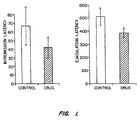
- the compound used in accordance with the invention may reduce intromission latency and ejaculatory latency and promote erections sufficient for vaginal penetration in male mammals suffering from sexual dysfunctions that are predominantly psychogenic in nature.
- said compounds may also be effective to treat psychogenic symptoms in individuals whose sexual disfunction is partly neurogenic or due to peripheral pathologies.
- said medicament may be administered to the male, and thereafter the male is sexually stimulated.
- Said medicament may be provided in the form of tablets or ampules or other suitable packaging means, formulated for controlled dosage administration.
- Sexual behaviour generally comprises arousal (excitement), courtship displays, erotic manipulation, intercourse, orgasm and resolution. All of these are affected by neural and hormonal circuitries.
- the neural circuits involve central neural system and peripheral nervous system components.
- the first element is thought to be mediated by the parasympathetic nervous system. Cholinergic impulses from the spinal cord cause arterial dilatation and venous constriction in the penis. The arterial blood in the erectile tissue of the penis builds up under high pressure due to the venous constriction which blocks the outflow of blood from the penis.
- the second element, ejaculation is thought to be mediated by the sympathetic nervous system. Sensory nerves in the penis respond to sexual stimulation by sending sensory impulses to the spinal cord. After processing these impulses, the spinal cord sends sympathetic impulses to the male reproductive organs, causing them to contract.
- This contraction results in the filling of the internal urethra with sperm and prostatic fluid.
- the corresponding pressure increase in the internal urethra stimulates pressure receptors which send impulses to the spinal cord. Cholinergic impulses are then sent from the spinal cord to the penis where the skeletal muscle surrounding the erectile tissue is stimulated to contract, causing ejaculation of the sperm from the internal urethra.
- PNS peripheral nervous system
- CNS central nervous system
- the glutamatergic enhancers of this invention have as one target CNS pathways that underlie both sexual interest (libido, desire) and sexual function (arousal, copulation, orgasm).
- stimulated presynaptic neurons release neurotransmitters such as glutamate into the synaptic cleft.
- the neurotransmitter binds to receptors present on the postsynaptic neuron.
- the formation of the ligand-receptor complex results in the opening of ion channels which permit the passage of ions across the neural plasma membrane of the post-synaptic neuron. If the net flux of ions exceeds a certain threshold level, the postsynaptic neuron is stimulated.
- the compounds used in the present invention primarily act, not by directly stimulating neural activation, but by upmodulating ("allosteric modulation") neural activation and transmission in neurons that contain glutamatergic receptors. These compounds bind to the glutamate receptor at a site other than the glutamate binding site, but such binding does not by itself give rise to ion fluxes. However, when a glutamate molecule binds to a glutamate receptor that has bound to it a glutamatergic compound of the invention, the subsequent ion flux is of much longer duration. Thus, in the presence of the compounds used herein, postsynaptic neurons are activated by much lower concentrations of glutamate than postsynaptic neurons that do not contain bound compounds.
- Cyano refers to the group -CN.
- Halogen or "halo” refers to fluorine, bromine, chlorine, and iodine atoms.
- Haldroxy refers to the group -OH.
- “Sulfamoyl” refers to the -SO 2 NH 2 .
- Alkyl refers to a cyclic, branched or straight chain, alkyl group of one to eight carbon atoms.
- alkyl includes reference to unsubstituted alkyl groups. This term is further exemplified by such groups as methyl, ethyl, n-propyl, i-propyl, n-butyl, t-butyl, i-butyl (or 2-methylpropyl), cyclopropylmethyl, cyclohexyl, i-amyl, n-amyl, and hexyl.
- “Lower alkyl” refers to C 1 -C 6 alkyl, with C 1 -C 4 alkyl more preferred.
- Cyclic alkyl includes both mono-cyclic alkyls, such as cyclohexyl, and bi-cyclic alkyls, such as [3.3.0]bicyclooctane and [2.2.1]bicycloheptane.
- Aryl or “Ar” refers to an aromatic substituent which may be a single ring or multiple rings which are fused together, linked covalently, or linked to a common group such as an ethylene or methylene moiety.
- the aromatic ring(s) may contain a heteroatom, such as phenyl, naphthyl, biphenyl, diphenylmethyl, 2,2-diphenyl-1-ethyl, thienyl, pyridyl and quinoxalyl.
- aryl or “Ar” includes reference to both substituted and unsubstituted aryl groups.
- the aryl group may be substituted with halogen atoms, or other groups such as hydroxy, cyano, nitro, carboxyl, alkoxy, phenoxy, fluoroalkyl and the like. Additionally, the aryl group may be attached to other moieties at any position on the aryl radical which would otherwise be occupied by a hydrogen atom (such as 2-pyridyl, 3-pyridyl and 4-pyridyl).
- alkoxy denotes the group -OR, where R is lower alkyl, substituted lower alkyl, aryl, substituted aryl, aralkyl or substituted aralkyl as defined below.
- acyl denotes groups -C(O)R, where R is alkyl, substituted alkyl, alkoxy, aryl, substituted aryl, amino and alkylthiol.
- Carbocyclic moiety denotes a ring structure in which all ring vertices are carbon atoms. The term encompasses both single ring structures and fused ring structures. Examples of aromatic carbocyclic moieties are phenyl and naphthyl.
- Heterocyclic moiety denotes a ring structure in which one or more ring vertices are atoms other than carbon atoms, the remainder being carbon atoms. Examples of non-carbon atoms are N, O, and S. The term encompasses both single ring structures and fused ring structures. Examples of aromatic heterocyclic moieties are pyridyl, pyrazinyl, pyrimidinyl, quinazolyl, isoquinazolyl, benzofuryl, isobenzofuryl, benzothiofuryl, indolyl, and indolizinyl.
- amino denotes the group NRR', where R and R' may independently be hydrogen, lower alkyl, substituted lower alkyl, aryl, substituted aryl as defined below or acyl.
- amido denotes the group -C(O)NRR', where R and R' may independently be hydrogen, lower alkyl, substituted lower alkyl, aryl, substituted aryl as defined below or acyl.
- R 1 and R 2 may be identical or different (e.g ., both R 1 and R 2 may be halogen or, R 1 may be halogen and R 2 may be hydrogen, etc .).
- a "sexual dysfunction” generally denotes the inhibition of any one or more of the phases of sexual response (appetite, excitement, orgasm, resolution) described in the DSM-IIIR.
- "Sexual dysfunction” specifically encompasses decreased sexual desire (Hypoactive Sexual Desire Disorder, DSM-III-R # 302.71), the inability to sustain a penile erection (Male Erectile Disorder, DSM-III-R # 302.72), the inability to ejaculate and/or the inability to experience orgasm (Inhibited Male Orgasm, DSM-III-R # 302.74). All may be psychogenic only, or psychogenic and biogenic, lifelong or acquired, and generalized or situational.
- the DSM-IIIR definitions and text relating to sexual dysfunction are hereby incorporated by reference.
- Impotence or “Male Erectile Disorder” is the consistent inability to maintain an erect penis of sufficient rigidity for sexual intercourse.
- Sexual behavior may or may not involve a partner. Where a partner is involved, sexual behavior comprises arousal, courtship displays and copulation. Arousal (or excitement) consists of a subjective sense of sexual pleasure and accompanying physiological changes. The major changes in the male comprise penile tumescence leading to erection. Courtship displays are behaviors intended to or having the effect of arousing a sexual partner and of increasing the arousal of the actor. Copulation may comprise intromission of the penis into the sexual partner's sexual organs (in heterosexual copulation), orgasm and ejaculation.
- sexual behavior may include any combination of touching or erotically manipulating erogenous areas of the genital organs or other erogenous parts of the body (e.g ., masturbation); responding to visual stimulation such as pictorial depiction of erotic acts and objects.
- symptoms of sexual dysfunction includes inhibition of any of the four phases of sexual response (appetite, excitement, orgasm, resolution) mentioned in the DSM-IIIR. These specifically include lack of sexual desire (Hypoactive Sexual Desire Disorder, DSM-III-R # 302.71), impotence or the inability to sustain a penile erection (Male Erectile Disorder, DSM-III-R # 302.72), the inability to ejaculate and/or the inability to experience orgasm (Inhibited Male Orgasm, DSM-III-R # 302.74).
- the phrase "diminish the symptoms of sexual dysfunction” denotes a decrease in the inhibition of any one or more of the four phases of sexual response (appetite, excitement, orgasm, resolution) described in the DSM-IIIR.
- the phrase specifically encompasses increased sexual desire, the enhanced ability to sustain a penile erection, the enhanced ability to ejaculate and/or to experience orgasm.
- a particular example of diminished symptoms of sexual dysfunction is an increase in the number, frequency and duration of instances of sexual behavior or of subjective sexual arousal.
- subject means a male mammal, particularly a human.
- the term specifically includes domestic and common laboratory mammals, such as non-human primates, kine, horses, pigs, goats, sheep, rabbits, rats and mice.
- Age-related sexual dysfunctions are sexual dysfunctions that are manifested in aging subjects and that often worsen with increasing age. They are common to both human and animal species (Davidson et al., 1983a; 1983b; Smith and Davidson, 1990).
- ⁇ -amino-3-hydroxy-5-methyl-isoxazole-4-propionic acid or "AMPA", or "glutamatergic” receptors are molecules or complexes of molecules present in cells, particularly neurons, usually at their surface membrane, that recognize and bind to glutamate or AMPA.
- the binding of AMPA or glutamate to an AMPA receptor normally gives rise to a series of molecular events or reactions that result in a biological response.
- the biological response may be the activation or potentiation of a nervous impulse, changes in cellular secretion or metabolism, or causing cells to undergo differentiation or movement.
- central nervous system or “CNS” comprises the brain and the spinal cord.
- peripheral nervous system or “PNS” comprises all parts of the nervous system that are not part of the CNS, including cranial and spinal nerves and the autonomic nervous system.
- the phrase "effective amount” means a dosage sufficient to produce a desired result.
- the desired result is a subjective or objective decrease in the symptoms of sexual dysfunction, as measured by the techniques described below.
- Compounds useful in the practice of this invention are generally those which amplify (upmodulate) the activity of the natural stimulators of AMPA receptors, particularly by amplifying excitatory synaptic response.
- Methods for identifying other compounds are routine. They involve a variety of accepted tests to determine whether a given candidate compound is an upmodulator of the AMPA receptor.
- the primary assay is measurement of enlargement of the excitatory postsynaptic potential (EPSP) in in vitro brain slices, such as rat hippocampal brain slices.
- ESP excitatory postsynaptic potential
- the wave form of a normal EPSP is composed of:
- the different components can be separately measured to assay the effect of a putative AMPA receptor enhancing agent. This is accomplished by adding agents that block the unwanted components, so that the detectable responses are essentially only AMPA responses.
- agents that block the unwanted components so that the detectable responses are essentially only AMPA responses.
- an NMDA receptor blocker e.g., AP-5 or other NMDA blockers known in the art
- GABA blocker e.g., picrotoxin or other GABA blockers known in the art
- known agents such as tetrodotoxin may be used.
- AMPA upmodulators useful in the present invention are substances that cause an increased ion flux through the AMPA receptor complex channels in response to glutamatergic stimulation.
- Increased ion flux is typically measured as one or more of the following non-limiting parameters: at least a 10% increase in decay time, amplitude of the waveform and/or the area under the curve of the waveform and/or a decrease of at least 10% in rise time of the waveform, for example in preparations treated to block NMDA and GABA components.
- the increase or decrease is preferably at least 25-50%; most preferably it is at least 100%. How the increased ion flux is accomplished (e.g., increased amplitude or increased decay time) is of secondary importance; upmodulation is reflective of increased ion fluxes through the AMPA channels, however achieved.
- An additional and more detailed assay is that of excised patches, i.e., membrane patches excised from cultured hippocampal slices; methods are described in Arai et al., 1994. Outside-out patches are obtained from pyramidal hippocampal neurons and transferred to a recording chamber. Glutamate pulses are applied and data are collected with a patch clamp amplifier and digitized (Arai et al., 1994).
- NMDA currents can be blocked as above (e.g., with AP-5).
- the central action of a drug can be verified by measurement of Field EPSPs in behaving animals (see Staubli et al., 1994a) and time course of biodistribution can be ascertained via injection and PET measurement of radiolabeled drug (see Staubli et al., 1994b).
- R 2 is (CHR 8 ) n-m , or C n-m HR 8 2(n-m)-3
- R 3 is H, C 1 -C 6 alkyl, or C 1 -C 6 alkoxy.
- R 4 and R 5 When R 4 and R 5 are combined, a preferred subclass for R 12 is H and CH 3 , and preferred groups representing the combination of R 4 and R 5 are In these groups, R 10 and R 11 are both preferably O and p is 1 or 2.
- a particularly preferred compound is compound CX 516, 1-(Quinoxalin-6-ylcarbonyl)piperidine, having the following structure:
- certain compounds of Formula I can be prepared from an appropriately substituted benzoic acid by contacting the acid under conditions suitable to activate the carboxy group for the formation of an amide. This is accomplished, for example, by activating the acid with carbonyl diimidazole, or with a chlorinating agent such as thionyl chloride or oxalyl chloride to obtain the corresponding benzoyl chloride. The activated acid is then contacted with a nitrogen-containing heterocyclic compound under conditions suitable for producing the desired imide or amide.
- the substituted benzoic acid can be ionized by contact with at least two equivalents of base such as triethylamine in an inert solvent such as methylene chloride or alcohol-free chloroform, and the ionized benzoic acid can then be reacted with pivaloyl chloride or a reactive carboxylic acid anhydride such as trifluoroacetic anhydride or trichloroacetic anhydride, to produce a mixed anhydride.
- the mixed anhydride is then contacted with a nitrogen-containing heterocyclic compound to produce the desired imide or amide.
- a further alternative to these methods, suitable for some of the compounds of Formula I, is to contact the appropriately selected 3,4-(alkylenedihetero)-benzaldehyde with ammonia to form an imine, then contacting the imine with benzoyloxycarbonyl chloride to form the benzoyloxycarbonyl imine.
- Suitable 3,4-(alkylenedihetero)-benzaldehydes include 3,4-(methylenedioxy)-benzaldehyde, 3,4-(ethylenedioxy)-benzaldehyde, 3,4-(propylenedioxy)-benzaldehyde, 3,4-(ethylidenedioxy)-benzaldehyde, 3,4-(propylenedithio)-benzaldehyde, 3,4-(ethylidenedithio)-benzaldehyde, 5-benzimidazolecarboxaldehyde, and 6-quinoxalinecarboxaldehyde.
- the benzoyloxycarbonyl imine is then contacted with a simple conjugated diene such as butadiene under cycloaddition reaction conditions, and then with a Lewis acid under conditions suitable for a Friedel-Crafts acylation.
- a simple conjugated diene such as butadiene under cycloaddition reaction conditions
- a Lewis acid under conditions suitable for a Friedel-Crafts acylation.
- suitable conjugated dienes include butadiene, 1,3-pentadiene, and isoprene
- suitable Lewis acids include AlCl 3 and ZnCl 2 .
- Still further compounds within Formula I are prepared from 2,3-dihydroxy naphthalene.
- This starting material is reacted with 1,2-dibromoethane in the presence of base to produce an ethylenedioxy derivative of naphthalene, which is then reacted with an oxidizing agent such as potassium permanganate to produce 4,5-ethylenedioxyphthaldehydic acid.
- the latter is contacted with anhydrous ammonia to form an imine, which is then treated with a suitable carbonyl-activating agent such as dicyclohexylcarbodiimide under cyclization conditions to form an acyl imine.
- the acyl imine is then reacted with a simple conjugated diene to achieve cycloaddition.
- Still further compounds within Formula I can be prepared by contacting an ⁇ -halotoluic acid with at least two equivalents of an alkali salt of a lower alcohol according to the Williamson ether synthesis to produce an ether linkage.
- the resulting alkoxymethylbenzoic acid is activated with carbonyldiimidazole, thionyl chloride, dicyclohexylcarbodiimide, or any other suitable activating agent, and reacted with a suitable amine to achieve a carboxamide linkage.
- a formyl-substituted aromatic carboxamide is prepared by activation of an appropriate starting acid with a tertiary amine (for example, triethyl amine) plus an acid chloride (for example, pivaloyl chloride) to produce a mixed anhydride for coupling to a suitable amine.
- a tertiary amine for example, triethyl amine
- an acid chloride for example, pivaloyl chloride
- the formyl group is then reduced to an alcohol by a suitable reducing agent such as sodium borohydride.
- the alcohol is then converted to a leaving group which is replaceable by the alkali salt of an alcohol.
- the leaving group can be generated by reagents such as thionyl chloride, thionyl bromide, mineral acids such as hydrochloric, hydrobromic or hydroiodic acids, or the combined action of a tertiary amine plus either a suitable sulfonic anhydride or sulfonyl halide.
- the alcohol can be activated by removing the proton. This is achieved by the action of a strong base such as sodium hydride in an aprotic solvent such as dimethylformamide.
- the resulting alkoxide is then reacted with a suitable alkyl halide or other alkyl compound with a suitable leaving group to produce the desired ether linkage.
- Fused ring structures such as those in which R 3 and one of the R 8 's of Formula I are combined to form a single linking group bridging the 2 and 3' carbon atoms can be synthesized in the following manner.
- the carboxyl group of an appropriately substituted salicylic acid is activated with carbonyldiimidazole in dichloromethane, chloroform, tetrahydrofuran, or other anhydrous solvent.
- An aminoalkylacetal such as H 2 N(CH 2 ) 3 CH(OCH 2 CH 3 ) 2 is then added.
- the resulting amide is treated with an aryl or alkyl sulfonic acid, trifluoroacetic acid, or other strong acid, in a solvent of low basicity such as chloroform or dichloromethane, to cleave the acetal and cyclize the intermediate aldehyde with the amide nitrogen and the phenolic oxygen.
- a solvent of low basicity such as chloroform or dichloromethane
- the compounds used in the invention can be screened for their ability to amplify (upmodulate) the activity of the natural stimulators of AMPA receptors, particularly by amplifying excitatory synaptic responses.
- a variety of accepted tests can be used to determine whether a given compound is an upmodulator of the AMPA receptor.
- the primary assay is measurement of the enlargement of the excitatory postsynaptic potential (EPSP) in in vitro brain slices, such as rat hippocampal brain slices.
- ESP excitatory postsynaptic potential
- the wave form of a normal EPSP is composed of an AMPA component, which has a relatively rapid rise time in the depolarizing direction (-5-10 msec) and which decays within -20 msec.;an NMDA component (slow -30-40 msec rise time and slow -40-70 msec decay) (the NMDA portion will not appear in normal or artificial CSF (cerebro-spinal fluid) media, due to the voltage requirement for NMDA receptor channel activation, but in low magnesium media, an NMDA component may appear; a GABA (gamma-aminobutyric acid) component in the opposite (hyperpolarizing) direction as the glutamatergic (AMPA and NMDA) components, exhibiting a time course with a rise time of ⁇ 10-20 msec and very slow decay ( ⁇
- the different components can be separately measured to assay the effect of a putative AMPA receptor enhancing agent. This is accomplished by adding agents that block the unwanted components, so that the detectable responses are essentially only AMPA responses.
- agents that block the unwanted components so that the detectable responses are essentially only AMPA responses.
- an NMDA receptor blocker e.g ., AP-5 or other NMDA blockers known in the art
- GABA blocker e.g ., picrotoxin or other GABA blockers known in the art
- known agents such as tetrodotoxin may be used.
- AMPA upmodulators useful in the present invention are substances that cause an increased ion flux through the AMPA receptor complex channels in response to glutamatergic stimulation.
- Increased ion flux is typically measured as one or more of the following non-limiting parameters: at least a 10% increase in decay time, amplitude of the waveform and/or the area under the curve of the waveform and/or a decrease of at least 10% in rise time of the waveform, for example in preparations treated to block NMDA and GABA components.
- the increase or decrease is preferably at least 25-50%; most preferably it is at least 100%. How the increased ion flux is accomplished ( e.g ., increased amplitude or increased decay time) is of secondary importance; upmodulation is reflective of increased ion fluxes through the AMPA channels, however achieved.
- An additional and more detailed assay is that of excised patches, i.e ., membrane patches excised from cultured hippocampal slices; methods are described in Arai et al., 1994. Outside-out patches are obtained from pyramidal hippocampal neurons and transferred to a recording chamber. Glutamate pulses are applied and data are collected with a patch clamp amplifier and digitized (Arai et al., 1994). Because no GABA is applied to the patch, GABAergic currents will not be elicited. Any NMDA currents can be blocked as above ( e.g ., with AP-5).
- the central action of a drug can be verified by measurement of field EPSPs in behaving animals ( see , Staubli et al., 1994a) and time course of biodistribution can be ascertained via injection and subsequent quantitation of drug levels in various tissue samples. Quantitation can be accomplished by methods known to those skilled in the art and will vary depending on the chemical nature of the drug.
- AMPA ⁇ -amino-3-hydroxy-5-methylisoxazole-4-propionic acid
- AMPA ⁇ -amino-3-hydroxy-5-methylisoxazole-4-propionic acid
- Examples of other such AMPA-selective compounds include 7-chloro-3-methyl-3-4-dihydro-2H-1,2,4 benzothiadiazine S,S, dioxide, as described in Zivkovic et al., 1995, J. Pharmacol. Exp. Therap., 272:300-309 ; Thompson et al., 1995, Proc. Nat. Acad. Sci. USA, 92:7667-7671 .
- Subjects contemplated for treatment with medicament in accordance with this invention include humans, laboratory animals, and domestic animals. It is generally understood that pharmacological treatments (e.g ., administration of testosterone) influences sexual behavior in these animals.
- the compounds and compositions described above are generally most useful to treat sexual dysfunctions in subjects having no demonstrable organic cause for the disorder.
- Conditions responsive to glutamatergic treatment include cases of reduced sexual drive, arousal or desire, age-associated hyposexuality unaccompanied by other physiological indications or by difficulties reaching orgasm.
- the compounds used in the present invention are useful to treat individuals afflicted with physical disorders often also have psychogenic inhibitions that exacerbate the physical problem. Treatment of the psychogenic component ameliorates the reduced sexual drive, arousal or desire, age-associated hyposexuality, and facilitates treatment of the physical component. Thus, even in cases of physical sexual dysfunction, combinations of hormone and physical treatments may be indicated.
- the compounds used in this invention can be incorporated into a variety of formulations for therapeutic administration. Examples are capsules, tablets, syrups, suppositories, and various injectable forms. Administration of the compounds can be achieved in various ways, including oral, bucal, rectal, parenteral, intraperitoneal, intradermal, transdermal, etc., administration.
- Preferred formulations of the compounds are oral preparations, particularly capsules or tablets containing each from about 1 milligram up to about 100 milligrams of active ingredient.
- compositions are administered at a dosage that diminishes the symptoms of sexual dysfunction in subjects suffering from a sexual dysfunction while at the same time minimizing any side-effects. It is contemplated that the composition will be obtained and used under the guidance of a physician.
- Typical dosages for systemic administration range from 0.1 to 1000 milligrams per kg weight of subject per administration.
- a typical dosage may be one 10-50 mg tablet taken once a day, or one time-release capsule or tablet taken once a day and containing a proportionally higher content of active ingredient.
- the time-release effect may be obtained by capsule materials that dissolve at different pH values, by capsules that release slowly by osmotic pressure, or by any other known means of controlled release.
- Dose levels can vary as a function of the specific compound, the severity of the symptoms, and the susceptibility of the subject to side effects. Some of the specific compounds that stimulate glutamatergic receptors are more potent than others. Preferred dosages for a given compound are readily determinable by those of skill in the art by a variety of means. A preferred means is to measure the physiological potency of a given compound that is a candidate for administration, by the method of Davis et al. (1996), submitted to Behavioral Neuroscience. Briefly, excised patches and excitatory synaptic responses are measured in the presence of different concentrations of test compounds, and the differences in dosage response potency are recorded and compared. Davis et al.
- BDP-20 was about ten-fold more potent than another designated BDP-12 in a variety of behavioral (exploratory activity, speed of performance) and physical (excised patches and excitatory synaptic responses) tests.
- the relative physiological potency was an accurate measure of their behavioral potency.
- excised patches and excitatory synaptic responses may be used to gauge the relative physiological (and behavioral) potency of a given compound with regard to a known standard.
- Preferred glutamatergic compounds for the treatment of sexual dysfunctions may have a half-life measured from less than 10 minutes to more than 2 hours.
- the compound preferably has a rapid onset and short elimination half-life ( ⁇ 90 min.).
- Rats and mice have traditionally been the quintessential test animals for developing animal models for treating disease.
- a large body of studies indicates that hormones and treatments that modulate sexual behavior in rodents also do so in other mammals, humans included.
- a first step in treating humans is generally determining which individuals have dysfunctions which are likely to respond (e.g ., neurogenic, psychogenic or age-related sexual dysfunctions), and which will not.
- Determination whether a subject is suffering from a sexual dysfunction that is substantially neurogenic or psychogenic in origin is made by a person skilled in the art using a number of readily available diagnostic procedures. In general, the presence of typical DSMIII sexual dysfunctions in humans can be ascertained via questionnaires or interviews. Spontaneous self-identification by individuals of a low or comparatively diminished desire or ability to function sexually and to experience sexual pleasure is one criterion for selecting individuals to be treated. Few laboratory tests are required for the routine evaluation of common sexual complaints (Kligman, 1991). Impotence which is a side-effect of drugs such as beta-blockers or alcohol is deemed to be neurogenic impotence in the present specification.
- psychosexual history of the subject may be the only criterion used to select candidates for treatment, it may be desirable to also rule out purely physical conditions that are not treatable with the compounds used in the invention should be ruled out.
- a subject suffering from impotence can be given a physical examination with particular attention to possible penile and scrotal pathology precluding an erection sufficient for vaginal penetration.
- Such tests include determination of the penobrachial blood pressure index (PBPI), Doppler investigation of the penile arteries, and a papaverine test.
- the subject may further be tested for signs of penile venous leakage or atherosclerosis.
- the PBPI is the penile systolic blood pressure divided by the systolic blood pressure determined at one of the arms. These blood pressures can be determined by any numerous standard techniques. Thus, the penile systolic blood pressure can be determined by placing around the base of the free part of the penis in the flaccid state, an inflatable cuff, which is capable of being used to apply variable pressure, readable from a gauge, to an object around which the cuff is placed, localizing the penile arteries with a Doppler ultrasound probe (e.g ., and 8 MHz probe, such as the Mini Doplex D500 TM available from Huntleigh Technology, Luton, United Kingdom), and then inflating and deflating the cuff and ascertaining the pressure at which the Doppler sound reappears. The pressure at which the Doppler sound reappears is the penile systolic blood pressure. A male's penile blood pressure is regarded as normal if his PBPI is > 0.80.
- each of the two penile cavernous arteries is investigated distal to the aforementioned cuff using Doppler ultrasound.
- the function of each of the two arteries is assessed by Doppler ultrasound using an arbitrary scale of 0, 1, 2 or 3, where 0 means that the function is so deficient ultrasound using an arbitrary scale of 0, 1, 2 or 3, where 0 means that the function is so deficient that the artery cannot be located and 3 means that the artery is well enough that maximal Doppler sound is observed.
- a tourniquet is placed at the base of the free part of the penis and tightened and then, with the patient seated, 30 mg of papaverine in 1 ml of a physiologically acceptable fluid such as physiological saline or phosphate-buffered saline is injected into the penile cavernous body.
- a physiologically acceptable fluid such as physiological saline or phosphate-buffered saline
- papaverine in persons suspected of having impotence due to a suprasacral nerve lesion or a psychogenic dysfunction, only 15 mg of papaverine is administered, because of the high incidence of papaverine-induced priapism in such cases.
- Five minutes after the injection the tourniquet is removed and an ultrasound Doppler investigation of the penile cavernous arteries is carried out as described above.
- the function of the arteries is regarded as normal if both of them score a 3 on the arbitrary scale.
- penile vibration at about a 4 Hz with an amplitude of about 1.2 mm (carried out with, e.g ., a Vibrector TM from Multicept, Gentofte, Denmark) is performed out for five to ten minutes and then erectile response is evaluated. Erectile response is classified as full rigidity, if the angle between the penis and the legs in the standing position is > 90°, and tumescence or no response if the angle is less than or equal to 45°.
- the papaverine employed in the "papaverine test" described above could be replace with VIP (approximately 50 g).
- a male with a PBPI less than about 0.60 with scores of 0 in Doppler investigations of both penile cavernous arteries (after papaverine injection as described above), and with a less than fully rigid erection after papaverine injection and vibration will have impotence caused by "untreatable" atherosclerosis.
- Whether a subject suffers from impotence that is untreatable because of venous leakage may be determined by a number of methods.
- One method is cavernosometry, optionally supplemented with cavernosography. See, e.g ., Delcour et al. (1986) Radiology 161:799 ; Porst et al. (1987) J. Urol. 137: 1163 ; Lue et al. (1987) J. Urol. 37: 829 .
- Cavernosometry can be performed using, both before and after intracavernosal injection of 60 mg of papaverine (in 1 ml of physiological saline), infusion of physiological saline through a 19-gauge needle into one corpus cavernosum with a 21-gauge needle inserted into the other corpus cavernosum for measurement of intracorporal pressure (which is recorded on a plotter).
- the infusion rates needed to induce and maintain an erection are measure. If the infusion rate needed to maintain an erection is greater than 50 ml/min before administration of the papaverine and greater than 15 ml/min after administration of the papaverine, untreatable venous leakage is present.
- the penis is X-rayed, both before and after intracavernosal injection of 60 mg papaverine in 1 ml of physiological saline, while infusing contrast medium into the corpus cavernosum (e.g ., through a 19-gauge needle) at a flow rate that maintains an erection during the x-raying.
- contrast media suitable for the procedure are available in the art; these are typically aqueous solutions of iodinated compounds that provide between about 180 mg/ml and about 360 mg/ml of iodine.
- Omnipaque 240TM which is a solution of iohexol providing 240 mg/ml of iodine sold by Winthrop Pharmaceuticals, New York, N.Y., USA
- lopamiro which is a solution of iopamidol providing 300 mg/ml iodine sold by Astra Meditec, Goteborg, Sweden.
- 50-100 ml of the contrast medium will be employed for each x-ray (i.e., before and then after the injection of papaverine).
- 30 mg papaverine (in 1 ml physiological saline) coupled with stimulation by vibration can be employed in place of 60 mg papaverine (in 1 ml physiological saline).
- the success of treatment is measured by monitoring and recording the nature, number, frequency and duration of instances of sexual stimulation and sexual behavior.
- the sexual behavior to be monitored can comprise sexual relations between the patient and another person or can involve sexual behaviors that do not involve another person.
- Sexual responsiveness may be induced and gauged by: touching or erotically manipulating erogenous areas of the genital organs or other erogenous parts of the body; providing visual stimulation, as with a sexually explicit film or other form of sexually stimulating show or display; or providing vibratory stimulation to the penis (for example, by resting the penis on the table of a vibrating apparatus such as that of a Vibrector system (Multicept, Genofte, Denmark), at between about 30 Hz and about 100 Hz with an amplitude of about 1 to about 5 mm), alone or in combination.
- a Vibrector system Multicept, Genofte, Denmark
- a preferred method of sexual stimulation includes providing visual stimulation, as with a sexually explicit film, simultaneously with vibratory stimulation of the penis, as with a Vibrector system set to between about 30 Hz and about 60 Hz (usually about 50 Hz) in frequency and between about 1 mm and about 2.5 mm (usually about 2.2 mm) in amplitude.
- the progress of the treatment is monitored by having the patient record instances and frequency of sexual behavior or of subjective sexual arousal, for example by keeping a diary.
- the supervising physician will maintain a log of treatments and observations.
- the diary and log will allow for a comparison of instances and frequency of sexual behavior or of subjective sexual arousal before and in response to treatment.
- kits with unit doses of AMPA up-modulating drugs either in oral or injectable doses are provided.
- the containers containing the unit doses will be a informational package insert describing the use and attendant benefits of the drugs in treating neurodegenerative pathologies not significantly affecting memory or learning.
- Preferred compounds and unit doses are those described herein above.
Landscapes
- Health & Medical Sciences (AREA)
- Life Sciences & Earth Sciences (AREA)
- Chemical & Material Sciences (AREA)
- Veterinary Medicine (AREA)
- Public Health (AREA)
- Medicinal Chemistry (AREA)
- General Health & Medical Sciences (AREA)
- Animal Behavior & Ethology (AREA)
- Pharmacology & Pharmacy (AREA)
- Epidemiology (AREA)
- Chemical Kinetics & Catalysis (AREA)
- Organic Chemistry (AREA)
- Nuclear Medicine, Radiotherapy & Molecular Imaging (AREA)
- General Chemical & Material Sciences (AREA)
- Bioinformatics & Cheminformatics (AREA)
- Engineering & Computer Science (AREA)
- Reproductive Health (AREA)
- Endocrinology (AREA)
- Gynecology & Obstetrics (AREA)
- Pharmaceuticals Containing Other Organic And Inorganic Compounds (AREA)
- Medicines That Contain Protein Lipid Enzymes And Other Medicines (AREA)
- Nitrogen- Or Sulfur-Containing Heterocyclic Ring Compounds With Rings Of Six Or More Members (AREA)
- Heterocyclic Carbon Compounds Containing A Hetero Ring Having Nitrogen And Oxygen As The Only Ring Hetero Atoms (AREA)
- Nitrogen And Oxygen Or Sulfur-Condensed Heterocyclic Ring Systems (AREA)
- Hydrogenated Pyridines (AREA)
- Pyrrole Compounds (AREA)
- Heterocyclic Compounds That Contain Two Or More Ring Oxygen Atoms (AREA)
- Plural Heterocyclic Compounds (AREA)
- Medicines Containing Plant Substances (AREA)
- Removal Of Specific Substances (AREA)
- Peptides Or Proteins (AREA)
- Acyclic And Carbocyclic Compounds In Medicinal Compositions (AREA)
Claims (7)
- Eine Verbindung mit der Formel
 R1 N oder CH ist;m 0 oder 1 ist;R2(CHR8)n-m oder Cn-mHR8 2(n-m)-3 ist, wobei n 4, 5, 6 oder 7 ist, R8 in jeder einzelnen Verbindung gleich oder unterschiedlich ist und jedes R8 ein Mitglied ausgewählt aus der Gruppe bestehend aus H und C1-C6-Alkyl ist;R3 ein Mitglied ausgewählt aus der Gruppe bestehend aus H, C1-C6-Alkyl und C1-C6-Alkyloxy ist;R6 H ist;R4 und R3 zusammengesetzt werden, um ein Mitglied ausgewählt, aus der Gruppe bestehend auszu bilden wobei:
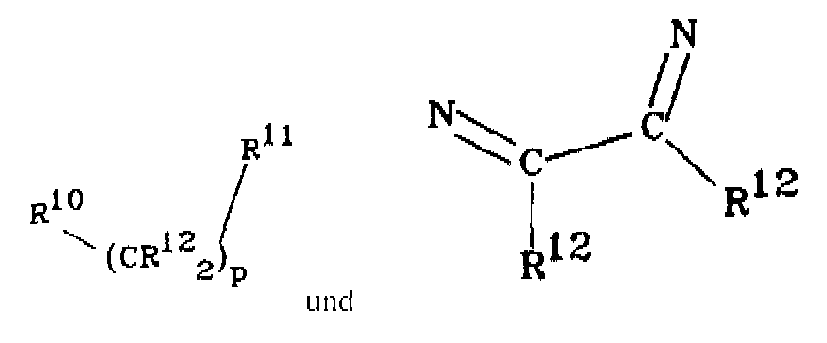 R10 und R11 O sind:R12 ein Mitglied ausgewählt aus der Gruppe bestehend aus H und CH3 ist; p 1 oder 2 ist undR7 ein Mitglied ausgewählt aus der Gruppe bestehend aus H, C1-C6-Alkyl und C1-C6-Alkyloxy ist,wobei die Verbindung geeignet ist, die Antwort von Rezeptoren für α-Amino-3-Hydroxy-5-Methyl-Isoxazol-4-Propionsäure ("AMPA") zur natürlichen Ligandenbindung aufzumodulieren,zur Verwendung in der Behandlung von sexuellen Dysfunktionen, wobei die sexuelle Dysfunktion neurogen, psychogen oder altersbedingt ist.
 - Eine Verbindung gemäß Anspruch 1, wobei die sexuelle Dysfunktion eine sexuelle Dysfunktion eines Mannes ist.
- Eine Verbindung gemäß Anspruch 1 oder 2, wobei die sexuelle Dysfunktion eine Ercktionsstörung eines Mannes ist.
- Eine Verbindung gemäß Anspruch 1 oder 2, wobei die sexuelle Dysfunktion die Unfähigkeit zur Ejakulation ist.
- Eine Verbindung gemäß Anspruch 1 oder 2, wobei die sexuelle Dysfunktion die Unfähigkeit ist, einen Orgasmus zu erlangen.
- Eine Verbindung gemäß einem der vorhergehenden Ansprüche zur oralen Verabreichung.
- Eine Verbindung gemäß einem der vorhergehenden Ansprüche zur Verabreichung durch Injektion.
Applications Claiming Priority (3)
| Application Number | Priority Date | Filing Date | Title |
|---|---|---|---|
| US1077896P | 1996-01-29 | 1996-01-29 | |
| US10778P | 1996-01-29 | ||
| PCT/US1997/001285 WO1997026884A1 (en) | 1996-01-29 | 1997-01-28 | Method for treating sexual dysfunctions |
Publications (3)
| Publication Number | Publication Date |
|---|---|
| EP0883403A1 EP0883403A1 (de) | 1998-12-16 |
| EP0883403A4 EP0883403A4 (de) | 2002-03-06 |
| EP0883403B1 true EP0883403B1 (de) | 2010-08-25 |
Family
ID=21747379
Family Applications (1)
| Application Number | Title | Priority Date | Filing Date |
|---|---|---|---|
| EP97903127A Expired - Lifetime EP0883403B1 (de) | 1996-01-29 | 1997-01-28 | Methode zur behandlung sexueller fehlfunktionen |
Country Status (8)
| Country | Link |
|---|---|
| EP (1) | EP0883403B1 (de) |
| JP (2) | JP2000507212A (de) |
| AT (1) | ATE478672T1 (de) |
| AU (1) | AU709113B2 (de) |
| CA (1) | CA2242879C (de) |
| DE (1) | DE69739970D1 (de) |
| NZ (1) | NZ331549A (de) |
| WO (1) | WO1997026884A1 (de) |
Families Citing this family (20)
| Publication number | Priority date | Publication date | Assignee | Title |
|---|---|---|---|---|
| US6329368B1 (en) * | 1997-05-09 | 2001-12-11 | The Regents Of The University Of California | Endocrine modulation with positive modulators of AMPA type glutamate receptors |
| IL137720A0 (en) * | 1998-02-18 | 2001-10-31 | Neurosearch As | Compounds and their use as positive ampa receptor modulators |
| US6943159B1 (en) | 1998-02-18 | 2005-09-13 | Neurosearch A/S | Compounds and their use as positive AMPA receptor modulators |
| US8563592B2 (en) | 2001-11-01 | 2013-10-22 | Spectrum Pharmaceuticals, Inc. | Bladder cancer treatment and methods |
| MXPA04007828A (es) * | 2002-02-15 | 2004-10-15 | Nexmed Holdings Inc | Composicion de prostaglandina para eltratamiento de la disfuncion erectil. |
| CA2536975A1 (en) | 2003-08-28 | 2005-03-17 | Nitromed, Inc. | Nitrosated and nitrosylated diuretic compounds, compositions and methods of use |
| WO2006091716A2 (en) | 2005-02-24 | 2006-08-31 | Nitromed, Inc. | Nitric oxide enhancing diuretic compounds, compositions and methods of use |
| KR101411167B1 (ko) | 2005-04-13 | 2014-06-23 | 아스텍스 테라퓨틱스 리미티드 | 하이드록시벤즈아미드 유도체 및 hsp90 억제제로서의이의 용도 |
| US7754725B2 (en) | 2006-03-01 | 2010-07-13 | Astex Therapeutics Ltd. | Dihydroxyphenyl isoindolymethanones |
| JP5528807B2 (ja) | 2006-10-12 | 2014-06-25 | アステックス、セラピューティックス、リミテッド | 複合薬剤 |
| JP5518478B2 (ja) | 2006-10-12 | 2014-06-11 | アステックス、セラピューティックス、リミテッド | 医薬化合物 |
| GB0620259D0 (en) | 2006-10-12 | 2006-11-22 | Astex Therapeutics Ltd | Pharmaceutical compounds |
| EP2073802A1 (de) | 2006-10-12 | 2009-07-01 | Astex Therapeutics Limited | Pharmazeutische kombinationen |
| WO2008044041A1 (en) | 2006-10-12 | 2008-04-17 | Astex Therapeutics Limited | Pharmaceutical combinations |
| JP5410285B2 (ja) | 2006-10-12 | 2014-02-05 | アステックス、セラピューティックス、リミテッド | 医薬化合物 |
| GB0806527D0 (en) | 2008-04-11 | 2008-05-14 | Astex Therapeutics Ltd | Pharmaceutical compounds |
| DE102009007799B4 (de) * | 2009-02-06 | 2010-10-14 | ITM Isotopen Technologien München AG | Molekül zur Funktionalisierung eines Trägers, Bindung eines Radionuklids an den Träger und Radionuklidgenerator zur Herstellung des Radionuklids sowie Herstellungsverfahren |
| CR20200553A (es) | 2018-04-18 | 2021-04-08 | Constellation Pharmaceuticals Inc | Moduladores de enzimas modificadoras de metilo, composiciones y usos de estos |
| CN120097995A (zh) | 2018-05-21 | 2025-06-06 | 星座制药公司 | 甲基修饰酶的调节剂、其组合物和用途 |
| WO2021016414A1 (en) | 2019-07-24 | 2021-01-28 | Constellation Pharmaceuticals, Inc. | Crystalline forms of 7-chloro-2-(4-(3-methoxyazetidin-1-yl)cyclohexyl)-2,4-dimethyl-n-((6-methyl-4-(methylthio)-2-oxo-1,2-dihydropyridin-3-yl)methyl)benzo[d][1,3]dioxole-5-carboxamide |
Family Cites Families (3)
| Publication number | Priority date | Publication date | Assignee | Title |
|---|---|---|---|---|
| US4022893A (en) * | 1975-01-24 | 1977-05-10 | Moyer John H | Treatment for hypertension |
| EP0651746B1 (de) * | 1992-07-24 | 2002-03-27 | The Regents of the University of California | Arzneimittel, die den durch ampa rezeptoren vermittelten synaptischen respons erhöhen |
| US5488049A (en) * | 1993-12-10 | 1996-01-30 | Fidia - Georgetown Institute For The Neuro-Sciences | Method of treating learning and memory disorders using benzothiadiazide derivatives as nootropic agents |
-
1997
- 1997-01-28 WO PCT/US1997/001285 patent/WO1997026884A1/en not_active Ceased
- 1997-01-28 CA CA002242879A patent/CA2242879C/en not_active Expired - Fee Related
- 1997-01-28 AU AU17111/97A patent/AU709113B2/en not_active Ceased
- 1997-01-28 JP JP9527075A patent/JP2000507212A/ja active Pending
- 1997-01-28 AT AT97903127T patent/ATE478672T1/de not_active IP Right Cessation
- 1997-01-28 EP EP97903127A patent/EP0883403B1/de not_active Expired - Lifetime
- 1997-01-28 DE DE69739970T patent/DE69739970D1/de not_active Expired - Lifetime
- 1997-01-28 NZ NZ331549A patent/NZ331549A/xx not_active IP Right Cessation
-
2008
- 2008-03-26 JP JP2008081476A patent/JP2008214352A/ja not_active Ceased
Also Published As
| Publication number | Publication date |
|---|---|
| EP0883403A1 (de) | 1998-12-16 |
| CA2242879C (en) | 2009-05-26 |
| JP2008214352A (ja) | 2008-09-18 |
| CA2242879A1 (en) | 1997-07-31 |
| AU709113B2 (en) | 1999-08-19 |
| JP2000507212A (ja) | 2000-06-13 |
| NZ331549A (en) | 2000-09-29 |
| EP0883403A4 (de) | 2002-03-06 |
| ATE478672T1 (de) | 2010-09-15 |
| AU1711197A (en) | 1997-08-20 |
| WO1997026884A1 (en) | 1997-07-31 |
| DE69739970D1 (de) | 2010-10-07 |
Similar Documents
| Publication | Publication Date | Title |
|---|---|---|
| US6083947A (en) | Method for treating sexual dysfunctions | |
| EP0883403B1 (de) | Methode zur behandlung sexueller fehlfunktionen | |
| KR102698911B1 (ko) | 근육 질환을 예방하거나 치료하기 위한 조성물 및 방법 | |
| JP2001520978A (ja) | アンパカインおよび神経遮断薬を用いる精神分裂病の処置 | |
| EP0493485A1 (de) | Verfahren und zusammensetzungen zur erzeugung einer erektion | |
| BR112012003730A2 (pt) | terapia com acetato de glatirâmer de baixa frequência | |
| JP2011141287A (ja) | 腹圧性尿失禁の予防・治療剤及びそのスクリーニング方法 | |
| US20130123248A1 (en) | Pharmacological modulation of positive ampa receptor modulator effects on neurotrophin expression | |
| US6187790B1 (en) | Use of cilostazol for treatment of sexual dysfunction | |
| AU2139497A (en) | Treatment of mood/affective disorders by glutamatergic upmodulators | |
| CA2319542C (en) | The treatment of sexual dysfunction in certain patient groups | |
| Sloane et al. | The use of imipramine (tofranil) for depressive states in open ward settings of a general hospital: a preliminary report | |
| WO2009045900A2 (en) | Methods for treating or preventing diseases associated with low bone mass | |
| US20050277626A1 (en) | Methods and compositions for treatment of nicotine dependence and dementias | |
| US6132753A (en) | Treatment of sexual dysfunction in certain patient groups | |
| KR20250145673A (ko) | 통증 완화에 유용한 요법 및 조성물 | |
| US6214849B1 (en) | Use of nicorandil in treatment of sexual dysfunction or for enhancement of sexual function in mammals including humans | |
| CN109310691A (zh) | 用于快速开始抗抑郁作用的给药方案 | |
| Sadeghi-Nejad et al. | Male erectile dysfunction | |
| Auffret et al. | Management with apomorphine in Parkinson's disease | |
| Smith et al. | Genitourinary tract patent update | |
| US20100069377A1 (en) | Treatment of female sexual dysfunction by compounds that positively modulate ampa-type glutamate receptors | |
| WO2025124760A1 (en) | Treatment of subpopulation of patients with rheumatoid arthritis | |
| Foreman | Section Review: Central & Peripheral Nervous Systems: Disorders of sexual response: Pioneering new pharmaceutical and therapeutic opportunities | |
| Lieberman | Modulation of penile blood flow through vasoactive agents |
Legal Events
| Date | Code | Title | Description |
|---|---|---|---|
| PUAI | Public reference made under article 153(3) epc to a published international application that has entered the european phase |
Free format text: ORIGINAL CODE: 0009012 |
|
| 17P | Request for examination filed |
Effective date: 19980825 |
|
| AK | Designated contracting states |
Kind code of ref document: A1 Designated state(s): AT BE CH DE DK ES FI FR GB GR IE IT LI LU MC NL PT SE |
|
| A4 | Supplementary search report drawn up and despatched |
Effective date: 20020122 |
|
| AK | Designated contracting states |
Kind code of ref document: A4 Designated state(s): AT BE CH DE DK ES FI FR GB GR IE IT LI LU MC NL PT SE |
|
| 17Q | First examination report despatched |
Effective date: 20020405 |
|
| RIC1 | Information provided on ipc code assigned before grant |
Ipc: 7A 61P 15/10 B Ipc: 7A 61K 31/445 B Ipc: 7A 61K 31/36 B Ipc: 7A 61K 31/50 B Ipc: 7A 61K 31/495 B Ipc: 7A 61K 31/54 A |
|
| APBN | Date of receipt of notice of appeal recorded |
Free format text: ORIGINAL CODE: EPIDOSNNOA2E |
|
| APBR | Date of receipt of statement of grounds of appeal recorded |
Free format text: ORIGINAL CODE: EPIDOSNNOA3E |
|
| APAF | Appeal reference modified |
Free format text: ORIGINAL CODE: EPIDOSCREFNE |
|
| APBT | Appeal procedure closed |
Free format text: ORIGINAL CODE: EPIDOSNNOA9E |
|
| GRAP | Despatch of communication of intention to grant a patent |
Free format text: ORIGINAL CODE: EPIDOSNIGR1 |
|
| GRAS | Grant fee paid |
Free format text: ORIGINAL CODE: EPIDOSNIGR3 |
|
| GRAA | (expected) grant |
Free format text: ORIGINAL CODE: 0009210 |
|
| AK | Designated contracting states |
Kind code of ref document: B1 Designated state(s): AT BE CH DE DK ES FI FR GB GR IE IT LI LU MC NL PT SE |
|
| REG | Reference to a national code |
Ref country code: GB Ref legal event code: FG4D |
|
| REG | Reference to a national code |
Ref country code: CH Ref legal event code: EP |
|
| REG | Reference to a national code |
Ref country code: IE Ref legal event code: FG4D |
|
| REF | Corresponds to: |
Ref document number: 69739970 Country of ref document: DE Date of ref document: 20101007 Kind code of ref document: P |
|
| REG | Reference to a national code |
Ref country code: NL Ref legal event code: VDEP Effective date: 20100825 |
|
| PG25 | Lapsed in a contracting state [announced via postgrant information from national office to epo] |
Ref country code: FI Free format text: LAPSE BECAUSE OF FAILURE TO SUBMIT A TRANSLATION OF THE DESCRIPTION OR TO PAY THE FEE WITHIN THE PRESCRIBED TIME-LIMIT Effective date: 20100825 Ref country code: AT Free format text: LAPSE BECAUSE OF FAILURE TO SUBMIT A TRANSLATION OF THE DESCRIPTION OR TO PAY THE FEE WITHIN THE PRESCRIBED TIME-LIMIT Effective date: 20100825 |
|
| PG25 | Lapsed in a contracting state [announced via postgrant information from national office to epo] |
Ref country code: PT Free format text: LAPSE BECAUSE OF FAILURE TO SUBMIT A TRANSLATION OF THE DESCRIPTION OR TO PAY THE FEE WITHIN THE PRESCRIBED TIME-LIMIT Effective date: 20101227 |
|
| PG25 | Lapsed in a contracting state [announced via postgrant information from national office to epo] |
Ref country code: SE Free format text: LAPSE BECAUSE OF FAILURE TO SUBMIT A TRANSLATION OF THE DESCRIPTION OR TO PAY THE FEE WITHIN THE PRESCRIBED TIME-LIMIT Effective date: 20100825 Ref country code: NL Free format text: LAPSE BECAUSE OF FAILURE TO SUBMIT A TRANSLATION OF THE DESCRIPTION OR TO PAY THE FEE WITHIN THE PRESCRIBED TIME-LIMIT Effective date: 20100825 Ref country code: BE Free format text: LAPSE BECAUSE OF FAILURE TO SUBMIT A TRANSLATION OF THE DESCRIPTION OR TO PAY THE FEE WITHIN THE PRESCRIBED TIME-LIMIT Effective date: 20100825 Ref country code: GR Free format text: LAPSE BECAUSE OF FAILURE TO SUBMIT A TRANSLATION OF THE DESCRIPTION OR TO PAY THE FEE WITHIN THE PRESCRIBED TIME-LIMIT Effective date: 20101126 |
|
| PG25 | Lapsed in a contracting state [announced via postgrant information from national office to epo] |
Ref country code: DK Free format text: LAPSE BECAUSE OF FAILURE TO SUBMIT A TRANSLATION OF THE DESCRIPTION OR TO PAY THE FEE WITHIN THE PRESCRIBED TIME-LIMIT Effective date: 20100825 |
|
| PGFP | Annual fee paid to national office [announced via postgrant information from national office to epo] |
Ref country code: IE Payment date: 20110125 Year of fee payment: 15 |
|
| PG25 | Lapsed in a contracting state [announced via postgrant information from national office to epo] |
Ref country code: IT Free format text: LAPSE BECAUSE OF FAILURE TO SUBMIT A TRANSLATION OF THE DESCRIPTION OR TO PAY THE FEE WITHIN THE PRESCRIBED TIME-LIMIT Effective date: 20100825 |
|
| PGFP | Annual fee paid to national office [announced via postgrant information from national office to epo] |
Ref country code: DE Payment date: 20110127 Year of fee payment: 15 Ref country code: FR Payment date: 20110301 Year of fee payment: 15 |
|
| PG25 | Lapsed in a contracting state [announced via postgrant information from national office to epo] |
Ref country code: ES Free format text: LAPSE BECAUSE OF FAILURE TO SUBMIT A TRANSLATION OF THE DESCRIPTION OR TO PAY THE FEE WITHIN THE PRESCRIBED TIME-LIMIT Effective date: 20101206 |
|
| PLBE | No opposition filed within time limit |
Free format text: ORIGINAL CODE: 0009261 |
|
| STAA | Information on the status of an ep patent application or granted ep patent |
Free format text: STATUS: NO OPPOSITION FILED WITHIN TIME LIMIT |
|
| PGFP | Annual fee paid to national office [announced via postgrant information from national office to epo] |
Ref country code: GB Payment date: 20110125 Year of fee payment: 15 |
|
| 26N | No opposition filed |
Effective date: 20110526 |
|
| PG25 | Lapsed in a contracting state [announced via postgrant information from national office to epo] |
Ref country code: MC Free format text: LAPSE BECAUSE OF NON-PAYMENT OF DUE FEES Effective date: 20110131 |
|
| REG | Reference to a national code |
Ref country code: CH Ref legal event code: PL |
|
| REG | Reference to a national code |
Ref country code: DE Ref legal event code: R097 Ref document number: 69739970 Country of ref document: DE Effective date: 20110526 |
|
| PG25 | Lapsed in a contracting state [announced via postgrant information from national office to epo] |
Ref country code: CH Free format text: LAPSE BECAUSE OF NON-PAYMENT OF DUE FEES Effective date: 20110131 Ref country code: LI Free format text: LAPSE BECAUSE OF NON-PAYMENT OF DUE FEES Effective date: 20110131 |
|
| GBPC | Gb: european patent ceased through non-payment of renewal fee |
Effective date: 20120128 |
|
| REG | Reference to a national code |
Ref country code: FR Ref legal event code: ST Effective date: 20120928 |
|
| REG | Reference to a national code |
Ref country code: IE Ref legal event code: MM4A |
|
| PG25 | Lapsed in a contracting state [announced via postgrant information from national office to epo] |
Ref country code: GB Free format text: LAPSE BECAUSE OF NON-PAYMENT OF DUE FEES Effective date: 20120128 Ref country code: DE Free format text: LAPSE BECAUSE OF NON-PAYMENT OF DUE FEES Effective date: 20120801 |
|
| REG | Reference to a national code |
Ref country code: DE Ref legal event code: R119 Ref document number: 69739970 Country of ref document: DE Effective date: 20120801 |
|
| PG25 | Lapsed in a contracting state [announced via postgrant information from national office to epo] |
Ref country code: FR Free format text: LAPSE BECAUSE OF NON-PAYMENT OF DUE FEES Effective date: 20120131 |
|
| PG25 | Lapsed in a contracting state [announced via postgrant information from national office to epo] |
Ref country code: IE Free format text: LAPSE BECAUSE OF NON-PAYMENT OF DUE FEES Effective date: 20120128 |
|
| PG25 | Lapsed in a contracting state [announced via postgrant information from national office to epo] |
Ref country code: LU Free format text: LAPSE BECAUSE OF NON-PAYMENT OF DUE FEES Effective date: 20110128 |