EP0885990B1 - Textilgewebe mit Netzstruktur - Google Patents
Textilgewebe mit Netzstruktur Download PDFInfo
- Publication number
- EP0885990B1 EP0885990B1 EP98105265A EP98105265A EP0885990B1 EP 0885990 B1 EP0885990 B1 EP 0885990B1 EP 98105265 A EP98105265 A EP 98105265A EP 98105265 A EP98105265 A EP 98105265A EP 0885990 B1 EP0885990 B1 EP 0885990B1
- Authority
- EP
- European Patent Office
- Prior art keywords
- textile fabric
- transparent
- woven
- thread
- fabric according
- Prior art date
- Legal status (The legal status is an assumption and is not a legal conclusion. Google has not performed a legal analysis and makes no representation as to the accuracy of the status listed.)
- Expired - Lifetime
Links
- 239000004744 fabric Substances 0.000 title claims description 46
- 239000004753 textile Substances 0.000 title claims description 41
- 238000000034 method Methods 0.000 claims description 3
- 239000004952 Polyamide Substances 0.000 claims description 2
- 239000002184 metal Substances 0.000 claims description 2
- 229920002647 polyamide Polymers 0.000 claims description 2
- 230000006378 damage Effects 0.000 description 2
- 239000012815 thermoplastic material Substances 0.000 description 2
- 230000002427 irreversible effect Effects 0.000 description 1
- 230000007774 longterm Effects 0.000 description 1
- 238000013041 optical simulation Methods 0.000 description 1
- 230000003014 reinforcing effect Effects 0.000 description 1
- 230000000007 visual effect Effects 0.000 description 1
- 238000009941 weaving Methods 0.000 description 1
Images
Classifications
-
- D—TEXTILES; PAPER
- D03—WEAVING
- D03D—WOVEN FABRICS; METHODS OF WEAVING; LOOMS
- D03D15/00—Woven fabrics characterised by the material, structure or properties of the fibres, filaments, yarns, threads or other warp or weft elements used
- D03D15/50—Woven fabrics characterised by the material, structure or properties of the fibres, filaments, yarns, threads or other warp or weft elements used characterised by the properties of the yarns or threads
- D03D15/54—Woven fabrics characterised by the material, structure or properties of the fibres, filaments, yarns, threads or other warp or weft elements used characterised by the properties of the yarns or threads coloured
-
- D—TEXTILES; PAPER
- D03—WEAVING
- D03D—WOVEN FABRICS; METHODS OF WEAVING; LOOMS
- D03D15/00—Woven fabrics characterised by the material, structure or properties of the fibres, filaments, yarns, threads or other warp or weft elements used
- D03D15/20—Woven fabrics characterised by the material, structure or properties of the fibres, filaments, yarns, threads or other warp or weft elements used characterised by the material of the fibres or filaments constituting the yarns or threads
- D03D15/283—Woven fabrics characterised by the material, structure or properties of the fibres, filaments, yarns, threads or other warp or weft elements used characterised by the material of the fibres or filaments constituting the yarns or threads synthetic polymer-based, e.g. polyamide or polyester fibres
-
- D—TEXTILES; PAPER
- D03—WEAVING
- D03D—WOVEN FABRICS; METHODS OF WEAVING; LOOMS
- D03D15/00—Woven fabrics characterised by the material, structure or properties of the fibres, filaments, yarns, threads or other warp or weft elements used
- D03D15/20—Woven fabrics characterised by the material, structure or properties of the fibres, filaments, yarns, threads or other warp or weft elements used characterised by the material of the fibres or filaments constituting the yarns or threads
- D03D15/242—Woven fabrics characterised by the material, structure or properties of the fibres, filaments, yarns, threads or other warp or weft elements used characterised by the material of the fibres or filaments constituting the yarns or threads inorganic, e.g. basalt
- D03D15/25—Metal
-
- D—TEXTILES; PAPER
- D03—WEAVING
- D03D—WOVEN FABRICS; METHODS OF WEAVING; LOOMS
- D03D15/00—Woven fabrics characterised by the material, structure or properties of the fibres, filaments, yarns, threads or other warp or weft elements used
- D03D15/50—Woven fabrics characterised by the material, structure or properties of the fibres, filaments, yarns, threads or other warp or weft elements used characterised by the properties of the yarns or threads
- D03D15/547—Woven fabrics characterised by the material, structure or properties of the fibres, filaments, yarns, threads or other warp or weft elements used characterised by the properties of the yarns or threads with optical functions other than colour, e.g. comprising light-emitting fibres
-
- D—TEXTILES; PAPER
- D03—WEAVING
- D03D—WOVEN FABRICS; METHODS OF WEAVING; LOOMS
- D03D15/00—Woven fabrics characterised by the material, structure or properties of the fibres, filaments, yarns, threads or other warp or weft elements used
- D03D15/50—Woven fabrics characterised by the material, structure or properties of the fibres, filaments, yarns, threads or other warp or weft elements used characterised by the properties of the yarns or threads
- D03D15/593—Stiff materials, e.g. cane or slat
-
- D—TEXTILES; PAPER
- D10—INDEXING SCHEME ASSOCIATED WITH SUBLASSES OF SECTION D, RELATING TO TEXTILES
- D10B—INDEXING SCHEME ASSOCIATED WITH SUBLASSES OF SECTION D, RELATING TO TEXTILES
- D10B2101/00—Inorganic fibres
- D10B2101/20—Metallic fibres
-
- D—TEXTILES; PAPER
- D10—INDEXING SCHEME ASSOCIATED WITH SUBLASSES OF SECTION D, RELATING TO TEXTILES
- D10B—INDEXING SCHEME ASSOCIATED WITH SUBLASSES OF SECTION D, RELATING TO TEXTILES
- D10B2331/00—Fibres made from polymers obtained otherwise than by reactions only involving carbon-to-carbon unsaturated bonds, e.g. polycondensation products
- D10B2331/02—Fibres made from polymers obtained otherwise than by reactions only involving carbon-to-carbon unsaturated bonds, e.g. polycondensation products polyamides
-
- D—TEXTILES; PAPER
- D10—INDEXING SCHEME ASSOCIATED WITH SUBLASSES OF SECTION D, RELATING TO TEXTILES
- D10B—INDEXING SCHEME ASSOCIATED WITH SUBLASSES OF SECTION D, RELATING TO TEXTILES
- D10B2401/00—Physical properties
- D10B2401/06—Load-responsive characteristics
- D10B2401/061—Load-responsive characteristics elastic
-
- D—TEXTILES; PAPER
- D10—INDEXING SCHEME ASSOCIATED WITH SUBLASSES OF SECTION D, RELATING TO TEXTILES
- D10B—INDEXING SCHEME ASSOCIATED WITH SUBLASSES OF SECTION D, RELATING TO TEXTILES
- D10B2505/00—Industrial
- D10B2505/08—Upholstery, mattresses
Definitions
- the invention relates to a textile fabric with a mesh structure.
- BE 709 698 A is a fabric made of alternately translucent and opaque stripes.
- Thermoplastic material coated thread used, and the densities of the warp threads and the Weft threads are constant and small, making large stitches and a very airy or translucent Fabric are formed.
- Fully opaque areas of the fabric are realized by returning a thread from the thermoplastic material.
- FR 2 706 913 A is also a technical fabric consisting of a braided structure from filling threads and reinforcing threads.
- the invention has for its object a textile fabric to deliver with network structure that the disadvantages of the state of the art Technology overcomes, i.e. especially in the long term has a sharply contoured mesh pattern.
- the Textile fabric is tightly woven, and that in the textile fabric at least one transparent thread at least partially woven is to optically simulate openings and / or holes.
- the invention proposes that at least one transparent Weft and / or at least one transparent warp is introduced.
- the invention proposes that the transparent thread Polyamide wire or a metal thread.
- the textile fabric is bi-elastic is.
- the invention proposes that the textile fabric be flat, especially stencil-controlled, is woven.
- the textile fabric can also be made using Multiple shaft machines or needle bar techniques can be woven.
- the invention is therefore based on the surprising finding that an artificial network structure through optical simulation of Openings and / or holes by weaving in one or more transparent threads can be realized, i.e. the visual impression of the textile fabric produced according to the invention is as if actually a hole and / or opening pattern has been incorporated would be, while in reality a tightly woven, preferably bielastic, textile fabric is present, even at high Essentially does not stress its pattern, in particular not irreversible, loses.
- Transparent threads can be shot in by transparent weft threads or by using transparent Warp threads are woven in, with a batch change for example by using multi-shaft machines can also be realized and the use of needle bar techniques is possible.
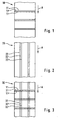
- Figure 1 is a textile fabric 10 with in warp direction A in transparent weft threads 11 introduced at regular intervals, 11 ', 11' 'through which a stripe pattern transverse to Warp direction A is achieved.
- the textile fabric 20 according to FIG. 2 has two strips each three transparent warp threads 22, 22 ', 22' 'along the warp direction A and scmit provides a stripe pattern in the warp direction.
- the embodiment shown in Figure 3 adjusts Textile fabric 30 with a lattice structure that both transparent weft threads 31, 31 ', 31' 'as well as transparent Warp threads 32, 32 ', 32' '.
- the textile fabric 10, 20, 30 is advantageously bi-elastic.
Landscapes
- Engineering & Computer Science (AREA)
- Textile Engineering (AREA)
- Chemical & Material Sciences (AREA)
- Inorganic Chemistry (AREA)
- Woven Fabrics (AREA)
- Laminated Bodies (AREA)
Description
- Figur 1
- eine Draufsicht auf einen Abschnitt eines erfindungsgemäßen Textilgewebes;
- Figur 2
- eine Draufsicht auf einen Abschnitt eines anderen erfindungsgemäßen Textilgewebes; und
- Figur 3
- eine Draufsicht auf einen Abschnitt eines weiteren erfindungsgemäßen Textilgewebes.
- 10
- Textilgewebe
- 11, 11', 11''
- transparenter Schußfaden
- 20
- Textilgewebe
- 22, 22', 22''
- transparenter Kettfaden
- 30
- Textilgewebe
- 31, 31', 31''
- transparenter Schußfaden
- 32, 32', 32''
- transparenter Kettfaden
- A
- Kettrichtung
Claims (10)
- Textilgewebe mit Netzstruktur, dadurch gekennzeichnet, daß das Textilgewebe (10, 20, 30) dicht gewebt ist, und daß in das Textilgewebe (10, 20, 30) mindestens ein transparenter Faden (11, 11', 11'', 22, 22', 22'', 31, 31', 31'', 32, 32', 32'') zumindest teilweise eingewebt ist.
- Textilgewebe nach Anspruch 1, dadurch gekennzeichnet, daß mindestens ein transparenter Schußfaden (11, 11', 11'', 31, 31', 31'') eingebracht ist.
- Textilgewebe nach Anspruch 1 oder 2, dadurch gekennzeichnet, daß mindestens ein transparenter Kettfaden (22, 22', 22'', 32, 32', 32'') eingebracht ist. 2365
- Textilgewebe nach einem der vorangehenden Ansprüche, dadurch gekennzeichnet, daß der transparente Faden (11, 11', 11'', 22, 22', 22'', 31, 31', 31'', 32, 32', 32'') Polyamiddraht umfaßt.
- Textilgewebe nach einem der Ansprüche 1 bis 3, dadurch gekennzeichnet, daß der transparente Faden (11, 11', 11'', 22, 22', 22'', 31, 31', 31'', 32, 32', 32'') einen Metallfaden umfaßt.
- Textilgewebe nach einem der vorangehenden Ansprüche, dadurch gekennzeichnet, daß das Textilgewebe (10, 20, 30) bielastisch ist.
- Textilgewebe nach einem der vorangehenden Ansprüche, dadurch gekennzeichnet, daß das Textilgewebe (10, 20, 30) flächig gewebt ist.
- Textilgewebe nach einem der vorangehenden Ansprüche, dadurch gekennzeichnet, daß das Textilgewebe (10, 20, 30) schablonengesteuert gewebt ist.
- Textilgewebe nach einem der vorangehenden Ansprüche, dadurch gekennzeichnet, daß das Textilgewebe (10, 20, 30) unter Einsatz einer Mehrfachschaftmaschine gewebt ist.
- Textilgewebe nach einem der vorangehenden Ansprüche, dadurch gekennzeichnet, daß das Textilgewebe (10, 20, 30) unter Einsatz einer Nadelstabtechnik gewebt ist.
Applications Claiming Priority (2)
| Application Number | Priority Date | Filing Date | Title |
|---|---|---|---|
| DE29705932U DE29705932U1 (de) | 1997-04-03 | 1997-04-03 | Textilgewebe mit Netzstruktur |
| DE29705932U | 1997-04-03 |
Publications (2)
| Publication Number | Publication Date |
|---|---|
| EP0885990A1 EP0885990A1 (de) | 1998-12-23 |
| EP0885990B1 true EP0885990B1 (de) | 2001-05-23 |
Family
ID=8038408
Family Applications (1)
| Application Number | Title | Priority Date | Filing Date |
|---|---|---|---|
| EP98105265A Expired - Lifetime EP0885990B1 (de) | 1997-04-03 | 1998-03-24 | Textilgewebe mit Netzstruktur |
Country Status (2)
| Country | Link |
|---|---|
| EP (1) | EP0885990B1 (de) |
| DE (2) | DE29705932U1 (de) |
Families Citing this family (4)
| Publication number | Priority date | Publication date | Assignee | Title |
|---|---|---|---|---|
| DE29705932U1 (de) * | 1997-04-03 | 1997-06-12 | Krall & Roth Weberei GmbH & Co KG, 41065 Mönchengladbach | Textilgewebe mit Netzstruktur |
| EP1091030B1 (de) * | 1999-09-17 | 2003-11-26 | Sattler AG | Markisenstoff |
| JP3857541B2 (ja) * | 2001-04-25 | 2006-12-13 | Ykk株式会社 | 帯体 |
| WO2008114289A1 (en) * | 2007-03-20 | 2008-09-25 | Texao Spa | Fabric, specifically upholstery fabric |
Family Cites Families (3)
| Publication number | Priority date | Publication date | Assignee | Title |
|---|---|---|---|---|
| FR1412560A (fr) * | 1964-08-21 | 1965-10-01 | Griesser Et Cie | Tissu à bandes opaques et translucides alternées et procédé pour l'obtenir |
| FR2706913A1 (en) * | 1993-06-22 | 1994-12-30 | Pouradier Duteil Georges | Industrial fabric having a high covering rate |
| DE29705932U1 (de) * | 1997-04-03 | 1997-06-12 | Krall & Roth Weberei GmbH & Co KG, 41065 Mönchengladbach | Textilgewebe mit Netzstruktur |
-
1997
- 1997-04-03 DE DE29705932U patent/DE29705932U1/de not_active Expired - Lifetime
-
1998
- 1998-03-24 EP EP98105265A patent/EP0885990B1/de not_active Expired - Lifetime
- 1998-03-24 DE DE59800747T patent/DE59800747D1/de not_active Expired - Lifetime
Also Published As
| Publication number | Publication date |
|---|---|
| DE59800747D1 (de) | 2001-06-28 |
| DE29705932U1 (de) | 1997-06-12 |
| EP0885990A1 (de) | 1998-12-23 |
Similar Documents
| Publication | Publication Date | Title |
|---|---|---|
| DE69806844T2 (de) | Bandage mit Kompressionsanzeiger | |
| DE2000937B2 (de) | Gittergewebe zum bewehren bitumengebundener platten und schichten | |
| DE69606220T2 (de) | Webverfahren | |
| DE60024548T2 (de) | Gewebe | |
| EP0380808B1 (de) | Verfahren und Vorrichtung zum Herstellen eines Jacquard-Schattenvelours | |
| EP0079431A1 (de) | Einlagiges Papiermaschinensieb | |
| DE10309260A1 (de) | Verfahren zur Herstellung eines Gewebes und Weblitze, insbesondere zur Verwendung hierbei | |
| EP1746202B1 (de) | Verfahren zur Herstellung eines Papiermaschinensiebes | |
| EP0393450B1 (de) | Grundgewebe für Stickereien | |
| EP0885990A1 (de) | Textilgewebe mit Netzstruktur | |
| DE29712595U1 (de) | Gittergewebe | |
| DE69610790T2 (de) | Webverfahren für texturierten Mustern | |
| DE19730393C2 (de) | Gittergewebe | |
| EP1731644A2 (de) | Frottiergewebe mit Reliefeffekt und Verfahren zu dessen Herstellung | |
| DE69219845T2 (de) | Verfahren zum Weben von Jacquard-Doppelplüschgeweben | |
| EP1242661B1 (de) | Fachbildevorrichtung für die textiltechnik | |
| DE69719093T2 (de) | Netzwerkartiges, dreidimensional gewebtes textilmaterial | |
| EP0012991A1 (de) | Synthetisches Chemiefaser-Chenillegewebe | |
| DE19902995C1 (de) | Verfahren zur Musterdarstellung auf inhomogenen Verkreuzungsrastern | |
| DE616874C (de) | ||
| EP0237936B1 (de) | Verfahren und Vorrichtung zur Herstellung von Flachgeweben und deren Struktur | |
| DE29722647U1 (de) | Jacquard-gewebtes Band | |
| DE102020100857A1 (de) | Textiles Flächengebilde mit Kett- und Schussfäden | |
| DE9017558U1 (de) | Decke | |
| EP0721023A1 (de) | Verfahren und Vorrichtung zur Herstellung eines gemusterten Schattenvelours |
Legal Events
| Date | Code | Title | Description |
|---|---|---|---|
| PUAI | Public reference made under article 153(3) epc to a published international application that has entered the european phase |
Free format text: ORIGINAL CODE: 0009012 |
|
| AK | Designated contracting states |
Kind code of ref document: A1 Designated state(s): DE FR GB IT |
|
| AX | Request for extension of the european patent |
Free format text: AL;LT;LV;MK;RO;SI |
|
| 17P | Request for examination filed |
Effective date: 19990224 |
|
| AKX | Designation fees paid |
Free format text: DE FR GB IT |
|
| 17Q | First examination report despatched |
Effective date: 20000119 |
|
| GRAG | Despatch of communication of intention to grant |
Free format text: ORIGINAL CODE: EPIDOS AGRA |
|
| GRAG | Despatch of communication of intention to grant |
Free format text: ORIGINAL CODE: EPIDOS AGRA |
|
| GRAH | Despatch of communication of intention to grant a patent |
Free format text: ORIGINAL CODE: EPIDOS IGRA |
|
| GRAH | Despatch of communication of intention to grant a patent |
Free format text: ORIGINAL CODE: EPIDOS IGRA |
|
| GRAA | (expected) grant |
Free format text: ORIGINAL CODE: 0009210 |
|
| ITF | It: translation for a ep patent filed | ||
| AK | Designated contracting states |
Kind code of ref document: B1 Designated state(s): DE FR GB IT |
|
| GBT | Gb: translation of ep patent filed (gb section 77(6)(a)/1977) |
Effective date: 20010523 |
|
| REF | Corresponds to: |
Ref document number: 59800747 Country of ref document: DE Date of ref document: 20010628 |
|
| ET | Fr: translation filed | ||
| REG | Reference to a national code |
Ref country code: GB Ref legal event code: IF02 |
|
| PLBE | No opposition filed within time limit |
Free format text: ORIGINAL CODE: 0009261 |
|
| STAA | Information on the status of an ep patent application or granted ep patent |
Free format text: STATUS: NO OPPOSITION FILED WITHIN TIME LIMIT |
|
| 26N | No opposition filed | ||
| REG | Reference to a national code |
Ref country code: GB Ref legal event code: 732E |
|
| REG | Reference to a national code |
Ref country code: FR Ref legal event code: TP |
|
| REG | Reference to a national code |
Ref country code: DE Ref legal event code: R082 Ref document number: 59800747 Country of ref document: DE Representative=s name: VON ROHR PATENTANWAELTE PARTNERSCHAFT MBB, DE |
|
| REG | Reference to a national code |
Ref country code: FR Ref legal event code: PLFP Year of fee payment: 19 |
|
| REG | Reference to a national code |
Ref country code: FR Ref legal event code: PLFP Year of fee payment: 20 |
|
| PGFP | Annual fee paid to national office [announced via postgrant information from national office to epo] |
Ref country code: FR Payment date: 20170322 Year of fee payment: 20 Ref country code: DE Payment date: 20170324 Year of fee payment: 20 |
|
| PGFP | Annual fee paid to national office [announced via postgrant information from national office to epo] |
Ref country code: GB Payment date: 20170322 Year of fee payment: 20 |
|
| PGFP | Annual fee paid to national office [announced via postgrant information from national office to epo] |
Ref country code: IT Payment date: 20170323 Year of fee payment: 20 |
|
| REG | Reference to a national code |
Ref country code: DE Ref legal event code: R071 Ref document number: 59800747 Country of ref document: DE |
|
| REG | Reference to a national code |
Ref country code: GB Ref legal event code: PE20 Expiry date: 20180323 |
|
| PG25 | Lapsed in a contracting state [announced via postgrant information from national office to epo] |
Ref country code: GB Free format text: LAPSE BECAUSE OF EXPIRATION OF PROTECTION Effective date: 20180323 |