EP0889877B1 - META-SUBSTITUIERTE PHENYLENDERIVATE UND IHRE VERWENDUNG ALS ALPHAvBETA3 INTERGRIN-ANTAGONISTEN ODER INHIBITOREN - Google Patents
META-SUBSTITUIERTE PHENYLENDERIVATE UND IHRE VERWENDUNG ALS ALPHAvBETA3 INTERGRIN-ANTAGONISTEN ODER INHIBITOREN Download PDFInfo
- Publication number
- EP0889877B1 EP0889877B1 EP97916110A EP97916110A EP0889877B1 EP 0889877 B1 EP0889877 B1 EP 0889877B1 EP 97916110 A EP97916110 A EP 97916110A EP 97916110 A EP97916110 A EP 97916110A EP 0889877 B1 EP0889877 B1 EP 0889877B1
- Authority
- EP
- European Patent Office
- Prior art keywords
- amino
- phenyl
- acid
- carbonyl
- aminoiminomethyl
- Prior art date
- Legal status (The legal status is an assumption and is not a legal conclusion. Google has not performed a legal analysis and makes no representation as to the accuracy of the status listed.)
- Expired - Lifetime
Links
- 108010044426 integrins Proteins 0.000 title claims description 25
- 102000006495 integrins Human genes 0.000 title claims description 25
- 239000005557 antagonist Substances 0.000 title description 9
- 239000003112 inhibitor Substances 0.000 title description 4
- SONNWYBIRXJNDC-VIFPVBQESA-N phenylephrine Chemical class CNC[C@H](O)C1=CC=CC(O)=C1 SONNWYBIRXJNDC-VIFPVBQESA-N 0.000 title 1
- 150000001875 compounds Chemical class 0.000 claims abstract description 279
- 150000003839 salts Chemical class 0.000 claims abstract description 17
- 239000008194 pharmaceutical composition Substances 0.000 claims abstract description 12
- 125000003118 aryl group Chemical group 0.000 claims description 190
- 125000000217 alkyl group Chemical group 0.000 claims description 116
- -1 nitro, carboxyl Chemical group 0.000 claims description 102
- 125000002911 monocyclic heterocycle group Chemical group 0.000 claims description 81
- 125000002924 primary amino group Chemical group [H]N([H])* 0.000 claims description 75
- 125000003545 alkoxy group Chemical group 0.000 claims description 62
- 125000001188 haloalkyl group Chemical group 0.000 claims description 59
- 229910052739 hydrogen Inorganic materials 0.000 claims description 59
- 125000001424 substituent group Chemical group 0.000 claims description 57
- 125000002887 hydroxy group Chemical group [H]O* 0.000 claims description 51
- 125000004093 cyano group Chemical group *C#N 0.000 claims description 46
- 229910052736 halogen Inorganic materials 0.000 claims description 45
- IJGRMHOSHXDMSA-UHFFFAOYSA-N Atomic nitrogen Chemical compound N#N IJGRMHOSHXDMSA-UHFFFAOYSA-N 0.000 claims description 44
- 150000002367 halogens Chemical group 0.000 claims description 42
- 125000004414 alkyl thio group Chemical group 0.000 claims description 41
- 125000001997 phenyl group Chemical group [H]C1=C([H])C([H])=C(*)C([H])=C1[H] 0.000 claims description 39
- 125000004390 alkyl sulfonyl group Chemical group 0.000 claims description 37
- 125000003710 aryl alkyl group Chemical group 0.000 claims description 34
- 125000004104 aryloxy group Chemical group 0.000 claims description 33
- XMIIGOLPHOKFCH-UHFFFAOYSA-N 3-phenylpropionic acid Chemical compound OC(=O)CCC1=CC=CC=C1 XMIIGOLPHOKFCH-UHFFFAOYSA-N 0.000 claims description 28
- 125000003342 alkenyl group Chemical group 0.000 claims description 28
- 125000000304 alkynyl group Chemical group 0.000 claims description 27
- 229910052757 nitrogen Inorganic materials 0.000 claims description 26
- 125000000446 sulfanediyl group Chemical group *S* 0.000 claims description 26
- 125000000753 cycloalkyl group Chemical group 0.000 claims description 25
- 229910052717 sulfur Inorganic materials 0.000 claims description 25
- 239000001257 hydrogen Substances 0.000 claims description 22
- LSNNMFCWUKXFEE-UHFFFAOYSA-M Bisulfite Chemical group OS([O-])=O LSNNMFCWUKXFEE-UHFFFAOYSA-M 0.000 claims description 21
- 206010028980 Neoplasm Diseases 0.000 claims description 21
- 125000003282 alkyl amino group Chemical group 0.000 claims description 21
- 125000004663 dialkyl amino group Chemical group 0.000 claims description 21
- 229940124530 sulfonamide Drugs 0.000 claims description 21
- 150000003456 sulfonamides Chemical group 0.000 claims description 21
- 125000003178 carboxy group Chemical group [H]OC(*)=O 0.000 claims description 20
- 125000000449 nitro group Chemical group [O-][N+](*)=O 0.000 claims description 20
- 229910052760 oxygen Inorganic materials 0.000 claims description 19
- UFHFLCQGNIYNRP-UHFFFAOYSA-N Hydrogen Chemical compound [H][H] UFHFLCQGNIYNRP-UHFFFAOYSA-N 0.000 claims description 18
- DLFVBJFMPXGRIB-UHFFFAOYSA-N Acetamide Chemical compound CC(N)=O DLFVBJFMPXGRIB-UHFFFAOYSA-N 0.000 claims description 16
- 125000002915 carbonyl group Chemical group [*:2]C([*:1])=O 0.000 claims description 15
- 125000001495 ethyl group Chemical group [H]C([H])([H])C([H])([H])* 0.000 claims description 15
- QJGQUHMNIGDVPM-UHFFFAOYSA-N nitrogen(.) Chemical compound [N] QJGQUHMNIGDVPM-UHFFFAOYSA-N 0.000 claims description 15
- 239000002253 acid Substances 0.000 claims description 14
- 125000002496 methyl group Chemical group [H]C([H])([H])* 0.000 claims description 14
- 125000004442 acylamino group Chemical group 0.000 claims description 13
- 125000003368 amide group Chemical group 0.000 claims description 13
- 125000005843 halogen group Chemical group 0.000 claims description 13
- 125000001072 heteroaryl group Chemical group 0.000 claims description 12
- NINIDFKCEFEMDL-UHFFFAOYSA-N Sulfur Chemical compound [S] NINIDFKCEFEMDL-UHFFFAOYSA-N 0.000 claims description 11
- 125000000623 heterocyclic group Chemical group 0.000 claims description 11
- 125000002950 monocyclic group Chemical group 0.000 claims description 11
- 125000000472 sulfonyl group Chemical group *S(*)(=O)=O 0.000 claims description 11
- 239000011593 sulfur Substances 0.000 claims description 11
- OKTJSMMVPCPJKN-UHFFFAOYSA-N Carbon Chemical compound [C] OKTJSMMVPCPJKN-UHFFFAOYSA-N 0.000 claims description 9
- 125000004103 aminoalkyl group Chemical group 0.000 claims description 9
- 230000033115 angiogenesis Effects 0.000 claims description 9
- 125000001797 benzyl group Chemical group [H]C1=C([H])C([H])=C(C([H])=C1[H])C([H])([H])* 0.000 claims description 9
- 150000001602 bicycloalkyls Chemical group 0.000 claims description 9
- 125000004995 haloalkylthio group Chemical class 0.000 claims description 9
- 125000001889 triflyl group Chemical group FC(F)(F)S(*)(=O)=O 0.000 claims description 9
- QJAVGVLUEUIDAH-UHFFFAOYSA-N 3-[3-[[[3-(carbamothioylamino)benzoyl]amino]methyl]phenyl]propanoic acid Chemical compound NC(=S)NC1=CC=CC(C(=O)NCC=2C=C(CCC(O)=O)C=CC=2)=C1 QJAVGVLUEUIDAH-UHFFFAOYSA-N 0.000 claims description 8
- 206010027476 Metastases Diseases 0.000 claims description 8
- 208000001132 Osteoporosis Diseases 0.000 claims description 8
- QVGXLLKOCUKJST-UHFFFAOYSA-N atomic oxygen Chemical compound [O] QVGXLLKOCUKJST-UHFFFAOYSA-N 0.000 claims description 8
- 229910052799 carbon Inorganic materials 0.000 claims description 8
- 125000004438 haloalkoxy group Chemical group 0.000 claims description 8
- 125000005842 heteroatom Chemical group 0.000 claims description 8
- 125000004043 oxo group Chemical group O=* 0.000 claims description 8
- 239000001301 oxygen Substances 0.000 claims description 8
- 208000037803 restenosis Diseases 0.000 claims description 8
- 125000004450 alkenylene group Chemical group 0.000 claims description 7
- 125000004419 alkynylene group Chemical group 0.000 claims description 7
- FMTVMETWZSHBRP-UHFFFAOYSA-N ethyl 3-[3-[[(3-methanehydrazonoylbenzoyl)amino]methyl]phenyl]propanoate Chemical compound CCOC(=O)CCC1=CC=CC(CNC(=O)C=2C=C(C=NN)C=CC=2)=C1 FMTVMETWZSHBRP-UHFFFAOYSA-N 0.000 claims description 7
- 230000009401 metastasis Effects 0.000 claims description 7
- 230000015590 smooth muscle cell migration Effects 0.000 claims description 7
- 230000004614 tumor growth Effects 0.000 claims description 7
- 125000000094 2-phenylethyl group Chemical group [H]C1=C([H])C([H])=C(C([H])=C1[H])C([H])([H])C([H])([H])* 0.000 claims description 6
- 125000002619 bicyclic group Chemical group 0.000 claims description 6
- 208000008750 humoral hypercalcemia of malignancy Diseases 0.000 claims description 6
- 239000011734 sodium Substances 0.000 claims description 6
- 125000002023 trifluoromethyl group Chemical group FC(F)(F)* 0.000 claims description 6
- DGAQECJNVWCQMB-PUAWFVPOSA-M Ilexoside XXIX Chemical compound C[C@@H]1CC[C@@]2(CC[C@@]3(C(=CC[C@H]4[C@]3(CC[C@@H]5[C@@]4(CC[C@@H](C5(C)C)OS(=O)(=O)[O-])C)C)[C@@H]2[C@]1(C)O)C)C(=O)O[C@H]6[C@@H]([C@H]([C@@H]([C@H](O6)CO)O)O)O.[Na+] DGAQECJNVWCQMB-PUAWFVPOSA-M 0.000 claims description 5
- 125000002252 acyl group Chemical group 0.000 claims description 5
- 125000004471 alkyl aminosulfonyl group Chemical group 0.000 claims description 5
- 125000004656 alkyl sulfonylamino group Chemical group 0.000 claims description 5
- 125000003236 benzoyl group Chemical group [H]C1=C([H])C([H])=C(C([H])=C1[H])C(*)=O 0.000 claims description 5
- 125000003917 carbamoyl group Chemical group [H]N([H])C(*)=O 0.000 claims description 5
- 229910001873 dinitrogen Inorganic materials 0.000 claims description 5
- 239000003937 drug carrier Substances 0.000 claims description 5
- SMLYVOHJQOZKEP-UHFFFAOYSA-N ethyl 2-[3-[(3-methanehydrazonoylbenzoyl)amino]phenyl]acetate Chemical compound CCOC(=O)CC1=CC=CC(NC(=O)C=2C=C(C=NN)C=CC=2)=C1 SMLYVOHJQOZKEP-UHFFFAOYSA-N 0.000 claims description 5
- 150000002596 lactones Chemical class 0.000 claims description 5
- 125000002757 morpholinyl group Chemical group 0.000 claims description 5
- 229910052708 sodium Inorganic materials 0.000 claims description 5
- 125000005034 trifluormethylthio group Chemical group FC(S*)(F)F 0.000 claims description 5
- VDLNOSPOZFQCIT-SFHVURJKSA-N (2s)-2-acetamido-3-[3-[[[3-(hydrazinylmethylideneamino)benzoyl]amino]methyl]phenyl]propanoic acid Chemical compound CC(=O)N[C@H](C(O)=O)CC1=CC=CC(CNC(=O)C=2C=C(C=CC=2)N=CNN)=C1 VDLNOSPOZFQCIT-SFHVURJKSA-N 0.000 claims description 4
- AEIJILWXQRBKAK-UHFFFAOYSA-N 2,2,3-trifluoro-3-[3-[[3-(hydrazinylmethylideneamino)phenyl]sulfonylamino]phenyl]-3-(2,3,4,5,6-pentafluorophenyl)propanoic acid Chemical compound NN=CNC=1C=C(C=CC=1)S(=O)(=O)NC=1C=C(C=CC=1)C(C(C(=O)O)(F)F)(C1=C(C(=C(C(=C1F)F)F)F)F)F AEIJILWXQRBKAK-UHFFFAOYSA-N 0.000 claims description 4
- XPHXFXBAQZJHBF-UHFFFAOYSA-N 2-[3-[(3-methanehydrazonoylbenzoyl)amino]phenyl]acetic acid Chemical compound NN=CC1=CC=CC(C(=O)NC=2C=C(CC(O)=O)C=CC=2)=C1 XPHXFXBAQZJHBF-UHFFFAOYSA-N 0.000 claims description 4
- RCQCXVPJSXOPEO-UHFFFAOYSA-N 2-[3-[3-[3-(4,5-dihydro-1h-imidazol-2-ylamino)phenyl]prop-2-enoyl]phenoxy]acetic acid Chemical compound OC(=O)COC1=CC=CC(C(=O)C=CC=2C=C(NC=3NCCN=3)C=CC=2)=C1 RCQCXVPJSXOPEO-UHFFFAOYSA-N 0.000 claims description 4
- LIZSGMFJROMZDY-UHFFFAOYSA-N 2-[3-[3-[3-(hydrazinylmethylideneamino)phenyl]prop-2-enoyl]phenoxy]acetic acid Chemical compound NN=CNC1=CC=CC(C=CC(=O)C=2C=C(OCC(O)=O)C=CC=2)=C1 LIZSGMFJROMZDY-UHFFFAOYSA-N 0.000 claims description 4
- SJSDVYPTVRBLNP-UHFFFAOYSA-N 2-[3-[[3-(hydrazinylmethylideneamino)benzoyl]amino]phenyl]acetic acid Chemical compound NNC=NC1=CC=CC(C(=O)NC=2C=C(CC(O)=O)C=CC=2)=C1 SJSDVYPTVRBLNP-UHFFFAOYSA-N 0.000 claims description 4
- BKMCWPNPRRZUSE-UHFFFAOYSA-N 2-[3-[[3-(hydrazinylmethylideneamino)phenyl]carbamoylamino]phenoxy]acetic acid Chemical compound NN=CNC1=CC=CC(NC(=O)NC=2C=C(OCC(O)=O)C=CC=2)=C1 BKMCWPNPRRZUSE-UHFFFAOYSA-N 0.000 claims description 4
- LAAMDZZZWCKCMK-UHFFFAOYSA-N 3-(3,5-dichlorophenyl)-3-[3-[[3-(hydrazinylmethylideneamino)phenyl]sulfonylamino]phenyl]propanoic acid Chemical compound NNC=NC1=CC=CC(S(=O)(=O)NC=2C=C(C=CC=2)C(CC(O)=O)C=2C=C(Cl)C=C(Cl)C=2)=C1 LAAMDZZZWCKCMK-UHFFFAOYSA-N 0.000 claims description 4
- WKLQXRWBXHMSRX-UHFFFAOYSA-N 3-(3,5-difluorophenyl)-3-[3-[[3-(1,4,5,6-tetrahydropyrimidin-2-ylamino)phenyl]sulfonylamino]phenyl]propanoic acid Chemical compound C=1C(F)=CC(F)=CC=1C(CC(=O)O)C(C=1)=CC=CC=1NS(=O)(=O)C(C=1)=CC=CC=1NC1=NCCCN1 WKLQXRWBXHMSRX-UHFFFAOYSA-N 0.000 claims description 4
- GNQFNADXKPDOLQ-UHFFFAOYSA-N 3-(3,5-difluorophenyl)-3-[3-[[3-(4,5-dihydro-1h-imidazol-2-ylamino)phenyl]sulfonylamino]phenyl]propanoic acid Chemical compound C=1C(F)=CC(F)=CC=1C(CC(=O)O)C(C=1)=CC=CC=1NS(=O)(=O)C(C=1)=CC=CC=1NC1=NCCN1 GNQFNADXKPDOLQ-UHFFFAOYSA-N 0.000 claims description 4
- SAXGLBCZYWYUJK-UHFFFAOYSA-N 3-(3,5-difluorophenyl)-3-[3-[[3-(hydrazinylmethylideneamino)phenyl]sulfonylamino]phenyl]propanoic acid Chemical compound NNC=NC1=CC=CC(S(=O)(=O)NC=2C=C(C=CC=2)C(CC(O)=O)C=2C=C(F)C=C(F)C=2)=C1 SAXGLBCZYWYUJK-UHFFFAOYSA-N 0.000 claims description 4
- FDYNXTCNQULWIO-UHFFFAOYSA-N 3-(3,5-difluorophenyl)-3-[3-[[[3-(1,4,5,6-tetrahydropyrimidin-2-ylamino)benzoyl]amino]methyl]phenyl]propanoic acid Chemical compound C=1C(F)=CC(F)=CC=1C(CC(=O)O)C(C=1)=CC=CC=1CNC(=O)C(C=1)=CC=CC=1NC1=NCCCN1 FDYNXTCNQULWIO-UHFFFAOYSA-N 0.000 claims description 4
- RUAWAFQUFIWPIN-UHFFFAOYSA-N 3-(3,5-difluorophenyl)-3-[3-[[[3-(hydrazinylmethylideneamino)-5-(trifluoromethyl)benzoyl]amino]methyl]phenyl]propanoic acid Chemical compound FC(F)(F)C1=CC(N=CNN)=CC(C(=O)NCC=2C=C(C=CC=2)C(CC(O)=O)C=2C=C(F)C=C(F)C=2)=C1 RUAWAFQUFIWPIN-UHFFFAOYSA-N 0.000 claims description 4
- LWRFDCXFVFNNSS-UHFFFAOYSA-N 3-(3,5-difluorophenyl)-3-[3-[[[3-(hydrazinylmethylideneamino)benzoyl]amino]methyl]phenyl]propanoic acid Chemical compound NNC=NC1=CC=CC(C(=O)NCC=2C=C(C=CC=2)C(CC(O)=O)C=2C=C(F)C=C(F)C=2)=C1 LWRFDCXFVFNNSS-UHFFFAOYSA-N 0.000 claims description 4
- YASAQWNYGMBHRZ-UHFFFAOYSA-N 3-(4,5-dihydro-1h-imidazol-2-ylamino)-n-[3-(2-oxo-3,4-dihydrochromen-4-yl)phenyl]benzenesulfonamide Chemical compound C12=CC=CC=C2OC(=O)CC1C(C=1)=CC=CC=1NS(=O)(=O)C(C=1)=CC=CC=1NC1=NCCN1 YASAQWNYGMBHRZ-UHFFFAOYSA-N 0.000 claims description 4
- CZZZEOQBYRRESS-UHFFFAOYSA-N 3-(4-fluorophenyl)-3-[3-[[3-(hydrazinylmethylideneamino)phenyl]sulfonylamino]phenyl]propanoic acid Chemical compound NNC=NC1=CC=CC(S(=O)(=O)NC=2C=C(C=CC=2)C(CC(O)=O)C=2C=CC(F)=CC=2)=C1 CZZZEOQBYRRESS-UHFFFAOYSA-N 0.000 claims description 4
- KFVXSJUQYDRMLU-OUKQBFOZSA-N 3-[3-[(E)-2-[3-(hydrazinylmethylideneamino)phenyl]ethenyl]phenyl]-3-phenylpropanoic acid Chemical compound NN=CNC=1C=C(C=CC=1)/C=C/C=1C=C(C=CC=1)C(CC(=O)O)C1=CC=CC=C1 KFVXSJUQYDRMLU-OUKQBFOZSA-N 0.000 claims description 4
- QGUXYDUZHLJTGY-UHFFFAOYSA-N 3-[3-[2-[3-(4,5-dihydro-1h-imidazol-2-ylamino)phenyl]-2-hydroxyethoxy]phenyl]propanoic acid Chemical compound C=1C=CC(NC=2NCCN=2)=CC=1C(O)COC1=CC=CC(CCC(O)=O)=C1 QGUXYDUZHLJTGY-UHFFFAOYSA-N 0.000 claims description 4
- CSXDYHRAWPAGBP-UHFFFAOYSA-N 3-[3-[2-[3-(hydrazinylmethylideneamino)phenyl]ethyl]phenyl]-3-phenylpropanoic acid Chemical compound NN=CNC1=CC=CC(CCC=2C=C(C=CC=2)C(CC(O)=O)C=2C=CC=CC=2)=C1 CSXDYHRAWPAGBP-UHFFFAOYSA-N 0.000 claims description 4
- DXBAILAHYWJOCM-UHFFFAOYSA-N 3-[3-[2-[3-(hydrazinylmethylideneamino)phenyl]ethynyl]phenyl]-3-phenylpropanoic acid Chemical compound NNC=NC1=CC=CC(C#CC=2C=C(C=CC=2)C(CC(O)=O)C=2C=CC=CC=2)=C1 DXBAILAHYWJOCM-UHFFFAOYSA-N 0.000 claims description 4
- UYNPQEHNWJDHDZ-UHFFFAOYSA-N 3-[3-[[(3-methanehydrazonoylbenzoyl)amino]methyl]phenyl]propanoic acid Chemical compound NN=CC1=CC=CC(C(=O)NCC=2C=C(CCC(O)=O)C=CC=2)=C1 UYNPQEHNWJDHDZ-UHFFFAOYSA-N 0.000 claims description 4
- LWSYGOYBVNQYED-UHFFFAOYSA-N 3-[3-[[2-[3-(hydrazinylmethylideneamino)phenyl]acetyl]amino]phenyl]propanoic acid Chemical compound NNC=NC1=CC=CC(CC(=O)NC=2C=C(CCC(O)=O)C=CC=2)=C1 LWSYGOYBVNQYED-UHFFFAOYSA-N 0.000 claims description 4
- INBLQGDCZVNLCK-UHFFFAOYSA-N 3-[3-[[3-(benzylcarbamoylamino)phenyl]sulfonylamino]phenyl]-3-phenylpropanoic acid Chemical compound C=1C=CC(NS(=O)(=O)C=2C=C(NC(=O)NCC=3C=CC=CC=3)C=CC=2)=CC=1C(CC(=O)O)C1=CC=CC=C1 INBLQGDCZVNLCK-UHFFFAOYSA-N 0.000 claims description 4
- ZCSCIRWDVCBHCI-UHFFFAOYSA-N 3-[3-[[3-(benzyliminomethylamino)phenyl]sulfonylamino]phenyl]-3-(3,5-difluorophenyl)propanoic acid Chemical compound C=1C(F)=CC(F)=CC=1C(CC(=O)O)C(C=1)=CC=CC=1NS(=O)(=O)C(C=1)=CC=CC=1NC=NCC1=CC=CC=C1 ZCSCIRWDVCBHCI-UHFFFAOYSA-N 0.000 claims description 4
- CJHLRNCCWAAIIG-UHFFFAOYSA-N 3-[3-[[3-(carbamothioylamino)phenyl]sulfonylamino]phenyl]-3-phenylpropanoic acid Chemical compound NC(=S)NC1=CC=CC(S(=O)(=O)NC=2C=C(C=CC=2)C(CC(O)=O)C=2C=CC=CC=2)=C1 CJHLRNCCWAAIIG-UHFFFAOYSA-N 0.000 claims description 4
- MYJSBUKNDKVQBU-UHFFFAOYSA-N 3-[3-[[3-(carbamoylamino)benzoyl]amino]phenyl]-3-phenylpropanoic acid Chemical compound NC(=O)NC1=CC=CC(C(=O)NC=2C=C(C=CC=2)C(CC(O)=O)C=2C=CC=CC=2)=C1 MYJSBUKNDKVQBU-UHFFFAOYSA-N 0.000 claims description 4
- IUOHNMGNVVCDGL-UHFFFAOYSA-N 3-[3-[[3-(carbamoylamino)phenyl]sulfonylamino]phenyl]-3-phenylpropanoic acid Chemical compound NC(=O)NC1=CC=CC(S(=O)(=O)NC=2C=C(C=CC=2)C(CC(O)=O)C=2C=CC=CC=2)=C1 IUOHNMGNVVCDGL-UHFFFAOYSA-N 0.000 claims description 4
- QRNDESCNROVALG-UHFFFAOYSA-N 3-[3-[[3-(hydrazinylmethylideneamino)benzoyl]amino]phenyl]-3-phenylpropanoic acid Chemical compound NNC=NC1=CC=CC(C(=O)NC=2C=C(C=CC=2)C(CC(O)=O)C=2C=CC=CC=2)=C1 QRNDESCNROVALG-UHFFFAOYSA-N 0.000 claims description 4
- VJBLEBUYIOMQLL-UHFFFAOYSA-N 3-[3-[[3-(hydrazinylmethylideneamino)benzoyl]amino]phenyl]propanoic acid Chemical compound NNC=NC1=CC=CC(C(=O)NC=2C=C(CCC(O)=O)C=CC=2)=C1 VJBLEBUYIOMQLL-UHFFFAOYSA-N 0.000 claims description 4
- RYMUJWLLGOMLAW-UHFFFAOYSA-N 3-[3-[[3-(hydrazinylmethylideneamino)phenyl]carbamoylamino]phenyl]propanoic acid Chemical compound NNC=NC1=CC=CC(NC(=O)NC=2C=C(CCC(O)=O)C=CC=2)=C1 RYMUJWLLGOMLAW-UHFFFAOYSA-N 0.000 claims description 4
- AQOPOVFIKZWGRC-UHFFFAOYSA-N 3-[3-[[3-(hydrazinylmethylideneamino)phenyl]methoxy]phenyl]-3-phenylpropanoic acid Chemical compound NN=CNC1=CC=CC(COC=2C=C(C=CC=2)C(CC(O)=O)C=2C=CC=CC=2)=C1 AQOPOVFIKZWGRC-UHFFFAOYSA-N 0.000 claims description 4
- QFUWXMUGHCRHBM-UHFFFAOYSA-N 3-[3-[[3-(hydrazinylmethylideneamino)phenyl]methylamino]phenyl]-3-phenylpropanoic acid Chemical compound NNC=NC1=CC=CC(CNC=2C=C(C=CC=2)C(CC(O)=O)C=2C=CC=CC=2)=C1 QFUWXMUGHCRHBM-UHFFFAOYSA-N 0.000 claims description 4
- CLZRTVYJVQRRLY-UHFFFAOYSA-N 3-[3-[[3-(hydrazinylmethylideneamino)phenyl]sulfanylmethyl]phenyl]-3-phenylpropanoic acid Chemical compound NNC=NC1=CC=CC(SCC=2C=C(C=CC=2)C(CC(O)=O)C=2C=CC=CC=2)=C1 CLZRTVYJVQRRLY-UHFFFAOYSA-N 0.000 claims description 4
- YFDVYRAHQAQXRQ-UHFFFAOYSA-N 3-[3-[[3-(hydrazinylmethylideneamino)phenyl]sulfinylmethyl]phenyl]-3-phenylpropanoic acid Chemical compound NNC=NC1=CC=CC(S(=O)CC=2C=C(C=CC=2)C(CC(O)=O)C=2C=CC=CC=2)=C1 YFDVYRAHQAQXRQ-UHFFFAOYSA-N 0.000 claims description 4
- BFDCTMGYIDHMTF-UHFFFAOYSA-N 3-[3-[[3-(hydrazinylmethylideneamino)phenyl]sulfonylamino]phenyl]-3-(2,3,5,6-tetrafluorophenyl)propanoic acid Chemical compound NNC=NC1=CC=CC(S(=O)(=O)NC=2C=C(C=CC=2)C(CC(O)=O)C=2C(=C(F)C=C(F)C=2F)F)=C1 BFDCTMGYIDHMTF-UHFFFAOYSA-N 0.000 claims description 4
- PZLVUHNTGFVKRX-UHFFFAOYSA-N 3-[3-[[3-(hydrazinylmethylideneamino)phenyl]sulfonylamino]phenyl]-3-(2-hydroxyphenyl)propanoic acid Chemical compound C1=CC=C(C(=C1)C(CC(=O)O)C2=CC(=CC=C2)NS(=O)(=O)C3=CC=CC(=C3)N=CNN)O PZLVUHNTGFVKRX-UHFFFAOYSA-N 0.000 claims description 4
- WZUFKQITVXVJAG-UHFFFAOYSA-N 3-[3-[[3-(hydrazinylmethylideneamino)phenyl]sulfonylamino]phenyl]-3-(3,4,5-trifluorophenyl)propanoic acid Chemical compound NNC=NC1=CC=CC(S(=O)(=O)NC=2C=C(C=CC=2)C(CC(O)=O)C=2C=C(F)C(F)=C(F)C=2)=C1 WZUFKQITVXVJAG-UHFFFAOYSA-N 0.000 claims description 4
- ATQGYUHDZUGQCL-UHFFFAOYSA-N 3-[3-[[3-(hydrazinylmethylideneamino)phenyl]sulfonylamino]phenyl]pentanoic acid Chemical compound OC(=O)CC(CC)C1=CC=CC(NS(=O)(=O)C=2C=C(NC=NN)C=CC=2)=C1 ATQGYUHDZUGQCL-UHFFFAOYSA-N 0.000 claims description 4
- ANDLRDMYAOFQJV-UHFFFAOYSA-N 3-[3-[[3-(hydrazinylmethylideneamino)phenyl]sulfonylmethyl]phenyl]-3-phenylpropanoic acid Chemical compound NNC=NC1=CC=CC(S(=O)(=O)CC=2C=C(C=CC=2)C(CC(O)=O)C=2C=CC=CC=2)=C1 ANDLRDMYAOFQJV-UHFFFAOYSA-N 0.000 claims description 4
- ZUYGRKVLGFLVGP-UHFFFAOYSA-N 3-[3-[[3-[[(z)-n'-carbamoylcarbamimidoyl]amino]phenyl]sulfonylamino]phenyl]-3-(3,5-difluorophenyl)propanoic acid Chemical compound NC(=O)N=C(N)NC1=CC=CC(S(=O)(=O)NC=2C=C(C=CC=2)C(CC(O)=O)C=2C=C(F)C=C(F)C=2)=C1 ZUYGRKVLGFLVGP-UHFFFAOYSA-N 0.000 claims description 4
- LKNKPJHYVGXQFI-UHFFFAOYSA-N 3-[3-[[3-[[(z)-n'-carbamoylcarbamimidoyl]amino]phenyl]sulfonylamino]phenyl]-3-phenylpropanoic acid Chemical compound NC(=O)\N=C(/N)NC1=CC=CC(S(=O)(=O)NC=2C=C(C=CC=2)C(CC(O)=O)C=2C=CC=CC=2)=C1 LKNKPJHYVGXQFI-UHFFFAOYSA-N 0.000 claims description 4
- YKUANAVLHZCMAL-UHFFFAOYSA-N 3-[3-[[3-[[(z)-n'-carbamoylcarbamimidoyl]amino]phenyl]sulfonylamino]phenyl]pentanoic acid Chemical compound OC(=O)CC(CC)C1=CC=CC(NS(=O)(=O)C=2C=C(N\C(N)=N\C(N)=O)C=CC=2)=C1 YKUANAVLHZCMAL-UHFFFAOYSA-N 0.000 claims description 4
- JBRHQRSSPMTCLH-UHFFFAOYSA-N 3-[3-[[4-(hydrazinylmethylideneamino)phenyl]sulfonylmethylamino]phenyl]-3-phenylpropanoic acid Chemical compound C1=CC(N=CNN)=CC=C1S(=O)(=O)CNC1=CC=CC(C(CC(O)=O)C=2C=CC=CC=2)=C1 JBRHQRSSPMTCLH-UHFFFAOYSA-N 0.000 claims description 4
- PYWFNPVQHXXSTA-UHFFFAOYSA-N 3-[3-[[[3-(1h-benzimidazol-2-ylamino)benzoyl]amino]methyl]phenyl]butanoic acid Chemical compound OC(=O)CC(C)C1=CC=CC(CNC(=O)C=2C=C(NC=3NC4=CC=CC=C4N=3)C=CC=2)=C1 PYWFNPVQHXXSTA-UHFFFAOYSA-N 0.000 claims description 4
- VKCIYLWNANUJCR-UHFFFAOYSA-N 3-[3-[[[3-(benzylcarbamoylamino)benzoyl]amino]methyl]phenyl]-3-phenylpropanoic acid Chemical compound C=1C=CC(CNC(=O)C=2C=C(NC(=O)NCC=3C=CC=CC=3)C=CC=2)=CC=1C(CC(=O)O)C1=CC=CC=C1 VKCIYLWNANUJCR-UHFFFAOYSA-N 0.000 claims description 4
- WHVNOCXIIATORN-UHFFFAOYSA-N 3-[3-[[[3-(carbamoylamino)benzoyl]amino]methyl]phenyl]propanoic acid Chemical compound NC(=O)NC1=CC=CC(C(=O)NCC=2C=C(CCC(O)=O)C=CC=2)=C1 WHVNOCXIIATORN-UHFFFAOYSA-N 0.000 claims description 4
- BZENKRSKWHVVNK-UHFFFAOYSA-N 3-[3-[[[3-(hydrazinylmethylideneamino)-5-(trifluoromethyl)benzoyl]amino]methyl]phenyl]pentanoic acid Chemical compound OC(=O)CC(CC)C1=CC=CC(CNC(=O)C=2C=C(C=C(NC=NN)C=2)C(F)(F)F)=C1 BZENKRSKWHVVNK-UHFFFAOYSA-N 0.000 claims description 4
- SUKKMINVTSKURD-UHFFFAOYSA-N 3-[3-[[[3-(hydrazinylmethylideneamino)benzoyl]amino]methyl]phenyl]-3-(2-methoxyphenyl)propanoic acid Chemical compound COC1=CC=CC=C1C(CC(O)=O)C1=CC=CC(CNC(=O)C=2C=C(C=CC=2)N=CNN)=C1 SUKKMINVTSKURD-UHFFFAOYSA-N 0.000 claims description 4
- NWNWMFMLMSTXRH-UHFFFAOYSA-N 3-[3-[[[3-(hydrazinylmethylideneamino)benzoyl]amino]methyl]phenyl]-4-methylpentanoic acid Chemical compound OC(=O)CC(C(C)C)C1=CC=CC(CNC(=O)C=2C=C(NC=NN)C=CC=2)=C1 NWNWMFMLMSTXRH-UHFFFAOYSA-N 0.000 claims description 4
- NKFBFIKZHSBCGD-UHFFFAOYSA-N 3-[3-[[[3-(hydrazinylmethylideneamino)benzoyl]amino]methyl]phenyl]butanoic acid Chemical compound OC(=O)CC(C)C1=CC=CC(CNC(=O)C=2C=C(C=CC=2)N=CNN)=C1 NKFBFIKZHSBCGD-UHFFFAOYSA-N 0.000 claims description 4
- HXRMVSOOYGAYCB-UHFFFAOYSA-N 3-[3-[[[3-(hydrazinylmethylideneamino)benzoyl]amino]methyl]phenyl]pentanoic acid Chemical compound OC(=O)CC(CC)C1=CC=CC(CNC(=O)C=2C=C(C=CC=2)N=CNN)=C1 HXRMVSOOYGAYCB-UHFFFAOYSA-N 0.000 claims description 4
- JVAANYFIXMDLEZ-UHFFFAOYSA-N 3-[3-[[[3-(hydrazinylmethylideneamino)benzoyl]amino]methyl]phenyl]propanoic acid Chemical compound NNC=NC1=CC=CC(C(=O)NCC=2C=C(CCC(O)=O)C=CC=2)=C1 JVAANYFIXMDLEZ-UHFFFAOYSA-N 0.000 claims description 4
- SKYTWMLVMUYQMY-UHFFFAOYSA-N 3-[3-[[[3-(hydrazinylmethylideneamino)phenyl]carbamoylamino]methyl]phenyl]propanoic acid Chemical compound NNC=NC1=CC=CC(NC(=O)NCC=2C=C(CCC(O)=O)C=CC=2)=C1 SKYTWMLVMUYQMY-UHFFFAOYSA-N 0.000 claims description 4
- KISUPMNFSCEUKL-UHFFFAOYSA-N 3-[3-[[[3-[(5-oxo-1,4-dihydroimidazol-2-yl)amino]benzoyl]amino]methyl]phenyl]butanoic acid Chemical compound OC(=O)CC(C)C1=CC=CC(CNC(=O)C=2C=C(NC=3NCC(=O)N=3)C=CC=2)=C1 KISUPMNFSCEUKL-UHFFFAOYSA-N 0.000 claims description 4
- PRUHSPIVRXOEGP-UHFFFAOYSA-N 3-[3-[[[3-[(6-methoxy-1h-benzimidazol-2-yl)amino]benzoyl]amino]methyl]phenyl]butanoic acid Chemical compound N=1C2=CC(OC)=CC=C2NC=1NC(C=1)=CC=CC=1C(=O)NCC1=CC=CC(C(C)CC(O)=O)=C1 PRUHSPIVRXOEGP-UHFFFAOYSA-N 0.000 claims description 4
- WBCAUSJYYYZPPE-UHFFFAOYSA-N 3-[3-[[[3-[(n'-carbamoylcarbamimidoyl)amino]benzoyl]amino]methyl]phenyl]butanoic acid Chemical compound OC(=O)CC(C)C1=CC=CC(CNC(=O)C=2C=C(NC(N)=NC(N)=O)C=CC=2)=C1 WBCAUSJYYYZPPE-UHFFFAOYSA-N 0.000 claims description 4
- IMKFKNDRYSTKOY-UHFFFAOYSA-N 3-[3-[[[3-[(n-cyano-n'-methylcarbamimidoyl)amino]benzoyl]amino]methyl]phenyl]-3-phenylpropanoic acid Chemical compound N#CN=C(NC)NC1=CC=CC(C(=O)NCC=2C=C(C=CC=2)C(CC(O)=O)C=2C=CC=CC=2)=C1 IMKFKNDRYSTKOY-UHFFFAOYSA-N 0.000 claims description 4
- FMEFKNZLZRLCBX-UHFFFAOYSA-N 3-[3-[[[3-[[amino-(cyanoamino)methylidene]amino]benzoyl]amino]methyl]phenyl]butanoic acid Chemical compound OC(=O)CC(C)C1=CC=CC(CNC(=O)C=2C=C(C=CC=2)N=C(N)NC#N)=C1 FMEFKNZLZRLCBX-UHFFFAOYSA-N 0.000 claims description 4
- QVZMVUDLLVMEOG-UHFFFAOYSA-N 3-[3-[[[4-chloro-3-(hydrazinylmethylideneamino)benzoyl]amino]methyl]phenyl]pentanoic acid Chemical compound OC(=O)CC(CC)C1=CC=CC(CNC(=O)C=2C=C(C(Cl)=CC=2)N=CNN)=C1 QVZMVUDLLVMEOG-UHFFFAOYSA-N 0.000 claims description 4
- ZCYNOVIBEVUHSI-UHFFFAOYSA-N NN=CNC=1C=C(C=CC=1)C(=O)NCC=1C=C(C=CC=1)C(CC(=O)OCC)C1=CC=CC=C1 Chemical compound NN=CNC=1C=C(C=CC=1)C(=O)NCC=1C=C(C=CC=1)C(CC(=O)OCC)C1=CC=CC=C1 ZCYNOVIBEVUHSI-UHFFFAOYSA-N 0.000 claims description 4
- OMSJPRUWQGPUPF-UHFFFAOYSA-N NN=CNC=1C=C(C=CC=1)S(=O)(=O)NC=1C=C(C=CC=1)C(CC(=O)O)C1=CC=CC=C1 Chemical compound NN=CNC=1C=C(C=CC=1)S(=O)(=O)NC=1C=C(C=CC=1)C(CC(=O)O)C1=CC=CC=C1 OMSJPRUWQGPUPF-UHFFFAOYSA-N 0.000 claims description 4
- KFVXSJUQYDRMLU-SEYXRHQNSA-N NN=CNC=1C=C(C=CC=1)\C=C/C=1C=C(C=CC=1)C(CC(=O)O)C1=CC=CC=C1 Chemical compound NN=CNC=1C=C(C=CC=1)\C=C/C=1C=C(C=CC=1)C(CC(=O)O)C1=CC=CC=C1 KFVXSJUQYDRMLU-SEYXRHQNSA-N 0.000 claims description 4
- 125000004453 alkoxycarbonyl group Chemical group 0.000 claims description 4
- AKZJRPKCSZSRRI-UHFFFAOYSA-N ethyl 2-[3-[[3-[(e)-n'-hydroxycarbamimidoyl]benzoyl]amino]phenyl]acetate Chemical compound CCOC(=O)CC1=CC=CC(NC(=O)C=2C=C(C=CC=2)C(N)=NO)=C1 AKZJRPKCSZSRRI-UHFFFAOYSA-N 0.000 claims description 4
- XGOQGMOJNCUQDN-UHFFFAOYSA-N ethyl 3-[3-[2-[3-(hydrazinylmethylideneamino)phenyl]ethyl]phenyl]-3-phenylpropanoate Chemical compound NN=CNC=1C=C(C=CC=1)CCC=1C=C(C=CC=1)C(CC(=O)OCC)C1=CC=CC=C1 XGOQGMOJNCUQDN-UHFFFAOYSA-N 0.000 claims description 4
- JIFVRYPFTZDZFZ-UHFFFAOYSA-N ethyl 3-[3-[[[3-(benzylcarbamoylamino)benzoyl]amino]methyl]phenyl]-3-phenylpropanoate Chemical compound C=1C=CC(CNC(=O)C=2C=C(NC(=O)NCC=3C=CC=CC=3)C=CC=2)=CC=1C(CC(=O)OCC)C1=CC=CC=C1 JIFVRYPFTZDZFZ-UHFFFAOYSA-N 0.000 claims description 4
- VIUWELJYXSNHMA-UHFFFAOYSA-N ethyl 3-[3-[[[3-(benzylcarbamoylamino)benzoyl]amino]methyl]phenyl]propanoate Chemical compound CCOC(=O)CCC1=CC=CC(CNC(=O)C=2C=C(NC(=O)NCC=3C=CC=CC=3)C=CC=2)=C1 VIUWELJYXSNHMA-UHFFFAOYSA-N 0.000 claims description 4
- CHYWLZITKPQIPT-UHFFFAOYSA-N ethyl 3-[3-[[[3-(carbamoylamino)benzoyl]amino]methyl]phenyl]propanoate Chemical compound CCOC(=O)CCC1=CC=CC(CNC(=O)C=2C=C(NC(N)=O)C=CC=2)=C1 CHYWLZITKPQIPT-UHFFFAOYSA-N 0.000 claims description 4
- CIVARQLCYZHNFQ-UHFFFAOYSA-N ethyl 3-[3-[[[3-(hydrazinylmethylideneamino)benzoyl]amino]methyl]phenyl]pentanoate Chemical compound NN=CNC=1C=C(C=CC=1)C(=O)NCC=1C=C(C=CC=1)C(CC(=O)OCC)CC CIVARQLCYZHNFQ-UHFFFAOYSA-N 0.000 claims description 4
- AQCLNJUYUCLWLR-UHFFFAOYSA-N ethyl 3-[3-[[[3-(hydrazinylmethylideneamino)benzoyl]amino]methyl]phenyl]propanoate Chemical compound CCOC(=O)CCC1=CC=CC(CNC(=O)C=2C=C(C=CC=2)N=CNN)=C1 AQCLNJUYUCLWLR-UHFFFAOYSA-N 0.000 claims description 4
- 125000004441 haloalkylsulfonyl group Chemical group 0.000 claims description 4
- 125000004435 hydrogen atom Chemical group [H]* 0.000 claims description 4
- CFRQBGCFAARGPK-UHFFFAOYSA-N methyl 2-[3-[[[3-(hydrazinylmethylideneamino)benzoyl]amino]methyl]phenyl]acetate Chemical compound COC(=O)CC1=CC=CC(CNC(=O)C=2C=C(C=CC=2)N=CNN)=C1 CFRQBGCFAARGPK-UHFFFAOYSA-N 0.000 claims description 4
- YHYJZJSZAVJFBC-UHFFFAOYSA-N n-amino-n'-[3-[[3-(2-oxo-3,4-dihydrochromen-4-yl)phenyl]sulfamoyl]phenyl]methanimidamide Chemical compound NNC=NC1=CC=CC(S(=O)(=O)NC=2C=C(C=CC=2)C2C3=CC=CC=C3OC(=O)C2)=C1 YHYJZJSZAVJFBC-UHFFFAOYSA-N 0.000 claims description 4
- 125000003386 piperidinyl group Chemical group 0.000 claims description 4
- 150000003431 steroids Chemical class 0.000 claims description 4
- 235000000346 sugar Nutrition 0.000 claims description 4
- 150000008163 sugars Chemical class 0.000 claims description 4
- BKHLVMYYVOCABA-UHFFFAOYSA-N tert-butyl 3-[3-[[3-(carbamothioylamino)phenyl]sulfonylamino]phenyl]-3-phenylpropanoate Chemical compound C=1C=CC(NS(=O)(=O)C=2C=C(NC(N)=S)C=CC=2)=CC=1C(CC(=O)OC(C)(C)C)C1=CC=CC=C1 BKHLVMYYVOCABA-UHFFFAOYSA-N 0.000 claims description 4
- GAUAXPHNXKVBLZ-UHFFFAOYSA-N tert-butyl 3-[3-[[3-(carbamoylamino)benzoyl]amino]phenyl]-3-phenylpropanoate Chemical compound C=1C=CC(NC(=O)C=2C=C(NC(N)=O)C=CC=2)=CC=1C(CC(=O)OC(C)(C)C)C1=CC=CC=C1 GAUAXPHNXKVBLZ-UHFFFAOYSA-N 0.000 claims description 4
- RRKWDGWZEIRACU-UHFFFAOYSA-N tert-butyl 3-[3-[[3-(carbamoylamino)phenyl]sulfonylamino]phenyl]-3-phenylpropanoate Chemical compound C=1C=CC(NS(=O)(=O)C=2C=C(NC(N)=O)C=CC=2)=CC=1C(CC(=O)OC(C)(C)C)C1=CC=CC=C1 RRKWDGWZEIRACU-UHFFFAOYSA-N 0.000 claims description 4
- GWNRUXUPKGPOLB-UHFFFAOYSA-N tert-butyl 3-[3-[[3-[[(cyanoamino)-methylsulfanylmethylidene]amino]phenyl]sulfonylamino]phenyl]-3-phenylpropanoate Chemical compound N#CNC(SC)=NC1=CC=CC(S(=O)(=O)NC=2C=C(C=CC=2)C(CC(=O)OC(C)(C)C)C=2C=CC=CC=2)=C1 GWNRUXUPKGPOLB-UHFFFAOYSA-N 0.000 claims description 4
- CXBBRTLMECYLTQ-UHFFFAOYSA-N tert-butyl 3-[3-[[[3-(hydrazinylmethylideneamino)benzoyl]amino]methyl]phenyl]butanoate Chemical compound NN=CNC=1C=C(C=CC=1)C(=O)NCC=1C=C(C=CC=1)C(CC(=O)OC(C)(C)C)C CXBBRTLMECYLTQ-UHFFFAOYSA-N 0.000 claims description 4
- MTWABNMIPCPCCP-UHFFFAOYSA-N tert-butyl 3-[[3-[[amino-(cyanoamino)methylidene]amino]phenyl]sulfonylamino]-3-phenylpropanoate Chemical compound C=1C=CC=CC=1C(CC(=O)OC(C)(C)C)NS(=O)(=O)C1=CC=CC(N=C(N)NC#N)=C1 MTWABNMIPCPCCP-UHFFFAOYSA-N 0.000 claims description 4
- 125000004950 trifluoroalkyl group Chemical group 0.000 claims description 4
- NKFBFIKZHSBCGD-CYBMUJFWSA-N (3R)-3-[3-[[[3-(hydrazinylmethylideneamino)benzoyl]amino]methyl]phenyl]butanoic acid Chemical compound NN=CNC=1C=C(C=CC=1)C(=O)NCC=1C=C(C=CC=1)[C@@H](CC(=O)O)C NKFBFIKZHSBCGD-CYBMUJFWSA-N 0.000 claims description 3
- VKRIBGXHZUXDLR-UHFFFAOYSA-N 2-[3-[2-[[3-(hydrazinylmethylideneamino)benzoyl]amino]ethyl]phenyl]acetic acid Chemical compound NN=CNC1=CC=CC(C(=O)NCCC=2C=C(CC(O)=O)C=CC=2)=C1 VKRIBGXHZUXDLR-UHFFFAOYSA-N 0.000 claims description 3
- ZTWZMLZNYVBRCL-UHFFFAOYSA-N 2-[3-[[[3-(hydrazinylmethylideneamino)benzoyl]amino]methyl]phenyl]acetic acid Chemical compound NN=CNC1=CC=CC(C(=O)NCC=2C=C(CC(O)=O)C=CC=2)=C1 ZTWZMLZNYVBRCL-UHFFFAOYSA-N 0.000 claims description 3
- AFEVPSFIDISOIM-UHFFFAOYSA-N 3-[3-[[3-[[(z)-n'-carbamoylcarbamimidoyl]amino]phenyl]sulfonylamino]phenyl]-3-(3,5-dichlorophenyl)propanoic acid Chemical compound NC(=O)N=C(N)NC1=CC=CC(S(=O)(=O)NC=2C=C(C=CC=2)C(CC(O)=O)C=2C=C(Cl)C=C(Cl)C=2)=C1 AFEVPSFIDISOIM-UHFFFAOYSA-N 0.000 claims description 3
- BAZSSRUYHFMFPZ-UHFFFAOYSA-N 3-[3-[[[3-(benzylcarbamoylamino)benzoyl]amino]methyl]phenyl]propanoic acid Chemical compound OC(=O)CCC1=CC=CC(CNC(=O)C=2C=C(NC(=O)NCC=3C=CC=CC=3)C=CC=2)=C1 BAZSSRUYHFMFPZ-UHFFFAOYSA-N 0.000 claims description 3
- XHJMVACZSPQRSJ-UHFFFAOYSA-N 3-[3-[[[3-(hydrazinylmethylideneamino)benzoyl]amino]methyl]phenyl]-3-phenylpropanoic acid Chemical compound NNC=NC1=CC=CC(C(=O)NCC=2C=C(C=CC=2)C(CC(O)=O)C=2C=CC=CC=2)=C1 XHJMVACZSPQRSJ-UHFFFAOYSA-N 0.000 claims description 3
- 241000124008 Mammalia Species 0.000 claims description 3
- 239000003814 drug Substances 0.000 claims description 3
- 230000001404 mediated effect Effects 0.000 claims description 3
- APCIEVYFHYEIEZ-UHFFFAOYSA-N 3-[3-[[3-(4,5-dihydro-1h-imidazol-2-ylamino)phenyl]methoxy]phenyl]-3-phenylpropanoic acid Chemical compound C=1C=CC(OCC=2C=C(NC=3NCCN=3)C=CC=2)=CC=1C(CC(=O)O)C1=CC=CC=C1 APCIEVYFHYEIEZ-UHFFFAOYSA-N 0.000 claims description 2
- 125000004169 (C1-C6) alkyl group Chemical group 0.000 claims 4
- WLJVXDMOQOGPHL-UHFFFAOYSA-N phenylacetic acid Chemical compound OC(=O)CC1=CC=CC=C1 WLJVXDMOQOGPHL-UHFFFAOYSA-N 0.000 claims 4
- KWCUIELFONIPIW-UHFFFAOYSA-N 3-[3-[[3-(benzylcarbamoylamino)phenyl]sulfonylamino]phenyl]-3-(3,5-difluorophenyl)propanoic acid Chemical compound C=1C(F)=CC(F)=CC=1C(CC(=O)O)C(C=1)=CC=CC=1NS(=O)(=O)C(C=1)=CC=CC=1NC(=O)NCC1=CC=CC=C1 KWCUIELFONIPIW-UHFFFAOYSA-N 0.000 claims 3
- ZSUNNMAOWBFCQK-UHFFFAOYSA-N tert-butyl 3-[3-[[3-(benzylcarbamoylamino)phenyl]sulfonylamino]phenyl]-3-phenylpropanoate Chemical compound C=1C=CC(NS(=O)(=O)C=2C=C(NC(=O)NCC=3C=CC=CC=3)C=CC=2)=CC=1C(CC(=O)OC(C)(C)C)C1=CC=CC=C1 ZSUNNMAOWBFCQK-UHFFFAOYSA-N 0.000 claims 3
- 125000000956 methoxy group Chemical group [H]C([H])([H])O* 0.000 claims 2
- 229960003424 phenylacetic acid Drugs 0.000 claims 2
- CYMQVHFTWIPTEN-UHFFFAOYSA-N 3-[2-[[[3-(hydrazinylmethylideneamino)benzoyl]amino]methyl]phenyl]-3-phenylpropanoic acid Chemical compound NNC=NC1=CC=CC(C(=O)NCC=2C(=CC=CC=2)C(CC(O)=O)C=2C=CC=CC=2)=C1 CYMQVHFTWIPTEN-UHFFFAOYSA-N 0.000 claims 1
- 238000000034 method Methods 0.000 abstract description 101
- 230000002401 inhibitory effect Effects 0.000 abstract description 15
- 230000003042 antagnostic effect Effects 0.000 abstract description 6
- 102000008607 Integrin beta3 Human genes 0.000 abstract 1
- 108010020950 Integrin beta3 Proteins 0.000 abstract 1
- XEKOWRVHYACXOJ-UHFFFAOYSA-N Ethyl acetate Chemical compound CCOC(C)=O XEKOWRVHYACXOJ-UHFFFAOYSA-N 0.000 description 321
- VLKZOEOYAKHREP-UHFFFAOYSA-N n-Hexane Chemical compound CCCCCC VLKZOEOYAKHREP-UHFFFAOYSA-N 0.000 description 222
- 239000000047 product Substances 0.000 description 212
- 238000005481 NMR spectroscopy Methods 0.000 description 181
- YMWUJEATGCHHMB-UHFFFAOYSA-N Dichloromethane Chemical compound ClCCl YMWUJEATGCHHMB-UHFFFAOYSA-N 0.000 description 166
- 239000000243 solution Substances 0.000 description 163
- 238000006243 chemical reaction Methods 0.000 description 155
- 239000007787 solid Substances 0.000 description 149
- XLYOFNOQVPJJNP-UHFFFAOYSA-N water Substances O XLYOFNOQVPJJNP-UHFFFAOYSA-N 0.000 description 149
- 229910001868 water Inorganic materials 0.000 description 147
- OKKJLVBELUTLKV-UHFFFAOYSA-N Methanol Chemical compound OC OKKJLVBELUTLKV-UHFFFAOYSA-N 0.000 description 132
- LFQSCWFLJHTTHZ-UHFFFAOYSA-N Ethanol Chemical compound CCO LFQSCWFLJHTTHZ-UHFFFAOYSA-N 0.000 description 120
- 235000019439 ethyl acetate Nutrition 0.000 description 115
- DTQVDTLACAAQTR-UHFFFAOYSA-N trifluoroacetic acid Substances OC(=O)C(F)(F)F DTQVDTLACAAQTR-UHFFFAOYSA-N 0.000 description 107
- WYURNTSHIVDZCO-UHFFFAOYSA-N Tetrahydrofuran Chemical compound C1CCOC1 WYURNTSHIVDZCO-UHFFFAOYSA-N 0.000 description 92
- 229940093499 ethyl acetate Drugs 0.000 description 89
- ZMXDDKWLCZADIW-UHFFFAOYSA-N N,N-dimethylformamide Substances CN(C)C=O ZMXDDKWLCZADIW-UHFFFAOYSA-N 0.000 description 88
- 238000004458 analytical method Methods 0.000 description 82
- ZMANZCXQSJIPKH-UHFFFAOYSA-N N,N-Diethylethanamine Substances CCN(CC)CC ZMANZCXQSJIPKH-UHFFFAOYSA-N 0.000 description 79
- WEVYAHXRMPXWCK-UHFFFAOYSA-N Acetonitrile Chemical compound CC#N WEVYAHXRMPXWCK-UHFFFAOYSA-N 0.000 description 78
- 239000000203 mixture Substances 0.000 description 71
- 239000003921 oil Substances 0.000 description 68
- 235000019198 oils Nutrition 0.000 description 68
- 239000011541 reaction mixture Substances 0.000 description 65
- RTZKZFJDLAIYFH-UHFFFAOYSA-N Diethyl ether Chemical compound CCOCC RTZKZFJDLAIYFH-UHFFFAOYSA-N 0.000 description 59
- 239000012043 crude product Substances 0.000 description 58
- VYPSYNLAJGMNEJ-UHFFFAOYSA-N Silicium dioxide Chemical compound O=[Si]=O VYPSYNLAJGMNEJ-UHFFFAOYSA-N 0.000 description 55
- YLQBMQCUIZJEEH-UHFFFAOYSA-N Furan Chemical compound C=1C=COC=1 YLQBMQCUIZJEEH-UHFFFAOYSA-N 0.000 description 50
- VFRSADQPWYCXDG-LEUCUCNGSA-N ethyl (2s,5s)-5-methylpyrrolidine-2-carboxylate;2,2,2-trifluoroacetic acid Chemical compound OC(=O)C(F)(F)F.CCOC(=O)[C@@H]1CC[C@H](C)N1 VFRSADQPWYCXDG-LEUCUCNGSA-N 0.000 description 50
- 239000000741 silica gel Substances 0.000 description 50
- 229910002027 silica gel Inorganic materials 0.000 description 50
- HEMHJVSKTPXQMS-UHFFFAOYSA-M Sodium hydroxide Chemical compound [OH-].[Na+] HEMHJVSKTPXQMS-UHFFFAOYSA-M 0.000 description 48
- 150000003254 radicals Chemical class 0.000 description 48
- XKRFYHLGVUSROY-UHFFFAOYSA-N Argon Chemical compound [Ar] XKRFYHLGVUSROY-UHFFFAOYSA-N 0.000 description 46
- KDLHZDBZIXYQEI-UHFFFAOYSA-N Palladium Chemical compound [Pd] KDLHZDBZIXYQEI-UHFFFAOYSA-N 0.000 description 42
- 230000015572 biosynthetic process Effects 0.000 description 42
- 238000003786 synthesis reaction Methods 0.000 description 42
- VEXZGXHMUGYJMC-UHFFFAOYSA-N Hydrochloric acid Chemical compound Cl VEXZGXHMUGYJMC-UHFFFAOYSA-N 0.000 description 37
- CSNNHWWHGAXBCP-UHFFFAOYSA-L Magnesium sulfate Chemical compound [Mg+2].[O-][S+2]([O-])([O-])[O-] CSNNHWWHGAXBCP-UHFFFAOYSA-L 0.000 description 36
- QTBSBXVTEAMEQO-UHFFFAOYSA-N Acetic acid Chemical compound CC(O)=O QTBSBXVTEAMEQO-UHFFFAOYSA-N 0.000 description 29
- IXCSERBJSXMMFS-UHFFFAOYSA-N hydrogen chloride Substances Cl.Cl IXCSERBJSXMMFS-UHFFFAOYSA-N 0.000 description 28
- 229910000041 hydrogen chloride Inorganic materials 0.000 description 28
- 0 CC(C(*)(CC(*)CC(*)C1)CC1N*)SCC* Chemical compound CC(C(*)(CC(*)CC(*)C1)CC1N*)SCC* 0.000 description 25
- 239000000706 filtrate Substances 0.000 description 25
- PAYRUJLWNCNPSJ-UHFFFAOYSA-N Aniline Chemical compound NC1=CC=CC=C1 PAYRUJLWNCNPSJ-UHFFFAOYSA-N 0.000 description 24
- 235000019441 ethanol Nutrition 0.000 description 24
- BWHMMNNQKKPAPP-UHFFFAOYSA-L potassium carbonate Chemical compound [K+].[K+].[O-]C([O-])=O BWHMMNNQKKPAPP-UHFFFAOYSA-L 0.000 description 24
- PMZURENOXWZQFD-UHFFFAOYSA-L Sodium Sulfate Chemical compound [Na+].[Na+].[O-]S([O-])(=O)=O PMZURENOXWZQFD-UHFFFAOYSA-L 0.000 description 23
- 229910052786 argon Inorganic materials 0.000 description 23
- 230000002829 reductive effect Effects 0.000 description 23
- 229910052938 sodium sulfate Inorganic materials 0.000 description 23
- 239000002904 solvent Substances 0.000 description 23
- KWYUFKZDYYNOTN-UHFFFAOYSA-M Potassium hydroxide Chemical compound [OH-].[K+] KWYUFKZDYYNOTN-UHFFFAOYSA-M 0.000 description 22
- FAPWRFPIFSIZLT-UHFFFAOYSA-M Sodium chloride Chemical compound [Na+].[Cl-] FAPWRFPIFSIZLT-UHFFFAOYSA-M 0.000 description 20
- 239000012044 organic layer Substances 0.000 description 20
- 238000003756 stirring Methods 0.000 description 20
- 238000005160 1H NMR spectroscopy Methods 0.000 description 19
- 239000000284 extract Substances 0.000 description 18
- 229910052943 magnesium sulfate Inorganic materials 0.000 description 18
- 238000004007 reversed phase HPLC Methods 0.000 description 18
- 239000002244 precipitate Substances 0.000 description 17
- PAMIQIKDUOTOBW-UHFFFAOYSA-N 1-methylpiperidine Chemical compound CN1CCCCC1 PAMIQIKDUOTOBW-UHFFFAOYSA-N 0.000 description 16
- 239000012230 colorless oil Substances 0.000 description 15
- WMFOQBRAJBCJND-UHFFFAOYSA-M Lithium hydroxide Chemical compound [Li+].[OH-] WMFOQBRAJBCJND-UHFFFAOYSA-M 0.000 description 14
- 239000007832 Na2SO4 Substances 0.000 description 14
- 238000003556 assay Methods 0.000 description 14
- 238000004440 column chromatography Methods 0.000 description 14
- 239000003656 tris buffered saline Substances 0.000 description 14
- CSCPPACGZOOCGX-UHFFFAOYSA-N Acetone Chemical compound CC(C)=O CSCPPACGZOOCGX-UHFFFAOYSA-N 0.000 description 12
- 239000012267 brine Substances 0.000 description 12
- 239000003054 catalyst Substances 0.000 description 12
- 238000004587 chromatography analysis Methods 0.000 description 12
- 239000013058 crude material Substances 0.000 description 12
- 229910000027 potassium carbonate Inorganic materials 0.000 description 12
- 238000010992 reflux Methods 0.000 description 12
- 235000002639 sodium chloride Nutrition 0.000 description 12
- HPALAKNZSZLMCH-UHFFFAOYSA-M sodium;chloride;hydrate Chemical compound O.[Na+].[Cl-] HPALAKNZSZLMCH-UHFFFAOYSA-M 0.000 description 12
- CPELXLSAUQHCOX-UHFFFAOYSA-M Bromide Chemical compound [Br-] CPELXLSAUQHCOX-UHFFFAOYSA-M 0.000 description 11
- 125000004429 atom Chemical group 0.000 description 11
- 238000010511 deprotection reaction Methods 0.000 description 11
- 230000005764 inhibitory process Effects 0.000 description 11
- 229910000104 sodium hydride Inorganic materials 0.000 description 11
- 238000003828 vacuum filtration Methods 0.000 description 11
- RYHBNJHYFVUHQT-UHFFFAOYSA-N 1,4-Dioxane Chemical compound C1COCCO1 RYHBNJHYFVUHQT-UHFFFAOYSA-N 0.000 description 10
- JUJWROOIHBZHMG-UHFFFAOYSA-N Pyridine Chemical compound C1=CC=NC=C1 JUJWROOIHBZHMG-UHFFFAOYSA-N 0.000 description 10
- UIIMBOGNXHQVGW-UHFFFAOYSA-M Sodium bicarbonate Chemical compound [Na+].OC([O-])=O UIIMBOGNXHQVGW-UHFFFAOYSA-M 0.000 description 10
- 150000001299 aldehydes Chemical class 0.000 description 10
- 125000004432 carbon atom Chemical group C* 0.000 description 10
- 239000000543 intermediate Substances 0.000 description 10
- 102000005962 receptors Human genes 0.000 description 10
- 108020003175 receptors Proteins 0.000 description 10
- VHYFNPMBLIVWCW-UHFFFAOYSA-N 4-Dimethylaminopyridine Chemical compound CN(C)C1=CC=NC=C1 VHYFNPMBLIVWCW-UHFFFAOYSA-N 0.000 description 9
- VHUUQVKOLVNVRT-UHFFFAOYSA-N Ammonium hydroxide Chemical compound [NH4+].[OH-] VHUUQVKOLVNVRT-UHFFFAOYSA-N 0.000 description 9
- 210000004027 cell Anatomy 0.000 description 9
- 238000010168 coupling process Methods 0.000 description 9
- UAOMVDZJSHZZME-UHFFFAOYSA-N diisopropylamine Chemical compound CC(C)NC(C)C UAOMVDZJSHZZME-UHFFFAOYSA-N 0.000 description 9
- 150000002357 guanidines Chemical class 0.000 description 9
- 235000011152 sodium sulphate Nutrition 0.000 description 9
- XXMFJKNOJSDQBM-UHFFFAOYSA-N 2,2,2-trifluoroacetic acid;hydrate Chemical compound [OH3+].[O-]C(=O)C(F)(F)F XXMFJKNOJSDQBM-UHFFFAOYSA-N 0.000 description 8
- BIDDLDNGQCUOJQ-UHFFFAOYSA-N 2,3-diphenylprop-2-enoic acid Chemical class C=1C=CC=CC=1C(C(=O)O)=CC1=CC=CC=C1 BIDDLDNGQCUOJQ-UHFFFAOYSA-N 0.000 description 8
- JGFZNNIVVJXRND-UHFFFAOYSA-N N,N-Diisopropylethylamine (DIPEA) Chemical compound CCN(C(C)C)C(C)C JGFZNNIVVJXRND-UHFFFAOYSA-N 0.000 description 8
- 108010031318 Vitronectin Proteins 0.000 description 8
- 102100035140 Vitronectin Human genes 0.000 description 8
- 239000000460 chlorine Substances 0.000 description 8
- 230000008878 coupling Effects 0.000 description 8
- 238000005859 coupling reaction Methods 0.000 description 8
- ZOMNIUBKTOKEHS-UHFFFAOYSA-L dimercury dichloride Chemical compound Cl[Hg][Hg]Cl ZOMNIUBKTOKEHS-UHFFFAOYSA-L 0.000 description 8
- 239000000463 material Substances 0.000 description 8
- 239000000725 suspension Substances 0.000 description 8
- IYMAXBFPHPZYIK-BQBZGAKWSA-N Arg-Gly-Asp Chemical compound NC(N)=NCCC[C@H](N)C(=O)NCC(=O)N[C@@H](CC(O)=O)C(O)=O IYMAXBFPHPZYIK-BQBZGAKWSA-N 0.000 description 7
- SJRJJKPEHAURKC-UHFFFAOYSA-N N-Methylmorpholine Chemical compound CN1CCOCC1 SJRJJKPEHAURKC-UHFFFAOYSA-N 0.000 description 7
- 238000001914 filtration Methods 0.000 description 7
- 238000004128 high performance liquid chromatography Methods 0.000 description 7
- INQOMBQAUSQDDS-UHFFFAOYSA-N iodomethane Chemical compound IC INQOMBQAUSQDDS-UHFFFAOYSA-N 0.000 description 7
- 150000002576 ketones Chemical class 0.000 description 7
- 239000003446 ligand Substances 0.000 description 7
- 229960002523 mercuric chloride Drugs 0.000 description 7
- LWJROJCJINYWOX-UHFFFAOYSA-L mercury dichloride Chemical compound Cl[Hg]Cl LWJROJCJINYWOX-UHFFFAOYSA-L 0.000 description 7
- 239000000843 powder Substances 0.000 description 7
- 238000002360 preparation method Methods 0.000 description 7
- CSOJECDGWHHWRS-UHFFFAOYSA-N tert-butyl n-[(2-methylpropan-2-yl)oxycarbonylcarbamothioyl]carbamate Chemical compound CC(C)(C)OC(=O)NC(=S)NC(=O)OC(C)(C)C CSOJECDGWHHWRS-UHFFFAOYSA-N 0.000 description 7
- 238000012360 testing method Methods 0.000 description 7
- YOETUEMZNOLGDB-UHFFFAOYSA-N 2-methylpropyl carbonochloridate Chemical compound CC(C)COC(Cl)=O YOETUEMZNOLGDB-UHFFFAOYSA-N 0.000 description 6
- ZETIVVHRRQLWFW-UHFFFAOYSA-N 3-nitrobenzaldehyde Chemical compound [O-][N+](=O)C1=CC=CC(C=O)=C1 ZETIVVHRRQLWFW-UHFFFAOYSA-N 0.000 description 6
- HEDRZPFGACZZDS-UHFFFAOYSA-N Chloroform Chemical compound ClC(Cl)Cl HEDRZPFGACZZDS-UHFFFAOYSA-N 0.000 description 6
- 241000282414 Homo sapiens Species 0.000 description 6
- 101000803709 Homo sapiens Vitronectin Proteins 0.000 description 6
- OFOBLEOULBTSOW-UHFFFAOYSA-N Malonic acid Chemical compound OC(=O)CC(O)=O OFOBLEOULBTSOW-UHFFFAOYSA-N 0.000 description 6
- NPXOKRUENSOPAO-UHFFFAOYSA-N Raney nickel Chemical compound [Al].[Ni] NPXOKRUENSOPAO-UHFFFAOYSA-N 0.000 description 6
- KEAYESYHFKHZAL-UHFFFAOYSA-N Sodium Chemical compound [Na] KEAYESYHFKHZAL-UHFFFAOYSA-N 0.000 description 6
- 229910021626 Tin(II) chloride Inorganic materials 0.000 description 6
- YXFVVABEGXRONW-UHFFFAOYSA-N Toluene Chemical compound CC1=CC=CC=C1 YXFVVABEGXRONW-UHFFFAOYSA-N 0.000 description 6
- 229960000583 acetic acid Drugs 0.000 description 6
- 125000002947 alkylene group Chemical group 0.000 description 6
- 239000006185 dispersion Substances 0.000 description 6
- 230000000694 effects Effects 0.000 description 6
- 239000003480 eluent Substances 0.000 description 6
- OAYLNYINCPYISS-UHFFFAOYSA-N ethyl acetate;hexane Chemical compound CCCCCC.CCOC(C)=O OAYLNYINCPYISS-UHFFFAOYSA-N 0.000 description 6
- RAXXELZNTBOGNW-UHFFFAOYSA-N imidazole Natural products C1=CNC=N1 RAXXELZNTBOGNW-UHFFFAOYSA-N 0.000 description 6
- 239000010410 layer Substances 0.000 description 6
- 230000009467 reduction Effects 0.000 description 6
- 239000012312 sodium hydride Substances 0.000 description 6
- AXZWODMDQAVCJE-UHFFFAOYSA-L tin(II) chloride (anhydrous) Chemical compound [Cl-].[Cl-].[Sn+2] AXZWODMDQAVCJE-UHFFFAOYSA-L 0.000 description 6
- MWWNNNAOGWPTQY-UHFFFAOYSA-N 3-nitrobenzenesulfonyl chloride Chemical compound [O-][N+](=O)C1=CC=CC(S(Cl)(=O)=O)=C1 MWWNNNAOGWPTQY-UHFFFAOYSA-N 0.000 description 5
- 208000006386 Bone Resorption Diseases 0.000 description 5
- 235000019502 Orange oil Nutrition 0.000 description 5
- 229910000564 Raney nickel Inorganic materials 0.000 description 5
- OKJPEAGHQZHRQV-UHFFFAOYSA-N Triiodomethane Natural products IC(I)I OKJPEAGHQZHRQV-UHFFFAOYSA-N 0.000 description 5
- 239000012298 atmosphere Substances 0.000 description 5
- 230000009286 beneficial effect Effects 0.000 description 5
- 150000001559 benzoic acids Chemical class 0.000 description 5
- 230000024279 bone resorption Effects 0.000 description 5
- 239000003153 chemical reaction reagent Substances 0.000 description 5
- 238000001816 cooling Methods 0.000 description 5
- HUNISAHOCCASGM-UHFFFAOYSA-N ethyl 2-dimethoxyphosphorylacetate Chemical compound CCOC(=O)CP(=O)(OC)OC HUNISAHOCCASGM-UHFFFAOYSA-N 0.000 description 5
- 239000007789 gas Substances 0.000 description 5
- 238000010438 heat treatment Methods 0.000 description 5
- 230000007062 hydrolysis Effects 0.000 description 5
- 238000006460 hydrolysis reaction Methods 0.000 description 5
- 239000007788 liquid Substances 0.000 description 5
- 230000009826 neoplastic cell growth Effects 0.000 description 5
- 239000010502 orange oil Substances 0.000 description 5
- YJVFFLUZDVXJQI-UHFFFAOYSA-L palladium(ii) acetate Chemical compound [Pd+2].CC([O-])=O.CC([O-])=O YJVFFLUZDVXJQI-UHFFFAOYSA-L 0.000 description 5
- 230000008569 process Effects 0.000 description 5
- UMJSCPRVCHMLSP-UHFFFAOYSA-N pyridine Natural products COC1=CC=CN=C1 UMJSCPRVCHMLSP-UHFFFAOYSA-N 0.000 description 5
- 239000002002 slurry Substances 0.000 description 5
- 125000000999 tert-butyl group Chemical group [H]C([H])([H])C(*)(C([H])([H])[H])C([H])([H])[H] 0.000 description 5
- SHULEACXTONYPS-UHFFFAOYSA-N (3-hydroxyphenyl)-phenylmethanone Chemical compound OC1=CC=CC(C(=O)C=2C=CC=CC=2)=C1 SHULEACXTONYPS-UHFFFAOYSA-N 0.000 description 4
- LNWXALCHPJANMJ-UHFFFAOYSA-N 1-(bromomethyl)-3-nitrobenzene Chemical compound [O-][N+](=O)C1=CC=CC(CBr)=C1 LNWXALCHPJANMJ-UHFFFAOYSA-N 0.000 description 4
- AJHPGXZOIAYYDW-UHFFFAOYSA-N 3-(2-cyanophenyl)-2-[(2-methylpropan-2-yl)oxycarbonylamino]propanoic acid Chemical compound CC(C)(C)OC(=O)NC(C(O)=O)CC1=CC=CC=C1C#N AJHPGXZOIAYYDW-UHFFFAOYSA-N 0.000 description 4
- LUJMEECXHPYQOF-UHFFFAOYSA-N 3-hydroxyacetophenone Chemical compound CC(=O)C1=CC=CC(O)=C1 LUJMEECXHPYQOF-UHFFFAOYSA-N 0.000 description 4
- 239000004215 Carbon black (E152) Substances 0.000 description 4
- 102000000844 Cell Surface Receptors Human genes 0.000 description 4
- 108010001857 Cell Surface Receptors Proteins 0.000 description 4
- WBYWAXJHAXSJNI-SREVYHEPSA-N Cinnamic acid Chemical compound OC(=O)\C=C/C1=CC=CC=C1 WBYWAXJHAXSJNI-SREVYHEPSA-N 0.000 description 4
- 206010012689 Diabetic retinopathy Diseases 0.000 description 4
- WTDHULULXKLSOZ-UHFFFAOYSA-N Hydroxylamine hydrochloride Chemical compound Cl.ON WTDHULULXKLSOZ-UHFFFAOYSA-N 0.000 description 4
- IMNFDUFMRHMDMM-UHFFFAOYSA-N N-Heptane Chemical compound CCCCCCC IMNFDUFMRHMDMM-UHFFFAOYSA-N 0.000 description 4
- 208000010191 Osteitis Deformans Diseases 0.000 description 4
- 208000027868 Paget disease Diseases 0.000 description 4
- 239000007868 Raney catalyst Substances 0.000 description 4
- YTPLMLYBLZKORZ-UHFFFAOYSA-N Thiophene Chemical compound C=1C=CSC=1 YTPLMLYBLZKORZ-UHFFFAOYSA-N 0.000 description 4
- 239000002671 adjuvant Substances 0.000 description 4
- 150000001336 alkenes Chemical class 0.000 description 4
- 230000001745 anti-biotin effect Effects 0.000 description 4
- 206010003246 arthritis Diseases 0.000 description 4
- WPYMKLBDIGXBTP-UHFFFAOYSA-N benzoic acid Chemical compound OC(=O)C1=CC=CC=C1 WPYMKLBDIGXBTP-UHFFFAOYSA-N 0.000 description 4
- 235000010233 benzoic acid Nutrition 0.000 description 4
- 230000037396 body weight Effects 0.000 description 4
- 210000000988 bone and bone Anatomy 0.000 description 4
- 150000001732 carboxylic acid derivatives Chemical class 0.000 description 4
- 239000003085 diluting agent Substances 0.000 description 4
- YPGCWEMNNLXISK-UHFFFAOYSA-N hydratropic acid Chemical class OC(=O)C(C)C1=CC=CC=C1 YPGCWEMNNLXISK-UHFFFAOYSA-N 0.000 description 4
- 229930195733 hydrocarbon Natural products 0.000 description 4
- 208000027202 mammary Paget disease Diseases 0.000 description 4
- 230000001575 pathological effect Effects 0.000 description 4
- 208000028169 periodontal disease Diseases 0.000 description 4
- 239000008177 pharmaceutical agent Substances 0.000 description 4
- BASFCYQUMIYNBI-UHFFFAOYSA-N platinum Chemical compound [Pt] BASFCYQUMIYNBI-UHFFFAOYSA-N 0.000 description 4
- 239000002243 precursor Substances 0.000 description 4
- 230000002265 prevention Effects 0.000 description 4
- 238000000746 purification Methods 0.000 description 4
- 206010039073 rheumatoid arthritis Diseases 0.000 description 4
- 229920006395 saturated elastomer Polymers 0.000 description 4
- 239000000758 substrate Substances 0.000 description 4
- DZLFLBLQUQXARW-UHFFFAOYSA-N tetrabutylammonium Chemical compound CCCC[N+](CCCC)(CCCC)CCCC DZLFLBLQUQXARW-UHFFFAOYSA-N 0.000 description 4
- 230000001225 therapeutic effect Effects 0.000 description 4
- WJKHJLXJJJATHN-UHFFFAOYSA-N triflic anhydride Chemical compound FC(F)(F)S(=O)(=O)OS(=O)(=O)C(F)(F)F WJKHJLXJJJATHN-UHFFFAOYSA-N 0.000 description 4
- 230000005747 tumor angiogenesis Effects 0.000 description 4
- GZHPNIQBPGUSSX-UHFFFAOYSA-N 2-bromo-1-(3-nitrophenyl)ethanone Chemical compound [O-][N+](=O)C1=CC=CC(C(=O)CBr)=C1 GZHPNIQBPGUSSX-UHFFFAOYSA-N 0.000 description 3
- FPQQSJJWHUJYPU-UHFFFAOYSA-N 3-(dimethylamino)propyliminomethylidene-ethylazanium;chloride Chemical compound Cl.CCN=C=NCCCN(C)C FPQQSJJWHUJYPU-UHFFFAOYSA-N 0.000 description 3
- SBCFGFDAZCTSRH-UHFFFAOYSA-N 3-acetylbenzonitrile Chemical compound CC(=O)C1=CC=CC(C#N)=C1 SBCFGFDAZCTSRH-UHFFFAOYSA-N 0.000 description 3
- NHQDETIJWKXCTC-UHFFFAOYSA-N 3-chloroperbenzoic acid Chemical compound OOC(=O)C1=CC=CC(Cl)=C1 NHQDETIJWKXCTC-UHFFFAOYSA-N 0.000 description 3
- HGZJJKZPPMFIBU-UHFFFAOYSA-N 3-formylbenzonitrile Chemical compound O=CC1=CC=CC(C#N)=C1 HGZJJKZPPMFIBU-UHFFFAOYSA-N 0.000 description 3
- LYEOTKIPRXRKPM-UHFFFAOYSA-N 3-nitro-2,3-diphenylprop-2-enoic acid Chemical compound C=1C=CC=CC=1C(C(=O)O)=C([N+]([O-])=O)C1=CC=CC=C1 LYEOTKIPRXRKPM-UHFFFAOYSA-N 0.000 description 3
- 229960000549 4-dimethylaminophenol Drugs 0.000 description 3
- WFDIJRYMOXRFFG-UHFFFAOYSA-N Acetic anhydride Chemical compound CC(=O)OC(C)=O WFDIJRYMOXRFFG-UHFFFAOYSA-N 0.000 description 3
- UHOVQNZJYSORNB-UHFFFAOYSA-N Benzene Chemical compound C1=CC=CC=C1 UHOVQNZJYSORNB-UHFFFAOYSA-N 0.000 description 3
- 108010012088 Fibrinogen Receptors Proteins 0.000 description 3
- BDAGIHXWWSANSR-UHFFFAOYSA-N Formic acid Chemical compound OC=O BDAGIHXWWSANSR-UHFFFAOYSA-N 0.000 description 3
- 102100022337 Integrin alpha-V Human genes 0.000 description 3
- FYYHWMGAXLPEAU-UHFFFAOYSA-N Magnesium Chemical compound [Mg] FYYHWMGAXLPEAU-UHFFFAOYSA-N 0.000 description 3
- FXHOOIRPVKKKFG-UHFFFAOYSA-N N,N-Dimethylacetamide Chemical compound CN(C)C(C)=O FXHOOIRPVKKKFG-UHFFFAOYSA-N 0.000 description 3
- DNIAPMSPPWPWGF-UHFFFAOYSA-N Propylene glycol Chemical compound CC(O)CO DNIAPMSPPWPWGF-UHFFFAOYSA-N 0.000 description 3
- 201000004681 Psoriasis Diseases 0.000 description 3
- RWRDLPDLKQPQOW-UHFFFAOYSA-N Pyrrolidine Chemical compound C1CCNC1 RWRDLPDLKQPQOW-UHFFFAOYSA-N 0.000 description 3
- 208000017442 Retinal disease Diseases 0.000 description 3
- 206010038923 Retinopathy Diseases 0.000 description 3
- 125000005250 alkyl acrylate group Chemical group 0.000 description 3
- 239000000908 ammonium hydroxide Substances 0.000 description 3
- 230000008485 antagonism Effects 0.000 description 3
- 239000003443 antiviral agent Substances 0.000 description 3
- 108010072041 arginyl-glycyl-aspartic acid Proteins 0.000 description 3
- 238000000668 atmospheric pressure chemical ionisation mass spectrometry Methods 0.000 description 3
- JFDZBHWFFUWGJE-UHFFFAOYSA-N benzonitrile Chemical compound N#CC1=CC=CC=C1 JFDZBHWFFUWGJE-UHFFFAOYSA-N 0.000 description 3
- 230000021164 cell adhesion Effects 0.000 description 3
- 150000001788 chalcone derivatives Chemical class 0.000 description 3
- 239000003795 chemical substances by application Substances 0.000 description 3
- 229940043279 diisopropylamine Drugs 0.000 description 3
- 201000010099 disease Diseases 0.000 description 3
- 208000037265 diseases, disorders, signs and symptoms Diseases 0.000 description 3
- XKAUHHTXJNCNME-UHFFFAOYSA-N ditert-butyl 2-sulfanylideneimidazolidine-1,3-dicarboxylate Chemical compound CC(C)(C)OC(=O)N1CCN(C(=O)OC(C)(C)C)C1=S XKAUHHTXJNCNME-UHFFFAOYSA-N 0.000 description 3
- 238000002330 electrospray ionisation mass spectrometry Methods 0.000 description 3
- 238000000921 elemental analysis Methods 0.000 description 3
- 239000012458 free base Substances 0.000 description 3
- 239000011521 glass Substances 0.000 description 3
- YDNLNVZZTACNJX-UHFFFAOYSA-N isocyanatomethylbenzene Chemical compound O=C=NCC1=CC=CC=C1 YDNLNVZZTACNJX-UHFFFAOYSA-N 0.000 description 3
- 125000001449 isopropyl group Chemical group [H]C([H])([H])C([H])(*)C([H])([H])[H] 0.000 description 3
- YNESATAKKCNGOF-UHFFFAOYSA-N lithium bis(trimethylsilyl)amide Chemical compound [Li+].C[Si](C)(C)[N-][Si](C)(C)C YNESATAKKCNGOF-UHFFFAOYSA-N 0.000 description 3
- 239000002480 mineral oil Substances 0.000 description 3
- 235000010446 mineral oil Nutrition 0.000 description 3
- 210000002997 osteoclast Anatomy 0.000 description 3
- 239000012071 phase Substances 0.000 description 3
- 210000002381 plasma Anatomy 0.000 description 3
- GKKCIDNWFBPDBW-UHFFFAOYSA-M potassium cyanate Chemical compound [K]OC#N GKKCIDNWFBPDBW-UHFFFAOYSA-M 0.000 description 3
- LPNYRYFBWFDTMA-UHFFFAOYSA-N potassium tert-butoxide Chemical compound [K+].CC(C)(C)[O-] LPNYRYFBWFDTMA-UHFFFAOYSA-N 0.000 description 3
- 230000003389 potentiating effect Effects 0.000 description 3
- 230000002441 reversible effect Effects 0.000 description 3
- 229910000030 sodium bicarbonate Inorganic materials 0.000 description 3
- 239000007858 starting material Substances 0.000 description 3
- 239000012258 stirred mixture Substances 0.000 description 3
- 239000000126 substance Substances 0.000 description 3
- DYHSDKLCOJIUFX-UHFFFAOYSA-N tert-butoxycarbonyl anhydride Chemical compound CC(C)(C)OC(=O)OC(=O)OC(C)(C)C DYHSDKLCOJIUFX-UHFFFAOYSA-N 0.000 description 3
- BNWCETAHAJSBFG-UHFFFAOYSA-N tert-butyl 2-bromoacetate Chemical compound CC(C)(C)OC(=O)CBr BNWCETAHAJSBFG-UHFFFAOYSA-N 0.000 description 3
- 210000004881 tumor cell Anatomy 0.000 description 3
- YMXHPSHLTSZXKH-RVBZMBCESA-N (2,5-dioxopyrrolidin-1-yl) 5-[(3as,4s,6ar)-2-oxo-1,3,3a,4,6,6a-hexahydrothieno[3,4-d]imidazol-4-yl]pentanoate Chemical compound C([C@H]1[C@H]2NC(=O)N[C@H]2CS1)CCCC(=O)ON1C(=O)CCC1=O YMXHPSHLTSZXKH-RVBZMBCESA-N 0.000 description 2
- XNUMUNIJQMSNNN-UHFFFAOYSA-N (3-bromophenyl)-phenylmethanone Chemical compound BrC1=CC=CC(C(=O)C=2C=CC=CC=2)=C1 XNUMUNIJQMSNNN-UHFFFAOYSA-N 0.000 description 2
- HGFOOLONGOBCMP-IBGZPJMESA-N (3s)-3-(6-methoxypyridin-3-yl)-3-[2-oxo-3-[3-(5,6,7,8-tetrahydro-1,8-naphthyridin-2-yl)propyl]imidazolidin-1-yl]propanoic acid Chemical compound C1=NC(OC)=CC=C1[C@H](CC(O)=O)N1C(=O)N(CCCC=2N=C3NCCCC3=CC=2)CC1 HGFOOLONGOBCMP-IBGZPJMESA-N 0.000 description 2
- WBYWAXJHAXSJNI-VOTSOKGWSA-M .beta-Phenylacrylic acid Natural products [O-]C(=O)\C=C\C1=CC=CC=C1 WBYWAXJHAXSJNI-VOTSOKGWSA-M 0.000 description 2
- WORJRXHJTUTINR-UHFFFAOYSA-N 1,4-dioxane;hydron;chloride Chemical compound Cl.C1COCCO1 WORJRXHJTUTINR-UHFFFAOYSA-N 0.000 description 2
- FCEHBMOGCRZNNI-UHFFFAOYSA-N 1-benzothiophene Chemical compound C1=CC=C2SC=CC2=C1 FCEHBMOGCRZNNI-UHFFFAOYSA-N 0.000 description 2
- SYZVQXIUVGKCBJ-UHFFFAOYSA-N 1-ethenyl-3-nitrobenzene Chemical compound [O-][N+](=O)C1=CC=CC(C=C)=C1 SYZVQXIUVGKCBJ-UHFFFAOYSA-N 0.000 description 2
- PJUPKRYGDFTMTM-UHFFFAOYSA-N 1-hydroxybenzotriazole;hydrate Chemical compound O.C1=CC=C2N(O)N=NC2=C1 PJUPKRYGDFTMTM-UHFFFAOYSA-N 0.000 description 2
- HYZJCKYKOHLVJF-UHFFFAOYSA-N 1H-benzimidazole Chemical compound C1=CC=C2NC=NC2=C1 HYZJCKYKOHLVJF-UHFFFAOYSA-N 0.000 description 2
- XUSKZLBLGHBCLD-UHFFFAOYSA-N 2-(3-aminophenyl)acetic acid Chemical compound NC1=CC=CC(CC(O)=O)=C1 XUSKZLBLGHBCLD-UHFFFAOYSA-N 0.000 description 2
- ZOANOABZUNJOJT-UHFFFAOYSA-N 3-(3-nitrophenyl)propionic acid Chemical compound OC(=O)CCC1=CC=CC([N+]([O-])=O)=C1 ZOANOABZUNJOJT-UHFFFAOYSA-N 0.000 description 2
- BCWMPJBMQCJLKX-UHFFFAOYSA-N 3-(diaminomethylideneamino)benzoic acid;hydrochloride Chemical compound Cl.NC(=N)NC1=CC=CC(C(O)=O)=C1 BCWMPJBMQCJLKX-UHFFFAOYSA-N 0.000 description 2
- RUCJCNYUGIDSER-UHFFFAOYSA-N 3-[[2-[5-(hydrazinylmethylideneamino)pentanoylamino]acetyl]amino]-3-pyridin-3-ylpropanoic acid Chemical compound NN=CNCCCCC(=O)NCC(=O)NC(CC(O)=O)C1=CC=CN=C1 RUCJCNYUGIDSER-UHFFFAOYSA-N 0.000 description 2
- WBTHOSZMTIPJLR-UHFFFAOYSA-N 3-amino-5-(trifluoromethyl)benzoic acid Chemical compound NC1=CC(C(O)=O)=CC(C(F)(F)F)=C1 WBTHOSZMTIPJLR-UHFFFAOYSA-N 0.000 description 2
- AFPHTEQTJZKQAQ-UHFFFAOYSA-N 3-nitrobenzoic acid Chemical compound OC(=O)C1=CC=CC([N+]([O-])=O)=C1 AFPHTEQTJZKQAQ-UHFFFAOYSA-N 0.000 description 2
- NXTNASSYJUXJDV-UHFFFAOYSA-N 3-nitrobenzoyl chloride Chemical group [O-][N+](=O)C1=CC=CC(C(Cl)=O)=C1 NXTNASSYJUXJDV-UHFFFAOYSA-N 0.000 description 2
- ALYNCZNDIQEVRV-UHFFFAOYSA-N 4-aminobenzoic acid Chemical compound NC1=CC=C(C(O)=O)C=C1 ALYNCZNDIQEVRV-UHFFFAOYSA-N 0.000 description 2
- 239000005711 Benzoic acid Substances 0.000 description 2
- 241000283707 Capra Species 0.000 description 2
- 229910021595 Copper(I) iodide Inorganic materials 0.000 description 2
- QOSSAOTZNIDXMA-UHFFFAOYSA-N Dicylcohexylcarbodiimide Chemical compound C1CCCCC1N=C=NC1CCCCC1 QOSSAOTZNIDXMA-UHFFFAOYSA-N 0.000 description 2
- 108010037362 Extracellular Matrix Proteins Proteins 0.000 description 2
- 102000010834 Extracellular Matrix Proteins Human genes 0.000 description 2
- 239000007818 Grignard reagent Substances 0.000 description 2
- 108010001336 Horseradish Peroxidase Proteins 0.000 description 2
- KFZMGEQAYNKOFK-UHFFFAOYSA-N Isopropanol Chemical compound CC(C)O KFZMGEQAYNKOFK-UHFFFAOYSA-N 0.000 description 2
- BAVYZALUXZFZLV-UHFFFAOYSA-N Methylamine Chemical compound NC BAVYZALUXZFZLV-UHFFFAOYSA-N 0.000 description 2
- YNAVUWVOSKDBBP-UHFFFAOYSA-N Morpholine Chemical compound C1COCCN1 YNAVUWVOSKDBBP-UHFFFAOYSA-N 0.000 description 2
- OKJIRPAQVSHGFK-UHFFFAOYSA-N N-acetylglycine Chemical compound CC(=O)NCC(O)=O OKJIRPAQVSHGFK-UHFFFAOYSA-N 0.000 description 2
- 206010029113 Neovascularisation Diseases 0.000 description 2
- 229910019142 PO4 Inorganic materials 0.000 description 2
- GLUUGHFHXGJENI-UHFFFAOYSA-N Piperazine Chemical compound C1CNCCN1 GLUUGHFHXGJENI-UHFFFAOYSA-N 0.000 description 2
- NQRYJNQNLNOLGT-UHFFFAOYSA-N Piperidine Chemical compound C1CCNCC1 NQRYJNQNLNOLGT-UHFFFAOYSA-N 0.000 description 2
- PXIPVTKHYLBLMZ-UHFFFAOYSA-N Sodium azide Chemical compound [Na+].[N-]=[N+]=[N-] PXIPVTKHYLBLMZ-UHFFFAOYSA-N 0.000 description 2
- QAOWNCQODCNURD-UHFFFAOYSA-N Sulfuric acid Chemical class OS(O)(=O)=O QAOWNCQODCNURD-UHFFFAOYSA-N 0.000 description 2
- 238000002835 absorbance Methods 0.000 description 2
- 150000007513 acids Chemical class 0.000 description 2
- 239000004480 active ingredient Substances 0.000 description 2
- 102000019997 adhesion receptor Human genes 0.000 description 2
- 108010013985 adhesion receptor Proteins 0.000 description 2
- 229960004050 aminobenzoic acid Drugs 0.000 description 2
- 150000005415 aminobenzoic acids Chemical class 0.000 description 2
- 239000004599 antimicrobial Substances 0.000 description 2
- 230000006907 apoptotic process Effects 0.000 description 2
- 238000013459 approach Methods 0.000 description 2
- 239000012131 assay buffer Substances 0.000 description 2
- HUMNYLRZRPPJDN-UHFFFAOYSA-N benzaldehyde Chemical compound O=CC1=CC=CC=C1 HUMNYLRZRPPJDN-UHFFFAOYSA-N 0.000 description 2
- IOJUPLGTWVMSFF-UHFFFAOYSA-N benzothiazole Chemical compound C1=CC=C2SC=NC2=C1 IOJUPLGTWVMSFF-UHFFFAOYSA-N 0.000 description 2
- CPEKAXYCDKETEN-UHFFFAOYSA-N benzoyl isothiocyanate Chemical compound S=C=NC(=O)C1=CC=CC=C1 CPEKAXYCDKETEN-UHFFFAOYSA-N 0.000 description 2
- MDKCFLQDBWCQCV-UHFFFAOYSA-N benzyl isothiocyanate Chemical compound S=C=NCC1=CC=CC=C1 MDKCFLQDBWCQCV-UHFFFAOYSA-N 0.000 description 2
- WGQKYBSKWIADBV-UHFFFAOYSA-N benzylamine Chemical compound NCC1=CC=CC=C1 WGQKYBSKWIADBV-UHFFFAOYSA-N 0.000 description 2
- YBJHBAHKTGYVGT-ZKWXMUAHSA-N biotin Natural products N1C(=O)N[C@@H]2[C@H](CCCCC(=O)O)SC[C@@H]21 YBJHBAHKTGYVGT-ZKWXMUAHSA-N 0.000 description 2
- YNHIGQDRGKUECZ-UHFFFAOYSA-L bis(triphenylphosphine)palladium(ii) dichloride Chemical compound [Cl-].[Cl-].[Pd+2].C1=CC=CC=C1P(C=1C=CC=CC=1)C1=CC=CC=C1.C1=CC=CC=C1P(C=1C=CC=CC=1)C1=CC=CC=C1 YNHIGQDRGKUECZ-UHFFFAOYSA-L 0.000 description 2
- 210000004369 blood Anatomy 0.000 description 2
- 239000008280 blood Substances 0.000 description 2
- 210000004204 blood vessel Anatomy 0.000 description 2
- UWTDFICHZKXYAC-UHFFFAOYSA-N boron;oxolane Chemical compound [B].C1CCOC1 UWTDFICHZKXYAC-UHFFFAOYSA-N 0.000 description 2
- 239000000872 buffer Substances 0.000 description 2
- 244000309464 bull Species 0.000 description 2
- 230000003197 catalytic effect Effects 0.000 description 2
- 230000004709 cell invasion Effects 0.000 description 2
- 229920002678 cellulose Polymers 0.000 description 2
- 229930016911 cinnamic acid Natural products 0.000 description 2
- 235000013985 cinnamic acid Nutrition 0.000 description 2
- 239000007979 citrate buffer Substances 0.000 description 2
- 239000013078 crystal Substances 0.000 description 2
- KJOZJSGOIJQCGA-UHFFFAOYSA-N dichloromethane;2,2,2-trifluoroacetic acid Chemical compound ClCCl.OC(=O)C(F)(F)F KJOZJSGOIJQCGA-UHFFFAOYSA-N 0.000 description 2
- HPNMFZURTQLUMO-UHFFFAOYSA-N diethylamine Chemical compound CCNCC HPNMFZURTQLUMO-UHFFFAOYSA-N 0.000 description 2
- ZUOUZKKEUPVFJK-UHFFFAOYSA-N diphenyl Chemical compound C1=CC=CC=C1C1=CC=CC=C1 ZUOUZKKEUPVFJK-UHFFFAOYSA-N 0.000 description 2
- 238000001035 drying Methods 0.000 description 2
- 230000001747 exhibiting effect Effects 0.000 description 2
- 238000002474 experimental method Methods 0.000 description 2
- 210000002744 extracellular matrix Anatomy 0.000 description 2
- 239000004023 fresh frozen plasma Substances 0.000 description 2
- 230000006870 function Effects 0.000 description 2
- 239000012362 glacial acetic acid Substances 0.000 description 2
- 150000004795 grignard reagents Chemical class 0.000 description 2
- 229940106780 human fibrinogen Drugs 0.000 description 2
- 150000004678 hydrides Chemical class 0.000 description 2
- NPZTUJOABDZTLV-UHFFFAOYSA-N hydroxybenzotriazole Substances O=C1C=CC=C2NNN=C12 NPZTUJOABDZTLV-UHFFFAOYSA-N 0.000 description 2
- 206010020718 hyperplasia Diseases 0.000 description 2
- 238000011534 incubation Methods 0.000 description 2
- HQKMJHAJHXVSDF-UHFFFAOYSA-L magnesium stearate Chemical compound [Mg+2].CCCCCCCCCCCCCCCCCC([O-])=O.CCCCCCCCCCCCCCCCCC([O-])=O HQKMJHAJHXVSDF-UHFFFAOYSA-L 0.000 description 2
- 239000011159 matrix material Substances 0.000 description 2
- 201000001441 melanoma Diseases 0.000 description 2
- 150000004702 methyl esters Chemical class 0.000 description 2
- WBYWAXJHAXSJNI-UHFFFAOYSA-N methyl p-hydroxycinnamate Natural products OC(=O)C=CC1=CC=CC=C1 WBYWAXJHAXSJNI-UHFFFAOYSA-N 0.000 description 2
- 150000004682 monohydrates Chemical class 0.000 description 2
- 239000000546 pharmaceutical excipient Substances 0.000 description 2
- 239000004033 plastic Substances 0.000 description 2
- 229920003023 plastic Polymers 0.000 description 2
- 239000013641 positive control Substances 0.000 description 2
- ZNNZYHKDIALBAK-UHFFFAOYSA-M potassium thiocyanate Chemical compound [K+].[S-]C#N ZNNZYHKDIALBAK-UHFFFAOYSA-M 0.000 description 2
- 238000002953 preparative HPLC Methods 0.000 description 2
- 238000013207 serial dilution Methods 0.000 description 2
- 239000011780 sodium chloride Substances 0.000 description 2
- 239000007790 solid phase Substances 0.000 description 2
- 208000010110 spontaneous platelet aggregation Diseases 0.000 description 2
- 239000011550 stock solution Substances 0.000 description 2
- VZGDMQKNWNREIO-UHFFFAOYSA-N tetrachloromethane Chemical compound ClC(Cl)(Cl)Cl VZGDMQKNWNREIO-UHFFFAOYSA-N 0.000 description 2
- 229930192474 thiophene Natural products 0.000 description 2
- FWPIDFUJEMBDLS-UHFFFAOYSA-L tin(II) chloride dihydrate Chemical compound O.O.Cl[Sn]Cl FWPIDFUJEMBDLS-UHFFFAOYSA-L 0.000 description 2
- 238000012546 transfer Methods 0.000 description 2
- ZMCBYSBVJIMENC-UHFFFAOYSA-N tricaine Chemical compound CCOC(=O)C1=CC=CC(N)=C1 ZMCBYSBVJIMENC-UHFFFAOYSA-N 0.000 description 2
- XFNJVJPLKCPIBV-UHFFFAOYSA-N trimethylenediamine Chemical compound NCCCN XFNJVJPLKCPIBV-UHFFFAOYSA-N 0.000 description 2
- CWMFRHBXRUITQE-UHFFFAOYSA-N trimethylsilylacetylene Chemical group C[Si](C)(C)C#C CWMFRHBXRUITQE-UHFFFAOYSA-N 0.000 description 2
- RIOQSEWOXXDEQQ-UHFFFAOYSA-N triphenylphosphine Chemical compound C1=CC=CC=C1P(C=1C=CC=CC=1)C1=CC=CC=C1 RIOQSEWOXXDEQQ-UHFFFAOYSA-N 0.000 description 2
- COIOYMYWGDAQPM-UHFFFAOYSA-N tris(2-methylphenyl)phosphane Chemical compound CC1=CC=CC=C1P(C=1C(=CC=CC=1)C)C1=CC=CC=C1C COIOYMYWGDAQPM-UHFFFAOYSA-N 0.000 description 2
- 239000003981 vehicle Substances 0.000 description 2
- NWZSZGALRFJKBT-KNIFDHDWSA-N (2s)-2,6-diaminohexanoic acid;(2s)-2-hydroxybutanedioic acid Chemical compound OC(=O)[C@@H](O)CC(O)=O.NCCCC[C@H](N)C(O)=O NWZSZGALRFJKBT-KNIFDHDWSA-N 0.000 description 1
- UGEQUCUBWNAUJS-UHFFFAOYSA-N (3-bromophenyl)methanamine;hydrochloride Chemical compound Cl.NCC1=CC=CC(Br)=C1 UGEQUCUBWNAUJS-UHFFFAOYSA-N 0.000 description 1
- FTNJQNQLEGKTGD-UHFFFAOYSA-N 1,3-benzodioxole Chemical compound C1=CC=C2OCOC2=C1 FTNJQNQLEGKTGD-UHFFFAOYSA-N 0.000 description 1
- FWIROFMBWVMWLB-UHFFFAOYSA-N 1-bromo-3-nitrobenzene Chemical compound [O-][N+](=O)C1=CC=CC(Br)=C1 FWIROFMBWVMWLB-UHFFFAOYSA-N 0.000 description 1
- GFFGYTMCNVMFAJ-UHFFFAOYSA-N 1-isocyanato-3-nitrobenzene Chemical compound [O-][N+](=O)C1=CC=CC(N=C=O)=C1 GFFGYTMCNVMFAJ-UHFFFAOYSA-N 0.000 description 1
- CBWJHIXSVFDERH-UHFFFAOYSA-N 1-isothiocyanato-2-nitrobenzene Chemical compound [O-][N+](=O)C1=CC=CC=C1N=C=S CBWJHIXSVFDERH-UHFFFAOYSA-N 0.000 description 1
- IXPNQXFRVYWDDI-UHFFFAOYSA-N 1-methyl-2,4-dioxo-1,3-diazinane-5-carboximidamide Chemical compound CN1CC(C(N)=N)C(=O)NC1=O IXPNQXFRVYWDDI-UHFFFAOYSA-N 0.000 description 1
- RBZRMBCLZMEYEH-UHFFFAOYSA-N 1h-pyrazol-1-ium-1-carboximidamide;chloride Chemical compound Cl.NC(=N)N1C=CC=N1 RBZRMBCLZMEYEH-UHFFFAOYSA-N 0.000 description 1
- KYNNBXCGXUOREX-UHFFFAOYSA-N 2-(3-bromophenyl)acetic acid Chemical compound OC(=O)CC1=CC=CC(Br)=C1 KYNNBXCGXUOREX-UHFFFAOYSA-N 0.000 description 1
- PKZJLOCLABXVMC-UHFFFAOYSA-N 2-Methoxybenzaldehyde Chemical compound COC1=CC=CC=C1C=O PKZJLOCLABXVMC-UHFFFAOYSA-N 0.000 description 1
- VADKRMSMGWJZCF-UHFFFAOYSA-N 2-bromophenol Chemical compound OC1=CC=CC=C1Br VADKRMSMGWJZCF-UHFFFAOYSA-N 0.000 description 1
- OPYGRNPHUQGJJL-UHFFFAOYSA-N 2-isothiocyanato-4-methoxy-1-nitrobenzene Chemical compound COC1=CC=C([N+]([O-])=O)C(N=C=S)=C1 OPYGRNPHUQGJJL-UHFFFAOYSA-N 0.000 description 1
- PZNHAQALPSHGRA-UHFFFAOYSA-N 2-n-ethenylbenzene-1,2-dicarboxamide Chemical compound NC(=O)C1=CC=CC=C1C(=O)NC=C PZNHAQALPSHGRA-UHFFFAOYSA-N 0.000 description 1
- SLAMLWHELXOEJZ-UHFFFAOYSA-N 2-nitrobenzoic acid Chemical compound OC(=O)C1=CC=CC=C1[N+]([O-])=O SLAMLWHELXOEJZ-UHFFFAOYSA-N 0.000 description 1
- UGWULZWUXSCWPX-UHFFFAOYSA-N 2-sulfanylideneimidazolidin-4-one Chemical compound O=C1CNC(=S)N1 UGWULZWUXSCWPX-UHFFFAOYSA-N 0.000 description 1
- MGADZUXDNSDTHW-UHFFFAOYSA-N 2H-pyran Chemical compound C1OC=CC=C1 MGADZUXDNSDTHW-UHFFFAOYSA-N 0.000 description 1
- WNHPMKYMPWMAIT-UHFFFAOYSA-N 3,4,5,6-tetrahydro-2h-azepine Chemical compound C1CCC=NCC1 WNHPMKYMPWMAIT-UHFFFAOYSA-N 0.000 description 1
- YRUNCQNKZIQTEO-UHFFFAOYSA-N 3,4,5-trifluorobenzoyl chloride Chemical compound FC1=CC(C(Cl)=O)=CC(F)=C1F YRUNCQNKZIQTEO-UHFFFAOYSA-N 0.000 description 1
- CASRSOJWLARCRX-UHFFFAOYSA-N 3,5-dichlorobenzaldehyde Chemical compound ClC1=CC(Cl)=CC(C=O)=C1 CASRSOJWLARCRX-UHFFFAOYSA-N 0.000 description 1
- GGHLXLVPNZMBQR-UHFFFAOYSA-N 3,5-dichlorobenzoyl chloride Chemical compound ClC(=O)C1=CC(Cl)=CC(Cl)=C1 GGHLXLVPNZMBQR-UHFFFAOYSA-N 0.000 description 1
- OYZWEOORLJBPMA-UHFFFAOYSA-N 3,5-difluorobenzoyl chloride Chemical compound FC1=CC(F)=CC(C(Cl)=O)=C1 OYZWEOORLJBPMA-UHFFFAOYSA-N 0.000 description 1
- AGYXIUAGBLMBGV-UHFFFAOYSA-N 3,5-dimethylpyrazole-1-carboximidamide;nitric acid Chemical compound O[N+]([O-])=O.CC=1C=C(C)N(C(N)=N)N=1 AGYXIUAGBLMBGV-UHFFFAOYSA-N 0.000 description 1
- FRWJCCYSBOOTSY-UHFFFAOYSA-N 3,5-dimethylpyrazole-3-carboximidamide;nitric acid Chemical compound O[N+]([O-])=O.CC1=CC(C)(C(N)=N)N=N1 FRWJCCYSBOOTSY-UHFFFAOYSA-N 0.000 description 1
- JYMAJNFGONAFJL-UHFFFAOYSA-N 3-(2-aminoazepan-1-yl)benzoic acid;hydrochloride Chemical compound Cl.NC1CCCCCN1C1=CC=CC(C(O)=O)=C1 JYMAJNFGONAFJL-UHFFFAOYSA-N 0.000 description 1
- SBHFVSXLYOBZKD-UHFFFAOYSA-N 3-(3-aminophenyl)propanoic acid Chemical compound NC1=CC=CC(CCC(O)=O)=C1 SBHFVSXLYOBZKD-UHFFFAOYSA-N 0.000 description 1
- JRQJYVACDJEUDZ-UHFFFAOYSA-N 3-(carbamothioylamino)benzoic acid Chemical compound NC(=S)NC1=CC=CC(C(O)=O)=C1 JRQJYVACDJEUDZ-UHFFFAOYSA-N 0.000 description 1
- PXSNYSNPCWKFBY-UHFFFAOYSA-N 3-(diaminomethylideneamino)-5-(trifluoromethyl)benzoic acid Chemical compound NC(=N)NC1=CC(C(O)=O)=CC(C(F)(F)F)=C1 PXSNYSNPCWKFBY-UHFFFAOYSA-N 0.000 description 1
- AAUBTOULELPOOM-UHFFFAOYSA-N 3-[3-[[3-(benzylcarbamothioylamino)phenyl]sulfonylamino]phenyl]-3-(3,5-difluorophenyl)propanoic acid Chemical compound C=1C(F)=CC(F)=CC=1C(CC(=O)O)C(C=1)=CC=CC=1NS(=O)(=O)C(C=1)=CC=CC=1NC(=S)NCC1=CC=CC=C1 AAUBTOULELPOOM-UHFFFAOYSA-N 0.000 description 1
- UMUZHPOHHIKEMJ-UHFFFAOYSA-N 3-[[amino(methylsulfanyl)methylidene]amino]benzoic acid;hydroiodide Chemical compound I.CSC(N)=NC1=CC=CC(C(O)=O)=C1 UMUZHPOHHIKEMJ-UHFFFAOYSA-N 0.000 description 1
- DMGFVJVLVZOSOE-UHFFFAOYSA-N 3-amino-4-chlorobenzoic acid Chemical compound NC1=CC(C(O)=O)=CC=C1Cl DMGFVJVLVZOSOE-UHFFFAOYSA-N 0.000 description 1
- PTTMMENRLMBXGK-UHFFFAOYSA-N 3-aminobenzoic acid;hydron;chloride Chemical compound Cl.NC1=CC=CC(C(O)=O)=C1 PTTMMENRLMBXGK-UHFFFAOYSA-N 0.000 description 1
- CWLKGDAVCFYWJK-UHFFFAOYSA-N 3-aminophenol Chemical compound NC1=CC=CC(O)=C1 CWLKGDAVCFYWJK-UHFFFAOYSA-N 0.000 description 1
- 229940018563 3-aminophenol Drugs 0.000 description 1
- GYLKKXHEIIFTJH-UHFFFAOYSA-N 3-cyanobenzoic acid Chemical compound OC(=O)C1=CC=CC(C#N)=C1 GYLKKXHEIIFTJH-UHFFFAOYSA-N 0.000 description 1
- GJMPSRSMBJLKKB-UHFFFAOYSA-N 3-methylphenylacetic acid Chemical compound CC1=CC=CC(CC(O)=O)=C1 GJMPSRSMBJLKKB-UHFFFAOYSA-N 0.000 description 1
- ODCLHXGXGFBBTA-UHFFFAOYSA-N 3-nitro-5-(trifluoromethyl)benzoic acid Chemical compound OC(=O)C1=CC([N+]([O-])=O)=CC(C(F)(F)F)=C1 ODCLHXGXGFBBTA-UHFFFAOYSA-N 0.000 description 1
- OSWFIVFLDKOXQC-UHFFFAOYSA-N 4-(3-methoxyphenyl)aniline Chemical compound COC1=CC=CC(C=2C=CC(N)=CC=2)=C1 OSWFIVFLDKOXQC-UHFFFAOYSA-N 0.000 description 1
- CZKLEJHVLCMVQR-UHFFFAOYSA-N 4-fluorobenzoyl chloride Chemical compound FC1=CC=C(C(Cl)=O)C=C1 CZKLEJHVLCMVQR-UHFFFAOYSA-N 0.000 description 1
- DNXIQMQGKSQHPC-UHFFFAOYSA-N 7-methoxy-3,4,5,6-tetrahydro-2h-azepine Chemical compound COC1=NCCCCC1 DNXIQMQGKSQHPC-UHFFFAOYSA-N 0.000 description 1
- HBAQYPYDRFILMT-UHFFFAOYSA-N 8-[3-(1-cyclopropylpyrazol-4-yl)-1H-pyrazolo[4,3-d]pyrimidin-5-yl]-3-methyl-3,8-diazabicyclo[3.2.1]octan-2-one Chemical class C1(CC1)N1N=CC(=C1)C1=NNC2=C1N=C(N=C2)N1C2C(N(CC1CC2)C)=O HBAQYPYDRFILMT-UHFFFAOYSA-N 0.000 description 1
- QTBSBXVTEAMEQO-UHFFFAOYSA-M Acetate Chemical compound CC([O-])=O QTBSBXVTEAMEQO-UHFFFAOYSA-M 0.000 description 1
- GUBGYTABKSRVRQ-XLOQQCSPSA-N Alpha-Lactose Chemical compound O[C@@H]1[C@@H](O)[C@@H](O)[C@@H](CO)O[C@H]1O[C@@H]1[C@@H](CO)O[C@H](O)[C@H](O)[C@H]1O GUBGYTABKSRVRQ-XLOQQCSPSA-N 0.000 description 1
- NLXLAEXVIDQMFP-UHFFFAOYSA-N Ammonia chloride Chemical class [NH4+].[Cl-] NLXLAEXVIDQMFP-UHFFFAOYSA-N 0.000 description 1
- ATRRKUHOCOJYRX-UHFFFAOYSA-N Ammonium bicarbonate Chemical compound [NH4+].OC([O-])=O ATRRKUHOCOJYRX-UHFFFAOYSA-N 0.000 description 1
- 229910000013 Ammonium bicarbonate Inorganic materials 0.000 description 1
- KYNSBQPICQTCGU-UHFFFAOYSA-N Benzopyrane Chemical compound C1=CC=C2C=CCOC2=C1 KYNSBQPICQTCGU-UHFFFAOYSA-N 0.000 description 1
- 208000010392 Bone Fractures Diseases 0.000 description 1
- 238000006418 Brown reaction Methods 0.000 description 1
- OEZSPDUDWJWXMR-UHFFFAOYSA-N CCC(CC(O)=O)c1cccc(CNC(c2cc(NC(N)=N)ccc2)=O)c1 Chemical compound CCC(CC(O)=O)c1cccc(CNC(c2cc(NC(N)=N)ccc2)=O)c1 OEZSPDUDWJWXMR-UHFFFAOYSA-N 0.000 description 1
- IVZBECJVBWZLJF-UHFFFAOYSA-N CCCC(C1)[I]1[Si](C)(C)c1cccc(C(c2cc([O]3CC3)ccc2)=O)c1O Chemical compound CCCC(C1)[I]1[Si](C)(C)c1cccc(C(c2cc([O]3CC3)ccc2)=O)c1O IVZBECJVBWZLJF-UHFFFAOYSA-N 0.000 description 1
- DXZYPFNPAINFTH-UHFFFAOYSA-N CCN(CC)[O](C)(=O)=O Chemical compound CCN(CC)[O](C)(=O)=O DXZYPFNPAINFTH-UHFFFAOYSA-N 0.000 description 1
- LMSRIRQMDGZPNZ-ONEGZZNKSA-N CCOC(/C=C/c1cc(F)cc(F)c1)=O Chemical compound CCOC(/C=C/c1cc(F)cc(F)c1)=O LMSRIRQMDGZPNZ-ONEGZZNKSA-N 0.000 description 1
- PIBDWQSWSUSYGA-UHFFFAOYSA-N CCOC(CC(C)c1cc(CN)ccc1)=O Chemical compound CCOC(CC(C)c1cc(CN)ccc1)=O PIBDWQSWSUSYGA-UHFFFAOYSA-N 0.000 description 1
- GIDCQZSDLQCOER-UHFFFAOYSA-N CCOC(CCc1cc(CNC(c2cccc(NC(N)=N)c2)=O)ccc1)=O Chemical compound CCOC(CCc1cc(CNC(c2cccc(NC(N)=N)c2)=O)ccc1)=O GIDCQZSDLQCOER-UHFFFAOYSA-N 0.000 description 1
- LQHKOVCDSGPBBX-UHFFFAOYSA-N COC(CC(c1ccccc1)c1cc(CS(c2cc(NC(N)=N)ccc2)=O)ccc1)=O Chemical compound COC(CC(c1ccccc1)c1cc(CS(c2cc(NC(N)=N)ccc2)=O)ccc1)=O LQHKOVCDSGPBBX-UHFFFAOYSA-N 0.000 description 1
- YPHYEUAIDAUFAH-UHFFFAOYSA-N COC(Cc1cc(CBr)ccc1)=O Chemical compound COC(Cc1cc(CBr)ccc1)=O YPHYEUAIDAUFAH-UHFFFAOYSA-N 0.000 description 1
- SODIELMLQMRCBL-UHFFFAOYSA-N COC(Cc1cc(CN)ccc1)=O Chemical compound COC(Cc1cc(CN)ccc1)=O SODIELMLQMRCBL-UHFFFAOYSA-N 0.000 description 1
- UTJWFALXQSFFPY-UHFFFAOYSA-N C[S](c1cccc(C(CC(O)=O)c2ccccc2)c1)(c1cc(NC(N)=N)ccc1)(N)(=O)=O Chemical compound C[S](c1cccc(C(CC(O)=O)c2ccccc2)c1)(c1cc(NC(N)=N)ccc1)(N)(=O)=O UTJWFALXQSFFPY-UHFFFAOYSA-N 0.000 description 1
- CURLTUGMZLYLDI-UHFFFAOYSA-N Carbon dioxide Chemical compound O=C=O CURLTUGMZLYLDI-UHFFFAOYSA-N 0.000 description 1
- BVKZGUZCCUSVTD-UHFFFAOYSA-L Carbonate Chemical compound [O-]C([O-])=O BVKZGUZCCUSVTD-UHFFFAOYSA-L 0.000 description 1
- PQALGAIRWUHQRQ-UHFFFAOYSA-N Cc1cccc(NC(Nc2cc(O)ccc2)=O)c1 Chemical compound Cc1cccc(NC(Nc2cc(O)ccc2)=O)c1 PQALGAIRWUHQRQ-UHFFFAOYSA-N 0.000 description 1
- VEXZGXHMUGYJMC-UHFFFAOYSA-M Chloride anion Chemical compound [Cl-] VEXZGXHMUGYJMC-UHFFFAOYSA-M 0.000 description 1
- KZBUYRJDOAKODT-UHFFFAOYSA-N Chlorine Chemical compound ClCl KZBUYRJDOAKODT-UHFFFAOYSA-N 0.000 description 1
- VMQMZMRVKUZKQL-UHFFFAOYSA-N Cu+ Chemical compound [Cu+] VMQMZMRVKUZKQL-UHFFFAOYSA-N 0.000 description 1
- ZAFNJMIOTHYJRJ-UHFFFAOYSA-N Diisopropyl ether Chemical compound CC(C)OC(C)C ZAFNJMIOTHYJRJ-UHFFFAOYSA-N 0.000 description 1
- 108090000371 Esterases Proteins 0.000 description 1
- 241000400611 Eucalyptus deanei Species 0.000 description 1
- 244000166102 Eucalyptus leucoxylon Species 0.000 description 1
- 235000004694 Eucalyptus leucoxylon Nutrition 0.000 description 1
- 102000008946 Fibrinogen Human genes 0.000 description 1
- 108010049003 Fibrinogen Proteins 0.000 description 1
- 108010010803 Gelatin Proteins 0.000 description 1
- WQZGKKKJIJFFOK-GASJEMHNSA-N Glucose Natural products OC[C@H]1OC(O)[C@H](O)[C@@H](O)[C@@H]1O WQZGKKKJIJFFOK-GASJEMHNSA-N 0.000 description 1
- HTTJABKRGRZYRN-UHFFFAOYSA-N Heparin Chemical compound OC1C(NC(=O)C)C(O)OC(COS(O)(=O)=O)C1OC1C(OS(O)(=O)=O)C(O)C(OC2C(C(OS(O)(=O)=O)C(OC3C(C(O)C(O)C(O3)C(O)=O)OS(O)(=O)=O)C(CO)O2)NS(O)(=O)=O)C(C(O)=O)O1 HTTJABKRGRZYRN-UHFFFAOYSA-N 0.000 description 1
- 241000282412 Homo Species 0.000 description 1
- CPELXLSAUQHCOX-UHFFFAOYSA-N Hydrogen bromide Chemical compound Br CPELXLSAUQHCOX-UHFFFAOYSA-N 0.000 description 1
- VQTUBCCKSQIDNK-UHFFFAOYSA-N Isobutene Chemical group CC(C)=C VQTUBCCKSQIDNK-UHFFFAOYSA-N 0.000 description 1
- ONIBWKKTOPOVIA-BYPYZUCNSA-N L-Proline Chemical compound OC(=O)[C@@H]1CCCN1 ONIBWKKTOPOVIA-BYPYZUCNSA-N 0.000 description 1
- OUYCCCASQSFEME-QMMMGPOBSA-N L-tyrosine Chemical compound OC(=O)[C@@H](N)CC1=CC=C(O)C=C1 OUYCCCASQSFEME-QMMMGPOBSA-N 0.000 description 1
- JVTAAEKCZFNVCJ-UHFFFAOYSA-M Lactate Chemical compound CC(O)C([O-])=O JVTAAEKCZFNVCJ-UHFFFAOYSA-M 0.000 description 1
- GUBGYTABKSRVRQ-QKKXKWKRSA-N Lactose Natural products OC[C@H]1O[C@@H](O[C@H]2[C@H](O)[C@@H](O)C(O)O[C@@H]2CO)[C@H](O)[C@@H](O)[C@H]1O GUBGYTABKSRVRQ-QKKXKWKRSA-N 0.000 description 1
- 244000178870 Lavandula angustifolia Species 0.000 description 1
- 235000010663 Lavandula angustifolia Nutrition 0.000 description 1
- 235000010643 Leucaena leucocephala Nutrition 0.000 description 1
- 240000007472 Leucaena leucocephala Species 0.000 description 1
- 102000012750 Membrane Glycoproteins Human genes 0.000 description 1
- 108010090054 Membrane Glycoproteins Proteins 0.000 description 1
- 241001465754 Metazoa Species 0.000 description 1
- 239000012359 Methanesulfonyl chloride Substances 0.000 description 1
- QAADZYUXQLUXFX-UHFFFAOYSA-N N-phenylmethylthioformamide Natural products S=CNCC1=CC=CC=C1 QAADZYUXQLUXFX-UHFFFAOYSA-N 0.000 description 1
- URBBEVCVKQVGQI-UHFFFAOYSA-N N=C(Nc1cc(C(NCCc2cccc(CC(O)=O)c2)=O)ccc1)I Chemical compound N=C(Nc1cc(C(NCCc2cccc(CC(O)=O)c2)=O)ccc1)I URBBEVCVKQVGQI-UHFFFAOYSA-N 0.000 description 1
- ZXOPKWYLMSZCJZ-UHFFFAOYSA-N NC(Nc1cccc(C(NCc2cccc(C(CC(O)=O)c3ccccc3)c2)=O)c1)=N Chemical compound NC(Nc1cccc(C(NCc2cccc(C(CC(O)=O)c3ccccc3)c2)=O)c1)=N ZXOPKWYLMSZCJZ-UHFFFAOYSA-N 0.000 description 1
- PXHVJJICTQNCMI-UHFFFAOYSA-N Nickel Chemical compound [Ni] PXHVJJICTQNCMI-UHFFFAOYSA-N 0.000 description 1
- ZCQWOFVYLHDMMC-UHFFFAOYSA-N Oxazole Chemical compound C1=COC=N1 ZCQWOFVYLHDMMC-UHFFFAOYSA-N 0.000 description 1
- 235000019483 Peanut oil Nutrition 0.000 description 1
- 108010035030 Platelet Membrane Glycoprotein IIb Proteins 0.000 description 1
- 239000002202 Polyethylene glycol Substances 0.000 description 1
- 239000004372 Polyvinyl alcohol Substances 0.000 description 1
- ONIBWKKTOPOVIA-UHFFFAOYSA-N Proline Natural products OC(=O)C1CCCN1 ONIBWKKTOPOVIA-UHFFFAOYSA-N 0.000 description 1
- XBDQKXXYIPTUBI-UHFFFAOYSA-M Propionate Chemical compound CCC([O-])=O XBDQKXXYIPTUBI-UHFFFAOYSA-M 0.000 description 1
- WTKZEGDFNFYCGP-UHFFFAOYSA-N Pyrazole Chemical compound C=1C=NNC=1 WTKZEGDFNFYCGP-UHFFFAOYSA-N 0.000 description 1
- 229910018105 SCl2 Inorganic materials 0.000 description 1
- VMHLLURERBWHNL-UHFFFAOYSA-M Sodium acetate Chemical compound [Na+].CC([O-])=O VMHLLURERBWHNL-UHFFFAOYSA-M 0.000 description 1
- 229920002472 Starch Polymers 0.000 description 1
- 235000021355 Stearic acid Nutrition 0.000 description 1
- 229930006000 Sucrose Natural products 0.000 description 1
- CZMRCDWAGMRECN-UGDNZRGBSA-N Sucrose Chemical compound O[C@H]1[C@H](O)[C@@H](CO)O[C@@]1(CO)O[C@@H]1[C@H](O)[C@@H](O)[C@H](O)[C@@H](CO)O1 CZMRCDWAGMRECN-UGDNZRGBSA-N 0.000 description 1
- QAOWNCQODCNURD-UHFFFAOYSA-L Sulfate Chemical compound [O-]S([O-])(=O)=O QAOWNCQODCNURD-UHFFFAOYSA-L 0.000 description 1
- FZWLAAWBMGSTSO-UHFFFAOYSA-N Thiazole Chemical compound C1=CSC=N1 FZWLAAWBMGSTSO-UHFFFAOYSA-N 0.000 description 1
- DTQVDTLACAAQTR-UHFFFAOYSA-M Trifluoroacetate Chemical compound [O-]C(=O)C(F)(F)F DTQVDTLACAAQTR-UHFFFAOYSA-M 0.000 description 1
- 241000700605 Viruses Species 0.000 description 1
- 108010048673 Vitronectin Receptors Proteins 0.000 description 1
- LFKUUFCDJGOCDF-BQYQJAHWSA-N [O-][N+](c1cc(C(COc2cc(/C=C/C(O)=O)ccc2)=O)ccc1)=O Chemical compound [O-][N+](c1cc(C(COc2cc(/C=C/C(O)=O)ccc2)=O)ccc1)=O LFKUUFCDJGOCDF-BQYQJAHWSA-N 0.000 description 1
- RAFKCLFWELPONH-UHFFFAOYSA-N acetonitrile;dichloromethane Chemical compound CC#N.ClCCl RAFKCLFWELPONH-UHFFFAOYSA-N 0.000 description 1
- 125000002777 acetyl group Chemical group [H]C([H])([H])C(*)=O 0.000 description 1
- 230000002378 acidificating effect Effects 0.000 description 1
- 238000001042 affinity chromatography Methods 0.000 description 1
- 150000001345 alkine derivatives Chemical class 0.000 description 1
- 125000005907 alkyl ester group Chemical group 0.000 description 1
- 125000005360 alkyl sulfoxide group Chemical group 0.000 description 1
- 230000029936 alkylation Effects 0.000 description 1
- 238000005804 alkylation reaction Methods 0.000 description 1
- HSFWRNGVRCDJHI-UHFFFAOYSA-N alpha-acetylene Natural products C#C HSFWRNGVRCDJHI-UHFFFAOYSA-N 0.000 description 1
- 150000001412 amines Chemical class 0.000 description 1
- 235000012538 ammonium bicarbonate Nutrition 0.000 description 1
- 239000001099 ammonium carbonate Substances 0.000 description 1
- VZTDIZULWFCMLS-UHFFFAOYSA-N ammonium formate Chemical compound [NH4+].[O-]C=O VZTDIZULWFCMLS-UHFFFAOYSA-N 0.000 description 1
- 230000002491 angiogenic effect Effects 0.000 description 1
- 238000010171 animal model Methods 0.000 description 1
- 150000001450 anions Chemical class 0.000 description 1
- 229940121375 antifungal agent Drugs 0.000 description 1
- 229940121357 antivirals Drugs 0.000 description 1
- 239000008346 aqueous phase Substances 0.000 description 1
- 239000012300 argon atmosphere Substances 0.000 description 1
- 125000005362 aryl sulfone group Chemical group 0.000 description 1
- 125000004391 aryl sulfonyl group Chemical group 0.000 description 1
- 125000005361 aryl sulfoxide group Chemical group 0.000 description 1
- 125000005110 aryl thio group Chemical group 0.000 description 1
- 230000004888 barrier function Effects 0.000 description 1
- 239000003637 basic solution Substances 0.000 description 1
- RFRXIWQYSOIBDI-UHFFFAOYSA-N benzarone Chemical compound CCC=1OC2=CC=CC=C2C=1C(=O)C1=CC=C(O)C=C1 RFRXIWQYSOIBDI-UHFFFAOYSA-N 0.000 description 1
- 150000001556 benzimidazoles Chemical class 0.000 description 1
- WQZGKKKJIJFFOK-VFUOTHLCSA-N beta-D-glucose Chemical compound OC[C@H]1O[C@@H](O)[C@H](O)[C@@H](O)[C@@H]1O WQZGKKKJIJFFOK-VFUOTHLCSA-N 0.000 description 1
- 230000008827 biological function Effects 0.000 description 1
- 230000031018 biological processes and functions Effects 0.000 description 1
- 239000004305 biphenyl Substances 0.000 description 1
- 235000010290 biphenyl Nutrition 0.000 description 1
- IULFXBLVJIPESI-UHFFFAOYSA-N bis(methylsulfanyl)methylidenecyanamide Chemical compound CSC(SC)=NC#N IULFXBLVJIPESI-UHFFFAOYSA-N 0.000 description 1
- 230000000740 bleeding effect Effects 0.000 description 1
- 108010009896 bone resorption factor Proteins 0.000 description 1
- 125000001246 bromo group Chemical group Br* 0.000 description 1
- 230000005587 bubbling Effects 0.000 description 1
- 125000004369 butenyl group Chemical group C(=CCC)* 0.000 description 1
- 125000000480 butynyl group Chemical group [*]C#CC([H])([H])C([H])([H])[H] 0.000 description 1
- 159000000007 calcium salts Chemical class 0.000 description 1
- 150000001721 carbon Chemical group 0.000 description 1
- 235000011089 carbon dioxide Nutrition 0.000 description 1
- 239000011203 carbon fibre reinforced carbon Substances 0.000 description 1
- 238000000160 carbon, hydrogen and nitrogen elemental analysis Methods 0.000 description 1
- 238000009903 catalytic hydrogenation reaction Methods 0.000 description 1
- 239000001913 cellulose Substances 0.000 description 1
- 239000013043 chemical agent Substances 0.000 description 1
- 125000001309 chloro group Chemical group Cl* 0.000 description 1
- IJOOHPMOJXWVHK-UHFFFAOYSA-N chlorotrimethylsilane Chemical compound C[Si](C)(C)Cl IJOOHPMOJXWVHK-UHFFFAOYSA-N 0.000 description 1
- 150000001851 cinnamic acid derivatives Chemical class 0.000 description 1
- 238000004891 communication Methods 0.000 description 1
- LSXDOTMGLUJQCM-UHFFFAOYSA-M copper(i) iodide Chemical compound I[Cu] LSXDOTMGLUJQCM-UHFFFAOYSA-M 0.000 description 1
- 239000002285 corn oil Substances 0.000 description 1
- 235000005687 corn oil Nutrition 0.000 description 1
- 235000012343 cottonseed oil Nutrition 0.000 description 1
- 239000002385 cottonseed oil Substances 0.000 description 1
- 125000001995 cyclobutyl group Chemical group [H]C1([H])C([H])([H])C([H])(*)C1([H])[H] 0.000 description 1
- 125000000113 cyclohexyl group Chemical group [H]C1([H])C([H])([H])C([H])([H])C([H])(*)C([H])([H])C1([H])[H] 0.000 description 1
- 125000001511 cyclopentyl group Chemical group [H]C1([H])C([H])([H])C([H])([H])C([H])(*)C1([H])[H] 0.000 description 1
- 125000000298 cyclopropenyl group Chemical group [H]C1=C([H])C1([H])* 0.000 description 1
- 125000001559 cyclopropyl group Chemical group [H]C1([H])C([H])([H])C1([H])* 0.000 description 1
- 210000000805 cytoplasm Anatomy 0.000 description 1
- 230000003247 decreasing effect Effects 0.000 description 1
- 230000001419 dependent effect Effects 0.000 description 1
- 238000001212 derivatisation Methods 0.000 description 1
- 239000008121 dextrose Substances 0.000 description 1
- 125000006003 dichloroethyl group Chemical group 0.000 description 1
- YNHIGQDRGKUECZ-UHFFFAOYSA-N dichloropalladium;triphenylphosphanium Chemical compound Cl[Pd]Cl.C1=CC=CC=C1[PH+](C=1C=CC=CC=1)C1=CC=CC=C1.C1=CC=CC=C1[PH+](C=1C=CC=CC=1)C1=CC=CC=C1 YNHIGQDRGKUECZ-UHFFFAOYSA-N 0.000 description 1
- 238000004090 dissolution Methods 0.000 description 1
- 229940079593 drug Drugs 0.000 description 1
- 230000008030 elimination Effects 0.000 description 1
- 238000003379 elimination reaction Methods 0.000 description 1
- 238000010828 elution Methods 0.000 description 1
- 239000003995 emulsifying agent Substances 0.000 description 1
- 230000012202 endocytosis Effects 0.000 description 1
- 210000002889 endothelial cell Anatomy 0.000 description 1
- LJQKCYFTNDAAPC-UHFFFAOYSA-N ethanol;ethyl acetate Chemical compound CCO.CCOC(C)=O LJQKCYFTNDAAPC-UHFFFAOYSA-N 0.000 description 1
- IDGUHHHQCWSQLU-UHFFFAOYSA-N ethanol;hydrate Chemical compound O.CCO IDGUHHHQCWSQLU-UHFFFAOYSA-N 0.000 description 1
- NSUAPHHZHWKUBX-UHFFFAOYSA-N ethyl 3-[3-[[[3-[(e)-n'-hydroxycarbamimidoyl]benzoyl]amino]methyl]phenyl]propanoate Chemical compound CCOC(=O)CCC1=CC=CC(CNC(=O)C=2C=C(C=CC=2)C(\N)=N\O)=C1 NSUAPHHZHWKUBX-UHFFFAOYSA-N 0.000 description 1
- 125000004494 ethyl ester group Chemical group 0.000 description 1
- 125000002534 ethynyl group Chemical group [H]C#C* 0.000 description 1
- 238000010265 fast atom bombardment Methods 0.000 description 1
- 238000004992 fast atom bombardment mass spectroscopy Methods 0.000 description 1
- 229940012952 fibrinogen Drugs 0.000 description 1
- 239000000945 filler Substances 0.000 description 1
- 238000003818 flash chromatography Methods 0.000 description 1
- 125000001153 fluoro group Chemical group F* 0.000 description 1
- 125000005816 fluoropropyl group Chemical group [H]C([H])(F)C([H])([H])C([H])([H])* 0.000 description 1
- 239000006260 foam Substances 0.000 description 1
- 235000019253 formic acid Nutrition 0.000 description 1
- 238000009472 formulation Methods 0.000 description 1
- 239000008273 gelatin Substances 0.000 description 1
- 229920000159 gelatin Polymers 0.000 description 1
- 235000019322 gelatine Nutrition 0.000 description 1
- 235000011852 gelatine desserts Nutrition 0.000 description 1
- 239000011491 glass wool Substances 0.000 description 1
- 230000012010 growth Effects 0.000 description 1
- XLYOFNOQVPJJNP-ZSJDYOACSA-N heavy water Substances [2H]O[2H] XLYOFNOQVPJJNP-ZSJDYOACSA-N 0.000 description 1
- 229960002897 heparin Drugs 0.000 description 1
- 229920000669 heparin Polymers 0.000 description 1
- 125000006038 hexenyl group Chemical group 0.000 description 1
- 125000004051 hexyl group Chemical group [H]C([H])([H])C([H])([H])C([H])([H])C([H])([H])C([H])([H])C([H])([H])* 0.000 description 1
- 125000005980 hexynyl group Chemical group 0.000 description 1
- 239000012456 homogeneous solution Substances 0.000 description 1
- IKDUDTNKRLTJSI-UHFFFAOYSA-N hydrazine monohydrate Substances O.NN IKDUDTNKRLTJSI-UHFFFAOYSA-N 0.000 description 1
- XMBWDFGMSWQBCA-UHFFFAOYSA-N hydrogen iodide Chemical compound I XMBWDFGMSWQBCA-UHFFFAOYSA-N 0.000 description 1
- 238000005984 hydrogenation reaction Methods 0.000 description 1
- RCBVKBFIWMOMHF-UHFFFAOYSA-L hydroxy-(hydroxy(dioxo)chromio)oxy-dioxochromium;pyridine Chemical compound C1=CC=NC=C1.C1=CC=NC=C1.O[Cr](=O)(=O)O[Cr](O)(=O)=O RCBVKBFIWMOMHF-UHFFFAOYSA-L 0.000 description 1
- 125000002636 imidazolinyl group Chemical group 0.000 description 1
- 238000000338 in vitro Methods 0.000 description 1
- 238000001727 in vivo Methods 0.000 description 1
- 238000001802 infusion Methods 0.000 description 1
- 239000004615 ingredient Substances 0.000 description 1
- 238000002347 injection Methods 0.000 description 1
- 239000007924 injection Substances 0.000 description 1
- 230000003993 interaction Effects 0.000 description 1
- 238000007918 intramuscular administration Methods 0.000 description 1
- 238000001990 intravenous administration Methods 0.000 description 1
- 230000009545 invasion Effects 0.000 description 1
- 125000002346 iodo group Chemical group I* 0.000 description 1
- 125000000959 isobutyl group Chemical group [H]C([H])([H])C([H])(C([H])([H])[H])C([H])([H])* 0.000 description 1
- 125000004491 isohexyl group Chemical group C(CCC(C)C)* 0.000 description 1
- 239000008101 lactose Substances 0.000 description 1
- 239000001102 lavandula vera Substances 0.000 description 1
- 235000018219 lavender Nutrition 0.000 description 1
- 230000000670 limiting effect Effects 0.000 description 1
- 210000004185 liver Anatomy 0.000 description 1
- 230000033001 locomotion Effects 0.000 description 1
- 229920002521 macromolecule Polymers 0.000 description 1
- 239000011777 magnesium Substances 0.000 description 1
- 229910052749 magnesium Inorganic materials 0.000 description 1
- 239000000395 magnesium oxide Substances 0.000 description 1
- CPLXHLVBOLITMK-UHFFFAOYSA-N magnesium oxide Inorganic materials [Mg]=O CPLXHLVBOLITMK-UHFFFAOYSA-N 0.000 description 1
- 235000019359 magnesium stearate Nutrition 0.000 description 1
- 235000019341 magnesium sulphate Nutrition 0.000 description 1
- YZOSYOXYACDPMN-UHFFFAOYSA-M magnesium;n,n-bis(trimethylsilyl)aniline;chloride Chemical compound [Mg+2].[Cl-].C[Si](C)(C)N([Si](C)(C)C)C1=CC=C[C-]=C1 YZOSYOXYACDPMN-UHFFFAOYSA-M 0.000 description 1
- AXZKOIWUVFPNLO-UHFFFAOYSA-N magnesium;oxygen(2-) Chemical compound [O-2].[Mg+2] AXZKOIWUVFPNLO-UHFFFAOYSA-N 0.000 description 1
- 229940049920 malate Drugs 0.000 description 1
- BJEPYKJPYRNKOW-UHFFFAOYSA-L malate(2-) Chemical compound [O-]C(=O)C(O)CC([O-])=O BJEPYKJPYRNKOW-UHFFFAOYSA-L 0.000 description 1
- VZCYOOQTPOCHFL-UPHRSURJSA-N maleic acid Chemical compound OC(=O)\C=C/C(O)=O VZCYOOQTPOCHFL-UPHRSURJSA-N 0.000 description 1
- 239000003550 marker Substances 0.000 description 1
- 238000004949 mass spectrometry Methods 0.000 description 1
- 229910000474 mercury oxide Inorganic materials 0.000 description 1
- BQPIGGFYSBELGY-UHFFFAOYSA-N mercury(2+) Chemical compound [Hg+2] BQPIGGFYSBELGY-UHFFFAOYSA-N 0.000 description 1
- UKWHYYKOEPRTIC-UHFFFAOYSA-N mercury(ii) oxide Chemical compound [Hg]=O UKWHYYKOEPRTIC-UHFFFAOYSA-N 0.000 description 1
- 229910052751 metal Inorganic materials 0.000 description 1
- 239000002184 metal Substances 0.000 description 1
- 230000001394 metastastic effect Effects 0.000 description 1
- 206010061289 metastatic neoplasm Diseases 0.000 description 1
- QARBMVPHQWIHKH-UHFFFAOYSA-N methanesulfonyl chloride Chemical compound CS(Cl)(=O)=O QARBMVPHQWIHKH-UHFFFAOYSA-N 0.000 description 1
- PKALKWFZXXGNJD-UHFFFAOYSA-N methyl 3-(3-hydroxyphenyl)prop-2-enoate Chemical compound COC(=O)C=CC1=CC=CC(O)=C1 PKALKWFZXXGNJD-UHFFFAOYSA-N 0.000 description 1
- LOCJPOYKBUUVKU-UHFFFAOYSA-N methyl 3-amino-4-chlorobenzoate Chemical compound COC(=O)C1=CC=C(Cl)C(N)=C1 LOCJPOYKBUUVKU-UHFFFAOYSA-N 0.000 description 1
- PQIOSYKVBBWRRI-UHFFFAOYSA-N methylphosphonyl difluoride Chemical group CP(F)(F)=O PQIOSYKVBBWRRI-UHFFFAOYSA-N 0.000 description 1
- 230000005012 migration Effects 0.000 description 1
- 238000013508 migration Methods 0.000 description 1
- 230000003278 mimic effect Effects 0.000 description 1
- 238000002156 mixing Methods 0.000 description 1
- 239000002808 molecular sieve Substances 0.000 description 1
- HHQJWDKIRXRTLS-UHFFFAOYSA-N n'-bromobutanediamide Chemical compound NC(=O)CCC(=O)NBr HHQJWDKIRXRTLS-UHFFFAOYSA-N 0.000 description 1
- 125000004108 n-butyl group Chemical group [H]C([H])([H])C([H])([H])C([H])([H])C([H])([H])* 0.000 description 1
- 125000004123 n-propyl group Chemical group [H]C([H])([H])C([H])([H])C([H])([H])* 0.000 description 1
- 125000001624 naphthyl group Chemical group 0.000 description 1
- 125000001971 neopentyl group Chemical group [H]C([*])([H])C(C([H])([H])[H])(C([H])([H])[H])C([H])([H])[H] 0.000 description 1
- 238000006396 nitration reaction Methods 0.000 description 1
- 239000012299 nitrogen atmosphere Substances 0.000 description 1
- 231100000252 nontoxic Toxicity 0.000 description 1
- 230000003000 nontoxic effect Effects 0.000 description 1
- QIQXTHQIDYTFRH-UHFFFAOYSA-N octadecanoic acid Chemical compound CCCCCCCCCCCCCCCCCC(O)=O QIQXTHQIDYTFRH-UHFFFAOYSA-N 0.000 description 1
- OQCDKBAXFALNLD-UHFFFAOYSA-N octadecanoic acid Natural products CCCCCCCC(C)CCCCCCCCC(O)=O OQCDKBAXFALNLD-UHFFFAOYSA-N 0.000 description 1
- 239000004533 oil dispersion Substances 0.000 description 1
- 239000012074 organic phase Substances 0.000 description 1
- 230000001599 osteoclastic effect Effects 0.000 description 1
- 150000002917 oxazolidines Chemical class 0.000 description 1
- LVSJDHGRKAEGLX-UHFFFAOYSA-N oxolane;2,2,2-trifluoroacetic acid Chemical compound C1CCOC1.OC(=O)C(F)(F)F LVSJDHGRKAEGLX-UHFFFAOYSA-N 0.000 description 1
- UVBXZOISXNZBLY-UHFFFAOYSA-L palladium(2+);triphenylphosphane;diacetate Chemical compound [Pd+2].CC([O-])=O.CC([O-])=O.C1=CC=CC=C1P(C=1C=CC=CC=1)C1=CC=CC=C1.C1=CC=CC=C1P(C=1C=CC=CC=1)C1=CC=CC=C1 UVBXZOISXNZBLY-UHFFFAOYSA-L 0.000 description 1
- QNGNSVIICDLXHT-UHFFFAOYSA-N para-ethylbenzaldehyde Natural products CCC1=CC=C(C=O)C=C1 QNGNSVIICDLXHT-UHFFFAOYSA-N 0.000 description 1
- 239000002245 particle Substances 0.000 description 1
- 230000037361 pathway Effects 0.000 description 1
- 239000000312 peanut oil Substances 0.000 description 1
- 230000035515 penetration Effects 0.000 description 1
- 125000002255 pentenyl group Chemical group C(=CCCC)* 0.000 description 1
- 125000001147 pentyl group Chemical group C(CCCC)* 0.000 description 1
- 125000005981 pentynyl group Chemical group 0.000 description 1
- WVDDGKGOMKODPV-ZQBYOMGUSA-N phenyl(114C)methanol Chemical compound O[14CH2]C1=CC=CC=C1 WVDDGKGOMKODPV-ZQBYOMGUSA-N 0.000 description 1
- ANRQGKOBLBYXFM-UHFFFAOYSA-M phenylmagnesium bromide Chemical compound Br[Mg]C1=CC=CC=C1 ANRQGKOBLBYXFM-UHFFFAOYSA-M 0.000 description 1
- NBIIXXVUZAFLBC-UHFFFAOYSA-K phosphate Chemical compound [O-]P([O-])([O-])=O NBIIXXVUZAFLBC-UHFFFAOYSA-K 0.000 description 1
- 239000010452 phosphate Substances 0.000 description 1
- 239000008363 phosphate buffer Substances 0.000 description 1
- ACVYVLVWPXVTIT-UHFFFAOYSA-N phosphinic acid Chemical class O[PH2]=O ACVYVLVWPXVTIT-UHFFFAOYSA-N 0.000 description 1
- 150000003007 phosphonic acid derivatives Chemical class 0.000 description 1
- 235000011007 phosphoric acid Nutrition 0.000 description 1
- 210000002826 placenta Anatomy 0.000 description 1
- 230000010118 platelet activation Effects 0.000 description 1
- 229920001223 polyethylene glycol Polymers 0.000 description 1
- 229920001184 polypeptide Polymers 0.000 description 1
- 229920002451 polyvinyl alcohol Polymers 0.000 description 1
- 229920000036 polyvinylpyrrolidone Polymers 0.000 description 1
- 239000001267 polyvinylpyrrolidone Substances 0.000 description 1
- 235000013855 polyvinylpyrrolidone Nutrition 0.000 description 1
- CHKVPAROMQMJNQ-UHFFFAOYSA-M potassium bisulfate Chemical compound [K+].OS([O-])(=O)=O CHKVPAROMQMJNQ-UHFFFAOYSA-M 0.000 description 1
- 229910000343 potassium bisulfate Inorganic materials 0.000 description 1
- TYJJADVDDVDEDZ-UHFFFAOYSA-M potassium hydrogencarbonate Chemical compound [K+].OC([O-])=O TYJJADVDDVDEDZ-UHFFFAOYSA-M 0.000 description 1
- 229940116357 potassium thiocyanate Drugs 0.000 description 1
- 239000003755 preservative agent Substances 0.000 description 1
- 108090000765 processed proteins & peptides Proteins 0.000 description 1
- 102000004196 processed proteins & peptides Human genes 0.000 description 1
- 230000035755 proliferation Effects 0.000 description 1
- 230000001737 promoting effect Effects 0.000 description 1
- RZWZRACFZGVKFM-UHFFFAOYSA-N propanoyl chloride Chemical compound CCC(Cl)=O RZWZRACFZGVKFM-UHFFFAOYSA-N 0.000 description 1
- 125000004368 propenyl group Chemical group C(=CC)* 0.000 description 1
- 230000000069 prophylactic effect Effects 0.000 description 1
- 235000013772 propylene glycol Nutrition 0.000 description 1
- 125000002568 propynyl group Chemical group [*]C#CC([H])([H])[H] 0.000 description 1
- 230000002797 proteolythic effect Effects 0.000 description 1
- 125000004076 pyridyl group Chemical group 0.000 description 1
- 125000005344 pyridylmethyl group Chemical group [H]C1=C([H])C([H])=C([H])C(=N1)C([H])([H])* 0.000 description 1
- 125000000719 pyrrolidinyl group Chemical class 0.000 description 1
- 230000035484 reaction time Effects 0.000 description 1
- 238000001953 recrystallisation Methods 0.000 description 1
- 230000004044 response Effects 0.000 description 1
- 229930195734 saturated hydrocarbon Natural products 0.000 description 1
- 125000002914 sec-butyl group Chemical group [H]C([H])([H])C([H])([H])C([H])(*)C([H])([H])[H] 0.000 description 1
- 239000008159 sesame oil Substances 0.000 description 1
- 235000011803 sesame oil Nutrition 0.000 description 1
- 239000000377 silicon dioxide Substances 0.000 description 1
- 210000000329 smooth muscle myocyte Anatomy 0.000 description 1
- 239000001632 sodium acetate Substances 0.000 description 1
- 235000017281 sodium acetate Nutrition 0.000 description 1
- 239000000661 sodium alginate Substances 0.000 description 1
- 235000010413 sodium alginate Nutrition 0.000 description 1
- 229940005550 sodium alginate Drugs 0.000 description 1
- URGAHOPLAPQHLN-UHFFFAOYSA-N sodium aluminosilicate Chemical compound [Na+].[Al+3].[O-][Si]([O-])=O.[O-][Si]([O-])=O URGAHOPLAPQHLN-UHFFFAOYSA-N 0.000 description 1
- 235000017557 sodium bicarbonate Nutrition 0.000 description 1
- 239000012279 sodium borohydride Substances 0.000 description 1
- 229910000033 sodium borohydride Inorganic materials 0.000 description 1
- BEOOHQFXGBMRKU-UHFFFAOYSA-N sodium cyanoborohydride Chemical compound [Na+].[B-]C#N BEOOHQFXGBMRKU-UHFFFAOYSA-N 0.000 description 1
- 239000001488 sodium phosphate Substances 0.000 description 1
- 229910000162 sodium phosphate Inorganic materials 0.000 description 1
- 230000009295 sperm incapacitation Effects 0.000 description 1
- 239000007921 spray Substances 0.000 description 1
- 239000003381 stabilizer Substances 0.000 description 1
- 238000012289 standard assay Methods 0.000 description 1
- 239000008107 starch Substances 0.000 description 1
- 235000019698 starch Nutrition 0.000 description 1
- 239000008117 stearic acid Substances 0.000 description 1
- 230000001954 sterilising effect Effects 0.000 description 1
- 238000004659 sterilization and disinfection Methods 0.000 description 1
- 238000007920 subcutaneous administration Methods 0.000 description 1
- 238000006467 substitution reaction Methods 0.000 description 1
- 229940086735 succinate Drugs 0.000 description 1
- KDYFGRWQOYBRFD-UHFFFAOYSA-L succinate(2-) Chemical compound [O-]C(=O)CCC([O-])=O KDYFGRWQOYBRFD-UHFFFAOYSA-L 0.000 description 1
- 239000005720 sucrose Substances 0.000 description 1
- 235000011149 sulphuric acid Nutrition 0.000 description 1
- 230000004083 survival effect Effects 0.000 description 1
- 238000010189 synthetic method Methods 0.000 description 1
- 238000007910 systemic administration Methods 0.000 description 1
- 239000000454 talc Substances 0.000 description 1
- FKHIFSZMMVMEQY-UHFFFAOYSA-N talc Chemical compound [Mg+2].[O-][Si]([O-])=O FKHIFSZMMVMEQY-UHFFFAOYSA-N 0.000 description 1
- 229910052623 talc Inorganic materials 0.000 description 1
- 150000003892 tartrate salts Chemical class 0.000 description 1
- SAZYDWOWLRDDRQ-UHFFFAOYSA-N tert-butyl 2-dimethoxyphosphorylacetate Chemical compound COP(=O)(OC)CC(=O)OC(C)(C)C SAZYDWOWLRDDRQ-UHFFFAOYSA-N 0.000 description 1
- BCNZYOJHNLTNEZ-UHFFFAOYSA-N tert-butyldimethylsilyl chloride Chemical compound CC(C)(C)[Si](C)(C)Cl BCNZYOJHNLTNEZ-UHFFFAOYSA-N 0.000 description 1
- 125000005931 tert-butyloxycarbonyl group Chemical group [H]C([H])([H])C(OC(*)=O)(C([H])([H])[H])C([H])([H])[H] 0.000 description 1
- VLLMWSRANPNYQX-UHFFFAOYSA-N thiadiazole Chemical compound C1=CSN=N1.C1=CSN=N1 VLLMWSRANPNYQX-UHFFFAOYSA-N 0.000 description 1
- 150000003548 thiazolidines Chemical class 0.000 description 1
- 125000002769 thiazolinyl group Chemical group 0.000 description 1
- BRNULMACUQOKMR-UHFFFAOYSA-N thiomorpholine Chemical compound C1CSCCN1 BRNULMACUQOKMR-UHFFFAOYSA-N 0.000 description 1
- ZWZVWGITAAIFPS-UHFFFAOYSA-N thiophosgene Chemical compound ClC(Cl)=S ZWZVWGITAAIFPS-UHFFFAOYSA-N 0.000 description 1
- 210000001519 tissue Anatomy 0.000 description 1
- KKSDGJDHHZEWEP-SNAWJCMRSA-M trans-3-coumarate Chemical compound OC1=CC=CC(\C=C\C([O-])=O)=C1 KKSDGJDHHZEWEP-SNAWJCMRSA-M 0.000 description 1
- VZCYOOQTPOCHFL-UHFFFAOYSA-N trans-butenedioic acid Natural products OC(=O)C=CC(O)=O VZCYOOQTPOCHFL-UHFFFAOYSA-N 0.000 description 1
- 150000003852 triazoles Chemical class 0.000 description 1
- GGUBFICZYGKNTD-UHFFFAOYSA-N triethyl phosphonoacetate Chemical compound CCOC(=O)CP(=O)(OCC)OCC GGUBFICZYGKNTD-UHFFFAOYSA-N 0.000 description 1
- RYFMWSXOAZQYPI-UHFFFAOYSA-K trisodium phosphate Chemical compound [Na+].[Na+].[Na+].[O-]P([O-])([O-])=O RYFMWSXOAZQYPI-UHFFFAOYSA-K 0.000 description 1
- 241000701161 unidentified adenovirus Species 0.000 description 1
- 230000002792 vascular Effects 0.000 description 1
- DJXRIQMCROIRCZ-XOEOCAAJSA-N vibegron Chemical compound C1([C@H]([C@@H]2N[C@H](CC=3C=CC(NC(=O)[C@H]4N5C(=O)C=CN=C5CC4)=CC=3)CC2)O)=CC=CC=C1 DJXRIQMCROIRCZ-XOEOCAAJSA-N 0.000 description 1
- 125000000391 vinyl group Chemical group [H]C([*])=C([H])[H] 0.000 description 1
- 230000003612 virological effect Effects 0.000 description 1
- 239000003039 volatile agent Substances 0.000 description 1
- 238000010792 warming Methods 0.000 description 1
- 239000000080 wetting agent Substances 0.000 description 1
Classifications
-
- C—CHEMISTRY; METALLURGY
- C07—ORGANIC CHEMISTRY
- C07C—ACYCLIC OR CARBOCYCLIC COMPOUNDS
- C07C45/00—Preparation of compounds having >C = O groups bound only to carbon or hydrogen atoms; Preparation of chelates of such compounds
- C07C45/61—Preparation of compounds having >C = O groups bound only to carbon or hydrogen atoms; Preparation of chelates of such compounds by reactions not involving the formation of >C = O groups
- C07C45/67—Preparation of compounds having >C = O groups bound only to carbon or hydrogen atoms; Preparation of chelates of such compounds by reactions not involving the formation of >C = O groups by isomerisation; by change of size of the carbon skeleton
- C07C45/673—Preparation of compounds having >C = O groups bound only to carbon or hydrogen atoms; Preparation of chelates of such compounds by reactions not involving the formation of >C = O groups by isomerisation; by change of size of the carbon skeleton by change of size of the carbon skeleton
-
- A—HUMAN NECESSITIES
- A61—MEDICAL OR VETERINARY SCIENCE; HYGIENE
- A61P—SPECIFIC THERAPEUTIC ACTIVITY OF CHEMICAL COMPOUNDS OR MEDICINAL PREPARATIONS
- A61P1/00—Drugs for disorders of the alimentary tract or the digestive system
-
- A—HUMAN NECESSITIES
- A61—MEDICAL OR VETERINARY SCIENCE; HYGIENE
- A61P—SPECIFIC THERAPEUTIC ACTIVITY OF CHEMICAL COMPOUNDS OR MEDICINAL PREPARATIONS
- A61P1/00—Drugs for disorders of the alimentary tract or the digestive system
- A61P1/02—Stomatological preparations, e.g. drugs for caries, aphtae, periodontitis
-
- A—HUMAN NECESSITIES
- A61—MEDICAL OR VETERINARY SCIENCE; HYGIENE
- A61P—SPECIFIC THERAPEUTIC ACTIVITY OF CHEMICAL COMPOUNDS OR MEDICINAL PREPARATIONS
- A61P19/00—Drugs for skeletal disorders
-
- A—HUMAN NECESSITIES
- A61—MEDICAL OR VETERINARY SCIENCE; HYGIENE
- A61P—SPECIFIC THERAPEUTIC ACTIVITY OF CHEMICAL COMPOUNDS OR MEDICINAL PREPARATIONS
- A61P19/00—Drugs for skeletal disorders
- A61P19/08—Drugs for skeletal disorders for bone diseases, e.g. rachitism, Paget's disease
-
- A—HUMAN NECESSITIES
- A61—MEDICAL OR VETERINARY SCIENCE; HYGIENE
- A61P—SPECIFIC THERAPEUTIC ACTIVITY OF CHEMICAL COMPOUNDS OR MEDICINAL PREPARATIONS
- A61P19/00—Drugs for skeletal disorders
- A61P19/08—Drugs for skeletal disorders for bone diseases, e.g. rachitism, Paget's disease
- A61P19/10—Drugs for skeletal disorders for bone diseases, e.g. rachitism, Paget's disease for osteoporosis
-
- A—HUMAN NECESSITIES
- A61—MEDICAL OR VETERINARY SCIENCE; HYGIENE
- A61P—SPECIFIC THERAPEUTIC ACTIVITY OF CHEMICAL COMPOUNDS OR MEDICINAL PREPARATIONS
- A61P27/00—Drugs for disorders of the senses
-
- A—HUMAN NECESSITIES
- A61—MEDICAL OR VETERINARY SCIENCE; HYGIENE
- A61P—SPECIFIC THERAPEUTIC ACTIVITY OF CHEMICAL COMPOUNDS OR MEDICINAL PREPARATIONS
- A61P27/00—Drugs for disorders of the senses
- A61P27/02—Ophthalmic agents
-
- A—HUMAN NECESSITIES
- A61—MEDICAL OR VETERINARY SCIENCE; HYGIENE
- A61P—SPECIFIC THERAPEUTIC ACTIVITY OF CHEMICAL COMPOUNDS OR MEDICINAL PREPARATIONS
- A61P35/00—Antineoplastic agents
-
- A—HUMAN NECESSITIES
- A61—MEDICAL OR VETERINARY SCIENCE; HYGIENE
- A61P—SPECIFIC THERAPEUTIC ACTIVITY OF CHEMICAL COMPOUNDS OR MEDICINAL PREPARATIONS
- A61P43/00—Drugs for specific purposes, not provided for in groups A61P1/00-A61P41/00
-
- C—CHEMISTRY; METALLURGY
- C07—ORGANIC CHEMISTRY
- C07C—ACYCLIC OR CARBOCYCLIC COMPOUNDS
- C07C205/00—Compounds containing nitro groups bound to a carbon skeleton
- C07C205/27—Compounds containing nitro groups bound to a carbon skeleton the carbon skeleton being further substituted by etherified hydroxy groups
- C07C205/35—Compounds containing nitro groups bound to a carbon skeleton the carbon skeleton being further substituted by etherified hydroxy groups having nitro groups and etherified hydroxy groups bound to carbon atoms of six-membered aromatic rings of the carbon skeleton
-
- C—CHEMISTRY; METALLURGY
- C07—ORGANIC CHEMISTRY
- C07C—ACYCLIC OR CARBOCYCLIC COMPOUNDS
- C07C205/00—Compounds containing nitro groups bound to a carbon skeleton
- C07C205/45—Compounds containing nitro groups bound to a carbon skeleton the carbon skeleton being further substituted by at least one doubly—bound oxygen atom, not being part of a —CHO group
-
- C—CHEMISTRY; METALLURGY
- C07—ORGANIC CHEMISTRY
- C07C—ACYCLIC OR CARBOCYCLIC COMPOUNDS
- C07C205/00—Compounds containing nitro groups bound to a carbon skeleton
- C07C205/49—Compounds containing nitro groups bound to a carbon skeleton the carbon skeleton being further substituted by carboxyl groups
- C07C205/56—Compounds containing nitro groups bound to a carbon skeleton the carbon skeleton being further substituted by carboxyl groups having nitro groups bound to carbon atoms of six-membered aromatic rings and carboxyl groups bound to acyclic carbon atoms of the carbon skeleton
-
- C—CHEMISTRY; METALLURGY
- C07—ORGANIC CHEMISTRY
- C07C—ACYCLIC OR CARBOCYCLIC COMPOUNDS
- C07C205/00—Compounds containing nitro groups bound to a carbon skeleton
- C07C205/49—Compounds containing nitro groups bound to a carbon skeleton the carbon skeleton being further substituted by carboxyl groups
- C07C205/57—Compounds containing nitro groups bound to a carbon skeleton the carbon skeleton being further substituted by carboxyl groups having nitro groups and carboxyl groups bound to carbon atoms of six-membered aromatic rings of the carbon skeleton
-
- C—CHEMISTRY; METALLURGY
- C07—ORGANIC CHEMISTRY
- C07C—ACYCLIC OR CARBOCYCLIC COMPOUNDS
- C07C257/00—Compounds containing carboxyl groups, the doubly-bound oxygen atom of a carboxyl group being replaced by a doubly-bound nitrogen atom, this nitrogen atom not being further bound to an oxygen atom, e.g. imino-ethers, amidines
- C07C257/10—Compounds containing carboxyl groups, the doubly-bound oxygen atom of a carboxyl group being replaced by a doubly-bound nitrogen atom, this nitrogen atom not being further bound to an oxygen atom, e.g. imino-ethers, amidines with replacement of the other oxygen atom of the carboxyl group by nitrogen atoms, e.g. amidines
- C07C257/16—Compounds containing carboxyl groups, the doubly-bound oxygen atom of a carboxyl group being replaced by a doubly-bound nitrogen atom, this nitrogen atom not being further bound to an oxygen atom, e.g. imino-ethers, amidines with replacement of the other oxygen atom of the carboxyl group by nitrogen atoms, e.g. amidines having carbon atoms of amidino groups bound to carbon atoms of rings other than six-membered aromatic rings
-
- C—CHEMISTRY; METALLURGY
- C07—ORGANIC CHEMISTRY
- C07C—ACYCLIC OR CARBOCYCLIC COMPOUNDS
- C07C259/00—Compounds containing carboxyl groups, an oxygen atom of a carboxyl group being replaced by a nitrogen atom, this nitrogen atom being further bound to an oxygen atom and not being part of nitro or nitroso groups
- C07C259/12—Compounds containing carboxyl groups, an oxygen atom of a carboxyl group being replaced by a nitrogen atom, this nitrogen atom being further bound to an oxygen atom and not being part of nitro or nitroso groups with replacement of the other oxygen atom of the carboxyl group by nitrogen atoms, e.g. N-hydroxyamidines
- C07C259/18—Compounds containing carboxyl groups, an oxygen atom of a carboxyl group being replaced by a nitrogen atom, this nitrogen atom being further bound to an oxygen atom and not being part of nitro or nitroso groups with replacement of the other oxygen atom of the carboxyl group by nitrogen atoms, e.g. N-hydroxyamidines having carbon atoms of hydroxamidine groups bound to carbon atoms of six-membered aromatic rings
-
- C—CHEMISTRY; METALLURGY
- C07—ORGANIC CHEMISTRY
- C07C—ACYCLIC OR CARBOCYCLIC COMPOUNDS
- C07C275/00—Derivatives of urea, i.e. compounds containing any of the groups, the nitrogen atoms not being part of nitro or nitroso groups
- C07C275/28—Derivatives of urea, i.e. compounds containing any of the groups, the nitrogen atoms not being part of nitro or nitroso groups having nitrogen atoms of urea groups bound to carbon atoms of six-membered aromatic rings of a carbon skeleton
- C07C275/42—Derivatives of urea, i.e. compounds containing any of the groups, the nitrogen atoms not being part of nitro or nitroso groups having nitrogen atoms of urea groups bound to carbon atoms of six-membered aromatic rings of a carbon skeleton being further substituted by carboxyl groups
-
- C—CHEMISTRY; METALLURGY
- C07—ORGANIC CHEMISTRY
- C07C—ACYCLIC OR CARBOCYCLIC COMPOUNDS
- C07C279/00—Derivatives of guanidine, i.e. compounds containing the group, the singly-bound nitrogen atoms not being part of nitro or nitroso groups
- C07C279/18—Derivatives of guanidine, i.e. compounds containing the group, the singly-bound nitrogen atoms not being part of nitro or nitroso groups having nitrogen atoms of guanidine groups bound to carbon atoms of six-membered aromatic rings
-
- C—CHEMISTRY; METALLURGY
- C07—ORGANIC CHEMISTRY
- C07C—ACYCLIC OR CARBOCYCLIC COMPOUNDS
- C07C279/00—Derivatives of guanidine, i.e. compounds containing the group, the singly-bound nitrogen atoms not being part of nitro or nitroso groups
- C07C279/20—Derivatives of guanidine, i.e. compounds containing the group, the singly-bound nitrogen atoms not being part of nitro or nitroso groups containing any of the groups, X being a hetero atom, Y being any atom, e.g. acylguanidines
- C07C279/24—Y being a hetero atom
-
- C—CHEMISTRY; METALLURGY
- C07—ORGANIC CHEMISTRY
- C07C—ACYCLIC OR CARBOCYCLIC COMPOUNDS
- C07C279/00—Derivatives of guanidine, i.e. compounds containing the group, the singly-bound nitrogen atoms not being part of nitro or nitroso groups
- C07C279/28—Derivatives of guanidine, i.e. compounds containing the group, the singly-bound nitrogen atoms not being part of nitro or nitroso groups having nitrogen atoms of guanidine groups bound to cyano groups, e.g. cyanoguanidines, dicyandiamides
-
- C—CHEMISTRY; METALLURGY
- C07—ORGANIC CHEMISTRY
- C07C—ACYCLIC OR CARBOCYCLIC COMPOUNDS
- C07C311/00—Amides of sulfonic acids, i.e. compounds having singly-bound oxygen atoms of sulfo groups replaced by nitrogen atoms, not being part of nitro or nitroso groups
- C07C311/30—Sulfonamides, the carbon skeleton of the acid part being further substituted by singly-bound nitrogen atoms, not being part of nitro or nitroso groups
- C07C311/45—Sulfonamides, the carbon skeleton of the acid part being further substituted by singly-bound nitrogen atoms, not being part of nitro or nitroso groups at least one of the singly-bound nitrogen atoms being part of any of the groups, X being a hetero atom, Y being any atom, e.g. N-acylaminosulfonamides
- C07C311/46—Y being a hydrogen or a carbon atom
-
- C—CHEMISTRY; METALLURGY
- C07—ORGANIC CHEMISTRY
- C07C—ACYCLIC OR CARBOCYCLIC COMPOUNDS
- C07C311/00—Amides of sulfonic acids, i.e. compounds having singly-bound oxygen atoms of sulfo groups replaced by nitrogen atoms, not being part of nitro or nitroso groups
- C07C311/30—Sulfonamides, the carbon skeleton of the acid part being further substituted by singly-bound nitrogen atoms, not being part of nitro or nitroso groups
- C07C311/45—Sulfonamides, the carbon skeleton of the acid part being further substituted by singly-bound nitrogen atoms, not being part of nitro or nitroso groups at least one of the singly-bound nitrogen atoms being part of any of the groups, X being a hetero atom, Y being any atom, e.g. N-acylaminosulfonamides
- C07C311/47—Y being a hetero atom
-
- C—CHEMISTRY; METALLURGY
- C07—ORGANIC CHEMISTRY
- C07C—ACYCLIC OR CARBOCYCLIC COMPOUNDS
- C07C317/00—Sulfones; Sulfoxides
- C07C317/26—Sulfones; Sulfoxides having sulfone or sulfoxide groups and nitrogen atoms, not being part of nitro or nitroso groups, bound to the same carbon skeleton
- C07C317/32—Sulfones; Sulfoxides having sulfone or sulfoxide groups and nitrogen atoms, not being part of nitro or nitroso groups, bound to the same carbon skeleton with sulfone or sulfoxide groups bound to carbon atoms of six-membered aromatic rings of the carbon skeleton
- C07C317/34—Sulfones; Sulfoxides having sulfone or sulfoxide groups and nitrogen atoms, not being part of nitro or nitroso groups, bound to the same carbon skeleton with sulfone or sulfoxide groups bound to carbon atoms of six-membered aromatic rings of the carbon skeleton having sulfone or sulfoxide groups and amino groups bound to carbon atoms of six-membered aromatic rings being part of the same non-condensed ring or of a condensed ring system containing that ring
- C07C317/38—Sulfones; Sulfoxides having sulfone or sulfoxide groups and nitrogen atoms, not being part of nitro or nitroso groups, bound to the same carbon skeleton with sulfone or sulfoxide groups bound to carbon atoms of six-membered aromatic rings of the carbon skeleton having sulfone or sulfoxide groups and amino groups bound to carbon atoms of six-membered aromatic rings being part of the same non-condensed ring or of a condensed ring system containing that ring with the nitrogen atom of at least one amino group being part of any of the groups, X being a hetero atom, Y being any atom, e.g. N-acylaminosulfones
- C07C317/42—Y being a hetero atom
-
- C—CHEMISTRY; METALLURGY
- C07—ORGANIC CHEMISTRY
- C07C—ACYCLIC OR CARBOCYCLIC COMPOUNDS
- C07C323/00—Thiols, sulfides, hydropolysulfides or polysulfides substituted by halogen, oxygen or nitrogen atoms, or by sulfur atoms not being part of thio groups
- C07C323/23—Thiols, sulfides, hydropolysulfides or polysulfides substituted by halogen, oxygen or nitrogen atoms, or by sulfur atoms not being part of thio groups containing thio groups and nitrogen atoms, not being part of nitro or nitroso groups, bound to the same carbon skeleton
- C07C323/39—Thiols, sulfides, hydropolysulfides or polysulfides substituted by halogen, oxygen or nitrogen atoms, or by sulfur atoms not being part of thio groups containing thio groups and nitrogen atoms, not being part of nitro or nitroso groups, bound to the same carbon skeleton at least one of the nitrogen atoms being part of any of the groups, X being a hetero atom, Y being any atom
- C07C323/43—Y being a hetero atom
- C07C323/44—X or Y being nitrogen atoms
-
- C—CHEMISTRY; METALLURGY
- C07—ORGANIC CHEMISTRY
- C07C—ACYCLIC OR CARBOCYCLIC COMPOUNDS
- C07C335/00—Thioureas, i.e. compounds containing any of the groups, the nitrogen atoms not being part of nitro or nitroso groups
- C07C335/04—Derivatives of thiourea
- C07C335/16—Derivatives of thiourea having nitrogen atoms of thiourea groups bound to carbon atoms of six-membered aromatic rings of a carbon skeleton
- C07C335/22—Derivatives of thiourea having nitrogen atoms of thiourea groups bound to carbon atoms of six-membered aromatic rings of a carbon skeleton being further substituted by carboxyl groups
-
- C—CHEMISTRY; METALLURGY
- C07—ORGANIC CHEMISTRY
- C07C—ACYCLIC OR CARBOCYCLIC COMPOUNDS
- C07C335/00—Thioureas, i.e. compounds containing any of the groups, the nitrogen atoms not being part of nitro or nitroso groups
- C07C335/30—Isothioureas
- C07C335/32—Isothioureas having sulfur atoms of isothiourea groups bound to acyclic carbon atoms
-
- C—CHEMISTRY; METALLURGY
- C07—ORGANIC CHEMISTRY
- C07C—ACYCLIC OR CARBOCYCLIC COMPOUNDS
- C07C49/00—Ketones; Ketenes; Dimeric ketenes; Ketonic chelates
- C07C49/76—Ketones containing a keto group bound to a six-membered aromatic ring
- C07C49/794—Ketones containing a keto group bound to a six-membered aromatic ring having unsaturation outside an aromatic ring
- C07C49/796—Ketones containing a keto group bound to a six-membered aromatic ring having unsaturation outside an aromatic ring polycyclic
-
- C—CHEMISTRY; METALLURGY
- C07—ORGANIC CHEMISTRY
- C07D—HETEROCYCLIC COMPOUNDS
- C07D223/00—Heterocyclic compounds containing seven-membered rings having one nitrogen atom as the only ring hetero atom
- C07D223/02—Heterocyclic compounds containing seven-membered rings having one nitrogen atom as the only ring hetero atom not condensed with other rings
- C07D223/06—Heterocyclic compounds containing seven-membered rings having one nitrogen atom as the only ring hetero atom not condensed with other rings with hetero atoms or with carbon atoms having three bonds to hetero atoms with at the most one bond to halogen, e.g. ester or nitrile radicals, directly attached to ring carbon atoms
-
- C—CHEMISTRY; METALLURGY
- C07—ORGANIC CHEMISTRY
- C07D—HETEROCYCLIC COMPOUNDS
- C07D233/00—Heterocyclic compounds containing 1,3-diazole or hydrogenated 1,3-diazole rings, not condensed with other rings
- C07D233/04—Heterocyclic compounds containing 1,3-diazole or hydrogenated 1,3-diazole rings, not condensed with other rings having one double bond between ring members or between a ring member and a non-ring member
- C07D233/28—Heterocyclic compounds containing 1,3-diazole or hydrogenated 1,3-diazole rings, not condensed with other rings having one double bond between ring members or between a ring member and a non-ring member with hetero atoms or with carbon atoms having three bonds to hetero atoms with at the most one bond to halogen, e.g. ester or nitrile radicals, directly attached to ring carbon atoms
- C07D233/44—Nitrogen atoms not forming part of a nitro radical
- C07D233/50—Nitrogen atoms not forming part of a nitro radical with carbocyclic radicals directly attached to said nitrogen atoms
-
- C—CHEMISTRY; METALLURGY
- C07—ORGANIC CHEMISTRY
- C07D—HETEROCYCLIC COMPOUNDS
- C07D233/00—Heterocyclic compounds containing 1,3-diazole or hydrogenated 1,3-diazole rings, not condensed with other rings
- C07D233/54—Heterocyclic compounds containing 1,3-diazole or hydrogenated 1,3-diazole rings, not condensed with other rings having two double bonds between ring members or between ring members and non-ring members
- C07D233/66—Heterocyclic compounds containing 1,3-diazole or hydrogenated 1,3-diazole rings, not condensed with other rings having two double bonds between ring members or between ring members and non-ring members with hetero atoms or with carbon atoms having three bonds to hetero atoms with at the most one bond to halogen, e.g. ester or nitrile radicals, directly attached to ring carbon atoms
- C07D233/88—Nitrogen atoms, e.g. allantoin
-
- C—CHEMISTRY; METALLURGY
- C07—ORGANIC CHEMISTRY
- C07D—HETEROCYCLIC COMPOUNDS
- C07D235/00—Heterocyclic compounds containing 1,3-diazole or hydrogenated 1,3-diazole rings, condensed with other rings
- C07D235/02—Heterocyclic compounds containing 1,3-diazole or hydrogenated 1,3-diazole rings, condensed with other rings condensed with carbocyclic rings or ring systems
- C07D235/04—Benzimidazoles; Hydrogenated benzimidazoles
- C07D235/24—Benzimidazoles; Hydrogenated benzimidazoles with hetero atoms or with carbon atoms having three bonds to hetero atoms with at the most one bond to halogen, e.g. ester or nitrile radicals, directly attached in position 2
- C07D235/30—Nitrogen atoms not forming part of a nitro radical
-
- C—CHEMISTRY; METALLURGY
- C07—ORGANIC CHEMISTRY
- C07D—HETEROCYCLIC COMPOUNDS
- C07D239/00—Heterocyclic compounds containing 1,3-diazine or hydrogenated 1,3-diazine rings
- C07D239/02—Heterocyclic compounds containing 1,3-diazine or hydrogenated 1,3-diazine rings not condensed with other rings
- C07D239/06—Heterocyclic compounds containing 1,3-diazine or hydrogenated 1,3-diazine rings not condensed with other rings having one double bond between ring members or between a ring member and a non-ring member
- C07D239/08—Heterocyclic compounds containing 1,3-diazine or hydrogenated 1,3-diazine rings not condensed with other rings having one double bond between ring members or between a ring member and a non-ring member with hetero atoms directly attached in position 2
- C07D239/12—Nitrogen atoms not forming part of a nitro radical
- C07D239/14—Nitrogen atoms not forming part of a nitro radical with only hydrogen atoms, hydrocarbon or substituted hydrocarbon radicals, attached to said nitrogen atoms
-
- C—CHEMISTRY; METALLURGY
- C07—ORGANIC CHEMISTRY
- C07D—HETEROCYCLIC COMPOUNDS
- C07D311/00—Heterocyclic compounds containing six-membered rings having one oxygen atom as the only hetero atom, condensed with other rings
- C07D311/02—Heterocyclic compounds containing six-membered rings having one oxygen atom as the only hetero atom, condensed with other rings ortho- or peri-condensed with carbocyclic rings or ring systems
- C07D311/04—Benzo[b]pyrans, not hydrogenated in the carbocyclic ring
- C07D311/06—Benzo[b]pyrans, not hydrogenated in the carbocyclic ring with oxygen or sulfur atoms directly attached in position 2
- C07D311/08—Benzo[b]pyrans, not hydrogenated in the carbocyclic ring with oxygen or sulfur atoms directly attached in position 2 not hydrogenated in the hetero ring
- C07D311/18—Benzo[b]pyrans, not hydrogenated in the carbocyclic ring with oxygen or sulfur atoms directly attached in position 2 not hydrogenated in the hetero ring substituted otherwise than in position 3 or 7
-
- C—CHEMISTRY; METALLURGY
- C07—ORGANIC CHEMISTRY
- C07D—HETEROCYCLIC COMPOUNDS
- C07D311/00—Heterocyclic compounds containing six-membered rings having one oxygen atom as the only hetero atom, condensed with other rings
- C07D311/02—Heterocyclic compounds containing six-membered rings having one oxygen atom as the only hetero atom, condensed with other rings ortho- or peri-condensed with carbocyclic rings or ring systems
- C07D311/04—Benzo[b]pyrans, not hydrogenated in the carbocyclic ring
- C07D311/06—Benzo[b]pyrans, not hydrogenated in the carbocyclic ring with oxygen or sulfur atoms directly attached in position 2
- C07D311/20—Benzo[b]pyrans, not hydrogenated in the carbocyclic ring with oxygen or sulfur atoms directly attached in position 2 hydrogenated in the hetero ring
-
- C—CHEMISTRY; METALLURGY
- C07—ORGANIC CHEMISTRY
- C07D—HETEROCYCLIC COMPOUNDS
- C07D405/00—Heterocyclic compounds containing both one or more hetero rings having oxygen atoms as the only ring hetero atoms, and one or more rings having nitrogen as the only ring hetero atom
- C07D405/02—Heterocyclic compounds containing both one or more hetero rings having oxygen atoms as the only ring hetero atoms, and one or more rings having nitrogen as the only ring hetero atom containing two hetero rings
- C07D405/12—Heterocyclic compounds containing both one or more hetero rings having oxygen atoms as the only ring hetero atoms, and one or more rings having nitrogen as the only ring hetero atom containing two hetero rings linked by a chain containing hetero atoms as chain links
Definitions
- the present invention relates to pharmaceutical agents (compounds) which are useful as ⁇ v ⁇ 3 integrin antagonists or inhibitors and as such are useful in pharmaceutical compositions and in methods for treating conditions mediated by ⁇ v ⁇ 3 by inhibiting or antagonizing ⁇ v ⁇ 3 integrins.
- Integrins are a group of cell surface glycoproteins which mediate cell adhesion and therefore are useful mediators of cell adhesion interactions which occur during various biological processes. Integrins are heterodimers composed of noncovalently linked ⁇ and ⁇ polypeptide subunits. Currently eleven different ⁇ subunits have been identified and six different ⁇ subunits have been identified. The various ⁇ subunits can combine with various ⁇ subunits to form distinct integrins.
- ⁇ v ⁇ 3 also known as the vitronectin receptor
- ⁇ v ⁇ 3 has been identified as an integrin which plays a role in various conditions or disease states including tumor metastasis, solid tumor growth (neoplasia), osteoporosis, Paget's disease, humoral hypercalcemia of malignancy, angiogenesis, including tumor angiogenesis, retinopathy, arthritis, including rheumatoid arthritis, periodontal disease, psoriasis and smooth muscle cell migration (e.g. restenosis). Additionally, it has been found that such agents would be useful as antivirals, antifungals and antimicrobials. Thus, compounds which selectively inhibit or antagonize ⁇ v ⁇ 3 would be beneficial for treating such conditions.
- RGD Arg-Gly-Asp
- Antagonism of platelet ⁇ IIb ⁇ 3 (also known as the fibrinogen receptor) is known to block platelet aggregation in humans.
- fibrinogen receptor also known as the fibrinogen receptor
- Tumor cell invasion occurs by a three step process: 1) tumor cell attachment to extracellular matrix; 2) proteolytic dissolution of the matrix; and 3) movement of the cells through the dissolved barrier. This process can occur repeatedly and can result in metastases at sites distant from the original tumor.
- the adhesion receptor integrin ⁇ v ⁇ 3 was identified as a marker of angiogenic blood vessels in chick and man and therefore such receptor plays a critical role in angiogenesis or neovascularization.
- Angiogenesis is characterized by the invasion, migration and proliferation of smooth muscle and endothelial cells.
- Antagonists of ⁇ v ⁇ 3 inhibit this process by selectively promoting apoptosis of cells in neovasculature.
- the growth of new blood vessels, or angiogenesis also contributes to pathological conditions such as diabetic retinopathy (Adonis et al., Amer. J. Ophthal., Vol.
- ⁇ v ⁇ 3 antagonists would be useful therapeutic targets for treating such conditions associated with neovascularization (Brooks et al., Science, Vol. 264, (1994), 569-571).
- ⁇ v ⁇ 3 is the major integrin on osteoclasts responsible for attachment to bone. Osteoclasts cause bone resorption and when such bone resorbing activity exceeds bone forming activity it results in osteoporosis (a loss of bone), which leads to an increased number of bone fractures, incapacitation and increased mortality. Antagonists of ⁇ v ⁇ 3 have been shown to be potent inhibitors of osteoclastic activity both in vitro [Sato et al., J. Cell. Biol., Vol. 111 (1990) 1713-1723] and in vivo [Fisher et al., Endocrinology, Vol. 132 (1993) 1411-1413].
- Antagonism of ⁇ v ⁇ 3 leads to decreased bone resorption and therefore restores a normal balance of bone forming and resorbing activity.
- antagonists of osteoclast ⁇ v ⁇ 3 which are effective inhibitors of bone resorption and therefore are useful in the treatment or prevention of osteoporosis.
- ⁇ v ⁇ 3 integrin in smooth muscle cell migration also makes it a therapeutic target for prevention or inhibition of neointimal hyperplasia which is a leading cause of restenosis after vascular procedures (Choi et al., J. Vasc. Surg. Vol. 19(1) (1994) 125-34). Prevention or inhibition of neointimal hyperplasia by pharmaceutical agents to prevent or inhibit restenosis would be beneficial.
- the present invention relates to a class of compounds represented by the Formula I or a pharmaceutically acceptable salt thereof, wherein
- Such compounds and compositions are useful in selectively inhibiting or antagonizing the ⁇ v ⁇ 3 integrin and therefore in another embodiment the present invention relates to a method of selectively inhibiting or antagonizing the ⁇ v ⁇ 3 integrin.
- the invention further involves treating or inhibiting pathological conditions associated therewith such as osteoporosis, humoral hypercalcemia of malignancy, Paget's disease, tumor metastasis, solid tumor growth (neoplasia), angiogenesis, including tumor angiogenesis, retinopathy including diabetic retinopathy, arthritis, including rheumatoid arthritis, periodontal disease, psoriasis, smooth muscle cell migration and restenosis in a mammal in need of such treatment. Additionally, such pharmaceutical agents are useful as antiviral agents, and antimicrobials.
- the present invention relates to a class of compounds represented by the Formula I, described above.
- a preferred embodiment of the present invention is a compound of the Formula II
- Another preferred embodiment of the present invention is a compound of the Formula III
- Another preferred embodiment of the present invention is a compound of the Formula III wherein B is selected from the group consisting of -CONR 50 CH 2 -;-SO 2 NR 50 ; -CO 2 CH 2 ; -CH 2 CH 2 -; alkenylene and alkynylene.
- the invention further relates to pharmaceutical compositions containing therapeutically effective amounts of the compounds of Formulas I-III.
- the invention also relates to a method of selectively inhibiting or antagonizing the ⁇ v ⁇ 3 integrin and more specifically relates to a method of inhibiting bone resorption, periodontal disease, osteoporosis, humoral hypercalcemia of malignancy, Paget's disease, tumor metastasis, solid tumor growth (neoplasia), angiogenesis, including tumor angiogenesis, retinopathy including diabetic retinopathy, arthritis, including rheumatoid arthritis, smooth muscle cell migration and restenosis by administering a therapeutically effective amount of a compound of the Formula I-III to achieve such inhibition together with a pharmaceutically acceptable carrier.
- alkyl or “lower alkyl” refer to a straight chain or branched chain hydrocarbon radicals having from about 1 to 10 carbon atoms, and more preferably 1 to 6 carbon atoms.
- alkyl radicals are methyl, ethyl, n-propyl, isopropyl, n-butyl, isobutyl, sec-butyl, t-butyl, pentyl, neopentyl, hexyl, isohexyl, and the like.
- alkenyl or “lower alkenyl” refer to unsaturated acyclic hydrocarbon radicals containing at least one double bond and 2 to 6 carbon atoms, which carbon-carbon double bond may have either cis or trans geometry within the alkenyl moiety, relative to groups substituted on the double bond carbons. Examples of such groups are ethenyl, propenyl, butenyl, isobutenyl, pentenyl, hexenyl and the like.
- alkynyl or “lower alkynyl” refer to acyclic hydrocarbon radicals containing one or more triple bonds and 2 to 6 carbon atoms. Examples of such groups are ethynyl, propynyl, butynyl, pentynyl, hexynyl and the like.
- cycloalkyl as used herein means saturated or partially unsaturated cyclic carbon radicals containing 3 to 8 carbon atoms and more preferably 4 to 6 carbon atoms.
- examples of such cycloalkyl radicals include cyclopropyl, cyclopropenyl, cyclobutyl, cyclopentyl, cyclohexyl, 2-cyclohexen-1-yl, and the like.
- aryl denotes aromatic ring systems composed of one or more aromatic rings. Preferred aryl groups are those consisting of one, two or three aromatic rings. The term embraces aromatic radicals such as phenyl, pyridyl, naphthyl, thiophene, furan, biphenyl and the like.
- cyano is represented by a radical of the formula
- hydroxy and "hydroxyl” as used herein are synonymous and are represented by a radical of the formula
- lower alkylene or “alkylene” as used herein refers to divalent linear or branched saturated hydrocarbon radicals of 1 to 6 carbon atoms.
- alkynylene or “lower alkynylene” refers to an alkylene radical wherein at least one bond between the carbon atoms is unsaturated and such unsaturation forms a triple bond.
- alkenylene or “lower alkenylene” refers to an alkylene radical wherein at least one bond between the carbon atoms is unsaturated and such unsaturation produces a double bond in cis or transconformation.
- alkoxy refers to straight or branched chain oxy containing radicals of the formula -OR 20 , wherein R 20 is an alkyl group as defined above.
- alkoxy groups encompassed include methoxy, ethoxy, n-propoxy, n-butoxy, isopropoxy, isobutoxy, sec-butoxy, t-butoxy and the like.
- aromatickyl or "aralkyl” refer to a radical of the formula wherein R 21 is aryl as defined above and R 22 is an alkylene as defined above.
- aralkyl groups include benzyl, pyridylmethyl, naphthylpropyl, phenethyl and the like.
- aralkoxy or "arylakoxy” refers to a radical of the formula wherein R 53 is aralkyl as defined above.
- nitro is represented by a radical of the formula
- halo or halogen refers to bromo, chloro, fluoro or iodo.
- haloalkyl refers to alkyl groups as defined above substituted with one or more of the same or different halo groups at one or more carbon atom.
- haloalkyl groups include trifluoromethyl, dichloroethyl, fluoropropyl and the like.
- carboxyl or “carboxy” refers to a radical of the formula -COOH.
- aminoalkyl refers to a radical of the formula -R 54 -NH 2 wherein R 54 is lower alkylene as defined above.
- carboxyl derivative refers to a radical of the formula wherein Y 6 and Y 7 are independently selected from the group consisting of O, N or S and R 23 is selected from the group consisting of H, alkyl, aralkyl or aryl as defined above.
- amino is represented by a radical of the formula -NH 2 .
- alkylsulfonyl or “alkylsulfone” refers to a radical of the formula wherein R 24 is alkyl as defined above.
- alkylthio refers to a radical of the formula -SR 24 wherein R 24 is alkyl as defined above.
- sulfonic acid refers to a radical of the formula wherein R 25 is H, alkyl or aryl as defined above.
- sulfonamide refers to a radical of the formula wherein R 7 and R 8 are as defined above.
- N-substituted pyrrolidinyl refers to a radical of the formula
- N-substituted piperidinyl refers to a radical of the formula
- morpholinyl refers to a radical of the formula
- fused aryl refers to an aromatic ring such as the aryl groups defined above fused to one or more phenyl rings. Embraced by the term “fused aryl” is the radical naphthyl.
- monocyclic heterocycle or “monocyclic heterocyclic” refer to a monocyclic ring containing from 4 to 12 atoms, and more preferably from 5 to 10 atoms, wherein 1 to 3 of the atoms are heteroatoms selected from the group consisting of oxygen, nitrogen and sulfur with the understanding that if two or more different heteroatoms are present at least one of the heteroatoms must be nitrogen.
- monocyclic heterocycles are imidazole, furan, pyridine, oxazole, pyran, triazole, thiophene, pyrazole, thiazole, thiadiazole, and the like.
- fused monocyclic heterocycle refers to a monocyclic heterocycle as defined above with a benzene fused thereto.
- fused monocyclic heterocycles include benzofuran, benzopyran, benzodioxole, benzothiazole, benzothiophene, benzimidazole and the like.
- 4-12 membered dinitrogen containing heterocycle refers to a radical of the formula wherein m is 1 or 2 and R 19 is H, alkyl, aryl, or aralkyl and more preferably refers to 4-9 membered ring and includes rings such as imidazoline.
- 5-membered heteroaromatic ring includes for example a radical of the formula and "5-membered heteroaromatic ring fused with a phenyl" refers to such a “5-membered heteroaromatic ring” with a phenyl fused thereto.
- Representative of such 5-membered heteroaromatic rings fused with a phenyl is benzimidazole.
- bicycloalkyl refers to a bicyclic hydrocarbon radical containing 6 to 12 carbon atoms which is saturated or partially unsaturated.
- acyl refers to a radical of the formula wherein R 26 is alkyl, alkenyl, alkynyl, aryl or aralkyl as defined above. Encompassed by such radical are the groups acetyl, benzoyl and the like.
- thio refers to a radical of the formula
- sulfonyl refers to a radical of the formula wherein R 27 is alkyl, aryl or aralkyl as defined above.
- haloalkylthio refers to a radical of the formula -S-R 28 wherein R 28 is haloalkyl as defined above.
- aryloxy refers to a radical of the formula wherein R 29 is aryl as defined above.
- acylamino refers to a radical of the formula wherein R 30 is alkyl, aralkyl or aryl as defined above.
- alkylamino refers to a radical of the formula -NHR 32 wherein R 32 is alkyl as defined above.
- dialkylamino refers to a radical of the formula -NR 33 R 34 wherein R 33 and R 34 are the same or different alkyl groups as defined above.
- trifluoromethyl refers to a radical of the formula
- trifluoroalkoxy refers to a radical of the formula wherein R 35 is a bond or an alkylene as defined above.
- alkylaminosulfonyl refers to a radical of the formula wherein R 36 is alkyl as defined above.
- alkylsulfonylamino refers to a radical of the formula wherein R 36 is alkyl as defined above.
- trifluoromethylthio refers to a radical of the formula
- trifluoromethylsulfonyl refers to a radical of the formula
- 4-12 membered mononitrogen containing monocyclic or bicyclic ring refers to a saturated or partially unsaturated monocyclic or bicyclic ring of 4-12 atoms and more preferably a ring of 4-9 atoms wherein one atom is nitrogen. Such rings may optionally contain additional heteroatoms selected from nitrogen, oxygen or sulfur. Included within this group are morpholine, piperidine, piperazine, thiomorpholine, pyrrolidine, proline, azacycloheptene and the like.
- the term "4-12 membered mononitrogen containing sulfur or oxygen containing heterocyclic ring” refers to a ring consisting of 4 to 12 atoms and more preferably 4 to 9 atoms wherein at least one atom is a nitrogen and at least one atom is oxygen or sulfur. Encompassed within this definition are rings such as thiazoline and the like.
- arylsulfonyl or “arylsulfone” refers to a radical of the formula wherein R 37 is aryl as defined above.
- alkylsulfoxide or arylsulfoxide refer to radicals of the formula wherein R 38 is, respectively, alkyl or aryl as defined above.
- phosphonic acid derivative refers to a radical of the formula wherein R 39 and R 40 are the same or different H, alkyl, aryl or aralkyl.
- phosphinic acid derivatives refers to a radical of the formula wherein R 41 is H, alkyl, aryl or aralkyl as defined above.
- arylthio refers to a radical of the formula wherein R 42 is aryl as defined above.
- monocyclic heterocycle thio refers to a radical of the formula wherein R 43 is a monocyclic heterocycle radical as defined above.
- monocyclic heterocycle sulfoxide and “monocyclic heterocycle sulfone” refer, respectively, to radicals of the formula and wherein R 43 is a monocyclic heterocycle radical as defined above.
- composition means a product which results from the mixing or combining of more than one element or ingredient.
- pharmaceutically acceptable carrier means a pharmaceutically-acceptable material, composition or vehicle, such as a liquid or solid filler, diluent, excipient, solvent or encapsulating material, involved in carrying or transporting a chemical agent.
- terapéuticaally effective amount shall mean that amount of drug or pharmaceutical agent that will elicit the biological or medical response of a tissue, system or animal that is being sought by a researcher or clinician.
- HPLC-Method 1 refers to reverse phase C-18 functionalized silica gel column (50 x 300 mm) using a linear gradient of 95% 0.6% TFA/water:5% CH 3 CN to 60% 0.6% TFA/water: 40% CH 3 CN with a flow rate of 80 ml/minute.
- a bond drawn across a bond of a ring can be to any available atom on the ring.
- pharmaceutically acceptable salt refers to a salt prepared by contacting a compound of Formula I with an acid whose anion is generally considered suitable for human consumption.
- examples of pharmacologically acceptable salts include the hydrochloride, hydrobromide, hydroiodide, sulfate, phosphate, acetate, propionate, lactate, maleate, malate, succinate, tartrate salts and the like. All of the pharmacologically acceptable salts may be prepared by conventional means. (See Berge et al., J Pharm. Sci., 66(1), 1-19 (1977) for additional examples of pharmaceutically acceptable salts.)
- compounds of the present invention may be administered orally, parenterally, or by inhalation spray, or topically in unit dosage formulations containing conventional pharmaceutically acceptable carriers, adjuvants and vehicles.
- parenteral as used herein includes, for example, subcutaneous, intravenous, intramuscular, intrasternal, infusion techniques or intraperitonally.
- the compounds of the present invention are administered by any suitable route in the form of a pharmaceutical composition adapted to such a route, and in a dose effective for the treatment intended.
- Therapeutically effective doses of the compounds required to prevent or arrest the progress of or to treat the medical condition are readily ascertained by one of ordinary skill in the art using preclinical and clinical approaches familiar to the medicinal arts.
- the present invention provides the use of said compounds for preparing a medicament for treating conditions mediated by selectively inhibiting or antagonizing the ⁇ v ⁇ 3 cell surface receptor which method comprises administering a therapeutically effective amount of a compound selected from the class of compounds depicted in Formulas I-III, wherein one or more compounds of the Formulas I-III is administered in association with one or more non-toxic, pharmaceutically acceptable carriers and/or diluents and/or adjuvants (collectively referred to herein as "carrier” materials) and if desired other active ingredients. More specifically, the present invention provides a method for inhibition of the ⁇ v ⁇ 3 cell surface receptor.
- the present invention provides a method for inhibiting bone resorption, treating osteoporosis, inhibiting humoral hypercalcemia of malignancy, treating Paget's disease, inhibiting tumor metastasis, inhibiting neoplasia (solid tumor growth), inhibiting angiogenesis including tumor angiogenesis, treating diabetic retinopathy, inhibiting arthritis, psoriasis and periodontal disease, and inhibiting smooth muscle cell migration including restenosis.
- the compounds of Formula I can be used in the treatment of patients suffering from the above pathological conditions.
- selection of the most appropriate compound of the invention is within the ability of one with ordinary skill in the art and will depend on a variety of factors including assessment of results obtained in standard assay and animal models.
- Treatment of a patient afflicted with one of the pathological conditions comprises administering to such a patient an amount of compound of the Formula I which is therapeutically effective in controlling the condition or in prolonging the survivability of the patient beyond that expected in the absence of such treatment.
- the term "inhibition" of the condition refers to slowing, interrupting, arresting or stopping the condition and does not necessarily indicate a total elimination of the condition. It is believed that prolonging the survivability of a patient, beyond being a significant advantageous effect in and of itself, also indicates that the condition is beneficially controlled to some extent.
- the compounds of the invention can be used in a variety of biological, prophylactic or therapeutic areas. It is contemplated that these compounds are useful in prevention or treatment of any disease state or condition wherein the ⁇ v ⁇ 3 integrin plays a role.
- the dosage regimen for the compounds and/or compositions containing the compounds is based on a variety of factors, including the type, age, weight, sex and medical condition of the patient; the severity of the condition; the route of administration; and the activity of the particular compound employed. Thus the dosage regimen may vary widely. Dosage levels of the order from about 0.01 mg to about 1000 mg per kilogram of body weight per day are useful in the treatment of the above-indicated conditions and more preferably of the order from about 0.01 mg to about 100 mg/kg of body weight.
- the active ingredient administered by injection is formulated as a composition wherein, for example, saline, dextrose or water may be used as a suitable carrier.
- a suitable daily dose would typically be about 0.01 to 100 mg/kg body weight injected per day in multiple doses depending on the factors listed above and more preferably from about 0.01 to about 10 mg/kg body weight.
- the compounds in a therapeutically effective amount are ordinarily combined with one or more adjuvants appropriate to the indicated route of administration.
- the compounds may be admixed with lactose, sucrose, starch powder, cellulose esters of alkanoic acids, cellulose alkyl esters, talc, stearic acid, magnesium stearate, magnesium oxide, sodium and calcium salts of phosphoric and sulphuric acids, gelatin, acacia, sodium alginate, polyvinylpyrrolidone, and/or polyvinyl alcohol, and tableted or encapsulated for convenient administration.
- the compounds may be dissolved in water, polyethylene glycol, propylene glycol, ethanol, corn oil, cottonseed oil, peanut oil, sesame oil, benzyl alcohol, sodium chloride, and/or various buffers.
- Other adjuvants and modes of administration are well and widely known in the pharmaceutical art.
- compositions useful in the present invention may be subjected to conventional pharmaceutical operations such as sterilization and/or may contain conventional pharmaceutical adjuvants such as preservatives, stabilizers, wetting agents, emulsifiers, buffers, etc.
- Scheme I is illustrative of methodology useful for preparing various compounds of the present invention. Such methodology is more specifically defined in the examples which follow. Such methodology can be modified by one skilled in the art, substituting known reagents and conditions from conventional methodology to produce the desired compounds.
- the starting amino benzoic acids are either commercially available or can be converted to such amino benzoic acids via reduction of the corresponding nitro benzoic acid, which can be obtained commercially or syntheized by nitration of the appropriate benzoic acid, followed by reduction to the desired amino benzoic acid.
- R 5 is H. If R 5 is other than H, alkylation of the amino functionality can be achieved by conventional methodology.
- intermediate (A2) can also be accomplished as disclosed generally in US 3,202,660, starting with the appropriate amino benzoic acid.
- intermediate (A2) and (A15) as well as further analogues of (A2) and (A15) such as substitutions on the heterocyclic ring, oxazolidines, thiazolidines, benzimidazoles and the like can also be accomplished as disclosed in
- phenylpropionic acid D1 is readily prepared from aldehyde/or ketone B1 in the following manner.
- Aldehyde or ketone B1 is condensed with (EtO) 2 P(O)CH 2 COR under standard conditions (NaH/THF 0° to room temperature).
- the resulting cinnamic acid derivative C1 is reduced (4% Pd/C, EtOH, 5 psi) to afford the desired phenylpropionic acids D1.
- Nitrophenylcinnamic acid C1 is partially reduced with magnesium in MeOH to afford nitrophenylpropionic acid E1. Further reduction of the nitro moiety (SnCl 2 /H 2 O/HCl/EtOH) affords the desired phenylpropionic acid D1 .
- phenylpropionic acids D1 and D2 may be prepared from bromide B3.
- Bromide B3 can be coupled with alkylacrylates E2 using a standard Heck coupling procedure (Pd(OAc) 2 , P(PhMe) 3 , DMF, 130°) to afford cinnamic acid C3.
- alkylacrylates E2 are readily prepared by condensing the requisite aldehyde (R 56 CHO) with (EtO) 2 P(O)CH 2 COR using standard and well known reaction conditions such as (NaH, THF, 0°).
- phenylpropionic acids D4 and D5 may be prepared from aldehyde B4 as described below.
- Aldehyde B4 is condensed with (EtO) 2 P(O)CH 2 COR using standard conditions (NaH, THF, 0°C) to afford substituted phenylcinnamic acid C4.
- phenylpropionic acids D4 and D5 may be prepared from bromide B5.
- Bromide B5 can be coupled with alkylacrylates E3 using a standard Heck coupling procedure (Pd(OAc) 2 , P(PhMe) 3 , DMA, 130°) to afford phenylcinnamic acid C4.
- Phenylcinnamic acid C4 may be converted into D4 and D5 as described above in Scheme II(E).
- intermediates D1 - D5 (from Scheme II, (A-F)) are coupled to 3-nitro phenylsulphonyl chloride F1 (CH 2 Cl 2 , NEt 3 0°).
- the resulting coupled product F2 is reduced (SnCl 2 /EtOH H 2 O, 100°) to the corresponding aniline.
- the resulting aniline may be converted into compounds of the present invention using the procedures described in Scheme I ( A1 -A 16 ) followed by deprotection (TFA/CH 2 Cl 2 /0°).
- Method C is identical to that described in Method B except the 3-nitrophenylsulphonyl chloride F1 is replaced with 3-nitrobenzoylchloride F2.
- R 11 is not H
- the appropriate nitrogen can be alkylated in an appropriate step by methodology known to those skilled in the art.
- Alternate acid derivatives R are synthesized by methodologies known to those skilled in the art.
- aldehyde G1 or bromide G2 can be converted into phenylpropanoic acid H1 (using well established and known chemistry to mask and unmask the hydroxy moiety).
- Phenylpropanoic acid H1 is then readily coupled to benzoic acids A1-A15 using procedures previously described to afford the compounds of the present invention.
- Scheme V outlines methodologies for preparing the chalcone derivatives (J3) of the present invention.
- 3-Hydroxyacetophenone was reacted with t-butyl bromoacetate (K 2 CO 3 /DMF) to provide J1 , which was condensed with 3-nitrobenzaldehyde (J2) (KOH, EtOH).
- J2 3-nitrobenzaldehyde
- J3 was reduced (SnCl 2 /EtOH) to the corresponding aniline.
- the resulting aniline was converted to its corresponding guanidine analog (BOCNHCSNHBOC, Hg 2 Cl 2 , DMF), followed by deprotection (TFA, CH 2 Cl 2 ), or otherwise functionalized as described in Scheme I.
- Scheme VII outlines methodologies for preparing the L3 type derivatives of the present invention.
- 3-Hydroxybenzophenone was converted to L1 using the methods described in Scheme II(A).
- L1 was coupled with 3-nitrobenzyl bromide (L2) and reduced (H 2 , Pd/C).
- the resulting aniline L3 was converted to its corresponding guanidine analog (BOCNHCSNHBOC, Hg 2 Cl 2 , DMF), followed by deprotection (TFA, CH 2 Cl 2 ), or otherwise functionalized as described in Scheme I.
- Scheme VIII outlines methodologies for preparing the thio derivatives of the present invention.
- 3-Thioaniline ( M1 ) was reacted with 3-bromobenzophenone (NaH, DMF) to provide M2.
- M2 was converted to M3 using the methods described in Scheme II(B).
- M3 was converted to its corresponding guanidine analog (BOCNHCSNHBOC, Hg 2 Cl 2 , DMF), or otherwise functionalized as described in Scheme I to give M4 .
- M4 was deprotected (TFA, CH 2 Cl 2 ), followed by hydrolysis under standard basic conditions (NaOH/H 2 O/MeOH) to provide the corresponding carboxylic acid derivative.
- M4 was oxidized (tetra-n-butyl ammonium oxone/CH 2 Cl 2 ) to give M5 , which was deprotected (TFA, CH 2 Cl 2 ), followed by hydrolysis under standard basic conditions (NaOH/H 2 O/MeOH) to provide the corresponding carboxylic acid derivative.
- M5 was oxidized (tetra-n-butyl ammonium oxone/CH 2 Cl 2 ) to give M6, which was deprotected (TFA, CH 2 Cl 2 ), followed by hydrolysis under standard basic conditions (NaOH/H 2 O/MeOH) to provide the corresponding carboxylic acid derivative.
- Scheme IX outlines methodologies for preparing the alkene and alkyne derivatives of the present invention.
- 3-Hydroxybenzophenone was converted to L1 using the methods described in Scheme II(A).
- L1 was reacted with trifluoromethane sulfonic anhydride (Et 3 N, CH 2 Cl 2 ) to give N1 .
- N1 was reacted with trimethylsilyl acetylene ((Ph 3 P) 2 PdCl 2 , CuI, Et 2 NH), followed by hydrolysis (KOH/MeOH), to provide N2.
- N2 was coupled with B5 using the methods described in Scheme II(F).
- the resulting product N3 was converted to its corresponding guanidine analog (BOCNHCSNHBOC, Hg 2 Cl 2 , DMF), followed by deprotection (TFA, CH 2 Cl 2 ), or otherwise functionalized as described in Scheme I.
- N1 was coupled with 3-nitro styrene using the methods described in Scheme II(F).
- the resulting product N4 was reduced (SnCl 2 /EtOH) to the corresponding aniline.
- the resulting aniline was converted to its corresponding guanidine analog (BOCNHCSNHBOC, Hg 2 Cl 2 , DMF), followed by deprotection (TFA, CH 2 Cl 2 ), or otherwise functionalized as described in Scheme I.
- N3 was reduced (SnCl 2 /EtOH) to the corresponding aniline.
- the resulting aniline was further reduced (HCO 2 H, Pd/C, Et 3 N) to its cis alkene N6.
- N6 was converted to its corresponding guanidine analog (BOCNHCSNHBOC, Hg 2 Cl 2 , DMF), followed by deprotection (TFA, CH 2 Cl 2 ), or otherwise functionalized as described in Scheme I.
- N5 can be further reduced to its corresponding alkene (H 2 , Pd/C) which can be converted to its corresponding guanidine analog (BOCNHCSNHBOC, Hg 2 Cl 2 , DMF), followed by deprotection (TFA, CH 2 Cl 2 ), or otherwise functionalized as described in Scheme I.
- Example B The title compound was synthesized according to the methodology of Example B, substituting an equivalent amount of 3-amino-5-trifluoromethyl benzoic acid [which was synthesized by reduction of 3-nitro-5-trifluoromethyl benzoic acid (Lancaster) in ethanol with 10% Pd/C under 50 psi H 2 for 4 hours] for 3-aminobenzoic acid.
- the flask was chilled in an ice bath and the contents of the first flask was added dropwise over 15 minutes at 0-5°C. The ice bath was then removed and the reaction mixture was stirred for 2 hours at room temperature. The reaction mixture was then partitioned between ethyl acetate and water. The aqueous portion was extracted several times with ethyl acetate and the combined organic extracts were washed with saturated sodium chloride solution, dried over sodium sulfate and purified on a silica gel column eluting with 10% ethyl acetate - 90% hexane to afford 8.9 g of a yellow oil. NMR was consistent with the proposed structure as a mixture of cis and trans isomers.
- Example G The reaction was run as described in Example G using the product from Example F (1.5 g), 3-nitrobenzoyl chloride (935 mg) (Aldrich), triethylamine (510 mg) and methylene chloride (15 ml). The crude product was purified on a silica gel column eluting with 20% ethyl acetate -80% hexane to afford 1.6 g of white solid. NMR was consistent with the proposed structure.
- Example F The reaction was run as described in Example F using the product from Example J (1.6 g), ethanol (20 ml) and 4% Pd/C (100 mg). The crude product was purified on a silica gel column eluting with 1:1 ethyl acetate:hexane to afford 1.3 g of white solid.
- Example II The reaction was run as described in Example I using the product from Example K (1.3 g), bis-t-butoxycarbonyl thiourea (829 mg), triethylamine (1.0 g), mercuric chloride (896 mg) and DMF (10 ml).
- the crude product was purified on a silica gel column eluting with 25% ethyl acetate -75% hexane to afford 1.1 g of white solid.
- Example 1 The reaction was run as described in Example 1 using the product from Example L (1.1 g) and a 1:1 TFA:CH 2 Cl 2 solution (10 ml). The crude product was purified as previously described to afford 883 mg of white solid.
- Example 4 The reaction was run as described in Example 4 using the product (229 mg) from Example H (640 mg), potassium cyanate (229 mg) (Aldrich), glacial acetic acid (3 ml) and water (10 ml). The crude product was purified on a silica gel column eluting with 5% methanol -95% methylene chloride to afford 435 mg of viscous golden oil. NMR was consistent with the proposed structure.
- Example AM A mixture of the product from Example AM (3.2 g), 3-bromonitrobenzene (2.5 g) (Fluka), bis(triphenylphosphine)-palladium(II)acetate (187 mg) (Aldrich) and triethylamine (15 ml) was placed in a Parr bottle and degassed with argon. The bottle was stoppered and heated in an oil bath at 80° for 16 hours. The reaction mixture was cooled and the solvent removed under a stream of nitrogen. The black residue was partitioned between ethyl acetate and water and the aqueous portion was extracted with additional ethyl acetate.
- the reaction mixture was partitioned between ethyl acetate and 0.5 N hydrochloric acid.
- the aqueous portion was extracted with additional ethyl acetate and the combined organic extracts were washed with saturated sodium chloride solution, dried (Na 2 SO 4 ), and concentrated.
- the crude product was purified on a silica gel column eluting with 15% ethyl acetate -85% hexane to afford 2.3 g of viscous golden oil. NMR was consistent with the proposed structure.
- Example II The reaction was run as described in Example I using the product from Example X (450 mg), bis-t-butoxy-carbonylthiourea (346 mg), triethylamine (253 mg); mercuric chloride (380 mg) and DMF (15 ml).
- the crude product was purified on a silica gel column eluting with 10% ethyl acetate -90% hexane to afford 460 mg of a colorless viscous oil. NMR was consistent with the proposed structure.
- 3-Aminophenylacetic acid (3 g, 19.8 mmol) was dissolved in dry ethanol (60 mL) at 0°C and a stream of hydrogen chloride gas was bubbled into the solution for 15 minutes. The solvent was removed under reduced pressure to give desired product.
- Example AA The compound of Example AA was dissolved in a MeOH (15 mL)/NH 4 OH (7.5 mL) mixture and hydrogenated with W-2 Raney Ni in a Parr Shaker (60 psi, 25°C) for 2.5 hours. The catalyst was filtered and the purple filtrate concentrated in vacuo. The green solid residue was dissolved in 1M HCl and concentrated in vacuo to give a white/green solid. The solid was purified by slurrying with 9:1 CH 3 CN/MeOH mixture. The white undissolved solid was collected by vacuum filtration to give the desired product (0.664 g, 59% yield). NMR was consistent with the proposed structure.
- Example 19A The above compound was synthesized under conditions similar to Example 19A, replacing the compound of Example 19 with the compound of Example AD.
- Analysis Calculated for C 18 H 19 N 3 O 4 : C, 63.33; H, 5.61; N, 12.31. Found C, 63.08; H, 5.90; N, 12.02.
- Example 20 was reduced under conditions similar to conditions for Example 21, replacing the compound of Example 19A with the compound of Example 20.
- Analysis Calculated for C 18 H 19 N 3 O 3 ⁇ 1.3 AcOH: C, 61.33; H, 6.05; N, 10.42. Found C, 61.09; H, 6.23; N, 10.29.
- Example AE The compound of Example AE was hydrogenated (4% Pd/C, EtOH, 5 psi, room temperature, 1.5 hours) and the filtrate concentrated in vacuo to give a yellow oil (2.095 g, 82% yield). NMR was consistent with the proposed structure.
- the oil was purified by column chromatography [50-75 g silica gel, 2% MeOH/CH 2 Cl 2 (1.5 1)] to give the desired product as a white solid (0.131 g, 23% yield).
- the H NMR showed the solid to be a mixture of the ethyl ester and the methyl ester.
- Example 37, Step D The compound from Example 37, Step D, (0.8 g, 2.8 mmol) was coupled with 3-nitrobenzoic acid under similar conditions to the conditions described in Example AE using CH 2 Cl 2 as the solvent.
- the crude material was purified by column chromatography (100 g silica, 40% EtOAc/hexane) to give the desired product as a pale yellow oil (0.969 g). NMR was consistent with the proposed structure.
- Example AG The compound of Example AG (0.969 g, 2.2 mmol) was dissolved in EtOH and hydrogenated with 4% Pd/C in a Parr Shaker (5 psi) at room temperature for 16 hours. The catalyst was filtered off and the filtrate concentrated in vacuo to give the product as a brown oil (0.577 g). NMR was consistent with the proposed structure.
- Example AB The compound of Example AB (0.54 g, 2.2 mmol) was coupled with the compound of Example AI according to the procedure described in Example 34.
- Example AW The compound of Example AW (0.860 g, 4.45 mmol) was reduced under conditions similar to conditions for Example AF.
- the product was isolated as a yellow oil (0.76 g). NMR was consistent with the proposed structure.
- Step C The compound of Step C (1 .931 g, 6.8 mmol) was dissolved in i-PrOH/HCl and hydrogenated with 10% Pd/C in a Parr Shaker (60 psi) for 6 hours at room temperature. The catalyst was removed and the filtrate was concentrated in vacuo. The residue was partitioned between saturated NaHCO 3 and ether. The aqueous layer was back-extracted with ether. The organic layers were combined, dried over MgSO 4 , and concentrated in vacuo to give a light brown oil (1.65 g, 86% yield). NMR was consistent with the proposed structure.
- Step D The compound of Step D (0.45 g, 1.6 mmol) was coupled with the compound of Example AI according to similar procedures described in Example 34 and purified by HPLC-Method 1 to give white sticky solid (0.400 g).
- Example AJ The compound of Example AJ was hydrogenated (i-PrOH+ 1 N HCl, 10% Pd/C, 60 psi, room temperature, 1.5 hours) and the filtrate concentrated in vacuo .
- the solid residue was partitioned between saturated NaHCO 3 (25 mL) and ether (25 mL). The aqueous layer was back-extracted with ether (2X25 mL). The organic layers were combined, washed with brine, dried over K 2 CO 3 , and filtered through celite. Concentration of the filtrate in vacuo gave the desired product (free amine) as a yellow oil (0.401 g, 35% yield). NMR was consistent with the proposed structure.
- Example AK was coupled with the compound of Example AI under similar reaction conditions as described in Example 34.
- the crude material was purified by HPLC-Method 1 to give the desired product (0.29 g, 62% yield).
- Analysis Calculated for C 23 H 30 N 4 O 3 ⁇ 1.0 TFA+ 0.7 H 2 O: C, 55.90; H, 6.08; N, 10.43. Found C, 55.73; H, 5.68; N, 10.27. M+ 410.
- Step A The ketone formed in Step A (0.959 g, 6.0 mmol) was treated with ethyl dimethylphosphonoacetate under conditions as described in Example 37, Step C. The product was isolated as a mixture of E and Z isomers in a 1:1 ratio (1.417 g). NMR was consistent with the proposed structure.
- Example 41 The product of Example 41 (1.4 g, 3.5 mmol) was hydrolyzed using the method described in Example 26.
- the crude material was purified by HPLC-Method 1 to give the desired product as a colorless oil (1.10 g).
- the reaction was cooled to -30°C (bath) and 1.1 equivalents of 1 M LiHMDS were added. The reaction was allowed to warm slowly to 10°C. Within 5 minutes, the TLC showed the isopropyl product to be the predominant product. After stirring for 40 minutes, the reaction was quenched with water (50 mL) and extracted with EtOAc (2X50 mL). The organic layer was collected, dried over MgSO 4 , and dried under a stream of N 2 . The resulting orange residue was diluted with CH 2 Cl 2 and the undissolved white solid filtered off. The filtrate was collected and concentrated in vacuo to give an orange oil (1.229 g).
- the oil was purified by column chromatography [50 g silica gel, 20% EtOAc/hexane (500 mL)] to give the desired product as a yellow oil (0.45 g).
- the impure fractions from the chromatography were combined and repurified by plate TLC (10% EtOAc/hexane) to give the product as a yellow oil (0.37 g).
- the pure samples from the column and plate chromatographies were combined to give the clean product (0.82 g, 69% yield). NMR was consistent with the proposed structure.
- Step D The product of Step D (0.28 g, 1.1 mmol) was coupled with the compound of Example AI using a method similar to that described in Example 34.
- the crude material was purified by HPLC-Method 1 to give the desired product as a colorless oil (0.070 g). NMR was consistent with the proposed structure.
- Step B The compound of Step B (1.04 g, 2.9 mmol) was hydrogenated (10% Pd/C, EtOH+THF, 60 psi, room temperature, 10 hours). The reaction was concentrated in vacuo to give a white solid (1.21 g). The solid was purified by column chromatography [50 g silica gel, 20% EtOAc/hexane (500 mL)] to give the desired product as a white solid (0.54 g, 52% yield). NMR was consistent with the proposed structure.
- Step D The compound of Step D (0.25 g, 1.1 mmol) was coupled with the compound of Example AI following the procedures described in Example 34.
- Step E The compound of Step E (0.289 g) was hydrolyzed under conditions similar to those described in Example 40.
- the crude material was purified by HPLC-Method 1 to give a colorless oil (0.144 g).
- Analysis Calculated for C 18 H 20 N 4 O 1 ⁇ 1.2 TFA+ 1.0 H 2 O: C, 49.48; H, 4.72; N, 11.31. Found C, 49.32; H, 4.47; N, 11.68. MH+ 341.
- the reaction was allowed to cool to room temperature and the acetone removed in vacuo. Additional water (40 mL) was added to the residue and the reaction mixture heated to reflux for 1 hour. The hot solution was filtered and the filter paper washed with hot water. The filtrate was collected and allowed to cool slowly to room temperature. Yellow crystals precipitated out of solution and the mixture was cooled for 5 hours. The crystals were collected by vacuum filtration, washed with cold water, and then rinsed with hexane to remove excess water. The desired product was collected as a yellow solid (0.427 g, 49% yield). NMR was consistent with the proposed structure.
- Step B The product of Step B (0.307 g, 1.1 mmol) was coupled with the compound of Example AI under conditions similar to those described in Example 34.
- the crude material was purified by HPLC-Method 1 to give the methyl ester of the desired product as a pale yellow oil (0.231 g). NMR was consistent with the proposed structure.
- Example AX The compound of Example AX (0.3 g, 1.8 mmol) was coupled with the compound of Example AP under similar reaction conditions as described in Example 34.
- the crude mixture was purified by HPLC-Method 1 (2X) to give the desired product as a sticky light yellow oil (0.057 g).
- Example AQ The compound of Example AQ (3.1 g, 13.5 mmol) was dissolved in methanol (150 mL) at 0°C and a stream of hydrogen chloride gas was bubbled into the solution for 10 minutes. The mixture was then stirred for 2 hours at 0°C. The solvent was removed under reduced pressure and the residue was chromatographed on silica gel using EtOAc/Hexane (1:8) as eluant to give 1.3 g of the pure desired compound.
- Example AS The compound of Example AS (749 mg, 3.65 mmol) was dissolved in EtOH (30 mL) and transferred to a Parr Shaker with 4% Pd/C (200 mg). The reaction was shaken for 24 hours at room temperature under 5 psi pressure of H 2 . The reaction mixture was filtered and concentrated and the residue was dissolved in 4 N HCl dioxane solution (4 mL). The solvent was removed and the residue was recrystallized from ether to give 0.5 g of the pure desired compound as white solid.
- Example 47 The compound of Example 47 was hydrolyzed in the same manner as described in Example 26. Analysis Calculated for C 17 H 18 N 4 O 3 ⁇ 1.3 TFA ⁇ 0.4 H 2 O: C, 48.86; H, 4.20; N, 11.63. Found C, 48.95; H, 3.90; N, 11.49.
- Example 48 The compound of Example 48 was hydrolyzed in the same manner as described in Example 26. Analysis Calculated for C 16 H 16 N 4 O 3 ⁇ 1 TFA ⁇ 0.5 H 2 O: C, 49.66; H, 4.17; N, 12.87. Found C, 49.34; H, 4.03; N, 13.50.
- Step A The product of Step A (0.5 g, 1.8 mmol) in THF (20 mL) was cooled (-30°C) and treated with sodium hydride (50% dispersion in mineral oil, 0.1 g, 2 mmol) in small portions over 15 minutes. The solution was then warmed (0°C) and stirred 30 minutes and then cooled to -30°C. To this solution was added neat t-butyl bromoacetate (0.49 g, 2.5 mmol, Aldrich) and the mixture was stirred 1 hour at -30°C and then warmed to room temperature and stirred 1 hour. The volatile components were removed at reduced pressure on a rotary evaporator and the residue was taken up in ether (50 mL).
- Step B The product of Step B (0.6 g, 1.6 mmol) in methylene chloride (25 mL) was cooled (0°C) and treated with trifluoroacetic acid (5 mL). The solution was warmed to room temperature and stirred for 3 hours. The volatile components were removed at reduced pressure on a rotary evaporator. The residue was chromatographed on silica gel eluting with 1% acetic acid/ethyl acetate. This produced 0.39 g (76%) of the above compound. HRMS (M+) for C 15 H 13 N 3 O 6 Calculated 331.0804 Found 331.0790
- Example 52C The product of Example 52C (0.3 g, 0.91 mmol) was subjected to the reaction conditions described for the preparation of Example 51B. This produced 0.08 g (90%) of the title compound.
- Example 52D The product of Example 52D (0.08 g, 0.27 mmol) was subjected to the reaction conditions described for the preparation of Example 51C. This produced 0.04 g (32%) of the title compound.
- Example AB The product from Example AB (0.09 g, 0.4 mmol) was subjected to the reaction conditions described for the preparation of Example 51A. The crude product was chromatographed on silica gel gradient eluting with ethyl acetate (containing 1% acetic acid) and produced 0.06 g (42%) of the above compound. HRMS (M+) for C 17 H 17 N 3 O 5 Calculated 343.1168 Found 343.1158
- Example 53A The product from Example 53A (0.06 g, 0.17 mmol) was subjected to the reaction conditions described for the preparation of Example 51B. This produced 0.06 g (100%) of the above compound.
- Example 53B The product from Example 53B (0.06 g, 0.19 mmol) was subjected to the reaction conditions described for the preparation of Example 51C. This produced 0.05 g (56%) of the title compound.
- Step D The compound of Step D was dissolved in EtOH and hydrogenated with 5% Pt/C at room temperature under 5 psi for 16 hours. The catalyst was filtered off and the filtrate concentrated in vacuo to give an oil (0.354 g). NMR was consistent with proposed structure.
- Step D The compound of Step D (111 mg, 0.23 mmol) was hydrolyzed under the conditions described in Example 26 and purified by reverse phase HPLC (water/acetonitrile) to give the title compound as a white solid (100 mg). NMR was consistent with the proposed structure. Analysis Calculated for C 20 H 24 N 4 O 3 •1.4 TFA: C, 51.86; H, 4.85; N, 10.61 Found C, 51.57; H, 4.99; N, 11.01.
- Example AJ The product of Example AJ was hydrogenated (THF, 5% Pd/C, 5 psi, room temperature, 40 minutes) and the filtrate concentrated in vacuo . The two enantiomers were separated by chrial HPLC.
- the R isomer from Step A was hydrogenated (EtOH, RaNi, 60 psi, room temperature, 1 hour) and the filtrate concentrated in vacuo .
- Step B The compound of Step B (223 mg, 1 mmol) was coupled with the compound of Example AI (217 mg, 1 mmol) according to a similar procedure as described in Example 34 and purified by reverse phase HPLC (water/acetonitrile) to give a brown oil (134 mg). NMR was consistent with the proposed structure.
- Example D The compound of Example D (88 mg, 0.31 mmol) was coupled with the compound of Step C in Example 41 (73 mg, 0.31 mmol) according to a similar procedure as described in Example 34 and purified by reverse phase HPLC (water/acetonitrile) to give a colorless oil (48 mg). NMR was consistent with the proposed structure.
- Step A To the product of Step A (10.1 g, 0.03 mole) in DMF (15 mL) was added 1,3-diaminopropane (2.22 g, 0.03 mole), triethylamine (3.9 g, 0.03 mole), and DMAP (420 mg). The reaction mixture was heated at 140-150°C for 4.5 hours. After cooling to room temperature, H 2 O (30 mL) was added and, after stirring for 15 minutes, the precipitate was filtered and washed with H 2 O. The precipitate was slurried in H 2 O and made acidic with concentrated HCl. A solution formed. After lyophilizing off the solvent, the residue was slurried 2X with isopropyl ether. After drying under vacuum 3-(2-amino-1,4,5,6-tetrahydropyrimidine)-benzoic acid hydrochloride was produced (4.0 g) as a white solid. MS and NMR were consistent with the desired structure.
- Step B The product of Step B (0.72 g, 1.7 mmol) was dissolved in EtOH and hydrogenated with 5% Pd/C in a Parr Shaker (5 psi) at room temperature for 2 hours. The catalyst was filtered off and the filtrate concentrated in vacuo to give the desired product as a yellow oil (0.485 g). NMR was consistent with the proposed structure.
- Step D The product of Step D (330 mg, 1.05 mmol) was coupled with the compound of Example AI (230 mg, 1.05 mmol) according to a similar procedure as described in Example 34 and purified by reverse phase HPLC (water/acetonitrile) to give a yellow solid (360 mg). NMR was consistent with the proposed structure.
- the above compound was prepared under the same conditions as described in Example AJ, replacing t-butyl P,P-dimethylphosphonoacetate with ethyl P,P-dimethylphosphonoacetate.
- Step C The product of Step C was hydrogenated under the same conditions as described in Example 37, Step D.
- Example 64 The product from Step B of Example 64 was coupled with the compound of Example AK according to a similar procedure as described in Example 34. NMR was consistent with the proposed structure.
- the above compound was prepared by hydrogenation of the precursor, which was prepared similarly as described in Example 77, Step B, with 5% platinum on carbon in ethanol at 60 psi for 16 hours at 50°C.
- the crude product was purified on a flash column eluting with 30% ethyl acetate - 70% hexane. NMR was consistent with the proposed structure.
Landscapes
- Chemical & Material Sciences (AREA)
- Organic Chemistry (AREA)
- Health & Medical Sciences (AREA)
- Chemical Kinetics & Catalysis (AREA)
- General Health & Medical Sciences (AREA)
- Public Health (AREA)
- Medicinal Chemistry (AREA)
- Nuclear Medicine, Radiotherapy & Molecular Imaging (AREA)
- Veterinary Medicine (AREA)
- Pharmacology & Pharmacy (AREA)
- Life Sciences & Earth Sciences (AREA)
- Animal Behavior & Ethology (AREA)
- General Chemical & Material Sciences (AREA)
- Engineering & Computer Science (AREA)
- Bioinformatics & Cheminformatics (AREA)
- Physical Education & Sports Medicine (AREA)
- Orthopedic Medicine & Surgery (AREA)
- Rheumatology (AREA)
- Ophthalmology & Optometry (AREA)
- Organic Low-Molecular-Weight Compounds And Preparation Thereof (AREA)
- Pharmaceuticals Containing Other Organic And Inorganic Compounds (AREA)
- Acyclic And Carbocyclic Compounds In Medicinal Compositions (AREA)
- Hydrogenated Pyridines (AREA)
- Plural Heterocyclic Compounds (AREA)
Claims (30)
- Verbindung mit der Formeloder ein pharmazeutisch unbedenkliches Salz davon, worin
 Aist, worin Y1 ausgewählt ist aus der Gruppe bestehend aus N-R2, O und S;
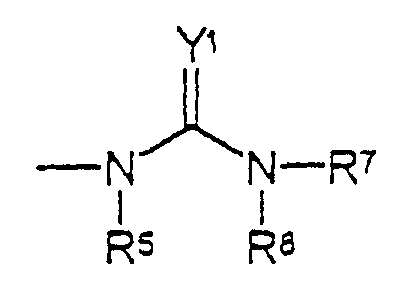 R2 ausgewählt ist aus der Gruppe bestehend aus H; Alkyl; Aryl; Hydroxy; Alkoxy; Cyano; Nitro; Amino; Aminocarbonyl; Alkenyl; Alkinyl; Alkyl, das gegebenenfalls mit einem oder mehreren Substituenten substituiert ist, die ausgewählt sind aus niederem Alkyl, Halogen, Hydroxyl, Haloalkyl, Cyano, Nitro, Carboxyl, Amino, Alkoxy, Aryl oder Aryl, das gegebenenfalls substituiert ist mit einem oder mehreren Halogen, Haloalkyl, C1-C6-Alkyl, Alkoxy, Cyano, Alkylsulfonyl, Alkylthio, Nitro, Carboxyl, Amino, Hydroxyl, Sulfonsäure, Sulfonamid, Aryl, kondensiertem Aryl, monocyclischen Heterocyclen oder kondensierten monocyclischen Heterocyclen; Aryl, das gegebenenfalls mit einem oder mehreren Substituenten substituiert ist, die ausgewählt sind aus Halogen, Haloalkyl, Hydroxy, C1-C6-Alkyl, Alkoxy, Methylendioxy, Ethylendioxy, Cyano, Nitro, Alkylthio, Alkylsulfonyl, Sulfonsäure, Sulfonamid, Carboxylderivaten, Amino, Aryl, kondensiertem Aryl, monocyclischen Heterocyclen und kondensierten monocyclischen Heterocyclen; monocyclischen Heterocyclen; und monocyclischen Heterocyclen, die gegebenenfalls mit einem oder mehreren Substituenten substituiert sind, die ausgewählt sind aus Halogen, Haloalkyl, C1-C6-Alkyl, Alkoxy, Amino, Nitro, Hydroxy, Carboxylderivaten, Cyano, Alkylthio, Alkylsulfonyl, Sulfonsäure, Sulfonamid, Aryl oder kondensiertem Aryl; oderR2 mit R7 zusammengenommen einen 4- bis 12-gliedrigen, zwei Stickstoffatome enthaltenden Heterocyclus bildet, der gegebenenfalls mit einem oder mehreren Substituenten substituiert ist, die ausgewählt sind aus der Gruppe bestehend aus C1-C6-Alkyl, Hydroxy, Oxo und Phenyl;oder R2 mit R7 zusammengenommen einen 5-gliedrigen heteroaromatischen Ring bildet;oder R2 mit R7 zusammengenommen einen 5-gliedrigen heteroaromatischen Ring bildet, der mit einer Phenylgruppe kondensiert ist, die gegebenenfalls mit einem oder mehreren Substituenten substituiert ist, die ausgewählt sind aus der Gruppe bestehend aus Alkoxycarbonyl und Alkoxy;R7 (wenn es nicht mit R2 zusammengenommen ist) und R8 unabhängig ausgewählt sind aus der Gruppe bestehend aus H; Alkyl; Alkenyl; Alkinyl; Aralkyl; Cycloalkyl; Bicycloalkyl; Aryl; Acyl; Benzoyl; Alkyl, das gegebenenfalls mit einem oder mehreren Substituenten substituiert ist, die ausgewählt sind aus C1-C6-Alkyl, Halogen, Hydroxy, Haloalkyl, Cyano, Nitro, Carboxylderivaten, Amino, Alkoxy, Thio, Alkylthio, Sulfonyl, Aryl, Aralkyl, Aryl, das gegebenenfalls mit einem oder mehreren Substituenten substituiert ist, die ausgewählt sind aus Halogen, Haloalkyl, C1-C6-Alkyl, Alkoxy, Methylendioxy, Ethylendioxy, Alkylthio, Haloalkylthio, Thio, Hydroxy, Cyano, Nitro, Carboxylderivaten, Aryloxy, Amido, Acylamino, Amino, Alkylamino, Dialkylamino, Trifluoralkoxy, Trifluormethyl, Sulfonyl, Alkylsulfonyl, Haloalkylsulfonyl, Sulfonsäure, Sulfonamid, Aryl, kondensiertem Aryl, monocyclischen Heterocyclen, kondensierten monocyclischen Heterocyclen; Aryl, das gegebenenfalls mit einem oder mehreren Substituenten substituiert ist, die ausgewählt sind aus Halogen, Haloalkyl, C1-C6-Alkyl, Alkoxy, Methylendioxy, Ethylendioxy, Alkylthio, Haloalkylthio, Thio, Hydroxy, Cyano, Nitro, Carboxylderivaten, Aryloxy, Amido, Acylamino, Amino, Alkylamino, Dialkylamino, Trifluoralkoxy, Trifluormethylsulfonyl, Alkylsulfonyl, Sulfonsäure, Sulfonamid, Aryl, kondensiertem Aryl, monocyclischen Heterocyclen oder kondensierten monocyclischen Heterocyclen; monocyclischen Heterocyclen; monocyclischen Heterocyclen, die gegebenenfalls mit einem oder mehreren Substituenten substituiert sind, die ausgewählt sind aus Halogen, Haloalkyl, C1-C6-Alkyl, Alkoxy, Aryloxy, Amino, Nitro, Hydroxy, Carboxylderivaten, Cyano, Alkylthio, Alkylsulfonyl, Aryl, kondensiertem Aryl; Monocyclischen- und Bicyclischen-heterocyclus-alkyl; -SO2R10, worin R10 ausgewählt ist aus der Gruppe bestehend aus Alkyl, Aryl und monocyclischen Heterocyclen, die alle gegebenenfalls mit einem oder mehreren Substituenten substituiert sind, die ausgewählt sind aus der Gruppe bestehend aus Halogen, Haloalkyl, Alkyl, Alkoxy, Cyano, Nitro, Amino, Acylamino, Trifluoralkyl, Amido, Alkylaminosulfonyl, Alkylsulfonyl, Alkylsulfonylamino, Alkylamino, Dialkylamino, Trifluormethylthio, Trifluoralkoxy, Trifluormethylsulfonyl, Aryl, Aryloxy, Thio, Alkylthio und monocyclischen Heterocyclen; undworin R10 wie oben definiert ist;
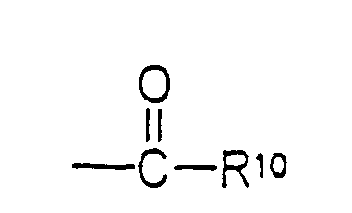 oder NR7 und R8 zusammengenommen einen 4- bis 12-gliedrigen, ein Stickstoffatom enthaltenden, monocyclischen oder bicyclischen Ring bilden, der gegebenenfalls mit einem oder mehreren Substituenten substituiert ist, die ausgewählt sind aus C1-C6-Alkyl, Carboxylderivaten, Aryl oder Hydroxy, und worin der Ring gegebenenfalls ein Heteroatom enthält, das ausgewählt ist aus der Gruppe bestehend aus O, N und S;R5 ausgewählt ist aus der Gruppe bestehend aus H, Alkyl, Alkenyl, Alkinyl, Benzyl und Phenethyl; oder Aist, worin Y2 ausgewählt ist aus der Gruppe bestehend aus Wasserstoff; Alkyl; Cycloalkyl; Bicycloalkyl; Aryl; monocyclischen Heterocyclen; Alkyl, das gegebenenfalls mit Aryl substituiert ist, das auch gegebenenfalls mit einem oder mehreren Substituenten substituiert sein kann, die ausgewählt sind aus Halogen, Haloalkyl, Alkyl, Nitro, Hydroxy, Alkoxy, Aryloxy, Aryl oder kondensiertem Aryl; Aryl, das gegebenenfalls mit einem oder mehreren Substituenten substituiert ist, die ausgewählt sind aus Halogen, Haloalkyl, Hydroxy, Alkoxy, Aryloxy, Aryl, kondensiertem Aryl, Nitro, Methylendioxy, Ethylendioxy oder Alkyl; Alkinyl; Alkenyl; -S-R9 und -O-R9, worin R9 ausgewählt ist aus der Gruppe bestehend aus H; Alkyl; Aralkyl; Aryl; Alkenyl; und Alkinyl; oder R9 mit R7 zusammengenommen einen 4- bis 12-gliedrigen, ein Stickstoffatom enthaltenden, Schwefel oder Sauerstoff enthaltenden heterocyclischen Ring bildet; und R5 und R7 wie oben definiert sind;
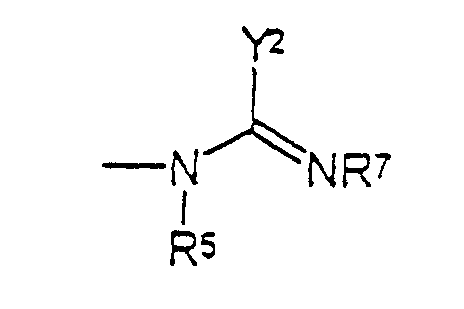 oder Y2 (wenn Y2 Kohlenstoff ist) mit R7 zusammengenommen einen 4- bis 12-gliedrigen, ein Stickstoffatom enthaltenden Ring bildet, der gegebenenfalls mit Alkyl, Aryl oder Hydroxy substituiert ist;oder A ausgewählt ist aus der Gruppe bestehend aus
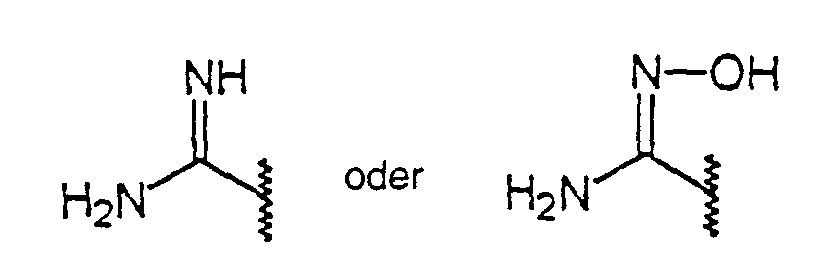 Z1, Z2, Z4 und Z5 unabhängig ausgewählt sind aus der Gruppe bestehend aus H; Alkyl; Hydroxy; Alkoxy; Aryloxy; Aralkoxy; Halogen; Haloalkyl; Haloalkoxy; Nitro; Amino; Aminoalkyl; Alkylamino; Dialkylamino; Cyano; Alkylthio; Alkylsulfonyl; Carboxylderivaten; Acetamid; Aryl; kondensiertem Aryl; Cycloalkyl; Thio; monocyclischen Heterocyclen; kondensierten monocyclischen Heterocyclen; und A, wobei A wie oben definiert ist;B ausgewählt ist aus der Gruppe bestehend aus
―CONR50―(CH2)p―, ―SO2NR50―,-CO2-(CH2)p-, -CH2CH2-, Alkenylen und Alkinylen, gegebenenfalls substituiert mit Oxo; -CH2O-; -S-OH2-;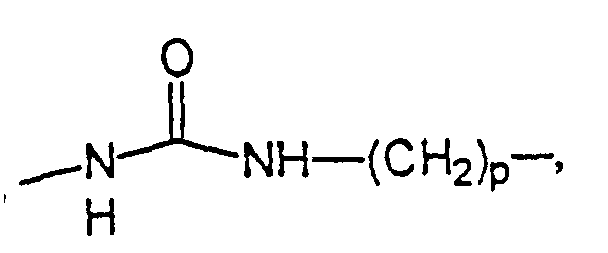 worin p eine ganze Zahl ist, die ausgewählt ist aus der Gruppe bestehend aus 0, 1 und 2; worin n eine ganze Zahl ist, die ausgewählt ist aus der Gruppe bestehend aus 0, 1, 2 und 3; R50 ausgewählt ist aus der Gruppe bestehend aus H und Alkyl;
 Y ausgewählt ist aus der Gruppe bestehend aus -(CHR70)q- und -O-; worin q eine ganze Zahl ist, die ausgewählt ist aus der Gruppe bestehend aus 0 und 1; R70 ausgewählt ist aus der Gruppe bestehend aus H, Alkyl, Aryl und Aryl, das mit einem oder mehreren Substituenten substituiert ist, die ausgewählt sind aus der Gruppe bestehend aus H; Alkyl; Hydroxy; Alkoxy; Aryloxy; Aralkoxy; Halogen; Haloalkyl; Haloalkoxy; Nitro; Amino; Aminoalkyl; Alkylamino; Dialkylamino; Cyano; Alkylthio; Alkylsulfonyl; Carboxylderivaten; Acetamid; Aryl; kondensiertem Aryl; Cycloalkyl; Thio; monocyclischen Heterocyclen; kondensierten monocyclischen Heterocyclen;t eine ganze Zahl 0, 1 oder 2 ist;R X-R3 ist, worin X ausgewählt ist aus der Gruppe bestehend aus O, S und NR4, worin R3 und R4 unabhängig ausgewählt sind aus der Gruppe bestehend aus Wasserstoff; Alkyl; Alkenyl; Alkinyl; Haloalkyl; Aryl; Arylalkyl; Zuckern; Steroiden und, im Falle der freien Säure, allen pharmazeutisch unbedenklichen Salzen davon;oder X-R3ist und Y
 ist, wobei die Gruppe X-R3 in der ortho-Position an das Phenyl der Y-Gruppe gebunden ist, um ein Lacton zu bilden;
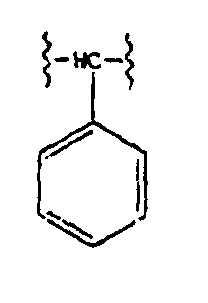 Y3 und Z3 unabhängig ausgewählt sind aus der Gruppe bestehend aus H, Alkyl, Aryl, Cycloalkyl und Aralkyl;R1 ausgewählt ist aus der Gruppe bestehend aus Wasserstoff; Alkyl; Aryl;
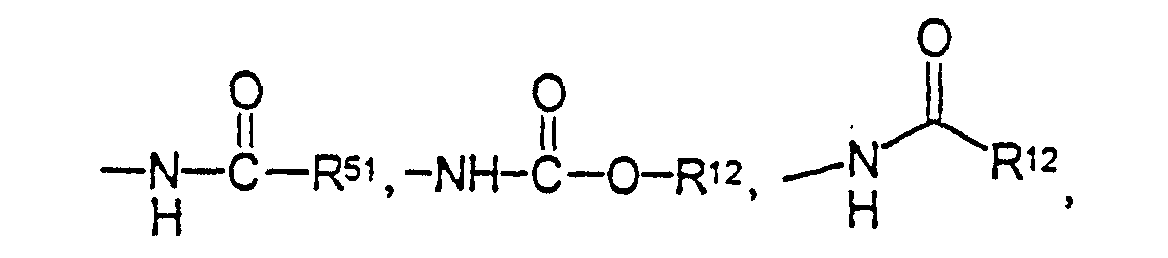
 R12 ausgewählt ist aus der Gruppe bestehend aus H, Alkyl, Cycloalkyl, Aralkyl und Aryl; undR51 ausgewählt ist aus der Gruppe bestehend aus N-substituiertem Pyrrolidinyl, Piperidinyl und Morpholinyl.
- Verbindung nach Anspruch 1, worin Y -(CHR70)q- ist.
- Verbindung nach Anspruch 2, worin q 1 ist.
- Verbindung nach Anspruch 3 mit der Formel

- Verbindung nach Anspruch 4, wobei die Verbindung ausgewählt ist aus der Gruppe bestehend ausβ-[3-[[[[3-(Aminoiminomethyl)amino]phenyl]carbonyl]amino]methyl]phenyl]-3,5-dichlorbenzolpropansäure;3-[[[3-[(Aminoiminomethyl)amino]phenyl]sulfonyl]amino]-β-phenylbenzolpropansäure;3-[[[3-[(Aminoiminomethyl)amino]phenyl]carbonyl]amino]-β-phenylbenzolpropansäure;1,1-Dimethylethyl-3-[[[3-[(aminocarbonyl)amino]phenyl]carbonyl]amino]-β-phenylbenzolpropanoat;3-[[[3-[(Aminocarbonyl)amino]phenyl]carbonyl]amino]-β-phenylbenzolpropansäure;3-[[[4-[(Aminoiminomethyl)amino]phenyl]sulfonyl]methylamino]-β-phenylbenzolpropansäure;1,1-Dimethylethyl-3-[[[3-[(aminocarbonyl)amino]phenyl]sulfonyl]amino]-β-phenylbenzolpropanoat;3-[[[3-[(Aminocarbonyl)amino]phenyl]sulfonyl]amino]-β-phenylbenzolpropansäure;1,1-Dimethylethyl-3-[[[3-[(aminothioxomethyl)amino]phenyl]sulfonyl]amino]-β-phenylbenzolpropanoat;3-[[[3-[(Aminothioxomethyl)amino]phenyl]sulfonyl]amino]-β-phenylbenzolpropansäure;3-[[[3-[(Aminoiminomethyl)amino]phenyl]methyl]amino]-β-phenylbenzolpropansäure;1,1-Dimethylethyl-3-[[[3-[[[(phenylmethyl)amino]carbonyl]amino]phenyl]sulfonyl]amino]-β-phenylbenzolpropanoat;3-[[[3-[[[(Phenylmethyl)amino]carbonyl]amino]phenyl]sulfonyl]amino]-β-phenylbenzolpropansäure;1,1-Dimethylethyl-3-[[[3-[[(cyanoimino)(methylthio)methyl]amino]phenyl]sulfonyl]amino]-β-phenylbenzolpropanoat;1,1-Dimethylethyl-3-[[[3-[[amino(cyanoimino)methyl]amino]phenyl]sulfonyl]amino]-β-phenylpropanoat;3-[[[3-[[Amino[(aminocarbonyl)imino]methyl]amino]phenyl]sulfonyl]amino]-β-phenylbenzolpropansäure;Ethyl-3-[2-[3-[(aminoiminomethyl)amino]phenyl]ethyl]-β-phenylbenzolpropanoat;3-[2-[3-[(Aminoiminomethyl)amino]phenyl]ethyl]-β-phenylbenzolpropansäure;Ethyl-3-[[[[3-(aminoiminomethyl)phenyl]carbonyl]amino]methyl]benzolpropanoat;Ethyl-3-[[[[3-[aminoiminomethyl]phenyl]carbonyl]amino]methyl]benzolpropanoat;3-[[[[3-(Aminoiminomethyl)phenyl]carbonyl]amino]methyl]benzolpropansäure;3-[[[[3-[(Aminothioxomethyl)amino]phenyl]carbonyl]amino]methyl]benzolpropansäure;3-[[[[3-[(Aminothioxomethyl)amino]phenyl]carbonyl]amino]methyl]benzolpropansäure;Ethyl-3-[[[[3-[(aminocarbonyl)amino]phenyl]carbonyl]amino]methyl]benzolpropanoat;3-[[[[3-[(Aminocarbonyl)amino]phenyl]carbonyl]amino]methyl]benzolpropansäure;Ethyl-3-[[[[3-[[[(phenylmethyl)amino]carbonyl]amino]phenyl]carbonyl]amino]methyl]benzolpropanoat;3-[[[[3-[[[(Phenylmethyl)amino]carbonyl]amino]phenyl]carbonyl]amino]methyl]benzolpropansäure;Ethyl-3-[[[[3-[[[(phenylmethyl)amino]carbanyl]amino]phenyl]carbonyl]amino]methyl]-β-phenylbenzolpropanoat;3-[[[[3-[[[(Phenylmethyl)amino]carbonyl]amino]phenyl]carbonyl]amino]methyl]-β-phenylbenzolpropansäure; Ethyl-3-[[[[3-[(aminoiminomethyl)amino]phenyl]carbonyl]amino]methyl]benzolpropanoat;3-[[[[3-[(Aminoiminomethyl)amino]phenyl]carbonyl]amino]methyl]benzolpropansäure;3-[[[3-[(Aminoiminomethyl)amino]phenyl]carbonyl]amino]benzolpropansäure;Ethyl-3-[[[[3-[(aminoiminomethyl)amino]phenyl]carbonyl]amino]methyl]-β-phenylbenzolpropanoat;3-[[[[3-[(Aminoiminomethyl)amino]phenyl]carbonyl]amino]methyl]-β-phenylbenzolpropansäure;1,1-Dimethylethyl-3-[[[[3-[(aminoiminomethyl)amino]phenyl]carbonyl]amino]methyl]-β-methylbenzolpropanoat;3-[[[[3-[(Aminoiminomethyl)amino]phenyl]carbonyl]amino]methyl]-β-methylbenzolpropansäure;Ethyl-3-[[[[3-[(aminoiminomethyl)amino]phenyl]carbonyl]amino]methyl]-β-ethylbenzolpropanoat;3-[[[[3-[(Aminoiminomethyl)amino]phenyl]carbonyl]amino]methyl]-β-ethylbenzolpropansäure;3-[[[[3-[(Aminoiminomethyl)amino]phenyl]carbonyl]amino]methyl]-β-(1-methylethyl)benzolpropansäure;N-Acetyl-3-[[[[3-[(aminoiminomethyl)amino]phenyl]carbonyl]amino]methyl]phenylalanin;3-[[[3-[(Aminoiminomethyl)amino]phenyl]acetyl]amino]benzolpropansäure;3-[[[[3-[(Aminoiminomethyl)amino]phenyl]amino]carbonyl]amino]benzolpropansäure;3-[[[[[3-[(Aminoiminomethyl)amino]phenyl]amino]carbonyl]amino]methyl]benzolpropansäure;3-[[[[3-[[(Cyanoimino)(methylamino)methyl]amino]phenyl]carbonyl]amino]methyl]-β-phenylbenzolpropansäure;3-[[[[3-[(Aminoiminomethyl)amino]phenyl]carbonyl]amino]methyl]-βR-methylbenzolpropansäure;3-[[[[3-[(Aminoiminomethyl)amino]phenyl]carbonyl]amino]methyl]-βS-methylbenzolpropansäure;(±) 3-[[[[3-[(Aminoiminomethyl)amino]-4-chlorphenyl]carbonyl]amino]methyl]-β-ethylbenzolpropansäure;(±) 3-[[[[3-[(Aminoiminomethyl)amino]-5-(trifluormethyl)phenyl]carbonyl]amino]methyl]-β-ethylbenzolpropansäure;(±) β-[3-[[[[3-[(Aminoiminomethyl)amino]phenyl]carbonyl]amino]methyl]phenyl]-3,5-difluorbenzolpropansäure;(±) β-[3-[[[[3-[(Aminoiminomethyl)amino]-5-(trifluormethyl)phenyl]carbonyl]amino]methyl]phenyl]-3,5-difluorbenzolpropansäure;(±) 3,5-Difluor-β-[3-[[[[3-[(1,4,5,6-tetrahydropyrimidin-2-yl)amino]phenyl]carbonyl]amino]methyl]phenyl]benzolpropansäure;(±) β-[3-[[[[3-[(Aminoiminomethyl)amino]phenyl]carbonyl]amino]methyl]phenyl]-2-methoxybenzolpropansäure;(±)3[[[[3-[[Amino(cyanoimino)methyl]amino]phenyl]carbonyl]amino]methyl]-β-methylbenzolpropansäure;(±) 3[[[[3-[[Amino[(aminocarbonyl)imino]methyl]amino]phenyl]carbonyl]amino]methyl]-β-methylbenzolpropansäure;(±) 3-[[[[3-[(4,5-dihydro-4-oxo-1H-imidazol-2-yl)amino]phenyl]carbonyl]amino]methyl]-β-methylbenzolpropansäure;(±) 3-[[[[3-[(1H-Benzimidazol-2-yl)amino]phenyl]carbonyl]amino]methyl]-β-methylbenzolpropansäure;(±) 3-[[[[3-[(5-Methoxy-1H-benzimidazol-2-yl)amino]phenyl]carbonyl)amino]methyl)-β-methylbenzolpropansäure;3-[2-[3-[(4,5-Dihydro-1H-imidazol-2-yl)amino]phenyl]-2-hydroxyethoxy]benzolpropansäure;3-[2-[3-[(Aminoiminomethyl)amino]phenyl]ethinyl]-β-phenylbenzolpropansäure;3-[2E-[3-[(Aminoiminomethyl)amino]phenyl]ethenyl]-β-phenylbenzolpropansäure;3-[2Z-[3-[(Aminoiminomethyl)amino]phenyl]ethenyl]-β-phenylbenzolpropansäure;β-[3-[[[3-[(Aminoiminomethyl)amino]phenyl]sulfonyl]amino]phenyl]-3,5-dichlorbenzolpropansäure;β-[3-[[[3-[(Aminoiminomethyl)amino]phenyl]sulfonyl]amino]phenyl]-3,5-difluorbenzolpropansäure;β-[3-[[[3-[(Aminoiminomethyl)amino]phenyl]sulfonyl]amino]phenyl]-4-fluorbenzolpropansäure;β-[3-[[[3-[(Aminoiminomethyl)amino]phenyl]sulfonyl]amino]phenyl]-3,4,5-trifluorbenzolpropansäure;β-[3-[[[3-[(Aminoiminomethyl)amino]phenyl]sulfonyl]amino]phenyl]perfluorbenzolpropansäure;β-[3-[[[3-[(Aminoiminomethyl)amino]phenyl]sulfonyl]amino]phenyl]-2,3,5,6-tetrafluorbenzolpropansäure;3,5-Difluor-β-[3-[[[3-[[[(phenylmethyl)amino]carbonyl]amino]phenyl]sulfonyl]amino]phenyl]benzolpropansäure;3,5-Difluor-β-[3-[[[3-[[[(phenylmethyl)imino]methyl]amino]phenyl]sulfonyl]amino]phenyl]benzolpropansäure;3-[[3-[(Aminoiminomethyl)amino]phenylthio]methyl]-β-phenylbenzolpropansäure;3-[[[3-[(Aminoiminomethyl)amino]phenyl]sulfinyl]methyl]-β-phenylbenzolpropansäure;3-[[[3-[(Aminoiminomethyl)amino]phenyl]sulfonyl]methyl]-β-phenylbenzolpropansäure;β-[3-[[[3-[[Amino[(aminocarbonyl)imino]methyl]amino]phenyl]sulfonyl]amino]phenyl]-3,5-dichlorbenzolpropansäure;β-[3-[[[3-[[Amino[(aminocarbonyl)imino]methyl]amino]phenyl]sulfonyl]amino]phenyl]-3,5-difluorbenzolpropansäure;3-[[[3-[(Aminoiminomethyl)amino]phenyl]sulfony!]amino]-β-ethylbenzolpropansäure;3-[[[3-[[Amino[(aminocarbonyl)imino]methyl]amino]phenyl]sulfonyl]amino]-β-ethylbenzolpropansäure;3-[[3-[(Aminoiminomethyl)amino]phenyl]methoxy]-β-phenylbenzolpropansäure,3,5-Difluor-β-[3-[[[3-[(1,4,5,6-tetrahydropyrimidin-2-yl)amino]phenyl]sulfonyl]amino]phenyl]benzolpropansäure;β-[3-[[[3-[(4,5-Dihydro-1H-imidazol-2-yl)amino]phenyl]sulfonyl]amino]phenyl]-3,5-difluorbenzolpropansäure;3-[[3-[(4,5-Dihydro-1H-imidazol-2-yl)amino]phenyl]methoxy]-β-phenylbenzolpropansäure undNatrium-β-[3-[[[3-[(aminoiminomethyl)amino]phenyl]sulfonyl]amino]phenyl]-2-hydroxybenzolpropanoat.
- Verbindung nach Anspruch 1, worin Y (CHR70)q und q 0 ist oder Y -O- ist.
- Verbindung nach Anspruch 6, wobei die Verbindung ausgewählt ist aus der Gruppe bestehend ausEthyl-3-[[[3-[amino(hydroxyimino)methyl]phenyl]carbonyl]amino]benzolacetat;3-[[[3-(Aminoiminomethyl)phenyl]carbonyl]amino]benzolessigsäure;3-[2-[[[3-[(Aminoiminomethyl)amino]phenyl]carbonyl]amino]ethyl]benzolessigsäure;Methyl-3-[[[[3-[(aminoiminomethyl)amino]phenyl]carbonyl]amino]methyl]benzolacetat;Ethyl-3-[[[3-(aminoiminomethyl)phenyl]carbonyl]amino]benzolacetat;3-[[[[3-[(Aminoiminomethyl)amino]phenyl]carbonyl]amino]methyl]benzolessigsäure;3-[[[3-[(Aminoiminomethyl)amino]phenyl]carbonyl]amino]benzolessigsäure;2-[3-[3-[3-[(4,5-Dihydro-1H-imidazol-2-yl)amino]phenyl]-1-oxo-2-propenyl]phenoxy]essigsäure;2-[3-[3-[3-[(Aminoiminomethyl)amino]phenyl]-1-oxopropenyl]phenoxy]essigsäure und[3-[[[[3-[(Aminoiminomethyl)amino]phenyl]amino]carbonyl]amino]phenoxy]essigsäure.
- Verbindung nach Anspruch 1, ausgewählt aus der Gruppe bestehend aus3-[(Aminoiminomethyl)amino]-N-[3-(3,4-dihydro-2-oxo-2H-benzopyran-4-yl)phenyl]benzolsulfonamid und3-[(4,5-Dihydro-1H-imidazol-2-yl)amino)-N-[3-(3,4-dihydro-2-oxo-2H-benzopyran-4-yl)phenyl]benzolsulfonamid.
- Pharmazeutische Zusammensetzung, die eine therapeutisch wirksame Menge einer Verbindung mit der Formeloder eines pharmazeutisch unbedenklichen Salzes davon, worin
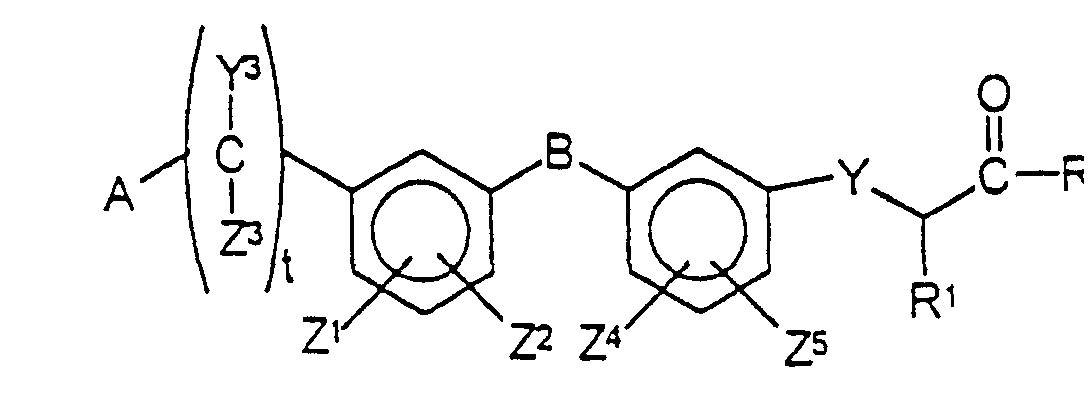 und einen pharmazeutisch unbedenklichen Träger enthält.Aist, worin Y1 ausgewählt ist aus der Gruppe bestehend aus N-R2, O und S;
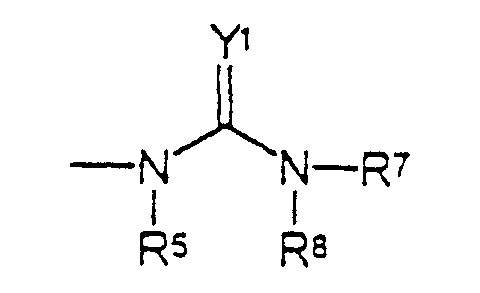 R2 ausgewählt ist aus der Gruppe bestehend aus H; Alkyl; Aryl; Hydroxy; Alkoxy; Cyano; Nitro; Amino; Aminocarbonyl; Alkenyl; Alkinyl; Alkyl, das gegebenenfalls mit einem oder mehreren Substituenten substituiert ist, die ausgewählt sind aus niederem Alkyl, Halogen, Hydroxyl, Haloalkyl, Cyano, Nitro, Carboxyl, Amino, Alkoxy, Aryl oder Aryl, das gegebenenfalls substituiert ist mit einem oder mehreren Halogen, Haloalkyl, C1-C6-Alkyl, Alkoxy, Cyano, Alkylsulfonyl, Alkylthio, Nitro, Carboxyl, Amino, Hydroxyl, Sulfonsäure, Sulfonamid, Aryl, kondensiertem Aryl, monocyclischen Heterocyclen oder kondensierten monocyclischen Heterocyclen; Aryl, das gegebenenfalls mit einem oder mehreren Substituenten substituiert ist, die ausgewählt sind aus Halogen, Haloalkyl, Hydroxy, C1-C6-Alkyl, Alkoxy, Methylendioxy, Ethylendioxy, Cyano, Nitro, Alkylthio, Alkylsulfonyl, Sulfonsäure, Sulfonamid, Carboxylderivaten, Amino, Aryl, kondensiertem Aryl, monocyclischen Heterocyclen und kondensierten monocyclischen Heterocyclen; monocyclischen Heterocyclen; und monocyclischen Heterocyclen, die gegebenenfalls mit einem oder mehreren Substituenten substituiert sind, die ausgewählt sind aus Halogen, Haloalkyl, C1-C6-Alkyl, Alkoxy, Amino, Nitro, Hydroxy, Carboxylderivaten, Cyano, Alkylthio, Alkylsulfonyl, Sulfonsäure, Sulfonamid, Aryl oder kondensiertem Aryl; oderR2 mit R7 zusammengenommen einen 4- bis 12-gliedrigen, zwei Stickstoffatome enthaltenden Heterocyclus bildet, der gegebenenfalls mit einem oder mehreren Substituenten substituiert ist, die ausgewählt sind aus der Gruppe bestehend aus C1-C6-Alkyl, Hydroxy, Oxo und Phenyl;oder R2 mit R7 zusammengenommen einen 5-gliedrigen heteroaromatischen Ring bildet;oder R2 mit R7 zusammengenommen einen 5-gliedrigen heteroaromatischen Ring bildet, der mit einer Phenylgruppe kondensiert ist, die gegebenenfalls mit einem oder mehreren Substituenten substituiert ist, die ausgewählt sind aus der Gruppe bestehend aus Alkoxy und Alkoxycarbonyl;R7 (wenn es nicht mit R2 zusammengenommen ist) und R8 unabhängig ausgewählt sind aus der Gruppe bestehend aus H; Alkyl; Alkenyl; Alkinyl; Aralkyl; Cycloalkyl; Bicycloalkyl; Aryl; Acyl; Benzoyl; Alkyl, das gegebenenfalls mit einem oder mehreren Substituenten substituiert ist, die ausgewählt sind aus C1-C6-Alkyl, Halogen, Hydroxy, Haloalkyl, Cyano, Nitro, Carboxylderivaten, Amino, Alkoxy, Thio, Alkylthio, Sulfonyl, Aryl, Aralkyl, Aryl, das gegebenenfalls mit einem oder mehreren Substituenten substituiert ist, die ausgewählt sind aus Halogen, Haloalkyl, C1-C6-Alkyl, Alkoxy, Methylendioxy, Ethylendioxy, Alkylthio, Haloalkylthio, Thio, Hydroxy, Cyano, Nitro, Carboxylderivaten, Aryloxy, Amido, Acylamino, Amino, Alkylamino, Dialkylamino, Trifluoralkoxy, Trifluormethyl, Sulfonyl, Alkylsulfonyl, Haloalkylsulfonyl, Sulfonsäure, Sulfonamid, Aryl, kondensiertem Aryl, monocyclischen Heterocyclen, kondensierten monocyclischen Heterocyclen; Aryl, das gegebenenfalls mit einem oder mehreren Substituenten substituiert ist, die ausgewählt sind aus Halogen, Haloalkyl, C1-C6-Alkyl, Alkoxy, Methylendioxy, Ethylendioxy, Alkylthio, Haloalkylthio, Thio, Hydroxy, Cyano, Nitro, Carboxylderivaten, Aryloxy, Amido, Acylamino, Amino, Alkylamino, Dialkylamino, Trifluoralkoxy, Trifluormethylsulfonyl, Alkylsulfonyl, Sulfonsäure, Sulfonamid, Aryl, kondensiertem Aryl, monocyclischen Heterocyclen oder kondensierten monocyclischen Heterocyclen; monocyclischen Heterocyclen; monocyclischen Heterocyclen, die gegebenenfalls mit einem oder mehreren Substituenten substituiert sind, die ausgewählt sind aus Halogen, Haloalkyl, C1-C6-Alkyl, Alkoxy, Aryloxy, Amino, Nitro, Hydroxy, Carboxylderivaten, Cyano, Alkylthio, Alkylsulfonyl, Aryl, kondensiertem Aryl; Monocyclischen- und Bicyclischen-heterocyclus-alkyl; -SO2R10, worin R10 ausgewählt ist aus der Gruppe bestehend aus Alkyl, Aryl und monocyclischen Heterocyclen, die alle gegebenenfalls mit einem oder mehreren Substituenten substituiert sind, die ausgewählt sind aus der Gruppe bestehend aus Halogen, Haloalkyl, Alkyl, Alkoxy, Cyano, Nitro, Amino, Acylamino, Trifluoralkyl, Amido, Alkylaminosulfonyl, Alkylsulfonyl, Alkylsulfonylamino, Alkylamino, Dialkylamino, Trifluormethylthio, Trifluoralkoxy, Trifluormethylsulfonyl, Aryl, Aryloxy, Thio, Alkylthio und monocyclischen Heterocyclen; undworin R10 wie oben definiert ist;
 oder NR7 und R8 zusammengenommen einen 4- bis 12-gliedrigen, ein Stickstoffatom enthaltenden, monocyclischen oder bicyclischen Ring bilden, der gegebenenfalls mit einem oder mehreren Substituenten substituiert ist, die ausgewählt sind aus C1-C6-Alkyl, Carboxylderivaten, Aryl oder Hydroxy, und worin der Ring gegebenenfalls ein Heteroatom enthält, das ausgewählt ist aus der Gruppe bestehend aus 0, N und S;R5 ausgewählt ist aus der Gruppe bestehend aus H, Alkyl, Alkenyl, Alkinyl, Benzyl und Phenethyl;oder Aist, worin Y2 ausgewählt ist aus der Gruppe bestehend aus Wasserstoff; Alkyl; Cycloalkyl; Bicycloalkyl; Aryl; monocyclischen Heterocyclen; Alkyl, das gegebenenfalls mit Aryl substituiert ist, das auch gegebenenfalls mit einem oder mehreren Substituenten substituiert sein kann, die ausgewählt sind aus Halogen, Haloalkyl, Alkyl, Nitro, Hydroxy, Alkoxy, Aryloxy, Aryl oder kondensiertem Aryl; Aryl, das gegebenenfalls mit einem oder mehreren Substituenten substituiert ist, die ausgewählt sind aus Halogen, Haloalkyl, Hydroxy, Alkoxy, Aryloxy, Aryl, kondensiertem Aryl, Nitro, Methylendioxy, Ethylendioxy oder Alkyl; Alkinyl; Alkenyl; -S-R9 und -O-R9, worin R9 ausgewählt ist aus der Gruppe bestehend aus H; Alkyl; Aralkyl; Aryl; Alkenyl; und Alkinyl; oder R9 mit R7 zusammengenommen einen 4- bis 12-gliedrigen, ein Stickstoffatom enthaltenden, Schwefel oder Sauerstoff enthaltenden heterocyclischen Ring bildet; und R5 und R7 wie oben definiert sind;
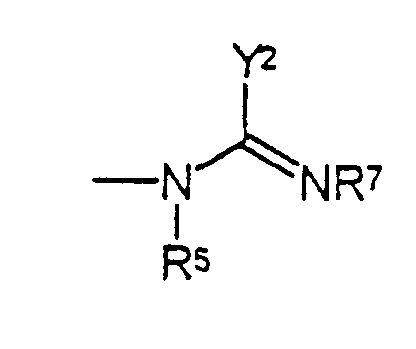 oder Y2 (wenn Y2 Kohlenstoff ist) mit R7 zusammengenommen einen 4- bis 12-gliedrigen, ein Stickstoffatom enthaltenden Ring bildet, der gegebenenfalls mit Alkyl, Aryl oder Hydroxy substituiert ist;oder A ausgewählt ist aus der Gruppe bestehend aus
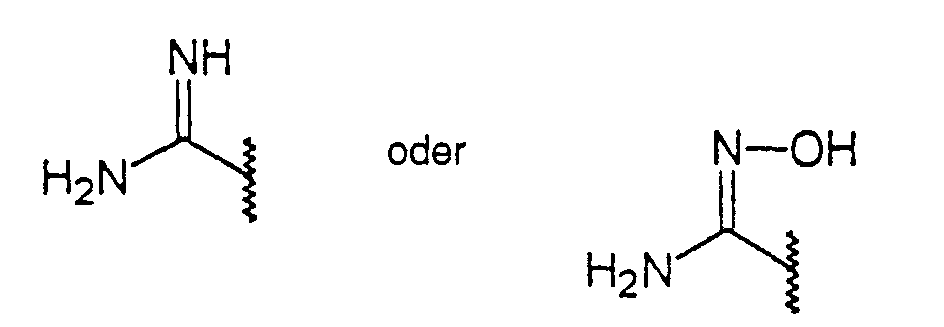 Z1, Z2, Z4 und Z5 unabhängig ausgewählt sind aus der Gruppe bestehend aus H; Alkyl; Hydroxy; Alkoxy; Aryloxy; Aralkoxy; Halogen; Haloalkyl; Haloalkoxy; Nitro; Amino; Aminoalkyl; Alkylamino; Dialkylamino; Cyano; Alkylthio; Alkylsulfonyl; Carboxylderivaten; Acetamid; Aryl; kondensiertem Aryl; Cycloalkyl; Thio; monocyclischen Heterocyclen; kondensierten monocyclischen Heterocyclen; und A, wobei A wie oben definiert ist;B ausgewählt ist aus der Gruppe bestehend aus
-CONR50-(CH2)p-, -SO2NR50-,-CO2-(CH2)p-, -CH2CH2-, Alkenylen und Alkinylen, gegebenenfalls substituiert mit Oxo; -CH2O-; -S-CH2-;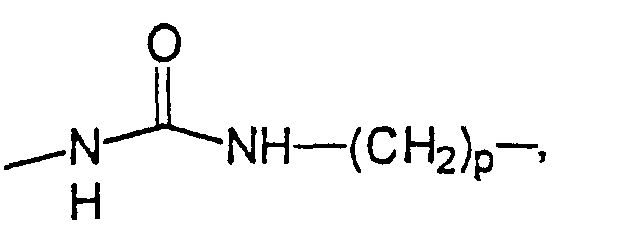 worin p eine ganze Zahl ist, die ausgewählt ist aus der Gruppe bestehend aus 0, 1 und 2; worin n eine ganze Zahl ist, die ausgewählt ist aus der Gruppe bestehend aus 0, 1, 2 und 3; R50 ausgewählt ist aus der Gruppe bestehend aus H und Alkyl;
 Y ausgewählt ist aus der Gruppe bestehend aus -(CHR70)q- und -O-; worin q eine ganze Zahl ist, die ausgewählt ist aus der Gruppe bestehend aus 0 und 1; R70 ausgewählt ist aus der Gruppe bestehend aus H, Alkyl, Aryl und Aryl, das mit einem oder mehreren Substituenten substituiert ist, die ausgewählt sind aus der Gruppe bestehend aus H; Alkyl; Hydroxy; Alkoxy; Aryloxy; Aralkoxy; Halogen; Haloalkyl; Haloalkoxy; Nitro; Amino; Aminoalkyl; Alkylamino; Dialkylamino; Cyano; Alkylthio; Alkylsulfonyl; Carboxylderivaten; Acetamid; Aryl; kondensiertem Aryl; Cycloalkyl; Thio; monocyclischen Heterocyclen; kondensierten monocyclischen Heterocyclen;t eine ganze Zahl 0, 1 oder 2 ist;R X-R3 ist, worin X ausgewählt ist aus der Gruppe bestehend aus O, S und NR4, worin R3 und R4 unabhängig ausgewählt sind aus der Gruppe bestehend aus Wasserstoff; Alkyl; Alkenyl; Alkinyl; Haloalkyl; Aryl; Arylalkyl; Zuckern; Steroiden und, im Falle der freien Säure, allen pharmazeutisch unbedenklichen Salzen davon:oder X-R3ist und Y
 ist, wobei die Gruppe X-R3 in der ortho-Position an das Phenyl der Y-Gruppe gebunden ist, um ein Lacton zu bilden;
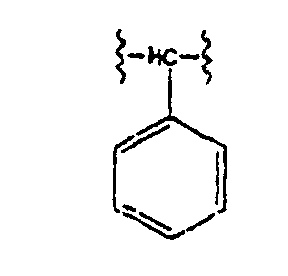 Y3 und Z3 unabhängig ausgewählt sind aus der Gruppe bestehend aus H, Alkyl, Aryl, Cycloalkyl und Aralkyl;R1 ausgewählt ist aus der Gruppe bestehend aus Wasserstoff; Alkyl; Aryl;

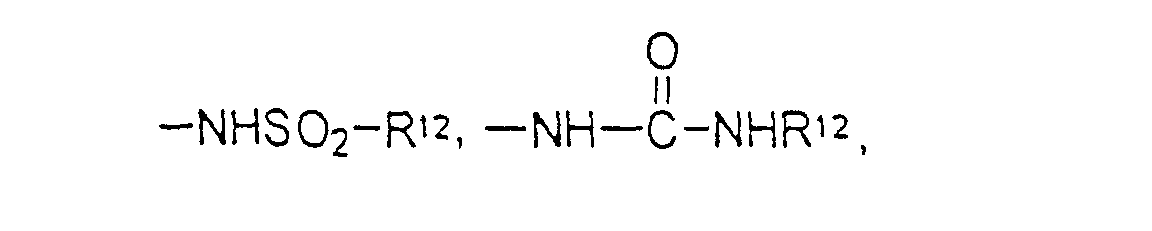 R12 ausgewählt ist aus der Gruppe bestehend aus H, Alkyl, Cycloalkyl, Aralkyl und Aryl;R51 ausgewählt ist aus der Gruppe bestehend aus N-substituiertem Pyrrolidinyl, Piperidinyl und Morpholinyl;
- Pharmazeutische Zusammensetzung nach Anspruch 9, worin Y (CHR70)q oder -O- ist.
- Pharmazeutische Zusammensetzung nach Anspruch 10, worin Y (CHR70)q, q 0 oder 1 ist.
- Pharmazeutische Zusammensetzung nach Anspruch 11 mit der Formel
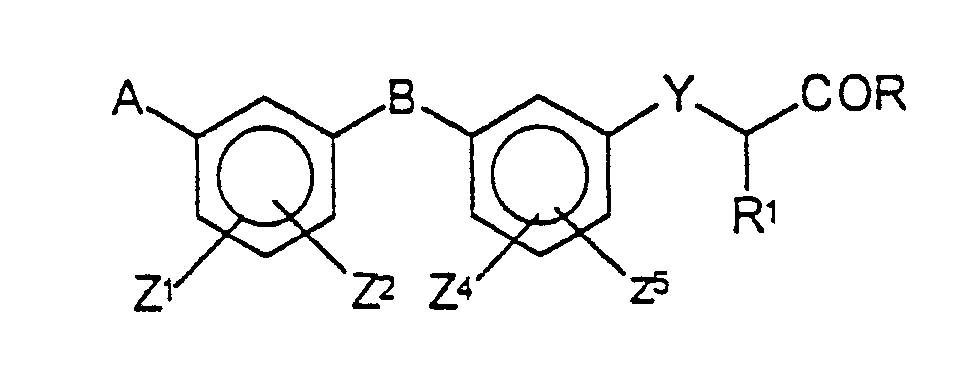
- Pharmazeutische Zusammensetzung nach Anspruch 12, wobei die Verbindung ausgewählt ist aus der Gruppe bestehend ausβ-[3-[[[[3-(Aminoiminomethyl)amino]phenyl]carbonyl]amino]methyl]phenyl]-3,5-dichlorbenzolpropansäure;3-[[[3-[(Aminoiminomethyl)amino]phenyl]sulfonyl]amino]-β-phenylbenzolpropansäure;3-[[[3-[(Aminoiminomethyl)amino]phenyl]carbonyl]amino]-β-phenylbenzolpropansäure;1,1-Dimethylethyl-3-[[[3-[(aminocarbonyl)amino]phenyl]carbonyl]amino]-β-phenylbenzolpropanoat;3-[[[3-[(Aminocarbonyl)amino]phenyl]carbonyl]amino]-β-phenylbenzolpropansäure;3-[[[4-[(Aminoiminomethyl)amino]phenyl]sulfonyl]methylamino]-β-phenylbenzolpropansäure;1,1-Dimethylethyl-3-[[[3-[(aminocarbonyl)amino]phenyl]sulfonyl]amino]-β-phenylbenzolpropanoat;3-[[[3-[(Aminocarbonyl)amino]phenyl]sulfonyl]amino]-β-phenylbenzolpropansäure;1,1-Dimethylethyl-3-[[[3-[(aminothioxomethyl)amino]phenyl]sulfonyl]amino]-β-phenylbenzolpropanoat;3-[[[3-[(Aminothioxomethyl)amino]phenyl]sulfonyl]amino]-β-phenylbenzolpropansäure;3-[[[3-[(Aminoiminomethyl)amino]phenyl]methyl]amino]-β-phenylbenzolpropansäure;1,1-Dimethylethyl-3-[[[3-[[[(phenylmethyl)amino]carbonyl]amino]phenyl]sulfonyl]amino]-β-phenylbenzolpropanoat;3-[[[3-[[[(Phenylmethyl)amino]carbonyl]amino]phenyl]sulfonyl]amino]-β-phenylbenzolpropansäure;1,1-Dimethylethyl-3-[[[3-[[(cyanoimino)(methylthio)methyl]amino]phenyl]sulfonyl]amino]-β-phenylbenzolpropanoat;1,1-Dimethylethyl-3-[[[3-[[amino(cyanoimino)methyl]amino]phenyl]sulfonyl]amino]-β-phenylpropanoat;3-[[[3-[[Amino[(aminocarbonyl)imino]methyl]amino]phenyl]sulfonyl]amino]-β-phenylbenzolpropansäure;Ethyl-3-[2-[3-[(aminoiminomethyl)amino]phenyl]ethyl]-β-phenylbenzolpropanoat;3-[2-[3-[(Aminoiminomethyl)amino]phenyl]ethyl]-β-phenylbenzolpropansäure;Ethyl-3-[[[[3-(aminoiminomethyl)phenyl]carbonyl]amino]methyl]benzolpropanoat;Ethyl-3-[[[[3-[aminoiminomethyl]phenyl]carbonyl]amino]methyl]benzolpropanoat;3-[[[[3-(Aminoiminomethyl)phenyl]carbonyl]amino]methyl]benzolpropansäure;3-[[[[3-[(Aminothioxomethyl)amino]phenyl]carbonyl]amino]methyl]benzolpropansäure;3-[[[[3-[(Aminothioxomethyl)amino]phenyl]carbonyl]amino]methyl]benzolpropansäure;Ethyl-3-[[[[3-[(aminocarbonyl)amino]phenyl]carbonyl]amino]methyl]benzolpropanoat;3-[[[[3-[(Aminocarbonyl)amino]phenyl]carbonyl]amino]methyl]benzolpropansäure;Ethyl-3-[[[[3-[[[(phenylmethyl)amino]carbonyl]amino]phenyl]carbonyl]amino]methyl]benzolpropanoat;3-[[[[3-[[[(Phenylmethyl)amino]carbonyl]amino]phenyl]carbonyl]amino]methyl]benzolpropansäure;Ethyl-3-[[[[3-[[[(phenylmethyl)amino]carbonyl]amino]phenyl]carbonyl]amino]methyl]-β-phenylbenzolpropanoat;3-[[[[3-[[[(Phenylmethyl)amino]carbonyl]amino]phenyl]carbonyl]amino]methyl]-β-phenylbenzolpropansäure;Ethyl-3-[[[[3-[(aminoiminomethyl)amino]phenyl]carbonyl]amino]methyl]benzolpropanoat;3-[[[[3-[(Aminoiminomethyl)amino]phenyl]carbonyl]amino]methyl]benzolpropansäure;3-[[[3-[(Aminoiminomethyl)amino]phenyl]carbonyl]amino]benzolpropansäure;Ethyl-3-[[[[3-[(aminoiminomethyl)amino]phenyl]carbonyl]amino]methyl]-β-phenylbenzolpropanoat;3-[[[[3-[(Aminoiminomethyl)amino]phenyl]carbonyl]amino]methyl]-β-phenylbenzolpropansäure;1,1-Dimethylethyl-3-[[[[3-[(aminoiminomethyl)amino]phenyl]carbonyl]amino]methyl]-β-methylbenzolpropanoat;3-[[[[3-[(Aminoiminomethyl)amino]phenyl]carbonyl]amino]methyl]-β-methylbenzolpropansäure;Ethyl-3-[[[[3-[(aminoiminomethyl)amino]phenyl]carbonyl]amino]methyl]-β-ethylbenzolpropanoat;3-[[[[3-[(Aminoiminomethyl)amino]phenyl]carbonyl]amino]methyl]-β-ethylbenzolpropansäure;3-[[[[3-[(Aminoiminomethyl)amino]phenyl]carbonyl]amino]methyl]-β-(1-methylethyl)benzolpropansäure;N-Acetyl-3-[[[[3-[(aminoiminomethyl)amino]phenyl]carbonyl]amino]methyl]phenylalanin;3-[[[3-[(Aminoiminomethyl)amino]phenyl]acetyl]amino]benzolpropansäure;3-[[[[3-[(Aminoiminomethyl)amino]phenyl]amino]carbonyl]amino]benzolpropansäure;3-[[[[[3-[(Aminoiminomethyl)amino]phenyl]amino]carbonyl]amino]methyl]benzolpropansäure;3-[[[[3-[[(Cyanoimino) (methylamino)methyl]amino]phenyl]carbonyl]amino]methyl]-β-phenylbenzolpropansäure;3-[[[[3-[(Aminoiminomethyl)amino]phenyl]carbonyl]amino]methyl]-βR-methylbenzolpropansäure;3-[[[[3-[(Aminoiminomethyl)amino]phenyl]carbonyl]amino]methyll-βS-methylbenzolpropansäure;(±)3-[[[[3-[(Aminoiminomethyl)amino]-4-chlorphenyl]carbonyl]amino]methyl]-β-ethylbenzolpropansäure;(±) 3-[[[[3-[(Aminoiminomethyl)amino]-5-(trifluormethyl)phenyl]carbonyl]amino]methyl]-β-ethylbenzolpropansäure;(±) β-[3-[[[[3-[(Aminoiminomethyl)amino]phenyl]carbonyl]amino]methyl]phenyl]-3,5-difluorbenzolpropansäure;(±) β-[3-[[[[3-[(Aminoiminomethyl)amino]-5-(trifluormethyl)phenyl]carbonyl]amino]methyl]phenyl]-3,5-difluorbenzolpropansäure;(±) 3,5-Difluor-β-[3-[[[[3-[(1,4,5,6-tetrahydropyrimidin-2-yl)amino]phenyl]carbonyl]amino]methyl]phenyl]benzolpropansäure;(±) ß-[3-[[[[3-[(Aminoiminomethyl)amino]phenyl]carbonyl]amino]methyl]phenyl]-2-methoxybenzolpropansäure;(±) 3[[[[3-[[Amino(cyanoimino)methyl]amino]phenyl]carbonyl]amino]methyl]-β-methylbenzolpropansäure;(±) 3[[[[3-[[Amino[(aminocarbonyl)imino]methyl]amino]phenyl]carbonyl]amino]methyl]-β-methylbenzolpropansäure;(±) 3-[[[[3-[(4,5-dihydro-4-oxo-1H-imidazol-2-yl)amino]phenyl]carbonyl]amino]methyl]-β-methylbenzolpropansäure;(±) 3-[[[[3-[(1H-Benzimidazol-2-yl)amino]phenyl]carbonyl]amino]methyl]-β-methylbenzolpropansäure;(±)3-[[[[3-[(5-Methoxy-1H-benzimidazol-2-yl)amino]phenyl]carbonyl]amino]methyl]-β-methylbenzolpropansäure;3-[2-[3-[(4,5-Dihydro-1H-imidazol-2-yl)amino]phenyl]-2-hydroxyethoxy]benzolpropansäure;3-[2-[3-((Aminoiminomethyl)amino]phenyl]ethinyl]-β-phenylbenzolpropansäure;3-[2E-[3-[(Aminoiminomethyl)amino]phenyl]ethenyl]-β-phenylbenzolpropansäure;3-[2Z-[3-[(Aminoiminomethyl)amino]phenyl]ethenyl]-β-phenylbenzolpropansäure;β-[3-[[[3-[(Aminoiminomethyl)amino]phenyl]sulfonyl]amino]phenyl]-3,5-dichlorbenzolpropansäure;β-[3-[[[3-[(Aminoiminomethyl)amino]phenyl]sulfonyl]amino]phenyl]-3,5-difluorbenzolpropansäure;β-[3-[[[3-[(Aminoiminomethyl)amino]phenyl]sulfonyl]amino]phenyl]-4-fluorbenzolpropansäure;β-[3-[[[3-[(Aminoiminomethyl)amino]phenyl]sulfonyl]amino]phenyl]-3,4,5-trifluorbenzolpropansäure;β-[3-[[[3-[(Aminoiminomethyl)amino]phenyl]sulfonyl]amino]phenyl]perfluorbenzolpropansäure;β-[3-[[[3-[(Aminoiminomethyl)amino]phenyl]sulfonyl]amino]phenyl]-2,3,5,6-tetrafluorbenzolpropansäure;3,5-Difluor-β-[3-[[[3-[[[(phenylmethyl)amino]carbonyl]amino]phenyl]sulfonyl]amino]phenyl]benzolpropansäure;3,5-Difluor-β-[3-[[[3-[[[(phenylmethyl)imino]methyl]amino]phenyl]sulfonyl]amino]phenyl]benzolpropansäure;3-[[3-[(Aminoiminomethyl)amino]phenylthio]methyl]-β-phenylbenzolpropansäure;3-[[[3-[(Aminoiminomethyl)amino]phenyl]sulfinyl]methyl]-β-phenylbenzolpropansäure;3-[[[3-[(Aminoiminomethyl)amino]phenyl]sulfonyl]methyl]-β-phenylbenzolpropansäure;β-[3-[[[3-[[Amino[(aminocarbonyl)imino]methyl]amino]phenyl]sulfonyl]amino]phenyl]-3,5-dichlorbenzolpropansäure;β-[3-[[[3-[[Amino[(aminocarbonyl)imino]methyl]amino]phenyl]sulfonyl]amino]phenyl]-3,5-difluorbenzolpropansäure;3-[[[3-[(Aminoiminomethyl)amino]phenyl]sulfonyl]amino]-β-ethylbenzolpropansäure;3-[[[3-[[Amino[(aminocarbonyl)imino]methyl]amino]phenyl]sulfonyl]amino]-β-ethylbenzolpropansäure;3-[[3-[(Aminoiminomethyl)amino]phenyl]methoxy]-β-phenylbenzolpropansäure;3,5-Difluor-β-[3-[[[3-[(1,4,5,6-tetrahydropyrimidin-2-yl)amino]phenyl]sulfonyl]amino]phenyl]benzolpropansäure;β-[3-[[[3-[(4,5-Dihydro-1H-imidazol-2-yl)amino]phenyl]sulfonyl]amino]phenyl]-3,5-difluorbenzolpropansäure;3-[[3-((4,5-Dihydro-1H-imidazol-2-yl)amino]phenyl]methoxy]-β-phenylbenzolpropansäure;Natrium-β-[3-[[[3-[(aminoiminomethyl)amino]phenyl]sulfonyl]amino]phenyl]-2-hydroxybenzolpropanoat;Ethyl-3-[[[3-[amino(hydroxyimino)methyl]phenyl]carbonyl]amino]benzolacetat;3-[[[3-(Aminoiminomethyl)phenyl]carbonyl]amino]benzolessigsäure;3-[2-[[[3-[(Aminoiminomethyl)amino]phenyl]carbonyl]amino]ethyl]benzolessigsäure;Methyl-3-[[[[3-[(aminoiminomethyl)amino]phenyl]carbonyl]amino]methyl]benzolacetat;Ethyl-3-[[[3-(aminoiminomethyl)phenyl]carbonyl]amino]benzolacetat;3-[[[[3-[(Aminoiminomethyl)amino]phenyl]carbonyl]amino]methyl]benzolessigsäure;3-[[[3-[(Aminoiminomethyl)amino]phenyl]carbonyl]amino]benzolessigsäure;2-[3-[3-[3-[(4,5-Dihydro-1H-imidazol-2-yl)amino]phenyl]-1-oxo-2-propenyl]phenoxy]essigsäure;2-[3-[3-[3-[(Aminoiminomethyl)amino]phenyl]-1-oxopropenyl]phenoxy]essigsäure und[3-[[[[3-[(Aminoiminomethyl)amino]phenyl]amino]carbonyl]amino]phenoxy]essigsäure.
- Pharmazeutische Zusammensetzung nach Anspruch 9, wobei die Verbindung ausgewählt ist aus der Gruppe bestehend aus3-[(Aminoiminomethyl)amino]-N-[3-(3,4-dihydro-2-oxo-2H-benzopyran-4-yl)phenyl]benzolsulfonamid und3-[(4,5-Dihydro-1H-imidazol-2-yl)amino]-N-[3-(3,4-dihydro-2-oxo-2H-benzopyran-4-yl)phenyl]benzolsulfonamid.
- Verwendung einer Verbindung mit der Formeloder eines pharmazeutisch unbedenklichen Salzes davon, worin
 zur Herstellung eines Medikaments zur Behandlung von durch das αvβ3-Integrin vermittelten Zuständen bei einem Säuger, der solcher Behandlung bedarf.Aist, worin Y1 ausgewählt ist aus der Gruppe bestehend aus N-R2, O und S;
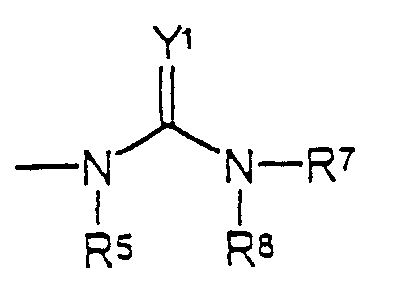 R2 ausgewählt ist aus der Gruppe bestehend aus H; Alkyl; Aryl; Hydroxy; Alkoxy; Cyano; Nitro; Amino; Aminocarbonyl; Alkenyl; Alkinyl; Alkyl, das gegebenenfalls mit einem oder mehreren Substituenten substituiert ist, die ausgewählt sind aus niederem Alkyl, Halogen, Hydroxyl, Haloalkyl, Cyano, Nitro, Carboxyl, Amino, Alkoxy, Aryl oder Aryl, das gegebenenfalls substituiert ist mit einem oder mehreren Halogen, Haloalkyl, C1-C6-Alkyl, Alkoxy, Cyano, Alkylsulfonyl, Alkylthio, Nitro, Carboxyl, Amino, Hydroxyl, Sulfonsäure, Sulfonamid, Aryl, kondensiertem Aryl, monocyclischen Heterocyclen oder kondensierten monocyclischen Heterocyclen; Aryl, das gegebenenfalls mit einem oder mehreren Substituenten substituiert ist, die ausgewählt sind aus Halogen, Haloalkyl, Hydroxy, C1-C6-Alkyl, Alkoxy, Methylendioxy, Ethylendioxy, Cyano, Nitro, Alkylthio, Alkylsulfonyl, Sulfonsäure, Sulfonamid, Carboxylderivaten, Amino, Aryl, kondensiertem Aryl, monocyclischen Heterocyclen und kondensierten monocyclischen Heterocyclen; monocyclischen Heterocyclen; und monocyclischen Heterocyclen, die gegebenenfalls mit einem oder mehreren Substituenten substituiert sind, die ausgewählt sind aus Halogen, Haloalkyl, C1-C6-Alkyl, Alkoxy, Amino, Nitro, Hydroxy, Carboxylderivaten, Cyano, Alkylthio, Alkylsulfonyl, Sulfonsäure, Sulfonamid, Aryl oder kondensiertem Aryl; oderR2 mit R7 zusammengenommen einen 4- bis 12-gliedrigen, zwei Stickstoffatome enthaltenden Heterocyclus bildet, der gegebenenfalls mit einem oder mehreren Substituenten substituiert ist, die ausgewählt sind aus der Gruppe bestehend aus C1-C6-Alkyl, Hydroxy, Oxo und Phenyl;oder R2 mit R7 zusammengenommen einen 5-gliedrigen heteroaromatischen Ring bildet;oder R2 mit R7 zusammengenommen einen 5-gliedrigen heteroaromatischen Ring bildet, der mit einer Phenylgruppe kondensiert ist, die gegebenenfalls mit einem oder mehreren Substituenten substituiert ist, die ausgewählt sind aus der Gruppe bestehend aus Alkoxy und Alkoxycarbonyl;R7 (wenn es nicht mit R2 zusammengenommen ist) und R8 unabhängig ausgewählt sind aus der Gruppe bestehend aus H; Alkyl; Alkenyl; Alkinyl; Aralkyl; Cycloalkyl; Bicycloalkyl; Aryl; Acyl; Benzoyl; Alkyl, das gegebenenfalls mit einem oder mehreren Substituenten substituiert ist, die ausgewählt sind aus C1-C6-Alkyl, Halogen, Hydroxy, Haloalkyl, Cyano, Nitro, Carboxylderivaten, Amino, Alkoxy, Thio, Alkylthio, Sulfonyl, Aryl, Aralkyl, Aryl, das gegebenenfalls mit einem oder mehreren Substituenten substituiert ist, die ausgewählt sind aus Halogen, Haloalkyl, C1-C6-Alkyl, Alkoxy, Methylendioxy, Ethylendioxy, Alkylthio, Haloalkylthio, Thio, Hydroxy, Cyano, Nitro, Carboxylderivaten, Aryloxy, Amido, Acylamino, Amino, Alkylamino, Dialkylamino, Trifluoralkoxy, Trifluormethyl, Sulfonyl, Alkylsulfonyl, Haloalkylsulfonyl, Sulfonsäure, Sulfonamid, Aryl, kondensiertem Aryl, monocyclischen Heterocyclen, kondensierten monocyclischen Heterocyclen; Aryl, das gegebenenfalls mit einem oder mehreren Substituenten substituiert ist, die ausgewählt sind aus Halogen, Haloalkyl, C1-C6-Alkyl, Alkoxy, Methylendioxy, Ethylendioxy, Alkylthio, Haloalkylthio, Thio, Hydroxy, Cyano, Nitro, Carboxylderivaten, Aryloxy, Amido, Acylamino, Amino, Alkylamino, Dialkylamino, Trifluoralkoxy, Trifluormethylsulfonyl, Alkylsulfonyl, Sulfonsäure, Sulfonamid, Aryl, kondensiertem Aryl, monocyclischen Heterocyclen oder kondensierten monocyclischen Heterocyclen; monocyclischen Heterocyclen; monocyclischen Heterocyclen, die gegebenenfalls mit einem oder mehreren Substituenten substituiert sind, die ausgewählt sind aus Halogen, Haloalkyl, C1-C6-Alkyl, Alkoxy, Aryloxy, Amino, Nitro, Hydroxy, Carboxylderivaten, Cyano, Alkylthio, Alkylsulfonyl, Aryl, kondensiertem Aryl; Monocyclischen- und Bicyclischen-heterocyclus-alkyl; -SO2R10, worin R10 ausgewählt ist aus der Gruppe bestehend aus Alkyl, Aryl und monocyclischen Heterocyclen, die alle gegebenenfalls mit einem oder mehreren Substituenten substituiert sind, die ausgewählt sind aus der Gruppe bestehend aus Halogen, Haloalkyl, Alkyl, Alkoxy, Cyano, Nitro, Amino, Acylamino, Trifluoralkyl, Amido, Alkylaminosulfonyl, Alkylsulfonyl, Alkylsulfonylamino, Alkylamino, Dialkylamino, Trifluormethylthio, Trifluoralkoxy, Trifluormethylsulfonyl, Aryl, Aryloxy, Thio, Alkylthio und monocyclischen Heterocyclen; undworin R10 wie oben definiert ist;
 oder NR7 und R8 zusammengenommen einen 4- bis 12-gliedrigen, ein Stickstoffatom enthaltenden, monocyclischen oder bicyclischen Ring bilden, der gegebenenfalls mit einem oder mehreren Substituenten substituiert ist, die ausgewählt sind aus C1-C6-Alkyl, Carboxylderivaten, Aryl oder Hydroxy, und worin der Ring gegebenenfalls ein Heteroatom enthält, das ausgewählt ist aus der Gruppe bestehend aus O, N und S;R5 ausgewählt ist aus der Gruppe bestehend aus H, Alkyl, Alkenyl, Alkinyl, Benzyl und Phenethyl;
oder A ist, worin Y2 ausgewählt ist aus der Gruppe bestehend aus Wasserstoff; Alkyl; Cycloalkyl; Bicycloalkyl; Aryl; monocyclischen Heterocyclen; Alkyl, das gegebenenfalls mit Aryl substituiert ist, das auch gegebenenfalls mit einem oder mehreren Substituenten substituiert sein kann, die ausgewählt sind aus Halogen, Haloalkyl, Alkyl, Nitro, Hydroxy, Alkoxy, Aryloxy, Aryl oder kondensiertem Aryl; Aryl, das gegebenenfalls mit einem oder mehreren Substituenten substitutert ist, die ausgewählt sind aus Halogen, Haloalkyl, Hydroxy, Alkoxy, Aryloxy, Aryl, kondensiertem Aryl, Nitro, Methylendioxy, Ethylendioxy oder Alkyl; Alkinyl; Alkenyl; -S-R9 und -O-R9, worin R9 ausgewählt ist aus der Gruppe bestehend aus H; Alkyl; Aralkyl; Aryl; Alkenyl; und Alkinyl; oder R9 mit R7 zusammengenommen einen 4- bis 12-gliedrigen, ein Stickstoffatom enthaltenden, Schwefel oder Sauerstoff enthaltenden heterocyclischen Ring bildet; und R5 und R7 wie oben definiert sind;oder Y2 (wenn Y2 Kohlenstoff ist) mit R7 zusammengenommen einen 4- bis 12-gliedrigen, ein Stickstoffatom enthaltenden Ring bildet, der gegebenenfalls mit Alkyl, Aryl oder Hydroxy substituiert ist;oder A ausgewählt ist aus der Gruppe bestehend aus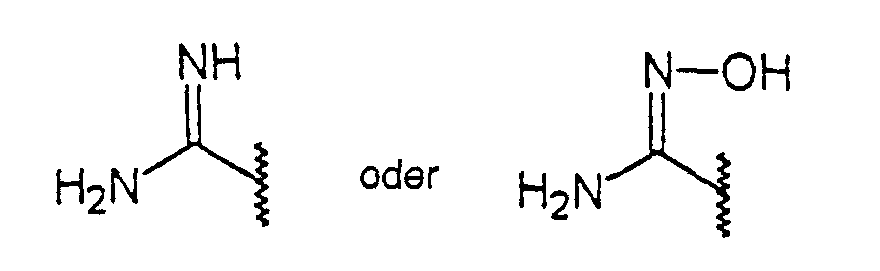 Z1, Z2, Z4 und Z5 unabhängig ausgewählt sind aus der Gruppe bestehend aus H; Alkyl; Hydroxy; Alkoxy; Aryloxy; Aralkoxy; Halogen; Haloalkyl; Haloalkoxy; Nitro; Amino; Aminoalkyl; Alkylamino; Dialkylamino; Cyano; Alkylthio; Alkylsulfonyl; Carboxylderivaten; Acetamid; Aryl; kondensiertem Aryl; Cycloalkyl; Thio; monocyclischen Heterocyclen; kondensierten monocyclischen Heterocyclen; und A, wobei A wie oben definiert ist;B ausgewählt ist aus der Gruppe bestehend aus
―CONR50―(CH2)p―, ―SO2NR50―,-CO2-(CH2)p-, -CH2CH2-, Alkenylen und Alkinylen, gegebenenfalls substituiert mit Oxo; -CH2O-; -S-CH2-;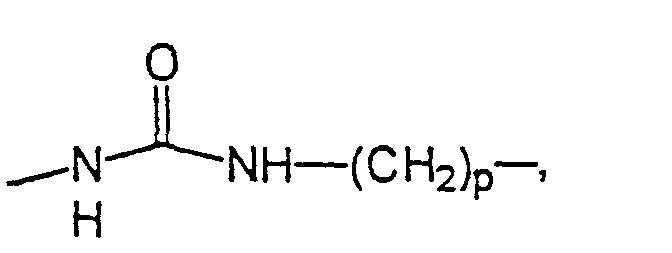 worin p eine ganze Zahl ist, die ausgewählt ist aus der Gruppe bestehend aus 0, 1 und 2; worin n eine ganze Zahl ist, die ausgewählt ist aus der Gruppe bestehend aus 0, 1, 2 und 3; R50 ausgewählt ist aus der Gruppe bestehend aus H und Alkyl;
 Y ausgewählt ist aus der Gruppe bestehend aus -(CHR70)q- und -O-; worin q eine ganze Zahl ist, die ausgewählt ist aus der Gruppe bestehend aus 0 und 1; R70 ausgewählt ist aus der Gruppe bestehend aus H, Alkyl, Aryl und Aryl, das mit einem oder mehreren Substituenten substituiert ist, die ausgewählt sind aus der Gruppe bestehend aus H; Alkyl; Hydroxy; Alkoxy; Aryloxy; Aralkoxy; Halogen; Haloalkyl; Haloalkoxy; Nitro; Amino; Aminoalkyl; Alkylamino; Dialkylamino; Cyano; Alkylthio; Alkylsulfonyl; Carboxylderivaten; Acetamid; Aryl; kondensiertem Aryl; Cycloalkyl; Thio; monocyclischen Heterocyclen; kondensierten monocyclischen Heterocyclen;t eine ganze Zahl 0, 1 oder 2 ist;R X-R3 ist, worin X ausgewählt ist aus der Gruppe bestehend aus O, S und NR4, worin R3 und R4 unabhängig ausgewählt sind aus der Gruppe bestehend aus Wasserstoff; Alkyl, Alkenyl; Alkinyl; Haloalkyl; Aryl; Aryfalkyl; Zuckern; Steroiden und, im Falle der freien Säure, allen pharmazeutisch unbedenklichen Salzen davon;oder X-R3ist und Y
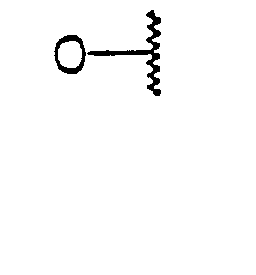 ist, wobei die Gruppe X-R3 in der ortho-Position an das Phenyl der Y-Gruppe gebunden ist, um ein Lacton zu bilden;
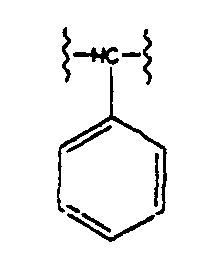 Y3 und Z3 unabhängig ausgewählt sind aus der Gruppe bestehend aus H, Alkyl, Aryl, Cycloalkyl und Aralkyl;R1 ausgewählt ist aus der Gruppe bestehend aus Wasserstoff; Alkyl; Aryl;
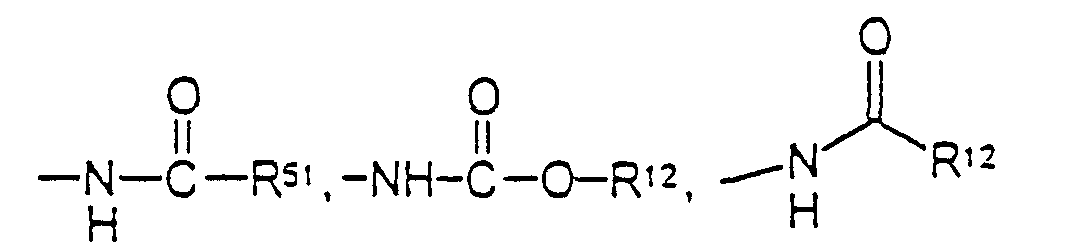
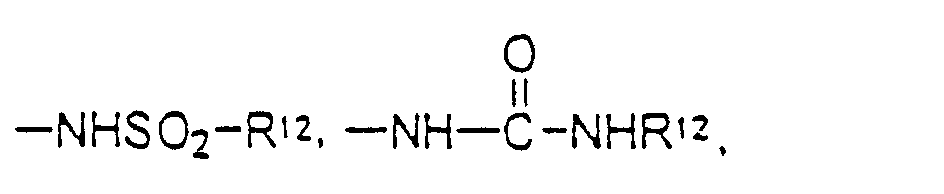 R12 ausgewählt ist aus der Gruppe bestehend aus H, Alkyl, Cycloalkyl, Aralkyl und Aryl; undR51 ausgewählt ist aus der Gruppe bestehend aus N-substituiertem Pyrrolidinyl, Piperidinyl und Morpholinyl,
- Verwendung nach Anspruch 15, wobei die Verbindung ausgewählt ist aus der Gruppe bestehend ausβ-[3-[[[[3-(Aminoiminomethyl)amino]phenyl]carbonyl]amino]methyl]phenyl]-3,5-dichlorbenzolpropansäure;3-[[[3-[(Aminoiminomethyl)amino]phenyl]sulfonyl]amino]-β-phenylbenzolpropansäure;3-[[[3-[(Aminoiminomethyl)amino]phenyl]carbonyl]amino]-β-phenylbenzolpropansäure;1,1-Dimethylethyl-3-[[[3-[(aminocarbonyl)amino]phenyl]carbonyl]amino]-β-phenylbenzolpropanoat;3-[[[3-[(Aminocarbonyl)amino]phenyl]carbonyl]amino]-β-phenylbenzolpropansäure;3-[[[4-[(Aminoiminomethyl)amino]phenyl]sulfonyl]methylamino]-β-phenylbenzolpropansäure;1,1-Dimethylethyl-3-[[[3-[(aminocarbonyl)amino]phenyl]sulfonyl]amino]-β-phenylbenzolpropanoat;3-[[[3-[(Aminocarbonyl)amino]phenyl]sulfonyl]amino]-β-phenylbenzolpropansäure;1,1-Dimethylethyl-3-[[[3-[(aminothioxomethyl)amino]phenyl]sulfonyl]amino]-β-phenylbenzolpropanoat;3-[[[3-[(Aminothioxomethyl)amino]phenyl]sulfonyl]amino]-β-phenylbenzolpropansäure;3-[[[3-[(Aminoiminomethyl)amino]phenyl]methyl]amino]-β-phenylbenzolpropansäure;1,1-Dimethylethyl-3-[[[3-[[[(phenylmethyl)amino]carbonyl]amino]phenyl]sulfonyl]amino]-ß-phenylbenzolpropanoat;3-[[[3-[[[(Phenylmethyl)amino]carbonyl]amino]phenyl]sulfonyl]amino]-β-phenylbenzolpropansäure;1,1-Dimethylethyl-3-[[[3-[[(cyanoimino)(methylthio)methyl]amino]phenyl]sulfonyl]amino]-β-phenylbenzolpropanoat;1,1-Dimethylethyl-3-[[[3-[[amino(cyanoimino)methyl]amino]phenyl]sulfonyl]amino]-β-phenylpropanoat;3-[[[3-[[Amino[(aminocarbonyl)imino]methyl]amino]phenyl]sulfonyl]amino]-β-phenylbenzolpropansäure;Ethyl-3-[2-[3-[(aminoiminomethyl)amino]phenyl]ethyl]-β-pheny(benzo(propanoat;3-[2-[3-[(Aminoiminomethyl)amino]phenyl]ethyl]-β-phenylbenzolpropansäure;Ethyl-3-[[[[3-(aminoiminomethyl)phenyl]carbonyl]amino]methyl]benzolpropanoat;Ethyl-3-[[[[3-[aminoiminomethyl]phenyl]carbonyl]amino]methyl]benzolpropanoat;3-[[[[3-(Aminoiminomethyl)phenyl]carbonyl]amino]methyl]benzolpropansäure;3-[[[[3-[(Aminothioxomethyl)amino]phenyl]carbonyl]amino]methyl]benzolpropansäure;3-[[[[3-[(Aminothioxomethyl)amino]phenyl]carbonyl]amino]methyl]benzolpropansäure;Ethyl-3-[[[[3-[(aminocarbonyl)amino]phenyl]carbonyl]amino]methyl]benzolpropanoat;3-[[[[3-[(Aminocarbonyl)amino]phenyl]carbonyl]amino]methyl]benzolpropansäure;Ethyl-3-[[[[3-[[[(phenylmethyl)amino]carbonyl]amino]phenyl]carbonyl]amino]methyl]benzolpropanoat;3-[[[[3-[[[(Phenylmethyl)amino]carbonyl]amino]phenyl]carbonyl]amino]methyl]benzolpropansäure;Ethyl-3-[[[[3-[[[(phenylmethyl)amino]carbonyl]amino]phenyl]carbonyl]amino]methyl]-β-phenylbenzolpropanoat;3-[[[[3-[[[(Phenylmethyl)amino]carbonyl]amino]phenyll]carbonyl]amino]methyl]-β-phenylbenzolpropansäure;Ethyl-3-[[[[3-[(aminoiminomethyl)amino]phenyl]carbonyl]amino]methyl]benzolpropanoat;3-[[[[3-[(Aminoiminomethyl)amino]phenyl]carbonyl]amino]methyl]benzolpropansäure;3-[[[3-[(Aminoiminomethyl)amino]phenyl]carbonyl]amino]benzolpropansäure;Ethyl-3-[[[[3-[(aminoiminomethyl)amino]phenyl]carbonyl]amino]methyl]-β-phenylbenzolpropanoat;3-[[[[3-[(Aminoiminomethyl)amino]phenyl]carbonyl]amino]methyl]-β-phenylbenzolpropansäure;1,1-Dimethylethyl-3-[[[[3-[(aminoiminomethyl)amino]phenyl]carbonyl]amino]methyl]-β-methylbenzolpropanoat;3-[[[[3-[(Aminoiminomethyl)amino]phenyl]carbonyl]amino]methyl]-β-methylbenzolpropansäure;Ethyl-3-[[[[3-[(aminoiminomethyl)amino]phenyl]carbonyl]amino]methyl]-β-ethylbenzolpropanoat;3-[[[[3-[(Aminoiminomethyl)amino]phenyl]carbonyl]amino]methyl]-β-ethylbenzolpropansäure;3-[[[[3-[(Aminoiminomethyl)amino]phenyl]carbonyl]amino]methyl]-β-(1-methylethyl)benzolpropansäure;N-Acetyl-3-[[[[3-[(aminoiminomethyl)amino]phenyl]carbonyl]amino]methyl]phenylalanin;3-[[[3-[(Aminoiminomethyl)amino]phenyl]acetyl]amino]benzolpropansäure;3-[[[[3-[(Aminoiminomethyl)amino]phenyl]amino]carbonyl]amino]benzolpropansäure;3-[[[[[3-[(Aminoiminomethyl)amino]phenyl]amino]carbonyl]amino]methyl]benzolpropansäure;3-[[[[3-[[(Cyanoimino)(methylamino)methyl]amino]phenyl]carbonyl]amino]methyl]-β-phenylbenzolpropansäure;3-[[[[3-[(Aminoiminomethyl)amino]phenyl]carbonyl]amino]methyl]-βR-methylbenzolpropansäure;3-[[[[3-[(Aminoiminomethyl)amino]phenyl]carbonyl]amino]methyl]-βS-methylbenzolpropansäure;(±) 3-[[[[3-[(Aminoiminomethyl)amino]-4-chlorphenyl]carbonyl]amino]methyl]-β-ethylbenzolpropansäure;(±)3-[[[[3-[(Aminoiminomethyl)amino]-5-(trifluormethyl)phenyl]carbonyl]amino]methyl]-β-ethylbenzolpropansäure;(±) β-[3-[[[[3-[(Aminoiminomethyl)amino]phenyl]carbonyl]amino]methyl]phenyl]-3,5-difluorbenzolpropansäure;(±)β-[3-[[[[3-[(Aminoiminomethyl)amino]-5-(trifluormethyl)phenyl]carbonyl]amino]methyl]phenyl]-3,5-difluorbenzolpropansäure;(±) 3,5-Difluor-β-[3-[[[[3-[(1,4,5,6-tetrahydropyrimidin-2-yl)amino]phenyl]carbonyl]amino]methyl]phenyl]benzolpropansäure;(±) β-[3-[[[[3-[(Aminoiminomethyl)amino]phenyl]carbonyl]amino]methyl]phenyl]-2-methoxybenzolpropansäure;(±)3[[[[3-[[Amino(cyanoimino)methyl]amino]phenyl]carbonyl]amino]methyl]-β-methylbenzolpropansäure;(±) 3[[[[3-[[Amino[(aminocarbonyl)imino]methyl]amino]phenyl]carbonyl]amino]methyl]-β-methylbenzolpropansäure;(±)3-[[[[3-[(4,5-dihydro-4-oxo-1H-imidazol-2-yl)amino]phenyl]carbonyl]amino]methyl]-β-methylbenzolpropansäure;(±) 3-[[[[3-[(1H-Benzimidazol-2-yl)amino]phenyl]carbonyl]amino]methyl]-β-methylbenzolpropansäure;(±)3-[[[[3-[(5-Methoxy-1H-benzimidazol-2-yl)amino]phenyl]carbonyl]amino]methyl]-β-methylbenzolpropansäure;3-[2-[3-[(4,5-Dihydro-1H-imidazol-2-yl)amino]phenyl]-2-hydroxyethoxy]benzolpropansäure;3-[2-[3-[(Aminoiminomethyl)amino]phenyl]ethinyl]-β-phenylbenzolpropansäure;3-[2E-[3-[(Aminoiminomethyl)amino]phenyl]ethenyl]-β-phenylbenzolpropansäure;3-[2Z-[3-[(Aminoiminomethyl)amino]phenyl]ethenyl]-β-phenylbenzolpropansäure;β-[3-[[[3-[(Aminoiminomethyl)amino]phenyl]sulfonyl]amino]phenyl]-3,5-dichlorbenzolpropansäure;β-[3-[[[3-[(Aminoiminomethyl)amino]phenyl]sulfonyl]amino]phenyl]-3,5-difluorbenzolpropansäure;β-[3-[[[3-[(Aminoiminomethyl)amino]phenyl]sulfonyl]amino]phenyl]-4-fluorbenzolpropansäure;β-[3-[[[3-[(Aminoiminomethyl)amino]phenyl]sulfonyl]amino]phenyl]-3,4,5-trifluorbenzolpropansäure;β-[3-[[[3-[(Aminoiminomethyl)amino]phenyl]sulfonyl]amino]phenyl]perfluorbenzolpropansäure;ß-[3-[[[3-[(Aminoiminomethyl)amino]phenyl]sulfonyl]amino]phenyl]-2,3,5,6-tetrafluorbenzolpropansäure;3,5-Difluor-β-[3-[[[3-[[[(phenylmethyl)amino]carbonyl]amino]phenyl]sulfonyl]amino]phenyl]benzolpropansäure;3,5-Difluor-β-[3-[[[3-[[[(phenylmethyl)imino]methyl]amino]phenyl]sulfonyl]amino]phenyl]benzolpropansäure;3-[[3-[(Aminoiminomethyl)amino]phenylthio]methyl]-β-phenylbenzolpropansäure;3-[[[3-[(Aminoiminomethyl)amino]phenyl]sulfinyl]methyl]-β-phenylbenzolpropansäure;3-[[[3-[(Aminoiminomethyl)amino]phenyl]sulfonyl]methyl]-β-phenylbenzolpropansäure;β-[3-[[[3-([Amino[(aminocarbonyl)imino]methyl]amino]phenyl]sulfonyl]amino]phenyl]-3,5-dichlorbenzolpropansäure;β-[3-[[[3-[[Amino[(aminocarbonyl)imino]methyl]amino]phenyl]sulfonyl]amino]phenyl]-3,5-difluorbenzolpropansäure;3-[[[3-[(Aminoiminomethyl)amino]phenyl]sulfonyl]amino]-β-ethylbenzolpropansäure;3-[[[3-[[Amino[(aminocarbonyl)imino]methyl]amino]phenyl]sulfonyl]amino]-β-ethylbenzolpropansäure;3-[[3-[(Aminoiminomethyl)amino]phenyl]methoxy]-β-phenylbenzolpropansäure;3,5-Difluor-β-[3-[[[3-[(1,4,5,6-tetrahydropyrimidin-2-yl)amino]phenyl]sulfonyl]amino]phenyl]benzolpropansäure;β-[3-[[[3-[(4,5-Dihydro-1H-imidazol-2-yl)amino]phenyl]sulfonyl]amino]phenyl]-3,5-difluorbenzolpropansäure;3-[[3-[(4,5-Dihydro-1H-imidazol-2-yl)amino]phenyl]methoxy]-β-phenylbenzolpropansäure;Natrium-β-[3-[[[3-[(aminoiminomethyl)amino]phenyl]sulfonyl]amino]phenyl]-2-hydroxybenzolpropanoat;Ethyl-3-[[[3-[amino(hydroxyimino)methyl]phenyl]carbonyl]amino]benzolacetat;3-[[[3-(Aminoiminomethyl)phenyl]carbonyl]amino]benzolessigsäure;3-[2-[[[3-[(Aminoiminomethyl)amino]phenyl]carbonyl]amino]ethyl]benzolessigsäure;Methyl-3-[[[[3-[(aminoiminomethyl)amino]phenyl]carbonyl]amino]methyl]benzolacetat;Ethyl-3-[[[3-(aminoiminomethyl)phenyl]carbonyl]amino]benzolacetat;3-[[[[3-[(Aminoiminomethyl)amino]phenyl]carbonyl]amino]methyl]benzolessigsäure;3-[[[3-[(Aminoiminomethyl)amino]phenyl]carbonyl]amino]benzolessigsäure;2-[3-[3-[3-[(4,5-Dihydro-1H-imidazol-2-yl)amino]phenyl]-1-oxo-2-propenyl]phenoxy]essigsäure;2-[3-[3-[3-[(Aminoiminomethyl)amino]phenyl]-1-oxopropenyl]phenoxy]essigsäure;[3-[[[[3-[(Aminoiminomethyl)amino]phenyl]amino]carbonyl]amino]phenoxy]essigsäure;3-[(Aminoiminomethyl)amino]-N-[3-(3,4-dihydro-2-oxo-2H-benzopyran-4-yl)phenyl]benzolsulfonamid und3-[(4,5-Dihydro-1H-imidazol-2-yl)amino]-N-[3-(3,4-dihydro-2-oxo-2H-benzopyran-4-yl)phenyl]benzolsulfonamid.
- Verwendung nach Anspruch 15, wobei der behandelte Zustand Tumormetastase ist.
- Verwendung nach Anspruch 16, wobei der behandelte Zustand Tumormetastase ist.
- Verwendung nach Anspruch 15, worin der behandelte Zustand das Wachstum eines soliden Tumors ist.
- Verwendung nach Anspruch 16, worin der behandelte Zustand das Wachstum eines soliden Tumors ist.
- Verwendung nach Anspruch 15, worin der behandelte Zustand Angiogenese ist.
- Verwendung nach Anspruch 16, worin der behandelte Zustand Angiogenese ist.
- Verwendung nach Anspruch 15, wobei der behandelte Zustand Osteoporose ist.
- Verwendung nach Anspruch 16, wobei der behandelte Zustand Osteoporose ist.
- Verwendung nach Anspruch 15, wobei der behandelte Zustand humorale Hyperkalzämie bei Malignität ist.
- Verwendung nach Anspruch 16, wobei der behandelte Zustand humorale Hyperkalzämie bei Malignität ist.
- Verwendung nach Anspruch 15, wobei der behandelte Zustand die Migration glatter Muskelzellen ist.
- Verwendung nach Anspruch 16, wobei der behandelte Zustand die Migration glatter Muskelzellen ist.
- Verwendung nach Anspruch 15, wobei Restenose gehemmt wird.
- Verwendung nach Anspruch 16, wobei Restenose gehemmt wird.
Applications Claiming Priority (3)
| Application Number | Priority Date | Filing Date | Title |
|---|---|---|---|
| US1446496P | 1996-03-29 | 1996-03-29 | |
| US14464P | 1996-03-29 | ||
| PCT/US1997/004461 WO1997036862A1 (en) | 1996-03-29 | 1997-03-26 | META-SUBSTITUTED PHENYLENE DERIVATIVES AND THEIR USE AS ALPHAvBETA3 INTEGRIN ANTAGONISTS OR INHIBITORS |
Publications (2)
| Publication Number | Publication Date |
|---|---|
| EP0889877A1 EP0889877A1 (de) | 1999-01-13 |
| EP0889877B1 true EP0889877B1 (de) | 2001-08-29 |
Family
ID=21765654
Family Applications (1)
| Application Number | Title | Priority Date | Filing Date |
|---|---|---|---|
| EP97916110A Expired - Lifetime EP0889877B1 (de) | 1996-03-29 | 1997-03-26 | META-SUBSTITUIERTE PHENYLENDERIVATE UND IHRE VERWENDUNG ALS ALPHAvBETA3 INTERGRIN-ANTAGONISTEN ODER INHIBITOREN |
Country Status (11)
| Country | Link |
|---|---|
| US (1) | US5773646A (de) |
| EP (1) | EP0889877B1 (de) |
| JP (1) | JP2000506538A (de) |
| AT (1) | ATE204857T1 (de) |
| AU (1) | AU2337097A (de) |
| CA (1) | CA2250464A1 (de) |
| DE (1) | DE69706407T2 (de) |
| DK (1) | DK0889877T3 (de) |
| ES (1) | ES2162676T3 (de) |
| PT (1) | PT889877E (de) |
| WO (1) | WO1997036862A1 (de) |
Families Citing this family (100)
| Publication number | Priority date | Publication date | Assignee | Title |
|---|---|---|---|---|
| MX9801716A (es) * | 1995-08-30 | 1998-05-31 | Searle & Co | Derivados de meta-guanidina, urea, tiourea o acido aminobenzoico azaciclico, como antagonistas de integrina. |
| JP2000507952A (ja) * | 1996-03-29 | 2000-06-27 | ジー.ディー.サール アンド カンパニー | meta―置換フェニレンスルホンアミド誘導体 |
| US6245809B1 (en) | 1996-12-09 | 2001-06-12 | Cor Therapeutics Inc. | Integrin antagonists |
| WO1998042329A1 (fr) * | 1997-03-21 | 1998-10-01 | Mitsubishi Chemical Corporation | Preventifs et/ou remedes destines a des affections provoquees par une neovascularisation anormale |
| US6455550B1 (en) | 1997-08-22 | 2002-09-24 | Hoffmann-La Roche Inc. | N-alkanoylphenylalanine derivatives |
| US6229011B1 (en) | 1997-08-22 | 2001-05-08 | Hoffman-La Roche Inc. | N-aroylphenylalanine derivative VCAM-1 inhibitors |
| ATE260243T1 (de) * | 1997-08-22 | 2004-03-15 | Hoffmann La Roche | N-aroylphenylalaninderivate |
| DK1027328T3 (da) | 1997-10-31 | 2006-11-13 | Aventis Pharma Ltd | Substituerede anilider |
| SK9372000A3 (en) * | 1997-12-23 | 2002-03-05 | Rhone Poulenc Rorer Ltd | Substituted beta-alanines |
| US6329372B1 (en) | 1998-01-27 | 2001-12-11 | Celltech Therapeutics Limited | Phenylalanine derivatives |
| US6495580B1 (en) | 1998-01-29 | 2002-12-17 | Viropharma Incorporated | Compounds, compositions and methods for treating or preventing pneumovirus infection and associated diseases |
| CN1289248A (zh) * | 1998-01-29 | 2001-03-28 | 维洛药品公司 | 治疗或预防肺病毒感染及有关疾病的化合物、组合物和方法 |
| JP2002504534A (ja) * | 1998-02-26 | 2002-02-12 | セルテック・セラピューティクス・リミテッド | α4インテグリンの阻害剤としてのフェニルアラニン誘導体 |
| GB9805655D0 (en) | 1998-03-16 | 1998-05-13 | Celltech Therapeutics Ltd | Chemical compounds |
| US6521626B1 (en) | 1998-03-24 | 2003-02-18 | Celltech R&D Limited | Thiocarboxamide derivatives |
| WO1999052872A1 (en) | 1998-04-09 | 1999-10-21 | Meiji Seika Kaisha, Ltd. | AMINOPIPERIDINE DERIVATIVES AS INTEGRIN αvβ3 ANTAGONISTS |
| AU3716499A (en) * | 1998-04-21 | 1999-11-08 | Aventis Pharma Limited | Substituted diamines and their use as cell adhesion inhibitors |
| GB9811159D0 (en) * | 1998-05-22 | 1998-07-22 | Celltech Therapeutics Ltd | Chemical compounds |
| GB9811969D0 (en) | 1998-06-03 | 1998-07-29 | Celltech Therapeutics Ltd | Chemical compounds |
| GB9814414D0 (en) | 1998-07-03 | 1998-09-02 | Celltech Therapeutics Ltd | Chemical compounds |
| US6352977B1 (en) | 1998-07-13 | 2002-03-05 | Aventis Pharma Limited | Substituted β-alanines |
| WO2000005223A2 (en) * | 1998-07-23 | 2000-02-03 | Astrazeneca Ab | Heterocyclic derivatives and their use as integrin inhibitors |
| GB9916374D0 (en) * | 1998-07-23 | 1999-09-15 | Zeneca Ltd | Chemical compounds |
| GB9821061D0 (en) | 1998-09-28 | 1998-11-18 | Celltech Therapeutics Ltd | Chemical compounds |
| GB9821222D0 (en) | 1998-09-30 | 1998-11-25 | Celltech Therapeutics Ltd | Chemical compounds |
| US6420403B1 (en) * | 1998-10-29 | 2002-07-16 | Edwin J. Iwanowicz | Inhibitors of IMPDH enzyme |
| GB9825652D0 (en) * | 1998-11-23 | 1999-01-13 | Celltech Therapeutics Ltd | Chemical compounds |
| GB9826174D0 (en) | 1998-11-30 | 1999-01-20 | Celltech Therapeutics Ltd | Chemical compounds |
| US6677360B2 (en) * | 1998-12-16 | 2004-01-13 | Bayer Aktiengesellschaft | Biphenyl and biphenyl-analogous compounds as integrin antagonists |
| US6420396B1 (en) | 1998-12-16 | 2002-07-16 | Beiersdorf Ag | Biphenyl and biphenyl-analogous compounds as integrin antagonists |
| WO2000039103A1 (en) * | 1998-12-23 | 2000-07-06 | Aventis Pharma Limited | Dihydro-benzo(1,4)oxazines and tetrahydroquinoxalines |
| WO2000038715A2 (en) | 1998-12-23 | 2000-07-06 | G.D. Searle & Co. | Use of an integrin antagonist and radiation in the treatment of neoplasia |
| US6291503B1 (en) | 1999-01-15 | 2001-09-18 | Bayer Aktiengesellschaft | β-phenylalanine derivatives as integrin antagonists |
| WO2000049005A1 (en) * | 1999-02-16 | 2000-08-24 | Aventis Pharma Limited | Bicyclic compounds and their use as integrin receptor ligands |
| PL349463A1 (en) | 1999-02-18 | 2002-07-29 | Hoffmann La Roche | Phenylalaninol derivatives |
| CA2362831C (en) | 1999-02-18 | 2008-10-07 | F. Hoffmann-La Roche Ag | Thioamide derivatives |
| ATE421958T1 (de) * | 1999-05-05 | 2009-02-15 | Aventis Pharma Ltd | Substituierte bizyclische verbindungen |
| US6518283B1 (en) | 1999-05-28 | 2003-02-11 | Celltech R&D Limited | Squaric acid derivatives |
| EP1198231A1 (de) | 1999-07-21 | 2002-04-24 | American Home Products Corporation | Bicyklischer antagonist selektiv für (alpha)v (beta)3 integrin |
| EP1209152A4 (de) | 1999-08-05 | 2003-03-12 | Meiji Seika Kaisha | Omega-amino-alpha-hydroxy-carbonsäure-derivate mit einem integrin alpha v beta antagonismus |
| DE19937394A1 (de) * | 1999-08-07 | 2001-02-08 | Merck Patent Gmbh | Fluorenderivate |
| DE19939980A1 (de) * | 1999-08-24 | 2001-03-01 | Merck Patent Gmbh | Inhibitoren des Integrins alphavbeta¶3¶ |
| US6534513B1 (en) | 1999-09-29 | 2003-03-18 | Celltech R&D Limited | Phenylalkanoic acid derivatives |
| TWI262185B (en) * | 1999-10-01 | 2006-09-21 | Eisai Co Ltd | Carboxylic acid derivatives having anti-hyperglycemia and anti-hyperlipemia action, and pharmaceutical composition containing the derivatives |
| US6849639B2 (en) | 1999-12-14 | 2005-02-01 | Amgen Inc. | Integrin inhibitors and their methods of use |
| GB9929988D0 (en) * | 1999-12-17 | 2000-02-09 | Celltech Therapeutics Ltd | Chemical compounds |
| EP1242352A2 (de) | 1999-12-23 | 2002-09-25 | University Of Georgia Research Foundation, Inc. | Chalcone und ihre analoge als hemmende wirkstoffe für angiogenese und verwandte krankheiten |
| US6455539B2 (en) | 1999-12-23 | 2002-09-24 | Celltech R&D Limited | Squaric acid derivates |
| DE60141889D1 (de) * | 2000-02-03 | 2010-06-02 | Eisai R&D Man Co Ltd | Inhibitoren der integrinexpression |
| DE60130910T2 (de) | 2000-04-17 | 2008-07-10 | Ucb Pharma, S.A. | Enamin-derivate als zell-adhäsionsmoleküle |
| GB0011817D0 (en) | 2000-05-16 | 2000-07-05 | Pharmacia & Upjohn Spa | Antagonists of integrin receptors |
| AU2001258838A1 (en) * | 2000-05-29 | 2001-12-11 | Kyorin Pharmaceutical Co. Ltd. | Substituted phenylpropionic acid derivatives |
| US7049342B2 (en) | 2000-05-29 | 2006-05-23 | Kyorin Pharmaceutical Co., Ltd. | Substituted phenylpropionic acid derivatives |
| US6545013B2 (en) | 2000-05-30 | 2003-04-08 | Celltech R&D Limited | 2,7-naphthyridine derivatives |
| US6403608B1 (en) | 2000-05-30 | 2002-06-11 | Celltech R&D, Ltd. | 3-Substituted isoquinolin-1-yl derivatives |
| JP2004511434A (ja) * | 2000-06-15 | 2004-04-15 | ファルマシア・コーポレーション | インテグリン受容体アンタゴニストとしてのヘテロアリールアルカン酸 |
| UY26780A1 (es) * | 2000-06-15 | 2002-01-31 | Pharmacia Corp | Cicloalquil avb3 antagonistas |
| WO2002004426A1 (en) | 2000-07-07 | 2002-01-17 | Celltech R & D Limited | Squaric acid derivatives containing a bicyclic heteroaromatic ring as integrin antagonists |
| CA2417059A1 (en) | 2000-08-02 | 2002-02-07 | Celltech R&D Limited | 3-substituted isoquinolin-1-yl derivatives |
| WO2002016313A2 (en) * | 2000-08-18 | 2002-02-28 | Genentech, Inc. | Integrin receptor inhibitors |
| JP2004522705A (ja) * | 2000-10-30 | 2004-07-29 | ワーナー−ランバート・カンパニー、リミテッド、ライアビリティ、カンパニー | アミジノ−尿素セロトニン受容体リガンドおよび組成物、その医薬的使用およびその合成方法 |
| FR2817749A1 (fr) * | 2000-12-13 | 2002-06-14 | Aventis Pharma Sa | Nouvelle utilisation des composes de la classe des chalcones |
| DE10064823A1 (de) * | 2000-12-22 | 2002-06-27 | Knoll Ag | Integrinrezeptorliganden |
| ITTO20010110A1 (it) * | 2001-02-08 | 2002-08-08 | Rotta Research Lab | Nuovi derivati benzamidinici dotati di attivita' anti-infiammatoria ed immunosoppressiva. |
| US20040043988A1 (en) * | 2001-06-15 | 2004-03-04 | Khanna Ish Kurmar | Cycloalkyl alkanoic acids as intergrin receptor antagonists |
| WO2003042190A1 (en) * | 2001-11-12 | 2003-05-22 | Pfizer Products Inc. | N-alkyl-adamantyl derivatives as p2x7-receptor antagonists |
| PA8557501A1 (es) * | 2001-11-12 | 2003-06-30 | Pfizer Prod Inc | Benzamida, heteroarilamida y amidas inversas |
| CA2478317A1 (en) * | 2002-03-04 | 2003-09-18 | Medimmune, Inc. | Methods of preventing or treating disorders by administering an integrin .alpha.v.beta.3 antagonist in combination with an hmg-coa reductase inhibitor or a bisphosphonate |
| JP2005533001A (ja) * | 2002-03-04 | 2005-11-04 | メディミューン,インコーポレーテッド | インテグリンαvβ3アンタゴニストを他の物質と併用投与する癌の予防または治療方法 |
| US8202896B2 (en) * | 2002-08-09 | 2012-06-19 | Microdose Therapeutx, Inc. | Compounds, compositions and methods for treating or preventing pneumovirus infection and associated diseases |
| EP1539691A2 (de) * | 2002-08-09 | 2005-06-15 | Viropharma Incorporated | VERBINDUNGEN, ZUSAMMENSETZUNGEN UND VERFAHREN ZUR BEHANDLUNG BZW. PRûVENTION VON PNEUMOVIRUS-INFEKTIONEN UND ASSOZIIERTEN KRANKHEITEN |
| BR0316876A (pt) * | 2002-12-20 | 2005-10-25 | Pharmacia Corp | Compostos de tiazol e composição farmacêutica compreendendo o mesmo |
| MXPA05006588A (es) * | 2002-12-20 | 2005-08-16 | Pharmacia Corp | Compuestos de pirazol como derivados antagonistas del receptor de la integrina. |
| BR0317600A (pt) * | 2002-12-20 | 2005-11-29 | Pharmacia Corp | ácidos heteroarilalcanóicos como derivados de antagonistas de receptor de integrina |
| PA8591801A1 (es) * | 2002-12-31 | 2004-07-26 | Pfizer Prod Inc | Inhibidores benzamidicos del receptor p2x7. |
| US7071223B1 (en) * | 2002-12-31 | 2006-07-04 | Pfizer, Inc. | Benzamide inhibitors of the P2X7 receptor |
| EP1596884A2 (de) * | 2003-01-30 | 2005-11-23 | Medimmune, Inc. | Verwendung von integrin alphabeta3 antagonisten |
| EP1626962B1 (de) * | 2003-05-12 | 2007-02-28 | Pfizer Products Inc. | Benzamidinhibitoren des p2x7-rezeptors |
| GB0401334D0 (en) * | 2004-01-21 | 2004-02-25 | Novartis Ag | Organic compounds |
| UA87854C2 (en) | 2004-06-07 | 2009-08-25 | Мерк Энд Ко., Инк. | N-(2-benzyl)-2-phenylbutanamides as androgen receptor modulators |
| BRPI0512915A (pt) * | 2004-06-29 | 2008-04-15 | Warner Lambert Co | terapias de combinação utilizando inibidores benzamida do receptor p2x7 |
| CN1980902A (zh) * | 2004-06-29 | 2007-06-13 | 辉瑞产品有限公司 | 通过对羟基保护前体去保护而制备5-4-(2-羟基-丙基)-3,5-二氧代-4,5-二氢-3h-[1,2,4]三嗪-2-基-苯甲酰胺衍生物的方法 |
| CA2572118A1 (en) * | 2004-06-29 | 2006-01-12 | Pfizer Products Inc. | Method for preparing 5-`4-(2-hydroxy-ethyl)-3,5-dioxo-4,5-dihydro-3h-`1,2,4!-triazin-2-yl!benzamide derivatives with p2x7 inhibiting activity by reaction of the derivative unsubstituted in 4-position of the triazine with an oxiran in the presence of a lewis acid |
| US20080064716A1 (en) * | 2004-10-14 | 2008-03-13 | Pharmacia | Biphenyl Integrin Antagonists |
| FR2896245B1 (fr) * | 2006-01-17 | 2010-09-17 | Univ Claude Bernard Lyon | Nouveaux derives de chalcone, a activite antimitotique |
| CN101945853B (zh) | 2007-12-21 | 2014-08-20 | 配体药物公司 | 选择性雄激素受体调节剂(sarm)及其应用 |
| IE20070935A1 (en) * | 2007-12-21 | 2009-06-24 | Trinity College Dublin | Guanidine based compounds and their use in the treatment of mental and neurological disorders. |
| IN2015DN00099A (de) | 2012-07-18 | 2015-05-29 | Univ Saint Louis | |
| US8716226B2 (en) | 2012-07-18 | 2014-05-06 | Saint Louis University | 3,5 phenyl-substituted beta amino acid derivatives as integrin antagonists |
| WO2015021092A1 (en) | 2013-08-07 | 2015-02-12 | Arrowhead Research Corporation | Polyconjugates for delivery of rnai triggers to tumor cells in vivo |
| ES2864079T3 (es) | 2014-05-30 | 2021-10-13 | Pfizer | Derivados de carbonitrilo como moduladores selectivos del receptor de andrógenos |
| HK1244806A1 (zh) | 2015-12-30 | 2018-08-17 | Saint Louis University | 作為過氧乙醯硝酸整聯蛋白拮抗劑的間氮雜環氨基苯甲酸衍生物 |
| MX2018009633A (es) | 2016-02-09 | 2018-12-17 | Inventisbio Inc | Inhibidor de indoleamina-2,3-dioxigenasa (ido). |
| US10766896B2 (en) | 2017-03-01 | 2020-09-08 | 3M Innovative Properties Company | Imidazo[4,5-c] ring compounds containing guanidine substituted benzamide groups |
| CN107652210B (zh) * | 2017-09-30 | 2021-01-01 | 瑞阳(上海)新药研发有限公司 | 一种胍类化合物或其药学上可接受的盐、其制备方法和应用 |
| AU2020257397B2 (en) | 2019-04-19 | 2026-02-26 | Ligand Pharmaceuticals Inc. | Crystalline forms and methods of producing crystalline forms of a compound |
| WO2023275715A1 (en) | 2021-06-30 | 2023-01-05 | Pfizer Inc. | Metabolites of selective androgen receptor modulators |
| CN113717133B (zh) * | 2021-09-14 | 2023-11-17 | 浙江大学 | 3-酰胺基-n-芳基苯甲酰胺类化合物及应用 |
| CN114394946A (zh) * | 2022-02-21 | 2022-04-26 | 艾美科健(中国)生物医药有限公司 | 一种氟雷拉纳的合成方法 |
| CN115232027B (zh) * | 2022-08-03 | 2023-10-10 | 中国农业大学 | 一种n-叔丁基-n’-(2,6-二异丙基-4-苯氧基苯基)甲脒的制备方法 |
Family Cites Families (7)
| Publication number | Priority date | Publication date | Assignee | Title |
|---|---|---|---|---|
| US5084466A (en) * | 1989-01-31 | 1992-01-28 | Hoffmann-La Roche Inc. | Novel carboxamide pyridine compounds which have useful pharmaceutical utility |
| IL99537A (en) * | 1990-09-27 | 1995-11-27 | Merck & Co Inc | Fibrinogen receptor antagonists and pharmaceutical compositions containing them |
| NZ239846A (en) * | 1990-09-27 | 1994-11-25 | Merck & Co Inc | Sulphonamide derivatives and pharmaceutical compositions thereof |
| US5523302A (en) * | 1993-11-24 | 1996-06-04 | The Du Pont Merck Pharmaceutical Company | Aromatic compounds containing basic and acidic termini useful as fibrinogen receptor antagonists |
| DE59409322D1 (de) * | 1993-12-03 | 2000-06-08 | Hoffmann La Roche | Essigsäurederivate als Arzneimittel |
| ATE227567T1 (de) * | 1994-05-27 | 2002-11-15 | Merck & Co Inc | Präparate zur hemmung der durch osteoklasten vermittelten knochenresorption |
| ZA955391B (en) * | 1994-06-29 | 1996-02-09 | Smithkline Beecham Corp | Vitronectin receptor antagonists |
-
1997
- 1997-03-26 DE DE69706407T patent/DE69706407T2/de not_active Expired - Fee Related
- 1997-03-26 DK DK97916110T patent/DK0889877T3/da active
- 1997-03-26 AU AU23370/97A patent/AU2337097A/en not_active Abandoned
- 1997-03-26 ES ES97916110T patent/ES2162676T3/es not_active Expired - Lifetime
- 1997-03-26 PT PT97916110T patent/PT889877E/pt unknown
- 1997-03-26 AT AT97916110T patent/ATE204857T1/de not_active IP Right Cessation
- 1997-03-26 CA CA002250464A patent/CA2250464A1/en not_active Abandoned
- 1997-03-26 EP EP97916110A patent/EP0889877B1/de not_active Expired - Lifetime
- 1997-03-26 WO PCT/US1997/004461 patent/WO1997036862A1/en not_active Ceased
- 1997-03-26 JP JP9535309A patent/JP2000506538A/ja not_active Ceased
- 1997-03-27 US US08/825,086 patent/US5773646A/en not_active Expired - Fee Related
Also Published As
| Publication number | Publication date |
|---|---|
| WO1997036862A1 (en) | 1997-10-09 |
| PT889877E (pt) | 2002-02-28 |
| EP0889877A1 (de) | 1999-01-13 |
| US5773646A (en) | 1998-06-30 |
| DE69706407T2 (de) | 2002-05-29 |
| AU2337097A (en) | 1997-10-22 |
| JP2000506538A (ja) | 2000-05-30 |
| ATE204857T1 (de) | 2001-09-15 |
| DE69706407D1 (de) | 2001-10-04 |
| DK0889877T3 (da) | 2001-10-01 |
| CA2250464A1 (en) | 1997-10-09 |
| ES2162676T3 (es) | 2002-01-01 |
Similar Documents
| Publication | Publication Date | Title |
|---|---|---|
| EP0889875B1 (de) | Cyclopropylalkansäurederivate | |
| WO1997036862A1 (en) | META-SUBSTITUTED PHENYLENE DERIVATIVES AND THEIR USE AS ALPHAvBETA3 INTEGRIN ANTAGONISTS OR INHIBITORS | |
| EP0889876B1 (de) | Meta-substituierte phenylsulphonamidderivate | |
| EP0894084B1 (de) | Zimtsäurederivate und deren verwendung als integrin-antagonisten | |
| US6251944B1 (en) | Para-substituted phenylene derivatives | |
| EP0850221B1 (de) | Meta-guanidine, harnstoff, thioharnstoff oder azacyklische aminobenzoesäure-derivate als integrin antagonisten | |
| US20040024062A1 (en) | Hydroxy acid integrin antagonists | |
| US6720327B2 (en) | Lactone integrin antagonists | |
| US20040019206A1 (en) | Lactone integrin antagonists | |
| EP1157985A1 (de) | Para-substituierte Phenylen-Derivate und ihre Verwendung als Integrin Antagonisten | |
| MXPA00009967A (en) | Heterocyclic glycyl beta-alanine derivatives as vitronectin antagonists |
Legal Events
| Date | Code | Title | Description |
|---|---|---|---|
| PUAI | Public reference made under article 153(3) epc to a published international application that has entered the european phase |
Free format text: ORIGINAL CODE: 0009012 |
|
| 17P | Request for examination filed |
Effective date: 19981006 |
|
| AK | Designated contracting states |
Kind code of ref document: A1 Designated state(s): AT BE CH DE DK ES FI FR GB GR IE IT LI LU NL PT SE |
|
| 17Q | First examination report despatched |
Effective date: 19991207 |
|
| GRAG | Despatch of communication of intention to grant |
Free format text: ORIGINAL CODE: EPIDOS AGRA |
|
| GRAG | Despatch of communication of intention to grant |
Free format text: ORIGINAL CODE: EPIDOS AGRA |
|
| GRAG | Despatch of communication of intention to grant |
Free format text: ORIGINAL CODE: EPIDOS AGRA |
|
| GRAH | Despatch of communication of intention to grant a patent |
Free format text: ORIGINAL CODE: EPIDOS IGRA |
|
| GRAH | Despatch of communication of intention to grant a patent |
Free format text: ORIGINAL CODE: EPIDOS IGRA |
|
| GRAA | (expected) grant |
Free format text: ORIGINAL CODE: 0009210 |
|
| AK | Designated contracting states |
Kind code of ref document: B1 Designated state(s): AT BE CH DE DK ES FI FR GB GR IE IT LI LU NL PT SE |
|
| REF | Corresponds to: |
Ref document number: 204857 Country of ref document: AT Date of ref document: 20010915 Kind code of ref document: T |
|
| REG | Reference to a national code |
Ref country code: CH Ref legal event code: NV Representative=s name: DIETLIN & CIE S.A. Ref country code: CH Ref legal event code: EP |
|
| ITF | It: translation for a ep patent filed | ||
| REG | Reference to a national code |
Ref country code: DK Ref legal event code: T3 |
|
| REG | Reference to a national code |
Ref country code: IE Ref legal event code: FG4D |
|
| REF | Corresponds to: |
Ref document number: 69706407 Country of ref document: DE Date of ref document: 20011004 |
|
| REG | Reference to a national code |
Ref country code: GB Ref legal event code: IF02 Ref country code: ES Ref legal event code: FG2A Ref document number: 2162676 Country of ref document: ES Kind code of ref document: T3 |
|
| EN | Fr: translation not filed | ||
| PG25 | Lapsed in a contracting state [announced via postgrant information from national office to epo] |
Ref country code: FR Free format text: LAPSE BECAUSE OF FAILURE TO SUBMIT A TRANSLATION OF THE DESCRIPTION OR TO PAY THE FEE WITHIN THE PRESCRIBED TIME-LIMIT Effective date: 20020125 |
|
| REG | Reference to a national code |
Ref country code: PT Ref legal event code: SC4A Free format text: AVAILABILITY OF NATIONAL TRANSLATION Effective date: 20011126 |
|
| REG | Reference to a national code |
Ref country code: GR Ref legal event code: EP Ref document number: 20010402267 Country of ref document: GR |
|
| PLBE | No opposition filed within time limit |
Free format text: ORIGINAL CODE: 0009261 |
|
| STAA | Information on the status of an ep patent application or granted ep patent |
Free format text: STATUS: NO OPPOSITION FILED WITHIN TIME LIMIT |
|
| 26N | No opposition filed | ||
| EN | Fr: translation not filed |
Free format text: BO 02/04 PAGES: 244, IL Y A LIEU DE SUPPRIMER: LA MENTION DE LA NON REMISE. LA REMISE EST PUBLIEE DANS LE PRESENT BOPI. |
|
| ET | Fr: translation filed | ||
| PGFP | Annual fee paid to national office [announced via postgrant information from national office to epo] |
Ref country code: IT Payment date: 20060331 Year of fee payment: 10 |
|
| PGFP | Annual fee paid to national office [announced via postgrant information from national office to epo] |
Ref country code: LU Payment date: 20061215 Year of fee payment: 11 |
|
| PGFP | Annual fee paid to national office [announced via postgrant information from national office to epo] |
Ref country code: PT Payment date: 20061229 Year of fee payment: 11 |
|
| PGFP | Annual fee paid to national office [announced via postgrant information from national office to epo] |
Ref country code: CH Payment date: 20070110 Year of fee payment: 11 |
|
| PGFP | Annual fee paid to national office [announced via postgrant information from national office to epo] |
Ref country code: IE Payment date: 20070111 Year of fee payment: 11 |
|
| PGFP | Annual fee paid to national office [announced via postgrant information from national office to epo] |
Ref country code: GB Payment date: 20070202 Year of fee payment: 11 Ref country code: AT Payment date: 20070202 Year of fee payment: 11 |
|
| PGFP | Annual fee paid to national office [announced via postgrant information from national office to epo] |
Ref country code: DK Payment date: 20070205 Year of fee payment: 11 |
|
| PGFP | Annual fee paid to national office [announced via postgrant information from national office to epo] |
Ref country code: NL Payment date: 20070214 Year of fee payment: 11 |
|
| PGFP | Annual fee paid to national office [announced via postgrant information from national office to epo] |
Ref country code: SE Payment date: 20070305 Year of fee payment: 11 |
|
| PGFP | Annual fee paid to national office [announced via postgrant information from national office to epo] |
Ref country code: FI Payment date: 20070312 Year of fee payment: 11 |
|
| PGFP | Annual fee paid to national office [announced via postgrant information from national office to epo] |
Ref country code: ES Payment date: 20070313 Year of fee payment: 11 |
|
| PGFP | Annual fee paid to national office [announced via postgrant information from national office to epo] |
Ref country code: BE Payment date: 20070329 Year of fee payment: 11 |
|
| PGFP | Annual fee paid to national office [announced via postgrant information from national office to epo] |
Ref country code: DE Payment date: 20070330 Year of fee payment: 11 |
|
| PGFP | Annual fee paid to national office [announced via postgrant information from national office to epo] |
Ref country code: GR Payment date: 20070123 Year of fee payment: 11 |
|
| PGFP | Annual fee paid to national office [announced via postgrant information from national office to epo] |
Ref country code: FR Payment date: 20070301 Year of fee payment: 11 |
|
| BERE | Be: lapsed |
Owner name: G.D. *SEARLE & CO. Effective date: 20080331 |
|
| REG | Reference to a national code |
Ref country code: PT Ref legal event code: MM4A Free format text: LAPSE DUE TO NON-PAYMENT OF FEES Effective date: 20080926 |
|
| PG25 | Lapsed in a contracting state [announced via postgrant information from national office to epo] |
Ref country code: PT Free format text: LAPSE BECAUSE OF NON-PAYMENT OF DUE FEES Effective date: 20080926 Ref country code: FI Free format text: LAPSE BECAUSE OF NON-PAYMENT OF DUE FEES Effective date: 20080326 |
|
| REG | Reference to a national code |
Ref country code: CH Ref legal event code: PL |
|
| REG | Reference to a national code |
Ref country code: DK Ref legal event code: EBP |
|
| EUG | Se: european patent has lapsed | ||
| GBPC | Gb: european patent ceased through non-payment of renewal fee |
Effective date: 20080326 |
|
| PG25 | Lapsed in a contracting state [announced via postgrant information from national office to epo] |
Ref country code: NL Free format text: LAPSE BECAUSE OF NON-PAYMENT OF DUE FEES Effective date: 20081001 Ref country code: AT Free format text: LAPSE BECAUSE OF NON-PAYMENT OF DUE FEES Effective date: 20080326 |
|
| NLV4 | Nl: lapsed or anulled due to non-payment of the annual fee |
Effective date: 20081001 |
|
| REG | Reference to a national code |
Ref country code: FR Ref legal event code: ST Effective date: 20081125 |
|
| REG | Reference to a national code |
Ref country code: IE Ref legal event code: MM4A |
|
| PG25 | Lapsed in a contracting state [announced via postgrant information from national office to epo] |
Ref country code: SE Free format text: LAPSE BECAUSE OF NON-PAYMENT OF DUE FEES Effective date: 20080327 Ref country code: LI Free format text: LAPSE BECAUSE OF NON-PAYMENT OF DUE FEES Effective date: 20080331 Ref country code: IE Free format text: LAPSE BECAUSE OF NON-PAYMENT OF DUE FEES Effective date: 20080326 Ref country code: DE Free format text: LAPSE BECAUSE OF NON-PAYMENT OF DUE FEES Effective date: 20081001 Ref country code: CH Free format text: LAPSE BECAUSE OF NON-PAYMENT OF DUE FEES Effective date: 20080331 |
|
| PG25 | Lapsed in a contracting state [announced via postgrant information from national office to epo] |
Ref country code: BE Free format text: LAPSE BECAUSE OF NON-PAYMENT OF DUE FEES Effective date: 20080331 |
|
| PG25 | Lapsed in a contracting state [announced via postgrant information from national office to epo] |
Ref country code: DK Free format text: LAPSE BECAUSE OF NON-PAYMENT OF DUE FEES Effective date: 20080331 |
|
| REG | Reference to a national code |
Ref country code: ES Ref legal event code: FD2A Effective date: 20080327 |
|
| PG25 | Lapsed in a contracting state [announced via postgrant information from national office to epo] |
Ref country code: GR Free format text: LAPSE BECAUSE OF NON-PAYMENT OF DUE FEES Effective date: 20081002 Ref country code: GB Free format text: LAPSE BECAUSE OF NON-PAYMENT OF DUE FEES Effective date: 20080326 |
|
| PG25 | Lapsed in a contracting state [announced via postgrant information from national office to epo] |
Ref country code: ES Free format text: LAPSE BECAUSE OF NON-PAYMENT OF DUE FEES Effective date: 20080327 |
|
| PG25 | Lapsed in a contracting state [announced via postgrant information from national office to epo] |
Ref country code: IT Free format text: LAPSE BECAUSE OF NON-PAYMENT OF DUE FEES Effective date: 20070326 |
|
| PG25 | Lapsed in a contracting state [announced via postgrant information from national office to epo] |
Ref country code: LU Free format text: LAPSE BECAUSE OF NON-PAYMENT OF DUE FEES Effective date: 20080326 |
|
| PG25 | Lapsed in a contracting state [announced via postgrant information from national office to epo] |
Ref country code: FR Free format text: LAPSE BECAUSE OF FAILURE TO SUBMIT A TRANSLATION OF THE DESCRIPTION OR TO PAY THE FEE WITHIN THE PRESCRIBED TIME-LIMIT Effective date: 20080331 |