EP0890833A2 - Verfahren zur Bestimmung des kalorischen Zustandes von Dampf, insbesondere zur Bestimmung der Dampfnässe von Nassdampf und Vorrichtung hierzu - Google Patents
Verfahren zur Bestimmung des kalorischen Zustandes von Dampf, insbesondere zur Bestimmung der Dampfnässe von Nassdampf und Vorrichtung hierzu Download PDFInfo
- Publication number
- EP0890833A2 EP0890833A2 EP98111038A EP98111038A EP0890833A2 EP 0890833 A2 EP0890833 A2 EP 0890833A2 EP 98111038 A EP98111038 A EP 98111038A EP 98111038 A EP98111038 A EP 98111038A EP 0890833 A2 EP0890833 A2 EP 0890833A2
- Authority
- EP
- European Patent Office
- Prior art keywords
- cooling
- steam
- cooling fluid
- condensate
- mass flow
- Prior art date
- Legal status (The legal status is an assumption and is not a legal conclusion. Google has not performed a legal analysis and makes no representation as to the accuracy of the status listed.)
- Withdrawn
Links
- 238000000034 method Methods 0.000 title claims abstract description 36
- 238000001816 cooling Methods 0.000 claims abstract description 153
- 238000010438 heat treatment Methods 0.000 claims abstract description 37
- 239000012809 cooling fluid Substances 0.000 claims description 150
- 238000001514 detection method Methods 0.000 claims description 40
- 239000012530 fluid Substances 0.000 claims description 29
- 238000002156 mixing Methods 0.000 claims description 20
- 239000007789 gas Substances 0.000 claims description 12
- 239000000203 mixture Substances 0.000 claims description 9
- 238000009413 insulation Methods 0.000 claims description 6
- 238000012546 transfer Methods 0.000 claims description 3
- 238000007599 discharging Methods 0.000 claims 1
- 239000000498 cooling water Substances 0.000 description 10
- 238000005259 measurement Methods 0.000 description 8
- 239000000523 sample Substances 0.000 description 8
- 229920006395 saturated elastomer Polymers 0.000 description 7
- XLYOFNOQVPJJNP-UHFFFAOYSA-N water Substances O XLYOFNOQVPJJNP-UHFFFAOYSA-N 0.000 description 6
- 238000004364 calculation method Methods 0.000 description 5
- 238000010586 diagram Methods 0.000 description 5
- 238000004458 analytical method Methods 0.000 description 4
- 230000033228 biological regulation Effects 0.000 description 4
- 230000001105 regulatory effect Effects 0.000 description 4
- 230000001954 sterilising effect Effects 0.000 description 4
- 238000004659 sterilization and disinfection Methods 0.000 description 4
- 238000011217 control strategy Methods 0.000 description 3
- 230000001276 controlling effect Effects 0.000 description 3
- 239000002826 coolant Substances 0.000 description 3
- 230000002349 favourable effect Effects 0.000 description 3
- 230000001376 precipitating effect Effects 0.000 description 3
- 230000015572 biosynthetic process Effects 0.000 description 2
- 238000009835 boiling Methods 0.000 description 2
- 238000004422 calculation algorithm Methods 0.000 description 2
- 238000009833 condensation Methods 0.000 description 2
- 230000005494 condensation Effects 0.000 description 2
- 238000012937 correction Methods 0.000 description 2
- 239000007788 liquid Substances 0.000 description 2
- 239000000463 material Substances 0.000 description 2
- 238000012544 monitoring process Methods 0.000 description 2
- 238000013022 venting Methods 0.000 description 2
- LFQSCWFLJHTTHZ-UHFFFAOYSA-N Ethanol Chemical compound CCO LFQSCWFLJHTTHZ-UHFFFAOYSA-N 0.000 description 1
- 239000002253 acid Substances 0.000 description 1
- 239000000654 additive Substances 0.000 description 1
- 230000000996 additive effect Effects 0.000 description 1
- 239000003570 air Substances 0.000 description 1
- 239000012080 ambient air Substances 0.000 description 1
- 230000009286 beneficial effect Effects 0.000 description 1
- 229910010293 ceramic material Inorganic materials 0.000 description 1
- 238000001311 chemical methods and process Methods 0.000 description 1
- 238000010276 construction Methods 0.000 description 1
- 239000000110 cooling liquid Substances 0.000 description 1
- 238000009795 derivation Methods 0.000 description 1
- 238000013461 design Methods 0.000 description 1
- 230000000694 effects Effects 0.000 description 1
- 230000017525 heat dissipation Effects 0.000 description 1
- 230000002706 hydrostatic effect Effects 0.000 description 1
- 239000011810 insulating material Substances 0.000 description 1
- 238000013208 measuring procedure Methods 0.000 description 1
- 238000005086 pumping Methods 0.000 description 1
- 238000007789 sealing Methods 0.000 description 1
- 125000006850 spacer group Chemical group 0.000 description 1
- 238000011144 upstream manufacturing Methods 0.000 description 1
- 238000004804 winding Methods 0.000 description 1
Images


Classifications
-
- G—PHYSICS
- G01—MEASURING; TESTING
- G01N—INVESTIGATING OR ANALYSING MATERIALS BY DETERMINING THEIR CHEMICAL OR PHYSICAL PROPERTIES
- G01N25/00—Investigating or analyzing materials by the use of thermal means
- G01N25/56—Investigating or analyzing materials by the use of thermal means by investigating moisture content
- G01N25/58—Investigating or analyzing materials by the use of thermal means by investigating moisture content by measuring changes of properties of the material due to heat, cold or expansion
- G01N25/60—Investigating or analyzing materials by the use of thermal means by investigating moisture content by measuring changes of properties of the material due to heat, cold or expansion for determining the wetness of steam
Definitions
- the invention relates to a method and a device for detecting the caloric Condition of steam, in particular for determining the steam wetness of Wet steam.
- wet steam is referred to as a steam medium that only partially consists of saturated steam.
- the proportion of the mass of saturated steam in the total mass of steam is referred to as steam content "X”.
- the value "1-X” is referred to below as the wetness of wet steam.
- the recording of the caloric state of steam is in technical applications, for example the use of steam as a working medium in machines the use of steam in chemical processes, and in particular in the Use of steam as a heating medium is important.
- the caloric state is this steam medium by specifying the steam content (X) in addition to pressure and temperature clearly determined.
- the caloric state of wet steam can be expected at high values of X in a simple way that the steam by adiabatic throttling is relaxed to a superheated steam state.
- By measuring pressure and Temperature of this superheated steam as well as taking into account the Adiabatic throttling through the pressure gradient can be based on the caloric state of the pre-adiabatic throttling Wet steam can be closed.
- the measuring accuracy of the known methods can be increased by increasing the Steam analysis branched partial steam quantities can be increased.
- the object of the invention is based on specifying a method which enables a precise determination of the on a Examination location of the actual vapor state, especially in the With regard to the dampness of the steam.
- the instantaneous value of the steam wetness is advantageously based on the Instantaneous value of the condensate mass flow and the instantaneous value of the Cooling device inflowing heat output in connection with that via a pressure detection device detected pressure of the steam present.
- a pressure detection device detected pressure of the steam present alternative to the detection of the pressure of the steam, it is also possible to adjust the temperature of the Detect steam and based on the detected temperature in connection with the instantaneous condensate mass flow and the instantaneous heating power the instantaneous value to determine the steam wetness. It is also possible to change both the temperature as well as the pressure of the steam, taking into account the combined consideration a particularly precise determination of the instantaneous value of these two variables the steam state, especially the steam wetness is possible.
- the wet steam flowing to the cooling device is continuously condensed and the energy supplied here is permanently dissipated by the cooling device.
- the cooling device is advantageously continuously cooled by a cooling fluid flows through, the outlet temperature of the cooling fluid after passage of the Cooling device is detected.
- the inlet temperature is also advantageous of the cooling fluid detected before entering the cooling device.
- On the detection of the inlet temperature of the cooling fluid before entering the cooling device can then be dispensed with if it is otherwise ensured that the inlet temperature of the cooling fluid is kept at a predetermined value.
- Based on the known Input temperature of the cooling fluid and the detected output temperature of the cooling fluid can measure the cooling device by measuring the cooling fluid mass flow detected by the wet steam supplied heating power or the instantaneous heat flow become.
- wet steam On the basis of the detected heating power in connection with the current condensate mass flow the specific enthalpy of the flowing to the cooling device Wet steam can be determined. Based on the determined specific enthalpy of the incoming wet steam and the current pressure or temperature value the instantaneous wetness of the wet steam can be calculated. The Calculation of the steam wetness from the current specific enthalpy and the The currently measured pressure or temperature value can be determined using an approximation function or using a map, which or the essence the correlations set out in the Mollier h-s diagram wearing.
- Embodiment of the method is given in that the cooling device supplied steam comes into contact with the cooling fluid. This makes it special rapid heat transfer and rapid condensation of the wet steam possible.
- a separate derivation of the in the cooling device can be advantageous formed condensates are dispensed with. It also becomes possible to have a separate Dispensing with the discharge temperature of the condensate.
- Cooling fluid supplied is advantageously inside the cooling device a cooling section is formed, within which the incoming wet steam cools down, the cooling steam permanently by the pressure of the steam system is driven to the cooling section, fully condensed and the resulting Condensate mixes in the cooling fluid.
- the mixing range is the temperature of the fluid mixture of cooling fluid and condensate detected. This advantageously makes it possible to reduce the impact Heat losses after the cooling device towards the determination of the steam wetness reduce.
- cooling fluid through a Cooling circuit circulates, the cooling device and a heat exchange device comprises, wherein the heat exchange device, the cooling fluid to said inlet temperature cools down.
- This cooling circuit is apart from that in the cooling device If applicable, the intended mixing area, a cooling circuit that is closed per se, in which a predetermined cooling fluid volume is added.
- the cooling circuit in advantageously branched fluid permanently.
- the mass flow of the permanent Fluid diverted from the cooling circuit essentially corresponds to the same Time in the cooling fluid mixed in condensate mass flow.
- This Condensate mass flow is advantageously kept essentially constant. This is achieved in an advantageous manner in that the cooling circuit branched fluid flow is kept constant. It will be advantageous possible, indirectly the mass flow of the cooling device To control steam because there is insufficient removal of fluid from the cooling circuit the mixing area formed in the cooling device "overflows", as a result of which the Cooling of the incoming steam reduces the effective cooling surface and inevitably less condensate is formed.
- the amount drawn from the cooling circuit Fluids do not have to be kept constantly constant, but can in particular by a computing device in accordance with a predetermined control strategy be regulated.
- the fluid withdrawn from the cooling circuit or the fluid that forms in the cooling device Condensate is advantageously based on its content of non-condensable Gases analyzed. This makes it particularly useful for volumetric measurements of the condensate mass flow possible, possibly caused by gas inclusions Switch off measurement errors when determining the mass flow.
- a venting device is advantageously provided, through which any non-condensable gases can be branched off. This venting device is advantageously sequential in the cooling fluid flow direction of the cooling device arranged.
- the analysis of the branched-off fluid or the condensate formed with regard to any portions of non-condensable gases contained therein are advantageously carried out Way using a capillary tube.
- this capillary tube the with the non-condensable gases, gas bubble sections carried with the wet steam, the length of these gas bubble sections being directly proportional to the volume of the respective one Is gas bubble sections.
- the outside of the supply of wet steam heat the intended pipe exactly to the temperature of the wet steam, so that there is no temperature difference between the inside and outside of the line is present and there is no heat exchange between the medium inside the Line device and the medium surrounding the line device takes place.
- the diameter of the line device is preferably less than 3 mm.
- the line device is advantageously made of a plastic material manufactured.
- the steam branched off via the line device flows due to an intermediate the branching point and the cooling device existing extremely low pressure drop to the cooling device.
- the line cross section of the line device is dimensioned such that the branched Steam enters the cooling device essentially unthrottled.
- the total length of the line device is kept as short as possible.
- the pressure of the cooling fluid in the cooling device is in one embodiment of the Method in which a mixture of the cooling fluid and the wet steam condensate takes place, substantially equal to the pressure of the line device incoming wet steam.
- the instantaneous value of the steam wetness is advantageously determined in connection with a programmed computer device, the computer device the instantaneous value of the steam wetness based on the instantaneous condensate mass flow, the current heating output and the current temperature and / or the instantaneous pressure of the wet steam is calculated.
- the one for calculation the current steam wetness processed by the computer device Computational algorithm includes, in addition to those required to determine the moisture content of the steam Arithmetic operations according to the Mollier h-s diagram advantageously additional correction terms that reflect the thermal capacity of the measuring system and take into account the pressure and temperature dependency of the dissipation losses.
- the heating power of the Cooling device incoming steam can be detected with high accuracy.
- any lost heat flow emitted by the cooling device can be replaced by a corresponding one Correction term, for example the output temperature of the cooling device and the ambient temperature is taken into account, largely compensated for become.
- the values h d ′′ and h d ′ required for determining the vapor content X are each clearly assigned to certain pressure or temperature values and can be taken, for example, iteratively from approximate equations or corresponding, preferably stored, characteristic maps.
- a device for determining the vapor wetness of wet steam the above-mentioned object achieved according to the invention by a device a wet steam supply device, a cooling device for condensing one by the amount of wet steam supplied by the wet steam supply device, a condensate drainage device to drain the condensate from the cooling device, one Condensate quantity detection device for detecting the mass flow of the forming condensate, a heating power detection device for detection the heating power of the wet steam supplied to the cooling device and a computer device for the calculation of the instantaneous value of the steam wetness in accordance with of the condensate mass flow and the heating power of the in the cooling device precipitating wet steam.
- the device according to the invention can be produced in a compact manner and enables one continuous analysis of the caloric state of steam, the caloric Condition of the steam with the branching off of comparatively small amounts of partial steam can be determined.
- the cooling device is advantageously surrounded by a thermal insulation device, to suppress heat transfer between the cooling device and the environment. This advantageously ensures that the cooling device supplied heating power by measuring the heating of the cooling water can be recorded precisely.
- the heating power detection device advantageously comprises a first temperature measuring point to record the cooling fluid inlet temperature and a second Temperature measuring point for recording a cooling fluid outlet temperature. Based on Heating of the cooling fluid can be in connection with the mass flow of the cooling fluid the heating power supplied to the cooling device can be precisely detected.
- a particularly precise detection of the heating power is thereby advantageously possible that the second temperature measuring point within the cooling device surrounding thermal insulation device is arranged. This will make it beneficial Possible way, the influence of any heat loss in the pipe system almost completely suppressed up to the second temperature measuring point mentioned.
- the cooling device is integrated into a cooling fluid circuit arrangement, the cooling fluid circulated through the cooling fluid circuit assembly. This makes it possible to use the device independent of a separate cooling fluid - especially cold water source operate. In a further advantageous manner, this enables the device only the condensate generated in the course of the measuring operation is removed must become.
- the line system of this circuit arrangement is advantageously designed in such a way that that the cooling fluid cools sufficiently until it enters the cooling device Has.
- a heat exchange device inserted in the cooling fluid circuit arrangement advantageously a heat exchange device inserted.
- This heat exchange device enables effective removal the heat supplied to the cooling fluid in the cooling device.
- the heat exchanger advantageously comprises a blower device for cooling the cooling fluid through the ambient air. Alternatively or in combination with this blower device it is also possible to use an external fluid source for the heat exchanger connect to.
- the heat exchanger as a fluid heat exchanger can a cooling water inlet, for example, in the lower area of a large volume Vessel and the cooling water outlet of the heat exchanger at the top Area of the vessel.
- the amount of cooling fluid received in the cooling fluid circuit arrangement becomes more advantageous Circulated by a pump device.
- By controlling the Pump output or speed can advantageously be the mass flow of the cooling fluid flowing through the cooling device can be set precisely.
- a particularly precise adjustment of the cooling fluid mass flow flowing through the cooling device can by a throttle device downstream of the pump device can be achieved. By using the pump device and a this downstream throttle device, it is possible to reduce the pressure drop To keep cooling fluids in the cooling device at a low value.
- a cooling fluid mass flow detection device is advantageously provided for detecting the cooling fluid mass flow supplied to the cooling device.
- This cooling fluid mass flow detection device can, for example, by a Diaphragm device and a pressure detection device upstream of the diaphragm device or for example also by a volumetric or hydrodynamic Mass or volume flow detection device can be formed.
- the cooling fluid mass flow detection device is advantageously in the pump device integrated.
- the pump device can, for example, be a gear pump or be designed as a piezo pump.
- the formation of the pump device As a metering pump, it makes it possible to measure the cooling fluid flow to dispense with and by the metering pump, for example on a specific Volume flow through the computer device to be taken into account.
- the cooling device has a drain fluid path for draining the cooling fluid together with the mixed condensate.
- a branching device is advantageously provided for branching off cooling fluid or a mixture of cooling fluid and condensate from the cooling fluid circuit arrangement.
- the condensate quantity detection device is advantageous to the branching device connected to detect the branched off from the cooling fluid circuit Mass flow.
- the heating of the cooling fluid is advantageously detected by means of a Sensor device, the measurement signal of which requires an analog / digital converter device supplied and converted into a signal readable by the computer device becomes.
- the inlet temperature of the cooling fluid is also monitored via a sensor device recorded and if necessary with the interposition of an analog / digital Transducer device of the computer device mentioned.
- the computer device mentioned also processes a for the condensate mass flow representative signal. If necessary, this signal can also be interposed an analog / digital converter device can be generated.
- the mass flow of condensate can also be detected by using the condensate a pumping device is conveyed, the condensate mass flow through a Control device is specified, and the currently specified condensate mass flow on the basis of the calculation carried out by the computer device becomes.
- a condensate mass flow through a Adjust the adjustment device.
- Such an adjustment device can, for example be formed by a continuously adjustable throttle valve.
- the one you want Condensate mass flow or the respectively desired, in particular cheapest mass flow a condensate / cooling fluid mixture is advantageously based a predetermined control strategy determined by the computer device and automatically adjusted.
- the computing device advantageously comprises a storage device in which a data record is stored from which to a predetermined pressure or temperature value the enthalpies h 'and h' 'can be read.
- a further storage device is provided in which the data is stored over a certain period of time measured values measured and in particular the value calculated therefrom for the steam content or the calculated steam wetness can be saved.
- the computing algorithm of the computing device can be changed if necessary.
- the computer device is advantageously provided with an interface.
- the computer device can use this interface with an external input device or, for example, also connected to an external computer system become.
- the computing device has a steam content of 100% or more
- the instantaneous superheating temperature is advantageously determined of steam is displayed.
- the display surface is advantageously a flat screen, in particular as an LCD screen, and the computer device programmed to match the current vapor state environment field in the h-s diagram, with the instantaneous vapor state point in this graphically represented h-s diagram is displayed continuously.
- the device in particular, via the aforementioned Integrate interface in a control or monitoring system, whereby it becomes possible, for example the heating power of a steam generating device to control with regard to a desired steam wetness.
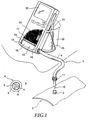
- the wet steam supply device 1 shows a device integrated in a portable hand-held device for detecting the Steam wetness from saturated steam.
- the device is via a wet steam supply device 1 connectable to a threaded connector of a steam line 3.
- the wet steam supply device 1 is designed here as an elastic hose line 4.
- the elastic Hose line 4 comprises an insulation jacket 5 and one accommodated therein Pressure hose 6. Coaxial inside the pressure hose 6 is one Steam line 7 added, which is supported by spacers 8 in the steam line 7 is. There is an intermediate space between the steam line 7 and the pressure hose 6 9 defines the permanent with the steam atmosphere inside the steam line 3 communicates.
- the steam line 7 opens at one end into a probe tube 10 which is in the measuring position protrudes into the steam line 3.
- the hose line 4 has one End of a threaded sleeve 11, by means of which the hose line in sealing Can be attached to the threaded connector 2.
- the wet steam supply device 1 is at its end facing away from the steam line 3 directly connected to a cooling device 12. Inside the cooler 12, the wet steam supplied via the wet steam supply device 1 is cooled and condenses.
- the cooling device 12 is via a cooling fluid supply line 13 and via a cooling fluid drain line 14 into one formed in the handheld device Integrated cooling circuit.
- the cooling device 12 is embedded in an insulating material body 15, an immediate heat exchange between the cooling device 12th and the environment. From this insulating body 15 is a cooling water inlet temperature measuring line 16 and a cooling water outlet temperature measuring line 17 brought out. Both the inlet temperature measuring line 16 and the Output temperature measuring line 17 each include two lead wires, which are inside the cooling device 12 are each connected to a thermocouple. Each The cooling fluid flows directly around the thermocouple (not shown here).
- the input temperature measuring line 16 and the output temperature measuring line 17 are connected to an electronic measuring circuit.
- the analog measured values of the thermocouples acquired via the measuring lines 16 and 17 are each by an A / D converter integrated in the electronic measuring circuit captured by a computer device 19. Inside the handheld device is one device for detection described in more detail below in connection with FIG of the mass flow currently discharged from the cooling device 12. Furthermore, there is a device for detection inside the measuring device of the cooling fluid mass flow conveyed by the cooling device 12 is provided. Based on the detected cooling fluid mass flow, the detected instantaneous Condensate mass flow and that measured via the measuring lines 16 and 17 Cooling fluid inlet temperatures or cooling fluid outlet temperature is in connection with a storage device assigned to the computing device Map of the instantaneous value of the steam wetness calculated. This instantaneous value the steam wetness is displayed on an LCD display surface 20. Furthermore, the The time course of the steam wetness is recorded and stored. The time course of all Measured variables processed by the computer device can also be on the LCD display area 20 are shown.
- the condensate that is continuously deposited in the cooling device 12 is fed via a Branch device branched off from the cooling fluid circuit integrated in the hand-held device and led out of the handheld device via a drain line 21.
- the drain pipe 21 is designed as an elastic hose and opens into a handheld device adjacent collecting vessel 22.
- the collecting vessel shown here has a Capacity of preferably 0.5 liters.
- the collecting vessel 22 is with a Measuring scale 23 provided for reading the condensate volume collected in the collecting vessel.
- the computer device of the handheld device shown here is determined on the basis of the permanently recorded instantaneous condensate mass flow the total amount of condensate discharged through integral formation. Based on the in the condensate volume collected and the by the computer device The integral value determined can easily determine the correctness or the accuracy of the mass flow detection can be checked.
- the measuring circuit used in the hand-held device described above corresponds in its construction essentially the measuring circuit shown in simplified form in FIG.
- the cooling device 12 is completely surrounded by the insulating body 15.
- the cooling device 12 is via the cooling fluid supply line 13 and the cooling fluid outflow line 14 integrated into a cooling fluid circuit arrangement 24.
- a heat exchanger device 25 which includes, for example, a blower device or, as shown here, hermetically connected to an external coolant circuit is.
- the amount of heat removed by the heat exchange device 25 is continuously adjustable in an advantageous manner.
- the heat exchanger device 25 can, for example, the air flow rate one Blower device or the amount of fluid one through the heat exchanger device 25 circulating external fluids can be regulated.
- the regulation of the cooling capacity of the Heat exchanger device 25 is advantageously carried out by means of a computer-controlled Regulatory body.
- a circulation pump 26 For circulating the cooling fluid received in the cooling fluid circuit arrangement 24 a circulation pump 26 is provided.
- the circulation pump 26 can be a hydrostatic or be designed as a hydrodynamic pump.
- the relationship of the cooling fluid flow conveyed by the cooling circuit arrangement 24 to the condensate flow deposited in the cooling device 12 is more advantageous Way in the range of 15: 1.
- the cooling circuit arrangement 24 further comprises one of the circulation pump 26 in the direction of flow sequentially arranged first throttle device 27, its flow resistance is continuously adjustable.
- a second throttle device 28 is immediate provided in the inlet area of the cooling device 12 for further throttling of the cooling fluid flow supplied to the cooling device 12.
- a cooling fluid mass flow detection device 29 is provided for detection of the cooling device 12 supplied cooling fluid mass flow.
- a mixing chamber 30 is formed, in which the Wet steam supply device 1 of the cooling device 12 is supplied with the steam cooling fluid circulating through the cooling fluid circuit assembly 24 contacts. Of the steam coming into contact with the cooling fluid in the mixing chamber 30 is removed by the Cooling fluid cooled and condensed. The condensate that forms is mixed in the cooling fluid continuously conveyed through the mixing chamber 30 and is via the Cooling fluid discharge line 14 discharged from the cooling device 12. From the cooling fluid circuit arrangement 24 fluid is permanently branched off via a fluid branch point. Of the Mass flow of branched fluid corresponds essentially to that in the Cooling device 12 precipitating condensate mass flow. The one about the Fluid mass flow branched off fluid branch point is by means of a control valve device 32 regulated.
- the control valve device 32 is advantageously controlled Way through the computer device provided for the calculation of the steam wetness 19.
- the control strategy for controlling that withdrawn from the cooling fluid circuit arrangement Fluid mass flow advantageously takes into account that at the entrance the cooling device 12 by an inlet temperature sensor 33 and at the outlet the cooling device 12 detected by an output temperature sensor 34 Temperature difference. In the case of small temperature differences, the cooling fluid circuit arrangement 24 withdrawn mass flow increased. This enlarges that flowing in the mixing chamber 30 through the wet steam supply device 1 Steam cooling surface available for cooling.
- the one from the Cooling fluid circuit arrangement 24 withdrawn mass flow can be set to a value be, in which the output temperature sensor 34 a predetermined Maximum temperature value recorded.
- the regulation of the wet steam supply device the amount of steam supplied to the cooling device or the regulation of the cooling device 12 supplied heating power can alternatively to a regulation of the branch mass flow also by controlling the cooling fluid circuit arrangement 24 circulating cooling fluid mass flow take place. This is done more advantageously Way a control of the delivery rate of the circulation pump 26 or a change the setting of the first or second throttle devices 27, 28, likewise as specified by the computer device 19.
- the wet steam supply device 1 comprises similar to the embodiment acc.
- Fig. 1 shows a steam line 7, which forms a gap 9 is arranged in a pressure hose 6. It is via a valve device 39 possible to set a predetermined steam flow in the space 9, wherein the steam discharged from the steam system through the intermediate space 9 via a Outlet line 40 is released to the environment.
- the steam flow in the space 9 is advantageously set to a value sufficient to to compensate for the amount of heat given off to the environment via the pressure hose 6.
- the arrangement made in this way advantageously prevents that a temperature gradient between the inner wall and the outer wall of the steam line 7 and associated with any loss of heat.
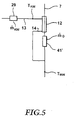
- the computer device 19 processes a cooling water inlet temperature T kw detected via the A / D converter 35, a temperature of the mixture of cooling water and condensate detected via the A / D converter 36, the condensate mass flow detected by the condensate mass flow detection device 41, the via the Cooling fluid mass flow detection device 29 detected cooling fluid mass flow and the vapor pressure detected via the pressure detection device 37.
- the computer device calculates the instantaneous value of the steam wetness or the steam content X.
- the calculated values and, if applicable, all the measured values detected by the aforementioned detection devices can be displayed on the display device 20 ′, which is shown here in simplified form.
- the pressure of the (wet) steam it is also possible based on the temperature of the steam to determine the respective enthalpy values h 'and h' '. Furthermore, it is it is also possible to use the enthalpy values h 'and h' 'on the basis of the fluid branch point to determine branched mass flow, since this with appropriate Design of the measuring arrangement essentially proportional to the pressure of the Steam in the steam line 7 is. In order to measure the dampness of steam as precisely as possible to enable the wet steam supply line 1 in an advantageous manner as possible briefly trained.
- FIG. 3 a piece of pipe is shown, which is used for measuring the steam wetness of steam a corresponding steam line can be screwed in.
- This piece of pipe is from one Isolier Sciences 43 surrounded.
- the to record the heating power of the Steam line 3 flowing steam provided cooling device 12 is the pipe section 42 arranged immediately adjacent.
- the steam vapor determination, Partial steam quantity branched off from the system steam line 3 becomes the cooling device 12 via the steam line 7 and that provided in its entry area Probe tube 10 supplied.
- the cooling device 12 is also in an insulating body 15 embedded.
- To record the cooling water inlet temperature is immediately in the Input area of the cooling device 12 of the input temperature sensor 33 is arranged.
- the output temperature sensor 34 is arranged in the cooling fluid drain line 14.
- the cooling device 12 is outside of the steam atmosphere to be examined, the one to be analyzed Part of the steam via a steam line outside the steam system arranged cooling device is supplied.
- Alternative to these embodiments it is, as shown in simplified form in FIG. 4, also possible to use the cooling device in to introduce the steam atmosphere to be analyzed.
- probe assembly is the cooling device 12 in embedded an insulating body 15 formed into a probe head, from which the probe tube 10 protrudes.
- the mixing chamber 30 formed with the cooling fluid supply line 13 and the cooling fluid drain line 14 communicates.
- the output temperature sensor is in the cooling fluid drain line 14 34 arranged. This output temperature sensor 34 is over two lead wires connected to the computing device (not shown here).
- Inside the Mixing chamber 30 occurs via the probe tube 10 of the mixing chamber Steam in contact with the cooling fluid supplied via the cooling fluid supply line 13 and condenses. The mixture of condensate and supplied cooling fluid is passed through the cooling fluid drain line 14 discharged.
- the temperature of the cooling fluid supplied via the cooling fluid supply line 13 by a temperature sensor arranged outside the steam line 3 is detected, it is advantageously also possible to similar this temperature sensor such as the temperature sensor 34 shown here immediately before the mixing chamber 30 to arrange.
- the mixing chamber integrated here in a probe head 12 in an advantageous manner as the mixing chamber shown in Figure 2 in a corresponding cooling fluid circuit arrangement integrated.
- the probe tube 10 is preferred from a material of low thermal conductivity, in particular one Made of ceramic material.
- the measurement of the coolant flow m Kw flowing to the cooling device 12 is carried out by the cooling fluid mass flow detection device 29.
- the inlet temperature sensor (not shown here) is arranged in the cooling fluid supply line 13 (see FIG. 2, reference number 33).
- the temperature of the mixture of cooling fluid and condensate is detected by the output temperature sensor (cf. FIG. 2, reference number 34), which is also not shown here. It is also possible to measure the condensate temperature and the cooling fluid outlet temperature using two separate temperature sensors.
- a particularly precise detection of the condensate mass flow can be advantageous Can be achieved in that the condensate mass flow detection device provided according to Figure 5 in combination with a Fig.2 to the cooling fluid circuit arrangement connected condensate mass flow measuring device 41 is used.
- the method described above and the one described above Devices are found in accordance with a particular aspect of the present invention a steam sterilization process application.
- This is advantageously in Entry area of a steam line into a sterilization chamber from this steam line or a constant low steam flow from the sterilization chamber (e.g. 1kg / h) branched off and fed to a cooling device, the steam supplied condensed in the cooling device.
- the one that is currently reflected in the cooling device Condensate mass flow as well as that carried along with the branched steam Heating power is recorded and, based on these two measured values, the instantaneous steam content or the instantaneous value of the steam wetness is calculated.
- a warning signal is generated.
- the one flowing into the sterilization chamber Steam permanently with regard to its steam content or with regard to monitors his steam wetness.
- the measured values obtained here can be determined using a Writing device recorded or stored in a storage device and, if necessary, can be read out at a later time.
- the invention is not restricted to the exemplary embodiments described above.
- an organic fluid in particular, as the cooling fluid Alcohol
Landscapes
- Physics & Mathematics (AREA)
- Health & Medical Sciences (AREA)
- Life Sciences & Earth Sciences (AREA)
- Chemical & Material Sciences (AREA)
- Analytical Chemistry (AREA)
- Biochemistry (AREA)
- General Health & Medical Sciences (AREA)
- General Physics & Mathematics (AREA)
- Immunology (AREA)
- Pathology (AREA)
- Investigating Or Analyzing Materials Using Thermal Means (AREA)
Abstract
Description
- cpMw
- spez. Wärmekapazität des Mischwassers
- cpKw
- spez. Wärmekapazität des (kalten) Kühlwassers
- mMw
- Massenstrom des Mischwassers = (md+mKw)
- mKw
- Massenstrom des Kühlwassers
- h''d
- Enthalpie des trockenen gesättigten Dampfes
- h'd
- Enthalpie der siedenden Flüssigkeit
- Qverl.
- Wärmestrom aus dem Kondensator durch Isolationsverluste
- ΔT
- Temperaturdifferenz Tmw - TKw
- md
- Massenstrom des Dampfes
- Fig.1
- eine perspektivische Ansicht einer Vorrichtung zur Messung der Dampfnässe nach der Erfindung,
- Fig.2
- eine Prinzip-Skizze zur Erläuterung des Aufbaus einer bevorzugten Ausführungsform einer Meßanordnung nach der Erfindung,
- Fig.3
- eine Längsschnittansicht durch ein isoliertes Rohrleitungsstück mit diesem unmittelbar benachbart angeordneter Kühleinrichtung,
- Fig.4
- eine vereinfachte Längsschnittansicht durch eine Dampfabzweigeinrichtung mit integrierter Kühleinrichtung,
- Fig.5
- eine vereinfachte Darstellung eines Ausschnitts aus einer Meßschaltungsanordnung gemäß einer weiteren Ausführungsform der Erfindung mit separater Kondensatmengenerfassung,
Claims (38)
- Verfahren zur Bestimmung der Dampfnässe von Naßdampf, bei welchem ein Teil des Naßdampfes einer Kühleinrichtung zugeführt und kondensiert wird, und das sich bildende Kondensat aus der Kühleinrichtung abgeführt wird,
wobei der Massenstrom des abgeführten Kondensates und die mit dem Naßdampf der Kühleinrichtung zufließende Heizleistung erfaßt werden,
und basierend auf dem Kondensat-Massenstrom und der erfaßten Heizleistung der Momentanwert der Dampfnässe ermittelt wird. - Verfahren nach Anspruch 1, dadurch gekennzeichnet, daß der Druck des Naßdampfes erfaßt wird und der Momentanwert der Dampfnässe auf Grundlage des momentanen Druckes des Naß-Dampfes, des momentanen Kondensat-Massenstromes und der momentanen Heizleistung ermittelt wird.
- Verfahren nach Anspruch 1 oder 2, dadurch gekennzeichnet, daß die Temperatur des Naßdampfes erfaßt wird, und der Momentanwert der Dampfnässe auf Grundlage der momentan gemessenen Temperatur, des momentanen Kondensatmassenstromes und der momentanen Heizleistung ermittelt wird.
- Verfahren nach einem der Ansprüche 1 bis 3, dadurch gekennzeichnet, daß die Kühleinrichtung von einem Kühlfluid durchströmt wird und die Ausgangstemperatur des Kühlfluides nach Durchlauf der Kühleinrichtung erfaßt wird.
- Verfahren nach Anspruch 4, dadurch gekennzeichnet, daß die Eingangstemperatur des Kühlfluides vor Eintritt in die Kühleinrichtung erfaßt wird.
- Verfahren nach Anspruch 4 oder 5, dadurch gekennzeichnet, daß die Eingangstemperatur des Kühlfluides auf einem vorbestimmten Wert gehalten wird.
- Verfahren nach einem der Ansprüche 1 bis 6, dadurch gekennzeichnet, daß der der Kühleinrichtung zugeführte Dampf mit dem Kühlfluid in Kontakt tritt.
- Verfahren nach Anspruch 7, dadurch gekennzeichnet, daß das sich in der Kühleinrichtung bildende Kondensat sich in das Kühlfluid mischt.
- Verfahren nach einem der Ansprüche 4 bis 8, dadurch gekennzeichnet, daß das Kühlfluid durch einen Kühlkreislauf zirkuliert, der die Kühleinrichtung und eine Wärmetauscheinrichtung umfaßt, wobei die Wärmetauscheinrichtung das Kühlfluid auf die genannte Eingangstemperatur abkühlt.
- Verfahren nach einem der Ansprüche 7 bis 9, dadurch gekennzeichnet, daß aus dem Kühlkreislauf permanent Fluid abgezweigt wird.
- Verfahren nach Anspruch 10, dadurch gekennzeichnet, daß das Volumen des in dem Kühlkreislauf aufgenommenen Fluides im wesentlichen konstant gehalten wird, und der aus dem Kühlkreislauf abgezweigte Massenstrom im wesentlichen dem in der Kühleinrichtung zeitgleich niedergeschlagenen Kondensat-Massenstrom entspricht.
- Verfahren nach einem der Ansprüche 1 bis 11, dadurch gekennzeichnet, daß der Kondensat-Massenstrom im wesentlichen konstant gehalten wird.
- Verfahren nach wenigstens einem der Ansprüche 1 bis 12, dadurch gekennzeichnet, daß das niedergeschlagene Kondensat, das in dem Kühlkreislauf zirkulierende Fluid, oder das aus dem Kühlkreislauf abgezweigte Fluid auf seinen Gehalt an nicht-kondensierbaren Gasen analysiert wird.
- Verfahren nach Anspruch 13, dadurch gekennzeichnet, daß das Kondensat und/oder das aus dem Kühlkreislauf abgezweigte Fluid durch ein Kapillarrohr geleitet wird, wobei etwaige in dem Kondensat enthaltene Anteile nicht-kondensierbarer Gase in dem Kapillarrohr Gasblasenabschnitte bilden.
- Verfahren nach Anspruch 13 oder 14, dadurch gekennzeichnet, daß der Anteil an nicht-kondensierbaren Gasen bei der Bestimmung des kalorischen Zustandes des Naßdampfes berücksichtigt wird.
- Verfahren nach einem der Ansprüche 1 bis 15, dadurch gekennzeichnet, daß der zur Bestimmung der Dampfnässe abgezweigte Teil des Naßdampfes über eine wärmeisolierte Leitungseinrichtung abgezweigt wird.
- Verfahren nach einem der Ansprüche 1 bis 16, dadurch gekennzeichnet, daß der zur Bestimmung der Dampfnässe abgezweigte Teil des Naßdampfes über eine Leitungseinrichtung abgezweigt wird, die durch den Naßdampf außenseitig beheizt ist.
- Verfahren nach einem der Ansprüche 4 bis 17, dadurch gekennzeichnet, daß der Druck des Kühlfluides in der Kühleinrichtung im wesentlichen gleich dem Druck des Naßdampfes ist.
- Verfahren nach einem der Ansprüche 1 bis 18, dadurch gekennzeichnet, daß die Bestimmung des Momentan-Wertes der Dampfnässe mittels einer Rechnereinrichtung erfolgt, wobei die Rechnereinrichtung den Momentanwert der Dampfnässe auf Grundlage des momentanen Kondensat-Massenstromes, der momentanen Heizleistung sowie der momentanen Temperatur und/oder dem momentanen Druck des Naßdampfes errechnet.
- Vorrichtung zur Bestimmung der Dampfnässe von Naßdampf miteiner Naßdampfzufuhreinrichtung (1), einer Kühleinrichtung (12) zum Kondensieren einer durch die Naßdampfzufuhreinrichtung (1) zugeführten Naßdampfmenge,einer Kondensatableitungseinrichtung (14,31') zum Ableiten des Kondensates aus der Kühleinrichtung,einer Kondensatmengen-Erfassungseinrichtung (41,41') zum Erfassen des Massenstromes des sich bildenden Kondensates,einer Heizleistungserfassungseinrichtung (29,33,34) zur Erfassung der Heizleistung des der Kühleinrichtung (12) zugeführten Naßdampfes undeiner Rechnereinrichtung (19) zur Berechnung des Momentanwertes der Dampfnässe nach Maßgabe des Kondensat-Massenstromes (mD) und der Heizleistung des sich in der Kühleinrichtung (12) niederschlagenden Naßdampfes.
- Vorrichtung nach Anspruch 20, dadurch gekennzeichnet, daß die Kühleinrichtung (12) mit einer Wärmedämmeinrichtung (15) umgeben ist, zur Unterdrückung eines Wärmeüberganges zwischen der Kühleinrichtung (12) und der Umgebung.
- Vorrichtung nach Anspruch 20 oder 21, dadurch gekennzeichnet, daß die Heizleistungserfassungseinrichtung (29,33,34) die Erwärmung eines die Kühleinrichtung (12) durchlaufenden Kühlfluides erfaßt.
- Vorrichtung nach Anspruch 22, dadurch gekennzeichnet, daß die Heizleistungserfassungseinrichtung (29,33,34) eine erste Temperaturmeßstelle (33) zur Erfassung der Eingangstemperatur des Kühlfluides und eine zweite Temperaturmeßstelle (34) zur Erfassung einer Kühlfluidausgangstemperatur aufweist.
- Vorrichtung nach Anspruch 23, dadurch gekennzeichnet, daß die zweite Temperaturmeßstelle (34) innerhalb der die Kühleinrichtung (12) umgebenden Wärmedämmungseinrichtung (15) angeordnet ist.
- Vorrichtung nach einem der Ansprüche 20 bis 24, dadurch gekennzeichnet, daß die Kühleinrichtung (12) in eine Kühlfluid-Kreislaufanordnung (24) eingebunden ist, wobei das Kühlfluid durch die Kühlfluid-Kreislaufanordnung (24) zirkuliert.
- Vorrichtung nach Anspruch 25, dadurch gekennzeichnet, daß die Kühlfluid-Kreislaufanordnung (24) einen Wärmetauscher (25) umfaßt zur Kühlung des in der Kühleinrichtung (12) erwärmten Kühlfluides.
- Vorrichtung nach Anspruch 25 oder 26, dadurch gekennzeichnet, daß in der Kühlfluid-Kreislaufanordnung (24) eine Pumpeinrichtung (26) vorgesehen ist zum Umwälzen des Kühlfluides.
- Vorrichtung nach einem der Ansprüche 20 bis 27, dadurch gekennzeichnet, daß eine Kühlfluidmassenstromerfassungseinrichtung (29) vorgesehen ist, zur Erfassung des der Kühleinrichtung (12) zugeführten Kühlfluid-Massenstromes (m ˙kw).
- Vorrichtung nach einem der Ansprüche 20 bis 28, dadurch gekennzeichnet, daß in der Kühleinrichtung (12) ein Mischbereich (30) vorgesehen ist, und daß der Naßdampf oder dessen Kondensat in dem Mischbereich (30) mit dem Kühlfluid in Kontakt tritt, wobei die Kühleinrichtung (12) einen Abfluß-Fluidweg (14) aufweist zum Ableiten des Kühlfluides gemeinsam mit dem untergemischten Kondensat.
- Vorrichtung nach einem der Ansprüche 25 bis 29, dadurch gekennzeichnet, daß die Kühlfluid-Kreislaufanordnung (24) mit einer Abzweigeinrichtung (31) versehen ist zum Abzweigen von Kühlfluid oder einer Mischung von Kühlfluid und Kondensat aus der Kühlfluidkreislaufanordnung (24).
- Vorrichtung nach Anspruch 30, dadurch gekennzeichnet, daß die Kondensatmengen-Erfassungseinrichtung (41) an die Abzweigeinrichtung (31) angeschlossen ist zur Erfassung des Kondensatmassenstromes anhand des aus dem Kühlfluid-Kreislauf abgezweigten Massenstromes.
- Vorrichtung nach wenigstens einem der Ansprüche 20 bis 31, dadurch gekennzeichnet, daß eine erste A/D-Wandlerein-richtung (35) vorgesehen ist, zur Erzeugung eines die Eingangstemperatur des Kühlfluides repräsentierenden Signales.
- Vorrichtung nach wenigstens einem der Ansprüche 20 bis 32, dadurch gekennzeichnet, daß eine zweite A/D-Wandler-einrichtung (36) vorgesehen ist zur Erzeugung eines die Ausgangstemperatur des Kühlfluides oder der Mischung aus Kühlfluid und Kondensat repräsentierenden Signales.
- Vorrichtung nach wenigstens einem der Ansprüche 20 bis 33, dadurch gekennzeichnet, daß eine dritte A/D-Wandlereinrichtung vorgesehen ist, zur Erzeugung eines den Kondensat-Massenstrom (m ˙D)repräsentierenden Signales.
- Vorrichtung nach einem der Ansprüche 20 bis 46, dadurch gekennzeichnet, daß eine Einstellvorrichtung (32) vorgesehen ist, zur Einstellung des Kondensat-Massenstromes (mD) oder des abgezweigten Kühlfluid/Kondensat-Massenstromes.
- Vorrichtung nach wenigstens einem der Ansprüche 32 bis 34, dadurch gekennzeichnet, daß die genannten A/D-Wandlereinrichtungen an die Rechnereinrichtung (19) angeschlossen sind.
- Vorrichtung nach Anspruch 36, dadurch gekennzeichnet, daß die Rechnereinrichtung (19) eine Speichereinrichtung umfaßt, und daß in der Speichereinrichtung ein Datensatz zur Errechnung der Dampfnässe auf Grundlage der an die Recheneinrichtung angelegten Signale, gespeichert ist.
- Vorrichtung nach Anspruch 37, dadurch gekennzeichnet, daß die Recheneinrichtung mit der Einstelleinrichtung (32) gekoppelt ist, zur Einstellung des abgezweigten Kondensat- oder Kühlfluid/Kondensat-Massenstromes.
Applications Claiming Priority (2)
| Application Number | Priority Date | Filing Date | Title |
|---|---|---|---|
| DE1997129799 DE19729799A1 (de) | 1997-07-11 | 1997-07-11 | Verfahren zur Bestimmung des kalorischen Zustandes von Dampf, insbesondere zur Bestimmung der Dampfnässe von Naßdampf und Vorrichtung hierzu |
| DE19729799 | 1997-07-11 |
Publications (2)
| Publication Number | Publication Date |
|---|---|
| EP0890833A2 true EP0890833A2 (de) | 1999-01-13 |
| EP0890833A3 EP0890833A3 (de) | 2004-02-11 |
Family
ID=7835432
Family Applications (1)
| Application Number | Title | Priority Date | Filing Date |
|---|---|---|---|
| EP98111038A Withdrawn EP0890833A3 (de) | 1997-07-11 | 1998-06-16 | Verfahren zur Bestimmung des kalorischen Zustandes von Dampf, insbesondere zur Bestimmung der Dampfnässe von Nassdampf und Vorrichtung hierzu |
Country Status (2)
| Country | Link |
|---|---|
| EP (1) | EP0890833A3 (de) |
| DE (1) | DE19729799A1 (de) |
Cited By (5)
| Publication number | Priority date | Publication date | Assignee | Title |
|---|---|---|---|---|
| DE202008006925U1 (de) | 2008-05-21 | 2008-07-24 | Technische Universität Dresden | Dampffeuchtemesssystem für Nassdampfströme |
| DE102016100864A1 (de) | 2015-07-31 | 2017-02-02 | Technische Universität Dresden | Verfahren zur Bestimmung des thermischen Zustandspunktes des Dampfs in Dampfturbinen sowie Messanordnung zur Durchführung des Verfahrens |
| US9687578B2 (en) | 2012-09-18 | 2017-06-27 | 3M Innovative Properties Company | Sterilant challenge device |
| US9861718B2 (en) | 2012-09-18 | 2018-01-09 | 3M Innovative Properties Company | Measurement of the NCG concentration in a steam sterilizer |
| CN120278348A (zh) * | 2025-06-10 | 2025-07-08 | 上海叁零肆零科技有限公司 | 蒸汽管网冷凝水分布预测方法、装置、设备及介质 |
Families Citing this family (1)
| Publication number | Priority date | Publication date | Assignee | Title |
|---|---|---|---|---|
| DE19929588A1 (de) * | 1999-06-29 | 2001-01-04 | Bernhard Kammermeier | Verfahren und Vorrichtung zur Bestimmung der Abweichung des thermodynamischen Zustands von Dampf gegenüber seinem Sättigungszustand |
Family Cites Families (4)
| Publication number | Priority date | Publication date | Assignee | Title |
|---|---|---|---|---|
| GB917714A (en) * | 1960-10-12 | 1963-02-06 | Exxon Research Engineering Co | Continuous enthalpy meter |
| DE2856288C2 (de) * | 1978-12-27 | 1986-07-03 | Babcock-BSH AG vormals Büttner-Schilde-Haas AG, 4150 Krefeld | Vorrichtung zur Ermittlung von Enthalpien und aus Enthalpieänderungen ableitbaren Größen von strömungsfähigen Medien |
| FR2585471B1 (fr) * | 1985-07-25 | 1987-11-27 | Ensiaa | Procedes et leurs dispositifs de mise en oeuvre, pour la mesure du taux d'incondensables dans un melange gazeux |
| GB2211619B (en) * | 1987-10-26 | 1991-04-17 | Spirax Sarco Ltd | Measuring dryness fraction |
-
1997
- 1997-07-11 DE DE1997129799 patent/DE19729799A1/de not_active Withdrawn
-
1998
- 1998-06-16 EP EP98111038A patent/EP0890833A3/de not_active Withdrawn
Cited By (6)
| Publication number | Priority date | Publication date | Assignee | Title |
|---|---|---|---|---|
| DE202008006925U1 (de) | 2008-05-21 | 2008-07-24 | Technische Universität Dresden | Dampffeuchtemesssystem für Nassdampfströme |
| US9687578B2 (en) | 2012-09-18 | 2017-06-27 | 3M Innovative Properties Company | Sterilant challenge device |
| US9861718B2 (en) | 2012-09-18 | 2018-01-09 | 3M Innovative Properties Company | Measurement of the NCG concentration in a steam sterilizer |
| DE102016100864A1 (de) | 2015-07-31 | 2017-02-02 | Technische Universität Dresden | Verfahren zur Bestimmung des thermischen Zustandspunktes des Dampfs in Dampfturbinen sowie Messanordnung zur Durchführung des Verfahrens |
| DE102016100864B4 (de) | 2015-07-31 | 2019-09-12 | Technische Universität Dresden | Verfahren zur Bestimmung des thermischen Zustandspunktes des Dampfs in Dampfturbinen sowie Messanordnung zur Durchführung des Verfahrens |
| CN120278348A (zh) * | 2025-06-10 | 2025-07-08 | 上海叁零肆零科技有限公司 | 蒸汽管网冷凝水分布预测方法、装置、设备及介质 |
Also Published As
| Publication number | Publication date |
|---|---|
| DE19729799A1 (de) | 1999-01-14 |
| EP0890833A3 (de) | 2004-02-11 |
Similar Documents
| Publication | Publication Date | Title |
|---|---|---|
| DE69911581T2 (de) | Gasstromkonditionierungsvorrichtung, -system und -verfahren zur benutzung in der teilchenmessung | |
| EP1975582B1 (de) | Kälte- oder Wärmezählereinrichtung zur Ermittlung des Energieverbrauchs in einem Temperierungskreislauf | |
| DE3537192C2 (de) | ||
| DE3605501C2 (de) | ||
| AT410720B (de) | Verfahren zur bestimmung der destillationscharakteristik von flüssigen erdölprodukten durch schnelldestillation im kleinen massstab und vorrichtung zur durchführung eines solchen verfahrens | |
| DE69622712T2 (de) | Verfahren und vorrichtung zur taupunkttemperaturmessung eines feuchten gases | |
| EP2009438B1 (de) | Verfahren und Einrichtung zur Bestimmung des Wassergehalts in Mineralölen und ähnlichen Flüssigkeiten | |
| DE69514509T2 (de) | Vorrichtung zur flussigkeitsanalyse | |
| DE102008043887A1 (de) | Verfahren und Messsystem zur Bestimmung und/oder Überwachung einer Aggregatszustandsänderung eines Messmediums an einem thermischen Durchflussmessgerät | |
| EP1367392A1 (de) | Verfahren und Vorrichtung zur Messung von Blutgasparametern | |
| DE69721581T2 (de) | Feuchtigkeitsanalysator | |
| EP2629082B1 (de) | Vorrichtung zur Detektion eines Partialdrucks und Verfahren zum Betreiben derselben | |
| DE3836496C2 (de) | Verfahren zum Berechnen des Trockenheitsgrades eines Fluids, das über einen Dampfabscheider in einen Prozeß eingeleitet wird, der Rate der dem Prozeß zugeführten Energie sowie Vorrichtung zum Berechnen des Trockenheitsgrades | |
| DE19729799A1 (de) | Verfahren zur Bestimmung des kalorischen Zustandes von Dampf, insbesondere zur Bestimmung der Dampfnässe von Naßdampf und Vorrichtung hierzu | |
| DE3027891A1 (de) | Spektrometer fuer die magnetische kernresonanz | |
| DE10162703A1 (de) | Verfahren und Vorrichtung zur Fehlerausblendung und -Kompensation von durch Gammagraphie hervorgerufenen Störsignalen bei radiometrischen Meßsystemen | |
| EP1636581B9 (de) | Vorrichtung und verfahren zur automatischen berwachung des gebrauchszustandes eines schmierstoffes einer maschine oder eines maschinenteils | |
| DE2258539A1 (de) | Verfahren und messvorrichtung zur differentialmessung | |
| DE602004002755T2 (de) | Einrichtung zur automatisierten kopplung zwischen einem mikrochromatograph und einem massenspektrometer mit temperatureinstellung | |
| EP1387148A2 (de) | Verfahren zum Betrieb einer induktiven Durchflussmesseinrichtung,sowie Durchflussmesseinrichtung selbst | |
| EP0861419B1 (de) | Verfahren und vorrichtung zur simultanen messung eines volumenstroms und wenigstens eines gaspartialdruckes | |
| DE102017219672A1 (de) | Verfahren zum Bestimmen einer Fluidtemperatur eines Fluids sowie Messeinrichtung | |
| DE4126054C2 (de) | Kältemittel-Verbrauchsmeßsystem | |
| DE10332540B3 (de) | Verfahren zur Temperaturmessung sowie Einrichtung zur Durchführung des Verfahrens | |
| DE3900943C1 (en) | Device for determining the thermal transfer between a quenching agent of a quenching device and a metallic workpiece |
Legal Events
| Date | Code | Title | Description |
|---|---|---|---|
| PUAI | Public reference made under article 153(3) epc to a published international application that has entered the european phase |
Free format text: ORIGINAL CODE: 0009012 |
|
| AK | Designated contracting states |
Kind code of ref document: A2 Designated state(s): AT BE CH CY DE DK ES FI FR GB GR IE IT LI LU MC NL PT SE |
|
| AX | Request for extension of the european patent |
Free format text: AL;LT;LV;MK;RO;SI |
|
| PUAL | Search report despatched |
Free format text: ORIGINAL CODE: 0009013 |
|
| AK | Designated contracting states |
Kind code of ref document: A3 Designated state(s): AT BE CH CY DE DK ES FI FR GB GR IE IT LI LU MC NL PT SE |
|
| AX | Request for extension of the european patent |
Extension state: AL LT LV MK RO SI |
|
| AKX | Designation fees paid |
Designated state(s): AT DE GB |
|
| STAA | Information on the status of an ep patent application or granted ep patent |
Free format text: STATUS: THE APPLICATION IS DEEMED TO BE WITHDRAWN |
|
| 18D | Application deemed to be withdrawn |
Effective date: 20040812 |