EP0892853B1 - Compartmentalization method for screening microorganisms - Google Patents
Compartmentalization method for screening microorganisms Download PDFInfo
- Publication number
- EP0892853B1 EP0892853B1 EP97908668A EP97908668A EP0892853B1 EP 0892853 B1 EP0892853 B1 EP 0892853B1 EP 97908668 A EP97908668 A EP 97908668A EP 97908668 A EP97908668 A EP 97908668A EP 0892853 B1 EP0892853 B1 EP 0892853B1
- Authority
- EP
- European Patent Office
- Prior art keywords
- microorganisms
- growth
- compartments
- selectable characteristic
- growth medium
- Prior art date
- Legal status (The legal status is an assumption and is not a legal conclusion. Google has not performed a legal analysis and makes no representation as to the accuracy of the status listed.)
- Expired - Lifetime
Links
Images

Classifications
-
- C—CHEMISTRY; METALLURGY
- C12—BIOCHEMISTRY; BEER; SPIRITS; WINE; VINEGAR; MICROBIOLOGY; ENZYMOLOGY; MUTATION OR GENETIC ENGINEERING
- C12Q—MEASURING OR TESTING PROCESSES INVOLVING ENZYMES, NUCLEIC ACIDS OR MICROORGANISMS; COMPOSITIONS OR TEST PAPERS THEREFOR; PROCESSES OF PREPARING SUCH COMPOSITIONS; CONDITION-RESPONSIVE CONTROL IN MICROBIOLOGICAL OR ENZYMOLOGICAL PROCESSES
- C12Q1/00—Measuring or testing processes involving enzymes, nucleic acids or microorganisms; Compositions therefor; Processes of preparing such compositions
- C12Q1/02—Measuring or testing processes involving enzymes, nucleic acids or microorganisms; Compositions therefor; Processes of preparing such compositions involving viable microorganisms
- C12Q1/04—Determining presence or kind of microorganism; Use of selective media for testing antibiotics or bacteriocides; Compositions containing a chemical indicator therefor
- C12Q1/06—Quantitative determination
- C12Q1/08—Quantitative determination using multifield media
-
- C—CHEMISTRY; METALLURGY
- C12—BIOCHEMISTRY; BEER; SPIRITS; WINE; VINEGAR; MICROBIOLOGY; ENZYMOLOGY; MUTATION OR GENETIC ENGINEERING
- C12Q—MEASURING OR TESTING PROCESSES INVOLVING ENZYMES, NUCLEIC ACIDS OR MICROORGANISMS; COMPOSITIONS OR TEST PAPERS THEREFOR; PROCESSES OF PREPARING SUCH COMPOSITIONS; CONDITION-RESPONSIVE CONTROL IN MICROBIOLOGICAL OR ENZYMOLOGICAL PROCESSES
- C12Q1/00—Measuring or testing processes involving enzymes, nucleic acids or microorganisms; Compositions therefor; Processes of preparing such compositions
- C12Q1/02—Measuring or testing processes involving enzymes, nucleic acids or microorganisms; Compositions therefor; Processes of preparing such compositions involving viable microorganisms
- C12Q1/18—Testing for antimicrobial activity of a material
- C12Q1/20—Testing for antimicrobial activity of a material using multifield media
Definitions
- the present invention is directed to improvements in screening methods used to detect, amplify and select microorganisms subjected to mutagenesis which thereby develop desirable characteristics differing from the microorganisms prior to mutagenesis. More particularly, the present invention is directed to novel screening methods which enhance the growth of certain desired mutants in a pool of organisms which has been subjected to random mutagenesis in such a manner to permit screening of a large number of potential mutants efficiently and effectively.
- a common selection technique involves growing the mutant organisms under conditions such that only desired mutants exhibit growth.
- One such technique is to plate the mutant organisms on media which limits growth to microorganisms having a specific (mutant) characteristic. For example, media which includes a toxin will force selection of organisms having resistance to the toxin. Similarly, media which includes a substrate for which it is necessary that the mutant organisms be able to metabolize that substrate for survival will limit growth to those organisms capable of producing the appropriate enzymes. Further, the mutant organisms can be subjected to rigorous conditions to determine if, for example, the mutant organisms are better suited for surviving at high temperature or pH.
- phage display An alternative technique which was developed to screen mutant proteins is known as phage display. This technique is valuable in isolating randomly mutagenized DNA encoding proteins having a specific desired binding activity.
- a lambda phage or equivalent is produced which contains a mutagenized gene encoding a specific binding protein.
- the phage is then subjected to a ligand binding procedure, e.g., column affinity purification, wherein the ligand is selected based on a desired binding capability of the mutant binding protein and can thus selectively bind to and trap phage displaying the desired mutant binding protein on its surface. Subsequent to isolation, the trapped phage can be used to infect appropriate bacterial hosts to produce larger quantities of protein.
- phage display is application as a tool for isolating proteases having new protease specificities, Corey et al., Gene, vol. 128, pp. 129-134 (1993), wherein phage display was utilized to identify mutant trypsin molecules which comprised a fusion product of the trypsin molecule and M13 coat proteins through capture by immobilized ecotin as a ligand.
- This problem is amplified where less stringent selection criteria are used to detect certain types of mutations, for example, improved catalytic activity, temperature or pH resistance in an enzyme.
- One example of such a selection technique involves use of media which includes a necessary cellular nutrient, access to which requires a specific mutation in an enzyme. In such instances, it is often advantageous to repeatedly mutate a population of microorganisms, screening between each mutational event to select for incrementally improved mutants. Because the mutants will have varying degrees of viability on the media as opposed to absolute viability or not, it becomes necessary to screen a much larger quantity of organisms thus adding to the procedural burden on the researcher.
- a method of screening microorganisms having a selectable characteristic comprising: (a) providing a growth chamber comprising inert carrier beads, a bundle or a plurality of hollow tubes, a dispersion of the inoculated liquid growth medium in a non-miscible fluid, encapsulated liquid growth medium in a solid matrix, or liposomes, forming a plurality of discrete compartments, wherein the inoculated growth medium has a concentration such that upon random dispersion of the microorganisms at least 25 % of said compartments contain only one microorganism, whereby the diffusion of metabolites or nutrients between said compartments within said growth chamber is minimized or inhibited; (b) preparing a liquid growth medium which, by its lack of or addition of one or more metabolites or nutrients, facilitates growth of microorganisms exhibiting said selectable characteristic from microorganisms which do not exhibit said selectable characteristic; (c) inoculating said growth medium with a plurality of microorganis
- Selectable characteristic means an identifiable characteristic of a microorganism which can be used as the basis for screening a specific microorganism or group of microorganisms from a larger pool which includes microorganisms which do not exhibit the selectable characteristic. For example, it is well known to use such selectable characteristics as antibiotic resistance, a necessary enzymatic activity for production of a nutrient or other compound necessary for cell growth or division. However, any characteristic which is capable of providing a basis for differentiating between a mutant organism and a non-mutant precursor organism will be an acceptable selectable characteristic. In a preferred embodiment, the selectable characteristic is the ability of a microorganism to produce an enzyme exhibiting altered performance or stability characteristics.
- Such altered performance or stability characteristics may comprise altered substrate specificity, altered specific activity, altered temperature/activity profile, altered salt or ion requirement or any combination of these characteristics.
- the specific enzyme subjected to the method of the invention may be any hydrolase, oxidoreductase, transferase, lyase or ligase.
- the enzyme comprises a protease, a lipase, an amylase, a galactosidase, a cellulase, a lactase, a polygalacturonase, a glucoamylase, an esterase, a hemicellulase, a peroxidase, an oxidase, a laccase, a glucose oxidase, a ligninase, an NADH reductase or a 2,5 DKG reductase.
- a protease a lipase, an amylase, a galactosidase, a cellulase, a lactase, a polygalacturonase, a glucoamylase, an esterase, a hemicellulase, a peroxidase, an oxidase, a laccase, a glucose oxidase,
- “Growth chamber” means a vessel or environment which is capable of supporting the growth or maintenance of microorganisms.
- test tubes, well plates, shake flasks and any other well known culturing vessel is considered a growth chamber.
- a growth chamber is capable of forming a plurality of discrete compartments, each compartment capable of maintaining or allowing the growth of microorganisms.
- the discrete compartments, or compartments should be of such a nature to minimize diffusion of nutrients or cell products between two or more compartments.
- each discrete compartment be separated by a barrier to the diffusion of metabolites or nutrients and enzymes; the barrier being composed of any combination of air, a solid material and/or a liquid.
- the growth chamber will facilitate the development of at least about 5,000 compartments. More preferably, the growth chamber will facilitate the development of at least about 50,000 compartments, and most preferably greater than about 100,000 compartments. While there is no upper limit necessary for the number of compartments, a preferred growth chamber should hold less than about 1,000,000 compartments to permit ease of analysis.
- the size of the compartments will generally not be greater than 1 ml.
- the compartment size is between about 0.005 ⁇ l and about 50.0 ⁇ l, more preferably between about 0.01 ⁇ l and about 10.0 ⁇ l, and most preferably between about 0.05 ⁇ l and about 1.0 ⁇ l.
- the concentration of microorganisms in the media has to be such that, upon random dispersion of the pool of mutant microorganisms throughout the growth chamber, at least 25% of the compartments contain only one microorganism.
- at least 50% of the compartments contain only one organisms and more preferably at least 75% of the compartments contain only one microorganism.
- the concentration of microorganisms upon fandom dispersion is such that only one microorganism is present in any one compartment.
- suitable growth chambers include: a column filled with inert carrier beads (i.e., glass or polymer based beads) which trap "pools" of inoculated media at the surface contact points between the beads; the use of a bundle or plurality of hollow tubes which are capable of supporting small amounts of inoculated media separated by air as discrete compartments; dispersion of the inoculated growth medium in a non-miscible fluid so as to form discrete drops of inoculated medium throughout the non-miscible fluid, preferably then solidifying the non-miscible fluid to prevent exchange of nutrients or cell products between droplets of media; encapsulation of medium in wax or other substances capable of solidifying to form a matrix or barrier impermeable to mingling of certain nutrients between droplets or compartments of inoculated media; or liposomes.
- inert carrier beads i.e., glass or polymer based beads
- a preferred method of producing a growth chamber using beads comprises filling a column with beads and allowing a small amount of inoculated medium to penetrate the bead matrices completely, preferably under vacuum.
- the dilution of the inoculum should be such that a significant proportion of the discrete media droplets trapped at the contact points of the beads will contain only one microorganism.
- the beads may be made of any suitably microbially inert substance, such as acrylic, silanized glass, resin, nylon, polypropylene, polyethylene, polystyrene, teflon or any other art recognized substance having similarly microbially inert properties.
- glass or acrylic beads are used, most preferably silanized glass.
- the beads may be of any size which is suitable for the formation of contacts between the beads to trap media.
- the size of the beads is from 0.25 mm to 5 mm preferably from 0.75 mm to 3.0 mm and most preferably from 1.0 mm to 2.0 mm. In this manner, it is possible to form a column having in the range of from 10,000 to 100,000,000 pools per liter of column volume. More preferably, between 100,000 and 5,000,000 pools are trapped per liter of column volume and most preferably between 250,000 and 1,000,000 pools are trapped per liter of column volume.
- a growth chamber consists of a bundle of hollow fibers having porous or non-porous walls.
- common oxygenators are suitable for such purposes.
- the oxygenator is filled with inoculated media.
- the fibers are surrounded by air which blocks diffusion of most compounds between the individual fibers.
- the inoculation density of the medium in chosen such that cells are far apart within the fibers in order to reduce or prevent diffusion. Diffusion of metabolites or enzymes within the fibers can be further reduced by increasing the viscosity of the medium.
- a single fiber of about six inches may have from 10-40 individual media "compartments".
- the tubes When using a hollow tube arrangement, preferably the tubes have a diameter of from about 0.05 to about 3mm more preferably from about 0.1 to about 0.5, and most preferably from about 0.2 to about 0.3.
- concentration of the organisms is such that they are about 10 mm apart in the fibers, thus allowing in general about 1-3 days before essential nutrients will diffuse the full 10 mm distance.
- “Growth medium” means any combination of nutrients, salts, buffers, and other components recognized as beneficial to the growth of the specific microorganism being subjected to directed evolution.
- the growth medium should reflect that strategy by either lacking or having added thereto the specific compound which enables selection based on the selectable characteristic.
- the selectable characteristic involves the production of a mutant protease which has the ability to act under certain temperature or environmental conditions
- the growth media may include a nitrogen source which requires proteolytic activity for access by the microorganism. In this manner, microorganisms which do not have the appropriate proteolytic activity after mutation will not grow due to the lack of an available nitrogen source.
- “Mutational event” means any method for inducing the mutation of DNA in an organism.
- Art recognized means of effecting mutations in DNA such as exposure to x-ray, gamma-ray, ultraviolet light, chemical mutagens such as ethyl methylsulfonate N-methyl-N'-nitro-N-nitroso guanidine are all acceptable means for the present invention of producing a mutational event.
- Mutations may also be introduced using enzymatic methods such as PCR or by transformation of the DNA into organisms which possess a high mutation frequency and subsequent extraction of the DNA.
- the generalized design of an enrichment-based selection system calls for multiple rounds of selection: after cells have grown to an optimal density - the density at which the faster-growing variant is most enriched with respect to the population - the cells are removed from the growth chamber and a random sample is diluted, optionally mutagenized again, and introduced into a growth chamber for another round of enrichment. After a number of rounds, a consistently fast grower with respect to the population should be significantly enriched.
- the stringency of the selection criteria will depend on the characteristic selected for. For example, where it is merely required that an enzyme producing microorganism out-compete a non-enzyme producing microorganism, significant selection may be obtained in only one round. With respect to other characteristics, however, it may be necessary to use multiple rounds of selection. In such circumstances, it will be advantageous to utilize a growth chamber which has a relatively large number of compartments to facilitate screening a large number of organisms.
- the method of screening microorganisms having a selectable characteristic is used to differentiate mutant organisms having a specific selectable characteristic from mutant and/or non-mutant organisms which do not exhibit the specific selectable characteristic.
- the method of the invention according to claim 15 requires that a growth chamber be provided which is capable of forming a plurality of discrete compartments.
- the compartments will comprise a barrier which inhibits the diffusion of metabolites or nutrients between the compartments within the growth chamber which barrier can be of a solid, liquid or gaseous nature.
- the compartments then separate a growth medium which contains a pool of mutagenized microorganisms.
- the growth medium may be inoculated with already mutagenized microorganisms prior to placing into the growth chamber, or organisms may be placed in the growth chamber and subsequently subjected to a mutational event.
- the growth medium by its lack of or addition of one or more metabolites or nutrients, preferentially facilitates growth of microorganisms exhibiting the selectable characteristic from microorganisms which do not exhibit the selectable characteristic.
- the inoculated growth medium should be placed into the growth chamber so as to randomly disperse the microorganisms among the discrete compartments in the growth chamber. It is important that the dilution of microorganisms in the inoculated growth medium be monitored to ensure that the concentration is not so great to result in too many microorganisms being placed in compartments and aiso not too small so as to result in inefficient screening. In any event, upon random dispersion of the microorganisms among the various compartments in the growth chamber, significant portion, i.e., at least 25 %, of the compartments contains only one organism.
- each microorganism When randomly dispersed in this way, each microorganism, after incubating for a suitable time and under suitable conditions, will grow only in response to its ability to exhibit the selectable characteristic. Incubation conditions will vary depending on the specific microorganism being grown, the effect of the conditions on the detection of the selectable characteristic, the size of the compartment and other factors which will be easily ascertained in accordance with routine practices.
- Microorganisms which do hot exhibit the selectable characteristic will suffer a detectable lack of growth compared to microorganisms having the selectable characteristic. This disparity of growth will ensure that when the microorganisms are taken from the compartments, the portion of microorganisms which exhibit the selectable characteristic are significantly enriched in the total population.
- the contents of the compartments are combined and the resulting pool analyzed for the ability to exhibit the selectable characteristic. It will often be advantageous to subject the population again to mutagenesis and screening as described herein to even more significantly enhance the proportion of microorganisms in the pool which have the selectable characteristic.
- Glass balls of various sizes ranging from 30 microns to 2 millimeters were obtained from Jaygo, Inc. (NJ). 1/8 inch nylon, polypropylene, polyethylene, and polystyrene balls were obtained from United States Plastic Co. (Lima, OH). 1/8" teflon balls were obtained from Cole-Parmer (Niles, IL). 1/16" acrylic balls were obtained from Salem Specialty Ball Co. (W. Simsbury, CT) and 1/16" teflon balls were obtained from Bal-Tec, Inc. (Los Angeles, CA).
- Spizizen's Minimal Medium SMM at half strertgth (0.5X SMM) with 2.5 grams/liter of bovine serum albumin (BSA) (Sigma, St. Louis, MO) as the sole added nitrogen source:
- BSA bovine serum albumin
- Diffusion in a system of 1/8" balls of various materials was performed similarly except that the balls were placed into 2 ml glass columns, the dye was delivered to the middle of the bead matrix and diffusion was determined qualitatively by macro- and microscopic observation.
- balls of glass, nylon, polyethylene, polystyrene, acrylic, silanized glass, polypropylene and teflon were loaded into 2 ml glass columns and diffusion was similarly studied except that dye was injected in the middle of the ball matrix and qualititative observations were made by viewing under a dissecting microscope.
- the desired behavior of the medium is to form micropools of uniform size only at ball contacts.
- pooling When larger pools form over the surface of several balls (“pooling") the size distribution is greater and the system is more difficult to control: some cells may be trapped in small pools and others in larger pools, which may bias growth. Similarly, tiny beadlets on the surface of balls away from the contacts (“beading”) leads to a greater size distribution.
- Table 1 Material Diffusion Pooling Beading Crit. Surface Tension Glass ++ - 47 Nylon +++ ++ - 46 Polyethylene ++ - (33) Polystyrene ++ + Acrylic - - N.F. Silanized Glass - ++ + Polypropylene - ++ +++ 31 Teflon - + + 18.5
- Polyethylene used was linear polyethylene.
- Critical surface tension reported for polyethylene was taken from a reference that does not indicate the type.
- the primary silane component of the siliconizing reagent, Aquasil (Pierce, Rockford, IL) is an octadecyltrialkoxysilane CH 3 (CH 2 ) 16 CH 2 Si(OR) 3 and because of its hydrophobicity can be reasonably expected to have a low critical surface tension, providing it completely covers the glass ball surface.
- Diffusion was related to the critical surface tension of the ball material.
- the critical surface tension of a material is defined as the surface tension of a liquid below which the surface of the material becomes wet.
- Those materials with very low critical surface tensions e.g. teflon, polypropylene, silanized glass
- teflon, polypropylene, silanized glass were effective in completely isolating medium in small droplets, completely preventing diffusion.
- These hydrophobic materials however, also tended to exhibit greater beading.
- acrylic showed the most ideal properties: medium was confined to ball contacts with no significant diffusion, pooling or beading.
- Bacillus subtilis strains were used to test the hypothesis that diffusion control can be used to select for strains having positive characteristics over other negative strains for a certain enzymatic activity. Both strains were deleted for their two major proteases. However, one of the strains was subsequently transformed with a plasmid carrying the gene for GG36 subtilisin from Bacillus lentus. The protease-producing strain ("positive" strain) and the control strain ("negative" strain) were each grown separately to log phase in 0.5X SMM with NH 4 Cl as the nitrogen source. Each culture was washed three times with nitrogen-free 0.5X SMM and resuspended in nitrogen-free 0.5X SMM.
- strains were mixed in a ratio of 30:70 favoring non-protease producers over protease producers.
- the mixed inoculum was diluted and applied to a series of columns of glass balls. The remaining inoculum was placed into a 50 ml plastic conical tube and incubated at 37°C on a rotary shaker at 300 rpms. Additionally, both strains were prepared at the approximate density expected in the columns when cells are in micropools of medium, and grown separately in tubes at 37°C and 300 rpms.
- a column was removed from the incubator.
- the plug seals were removed, the bottom of the column was placed into a 15 ml plastic conical tube, 1 ml of 0.5X SMM + NH 4 Cl was added at the top of the column, and the column was spun in a swinging rotor bucket for approximately one minute, resulting in the collection of approx. 1 ml of medium in the 15 ml conical tube.
- 10-fold serial dilutions were made of the collected medium and plated onto agar medium containing 1.6% skim milk and incubated at 37°C for approximately 15 hours. The number of colonies producing a clearing zone, indicating proteolysis of the skim milk substrate, was counted as well as the number without clearing zones.
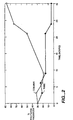
- the percentage of the protease-positive strain in the columns decreased from the start of the experiment to 9 hours from 30% to 20%, and then steadily increased to approximately 90% at 30 hours.
- the positive strain was significantly enriched in this system.
- the same inoculum when grown in a tube favored growth of the protease-negative strain, as the percentage of positives decreased over time from 30% to 5% at 30 hours.
- the two strains of Bacillus subtilis as described above in Example 1 were mixed in a ratio of 20:80 (protease positive:protease negative) in a MOPS 1A medium containing 2.5 g/l BSA, 100 ⁇ M NH 4 Cl and 3% (w/v) hydroxy-ethyl cellulose (Aldrich, Milwaukee, WI).
- the mixture was inoculated into 3 different Oxy-1 hollow fiber oxygenators (Unisyn Technologies, Inc. Hopkinton, MA) as well as in a test tube and incubated at 37°C for varying lengths of time.
- the oxygenators had 1800 hollow fibers with an average fiber volume of 0.004 ml. Based on the concentration of the inoculum, an average number of 3-8 colonies per fiber was expected.
- the hollow fibers prevent the diffusion of nutrients or hydrolysis products laterally while the use of the viscous medium described above ensured that diffusion along the tube length was minimized.
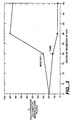
- the tube and oxygenators were placed on a rolling wheel to provide oxygenation. At 20, 30 and 45 hours an aliquot was removed from the tube and an oxygenator was removed from incubation. The medium was removed from the oxygenator and plated onto skim milk containing agar plates. As shown in Figure 3, the percentage of colonies from the oxygenators and from tubes that produced clearing zones versus time was markedly different as incubation proceeded. For example, in a test tube, at 30-45 hours the percentage of protease producing colonies was around 5% whereas in the oxygenator the percentage of protease producing colonies was around 85-90%.
Landscapes
- Chemical & Material Sciences (AREA)
- Life Sciences & Earth Sciences (AREA)
- Organic Chemistry (AREA)
- Health & Medical Sciences (AREA)
- Engineering & Computer Science (AREA)
- Zoology (AREA)
- Wood Science & Technology (AREA)
- Proteomics, Peptides & Aminoacids (AREA)
- Molecular Biology (AREA)
- Toxicology (AREA)
- Immunology (AREA)
- Microbiology (AREA)
- Biophysics (AREA)
- Analytical Chemistry (AREA)
- Physics & Mathematics (AREA)
- Biotechnology (AREA)
- Biochemistry (AREA)
- Bioinformatics & Cheminformatics (AREA)
- General Engineering & Computer Science (AREA)
- General Health & Medical Sciences (AREA)
- Genetics & Genomics (AREA)
- Micro-Organisms Or Cultivation Processes Thereof (AREA)
- Measuring Or Testing Involving Enzymes Or Micro-Organisms (AREA)
- Apparatus Associated With Microorganisms And Enzymes (AREA)
Priority Applications (1)
| Application Number | Priority Date | Filing Date | Title |
|---|---|---|---|
| DK97908668T DK0892853T3 (da) | 1996-03-29 | 1997-02-17 | Rumopdelingsfremgangsmåde til screening af mikroorganismer |
Applications Claiming Priority (3)
| Application Number | Priority Date | Filing Date | Title |
|---|---|---|---|
| US625488 | 1984-06-28 | ||
| US08/625,488 US6001586A (en) | 1996-03-29 | 1996-03-29 | Compartmentalization method for screening microorganisms |
| PCT/US1997/002527 WO1997037036A1 (en) | 1996-03-29 | 1997-02-17 | Compartmentalization method for screening microorganisms |
Publications (2)
| Publication Number | Publication Date |
|---|---|
| EP0892853A1 EP0892853A1 (en) | 1999-01-27 |
| EP0892853B1 true EP0892853B1 (en) | 2004-10-06 |
Family
ID=24506321
Family Applications (1)
| Application Number | Title | Priority Date | Filing Date |
|---|---|---|---|
| EP97908668A Expired - Lifetime EP0892853B1 (en) | 1996-03-29 | 1997-02-17 | Compartmentalization method for screening microorganisms |
Country Status (8)
| Country | Link |
|---|---|
| US (1) | US6001586A (da) |
| EP (1) | EP0892853B1 (da) |
| AT (1) | ATE278802T1 (da) |
| AU (1) | AU731935B2 (da) |
| CA (1) | CA2247351C (da) |
| DE (1) | DE69731080T2 (da) |
| DK (1) | DK0892853T3 (da) |
| WO (1) | WO1997037036A1 (da) |
Families Citing this family (39)
| Publication number | Priority date | Publication date | Assignee | Title |
|---|---|---|---|---|
| US6936289B2 (en) | 1995-06-07 | 2005-08-30 | Danisco A/S | Method of improving the properties of a flour dough, a flour dough improving composition and improved food products |
| US6391578B2 (en) | 1997-04-09 | 2002-05-21 | 3M Innovative Properties Company | Method and devices for partitioning biological sample liquids into microvolumes |
| US6696286B1 (en) | 1997-04-09 | 2004-02-24 | 3M Innovative Properties Company | Method and devices for detecting and enumerating microorganisms |
| ES2168236T3 (es) | 1997-04-09 | 2005-04-16 | Danisco A/S | Utilizacion de lipasa para mejorar las pastas de pan y los productos de panaderia. |
| JP4217378B2 (ja) * | 1997-08-01 | 2009-01-28 | スリーエム カンパニー | 微生物の検知および計数の方法および器具 |
| US6893877B2 (en) | 1998-01-12 | 2005-05-17 | Massachusetts Institute Of Technology | Methods for screening substances in a microwell array |
| ATE477850T1 (de) * | 1998-01-12 | 2010-09-15 | Massachusetts Inst Technology | Vorrichtung zur mikrotestdurchführung |
| ATE231186T1 (de) | 1998-07-21 | 2003-02-15 | Danisco | Lebensmittel |
| US6723504B1 (en) | 1998-10-28 | 2004-04-20 | Novozymes A/S | Method for generating a gene library |
| US6174699B1 (en) | 1999-03-09 | 2001-01-16 | 3M Innovative Properties Company | Disc assay device with inoculation pad and methods of use |
| AU756982B2 (en) | 1999-03-19 | 2003-01-30 | Life Technologies Corporation | Multi-through hole testing plate for high throughput screening |
| GB9929808D0 (en) * | 1999-12-16 | 2000-02-09 | Carr Anthony H | Microbial growth variations |
| US20020151040A1 (en) | 2000-02-18 | 2002-10-17 | Matthew O' Keefe | Apparatus and methods for parallel processing of microvolume liquid reactions |
| US6248541B1 (en) * | 2000-04-21 | 2001-06-19 | Genencor International, Inc. | Screening under nutrient limited conditions |
| BR0209154A (pt) | 2001-05-18 | 2004-07-20 | Danisco | Processo de preparação de uma massa com uma enzima |
| US20030059866A1 (en) * | 2001-09-26 | 2003-03-27 | Kim Lewis | Isolation and cultivation of microorganisms from natural environments and drug discovery based thereon |
| US7011957B2 (en) | 2001-09-26 | 2006-03-14 | Northeastern University | Isolation and cultivation of microorganisms from natural environments and drug discovery based thereon |
| US20040137547A1 (en) * | 2001-12-28 | 2004-07-15 | Medtronic Minimed, Inc. | Method for formulating a glucose oxidase enzyme with a desired property or properties and a glucose oxidase enzyme with the desired property |
| AU2002346709A1 (en) * | 2002-01-04 | 2003-07-30 | The Procter And Gamble Company | Cellulose-active microorganisms |
| US8277753B2 (en) | 2002-08-23 | 2012-10-02 | Life Technologies Corporation | Microfluidic transfer pin |
| AU2003302264A1 (en) | 2002-12-20 | 2004-09-09 | Biotrove, Inc. | Assay apparatus and method using microfluidic arrays |
| US7955814B2 (en) | 2003-01-17 | 2011-06-07 | Danisco A/S | Method |
| US20050196766A1 (en) | 2003-12-24 | 2005-09-08 | Soe Jorn B. | Proteins |
| DE602004030000D1 (de) | 2003-01-17 | 2010-12-23 | Danisco | Verfahren zur in-situ-herstellung eines emulgators in einem nahrungsmittel |
| US20050221357A1 (en) | 2003-09-19 | 2005-10-06 | Mark Shannon | Normalization of gene expression data |
| US7417726B2 (en) | 2003-09-19 | 2008-08-26 | Applied Biosystems Inc. | Normalization of data using controls |
| GB0716126D0 (en) | 2007-08-17 | 2007-09-26 | Danisco | Process |
| US7718408B2 (en) | 2003-12-24 | 2010-05-18 | Danisco A/S | Method |
| WO2008090395A1 (en) | 2007-01-25 | 2008-07-31 | Danisco A/S | Production of a lipid acyltransferase from transformed bacillus licheniformis cells |
| US7906307B2 (en) | 2003-12-24 | 2011-03-15 | Danisco A/S | Variant lipid acyltransferases and methods of making |
| EP1735097B1 (en) | 2004-03-12 | 2016-11-30 | Life Technologies Corporation | Nanoliter array loading |
| GB0405637D0 (en) | 2004-03-12 | 2004-04-21 | Danisco | Protein |
| WO2005116271A2 (en) * | 2004-05-25 | 2005-12-08 | The Trustees Of Dartmouth College | Selection of microorganisms with growth dependent upon extracytoplasmic enzymes |
| CN101052702B (zh) | 2004-07-16 | 2013-01-09 | 杜邦营养生物科学有限公司 | 脂肪分解酶及其在食品工业中的应用 |
| FR2927090A1 (fr) * | 2008-01-31 | 2009-08-07 | Julien Sylvestre | Selection en masse de cellules exprimant des enzymes extracellulaires dans un milieu selectif compartimente |
| FR3003269A1 (fr) * | 2013-03-12 | 2014-09-19 | Julien Sylvestre | Methode de culture et de selection de microorganismes et installation de mise en oeuvre |
| US20170080426A1 (en) * | 2014-05-14 | 2017-03-23 | University Of Limerick | Device and method for testing compounds on living cells |
| US20240271178A1 (en) * | 2020-02-21 | 2024-08-15 | Eastern Kentucky University | Method for detection of escherichia coli and antibiotic resistant bacteria in water |
| WO2022235284A1 (en) * | 2021-05-05 | 2022-11-10 | The University Of Chicago | Rapid enumeration of microorganisms |
Family Cites Families (7)
| Publication number | Priority date | Publication date | Assignee | Title |
|---|---|---|---|---|
| US34606A (en) * | 1862-03-04 | Improvement in machines for combing cotton | ||
| US3902972A (en) * | 1973-02-02 | 1975-09-02 | Corning Glass Works | Modified petri dish for automatic inoculation |
| US3960658A (en) * | 1974-09-23 | 1976-06-01 | Centaur Chemical Co. | Multi-media petri dish |
| JPS6016320Y2 (ja) * | 1981-03-18 | 1985-05-21 | 栄研化学株式会社 | 細菌同定用トレー |
| US4760025A (en) | 1984-05-29 | 1988-07-26 | Genencor, Inc. | Modified enzymes and methods for making same |
| JPS6192561A (ja) * | 1984-10-09 | 1986-05-10 | Kobayashi Seiyaku Kk | 細菌培養用シヤ−レ |
| US5480805A (en) * | 1992-08-12 | 1996-01-02 | Amoco Corporation | Composition for modulating sterols in yeast |
-
1996
- 1996-03-29 US US08/625,488 patent/US6001586A/en not_active Expired - Lifetime
-
1997
- 1997-02-17 WO PCT/US1997/002527 patent/WO1997037036A1/en not_active Ceased
- 1997-02-17 AT AT97908668T patent/ATE278802T1/de not_active IP Right Cessation
- 1997-02-17 DK DK97908668T patent/DK0892853T3/da active
- 1997-02-17 CA CA2247351A patent/CA2247351C/en not_active Expired - Lifetime
- 1997-02-17 DE DE69731080T patent/DE69731080T2/de not_active Expired - Lifetime
- 1997-02-17 AU AU20520/97A patent/AU731935B2/en not_active Ceased
- 1997-02-17 EP EP97908668A patent/EP0892853B1/en not_active Expired - Lifetime
Also Published As
| Publication number | Publication date |
|---|---|
| DE69731080D1 (de) | 2004-11-11 |
| EP0892853A1 (en) | 1999-01-27 |
| DK0892853T3 (da) | 2005-01-31 |
| AU2052097A (en) | 1997-10-22 |
| ATE278802T1 (de) | 2004-10-15 |
| AU731935B2 (en) | 2001-04-05 |
| DE69731080T2 (de) | 2006-02-23 |
| CA2247351C (en) | 2010-09-21 |
| CA2247351A1 (en) | 1997-10-09 |
| WO1997037036A1 (en) | 1997-10-09 |
| US6001586A (en) | 1999-12-14 |
Similar Documents
| Publication | Publication Date | Title |
|---|---|---|
| EP0892853B1 (en) | Compartmentalization method for screening microorganisms | |
| US20110244510A1 (en) | Filtration method for detecting microbial contamination | |
| AU693993B2 (en) | A rapid microbiological test for the detection of antibacterial compounds | |
| US4673638A (en) | Method for detection and isolation of a microorganism | |
| US5264344A (en) | Method for culturing of cells on a membrane | |
| Draper | The bacteriology of Mycobacterium leprae | |
| US8067154B2 (en) | Method and device for rapid detection of microorganisms by changing the shape of micro-colonies in micro-channels | |
| DE3469039D1 (en) | Method and device for detection of the activity of a bacteriophage substance on a micro-organism or a mixture of lactic micro-organisms | |
| EP0108303A1 (en) | Method for detection and isolation of a microorganism | |
| Walker et al. | The Language of Biotechnology: A Dictionary of Terms. | |
| US7374905B2 (en) | Medium composition, method and device for selectively enhancing the isolation of anaerobic microorganisms contained in a mixed sample with facultative microorganisms | |
| Suzuki et al. | Screening of fungi producing alkaline protease from n-paraffins and induction of kabicidin resistant mutant of Fusarium sp | |
| Ascón‐Cabrera et al. | Degradation activity of adhered and suspended Pseudomonas cells cultured on 2, 4, 6‐trichlorophenol, measured by indirect conductimetry | |
| Tzeng et al. | Production of thuringiensin from Bacillus thuringiensis using a net-draft-tube, modified airlift reactor | |
| CA2406465C (en) | Screening cells for a phenotype using subpopulations having similar cell densities by growing in limiting nutrient medium | |
| JP4544714B2 (ja) | 微生物検出用培地 | |
| Vraný et al. | Cultivation on cellophane agar as a method for the assay of bacterial enzymes | |
| CN115074289A (zh) | 一种培养细菌新物种的培养基制作方法 | |
| Schmit et al. | Temperature-sensitive mutant of Neurospora crassa that affects mycelial growth and morphology | |
| Kocwa-Haluch et al. | Easy and inexpensive diffusion tests for detecting the assimilation of aromatic compounds by yeast-like fungi. Part II. Assimilation of aromatic acids | |
| JPH05137595A (ja) | 選択的細菌培養検査片 | |
| FRITZ et al. | Abundance of Antibiotic-Producing Bacteria in Natural Environments | |
| CN1014428B (zh) | 指示菌法平板快速筛选糖化酶产生菌新方法 |
Legal Events
| Date | Code | Title | Description |
|---|---|---|---|
| PUAI | Public reference made under article 153(3) epc to a published international application that has entered the european phase |
Free format text: ORIGINAL CODE: 0009012 |
|
| 17P | Request for examination filed |
Effective date: 19980911 |
|
| AK | Designated contracting states |
Kind code of ref document: A1 Designated state(s): AT BE CH DE DK ES FI FR GB LI NL |
|
| 17Q | First examination report despatched |
Effective date: 20020628 |
|
| GRAP | Despatch of communication of intention to grant a patent |
Free format text: ORIGINAL CODE: EPIDOSNIGR1 |
|
| GRAS | Grant fee paid |
Free format text: ORIGINAL CODE: EPIDOSNIGR3 |
|
| GRAA | (expected) grant |
Free format text: ORIGINAL CODE: 0009210 |
|
| AK | Designated contracting states |
Kind code of ref document: B1 Designated state(s): AT BE CH DE DK ES FI FR GB LI NL |
|
| PG25 | Lapsed in a contracting state [announced via postgrant information from national office to epo] |
Ref country code: LI Free format text: LAPSE BECAUSE OF FAILURE TO SUBMIT A TRANSLATION OF THE DESCRIPTION OR TO PAY THE FEE WITHIN THE PRESCRIBED TIME-LIMIT Effective date: 20041006 Ref country code: FI Free format text: LAPSE BECAUSE OF FAILURE TO SUBMIT A TRANSLATION OF THE DESCRIPTION OR TO PAY THE FEE WITHIN THE PRESCRIBED TIME-LIMIT Effective date: 20041006 Ref country code: CH Free format text: LAPSE BECAUSE OF FAILURE TO SUBMIT A TRANSLATION OF THE DESCRIPTION OR TO PAY THE FEE WITHIN THE PRESCRIBED TIME-LIMIT Effective date: 20041006 Ref country code: BE Free format text: LAPSE BECAUSE OF FAILURE TO SUBMIT A TRANSLATION OF THE DESCRIPTION OR TO PAY THE FEE WITHIN THE PRESCRIBED TIME-LIMIT Effective date: 20041006 Ref country code: AT Free format text: LAPSE BECAUSE OF FAILURE TO SUBMIT A TRANSLATION OF THE DESCRIPTION OR TO PAY THE FEE WITHIN THE PRESCRIBED TIME-LIMIT Effective date: 20041006 |
|
| REG | Reference to a national code |
Ref country code: GB Ref legal event code: FG4D |
|
| REG | Reference to a national code |
Ref country code: CH Ref legal event code: EP |
|
| REF | Corresponds to: |
Ref document number: 69731080 Country of ref document: DE Date of ref document: 20041111 Kind code of ref document: P |
|
| PG25 | Lapsed in a contracting state [announced via postgrant information from national office to epo] |
Ref country code: ES Free format text: LAPSE BECAUSE OF FAILURE TO SUBMIT A TRANSLATION OF THE DESCRIPTION OR TO PAY THE FEE WITHIN THE PRESCRIBED TIME-LIMIT Effective date: 20050117 |
|
| REG | Reference to a national code |
Ref country code: DK Ref legal event code: T3 |
|
| REG | Reference to a national code |
Ref country code: CH Ref legal event code: PL |
|
| ET | Fr: translation filed | ||
| PLBE | No opposition filed within time limit |
Free format text: ORIGINAL CODE: 0009261 |
|
| STAA | Information on the status of an ep patent application or granted ep patent |
Free format text: STATUS: NO OPPOSITION FILED WITHIN TIME LIMIT |
|
| 26N | No opposition filed |
Effective date: 20050707 |
|
| REG | Reference to a national code |
Ref country code: FR Ref legal event code: PLFP Year of fee payment: 20 |
|
| PGFP | Annual fee paid to national office [announced via postgrant information from national office to epo] |
Ref country code: DE Payment date: 20160209 Year of fee payment: 20 Ref country code: DK Payment date: 20160210 Year of fee payment: 20 |
|
| PGFP | Annual fee paid to national office [announced via postgrant information from national office to epo] |
Ref country code: GB Payment date: 20160217 Year of fee payment: 20 Ref country code: FR Payment date: 20160108 Year of fee payment: 20 Ref country code: NL Payment date: 20160210 Year of fee payment: 20 |
|
| REG | Reference to a national code |
Ref country code: DE Ref legal event code: R071 Ref document number: 69731080 Country of ref document: DE |
|
| REG | Reference to a national code |
Ref country code: DK Ref legal event code: EUP Effective date: 20170217 |
|
| REG | Reference to a national code |
Ref country code: NL Ref legal event code: MK Effective date: 20170216 |
|
| REG | Reference to a national code |
Ref country code: GB Ref legal event code: PE20 Expiry date: 20170216 |
|
| PG25 | Lapsed in a contracting state [announced via postgrant information from national office to epo] |
Ref country code: GB Free format text: LAPSE BECAUSE OF EXPIRATION OF PROTECTION Effective date: 20170216 |