EP0893901B1 - Verfahren zur Steuerung eines Telekommunikationsdienst und eines Endgerät - Google Patents
Verfahren zur Steuerung eines Telekommunikationsdienst und eines Endgerät Download PDFInfo
- Publication number
- EP0893901B1 EP0893901B1 EP98660072A EP98660072A EP0893901B1 EP 0893901 B1 EP0893901 B1 EP 0893901B1 EP 98660072 A EP98660072 A EP 98660072A EP 98660072 A EP98660072 A EP 98660072A EP 0893901 B1 EP0893901 B1 EP 0893901B1
- Authority
- EP
- European Patent Office
- Prior art keywords
- terminal
- command
- telecommunication
- telecommunication service
- speech
- Prior art date
- Legal status (The legal status is an assumption and is not a legal conclusion. Google has not performed a legal analysis and makes no representation as to the accuracy of the status listed.)
- Expired - Lifetime
Links
- 238000000034 method Methods 0.000 title claims description 21
- 238000010295 mobile communication Methods 0.000 claims description 13
- 230000005540 biological transmission Effects 0.000 claims description 4
- 238000010586 diagram Methods 0.000 description 5
- 230000006870 function Effects 0.000 description 4
- 238000004891 communication Methods 0.000 description 1
- 230000006835 compression Effects 0.000 description 1
- 238000007906 compression Methods 0.000 description 1
- 230000009977 dual effect Effects 0.000 description 1
- 239000013598 vector Substances 0.000 description 1
Images

Classifications
-
- H—ELECTRICITY
- H04—ELECTRIC COMMUNICATION TECHNIQUE
- H04M—TELEPHONIC COMMUNICATION
- H04M1/00—Substation equipment, e.g. for use by subscribers
- H04M1/26—Devices for calling a subscriber
- H04M1/27—Devices whereby a plurality of signals may be stored simultaneously
- H04M1/271—Devices whereby a plurality of signals may be stored simultaneously controlled by voice recognition
Definitions
- the invention relates to a method for controlling a telecommunication service as defined in the preamble of claim 1 and to a telecommunication terminal defined in the preamble of claim 5.
- a telecommunication service can be controlled using number pad keys and DTMF tones. This is inconvenient, especially with a mobile phone, as first one has to listen to the prompt holding the mobile phone against one's ear, then the mobile phone has to be lowered down for the push-buttons to be pressed and then the apparatus has to be raised back to the ear. This has to be repeated until all the desired actions have been performed.
- Prior-art speech recognisers used in terminals recognise the phone number or name of the called party. A telephone number is dialled on the basis of the recognition and a call is established. Before this, the user teaches the terminal the individual numbers and names both in speech and dialling the corresponding numbers. A stored phone number in the terminal corresponds to the name of the called party.
- a problem with the prior-art devices is that the speech recogniser can only be used for the recognition of individual numbers or the name of the called party and not for any other purposes.
- SR speech recognition
- a problem with the prior-art speech recognisers is that they are rare, so that most of the current services have to be used by means of a keypad. Another problem is unreliable speech recognition due to differences in the voices of users.
- a patent publication WO9712361 describes a telephone network service for converting speech to touch-tones, wherein spoken words are converted to individual DTMF signals to be furnished to an automated system responsive to touch-tone control thereof. Then generated DTMF signal is transmitted to an automated system such as a voice messaging system or telephone answering machine for controlling the operation thereof.
- Such network service may be employed for such a case when the telephone is a rotary or dial pulse type telephone, or in such circumstances where it may be preferable to speak instead of pressing keys of a telephone keypad.
- Patent publication JP02013166 describes a transmitter that is arranged to improve the recognition rate and to send an efficient compression signal by sending a code corresponding to a voice of a talker to an opposite center.
- a voice recognition section an inputted voice from a talker by a handset, is recognized as a word.
- Words and codes correspond one by one to each other in a voice versus code reference table.
- the recognized word string is converted into a code corresponding to the word by using the word string as a retrieval key and sent to a transmitter-receiver via push button public line network from a DTMF generator.
- the transmitter-receiver receives the code from a DTMF receiver and a word corresponding to the code is retrieved by using the code as a retrieval key from the reference table of the same form as the reference table of the voice code. Therefore, an operability is obtained, in which the talker can communicate with the transmitter-receiver as if the talker were having a conversation with a person, regardless that the person is not in existence on the spot.
- An object of the invention is to provide a new method for controlling telecommunication services and thereby eliminate the disadvantages mentioned above.
- the method according to the invention is characterised by what is expressed in claim 1.
- the terminal according to the invention is characterised by what is expressed in claim 5.
- Preferred embodiments of the invention are described in the sub-claims.
- the invention relates to a method for controlling a telecommunication service.
- the method comprises the steps of: storing a command vocabulary by speech as well as the electric control signals corresponding to the command words in a terminal, dialling a phone number and connecting a call, receiving speech from a user in the terminal, recognising a command word in the user's speech, reading a control signal corresponding to that command word in the terminal, and sending the control signal read from the terminal to the system in order to control the telecommunication service.
- the command vocabulary and the corresponding control signals are stored in the following steps: the terminal is set into the command vocabulary input state, a command word is uttered, a control signal is fed to the terminal, and the command word and the corresponding control signal are stored.
- control signal comprises a dual tone multifrequency (DTMF) code sequence.
- DTMF dual tone multifrequency
- the command vocabulary is at least partly telecommunication service specific.
- Telecommunication service specific means here that the command word can have different control signal when using different telecommunication service. This can be accomplished at least by many different command vocabularies that comprise a same word linked to different control signals.
- a telecommunication service is identified on the basis of the phone number dialled on the terminal.
- the telecommunication service is identified to choose from possibly many to the command word linked control signals a control signal that is specific to the identified telecommunication service.
- the invention also relates to a terminal.
- the terminal comprises means for receiving speech from the user and transmitting a control signal corresponding to a recognised command word, means for transmission and reception for establishing a connection with a telecommunication service, transmitting the control signal corresponding to the recognised command word and receiving prompts from the telecommunication service, means for listening to the prompts of the telecommunication service, and means for inputting information such as control signals and phone numbers, speech recogniser means for recognising a spoken command word, a control unit for controlling the terminal and a display for presenting results.
- the speech recogniser is realised using a digital signal processor and memory circuits.
- the means for receiving speech from said user is a separate hands-free microphone.
- the terminal has for this operating mode a separate microphone and loudspeaker for remotely operating the apparatus.
- the terminal is a mobile communications device.
- An advantage of the invention is that it is not necessary to separately recall and speak or enter individual number selections of a command sequence which may be hard to remember, but a series of several number selections can be activated by uttering a single word corresponding to the command sequence.
- Another advantage of the invention is the reliability of speech recognition after the user has taught the speech recogniser in his or her own voice the command words used to activate the control signals. Then the audio reference stored in the command vocabulary and the user's voice match as accurately as possible.
- a further advantage of the invention is that the use of the keypad during a call can be avoided. This is preferable in a mobile phone as the use of the keypad during a call is particularly difficult with a mobile phone.
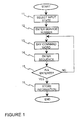
- Fig. 1 illustrates in the form of flow diagram a method according to the invention for storing a command vocabulary in a terminal.
- the user selects the command vocabulary input state by means of push-buttons 11 and selects 12 the number of the telecommunication service with which the command vocabulary in question is associated.
- a command word 13 is uttered to the terminal and then a push-button sequence 14 corresponding to the command word is entered to generate a control signal. It is checked whether all words of the command vocabulary have been entered 15 and then either the input is terminated and the data input are stored 16 or the input of the next command word is started.
- Fig. 2 illustrates in the form of flow diagram a method according to the invention.
- the user first dials a phone number 21 and the mobile phone selects the vocabulary associated with that number 22.
- the phone number is e.g. that of a bank service and a command vocabulary optimised for bank services is associated with it in the terminal.
- Next it is checked whether the connection is active 23, i.e. whether the call attempt was put through and whether the service answered the call. If the connection is active the process moves on to the next state and if not, it terminates.
- the next step 24 it is examined whether the user uttered a word and if so, the process moves on to recognise the word 25 and if not, it returns to step 23.
- step 23 When a word is being recognised 25, it is compared to command words stored in the apparatus, such as "accounts". On the basis of the comparison the process branches as follows: when the word is not a command word, the process returns to step 23, but when it is a command word, the corresponding control signal 27 is read in the terminal. When the control signal has been read 27, a control signal 28 corresponding to the command word is sent to the telecommunication service, in this case the bank service, said control signal being preferably a series of sounds formed of DTMF tones. Then the process returns to step 23 to wait for the next command word, start of the service or disconnection of the call.
- the telecommunication service in this case the bank service
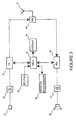
- Fig. 3 shows essential elements of a mobile communications device according to the invention.
- the mobile communications device comprises on the transmission side a microphone 31, microphone amplifier 32 and a transmitter part 33. Parts common to transmission and reception include a duplex switch 34 and an antenna 35.
- the mobile communications device comprises a receiver part 36, earphone amplifier 37 and an earphone 38.
- the mobile communications device includes a keypad 39, speech recogniser 40, control part 41 and a display 42.
- speech recogniser 40 which is known per se, is typically realised using essentially a digital signal processor (DSP) and memory circuits.
- DSP digital signal processor
- GSM Global System for Mobile communications
- a voice mailbox is used by calling a service number and entering number sequences transmitted as DTMF tones. The number sequences are used to enter a password and select a desired function in the logical tree structure of the service.
- the terminal in this case the mobile communications device, recognises the service number as a voice mailbox number and actives the vocabulary associated with it.
- a command word which corresponds to the function desired and which is recognised in the speech recogniser of the mobile communications device and found in the vocabulary.
- a control signal corresponds to the word, and DTMF tones according to that control signal are sent to the voice mailbox just as the user would enter the number sequence by pressing individual push-buttons.
- a telecommunication service specific vocabulary is e.g. as follows: command word control signal password 1234 listen #1 next #2 previous #3 save #4 delete #5
- the vocabulary is preferably stored by the user in the mobile communications device as described above; alternatively, the user downloads the vocabulary corresponding to the service via an infrared (IR) link or communications interface.
- IR infrared
- the invention can be applied in a mobile communications device that has no display or even a keypad.
- a mobile communications device without a keypad would be controlled solely by voice.
- a control signal may also consist of signals other than DTMF tones. Such signals may be e.g. feature vectors produced in the speech recognition process.
Landscapes
- Engineering & Computer Science (AREA)
- Human Computer Interaction (AREA)
- Signal Processing (AREA)
- Telephonic Communication Services (AREA)
- Mobile Radio Communication Systems (AREA)
- Telephone Function (AREA)
Claims (8)
- Verfahren zur Steuerung eines Telekommunikationsdiensts, folgende Schritte umfassend:Wählen einer Telefonnummer eines Telekommunikationsdiensts (21) und Verbinden eines Anrufs,Empfangen von Sprache von einem Benutzer (24) in einem Endgerät,Erkennen (25) eines Befehlsworts (26) in dem Endgerät aus der Sprache des Benutzers,Lesen (27) eines Steuersignals, das dem Befehlswort (26) entspricht, in dem Endgerät,Senden (28) des Steuersignals, das aus dem Endgerät gelesen wurde, an den Telekommunikationsdienst zur Steuerung des Telekommunikationsdiensts, dadurch gekennzeichnet, daß das Verfahren außerdem folgende Schritte umfaßt:Speichern (16), in einem Vokabulareingabezustand, eines Befehlsvokabulars durch Sprache (13) und elektrischer Steuersignale (14), die Befehlswörtern entsprechen, in dem Endgerät,Auswählen (22) des spezifischen Befehlsvokabulars, das der gewählten Telefonnummer des Telekommunikationsdiensts zugeordnet ist.
- Verfahren nach Anspruch 1, dadurch gekennzeichnet, daß das Befehlsvokabular und entsprechende Steuersignale in den folgenden Schritten gespeichert werden:Einstellen (11) des Endgeräts in den Befehlsvokabulareingabezustand,Äußern (13) eines Befehlsworts,Einspeisen (14) eines Steuersignals in das Endgerät undSpeichern (16) des Befehlsworts und des entsprechenden Steuersignals.
- Verfahren nach einem der Ansprüche 1 oder 2, dadurch gekennzeichnet, daß das Steuersignal eine DTMF-Codefolge umfaßt.
- Verfahren nach Anspruch 1, dadurch gekennzeichnet, daß der Telekommunikationsdienst auf einer Grundlage einer Telefonnummer, die auf dem Endgerät gewählt wird, festgelegt ist.
- Telekommunikationsendgerät, umfassend:Mittel (31, 32, 33) zum Empfangen von Sprache von einem Benutzer und Übertragen eines Steuersignals, das einem erkannten Befehlswort entspricht,Mittel (34, 35) zur Übertragung und zum Empfang zum Aufbauen einer Verbindung mit einem Telekommunikationsdienst, Übertragen des Steuersignals, das dem erkannten Befehlswort entspricht, und Empfangen von Bereitschaftsmeldungen von dem Telekommunikationsdienst,Mittel (36, 37, 38) zum Abhören von Bereitschaftsmeldungen des Telekommunikationsdiensts,Mittel (39) zum Eingeben von Information wie Steuersignalen und Telefonnummern, Spracherkennungsmittel (40) zum Erkennen eines gesprochenen Befehlsworts, eine Steuereinheit (41) zum Steuern des Endgeräts und ein Display (42) zum Anzeigen von Ergebnissen, dadurch gekennzeichnet, daß das Telekommunikationsendgerät außerdem Mittel, die zum Speichern eines Befehlsvokabulars, in einem Vokabulareingabezustand, durch Sprache (13) und elektrischer Steuersignale (14), die Befehlswörtern entsprechen, in dem Telekommunikationsgerät angeordnet sind, und Mittel, die zum Auswählen (22) des spezifischen Befehlsvokabulars, das dem verbundenen Telekommunikationsdienst zugeordnet ist, angeordnet sind, umfaßt.
- Telekommunikationsendgerät von Anspruch 5, dadurch gekennzeichnet, daß das Spracherkennungsgerät (40) unter Nutzung eines digitalen Signalprozessors und Speicherschaltungen verwirklicht ist.
- Telekommunikationsendgerät von Anspruch 5, dadurch gekennzeichnet, daß das Mittel (31) zum Empfangen von Sprache von dem Benutzer ein separates Mikrofon mit Freisprecheinrichtung ist.
- Telekommunikationsendgerät nach einem der vorhergehenden Ansprüche 5 bis 7, dadurch gekennzeichnet, daß das Telekommunikationsendgerät ein mobiles Kommunikationsgerät ist.
Applications Claiming Priority (2)
| Application Number | Priority Date | Filing Date | Title |
|---|---|---|---|
| FI973093A FI973093L (fi) | 1997-07-23 | 1997-07-23 | Menetelmä telepalvelun ohjaamiseksi ja päätelaite |
| FI973093 | 1997-07-23 |
Publications (3)
| Publication Number | Publication Date |
|---|---|
| EP0893901A2 EP0893901A2 (de) | 1999-01-27 |
| EP0893901A3 EP0893901A3 (de) | 2003-05-28 |
| EP0893901B1 true EP0893901B1 (de) | 2005-09-14 |
Family
ID=8549288
Family Applications (1)
| Application Number | Title | Priority Date | Filing Date |
|---|---|---|---|
| EP98660072A Expired - Lifetime EP0893901B1 (de) | 1997-07-23 | 1998-07-22 | Verfahren zur Steuerung eines Telekommunikationsdienst und eines Endgerät |
Country Status (5)
| Country | Link |
|---|---|
| US (1) | US6256611B1 (de) |
| EP (1) | EP0893901B1 (de) |
| JP (1) | JPH11127228A (de) |
| DE (1) | DE69831536T2 (de) |
| FI (1) | FI973093L (de) |
Families Citing this family (18)
| Publication number | Priority date | Publication date | Assignee | Title |
|---|---|---|---|---|
| GB2352933A (en) | 1999-07-31 | 2001-02-07 | Ibm | Speech encoding in a client server system |
| US6370506B1 (en) | 1999-10-04 | 2002-04-09 | Ericsson Inc. | Communication devices, methods, and computer program products for transmitting information using voice activated signaling to perform in-call functions |
| US6493670B1 (en) * | 1999-10-14 | 2002-12-10 | Ericsson Inc. | Method and apparatus for transmitting DTMF signals employing local speech recognition |
| US6731724B2 (en) * | 2001-01-22 | 2004-05-04 | Pumatech, Inc. | Voice-enabled user interface for voicemail systems |
| US7177814B2 (en) * | 2002-02-07 | 2007-02-13 | Sap Aktiengesellschaft | Dynamic grammar for voice-enabled applications |
| US20030158739A1 (en) * | 2002-02-15 | 2003-08-21 | Moody Peter A. | Speech navigation of voice mail systems |
| US7986974B2 (en) * | 2003-05-23 | 2011-07-26 | General Motors Llc | Context specific speaker adaptation user interface |
| US8005668B2 (en) * | 2004-09-22 | 2011-08-23 | General Motors Llc | Adaptive confidence thresholds in telematics system speech recognition |
| US20070136063A1 (en) * | 2005-12-12 | 2007-06-14 | General Motors Corporation | Adaptive nametag training with exogenous inputs |
| US20070136069A1 (en) * | 2005-12-13 | 2007-06-14 | General Motors Corporation | Method and system for customizing speech recognition in a mobile vehicle communication system |
| US8626506B2 (en) * | 2006-01-20 | 2014-01-07 | General Motors Llc | Method and system for dynamic nametag scoring |
| DE602007004185D1 (de) * | 2007-02-02 | 2010-02-25 | Harman Becker Automotive Sys | System und Verfahren zur Sprachsteuerung |
| FR2984649A1 (fr) * | 2011-12-16 | 2013-06-21 | France Telecom | Procede de communication de donnees pouvant etre mis en oeuvre par un terminal |
| CN102917143B (zh) * | 2012-10-09 | 2016-01-27 | 广东欧珀移动通信有限公司 | 一种特殊号码的通话方法及装置 |
| CN102932514A (zh) * | 2012-11-20 | 2013-02-13 | 苏州联讯达软件有限公司 | 一种自动加拨外网前缀的方法及系统 |
| CN102916979A (zh) * | 2012-11-20 | 2013-02-06 | 苏州联讯达软件有限公司 | 一种添加出网前缀的方法及系统 |
| US10089983B1 (en) * | 2017-06-08 | 2018-10-02 | Amazon Technologies, Inc. | Third party account linking for voice user interface |
| JP7229906B2 (ja) * | 2019-12-06 | 2023-02-28 | Tvs Regza株式会社 | コマンド制御装置、制御方法および制御プログラム |
Family Cites Families (23)
| Publication number | Priority date | Publication date | Assignee | Title |
|---|---|---|---|---|
| CA1056504A (en) * | 1975-04-02 | 1979-06-12 | Visvaldis A. Vitols | Keyword detection in continuous speech using continuous asynchronous correlation |
| US4227177A (en) * | 1978-04-27 | 1980-10-07 | Dialog Systems, Inc. | Continuous speech recognition method |
| DE3422409A1 (de) | 1984-06-16 | 1985-12-19 | Standard Elektrik Lorenz Ag, 7000 Stuttgart | Einrichtung zur erkennung und umsetzung von wahlinformation sowie von steuerinformation fuer leistungsmerkmale einer fernsprechvermittlungsanlage |
| US5218668A (en) * | 1984-09-28 | 1993-06-08 | Itt Corporation | Keyword recognition system and method using template concantenation model |
| WO1987001546A1 (en) * | 1985-09-03 | 1987-03-12 | Motorola, Inc. | Hands-free control system for a radiotelephone |
| CA1295064C (en) | 1987-05-29 | 1992-01-28 | Kuniyoshi Marui | Voice recognition system used in telephone apparatus |
| EP0307193B1 (de) * | 1987-09-11 | 1993-11-18 | Kabushiki Kaisha Toshiba | Telefonapparat |
| US4945570A (en) * | 1987-10-02 | 1990-07-31 | Motorola, Inc. | Method for terminating a telephone call by voice command |
| JPH0213166A (ja) * | 1988-06-30 | 1990-01-17 | Kyocera Corp | 伝送装置 |
| US5509104A (en) * | 1989-05-17 | 1996-04-16 | At&T Corp. | Speech recognition employing key word modeling and non-key word modeling |
| CA2015410C (en) * | 1989-05-17 | 1996-04-02 | Chin H. Lee | Speech recognition employing key word modeling and non-key word modeling |
| US5020107A (en) * | 1989-12-04 | 1991-05-28 | Motorola, Inc. | Limited vocabulary speech recognition system |
| US5297183A (en) * | 1992-04-13 | 1994-03-22 | Vcs Industries, Inc. | Speech recognition system for electronic switches in a cellular telephone or personal communication network |
| FI97919C (fi) * | 1992-06-05 | 1997-03-10 | Nokia Mobile Phones Ltd | Puheentunnistusmenetelmä ja -järjestelmä puheella ohjattavaa puhelinta varten |
| US5402477A (en) * | 1992-07-31 | 1995-03-28 | Mcmahan; Michael L. | System and method for configuring a telephone |
| US5440662A (en) * | 1992-12-11 | 1995-08-08 | At&T Corp. | Keyword/non-keyword classification in isolated word speech recognition |
| US5452340A (en) | 1993-04-01 | 1995-09-19 | Us West Advanced Technologies, Inc. | Method of voice activated telephone dialing |
| US5710864A (en) * | 1994-12-29 | 1998-01-20 | Lucent Technologies Inc. | Systems, methods and articles of manufacture for improving recognition confidence in hypothesized keywords |
| US5675706A (en) * | 1995-03-31 | 1997-10-07 | Lucent Technologies Inc. | Vocabulary independent discriminative utterance verification for non-keyword rejection in subword based speech recognition |
| CA2185262C (en) | 1995-09-12 | 2006-08-29 | Michele B. Gammel | Method and system for enrolling addresses in a speech recognition database |
| WO1997012361A1 (en) * | 1995-09-29 | 1997-04-03 | At & T Corp. | Telephone network service for converting speech to touch-tones |
| EP0788268B1 (de) | 1996-01-31 | 2005-03-16 | Nokia Corporation | Interaktives Verfahren zur Sprachsteuerung zwischen einem Telefon und einem Benutzer |
| US6073095A (en) * | 1997-10-15 | 2000-06-06 | International Business Machines Corporation | Fast vocabulary independent method and apparatus for spotting words in speech |
-
1997
- 1997-07-23 FI FI973093A patent/FI973093L/fi unknown
-
1998
- 1998-07-20 US US09/119,535 patent/US6256611B1/en not_active Expired - Lifetime
- 1998-07-22 JP JP10206348A patent/JPH11127228A/ja active Pending
- 1998-07-22 EP EP98660072A patent/EP0893901B1/de not_active Expired - Lifetime
- 1998-07-22 DE DE69831536T patent/DE69831536T2/de not_active Expired - Lifetime
Also Published As
| Publication number | Publication date |
|---|---|
| US6256611B1 (en) | 2001-07-03 |
| JPH11127228A (ja) | 1999-05-11 |
| DE69831536D1 (de) | 2005-10-20 |
| EP0893901A2 (de) | 1999-01-27 |
| DE69831536T2 (de) | 2006-01-19 |
| FI973093A0 (fi) | 1997-07-23 |
| FI973093A7 (fi) | 1999-01-24 |
| FI973093L (fi) | 1999-01-24 |
| EP0893901A3 (de) | 2003-05-28 |
Similar Documents
| Publication | Publication Date | Title |
|---|---|---|
| EP0893901B1 (de) | Verfahren zur Steuerung eines Telekommunikationsdienst und eines Endgerät | |
| US5594784A (en) | Apparatus and method for transparent telephony utilizing speech-based signaling for initiating and handling calls | |
| US8917827B2 (en) | Voice-operated interface for DTMF-controlled systems | |
| JP3217512B2 (ja) | コードレス電話機装置 | |
| EP0311414B2 (de) | Sprachgesteuerte Wählvorrichtung mit Speichern für vollständige Wahl für alle Benutzer und Kurzwahl für befugte Benutzer | |
| US5710806A (en) | Telecommunications device for the hearing impaired with telephone, text communication and answering, and automated voice carryover | |
| US6505161B1 (en) | Speech recognition that adjusts automatically to input devices | |
| US7650168B2 (en) | Voice activated dialing for wireless headsets | |
| US6493670B1 (en) | Method and apparatus for transmitting DTMF signals employing local speech recognition | |
| US6381311B2 (en) | Automated message system for a calling party | |
| US6169799B1 (en) | Method and apparatus for automatic telephone area-code dialing | |
| US5953656A (en) | Method and apparatus for remotely accessing a telephone answering device | |
| US6223161B1 (en) | Method for setting terminal specific parameters of a communication terminal | |
| US7471776B2 (en) | System and method for communication with an interactive voice response system | |
| WO1990008439A2 (en) | A speech processing apparatus and method therefor | |
| US20020164974A1 (en) | Method and system for delivering an audio announcement in a telecommunications system | |
| EP1042898A1 (de) | Verfahren und system zum vollständigen sprachgesteuerten wählen | |
| US6597764B1 (en) | Communication device with main telecommunication unit that allows designation of a selected subsidiary telecommunication unit | |
| KR20020020415A (ko) | 이동통신 단말기의 예약통화방법 | |
| US20040037399A1 (en) | System and method for transferring phone numbers during a voice call | |
| KR100228204B1 (ko) | 자동음성 안내장치 | |
| JP3220608B2 (ja) | 電話機 | |
| JPH07221833A (ja) | 音声認識電話装置 | |
| JPH10173804A (ja) | 電話機及び電話機を組み込んだ電話通信システム | |
| JPH02137450A (ja) | 音声ダイヤリング装置 |
Legal Events
| Date | Code | Title | Description |
|---|---|---|---|
| PUAI | Public reference made under article 153(3) epc to a published international application that has entered the european phase |
Free format text: ORIGINAL CODE: 0009012 |
|
| AK | Designated contracting states |
Kind code of ref document: A2 Designated state(s): AT BE CH CY DE DK ES FI FR GB GR IE IT LI LU MC NL PT SE |
|
| AX | Request for extension of the european patent |
Free format text: AL;LT;LV;MK;RO;SI |
|
| RAP1 | Party data changed (applicant data changed or rights of an application transferred) |
Owner name: NOKIA CORPORATION |
|
| PUAL | Search report despatched |
Free format text: ORIGINAL CODE: 0009013 |
|
| AK | Designated contracting states |
Designated state(s): AT BE CH CY DE DK ES FI FR GB GR IE IT LI LU MC NL PT SE |
|
| AX | Request for extension of the european patent |
Extension state: AL LT LV MK RO SI |
|
| 17P | Request for examination filed |
Effective date: 20030830 |
|
| 17Q | First examination report despatched |
Effective date: 20040105 |
|
| AKX | Designation fees paid |
Designated state(s): DE FR GB IT |
|
| GRAP | Despatch of communication of intention to grant a patent |
Free format text: ORIGINAL CODE: EPIDOSNIGR1 |
|
| GRAS | Grant fee paid |
Free format text: ORIGINAL CODE: EPIDOSNIGR3 |
|
| GRAA | (expected) grant |
Free format text: ORIGINAL CODE: 0009210 |
|
| AK | Designated contracting states |
Kind code of ref document: B1 Designated state(s): DE FR GB IT |
|
| PG25 | Lapsed in a contracting state [announced via postgrant information from national office to epo] |
Ref country code: IT Free format text: LAPSE BECAUSE OF FAILURE TO SUBMIT A TRANSLATION OF THE DESCRIPTION OR TO PAY THE FEE WITHIN THE PRESCRIBED TIME-LIMIT;WARNING: LAPSES OF ITALIAN PATENTS WITH EFFECTIVE DATE BEFORE 2007 MAY HAVE OCCURRED AT ANY TIME BEFORE 2007. THE CORRECT EFFECTIVE DATE MAY BE DIFFERENT FROM THE ONE RECORDED. Effective date: 20050914 |
|
| REG | Reference to a national code |
Ref country code: GB Ref legal event code: FG4D |
|
| REF | Corresponds to: |
Ref document number: 69831536 Country of ref document: DE Date of ref document: 20051020 Kind code of ref document: P |
|
| ET | Fr: translation filed | ||
| PLBE | No opposition filed within time limit |
Free format text: ORIGINAL CODE: 0009261 |
|
| STAA | Information on the status of an ep patent application or granted ep patent |
Free format text: STATUS: NO OPPOSITION FILED WITHIN TIME LIMIT |
|
| 26N | No opposition filed |
Effective date: 20060615 |
|
| REG | Reference to a national code |
Ref country code: FR Ref legal event code: PLFP Year of fee payment: 18 |
|
| REG | Reference to a national code |
Ref country code: GB Ref legal event code: 732E Free format text: REGISTERED BETWEEN 20150910 AND 20150916 |
|
| REG | Reference to a national code |
Ref country code: DE Ref legal event code: R082 Ref document number: 69831536 Country of ref document: DE Representative=s name: COHAUSZ & FLORACK PATENT- UND RECHTSANWAELTE P, DE Ref country code: DE Ref legal event code: R081 Ref document number: 69831536 Country of ref document: DE Owner name: NOKIA TECHNOLOGIES OY, FI Free format text: FORMER OWNER: NOKIA CORP., 02610 ESPOO, FI |
|
| PGFP | Annual fee paid to national office [announced via postgrant information from national office to epo] |
Ref country code: GB Payment date: 20150722 Year of fee payment: 18 Ref country code: DE Payment date: 20150714 Year of fee payment: 18 |
|
| PGFP | Annual fee paid to national office [announced via postgrant information from national office to epo] |
Ref country code: FR Payment date: 20150629 Year of fee payment: 18 |
|
| REG | Reference to a national code |
Ref country code: DE Ref legal event code: R119 Ref document number: 69831536 Country of ref document: DE |
|
| REG | Reference to a national code |
Ref country code: FR Ref legal event code: TP Owner name: NOKIA TECHNOLOGIES OY, FI Effective date: 20170109 |
|
| GBPC | Gb: european patent ceased through non-payment of renewal fee |
Effective date: 20160722 |
|
| PG25 | Lapsed in a contracting state [announced via postgrant information from national office to epo] |
Ref country code: FR Free format text: LAPSE BECAUSE OF NON-PAYMENT OF DUE FEES Effective date: 20160801 Ref country code: DE Free format text: LAPSE BECAUSE OF NON-PAYMENT OF DUE FEES Effective date: 20170201 |
|
| REG | Reference to a national code |
Ref country code: FR Ref legal event code: ST Effective date: 20170331 |
|
| PG25 | Lapsed in a contracting state [announced via postgrant information from national office to epo] |
Ref country code: GB Free format text: LAPSE BECAUSE OF NON-PAYMENT OF DUE FEES Effective date: 20160722 |
|
| REG | Reference to a national code |
Ref country code: DE Ref legal event code: R082 Ref document number: 69831536 Country of ref document: DE Representative=s name: BARKHOFF REIMANN VOSSIUS, DE Ref country code: DE Ref legal event code: R081 Ref document number: 69831536 Country of ref document: DE Owner name: WSOU INVESTMENTS, LLC, LOS ANGELES, US Free format text: FORMER OWNER: NOKIA TECHNOLOGIES OY, ESPOO, FI |
|
| REG | Reference to a national code |
Ref country code: GB Ref legal event code: 732E Free format text: REGISTERED BETWEEN 20200820 AND 20200826 |