EP0895978B1 - Procédé pour la préparation d'un alcool polyhydrique - Google Patents
Procédé pour la préparation d'un alcool polyhydrique Download PDFInfo
- Publication number
- EP0895978B1 EP0895978B1 EP98113557A EP98113557A EP0895978B1 EP 0895978 B1 EP0895978 B1 EP 0895978B1 EP 98113557 A EP98113557 A EP 98113557A EP 98113557 A EP98113557 A EP 98113557A EP 0895978 B1 EP0895978 B1 EP 0895978B1
- Authority
- EP
- European Patent Office
- Prior art keywords
- reaction
- alkenal
- polyhydric alcohol
- formaldehyde
- aliphatic aldehyde
- Prior art date
- Legal status (The legal status is an assumption and is not a legal conclusion. Google has not performed a legal analysis and makes no representation as to the accuracy of the status listed.)
- Expired - Lifetime
Links
- 238000000034 method Methods 0.000 title claims description 37
- 150000005846 sugar alcohols Polymers 0.000 title claims description 33
- WSFSSNUMVMOOMR-UHFFFAOYSA-N Formaldehyde Chemical compound O=C WSFSSNUMVMOOMR-UHFFFAOYSA-N 0.000 claims description 135
- ZTQSAGDEMFDKMZ-UHFFFAOYSA-N Butyraldehyde Chemical compound CCCC=O ZTQSAGDEMFDKMZ-UHFFFAOYSA-N 0.000 claims description 49
- 239000003054 catalyst Substances 0.000 claims description 35
- -1 aliphatic aldehyde Chemical class 0.000 claims description 34
- 238000006199 crossed Cannizzaro oxidation reduction reaction Methods 0.000 claims description 25
- 238000005882 aldol condensation reaction Methods 0.000 claims description 24
- BVKZGUZCCUSVTD-UHFFFAOYSA-L Carbonate Chemical compound [O-]C([O-])=O BVKZGUZCCUSVTD-UHFFFAOYSA-L 0.000 claims description 22
- ZJCCRDAZUWHFQH-UHFFFAOYSA-N Trimethylolpropane Chemical compound CCC(CO)(CO)CO ZJCCRDAZUWHFQH-UHFFFAOYSA-N 0.000 claims description 20
- 239000004615 ingredient Substances 0.000 claims description 13
- 239000006227 byproduct Substances 0.000 claims description 8
- 125000001931 aliphatic group Chemical group 0.000 claims description 6
- 239000007795 chemical reaction product Substances 0.000 claims description 6
- 125000004435 hydrogen atom Chemical group [H]* 0.000 claims description 6
- 125000004432 carbon atom Chemical group C* 0.000 claims description 4
- 238000006243 chemical reaction Methods 0.000 description 85
- 239000002585 base Substances 0.000 description 29
- UIIMBOGNXHQVGW-UHFFFAOYSA-M Sodium bicarbonate Chemical compound [Na+].OC([O-])=O UIIMBOGNXHQVGW-UHFFFAOYSA-M 0.000 description 20
- 239000007864 aqueous solution Substances 0.000 description 15
- XLYOFNOQVPJJNP-UHFFFAOYSA-N water Substances O XLYOFNOQVPJJNP-UHFFFAOYSA-N 0.000 description 15
- BDAGIHXWWSANSR-UHFFFAOYSA-N Formic acid Chemical class OC=O BDAGIHXWWSANSR-UHFFFAOYSA-N 0.000 description 14
- CDBYLPFSWZWCQE-UHFFFAOYSA-L Sodium Carbonate Chemical compound [Na+].[Na+].[O-]C([O-])=O CDBYLPFSWZWCQE-UHFFFAOYSA-L 0.000 description 14
- CURLTUGMZLYLDI-UHFFFAOYSA-N Carbon dioxide Chemical compound O=C=O CURLTUGMZLYLDI-UHFFFAOYSA-N 0.000 description 13
- 229910002092 carbon dioxide Inorganic materials 0.000 description 11
- 229910000030 sodium bicarbonate Inorganic materials 0.000 description 10
- 235000017557 sodium bicarbonate Nutrition 0.000 description 10
- HEMHJVSKTPXQMS-UHFFFAOYSA-M Sodium hydroxide Chemical compound [OH-].[Na+] HEMHJVSKTPXQMS-UHFFFAOYSA-M 0.000 description 9
- 239000012295 chemical reaction liquid Substances 0.000 description 9
- 239000011369 resultant mixture Substances 0.000 description 8
- IJGRMHOSHXDMSA-UHFFFAOYSA-N Atomic nitrogen Chemical compound N#N IJGRMHOSHXDMSA-UHFFFAOYSA-N 0.000 description 7
- BVKZGUZCCUSVTD-UHFFFAOYSA-M Bicarbonate Chemical compound OC([O-])=O BVKZGUZCCUSVTD-UHFFFAOYSA-M 0.000 description 7
- 150000001299 aldehydes Chemical class 0.000 description 7
- 229910000029 sodium carbonate Inorganic materials 0.000 description 7
- 239000007788 liquid Substances 0.000 description 6
- 238000004519 manufacturing process Methods 0.000 description 6
- 238000002156 mixing Methods 0.000 description 6
- 239000000203 mixture Substances 0.000 description 6
- 239000002994 raw material Substances 0.000 description 6
- 229910001873 dinitrogen Inorganic materials 0.000 description 5
- 238000011084 recovery Methods 0.000 description 5
- 238000003756 stirring Methods 0.000 description 5
- IKHGUXGNUITLKF-UHFFFAOYSA-N Acetaldehyde Chemical compound CC=O IKHGUXGNUITLKF-UHFFFAOYSA-N 0.000 description 4
- 230000000052 comparative effect Effects 0.000 description 4
- 150000001875 compounds Chemical class 0.000 description 4
- ZWEHNKRNPOVVGH-UHFFFAOYSA-N 2-Butanone Chemical compound CCC(C)=O ZWEHNKRNPOVVGH-UHFFFAOYSA-N 0.000 description 3
- GMLDCZYTIPCVMO-UHFFFAOYSA-N 2-methylidenebutanal Chemical compound CCC(=C)C=O GMLDCZYTIPCVMO-UHFFFAOYSA-N 0.000 description 3
- KFZMGEQAYNKOFK-UHFFFAOYSA-N Isopropanol Chemical compound CC(C)O KFZMGEQAYNKOFK-UHFFFAOYSA-N 0.000 description 3
- KWYUFKZDYYNOTN-UHFFFAOYSA-M Potassium hydroxide Chemical compound [OH-].[K+] KWYUFKZDYYNOTN-UHFFFAOYSA-M 0.000 description 3
- ZMANZCXQSJIPKH-UHFFFAOYSA-N Triethylamine Chemical compound CCN(CC)CC ZMANZCXQSJIPKH-UHFFFAOYSA-N 0.000 description 3
- AXCZMVOFGPJBDE-UHFFFAOYSA-L calcium dihydroxide Chemical compound [OH-].[OH-].[Ca+2] AXCZMVOFGPJBDE-UHFFFAOYSA-L 0.000 description 3
- 239000000920 calcium hydroxide Substances 0.000 description 3
- 229910001861 calcium hydroxide Inorganic materials 0.000 description 3
- 238000000926 separation method Methods 0.000 description 3
- OSWFIVFLDKOXQC-UHFFFAOYSA-N 4-(3-methoxyphenyl)aniline Chemical compound COC1=CC=CC(C=2C=CC(N)=CC=2)=C1 OSWFIVFLDKOXQC-UHFFFAOYSA-N 0.000 description 2
- VTYYLEPIZMXCLO-UHFFFAOYSA-L Calcium carbonate Chemical compound [Ca+2].[O-]C([O-])=O VTYYLEPIZMXCLO-UHFFFAOYSA-L 0.000 description 2
- OKTJSMMVPCPJKN-UHFFFAOYSA-N Carbon Chemical compound [C] OKTJSMMVPCPJKN-UHFFFAOYSA-N 0.000 description 2
- LFQSCWFLJHTTHZ-UHFFFAOYSA-N Ethanol Chemical compound CCO LFQSCWFLJHTTHZ-UHFFFAOYSA-N 0.000 description 2
- NBBJYMSMWIIQGU-UHFFFAOYSA-N Propionic aldehyde Chemical compound CCC=O NBBJYMSMWIIQGU-UHFFFAOYSA-N 0.000 description 2
- IKHGUXGNUITLKF-XPULMUKRSA-N acetaldehyde Chemical compound [14CH]([14CH3])=O IKHGUXGNUITLKF-XPULMUKRSA-N 0.000 description 2
- 230000015572 biosynthetic process Effects 0.000 description 2
- 238000009835 boiling Methods 0.000 description 2
- 239000001569 carbon dioxide Substances 0.000 description 2
- 238000007599 discharging Methods 0.000 description 2
- 238000004821 distillation Methods 0.000 description 2
- 125000001495 ethyl group Chemical group [H]C([H])([H])C([H])([H])* 0.000 description 2
- 235000019253 formic acid Nutrition 0.000 description 2
- JARKCYVAAOWBJS-UHFFFAOYSA-N hexanal Chemical compound CCCCCC=O JARKCYVAAOWBJS-UHFFFAOYSA-N 0.000 description 2
- ZXEKIIBDNHEJCQ-UHFFFAOYSA-N isobutanol Chemical compound CC(C)CO ZXEKIIBDNHEJCQ-UHFFFAOYSA-N 0.000 description 2
- WXZMFSXDPGVJKK-UHFFFAOYSA-N pentaerythritol Chemical compound OCC(CO)(CO)CO WXZMFSXDPGVJKK-UHFFFAOYSA-N 0.000 description 2
- HGBOYTHUEUWSSQ-UHFFFAOYSA-N pentanal Chemical compound CCCCC=O HGBOYTHUEUWSSQ-UHFFFAOYSA-N 0.000 description 2
- BWHMMNNQKKPAPP-UHFFFAOYSA-L potassium carbonate Chemical compound [K+].[K+].[O-]C([O-])=O BWHMMNNQKKPAPP-UHFFFAOYSA-L 0.000 description 2
- 239000000376 reactant Substances 0.000 description 2
- 238000004064 recycling Methods 0.000 description 2
- 238000007086 side reaction Methods 0.000 description 2
- 239000002904 solvent Substances 0.000 description 2
- GETQZCLCWQTVFV-UHFFFAOYSA-N trimethylamine Chemical compound CN(C)C GETQZCLCWQTVFV-UHFFFAOYSA-N 0.000 description 2
- QGZKDVFQNNGYKY-UHFFFAOYSA-O Ammonium Chemical compound [NH4+] QGZKDVFQNNGYKY-UHFFFAOYSA-O 0.000 description 1
- DKPFZGUDAPQIHT-UHFFFAOYSA-N Butyl acetate Natural products CCCCOC(C)=O DKPFZGUDAPQIHT-UHFFFAOYSA-N 0.000 description 1
- OYPRJOBELJOOCE-UHFFFAOYSA-N Calcium Chemical compound [Ca] OYPRJOBELJOOCE-UHFFFAOYSA-N 0.000 description 1
- DGAQECJNVWCQMB-PUAWFVPOSA-M Ilexoside XXIX Chemical compound C[C@@H]1CC[C@@]2(CC[C@@]3(C(=CC[C@H]4[C@]3(CC[C@@H]5[C@@]4(CC[C@@H](C5(C)C)OS(=O)(=O)[O-])C)C)[C@@H]2[C@]1(C)O)C)C(=O)O[C@H]6[C@@H]([C@H]([C@@H]([C@H](O6)CO)O)O)O.[Na+] DGAQECJNVWCQMB-PUAWFVPOSA-M 0.000 description 1
- WHXSMMKQMYFTQS-UHFFFAOYSA-N Lithium Chemical compound [Li] WHXSMMKQMYFTQS-UHFFFAOYSA-N 0.000 description 1
- NTIZESTWPVYFNL-UHFFFAOYSA-N Methyl isobutyl ketone Chemical compound CC(C)CC(C)=O NTIZESTWPVYFNL-UHFFFAOYSA-N 0.000 description 1
- UIHCLUNTQKBZGK-UHFFFAOYSA-N Methyl isobutyl ketone Natural products CCC(C)C(C)=O UIHCLUNTQKBZGK-UHFFFAOYSA-N 0.000 description 1
- PXHVJJICTQNCMI-UHFFFAOYSA-N Nickel Chemical compound [Ni] PXHVJJICTQNCMI-UHFFFAOYSA-N 0.000 description 1
- 229930040373 Paraformaldehyde Natural products 0.000 description 1
- ZLMJMSJWJFRBEC-UHFFFAOYSA-N Potassium Chemical compound [K] ZLMJMSJWJFRBEC-UHFFFAOYSA-N 0.000 description 1
- 239000003513 alkali Substances 0.000 description 1
- 229910052783 alkali metal Inorganic materials 0.000 description 1
- 150000001340 alkali metals Chemical class 0.000 description 1
- 229910052784 alkaline earth metal Inorganic materials 0.000 description 1
- 150000001342 alkaline earth metals Chemical class 0.000 description 1
- 229920000180 alkyd Polymers 0.000 description 1
- 150000001412 amines Chemical class 0.000 description 1
- QVGXLLKOCUKJST-UHFFFAOYSA-N atomic oxygen Chemical compound [O] QVGXLLKOCUKJST-UHFFFAOYSA-N 0.000 description 1
- 229910052791 calcium Inorganic materials 0.000 description 1
- 239000011575 calcium Substances 0.000 description 1
- 229910000019 calcium carbonate Inorganic materials 0.000 description 1
- 238000012790 confirmation Methods 0.000 description 1
- 238000007796 conventional method Methods 0.000 description 1
- 239000002537 cosmetic Substances 0.000 description 1
- 238000002425 crystallisation Methods 0.000 description 1
- 230000008025 crystallization Effects 0.000 description 1
- 238000006297 dehydration reaction Methods 0.000 description 1
- 238000010790 dilution Methods 0.000 description 1
- 239000012895 dilution Substances 0.000 description 1
- 150000002148 esters Chemical class 0.000 description 1
- 230000002349 favourable effect Effects 0.000 description 1
- FUZZWVXGSFPDMH-UHFFFAOYSA-M hexanoate Chemical compound CCCCCC([O-])=O FUZZWVXGSFPDMH-UHFFFAOYSA-M 0.000 description 1
- 230000007062 hydrolysis Effects 0.000 description 1
- 238000006460 hydrolysis reaction Methods 0.000 description 1
- XLYOFNOQVPJJNP-UHFFFAOYSA-M hydroxide Chemical compound [OH-] XLYOFNOQVPJJNP-UHFFFAOYSA-M 0.000 description 1
- 239000012535 impurity Substances 0.000 description 1
- 239000003317 industrial substance Substances 0.000 description 1
- 239000011261 inert gas Substances 0.000 description 1
- 238000011835 investigation Methods 0.000 description 1
- 229940035429 isobutyl alcohol Drugs 0.000 description 1
- 150000002576 ketones Chemical class 0.000 description 1
- 229910052744 lithium Inorganic materials 0.000 description 1
- 239000010687 lubricating oil Substances 0.000 description 1
- 229910052751 metal Inorganic materials 0.000 description 1
- 239000002184 metal Substances 0.000 description 1
- 150000002739 metals Chemical class 0.000 description 1
- WSFSSNUMVMOOMR-NJFSPNSNSA-N methanone Chemical compound O=[14CH2] WSFSSNUMVMOOMR-NJFSPNSNSA-N 0.000 description 1
- 239000000178 monomer Substances 0.000 description 1
- 230000003472 neutralizing effect Effects 0.000 description 1
- 229910052757 nitrogen Inorganic materials 0.000 description 1
- 229910000510 noble metal Inorganic materials 0.000 description 1
- 230000003647 oxidation Effects 0.000 description 1
- 238000007254 oxidation reaction Methods 0.000 description 1
- 239000001301 oxygen Substances 0.000 description 1
- 229910052760 oxygen Inorganic materials 0.000 description 1
- 229920002866 paraformaldehyde Polymers 0.000 description 1
- 230000000704 physical effect Effects 0.000 description 1
- 239000004014 plasticizer Substances 0.000 description 1
- 229920005668 polycarbonate resin Polymers 0.000 description 1
- 239000004431 polycarbonate resin Substances 0.000 description 1
- 229920001225 polyester resin Polymers 0.000 description 1
- 239000004645 polyester resin Substances 0.000 description 1
- 229920005749 polyurethane resin Polymers 0.000 description 1
- 229910052700 potassium Inorganic materials 0.000 description 1
- 239000011591 potassium Substances 0.000 description 1
- 229910000027 potassium carbonate Inorganic materials 0.000 description 1
- 238000002360 preparation method Methods 0.000 description 1
- 239000000047 product Substances 0.000 description 1
- 230000009257 reactivity Effects 0.000 description 1
- 238000007670 refining Methods 0.000 description 1
- 230000001105 regulatory effect Effects 0.000 description 1
- 238000011160 research Methods 0.000 description 1
- 150000003839 salts Chemical class 0.000 description 1
- 239000011734 sodium Substances 0.000 description 1
- 229910052708 sodium Inorganic materials 0.000 description 1
- 159000000000 sodium salts Chemical class 0.000 description 1
- 239000007787 solid Substances 0.000 description 1
- 238000000638 solvent extraction Methods 0.000 description 1
- 239000000126 substance Substances 0.000 description 1
- 239000004094 surface-active agent Substances 0.000 description 1
- IMFACGCPASFAPR-UHFFFAOYSA-N tributylamine Chemical compound CCCCN(CCCC)CCCC IMFACGCPASFAPR-UHFFFAOYSA-N 0.000 description 1
Classifications
-
- C—CHEMISTRY; METALLURGY
- C07—ORGANIC CHEMISTRY
- C07C—ACYCLIC OR CARBOCYCLIC COMPOUNDS
- C07C29/00—Preparation of compounds having hydroxy or O-metal groups bound to a carbon atom not belonging to a six-membered aromatic ring
- C07C29/36—Preparation of compounds having hydroxy or O-metal groups bound to a carbon atom not belonging to a six-membered aromatic ring increasing the number of carbon atoms by reactions with formation of hydroxy groups, which may occur via intermediates being derivatives of hydroxy, e.g. O-metal
- C07C29/38—Preparation of compounds having hydroxy or O-metal groups bound to a carbon atom not belonging to a six-membered aromatic ring increasing the number of carbon atoms by reactions with formation of hydroxy groups, which may occur via intermediates being derivatives of hydroxy, e.g. O-metal by reaction with aldehydes or ketones
-
- C—CHEMISTRY; METALLURGY
- C07—ORGANIC CHEMISTRY
- C07C—ACYCLIC OR CARBOCYCLIC COMPOUNDS
- C07C45/00—Preparation of compounds having >C = O groups bound only to carbon or hydrogen atoms; Preparation of chelates of such compounds
- C07C45/61—Preparation of compounds having >C = O groups bound only to carbon or hydrogen atoms; Preparation of chelates of such compounds by reactions not involving the formation of >C = O groups
- C07C45/67—Preparation of compounds having >C = O groups bound only to carbon or hydrogen atoms; Preparation of chelates of such compounds by reactions not involving the formation of >C = O groups by isomerisation; by change of size of the carbon skeleton
- C07C45/68—Preparation of compounds having >C = O groups bound only to carbon or hydrogen atoms; Preparation of chelates of such compounds by reactions not involving the formation of >C = O groups by isomerisation; by change of size of the carbon skeleton by increase in the number of carbon atoms
- C07C45/72—Preparation of compounds having >C = O groups bound only to carbon or hydrogen atoms; Preparation of chelates of such compounds by reactions not involving the formation of >C = O groups by isomerisation; by change of size of the carbon skeleton by increase in the number of carbon atoms by reaction of compounds containing >C = O groups with the same or other compounds containing >C = O groups
- C07C45/75—Reactions with formaldehyde
Definitions
- the present invention relates to a process for producing a polyhydric alcohol by reacting an aliphatic aldehyde with formaldehyde which alcohol is useful as a raw material for polyester resins, alkyd resins, polyurethane resins, polycarbonate resins, plasticizers, surfactants, lubricating oils, basis for cosmetics, reactive monomers and the like.
- the above-mentioned two-stage reaction process is based on the premise that the objective polyhydric alcohol is produced in combination with a formic acid salt.
- the base catalyst to be used in said process include a hydroxide of any of alkali metals and alkaline earth metals and a carbonate of any of the above-mentioned metals.
- the catalyst is exemplified by sodium hydroxide, potassium hydroxide, calcium hydroxide, sodium carbonate, potassium carbonate, calcium carbonate, and tertially amines such as trimethylamine, triethylamine, and tributylamine.
- a base catalyst comprising sodium hydroxide or calcium hydroxide is used in the process for producing a polyhydric alcohol by the reaction of an aliphatic aldehyde with formaldehyde.
- formaldehyde in order to obtain an objective polyhydric alcohol in high selectivity in the presence of the base catalyst comprising sodium hydroxide or calcium hydroxide, it is necessary to use formaldehyde in a large excess against the aliphatic aldehyde.
- formaldehyde in the case where such a large excess of formaldehyde is used, unless the reaction is carried out in a reaction system diluted with water, large amounts of byproducts are formed,
- a general object of the present invention is to provide a process for producing a polyhydric alcohol by subjecting an aliphatic aldehyde and formaldehyde to an aldol condensation reaction, and subsequently to a crossed Cannizzaro reaction, which process is characterized in that the objective polyhydric alcohol is produced in high selectivity using a slight excess of formaldehyde against the theoretical molar amount of the aliphatic aldehyde without dilution of the reactants with water.
- an objective polyhydric alcohol is obtained in high selectivity by carrying out an aldol condensation reaction in the presence of a catalyst comprising a carbonate as a principal ingredient, and subsequently carrying out a crossed Cannizzaro reaction, while separating 2-alkenal which has been formed as a byproduct during the aldol condensation reaction, prior to the completion of the crossed Cannizzaro reaction ; or by firstly reacting the 2-alkenal thus separated with formaldehyde in the presence of a base catalyst, and subsequently reacting formaldehyde with the resultant reaction liquid which is incorporated with an aliphatic aldehyde.
- the present invention relates to a process for producing a polyhydric alcohol which comprises subjecting formaldehyde and an aliphatic aldehyde represented by the general formula (I) wherein R is a hydrogen atom or a straight-chain or branched aliphatic hydrocarbon group having 1 to 4 carbon atoms, to an aldol condensation reaction in the presence of a base catalyst comprising a carbonate as a principal ingredient, and subsequently subjecting the resultant reaction product to a crossed Cannizzaro reaction, while separating 2-alkenal which has been formed as a byproduct during said aldol condensation reaction prior to the completion of said crossed Cannizzaro reaction, said 2-alkenal being represented by the general formula (II): wherein R is as previously defined, wherein the 2-alkenal (II) is separated while the molar consumption ratio of the base catalyst to the aliphatic alde is in the range 0.50 to 0.95.
- R is a hydrogen atom or a straight-chain or branched aliphatic
- the present invention also relates to a process for producing a polyhydric alcohol which comprises reacting formaldehyde with a 2-alkenal represented by the general formula (II): wherein R is as previously defined, in the presence of a base catalyst comprising a carbonate as a principal ingredient, thereafter subjecting the resultant reaction product and an aliphatic aldehyde to an aldol condensation reaction, and subsequently subjecting the resultant reaction product to a crossed Cannizzaro reaction.
- a process for producing a polyhydric alcohol which comprises reacting formaldehyde with a 2-alkenal represented by the general formula (II): wherein R is as previously defined, in the presence of a base catalyst comprising a carbonate as a principal ingredient, thereafter subjecting the resultant reaction product and an aliphatic aldehyde to an aldol condensation reaction, and subsequently subjecting the resultant reaction product to a crossed Cannizzaro reaction.
- reaction of an aliphatic aldehyde with formaldehyde for the purpose of producing a polyhydric alcohol according to the present invention is a two-stage reaction including the aldol condensation reaction and the crossed Cannizzaro reaction in the presence of a base catalyst comprising a carbonate as a principal ingredient, and said reaction is represented by the following reaction formulae including the main reaction and the side reaction.
- reaction formulae apply to a typical reaction example of the present invention in the case where n-butylaldehyde( hereinafter referred to as "NBAL") is reacted to produce trimethylol propane( hereinafter referred to as "TMP").
- NBAL n-butylaldehyde
- TMP trimethylol propane
- the carbonate which is a catalyst and a reactional substance in the crossed Cannizzaro reaction, is consumed as a formic acid salt in the reaction system.
- the aliphatic aldehyde represented by the general formula (I) according to the present invention is that having at least two hydrogen atoms at the a-position, and is exemplified by propionaldehyde, n-butylaldehyde, acetaldehyde, pentanal and hexanal. At least two compounds among them may be used in the form of a mixture as starting raw materials.
- the formaldehyde to be used in the process according to the present invention may be an aqueous solution of formaldehyde or solid paraformaldehyde, and an appropriate formaldehyde is selected for use according to the objective polyhydric alcohol.
- the amount of the formaldehyde to be used in the present process varies depending upon the type of the objective polyhydric alcohol in terms of the theoretical molar amount of formaldehyde.
- the objective TMP is produced by the reaction between formaldehyde and NBAL in which R in the general formula (I) is an ethyl group( CH 3 CH 2 ) at the theoretical molar ratio of formaldehyde to the NBAL being 3.0
- the practical molar ratio thereof is 3 to 6.
- the base catalyst to be used in the aldol condensation reaction and the crossed Cannizzaro reaction according to the present invention comprises a carbonate as a principal ingredient.
- the compound to be consumed in the course of the crossed Cannizzaro reaction is a carbonate, and a hydrogen carbonate which is formed in the course of the crossed Cannizzaro reaction is converted into the carbonate as shown by the reaction formula (VI).
- the aforestated base catalyst may be a carbonate or a mixture of a carbonate and a hydrogen carbonate that are usually available on the market as industrial chemicals.
- the catalyst may be produced starting from the hydrogencarbonate that has been formed by the oxidation or hydrolysis of a formic acid salt.
- the carbonate may be the salt of any of sodium, potassium, lithium, calcium and ammonium, of which the sodium salt is most general in the case of industrially performing the process of the present invention.
- the molar ratio of the base expressed in terms of a hydrogencarbonate to an aliphatic aldehyde represented by the general formula (I), is 1 to 2.
- the molar ratio needs to be regulated in compliance with the type of the aliphatic aldehyde to be used as a starting raw material .
- the molar ratio thereof is 1,0 to 1.5 in the case of the aliphatic aldehyde being NBAL, and it is 1.0 to 1.6 in the case of the aliphatic aldehyde being acetaldehyde.
- the temperature of the reaction between the aliphatic aldehyde and formaldehyde in the process of the present invention is usually 45 to 120°C , preferably 60 to 110°C , and the optimum reaction temperature varies depending upon the type of the aliphatic aldehyde to be used in the reaction.
- the reaction temperature is 50 to 105°C.
- the aldol condensation reaction temperature is set on 65 to 110°C, distil away 2-ethylacrylaldehyde( 2-ethylacrolein ) from the reaction system, and thereafter mature the reactants in the reaction system at 95 to 110°C for 10 to 30 minutes to complete the crossed Cannizzaro reaction. It is also preferable in this case to pressurize the inside of the reaction system by means of an inert gas such as nitrogen to maintain the reaction temperature at a prescribed level.
- the process for producing a polyhydric alcohol according to the present invention is the process in which the aldol condensation reaction is carried out in the presence of a base catalyst comprising a carbonate as a principal ingredient; a 2-alkenal which is by-produced in the aldol condensation reaction is separated and recovered outside the reaction system, simultaneously with the main reaction on the way or separately from the main reaction; and thereafter the crossed Cannizzaro reaction is completed.
- the aldol condensation reaction as the first stage reaction and the crossed Cannizzaro reaction as the second stage reaction may be put into practice under the reaction conditions distinguished from each other, or in the same reactor in a consecutive manner without distinguishing from each other.
- the 2-alkenal represented by the general formula (II) is formed by the dehydration reaction of the alkanal in which one mol of formaldehyde is added to an aliphatic aldehyde in the aldol condensation reaction in the reaction formula (III).
- the 2-alkenal is separated and recovered from the reaction system after the addition of the aliphatic aldehyde and prior to the completion of the crossed Cannizzaro reaction.
- the 2-alkenal is separated while the molar consumption ratio of the base catalyst to the aliphatic aldehyde is in the range of 0.50 to 0.95.
- the separation and recovery of the 2-alkenal are readily practicable by means of distillation under vacuum, atmospheric, or increased pressure.
- the loss due to the side reaction of 2-alkenal can be prevented by removing the by-produced 2-alkenal outside the reaction system prior to the completion of the crossed Cannizzaro reaction.
- the base catalyst comprising a carbonate as a principal ingredient is converted into a formic acid salt in the crossed Cannizzaro reaction, and thus the molar consumption ratio of the base catalyst corresponds to the molar formation ratio of the formic acid salt.
- the base catalyst to be used in the process according to the present invention comprises a carbonate as a principal ingredient and further, the reaction in which the hydrogen carbonate is converted to the carbonate as shown by the reaction formula (VI) takes place simultaneously with the crossed Cannizzaro reaction as the second stage reaction , the second stage reaction is accompanied by the generation of gaseous carbon dioxide at the time of reaction. It is preferable, therefore, that the reaction be carried out discontinuously or continuously, while discharging outside the reaction system, low boiling 2-alkenal represented by the general formula (II) as well as the gaseous carbon dioxide.
- a method comprising the steps of mixing at first, an aqueous solution of formaldehyde and an aqueous solution of the base catalyst comprising a carbonate as a principal ingredient, and then adding NBAL dropwise at a constant rate into the resultant aqueous mixture; and a method comprising the addition of NBAL and the base catalyst in the aqueous solution of formaldehyde.
- the 2-alkenal thus recovered can be taken out from a second or third stage reaction kettle and thereafter circulated through a first stage reaction kettle, whereas in the case of batchwise reaction system, the 2-alkenal thus recovered can be circulated to the next reaction system.
- the 2-alkenal prior to the addition of an aliphatic aldehyde as a starting raw material, the 2-alkenal which has been recovered in the preceding reaction along with the base catalyst and formaldehyde is added to an aldol condensation reactor.
- the objective polyhydric alcohol is produced in high selectivity by react ing the 2-alkenal prior to the addition of the aliphatic aldehyde as a starting raw material to the reaction system, and also by recycling the 2-alkenal through the aldol condensation reaction system.
- the 2-alkenal to be used for the foregoing reaction there is usable the 2-alkenal which is recovered in the refining distillation step of the objective polyhydric alcohol, in addition to the 2-alkenal which is separated and recovered in the aforesaid aldol condensation reaction step.
- the objective TMP is separated from a formic acid salt by means of solvent extraction.
- the solvent to be used effectively therein may be the same as a starting raw material, that is, NBAL, or different therefrom including a ketone exemplified by methyl ethyl ketone and methyl isobutyl ketone, an alcohol exemplified by isobutyl alcohol and isopropyl alcohol, an ester exemplified by butyl acetate, and a mixture of at least two of them.
- the resultant reaction liquid is concentrated, cooled and subjected to crystallization and separation repeatedly to separate PE from the formic acid salt in the aqueous solution by means of solid-liquid separation.
- the PE thus separated in the form of cake is washed with water and dried into a finished product.
- the formic acid salt that has been separated into a water phase is concentrated and recovered as a byproduct by a conventional method, after a treatment with activated carbon as a preliminary treatment for removing organic impurities other than the formic acid salt or without any preliminary treatment.
- the formic acid salt is converted into a base compound comprising a hydrogen carbonate as a principal ingredient in the presence or absence of oxygen molecules in the presence of a noble metal catalyst or a nickel catalyst.
- the formic acid is recovered in the form of a base compound.
- the present invention in the process for producing a polyhydric alcohol by reacting an aliphatic aldehyde with formaldehyde using a base catalyst comprising a carbonate as a principal ingredient, it is made possible to easily produce the objective polyhydric alcohol in high selectivity and high efficiency by recycling the by-produced 2-alkenal low in an added value, whereby new byproduction of said 2-alkenal is substantially prevented.
- the process according to the present invention is industrially advantageous to a great extent, since it enables a high-quality polyhydric alcohol to be easily produced in high yield from an aliphatic aldehyde and formaldehyde without discharging outside the reaction system, except for a minimum requirement, the 2-alkenal low in an added value which has heretofore been inevitably by-produced and discharged.
- the selectivity to the objective polyhydric alcohol( on the basis of the consumed aldehyde ) is the molar ratio of the production of the objective polyhydric alcohol to the total consumption of an aliphatic aldehyde and 2-alkenal.
- TMP trimethylol propane
- NBAL n-butylaldehyde
- formaldehyde formaldehyde
- the amount of CO 2 that was discharged throughout the reaction was 820g( 18.63 moles ).
- 18770g of the remaining reaction liquid contained 17.07% by weight of TMP, and the selectivity to TMP ( on the basis of the aldehyde consumed ) was 84.7 mol%.
- the total amount of the distillate containing water was 660g, in which the amount of the recovered ECR was 498,1g( 5.93 moles ).
- the reaction was further continued at 98 to 100°C for 30 minutes.
- said liquid contained 20.10% by weight of TMP, and the selectivity to TMP( on the basis of the aldehyde consumed ) was 85.4 mol%.
Landscapes
- Chemical & Material Sciences (AREA)
- Organic Chemistry (AREA)
- Chemical Kinetics & Catalysis (AREA)
- Organic Low-Molecular-Weight Compounds And Preparation Thereof (AREA)
- Low-Molecular Organic Synthesis Reactions Using Catalysts (AREA)
Claims (5)
- Procédé de production d'un polyol, qui comprend l'étape consistant à soumettre du formaldéhyde et un aldéhyde aliphatique à une réaction d'aldolisation en présence d'un catalyseur basique comprenant un carbonate comme ingrédient principal, ledit aldéhyde aliphatique étant représenté par la formule générale (I) :dans laquelle R représente un atome d'hydrogène ou un groupe hydrocarboné aliphatique à chaíne linéaire ou ramifiée contenant 1 à 4 atomes de carbone ; et à soumettre ensuite le produit de réaction obtenu à une réaction de Cannizaro croisée, en séparant le 2-alcénal qui s'est formé comme sous-produit pendant ladite réaction d'aldolisation avant l'achèvement de ladite réaction de Cannizaro croisée, ledit 2-alcénal étant représenté par la formule générale (II) :
 dans laquelle R est tel que précédemment défini,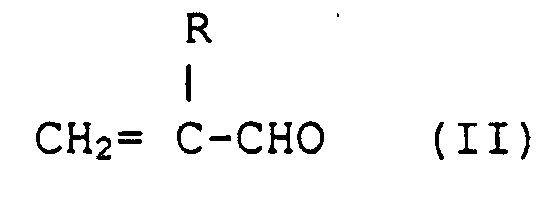
dans laquelle ledit 2-alcénal formé pendant la réaction d'aldolisation comme sous-produit, et représenté par la formule générale (II), est séparé, le rapport de consommation molaire du catalyseur basique à l'aldéhyde aliphatique étant compris dans l'intervalle allant de 0,50 à 0,95. - Procédé de production d'un polyol, qui comprend l'étape consistant à faire réagir du formaldéhyde avec un 2-alcénal représenté par la formule générale (II) :dans laquelle R représente un atome d'hydrogène ou un groupe hydrocarboné aliphatique à chaíne linéaire ou ramifiée contenant 1 à 4 atomes de carbone, en présence d'un catalyseur basique comprenant un carbonate comme ingrédient principal, et à soumettre ensuite le produit de réaction obtenu et un aldéhyde aliphatique à une réaction d'aldolisation, ledit aldéhyde aliphatique étant représenté par la formule générale (I) :
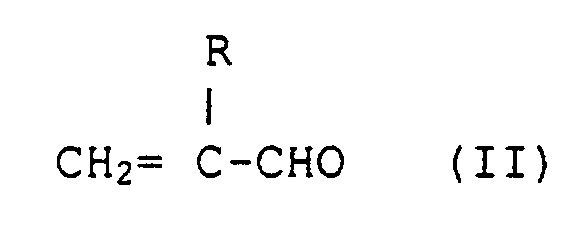 dans laquelle R est tel que précédemment défini,
et à soumettre ensuite le produit de réaction obtenu à une réaction de Cannizaro croisée. - Procédé de production d'un polyol selon la revendication 2, dans lequel le 2-alcénal est formé dans le procédé décrit dans la revendication 1.
- Procédé de production d'un polyol selon la revendication 2 ou 3, dans lequel ledit 2-alcénal formé comme sous produit pendant la réaction d'aldolisation est séparé avant l'achèvement de la réaction de Cannizaro croisée.
- Procédé de production d'un polyol selon la revendication 1 ou 2, dans lequel du triméthylolpropane est produit à partir de formaldéhyde et de n-butylaldéhyde.
Applications Claiming Priority (3)
| Application Number | Priority Date | Filing Date | Title |
|---|---|---|---|
| JP213480/97 | 1997-08-07 | ||
| JP21348097A JP4003018B2 (ja) | 1997-08-07 | 1997-08-07 | 多価アルコールの製造法 |
| JP21348097 | 1997-08-07 |
Publications (2)
| Publication Number | Publication Date |
|---|---|
| EP0895978A1 EP0895978A1 (fr) | 1999-02-10 |
| EP0895978B1 true EP0895978B1 (fr) | 2001-11-21 |
Family
ID=16639905
Family Applications (1)
| Application Number | Title | Priority Date | Filing Date |
|---|---|---|---|
| EP98113557A Expired - Lifetime EP0895978B1 (fr) | 1997-08-07 | 1998-07-21 | Procédé pour la préparation d'un alcool polyhydrique |
Country Status (7)
| Country | Link |
|---|---|
| US (1) | US6077980A (fr) |
| EP (1) | EP0895978B1 (fr) |
| JP (1) | JP4003018B2 (fr) |
| KR (1) | KR100559298B1 (fr) |
| DE (1) | DE69803252T2 (fr) |
| SG (1) | SG70103A1 (fr) |
| TW (1) | TW503232B (fr) |
Families Citing this family (8)
| Publication number | Priority date | Publication date | Assignee | Title |
|---|---|---|---|---|
| JP5434595B2 (ja) * | 2007-10-30 | 2014-03-05 | 三菱瓦斯化学株式会社 | ジトリメチロールプロパンの製造方法 |
| JP5223748B2 (ja) * | 2009-03-23 | 2013-06-26 | 三菱瓦斯化学株式会社 | トリトリメチロールプロパンを含むアルコール組成物 |
| KR101852214B1 (ko) | 2010-09-07 | 2018-04-25 | 미츠비시 가스 가가쿠 가부시키가이샤 | 다이트라이메틸올프로페인의 제조 방법 |
| US9056824B2 (en) | 2013-01-31 | 2015-06-16 | Eastman Chemical Company | Preparation of hydroxy aldehydes |
| US8710278B1 (en) | 2013-01-31 | 2014-04-29 | Eastman Chemical Company | Process for producing polyols |
| CN107032952B (zh) * | 2017-05-08 | 2020-12-25 | 兰州石化职业技术学院 | 一种2-甲基烯丙醇的制备工艺 |
| CN114524712A (zh) * | 2022-01-24 | 2022-05-24 | 南通百川新材料有限公司 | 一种冷冻缩合制备三羟甲基丙烷的工艺方法 |
| CN115771936B (zh) * | 2022-12-05 | 2025-07-01 | 宿迁联盛科技股份有限公司 | 一种三丙酮胺副产橡胶234处理高浓度甲醛废水的方法 |
Family Cites Families (5)
| Publication number | Priority date | Publication date | Assignee | Title |
|---|---|---|---|---|
| US3975450A (en) * | 1974-09-03 | 1976-08-17 | Eastman Kodak Company | Process for the preparation of polyhydric alcohols |
| JPS582209B2 (ja) * | 1979-12-04 | 1983-01-14 | 三菱瓦斯化学株式会社 | 多価アルコ−ルの製造法 |
| DE3207746A1 (de) * | 1982-03-04 | 1983-09-08 | Bayer Ag, 5090 Leverkusen | Verfahren zur herstellung von trimethylolpropan |
| DE3638496A1 (de) * | 1986-11-11 | 1988-05-26 | Huels Chemische Werke Ag | Verfahren zur gewinnung von reinem 2,2-dimethyl-1,3-propandiol (npg) |
| US5608121A (en) * | 1994-10-20 | 1997-03-04 | Mitsubishi Gas Chemical Company, Inc. | Process for producing polyhydric alcohol |
-
1997
- 1997-08-07 JP JP21348097A patent/JP4003018B2/ja not_active Expired - Lifetime
-
1998
- 1998-07-17 US US09/118,419 patent/US6077980A/en not_active Expired - Lifetime
- 1998-07-21 EP EP98113557A patent/EP0895978B1/fr not_active Expired - Lifetime
- 1998-07-21 DE DE69803252T patent/DE69803252T2/de not_active Expired - Fee Related
- 1998-07-27 SG SG1998002691A patent/SG70103A1/en unknown
- 1998-07-27 KR KR1019980030109A patent/KR100559298B1/ko not_active Expired - Fee Related
- 1998-08-07 TW TW087113032A patent/TW503232B/zh active
Also Published As
| Publication number | Publication date |
|---|---|
| EP0895978A1 (fr) | 1999-02-10 |
| KR19990023242A (ko) | 1999-03-25 |
| SG70103A1 (en) | 2000-01-25 |
| US6077980A (en) | 2000-06-20 |
| DE69803252T2 (de) | 2002-05-16 |
| TW503232B (en) | 2002-09-21 |
| KR100559298B1 (ko) | 2007-04-25 |
| JPH1149708A (ja) | 1999-02-23 |
| DE69803252D1 (de) | 2002-02-21 |
| JP4003018B2 (ja) | 2007-11-07 |
Similar Documents
| Publication | Publication Date | Title |
|---|---|---|
| EP0935594B1 (fr) | Procede pour la production en continu de neopentylglycol | |
| US5180847A (en) | Processes for preparing 2,2,4-trimethyl-1,3-pentanediol derivatives | |
| EP1848679B1 (fr) | Procédé de préparation de triméthylolpropane | |
| EP0326538B1 (fr) | Procédé pour la fabrication de glycolates d'alkyles | |
| JPH05201898A (ja) | ネオペンチルグリコールの製造方法 | |
| KR100343797B1 (ko) | 다가알콜의제조방법 | |
| US6080896A (en) | Process for producing polyhydric alcohol | |
| US6077980A (en) | Process for producing polyhydric alcohol | |
| EP0799815B1 (fr) | Procédé pour la préparation du ditriméthylolpropane | |
| KR910006002B1 (ko) | 디알킬 카보네이트의 가수분해 방법 | |
| EP1167330B1 (fr) | Procédé de préparation d'un polyol | |
| JP4561939B2 (ja) | 多価アルコールの製造法 | |
| US6281394B1 (en) | Method for producing vicinal diols or polyols | |
| JP2002226426A (ja) | ジメチロールブタン酸の製造法 | |
| JP4635300B2 (ja) | ポリオールの製造方法 | |
| JP4599664B2 (ja) | 多価アルコールの製造法 | |
| JP4691756B2 (ja) | ポリオールの製造法 | |
| JPH11217351A (ja) | ジメチロールアルカン酸の製造方法 | |
| JP3367549B2 (ja) | 3−クロロメチル−3−アルキルオキセタンの製造方法 | |
| JP2002003419A (ja) | 多価アルコールの製造方法 | |
| JP2003286220A (ja) | ジメチロールブタン酸の製造法 | |
| JPH11130719A (ja) | ジメチロールアルカナールの精製方法 | |
| KR100497168B1 (ko) | 지방족 알데히드의 회수방법 및 이를 이용한2,2,4-트리메틸-1,3-펜탄디올 모노이소부티레이트의제조방법 |
Legal Events
| Date | Code | Title | Description |
|---|---|---|---|
| PUAI | Public reference made under article 153(3) epc to a published international application that has entered the european phase |
Free format text: ORIGINAL CODE: 0009012 |
|
| AK | Designated contracting states |
Kind code of ref document: A1 Designated state(s): DE GB IT SE |
|
| AX | Request for extension of the european patent |
Free format text: AL;LT;LV;MK;RO;SI |
|
| 17P | Request for examination filed |
Effective date: 19990723 |
|
| AKX | Designation fees paid |
Free format text: DE GB IT SE |
|
| 17Q | First examination report despatched |
Effective date: 20000306 |
|
| GRAG | Despatch of communication of intention to grant |
Free format text: ORIGINAL CODE: EPIDOS AGRA |
|
| GRAG | Despatch of communication of intention to grant |
Free format text: ORIGINAL CODE: EPIDOS AGRA |
|
| GRAG | Despatch of communication of intention to grant |
Free format text: ORIGINAL CODE: EPIDOS AGRA |
|
| GRAH | Despatch of communication of intention to grant a patent |
Free format text: ORIGINAL CODE: EPIDOS IGRA |
|
| GRAH | Despatch of communication of intention to grant a patent |
Free format text: ORIGINAL CODE: EPIDOS IGRA |
|
| GRAA | (expected) grant |
Free format text: ORIGINAL CODE: 0009210 |
|
| AK | Designated contracting states |
Kind code of ref document: B1 Designated state(s): DE GB IT SE |
|
| REG | Reference to a national code |
Ref country code: GB Ref legal event code: IF02 |
|
| REF | Corresponds to: |
Ref document number: 69803252 Country of ref document: DE Date of ref document: 20020221 |
|
| PLBE | No opposition filed within time limit |
Free format text: ORIGINAL CODE: 0009261 |
|
| STAA | Information on the status of an ep patent application or granted ep patent |
Free format text: STATUS: NO OPPOSITION FILED WITHIN TIME LIMIT |
|
| 26N | No opposition filed | ||
| PGFP | Annual fee paid to national office [announced via postgrant information from national office to epo] |
Ref country code: DE Payment date: 20080724 Year of fee payment: 11 |
|
| PGFP | Annual fee paid to national office [announced via postgrant information from national office to epo] |
Ref country code: IT Payment date: 20080729 Year of fee payment: 11 |
|
| PGFP | Annual fee paid to national office [announced via postgrant information from national office to epo] |
Ref country code: GB Payment date: 20080723 Year of fee payment: 11 |
|
| PGFP | Annual fee paid to national office [announced via postgrant information from national office to epo] |
Ref country code: SE Payment date: 20080709 Year of fee payment: 11 |
|
| EUG | Se: european patent has lapsed | ||
| GBPC | Gb: european patent ceased through non-payment of renewal fee |
Effective date: 20090721 |
|
| PG25 | Lapsed in a contracting state [announced via postgrant information from national office to epo] |
Ref country code: GB Free format text: LAPSE BECAUSE OF NON-PAYMENT OF DUE FEES Effective date: 20090721 |
|
| PG25 | Lapsed in a contracting state [announced via postgrant information from national office to epo] |
Ref country code: DE Free format text: LAPSE BECAUSE OF NON-PAYMENT OF DUE FEES Effective date: 20100202 |
|
| PG25 | Lapsed in a contracting state [announced via postgrant information from national office to epo] |
Ref country code: IT Free format text: LAPSE BECAUSE OF NON-PAYMENT OF DUE FEES Effective date: 20090721 |
|
| PG25 | Lapsed in a contracting state [announced via postgrant information from national office to epo] |
Ref country code: SE Free format text: LAPSE BECAUSE OF NON-PAYMENT OF DUE FEES Effective date: 20090722 |