EP0901755B1 - Adsorption von Cholesterinoxid in Lebensmitteln - Google Patents
Adsorption von Cholesterinoxid in Lebensmitteln Download PDFInfo
- Publication number
- EP0901755B1 EP0901755B1 EP98306201A EP98306201A EP0901755B1 EP 0901755 B1 EP0901755 B1 EP 0901755B1 EP 98306201 A EP98306201 A EP 98306201A EP 98306201 A EP98306201 A EP 98306201A EP 0901755 B1 EP0901755 B1 EP 0901755B1
- Authority
- EP
- European Patent Office
- Prior art keywords
- water
- food
- cholesterol
- polysaccharide
- soluble
- Prior art date
- Legal status (The legal status is an assumption and is not a legal conclusion. Google has not performed a legal analysis and makes no representation as to the accuracy of the status listed.)
- Expired - Lifetime
Links
Images

Classifications
-
- A—HUMAN NECESSITIES
- A23—FOODS OR FOODSTUFFS; TREATMENT THEREOF, NOT COVERED BY OTHER CLASSES
- A23D—EDIBLE OILS OR FATS, e.g. MARGARINES, SHORTENINGS OR COOKING OILS
- A23D9/00—Other edible oils or fats, e.g. shortenings or cooking oils
- A23D9/007—Other edible oils or fats, e.g. shortenings or cooking oils characterised by ingredients other than fatty acid triglycerides
-
- A—HUMAN NECESSITIES
- A23—FOODS OR FOODSTUFFS; TREATMENT THEREOF, NOT COVERED BY OTHER CLASSES
- A23C—DAIRY PRODUCTS, e.g. MILK, BUTTER OR CHEESE; MILK OR CHEESE SUBSTITUTES; PREPARATION THEREOF
- A23C15/00—Butter; Butter preparations; Making thereof
- A23C15/12—Butter preparations
-
- A—HUMAN NECESSITIES
- A23—FOODS OR FOODSTUFFS; TREATMENT THEREOF, NOT COVERED BY OTHER CLASSES
- A23D—EDIBLE OILS OR FATS, e.g. MARGARINES, SHORTENINGS OR COOKING OILS
- A23D7/00—Edible oil or fat compositions containing an aqueous phase, e.g. margarines
- A23D7/005—Edible oil or fat compositions containing an aqueous phase, e.g. margarines characterised by ingredients other than fatty acid triglycerides
- A23D7/0056—Spread compositions
-
- A—HUMAN NECESSITIES
- A23—FOODS OR FOODSTUFFS; TREATMENT THEREOF, NOT COVERED BY OTHER CLASSES
- A23L—FOODS, FOODSTUFFS OR NON-ALCOHOLIC BEVERAGES, NOT OTHERWISE PROVIDED FOR; PREPARATION OR TREATMENT THEREOF
- A23L23/00—Soups; Sauces; Preparation or treatment thereof
-
- A—HUMAN NECESSITIES
- A23—FOODS OR FOODSTUFFS; TREATMENT THEREOF, NOT COVERED BY OTHER CLASSES
- A23L—FOODS, FOODSTUFFS OR NON-ALCOHOLIC BEVERAGES, NOT OTHERWISE PROVIDED FOR; PREPARATION OR TREATMENT THEREOF
- A23L27/00—Spices; Flavouring agents or condiments; Artificial sweetening agents; Table salts; Dietetic salt substitutes; Preparation or treatment thereof
- A23L27/60—Salad dressings; Mayonnaise; Ketchup
-
- A—HUMAN NECESSITIES
- A23—FOODS OR FOODSTUFFS; TREATMENT THEREOF, NOT COVERED BY OTHER CLASSES
- A23L—FOODS, FOODSTUFFS OR NON-ALCOHOLIC BEVERAGES, NOT OTHERWISE PROVIDED FOR; PREPARATION OR TREATMENT THEREOF
- A23L33/00—Modifying nutritive qualities of foods; Dietetic products; Preparation or treatment thereof
- A23L33/20—Reducing nutritive value; Dietetic products with reduced nutritive value
- A23L33/21—Addition of substantially indigestible substances, e.g. dietary fibres
-
- A—HUMAN NECESSITIES
- A23—FOODS OR FOODSTUFFS; TREATMENT THEREOF, NOT COVERED BY OTHER CLASSES
- A23L—FOODS, FOODSTUFFS OR NON-ALCOHOLIC BEVERAGES, NOT OTHERWISE PROVIDED FOR; PREPARATION OR TREATMENT THEREOF
- A23L5/00—Preparation or treatment of foods or foodstuffs, in general; Food or foodstuffs obtained thereby; Materials therefor
- A23L5/20—Removal of unwanted matter, e.g. deodorisation or detoxification
- A23L5/27—Removal of unwanted matter, e.g. deodorisation or detoxification by chemical treatment, by adsorption or by absorption
- A23L5/273—Removal of unwanted matter, e.g. deodorisation or detoxification by chemical treatment, by adsorption or by absorption using adsorption or absorption agents, resins, synthetic polymers, or ion exchangers
-
- A—HUMAN NECESSITIES
- A61—MEDICAL OR VETERINARY SCIENCE; HYGIENE
- A61P—SPECIFIC THERAPEUTIC ACTIVITY OF CHEMICAL COMPOUNDS OR MEDICINAL PREPARATIONS
- A61P3/00—Drugs for disorders of the metabolism
- A61P3/06—Antihyperlipidemics
Definitions
- the present invention relates to the adsorption of cholesterol oxide in food and provides for this purpose a cholesterol oxide adsorbing agent.
- Cholesterol oxide has an effect on body functions similar to fatty acid peroxides and has been implicated as a trigger causing various diseases, as well as aging. Cholesterol oxide, which has such a harmful effect on the body, is produced in significant amounts during processing of animal product foods, and it has been reported that about 30% is absorbed in the small intestine, resulting in disturbance to the cholesterol and fatty acid metabolism.
- cholesterol oxide adsorbing agents composed mainly of acidic polysaccharides as described in Japanese Unexamined Patent Publication No. 3-30667 and No.8-253502, as food components which inhibit absorption of cholesterol oxide in foods or control its physiological action.
- Japanese Unexamined Patent Publication No. 3-30667 uses polysaccharides produced only from special yeast mutants, and is therefore associated with problems of dubious safety and poor yield.
- the process described in Japanese Unexamined Patent Publication No. 8-253502 involves synthesis of sulfated polysaccharides by a chemical method, and is therefore associated with problems of safety including the presence of residual unreacted components.
- the present invention provides the use of a plant-derived water-soluble polysaccharide for adsorbing cholesterol oxide present in a food by addition of the polysaccharide to the food.
- the invention also provides a process for lowering the content of cholesterol oxide in a food containing cholesterol oxides comprising the steps of
- Fig. 1 is a graph showing the micelle solubilization rate for 7 ⁇ -hydroxycholesterol
- Fig. 2 is a graph showing the micelle solubilization rate for 7 ⁇ -hydroxycholesterol + 5 ⁇ -epoxycholesterol.
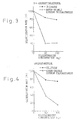
- Fig. 3 is a graph showing the micelle solubilization rate for 5 ⁇ -epoxycholesterol.
- Fig. 4 is a graph showing the micelle solubilization rate for cholestanetriol.
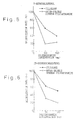
- Fig. 5 is a graph showing the micelle solubilization rate for 7-ketocholesterol.
- Fig. 6 is a graph showing the micelle solubilization rate for 25-hydroxycholesterol
- the waters-soluble polysaccharide used in the invention is derived from plants particularly beans, and preferably from soybean, especially the cotyledon thereof.
- the water-soluble polysaccharide used may have a molecular weight of any value, but preferably it has an average molecular weight of a few tens of thousands to a few millions and specifically from 50,000 to 1,000,000.
- the average molecular weight of the water-soluble polysaccharide is the value determined by the limiting viscosity method whereby the viscosity is measured in a 0.1 molar NaNO 3 solution using standard pullulan (Showa Denko, KK.) as the standard substance.
- the measurement of uronic acid was made by the Blumenkrantz method, and measurement of the neutral saccharides was made by the GLC method after alditol acetate conversion.
- the water-soluble polysaccharide may be obtained by water extraction from the polysaccharide-containing raw material, or in some cases by heating and elution under acid or alkali conditions or decomposition and elution with an enzyme.
- the following is an example of a process for producing a water-soluble polysaccharide.
- the raw material is from a plant, for example, the shell of an oily seed such as soybean, palm, coconut, corn, cottonseed, rapeseed, safflower, etc., usually with the oil and protein removed, or the lees from a grain such as rice or wheat, usually with the starch, etc. removed, or the pressed lees of sugar cane, beet, etc.
- the raw material is soybean, it may be obtained as the bean-curd lees produced during manufacture of tofu, soybean milk or separated soy protein.
- the raw material is thermally decomposed under acidic or alkali conditions, preferably at a pH near the isoelectric point of the protein, preferably at a temperature from 80°C to 130°C and more preferably from 100°C to 130°C and, after separating out the water-soluble fraction, it is either dried immediately, or dried after being subjected to, for example, active carbon treatment, resin adsorption treatment or ethanol precipitation treatment to remove the hydrophobic substances or low molecular substances, to obtain the water-soluble polysaccharide.
- the water-soluble polysaccharide may be used alone as a cholesterol oxide adsorbing agent, but it may also be used in combination with known cholesterol and cholesterol oxide absorption inhibitors and adsorbing agents to compensante for their - deficiencies.
- cholesterol and cholesterol oxide absorption inhibitors and adsorbing agents there may be mentioned, in addition to the acidic polysaccharide described in Japanese Unexamined Patent Publication No. 3-30667, aminopolysaccharides such as chitin and chitosan, and ion exchange resins such as cholestymin and cholestipol.
- the plant-derived water-soluble polysaccharide is added to the food containing the cholesterol oxide, so that the cholesterol oxide is adsorbed by the water-soluble polysaccharide and excreted out of the body.
- the plant-derived water-soluble polysaccharide by preadding the plant-derived water-soluble polysaccharide to the food, containing the cholesterol oxide, it is possible to produce foods with low contents of cholesterol oxide to be absorbed.
- foods containing cholesterol oxide include animal oils such as lard used for frying or deep frying of french fries and the like, as well as various livestock and marine products such as beef, pork, chicken, fish and shellfish, food products utilizing these foods, and butter, margarine, shortening, cream, mayonnaise, curry sauce, etc.
- the amount of the plant-derived water-soluble polysaccharide to be added to these foods cannot be generally specified as it will differ depending on the type of food, i.e. the cholesterol content of the food, and the differences in changes which occur with heating, but the water-soluble polysaccharide is preferably added at about a 5-fold volume to a 50-fold volume of the estimated cholesterol content for most foods.
- a two-fold amount of water was added to raw bean-curd lees obtained during the production of separated soybean protein, the pH was adjusted to 4.5 with hydrochloric acid, and heat extraction was performed at 120°C for 1.5 hours. After cooling, the supernatant and precipitate were separated by centrifugation (10,000 G x 30 min). An equivalent weight of water was added to the separated.precipitate portion, and after a second centrifugation, the supernatant was combined with the previous supernatant, passed through an active carbon column, and subjected to purification treatment and then drying to obtain a water-soluble soybean polysaccharide (A).
- the water-soluble soybean polysaccharide (A) was dissolved in 0.5% saline, reprecipitated 3 times to an ethanol concentration of 50%, and desalted using an ionexchange resin ("Amberlite IR-120B", product of Organo Co.) to obtain a water-soluble soybean polysaccharide (B).
- TBARS value (nmol MDA/ml) (mean ⁇ standard deviation)
- Water-soluble soybean polysaccharide (A) (Example 1) 4.1 ⁇ 0.1
- Water-soluble soybean polysaccharide (B) (Example 2) 3.9 ⁇ 0.3*
- Water-soluble soybean polysaccharide (C) (Example 3) 4.3 ⁇ 0.1* Cellulose (control) 5.8 ⁇ 0.2
- Serum lipid levels (mean ⁇ standard deviation) HDL-cholesterol Cholesterol Water-soluble soybean polysaccharide (A) (Example 1) 69.8 ⁇ 5.7 74.6 ⁇ 6.1 Water-soluble soybean polysaccharide (B) (Example 2) 68.5 ⁇ 4.3* 72.1 ⁇ 5.2 Water-soluble soybean polysaccharide (C) (Example 3) 62.7 ⁇ 1.3* 69.8 ⁇ 6.6 Cellulose (control) 40.3 ⁇ 2.7 66.3 ⁇ 5.5
- the linolic acid desaturation index [(18:3+20.3)/18:2] was found to be significantly lower compared to the control group, as shown below.
- liver microsome ⁇ 6-desaturase activity reflects the liver phospholipids and the linolic acid desaturation index of serum cholesteryl esters.
- ⁇ 6-desaturase activity (pmol/min/mg protein) (mean ⁇ standard deviation) Water-soluble soybean polysaccharide (A) (Example 1) 365 ⁇ 20 Water-soluble soybean polysaccharide (B) (Example 2) 351 ⁇ 18* Water-soluble soybean polysaccharide (C) (Example 3) 395 ⁇ 52 Cellulose (control) 510 ⁇ 80
- the major cholesterol oxide levels in the liver were found to be significantly lower with intake of the water-soluble soybean polysaccharides compared to the control group, as shown below.
- the cholesterol oxide levels excreted in the feces with intake of the water-soluble soybean polysaccharides showed a significant increase or tendency to increase compared to the control group.
- Liver and fecal cholesterol oxide contents (mean ⁇ standard deviation) Liver ( ⁇ g/g) Fecal (mg/g) 7 ⁇ -hydroxycholesterol Water-soluble soybean polysaccharide (A) (Example 1) 28 ⁇ 15 0.34 ⁇ 0.05* Water-soluble soybean polysaccharide (B) (Example 2) 25 ⁇ 10* 0.32 ⁇ 0.02* Water-soluble soybean polysaccharide (C) (Example 3) 48 ⁇ 12* 0.29 ⁇ 0.06* Cellulose (control) 110 ⁇ 20* 0.20 ⁇ 0.01* 7 ⁇ -hydroxycholesterol + 5 ⁇ -epoxycholesterol Water-soluble soybean polysaccharide (A) (Example 1) 60 ⁇ 40* 3.50 ⁇ 0.55* Water-soluble soybean polysaccharide (B) (Example 2) 62 ⁇ 32* 3.21 ⁇ 0.20* Water-soluble soybean polysaccharide (C) (Example 3) 150 ⁇ 15* 2.17 ⁇ 0.43 Cellulose (
- the water-soluble soybean polysaccharide (A) or cellulose was added to micelles containing cholesterol oxide, and the added polysaccharide concentration and the amount of cholesterol oxide solubilized in the micelles were measured.
- the results in Fig. 1 to Fig. 6 show that addition of the water-soluble soybean polysaccharide (A) inhibits the major micelle solubilization of cholesterol oxide in a concentration-dependent manner.
- Water-soluble soybean polysaccharides adsorb physically harmful cholesterol oxide or adsorb bile acids, thus inhibiting micelle solubilization of cholesterol oxide to reduce its absorption in the small intestine; they can therefore serve as food components which act against lower body homeostasis induced by ingested lipid peroxides.
Landscapes
- Chemical & Material Sciences (AREA)
- Life Sciences & Earth Sciences (AREA)
- Engineering & Computer Science (AREA)
- Polymers & Plastics (AREA)
- Food Science & Technology (AREA)
- Health & Medical Sciences (AREA)
- Nutrition Science (AREA)
- Oil, Petroleum & Natural Gas (AREA)
- Mycology (AREA)
- Pharmacology & Pharmacy (AREA)
- Hematology (AREA)
- Organic Chemistry (AREA)
- Chemical Kinetics & Catalysis (AREA)
- Obesity (AREA)
- Animal Behavior & Ethology (AREA)
- General Health & Medical Sciences (AREA)
- Public Health (AREA)
- Veterinary Medicine (AREA)
- Nuclear Medicine, Radiotherapy & Molecular Imaging (AREA)
- Diabetes (AREA)
- Bioinformatics & Cheminformatics (AREA)
- Medicinal Chemistry (AREA)
- General Chemical & Material Sciences (AREA)
- Coloring Foods And Improving Nutritive Qualities (AREA)
- Pharmaceuticals Containing Other Organic And Inorganic Compounds (AREA)
- Medicines Containing Plant Substances (AREA)
- Polysaccharides And Polysaccharide Derivatives (AREA)
Claims (7)
- Verwendung eines von einer Pflanze stammenden wasserlöslichen Polysaccharids für die Adsorption von in einem Nahrungsmittel vorhandenem Cholesteroloxid durch Versetzen des Nahrungsmittels mit dem Polysaccharid.
- Verwendung nach Anspruch 1, wobei das wasserlösliche Polysaccharid von Sojabohnen stammt.
- Verwendung nach Anspruch 1 oder 2, wobei das wasserlösliche Polysaccharid durch Extraktion eines pflanzlichen Ausgangsmaterials bei 80°C bis 130°C mittels einer wäßrigen Flüssigkeit gewonnen wird.
- Verwendung nach Anspruch 3, wobei die Extraktion unter sauren Bedingungen bei einem pH-Wert in der Nähe des isoelektrischen Punkts des Proteins in dem pflanzlichen Ausgangsmaterial durchgeführt wird.
- Verfahren zur Verringerung des Cholesteroloxidgehalts in einem cholesteroloxidhaltigen Nahrungsmittel, umfassend die folgenden Schritte:(i) Extrahieren eines cholesteroloxidadsorbierenden wasserlöslichen Polysaccharids aus Sojabohnen bei 80°C bis 130°C mittels einer wäßrigen Flüssigkeit; und(ii) Versetzen des Nahrungsmittels mit diesem von Sojabohnen stammenden wasserlöslichen Polysaccharid, um in dem Nahrungsmittel vorhandenes Cholesteroloxid zu adsorbieren, wodurch man ein Nahrungsmittel mit einem erniedrigten Gehalt an Cholesteroloxid, das von demjenigen, der das Nahrungsmittel verzehrt, zu adsorbieren ist, herstellt.
- Verfahren nach Anspruch 5, wobei das wasserlösliche Polysaccharid durch Extraktion unter sauren Bedingungen bei einem pH-Wert in der Nähe des isoelektrischen Punkts des Proteins in den Sojabohnen erhalten wurde.
- Verfahren nach Anspruch 5 oder 6, wobei es sich bei dem Nahrungsmittel um ein tierisches Öl, ein Nutztier- oder Meeresprodukt, oder Butter, Margarine, Backfett, Sahne, Mayonnaise oder eine Soße handelt.
Applications Claiming Priority (3)
| Application Number | Priority Date | Filing Date | Title |
|---|---|---|---|
| JP9210449A JPH1149682A (ja) | 1997-08-05 | 1997-08-05 | 酸化コレステロール吸着剤及びその製造法並びに酸化コレステロールを吸着する方法、及びコレステロール又は酸化コレステロールを含有する食品の製造法 |
| JP210449/97 | 1997-08-05 | ||
| JP21044997 | 1997-08-05 |
Publications (3)
| Publication Number | Publication Date |
|---|---|
| EP0901755A2 EP0901755A2 (de) | 1999-03-17 |
| EP0901755A3 EP0901755A3 (de) | 2000-06-21 |
| EP0901755B1 true EP0901755B1 (de) | 2005-01-12 |
Family
ID=16589521
Family Applications (1)
| Application Number | Title | Priority Date | Filing Date |
|---|---|---|---|
| EP98306201A Expired - Lifetime EP0901755B1 (de) | 1997-08-05 | 1998-08-04 | Adsorption von Cholesterinoxid in Lebensmitteln |
Country Status (4)
| Country | Link |
|---|---|
| US (1) | US6054578A (de) |
| EP (1) | EP0901755B1 (de) |
| JP (1) | JPH1149682A (de) |
| DE (1) | DE69828554D1 (de) |
Families Citing this family (4)
| Publication number | Priority date | Publication date | Assignee | Title |
|---|---|---|---|---|
| WO2004009731A1 (ja) * | 2002-07-23 | 2004-01-29 | Fuji Oil Company, Limited | 抗酸化剤及びその製造方法 |
| JP5700763B2 (ja) * | 2010-08-04 | 2015-04-15 | ヒガシマル醤油株式会社 | 抗アレルギー剤 |
| CN103100374B (zh) * | 2011-11-10 | 2016-04-13 | 西南科技大学 | 酒糟碱改性吸附材料及工艺 |
| JP2019156759A (ja) * | 2018-03-13 | 2019-09-19 | 地方独立行政法人神奈川県立産業技術総合研究所 | 多糖組成物 |
Family Cites Families (6)
| Publication number | Priority date | Publication date | Assignee | Title |
|---|---|---|---|---|
| JPS59210850A (ja) * | 1983-05-12 | 1984-11-29 | Nippon Shokuhin Kako Kk | 健康飲食品の製造法 |
| NZ209508A (en) * | 1984-09-11 | 1988-03-30 | New Zealand Dairy Res Inst | Removing steroids and/or pharmaceutically active compounds from fats and oils |
| US5096714A (en) * | 1988-06-28 | 1992-03-17 | Hauser-Kuhrts, Inc. | Prolonged release drug tablet formulations |
| JPH02255094A (ja) * | 1989-03-30 | 1990-10-15 | Nikken Kasei Kk | コレステロール吸着物質およびその製造方法 |
| US5262167A (en) * | 1990-12-20 | 1993-11-16 | Basf Corporation | Edible, non-baked low moisture cholestyramine composition |
| JP3213648B2 (ja) * | 1993-03-03 | 2001-10-02 | 日本たばこ産業株式会社 | 水溶性多糖の製造方法 |
-
1997
- 1997-08-05 JP JP9210449A patent/JPH1149682A/ja active Pending
-
1998
- 1998-07-23 US US09/121,785 patent/US6054578A/en not_active Expired - Lifetime
- 1998-08-04 DE DE69828554T patent/DE69828554D1/de not_active Expired - Lifetime
- 1998-08-04 EP EP98306201A patent/EP0901755B1/de not_active Expired - Lifetime
Also Published As
| Publication number | Publication date |
|---|---|
| US6054578A (en) | 2000-04-25 |
| EP0901755A3 (de) | 2000-06-21 |
| JPH1149682A (ja) | 1999-02-23 |
| DE69828554D1 (de) | 2005-02-17 |
| EP0901755A2 (de) | 1999-03-17 |
Similar Documents
| Publication | Publication Date | Title |
|---|---|---|
| EP2170090B1 (de) | Hydroxytyrosol-verstärkte öle und deren verwendung | |
| US7118688B2 (en) | Antioxidant compositions and methods of use thereof | |
| RU2165431C2 (ru) | Способ выделения композиции фитостеролов, композиции, терапевтический продукт | |
| JP4590491B2 (ja) | 過酸化脂質生成抑制のための医薬 | |
| JP5934483B2 (ja) | リン脂質結合型dha増加剤 | |
| JP6310690B2 (ja) | ペットフード | |
| AU2009200897A1 (en) | Oils enriched with diacylglycerols and phytosterol ester for use in the reduction of cholesterol and triglycerides | |
| US5514398A (en) | Food additive and use thereof | |
| CA2486409A1 (en) | Policosanol compositions, extraction from novel sources, and uses thereof | |
| EP2127663A1 (de) | Verstärker für adiponectin-produktion | |
| JPWO2005110400A1 (ja) | リパーゼ阻害剤、コレステロールエステラーゼ阻害剤、中性脂肪吸収抑制剤、コレステロール吸収抑制剤及びコレステロールエステル吸収抑制剤 | |
| US6054578A (en) | Method for adsorbing cholesterol oxide, and process for producing foods containing cholesterol or cholesterol oxide | |
| KR20030085123A (ko) | 항콜레스테롤 식용 기름 | |
| KR101546436B1 (ko) | 쑥 추출물 및 그 제조방법 | |
| Bhattacharyya | Differences in uptake and esterification of saturated analogues of cholesterol by rat small intestine | |
| US7767236B2 (en) | Plant seed extract composition and process for producing the same | |
| JPWO2002078468A1 (ja) | 血管障害疾患用飲食物 | |
| WO1994007378A1 (fr) | Additif alimentaire et utilisation | |
| JP2885430B2 (ja) | 凍豆腐 | |
| JPWO2004009731A1 (ja) | 抗酸化剤及びその製造方法 | |
| JP2004161644A (ja) | 膵リパーゼ阻害剤及び該阻害剤を含有する食品 | |
| JP2007246429A (ja) | リパーゼ阻害剤及び飲食品 | |
| JP2006022094A (ja) | 新規3,4−seco−lupane型トリテルペノイドサポニン化合物 | |
| JP6418960B2 (ja) | 粉末素材 | |
| JPH0670715A (ja) | マヨネーズ類の製造法 |
Legal Events
| Date | Code | Title | Description |
|---|---|---|---|
| PUAI | Public reference made under article 153(3) epc to a published international application that has entered the european phase |
Free format text: ORIGINAL CODE: 0009012 |
|
| AK | Designated contracting states |
Kind code of ref document: A2 Designated state(s): DE FR GB |
|
| AX | Request for extension of the european patent |
Free format text: AL;LT;LV;MK;RO;SI |
|
| PUAL | Search report despatched |
Free format text: ORIGINAL CODE: 0009013 |
|
| AK | Designated contracting states |
Kind code of ref document: A3 Designated state(s): AT BE CH CY DE DK ES FI FR GB GR IE IT LI LU MC NL PT SE |
|
| AX | Request for extension of the european patent |
Free format text: AL;LT;LV;MK;RO;SI |
|
| 17P | Request for examination filed |
Effective date: 20000929 |
|
| AKX | Designation fees paid |
Free format text: DE FR GB |
|
| 17Q | First examination report despatched |
Effective date: 20021104 |
|
| RAP1 | Party data changed (applicant data changed or rights of an application transferred) |
Owner name: FUJI OIL CO., LTD. |
|
| GRAP | Despatch of communication of intention to grant a patent |
Free format text: ORIGINAL CODE: EPIDOSNIGR1 |
|
| RTI1 | Title (correction) |
Free format text: ADSORPTION OF CHOLESTEROL OXIDE IN FOOD |
|
| GRAS | Grant fee paid |
Free format text: ORIGINAL CODE: EPIDOSNIGR3 |
|
| GRAA | (expected) grant |
Free format text: ORIGINAL CODE: 0009210 |
|
| AK | Designated contracting states |
Kind code of ref document: B1 Designated state(s): DE FR GB |
|
| PG25 | Lapsed in a contracting state [announced via postgrant information from national office to epo] |
Ref country code: FR Free format text: LAPSE BECAUSE OF NON-PAYMENT OF DUE FEES Effective date: 20050112 |
|
| REG | Reference to a national code |
Ref country code: GB Ref legal event code: FG4D |
|
| REF | Corresponds to: |
Ref document number: 69828554 Country of ref document: DE Date of ref document: 20050217 Kind code of ref document: P |
|
| PG25 | Lapsed in a contracting state [announced via postgrant information from national office to epo] |
Ref country code: DE Free format text: LAPSE BECAUSE OF FAILURE TO SUBMIT A TRANSLATION OF THE DESCRIPTION OR TO PAY THE FEE WITHIN THE PRESCRIBED TIME-LIMIT Effective date: 20050413 |
|
| PLBE | No opposition filed within time limit |
Free format text: ORIGINAL CODE: 0009261 |
|
| STAA | Information on the status of an ep patent application or granted ep patent |
Free format text: STATUS: NO OPPOSITION FILED WITHIN TIME LIMIT |
|
| 26N | No opposition filed |
Effective date: 20051013 |
|
| EN | Fr: translation not filed | ||
| PGFP | Annual fee paid to national office [announced via postgrant information from national office to epo] |
Ref country code: GB Payment date: 20130821 Year of fee payment: 16 |
|
| GBPC | Gb: european patent ceased through non-payment of renewal fee |
Effective date: 20140804 |
|
| PG25 | Lapsed in a contracting state [announced via postgrant information from national office to epo] |
Ref country code: GB Free format text: LAPSE BECAUSE OF NON-PAYMENT OF DUE FEES Effective date: 20140804 |