EP0902354B1 - Dateiverwaltungssystem und -verfahren - Google Patents
Dateiverwaltungssystem und -verfahren Download PDFInfo
- Publication number
- EP0902354B1 EP0902354B1 EP98307325A EP98307325A EP0902354B1 EP 0902354 B1 EP0902354 B1 EP 0902354B1 EP 98307325 A EP98307325 A EP 98307325A EP 98307325 A EP98307325 A EP 98307325A EP 0902354 B1 EP0902354 B1 EP 0902354B1
- Authority
- EP
- European Patent Office
- Prior art keywords
- block
- data
- dummy
- blocks
- file
- Prior art date
- Legal status (The legal status is an assumption and is not a legal conclusion. Google has not performed a legal analysis and makes no representation as to the accuracy of the status listed.)
- Expired - Lifetime
Links
Images




Classifications
-
- G—PHYSICS
- G06—COMPUTING OR CALCULATING; COUNTING
- G06F—ELECTRIC DIGITAL DATA PROCESSING
- G06F12/00—Accessing, addressing or allocating within memory systems or architectures
-
- G—PHYSICS
- G06—COMPUTING OR CALCULATING; COUNTING
- G06F—ELECTRIC DIGITAL DATA PROCESSING
- G06F3/00—Input arrangements for transferring data to be processed into a form capable of being handled by the computer; Output arrangements for transferring data from processing unit to output unit, e.g. interface arrangements
- G06F3/06—Digital input from, or digital output to, record carriers, e.g. RAID, emulated record carriers or networked record carriers
- G06F3/0601—Interfaces specially adapted for storage systems
- G06F3/0602—Interfaces specially adapted for storage systems specifically adapted to achieve a particular effect
- G06F3/0604—Improving or facilitating administration, e.g. storage management
- G06F3/0607—Improving or facilitating administration, e.g. storage management by facilitating the process of upgrading existing storage systems, e.g. for improving compatibility between host and storage device
-
- G—PHYSICS
- G06—COMPUTING OR CALCULATING; COUNTING
- G06F—ELECTRIC DIGITAL DATA PROCESSING
- G06F3/00—Input arrangements for transferring data to be processed into a form capable of being handled by the computer; Output arrangements for transferring data from processing unit to output unit, e.g. interface arrangements
- G06F3/06—Digital input from, or digital output to, record carriers, e.g. RAID, emulated record carriers or networked record carriers
- G06F3/0601—Interfaces specially adapted for storage systems
- G06F3/0628—Interfaces specially adapted for storage systems making use of a particular technique
- G06F3/0638—Organizing or formatting or addressing of data
- G06F3/0643—Management of files
-
- G—PHYSICS
- G06—COMPUTING OR CALCULATING; COUNTING
- G06F—ELECTRIC DIGITAL DATA PROCESSING
- G06F3/00—Input arrangements for transferring data to be processed into a form capable of being handled by the computer; Output arrangements for transferring data from processing unit to output unit, e.g. interface arrangements
- G06F3/06—Digital input from, or digital output to, record carriers, e.g. RAID, emulated record carriers or networked record carriers
- G06F3/0601—Interfaces specially adapted for storage systems
- G06F3/0668—Interfaces specially adapted for storage systems adopting a particular infrastructure
- G06F3/0671—In-line storage system
- G06F3/0673—Single storage device
- G06F3/0674—Disk device
-
- Y—GENERAL TAGGING OF NEW TECHNOLOGICAL DEVELOPMENTS; GENERAL TAGGING OF CROSS-SECTIONAL TECHNOLOGIES SPANNING OVER SEVERAL SECTIONS OF THE IPC; TECHNICAL SUBJECTS COVERED BY FORMER USPC CROSS-REFERENCE ART COLLECTIONS [XRACs] AND DIGESTS
- Y10—TECHNICAL SUBJECTS COVERED BY FORMER USPC
- Y10S—TECHNICAL SUBJECTS COVERED BY FORMER USPC CROSS-REFERENCE ART COLLECTIONS [XRACs] AND DIGESTS
- Y10S707/00—Data processing: database and file management or data structures
- Y10S707/99951—File or database maintenance
- Y10S707/99956—File allocation
Definitions
- the present invention relates to a file management system using a storage device and a method of managing the file system.
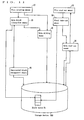
- the prior art file management system is outlined in a block diagram in Fig. 11.
- the prior art file system as illustrated in Fig. 11 is so configured that the storage area in the storage device 900 is divided into data blocks of a certain size, 8 kilobytes, for example, each data block given a block number and its occupation status managed by an unoccupied block management means 40.
- the blocks already allocated for a specific file are registered on a block table which is stored in the storage device 900, and are used for writing or reading out data as described below.
- Fig. 12 is a conceptional diagram showing the configuration of the block table Tb in the aforesaid prior art file management system.
- the block number Bn (B1, B2, B3, B4, ... Bk) is registered in order of the corresponding file offset 0n.
- file offset is a measure of quantity of data or data size from the head of the file
- the suffix 0n corresponds to the code number given to each data fragment when data is fragmented by the specific size (one block size, for example), and can indicate the position or address in a file. It also indicates the data size at a specific offset address.
- File offset 04 for example, means four times the data size of offset 01.
- a file creating means 10 directs a data block allocation means 30 to acquire block numbers for the new file, indicating the file offset 0n, and gives data to write to a data writing means 20 at the same time.
- the data block allocation means 30 first reads out the block table Tb stored on the storage device 900 and checks to see whether the area (data block) corresponding to the indicated file offset 0n is already allocated for the file to write or not.
- the said unoccupied block management means 40 which manages the occupation status of the respective data blocks and the current number of unoccupied blocks in the whole file management system as mentioned above, notifies the data block allocation means 30 of the block number Bn read out by the an unoccupied block management means 40.
- the data block allocation means 30 registers on the block table Tb the received block number Bn in such a way that the block number is paired with the file offset 0n acquired from the file creating means 10 and stores this block table Tb on the storage device 900.
- the data block allocation means 30 informs the data writing means 20 of the acquired block number Bn at the same time.
- the data writing means 20 then writes data into the space at the received block number Bn on the storage device 900.
- the file read-out means 50 When data in a specific file is to be read out at the request from outside in this system (in practice, the request is made by specifying or inputting subheading from outside when the requirement of a subheading from the top is provided, and the file read-out means acquires an offset 0n on the basis of the inputted data), the file read-out means 50 notifies a block take-out means 60 of the file offset 0n.
- the block take-out means 60 in turn reads out the block table Tb stored on the storage device 900 and acquires from the block table Tb the block number Bn corresponding to the given file offset 0n, and informs the data read-out means 70 of the block number.
- the data read-out means 70 receives the block number Bn, the data read-out means 70 reads out the object data from the space at that block number Bn on the storage device 900 and forwards the same to the file read-out means 50.
- each block is arranged consecutively on the block table Tb.
- data on 0s0 ⁇ 0s9 were written in block B10 to block B19.
- the block table Tb stores both data up to offset 0s9 and data from offset 0s10 downward as one consecutive or continuous data as shown in Fig. 13(b).
- the block take-out means 60 checks the corresponding space in the block stable Tb to find, on reading out from the block region without real data, that no data block is allocated yet, and informs the data read-out means 70 that no data block is present. Then, the data read-out means 70 prepares and forwards dummy data to the file read-out means 50. And when real data is written later in the block region without real data, a step to allocate data blocks is executed anew.
- the present invention is to resolve such problems with the prior art file management system as described above. And it is an object of the present invention to provide a file management system and a method of managing the same in which in writing data, no duminy data is written in the block region without real data but it will be ensured that in case real data is written later in the block region without real data, data blocks are available which can be allocated in the block region without real data.
- the storage area on the storage device 90 is divided into a specific size of data blocks; those data blocks are registered with a block table Tb in such a way that the numbers of the said data blocks are matched with the offset 0n written on the data blocks; unoccupied blocks are managed by the unoccupied block management means 40, and when there are issued instructions to write, the data block allocation means 30 referring to the block table Tb makes the procedure for writing.
- the present invention is built. That is to say, the aforesaid block allocation means 30 is provided with a function of counting the number of dummy blocks without real data when there is a request to write new data at a file offset address one or more blocks away from the last file offset 0n in a specific file, and the unoccupied block management means 40 is additionally given a function of managing the number of unoccupied blocks subtracting the number of dummy blocks from the number of unoccupied blocks.
- a dummy block management means 110 is additionally provided which picks out from the unoccupied block management means 40 the block numbers of dummy blocks in the number calculated by the aforesaid data block allocation means 30 and manages those block numbers. And when there is a request to write in a dummy block region having at least one dummy block, the dummy block allocation means 120 will allocate the dummy blocks kept by the aforesaid dummy block management means 110 for the data to write.
- the same effect also can be achieved by additionally providing a dummy block registration means 330.
- the block numbers of dummy blocks in the number calculated by the aforesaid data block allocation means 30 are picked out from the unoccupied block management means 40. Then the block numbers of those dummy blocks are registered on the spaces at file offset addresses corresponding to the dummy blocks on the block table. Additionally, a block identifier Ib is provided which indicates that no real data is present in those blocks.
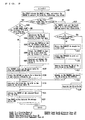
- Fig. 1 The file management system of the first embodiment according to the present invention is illustrated in Fig. 1. And the flow diagram in Fig. 2 shows the procedure of writing data in the first embodiment.
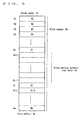
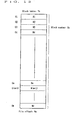
- Fig. 3 is a conceptional diagram of an example of the block table used in the first embodiment. The configuration as well as the operation of the present embodiment will now be described hereinafter.
- the storage area on the storage device 900 is divided into a certain size of data blocks, 8 kilobytes, for example, each data block is given a block number, its occupation status is registered with a table (not shown) and the unoccupied blocks are managed by an unoccupied block management means 40.
- a block table Tb as shown in Fig. 3 is formed.
- the file creating means 10 notifies 'the data writing means 20 of the data to write in the file and gives the file offset to the data block allocation means 30, and orders to acquire the block number of the data block on the storage device 900 (Fig. 2, Step S101).
- the data block allocation means 30 first checks whether the file offset On up for the data to write is larger than the previous file size or not (Fig. 2, Step S102). If the aforesaid file offset On is smaller than the previous file size, the block table Tb stored on the storage device 900 is read out, and the space corresponding to the file offset 0n is searched (Fig. 2, Step S113).
- the data block allocation means 30 will further check to see if the file offset for the data to write is one or more data blocks apart from the previous file size (Fig. 2, Step S103).
- the data block allocation means 30 reads out the block table Tb from the storage device and at the same time orders the unoccupied block management means 40 to search for a data block. Receiving the order, the unoccupied block management means 40 picks out an unoccupied data block on the storage device, informing the data block allocation means 30 of the block number Bn (Fig. 2, Steps S108 ⁇ S109).
- the data block allocation means 30 registers the block number Bn in the space on the block table Tb read in from the storage device 900 corresponding to the file offset 0n received from the file creating means 10 and stores the block table Tb on the storage device 900 (Fig. 2, Step S110).
- the data block allocation means 30 gives the acquired block number Bn to the data writing means 20.
- the data writing means 20 in turn writes the file data received from the file creating means 10 in the space at the received block number Bn on the storage device 900 (Fig. 2, Step S111 ⁇ S112).
- a file offset 0n is indicated one or more data blocks apart from the last in the previous file, there will come out a block region without real data or dummy block region on the block table Tb as Fig.3 (Fig. 2, Step S103, Yes).
- the proposed writing is to begin at file offset 0j while the previous file ends at file offset 0i. If the difference in data size (0j - 0i+1 block of data) is equivalent to or larger than one block of data, the blocks corresponding to the section between file offset 0i+1 and file offset 0j-1 constitutes a dummy block region.
- the data block allocation means 30 calculates out the number of blocks required to fill in the dummy block region Az on the basis of the data size of the previous file and the file offset 0j for the new data to write, and informs the dummy block management means 110 of the number of blocks required, and orders the said dummy block management means 110 to acquire the blocks (Fig. 2, Steps S104 ⁇ S105).
- the dummy block management means 110 instructs the unoccupied block management means 40 to search for a data block the number of times equivalent to the aforesaid number of blocks, gets the block numbers Bd (Bdl to Bdh) for the necessary number of blocks and manages those block numbers (Fig. 2, Steps S106 ⁇ S107).
- the acquired block numbers Bd (Bdl - Bdh) in the dummy block region do not appear on the block table Tb, but could tentatively be represented as in Fig. 8.
- the numbers of unoccupied blocks in the whole file management system managed by the unoccupied block management means 40 are reduced in degree of the numbers of blocks received by the dummy block management means 110. Even if, therefore, the unoccupied blocks in the whole file management system managed by the unoccupied block management means 40 are all allocated in writing data in another file, for example, the dummy blocks managed by the dummy block management means 110 will remain intact and can be used to fill in the aforesaid dummy block region without fail.
- the data block allocation means 30 orders not the unoccupied block management means 40 but the dummy block allocation means 120 to search for the data blocks, giving the file offset 0n.
- the dummy block allocation means 120 orders the dummy block management means 110 to pick out the dummy blocks managed by the latter, receiving block number Bd of the picked out data blocks and notifying the same to the data block allocation means 30 (Fig. 2, Step S118 ⁇ S115).
- the data block allocation means 30 registers the block number Bd on block table Tb and notifies the data writing means 20 of that numbers, followed by the data writing means 20 writing data in the usual steps of writing. (Fig. 2, Steps S110 ⁇ S118).
- the file read-out means 50 informs the block take-out means 60 of the file offset 0n for the data specified for reading out from outside, a user terminal, for example.
- the block take-out means 60 then reads out the block table Tb stored on the storage device 900 and searches for the space matched with the given file offset 0n on the block table Tb.
- a block number Bn is acquired and given to the data read-out means 70.
- the data read-out means 70 receives the block number Bn, the data read-out means 70 reads out the object data from the space indicated by that block number Bn on the storage device 900 and forwards the same to the file read-out means 50. If search of the block table Tb by the block take-out means 60 shows that the data block is not allocated in the space matched with the file offset 0n, that is to say, the case is reading out in the dummy block region, then the block take-out means 60 informs the data read-out means 70 that no data blocks are allocated.
- the data read-out means 70 prepares dummy data having a specific data pattern and forwards this dummy data to the file read-out means 50 as if the data had been read out from the storage device 900.
- the present embodiment is so configured that in case a dummy block region is created in writing data in the file, no data blocks are allocated in the dummy block region, which makes it possible to forward dummy data in the read-out step without writing unnecessary dummy data.
- the data blocks which fill in the dummy block region are managed by the dummy block management means 110, allocation of data blocks can be ensured when the block region is filled in with real data.
- the dummy block management means 110 is informed of only the number of blocks required to fill in the dummy block region in writing data.
- the file creating means 10 informs the dummy block management means 110 through the data block allocation means 30 of a file identifier to identify the file now up for writing and that the dummy block management means 110 manages the dummy blocks by pairing the block numbers received from the unoccupied block management means 40 and the file identifiers as shown in Fig. 4.
- the file creating means 10 informs the dummy block allocation means 120 through the data block allocation means 30 of the file identifier to identify that file, while the dummy block allocation means 120 issues to the dummy block management means 110 an order to pick out dummy blocks managed by the latter, indicating the file identifier.
- the dummy block management means 110 Before picking out the dummy blocks, the dummy block management means 110 makes sure that the received file identifier is identical with that managed by itself, and decides on the data blocks to allocate (Fig. 5, Step S115b).
- the dummy blocks acquired by the dummy block management means 110 will be allocated for the file without fail. That can preclude the possibility of allocating the dummy blocks to a wrong file when the dummy blocks are intended for a specific file and earmarked with special features such as the setting and conditions in writing data in the file, for example.
- Fig. 6 is the block diagram showing the file management system in the third embodiment.
- Fig. 7 is the flow diagram showing the operational process of the third embodiment.
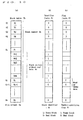
- Illustrated in Fig. 8 is a conceptional diagram showing examples of the block table and identifier used in the embodiment shown in Fig. 6. There will now be described the configuration and operation of the present embodiment.
- the file creating mean 10 informs the date writing means 20 of the data to write in the file and orders the data block allocation means 30 to acquire the block numbers of the data blocks on the storage device 900, indicating the offset number (Fig. 7, Step S201) as in Embodiment 1.
- the data block allocation means 30 first judges whether the file offset 0n for the data to write is larger than the previous file size (Fig. 7, Step S 202). If the file offset 0n is smaller than the previous file size, then the block table Tb stored on the storage device 900 is read out and the space matched with the given file offset 0n is searched for (Fig. 7, Step S213).
- the specified space is already allocated for data blocks with real data or dummy blocks. Whether writing is in the dummy blocks or not is first judged, and the appropriate block number Bn is taken out, followed by writing (Fig. 7, Steps S214 ⁇ S219a).
- Step S202 the data block allocation means 30 further checks to see if the file offset for writing is apart by one or more data block from the previous file size (Fig. 7, Step S203).
- the data block allocation means 30 calculates the number of blocks required to fill in the dummy block region on the basis of the data size at the end point of the previous file and that at the start of the new file offset 0n, and informs the dummy block registration means 330 of the number of blocks, giving an order to acquire the blocks (Fig. 7, Steps S204 ⁇ S205).
- the dummy block registration means 330 additionally provides an identifier field Fi to register a block identifier Ib showing that those blocks are dummy blocks, and stores the same along with the block table Tb on the storage device 900 (Fig. 7, Steps S206 ⁇ S207) as shown in Fig. 8(b). In the subsequent steps, the writing of data follows as in the foregoing embodiments.
- the file creating means 10 informs the data block allocation means 30 of the file offset 0n.
- the data block allocation means 30 reads out the identifier in the space corresponding to the file offset 0n on the block table Tb. The said blocks is found out to be dummy blocks, and the data block allocation means 30 knows that the writing is that of real data in a dummy block region (Fig. 7, Step S214: No).
- the data block allocation means 30 can acquire the said block numbers. So, the data block allocation means 30 orders the identifiers corresponding to the file offset 0n so as to indicate that the corresponding blocks change from dummy ones to real ones with real data and stores the same on the storage device 900. In the subsequent steps, the writing of data follows as in the usual writing (Fig. 7, Steps S219b ⁇ S220).
- the file read-out means 50 informs the block take-out means 60 of the file offset 0n for the data specified for read-out from outside, a user terminal, for example.
- the block take-out means 60 then reads out both the block table Tb stored on the storage device 900 and also the block identifier Ib in the identifier field Fi as shown in Fig. 8(b), and judges if the blocks corresponding to the given file offset 0n on the block table Tb are dummy or real.
- the block number Bn is acquired from the space corresponding to the file offset 0n on the block table Tb and is notified to the data read-out means 70.
- the data read-out means 70 receives the block number Bn, the data read-out means 70 reads out the object data from the space indicated by the block number Bn on the storage device 900 and forwards the same to the file read-out means 50.
- the data - read-out means 70 prepares dummy data having a specific data pattern and forwards this dummy data to the file read-out means 50 as if the data had been read out from the storage device 900.
- the present embodiment is so configured that in case a dummy block region is created in data writing in the file, no dummy data will be additionally written, yet dummy data can be prepared and forwarded in the read-out step.
- data blocks are already allocated in the dummy block region in practice, it can be ensured that data blocks will be left unoccupied and available without fail for the later writing of real data in this block region.
- the data read-out means 70 prepares dummy data in case data is read out from blocks in the dummy block region. If the block table Tb (Fig. 9(a)) is provided with an additional information field Fa with which additional information Da as shown in Fig. 9(b) is registered indicating which of the data patterns to take as in the aforesaid embodiments, it is possible to read out dummy data having any data pattern. It is noted that in Fig. 9(b), "01" corresponds to a full bit 0, "10" to a full bit 1 and "11" to a full bit @, for example.
- the additional information Da can be provided in every file. That makes it possible to read out dummy data with different data patterns per file. Also, the additional information Da can be provided on every block in the dummy block region. That can produce dummy data with different data patterns for each block.
- Different methods of inputting additional information are conceivable. They include one in which a plurality of default numbers are provided in the data block allocation means 30 so as to be automatically written at a specific place in the additional information field Fa for every dummy block or file, and another in which the operator reads out the block table Tb as necessary and manually writes at a specific place in the additional information field Fa on the block table Tb.
- Fig. 10 is a conceptional diagram showing the block tables used in another embodiment of the present invention.
- the block table Tb as described above is provided with an identifier field Fi (Fig. 10(b)) corresponding to the block table Tb as shown in Fig. 10(a) in which a block identifier Ib is registered for every block indicating whether the block is dummy. Furthermore, there is provided a flag field Ff as shown in Fig. 10(c) in which a readout-specifying flag Fr is registered that indicates block by block whether to read out real data as real or to read out real data as dummy from the storage device 900 when the block is a real one.
- the file read-out means 50 informs the block take-out means 60 of the file offset 0n for the data specified for read-out from outside, a user terminal, for example.
- the block take-out means 60 reads out the block table Tb stored on the storage device 900 and searches the identifier field Fi for the block identifier Ib corresponding to the given file offset 0n on the block table Tb.
- the block take-out means 60 further searches the flag field Ff for the corresponding readout-specifying flag and judges whether to read out the block as real data or dummy block.
- the block take-out means 60 informs the data read-out means 70 of the block number in case the block is read out as real data, and information as dummy block in case the block is read out as dummy block. In case the corresponding block identifier Ib on the block table indicates a dummy block, too, this information is conveyed to the data read-out means 70.
- the data read-out means 70 prepares dummy data with a specific data pattern and forwards this dummy data to the file read-out means 50 as if the data had been read out from the storage device 900.
- data having a specific data pattern can be read out without destroying data on the real block. This can be done on a block-by-block basis. Therefore, it can be chosen as necessary which data to read out, real or dummy.
- Dummy data having any particular data pattern can be freely read out if the additional information field Fa as shown in Fig. 9 is provided with additional information Da indicating what data pattern to use when the data read-out means prepares dummy data (on the basis of the flag in the flag field or block identifier).
- the additional information Da can be provided on every file or every block. Different ways of inputting readout-specifying flag are conceivable. Among them is one in which the operator reads out the block table Tb as necessary and manually writes in the flag field Ff on the said block table Tb.
- dummy data is not written in the dummy block region in data writing according to the present invention. That eliminates wasteful spending of time for writing, and secures data blocks to be allocated in that block region. It is guaranteed that when real data is written in that block region later, the required unoccupied blocks will be available and be acquired. In reading out dummy data, furthermore, any data pattern can be read out when dummy data is read out. This is applicable to every file or block.
Landscapes
- Engineering & Computer Science (AREA)
- Theoretical Computer Science (AREA)
- Physics & Mathematics (AREA)
- General Engineering & Computer Science (AREA)
- General Physics & Mathematics (AREA)
- Human Computer Interaction (AREA)
- Information Retrieval, Db Structures And Fs Structures Therefor (AREA)
Claims (18)
- Dateiverwaltungssystem, das Folgendes umfasst: Unterteilen des Speicherbereichs auf einer Speichervorrichtung (900) in Datenblöcke einer spezifischen Einheitsgröße, Paaren der Datenblockzahlen (Bn) und der Dateioffsetadressen (On) und Speichern in einer Blocktabelle (Tb), wobei die Dateioffsetadressen (On) auf die Datenblöcke geschrieben sind, und Verwalten unbesetzter Blöcke durch ein Verwaltungsmittel (40) für unbesetzte Blöcke, so dass ein Datenblockzuweisungsmittel (30) den Schreibschritt vornimmt, indem es auf die Blocktabelle (Tb) zugreift, wenn es angewiesen wird zu schreiben, dadurch gekennzeichnet, dass:das Datenblockzuweisungsmittel (30) mit einer Funktion versehen ist, die Zahl von Scheinblöcken ohne reale Daten zu berechnen, wenn eine Anforderung vorliegt, neue Daten an einer Dateioffsetadresse zu schreiben, wobei der Startpunkt des Schreibens neuer Daten einen oder mehrere Blöcke von der letzten Offsetadresse einer spezifischen Datei entfernt liegt, unddas Verwaltungsmittel (40) für unbesetzte Blöcke mit einer Funktion versehen ist, als Zahl unbesetzter Blöcke die Zahl zu verwalten, die durch Subtrahieren der Zahl von Scheinblöcken von der Zahl unbesetzter Datenblöcke erhalten wird.
- Dateiverwaltungssystem nach Anspruch 1, das außerdem mit Folgendem versehen ist:einem Scheinblockverwaltungsmittel, um aus dem Verwaltungsmittel für unbesetzte Blöcke die Blockzahlen der Zahl von Scheinblöcken, die durch das Datenblockzuweisungsmittel berechnet werden, herauszugreifen und sie zu verwalten, undeinem Scheinblockzuweisungsmittel, um die durch das Scheinblockverwaltungsmittel verwalteten Scheinblöcke für zu schreibende Daten zuzuweisen, wenn eine Anforderung zum Schreiben in einen Scheinblockbereich vorliegt, in dem zumindest ein Scheinblock existiert.
- Dateiverwaltungssystem nach Anspruch 2, wobei das Scheinblockverwaltungsmittel die Blockzahlen und die entsprechenden Dateiidentifizierer verwaltet und das Scheinblockzuweisungsmittel Blöcke zuweist, indem es auf die Dateiidentifizierer zugreift, wenn eine Anforderung zum Schreiben in den Scheinblockbereich vorliegt.
- Dateiverwaltungssystem nach Anspruch 1, das mit einem Scheinblockregistrierungsmittel versehen ist, um aus dem Verwaltungsmittel für unbesetzte Blöcke die Blockzahlen von Scheinblöcken in der Zahl, die durch das Datenblockzuweisungsmittel berechnet wird, herauszugreifen, um die Blockzahlen der Scheinblöcke an den entsprechenden Dateioffsetadressen in der Blocktabelle zu registrieren und um zusätzlich einen Blockidentifizierer bereitzustellen, der anzeigt, dass keine realen Daten in den Blöcken vorhanden sind.
- Dateiverwaltungsverfahren mit folgenden Schritten:Unterteilen des Speicherbereichs auf einer Speichervorrichtung (900) in Datenblöcke einer spezifischen Einheitsgröße, Paaren der Datenblockzahlen (Bn) und der Dateioffsetadressen (On) und Speichern in einer Blocktabelle (Tb), wobei die Dateioffsetadressen (On) auf die Datenblöcke geschrieben sind, und Verwalten unbesetzter Blöcke durch ein Verwaltungsmittel (40) für unbesetzte Blöcke, so dass ein Datenblockzuweisungsmittel (30) den Schreibschritt vornimmt, indem es auf die Blocktabelle (Tb) zugreift, wenn es angewiesen wird zu schreiben, dadurch gekennzeichnet, dass:die Zahl von Scheinblöcken ohne reale Daten berechnet wird, wenn eine Anforderung vorliegt, neue Daten an einer Dateioffsetadresse zu schreiben, wobei der Startpunkt des Schreibens neuer Daten einen oder mehrere Blöcke von der letzten Offsetadresse einer spezifischen Datei entfernt liegt, und das Verwaltungsmittel (40) für unbesetzte Blöcke als Zahl unbesetzter Blöcke die Zahl verwaltet, die durch Subtrahieren der Zahl von Scheinblöcken ohne reale Daten von der Zahl unbesetzter Datenblöcke erhalten wird.
- Dateiverwaltungsverfahren nach Anspruch 5, wobei die Scheinblockzahlen durch das Scheinblockverwaltungsmittel verwaltet werden und wobei das Scheinblockzuweisungsmittel für zu schreibende Daten die durch das Scheinblockverwaltungssystem verwalteten Scheinblöcke zuweist, wenn eine Anforderung zum Schreiben in den Scheinblockbereich vorliegt.
- Dateiverwaltungsverfahren nach Anspruch 6, wobei das Scheinblockverwaltungsmittel sowohl die Blockzahlen als auch die zugehörigen Dateiidentifizierer verwaltet und das Scheinblockzuweisungsmittel Blöcke zuweist, indem es auf die Dateiidentifizierer zugreift, wenn eine Anforderung zum Schreiben in den Scheinblockbereich vorliegt.
- Dateiverwaltungsverfahren nach Anspruch 5, wobei die Scheinblockzahlen an den entsprechenden Dateioffsetadressen in der Blocktabelle geschrieben werden und durch Hinzuaddieren von Dateiidentifizierern zu den jeweiligen Datenblöcken verwaltet werden, die anzeigen, dass die Blöcke Scheinblöcke sind.
- Dateiverwaltungsverfahren nach Anspruch 6, 7 oder 8, wobei das Datenauslesemittel Daten ausliest, indem es auf die Blocktabelle zugreift, wenn eine Anordnung zum Auslesen ausgegeben wird, dadurch gekennzeichnet, dass das Datenauslesemittel zusätzliche Informationen aufweist, um ein spezifisches Datenmuster als Scheindaten auszulesen, wenn es den Scheinblockbereich der Datei ausliest.
- Dateiverwaltungsverfahren nach Anspruch 6, 7 oder 8, wobei das Datenauslesemittel Daten ausliest, indem es auf die Blocktabelle zugreift, wenn eine Anordnung zum Auslesen ausgegeben wird, dadurch gekennzeichnet, dass jede Datei zusätzliche Informationen aufweist, um ein spezifisches Datenmuster als Scheindaten auszulesen, wenn das Datenauslesemittel den Scheinblockbereich der Datei ausliest.
- Dateiverwaltungsverfahren nach Anspruch 6, 7 oder 8, wobei das Datenauslesemittel Daten ausliest, indem es auf die Blocktabelle zugreift, wenn eine Anordnung zum Auslesen ausgegeben wird, dadurch gekennzeichnet, dass die jeweiligen Blöcke in der Blocktabelle zusätzliche Informationen aufweisen, um ein spezifisches Datenmuster als Scheindaten auszulesen, wenn das Datenauslesemittel den Scheinblockbereich der Datei ohne reale Daten ausliest.
- Dateiverwaltungsverfahren nach Anspruch 8, wobei das Datenauslesemittel Daten ausliest, indem es auf die Blocktabelle zugreift, wenn eine Anordnung zum Auslesen ausgegeben wird, dadurch gekennzeichnet, dass jeder in der Blocktabelle registrierte Block ein auslesespezifisches Flag aufweist, das angibt, ob reale Daten auszulesen sind oder ob dieser Block als Scheinblock aus der Speichervorrichtung auszulesen ist, falls der Block ein realer Block mit realen Daten ist, und wobei zusätzliche Informationen vorgesehen sind, um ein spezifisches Muster als Scheindaten auszulesen, falls der Blockidentifizierer anzeigt, dass der zu lesende Block ein Scheinblock ist, oder falls reale Daten als Scheindaten ausgelesen werden, wie es durch das auslesespezifische Flag angezeigt wird.
- Dateiverwaltungsverfahren nach Anspruch 8, wobei das Datenauslesemittel Daten ausliest, indem es auf die Blocktabelle zugreift, wenn eine Anordnung zum Auslesen ausgegeben wird, dadurch gekennzeichnet, dass jeder in der Blocktabelle registrierte Block ein auslesespezifisches Flag aufweist, das angibt, ob reale Daten auszulesen sind oder ob dieser Block als Scheinblock aus der Speichervorrichtung auszulesen ist, falls der Block ein realer Block mit realen Daten ist, und dass jede Datei zusätzliche Informationen aufweist, die vorgesehen sind, um ein spezifisches Muster als Scheindaten auszulesen, falls der Blockidentifizierer anzeigt, dass der zu lesende Block ein Scheinblock ist, oder falls reale Daten als Scheindaten ausgelesen werden, wie es durch das auslesespezifische Flag angezeigt wird.
- Dateiverwaltungsverfahren nach Anspruch 8, wobei das Datenauslesemittel Daten ausliest, indem es auf die Blocktabelle zugreift, wenn eine Anordnung zum Auslesen ausgegeben wird, dadurch gekennzeichnet, dass jeder in der Blocktabelle registrierte Block ein auslesespezifisches Flag aufweist, das angibt, ob reale Daten auszulesen sind oder ob dieser Block als Scheinblock aus der Speichervorrichtung auszulesen ist, falls der Block ein realer Block mit realen Daten ist, und dass jeder Block zusätzliche Informationen aufweist, die vorgesehen sind, um ein spezifisches Muster als Scheindaten auszulesen, falls der Blockidentifizierer anzeigt, dass der zu lesende Block ein Scheinblock ist, oder falls reale Daten als Scheindaten ausgelesen werden, wie es durch das auslesespezifische Flag angezeigt wird.
- Speichermedium, das ein darauf gespeichertes Dateiverwaltungsverfahren aufweist, das folgende Schritte umfasst: Unterteilen des Speicherbereichs auf einer Speichervorrichtung (900) in Datenblöcke einer spezifischen Einheitsgröße, Paaren der Datenblockzahlen (Bn) und der Dateioffsetadressen (On) und Speichern in einer Blocktabelle (Tb), wobei die Dateioffsetadressen (On) auf die Datenblöcke geschrieben sind, und Verwalten unbesetzter Blöcke, so dass der Schreibschritt ausgeführt wird, indem auf die Blocktabelle (Tb) zugegriffen wird, wenn eine Anweisung zum Schreiben vorliegt, dadurch gekennzeichnet, dass ein Verfahren gespeichert ist, um die Zahl von Scheinblöcken ohne reale Daten zu berechnen, wenn eine Anforderung vorliegt, neue Daten an einer Dateioffsetadresse zu schreiben, wobei der Startpunkt des Schreibens neuer Daten einen oder mehrere Blöcke von der letzten Offsetadresse einer spezifischen Datei entfernt liegt, und um in dem Verwaltungsmittel (40) für unbesetzte Blöcke als Zahl unbesetzter Blöcke die Zahl zu verwalten, die durch Subtrahieren der Zahl der Scheinblöcke ohne reale Daten von der Zahl unbesetzter Datenblöcke erhalten wird.
- Speichermedium nach Anspruch 15, wobei die Blockzahlen durch das Scheinblockverwaltungsmittel verwaltet werden und in dem ein Verfahren gespeichert ist, um die verwalteten Scheinblöcke schreibenden Daten zuzuweisen, wenn eine Anforderung zum Schreiben in den Scheinblockbereich vorliegt.
- Speichermedium nach Anspruch 16, wobei die Scheinblöcke von den Scheinblockzahlen und den entsprechenden Dateiidentifizierern verwaltet werden und in dem ein Verfahren des Scheinblockzuweisungsmittels gespeichert ist, das Blöcke zuweist, indem es auf die Dateiidentifizierer zugreift, wenn eine Anforderung zum Schreiben in den Scheinblockbereich vorliegt.
- Speichermedium nach Anspruch 15, in dem ein Verwaltungsverfahren gespeichert ist, bei dem die Scheinblockzahlen an den entsprechenden Dateioffsetadressen in der Blocktabelle geschrieben werden und ein Dateiidentifizierer zu jedem Datenblock hinzugefügt wird, der anzeigt, dass der Block ein Scheinblock ist.
Applications Claiming Priority (3)
| Application Number | Priority Date | Filing Date | Title |
|---|---|---|---|
| JP9247019A JPH1185580A (ja) | 1997-09-11 | 1997-09-11 | ファイル管理システム及びファイル管理方法 |
| JP247019/97 | 1997-09-11 | ||
| JP24701997 | 1997-09-11 |
Publications (3)
| Publication Number | Publication Date |
|---|---|
| EP0902354A2 EP0902354A2 (de) | 1999-03-17 |
| EP0902354A3 EP0902354A3 (de) | 1999-07-21 |
| EP0902354B1 true EP0902354B1 (de) | 2003-05-21 |
Family
ID=17157201
Family Applications (1)
| Application Number | Title | Priority Date | Filing Date |
|---|---|---|---|
| EP98307325A Expired - Lifetime EP0902354B1 (de) | 1997-09-11 | 1998-09-10 | Dateiverwaltungssystem und -verfahren |
Country Status (5)
| Country | Link |
|---|---|
| US (1) | US6308183B1 (de) |
| EP (1) | EP0902354B1 (de) |
| JP (1) | JPH1185580A (de) |
| KR (1) | KR100510941B1 (de) |
| DE (1) | DE69814772D1 (de) |
Families Citing this family (3)
| Publication number | Priority date | Publication date | Assignee | Title |
|---|---|---|---|---|
| KR100714691B1 (ko) * | 2005-05-04 | 2007-05-04 | 삼성전자주식회사 | 파일 시스템에 추가 정보를 저장하고 관리하는 장치 및방법 |
| JP5728982B2 (ja) * | 2010-02-26 | 2015-06-03 | 株式会社Jvcケンウッド | 処理装置および書込方法 |
| EP4346158A1 (de) * | 2022-09-30 | 2024-04-03 | IHP GmbH - Innovations for High Performance Microelectronics / Leibniz-Institut für innovative Mikroelektronik | Kryptographischer hardware-beschleuniger mit dummy-adressierung von blöcken zum schutz gegen physische angriffe |
Family Cites Families (16)
| Publication number | Priority date | Publication date | Assignee | Title |
|---|---|---|---|---|
| DE2750284A1 (de) * | 1977-11-10 | 1979-05-17 | Bayer Ag | Verfahren zur gewinnung von maleinsaeureanhydrid aus destillationsrueckstaenden |
| US4467421A (en) * | 1979-10-18 | 1984-08-21 | Storage Technology Corporation | Virtual storage system and method |
| JPH0212346A (ja) * | 1988-06-29 | 1990-01-17 | Nec Corp | データ保証方式 |
| JPH0344745A (ja) * | 1989-07-12 | 1991-02-26 | Nec Corp | 集合型vtocファイル管理方式 |
| JPH03127137A (ja) * | 1989-10-12 | 1991-05-30 | Nec Corp | ファイル領域割り当て方式 |
| CA2038583C (en) * | 1990-03-20 | 1996-03-12 | Shigemi Maeda | Information recording and reproducing device |
| GB2251324B (en) * | 1990-12-31 | 1995-05-10 | Intel Corp | File structure for a non-volatile semiconductor memory |
| US5333305A (en) * | 1991-12-27 | 1994-07-26 | Compaq Computer Corporation | Method for improving partial stripe write performance in disk array subsystems |
| US5305295A (en) * | 1992-06-29 | 1994-04-19 | Apple Computer, Inc. | Efficient method and apparatus for access and storage of compressed data |
| US5542066A (en) * | 1993-12-23 | 1996-07-30 | International Business Machines Corporation | Destaging modified data blocks from cache memory |
| JPH086825A (ja) * | 1994-06-17 | 1996-01-12 | Hitachi Ltd | ファイル生成方法 |
| US5754817A (en) * | 1994-09-29 | 1998-05-19 | Intel Corporation | Execution in place of a file stored non-contiguously in a non-volatile memory |
| JP2882302B2 (ja) * | 1995-02-24 | 1999-04-12 | 株式会社日立製作所 | 情報の記録方法及び再生方法 |
| US5781733A (en) * | 1996-06-20 | 1998-07-14 | Novell, Inc. | Apparatus and method for redundant write removal |
| US6041393A (en) * | 1996-08-23 | 2000-03-21 | Hewlett-Packard Co. | Array padding for higher memory throughput in the presence of dirty misses |
| JPH10301818A (ja) * | 1997-04-28 | 1998-11-13 | Matsushita Electric Ind Co Ltd | ファイルシステム及びその管理方法 |
-
1997
- 1997-09-11 JP JP9247019A patent/JPH1185580A/ja active Pending
-
1998
- 1998-09-10 DE DE69814772T patent/DE69814772D1/de not_active Expired - Lifetime
- 1998-09-10 EP EP98307325A patent/EP0902354B1/de not_active Expired - Lifetime
- 1998-09-10 US US09/150,694 patent/US6308183B1/en not_active Expired - Fee Related
- 1998-09-11 KR KR10-1998-0037533A patent/KR100510941B1/ko not_active Expired - Fee Related
Also Published As
| Publication number | Publication date |
|---|---|
| KR19990029725A (ko) | 1999-04-26 |
| JPH1185580A (ja) | 1999-03-30 |
| US6308183B1 (en) | 2001-10-23 |
| KR100510941B1 (ko) | 2005-10-25 |
| DE69814772D1 (de) | 2003-06-26 |
| EP0902354A2 (de) | 1999-03-17 |
| EP0902354A3 (de) | 1999-07-21 |
Similar Documents
| Publication | Publication Date | Title |
|---|---|---|
| US7653777B2 (en) | Portable data storage device using a memory address mapping table | |
| JP4250190B2 (ja) | ファイルシステムにおけるオブジェクトの効率的な記憶 | |
| EP0251461B1 (de) | Vorrichtung und Verfahren zur parallelen Verwaltung von freien Speicherbereichen | |
| CN101556529A (zh) | 具有多个存储系统模块的存储系统 | |
| KR960024987A (ko) | 축소된 요구 블로킹을 갖는 캐시메모리 | |
| CN105389266B (zh) | 一种数据管理方法及装置 | |
| US20080162830A1 (en) | Methods, systems, and computer program products for providing memory management with constant defragmentation time | |
| US6182088B1 (en) | File system and file management method | |
| ES2272753T3 (es) | Unidades de almacenamiento de datos en una biblioteca de almacenamiento de datos automatizada. | |
| EP0902354A2 (de) | Dateiverwaltungssystem und -verfahren | |
| JP2005135116A (ja) | ストレージ装置及びそのアクセス制御方法 | |
| US6772954B2 (en) | Method of encoding information within directory files on an integrated circuit smart card | |
| US6530008B1 (en) | Method for managing a database for storing variable size data records using fixed size buckets | |
| CN107037986A (zh) | 一种延长可擦写芯片寿命的方法和装置 | |
| CN114625579A (zh) | 磁盘管理方法、装置、设备及存储介质 | |
| CN117724991B (zh) | 嵌入式系统的动态内存管理方法、系统、终端及存储介质 | |
| CN100478916C (zh) | 内存管理系统及方法 | |
| CN113485974B (zh) | Nor闪存使用yaffs的方法及装置 | |
| US20050138320A1 (en) | Memory allocation unit | |
| EP1785827A1 (de) | Host-einrichtung, speichereinrichtung und verfahren zum zugreifen auf eine speichereinrichtung | |
| JP3980729B2 (ja) | 記憶領域管理システムおよび記憶領域管理プログラムを記録した媒体 | |
| CN117290258A (zh) | 一种存储空间处理方法、装置、设备以及存储介质 | |
| JPH11213107A (ja) | Icカードのファイル管理方法 | |
| US6223991B1 (en) | Process for managing the memory resources in a microcircuit card | |
| JP2969776B2 (ja) | データ識別方式 |
Legal Events
| Date | Code | Title | Description |
|---|---|---|---|
| PUAI | Public reference made under article 153(3) epc to a published international application that has entered the european phase |
Free format text: ORIGINAL CODE: 0009012 |
|
| 17P | Request for examination filed |
Effective date: 19980925 |
|
| AK | Designated contracting states |
Kind code of ref document: A2 Designated state(s): DE FR GB |
|
| AX | Request for extension of the european patent |
Free format text: AL;LT;LV;MK;RO;SI |
|
| PUAL | Search report despatched |
Free format text: ORIGINAL CODE: 0009013 |
|
| AK | Designated contracting states |
Kind code of ref document: A3 Designated state(s): AT BE CH CY DE DK ES FI FR GB GR IE IT LI LU MC NL PT SE |
|
| AX | Request for extension of the european patent |
Free format text: AL;LT;LV;MK;RO;SI |
|
| RIC1 | Information provided on ipc code assigned before grant |
Free format text: 6G 06F 3/06 A, 6G 06F 12/02 B |
|
| AKX | Designation fees paid |
Free format text: DE FR GB |
|
| GRAH | Despatch of communication of intention to grant a patent |
Free format text: ORIGINAL CODE: EPIDOS IGRA |
|
| GRAH | Despatch of communication of intention to grant a patent |
Free format text: ORIGINAL CODE: EPIDOS IGRA |
|
| GRAA | (expected) grant |
Free format text: ORIGINAL CODE: 0009210 |
|
| AK | Designated contracting states |
Designated state(s): DE FR GB |
|
| PG25 | Lapsed in a contracting state [announced via postgrant information from national office to epo] |
Ref country code: FR Free format text: LAPSE BECAUSE OF FAILURE TO SUBMIT A TRANSLATION OF THE DESCRIPTION OR TO PAY THE FEE WITHIN THE PRESCRIBED TIME-LIMIT Effective date: 20030521 |
|
| REG | Reference to a national code |
Ref country code: GB Ref legal event code: FG4D |
|
| REF | Corresponds to: |
Ref document number: 69814772 Country of ref document: DE Date of ref document: 20030626 Kind code of ref document: P |
|
| PG25 | Lapsed in a contracting state [announced via postgrant information from national office to epo] |
Ref country code: DE Free format text: LAPSE BECAUSE OF FAILURE TO SUBMIT A TRANSLATION OF THE DESCRIPTION OR TO PAY THE FEE WITHIN THE PRESCRIBED TIME-LIMIT Effective date: 20030822 |
|
| PLBE | No opposition filed within time limit |
Free format text: ORIGINAL CODE: 0009261 |
|
| STAA | Information on the status of an ep patent application or granted ep patent |
Free format text: STATUS: NO OPPOSITION FILED WITHIN TIME LIMIT |
|
| 26N | No opposition filed |
Effective date: 20040224 |
|
| EN | Fr: translation not filed | ||
| PGFP | Annual fee paid to national office [announced via postgrant information from national office to epo] |
Ref country code: GB Payment date: 20060906 Year of fee payment: 9 |
|
| GBPC | Gb: european patent ceased through non-payment of renewal fee |
Effective date: 20070910 |
|
| PG25 | Lapsed in a contracting state [announced via postgrant information from national office to epo] |
Ref country code: GB Free format text: LAPSE BECAUSE OF NON-PAYMENT OF DUE FEES Effective date: 20070910 |