EP0902788B1 - Nukleoside-derivate und ihre verwendung für die synthese oligonukleotiden - Google Patents
Nukleoside-derivate und ihre verwendung für die synthese oligonukleotiden Download PDFInfo
- Publication number
- EP0902788B1 EP0902788B1 EP97921911A EP97921911A EP0902788B1 EP 0902788 B1 EP0902788 B1 EP 0902788B1 EP 97921911 A EP97921911 A EP 97921911A EP 97921911 A EP97921911 A EP 97921911A EP 0902788 B1 EP0902788 B1 EP 0902788B1
- Authority
- EP
- European Patent Office
- Prior art keywords
- group
- denotes
- formula
- function
- synthesis
- Prior art date
- Legal status (The legal status is an assumption and is not a legal conclusion. Google has not performed a legal analysis and makes no representation as to the accuracy of the status listed.)
- Expired - Lifetime
Links
- 0 CCC(CC)*CC1CCCC1 Chemical compound CCC(CC)*CC1CCCC1 0.000 description 2
Classifications
-
- C—CHEMISTRY; METALLURGY
- C07—ORGANIC CHEMISTRY
- C07H—SUGARS; DERIVATIVES THEREOF; NUCLEOSIDES; NUCLEOTIDES; NUCLEIC ACIDS
- C07H19/00—Compounds containing a hetero ring sharing one ring hetero atom with a saccharide radical; Nucleosides; Mononucleotides; Anhydro-derivatives thereof
- C07H19/02—Compounds containing a hetero ring sharing one ring hetero atom with a saccharide radical; Nucleosides; Mononucleotides; Anhydro-derivatives thereof sharing nitrogen
- C07H19/04—Heterocyclic radicals containing only nitrogen atoms as ring hetero atom
- C07H19/06—Pyrimidine radicals
-
- C—CHEMISTRY; METALLURGY
- C07—ORGANIC CHEMISTRY
- C07H—SUGARS; DERIVATIVES THEREOF; NUCLEOSIDES; NUCLEOTIDES; NUCLEIC ACIDS
- C07H19/00—Compounds containing a hetero ring sharing one ring hetero atom with a saccharide radical; Nucleosides; Mononucleotides; Anhydro-derivatives thereof
- C07H19/02—Compounds containing a hetero ring sharing one ring hetero atom with a saccharide radical; Nucleosides; Mononucleotides; Anhydro-derivatives thereof sharing nitrogen
- C07H19/04—Heterocyclic radicals containing only nitrogen atoms as ring hetero atom
- C07H19/06—Pyrimidine radicals
- C07H19/10—Pyrimidine radicals with the saccharide radical esterified by phosphoric or polyphosphoric acids
-
- C—CHEMISTRY; METALLURGY
- C07—ORGANIC CHEMISTRY
- C07H—SUGARS; DERIVATIVES THEREOF; NUCLEOSIDES; NUCLEOTIDES; NUCLEIC ACIDS
- C07H19/00—Compounds containing a hetero ring sharing one ring hetero atom with a saccharide radical; Nucleosides; Mononucleotides; Anhydro-derivatives thereof
- C07H19/02—Compounds containing a hetero ring sharing one ring hetero atom with a saccharide radical; Nucleosides; Mononucleotides; Anhydro-derivatives thereof sharing nitrogen
- C07H19/04—Heterocyclic radicals containing only nitrogen atoms as ring hetero atom
- C07H19/16—Purine radicals
-
- C—CHEMISTRY; METALLURGY
- C07—ORGANIC CHEMISTRY
- C07H—SUGARS; DERIVATIVES THEREOF; NUCLEOSIDES; NUCLEOTIDES; NUCLEIC ACIDS
- C07H19/00—Compounds containing a hetero ring sharing one ring hetero atom with a saccharide radical; Nucleosides; Mononucleotides; Anhydro-derivatives thereof
- C07H19/02—Compounds containing a hetero ring sharing one ring hetero atom with a saccharide radical; Nucleosides; Mononucleotides; Anhydro-derivatives thereof sharing nitrogen
- C07H19/04—Heterocyclic radicals containing only nitrogen atoms as ring hetero atom
- C07H19/16—Purine radicals
- C07H19/20—Purine radicals with the saccharide radical esterified by phosphoric or polyphosphoric acids
-
- C—CHEMISTRY; METALLURGY
- C07—ORGANIC CHEMISTRY
- C07H—SUGARS; DERIVATIVES THEREOF; NUCLEOSIDES; NUCLEOTIDES; NUCLEIC ACIDS
- C07H21/00—Compounds containing two or more mononucleotide units having separate phosphate or polyphosphate groups linked by saccharide radicals of nucleoside groups, e.g. nucleic acids
Definitions
- the invention relates to reagents for synthesis oligonucleotides, and in particular to nucleoside derivatives and reagents blocking usable for the electrochemical synthesis of oligonucleotides.
- PCT application WO 94/22889 in the name of CIS BIO INTERNATIONAL Discloses electron conducting polymer derivatives (PCE), usable as a support for the synthesis of biological polymers, in particular oligonucleotides.
- PCE electron conducting polymer derivatives
- One of the uses of electronically conductive polymer derivatives which is described in this Application is the directed synthesis of oligonucleotides in situ on electron-conductive polymer coated microelectrodes, which in particular makes it possible to obtain oligonucleotide templates.
- the matrices of oligonucleotides or peptides are indeed a very interesting tool in the field of sequencing, as well as in the field of diagnosis (genetic diseases, infectious diseases, cancer, cell typing) or for the screening of active molecules.
- nucleotides whose phosphate group, the amine function exocyclic bases A, C, and G, and the 5'-OH group of sugar carry groupings protectors.
- the 5'-OH group of the nucleoside sugar is deprotected. elongation, so that the released 5'-OH function can react, in the presence of a coupling agent, with the phosphate group of the next nucleotide to form a phosphotriester bond (possibly via a phosphite which is then converted to phosphotriester by oxidation).
- the protection of the bases A, C, and G is intended to avoid reactions parasites involving the exocyclic amine functions of these bases.
- Groupings protectors of these bases, as well as those of the phosphate group, are cut at the end of the synthesis of the oligonucleotide.
- an electronically conductive polymer as a support of synthesis makes it possible to proceed to the synthesis of oligonucleotides by implementing one or more electrochemical cleavage steps of the different protecting groups. This electrochemical deprotection is ensured by creating a potential difference between the working electrode and a counter-electrode.
- microelectrodes arranged in a matrix as a solid support for the in situ synthesis of oligonucleotides enables the selective electrochemical deprotection of the 5'-OH function of the oligonucleotide chains to be carried out for the addition of a determined nucleotide. growing on some of the electrodes of the matrix; this therefore makes it possible to add the nucleotide concerned only to the desired oligonucleotide chains, and to obtain, at the end of the synthesis, oligonucleotide matrices carrying, at different points, oligonucleotides of different sequence.
- the protective group of phosphorus in 3 'must be stable under the conditions used for the electrochemical deprotection of sugar and bases.
- ester formed during styling to block the functions 5'-OH unreacted must also be stable under these conditions.
- nucleoside derivatives mentioned above can undergo without alteration all operations of oligonucleotide synthesis, and in particular the application of the electric potential necessary for the clipping of the clusters electrolabile protectors.
- oligonucleotides on substrates coated with conductive polymers electronic devices, in particular microelectrodes, or microelectrode matrices.
- the present invention also relates to a synthesis process oligonucleotide by successive addition of nucleotides from a first nucleoside fixed on a solid support, each addition of a nucleotide comprising the deprotection of the 5'-OH function of the preceding nucleotide or nucleoside, and the coupling of the nucleotide to be added, on said deprotected 5'-OH function, which process is characterized in that at least one of the steps of adding a nucleotide is performed using according to the invention a nucleoside derivative such as defined above, and implements an electrochemical deprotection of the function 5'-OH of said nucleoside derivative.
- the solid support is constituted by at least one electrode covered with a electronically conductive polymer; advantageously, it is a copolymer of a nucleoside derivative and electronically conductive polymer such as those defined in PCT Application WO 94/22889.
- the solid support consists of several juxtaposed electrodes, and, if desired, the electrochemical deprotection of the 5'-OH function preceding the coupling of a determined nucleotide, is performed only on some of these electrodes.
- the electrochemical deprotection of the 5'-OH function is carried out by applying to the electrode carrying the solid synthesis support a potential difference of between -1. , 6 V and -0.7 V relative to a reference electrode Ag / AgNO 3 .
- a treatment is carried out capping with isobutyric anhydride, in order to block the 5'-OH functions not reacted at the end of the coupling step.
- isobutyric anhydride allows the formation of a stable ester under the conditions of deprotection of the 5'-OH function.
- the nucleoside (leq) is dried in a mixture dichloromethane / acetonitrile and reacted with 1.2 eq of bisdiisopropylaminocyanoethoxyphosphine and 0.5 eq of tetrazolide diisopropylammonium in anhydrous dichloromethane. After 2 hours of reaction the The reaction mixture is diluted and washed successively with sodium bicarbonate 0.5 M and saturated sodium chloride. The organic phase is evaporated to dryness. After redissolved in chloroform, the product is precipitated in hexane, dried under empty and stored under argon. This amidite is soluble in acetonitrile, a solvent in which are conventionally carried out oligonucleotide syntheses.
- the two derivatives of deoxyadenosine usually used in oligonucleotide synthesis namely the benzoyl derivative (usually deprotection 16 hours at 55 ° C), and the phenoxyacetylated derivative (usually, deprotection 16 hours at room temperature or 4 hours at 55 ° C) were prepared.
- Both derivatives have a suitable solubility.
- the choice is will deal with the phenoxyacetylated nucleoside because of its deprotection conditions electrochemical more favorable.
- the protection tests for deoxyguanosine on its amine function in position 2 were carried out with the following groups: isobutyryl, phenoxyacetyl and t- butylphenoxyacetyl.
- the nucleoside is dried by coevaporation in a mixture dicholoromethane / acetonitrile and reacted with 1.2 eq of bisdiisopropylamino cyanoethoxyphosphine and 0.5 eq of diisopropylammonium tetrazolide in the anhydrous dichloromethane (non-soluble product).
- the reaction mixture is diluted and washed successively with 0.5 M sodium bicarbonate and saturated sodium chloride.
- the organic phase is evaporated to dryness.
- precipitation in hexane the product is dried under vacuum and stored under argon.
- the amidite is soluble in dichloromethane. It is hardly soluble in acetonitrile and a deposit is observed in the vial after less than one hour.
- a More soluble derivative was prepared by substituting the phenoxyacetyl group.
- the grafted support was prepared by copolymerization of pyrrole and pyrrole nucleoside.
- the nucleoside and the pyrrole are linked via an ester function which will be cleaved with ammonia during the deprotection of the oligonucleotide.
- the nucleoside is protected in 5 'by a p- nitrobenzoyl group, which is stable under the conditions used for the polymerization, in order to allow the blocking of the support before synthesis.
- the succinylated 5'- p- nitrobenzoylthymidine (2 mmol) is dried by coevaporation in anhydrous pyridine and taken up with 20 ml of acetonitrile.
- Dicyclohexylcarbodiimide (2.2 mmol) and aminoethylpyrrole (2 mmol) are added.
- the reaction is carried out for 16 hours.
- the precipitate of DCU Dicyclohexylurea
- the reaction mixture is evaporated and taken up in 100 ml of dichloromethane. After extraction with dichloromethane / sodium bicarbonate and evaporation of the organic phase, the product is obtained by chromatography on a silica column with a gradient of methanol in chloroform.
- the nucleoside coupled to the pyrrole 10 -3 M, and the pyrrole 10 -2 M, are copolymerized in solution in 0.1 M tetrabutylammonium perchlorate in acetonitrile.
- the synthesis is carried out by scanning between -0.35 V and +0.85 V relative to Ag / AgNO 3 .
- the electrochemical cell is composed of a polypropylene tube in which an electrode and a counter-electrode are immersed, both consisting of a 0.3 ⁇ 1 cm platinum ribbon and a reference electrode (Ag / AgNO 3 ). During the scanning, the pyrrole copolymer is deposited in the form of a black film adhering to the electrode.
- the support thus obtained can be used for synthesis of oligonucleotides with electrochemical deprotection when we want to recover the oligonucleotide for analysis after the end of the synthesis.
- the first nucleoside 3 ' was introduced during the copolymerization which was used to prepare the support: it is a thymidine protected with a p- nitrobenzoyl on its 5' hydroxyl. This first nucleoside is deprotected for 15 minutes at -1.35 V in Bu 4 N + ClO 4 - 0.1 M in methanol. The electrode is disconnected and placed in a synthesis column. The following stages of the cycle are then carried out (condensation, blocking, oxidation on the synthesizer). The condensation is carried out with p- nitrobenzoyl-protected amidite A on its 5 'hydroxyl function and a phenoxyacetyl group on the amine function of the nucleobase.
- the phosphite is oxidized by an iodine solution.
- 10% isobutyric anhydride in THF is used with a contact time of 30 seconds.
- the acetic anhydride is not suitable for blocking because the ester formed is cut during the electrochemical deprotection.
- the electrode is removed from the column and placed in the electrochemistry cell.
- the p- nitrobenzoyl group is cut off by applying a potential of -1.35 V for 15 minutes.
- the electrode is disconnected and replaced in the synthesis column.
- the chemical steps are carried out: condensation with protected amidite A as indicated above, blocking and oxidation. This cycle, alternating one electrochemical deprotection step and three chemical steps, is continued by introducing another three times the amidite A until obtaining AAAAT carrying protected amine functions.
- the oligonucleotide obtained is cut from support and the protective groups of the amine functions are cleaved by heating in ammonia for 16 hours.
- the synthesis is carried out according to the procedure described for AAAAT by replacing with each cycle amidite of 5'- p- nitrobenzoyl-N-phenoxyacetyldésoxyadénosine by that of 5'- p- nitrobenzoyl-4-N-anisoyl-deoxycytidine.
- the oligonucleotide obtained is cut off from the support and the protecting groups of the amine functions are cleaved by heating in ammonia for 16 hours.
- EXAMPLE 7 IN-SITU SYNTHESIS ON CLAMABLE SUPPORT OF OLIGONUCLEOTIDE GGGGT
- the synthesis is carried out according to the procedure described for AAAAT by replacing with each cycle the amidite of 5'- p- nitrobenzoyl-N-phenoxyacetyl deoxyadenosine with that of 5 ' p- nitrobenzoyl-2-N- t- butyl-phenoxyacetyldeoxyguanosine .
- the oligonucleotide obtained is cut off from the support and the protecting groups of the amine functions are cleaved by heating in ammonia for 16 hours.
- a function capable of coupling with a phosphoramidite which will serve as an anchor for the in-situ synthesis of the oligonucleotide, will advantageously be introduced during the copolymerization. It is advantageous to introduce a pyrrole derivative carrying a spacer arm, having at its end a reactive function vis-à-vis the phosphoramidite, this function being protected by an electrolabile group.
- the first nucleoside and the pyrrole are linked via a phosphodiester function which will therefore be stable during the deprotection of the oligonucleotide with ammonia.
- This reagent is protected in order to allow the blocking of the support before synthesis by the p- nitrobenzoyl group which is stable under the conditions used for the polymerization.
- PYTEG (10 mmol, 2 g) is dried by coevaporation in anhydrous pyridine. It is taken up in 100 ml of pyridine and nitrobenzoyl chloride (11 ml, 2 g) is added. After 4 to 16 hours of reaction the solvent is removed and the reaction mixture is taken up in 100 ml of chloroform. The solution is washed with 3 ⁇ 100 ml of saturated NaHCO 3 . The aqueous phases are counter-extracted with 50 ml of chloroform. The organic phases are combined and evaporated to dryness. The residue is taken up in 5 ml of chloroform and separated on a silica column packed in chloroform. The product is eluted with 5% of methanol in chloroform. 2.97 g of product are obtained (85% yield).
- PYTEG coupled to 10 -3 M nitrobenzoyl and 10 -2 M pyrrole were copolymerized in solution in 0.1 M tetrabutylammonium perchlorate in acetonitrile.
- the synthesis is carried out by scanning between -0.35 V and +0.85 V relative to Ag / AgNO 3 .
- the electrochemical cell is composed of a polyethylene tube in which an electrode and a counterelectrode both consisting of a platinum ribbon 0.5 ⁇ 1 cm, and a reference electrode (Ag / AgNO 3 ) are immersed. During the scanning, the copolymer is deposited in the form of an adherent film on the electrode. This support will be used for the synthesis of oligonucleotides with electrochemical deprotection when one does not want to cut the oligonucleotide after the end of the synthesis.
Landscapes
- Chemical & Material Sciences (AREA)
- Organic Chemistry (AREA)
- Health & Medical Sciences (AREA)
- Life Sciences & Earth Sciences (AREA)
- Biochemistry (AREA)
- Molecular Biology (AREA)
- Engineering & Computer Science (AREA)
- Biotechnology (AREA)
- General Health & Medical Sciences (AREA)
- Genetics & Genomics (AREA)
- Saccharide Compounds (AREA)
Claims (11)
- Verwendung, in einem Verfahren zur Synthese von Oligonukleotiden mit wenigstens einem elektrochemischen Entschützungsschritt und vor diesem Entschützungsschritt, wenigstens eines Nukleosid-Derivats entsprechend der Formel (I) :worin
 ausgenommen Derivate, bei denen R1 eine elektrolabile Gruppe der Formel (IIa) ist, in der R4 eine NO2-Gruppe und R5 ein Wasserstoffatom bedeutet und B der Formel (III) entspricht.R1 bedeutet:eine elektrolabile Gruppe entsprechend der folgenden Formel (IIa):worin R4 eine NO2-Gruppe bedeutet und R5 ein Wasserstoffatom, eine lineare oder verzweigte C1-C10-Alkylgruppe, eine Gruppe
 oder eine Gruppe
 wobei R' eine lineare oder verzweigte C1-C10-Alkylgruppe ist, oder eine Gruppe ―O―R', wobei R' eine lineare oder verzweigte C1-C10-Alkylgruppe ist, bedeutet, oder eine elektrolabile Gruppe entsprechend der folgenden Formel (IIb):
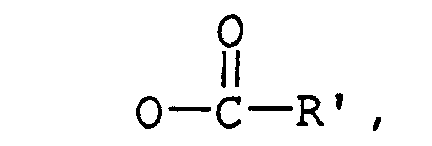 worin eine der Gruppen Ra, Rb oder Rc eine Phenylgruppe oder eine substituierte Phenylgruppe bedeutet und die beiden anderen Wasserstoffatome bedeuten;
 R2 ein Wasserstoffatom oder eine Phosphoramidit-, Phosphonat- oder Phosphotriester-Gruppe bedeutet;R3 ein Wasserstoffatom, einen Hydroxyrest, einen substituierten Hydroxyrest oder ein Halogen bedeutet;B einen von einer Purin- oder Pyrimidinbase abgeleiteten Rest gemäß einer der folgenden Formeln bedeutet: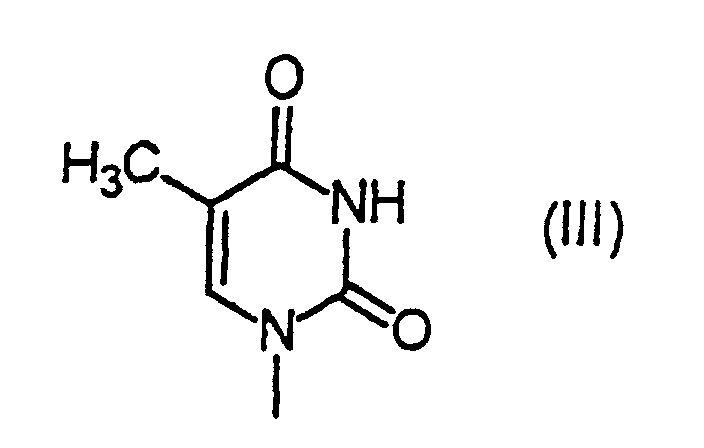
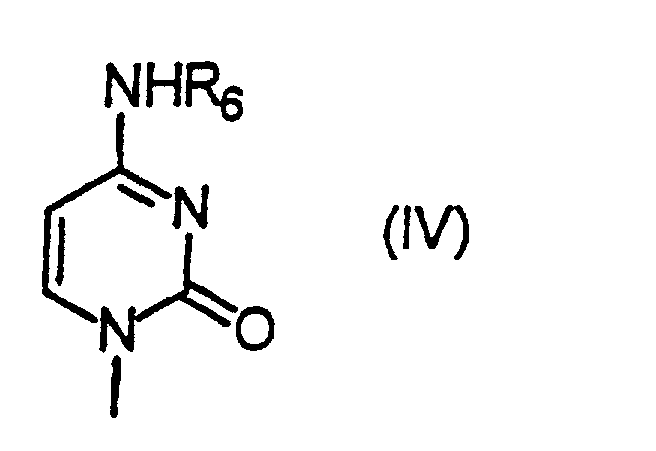
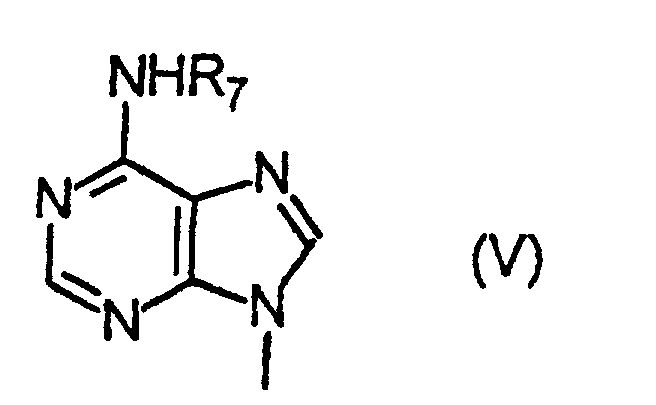 worin R6 eine von einer Isobutyryl- oder Phenylpropionylgruppe unterschiedliche Schutzgruppe für die Aminfunktion entsprechend einer der folgenden Formeln (VII), (VIII) und (IX) bedeutet: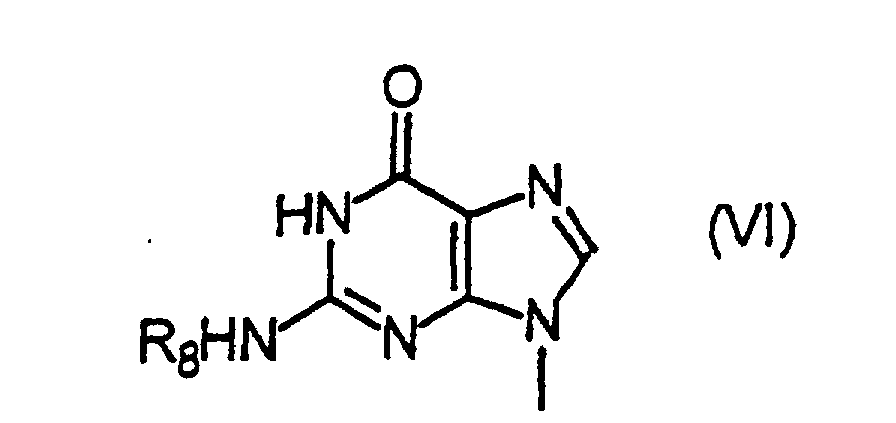

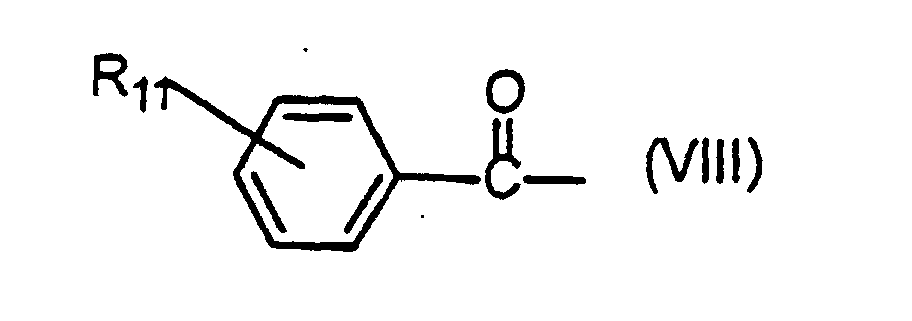 worin R9 und R11, die gleich oder verschieden sein können, ein Wasserstoffatom oder eine C1-C10-Alkyloder -Alkoxygruppe bedeuten, R12 einen linearen oder verzweigten C1-C10-Alkylrest bedeutet und R10 ausgewählt ist aus den Resten der Formel: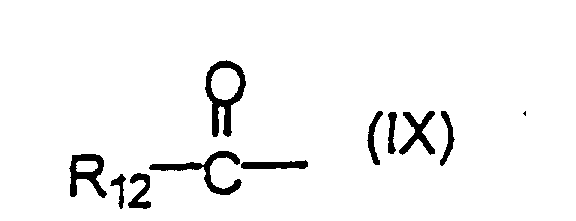


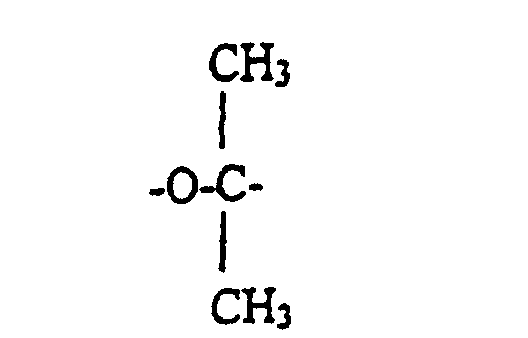 R7 eine von einer Phenylpropionylgruppe unterschiedliche Schutzgruppe für die Aminfunktion entsprechend einer der oben definierten Formeln (VII), (VIII) und (IX) bedeutet;R8 eine von einer Isobutyryl-, Phenylpropionyloder Phenoxyacetylgruppe unterschiedliche Schutzgruppe für die Aminfunktion entsprechend einer der oben definierten Formeln (VII), (VIII) und (IX) bedeutet;
 - Verwendung nach Anspruch 1, dadurch gekennzeichnet, daß man ein Derivat einsetzt, bei dem R1 der Formel (IIa) entspricht, in der R4 eine NO2-Gruppe bedeutet und R5 ein Wasserstoffatom bedeutet.
- Verwendung nach Anspruch 2, dadurch gekennzeichnet, daß man ein Derivat einsetzt, bei dem B der Formel (IV) entspricht, in der R6 eine Anisoylgruppe ist.
- Verwendung nach Anspruch 2, dadurch gekennzeichnet, daß man ein Derivat einsetzt, bei dem B der Formel (V) entspricht, in der R7 eine Benzoylgruppe oder eine Phenoxyacetylgruppe bedeutet.
- Verwendung nach Anspruch 2, dadurch gekennzeichnet, daß man ein Derivat einsetzt, bei dem B der Formel (VI) entspricht, in der R8 eine tert-Butylphenoxyacetylgruppe bedeutet.
- Nukleosid-Derivat wie in irgendeinem der Ansprüche 1 bis 5 definiert, ausgenommen Derivate, worin R1 eine elektrolabile Gruppe der Formel (IIa) ist, in der R4 eine NO2-Gruppe und R5 ein Wasserstoffatom bedeutet und B entweder der Formel (III) oder der Formel (IV) entspricht, in der R6 eine Benzoylgruppe ist.
- Verfahren zur Synthese von Oligonukleotiden durch sukzessive Zugabe von Nukleotiden ausgehend von einem ersten Nukleosid, das an einen festen Träger gebunden ist, wobei jede Zugabe eines Nukleotids die Abspaltung der Schutzgruppe von der 5'-OH-Funktion des Nukleotids oder des vorangehenden Nukleosids und die Kupplung des zuzugebenden Nukleotids an diese entschützte 5'-OH-Funktion umfaßt, wobei das Verfahren dadurch gekennzeichnet ist, daß wenigstens einer der Zugabeschritte für ein Nukleotid durchgeführt wird, indem ein Nukleosid-Derivat eingesetzt wird, wie es in irgendeinem der Ansprüche 1 bis 5 definiert ist, und daß die Abspaltung der Schutzgruppe von der 5'-OH-Funktion des Nukleotids durch elektrochemische Reaktion erfolgt.
- Verfahren nach Anspruch 7, dadurch gekennzeichnet, daß der feste Träger aus wenigstens einer Elektrode besteht, die mit einem elektrisch leitfähigen Polymer überzogen ist.
- Verfahren nach irgendeinem der Ansprüche 7 oder 8, dadurch gekennzeichnet, daß der feste Träger aus mehreren nebeneinander angeordneten Elektroden besteht, wobei die elektrochemische Entschützung der 5'-OH-Funktion, falls gewünscht, nur an bestimmten dieser Elektroden erfolgen kann.
- Verfahren nach irgendeinem der Ansprüche 7 bis 9, dadurch gekennzeichnet, daß die elektrochemische Entschützung der 5'-OH-Funktion erfolgt, indem an die Elektrode, die den festen Träger für die Synthese trägt, eine Potentialdifferenz gegenüber einer Ag/AgNO3-Referenzelektrode von zwischen -1,6 V und -0,7 V angelegt wird.
- Verfahren nach irgendeinem der Ansprüche 7 bis 10, dadurch gekennzeichnet, daß man nach jedem Kupplungsschritt für ein Nukleotid eine Behandlung mit Isobuttersäureanhydrid durchführt.
Applications Claiming Priority (3)
| Application Number | Priority Date | Filing Date | Title |
|---|---|---|---|
| FR9605553A FR2748275B1 (fr) | 1996-05-03 | 1996-05-03 | Derives de nucleosides, et leur utilisation pour la synthese d'oligonucleotides |
| FR9605553 | 1996-05-03 | ||
| PCT/FR1997/000770 WO1997042207A1 (fr) | 1996-05-03 | 1997-04-30 | Derives de nucleosides, et leur utilisation pour la synthese d'oligonucleotides |
Publications (2)
| Publication Number | Publication Date |
|---|---|
| EP0902788A1 EP0902788A1 (de) | 1999-03-24 |
| EP0902788B1 true EP0902788B1 (de) | 2003-03-19 |
Family
ID=9491804
Family Applications (1)
| Application Number | Title | Priority Date | Filing Date |
|---|---|---|---|
| EP97921911A Expired - Lifetime EP0902788B1 (de) | 1996-05-03 | 1997-04-30 | Nukleoside-derivate und ihre verwendung für die synthese oligonukleotiden |
Country Status (8)
| Country | Link |
|---|---|
| US (1) | US6187914B1 (de) |
| EP (1) | EP0902788B1 (de) |
| JP (1) | JP2000510463A (de) |
| AT (1) | ATE234854T1 (de) |
| CA (1) | CA2253895A1 (de) |
| DE (1) | DE69719980T2 (de) |
| FR (1) | FR2748275B1 (de) |
| WO (1) | WO1997042207A1 (de) |
Cited By (1)
| Publication number | Priority date | Publication date | Assignee | Title |
|---|---|---|---|---|
| US7955798B2 (en) | 2004-08-25 | 2011-06-07 | Roche Diagnostics Operations, Inc. | Reusable substrate for DNA microarray production |
Families Citing this family (1)
| Publication number | Priority date | Publication date | Assignee | Title |
|---|---|---|---|---|
| NZ541788A (en) * | 2005-08-11 | 2007-12-21 | Auckland Uniservices Ltd | Conducting polymers and their use in oligonucleotide (ODN) probes |
Family Cites Families (2)
| Publication number | Priority date | Publication date | Assignee | Title |
|---|---|---|---|---|
| FR2621591B1 (fr) * | 1987-10-08 | 1990-01-12 | Commissariat Energie Atomique | Derives de nucleosides, notamment de desoxy-2' cytidine et leur utilisation pour la synthese d'oligonucleotides |
| FR2703359B1 (fr) * | 1993-03-31 | 1995-06-23 | Cis Bio Int | Copolymère nucléotide(s)/polymère conducteur électronique ; son procédé de préparation et son utilisation . |
-
1996
- 1996-05-03 FR FR9605553A patent/FR2748275B1/fr not_active Expired - Fee Related
-
1997
- 1997-04-30 EP EP97921911A patent/EP0902788B1/de not_active Expired - Lifetime
- 1997-04-30 US US09/147,198 patent/US6187914B1/en not_active Expired - Fee Related
- 1997-04-30 DE DE69719980T patent/DE69719980T2/de not_active Expired - Fee Related
- 1997-04-30 WO PCT/FR1997/000770 patent/WO1997042207A1/fr not_active Ceased
- 1997-04-30 JP JP09539580A patent/JP2000510463A/ja not_active Ceased
- 1997-04-30 AT AT97921911T patent/ATE234854T1/de not_active IP Right Cessation
- 1997-04-30 CA CA002253895A patent/CA2253895A1/fr not_active Abandoned
Cited By (1)
| Publication number | Priority date | Publication date | Assignee | Title |
|---|---|---|---|---|
| US7955798B2 (en) | 2004-08-25 | 2011-06-07 | Roche Diagnostics Operations, Inc. | Reusable substrate for DNA microarray production |
Also Published As
| Publication number | Publication date |
|---|---|
| DE69719980T2 (de) | 2004-05-19 |
| US6187914B1 (en) | 2001-02-13 |
| FR2748275B1 (fr) | 1998-08-14 |
| ATE234854T1 (de) | 2003-04-15 |
| CA2253895A1 (fr) | 1997-11-13 |
| EP0902788A1 (de) | 1999-03-24 |
| WO1997042207A1 (fr) | 1997-11-13 |
| DE69719980D1 (de) | 2003-04-24 |
| JP2000510463A (ja) | 2000-08-15 |
| FR2748275A1 (fr) | 1997-11-07 |
Similar Documents
| Publication | Publication Date | Title |
|---|---|---|
| EP0691978B1 (de) | Nukleotide/elektronische leitfähige polymer copolymerisat, verfahren zu seiner herstellung und seine verwendung | |
| CA1273589A (fr) | Supports, leur preparation et les intermediaires obtenus, leur application a la synthese d'oligonucleotides relies aux supports ainsi obtenus | |
| WO1994026764A1 (fr) | Oligonucleotides phosphorothioates triesters et procede de preparation | |
| JPH09509663A (ja) | 新規ホスホルアミデートおよびホスホロチオアミデートオリゴマー化合物 | |
| JPH11501936A (ja) | 光除去可能な保護基を用いた核酸合成 | |
| EP0206913A1 (de) | Träger, deren Herstellung, erhaltene Zwischenverbindungen, ihre Verwendung in der Synthese von Oligonukleotiden und an Träger gebundene Nukleoside und Oligonukleotidenotide | |
| EP0707592B1 (de) | Verfahren zur synthese von nukleinsäuren auf einem festträger und verbindungen verwendbar als festträger in diesem verfahren | |
| EP0607337B1 (de) | Verfahren zur synthese von rns mit einem neuen schutzgruppenabspaltungsreagens | |
| EP1244682A4 (de) | Verfahren zur herstellung oligmerer verbindungen | |
| FR2748275A1 (fr) | Derives de nucleosides, et leur utilisation pour la synthese d'oligonucleotides | |
| EP0954610A1 (de) | Verfahren zur herstellung von hybridisierungskomplexen deren stabilität weitgehen unabhängig zur basenzusammenstellung der beiden hybridisierenden nukleinsäurenoleküle ist | |
| EP0819134B1 (de) | Oligonukelotide mit transversalkovalenter bindung, verfahren zu ihrer herstellung und darin benutztes synthon | |
| EP0315499B1 (de) | Nukleosid-Derivate, insbesondere von 2'-Deoxycytidin, und ihre Anwendung in der Synthese von Oligonukleotiden | |
| FR2627590A1 (fr) | Sonde d'acides nucleiques comportant un nucleotide terminal modifie chimiquement en 5(prime) (oh) en vue de son marquage non radioactif et procedes de preparation | |
| EP1474430B1 (de) | Bifunktionelle metallocene, verwendung zur markierung von biomolekülen | |
| EP1248859A1 (de) | Verfahren zur herstellung und immobilisierung von nukleinsäure auf einem silan-modifizierten festträger | |
| WO1995029184A1 (fr) | Bases nucleiques polycationiques et oligonucleotides les contenant | |
| FR2987359A1 (fr) | Derives du diaminophenothiazinium pour le marquage de biomolecules, procede et support de marquage d'oligonucleotides et oligonucleotides obtenus | |
| US6486313B1 (en) | Oligonucleotides having alkylphosphonate linkages and methods for their preparation | |
| US20240279828A1 (en) | Electrografted films for dna synthesis | |
| FR2569406A1 (fr) | Sonde mixte et ses applications, son precurseur, leur preparation et derives comportant une base modifiee pour cette preparation | |
| FR2612930A1 (fr) | Sondes oligonucleotidiques a |
Legal Events
| Date | Code | Title | Description |
|---|---|---|---|
| PUAI | Public reference made under article 153(3) epc to a published international application that has entered the european phase |
Free format text: ORIGINAL CODE: 0009012 |
|
| 17P | Request for examination filed |
Effective date: 19981123 |
|
| AK | Designated contracting states |
Kind code of ref document: A1 Designated state(s): AT BE CH DE DK ES FI FR GB GR IE IT LI LU NL PT SE |
|
| 17Q | First examination report despatched |
Effective date: 20010419 |
|
| GRAG | Despatch of communication of intention to grant |
Free format text: ORIGINAL CODE: EPIDOS AGRA |
|
| GRAG | Despatch of communication of intention to grant |
Free format text: ORIGINAL CODE: EPIDOS AGRA |
|
| GRAH | Despatch of communication of intention to grant a patent |
Free format text: ORIGINAL CODE: EPIDOS IGRA |
|
| GRAH | Despatch of communication of intention to grant a patent |
Free format text: ORIGINAL CODE: EPIDOS IGRA |
|
| GRAA | (expected) grant |
Free format text: ORIGINAL CODE: 0009210 |
|
| AK | Designated contracting states |
Designated state(s): AT BE CH DE DK ES FI FR GB GR IE IT LI LU NL PT SE |
|
| PG25 | Lapsed in a contracting state [announced via postgrant information from national office to epo] |
Ref country code: NL Free format text: LAPSE BECAUSE OF FAILURE TO SUBMIT A TRANSLATION OF THE DESCRIPTION OR TO PAY THE FEE WITHIN THE PRESCRIBED TIME-LIMIT Effective date: 20030319 Ref country code: IE Free format text: LAPSE BECAUSE OF FAILURE TO SUBMIT A TRANSLATION OF THE DESCRIPTION OR TO PAY THE FEE WITHIN THE PRESCRIBED TIME-LIMIT Effective date: 20030319 Ref country code: GR Free format text: LAPSE BECAUSE OF FAILURE TO SUBMIT A TRANSLATION OF THE DESCRIPTION OR TO PAY THE FEE WITHIN THE PRESCRIBED TIME-LIMIT Effective date: 20030319 Ref country code: FI Free format text: LAPSE BECAUSE OF FAILURE TO SUBMIT A TRANSLATION OF THE DESCRIPTION OR TO PAY THE FEE WITHIN THE PRESCRIBED TIME-LIMIT Effective date: 20030319 Ref country code: AT Free format text: LAPSE BECAUSE OF FAILURE TO SUBMIT A TRANSLATION OF THE DESCRIPTION OR TO PAY THE FEE WITHIN THE PRESCRIBED TIME-LIMIT Effective date: 20030319 |
|
| REG | Reference to a national code |
Ref country code: GB Ref legal event code: FG4D Free format text: NOT ENGLISH |
|
| REG | Reference to a national code |
Ref country code: CH Ref legal event code: EP |
|
| REG | Reference to a national code |
Ref country code: IE Ref legal event code: FG4D Free format text: FRENCH |
|
| REF | Corresponds to: |
Ref document number: 69719980 Country of ref document: DE Date of ref document: 20030424 Kind code of ref document: P |
|
| PG25 | Lapsed in a contracting state [announced via postgrant information from national office to epo] |
Ref country code: LU Free format text: LAPSE BECAUSE OF NON-PAYMENT OF DUE FEES Effective date: 20030430 Ref country code: BE Free format text: LAPSE BECAUSE OF NON-PAYMENT OF DUE FEES Effective date: 20030430 |
|
| RAP2 | Party data changed (patent owner data changed or rights of a patent transferred) |
Owner name: LE COMMISSARIAT AE L'ENERGIE ATOMIQUE |
|
| REG | Reference to a national code |
Ref country code: CH Ref legal event code: NV Representative=s name: ING. HANS LUDESCHER, PATENTABTEILUNG DER SFS GRUPP |
|
| PG25 | Lapsed in a contracting state [announced via postgrant information from national office to epo] |
Ref country code: SE Free format text: LAPSE BECAUSE OF FAILURE TO SUBMIT A TRANSLATION OF THE DESCRIPTION OR TO PAY THE FEE WITHIN THE PRESCRIBED TIME-LIMIT Effective date: 20030619 Ref country code: DK Free format text: LAPSE BECAUSE OF FAILURE TO SUBMIT A TRANSLATION OF THE DESCRIPTION OR TO PAY THE FEE WITHIN THE PRESCRIBED TIME-LIMIT Effective date: 20030619 |
|
| PG25 | Lapsed in a contracting state [announced via postgrant information from national office to epo] |
Ref country code: PT Free format text: LAPSE BECAUSE OF FAILURE TO SUBMIT A TRANSLATION OF THE DESCRIPTION OR TO PAY THE FEE WITHIN THE PRESCRIBED TIME-LIMIT Effective date: 20030620 |
|
| NLT2 | Nl: modifications (of names), taken from the european patent patent bulletin |
Owner name: LE COMMISSARIAT A L'ENERGIE ATOMIQUE |
|
| GBT | Gb: translation of ep patent filed (gb section 77(6)(a)/1977) |
Effective date: 20030724 |
|
| NLV1 | Nl: lapsed or annulled due to failure to fulfill the requirements of art. 29p and 29m of the patents act | ||
| PG25 | Lapsed in a contracting state [announced via postgrant information from national office to epo] |
Ref country code: ES Free format text: LAPSE BECAUSE OF FAILURE TO SUBMIT A TRANSLATION OF THE DESCRIPTION OR TO PAY THE FEE WITHIN THE PRESCRIBED TIME-LIMIT Effective date: 20030930 |
|
| REG | Reference to a national code |
Ref country code: IE Ref legal event code: FD4D Ref document number: 0902788E Country of ref document: IE |
|
| BERE | Be: lapsed |
Owner name: *CIS BIO INTERNATIONAL Effective date: 20030430 |
|
| PLBE | No opposition filed within time limit |
Free format text: ORIGINAL CODE: 0009261 |
|
| STAA | Information on the status of an ep patent application or granted ep patent |
Free format text: STATUS: NO OPPOSITION FILED WITHIN TIME LIMIT |
|
| 26N | No opposition filed |
Effective date: 20031222 |
|
| PGFP | Annual fee paid to national office [announced via postgrant information from national office to epo] |
Ref country code: FR Payment date: 20050329 Year of fee payment: 9 |
|
| PGFP | Annual fee paid to national office [announced via postgrant information from national office to epo] |
Ref country code: CH Payment date: 20050412 Year of fee payment: 9 |
|
| PGFP | Annual fee paid to national office [announced via postgrant information from national office to epo] |
Ref country code: GB Payment date: 20050421 Year of fee payment: 9 |
|
| PGFP | Annual fee paid to national office [announced via postgrant information from national office to epo] |
Ref country code: DE Payment date: 20050629 Year of fee payment: 9 |
|
| PG25 | Lapsed in a contracting state [announced via postgrant information from national office to epo] |
Ref country code: LI Free format text: LAPSE BECAUSE OF NON-PAYMENT OF DUE FEES Effective date: 20060430 Ref country code: GB Free format text: LAPSE BECAUSE OF NON-PAYMENT OF DUE FEES Effective date: 20060430 Ref country code: CH Free format text: LAPSE BECAUSE OF NON-PAYMENT OF DUE FEES Effective date: 20060430 |
|
| PGFP | Annual fee paid to national office [announced via postgrant information from national office to epo] |
Ref country code: IT Payment date: 20060430 Year of fee payment: 10 |
|
| PG25 | Lapsed in a contracting state [announced via postgrant information from national office to epo] |
Ref country code: DE Free format text: LAPSE BECAUSE OF NON-PAYMENT OF DUE FEES Effective date: 20061101 |
|
| REG | Reference to a national code |
Ref country code: CH Ref legal event code: PL |
|
| GBPC | Gb: european patent ceased through non-payment of renewal fee |
Effective date: 20060430 |
|
| REG | Reference to a national code |
Ref country code: FR Ref legal event code: ST Effective date: 20061230 |
|
| PG25 | Lapsed in a contracting state [announced via postgrant information from national office to epo] |
Ref country code: FR Free format text: LAPSE BECAUSE OF NON-PAYMENT OF DUE FEES Effective date: 20060502 |
|
| PG25 | Lapsed in a contracting state [announced via postgrant information from national office to epo] |
Ref country code: IT Free format text: LAPSE BECAUSE OF NON-PAYMENT OF DUE FEES Effective date: 20070430 |