EP0904097B1 - Kombinationen von vasopressin und adrenergischen wirkstoffen zur behandlung des plötzlichen herztods - Google Patents
Kombinationen von vasopressin und adrenergischen wirkstoffen zur behandlung des plötzlichen herztods Download PDFInfo
- Publication number
- EP0904097B1 EP0904097B1 EP97917089A EP97917089A EP0904097B1 EP 0904097 B1 EP0904097 B1 EP 0904097B1 EP 97917089 A EP97917089 A EP 97917089A EP 97917089 A EP97917089 A EP 97917089A EP 0904097 B1 EP0904097 B1 EP 0904097B1
- Authority
- EP
- European Patent Office
- Prior art keywords
- kit
- adrenergic
- vasopressin
- agent
- zatebradine
- Prior art date
- Legal status (The legal status is an assumption and is not a legal conclusion. Google has not performed a legal analysis and makes no representation as to the accuracy of the status listed.)
- Expired - Lifetime
Links
- 102000002852 Vasopressins Human genes 0.000 title claims abstract description 53
- 108010004977 Vasopressins Proteins 0.000 title claims abstract description 53
- KBZOIRJILGZLEJ-LGYYRGKSSA-N argipressin Chemical compound C([C@H]1C(=O)N[C@@H](CCC(N)=O)C(=O)N[C@@H](CC(N)=O)C(=O)N[C@@H](CSSC[C@@H](C(N[C@@H](CC=2C=CC(O)=CC=2)C(=O)N1)=O)N)C(=O)N1[C@@H](CCC1)C(=O)N[C@@H](CCCN=C(N)N)C(=O)NCC(N)=O)C1=CC=CC=C1 KBZOIRJILGZLEJ-LGYYRGKSSA-N 0.000 title claims abstract description 53
- 229960003726 vasopressin Drugs 0.000 title claims abstract description 53
- GXBMIBRIOWHPDT-UHFFFAOYSA-N Vasopressin Natural products N1C(=O)C(CC=2C=C(O)C=CC=2)NC(=O)C(N)CSSCC(C(=O)N2C(CCC2)C(=O)NC(CCCN=C(N)N)C(=O)NCC(N)=O)NC(=O)C(CC(N)=O)NC(=O)C(CCC(N)=O)NC(=O)C1CC1=CC=CC=C1 GXBMIBRIOWHPDT-UHFFFAOYSA-N 0.000 title claims abstract description 51
- 208000010496 Heart Arrest Diseases 0.000 title claims abstract description 30
- 239000000464 adrenergic agent Substances 0.000 title claims abstract description 28
- 238000011282 treatment Methods 0.000 title claims description 6
- 230000001477 vasopressinergic effect Effects 0.000 title claims 2
- 210000002216 heart Anatomy 0.000 claims abstract description 35
- 230000004872 arterial blood pressure Effects 0.000 claims abstract description 11
- 210000004556 brain Anatomy 0.000 claims abstract description 5
- UCTWMZQNUQWSLP-VIFPVBQESA-N (R)-adrenaline Chemical compound CNC[C@H](O)C1=CC=C(O)C(O)=C1 UCTWMZQNUQWSLP-VIFPVBQESA-N 0.000 claims description 47
- 229930182837 (R)-adrenaline Natural products 0.000 claims description 47
- 238000002680 cardiopulmonary resuscitation Methods 0.000 claims description 47
- 229960005139 epinephrine Drugs 0.000 claims description 47
- KEDQCFRVSHYKLR-UHFFFAOYSA-N 3-[3-[2-(3,4-dimethoxyphenyl)ethyl-methylamino]propyl]-7,8-dimethoxy-2,5-dihydro-1H-3-benzazepin-4-one Chemical group C1=C(OC)C(OC)=CC=C1CCN(C)CCCN1C(=O)CC2=CC(OC)=C(OC)C=C2CC1 KEDQCFRVSHYKLR-UHFFFAOYSA-N 0.000 claims description 46
- 239000003795 chemical substances by application Substances 0.000 claims description 38
- 229950003419 zatebradine Drugs 0.000 claims description 30
- 230000017531 blood circulation Effects 0.000 claims description 27
- 239000002552 dosage form Substances 0.000 claims description 26
- 230000000059 bradycardiac effect Effects 0.000 claims description 25
- 239000003814 drug Substances 0.000 claims description 22
- 230000002107 myocardial effect Effects 0.000 claims description 20
- SNIOPGDIGTZGOP-UHFFFAOYSA-N Nitroglycerin Chemical group [O-][N+](=O)OCC(O[N+]([O-])=O)CO[N+]([O-])=O SNIOPGDIGTZGOP-UHFFFAOYSA-N 0.000 claims description 14
- 239000000006 Nitroglycerin Substances 0.000 claims description 14
- 239000000048 adrenergic agonist Substances 0.000 claims description 14
- 229960003711 glyceryl trinitrate Drugs 0.000 claims description 14
- 229910002651 NO3 Inorganic materials 0.000 claims description 12
- NHNBFGGVMKEFGY-UHFFFAOYSA-N Nitrate Chemical compound [O-][N+]([O-])=O NHNBFGGVMKEFGY-UHFFFAOYSA-N 0.000 claims description 12
- 230000007423 decrease Effects 0.000 claims description 12
- FBPFZTCFMRRESA-KVTDHHQDSA-N D-Mannitol Chemical compound OC[C@@H](O)[C@@H](O)[C@H](O)[C@H](O)CO FBPFZTCFMRRESA-KVTDHHQDSA-N 0.000 claims description 8
- 229930195725 Mannitol Natural products 0.000 claims description 8
- VYFYYTLLBUKUHU-UHFFFAOYSA-N dopamine Chemical compound NCCC1=CC=C(O)C(O)=C1 VYFYYTLLBUKUHU-UHFFFAOYSA-N 0.000 claims description 8
- 239000000594 mannitol Substances 0.000 claims description 8
- 235000010355 mannitol Nutrition 0.000 claims description 8
- 229940127291 Calcium channel antagonist Drugs 0.000 claims description 7
- 239000000480 calcium channel blocker Substances 0.000 claims description 7
- 229940099471 Phosphodiesterase inhibitor Drugs 0.000 claims description 6
- JWZZKOKVBUJMES-UHFFFAOYSA-N (+-)-Isoprenaline Chemical compound CC(C)NCC(O)C1=CC=C(O)C(O)=C1 JWZZKOKVBUJMES-UHFFFAOYSA-N 0.000 claims description 5
- SGTNSNPWRIOYBX-UHFFFAOYSA-N 2-(3,4-dimethoxyphenyl)-5-{[2-(3,4-dimethoxyphenyl)ethyl](methyl)amino}-2-(propan-2-yl)pentanenitrile Chemical compound C1=C(OC)C(OC)=CC=C1CCN(C)CCCC(C#N)(C(C)C)C1=CC=C(OC)C(OC)=C1 SGTNSNPWRIOYBX-UHFFFAOYSA-N 0.000 claims description 5
- 229960003556 aminophylline Drugs 0.000 claims description 5
- FQPFAHBPWDRTLU-UHFFFAOYSA-N aminophylline Chemical group NCCN.O=C1N(C)C(=O)N(C)C2=C1NC=N2.O=C1N(C)C(=O)N(C)C2=C1NC=N2 FQPFAHBPWDRTLU-UHFFFAOYSA-N 0.000 claims description 5
- 102000012740 beta Adrenergic Receptors Human genes 0.000 claims description 5
- 108010079452 beta Adrenergic Receptors Proteins 0.000 claims description 5
- 229940039009 isoproterenol Drugs 0.000 claims description 5
- 239000003087 receptor blocking agent Substances 0.000 claims description 5
- 229960001722 verapamil Drugs 0.000 claims description 5
- SFLSHLFXELFNJZ-QMMMGPOBSA-N (-)-norepinephrine Chemical compound NC[C@H](O)C1=CC=C(O)C(O)=C1 SFLSHLFXELFNJZ-QMMMGPOBSA-N 0.000 claims description 4
- JRWZLRBJNMZMFE-UHFFFAOYSA-N Dobutamine Chemical compound C=1C=C(O)C(O)=CC=1CCNC(C)CCC1=CC=C(O)C=C1 JRWZLRBJNMZMFE-UHFFFAOYSA-N 0.000 claims description 4
- WJAJPNHVVFWKKL-UHFFFAOYSA-N Methoxamine Chemical compound COC1=CC=C(OC)C(C(O)C(C)N)=C1 WJAJPNHVVFWKKL-UHFFFAOYSA-N 0.000 claims description 4
- 229960004166 diltiazem Drugs 0.000 claims description 4
- HSUGRBWQSSZJOP-RTWAWAEBSA-N diltiazem Chemical group C1=CC(OC)=CC=C1[C@H]1[C@@H](OC(C)=O)C(=O)N(CCN(C)C)C2=CC=CC=C2S1 HSUGRBWQSSZJOP-RTWAWAEBSA-N 0.000 claims description 4
- 229960001089 dobutamine Drugs 0.000 claims description 4
- 229960003638 dopamine Drugs 0.000 claims description 4
- 229960005192 methoxamine Drugs 0.000 claims description 4
- 229960001597 nifedipine Drugs 0.000 claims description 4
- HYIMSNHJOBLJNT-UHFFFAOYSA-N nifedipine Chemical compound COC(=O)C1=C(C)NC(C)=C(C(=O)OC)C1C1=CC=CC=C1[N+]([O-])=O HYIMSNHJOBLJNT-UHFFFAOYSA-N 0.000 claims description 4
- 229960002748 norepinephrine Drugs 0.000 claims description 4
- SFLSHLFXELFNJZ-UHFFFAOYSA-N norepinephrine Natural products NCC(O)C1=CC=C(O)C(O)=C1 SFLSHLFXELFNJZ-UHFFFAOYSA-N 0.000 claims description 4
- 229960001802 phenylephrine Drugs 0.000 claims description 4
- SONNWYBIRXJNDC-VIFPVBQESA-N phenylephrine Chemical compound CNC[C@H](O)C1=CC=CC(O)=C1 SONNWYBIRXJNDC-VIFPVBQESA-N 0.000 claims description 4
- 230000000304 vasodilatating effect Effects 0.000 claims description 4
- OXTYVEUAQHPPMV-UHFFFAOYSA-N Alinidine Chemical compound ClC1=CC=CC(Cl)=C1N(CC=C)C1=NCCN1 OXTYVEUAQHPPMV-UHFFFAOYSA-N 0.000 claims description 3
- 229950010767 alinidine Drugs 0.000 claims description 3
- 230000001964 calcium overload Effects 0.000 claims description 3
- WRJDCGFHAICFLO-NXVVXOECSA-N chembl75797 Chemical compound C1=C(OC)C(OC)=CC=C1CC\N=C\1N(C)CCC/1 WRJDCGFHAICFLO-NXVVXOECSA-N 0.000 claims description 3
- UUMGNNQOCVDZDG-UHFFFAOYSA-N falipamil Chemical compound C1=C(OC)C(OC)=CC=C1CCN(C)CCCN1C(=O)C2=CC(OC)=C(OC)C=C2C1 UUMGNNQOCVDZDG-UHFFFAOYSA-N 0.000 claims description 3
- 229950001443 falipamil Drugs 0.000 claims description 3
- 229950005607 mixidine Drugs 0.000 claims description 3
- 239000005022 packaging material Substances 0.000 claims description 3
- CTIRHWCPXYGDGF-HDICACEKSA-N tedisamil Chemical compound [H][C@]12CN(CC3CC3)C[C@]([H])(CN(CC3CC3)C1)C21CCCC1 CTIRHWCPXYGDGF-HDICACEKSA-N 0.000 claims description 3
- 229960002926 tedisamil Drugs 0.000 claims description 3
- 229940124549 vasodilator Drugs 0.000 claims description 3
- 239000003071 vasodilator agent Substances 0.000 claims description 3
- 206010030113 Oedema Diseases 0.000 claims description 2
- 238000000034 method Methods 0.000 abstract description 25
- 239000008194 pharmaceutical composition Substances 0.000 abstract description 6
- 230000008321 arterial blood flow Effects 0.000 abstract description 4
- 239000003937 drug carrier Substances 0.000 abstract 1
- AQNDDEOPVVGCPG-UHFFFAOYSA-N esmolol Chemical compound COC(=O)CCC1=CC=C(OCC(O)CNC(C)C)C=C1 AQNDDEOPVVGCPG-UHFFFAOYSA-N 0.000 description 30
- 239000000902 placebo Substances 0.000 description 28
- 229940068196 placebo Drugs 0.000 description 28
- 230000002861 ventricular Effects 0.000 description 26
- 229940079593 drug Drugs 0.000 description 19
- 229960003745 esmolol Drugs 0.000 description 16
- 208000003663 ventricular fibrillation Diseases 0.000 description 16
- 230000000694 effects Effects 0.000 description 15
- 239000008280 blood Substances 0.000 description 13
- 210000004369 blood Anatomy 0.000 description 13
- 230000010412 perfusion Effects 0.000 description 12
- 238000002560 therapeutic procedure Methods 0.000 description 10
- 241000282887 Suidae Species 0.000 description 9
- 238000001802 infusion Methods 0.000 description 8
- 238000009423 ventilation Methods 0.000 description 8
- 241001465754 Metazoa Species 0.000 description 7
- FAPWRFPIFSIZLT-UHFFFAOYSA-M Sodium chloride Chemical compound [Na+].[Cl-] FAPWRFPIFSIZLT-UHFFFAOYSA-M 0.000 description 7
- 210000000038 chest Anatomy 0.000 description 7
- 230000000004 hemodynamic effect Effects 0.000 description 7
- 230000001965 increasing effect Effects 0.000 description 7
- 210000004072 lung Anatomy 0.000 description 7
- WEXRUCMBJFQVBZ-UHFFFAOYSA-N pentobarbital Chemical compound CCCC(C)C1(CC)C(=O)NC(=O)NC1=O WEXRUCMBJFQVBZ-UHFFFAOYSA-N 0.000 description 7
- 230000004083 survival effect Effects 0.000 description 7
- 239000013543 active substance Substances 0.000 description 6
- 230000000747 cardiac effect Effects 0.000 description 6
- 230000004087 circulation Effects 0.000 description 6
- 230000006835 compression Effects 0.000 description 6
- 238000007906 compression Methods 0.000 description 6
- 230000000977 initiatory effect Effects 0.000 description 6
- 238000001990 intravenous administration Methods 0.000 description 6
- 239000004005 microsphere Substances 0.000 description 6
- 239000000243 solution Substances 0.000 description 6
- 206010058151 Pulseless electrical activity Diseases 0.000 description 5
- 230000003205 diastolic effect Effects 0.000 description 5
- 238000002347 injection Methods 0.000 description 5
- 239000007924 injection Substances 0.000 description 5
- 210000000056 organ Anatomy 0.000 description 5
- 210000003462 vein Anatomy 0.000 description 5
- XLYOFNOQVPJJNP-UHFFFAOYSA-N water Substances O XLYOFNOQVPJJNP-UHFFFAOYSA-N 0.000 description 5
- 230000001746 atrial effect Effects 0.000 description 4
- 230000008901 benefit Effects 0.000 description 4
- 230000036772 blood pressure Effects 0.000 description 4
- 210000004351 coronary vessel Anatomy 0.000 description 4
- 238000011161 development Methods 0.000 description 4
- 238000002474 experimental method Methods 0.000 description 4
- 239000007788 liquid Substances 0.000 description 4
- 229940082615 organic nitrates used in cardiac disease Drugs 0.000 description 4
- 229960001412 pentobarbital Drugs 0.000 description 4
- 238000002360 preparation method Methods 0.000 description 4
- 230000009467 reduction Effects 0.000 description 4
- 230000002269 spontaneous effect Effects 0.000 description 4
- 230000035488 systolic blood pressure Effects 0.000 description 4
- 239000005526 vasoconstrictor agent Substances 0.000 description 4
- 206010002091 Anaesthesia Diseases 0.000 description 3
- LFQSCWFLJHTTHZ-UHFFFAOYSA-N Ethanol Chemical compound CCO LFQSCWFLJHTTHZ-UHFFFAOYSA-N 0.000 description 3
- PEDCQBHIVMGVHV-UHFFFAOYSA-N Glycerine Chemical compound OCC(O)CO PEDCQBHIVMGVHV-UHFFFAOYSA-N 0.000 description 3
- 206010019280 Heart failures Diseases 0.000 description 3
- DGAQECJNVWCQMB-PUAWFVPOSA-M Ilexoside XXIX Chemical compound C[C@@H]1CC[C@@]2(CC[C@@]3(C(=CC[C@H]4[C@]3(CC[C@@H]5[C@@]4(CC[C@@H](C5(C)C)OS(=O)(=O)[O-])C)C)[C@@H]2[C@]1(C)O)C)C(=O)O[C@H]6[C@@H]([C@H]([C@@H]([C@H](O6)CO)O)O)O.[Na+] DGAQECJNVWCQMB-PUAWFVPOSA-M 0.000 description 3
- 102000004861 Phosphoric Diester Hydrolases Human genes 0.000 description 3
- 108090001050 Phosphoric Diester Hydrolases Proteins 0.000 description 3
- DNIAPMSPPWPWGF-UHFFFAOYSA-N Propylene glycol Chemical compound CC(O)CO DNIAPMSPPWPWGF-UHFFFAOYSA-N 0.000 description 3
- 239000000150 Sympathomimetic Substances 0.000 description 3
- 208000009729 Ventricular Premature Complexes Diseases 0.000 description 3
- 206010047289 Ventricular extrasystoles Diseases 0.000 description 3
- 230000009471 action Effects 0.000 description 3
- 239000004480 active ingredient Substances 0.000 description 3
- 230000001154 acute effect Effects 0.000 description 3
- 230000037005 anaesthesia Effects 0.000 description 3
- QVGXLLKOCUKJST-UHFFFAOYSA-N atomic oxygen Chemical compound [O] QVGXLLKOCUKJST-UHFFFAOYSA-N 0.000 description 3
- 230000008602 contraction Effects 0.000 description 3
- 239000006185 dispersion Substances 0.000 description 3
- 238000001647 drug administration Methods 0.000 description 3
- 229920000669 heparin Polymers 0.000 description 3
- 230000006698 induction Effects 0.000 description 3
- 230000001939 inductive effect Effects 0.000 description 3
- 230000000297 inotrophic effect Effects 0.000 description 3
- 210000004731 jugular vein Anatomy 0.000 description 3
- 239000000463 material Substances 0.000 description 3
- 231100000252 nontoxic Toxicity 0.000 description 3
- 230000003000 nontoxic effect Effects 0.000 description 3
- 239000001301 oxygen Substances 0.000 description 3
- 229910052760 oxygen Inorganic materials 0.000 description 3
- AQHHHDLHHXJYJD-UHFFFAOYSA-N propranolol Chemical compound C1=CC=C2C(OCC(O)CNC(C)C)=CC=CC2=C1 AQHHHDLHHXJYJD-UHFFFAOYSA-N 0.000 description 3
- 239000011734 sodium Substances 0.000 description 3
- 229910052708 sodium Inorganic materials 0.000 description 3
- 239000011780 sodium chloride Substances 0.000 description 3
- 208000010444 Acidosis Diseases 0.000 description 2
- 206010007559 Cardiac failure congestive Diseases 0.000 description 2
- IVOMOUWHDPKRLL-KQYNXXCUSA-N Cyclic adenosine monophosphate Chemical compound C([C@H]1O2)OP(O)(=O)O[C@H]1[C@@H](O)[C@@H]2N1C(N=CN=C2N)=C2N=C1 IVOMOUWHDPKRLL-KQYNXXCUSA-N 0.000 description 2
- HTTJABKRGRZYRN-UHFFFAOYSA-N Heparin Chemical compound OC1C(NC(=O)C)C(O)OC(COS(O)(=O)=O)C1OC1C(OS(O)(=O)=O)C(O)C(OC2C(C(OS(O)(=O)=O)C(OC3C(C(O)C(O)C(O3)C(O)=O)OS(O)(=O)=O)C(CO)O2)NS(O)(=O)=O)C(C(O)=O)O1 HTTJABKRGRZYRN-UHFFFAOYSA-N 0.000 description 2
- MWUXSHHQAYIFBG-UHFFFAOYSA-N Nitric oxide Chemical compound O=[N] MWUXSHHQAYIFBG-UHFFFAOYSA-N 0.000 description 2
- GQPLMRYTRLFLPF-UHFFFAOYSA-N Nitrous Oxide Chemical compound [O-][N+]#N GQPLMRYTRLFLPF-UHFFFAOYSA-N 0.000 description 2
- ZLMJMSJWJFRBEC-UHFFFAOYSA-N Potassium Chemical compound [K] ZLMJMSJWJFRBEC-UHFFFAOYSA-N 0.000 description 2
- 230000003187 abdominal effect Effects 0.000 description 2
- 230000007950 acidosis Effects 0.000 description 2
- 208000026545 acidosis disease Diseases 0.000 description 2
- 230000036592 analgesia Effects 0.000 description 2
- 210000002376 aorta thoracic Anatomy 0.000 description 2
- 102000015005 beta-adrenergic receptor activity proteins Human genes 0.000 description 2
- 108040006818 beta-adrenergic receptor activity proteins Proteins 0.000 description 2
- 230000000903 blocking effect Effects 0.000 description 2
- 239000000872 buffer Substances 0.000 description 2
- RMRJXGBAOAMLHD-IHFGGWKQSA-N buprenorphine Chemical compound C([C@]12[C@H]3OC=4C(O)=CC=C(C2=4)C[C@@H]2[C@]11CC[C@]3([C@H](C1)[C@](C)(O)C(C)(C)C)OC)CN2CC1CC1 RMRJXGBAOAMLHD-IHFGGWKQSA-N 0.000 description 2
- 229960001736 buprenorphine Drugs 0.000 description 2
- 229940082638 cardiac stimulant phosphodiesterase inhibitors Drugs 0.000 description 2
- 238000013194 cardioversion Methods 0.000 description 2
- 150000003943 catecholamines Chemical class 0.000 description 2
- 230000003727 cerebral blood flow Effects 0.000 description 2
- 230000006837 decompression Effects 0.000 description 2
- 230000006870 function Effects 0.000 description 2
- 230000004217 heart function Effects 0.000 description 2
- 229960002897 heparin Drugs 0.000 description 2
- 239000003112 inhibitor Substances 0.000 description 2
- 210000003734 kidney Anatomy 0.000 description 2
- 210000005240 left ventricle Anatomy 0.000 description 2
- 238000005259 measurement Methods 0.000 description 2
- 239000000203 mixture Substances 0.000 description 2
- 238000012986 modification Methods 0.000 description 2
- 230000004048 modification Effects 0.000 description 2
- 230000002093 peripheral effect Effects 0.000 description 2
- 230000000144 pharmacologic effect Effects 0.000 description 2
- 239000002571 phosphodiesterase inhibitor Substances 0.000 description 2
- 239000011591 potassium Substances 0.000 description 2
- 229910052700 potassium Inorganic materials 0.000 description 2
- 230000003389 potentiating effect Effects 0.000 description 2
- 230000036316 preload Effects 0.000 description 2
- 230000008569 process Effects 0.000 description 2
- 230000002685 pulmonary effect Effects 0.000 description 2
- 210000002460 smooth muscle Anatomy 0.000 description 2
- 239000002904 solvent Substances 0.000 description 2
- 239000004094 surface-active agent Substances 0.000 description 2
- 238000001356 surgical procedure Methods 0.000 description 2
- 229940127230 sympathomimetic drug Drugs 0.000 description 2
- 230000001975 sympathomimetic effect Effects 0.000 description 2
- 210000001519 tissue Anatomy 0.000 description 2
- 238000002627 tracheal intubation Methods 0.000 description 2
- 230000002551 venodilator Effects 0.000 description 2
- CITHEXJVPOWHKC-UUWRZZSWSA-N 1,2-di-O-myristoyl-sn-glycero-3-phosphocholine Chemical compound CCCCCCCCCCCCCC(=O)OC[C@H](COP([O-])(=O)OCC[N+](C)(C)C)OC(=O)CCCCCCCCCCCCC CITHEXJVPOWHKC-UUWRZZSWSA-N 0.000 description 1
- ZCJJIQHVZCFSGZ-UHFFFAOYSA-N 2,8-bis(diphenylphosphoryl)dibenzothiophene Chemical compound C=1C=CC=CC=1P(C=1C=C2C3=CC(=CC=C3SC2=CC=1)P(=O)(C=1C=CC=CC=1)C=1C=CC=CC=1)(=O)C1=CC=CC=C1 ZCJJIQHVZCFSGZ-UHFFFAOYSA-N 0.000 description 1
- QTBSBXVTEAMEQO-UHFFFAOYSA-M Acetate Chemical compound CC([O-])=O QTBSBXVTEAMEQO-UHFFFAOYSA-M 0.000 description 1
- 108060003345 Adrenergic Receptor Proteins 0.000 description 1
- 102000017910 Adrenergic receptor Human genes 0.000 description 1
- 206010002198 Anaphylactic reaction Diseases 0.000 description 1
- 206010002383 Angina Pectoris Diseases 0.000 description 1
- 229930003347 Atropine Natural products 0.000 description 1
- 241000282472 Canis lupus familiaris Species 0.000 description 1
- VEXZGXHMUGYJMC-UHFFFAOYSA-M Chloride anion Chemical compound [Cl-] VEXZGXHMUGYJMC-UHFFFAOYSA-M 0.000 description 1
- KRKNYBCHXYNGOX-UHFFFAOYSA-K Citrate Chemical compound [O-]C(=O)CC(O)(CC([O-])=O)C([O-])=O KRKNYBCHXYNGOX-UHFFFAOYSA-K 0.000 description 1
- RKUNBYITZUJHSG-UHFFFAOYSA-N Hyosciamin-hydrochlorid Natural products CN1C(C2)CCC1CC2OC(=O)C(CO)C1=CC=CC=C1 RKUNBYITZUJHSG-UHFFFAOYSA-N 0.000 description 1
- 206010020802 Hypertensive crisis Diseases 0.000 description 1
- 206010028347 Muscle twitching Diseases 0.000 description 1
- 206010033799 Paralysis Diseases 0.000 description 1
- 102000004257 Potassium Channel Human genes 0.000 description 1
- KJTLSVCANCCWHF-UHFFFAOYSA-N Ruthenium Chemical compound [Ru] KJTLSVCANCCWHF-UHFFFAOYSA-N 0.000 description 1
- IVOMOUWHDPKRLL-UHFFFAOYSA-N UNPD107823 Natural products O1C2COP(O)(=O)OC2C(O)C1N1C(N=CN=C2N)=C2N=C1 IVOMOUWHDPKRLL-UHFFFAOYSA-N 0.000 description 1
- 206010047139 Vasoconstriction Diseases 0.000 description 1
- KJNGJIPPQOFCSK-WQEMXFENSA-N [85SrH2] Chemical compound [85SrH2] KJNGJIPPQOFCSK-WQEMXFENSA-N 0.000 description 1
- 210000001015 abdomen Anatomy 0.000 description 1
- 238000010521 absorption reaction Methods 0.000 description 1
- 239000002253 acid Substances 0.000 description 1
- 230000004913 activation Effects 0.000 description 1
- 102000030621 adenylate cyclase Human genes 0.000 description 1
- 108060000200 adenylate cyclase Proteins 0.000 description 1
- 210000001943 adrenal medulla Anatomy 0.000 description 1
- 239000000808 adrenergic beta-agonist Substances 0.000 description 1
- MUQUYTSLDVKIOF-CHJKCJHBSA-N alcuronium Chemical compound C/1([C@@H]23)=C\N([C@H]4\5)C6=CC=CC=C6[C@]4(CC[N@@+]4(CC=C)C\C6=C\CO)[C@@H]4C[C@@H]6C/5=C/N3C3=CC=CC=C3[C@@]22CC[N@@+]3(CC=C)C/C(=C/CO)[C@@H]\1C[C@H]32 MUQUYTSLDVKIOF-CHJKCJHBSA-N 0.000 description 1
- 229960004322 alcuronium Drugs 0.000 description 1
- 230000000172 allergic effect Effects 0.000 description 1
- 102000015007 alpha-adrenergic receptor activity proteins Human genes 0.000 description 1
- 108040006816 alpha-adrenergic receptor activity proteins Proteins 0.000 description 1
- 230000004075 alteration Effects 0.000 description 1
- 239000003708 ampul Substances 0.000 description 1
- 238000000540 analysis of variance Methods 0.000 description 1
- 230000036783 anaphylactic response Effects 0.000 description 1
- 208000003455 anaphylaxis Diseases 0.000 description 1
- 238000010171 animal model Methods 0.000 description 1
- 230000003288 anthiarrhythmic effect Effects 0.000 description 1
- 230000002686 anti-diuretic effect Effects 0.000 description 1
- 239000003416 antiarrhythmic agent Substances 0.000 description 1
- 239000002249 anxiolytic agent Substances 0.000 description 1
- 238000013459 approach Methods 0.000 description 1
- 210000002565 arteriole Anatomy 0.000 description 1
- 210000001367 artery Anatomy 0.000 description 1
- 230000001174 ascending effect Effects 0.000 description 1
- 208000010668 atopic eczema Diseases 0.000 description 1
- RKUNBYITZUJHSG-SPUOUPEWSA-N atropine Chemical compound O([C@H]1C[C@H]2CC[C@@H](C1)N2C)C(=O)C(CO)C1=CC=CC=C1 RKUNBYITZUJHSG-SPUOUPEWSA-N 0.000 description 1
- 229960000396 atropine Drugs 0.000 description 1
- XTKDAFGWCDAMPY-UHFFFAOYSA-N azaperone Chemical compound C1=CC(F)=CC=C1C(=O)CCCN1CCN(C=2N=CC=CC=2)CC1 XTKDAFGWCDAMPY-UHFFFAOYSA-N 0.000 description 1
- 229950003616 azaperone Drugs 0.000 description 1
- 239000002876 beta blocker Substances 0.000 description 1
- 229940097320 beta blocking agent Drugs 0.000 description 1
- 230000015572 biosynthetic process Effects 0.000 description 1
- 230000036760 body temperature Effects 0.000 description 1
- 210000005013 brain tissue Anatomy 0.000 description 1
- 210000003123 bronchiole Anatomy 0.000 description 1
- 230000002425 cardiocirculatory effect Effects 0.000 description 1
- 210000001715 carotid artery Anatomy 0.000 description 1
- 230000015556 catabolic process Effects 0.000 description 1
- 230000003788 cerebral perfusion Effects 0.000 description 1
- 230000008859 change Effects 0.000 description 1
- 230000002057 chronotropic effect Effects 0.000 description 1
- 230000035602 clotting Effects 0.000 description 1
- 229940024519 combination epinephrine Drugs 0.000 description 1
- 150000001875 compounds Chemical class 0.000 description 1
- 230000001010 compromised effect Effects 0.000 description 1
- 239000003218 coronary vasodilator agent Substances 0.000 description 1
- 229940095074 cyclic amp Drugs 0.000 description 1
- 238000006731 degradation reaction Methods 0.000 description 1
- 230000035487 diastolic blood pressure Effects 0.000 description 1
- 239000012895 dilution Substances 0.000 description 1
- 238000010790 dilution Methods 0.000 description 1
- 229960003724 dimyristoylphosphatidylcholine Drugs 0.000 description 1
- XEYBHCRIKKKOSS-UHFFFAOYSA-N disodium;azanylidyneoxidanium;iron(2+);pentacyanide Chemical compound [Na+].[Na+].[Fe+2].N#[C-].N#[C-].N#[C-].N#[C-].N#[C-].[O+]#N XEYBHCRIKKKOSS-UHFFFAOYSA-N 0.000 description 1
- 239000002612 dispersion medium Substances 0.000 description 1
- 239000012153 distilled water Substances 0.000 description 1
- 238000002651 drug therapy Methods 0.000 description 1
- 210000001174 endocardium Anatomy 0.000 description 1
- 230000029142 excretion Effects 0.000 description 1
- 210000003722 extracellular fluid Anatomy 0.000 description 1
- 210000001105 femoral artery Anatomy 0.000 description 1
- 239000012530 fluid Substances 0.000 description 1
- 238000002594 fluoroscopy Methods 0.000 description 1
- 235000021588 free fatty acids Nutrition 0.000 description 1
- 239000007789 gas Substances 0.000 description 1
- 150000002314 glycerols Chemical class 0.000 description 1
- 210000005003 heart tissue Anatomy 0.000 description 1
- 238000010438 heat treatment Methods 0.000 description 1
- ZFGMDIBRIDKWMY-PASTXAENSA-N heparin Chemical compound CC(O)=N[C@@H]1[C@@H](O)[C@H](O)[C@@H](COS(O)(=O)=O)O[C@@H]1O[C@@H]1[C@@H](C(O)=O)O[C@@H](O[C@H]2[C@@H]([C@@H](OS(O)(=O)=O)[C@@H](O[C@@H]3[C@@H](OC(O)[C@H](OS(O)(=O)=O)[C@H]3O)C(O)=O)O[C@@H]2O)CS(O)(=O)=O)[C@H](O)[C@H]1O ZFGMDIBRIDKWMY-PASTXAENSA-N 0.000 description 1
- 230000006872 improvement Effects 0.000 description 1
- 239000004615 ingredient Substances 0.000 description 1
- 238000010253 intravenous injection Methods 0.000 description 1
- 238000007914 intraventricular administration Methods 0.000 description 1
- 150000002632 lipids Chemical class 0.000 description 1
- 230000004130 lipolysis Effects 0.000 description 1
- 239000002502 liposome Substances 0.000 description 1
- 230000007774 longterm Effects 0.000 description 1
- 238000012423 maintenance Methods 0.000 description 1
- 238000007726 management method Methods 0.000 description 1
- 238000004519 manufacturing process Methods 0.000 description 1
- 238000005399 mechanical ventilation Methods 0.000 description 1
- 230000004060 metabolic process Effects 0.000 description 1
- 229960002237 metoprolol Drugs 0.000 description 1
- IUBSYMUCCVWXPE-UHFFFAOYSA-N metoprolol Chemical compound COCCC1=CC=C(OCC(O)CNC(C)C)C=C1 IUBSYMUCCVWXPE-UHFFFAOYSA-N 0.000 description 1
- 238000012544 monitoring process Methods 0.000 description 1
- 210000003205 muscle Anatomy 0.000 description 1
- 210000002464 muscle smooth vascular Anatomy 0.000 description 1
- 208000031225 myocardial ischemia Diseases 0.000 description 1
- 210000004165 myocardium Anatomy 0.000 description 1
- 229910052758 niobium Inorganic materials 0.000 description 1
- 239000010955 niobium Substances 0.000 description 1
- GUCVJGMIXFAOAE-UHFFFAOYSA-N niobium atom Chemical compound [Nb] GUCVJGMIXFAOAE-UHFFFAOYSA-N 0.000 description 1
- 239000001272 nitrous oxide Substances 0.000 description 1
- 230000003204 osmotic effect Effects 0.000 description 1
- 230000036284 oxygen consumption Effects 0.000 description 1
- 238000006213 oxygenation reaction Methods 0.000 description 1
- 238000012856 packing Methods 0.000 description 1
- 239000002245 particle Substances 0.000 description 1
- 230000036581 peripheral resistance Effects 0.000 description 1
- 230000002688 persistence Effects 0.000 description 1
- 238000011422 pharmacological therapy Methods 0.000 description 1
- 239000004033 plastic Substances 0.000 description 1
- 229920003023 plastic Polymers 0.000 description 1
- 229920001223 polyethylene glycol Polymers 0.000 description 1
- 229920005862 polyol Polymers 0.000 description 1
- 150000003077 polyols Chemical class 0.000 description 1
- 230000009090 positive inotropic effect Effects 0.000 description 1
- 108020001213 potassium channel Proteins 0.000 description 1
- 238000009101 premedication Methods 0.000 description 1
- 239000003755 preservative agent Substances 0.000 description 1
- 230000002335 preservative effect Effects 0.000 description 1
- 238000011321 prophylaxis Methods 0.000 description 1
- 238000011160 research Methods 0.000 description 1
- 230000029058 respiratory gaseous exchange Effects 0.000 description 1
- 210000005245 right atrium Anatomy 0.000 description 1
- 229910052707 ruthenium Inorganic materials 0.000 description 1
- 239000012266 salt solution Substances 0.000 description 1
- 239000000523 sample Substances 0.000 description 1
- 229910052706 scandium Inorganic materials 0.000 description 1
- SIXSYDAISGFNSX-UHFFFAOYSA-N scandium atom Chemical compound [Sc] SIXSYDAISGFNSX-UHFFFAOYSA-N 0.000 description 1
- 230000035939 shock Effects 0.000 description 1
- 210000001013 sinoatrial node Anatomy 0.000 description 1
- 229940083618 sodium nitroprusside Drugs 0.000 description 1
- 230000001954 sterilising effect Effects 0.000 description 1
- 238000004659 sterilization and disinfection Methods 0.000 description 1
- 230000000638 stimulation Effects 0.000 description 1
- 238000003860 storage Methods 0.000 description 1
- 238000007920 subcutaneous administration Methods 0.000 description 1
- 230000000153 supplemental effect Effects 0.000 description 1
- 230000002459 sustained effect Effects 0.000 description 1
- 230000008961 swelling Effects 0.000 description 1
- 229940064707 sympathomimetics Drugs 0.000 description 1
- 208000024891 symptom Diseases 0.000 description 1
- 230000001225 therapeutic effect Effects 0.000 description 1
- 210000003437 trachea Anatomy 0.000 description 1
- 238000012549 training Methods 0.000 description 1
- 210000005239 tubule Anatomy 0.000 description 1
- 210000002700 urine Anatomy 0.000 description 1
- 230000002792 vascular Effects 0.000 description 1
- 230000025033 vasoconstriction Effects 0.000 description 1
- 230000024883 vasodilation Effects 0.000 description 1
- 235000015112 vegetable and seed oil Nutrition 0.000 description 1
- 239000008158 vegetable oil Substances 0.000 description 1
- 239000003981 vehicle Substances 0.000 description 1
- 238000005303 weighing Methods 0.000 description 1
Images

Classifications
-
- A—HUMAN NECESSITIES
- A61—MEDICAL OR VETERINARY SCIENCE; HYGIENE
- A61K—PREPARATIONS FOR MEDICAL, DENTAL OR TOILETRY PURPOSES
- A61K31/00—Medicinal preparations containing organic active ingredients
- A61K31/33—Heterocyclic compounds
- A61K31/395—Heterocyclic compounds having nitrogen as a ring hetero atom, e.g. guanethidine or rifamycins
- A61K31/55—Heterocyclic compounds having nitrogen as a ring hetero atom, e.g. guanethidine or rifamycins having seven-membered rings, e.g. azelastine, pentylenetetrazole
-
- A—HUMAN NECESSITIES
- A61—MEDICAL OR VETERINARY SCIENCE; HYGIENE
- A61K—PREPARATIONS FOR MEDICAL, DENTAL OR TOILETRY PURPOSES
- A61K38/00—Medicinal preparations containing peptides
- A61K38/04—Peptides having up to 20 amino acids in a fully defined sequence; Derivatives thereof
- A61K38/08—Peptides having 5 to 11 amino acids
- A61K38/095—Oxytocins; Vasopressins; Related peptides
-
- A—HUMAN NECESSITIES
- A61—MEDICAL OR VETERINARY SCIENCE; HYGIENE
- A61P—SPECIFIC THERAPEUTIC ACTIVITY OF CHEMICAL COMPOUNDS OR MEDICINAL PREPARATIONS
- A61P9/00—Drugs for disorders of the cardiovascular system
-
- A—HUMAN NECESSITIES
- A61—MEDICAL OR VETERINARY SCIENCE; HYGIENE
- A61P—SPECIFIC THERAPEUTIC ACTIVITY OF CHEMICAL COMPOUNDS OR MEDICINAL PREPARATIONS
- A61P9/00—Drugs for disorders of the cardiovascular system
- A61P9/04—Inotropic agents, i.e. stimulants of cardiac contraction; Drugs for heart failure
Definitions
- Such therapies typically include the intravenous administration of epinephrine during the performance of CPR.
- Epinephrine is an arterial constrictor, and its use is intended to enhance patient blood pressure during the resuscitation process. Even with epinephrine, however, survival after cardiac arrest is poor.
- recent studies have demonstrated no added benefit from doses of epinephrine higher than the traditional dose. Stiell et al., cited supra . Recent studies show no benefit of high or low dose epinephrine with placebo. (Woodhouse et al., Resuscitation , 30 , 243 (1995).
- ANN SURG 191 (4), 1980, pages 494 to 500, discloses that vasopressin impairs cardiac function and that the addition of epinephrine to vasopressin restored the mechanical performance of the heart to normal.
- Applicant has described the concurrent administration of a venodilator (nitroglycerin) and an arterial constrictor (epinephrine) during CPR in published PCT application WO 94/11045, which discloses a method for resuscitating a patient from cardiac arrest, comprising actively inducing venous blood transport into the heart and arterial blood transport from the heart; ventilating the patient's lungs; administering to the patient concurrently with said inducing and ventilating steps an arterial constrictor sufficient to increase the patient's arterial blood pressure; and administering to the patient concurrently with said inducing and ventilating steps an amount of a venodilator sufficient to enhance arterial blood flow to the patient's brain and heart.
- a venodilator nitrogenglycerin
- an arterial constrictor epinephrine
- vasopressin when combined with an adrenergic agent such as epinephrine or aminophylline, leads to enhanced vital organ blood flow during CPR when compared with conventiqnal epinephrine therapy.
- adrenergic agent such as epinephrine or aminophylline
- the use of vasopressin with a bradycardic agent such as zatebradine, or furthermore, that the use of one or more bradycardic agents in combination with one or more adrenergic agents, results in surprisingly enhanced efficacy of CPR.
- the present invention provides the use of vasopressin in conjunction with one or more adrenergic agents for the preparation of a medicament to treat cardiac arrest when administered to a patient undergoing CPR.
- kits for the treatment of cardiac arrest and, in particular, for the treatment of ventricular fibrillation, asystole, electromechanical dissociation (EMD), and the like.
- the kits comprise packaging material containing the aforementioned agents packaged in unit dosage forms singly or in combination, and instruction means indicating that said agents are to be administered to a patient undergoing cardiopulmonary resuscitation.
- the bradycardic agent is zatebradine, tedisamil, falipamil, mixidine alinidine or a ⁇ -adrenergic receptor blocker such as propanolol, metoprolol or esmolol. More preferably, the bradycardic agent is zatebradine. If zatebradine is to be administered, or included in a kit, it is preferred that it be administered or present in one or more unit dosage forms, each comprising about 10 to about 120 mg zatebradine.
- the adrenergic agent is an adrenergic agonists such as epinephrine, dopamine, norepinephrine, isoproterenol, phenylephrine, dobutamine or methoxamine.
- the adrenergic agonist is epinephrine.
- the adrenergic agent can also be an indirect sympathomimetic agent which prevents the degradation of cAMP, i.e., a phosphodiesterase (PDE) inhibitor.
- PDE phosphodiesterase
- a representative PDE inhibitor is aminophylline.
- adrenergic agent for example epinephrine and isoproterenol
- vasopressin will also enhance vital organ blood flow during CPR.
- adrenergic agents with relatively great ⁇ and/or ⁇ adrenoceptor selectivity can be combined and used in conjunction with vasopressin therapy.
- vasopressin, bradycardic agent and/or the adrenergic agent can be administered to a patient suffering from cardiac arrest and undergoing active inducement of venous blood transport into the heart and arterial blood transport from the heart, in amounts effective to increase arterial blood pressure, so as to enhance arterial blood flow to the brain and heart.
- a unit dosage form of the vasopressin will comprise about 10 units to 120 units
- a unit dosage form of the epinephrine will comprise about 0.25 mg to 3.0 mg
- a unit dosage form of zatebradine will comprise about 5 mg to 150 mg
- a unit dosage form of propanolol will comprise about 0.25 mg to about 3 mg
- a unit dosage form of esmolol will comprise about 5 mg to about 100 mg.
- an organic nitrate with vasodilatory properties such as nitroglycerin
- vasodilatory properties such as nitroglycerin
- an adrenergic agent or bradycardic agent attenuates some of the vasoconstrictor effects of the latter agents on the coronary arterial bed.
- the administration of an organic nitrate serves to dilate the coronary vessels and decrease preload without a significant effect on afterload when administered concurrently with the pharmaceutical composition of the present invention.
- the use may optionally be performed in further conjunction with, and the kit may optionally comprise, an amount of an organic nitrate effective to increase myocardial blood flow.
- the organic nitrate will be nitroglycerin and will be administered (or present in a unit dosage form in the kit) at a dose range of about 10 ⁇ g to 300 ⁇ g.
- the use may be performed in further conjunction with, and the kit may include unit dosage forms of, other active substances which are intended to enhance the therapeutic effectiveness of the active agents.
- the use may be performed in conjunction with, and the kit can also include, mannitol in an amount effective to reduce swelling of the brain, heart, and/or kidneys, due to mannitol's osmotic properties. Additionally, mannitol can also enhance patient blood pressure. Mannitol can be provided at a total dosage in the range from about 1 g to 100 g, preferably from about 5 g to 50 g.
- a calcium channel blocker such as diltiazem, verapamil, nifedipine, and the like, may also optionally be administered in conjunction with the other active ingredients or included in the kit of the present invention in an amount effective to inhibit calcium overload.
- a unit dosage form of diltiazem would comprise about 0.5 mg to 60 mg, preferably from about 0.5 mg to 20 mg.
- a unit dosage form of verapamil would comprise about 0.5 mg to 60 mg, preferably from about 0.5 mg to 5 mg.
- a unit dosage form of nifedipine would be present in a dosage from about 0.2 mg to 10 mg, preferably from about 0.5 mg to 5 mg.
- CPP coronary perfusion pressures
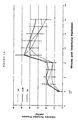
- Figure 1b shows the slower onset of effects of vasopressin compared with epinephrine alone or in combination with vasopressin.
- Cardiac arrest generally refers to conditions resulting in the loss of effective heart function and the loss of effective blood circulation.
- Specific conditions treatable by the present invention include ventricular fibrillation, characterized by rapid contractions and twitching of the heart muscle; asystole, characterized by the substantial absence of contractions of the heart; and electromechanical dissociation (EMD), characterized by the persistence of electrical activity in the heart without associated mechanical contractions.
- the kit of the present invention provides packaging material comprising unit dosage forms of vasopressin and one or more adrenergic agents; and instruction means indicating that said agents are to be administered to a patient undergoing cardiopulmonary resuscitation.
- the aforementioned agents may be packaged in unit dosage forms singly or in combination.
- the active agents when administered during the active inducement of blood transport and lung ventilation, act to, in the instance of vasopressin and'adrenergic agents, increase arterial blood pressure and enhance arterial blood circulation, and in the instance of bradycardic agents, act to decrease the heart rate and cardiac metabolism.
- the active inducement of blood transport includes both the transport of venous blood from the extremities and abdomen, into the thorax and heart, as well as the transport of blood from the heart into the lungs and arterial system.
- Both the induced blood transport and the lung ventilation are preferably achieved by certain advanced CPR methods, such as ACD CPR, as described in Cohen et al., JAMA , 267 , 2916 (1992), and interposed abdominal compression (IAC), as described in Neimen, N. Engl. J. Med. , 327 , 1075 (1992).
- Induced blood transport and lung ventilation can be achieved, but to a lesser extent, with standard chest massage and CPR techniques.
- additional measures will be taken to provide lung ventilation, such as use of an endotracheal tube, mouth-to-mouth resuscitation, or the like.
- the present invention is based on the discovery that the vital organ blood flow (with conventional CPR and in particular with the enhanced CPR techniques described above) can be further improved by administering the combination of vasopressin, a bradycardic agent and/or an adrenergic agent.
- Vasopressin is usually called antidiuretic hormone (ADH) by physiologists and biochemists, because it decreases urine flow by increasing the resorption of water from the distal convoluted tubules and collecting ducts of the kidney. Not only does it promote water retention but under certain circumstances, it increases the excretion of sodium and chloride. The effect is a decrease in the osmolarity of the extracellular fluid. In addition to its antidiuretic effects, vasopressin also stimulates vascular smooth muscles.
- ADH antidiuretic hormone
- vasopressin administration results in higher levels of myocardial perfusion, greater cerebral perfusion, and greater chances for resuscitation. Lindner et al., Anesthesia & Analgesia , 77 , 427 (1993). Furthermore, the higher the level of vasopressin in humans in cardiac arrest, the greater the chances of survival. Lindner et al., Br. Heart J. , 75 , 145 (1996). In contrast, the higher the level of endogenous levels of catecholamines in patients in cardiac arrest, the worse the chances of survival.
- Vasopressin is effective as an arterial constrictor under conditions of severe acidosis and the duration of action of vasopressin appears to be 3-4 times longer than comparable doses of epinephrine. Lindner et al., Circulation , 91 , 215 (1994). Vasopressin is commercially available from Park Davis, Morris Plains, New Jersey.
- Adrenergic agonists direct-acting sympathomimetics
- Adrenergic agonists increase the heart rate, enhance atrioventricular conduction, and increase the strength of the heart beat (positive inotropic action). They also induce lipolysis and thus increase the concentration of plasma free fatty acids. These effects are achieved, in part, through the activation of the adenylcyclase system and the intermediation of 3', 5'-cyclic adenosine monophosphate (cyclic AMP).
- Adrenergic agonists suitable for use in the present invention include, but are not limited to, epinephrine, norepinephrine, dopamine, dobutamine, isoproterenol, phenylephrine, methoxamine, and the like.
- the adrenergic agonist employed is epinephrine.
- Epinephrine is the predominant sympathomimetic in the adrenal medulla and stimulates both ⁇ and ⁇ adrenoceptors.
- ⁇ 1 as well as ⁇ 2 stimulation may be particularly important in the heart especially immediately after direct current shock. It is liberated in conditions of stress and vigorous exertion.
- the vasoconstrictor effect is stronger than the vasodilator effect, so that at higher doses there is a net increase in vascular resistance and extreme hypertensive crisis can occur with overdoses.
- Epinephrine is the drug of choice in the management of allergic emergencies, such as anaphylaxis, edema, and the like. Epinephrine is also a resuscitant for patients in cardiac arrest, however, the concomitant vasoconstriction is thought to place an unwanted load on a compromised heart. Epinephrine is commercially available from a number of companies.
- the phosphodiesterase inhibitors have been recognized as potent inotropic and vasodilating drugs. In acute congestive heart failure, they increase cardiac output, decrease left pulmonary capillary wedge pressure, and reduce total peripheral resistance with an improvement in loading conditions of the failing heart. Their potency in reversal of symptoms of acute congestive heart failure is quite similar to, or even better than, treatment with intravenous catecholamines and sodium nitroprusside.
- a preferred PDE inhibitor for use in the present method is aminophylline. See Merck Index (11th ed.) at entry 477. Other suitable PDE inhibitors are disclosed by T.A. Fischer et al., Drugs , 44 , 928 (1992).
- Bradycardic agents decrease heart rate and assist in the resuscitation process. Specifically, these agents help to decrease myocardial oxygen consumption (which is increased by adrenergic agents). ⁇ -adrenoceptor antagnoists funtion as bradycardic agents by blocking the effects of ⁇ -adrenergic agonists in the heart. Other bradycardic agents, such as zatebradine, work in part by blocking the potassium channels including the mixed sodium/potassium pacemaker current I f . During a cardiac arrest, these agents are particularly helpful immediately after return of spontaneous circulation.
- Zatebradine is a bradycardic agent that acts as a blocker of the mixed sodium/ potassium pacemaker current If and inhibits sinus node function.
- Kobinger et al. Eur. J. Pharmacol ., 104 , 9 (1984).
- zatebradine is a structural analog of verapamil, this drug does not possess classical calcium channel antagonist activity. Id. In isolated tissue preparations, this compound has been shown to produce marked negative chronotropic actions without any negative inotropic effects.
- zatebradine administration results in a decrease in heart rate with little change in arterial blood pressure. Id . It is this ability of zatebradine to selectively reduce heart rate without producing other hemodynamic alterations that make it highly useful in the perioperative setting. Riley et al., Anesthesiology , 67 , 707 (1987).
- Organic nitrates act physiologically via nitric oxide. They are potent vasodilators which act more on the venous or capacitance beds than on the peripheral arterial beds. These agents also cause a marked vasodilation of the coronary arteries and arterioles, leading to an increase in endocardial blood flow.
- the organic nitrates are particularly effective under conditions of cardiac ischemia and heart failure.
- Nitroglycerin is a coronary dilator and a general relaxant of smooth muscle. Its actions are directly on the smooth muscle. It preferentially dilates capacitance veins when compared with system resistance arteries. In the doses used for prophylaxis or relief of acute attacks of angina pectoris, it dilates the capacitance veins, which decreases venous return, and the coronary arteries, which decreases arterial impedance.
- the aforementioned drugs are preferably administered to the patient concurrently with or as soon as possible after the initiation of the enhanced CPR procedure, preferably being administered within from 0 to 60 minutes after such initiation, more preferably being administered from 0 to 10 minutes after such initiation.
- Both the initiation of CPR and the administration of the combination of active ingredients should be initiated as shortly as possible after the cardiac arrest, with drug administration preferably beginning within 10 minutes of arrest.
- Administration of the combination dose of drugs will preferably be repeated during procedures which last for more than 10 minutes, usually being repeated every 3 to 10 minutes.
- the drugs can be administered by any technique which assures rapid absorption into patient circulation, preferably being administered parenterally, i.e., by injection or infusion, as intravenously, endotracheally, sublingually,intracardiac, or by other parenteral routes.
- Intravenous injections will usually be made to a peripheral or central vein in a conventional manner.
- Endotracheal administration may also be performed and is particularly suitable if an endotracheal tube has been introduced in order to enhance lung ventilation and intravenous access is not immediately available.
- Devices and methods suitable for endotracheal administration of drugs according to the present invention are described in U.S. Patent No. 4,693,243.
- the total dosages described above will generally be increased in order to offset the inefficiencies of such an administration route.
- the dosages will usually be increased from two-fold to three-fold.
- the drugs will preferably be administered together in a single dosage or bolus, but could also be administered separately and/or sequentially to the patient. Furthermore, the total desired dosage of each of the drugs may be administered in two or more discrete boluses.
- the aforementioned drugs can be formulated for administration to a human patient in cardiac arrest in one or more unit dosage forms comprising an effective amount of vasopressin, bradycardic agent, and/or an adrenergic agent, optionally further comprising an organic nitrate, mannitol and/or a calcium channel blocker, in combination with a pharmaceutically acceptable liquid carrier, such as distilled water, physiological salt solutions such as normal saline, buffers, and the like.
- a pharmaceutically acceptable liquid carrier such as distilled water, physiological salt solutions such as normal saline, buffers, and the like.
- Such dosage forms will typically include a pharmaceutically acceptable preservative, and may include other components commonly employed in solutions suitable for intravenous and/or endotracheal administration such as nontoxic surfactants.
- Unit dosage forms comprising the active agents can be formulated so as to deliver single or multiple dosages of the drugs parenterally, as by injection or infusion.
- dosage forms include prefilled bottles, ampules, plastic bags or preloaded syringes.
- Methods for preparing such pharmaceutical compositions and unit dosage forms are well known in the art and described in more detail in various sources including, for example, Remington's Pharmaceutical Science , 15th Edition, Mack Publishing, Easton, Pennsylvania (1980).
- Unit dosage forms suitable for injection or infusion can include sterile concentrated aqueous or aqueous-alcoholic solutions or dispersions which are adapted for extemporaneous dilution to yield sterile injectable or infusible solutions or dispersions. In all cases, the ultimate dosage form must be sterile, fluid and stable under the conditions of manufacture and storage.
- the liquid carrier or vehicle can be a solvent or liquid dispersion medium comprising, for example, a major portion of water in combination with ethanol, a polyol (for example, glycerol, propylene glycol, and liquid polyethylene glycols, and the like), vegetable oils, nontoxic glycerol esters, lipids (for example, dimyristoyl phosphatidyl choline) and suitable mixtures thereof.
- a polyol for example, glycerol, propylene glycol, and liquid polyethylene glycols, and the like
- vegetable oils for example, nontoxic glycerol esters, lipids (for example, dimyristoyl phosphatidyl choline) and suitable mixtures thereof.
- lipids for example, dimyristoyl phosphatidyl choline
- the proper fluidity can be maintained, for example, by the formation of liposomes, by the maintenance of the required particle size in the case of dispersion or by the use of nontoxic surfact
- Sterile injectable or infusible solutions are prepared by incorporating the vasopressin, bradycardic agent, organic nitrate and/or an adrenergic agonist in the required amount in the appropriate solvent with various of the other ingredients enumerated above, and as required, followed by filter sterilization.
- the dosage of the vasopressin, bradycardic agent, adrenergic agent and organic nitrate to be utilized in the use or kit of the present invention can be varied widely, in accord with the size, age and condition of the patient.
- the vasopressin be administered in a dosage of from about 10 units to 120 units and that the adrenergic agent, if, for example, it is to be epinephrine, is administered in a dosage of from about 0.25 mg to 2.0 mg (i.e., total amount given to the patient at one time point during the procedure; administration may be repeated at successive time points as described below).
- the bradycardic agent if, for example it is to be zatebradine, is administered in a dosage of about 5 mg to about 150 mg.
- the bradycardic agent to be administered is to be a ⁇ -adrenergic receptor blocker, e.g., propanolol, it is preferred that it be administered in a dosage of about 0.25 mg to about 3 mg, or if the ⁇ -adrenergic receptor blocker is to be esmolol it is preferably administered in a dosage of about 5 mg to about 100 rng.
- an organic nitrate is to be administered, e.g.
- nitroglycerin it is preferred that it is administered in a dosage from about 10 ⁇ g to about 300 ⁇ g. Most preferably, the vasopressin is administered in a dosage of from about 10 units to about 50 units and the epinephrine is administered in a dosage of from about 0.75 mg to about 1.25 mg.
- the above dosages are the preferred ranges for adults and would be reduced somewhat for administration to children and infants.
- vasopressin may help restore sinus nodal function and/or enhance myocardial contractility after cardioversion.
- vasopressin is more effective in acidosis and has a longer duration of action, Applicants believe that it may be better for helping to restore myocardial perfusion before cardioversion. This hypothesis was tested by comparing the effects of epinephrine (EPI) (40 ug/kg) versus vasopressin (VP) (0.3 units/kg) alone or in combination.
- EPI epinephrine
- VP vasopressin
- Healthy female domestic farm pigs (28-33 kgs) were fasted overnight and anesthetized with pentobarbital (20 mg/kg IV bolus followed by 2.5 mg/kg/hr IV infusion) via an ear vein.
- pentobarbital (20 mg/kg IV bolus followed by 2.5 mg/kg/hr IV infusion) via an ear vein.
- pigs were placed in the dorsal recumbent position and intubated using standard endotracheal intubation technique. They were ventilated during the preparatory phase of the experiment and after return of spontaneous circulation at the end of the experiment with a mechanical respirator (model 607, Harvard Apparatus Co., Inc., Dover, MA).
- the tidal volume was set at 450 cc and delivered between 11 and 15 breaths per minute with supplemental oxygen at 2 liters/minute.
- Normal saline solution will be administered intravenously through the preparative and study periods using an infusion pump (Flo-Gard 6201, Baxter
- the preparatory phase which includes cannulation of both femoral arteries and the right jugular vein, as well as calibration of all instruments, takes approximately 2 hours.
- animals received normal saline solution at approximately 300-400 ml/hr to maintain diastolic right atrial pressures of 3-5 mm Hg.
- Arterial blood gases were analyzed every 30 minutes to insure adequate acid base status and oxygenation.
- Left ventricular and ascending aortic arch blood pressures were monitored using a single high fidelity micronanometer catheter (Millar, Houston, TX).
- This aorto-left ventricular catheter has a lumen for injecting radiolabeled microspheres and it was positioned, under fluoroscopic guidance, 15 minutes prior to initiation of VF.
- Right atrial pressures were monitored using a micromanometer catheter (Millar) inserted through a right jugular vein sheath. The micromanometer catheters were calibrated to atmospheric pressure immediately prior to inserting them into the pig.
- a 5 French bipolar packing catheter (Daig, Inc., Minnetonka, Minnesota), used to induce ventricular fibrillation (VF) with alternating current at 7 volts and 60 Hz, was inserted through a second right jugular vein sheath and positioned using fluoroscopy in the right ventricular apex.
- VF ventricular fibrillation
- a 7F catheter was advanced by femoral arterial access to the aortic arch.
- Body temperature was monitored continuously via a rectal probe (Yellow Springs Instrument Co., Yellow Springs, Ohio). Core temperatures were maintained between 36.5 and 38.5°C using a heating pad. Five minutes prior to induction of VF, 5000 U of sodium heparin was be administered intravenously.
- Applicants have studied the effects of the combination of vasopressin therapy and nitroglycerin therapy in a porcine model of ventricular fibrillation using standard CPR.
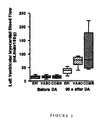
- this protocol in which the materials and methods were as described in Example 1, there were 7 pigs/group and an automated device was used to deliver standard CPR. Lindner et al., Circulation , 88 , 1254 (1993). Radiolabeled microspheres were used to measure myocardial blood flows during ventricular fibrillation prior to drug therapy and then 90 seconds after drug administration.
- volume-controlled ventilation (Servo 900, Siemens, Erlangen, Germany) was performed with 65% nitrous oxide in oxygen at 20 breaths/minute with a tidal volume adjusted to maintain normocapnia.
- Analgesia was achieved with a bolus dose of buprenorphine (0.015 mg/kg) and anesthesia was maintained with a continuous infusion of pentobarbital (0.4 mg/kg/h).
- Muscle paralysis was achieved by an injection of 10 mg alcuronium after intubation and subsequently as needed.
- a standard ECG signal was used to record heart rate and the number of premature ventricular contractions. Multiple catheters were used for hemodynamic monitoring.
- Cardiac output, right ventricular end-diastolic volume, stroke volume, and right ventricular ejection fraction were determined by the thermodilution technique (5 mL of iced saline into the right atrium) prearrest and at 5, 15, 30, 60 and 180 minutes after ROSC.
- a micronanometer-tipped catheter (Micro-Tip Pc-350, Millar Houston, TX) was placed into the left ventricle through the left carotid artery for measurement of intraventricular pressure.
- microsphere vial was placed into a water bath and subjected to ultrasonic vibration for 3 minutes before injection. Approximately 5+10 5 microspheres diluted in 10 mL saline were then immediately injected into the left ventricle. Lidner et al., Am. J. Emerg. Med. , 9 , 27 (1991). After completion of surgery and before induction of cardiac arrest, 5000 U heparin were administered intravenously to prevent intracardiac clot formation.
- Prearrest hemodynamic variables did not differ significantly among the 3 groups.
- coronary perfusion pressure was 29 ⁇ 4mm Hg, 26 ⁇ 2, 26 ⁇ 4 mm Hg, respectively.
- zatebradine caused a significant reduction in heart rate during the entire postresuscitation phase in comparison with the esmolol group and the placebo group.
- esmolol administration caused a significant reduction in cardiac output in comparison with the zatebradine group (P ⁇ 0.05), and the placebo group (P ⁇ 0.01), and a significant increase in right atrial pressure in comparison with the zatebradine group (P ⁇ 0.05), and the placebo group (P ⁇ 0.05).
- the ratio dP/dt to left ventricular systolic pressure in the placebo group was significantly higher in comparison with the zatebradine group (P ⁇ 0.05), and the esmolol group (P ⁇ 0.001); and the ratio dP/dt to left ventricular systolic pressure in the zatebradine group was significantly higher (P ⁇ 0.01) in comparison with the esmolol group. All other hemodynamic variables did not differ significantly among the 3 groups during the period of observation (Table 1).
- Baseline myocardial blood flow values did not differ significantly among groups. During the postresuscitation phase, there were no significant differences in left ventricular myocardial blood flow between the zatebradine and the placebo group. In contrast, left ventricular myocardial blood flow (mL/g/min), epicardial blood flow, and endocardial blood flow in the esmolol group were significantly lower (P ⁇ 0.05) (5.6 ⁇ 0.8, 6.4 ⁇ 0.7, 4.9 ⁇ 0.8, respectively) in comparison with the placebo group (11.1 ⁇ 2.1, 12.5 ⁇ 2.3, 9.9 ⁇ 1.5, respectively) at 5 minutes after ROSC.
- the endocardial/epicardial perfusion ratio of the zatebradine group (1.0 ⁇ 0.06)was significantly higher in comparison with the esmolol (0.74 ⁇ 0.06) (P ⁇ 0.05) and the placebo (0.83 ⁇ 0.05)(P0.05) group.
- the endocardial blood flow/heart rate ratio of the zatebradine and placebo groups were significantly higher than in the esmolol group (P ⁇ 0.01 zatebradine vs esmolol; P ⁇ 0.05 placebo vs esmolol).
- the endocardial blood flow/heart rate ratio in the zatebradine group was significantly higher (5.4 ⁇ 0.6ml/100g/min/beat) in comparison with the esmolol group (2.3 ⁇ 0.4)(P ⁇ 0.01) and the placebo group (4.3 ⁇ 0.6(P ⁇ 0.01).
Landscapes
- Health & Medical Sciences (AREA)
- Life Sciences & Earth Sciences (AREA)
- Veterinary Medicine (AREA)
- Public Health (AREA)
- Medicinal Chemistry (AREA)
- Pharmacology & Pharmacy (AREA)
- Chemical & Material Sciences (AREA)
- Animal Behavior & Ethology (AREA)
- General Health & Medical Sciences (AREA)
- Engineering & Computer Science (AREA)
- Bioinformatics & Cheminformatics (AREA)
- Epidemiology (AREA)
- Cardiology (AREA)
- Organic Chemistry (AREA)
- Gastroenterology & Hepatology (AREA)
- Immunology (AREA)
- Nuclear Medicine, Radiotherapy & Molecular Imaging (AREA)
- Heart & Thoracic Surgery (AREA)
- Chemical Kinetics & Catalysis (AREA)
- General Chemical & Material Sciences (AREA)
- Proteomics, Peptides & Aminoacids (AREA)
- Hospice & Palliative Care (AREA)
- Acyclic And Carbocyclic Compounds In Medicinal Compositions (AREA)
- Medicines That Contain Protein Lipid Enzymes And Other Medicines (AREA)
- Percussion Or Vibration Massage (AREA)
- Electrotherapy Devices (AREA)
- Saccharide Compounds (AREA)
- Pharmaceuticals Containing Other Organic And Inorganic Compounds (AREA)
Claims (35)
- Verwendung von Vasopressin zur Herstellung eines Arzneimittels zur Behandlung von Herzstillstand zusammen mit einem oder mehreren adrenergen Mitteln bei einer Verabreichung an einen Patienten, der einer kardiopulmonalen Wiederbelebung unterzogen wird.
- Verwendung nach Anspruch 1, worin das adrenerge Mittel ein adrenerger Agonist ist.
- Verwendung nach Anspruch 2, worin der adrenerge Agonist aus der Gruppe ausgewählt ist, die besteht aus Epinephrin, Dopamin, Norepinephrin, Isoproterenol, Phenylephrin, Dobutamin und Methoxamin oder Kombinationen hiervon.
- Verwendung nach Anspruch 3, worin der adrenerge Agonist Epinephrin ist.
- Verwendung nach Anspruch 1, worin das adrenerge Mittel ein PDE Inhibitor ist.
- Verwendung nach Anspruch 5, worin der PDE Inhibitor Aminophyllin ist.
- Verwendung nach Anspruch 1, worin die Verwendung in Zusammenhang mit einem bradykarden Mittel erfolgt.
- Verwendung nach Anspruch 7, worin das bradikarde Mittel Zatebradin, Tedisamil, Falipamil, Mixidin, Alinidin oder ein β-adrenerger Rezeptorblocker ist.
- Verwendung nach Anspruch 8, worin das bradykarde Mittel Zatebradin ist.
- Verwendung nach einem der Ansprüche 1 oder 7, wobei die Verwendung ferner zusammen mit einem organischen Nitrat erfolgt.
- Verwendung nach Anspruch 10, worin das organische Nitrat Nitroglycerin ist.
- Verwendung nach einem der Ansprüche 1, 7 oder 10, wobei die Verwendung ferner zusammen mit Mannit erfolgt.
- Verwendung nach einem der Ansprüche 1, 7, 10 oder 12, die ferner einen Calciumkanalblocker umfäßt der in einer Menge vorhanden ist, die zur Hemmung einer Calciumüberladung wirksam ist.
- Verwendung nach Anspruch 13, worin der Calciumkanalblocker Diltiazem, Verapamil oder Nifedipin ist.
- Kit zur Behandlung eines Herzstillstands, der Verpackungsmaterial, das eine erste Menge an Vasopressin und eine zweite Menge an einem oder mehreren adrenergen Mitteln enthält, wobei die Mengen zur Erhöhung des arteriellen Blutdrucks wirksam sind, um den Blutfluß zum Gehirn und zum Herzen zu fördern, und Anleitungen umfaßt, die angeben, daß das Vasopressin und die adrenergen Mittel einem Patienten verabreicht werden, der einer kardiopulmonalen Wiederbelebung unterzogen wird.
- Kit nach Anspruch 15, worin die ersten und zweiten Mengen in Kombination verpackt sind.
- Kit nach Anspruch 15, worin die ersten und zweiten Mengen getrennt verpackt sind.
- Kit nach Anspruch 15, worin die erste Menge an Vasopressin eine Einheitsdosierungsform von etwa 10 Einheiten bis etwa 120 Einheiten Vasopressin umfaßt.
- Kit nach Anspruch 15, worin das adrenerge Mittel ein adrenerger Agonist ist.
- Kit nach Anspruch 19, worin der adrenerge Agonist ausgewählt ist aus der Gruppe, die besteht aus Epinephrin, Dopamin, Norepinephrin, Isoproterenol, Phenylephrin, Dobutarnin und Methoxamin oder einer Kombination hiervon.
- Kit nach Anspruch 20, worin der adrenerge Agonist eine Einheitsdosierungsform mit etwa 0,25 mg bis 3,0 mg Epinephrin enthält.
- Kit nach Anspruch 15, worin das adrenerge Mittel ein PDE Inhibitor ist.
- Kit nach Anspruch 22, worin der PDE Inhibitor Aminophyllin ist.
- Kit nach Anspruch 15, der ferner eine dritte Menge eines bradykarden Mittels enthält, die zur Verringerung der Herzfrequenz wirksam ist.
- Kit nach Anspruch 24, worin die ersten, zweiten und dritten Mengen in Kombination verpackt sind.
- Kit nach Anspruch 24, worin die ersten, zweiten und dritten Mengen getrennt verpackt sind.
- Kit nach Anspruch 24, worin das bradykarde Mittel Zatebradin, Tedisamil, Falipamil, Mixidin, Alinidin oder ein β-adrenerger Rezeptorblocker ist.
- Kit nach Anspruch 27, worin das bradykarde Mittel Zatebradin ist und in einer Dosis von etwa 5 mg bis etwa 150 mg vorhanden ist.
- Kit nach einem der Ansprüche 15 oder 24, der ferner ein organisches Nitrat mit vasodilatatorischer Aktivität enthält, das in einer Menge vorhanden ist, die zur Erhöhung des myokardialen Blutflusses wirksam ist
- Kit nach Anspruch 29, worin der Vasodilatator Nitroglycerin ist.
- Kit nach Anspruch 30, der eine Einheitsdosierungsform mit etwa 10 µg bis 300 µg Nitroglycerin enthält.
- Kit nach einem der Ansprüche 15, 24 oder 29, der ferner Mannit in einer wirksamen Menge umfaßt, um Ödeme bei einer Verabreichung an einen Patienten zu verhindern.
- Kit nach Anspruch 32, der eine Einheitsdosierungsform von etwa 5 g bis 50 g enthält.
- Kit nach einem der Ansprüche 15, 24, 29 oder 32, der ferner einen Calciumkanalblocker in einer Menge enthält, die zur Hemmung der Calciumüberladung bei diesem Patienten wirksam ist.
- Kit nach Anspruch 34, worin der Calciumkanalblocker Diltiazem , Verapamil oder Nifedipin ist.
Applications Claiming Priority (3)
| Application Number | Priority Date | Filing Date | Title |
|---|---|---|---|
| US08/625,733 US5827893A (en) | 1996-03-29 | 1996-03-29 | Mechanical and pharmacological therapies to treat cardiac arrest |
| US625733 | 1996-03-29 | ||
| PCT/US1997/005056 WO1997036609A2 (en) | 1996-03-29 | 1997-03-27 | Combinations of vasopressin and adrenergic agents for the treatment of cardiac arrest |
Publications (2)
| Publication Number | Publication Date |
|---|---|
| EP0904097A2 EP0904097A2 (de) | 1999-03-31 |
| EP0904097B1 true EP0904097B1 (de) | 2003-05-28 |
Family
ID=24507338
Family Applications (1)
| Application Number | Title | Priority Date | Filing Date |
|---|---|---|---|
| EP97917089A Expired - Lifetime EP0904097B1 (de) | 1996-03-29 | 1997-03-27 | Kombinationen von vasopressin und adrenergischen wirkstoffen zur behandlung des plötzlichen herztods |
Country Status (9)
| Country | Link |
|---|---|
| US (1) | US5827893A (de) |
| EP (1) | EP0904097B1 (de) |
| JP (1) | JP2000507954A (de) |
| AT (1) | ATE241378T1 (de) |
| AU (1) | AU718520B2 (de) |
| CA (1) | CA2250420C (de) |
| DE (1) | DE69722401T2 (de) |
| ES (1) | ES2200171T3 (de) |
| WO (1) | WO1997036609A2 (de) |
Families Citing this family (42)
| Publication number | Priority date | Publication date | Assignee | Title |
|---|---|---|---|---|
| US7195013B2 (en) * | 1993-11-09 | 2007-03-27 | Advanced Circulatory Systems, Inc. | Systems and methods for modulating autonomic function |
| US7195012B2 (en) * | 2003-04-28 | 2007-03-27 | Advanced Circulatory Systems, Inc. | Systems and methods for reducing intracranial pressure |
| AU2002213255A1 (en) * | 2000-10-18 | 2002-04-29 | Federal Mogul Corporation | Multi-axially forged piston |
| US7682312B2 (en) * | 2002-09-20 | 2010-03-23 | Advanced Circulatory Systems, Inc. | System for sensing, diagnosing and treating physiological conditions and methods |
| AU2003297562A1 (en) * | 2002-11-27 | 2004-06-23 | Artesian Therapeutics, Inc. | COMPOUNDS WITH MIXED PDE-INHIBITORY AND Beta-ADRENERGIC ANTAGONIST OR PARTIAL AGONIST ACTIVITY FOR TREATMENT OF HEART FAILURE |
| CA2511496A1 (en) * | 2002-12-23 | 2004-07-15 | Artesian Therapeutics, Inc. | Cardiotonic compounds with inhibitory activity against .beta.-adrenergic receptors and phosphodiesterase |
| US7836881B2 (en) * | 2003-04-28 | 2010-11-23 | Advanced Circulatory Systems, Inc. | Ventilator and methods for treating head trauma and low blood circulation |
| US7766011B2 (en) | 2003-04-28 | 2010-08-03 | Advanced Circulatory Systems, Inc. | Positive pressure systems and methods for increasing blood pressure and circulation |
| EP3064242A1 (de) | 2003-04-28 | 2016-09-07 | Advanced Circulatory Systems Inc. | Lüfter und verfahren zur behandlung von kopftrauma und geringer blutzirkulation |
| US8011367B2 (en) | 2003-09-11 | 2011-09-06 | Advanced Circulatory Systems, Inc. | CPR devices and methods utilizing a continuous supply of respiratory gases |
| US8805491B2 (en) * | 2004-04-20 | 2014-08-12 | Zoll Medical Corporation | Microperfusive electrical stimulation |
| US20080255134A1 (en) * | 2004-11-30 | 2008-10-16 | Artesian Therapeutics, Inc. | Cardiotonic Compounds With Inhibitory Activity Against Beta-Adrenergic Receptors And Phosphodiesterase |
| CA2588949A1 (en) * | 2004-11-30 | 2006-06-08 | Artesian Therapeutics, Inc. | Compounds with mixed pde-inhibitory and .beta.-adrenergic antagonist or partial agonist activity for treatment of heart failure |
| FR2880252A1 (fr) * | 2005-01-06 | 2006-07-07 | Yves Darlas | " nouvelle methode d'analyse et de mesure de la distribution ou de la reserve sanguine coronarienne " |
| FR2880807B1 (fr) * | 2005-01-19 | 2007-04-13 | Aguettant Sa Lab | Composition pharmaceutique injectable |
| US8151790B2 (en) | 2007-04-19 | 2012-04-10 | Advanced Circulatory Systems, Inc. | Volume exchanger valve system and method to increase circulation during CPR |
| US9352111B2 (en) | 2007-04-19 | 2016-05-31 | Advanced Circulatory Systems, Inc. | Systems and methods to increase survival with favorable neurological function after cardiac arrest |
| US9724266B2 (en) | 2010-02-12 | 2017-08-08 | Zoll Medical Corporation | Enhanced guided active compression decompression cardiopulmonary resuscitation systems and methods |
| US12016820B2 (en) | 2010-02-12 | 2024-06-25 | Zoll Medical Corporation | Enhanced guided active compression decompression cardiopulmonary resuscitation systems and methods |
| US20140024979A1 (en) | 2010-12-23 | 2014-01-23 | Mark Bruce Radbourne | Respiration-assistance systems, devices, or methods |
| AU2012358977A1 (en) | 2011-12-19 | 2014-07-24 | ResQSystems, Inc. | Systems and methods for therapeutic intrathoracic pressure regulation |
| US11357417B2 (en) | 2012-01-19 | 2022-06-14 | Cerebrotech Medical Systems, Inc. | Continuous autoregulation system |
| AU2013209519B2 (en) * | 2012-01-19 | 2017-05-25 | Cerebrotech Medical Systems, Inc. | Diagnostic system for detection of fluid changes |
| US10743815B2 (en) | 2012-01-19 | 2020-08-18 | Cerebrotech Medical Systems, Inc. | Detection and analysis of spatially varying fluid levels using magnetic signals |
| US9811634B2 (en) | 2013-04-25 | 2017-11-07 | Zoll Medical Corporation | Systems and methods to predict the chances of neurologically intact survival while performing CPR |
| US20140358047A1 (en) | 2013-05-30 | 2014-12-04 | ResQSystems, Inc. | End-tidal carbon dioxide and amplitude spectral area as non-invasive markers of coronary perfusion pressure and arterial pressure |
| US10265495B2 (en) | 2013-11-22 | 2019-04-23 | Zoll Medical Corporation | Pressure actuated valve systems and methods |
| US11259988B2 (en) | 2014-02-19 | 2022-03-01 | Keith G. Lurie | Active compression decompression and upper body elevation system |
| US9801782B2 (en) | 2014-02-19 | 2017-10-31 | Keith G. Lurie | Support devices for head up cardiopulmonary resuscitation |
| US12144777B2 (en) | 2014-02-19 | 2024-11-19 | Resuscitation Innovations Llc | Methods and systems to reduce brain damage |
| US10245209B2 (en) | 2014-02-19 | 2019-04-02 | Keith G. Lurie | Systems and methods for gravity-assisted cardiopulmonary resuscitation |
| US10406069B2 (en) | 2014-02-19 | 2019-09-10 | Keith G. Lurie | Device for elevating the head and chest for treating low blood flow states |
| US11844742B2 (en) | 2014-02-19 | 2023-12-19 | Keith G. Lurie | Methods and systems to reduce brain damage |
| US11096861B2 (en) | 2014-02-19 | 2021-08-24 | Keith G. Lurie | Systems and methods for gravity-assisted cardiopulmonary resuscitation and defibrillation |
| US9707152B2 (en) | 2014-02-19 | 2017-07-18 | Keith G. Lurie | Systems and methods for head up cardiopulmonary resuscitation |
| US10350137B2 (en) | 2014-02-19 | 2019-07-16 | Keith G. Lurie | Elevation timing systems and methods for head up CPR |
| US11020314B2 (en) | 2014-02-19 | 2021-06-01 | Keith G. Lurie | Methods and systems to reduce brain damage |
| US10406068B2 (en) | 2014-02-19 | 2019-09-10 | Keith G. Lurie | Lockable head up cardiopulmonary resuscitation support device |
| US11246794B2 (en) | 2014-02-19 | 2022-02-15 | Keith G. Lurie | Systems and methods for improved post-resuscitation recovery |
| US10667987B2 (en) | 2014-02-19 | 2020-06-02 | Keith G. Lurie | Uniform chest compression CPR |
| US9750661B2 (en) | 2014-02-19 | 2017-09-05 | Keith G. Lurie | Systems and methods for head up cardiopulmonary resuscitation |
| JP6958913B2 (ja) * | 2015-11-06 | 2021-11-02 | ザ ボード オブ トラスティーズ オブ ザ ユニヴァーシティ オブ イリノイThe Board Of Trustees Of The University Of Illinois | 心停止の処置のためのペプチドおよび方法 |
Family Cites Families (2)
| Publication number | Priority date | Publication date | Assignee | Title |
|---|---|---|---|---|
| US4693243A (en) * | 1983-01-14 | 1987-09-15 | Buras Sharon Y | Conduit system for directly administering topical anaesthesia to blocked laryngeal-tracheal areas |
| US5588422A (en) * | 1992-11-17 | 1996-12-31 | Regents Of The University Of Minnesota | Methods and pharmaceutical compositions for enhanced cardiopulmonary resuscitation |
-
1996
- 1996-03-29 US US08/625,733 patent/US5827893A/en not_active Expired - Fee Related
-
1997
- 1997-03-27 AU AU25527/97A patent/AU718520B2/en not_active Ceased
- 1997-03-27 JP JP9535438A patent/JP2000507954A/ja active Pending
- 1997-03-27 DE DE69722401T patent/DE69722401T2/de not_active Expired - Fee Related
- 1997-03-27 WO PCT/US1997/005056 patent/WO1997036609A2/en not_active Ceased
- 1997-03-27 EP EP97917089A patent/EP0904097B1/de not_active Expired - Lifetime
- 1997-03-27 ES ES97917089T patent/ES2200171T3/es not_active Expired - Lifetime
- 1997-03-27 AT AT97917089T patent/ATE241378T1/de not_active IP Right Cessation
- 1997-03-27 CA CA002250420A patent/CA2250420C/en not_active Expired - Fee Related
Also Published As
| Publication number | Publication date |
|---|---|
| DE69722401D1 (de) | 2003-07-03 |
| EP0904097A2 (de) | 1999-03-31 |
| CA2250420C (en) | 2002-12-17 |
| US5827893A (en) | 1998-10-27 |
| AU2552797A (en) | 1997-10-22 |
| ES2200171T3 (es) | 2004-03-01 |
| JP2000507954A (ja) | 2000-06-27 |
| DE69722401T2 (de) | 2004-05-06 |
| CA2250420A1 (en) | 1997-10-09 |
| WO1997036609A3 (en) | 1998-01-29 |
| WO1997036609A2 (en) | 1997-10-09 |
| ATE241378T1 (de) | 2003-06-15 |
| AU718520B2 (en) | 2000-04-13 |
Similar Documents
| Publication | Publication Date | Title |
|---|---|---|
| AU718520B2 (en) | Combinations of vasopressin and adrenergic agents for the treatment of cardiac arrest | |
| US6486206B1 (en) | Mechanical and pharmacologic therapies to treat cardiac arrest | |
| JP3836128B2 (ja) | プリン組成物および投与方法 | |
| Babar et al. | Vasopressin versus epinephrine during cardiopulmonary resuscitation: a randomized swine outcome study | |
| DE69833665T2 (de) | Zusammensetzungen zur vereinfachung von chirurgischen verfahren | |
| Hackett et al. | Coronary vascular responses to stimulation of chemoreceptors and baroreceptors: evidence for reflex activation of vagal cholinergic innervation | |
| Gauthier et al. | Acute and chronic cardiovascular effects of 6-hydroxydopamine in dogs | |
| Koscove et al. | Successful resuscitation from cardiac arrest using high-dose epinephrine therapy: report of two cases | |
| Roy et al. | Somatostatin, anaesthesia, and the carcinoid syndrome: Peri‐operative administration of a somatostatin analogue to suppress carcinoid tumour activity | |
| US20060293395A1 (en) | Methods for treating a mammal before, during and after cardiac arrest | |
| Douglas et al. | The respiratory stimulant action of 5-hydroxytryptamine (serotonin) in the dog | |
| CA2398927A1 (en) | Administration of an alpha-2 adrenergic receptor agonist to enhance cardiopulmonary resuscitation | |
| KR19990037550A (ko) | 성기능 장애의 치료방법 및 치료용 조성물 | |
| Bleske et al. | Comparison of intravenous and intranasal administration of epinephrine during CPR in a canine model | |
| Van Wezel et al. | Comparison of nitroglycerine, verapamil and nifedipine in the management of arterial pressure during coronary artery surgery | |
| US20050059574A1 (en) | Compositions of stable T3 and methodes of use thereof | |
| Lambert et al. | Direct effects in vivo of angiotensins I and II on the canine sinus node | |
| JPH03505447A (ja) | アミオダロンと、ニトロ誘導体、特にイソソルビト二硝酸と、必要に応じてさらにβ―遮断薬とを含む心臓保護効果のある医薬組成物 | |
| Hatori et al. | Coronary venous retroinfusion of felodipine reduces myocardial necrosis after coronary occlusion and reperfusion | |
| US12433878B2 (en) | Uses of bupivacaine multivesicular liposomes as stellate ganglion block | |
| JP2000026295A (ja) | 虚血再潅流損傷の治療薬ならび不整脈および心筋梗塞による心不全を含む細胞機能障害の治療薬 | |
| Carter | Anesthesia and sedation in the field | |
| Hess et al. | A comparison of the antifibrillatory effect of midazolam and flunitrazepam in acute myocardial ischaemia in the dog | |
| EP1351673B1 (de) | Stabile t3 zusammensetzungen und ihre anwendung | |
| Chen et al. | Effect of nitric oxide on strophanthidin-induced ventricular tachycardia |
Legal Events
| Date | Code | Title | Description |
|---|---|---|---|
| PUAI | Public reference made under article 153(3) epc to a published international application that has entered the european phase |
Free format text: ORIGINAL CODE: 0009012 |
|
| 17P | Request for examination filed |
Effective date: 19981015 |
|
| AK | Designated contracting states |
Kind code of ref document: A2 Designated state(s): AT BE CH DE DK ES FI FR GB GR IE IT LI LU MC NL PT SE |
|
| 17Q | First examination report despatched |
Effective date: 20011005 |
|
| RIC1 | Information provided on ipc code assigned before grant |
Free format text: 7A 61K 38/11 A, 7A 61K 31/55 B, 7A 61P 9/04 B |
|
| GRAH | Despatch of communication of intention to grant a patent |
Free format text: ORIGINAL CODE: EPIDOS IGRA |
|
| RIC1 | Information provided on ipc code assigned before grant |
Free format text: 7A 61K 38/11 A, 7A 61K 31/55 B, 7A 61P 9/04 B |
|
| GRAH | Despatch of communication of intention to grant a patent |
Free format text: ORIGINAL CODE: EPIDOS IGRA |
|
| GRAA | (expected) grant |
Free format text: ORIGINAL CODE: 0009210 |
|
| AK | Designated contracting states |
Designated state(s): AT BE CH DE DK ES FI FR GB GR IE IT LI LU MC NL PT SE |
|
| PG25 | Lapsed in a contracting state [announced via postgrant information from national office to epo] |
Ref country code: NL Free format text: LAPSE BECAUSE OF FAILURE TO SUBMIT A TRANSLATION OF THE DESCRIPTION OR TO PAY THE FEE WITHIN THE PRESCRIBED TIME-LIMIT Effective date: 20030528 Ref country code: LI Free format text: LAPSE BECAUSE OF FAILURE TO SUBMIT A TRANSLATION OF THE DESCRIPTION OR TO PAY THE FEE WITHIN THE PRESCRIBED TIME-LIMIT Effective date: 20030528 Ref country code: GB Free format text: LAPSE BECAUSE OF FAILURE TO SUBMIT A TRANSLATION OF THE DESCRIPTION OR TO PAY THE FEE WITHIN THE PRESCRIBED TIME-LIMIT Effective date: 20030528 Ref country code: FI Free format text: LAPSE BECAUSE OF FAILURE TO SUBMIT A TRANSLATION OF THE DESCRIPTION OR TO PAY THE FEE WITHIN THE PRESCRIBED TIME-LIMIT Effective date: 20030528 Ref country code: CH Free format text: LAPSE BECAUSE OF FAILURE TO SUBMIT A TRANSLATION OF THE DESCRIPTION OR TO PAY THE FEE WITHIN THE PRESCRIBED TIME-LIMIT Effective date: 20030528 Ref country code: BE Free format text: LAPSE BECAUSE OF FAILURE TO SUBMIT A TRANSLATION OF THE DESCRIPTION OR TO PAY THE FEE WITHIN THE PRESCRIBED TIME-LIMIT Effective date: 20030528 Ref country code: AT Free format text: LAPSE BECAUSE OF FAILURE TO SUBMIT A TRANSLATION OF THE DESCRIPTION OR TO PAY THE FEE WITHIN THE PRESCRIBED TIME-LIMIT Effective date: 20030528 |
|
| REG | Reference to a national code |
Ref country code: GB Ref legal event code: FG4D |
|
| REG | Reference to a national code |
Ref country code: CH Ref legal event code: EP |
|
| REG | Reference to a national code |
Ref country code: IE Ref legal event code: FG4D |
|
| REF | Corresponds to: |
Ref document number: 69722401 Country of ref document: DE Date of ref document: 20030703 Kind code of ref document: P |
|
| PG25 | Lapsed in a contracting state [announced via postgrant information from national office to epo] |
Ref country code: SE Free format text: LAPSE BECAUSE OF FAILURE TO SUBMIT A TRANSLATION OF THE DESCRIPTION OR TO PAY THE FEE WITHIN THE PRESCRIBED TIME-LIMIT Effective date: 20030828 Ref country code: PT Free format text: LAPSE BECAUSE OF FAILURE TO SUBMIT A TRANSLATION OF THE DESCRIPTION OR TO PAY THE FEE WITHIN THE PRESCRIBED TIME-LIMIT Effective date: 20030828 Ref country code: GR Free format text: LAPSE BECAUSE OF FAILURE TO SUBMIT A TRANSLATION OF THE DESCRIPTION OR TO PAY THE FEE WITHIN THE PRESCRIBED TIME-LIMIT Effective date: 20030828 Ref country code: DK Free format text: LAPSE BECAUSE OF FAILURE TO SUBMIT A TRANSLATION OF THE DESCRIPTION OR TO PAY THE FEE WITHIN THE PRESCRIBED TIME-LIMIT Effective date: 20030828 |
|
| NLV1 | Nl: lapsed or annulled due to failure to fulfill the requirements of art. 29p and 29m of the patents act | ||
| REG | Reference to a national code |
Ref country code: CH Ref legal event code: PL |
|
| GBV | Gb: ep patent (uk) treated as always having been void in accordance with gb section 77(7)/1977 [no translation filed] |
Effective date: 20030528 |
|
| REG | Reference to a national code |
Ref country code: ES Ref legal event code: FG2A Ref document number: 2200171 Country of ref document: ES Kind code of ref document: T3 |
|
| ET | Fr: translation filed | ||
| PG25 | Lapsed in a contracting state [announced via postgrant information from national office to epo] |
Ref country code: LU Free format text: LAPSE BECAUSE OF NON-PAYMENT OF DUE FEES Effective date: 20040327 |
|
| PG25 | Lapsed in a contracting state [announced via postgrant information from national office to epo] |
Ref country code: IE Free format text: LAPSE BECAUSE OF NON-PAYMENT OF DUE FEES Effective date: 20040329 |
|
| PG25 | Lapsed in a contracting state [announced via postgrant information from national office to epo] |
Ref country code: MC Free format text: LAPSE BECAUSE OF NON-PAYMENT OF DUE FEES Effective date: 20040331 |
|
| PLBE | No opposition filed within time limit |
Free format text: ORIGINAL CODE: 0009261 |
|
| STAA | Information on the status of an ep patent application or granted ep patent |
Free format text: STATUS: NO OPPOSITION FILED WITHIN TIME LIMIT |
|
| 26N | No opposition filed |
Effective date: 20040302 |
|
| REG | Reference to a national code |
Ref country code: IE Ref legal event code: MM4A |
|
| PGFP | Annual fee paid to national office [announced via postgrant information from national office to epo] |
Ref country code: ES Payment date: 20070326 Year of fee payment: 11 |
|
| PGFP | Annual fee paid to national office [announced via postgrant information from national office to epo] |
Ref country code: GB Payment date: 20070327 Year of fee payment: 11 |
|
| PGFP | Annual fee paid to national office [announced via postgrant information from national office to epo] |
Ref country code: DE Payment date: 20070430 Year of fee payment: 11 |
|
| PGFP | Annual fee paid to national office [announced via postgrant information from national office to epo] |
Ref country code: IT Payment date: 20070608 Year of fee payment: 11 |
|
| PGFP | Annual fee paid to national office [announced via postgrant information from national office to epo] |
Ref country code: FR Payment date: 20070319 Year of fee payment: 11 |
|
| GBPC | Gb: european patent ceased through non-payment of renewal fee |
Effective date: 20080327 |
|
| REG | Reference to a national code |
Ref country code: FR Ref legal event code: ST Effective date: 20081125 |
|
| PG25 | Lapsed in a contracting state [announced via postgrant information from national office to epo] |
Ref country code: DE Free format text: LAPSE BECAUSE OF NON-PAYMENT OF DUE FEES Effective date: 20081001 |
|
| PG25 | Lapsed in a contracting state [announced via postgrant information from national office to epo] |
Ref country code: FR Free format text: LAPSE BECAUSE OF NON-PAYMENT OF DUE FEES Effective date: 20080331 |
|
| REG | Reference to a national code |
Ref country code: ES Ref legal event code: FD2A Effective date: 20080328 |
|
| PG25 | Lapsed in a contracting state [announced via postgrant information from national office to epo] |
Ref country code: ES Free format text: LAPSE BECAUSE OF NON-PAYMENT OF DUE FEES Effective date: 20080328 |
|
| PG25 | Lapsed in a contracting state [announced via postgrant information from national office to epo] |
Ref country code: IT Free format text: LAPSE BECAUSE OF NON-PAYMENT OF DUE FEES Effective date: 20080327 |