EP0906366B1 - Neue photochrome indenokondensierte naphthopyrane - Google Patents
Neue photochrome indenokondensierte naphthopyrane Download PDFInfo
- Publication number
- EP0906366B1 EP0906366B1 EP97926876A EP97926876A EP0906366B1 EP 0906366 B1 EP0906366 B1 EP 0906366B1 EP 97926876 A EP97926876 A EP 97926876A EP 97926876 A EP97926876 A EP 97926876A EP 0906366 B1 EP0906366 B1 EP 0906366B1
- Authority
- EP
- European Patent Office
- Prior art keywords
- alkyl
- mono
- group
- phenyl
- alkoxy
- Prior art date
- Legal status (The legal status is an assumption and is not a legal conclusion. Google has not performed a legal analysis and makes no representation as to the accuracy of the status listed.)
- Expired - Lifetime
Links
- 150000001875 compounds Chemical class 0.000 claims abstract description 56
- 239000000463 material Substances 0.000 claims abstract description 39
- 125000003003 spiro group Chemical group 0.000 claims abstract description 21
- VCMLCMCXCRBSQO-UHFFFAOYSA-N 3h-benzo[f]chromene Chemical class C1=CC=CC2=C(C=CCO3)C3=CC=C21 VCMLCMCXCRBSQO-UHFFFAOYSA-N 0.000 claims abstract description 17
- 125000001424 substituent group Chemical group 0.000 claims abstract description 13
- 125000004309 pyranyl group Chemical group O1C(C=CC=C1)* 0.000 claims abstract description 11
- 150000001562 benzopyrans Chemical class 0.000 claims abstract description 6
- -1 naphthopyran compound Chemical class 0.000 claims description 117
- 125000001997 phenyl group Chemical group [H]C1=C([H])C([H])=C(*)C([H])=C1[H] 0.000 claims description 44
- 125000004178 (C1-C4) alkyl group Chemical group 0.000 claims description 42
- 239000000178 monomer Substances 0.000 claims description 41
- 239000001257 hydrogen Substances 0.000 claims description 40
- 229910052739 hydrogen Inorganic materials 0.000 claims description 40
- 125000004169 (C1-C6) alkyl group Chemical group 0.000 claims description 34
- 125000004435 hydrogen atom Chemical group [H]* 0.000 claims description 32
- 125000006273 (C1-C3) alkyl group Chemical group 0.000 claims description 30
- 239000000203 mixture Substances 0.000 claims description 29
- 125000001309 chloro group Chemical group Cl* 0.000 claims description 26
- 239000000126 substance Substances 0.000 claims description 25
- 125000001153 fluoro group Chemical group F* 0.000 claims description 22
- 125000001624 naphthyl group Chemical group 0.000 claims description 20
- 125000006274 (C1-C3)alkoxy group Chemical group 0.000 claims description 18
- 125000004191 (C1-C6) alkoxy group Chemical group 0.000 claims description 18
- GFSXWQUSLTVUBW-UHFFFAOYSA-N 10bh-benzo[h]chromene Chemical compound C1=CC=C2C3OC=CC=C3C=CC2=C1 GFSXWQUSLTVUBW-UHFFFAOYSA-N 0.000 claims description 17
- 229920001577 copolymer Chemical compound 0.000 claims description 17
- SIKJAQJRHWYJAI-UHFFFAOYSA-N Indole Chemical compound C1=CC=C2NC=CC2=C1 SIKJAQJRHWYJAI-UHFFFAOYSA-N 0.000 claims description 14
- 125000006526 (C1-C2) alkyl group Chemical group 0.000 claims description 12
- 125000000229 (C1-C4)alkoxy group Chemical group 0.000 claims description 12
- 229920006395 saturated elastomer Polymers 0.000 claims description 12
- IJGRMHOSHXDMSA-UHFFFAOYSA-N nitrogen Substances N#N IJGRMHOSHXDMSA-UHFFFAOYSA-N 0.000 claims description 11
- 125000005913 (C3-C6) cycloalkyl group Chemical group 0.000 claims description 10
- 229920000642 polymer Polymers 0.000 claims description 10
- 238000010521 absorption reaction Methods 0.000 claims description 9
- QVGXLLKOCUKJST-UHFFFAOYSA-N atomic oxygen Chemical compound [O] QVGXLLKOCUKJST-UHFFFAOYSA-N 0.000 claims description 9
- 239000001301 oxygen Substances 0.000 claims description 9
- 229910052760 oxygen Inorganic materials 0.000 claims description 9
- 239000007787 solid Substances 0.000 claims description 9
- 125000004890 (C1-C6) alkylamino group Chemical group 0.000 claims description 8
- XFCMNSHQOZQILR-UHFFFAOYSA-N 2-[2-(2-methylprop-2-enoyloxy)ethoxy]ethyl 2-methylprop-2-enoate Chemical compound CC(=C)C(=O)OCCOCCOC(=O)C(C)=C XFCMNSHQOZQILR-UHFFFAOYSA-N 0.000 claims description 8
- OKTJSMMVPCPJKN-UHFFFAOYSA-N Carbon Chemical compound [C] OKTJSMMVPCPJKN-UHFFFAOYSA-N 0.000 claims description 8
- UFHFLCQGNIYNRP-UHFFFAOYSA-N Hydrogen Chemical compound [H][H] UFHFLCQGNIYNRP-UHFFFAOYSA-N 0.000 claims description 8
- 125000002490 anilino group Chemical group [H]N(*)C1=C([H])C([H])=C([H])C([H])=C1[H] 0.000 claims description 8
- 229910052799 carbon Inorganic materials 0.000 claims description 8
- 229910052757 nitrogen Inorganic materials 0.000 claims description 8
- 125000001544 thienyl group Chemical group 0.000 claims description 8
- JHQVCQDWGSXTFE-UHFFFAOYSA-N 2-(2-prop-2-enoxycarbonyloxyethoxy)ethyl prop-2-enyl carbonate Chemical compound C=CCOC(=O)OCCOCCOC(=O)OCC=C JHQVCQDWGSXTFE-UHFFFAOYSA-N 0.000 claims description 7
- FAQVDANXTSFXGA-UHFFFAOYSA-N 2,3-dihydro-1h-benzo[g]indole Chemical compound C1=CC=CC2=C(NCC3)C3=CC=C21 FAQVDANXTSFXGA-UHFFFAOYSA-N 0.000 claims description 6
- 125000004244 benzofuran-2-yl group Chemical group [H]C1=C(*)OC2=C([H])C([H])=C([H])C([H])=C12 0.000 claims description 6
- 125000004534 benzothien-2-yl group Chemical group S1C(=CC2=C1C=CC=C2)* 0.000 claims description 6
- JKJWYKGYGWOAHT-UHFFFAOYSA-N bis(prop-2-enyl) carbonate Chemical compound C=CCOC(=O)OCC=C JKJWYKGYGWOAHT-UHFFFAOYSA-N 0.000 claims description 6
- 125000004965 chloroalkyl group Chemical group 0.000 claims description 6
- QIWKUEJZZCOPFV-UHFFFAOYSA-N phenyl 2-methylprop-2-enoate Chemical class CC(=C)C(=O)OC1=CC=CC=C1 QIWKUEJZZCOPFV-UHFFFAOYSA-N 0.000 claims description 6
- NIXOWILDQLNWCW-UHFFFAOYSA-M Acrylate Chemical compound [O-]C(=O)C=C NIXOWILDQLNWCW-UHFFFAOYSA-M 0.000 claims description 5
- QUZSUMLPWDHKCJ-UHFFFAOYSA-N bisphenol A dimethacrylate Chemical class C1=CC(OC(=O)C(=C)C)=CC=C1C(C)(C)C1=CC=C(OC(=O)C(C)=C)C=C1 QUZSUMLPWDHKCJ-UHFFFAOYSA-N 0.000 claims description 5
- 229920005862 polyol Polymers 0.000 claims description 5
- 150000003077 polyols Chemical class 0.000 claims description 5
- 239000004814 polyurethane Substances 0.000 claims description 5
- 229920002635 polyurethane Polymers 0.000 claims description 5
- 125000006559 (C1-C3) alkylamino group Chemical group 0.000 claims description 4
- 125000002733 (C1-C6) fluoroalkyl group Chemical group 0.000 claims description 4
- HIACAHMKXQESOV-UHFFFAOYSA-N 1,2-bis(prop-1-en-2-yl)benzene Chemical compound CC(=C)C1=CC=CC=C1C(C)=C HIACAHMKXQESOV-UHFFFAOYSA-N 0.000 claims description 4
- 125000003282 alkyl amino group Chemical group 0.000 claims description 4
- 125000002541 furyl group Chemical group 0.000 claims description 4
- 150000002829 nitrogen Chemical class 0.000 claims description 4
- 125000000587 piperidin-1-yl group Chemical group [H]C1([H])N(*)C([H])([H])C([H])([H])C([H])([H])C1([H])[H] 0.000 claims description 4
- 229920002037 poly(vinyl butyral) polymer Polymers 0.000 claims description 4
- 229920001223 polyethylene glycol Polymers 0.000 claims description 4
- 239000004926 polymethyl methacrylate Substances 0.000 claims description 4
- 229920002689 polyvinyl acetate Polymers 0.000 claims description 4
- 239000011118 polyvinyl acetate Substances 0.000 claims description 4
- 125000002924 primary amino group Chemical group [H]N([H])* 0.000 claims description 4
- 239000011347 resin Substances 0.000 claims description 4
- 229920005989 resin Polymers 0.000 claims description 4
- 229920001169 thermoplastic Polymers 0.000 claims description 4
- 239000004416 thermosoftening plastic Substances 0.000 claims description 4
- GTELLNMUWNJXMQ-UHFFFAOYSA-N 2-ethyl-2-(hydroxymethyl)propane-1,3-diol;prop-2-enoic acid Chemical class OC(=O)C=C.OC(=O)C=C.OC(=O)C=C.CCC(CO)(CO)CO GTELLNMUWNJXMQ-UHFFFAOYSA-N 0.000 claims description 3
- 239000004793 Polystyrene Substances 0.000 claims description 3
- 229920002301 cellulose acetate Polymers 0.000 claims description 3
- 229920006217 cellulose acetate butyrate Polymers 0.000 claims description 3
- STVZJERGLQHEKB-UHFFFAOYSA-N ethylene glycol dimethacrylate Chemical compound CC(=C)C(=O)OCCOC(=O)C(C)=C STVZJERGLQHEKB-UHFFFAOYSA-N 0.000 claims description 3
- 229920003229 poly(methyl methacrylate) Polymers 0.000 claims description 3
- 229920000515 polycarbonate Polymers 0.000 claims description 3
- 239000004417 polycarbonate Substances 0.000 claims description 3
- 229920000728 polyester Polymers 0.000 claims description 3
- 229920002223 polystyrene Polymers 0.000 claims description 3
- OOXMQACSWCZQLX-UHFFFAOYSA-N 3,9-bis(ethenyl)-2,4,8,10-tetraoxaspiro[5.5]undecane Chemical compound C1OC(C=C)OCC21COC(C=C)OC2 OOXMQACSWCZQLX-UHFFFAOYSA-N 0.000 claims description 2
- 229920008347 Cellulose acetate propionate Polymers 0.000 claims description 2
- 229920002284 Cellulose triacetate Polymers 0.000 claims description 2
- CERQOIWHTDAKMF-UHFFFAOYSA-M Methacrylate Chemical compound CC(=C)C([O-])=O CERQOIWHTDAKMF-UHFFFAOYSA-M 0.000 claims description 2
- 229920001328 Polyvinylidene chloride Polymers 0.000 claims description 2
- NNLVGZFZQQXQNW-ADJNRHBOSA-N [(2r,3r,4s,5r,6s)-4,5-diacetyloxy-3-[(2s,3r,4s,5r,6r)-3,4,5-triacetyloxy-6-(acetyloxymethyl)oxan-2-yl]oxy-6-[(2r,3r,4s,5r,6s)-4,5,6-triacetyloxy-2-(acetyloxymethyl)oxan-3-yl]oxyoxan-2-yl]methyl acetate Chemical compound O([C@@H]1O[C@@H]([C@H]([C@H](OC(C)=O)[C@H]1OC(C)=O)O[C@H]1[C@@H]([C@@H](OC(C)=O)[C@H](OC(C)=O)[C@@H](COC(C)=O)O1)OC(C)=O)COC(=O)C)[C@@H]1[C@@H](COC(C)=O)O[C@@H](OC(C)=O)[C@H](OC(C)=O)[C@H]1OC(C)=O NNLVGZFZQQXQNW-ADJNRHBOSA-N 0.000 claims description 2
- 125000002252 acyl group Chemical group 0.000 claims description 2
- 125000003545 alkoxy group Chemical group 0.000 claims description 2
- 125000003118 aryl group Chemical group 0.000 claims description 2
- 125000004532 benzofuran-3-yl group Chemical group O1C=C(C2=C1C=CC=C2)* 0.000 claims description 2
- 125000004197 benzothien-3-yl group Chemical group [H]C1=C(*)C2=C([H])C([H])=C([H])C([H])=C2S1 0.000 claims description 2
- 125000003709 fluoroalkyl group Chemical group 0.000 claims description 2
- 125000002496 methyl group Chemical group [H]C([H])([H])* 0.000 claims description 2
- QJGQUHMNIGDVPM-UHFFFAOYSA-N nitrogen group Chemical group [N] QJGQUHMNIGDVPM-UHFFFAOYSA-N 0.000 claims description 2
- 125000005702 oxyalkylene group Chemical group 0.000 claims description 2
- 229920003251 poly(α-methylstyrene) Polymers 0.000 claims description 2
- 229920000139 polyethylene terephthalate Polymers 0.000 claims description 2
- 239000005020 polyethylene terephthalate Substances 0.000 claims description 2
- 229920002451 polyvinyl alcohol Polymers 0.000 claims description 2
- 239000004800 polyvinyl chloride Substances 0.000 claims description 2
- 229920000915 polyvinyl chloride Polymers 0.000 claims description 2
- 150000005846 sugar alcohols Polymers 0.000 claims description 2
- 125000001183 hydrocarbyl group Chemical group 0.000 claims 6
- 125000002887 hydroxy group Chemical group [H]O* 0.000 claims 5
- 229920003023 plastic Polymers 0.000 abstract description 5
- 239000004033 plastic Substances 0.000 abstract description 5
- 230000000295 complement effect Effects 0.000 abstract description 4
- 125000004432 carbon atom Chemical group C* 0.000 abstract description 2
- YXFVVABEGXRONW-UHFFFAOYSA-N Toluene Chemical compound CC1=CC=CC=C1 YXFVVABEGXRONW-UHFFFAOYSA-N 0.000 description 57
- 238000006243 chemical reaction Methods 0.000 description 31
- VLKZOEOYAKHREP-UHFFFAOYSA-N n-Hexane Chemical compound CCCCCC VLKZOEOYAKHREP-UHFFFAOYSA-N 0.000 description 27
- 239000000047 product Substances 0.000 description 21
- RTZKZFJDLAIYFH-UHFFFAOYSA-N Diethyl ether Chemical compound CCOCC RTZKZFJDLAIYFH-UHFFFAOYSA-N 0.000 description 18
- 238000012360 testing method Methods 0.000 description 16
- 238000000655 nuclear magnetic resonance spectrum Methods 0.000 description 15
- 230000003287 optical effect Effects 0.000 description 14
- WFDIJRYMOXRFFG-UHFFFAOYSA-N Acetic anhydride Chemical compound CC(=O)OC(C)=O WFDIJRYMOXRFFG-UHFFFAOYSA-N 0.000 description 12
- YMWUJEATGCHHMB-UHFFFAOYSA-N Dichloromethane Chemical compound ClCCl YMWUJEATGCHHMB-UHFFFAOYSA-N 0.000 description 12
- 239000002904 solvent Substances 0.000 description 11
- 239000011541 reaction mixture Substances 0.000 description 10
- OKKJLVBELUTLKV-UHFFFAOYSA-N Methanol Chemical compound OC OKKJLVBELUTLKV-UHFFFAOYSA-N 0.000 description 9
- HEMHJVSKTPXQMS-UHFFFAOYSA-M Sodium hydroxide Chemical compound [OH-].[Na+] HEMHJVSKTPXQMS-UHFFFAOYSA-M 0.000 description 9
- 238000000034 method Methods 0.000 description 9
- 230000007935 neutral effect Effects 0.000 description 9
- HEDRZPFGACZZDS-UHFFFAOYSA-N Chloroform Chemical compound ClC(Cl)Cl HEDRZPFGACZZDS-UHFFFAOYSA-N 0.000 description 8
- VEXZGXHMUGYJMC-UHFFFAOYSA-N Hydrochloric acid Chemical compound Cl VEXZGXHMUGYJMC-UHFFFAOYSA-N 0.000 description 8
- 238000002844 melting Methods 0.000 description 8
- 230000008018 melting Effects 0.000 description 8
- 230000008859 change Effects 0.000 description 7
- 150000002148 esters Chemical class 0.000 description 7
- XLYOFNOQVPJJNP-UHFFFAOYSA-N water Substances O XLYOFNOQVPJJNP-UHFFFAOYSA-N 0.000 description 7
- WYURNTSHIVDZCO-UHFFFAOYSA-N Tetrahydrofuran Chemical compound C1CCOC1 WYURNTSHIVDZCO-UHFFFAOYSA-N 0.000 description 6
- 239000002585 base Substances 0.000 description 6
- 150000002430 hydrocarbons Chemical group 0.000 description 6
- 238000001429 visible spectrum Methods 0.000 description 6
- 239000012965 benzophenone Substances 0.000 description 5
- 239000003086 colorant Substances 0.000 description 5
- 230000000052 comparative effect Effects 0.000 description 5
- 125000004356 hydroxy functional group Chemical group O* 0.000 description 5
- 239000010410 layer Substances 0.000 description 5
- 230000005855 radiation Effects 0.000 description 5
- DKGAVHZHDRPRBM-UHFFFAOYSA-N Tert-Butanol Chemical compound CC(C)(C)O DKGAVHZHDRPRBM-UHFFFAOYSA-N 0.000 description 4
- XTXRWKRVRITETP-UHFFFAOYSA-N Vinyl acetate Chemical compound CC(=O)OC=C XTXRWKRVRITETP-UHFFFAOYSA-N 0.000 description 4
- 239000002253 acid Substances 0.000 description 4
- 239000007844 bleaching agent Substances 0.000 description 4
- 239000000975 dye Substances 0.000 description 4
- UHOVQNZJYSORNB-UHFFFAOYSA-N monobenzene Natural products C1=CC=CC=C1 UHOVQNZJYSORNB-UHFFFAOYSA-N 0.000 description 4
- QAOWNCQODCNURD-UHFFFAOYSA-N sulfuric acid Substances OS(O)(=O)=O QAOWNCQODCNURD-UHFFFAOYSA-N 0.000 description 4
- 238000012546 transfer Methods 0.000 description 4
- 238000002834 transmittance Methods 0.000 description 4
- WBIQQQGBSDOWNP-UHFFFAOYSA-N 2-dodecylbenzenesulfonic acid Chemical compound CCCCCCCCCCCCC1=CC=CC=C1S(O)(=O)=O WBIQQQGBSDOWNP-UHFFFAOYSA-N 0.000 description 3
- 0 CN(*)NC1=CC1 Chemical compound CN(*)NC1=CC1 0.000 description 3
- QGJOPFRUJISHPQ-UHFFFAOYSA-N Carbon disulfide Chemical compound S=C=S QGJOPFRUJISHPQ-UHFFFAOYSA-N 0.000 description 3
- MUXOBHXGJLMRAB-UHFFFAOYSA-N Dimethyl succinate Chemical compound COC(=O)CCC(=O)OC MUXOBHXGJLMRAB-UHFFFAOYSA-N 0.000 description 3
- XEKOWRVHYACXOJ-UHFFFAOYSA-N Ethyl acetate Chemical compound CCOC(C)=O XEKOWRVHYACXOJ-UHFFFAOYSA-N 0.000 description 3
- 238000002835 absorbance Methods 0.000 description 3
- 230000004913 activation Effects 0.000 description 3
- RWCCWEUUXYIKHB-UHFFFAOYSA-N benzophenone Chemical compound C=1C=CC=CC=1C(=O)C1=CC=CC=C1 RWCCWEUUXYIKHB-UHFFFAOYSA-N 0.000 description 3
- 230000008033 biological extinction Effects 0.000 description 3
- IISBACLAFKSPIT-UHFFFAOYSA-N bisphenol A Chemical compound C=1C=C(O)C=CC=1C(C)(C)C1=CC=C(O)C=C1 IISBACLAFKSPIT-UHFFFAOYSA-N 0.000 description 3
- 229940060296 dodecylbenzenesulfonic acid Drugs 0.000 description 3
- 229920001519 homopolymer Polymers 0.000 description 3
- 150000002576 ketones Chemical class 0.000 description 3
- LPNYRYFBWFDTMA-UHFFFAOYSA-N potassium tert-butoxide Chemical compound [K+].CC(C)(C)[O-] LPNYRYFBWFDTMA-UHFFFAOYSA-N 0.000 description 3
- 230000002441 reversible effect Effects 0.000 description 3
- 230000035945 sensitivity Effects 0.000 description 3
- 238000001228 spectrum Methods 0.000 description 3
- 238000003756 stirring Methods 0.000 description 3
- YLQBMQCUIZJEEH-UHFFFAOYSA-N tetrahydrofuran Natural products C=1C=COC=1 YLQBMQCUIZJEEH-UHFFFAOYSA-N 0.000 description 3
- SMCLTAARQYTXLW-UHFFFAOYSA-N 1,1-diphenylprop-2-yn-1-ol Chemical compound C=1C=CC=CC=1C(C#C)(O)C1=CC=CC=C1 SMCLTAARQYTXLW-UHFFFAOYSA-N 0.000 description 2
- LBUJPTNKIBCYBY-UHFFFAOYSA-N 1,2,3,4-tetrahydroquinoline Chemical compound C1=CC=C2CCCNC2=C1 LBUJPTNKIBCYBY-UHFFFAOYSA-N 0.000 description 2
- SJJCQDRGABAVBB-UHFFFAOYSA-N 1-hydroxy-2-naphthoic acid Chemical compound C1=CC=CC2=C(O)C(C(=O)O)=CC=C21 SJJCQDRGABAVBB-UHFFFAOYSA-N 0.000 description 2
- OZAIFHULBGXAKX-UHFFFAOYSA-N 2-(2-cyanopropan-2-yldiazenyl)-2-methylpropanenitrile Chemical compound N#CC(C)(C)N=NC(C)(C)C#N OZAIFHULBGXAKX-UHFFFAOYSA-N 0.000 description 2
- DJQWQMZLUOHZAC-UHFFFAOYSA-N 3-methoxycarbonyl-4,4-diphenylbut-3-enoic acid Chemical compound C=1C=CC=CC=1C(=C(CC(O)=O)C(=O)OC)C1=CC=CC=C1 DJQWQMZLUOHZAC-UHFFFAOYSA-N 0.000 description 2
- CMGHSVGJLXOGMT-UHFFFAOYSA-N 5-hydroxybenzo[c]fluoren-7-one Chemical compound C12=CC=CC=C2C(O)=CC2=C1C1=CC=CC=C1C2=O CMGHSVGJLXOGMT-UHFFFAOYSA-N 0.000 description 2
- CSCPPACGZOOCGX-UHFFFAOYSA-N Acetone Chemical compound CC(C)=O CSCPPACGZOOCGX-UHFFFAOYSA-N 0.000 description 2
- CURLTUGMZLYLDI-UHFFFAOYSA-N Carbon dioxide Chemical compound O=C=O CURLTUGMZLYLDI-UHFFFAOYSA-N 0.000 description 2
- 238000005727 Friedel-Crafts reaction Methods 0.000 description 2
- CSNNHWWHGAXBCP-UHFFFAOYSA-L Magnesium sulfate Chemical compound [Mg+2].[O-][S+2]([O-])([O-])[O-] CSNNHWWHGAXBCP-UHFFFAOYSA-L 0.000 description 2
- UFWIBTONFRDIAS-UHFFFAOYSA-N Naphthalene Chemical compound C1=CC=CC2=CC=CC=C21 UFWIBTONFRDIAS-UHFFFAOYSA-N 0.000 description 2
- VYPSYNLAJGMNEJ-UHFFFAOYSA-N Silicium dioxide Chemical compound O=[Si]=O VYPSYNLAJGMNEJ-UHFFFAOYSA-N 0.000 description 2
- CDBYLPFSWZWCQE-UHFFFAOYSA-L Sodium Carbonate Chemical compound [Na+].[Na+].[O-]C([O-])=O CDBYLPFSWZWCQE-UHFFFAOYSA-L 0.000 description 2
- VMHLLURERBWHNL-UHFFFAOYSA-M Sodium acetate Chemical compound [Na+].CC([O-])=O VMHLLURERBWHNL-UHFFFAOYSA-M 0.000 description 2
- PPBRXRYQALVLMV-UHFFFAOYSA-N Styrene Chemical compound C=CC1=CC=CC=C1 PPBRXRYQALVLMV-UHFFFAOYSA-N 0.000 description 2
- HCHKCACWOHOZIP-UHFFFAOYSA-N Zinc Chemical class [Zn] HCHKCACWOHOZIP-UHFFFAOYSA-N 0.000 description 2
- VSCWAEJMTAWNJL-UHFFFAOYSA-K aluminium trichloride Chemical compound Cl[Al](Cl)Cl VSCWAEJMTAWNJL-UHFFFAOYSA-K 0.000 description 2
- 150000008366 benzophenones Chemical class 0.000 description 2
- 238000000576 coating method Methods 0.000 description 2
- 239000013078 crystal Substances 0.000 description 2
- 230000000694 effects Effects 0.000 description 2
- 238000001914 filtration Methods 0.000 description 2
- 238000010438 heat treatment Methods 0.000 description 2
- 238000005213 imbibition Methods 0.000 description 2
- LODJLIXTQXVWGZ-UHFFFAOYSA-N methyl 4-acetyloxy-1-phenylnaphthalene-2-carboxylate Chemical compound COC(=O)C1=CC(OC(C)=O)=C2C=CC=CC2=C1C1=CC=CC=C1 LODJLIXTQXVWGZ-UHFFFAOYSA-N 0.000 description 2
- JAFZJAZARVCZPS-UHFFFAOYSA-N methyl 4-hydroxy-1-phenylnaphthalene-2-carboxylate Chemical compound COC(=O)C1=CC(O)=C2C=CC=CC2=C1C1=CC=CC=C1 JAFZJAZARVCZPS-UHFFFAOYSA-N 0.000 description 2
- 238000002156 mixing Methods 0.000 description 2
- 239000012074 organic phase Substances 0.000 description 2
- 238000006053 organic reaction Methods 0.000 description 2
- 235000011837 pasties Nutrition 0.000 description 2
- 239000002985 plastic film Substances 0.000 description 2
- TVDSBUOJIPERQY-UHFFFAOYSA-N prop-2-yn-1-ol Chemical compound OCC#C TVDSBUOJIPERQY-UHFFFAOYSA-N 0.000 description 2
- 238000010992 reflux Methods 0.000 description 2
- 230000004044 response Effects 0.000 description 2
- KDYFGRWQOYBRFD-UHFFFAOYSA-N succinic acid Chemical compound OC(=O)CCC(O)=O KDYFGRWQOYBRFD-UHFFFAOYSA-N 0.000 description 2
- 229910052715 tantalum Inorganic materials 0.000 description 2
- FYSNRJHAOHDILO-UHFFFAOYSA-N thionyl chloride Chemical compound ClS(Cl)=O FYSNRJHAOHDILO-UHFFFAOYSA-N 0.000 description 2
- WFKWXMTUELFFGS-UHFFFAOYSA-N tungsten Chemical compound [W] WFKWXMTUELFFGS-UHFFFAOYSA-N 0.000 description 2
- 229910052721 tungsten Inorganic materials 0.000 description 2
- 239000010937 tungsten Substances 0.000 description 2
- 238000002211 ultraviolet spectrum Methods 0.000 description 2
- 238000012795 verification Methods 0.000 description 2
- 229910052724 xenon Inorganic materials 0.000 description 2
- FHNFHKCVQCLJFQ-UHFFFAOYSA-N xenon atom Chemical compound [Xe] FHNFHKCVQCLJFQ-UHFFFAOYSA-N 0.000 description 2
- 125000003903 2-propenyl group Chemical group [H]C([*])([H])C([H])=C([H])[H] 0.000 description 1
- VCDAWCBLCCVSKE-UHFFFAOYSA-N 2h-benzo[h]chromene Chemical compound C1=CC2=CC=CC=C2C2=C1C=CCO2 VCDAWCBLCCVSKE-UHFFFAOYSA-N 0.000 description 1
- NITUNGCLDSFVDL-UHFFFAOYSA-N 3-phenylprop-2-yn-1-ol Chemical compound OCC#CC1=CC=CC=C1 NITUNGCLDSFVDL-UHFFFAOYSA-N 0.000 description 1
- VMZMNLJPBIFAGK-UHFFFAOYSA-N 4-acetyloxy-1-phenylnaphthalene-2-carboxylic acid Chemical compound C12=CC=CC=C2C(OC(=O)C)=CC(C(O)=O)=C1C1=CC=CC=C1 VMZMNLJPBIFAGK-UHFFFAOYSA-N 0.000 description 1
- JFCUUSDPMJLSDM-UHFFFAOYSA-N 4-hydroxy-1-phenylnaphthalene-2-carboxylic acid Chemical compound OC(=O)C1=CC(O)=C2C=CC=CC2=C1C1=CC=CC=C1 JFCUUSDPMJLSDM-UHFFFAOYSA-N 0.000 description 1
- OZAIFHULBGXAKX-VAWYXSNFSA-N AIBN Substances N#CC(C)(C)\N=N\C(C)(C)C#N OZAIFHULBGXAKX-VAWYXSNFSA-N 0.000 description 1
- NLHHRLWOUZZQLW-UHFFFAOYSA-N Acrylonitrile Chemical compound C=CC#N NLHHRLWOUZZQLW-UHFFFAOYSA-N 0.000 description 1
- LSNNMFCWUKXFEE-UHFFFAOYSA-M Bisulfite Chemical compound OS([O-])=O LSNNMFCWUKXFEE-UHFFFAOYSA-M 0.000 description 1
- 229920002799 BoPET Polymers 0.000 description 1
- BVKZGUZCCUSVTD-UHFFFAOYSA-L Carbonate Chemical compound [O-]C([O-])=O BVKZGUZCCUSVTD-UHFFFAOYSA-L 0.000 description 1
- DQEFEBPAPFSJLV-UHFFFAOYSA-N Cellulose propionate Chemical compound CCC(=O)OCC1OC(OC(=O)CC)C(OC(=O)CC)C(OC(=O)CC)C1OC1C(OC(=O)CC)C(OC(=O)CC)C(OC(=O)CC)C(COC(=O)CC)O1 DQEFEBPAPFSJLV-UHFFFAOYSA-N 0.000 description 1
- 238000005863 Friedel-Crafts acylation reaction Methods 0.000 description 1
- 238000006000 Knoevenagel condensation reaction Methods 0.000 description 1
- 229920004142 LEXAN™ Polymers 0.000 description 1
- 239000002841 Lewis acid Substances 0.000 description 1
- 239000004418 Lexan Substances 0.000 description 1
- VVQNEPGJFQJSBK-UHFFFAOYSA-N Methyl methacrylate Chemical compound COC(=O)C(C)=C VVQNEPGJFQJSBK-UHFFFAOYSA-N 0.000 description 1
- 239000005041 Mylar™ Substances 0.000 description 1
- YGYAWVDWMABLBF-UHFFFAOYSA-N Phosgene Chemical compound ClC(Cl)=O YGYAWVDWMABLBF-UHFFFAOYSA-N 0.000 description 1
- 229920005372 Plexiglas® Polymers 0.000 description 1
- 238000006680 Reformatsky reaction Methods 0.000 description 1
- KEAYESYHFKHZAL-UHFFFAOYSA-N Sodium Chemical compound [Na] KEAYESYHFKHZAL-UHFFFAOYSA-N 0.000 description 1
- 238000006600 Stobbe condensation reaction Methods 0.000 description 1
- 229910021627 Tin(IV) chloride Inorganic materials 0.000 description 1
- 150000007513 acids Chemical class 0.000 description 1
- 230000003213 activating effect Effects 0.000 description 1
- 150000001266 acyl halides Chemical class 0.000 description 1
- DCBMHXCACVDWJZ-UHFFFAOYSA-N adamantylidene Chemical group C1C(C2)CC3[C]C1CC2C3 DCBMHXCACVDWJZ-UHFFFAOYSA-N 0.000 description 1
- 239000000654 additive Substances 0.000 description 1
- 230000001476 alcoholic effect Effects 0.000 description 1
- 150000001412 amines Chemical class 0.000 description 1
- HOPRXXXSABQWAV-UHFFFAOYSA-N anhydrous collidine Natural products CC1=CC=NC(C)=C1C HOPRXXXSABQWAV-UHFFFAOYSA-N 0.000 description 1
- 229940040526 anhydrous sodium acetate Drugs 0.000 description 1
- 150000008365 aromatic ketones Chemical class 0.000 description 1
- 230000008901 benefit Effects 0.000 description 1
- 150000001555 benzenes Chemical class 0.000 description 1
- PASDCCFISLVPSO-UHFFFAOYSA-N benzoyl chloride Chemical class ClC(=O)C1=CC=CC=C1 PASDCCFISLVPSO-UHFFFAOYSA-N 0.000 description 1
- OOSCHYDNHHSIKU-UHFFFAOYSA-N bicyclo[4.3.2]undecane Chemical compound C1CC2CCCC1CCCC2 OOSCHYDNHHSIKU-UHFFFAOYSA-N 0.000 description 1
- 230000005540 biological transmission Effects 0.000 description 1
- 230000015572 biosynthetic process Effects 0.000 description 1
- 239000001569 carbon dioxide Substances 0.000 description 1
- 229910002092 carbon dioxide Inorganic materials 0.000 description 1
- 238000005266 casting Methods 0.000 description 1
- 230000003197 catalytic effect Effects 0.000 description 1
- 229920001727 cellulose butyrate Polymers 0.000 description 1
- 229920006218 cellulose propionate Polymers 0.000 description 1
- 239000012320 chlorinating reagent Substances 0.000 description 1
- QZHPTGXQGDFGEN-UHFFFAOYSA-N chromene Chemical compound C1=CC=C2C=C[CH]OC2=C1 QZHPTGXQGDFGEN-UHFFFAOYSA-N 0.000 description 1
- 239000011248 coating agent Substances 0.000 description 1
- 239000008199 coating composition Substances 0.000 description 1
- UTBIMNXEDGNJFE-UHFFFAOYSA-N collidine Natural products CC1=CC=C(C)C(C)=N1 UTBIMNXEDGNJFE-UHFFFAOYSA-N 0.000 description 1
- 238000004040 coloring Methods 0.000 description 1
- 229910000365 copper sulfate Inorganic materials 0.000 description 1
- ARUVKPQLZAKDPS-UHFFFAOYSA-L copper(II) sulfate Chemical compound [Cu+2].[O-][S+2]([O-])([O-])[O-] ARUVKPQLZAKDPS-UHFFFAOYSA-L 0.000 description 1
- 230000008878 coupling Effects 0.000 description 1
- 238000010168 coupling process Methods 0.000 description 1
- 238000005859 coupling reaction Methods 0.000 description 1
- 238000006210 cyclodehydration reaction Methods 0.000 description 1
- 125000004386 diacrylate group Chemical group 0.000 description 1
- 238000010586 diagram Methods 0.000 description 1
- 229910003460 diamond Inorganic materials 0.000 description 1
- 239000010432 diamond Substances 0.000 description 1
- 230000005670 electromagnetic radiation Effects 0.000 description 1
- 238000005516 engineering process Methods 0.000 description 1
- PQJJJMRNHATNKG-UHFFFAOYSA-N ethyl bromoacetate Chemical compound CCOC(=O)CBr PQJJJMRNHATNKG-UHFFFAOYSA-N 0.000 description 1
- 239000000706 filtrate Substances 0.000 description 1
- YLQWCDOCJODRMT-UHFFFAOYSA-N fluoren-9-one Chemical compound C1=CC=C2C(=O)C3=CC=CC=C3C2=C1 YLQWCDOCJODRMT-UHFFFAOYSA-N 0.000 description 1
- 125000000524 functional group Chemical group 0.000 description 1
- 239000011521 glass Substances 0.000 description 1
- 150000002390 heteroarenes Chemical class 0.000 description 1
- 239000005457 ice water Substances 0.000 description 1
- 238000007654 immersion Methods 0.000 description 1
- 239000004615 ingredient Substances 0.000 description 1
- 150000007517 lewis acids Chemical class 0.000 description 1
- 229910052943 magnesium sulfate Inorganic materials 0.000 description 1
- 235000019341 magnesium sulphate Nutrition 0.000 description 1
- 239000011159 matrix material Substances 0.000 description 1
- 230000007246 mechanism Effects 0.000 description 1
- QSHDDOUJBYECFT-UHFFFAOYSA-N mercury Chemical compound [Hg] QSHDDOUJBYECFT-UHFFFAOYSA-N 0.000 description 1
- 229910052753 mercury Inorganic materials 0.000 description 1
- VBYBWNXQYKRWIX-UHFFFAOYSA-N methyl 2,2,6-triphenylbenzo[h]chromene-5-carboxylate Chemical compound COC(=O)C1=C2C=CC(C=3C=CC=CC=3)(C=3C=CC=CC=3)OC2=C2C=CC=CC2=C1C1=CC=CC=C1 VBYBWNXQYKRWIX-UHFFFAOYSA-N 0.000 description 1
- 150000004702 methyl esters Chemical class 0.000 description 1
- 125000000325 methylidene group Chemical group [H]C([H])=* 0.000 description 1
- 230000004048 modification Effects 0.000 description 1
- 238000012986 modification Methods 0.000 description 1
- SFDZETWZUCDYMD-UHFFFAOYSA-N monosodium acetylide Chemical compound [Na+].[C-]#C SFDZETWZUCDYMD-UHFFFAOYSA-N 0.000 description 1
- VGKONPUVOVVNSU-UHFFFAOYSA-N naphthalen-1-yl acetate Chemical compound C1=CC=C2C(OC(=O)C)=CC=CC2=C1 VGKONPUVOVVNSU-UHFFFAOYSA-N 0.000 description 1
- 239000012044 organic layer Substances 0.000 description 1
- 239000011368 organic material Substances 0.000 description 1
- 239000003973 paint Substances 0.000 description 1
- 229920006255 plastic film Polymers 0.000 description 1
- 229920005668 polycarbonate resin Polymers 0.000 description 1
- 239000004431 polycarbonate resin Substances 0.000 description 1
- 238000006116 polymerization reaction Methods 0.000 description 1
- 229920001451 polypropylene glycol Polymers 0.000 description 1
- 238000002360 preparation method Methods 0.000 description 1
- 125000006239 protecting group Chemical group 0.000 description 1
- 238000000746 purification Methods 0.000 description 1
- 239000000376 reactant Substances 0.000 description 1
- 230000025600 response to UV Effects 0.000 description 1
- 125000006413 ring segment Chemical group 0.000 description 1
- 239000000377 silicon dioxide Substances 0.000 description 1
- 239000001632 sodium acetate Substances 0.000 description 1
- 235000017281 sodium acetate Nutrition 0.000 description 1
- 229910000029 sodium carbonate Inorganic materials 0.000 description 1
- 239000012312 sodium hydride Substances 0.000 description 1
- 229910000104 sodium hydride Inorganic materials 0.000 description 1
- 239000011877 solvent mixture Substances 0.000 description 1
- 239000001384 succinic acid Substances 0.000 description 1
- GFYHSKONPJXCDE-UHFFFAOYSA-N sym-collidine Natural products CC1=CN=C(C)C(C)=C1 GFYHSKONPJXCDE-UHFFFAOYSA-N 0.000 description 1
- 238000003786 synthesis reaction Methods 0.000 description 1
- 230000002194 synthesizing effect Effects 0.000 description 1
- 150000003512 tertiary amines Chemical class 0.000 description 1
- 239000004753 textile Substances 0.000 description 1
- HPGGPRDJHPYFRM-UHFFFAOYSA-J tin(iv) chloride Chemical compound Cl[Sn](Cl)(Cl)Cl HPGGPRDJHPYFRM-UHFFFAOYSA-J 0.000 description 1
- 239000012808 vapor phase Substances 0.000 description 1
- 238000005406 washing Methods 0.000 description 1
Classifications
-
- C—CHEMISTRY; METALLURGY
- C08—ORGANIC MACROMOLECULAR COMPOUNDS; THEIR PREPARATION OR CHEMICAL WORKING-UP; COMPOSITIONS BASED THEREON
- C08K—Use of inorganic or non-macromolecular organic substances as compounding ingredients
- C08K5/00—Use of organic ingredients
- C08K5/0008—Organic ingredients according to more than one of the "one dot" groups of C08K5/01 - C08K5/59
- C08K5/0041—Optical brightening agents, organic pigments
-
- A—HUMAN NECESSITIES
- A61—MEDICAL OR VETERINARY SCIENCE; HYGIENE
- A61P—SPECIFIC THERAPEUTIC ACTIVITY OF CHEMICAL COMPOUNDS OR MEDICINAL PREPARATIONS
- A61P35/00—Antineoplastic agents
-
- C—CHEMISTRY; METALLURGY
- C07—ORGANIC CHEMISTRY
- C07D—HETEROCYCLIC COMPOUNDS
- C07D311/00—Heterocyclic compounds containing six-membered rings having one oxygen atom as the only hetero atom, condensed with other rings
- C07D311/02—Heterocyclic compounds containing six-membered rings having one oxygen atom as the only hetero atom, condensed with other rings ortho- or peri-condensed with carbocyclic rings or ring systems
- C07D311/78—Ring systems having three or more relevant rings
-
- C—CHEMISTRY; METALLURGY
- C08—ORGANIC MACROMOLECULAR COMPOUNDS; THEIR PREPARATION OR CHEMICAL WORKING-UP; COMPOSITIONS BASED THEREON
- C08K—Use of inorganic or non-macromolecular organic substances as compounding ingredients
- C08K5/00—Use of organic ingredients
- C08K5/04—Oxygen-containing compounds
- C08K5/15—Heterocyclic compounds having oxygen in the ring
- C08K5/151—Heterocyclic compounds having oxygen in the ring having one oxygen atom in the ring
- C08K5/1545—Six-membered rings
-
- C—CHEMISTRY; METALLURGY
- C09—DYES; PAINTS; POLISHES; NATURAL RESINS; ADHESIVES; COMPOSITIONS NOT OTHERWISE PROVIDED FOR; APPLICATIONS OF MATERIALS NOT OTHERWISE PROVIDED FOR
- C09B—ORGANIC DYES OR CLOSELY-RELATED COMPOUNDS FOR PRODUCING DYES, e.g. PIGMENTS; MORDANTS; LAKES
- C09B57/00—Other synthetic dyes of known constitution
-
- C—CHEMISTRY; METALLURGY
- C09—DYES; PAINTS; POLISHES; NATURAL RESINS; ADHESIVES; COMPOSITIONS NOT OTHERWISE PROVIDED FOR; APPLICATIONS OF MATERIALS NOT OTHERWISE PROVIDED FOR
- C09B—ORGANIC DYES OR CLOSELY-RELATED COMPOUNDS FOR PRODUCING DYES, e.g. PIGMENTS; MORDANTS; LAKES
- C09B57/00—Other synthetic dyes of known constitution
- C09B57/02—Coumarine dyes
-
- G—PHYSICS
- G02—OPTICS
- G02B—OPTICAL ELEMENTS, SYSTEMS OR APPARATUS
- G02B5/00—Optical elements other than lenses
- G02B5/20—Filters
- G02B5/22—Absorbing filters
- G02B5/23—Photochromic filters
Definitions
- the present invention relates to certain novel naphthopyran compounds. More particularly, this invention relates to novel photochromic indeno-fused naphthopyran compounds and to compositions and articles containing such novel naphthopyran compounds.
- electromagnetic radiation containing ultraviolet rays such as the ultraviolet radiation in sunlight or the light of a mercury lamp
- many photochromic compounds exhibit a reversible change in color.
- the ultraviolet radiation is discontinued, such a photochromic compound will return to its original color or colorless state.
- U.S. Patent 5,066,818 describes various 3,3-diaryl-3H-naphtho[2,1-b]pyrans as having desirable photochromic properties, i.e., high colorability and acceptable fade, for ophthalmic and other applications. Also disclosed by way of comparative example in the '818 patent are the isomeric 2,2-diaryl-2H-naphtho[1,2-b]pyrans, which are reported to require unacceptably long periods of time to fade after activation.
- U.S. Patent 3,627,690 describes photochromic 2,2-di-substituted-2H-naphtho[1,2-b]pyran compositions containing minor amounts of either a base or weak-to-moderate strength acid.
- the addition of either an acid or base to the naphthopyran composition is reported to increase the fade rate of the colored naphthopyrans, thereby making them useful in eye protection applications such as sunglasses. It is reported therein further that the fade rate of 2H-naphtho-[1,2-b]pyrans without the aforementioned additives ranges from several hours to many days to reach complete reversion.
- Patent 4,818,096 discloses purple/blue coloring photochromic benzo- or naphthopyrans having at the position alpha to the oxygen of the pyran ring a phenyl group having a nitrogen containing substituent in the ortho or para positions.
- the present invention relates to novel substituted naphthopyran compounds having a substituted or unsubstituted indeno group, the 2,1 positions of which are fused to the f side of the naphtho portion of a 2H-naphtho[1,2b]pyran, and having certain substituents at the 3-position of the pyran ring.
- These compounds have unexpectedly been found to demonstrate a bathochromic shift for the wavelength in the visible spectrum at which the maximum absorption of the activated (colored) form of the photochromic compound, i.e., the lambda max (Vis), occurs, thereby resulting in activated colors ranging from orange to blue/gray.
- these compounds have demonstrated a high molar absorptivity (or molar extinction coefficient) in the UV, an acceptable fade rate without the addition of acids or bases, a high activated intensity, and a high coloration rate.
- photochromic plastic materials particularly plastic materials for optical applications
- photochromic ophthalmic plastic lenses have been investigated because of the weight advantage they offer, vis-a-vis, glass lenses.
- photochromic transparencies for vehicles such as cars and airplanes, have been of interest because of the potential safety features that such transparencies offer.
- R 1 may be hydrogen, hydroxy or chloro and R 2 may be the group, -CH(V) 2 , wherein V is -CN or -COOR 5 , and each R 5 is hydrogen, C 1 -C 6 alkyl, phenyl(C 1 -C 3 )alkyl, mono(C 1 -C 6 )alkyl substituted phenyl(C 1 -C 3 )alkyl, mono(C 1 -C 6 )alkoxy substituted phenyl(C 1 -C 3 )alkyl, or the unsubstituted, mono- or di-substituted aryl groups phenyl or naphthyl, or R 2 may be the group, -CH(R 6 )Y, wherein R 6 is hydrogen, C 1 -C 6 alkyl or the unsubstituted, mono- or di-substituted aryl groups phenyl or naphthyl, and Y is -CO
- R 8 is hydrogen, -COR 5 , C 1 -C 6 alkyl, C 1 -C 3 alkoxy(C 1 -C 6 )alkyl, phenyl(C 1 -C 3 )alkyl, mono(C 1 -C 6 )alkyl substituted phenyl(C 1 -
- R 1 is hydrogen, hydroxy or chloro and R 2 is the group, -CH(V) 2 , wherein V is -CN or -COOR 5 , and each R 5 is hydrogen, C 1 -C 4 alkyl, phenyl(C 1 -C 2 )alkyl, mono(C 1 -C 4 )alkyl substituted phenyl(C 1 -C 2 )alkyl, mono(C 1 -C 4 )alkoxy substituted phenyl(C 1 -C 2 )alkyl or the unsubstituted or mono-substituted aryl groups phenyl or naphthyl, or R 2 is the group, -CH(R 6 )Y, wherein R 6 is hydrogen, C 1 -C 4 alkyl or the unsubstituted or mono-substituted aryl groups phenyl or naphthyl, and Y is -COOR 5 , -COR 7 or
- R 1 is hydrogen, hydroxy or chloro and R 2 is the group, -CH(V) 2 , wherein V is CN, or R 2 is the group, -CH(R 6 )Y, wherein R 6 is hydrogen or C 1 -C 4 alkyl, and Y is -COOR 5 or -CH 2 OR 8 , wherein R 5 is hydrogen or C 1 -C 4 alkyl, and R 8 is hydrogen, -COR 5 or C 1 -C 4 alkyl.
- R 3 and R 4 may each be C 1 -C 6 alkyl, C 1 -C 6 alkoxy, chloro or fluoro, and m and n are each the integers 0, 1, or 2.
- R 3 and R 4 are each C 1 -C 4 alkyl, C 1 -C 4 alkoxy, chloro or fluoro, and m and n are each the integers 0 or 1.
- R 3 and R 4 are each C 1 -C 3 alkyl or C 1 -C 3 alkoxy, and m and n are each the integers 0 or 1.
- B and B' in graphic formula I may each be selected from the group consisting of: (i) the unsubstituted, mono-, di-, and tri-substituted aryl groups, phenyl and naphthyl; (ii) the unsubstituted, mono- and di-substituted aromatic heterocyclic groups pyridyl, furanyl, benzofuran-2-yl, benzofuran-3-yl, thienyl, benzothien-2-yl and benzothien-3-yl, each of said aryl and aromatic heterocyclic substituents in parts (i) and (ii) being selected from the group consisting of hydroxy, amino, mono(C 1 -C 6 )alkylamino, di(C 1 -C 6 )alkylamino, piperidino, morpholino, pyrryl, C 1 -C 6 alkyl, C 1 -C 6 chloroalkyl, C 1 -C 6 fluoro
- B and B' are each selected from the group consisting of: (i) phenyl, mono-substituted phenyl and di-substituted phenyl, preferably substituted in the meta and/or para positions; (ii) the unsubstituted, mono- and di-substituted aromatic heterocyclic groups furanyl, benzofuran-2-yl, thienyl and benzothien-2-yl, each of said phenyl and aromatic heterocyclic substituents being selected from the group consisting of hydroxy, amino, mono(C 1 -C 3 )alkylamino, di(C 1 -C 3 )alkylamino, piperidino, morpholino, pyrryl, C 1 -C 3 alkyl, C 1 -C 3 chloroalkyl, C 1 -C 3 fluoroalkyl, C 1 -C 3 alkoxy, mono(C 1 -C 3 )alkoxy(C 1 -
- B and B' are each selected from the group consisting of (i) phenyl, mono- and di-substituted phenyl, (ii) the unsubstituted, mono- and di-substituted aromatic heterocyclic groups furanyl, benzofuran-2-yl, thienyl and benzothien-2-yl, each of said phenyl and aromatic heterocyclic substituents being selected from the group consisting of hydroxy, C 1 -C 3 alkyl, C 1 -C 3 alkoxy, fluoro and chloro; and (iii) the group represented by graphic formula IIA, wherein A is carbon and D is oxygen, R 9 is C 1 -C 3 alkyl or C 1 -C 3 alkoxy, R 10 and R 11 are each hydrogen or C 1 -C 3 alkyl, and p is the integer 0 or 1; or (iv) B and B' taken together form fluoren-9-ylidene, adamantyliden
- Reaction A the compounds represented by graphic formulae III and IV are dissolved in a solvent, such as carbon disulfide or methylene chloride, and reacted in the presence of a Lewis acid, such as aluminum chloride or tin tetrachloride, to form the corresponding substituted benzophenone represented by graphic formula V (VA in Reaction B or VB in Reaction C).
- R and R' represent some of the possible substituents described hereinbefore as R 3 and R 4 in graphic formula I.
- Reaction B the substituted or unsubstituted ketone represented by graphic formula VA, in which B and B' may represent groups other than substituted or unsubstituted phenyl, as shown in graphic formula V, is reacted with sodium acetylide in a suitable solvent, such as anhydrous tetrahydrofuran (THF), to form the corresponding propargyl alcohol represented by graphic formula VI.
- a suitable solvent such as anhydrous tetrahydrofuran (THF)
- Propargyl alcohols having B or B' groups other than substituted and unsubstituted phenyl may be prepared from commercially available ketones or ketones prepared via reaction of an acyl halide with a substituted or unsubstituted benzene, naphthalene or heteroaromatic compound.
- Propargyl alcohols having a B or B' group represented by graphic formula IIC may be prepared by the methods described in U.S. Patent 5,274,132, column 2, lines 40
- Reaction C a substituted or unsubstituted benzophenone represented by graphic formula VB is reacted with an ester of succinic acid such as dimethyl succinate represented by graphic formula VII.
- an ester of succinic acid such as dimethyl succinate represented by graphic formula VII.
- Addition of the reactants to a solvent, e.g., toluene, containing potassium t-butoxide or sodium hydride as the base yields the Stobbe condensation half ester represented by graphic formula VIII.
- R 3 and R 4 on the benzophenone are not identical, i.e., not structurally symmetrical, a mixture of cis and trans half esters will be formed that will require further purification to isolate a distinct isomer.
- the half ester (VIII) undergoes cyclodehydration in the presence of acetic anhydride to form the acetoxynaphthalene represented by graphic formula IX.
- This product is hydrolyzed in an aqueous alcoholic solution of base, such as sodium hydroxide, followed by treatment with aqueous hydrochloric acid (H + ) to form the carboxynaphthol represented by graphic formula X.
- Reaction E further methods for preparing compounds represented by graphic formula I having a variety of R 1 and R 2 substituents are described.
- Starting with the compound represented by graphic formula IA treatment with an ⁇ -bromoester of graphic formula XII in the presence of activated zinc dust results in the compound represented by graphic formula IB.
- This reaction referred to as the Reformatsky Reaction, is reviewed by R. L. Shriner in Organic Reactions Vol.1, pp 1-37, 1942.
- the compound represented by graphic formula IB can be further reacted with chlorinating reagents, for example thionyl chloride to produce derivatives represented by graphic formula IC.
- the compound represented by graphic formula IC can be dehydrohalogenated by heating in the presence of a tertiary amine, for example collidine, to yield ⁇ , ⁇ -unsaturated esters of graphic formula ID.
- the compound represented by graphic formula IA can be condensed with a compound containing an active methylene represented by graphic formula XIII in the presence of an amine to produce the compound represented by graphic formula IE.
- This reaction referred to as the Knoevenagel Condensation, is reviewed by G. Jones in Organic Reactions Vol. 15, pp 204-599, 1967.
- Compounds represented by graphic formula I, IA, IB, IC, ID and IE may be used in those applications in which organic photochromic substances may be employed, such as optical lenses, e.g., vision correcting ophthalmic lenses and plano lenses, face shields, goggles, visors, camera lenses, windows, automotive windshields, aircraft and automotive transparencies, e.g., T-roofs, sidelights and backlights, plastic films and sheets, textiles and coatings, e.g., coating compositions such as paints, and verification marks on security documents, e.g., documents such as banknotes, passports and drivers' licenses for which authentication or verification of authenticity may be desired.
- Naphthopyrans represented by graphic formula I exhibit color changes from colorless to colors ranging from orange to blue/gray.
- organic photochromic naphthopyrans of the present invention may be used alone, in combination with other naphthopyrans of the present invention, or in combination with one or more other appropriate complementary organic photochromic materials, i.e., organic photochromic compounds having at least one activated absorption maxima within the range of between about 400 and 700 nanometers, or substances containing same, and may be incorporated, e.g., dissolved or dispersed, in a polymeric organic host material used to prepare photochromic articles and which color when activated to an appropriate hue.
- organic photochromic naphthopyrans of the present invention may be used alone, in combination with other naphthopyrans of the present invention, or in combination with one or more other appropriate complementary organic photochromic materials, i.e., organic photochromic compounds having at least one activated absorption maxima within the range of between about 400 and 700 nanometers, or substances containing same, and may be incorporated, e.g., dissolved or dispersed, in a polymeric organic host material
- complementary organic photochromic compounds include other naphthopyrans, benzopyrans, phenanthropyrans, spiro(benzindoline)naphthopyrans, spiro(indoline)benzopyrans, spiro(indoline)naphthopyrans, spiro(indoline)quinopyrans, spiro(indoline)pyrans, spiro(indoline)naphthoxazines, spiro(indoline)pyridobenzoxazines, spiro(benzindoline)pyridobenzoxazines, spiro(benzindoline)naphthoxazines, spiro(indoline)-benzoxazines, and mixtures of such photochromic compounds.
- Each of the photochromic substances described herein may be used in amounts (or in a ratio) such that an organic host material to which the photochromic compounds or mixture of compounds is applied or in which they are incorporated exhibits a desired resultant color, e.g., a substantially neutral color when activated with unfiltered sunlight, i.e., as near a neutral color as possible given the colors of the activated photochromic compounds.
- a desired resultant color e.g., a substantially neutral color when activated with unfiltered sunlight, i.e., as near a neutral color as possible given the colors of the activated photochromic compounds.
- Neutral gray and neutral brown colors are preferred.
- a neutral gray color exhibits a spectrum that has relatively equal absorption in the visible range between 400 and 700 nanometers.
- a neutral brown color exhibits a spectrum in which the absorption in the 400-550 nanometer range is moderately larger than in the 550-700 nanometer range.
- the amount of photochromic substance or composition containing same applied to or incorporated into a host material is not critical provided that a sufficient amount is used to produce a photochromic effect discernible to the naked eye upon activation. Generally such amount can be described as a photochromic amount. The particular amount used depends often upon the intensity of color desired upon irradiation thereof and upon the method used to incorporate or apply the photochromic substances. Typically, the more photochromic substance applied or incorporated, the greater is the color intensity up to a certain limit.
- the relative amounts of the aforesaid photochromic compounds used will vary and depend in part upon the relative intensities of the color of the activated species of such compounds, and the ultimate color desired.
- the amount of total photochromic substance incorporated into or applied to a photochromic optical host material may range from about 0.05 to about 1.0, e.g., from 0.1 to about 0.45, milligrams per square centimeter of surface to which the photochromic substance(s) is incorporated or applied.
- the photochromic substances of the present invention may be applied to or incorporated into a host material such as a polymeric organic host material by various methods described in the art. Such methods include dissolving or dispersing the photochromic substance within the host material, e.g., casting it in place by adding the photochromic substance to the monomeric host material prior to polymerization; imbibition of the photochromic substance into the host material by immersion of the host material in a hot solution of the photochromic substance or by thermal transfer; providing the photochromic substance as a separate layer between adjacent layers of the host material, e.g., as a part of a polymeric film; and applying the photochromic substance as part of a coating placed on the surface of the host material.
- imbibition or "imbibe” is intended to mean and include permeation of the photochromic substance alone into the host material, solvent assisted transfer of the photochromic substance into a porous polymer, vapor phase transfer, and other such transfer mechanisms.
- Compatible (chemically and color-wise) tints i.e., dyes
- the particular dye selected will vary and depend on the aforesaid need and result to be achieved.
- the dye may be selected to complement the color resulting from the activated photochromic substances, e.g., to achieve a more neutral color or absorb a particular wavelength of incident light.
- the dye may be selected to provide a desired hue to the host matrix when the photochromic substances is in an unactivated state.
- the host material will usually be transparent, but may be translucent or even opaque.
- the host material need only be transparent to that portion of the electromagnetic spectrum, which activates the photochromic substance, i.e., that wavelength of ultraviolet (UV) light that produces the open form of the substance and that portion of the visible spectrum that includes the absorption maximum wavelength of the substance in its UV activated form, i.e., the open form.
- the host color should not be such that it masks the color of the activated form of the photochromic substance, i.e., so the change in color is readily apparent to the observer.
- the host material article is a solid transparent or optically clear material, e.g., materials suitable for optical applications, such as plano and ophthalmic lenses, windows, automotive transparencies, e.g., windshields, aircraft transparencies, plastic sheeting, polymeric films, etc.
- materials suitable for optical applications such as plano and ophthalmic lenses, windows, automotive transparencies, e.g., windshields, aircraft transparencies, plastic sheeting, polymeric films, etc.
- polymeric organic host materials which may be used with the photochromic substances or compositions described herein include: polymers, i.e., homopolymers and copolymers, of polyol(allyl carbonate) monomers, diethylene glycol dimethacrylate monomers, diisopropenyl benzene monomers, ethoxylated bisphenol A dimethacrylate monomers, ethylene glycol bismethacrylate monomers, poly(ethylene glycol) bismethacrylate monomers, ethoxylated phenol methacrylate monomers and alkoxylated polyhydric alcohol acrylate monomers, such as ethoxylated trimethylol propane triacrylate monomers; polymers, i.e., homopolymers and copolymers, of polyfunctional, e.g., mono-, di- or multifunctional, acrylate and/or methacrylate monomers, poly(C 1 -C 12 alkyl methacrylates), such as poly(methyl methacrylate), poly(oxyl
- Transparent copolymers and blends of transparent polymers are also suitable as host materials.
- the host material is an optically clear polymerized organic material prepared from a thermoplastic polycarbonate resin, such as the carbonate-linked resin derived from bisphenol A and phosgene, which is sold under the trademark, LEXAN; a polyester, such as the material sold under the trademark, MYLAR; a poly(methyl methacrylate), such as the material sold under the trademark, PLEXIGLAS; polymerizates of a polyol(allyl carbonate) monomer, especially diethylene glycol bis(allyl carbonate), which monomer is sold under the trademark CR-39, and polymerizates of copolymers of a polyol (allyl carbonate), e.g., diethylene glycol bis(allyl carbonate), with other copolymerizable monomeric materials, such as copolymers with vinyl acetate, e.g., copolymers of from 80-90 percent diethylene glycol bis(allyl carbonate
- contemplated is use of the photochromic naphthopyrans of the present invention with optical organic resin monomers used to produce optically clear polymerizates, i.e., materials suitable for optical applications, such as for example plano and ophthalmic lenses, windows, and automotive transparencies.
- optically clear polymerizates may have a refractive index that may range from about 1.48 to about 1.75, e.g., from about 1.495 to about 1.66.
- optical resins sold by PPG industries, Inc. under the designation CR-307 and CR-407.
- Potassium t-butoxide (24.6 grams, 0.22 mole) was added to a reaction flask containing 100 milliliters (mL) of anhydrous toluene.
- the reaction flask was equiped with an overhead stirrer, dropping funnel, and a condenser with nitrogen inlet.
- a mixture of benzophenone (36.4 grams, 0.2 mole), dimethyl succinate (29.2 grams, 0.2 mole) and toluene (350 grams) was added to the reaction flask over a period of one-half hour with stirring. The reaction mixture was stirred for 16 hours. About 200 mL of water was added to the resulting pasty mixture and mixed well.
- the aqueous layer was separated, washed with toluene, acidified to pH 2 with dilute hydrochloric acid, extracted into toluene, and dried over magnesium sulfate.
- the solvents, toluene and residual t-butanol, were removed and the product was recrystallized from diethyl ether/hexane.
- the recovered product 42.86 grams, had a melting point of 65°C and a nuclear magnetic resonance spectrum (NMR) showing the product to have a structure consistent with the Stobbe half-ester: 4,4-diphenyl-3-methoxycarbonyl-3-butenoic acid.
- the half-ester (41.4 grams, 0.14 mole) from Step 1 was added to a reaction flask containing acetic anhydride (70 mL, 0.75 mole) and sodium acetate (16 grams, 0.2 mole) and the mixture was refluxed for 6 hours. Excess acetic anhydride was removed under reduced pressure before adding water. The resulting solution was extracted into toluene and dried. The solvent, toluene, was removed and the resulting residue was washed with a 50:50 mixture of toluene:methanol. The resulting product was recrystallized from diethyl ether/hexane.
- the recovered product 40.16 grams, had a melting point of 86°C and a nuclear magnetic resonance spectrum (NMR) showed the product to have a structure consistent with the methyl ester of 4-acetoxy-1-phenyl-2-naphthoic acid.
- the ester (40 grams, 0.125 mole) from Step 2 was added to a reaction flask containing 300 mL of a 10 weight percent solution of aqueous sodium hydroxide and refluxed for 18 hours. Afterwards, 5 M hydrochloric acid was added to acidify the reaction mixture to pH 6. The resulting mixture was cooled and the solids were removed by filtration. The recovered solid was washed with hexane and dried in an oven maintained at 80°C for 72 hours. The recovered product, 31.45 grams, had a melting point of 208°C and a nuclear magnetic resonance spectrum (NMR) showing the product to have a structure consistent with 9-hydroxy-1-phenyl-2-naphthoic acid.
- NMR nuclear magnetic resonance spectrum
- the 4-hydroxy-1-phenyl-2-naphthoic acid 13.2 grams, from Step 3, was added in portions with vigorous mixing to a reaction flask containing 140 mL of concentrated sulfuric acid maintained at about 4°C. The mixture became green in color immediately. The reaction mixture was then poured into a beaker containing approximately 250 mL of ice water cold and stirred for 30 minutes. The color of the reaction mixture turned a red/purple color and a solid formed. The solid was collected by filtration, recrystallized from diethyl ether/hexane, washed with 10 percent diethyl ether/hexane, and dried at 82°C for 72 hours. The recovered product, 10.33 grams, had a melting point of 256°C and a nuclear magnetic resonance spectrum (NMR) showing the product to have a structure consistent with 5-hydroxy-7H-benzo[c]fluoren-7-one.
- NMR nuclear magnetic resonance spectrum
- the recovered product 7.18 grams, had a melting point of 254°C and a nuclear magnetic resonance spectrum (NMR) showing the product to have a structure consistent with 3,3-diphenyl-13-oxo-1H-indeno[2,1-f]naphtho[1,2-b]pyran.
- the reaction was cooled, 10 weight percent aqueous sulfuric acid (10 mL) and chloroform (50 mL) were added and the organic phase was separated. The organic phase was washed with water, dried and recrystallized from chloroform/hexane.
- the recovered product 0.496 gram, had a melting point of 163°C and a nuclear magnetic resonance spectrum (NMR) showing the product to have a structure consistent with 3,3-diphenyl-13-hydroxy-13-(2-oxo-2-ethoxyethyl)-1H-indeno[2,1-f]naphtho[1,2-b]pyran.
- Potassium t-butoxide (75 grams, 0.67 mole) was added to a reaction flask containing 200 milliliters (mL) of toluene.
- the reaction flask was equiped with an overhead stirrer, dropping funnel, and a condenser with nitrogen inlet.
- the contents of the reaction flask was heated to reflux temperature and a mixture of benzophenone (91 grams, 0.5 mole), dimethyl succinate (90 grams, 0.62 mole), and toluene (100 grams) was added over a period of one-half hour.
- the resulting pasty mixture was refluxed an additional two hours, cooled, and about 400 mL of water was added and mixed well.
- the aqueous layer was separated, acidified with dilute hydrochloric acid, and extracted with 200 mL of toluene.
- the solvents, toluene and residual t-butanol, were removed on the rotary evaporator to produce a near quantitative yield of crude Stobbe half-ester: 4,4-diphenyl-3-methoxycarbonyl-3-butenoic acid. This material was not purified further but was used directly in the next step.
- the oil containing 1-phenyl-2-methoxycarbonyl-4-acetoxy-naphthalene from Step 2 was added to a reaction flask containing 400 mL of methanol. Two mL of concentrated hydrochloric acid was added and the mixture was heated to reflux. After approximately four hours, the volume of the mixture was reduced by half on a rotary evaporator. As the mixture cooled, the product started to crystallize. The resulting crystals were suction filtered, washed with fresh methanol, and dried. The recovered product, 100 grams, had a melting point of 174-176°C and a nuclear magnetic resonance spectrum (NMR) showing the product to have a structure consistent with 4-phenyl-3-methoxycarbonyl-1-naphthol.
- NMR nuclear magnetic resonance spectrum
- Example 1 and Comparative Example 1 photochromic naphthopyrans were incorporated into polymeric samples by the following method.
- the quantity of naphthopyran calculated to yield a 1.5 times 10 -3 molal solution was added to a flask containing 50 grams of a monomer blend of 4 parts ethoxylated bisphenol A dimethacrylate (BPA 2EO DMA), 1 part poly(ethylene glycol) 600 dimethacrylate, and 0.033 weight percent 2,2'-azobis(2-methyl proprionitrile) (AIBN).
- BPA 2EO DMA ethoxylated bisphenol A dimethacrylate
- AIBN 2,2'-azobis(2-methyl proprionitrile
- the photochromic test squares of Part A were tested for photochromic response rates on an optical bench. Prior to testing on the optical bench, the photochromic test squares were exposed to 365 nanometer ultraviolet light for about 15 minutes to activate the photochromic compounds and then placed into a 76°C oven for about 15 minutes to bleach the photochromic compounds. The test squares were then cooled to room temperature, exposed to fluorescent room lighting for at least 2 hours and then kept covered for at least 2 hours prior to testing on an optical bench maintained at 75°F (23.9°C).
- the optical bench comprises a 150 watt Xenon arc lamp, a tungsten lamp, power supplies for both lamps, condensing lenses as needed to maintain collimated light beams from both lamps, a remote controlled shutter, a copper sulfate bath acting as a heat sink for the arc lamp, a Schott WG-320 nm cut-off filter which removes short wavelength radiation, neutral density filter(s), a sample holder in which the sample to be tested is inserted, a photopic filter, light detector, and radiometer assembly, a strip chart recorder, and a means for maintaining the alignment of the aforestated components during testing.
- Change in optical density ( ⁇ OD) of a sample was determined by inserting a photochromic test sample in the bleached state into the sample holder, adjusting the transmittance scale to 100%, opening the shutter from the Xenon lamp to provide ultraviolet radiation to change the sample from the bleached state to an activated (darkened) state, measuring the transmittance through the sample.
- the transmittance was measured by directing a beam of light from the tungsten lamp at a small angle normal to the surface of the sample, through the sample, and to a photopic filter, light detector and radiometer assembly.
- the photopic filter passes wavelengths such that the detector mimics the response of the human eye and produces output signals that are processed by the radiometer.
- the ⁇ OD/Min which represents the sensitivity of the photochromic compound's response to UV light, was measured over the first five (5) seconds of UV exposure, then expressed on a per minute basis.
- the saturation optical density (OD) was taken under identical conditions as the ⁇ OD/Min, except UV exposure was continued for 20 minutes.
- the lambda max (Vis) is the wavelength in the visible spectrum at which the maximum absorption of the activated (colored) form of the photochromic compound in the test square occurs.
- the bleach rate (T 1/2) is the time interval in seconds for the absorbance of the activated form of the naphthopyran in the test squares to reach one half the highest absorbance at room temperature (75°F, 23.9°C) after removal of the source of activating light. Results for the compounds of the Examples are tabulated in Table 1.
- the photochromic test square polymerizates of Example 1 and Comparative Example 1 prepared in Part A were tested in a UV/Visible spectrophotometer to determine the lambda ( ⁇ ) max (Vis) and the lambda max (UV) wavelengths.
- the lambda max (Vis) is the wavelength of the visible spectrum at which the maximum absorption of the activated (colored) form of the photochromic compound in a test square occurs.
- the lambda max (UV) is the wavelength of the ultraviolet range closest to the visible spectrum at which the absorption of the photochromic compound occurs.
- Example 1 in comparison to Comparative Example (CE) 1, has greater sensitivity, i.e., coloration rate, a higher ⁇ OD at saturation, i.e., activated intensity, and an acceptable bleach rate, i.e., fade rate.
Landscapes
- Chemical & Material Sciences (AREA)
- Organic Chemistry (AREA)
- Health & Medical Sciences (AREA)
- Chemical Kinetics & Catalysis (AREA)
- Medicinal Chemistry (AREA)
- Polymers & Plastics (AREA)
- Physics & Mathematics (AREA)
- General Physics & Mathematics (AREA)
- Optics & Photonics (AREA)
- Animal Behavior & Ethology (AREA)
- General Chemical & Material Sciences (AREA)
- Life Sciences & Earth Sciences (AREA)
- Nuclear Medicine, Radiotherapy & Molecular Imaging (AREA)
- General Health & Medical Sciences (AREA)
- Public Health (AREA)
- Veterinary Medicine (AREA)
- Pharmacology & Pharmacy (AREA)
- Compositions Of Macromolecular Compounds (AREA)
- Pyrane Compounds (AREA)
- Plural Heterocyclic Compounds (AREA)
- Medicines That Contain Protein Lipid Enzymes And Other Medicines (AREA)
- Medicines Containing Antibodies Or Antigens For Use As Internal Diagnostic Agents (AREA)
- Medicines Containing Material From Animals Or Micro-Organisms (AREA)
- Eyeglasses (AREA)
Claims (13)
- Naphthopyranverbindung, die durch die folgende grafische Formel wiedergegeben ist:worin
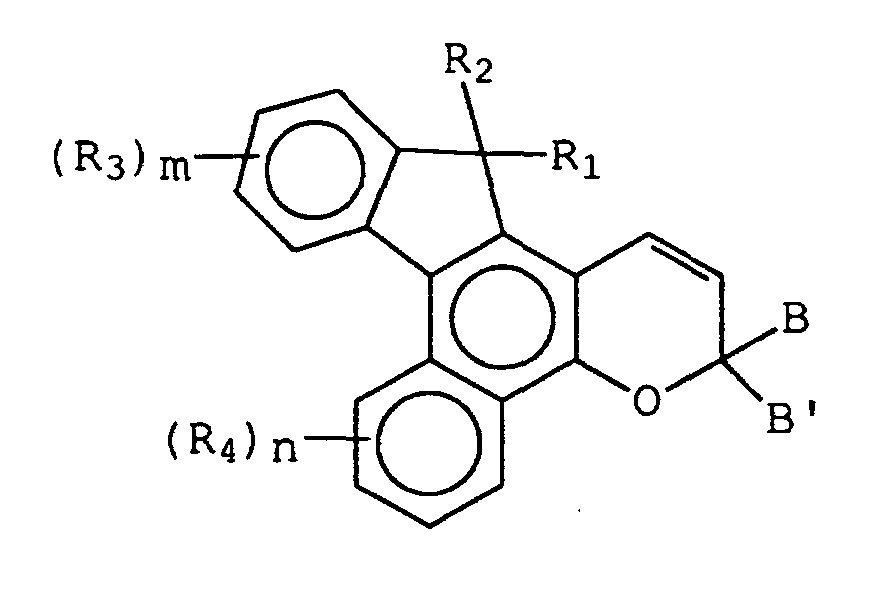 (a) R1 Wasserstoff, Hydroxy oder Chlor ist und R2 die Gruppe -CH(V)2 ist, worin V -CN oder -COOR5 ist, und jedes R5 Wasserstoff, C1-C6-Alkyl, Phenyl(C1-C3)alkyl, mono(C1-C6)-alkylsubstituiertes Phenyl(C1-C3)alkyl, mono(C1-C6)alkoxysubstituiertes Phenyl(C1-C3)alkyl oder die unsubstituierten, mono- oder disubstituierten Arylgruppen Phenyl oder Naphthyl ist oder R2 die Gruppe -CH(R6)Y ist, worin R6 Wasserstoff, C1-C6-Alkyl oder die unsubstituierten, mono- oder disubstituierten Arylgruppen Phenyl oder Naphthyl ist und Y -COOR5, -COR7 oder -CH2OR8 ist, worin R7 Wasserstoff, C1-C6-Alkyl, die unsubstituierten, mono- oder disubstituierten Arylgruppen Phenyl oder Naphthyl, Amino, Mono-(C1-C6)alkylamino, Di(C1-C6)alkylamino, Phenylamino, monooder di(C1-C6)alkylsubstituiertes Phenylamino, mono- oder di(C1-C6)alkoxysubstituiertes Phenylamino. Diphenylamino, mono- oder di(C1-C6)alkylsubstituiertes Diphenylamino, monooder di(C1-C6)alkoxysubstituiertes Diphenylamino, Morpholino oder Piperidino ist, R8 Wasserstoff, -COR5, C1-C6-Alkyl, C1-C3-Alkoxy(C1-C6)alkyl, Phenyl(C1-C3)alkyl, mono(C1-C6)-alkylsubstituiertes Phenyl(C1-C3)alkyl, mono(C1-C6)alkoxysubstituiertes Phenyl(C1-C3)alkyl oder die unsubstituierten, mono- oder disubstituierten Arylgruppen Phenyl oder Naphthyl ist, wobei jeder all dieser Arylgruppensubstituenten C1-C6-Alkyl oder C1-C6-Alkoxy ist, oder(b) R1 und R2 zusammen genommen die Gruppe =C(V)2 oder =C(R6)W bilden, worin W -COOR5 oder -COR7 ist,(c) R3 und R4 jeweils C1-C6-Alkyl, C1-C6-Alkoxy, Chlor oder Fluor sind und m und n jeweils die ganzen Zahlen 0, 1 oder 2 sind,(d) B und B' jeweils ausgewählt sind aus der Gruppe bestehend aus:(i) den unsubstituierten, mono-, di- und trisubstituierten Arylgruppen Phenyl und Naphthyl,(ii) den unsubstituierten, mono- und disubstituierten aromatischen heterocyclischen Gruppen Pyridyl, Furanyl, Benzofuran-2-yl, Benzofuran-3-yl, Thienyl, Benzothien-2-yl und Benzothien-3-yl, wobei diese Substituenten der Aryl- und aromatischen heterocyclischen Gruppen in (d)(i) und (ii) ausgewählt sind aus der Gruppe bestehend aus Hydroxy, Amino, Mono(C1-C6)alkylamino, Di(C1-C6)alkylamino, Piperidino, Morpholino, Pyrryl, C1-C6-Alkyl, C1-C6-Chloralkyl, C1-C6-Fluoralkyl, C1-C6-Alkoxy, Mono(C1-C6)-alkoxy(C1-C4)alkyl, Acryloxy, Methacryloxy, Chlor und Fluor,(iii) den Gruppen, die durch die folgenden grafischen Formeln wiedergegeben sind:worin A Kohlenstoff oder Sauerstoff ist und D Sauerstoff oder substituierter Stickstoff ist, unter der Voraussetzung, dass, wenn D substituierter Stickstoff ist, A Kohlenstoff ist, wobei diese Substituenten des Stickstoffs ausgewählt sind aus der Gruppe bestehend aus Wasserstoff, C1-C6-Alkyl und C2-C6-Acyl, jedes R9 C1-C6-Alkyl, C1-C6-Alkoxy, Hydroxy, Chlor oder Fluor ist, R10 und R11 jeweils Wasserstoff oder C1-C6-Alkyl sind und p die ganze Zahl 0, 1 oder 2 ist,
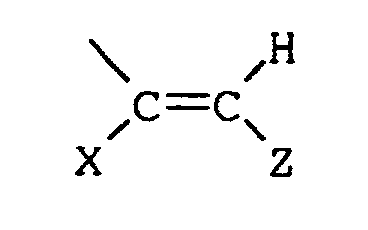
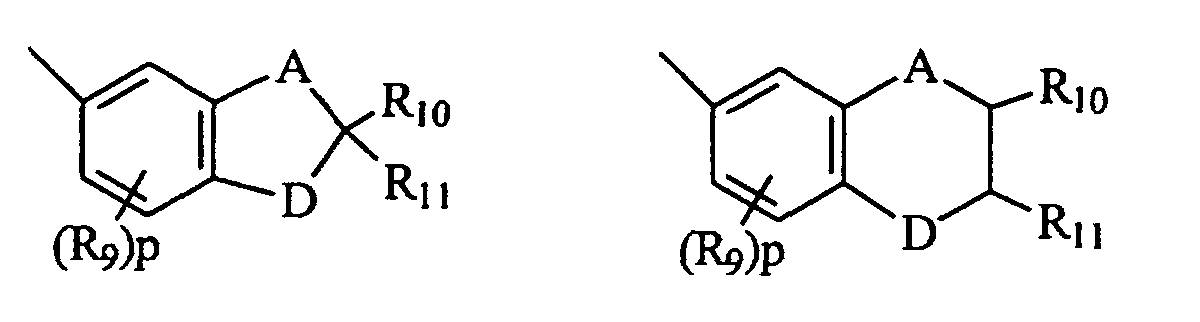 (iv) C1-C6-Alkyl, C1-C6-Chloralkyl, C1-C6-Fluoralkyl, C1-C6-Alkoxy(C1-C4)alkyl, C3-C6-Cycloalkyl, Mono-(C1-C6)alkoxy(C3-C6)cycloalkyl, Mono(C1-C6)alkyl-(C3-C6)cycloalkyl, Chlor(C3-C6)cycloalkyl und Fluor-(C3-C6)cycloalkyl und(v) der Gruppe, die durch die folgende grafische Formel wiedergegeben ist:worin X Wasserstoff oder C1-C4-Alkyl ist und Z ausgewählt ist aus unsubstituierten, mono- und disubstituierten Mitgliedern der Gruppe bestehend aus Naphthyl, Phenyl, Furanyl und Thienyl, wobei jeder dieser Substituenten der Gruppen C1-C4-Alkyl, C1-C4-Alkoxy, Fluor oder Chlor ist, oder
 (vi) B und B' zusammen genommen Fluoren-9-yliden, monooder disubstituiertes Fluoren-9-yliden oder ein Mitglied ausgewählt aus der Gruppe bestehend aus gesättigten C3-C12-spiromonocyclischen Kohlenwasserstoffringen, gesättigten C7-C12-spirobicyclischen Kohlenwasserstoffringen und gesättigten C7-C12-spirotricyclischen Kohlenwasserstoffringen bilden, wobei jeder dieser Substituenten des Fluoren-9-ylidens ausgewählt ist aus der Gruppe bestehend aus C1-C4-Alkyl, C1-C4-Alkoxy, Fluor und Chlor.
 - Naphthopyran nach Anspruch 1, worin(a) R1 Wasserstoff, Hydroxy oder Chlor ist und R2 die Gruppe -CH(V)2 ist, worin V -CN oder -COOR5 ist und jedes R5 Wasserstoff, C1-C4-Alkyl, Phenyl(C1-C2)alkyl, mono(C1-C4)-alkylsubstituiertes Phenyl(C1-C2)alkyl, mono(C1-C4)alkoxysubstituiertes Phenyl(C1-C2)alkyl oder die unsubstituierten oder monosubstituierten Arylgruppen Phenyl oder Naphthyl ist oder R2 die Gruppe -CH(R6)Y ist, worin R6 Wasserstoff, C1-C4-Alkyl oder die unsubstituierten oder monosubstituierten Arylgruppen Phenyl oder Naphthyl ist und Y -COOR5, -COR7 oder -CH2OR8 ist, worin R7 Wasserstoff, C1-C4-Alkyl, die unsubstituierten oder monosubstituierten Arylgruppen Phenyl oder Naphthyl, Amino, Mono(C1-C4)-alkylamino, Di(C1-C4)alkylamino, Phenylamino, mono- oder di(C1-C4)alkylsubstituiertes Phenylamino, mono- oder di(C1-C4)alkoxysubstituiertes Phenylamino, Diphenylamino, mono- oder di(C1-C4)alkylsubstituiertes Diphenylamino, monooder di(C1-C4)alkoxysubstituiertes Diphenylamino, Morpholino oder Piperidino ist, R8 Wasserstoff, -COR5, C1-C4-Alkyl, C1-C2-Alkoxy(C1-C4)alkyl, Phenyl(C1-C2)alkyl, mono(C1-C4)-alkylsubstituiertes Phenyl(C1-C2)alkyl, mono(C1-C4)alkoxysubstituiertes Phenyl(C1-C2)alkyl oder die unsubstituierten oder monosubstituierten Arylgruppen Phenyl oder Naphthyl ist, wobei jeder all dieser Arylgruppensubstituenten C1-C4-Alkyl oder C1-C4-Alkoxy ist, oder(b) R1 und R2 zusammen genommen die Gruppe =C(V)2 oder =C(R6)W bilden, worin W -COOR5 oder -COR7 ist,(c) R3 und R4 jeweils C1-C4-Alkyl, C1-C4-Alkoxy, Chlor oder Fluor sind und m und n jeweils die ganzen Zahlen 0 oder 1 sind,(d) B und B' jeweils ausgewählt sind aus der Gruppe bestehend aus:(i) Phenyl, monosubstituiertem Phenyl und disubstituiertem Phenyl,(ii) den unsubstituierten, mono- und disubstituierten aromatischen heterocyclischen Gruppen Furanyl, Benzofuran-2-yl, Thienyl und Benzothien-2-yl, wobei diese Substituenten der Phenyl- und aromatischen heterocyclischen Gruppen in (d)(i) und (ii) ausgewählt sind aus der Gruppe bestehend aus Hydroxy, Amino, Mono(C1-C3)alkylamino, Di(C1-C3)alkylamino, Piperidino, Morpholino, Pyrryl, C1-C3-Alkyl, C1-C3-Chloralkyl, C1-C3-Fluoralkyl, C1-C3-Alkoxy, Mono-(C1-C3)alkoxy(C1-C3)alkyl, Fluor und Chlor,(iii) den Gruppen, die durch die folgenden grafischen Formeln wiedergegeben sind:worin A Kohlenstoff und D Sauerstoff ist, R9 C1-C3-Alkyl oder C1-C3-Alkoxy ist, R10 und R11 jeweils Wasserstoff oder C1-C4-Alkyl sind und p die ganze Zahl 0 oder 1 ist,
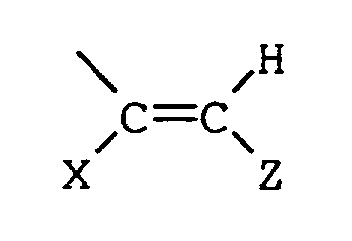
 (iv) C1-C4-Alkyl und(v) der Gruppe, die durch die folgende grafische Formel wiedergegeben ist:worin X Wasserstoff oder Methyl ist und Z Phenyl oder monosubstituiertes Phenyl ist, wobei dieser Substituent des Phenyls ausgewählt ist aus der Gruppe bestehend aus C1-C3-Alkyl, C1-C3-Alkoxy und Fluor, oder
 (vi) B und B' zusammen genommen ein Fluoren-9-yliden, monosubstituiertes Fluoren-9-yliden oder ein Mitglied ausgewählt aus der Gruppe bestehend aus gesättigten C3-C8-spiromonocyclischen Kohlenwasserstoffringen, gesättigten C7-C10-spirobicyclischen Kohlenwasserstoffringen und gesättigten C7-C10-spirotricyclischen Kohlenwasserstoffringen bilden, wobei jeder dieser Substituenten des Fluoren-9-xylidens ausgewählt ist aus der Gruppe bestehend aus C1-C3-Alkyl, C1-C3-Alkoxy, Fluor und Chlor.
 - Naphthopyranverbindung nach Anspruch 2, worinworin A Kohlenstoff und D Sauerstoff ist, R9 C1-C3-Alkyl oder C1-C3-Alkoxy ist, R10 und R11 jeweils Wasserstoff oder C1-C3-Alkyl sind und p die ganze Zahl 0 oder 1 ist, oder B und B' zusammen genommen Fluoren-9-yliden, Adamantyliden, Bornyliden, Norbornyliden oder Bicyclo(3.3.1)nonan-9-yliden bilden.(a) R1 Wasserstoff, Hydroxy oder Chlor ist und R2 die Gruppe -CH(V)2 ist, worin V -CN ist, oder R2 die Gruppe -CH(R6)Y ist, worin R6 Wasserstoff oder C1-C4-Alkyl ist und Y -COOR5 oder -CH2OR8 ist, worin R5 Wasserstoff oder C1-C4-Alkyl ist, R8 Wasserstoff, -COR5 oder C1-C4-Alkyl ist oder(b) R1 und R2 zusammen genommen die Gruppe =C(V)2 oder =C(R6)W bilden, worin W -COOR5 ist,(c) R3 und R4 jeweils C1-C3-Alkyl oder C1-C3-Alkoxy sind und m und n jeweils die ganzen Zahlen 0 oder 1 sind und(d) B und B' ausgewählt sind aus der Gruppe bestehend aus Phenyl, mono- und disubstituiertem Phenyl, unsubstituierten, mono- und disubstituierten aromatischen heterocyclischen Gruppen Furanyl, Benzofuran-2-yl, Thienyl und Benzothien-2-yl, wobei jeder dieser Substituenten des Phenyls und der aromatischen heterocyclischen Gruppen ausgewählt ist aus der Gruppe bestehend aus Hydroxy, C1-C3-Alkyl, C1-C3-Alkoxy, Fluor und Chlor und der Gruppe, die durch die folgende grafische Formel wiedergegeben ist:
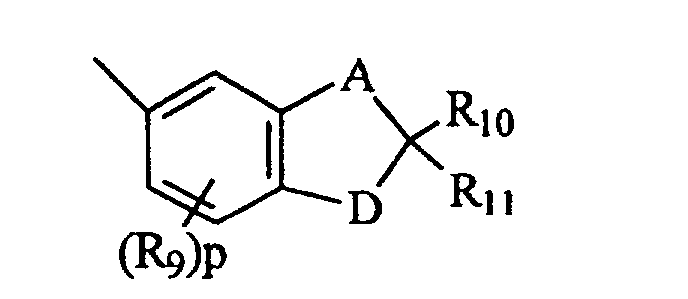
- Naphthopyranverbindung nach Anspruch 1 ausgewählt aus der Gruppe bestehend aus:(a) 3,3-Diphenyl-13-hydroxy-13-(2-oxo-2-ethoxyethyl)-1Hindeno[2,1-f]naphtho[1,2-b]pyran;(b) 3,3-Diphenyl-13-chlor-13-(2-oxo-2-ethoxyethyl)-1Hindeno[2,1-f]naphtho[1,2-b]pyran;(c) 3,3-Di(4-methoxyphenyl)-6,11-dimethyl-13-hydroxy-13-(2-oxo-2-ethoxyethyl)-1H-indeno[2,1-f]naphtho[1,2-b]pyran;(d) 3-(4-Methylphenyl)-3-(4-fluorphenyl)-13-chlor-13-(2-oxo-2-ethoxyethyl)-1H-indeno[2,1-f]naphtho[1,2-b]pyran;(e) 3-(4-Methoxyphenyl)-3-(2,3-dihydrobenzofur-5-yl)-6,11-difluor-13-hydroxy-13-(2-oxo-2-ethoxyethyl)-1H-indeno[2,1-f]naphtho[1,2-b]pyran;(f) 3-Phenyl-3-(4-morpholinophenyl)-13-hydroxy-13-(1-oxo-1-methoxyprop-2-yl)-1H-indeno[2,1-f]naphtho[1,2-b]pyran und(g) 3-Phenyl-3-(4-morpholinophenyl)-6,11-dimethyl-13-chlor-13-(1-carboxyethyl)-1H-indeno[2,1-f]naphtho[1,2-b]pyran.
- Photochromer Gegenstand enthaltend ein polymeres organisches Wirtsmaterial und die Naphthopyranverbindung nach einem der Ansprüche 1 bis 4, wobei die Naphthopyranverbindung in einer Menge von 0,05 bis 1,0 mg/cm2 an organischer Wirtsmaterialoberfläche, in die die Naphthopyranverbindung eingebracht oder auf die sie aufgebracht ist, vorhanden ist.
- Photochromer Gegenstand enthaltend, in Kombination, ein festes transparentes polymeres organisches Wirtsmaterial und eine photochrome Menge von jeweils (a) wenigstens einer Naphthopyranverbindung nach einem der Ansprüche 1 bis 4 und (b) wenigstens einer anderen organischen photochromen Verbindung mit wenigstens einem aktivierten Absorptionsmaximum im Bereich zwischen 400 und 700 nm, wobei die Gesamtmenge an photochromen Verbindungen 0,05 bis 1,0 mg/cm2 an organischer Wirtsmaterialoberfläche, in die die photochromen Verbindungen eingebracht oder auf die sie aufgebracht sind, beträgt.
- Photochromer Gegenstand nach Anspruch 6, wobei die organische photochrome Verbindung (b) ausgewählt ist aus der Gruppe bestehend aus Naphthopyranen, Benzopyranen, Phenanthropyranen, Spiro(benzindolin)naphthopyranen, Spiro(indolin)benzopyranen, Spiro(indolin)naphthopyranen, Spiro(indolin)chinopyranen, Spiro(indolin)pyranen, Spiro(indolin)naphthoxazinen, Spiro(indolin)-pyridobenzoxazinen, Spiro(benzindolin)pyridobenzoxazinen, Spiro(benzindolin)naphthoxazinen, Spiro(indolin)benzoxazinen und Mischungen solcher photochromen Verbindungen.
- Photochromer Gegenstand nach einem der Ansprüche 5 bis 7, wobei das polymere organische Wirtsmaterial ausgewählt ist aus der Gruppe bestehend aus Poly(C1-C12-alkylmethacrylaten), Poly-(oxyalkylendimethacrylaten), poly(alkoxylierten Phenolmethacrylaten), Celluloseacetat, Cellulosetriacetat, Celluloseacetatpropionat, Celluloseacetatbutyrat, Poly(vinylacetat), Poly(vinylalkohol), Poly(vinylchlorid), Poly(vinylidenchlorid), thermoplastischen Polycarbonaten, Polyestern, Polyurethanen, Poly(ethyleneterephthalat), Polystyrol, Poly(α-methylstyrol), Copoly(styrol-methylmethacrylat), Copoly(styrol-acrylnitril), Polyvinylbutyral und Polymeren der Mitglieder der Gruppe bestehend aus Polyol(allylcarbonat)monomeren, polyfunktionellen Acrylatmonomeren, polyfunktionellen Methacrylatmonomeren, Diethylenglykoldimethacrylatmonomeren, Diisopropenylbenzolmonomeren, ethoxylierten Bisphenol-A-dimethacrylatmonomeren, Ethylenglykolbismethacrylatmonomeren, Poly(ethylenglykol)bismethacrylatmonomeren, ethoxylierten Phenolmethacrylatmonomeren, Acrylatmonomeren alkoxylierter mehrwertiger Alkohole und Diallylidenpentaerythritolmonomeren.
- Photochromer Gegenstand nach Anspruch 8, wobei das polymere organische Wirtsmaterial ein festes transparentes Polymer ist, das ausgewählt ist aus der Gruppe bestehend aus Poly(methylmethacrylat), Poly(ethylenglykolbismethacrylat), poly(ethoxyliertem Bisphenol-A-dimethacrylat), thermoplastischem Polycarbonat, Poly(vinylacetat), Polyvinylbutyral, Polyurethan und Polymeren der Mitglieder der Gruppe bestehend aus Diethylenglykolbis(allylcarbonat)monomeren, Diethylenglykoldimethacrylatmonomeren, ethoxylierten Phenolmethacrylatmonomeren, Diisopropenylbenzolmonomeren und ethoxylierten Trimethylolpropantriacrylatmonomeren.
- Photochromer Gegenstand enthaltend ein optisch klares Polymerisat eines organischen Harzmonomers und eine Naphthopyranverbindung nach einem der Ansprüche 1 bis 4 in einer Menge von 0,05 bis 1,0 mg/cm2 an organischer Wirtsmaterialoberfläche, in die die photochrome(n) Verbindung(en) eingebracht oder auf die sie aufgebracht ist (sind).
- Photochromer Gegenstand nach Anspruch 10, wobei der Brechungsindex des Polymerisats 1,48 bis 1,75 beträgt.
- Photochromer Gegenstand nach Anspruch 11, wobei der Brechungsindex des Polymerisats 1,495 bis 1,66 beträgt.
- Photochromer Gegenstand nach einem der Ansprüche 5 bis 12, wobei der Gegenstand eine Linse ist.
Applications Claiming Priority (3)
| Application Number | Priority Date | Filing Date | Title |
|---|---|---|---|
| US08/666,726 US5955520A (en) | 1996-06-17 | 1996-06-17 | Photochromic indeno-fused naphthopyrans |
| US666726 | 1996-06-17 | ||
| PCT/US1997/009511 WO1997048762A1 (en) | 1996-06-17 | 1997-06-03 | Novel photochromic indeno-fused naphthopyrans |
Publications (3)
| Publication Number | Publication Date |
|---|---|
| EP0906366A1 EP0906366A1 (de) | 1999-04-07 |
| EP0906366A4 EP0906366A4 (de) | 1999-12-29 |
| EP0906366B1 true EP0906366B1 (de) | 2003-12-03 |
Family
ID=24675200
Family Applications (1)
| Application Number | Title | Priority Date | Filing Date |
|---|---|---|---|
| EP97926876A Expired - Lifetime EP0906366B1 (de) | 1996-06-17 | 1997-06-03 | Neue photochrome indenokondensierte naphthopyrane |
Country Status (14)
| Country | Link |
|---|---|
| US (1) | US5955520A (de) |
| EP (1) | EP0906366B1 (de) |
| JP (2) | JP3062252B2 (de) |
| KR (1) | KR20000016719A (de) |
| CN (1) | CN1226267A (de) |
| AU (1) | AU709304B2 (de) |
| BR (1) | BR9711799A (de) |
| CA (1) | CA2256478C (de) |
| CO (1) | CO4790170A1 (de) |
| DE (1) | DE69726574T2 (de) |
| ES (1) | ES2212105T3 (de) |
| IL (1) | IL127168A0 (de) |
| TW (1) | TW374094B (de) |
| WO (1) | WO1997048762A1 (de) |
Cited By (2)
| Publication number | Priority date | Publication date | Assignee | Title |
|---|---|---|---|---|
| US8691915B2 (en) | 2012-04-23 | 2014-04-08 | Sabic Innovative Plastics Ip B.V. | Copolymers and polymer blends having improved refractive indices |
| CN105209936A (zh) * | 2013-01-31 | 2015-12-30 | 日东电工株式会社 | 用于矫正色盲的光学元件 |
Families Citing this family (59)
| Publication number | Priority date | Publication date | Assignee | Title |
|---|---|---|---|---|
| DE19741705A1 (de) * | 1997-09-22 | 1999-04-01 | Rodenstock Optik G | Naphtopyrane |
| EP0958288B1 (de) * | 1997-09-22 | 2004-03-03 | Rodenstock GmbH | Photochrome naphthopyran-farbstoffe, verfahren zu ihrer herstellung, ihre verwendung sowie ein photochromer gegenstand |
| EP0987260B1 (de) * | 1998-05-29 | 2004-03-03 | Rodenstock GmbH | Photochrome Spirofluorenopyrane |
| FR2783249B1 (fr) * | 1998-09-11 | 2001-06-22 | Flamel Tech Sa | Naphtopyranes anneles en c5-c6, leur preparation et les compositions et matrices (co)polymeres les renfermant |
| FR2794749A1 (fr) | 1999-06-10 | 2000-12-15 | Corning Sa | Benzopyranes anneles en c7-c8 avec un heterocycle aromatique et les compositions et matrices (co) polymeres les renfermant |
| FR2794748B1 (fr) | 1999-06-10 | 2001-09-21 | Corning Sa | Naphtopyranes anneles en c5-c6 avec un cycle c6 de type lactame et les compositions et matrices (co)polymeres les renfermant |
| US6296785B1 (en) * | 1999-09-17 | 2001-10-02 | Ppg Industries Ohio, Inc. | Indeno-fused photochromic naphthopyrans |
| DE50009644D1 (de) | 1999-11-10 | 2005-04-07 | Rodenstock Gmbh | Heterocyclisch annellierte indenochromenderivate |
| JP4157245B2 (ja) | 2000-02-21 | 2008-10-01 | 株式会社トクヤマ | クロメン化合物 |
| US6863843B2 (en) | 2000-12-21 | 2005-03-08 | Vision-Ease Lens, Inc. | Naphthopyran compounds, photoresponsive compositions and lenses |
| US6736998B2 (en) * | 2000-12-29 | 2004-05-18 | Transitions Optical, Inc. | Indeno-fused photochromic naphthopyrans |
| US7320826B2 (en) * | 2003-03-20 | 2008-01-22 | Ppg Industries Ohio, Inc. | Photochromic articles with reduced temperature dependency and methods for preparation |
| US8545984B2 (en) * | 2003-07-01 | 2013-10-01 | Transitions Optical, Inc. | Photochromic compounds and compositions |
| US20110140056A1 (en) * | 2003-07-01 | 2011-06-16 | Transitions Optical, Inc. | Indeno-fused ring compounds |
| US8211338B2 (en) | 2003-07-01 | 2012-07-03 | Transitions Optical, Inc | Photochromic compounds |
| US7256921B2 (en) * | 2003-07-01 | 2007-08-14 | Transitions Optical, Inc. | Polarizing, photochromic devices and methods of making the same |
| US8518546B2 (en) | 2003-07-01 | 2013-08-27 | Transitions Optical, Inc. | Photochromic compounds and compositions |
| US8698117B2 (en) | 2003-07-01 | 2014-04-15 | Transitions Optical, Inc. | Indeno-fused ring compounds |
| US20070159594A9 (en) * | 2004-05-13 | 2007-07-12 | Jani Dharmendra M | Photochromic blue light filtering materials and ophthalmic devices |
| US8158037B2 (en) | 2005-04-08 | 2012-04-17 | Johnson & Johnson Vision Care, Inc. | Photochromic materials having extended pi-conjugated systems and compositions and articles including the same |
| US20060228557A1 (en) * | 2005-04-08 | 2006-10-12 | Beon-Kyu Kim | Photochromic materials having extended pi-conjugated systems and compositions and articles including the same |
| US7556750B2 (en) | 2005-04-08 | 2009-07-07 | Transitions Optical, Inc. | Photochromic materials with reactive substituents |
| US9028728B2 (en) | 2005-04-08 | 2015-05-12 | Transitions Optical, Inc. | Photochromic materials that include indeno-fused naphthopyrans |
| US8147725B2 (en) | 2005-04-08 | 2012-04-03 | Transitions Optical, Inc | Photochromic materials having extended pi-conjugated systems and compositions and articles including the same |
| US9139552B2 (en) | 2005-04-08 | 2015-09-22 | Transitions Optical, Inc. | Indeno-fused naphthopyrans having ethylenically unsaturated groups |
| US8647538B2 (en) | 2005-04-08 | 2014-02-11 | Transitions Optical, Inc. | Photochromic compounds having at least two photochromic moieties |
| CA2628501C (en) * | 2005-11-10 | 2014-06-10 | Rodenstock Gmbh | Photochromic spirodihydrophenanthropyrans |
| US7556751B2 (en) * | 2005-12-21 | 2009-07-07 | Transitions Optical, Inc. | Photochromic materials having electron-withdrawing substituents |
| US7892296B2 (en) * | 2007-11-26 | 2011-02-22 | Rodenstock Gmbh | Photochromic benzopyrans |
| DE102008060096A1 (de) | 2007-12-20 | 2009-06-25 | Rodenstock Gmbh | Photochrome Spirobenzopyranobenzopyrane |
| DE102009058906A1 (de) | 2008-12-18 | 2010-06-24 | Rodenstock Gmbh | Photochrome Naphthopyrane mit Verbrückung zweier aromatischer Teilsysteme |
| US8765978B2 (en) | 2010-12-16 | 2014-07-01 | Transitions Optical, Inc. | Method of making indeno-fused naphthol materials |
| US9034219B2 (en) | 2010-12-16 | 2015-05-19 | Transitions Optical, Inc. | Photochromic compounds and compositions |
| US8920928B2 (en) | 2010-12-16 | 2014-12-30 | Transitions Optical, Inc. | Photochromic compounds and compositions |
| JP5855678B2 (ja) | 2010-12-23 | 2016-02-09 | ローデンストック.ゲゼルシャフト.ミット.ベシュレンクテル.ハフツング | ピラン酸素に隣接し両方のメタ位によってパラ置換基に結合されたベンゼン環を有する、フォトクロミック縮合ナフトピラン |
| WO2013045086A1 (de) | 2011-09-26 | 2013-04-04 | Rodenstock Gmbh | Photochrome zweifach-annellierte naphthopyrane |
| WO2013083282A1 (de) | 2011-12-09 | 2013-06-13 | Rodenstock Gmbh | Photochrome zweifach-indenoannellierte naphthopyrane |
| ES2578007T3 (es) | 2012-07-12 | 2016-07-20 | Rodenstock Gmbh | Fluorenopiranos fotocrómicos con anillación Dibenzo[b,d]-pirano |
| JP6328751B2 (ja) | 2013-06-17 | 2018-05-23 | ローデンシュトック ゲーエムベーハー | Uv硬化適合性フォトクロミック縮合ナフトピラン |
| KR20160026872A (ko) | 2013-07-01 | 2016-03-09 | 가부시끼가이샤 도꾸야마 | 신규의 페닐나프톨 유도체 |
| KR102289075B1 (ko) * | 2014-05-07 | 2021-08-11 | 미츠비시 가스 가가쿠 가부시키가이샤 | 중축합으로 제조된 수지 및 수지 조성물 |
| WO2018054507A1 (de) | 2016-09-26 | 2018-03-29 | Rodenstock Gmbh | Photochrome mehrfach-annellierte naphthopyrane mit sehr langwelliger absorption bis weit in den sichtbaren wellenbereich |
| BR112019027677B1 (pt) | 2017-06-30 | 2022-10-18 | Transitions Optical, Ltd | Compostos fotocrômicos de anel fusionado de silol e germol, composição e artigo fotocrômico |
| DE102018004790A1 (de) | 2018-06-14 | 2019-12-19 | Rodenstock Gmbh | Photochrome annellierte Naphthopyran-Systeme mit speziellen Substituenten zur Realisierung sehr schneller Aufhellgeschwindigkeiten |
| CN108892680A (zh) * | 2018-08-14 | 2018-11-27 | 江西科技师范大学 | 一种双螺吡喃力色团的制备方法 |
| CN108864155B (zh) * | 2018-08-14 | 2024-04-09 | 江西科技师范大学 | 一种新型双螺吡喃力色团的制备方法 |
| CN110407481A (zh) * | 2019-08-06 | 2019-11-05 | 太仓碧奇新材料研发有限公司 | 一种多功能光致变色薄膜的制备方法 |
| US20210284778A1 (en) | 2020-03-11 | 2021-09-16 | Alcon Inc. | Photochromic polydiorganosiloxane vinylic crosslinkers |
| WO2021245551A1 (en) | 2020-06-02 | 2021-12-09 | Alcon Inc. | Method for making photochromic contact lenses |
| EP4237232B1 (de) | 2020-10-28 | 2024-11-27 | Alcon Inc. | Verfahren zur herstellung photochromer kontaktlinsen |
| HUE070248T2 (hu) | 2020-11-04 | 2025-05-28 | Alcon Inc | Eljárás fotokróm kontaktlencsék elõállítására |
| HUE069913T2 (hu) | 2020-11-04 | 2025-04-28 | Alcon Inc | Eljárás fotokróm kontaktlencsék elõállítására |
| EP4304842B1 (de) | 2021-03-08 | 2026-05-06 | Alcon Inc. | Verfahren zur herstellung photofunktioneller kontaktlinsen |
| JP2022151090A (ja) * | 2021-03-26 | 2022-10-07 | ホヤ レンズ タイランド リミテッド | 重合性組成物の製造方法およびフォトクロミック物品の製造方法 |
| US11833771B2 (en) | 2021-04-01 | 2023-12-05 | Alcon Inc. | Method for making photochromic contact lenses |
| JP2023111569A (ja) * | 2022-01-31 | 2023-08-10 | ホヤ レンズ タイランド リミテッド | フォトクロミック化合物、フォトクロミック組成物、フォトクロミック物品及び眼鏡 |
| WO2023209631A1 (en) | 2022-04-28 | 2023-11-02 | Alcon Inc. | Method for making uv and hevl-absorbing ophthalmic lenses |
| CN114934737B (zh) * | 2022-05-11 | 2024-04-05 | 上海甘田光学材料有限公司 | 一种光热双调节智能玻璃的制备方法 |
| DE102023109737A1 (de) | 2023-04-18 | 2024-10-24 | Rodenstock Gmbh | Höhermolekulare photochrome Farbstoffe mit mindestens einer und höchstens vier Naphthopyran-Untereinheiten sowie mehreren Polyether-Ketten |
Family Cites Families (36)
| Publication number | Priority date | Publication date | Assignee | Title |
|---|---|---|---|---|
| US3567605A (en) * | 1966-03-30 | 1971-03-02 | Ralph S Becker | Photochemical process |
| GB1186987A (en) * | 1967-08-30 | 1970-04-08 | Fuji Photo Film Co Ltd | Photochromic Compounds |
| JPS4948631B1 (de) * | 1968-10-28 | 1974-12-23 | ||
| US3627690A (en) * | 1969-10-01 | 1971-12-14 | Itek Corp | Photochromic naphthopyran compositions |
| US4215010A (en) * | 1978-09-08 | 1980-07-29 | American Optical Corporation | Photochromic compounds |
| US4342668A (en) * | 1978-09-08 | 1982-08-03 | American Optical Corporation | Photochromic compounds |
| US4720356A (en) * | 1982-03-22 | 1988-01-19 | American Optical Corporation | Photochromic composition resistant to fatigue |
| DE3300004A1 (de) * | 1983-01-03 | 1984-07-12 | Bayer Ag, 5090 Leverkusen | Substituierte 4-aminomethylenchromane bzw. -chromene, verfahren zu ihrer herstellung sowie ihre verwendung in arzneimitteln |
| US4637698A (en) * | 1983-11-04 | 1987-01-20 | Ppg Industries, Inc. | Photochromic compound and articles containing the same |
| US4880667A (en) * | 1985-09-24 | 1989-11-14 | Ppg Industries, Inc. | Photochromic plastic article and method for preparing same |
| JPS62195383A (ja) * | 1986-02-21 | 1987-08-28 | Toray Ind Inc | 新規スピロナフトピラン化合物 |
| GB8611837D0 (en) * | 1986-05-15 | 1986-06-25 | Plessey Co Plc | Photochromic spiropyran compounds |
| GB8614680D0 (en) * | 1986-06-17 | 1986-07-23 | Plessey Co Plc | Photoreactive lenses |
| US4816584A (en) * | 1986-11-12 | 1989-03-28 | Ppg Industries, Inc. | Photochromic spiro(indoline)benzoxazines |
| GB8712210D0 (en) * | 1987-05-22 | 1987-06-24 | Pilkington Brothers Plc | Photochromic articles |
| US4931219A (en) * | 1987-07-27 | 1990-06-05 | Ppg Industries, Inc. | Photochromic compound and articles containing the same |
| JPH0745490B2 (ja) * | 1988-09-05 | 1995-05-17 | 株式会社トクヤマ | スピロピラン化合物及びその製造方法 |
| US4931221A (en) * | 1988-12-30 | 1990-06-05 | Ppg Industries, Inc. | Photochromic spiropyran compounds |
| US5066818A (en) * | 1990-03-07 | 1991-11-19 | Ppg Industries, Inc. | Photochromic naphthopyran compounds |
| US5290551A (en) * | 1990-05-08 | 1994-03-01 | Thomas Jefferson University | Treatment of melanoma with a vaccine comprising irradiated autologous melanoma tumor cells conjugated to a hapten |
| US5244602A (en) * | 1990-12-03 | 1993-09-14 | Ppg Industries, Inc. | Photochromic naphthopyrans |
| US5238981A (en) * | 1992-02-24 | 1993-08-24 | Transitions Optical, Inc. | Photochromic naphthopyrans |
| US5585042A (en) * | 1992-02-24 | 1996-12-17 | Transitions Optical, Inc. | Photochromic naphthopyrans |
| US5274132A (en) * | 1992-09-30 | 1993-12-28 | Transitions Optical, Inc. | Photochromic naphthopyran compounds |
| US5405958A (en) * | 1992-12-21 | 1995-04-11 | Transitions Optical, Inc. | Photochromic spiro(indoline)naphthoxazine compounds |
| WO1994020869A1 (en) * | 1993-03-12 | 1994-09-15 | Ppg Industries, Inc. | Novel benzopyrans |
| US5384077A (en) * | 1993-06-21 | 1995-01-24 | Transitions Optical, Inc. | Photochromic naphthopyran compounds |
| US5466398A (en) * | 1993-06-21 | 1995-11-14 | Transitions Optical, Inc. | Photochromic substituted naphthopyran compounds |
| US5552090A (en) * | 1993-06-21 | 1996-09-03 | Ppg Industries, Inc. | Photochromic naphthopyran compounds |
| US5578252A (en) * | 1993-06-21 | 1996-11-26 | Transitions Optical, Inc. | Photochromic substituted naphthopyran compounds |
| US5458814A (en) * | 1993-12-09 | 1995-10-17 | Transitions Optical, Inc. | Substituted naphthopyrans |
| US5451344A (en) * | 1994-04-08 | 1995-09-19 | Transitions Optical, Inc. | Photochromic naphthopyran compounds |
| US5395567A (en) * | 1994-04-18 | 1995-03-07 | Ppg Industries, Inc. | Photochromic spironaphthopyran compounds |
| US5514817A (en) * | 1994-08-04 | 1996-05-07 | Ppg Industries, Inc. | Substituted phenanthropyrans |
| IL115803A (en) * | 1994-11-03 | 2000-02-17 | Ppg Industries Inc | Indeno-naphthopyran derivatives useful for photochromic articles |
| US5645767A (en) * | 1994-11-03 | 1997-07-08 | Transitions Optical, Inc. | Photochromic indeno-fused naphthopyrans |
-
1996
- 1996-06-17 US US08/666,726 patent/US5955520A/en not_active Expired - Lifetime
-
1997
- 1997-06-03 DE DE69726574T patent/DE69726574T2/de not_active Expired - Lifetime
- 1997-06-03 WO PCT/US1997/009511 patent/WO1997048762A1/en not_active Ceased
- 1997-06-03 AU AU31535/97A patent/AU709304B2/en not_active Ceased
- 1997-06-03 EP EP97926876A patent/EP0906366B1/de not_active Expired - Lifetime
- 1997-06-03 KR KR1019980710326A patent/KR20000016719A/ko not_active Abandoned
- 1997-06-03 JP JP10503027A patent/JP3062252B2/ja not_active Expired - Fee Related
- 1997-06-03 ES ES97926876T patent/ES2212105T3/es not_active Expired - Lifetime
- 1997-06-03 BR BR9711799A patent/BR9711799A/pt not_active IP Right Cessation
- 1997-06-03 CN CN97195588A patent/CN1226267A/zh active Pending
- 1997-06-03 IL IL12716897A patent/IL127168A0/xx unknown
- 1997-06-03 CA CA002256478A patent/CA2256478C/en not_active Expired - Fee Related
- 1997-06-16 TW TW086108293A patent/TW374094B/zh active
- 1997-06-17 CO CO97033496A patent/CO4790170A1/es unknown
-
2007
- 2007-11-19 JP JP2007299865A patent/JP2008056704A/ja active Pending
Cited By (2)
| Publication number | Priority date | Publication date | Assignee | Title |
|---|---|---|---|---|
| US8691915B2 (en) | 2012-04-23 | 2014-04-08 | Sabic Innovative Plastics Ip B.V. | Copolymers and polymer blends having improved refractive indices |
| CN105209936A (zh) * | 2013-01-31 | 2015-12-30 | 日东电工株式会社 | 用于矫正色盲的光学元件 |
Also Published As
| Publication number | Publication date |
|---|---|
| CA2256478C (en) | 2002-04-23 |
| AU3153597A (en) | 1998-01-07 |
| CA2256478A1 (en) | 1997-12-24 |
| EP0906366A4 (de) | 1999-12-29 |
| JP2008056704A (ja) | 2008-03-13 |
| WO1997048762A1 (en) | 1997-12-24 |
| DE69726574T2 (de) | 2004-09-30 |
| JPH11514669A (ja) | 1999-12-14 |
| DE69726574D1 (de) | 2004-01-15 |
| CN1226267A (zh) | 1999-08-18 |
| KR20000016719A (ko) | 2000-03-25 |
| TW374094B (en) | 1999-11-11 |
| US5955520A (en) | 1999-09-21 |
| JP3062252B2 (ja) | 2000-07-10 |
| ES2212105T3 (es) | 2004-07-16 |
| EP0906366A1 (de) | 1999-04-07 |
| BR9711799A (pt) | 1999-08-24 |
| AU709304B2 (en) | 1999-08-26 |
| CO4790170A1 (es) | 1999-05-31 |
| IL127168A0 (en) | 1999-09-22 |
Similar Documents
| Publication | Publication Date | Title |
|---|---|---|
| US5955520A (en) | Photochromic indeno-fused naphthopyrans | |
| US5645767A (en) | Photochromic indeno-fused naphthopyrans | |
| EP0792468B2 (de) | Neuartiges photochromes, indeno-kondensiertes naphthopyran | |
| EP0958514B1 (de) | Neuartige photochrome heterozyklische geschmolzene indenonaphthopyrane | |
| EP1642895B1 (de) | Neue substituierte Naphthopyrane | |
| EP0835870B1 (de) | Photochrome substitutierte Naphthopyran-Derivate | |
| US6353102B1 (en) | Photochromic naphthopyrans | |
| US5573712A (en) | Substituted naphthopyrans | |
| US5658501A (en) | Substituted naphthopyrans | |
| US5658500A (en) | Substituted naphthopyrans | |
| US5811034A (en) | 7-methylidene-5-oxo-furo fused naphthopyrans | |
| US5891368A (en) | Fluoranthenopyrans | |
| US5744070A (en) | Photochromic substituted naphthopyran compounds | |
| JP3029460B6 (ja) | 新規フォトクロミックインデノ縮合ナフトピラン |
Legal Events
| Date | Code | Title | Description |
|---|---|---|---|
| PUAI | Public reference made under article 153(3) epc to a published international application that has entered the european phase |
Free format text: ORIGINAL CODE: 0009012 |
|
| 17P | Request for examination filed |
Effective date: 19990107 |
|
| AK | Designated contracting states |
Kind code of ref document: A1 Designated state(s): CH DE ES FR GB IE LI NL |
|
| RIN1 | Information on inventor provided before grant (corrected) |
Inventor name: LEVELL, JULIAN, R. Inventor name: HELLER, HARRY, G. |
|
| A4 | Supplementary search report drawn up and despatched |
Effective date: 19991117 |
|
| AK | Designated contracting states |
Kind code of ref document: A4 Designated state(s): CH DE ES FR GB IE LI NL |
|
| RIC1 | Information provided on ipc code assigned before grant |
Free format text: 7C 08K 5/15 A, 7G 02B 5/23 B, 7C 07D 311/78 B, 7C 07D 405/04 B, 7C 07D 311/94 B, 7C 07D 311/96 B |
|
| 17Q | First examination report despatched |
Effective date: 20020723 |
|
| GRAH | Despatch of communication of intention to grant a patent |
Free format text: ORIGINAL CODE: EPIDOS IGRA |
|
| GRAS | Grant fee paid |
Free format text: ORIGINAL CODE: EPIDOSNIGR3 |
|
| GRAA | (expected) grant |
Free format text: ORIGINAL CODE: 0009210 |
|
| AK | Designated contracting states |
Kind code of ref document: B1 Designated state(s): CH DE ES FR GB IE LI NL |
|
| PG25 | Lapsed in a contracting state [announced via postgrant information from national office to epo] |
Ref country code: NL Free format text: LAPSE BECAUSE OF FAILURE TO SUBMIT A TRANSLATION OF THE DESCRIPTION OR TO PAY THE FEE WITHIN THE PRESCRIBED TIME-LIMIT Effective date: 20031203 Ref country code: LI Free format text: LAPSE BECAUSE OF FAILURE TO SUBMIT A TRANSLATION OF THE DESCRIPTION OR TO PAY THE FEE WITHIN THE PRESCRIBED TIME-LIMIT Effective date: 20031203 Ref country code: CH Free format text: LAPSE BECAUSE OF FAILURE TO SUBMIT A TRANSLATION OF THE DESCRIPTION OR TO PAY THE FEE WITHIN THE PRESCRIBED TIME-LIMIT Effective date: 20031203 |
|
| REG | Reference to a national code |
Ref country code: GB Ref legal event code: FG4D |
|
| REG | Reference to a national code |
Ref country code: CH Ref legal event code: EP |
|
| REG | Reference to a national code |
Ref country code: IE Ref legal event code: FG4D |
|
| REF | Corresponds to: |
Ref document number: 69726574 Country of ref document: DE Date of ref document: 20040115 Kind code of ref document: P |
|
| NLV1 | Nl: lapsed or annulled due to failure to fulfill the requirements of art. 29p and 29m of the patents act | ||
| PG25 | Lapsed in a contracting state [announced via postgrant information from national office to epo] |
Ref country code: IE Free format text: LAPSE BECAUSE OF NON-PAYMENT OF DUE FEES Effective date: 20040603 |
|
| REG | Reference to a national code |
Ref country code: CH Ref legal event code: PL |
|
| REG | Reference to a national code |
Ref country code: ES Ref legal event code: FG2A Ref document number: 2212105 Country of ref document: ES Kind code of ref document: T3 |
|
| ET | Fr: translation filed | ||
| PLBE | No opposition filed within time limit |
Free format text: ORIGINAL CODE: 0009261 |
|
| STAA | Information on the status of an ep patent application or granted ep patent |
Free format text: STATUS: NO OPPOSITION FILED WITHIN TIME LIMIT |
|
| 26N | No opposition filed |
Effective date: 20040906 |
|
| REG | Reference to a national code |
Ref country code: IE Ref legal event code: MM4A |
|
| PGFP | Annual fee paid to national office [announced via postgrant information from national office to epo] |
Ref country code: FR Payment date: 20120705 Year of fee payment: 16 |
|
| REG | Reference to a national code |
Ref country code: DE Ref legal event code: R082 Ref document number: 69726574 Country of ref document: DE Representative=s name: FLEISCHER, ENGELS & PARTNER MBB, PATENTANWAELT, DE |
|
| REG | Reference to a national code |
Ref country code: FR Ref legal event code: ST Effective date: 20140228 |
|
| PG25 | Lapsed in a contracting state [announced via postgrant information from national office to epo] |
Ref country code: FR Free format text: LAPSE BECAUSE OF NON-PAYMENT OF DUE FEES Effective date: 20130701 |
|
| PGFP | Annual fee paid to national office [announced via postgrant information from national office to epo] |
Ref country code: DE Payment date: 20150629 Year of fee payment: 19 Ref country code: GB Payment date: 20150629 Year of fee payment: 19 Ref country code: ES Payment date: 20150626 Year of fee payment: 19 |
|
| REG | Reference to a national code |
Ref country code: GB Ref legal event code: 732E Free format text: REGISTERED BETWEEN 20160421 AND 20160428 |
|
| REG | Reference to a national code |
Ref country code: DE Ref legal event code: R119 Ref document number: 69726574 Country of ref document: DE |
|
| GBPC | Gb: european patent ceased through non-payment of renewal fee |
Effective date: 20160603 |
|
| PG25 | Lapsed in a contracting state [announced via postgrant information from national office to epo] |
Ref country code: DE Free format text: LAPSE BECAUSE OF NON-PAYMENT OF DUE FEES Effective date: 20170103 |
|
| PG25 | Lapsed in a contracting state [announced via postgrant information from national office to epo] |
Ref country code: GB Free format text: LAPSE BECAUSE OF NON-PAYMENT OF DUE FEES Effective date: 20160603 |
|
| REG | Reference to a national code |
Ref country code: ES Ref legal event code: FD2A Effective date: 20180507 |
|
| PG25 | Lapsed in a contracting state [announced via postgrant information from national office to epo] |
Ref country code: ES Free format text: LAPSE BECAUSE OF NON-PAYMENT OF DUE FEES Effective date: 20160604 |