EP0907912B1 - Synchronisationsverfahren - Google Patents
Synchronisationsverfahren Download PDFInfo
- Publication number
- EP0907912B1 EP0907912B1 EP97930299A EP97930299A EP0907912B1 EP 0907912 B1 EP0907912 B1 EP 0907912B1 EP 97930299 A EP97930299 A EP 97930299A EP 97930299 A EP97930299 A EP 97930299A EP 0907912 B1 EP0907912 B1 EP 0907912B1
- Authority
- EP
- European Patent Office
- Prior art keywords
- series
- synchronisation
- machine instructions
- subsystem
- machine
- Prior art date
- Legal status (The legal status is an assumption and is not a legal conclusion. Google has not performed a legal analysis and makes no representation as to the accuracy of the status listed.)
- Expired - Lifetime
Links
Images


Classifications
-
- G—PHYSICS
- G05—CONTROLLING; REGULATING
- G05B—CONTROL OR REGULATING SYSTEMS IN GENERAL; FUNCTIONAL ELEMENTS OF SUCH SYSTEMS; MONITORING OR TESTING ARRANGEMENTS FOR SUCH SYSTEMS OR ELEMENTS
- G05B19/00—Program-control systems
- G05B19/02—Program-control systems electric
- G05B19/04—Program control other than numerical control, i.e. in sequence controllers or logic controllers
- G05B19/042—Program control other than numerical control, i.e. in sequence controllers or logic controllers using digital processors
-
- G—PHYSICS
- G06—COMPUTING OR CALCULATING; COUNTING
- G06F—ELECTRIC DIGITAL DATA PROCESSING
- G06F11/00—Error detection; Error correction; Monitoring
- G06F11/07—Responding to the occurrence of a fault, e.g. fault tolerance
- G06F11/16—Error detection or correction of the data by redundancy in hardware
- G06F11/1675—Temporal synchronisation or re-synchronisation of redundant processing components
- G06F11/1687—Temporal synchronisation or re-synchronisation of redundant processing components at event level, e.g. by interrupt or result of polling
-
- G—PHYSICS
- G05—CONTROLLING; REGULATING
- G05B—CONTROL OR REGULATING SYSTEMS IN GENERAL; FUNCTIONAL ELEMENTS OF SUCH SYSTEMS; MONITORING OR TESTING ARRANGEMENTS FOR SUCH SYSTEMS OR ELEMENTS
- G05B19/00—Program-control systems
- G05B19/02—Program-control systems electric
- G05B19/04—Program control other than numerical control, i.e. in sequence controllers or logic controllers
- G05B19/042—Program control other than numerical control, i.e. in sequence controllers or logic controllers using digital processors
- G05B19/0428—Safety, monitoring
-
- G—PHYSICS
- G05—CONTROLLING; REGULATING
- G05B—CONTROL OR REGULATING SYSTEMS IN GENERAL; FUNCTIONAL ELEMENTS OF SUCH SYSTEMS; MONITORING OR TESTING ARRANGEMENTS FOR SUCH SYSTEMS OR ELEMENTS
- G05B9/00—Safety arrangements
- G05B9/02—Safety arrangements electric
- G05B9/03—Safety arrangements electric with multiple-channel loop, i.e. redundant control systems
-
- G—PHYSICS
- G05—CONTROLLING; REGULATING
- G05B—CONTROL OR REGULATING SYSTEMS IN GENERAL; FUNCTIONAL ELEMENTS OF SUCH SYSTEMS; MONITORING OR TESTING ARRANGEMENTS FOR SUCH SYSTEMS OR ELEMENTS
- G05B2219/00—Program-control systems
- G05B2219/20—Pc systems
- G05B2219/24—Pc safety
- G05B2219/24186—Redundant processors are synchronised
-
- G—PHYSICS
- G05—CONTROLLING; REGULATING
- G05B—CONTROL OR REGULATING SYSTEMS IN GENERAL; FUNCTIONAL ELEMENTS OF SUCH SYSTEMS; MONITORING OR TESTING ARRANGEMENTS FOR SUCH SYSTEMS OR ELEMENTS
- G05B2219/00—Program-control systems
- G05B2219/20—Pc systems
- G05B2219/24—Pc safety
- G05B2219/24187—Redundant processors run identical programs
-
- G—PHYSICS
- G05—CONTROLLING; REGULATING
- G05B—CONTROL OR REGULATING SYSTEMS IN GENERAL; FUNCTIONAL ELEMENTS OF SUCH SYSTEMS; MONITORING OR TESTING ARRANGEMENTS FOR SUCH SYSTEMS OR ELEMENTS
- G05B2219/00—Program-control systems
- G05B2219/20—Pc systems
- G05B2219/25—Pc structure of the system
- G05B2219/25483—Synchronize several controllers using messages over data bus
-
- G—PHYSICS
- G06—COMPUTING OR CALCULATING; COUNTING
- G06F—ELECTRIC DIGITAL DATA PROCESSING
- G06F11/00—Error detection; Error correction; Monitoring
- G06F11/07—Responding to the occurrence of a fault, e.g. fault tolerance
- G06F11/16—Error detection or correction of the data by redundancy in hardware
- G06F11/1675—Temporal synchronisation or re-synchronisation of redundant processing components
- G06F11/1683—Temporal synchronisation or re-synchronisation of redundant processing components at instruction level
Definitions
- the present invention relates to a synchronization method for a redundant of at least two subsystems built automation system, in which the at least two subsystems have at least one process sensor, via Communication means are coupled to each other for control of a process functionally identical sequences of machine commands execute and from time to time through the means of communication synchronize with each other.
- the object of the present invention is therefore to a synchronization process with minimal effort for an automation system made up of at least two subsystems specify.
- the synchronization process should regardless of the presence of special hardware his.
- the synchronization method according to the invention should the computing power of the automation system in affect as little as possible.
- the task is accomplished by a procedure according to that in the characterizing Part of claim 1 specified features solved.
- the synchronization process is based on a counter for each of the subsystems - hereinafter synchronization counter called - which increments through increment instructions, i.e. is increased by one. Incrementing poses a particularly simple task for a processor which in individual cases also within a single clock cycle and therefore occurs particularly quickly.
- Synchronization is carried out at least if one of the at least two subsystems - hereinafter the alarmed Called subsystem - a special event, e.g. one Interrupt or an alarm registered. In this case transmitted the alarmed subsystem to at least one other Subsystem the current value of its synchronization counter. Through this transmission, this is at least another Subsystem at least informs that a special event occured. The at least one other subsystem is transmitted in turn every other subsystem the current one Value of its synchronization counter. Each of the subsystems is thus above the current value of the own synchronization counter and the value of the synchronization counter of the at least one other subsystem.
- Each subsystem determines from the value of its own synchronization counter and from the value of the synchronization counter of the at least one other subsystem is currently the largest Value.
- the value of the synchronization counter that all subsystems by further executing the sequence of machine instructions can achieve together is the one increased - thus incremented - largest value of the synchronization counter. Therefore, the largest value is the synchronization counter in each subsystem of all subsystems incremented.
- the synchronization counter target value is subsequently the same for all subsystems called. This can of course alternatively can also be determined by first the values the synchronization counter are incremented and then the synchronization counter target value as its maximum value is determined.
- the subsystems interrupt the execution of the sequence of machine commands when the position of that increment instruction is reached - subsequently synchronization position called - where the values of the respective synchronization counters reach the synchronization counter target value. Since the increment instructions on mutually corresponding Make the functionally identical sequences of Machine instructions occur, the increment instructions are suitable consequently particularly good as a potential synchronization position.
- the synchronization process is essentially based on incremental or comparison operations, which is particularly fast for a processor and can be carried out efficiently.
- both subsystems change their synchronization position to different Everybody signals that they can reach times Subsystem the at least one other subsystem with one Synchronization signal reaching the synchronization position. Each subsystem then waits for the Synchronization signal from the at least one other Subsystem, whereby this signals that it in turn has reached the synchronization position. In the case of more as a different subsystem, each subsystem is waiting for the Input of synchronization signals from all other subsystems, so that each subsystem only takes further actions carries out when all subsystems the synchronization position achieved. However, they are also use cases conceivable, when reaching the synchronization position no synchronization signal is exchanged.
- Each subsystem determines after reaching the synchronization position and after registering the synchronization signal of the at least one other subsystem one for the special event specific reaction and executes this. This response is specific to the special event Sequence of machine commands. Then each subsystem sets continue executing that sequence of machine instructions, their execution when reaching the synchronization position due to the synchronization as well as due to the reaction to the special event was postponed.
- the alarmed subsystem transmits the at least one other subsystem, the special event at the earliest after registering the special event, e.g. in connection with the transmission of the current value of the synchronization counter, at the latest in connection with the Synchronization signal.
- the synchronization position within a conditional or absolutely to be repeated partial sequence of The sequence of machine commands is the individual machine commands processed several times.
- the position of an increment statement only then becomes the synchronization position, if with the execution of the increment instruction the synchronization counter the synchronization counter target value reached. Therefore, in the case of Loops occur that an increment instruction in Frame of the loop is processed several times, but only after a certain number of executions to the synchronization position becomes. In this case, the determination is the Address of increment instruction not sufficient.
- the synchronization position is only reached if the address of the machine command currently being executed with the address of the machine command that corresponds to the potential synchronization position, matches and at the same time the synchronization counter with matches the synchronization counter target value.
- this is the address of each machine command can also be determined with the synchronization position a "break point" connectable so that the execution of the sequence of machine commands exactly on the Synchronization position is interrupted.
- the verification whether the synchronization position - i.e. the one with the break point connected address - the processor takes over then directly.
- a processor from INTEL, e.g. i80386, i80486, Pentium, etc. - will be reached when reached an interrupt to the address connected to the break point triggered, the arrival of which clearly reaches the indicates the address in question.
- Synchronization position exists according to the features of the claim 4 in that when executing the sequence of machine instructions - at least after the registration of the special event through the alarmed subsystem - always the value of the synchronization counter with the synchronization counter target value is compared and that executing the sequence of Machine commands are interrupted when the value of the synchronization counter reached the synchronization counter target value.
- a first storage location and a second Storage location determined, being in the first storage location the value of the synchronization counter is stored and in the second memory location the synchronization counter target value is saved.
- processors in particular the processors from INTEL, is the Processor programmable so that the execution of the sequence of Machine commands are interrupted once the content of the first storage location with the content of the second storage location matches.
- This special functionality of the processor has so far been used primarily for troubleshooting programs - so-called Debugger - exploited. You can of course also used to reach the synchronization position become.
- the positions of the increment instructions within the Sequence of machine commands can vary according to Strategies are set. If the sequences of machine commands generated from command sequences of a programming language it is advantageous to follow the increment instructions already during the implementation of the command sequences in insert the sequences of machine commands. To the extent of However, invention also includes the increment instructions after generating the sequence of machine instructions, however, before insert their execution into this by means of a relocation.
- command sequences are command sequences a programming language in which related command sequences are grouped in a block
- the increment instructions in the sequence of machine commands inserted at least one of the boundaries of the block.
- Examples of such programming languages are all "structured" programming languages - such as Pascal, PEARL, C / C ++, etc. - the respective language resources for the agreement of a block, furthermore special Language elements also implicitly define a block.
- the increment instructions are within of the subroutine, i.e. at the beginning of the subroutine and on At the end of the subroutine. So that can advantageously the insertion of the increment instructions significantly simplify in the sequences of machine commands, since the call of a subroutine is not always clear is recognizable, but the start and end of a subroutine. Examples of this are the assembler programming language called the CALL and RET statements, the one jump to a subroutine or one return trigger from a subroutine.
- increment instructions can also be followed a fixed number that can be specified by the user of individual instructions of the sequence of machine instructions in the Sequence of machine commands can be inserted.
- This Has predetermined sequence of increment instructions the advantage that the mean time between occurrence two increment instructions are always approximately the same remains. The period between the occurrence of two increment instructions is determined by the sum of the terms of the Individual instructions to be executed between the increment instructions fixed.
- increment instructions can also be entered in the Sequence of machine commands or in the sequence of command sequences - hereinafter called source sequence or source sequence - are inserted by the source sequence or the source sequence with regard to certain machine commands or certain command sequences, especially with regard to certain partial sequences the sequences of machine commands or certain partial sequences of command sequences - hereinafter search sequence or Search sequence called -, is examined.
- the search order or the search sequence is the respective expression of that Elements of the source sequence or the source sequence according to which assign an increment instruction to the above statements is - at least block boundaries and / or jump commands.
- the Increment instruction with the help of a special compiler.
- the implementation process of the special compiler makes a difference different from that of a standard compiler, that those language means, e.g. a block or one Define jump command, be recognized and into the associated Machine commands as well as in the increment instructions to be translated.
- pre-processor An alternative is a so-called "pre-processor" on.
- pre-processor a pre-processing the command sequences of a programming language possible.
- certain language resources of a programming language e.g. language elements that initiate a block
- a language medium containing such a block introduces as well as another language element with which the increment instruction is triggered.
- the insertion of the increment instructions in the sequence of machine commands in for the user is transparent.
- the ones described above Instructions to the pre-processor are for the user recognizable and therefore manipulable. A manipulation, however could possibly cause errors in the synchronization and / or lead to errors in the generated program itself. Therefore there is another advantageous alternative for insertion the increment instructions into the sequence of the instruction sequences in that a special one instead of the pre-processor Pre-processor is used, which may be independent of other exchanges as instructed at least those Command sequences, which according to the above execution a Incrementation instructions can be assigned in precisely these command sequences as well as the increment instruction.
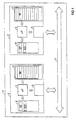
- each subsystem 2,2 ' has a processor 3, a data storage unit 4, a Command sequence storage unit 5 and at least one communication means 6 on.
- the data storage unit 4 and the instruction sequence storage unit 5 are not necessarily separate units of the redundant automation system 1.
- the at least two subsystems 2,2 ' communicate via the communication means 6 and with each other via a bus 7 or with the technical process, not shown.
- At least the value of the synchronization counter is in the data storage unit 4 SZ, SZ 'and the synchronization counter target value SZZ saved.
- the instruction sequence storage unit 5 is at least the sequence of machine commands MP - saved.
- the sequence of machine commands MP is for the two subsystems 2,2 'are at least functionally identical. For Control of the technical process not shown leads the processor 3 of the subsystems 2, 2 'the sequence of machine commands MP of the instruction sequence storage unit 5.
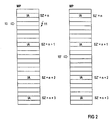
- the sequence of machine commands MP on the left is the result of machine commands MP for subsystem 2
- the sequence of Machine commands MP on the right side are corresponding the sequence of machine commands MP for the subsystem 2 '.
- FIG. 2 there are increment instructions in the sequences of machine commands MP IA inserted.
- IA becomes the synchronization counter SZ, SZ 'of the respective subsystem 2,2' incremented, i.e. at 1 elevated.
- the positions designated by the arrow 10, 10 'within the sequence of machine commands denote MP in each case the machine command at the time of the occurrence of the special event 11 is currently being executed. How to get out 2 further recognizes, registers at least one of the Subsystems 2,2 'the special event 11.
- the subsystems 2, 2 'at this time different machine commands the sequence of machine commands MP off.
- a treatment of the special event 11 too This may result in inconsistent data of the subsystems 2,2 'of the automation system 1. Therefore, before dealing with the special event 11, a Synchronization of the subsystems 2,2 'required.
- the Subsystem 2 has the synchronization counter SZ at the time of the occurrence of the special event 11 the value n
- Subsystem 2 ' has the synchronization counter SZ' at the time the occurrence of the special event already the value n + 1.
- the subsystem 2, 2 'that the at least one other subsystem 2,2 'during execution the sequence of machine commands MP leads the execution interrupt the sequence of machine commands MP until the other subsystem 2, 2 'the corresponding position within the functionally identical sequences of machine commands MP has reached.
- the next increment instruction IA which is both subsystems 2.2 'can reach at the same time is therefore the increment instruction IA, where both the synchronization counter SZ, as well as the synchronization counter SZ ' assumes the value n + 2.
- the synchronization position SP corresponds to the position of those Increment instruction IA within the sequences of Machine commands MP, at which the value of the synchronization counter SZ, SZ 'the synchronization counter target value SZZ reached.
- the alarmed Subsystem 2 After registration of the special event 11, the alarmed Subsystem 2 according to FIG 3 for determining the synchronization counter target value SZZ to the at least one other Subsystem 2 'the value of its synchronization counter SZ and special event 11. - This is the earliest possible Time for the transmission of the special agreement 11. At the latest must the special event in connection with the transmission of the synchronization signal SS are transmitted. - As a result, the at least one other subsystem 2 'is via the Occurrence of a special event 11 informs and sends in turn the current value of its synchronization counter SZ 'that the alarmed subsystem 2 receives.
- Each subsystem 2, 2 'thus knows the value of its own synchronization counter SZ and the value of the synchronization counter SZ 'of the at least one other subsystem 2,2'.
- the synchronization counter target value SZZ results from the Maximum value of the two incremented synchronization counters SZ, SZ '.
- Each subsystem 2,2 ' determines once it has the synchronization position Has reached SP and the synchronization signal SS received by the at least one other subsystem 2,2 ' has a reaction specific to special event 11 and do this. After executing the for the special event 11 subsystems 2,2 'execute the specific reaction the sequence of machine commands MP after the synchronization position SP away.
- Synchronization procedures are used instead of the increment instructions IA decrement instructions in the Sequences of machine commands inserted.
- SZ just like before the synchronization counter SZ, SZ ', starting from 0, incremented by 1 - the synchronization counter SZ, SZ 'starting from a starting value, e.g. B. 32,767, are each decremented.
- the synchronization process runs under evaluation of this now decremented Synchronization counter SZ, SZ 'in a completely analog Way off.
- FIG. 4 shows the insertion method of the increment instructions IA using the example of command sequences of a programming language
- structogram enforced. From this structogram especially the block boundaries and the associated ones Structuring. On the left is schematically represented a simple structogram.
- the Structogram consists of the two blocks B1 and B2, whereby block B1 e.g. for the so-called main program, the block B2, on the other hand, is an example of a so-called subroutine stands.
- the execution of the program begins in the main program B1. Either form the main program B1 and the subroutine B2 a separate block each. They are therefore in block instructions embedded.
- the block instruction at the beginning of the main program B1 or subroutine B2 directs the block a, the block instruction at the end of the main program B1 or Subroutine B2 ends the block. Even within the instructions of a block, further blocks can occur, e.g. for repetitive instructions, such as with loops.
- the subroutine B2 is in the main program B1 called from the inner block.
- FIGS. 5 and 6 each show a flow chart of the insertion process.
- the value of the command counter BZ is initialized, i.e. set to zero. Thereupon the currently following one Machine command of the sequence of machine commands MP determined. Only if the machine command is is a step instruction, becomes an increment instruction IA inserted in the sequence of machine commands MP. Just then when the command counter BZ has a command counter threshold BZS exceeds an increment instruction IA inserted in the sequence of machine commands MP and then the command counter BZ is reset to zero. Thereon the determined machine command becomes a sequence of machine commands MP inserted. Following the insertion of the machine command the command counter BZ is incremented, i.e. increased by 1 since the number of machine instructions follows the sequence of Machine commands MP now increased by exactly one machine command Has. Processing is carried out with the determination of the next machine command continues until all Machine commands have been processed.
- command counter BZ or the command counter threshold BZS can also be a runtime counter or a Run-time counter threshold can be used.
- the runtime counter is the runtime of the inserted machine command elevated.
- the runtime counter threshold gives the Term between two incremental instructions IA before.
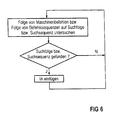
- FIG. 6 shows the insertion method according to claim 7, which is to a sequence of machine commands MP or to a sequence of command sequences of a programming language, by their interpretation is a process, especially a technical one Process that is controlled.
- IA becomes the sequence of machine commands MP or the Sequence of command sequences for the occurrence of the search sequence or the search sequence examined. Only if the search order or the search sequence within the sequence of machine commands or the sequence of command sequences was found inserted an increment instruction into it. The insertion process becomes with the investigation of the sequence of machine commands or the sequence of command sequences continued, until they are completely examined.
Landscapes
- Engineering & Computer Science (AREA)
- Physics & Mathematics (AREA)
- General Physics & Mathematics (AREA)
- Automation & Control Theory (AREA)
- Theoretical Computer Science (AREA)
- General Engineering & Computer Science (AREA)
- Quality & Reliability (AREA)
- Multi Processors (AREA)
- Debugging And Monitoring (AREA)
- Hardware Redundancy (AREA)
- Devices For Executing Special Programs (AREA)
- Iron Core Of Rotating Electric Machines (AREA)
- Control Of Motors That Do Not Use Commutators (AREA)
- Stabilization Of Oscillater, Synchronisation, Frequency Synthesizers (AREA)
- Programmable Controllers (AREA)
Description
- FIG 1
- ein Blockschaltbild eines Automatisierungssystems,
- FIG 2
- das Prinzip des Synchronisationsverfahrens,
- FIG 3
- ein Flußdiagramm des Synchronisationsverfahrens,
- FIG 4
- das Prinzip des Einfügeverfahrens,
- FIG 5 und FIG 6
- ein Flußdiagramm des Einfügeverfahrens.
Claims (10)
- Synchronisationsverfahren für ein redundant aus mindestens zwei Teilsystemen (2, 2') aufgebautes Automatisierungssystem (1), bei dem die mindestens zwei Teilsysteme (2, 2') jeweils mindestens einen Prozessor (3) aufweisen, über Kommunikationsmittel (6) miteinander gekoppelt sind, zur Steuerung eines Prozesses funktional identische Folgen von Maschinenbefehlen (MP) ausführen und sich von Zeit zu Zeit über das Kommunikationsmittel (6) miteinander synchronisieren,
dadurch gekennzeichnet,a) daß jedes der Teilsysteme (2, 2') einen Synchronisationszähler (SZ, SZ') aufweist,b) daß die Folgen von funktional identischen Maschinenbefehlen (MP) an miteinander korrespondierenden Stellen Inkrementierungs- bzw. Dekrementierungs-Anweisungen (IA) aufweisen, mit denen der Synchronisationszähler (SZ, SZ') inkrementiert bzw. dekrementiert wird,c) daß eine Synchronisation zumindest dann durchgeführt wird, wenn eines der Teilsysteme (2, 2'), das alarmierte Teilsystem (2, 2'), ein Sonderereignis (11) registriert,d) wobei diese Synchronisation in folgenden Schritten abläuft:
Jedes Teilsystem (2, 2')aa) übermittelt dem anderen Teilsystem (2, 2') den aktuellen Wert seines Synchronisationszählers (SZ, SZ'),bb) ermittelt aus dem inkrementierten bzw. dekrementierten Wert des eigenen Synchronisationszählers (SZ, SZ') und aus dem inkrementierten bzw. dekrementierten Wert des Synchronisationszählers (SZ, SZ') des anderen Teilsystemes (2, 2') den aktuell größten bzw. kleinsten Wert, den Synchronisationszähler-Zielwert (SZZ),cc) unterbricht die Ausführung der Folge von Maschinenbefehlen (MP) beim Erreichen einer Position innerhalb der Folge von Maschinenbefehlen (MP) - nachfolgend Synchronisationsposition (SP) genannt - bei der die Werte der jeweiligen Synchronisationszähler (SZ, SZ') den Synchronisationszähler-Zielwert (SZZ) erreichen,dd) ermittelt eine für das Sonderereignis (11) spezifische Reaktion, führt diese aus und setzt danach die Ausführung der Folge von Maschinenbefehlen (MP) nach der Synchronisationsposition (SP) fort,e) wobei das alarmierte Teilsystem (2, 2') dem anderen Teilsystem (2, 2') das Sonderereignis (11) frühestens unmittelbar nach dem Registrieren des Sonderereignisses (11) und spätestens in Zusammenhang mit der Ermittlung der für das Sonderereignis (11) spezifischen Reaktion übermittelt. - Synchronisationsverfahren nach Anspruch 1,
dadurch gekennzeichnet,
daß jedes Teilsystem (2, 2') nach dem Schritt ccausführt.cc') dem anderen Teilsystem (2, 2') mit einem Synchronisationssignal (SS) das Erreichen der Synchronisationsposition (SP) signalisiert,
und den Schritt dd erstcc") nach Erreichen der Synchronisationsposition (SP) und nach Registrieren des Synchronisationssignals (SS) vom anderen Teilsystem (2, 2') - Synchronisationsverfahren nach Anspruch 1 oder 2,
dadurch gekennzeichnet,daß jedem Maschinenbefehl der Folge von Maschinenbefehlen (MP) durch dessen Position innerhalb der Folge von Maschinenbefehlen (MP) eine eindeutige Adresse zugeordnet ist,daß die Adresse eines jeden Maschinenbefehls der Folge von Maschinenbefehlen (MP), insbesondere die Adresse des aktuell auszuführenden Maschinenbefehls sowie die Adresse desjenigen Maschinenbefehls, der mit der Synchronisationsposition (SP) korrespondiert, ermittelbar ist,daß beim Ausführen der Folge von Maschinenbefehlen (MP) - zumindest nach der Registrierung des Sonderereignisses (11) durch das alarmierte Teilsystem (2, 2') - stets die Adresse des aktuell auszuführenden Maschinenbefehls mit der Adresse desjenigen Maschinenbefehls, der mit der Synchronisationsposition (SP) korrespondiert, verglichen wird unddaß das Ausführen der Folge von Maschinenbefehlen (MP) genau bei Erreichen der Synchronisationsposition (SP) unterbrochen wird. - Synchronisationsverfahren nach Anspruch 1 oder 2,
dadurch gekennzeichnet,daß beim Ausführen der Folge von Maschinenbefehlen (MP) - zumindest nach der Registrierung des Sonderereignisses (11) durch das alarmierte Teilsystem (2, 2') - stets der Wert des Synchronisationszählers (SZ, SZ') mit dem Synchronisationszähler-Zielwert (SZZ) verglichen wird unddaß das Ausführen der Folge von Maschinenbefehlen (MP) unterbrochen wird, wenn der Wert des Synchronisationszählers (SZ, SZ') den Synchronisationszähler-Zielwert (SZZ) erreicht. - Synchronisationsverfahren nach Anspruch 1, 2, 3 oder 4,
dadurch gekennzeichnet, daß die Inkrementierungs-Anweisungen (IA) jeweils zumindestnach einer festen Anzahl von Einzelbefehlen der Folge von Maschinenbefehlen (MP) oder - unter Bewertung der Laufzeit einer Anzahl von Maschinenbefehlen - in bestimmten, im wesentlichen äquidistanten Laufzeitintervallen sowiein Zusammenhang mit jedem Sprungbefehl ausgeführt werden. - Synchronisationsverfahren nach einem der vorstehenden Ansprüche, dadurch gekennzeichnet, daß die Inkrementierungsanweisungen (IA) jeweilsnach einer festen Anzahl von Einzelbefehlen der Folge von Maschinenbefehlen (MP) oder - unter Bewertung der Laufzeit einer Anzahl von Maschinenbefehlen - in bestimmten, im wesentlichen äquidistanten Laufzeitintervallen sowiein Zusammenhang mit jedem Sprungbefehl in die Folge von Maschinenbefehlen (MP) eingefügt werden.
- Synchronisationsverfahren nach einem der vorstehenden Ansprüche, dadurch gekennzeichnet,daß die Folge von Maschinenbefehlen (MP) aus einer Folge von Befehlssequenzen einer Programmiersprache generiert wird,daß die Folge von Maschinenbefehlen (MP) bzw. die Folge von Befehlssequenzen auf bestimmte Maschinenbefehle bzw. bestimmte Befehlssequenzen, insbesondere auf bestimmte Teilfolgen der Folgen von Maschinenbefehlen (MP) bzw. bestimmter Teilfolgen der Befehlssequenzen - nachfolgend Suchfolge bzw. Suchsequenz genannt - untersucht wird,daß das Auftreten der Suchfolge bzw. der Suchsequenz erkannt wird unddaß die Inkrementierungs-Anweisungen (IA) der Suchfolge bzw. der Suchsequenz vorangestellt oder angefügt werden.
- Synchronisationsverfahren nach Anspruch 7,
dadurch gekennzeichnet,daß zusammengehörige Befehlssequenzen jeweils in einem Block zusammengefaßt sind unddaß eine der Suchfolgen bzw. eine der Suchsequenzen zumindest eine der Grenzen des Blockes und/oder ein Sprungbefehl ist. - Synchronisationsverfahren nach Anspruch 8,
dadurch gekennzeichnet,daß die Inkrementierungs-Anweisungen (IA) während einer Generierung der Folge von Maschinenbefehlen (MP) in diese eingefügt werden,wobei die Generierung der Folge von Maschinenbefehlen (MP) in an sich bekannter Weise mit Hilfe eines speziellen Compilers erfolgt,wobei der spezielle Compiler jeweils beim Erkennen der Suchfolge bzw. der Suchsequenz die Inkrementierungs-Anweisungen (IA) generiert und in die Folgen von Maschinenbefehlen (MP) einfügt. - Synchronisationsverfahren nach Anspruch 8 oder 9,
dadurch gekennzeichnet,daß die Inkrementierungs-Anweisungen (IA) vor und/oder nach einer Generierung der Folge von Maschinenbefehlen (MP) in diese eingefügt werden,daß die Generierung der Folge von Maschinenbefehlen (MP) in an sich bekannter Weise mit Hilfe eines Standard-Compilers erfolgt,daß vor und/oder nach der Generierung jeweils beim Erkennen der Suchfolge bzw. der Suchsequenz die Inkrementierungs-Anweisungen (IA) in die Folge von Maschinenbefehlen (MP) bzw. die Folge von Befehlssequenzen eingefügt werden.
Applications Claiming Priority (3)
| Application Number | Priority Date | Filing Date | Title |
|---|---|---|---|
| DE19625195A DE19625195A1 (de) | 1996-06-24 | 1996-06-24 | Synchronisationsverfahren |
| DE19625195 | 1996-06-24 | ||
| PCT/DE1997/001109 WO1997050024A1 (de) | 1996-06-24 | 1997-06-03 | Synchronisationsverfahren |
Publications (2)
| Publication Number | Publication Date |
|---|---|
| EP0907912A1 EP0907912A1 (de) | 1999-04-14 |
| EP0907912B1 true EP0907912B1 (de) | 2000-05-03 |
Family
ID=7797824
Family Applications (1)
| Application Number | Title | Priority Date | Filing Date |
|---|---|---|---|
| EP97930299A Expired - Lifetime EP0907912B1 (de) | 1996-06-24 | 1997-06-03 | Synchronisationsverfahren |
Country Status (9)
| Country | Link |
|---|---|
| US (1) | US6356795B1 (de) |
| EP (1) | EP0907912B1 (de) |
| JP (1) | JP2000513468A (de) |
| KR (1) | KR20000022171A (de) |
| CN (1) | CN1228173A (de) |
| AT (1) | ATE192583T1 (de) |
| DE (2) | DE19625195A1 (de) |
| ES (1) | ES2146474T3 (de) |
| WO (1) | WO1997050024A1 (de) |
Cited By (7)
| Publication number | Priority date | Publication date | Assignee | Title |
|---|---|---|---|---|
| EP2657797A1 (de) | 2012-04-27 | 2013-10-30 | Siemens Aktiengesellschaft | Verfahren zum Betreiben eines redundanten Automatisierungssystems |
| EP2765464A1 (de) | 2013-02-08 | 2014-08-13 | Siemens Aktiengesellschaft | Verfahren zum Betreiben eines redundanten Automatisierungssystems |
| EP3229141A1 (de) | 2016-04-07 | 2017-10-11 | Siemens Aktiengesellschaft | Verfahren zur erhöhung der verfügbarkeit eines redundanten automatisierungssystems sowie redundantes automatisierungssystem |
| EP3246771A1 (de) | 2016-05-17 | 2017-11-22 | Siemens Aktiengesellschaft | Verfahren zum betreiben eines redundanten automatisierungssystems |
| EP3872583A1 (de) | 2020-02-26 | 2021-09-01 | Siemens Aktiengesellschaft | Redundant ausgelegtes automatisierungssystem |
| EP3872582A1 (de) | 2020-02-26 | 2021-09-01 | Siemens Aktiengesellschaft | Redundant ausgelegtes automatisierungssystem |
| EP4428633A1 (de) | 2023-03-08 | 2024-09-11 | Siemens Aktiengesellschaft | Verfahren zum betreiben eines redundanten automatisierungssystems und redundantes automatisierungssystem |
Families Citing this family (31)
| Publication number | Priority date | Publication date | Assignee | Title |
|---|---|---|---|---|
| US6247143B1 (en) | 1998-06-30 | 2001-06-12 | Sun Microsystems, Inc. | I/O handling for a multiprocessor computer system |
| DE19834331A1 (de) * | 1998-07-30 | 2000-02-10 | Bosch Gmbh Robert | Sicherheitsvorrichtung für eine speicherprogrammierbare Steuerung |
| DE19836347C2 (de) * | 1998-08-11 | 2001-11-15 | Ericsson Telefon Ab L M | Fehlertolerantes Computersystem |
| US6941175B2 (en) * | 2000-12-27 | 2005-09-06 | Siemens Aktiengesellschaft | Method of operating an industrial controller |
| DE10065417B4 (de) * | 2000-12-27 | 2011-07-21 | Siemens AG, 80333 | Programmierung von zyklischen Maschinen |
| FI113113B (fi) * | 2001-11-20 | 2004-02-27 | Nokia Corp | Menetelmä ja laite integroitujen piirien ajan synkronoimiseksi |
| EP1398699A1 (de) * | 2002-09-12 | 2004-03-17 | Siemens Aktiengesellschaft | Verfahren zur Ereignissynchronisation, insbesondere für Prozessoren fehlertoleranter Systeme |
| EP1398701A1 (de) * | 2002-09-12 | 2004-03-17 | Siemens Aktiengesellschaft | Verfahren zur Ereignissynchronisation, insbesondere für Prozessoren fehlertoleranter Systeme |
| US7725230B2 (en) | 2002-09-16 | 2010-05-25 | Robert Bosch Gmbh | Method and computer system for operating at least two interconnected control units |
| CN1303544C (zh) * | 2003-05-16 | 2007-03-07 | 浙江中控技术股份有限公司 | 自动进行开关量事件先后顺序记录的系统及其方法 |
| JP2005006037A (ja) * | 2003-06-12 | 2005-01-06 | Nec Corp | メディア同期システム及びそれに用いるサービス提供方法 |
| US7665070B2 (en) * | 2004-04-23 | 2010-02-16 | International Business Machines Corporation | Method and apparatus for a computing system using meta program representation |
| US7353365B2 (en) * | 2004-09-29 | 2008-04-01 | Intel Corporation | Implementing check instructions in each thread within a redundant multithreading environments |
| US8190877B2 (en) * | 2005-07-05 | 2012-05-29 | Viasat, Inc. | Trusted cryptographic processor |
| US8527741B2 (en) * | 2005-07-05 | 2013-09-03 | Viasat, Inc. | System for selectively synchronizing high-assurance software tasks on multiple processors at a software routine level |
| US7802075B2 (en) * | 2005-07-05 | 2010-09-21 | Viasat, Inc. | Synchronized high-assurance circuits |
| US8301870B2 (en) * | 2006-07-27 | 2012-10-30 | International Business Machines Corporation | Method and apparatus for fast synchronization and out-of-order execution of instructions in a meta-program based computing system |
| US8078898B2 (en) * | 2007-06-07 | 2011-12-13 | Texas Instruments Incorporated | Synchronizing TAP controllers with sequence on TMS lead |
| JP4697314B2 (ja) | 2009-02-05 | 2011-06-08 | 横河電機株式会社 | 二重化フィールド制御装置 |
| CN101916068B (zh) * | 2010-07-29 | 2012-01-11 | 北京交大资产经营有限公司 | 基于2取2结构的计算机控制系统及其实现方法 |
| GB2497017B (en) * | 2010-08-20 | 2018-05-23 | Siemens Ag | Method for redundantly controlling processes of an automation system |
| DE102010039607B3 (de) * | 2010-08-20 | 2011-11-10 | Siemens Aktiengesellschaft | Verfahren zum redundanten Steuern von Prozessen eines Automatisierungssystems |
| BE1020023A5 (nl) * | 2011-01-28 | 2013-04-02 | Niko Nv | Systeem en werkwijze voor het aansturen van producten. |
| US8880198B2 (en) * | 2011-08-23 | 2014-11-04 | Siemens Aktiengesellschaft | Byzantine fault-tolerant SCADA system |
| EP2615511A1 (de) * | 2012-01-12 | 2013-07-17 | Siemens Aktiengesellschaft | Verfahren zur synchronen Ausführung von Programmen in einem redundanten Automatisierungssystem |
| DE102012106601A1 (de) * | 2012-07-20 | 2014-05-15 | Pilz Gmbh & Co. Kg | Verfahren zum Synchronisieren von Anzeigeelementen |
| US9256426B2 (en) * | 2012-09-14 | 2016-02-09 | General Electric Company | Controlling total number of instructions executed to a desired number after iterations of monitoring for successively less number of instructions until a predetermined time period elapse |
| EP2857913B1 (de) * | 2013-10-01 | 2019-04-24 | Siemens Aktiengesellschaft | Redundantes Automatisierungssystem |
| EP3428748B1 (de) * | 2017-07-13 | 2020-08-26 | Siemens Aktiengesellschaft | Verfahren und anordnung zum betrieb von zwei redundanten systemen |
| EP3751363B1 (de) | 2019-06-11 | 2022-11-23 | Siemens Aktiengesellschaft | Verfahren zum betreiben eines redundanten automatisierungssystems und entsprechendes system |
| TWI782316B (zh) * | 2020-08-24 | 2022-11-01 | 達明機器人股份有限公司 | 作業程序同步的方法 |
Family Cites Families (8)
| Publication number | Priority date | Publication date | Assignee | Title |
|---|---|---|---|---|
| US4674036A (en) * | 1984-11-23 | 1987-06-16 | Gte Communication Systems Corporation | Duplex controller synchronization circuit for processors which utilizes an address input |
| AU616213B2 (en) * | 1987-11-09 | 1991-10-24 | Tandem Computers Incorporated | Method and apparatus for synchronizing a plurality of processors |
| EP0394514B1 (de) | 1989-04-25 | 1994-07-13 | Siemens Aktiengesellschaft | Verfahren zur Synchronisation von Datenverarbeitungsanlagen |
| EP0497147A3 (en) * | 1991-01-28 | 1993-05-05 | Siemens Aktiengesellschaft | Redundant automation system |
| DE4104114C2 (de) * | 1991-02-11 | 2000-06-08 | Siemens Ag | Redundantes Datenverarbeitungssystem |
| EP0616274B1 (de) * | 1993-03-16 | 1996-06-05 | Siemens Aktiengesellschaft | Synchronisationsverfahren für Automatisierungssysteme |
| DE4401467C2 (de) * | 1993-03-25 | 1996-12-12 | Siemens Ag | Betriebsverfahren für ein redundant aus mindestens zwei Teilsystemen aufgebautes Automatisierungssystem |
| DE4405297C2 (de) * | 1994-02-19 | 1997-06-05 | Bosch Gmbh Robert | Verfahren zur Synchronisation von Sendeeinrichtungen in Zugangseinheiten bei einem getakteten Bussystem |
-
1996
- 1996-06-24 DE DE19625195A patent/DE19625195A1/de not_active Withdrawn
-
1997
- 1997-06-03 ES ES97930299T patent/ES2146474T3/es not_active Expired - Lifetime
- 1997-06-03 DE DE59701592T patent/DE59701592D1/de not_active Expired - Lifetime
- 1997-06-03 KR KR1019980710589A patent/KR20000022171A/ko not_active Withdrawn
- 1997-06-03 US US09/202,672 patent/US6356795B1/en not_active Expired - Lifetime
- 1997-06-03 EP EP97930299A patent/EP0907912B1/de not_active Expired - Lifetime
- 1997-06-03 WO PCT/DE1997/001109 patent/WO1997050024A1/de not_active Ceased
- 1997-06-03 JP JP10502054A patent/JP2000513468A/ja active Pending
- 1997-06-03 AT AT97930299T patent/ATE192583T1/de not_active IP Right Cessation
- 1997-06-03 CN CN97197275A patent/CN1228173A/zh active Pending
Cited By (9)
| Publication number | Priority date | Publication date | Assignee | Title |
|---|---|---|---|---|
| EP2657797A1 (de) | 2012-04-27 | 2013-10-30 | Siemens Aktiengesellschaft | Verfahren zum Betreiben eines redundanten Automatisierungssystems |
| EP2765464A1 (de) | 2013-02-08 | 2014-08-13 | Siemens Aktiengesellschaft | Verfahren zum Betreiben eines redundanten Automatisierungssystems |
| EP3229141A1 (de) | 2016-04-07 | 2017-10-11 | Siemens Aktiengesellschaft | Verfahren zur erhöhung der verfügbarkeit eines redundanten automatisierungssystems sowie redundantes automatisierungssystem |
| EP3246771A1 (de) | 2016-05-17 | 2017-11-22 | Siemens Aktiengesellschaft | Verfahren zum betreiben eines redundanten automatisierungssystems |
| US11262745B2 (en) | 2016-05-17 | 2022-03-01 | Siemens Aktiengesellschaft | Method for operating a redundant automation system to increase availability of the automation system |
| EP3872583A1 (de) | 2020-02-26 | 2021-09-01 | Siemens Aktiengesellschaft | Redundant ausgelegtes automatisierungssystem |
| EP3872582A1 (de) | 2020-02-26 | 2021-09-01 | Siemens Aktiengesellschaft | Redundant ausgelegtes automatisierungssystem |
| EP4428633A1 (de) | 2023-03-08 | 2024-09-11 | Siemens Aktiengesellschaft | Verfahren zum betreiben eines redundanten automatisierungssystems und redundantes automatisierungssystem |
| WO2024183992A1 (de) | 2023-03-08 | 2024-09-12 | Siemens Aktiengesellschaft | Verfahren zum betreiben eines redundanten automatisierungssystems und redundantes automatisierungssystem |
Also Published As
| Publication number | Publication date |
|---|---|
| ATE192583T1 (de) | 2000-05-15 |
| DE59701592D1 (de) | 2000-06-08 |
| CN1228173A (zh) | 1999-09-08 |
| KR20000022171A (ko) | 2000-04-25 |
| EP0907912A1 (de) | 1999-04-14 |
| JP2000513468A (ja) | 2000-10-10 |
| US6356795B1 (en) | 2002-03-12 |
| ES2146474T3 (es) | 2000-08-01 |
| WO1997050024A1 (de) | 1997-12-31 |
| DE19625195A1 (de) | 1998-01-02 |
Similar Documents
| Publication | Publication Date | Title |
|---|---|---|
| DE19625195A1 (de) | Synchronisationsverfahren | |
| DE3587034T2 (de) | Verfahren und einrichtung zur steuerung automatischer geraete. | |
| EP0764899A1 (de) | Verfahren zum Konvertieren sich unterscheidender Datenformate | |
| DE3345863A1 (de) | Ueberwachungsschaltung fuer rechner | |
| EP0657044B1 (de) | Verfahren zum betrieb eines rechnersystems mit mindestens einem mikroprozessor und mindestens einem coprozessor | |
| DE3343227A1 (de) | Verfahren zur ueberwachung von elektronischen rechenbausteinen, insbesondere mikroprozessoren | |
| WO2017140504A1 (de) | Verfahren und vorrichtung zum betreiben eines steuergeräts | |
| EP0671031B1 (de) | Mikrorechner mit überwachungsschaltung | |
| WO2015086357A1 (de) | Verfahren zur beeinflussung eines steuerprogramms eines steuergeräts | |
| WO2018134061A1 (de) | Verfahren und vorrichtung zum betreiben eines steuergeräts, computerprogramm und verfahren zum generieren des computerprogramms | |
| EP0898745A1 (de) | Verfahren zur überprüfung der funktionsfähigkeit einer recheneinheit | |
| EP0838054B1 (de) | Verfahren und steuereinrichtung für eine graphische steuerung von abläufen in einem netzwerkmanagementsystem | |
| DE3546332C2 (de) | Mikroprozessor mit verbessertem Befehlszyklus | |
| EP0990964A1 (de) | Verfahren zum Betrieb eines Automatisierungssystems | |
| WO2007014404A1 (de) | Digitale rechnereinrichtung mit parallelverarbeitung | |
| DE10065498A1 (de) | Verfahren und Vorrichtung zur Rekonstruktion des Prozessablaufs eines Steuerprogramms | |
| EP3948449B1 (de) | Verfahren und engineering-system zur änderung eines programms einer industriellen automatisierungskomponente | |
| WO2018091329A1 (de) | Vorrichtung und verfahren zum bearbeiten von aufträgen | |
| EP1461701B1 (de) | Programmgesteuerte einheit mit überwachungseinrichtung | |
| EP1774417B1 (de) | Verfahren und vorrichtung zum überwachen des ablaufs eines steuerprogramms auf einem rechengerät | |
| DE102017216823A1 (de) | Verarbeitungseinheit, elektronische steuereinheit und verarbeitungsverfahren | |
| DE102023135201A1 (de) | Verfahren zum Ausgeben von Daten aus einer speicherprogrammierbaren Steuerung | |
| EP3690563A1 (de) | Verteilung einer steueraufgabe auf mehrere prozessorkerne | |
| EP1031081A2 (de) | Programmgesteuerte einheit und verfahren | |
| WO2003038612A2 (de) | Verfahren zum betrieb eines rechnersystems |
Legal Events
| Date | Code | Title | Description |
|---|---|---|---|
| PUAI | Public reference made under article 153(3) epc to a published international application that has entered the european phase |
Free format text: ORIGINAL CODE: 0009012 |
|
| 17P | Request for examination filed |
Effective date: 19981217 |
|
| AK | Designated contracting states |
Kind code of ref document: A1 Designated state(s): AT CH DE ES FR GB LI |
|
| GRAG | Despatch of communication of intention to grant |
Free format text: ORIGINAL CODE: EPIDOS AGRA |
|
| 17Q | First examination report despatched |
Effective date: 19990804 |
|
| GRAG | Despatch of communication of intention to grant |
Free format text: ORIGINAL CODE: EPIDOS AGRA |
|
| GRAH | Despatch of communication of intention to grant a patent |
Free format text: ORIGINAL CODE: EPIDOS IGRA |
|
| GRAH | Despatch of communication of intention to grant a patent |
Free format text: ORIGINAL CODE: EPIDOS IGRA |
|
| GRAA | (expected) grant |
Free format text: ORIGINAL CODE: 0009210 |
|
| AK | Designated contracting states |
Kind code of ref document: B1 Designated state(s): AT CH DE ES FR GB LI |
|
| REF | Corresponds to: |
Ref document number: 192583 Country of ref document: AT Date of ref document: 20000515 Kind code of ref document: T |
|
| REG | Reference to a national code |
Ref country code: CH Ref legal event code: NV Representative=s name: SIEMENS SCHWEIZ AG Ref country code: CH Ref legal event code: EP |
|
| REF | Corresponds to: |
Ref document number: 59701592 Country of ref document: DE Date of ref document: 20000608 |
|
| GBT | Gb: translation of ep patent filed (gb section 77(6)(a)/1977) |
Effective date: 20000601 |
|
| REG | Reference to a national code |
Ref country code: ES Ref legal event code: FG2A Ref document number: 2146474 Country of ref document: ES Kind code of ref document: T3 |
|
| ET | Fr: translation filed | ||
| PLBE | No opposition filed within time limit |
Free format text: ORIGINAL CODE: 0009261 |
|
| STAA | Information on the status of an ep patent application or granted ep patent |
Free format text: STATUS: NO OPPOSITION FILED WITHIN TIME LIMIT |
|
| 26N | No opposition filed | ||
| REG | Reference to a national code |
Ref country code: GB Ref legal event code: IF02 |
|
| PGFP | Annual fee paid to national office [announced via postgrant information from national office to epo] |
Ref country code: CH Payment date: 20030905 Year of fee payment: 7 |
|
| PGFP | Annual fee paid to national office [announced via postgrant information from national office to epo] |
Ref country code: AT Payment date: 20040519 Year of fee payment: 8 |
|
| PGFP | Annual fee paid to national office [announced via postgrant information from national office to epo] |
Ref country code: ES Payment date: 20040610 Year of fee payment: 8 |
|
| PG25 | Lapsed in a contracting state [announced via postgrant information from national office to epo] |
Ref country code: LI Free format text: LAPSE BECAUSE OF NON-PAYMENT OF DUE FEES Effective date: 20040630 Ref country code: CH Free format text: LAPSE BECAUSE OF NON-PAYMENT OF DUE FEES Effective date: 20040630 |
|
| REG | Reference to a national code |
Ref country code: CH Ref legal event code: PL |
|
| PG25 | Lapsed in a contracting state [announced via postgrant information from national office to epo] |
Ref country code: AT Free format text: LAPSE BECAUSE OF NON-PAYMENT OF DUE FEES Effective date: 20050603 |
|
| PG25 | Lapsed in a contracting state [announced via postgrant information from national office to epo] |
Ref country code: ES Free format text: LAPSE BECAUSE OF NON-PAYMENT OF DUE FEES Effective date: 20050604 |
|
| REG | Reference to a national code |
Ref country code: ES Ref legal event code: FD2A Effective date: 20050604 |
|
| PGFP | Annual fee paid to national office [announced via postgrant information from national office to epo] |
Ref country code: GB Payment date: 20140609 Year of fee payment: 18 |
|
| PGFP | Annual fee paid to national office [announced via postgrant information from national office to epo] |
Ref country code: DE Payment date: 20140819 Year of fee payment: 18 |
|
| PGFP | Annual fee paid to national office [announced via postgrant information from national office to epo] |
Ref country code: FR Payment date: 20140617 Year of fee payment: 18 |
|
| REG | Reference to a national code |
Ref country code: DE Ref legal event code: R119 Ref document number: 59701592 Country of ref document: DE |
|
| GBPC | Gb: european patent ceased through non-payment of renewal fee |
Effective date: 20150603 |
|
| REG | Reference to a national code |
Ref country code: FR Ref legal event code: ST Effective date: 20160229 |
|
| PG25 | Lapsed in a contracting state [announced via postgrant information from national office to epo] |
Ref country code: DE Free format text: LAPSE BECAUSE OF NON-PAYMENT OF DUE FEES Effective date: 20160101 Ref country code: GB Free format text: LAPSE BECAUSE OF NON-PAYMENT OF DUE FEES Effective date: 20150603 |
|
| PG25 | Lapsed in a contracting state [announced via postgrant information from national office to epo] |
Ref country code: FR Free format text: LAPSE BECAUSE OF NON-PAYMENT OF DUE FEES Effective date: 20150630 |