EP0909078A2 - Elastische Pufferspeicher für Datenspeicherung sowie Sprachdaten - Google Patents
Elastische Pufferspeicher für Datenspeicherung sowie Sprachdaten Download PDFInfo
- Publication number
- EP0909078A2 EP0909078A2 EP98307234A EP98307234A EP0909078A2 EP 0909078 A2 EP0909078 A2 EP 0909078A2 EP 98307234 A EP98307234 A EP 98307234A EP 98307234 A EP98307234 A EP 98307234A EP 0909078 A2 EP0909078 A2 EP 0909078A2
- Authority
- EP
- European Patent Office
- Prior art keywords
- speech data
- memory
- speech
- storing
- message
- Prior art date
- Legal status (The legal status is an assumption and is not a legal conclusion. Google has not performed a legal analysis and makes no representation as to the accuracy of the status listed.)
- Withdrawn
Links
- 238000013500 data storage Methods 0.000 title 1
- 238000000034 method Methods 0.000 claims description 18
- 230000010354 integration Effects 0.000 description 3
- 230000003247 decreasing effect Effects 0.000 description 1
- 230000006870 function Effects 0.000 description 1
- 238000012986 modification Methods 0.000 description 1
- 230000004048 modification Effects 0.000 description 1
- 230000000717 retained effect Effects 0.000 description 1
- 238000000926 separation method Methods 0.000 description 1
- 239000002699 waste material Substances 0.000 description 1
Images



Classifications
-
- H—ELECTRICITY
- H04—ELECTRIC COMMUNICATION TECHNIQUE
- H04L—TRANSMISSION OF DIGITAL INFORMATION, e.g. TELEGRAPHIC COMMUNICATION
- H04L5/00—Arrangements affording multiple use of the transmission path
- H04L5/02—Channels characterised by the type of signal
-
- H—ELECTRICITY
- H04—ELECTRIC COMMUNICATION TECHNIQUE
- H04M—TELEPHONIC COMMUNICATION
- H04M1/00—Substation equipment, e.g. for use by subscribers
- H04M1/57—Arrangements for indicating or recording the number of the calling subscriber at the called subscriber's set
- H04M1/575—Means for retrieving and displaying personal data about calling party
- H04M1/576—Means for retrieving and displaying personal data about calling party associated with a pictorial or graphical representation
-
- H—ELECTRICITY
- H04—ELECTRIC COMMUNICATION TECHNIQUE
- H04M—TELEPHONIC COMMUNICATION
- H04M1/00—Substation equipment, e.g. for use by subscribers
- H04M1/64—Automatic arrangements for answering calls; Automatic arrangements for recording messages for absent subscribers; Arrangements for recording conversations
- H04M1/65—Recording arrangements for recording a message from the calling party
- H04M1/6505—Recording arrangements for recording a message from the calling party storing speech in digital form
-
- H—ELECTRICITY
- H04—ELECTRIC COMMUNICATION TECHNIQUE
- H04M—TELEPHONIC COMMUNICATION
- H04M3/00—Automatic or semi-automatic exchanges
- H04M3/42—Systems providing special services or facilities to subscribers
- H04M3/50—Centralised arrangements for answering calls; Centralised arrangements for recording messages for absent or busy subscribers ; Centralised arrangements for recording messages
- H04M3/53—Centralised arrangements for recording incoming messages, i.e. mailbox systems
- H04M3/533—Voice mail systems
-
- H—ELECTRICITY
- H04—ELECTRIC COMMUNICATION TECHNIQUE
- H04M—TELEPHONIC COMMUNICATION
- H04M2201/00—Electronic components, circuits, software, systems or apparatus used in telephone systems
- H04M2201/36—Memories
-
- H—ELECTRICITY
- H04—ELECTRIC COMMUNICATION TECHNIQUE
- H04M—TELEPHONIC COMMUNICATION
- H04M2242/00—Special services or facilities
- H04M2242/22—Automatic class or number identification arrangements
-
- H—ELECTRICITY
- H04—ELECTRIC COMMUNICATION TECHNIQUE
- H04M—TELEPHONIC COMMUNICATION
- H04M3/00—Automatic or semi-automatic exchanges
- H04M3/42—Systems providing special services or facilities to subscribers
- H04M3/42025—Calling or Called party identification service
- H04M3/42034—Calling party identification service
- H04M3/42059—Making use of the calling party identifier
-
- H—ELECTRICITY
- H04—ELECTRIC COMMUNICATION TECHNIQUE
- H04Q—SELECTING
- H04Q3/00—Selecting arrangements
- H04Q3/72—Finding out and indicating number of calling subscriber
Definitions
- This invention relates to a method for associating and storing non-speech data with speech data. More particularly, it relates to a method for associating non-speech message data with speech message data as stored within common non-volatile memory, and is particularly useful in digital answering machines or electronic voice mail systems.
- caller ID information allows the phone number and/or name of the calling party to be displayed or otherwise announced at the called party's answering machine or electronic voice mail.
- Conventional caller ID devices maintain a single separate memory area containing a chronological history of the caller ID information for a predetermined number of recent calls.
- Answering or voice messaging machine designs have further benefited from the decreasing costs of non-volatile memory to the point at which digital answering machines and electronic voice mail systems are affordable and common.
- speech data is stored digitally, i.e., in non-volatile memory rather than on a magnetic tape as in older messaging machines.
- conventional digital answering machines have included caller ID capability by combining conventional digital speech storage functions with a conventional caller ID block which displays and maintains a chronological history of recent calls.
- these conventional digital answering machines are basically a physical combination of known caller ID systems with known digital answering machines, with little or no integration of the memory needs of a digital answering machine (or electronic voice mail system) with those of a caller ID system.
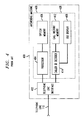
- Fig. 4 shows a conventional digital answering machine 400 combining the functionality of digital voice recording with caller ID memory and display.
- a telephone line 110 is input to an analog front end or telephone line interface 402 of the digital answering machine 400.
- the digital side of the telephone line interface 402 is connected to both a speech recording functional block 420 and a caller ID functional block 428.
- the speech recording functional block 420 includes a processor 404 and non-volatile speech memory 406 .
- the processor 404 may be a microprocessor, microcontroller, digital signal processor (DSP) or any other suitable processor or equivalent circuit.
- the non-volatile speech memory 406 may be any non-volatile digital storage device, e.g., RAM, EEPROM, flash memory, or even digital audio tape (DAT).
- the non-volatile speech memory 406 may additionally be internal or external to the processor 404.
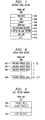
- Fig. 5 shows sectorization of the speech memory 406 into a plurality of sectors. As shown, 128 memory sectors 502-516 , 550-564 are contained within the speech memory 406 of one type of conventional answering machine 400 . Each sector contains 4 Kbytes of flash memory. Using today's coding techniques, each sector can store about five to ten seconds of speech data, although various rate coders exist.
- Fig. 6 shows that there are 128 memory pages 602-610 within each memory sector 502-516, 550-564, and that there are 32 bytes of data in each of the 128 memory pages 602-610 . Accordingly, up to 32 bytes of speech data can be stored in each page of speech memory 406 in a typical digital answering machine 400 .
- the speech memory 406 of the conventional digital answering machine 400 contains only speech data (other than the header information for the stored speech data).
- Non-speech data is contained in a separate call history memory 412 (Fig. 4) associated with the caller ID functional block 428.
- Fig. 7 shows a message table 800 contained in one sector of conventional speech memory 406 .
- the message table 800 contains various header information relating to an underlying speech message stored in the same or linked page of speech memory 406.
- Conventional header type information includes a time/date stamp 802 indicating the time and date when an underlying speech message was stored.
- TAG information 804 in the header contains user defined data.
- the speech data is encoded.
- the header includes coder information 806 which relates to the type of encoding used to encode the underlying speech message data, e.g., the particular coder data rate.
- the new/old information 808 entry in the header of the message table 800 relates to whether or not the underlying speech message has been reviewed at least once by the user of the digital answering machine 400.
- the deleted/non-deleted information 810 in the header conventionally indicates whether or not the underlying speech message has been deleted by the user.
- the number of bytes in the last sector information 812 relates to the length of the speech message in the last sector in which the speech message is stored, avoiding replay of the unused portion of the last sector when replaying stored messages.
- the link list information 814 in the header indicates the addresses of all sectors used to store the speech message.
- additional header information 816 may be included in the message table 800 as desired.
- Prior art systems store speech data in memory separate from the memory for storing non-speech data thereby requiring three management tables to associate the non-speech data with its underlying speech data, i.e., 1) speech data table, 2) non-speech data table, and 3) links between tables (1) and (2).
- the present invention as will be described in more detail below provides integration of non-speech data with associated speech data into a common memory structure to require only one message table for each speech plus non-speech message.
- Fig. 8 shows a sector in the speech memory 406 containing the underlying speech message 902-908.
- the sector shown in Fig. 8 is the first listed in the link list 814 of the message table 800 for the underlying speech message.
- Zero, one or more pages of speech data 902-908 may be listed in the link list 814 of a message table 800 for a single speech message.
- the caller ID functional block 428 contains a caller ID decoder 414 which demodulates and interprets the caller ID information input over telephone line 110 associated with a call.
- the caller ID decoder 414 stores the caller ID data in the call history memory 412.
- the caller ID information decoded by the caller ID decoder 414 may be displayed on a graphical user interface (GUI) display 408 to indicate, e.g., the phone number, name or other information relating to the calling party.
- GUI graphical user interface
- the GUI display 408 displays the caller ID information regarding any one of the most recent calls to the digital answering machine 400.
- the number of calls for which the call history 412 retains caller ID information is limited only by the length of the call history memory.
- non-speech information may easily be retained in the call history memory even after the associated voice message has been deleted.
- this separation of the non-speech data, e.g., the caller ID information, from the speech data may cause confusion to the user.
- Fig. 9 shows a conventional call history memory 412.
- call history memory 412 has a fixed length, and thus is capable of storing only a fixed amount of caller ID information from only a fixed number of recent callers. Call history information must then occasionally be deleted from the call history memory 412 to allow for new caller ID information.
- speech data is stored along with the non-speech data associated with that speech data in a common sector of memory.
- the voice message memory is divided into a plurality of sectors.
- non-speech data related to the voice message is stored in one of the sectors along with the speech data related to the voice message.
- Fig. 1 shows an exemplary embodiment of a digital answering machine with integrated speech and non-speech memory according to the present invention.
- Fig. 2 shows a sector of memory containing a message table in the exemplary embodiment of a digital answering machine shown in Fig. 1.
- Fig. 3 shows a sector of memory containing both non-speech and speech data in the exemplary embodiment of a digital answering machine shown in Fig. 1.
- Fig. 4 shows a conventional digital answering machine having caller ID capability.
- Fig. 5 shows sectorization of the message memory of the conventional digital answering machine shown in Fig. 4.
- Fig. 6 shows the pages in each sector of the message memory shown in Fig. 5.
- Fig. 7 shows a sector of memory containing a message table in the conventional digital answering machine shown in Fig. 4.
- Fig. 8 shows a sector of memory containing only speech data in the conventional digital answering machine shown in Fig. 4.
- Fig. 9 shows the contents of call history memory in a conventional digital answering machine shown in Fig. 4.
- Fig. 1 is an exemplary embodiment showing a digital answering machine according to the present invention.
- the present invention is shown embodied in a digital answering machine, the present invention is equally applicable to voice messaging systems in general, electronic voice mail systems, or any other memory system which associates and stores both non-speech data and related speech data.
- a telephone line 110 is input to an analog front end or telephone line interface 102 .
- the telephone line interface 102 is connected to an integrated speech/non-speech functional block 120 including a processor 104 , a caller ID decoder 114 , and an integrated data memory 106 for storing both speech data such as a voice, and non-speech data (such as caller ID information) associated therewith.
- the storage of both speech and non-speech data in the integrated speech and non-speech data memory 106 in the exemplary embodiment is controlled by the processor 104 .
- the caller ID decoder 114 does not store the non-speech data separate from the speech data as in the prior art.
- the prior art requires the establishment of three message table pages: one for the speech data; a second for the non-speech caller ID data; and a third to associate the speech data with the non-speech data.
- the present invention provides an integration of the speech and non-speech data such that only a single message table sector is required as shown in Fig. 2.
- caller ID decoder 114 is shown as a separate component in Fig. 1, it may be possible to implement the caller ID decoder 114 either within software running on the processor 104 or as an additional integrated circuit (IC) integrated with or otherwise combined with the processor 104 .
- IC integrated circuit
- a GUI display 108 displays caller ID or other non-speech information either received over the telephone line 110 , stored in the integrated speech and non-speech data memory 120, or as otherwise determined by the processor 104 .
- the GUI display 108 may display textual, graphical or pictorial information constituting non-speech data as instructed by the caller ID decoder 114 .
- the integrated speech and non-speech data memory 106 is sectorized, and each sector is separated into a plurality of pages which each include an elastic buffer for non-speech data which is associated with speech data contained within that or a linked page.
- non-speech data of variable lengths can be associated with the underlying speech data in a common sector of the integrated speech and non-speech data memory 106, avoiding the inefficiency, waste and expense of maintaining three message tables as in the prior art to associate a caller ID, image or other non-speech data memory with its speech data stored in separate speech memory.
- the common integrated data memory 106 is controlled by a single processor.
- the sectorization of the speech memory 406 is dictated somewhat by the specific requirements of flash memory, i.e., that an entire block of memory must be written to or erased from speech memory 406 at a time.
- the FLASH memory utilized in one embodiment of the present invention includes page write and sector erase capability. For instance, a page of 32 bytes must be written to at any one time, while a sector of 4096 bytes must be erased at any one time.
- the sectorization is equally applicable to other types of RAM which do not necessarily require that more than one byte of memory be written to or erased from at any one time.
- variable length buffer for non-speech data provides flexibility sufficient to accommodate caller ID standards throughout the world, including but not limited to the U.S. Public Switched Telephone Network (U.S. PSTN), and standards developed and/or utilized by Nippon Telegraph and Telephone Corporation, British Telecom and France Telecom.
- U.S. PSTN U.S. Public Switched Telephone Network
- Nippon Telegraph and Telephone Corporation British Telecom and France Telecom.
- An offset value 202 is provided in the message table 200 to provide variability in the length of the storage area for the non-speech data associated with related speech data.
- the value of the offset 202 refers to the relative location or address in the data sector 300 of the first byte or start of the speech data 902-908 after the addresses of associated non-speech data in the same or linked sector.
- the non-speech data 352-358 is stored in the offset or skipped over area of the page.
- the value of the offset 202 in the message table 200 is not a fixed value, and thus does not refer to a fixed length non-speech data buffer. Rather, as shown in the message table 200 shown in Fig.
- the value of the offset 202 is varied based on the actual length of the received non-speech data 352-358 .
- the speech data 902-908 is moved upward to higher addresses in the sector to make room for associated non-speech data 352-358.
- the non-speech data 352-358 is stored by processor 104 (Fig. 1) between local or relative address 0 and (N-1) of the data sector 300.
- the underlying speech data 902-908 associated with that particular non-speech data 352-358 is stored in the subsequent portion of the data sector 300 starting at local address N and continuing upward in addressing in the data sector 300. If more than one data sector 300 is required to store the speech data 902-908 , i.e., if the speech message is larger than about six seconds, then additional sectors of memory are linked to that message by the corresponding message table.
- a local address refers to the relative location within any particular page of sectorized memory. For instance, in memory which is sectorized into 128 4Kb sectors, each sector having 128 32byte pages, the local addresses for each of the pages of memory is 0 to 127 decimal (00h to 7fh).
- the resulting speech plus non-speech messages become very easy to erase because the non-speech is associated in integrated, common memory with the speech in a message table. Only a single memory pointer is needed to access both speech data and non-speech data.
- the system is flexible enough to accommodate even speech only storage by setting the offset value 202 shown in Fig. 2 to zero.
- the invention further allows a telephone answering device or voice mail system to display the non-speech data, e.g., the caller ID information, while the associated speech data is being played by the voice messaging system.
Landscapes
- Engineering & Computer Science (AREA)
- Signal Processing (AREA)
- Computer Networks & Wireless Communication (AREA)
- Telephone Function (AREA)
- Telephonic Communication Services (AREA)
- Facsimiles In General (AREA)
Applications Claiming Priority (2)
| Application Number | Priority Date | Filing Date | Title |
|---|---|---|---|
| US931513 | 1997-09-16 | ||
| US08/931,513 US6215860B1 (en) | 1997-09-16 | 1997-09-16 | Elastic buffer for data storage with speech data |
Publications (1)
| Publication Number | Publication Date |
|---|---|
| EP0909078A2 true EP0909078A2 (de) | 1999-04-14 |
Family
ID=25460896
Family Applications (1)
| Application Number | Title | Priority Date | Filing Date |
|---|---|---|---|
| EP98307234A Withdrawn EP0909078A2 (de) | 1997-09-16 | 1998-09-08 | Elastische Pufferspeicher für Datenspeicherung sowie Sprachdaten |
Country Status (4)
| Country | Link |
|---|---|
| US (1) | US6215860B1 (de) |
| EP (1) | EP0909078A2 (de) |
| JP (1) | JPH11168563A (de) |
| KR (1) | KR19990029754A (de) |
Families Citing this family (12)
| Publication number | Priority date | Publication date | Assignee | Title |
|---|---|---|---|---|
| WO1998000958A1 (en) | 1996-06-28 | 1998-01-08 | Advanced Micro Devices, Inc. | Telephone calling party announcement system and method |
| US6178230B1 (en) | 1997-11-13 | 2001-01-23 | Advanced Micro Devices, Inc. | System and method for identifying a callee of an incoming telephone call |
| US6385303B1 (en) * | 1997-11-13 | 2002-05-07 | Legerity, Inc. | System and method for identifying and announcing a caller and a callee of an incoming telephone call |
| US6173041B1 (en) | 1997-11-13 | 2001-01-09 | Advanced Micro Devices, Inc. | System and method for reducing call interruptions on a telephone |
| US7218710B1 (en) * | 1999-05-20 | 2007-05-15 | Agere Systems Inc. | Separately secured voice messages |
| US6697796B2 (en) * | 2000-01-13 | 2004-02-24 | Agere Systems Inc. | Voice clip search |
| JP2002176679A (ja) * | 2000-12-07 | 2002-06-21 | Toshiba Corp | 移動無線端末装置 |
| US7342917B2 (en) * | 2001-10-02 | 2008-03-11 | Comverse, Inc. | Multimedia personalized call management (MPCM) |
| US7623635B2 (en) * | 2001-10-24 | 2009-11-24 | Cool Kenneth J | Integrated telephony and video system |
| US8000455B1 (en) * | 2004-12-09 | 2011-08-16 | Callwave, Inc. | Methods and systems for call processing |
| KR100774800B1 (ko) * | 2006-09-06 | 2007-11-07 | 한국정보통신대학교 산학협력단 | 포아송 폴링 기법을 이용한 세그먼트 단위의 음성/비음성분류 방법 및 장치 |
| US8300777B1 (en) * | 2011-09-25 | 2012-10-30 | Google Inc. | Divided call history user interface |
Family Cites Families (5)
| Publication number | Priority date | Publication date | Assignee | Title |
|---|---|---|---|---|
| US5153579A (en) * | 1989-08-02 | 1992-10-06 | Motorola, Inc. | Method of fast-forwarding and reversing through digitally stored voice messages |
| US5414758A (en) * | 1991-01-07 | 1995-05-09 | Thomson Consumer Electronics, Inc. | Audio recording apparatus using an imperfect memory circuit |
| US5483580A (en) * | 1993-03-19 | 1996-01-09 | Octel Communications Corporation | Methods and apparatus for non-simultaneous transmittal and storage of voice message and digital text or image |
| US5600821A (en) * | 1993-07-28 | 1997-02-04 | National Semiconductor Corporation | Distributed directory for information stored on audio quality memory devices |
| US5588046A (en) * | 1995-10-23 | 1996-12-24 | Casio Phonemate, Inc. | Digital telephone answering device and method of testing message storage memory therein |
-
1997
- 1997-09-16 US US08/931,513 patent/US6215860B1/en not_active Expired - Lifetime
-
1998
- 1998-09-08 EP EP98307234A patent/EP0909078A2/de not_active Withdrawn
- 1998-09-12 KR KR1019980037688A patent/KR19990029754A/ko not_active Ceased
- 1998-09-14 JP JP10259596A patent/JPH11168563A/ja active Pending
Also Published As
| Publication number | Publication date |
|---|---|
| JPH11168563A (ja) | 1999-06-22 |
| KR19990029754A (ko) | 1999-04-26 |
| US6215860B1 (en) | 2001-04-10 |
Similar Documents
| Publication | Publication Date | Title |
|---|---|---|
| EP1107546B1 (de) | Spracherkennung einer in einer Sprachmitteilung eingefüten Telefonnummer in einem Sprachnachrichtensystem | |
| US5163082A (en) | Memory management methods and apparatus for digital telephone answering devices | |
| US6215860B1 (en) | Elastic buffer for data storage with speech data | |
| US6373925B1 (en) | Telephone calling party announcement system and method | |
| US5283818A (en) | Telephone answering device linking displayed data with recorded audio message | |
| US6526128B1 (en) | Partial voice message deletion | |
| US6347136B1 (en) | Calling party announcement message management systems and methods | |
| US5127003A (en) | Digital/audio interactive communication network | |
| US5251251A (en) | Telecommunications network-based greeting card method and system | |
| US7564956B2 (en) | Method, system and article of manufacture for bookmarking voicemail messages | |
| US6621894B2 (en) | Telephone terminal and caller ID utilization method | |
| WO1998000958A9 (en) | Telephone calling party announcement system and method | |
| US20030039342A1 (en) | System, method, and apparatus for telephone messaging | |
| US5590189A (en) | Method of operating a microprocessor controlled telephone set | |
| KR100338466B1 (ko) | 전화응답시스템및전화메시지를효율적으로액세스하는방법 | |
| JPS5937761A (ja) | 自動ダイヤル装置の番号記憶およびダイヤル発信方式 | |
| US6757366B1 (en) | Voice messaging system having removable digital voice message memory | |
| EP0826217B1 (de) | Diktiergerät zum speichern von sprachsignalen | |
| KR950035251A (ko) | 전화기의 자동 다이얼장치 및 다이얼 보조장치 | |
| AU663152B2 (en) | Digital voice storage system for a telecommunication system | |
| US20060233319A1 (en) | Automatic messaging system | |
| CN1090417C (zh) | 显示出主叫用户标记的一种方法 | |
| JP3326707B2 (ja) | 電話端末装置 | |
| AU756419B2 (en) | Programmable automatic invocation of telecommunications services | |
| US20030031303A1 (en) | Answering machine with caller-specific call management |
Legal Events
| Date | Code | Title | Description |
|---|---|---|---|
| PUAI | Public reference made under article 153(3) epc to a published international application that has entered the european phase |
Free format text: ORIGINAL CODE: 0009012 |
|
| AK | Designated contracting states |
Kind code of ref document: A2 Designated state(s): AT BE CH CY DE DK ES FI FR GB GR IE IT LI LU MC NL PT SE |
|
| AX | Request for extension of the european patent |
Free format text: AL;LT;LV;MK;RO;SI |
|
| STAA | Information on the status of an ep patent application or granted ep patent |
Free format text: STATUS: THE APPLICATION HAS BEEN WITHDRAWN |
|
| 18W | Application withdrawn |
Withdrawal date: 20021008 |