EP0910564B1 - Aus d-aminosäuren abgeleitete cystein- und serinproteasehemmer - Google Patents
Aus d-aminosäuren abgeleitete cystein- und serinproteasehemmer Download PDFInfo
- Publication number
- EP0910564B1 EP0910564B1 EP96940617A EP96940617A EP0910564B1 EP 0910564 B1 EP0910564 B1 EP 0910564B1 EP 96940617 A EP96940617 A EP 96940617A EP 96940617 A EP96940617 A EP 96940617A EP 0910564 B1 EP0910564 B1 EP 0910564B1
- Authority
- EP
- European Patent Office
- Prior art keywords
- compound
- group
- carbons
- alkyl
- groups
- Prior art date
- Legal status (The legal status is an assumption and is not a legal conclusion. Google has not performed a legal analysis and makes no representation as to the accuracy of the status listed.)
- Expired - Lifetime
Links
- 102000005927 Cysteine Proteases Human genes 0.000 title claims abstract description 33
- 108010005843 Cysteine Proteases Proteins 0.000 title claims abstract description 33
- 102000012479 Serine Proteases Human genes 0.000 title claims abstract description 26
- 108010022999 Serine Proteases Proteins 0.000 title claims abstract description 26
- XUJNEKJLAYXESH-REOHCLBHSA-N L-Cysteine Chemical compound SC[C@H](N)C(O)=O XUJNEKJLAYXESH-REOHCLBHSA-N 0.000 title abstract description 15
- 235000018417 cysteine Nutrition 0.000 title abstract description 15
- XUJNEKJLAYXESH-UHFFFAOYSA-N cysteine Natural products SCC(N)C(O)=O XUJNEKJLAYXESH-UHFFFAOYSA-N 0.000 title abstract description 15
- 239000003112 inhibitor Substances 0.000 title abstract description 13
- 150000008574 D-amino acids Chemical class 0.000 title description 3
- 150000001875 compounds Chemical class 0.000 claims description 315
- 125000000217 alkyl group Chemical group 0.000 claims description 92
- -1 hydroxy, carboxy Chemical group 0.000 claims description 71
- 239000000203 mixture Substances 0.000 claims description 51
- 125000003118 aryl group Chemical group 0.000 claims description 48
- 125000001072 heteroaryl group Chemical group 0.000 claims description 42
- 125000003710 aryl alkyl group Chemical group 0.000 claims description 41
- 125000001797 benzyl group Chemical group [H]C1=C([H])C([H])=C(C([H])=C1[H])C([H])([H])* 0.000 claims description 33
- 229910052799 carbon Inorganic materials 0.000 claims description 25
- 229910052739 hydrogen Inorganic materials 0.000 claims description 25
- 125000002496 methyl group Chemical group [H]C([H])([H])* 0.000 claims description 21
- 125000003545 alkoxy group Chemical group 0.000 claims description 19
- 125000001997 phenyl group Chemical group [H]C1=C([H])C([H])=C(*)C([H])=C1[H] 0.000 claims description 18
- 108091005804 Peptidases Proteins 0.000 claims description 14
- 239000004365 Protease Substances 0.000 claims description 14
- 102000004190 Enzymes Human genes 0.000 claims description 13
- 108090000790 Enzymes Proteins 0.000 claims description 13
- 125000006239 protecting group Chemical group 0.000 claims description 13
- 125000000175 2-thienyl group Chemical group S1C([*])=C([H])C([H])=C1[H] 0.000 claims description 12
- 125000002102 aryl alkyloxo group Chemical group 0.000 claims description 12
- 125000005842 heteroatom Chemical group 0.000 claims description 12
- 125000002887 hydroxy group Chemical group [H]O* 0.000 claims description 12
- 230000002401 inhibitory effect Effects 0.000 claims description 12
- 125000000753 cycloalkyl group Chemical group 0.000 claims description 11
- 125000002947 alkylene group Chemical group 0.000 claims description 10
- 125000003277 amino group Chemical group 0.000 claims description 10
- 150000001721 carbon Chemical group 0.000 claims description 10
- 239000003814 drug Substances 0.000 claims description 10
- 229910052736 halogen Inorganic materials 0.000 claims description 10
- 150000002367 halogens Chemical class 0.000 claims description 10
- 150000001413 amino acids Chemical group 0.000 claims description 9
- 125000002924 primary amino group Chemical group [H]N([H])* 0.000 claims description 9
- 125000006413 ring segment Chemical group 0.000 claims description 9
- 150000008575 L-amino acids Chemical class 0.000 claims description 8
- 125000000623 heterocyclic group Chemical group 0.000 claims description 8
- 125000003435 aroyl group Chemical group 0.000 claims description 7
- 125000001622 2-naphthyl group Chemical group [H]C1=C([H])C([H])=C2C([H])=C(*)C([H])=C([H])C2=C1[H] 0.000 claims description 6
- 125000001255 4-fluorophenyl group Chemical group [H]C1=C([H])C(*)=C([H])C([H])=C1F 0.000 claims description 6
- 125000000590 4-methylphenyl group Chemical group [H]C1=C([H])C(=C([H])C([H])=C1*)C([H])([H])[H] 0.000 claims description 6
- 125000002252 acyl group Chemical group 0.000 claims description 6
- 125000001931 aliphatic group Chemical group 0.000 claims description 6
- 235000001014 amino acid Nutrition 0.000 claims description 6
- 125000006615 aromatic heterocyclic group Chemical group 0.000 claims description 6
- 125000004429 atom Chemical group 0.000 claims description 6
- 150000001720 carbohydrates Chemical group 0.000 claims description 6
- VUWZPRWSIVNGKG-UHFFFAOYSA-N fluoromethane Chemical compound F[CH2] VUWZPRWSIVNGKG-UHFFFAOYSA-N 0.000 claims description 6
- 125000004404 heteroalkyl group Chemical group 0.000 claims description 6
- 125000004446 heteroarylalkyl group Chemical group 0.000 claims description 6
- 229910052760 oxygen Inorganic materials 0.000 claims description 6
- 125000004104 aryloxy group Chemical group 0.000 claims description 5
- 125000005553 heteroaryloxy group Chemical group 0.000 claims description 5
- 229910052757 nitrogen Inorganic materials 0.000 claims description 5
- 229910052721 tungsten Inorganic materials 0.000 claims description 5
- 125000004453 alkoxycarbonyl group Chemical group 0.000 claims description 4
- 125000000484 butyl group Chemical group [H]C([*])([H])C([H])([H])C([H])([H])C([H])([H])[H] 0.000 claims description 4
- 125000001589 carboacyl group Chemical group 0.000 claims description 4
- XSXHWVKGUXMUQE-UHFFFAOYSA-N osmium dioxide Inorganic materials O=[Os]=O XSXHWVKGUXMUQE-UHFFFAOYSA-N 0.000 claims description 4
- 125000000472 sulfonyl group Chemical group *S(*)(=O)=O 0.000 claims description 4
- 125000003039 tetrahydroisoquinolinyl group Chemical group C1(NCCC2=CC=CC=C12)* 0.000 claims description 4
- OAICVXFJPJFONN-UHFFFAOYSA-N Phosphorus Chemical compound [P] OAICVXFJPJFONN-UHFFFAOYSA-N 0.000 claims description 3
- 125000004390 alkyl sulfonyl group Chemical group 0.000 claims description 3
- 125000004391 aryl sulfonyl group Chemical group 0.000 claims description 3
- 150000001540 azides Chemical class 0.000 claims description 3
- 239000011203 carbon fibre reinforced carbon Substances 0.000 claims description 3
- 150000002016 disaccharides Chemical class 0.000 claims description 3
- 125000001495 ethyl group Chemical group [H]C([H])([H])C([H])([H])* 0.000 claims description 3
- 150000004676 glycans Chemical class 0.000 claims description 3
- 125000002795 guanidino group Chemical group C(N)(=N)N* 0.000 claims description 3
- 150000002772 monosaccharides Chemical class 0.000 claims description 3
- 229910052698 phosphorus Inorganic materials 0.000 claims description 3
- 239000011574 phosphorus Substances 0.000 claims description 3
- 125000005544 phthalimido group Chemical group 0.000 claims description 3
- 229920001282 polysaccharide Polymers 0.000 claims description 3
- 239000005017 polysaccharide Substances 0.000 claims description 3
- 229910052717 sulfur Inorganic materials 0.000 claims description 3
- 125000006479 2-pyridyl methyl group Chemical group [H]C1=C([H])C([H])=C([H])C(=N1)C([H])([H])* 0.000 claims description 2
- ZYUZLEUJKZZXNN-UHFFFAOYSA-N C1=CC(CC(N)C(O)=O)=CC=C1OS(=O)(=O)C1=CC=C(C=CC=C2)C2=C1 Chemical group C1=CC(CC(N)C(O)=O)=CC=C1OS(=O)(=O)C1=CC=C(C=CC=C2)C2=C1 ZYUZLEUJKZZXNN-UHFFFAOYSA-N 0.000 claims description 2
- 229910002091 carbon monoxide Inorganic materials 0.000 claims description 2
- 125000000959 isobutyl group Chemical group [H]C([H])([H])C([H])(C([H])([H])[H])C([H])([H])* 0.000 claims description 2
- 125000003170 phenylsulfonyl group Chemical group C1(=CC=CC=C1)S(=O)(=O)* 0.000 claims description 2
- RAHZWNYVWXNFOC-UHFFFAOYSA-N sulfur dioxide Inorganic materials O=S=O RAHZWNYVWXNFOC-UHFFFAOYSA-N 0.000 claims description 2
- 125000000999 tert-butyl group Chemical group [H]C([H])([H])C(*)(C([H])([H])[H])C([H])([H])[H] 0.000 claims description 2
- 102100037486 Reverse transcriptase/ribonuclease H Human genes 0.000 claims 4
- 125000001288 lysyl group Chemical group 0.000 claims 4
- 238000004519 manufacturing process Methods 0.000 claims 2
- 125000000547 substituted alkyl group Chemical group 0.000 claims 2
- 125000003107 substituted aryl group Chemical group 0.000 claims 2
- 238000000034 method Methods 0.000 abstract description 65
- 229940042399 direct acting antivirals protease inhibitors Drugs 0.000 abstract 1
- 239000000137 peptide hydrolase inhibitor Substances 0.000 abstract 1
- HEDRZPFGACZZDS-MICDWDOJSA-N Trichloro(2H)methane Chemical compound [2H]C(Cl)(Cl)Cl HEDRZPFGACZZDS-MICDWDOJSA-N 0.000 description 236
- YMWUJEATGCHHMB-UHFFFAOYSA-N Dichloromethane Chemical compound ClCCl YMWUJEATGCHHMB-UHFFFAOYSA-N 0.000 description 172
- 230000015572 biosynthetic process Effects 0.000 description 162
- 238000003786 synthesis reaction Methods 0.000 description 162
- 238000005160 1H NMR spectroscopy Methods 0.000 description 124
- 239000007787 solid Substances 0.000 description 93
- XEKOWRVHYACXOJ-UHFFFAOYSA-N Ethyl acetate Chemical compound CCOC(C)=O XEKOWRVHYACXOJ-UHFFFAOYSA-N 0.000 description 86
- OKKJLVBELUTLKV-UHFFFAOYSA-N Methanol Chemical compound OC OKKJLVBELUTLKV-UHFFFAOYSA-N 0.000 description 82
- VHUUQVKOLVNVRT-UHFFFAOYSA-N Ammonium hydroxide Chemical compound [NH4+].[OH-] VHUUQVKOLVNVRT-UHFFFAOYSA-N 0.000 description 73
- ZMANZCXQSJIPKH-UHFFFAOYSA-N Triethylamine Chemical compound CCN(CC)CC ZMANZCXQSJIPKH-UHFFFAOYSA-N 0.000 description 42
- VLKZOEOYAKHREP-UHFFFAOYSA-N n-Hexane Chemical compound CCCCCC VLKZOEOYAKHREP-UHFFFAOYSA-N 0.000 description 42
- 239000012359 Methanesulfonyl chloride Substances 0.000 description 36
- QARBMVPHQWIHKH-UHFFFAOYSA-N methanesulfonyl chloride Chemical compound CS(Cl)(=O)=O QARBMVPHQWIHKH-UHFFFAOYSA-N 0.000 description 36
- 235000019439 ethyl acetate Nutrition 0.000 description 31
- 239000000243 solution Substances 0.000 description 29
- LFQSCWFLJHTTHZ-UHFFFAOYSA-N Ethanol Chemical compound CCO LFQSCWFLJHTTHZ-UHFFFAOYSA-N 0.000 description 28
- HUWSZNZAROKDRZ-RRLWZMAJSA-N (3r,4r)-3-azaniumyl-5-[[(2s,3r)-1-[(2s)-2,3-dicarboxypyrrolidin-1-yl]-3-methyl-1-oxopentan-2-yl]amino]-5-oxo-4-sulfanylpentane-1-sulfonate Chemical compound OS(=O)(=O)CC[C@@H](N)[C@@H](S)C(=O)N[C@@H]([C@H](C)CC)C(=O)N1CCC(C(O)=O)[C@H]1C(O)=O HUWSZNZAROKDRZ-RRLWZMAJSA-N 0.000 description 27
- 238000002360 preparation method Methods 0.000 description 25
- VYPSYNLAJGMNEJ-UHFFFAOYSA-N Silicium dioxide Chemical compound O=[Si]=O VYPSYNLAJGMNEJ-UHFFFAOYSA-N 0.000 description 24
- 238000006243 chemical reaction Methods 0.000 description 24
- 238000003818 flash chromatography Methods 0.000 description 20
- 239000000543 intermediate Substances 0.000 description 20
- 239000000741 silica gel Substances 0.000 description 20
- 229910002027 silica gel Inorganic materials 0.000 description 20
- STVVMTBJNDTZBF-VIFPVBQESA-N L-phenylalaninol Chemical compound OC[C@@H](N)CC1=CC=CC=C1 STVVMTBJNDTZBF-VIFPVBQESA-N 0.000 description 19
- XLYOFNOQVPJJNP-UHFFFAOYSA-N water Chemical compound O XLYOFNOQVPJJNP-UHFFFAOYSA-N 0.000 description 19
- 230000008878 coupling Effects 0.000 description 18
- 238000010168 coupling process Methods 0.000 description 18
- 238000005859 coupling reaction Methods 0.000 description 18
- 239000012043 crude product Substances 0.000 description 18
- 244000187785 Eucalyptus alba Species 0.000 description 17
- 229940127573 compound 38 Drugs 0.000 description 17
- PIDFDZJZLOTZTM-KHVQSSSXSA-N ombitasvir Chemical compound COC(=O)N[C@@H](C(C)C)C(=O)N1CCC[C@H]1C(=O)NC1=CC=C([C@H]2N([C@@H](CC2)C=2C=CC(NC(=O)[C@H]3N(CCC3)C(=O)[C@@H](NC(=O)OC)C(C)C)=CC=2)C=2C=CC(=CC=2)C(C)(C)C)C=C1 PIDFDZJZLOTZTM-KHVQSSSXSA-N 0.000 description 17
- 108010032088 Calpain Proteins 0.000 description 16
- 102000007590 Calpain Human genes 0.000 description 16
- 208000037265 diseases, disorders, signs and symptoms Diseases 0.000 description 16
- KRKNYBCHXYNGOX-UHFFFAOYSA-N citric acid Chemical compound OC(=O)CC(O)(C(O)=O)CC(O)=O KRKNYBCHXYNGOX-UHFFFAOYSA-N 0.000 description 15
- 230000005764 inhibitory process Effects 0.000 description 15
- 230000003647 oxidation Effects 0.000 description 15
- 238000007254 oxidation reaction Methods 0.000 description 15
- 239000000047 product Substances 0.000 description 15
- YYROPELSRYBVMQ-UHFFFAOYSA-N 4-toluenesulfonyl chloride Chemical compound CC1=CC=C(S(Cl)(=O)=O)C=C1 YYROPELSRYBVMQ-UHFFFAOYSA-N 0.000 description 14
- 150000001299 aldehydes Chemical class 0.000 description 14
- 239000000758 substrate Substances 0.000 description 14
- IAZDPXIOMUYVGZ-UHFFFAOYSA-N Dimethylsulphoxide Chemical compound CS(C)=O IAZDPXIOMUYVGZ-UHFFFAOYSA-N 0.000 description 13
- 241000699694 Gerbillinae Species 0.000 description 13
- UIIMBOGNXHQVGW-UHFFFAOYSA-M Sodium bicarbonate Chemical compound [Na+].OC([O-])=O UIIMBOGNXHQVGW-UHFFFAOYSA-M 0.000 description 13
- CSKNSYBAZOQPLR-UHFFFAOYSA-N benzenesulfonyl chloride Chemical compound ClS(=O)(=O)C1=CC=CC=C1 CSKNSYBAZOQPLR-UHFFFAOYSA-N 0.000 description 13
- 208000035475 disorder Diseases 0.000 description 13
- 238000000746 purification Methods 0.000 description 13
- 239000012267 brine Substances 0.000 description 12
- 229940088598 enzyme Drugs 0.000 description 12
- HPALAKNZSZLMCH-UHFFFAOYSA-M sodium;chloride;hydrate Chemical compound O.[Na+].[Cl-] HPALAKNZSZLMCH-UHFFFAOYSA-M 0.000 description 12
- VEXZGXHMUGYJMC-UHFFFAOYSA-N Hydrochloric acid Chemical compound Cl VEXZGXHMUGYJMC-UHFFFAOYSA-N 0.000 description 11
- PMZURENOXWZQFD-UHFFFAOYSA-L Sodium Sulfate Chemical compound [Na+].[Na+].[O-]S([O-])(=O)=O PMZURENOXWZQFD-UHFFFAOYSA-L 0.000 description 11
- 0 *C(C*Cc1ccccc1)C(O)=O Chemical compound *C(C*Cc1ccccc1)C(O)=O 0.000 description 10
- IAZDPXIOMUYVGZ-WFGJKAKNSA-N Dimethyl sulfoxide Chemical compound [2H]C([2H])([2H])S(=O)C([2H])([2H])[2H] IAZDPXIOMUYVGZ-WFGJKAKNSA-N 0.000 description 10
- 102000035195 Peptidases Human genes 0.000 description 10
- 230000000694 effects Effects 0.000 description 10
- 239000011541 reaction mixture Substances 0.000 description 10
- 102000005890 Spectrin Human genes 0.000 description 9
- 108010019965 Spectrin Proteins 0.000 description 9
- 230000015556 catabolic process Effects 0.000 description 9
- 229910052740 iodine Inorganic materials 0.000 description 9
- 150000003839 salts Chemical class 0.000 description 9
- SJRJJKPEHAURKC-UHFFFAOYSA-N N-Methylmorpholine Chemical compound CN1CCOCC1 SJRJJKPEHAURKC-UHFFFAOYSA-N 0.000 description 8
- 230000007062 hydrolysis Effects 0.000 description 8
- 238000006460 hydrolysis reaction Methods 0.000 description 8
- 208000028867 ischemia Diseases 0.000 description 8
- 239000012044 organic layer Substances 0.000 description 8
- 230000002829 reductive effect Effects 0.000 description 8
- 238000001228 spectrum Methods 0.000 description 8
- WDBQJSCPCGTAFG-QHCPKHFHSA-N 4,4-difluoro-N-[(1S)-3-[4-(3-methyl-5-propan-2-yl-1,2,4-triazol-4-yl)piperidin-1-yl]-1-pyridin-3-ylpropyl]cyclohexane-1-carboxamide Chemical compound FC1(CCC(CC1)C(=O)N[C@@H](CCN1CCC(CC1)N1C(=NN=C1C)C(C)C)C=1C=NC=CC=1)F WDBQJSCPCGTAFG-QHCPKHFHSA-N 0.000 description 7
- 239000012131 assay buffer Substances 0.000 description 7
- NKLCNNUWBJBICK-UHFFFAOYSA-N dess–martin periodinane Chemical compound C1=CC=C2I(OC(=O)C)(OC(C)=O)(OC(C)=O)OC(=O)C2=C1 NKLCNNUWBJBICK-UHFFFAOYSA-N 0.000 description 7
- 230000000971 hippocampal effect Effects 0.000 description 7
- 125000000956 methoxy group Chemical group [H]C([H])([H])O* 0.000 description 7
- 125000001570 methylene group Chemical group [H]C([H])([*:1])[*:2] 0.000 description 7
- 210000002569 neuron Anatomy 0.000 description 7
- 238000000935 solvent evaporation Methods 0.000 description 7
- QFLWZFQWSBQYPS-AWRAUJHKSA-N (3S)-3-[[(2S)-2-[[(2S)-2-[5-[(3aS,6aR)-2-oxo-1,3,3a,4,6,6a-hexahydrothieno[3,4-d]imidazol-4-yl]pentanoylamino]-3-methylbutanoyl]amino]-3-(4-hydroxyphenyl)propanoyl]amino]-4-[1-bis(4-chlorophenoxy)phosphorylbutylamino]-4-oxobutanoic acid Chemical compound CCCC(NC(=O)[C@H](CC(O)=O)NC(=O)[C@H](Cc1ccc(O)cc1)NC(=O)[C@@H](NC(=O)CCCCC1SC[C@@H]2NC(=O)N[C@H]12)C(C)C)P(=O)(Oc1ccc(Cl)cc1)Oc1ccc(Cl)cc1 QFLWZFQWSBQYPS-AWRAUJHKSA-N 0.000 description 6
- IYHHRZBKXXKDDY-UHFFFAOYSA-N BI-605906 Chemical compound N=1C=2SC(C(N)=O)=C(N)C=2C(C(F)(F)CC)=CC=1N1CCC(S(C)(=O)=O)CC1 IYHHRZBKXXKDDY-UHFFFAOYSA-N 0.000 description 6
- HEDRZPFGACZZDS-UHFFFAOYSA-N Chloroform Chemical compound ClC(Cl)Cl HEDRZPFGACZZDS-UHFFFAOYSA-N 0.000 description 6
- ZMXDDKWLCZADIW-UHFFFAOYSA-N N,N-dimethylformamide Substances CN(C)C=O ZMXDDKWLCZADIW-UHFFFAOYSA-N 0.000 description 6
- 239000007832 Na2SO4 Substances 0.000 description 6
- HEMHJVSKTPXQMS-UHFFFAOYSA-M Sodium hydroxide Chemical compound [OH-].[Na+] HEMHJVSKTPXQMS-UHFFFAOYSA-M 0.000 description 6
- 108090000190 Thrombin Proteins 0.000 description 6
- 229940125810 compound 20 Drugs 0.000 description 6
- 238000009472 formulation Methods 0.000 description 6
- JAXFJECJQZDFJS-XHEPKHHKSA-N gtpl8555 Chemical compound OC(=O)C[C@H](N)C(=O)N[C@@H](CCC(O)=O)C(=O)N[C@@H](C(C)C)C(=O)N[C@@H](C(C)C)C(=O)N1CCC[C@@H]1C(=O)N[C@H](B1O[C@@]2(C)[C@H]3C[C@H](C3(C)C)C[C@H]2O1)CCC1=CC=C(F)C=C1 JAXFJECJQZDFJS-XHEPKHHKSA-N 0.000 description 6
- 229910052938 sodium sulfate Inorganic materials 0.000 description 6
- 238000003756 stirring Methods 0.000 description 6
- 125000005931 tert-butyloxycarbonyl group Chemical group [H]C([H])([H])C(OC(*)=O)(C([H])([H])[H])C([H])([H])[H] 0.000 description 6
- 229960004072 thrombin Drugs 0.000 description 6
- 108010016626 Dipeptides Proteins 0.000 description 5
- FAPWRFPIFSIZLT-UHFFFAOYSA-M Sodium chloride Chemical compound [Na+].[Cl-] FAPWRFPIFSIZLT-UHFFFAOYSA-M 0.000 description 5
- PMMYEEVYMWASQN-QWWZWVQMSA-N cis-4-hydroxy-D-proline Chemical compound O[C@H]1C[NH2+][C@@H](C([O-])=O)C1 PMMYEEVYMWASQN-QWWZWVQMSA-N 0.000 description 5
- 239000000839 emulsion Substances 0.000 description 5
- OAYLNYINCPYISS-UHFFFAOYSA-N ethyl acetate;hexane Chemical compound CCCCCC.CCOC(C)=O OAYLNYINCPYISS-UHFFFAOYSA-N 0.000 description 5
- NPZTUJOABDZTLV-UHFFFAOYSA-N hydroxybenzotriazole Substances O=C1C=CC=C2NNN=C12 NPZTUJOABDZTLV-UHFFFAOYSA-N 0.000 description 5
- 125000003588 lysine group Chemical group [H]N([H])C([H])([H])C([H])([H])C([H])([H])C([H])([H])C([H])(N([H])[H])C(*)=O 0.000 description 5
- 239000000546 pharmaceutical excipient Substances 0.000 description 5
- 230000006340 racemization Effects 0.000 description 5
- GHYOCDFICYLMRF-UTIIJYGPSA-N (2S,3R)-N-[(2S)-3-(cyclopenten-1-yl)-1-[(2R)-2-methyloxiran-2-yl]-1-oxopropan-2-yl]-3-hydroxy-3-(4-methoxyphenyl)-2-[[(2S)-2-[(2-morpholin-4-ylacetyl)amino]propanoyl]amino]propanamide Chemical compound C1(=CCCC1)C[C@@H](C(=O)[C@@]1(OC1)C)NC([C@H]([C@@H](C1=CC=C(C=C1)OC)O)NC([C@H](C)NC(CN1CCOCC1)=O)=O)=O GHYOCDFICYLMRF-UTIIJYGPSA-N 0.000 description 4
- UWYZHKAOTLEWKK-UHFFFAOYSA-N 1,2,3,4-tetrahydroisoquinoline Chemical compound C1=CC=C2CNCCC2=C1 UWYZHKAOTLEWKK-UHFFFAOYSA-N 0.000 description 4
- ONBQEOIKXPHGMB-VBSBHUPXSA-N 1-[2-[(2s,3r,4s,5r)-3,4-dihydroxy-5-(hydroxymethyl)oxolan-2-yl]oxy-4,6-dihydroxyphenyl]-3-(4-hydroxyphenyl)propan-1-one Chemical compound O[C@@H]1[C@H](O)[C@@H](CO)O[C@H]1OC1=CC(O)=CC(O)=C1C(=O)CCC1=CC=C(O)C=C1 ONBQEOIKXPHGMB-VBSBHUPXSA-N 0.000 description 4
- QCQCHGYLTSGIGX-GHXANHINSA-N 4-[[(3ar,5ar,5br,7ar,9s,11ar,11br,13as)-5a,5b,8,8,11a-pentamethyl-3a-[(5-methylpyridine-3-carbonyl)amino]-2-oxo-1-propan-2-yl-4,5,6,7,7a,9,10,11,11b,12,13,13a-dodecahydro-3h-cyclopenta[a]chrysen-9-yl]oxy]-2,2-dimethyl-4-oxobutanoic acid Chemical compound N([C@@]12CC[C@@]3(C)[C@]4(C)CC[C@H]5C(C)(C)[C@@H](OC(=O)CC(C)(C)C(O)=O)CC[C@]5(C)[C@H]4CC[C@@H]3C1=C(C(C2)=O)C(C)C)C(=O)C1=CN=CC(C)=C1 QCQCHGYLTSGIGX-GHXANHINSA-N 0.000 description 4
- 108090000712 Cathepsin B Proteins 0.000 description 4
- 102000004225 Cathepsin B Human genes 0.000 description 4
- ULGZDMOVFRHVEP-RWJQBGPGSA-N Erythromycin Chemical compound O([C@@H]1[C@@H](C)C(=O)O[C@@H]([C@@]([C@H](O)[C@@H](C)C(=O)[C@H](C)C[C@@](C)(O)[C@H](O[C@H]2[C@@H]([C@H](C[C@@H](C)O2)N(C)C)O)[C@H]1C)(C)O)CC)[C@H]1C[C@@](C)(OC)[C@@H](O)[C@H](C)O1 ULGZDMOVFRHVEP-RWJQBGPGSA-N 0.000 description 4
- OPFJDXRVMFKJJO-ZHHKINOHSA-N N-{[3-(2-benzamido-4-methyl-1,3-thiazol-5-yl)-pyrazol-5-yl]carbonyl}-G-dR-G-dD-dD-dD-NH2 Chemical compound S1C(C=2NN=C(C=2)C(=O)NCC(=O)N[C@H](CCCN=C(N)N)C(=O)NCC(=O)N[C@H](CC(O)=O)C(=O)N[C@H](CC(O)=O)C(=O)N[C@H](CC(O)=O)C(N)=O)=C(C)N=C1NC(=O)C1=CC=CC=C1 OPFJDXRVMFKJJO-ZHHKINOHSA-N 0.000 description 4
- JUJWROOIHBZHMG-UHFFFAOYSA-N Pyridine Chemical compound C1=CC=NC=C1 JUJWROOIHBZHMG-UHFFFAOYSA-N 0.000 description 4
- VMHLLURERBWHNL-UHFFFAOYSA-M Sodium acetate Chemical compound [Na+].CC([O-])=O VMHLLURERBWHNL-UHFFFAOYSA-M 0.000 description 4
- 230000002159 abnormal effect Effects 0.000 description 4
- 125000001584 benzyloxycarbonyl group Chemical group C(=O)(OCC1=CC=CC=C1)* 0.000 description 4
- 125000003178 carboxy group Chemical group [H]OC(*)=O 0.000 description 4
- 229940125797 compound 12 Drugs 0.000 description 4
- 229940126142 compound 16 Drugs 0.000 description 4
- 229940126086 compound 21 Drugs 0.000 description 4
- 238000001816 cooling Methods 0.000 description 4
- 239000002852 cysteine proteinase inhibitor Substances 0.000 description 4
- 239000012467 final product Substances 0.000 description 4
- 239000005457 ice water Substances 0.000 description 4
- 238000007911 parenteral administration Methods 0.000 description 4
- 230000010410 reperfusion Effects 0.000 description 4
- 238000011160 research Methods 0.000 description 4
- 239000003001 serine protease inhibitor Substances 0.000 description 4
- 239000001632 sodium acetate Substances 0.000 description 4
- 235000017281 sodium acetate Nutrition 0.000 description 4
- 229910000030 sodium bicarbonate Inorganic materials 0.000 description 4
- 239000012279 sodium borohydride Substances 0.000 description 4
- 229910000033 sodium borohydride Inorganic materials 0.000 description 4
- UDYFLDICVHJSOY-UHFFFAOYSA-N sulfur trioxide-pyridine complex Substances O=S(=O)=O.C1=CC=NC=C1 UDYFLDICVHJSOY-UHFFFAOYSA-N 0.000 description 4
- 210000001519 tissue Anatomy 0.000 description 4
- ASGMFNBUXDJWJJ-JLCFBVMHSA-N (1R,3R)-3-[[3-bromo-1-[4-(5-methyl-1,3,4-thiadiazol-2-yl)phenyl]pyrazolo[3,4-d]pyrimidin-6-yl]amino]-N,1-dimethylcyclopentane-1-carboxamide Chemical compound BrC1=NN(C2=NC(=NC=C21)N[C@H]1C[C@@](CC1)(C(=O)NC)C)C1=CC=C(C=C1)C=1SC(=NN=1)C ASGMFNBUXDJWJJ-JLCFBVMHSA-N 0.000 description 3
- UAOUIVVJBYDFKD-XKCDOFEDSA-N (1R,9R,10S,11R,12R,15S,18S,21R)-10,11,21-trihydroxy-8,8-dimethyl-14-methylidene-4-(prop-2-enylamino)-20-oxa-5-thia-3-azahexacyclo[9.7.2.112,15.01,9.02,6.012,18]henicosa-2(6),3-dien-13-one Chemical compound C([C@@H]1[C@@H](O)[C@@]23C(C1=C)=O)C[C@H]2[C@]12C(N=C(NCC=C)S4)=C4CC(C)(C)[C@H]1[C@H](O)[C@]3(O)OC2 UAOUIVVJBYDFKD-XKCDOFEDSA-N 0.000 description 3
- SZUVGFMDDVSKSI-WIFOCOSTSA-N (1s,2s,3s,5r)-1-(carboxymethyl)-3,5-bis[(4-phenoxyphenyl)methyl-propylcarbamoyl]cyclopentane-1,2-dicarboxylic acid Chemical compound O=C([C@@H]1[C@@H]([C@](CC(O)=O)([C@H](C(=O)N(CCC)CC=2C=CC(OC=3C=CC=CC=3)=CC=2)C1)C(O)=O)C(O)=O)N(CCC)CC(C=C1)=CC=C1OC1=CC=CC=C1 SZUVGFMDDVSKSI-WIFOCOSTSA-N 0.000 description 3
- GCTFTMWXZFLTRR-GFCCVEGCSA-N (2r)-2-amino-n-[3-(difluoromethoxy)-4-(1,3-oxazol-5-yl)phenyl]-4-methylpentanamide Chemical compound FC(F)OC1=CC(NC(=O)[C@H](N)CC(C)C)=CC=C1C1=CN=CO1 GCTFTMWXZFLTRR-GFCCVEGCSA-N 0.000 description 3
- IUSARDYWEPUTPN-OZBXUNDUSA-N (2r)-n-[(2s,3r)-4-[[(4s)-6-(2,2-dimethylpropyl)spiro[3,4-dihydropyrano[2,3-b]pyridine-2,1'-cyclobutane]-4-yl]amino]-3-hydroxy-1-[3-(1,3-thiazol-2-yl)phenyl]butan-2-yl]-2-methoxypropanamide Chemical compound C([C@H](NC(=O)[C@@H](C)OC)[C@H](O)CN[C@@H]1C2=CC(CC(C)(C)C)=CN=C2OC2(CCC2)C1)C(C=1)=CC=CC=1C1=NC=CS1 IUSARDYWEPUTPN-OZBXUNDUSA-N 0.000 description 3
- STBLNCCBQMHSRC-BATDWUPUSA-N (2s)-n-[(3s,4s)-5-acetyl-7-cyano-4-methyl-1-[(2-methylnaphthalen-1-yl)methyl]-2-oxo-3,4-dihydro-1,5-benzodiazepin-3-yl]-2-(methylamino)propanamide Chemical compound O=C1[C@@H](NC(=O)[C@H](C)NC)[C@H](C)N(C(C)=O)C2=CC(C#N)=CC=C2N1CC1=C(C)C=CC2=CC=CC=C12 STBLNCCBQMHSRC-BATDWUPUSA-N 0.000 description 3
- IWZSHWBGHQBIML-ZGGLMWTQSA-N (3S,8S,10R,13S,14S,17S)-17-isoquinolin-7-yl-N,N,10,13-tetramethyl-2,3,4,7,8,9,11,12,14,15,16,17-dodecahydro-1H-cyclopenta[a]phenanthren-3-amine Chemical compound CN(C)[C@H]1CC[C@]2(C)C3CC[C@@]4(C)[C@@H](CC[C@@H]4c4ccc5ccncc5c4)[C@@H]3CC=C2C1 IWZSHWBGHQBIML-ZGGLMWTQSA-N 0.000 description 3
- DEVSOMFAQLZNKR-RJRFIUFISA-N (z)-3-[3-[3,5-bis(trifluoromethyl)phenyl]-1,2,4-triazol-1-yl]-n'-pyrazin-2-ylprop-2-enehydrazide Chemical compound FC(F)(F)C1=CC(C(F)(F)F)=CC(C2=NN(\C=C/C(=O)NNC=3N=CC=NC=3)C=N2)=C1 DEVSOMFAQLZNKR-RJRFIUFISA-N 0.000 description 3
- LMDZBCPBFSXMTL-UHFFFAOYSA-N 1-Ethyl-3-(3-dimethylaminopropyl)carbodiimide Substances CCN=C=NCCCN(C)C LMDZBCPBFSXMTL-UHFFFAOYSA-N 0.000 description 3
- KQZLRWGGWXJPOS-NLFPWZOASA-N 1-[(1R)-1-(2,4-dichlorophenyl)ethyl]-6-[(4S,5R)-4-[(2S)-2-(hydroxymethyl)pyrrolidin-1-yl]-5-methylcyclohexen-1-yl]pyrazolo[3,4-b]pyrazine-3-carbonitrile Chemical compound ClC1=C(C=CC(=C1)Cl)[C@@H](C)N1N=C(C=2C1=NC(=CN=2)C1=CC[C@@H]([C@@H](C1)C)N1[C@@H](CCC1)CO)C#N KQZLRWGGWXJPOS-NLFPWZOASA-N 0.000 description 3
- WZZBNLYBHUDSHF-DHLKQENFSA-N 1-[(3s,4s)-4-[8-(2-chloro-4-pyrimidin-2-yloxyphenyl)-7-fluoro-2-methylimidazo[4,5-c]quinolin-1-yl]-3-fluoropiperidin-1-yl]-2-hydroxyethanone Chemical compound CC1=NC2=CN=C3C=C(F)C(C=4C(=CC(OC=5N=CC=CN=5)=CC=4)Cl)=CC3=C2N1[C@H]1CCN(C(=O)CO)C[C@@H]1F WZZBNLYBHUDSHF-DHLKQENFSA-N 0.000 description 3
- UNILWMWFPHPYOR-KXEYIPSPSA-M 1-[6-[2-[3-[3-[3-[2-[2-[3-[[2-[2-[[(2r)-1-[[2-[[(2r)-1-[3-[2-[2-[3-[[2-(2-amino-2-oxoethoxy)acetyl]amino]propoxy]ethoxy]ethoxy]propylamino]-3-hydroxy-1-oxopropan-2-yl]amino]-2-oxoethyl]amino]-3-[(2r)-2,3-di(hexadecanoyloxy)propyl]sulfanyl-1-oxopropan-2-yl Chemical compound O=C1C(SCCC(=O)NCCCOCCOCCOCCCNC(=O)COCC(=O)N[C@@H](CSC[C@@H](COC(=O)CCCCCCCCCCCCCCC)OC(=O)CCCCCCCCCCCCCCC)C(=O)NCC(=O)N[C@H](CO)C(=O)NCCCOCCOCCOCCCNC(=O)COCC(N)=O)CC(=O)N1CCNC(=O)CCCCCN\1C2=CC=C(S([O-])(=O)=O)C=C2CC/1=C/C=C/C=C/C1=[N+](CC)C2=CC=C(S([O-])(=O)=O)C=C2C1 UNILWMWFPHPYOR-KXEYIPSPSA-M 0.000 description 3
- YSUIQYOGTINQIN-UZFYAQMZSA-N 2-amino-9-[(1S,6R,8R,9S,10R,15R,17R,18R)-8-(6-aminopurin-9-yl)-9,18-difluoro-3,12-dihydroxy-3,12-bis(sulfanylidene)-2,4,7,11,13,16-hexaoxa-3lambda5,12lambda5-diphosphatricyclo[13.2.1.06,10]octadecan-17-yl]-1H-purin-6-one Chemical compound NC1=NC2=C(N=CN2[C@@H]2O[C@@H]3COP(S)(=O)O[C@@H]4[C@@H](COP(S)(=O)O[C@@H]2[C@@H]3F)O[C@H]([C@H]4F)N2C=NC3=C2N=CN=C3N)C(=O)N1 YSUIQYOGTINQIN-UZFYAQMZSA-N 0.000 description 3
- TVTJUIAKQFIXCE-HUKYDQBMSA-N 2-amino-9-[(2R,3S,4S,5R)-4-fluoro-3-hydroxy-5-(hydroxymethyl)oxolan-2-yl]-7-prop-2-ynyl-1H-purine-6,8-dione Chemical compound NC=1NC(C=2N(C(N(C=2N=1)[C@@H]1O[C@@H]([C@H]([C@H]1O)F)CO)=O)CC#C)=O TVTJUIAKQFIXCE-HUKYDQBMSA-N 0.000 description 3
- FPQQSJJWHUJYPU-UHFFFAOYSA-N 3-(dimethylamino)propyliminomethylidene-ethylazanium;chloride Chemical compound Cl.CCN=C=NCCCN(C)C FPQQSJJWHUJYPU-UHFFFAOYSA-N 0.000 description 3
- QBWKPGNFQQJGFY-QLFBSQMISA-N 3-[(1r)-1-[(2r,6s)-2,6-dimethylmorpholin-4-yl]ethyl]-n-[6-methyl-3-(1h-pyrazol-4-yl)imidazo[1,2-a]pyrazin-8-yl]-1,2-thiazol-5-amine Chemical compound N1([C@H](C)C2=NSC(NC=3C4=NC=C(N4C=C(C)N=3)C3=CNN=C3)=C2)C[C@H](C)O[C@H](C)C1 QBWKPGNFQQJGFY-QLFBSQMISA-N 0.000 description 3
- UJTTUOLQLCQZEA-UHFFFAOYSA-N 9h-fluoren-9-ylmethyl n-(4-hydroxybutyl)carbamate Chemical compound C1=CC=C2C(COC(=O)NCCCCO)C3=CC=CC=C3C2=C1 UJTTUOLQLCQZEA-UHFFFAOYSA-N 0.000 description 3
- 206010002091 Anaesthesia Diseases 0.000 description 3
- WVDDGKGOMKODPV-UHFFFAOYSA-N Benzyl alcohol Chemical compound OCC1=CC=CC=C1 WVDDGKGOMKODPV-UHFFFAOYSA-N 0.000 description 3
- KCBAMQOKOLXLOX-BSZYMOERSA-N CC1=C(SC=N1)C2=CC=C(C=C2)[C@H](C)NC(=O)[C@@H]3C[C@H](CN3C(=O)[C@H](C(C)(C)C)NC(=O)CCCCCCCCCCNCCCONC(=O)C4=C(C(=C(C=C4)F)F)NC5=C(C=C(C=C5)I)F)O Chemical compound CC1=C(SC=N1)C2=CC=C(C=C2)[C@H](C)NC(=O)[C@@H]3C[C@H](CN3C(=O)[C@H](C(C)(C)C)NC(=O)CCCCCCCCCCNCCCONC(=O)C4=C(C(=C(C=C4)F)F)NC5=C(C=C(C=C5)I)F)O KCBAMQOKOLXLOX-BSZYMOERSA-N 0.000 description 3
- BQXUPNKLZNSUMC-YUQWMIPFSA-N CCN(CCCCCOCC(=O)N[C@H](C(=O)N1C[C@H](O)C[C@H]1C(=O)N[C@@H](C)c1ccc(cc1)-c1scnc1C)C(C)(C)C)CCOc1ccc(cc1)C(=O)c1c(sc2cc(O)ccc12)-c1ccc(O)cc1 Chemical compound CCN(CCCCCOCC(=O)N[C@H](C(=O)N1C[C@H](O)C[C@H]1C(=O)N[C@@H](C)c1ccc(cc1)-c1scnc1C)C(C)(C)C)CCOc1ccc(cc1)C(=O)c1c(sc2cc(O)ccc12)-c1ccc(O)cc1 BQXUPNKLZNSUMC-YUQWMIPFSA-N 0.000 description 3
- 108090000624 Cathepsin L Proteins 0.000 description 3
- 102000004172 Cathepsin L Human genes 0.000 description 3
- 108090000317 Chymotrypsin Proteins 0.000 description 3
- 229940127007 Compound 39 Drugs 0.000 description 3
- 206010061218 Inflammation Diseases 0.000 description 3
- CSNNHWWHGAXBCP-UHFFFAOYSA-L Magnesium sulfate Chemical compound [Mg+2].[O-][S+2]([O-])([O-])[O-] CSNNHWWHGAXBCP-UHFFFAOYSA-L 0.000 description 3
- LJOOWESTVASNOG-UFJKPHDISA-N [(1s,3r,4ar,7s,8s,8as)-3-hydroxy-8-[2-[(4r)-4-hydroxy-6-oxooxan-2-yl]ethyl]-7-methyl-1,2,3,4,4a,7,8,8a-octahydronaphthalen-1-yl] (2s)-2-methylbutanoate Chemical compound C([C@H]1[C@@H](C)C=C[C@H]2C[C@@H](O)C[C@@H]([C@H]12)OC(=O)[C@@H](C)CC)CC1C[C@@H](O)CC(=O)O1 LJOOWESTVASNOG-UFJKPHDISA-N 0.000 description 3
- 230000001594 aberrant effect Effects 0.000 description 3
- WETWJCDKMRHUPV-UHFFFAOYSA-N acetyl chloride Chemical compound CC(Cl)=O WETWJCDKMRHUPV-UHFFFAOYSA-N 0.000 description 3
- 239000012346 acetyl chloride Substances 0.000 description 3
- 108010027597 alpha-chymotrypsin Proteins 0.000 description 3
- 230000037005 anaesthesia Effects 0.000 description 3
- 238000004458 analytical method Methods 0.000 description 3
- 238000003556 assay Methods 0.000 description 3
- XRWSZZJLZRKHHD-WVWIJVSJSA-N asunaprevir Chemical compound O=C([C@@H]1C[C@H](CN1C(=O)[C@@H](NC(=O)OC(C)(C)C)C(C)(C)C)OC1=NC=C(C2=CC=C(Cl)C=C21)OC)N[C@]1(C(=O)NS(=O)(=O)C2CC2)C[C@H]1C=C XRWSZZJLZRKHHD-WVWIJVSJSA-N 0.000 description 3
- 125000004432 carbon atom Chemical group C* 0.000 description 3
- 125000002915 carbonyl group Chemical group [*:2]C([*:1])=O 0.000 description 3
- 239000003153 chemical reaction reagent Substances 0.000 description 3
- 229960002376 chymotrypsin Drugs 0.000 description 3
- 229940126543 compound 14 Drugs 0.000 description 3
- 229940125833 compound 23 Drugs 0.000 description 3
- 229940125961 compound 24 Drugs 0.000 description 3
- 229940125846 compound 25 Drugs 0.000 description 3
- 229940125851 compound 27 Drugs 0.000 description 3
- 229940127204 compound 29 Drugs 0.000 description 3
- 229940126214 compound 3 Drugs 0.000 description 3
- 229940125877 compound 31 Drugs 0.000 description 3
- 229940125878 compound 36 Drugs 0.000 description 3
- 229940125807 compound 37 Drugs 0.000 description 3
- 229940125898 compound 5 Drugs 0.000 description 3
- 229940125900 compound 59 Drugs 0.000 description 3
- 239000013058 crude material Substances 0.000 description 3
- 125000004122 cyclic group Chemical group 0.000 description 3
- 201000010099 disease Diseases 0.000 description 3
- 150000002148 esters Chemical group 0.000 description 3
- 239000006260 foam Substances 0.000 description 3
- 230000002779 inactivation Effects 0.000 description 3
- 230000004054 inflammatory process Effects 0.000 description 3
- 230000000324 neuroprotective effect Effects 0.000 description 3
- 125000004430 oxygen atom Chemical group O* 0.000 description 3
- 230000008569 process Effects 0.000 description 3
- 235000018102 proteins Nutrition 0.000 description 3
- 102000004169 proteins and genes Human genes 0.000 description 3
- 108090000623 proteins and genes Proteins 0.000 description 3
- 239000011734 sodium Substances 0.000 description 3
- 239000011780 sodium chloride Substances 0.000 description 3
- 239000002904 solvent Substances 0.000 description 3
- 239000000126 substance Substances 0.000 description 3
- 230000001225 therapeutic effect Effects 0.000 description 3
- VNNLHYZDXIBHKZ-UHFFFAOYSA-N thiophene-2-sulfonyl chloride Chemical compound ClS(=O)(=O)C1=CC=CS1 VNNLHYZDXIBHKZ-UHFFFAOYSA-N 0.000 description 3
- ZQEBQGAAWMOMAI-SSDOTTSWSA-N (2r)-1-[(2-methylpropan-2-yl)oxycarbonyl]pyrrolidine-2-carboxylic acid Chemical compound CC(C)(C)OC(=O)N1CCC[C@@H]1C(O)=O ZQEBQGAAWMOMAI-SSDOTTSWSA-N 0.000 description 2
- VIJSPAIQWVPKQZ-BLECARSGSA-N (2s)-2-[[(2s)-2-[[(2s)-2-[[(2s)-2-[[(2s)-2-[[(2s)-2-acetamido-5-(diaminomethylideneamino)pentanoyl]amino]-4-methylpentanoyl]amino]-4,4-dimethylpentanoyl]amino]-4-methylpentanoyl]amino]propanoyl]amino]-5-(diaminomethylideneamino)pentanoic acid Chemical compound NC(=N)NCCC[C@@H](C(O)=O)NC(=O)[C@H](C)NC(=O)[C@H](CC(C)C)NC(=O)[C@H](CC(C)(C)C)NC(=O)[C@H](CC(C)C)NC(=O)[C@H](CCCNC(N)=N)NC(C)=O VIJSPAIQWVPKQZ-BLECARSGSA-N 0.000 description 2
- WWTBZEKOSBFBEM-SPWPXUSOSA-N (2s)-2-[[2-benzyl-3-[hydroxy-[(1r)-2-phenyl-1-(phenylmethoxycarbonylamino)ethyl]phosphoryl]propanoyl]amino]-3-(1h-indol-3-yl)propanoic acid Chemical compound N([C@@H](CC=1C2=CC=CC=C2NC=1)C(=O)O)C(=O)C(CP(O)(=O)[C@H](CC=1C=CC=CC=1)NC(=O)OCC=1C=CC=CC=1)CC1=CC=CC=C1 WWTBZEKOSBFBEM-SPWPXUSOSA-N 0.000 description 2
- VPSSPAXIFBTOHY-LURJTMIESA-N (2s)-2-amino-4-methylpentan-1-ol Chemical compound CC(C)C[C@H](N)CO VPSSPAXIFBTOHY-LURJTMIESA-N 0.000 description 2
- LOGFVTREOLYCPF-KXNHARMFSA-N (2s,3r)-2-[[(2r)-1-[(2s)-2,6-diaminohexanoyl]pyrrolidine-2-carbonyl]amino]-3-hydroxybutanoic acid Chemical compound C[C@@H](O)[C@@H](C(O)=O)NC(=O)[C@H]1CCCN1C(=O)[C@@H](N)CCCCN LOGFVTREOLYCPF-KXNHARMFSA-N 0.000 description 2
- FMKGJQHNYMWDFJ-CVEARBPZSA-N 2-[[4-(2,2-difluoropropoxy)pyrimidin-5-yl]methylamino]-4-[[(1R,4S)-4-hydroxy-3,3-dimethylcyclohexyl]amino]pyrimidine-5-carbonitrile Chemical compound FC(COC1=NC=NC=C1CNC1=NC=C(C(=N1)N[C@H]1CC([C@H](CC1)O)(C)C)C#N)(C)F FMKGJQHNYMWDFJ-CVEARBPZSA-N 0.000 description 2
- KLDLRDSRCMJKGM-UHFFFAOYSA-N 3-[chloro-(2-oxo-1,3-oxazolidin-3-yl)phosphoryl]-1,3-oxazolidin-2-one Chemical compound C1COC(=O)N1P(=O)(Cl)N1CCOC1=O KLDLRDSRCMJKGM-UHFFFAOYSA-N 0.000 description 2
- VHYFNPMBLIVWCW-UHFFFAOYSA-N 4-Dimethylaminopyridine Chemical compound CN(C)C1=CC=NC=C1 VHYFNPMBLIVWCW-UHFFFAOYSA-N 0.000 description 2
- LKDMKWNDBAVNQZ-UHFFFAOYSA-N 4-[[1-[[1-[2-[[1-(4-nitroanilino)-1-oxo-3-phenylpropan-2-yl]carbamoyl]pyrrolidin-1-yl]-1-oxopropan-2-yl]amino]-1-oxopropan-2-yl]amino]-4-oxobutanoic acid Chemical compound OC(=O)CCC(=O)NC(C)C(=O)NC(C)C(=O)N1CCCC1C(=O)NC(C(=O)NC=1C=CC(=CC=1)[N+]([O-])=O)CC1=CC=CC=C1 LKDMKWNDBAVNQZ-UHFFFAOYSA-N 0.000 description 2
- GRDXCFKBQWDAJH-UHFFFAOYSA-N 4-acetamidobenzenesulfonyl chloride Chemical compound CC(=O)NC1=CC=C(S(Cl)(=O)=O)C=C1 GRDXCFKBQWDAJH-UHFFFAOYSA-N 0.000 description 2
- XFJBGINZIMNZBW-CRAIPNDOSA-N 5-chloro-2-[4-[(1r,2s)-2-[2-(5-methylsulfonylpyridin-2-yl)oxyethyl]cyclopropyl]piperidin-1-yl]pyrimidine Chemical compound N1=CC(S(=O)(=O)C)=CC=C1OCC[C@H]1[C@@H](C2CCN(CC2)C=2N=CC(Cl)=CN=2)C1 XFJBGINZIMNZBW-CRAIPNDOSA-N 0.000 description 2
- RSIWALKZYXPAGW-NSHDSACASA-N 6-(3-fluorophenyl)-3-methyl-7-[(1s)-1-(7h-purin-6-ylamino)ethyl]-[1,3]thiazolo[3,2-a]pyrimidin-5-one Chemical compound C=1([C@@H](NC=2C=3N=CNC=3N=CN=2)C)N=C2SC=C(C)N2C(=O)C=1C1=CC=CC(F)=C1 RSIWALKZYXPAGW-NSHDSACASA-N 0.000 description 2
- IJGRMHOSHXDMSA-UHFFFAOYSA-N Atomic nitrogen Chemical compound N#N IJGRMHOSHXDMSA-UHFFFAOYSA-N 0.000 description 2
- UXVMQQNJUSDDNG-UHFFFAOYSA-L Calcium chloride Chemical compound [Cl-].[Cl-].[Ca+2] UXVMQQNJUSDDNG-UHFFFAOYSA-L 0.000 description 2
- CURLTUGMZLYLDI-UHFFFAOYSA-N Carbon dioxide Chemical compound O=C=O CURLTUGMZLYLDI-UHFFFAOYSA-N 0.000 description 2
- 108090000617 Cathepsin G Proteins 0.000 description 2
- 102000004173 Cathepsin G Human genes 0.000 description 2
- 102100024539 Chymase Human genes 0.000 description 2
- 108090000227 Chymases Proteins 0.000 description 2
- 229940126639 Compound 33 Drugs 0.000 description 2
- COLNVLDHVKWLRT-MRVPVSSYSA-N D-phenylalanine Chemical compound OC(=O)[C@H](N)CC1=CC=CC=C1 COLNVLDHVKWLRT-MRVPVSSYSA-N 0.000 description 2
- 238000006646 Dess-Martin oxidation reaction Methods 0.000 description 2
- KCXVZYZYPLLWCC-UHFFFAOYSA-N EDTA Chemical compound OC(=O)CN(CC(O)=O)CCN(CC(O)=O)CC(O)=O KCXVZYZYPLLWCC-UHFFFAOYSA-N 0.000 description 2
- DHMQDGOQFOQNFH-UHFFFAOYSA-N Glycine Chemical compound NCC(O)=O DHMQDGOQFOQNFH-UHFFFAOYSA-N 0.000 description 2
- 108010007979 Glycocholic Acid Proteins 0.000 description 2
- 101000851058 Homo sapiens Neutrophil elastase Proteins 0.000 description 2
- WTDHULULXKLSOZ-UHFFFAOYSA-N Hydroxylamine hydrochloride Chemical compound Cl.ON WTDHULULXKLSOZ-UHFFFAOYSA-N 0.000 description 2
- 102000003777 Interleukin-1 beta Human genes 0.000 description 2
- 108090000193 Interleukin-1 beta Proteins 0.000 description 2
- KFZMGEQAYNKOFK-UHFFFAOYSA-N Isopropanol Chemical compound CC(C)O KFZMGEQAYNKOFK-UHFFFAOYSA-N 0.000 description 2
- WMFOQBRAJBCJND-UHFFFAOYSA-M Lithium hydroxide Chemical compound [Li+].[OH-] WMFOQBRAJBCJND-UHFFFAOYSA-M 0.000 description 2
- YNAVUWVOSKDBBP-UHFFFAOYSA-N Morpholine Chemical compound C1COCCN1 YNAVUWVOSKDBBP-UHFFFAOYSA-N 0.000 description 2
- 102100033174 Neutrophil elastase Human genes 0.000 description 2
- 108010067372 Pancreatic elastase Proteins 0.000 description 2
- 102000016387 Pancreatic elastase Human genes 0.000 description 2
- OFBQJSOFQDEBGM-UHFFFAOYSA-N Pentane Chemical compound CCCCC OFBQJSOFQDEBGM-UHFFFAOYSA-N 0.000 description 2
- NQRYJNQNLNOLGT-UHFFFAOYSA-N Piperidine Chemical compound C1CCNCC1 NQRYJNQNLNOLGT-UHFFFAOYSA-N 0.000 description 2
- PNUZDKCDAWUEGK-CYZMBNFOSA-N Sitafloxacin Chemical compound C([C@H]1N)N(C=2C(=C3C(C(C(C(O)=O)=CN3[C@H]3[C@H](C3)F)=O)=CC=2F)Cl)CC11CC1 PNUZDKCDAWUEGK-CYZMBNFOSA-N 0.000 description 2
- CDBYLPFSWZWCQE-UHFFFAOYSA-L Sodium Carbonate Chemical compound [Na+].[Na+].[O-]C([O-])=O CDBYLPFSWZWCQE-UHFFFAOYSA-L 0.000 description 2
- PXIPVTKHYLBLMZ-UHFFFAOYSA-N Sodium azide Chemical compound [Na+].[N-]=[N+]=[N-] PXIPVTKHYLBLMZ-UHFFFAOYSA-N 0.000 description 2
- 239000007983 Tris buffer Substances 0.000 description 2
- SMNRFWMNPDABKZ-WVALLCKVSA-N [[(2R,3S,4R,5S)-5-(2,6-dioxo-3H-pyridin-3-yl)-3,4-dihydroxyoxolan-2-yl]methoxy-hydroxyphosphoryl] [[[(2R,3S,4S,5R,6R)-4-fluoro-3,5-dihydroxy-6-(hydroxymethyl)oxan-2-yl]oxy-hydroxyphosphoryl]oxy-hydroxyphosphoryl] hydrogen phosphate Chemical compound OC[C@H]1O[C@H](OP(O)(=O)OP(O)(=O)OP(O)(=O)OP(O)(=O)OC[C@H]2O[C@H]([C@H](O)[C@@H]2O)C2C=CC(=O)NC2=O)[C@H](O)[C@@H](F)[C@@H]1O SMNRFWMNPDABKZ-WVALLCKVSA-N 0.000 description 2
- FXXACINHVKSMDR-UHFFFAOYSA-N acetyl bromide Chemical compound CC(Br)=O FXXACINHVKSMDR-UHFFFAOYSA-N 0.000 description 2
- 230000004913 activation Effects 0.000 description 2
- 125000003158 alcohol group Chemical group 0.000 description 2
- 150000001370 alpha-amino acid derivatives Chemical class 0.000 description 2
- 150000001408 amides Chemical class 0.000 description 2
- 206010002026 amyotrophic lateral sclerosis Diseases 0.000 description 2
- 230000037396 body weight Effects 0.000 description 2
- 239000001110 calcium chloride Substances 0.000 description 2
- 229910001628 calcium chloride Inorganic materials 0.000 description 2
- 150000001732 carboxylic acid derivatives Chemical class 0.000 description 2
- 230000003197 catalytic effect Effects 0.000 description 2
- HVYWMOMLDIMFJA-DPAQBDIFSA-N cholesterol Chemical compound C1C=C2C[C@@H](O)CC[C@]2(C)[C@@H]2[C@@H]1[C@@H]1CC[C@H]([C@H](C)CCCC(C)C)[C@@]1(C)CC2 HVYWMOMLDIMFJA-DPAQBDIFSA-N 0.000 description 2
- 239000012230 colorless oil Substances 0.000 description 2
- 229940125773 compound 10 Drugs 0.000 description 2
- 229940126208 compound 22 Drugs 0.000 description 2
- 229940127113 compound 57 Drugs 0.000 description 2
- 238000009833 condensation Methods 0.000 description 2
- 230000005494 condensation Effects 0.000 description 2
- 230000003412 degenerative effect Effects 0.000 description 2
- 238000001514 detection method Methods 0.000 description 2
- 238000010790 dilution Methods 0.000 description 2
- 239000012895 dilution Substances 0.000 description 2
- 229940079593 drug Drugs 0.000 description 2
- 238000001035 drying Methods 0.000 description 2
- FRYHCSODNHYDPU-UHFFFAOYSA-N ethanesulfonyl chloride Chemical compound CCS(Cl)(=O)=O FRYHCSODNHYDPU-UHFFFAOYSA-N 0.000 description 2
- 238000002474 experimental method Methods 0.000 description 2
- 238000001914 filtration Methods 0.000 description 2
- 125000000524 functional group Chemical group 0.000 description 2
- RFDAIACWWDREDC-FRVQLJSFSA-N glycocholic acid Chemical compound C([C@H]1C[C@H]2O)[C@H](O)CC[C@]1(C)[C@@H]1[C@@H]2[C@@H]2CC[C@H]([C@@H](CCC(=O)NCC(O)=O)C)[C@@]2(C)[C@@H](O)C1 RFDAIACWWDREDC-FRVQLJSFSA-N 0.000 description 2
- 238000010191 image analysis Methods 0.000 description 2
- 230000006698 induction Effects 0.000 description 2
- 230000000302 ischemic effect Effects 0.000 description 2
- ZLVXBBHTMQJRSX-VMGNSXQWSA-N jdtic Chemical compound C1([C@]2(C)CCN(C[C@@H]2C)C[C@H](C(C)C)NC(=O)[C@@H]2NCC3=CC(O)=CC=C3C2)=CC=CC(O)=C1 ZLVXBBHTMQJRSX-VMGNSXQWSA-N 0.000 description 2
- JJTUDXZGHPGLLC-UHFFFAOYSA-N lactide Chemical compound CC1OC(=O)C(C)OC1=O JJTUDXZGHPGLLC-UHFFFAOYSA-N 0.000 description 2
- 239000010410 layer Substances 0.000 description 2
- 239000012280 lithium aluminium hydride Substances 0.000 description 2
- 230000002132 lysosomal effect Effects 0.000 description 2
- 201000006938 muscular dystrophy Diseases 0.000 description 2
- 208000010125 myocardial infarction Diseases 0.000 description 2
- RIWRFSMVIUAEBX-UHFFFAOYSA-N n-methyl-1-phenylmethanamine Chemical compound CNCC1=CC=CC=C1 RIWRFSMVIUAEBX-UHFFFAOYSA-N 0.000 description 2
- OPECTNGATDYLSS-UHFFFAOYSA-N naphthalene-2-sulfonyl chloride Chemical compound C1=CC=CC2=CC(S(=O)(=O)Cl)=CC=C21 OPECTNGATDYLSS-UHFFFAOYSA-N 0.000 description 2
- 125000001624 naphthyl group Chemical group 0.000 description 2
- 239000007923 nasal drop Substances 0.000 description 2
- 229940100662 nasal drops Drugs 0.000 description 2
- CTSLXHKWHWQRSH-UHFFFAOYSA-N oxalyl chloride Chemical compound ClC(=O)C(Cl)=O CTSLXHKWHWQRSH-UHFFFAOYSA-N 0.000 description 2
- UYWQUFXKFGHYNT-UHFFFAOYSA-N phenylmethyl ester of formic acid Natural products O=COCC1=CC=CC=C1 UYWQUFXKFGHYNT-UHFFFAOYSA-N 0.000 description 2
- BWHMMNNQKKPAPP-UHFFFAOYSA-L potassium carbonate Chemical compound [K+].[K+].[O-]C([O-])=O BWHMMNNQKKPAPP-UHFFFAOYSA-L 0.000 description 2
- 238000000425 proton nuclear magnetic resonance spectrum Methods 0.000 description 2
- UMJSCPRVCHMLSP-UHFFFAOYSA-N pyridine Natural products COC1=CC=CN=C1 UMJSCPRVCHMLSP-UHFFFAOYSA-N 0.000 description 2
- 206010039073 rheumatoid arthritis Diseases 0.000 description 2
- XGVXKJKTISMIOW-ZDUSSCGKSA-N simurosertib Chemical compound N1N=CC(C=2SC=3C(=O)NC(=NC=3C=2)[C@H]2N3CCC(CC3)C2)=C1C XGVXKJKTISMIOW-ZDUSSCGKSA-N 0.000 description 2
- 230000001629 suppression Effects 0.000 description 2
- DYHSDKLCOJIUFX-UHFFFAOYSA-N tert-butoxycarbonyl anhydride Chemical compound CC(C)(C)OC(=O)OC(=O)OC(C)(C)C DYHSDKLCOJIUFX-UHFFFAOYSA-N 0.000 description 2
- 238000012360 testing method Methods 0.000 description 2
- FYSNRJHAOHDILO-UHFFFAOYSA-N thionyl chloride Chemical compound ClS(Cl)=O FYSNRJHAOHDILO-UHFFFAOYSA-N 0.000 description 2
- VZCYOOQTPOCHFL-UHFFFAOYSA-N trans-butenedioic acid Natural products OC(=O)C=CC(O)=O VZCYOOQTPOCHFL-UHFFFAOYSA-N 0.000 description 2
- LENZDBCJOHFCAS-UHFFFAOYSA-N tris Chemical compound OCC(N)(CO)CO LENZDBCJOHFCAS-UHFFFAOYSA-N 0.000 description 2
- 239000003981 vehicle Substances 0.000 description 2
- 238000005406 washing Methods 0.000 description 2
- DGVVWUTYPXICAM-UHFFFAOYSA-N β‐Mercaptoethanol Chemical compound OCCS DGVVWUTYPXICAM-UHFFFAOYSA-N 0.000 description 2
- VCGRFBXVSFAGGA-UHFFFAOYSA-N (1,1-dioxo-1,4-thiazinan-4-yl)-[6-[[3-(4-fluorophenyl)-5-methyl-1,2-oxazol-4-yl]methoxy]pyridin-3-yl]methanone Chemical compound CC=1ON=C(C=2C=CC(F)=CC=2)C=1COC(N=C1)=CC=C1C(=O)N1CCS(=O)(=O)CC1 VCGRFBXVSFAGGA-UHFFFAOYSA-N 0.000 description 1
- ABJSOROVZZKJGI-OCYUSGCXSA-N (1r,2r,4r)-2-(4-bromophenyl)-n-[(4-chlorophenyl)-(2-fluoropyridin-4-yl)methyl]-4-morpholin-4-ylcyclohexane-1-carboxamide Chemical compound C1=NC(F)=CC(C(NC(=O)[C@H]2[C@@H](C[C@@H](CC2)N2CCOCC2)C=2C=CC(Br)=CC=2)C=2C=CC(Cl)=CC=2)=C1 ABJSOROVZZKJGI-OCYUSGCXSA-N 0.000 description 1
- GLGNXYJARSMNGJ-VKTIVEEGSA-N (1s,2s,3r,4r)-3-[[5-chloro-2-[(1-ethyl-6-methoxy-2-oxo-4,5-dihydro-3h-1-benzazepin-7-yl)amino]pyrimidin-4-yl]amino]bicyclo[2.2.1]hept-5-ene-2-carboxamide Chemical compound CCN1C(=O)CCCC2=C(OC)C(NC=3N=C(C(=CN=3)Cl)N[C@H]3[C@H]([C@@]4([H])C[C@@]3(C=C4)[H])C(N)=O)=CC=C21 GLGNXYJARSMNGJ-VKTIVEEGSA-N 0.000 description 1
- STVVMTBJNDTZBF-SECBINFHSA-N (2r)-2-amino-3-phenylpropan-1-ol Chemical compound OC[C@H](N)CC1=CC=CC=C1 STVVMTBJNDTZBF-SECBINFHSA-N 0.000 description 1
- YJLIKUSWRSEPSM-WGQQHEPDSA-N (2r,3r,4s,5r)-2-[6-amino-8-[(4-phenylphenyl)methylamino]purin-9-yl]-5-(hydroxymethyl)oxolane-3,4-diol Chemical compound C=1C=C(C=2C=CC=CC=2)C=CC=1CNC1=NC=2C(N)=NC=NC=2N1[C@@H]1O[C@H](CO)[C@@H](O)[C@H]1O YJLIKUSWRSEPSM-WGQQHEPDSA-N 0.000 description 1
- UPGLJGFNYDBLCH-ZETCQYMHSA-N (2s)-2-(pyridin-2-ylamino)propan-1-ol Chemical compound OC[C@H](C)NC1=CC=CC=N1 UPGLJGFNYDBLCH-ZETCQYMHSA-N 0.000 description 1
- JBULSURVMXPBNA-RXMQYKEDSA-N (2s)-2-amino-3,3-dimethylbutan-1-ol Chemical compound CC(C)(C)[C@H](N)CO JBULSURVMXPBNA-RXMQYKEDSA-N 0.000 description 1
- CQIUZHAQYHXKRY-VIFPVBQESA-N (2s)-2-amino-3-phenylpropanal Chemical compound O=C[C@@H](N)CC1=CC=CC=C1 CQIUZHAQYHXKRY-VIFPVBQESA-N 0.000 description 1
- FNHHVPPSBFQMEL-KQHDFZBMSA-N (3S)-5-N-[(1S,5R)-3-hydroxy-6-bicyclo[3.1.0]hexanyl]-7-N,3-dimethyl-3-phenyl-2H-1-benzofuran-5,7-dicarboxamide Chemical compound CNC(=O)c1cc(cc2c1OC[C@@]2(C)c1ccccc1)C(=O)NC1[C@H]2CC(O)C[C@@H]12 FNHHVPPSBFQMEL-KQHDFZBMSA-N 0.000 description 1
- UDQTXCHQKHIQMH-KYGLGHNPSA-N (3ar,5s,6s,7r,7ar)-5-(difluoromethyl)-2-(ethylamino)-5,6,7,7a-tetrahydro-3ah-pyrano[3,2-d][1,3]thiazole-6,7-diol Chemical compound S1C(NCC)=N[C@H]2[C@@H]1O[C@H](C(F)F)[C@@H](O)[C@@H]2O UDQTXCHQKHIQMH-KYGLGHNPSA-N 0.000 description 1
- OOKAZRDERJMRCJ-KOUAFAAESA-N (3r)-7-[(1s,2s,4ar,6s,8s)-2,6-dimethyl-8-[(2s)-2-methylbutanoyl]oxy-1,2,4a,5,6,7,8,8a-octahydronaphthalen-1-yl]-3-hydroxy-5-oxoheptanoic acid Chemical compound C1=C[C@H](C)[C@H](CCC(=O)C[C@@H](O)CC(O)=O)C2[C@@H](OC(=O)[C@@H](C)CC)C[C@@H](C)C[C@@H]21 OOKAZRDERJMRCJ-KOUAFAAESA-N 0.000 description 1
- MPDDTAJMJCESGV-CTUHWIOQSA-M (3r,5r)-7-[2-(4-fluorophenyl)-5-[methyl-[(1r)-1-phenylethyl]carbamoyl]-4-propan-2-ylpyrazol-3-yl]-3,5-dihydroxyheptanoate Chemical compound C1([C@@H](C)N(C)C(=O)C2=NN(C(CC[C@@H](O)C[C@@H](O)CC([O-])=O)=C2C(C)C)C=2C=CC(F)=CC=2)=CC=CC=C1 MPDDTAJMJCESGV-CTUHWIOQSA-M 0.000 description 1
- YQOLEILXOBUDMU-KRWDZBQOSA-N (4R)-5-[(6-bromo-3-methyl-2-pyrrolidin-1-ylquinoline-4-carbonyl)amino]-4-(2-chlorophenyl)pentanoic acid Chemical compound CC1=C(C2=C(C=CC(=C2)Br)N=C1N3CCCC3)C(=O)NC[C@H](CCC(=O)O)C4=CC=CC=C4Cl YQOLEILXOBUDMU-KRWDZBQOSA-N 0.000 description 1
- PVPBBTJXIKFICP-UHFFFAOYSA-N (7-aminophenothiazin-3-ylidene)azanium;chloride Chemical compound [Cl-].C1=CC(=[NH2+])C=C2SC3=CC(N)=CC=C3N=C21 PVPBBTJXIKFICP-UHFFFAOYSA-N 0.000 description 1
- UVNPEUJXKZFWSJ-LMTQTHQJSA-N (R)-N-[(4S)-8-[6-amino-5-[(3,3-difluoro-2-oxo-1H-pyrrolo[2,3-b]pyridin-4-yl)sulfanyl]pyrazin-2-yl]-2-oxa-8-azaspiro[4.5]decan-4-yl]-2-methylpropane-2-sulfinamide Chemical compound CC(C)(C)[S@@](=O)N[C@@H]1COCC11CCN(CC1)c1cnc(Sc2ccnc3NC(=O)C(F)(F)c23)c(N)n1 UVNPEUJXKZFWSJ-LMTQTHQJSA-N 0.000 description 1
- DHKHKXVYLBGOIT-UHFFFAOYSA-N 1,1-Diethoxyethane Chemical compound CCOC(C)OCC DHKHKXVYLBGOIT-UHFFFAOYSA-N 0.000 description 1
- CITHEXJVPOWHKC-UUWRZZSWSA-N 1,2-di-O-myristoyl-sn-glycero-3-phosphocholine Chemical compound CCCCCCCCCCCCCC(=O)OC[C@H](COP([O-])(=O)OCC[N+](C)(C)C)OC(=O)CCCCCCCCCCCCC CITHEXJVPOWHKC-UUWRZZSWSA-N 0.000 description 1
- KKHFRAFPESRGGD-UHFFFAOYSA-N 1,3-dimethyl-7-[3-(n-methylanilino)propyl]purine-2,6-dione Chemical compound C1=NC=2N(C)C(=O)N(C)C(=O)C=2N1CCCN(C)C1=CC=CC=C1 KKHFRAFPESRGGD-UHFFFAOYSA-N 0.000 description 1
- YCGQPIRMLGEWMW-UHFFFAOYSA-N 1-[1-butyl-4-(3-methoxyphenyl)-2-oxo-1,8-naphthyridin-3-yl]-3-[4-[(dimethylamino)methyl]-2,6-di(propan-2-yl)phenyl]urea;hydrochloride Chemical compound Cl.CC(C)C=1C=C(CN(C)C)C=C(C(C)C)C=1NC(=O)NC=1C(=O)N(CCCC)C2=NC=CC=C2C=1C1=CC=CC(OC)=C1 YCGQPIRMLGEWMW-UHFFFAOYSA-N 0.000 description 1
- SZCBDIVMCGFVPW-UHFFFAOYSA-N 1-[4-(aminomethyl)-2,6-di(propan-2-yl)phenyl]-3-[1-butyl-4-(3-methoxyphenyl)-2-oxo-1,8-naphthyridin-3-yl]urea;hydrochloride Chemical compound Cl.CC(C)C=1C=C(CN)C=C(C(C)C)C=1NC(=O)NC=1C(=O)N(CCCC)C2=NC=CC=C2C=1C1=CC=CC(OC)=C1 SZCBDIVMCGFVPW-UHFFFAOYSA-N 0.000 description 1
- QXOGPTXQGKQSJT-UHFFFAOYSA-N 1-amino-4-[4-(3,4-dimethylphenyl)sulfanylanilino]-9,10-dioxoanthracene-2-sulfonic acid Chemical compound Cc1ccc(Sc2ccc(Nc3cc(c(N)c4C(=O)c5ccccc5C(=O)c34)S(O)(=O)=O)cc2)cc1C QXOGPTXQGKQSJT-UHFFFAOYSA-N 0.000 description 1
- KXUGUWTUFUWYRS-UHFFFAOYSA-N 1-methylimidazole-4-sulfonyl chloride Chemical compound CN1C=NC(S(Cl)(=O)=O)=C1 KXUGUWTUFUWYRS-UHFFFAOYSA-N 0.000 description 1
- WGFNXGPBPIJYLI-UHFFFAOYSA-N 2,6-difluoro-3-[(3-fluorophenyl)sulfonylamino]-n-(3-methoxy-1h-pyrazolo[3,4-b]pyridin-5-yl)benzamide Chemical compound C1=C2C(OC)=NNC2=NC=C1NC(=O)C(C=1F)=C(F)C=CC=1NS(=O)(=O)C1=CC=CC(F)=C1 WGFNXGPBPIJYLI-UHFFFAOYSA-N 0.000 description 1
- VCUXVXLUOHDHKK-UHFFFAOYSA-N 2-(2-aminopyrimidin-4-yl)-4-(2-chloro-4-methoxyphenyl)-1,3-thiazole-5-carboxamide Chemical compound ClC1=CC(OC)=CC=C1C1=C(C(N)=O)SC(C=2N=C(N)N=CC=2)=N1 VCUXVXLUOHDHKK-UHFFFAOYSA-N 0.000 description 1
- QEBYEVQKHRUYPE-UHFFFAOYSA-N 2-(2-chlorophenyl)-5-[(1-methylpyrazol-3-yl)methyl]-4-[[methyl(pyridin-3-ylmethyl)amino]methyl]-1h-pyrazolo[4,3-c]pyridine-3,6-dione Chemical compound C1=CN(C)N=C1CN1C(=O)C=C2NN(C=3C(=CC=CC=3)Cl)C(=O)C2=C1CN(C)CC1=CC=CN=C1 QEBYEVQKHRUYPE-UHFFFAOYSA-N 0.000 description 1
- JKMHFZQWWAIEOD-UHFFFAOYSA-N 2-[4-(2-hydroxyethyl)piperazin-1-yl]ethanesulfonic acid Chemical compound OCC[NH+]1CCN(CCS([O-])(=O)=O)CC1 JKMHFZQWWAIEOD-UHFFFAOYSA-N 0.000 description 1
- WGABOZPQOOZAOI-UHFFFAOYSA-N 2-[4-[[(3,5-dimethoxy-4-methylbenzoyl)-(3-phenylpropyl)amino]methyl]phenyl]acetic acid Chemical compound COC1=C(C)C(OC)=CC(C(=O)N(CCCC=2C=CC=CC=2)CC=2C=CC(CC(O)=O)=CC=2)=C1 WGABOZPQOOZAOI-UHFFFAOYSA-N 0.000 description 1
- PYRKKGOKRMZEIT-UHFFFAOYSA-N 2-[6-(2-cyclopropylethoxy)-9-(2-hydroxy-2-methylpropyl)-1h-phenanthro[9,10-d]imidazol-2-yl]-5-fluorobenzene-1,3-dicarbonitrile Chemical compound C1=C2C3=CC(CC(C)(O)C)=CC=C3C=3NC(C=4C(=CC(F)=CC=4C#N)C#N)=NC=3C2=CC=C1OCCC1CC1 PYRKKGOKRMZEIT-UHFFFAOYSA-N 0.000 description 1
- PAYROHWFGZADBR-UHFFFAOYSA-N 2-[[4-amino-5-(5-iodo-4-methoxy-2-propan-2-ylphenoxy)pyrimidin-2-yl]amino]propane-1,3-diol Chemical compound C1=C(I)C(OC)=CC(C(C)C)=C1OC1=CN=C(NC(CO)CO)N=C1N PAYROHWFGZADBR-UHFFFAOYSA-N 0.000 description 1
- VVCMGAUPZIKYTH-VGHSCWAPSA-N 2-acetyloxybenzoic acid;[(2s,3r)-4-(dimethylamino)-3-methyl-1,2-diphenylbutan-2-yl] propanoate;1,3,7-trimethylpurine-2,6-dione Chemical compound CC(=O)OC1=CC=CC=C1C(O)=O.CN1C(=O)N(C)C(=O)C2=C1N=CN2C.C([C@](OC(=O)CC)([C@H](C)CN(C)C)C=1C=CC=CC=1)C1=CC=CC=C1 VVCMGAUPZIKYTH-VGHSCWAPSA-N 0.000 description 1
- GGDYAKVUZMZKRV-UHFFFAOYSA-N 2-fluoroethanol Chemical compound OCCF GGDYAKVUZMZKRV-UHFFFAOYSA-N 0.000 description 1
- WBJWXIQDBDZMAW-UHFFFAOYSA-N 2-hydroxynaphthalene-1-carbonyl chloride Chemical compound C1=CC=CC2=C(C(Cl)=O)C(O)=CC=C21 WBJWXIQDBDZMAW-UHFFFAOYSA-N 0.000 description 1
- LFOIDLOIBZFWDO-UHFFFAOYSA-N 2-methoxy-6-[6-methoxy-4-[(3-phenylmethoxyphenyl)methoxy]-1-benzofuran-2-yl]imidazo[2,1-b][1,3,4]thiadiazole Chemical compound N1=C2SC(OC)=NN2C=C1C(OC1=CC(OC)=C2)=CC1=C2OCC(C=1)=CC=CC=1OCC1=CC=CC=C1 LFOIDLOIBZFWDO-UHFFFAOYSA-N 0.000 description 1
- GZLPFEYTAAXJCP-UHFFFAOYSA-N 3,5-dimethyl-1,2-oxazole-4-sulfonyl chloride Chemical compound CC1=NOC(C)=C1S(Cl)(=O)=O GZLPFEYTAAXJCP-UHFFFAOYSA-N 0.000 description 1
- DFRAKBCRUYUFNT-UHFFFAOYSA-N 3,8-dicyclohexyl-2,4,7,9-tetrahydro-[1,3]oxazino[5,6-h][1,3]benzoxazine Chemical compound C1CCCCC1N1CC(C=CC2=C3OCN(C2)C2CCCCC2)=C3OC1 DFRAKBCRUYUFNT-UHFFFAOYSA-N 0.000 description 1
- WFOVEDJTASPCIR-UHFFFAOYSA-N 3-[(4-methyl-5-pyridin-4-yl-1,2,4-triazol-3-yl)methylamino]-n-[[2-(trifluoromethyl)phenyl]methyl]benzamide Chemical compound N=1N=C(C=2C=CN=CC=2)N(C)C=1CNC(C=1)=CC=CC=1C(=O)NCC1=CC=CC=C1C(F)(F)F WFOVEDJTASPCIR-UHFFFAOYSA-N 0.000 description 1
- BGAJNPLDJJBRHK-UHFFFAOYSA-N 3-[2-[5-(3-chloro-4-propan-2-yloxyphenyl)-1,3,4-thiadiazol-2-yl]-3-methyl-6,7-dihydro-4h-pyrazolo[4,3-c]pyridin-5-yl]propanoic acid Chemical compound C1=C(Cl)C(OC(C)C)=CC=C1C1=NN=C(N2C(=C3CN(CCC(O)=O)CCC3=N2)C)S1 BGAJNPLDJJBRHK-UHFFFAOYSA-N 0.000 description 1
- BWGRDBSNKQABCB-UHFFFAOYSA-N 4,4-difluoro-N-[3-[3-(3-methyl-5-propan-2-yl-1,2,4-triazol-4-yl)-8-azabicyclo[3.2.1]octan-8-yl]-1-thiophen-2-ylpropyl]cyclohexane-1-carboxamide Chemical compound CC(C)C1=NN=C(C)N1C1CC2CCC(C1)N2CCC(NC(=O)C1CCC(F)(F)CC1)C1=CC=CS1 BWGRDBSNKQABCB-UHFFFAOYSA-N 0.000 description 1
- WYFCZWSWFGJODV-MIANJLSGSA-N 4-[[(1s)-2-[(e)-3-[3-chloro-2-fluoro-6-(tetrazol-1-yl)phenyl]prop-2-enoyl]-5-(4-methyl-2-oxopiperazin-1-yl)-3,4-dihydro-1h-isoquinoline-1-carbonyl]amino]benzoic acid Chemical compound O=C1CN(C)CCN1C1=CC=CC2=C1CCN(C(=O)\C=C\C=1C(=CC=C(Cl)C=1F)N1N=NN=C1)[C@@H]2C(=O)NC1=CC=C(C(O)=O)C=C1 WYFCZWSWFGJODV-MIANJLSGSA-N 0.000 description 1
- KVCQTKNUUQOELD-UHFFFAOYSA-N 4-amino-n-[1-(3-chloro-2-fluoroanilino)-6-methylisoquinolin-5-yl]thieno[3,2-d]pyrimidine-7-carboxamide Chemical compound N=1C=CC2=C(NC(=O)C=3C4=NC=NC(N)=C4SC=3)C(C)=CC=C2C=1NC1=CC=CC(Cl)=C1F KVCQTKNUUQOELD-UHFFFAOYSA-N 0.000 description 1
- GSDQYSSLIKJJOG-UHFFFAOYSA-N 4-chloro-2-(3-chloroanilino)benzoic acid Chemical compound OC(=O)C1=CC=C(Cl)C=C1NC1=CC=CC(Cl)=C1 GSDQYSSLIKJJOG-UHFFFAOYSA-N 0.000 description 1
- DQAZPZIYEOGZAF-UHFFFAOYSA-N 4-ethyl-n-[4-(3-ethynylanilino)-7-methoxyquinazolin-6-yl]piperazine-1-carboxamide Chemical compound C1CN(CC)CCN1C(=O)NC(C(=CC1=NC=N2)OC)=CC1=C2NC1=CC=CC(C#C)=C1 DQAZPZIYEOGZAF-UHFFFAOYSA-N 0.000 description 1
- BFXHJFKKRGVUMU-UHFFFAOYSA-N 4-fluorobenzenesulfonyl chloride Chemical compound FC1=CC=C(S(Cl)(=O)=O)C=C1 BFXHJFKKRGVUMU-UHFFFAOYSA-N 0.000 description 1
- VKLKXFOZNHEBSW-UHFFFAOYSA-N 5-[[3-[(4-morpholin-4-ylbenzoyl)amino]phenyl]methoxy]pyridine-3-carboxamide Chemical compound O1CCN(CC1)C1=CC=C(C(=O)NC=2C=C(COC=3C=NC=C(C(=O)N)C=3)C=CC=2)C=C1 VKLKXFOZNHEBSW-UHFFFAOYSA-N 0.000 description 1
- JLLYLQLDYORLBB-UHFFFAOYSA-N 5-bromo-n-methylthiophene-2-sulfonamide Chemical compound CNS(=O)(=O)C1=CC=C(Br)S1 JLLYLQLDYORLBB-UHFFFAOYSA-N 0.000 description 1
- HWGVUNSKAPCFNF-UHFFFAOYSA-N 5-chloro-1,3-dimethylpyrazole-4-sulfonyl chloride Chemical compound CC1=NN(C)C(Cl)=C1S(Cl)(=O)=O HWGVUNSKAPCFNF-UHFFFAOYSA-N 0.000 description 1
- GDUANFXPOZTYKS-UHFFFAOYSA-N 6-bromo-8-[(2,6-difluoro-4-methoxybenzoyl)amino]-4-oxochromene-2-carboxylic acid Chemical compound FC1=CC(OC)=CC(F)=C1C(=O)NC1=CC(Br)=CC2=C1OC(C(O)=O)=CC2=O GDUANFXPOZTYKS-UHFFFAOYSA-N 0.000 description 1
- CYJRNFFLTBEQSQ-UHFFFAOYSA-N 8-(3-methyl-1-benzothiophen-5-yl)-N-(4-methylsulfonylpyridin-3-yl)quinoxalin-6-amine Chemical compound CS(=O)(=O)C1=C(C=NC=C1)NC=1C=C2N=CC=NC2=C(C=1)C=1C=CC2=C(C(=CS2)C)C=1 CYJRNFFLTBEQSQ-UHFFFAOYSA-N 0.000 description 1
- XASOHFCUIQARJT-UHFFFAOYSA-N 8-methoxy-6-[7-(2-morpholin-4-ylethoxy)imidazo[1,2-a]pyridin-3-yl]-2-(2,2,2-trifluoroethyl)-3,4-dihydroisoquinolin-1-one Chemical compound C(N1C(=O)C2=C(OC)C=C(C=3N4C(=NC=3)C=C(C=C4)OCCN3CCOCC3)C=C2CC1)C(F)(F)F XASOHFCUIQARJT-UHFFFAOYSA-N 0.000 description 1
- IRBAWVGZNJIROV-SFHVURJKSA-N 9-(2-cyclopropylethynyl)-2-[[(2s)-1,4-dioxan-2-yl]methoxy]-6,7-dihydropyrimido[6,1-a]isoquinolin-4-one Chemical compound C1=C2C3=CC=C(C#CC4CC4)C=C3CCN2C(=O)N=C1OC[C@@H]1COCCO1 IRBAWVGZNJIROV-SFHVURJKSA-N 0.000 description 1
- QTBSBXVTEAMEQO-UHFFFAOYSA-M Acetate Chemical compound CC([O-])=O QTBSBXVTEAMEQO-UHFFFAOYSA-M 0.000 description 1
- 208000024827 Alzheimer disease Diseases 0.000 description 1
- 206010002027 Amyotrophy Diseases 0.000 description 1
- 108010064733 Angiotensins Proteins 0.000 description 1
- 102000015427 Angiotensins Human genes 0.000 description 1
- 208000031104 Arterial Occlusive disease Diseases 0.000 description 1
- 201000001320 Atherosclerosis Diseases 0.000 description 1
- 208000006386 Bone Resorption Diseases 0.000 description 1
- JQUCWIWWWKZNCS-LESHARBVSA-N C(C1=CC=CC=C1)(=O)NC=1SC[C@H]2[C@@](N1)(CO[C@H](C2)C)C=2SC=C(N2)NC(=O)C2=NC=C(C=C2)OC(F)F Chemical compound C(C1=CC=CC=C1)(=O)NC=1SC[C@H]2[C@@](N1)(CO[C@H](C2)C)C=2SC=C(N2)NC(=O)C2=NC=C(C=C2)OC(F)F JQUCWIWWWKZNCS-LESHARBVSA-N 0.000 description 1
- HDCRFJSGYYLECM-LSDHHAIUSA-N CC(C)C[C@H](C(N[C@@H](Cc1ccccc1)C=O)=O)NS(C)(=O)=O Chemical compound CC(C)C[C@H](C(N[C@@H](Cc1ccccc1)C=O)=O)NS(C)(=O)=O HDCRFJSGYYLECM-LSDHHAIUSA-N 0.000 description 1
- UHNRLQRZRNKOKU-UHFFFAOYSA-N CCN(CC1=NC2=C(N1)C1=CC=C(C=C1N=C2N)C1=NNC=C1)C(C)=O Chemical compound CCN(CC1=NC2=C(N1)C1=CC=C(C=C1N=C2N)C1=NNC=C1)C(C)=O UHNRLQRZRNKOKU-UHFFFAOYSA-N 0.000 description 1
- WUZBOJXXYMKMMF-UHFFFAOYSA-N COC1=CC2=NC=3N(C(N(C(C=3N2C=C1)=O)CCC)=O)CCCCNC(=O)C1=CC=C(C=C1)S(=O)(=O)F Chemical compound COC1=CC2=NC=3N(C(N(C(C=3N2C=C1)=O)CCC)=O)CCCCNC(=O)C1=CC=C(C=C1)S(=O)(=O)F WUZBOJXXYMKMMF-UHFFFAOYSA-N 0.000 description 1
- PKMUHQIDVVOXHQ-HXUWFJFHSA-N C[C@H](C1=CC(C2=CC=C(CNC3CCCC3)S2)=CC=C1)NC(C1=C(C)C=CC(NC2CNC2)=C1)=O Chemical compound C[C@H](C1=CC(C2=CC=C(CNC3CCCC3)S2)=CC=C1)NC(C1=C(C)C=CC(NC2CNC2)=C1)=O PKMUHQIDVVOXHQ-HXUWFJFHSA-N 0.000 description 1
- OYPRJOBELJOOCE-UHFFFAOYSA-N Calcium Chemical compound [Ca] OYPRJOBELJOOCE-UHFFFAOYSA-N 0.000 description 1
- OKTJSMMVPCPJKN-UHFFFAOYSA-N Carbon Chemical compound [C] OKTJSMMVPCPJKN-UHFFFAOYSA-N 0.000 description 1
- 108090000426 Caspase-1 Proteins 0.000 description 1
- 208000002177 Cataract Diseases 0.000 description 1
- 102000005600 Cathepsins Human genes 0.000 description 1
- 108010084457 Cathepsins Proteins 0.000 description 1
- KRKNYBCHXYNGOX-UHFFFAOYSA-K Citrate Chemical compound [O-]C(=O)CC(O)(CC([O-])=O)C([O-])=O KRKNYBCHXYNGOX-UHFFFAOYSA-K 0.000 description 1
- 201000003883 Cystic fibrosis Diseases 0.000 description 1
- ONIBWKKTOPOVIA-SCSAIBSYSA-N D-Proline Chemical compound OC(=O)[C@H]1CCCN1 ONIBWKKTOPOVIA-SCSAIBSYSA-N 0.000 description 1
- ZGUNAGUHMKGQNY-SSDOTTSWSA-N D-alpha-phenylglycine Chemical compound OC(=O)[C@H](N)C1=CC=CC=C1 ZGUNAGUHMKGQNY-SSDOTTSWSA-N 0.000 description 1
- FEWJPZIEWOKRBE-JCYAYHJZSA-N Dextrotartaric acid Chemical compound OC(=O)[C@H](O)[C@@H](O)C(O)=O FEWJPZIEWOKRBE-JCYAYHJZSA-N 0.000 description 1
- 206010014561 Emphysema Diseases 0.000 description 1
- VGGSQFUCUMXWEO-UHFFFAOYSA-N Ethene Chemical compound C=C VGGSQFUCUMXWEO-UHFFFAOYSA-N 0.000 description 1
- 239000005977 Ethylene Substances 0.000 description 1
- 108010054218 Factor VIII Proteins 0.000 description 1
- 102000001690 Factor VIII Human genes 0.000 description 1
- 241000282326 Felis catus Species 0.000 description 1
- 102000009123 Fibrin Human genes 0.000 description 1
- 108010073385 Fibrin Proteins 0.000 description 1
- BWGVNKXGVNDBDI-UHFFFAOYSA-N Fibrin monomer Chemical compound CNC(=O)CNC(=O)CN BWGVNKXGVNDBDI-UHFFFAOYSA-N 0.000 description 1
- 108010049003 Fibrinogen Proteins 0.000 description 1
- 102000008946 Fibrinogen Human genes 0.000 description 1
- VZCYOOQTPOCHFL-OWOJBTEDSA-N Fumaric acid Chemical compound OC(=O)\C=C\C(O)=O VZCYOOQTPOCHFL-OWOJBTEDSA-N 0.000 description 1
- 239000004471 Glycine Substances 0.000 description 1
- 241000193159 Hathewaya histolytica Species 0.000 description 1
- 241000282412 Homo Species 0.000 description 1
- 208000023105 Huntington disease Diseases 0.000 description 1
- 206010020772 Hypertension Diseases 0.000 description 1
- 208000013016 Hypoglycemia Diseases 0.000 description 1
- 241000283891 Kobus Species 0.000 description 1
- BOWUOGIPSRVRSJ-YFKPBYRVSA-N L-2-aminohexano-6-lactam Chemical compound N[C@H]1CCCCNC1=O BOWUOGIPSRVRSJ-YFKPBYRVSA-N 0.000 description 1
- KDXKERNSBIXSRK-YFKPBYRVSA-N L-lysine Chemical compound NCCCC[C@H](N)C(O)=O KDXKERNSBIXSRK-YFKPBYRVSA-N 0.000 description 1
- COLNVLDHVKWLRT-QMMMGPOBSA-N L-phenylalanine Chemical compound OC(=O)[C@@H](N)CC1=CC=CC=C1 COLNVLDHVKWLRT-QMMMGPOBSA-N 0.000 description 1
- GUBGYTABKSRVRQ-QKKXKWKRSA-N Lactose Natural products OC[C@H]1O[C@@H](O[C@H]2[C@H](O)[C@@H](O)C(O)O[C@@H]2CO)[C@H](O)[C@@H](O)[C@H]1O GUBGYTABKSRVRQ-QKKXKWKRSA-N 0.000 description 1
- 239000012448 Lithium borohydride Substances 0.000 description 1
- KDXKERNSBIXSRK-UHFFFAOYSA-N Lysine Natural products NCCCCC(N)C(O)=O KDXKERNSBIXSRK-UHFFFAOYSA-N 0.000 description 1
- 239000004472 Lysine Substances 0.000 description 1
- 206010027476 Metastases Diseases 0.000 description 1
- AYCPARAPKDAOEN-LJQANCHMSA-N N-[(1S)-2-(dimethylamino)-1-phenylethyl]-6,6-dimethyl-3-[(2-methyl-4-thieno[3,2-d]pyrimidinyl)amino]-1,4-dihydropyrrolo[3,4-c]pyrazole-5-carboxamide Chemical compound C1([C@H](NC(=O)N2C(C=3NN=C(NC=4C=5SC=CC=5N=C(C)N=4)C=3C2)(C)C)CN(C)C)=CC=CC=C1 AYCPARAPKDAOEN-LJQANCHMSA-N 0.000 description 1
- NUGPIZCTELGDOS-QHCPKHFHSA-N N-[(1S)-3-[4-(3-methyl-5-propan-2-yl-1,2,4-triazol-4-yl)piperidin-1-yl]-1-pyridin-3-ylpropyl]cyclopentanecarboxamide Chemical compound C(C)(C)C1=NN=C(N1C1CCN(CC1)CC[C@@H](C=1C=NC=CC=1)NC(=O)C1CCCC1)C NUGPIZCTELGDOS-QHCPKHFHSA-N 0.000 description 1
- LVDRREOUMKACNJ-BKMJKUGQSA-N N-[(2R,3S)-2-(4-chlorophenyl)-1-(1,4-dimethyl-2-oxoquinolin-7-yl)-6-oxopiperidin-3-yl]-2-methylpropane-1-sulfonamide Chemical compound CC(C)CS(=O)(=O)N[C@H]1CCC(=O)N([C@@H]1c1ccc(Cl)cc1)c1ccc2c(C)cc(=O)n(C)c2c1 LVDRREOUMKACNJ-BKMJKUGQSA-N 0.000 description 1
- AVYVHIKSFXVDBG-UHFFFAOYSA-N N-benzyl-N-hydroxy-2,2-dimethylbutanamide Chemical compound C(C1=CC=CC=C1)N(C(C(CC)(C)C)=O)O AVYVHIKSFXVDBG-UHFFFAOYSA-N 0.000 description 1
- POFVJRKJJBFPII-UHFFFAOYSA-N N-cyclopentyl-5-[2-[[5-[(4-ethylpiperazin-1-yl)methyl]pyridin-2-yl]amino]-5-fluoropyrimidin-4-yl]-4-methyl-1,3-thiazol-2-amine Chemical compound C1(CCCC1)NC=1SC(=C(N=1)C)C1=NC(=NC=C1F)NC1=NC=C(C=C1)CN1CCN(CC1)CC POFVJRKJJBFPII-UHFFFAOYSA-N 0.000 description 1
- QOVYHDHLFPKQQG-NDEPHWFRSA-N N[C@@H](CCC(=O)N1CCC(CC1)NC1=C2C=CC=CC2=NC(NCC2=CN(CCCNCCCNC3CCCCC3)N=N2)=N1)C(O)=O Chemical compound N[C@@H](CCC(=O)N1CCC(CC1)NC1=C2C=CC=CC2=NC(NCC2=CN(CCCNCCCNC3CCCCC3)N=N2)=N1)C(O)=O QOVYHDHLFPKQQG-NDEPHWFRSA-N 0.000 description 1
- 206010028980 Neoplasm Diseases 0.000 description 1
- 208000001738 Nervous System Trauma Diseases 0.000 description 1
- 206010029350 Neurotoxicity Diseases 0.000 description 1
- 229910019142 PO4 Inorganic materials 0.000 description 1
- KDLHZDBZIXYQEI-UHFFFAOYSA-N Palladium on carbon Substances [Pd] KDLHZDBZIXYQEI-UHFFFAOYSA-N 0.000 description 1
- 206010033645 Pancreatitis Diseases 0.000 description 1
- 208000018737 Parkinson disease Diseases 0.000 description 1
- 241000709664 Picornaviridae Species 0.000 description 1
- 241000223960 Plasmodium falciparum Species 0.000 description 1
- 241000223829 Plasmodium vinckei Species 0.000 description 1
- 239000002202 Polyethylene glycol Substances 0.000 description 1
- 239000007868 Raney catalyst Substances 0.000 description 1
- NPXOKRUENSOPAO-UHFFFAOYSA-N Raney nickel Chemical compound [Al].[Ni] NPXOKRUENSOPAO-UHFFFAOYSA-N 0.000 description 1
- 229910000564 Raney nickel Inorganic materials 0.000 description 1
- 206010040070 Septic Shock Diseases 0.000 description 1
- DWAQJAXMDSEUJJ-UHFFFAOYSA-M Sodium bisulfite Chemical compound [Na+].OS([O-])=O DWAQJAXMDSEUJJ-UHFFFAOYSA-M 0.000 description 1
- 241000194017 Streptococcus Species 0.000 description 1
- 101710172711 Structural protein Proteins 0.000 description 1
- QAOWNCQODCNURD-UHFFFAOYSA-L Sulfate Chemical compound [O-]S([O-])(=O)=O QAOWNCQODCNURD-UHFFFAOYSA-L 0.000 description 1
- 108010076830 Thionins Proteins 0.000 description 1
- 208000007536 Thrombosis Diseases 0.000 description 1
- 206010044221 Toxic encephalopathy Diseases 0.000 description 1
- 241000223109 Trypanosoma cruzi Species 0.000 description 1
- SPXSEZMVRJLHQG-XMMPIXPASA-N [(2R)-1-[[4-[(3-phenylmethoxyphenoxy)methyl]phenyl]methyl]pyrrolidin-2-yl]methanol Chemical compound C(C1=CC=CC=C1)OC=1C=C(OCC2=CC=C(CN3[C@H](CCC3)CO)C=C2)C=CC=1 SPXSEZMVRJLHQG-XMMPIXPASA-N 0.000 description 1
- PSLUFJFHTBIXMW-WYEYVKMPSA-N [(3r,4ar,5s,6s,6as,10s,10ar,10bs)-3-ethenyl-10,10b-dihydroxy-3,4a,7,7,10a-pentamethyl-1-oxo-6-(2-pyridin-2-ylethylcarbamoyloxy)-5,6,6a,8,9,10-hexahydro-2h-benzo[f]chromen-5-yl] acetate Chemical compound O([C@@H]1[C@@H]([C@]2(O[C@](C)(CC(=O)[C@]2(O)[C@@]2(C)[C@@H](O)CCC(C)(C)[C@@H]21)C=C)C)OC(=O)C)C(=O)NCCC1=CC=CC=N1 PSLUFJFHTBIXMW-WYEYVKMPSA-N 0.000 description 1
- CSCPPACGZOOCGX-WFGJKAKNSA-N acetone d6 Chemical compound [2H]C([2H])([2H])C(=O)C([2H])([2H])[2H] CSCPPACGZOOCGX-WFGJKAKNSA-N 0.000 description 1
- 238000005903 acid hydrolysis reaction Methods 0.000 description 1
- 239000004480 active ingredient Substances 0.000 description 1
- 239000013543 active substance Substances 0.000 description 1
- 230000001154 acute effect Effects 0.000 description 1
- 230000002411 adverse Effects 0.000 description 1
- 239000000443 aerosol Substances 0.000 description 1
- QBYJBZPUGVGKQQ-SJJAEHHWSA-N aldrin Chemical compound C1[C@H]2C=C[C@@H]1[C@H]1[C@@](C3(Cl)Cl)(Cl)C(Cl)=C(Cl)[C@@]3(Cl)[C@H]12 QBYJBZPUGVGKQQ-SJJAEHHWSA-N 0.000 description 1
- 229910052783 alkali metal Inorganic materials 0.000 description 1
- 229910052784 alkaline earth metal Inorganic materials 0.000 description 1
- 235000008206 alpha-amino acids Nutrition 0.000 description 1
- PYHXGXCGESYPCW-UHFFFAOYSA-N alpha-phenylbenzeneacetic acid Natural products C=1C=CC=CC=1C(C(=O)O)C1=CC=CC=C1 PYHXGXCGESYPCW-UHFFFAOYSA-N 0.000 description 1
- AZDRQVAHHNSJOQ-UHFFFAOYSA-N alumane Chemical class [AlH3] AZDRQVAHHNSJOQ-UHFFFAOYSA-N 0.000 description 1
- 150000001412 amines Chemical class 0.000 description 1
- 230000006229 amino acid addition Effects 0.000 description 1
- 239000000538 analytical sample Substances 0.000 description 1
- 230000006907 apoptotic process Effects 0.000 description 1
- 239000007864 aqueous solution Substances 0.000 description 1
- 208000021328 arterial occlusion Diseases 0.000 description 1
- 206010003246 arthritis Diseases 0.000 description 1
- 208000006673 asthma Diseases 0.000 description 1
- 125000000852 azido group Chemical group *N=[N+]=[N-] 0.000 description 1
- 230000008901 benefit Effects 0.000 description 1
- PASDCCFISLVPSO-UHFFFAOYSA-N benzoyl chloride Chemical compound ClC(=O)C1=CC=CC=C1 PASDCCFISLVPSO-UHFFFAOYSA-N 0.000 description 1
- 235000019445 benzyl alcohol Nutrition 0.000 description 1
- ZZGDDBWFXDMARY-SVBPBHIXSA-N benzyl n-[(2s)-1-[[(2s)-5-(diaminomethylideneamino)-1-[(4-methyl-2-oxochromen-7-yl)amino]-1-oxopentan-2-yl]amino]-1-oxo-3-phenylpropan-2-yl]carbamate Chemical compound C([C@@H](C(=O)N[C@@H](CCCN=C(N)N)C(=O)NC1=CC=2OC(=O)C=C(C=2C=C1)C)NC(=O)OCC=1C=CC=CC=1)C1=CC=CC=C1 ZZGDDBWFXDMARY-SVBPBHIXSA-N 0.000 description 1
- 125000000649 benzylidene group Chemical group [H]C(=[*])C1=C([H])C([H])=C([H])C([H])=C1[H] 0.000 description 1
- 230000002051 biphasic effect Effects 0.000 description 1
- 230000023555 blood coagulation Effects 0.000 description 1
- 230000024279 bone resorption Effects 0.000 description 1
- 210000004556 brain Anatomy 0.000 description 1
- 229910052794 bromium Inorganic materials 0.000 description 1
- 125000001246 bromo group Chemical group Br* 0.000 description 1
- 206010006451 bronchitis Diseases 0.000 description 1
- 239000007853 buffer solution Substances 0.000 description 1
- 239000011575 calcium Substances 0.000 description 1
- 229910052791 calcium Inorganic materials 0.000 description 1
- 159000000007 calcium salts Chemical class 0.000 description 1
- 239000002775 capsule Substances 0.000 description 1
- 125000002837 carbocyclic group Chemical group 0.000 description 1
- 235000011089 carbon dioxide Nutrition 0.000 description 1
- 210000001168 carotid artery common Anatomy 0.000 description 1
- 239000000969 carrier Substances 0.000 description 1
- 210000004027 cell Anatomy 0.000 description 1
- 210000003169 central nervous system Anatomy 0.000 description 1
- 229910052801 chlorine Inorganic materials 0.000 description 1
- 125000001309 chloro group Chemical group Cl* 0.000 description 1
- 235000012000 cholesterol Nutrition 0.000 description 1
- 238000004587 chromatography analysis Methods 0.000 description 1
- 108090001092 clostripain Proteins 0.000 description 1
- 229940125904 compound 1 Drugs 0.000 description 1
- 229940125758 compound 15 Drugs 0.000 description 1
- 229940126212 compound 17a Drugs 0.000 description 1
- 229940125782 compound 2 Drugs 0.000 description 1
- 229940126540 compound 41 Drugs 0.000 description 1
- 229940125936 compound 42 Drugs 0.000 description 1
- 229940125844 compound 46 Drugs 0.000 description 1
- 229940127271 compound 49 Drugs 0.000 description 1
- 229940126545 compound 53 Drugs 0.000 description 1
- 229940126179 compound 72 Drugs 0.000 description 1
- 210000002808 connective tissue Anatomy 0.000 description 1
- 229920001577 copolymer Polymers 0.000 description 1
- 208000029078 coronary artery disease Diseases 0.000 description 1
- 238000007333 cyanation reaction Methods 0.000 description 1
- 125000004093 cyano group Chemical group *C#N 0.000 description 1
- 125000006165 cyclic alkyl group Chemical group 0.000 description 1
- 125000001559 cyclopropyl group Chemical group [H]C1([H])C([H])([H])C1([H])* 0.000 description 1
- 230000006378 damage Effects 0.000 description 1
- 238000007257 deesterification reaction Methods 0.000 description 1
- 229940009976 deoxycholate Drugs 0.000 description 1
- KXGVEGMKQFWNSR-LLQZFEROSA-N deoxycholic acid Chemical compound C([C@H]1CC2)[C@H](O)CC[C@]1(C)[C@@H]1[C@@H]2[C@@H]2CC[C@H]([C@@H](CCC(O)=O)C)[C@@]2(C)[C@@H](O)C1 KXGVEGMKQFWNSR-LLQZFEROSA-N 0.000 description 1
- 238000010511 deprotection reaction Methods 0.000 description 1
- 206010012601 diabetes mellitus Diseases 0.000 description 1
- 229940079919 digestives enzyme preparation Drugs 0.000 description 1
- 239000013024 dilution buffer Substances 0.000 description 1
- LOKCTEFSRHRXRJ-UHFFFAOYSA-I dipotassium trisodium dihydrogen phosphate hydrogen phosphate dichloride Chemical compound P(=O)(O)(O)[O-].[K+].P(=O)(O)([O-])[O-].[Na+].[Na+].[Cl-].[K+].[Cl-].[Na+] LOKCTEFSRHRXRJ-UHFFFAOYSA-I 0.000 description 1
- 208000037765 diseases and disorders Diseases 0.000 description 1
- 238000006073 displacement reaction Methods 0.000 description 1
- VHJLVAABSRFDPM-QWWZWVQMSA-N dithiothreitol Chemical compound SC[C@@H](O)[C@H](O)CS VHJLVAABSRFDPM-QWWZWVQMSA-N 0.000 description 1
- 210000005110 dorsal hippocampus Anatomy 0.000 description 1
- 239000002552 dosage form Substances 0.000 description 1
- 231100000673 dose–response relationship Toxicity 0.000 description 1
- 239000003995 emulsifying agent Substances 0.000 description 1
- BJXYHBKEQFQVES-NWDGAFQWSA-N enpatoran Chemical compound N[C@H]1CN(C[C@H](C1)C(F)(F)F)C1=C2C=CC=NC2=C(C=C1)C#N BJXYHBKEQFQVES-NWDGAFQWSA-N 0.000 description 1
- 230000002255 enzymatic effect Effects 0.000 description 1
- 206010015037 epilepsy Diseases 0.000 description 1
- 230000032050 esterification Effects 0.000 description 1
- 238000005886 esterification reaction Methods 0.000 description 1
- 125000001301 ethoxy group Chemical group [H]C([H])([H])C([H])([H])O* 0.000 description 1
- CHDFNIZLAAFFPX-UHFFFAOYSA-N ethoxyethane;oxolane Chemical compound CCOCC.C1CCOC1 CHDFNIZLAAFFPX-UHFFFAOYSA-N 0.000 description 1
- VRHAQNTWKSVEEC-UHFFFAOYSA-N ethyl 1,3-dioxoisoindole-2-carboxylate Chemical compound C1=CC=C2C(=O)N(C(=O)OCC)C(=O)C2=C1 VRHAQNTWKSVEEC-UHFFFAOYSA-N 0.000 description 1
- GWNFQAKCJYEJEW-UHFFFAOYSA-N ethyl 3-[8-[[4-methyl-5-[(3-methyl-4-oxophthalazin-1-yl)methyl]-1,2,4-triazol-3-yl]sulfanyl]octanoylamino]benzoate Chemical compound CCOC(=O)C1=CC(NC(=O)CCCCCCCSC2=NN=C(CC3=NN(C)C(=O)C4=CC=CC=C34)N2C)=CC=C1 GWNFQAKCJYEJEW-UHFFFAOYSA-N 0.000 description 1
- WUDNUHPRLBTKOJ-UHFFFAOYSA-N ethyl isocyanate Chemical compound CCN=C=O WUDNUHPRLBTKOJ-UHFFFAOYSA-N 0.000 description 1
- DEFVIWRASFVYLL-UHFFFAOYSA-N ethylene glycol bis(2-aminoethyl)tetraacetic acid Chemical compound OC(=O)CN(CC(O)=O)CCOCCOCCN(CC(O)=O)CC(O)=O DEFVIWRASFVYLL-UHFFFAOYSA-N 0.000 description 1
- 239000005038 ethylene vinyl acetate Substances 0.000 description 1
- 230000002461 excitatory amino acid Effects 0.000 description 1
- 239000003257 excitatory amino acid Substances 0.000 description 1
- 229960000301 factor viii Drugs 0.000 description 1
- 229950003499 fibrin Drugs 0.000 description 1
- 229940012952 fibrinogen Drugs 0.000 description 1
- 239000000706 filtrate Substances 0.000 description 1
- 229910052731 fluorine Inorganic materials 0.000 description 1
- 125000001153 fluoro group Chemical group F* 0.000 description 1
- 125000002485 formyl group Chemical group [H]C(*)=O 0.000 description 1
- 239000007789 gas Substances 0.000 description 1
- 239000000499 gel Substances 0.000 description 1
- 230000003862 health status Effects 0.000 description 1
- 208000005252 hepatitis A Diseases 0.000 description 1
- 125000004475 heteroaralkyl group Chemical group 0.000 description 1
- 125000000592 heterocycloalkyl group Chemical group 0.000 description 1
- RGZRSLKIOCHTSI-UHFFFAOYSA-N hydron;n-methylhydroxylamine;chloride Chemical compound Cl.CNO RGZRSLKIOCHTSI-UHFFFAOYSA-N 0.000 description 1
- XNXVOSBNFZWHBV-UHFFFAOYSA-N hydron;o-methylhydroxylamine;chloride Chemical compound Cl.CON XNXVOSBNFZWHBV-UHFFFAOYSA-N 0.000 description 1
- 230000002218 hypoglycaemic effect Effects 0.000 description 1
- 230000004957 immunoregulator effect Effects 0.000 description 1
- 238000000338 in vitro Methods 0.000 description 1
- 238000001727 in vivo Methods 0.000 description 1
- 238000001802 infusion Methods 0.000 description 1
- 230000000977 initiatory effect Effects 0.000 description 1
- 230000003834 intracellular effect Effects 0.000 description 1
- 125000002346 iodo group Chemical group I* 0.000 description 1
- 125000001449 isopropyl group Chemical group [H]C([H])([H])C([H])(*)C([H])([H])[H] 0.000 description 1
- 239000008101 lactose Substances 0.000 description 1
- 230000000670 limiting effect Effects 0.000 description 1
- 238000012417 linear regression Methods 0.000 description 1
- 239000002502 liposome Substances 0.000 description 1
- 239000006193 liquid solution Substances 0.000 description 1
- 239000006194 liquid suspension Substances 0.000 description 1
- RENRQMCACQEWFC-UGKGYDQZSA-N lnp023 Chemical compound C1([C@H]2N(CC=3C=4C=CNC=4C(C)=CC=3OC)CC[C@@H](C2)OCC)=CC=C(C(O)=O)C=C1 RENRQMCACQEWFC-UGKGYDQZSA-N 0.000 description 1
- 210000004072 lung Anatomy 0.000 description 1
- 159000000003 magnesium salts Chemical class 0.000 description 1
- 229910052943 magnesium sulfate Inorganic materials 0.000 description 1
- SCEZYJKGDJPHQO-UHFFFAOYSA-M magnesium;methanidylbenzene;chloride Chemical compound [Mg+2].[Cl-].[CH2-]C1=CC=CC=C1 SCEZYJKGDJPHQO-UHFFFAOYSA-M 0.000 description 1
- 201000004792 malaria Diseases 0.000 description 1
- VZCYOOQTPOCHFL-UPHRSURJSA-N maleic acid Chemical compound OC(=O)\C=C/C(O)=O VZCYOOQTPOCHFL-UPHRSURJSA-N 0.000 description 1
- 238000001819 mass spectrum Methods 0.000 description 1
- 239000000463 material Substances 0.000 description 1
- 229910052751 metal Inorganic materials 0.000 description 1
- 239000002184 metal Substances 0.000 description 1
- 230000009401 metastasis Effects 0.000 description 1
- 125000001160 methoxycarbonyl group Chemical group [H]C([H])([H])OC(*)=O 0.000 description 1
- VUQUOGPMUUJORT-UHFFFAOYSA-N methyl 4-methylbenzenesulfonate Chemical compound COS(=O)(=O)C1=CC=C(C)C=C1 VUQUOGPMUUJORT-UHFFFAOYSA-N 0.000 description 1
- 150000004702 methyl esters Chemical class 0.000 description 1
- 238000007069 methylation reaction Methods 0.000 description 1
- 150000007522 mineralic acids Chemical class 0.000 description 1
- 238000002156 mixing Methods 0.000 description 1
- 230000004048 modification Effects 0.000 description 1
- 238000012986 modification Methods 0.000 description 1
- KXIBCCFSAMRWIC-UHFFFAOYSA-N morpholine-4-sulfonyl chloride Chemical compound ClS(=O)(=O)N1CCOCC1 KXIBCCFSAMRWIC-UHFFFAOYSA-N 0.000 description 1
- 210000002161 motor neuron Anatomy 0.000 description 1
- KVKFRMCSXWQSNT-UHFFFAOYSA-N n,n'-dimethylethane-1,2-diamine Chemical compound CNCCNC KVKFRMCSXWQSNT-UHFFFAOYSA-N 0.000 description 1
- NOUUUQMKVOUUNR-UHFFFAOYSA-N n,n'-diphenylethane-1,2-diamine Chemical compound C=1C=CC=CC=1NCCNC1=CC=CC=C1 NOUUUQMKVOUUNR-UHFFFAOYSA-N 0.000 description 1
- JFCHSQDLLFJHOA-UHFFFAOYSA-N n,n-dimethylsulfamoyl chloride Chemical compound CN(C)S(Cl)(=O)=O JFCHSQDLLFJHOA-UHFFFAOYSA-N 0.000 description 1
- KRKPYFLIYNGWTE-UHFFFAOYSA-N n,o-dimethylhydroxylamine Chemical compound CNOC KRKPYFLIYNGWTE-UHFFFAOYSA-N 0.000 description 1
- YCJZWBZJSYLMPB-UHFFFAOYSA-N n-(2-chloropyrimidin-4-yl)-2,5-dimethyl-1-phenylimidazole-4-carboxamide Chemical compound CC=1N(C=2C=CC=CC=2)C(C)=NC=1C(=O)NC1=CC=NC(Cl)=N1 YCJZWBZJSYLMPB-UHFFFAOYSA-N 0.000 description 1
- VMFMUJZRXZXYAH-UHFFFAOYSA-N n-[5-[[5-chloro-4-[2-[2-(dimethylamino)-2-oxoacetyl]anilino]pyrimidin-2-yl]amino]-4-methoxy-2-(4-methylpiperazin-1-yl)phenyl]prop-2-enamide Chemical compound C=CC(=O)NC=1C=C(NC=2N=C(NC=3C(=CC=CC=3)C(=O)C(=O)N(C)C)C(Cl)=CN=2)C(OC)=CC=1N1CCN(C)CC1 VMFMUJZRXZXYAH-UHFFFAOYSA-N 0.000 description 1
- YGBMCLDVRUGXOV-UHFFFAOYSA-N n-[6-[6-chloro-5-[(4-fluorophenyl)sulfonylamino]pyridin-3-yl]-1,3-benzothiazol-2-yl]acetamide Chemical compound C1=C2SC(NC(=O)C)=NC2=CC=C1C(C=1)=CN=C(Cl)C=1NS(=O)(=O)C1=CC=C(F)C=C1 YGBMCLDVRUGXOV-UHFFFAOYSA-N 0.000 description 1
- YSNXOQGDHGUKCZ-UHFFFAOYSA-N n-benzylhydroxylamine;hydron;chloride Chemical compound Cl.ONCC1=CC=CC=C1 YSNXOQGDHGUKCZ-UHFFFAOYSA-N 0.000 description 1
- 150000002790 naphthalenes Chemical class 0.000 description 1
- IOMMMLWIABWRKL-WUTDNEBXSA-N nazartinib Chemical compound C1N(C(=O)/C=C/CN(C)C)CCCC[C@H]1N1C2=C(Cl)C=CC=C2N=C1NC(=O)C1=CC=NC(C)=C1 IOMMMLWIABWRKL-WUTDNEBXSA-N 0.000 description 1
- 210000000944 nerve tissue Anatomy 0.000 description 1
- 208000028412 nervous system injury Diseases 0.000 description 1
- 230000004770 neurodegeneration Effects 0.000 description 1
- 208000015122 neurodegenerative disease Diseases 0.000 description 1
- 230000000626 neurodegenerative effect Effects 0.000 description 1
- 230000004693 neuron damage Effects 0.000 description 1
- 230000007135 neurotoxicity Effects 0.000 description 1
- 231100000228 neurotoxicity Toxicity 0.000 description 1
- 231100000252 nontoxic Toxicity 0.000 description 1
- 230000003000 nontoxic effect Effects 0.000 description 1
- 239000003921 oil Substances 0.000 description 1
- 230000003287 optical effect Effects 0.000 description 1
- 150000007524 organic acids Chemical class 0.000 description 1
- 239000012074 organic phase Substances 0.000 description 1
- 230000003204 osmotic effect Effects 0.000 description 1
- 201000008482 osteoarthritis Diseases 0.000 description 1
- BSCHIACBONPEOB-UHFFFAOYSA-N oxolane;hydrate Chemical compound O.C1CCOC1 BSCHIACBONPEOB-UHFFFAOYSA-N 0.000 description 1
- 244000045947 parasite Species 0.000 description 1
- 239000002245 particle Substances 0.000 description 1
- 244000052769 pathogen Species 0.000 description 1
- 230000001575 pathological effect Effects 0.000 description 1
- 230000035778 pathophysiological process Effects 0.000 description 1
- 230000000737 periodic effect Effects 0.000 description 1
- 239000008194 pharmaceutical composition Substances 0.000 description 1
- 125000005561 phenanthryl group Chemical group 0.000 description 1
- COLNVLDHVKWLRT-UHFFFAOYSA-N phenylalanine Natural products OC(=O)C(N)CC1=CC=CC=C1 COLNVLDHVKWLRT-UHFFFAOYSA-N 0.000 description 1
- 229950009215 phenylbutanoic acid Drugs 0.000 description 1
- OAHKWDDSKCRNFE-UHFFFAOYSA-N phenylmethanesulfonyl chloride Chemical compound ClS(=O)(=O)CC1=CC=CC=C1 OAHKWDDSKCRNFE-UHFFFAOYSA-N 0.000 description 1
- NBIIXXVUZAFLBC-UHFFFAOYSA-K phosphate Chemical compound [O-]P([O-])([O-])=O NBIIXXVUZAFLBC-UHFFFAOYSA-K 0.000 description 1
- 239000010452 phosphate Substances 0.000 description 1
- 239000002953 phosphate buffered saline Substances 0.000 description 1
- 229920001200 poly(ethylene-vinyl acetate) Polymers 0.000 description 1
- 229920001515 polyalkylene glycol Polymers 0.000 description 1
- 229920001223 polyethylene glycol Polymers 0.000 description 1
- 229920000642 polymer Polymers 0.000 description 1
- 229920002503 polyoxyethylene-polyoxypropylene Polymers 0.000 description 1
- 239000013641 positive control Substances 0.000 description 1
- XAEFZNCEHLXOMS-UHFFFAOYSA-M potassium benzoate Chemical compound [K+].[O-]C(=O)C1=CC=CC=C1 XAEFZNCEHLXOMS-UHFFFAOYSA-M 0.000 description 1
- 229910000027 potassium carbonate Inorganic materials 0.000 description 1
- 239000000843 powder Substances 0.000 description 1
- 239000002243 precursor Substances 0.000 description 1
- 108090000765 processed proteins & peptides Proteins 0.000 description 1
- 102000004196 processed proteins & peptides Human genes 0.000 description 1
- 238000012545 processing Methods 0.000 description 1
- QQONPFPTGQHPMA-UHFFFAOYSA-N propylene Natural products CC=C QQONPFPTGQHPMA-UHFFFAOYSA-N 0.000 description 1
- 125000004805 propylene group Chemical group [H]C([H])([H])C([H])([*:1])C([H])([H])[*:2] 0.000 description 1
- 125000001725 pyrenyl group Chemical group 0.000 description 1
- JUYUYCIJACTHMK-UHFFFAOYSA-N quinoline-8-sulfonyl chloride Chemical compound C1=CN=C2C(S(=O)(=O)Cl)=CC=CC2=C1 JUYUYCIJACTHMK-UHFFFAOYSA-N 0.000 description 1
- 230000009467 reduction Effects 0.000 description 1
- 230000001105 regulatory effect Effects 0.000 description 1
- YGSDEFSMJLZEOE-UHFFFAOYSA-M salicylate Chemical compound OC1=CC=CC=C1C([O-])=O YGSDEFSMJLZEOE-UHFFFAOYSA-M 0.000 description 1
- 229960001860 salicylate Drugs 0.000 description 1
- 229920006395 saturated elastomer Polymers 0.000 description 1
- 238000012216 screening Methods 0.000 description 1
- 238000000926 separation method Methods 0.000 description 1
- 230000036303 septic shock Effects 0.000 description 1
- 125000003607 serino group Chemical group [H]N([H])[C@]([H])(C(=O)[*])C(O[H])([H])[H] 0.000 description 1
- 239000000377 silicon dioxide Substances 0.000 description 1
- 229910000029 sodium carbonate Inorganic materials 0.000 description 1
- 235000010267 sodium hydrogen sulphite Nutrition 0.000 description 1
- KSAVQLQVUXSOCR-UHFFFAOYSA-M sodium lauroyl sarcosinate Chemical compound [Na+].CCCCCCCCCCCC(=O)N(C)CC([O-])=O KSAVQLQVUXSOCR-UHFFFAOYSA-M 0.000 description 1
- 159000000000 sodium salts Chemical class 0.000 description 1
- AKHNMLFCWUSKQB-UHFFFAOYSA-L sodium thiosulfate Chemical compound [Na+].[Na+].[O-]S([O-])(=O)=S AKHNMLFCWUSKQB-UHFFFAOYSA-L 0.000 description 1
- 235000019345 sodium thiosulphate Nutrition 0.000 description 1
- 239000011343 solid material Substances 0.000 description 1
- 238000007614 solvation Methods 0.000 description 1
- 208000010110 spontaneous platelet aggregation Diseases 0.000 description 1
- 239000008223 sterile water Substances 0.000 description 1
- 239000012258 stirred mixture Substances 0.000 description 1
- 239000011550 stock solution Substances 0.000 description 1
- 125000001424 substituent group Chemical group 0.000 description 1
- 230000006103 sulfonylation Effects 0.000 description 1
- 238000005694 sulfonylation reaction Methods 0.000 description 1
- 230000004083 survival effect Effects 0.000 description 1
- 239000000725 suspension Substances 0.000 description 1
- FKHIFSZMMVMEQY-UHFFFAOYSA-N talc Chemical compound [Mg+2].[O-][Si]([O-])=O FKHIFSZMMVMEQY-UHFFFAOYSA-N 0.000 description 1
- 229940095064 tartrate Drugs 0.000 description 1
- 125000000101 thioether group Chemical group 0.000 description 1
- 201000005060 thrombophlebitis Diseases 0.000 description 1
- 230000008354 tissue degradation Effects 0.000 description 1
- 125000003944 tolyl group Chemical group 0.000 description 1
- 125000002088 tosyl group Chemical group [H]C1=C([H])C(=C([H])C([H])=C1C([H])([H])[H])S(*)(=O)=O 0.000 description 1
- RIOQSEWOXXDEQQ-UHFFFAOYSA-N triphenylphosphine Chemical compound C1=CC=CC=C1P(C=1C=CC=CC=1)C1=CC=CC=C1 RIOQSEWOXXDEQQ-UHFFFAOYSA-N 0.000 description 1
- 235000013311 vegetables Nutrition 0.000 description 1
- 230000003612 virological effect Effects 0.000 description 1
- 238000001262 western blot Methods 0.000 description 1
- 125000005023 xylyl group Chemical group 0.000 description 1
- 150000003751 zinc Chemical class 0.000 description 1
- 239000011592 zinc chloride Substances 0.000 description 1
- JIAARYAFYJHUJI-UHFFFAOYSA-L zinc dichloride Chemical compound [Cl-].[Cl-].[Zn+2] JIAARYAFYJHUJI-UHFFFAOYSA-L 0.000 description 1
- PIAOLBVUVDXHHL-VOTSOKGWSA-N β-nitrostyrene Chemical compound [O-][N+](=O)\C=C\C1=CC=CC=C1 PIAOLBVUVDXHHL-VOTSOKGWSA-N 0.000 description 1
Images

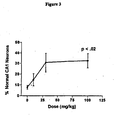
Classifications
-
- C—CHEMISTRY; METALLURGY
- C07—ORGANIC CHEMISTRY
- C07D—HETEROCYCLIC COMPOUNDS
- C07D209/00—Heterocyclic compounds containing five-membered rings, condensed with other rings, with one nitrogen atom as the only ring hetero atom
- C07D209/02—Heterocyclic compounds containing five-membered rings, condensed with other rings, with one nitrogen atom as the only ring hetero atom condensed with one carbocyclic ring
- C07D209/44—Iso-indoles; Hydrogenated iso-indoles
- C07D209/48—Iso-indoles; Hydrogenated iso-indoles with oxygen atoms in positions 1 and 3, e.g. phthalimide
-
- A—HUMAN NECESSITIES
- A61—MEDICAL OR VETERINARY SCIENCE; HYGIENE
- A61P—SPECIFIC THERAPEUTIC ACTIVITY OF CHEMICAL COMPOUNDS OR MEDICINAL PREPARATIONS
- A61P1/00—Drugs for disorders of the alimentary tract or the digestive system
- A61P1/18—Drugs for disorders of the alimentary tract or the digestive system for pancreatic disorders, e.g. pancreatic enzymes
-
- A—HUMAN NECESSITIES
- A61—MEDICAL OR VETERINARY SCIENCE; HYGIENE
- A61P—SPECIFIC THERAPEUTIC ACTIVITY OF CHEMICAL COMPOUNDS OR MEDICINAL PREPARATIONS
- A61P11/00—Drugs for disorders of the respiratory system
- A61P11/06—Antiasthmatics
-
- A—HUMAN NECESSITIES
- A61—MEDICAL OR VETERINARY SCIENCE; HYGIENE
- A61P—SPECIFIC THERAPEUTIC ACTIVITY OF CHEMICAL COMPOUNDS OR MEDICINAL PREPARATIONS
- A61P19/00—Drugs for skeletal disorders
- A61P19/02—Drugs for skeletal disorders for joint disorders, e.g. arthritis, arthrosis
-
- A—HUMAN NECESSITIES
- A61—MEDICAL OR VETERINARY SCIENCE; HYGIENE
- A61P—SPECIFIC THERAPEUTIC ACTIVITY OF CHEMICAL COMPOUNDS OR MEDICINAL PREPARATIONS
- A61P21/00—Drugs for disorders of the muscular or neuromuscular system
- A61P21/04—Drugs for disorders of the muscular or neuromuscular system for myasthenia gravis
-
- A—HUMAN NECESSITIES
- A61—MEDICAL OR VETERINARY SCIENCE; HYGIENE
- A61P—SPECIFIC THERAPEUTIC ACTIVITY OF CHEMICAL COMPOUNDS OR MEDICINAL PREPARATIONS
- A61P25/00—Drugs for disorders of the nervous system
-
- A—HUMAN NECESSITIES
- A61—MEDICAL OR VETERINARY SCIENCE; HYGIENE
- A61P—SPECIFIC THERAPEUTIC ACTIVITY OF CHEMICAL COMPOUNDS OR MEDICINAL PREPARATIONS
- A61P25/00—Drugs for disorders of the nervous system
- A61P25/28—Drugs for disorders of the nervous system for treating neurodegenerative disorders of the central nervous system, e.g. nootropic agents, cognition enhancers, drugs for treating Alzheimer's disease or other forms of dementia
-
- A—HUMAN NECESSITIES
- A61—MEDICAL OR VETERINARY SCIENCE; HYGIENE
- A61P—SPECIFIC THERAPEUTIC ACTIVITY OF CHEMICAL COMPOUNDS OR MEDICINAL PREPARATIONS
- A61P29/00—Non-central analgesic, antipyretic or antiinflammatory agents, e.g. antirheumatic agents; Non-steroidal antiinflammatory drugs [NSAID]
-
- A—HUMAN NECESSITIES
- A61—MEDICAL OR VETERINARY SCIENCE; HYGIENE
- A61P—SPECIFIC THERAPEUTIC ACTIVITY OF CHEMICAL COMPOUNDS OR MEDICINAL PREPARATIONS
- A61P3/00—Drugs for disorders of the metabolism
- A61P3/12—Drugs for disorders of the metabolism for electrolyte homeostasis
- A61P3/14—Drugs for disorders of the metabolism for electrolyte homeostasis for calcium homeostasis
-
- A—HUMAN NECESSITIES
- A61—MEDICAL OR VETERINARY SCIENCE; HYGIENE
- A61P—SPECIFIC THERAPEUTIC ACTIVITY OF CHEMICAL COMPOUNDS OR MEDICINAL PREPARATIONS
- A61P43/00—Drugs for specific purposes, not provided for in groups A61P1/00-A61P41/00
-
- A—HUMAN NECESSITIES
- A61—MEDICAL OR VETERINARY SCIENCE; HYGIENE
- A61P—SPECIFIC THERAPEUTIC ACTIVITY OF CHEMICAL COMPOUNDS OR MEDICINAL PREPARATIONS
- A61P7/00—Drugs for disorders of the blood or the extracellular fluid
- A61P7/02—Antithrombotic agents; Anticoagulants; Platelet aggregation inhibitors
-
- A—HUMAN NECESSITIES
- A61—MEDICAL OR VETERINARY SCIENCE; HYGIENE
- A61P—SPECIFIC THERAPEUTIC ACTIVITY OF CHEMICAL COMPOUNDS OR MEDICINAL PREPARATIONS
- A61P9/00—Drugs for disorders of the cardiovascular system
- A61P9/10—Drugs for disorders of the cardiovascular system for treating ischaemic or atherosclerotic diseases, e.g. antianginal drugs, coronary vasodilators, drugs for myocardial infarction, retinopathy, cerebrovascula insufficiency, renal arteriosclerosis
-
- C—CHEMISTRY; METALLURGY
- C07—ORGANIC CHEMISTRY
- C07C—ACYCLIC OR CARBOCYCLIC COMPOUNDS
- C07C237/00—Carboxylic acid amides, the carbon skeleton of the acid part being further substituted by amino groups
- C07C237/02—Carboxylic acid amides, the carbon skeleton of the acid part being further substituted by amino groups having the carbon atoms of the carboxamide groups bound to acyclic carbon atoms of the carbon skeleton
- C07C237/22—Carboxylic acid amides, the carbon skeleton of the acid part being further substituted by amino groups having the carbon atoms of the carboxamide groups bound to acyclic carbon atoms of the carbon skeleton having nitrogen atoms of amino groups bound to the carbon skeleton of the acid part, further acylated
-
- C—CHEMISTRY; METALLURGY
- C07—ORGANIC CHEMISTRY
- C07C—ACYCLIC OR CARBOCYCLIC COMPOUNDS
- C07C307/00—Amides of sulfuric acids, i.e. compounds having singly-bound oxygen atoms of sulfate groups replaced by nitrogen atoms, not being part of nitro or nitroso groups
- C07C307/04—Diamides of sulfuric acids
- C07C307/06—Diamides of sulfuric acids having nitrogen atoms of the sulfamide groups bound to acyclic carbon atoms
-
- C—CHEMISTRY; METALLURGY
- C07—ORGANIC CHEMISTRY
- C07C—ACYCLIC OR CARBOCYCLIC COMPOUNDS
- C07C311/00—Amides of sulfonic acids, i.e. compounds having singly-bound oxygen atoms of sulfo groups replaced by nitrogen atoms, not being part of nitro or nitroso groups
- C07C311/01—Sulfonamides having sulfur atoms of sulfonamide groups bound to acyclic carbon atoms
- C07C311/02—Sulfonamides having sulfur atoms of sulfonamide groups bound to acyclic carbon atoms of an acyclic saturated carbon skeleton
- C07C311/03—Sulfonamides having sulfur atoms of sulfonamide groups bound to acyclic carbon atoms of an acyclic saturated carbon skeleton having the nitrogen atoms of the sulfonamide groups bound to hydrogen atoms or to acyclic carbon atoms
- C07C311/06—Sulfonamides having sulfur atoms of sulfonamide groups bound to acyclic carbon atoms of an acyclic saturated carbon skeleton having the nitrogen atoms of the sulfonamide groups bound to hydrogen atoms or to acyclic carbon atoms to acyclic carbon atoms of hydrocarbon radicals substituted by carboxyl groups
-
- C—CHEMISTRY; METALLURGY
- C07—ORGANIC CHEMISTRY
- C07C—ACYCLIC OR CARBOCYCLIC COMPOUNDS
- C07C311/00—Amides of sulfonic acids, i.e. compounds having singly-bound oxygen atoms of sulfo groups replaced by nitrogen atoms, not being part of nitro or nitroso groups
- C07C311/15—Sulfonamides having sulfur atoms of sulfonamide groups bound to carbon atoms of six-membered aromatic rings
- C07C311/16—Sulfonamides having sulfur atoms of sulfonamide groups bound to carbon atoms of six-membered aromatic rings having the nitrogen atom of at least one of the sulfonamide groups bound to hydrogen atoms or to an acyclic carbon atom
- C07C311/18—Sulfonamides having sulfur atoms of sulfonamide groups bound to carbon atoms of six-membered aromatic rings having the nitrogen atom of at least one of the sulfonamide groups bound to hydrogen atoms or to an acyclic carbon atom to an acyclic carbon atom of a hydrocarbon radical substituted by nitrogen atoms, not being part of nitro or nitroso groups
-
- C—CHEMISTRY; METALLURGY
- C07—ORGANIC CHEMISTRY
- C07C—ACYCLIC OR CARBOCYCLIC COMPOUNDS
- C07C311/00—Amides of sulfonic acids, i.e. compounds having singly-bound oxygen atoms of sulfo groups replaced by nitrogen atoms, not being part of nitro or nitroso groups
- C07C311/15—Sulfonamides having sulfur atoms of sulfonamide groups bound to carbon atoms of six-membered aromatic rings
- C07C311/16—Sulfonamides having sulfur atoms of sulfonamide groups bound to carbon atoms of six-membered aromatic rings having the nitrogen atom of at least one of the sulfonamide groups bound to hydrogen atoms or to an acyclic carbon atom
- C07C311/19—Sulfonamides having sulfur atoms of sulfonamide groups bound to carbon atoms of six-membered aromatic rings having the nitrogen atom of at least one of the sulfonamide groups bound to hydrogen atoms or to an acyclic carbon atom to an acyclic carbon atom of a hydrocarbon radical substituted by carboxyl groups
-
- C—CHEMISTRY; METALLURGY
- C07—ORGANIC CHEMISTRY
- C07C—ACYCLIC OR CARBOCYCLIC COMPOUNDS
- C07C311/00—Amides of sulfonic acids, i.e. compounds having singly-bound oxygen atoms of sulfo groups replaced by nitrogen atoms, not being part of nitro or nitroso groups
- C07C311/30—Sulfonamides, the carbon skeleton of the acid part being further substituted by singly-bound nitrogen atoms, not being part of nitro or nitroso groups
- C07C311/45—Sulfonamides, the carbon skeleton of the acid part being further substituted by singly-bound nitrogen atoms, not being part of nitro or nitroso groups at least one of the singly-bound nitrogen atoms being part of any of the groups, X being a hetero atom, Y being any atom, e.g. N-acylaminosulfonamides
- C07C311/46—Y being a hydrogen or a carbon atom
-
- C—CHEMISTRY; METALLURGY
- C07—ORGANIC CHEMISTRY
- C07C—ACYCLIC OR CARBOCYCLIC COMPOUNDS
- C07C317/00—Sulfones; Sulfoxides
- C07C317/44—Sulfones; Sulfoxides having sulfone or sulfoxide groups and carboxyl groups bound to the same carbon skeleton
- C07C317/48—Sulfones; Sulfoxides having sulfone or sulfoxide groups and carboxyl groups bound to the same carbon skeleton the carbon skeleton being further substituted by singly-bound nitrogen atoms, not being part of nitro or nitroso groups
-
- C—CHEMISTRY; METALLURGY
- C07—ORGANIC CHEMISTRY
- C07C—ACYCLIC OR CARBOCYCLIC COMPOUNDS
- C07C323/00—Thiols, sulfides, hydropolysulfides or polysulfides substituted by halogen, oxygen or nitrogen atoms, or by sulfur atoms not being part of thio groups
- C07C323/50—Thiols, sulfides, hydropolysulfides or polysulfides substituted by halogen, oxygen or nitrogen atoms, or by sulfur atoms not being part of thio groups containing thio groups and carboxyl groups bound to the same carbon skeleton
- C07C323/51—Thiols, sulfides, hydropolysulfides or polysulfides substituted by halogen, oxygen or nitrogen atoms, or by sulfur atoms not being part of thio groups containing thio groups and carboxyl groups bound to the same carbon skeleton having the sulfur atoms of the thio groups bound to acyclic carbon atoms of the carbon skeleton
- C07C323/60—Thiols, sulfides, hydropolysulfides or polysulfides substituted by halogen, oxygen or nitrogen atoms, or by sulfur atoms not being part of thio groups containing thio groups and carboxyl groups bound to the same carbon skeleton having the sulfur atoms of the thio groups bound to acyclic carbon atoms of the carbon skeleton with the carbon atom of at least one of the carboxyl groups bound to nitrogen atoms
-
- C—CHEMISTRY; METALLURGY
- C07—ORGANIC CHEMISTRY
- C07D—HETEROCYCLIC COMPOUNDS
- C07D207/00—Heterocyclic compounds containing five-membered rings not condensed with other rings, with one nitrogen atom as the only ring hetero atom
- C07D207/02—Heterocyclic compounds containing five-membered rings not condensed with other rings, with one nitrogen atom as the only ring hetero atom with only hydrogen or carbon atoms directly attached to the ring nitrogen atom
- C07D207/04—Heterocyclic compounds containing five-membered rings not condensed with other rings, with one nitrogen atom as the only ring hetero atom with only hydrogen or carbon atoms directly attached to the ring nitrogen atom having no double bonds between ring members or between ring members and non-ring members
- C07D207/10—Heterocyclic compounds containing five-membered rings not condensed with other rings, with one nitrogen atom as the only ring hetero atom with only hydrogen or carbon atoms directly attached to the ring nitrogen atom having no double bonds between ring members or between ring members and non-ring members with hetero atoms or with carbon atoms having three bonds to hetero atoms with at the most one bond to halogen, e.g. ester or nitrile radicals, directly attached to ring carbon atoms
- C07D207/16—Carbon atoms having three bonds to hetero atoms with at the most one bond to halogen, e.g. ester or nitrile radicals
-
- C—CHEMISTRY; METALLURGY
- C07—ORGANIC CHEMISTRY
- C07D—HETEROCYCLIC COMPOUNDS
- C07D209/00—Heterocyclic compounds containing five-membered rings, condensed with other rings, with one nitrogen atom as the only ring hetero atom
- C07D209/02—Heterocyclic compounds containing five-membered rings, condensed with other rings, with one nitrogen atom as the only ring hetero atom condensed with one carbocyclic ring
- C07D209/04—Indoles; Hydrogenated indoles
- C07D209/10—Indoles; Hydrogenated indoles with substituted hydrocarbon radicals attached to carbon atoms of the hetero ring
- C07D209/18—Radicals substituted by carbon atoms having three bonds to hetero atoms with at the most one bond to halogen, e.g. ester or nitrile radicals
- C07D209/20—Radicals substituted by carbon atoms having three bonds to hetero atoms with at the most one bond to halogen, e.g. ester or nitrile radicals substituted additionally by nitrogen atoms, e.g. tryptophane
-
- C—CHEMISTRY; METALLURGY
- C07—ORGANIC CHEMISTRY
- C07D—HETEROCYCLIC COMPOUNDS
- C07D215/00—Heterocyclic compounds containing quinoline or hydrogenated quinoline ring systems
- C07D215/02—Heterocyclic compounds containing quinoline or hydrogenated quinoline ring systems having no bond between the ring nitrogen atom and a non-ring member or having only hydrogen atoms or carbon atoms directly attached to the ring nitrogen atom
- C07D215/16—Heterocyclic compounds containing quinoline or hydrogenated quinoline ring systems having no bond between the ring nitrogen atom and a non-ring member or having only hydrogen atoms or carbon atoms directly attached to the ring nitrogen atom with hetero atoms or with carbon atoms having three bonds to hetero atoms with at the most one bond to halogen, e.g. ester or nitrile radicals, directly attached to ring carbon atoms
- C07D215/36—Sulfur atoms
-
- C—CHEMISTRY; METALLURGY
- C07—ORGANIC CHEMISTRY
- C07D—HETEROCYCLIC COMPOUNDS
- C07D217/00—Heterocyclic compounds containing isoquinoline or hydrogenated isoquinoline ring systems
- C07D217/02—Heterocyclic compounds containing isoquinoline or hydrogenated isoquinoline ring systems with only hydrogen atoms or radicals containing only carbon and hydrogen atoms, directly attached to carbon atoms of the nitrogen-containing ring; Alkylene-bis-isoquinolines
- C07D217/08—Heterocyclic compounds containing isoquinoline or hydrogenated isoquinoline ring systems with only hydrogen atoms or radicals containing only carbon and hydrogen atoms, directly attached to carbon atoms of the nitrogen-containing ring; Alkylene-bis-isoquinolines with a hetero atom directly attached to the ring nitrogen atom
-
- C—CHEMISTRY; METALLURGY
- C07—ORGANIC CHEMISTRY
- C07D—HETEROCYCLIC COMPOUNDS
- C07D231/00—Heterocyclic compounds containing 1,2-diazole or hydrogenated 1,2-diazole rings
- C07D231/02—Heterocyclic compounds containing 1,2-diazole or hydrogenated 1,2-diazole rings not condensed with other rings
- C07D231/10—Heterocyclic compounds containing 1,2-diazole or hydrogenated 1,2-diazole rings not condensed with other rings having two or three double bonds between ring members or between ring members and non-ring members
- C07D231/14—Heterocyclic compounds containing 1,2-diazole or hydrogenated 1,2-diazole rings not condensed with other rings having two or three double bonds between ring members or between ring members and non-ring members with hetero atoms or with carbon atoms having three bonds to hetero atoms with at the most one bond to halogen, e.g. ester or nitrile radicals, directly attached to ring carbon atoms
- C07D231/18—One oxygen or sulfur atom
-
- C—CHEMISTRY; METALLURGY
- C07—ORGANIC CHEMISTRY
- C07D—HETEROCYCLIC COMPOUNDS
- C07D233/00—Heterocyclic compounds containing 1,3-diazole or hydrogenated 1,3-diazole rings, not condensed with other rings
- C07D233/02—Heterocyclic compounds containing 1,3-diazole or hydrogenated 1,3-diazole rings, not condensed with other rings having no double bonds between ring members or between ring members and non-ring members
-
- C—CHEMISTRY; METALLURGY
- C07—ORGANIC CHEMISTRY
- C07D—HETEROCYCLIC COMPOUNDS
- C07D233/00—Heterocyclic compounds containing 1,3-diazole or hydrogenated 1,3-diazole rings, not condensed with other rings
- C07D233/54—Heterocyclic compounds containing 1,3-diazole or hydrogenated 1,3-diazole rings, not condensed with other rings having two double bonds between ring members or between ring members and non-ring members
- C07D233/66—Heterocyclic compounds containing 1,3-diazole or hydrogenated 1,3-diazole rings, not condensed with other rings having two double bonds between ring members or between ring members and non-ring members with hetero atoms or with carbon atoms having three bonds to hetero atoms with at the most one bond to halogen, e.g. ester or nitrile radicals, directly attached to ring carbon atoms
- C07D233/84—Sulfur atoms
-
- C—CHEMISTRY; METALLURGY
- C07—ORGANIC CHEMISTRY
- C07D—HETEROCYCLIC COMPOUNDS
- C07D261/00—Heterocyclic compounds containing 1,2-oxazole or hydrogenated 1,2-oxazole rings
- C07D261/02—Heterocyclic compounds containing 1,2-oxazole or hydrogenated 1,2-oxazole rings not condensed with other rings
- C07D261/06—Heterocyclic compounds containing 1,2-oxazole or hydrogenated 1,2-oxazole rings not condensed with other rings having two or more double bonds between ring members or between ring members and non-ring members
- C07D261/10—Heterocyclic compounds containing 1,2-oxazole or hydrogenated 1,2-oxazole rings not condensed with other rings having two or more double bonds between ring members or between ring members and non-ring members with hetero atoms or with carbon atoms having three bonds to hetero atoms with at the most one bond to halogen, e.g. ester or nitrile radicals, directly attached to ring carbon atoms
-
- C—CHEMISTRY; METALLURGY
- C07—ORGANIC CHEMISTRY
- C07D—HETEROCYCLIC COMPOUNDS
- C07D295/00—Heterocyclic compounds containing polymethylene-imine rings with at least five ring members, 3-azabicyclo [3.2.2] nonane, piperazine, morpholine or thiomorpholine rings, having only hydrogen atoms directly attached to the ring carbon atoms
- C07D295/22—Heterocyclic compounds containing polymethylene-imine rings with at least five ring members, 3-azabicyclo [3.2.2] nonane, piperazine, morpholine or thiomorpholine rings, having only hydrogen atoms directly attached to the ring carbon atoms with hetero atoms directly attached to ring nitrogen atoms
- C07D295/26—Sulfur atoms
-
- C—CHEMISTRY; METALLURGY
- C07—ORGANIC CHEMISTRY
- C07D—HETEROCYCLIC COMPOUNDS
- C07D333/00—Heterocyclic compounds containing five-membered rings having one sulfur atom as the only ring hetero atom
- C07D333/02—Heterocyclic compounds containing five-membered rings having one sulfur atom as the only ring hetero atom not condensed with other rings
- C07D333/04—Heterocyclic compounds containing five-membered rings having one sulfur atom as the only ring hetero atom not condensed with other rings not substituted on the ring sulphur atom
- C07D333/06—Heterocyclic compounds containing five-membered rings having one sulfur atom as the only ring hetero atom not condensed with other rings not substituted on the ring sulphur atom with only hydrogen atoms, hydrocarbon or substituted hydrocarbon radicals, directly attached to the ring carbon atoms
- C07D333/24—Radicals substituted by carbon atoms having three bonds to hetero atoms with at the most one bond to halogen, e.g. ester or nitrile radicals
-
- C—CHEMISTRY; METALLURGY
- C07—ORGANIC CHEMISTRY
- C07D—HETEROCYCLIC COMPOUNDS
- C07D333/00—Heterocyclic compounds containing five-membered rings having one sulfur atom as the only ring hetero atom
- C07D333/02—Heterocyclic compounds containing five-membered rings having one sulfur atom as the only ring hetero atom not condensed with other rings
- C07D333/04—Heterocyclic compounds containing five-membered rings having one sulfur atom as the only ring hetero atom not condensed with other rings not substituted on the ring sulphur atom
- C07D333/26—Heterocyclic compounds containing five-membered rings having one sulfur atom as the only ring hetero atom not condensed with other rings not substituted on the ring sulphur atom with hetero atoms or with carbon atoms having three bonds to hetero atoms with at the most one bond to halogen, e.g. ester or nitrile radicals, directly attached to ring carbon atoms
- C07D333/30—Hetero atoms other than halogen
- C07D333/34—Sulfur atoms
-
- C—CHEMISTRY; METALLURGY
- C07—ORGANIC CHEMISTRY
- C07D—HETEROCYCLIC COMPOUNDS
- C07D409/00—Heterocyclic compounds containing two or more hetero rings, at least one ring having sulfur atoms as the only ring hetero atoms
- C07D409/02—Heterocyclic compounds containing two or more hetero rings, at least one ring having sulfur atoms as the only ring hetero atoms containing two hetero rings
- C07D409/12—Heterocyclic compounds containing two or more hetero rings, at least one ring having sulfur atoms as the only ring hetero atoms containing two hetero rings linked by a chain containing hetero atoms as chain links
Definitions
- P2 (D)-amino acid inhibitors of cysteine or serine proteases methods for making these compounds, and methods for using the same are disclosed.
- cysteine and serine proteases Numerous cysteine and serine proteases have been identified in human tissues.
- a "protease” is an enzyme which degrades proteins into smaller components (peptides).
- the terms "cysteine protease” and “serine protease” refer to proteases which are distinguished by the presence therein of a cysteine or serine residue which plays a critical role in the catalytic process.
- Mammalian systems, including humans normally degrade and process proteins via a variety of enzymes including cysteine and serine proteases. However, when present at elevated levels or when abnormally activated, cysteine and serine proteases may be involved in pathophysiological processes.
- calpain I calcium-activated neutral proteases
- calpain II calcium-activated neutral proteases
- calpain I is the predominant form in many tissues
- calpain I is thought to be the predominant form active in pathological conditions of nerve tissues.
- the calpain family of cysteine proteases has been implicated in many diseases and disorders, including neurodegeneration, stroke, Alzheimer's, amyotrophy, motor neuron damage, acute central nervous system injury, muscular dystrophy, bone resorption, platelet aggregation, cataracts and inflammation.
- Calpain I has been implicated in excitatory amino-acid induced neurotoxicity disorders including ischemia, hypoglycemia, Huntington's Disease, and epilepsy.
- the lysosomal cysteine protease cathepsin B has been implicated in the following disorders: arthritis, inflammation, myocardial infarction, tumor metastasis, and muscular dystrophy.
- Other lysosomal cysteine proteases include cathepsins C, H, L and S.
- Interleukin-1 ⁇ converting enzyme (“ICE") is a cysteine protease which catalyzes the formation of interleukin-1 ⁇ .
- Interleukin-1 ⁇ is an immunoregulatory protein implicated in the following disorders: inflammation, diabetes, septic shock, rheumatoid arthritis, and Alzheimer's disease.
- ICE has also been linked to apoptotic cell death of neurons, which is implicated in a variety of neurodegenerative disorders including Parkinson's disease, ischemia, and amyotrophic lateral sclerosis (ALS).
- ALS amyotrophic lateral sclerosis
- Cysteine proteases are also produced by various pathogens.
- the cysteine protease clostripain is produced by Clostridium histolyticum.
- Other proteases are produced by Trypanosoma cruzi, malaria parasites Plasmodium falciparum and P.vinckei and Streptococcus.
- Hepatitis A viral protease HAV C3 is a cysteine protease essential for processing of picornavirus structural proteins and enzymes.
- Exemplary serine proteases implicated in degenerative disorders include thrombin, human leukocyte elastase, pancreatic elastase, chymase and cathepsin G.
- thrombin is produced in the blood coagulation cascade, cleaves fibrinogen to form fibrin and activates Factor VIII; thrombin is implicated in thrombophlebitis, thrombosis and asthma.
- Human leukocyte elastase is implicated in tissue degenerative disorders such as rheumatoid arthritis, osteoarthritis, atherosclerosis, bronchitis, cystic fibrosis, and emphysema.
- Pancreatic elastase is implicated in pancreatitis.
- Chymase an enzyme important in angiotensin synthesis, is implicated in hypertension, myocardial infarction, and coronary heart disease.
- Cathepsin G is implicated in abnormal connective tissue degradation, particularly in the lung.
- the present invention is directed to novel cysteine and serine protease inhibitors which contain a (D)-amino acid at the P2 position.
- Exemplary compounds are represented by the following Formula I: wherein:
- G is alkyl, benzyl, tetrahydroisoquinolyl, 3-indolyl, phenyl, N-methylbenzylamino, substituted benzyl, 2-thienyl or p-benzyloxyphenyl.
- R 1 is selected from the group consisting of benzyl, substituted benzyl, a lysyl side chain, or a substituted lysyl side chain.
- R 1 and Y together form -(CH 2 ) 4 -N(Pr)- where Pr is H or t-butoxycarbonyl.
- Y is selected from the group consisting of H and CH 2 F;
- R 1 is selected from the group consisting of benzyl, substituted benzyl, a lysyl side chain, and a substituted lysyl side chain;
- R 6 is selected from the group consisting of substituted or unsubstituted alkyl, substituted or unsubstituted aryl, and substituted and unsubstituted heteroaryl.
- the compounds of the invention are useful for the inhibition of cysteine and serine proteases.
- the compounds find utility in a variety of settings
- the claimed compounds can be used, for example, as standards to screen for natural and synthetic cysteine protease and serine protease inhibitors which have the same or similar functional characteristics as the disclosed compounds.
- the subject compounds can be used to alleviate, mediate, reduce and/or prevent disorders which are associated with abnormal and/or aberrant activity of cysteine proteases and/or serine proteases.
- compositions containing the subject compounds, and uses of the subject compounds, as inhibitors serine proteases or cysteine proteases are disclosed. Methodologies for making the present (D)-amino acid containing inhibitors are also disclosed
- the compounds and compositions of the present invention can be used as medicaments. More specifically, the medicaments can be used to inhibit proteases selected from cysteine and serine proteases. It is particularly preferred for the use and medicaments to possess an enantiomerically enriched amount of the compounds of the present invention. Preferably, the enantiomerically enriched amount is greater than about 75%, about 90% or about 100%
- Y is H or CH 2 F;
- B is CO, O, S, SO 2 or a bond;
- q is 1;
- G is tetrahydroisoquinolinyl, benzyl, 3-indolyl, phenyl, N-methylbenzylamino, or p-benzyloxyphenyl; and
- P2 as used herein in connection with enzyme substrate nomenclature has the meaning described by Schechter et al., Biochem. Biophys. Res. Comm. 27: 157-162, 1967 , the disclosure of which is hereby incorporated by reference in its entirety.
- alkyl includes straight-chain, branched and cyclic hydrocarbon groups such as, for example, ethyl, isopropyl and cyclopropyl groups. Preferred alkyl groups have 1 to about 10 carbon atoms. "Cycloalkyl” groups are cyclic alkyl groups.
- alkylene denotes divalent alkyl groups; i.e., methylene (-CH 2 -), ethylene (-CH 2 CH 2 -), propylene (-CH 2 CH 2 CH 2 -), etc.
- Aryl groups are aromatic cyclic compounds including but not limited to phenyl, tolyl, naphthyl, anthracyl, phenanthryl, pyrenyl, and xylyl. Preferred aryl groups include phenyl and naphthyl.
- carbocyclic refers to cyclic groups in which the ring portion is composed solely of carbon atoms.
- heterocyclic refers to cyclic groups in which the ring portion includes at least one heteroatom such as O, N or S. In general, the term “hetero" when used as a prefix denoted the presence of one or more hetero atoms.
- heterocycloalkyl groups are heterocycles containing solely single bonds within their ring portions, i.e. saturated heteroatomic ring systems.
- lower alkyl refers to alkyl groups of 1-4 carbon atoms.
- halogen refers to F, Cl, Br, and I atoms.
- aralkyl denotes alkyl groups which bear aryl groups, for example, benzyl groups.
- alkoxy groups are alkyl groups linked through an oxygen atom. Examples of alkoxy groups include methoxy (-OCH 3 ) and ethoxy (-OCH 2 CH 3 ) groups.
- oxy when used as a suffix denotes attachment through an oxygen atom.
- aralkyloxy denotes an aralkyl group linked through an oxygen atom.
- heteroaryl denotes aryl groups having one or more heteroatoms contained within an aromatic ring.
- heteroarylaklyl denotes a heteroaryl group attached through an alkyl group.
- Heteroaralkyl groups are aralkyl groups which have one or more heteroatoms in their aromatic ring portion.
- carbohydrate includes monosaccharides, disaccharides, and polysaccharides, as well as their protected derivatives, such as, for example, mono- and diisopropylidine, and benzylidene derivatives.
- aroyl analogously denotes an aryl group attached through a carbonyl group.
- sulfonyl when used as a suffix denotes attachment through a -SO 2 - group.
- group I counterion denotes Li + , Na + , K + , Rb + and Cs + .
- amino acid denotes a molecule containing both an amino group and a carboxyl group.
- L-amino acid denotes an ⁇ -amino acid having the L configuration around the ⁇ -carbon, that is, a carboxylic acid of general formula CH(COOH)(NH 2 )-(side chain), having the L-configuration.
- D-amino acid similarly denotes a carboxylic acid of general formula CH(COOH)(NH 2 )-(side chain), having the D-configuration around the ⁇ -carbon.
- Amino acid ⁇ -carbon atoms having the D-configuration are denoted herein by the symbol "C*".
- Non-naturally occurring (i.e., unnatural) amino acid side chains are moieties that are used in place of naturally occurring amino acid side chains in, for example, amino acid analogs. See, for example, Lehninger, Biochemistry, Second Edition, Worth Publishers, Inc, 1975, pages 73-75 .
- One representative amino acid side chain is the lysyl side chain, -(CH 2 ) 4 -NH 2 .
- Other representative ⁇ -amino acid side chains are shown below in Table 1.
- Functional groups present on the compounds of Formula I may contain protecting groups.
- the amino acid sidechain substituents of the compounds of Formula I can be substituted with protecting groups such as benzyloxycarbonyl or t-butoxycarbonyl groups.
- protecting groups are known per se as chemical functional groups that can be selectively appended to and removed from functionalities, such as hydroxyl groups and carboxyl groups. These groups are present in a chemical compound to render such functionality inert to chemical reaction conditions to which the compound is exposed. Any of a variety of protecting groups may be employed with the present invention.
- One such protecting group is the benzyloxycarbonyl (Cbz; z) group.
- Other preferred protecting groups according to the invention may be found in Greene, T.W. and Wuts, P.G.M., "Protective Groups in Organic Synthesis” 2d. Ed., Wiley & Sons, 1991 .
- D-amino acid-containing compounds of the invention inhibit cysteine proteases and serine proteases, they can be used in both research and therapeutic settings.
- preferred compounds having defined attributes can be used to screen for natural and synthetic compounds which evidence similar characteristics in inhibiting protease activity.
- the compounds can also be used in the refinement of in vitro and in vivo models for determining the effects of inhibition of particular proteases on particular cell types or biological conditions.
- compounds of the invention can be utilized to alleviate, mediate, reduce and/or prevent disorders which are associated with abnormal and/or aberrant activity of cysteine proteases and/or serine proteases.
- compositions are provided for inhibiting a serine protease or a cysteine protease comprising a compound of the invention.
- uses for inhibiting serine proteases or cysteine proteases are provided.
- the disclosed compounds of the invention are useful for the inhibition of cysteine proteases and serine proteases.
- the terms “inhibit” and “inhibition” mean having an adverse effect on enzymatic activity.
- An inhibitory amount is an amount of a compound of the invention effective to inhibit a cysteine and/or serine protease.
- compositions as disclosed herein.
- pharmaceutically acceptable salts as used herein means an inorganic acid addition salt such as hydrochloride, sulfate, and phosphate, or an organic acid addition salt such as acetate, maleate, fumarate, tartrate, and citrate.
- pharmaceutically acceptable metal salts are alkali metal salts such as sodium salt and potassium salt, alkaline earth metal salts such as magnesium salt and calcium salt, aluminum salt, and zinc salt.
- pharmaceutically acceptable organic amine addition salts are salts with morpholine and piperidine.
- pharmaceutically acceptable amino acid addition salts are salts with lysine, glycine, and phenylalanine.
- compositions can be formulated into pharmaceutical compositions by admixture with pharmaceutically acceptable nontoxic excipients and carriers.
- compositions may be prepared for use in parenteral administration, particularly in the form of liquid solutions or suspensions; or oral administration, particularly in the form of tablets or capsules; or intranasally, particularly in the form of powders, nasal drops, or aerosols; or dermally, via, for example, transdermal patches; or prepared in other suitable fashions for these and other forms of administration as will be apparent to those skilled in the art.
- compositions may conveniently be administered in unit dosage form and may be prepared by any of the methods well known in the pharmaceutical art, for example, as described in Remington's Pharmaceutical Sciences (Mack Pub. Co., Easton, PA, 1980 ).
- Formulations for parenteral administration may contain as common excipients sterile water or saline, polyalkylene glycols such as polyethylene glycol, oils and vegetable origin, hydrogenated naphthalenes and the like.
- biocompatible, biodegradable lactide polymer, lactide/glycolide copolymer, or polyoxyethylene-polyoxypropylene copolymers may be useful excipients to control the release of the active compounds.
- parenteral delivery systems for these active compounds include ethylene-vinyl acetate copolymer particles, osmotic pumps, implantable infusion systems, and liposomes.
- Formulations for inhalation administration contain as excipients, for example, lactose, or may be aqueous solutions containing, for example, polyoxyethylene-9-lauryl ether, glycocholate and deoxycholate, or oily solutions for administration in the form of nasal drops, or as a gel to be applied intranasally.
- Formulations for parenteral administration may also include glycocholate for buccal administration, a salicylate for rectal administration, or citric acid for vaginal administration.
- Formulations for transdermal patches are preferably lipophilic emulsions.
- the materials for this invention can be employed as the sole active agent in a pharmaceutical or can be used in combination with other active ingredients which could facilitate inhibition of cysteine and serine proteases in diseases or disorders.
- the phrase "enantiomerically enriched amount" when used in connection with a compound of Formula I in compositions of the invention denotes the predominance (i.e., greater than 50%) of the compound of Formula I wherein the carbon atom designated by C* in Formula I has the D-configuration over the corresponding L-isomer at this position.
- the enantiomerically enriched amount of the compound of Formula I is an amount greater than about 75% (i.e., the D-isomer compound of Formula I constitutes greater than about 75% of the combined amount of compound of Formula I and the corresponding L-isomer).
- the enantiomerically enriched amount of the compound of Formula I is an amount greater than about 85%, more preferably greater than about 90%, still more preferably greater than about 95%, and most preferably about 100%.
- concentrations of the compounds described herein in a therapeutic composition will vary depending upon a number of factors, including the dosage of the drug to be administered, the chemical characteristics (e.g., hydrophobicity) of the compounds employed, and the route of administration.
- the compounds of this invention may be provided in effective inhibitory amounts in an aqueous physiological buffer solution containing about 0.1 to 10% w/v compound for parenteral administration. Typical dose ranges are from about 1 ⁇ g/kg to about 1 g/kg of body weight per day; a preferred dose range is from about 0.01 mg/kg to 100 mg/kg of body weight per day.
- Such formulations typically provide inhibitory amounts of the compound of the invention.
- the preferred dosage of drug to be administered is likely, however, to depend on such variables as the type or extent of progression of the disease or disorder, the overall health status of the particular patient, the relative biological efficacy of the compound selected, and formulation of the compound excipient, and its route of administration.
- the term "contacting" means directly or indirectly causing at least two moieties to come into physical association with each other. Contacting thus includes physical acts such as placing a compound of the invention together with a protease in a container, or administering a compound of the invention to a patient. Thus, for example, administering a compound of the invention to a human patient evidencing a disease or disorder associated with abnormal and/or aberrant activity of such proteases falls within the scope of the definition of the term "contacting".
- Examples 1-5 show the synthesis of intermediate compounds 3-7.
- Examples 6 and 7 show the preparation of compounds 8 and 9 of the invention.
- Examples 8-11 show the synthesis of intermediate compounds 10-13.
- Example 12 shows the preparation of compound 14 of the invention.
- Examples 13 and 14 show the synthesis of intermediate compounds 16 and 17a-b.
- Example 15 shows the preparation of intermediate compounds 18a-b.
- Example 16 shows the synthesis of intermediate compound 19.
- Example 17 shows the preparation of compound 20 of the invention.
- Examples 18-20 show the synthesis of intermediate compounds 22-24.
- Example 21 shows the preparation of compound 25 of the invention.
- Examples 22-27 show the synthesis of intermediate compounds 27-32.
- Examples 28 and 29 show the preparation of compounds 33 and 34 of the invention.
- Examples 30-33 show the synthesis of intermediate compounds 36-39.
- Example 34 shows the preparation of compound 40 of the invention.
- Scheme 8 shows the synthesis of Compound 59 .
- Scheme 9 shows the synthesis of Compound 70 .
- Compound 67 was quantitatively hydrolyzed (LiOH, THF-H 2 O, room temperature, 3h) to Compound 68 which in turn was converted to Compound 70 via Compound 69 using the procedures described in Scheme 7 for the preparation of Compound 40.
- 70 White solid, mp 65-70 °C (softening to melt); R f (90% CH 2 Cl 2 -9%. CH 3 OH-1% conc.
- This compound was synthesized by coupling Cbz-(D)-Leu and (S)-phenylalaninol, followed by oxidation (Scheme 9).
- This compound was synthesized by coupling Compound 40 and hydroxylamine hydrochloride, in the presence of pyridine and ethanol (without sodium acetate and water), following the general synthetic protocol for the synthesis of Compound 115 .
- 118 White foam; R f (90% CH 2 Cl 2 -9% CH 3 OH-1% conc.
- This compound was synthesized by coupling Compound 40 and methoxylamine hydrochloride, in the presence of pyridine and ethanol (without sodium acetate and water), following the general synthetic protocol for the synthesis of Compound 115 . 119: White gum; R f (90% CH 2 Cl 2 -9% CH 3 OH-1% conc.
- This compound was synthesized by coupling (EDCI, HOBt, DMF) methanesulfonyl-(D)-Ser(Bzl) and 4-(S)-amino-3-(R,S)-hydroxy-1,5-biphenylpentane (prepared by coupling Boc-Phe-H and benzylmagnesium chloride, followed by deprotection of the Boc group).
- This compound was synthesized by coupling (EDCI, HOBt, DMF) methanesulfonyl-(D)-Ser(Bzl) and (L)- ⁇ -amino- ⁇ -caprolactam.
- 126 White solid; mp 45-50 °C (softening to melt); R f (90% CH 2 Cl 2 -9% CH 3 OH-1% conc.
- This compound was synthesized by treatment of Compound 126 prepared in Example 108 with Boc 2 O in the presence of Et 3 N and 4-dimethylaminopyridine, following the procedure of Grieco et al. J. Org. Chem. 1983, 48, 2426 . 127: White solid; mp 55-60 °C (softening to melt); R f (90% CH 2 Cl 2 -9% CH 3 OH-1% conc.
- the precursor alcohol for this aldehyde was isolated as a minor product from the cyanation step Example 111. Subsequent Dess-Martin oxidation of the alcohol generated the target aldehyde, Compound 130 . 130: White solid; mp 55-65 °C (softening to melt); R f (90% CH 2 Cl 2 -9% CH 3 OH-1% conc.
- This compound was synthesized by coupling Compound 40 with 2-mercaptoethanol in the presence of ZnCl 2 and Na 2 SO 4 in THF-Et 2 O. 131: White gum; R f (90% CH 2 Cl 2 -9% CH 3 OH-1% conc.
- This compound was synthesized by coupling Compound 40 with 1,2-dianilinoethane.
- 132 White solid; mp 138-140 °C; 1 H-NMR (300 MHz, CDCl 3 ) ⁇ 7.40-7.10 and 6.90-6.70 (2 sets of m, 21H), 5.75 (d, 1H), 4.75 (d, 2H), 4.30 (s, 2H), 3.90 (q, 1H), 3.75 (m, 3H), 3.45 (m, 2H), 3.35 (dd, 1H), 3.05 (dd, 1H), 2.70 (s, 3H), 2.50 (t, 1H).
- assay buffer i.e., 50mM Tris, 50mM NaCl, 1mM EDTA, 1mM EGTA, and 5mM-mercaptoethanol, pH 7.5 including 0.2mM Succ-Leu-Tyr-MNA
- assay buffer i.e., 50mM Tris, 50mM NaCl, 1mM EDTA, 1mM EGTA, and 5mM-mercaptoethanol, pH 7.5 including 0.2mM Succ-Leu-Tyr-MNA
- 20 ⁇ L of 50 mM CaCl 2 in assay buffer was added to all wells of the plate, excepting three, which were used as background signal baseline controls.
- Substrate hydrolysis was monitored every 5 minutes for a total of 30 minutes.
- Substrate hydrolysis in the absence of inhibitor was linear for up to 15 minutes.
- Inhibition of calpain I activity was calculated as the percent decrease in the rate of substrate hydrolysis in the presence of inhibitor (V I ) relative to the rate in its absence (V o ). Comparison between V o and V I was made within the linear range for substrate hydrolysis. For screening, compounds were tested at 10, 1.0, and 0.1 ⁇ M. Compounds having 50% inhibition at 10 ⁇ M were considered active. The IC50s of inhibitors (concentration yielding 50% inhibition) were determined from the percent decrease in the rates of substrate hydrolysis in the presence of five to seven different concentrations of the test compound. The results were plotted as % inhibition versus log inhibitor concentration and the IC50 was calculated from linear regression of the data.
- assays were performed substantially the same as outlined above except that the cathepsin B and cathepsin L were diluted into a different assay buffer consisting of 50mM sodium acetate (pH 6.0)/1mM EDTA/1mM dithiothreitol and the substrate used was Cbz-Phe-Arg-AMC (Bachem catalog # 1-1160; 0.1mM for cathepsin B; 0.006mM for cathepsin L).
- Example 118 To demonstrate activity against the serine protease ⁇ -chymotrypsin (Sigma Chem. Co. catalog # C-3142) the protocol of Example 118 was followed except that the enzyme was diluted into assay buffer consisting of 50mM Hepes (pH 7.5)/0.5M NaCl and the final substrate concentration used was 0.03mM Succ-Ala-Ala-Pro-Phe-AMC (Bachem catalog #I-1465).
- ⁇ -chymotrypsin is not a calcium sensitive enzyme and is constitutively active
- 100 ⁇ l of a 2-fold concentrated stock of enzyme in dilution buffer was first added and the reaction started by addition of 100 ⁇ l of a 2-fold concentrated stock of substrate in assay buffer.
- Gerbils were anesthetized using 4% isolflurane volatilized using a gas mixture consisting of 30% O 2 and 70% N 2 .
- a preferred compound of the invention compound 40 (Example 34) was administered either immediately before the induction of ischemia or three hours after the initiation of reperfusion.
- the common carotid arteries were exposed and occluded bilaterally for 7 minutes.
- Gerbil core temperature was carefully regulated at 38°C by a thermostatically controlled heat lamp.
- Reperfusion was initiated by the release of the arterial occlusion, whereupon anesthesia was terminated so that the gerbils began to breath room air.
- the gerbils were returned to their home cages after one hour reperfusion in the incubator and then sacrificed, as described above, four days later.
- the brains were rapidly removed, frozen on dry ice, and then sectioned using a cryostat. Twenty micron sections were stained with thionin, and surviving neurons in the hippocampal CA1 sector were counted using computer assisted image analysis.
- Compound 40 was formulated for use as an emulsion.
- the emulsion was prepared by mixing 1,2-dimyristoyl-sn-glycero-3-phosphocholine (Sygena, Inc., Cambribge, Mass.), cholesterol (Genzyme Corp., Cambribge, Mass.), and Compound 40 in a ratio of 4:2:1 parts by weight. Chloroform (1 ml) and ethanol (0.5 ml) were added, and the contents were mixed until all solutes were dissolved in the organic phase. Volatile solvents were then evaporated with a stream of nitrogen.
- Phosphate buffered saline 50°C was added to the residual mixture in an amount to give a concentration of compound 40 of 6 mg/ml.
- the components of the residue were mixed using a Pasteur pipet to give a coarse emulsion, and a fine emulsion was obtained using a high pressure emulsifier.
- Figure 2 shows with statistical significance (p ⁇ .01) that Compound 40 was neuroprotective at four days after the ischemic insult, a time when most of the hippocampal CA1 neurons had degenerated in vehicle-treated gerbils. Intact hippocampal CA1 neurons were counted and expressed as a percent of the number of intact neurons found at that level of the dorsal hippocampus in control gerbils.
- Figure 3 shows with statistical significance (p ⁇ .02) the neuroprotective effect of Compound 40 when administered 3 hours after ischemia.
- compound 40 reduced spectrin breakdown by approximately 50%.
- Compound 40 also more than doubled the number of surviving hippocampal CA1 neurons relative to controls, as shown in Figure 2.
Landscapes
- Chemical & Material Sciences (AREA)
- Organic Chemistry (AREA)
- Health & Medical Sciences (AREA)
- Engineering & Computer Science (AREA)
- Bioinformatics & Cheminformatics (AREA)
- Medicinal Chemistry (AREA)
- Chemical Kinetics & Catalysis (AREA)
- General Chemical & Material Sciences (AREA)
- Veterinary Medicine (AREA)
- Nuclear Medicine, Radiotherapy & Molecular Imaging (AREA)
- Pharmacology & Pharmacy (AREA)
- Life Sciences & Earth Sciences (AREA)
- Animal Behavior & Ethology (AREA)
- General Health & Medical Sciences (AREA)
- Public Health (AREA)
- Neurology (AREA)
- Rheumatology (AREA)
- Biomedical Technology (AREA)
- Neurosurgery (AREA)
- Physical Education & Sports Medicine (AREA)
- Orthopedic Medicine & Surgery (AREA)
- Pulmonology (AREA)
- Hematology (AREA)
- Diabetes (AREA)
- Immunology (AREA)
- Endocrinology (AREA)
- Hospice & Palliative Care (AREA)
- Psychiatry (AREA)
- Pain & Pain Management (AREA)
- Heart & Thoracic Surgery (AREA)
- Urology & Nephrology (AREA)
- Cardiology (AREA)
- Vascular Medicine (AREA)
- Obesity (AREA)
- Pharmaceuticals Containing Other Organic And Inorganic Compounds (AREA)
- Medicines That Contain Protein Lipid Enzymes And Other Medicines (AREA)
- Enzymes And Modification Thereof (AREA)
- Peptides Or Proteins (AREA)
- Heterocyclic Compounds Containing Sulfur Atoms (AREA)
- Quinoline Compounds (AREA)
Claims (43)
- Eine Verbindung der Formel I:
 C* ein Kohlenstoffatom mit einer D-Konfiguration bezeichnet;Q die Formel G-B-(CHR20)q- aufweist, wobei es sich bei R20 unabhängig um H oder Alkyl mit 1 bis 4 Kohlenstoffen handelt;es sich bei q um 0, 1 oder 2 handelt;B ausgewählt ist aus der Gruppe bestehend aus C(=O), S(=O), S(=O)2, S, CH2, einer Bindung, NH und O;G ausgewählt ist aus der Gruppe bestehend aus Aryl mit 6 bis 14 Kohlenstoffen, Heteroaryl mit 5 bis 14 Ringatomen, Aralkyl mit 7 bis 15 Kohlenstoffen, Alkyl mit 1 bis 10 Kohlenstoffen, Heteroalkyl mit 2 bis 7 Kohlenstoffen, Alkoxy mit 1 bis 10 Kohlenstoffen, Arylsulfonyl, Alkylsulfonyl, Aralkyloxy mit 7 bis 15 Kohlenstoffen, Amino und einer Kohlenhydratgruppe, die optional eine oder mehr als eine alkylierte Hydroxylgruppe enthält (wobei "Kohlenhydratgruppe" ein optional geschütztes Monosaccharid, Disaccharid oder Polysaccharid bedeutet), wobei diese Aryl-, Heteroyaryl-, Aralkyl-, Alkyl- und Aminogruppen optional mit einer oder mehr als einer K-Gruppe substituiert sind;K ausgewählt ist aus der Gruppe bestehend aus Halogen, CN, NO2, Alkyl mit 1 bis 4 Kohlenstoffen, Aryl, Heteroaryl, Aralkyl, Aralkyloxy, Guanidin, Alkoxycarbonyl, Alkoxy, Hydroxy, Carboxy und Amino, wobei diese Aminogruppe optional mit einer Acylgruppe oder mit 1 bis 3 Arylgruppe/n oder mit 1 bis 3 Alkylgruppe/n mit 1 bis 4 Kohlenstoffen substituiert ist;R1 ausgewählt ist aus der Gruppe bestehend aus H, Alkyl mit ein bis 14 Kohlenstoffen, Cycloalkyl mit 3 bis 10 Kohlenstoffen, Aralkyl mit 7 bis 15 Kohlenstoffen, Heteroarylalkyl, wobei der Heteroarylring 5 bis 14 Ringatome, eine natürliche Seitenkette einer D- oder L-Aminosäure und eine nicht natürliche Seitenkette einer D- oder L-Aminosäure enthält, wobei der Begriff "nicht natürliche Aminosäureseitenkette" HO-C6H4-CH2-, HO2C-CH(NH2)-CH2-S-S-CH2-, CH3-CH2-, CH3-CH2-S-CH2-CH2-, HO-CH2-CH2-, HO2C-CH2-NHC(=O)-CH2, CH3-CH2-CH2-, H2N-CH2-CH2-CH2, H2N-C(=O)-NH-CH2-CH2-CH2, CH3-CH2-CH2-CH2-,
 R2 ausgewählt ist aus der Gruppe bestehend aus C(=O)R6, S(=O)2R6 und einer Schutzgruppe;R6 ausgewählt ist aus der Gruppe bestehend aus Aryl mit 6 bis 14 Kohlenstoffen, Heteroaryl mit 5 bis 14 Ringatomen, Aralkyl mit 7 bis 15 Kohlenstoffen, Alkyl mit 1 bis 10 Kohlenstoffen, wobei diese Aryl-, Heteroaryl-, Aralkyl- und Alkylgruppen optional mit einer oder mehr als einer K Gruppe substituiert sind, Heteroalkyl mit 2 bis 7 Kohlenstoffen, Alkoxy mit 1 bis 10 Kohlenstoffen und Amino, die optional mit 1 oder mehr als einer Alkylgruppe substituiert ist;R3 ausgewählt ist aus der Gruppe bestehend aus H, Alkyl mit 1 bis 4 Kohlenstoffen, Aralkyl und einer Gruppe der Formel -CO2-R21, worin es sich bei R21 um eine Alkylgruppe mit 1 bis 4 Kohlenstoffen handelt;oder R3 zusammen mit R2 genommen werden können, um eine Phthalimid-Gruppe zu bilden;oder Q und R3 zusammen mit -C* und -N(R2)- eine Gruppe der folgenden Formel bilden können:
 oder R7 die folgende Formal aufweist:
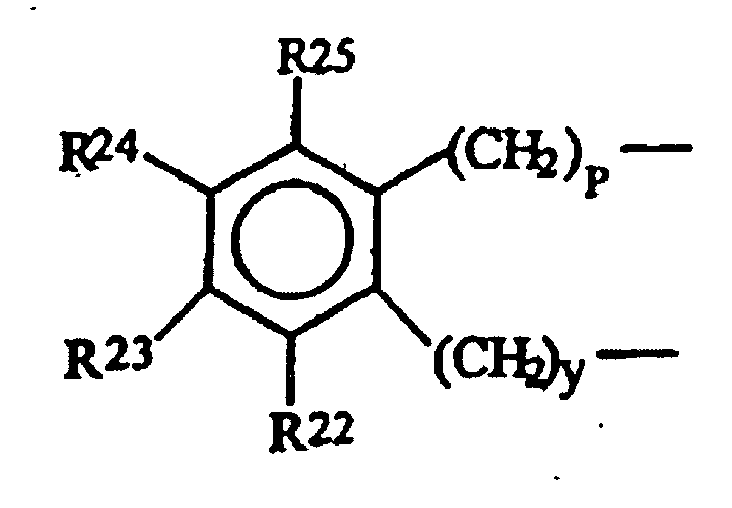 R4 und R5 jeweils unabhängig ausgewählt sind aus der Gruppe bestehend aus H und Alkyl mit 1 bis 4 Kohlenstoffen;W1 und W2 so ausgewählt sind, dass es sich bei W1 um H handelt und es sich bei W2 um OC(=O)NH-R26 handelt, wobei es sich bei R26 um Alkyl handelt, oder es sich sowohl bei W1 als auch bei W2 um Alkoxy handelt, oder es sich bei W1 um OH handelt und W2 ausgewählt ist aus der Gruppe bestehend aus Aralkyl, Aralkyloxy, Aryloxy, Heteroaryloxy, Heteroalkyloxy und SO3Z1, wobei es sich bei Z1 um ein Gegenion aus der Gruppe I oder Gruppe II handelt; oderW1 und W2 zusammen eine Gruppe ausgewählt aus der Gruppe bestehend aus =O, =NR8, =N(→O)R9, -S(CH2)2O- und -N(R12)(CH2)2N(R12)- bilden können;R8 ausgewählt ist aus der Gruppe bestehend aus NH(C=O)NH2, Hydroxyl und Alkoxy mit niedrigerem Molekulargewicht;R9 ausgewählt ist aus der Gruppe bestehend aus Alkyl und Aralkyl;R12 ausgewählt ist aus der Gruppe bestehend aus Alkyl mit 1 bis 4 Kohlenstoffen und Phenyl;Y ausgewählt ist aus der Gruppe bestehend aus H, C(=O)NR10R11, C(=O)OR10, CH=N2 und CH2R13; oderY und R1 zusammen -(CH2)4N(Pr)- bilden können, wobei es sich bei Pr um H oder eine Schutzgruppe handelt, vorausgesetzt, dass, wenn Y und R1 zusammen genommen werden, um -(CH2)4N(Pr)- zu bilden, W1 und W2 zusammen genommen werden, um =O zu bilden;R10 und R11 jeweils unabhängig ausgewählt sind aus der Gruppe bestehend aus H, Alkyl mit 1 bis 10 Kohlenstoffen, wobei diese Alkylgruppen optional mit einer oder mehr als einer K Gruppe substituiert sind, Aryl mit 6 bis 14 Kohlenstoffen und Aralkyl mit 7 bis 15 Kohlenstoffen;R13 ausgewählt ist aus der Gruppe bestehend aus L, Alkyl mit 1 bis 4 Kohlenstoffen, Aralkyl, Halogen und einer O-M Gruppe, wobei M die folgende Struktur aufweist:
 Z ausgewählt ist aus der Gruppe bestehend aus N und CR14;W ausgewählt ist aus der Gruppe bestehend aus einer Doppelbindung und einer Einfachbindung;D ausgewählt ist aus der Gruppe bestehend aus C=O und einer Einfachbindung;E und F unabhängig ausgewählt sind aus der Gruppe bestehend aus R14, R15 und J;oder E und F zusammen eine verbundene Gruppe umfassen, wobei diese verbundene Gruppe ausgewählt ist aus der Gruppe bestehend aus einem aliphatischen carbocyclischen Ring mit 5 bis 7 Kohlenstoffen, einem aromatischen carbocyclischen Ring mit 5 bis 7 Kohlenstoffen, einem aliphatischen heterocyclischen Ring mit 5 bis 7 Atomen und 1 bis 4 Heteroatome enthaltend und einem aromatischen heterocyclischen Ring mit 5 bis 7 Atomen und 1 bis 4 Heteroatome enthaltend, wobei dieser aliphatische carbocyclische Ring, dieser aromatische carbocyclische Ring, dieser aliphatische heterocyclische Ring und dieser aromatische heterocyclische Ring jeweils optional mit J substituiert sind:R14 und R15 unabhängig ausgewählt sind aus der Gruppe bestehend aus H, Alkyl mit 1 bis 10 Kohlenstoffen, Heteroaryl mit 1 bis 10 Kohlenstoffen, Alkanoyl mit 1 bis 10 Kohlenstoffen und Aroyl, wobei diese Alkyl-, Heteroaryl-, Alkanoyl- und Aroylgruppen optional mit J substituiert sind;J ausgewählt ist aus der Gruppe bestehend aus Halogen, C(=O)OR16, R16OC(=O), R16OC(=O)NH, OH, CN, NO2, NR16R17, N=C(R16)R17, N=C(NR16R17)2, SR16, OR16, Phenyl, Naphthyl, Heteroaryl und einer Cycloalkylgruppe mit 3 bis 8 Kohlenstoffen;es sich bei R16 und R17 unabhängig um H, Alkyl mit 1 bis 10 Kohlenstoffen, Aryl oder Heteroaryl handelt, wobei diese Alkyl-, Aryl- und Heteroarylgruppen optional mit K substituiert sind; undes sich bei L um eine reaktive Enzym-Gruppe, die Phosphor enthält, handelt.
- Die Verbindung aus Anspruch 1, wobei:R1 ausgewählt ist aus der Gruppe bestehend aus Benzyl, p-Benzyloxybenzyl, -(CH2)4-NHC(=O)-O-CH2-C6H5, -(CH2)4-NHC(=O)-O-t-C4H9 und -(CH2)4-NHSO2-C6H5;es sich bei R3, R4 und R5 jeweils um H handelt;W1 und W2 zusammen -C(=O)- bilden;es sich bei Y um H oder CH2F handelt;es sich bei B um CO, O, S, SO2 oder eine Bindung handelt;es sich bei R2 um -C(=O)CH3 oder -S(=O)2R6 handelt, wobei es sich bei R6 um Methyl, p-Fluorphenyl, Dimethylamino, Ethyl, 2-Thienyl, 2-lsoxazolyl, Phenyl, p-Methylphenyl, 4-N-Methylimidazolyl oder 2-Naphthyl handelt;es sich bei G um Tetrahydroisochinolinyl, Benzyl, 3-Indolyl, Phenyl, N-Methylbenzylamino, p-Benzyloxyphenyl oder 2-Thienyl handelt;oder Q und R3 zusammen -(CH2)3- bilden.
- Die Verbindung aus Anspruch 1, wobei es sich bei q um 0, bei B um eine Bindung, bei G um Benzyl oder 2-Thienyl, bei Y um H, bei R1 um Benzyl und bei R2 um S(=O)2R6 handelt, wobei es sich bei R6 um Methyl, Phenyl oder 2-Thienyl handelt.
- Die Verbindung aus Anspruch 1, wobei es sich bei q um 1, bei G um Tetrahydroisochinolinyl, Benzyl, 3-Indolyl, Phenyl, N-Methylbenzylamino, p-Benzyloxyphenyl und bei R2 um -C(=O)CH3 oder -S(=O)2R6 handelt, wobei es sich bei R6 um Methyl, p-Fluorphenyl, Dimethylamino, Ethyl, 2-Thienyl, 2-Isoxazolyl, p-Methylphenyl, 4-N-Methylimidazolyl oder 2-Naphthyl handelt.
- Die Verbindung aus Anspruch 4, wobei es sich bei G um Benzyl und bei R2 um -C(=O)CH3 oder -S(=O)2R6 handelt, wobei es sich bei R6 um Methyl, p-Fluorphenyl, Dimethylamino, Ethyl, 2-Isoxazolyl, p-Methylphenyl, 4-N-Methylimidazolyl oder 2-Naphthyl handelt.
- Die Verbindung aus Anspruch 5, wobei es sich bei R2 um -S(=O)2CH3 handelt.
- Die Verbindung aus Anspruch 1, wobei es sich bei q um 2, bei B um S, bei G um Benzyl, bei Y um H, bei R1 um Benzyl und bei R2 um -S(=O)2CH3 handelt.
- Die Verbindung aus Anspruch 1, wobei es sich bei G um Alkyl, Benzyl, Tetrahydroisochinolyl, 3-Indolyl, Phenyl, N-Methylbenzylamino, substituiertes Benzyl, 2-Thienyl oder p-Benzyloxyphenyl handelt.
- Die Verbindung aus Anspruch 1, wobei Q und R3 zusammen eine Formel ausgewählt aus der Gruppe bestehend aus -(CH2)3-, -CH2-CH(OSO2C6H5)-CH2-, -CH2-CH(OSO2C6H4CH3)-CH2-, -CH2-CH(N3)-CH2-, -CH2-CH(CN)-CH2-, -CH2-CH=CH- und

- Die Verbindung aus Anspruch 1, wobei B ausgewählt ist aus der Gruppe bestehend aus -C(=O)-, -O-, -S-, -S(=O)2- und einer Bindung.
- Die Verbindung aus Anspruch 1, wobei R1 ausgewählt ist aus der Gruppe bestehend aus Benzyl, substituiertem Benzyl, einer Lysyl-Seitenkette und einer substituierten Lysyl-Seitenkette.
- Die Verbindung aus Anspruch 1, wobei R1 ausgewählt ist aus der Gruppe bestehend aus Alkyl, Benzyl, p-Benzyloxybenzyl, 2-Pyridylmethyl, -(CH2)4-NHC(=O)-O-CH2-C6H5, -(CH2)4-NHC(=O)-O-t-C4H9 und -(CH2)4-NHSO2-C6H5.
- Die Verbindung aus Anspruch 12, wobei diese Alkylgruppe ausgewählt ist aus der Gruppe bestehend aus Ethyl, Isobutyl und t-Butyl.
- Die Verbindung aus Anspruch 1, wobei W1 und W2 zusammen genommen werden, um -C(=O) zu bilden und R1 und Y zusammen -(CH2)4-N(Pr)- bilden, wobei Pr ausgewählt ist aus der Gruppe bestehend aus H und t-Butoxycarbonyl.
- Die Verbindung aus Anspruch 1, wobei R2 ausgewählt ist aus der Gruppe bestehend aus t-Butyloxycarbonyl, -S(=O)2R6 und -C(=O)CH3.
- Die Verbindung aus Anspruch 15, wobei es sich bei R2 um -S(=O)2R6 handelt, wobei dieses R6 ausgewählt ist aus der Gruppe bestehend aus Alkyl, substituiertem Alkyl, Aryl, substituiertem Aryl, Heteroaryl und substituiertem Heteroaryl.
- Die Verbindung aus Anspruch 16, wobei R2 ausgewählt ist aus der Gruppe bestehend aus -S(=O)2CH3, -S(=O)2CH2CH3, p-Fluorphenylsulfonyl, 2-Thienylsulfonyl, 2-lsoxazolsulfonyl, Phenylsulfonyl, p-Methylphenylsulfonyl, 4-(N-Methylimidazol)sulfonyl und 2-Naphthylsulfonyl.
- Die Verbindung aus Anspruch 1, wobei Y ausgewählt ist aus der Gruppe bestehend aus H und CH2F.
- Die Verbindung aus Anspruch 1, wobei W1 und W2 zusammen -C(=O) bilden.
- Die Verbindung aus Anspruch 1, wobei es sich bei W1 um OH und bei W2 um SO3Z1 handelt, wobei es sich bei Z1 um Na handelt.
- Die Verbindung aus Anspruch 1, wobei es sich bei W1 um H und bei W2 um OC(=O)NH-R26 handelt, wobei es sich bei R26 um Alkyl handelt.
- Die Verbindung aus Anspruch 1, wobei es sich bei W1 um OH und bei W2 um Aralkyl handelt.
- Die Verbindung aus Anspruch 1, wobei es sich bei W1 um OH und bei W2 um Aralkyloxy handelt.
- Die Verbindung aus Anspruch 1, wobei es sich bei W1 um OH und bei W2 um Aryloxy handelt.
- Die Verbindung aus Anspruch 1, wobei es sich bei W1 um OH und bei W2 um Heteroaryloxy handelt.
- Die Verbindung aus Anspruch 1, wobei es sich bei W1 um OH und bei W2 um Heteroaralkyloxy handelt.
- Die Verbindung aus Anspruch 1, wobei es sich sowohl bei W1 als auch bei W2 um Alkoxy handelt.
- Die Verbindung aus Anspruch 1, wobei W1 und W2 zusammen eine Gruppe ausgewählt aus der Gruppe bestehend aus =NR8, =N(→O)R9, -S(CH2)2O- und -N(R12)(CH2)2N(R12)- bilden.
- Die Verbindung aus Anspruch 11, wobei B ausgewählt ist aus der Gruppe bestehend aus -(C=O)-, -O-, einer Bindung, SO2 und -S-; Y ausgewählt ist aus der Gruppe bestehend aus H und CH2F; R1 ausgewählt ist aus der Gruppe bestehend aus Benzyl, substituiertem Benzyl, einer Lysyl-Seitenkette und einer substituierten Lysyl-Seitenkette und R2 ausgewählt ist aus der Gruppe bestehend aus t-Butyloxycarbonyl, -C(=O)CH3 und -S(=O)2R6.
- Die Verbindung aus Anspruch 23, wobei R6 ausgewählt ist aus der Gruppe bestehend aus Alkyl, substituiertem Alkyl, Aryl, substituiertem Aryl, Heteroaryl und substituiertem Heteroaryl.
- Die Verbindung aus Anspruch 1, wobei es sich bei Q um Benzyloxymethyl, bei R1 um Benzyl, bei R2 um -SO2CH3, bei R3, R4, R5 und Y jeweils um H handelt und W1 und W2 zusammen -C(=O)- bilden.
- Eine Zusammensetzung für das Inhibieren einer Protease ausgewählt aus der Gruppe bestehend aus Serin-Proteasen und Cystein-Proteasen, die eine Verbindung aus einem der Ansprüche 1 bis 31 umfasst.
- Die Zusammensetzung aus Anspruch 32, wobei die Zusammensetzung die Verbindung aus einem der Ansprüche 1 bis 31 in einer enantiomerisch angereicherten Menge umfasst.
- Eine Zusammensetzung für das Inhibieren einer Protease ausgewählt aus der Gruppe bestehend aus Serin-Proteasen und Cystein-Proteasen, die im Wesentlichen aus einer Verbindung aus einem der Ansprüche 1 bis 31 besteht.
- Die Verbindung aus einem der Ansprüche 1 bis 31 für die Verwendung als ein Medikament.
- Die Verbindung aus Anspruch 35 in einer enantiomerisch angereicherten Menge.
- Eine Zusammensetzung, die im Wesentlichen aus einer Verbindung aus einem der Ansprüche 1 bis 31 für die Verwendung als ein Medikament besteht.
- Verwendung der Verbindung aus einem der Ansprüche 1 bis 31 für das Herstellen eines Medikaments für das Inhibieren einer Protease ausgewählt aus der Gruppe bestehend aus Serin-Proteasen und Cystein-Proteasen.
- Die Verwendung aus Anspruch 38, die die Verwendung der Verbindung aus einem der Ansprüche 1 bis 31 in einer enantiomerisch angereicherten Menge umfasst.
- Verwendung einer Zusammensetzung, die im Wesentlichen aus einer Verbindung aus einem der Ansprüche 1 bis 31 besteht, für das Herstellen eines Medikaments für das Inhibieren einer Protease ausgewählt aus der Gruppe bestehend aus Serin-Proteasen und Cystein-Proteasen.
- Die Zusammensetzung aus Anspruch 33, die Verbindung aus Anspruch 36 oder die Verwendung aus Anspruch 39, wobei es sich bei der enantiomerisch angereicherten Menge der Verbindung aus einem der Ansprüche 1 bis 31 um eine Menge größer als ungefähr 75 % handelt.
- Die Zusammensetzung aus Anspruch 33, die Verbindung aus Anspruch 36 oder die Verwendung aus Anspruch 39, wobei es sich bei der enantiomerisch angereicherten Menge der Verbindung aus einem der Ansprüche 1 bis 31 um eine Menge größer als 90 % handelt.
- Die Zusammensetzung aus Anspruch 33, die Verbindung aus Anspruch 36 oder die Verwendung aus Anspruch 39, wobei die enantiomerisch angereicherte Menge der Verbindung aus einem der Ansprüche 1 bis 31 ungefähr 100 % beträgt.
Applications Claiming Priority (5)
| Application Number | Priority Date | Filing Date | Title |
|---|---|---|---|
| US765195P | 1995-11-28 | 1995-11-28 | |
| US7651P | 1995-11-28 | ||
| US75583996A | 1996-11-26 | 1996-11-26 | |
| US755839 | 1996-11-26 | ||
| PCT/US1996/018992 WO1997021690A1 (en) | 1995-11-28 | 1996-11-27 | D-amino acid derived inhibitors of cysteine and serine proteases |
Publications (3)
| Publication Number | Publication Date |
|---|---|
| EP0910564A1 EP0910564A1 (de) | 1999-04-28 |
| EP0910564A4 EP0910564A4 (de) | 1999-04-28 |
| EP0910564B1 true EP0910564B1 (de) | 2007-10-31 |
Family
ID=26677244
Family Applications (1)
| Application Number | Title | Priority Date | Filing Date |
|---|---|---|---|
| EP96940617A Expired - Lifetime EP0910564B1 (de) | 1995-11-28 | 1996-11-27 | Aus d-aminosäuren abgeleitete cystein- und serinproteasehemmer |
Country Status (11)
| Country | Link |
|---|---|
| US (1) | US5852007A (de) |
| EP (1) | EP0910564B1 (de) |
| JP (1) | JP2002515860A (de) |
| KR (1) | KR100490807B1 (de) |
| AT (1) | ATE377006T1 (de) |
| AU (1) | AU714324B2 (de) |
| CA (1) | CA2238175A1 (de) |
| DE (1) | DE69637307T2 (de) |
| ES (1) | ES2293651T3 (de) |
| MX (1) | MX9804262A (de) |
| WO (1) | WO1997021690A1 (de) |
Families Citing this family (54)
| Publication number | Priority date | Publication date | Assignee | Title |
|---|---|---|---|---|
| US6214800B1 (en) | 1995-10-25 | 2001-04-10 | Senju Pharmaceutical Co., Ltd. | Angiogenesis inhibitor |
| ATE239698T1 (de) | 1995-10-25 | 2003-05-15 | Senju Pharma Co | Angiogenese hemmer |
| EP1001764A4 (de) * | 1997-05-29 | 2005-08-24 | Merck & Co Inc | Heterozyklische amide als zelladhäsionshemmern |
| PL343412A1 (en) | 1998-03-05 | 2001-08-13 | Senju Pharma Co | Pharmaceutical composition for prophylaxis and therapy of diseases associated with ocular fundus tissue cytopathy |
| DE19817459A1 (de) * | 1998-04-20 | 1999-10-21 | Basf Ag | Neue heterozyklische substituierte Amide, Herstellung und Anwendung |
| DE19818614A1 (de) | 1998-04-20 | 1999-10-21 | Basf Ag | Neue substituierte Amide, deren Herstellung und Anwendung |
| US6902721B1 (en) * | 1998-07-10 | 2005-06-07 | Osteoscreen, Inc. | Inhibitors of proteasomal activity for stimulating bone growth |
| US6339101B1 (en) * | 1998-08-14 | 2002-01-15 | Gpi Nil Holdings, Inc. | N-linked sulfonamides of N-heterocyclic carboxylic acids or isosteres for vision and memory disorders |
| US6333340B1 (en) * | 1998-08-14 | 2001-12-25 | Gpi Nil Holdings, Inc. | Small molecule sulfonamides for vision and memory disorders |
| US6300341B1 (en) | 1998-09-30 | 2001-10-09 | The Procter & Gamble Co. | 2-substituted heterocyclic sulfonamides |
| US6307049B1 (en) | 1998-09-30 | 2001-10-23 | The Procter & Gamble Co. | Heterocyclic 2-substituted ketoamides |
| AU3731400A (en) | 1999-03-05 | 2000-09-21 | Trustees Of University Technology Corporation, The | Methods and compositions useful in inhibiting apoptosis |
| WO2000051623A2 (en) | 1999-03-05 | 2000-09-08 | The Trustees Of University Technology Corporation | Inhibitors of serine protease activity, methods and compositions for treatment of nitric oxide-induced clinical conditions |
| WO2001019808A1 (en) * | 1999-09-16 | 2001-03-22 | Axys Pharmaceuticals, Inc. | Chemical compounds and compositions and their use as cathepsin s inhibitors |
| EP1222176A1 (de) * | 1999-10-08 | 2002-07-17 | Bristol-Myers Squibb Pharma Company | Amino-laktam-sulfonamide als inhibitoren der bildung von a-beta-protein |
| AU784746B2 (en) | 1999-11-18 | 2006-06-08 | Dendreon Corporation | Nucleic acids encoding endotheliases, endotheliases and uses thereof |
| US6358928B1 (en) | 1999-11-22 | 2002-03-19 | Enzyme Systems Products | Peptidyl sulfonyl imidazolides as selective inhibitors of serine proteases |
| US7700341B2 (en) | 2000-02-03 | 2010-04-20 | Dendreon Corporation | Nucleic acid molecules encoding transmembrane serine proteases, the encoded proteins and methods based thereon |
| JPWO2002034252A1 (ja) * | 2000-10-26 | 2004-03-04 | 千寿製薬株式会社 | ジペプチジルアルデヒド誘導体含有医薬組成物 |
| AU2002232558A1 (en) * | 2000-12-12 | 2002-06-24 | Corvas International, Inc. | Compounds, compositions and methods for treatment of parasitic infections |
| DK1341779T3 (da) * | 2000-12-13 | 2006-10-30 | Wyeth Corp | Heterocyklisk sulfonamid-inhibitorer af beta-amyloidproduktion |
| US6657070B2 (en) | 2000-12-13 | 2003-12-02 | Wyeth | Production of chirally pure α-amino acids and N-sulfonyl α-amino acids |
| US7030116B2 (en) * | 2000-12-22 | 2006-04-18 | Aventis Pharmaceuticals Inc. | Compounds and compositions as cathepsin inhibitors |
| WO2002051983A2 (en) * | 2000-12-22 | 2002-07-04 | Axys Pharmaceuticals, Inc. | Novel compounds and compositions as cathepsin inhibitors |
| US7125703B2 (en) | 2001-03-13 | 2006-10-24 | Dendreon Corporation | Nucleic acid molecules encoding a transmembrane serine protease 7, the encoded polypeptides and methods based thereon |
| US7172892B2 (en) | 2001-03-22 | 2007-02-06 | Dendreon Corporation | Nucleic acid molecules encoding serine protease CVSP14, the encoded polypeptides and methods based thereon |
| JP2005506047A (ja) | 2001-03-27 | 2005-03-03 | デンドレオン・サンディエゴ・リミテッド・ライアビリティ・カンパニー | 膜貫通型セリンプロテアーゼ9をコード化する核酸分子、コード化されたポリペプチドおよびそれらに基づく方法 |
| US7112430B2 (en) | 2001-05-14 | 2006-09-26 | Dendreon Corporation | Nucleic acid molecules encoding a transmembrane serine protease 10, the encoded polypeptides and methods based thereon |
| JP2004535422A (ja) * | 2001-06-01 | 2004-11-25 | アクシス・ファーマシューティカルズ・インコーポレイテッド | カテプシン阻害剤としての新しい化合物および組成物 |
| US20040147503A1 (en) * | 2002-06-04 | 2004-07-29 | Sheila Zipfeil | Novel compounds and compositions as cathepsin inhibitors |
| MXPA04002282A (es) * | 2001-09-14 | 2005-03-07 | Axis Pharmaceutical Inc | Nuevos compuestos y preparaciones como inhibidores de la catepsina. |
| GB0125594D0 (en) * | 2001-10-25 | 2001-12-19 | Univ Sheffield | Inhibitors for inactivating allergens |
| EP1446392A1 (de) * | 2001-11-14 | 2004-08-18 | Aventis Pharmaceuticals, Inc. | Oligopeptide und diese enthaltende zusammensetzungen als cathepsininhibitoren |
| AU2003237518B8 (en) * | 2002-06-11 | 2009-03-12 | Arqule, Inc. | Substituted phenylsulfonamide inhibitors of beta amyloid production |
| AU2003281039A1 (en) * | 2002-07-10 | 2004-02-02 | Sumitomo Pharmaceuticals Co., Ltd. | Imidazole derivative |
| AU2004230844B2 (en) * | 2003-03-31 | 2010-12-09 | Wyeth | Fluoro-and trifluoroalkyl-containing heterocyclic sulfonamide inhibitors of beta amyloid production and derivatives thereof |
| DK2520654T3 (en) | 2003-08-26 | 2017-05-01 | Univ Colorado Regents | Inhibitors of serine protease activity and their use in methods and compositions for the treatment of bacterial infections |
| WO2005037208A2 (en) * | 2003-10-14 | 2005-04-28 | Renovis, Inc. | Nitrone compounds prodrugs and pharmaceutical compositions of the same to treat human disorders |
| US7078447B2 (en) * | 2003-11-21 | 2006-07-18 | General Electric Company | Ionizing radiation stable polyarylestercarbonate compositions |
| JP5248779B2 (ja) * | 2003-12-01 | 2013-07-31 | ケンブリッジ エンタープライズ リミティド | 抗炎症剤 |
| RU2365585C2 (ru) * | 2003-12-01 | 2009-08-27 | Кембридж Энтерпрайз Лимитед | Противовоспалительные средства |
| JP2007517905A (ja) * | 2004-01-16 | 2007-07-05 | ワイス | アゾールを含有するベータアミロイド産生のヘテロ環式スルホンアミド阻害剤 |
| US20070093492A1 (en) * | 2004-03-09 | 2007-04-26 | Weir-Torn Jiaang | Pyrrolidine derivatives |
| KR100844593B1 (ko) | 2004-03-09 | 2008-07-07 | 내셔날 헬스 리서치 인스티튜트 | 피롤리딘 화합물 |
| MY144590A (en) | 2005-07-11 | 2011-10-14 | Wyeth Corp | Glutamate aggrecanase inhibitors |
| EP1752467A1 (de) * | 2005-08-10 | 2007-02-14 | 4Sc Ag | Krebszellen-, t-Zellen- und Keratinocyte-Proliferation-Inhibitoren |
| KR20080058436A (ko) | 2005-10-13 | 2008-06-25 | 와이어쓰 | 글루탐산 유도체의 제조 방법 |
| JP5586484B2 (ja) * | 2008-03-05 | 2014-09-10 | ナショナル ヘルス リサーチ インスティテューツ | ピロリジン誘導体 |
| EP3628327A1 (de) | 2011-06-24 | 2020-04-01 | The Regents of the University of Colorado, A Body Corporate | Zusammensetzungen, verfahren und verwendung für alpha-1-antitrypsin-fusionsmoleküle |
| KR20140137347A (ko) | 2012-01-10 | 2014-12-02 | 더 리젠츠 오브 더 유니버시티 오브 콜로라도, 어 바디 코포레이트 | 알파-1 안티트립신 융합 분자용 조성물, 방법 및 용도 |
| WO2017156071A1 (en) | 2016-03-09 | 2017-09-14 | Blade Therapeutics, Inc. | Cyclic keto-amide compounds as calpain modulators and methods of production and use thereof |
| AU2017292646A1 (en) | 2016-07-05 | 2019-02-07 | Blade Therapeutics, Inc. | Calpain modulators and therapeutic uses thereof |
| US10934261B2 (en) | 2016-09-28 | 2021-03-02 | Blade Therapeutics, Inc. | Calpain modulators and therapeutic uses thereof |
| CN110511147B (zh) * | 2019-09-16 | 2022-06-17 | 武汉嘉诺康医药技术有限公司 | 一种硝基烯烃的还原方法 |
Family Cites Families (33)
| Publication number | Priority date | Publication date | Assignee | Title |
|---|---|---|---|---|
| US4804782A (en) * | 1980-01-21 | 1989-02-14 | Pfizer, Inc. | Branched amides of L-aspartyl-D-amino acid dipeptides |
| EP0124317B1 (de) * | 1983-04-27 | 1990-04-11 | Ici Americas Inc. | Prolin-Derivate |
| US4518528A (en) * | 1983-05-19 | 1985-05-21 | Rasnick David W | α Amino fluoro ketones |
| US4792555A (en) * | 1987-03-20 | 1988-12-20 | American Home Products Corporation | Phospholipase A2 inhibitors |
| US5187157A (en) * | 1987-06-05 | 1993-02-16 | Du Pont Merck Pharmaceutical Company | Peptide boronic acid inhibitors of trypsin-like proteases |
| ZA897514B (en) * | 1988-10-07 | 1990-06-27 | Merrell Dow Pharma | Novel peptidase inhibitors |
| CA2012306A1 (en) * | 1989-03-28 | 1990-09-28 | Werner Neidhart | Amino acid derivatives |
| DE4014421A1 (de) * | 1990-05-05 | 1991-11-07 | Merck Patent Gmbh | Aminosaeurederivate |
| WO1992011850A2 (en) * | 1990-12-28 | 1992-07-23 | Cortex Pharmaceuticals, Inc. | Use of calpain inhibitors in the inhibition and treatment of neurodegeneration |
| JPH06504547A (ja) * | 1990-12-28 | 1994-05-26 | ジョージア・テック・リサーチ・コーポレーション | ペプチドケトアミド、ケト酸およびケトエステル |
| US5444042A (en) * | 1990-12-28 | 1995-08-22 | Cortex Pharmaceuticals | Method of treatment of neurodegeneration with calpain inhibitors |
| WO1992014696A2 (en) * | 1991-02-22 | 1992-09-03 | The Du Pont Merck Pharmaceutical Company | SUBSTITUTED α-AMINOALDEHYDES AND DERIVATIVES |
| CA2071621C (en) * | 1991-06-19 | 1996-08-06 | Ahihiko Hosoda | Aldehyde derivatives |
| TW223629B (de) * | 1992-03-06 | 1994-05-11 | Hoffmann La Roche | |
| GB9211707D0 (en) * | 1992-06-03 | 1992-07-15 | Celltech Ltd | Peptidyl derivatives |
| CA2137378C (en) * | 1992-06-05 | 2008-08-05 | Stephen Brian Henry Kent | D-enzyme compositions and methods of their use |
| WO1994000488A1 (fr) * | 1992-06-23 | 1994-01-06 | Sumitomo Pharmaceuticals Company, Limited | Peptide anti vih ou derives de ce peptide |
| AU4544993A (en) * | 1992-06-24 | 1994-01-24 | Cortex Pharmaceuticals, Inc. | Use of calpain inhibitors in the inhibition and treatment of medical conditions associated with increased calpain activity |
| US5514694A (en) * | 1992-09-21 | 1996-05-07 | Georgia Tech Research Corp | Peptidyl ketoamides |
| US5554653A (en) * | 1992-12-22 | 1996-09-10 | Eli Lilly And Company | Inhibitors of HIV protease useful for the treatment of AIDS |
| US5491166A (en) * | 1992-12-22 | 1996-02-13 | Eli Lilly And Company | Inhibitors of HIV protease useful for the treatment of AIDS |
| DE69329544T2 (de) * | 1992-12-22 | 2001-05-31 | Eli Lilly And Co., Indianapolis | HIV Protease hemmende Verbindungen |
| US5434265A (en) * | 1992-12-22 | 1995-07-18 | Eli Lilly And Company | Inhibitors of HIV protease |
| MX9308016A (es) * | 1992-12-22 | 1994-08-31 | Lilly Co Eli | Compuestos inhibidores de la proteasa del virus de la inmunodeficiencia humana, procedimiento para su preparacion y formulacion farmaceutica que los contiene. |
| JP3599287B2 (ja) * | 1993-04-28 | 2004-12-08 | 三菱化学株式会社 | スルホンアミド誘導体 |
| FR2706895A1 (en) * | 1993-06-22 | 1994-12-30 | Synthelabo | Tetrahydroisoquinoline derivatives, their preparation and their application in therapeutics |
| US5541290A (en) * | 1993-06-24 | 1996-07-30 | Harbeson; Scott L. | Optically pure calpain inhibitor compounds |
| US5455262A (en) * | 1993-10-06 | 1995-10-03 | Florida State University | Mercaptosulfide metalloproteinase inhibitors |
| US5436229A (en) * | 1994-03-04 | 1995-07-25 | Eli Lilly And Company | Bisulfite adducts of arginine aldehydes |
| US5693617A (en) * | 1994-03-15 | 1997-12-02 | Proscript, Inc. | Inhibitors of the 26s proteolytic complex and the 20s proteasome contained therein |
| US5536639A (en) * | 1994-03-25 | 1996-07-16 | Cephalon, Inc. | Methods for detecting calpain activation by detection of calpain activated spectrin breakdown products |
| US5550262A (en) * | 1994-11-14 | 1996-08-27 | Cephalon, Inc. | Multicatalytic protease inhibitors |
| CA2221684A1 (en) * | 1995-06-06 | 1996-12-12 | Athena Neurosciences, Inc. | Novel cathepsin and methods and compositions for inhibition thereof |
-
1996
- 1996-11-27 EP EP96940617A patent/EP0910564B1/de not_active Expired - Lifetime
- 1996-11-27 AT AT96940617T patent/ATE377006T1/de not_active IP Right Cessation
- 1996-11-27 JP JP52206397A patent/JP2002515860A/ja active Pending
- 1996-11-27 CA CA002238175A patent/CA2238175A1/en not_active Abandoned
- 1996-11-27 KR KR10-1998-0703959A patent/KR100490807B1/ko not_active Expired - Fee Related
- 1996-11-27 WO PCT/US1996/018992 patent/WO1997021690A1/en not_active Ceased
- 1996-11-27 DE DE69637307T patent/DE69637307T2/de not_active Expired - Fee Related
- 1996-11-27 ES ES96940617T patent/ES2293651T3/es not_active Expired - Lifetime
- 1996-11-27 AU AU10253/97A patent/AU714324B2/en not_active Ceased
-
1997
- 1997-02-06 US US08/795,546 patent/US5852007A/en not_active Expired - Lifetime
-
1998
- 1998-05-28 MX MX9804262A patent/MX9804262A/es unknown
Non-Patent Citations (3)
| Title |
|---|
| I. O. DONKOR: "A Survey of Calpain Inhibitors", CURRENT MEDICINAL CHEMISTRY, vol. 7, no. 12, 2000, pages 1171 - 1188, XP008026344 * |
| S. CHATTERJEE ET AL.: "D-Amino Acid Containing, High-Affinity Inhibitors of Recombinant Human Calpain I", J. MED. CHEM., vol. 41, no. 15, 1998, pages 2663 - 2666, XP002155160, DOI: doi:10.1021/jm980035y * |
| Z. LI ET AL.: "Peptide .alpha.-Keto Ester, .alpha.-Keto Amide, and .alpha.-Keto Acid Inhibitors of Calpains and Other Cysteine Proteases", J. MED. CHEM., vol. 36, no. 22, 1993, pages 3472 - 3480, XP000565670, DOI: doi:10.1021/jm00074a031 * |
Also Published As
| Publication number | Publication date |
|---|---|
| EP0910564A1 (de) | 1999-04-28 |
| MX9804262A (es) | 1998-09-30 |
| KR19990071683A (ko) | 1999-09-27 |
| DE69637307D1 (de) | 2007-12-13 |
| ES2293651T3 (es) | 2008-03-16 |
| US5852007A (en) | 1998-12-22 |
| KR100490807B1 (ko) | 2005-10-14 |
| AU714324B2 (en) | 2000-01-06 |
| JP2002515860A (ja) | 2002-05-28 |
| AU1025397A (en) | 1997-07-03 |
| EP0910564A4 (de) | 1999-04-28 |
| DE69637307T2 (de) | 2008-02-28 |
| WO1997021690A1 (en) | 1997-06-19 |
| CA2238175A1 (en) | 1997-06-19 |
| ATE377006T1 (de) | 2007-11-15 |
Similar Documents
| Publication | Publication Date | Title |
|---|---|---|
| AU714324B2 (en) | D-amino acid derived inhibitors of cysteine and serine proteases | |
| US5965588A (en) | Sulfonylalkanoylamino hydroxyethylamimo sulfonamides useful as retroviral protease inhibitors | |
| Hilpert et al. | Design and synthesis of potent and highly selective thrombin inhibitors | |
| CZ20012429A3 (cs) | Inhibitory thrombinu | |
| US20020055616A1 (en) | Peptide-containing alpha-ketoamide cysteine and serine protease inhibitors | |
| EP0618221A2 (de) | Heterozyklische Farnesyl-Protein-Transferase-Inhibitoren | |
| KR0173034B1 (ko) | 선택적 트롬빈 억제제 | |
| DE60221508T2 (de) | Aminosäurederivate als hiv-protease-inhibitoren | |
| US20040143018A1 (en) | Meta-benzamidine derivatives as serine protease inhibitors | |
| MXPA04000388A (es) | Hidroximatos de sulfonilarilo y su uso como inhibidores de metaloproteinasas matriciales. | |
| US6022994A (en) | Succinoylamino hydroxyethylamino sulfonamides useful as retroviral protease inhibitors | |
| EP1212300B1 (de) | Azazykloalkanone serin-protease-hemmer | |
| JPH09509936A (ja) | 抗血栓剤 | |
| AU776171B2 (en) | Alpha-amino-beta-sulfonyl hydroxamic acid compounds | |
| KR20020004971A (ko) | 치환 프로린 유도체 및 이들을 함유하고 있는 의약 조성물 | |
| US5744339A (en) | Thiomethylene group-containing aldehyde cysteine and serine protease inhibitors | |
| KR100472914B1 (ko) | 혈관형성억제제 | |
| KR100242263B1 (ko) | 트롬빈 억제제로 유용한 프로피온아미드 또는 프로피온산 에스테르 유도체 | |
| MXPA01006708A (en) | Thrombin inhibitors | |
| MXPA00003419A (en) | PEPTIDE-CONTAINING&agr;-KETOAMIDE CYSTEINE AND SERINE PROTEASE INHIBITORS | |
| HK1002112A (en) | Heterocyclic inhibitors of farnesyl protein transferase | |
| MXPA01002977A (en) | Hydroxamate-containing cysteine and serine protease inhibitors |
Legal Events
| Date | Code | Title | Description |
|---|---|---|---|
| PUAI | Public reference made under article 153(3) epc to a published international application that has entered the european phase |
Free format text: ORIGINAL CODE: 0009012 |
|
| 17P | Request for examination filed |
Effective date: 19980626 |
|
| A4 | Supplementary search report drawn up and despatched |
Effective date: 19990105 |
|
| AK | Designated contracting states |
Kind code of ref document: A4 Designated state(s): AT BE CH DE DK ES FI FR GB GR IE IT LI LU NL PT SE Kind code of ref document: A1 Designated state(s): AT BE CH DE DK ES FI FR GB GR IE IT LI LU NL PT SE |
|
| TCAT | At: translation of patent claims filed | ||
| 17Q | First examination report despatched |
Effective date: 20020717 |
|
| GRAP | Despatch of communication of intention to grant a patent |
Free format text: ORIGINAL CODE: EPIDOSNIGR1 |
|
| RIC1 | Information provided on ipc code assigned before grant |
Ipc: C07D 327/04 20060101ALI20070511BHEP Ipc: C07D 207/22 20060101ALI20070511BHEP Ipc: C07D 223/12 20060101ALI20070511BHEP Ipc: C07D 207/09 20060101ALI20070511BHEP Ipc: C07D 217/16 20060101ALI20070511BHEP Ipc: C07D 209/48 20060101ALI20070511BHEP Ipc: C07D 231/18 20060101ALI20070511BHEP Ipc: C07D 215/36 20060101ALI20070511BHEP Ipc: C07D 233/84 20060101ALI20070511BHEP Ipc: C07D 261/10 20060101ALI20070511BHEP Ipc: C07D 295/26 20060101ALI20070511BHEP Ipc: C07D 333/34 20060101ALI20070511BHEP Ipc: C07C 311/17 20060101ALI20070511BHEP Ipc: C07C 311/04 20060101ALI20070511BHEP Ipc: A61K 31/18 20060101ALI20070511BHEP Ipc: A61K 31/16 20060101ALI20070511BHEP Ipc: A61K 31/47 20060101ALI20070511BHEP Ipc: C07C 239/00 20060101ALI20070511BHEP Ipc: C07C 381/00 20060101ALI20070511BHEP Ipc: C07C 331/00 20060101ALI20070511BHEP Ipc: C07D 271/06 20060101AFI20070511BHEP |
|
| GRAS | Grant fee paid |
Free format text: ORIGINAL CODE: EPIDOSNIGR3 |
|
| GRAA | (expected) grant |
Free format text: ORIGINAL CODE: 0009210 |
|
| AK | Designated contracting states |
Kind code of ref document: B1 Designated state(s): AT BE CH DE DK ES FI FR GB GR IE IT LI LU NL PT SE |
|
| REG | Reference to a national code |
Ref country code: GB Ref legal event code: FG4D |
|
| REG | Reference to a national code |
Ref country code: IE Ref legal event code: FG4D |
|
| REG | Reference to a national code |
Ref country code: CH Ref legal event code: EP |
|
| REF | Corresponds to: |
Ref document number: 69637307 Country of ref document: DE Date of ref document: 20071213 Kind code of ref document: P |
|
| REG | Reference to a national code |
Ref country code: ES Ref legal event code: FG2A Ref document number: 2293651 Country of ref document: ES Kind code of ref document: T3 |
|
| NLV1 | Nl: lapsed or annulled due to failure to fulfill the requirements of art. 29p and 29m of the patents act | ||
| PG25 | Lapsed in a contracting state [announced via postgrant information from national office to epo] |
Ref country code: SE Free format text: LAPSE BECAUSE OF FAILURE TO SUBMIT A TRANSLATION OF THE DESCRIPTION OR TO PAY THE FEE WITHIN THE PRESCRIBED TIME-LIMIT Effective date: 20080131 Ref country code: NL Free format text: LAPSE BECAUSE OF FAILURE TO SUBMIT A TRANSLATION OF THE DESCRIPTION OR TO PAY THE FEE WITHIN THE PRESCRIBED TIME-LIMIT Effective date: 20071031 Ref country code: LI Free format text: LAPSE BECAUSE OF FAILURE TO SUBMIT A TRANSLATION OF THE DESCRIPTION OR TO PAY THE FEE WITHIN THE PRESCRIBED TIME-LIMIT Effective date: 20071031 Ref country code: CH Free format text: LAPSE BECAUSE OF FAILURE TO SUBMIT A TRANSLATION OF THE DESCRIPTION OR TO PAY THE FEE WITHIN THE PRESCRIBED TIME-LIMIT Effective date: 20071031 |
|
| REG | Reference to a national code |
Ref country code: CH Ref legal event code: PL |
|
| PG25 | Lapsed in a contracting state [announced via postgrant information from national office to epo] |
Ref country code: PT Free format text: LAPSE BECAUSE OF FAILURE TO SUBMIT A TRANSLATION OF THE DESCRIPTION OR TO PAY THE FEE WITHIN THE PRESCRIBED TIME-LIMIT Effective date: 20080331 |
|
| PG25 | Lapsed in a contracting state [announced via postgrant information from national office to epo] |
Ref country code: AT Free format text: LAPSE BECAUSE OF FAILURE TO SUBMIT A TRANSLATION OF THE DESCRIPTION OR TO PAY THE FEE WITHIN THE PRESCRIBED TIME-LIMIT Effective date: 20071031 |
|
| ET | Fr: translation filed | ||
| PG25 | Lapsed in a contracting state [announced via postgrant information from national office to epo] |
Ref country code: DK Free format text: LAPSE BECAUSE OF FAILURE TO SUBMIT A TRANSLATION OF THE DESCRIPTION OR TO PAY THE FEE WITHIN THE PRESCRIBED TIME-LIMIT Effective date: 20071031 |
|
| PG25 | Lapsed in a contracting state [announced via postgrant information from national office to epo] |
Ref country code: BE Free format text: LAPSE BECAUSE OF FAILURE TO SUBMIT A TRANSLATION OF THE DESCRIPTION OR TO PAY THE FEE WITHIN THE PRESCRIBED TIME-LIMIT Effective date: 20071031 |
|
| PLBE | No opposition filed within time limit |
Free format text: ORIGINAL CODE: 0009261 |
|
| STAA | Information on the status of an ep patent application or granted ep patent |
Free format text: STATUS: NO OPPOSITION FILED WITHIN TIME LIMIT |
|
| 26N | No opposition filed |
Effective date: 20080801 |
|
| PG25 | Lapsed in a contracting state [announced via postgrant information from national office to epo] |
Ref country code: IE Free format text: LAPSE BECAUSE OF NON-PAYMENT OF DUE FEES Effective date: 20071127 |
|
| PG25 | Lapsed in a contracting state [announced via postgrant information from national office to epo] |
Ref country code: GR Free format text: LAPSE BECAUSE OF FAILURE TO SUBMIT A TRANSLATION OF THE DESCRIPTION OR TO PAY THE FEE WITHIN THE PRESCRIBED TIME-LIMIT Effective date: 20080201 |
|
| PG25 | Lapsed in a contracting state [announced via postgrant information from national office to epo] |
Ref country code: FI Free format text: LAPSE BECAUSE OF FAILURE TO SUBMIT A TRANSLATION OF THE DESCRIPTION OR TO PAY THE FEE WITHIN THE PRESCRIBED TIME-LIMIT Effective date: 20071031 |
|
| PGFP | Annual fee paid to national office [announced via postgrant information from national office to epo] |
Ref country code: ES Payment date: 20081126 Year of fee payment: 13 |
|
| PGFP | Annual fee paid to national office [announced via postgrant information from national office to epo] |
Ref country code: IT Payment date: 20081126 Year of fee payment: 13 |
|
| PGFP | Annual fee paid to national office [announced via postgrant information from national office to epo] |
Ref country code: FR Payment date: 20081117 Year of fee payment: 13 |
|
| PGFP | Annual fee paid to national office [announced via postgrant information from national office to epo] |
Ref country code: DE Payment date: 20081223 Year of fee payment: 13 |
|
| PGFP | Annual fee paid to national office [announced via postgrant information from national office to epo] |
Ref country code: GB Payment date: 20081128 Year of fee payment: 13 |
|
| PG25 | Lapsed in a contracting state [announced via postgrant information from national office to epo] |
Ref country code: LU Free format text: LAPSE BECAUSE OF NON-PAYMENT OF DUE FEES Effective date: 20071127 |
|
| GBPC | Gb: european patent ceased through non-payment of renewal fee |
Effective date: 20091127 |
|
| REG | Reference to a national code |
Ref country code: FR Ref legal event code: ST Effective date: 20100730 |
|
| PG25 | Lapsed in a contracting state [announced via postgrant information from national office to epo] |
Ref country code: FR Free format text: LAPSE BECAUSE OF NON-PAYMENT OF DUE FEES Effective date: 20091130 |
|
| PG25 | Lapsed in a contracting state [announced via postgrant information from national office to epo] |
Ref country code: DE Free format text: LAPSE BECAUSE OF NON-PAYMENT OF DUE FEES Effective date: 20100601 |
|
| PG25 | Lapsed in a contracting state [announced via postgrant information from national office to epo] |
Ref country code: GB Free format text: LAPSE BECAUSE OF NON-PAYMENT OF DUE FEES Effective date: 20091127 |
|
| REG | Reference to a national code |
Ref country code: ES Ref legal event code: FD2A Effective date: 20110328 |
|
| PG25 | Lapsed in a contracting state [announced via postgrant information from national office to epo] |
Ref country code: IT Free format text: LAPSE BECAUSE OF NON-PAYMENT OF DUE FEES Effective date: 20091127 |
|
| PG25 | Lapsed in a contracting state [announced via postgrant information from national office to epo] |
Ref country code: ES Free format text: LAPSE BECAUSE OF NON-PAYMENT OF DUE FEES Effective date: 20110314 |
|
| PG25 | Lapsed in a contracting state [announced via postgrant information from national office to epo] |
Ref country code: ES Free format text: LAPSE BECAUSE OF NON-PAYMENT OF DUE FEES Effective date: 20091128 |