EP0916742B1 - Procédé de préparation d'oxydes fe fer sous forme de boulettes à basse teneur en bentonite - Google Patents
Procédé de préparation d'oxydes fe fer sous forme de boulettes à basse teneur en bentonite Download PDFInfo
- Publication number
- EP0916742B1 EP0916742B1 EP98120606A EP98120606A EP0916742B1 EP 0916742 B1 EP0916742 B1 EP 0916742B1 EP 98120606 A EP98120606 A EP 98120606A EP 98120606 A EP98120606 A EP 98120606A EP 0916742 B1 EP0916742 B1 EP 0916742B1
- Authority
- EP
- European Patent Office
- Prior art keywords
- iron oxide
- pellets
- mass
- amount
- less
- Prior art date
- Legal status (The legal status is an assumption and is not a legal conclusion. Google has not performed a legal analysis and makes no representation as to the accuracy of the status listed.)
- Expired - Lifetime
Links
- UQSXHKLRYXJYBZ-UHFFFAOYSA-N Iron oxide Chemical compound [Fe]=O UQSXHKLRYXJYBZ-UHFFFAOYSA-N 0.000 title claims abstract description 232
- 239000008188 pellet Substances 0.000 title claims abstract description 226
- 239000000440 bentonite Substances 0.000 title claims abstract description 34
- 229910000278 bentonite Inorganic materials 0.000 title claims abstract description 34
- SVPXDRXYRYOSEX-UHFFFAOYSA-N bentoquatam Chemical compound O.O=[Si]=O.O=[Al]O[Al]=O SVPXDRXYRYOSEX-UHFFFAOYSA-N 0.000 title claims abstract description 34
- 238000000034 method Methods 0.000 title claims description 55
- XEEYBQQBJWHFJM-UHFFFAOYSA-N Iron Chemical compound [Fe] XEEYBQQBJWHFJM-UHFFFAOYSA-N 0.000 claims abstract description 61
- 239000003575 carbonaceous material Substances 0.000 claims abstract description 50
- 238000001035 drying Methods 0.000 claims abstract description 39
- 239000000203 mixture Substances 0.000 claims abstract description 34
- 239000011230 binding agent Substances 0.000 claims abstract description 30
- 235000013312 flour Nutrition 0.000 claims abstract description 30
- XLYOFNOQVPJJNP-UHFFFAOYSA-N water Substances O XLYOFNOQVPJJNP-UHFFFAOYSA-N 0.000 claims abstract description 29
- 239000002994 raw material Substances 0.000 claims abstract description 23
- 238000005453 pelletization Methods 0.000 claims abstract description 22
- 239000000701 coagulant Substances 0.000 claims abstract description 21
- 238000004519 manufacturing process Methods 0.000 claims abstract description 8
- 239000011369 resultant mixture Substances 0.000 claims abstract description 5
- HEMHJVSKTPXQMS-UHFFFAOYSA-M Sodium hydroxide Chemical compound [OH-].[Na+] HEMHJVSKTPXQMS-UHFFFAOYSA-M 0.000 claims description 50
- 239000000428 dust Substances 0.000 claims description 23
- 241000209140 Triticum Species 0.000 claims description 19
- 235000021307 Triticum Nutrition 0.000 claims description 19
- 230000008569 process Effects 0.000 claims description 13
- 229920001353 Dextrin Polymers 0.000 claims description 11
- 239000004375 Dextrin Substances 0.000 claims description 11
- 240000008042 Zea mays Species 0.000 claims description 11
- 235000005824 Zea mays ssp. parviglumis Nutrition 0.000 claims description 11
- 235000002017 Zea mays subsp mays Nutrition 0.000 claims description 11
- 235000005822 corn Nutrition 0.000 claims description 11
- 235000019425 dextrin Nutrition 0.000 claims description 11
- 239000002270 dispersing agent Substances 0.000 claims description 11
- 229920001592 potato starch Polymers 0.000 claims description 11
- 230000001105 regulatory effect Effects 0.000 claims description 5
- 238000005245 sintering Methods 0.000 claims description 4
- 230000009467 reduction Effects 0.000 abstract description 15
- 240000000359 Triticum dicoccon Species 0.000 abstract 1
- 230000000052 comparative effect Effects 0.000 description 17
- 239000002245 particle Substances 0.000 description 17
- 229910052742 iron Inorganic materials 0.000 description 14
- 239000000843 powder Substances 0.000 description 14
- 230000000694 effects Effects 0.000 description 13
- 238000010298 pulverizing process Methods 0.000 description 12
- 239000000463 material Substances 0.000 description 10
- 238000001465 metallisation Methods 0.000 description 10
- 239000003245 coal Substances 0.000 description 9
- 229920002472 Starch Polymers 0.000 description 8
- 239000007789 gas Substances 0.000 description 8
- 239000012535 impurity Substances 0.000 description 8
- VNWKTOKETHGBQD-UHFFFAOYSA-N methane Chemical compound C VNWKTOKETHGBQD-UHFFFAOYSA-N 0.000 description 8
- 235000019698 starch Nutrition 0.000 description 8
- 239000008107 starch Substances 0.000 description 8
- 239000003638 chemical reducing agent Substances 0.000 description 7
- OKTJSMMVPCPJKN-UHFFFAOYSA-N Carbon Chemical compound [C] OKTJSMMVPCPJKN-UHFFFAOYSA-N 0.000 description 6
- 229910052799 carbon Inorganic materials 0.000 description 6
- 230000003247 decreasing effect Effects 0.000 description 6
- 230000006872 improvement Effects 0.000 description 6
- 238000002156 mixing Methods 0.000 description 6
- VYPSYNLAJGMNEJ-UHFFFAOYSA-N Silicium dioxide Chemical compound O=[Si]=O VYPSYNLAJGMNEJ-UHFFFAOYSA-N 0.000 description 4
- 238000010420 art technique Methods 0.000 description 4
- 239000003345 natural gas Substances 0.000 description 4
- 238000009826 distribution Methods 0.000 description 3
- 230000002209 hydrophobic effect Effects 0.000 description 3
- 239000000047 product Substances 0.000 description 3
- 230000002522 swelling effect Effects 0.000 description 3
- 239000007864 aqueous solution Substances 0.000 description 2
- 235000013339 cereals Nutrition 0.000 description 2
- 230000007423 decrease Effects 0.000 description 2
- 229910044991 metal oxide Inorganic materials 0.000 description 2
- 150000004706 metal oxides Chemical class 0.000 description 2
- 239000012466 permeate Substances 0.000 description 2
- 230000005855 radiation Effects 0.000 description 2
- 239000000377 silicon dioxide Substances 0.000 description 2
- 239000002893 slag Substances 0.000 description 2
- 239000011734 sodium Substances 0.000 description 2
- IJGRMHOSHXDMSA-UHFFFAOYSA-N Atomic nitrogen Chemical compound N#N IJGRMHOSHXDMSA-UHFFFAOYSA-N 0.000 description 1
- 241000196324 Embryophyta Species 0.000 description 1
- DGAQECJNVWCQMB-PUAWFVPOSA-M Ilexoside XXIX Chemical compound C[C@@H]1CC[C@@]2(CC[C@@]3(C(=CC[C@H]4[C@]3(CC[C@@H]5[C@@]4(CC[C@@H](C5(C)C)OS(=O)(=O)[O-])C)C)[C@@H]2[C@]1(C)O)C)C(=O)O[C@H]6[C@@H]([C@H]([C@@H]([C@H](O6)CO)O)O)O.[Na+] DGAQECJNVWCQMB-PUAWFVPOSA-M 0.000 description 1
- ZLMJMSJWJFRBEC-UHFFFAOYSA-N Potassium Chemical compound [K] ZLMJMSJWJFRBEC-UHFFFAOYSA-N 0.000 description 1
- 239000004115 Sodium Silicate Substances 0.000 description 1
- LSNNMFCWUKXFEE-UHFFFAOYSA-N Sulfurous acid Chemical compound OS(O)=O LSNNMFCWUKXFEE-UHFFFAOYSA-N 0.000 description 1
- 230000004308 accommodation Effects 0.000 description 1
- 150000004996 alkyl benzenes Chemical class 0.000 description 1
- PNEYBMLMFCGWSK-UHFFFAOYSA-N aluminium oxide Inorganic materials [O-2].[O-2].[O-2].[Al+3].[Al+3] PNEYBMLMFCGWSK-UHFFFAOYSA-N 0.000 description 1
- 239000003610 charcoal Substances 0.000 description 1
- 239000000571 coke Substances 0.000 description 1
- 230000003750 conditioning effect Effects 0.000 description 1
- 238000001816 cooling Methods 0.000 description 1
- 238000005260 corrosion Methods 0.000 description 1
- 230000007797 corrosion Effects 0.000 description 1
- 229910001873 dinitrogen Inorganic materials 0.000 description 1
- 239000000446 fuel Substances 0.000 description 1
- 239000008187 granular material Substances 0.000 description 1
- 239000002440 industrial waste Substances 0.000 description 1
- 238000011835 investigation Methods 0.000 description 1
- 235000013379 molasses Nutrition 0.000 description 1
- 238000005192 partition Methods 0.000 description 1
- 229910052700 potassium Inorganic materials 0.000 description 1
- 239000011591 potassium Substances 0.000 description 1
- 230000002265 prevention Effects 0.000 description 1
- 230000002035 prolonged effect Effects 0.000 description 1
- 229920006395 saturated elastomer Polymers 0.000 description 1
- 238000007873 sieving Methods 0.000 description 1
- 235000012239 silicon dioxide Nutrition 0.000 description 1
- 229910052708 sodium Inorganic materials 0.000 description 1
- NTHWMYGWWRZVTN-UHFFFAOYSA-N sodium silicate Chemical compound [Na+].[Na+].[O-][Si]([O-])=O NTHWMYGWWRZVTN-UHFFFAOYSA-N 0.000 description 1
- 229910052911 sodium silicate Inorganic materials 0.000 description 1
- 239000007787 solid Substances 0.000 description 1
- 239000000243 solution Substances 0.000 description 1
- 238000009628 steelmaking Methods 0.000 description 1
- 230000000153 supplemental effect Effects 0.000 description 1
- 239000004094 surface-active agent Substances 0.000 description 1
- 230000008961 swelling Effects 0.000 description 1
- 230000001131 transforming effect Effects 0.000 description 1
- 238000009423 ventilation Methods 0.000 description 1
Images



Classifications
-
- C—CHEMISTRY; METALLURGY
- C22—METALLURGY; FERROUS OR NON-FERROUS ALLOYS; TREATMENT OF ALLOYS OR NON-FERROUS METALS
- C22B—PRODUCTION AND REFINING OF METALS; PRETREATMENT OF RAW MATERIALS
- C22B1/00—Preliminary treatment of ores or scrap
- C22B1/14—Agglomerating; Briquetting; Binding; Granulating
- C22B1/24—Binding; Briquetting ; Granulating
- C22B1/242—Binding; Briquetting ; Granulating with binders
- C22B1/244—Binding; Briquetting ; Granulating with binders organic
-
- C—CHEMISTRY; METALLURGY
- C21—METALLURGY OF IRON
- C21B—MANUFACTURE OF IRON OR STEEL
- C21B13/00—Making spongy iron or liquid steel, by direct processes
- C21B13/0046—Making spongy iron or liquid steel, by direct processes making metallised agglomerates or iron oxide
-
- C—CHEMISTRY; METALLURGY
- C21—METALLURGY OF IRON
- C21B—MANUFACTURE OF IRON OR STEEL
- C21B13/00—Making spongy iron or liquid steel, by direct processes
- C21B13/10—Making spongy iron or liquid steel, by direct processes in hearth-type furnaces
- C21B13/105—Rotary hearth-type furnaces
-
- C—CHEMISTRY; METALLURGY
- C22—METALLURGY; FERROUS OR NON-FERROUS ALLOYS; TREATMENT OF ALLOYS OR NON-FERROUS METALS
- C22B—PRODUCTION AND REFINING OF METALS; PRETREATMENT OF RAW MATERIALS
- C22B1/00—Preliminary treatment of ores or scrap
- C22B1/14—Agglomerating; Briquetting; Binding; Granulating
- C22B1/24—Binding; Briquetting ; Granulating
- C22B1/2406—Binding; Briquetting ; Granulating pelletizing
-
- C—CHEMISTRY; METALLURGY
- C22—METALLURGY; FERROUS OR NON-FERROUS ALLOYS; TREATMENT OF ALLOYS OR NON-FERROUS METALS
- C22B—PRODUCTION AND REFINING OF METALS; PRETREATMENT OF RAW MATERIALS
- C22B1/00—Preliminary treatment of ores or scrap
- C22B1/14—Agglomerating; Briquetting; Binding; Granulating
- C22B1/24—Binding; Briquetting ; Granulating
- C22B1/242—Binding; Briquetting ; Granulating with binders
- C22B1/243—Binding; Briquetting ; Granulating with binders inorganic
-
- C—CHEMISTRY; METALLURGY
- C22—METALLURGY; FERROUS OR NON-FERROUS ALLOYS; TREATMENT OF ALLOYS OR NON-FERROUS METALS
- C22B—PRODUCTION AND REFINING OF METALS; PRETREATMENT OF RAW MATERIALS
- C22B13/00—Obtaining lead
- C22B13/06—Refining
- C22B13/10—Separating metals from lead by crystallising, e.g. by Pattison process
-
- Y—GENERAL TAGGING OF NEW TECHNOLOGICAL DEVELOPMENTS; GENERAL TAGGING OF CROSS-SECTIONAL TECHNOLOGIES SPANNING OVER SEVERAL SECTIONS OF THE IPC; TECHNICAL SUBJECTS COVERED BY FORMER USPC CROSS-REFERENCE ART COLLECTIONS [XRACs] AND DIGESTS
- Y10—TECHNICAL SUBJECTS COVERED BY FORMER USPC
- Y10T—TECHNICAL SUBJECTS COVERED BY FORMER US CLASSIFICATION
- Y10T428/00—Stock material or miscellaneous articles
- Y10T428/12—All metal or with adjacent metals
- Y10T428/12493—Composite; i.e., plural, adjacent, spatially distinct metal components [e.g., layers, joint, etc.]
- Y10T428/12535—Composite; i.e., plural, adjacent, spatially distinct metal components [e.g., layers, joint, etc.] with additional, spatially distinct nonmetal component
- Y10T428/12611—Oxide-containing component
-
- Y—GENERAL TAGGING OF NEW TECHNOLOGICAL DEVELOPMENTS; GENERAL TAGGING OF CROSS-SECTIONAL TECHNOLOGIES SPANNING OVER SEVERAL SECTIONS OF THE IPC; TECHNICAL SUBJECTS COVERED BY FORMER USPC CROSS-REFERENCE ART COLLECTIONS [XRACs] AND DIGESTS
- Y10—TECHNICAL SUBJECTS COVERED BY FORMER USPC
- Y10T—TECHNICAL SUBJECTS COVERED BY FORMER US CLASSIFICATION
- Y10T428/00—Stock material or miscellaneous articles
- Y10T428/24—Structurally defined web or sheet [e.g., overall dimension, etc.]
- Y10T428/24273—Structurally defined web or sheet [e.g., overall dimension, etc.] including aperture
- Y10T428/24322—Composite web or sheet
- Y10T428/24331—Composite web or sheet including nonapertured component
-
- Y—GENERAL TAGGING OF NEW TECHNOLOGICAL DEVELOPMENTS; GENERAL TAGGING OF CROSS-SECTIONAL TECHNOLOGIES SPANNING OVER SEVERAL SECTIONS OF THE IPC; TECHNICAL SUBJECTS COVERED BY FORMER USPC CROSS-REFERENCE ART COLLECTIONS [XRACs] AND DIGESTS
- Y10—TECHNICAL SUBJECTS COVERED BY FORMER USPC
- Y10T—TECHNICAL SUBJECTS COVERED BY FORMER US CLASSIFICATION
- Y10T428/00—Stock material or miscellaneous articles
- Y10T428/24—Structurally defined web or sheet [e.g., overall dimension, etc.]
- Y10T428/24273—Structurally defined web or sheet [e.g., overall dimension, etc.] including aperture
- Y10T428/24322—Composite web or sheet
- Y10T428/24331—Composite web or sheet including nonapertured component
- Y10T428/24339—Keyed
- Y10T428/24347—From both sides
Definitions
- the present invention relates to iron oxide pellets which are to be reduced in a rotary hearth furnace or the like and to a method of producing the iron oxide pellets.
- the present invention also relates to reduced iron pellets obtained through reduction of the iron oxide pellets and to a method of producing the reduced iron pellets.
- the Midrex method is a well-known method of producing reduced iron.
- a reducing gas produced from natural gas is fed through a tuyere into a shaft furnace and allowed to rise therein for reduction of iron ore or iron oxide pellets charged therein, to thereby produce reduced iron.
- the method requires a supply, as a fuel, of a large amount of high-cost natural gas, the location of a plant utilizing the Midrex method is limited to a region producing natural gas.
- the strength of carbonaceous-material-containing iron oxide pellets is low as compared with that of pellets containing no carbonaceous material. If the strength of green pellets before drying is low, the pellets are crushed and pulverized in the handling during the drying process, resulting in a low yield of iron oxide pellets. Also, if the strength of iron oxide pellets after drying is low, the pellets are crushed and pulverized when fed into a reducing furnace, resulting in a low yield of reduced iron. The pulverization occurring during feeding of the pellets also leads to lowered quality of reduced iron pellets.
- Japanese Patent Publication ( kokoku ) No. 52-26487 discloses a prior art technique directed to improvement of the strength of reduced iron pellets in a reducing process and that of dried iron oxide pellets.
- bentonite a coagulating agent
- conditioning water prepared by dissolving a dispersing agent (0.3 mass% or less) in an organic binder such as starch, and granulated while an adequate amount of water is sprayed thereon, to thereby obtain pellets.
- a first disadvantage will be described. Since bentonite serving as a coagulating agent has a property of swelling to a great extent, a large amount of water must be added during the pelletization step by use of a pelletizer. Addition of water leads to softening and easy deformation of pellets. The deformation hinders the ventilation of drying gas in the drying process so that a long time is required for attaining sufficient dryness. Further, since pellets deformed into a flat shape have low strength, the pellets are susceptible to crushing and pulverization when fed into a reducing furnace. In addition, as the bentonite content increases, the mean grain size of green pellets decreases.
- US-A-4.161.501 describes a method of producing mechanically strong metal oxide pellets, wherein the raw pellets are formed by combining the metal oxide containing material with a suitable binder and water.
- Suitable binders include sulfite lye, bentonite and molasses.
- iron oxide pellets which exhibit high strength after drying and have smaller amounts of impurities, and a method of producing the same.
- a raw material mixture according to the present invention contains an iron oxide as the main component, a sufficient amount of a carbonaceous material for reducing the iron oxide, a sufficient amount of an organic binder selected from the group consisting of wheat flour, corn flour, potato starch and dextrin for binding together the iron oxide and the carbonaceous material, and an inorganic coagulating agent in an amount of not less than 0.05 mass% and less than 1 mass%.
- Water is added to the raw material mixture for pelletization so as to obtain green pellets.
- the green pellets are dried until the moisture content reduces to 1.0 mass% or less, thereby producing iron oxide pellets.
- the amount of the inorganic coagulating agent contained in the raw material mixture is suppressed to less than 1 mass%, and water is added to the raw material mixture, to thereby producing green pellets.
- the amount of water added during pelletization can be reduced, resulting in increased strength of green pellets and minimized deformation of green pellets into a flat shape. Consequently, the passage of drying gas is not hindered, so that the pellets can be dried in a short time to a moisture content of 1.0 mass% or less.
- the low incidence of deformation improves the strength of the resultant pellets which in turn lowers the incidence of crushing and pulverization of pellets at the time of feeding the pellets into a reducing furnace.
- the green pellets can obtain a proper mean grain size.
- the amount of the coagulating agent contained in the raw material mixture is lowered to less than 1 mass%, the coagulating agent does not remain as an impurity in reduced iron pellets, so that there is reduced the amount of slag which would otherwise be produced during the production of reduced iron.
- a dispersing agent sodium hydroxide, etc.
- a dispersing agent having surface-activating effects may be advantageously added to the green pellets, in an amount of 0.1 mass% or less.
- the dispersing agent transforms the hydrophobic carbonaceous material into hydrophilic, moisture adequately permeates the space between the iron oxide and the carbonaceous material, resulting in improved homogeneity and strength of the iron oxide pellets.
- the diameter of green pellets is regulated to 6-30 mm.
- the moisture content of green pellets is regulated to 11-14 mass%.
- the pelletizing process becomes easy to perform, and the strength of the green pellets becomes sufficient. If the moisture content is less than 11 mass%, the pelletizing process becomes difficult. If the moisture content is in excess of 14 mass%, the green pellets become soft and flat in shape, prolonging the time required for drying.
- the oxide iron and carbonaceous material there may be used blast furnace dust, converter dust, dust from a sintering process, electric furnace dust, or mixtures thereof.
- the iron oxide pellets produced in the above-mentioned production method are fed into and reduced in a reducing furnace to thereby produce reduced iron pellets.
- the reduced iron pellets produced in this method contain a smaller amount of impurities, whereby high-quality reduced iron pellets having a higher degree of metallization can be produced.
- the iron oxide pellets have high strength, they are difficult to crush and pulverize when fed into a reducing furnace, resulting in improvements of the yield and degree of metallization of reduced iron pellets.
- a rotary hearth furnace having a furnace temperature maintained at 1100-1450°C may be advantageously used as a reducing furnace.
- a raw material mixture according to the present preferred embodiment contains an iron oxide as the main component, a sufficient amount of a carbonaceous material for reducing the iron oxide, a sufficient amount of an organic binder selected from the group consisting of wheat flour, corn flour, potato starch and dextrin for binding together the iron oxide and the carbonaceous material, and an inorganic coagulating agent in an amount of not less than 0.05 mass% and less than 1 mass%.
- iron oxide serving as the main component of the raw material mixture there may be used mill scale or powder of iron ore. Also, blast furnace dust, converter dust, dust from a sintering process, electric furnace dust, or mixtures thereof may be used as the same. Since these dusts contain carbonaceous components, addition of supplemental carbonaceous material is not required.
- the carbonaceous material of the present embodiment serves as a reducing agent necessary for achieving reduction of the iron oxide contained in the iron oxide pellets by use of a reducing furnace. Therefore, the components of the carbonaceous material are not particularly limited so long as they contain carbon. Examples of the carbonaceous material usable in the present embodiment include coal, cokes, charcoal, and carbon-containing blast furnace dust.
- the amount of the added carbonaceous material in the present embodiment is determined so that it is sufficient for reducing the iron oxide.
- the actual amount of addition depends on the desired qualities of the desired reduced iron pellets, such as iron oxide content in iron oxide pellets, fixed carbon content in carbonaceous material, and degree of metallization and residual carbon ratio after reduction. Generally, the amount of addition falls within the range of 10-30 mass%. If the amount of addition is less than 10 mass%, sufficient effects of the reducing agent are not obtained. If the amount of addition exceeds 30 mass%, the strength of the iron oxide pellets is lowered after drying and the content of carbonaceous material therein becomes excessive, which is economically undesirable.
- the organic binder of the present embodiment is added to the raw material mixture in order to increase the strength of the iron oxide pellets after drying.
- the material of the organic binder is selected from the group consisting of wheat flour, corn flour, potato starch and dextrin.
- the starchy component of the organic binder is water-soluble, and an aqueous solution thereof spreads over the particle surfaces of the iron oxide and carbonaceous material, resulting in a decreased amount of added water.
- wheat flour, corn flour, and potato starch have the main starchy components. After addition of water, these starchy components start to become paste at 50-60°C under heat, and the viscosity thereof reaches a peak at 80-90°C. Meanwhile, dextrin is a material modified from the starchy component, and exerts binding power in a paste form when water is added thereto. In the present invention, utilization of the binding effects of the organic binder results in binding firmly together the iron oxide and the carbonaceous material contained in the raw material mixture for production of iron oxide pellets.
- the starch contained in the organic binder dissolves in water to form a aqueous solution which spreads over the particle surfaces of the iron oxide and the carbonaceous material under pelletization, and becomes a paste when the temperature rises under drying, whereby the resultant iron oxide pellets obtain an increased strength.
- the moisture is evaporated so that the viscous gel starch is solidified.
- the green pellets are dried until they attain such conditions, there are obtained iron oxide pellets having a sufficient strength which raises no problems in handling during the reducing process.
- the starch is dried at a temperature of 220°C or more, it starts to burn, resulting in a reduced strength of the resultant pellets. Therefore, the starch is preferably dried within the temperature range of 80-220°C.
- the amount of added organic binder is determined such that it is sufficient for binding the iron oxide and the carbonaceous material together. Generally, the amount is 5 mass% or less. Even if the amount exceeds 5 mass%, the binding effect is not further increased and disadvantages in economy may result, since the effects of the binder have been saturated. The amount providing the optimum effects of the binder is within the range of 1-2 mass%. If the organic binder is added in this range, the pellets obtain a sufficient strength after drying.
- the inorganic coagulating agent of the present embodiment is used for increasing the strength of the iron oxide pellets after drying, maintaining the binding power under heat at high temperature, increasing the strength of the reduced iron pellets after reduction, and improving the yield of the reduced iron pellets.
- the material of the inorganic coagulating agent is not particularly limited so long as such functions are exerted, and bentonite, silica flour, or the like may be advantageously used.
- the particles of the bentonite enter the spaces between the particles of iron oxide and carbonaceous material. Serving as an aggregate in the paste of the starch generating from the organic binder, the bentonite particles augment the binding force between particles of iron oxide and carbonaceous material so as to enhance the strength of iron oxide pellets after drying.
- Bentonite contains sodium and potassium, in addition to silicon dioxide and alumina. Therefore, bentonite is melted to become sodium silicate and the like under heat at high temperature of 1000-1200°C in a reducing process where the starch loses its binding power, whereby the binding power in the iron oxide pellets is maintained.
- the amount of added inorganic coagulating agent such as bentonite is not less than 0.05 mass% and less than 1 mass%.
- the amount of 0.05 mass% is the lower limit at which the inorganic coagulating agent can exert its binding effects.
- the amount of added inorganic coagulating agent is 0.08 mass% or more and 0.9 mass% or less. If the amount is excessive, not only do impurities increase but also the cost, and the amount is preferably 0.5 mass% or less. More preferably, the amount is 0.1-0.3 mass%, since the effects of the inorganic coagulating agent are sufficiently exerted and the amount of migrated impurities is sufficiently lowered.
- dispersants having surface-activating effects may be added to green pellets in an amount of 0.1 mass% or less.
- the dispersant there may be used sodium hydroxide or alkylbenzene surfactant.
- the hydrophobic carbonaceous material is transformed into a hydrophilic carbonaceous material so that moisture adequately permeates the spaces between the particles of the iron oxide and the carbonaceous material. In this case, the binding between the particles of iron oxide and carbonaceous material is strengthened due to the moisture existing between the particles.
- the amount of added dispersant such as sodium hydroxide is determined such that it is sufficient for transforming the hydrophobic carbonaceous material into a hydrophilic carbonaceous material. Since an amount in excess of that needed leads to corrosion of facilities and the like, the amount is preferably 0.1 mass% or less. In practice, the amount is advantageously approximately 0.01-0.03 mass%.
- the diameter (size) of green pellets before drying is preferably 30 mm or less and made uniform by use of a sieve such as a roller screen, so that stable pelletization can be performed at a constant pelletizing rate.
- the diameter is preferably 6 mm or more in terms of handling in a reducing furnace.
- the diameter of iron oxide pellets becomes large, the mass of the iron oxide pellets becomes large, resulting in decreased drop test number. Further, an excessively large diameter lowers the reaction rate of reduction in a reducing furnace.
- the diameter of green pellets is preferably 15-25 mm. In actual operation conditions, the diameter is most preferably 17 mm ⁇ 3 mm and uniform.
- the range of the particle size precisely represents the range within which most particles (for example, 99%) fall. Needless to say a slight amount of particles falling outside the range is contained in the green pellets.
- the strength of iron oxide pellets after drying is determined according to the tumbler strength, which shows a close correlation with the pulverization rate in actual operation conditions.
- the tumbler strength T150 index can be made 5 mass% or less.
- the tumbler strength T150 index is obtained in accordance with the reduction and pulverization test for iron ores (sintered ore) described in Section 10.
- a mixer there is uniformly mixed a material containing an iron oxide as the main component, a sufficient amount of a carbonaceous material for reducing the iron oxide, a sufficient amount of an organic binder selected from the group consisting of wheat flowr, corn flour, potato starch and dextrin for binding together the iron oxide and the carbonaceous material, and an inorganic coagulating agent in an amount of not less than 0.05 mass% and less than 1 mass%.
- the raw material mixture is pelletized into green pellets by use of a pelletizer.
- the pellets have a diameter of 6-30 mm and a moisture content of 11-14 mass%.
- the green pellets are charged in a drier and dried at 80-220°C in a dryer until the moisture content becomes 1.0 mass% or less.
- the amount of added water to green pellets is preferably 11-14 mass%. If the amount is less than 11 mass% the green pellets are difficult to pelletize by use of a pelletizer, whereas if the amount exceeds 14 mass% the green pellets become soft and flat in shape. As a result, the strength of the green pellets is lowered, and drying the green pellets takes a long time. Therefore, the amount of added water is preferably within the range of 11-14 mass% with respect to the raw material mixture. Water may be added in the mixing process through the mixer and in the pelletization process through the pelletizer.
- the green pellets are preferably dried at 80-220°C. If the drying temperature is less than 80°C, the starch contained in the organic binder does not turn into a paste, and a time for drying the green pellets is extended. If the drying temperature exceeds 220°C, the organic binder starts to burn, resulting in no effects of the binder.
- the temperature may be regulated by use of exhaust gas, heat-exchanged air or nitrogen gas, or the like. The gas used for drying is not particularly limited.
- the moisture content of the green pellets must be 1.0 mass% or less after drying. This is because if the moisture is 1.0 mass% or less, the strength of iron oxide pellets increases drastically. If moisture remains in amounts in excess of 1.0 mass%, there cannot be obtained a sufficient strength which enable the pellets to endure the handling operation and the like.
- bentonite in the form of dry powder is added to the raw material mixture comprising iron oxide, carbonaceous material, and organic binder.
- the resultant mixture in the form of powder is mixed uniformly by use of a mixer, followed by addition of water.
- a dispersant such as sodium hydroxide
- the following procedure may be performed: sodium hydroxide in a solid state is added to the raw material mixture, followed by mixing uniformly by use of a mixer, and water is subsequently added thereto.
- the raw material mixture components other than sodium hydroxide are mixed first, and thereafter a solution of sodium hydroxide is added thereto and the raw material mixture is mixed by use of a mixer.
- the above-mentioned iron oxide pellets are reduced by use of a reducing furnace.
- the type of the reducing furnace is not particularly limited so long as the furnace is capable of reducing iron oxide, and there may be used, for example, a rotary kiln or a grate kiln.
- Dried iron oxide pellets are temporarily accommodated in hoppers so as to absorb variation in yield of pelletization with a pelletizer. Subsequently the pellets are fed into a rotary hearth furnace, and reduced at a furnace temperature of 1100-1450°C with carbonaceous material contained in the iron oxide pellets. Alternatively, the pellets may be directly fed into the rotary hearth furnace from the drier without accommodation in the hoppers.
- the reducing temperature may be a generally-practiced reducing temperature, and a reducing time about 8-10 minutes is sufficient.
- the iron oxide pellets have high strength, they are difficult to crush and pulverize when fed into a rotary hearth furnace, resulting in a low pulverization rate of the reduced iron pellets removed from inside the furnace after reduction. Further, the amount of the inorganic coagulating agent, which is an impurity, is small, resulting in a high degree of metallization. Moreover, a rotary hearth furnace is preferably used since no load or impact is exerted on pellets therein.
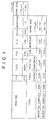
- the iron ore (material of iron oxide) and coal (carbonaceous material) containing the components shown in FIG. 1 were mixed in a mixer at the mixing ratios shown in FIG. 2.
- the green pellets having a diameter of 16-19 mm were passed through a sieve, dried at a pellet temperature of 110°C for 15-24 hours in an electric thermostat chamber, and cooled, to thereby obtain dry iron oxide pellets.
- a comparative test was performed for each group of resultant iron oxide pellets. The moisture content and test results are shown in FIG. 2.
- the pellets of Comparative Sample Nos. 2 and 3, and Inventive Sample No. 4 were dried for a shorter time than were the pellets of the other samples, in order to investigate the relationship between moisture content and strength of the pellets.
- the pellets of Comparative Sample No. 1 contained no wheat flour.
- the pellets of Comparative Sample Nos. 6 and 8 contained no bentonite.
- the strength of iron oxide pellets was evaluated for drop test number, crush strength, and tumbler strength T150 index.
- the drop test number shown in Table 2 represents the number of falling from the height of 45 cm to the horizontal surface of an iron plate during which the iron oxide pellet did not shatter and maintained its original shape.
- tumbler strength T150 index was deteriorated. Since the pellets of Comparative Sample Nos. 2 and 3 had a moisture content exceeding 1 mass% after drying, tumbler strength T150 index was deteriorated. Since the pellets of Inventive Sample No. 4 had a moisture content of 0.5 mass% after drying, tumbler strength T150 index was improved. That is, when the moisture content was lowered after drying, tumbler strength T150 index was improved; i.e., when the moisture content was 1 mass% or less after drying, tumbler strength T150 index was 5 mass% or less.
- Comparative Sample Nos. 6 and 8 exhibited sufficient strength in a dry state; however, they exhibited insufficient strength at high temperature in a reducing furnace.
- the sample pellets of Example 2 contained corn flour, dextrin, or potato starch, instead of wheat flour serving as an organic binder.
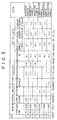
- the iron ore and coal containing the components shown in FIG. 1 and the components shown in FIG. 3 were mixed in a mixer at the mixing ratios shown in FIG. 3, and the mixture was pelletized and dried according to the method used in Example 1, to thereby obtain samples of iron oxide pellets.
- a comparison test for investigating the properties of pellets was performed on each group of the iron oxide pellets. The moisture content and test results are shown in FIG. 3.
- the diameter of the green pellets was 16-19 mm.
- the iron oxide pellets containing corn flour, dextrin, or potato starch exhibited improvement in both drop test number and tumbler strength T150 index, as compared with the pellets which contained a conventional organic binder containing CMC serving as the main component and bentonite (Comparative Sample No. 1 in FIG. 2), although the pellets of Sample No. 14 exhibited a somewhat low crush strength.
- corn flour, dextrin, and potato starch may be used as a organic binder instead of wheat flour.
- pellets of Sample Nos. 14-16 are not the samples of the present invention, since they contain neither bentonite nor sodium hydroxide. However, it is apparent that the same effects are obtained if corn flour, dextrin, or potato starch is used as an organic binder instead of wheat flower.
- Example 3 is drawn to the pellets obtained through a continuous operation.
- To the iron ore shown in FIG. 1 was added the coal (20-22 mass%) shown in FIG. 1, wheat flour (1.2 mass%), bentonite (0.2 mass%), and sodium hydroxide (0.02 mass%), and the mixture was mixed uniformly in a mixer, to thereby obtain a mixed material.
- the mixture was fed to a disc-type pelletizer, and pelletized continuously into green pellets having a moisture content of 12-13 mass%. After pelletization, the green pellets were passed through a roller screen, to thereby take up green pellets having a diameter of 16-20 mm.
- the green pellets were continuously dried in a through-flow dryer (exhaust gas: 180°C) until the moisture content fell below 1 mass%, to thereby produce iron oxide pellets.
- the surface temperature of the pellets was 150-170°C at the exit of the dryer.
- the iron oxide pellets produced according to the method of the present invention and the iron oxide pellets serving as the comparative sample were produced in an actual operation, and the strength distributions were observed. The results are shown in FIGS. 7 and 8.
- the drop test number of the iron oxide pellets produced according to the method of the present invention was 12 on average, which represents a vast improvement as compared to 5 in the case of the iron oxide pellets of the comparative sample.
- the tumbler strength T150 index of the iron oxide pellets produced according to the method of the present invention was 2 mass%, which represents a vast improvement as compared to 7 mass% in the case of the iron oxide pellets of the comparative sample.
- the iron oxide pellets produced according to the method of the present invention maintained stable strength over a prolonged period.
- Example 4 shows the effects of bentonite, which is an inorganic coagulant, on the strength of dry pellets.
- Iron ore and coal containing the components shown in FIG. 1 and the components shown in FIG. 4 were mixed in a mixer at the mixing ratios shown in FIG. 4. After addition of water, each mixture was fed to a disc-type pelletizer, and pelletized into green pellets having a moisture content of 12-13 mass%. After pelletization, the green pellets were passed through a roller screen, to thereby take up green pellets having a diameter of 16-20 mm. The green pellets were dried in a through-flow dryer (exhaust gas: 180°C) until the moisture content fell below 1 mass%, to thereby produce iron oxide pellets. The surface temperature of the pellets was 150-170°C at the exit of the dryer. The thus-produced iron oxide pellet according to the method of the present invention were investigated for their strength. The moisture contents and the investigation results are shown in FIG. 4, and the relationship between bentonite content and strength is shown in FIG. 9.
- the strength, especially the strength measured according to tumbler T150 strength index, of dried pellets was increased through addition of a small amount of a mixture of bentonite and wheat flour. Also, since bentonite has a swelling property, a large amount of water is required in the pelletization by use of a pelletizer, resulting in a decreased strength of green pellets. Therefore, addition of water should be avoided.
- the amount of added bentonite is 0.1-0.3 mass%.
- the sample pellets of Example 5 were produced by use of converter dust and two types of blast furnace dust instead of iron ore serving as the source of iron oxide.
- the converter dust and blast furnace dusts shown in FIG. 5 and the components shown in FIG. 6 were mixed in a mixer at the mixing ratios shown in FIG. 6. Water in an amount of 4-5 mass% was added to each of the resultant mixed materials.
- the mixture was fed to a pelletizer equipped with a disk having a diameter of 0.9 m, and pelletized into green pellets having a moisture content of 13-14 mass%. After pelletization, the green pellets were passed through a sieve and those having a diameter of 16-20 mm were dried at 110°C for 15-20 hours in an electric thermostat chamber, followed by cooling, to thereby obtain dry pellets.
- Example 5 A comparison test for investigating the properties of pellets was performed on each group of the iron oxide pellets. The moisture of the dry pellets and test results are shown in FIG. 6.
- Example 5 since the carbonaceous components contained in the blast furnace dusts acted as a reducing agent, no additional carbonaceous material was incorporated. Therefore, the amount of carbonaceous material shown in FIG. 6 represents the carbon content in the blast furnace dust.
- Example 3 Each of the same two samples of dry carbonaceous-material-containing iron oxide pellets as used in Example 3 was fed into a rotary hearth furnace having a furnace temperature of 1100-1450°C, and two samples of reduced iron pellets were produced. The degree of metallization and the pulverization rate of these samples are shown in FIG. 10.
- the strength of the iron oxide pellets produced according to the present invention was improved as shown in FIGS. 7 and 8 in connection with Example 3, there was decreased the amount of small pieces and powder which were generated at the time of feeding of the iron oxide pellets into a rotary hearth furnace.
- the results are shown in FIG. 10.
- the pulverization rate of the reduced iron pellets of the inventive sample was half or less that of the comparative sample.
- the pulverization rate is represented by mass% of particles that have passed through a 3.35 mm sieve.
Landscapes
- Chemical & Material Sciences (AREA)
- Engineering & Computer Science (AREA)
- Organic Chemistry (AREA)
- Metallurgy (AREA)
- Materials Engineering (AREA)
- Manufacturing & Machinery (AREA)
- Mechanical Engineering (AREA)
- Geology (AREA)
- Life Sciences & Earth Sciences (AREA)
- Geochemistry & Mineralogy (AREA)
- General Life Sciences & Earth Sciences (AREA)
- Environmental & Geological Engineering (AREA)
- Inorganic Chemistry (AREA)
- Crystallography & Structural Chemistry (AREA)
- Manufacture And Refinement Of Metals (AREA)
- Compounds Of Iron (AREA)
Claims (18)
- Procédé de production de pastilles d'oxyde de fer comprenant les étapes consistant à :ajouter de l'eau à un mélange de matières premières comprenant de l'oxyde de fer qui joue le rôle de composant principal, une matière carbonée en une quantité suffisante pour réduire l'oxyde de fer, un liant organique choisi dans le groupe constitué par la farine de blé, la farine de maïs, l'amidon de pomme de terre et la dextrine, en une quantité suffisante pour lier l'oxyde de fer et la matière carbonée, et un coagulant minéral en une quantité non inférieure à 0,05 % en masse et inférieure à 1 % en masse.pastiller le mélange résultant afin d'obtenir une pastille verte ; etsécher la pastille verte jusqu'à ce que la teneur en humidité soit réduite à une valeur inférieure ou égale à 1,0 % en masse.
- Procédé selon la revendication 1, dans lequel le liant organique est la farine de blé.
- Procédé de préparation selon la revendication 1 ou 2, dans lequel le coagulant minéral est la bentonite.
- Procédé de préparation selon la revendication 3, dans lequel la quantité de bentonite ajoutée est de 0,1 à 0,3 % en masse.
- Procédé selon une ou plusieurs des revendications 1 à 4, dans lequel la pastille verte contient un agent dispersant ayant une action tensioactive en une quantité de 0,1 % en masse ou moins.
- Procédé selon la revendication 5, dans lequel l'agent dispersant ayant une action tensioactive est l'hydroxyde de sodium.
- Procédé selon la revendication 6, dans lequel la quantité d'hydroxyde de sodium ajoutée est de 0,01 à 0,03 % en masse.
- Procédé selon une ou plusieurs des revendications 1 à 7, dans lequel la pastille verte a un diamètre de 6 à 30 mm.
- Procédé selon une ou plusieurs des revendications 1 à 7, dans lequel la pastille verte a un diamètre de 14 à 20 mm.
- Procédé selon une ou plusieurs des revendications 1 à 9, dans lequel la pastille verte est régulée pour avoir une teneur en humidité de 11 à 14 % en masse.
- Procédé selon une ou plusieurs des revendications 1 à 10, dans lequel l'oxyde de fer et la matière carbonée sont de la poussière de haut fourneau, de la poussière de transporteur, de la poussière provenant d'un procédé de frittage, de la poussière d'un four électrique, ou un mélange de celles-ci.
- Pastille d'oxyde dé fer produite par un procédé selon l'une quelconque des revendications 1 à 11.
- Procédé de production d'une pastille de fer réduit comprenant les étapes consistant à :ajouter de l'eau à un mélange de matières premières comprenant de l'oxyde de fer qui joue le rôle de composant principal, une matière carbonée en une quantité suffisante pour réduire l'oxyde de fer, un liant organique choisi dans le groupe constitué par la farine de blé, la farine de maïs, l'amidon de pomme de terre et la dextrine, en une quantité suffisante pour lier l'oxyde de fer et la matière carbonée, et un coagulant minéral en une quantité non inférieure à 0,05 % en masse et inférieure à 1 % en masse ;pastiller le mélange résultant afin d'obtenir une pastille verte ;sécher la pastille verte jusqu'à ce que la teneur en humidité soit réduite à une valeur inférieure ou égale à 1,0 % en masse ; etcharger les pastilles d'oxyde de fer résultantes dans un four de réduction afin de réduire les pastilles d'oxyde de fer.
- Procédé selon la revendication 13, dans lequel le four de réduction pour réduire les pastilles d'oxyde de fer est un four à foyer rotatif ayant une température de four maintenue à une température de 1100 à 1450°C.
- Procédé selon la revendication 13 ou 14, dans lequel la pastille verte contient un agent dispersant ayant une action tensioactive en une quantité de 0,1 % en masse ou moins.
- Procédé selon une ou plusieurs des revendications 13 à 15, dans lequel la pastille verte a un diamètre de 6 à 30 mm.
- Procédé selon une ou plusieurs des revendications 13 à 16, dans lequel l'oxyde de fer et la matière carbonée sont de la poussière de haut fourneau, de la poussière de transporteur, de la poussière provenant d'un procédé de frittage, de la poussière d'un four électrique, ou un mélange de celles-ci.
- Pastille de fer réduit produite par un procédé selon l'une quelconque des revendications 13 à 17.
Applications Claiming Priority (3)
| Application Number | Priority Date | Filing Date | Title |
|---|---|---|---|
| JP298479/97 | 1997-10-30 | ||
| JP29847997 | 1997-10-30 | ||
| JP29847997 | 1997-10-30 |
Publications (3)
| Publication Number | Publication Date |
|---|---|
| EP0916742A1 EP0916742A1 (fr) | 1999-05-19 |
| EP0916742B1 true EP0916742B1 (fr) | 2003-01-08 |
| EP0916742B2 EP0916742B2 (fr) | 2006-03-22 |
Family
ID=17860239
Family Applications (1)
| Application Number | Title | Priority Date | Filing Date |
|---|---|---|---|
| EP98120606A Expired - Lifetime EP0916742B2 (fr) | 1997-10-30 | 1998-10-30 | Procédé de préparation d'oxydes fe fer sous forme de boulettes à basse teneur en bentonite |
Country Status (5)
| Country | Link |
|---|---|
| US (2) | US6579505B2 (fr) |
| EP (1) | EP0916742B2 (fr) |
| AT (1) | ATE230806T1 (fr) |
| CA (1) | CA2251339A1 (fr) |
| DE (1) | DE69810579T3 (fr) |
Cited By (1)
| Publication number | Priority date | Publication date | Assignee | Title |
|---|---|---|---|---|
| US9752210B2 (en) | 2014-07-25 | 2017-09-05 | Sumitomo Metal Mining Co., Ltd. | Method for smelting nickel oxide ore and method for charging pellets |
Families Citing this family (39)
| Publication number | Priority date | Publication date | Assignee | Title |
|---|---|---|---|---|
| US20040221426A1 (en) * | 1997-10-30 | 2004-11-11 | Kabushiki Kaisha Kobe Seiko Sho (Kobe Steel, Ltd.) | Method of producing iron oxide pellets |
| CA2251339A1 (fr) * | 1997-10-30 | 1999-04-30 | Hidetoshi Tanaka | Methode de production de granules d'oxyde de fer |
| JP3004265B1 (ja) | 1998-11-24 | 2000-01-31 | 株式会社神戸製鋼所 | 炭材内装ペレット及び還元鉄製造方法 |
| RU2157416C1 (ru) * | 1999-02-16 | 2000-10-10 | АООТ "Карельский окатыш" | Способ производства сырых окатышей |
| TW562860B (en) * | 2000-04-10 | 2003-11-21 | Kobe Steel Ltd | Method for producing reduced iron |
| JP4757982B2 (ja) | 2000-06-28 | 2011-08-24 | 株式会社神戸製鋼所 | 粒状金属鉄の歩留まり向上方法 |
| DE60138725D1 (de) * | 2000-10-30 | 2009-06-25 | Nippon Steel Corp | METALLOXID ENTHALTENDES GRÜNPELLET FÜR REDUKTIONSOFEN und VERFAHREN ZU SEINER HERSTELLUNG, VERFAHREN ZU SEINER REDUKTION |
| US6736952B2 (en) * | 2001-02-12 | 2004-05-18 | Speedfam-Ipec Corporation | Method and apparatus for electrochemical planarization of a workpiece |
| US6786949B2 (en) * | 2001-03-20 | 2004-09-07 | Startec Iron, Llc | Method and apparatus for using a pre-jel for producing self-reducing agglomerates |
| JP4691827B2 (ja) * | 2001-05-15 | 2011-06-01 | 株式会社神戸製鋼所 | 粒状金属鉄 |
| JP4256645B2 (ja) * | 2001-11-12 | 2009-04-22 | 株式会社神戸製鋼所 | 金属鉄の製法 |
| MY133537A (en) * | 2002-01-24 | 2007-11-30 | Kobe Steel Ltd | Method for making molten iron |
| CA2423166C (fr) | 2002-04-03 | 2008-11-25 | Kabushiki Kaisha Kobe Seiko Sho (Kobe Steel, Ltd.) | Methode de fabrication du fer reduit |
| JP2004000882A (ja) * | 2002-04-17 | 2004-01-08 | Kobe Steel Ltd | 重金属及び/又は有機化合物の処理方法 |
| JP3679084B2 (ja) | 2002-10-09 | 2005-08-03 | 株式会社神戸製鋼所 | 溶融金属製造用原料の製造方法および溶融金属の製造方法 |
| WO2004035847A1 (fr) * | 2002-10-18 | 2004-04-29 | Kabushiki Kaisha Kobe Seiko Sho | Ferronickel et procede de production d'un materiau brut destine a la fusion de ferronickel |
| JP4490640B2 (ja) * | 2003-02-26 | 2010-06-30 | 株式会社神戸製鋼所 | 還元金属の製造方法 |
| JP4438297B2 (ja) * | 2003-03-10 | 2010-03-24 | 株式会社神戸製鋼所 | 還元金属の製造方法および炭材内装塊成物 |
| RU2236472C1 (ru) * | 2003-03-31 | 2004-09-20 | Сибирский государственный индустриальный университет | Способ сушки окатышей |
| US7498009B2 (en) * | 2004-08-16 | 2009-03-03 | Dana Uv, Inc. | Controlled spectrum ultraviolet radiation pollution control process |
| CA2590259C (fr) * | 2004-12-07 | 2016-02-16 | Nu-Iron Technology, Llc | Procede et systeme permettant de produire des pepites de fer metallique |
| RU2441077C2 (ru) * | 2006-03-24 | 2012-01-27 | МЕСАБИ НАГГЕТ ЭлЭлСи | Способ получения окускованного материала |
| AU2006342505B2 (en) * | 2006-03-24 | 2011-07-28 | Kobe Steel, Ltd. | Method for producing agglomerated material |
| US20080216396A1 (en) * | 2007-03-07 | 2008-09-11 | Bier Lloyd G | Fuel pellet and method of producing fuel pellet |
| CN101220411B (zh) * | 2007-01-08 | 2010-12-08 | 王永清 | 球团矿低温固结粘结剂 |
| JP2009052138A (ja) * | 2007-07-27 | 2009-03-12 | Kobe Steel Ltd | 炭材内装酸化金属ブリケットの製造方法 |
| CN100562589C (zh) * | 2007-12-27 | 2009-11-25 | 钢铁研究总院 | 一种铁矿球团用钠基膨润土基粘结剂及其制备方法 |
| US8202345B2 (en) * | 2009-05-28 | 2012-06-19 | Premier Enviro Services, Inc. | Method of producing non-pyrophoric metallic iron |
| JP5480969B2 (ja) * | 2010-06-16 | 2014-04-23 | 三菱日立製鉄機械株式会社 | 生ペレット |
| CN102230079A (zh) * | 2010-07-09 | 2011-11-02 | 鞍钢集团矿业公司 | 链篦机回转窑生产镁质球团工艺 |
| DE102012005454B4 (de) | 2012-03-20 | 2020-06-18 | Outotec Oyj | Verfahren und Vorrichtung zur Herstellung von gehärteten Granalien aus eisenhaltigen Partikeln |
| DE102012011240A1 (de) * | 2012-06-06 | 2013-12-12 | Outotec Oyj | Verfahren zur Herstellung von gehärteten Granalien aus eisenhaltigen Partikeln |
| WO2018099559A1 (fr) * | 2016-11-30 | 2018-06-07 | S.A. Lhoist Recherche Et Developpement | Boulettes de minerai métallique |
| CN109266847B (zh) * | 2018-11-19 | 2020-09-08 | 攀枝花学院 | 低温固结冶金球团的制备方法 |
| RU2759284C1 (ru) * | 2020-12-08 | 2021-11-11 | Александр Викторович Федяшин | Способ получения из вторичного алюминиевого сырья глиноземсодержащего материала для рафинирования и формирования шлака при выплавке стали. |
| CN112725617B (zh) * | 2020-12-24 | 2022-06-14 | 广西柳钢环保股份有限公司 | 转炉除尘灰均质化处理压球方法 |
| RU2768073C1 (ru) * | 2021-10-20 | 2022-03-23 | Федеральное государственное бюджетное образовательное учреждение высшего образования "Сибирский государственный индустриальный университет" ФГБОУ ВО "СибГИУ" | Способ получения окатышей |
| CN114231735A (zh) * | 2021-12-01 | 2022-03-25 | 攀枝花钢城集团有限公司 | 一种基于冶炼二次资源养护炉的方法 |
| CN114410960B (zh) * | 2021-12-17 | 2023-12-12 | 萍乡市众邦冶金有限公司 | 一种用于钢铁冶炼的球团生产工艺 |
Family Cites Families (37)
| Publication number | Priority date | Publication date | Assignee | Title |
|---|---|---|---|---|
| US2793109A (en) † | 1954-04-09 | 1957-05-21 | Surface Combustion Corp | Induration process for powdered iron oxide containing material |
| US3443931A (en) * | 1965-09-10 | 1969-05-13 | Midland Ross Corp | Process for making metallized pellets from iron oxide containing material |
| US3844811A (en) * | 1970-01-12 | 1974-10-29 | Reprographic Materials | Agglomeration of pigment particles and compositions utilizing same |
| US3836354A (en) * | 1971-06-25 | 1974-09-17 | F Wienert | Production of pellets |
| JPS4915522A (fr) | 1972-06-03 | 1974-02-12 | ||
| GB1364150A (en) * | 1972-09-26 | 1974-08-21 | Wienert F O | Pellets and their production |
| JPS5041711A (fr) * | 1973-08-17 | 1975-04-16 | ||
| US4025596A (en) * | 1973-10-03 | 1977-05-24 | The Dow Chemical Company | Method for pelletizing finely divided solids |
| US3942974A (en) * | 1975-02-10 | 1976-03-09 | Kennecott Copper Corporation | Manganese nodule pelletizing |
| US4161501A (en) * | 1975-09-17 | 1979-07-17 | Elkem-Spigerverket A/S | Method of producing mechanically strong metal oxide pellets |
| DE2607650A1 (de) * | 1976-02-25 | 1977-09-01 | Sumitomo Heavy Industries | Verfahren zur herstellung von rohpellets fuer die chemische reduktion in einem drehrohrofen aus einem eisen enthaltenden staub |
| US4385928A (en) * | 1981-07-29 | 1983-05-31 | Lukens, Inc. | Agglomeration method |
| JPS60220135A (ja) | 1984-04-17 | 1985-11-02 | Nippon Steel Corp | 製鉄用粉原料の整粒化剤 |
| US5000783A (en) * | 1988-07-28 | 1991-03-19 | Oriox Technologies, Inc. | Modified native starch base binder for pelletizing mineral material |
| SU1654351A1 (ru) * | 1989-06-14 | 1991-06-07 | Коммунарский горно-металлургический институт | Св зующее дл окомковани железорудных материалов |
| GB8918913D0 (en) * | 1989-08-18 | 1989-09-27 | Allied Colloids Ltd | Agglomeration of particulate materials |
| US5112391A (en) * | 1990-03-30 | 1992-05-12 | Nalco Chemical Company | Method of forming ore pellets with superabsorbent polymer |
| GB9009404D0 (en) * | 1990-04-26 | 1990-06-20 | Allied Colloids Ltd | Pelletisation process |
| US5186741A (en) * | 1991-04-12 | 1993-02-16 | Zia Patent Company | Direct reduction process in a rotary hearth furnace |
| RU2031155C1 (ru) * | 1992-02-25 | 1995-03-20 | Белгородский научно-исследовательский институт по обогащению и окомкованию руд черных металлов "Белмеханобрчермет" | Шихта для производства окатышей |
| AU685385B2 (en) * | 1992-08-06 | 1998-01-22 | Akzo Nobel N.V. | Binder composition and process for agglomerating particulate material |
| JP3296974B2 (ja) | 1996-08-15 | 2002-07-02 | 株式会社神戸製鋼所 | 直接還元法及び回転床炉 |
| JPH10195513A (ja) | 1996-12-27 | 1998-07-28 | Kobe Steel Ltd | 金属鉄の製法 |
| US5972066A (en) * | 1997-04-22 | 1999-10-26 | Iron Dynamics, Inc. | Mixed bed iron reduction process |
| US6149709A (en) | 1997-09-01 | 2000-11-21 | Kabushiki Kaisha Kobe Seiko Sho | Method of making iron and steel |
| CA2251339A1 (fr) * | 1997-10-30 | 1999-04-30 | Hidetoshi Tanaka | Methode de production de granules d'oxyde de fer |
| TW495552B (en) | 1997-12-18 | 2002-07-21 | Kobe Steel Ltd | Method of producing reduced iron pellets |
| JP3081581B2 (ja) | 1998-03-23 | 2000-08-28 | 株式会社神戸製鋼所 | 高金属化率還元鉄塊成物の製造方法 |
| EP0952230A1 (fr) | 1998-03-24 | 1999-10-27 | KABUSHIKI KAISHA KOBE SEIKO SHO also known as Kobe Steel Ltd. | Procédé de préparation d'agglomérés de fer réduit |
| JP2997459B1 (ja) | 1998-11-04 | 2000-01-11 | 株式会社神戸製鋼所 | 還元鉄塊成物の製造方法 |
| TW502066B (en) | 1998-08-27 | 2002-09-11 | Kobe Steel Ltd | Method for operating moving hearth reducing furnace |
| JP3004265B1 (ja) | 1998-11-24 | 2000-01-31 | 株式会社神戸製鋼所 | 炭材内装ペレット及び還元鉄製造方法 |
| JP3404309B2 (ja) | 1999-01-18 | 2003-05-06 | 株式会社神戸製鋼所 | 還元鉄塊成物の製造方法および製造装置 |
| JP3009661B1 (ja) | 1999-01-20 | 2000-02-14 | 株式会社神戸製鋼所 | 還元鉄ペレットの製造方法 |
| CN1219891C (zh) | 1999-05-06 | 2005-09-21 | 株式会社神户制钢所 | 直接还原法及回转炉床炉 |
| CA2322935A1 (fr) | 1999-10-15 | 2001-04-15 | Kabushiki Kaisha Kobe Seiko Sho Also Known As Kobe Steel, Ltd. | Methode et appareil pour produire un metal reduit |
| US6302186B1 (en) * | 1999-11-01 | 2001-10-16 | Jeneric/Pentron, Inc. | Plunger for a pressing furnace |
-
1998
- 1998-10-23 CA CA002251339A patent/CA2251339A1/fr not_active Abandoned
- 1998-10-30 DE DE69810579T patent/DE69810579T3/de not_active Expired - Lifetime
- 1998-10-30 AT AT98120606T patent/ATE230806T1/de not_active IP Right Cessation
- 1998-10-30 EP EP98120606A patent/EP0916742B2/fr not_active Expired - Lifetime
-
2002
- 2002-07-11 US US10/192,720 patent/US6579505B2/en not_active Expired - Fee Related
-
2003
- 2003-05-27 US US10/445,043 patent/US6811759B2/en not_active Expired - Fee Related
Cited By (1)
| Publication number | Priority date | Publication date | Assignee | Title |
|---|---|---|---|---|
| US9752210B2 (en) | 2014-07-25 | 2017-09-05 | Sumitomo Metal Mining Co., Ltd. | Method for smelting nickel oxide ore and method for charging pellets |
Also Published As
| Publication number | Publication date |
|---|---|
| EP0916742B2 (fr) | 2006-03-22 |
| US6811759B2 (en) | 2004-11-02 |
| US20020175441A1 (en) | 2002-11-28 |
| US6579505B2 (en) | 2003-06-17 |
| DE69810579D1 (de) | 2003-02-13 |
| CA2251339A1 (fr) | 1999-04-30 |
| US20030198779A1 (en) | 2003-10-23 |
| DE69810579T2 (de) | 2003-11-20 |
| ATE230806T1 (de) | 2003-01-15 |
| DE69810579T3 (de) | 2006-10-26 |
| EP0916742A1 (fr) | 1999-05-19 |
Similar Documents
| Publication | Publication Date | Title |
|---|---|---|
| EP0916742B1 (fr) | Procédé de préparation d'oxydes fe fer sous forme de boulettes à basse teneur en bentonite | |
| US7438730B2 (en) | Method of producing iron oxide pellets | |
| JPS6223944A (ja) | 酸化ニッケル鉱石からフェロニッケルルッペを製造する方法 | |
| AU2009270230B2 (en) | Briquette manufacturing method, reductive metal manufacturing method, and zinc or lead separation method | |
| JP3040978B2 (ja) | 還元鉄ペレットの製造方法および還元鉄ペレット | |
| JP2003342646A (ja) | 高炉用のカーボン内装非焼成塊成鉱およびその製造方法 | |
| JP2001348625A (ja) | 製鉄原料用ペレットの製造方法 | |
| CA2647279C (fr) | Procede de production de materiau agglomere | |
| WO2013071955A1 (fr) | Procédé pour la fabrication de ferrochrome | |
| JP2012082493A (ja) | 還元鉄の製造方法 | |
| US6918947B2 (en) | Method for making reduced iron | |
| US4518428A (en) | Agglomerates containing olivine | |
| KR100905581B1 (ko) | 제철공정용 성형탄과 그 제조방법 | |
| JP7832466B2 (ja) | 転炉用昇熱材およびその製造方法 | |
| US4963185A (en) | Agglomerates containing olivine for use in blast furnace | |
| KR100718581B1 (ko) | 선철대용재 및 그 제조방법 | |
| JP2003129140A (ja) | 還元用回転炉床向け成型物の製造方法 | |
| JP3837845B2 (ja) | 還元鉄の製造方法 | |
| JPH0310026A (ja) | 粘土質Ni鉱石の団鉱方法 | |
| JPS60184642A (ja) | 非焼成塊成鉱の製造方法 | |
| RU2441077C2 (ru) | Способ получения окускованного материала | |
| JPH0558477B2 (fr) | ||
| JPS62297420A (ja) | 熱間強度に優れた非焼成塊成鉱 | |
| JPS6123726A (ja) | 非焼成塊成鉱の製造方法 | |
| JPH11302714A (ja) | 還元鉄の製造方法 |
Legal Events
| Date | Code | Title | Description |
|---|---|---|---|
| PUAI | Public reference made under article 153(3) epc to a published international application that has entered the european phase |
Free format text: ORIGINAL CODE: 0009012 |
|
| AK | Designated contracting states |
Kind code of ref document: A1 Designated state(s): AT BE CH CY DE DK ES FI FR GB GR IE IT LI LU MC NL PT SE |
|
| AX | Request for extension of the european patent |
Free format text: AL;LT;LV;MK;RO;SI |
|
| 17P | Request for examination filed |
Effective date: 19990617 |
|
| AKX | Designation fees paid |
Free format text: AT BE CH CY DE DK ES FI FR GB GR IE IT LI LU MC NL PT SE |
|
| 17Q | First examination report despatched |
Effective date: 20010108 |
|
| GRAG | Despatch of communication of intention to grant |
Free format text: ORIGINAL CODE: EPIDOS AGRA |
|
| GRAG | Despatch of communication of intention to grant |
Free format text: ORIGINAL CODE: EPIDOS AGRA |
|
| GRAH | Despatch of communication of intention to grant a patent |
Free format text: ORIGINAL CODE: EPIDOS IGRA |
|
| GRAH | Despatch of communication of intention to grant a patent |
Free format text: ORIGINAL CODE: EPIDOS IGRA |
|
| GRAA | (expected) grant |
Free format text: ORIGINAL CODE: 0009210 |
|
| AK | Designated contracting states |
Kind code of ref document: B1 Designated state(s): AT BE CH CY DE DK ES FI FR GB GR IE IT LI LU MC NL PT SE |
|
| PG25 | Lapsed in a contracting state [announced via postgrant information from national office to epo] |
Ref country code: NL Free format text: LAPSE BECAUSE OF FAILURE TO SUBMIT A TRANSLATION OF THE DESCRIPTION OR TO PAY THE FEE WITHIN THE PRESCRIBED TIME-LIMIT Effective date: 20030108 Ref country code: LI Free format text: LAPSE BECAUSE OF FAILURE TO SUBMIT A TRANSLATION OF THE DESCRIPTION OR TO PAY THE FEE WITHIN THE PRESCRIBED TIME-LIMIT Effective date: 20030108 Ref country code: GR Free format text: LAPSE BECAUSE OF FAILURE TO SUBMIT A TRANSLATION OF THE DESCRIPTION OR TO PAY THE FEE WITHIN THE PRESCRIBED TIME-LIMIT Effective date: 20030108 Ref country code: FI Free format text: LAPSE BECAUSE OF FAILURE TO SUBMIT A TRANSLATION OF THE DESCRIPTION OR TO PAY THE FEE WITHIN THE PRESCRIBED TIME-LIMIT Effective date: 20030108 Ref country code: CH Free format text: LAPSE BECAUSE OF FAILURE TO SUBMIT A TRANSLATION OF THE DESCRIPTION OR TO PAY THE FEE WITHIN THE PRESCRIBED TIME-LIMIT Effective date: 20030108 Ref country code: AT Free format text: LAPSE BECAUSE OF FAILURE TO SUBMIT A TRANSLATION OF THE DESCRIPTION OR TO PAY THE FEE WITHIN THE PRESCRIBED TIME-LIMIT Effective date: 20030108 |
|
| REF | Corresponds to: |
Ref document number: 230806 Country of ref document: AT Date of ref document: 20030115 Kind code of ref document: T |
|
| REG | Reference to a national code |
Ref country code: GB Ref legal event code: FG4D |
|
| REG | Reference to a national code |
Ref country code: CH Ref legal event code: EP |
|
| REG | Reference to a national code |
Ref country code: IE Ref legal event code: FG4D |
|
| REF | Corresponds to: |
Ref document number: 69810579 Country of ref document: DE Date of ref document: 20030213 Kind code of ref document: P |
|
| ET | Fr: translation filed | ||
| PG25 | Lapsed in a contracting state [announced via postgrant information from national office to epo] |
Ref country code: SE Free format text: LAPSE BECAUSE OF FAILURE TO SUBMIT A TRANSLATION OF THE DESCRIPTION OR TO PAY THE FEE WITHIN THE PRESCRIBED TIME-LIMIT Effective date: 20030408 Ref country code: PT Free format text: LAPSE BECAUSE OF FAILURE TO SUBMIT A TRANSLATION OF THE DESCRIPTION OR TO PAY THE FEE WITHIN THE PRESCRIBED TIME-LIMIT Effective date: 20030408 Ref country code: DK Free format text: LAPSE BECAUSE OF FAILURE TO SUBMIT A TRANSLATION OF THE DESCRIPTION OR TO PAY THE FEE WITHIN THE PRESCRIBED TIME-LIMIT Effective date: 20030408 |
|
| REG | Reference to a national code |
Ref country code: CH Ref legal event code: PL |
|
| PG25 | Lapsed in a contracting state [announced via postgrant information from national office to epo] |
Ref country code: ES Free format text: LAPSE BECAUSE OF FAILURE TO SUBMIT A TRANSLATION OF THE DESCRIPTION OR TO PAY THE FEE WITHIN THE PRESCRIBED TIME-LIMIT Effective date: 20030730 |
|
| PLBQ | Unpublished change to opponent data |
Free format text: ORIGINAL CODE: EPIDOS OPPO |
|
| PLBI | Opposition filed |
Free format text: ORIGINAL CODE: 0009260 |
|
| PG25 | Lapsed in a contracting state [announced via postgrant information from national office to epo] |
Ref country code: LU Free format text: LAPSE BECAUSE OF NON-PAYMENT OF DUE FEES Effective date: 20031030 Ref country code: IE Free format text: LAPSE BECAUSE OF NON-PAYMENT OF DUE FEES Effective date: 20031030 Ref country code: GB Free format text: LAPSE BECAUSE OF NON-PAYMENT OF DUE FEES Effective date: 20031030 Ref country code: CY Free format text: LAPSE BECAUSE OF FAILURE TO SUBMIT A TRANSLATION OF THE DESCRIPTION OR TO PAY THE FEE WITHIN THE PRESCRIBED TIME-LIMIT Effective date: 20031030 |
|
| PG25 | Lapsed in a contracting state [announced via postgrant information from national office to epo] |
Ref country code: MC Free format text: LAPSE BECAUSE OF NON-PAYMENT OF DUE FEES Effective date: 20031031 |
|
| PLAX | Notice of opposition and request to file observation + time limit sent |
Free format text: ORIGINAL CODE: EPIDOSNOBS2 |
|
| 26 | Opposition filed |
Opponent name: SMS DEMAG AG Effective date: 20031002 |
|
| PLAX | Notice of opposition and request to file observation + time limit sent |
Free format text: ORIGINAL CODE: EPIDOSNOBS2 |
|
| PLBB | Reply of patent proprietor to notice(s) of opposition received |
Free format text: ORIGINAL CODE: EPIDOSNOBS3 |
|
| GBPC | Gb: european patent ceased through non-payment of renewal fee |
Effective date: 20031030 |
|
| REG | Reference to a national code |
Ref country code: IE Ref legal event code: MM4A |
|
| PUAH | Patent maintained in amended form |
Free format text: ORIGINAL CODE: 0009272 |
|
| STAA | Information on the status of an ep patent application or granted ep patent |
Free format text: STATUS: PATENT MAINTAINED AS AMENDED |
|
| 27A | Patent maintained in amended form |
Effective date: 20060322 |
|
| AK | Designated contracting states |
Kind code of ref document: B2 Designated state(s): AT BE CH CY DE DK ES FI FR GB GR IE IT LI LU MC NL PT SE |
|
| REG | Reference to a national code |
Ref country code: ES Ref legal event code: FD2A Effective date: 20031031 |
|
| ET3 | Fr: translation filed ** decision concerning opposition | ||
| PGFP | Annual fee paid to national office [announced via postgrant information from national office to epo] |
Ref country code: FR Payment date: 20121018 Year of fee payment: 15 Ref country code: BE Payment date: 20121018 Year of fee payment: 15 Ref country code: DE Payment date: 20121024 Year of fee payment: 15 |
|
| PGFP | Annual fee paid to national office [announced via postgrant information from national office to epo] |
Ref country code: IT Payment date: 20121016 Year of fee payment: 15 |
|
| BERE | Be: lapsed |
Owner name: *KOBE SEIKO SHO K.K. Effective date: 20131031 |
|
| REG | Reference to a national code |
Ref country code: DE Ref legal event code: R119 Ref document number: 69810579 Country of ref document: DE Effective date: 20140501 |
|
| REG | Reference to a national code |
Ref country code: FR Ref legal event code: ST Effective date: 20140630 |
|
| PG25 | Lapsed in a contracting state [announced via postgrant information from national office to epo] |
Ref country code: IT Free format text: LAPSE BECAUSE OF NON-PAYMENT OF DUE FEES Effective date: 20131030 Ref country code: FR Free format text: LAPSE BECAUSE OF NON-PAYMENT OF DUE FEES Effective date: 20131031 Ref country code: DE Free format text: LAPSE BECAUSE OF NON-PAYMENT OF DUE FEES Effective date: 20140501 |
|
| PG25 | Lapsed in a contracting state [announced via postgrant information from national office to epo] |
Ref country code: BE Free format text: LAPSE BECAUSE OF NON-PAYMENT OF DUE FEES Effective date: 20131031 |