EP0918420A2 - Méthode et système pour le transfert de données sans fil - Google Patents
Méthode et système pour le transfert de données sans fil Download PDFInfo
- Publication number
- EP0918420A2 EP0918420A2 EP98309536A EP98309536A EP0918420A2 EP 0918420 A2 EP0918420 A2 EP 0918420A2 EP 98309536 A EP98309536 A EP 98309536A EP 98309536 A EP98309536 A EP 98309536A EP 0918420 A2 EP0918420 A2 EP 0918420A2
- Authority
- EP
- European Patent Office
- Prior art keywords
- digital data
- wireless terminal
- header
- receiving
- Prior art date
- Legal status (The legal status is an assumption and is not a legal conclusion. Google has not performed a legal analysis and makes no representation as to the accuracy of the status listed.)
- Withdrawn
Links
Images




Classifications
-
- H—ELECTRICITY
- H04—ELECTRIC COMMUNICATION TECHNIQUE
- H04W—WIRELESS COMMUNICATION NETWORKS
- H04W4/00—Services specially adapted for wireless communication networks; Facilities therefor
- H04W4/12—Messaging; Mailboxes; Announcements
-
- H—ELECTRICITY
- H04—ELECTRIC COMMUNICATION TECHNIQUE
- H04L—TRANSMISSION OF DIGITAL INFORMATION, e.g. TELEGRAPHIC COMMUNICATION
- H04L12/00—Data switching networks
- H04L12/28—Data switching networks characterised by path configuration, e.g. LAN [Local Area Networks] or WAN [Wide Area Networks]
-
- H—ELECTRICITY
- H04—ELECTRIC COMMUNICATION TECHNIQUE
- H04L—TRANSMISSION OF DIGITAL INFORMATION, e.g. TELEGRAPHIC COMMUNICATION
- H04L51/00—User-to-user messaging in packet-switching networks, transmitted according to store-and-forward or real-time protocols, e.g. e-mail
- H04L51/58—Message adaptation for wireless communication
-
- H—ELECTRICITY
- H04—ELECTRIC COMMUNICATION TECHNIQUE
- H04W—WIRELESS COMMUNICATION NETWORKS
- H04W52/00—Power management, e.g. Transmission Power Control [TPC] or power classes
- H04W52/02—Power saving arrangements
- H04W52/0209—Power saving arrangements in terminal devices
- H04W52/0212—Power saving arrangements in terminal devices managed by the network, e.g. network or access point is leader and terminal is follower
- H04W52/0219—Power saving arrangements in terminal devices managed by the network, e.g. network or access point is leader and terminal is follower where the power saving management affects multiple terminals
-
- H—ELECTRICITY
- H04—ELECTRIC COMMUNICATION TECHNIQUE
- H04W—WIRELESS COMMUNICATION NETWORKS
- H04W52/00—Power management, e.g. Transmission Power Control [TPC] or power classes
- H04W52/02—Power saving arrangements
- H04W52/0209—Power saving arrangements in terminal devices
- H04W52/0225—Power saving arrangements in terminal devices using monitoring of external events, e.g. the presence of a signal
- H04W52/0229—Power saving arrangements in terminal devices using monitoring of external events, e.g. the presence of a signal where the received signal is a wanted signal
-
- H—ELECTRICITY
- H04—ELECTRIC COMMUNICATION TECHNIQUE
- H04W—WIRELESS COMMUNICATION NETWORKS
- H04W52/00—Power management, e.g. Transmission Power Control [TPC] or power classes
- H04W52/02—Power saving arrangements
- H04W52/0209—Power saving arrangements in terminal devices
- H04W52/0225—Power saving arrangements in terminal devices using monitoring of external events, e.g. the presence of a signal
- H04W52/0245—Power saving arrangements in terminal devices using monitoring of external events, e.g. the presence of a signal according to signal strength
-
- H—ELECTRICITY
- H04—ELECTRIC COMMUNICATION TECHNIQUE
- H04W—WIRELESS COMMUNICATION NETWORKS
- H04W52/00—Power management, e.g. Transmission Power Control [TPC] or power classes
- H04W52/02—Power saving arrangements
- H04W52/0209—Power saving arrangements in terminal devices
- H04W52/0261—Power saving arrangements in terminal devices managing power supply demand, e.g. depending on battery level
-
- Y—GENERAL TAGGING OF NEW TECHNOLOGICAL DEVELOPMENTS; GENERAL TAGGING OF CROSS-SECTIONAL TECHNOLOGIES SPANNING OVER SEVERAL SECTIONS OF THE IPC; TECHNICAL SUBJECTS COVERED BY FORMER USPC CROSS-REFERENCE ART COLLECTIONS [XRACs] AND DIGESTS
- Y02—TECHNOLOGIES OR APPLICATIONS FOR MITIGATION OR ADAPTATION AGAINST CLIMATE CHANGE
- Y02D—CLIMATE CHANGE MITIGATION TECHNOLOGIES IN INFORMATION AND COMMUNICATION TECHNOLOGIES [ICT], I.E. INFORMATION AND COMMUNICATION TECHNOLOGIES AIMING AT THE REDUCTION OF THEIR OWN ENERGY USE
- Y02D30/00—Reducing energy consumption in communication networks
- Y02D30/70—Reducing energy consumption in communication networks in wireless communication networks
Definitions
- This invention relates to a wireless data transfer method and system.
- a particular, electronic mail system communication system which sends/receives digital data between a plurality of terminals through a wireless transmission network in a network computer system will be described in this specificiation by way of example in illustration of the invention.
- a wide variety of communication systems has previously been proposed to send/receive digital data between a plurality of wireless terminals in a wireless computer network which is controlled by a computer network.
- a mail sending/receiving system will be described below, by way of example, as representative of such previously proposed communication systems.
- Fig. 1 is a diagrammatic block diagram for use in describing a mail sending/receiving system
- Fig 2 is a flow diagram based on a protocol used for sending/receiving mail or mail data in each of two previously proposed mail sending/receiving systems.
- a mail includes a mail header and a body of mail.
- a wireless terminal is used for an electronic mail system in a LAN (local area network) through a wireless communication network (for example, a mobile radio telephone network)
- a wireless terminal A 201 sends a mail header and a mail body addressed to a wireless terminal B 203 to a mail server 202 in the same time (S402).
- the mail server 202 stores the mail header and the mail body which are received (S403).
- the wireless terminal B 203 can connect to the mail server 202 at anytime, and when the wireless terminal B 203 determines that the mail header and/or the mail body addressed to it exist in the mail server 202 (S404, S405), it receives the mail header and/or the mail body from the mail server 202 (S406, S407).
- a wireless electronic mail receiving system which has been disclosed in Japanese Laid Open Publication No. H08-139747 is similar in structure to the first one of the previously proposed systems.
- a recipient of mail cannot know the contents of the mail message until a wireless terminal B completes the receipt of a mail header and a body of the mail.
- a wireless terminal B should receive both a mail header and a body from the mail server. Even if the recipient does not need the mail or does not want to receive the mail, the mail header and the body of the mail are transferred to the wireless terminal B. Consequently, during the transfer, in which a wireless transmission network is used as the transmission medium, the recipient will be charged according to the duration of use of the transmission network.
- the above transmission time is measured on the assumption that disconnection neither takes place due to interference during the transmission time executed by the recipient nor due to any repeated retry operation.
- the second previously proposed system functions in the same way as the mail sending/receiving method described above with reference to Fig. 1.
- a wireless terminal A 201 sends a communuication including a mail header and a mail body to a mail server 202.
- the wireless terminal B 203 receives only the mail header. If a user who receives the mail header determines that the mail is necessary it is arranged that the wireless terminal B 203 receives the remaining body of the mail.
- the second previously proposed system when it is not necessary for the wireless terminal B 203 to receive the body of the mail, it can instruct the mail server 202 to delete the body of the mail in the mail server 202. Therefore, the second previously proposed system can reduce traffic in a transmission network between the mail server 202 and the wireless terminal B 203 by eliminating the need to transfer unnecessary mail data between them. This is one of the merits in the second previously proposed system, compared to the first previously proposed system.
- An electronic mail delivery system which has been disclosed in Japanese Laid-Open Publication No. H04- 236541 is similar to the second previously proposed system mentioned above.
- the wireless terminal A 201 sends a mail message and the wireless terminal B 203 receives the mail message in the above description.
- the wireless terminal B 203 is also able to send a mail message to the wireless terminal A 201 by exchanging the functions of the above two terminals.
- the second previously proposed system can overcome the problem of the first previously proposed system to some extent.
- the wireless terminal B at first receives only a mail header on the receipt of the mail information from the mail server. The recipient is then able to determine whether or not it is necessary to receive the body of the mail by referring to the size of the body of the mail, the title, and so on included in the mail header. Therefore, the recipient is able to select only the necessary mail information to be received and may pay a reduced fee compared to that when using the first previously proposed system.
- the second previously proposed system is not able to cope well with a large number of mail messages.
- a wireless terminal A simultaneously sends to a plurality of destinations, for example to over 1,000 terminals, mail information including a plurality of mail communications each of which includes a mail header and a body of mail similar to one another, all of the storage regions in a mail server will be occupied by the mail headers and the mail bodies, because all of the mail headers and the mail bodies which are produced in the wireless terminal A are sent at once to the mail server.
- This situation may occur when a large amount of commercial direct mail is produced and transmitted by automatically replacing only destinations and the recipient's names in the mail header. All of the wireless terminals, each of which corresponds to a destination of a mail communication, will not immediately receive or have deleted the mail headers. In other words, the wireless terminals are able individually to receive or to delete them in each period of time assigned to each of the corresponding recipients.
- the second previously proposed system has another disadvantage. For example, let the wireless terminal A in this system send a large number of mail headers and mail bodies to a plurality of destinations, such as over 1,000 terminals as in the above-mentioned case. In these circumstances, all of the mail headers and mail bodies will be stored in the mail server through the wireless transmission network between the wireless terminal A and the mail server. Furthermore, when the wireless terminals B, each of which corresponds to one of the destinations, receive the corresponding mail communication (including a mail header and a mail body), the mail is sent through a wireless transfer network between the mail server and the receiving wireless terminal, similar to when it is stored in the mail server.
- the mail header and the mail body will occupy the wireless transmission network twice, i.e. on transmission and reception of the mail.
- a suitable wireless terminal device is disclosed in Japanese Laid-Open Publication No. H07-183824.
- wireless terminals A and B are turned on only when the wireless terminals are automatically communicating with each other. They are turned off when the communication has been completed. This arrangement is useful for saving the power of the batteries in the wireless terminals.
- a method of sending/receiving digital data between terminals via a central apparatus using a wireless transmission network includes the steps of sending a mail header having attribution information from a source terminal to a central or common apparatus, for example a server, and receiving the digital data at a destination terminal from the source terminal when it is determined that the digital data should be received as a result of a reference to the mail header in the central or common apparatus.
- the attribution information of the digital data may include information such as an ID identifying the source terminal, the size of the digital data, the title of the digital data, and an ID identifying the digital data.
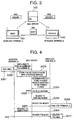
- Fig. 3 shows schematically a communication system, namely, a sending/receiving system, of one embodiment illustrative of the invention.
- the illustrated sending/receiving system is used to send/receive electronic mail (simply called mail hereinafter) and to carry out wireless data transfer or wireless data communication and that the mail has a mail header and a body of mail referred to as a mail body.
- mail electronic mail
- the arrangement being described can be also applied to other file transfer systems among a plurality of wireless terminals.
- a wireless terminal A 101 sends only a mail header to a mail server 102 when mail produced in the wireless terminal A 101 is to be sent to a wireless terminal B 103. Furthermore, the wireless terminal B 103, after receiving the mail header from the mail server 102, directly receives a mail body corresponding to the mail header from the wireless terminal A 101.
- Fig. 4 illustrates a procedure based on a protocol used in the sending/receiving system.
- the wireless terminal A 101 generates mail (S3O1) to be sent to the wireless terminal B 103 (S301). In this event the wireless terminal A 101 sends only a mail header of the mail to the mail server 102 (S302). Then, the mail server 102 stores the mail header in a memory (S308). Next, the wireless terminal, namely, a receiving terminal B 103 accesses the mail server 102 and determines whether or not a mail header addressed to the terminal B 103 is stored in the mail server 102 (S304).
- the mail server 102 If a mail header addressed to the wireless terminal B 103 is present in the mail server 102, the mail server 102 notifies the wireless terminal B 103 of the existence of the mail header (S305).
- the wireless terminal B 103 requests the mail server 102 to send the mail header to the wireless terminal B 103 in response to the notification (S306).
- the mail server 102 sends the mail header to the wireless terminal B 103 in response to the request (S307). Consequently, the wireless terminal B 103 can find that a source terminal of the mail header is the wireless terminal A 101 by referring to the contents of the mail header (S308).
- the wireless terminal B 103 is connected to the wireless terminal A 101, and the wireless terminal A 101 is requested to send a mail body, corresponding to the mail header which has just been received, to the wireless terminal B 103 (S310).
- the wireless terminal A 101 sends the mail body to the wireless terminal B 103 in response to the request.
- the wireless terminal B 103 is able to store the mail body in its own memory or storage, and to display the mail body to the user of the wireless terminal B 103 (S311).
- the wireless terminal A 101 sends mail
- the wireless terminal B 103 receives the mail for the convenience of explanation.
- both of the wireless terminals B 103, A 101 can be operated as appropriate as the sending and the receiving terminals, respectively, by exchanging function of each wireless terminal.
- the wireless terminal A 101 shown in Fig. 1 can be configured as shown in Fig. 10 and may be similar in structure to B 103, although the description will be restricted to the wireless terminal A 101 alone.
- the wireless terminal A 101 includes a data processing unit 1001 which is connected to each unit described below via a bus 1002 and which controls the units.
- a mail producing unit 1004 is used to draft and edit mail by a user, while a storage unit 1005 stores the mail which is produced, or which is being produced.
- an input unit 1003 is operable to receive an instruction for sending the mail from the user, while a mail header sending unit 1006 serves to read mail from the storage unit 1005, in response to an instruction for sending the mail from a user, and to send a mail header for the mail to a mail server 102 by the use of a wireless transmission network.
- a mail body sending unit 1007 serves to send a mail body to a mail server, or to a wireless terminal, which can be connected to the wireless terminal A 101 via a wireless transmission network, and which is indicated as a receiving address.
- the mail body sending unit 1007 is able to divide mail body into parts or pieces and to send the parts or pieces, when the size of the mail body exceeds a predetermined size, as required.
- the mail server 102 shown in Fig. 3 is structured in the manner shown in Fig. 11.
- the mail server 102 includes a data processing unit 1101 which is connected to each unit described below via a bus 1102 and controls the units.
- the illustrated mail server 102 includes, as the units, a mail header receiving unit 1103 which receives a mail header from a wireless terminal A 101 via a wireless transmission network, a mail body receiving unit 1104 which receives a mail body from a wireless terminal A 101 via a wireless transmission network, a storage unit 1106 which stores a mail header and a mail body which is received, a mail header analysing unit 1105 which reads the received mail header from the storage unit 1106 and compares contents in the mail header with any conditions, a mail header sending unit 1107 which sends a mail header using a wireless transmission network to a wireless terminal B 103 in response to a request from the wireless terminal B 103, and a mail body sending unit 1108 which sends a mail body to a wireless terminal B 103.
- the wireless terminal B 103 shown in Fig. 1 can be designed in the way shown in Fig. 12.
- the wireless terminal B 103 includes a data processing unit 1201 which is connected to each unit described below via a bus 1202 and which controls the units.
- the illustrated wireless terminal B103 includes, as the units, a mail header receiving unit 1205, which determines whether or not a mail header addressed to the wireless terminal B 103 exists in the mail server 102 and which receives the mail header via a wireless transmission network according to the existence of a mail header in the mail server 102, and a mail body receiving unit 1206 which receives the mail body corresponding to the mail header via a transmission network from the mail server 102, or from a wireless terminal which can be connected to the wireless terminal B 103, and which is indicated by a sending address.
- the illustrated wireless terminal B 103 further includes a storage unit 1208 which stores the received mail header and the mail body, a mail header analysing unit 1207 which obtains header information, such as a sending address or the size of the mail body from the received mail header, a timer 1212 which times the duration of a message and notifies the data processing unit 1201 of the passage of time by using an interrupt, a mail displaying unit 1204 which displays the received mail header and the mail body to a user, and an input unit 1203 which receives an instruction to operate from a user, and a receiving quality monitoring unit 1211, which monitors the status of a battery for data receiving and of a radio wave.
- a storage unit 1208 which stores the received mail header and the mail body
- a mail header analysing unit 1207 which obtains header information, such as a sending address or the size of the mail body from the received mail header
- a timer 1212 which times the duration of a message and notifies the data processing unit 1201 of the passage of time by using an interrupt
- the receiving quality monitoring unit 1211 monitors a receiving quality which is specified by a difference, a check-sum derived from data received in receiving a mail body and a check-sum appended to the received data.
- the status of the power is monitored by detecting whether or not a power supply voltage of the wireless terminal B 103 is lower than a certain threshold voltage and the radio field intensity is also monitored by detecting whether or not the intensity of the receiving radio wave is below a certain threshold intensity.
- a check-sum for example, means the value of a least significant byte of a summation obtained by adding all bytes in a length of the data flow.
- the mail body receiving unit 1206 can treat data sent in the form of a plurality of divided mail data as a mail body by concatenating a plurality of divided mail data after their receipt.
- the wireless terminal A 101 produces mail from a user and sends it to the mail server 102 (S501).
- the wireless terminal A 101 commences a procedure which is based on the mail header sending protocol (S502) between the wireless terminal A 101 and the mail server 102, assuming that the mail server 102 is connected to the wireless terminal A 101.
- S502 the mail header sending protocol
- a mail header in the mail to be sent to the wireless terminal B 103 is sent from the wireless terminal A 101 to the mail server 102, and the wireless terminal A 101 notifies the mail server 102 that the wireless terminal A 101 stores a mail body in the mail addressed to the wireless terminal B 103.
- the wireless terminal B 103 After completion of the mail header sending protocol (S502), the wireless terminal B 103 begins to connect to the mail server 102 by responding to a trigger signal, such as timer interrupt signal (S503), and starts the procedure which is based on a mail header receiving protocol (S504) so as to determine whether or not a mail header addressed to the wireless terminal B 103 exists in the mail server 102.
- a trigger signal such as timer interrupt signal (S503)
- S504 a mail header receiving protocol
- the wireless terminal B 103 detects a new mail (header) addressed to the wireless terminal 103.
- the wireless terminal B 103 When the new mail header addressed to the wireless terminal B103 in the mail server 102 is detected in accordance with the procedure based on the mail header receiving protocol (S504), the wireless terminal B 103 immediately starts the procedure which is based on a mall body receiving protocol (S505).
- the wireless terminal A 101 may not immediately start the procedure which is based on a mail body receiving protocol (S611). For example, as shown in Fig. 6, the wireless terminal A 101 may start the procedure which is based on the mail body receiving protocol (S611) on any condition such as when three new mail headers have been received.
- the wireless terminal B 103 finds a new mail header addressed to wireless terminal B 103 in the mail server 102 by using the procedure which is based on the mail header receiving protocol (S504). After that, the wireless terminal B 103 immediately receives a mail body corresponding to the new mail header from the wireless terminal A 101 or from the mail server 102 by using the procedure which is based on the mail body receiving protocol (S505).
- Fig. 7 shows the procedure based on the mail header sending protocol (S502) in detail.
- the procedures based on the mail header sending protocol (S602, S606, S608) shown in Fig. 6 are also similar to the procedure shown in Fig. 7.
- a user produces a mail message by means of the mail producing unit 1004 (S701) and instructs the mail to be sent by the use of the input unit 1003 (S703), and then a series of steps is started.
- the mail server 102 is ready for receiving a mail header from a wireless terminal connected to the mail server 102 (S702).
- the wireless terminal A 101 sends a mail header to the mail server 102 through a wireless telephone network connected between the wireless terminal A 101 and the mail server 102 by using the mail header sending unit 1006 (S704).
- the mail server 102 receives the mail header by using the mail header receiving unit 1103.
- the mail header has a plurality of data fields and at least includes a source address, a destination address, a size of mail body, a title, a mail ID, and a flag arranged in the data fields.
- the mail ID is a number produced in the wireless terminal A 101, and is not a duplicate of the other mail ID in the wireless terminal A 101.
- the flag in the mail header is OxO1(HEX)
- the flag in the mail header is OxOO(HEX)
- the mail server 102 stores the received mail header in a storage medium in the mail server 102 by using the storage unit 1106 (S705).
- the mail server 102 analyses the contents of the mail header by using the mail header analysing unit 1105 (S706). If a value of the flag in the mail header is OxO1(HEX), such a situation is referred to as "the flag exists", the mail server 102 skips the following steps (S708 to S710) and immediately requests the wireless terminal A 101 to send a mail body to the mail server 102 (S711).
- the mail server 102 determines the size of the mail body (S708). If the size of the mail body exceeds 5,000 bytes, the mail server 102 immediately ends the procedure which is based on the mail header sending protocol (S502) (S716). In a similar manner, the wireless terminal A 101 ends the procedure (S715).
- the mail server 102 checks the past access status information pertaining to the wireless terminal B 103 which is designated as a destination (S709).
- the access status information is stored in a storage medium in the mail server 102, and automatically updated each time that the access operation is made from each terminal
- the access status information which is used for the access operation to the mail server 102.
- the access status information generally includes a destination address which is used for identifing a destination terminal, a connection date/time standing for a date/time at which the terminal begins to connect to the mail server 102, and a disconnection date/time standing for a date/time at which the terminal ends the connection.
- the access status information can be stored in several forms according to a storing unit for storing the information.
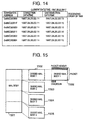
- the wireless terminal B 103 (which has an address of 0x85C80002(HEX)) is a destination terminal, and the access status information in Fig. 14, which is representative of the current date/time of "1997. 08. 22. 09:17", is representative of the fact that the wireless terminal B 103 had been connected to the mail server 102 for a period from "1997. 08. 20. 22:11" to '1997. 08. 20. 22:15". Therefore, the wireless terminal B 103 had accessed the mail server 102 for the last two days. When the mail server 102, recognizes this fact, it immediately ends the procedure which is based on the mail header sending the protocol (S502) (S716). Simultaneously, the wireless terminal A 101 also ends the procedure (S715).
- the mail server 102 determines that the wireless terminal B 103 has suspended the mail sending/receiving operation recently for some reason. In such a situation, the mail server 102 determines that the probability is not high that the wireless terminal B 103 will receive a mail body from the wireless terminal A 101, for example, in two or three days. Therefore, to reduce the load upon the wireless terminal A 101, the mail server 102 moves the mail header from the wireless terminal A 101 to a store.
- the wireless terminal A 101 when the mail server 102 requests the wireless terminal A 101 to send the mail body to the mail server 102 (S711), in response to the request, the wireless terminal A 101 sends the mail body to the mail server 102 by using the mail body sending unit 1007 (S712).
- the mail server 102 requests the mail body (S711), receives the mail body (S712), stores the received mail body in a storage medium (S713), and sends a notification of the completion of reception to the wireless terminal A 101 by using the mail body receiving unit 1104 (S714).
- the wireless terminal A 101 and the mail server 102 end each procedure based on the mail header sending protocol (S715, S716).
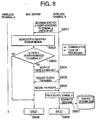
- Fig. 8 shows the procedure including steps based on the mail header receiving protocol (S504).
- the wireless terminal B 103 provides a connection to the mail server 102 in response to a trigger signal, such as a timer interrupt signal (S503).
- a trigger signal such as a timer interrupt signal (S503).
- the first step of the procedure based on the mail header receiving protocol (S504) is, in the wireless terminal B 103, to request the mail server 102 to determine whether or not there is a mail header addressed to the wireless terminal B 103 in the mail server 102 (S801).
- the mail server 102 searches for a mail header addressed to the wireless terminal B 103 in its storage medium (S802) in response to the request from the wireless terminal B 103 (S801).
- the mail server 102 immediately ends the procedure which is based on the mail header receiving protocol (S504) (S808).
- the wireless terminal B 103 ends the procedure (S809).
- the mail server 102 detects a mail header addressed to the wireless terminal B 103, it then notifies the wireless terminal B 103 of existence of a new mail message (S804).
- the wireless terminal B 103 requests the mail server 102 to send this mail header to the wireless terminal B 103 (S805).
- the mail server 102 sends the mail header to the wireless terminal B 103, and the wireless terminal B 103 receives it (S806).
- the mail server 102 ends the procedure which is based on the mail header receiving protocol (S504). The series of steps of the procedure are carried out in the mail server 102 by using the mail header sending unit 1107.
- the wireless terminal B 103 achieves the series of steps (S801 to S806) by using the mail header receiving unit 1205, and refers to the received mail header by using the mail header analysing unit 2207 to find that the source terminal of the mail is the wireless terminal A 101. This also means that there is a mail body corresponding to the mail header in the wireless terminal A 101.
- the wireless terminal B 103 reserves the reception of the mail body by using the address of the wireless terminal A 101, which is the address of the source terminal (S807). Reserve information is stored in the storage area in the wireless terminal B 103. After the completion of the reservation, the wireless terminal B 103 ends the procedure which is based on the mail header receiving protocol (S504) (S809).
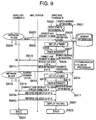
- the wireless terminal B 103 when the wireless terminal B 103 detects a mail body addressed to the wireless terminal B 103 in the wireless terminal A 101 by the procedure which is based on the mail header protocol (S504), the wireless terminal B 103 finds that there is a mail body addressed to the wireless terminal B 103 in the mail server 102, and it finds that there is a timer interrupt in the wireless terminal B 103, or it receives user's instructions, searches the reserve information and determines whether a receiving reserve exists or not (S901) in the information.
- the wireless terminal B 103 when it determines that a receiving reserve exists and the mail body exists in the wireless terminal A 101, immediately makes a connection to the wireless terminal A 101 and requests the wireless terminal A 101 to send the mail body to the wireless terminal B 103 (S903).
- a user speaks over a wireless network by using the wireless terminal A 101 (S904)
- the connection between the wireless terminal A 101 and the wireless terminal B 103 is caused to fail (S905).
- the wireless network can fail to be connected when a user who uses the wireless terminal A 101 is using the network, but the wireless terminal A 101 is then automatically connected to another mail server, or the wireless terminal A 101 is located out of the area where it can send/receive a radio wave.
- the wireless terminal B 103 when it determines the failure of the connection to the wireless network, reserves the situation for receiving (S906) with the determined reserve for receiving (S901). After the reservation, the wireless terminal B 103 sets up a timer 1212 (S907) so that the wireless terminal B 108 determines the existence of the reservation for receiving for a certain time (for example, for once every hour) (S909). Next, the wireless terminal B 103 can pause in its operation thereby saving battery power.
- the wireless terminal B 103 when it is again activated by a timer interrupt (S908), firstly determines the reservation for receiving (S909).
- the wireless terminal B 103 refers to the receiving reservation, makes a connection to the wireless terminal A 101, and requests the wireless terminal A 101 to send the mail body to the wireless terminal B 103 (S909 to S910) by means of steps similar to the steps S901 to S903.
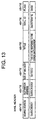
- the wireless terminal A 101 divides the mail body and sends the divided parts.
- the wireless terminal A 101 further appends a packet header for sending and a corresponding check-sum to each divided piece of the mail body (1502 to 1505) and sends it to the wireless terminal B103.
- the packet header need not include address information, however, it may include the mail ID, the number of the divided mail body, and information representative of what area in the whole mail body the divided mail body corresponds to, since this is convenient for classifing the mail body after the wireless terminal B 103 receives it.
- the receiving quality monitoring unit 1211 of the wireless terminal B 103 refers to the received mail body packet 1506, calculates a check-sum from the divided mail body 1 (1502), and compares it with a check-sum in the mail body packet 1506.
- the wireless terminal B 103 when both the check-sums are not identical with each other, requests the wireless terminal A 101 to send the mail body packet again to the wireless terminal B 103, and receives the mail body from the wireless terminal A 101 again.
- the wireless network used for the wireless terminal A101 can be used for other purposes than communication, after the completion of sending (S912) of the divided mail body 2 (1503). At this point, in such a situation connection for the communication may be suspended.
- the situation in which the communication and the connection for the communication are suspended can be similar to that in which the connection of the wireless network has failed, as described above.
- the wireless terminal B 103 determines that the communication and the connection for the communication have been suspended, it reserves the receiving situation again (S914 to S915) in a manner similar to the above steps (S906 and S907). However, information representative of the fact that the divided mail body 1 and 2 (1502, 1503) have been received should be appended to the reservation for reception in steps S906 and S907 (S914), because the divided mail body 1 and 2 (1502, 1503) have already been received by the wireless terminal B 103 among the whole mail body 1501.
- the wireless terminal B 103 which is activated by the timer interrupt (S916) again, firstly determines that the reception has been reserved (S917) and detects that there are reception reserves and that the wireless terminal B 103 had received the divided mail bodies 1 and 2 (1502, 1503). Therefore, the wireless terminal B 103 is connected to the wireless terminal A 101 and the wireless terminal A 101 is requested to send further divided mail bodies, except for the divided mail bodies 1 and 2 (1502, 1503) which are of a part of the mail body 1501 (S918).
- the wireless terminal A 101 sends to the wireless terminal B 103 the divided mail bodies 3 and 4 (1504, 1505) (S919, S920).
- the wireless terminal B 103 receives the divided mail bodies 3 and 4 (1504, 1505) (S919, S920).
- the wireless terminal A 101 ends the procedure based on the mail body receiving protocol (S505) (S922).
- the wireless terminal B 103 may reconstruct the received mail bodies 1 to 4 (1502 to 1505) to display them as a single mail body (1501) (S921) by using the mail displaying unit 1204.
- the wireless terminal B 103 ends the procedure based on the mail body receiving protocol (S505) (S923).
- the wireless terminal B 103 reserves reception, and sets up the timer 1212, the other operations can be made by the wireless terminal B 103.
- the wireless terminal B 103 can activate the procedure based on the mail header receiving protocol (S504). In this case, if there is a new mail header in the mail server 102, the number of the reservation for receiving in the reservation information is incremented by one.
- the wireless terminal B 103 finds that the number of the reservation for receiving is incremented (S909). Then receiving the new mail can be done with no problem by processing mails corresponding to the incremented reservation for receiving one by one.
- the wireless terminal B 103 carries out a procedure based on a mail body receiving protocol (S505) and is able to receive a plurality of mail bodies from a single source terminal in a single connection to a wireless network and to reduce the number of connections to the network by reordering a plurality of reservations for reception by using a source address as a key, when the wireless terminal B 103 determines the reservation information (S901, S909, S917) and, as a result, it is found that there are a plurality of reservations for reception.
- S505 mail body receiving protocol
- a wireless data transfer system has the wireless terminal B 103, and employs a procedure based on the mail body receiving protocol (S505) employed in the previously proposed arrangement illustrative of the invention.
- the wireless terminal B 103 of this further arrangement intends to make a connection to the wireless terminal A 101 designated by a source address (S903, S910, S918), it determines whether or not there is sufficient receiving field intensity to use a wireless network by using the receiving quality monitoring unit 1211 before the connection is made. The situation in which there is sufficient field intensity may be referred to as "being in a communication area”.
- the wireless terminal B 103 when it determines that the wireless terminal B 103 is in a communication area, automatically makes the connection to the wireless terminal A 101.
- the receiving field intensity is determined not to be enough, when the intensity level of a radio wave which is received and monitored at all times falls below the predetermined threshold value. Any conventional technology for measuring the intensity level may be used.
- a wireless data transfer system has the wireless terminal B 103, and employs a procedure based on the mail body receiving protocol (S505) described with reference to the previous arrangements illustrative of the invention.
- S505 mail body receiving protocol
- it is intended to make a connection to the wireless terminal A 101 designated by a source address (S903, S910, S918) it is determined whether or not its own battery has sufficient power remaining for use in the wireless network by using the receiving quality monitoring unit 1211 before the connection is made.
- the wireless terminal B 103 when it is determined that the remainder of its battery power is sufficient, is automatically connected to the wireless terminal A 101.
- the remainder of the battery power for the wireless terminal B 103 is determined not to be enough, when voltage of the battery which, is monitored at all times, falls below a predetermined threshold value. Any conventional technology for measuring the voltage of the battery may be used.
- a wireless data transfer system has the wireless terminal B 103, and employs a procedure based on the mail body receiving protocol (S505) described with reference to the previous arrangements illustrative of the invention, during the receipt of a mail body (S911, S912, S918, S919), and determines whether or not the receiving quality has been degraded in receiving the mail body by using the receiving quality monitoring unit 1211.
- the wireless terminal B 103 when it is determined that the receiving quality has been degraded, automatically suspends the communication and connection in which the communication has been made, and immediately makes a reservation for receiving again (S906, S914) and sets up the timer (S907, S915).
- the wireless terminal B 103 when the timer interrupt (S908, S916) occurs, automatically makes a connection to the wireless terminal A 101.
- the receiving quality monitoring unit 1211 refers to the received mail body packet 1506, calculates a check-sum from the divided mail body 1 (1502), and compares the check-sum with a check-sum from the mail body packet 1506. When they are not identical, the receiving quality monitoring unit 1211 requests the wireless terminal A 101 to send the mail body packet again to the wireless terminal B 103, and receives the mail body packet again from the wireless terminal A 101. In the above procedure, the receiving quality monitoring unit 1211 determines that the receiving quality of the mail body packet is not sufficient, when, for example, it occurs that the check-sums are not identical five times successively. Any conventional technologies for calculating a check-sum may be used.
- the central apparatus sends/receives only attribution information pertaining to the digital data. Furthermore, the central apparatus can reduce the communication costs wasted on receiving digital data which is unnecessary for a user receiving digital data, by automatically suspending sending/receiving data when the radio field intensity becomes not stable and, after that, automatically restarting the sending/receiving when the radio field intensity becomes stable. The central apparatus can also reduce the amount of resources in a wireless transmission network occupied by the whole system.
- the central apparatus is able to reduce the amount of storage resources which it employs by sending/receiving only the attribution information pertaining to digital data.
- communication can be automatically suspended according to the degradation of the quality of a wireless network, or a request for a network from a user, and automatically restarted when reliable data transfer is guaranteed.
- the battery power resource of the wireless terminal can be saved.
- the status of the connection between a central apparatus and a wireless terminal, which is designated for the destination of digital data, is monitored and when a wireless terminal which has not been connected for any given period is designated as the destination, the data is automatically stored in a conventional manner in the central apparatus.
- the piling-up of the digital data which has not been sent in the wireless terminal which sends the digital data is avoided.
Landscapes
- Engineering & Computer Science (AREA)
- Computer Networks & Wireless Communication (AREA)
- Signal Processing (AREA)
- Information Transfer Between Computers (AREA)
- Computer And Data Communications (AREA)
- Data Exchanges In Wide-Area Networks (AREA)
- Small-Scale Networks (AREA)
- Mobile Radio Communication Systems (AREA)
Applications Claiming Priority (3)
| Application Number | Priority Date | Filing Date | Title |
|---|---|---|---|
| JP32125097A JP3337062B2 (ja) | 1997-11-21 | 1997-11-21 | 無線データ転送方法及びそのシステム |
| JP321250/97 | 1997-11-21 | ||
| JP32125097 | 1997-11-21 |
Publications (2)
| Publication Number | Publication Date |
|---|---|
| EP0918420A2 true EP0918420A2 (fr) | 1999-05-26 |
| EP0918420A3 EP0918420A3 (fr) | 2005-09-14 |
Family
ID=18130488
Family Applications (1)
| Application Number | Title | Priority Date | Filing Date |
|---|---|---|---|
| EP98309536A Withdrawn EP0918420A3 (fr) | 1997-11-21 | 1998-11-20 | Méthode et système pour le transfert de données sans fil |
Country Status (5)
| Country | Link |
|---|---|
| US (1) | US6363412B1 (fr) |
| EP (1) | EP0918420A3 (fr) |
| JP (1) | JP3337062B2 (fr) |
| KR (1) | KR19990045507A (fr) |
| CN (1) | CN1146204C (fr) |
Cited By (23)
| Publication number | Priority date | Publication date | Assignee | Title |
|---|---|---|---|---|
| EP1071029A3 (fr) * | 1999-07-23 | 2002-02-13 | Phone.Com Inc. | Méthode et système de mise à disposition de services de courrier électronique vers des dispositifs mobiles avec une utilisation efficace de largeur de bande |
| KR100382446B1 (ko) * | 1998-05-20 | 2003-05-01 | 루센트 테크놀러지스 인크 | 무선 화일 처리 시스템 및 그 방법과 통신 인프라 구조 |
| GB2382752A (en) * | 2001-10-17 | 2003-06-04 | Nec Corp | Electronic mail communication system terminal and related method |
| EP1329789A1 (fr) * | 2002-01-18 | 2003-07-23 | Telefonaktiebolaget Lm Ericsson | Chargement de données dans un terminal mobile |
| WO2003060673A1 (fr) * | 2002-01-18 | 2003-07-24 | Telefonaktiebolaget Lm Ericsson (Publ) | Chargement de donnees dans un terminal mobile |
| WO2003010932A3 (fr) * | 2001-07-26 | 2004-04-08 | Kyocera Wireless Corp | Systeme et procede de communication par combines homologues |
| US6918108B2 (en) | 2001-07-26 | 2005-07-12 | Kyocera Wireless Corp. | System and method for field diagnosis of wireless communications device system software |
| US6961537B2 (en) | 2001-08-10 | 2005-11-01 | Kyocera Wireless Corp. | System and method for peer-to-peer handset communication |
| US7027806B2 (en) | 2001-07-26 | 2006-04-11 | Kyocera Wireless, Corp. | System and method for field downloading a wireless communications device software code section |
| US7159214B2 (en) | 2001-07-26 | 2007-01-02 | Kyocera Wireless Corp. | System and method for compacting field upgradeable wireless communication device software code sections |
| US7184793B2 (en) | 2001-07-26 | 2007-02-27 | Kyocera Wireless Corp. | System and method for over the air area code update |
| US7184759B2 (en) | 2001-07-26 | 2007-02-27 | Kyocera Wireless Corp. | Modular software components for wireless communication devices |
| GB2430054A (en) * | 2005-09-13 | 2007-03-14 | Abacus Accounts System Ltd | Data handling system for the transmission of messages |
| US7197302B2 (en) | 2001-07-26 | 2007-03-27 | Kyocera Wireless Corp. | System and method for interchangeable modular hardware components for wireless communication devices |
| US7200389B2 (en) | 2001-07-26 | 2007-04-03 | Kyocera Wireless Corp. | Dynamic interface software for wireless communication devices |
| US7254386B2 (en) | 2001-08-10 | 2007-08-07 | Kyocera Wireless Corp. | System and method for improved security in handset reprovisioning and reprogramming |
| US7328007B2 (en) | 2001-07-26 | 2008-02-05 | Kyocera Wireless Corp. | System and method for organizing wireless communication device system software |
| US7359698B2 (en) | 2003-09-08 | 2008-04-15 | Kyocera Wireless Corp. | Systems and methods for enhanced over-the-air programming |
| US7386846B2 (en) | 2001-07-26 | 2008-06-10 | Kyocera Wireless Corp. | System and method for the management of wireless communications device system software downloads in the field |
| EP1453288A4 (fr) * | 2001-12-07 | 2009-12-16 | Ntt Docomo Inc | Systeme et procede de commande d'execution de module de communication, systeme et procede de commande d'execution d'application |
| EP1920340A4 (fr) * | 2005-07-28 | 2010-05-05 | Vaporstream Inc | Systeme et procede de messagerie electronique a traçabilite reduite |
| US9282081B2 (en) | 2005-07-28 | 2016-03-08 | Vaporstream Incorporated | Reduced traceability electronic message system and method |
| US9554268B2 (en) | 2001-07-26 | 2017-01-24 | Kyocera Corporation | System and method for updating persistent data in a wireless communications device |
Families Citing this family (68)
| Publication number | Priority date | Publication date | Assignee | Title |
|---|---|---|---|---|
| US7209949B2 (en) * | 1998-05-29 | 2007-04-24 | Research In Motion Limited | System and method for synchronizing information between a host system and a mobile data communication device |
| US6438585B2 (en) * | 1998-05-29 | 2002-08-20 | Research In Motion Limited | System and method for redirecting message attachments between a host system and a mobile data communication device |
| US6219694B1 (en) | 1998-05-29 | 2001-04-17 | Research In Motion Limited | System and method for pushing information from a host system to a mobile data communication device having a shared electronic address |
| US6779019B1 (en) * | 1998-05-29 | 2004-08-17 | Research In Motion Limited | System and method for pushing information from a host system to a mobile data communication device |
| US6977921B1 (en) * | 1998-08-19 | 2005-12-20 | Lucent Technologies Inc. | Using discrete message-oriented services to deliver short audio communications |
| JP3447624B2 (ja) * | 1999-08-10 | 2003-09-16 | エヌイーシーアクセステクニカ株式会社 | 移動通信システム及び移動端末 |
| KR100677070B1 (ko) * | 1999-10-02 | 2007-02-01 | 삼성전자주식회사 | 무선 멀티미디어 통신에서의 비디오 비트스트림 데이터의 오류 제어방법 및 이를 위한 기록 매체 |
| KR20010073517A (ko) * | 2000-01-17 | 2001-08-01 | 정관선 | 인터넷 상에서의 이메일 역선택방법 및 장치 |
| US8156074B1 (en) * | 2000-01-26 | 2012-04-10 | Synchronoss Technologies, Inc. | Data transfer and synchronization system |
| US6694336B1 (en) * | 2000-01-25 | 2004-02-17 | Fusionone, Inc. | Data transfer and synchronization system |
| US8620286B2 (en) * | 2004-02-27 | 2013-12-31 | Synchronoss Technologies, Inc. | Method and system for promoting and transferring licensed content and applications |
| US6671757B1 (en) * | 2000-01-26 | 2003-12-30 | Fusionone, Inc. | Data transfer and synchronization system |
| US7505762B2 (en) * | 2004-02-27 | 2009-03-17 | Fusionone, Inc. | Wireless telephone data backup system |
| EP2237580B1 (fr) * | 2000-04-10 | 2013-01-09 | Research In Motion Limited | Système et procédé pour indiquer l'état d'un message |
| WO2001097142A2 (fr) * | 2000-06-15 | 2001-12-20 | Bellsouth Intellectual Property Corporation | Procedes et systemes de dispositif monofonctionnel de courrier electronique internet |
| US6754484B1 (en) * | 2000-07-10 | 2004-06-22 | Nokia Corporation | Short messaging using information beacons |
| US7895334B1 (en) | 2000-07-19 | 2011-02-22 | Fusionone, Inc. | Remote access communication architecture apparatus and method |
| US8073954B1 (en) | 2000-07-19 | 2011-12-06 | Synchronoss Technologies, Inc. | Method and apparatus for a secure remote access system |
| US7587446B1 (en) | 2000-11-10 | 2009-09-08 | Fusionone, Inc. | Acquisition and synchronization of digital media to a personal information space |
| JP3866506B2 (ja) * | 2000-12-04 | 2007-01-10 | 株式会社エヌ・ティ・ティ・ドコモ | 電子メールの配信制御方法及びメールサーバ |
| US20020080415A1 (en) * | 2000-12-12 | 2002-06-27 | Naoto Akimoto | Communication apparatus for forwarding received data |
| US7818435B1 (en) | 2000-12-14 | 2010-10-19 | Fusionone, Inc. | Reverse proxy mechanism for retrieving electronic content associated with a local network |
| US8615566B1 (en) | 2001-03-23 | 2013-12-24 | Synchronoss Technologies, Inc. | Apparatus and method for operational support of remote network systems |
| JP3508735B2 (ja) * | 2001-03-27 | 2004-03-22 | ミノルタ株式会社 | 情報配信システム、情報配信装置、プログラム、情報配信方法、中継サーバー装置及び電子メール受信端末 |
| JP3361509B2 (ja) * | 2001-04-09 | 2003-01-07 | 株式会社学習研究社 | サーバ、情報提供支援方法、プログラム |
| KR20020095947A (ko) * | 2001-06-18 | 2002-12-28 | 엘지전자 주식회사 | 클라이언트와 서버간의 데이터 통신 방법 |
| US20040172453A1 (en) * | 2001-06-28 | 2004-09-02 | Keith De Mendonca | E-mail manager program for a wireless information device |
| JP2003032307A (ja) * | 2001-07-13 | 2003-01-31 | Toshiba Corp | メールサーバおよび情報通信端末 |
| JP2003108503A (ja) * | 2001-09-28 | 2003-04-11 | Fujitsu Fip Corp | データ提供方法、データ取得方法、データ提供サーバ、データ提供プログラム、データ取得プログラム及び記憶媒体 |
| JP3693244B2 (ja) * | 2001-10-31 | 2005-09-07 | 株式会社日立製作所 | 電子メールシステム、メールサーバ及びメール端末 |
| KR20030055817A (ko) * | 2001-12-27 | 2003-07-04 | 삼성전자주식회사 | 메일 헤더 정보를 이용하여 선택적으로 메일을수신/삭제하는 메일 관리 방법 및 메일 클라이언트 단말기 |
| KR100472441B1 (ko) * | 2002-01-11 | 2005-03-08 | 삼성전자주식회사 | 인터넷 메일장치의 선택된 전자메일 수신방법 |
| KR20020024139A (ko) * | 2002-01-28 | 2002-03-29 | 디프소프트 주식회사 | 전자 메일 처리 시스템 및 전자 메일 서비스 방법 |
| US7245611B2 (en) * | 2002-02-27 | 2007-07-17 | J2 Global Communications | Method and process for signaling, communication and administration of networked objects |
| JP3860098B2 (ja) * | 2002-08-30 | 2006-12-20 | 株式会社東芝 | 情報端末装置 |
| US7702739B1 (en) * | 2002-10-01 | 2010-04-20 | Bao Tran | Efficient transactional messaging between loosely coupled client and server over multiple intermittent networks with policy based routing |
| US11223990B2 (en) * | 2002-10-01 | 2022-01-11 | Bao Tran | WiFi and cellular communication traversal |
| FI116816B (fi) * | 2002-10-14 | 2006-02-28 | Nokia Corp | Median suoratoisto |
| US20080261633A1 (en) | 2002-10-22 | 2008-10-23 | Research In Motion Limited | System and Method for Pushing Information from a Host System to a Mobile Data Communication Device |
| JP2004199667A (ja) * | 2002-12-04 | 2004-07-15 | Matsushita Electric Ind Co Ltd | 情報提供装置及びその方法 |
| US20040137919A1 (en) * | 2003-01-13 | 2004-07-15 | Biundo Marc C. | Short message service (SMS) message e-mail configuration message |
| JP2004357095A (ja) * | 2003-05-30 | 2004-12-16 | Sony Corp | 情報処理システム、情報処理装置および情報処理方法、受信装置および受信方法、並びにプログラム |
| WO2005010715A2 (fr) | 2003-07-21 | 2005-02-03 | Fusionone, Inc. | Systeme de gestion de messages de dispositifs |
| US8520511B2 (en) * | 2003-09-11 | 2013-08-27 | Qualcomm Incorporated | Automatic handling of incoming communications at a wireless device |
| JP4278482B2 (ja) | 2003-10-23 | 2009-06-17 | 京セラ株式会社 | 携帯通信端末 |
| US7634509B2 (en) * | 2003-11-07 | 2009-12-15 | Fusionone, Inc. | Personal information space management system and method |
| JP4366182B2 (ja) * | 2003-12-09 | 2009-11-18 | キヤノン株式会社 | 放送受信装置及び放送受信装置の制御方法 |
| US8005462B2 (en) * | 2004-02-17 | 2011-08-23 | Teamon Systems, Inc. | System and method of retrieving electronic mail |
| JP4383952B2 (ja) * | 2004-04-27 | 2009-12-16 | 株式会社エヌ・ティ・ティ・ドコモ | データ配信装置およびデータ配信時刻の変更方法 |
| JP2008500750A (ja) * | 2004-05-12 | 2008-01-10 | フュージョンワン インコーポレイテッド | 高度な連絡先識別システム |
| US9542076B1 (en) | 2004-05-12 | 2017-01-10 | Synchronoss Technologies, Inc. | System for and method of updating a personal profile |
| US20080082421A1 (en) * | 2004-05-12 | 2008-04-03 | Richard Onyon | Monetization of an advanced contact identification system |
| US7567546B2 (en) * | 2004-09-09 | 2009-07-28 | Panasonic Corporation | Transmitter device, bridge device, and receiver device, and network system including the devices |
| US7990964B2 (en) * | 2004-11-24 | 2011-08-02 | Qualcomm Incorporated | System for message delivery to field personnel |
| US8155624B2 (en) | 2005-04-29 | 2012-04-10 | Microsoft Corporation | Automatic wireless device message management responsive to end user preferences |
| WO2006125112A2 (fr) * | 2005-05-19 | 2006-11-23 | Fusionone, Inc. | Autodestruction d'un téléphone cellulaire à distance |
| US8145571B2 (en) | 2005-05-25 | 2012-03-27 | Qualcomm Incorporated | Content transfer control for wireless devices |
| US7882181B2 (en) * | 2005-06-03 | 2011-02-01 | Microsoft Corporation | Minimizing data transfer from POP3 servers |
| KR100765364B1 (ko) * | 2005-11-02 | 2007-10-10 | 전자부품연구원 | 메타데이터를 이용한 이종 단말 간의 멀티미디어 컨텐츠관리 시스템 |
| JP4532394B2 (ja) * | 2005-11-24 | 2010-08-25 | アルパイン株式会社 | 情報処理装置および情報システム |
| EP2115611A4 (fr) * | 2007-01-26 | 2010-02-03 | Fusionone Inc | Système pour et procédé de sauvegarde de contenu pour une utilisation sur un dispositif mobile |
| US8181111B1 (en) | 2007-12-31 | 2012-05-15 | Synchronoss Technologies, Inc. | System and method for providing social context to digital activity |
| US9014640B2 (en) * | 2008-10-31 | 2015-04-21 | Qualcomm Incorporated | Wake-up trigger for implementation of target actions |
| JP5603031B2 (ja) * | 2009-06-26 | 2014-10-08 | 京セラ株式会社 | 携帯電子機器および制御方法 |
| US8255006B1 (en) | 2009-11-10 | 2012-08-28 | Fusionone, Inc. | Event dependent notification system and method |
| CN101789969B (zh) * | 2010-01-22 | 2012-12-05 | 北京网御星云信息技术有限公司 | 一种识别对等网络中业务数据的方法和装置 |
| US8943428B2 (en) | 2010-11-01 | 2015-01-27 | Synchronoss Technologies, Inc. | System for and method of field mapping |
| US9515943B2 (en) * | 2013-01-31 | 2016-12-06 | Solace Systems, Inc. | Topic discard indication |
Family Cites Families (16)
| Publication number | Priority date | Publication date | Assignee | Title |
|---|---|---|---|---|
| JPH06152641A (ja) * | 1992-10-30 | 1994-05-31 | Yokogawa Hewlett Packard Ltd | 電子メール送信方法 |
| JPH06243059A (ja) * | 1993-02-19 | 1994-09-02 | Hitachi Ltd | ファイル転送の中断・再開方式 |
| JPH07183824A (ja) | 1993-12-22 | 1995-07-21 | Tamura Electric Works Ltd | 無線端末装置 |
| JPH0865356A (ja) * | 1994-08-15 | 1996-03-08 | Nec Corp | Pcカード無線モデム |
| US5742905A (en) * | 1994-09-19 | 1998-04-21 | Bell Communications Research, Inc. | Personal communications internetworking |
| US5802312A (en) * | 1994-09-27 | 1998-09-01 | Research In Motion Limited | System for transmitting data files between computers in a wireless environment utilizing a file transfer agent executing on host system |
| JP3220600B2 (ja) | 1994-11-04 | 2001-10-22 | シャープ株式会社 | 無線電子メール受信システム |
| US5905865A (en) * | 1995-10-30 | 1999-05-18 | Web Pager, Inc. | Apparatus and method of automatically accessing on-line services in response to broadcast of on-line addresses |
| US5903723A (en) * | 1995-12-21 | 1999-05-11 | Intel Corporation | Method and apparatus for transmitting electronic mail attachments with attachment references |
| FI102869B (fi) * | 1996-02-26 | 1999-02-26 | Nokia Mobile Phones Ltd | Laite, menetelmä ja järjestelmä eri sovelluksiin liittyvien tietojen l ähettämiseksi ja vastaanottamiseksi |
| US5948066A (en) * | 1997-03-13 | 1999-09-07 | Motorola, Inc. | System and method for delivery of information over narrow-band communications links |
| US6009462A (en) * | 1997-06-16 | 1999-12-28 | Digital Equipment Corporation | Replacing large bit component of electronic mail (e-mail) message with hot-link in distributed computer system |
| US6119167A (en) * | 1997-07-11 | 2000-09-12 | Phone.Com, Inc. | Pushing and pulling data in networks |
| US6052735A (en) * | 1997-10-24 | 2000-04-18 | Microsoft Corporation | Electronic mail object synchronization between a desktop computer and mobile device |
| US5951636A (en) * | 1997-12-04 | 1999-09-14 | International Business Machines Corp. | Accessing a post office system from a client computer using applets |
| US6061729A (en) * | 1997-12-31 | 2000-05-09 | Alcatel Usa Sourcing, L.P. | Method and system for communicating service information in an advanced intelligent network |
-
1997
- 1997-11-21 JP JP32125097A patent/JP3337062B2/ja not_active Expired - Fee Related
-
1998
- 1998-11-20 EP EP98309536A patent/EP0918420A3/fr not_active Withdrawn
- 1998-11-20 US US09/196,539 patent/US6363412B1/en not_active Expired - Fee Related
- 1998-11-21 CN CNB981240909A patent/CN1146204C/zh not_active Expired - Fee Related
- 1998-11-21 KR KR1019980050325A patent/KR19990045507A/ko not_active Withdrawn
Non-Patent Citations (1)
| Title |
|---|
| PALME J ET AL: "Issues when designing filters in messaging systems" COMPUTER COMMUNICATIONS, ELSEVIER SCIENCE PUBLISHERS BV, AMSTERDAM, NL, vol. 19, no. 2, February 1996 (1996-02), pages 95-101, XP004032392 ISSN: 0140-3664 * |
Cited By (47)
| Publication number | Priority date | Publication date | Assignee | Title |
|---|---|---|---|---|
| KR100382446B1 (ko) * | 1998-05-20 | 2003-05-01 | 루센트 테크놀러지스 인크 | 무선 화일 처리 시스템 및 그 방법과 통신 인프라 구조 |
| EP1071029A3 (fr) * | 1999-07-23 | 2002-02-13 | Phone.Com Inc. | Méthode et système de mise à disposition de services de courrier électronique vers des dispositifs mobiles avec une utilisation efficace de largeur de bande |
| US7386846B2 (en) | 2001-07-26 | 2008-06-10 | Kyocera Wireless Corp. | System and method for the management of wireless communications device system software downloads in the field |
| US7027806B2 (en) | 2001-07-26 | 2006-04-11 | Kyocera Wireless, Corp. | System and method for field downloading a wireless communications device software code section |
| US8479180B2 (en) | 2001-07-26 | 2013-07-02 | Kyocera Corporation | Maintenance of over the air upgradeable wireless communication device software |
| WO2003010932A3 (fr) * | 2001-07-26 | 2004-04-08 | Kyocera Wireless Corp | Systeme et procede de communication par combines homologues |
| US6918108B2 (en) | 2001-07-26 | 2005-07-12 | Kyocera Wireless Corp. | System and method for field diagnosis of wireless communications device system software |
| US7197302B2 (en) | 2001-07-26 | 2007-03-27 | Kyocera Wireless Corp. | System and method for interchangeable modular hardware components for wireless communication devices |
| CN1310488C (zh) * | 2001-07-26 | 2007-04-11 | 基奥赛拉无线公司 | 用于对等手机通信的系统及方法 |
| US7328007B2 (en) | 2001-07-26 | 2008-02-05 | Kyocera Wireless Corp. | System and method for organizing wireless communication device system software |
| US7143407B2 (en) | 2001-07-26 | 2006-11-28 | Kyocera Wireless Corp. | System and method for executing wireless communications device dynamic instruction sets |
| US7159214B2 (en) | 2001-07-26 | 2007-01-02 | Kyocera Wireless Corp. | System and method for compacting field upgradeable wireless communication device software code sections |
| US7184793B2 (en) | 2001-07-26 | 2007-02-27 | Kyocera Wireless Corp. | System and method for over the air area code update |
| US7184759B2 (en) | 2001-07-26 | 2007-02-27 | Kyocera Wireless Corp. | Modular software components for wireless communication devices |
| US9554268B2 (en) | 2001-07-26 | 2017-01-24 | Kyocera Corporation | System and method for updating persistent data in a wireless communications device |
| US7542758B2 (en) | 2001-07-26 | 2009-06-02 | Kyocera Wireless Corp. | Field downloading of wireless device software |
| US7200389B2 (en) | 2001-07-26 | 2007-04-03 | Kyocera Wireless Corp. | Dynamic interface software for wireless communication devices |
| US8032865B2 (en) | 2001-07-26 | 2011-10-04 | Kyocera Corporation | System and method for field diagnosis of wireless communications device system software |
| US7359699B2 (en) | 2001-08-10 | 2008-04-15 | Kyocera Wireless Corp. | System and method for peer-to-peer handset communication |
| US7254386B2 (en) | 2001-08-10 | 2007-08-07 | Kyocera Wireless Corp. | System and method for improved security in handset reprovisioning and reprogramming |
| US6961537B2 (en) | 2001-08-10 | 2005-11-01 | Kyocera Wireless Corp. | System and method for peer-to-peer handset communication |
| GB2382752A (en) * | 2001-10-17 | 2003-06-04 | Nec Corp | Electronic mail communication system terminal and related method |
| GB2382752B (en) * | 2001-10-17 | 2005-10-19 | Nec Corp | Electronic mail communication system terminal and related method |
| EP1453288A4 (fr) * | 2001-12-07 | 2009-12-16 | Ntt Docomo Inc | Systeme et procede de commande d'execution de module de communication, systeme et procede de commande d'execution d'application |
| US7558953B2 (en) | 2002-01-18 | 2009-07-07 | Telefonaktiebolaget L M Ericsson (Publ) | Loading data into a mobile terminal |
| EP1329789A1 (fr) * | 2002-01-18 | 2003-07-23 | Telefonaktiebolaget Lm Ericsson | Chargement de données dans un terminal mobile |
| WO2003060673A1 (fr) * | 2002-01-18 | 2003-07-24 | Telefonaktiebolaget Lm Ericsson (Publ) | Chargement de donnees dans un terminal mobile |
| US7359698B2 (en) | 2003-09-08 | 2008-04-15 | Kyocera Wireless Corp. | Systems and methods for enhanced over-the-air programming |
| US9306886B2 (en) | 2005-07-28 | 2016-04-05 | Vaporstream, Inc. | Electronic message recipient handling system and method with separated display of message content and header information |
| US9313156B2 (en) | 2005-07-28 | 2016-04-12 | Vaporstream, Inc. | Electronic message send device handling system and method with separated display and transmission of message content and header information |
| EP1920340A4 (fr) * | 2005-07-28 | 2010-05-05 | Vaporstream Inc | Systeme et procede de messagerie electronique a traçabilite reduite |
| US20140201295A1 (en) * | 2005-07-28 | 2014-07-17 | Vaporstream Incorporated | Electronic Message Content and Header Restrictive Send Device Handling System and Method |
| US8886739B2 (en) * | 2005-07-28 | 2014-11-11 | Vaporstream, Inc. | Electronic message content and header restrictive send device handling system and method |
| US8935351B2 (en) | 2005-07-28 | 2015-01-13 | Vaporstream, Inc. | Electronic message content and header restrictive recipient handling system and method |
| US9282081B2 (en) | 2005-07-28 | 2016-03-08 | Vaporstream Incorporated | Reduced traceability electronic message system and method |
| US9306885B2 (en) | 2005-07-28 | 2016-04-05 | Vaporstream, Inc. | Electronic message send device handling system and method with media component and header information separation |
| US12074841B2 (en) | 2005-07-28 | 2024-08-27 | Snap Inc. | Sender-correlated reply ID generation in electronic messaging system |
| AU2006276974B2 (en) * | 2005-07-28 | 2012-08-23 | Vaporstream Incorporated | Reduced traceability electronic message system and method |
| US9313155B2 (en) | 2005-07-28 | 2016-04-12 | Vaporstream, Inc. | Electronic message send device handling system and method with separation of message content and header information |
| US9313157B2 (en) | 2005-07-28 | 2016-04-12 | Vaporstream, Inc. | Electronic message recipient handling system and method with separation of message content and header information |
| US9338111B2 (en) | 2005-07-28 | 2016-05-10 | Vaporstream, Inc. | Electronic message recipient handling system and method with media component and header information separation |
| US9413711B2 (en) | 2005-07-28 | 2016-08-09 | Vaporstream, Inc. | Electronic message handling system and method between sending and recipient devices with separation of display of media component and header information |
| US11652775B2 (en) | 2005-07-28 | 2023-05-16 | Snap Inc. | Reply ID generator for electronic messaging system |
| US10412039B2 (en) | 2005-07-28 | 2019-09-10 | Vaporstream, Inc. | Electronic messaging system for mobile devices with reduced traceability of electronic messages |
| US10819672B2 (en) | 2005-07-28 | 2020-10-27 | Vaporstream, Inc. | Electronic messaging system for mobile devices with reduced traceability of electronic messages |
| GB2430054A (en) * | 2005-09-13 | 2007-03-14 | Abacus Accounts System Ltd | Data handling system for the transmission of messages |
| GB2430054B (en) * | 2005-09-13 | 2010-02-24 | Abacus Accounts System Ltd | A data handling system |
Also Published As
| Publication number | Publication date |
|---|---|
| JP3337062B2 (ja) | 2002-10-21 |
| JPH11154121A (ja) | 1999-06-08 |
| US6363412B1 (en) | 2002-03-26 |
| CN1228656A (zh) | 1999-09-15 |
| CN1146204C (zh) | 2004-04-14 |
| EP0918420A3 (fr) | 2005-09-14 |
| KR19990045507A (ko) | 1999-06-25 |
Similar Documents
| Publication | Publication Date | Title |
|---|---|---|
| EP0918420A2 (fr) | Méthode et système pour le transfert de données sans fil | |
| JP3225926B2 (ja) | 電子メール送受信方法及びそのシステム並びにプログラムを記録した機械読み取り可能な記録媒体 | |
| US6678361B2 (en) | Method for delivering messages | |
| EP1278390A1 (fr) | Procede de livraison d'informations et appareil de gestion de livraison d'informations | |
| KR100385239B1 (ko) | 근거리망에서 전자 우편 메시지를 전송하기 위한 방법과 장치. | |
| CN1036691C (zh) | 电子邮递消息传送系统 | |
| EP1621039B1 (fr) | Systeme et procede de messagerie d'un dispositif sans fil relatif à l' activité | |
| CN106603394A (zh) | 订阅通知的实现方法和装置 | |
| EP1389023A1 (fr) | Méthode pour fournir des informations de localisation d'un terminal mobile à un groupe de terminaux mobiles | |
| KR20030032052A (ko) | 이동무선네트웍에서의 데이터 전송비용 계산 | |
| CN101155348B (zh) | 一种多媒体消息群发系统及方法 | |
| KR100521033B1 (ko) | 메시지 릴레이 전송 방법 | |
| US5805569A (en) | Packet data communications system having a malfunction list | |
| EP1423980B1 (fr) | Commande de taxation pour des services de message sans fil | |
| CN110086502B (zh) | 车载中继装置、中继装置和方法、信息处理装置和系统 | |
| US7684811B2 (en) | Method for transmitting short messages | |
| JP2000125347A (ja) | 優先レベル付き信号メッセ―ジを用いた移動電話の方法とシステム | |
| JP2004532567A (ja) | マルチメディアメッセージサービス(mms)におけるメッセージング | |
| JP2003516662A (ja) | 電子ポスト情報を伝送するための方法 | |
| JP2994266B2 (ja) | ノード間の電子メール送信方法および電子メール送信システム | |
| JP3201322B2 (ja) | 電子メール課金システム | |
| JPH1165955A (ja) | 電子メールシステム及び端末装置 | |
| JPH09214545A (ja) | ネットワーク通信制御方式 | |
| JP2003047057A (ja) | 待時系サービス呼制御方法、制御方式および制御プログラム | |
| JP3508735B2 (ja) | 情報配信システム、情報配信装置、プログラム、情報配信方法、中継サーバー装置及び電子メール受信端末 |
Legal Events
| Date | Code | Title | Description |
|---|---|---|---|
| PUAI | Public reference made under article 153(3) epc to a published international application that has entered the european phase |
Free format text: ORIGINAL CODE: 0009012 |
|
| AK | Designated contracting states |
Kind code of ref document: A2 Designated state(s): FI GB IT SE |
|
| AX | Request for extension of the european patent |
Free format text: AL;LT;LV;MK;RO;SI |
|
| PUAL | Search report despatched |
Free format text: ORIGINAL CODE: 0009013 |
|
| AK | Designated contracting states |
Kind code of ref document: A3 Designated state(s): FI GB IT SE |
|
| AX | Request for extension of the european patent |
Extension state: AL LT LV MK RO SI |
|
| 17P | Request for examination filed |
Effective date: 20050810 |
|
| AKX | Designation fees paid |
Designated state(s): FI GB IT SE |
|
| STAA | Information on the status of an ep patent application or granted ep patent |
Free format text: STATUS: THE APPLICATION IS DEEMED TO BE WITHDRAWN |
|
| 18D | Application deemed to be withdrawn |
Effective date: 20060411 |