EP0920850B1 - Beutel zur Kryokonservation und Verfahren zur Herstellung eines solchen Beutels - Google Patents
Beutel zur Kryokonservation und Verfahren zur Herstellung eines solchen Beutels Download PDFInfo
- Publication number
- EP0920850B1 EP0920850B1 EP19980120062 EP98120062A EP0920850B1 EP 0920850 B1 EP0920850 B1 EP 0920850B1 EP 19980120062 EP19980120062 EP 19980120062 EP 98120062 A EP98120062 A EP 98120062A EP 0920850 B1 EP0920850 B1 EP 0920850B1
- Authority
- EP
- European Patent Office
- Prior art keywords
- bag
- tubing
- shrink tube
- polyvinylchloride
- blend
- Prior art date
- Legal status (The legal status is an assumption and is not a legal conclusion. Google has not performed a legal analysis and makes no representation as to the accuracy of the status listed.)
- Expired - Lifetime
Links
- 238000005138 cryopreservation Methods 0.000 title claims description 57
- 238000000034 method Methods 0.000 title claims description 15
- 238000005304 joining Methods 0.000 claims description 45
- IJGRMHOSHXDMSA-UHFFFAOYSA-N Atomic nitrogen Chemical compound N#N IJGRMHOSHXDMSA-UHFFFAOYSA-N 0.000 claims description 40
- 239000004800 polyvinyl chloride Substances 0.000 claims description 31
- 229920002313 fluoropolymer Polymers 0.000 claims description 23
- 239000004811 fluoropolymer Substances 0.000 claims description 23
- 229920001971 elastomer Polymers 0.000 claims description 22
- 239000000806 elastomer Substances 0.000 claims description 22
- 238000007789 sealing Methods 0.000 claims description 21
- 239000005001 laminate film Substances 0.000 claims description 20
- 229910052757 nitrogen Inorganic materials 0.000 claims description 20
- 239000007788 liquid Substances 0.000 claims description 19
- 239000000203 mixture Substances 0.000 claims description 18
- 238000003032 molecular docking Methods 0.000 claims description 14
- 239000004433 Thermoplastic polyurethane Substances 0.000 claims description 12
- 229920006346 thermoplastic polyester elastomer Polymers 0.000 claims description 12
- 229920002803 thermoplastic polyurethane Polymers 0.000 claims description 12
- 229920001756 Polyvinyl chloride acetate Polymers 0.000 claims description 11
- 229920001200 poly(ethylene-vinyl acetate) Polymers 0.000 claims description 11
- 229920001721 polyimide Polymers 0.000 claims description 11
- 239000004642 Polyimide Substances 0.000 claims description 10
- 229920000642 polymer Polymers 0.000 claims description 9
- 229920006345 thermoplastic polyamide Polymers 0.000 claims description 7
- 229920001774 Perfluoroether Polymers 0.000 claims description 4
- 239000004812 Fluorinated ethylene propylene Substances 0.000 claims description 3
- HQQADJVZYDDRJT-UHFFFAOYSA-N ethene;prop-1-ene Chemical group C=C.CC=C HQQADJVZYDDRJT-UHFFFAOYSA-N 0.000 claims description 3
- 229920009441 perflouroethylene propylene Polymers 0.000 claims description 3
- -1 polytetrafluoroethylene Polymers 0.000 claims description 3
- 229920001343 polytetrafluoroethylene Polymers 0.000 claims description 3
- 239000004810 polytetrafluoroethylene Substances 0.000 claims description 3
- DQXBYHZEEUGOBF-UHFFFAOYSA-N but-3-enoic acid;ethene Chemical compound C=C.OC(=O)CC=C DQXBYHZEEUGOBF-UHFFFAOYSA-N 0.000 claims 10
- 239000005038 ethylene vinyl acetate Substances 0.000 claims 10
- 210000004369 blood Anatomy 0.000 description 29
- 239000008280 blood Substances 0.000 description 29
- 229920000915 polyvinyl chloride Polymers 0.000 description 19
- 238000012546 transfer Methods 0.000 description 17
- 239000000463 material Substances 0.000 description 12
- 238000011109 contamination Methods 0.000 description 10
- 239000012530 fluid Substances 0.000 description 6
- 239000012503 blood component Substances 0.000 description 5
- 238000002844 melting Methods 0.000 description 5
- 230000008018 melting Effects 0.000 description 5
- 238000012360 testing method Methods 0.000 description 4
- 230000036512 infertility Effects 0.000 description 3
- 230000002093 peripheral effect Effects 0.000 description 3
- 238000003860 storage Methods 0.000 description 3
- 238000007792 addition Methods 0.000 description 2
- 150000001875 compounds Chemical class 0.000 description 2
- 238000010438 heat treatment Methods 0.000 description 2
- 238000002360 preparation method Methods 0.000 description 2
- 238000012545 processing Methods 0.000 description 2
- XLYOFNOQVPJJNP-UHFFFAOYSA-N water Substances O XLYOFNOQVPJJNP-UHFFFAOYSA-N 0.000 description 2
- 238000003466 welding Methods 0.000 description 2
- 239000000853 adhesive Substances 0.000 description 1
- 230000001070 adhesive effect Effects 0.000 description 1
- 230000000181 anti-adherent effect Effects 0.000 description 1
- 210000000601 blood cell Anatomy 0.000 description 1
- 230000017531 blood circulation Effects 0.000 description 1
- 210000004027 cell Anatomy 0.000 description 1
- 239000000306 component Substances 0.000 description 1
- 238000001816 cooling Methods 0.000 description 1
- 238000005336 cracking Methods 0.000 description 1
- 238000013104 docking experiment Methods 0.000 description 1
- 238000005516 engineering process Methods 0.000 description 1
- 239000007789 gas Substances 0.000 description 1
- 230000009477 glass transition Effects 0.000 description 1
- 238000007654 immersion Methods 0.000 description 1
- 238000002372 labelling Methods 0.000 description 1
- 230000007774 longterm Effects 0.000 description 1
- 238000004519 manufacturing process Methods 0.000 description 1
- 230000000813 microbial effect Effects 0.000 description 1
- 230000035699 permeability Effects 0.000 description 1
- 229920003023 plastic Polymers 0.000 description 1
- 239000004033 plastic Substances 0.000 description 1
- 229920003223 poly(pyromellitimide-1,4-diphenyl ether) Polymers 0.000 description 1
- 229920002959 polymer blend Polymers 0.000 description 1
- 229920000098 polyolefin Polymers 0.000 description 1
- 238000010008 shearing Methods 0.000 description 1
- 210000000130 stem cell Anatomy 0.000 description 1
- 238000010257 thawing Methods 0.000 description 1
- 229920002725 thermoplastic elastomer Polymers 0.000 description 1
- 238000005406 washing Methods 0.000 description 1
Images




Classifications
-
- A—HUMAN NECESSITIES
- A61—MEDICAL OR VETERINARY SCIENCE; HYGIENE
- A61J—CONTAINERS SPECIALLY ADAPTED FOR MEDICAL OR PHARMACEUTICAL PURPOSES; DEVICES OR METHODS SPECIALLY ADAPTED FOR BRINGING PHARMACEUTICAL PRODUCTS INTO PARTICULAR PHYSICAL OR ADMINISTERING FORMS; DEVICES FOR ADMINISTERING FOOD OR MEDICINES ORALLY; BABY COMFORTERS; DEVICES FOR RECEIVING SPITTLE
- A61J1/00—Containers specially adapted for medical or pharmaceutical purposes
- A61J1/05—Containers specially adapted for medical or pharmaceutical purposes for collecting, storing or administering blood, plasma or medical fluids ; Infusion or perfusion containers
- A61J1/10—Bag-type containers
-
- B—PERFORMING OPERATIONS; TRANSPORTING
- B29—WORKING OF PLASTICS; WORKING OF SUBSTANCES IN A PLASTIC STATE IN GENERAL
- B29C—SHAPING OR JOINING OF PLASTICS; SHAPING OF MATERIAL IN A PLASTIC STATE, NOT OTHERWISE PROVIDED FOR; AFTER-TREATMENT OF THE SHAPED PRODUCTS, e.g. REPAIRING
- B29C65/00—Joining or sealing of preformed parts, e.g. welding of plastics materials; Apparatus therefor
- B29C65/02—Joining or sealing of preformed parts, e.g. welding of plastics materials; Apparatus therefor by heating, with or without pressure
-
- B—PERFORMING OPERATIONS; TRANSPORTING
- B29—WORKING OF PLASTICS; WORKING OF SUBSTANCES IN A PLASTIC STATE IN GENERAL
- B29C—SHAPING OR JOINING OF PLASTICS; SHAPING OF MATERIAL IN A PLASTIC STATE, NOT OTHERWISE PROVIDED FOR; AFTER-TREATMENT OF THE SHAPED PRODUCTS, e.g. REPAIRING
- B29C65/00—Joining or sealing of preformed parts, e.g. welding of plastics materials; Apparatus therefor
- B29C65/02—Joining or sealing of preformed parts, e.g. welding of plastics materials; Apparatus therefor by heating, with or without pressure
- B29C65/04—Dielectric heating, e.g. high-frequency welding, i.e. radio frequency welding of plastic materials having dielectric properties, e.g. PVC
-
- B—PERFORMING OPERATIONS; TRANSPORTING
- B29—WORKING OF PLASTICS; WORKING OF SUBSTANCES IN A PLASTIC STATE IN GENERAL
- B29C—SHAPING OR JOINING OF PLASTICS; SHAPING OF MATERIAL IN A PLASTIC STATE, NOT OTHERWISE PROVIDED FOR; AFTER-TREATMENT OF THE SHAPED PRODUCTS, e.g. REPAIRING
- B29C65/00—Joining or sealing of preformed parts, e.g. welding of plastics materials; Apparatus therefor
- B29C65/66—Joining or sealing of preformed parts, e.g. welding of plastics materials; Apparatus therefor by liberation of internal stresses, e.g. shrinking of one of the parts to be joined
- B29C65/68—Joining or sealing of preformed parts, e.g. welding of plastics materials; Apparatus therefor by liberation of internal stresses, e.g. shrinking of one of the parts to be joined using auxiliary shrinkable elements
-
- B—PERFORMING OPERATIONS; TRANSPORTING
- B29—WORKING OF PLASTICS; WORKING OF SUBSTANCES IN A PLASTIC STATE IN GENERAL
- B29C—SHAPING OR JOINING OF PLASTICS; SHAPING OF MATERIAL IN A PLASTIC STATE, NOT OTHERWISE PROVIDED FOR; AFTER-TREATMENT OF THE SHAPED PRODUCTS, e.g. REPAIRING
- B29C66/00—General aspects of processes or apparatus for joining preformed parts
- B29C66/01—General aspects dealing with the joint area or with the area to be joined
- B29C66/05—Particular design of joint configurations
- B29C66/10—Particular design of joint configurations particular design of the joint cross-sections
- B29C66/11—Joint cross-sections comprising a single joint-segment, i.e. one of the parts to be joined comprising a single joint-segment in the joint cross-section
- B29C66/112—Single lapped joints
- B29C66/1122—Single lap to lap joints, i.e. overlap joints
-
- B—PERFORMING OPERATIONS; TRANSPORTING
- B29—WORKING OF PLASTICS; WORKING OF SUBSTANCES IN A PLASTIC STATE IN GENERAL
- B29C—SHAPING OR JOINING OF PLASTICS; SHAPING OF MATERIAL IN A PLASTIC STATE, NOT OTHERWISE PROVIDED FOR; AFTER-TREATMENT OF THE SHAPED PRODUCTS, e.g. REPAIRING
- B29C66/00—General aspects of processes or apparatus for joining preformed parts
- B29C66/01—General aspects dealing with the joint area or with the area to be joined
- B29C66/05—Particular design of joint configurations
- B29C66/10—Particular design of joint configurations particular design of the joint cross-sections
- B29C66/12—Joint cross-sections combining only two joint-segments; Tongue and groove joints; Tenon and mortise joints; Stepped joint cross-sections
- B29C66/122—Joint cross-sections combining only two joint-segments, i.e. one of the parts to be joined comprising only two joint-segments in the joint cross-section
- B29C66/1222—Joint cross-sections combining only two joint-segments, i.e. one of the parts to be joined comprising only two joint-segments in the joint cross-section comprising at least a lapped joint-segment
-
- B—PERFORMING OPERATIONS; TRANSPORTING
- B29—WORKING OF PLASTICS; WORKING OF SUBSTANCES IN A PLASTIC STATE IN GENERAL
- B29C—SHAPING OR JOINING OF PLASTICS; SHAPING OF MATERIAL IN A PLASTIC STATE, NOT OTHERWISE PROVIDED FOR; AFTER-TREATMENT OF THE SHAPED PRODUCTS, e.g. REPAIRING
- B29C66/00—General aspects of processes or apparatus for joining preformed parts
- B29C66/01—General aspects dealing with the joint area or with the area to be joined
- B29C66/05—Particular design of joint configurations
- B29C66/10—Particular design of joint configurations particular design of the joint cross-sections
- B29C66/12—Joint cross-sections combining only two joint-segments; Tongue and groove joints; Tenon and mortise joints; Stepped joint cross-sections
- B29C66/122—Joint cross-sections combining only two joint-segments, i.e. one of the parts to be joined comprising only two joint-segments in the joint cross-section
- B29C66/1224—Joint cross-sections combining only two joint-segments, i.e. one of the parts to be joined comprising only two joint-segments in the joint cross-section comprising at least a butt joint-segment
-
- B—PERFORMING OPERATIONS; TRANSPORTING
- B29—WORKING OF PLASTICS; WORKING OF SUBSTANCES IN A PLASTIC STATE IN GENERAL
- B29C—SHAPING OR JOINING OF PLASTICS; SHAPING OF MATERIAL IN A PLASTIC STATE, NOT OTHERWISE PROVIDED FOR; AFTER-TREATMENT OF THE SHAPED PRODUCTS, e.g. REPAIRING
- B29C66/00—General aspects of processes or apparatus for joining preformed parts
- B29C66/50—General aspects of joining tubular articles; General aspects of joining long products, i.e. bars or profiled elements; General aspects of joining single elements to tubular articles, hollow articles or bars; General aspects of joining several hollow-preforms to form hollow or tubular articles
- B29C66/51—Joining tubular articles, profiled elements or bars; Joining single elements to tubular articles, hollow articles or bars; Joining several hollow-preforms to form hollow or tubular articles
- B29C66/52—Joining tubular articles, bars or profiled elements
- B29C66/522—Joining tubular articles
- B29C66/5224—Joining tubular articles for forming fork-shaped connections, e.g. for making Y-shaped pieces
-
- B—PERFORMING OPERATIONS; TRANSPORTING
- B29—WORKING OF PLASTICS; WORKING OF SUBSTANCES IN A PLASTIC STATE IN GENERAL
- B29C—SHAPING OR JOINING OF PLASTICS; SHAPING OF MATERIAL IN A PLASTIC STATE, NOT OTHERWISE PROVIDED FOR; AFTER-TREATMENT OF THE SHAPED PRODUCTS, e.g. REPAIRING
- B29C66/00—General aspects of processes or apparatus for joining preformed parts
- B29C66/50—General aspects of joining tubular articles; General aspects of joining long products, i.e. bars or profiled elements; General aspects of joining single elements to tubular articles, hollow articles or bars; General aspects of joining several hollow-preforms to form hollow or tubular articles
- B29C66/51—Joining tubular articles, profiled elements or bars; Joining single elements to tubular articles, hollow articles or bars; Joining several hollow-preforms to form hollow or tubular articles
- B29C66/53—Joining single elements to tubular articles, hollow articles or bars
- B29C66/532—Joining single elements to the wall of tubular articles, hollow articles or bars
- B29C66/5326—Joining single elements to the wall of tubular articles, hollow articles or bars said single elements being substantially flat
- B29C66/53261—Enclosing tubular articles between substantially flat elements
- B29C66/53262—Enclosing spouts between the walls of bags, e.g. of medical bags
- B29C66/53263—Enclosing spouts between the walls of bags, e.g. of medical bags said spouts comprising wings, e.g. said spouts being of ship-like or canoe-like form to avoid leaks in the corners
-
- B—PERFORMING OPERATIONS; TRANSPORTING
- B29—WORKING OF PLASTICS; WORKING OF SUBSTANCES IN A PLASTIC STATE IN GENERAL
- B29C—SHAPING OR JOINING OF PLASTICS; SHAPING OF MATERIAL IN A PLASTIC STATE, NOT OTHERWISE PROVIDED FOR; AFTER-TREATMENT OF THE SHAPED PRODUCTS, e.g. REPAIRING
- B29C66/00—General aspects of processes or apparatus for joining preformed parts
- B29C66/70—General aspects of processes or apparatus for joining preformed parts characterised by the composition, physical properties or the structure of the material of the parts to be joined; Joining with non-plastics material
- B29C66/71—General aspects of processes or apparatus for joining preformed parts characterised by the composition, physical properties or the structure of the material of the parts to be joined; Joining with non-plastics material characterised by the composition of the plastics material of the parts to be joined
- B29C66/712—General aspects of processes or apparatus for joining preformed parts characterised by the composition, physical properties or the structure of the material of the parts to be joined; Joining with non-plastics material characterised by the composition of the plastics material of the parts to be joined the composition of one of the parts to be joined being different from the composition of the other part
-
- B—PERFORMING OPERATIONS; TRANSPORTING
- B29—WORKING OF PLASTICS; WORKING OF SUBSTANCES IN A PLASTIC STATE IN GENERAL
- B29C—SHAPING OR JOINING OF PLASTICS; SHAPING OF MATERIAL IN A PLASTIC STATE, NOT OTHERWISE PROVIDED FOR; AFTER-TREATMENT OF THE SHAPED PRODUCTS, e.g. REPAIRING
- B29C66/00—General aspects of processes or apparatus for joining preformed parts
- B29C66/70—General aspects of processes or apparatus for joining preformed parts characterised by the composition, physical properties or the structure of the material of the parts to be joined; Joining with non-plastics material
- B29C66/72—General aspects of processes or apparatus for joining preformed parts characterised by the composition, physical properties or the structure of the material of the parts to be joined; Joining with non-plastics material characterised by the structure of the material of the parts to be joined
- B29C66/723—General aspects of processes or apparatus for joining preformed parts characterised by the composition, physical properties or the structure of the material of the parts to be joined; Joining with non-plastics material characterised by the structure of the material of the parts to be joined being multi-layered
-
- B—PERFORMING OPERATIONS; TRANSPORTING
- B32—LAYERED PRODUCTS
- B32B—LAYERED PRODUCTS, i.e. PRODUCTS BUILT-UP OF STRATA OF FLAT OR NON-FLAT, e.g. CELLULAR OR HONEYCOMB, FORM
- B32B27/00—Layered products comprising a layer of synthetic resin
- B32B27/06—Layered products comprising a layer of synthetic resin as the main or only constituent of a layer, which is next to another layer of the same or of a different material
- B32B27/08—Layered products comprising a layer of synthetic resin as the main or only constituent of a layer, which is next to another layer of the same or of a different material of synthetic resin
-
- A—HUMAN NECESSITIES
- A61—MEDICAL OR VETERINARY SCIENCE; HYGIENE
- A61J—CONTAINERS SPECIALLY ADAPTED FOR MEDICAL OR PHARMACEUTICAL PURPOSES; DEVICES OR METHODS SPECIALLY ADAPTED FOR BRINGING PHARMACEUTICAL PRODUCTS INTO PARTICULAR PHYSICAL OR ADMINISTERING FORMS; DEVICES FOR ADMINISTERING FOOD OR MEDICINES ORALLY; BABY COMFORTERS; DEVICES FOR RECEIVING SPITTLE
- A61J1/00—Containers specially adapted for medical or pharmaceutical purposes
- A61J1/05—Containers specially adapted for medical or pharmaceutical purposes for collecting, storing or administering blood, plasma or medical fluids ; Infusion or perfusion containers
- A61J1/10—Bag-type containers
- A61J1/12—Bag-type containers with means for holding samples of contents
-
- A—HUMAN NECESSITIES
- A61—MEDICAL OR VETERINARY SCIENCE; HYGIENE
- A61M—DEVICES FOR INTRODUCING MEDIA INTO, OR ONTO, THE BODY; DEVICES FOR TRANSDUCING BODY MEDIA OR FOR TAKING MEDIA FROM THE BODY; DEVICES FOR PRODUCING OR ENDING SLEEP OR STUPOR
- A61M2207/00—Methods of manufacture, assembly or production
-
- B—PERFORMING OPERATIONS; TRANSPORTING
- B29—WORKING OF PLASTICS; WORKING OF SUBSTANCES IN A PLASTIC STATE IN GENERAL
- B29C—SHAPING OR JOINING OF PLASTICS; SHAPING OF MATERIAL IN A PLASTIC STATE, NOT OTHERWISE PROVIDED FOR; AFTER-TREATMENT OF THE SHAPED PRODUCTS, e.g. REPAIRING
- B29C66/00—General aspects of processes or apparatus for joining preformed parts
- B29C66/70—General aspects of processes or apparatus for joining preformed parts characterised by the composition, physical properties or the structure of the material of the parts to be joined; Joining with non-plastics material
- B29C66/71—General aspects of processes or apparatus for joining preformed parts characterised by the composition, physical properties or the structure of the material of the parts to be joined; Joining with non-plastics material characterised by the composition of the plastics material of the parts to be joined
-
- B—PERFORMING OPERATIONS; TRANSPORTING
- B29—WORKING OF PLASTICS; WORKING OF SUBSTANCES IN A PLASTIC STATE IN GENERAL
- B29C—SHAPING OR JOINING OF PLASTICS; SHAPING OF MATERIAL IN A PLASTIC STATE, NOT OTHERWISE PROVIDED FOR; AFTER-TREATMENT OF THE SHAPED PRODUCTS, e.g. REPAIRING
- B29C66/00—General aspects of processes or apparatus for joining preformed parts
- B29C66/80—General aspects of machine operations or constructions and parts thereof
- B29C66/83—General aspects of machine operations or constructions and parts thereof characterised by the movement of the joining or pressing tools
- B29C66/832—Reciprocating joining or pressing tools
- B29C66/8322—Joining or pressing tools reciprocating along one axis
- B29C66/83221—Joining or pressing tools reciprocating along one axis cooperating reciprocating tools, each tool reciprocating along one axis
-
- B—PERFORMING OPERATIONS; TRANSPORTING
- B29—WORKING OF PLASTICS; WORKING OF SUBSTANCES IN A PLASTIC STATE IN GENERAL
- B29L—INDEXING SCHEME ASSOCIATED WITH SUBCLASS B29C, RELATING TO PARTICULAR ARTICLES
- B29L2009/00—Layered products
-
- B—PERFORMING OPERATIONS; TRANSPORTING
- B29—WORKING OF PLASTICS; WORKING OF SUBSTANCES IN A PLASTIC STATE IN GENERAL
- B29L—INDEXING SCHEME ASSOCIATED WITH SUBCLASS B29C, RELATING TO PARTICULAR ARTICLES
- B29L2031/00—Other particular articles
- B29L2031/712—Containers; Packaging elements or accessories, Packages
- B29L2031/7148—Blood bags, medical bags
-
- Y—GENERAL TAGGING OF NEW TECHNOLOGICAL DEVELOPMENTS; GENERAL TAGGING OF CROSS-SECTIONAL TECHNOLOGIES SPANNING OVER SEVERAL SECTIONS OF THE IPC; TECHNICAL SUBJECTS COVERED BY FORMER USPC CROSS-REFERENCE ART COLLECTIONS [XRACs] AND DIGESTS
- Y10—TECHNICAL SUBJECTS COVERED BY FORMER USPC
- Y10S—TECHNICAL SUBJECTS COVERED BY FORMER USPC CROSS-REFERENCE ART COLLECTIONS [XRACs] AND DIGESTS
- Y10S128/00—Surgery
- Y10S128/24—Medical-surgical bags
-
- Y—GENERAL TAGGING OF NEW TECHNOLOGICAL DEVELOPMENTS; GENERAL TAGGING OF CROSS-SECTIONAL TECHNOLOGIES SPANNING OVER SEVERAL SECTIONS OF THE IPC; TECHNICAL SUBJECTS COVERED BY FORMER USPC CROSS-REFERENCE ART COLLECTIONS [XRACs] AND DIGESTS
- Y10—TECHNICAL SUBJECTS COVERED BY FORMER USPC
- Y10S—TECHNICAL SUBJECTS COVERED BY FORMER USPC CROSS-REFERENCE ART COLLECTIONS [XRACs] AND DIGESTS
- Y10S128/00—Surgery
- Y10S128/27—Cryogenic
-
- Y—GENERAL TAGGING OF NEW TECHNOLOGICAL DEVELOPMENTS; GENERAL TAGGING OF CROSS-SECTIONAL TECHNOLOGIES SPANNING OVER SEVERAL SECTIONS OF THE IPC; TECHNICAL SUBJECTS COVERED BY FORMER USPC CROSS-REFERENCE ART COLLECTIONS [XRACs] AND DIGESTS
- Y10—TECHNICAL SUBJECTS COVERED BY FORMER USPC
- Y10S—TECHNICAL SUBJECTS COVERED BY FORMER USPC CROSS-REFERENCE ART COLLECTIONS [XRACs] AND DIGESTS
- Y10S604/00—Surgery
- Y10S604/905—Aseptic connectors or couplings, e.g. frangible, piercable
Definitions
- the present invention relates to a novel bag for the cryopreservation of blood cells, comprising a joining piece and a shrink tube to connect the bag with non-PVC tubing.
- the tubing is resistant to liquid nitrogen temperature and can be used for RF sealing and sterile docking both before and after cryopreservation.
- the preferred one is the Hemofreeze bag, supplied by NPBI International BV in the Netherlands. It is made of a laminate film that consists of a polyimide layer laminated with a fluoropolymer layer. Such a laminate film is for instance marketed under the name of Kapton®FN by the company DuPont de Nemours.
- Kapton®FN a laminate film that consists of a polyimide layer laminated with a fluoropolymer layer.
- Kapton®FN the company DuPont de Nemours.
- the polyimide/fluoropolymer laminate film has proven its excellence for the cryopreservation of blood for many years now in the Hemofreeze cryopreservation bags.
- the use of this film for blood cryopreservation bags is also described in US patent 5,209,745 and WO 91/11968 of lrr et al.
- the bags in these patents are equipped with ports to transfer the blood and therefore require aseptic handling with risk of contamination.
- the bags cannot be connected to other bags by sterile docking, a connection technique that is regarded as sterile in the art.
- Sterile docking is a thermal welding process wherein tubes of different bloodbag systems are welded together while the sterility of the resulting bloodbag system is maintained.
- the current cryopreservation bags made of polyimide/fluoropolymer laminate film can not be used for sterile docking as they are not equipped with the tubing necessary for sterile docking.
- cryopreservation bags are equipped with sterile docking tubing, but this is usually polyvinylchloride.
- Polyvinylchloride is not resistant to very low temperatures, since it becomes brittle at these temperatures. Then cracking can occur or the polyvinylchloride can break during handling in frozen condition, leading to loss of the cell preparation and contamination of the freezer.
- Polyvinylchloride tubing on a cryopreservation bag can therefore be used for sterile docking to transfer blood into a cryopreservation bag, but has to be sealed and removed prior to subjecting the bag to the liquid nitrogen.
- sealing tubing means that the tubing is flattened at the desired spot and both sides of the flattened tubing are sealed together, thereby closing oft the tubing's fluid path). After cryopreservation, transfer ports have to be used to transfer the blood out of the bag, thus requiring aseptic handling.
- aseptic transfer equipment such as spikes and ports
- aseptic transfer equipment to transfer blood components between bloodbags
- the internal fluid path of aseptic transfer equipment is exposed to the non-sterile environment as soon as the equipment is unpacked and opened for use. After bloodbag systems are connected by means of the transfer equipment, the blood flows through this non-sterile fluid path and can become contaminated. When blood is contaminated it must be regarded as unfit for human use and should be discarded. Thus, for a safe and efficient use of blood, contamination must be prevented and the methods used in transferring blood between bags must be as safe as possible. Therefore, the transfer of blood is preferably carried out in closed bloodbag systems where the tubing and bloodbags are connected in a sterile manner.
- sterile bloodbag systems can be provided by sterile docking, carried out with sterile connection devices such as the Terumo SCD-312. Besides maintaining sterility, sterile docking also makes blood transfer between bags easier and more efficient.
- sterile docking is the preferred and in fact only possibility.
- Tubes of blood collection and processing bags are usually made of polyvinylchloride.
- other tubing materials have to be used since polyvinylchloride can not be used at very low temperatures.
- the tubing of a cryopreservation bag is preferably not made of polyvinylchloride.
- the tubing has to be compatible with polyvinylchloride, since sterile docking is preferred for the transfer of blood from a polyvinylchloride bloodbag into the cryopreservation bag.
- Compatibility implies that the tubing material has to have a melting behavior comparable to that of polyvinylchloride and that the polymer chains of the two melted materials will mix at the contact surface.
- a cryopreservation bag has to be resistant to the temperature of liquid nitrogen. This means that the material can not be damaged by handling it at temperatures below its glass transition temperature and that it does not lose its specific properties after being cooled down to temperatures of -196°C.
- a third requirement for a cryopreservation bag tubing is that the tubing has the ability to be sealed by using conventional sealing technology, such as radio frequency (RF) sealing, as after transfer of the bag contents the tubing has to be closed off by sealing it.
- RF radio frequency
- cryopreservation bags lead to the same drawback: to transfer blood either to or from the bag aseptic handling is necessary.
- cryopreservation bags available with a sterile dockable and low temperature resistant tubing that can be used prior to as well as after cryopreservation to prevent aseptic handling and possible contamination.
- the preferred cryopreservation bag should be made out of polyimidelfluoropolymer laminate film and should have a sterile dockable and low temperature resistant tubing.
- the laminate film would ensure a good and proven performance of the bag at the liquid nitrogen temperature.
- the tubing would provide the possibility of a sterile and efficient transfer of blood between the cryopreservation bag and other bloodbags before and after cryopreservation by means of sterile docking, thus preventing contamination in the total process.
- tubing cannot be connected properly to the desired film.
- their connection should preferably be made by welding, which signifies that the heated materials are fused at their contact surface.
- Such a welded connection of two surfaces is called a seal.
- a sterile dockable tubing generally has a melting point that is considerably lower than the melting point of the fluoropolymer layer of the laminate film, which is the sealing layer of the film. Therefore, the required temperature for sealing the tubing to the film is too high and causes the tubing to melt before the fluoropolymer layer does.
- Adhesives to connect the film and tubing can not be used either as fluoropolymers are anti-adhesive.
- Mechanical connections where the materials are not fused as in a seal but are connected by a clamping force, mostly leave capillaries. These can cause leakage of fluids and gasses and therefore can cause contamination or loss of the bag contents. Therefore, a mechanical connection is only possible if it is properly leaktight.
- connecting a polyimidelfluoropolymer cryopreservation bag with a sterile dockable and low temperature resistant tubing without causing capillaries did not seem to be feasible up to now.
- US 5 088 994 discloses a medical drip-feed bag for dispensing fluids made of polyolefin polymer.
- the bag comprises a joining piece for a tubing.
- the tubing is made of PVC.
- PVC is not resistant to very low temperatures. PVC becomes brittle at these temperatures.
- Our invention comprises a cryopreservation bag equipped with a liquid nitrogen temperature resistant tubing that can be used for RF sealing and sterile docking both before and after cryopreservation, the bag comprising a joining piece and a shrink tube to connect the bag with the tubing, the tubing is placed over the joining piece and the shrink tube is fitted over the assembly of tubing and joining piece wherein said tubing is made of a blend of at least two components of the group "thermoplastic polyester elastomer, thermoplastic polyurethane elastomer, thermoplastic polyamide elastomer".
- the joining piece and shrink tube can provide a leaktight mechanical connection between the tubing and the bag.
- the mechanical connection is composed of two forces.
- the resilient nature of the tubing material provides an internal elastic force that causes the tubing to stay in place once it is pushed over the joining piece.
- the shrink tube is shrunken around the tubing at the joining piece spot and provides an external clamping force on the tubing and joining piece.
- the addition of the shrink tube to the connection provides a stronger and leaktight connection.
- the shrink tube is thin walled to prevent influence on the cryopreservation process of the contents of the tubing and joining piece. Tests before and after cryopreservation have showed that a joining piece equipped with the tubing and shrink tube of this invention can endure a tensile force of one and a half up to twice as high as a joining piece and tubing without the shrink tube. Also, tests have showed that the connection made by means of the joining piece, tubing and shrink tube is gas-tight when subjected to an excess pressure by means of gas.
- the invention comprises a cryopreservation bag consisting of a body made of two sheets of polyimide/fluoropolymer laminate film with a joining piece sealed between these sheets and a section of non-PVC tubing assembled on the joining piece, the assembly being strengthened and tightened with a shrink tube.
- the cryopreservation bag is thus equipped with a tubing that is resistant to very low temperatures and that is sealable and sterile dockable both prior to and after being subjected to the liquid nitrogen temperature, providing the means for a safe transfer of blood to and from the bag in the total cryopreservation procedure and in this way preventing contamination.
- composition of such tubing is a blend of Hytrel (commercially available from DuPont de Nemours) and Estane® (commercially available from B.F. Goodrich Chemical Co.), chemically known as thermoplastic polyester elastomer and thermoplastic polyurethane elastomer, in a ratio of respectively 80% and 20%.
- the non-PVC tubing of the cryopreservation bag can be docked to PVC tubing of other bloodbags that contain blood that has to be cryopreserved.
- the tubing is sealed at a certain distance from the entrance of the cryopreservation bag, leaving enough length to the tubing for another sterile dock.
- the cryopreservation bag is now disconnected from the bloodbag and is ready to be frozen. Once the frozen blood is needed, the cryopreservation bag is taken out of the liquid nitrogen tank and thawed by immersion in a warm-water bath. With the remaining part of the tubing sterile docks with PVC tubing of another bloodbag system can be made and the blood can be transferred to that system in a safe, sterile manner.
- the shrink tube in the preferred embodiment of the invention is made out of a fluoropolymer.
- the tubing is preferably made of a material with a resilient nature, such as the polymers that can be found in the group of thermoplastic elastomers, to provide the elastic clamping force of the tubing once it is assembled to the joining piece.
- the joining piece in the preferred embodiment is made of a fluoropolymer compatible to the fluoropolymer layer of the polyimideifluoropolymer laminate film, to be able to seal the joining piece to the laminate film.
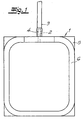
- the invention provides a cryopreservation bag comprising a body 1 made of two layers of a polyimide/fluoropolymer laminate film 5.
- the tubing 3 is placed over the joining piece 2 and the shrink tube 4 is placed over the assembly of tubing and joining piece.
- Fig. 3 shows the shrinking process wherein the shrink tube 4 is heated to cause shrinkage.
- the joining piece 2 is sealed in between two sheets 5 of the laminate film, as can be seen in Fig. 4.
- the peripheral seal 6 that defines the dimensions of the bag is sealed separately. Therefore, many different shapes and dimensions of the cryopreservation bag are possible with the same invention.
- the peripheral seal that defines the dimensions of the cryopreservation bag, includes the seal for the joining piece which facilitates the production process.
- the shrink tube 4 is made of a fluorinated ethylene propylene copolymer to ensure liquid nitrogen temperature resistance.
- the shrink ratio of the shrink tube is 1,3 to 1. Its required shrink temperature is about 190°C, which is lower than the melting point of the sterile dockable, low temperature resistant tubing 3 to prevent this tubing from melting during the shrinking process.
- the shrink tube can be made of other materials. Requirements for the shrink tube material are a proper resistance to very low temperatures, a shrink ratio between 1,1 to 1 up to and 6 to 1, and a shrink process (defined amongst others by heating temperature, heating time and cooling method of the assembly) that does not cause the tubing to melt during the process.
- the shrink tube can be made of other fluoropolymers, such as polytetrafluoroethylene, perfluoroalkoxy copolymers, or laminate shrink tubes made of two or more layers of said fluoropolymers.
- the body 1 of the preferred cryopreservation bag is made of a polyimide film laminated with a fluoropolymer film.
- the fluoropolymer layer 7 is used to seal the film.
- the polyimide layer 8 provides the mechanical strength necessary at liquid nitrogen temperature, as unlike other plastics polyimide keeps its mechanical strength at -196°C, thus reducing the chance of damage to the bag or its contents.
- the polyimide/fluoropolymer laminate film has a low nitrogen permeability which is necessary as it is used in both liquid nitrogen and liquid nitrogen vapor.
- the joining piece 2 in the preferred embodiment is made of a perfluoroalkoxy copolyrner, a fluoropolymer with properties comparable to the fluoropolymer layer 7 of the polyimideifluoropolymer laminate film 5. Therefore, the materials are compatible and can be connected by means of sealing, thus providing a connection between the joining piece and the bag without capillaries.
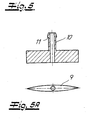
- the shape of the preferred joining piece is optimized for sealing the joining piece into the laminate film, as its sealing surface 9 gradually changes from the tube size in the middle to a thin ending at the sides.
- the joining piece is equipped with a tube pillar 10 to assemble the tubing on it.
- the undercut 11 at the top of the pillar improves the tubing's resistance to shearing when a longitudinal force is applied to it (Fig. 5).
- the tubing 3 in the preferred embodiment is made of a blend of thermoplastic polyester elastomer and thermoplastic polyurethane elastomer, compounded in a ratio of respectively 80% and 20%.
- This compound has the proper low temperature resistance and is sterile dockable to PVC tubes.
- the ratio can be changed varying from approximately 55 up to and including 100% thermoplastic polyester elastomer and 0 up to and including approximately 45% thermoplastic polyurethane elastomer.
- the length of the tubing is designed so that several sterile docks as well as blood samples can be made with the tubing; after filling the cryopreservation bag, there is still blood remaining in the tubing.
- this blood can be used for samples.
- the samples can be frozen in liquid nitrogen.
- a cryopreservation bag 13 with two compartments 14 and 15 can be created by sealing two joining pieces into the film and adjusting the peripheral seal. To each joining piece a tubing can be assembled. These tubes can be used separately for blood transfer or the compartments can be attainable by connecting both tubes to a third tubing 16 (Fig. 8). In the same way, cryopreservation bags with more than two compartments can be created, still using the same invention.
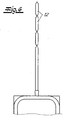
- the cryopreservation bag can be equipped with an external pocket 17 (Fig. 9).
- the pocket can be used to store the tubing 3 during cryopreservation. In this way the total dimensions of the cryopreservation bag are more compact for storage in a liquid nitrogen tank, which saves costly storing space.
- the pocket 17 can also be used for labelling 18 of the contents of the cryopreservation bag, to be able to identify the blood transplant inside the bag (Fig. 10).
- the joining piece's dimensions can be changed as well, to optimise the sealing process for sealing the joining piece to the film.
- the sealing surface 19 can be made wider at 20 or more centric 21 or even can be somewhat shelved 22.
- the shape of the tube pillar 10 on the joining piece can be varied in length 23 Figs. 12A and 12B or shape as at 24, 25, 26, 27 (see Figs. 12C - 12F) for a better assembly of the tubing to the pillar.
- thermoplastic polyurethane elastomer that is added to the thermoplastic polyester elastomer can be varied.
- thermoplastic polyamide elastomers can be used, as well as blends of thermoplastic polyamide elastomer with thermoplastic polyester elastomer or with thermoplastic polyurethane elastomers and blends with all three elastomers.
- additions of polyvinyl chloride or ethylene vinylacetate copolymers can be made to improve seal and dock properties of the polymer or polymer blend.
Landscapes
- Mechanical Engineering (AREA)
- Engineering & Computer Science (AREA)
- Health & Medical Sciences (AREA)
- Life Sciences & Earth Sciences (AREA)
- Animal Behavior & Ethology (AREA)
- General Health & Medical Sciences (AREA)
- Public Health (AREA)
- Veterinary Medicine (AREA)
- Pharmacology & Pharmacy (AREA)
- Hematology (AREA)
- Medical Preparation Storing Or Oral Administration Devices (AREA)
- Micro-Organisms Or Cultivation Processes Thereof (AREA)
- Lining Or Joining Of Plastics Or The Like (AREA)
Claims (22)
- Beutel zur Tieftemperaturkonservierung, der mit einem Schlauch (3) ausgestattet ist, der bei der Temperatur von Flüssigstickstoff beständig ist, der für RF-Versiegelung und steriles Koppeln sowohl vor als auch nach der Tieftemperaturkonservierung verwendet werden kann,
wobei der Beutel ein Verbindungsstück (2) und einen Schrumpfschlauch (4) umfasst, um den Beutel mit dem Schlauch (3) zu verbinden,
der Schlauch (3) über dem Verbindungsstück (2) angeordnet ist und der Schrumpfschlauch (4) über dem Zusammenbau aus Schlauch (3) und Verbindungsstück (2) befestigt ist,
wobei der Schlauch (3) aus einer Mischung von wenigstens zwei Bestandteilen der Gruppe "thermoplastisches Polyesterelastomer, thermoplastisches Polyurethanelastomer, thermoplastisches Polyamidelastomer" hergestellt ist. - Beutel nach Anspruch 1, wobei der Beutel aus einem Laminatfilm (5) hergestellt ist, der eine Polyimidschicht umfasst, die mit einer Fluorpolymerschicht beschichtet ist.
- Beutel nach Anspruch 1, wobei der Schrumpfschlauch (4) aus einem fluorierten Ethylenpropylenkopolymer hergestellt ist.
- Beutel nach Anspruch 3, wobei der Schrumpfschlauch (4) ein Schrumpfverhältnis von 1,3 zu 1 aufweist.
- Beutel nach Anspruch 1, wobei das Verbindungsstück (2) aus einem Perfluoralkoxykopolymer hergestellt ist.
- Beutel nach Anspruch 1, wobei der Schlauch (3) aus einer Mischung aus thermoplastischem Polyesterelastomer und thermoplastischem Polyurethanelastomer in einem Verhältnis von etwa 80 % thermoplastisches Polyesterelastomer und etwa 20 % thermoplastisches Polyurethanelastomer hergestellt ist.
- Beutel nach Anspruch 1, wobei der Schrumpfschlauch (4) aus Perfluoralkoxykopolymer, Polytetrafluorethylen oder einem anderen Fluorpolymer hergestellt ist.
- Beutel nach Anspruch 1, wobei der Schrumpfschlauch (4) ein Laminatschrumpfschlauch ist, wobei die Laminatschichten zwei oder mehr unterschiedliche Fluorpolymerschichten umfassen.
- Beutel nach Anspruch 3, wobei der Schrumpfschlauch (4) ein Schrumpfverhältnis in einem Bereich von 1,1 zu 1 bis einschließlich 6 zu 1 aufweist.
- Beutel nach Anspruch 7, wobei der Schrumpfschlauch (4) ein Schrumpfverhältnis in einem Bereich von 1,1 zu 1 bis einschließlich 6 zu 1 aufweist.
- Beutel nach Anspruch 8, wobei der Schrumpfschlauch (4) ein Schrumpfverhältnis in einem Bereich von 1,1 zu 1 bis einschließlich 6 zu 1 aufweist.
- Beutel nach Anspruch 1, wobei der Schlauch (3) etwa 55 bis einschließlich 100 % thermoplastisches Polyesterelastomer und 0 bis einschließlich etwa 45 % thermoplastisches Polyurethanelastomer umfasst.
- Beutel nach Anspruch 1, wobei der Schlauch (3) aus einer Mischung aus thermoplastischem Polyesterelastomer und thermoplastischem Polyamidelastomer hergestellt ist.
- Beutel nach Anspruch 1, wobei der Schlauch (3) aus einer Mischung aus thermoplastischem Polyurethanelastomer und thermoplastischem Polyamidelastomer hergestellt ist.
- Beutel nach Anspruch 1, wobei der Schlauch (3) aus einer Mischung aus thermoplastischem Polyesterelastomer und thermoplastischem Polyurethanelastomer und thermoplastischem Polyamidelastomer hergestellt ist.
- Beutel nach Anspruch 6, wobei die Mischung aus Polymeren auch Polyvinylchlorid oder Ethylenvinylazetat oder Polyvinylchlorid und Ethylenvinylazetat umfasst.
- Beutel nach Anspruch 12, wobei die Mischung aus Polymeren auch Polyvinylchlorid oder Ethylenvinylazetat oder Polyvinylchlorid und Ethylenvinylazetat umfasst.
- Beutel nach Anspruch 13, wobei die Mischung aus Polymeren auch Polyvinylchlorid oder Ethylenvinylazetat oder Polyvinylchlorid und Ethylenvinylazetat umfasst.
- Beutel nach Anspruch 14, wobei die Mischung aus Polymeren auch Polyvinylchlorid oder Ethylenvinylazetat oder Polyvinylchlorid und Ethylenvinylazetat umfasst.
- Beutel nach Anspruch 15, wobei die Mischung aus Polymeren auch Polyvinylchlorid oder Ethylenvinylazetat oder Polyvinylchlorid und Ethylenvinylazetat umfasst.
- Beutel nach Anspruch 1, wobei das Verbindungsstück (2) aus fluoriertem Ethylenpropylenkopolymer oder Polytetrafluorethylen oder einem anderen Fluorpolymer hergestellt ist.
- Verfahren zum Ausbilden eines Beutels zur Tieftemperaturkonservierung nach Anspruch 1, welches die Schritte umfasst:Versiegeln von zwei Schichten eines Laminatfilms zusammen um den Umfang einer Kammer und Versiegeln zwischen den Schichten des Laminatfilms von dem benachbarten Stück, das mit der Kammer in Verbindung ist und jenseits der Laminatfilmschichten herausragt;Befestigen des Schlauchs über dem Verbindungsstück;Befestigen des Schrumpfschlauchs über dem Schlauch auf dem Verbindungsstück; undSchrumpfen des Schrumpfschlauchs um den Schlauch herum, um den Schlauch an dem Verbindungsstück zu sichern.
Applications Claiming Priority (2)
| Application Number | Priority Date | Filing Date | Title |
|---|---|---|---|
| US08/985,381 US6022344A (en) | 1997-12-04 | 1997-12-04 | Cryopreservation bag |
| US985381 | 1997-12-04 |
Publications (3)
| Publication Number | Publication Date |
|---|---|
| EP0920850A2 EP0920850A2 (de) | 1999-06-09 |
| EP0920850A3 EP0920850A3 (de) | 2000-05-17 |
| EP0920850B1 true EP0920850B1 (de) | 2003-04-09 |
Family
ID=25531423
Family Applications (1)
| Application Number | Title | Priority Date | Filing Date |
|---|---|---|---|
| EP19980120062 Expired - Lifetime EP0920850B1 (de) | 1997-12-04 | 1998-10-23 | Beutel zur Kryokonservation und Verfahren zur Herstellung eines solchen Beutels |
Country Status (4)
| Country | Link |
|---|---|
| US (1) | US6022344A (de) |
| EP (1) | EP0920850B1 (de) |
| JP (1) | JPH11290424A (de) |
| DE (1) | DE69813153T2 (de) |
Cited By (1)
| Publication number | Priority date | Publication date | Assignee | Title |
|---|---|---|---|---|
| DE202009011640U1 (de) * | 2009-08-27 | 2011-01-13 | Pharmpur Gmbh | Spritzenbehälter für eine Spritze |
Families Citing this family (27)
| Publication number | Priority date | Publication date | Assignee | Title |
|---|---|---|---|---|
| US6869653B2 (en) * | 2001-01-08 | 2005-03-22 | Baxter International Inc. | Port tube closure assembly |
| US6652942B2 (en) * | 2001-01-08 | 2003-11-25 | Baxter International Inc. | Assembly for a flowable material container |
| DE60233788D1 (de) * | 2001-05-09 | 2009-11-05 | Bayer Pharmaceuticals Corp | Kryokonservierungstaschenkonstruktion für säugerzellinien |
| US6913056B2 (en) | 2002-01-31 | 2005-07-05 | Baxter International Inc. | Apparatus and method for connecting and disconnecting flexible tubing |
| US7275543B2 (en) * | 2002-09-20 | 2007-10-02 | Baxter International Inc. | Coupler member for joining dissimilar materials |
| ITMI20022118A1 (it) * | 2002-10-04 | 2004-04-05 | Abiogen Pharma Spa | Procedimento per la coltura su larga scala di t-linfociti in un sistema omogeneo. |
| GB0327000D0 (en) * | 2003-11-20 | 2003-12-24 | Tyco Electronics Raychem Gmbh | Heat shrink jointing |
| US7722733B2 (en) * | 2004-03-29 | 2010-05-25 | Baxter International Inc. | Method for sterile connection of tubing |
| KR100568570B1 (ko) | 2004-10-20 | 2006-04-07 | 코아스템(주) | 세포의 냉동 보관용기 |
| US20060166364A1 (en) * | 2004-12-22 | 2006-07-27 | Introgen, Inc. | Use of flexible bag containers for viral production |
| US20060167401A1 (en) * | 2005-01-21 | 2006-07-27 | National Stem Cell Inc | Apparatus and method for stem cell preservation and usage |
| ES2245267B1 (es) * | 2005-07-08 | 2006-10-01 | Grifols, S.A. | Bolsa para soluciones terapeuticas. |
| JP5011810B2 (ja) * | 2006-05-08 | 2012-08-29 | ニプロ株式会社 | 凍結保存容器及び凍結保存方法 |
| WO2008032314A2 (en) * | 2006-09-11 | 2008-03-20 | I.M.T. Interface Multigrad Technology Ltd. | Systems, devices and methods for freezing and thawing biological materials |
| EP2091499B1 (de) * | 2006-12-13 | 2011-07-13 | Koninklijke Philips Electronics N.V. | Ernährungssonde |
| US20090093794A1 (en) * | 2007-10-03 | 2009-04-09 | Tyco Healthcare Group Lp | Bolus tube assembly |
| DE102008035835B4 (de) * | 2008-08-02 | 2015-02-19 | Walter Pobitschka | Verfahren und Vorrichtung zum Transfer einer Substanz zwischen geschlossenen Systemen |
| CN101861858B (zh) * | 2010-05-26 | 2014-01-29 | 金卫医疗科技(上海)有限公司 | 一种具有进液管保护功能的医用深低温保存袋 |
| FR2996413B1 (fr) * | 2012-10-10 | 2014-12-05 | Maco Pharma Sa | Procede pour conserver le sang placentaire |
| BR112016006318A2 (pt) | 2013-09-25 | 2017-08-01 | Saint Gobain Performance Plastics Corp | recipiente de criopreservação |
| WO2016025847A1 (en) | 2014-08-14 | 2016-02-18 | Merial Inc. | Novel cryopreservation bags and method of use thereof for closed system, high capacity cell-banking |
| US11478405B2 (en) * | 2017-06-27 | 2022-10-25 | The University Of Tokyo | Cell preserving vessel |
| CA3105619A1 (en) | 2018-07-06 | 2020-01-09 | Instant Systems, Inc. | Sample container with peelable seal and access port |
| US20250032364A1 (en) * | 2019-03-20 | 2025-01-30 | Elchanan Vaserman | Apparatus for filling inflatable baby feeding containers |
| CN110053267B (zh) * | 2019-06-03 | 2021-04-16 | 安徽万朗磁塑股份有限公司 | 一种小尺寸冰箱门封焊接组模 |
| US11890819B2 (en) | 2021-03-24 | 2024-02-06 | Instant Systems, Inc. | Multi-chamber container for biological materials and compounded pharmaceuticals |
| US11950591B2 (en) | 2021-06-11 | 2024-04-09 | Instant Systems, Inc. | Container with biological materials having multiple sealed portions |
Family Cites Families (25)
| Publication number | Priority date | Publication date | Assignee | Title |
|---|---|---|---|---|
| NL270833A (de) * | 1960-10-31 | |||
| US3576650A (en) * | 1968-01-18 | 1971-04-27 | Union Carbide Corp | Cryogenic plastic film package |
| US3741253A (en) * | 1971-03-30 | 1973-06-26 | Grace W R & Co | Laminates of ethylene vinyl acetate polymers and polymers of vinylidene chloride |
| US3839743A (en) * | 1972-04-21 | 1974-10-08 | A Schwarcz | Method for maintaining the normal integrity of blood |
| US4207364A (en) * | 1972-09-01 | 1980-06-10 | Raychem Corporation | Heat-shrinkable laminate |
| US4035534A (en) * | 1972-09-01 | 1977-07-12 | Raychem Corporation | Heat-shrinkable laminate |
| US3963026A (en) * | 1974-11-19 | 1976-06-15 | Pharmachem Corporation | Blood component storage bag and glycerolizing set therefor |
| US4131200A (en) * | 1976-07-06 | 1978-12-26 | Union Carbide Corporation | Thermoplastic blood bag |
| US4212299A (en) * | 1977-06-07 | 1980-07-15 | Toppan Printing Co., Ltd. | Container bag |
| US4365629A (en) * | 1979-05-29 | 1982-12-28 | Hedbergska Stiftelsen | Platelet freezing bag |
| US4306556A (en) * | 1980-02-07 | 1981-12-22 | Rensselaer Polytechnic Institute | Method and apparatus for storing and preparing cryopreserved blood |
| EP0083778B1 (de) * | 1982-01-07 | 1987-11-11 | Fresenius AG | Aufbewahrungsbeutel |
| SE453887B (sv) * | 1982-03-09 | 1988-03-14 | Terumo Corp | Anordning for overforing av medicinsk losning samt anslutningsorgan i sadan anordning |
| US4482585A (en) * | 1982-06-11 | 1984-11-13 | Toppan Printing Co., Ltd. | Container resistant to extremely low temperatures |
| DE3305365C2 (de) * | 1983-02-17 | 1989-06-29 | Fresenius AG, 6380 Bad Homburg | Aufbewahrungsbeutel |
| DE3582523D1 (de) * | 1984-07-16 | 1991-05-23 | Sumitomo Bakelite Co | Behaelter und verfahren zur aufbewahrung von blut. |
| US4641362A (en) * | 1984-10-25 | 1987-02-03 | C. Muller & Associates, Inc. | Protective dispensing assembly for ultrapure liquids |
| JPS63139726A (ja) * | 1986-12-01 | 1988-06-11 | Nitsushiyoo:Kk | 医療用バッグのポート取り付け方法 |
| US4917804A (en) * | 1986-10-31 | 1990-04-17 | Baxter International Inc. | Method and vessel for separation of cryoglobin |
| ATE59996T1 (de) * | 1986-11-28 | 1991-02-15 | Squibb & Sons Inc | Herstellung von beuteln. |
| IL88399A (en) * | 1988-11-16 | 1993-04-04 | Michael Porat Tel Aviv And Ami | Drip-feed bag and method for manufacturing same |
| US5250044A (en) * | 1990-02-06 | 1993-10-05 | Du Pont Merck Pharmaceutical Company | Blood cryopreservation container |
| US5209745A (en) * | 1990-02-06 | 1993-05-11 | Irr Joseph D | Blood cryopreservation container |
| US5460625A (en) * | 1990-07-31 | 1995-10-24 | Baxter International Inc. | Cryogenic resistant coextruded tubing |
| US20020177763A1 (en) * | 2001-05-22 | 2002-11-28 | Burns David W. | Integrated lancets and methods |
-
1997
- 1997-12-04 US US08/985,381 patent/US6022344A/en not_active Expired - Lifetime
-
1998
- 1998-10-23 EP EP19980120062 patent/EP0920850B1/de not_active Expired - Lifetime
- 1998-10-23 DE DE69813153T patent/DE69813153T2/de not_active Expired - Lifetime
- 1998-12-03 JP JP34441898A patent/JPH11290424A/ja not_active Withdrawn
Cited By (1)
| Publication number | Priority date | Publication date | Assignee | Title |
|---|---|---|---|---|
| DE202009011640U1 (de) * | 2009-08-27 | 2011-01-13 | Pharmpur Gmbh | Spritzenbehälter für eine Spritze |
Also Published As
| Publication number | Publication date |
|---|---|
| US6022344A (en) | 2000-02-08 |
| EP0920850A3 (de) | 2000-05-17 |
| JPH11290424A (ja) | 1999-10-26 |
| DE69813153T2 (de) | 2003-11-06 |
| DE69813153D1 (de) | 2003-05-15 |
| EP0920850A2 (de) | 1999-06-09 |
Similar Documents
| Publication | Publication Date | Title |
|---|---|---|
| EP0920850B1 (de) | Beutel zur Kryokonservation und Verfahren zur Herstellung eines solchen Beutels | |
| EP0098312B1 (de) | Gegen extreme Tieftemperaturen beständiger Behälter | |
| US3942529A (en) | Package and method for storing blood | |
| KR101834159B1 (ko) | 냉동 보존 용기 | |
| US4369779A (en) | Sterile docking process, apparatus and system | |
| US4412835A (en) | Sterile docking process, apparatus and system | |
| US5250044A (en) | Blood cryopreservation container | |
| US7797911B2 (en) | Sterile, pyrogen-free, polymeric film-based heating bag | |
| JP4882494B2 (ja) | 凍結保存バイアルの包装体、凍結保存用キット及び凍結保存方法 | |
| JP4848755B2 (ja) | 凍結保存容器、その製造方法並びに生物試料の凍結保存方法 | |
| JP2001070402A (ja) | 凍結細胞解凍用バッグおよび凍結細胞解凍方法 | |
| JP2008195443A (ja) | 冷凍保存容器 | |
| JP3941091B2 (ja) | 冷凍保存方法 | |
| US20050129887A1 (en) | Medical freezer bag | |
| JPH02205563A (ja) | 低温冷凍保存用容器 | |
| JPS6159738B2 (de) | ||
| JPS6226784B2 (de) | ||
| IE911131A1 (en) | Blood cryopreservation container | |
| JPH07313574A (ja) | 冷凍保存バッグ及び冷凍保存バッグシステム並びに冷凍保存バッグの製造方法 | |
| JPS6049429B2 (ja) | 耐極低温性容器 | |
| JPH08173505A (ja) | 冷凍バッグ | |
| IL97806A (en) | Blood cryopreservation container | |
| JPS6339258B2 (de) |
Legal Events
| Date | Code | Title | Description |
|---|---|---|---|
| PUAI | Public reference made under article 153(3) epc to a published international application that has entered the european phase |
Free format text: ORIGINAL CODE: 0009012 |
|
| AK | Designated contracting states |
Kind code of ref document: A2 Designated state(s): DE FR GB IT NL |
|
| AX | Request for extension of the european patent |
Free format text: AL;LT;LV;MK;RO;SI |
|
| K1C1 | Correction of patent application (title page) published |
Effective date: 19990609 |
|
| RTI1 | Title (correction) |
Free format text: A CRYOPRESERVATION BAG |
|
| PUAL | Search report despatched |
Free format text: ORIGINAL CODE: 0009013 |
|
| AK | Designated contracting states |
Kind code of ref document: A3 Designated state(s): AT BE CH CY DE DK ES FI FR GB GR IE IT LI LU MC NL PT SE |
|
| AX | Request for extension of the european patent |
Free format text: AL;LT;LV;MK;RO;SI |
|
| RIC1 | Information provided on ipc code assigned before grant |
Free format text: 7A 61J 1/10 A, 7A 61J 1/05 B |
|
| 17P | Request for examination filed |
Effective date: 20000510 |
|
| AKX | Designation fees paid |
Free format text: DE FR GB IT NL |
|
| 17Q | First examination report despatched |
Effective date: 20010129 |
|
| RTI1 | Title (correction) |
Free format text: CRYOPRESERVATION BAG AND METHOD OF FORMING SUCH A BAG |
|
| GRAH | Despatch of communication of intention to grant a patent |
Free format text: ORIGINAL CODE: EPIDOS IGRA |
|
| GRAH | Despatch of communication of intention to grant a patent |
Free format text: ORIGINAL CODE: EPIDOS IGRA |
|
| GRAA | (expected) grant |
Free format text: ORIGINAL CODE: 0009210 |
|
| AK | Designated contracting states |
Designated state(s): DE FR GB IT NL |
|
| REG | Reference to a national code |
Ref country code: GB Ref legal event code: FG4D Free format text: NOT ENGLISH |
|
| ET | Fr: translation filed | ||
| PLBE | No opposition filed within time limit |
Free format text: ORIGINAL CODE: 0009261 |
|
| STAA | Information on the status of an ep patent application or granted ep patent |
Free format text: STATUS: NO OPPOSITION FILED WITHIN TIME LIMIT |
|
| 26N | No opposition filed |
Effective date: 20040112 |
|
| PGFP | Annual fee paid to national office [announced via postgrant information from national office to epo] |
Ref country code: FR Payment date: 20141017 Year of fee payment: 17 Ref country code: DE Payment date: 20141029 Year of fee payment: 17 Ref country code: GB Payment date: 20141027 Year of fee payment: 17 |
|
| PGFP | Annual fee paid to national office [announced via postgrant information from national office to epo] |
Ref country code: NL Payment date: 20141026 Year of fee payment: 17 |
|
| PGFP | Annual fee paid to national office [announced via postgrant information from national office to epo] |
Ref country code: IT Payment date: 20141028 Year of fee payment: 17 |
|
| REG | Reference to a national code |
Ref country code: DE Ref legal event code: R119 Ref document number: 69813153 Country of ref document: DE |
|
| GBPC | Gb: european patent ceased through non-payment of renewal fee |
Effective date: 20151023 |
|
| REG | Reference to a national code |
Ref country code: NL Ref legal event code: MM Effective date: 20151101 |
|
| PG25 | Lapsed in a contracting state [announced via postgrant information from national office to epo] |
Ref country code: IT Free format text: LAPSE BECAUSE OF NON-PAYMENT OF DUE FEES Effective date: 20151023 Ref country code: GB Free format text: LAPSE BECAUSE OF NON-PAYMENT OF DUE FEES Effective date: 20151023 Ref country code: DE Free format text: LAPSE BECAUSE OF NON-PAYMENT OF DUE FEES Effective date: 20160503 |
|
| REG | Reference to a national code |
Ref country code: FR Ref legal event code: ST Effective date: 20160630 |
|
| PG25 | Lapsed in a contracting state [announced via postgrant information from national office to epo] |
Ref country code: NL Free format text: LAPSE BECAUSE OF NON-PAYMENT OF DUE FEES Effective date: 20151101 Ref country code: FR Free format text: LAPSE BECAUSE OF NON-PAYMENT OF DUE FEES Effective date: 20151102 |