EP0921147A2 - Polymères transparents conducteurs - Google Patents
Polymères transparents conducteurs Download PDFInfo
- Publication number
- EP0921147A2 EP0921147A2 EP98309512A EP98309512A EP0921147A2 EP 0921147 A2 EP0921147 A2 EP 0921147A2 EP 98309512 A EP98309512 A EP 98309512A EP 98309512 A EP98309512 A EP 98309512A EP 0921147 A2 EP0921147 A2 EP 0921147A2
- Authority
- EP
- European Patent Office
- Prior art keywords
- aminoanthracene
- polymer
- poly
- och
- oxidation state
- Prior art date
- Legal status (The legal status is an assumption and is not a legal conclusion. Google has not performed a legal analysis and makes no representation as to the accuracy of the status listed.)
- Granted
Links
- 229920001940 conductive polymer Polymers 0.000 title description 7
- 239000002322 conducting polymer Substances 0.000 title 1
- 229920000642 polymer Polymers 0.000 claims abstract description 75
- PAYRUJLWNCNPSJ-UHFFFAOYSA-N Aniline Chemical compound NC1=CC=CC=C1 PAYRUJLWNCNPSJ-UHFFFAOYSA-N 0.000 claims abstract description 58
- 238000000034 method Methods 0.000 claims abstract description 52
- 230000003647 oxidation Effects 0.000 claims abstract description 43
- 238000007254 oxidation reaction Methods 0.000 claims abstract description 43
- LHNICELDCMPPDE-UHFFFAOYSA-N anthracen-9-amine Chemical compound C1=CC=C2C(N)=C(C=CC=C3)C3=CC2=C1 LHNICELDCMPPDE-UHFFFAOYSA-N 0.000 claims abstract description 30
- 239000000463 material Substances 0.000 claims abstract description 19
- PYKYMHQGRFAEBM-UHFFFAOYSA-N anthraquinone Natural products CCC(=O)c1c(O)c2C(=O)C3C(C=CC=C3O)C(=O)c2cc1CC(=O)OC PYKYMHQGRFAEBM-UHFFFAOYSA-N 0.000 claims abstract description 8
- 150000004056 anthraquinones Chemical class 0.000 claims abstract description 8
- QTBSBXVTEAMEQO-UHFFFAOYSA-N Acetic acid Chemical compound CC(O)=O QTBSBXVTEAMEQO-UHFFFAOYSA-N 0.000 claims description 126
- -1 salt 9-aminoanthracene hydrochloride Chemical class 0.000 claims description 85
- XJGFWWJLMVZSIG-UHFFFAOYSA-N 9-aminoacridine Chemical compound C1=CC=C2C(N)=C(C=CC=C3)C3=NC2=C1 XJGFWWJLMVZSIG-UHFFFAOYSA-N 0.000 claims description 73
- 239000000243 solution Substances 0.000 claims description 69
- 239000000203 mixture Substances 0.000 claims description 62
- 229920001577 copolymer Polymers 0.000 claims description 42
- 239000007787 solid Substances 0.000 claims description 38
- VEXZGXHMUGYJMC-UHFFFAOYSA-N Hydrochloric acid Chemical compound Cl VEXZGXHMUGYJMC-UHFFFAOYSA-N 0.000 claims description 36
- 230000001590 oxidative effect Effects 0.000 claims description 32
- 239000000047 product Substances 0.000 claims description 27
- 239000007800 oxidant agent Substances 0.000 claims description 26
- XLYOFNOQVPJJNP-UHFFFAOYSA-N water Substances O XLYOFNOQVPJJNP-UHFFFAOYSA-N 0.000 claims description 26
- 239000002904 solvent Substances 0.000 claims description 25
- YCPXWRQRBFJBPZ-UHFFFAOYSA-N 5-sulfosalicylic acid Chemical compound OC(=O)C1=CC(S(O)(=O)=O)=CC=C1O YCPXWRQRBFJBPZ-UHFFFAOYSA-N 0.000 claims description 18
- 238000002834 transmittance Methods 0.000 claims description 17
- MIOPJNTWMNEORI-UHFFFAOYSA-N camphorsulfonic acid Chemical compound C1CC2(CS(O)(=O)=O)C(=O)CC1C2(C)C MIOPJNTWMNEORI-UHFFFAOYSA-N 0.000 claims description 14
- 238000000576 coating method Methods 0.000 claims description 14
- 238000004519 manufacturing process Methods 0.000 claims description 12
- 125000001997 phenyl group Chemical group [H]C1=C([H])C([H])=C(*)C([H])=C1[H] 0.000 claims description 12
- 230000003068 static effect Effects 0.000 claims description 11
- 238000003756 stirring Methods 0.000 claims description 11
- QGZKDVFQNNGYKY-UHFFFAOYSA-N ammonia Natural products N QGZKDVFQNNGYKY-UHFFFAOYSA-N 0.000 claims description 10
- 239000002253 acid Substances 0.000 claims description 9
- LSIKFJXEYJIZNB-UHFFFAOYSA-N 9-Nitroanthracene Chemical compound C1=CC=C2C([N+](=O)[O-])=C(C=CC=C3)C3=CC2=C1 LSIKFJXEYJIZNB-UHFFFAOYSA-N 0.000 claims description 8
- VHUUQVKOLVNVRT-UHFFFAOYSA-N Ammonium hydroxide Chemical compound [NH4+].[OH-] VHUUQVKOLVNVRT-UHFFFAOYSA-N 0.000 claims description 8
- 239000004160 Ammonium persulphate Substances 0.000 claims description 8
- 235000011114 ammonium hydroxide Nutrition 0.000 claims description 8
- ROOXNKNUYICQNP-UHFFFAOYSA-N ammonium persulfate Chemical group [NH4+].[NH4+].[O-]S(=O)(=O)OOS([O-])(=O)=O ROOXNKNUYICQNP-UHFFFAOYSA-N 0.000 claims description 8
- 235000019395 ammonium persulphate Nutrition 0.000 claims description 8
- 239000011248 coating agent Substances 0.000 claims description 8
- 150000001875 compounds Chemical class 0.000 claims description 8
- 125000001495 ethyl group Chemical group [H]C([H])([H])C([H])([H])* 0.000 claims description 8
- RFFLAFLAYFXFSW-UHFFFAOYSA-N 1,2-dichlorobenzene Chemical compound ClC1=CC=CC=C1Cl RFFLAFLAYFXFSW-UHFFFAOYSA-N 0.000 claims description 7
- 125000005869 (methoxyethoxy)methanyl group Chemical group [H]C([H])([H])OC([H])([H])C([H])([H])OC([H])([H])* 0.000 claims description 6
- 125000006267 biphenyl group Chemical group 0.000 claims description 6
- 125000000956 methoxy group Chemical group [H]C([H])([H])O* 0.000 claims description 6
- KBLZDCFTQSIIOH-UHFFFAOYSA-M tetrabutylazanium;perchlorate Chemical compound [O-]Cl(=O)(=O)=O.CCCC[N+](CCCC)(CCCC)CCCC KBLZDCFTQSIIOH-UHFFFAOYSA-M 0.000 claims description 6
- XEPNDNPVNUVOSV-UHFFFAOYSA-N anthracen-9-amine;hydrochloride Chemical compound Cl.C1=CC=C2C(N)=C(C=CC=C3)C3=CC2=C1 XEPNDNPVNUVOSV-UHFFFAOYSA-N 0.000 claims description 5
- 239000002244 precipitate Substances 0.000 claims description 5
- 239000003115 supporting electrolyte Substances 0.000 claims description 5
- NLXLAEXVIDQMFP-UHFFFAOYSA-N Ammonium chloride Substances [NH4+].[Cl-] NLXLAEXVIDQMFP-UHFFFAOYSA-N 0.000 claims description 4
- 229910004039 HBF4 Inorganic materials 0.000 claims description 4
- 239000002216 antistatic agent Substances 0.000 claims description 3
- 238000012216 screening Methods 0.000 claims description 3
- 238000006467 substitution reaction Methods 0.000 claims description 3
- RILZRCJGXSFXNE-UHFFFAOYSA-N 2-[4-(trifluoromethoxy)phenyl]ethanol Chemical compound OCCC1=CC=C(OC(F)(F)F)C=C1 RILZRCJGXSFXNE-UHFFFAOYSA-N 0.000 claims description 2
- UFHFLCQGNIYNRP-UHFFFAOYSA-N Hydrogen Chemical compound [H][H] UFHFLCQGNIYNRP-UHFFFAOYSA-N 0.000 claims description 2
- 239000003929 acidic solution Substances 0.000 claims description 2
- 239000007864 aqueous solution Substances 0.000 claims description 2
- 239000001257 hydrogen Substances 0.000 claims description 2
- 229910052739 hydrogen Inorganic materials 0.000 claims description 2
- 125000004435 hydrogen atom Chemical group [H]* 0.000 claims description 2
- 230000003472 neutralizing effect Effects 0.000 claims description 2
- HPGGPRDJHPYFRM-UHFFFAOYSA-J tin(iv) chloride Chemical compound Cl[Sn](Cl)(Cl)Cl HPGGPRDJHPYFRM-UHFFFAOYSA-J 0.000 claims description 2
- 230000000007 visual effect Effects 0.000 claims description 2
- LSOTZYUVGZKSHR-UHFFFAOYSA-N anthracene-1,4-dione Chemical compound C1=CC=C2C=C3C(=O)C=CC(=O)C3=CC2=C1 LSOTZYUVGZKSHR-UHFFFAOYSA-N 0.000 claims 4
- YUENFNPLGJCNRB-UHFFFAOYSA-N anthracen-1-amine Chemical class C1=CC=C2C=C3C(N)=CC=CC3=CC2=C1 YUENFNPLGJCNRB-UHFFFAOYSA-N 0.000 abstract description 5
- OKKJLVBELUTLKV-UHFFFAOYSA-N Methanol Chemical compound OC OKKJLVBELUTLKV-UHFFFAOYSA-N 0.000 description 58
- ZMXDDKWLCZADIW-UHFFFAOYSA-N N,N-Dimethylformamide Chemical compound CN(C)C=O ZMXDDKWLCZADIW-UHFFFAOYSA-N 0.000 description 54
- HEDRZPFGACZZDS-UHFFFAOYSA-N Chloroform Chemical compound ClC(Cl)Cl HEDRZPFGACZZDS-UHFFFAOYSA-N 0.000 description 40
- 238000002329 infrared spectrum Methods 0.000 description 37
- SECXISVLQFMRJM-UHFFFAOYSA-N N-Methylpyrrolidone Chemical compound CN1CCCC1=O SECXISVLQFMRJM-UHFFFAOYSA-N 0.000 description 32
- 239000000178 monomer Substances 0.000 description 32
- WEVYAHXRMPXWCK-UHFFFAOYSA-N Acetonitrile Chemical compound CC#N WEVYAHXRMPXWCK-UHFFFAOYSA-N 0.000 description 26
- RBTARNINKXHZNM-UHFFFAOYSA-K iron trichloride Chemical compound Cl[Fe](Cl)Cl RBTARNINKXHZNM-UHFFFAOYSA-K 0.000 description 24
- 239000000523 sample Substances 0.000 description 23
- DTQVDTLACAAQTR-UHFFFAOYSA-N Trifluoroacetic acid Chemical compound OC(=O)C(F)(F)F DTQVDTLACAAQTR-UHFFFAOYSA-N 0.000 description 20
- HEMHJVSKTPXQMS-UHFFFAOYSA-M Sodium hydroxide Chemical compound [OH-].[Na+] HEMHJVSKTPXQMS-UHFFFAOYSA-M 0.000 description 18
- 239000010408 film Substances 0.000 description 17
- 239000003960 organic solvent Substances 0.000 description 16
- 239000000126 substance Substances 0.000 description 16
- 229910021578 Iron(III) chloride Inorganic materials 0.000 description 15
- 238000006243 chemical reaction Methods 0.000 description 15
- 239000010409 thin film Substances 0.000 description 14
- 0 CC*(CC)N=C(C1=C2C=CC(C)C=C1)C(C=C*(*)C=C1)=C1C2=Nc(c1c2C=CC(*)C=C1)c(cccc1)c1c2N Chemical compound CC*(CC)N=C(C1=C2C=CC(C)C=C1)C(C=C*(*)C=C1)=C1C2=Nc(c1c2C=CC(*)C=C1)c(cccc1)c1c2N 0.000 description 13
- MHAJPDPJQMAIIY-UHFFFAOYSA-N Hydrogen peroxide Chemical compound OO MHAJPDPJQMAIIY-UHFFFAOYSA-N 0.000 description 13
- 229960000583 acetic acid Drugs 0.000 description 12
- 238000002360 preparation method Methods 0.000 description 11
- JOXIMZWYDAKGHI-UHFFFAOYSA-N toluene-4-sulfonic acid Chemical compound CC1=CC=C(S(O)(=O)=O)C=C1 JOXIMZWYDAKGHI-UHFFFAOYSA-N 0.000 description 11
- 239000002019 doping agent Substances 0.000 description 10
- 230000015572 biosynthetic process Effects 0.000 description 9
- BASFCYQUMIYNBI-UHFFFAOYSA-N platinum Chemical compound [Pt] BASFCYQUMIYNBI-UHFFFAOYSA-N 0.000 description 9
- LQNUZADURLCDLV-UHFFFAOYSA-N nitrobenzene Chemical compound [O-][N+](=O)C1=CC=CC=C1 LQNUZADURLCDLV-UHFFFAOYSA-N 0.000 description 8
- 239000000843 powder Substances 0.000 description 7
- 238000003786 synthesis reaction Methods 0.000 description 7
- 238000005406 washing Methods 0.000 description 7
- 238000005160 1H NMR spectroscopy Methods 0.000 description 6
- CSCPPACGZOOCGX-UHFFFAOYSA-N Acetone Chemical compound CC(C)=O CSCPPACGZOOCGX-UHFFFAOYSA-N 0.000 description 6
- YMWUJEATGCHHMB-UHFFFAOYSA-N Dichloromethane Chemical compound ClCCl YMWUJEATGCHHMB-UHFFFAOYSA-N 0.000 description 6
- RTZKZFJDLAIYFH-UHFFFAOYSA-N Diethyl ether Chemical compound CCOCC RTZKZFJDLAIYFH-UHFFFAOYSA-N 0.000 description 6
- XEEYBQQBJWHFJM-UHFFFAOYSA-N Iron Chemical compound [Fe] XEEYBQQBJWHFJM-UHFFFAOYSA-N 0.000 description 6
- 239000004793 Polystyrene Substances 0.000 description 6
- 230000005540 biological transmission Effects 0.000 description 6
- 239000002131 composite material Substances 0.000 description 6
- 239000012362 glacial acetic acid Substances 0.000 description 6
- 229920001155 polypropylene Polymers 0.000 description 6
- 229920002223 polystyrene Polymers 0.000 description 6
- 229920000915 polyvinyl chloride Polymers 0.000 description 6
- 239000004800 polyvinyl chloride Substances 0.000 description 6
- VCFLFFBOMIIIQO-UHFFFAOYSA-N 2-ethylanthracen-9-amine Chemical compound C1=CC=CC2=C(N)C3=CC(CC)=CC=C3C=C21 VCFLFFBOMIIIQO-UHFFFAOYSA-N 0.000 description 5
- IAZDPXIOMUYVGZ-UHFFFAOYSA-N Dimethylsulphoxide Chemical compound CS(C)=O IAZDPXIOMUYVGZ-UHFFFAOYSA-N 0.000 description 5
- BDAGIHXWWSANSR-UHFFFAOYSA-N Formic acid Chemical compound OC=O BDAGIHXWWSANSR-UHFFFAOYSA-N 0.000 description 5
- JXLHNMVSKXFWAO-UHFFFAOYSA-N azane;7-fluoro-2,1,3-benzoxadiazole-4-sulfonic acid Chemical compound N.OS(=O)(=O)C1=CC=C(F)C2=NON=C12 JXLHNMVSKXFWAO-UHFFFAOYSA-N 0.000 description 5
- 238000001704 evaporation Methods 0.000 description 5
- 230000008020 evaporation Effects 0.000 description 5
- BAUYGSIQEAFULO-UHFFFAOYSA-L iron(2+) sulfate (anhydrous) Chemical compound [Fe+2].[O-]S([O-])(=O)=O BAUYGSIQEAFULO-UHFFFAOYSA-L 0.000 description 5
- 230000007935 neutral effect Effects 0.000 description 5
- 238000006396 nitration reaction Methods 0.000 description 5
- OCJBOOLMMGQPQU-UHFFFAOYSA-N 1,4-dichlorobenzene Chemical compound ClC1=CC=C(Cl)C=C1 OCJBOOLMMGQPQU-UHFFFAOYSA-N 0.000 description 4
- MKSYMZYLGVAKGT-UHFFFAOYSA-N 2-methyl-9-nitroanthracene Chemical compound C1=CC=CC2=C([N+]([O-])=O)C3=CC(C)=CC=C3C=C21 MKSYMZYLGVAKGT-UHFFFAOYSA-N 0.000 description 4
- SQOKYJMVYIYNAK-UHFFFAOYSA-N 2-methylanthracen-9-amine Chemical compound C1=CC=CC2=C(N)C3=CC(C)=CC=C3C=C21 SQOKYJMVYIYNAK-UHFFFAOYSA-N 0.000 description 4
- GYMFBYTZOGMSQJ-UHFFFAOYSA-N 2-methylanthracene Chemical compound C1=CC=CC2=CC3=CC(C)=CC=C3C=C21 GYMFBYTZOGMSQJ-UHFFFAOYSA-N 0.000 description 4
- IJGRMHOSHXDMSA-UHFFFAOYSA-N Atomic nitrogen Chemical compound N#N IJGRMHOSHXDMSA-UHFFFAOYSA-N 0.000 description 4
- ZOKXTWBITQBERF-UHFFFAOYSA-N Molybdenum Chemical compound [Mo] ZOKXTWBITQBERF-UHFFFAOYSA-N 0.000 description 4
- PXHVJJICTQNCMI-UHFFFAOYSA-N Nickel Chemical compound [Ni] PXHVJJICTQNCMI-UHFFFAOYSA-N 0.000 description 4
- JUJWROOIHBZHMG-UHFFFAOYSA-N Pyridine Chemical compound C1=CC=NC=C1 JUJWROOIHBZHMG-UHFFFAOYSA-N 0.000 description 4
- KJTLSVCANCCWHF-UHFFFAOYSA-N Ruthenium Chemical compound [Ru] KJTLSVCANCCWHF-UHFFFAOYSA-N 0.000 description 4
- 229910021626 Tin(II) chloride Inorganic materials 0.000 description 4
- RTAQQCXQSZGOHL-UHFFFAOYSA-N Titanium Chemical compound [Ti] RTAQQCXQSZGOHL-UHFFFAOYSA-N 0.000 description 4
- 239000011230 binding agent Substances 0.000 description 4
- 239000001913 cellulose Substances 0.000 description 4
- 229920002678 cellulose Polymers 0.000 description 4
- 230000008021 deposition Effects 0.000 description 4
- 239000012153 distilled water Substances 0.000 description 4
- 238000007654 immersion Methods 0.000 description 4
- AMGQUBHHOARCQH-UHFFFAOYSA-N indium;oxotin Chemical compound [In].[Sn]=O AMGQUBHHOARCQH-UHFFFAOYSA-N 0.000 description 4
- 239000004973 liquid crystal related substance Substances 0.000 description 4
- GBMDVOWEEQVZKZ-UHFFFAOYSA-N methanol;hydrate Chemical compound O.OC GBMDVOWEEQVZKZ-UHFFFAOYSA-N 0.000 description 4
- 229910052750 molybdenum Inorganic materials 0.000 description 4
- 239000011733 molybdenum Substances 0.000 description 4
- 229920006254 polymer film Polymers 0.000 description 4
- 229910052707 ruthenium Inorganic materials 0.000 description 4
- 150000003839 salts Chemical class 0.000 description 4
- 235000011150 stannous chloride Nutrition 0.000 description 4
- 239000000725 suspension Substances 0.000 description 4
- 239000004753 textile Substances 0.000 description 4
- AXZWODMDQAVCJE-UHFFFAOYSA-L tin(II) chloride (anhydrous) Chemical compound [Cl-].[Cl-].[Sn+2] AXZWODMDQAVCJE-UHFFFAOYSA-L 0.000 description 4
- 239000010936 titanium Substances 0.000 description 4
- 229910052719 titanium Inorganic materials 0.000 description 4
- BYEAHWXPCBROCE-UHFFFAOYSA-N 1,1,1,3,3,3-hexafluoropropan-2-ol Chemical compound FC(F)(F)C(O)C(F)(F)F BYEAHWXPCBROCE-UHFFFAOYSA-N 0.000 description 3
- 238000001644 13C nuclear magnetic resonance spectroscopy Methods 0.000 description 3
- UHOVQNZJYSORNB-UHFFFAOYSA-N Benzene Chemical compound C1=CC=CC=C1 UHOVQNZJYSORNB-UHFFFAOYSA-N 0.000 description 3
- 208000032365 Electromagnetic interference Diseases 0.000 description 3
- LFQSCWFLJHTTHZ-UHFFFAOYSA-N Ethanol Chemical compound CCO LFQSCWFLJHTTHZ-UHFFFAOYSA-N 0.000 description 3
- GRYLNZFGIOXLOG-UHFFFAOYSA-N Nitric acid Chemical compound O[N+]([O-])=O GRYLNZFGIOXLOG-UHFFFAOYSA-N 0.000 description 3
- 239000004677 Nylon Substances 0.000 description 3
- 229920003171 Poly (ethylene oxide) Polymers 0.000 description 3
- 239000004698 Polyethylene Substances 0.000 description 3
- 239000004743 Polypropylene Substances 0.000 description 3
- QAOWNCQODCNURD-UHFFFAOYSA-N Sulfuric acid Chemical compound OS(O)(=O)=O QAOWNCQODCNURD-UHFFFAOYSA-N 0.000 description 3
- YXFVVABEGXRONW-UHFFFAOYSA-N Toluene Chemical compound CC1=CC=CC=C1 YXFVVABEGXRONW-UHFFFAOYSA-N 0.000 description 3
- 230000002378 acidificating effect Effects 0.000 description 3
- 239000000853 adhesive Substances 0.000 description 3
- 230000001070 adhesive effect Effects 0.000 description 3
- 125000005210 alkyl ammonium group Chemical group 0.000 description 3
- 230000008901 benefit Effects 0.000 description 3
- 239000007795 chemical reaction product Substances 0.000 description 3
- 239000006071 cream Substances 0.000 description 3
- 239000000975 dye Substances 0.000 description 3
- 230000000694 effects Effects 0.000 description 3
- 239000003792 electrolyte Substances 0.000 description 3
- 238000005516 engineering process Methods 0.000 description 3
- 239000000945 filler Substances 0.000 description 3
- 235000019253 formic acid Nutrition 0.000 description 3
- 239000012456 homogeneous solution Substances 0.000 description 3
- 229910052742 iron Inorganic materials 0.000 description 3
- 229910000359 iron(II) sulfate Inorganic materials 0.000 description 3
- 239000010445 mica Substances 0.000 description 3
- 229910052618 mica group Inorganic materials 0.000 description 3
- 229910017604 nitric acid Inorganic materials 0.000 description 3
- 239000012811 non-conductive material Substances 0.000 description 3
- 229920001778 nylon Polymers 0.000 description 3
- 239000000049 pigment Substances 0.000 description 3
- 229910052697 platinum Inorganic materials 0.000 description 3
- 229920000767 polyaniline Polymers 0.000 description 3
- 229920000573 polyethylene Polymers 0.000 description 3
- 229920000139 polyethylene terephthalate Polymers 0.000 description 3
- 239000005020 polyethylene terephthalate Substances 0.000 description 3
- 239000011877 solvent mixture Substances 0.000 description 3
- 238000001228 spectrum Methods 0.000 description 3
- 239000000454 talc Substances 0.000 description 3
- 229910052623 talc Inorganic materials 0.000 description 3
- SCYULBFZEHDVBN-UHFFFAOYSA-N 1,1-Dichloroethane Chemical compound CC(Cl)Cl SCYULBFZEHDVBN-UHFFFAOYSA-N 0.000 description 2
- RELMFMZEBKVZJC-UHFFFAOYSA-N 1,2,3-trichlorobenzene Chemical compound ClC1=CC=CC(Cl)=C1Cl RELMFMZEBKVZJC-UHFFFAOYSA-N 0.000 description 2
- IGIRUXSRHMBYQV-UHFFFAOYSA-N 2-ethyl-9-nitroanthracene Chemical compound C1=CC=CC2=C([N+]([O-])=O)C3=CC(CC)=CC=C3C=C21 IGIRUXSRHMBYQV-UHFFFAOYSA-N 0.000 description 2
- OSWFIVFLDKOXQC-UHFFFAOYSA-N 4-(3-methoxyphenyl)aniline Chemical compound COC1=CC=CC(C=2C=CC(N)=CC=2)=C1 OSWFIVFLDKOXQC-UHFFFAOYSA-N 0.000 description 2
- OKTJSMMVPCPJKN-UHFFFAOYSA-N Carbon Chemical compound [C] OKTJSMMVPCPJKN-UHFFFAOYSA-N 0.000 description 2
- JPVYNHNXODAKFH-UHFFFAOYSA-N Cu2+ Chemical compound [Cu+2] JPVYNHNXODAKFH-UHFFFAOYSA-N 0.000 description 2
- CWYNVVGOOAEACU-UHFFFAOYSA-N Fe2+ Chemical compound [Fe+2] CWYNVVGOOAEACU-UHFFFAOYSA-N 0.000 description 2
- KEJOCWOXCDWNID-UHFFFAOYSA-N Nitrilooxonium Chemical compound [O+]#N KEJOCWOXCDWNID-UHFFFAOYSA-N 0.000 description 2
- VYPSYNLAJGMNEJ-UHFFFAOYSA-N Silicium dioxide Chemical compound O=[Si]=O VYPSYNLAJGMNEJ-UHFFFAOYSA-N 0.000 description 2
- QAOWNCQODCNURD-UHFFFAOYSA-L Sulfate Chemical compound [O-]S([O-])(=O)=O QAOWNCQODCNURD-UHFFFAOYSA-L 0.000 description 2
- HEDRZPFGACZZDS-MICDWDOJSA-N Trichloro(2H)methane Chemical compound [2H]C(Cl)(Cl)Cl HEDRZPFGACZZDS-MICDWDOJSA-N 0.000 description 2
- 150000001242 acetic acid derivatives Chemical class 0.000 description 2
- 229910021529 ammonia Inorganic materials 0.000 description 2
- 150000001450 anions Chemical class 0.000 description 2
- MWPLVEDNUUSJAV-UHFFFAOYSA-N anthracene Chemical compound C1=CC=CC2=CC3=CC=CC=C3C=C21 MWPLVEDNUUSJAV-UHFFFAOYSA-N 0.000 description 2
- 239000012736 aqueous medium Substances 0.000 description 2
- 150000004945 aromatic hydrocarbons Chemical class 0.000 description 2
- 239000006227 byproduct Substances 0.000 description 2
- 150000007942 carboxylates Chemical class 0.000 description 2
- 238000005266 casting Methods 0.000 description 2
- 239000003054 catalyst Substances 0.000 description 2
- ITZXULOAYIAYNU-UHFFFAOYSA-N cerium(4+) Chemical compound [Ce+4] ITZXULOAYIAYNU-UHFFFAOYSA-N 0.000 description 2
- 229910001914 chlorine tetroxide Inorganic materials 0.000 description 2
- 239000008199 coating composition Substances 0.000 description 2
- 238000004440 column chromatography Methods 0.000 description 2
- 239000004020 conductor Substances 0.000 description 2
- 238000007796 conventional method Methods 0.000 description 2
- 238000002484 cyclic voltammetry Methods 0.000 description 2
- 229940117389 dichlorobenzene Drugs 0.000 description 2
- 229960001760 dimethyl sulfoxide Drugs 0.000 description 2
- 239000006185 dispersion Substances 0.000 description 2
- 238000001035 drying Methods 0.000 description 2
- ZFRKEVMBGBIBGT-UHFFFAOYSA-N ethenyl benzenesulfonate Chemical compound C=COS(=O)(=O)C1=CC=CC=C1 ZFRKEVMBGBIBGT-UHFFFAOYSA-N 0.000 description 2
- 239000004744 fabric Substances 0.000 description 2
- 239000000706 filtrate Substances 0.000 description 2
- 239000011521 glass Substances 0.000 description 2
- 229910002804 graphite Inorganic materials 0.000 description 2
- 239000010439 graphite Substances 0.000 description 2
- 150000004820 halides Chemical class 0.000 description 2
- 239000005457 ice water Substances 0.000 description 2
- SURQXAFEQWPFPV-UHFFFAOYSA-L iron(2+) sulfate heptahydrate Chemical compound O.O.O.O.O.O.O.[Fe+2].[O-]S([O-])(=O)=O SURQXAFEQWPFPV-UHFFFAOYSA-L 0.000 description 2
- 239000011133 lead Substances 0.000 description 2
- 229920002521 macromolecule Polymers 0.000 description 2
- MMIPFLVOWGHZQD-UHFFFAOYSA-N manganese(3+) Chemical compound [Mn+3] MMIPFLVOWGHZQD-UHFFFAOYSA-N 0.000 description 2
- 229910052759 nickel Inorganic materials 0.000 description 2
- 229910052758 niobium Inorganic materials 0.000 description 2
- 239000010955 niobium Substances 0.000 description 2
- GUCVJGMIXFAOAE-UHFFFAOYSA-N niobium atom Chemical compound [Nb] GUCVJGMIXFAOAE-UHFFFAOYSA-N 0.000 description 2
- 150000002823 nitrates Chemical class 0.000 description 2
- 229910052757 nitrogen Inorganic materials 0.000 description 2
- LYGJENNIWJXYER-UHFFFAOYSA-N nitromethane Chemical compound C[N+]([O-])=O LYGJENNIWJXYER-UHFFFAOYSA-N 0.000 description 2
- 239000008188 pellet Substances 0.000 description 2
- VLTRZXGMWDSKGL-UHFFFAOYSA-M perchlorate Chemical compound [O-]Cl(=O)(=O)=O VLTRZXGMWDSKGL-UHFFFAOYSA-M 0.000 description 2
- 239000003208 petroleum Substances 0.000 description 2
- 239000003495 polar organic solvent Substances 0.000 description 2
- 229920000058 polyacrylate Polymers 0.000 description 2
- 229940070721 polyacrylate Drugs 0.000 description 2
- 229920000447 polyanionic polymer Polymers 0.000 description 2
- 239000002491 polymer binding agent Substances 0.000 description 2
- 230000008569 process Effects 0.000 description 2
- RUOJZAUFBMNUDX-UHFFFAOYSA-N propylene carbonate Chemical compound CC1COC(=O)O1 RUOJZAUFBMNUDX-UHFFFAOYSA-N 0.000 description 2
- UMJSCPRVCHMLSP-UHFFFAOYSA-N pyridine Natural products COC1=CC=CN=C1 UMJSCPRVCHMLSP-UHFFFAOYSA-N 0.000 description 2
- 239000011541 reaction mixture Substances 0.000 description 2
- 230000009467 reduction Effects 0.000 description 2
- 230000003252 repetitive effect Effects 0.000 description 2
- 239000000741 silica gel Substances 0.000 description 2
- 229910002027 silica gel Inorganic materials 0.000 description 2
- 239000002002 slurry Substances 0.000 description 2
- 238000002791 soaking Methods 0.000 description 2
- 239000007858 starting material Substances 0.000 description 2
- HXJUTPCZVOIRIF-UHFFFAOYSA-N sulfolane Chemical compound O=S1(=O)CCCC1 HXJUTPCZVOIRIF-UHFFFAOYSA-N 0.000 description 2
- 229910021653 sulphate ion Inorganic materials 0.000 description 2
- 239000001117 sulphuric acid Substances 0.000 description 2
- 235000011149 sulphuric acid Nutrition 0.000 description 2
- 238000012546 transfer Methods 0.000 description 2
- WFKWXMTUELFFGS-UHFFFAOYSA-N tungsten Chemical compound [W] WFKWXMTUELFFGS-UHFFFAOYSA-N 0.000 description 2
- 229910052721 tungsten Inorganic materials 0.000 description 2
- 239000010937 tungsten Substances 0.000 description 2
- NLVXSWCKKBEXTG-UHFFFAOYSA-N vinylsulfonic acid Chemical compound OS(=O)(=O)C=C NLVXSWCKKBEXTG-UHFFFAOYSA-N 0.000 description 2
- RPGGYYVWJTWVMS-ZPSVQYCPSA-N (8r,9s,10r,13s,14s,17r)-17-ethynyl-10,13-dimethyl-1,2,3,6,7,8,9,11,12,14,15,16-dodecahydrocyclopenta[a]phenanthren-17-ol;(8r,9s,13s,14s,17r)-17-ethynyl-13-methyl-7,8,9,11,12,14,15,16-octahydro-6h-cyclopenta[a]phenanthrene-3,17-diol Chemical compound OC1=CC=C2[C@H]3CC[C@](C)([C@](CC4)(O)C#C)[C@@H]4[C@@H]3CCC2=C1.C1CC[C@]2(C)[C@H]3CC[C@](C)([C@](CC4)(O)C#C)[C@@H]4[C@@H]3CCC2=C1 RPGGYYVWJTWVMS-ZPSVQYCPSA-N 0.000 description 1
- JBDYKGMNMDIHFL-UHFFFAOYSA-N 1-nitroanthracene Chemical compound C1=CC=C2C=C3C([N+](=O)[O-])=CC=CC3=CC2=C1 JBDYKGMNMDIHFL-UHFFFAOYSA-N 0.000 description 1
- FVYCIRCETWQINX-UHFFFAOYSA-N 10-chloro-2-ethyl-9-nitro-9,10-dihydroanthracene Chemical compound C1=CC=C2C([N+]([O-])=O)C3=CC(CC)=CC=C3C(Cl)C2=C1 FVYCIRCETWQINX-UHFFFAOYSA-N 0.000 description 1
- ZXAGXLDEMUNQSH-UHFFFAOYSA-N 2-ethylanthracene Chemical compound C1=CC=CC2=CC3=CC(CC)=CC=C3C=C21 ZXAGXLDEMUNQSH-UHFFFAOYSA-N 0.000 description 1
- BHDKTFQBRFWJKR-UHFFFAOYSA-N 2-hydroxy-5-sulfobenzoic acid;dihydrate Chemical compound O.O.OC(=O)C1=CC(S(O)(=O)=O)=CC=C1O BHDKTFQBRFWJKR-UHFFFAOYSA-N 0.000 description 1
- QWRMWWGIOCYGNL-UHFFFAOYSA-N 4,5-dichloroanthracen-9-amine Chemical compound C1=CC=C2C(N)=C(C=CC=C3Cl)C3=CC2=C1Cl QWRMWWGIOCYGNL-UHFFFAOYSA-N 0.000 description 1
- IJHINNYNYMRJDP-UHFFFAOYSA-N 9-chloro-10-nitro-9,10-dihydroanthracene Chemical compound C1=CC=C2C([N+](=O)[O-])C3=CC=CC=C3C(Cl)C2=C1 IJHINNYNYMRJDP-UHFFFAOYSA-N 0.000 description 1
- QGZKDVFQNNGYKY-UHFFFAOYSA-O Ammonium Chemical compound [NH4+] QGZKDVFQNNGYKY-UHFFFAOYSA-O 0.000 description 1
- 241000974482 Aricia saepiolus Species 0.000 description 1
- AFVFQIVMOAPDHO-UHFFFAOYSA-N Methanesulfonic acid Chemical compound CS(O)(=O)=O AFVFQIVMOAPDHO-UHFFFAOYSA-N 0.000 description 1
- 238000005481 NMR spectroscopy Methods 0.000 description 1
- 229910021607 Silver chloride Inorganic materials 0.000 description 1
- ATJFFYVFTNAWJD-UHFFFAOYSA-N Tin Chemical compound [Sn] ATJFFYVFTNAWJD-UHFFFAOYSA-N 0.000 description 1
- 230000009102 absorption Effects 0.000 description 1
- 238000010521 absorption reaction Methods 0.000 description 1
- 150000007513 acids Chemical class 0.000 description 1
- 150000001412 amines Chemical class 0.000 description 1
- 125000003277 amino group Chemical group 0.000 description 1
- SOIFLUNRINLCBN-UHFFFAOYSA-N ammonium thiocyanate Chemical compound [NH4+].[S-]C#N SOIFLUNRINLCBN-UHFFFAOYSA-N 0.000 description 1
- 238000004458 analytical method Methods 0.000 description 1
- 230000008859 change Effects 0.000 description 1
- 239000002801 charged material Substances 0.000 description 1
- 239000003638 chemical reducing agent Substances 0.000 description 1
- 230000000052 comparative effect Effects 0.000 description 1
- 230000003247 decreasing effect Effects 0.000 description 1
- 239000003085 diluting agent Substances 0.000 description 1
- 238000010790 dilution Methods 0.000 description 1
- 239000012895 dilution Substances 0.000 description 1
- 238000009826 distribution Methods 0.000 description 1
- 239000008151 electrolyte solution Substances 0.000 description 1
- 238000009472 formulation Methods 0.000 description 1
- 239000007789 gas Substances 0.000 description 1
- 238000005227 gel permeation chromatography Methods 0.000 description 1
- 230000005484 gravity Effects 0.000 description 1
- IXCSERBJSXMMFS-UHFFFAOYSA-N hcl hcl Chemical compound Cl.Cl IXCSERBJSXMMFS-UHFFFAOYSA-N 0.000 description 1
- 239000008240 homogeneous mixture Substances 0.000 description 1
- 239000012535 impurity Substances 0.000 description 1
- 238000007689 inspection Methods 0.000 description 1
- 239000011572 manganese Substances 0.000 description 1
- 238000005259 measurement Methods 0.000 description 1
- 238000006386 neutralization reaction Methods 0.000 description 1
- 239000012299 nitrogen atmosphere Substances 0.000 description 1
- 229920005596 polymer binder Polymers 0.000 description 1
- 238000006116 polymerization reaction Methods 0.000 description 1
- 238000001556 precipitation Methods 0.000 description 1
- 239000002243 precursor Substances 0.000 description 1
- 125000002924 primary amino group Chemical group [H]N([H])* 0.000 description 1
- 238000010791 quenching Methods 0.000 description 1
- 230000000171 quenching effect Effects 0.000 description 1
- 238000011160 research Methods 0.000 description 1
- HKZLPVFGJNLROG-UHFFFAOYSA-M silver monochloride Chemical compound [Cl-].[Ag+] HKZLPVFGJNLROG-UHFFFAOYSA-M 0.000 description 1
- 230000000707 stereoselective effect Effects 0.000 description 1
- 125000001424 substituent group Chemical group 0.000 description 1
- 230000003319 supportive effect Effects 0.000 description 1
- 238000002411 thermogravimetry Methods 0.000 description 1
- 238000004809 thin layer chromatography Methods 0.000 description 1
- YOIAWAIKYVEKMF-UHFFFAOYSA-N trifluoromethanesulfonic acid Chemical compound OS(=O)(=O)C(F)(F)F.OS(=O)(=O)C(F)(F)F YOIAWAIKYVEKMF-UHFFFAOYSA-N 0.000 description 1
- 239000002699 waste material Substances 0.000 description 1
- 230000004580 weight loss Effects 0.000 description 1
Images







Classifications
-
- H—ELECTRICITY
- H01—ELECTRIC ELEMENTS
- H01B—CABLES; CONDUCTORS; INSULATORS; SELECTION OF MATERIALS FOR THEIR CONDUCTIVE, INSULATING OR DIELECTRIC PROPERTIES
- H01B1/00—Conductors or conductive bodies characterised by the conductive materials; Selection of materials as conductors
- H01B1/06—Conductors or conductive bodies characterised by the conductive materials; Selection of materials as conductors mainly consisting of other non-metallic substances
- H01B1/12—Conductors or conductive bodies characterised by the conductive materials; Selection of materials as conductors mainly consisting of other non-metallic substances organic substances
- H01B1/124—Intrinsically conductive polymers
- H01B1/128—Intrinsically conductive polymers comprising six-membered aromatic rings in the main chain, e.g. polyanilines, polyphenylenes
-
- C—CHEMISTRY; METALLURGY
- C08—ORGANIC MACROMOLECULAR COMPOUNDS; THEIR PREPARATION OR CHEMICAL WORKING-UP; COMPOSITIONS BASED THEREON
- C08G—MACROMOLECULAR COMPOUNDS OBTAINED OTHERWISE THAN BY REACTIONS ONLY INVOLVING UNSATURATED CARBON-TO-CARBON BONDS
- C08G73/00—Macromolecular compounds obtained by reactions forming a linkage containing nitrogen with or without oxygen or carbon in the main chain of the macromolecule, not provided for in groups C08G12/00 - C08G71/00
- C08G73/02—Polyamines
- C08G73/026—Wholly aromatic polyamines
-
- C—CHEMISTRY; METALLURGY
- C09—DYES; PAINTS; POLISHES; NATURAL RESINS; ADHESIVES; COMPOSITIONS NOT OTHERWISE PROVIDED FOR; APPLICATIONS OF MATERIALS NOT OTHERWISE PROVIDED FOR
- C09D—COATING COMPOSITIONS, e.g. PAINTS, VARNISHES OR LACQUERS; FILLING PASTES; CHEMICAL PAINT OR INK REMOVERS; INKS; CORRECTING FLUIDS; WOODSTAINS; PASTES OR SOLIDS FOR COLOURING OR PRINTING; USE OF MATERIALS THEREFOR
- C09D179/00—Coating compositions based on macromolecular compounds obtained by reactions forming in the main chain of the macromolecule a linkage containing nitrogen, with or without oxygen, or carbon only, not provided for in groups C09D161/00 - C09D177/00
- C09D179/02—Polyamines
Definitions
- the present invention relates to poly(9-aminoanthracenes) (hereafter P9-AAs) made from 9-aminoanthracene (hereafter 9-AA) of the formula (I) below and to their production.
- P9-AAs poly(9-aminoanthracenes)
- 9-AA 9-aminoanthracene
- the present invention enables one to produce P9-AA of high purity. This has many useful properties and end uses. However, mixtures of P9-AA with AQ can also be useful for less demanding applications.
- the present invention in a less preferred form, also extends to such mixtures.
- P9-AA is lightly coloured, transparent, electroconductive and sufficiently soluble in a range of commercially viable and environmentally friendly organic solvents.
- P9-AA finds many uses, for example as transparent coatings, used extensively in displays, e.g. electroluminescent and liquid crystal displays and to some extent in electromagnetic shielding windows.
- Mixtures of P9-AA and AQ may find uses in static shielding where the volume conductivities which are required are of the order of 10 -3 to 10 -6 S cm -1 , and in electrostatic dissipation where it is wished to dissipate the charge on a charged material but at a rate that is neither too fast nor too slow and where the volume conductivities which are required are of the order of 10 -6 to 10 -9 S cm -1 .
- Such mixtures may also find uses as antistatic materials which, if applied to an article or surface, prevent charges building up on the surface and where the volume conductivities which are required are of the order of 10 -10 to 10 -12 S cm -1 .
- the present invention relates to 9-aminoanthracene polymers which are lightly coloured, transparent (transmittance of at least 50 % in the range 400 - 800 nm at a thickness of 100 nanometres), and electroconductive.
- electroconductive we mean polymers which exhibit a conductivity of at least 1 x 10 -6 S cm -1 , when measured by the four probe method as defined herein.
- P1-AA Poly(1-aminoanthracene)
- P1-AA Poly(1-aminoanthracene)
- P1-AA has also been described recently (Takakazu Yamamoto et al., Macromolecules , 1993, 26 , pages 6992 - 6997). These polymers have similar structures to poly(aniline) and are dark coloured, varying from bluish-black, brown to brown-black powders. Yamamoto states P1-AA has conductivity of the order of 1 x 10 -4 S cm -1 .
- P1-AA is stated by Yamamoto to be soluble in organic solvents such as HCOOH, DMF, DMSO and NMP, slightly soluble in CHCL 3 and THF, and insoluble in CH 3 OH, C 2 H 5 OH, CH 3 CN, benzene and toluene. Yamamoto gives no indication of the transparency of P1-AA.
- the present inventors have been seeking to develop a conductive polymer of improved conductivity, sufficient transparency to enable it to be used where light transmission as well as conductivity is required, and in addition solubility which would facilitate fabrication into useful structures, such as films, by solvent methods.
- 9-aminoanthracene can be polymerised (preferably by aerial oxidation or certain electrochemical routes) to give lightly coloured (such as off-white, cream, and pale yellow), transparent (which herein means of transmission of at least 50% in the range 400 - 800 nm at a thickness of 100 nanometres), electroconductive polymers.
- pure poly(9-aminoanthracene) (hereafter P9-AA) is a lightly coloured electroconductive polymer which exhibits improved conductivity and is sufficiently soluble to be fabricated into, for example, films.
- P9-AA pure poly(9-aminoanthracene)
- ITO Indium Tin Oxide
- P9-AA of lower conductivities is also suitable for use in static shielding, such as for computer components, where only a lower level of conductivity is required. Accordingly, diluted forms of P9-AA, such as mixtures of P9-AA and AQ, can be used in such applications.
- These polymers may exhibit a particular advantage over the transparent ITO films currently employed in transparent coatings.
- the ITO coatings lose most or all of their electroconductivity if the surface is bent.
- the polymers according to the present invention maintain their electroconductivity even when bent.
- 9-AA is polymerised to produce P9-AA, free or substantially free of AQ, for example as evidenced by the absence of IR peaks at 1680 cm -1 and the cluster of four peaks between 1300 and 1350 cm -1 which are characteristic of AQ.
- the invention also extends to P9-AAs having an oxidation state from zero to 1.0 and a formula (II) at an oxidation state of zero and a formula (III) at an oxidation state of 1.0 as follows in which n is an integer ranging from 10 to 100, preferably from 50 to 80 e.g. about 70.
- n e.g. 2 to 10
- oligomers Polymers with lower values of n, e.g. 2 to 10, which may be referred to as oligomers, will have higher solubility but may have lower heat stability.
- the invention also extends to P9-AAs having an oxidation state between 0.25 to 0.75, and a formula (IV) at an oxidation state 0.25, a formula (V) at an oxidation state 0.5 and a formula (VI) at an oxidation state 0.75 as follows in which p is an integer ranging from 2 to 25, preferably from 10 to 20 e.g. about 15 to 20.
- the P9-AA of the present invention exhibits improved conductivity and is therefore useful in thin film technology, such as EMI, RFI (electro magnetic interference, radio frequency interference), shielding materials and in display systems, such as electroluminescent and liquid crystal display systems as a transparent electrode.
- EMI electromagnetic interference
- RFI electro magnetic interference
- radio frequency interference radio frequency interference
- display systems such as electroluminescent and liquid crystal display systems as a transparent electrode.
- the P9-AA of the present invention may also be directly deposited chemically or electrochemically onto and/or impregnated into a porous polymer film such as poly(vinyl chloride), poly(carbonate) or poly(propylene).
- a porous polymer film such as poly(vinyl chloride), poly(carbonate) or poly(propylene).
- the surface of a component so formed is permanently conductive and has good antistatic properties.
- This surface may be painted with coloured dyes or pigments and the colour modified without impairing the antistatic properties. This method enables antistatic floors and mats to be fabricated from the composites.
- non-conductive materials such as talc or mica may be coated with the P9-AA of the invention either chemically or electrochemically.
- coated powders are useful as fillers for the formulation of conductive polymer composites.
- solutions of the solvent soluble polymers can be sprayed onto a non-conducting surface which will then become conductive on evaporation of the solvent therefrom.
- the resulting film can be used in display devices.
- P9-AA may be used with other polymers (or binders).
- the P9-AA - binder blend may comprise from 5 to 70 % by weight of the P9-AA and from 95 to 30 % by weight of the other polymer.
- the polymer with which the P9-AA is blended may be, for example, poly(vinyl chloride), polyethylene, polypropylene, polystyrene, nylon, poly(acrylonitrile-butadiene-styrene), poly(ethylene terephthalate) or poly(ethylene oxide).
- blends may have sufficient conductivities to give good antistatic properties at the lower concentrations of P9-AA. At the higher concentrations the blends may possess levels of conductivity which may be useful for shielding.
- the P9-AA imparts the required electrical property to the blend immediately and unlike alkylammonium salts, does not need moisture to impart conductivity to the polymer.
- Conductive adhesives may be formulated using the P9-AA of the present invention.
- the pure P9-AA of the present invention may be prepared by aerial oxidation.
- 9-AA may be oxidised to the polymer from its salt 9-aminoanthracene hydrochloride e.g. in the presence of air via the process of neutralising the acidic solution over a period of time to a pH in the range 8 to 10 using mildly basic conditions, for example 5% ammonia solution, the solution being maintained at a pH in the range 5 to 6.5 for a period of at least 2 hours.
- the solution is maintained at a pH in the range 5 to 6.5, preferably 5.5 to 6.2, more preferably 5.8 to 6.0 and is maintained at such pH while being stirred in air preferably at room temperature for at least 2 hours, preferably at least 3 hours e.g. 3 to 6 hours, though longer times up to 18 hours have been used successfully without generation of AQ detectable in the IR spectrum of the reaction product. It will be appreciated that the stirring in air
- 9-nitroanthracene is reacted with hydrated tin chloride and acetic acid in the presence of concentrated HCl to produce an aqueous solution of 9-aminoanthracene hydrochloride salt, and the solution is stirred in air at room temperature while 5% aqueous ammonia solution is added slowly until the pH rises to 1.8 to 2.0, the solution is stirred at this pH for at least 5 minutes and then further 5% aqueous ammonia is added slowly to bring the pH up to the range 5.8 to 6.0 and the stirring is continued at that pH for 3 to 6 hours and then further 5% aqueous ammonia is added to bring the pH into the range 8.5 to 9.0 with continued stirring, and the yellow solid which precipitates out is recovered.
- the reaction is preferably carried out either in water, in a single organic solvent, in a mixture of organic solvents or in a water-solvent mixture, desirably selected so that the 9-AA will be completely soluble in the solvent system chosen, though a slurry or dispersion can be used.
- the purity of the P9-AA produced can be determined by inspection of the infra-red (IR) spectra produced.
- IR infra-red
- the inventors have found that a competing reaction to the polymerisation of 9-AA occurs which is the production of AQ.
- the IR spectrum of this compound has characteristic peaks at 1680 cm -1 (sharp) and a distinctive cluster of peaks between 1300 and 1350 cm -1 (see IR spectrum for AQ, figure 5).
- a mixture of P9-AA with AQ is provided.
- the ratio of P9-AA to AQ is in the range 35:65 to 99.99:0.01. More preferably, it is in the range 35:65 to 50:50, which gives good conductivity at substantial dilution of the P9-AA and is thus a cost benefit.
- Proportions of 75:25 P9-AA to AQ and above also give good conductivity.
- the mixture may be a result of the combination of pure P9-AA as produced, for example, by the aerial oxidation mentioned above, with pure AQ which may be obtained 99% pure from Aldrich Chemicals.
- the P9-AA may be prepared by oxidising the monomer 9-AA with an oxidant which has a higher oxidation potential than the monomer, either in the presence of an acid HX to provide the counterions or using the oxidising agent itself to provide the counterions, but this will produce AQ as a by-product.
- the oxidation may be carried out in the presence or absence of a catalyst, and as a single phase or multiphase reaction. This procedure is referred to as "chemical oxidative polymerisation" herein.
- reaction is preferably carried out either in a single organic solvent, in a mixture of organic solvents or in a water-solvent mixture, desirably selected so that the P9-AA will be completely soluble in the solvent system chosen, though a slurry or dispersion can be used.
- the concentration of the oxidant is preferably in the range from 0.5 to 4 times the concentration of the 9-AA monomer.
- This chemical oxidative polymerisation is preferably carried out at temperatures between room temperature and 110°C.
- Suitable oxidants are iron (III) chloride, ammonium persulphate, hydrogen peroxide, nitrosonium tetrafluroborate, molybdenum (V), ruthenium (III), manganese (III), cerium (IV), copper (II) and also in iron (III)/iron (II), molybdenum (V)/ruthenium (III) mixed systems, which may be used in the form of salts, such as halides, carboxylates e.g. acetates or nitrates.
- the monomer 9-AA may also be polymerised by casting it as a thin film dissolved in a suitable organic solvent.
- the oxidant may be applied to the monomer by washing or soaking the monomer film with a solution of the oxidant or the oxidant may be coated on top of the film to produce a multilayer film which is then dried e.g. vacuum dried.
- the oxidant may be mixed with the monomer and the mixture then coated as a thin film.
- a further technique involves coating an article e.g. a textile fabric or a film e.g. of polymer with a solution of the monomer e.g.
- the chemical polymerisation may also be performed by vapour deposition of the monomer onto a carrier coated with oxidant or vice versa.
- Electrochemical polymerisation may be carried out under a variety of conditions.
- the electrodes at which polymerisation may occur are preferably made from any conductor inert in the electrolyte used, examples of which are those made from platinum, graphite, indium tin oxide, tungsten, titanium, niobium, nickel and lead e.g. platinized titanium.
- the anions of the supporting electrolyte used in electrochemical polymerisation may be any of the counterions, Cl - , Br - , SO 4 2- , BF 4 - , PF 6 - , H 2 PO 3 - , H 2 PO 4 - , ClO 4 , aryl sulphonate, arene dicarboxylate, arene carboxylate, polystyrene sulphonate, poly acrylate, C 1 - C 6 alkyl sulphonate, vinyl sulphonate, vinyl benzene sulphonate, cellulose sulphonate, cellulose sulphate or perfluorinated poly anion.
- Polymer may be obtained by electropolymerisation at constant potential or at constant current or by a potential dynamic method such as repetitive cyclic voltammetry.
- Electrochemical polymerisations may be carried out in a polar organic solvent such as acetonitrile, dichloromethane, chloroform, nitromethane, nitrobenzene, propylene carbonate, dichloroethane, N-methylpyrrolidone, sulpholane, dimethylformamide, dimethyl sulphoxide, dichlorobenzene, e.g. 1,4-dichlorobenzene or trichlorobenzene or a mixture of two or more thereof.
- Polymerisation in an organic solvent can be carried out in the presence of a proton abstractor, such as pyridine.
- electrochemical polymerisation conditions include aqueous media e.g. aqueous acidic media.
- Electrochemical polymerisation is preferably carried out at temperatures between -80°C and 50°C.
- the polymers are lightly coloured, transparent, electroconductive and fairly soluble in a range of commercially viable and environmentally friendly organic solvents. These polymers find many uses, for example in antistatic applications and in electromagnetic and static shielding windows.
- the present invention relates to certain substituted 9-AA polymers which are lightly coloured, transparent (transmittance of at least 40 % in the range 400 - 800 nm at a thickness of 100 nanometres), which are electroconductive at a level suitable for the chosen application.
- a conductivity of 10 -12 - 10 -10 S cm -1 is appropriate for antistatic applications, whereas for static shielding/screening a conductivity in the range 10 -6 -10 -3 S cm -1 is needed.
- suitable doping of the polymers can be used to enhance the conductivities.
- 4, 5 dichloro-9-aminoanthracene is a known compound from Chemical Abstracts no. 95:203132 cited by the UK Patent Office, and which is an abstract of I.I. Schuster J. Org. Chem. 1981, 46 , pp5110-5118.
- the invention also extends to poly (9-aminoanthracenes) (hereafter P9-AAs) having an oxidation state from zero to 1.0 and a formula (VIII) at an oxidation state of zero and a formula (IX) at an oxidation state of 1.0 as follows in which R1 and R2 can be the same or different and R1' and R2' can be the same or different and can be the same or different to R1 and R2 and n is an integer ranging from 10 to 100, preferably 50 to 80 e.g. about 70.
- n e.g. 2 to 10
- oligomers Polymers with lower values of n, e.g. 2 to 10, which may be referred to as oligomers, will have higher solubility but may have lower heat stability.
- the invention also extends to P9-AAs having an oxidation state between 0.25 to 0.75, and a formula (X) at an oxidation state 0.25, a formula (XI) at an oxidation state 0.5 and a formula (XII) at an oxidation state 0.75 as follows in which R1, R2, R3, R4, R5, R6, R7 and R8 can be the same or different and R1', R2', R3', R4', R5', R6', R7' and R8' can be the same or different and can be the same or different to R1, R2, R3, R4, R5, R6, R7 and R8 and p is an integer ranging from 2 to 25, preferably from 10 to 20 e.g. about 15 to 20.
- the preferred position of substitution is position -2 of the B-ring (the ring to the right of the amine group in formula I above).
- the 2-substituted 9-AA monomers of the present invention may be prepared from the 2-substituted anthracenes via stereoselective nitration at the 9 position under controlled mild conditions and reduction by a suitable reducing agent.
- the nitration needs to be mild so as to ensure predominant nitration at the 9 position rather than elsewhere in the molecule.
- Nitration with N 2 O 4 gas is another useful technique.
- P9-AA poly(9-aminoanthracene) (hereafter P9-AA) derivatives of the invention are conductive and transparent and are therefore useful in thin film technology, as EMI, RFI (electro magnetic interference, radio frequency interference) shielding materials, and in static shielding/screening applications and in antistatic applications.
- EMI electromagnetic interference
- RFI electro magnetic interference, radio frequency interference
- Certain of the 9-AA derivatives are appreciably soluble, namely at least 0.8 % (m/v) in useful common organic solvents (for example N-methyl-2-pyrrolidone (NMP), dimethylformamide (DMF), 1,1,1,3,3,3-hexafluoro-2-propanol (HFP), formic acid and trifluoroacetic acid (TFA)).
- useful common organic solvents for example N-methyl-2-pyrrolidone (NMP), dimethylformamide (DMF), 1,1,1,3,3,3-hexafluoro-2-propanol (HFP), formic acid and trifluoroacetic acid (TFA)
- NMP N-methyl-2-pyrrolidone
- DMF dimethylformamide
- HFP 1,1,1,3,3,3-hexafluoro-2-propanol
- TFA trifluoroacetic acid
- the polymer - binder blend may comprise from 5 to 70 % by weight of the P9-AA derivative and from 95 to 30 % by weight of the other polymer.
- the polymer with which the P9-AA derivative is blended may be, for example, poly(vinyl chloride), polyethylene, polypropylene, polystyrene, nylon, poly(acrylonitrile-butadiene-styrene), poly(ethylene terephthalate) or poly(ethylene oxide).
- blends may have sufficient conductivities to give good antistatic properties at the lower concentrations of P9-AA derivative. At the higher concentrations the blends possess levels of conductivity which may be useful for shielding.
- the P9-AA derivatives impart the required electrical property to the blend immediately and unlike alkylammonium salts, do not need moisture to impart conductivity to the polymer.
- Conductive adhesives may be formulated using the P9-AA derivatives of the present invention.
- the P9-AA derivatives of the present invention may also be directly deposited chemically or electrochemically onto and/or impregnated into a porous polymer film such as poly(vinyl chloride), poly(carbonate) or poly(propylene).
- a porous polymer film such as poly(vinyl chloride), poly(carbonate) or poly(propylene).
- the surface of a component so formed is permanently conductive and has good antistatic properties.
- This surface may be painted with coloured dyes or pigments and the colour modified without impairing the antistatic properties. This method enables antistatic floors and mats to be fabricated from the composites.
- non-conductive materials such as talc or mica may be coated with the P9-AA derivatives of the invention either chemically or electrochemically. Such coated powders are useful as fillers for the formation of conductive polymer composites.
- solutions of the solvent soluble polymers can be sprayed onto a non-conducting surface which will then become conductive on evaporation of the solvent therefrom.
- the P9-AA derivatives of the present invention may be prepared by oxidising the monomer derivatives of 9-AA with an oxidant which has a higher oxidation potential than the monomer, either in the presence of an acid HX to provide the counterions or using the oxidising agent itself to provide the counterions.
- the oxidation may be carried out in the presence or absence of a catalyst, and as a single phase or multiphase reaction.
- the reaction is preferably carried out in a single organic solvent, in a mixture of organic solvents or in a water-solvent mixture, selected so that the 9-AA derivative will be completely soluble in the solvent system chosen.
- the concentration of the oxidant is preferably in the range from 0.5 to 4 times the concentration of the 9-AA monomer.
- the chemical polymerisation is preferably carried out at temperatures between room temperature and 110°C.
- Suitable oxidants are iron (III) chloride, ammonium persulphate, hydrogen peroxide, nitrosonium tetrafluroborate, molybdenum (V), ruthenium (III), manganese (III), cerium (IV), copper (II) and also in iron (III)/iron (II), molybdenum (V)/ruthenium (III) mixed systems, which may be used in the form of salts, such as halides, carboxylates e.g. acetates or nitrates.
- the monomer derivatives of 9-AA may also be polymerised by casting them as a thin film dissolved in a suitable organic solvent.
- the oxidant may be applied to the monomers by washing or soaking of an article carrying the monomer film in a solution of the oxidant or the oxidant may be coated on top of the film to produce a multilayer film which is then dried e.g. vacuum dried.
- the oxidant may be mixed with the monomer and the mixture then coated as a thin film.
- a further technique involves coating an article e.g. a textile fabric or a film e.g. of polymer with a solution of the monomer e.g. by immersion of the material in the monomer solution, then immersion of the monomer coated material in a solution of the oxidant followed by drying of the coated oxidised material to leave it with a conductive polymer coating on its surface or the surfaces of the component elements of the material e.g. the fibres of a textile.
- the chemical polymerisation may also be performed by vapour deposition of the monomer onto a carrier coated with oxidant or vice versa.
- the polymers of the present invention may also be prepared electrochemically under a variety of conditions.
- the electrodes at which polymerisation occurs are preferably made from any conductor inert in the electrolyte used, examples of which are those made from platinum, graphite, indium tin oxide, tungsten, titanium, niobium, nickel or lead e.g. platinized titanium.
- the anions of the supporting electrolyte for the electrochemical polymerisation may be any of the counterions, Cl - , Br - , SO 4 2- , BF 4 - , PF 6 - , H 2 PO 3 - , H 2 PO 4 - , ClO 4 - , aryl sulphonate, arene dicarboxylate, arene carboxylate, polystyrene sulphonate, poly acrylate, C 1 - C 6 alkyl, sulphonate, vinyl sulphonate, vinyl benzene sulphonate, cellulose sulphonate, cellulose sulphate or perfluorinated poly anion.
- Polymer may be obtained by electropolymerisation at constant potential, or at constant current or by a potential dynamic method such as repetitive cyclic voltammetry.
- Electrochemical polymerisations may be carried out in a polar organic solvent such as acetonitrile, dichloromethane, chloroform, nitromethane, nitrobenzene, propylene carbonate, dichloroethane, N-methylpyrrolidone, sulpholane, dimethylformamide, dimethyl sulphoxide or dichlorobenzene, e.g. 1,4-dichlorobenzene or trichlorobenzene or a mixture of two or more thereof.
- Polymerisation in an organic solvent can be carried out in the presence of a proton abstractor, such as pyridine.
- Other electrochemical polymerisation conditions include aqueous media, e.g. aqueous acidic media.
- the electrochemical polymerisation is preferably carried out at temperatures between -80°C and 50°C.
- the present invention in the fourth aspect relates to co-polymers of 9-aminoanthracene (hereafter 9-AA) with aniline and to their production.
- the co-polymers are lightly coloured, transparent, electroconductive and fairly soluble in a range of commercially viable and environmentally friendly organic solvents.
- These co-polymers find many uses, for example as transparent coatings, used extensively in displays, e.g. electroluminescent and liquid crystal displays and to some extent in electromagnetic shielding windows and static shielding applications.
- this fourth aspect of the present invention relates to certain co-polymers which are lightly coloured, transparent and exhibit a conductivity of at least 1 x 10 -6 S cm -1 , when appropriately doped and when measured by the four probe method as defined herein.
- co-polymers of 9-AA and aniline are lightly coloured (such as off-white, cream, and pale yellow), transparent and electroconductive polymers.
- co-polymers may exhibit a particular advantage over the transparent Indium Tin Oxide (ITO) films currently employed in transparent coatings.
- ITO Indium Tin Oxide
- the ITO coatings lose most or all of their electroconductivity if the surface is bent.
- the co-polymers according to the present invention maintain their electroconductivity even when bent.
- the invention also extends to co-polymers having the general formula (XVI) where n is an integer ranging from 4 to 50, preferably 8 or 10 to 40, more preferably 10 to 25 e.g. 15 to 20.
- n e.g. 2 to 4
- Polymers with lower values of n e.g. 2 to 4, which may be regarded as oligomers, will have higher solubility and may have lower heat stability.
- the co-polymers of this aspect of the invention have conductivities such that they are useful in thin film technology, as EMI, RFI (electro magnetic interference, radio frequency interference) shielding materials and in display systems, such as electroluminescent and liquid crystal display systems as a transparent electrode.
- EMI electromagnetic interference
- RFI electro magnetic interference, radio frequency interference
- co-polymers of this fourth aspect of the invention are appreciably soluble, namely at least 1 % (m/v) in useful common organic solvents (for example N-methyl-2-pyrrolidone (NMP), dimethylformamide (DMF), 1,1,1,3,3,3-hexafluoro-2-propanol (HFP), formic acid and trifluoroacetic acid (TFA)).
- useful common organic solvents for example N-methyl-2-pyrrolidone (NMP), dimethylformamide (DMF), 1,1,1,3,3,3-hexafluoro-2-propanol (HFP), formic acid and trifluoroacetic acid (TFA)
- NMP N-methyl-2-pyrrolidone
- DMF dimethylformamide
- HFP 1,1,1,3,3,3-hexafluoro-2-propanol
- TFA trifluoroacetic acid
- the co-polymer - binder blend may comprise from 5 to 70 % by weight of the co-pol
- the polymer with which the co-polymer is blended may be, for example, poly(vinyl chloride), polyethylene, polypropylene, polystyrene, nylon, poly(acrylonitrile-butadiene-styrene), poly(ethylene terephthalate) or poly(ethylene oxide).
- blends may have sufficient conductivities to give good antistatic properties at the lower concentrations of co-polymer. At the higher concentrations the blends possess levels of conductivity which may be useful for shielding.
- the co-polymers impart the required electrical property to the blend immediately and unlike alkylammonium salts, do not need moisture to impart conductivity to the polymer.
- Conductive adhesives may be formulated using the co-polymers of the present invention.
- the co-polymers of the fourth aspect of the present invention may also be directly deposited chemically or electrochemically onto and/or impregnated into a porous polymer film such as poly(vinyl chloride), poly(carbonate) or poly(propylene).
- a porous polymer film such as poly(vinyl chloride), poly(carbonate) or poly(propylene).
- the surface of a component so formed is permanently conductive and has good antistatic properties.
- This surface may be painted with coloured dyes or pigments and the colour modified without impairing the antistatic properties. This method enables antistatic floors and mats to be fabricated from the composites.
- non-conductive materials such as talc or mica may be coated with the co-polymers of the invention either chemically or electrochemically. Such coated powders are useful as fillers for the formation of conductive polymer composites.
- solutions of the solvent soluble co-polymers can be sprayed onto a non-conducting surface which will then become conductive on evaporation of the solvent therefrom.
- the resulting film can be used in display devices.
- the co-polymers of the fourth aspect of the present invention may be prepared by co-polymerising 9-AA with aniline using a suitable oxidant.
- the oxidant is ammonium persulphate.
- 9-AA is dissolved in a suitable solvent. This solution is stirred at room temperature and a mixture of aniline and acid in water is added. Different molar ratios of 9-AA:aniline may be used, preferably in the range 1:5 to 20:1, more preferably 1:2 to 8:1 and most preferably in the range 1:2 to 2:1.
- the solution is stirred until it becomes homogeneous when ammonium persulphate in water is added.
- the solution is stirred until it becomes coloured, which typically takes at least 6 hours. It is then filtered, washed with water, methanol and dried in vacuo for a few hours, e.g. 5 to 6 hours, at 50°C.
- the co-polymers may be doped to enhance their conductivity.
- suitable dopants include camphorsulphonic acid (CSA), 5-sulphosalicylic acid (5-SSA), hydrochloric acid (HCl) and fluoroboric acids e.g. HBF 4 .
- examples 1 and 2 relate to the preparation of the monomer, 9-AA; examples 3 to 9 relate to polymerisations of the monomers by aerial oxidation, chemical oxidation and by electrochemical means. Examples 10 to 12 relate to doping of the 9-AA polymers. Examples 13 to 21 relate to mixtures of P9-AA with AQ.
- Anthracene (10.0 g, 0.056 mole) was suspended in glacial acetic acid (40 ml) in a 250 ml three-necked round bottomed flask fitted with a mechanical stirrer and maintained at 20 - 25°C.
- Concentrated nitric acid 70 % by weight, sp.gr. 1.42) (4.0 ml) was added dropwise with vigorous stirring over a period of 15 minutes and the temperature of the flask was maintained below 30°C. After 1 hour a mixture of Conc. HCl (50 ml) and glacial acetic acid (50 ml) was added slowly to the clear solution.
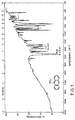
- IR (KBr disc) of 9-aminoanthracene hydrochloride ⁇ max 3380, 3260, 1680, 1610, 1485, 1385, 1160, 800 and 735 cm -1 (see figure 2 for the IR spectrum of the 9-aminoanthracene salt).
- the peak at 1680 cm -1 is characteristic of an amino salt, but the absence of the characteristic cluster of four peaks between 1300 and 1350 cm -1 confirms that no AQ is present. (Further analysis has revealed that this salt is in fact the tin hexachloride salt rather than the hydrochloride.)
- the product was stirred at room temperature with 5 % sodium hydroxide solution for about 15 minutes. Any granular brown solid was ground with a flat bottomed glass rod. The neutralised yellow solid was filtered off under suction and washed thoroughly with copious amounts of distilled water. The 9-AA was vacuum dried at 50°C for 6 hours. Thin layer chromatography (t.l.c)of the product indicated that the product was pure.
- the 9-AA salt prepared as an intermediate in example 2 (10.0 g; 0.044 mole) was mechanically stirred while 5% ammonia was slowly added. The mixture became dirty green in colour when the pH of the solution was in the range 1.5 to 2.0. The suspension was stirred at this pH for 15 minutes and then further ammonia was added until the pH was in the range 5.8 to 6.0.
- the solution was maintained at a pH of 5.8 to 6.0 with stirring for about 3 hours. (We have found that so long as this step of maintaining the solution at a mildly acidic pH is carried out for at least 2 and preferably at least 3 hours e.g. 3 to 6 hours at room temperature, satisfactory polymer is produced and the colour change is not necessarily observed).
- the yellow solid (5.0 g) was taken up in chloroform (200 ml) and refluxed for 4 hours, cooled to room temperature and the insoluble solid was filtered off. The solid was again taken up in chloroform (150 ml), refluxed for a further 3 hours and filtered off under suction. The filtrates were combined and the solvent removed in the rotary evaporator. Both the products were dried under vacuo at 50°C for 6 hours.
- the chloroform insoluble white solid (3.4 g) was identified as P9-AA and the solid from the chloroform soluble fraction as neutral 9-AA (1.4 g).
- the electrical conductivity of the P9-AA was 1.3 x 10 -3 to 8.5 x 10 -4 S cm -1 , as measured by the 4 probe method.
- a thin film of P9-AA made from methanolic HCl on a glass microscope slide exhibited a transmittance of 52% in the region 400 - 800 nm (the thickness of the thin film was 7 ⁇ m). It will be appreciated that this is a relatively thick film and at a thickness of 100nm, the transmission can be expected to be higher.
- the volume conductivity of the thin film was 9.2 x 10 -3 S cm -1 .
- the solubility was 0.75% in N,N-dimethylformamide (DMF), N-methyl pyrrolidinone (NMP) and 1,1,1,3,3,3-hexafluoro-2-propanol (HFP).
- DMF N,N-dimethylformamide
- NMP N-methyl pyrrolidinone
- HFP 1,1,1,3,3,3-hexafluoro-2-propanol
- P9-AA exhibited a narrow molecular weight distribution and has a number average (M n ) and weight average (M w ) molecular weight each of about 27,000 as determined by gel permeation chromatography (poly styrene as standard) in dimethyl formamide, indicating a polydispersity close to 1.
- Solid state 1 H NMR was not very informative but the solid state 13 C NMR showed broad signals at ⁇ ppm: 65.0, 72.9, 88.5, 97.6, 104.9, 118.9, 127.6 and 166.7.
- the conductivity was 2.0 X 10 -4 S cm -1 and the transmittance was 80% in the visible region.
- the solubility was 0.75% in DMF, NMP and HFP.
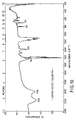
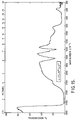
- Figure 7 again shows a peak at 1680 cm -1 and the cluster of 4 peaks between 1300 and 1350 cm -1 indicative of the presence of AQ in the mixture.
- the P9-AA was ground with 5-sulphosalicylic acid (100mg) and electrical conductivity was measured on the standard compacted disc by the four-probe method described above.
- the conductivity was 1.2 X 10 -4 S cm -1 and the transmittance was 72%.
- the solubility was 1.2% in DMF, NMP and HFP.
- Figure 8 the IR spectrum, shows a peak at 1680 cm -1 and the cluster of 4 peaks between 1300 and 1350 cm -1 characteristic of AQ.
- the polymer was doped with 5-sulphosalicylic acid to give a conductivity of 3.1 X 10 -5 S cm -1 using the four-probe technique.
- Transmittance and conductivity data are given in Table I.
- the solubility was 2.2% in DMF, NMP and trifluoroacetic acid (TFA).
- Figure 9 shows the IR spectrum for P1-AA and there is no peak at 1680 cm -1 and no cluster of 4 peaks between 1300 and 1350 cm -1 .
- the conductivity was 1.0 X 10 -5 S cm -1 and the transmittance was 32% at 1.5 microns thickness.
- the solubility was 0.6% in NMP, DMF and HFP.
- the polymer was doped with 5-sulphosalicylic acid to give a conductivity of 1.8 X 10 -5 S cm -1 using the four-probe technique.
- Conductivity and transmittance data given in table I.
- Electropolymerisation of 9-AA was carried out in nitrobenzene at 0°C, using tetrabutylammonium perchlorate [NBu 4 ClO 4 ] (0.05M) as the supporting electrolyte.
- Figure 10 shows the IR spectrum for the product produced by this electropolymerisation at constant voltage. As can be seen, there is no peak at 1680 cm -1 and no cluster of 4 peaks between 1300 and 1350 cm -1 . This indicates that there is no AQ present in the product.
- Conductivity was measured on a compacted disc from the collected P9-AA sample using the standard 4 probe technique giving a value of ⁇ 10 -8 S cm -1 .
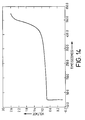
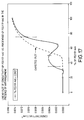
- FIG. 14 is a chronopotentiometric plot of the deposition of P9-AA. It shows the variation of voltage with time at constant current during the deposition of the polymer film.
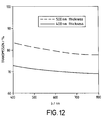
- Figure 12 shows the transmission values for 2 samples at 400 and 500 nm thick.
- the film at 500 nm thickness (measured by Atomic Force microscope) showed a transmittance of 80% in the range 400 - 800 nm (see Figure 12).
- the volume conductivity was 0.1 S cm -1 in the unprotonated form (i.e. in the undoped form) using the standard four probe cell applied to the surface of the P9-AA deposit.
- Example 8 was repeated using a 3 x 3 cm platinum flag working electrode (as in example 7). A beige/cream solid was scraped off and an IR spectrum was taken (see figure 13) using a KBr disc. It will be observed that the polymer is free of AQ, there being no peak at 1680 cm -1 and no cluster of peaks between 1300 to 1350 cm -1 .
- the undoped P9-AA had a bulk electrical conductivity measured by the standard four probe method with a compacted disc as described above of 9.6 x 10 -3 to 8.1 x 10 -4 S cm -1 . The material had a solubility of about 2% (w/v) in acetone and in acetonitrile.
- P9-AA (0.30g) (made as in example 4) was refluxed with 1 mole equivalent of camphorsulphonic acid (0.36g) in methanol-water (2:1; 30 ml) for 6hrs and stirred at room temperature overnight. The pale yellow powder which precipitated out, was filtered out, washed with methanol and dried under vacuo at 80°C for 4 hrs. Electrical conductivity of the doped polymer was 1.5 X 10 -3 S cm -1 measured by the four-probe method on the standard compacted disc as described above.
- P9-AA (0.30 g) (made as in example 4) was refluxed with 1 mole equivalent of p-toluenesulphonic acid (0.29 g) in methanol-water (2:1; 30 ml) for 6 hours and stirred at room temperature overnight.
- the solids were worked up as described in example 10 and then the conductivity was measured as described above. Conductivity of the compacted disc was 2.6 x 10 -4 S cm -1 .
- Powdery P9-AA (0.18 g) (made as in example 4) was stirred at room temperature with 5-sulphosalicylic acid dihydrate (0.47 g) in acetone (25 ml) overnight.
- the doped polymer was filtered under suction and dried under vacuo at 50°C for 4 hours. Electrical conductivity was 1.2 X 10 -4 S cm -1 , measured by the standard four-probe method on the standard compacted disc.
- Table 1 summarises conductivity, transmittance and solubility values of various polyaminoanthracenes. Properties of Poly(aminoanthracenes) Ex Compound Oxidant Colour C S T 3 P9-AA(pure) aerial oxidation white 9.2x 10 -3 0.75 (1) 52 4 P9-AA+AQ FeCl 3 in CHCl 3 brown 2.0x 10 -4 0.75 (1) 80 5 P9-AA+AQ FeCl 3 in methanol pale brown ⁇ 1.0x 10 - 8 1.2(1) 64 5 Doped P9-AA +AQ Dopant: 5-SSA yellowish brown 1.2 x 10 - 4 1.2(1) 72 6 Doped P9-AA + AQ H 2 O 2 /FeSO 4 . .7H 2 O.
- the volume conductivities of pure AQ (99% pure from Aldrich Chemicals) was measured using the standard four probe method with the standard compacted disc and it was found to be less than 10 -8 S cm -2 i.e. not measurable, no readings being obtained at any current in the range 0.1 microamp to 1 milliamp or voltage in the range 0.1 millivolt to 30 volts.
- a freshly prepared sample of aerially oxidised P9-AA was made by the method of Example 3 (thus being free of AQ) and had a volume conductivity of 1.46 x 10 -3 S cm -1 . This was mixed intimately with the pure AQ powder and compressed into the standard discs and the volume conductivity of the mixtures was measured using the standard four probe method. Table 2 gives the proportions by weight in which the P9-AA and the AQ were mixed and the average conductivities at room temperature (20°C), and identifies the IR spectra of the mixtures.
- Ex. P9-AA AQ Conductivity (S cm -1 ) IR spectra Fig. No.
- examples 22-25 relate to the preparation of 2-alkyl substituted-9-aminoanthracenes; examples 26 and 27 relate to polymerisations of the monomers by chemical means.
- 2-Ethylanthracene (3.0g; 0.0145 mole) (Source Aldrich) was suspended in acetic acid (30 ml). The flask was immersed in a water bath at 20-25°C and 70 % conc. nitric acid (1.1 ml; specific gravity 1.42; 0.017 mole) was added slowly by a pasteur pipette with vigorous stirring over a period of 5 minutes. The mixture was stirred for 4 hours at 25°C. To the clear homogeneous mixture was added via a dropping funnel a mixture of conc. HCl (10 ml) and acetic acid (10 ml) with vigorous stirring.
- the solid was washed with acetic acid (15 ml) and water until the washings were neutral.
- the product was removed and triturated with warm (60-70°C) 10% sodium hydroxide solution (25 ml).
- the yellow nitroanthracene was filtered under suction and treated with (3 X 10 ml) portions of 10% sodium hydroxide solution.
- the product was finally washed thoroughly with warm water until the washings were neutral and dried under vacuo . Yield 2.84 g (78 %).
- the transmittance was 44% and the solubility was 1% in NMP and DMF.
- the IR spectrum for this compound is shown in figure 20.
- the transmittance was 56% and the solubility was 0.8% in TFA.
- Table 3 summarises conductivity, transmittance and solubility values of the chemically polymerised polymers. Electrical conductivity of the substituted Poly (aminoanthracenes) Ex Compound Oxidant Colour C S T 26 Poly(2-ethyl-9-AA) FeCl 3 in CHCl 3 brown-black 7.5x 10 -6 1.0 (1) 44 27 Poly(2-methyl-9-AA) FeCl 3 in CHCl 3 light brown 7.0x 10 -6 0.8 (2) 56 Notes on Table 3: C - Conductivity (S cm -1 ) T - Transmittance of thin film (%) in the range 400 - 800 nm. S - Solubility (% mass of polymer / volume of solvent) (1) - in NMP and in DMF (2) - in TFA
- improved conductivity of these substituted polymers may be obtained by doping these polymers with suitable acid dopants, for example camphorsulphonic acid, 5-sulphosalicylic acid, paratoluenesulphonic acid, trifluoromethanesulphonic acid (triflic acid), methanesulphonic acid, trifluoroacetic acid, hydrochloric acid and sulphuric acid.
- suitable acid dopants for example camphorsulphonic acid, 5-sulphosalicylic acid, paratoluenesulphonic acid, trifluoromethanesulphonic acid (triflic acid), methanesulphonic acid, trifluoroacetic acid, hydrochloric acid and sulphuric acid.
- examples 28 and 29 relate to the preparation of the monomer, 9-AA; examples 30 to 36 relate to the co-polymerisation of the 9-AA monomer with aniline.
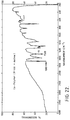
- Figure 22 shows the IR spectra for co-polymers of 9-AA and aniline. As can be seen, this spectrum has clear peaks which is an indication that a co-polymer of the 9-AA and aniline has been produced.
- 9-AA (1 mole) was dissolved in a suitable solvent (100 ml) - see Table 4 for details of solvent, ratio of 9-AA:aniline and dopants.
- a suitable solvent 100 ml
- Table 4 for details of solvent, ratio of 9-AA:aniline and dopants.
- To the stirred solution at room temperature, was added a mixture of aniline (different molar ratios) and acid (2 moles) in water (50ml). The solution was stirred until it became homogeneous and then ammonium persulphate (1.2 mole) in water (50ml) was added. The solution was stirred until the solution became coloured. The solution was filtered, washed with water, methanol and dried in vacuo for 5 to 6 hours at 50°C. Electrical conductivity was measured using the 4-probe method on a compacted disc.
- Figure 22 shows the IR spectrum for the co-polymer produced in example 36.
- the peak at 1680 cm -1 and the cluster of peaks between 1300 and 1350 cm -1 may indicate the presence of anthraquinone in the sample.
- the colour of the co-polymer may be tuned to a lighter colour by quenching the reaction as soon as the oxidation takes place.
Landscapes
- Chemical & Material Sciences (AREA)
- Organic Chemistry (AREA)
- Chemical Kinetics & Catalysis (AREA)
- Spectroscopy & Molecular Physics (AREA)
- Medicinal Chemistry (AREA)
- Wood Science & Technology (AREA)
- Engineering & Computer Science (AREA)
- Physics & Mathematics (AREA)
- Life Sciences & Earth Sciences (AREA)
- Health & Medical Sciences (AREA)
- Materials Engineering (AREA)
- Polymers & Plastics (AREA)
- Macromolecular Compounds Obtained By Forming Nitrogen-Containing Linkages In General (AREA)
- Compositions Of Macromolecular Compounds (AREA)
- Electrolytic Production Of Non-Metals, Compounds, Apparatuses Therefor (AREA)
- Non-Insulated Conductors (AREA)
- Devices For Indicating Variable Information By Combining Individual Elements (AREA)
Applications Claiming Priority (6)
| Application Number | Priority Date | Filing Date | Title |
|---|---|---|---|
| GB9725649 | 1997-12-03 | ||
| GB9725648 | 1997-12-03 | ||
| GBGB9725648.1A GB9725648D0 (en) | 1997-12-03 | 1997-12-03 | Transparent conducting polymers |
| GBGB9725649.9A GB9725649D0 (en) | 1997-12-03 | 1997-12-03 | Transparent conducting polymers |
| GBGB9725650.7A GB9725650D0 (en) | 1997-12-03 | 1997-12-03 | Transparent conducting polymers |
| GB9725650 | 1997-12-03 |
Publications (3)
| Publication Number | Publication Date |
|---|---|
| EP0921147A2 true EP0921147A2 (fr) | 1999-06-09 |
| EP0921147A3 EP0921147A3 (fr) | 2000-04-26 |
| EP0921147B1 EP0921147B1 (fr) | 2005-01-12 |
Family
ID=27269121
Family Applications (1)
| Application Number | Title | Priority Date | Filing Date |
|---|---|---|---|
| EP98309512A Expired - Lifetime EP0921147B1 (fr) | 1997-12-03 | 1998-11-20 | Polymères transparents conducteurs |
Country Status (4)
| Country | Link |
|---|---|
| US (1) | US6153726A (fr) |
| EP (1) | EP0921147B1 (fr) |
| JP (2) | JP4126789B2 (fr) |
| DE (1) | DE69828573T2 (fr) |
Cited By (2)
| Publication number | Priority date | Publication date | Assignee | Title |
|---|---|---|---|---|
| WO2002043444A3 (fr) * | 2000-11-21 | 2002-10-17 | Elam T Ltd | Dispositif electroluminescent |
| US8138614B2 (en) | 2006-02-08 | 2012-03-20 | Semiconductor Energy Laboratory Co., Ltd. | Semiconductor device having an antenna with anisotropic conductive adhesive |
Families Citing this family (16)
| Publication number | Priority date | Publication date | Assignee | Title |
|---|---|---|---|---|
| DE69828573T2 (de) * | 1997-12-03 | 2005-06-16 | Nissan Chemical Industries, Ltd. | Transparente leitfähige Polymere |
| GB2350617A (en) * | 1999-06-02 | 2000-12-06 | Nissan Chemical Ind Ltd | Polymers of diaminoanthracene and anthraquinone |
| US20010048982A1 (en) * | 2000-04-28 | 2001-12-06 | Tohoku Pioneer Corporation | Organic electroluminescent display device and chemical compounds for liquid crystals |
| GB0028973D0 (en) | 2000-11-28 | 2001-01-10 | Nissan Chemical Ind Ltd | Polymers |
| GB0109755D0 (en) * | 2001-04-20 | 2001-06-13 | Elam T Ltd | Devices incorporating mixed metal organic complexes |
| TWI303533B (en) * | 2001-06-15 | 2008-11-21 | Oled T Ltd | Electroluminescent devices |
| GB0116644D0 (en) * | 2001-07-09 | 2001-08-29 | Elam T Ltd | Electroluminescent materials and devices |
| EP1414927A1 (fr) * | 2001-08-04 | 2004-05-06 | Elam-T Limited | Dispositif electroluminescent |
| WO2006016193A1 (fr) | 2004-08-07 | 2006-02-16 | Oled-T Limited | Materiaux et dispositifs electroluminescents |
| JP5401791B2 (ja) * | 2005-10-28 | 2014-01-29 | 日産化学工業株式会社 | スプレー又はインクジェット塗布用電荷輸送性ワニス |
| JP5425694B2 (ja) * | 2010-04-09 | 2014-02-26 | 株式会社豊田自動織機 | 過充放電処理をすることによって得られるリチウムイオン二次電池用の正極活物質、該正極活物質を備えるリチウムイオン二次電池用の正極及び該正極を構成要素として含むリチウムイオン二次電池 |
| CN103282408B (zh) * | 2011-02-25 | 2015-02-04 | 同济大学 | 聚(磺基氨基蒽醌)材料及其制备和使用方法 |
| WO2012147398A1 (fr) * | 2011-04-25 | 2012-11-01 | 株式会社豊田自動織機 | Dérivé d'anthraquinone et matériau actif d'électrode positive pour batterie secondaire lithium-ion le contenant |
| JP5839203B2 (ja) * | 2011-12-05 | 2016-01-06 | 日産化学工業株式会社 | アニオンオリゴマー化合物の製造方法 |
| JP5831845B2 (ja) * | 2012-02-17 | 2015-12-09 | 日産化学工業株式会社 | 帯電防止膜形成組成物 |
| CN117843951B (zh) * | 2024-01-08 | 2024-09-13 | 江苏科技大学 | 一种含共轭胺的聚合物及其制备方法和应用 |
Family Cites Families (11)
| Publication number | Priority date | Publication date | Assignee | Title |
|---|---|---|---|---|
| US4057569A (en) * | 1976-04-28 | 1977-11-08 | The United States Of America As Represented By The Secretary Of The Navy | Bisorthodinitriles |
| JPS5796010A (en) * | 1980-12-09 | 1982-06-15 | Asahi Chem Ind Co Ltd | High polymeric compound of anthracene |
| US4463162A (en) * | 1980-12-09 | 1984-07-31 | Asahi-Dow Limited | Polynuclear fused aromatic ring type polymer and preparation thereof |
| US4413052A (en) * | 1981-02-04 | 1983-11-01 | Ciba-Geigy Corporation | Photopolymerization process employing compounds containing acryloyl group and anthryl group |
| DE3720321A1 (de) * | 1987-06-19 | 1988-12-29 | Basf Ag | Polymere, enthaltend von aminoaromaten ableitbare einheiten |
| JP2662637B2 (ja) * | 1988-11-04 | 1997-10-15 | 住友電気工業株式会社 | 導電材料およびその製造方法 |
| US5648270A (en) * | 1995-02-06 | 1997-07-15 | Molecular Probes, Inc. | Methods of sensing with fluorescent conjugates of metal-chelating nitrogen heterocycles |
| JPH06316631A (ja) * | 1992-09-09 | 1994-11-15 | Tosoh Corp | 多環式芳香族アミン重合体及びその製造方法 |
| US5470943A (en) * | 1994-01-07 | 1995-11-28 | Mitsui Toatsu Chemicals, Inc. | Polyimide |
| JP3340893B2 (ja) * | 1995-08-21 | 2002-11-05 | 三菱レイヨン株式会社 | 可溶性アミノナフタレン系導電性ポリマーとその製造方法 |
| DE69828573T2 (de) * | 1997-12-03 | 2005-06-16 | Nissan Chemical Industries, Ltd. | Transparente leitfähige Polymere |
-
1998
- 1998-11-20 DE DE69828573T patent/DE69828573T2/de not_active Expired - Lifetime
- 1998-11-20 EP EP98309512A patent/EP0921147B1/fr not_active Expired - Lifetime
- 1998-12-01 US US09/203,536 patent/US6153726A/en not_active Expired - Lifetime
- 1998-12-01 JP JP35545998A patent/JP4126789B2/ja not_active Expired - Fee Related
-
2006
- 2006-06-02 JP JP2006155246A patent/JP4513783B2/ja not_active Expired - Fee Related
Non-Patent Citations (3)
| Title |
|---|
| DOO-KYUNG MOON ET AL: "SYNTHESIS OF POLU(1-AMINONAPHTHALENE) AND POLY(1-AMINOANTHARACENE) BY CHEMICAL OXIDATIVE POLYMERIZATION AND CHARACTERIZATION OF THE POLYMERS" MACROMOLECULES, vol. 26, no. 25, 6 December 1993 (1993-12-06), pages 6992-6997, XP000412416 ISSN: 0024-9297 * |
| FARIA R C ET AL: "Synthesis and electrochemical response of poly-(1-aminoanthracene) films" ELECTROCHIMICA ACTA, vol. 44, no. 10, January 1998 (1998-01), page 1597-1605 XP004153734 ISSN: 0013-4686 * |
| SIMIONESCU, CRISTOFOR I. ET AL: "On the chemical polymerization of some aromatic amines" REV. ROUM. CHIM. (1994), 39(3), 333-9 , XP002121180 * |
Cited By (2)
| Publication number | Priority date | Publication date | Assignee | Title |
|---|---|---|---|---|
| WO2002043444A3 (fr) * | 2000-11-21 | 2002-10-17 | Elam T Ltd | Dispositif electroluminescent |
| US8138614B2 (en) | 2006-02-08 | 2012-03-20 | Semiconductor Energy Laboratory Co., Ltd. | Semiconductor device having an antenna with anisotropic conductive adhesive |
Also Published As
| Publication number | Publication date |
|---|---|
| JP4126789B2 (ja) | 2008-07-30 |
| JPH11279279A (ja) | 1999-10-12 |
| JP4513783B2 (ja) | 2010-07-28 |
| DE69828573D1 (de) | 2005-02-17 |
| EP0921147A3 (fr) | 2000-04-26 |
| US6153726A (en) | 2000-11-28 |
| DE69828573T2 (de) | 2005-06-16 |
| JP2006265565A (ja) | 2006-10-05 |
| EP0921147B1 (fr) | 2005-01-12 |
Similar Documents
| Publication | Publication Date | Title |
|---|---|---|
| EP0921147B1 (fr) | Polymères transparents conducteurs | |
| Pei et al. | Electrochromic and highly stable poly (3, 4-ethylenedioxythiophene) switches between opaque blue-black and transparent sky blue | |
| EP1327645B1 (fr) | Procédé de preparation de poly(éthylènedioxythiophène) et poly(éthylènedioxythiophènes) correspondants | |
| Tran-Van et al. | Fully undoped and soluble oligo (3, 4-ethylenedioxythiophene) s: spectroscopic study and electrochemical characterization | |
| EP2239294B1 (fr) | Polymère conducteur soluble et son procédé de préparation | |
| Yen et al. | Novel blue and red electrochromic poly (azomethine ether) s based on electroactive triphenylamine moieties | |
| US6194540B1 (en) | Method for production of water-soluble conducting polyaniline | |
| TW201630917A (zh) | 含有雜環的化合物、使用該化合物的聚合物及其用途 | |
| Farrokhzadeh et al. | Complete doping in solid-state by silica-supported perchloric acid as dopant solid acid: Synthesis and characterization of the novel chiral composite of poly [(±)-2-(sec-butyl) aniline] | |
| US6359149B1 (en) | Bithienylnaphthalene- and bis(3,4-ethylenedioxythienyl)naphthalene-based monomers and polymers | |
| US7273918B2 (en) | Thermally stable self-doped functionalized polyanilines | |
| KR100205912B1 (ko) | 가용 전기전도성 폴리아닐린의 제조방법 | |
| KR20030069082A (ko) | 고전도율의 투명한 폴리티오펜 층 | |
| JP4269113B2 (ja) | 芳香族アミン誘導体及び可溶性導電性化合物 | |
| JPH02242816A (ja) | イソチアナフテン構造を有する重合体およびその製造方法 | |
| Grigoras et al. | Chemical synthesis and characterization of self-doped N-propanesulfonic acid polyaniline derivatives | |
| US6814888B2 (en) | Dopant agent and electroconductive polymer material comprising the same | |
| KR20020034723A (ko) | 가용성 폴리(3,4-에틸렌다이옥시싸이오펜) 분말제조방법 | |
| US6441124B1 (en) | Polymers | |
| EP0303360A1 (fr) | Polymères électroconducteurs | |
| Gupta et al. | Soluble and highly fluorescent conjugated polymer network: non-oxidative reversible doping, cell imaging and anticancer activity | |
| KR100823635B1 (ko) | 이온 액체를 이용한 전도성 고분자의 나노입자의 제조방법및 이를 이용한 전도성 고분자 컴퍼지트 물질의 제조방법 | |
| JP3058735B2 (ja) | ポリピロール誘導体およびその製造方法 | |
| JP3713644B2 (ja) | ポリキノン誘導体及びその合成法と利用法 | |
| JP3778875B2 (ja) | ドーパント剤及び該ドーパント剤を含んでなる導電性高分子材料 |
Legal Events
| Date | Code | Title | Description |
|---|---|---|---|
| PUAI | Public reference made under article 153(3) epc to a published international application that has entered the european phase |
Free format text: ORIGINAL CODE: 0009012 |
|
| AK | Designated contracting states |
Kind code of ref document: A2 Designated state(s): DE FR GB |
|
| AX | Request for extension of the european patent |
Free format text: AL;LT;LV;MK;RO;SI |
|
| PUAL | Search report despatched |
Free format text: ORIGINAL CODE: 0009013 |
|
| RIC1 | Information provided on ipc code assigned before grant |
Free format text: 7C 08G 73/02 A, 7C 09D 179/02 B, 7C 09D 5/24 B, 7C 09D 179/08 B |
|
| AK | Designated contracting states |
Kind code of ref document: A3 Designated state(s): AT BE CH CY DE DK ES FI FR GB GR IE IT LI LU MC NL PT SE |
|
| AX | Request for extension of the european patent |
Free format text: AL;LT;LV;MK;RO;SI |
|
| 17P | Request for examination filed |
Effective date: 20001016 |
|
| AKX | Designation fees paid |
Free format text: DE FR GB |
|
| 17Q | First examination report despatched |
Effective date: 20040114 |
|
| GRAP | Despatch of communication of intention to grant a patent |
Free format text: ORIGINAL CODE: EPIDOSNIGR1 |
|
| RTI1 | Title (correction) |
Free format text: TRANSPARENT CONDUCTING POLYMERS |
|
| GRAS | Grant fee paid |
Free format text: ORIGINAL CODE: EPIDOSNIGR3 |
|
| GRAA | (expected) grant |
Free format text: ORIGINAL CODE: 0009210 |
|
| AK | Designated contracting states |
Kind code of ref document: B1 Designated state(s): DE FR GB |
|
| REG | Reference to a national code |
Ref country code: GB Ref legal event code: FG4D |
|
| REF | Corresponds to: |
Ref document number: 69828573 Country of ref document: DE Date of ref document: 20050217 Kind code of ref document: P |
|
| PLBE | No opposition filed within time limit |
Free format text: ORIGINAL CODE: 0009261 |
|
| STAA | Information on the status of an ep patent application or granted ep patent |
Free format text: STATUS: NO OPPOSITION FILED WITHIN TIME LIMIT |
|
| ET | Fr: translation filed | ||
| 26N | No opposition filed |
Effective date: 20051013 |
|
| PGFP | Annual fee paid to national office [announced via postgrant information from national office to epo] |
Ref country code: DE Payment date: 20121114 Year of fee payment: 15 Ref country code: FR Payment date: 20121130 Year of fee payment: 15 |
|
| PGFP | Annual fee paid to national office [announced via postgrant information from national office to epo] |
Ref country code: GB Payment date: 20131120 Year of fee payment: 16 |
|
| REG | Reference to a national code |
Ref country code: FR Ref legal event code: ST Effective date: 20140731 |
|
| REG | Reference to a national code |
Ref country code: DE Ref legal event code: R119 Ref document number: 69828573 Country of ref document: DE Effective date: 20140603 |
|
| PG25 | Lapsed in a contracting state [announced via postgrant information from national office to epo] |
Ref country code: DE Free format text: LAPSE BECAUSE OF NON-PAYMENT OF DUE FEES Effective date: 20140603 |
|
| PG25 | Lapsed in a contracting state [announced via postgrant information from national office to epo] |
Ref country code: FR Free format text: LAPSE BECAUSE OF NON-PAYMENT OF DUE FEES Effective date: 20131202 |
|
| GBPC | Gb: european patent ceased through non-payment of renewal fee |
Effective date: 20141120 |
|
| PG25 | Lapsed in a contracting state [announced via postgrant information from national office to epo] |
Ref country code: GB Free format text: LAPSE BECAUSE OF NON-PAYMENT OF DUE FEES Effective date: 20141120 |