EP0922736B1 - Polyurethanharze - Google Patents
Polyurethanharze Download PDFInfo
- Publication number
- EP0922736B1 EP0922736B1 EP98310089A EP98310089A EP0922736B1 EP 0922736 B1 EP0922736 B1 EP 0922736B1 EP 98310089 A EP98310089 A EP 98310089A EP 98310089 A EP98310089 A EP 98310089A EP 0922736 B1 EP0922736 B1 EP 0922736B1
- Authority
- EP
- European Patent Office
- Prior art keywords
- polyol
- phosphated
- resin
- metal
- acid
- Prior art date
- Legal status (The legal status is an assumption and is not a legal conclusion. Google has not performed a legal analysis and makes no representation as to the accuracy of the status listed.)
- Expired - Lifetime
Links
Images




Classifications
-
- C—CHEMISTRY; METALLURGY
- C08—ORGANIC MACROMOLECULAR COMPOUNDS; THEIR PREPARATION OR CHEMICAL WORKING-UP; COMPOSITIONS BASED THEREON
- C08G—MACROMOLECULAR COMPOUNDS OBTAINED OTHERWISE THAN BY REACTIONS ONLY INVOLVING UNSATURATED CARBON-TO-CARBON BONDS
- C08G18/00—Polymeric products of isocyanates or isothiocyanates
- C08G18/06—Polymeric products of isocyanates or isothiocyanates with compounds having active hydrogen
- C08G18/28—Polymeric products of isocyanates or isothiocyanates with compounds having active hydrogen characterised by the compounds used containing active hydrogen
- C08G18/40—High-molecular-weight compounds
- C08G18/42—Polycondensates having carboxylic or carbonic ester groups in the main chain
- C08G18/46—Polycondensates having carboxylic or carbonic ester groups in the main chain having heteroatoms other than oxygen
- C08G18/4684—Polycondensates having carboxylic or carbonic ester groups in the main chain having heteroatoms other than oxygen containing phosphorus
-
- C—CHEMISTRY; METALLURGY
- C08—ORGANIC MACROMOLECULAR COMPOUNDS; THEIR PREPARATION OR CHEMICAL WORKING-UP; COMPOSITIONS BASED THEREON
- C08G—MACROMOLECULAR COMPOUNDS OBTAINED OTHERWISE THAN BY REACTIONS ONLY INVOLVING UNSATURATED CARBON-TO-CARBON BONDS
- C08G18/00—Polymeric products of isocyanates or isothiocyanates
- C08G18/06—Polymeric products of isocyanates or isothiocyanates with compounds having active hydrogen
- C08G18/08—Processes
- C08G18/0804—Manufacture of polymers containing ionic or ionogenic groups
- C08G18/0819—Manufacture of polymers containing ionic or ionogenic groups containing anionic or anionogenic groups
- C08G18/0823—Manufacture of polymers containing ionic or ionogenic groups containing anionic or anionogenic groups containing carboxylate salt groups or groups forming them
-
- C—CHEMISTRY; METALLURGY
- C09—DYES; PAINTS; POLISHES; NATURAL RESINS; ADHESIVES; COMPOSITIONS NOT OTHERWISE PROVIDED FOR; APPLICATIONS OF MATERIALS NOT OTHERWISE PROVIDED FOR
- C09D—COATING COMPOSITIONS, e.g. PAINTS, VARNISHES OR LACQUERS; FILLING PASTES; CHEMICAL PAINT OR INK REMOVERS; INKS; CORRECTING FLUIDS; WOODSTAINS; PASTES OR SOLIDS FOR COLOURING OR PRINTING; USE OF MATERIALS THEREFOR
- C09D175/00—Coating compositions based on polyureas or polyurethanes; Coating compositions based on derivatives of such polymers
- C09D175/04—Polyurethanes
- C09D175/06—Polyurethanes from polyesters
-
- Y—GENERAL TAGGING OF NEW TECHNOLOGICAL DEVELOPMENTS; GENERAL TAGGING OF CROSS-SECTIONAL TECHNOLOGIES SPANNING OVER SEVERAL SECTIONS OF THE IPC; TECHNICAL SUBJECTS COVERED BY FORMER USPC CROSS-REFERENCE ART COLLECTIONS [XRACs] AND DIGESTS
- Y10—TECHNICAL SUBJECTS COVERED BY FORMER USPC
- Y10T—TECHNICAL SUBJECTS COVERED BY FORMER US CLASSIFICATION
- Y10T428/00—Stock material or miscellaneous articles
- Y10T428/31504—Composite [nonstructural laminate]
- Y10T428/31551—Of polyamidoester [polyurethane, polyisocyanate, polycarbamate, etc.]
-
- Y—GENERAL TAGGING OF NEW TECHNOLOGICAL DEVELOPMENTS; GENERAL TAGGING OF CROSS-SECTIONAL TECHNOLOGIES SPANNING OVER SEVERAL SECTIONS OF THE IPC; TECHNICAL SUBJECTS COVERED BY FORMER USPC CROSS-REFERENCE ART COLLECTIONS [XRACs] AND DIGESTS
- Y10—TECHNICAL SUBJECTS COVERED BY FORMER USPC
- Y10T—TECHNICAL SUBJECTS COVERED BY FORMER US CLASSIFICATION
- Y10T428/00—Stock material or miscellaneous articles
- Y10T428/31504—Composite [nonstructural laminate]
- Y10T428/31551—Of polyamidoester [polyurethane, polyisocyanate, polycarbamate, etc.]
- Y10T428/31605—Next to free metal
Definitions
- This invention relates to polyurethane resins.
- it relates to polyurethane dispersions and to surface coatings such as metal primers containing the polyurethane dispersions.
- Japanese Patent Application JP-A-61-47721 describes a polyurethane resin for use in solvent-based coating compositions as a carrier for fine inorganic powders, enhancing adhesion to polymer surfaces.
- the polyurethane contains phosphinic salt groups in the polyester segments.
- DE-A-35 32 865 describes a polyester for use in making a polyurethane paint or lacquer.
- the reaction of the polyester with a polyisocyanate immediately produces a cross-linked polymer.
- JP-A-63-303246 describes a phosphated urethane-based adhesive, the pure polyurethane reaction product of an organophosphoric acid and an isocyanate.
- the present invention provides a segmented non-crosslinked water-dispersible polyurethane resin which comprises a reaction product of:
- phosphated polyol a polyol containing at least one phosphorus-containing reactive group, for example, a phosphonate anion.
- the polyurethane resin of the invention is thus a phosphated polyurethane resin.
- the phosphated polyester polyol is a polymeric or oligomeric polyol.
- the polyester polyol may be in admixture with a polyether polyol, a polycarbonate-polyester polyol, a polyhydroxylated polybutadiene, and the like, and mixtures thereof.
- the molecular mass of the phosphated polyester polyol may be in the range 500-3000.
- the phosphated polyester polyol is a hydroxyl-terminated, phosphated polyester polyol which is the reaction product of at least one carboxylic acid, at least one polyol and at least one phosphate monomer.
- the carboxylic acid may be an aromatic, aliphatic, or cycloaliphatic polycarboxylic acid, for example, a C 6 - C 10 polycarboxylic acid having two reactive COOH groups per molecule.
- the polycarboxylic acid may be selected from the group consisting of 1,4-cyclohexanedicarboxylic acid, hexanedioic acid, isophthalic acid, sebacic acid, azelaic acid, and mixtures thereof.
- the particular carboxylic acid(s) used is selected according to the physical properties required in the ultimate phosphated, polyurethane resin, such as chain flexibility (e.g. hexanedioic acid) and hydrolytic resistance and hardness/flexibility balance (e.g. 1,4-cyclohexanedicarboxylic acid).
- chain flexibility e.g. hexanedioic acid
- hydrolytic resistance and hardness/flexibility balance e.g. 1,4-cyclohexanedicarboxylic acid
- the polyol may be a polyhydric alcohol.
- the polyhydric alcohol is a C 4 - C 8 polyhydric alcohol having at least two reactive primary OH groups per molecule.
- the polyhydric alcohol may be selected from the group consisting of 2,2-dimethyl-1,3-propane diol, 2-methyl-1,3-propane diol, 1,6-hexanediol, 1,1,1-tris(hydroxymethyl) propane, and mixtures thereof.
- the particular polyol(s) used is selected according to the physical properties required in the ultimate phosphated polyurethane resin, such as branching and hence hardness (e.g. 2,2-dimethyl-1,3-propane diol).
- the phosphate monomer may be a polycarboxylic acid, for example, 2-phosphonobutane-1,2,4-tricarboxylic acid.
- the phosphate monomer is selected to provide phosphate reactive groups in the main chain of the ultimate phosphated polyurethane resin to improve adhesion of the polyurethane resin to a metal by the formation of P-O - /M 2+ ionic bonds.
- the hydroxyl-terminated, phosphated polyester polyol may be the reaction product of 25 - 45% by mass of the carboxylic acid(s), preferably 37%; 40 - 53% by mass of the polyol(s), preferably 47%; and 5 - 20% by mass of the phosphate monomer, preferably 15%; the mass percentages being based on total solids of the reactants.
- the carboxylic acid is a mixture of 1,4-cyclohexanedicarboxylic acid and hexanedioic acid
- the respective amounts of these carboxylic acids may be 10 - 20%, preferably 15% and 15 - 25%, preferably 22%.
- the hydroxyl-terminated, phosphated polyester polyol may have an acid number in the range 5 - 20 KOH/g, for example, 12mg KOH/g, and a hydroxyl number in the range 130 - 180 KOH/g.
- the phosphated polyurethane resin may be water-dispersible.
- the reaction mixture used to produce the phosphated polyurethane resin includes a stabilising monomer having at least one salt-forming group.
- the phosphated polyurethane resin is made anionic, whereby the salt-forming groups are carboxylic acid groups which can subsequently be neutralized to salt form.
- the monomer can be a polyol having a carboxylic acid group.
- a preferred carboxyl group-containing diol is dimethylol propionic acid.
- the phosphate monomer 2-phosphonobutane-1,2,4-tricarboxylic acid also contributes to the stability of the dispersion.
- said salt forming groups are not neutralised and said phosphated polyurethane resins can be applied as surface coatings in solution by dissolving them in an organic solvent.
- Suitable organic solvents include propylene glycol monomethyl ether acetate and ethylene glycol monoethyl ether acetate.
- the concentration of salt-forming groups is chosen so as to provide stability to an aqueous dispersion of the phosphated polyurethane resin in water. This will vary in accordance with the hydrophilicity of the particular resin.
- the concentration of the stabilising monomer may be in the range 3 - 8% by mass, for example, 3.6%.
- the reaction mixture for preparing the phosphated polyurethane resin typically includes a solvent such as N-methyl pyrrolidone.
- the polyisocyanate may be, for example, toluene diisocyanate. Hexamethylene diisocyanate or isophorone diisocyanate, or any derivatives thereof, are also suitable polyisocyanates. Mixtures of said polyisocyanates may also be used.
- the water-dispersible, hydroxyl-terminated, phosphated polyurethane resin may be the reaction product of 60 - 80% by mass of the phosphated polyol, preferably 75%; 15 - 25% by mass of the polyisocyanate, preferably 22%; and 3 - 8% by mass of the stabilising monomer, preferably 3.6%; the mass percentages being based on total solids of the reactants.
- the molecular mass of the polyurethane resin is in the range 8000 - 10,000.
- the invention extends to a method of preparing a polyurethane resin which comprises reacting together a first component comprising at least one phosphated polyol, a second component comprising at least one polyisocyanate, and a third component comprising at least one stabilising monomer having at least one salt-forming group.
- a first component comprising at least one phosphated polyol
- a second component comprising at least one polyisocyanate
- a third component comprising at least one stabilising monomer having at least one salt-forming group.
- the phosphated polyol, the polyisocyanate, and the stabilising monomer, and the relative proportions thereof, etc. may be as described above.
- the anionic, water-dispersible, phosphated polyurethane resin may be prepared by reacting the polyisocyanate with the hydroxyl-terminated, phosphated polyester polyol at an elevated temperature until all the polyisocyanate is reacted.
- the polyisocyanate and the polyol component are suitably reacted in such proportions that the ratio of equivalents of isocyanate groups to equivalents of hydroxyl groups is in the range 0.8:1 to 0.95:1, preferably 0.85:1, and such that the polyurethane resin has terminal hydroxyl groups.
- the invention further extends to a composition
- a composition comprising a resin as described above, and a liquid carrier for the resin.
- the liquid carrier is water, the composition being in the form of an aqueous dispersion comprising the resin dispersed in the water.
- the composition contains additives such as surfactants, flow-promoters, plasticizers, anti-foams, etc.
- the invention provides a polyurethane dispersion comprising the water-dispersable, hydroxyl-terminated, phosphated polyurethane resin as described above, dispersed in water.
- an amine preferably a tertiary amine such as triethylamine or triethanolamine
- the amine is added at about 0.8-1% amine equivalent per equivalent of carboxyl functionality, preferably about 1:1 (in other words, between 80% and 100% neutralisation).
- Amines that may be used for neutralization are relatively volatile so that they may evaporate from a coating upon curing.
- the polyurethane resin may be dispersed in water using techniques well known in the art. Preferably, the mixture is added to the water with agitation, or, alternatively, water may be stirred into the mixture.
- the polyurethane dispersions typically comprise 30 - 40 mass % solids, preferably 35%.
- the invention extends to the application of said phosphated polyurethane compositions and dispersions as coating compositions, for example, as surface coatings and in particular as primer coats for metals such as galvanised steel.
- a coating of the aqueous dispersion contains a thermally activated crosslinking or curing agent commonly used for polyurethane coatings, such as alkoxylated melamine derivatives (e.g. watersoluble melamine resins).
- aqueous polyurethane dispersion primer coat applied in a coil coating process is dried and cured at temperatures ranging from 170°C to 245°C for times ranging from 20s to 6min.
- the invention extends to a method of protecting a metal substrate form degradation which comprises treating the metal substrate with at least one coat of a metal primer as described above.
- thermosetting polyurethane dispersions having terminal hydroxyl groups have been synthesised from a polyester polyol soft segment modified with a novel phosphate monomer and a diisocyanate.
- the Applicant has shown that in the metal primer coatings of the invention the reactive phosphoric acid groups migrate to the metal/coating interface and form an insoluble metal phosphate layer. In the process of sputtering samples with argon ions, the phosphorus content is increased from 2.2% at the top surface to 4.4% at the metal/coating interface.
- the reactive groups of the phosphated polymer is of the type P-OH, it is essential that these groups dissociate to P-O - . This means that the addition of water to the system promotes dissociation and decreases the deposition time.
- the formation of metal phosphate in its crystalline form requires the addition of water.
- a non-conductive metal phosphate layer at the metal interface improves corrosion resistance, when the phosphated resin dispersion is used as a primer coat to untreated metal as a phosphating process.
- the thickness of the insoluble metal phosphate at the metal interface depends on the amounts of phosphate monomer used and in contrast to a pretreatment process, a complete coverage of the metal by metal phosphate is achieved.
- the primer coat of the invention provides a self-phosphating coating.
- the aqueous, phosphated polyurethane dispersions described above can be used for metal primer coatings.
- Aqueous, unphosphated polyurethane dispersions known to the Applicant have not been used successfully for metal primer coatings due to bad wetting and poor adhesion to the metal.
- protective primer coatings comprising said aqueous dispersions of the present invention having improved wetting and improved wet-adhesion.
- the cured primer coatings also have improved swellability.
- the aqueous phosphated dispersions of the invention have more uniform particle size distributions than said aqueous unphosphated polyurethane dispersions known to the Applicant.
- the invention further extends to a polyol containing a reactive phosphorus-containing group, wherein the phosphorus containing group is derived from 2-phosphonobutane-1,2,4-tricarboxylic acid.
- the invention extends to a phosphated polyol which is a reaction product of a dicarboxylic acid, a polyol, and 2-phosphonobutane-1,2,4-tricarboxylic acid.
- a schematic representation of a preferred hydroxyl-terminated, phosphated polyester polyol which is a reaction product of 1,4-cyclohexanedicarboxylic acid, hexanedioic acid, 2,2-dimethyl-1,3-propane diol and 2-phosphonobutane-1,2,4-tricarboxylic acid, is as follows.
- thermosetting resin comprising said phosphated polyol, for example, said phosphated polymeric or oligomeric polyol.
- the phosphated polyol is admixed with a curing or cross-linking agent.
- Suitable curing or cross-linking agents are melamine derivatives, e.g. alkoxylated melamine derivatives.
- 1,4 cyclohexanedicarboxylic acid 15.37g hexanedioic acid 22.00g 2,2-dimethyl-1,3-propane diol 47,73g 2-phosphono-1,2,4-butanetricarboxylic acid 15,00g Total 100,00g
- the above monomer ingredients were charged to a reaction vessel equipped with a heating mantle, overhead stirrer, condenser, distillate receiver, a nitrogen inlet and sampling ports. The temperature was then set to 220°C for 12 hours. Frequent sampling was carried out and the reaction was terminated at an acid value of 12mg KOH/g.
- polyester polyol of Example 1 100.00g toluene diisocyanate 30.00g 2,2-dimethylol propionic acid 4.50g N-methyl pyrrolidone 4.50g Total 139.00g
- the above curing agent was mixed with the dispersion of Example 2 to provide a primer coating composition.
- the pH can be adjusted to pH 8 if necessary. Water can also be added to the above to reduce the viscosity should it be necessary.
- the coating was applied to galvanised steel as a primer coat using draw down bar to give a dry film thickness of ⁇ .
- the primer coating was cured at a temperature of 230°C peak metal temperature for 40s according to the known coil coating process. Depending on the curing time, curing temperatures may be as low as 170° and as high as 245°. Optimum curing times of 6min @ 170°C and 20s @ 245°C were recorded. Since most of the existing coil coating time requires a curing time of 40s, the optimum peak metal temperature was 230°C.
- Example 3(a) This Example was similar to Example 3(a), however, the curing agent used in Example 3(a) was replaced by partially methylated melamine (9,72g @ 90% solids) and mixed with the phosphated polyurethane dispersion of Example 2 (100,00g @ 35% solids) to prepare a primer coating as described in Example 3(a).
- the primer coating was applied to galvanised steel to 8 ⁇ dry film thickness and cured in 25s at 230°C peak metal temperature because of the highly reactive methylol groups in the partially methylated melamine.
- the Applicant has carried out extensive experiments and studies to characterise the dispersion of Example 2 using dynamic Zeta Sizer for particle size and particle-size distribution, gel permeation chromatography for molecular mass and molecular mass distribution, atomic force microscopy for the state of the dispersion, and infrared spectroscopy for functional group identification.
- the results obtained from dynamic Zeta Sizer and atomic force microscopy studies showed that monodispersed particles in the order of ⁇ 100nm were achieved in the dispersion of Example 2 due to the hydration of the acid groups on the phosphate monomer.
- PBTCA refers to the phosphate monomer (2-phosphonobutane-1,2,4-tricarboxylic acid) used to prepare the polyester polyol of Example 1
- DMPA refers to the stabilising monomer dimethylol propionic acid used to prepare the resin and dispersion of Example 2
- Common polyurethane dispersion refers to a commercially available aqueous non-phosphated dispersion.
- precursor dispersion refers to an aqueous non-phosphated polyurethane dispersion similar to the dispersion of Example 2 and prepared by the Applicant from a non-phosphated polyester polyol similar to the polyester polyol of Example 1 but without any PBTCA in the reaction mixture of Example 1; and "precursor polyol” refers to a non-phosphated polyester polyol similar to the polyester polyol of Example 1 but without any PBTCA in the reaction mixture of Example 1.
- Particle-size distribution of a precursor dispersion was broader at low hydrophilicity and decreased slightly as the DMPA concentration was increased.
- PBTCA-based polyesters were used as a soft segment the particle-size distribution was less than 1.5, which was less than the value given in the literature for most polyurethane dispersions [1].
- Studies performed by Chen and Chen [1] showed a minimum particle-size distribution of 1.3-1.4 when metal hydroxides were the neutralising agents. According to their findings the alkali metal cation was more easily hydrated than the ammonium salt in the aqueous phase.
- the particle-size distribution in this experiment approached unity as the amount of PBTCA incorporated into the soft segment increased, as shown in Figure 1.
- Ionic polyurethanes include both urethane polyelectrolytes and urethane ionomers[2].
- the major difference between polyelectrolytes and ionomers is that the former have very high ionic content, usually one ionic group per repeat unit, whereas the latter have low ionic content in the hard segment (e.g. acidic groups that can be crosslinked by metal salts) and nonionic soft segments.
- the unusual characteristic of the soft segment used in this study was its high acid value as the amount of PBTCA was increased. It has been[3] the subject of most urethane chemists to use extremely low-acid-content polyester polyols as a soft segment to avoid any competitive side reaction of the -NCO groups with the -COOH group to form amides, as shown by: -NCO + -RCOOH ⁇ RCONH + CO 2
- Figures 2 - 7 represent the particle size distribution of a commercial polyurethane dispersion (Figure 2), the precursor dispersion (Figure 3), and PBCTA-modified dispersions (PBTCA 15% Figure 4; PBTCA 20% Figure 5; PBTCA 10% Figure 6; PBTCA 5% Figure 7).
- AFM atomic force microscopy
- the system basically comprises a very fine point tip mounted on a spring cantilever, which is brought into close proximity with the surface. The tip is then moved across the surface to scan the desired area. As this is done, a laser beam is reflected from the tip and vertical movements, due to variations in distance, are tracked by a photodetector. In this way a three-dimensional map of a surface can be compiled in a computer and analysed.
- FIG. 8 - 10 AFM images were compiled on an Explorer TMX 2000 Atomic Force Microscope using a silicon tip (high-resolution) at a force constant of 30-80 N/m in the non-contact mode. A droplet of the sample was dried on a polished silicon wafer at room temperature and the state of the dispersion was investigated.
- the images given in Figures 8 - 10 support the results from the nanosizer in terms of particle distribution.
- Figures 8 - 10 represent AFM images of PBTCA - modified polyurethane dispersions (10% PBTCA Figure 8; 15% PBTCA Figure 9; 20% PBTCA 20% Figure 10).
- the molecular masses of the polyester polyols and the polyurethanes were determined by GPC, using polystyrene standards. Samples were dissolved in tetrahydofuran (THF) to adjust concentrations and the flow rate was 1.25ml/min. Throughout this experiment the polyol molecular mass was kept in the range 2 500-3 000 and the polydispersities were 1.7. The molecular mass of the polyurethanes exceeded 8 000 in each case.
- THF tetrahydofuran
- Ionic urethane dispersions are generally very low in viscosity, are milky white, and have a characteristic bluish cast.
- the viscosity of the dispersion is of great importance for film formation and practical applications, and is influenced by the average particle size, particle-size distribution, interparticle interaction and most of all, its swellability. Those particles which hydrate easily are excellent film formers. Larger particle sizes are preferred for quick drying and very small particles are superior when deep penetration into the microvoids of a substrate is required. With small particle-size, the number of dispersed particles increases and higher dispersion viscosity results[4].
- the viscosity of the emulsions increases with increasing content of the acid moiety, and with increasing degree of neutralisation.
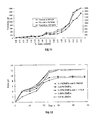
- Figure 11 shows dispersion viscosity as a function of ionic concentration contributed by DMPA and PBTCA at 80% DN, 90%DN and 100%DN.
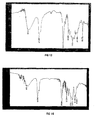
- Figures 13 and 14 show the infrared spectra of the precursor polyester polyol and the PBTCA modified polyester polyol respectively.
- the oxygen atom in the polyester backbone also acted as a proton acceptor in participating hydrogen bonds with the NH groups in the urethane linkages.
- the soft segment had even greater polarity. The polarity could be close to that of the hard segment which contained polar urethane groups. This proximity in polarity between the two segments resulted in good compatibility between the soft and the hard segments through hydrogen bonding.
- adhesion tests in the coating industry are usually done along with tests of several other properties at the same time, making the adhesion component difficult to isolate.
- the impact and flexibility tests that have been done previously are also a measure of adhesion. In an impact test, the strength of the adhesive bonds for similarly prepared but different coatings can be comparatively evaluated. The discussion given here concerns the observations made during impact, flexibility and tape-adhesion tests.
- the dissociated P-O - in the resin system can form the ionic bond of P-O - -Zn 2+ with the metal[39].
- the structure of the polymer derived from PBTCA shows reactive functional groups. The presence of these functional groups in this experiment was also verified by infrared spectroscopy.
- the reactive groups of the phosphated polymer are of the type P-OH, it is essential that these groups dissociate to P-O - . This means that the addition of water to the system promotes dissociation and increases the deposition time. Conversely, the formation of metal phosphate in its crystalline form requires the addition of water.
- a coating component in which phosphorus-containing active groups, for example, phosphonate anion groups are chemically bonded to a resin system and which improves the adhesion as well as phosphating the metal has never before been reported as far as the Applicant is aware.
- the simultaneous phosphating of metals using a phosphatising agent as a separate additive to a paint formulation is a recent development[40-42]
- the phosphate coating consists of a non-conductive layer of crystals that insulates the metal and prevents corrosion.
- XPS X-ray photoelectron spectroscopy
- XPS is one of the surface chemical composition analytical techniques which covers a wide range of applications. This method involves the measurement of binding energies of emitted photoelectrons by ionisation of the atoms with X-rays inside a high vacuum ( ⁇ 10 -5 pa).
- An X-ray of energy hv can eject any electron that has a binding energy(BE) less than its energy, with an intensity that is related to the photoelectric cross-section. Since every element has a unique set of electron-binding energies, qualitative elemental identification is possible using XPS from the measured kinetic energy, hv- E .
- the successive observation of the 1s, 2p, 3d, and 4f electrons at a higher Z number is the reason for this decrease[44].
- Electrons ejected at any energy level must escape from the solid for detection without experiencing inelastic collisions.
- the kinetic energy of these electrons depends largely on their binding energies which allows the element to be identified from the peak intensities which are proportional to the number of atoms in the samples photoelectron emission.
- the source of X-rays is mostly Mg K (1253.6ev) or Al K (1486.6ev).
- the emitted electrons are collected by an electrostatic energy analyser and detected as a function of their kinetic energy (E K ).
- Sputtering the process of removing a layer of a material by bombarding the surface with an energetic ion beam (0.5-10KeV argon ions), provides a means for atomically microsectioning the solid, and the sputtering time can be related to depth[46]
- an energetic ion beam 0.5-10KeV argon ions
- Coatings were prepared in very thin layers (2-4 ⁇ ) and cured as described above. Samples 1 cm x 1 cm were cut and loaded into a Quantum 2000 Intro chamber which was then evacuated. Wide spectra (over a wide range of energies) were recorded of the samples by using Quantum 2000 Scanning ESCA Microprobe (PHI). The source of X-rays was monochromated Al k (1486.6eV),15kV. Quantitative data were calculated from the peak areas for each element. The samples were then Ar + ion sputtered (2kV Ar + ions, sputtering rate, 14nm/min) to remove approximately 7nm of the top surface. After the sputtering step, wide spectra were recorded on the samples and quantitative data was calculated from the peak areas for each element.
- Reorientation of a polymer surface due to the mobile nature of polymers minimises the interfacial free energy with the surrounding medium.
- the presence of the low-surface-energy silicon on the layer of the primer coat may affect the subsequent adhesion of the top coat.
- the difference between the advancing and receding contact angle is the contact angle hysteresis.
- a plot of F against d, extrapolated to d 0, enables ⁇ a to be computed.
- the receding contact angle may be calculated from the measurement of the force on the metal as it is slowly raised through the solution.
- Figure 18 shows the plate when it just touches the liquid and
- Figure 19 shows the plate after immersion to a depth d.
- the bare metal was simply cut to a 1 cm by 1 cm size.
- the metal surfaces were coated by applying the PBTCA-modified thermoset urethane dispersion and the crosslinker mixture to the metal. After the one side was cured, the second side of the metal was also painted and cured similarly.
- Two types of coating were used: primer coating with no additive and primer coating with silicone-based flow additive. 1 cm x 1 cm samples were then cut from both types for contact-angle measurements. Another set of samples was prepared by coating the two different primer samples with a conventional solvent-based silicone polyester top-coat to both sides.
- Dynamic contact-angle determinations were made under dynamic conditions, that is, at constant velocity of the moving platform during the dipping and retraction motions and were therefore velocity-dependent. Velocity dependence of the study of contact-angles has been the source of controversy. The inconsistency of reports in the literature is reflected in papers by different workers. Johnson and Dettre [24] reported velocity to be independent of the contact angle for homogeneous surfaces and to change slightly for heterogeneous surfaces. Kasemura et al .[25] observed that both advancing and receding contact angles increase with increasing platform velocity for polyvinyl alkylates. Du Toit [26] observed an increase in advancing contact angle with velocity, while receding contact angle seemed to be independent of velocity.
- the Y-axis is the cosine of the contact angle.
- the X-axis is an ordered list of probe liquid surface tensions.
- the length of each spectrum is the measure of the contact-angle hysteresis.
- Figures 20 - 23 represent respectively the hysteresis spectra of bare metal; primer coat; primer coat with additive; silicone polyester top coat.
- silicon was detected by XPS. It was also mentioned that the depth profile of the silicon decreased as the samples were sputtered. This was due to the migration of the silicon chain to the outermost surface of the film.
- the hysteresis spectra of a cured silicone polyester top coat is also given in Figure 23.
- the values of ⁇ a and ⁇ r for the two polar liquids (water and NMP) increased (better wettable) compared with those for both primer coatings. This was to be expected, since the top coat polyester was synthesised from a short-chain diol and carboxylic acid. As a result the repeating ester groups were not separated by long hydrocarbon chains. The polar ester linkage coupled with the polar melamine crosslinker contributed to wettability.
- Adsorption of polar polymers at polar surfaces can change from an initial loop structure to a more compact flat covering, and depends on the available energy per segment, the concentration of the polymer and the duration of the test[34].
- Polymer chains lose their entropy during adsorption[35] and, except for oligomers or very dilute solutions, the adsorbed polymer layer is almost always a multilayer and irreversible[34-35].
- a crystalline metal has a high molecular or atomic density, and hence different surface free energy.
- the structure of the grain boundary at the zinc layer has a profound effect on hysteresis.
- the surface is heterogeneous and has a different wetting property.
- the advancing contact angle is sensitive to the less wettable surface (low surface energy) while the receding contact angle is more sensitive to the more wettable part. This means that the advancing contact angle "directly" shows the surface energy condition whereas a receding contact angle shows the surface energy condition of the already wetted surface [36].
Landscapes
- Chemical & Material Sciences (AREA)
- Organic Chemistry (AREA)
- Engineering & Computer Science (AREA)
- Medicinal Chemistry (AREA)
- Polymers & Plastics (AREA)
- Chemical Kinetics & Catalysis (AREA)
- Health & Medical Sciences (AREA)
- Manufacturing & Machinery (AREA)
- Life Sciences & Earth Sciences (AREA)
- Materials Engineering (AREA)
- Wood Science & Technology (AREA)
- Polyurethanes Or Polyureas (AREA)
- Processes Of Treating Macromolecular Substances (AREA)
- Developing Agents For Electrophotography (AREA)
- Polishing Bodies And Polishing Tools (AREA)
Claims (16)
- Segmentiertes nicht vernetztes wasserdispergierbares Polyurethanharz, welches ein Reaktionsprodukt aus:umfasst.einer ersten Komponente, umfassend mindestens ein phosphatiertes Polyesterpolyol;einer zweiten Komponente, umfassend mindestens ein Polyisocyanat; undeiner dritten Komponente, umfassend mindestens ein stabilisierendes Monomer, welches mindestens eine salzbildende Gruppe aufweist,
- Harz wie in Anspruch 1 beansprucht, wobei das phosphatierte Polyol ein Hydroxyl-terminiertes, phosphatiertes Polyesterpolyol ist, welches ein Reaktionsprodukt aus mindestens einer Carbonsäure, mindestens einem Polyol und mindestens einem Phosphatmonomer ist.
- Harz wie in Anspruch 2 beansprucht, wobei das Phosphatmonomer 2-Phosphonobutan-1 ,2,4-tricarbonsäure ist.
- Harz wie in Anspruch 2 oder 3 beansprucht, wobei das Hydroxyl-terminierte, phosphatierte Polyesterpolyol ein Reaktionsprodukt aus 25 bis 45 Gew.-% Carbonsäure(n), 40 bis 53 Gew.-% Polyol(e) und 5 bis 20 Gew.-% Phosphatmonomer(e) ist, wobei die Gewichtsprozente auf die Gesamt-Feststoffe der Reagenzien bezogen sind.
- Harze wie in Anspruch 2, Anspruch 3 oder Anspruch 4 beansprucht, wobei das Hydroxyl-terminierte, phosphatierte Polyesterpolyol eine Säurezahl im Bereich von 5 bis 20 mg KOH/g und eine Hydroxylzahl im Bereich von 130 bis 180 mg KOH/g aufweist.
- Harz wie in einem der vorstehenden Ansprüche beansprucht, wobei das stabilisierende Monomer ein Polyol ist und die salzbildende Gruppe eine Carbonsäuregruppe ist.
- Harz wie in einem der vorstehenden Ansprüche beansprucht, welches ein Reaktionsprodukt aus 60 bis 80 Gew.-% des phosphatierten Polyols, 15 bis 25 Gew.-% des Polyisocyanats und 3 bis 8 Gew.-% des stabilisierenden Monomeren ist, wobei die Gewichtsprozente auf die Gesamt-Feststoffe der Reagenzien bezogen sind.
- Verfahren zur Herstellung eines Polyurethanharzes, welches umfasst Umsetzung einer ersten Komponente, umfassend mindestens ein phosphatiertes Polyesterpolyol, einer zweiten Komponente, umfassend mindestens ein Polyisocyanat, und einer dritten Komponente, umfassend mindestes ein stabilisierendes Monomer, welches mindestens eine salzbildende Gruppe aufweist, wodurch ein segmentiertes, nicht vernetztes Polyurethanharz gebildet wird, das in Wasser dispergierbar ist.
- Zusammensetzung, umfassend ein Harz wie in einem der Ansprüche 1 bis 7 beansprucht, wobei die Zusammensetzung in Form einer wässrigen Dispersion vorliegt, die das in Wasser dispergierte Harz umfasst.
- Zusammensetzung wie in Anspruch 9 beansprucht, wobei die salzbildenden Gruppen des Harzes vor der Dispersion des Harzes in Wasser zur Salzform neutralisiert werden.
- Zusammensetzung wie in Anspruch 10 beansprucht, wobei die salzbildenden Gruppen des Harzes mit einem flüchtigen Amin neutralisiert werden.
- Zusammensetzung wie in Anspruch 9, Anspruch 10 oder Anspruch 11 beansprucht, welche eine Partikelgröße im Bereich von 50 bis 150 nm und eine Partikelgrößenverteilung im Bereich von 1,02 bis 1,2 aufweist.
- Selbst-phosphatierender Metallprimer, welcher eine Zusammensetzung wie in einem der Ansprüche 9 bis 12 beansprucht, und ein Vernetzungsmittel umfasst.
- Verfahren zum Schutz eines Metallsubstrats vor Schäden durch Atmosphärenelemente, welches Behandlung des Metallsubstrats mit mindestens einer Beschichtung aus einem Metallprimer wie in Anspruch 13 beansprucht umfasst.
- Polyol, enthaltend eine reaktive phosphorhaltige Gruppe, wobei die phosphorhaltige Gruppe von 2-Phosphonobutan-1,2,4-tricarbonsäure abgeleitet ist.
- Phosphatiertes Polyol, welches ein Reaktionsprodukt aus einer Dicarbonsäure, einem Polyol und 2-Phosphonobutan-1,2,4-tricarbonsäure ist.
Applications Claiming Priority (2)
| Application Number | Priority Date | Filing Date | Title |
|---|---|---|---|
| ZA9711042 | 1997-12-09 | ||
| ZA9711042 | 1997-12-09 |
Publications (3)
| Publication Number | Publication Date |
|---|---|
| EP0922736A1 EP0922736A1 (de) | 1999-06-16 |
| EP0922736B1 true EP0922736B1 (de) | 2005-11-16 |
| EP0922736B8 EP0922736B8 (de) | 2006-02-01 |
Family
ID=25586764
Family Applications (1)
| Application Number | Title | Priority Date | Filing Date |
|---|---|---|---|
| EP19980310089 Expired - Lifetime EP0922736B8 (de) | 1997-12-09 | 1998-12-09 | Polyurethanharze |
Country Status (4)
| Country | Link |
|---|---|
| US (1) | US6221955B1 (de) |
| EP (1) | EP0922736B8 (de) |
| AT (1) | ATE310055T1 (de) |
| DE (1) | DE69832356T2 (de) |
Families Citing this family (12)
| Publication number | Priority date | Publication date | Assignee | Title |
|---|---|---|---|---|
| US6461415B1 (en) * | 2000-08-23 | 2002-10-08 | Applied Thin Films, Inc. | High temperature amorphous composition based on aluminum phosphate |
| US6982787B1 (en) | 2002-01-02 | 2006-01-03 | The United States Of America As Represented By The Secretary Of The Air Force | Modification of the degree of liquid contact with a solid by control of surface and micro-channel capillary geometry |
| US10502448B1 (en) | 2002-01-02 | 2019-12-10 | United States Of America As Represented By The Secretary Of The Air Force | Self-clearing vents based on droplet expulsion |
| US6867854B1 (en) | 2002-01-02 | 2005-03-15 | The United States Of America As Represented By The Secretary Of The Air Force | Liquid to solid angle of contact measurement |
| US7678465B2 (en) | 2002-07-24 | 2010-03-16 | Applied Thin Films, Inc. | Aluminum phosphate compounds, compositions, materials and related metal coatings |
| US7682700B2 (en) * | 2002-08-14 | 2010-03-23 | Applied Thin Films, Inc. | Aluminum phosphate compounds, compositions, materials and related composites |
| WO2005003033A2 (en) * | 2002-12-23 | 2005-01-13 | Applied Thin Films, Inc. | Aluminum phosphate coatings |
| BRPI0508176A (pt) * | 2004-03-15 | 2007-08-07 | Dow Global Technologies Inc | processo para aplicar uma espuma de poliuretano flexìvel aderente a um substrato |
| CL2009000031A1 (es) * | 2008-01-11 | 2009-06-12 | Sherwin Williams Co | Composicion de revestimiento que comprende; un poliol de poliester funcional de fosfato, insaturado en fibra del polister, sin inter-enlace en composicion de revestimiento, a traves de enlaces dobles en fibra del poliester; y un agente de curado. |
| US8802318B2 (en) | 2010-05-14 | 2014-08-12 | Samsung Electronics Co., Ltd. | Compound and composition including compound, with fuel cell, fuel cell electrode and fuel cell electrolyte membrane using same |
| US8859098B2 (en) * | 2012-05-18 | 2014-10-14 | Lord Corporation | Acrylic adhesion promoters |
| CN110951042B (zh) * | 2019-12-07 | 2021-12-17 | 合众(佛山)化工有限公司 | 一种油醇聚醚-2磷酸酯封端水性聚氨酯树脂及其制备方法 |
Family Cites Families (6)
| Publication number | Priority date | Publication date | Assignee | Title |
|---|---|---|---|---|
| JPS6147721A (ja) | 1984-08-15 | 1986-03-08 | Toyobo Co Ltd | ポリウレタン樹脂の製造法 |
| DE3532865A1 (de) * | 1985-09-14 | 1987-04-02 | Basf Ag | Hydroxylgruppenhaltiges gesaettigtes polyesterharz, seine herstellung und verwendung fuer zweikomponenten-polyurethanlacke sowie verfahren zu deren topfzeitverlaengerung |
| JPH02150479A (ja) * | 1988-11-30 | 1990-06-08 | Japan Synthetic Rubber Co Ltd | プライマー組成物 |
| DE4142734A1 (de) | 1991-12-21 | 1993-06-24 | Hoechst Ag | Wasserverduennbares, urethanmodifiziertes und hydroxylgruppen enthaltendes selbstvernetzendes bindemittel und zubereitungen davon |
| DE4221678C2 (de) * | 1992-07-02 | 1997-09-04 | Budenheim Rud A Oetker Chemie | Hydroxyalkan-phosphonate von Polyolen |
| JPH06147721A (ja) * | 1992-11-05 | 1994-05-27 | Sanyo Electric Co Ltd | 冷凍庫 |
-
1998
- 1998-12-09 AT AT98310089T patent/ATE310055T1/de not_active IP Right Cessation
- 1998-12-09 DE DE1998632356 patent/DE69832356T2/de not_active Expired - Lifetime
- 1998-12-09 EP EP19980310089 patent/EP0922736B8/de not_active Expired - Lifetime
- 1998-12-09 US US09/207,967 patent/US6221955B1/en not_active Expired - Fee Related
Also Published As
| Publication number | Publication date |
|---|---|
| EP0922736B8 (de) | 2006-02-01 |
| EP0922736A1 (de) | 1999-06-16 |
| DE69832356D1 (de) | 2005-12-22 |
| US6221955B1 (en) | 2001-04-24 |
| DE69832356T2 (de) | 2006-08-10 |
| HK1020747A1 (en) | 2000-05-19 |
| ATE310055T1 (de) | 2005-12-15 |
Similar Documents
| Publication | Publication Date | Title |
|---|---|---|
| EP0922736B1 (de) | Polyurethanharze | |
| KR940000960B1 (ko) | 기판표면위에 다층피복 보호용 및/또는 장식용 피복을 형성하는 방법 | |
| EP0735069B1 (de) | Verfahren zur Herstellung einer wässrigen Polyurethanbeschichtung sowie daraus hergestellte Schicht | |
| Hirose et al. | The structure and properties of acrylic-polyurethane hybrid emulsions | |
| Maege et al. | Self-assembling adhesion promoters for corrosion resistant metal polymer interfaces | |
| US5418264A (en) | Aqueous coating agent and use thereof | |
| US7294670B2 (en) | Aqueous polyurethane resin dispersion and aqueous adhesive | |
| JP3375611B2 (ja) | 溶接可能被覆金属基板およびその作製および腐食防止方法 | |
| Chen et al. | Surface composition of a series of dimethylsiloxane urea urethane segmented copolymers studied by electron spectroscopy for chemical analysis | |
| US20080305274A1 (en) | Process for coating metal sheets | |
| ATE128995T1 (de) | Verwendung eines beschichtungsmittels zur herstellung von steinschlagfesten überzügen und/oder füllerschichten. | |
| HUT69014A (en) | Coating agent, a process for its production and its use | |
| KR100940452B1 (ko) | 피복 조성물 | |
| EP1355996A2 (de) | Beschichtungszusammensetzungen für metallische substrate | |
| JP2001214124A (ja) | 水性塗料 | |
| US4221685A (en) | Water-dispersed film-forming lacquer containing air-drying alkyd resins and ethylene oxide adducts of hydrophobic compounds | |
| EP1292400B1 (de) | Verfahren zur beschichtung eines blanken, unbehandelten metallsubstrats | |
| SU871738A3 (ru) | Способ получени осаждаемых на катоде уретановых покрытий | |
| HK1020747B (en) | Polyurethane resins | |
| Mequanint et al. | Adhesion properties of phosphate‐and siloxane‐containing polyurethane dispersions to steel: An analysis of the metal–coating interface | |
| MXPA00010045A (es) | Aglutinantes que se pueden diluir en agua para materiales de revestimiento de textura suave. | |
| AU654599B2 (en) | Aqueous filler composition | |
| US4459326A (en) | Coating of synthetic surfaces with water-based coatings | |
| WO2004099323A1 (en) | Coating, coating composition and method for improving adhesion of the coating | |
| US20260055297A1 (en) | Coating systems for improving adhesion between coating layers and methods for improving adhesion between adjacent coating layers |
Legal Events
| Date | Code | Title | Description |
|---|---|---|---|
| PUAI | Public reference made under article 153(3) epc to a published international application that has entered the european phase |
Free format text: ORIGINAL CODE: 0009012 |
|
| AK | Designated contracting states |
Kind code of ref document: A1 Designated state(s): AT BE CH CY DE DK ES FI FR GB GR IE IT LI LU MC NL PT SE |
|
| AX | Request for extension of the european patent |
Free format text: AL;LT;LV;MK;RO;SI |
|
| 17P | Request for examination filed |
Effective date: 19991208 |
|
| AKX | Designation fees paid |
Free format text: AT BE CH CY DE DK ES FI FR GB GR IE IT LI LU MC NL PT SE |
|
| AXX | Extension fees paid |
Free format text: AL PAYMENT 19991208;LT PAYMENT 19991208;LV PAYMENT 19991208;MK PAYMENT 19991208;RO PAYMENT 19991208;SI PAYMENT 19991208 |
|
| 17Q | First examination report despatched |
Effective date: 20020802 |
|
| GRAP | Despatch of communication of intention to grant a patent |
Free format text: ORIGINAL CODE: EPIDOSNIGR1 |
|
| GRAS | Grant fee paid |
Free format text: ORIGINAL CODE: EPIDOSNIGR3 |
|
| GRAA | (expected) grant |
Free format text: ORIGINAL CODE: 0009210 |
|
| AK | Designated contracting states |
Kind code of ref document: B1 Designated state(s): AT BE CH CY DE DK ES FI FR GB GR IE IT LI LU MC NL PT SE |
|
| AX | Request for extension of the european patent |
Extension state: AL LT LV MK RO SI |
|
| PG25 | Lapsed in a contracting state [announced via postgrant information from national office to epo] |
Ref country code: NL Free format text: LAPSE BECAUSE OF FAILURE TO SUBMIT A TRANSLATION OF THE DESCRIPTION OR TO PAY THE FEE WITHIN THE PRESCRIBED TIME-LIMIT Effective date: 20051116 Ref country code: LI Free format text: LAPSE BECAUSE OF FAILURE TO SUBMIT A TRANSLATION OF THE DESCRIPTION OR TO PAY THE FEE WITHIN THE PRESCRIBED TIME-LIMIT Effective date: 20051116 Ref country code: IT Free format text: LAPSE BECAUSE OF FAILURE TO SUBMIT A TRANSLATION OF THE DESCRIPTION OR TO PAY THE FEE WITHIN THE PRESCRIBED TIME-LIMIT;WARNING: LAPSES OF ITALIAN PATENTS WITH EFFECTIVE DATE BEFORE 2007 MAY HAVE OCCURRED AT ANY TIME BEFORE 2007. THE CORRECT EFFECTIVE DATE MAY BE DIFFERENT FROM THE ONE RECORDED. Effective date: 20051116 Ref country code: FI Free format text: LAPSE BECAUSE OF FAILURE TO SUBMIT A TRANSLATION OF THE DESCRIPTION OR TO PAY THE FEE WITHIN THE PRESCRIBED TIME-LIMIT Effective date: 20051116 Ref country code: CH Free format text: LAPSE BECAUSE OF FAILURE TO SUBMIT A TRANSLATION OF THE DESCRIPTION OR TO PAY THE FEE WITHIN THE PRESCRIBED TIME-LIMIT Effective date: 20051116 Ref country code: BE Free format text: LAPSE BECAUSE OF FAILURE TO SUBMIT A TRANSLATION OF THE DESCRIPTION OR TO PAY THE FEE WITHIN THE PRESCRIBED TIME-LIMIT Effective date: 20051116 Ref country code: AT Free format text: LAPSE BECAUSE OF FAILURE TO SUBMIT A TRANSLATION OF THE DESCRIPTION OR TO PAY THE FEE WITHIN THE PRESCRIBED TIME-LIMIT Effective date: 20051116 |
|
| REG | Reference to a national code |
Ref country code: GB Ref legal event code: FG4D |
|
| REG | Reference to a national code |
Ref country code: CH Ref legal event code: EP |
|
| PG25 | Lapsed in a contracting state [announced via postgrant information from national office to epo] |
Ref country code: IE Free format text: LAPSE BECAUSE OF NON-PAYMENT OF DUE FEES Effective date: 20051209 Ref country code: CY Free format text: LAPSE BECAUSE OF FAILURE TO SUBMIT A TRANSLATION OF THE DESCRIPTION OR TO PAY THE FEE WITHIN THE PRESCRIBED TIME-LIMIT Effective date: 20051209 |
|
| REG | Reference to a national code |
Ref country code: IE Ref legal event code: FG4D |
|
| REF | Corresponds to: |
Ref document number: 69832356 Country of ref document: DE Date of ref document: 20051222 Kind code of ref document: P |
|
| RAP2 | Party data changed (patent owner data changed or rights of a patent transferred) |
Owner name: DEKRO PAINTS (PROPRIETARY) LIMITED |
|
| PG25 | Lapsed in a contracting state [announced via postgrant information from national office to epo] |
Ref country code: MC Free format text: LAPSE BECAUSE OF NON-PAYMENT OF DUE FEES Effective date: 20051231 |
|
| PG25 | Lapsed in a contracting state [announced via postgrant information from national office to epo] |
Ref country code: LU Free format text: LAPSE BECAUSE OF NON-PAYMENT OF DUE FEES Effective date: 20060116 |
|
| PG25 | Lapsed in a contracting state [announced via postgrant information from national office to epo] |
Ref country code: GR Free format text: LAPSE BECAUSE OF FAILURE TO SUBMIT A TRANSLATION OF THE DESCRIPTION OR TO PAY THE FEE WITHIN THE PRESCRIBED TIME-LIMIT Effective date: 20060216 Ref country code: DK Free format text: LAPSE BECAUSE OF FAILURE TO SUBMIT A TRANSLATION OF THE DESCRIPTION OR TO PAY THE FEE WITHIN THE PRESCRIBED TIME-LIMIT Effective date: 20060216 |
|
| PG25 | Lapsed in a contracting state [announced via postgrant information from national office to epo] |
Ref country code: ES Free format text: LAPSE BECAUSE OF FAILURE TO SUBMIT A TRANSLATION OF THE DESCRIPTION OR TO PAY THE FEE WITHIN THE PRESCRIBED TIME-LIMIT Effective date: 20060227 |
|
| REG | Reference to a national code |
Ref country code: SE Ref legal event code: TRGR |
|
| NLT2 | Nl: modifications (of names), taken from the european patent patent bulletin |
Owner name: DEKRO PAINTS (PROPRIETARY) LIMITED Effective date: 20051228 |
|
| REG | Reference to a national code |
Ref country code: HK Ref legal event code: GR Ref document number: 1020747 Country of ref document: HK |
|
| PG25 | Lapsed in a contracting state [announced via postgrant information from national office to epo] |
Ref country code: PT Free format text: LAPSE BECAUSE OF FAILURE TO SUBMIT A TRANSLATION OF THE DESCRIPTION OR TO PAY THE FEE WITHIN THE PRESCRIBED TIME-LIMIT Effective date: 20060417 |
|
| LTIE | Lt: invalidation of european patent or patent extension |
Effective date: 20051116 |
|
| NLV1 | Nl: lapsed or annulled due to failure to fulfill the requirements of art. 29p and 29m of the patents act | ||
| REG | Reference to a national code |
Ref country code: CH Ref legal event code: PL |
|
| PLBE | No opposition filed within time limit |
Free format text: ORIGINAL CODE: 0009261 |
|
| STAA | Information on the status of an ep patent application or granted ep patent |
Free format text: STATUS: NO OPPOSITION FILED WITHIN TIME LIMIT |
|
| REG | Reference to a national code |
Ref country code: IE Ref legal event code: MM4A |
|
| 26N | No opposition filed |
Effective date: 20060817 |
|
| EN | Fr: translation not filed | ||
| PG25 | Lapsed in a contracting state [announced via postgrant information from national office to epo] |
Ref country code: FR Free format text: LAPSE BECAUSE OF FAILURE TO SUBMIT A TRANSLATION OF THE DESCRIPTION OR TO PAY THE FEE WITHIN THE PRESCRIBED TIME-LIMIT Effective date: 20070105 |
|
| PG25 | Lapsed in a contracting state [announced via postgrant information from national office to epo] |
Ref country code: FR Free format text: LAPSE BECAUSE OF FAILURE TO SUBMIT A TRANSLATION OF THE DESCRIPTION OR TO PAY THE FEE WITHIN THE PRESCRIBED TIME-LIMIT Effective date: 20051231 |
|
| PG25 | Lapsed in a contracting state [announced via postgrant information from national office to epo] |
Ref country code: FR Free format text: LAPSE BECAUSE OF FAILURE TO SUBMIT A TRANSLATION OF THE DESCRIPTION OR TO PAY THE FEE WITHIN THE PRESCRIBED TIME-LIMIT Effective date: 20051116 |
|
| PGFP | Annual fee paid to national office [announced via postgrant information from national office to epo] |
Ref country code: GB Payment date: 20101222 Year of fee payment: 13 |
|
| PGFP | Annual fee paid to national office [announced via postgrant information from national office to epo] |
Ref country code: SE Payment date: 20110131 Year of fee payment: 13 Ref country code: DE Payment date: 20101222 Year of fee payment: 13 |
|
| REG | Reference to a national code |
Ref country code: SE Ref legal event code: EUG |
|
| GBPC | Gb: european patent ceased through non-payment of renewal fee |
Effective date: 20111209 |
|
| REG | Reference to a national code |
Ref country code: DE Ref legal event code: R119 Ref document number: 69832356 Country of ref document: DE Effective date: 20120703 |
|
| PG25 | Lapsed in a contracting state [announced via postgrant information from national office to epo] |
Ref country code: GB Free format text: LAPSE BECAUSE OF NON-PAYMENT OF DUE FEES Effective date: 20111209 Ref country code: SE Free format text: LAPSE BECAUSE OF NON-PAYMENT OF DUE FEES Effective date: 20111210 Ref country code: DE Free format text: LAPSE BECAUSE OF NON-PAYMENT OF DUE FEES Effective date: 20120703 |