EP0923952B1 - Desodorierende Nitratzusammensetzung - Google Patents
Desodorierende Nitratzusammensetzung Download PDFInfo
- Publication number
- EP0923952B1 EP0923952B1 EP19970120946 EP97120946A EP0923952B1 EP 0923952 B1 EP0923952 B1 EP 0923952B1 EP 19970120946 EP19970120946 EP 19970120946 EP 97120946 A EP97120946 A EP 97120946A EP 0923952 B1 EP0923952 B1 EP 0923952B1
- Authority
- EP
- European Patent Office
- Prior art keywords
- composition
- nitrate
- preservative
- composition further
- fragrance
- Prior art date
- Legal status (The legal status is an assumption and is not a legal conclusion. Google has not performed a legal analysis and makes no representation as to the accuracy of the status listed.)
- Expired - Lifetime
Links
Images

Classifications
-
- A—HUMAN NECESSITIES
- A61—MEDICAL OR VETERINARY SCIENCE; HYGIENE
- A61L—METHODS OR APPARATUS FOR STERILISING MATERIALS OR OBJECTS IN GENERAL; DISINFECTION, STERILISATION OR DEODORISATION OF AIR; CHEMICAL ASPECTS OF BANDAGES, DRESSINGS, ABSORBENT PADS OR SURGICAL ARTICLES; MATERIALS FOR BANDAGES, DRESSINGS, ABSORBENT PADS OR SURGICAL ARTICLES
- A61L9/00—Disinfection, sterilisation or deodorisation of air
- A61L9/01—Deodorant compositions
Definitions
- the present invention relates generally to a deodorant composition and more particularly, to a deodorant composition comprising nitrate and a preservative.
- Deodorants for mobile sanitary equipment or other sewage-related systems are frequently based on one or more biocides also known as preservatives. These preservatives are used in an attempt to kill or at least inhibit the fecal bacteria and thus prevent microbial activity and associated stench. Microbial activity results in oxygen consumption and eventually to anaerobic conditions.
- anaerobic is meant no oxygen available in any form; no dissolved oxygen gas, no nitrates and/or sulfates.
- mercaptans fecal odor corresponding with rotten cabbage
- hydrogen sulfide decay odor resembling rotten eggs
- quaternary ammonium salts such as Bardac 22 (dimethyldidecyl ammonium chloride) or Arquad CB50 (benzalkonium chloride) are used as well as other preservatives such as Myacide AS (2-bromo-2-nitropropanediol, Tris nitro and others. These preservatives are also widely used to prevent product spoilage in consumer products and in disinfectant surface cleaners.
- a "non-biocidal" way to prevent odors is to delay the system from getting anaerobic by providing an additional oxygen source, generally nitrate.
- Nitrates are widely used in sewage systems to prevent odors and to reduce or prevent the presence of toxic gases like hydrogen sulfide.
- Hydrogen sulfide is released if bacteria use oxygen from sulfates. If the system becomes anoxic (dissolved oxygen gas used up) bacteria use nitrate as a source of oxygen. If nitrates are used up, bacteria use sulfates resulting in the production of hydrogen sulfide.
- WO-A- 9 706 834 discloses a dry nitrate deodorant composition.
- DE-A-4 328 372 discloses the use of nitrate with a preservative and optionally alcohols for odor control.
- a deodorant composition which may be used to reduce odorous gases in sewage-related settings such as waste holding tanks.
- the composition of the present invention comprises nitrate in combination with a preservative as defined in claim 1 wherein the concentration of the preservative is lower than the concentration commonly used in toilet deodorants, with surprisingly good deodorant performance.
- concentration of the preservative is lower than the concentration commonly used in toilet deodorants, with surprisingly good deodorant performance.
- the nitrate component of the present invention further enhances the performance of the composition by supplying an additional oxygen source for the bacteria present In the sewage, thereby decreasing the production of hydrogen sulfide caused by bacterial consumption of sulfates.
- the deodorant compositions of the present invention comprise nitrate in combination with a preservative as defined in claim 1, wherein the concentration of the preservative is lower than the concentration commonly used in toilet deodorants, with surprisingly good deodorant performance.
- concentration of the preservative is lower than the concentration commonly used in toilet deodorants, with surprisingly good deodorant performance.
- the preservative is more biodegradable by sewage microorganisms, compared to commercially available deodorant compositions having higher preservative concentrations.
- the nitrate component ofthe present invention further enhances the performance of the composition by supplying an additional oxygen source for the bacteria present in the sewage, thereby decreasing the production of hydrogen sulfide caused by bacterial consumption of sulfates.
- compositions of the present invention may also comprise a surfactant, a fragrance, a dye and a thickener.
- a stabilizer in the form of a glycol (ethylene- or propyleneglycol) or a carboxylic acid may also be used to enhance the stability of the formulation.
- nitrate component of the compositions of the present invention are those known to those skilled In the art and are generally water-soluble nitrate salts, including, but not limited to calcium, sodium, ammonium and potassium. Calcium nitrate available from van Epenhuyzen is preferred. The concentration of nitrate is from 1% to 40% by weight of the total composition, wherein from about 10% to about 20% is preferred.
- the preservative component ofthe compositions of the present invention may be chosen from those normally used In the art or used as active ingredients in disinfectant cleaners. Examples include Bardac 22 available from Lonza, Myacyde AS from Knoll, Arquad CB50 by AKZO and Tris-nitro from Angus. A preservative concentration of 0.3% to 15% by weight of the total composition, preferably from about 1% to about 7.5%, used. More specifically, Myacide AS may be used at a concentration of from about 0.5% to about 3% by weight of the total composition, preferably from about 1% to about 2%. For quaternary ammonium salts, from 0.3 % to about 5%, and preferably from about 0.5% to about 2% may be used. For Tris-nifro, from about 1% to about 12%, preferably between about 4% to about 10% may be employed. It will be appreciated that preferred percentage ranges are based on commonly used dosages of 50-150 ml per 10 liter holding tank capacity.
- compositions of the present invention there are hundreds of biocides/preservatives (used interchangeably herein) that may be employed in the compositions of the present invention, especially those which perform in environments with a massive number of bacteria, a high organic load and the presence of ammonia.
- biocide/preservative any suitable biocide/preservative may therefore be employed, wherein the concentration is at a level where the biocide/preservative is biodegradable by sewage microorganisms such as alcohols as 2-bromo-2-nitro-propanediol (Myacide AS), formaldehyde donors as 2-hydroxymethyl-2-nitro-1,3-propanediol (Tris-nitro) and quaternary ammonium salts like alky-benzyl-dimethyl-ammoniumchloride (Arquad CB50). It will be appreciated that a combination of biocides/preservatives can also be used.
- Myacide AS 2-bromo-2-nitro-propanediol
- Tris-nitro 2-hydroxymethyl-2-nitro-1,3-propanediol
- quaternary ammonium salts like alky-benzyl-dimethyl-ammoniumchloride (Arquad CB50).
- the fragrance employed in the present invention may be any fragrance composition commonly used in the art.
- Citrus Super Strong 212063 available from Drom may be employed, and Pinolin F532.393 available from Quest International is preferred.
- chemicals known in the art as "malodor counteractants” can be used instead of a fragrance. It will be appreciated that the amount of fragrance used will be dependent on the type of fragrance composition employed, however, from about 0.5% to about 5% by weight of the total composition is generally sufficient and from about 0.5% to about 2% is preferred. While not wishing to be bound by theory, it is believed that the fragrance masks any odors produced by the anaerobic bacteria.
- a surfactant may also be used to emulsify the fragrance.
- the surfactant aids in digesting waste, thereby making it more accessible to the nitrate and preservative.
- the surfactant may be anionic or cationic and nonionic surfactants are preferred such as Tween 20 or cremofor from Bayer and Emulgin RT40, available from Henkel.
- the amount of surfactant employed is from about 0.1% to about 5% by weight of the total composition, wherein from about 0.5% to about 1.5% is preferred.
- a thickener can be used and will generally be based on the type of preservatives used.
- preservatives for example, Natrosol HHR available from Hercules can be used if the preservative employed is a quaternary ammonium compound and a Xanthan Gum type like Rodopol G from Rhone Poulenc or Keltrol RD from Kelco if other preservatives are used.
- a solvent can be used to stabilize the formulation.
- mono propylene glycol (MPG) or carboxylic acids may be used in a concentration of from about 0.2% to about 10% by weight of the total composition.
- Dye such as a non-staining type like Blue JMT available from Miliken, may also be employed.
- the present Invention may be employed in various sewage-related settings i.e ., where fluid waste is not being drained directly into a sewage system.
- the present invention is particularly useful for waste holding tanks, for example in portable and mobile lavatories and recreational vehicles.
- an effective amount of the composition of the present invention may be determined based on the knowledge of one so skilled and the specific application.
- a particular formulation for a chemical toilet was prepared containing the following ingredients: Calcium nitrate (50%) 30% 2-bromo-2-nitropropanediol (BNPD) 1.5% Fragrance Pinolin 0.8% Surfactant Emulgin RT40 0.75% Bleu dye 0.57% Thickener Keltrol RD 0.3% Mono propylene glycol 1% Acetic acid (10%) 0.2% Soft water balance
- a premix was made by adding/mixing Fragrance Pinolin, Surfactant Emulgin RT40, Thickener Keltrol RD and Mono propylene glycol.
- the water phase acetic acid, soft water and 2-bromo-2-nitropropanediol were mixed until homogenous.
- the premix was added to the water phase and mixed for at least 15 minutes. At that time calcium nitrate (50%) was added and after Quality Control Bleu dye was added to complete the formulation.
- Table 1 shows the concentration of preservative commonly used compared to the concentration of preservative employed in the compositions of the present invention.
- Frequently used preservatives In high performance toilet- deodorants % in exemplary composition of the present invention advised dosage in 20 liter tank cone. in 20 liter tank (ppm) MIC in ppm formaldehyde 24 120 1500 31.25 benzalkonium chloride 9.5 150 705 10 dimethyldidecylammonium chloride 1.27 260 165 5 2-bromo-2-nitropropanediol 4 120 240 31.25
- the average odor grade given by a seven person odor panel when the toilet was emptied was 2.8 on the same 5 point scale.
- Another particular formulation was prepared containing the following ingredients: Calcium nitrate (50%) 30% 2-hydroxymethyl-2-nitro-1,3-propanediol 6% Fragrance Pinolin 0.8% Surfactant Emulgin RT40 0.56% Bleu dye 0.64% Thickener Keltrol RD 0.3% Mono propylene glycol 1% Soft water balance
- a premix was made by adding mixing Fragrance Pinolin, Surfactant Emulgin RT40, Thickener Keltrol RD and Mono propylene glycol. In another beaker the water phase, soft water and 2-hydroxymethyl-2-nitro-1,3-propanediol were mixed until homogenous. Then the premix was added to the water phase and mixed for at least 15 minutes. At that time calcium nitrate (50%) was added and after Quality Control Bleu dye was added to complete the formulation.
- Another particular formulation was prepared containing the following ingredients: Calcium nitrate (50%) 30% Arquad CB50 2.5% Fragrance Pinolin 0.8% Sodiumbicarbonate 0.66% Bleu dye 0.57% Natrasol 250 HHR (Hercules/Aqualon) 0.5% Akypo LF4 (carboxylic acid from Kao) 3% Surfactant Emulgin RT40 0.75% Soft water balance
- a premix was made by adding/mixing Arquad CB50, Fragrance Pinolin and Surfactant Emulgin RT40.
- Arquad CB50 Fragrance Pinolin
- Surfactant Emulgin RT40 In another beaker the water phase, soft water, sodiumbicarbonate and Natrasol 250 HHR (Hercules/Aqualon) were mixed until homogenous.
- Akypo LF4 carboxylic acid from Kao
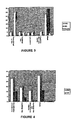
- Figure 2 shows the results. Because the headspace contains a mixture of gasses no correction factor is used in the graphs, raw data are expressed. The results of an Hydrogen sulphide reduction Is most important because these results are the most specific. Data show some (non linear) relationship of the concentration.
- respiration is not significantly inhibited. It is recognized in the art that respiration is one of the most important factors in sewage treatment processes and biodegradability.
Landscapes
- Health & Medical Sciences (AREA)
- Epidemiology (AREA)
- Life Sciences & Earth Sciences (AREA)
- Animal Behavior & Ethology (AREA)
- General Health & Medical Sciences (AREA)
- Public Health (AREA)
- Veterinary Medicine (AREA)
- Disinfection, Sterilisation Or Deodorisation Of Air (AREA)
Claims (18)
- Flüssige Deodorant-Zusammensetzung, umfassend ein Lösemittel, Nitrat und ein Konservierungsmittel, worin das Konservierungsmittel ca. 0,3 bis ca. 15 Gew.% der Gesamtzusammensetzung darstellt, worin das Konservierungsmittel ausgewählt ist aus der Gruppe, welche aus Alkoholen, Formaldehyd-Donoren und quaternären Ammoniumsalzen besteht, und worin das Nitrat ca. 1 bis ca. 40 Gew.% der Gesamtzusammensetzung darstellt.
- Zusammensetzung nach Anspruch 1, worin das Nitrat Calciumnitrat ist.
- Zusammensetzung nach Anspruch 1, worin die Zusammensetzung ferner ein Tensid umfasst.
- Zusammensetzung nach Anspruch 1, worin die Zusammensetzung ferner einen Duftstoff umfasst.
- Zusammensetzung nach Anspruch 1, worin die Zusammensetzung ferner ein Verdickungsmittel umfasst.
- Zusammensetzung nach Anspruch 1, worin die Zusammensetzung ferner einen Farbstoff umfasst.
- Verfahren zur Herstellung einer flüssigen Deodorant-Zusammensetzung, umfassend das Mischen eines Lösemittels, Nitrats und eines Konservierungsmittels, worin das Konservierungsmittel ca. 0,3 bis ca. 15 Gew.% der Gesamtzusammensetzung ausmacht, worin das Konservierungsmittel ausgewählt ist aus der Gruppe, welche aus Alkoholen, Formaldehyd-Donoren und quaternären Ammoniumsalzen besteht, und worin das Nitrat ca. 1 bis ca. 40 Gew.% der Gesamtzusammensetzung ausmacht.
- Verfahren nach Anspruch 7, worin das Nitrat Calciumnitrat ist.
- Verfahren nach Anspruch 7, worin die Zusammensetzung ferner ein Tensid umfasst.
- Verfahren nach Anspruch 7, worin die Zusammensetzung ferner einen Duftstoff umfasst.
- Verfahren nach Anspruch 7, worin die Zusammensetzung ferner ein Verdickungsmittel umfasst.
- Verfahren nach Anspruch 7, worin die Zusammensetzung ferner einen Farbstoff umfasst.
- Verfahren zum Deodorieren eines Schmutzwasserhaltetanks, umfassend die Schritte von:a) Bereitstellen einer flüssigen Deodorant-Zusammensetzung, umfassend ein Lösemittel, Nitrat und ein Konservierungsmittel, worin das Konservierungsmittel ca. 0,3 bis ca. 15 Gew.% der Gesamtzusammensetzung ausmacht, worin das Konservierungsmittel ausgewählt ist aus der Gruppe, welche aus Alkoholen, Formaldehyd-Donoren und quaternären Ammoniumsalzen besteht, und worin das Nitrat ca. 1 bis ca. 40 Gew.% der Gesamtzusammensetzung ausmacht;b) Anwenden der Zusammensetzung von Schritt a) auf den Schmutzwasserhaltetank.
- Verfahren nach Anspruch 13, worin das Nitrat Calciumnitrat ist.
- Verfahren nach Anspruch 13, worin die Zusammensetzung ferner ein Tensid umfasst.
- Verfahren nach Anspruch 13, worin die Zusammensetzung ferner einen Duftstoff umfasst.
- Verfahren nach Anspruch 13, worin die Zusammensetzung ferner ein Verdickungsmittel umfasst.
- Verfahren nach Anspruch 13, worin die Zusammensetzung ferner einen Farbstoff umfasst.
Priority Applications (2)
| Application Number | Priority Date | Filing Date | Title |
|---|---|---|---|
| EP19970120946 EP0923952B1 (de) | 1997-11-28 | 1997-11-28 | Desodorierende Nitratzusammensetzung |
| DE69724975T DE69724975T2 (de) | 1997-11-28 | 1997-11-28 | Desodorierende Nitratzusammensetzung |
Applications Claiming Priority (1)
| Application Number | Priority Date | Filing Date | Title |
|---|---|---|---|
| EP19970120946 EP0923952B1 (de) | 1997-11-28 | 1997-11-28 | Desodorierende Nitratzusammensetzung |
Publications (2)
| Publication Number | Publication Date |
|---|---|
| EP0923952A1 EP0923952A1 (de) | 1999-06-23 |
| EP0923952B1 true EP0923952B1 (de) | 2003-09-17 |
Family
ID=8227706
Family Applications (1)
| Application Number | Title | Priority Date | Filing Date |
|---|---|---|---|
| EP19970120946 Expired - Lifetime EP0923952B1 (de) | 1997-11-28 | 1997-11-28 | Desodorierende Nitratzusammensetzung |
Country Status (2)
| Country | Link |
|---|---|
| EP (1) | EP0923952B1 (de) |
| DE (1) | DE69724975T2 (de) |
Families Citing this family (2)
| Publication number | Priority date | Publication date | Assignee | Title |
|---|---|---|---|---|
| NL1023299C2 (nl) * | 2003-04-29 | 2004-11-01 | Johannes Antonius Ma Nijnatten | Droge formulering voor chemische toiletten. |
| US20070196319A1 (en) * | 2003-06-05 | 2007-08-23 | Janice Alfrey | Methods of producing, marketing and using odor control compositions |
Family Cites Families (3)
| Publication number | Priority date | Publication date | Assignee | Title |
|---|---|---|---|---|
| DE4328372A1 (de) * | 1993-08-24 | 1995-03-02 | Agrolinz Agrarchemikalien Muen | Verfahren und Mittel zur Verminderung der Gasemission aus Gülle |
| US5609863A (en) * | 1993-11-22 | 1997-03-11 | Cox; James P. | Glyoxal composition for reduction of animal waste stench and septicity, and method thereof |
| WO1997006834A1 (en) * | 1995-08-16 | 1997-02-27 | Thetford Corporation | Nitrate deodorant composition |
-
1997
- 1997-11-28 EP EP19970120946 patent/EP0923952B1/de not_active Expired - Lifetime
- 1997-11-28 DE DE69724975T patent/DE69724975T2/de not_active Expired - Lifetime
Also Published As
| Publication number | Publication date |
|---|---|
| EP0923952A1 (de) | 1999-06-23 |
| DE69724975D1 (de) | 2003-10-23 |
| DE69724975T2 (de) | 2004-07-22 |
Similar Documents
| Publication | Publication Date | Title |
|---|---|---|
| CA1333693C (en) | Deodorant composition for abating the odor of organic refuse | |
| US3509254A (en) | Deodorizing and bactericidal compositions | |
| JPH0451958A (ja) | 循環式トイレ汚物処理剤 | |
| EP0923952B1 (de) | Desodorierende Nitratzusammensetzung | |
| JP4718049B2 (ja) | 消臭剤組成物および消臭方法 | |
| US5609863A (en) | Glyoxal composition for reduction of animal waste stench and septicity, and method thereof | |
| US4229408A (en) | Method and composition for toilet holding tank | |
| KR20020059304A (ko) | 천연탈취제 및 그 제조방법 | |
| WO2008070021A2 (en) | Methods for determining effectiveness of waste water tank deodorizers and synthetic waste compositions for use in said methods | |
| EP0869822B1 (de) | Nitrat-deodorantzusammensetzung | |
| JP2000325453A (ja) | 消臭剤 | |
| JPH01320062A (ja) | 腐食抑制作用をもつ反応型脱臭剤 | |
| JP3074597B2 (ja) | 消臭剤組成物及び消臭剤の製造法 | |
| JPH0256406A (ja) | 脱臭及び殺菌用組成物 | |
| JP2579541B2 (ja) | し尿用脱臭組成物 | |
| JP2695093B2 (ja) | 糞便堆肥化用防臭液組成物 | |
| JP3044223B2 (ja) | 脱臭剤 | |
| WO1990011096A1 (en) | Deodorant composition for abating the odor of organic refuse | |
| EP0175664A2 (de) | Entseuchende Zusammensetzung | |
| JP2893962B2 (ja) | ポ−タブル式トイレ汚水処理剤 | |
| WO2025126149A1 (en) | Deodorizing and sanitizing compositions | |
| JP2626104B2 (ja) | 循環式トイレ汚物処理剤 | |
| JPH07492A (ja) | 除菌消臭剤 | |
| JP2006055785A (ja) | し尿処理剤 | |
| JPH0751234B2 (ja) | し尿脱臭処理剤 |
Legal Events
| Date | Code | Title | Description |
|---|---|---|---|
| PUAI | Public reference made under article 153(3) epc to a published international application that has entered the european phase |
Free format text: ORIGINAL CODE: 0009012 |
|
| 17P | Request for examination filed |
Effective date: 19981005 |
|
| AK | Designated contracting states |
Kind code of ref document: A1 Designated state(s): DE ES FR GB IT NL SE |
|
| AX | Request for extension of the european patent |
Free format text: AL;LT;LV;MK;RO;SI |
|
| AKX | Designation fees paid |
Free format text: DE ES FR GB IT NL SE |
|
| 17Q | First examination report despatched |
Effective date: 20020312 |
|
| GRAH | Despatch of communication of intention to grant a patent |
Free format text: ORIGINAL CODE: EPIDOS IGRA |
|
| RIN1 | Information on inventor provided before grant (corrected) |
Inventor name: VAN DER PLUIJM, FRANS A. Inventor name: VAN NIJNATTEN, HANS A.M. |
|
| GRAS | Grant fee paid |
Free format text: ORIGINAL CODE: EPIDOSNIGR3 |
|
| GRAA | (expected) grant |
Free format text: ORIGINAL CODE: 0009210 |
|
| AK | Designated contracting states |
Kind code of ref document: B1 Designated state(s): DE ES FR GB IT NL SE |
|
| REG | Reference to a national code |
Ref country code: GB Ref legal event code: FG4D |
|
| RIN2 | Information on inventor provided after grant (corrected) |
Inventor name: VAN NIJNATTEN, HANS A.M. Inventor name: VAN DER PLUIJM, FRANS A. |
|
| REF | Corresponds to: |
Ref document number: 69724975 Country of ref document: DE Date of ref document: 20031023 Kind code of ref document: P |
|
| REG | Reference to a national code |
Ref country code: SE Ref legal event code: TRGR |
|
| PGFP | Annual fee paid to national office [announced via postgrant information from national office to epo] |
Ref country code: FR Payment date: 20031201 Year of fee payment: 7 |
|
| PGFP | Annual fee paid to national office [announced via postgrant information from national office to epo] |
Ref country code: SE Payment date: 20031202 Year of fee payment: 7 |
|
| PGFP | Annual fee paid to national office [announced via postgrant information from national office to epo] |
Ref country code: GB Payment date: 20031211 Year of fee payment: 7 |
|
| PG25 | Lapsed in a contracting state [announced via postgrant information from national office to epo] |
Ref country code: ES Free format text: LAPSE BECAUSE OF FAILURE TO SUBMIT A TRANSLATION OF THE DESCRIPTION OR TO PAY THE FEE WITHIN THE PRESCRIBED TIME-LIMIT Effective date: 20031228 |
|
| ET | Fr: translation filed | ||
| PLBE | No opposition filed within time limit |
Free format text: ORIGINAL CODE: 0009261 |
|
| STAA | Information on the status of an ep patent application or granted ep patent |
Free format text: STATUS: NO OPPOSITION FILED WITHIN TIME LIMIT |
|
| 26N | No opposition filed |
Effective date: 20040618 |
|
| PG25 | Lapsed in a contracting state [announced via postgrant information from national office to epo] |
Ref country code: GB Free format text: LAPSE BECAUSE OF NON-PAYMENT OF DUE FEES Effective date: 20041128 |
|
| PG25 | Lapsed in a contracting state [announced via postgrant information from national office to epo] |
Ref country code: SE Free format text: LAPSE BECAUSE OF NON-PAYMENT OF DUE FEES Effective date: 20041129 |
|
| EUG | Se: european patent has lapsed | ||
| GBPC | Gb: european patent ceased through non-payment of renewal fee |
Effective date: 20041128 |
|
| PG25 | Lapsed in a contracting state [announced via postgrant information from national office to epo] |
Ref country code: FR Free format text: LAPSE BECAUSE OF NON-PAYMENT OF DUE FEES Effective date: 20050729 |
|
| REG | Reference to a national code |
Ref country code: FR Ref legal event code: ST |
|
| PG25 | Lapsed in a contracting state [announced via postgrant information from national office to epo] |
Ref country code: IT Free format text: LAPSE BECAUSE OF NON-PAYMENT OF DUE FEES Effective date: 20051128 |
|
| PGRI | Patent reinstated in contracting state [announced from national office to epo] |
Ref country code: IT Effective date: 20091201 |
|
| PGFP | Annual fee paid to national office [announced via postgrant information from national office to epo] |
Ref country code: DE Payment date: 20131127 Year of fee payment: 17 |
|
| PGFP | Annual fee paid to national office [announced via postgrant information from national office to epo] |
Ref country code: NL Payment date: 20131126 Year of fee payment: 17 Ref country code: IT Payment date: 20131126 Year of fee payment: 17 |
|
| REG | Reference to a national code |
Ref country code: DE Ref legal event code: R119 Ref document number: 69724975 Country of ref document: DE |
|
| REG | Reference to a national code |
Ref country code: NL Ref legal event code: V1 Effective date: 20150601 |
|
| PG25 | Lapsed in a contracting state [announced via postgrant information from national office to epo] |
Ref country code: NL Free format text: LAPSE BECAUSE OF NON-PAYMENT OF DUE FEES Effective date: 20150601 |
|
| PG25 | Lapsed in a contracting state [announced via postgrant information from national office to epo] |
Ref country code: DE Free format text: LAPSE BECAUSE OF NON-PAYMENT OF DUE FEES Effective date: 20150602 |
|
| PG25 | Lapsed in a contracting state [announced via postgrant information from national office to epo] |
Ref country code: IT Free format text: LAPSE BECAUSE OF NON-PAYMENT OF DUE FEES Effective date: 20141128 |