EP0926604A2 - Übersetzungsverfahren und System - Google Patents
Übersetzungsverfahren und System Download PDFInfo
- Publication number
- EP0926604A2 EP0926604A2 EP98309840A EP98309840A EP0926604A2 EP 0926604 A2 EP0926604 A2 EP 0926604A2 EP 98309840 A EP98309840 A EP 98309840A EP 98309840 A EP98309840 A EP 98309840A EP 0926604 A2 EP0926604 A2 EP 0926604A2
- Authority
- EP
- European Patent Office
- Prior art keywords
- dictionary
- word
- translation
- discourse
- candidate
- Prior art date
- Legal status (The legal status is an assumption and is not a legal conclusion. Google has not performed a legal analysis and makes no representation as to the accuracy of the status listed.)
- Withdrawn
Links
Images



Classifications
-
- G—PHYSICS
- G06—COMPUTING OR CALCULATING; COUNTING
- G06F—ELECTRIC DIGITAL DATA PROCESSING
- G06F40/00—Handling natural language data
- G06F40/20—Natural language analysis
- G06F40/237—Lexical tools
- G06F40/242—Dictionaries
-
- G—PHYSICS
- G06—COMPUTING OR CALCULATING; COUNTING
- G06F—ELECTRIC DIGITAL DATA PROCESSING
- G06F40/00—Handling natural language data
- G06F40/20—Natural language analysis
- G06F40/268—Morphological analysis
-
- G—PHYSICS
- G06—COMPUTING OR CALCULATING; COUNTING
- G06F—ELECTRIC DIGITAL DATA PROCESSING
- G06F40/00—Handling natural language data
- G06F40/40—Processing or translation of natural language
- G06F40/42—Data-driven translation
- G06F40/44—Statistical methods, e.g. probability models
-
- G—PHYSICS
- G06—COMPUTING OR CALCULATING; COUNTING
- G06F—ELECTRIC DIGITAL DATA PROCESSING
- G06F40/00—Handling natural language data
- G06F40/40—Processing or translation of natural language
- G06F40/42—Data-driven translation
- G06F40/47—Machine-assisted translation, e.g. using translation memory
-
- G—PHYSICS
- G06—COMPUTING OR CALCULATING; COUNTING
- G06F—ELECTRIC DIGITAL DATA PROCESSING
- G06F40/00—Handling natural language data
- G06F40/40—Processing or translation of natural language
- G06F40/55—Rule-based translation
-
- G—PHYSICS
- G06—COMPUTING OR CALCULATING; COUNTING
- G06F—ELECTRIC DIGITAL DATA PROCESSING
- G06F40/00—Handling natural language data
- G06F40/40—Processing or translation of natural language
- G06F40/58—Use of machine translation, e.g. for multi-lingual retrieval, for server-side translation for client devices or for real-time translation
Definitions
- the present invention relates to a translation system for which high speed processing is required, and in particular to a translation method and system for improving the accuracy of the selection of an appropriate word in machine translation, without incurring any deterioration of the processing efficiency.
- a translation system Since for a connection on the Internet a translation system must initiate a translation process in real time, high speed processing is required and the performance of complicated procedures, such as deep semantic analysis, is difficult. Generally, therefore, such a system is equipped with a dictionary to reduce the number of unknown words, and for document scanning, more or less ambiguous translations are prepared that are at least prevented from straying to far from the point. To avoid complicating the process and to increase the accuracy of a translation, the data structure of such a dictionary tends to be relatively simple, and word translations tend to be registered not only as individual word units (a single word dictionary) but as compound word units (a compound word dictionary). During a translation, since the simple data structure has a poor word selection function, when there are words for which the translation is registered by the units of compound words, the selection of the translation registered for the compound word unit frequently results in a better translation.
- This method is premised on the assumption that a translation will be output after all the sentences in the document have been processed, and thus it can not be employed for a process by which sentences are successively translated from the beginning of a document, as when a translation process is initiated in real time while a system is connected to the Internet.
- a translation system for performing translation using a plurality of dictionaries, comprising: (a) means for registering in a discourse dictionary, during the translation of a document by using a compound word dictionary, elemental word information of an applied compound word; and (b) means for employing a plurality of dictionaries, including said discourse dictionary, in order to translate a word in the document that is not defined in the compound word dictionary.
- a translation method for performing translation using a plurality of dictionaries comprising the steps of: (a) during the translation of a document by using a compound word dictionary, registering in a discourse dictionary, elemental word information of an applied compound word; and (b) employing a plurality of dictionaries, including the discourse dictionary, in order to translate a word in the document that is not defined in the compound word dictionary.
- a storing medium for storing a program for performing translation using a plurality of dictionaries, the program comprising: (a) a function for, during the translation of a document by using a compound word dictionary, registering in a discourse dictionary, elemental word information of an applied compound word; and (b) a function for employing a plurality of dictionaries, including the discourse dictionary, in order to translate a word in the document that is not defined in the compound word dictionary.
- a translation method and system that, only when a sentence for translation is selected by a user and without requiring the employment of a complicated process, automatically examines the definitions of words to select preferred words and can thus improve the accuracy of a translation.
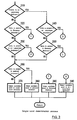
- Fig. 1 is a flowchart showing the translation process according to the present invention.
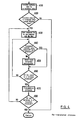
- Fig. 2 is a flowchart showing the discourse dictionary registration process according to the present invention.
- Fig. 3 is a flowchart showing the single-word determination process according to the present invention.
- Fig. 4 is a flowchart showing the re-translation process according to the present invention.
- Fig. 5 is a diagram illustrating an example hardware arrangement of a translation system according to the present invention.
- the obtained value (1.0 in this case) is used as the preference for the candidate word "saiban,” for the word “trial” in “civil trial.”
- the above obtained preference 1.0 is added to the preference that is already given for the registered word.
- FIG. 5 is a schematic diagram illustrating a hardware arrangement of a translation system according to the present invention.
- a system 100 includes a central processing unit (CPU) 1 and a memory 4.
- the CPU 1 and the memory 4 are connected via a bus 2 and an IDE controller 25 to a hard disk drive 13 (or to a storage medium driver, such as a CD-ROM 26 or a DVD 32), which serves as an auxiliary storage device.
- a hard disk drive 13 or to a storage medium driver, such as a CD-ROM 26 or a DVD 32
- the CPU 1 and the memory 4 are connected via the bus 2 and a SCSI controller 27 to a hard disk drive 30 (or to a storage medium driver, such as an MO 28, a CD-ROM 29 or a DVD 31), which also serves as an auxiliary storage device for storing a dictionary, etc.
- a floppy disk drive 20 is connected via a floppy disk controller 19 to the bus 2.
- a floppy disk is inserted into the floppy disk drive 20.
- Computer program code or data for cooperating with an operating system to instruct the CPU to execute the present invention is stored on the floppy disk and the hard disk drive 13 (a storage medium, such as an MO, CD-ROM or a DVD), and in a ROM 14. For execution, the program code and the data are loaded into the memory.
- the computer program code may be compressed, or may be divided into a plurality of segments for storage in a plurality of storage media.
- the system 100 also includes user interface hardware, has a pointing device (a mouse or a joystick) 7 or a keyboard 6 for data input, and employs a display 12 for visually providing data for a user.
- a printer can be connected to the system through a parallel port 16, and a modem can be connected through a serial port 15.
- the system 100 can be connected to a network, through the serial port 15, by the modem or a communication adaptor 18 (an Ethernet or a token ring card).
- a remote controlled transceiver for the exchange of data using infrared rays or wire can be connected to the serial port 15 or the parallel port 16.
- a loudspeaker 23 receives an audio signal obtained by a D/A (digital/analog) conversion performed by an audio controller 21, and outputs it as sound.
- the audio controller 21 converts analog audio data, received from a microphone 24, into digital data, and also fetches external audio data into the system and translates the data in cooperation with sound recognition software.
- the translation system of the present invention can be implemented by employing a common personal computer (PC); a workstation; a notebook PC; a palmtop PC; a network computer; various electronic home appliances, such as a television incorporating a computer; a game machine having a communication function; a communication terminal having a communication function, such as a telephone, a facsimile machine, a portable telephone, a PHS or a personal digital assistant; or a combination of these devices.
- PC personal computer
- workstation a notebook PC
- a palmtop PC a network computer
- various electronic home appliances such as a television incorporating a computer
- a game machine having a communication function
- a communication terminal having a communication function such as a telephone, a facsimile machine, a portable telephone, a PHS or a personal digital assistant
- a combination of these devices such as a telephone, a facsimile machine, a portable telephone, a PHS or a personal digital assistant
- a plurality of dictionaries and various types of buffers may be located in the memory 4, but usually, the memory 4 is used as a storage buffer for storing a discourse dictionary, translation results and a co-occurrence dictionary, and the hard disk 30 is used as a secondary storage device for storing a personal dictionary, etc.
- Compound words may be included in the co-occurrence dictionary, and when the origin (e.g., "singular form") is defined for each word, together with a part of speech it may be described as a limitation.
- the co-occurrence dictionary is constituted by entries that each include two or more phrases, and their limitations and translations.
- the word is supposed to be able to match either the stem of the word or the inflexion of the word.
- the word may match a word having a desired part of speech.
- Fig. 1 is a flowchart for the processing performed according to the present invention.
- the translation system extracts and processes sentences, one by one.
- a word string that constitutes a sentence to be processed is examined to find relevant compound words.
- the information for the relevant compound word (the character string of the compound word in the source language and the character string for the translation into a target language) is used for a discourse dictionary registration process at step 150.
- the single-word process is performed for the words that are not relevant to the compound word at step 120.
- the translation of a single word is decided by conducting a search of the discourse dictionary or the co-occurrence dictionary, the translation is used.
- that word is transmitted to a personal dictionary where a search for it is performed.
- the translation is returned, it is employed, and when no translation is returned, the word is output to the single-word dictionary where another search is performed to obtain the translation.
- the object word and its translation are output for the translation result recording process.
- a check is performed to determine whether the object word is present as a headword in the translation result recording buffer.
- a headword for the object word is created, and the candidate word, the sentence number and an appearance frequency of 1 are stored in the translation result recording buffer.
- a check is performed to determine whether a candidate word for the object word is present. If a candidate word is present, a new sentence number is added to the old one, and the appearance frequency is incremented by one. When no candidate word is present, a candidate word, the sentence number and an appearance frequency of 1 are stored in the translation result recording buffer.
- step 160 When, at step 160, all the words that are not relevant to the compound word have been processed, program control moves to step 170 whereat the translation process is activated upon the receipt of candidate words for all the words. When all the words have not yet been processed, program control returns to step 120.
- the translation process is performed, which is a conventional machine translation process.
- morpheme analysis, grammar analysis, or another desired translation method may be performed. The difference in the contents of the machine translation process does not affect the subject of the present invention.
- a check is performed to determine whether all the sentences in a document have been translated. When all the sentences have been translated, a re-translation effect evaluation process is performed.
- a personal dictionary registration process is performed. During this process, the contents of the discourse dictionary buffer are written over the contents of the personal dictionary. At this time, preference values are added so that a priority can be given to the preference held in the discourse dictionary buffer.
- the preferences for the individual candidate words are normalized so that the total is constant
- the preference is added to again normalize the preferences in the personal dictionary.
- the re-translation process at step 190 and the personal dictionary registration process at step 195 are not always needed. However, by using these processes the accuracy of the translation can be increased.
- Fig. 2 is a detailed flowchart for the discourse dictionary registration process (step 150).
- a character string for a compound word in a source language is separated into words, which are then transmitted to a single-word dictionary where a search is performed to obtain candidate words for the individual words.
- the character string for each candidate word is compared with a character string in a target language, which is the translation of the compound word, to obtain the number of identical characters both in the candidate word character string and the target language character string. That character count is divided by the number of character strings for the candidate word, and the obtained value is used as a matching value for the compound word translation.
- the candidate word is selected having the value that most nearly matches that of the compound word translation.
- a check is performed to determine whether the matching value exceeds a threshold value set in advance. If it is larger, at step 250 the information for the candidate word is registered in the discourse dictionary buffer. A plurality of candidate words may be registered, and when there is more than one candidate word, the following process is repeated.
- step 260 a check is performed to determine whether there is another candidate word that has a most nearly matching value. If such a candidate word remains, the processes following step 250 are repeated.
- Fig. 3 is a detailed flowchart explaining the above described single-word process (step 130). According to the priority of the discourse dictionary and the co-occurrence dictionary, following two processes are initiated.
- step 340 when words that appear in the sentence (or in a specific context) are defined as w1; w2; . . . ; wn, the co-occurrence dictionary is examined for a word, beginning at w1, for which the translation has not yet been established.
- words for which all of the translations have been designated are used as headwords, and a set of entries by which the relationships of the words are described are stored in correspondence with the headwords.
- the designated translations of all the words included in the entry are stored.
- a co-occurrence dictionary entry is applied only once for each word, even if it has a plurality of matching relationships.
- the designations for the translations available for each word can be performed by n accesses of the co-occurrence dictionary.
- designated candidate words for one word conflict the standard must be applied that priority is given to the candidate word for which a higher priority is designated in the co-occurrence dictionary, or to a candidate word in an entry that has the highest number of co-occurrence words.
- the discourse dictionary search process is performed.
- step 320 When priority is given to the designation of the candidate word using the discourse dictionary rather than the co-occurrence dictionary, the decision at step 310 is NO and program control moves to step 320.
- step 320 a check is performed to determine whether a given word is present as a headword in the discourse dictionary. If such a word exists, at step 390 the candidate word having the highest priority is selected (if there are a plurality of candidate words, only one word is selected). If there is no entry relevant to the discourse dictionary, program control goes to at step 330, whereat the co-occurrence dictionary search process is performed.
- Fig. 4 is a detailed flowchart for the re-translation process (step 190).
- step 410 an evaluation value for the effect of the re-translation is calculated.
- Each headword in the discourse dictionary is processed, and a check is performed to determine whether each headword is registered in the translation result recording buffer. If all have been entered in the buffer, a check is performed to determine whether candidate words for the headword, other than a candidate word that has the highest priority, are present in the translation result recording buffer. If there are such candidate words in the buffer, the total of their appearance frequencies and all the sentence numbers are stored, and program control thereafter moves to the next headword process.
- the level of the re-translation effect is evaluated by using the stored ratio of the appearance frequency to the number of sentences in the document.
- program control advances to step 430. If the level of the re-translation effect is below that of the threshold value, the processing is thereafter terminated.
- the level of the re-translation effect may be provided for a user, so that the user can express a desire for the re-translation.
- the process at step 430 and the following steps is the re-translation process for all the sentence numbers that have been stored. This process is the same as those at steps 120, 130, 160, 170 and 180, except for the discourse dictionary registration process (step 150) and the translation result registration process (step 140).
- the translation of words according to the context can be provided without a complicated process, such as the grammatical description process, being performed. This is very effective not only for a person in charge of the development of a translation system, but also for a common user because it serves as a resource that compensates for a user's dictionary and designates more appropriate candidate words.
- the translation system of the present invention during the translation of a document priority information for candidate words is stored as the discourse dictionary, which is later used as a personal dictionary, so that the priority for a candidate word can be automatically learned.
Landscapes
- Engineering & Computer Science (AREA)
- Theoretical Computer Science (AREA)
- Physics & Mathematics (AREA)
- Health & Medical Sciences (AREA)
- Artificial Intelligence (AREA)
- Audiology, Speech & Language Pathology (AREA)
- Computational Linguistics (AREA)
- General Health & Medical Sciences (AREA)
- General Engineering & Computer Science (AREA)
- General Physics & Mathematics (AREA)
- Probability & Statistics with Applications (AREA)
- Machine Translation (AREA)
Applications Claiming Priority (2)
| Application Number | Priority Date | Filing Date | Title |
|---|---|---|---|
| JP35438697 | 1997-12-24 | ||
| JP35438697A JP3272288B2 (ja) | 1997-12-24 | 1997-12-24 | 機械翻訳装置および機械翻訳方法 |
Publications (2)
| Publication Number | Publication Date |
|---|---|
| EP0926604A2 true EP0926604A2 (de) | 1999-06-30 |
| EP0926604A3 EP0926604A3 (de) | 2005-11-02 |
Family
ID=18437218
Family Applications (1)
| Application Number | Title | Priority Date | Filing Date |
|---|---|---|---|
| EP98309840A Withdrawn EP0926604A3 (de) | 1997-12-24 | 1998-12-01 | Übersetzungsverfahren und System |
Country Status (3)
| Country | Link |
|---|---|
| US (1) | US6182027B1 (de) |
| EP (1) | EP0926604A3 (de) |
| JP (1) | JP3272288B2 (de) |
Cited By (3)
| Publication number | Priority date | Publication date | Assignee | Title |
|---|---|---|---|---|
| US6996518B2 (en) | 2001-01-03 | 2006-02-07 | International Business Machines Corporation | Method and apparatus for automated measurement of quality for machine translation |
| US7392173B2 (en) | 2001-09-06 | 2008-06-24 | International Business Machines Corporation | Method and system of presenting a document to a user |
| CN105243058A (zh) * | 2015-09-30 | 2016-01-13 | 北京奇虎科技有限公司 | 一种网页内容翻译方法及电子设备 |
Families Citing this family (59)
| Publication number | Priority date | Publication date | Assignee | Title |
|---|---|---|---|---|
| JP2001101185A (ja) * | 1999-09-24 | 2001-04-13 | Internatl Business Mach Corp <Ibm> | 辞書の自動切り換えが可能な機械翻訳方法および装置並びにそのような機械翻訳方法を実行するためのプログラムを記憶したプログラム記憶媒体 |
| JP2002032770A (ja) * | 2000-06-23 | 2002-01-31 | Internatl Business Mach Corp <Ibm> | 文書処理方法、文書処理システムおよび媒体 |
| JP2002108858A (ja) * | 2000-09-20 | 2002-04-12 | Internatl Business Mach Corp <Ibm> | 機械翻訳方法、機械翻訳装置および記録媒体 |
| WO2003005166A2 (en) | 2001-07-03 | 2003-01-16 | University Of Southern California | A syntax-based statistical translation model |
| US7136803B2 (en) * | 2001-09-25 | 2006-11-14 | Apple Computer, Inc. | Japanese virtual dictionary |
| AU2003269808A1 (en) * | 2002-03-26 | 2004-01-06 | University Of Southern California | Constructing a translation lexicon from comparable, non-parallel corpora |
| EP1535260A1 (de) * | 2002-07-09 | 2005-06-01 | Vocab AB | Lernsystem und verfahren |
| US7236923B1 (en) | 2002-08-07 | 2007-06-26 | Itt Manufacturing Enterprises, Inc. | Acronym extraction system and method of identifying acronyms and extracting corresponding expansions from text |
| US7185271B2 (en) * | 2002-08-20 | 2007-02-27 | Hewlett-Packard Development Company, L.P. | Methods and systems for implementing auto-complete in a web page |
| WO2004055691A1 (ja) * | 2002-12-18 | 2004-07-01 | Ricoh Company, Ltd. | 翻訳支援システムおよびそのプログラム |
| US8548794B2 (en) * | 2003-07-02 | 2013-10-01 | University Of Southern California | Statistical noun phrase translation |
| US7711545B2 (en) * | 2003-07-02 | 2010-05-04 | Language Weaver, Inc. | Empirical methods for splitting compound words with application to machine translation |
| US8296127B2 (en) | 2004-03-23 | 2012-10-23 | University Of Southern California | Discovery of parallel text portions in comparable collections of corpora and training using comparable texts |
| US8666725B2 (en) | 2004-04-16 | 2014-03-04 | University Of Southern California | Selection and use of nonstatistical translation components in a statistical machine translation framework |
| DE112005002534T5 (de) * | 2004-10-12 | 2007-11-08 | University Of Southern California, Los Angeles | Training für eine Text-Text-Anwendung, die eine Zeichenketten-Baum-Umwandlung zum Training und Decodieren verwendet |
| JP2006276915A (ja) * | 2005-03-25 | 2006-10-12 | Fuji Xerox Co Ltd | 翻訳処理方法、文書翻訳装置およびプログラム |
| JP4058057B2 (ja) * | 2005-04-26 | 2008-03-05 | 株式会社東芝 | 日中機械翻訳装置、日中機械翻訳方法および日中機械翻訳プログラム |
| US20060282256A1 (en) * | 2005-06-13 | 2006-12-14 | Werner Anna F | Translation method utilizing core ancient roots |
| US8676563B2 (en) | 2009-10-01 | 2014-03-18 | Language Weaver, Inc. | Providing human-generated and machine-generated trusted translations |
| US8886517B2 (en) | 2005-06-17 | 2014-11-11 | Language Weaver, Inc. | Trust scoring for language translation systems |
| US10319252B2 (en) * | 2005-11-09 | 2019-06-11 | Sdl Inc. | Language capability assessment and training apparatus and techniques |
| JP2007179276A (ja) * | 2005-12-27 | 2007-07-12 | Internatl Business Mach Corp <Ibm> | 適合判定方法、装置、およびプログラム |
| US20070214153A1 (en) * | 2006-03-10 | 2007-09-13 | Mazzagatti Jane C | Method for processing an input particle stream for creating upper levels of KStore |
| US8943080B2 (en) | 2006-04-07 | 2015-01-27 | University Of Southern California | Systems and methods for identifying parallel documents and sentence fragments in multilingual document collections |
| US8886518B1 (en) | 2006-08-07 | 2014-11-11 | Language Weaver, Inc. | System and method for capitalizing machine translated text |
| KR100837358B1 (ko) * | 2006-08-25 | 2008-06-12 | 한국전자통신연구원 | 동적 번역자원을 이용한 분야 적응형 휴대용 방송자막기계번역 장치 및 방법 |
| JP2008090555A (ja) * | 2006-09-29 | 2008-04-17 | Oki Electric Ind Co Ltd | 訳文評価装置、訳文評価方法およびコンピュータプログラム |
| JP4256891B2 (ja) * | 2006-10-27 | 2009-04-22 | インターナショナル・ビジネス・マシーンズ・コーポレーション | 機械翻訳の精度を向上させる技術 |
| US8433556B2 (en) | 2006-11-02 | 2013-04-30 | University Of Southern California | Semi-supervised training for statistical word alignment |
| US9122674B1 (en) | 2006-12-15 | 2015-09-01 | Language Weaver, Inc. | Use of annotations in statistical machine translation |
| US8468149B1 (en) | 2007-01-26 | 2013-06-18 | Language Weaver, Inc. | Multi-lingual online community |
| US8615389B1 (en) | 2007-03-16 | 2013-12-24 | Language Weaver, Inc. | Generation and exploitation of an approximate language model |
| US7895030B2 (en) * | 2007-03-16 | 2011-02-22 | International Business Machines Corporation | Visualization method for machine translation |
| US8831928B2 (en) * | 2007-04-04 | 2014-09-09 | Language Weaver, Inc. | Customizable machine translation service |
| US8825466B1 (en) | 2007-06-08 | 2014-09-02 | Language Weaver, Inc. | Modification of annotated bilingual segment pairs in syntax-based machine translation |
| US9424246B2 (en) | 2009-03-30 | 2016-08-23 | Touchtype Ltd. | System and method for inputting text into electronic devices |
| GB0917753D0 (en) | 2009-10-09 | 2009-11-25 | Touchtype Ltd | System and method for inputting text into electronic devices |
| US9189472B2 (en) | 2009-03-30 | 2015-11-17 | Touchtype Limited | System and method for inputting text into small screen devices |
| GB0905457D0 (en) | 2009-03-30 | 2009-05-13 | Touchtype Ltd | System and method for inputting text into electronic devices |
| US10191654B2 (en) | 2009-03-30 | 2019-01-29 | Touchtype Limited | System and method for inputting text into electronic devices |
| GB201016385D0 (en) | 2010-09-29 | 2010-11-10 | Touchtype Ltd | System and method for inputting text into electronic devices |
| US8990064B2 (en) | 2009-07-28 | 2015-03-24 | Language Weaver, Inc. | Translating documents based on content |
| US8380486B2 (en) | 2009-10-01 | 2013-02-19 | Language Weaver, Inc. | Providing machine-generated translations and corresponding trust levels |
| CN102859515B (zh) * | 2010-02-12 | 2016-01-13 | 谷歌公司 | 复合词拆分 |
| GB201003628D0 (en) | 2010-03-04 | 2010-04-21 | Touchtype Ltd | System and method for inputting text into electronic devices |
| US10417646B2 (en) | 2010-03-09 | 2019-09-17 | Sdl Inc. | Predicting the cost associated with translating textual content |
| GB201200643D0 (en) | 2012-01-16 | 2012-02-29 | Touchtype Ltd | System and method for inputting text |
| US11003838B2 (en) | 2011-04-18 | 2021-05-11 | Sdl Inc. | Systems and methods for monitoring post translation editing |
| US8694303B2 (en) | 2011-06-15 | 2014-04-08 | Language Weaver, Inc. | Systems and methods for tuning parameters in statistical machine translation |
| US8886515B2 (en) | 2011-10-19 | 2014-11-11 | Language Weaver, Inc. | Systems and methods for enhancing machine translation post edit review processes |
| US8942973B2 (en) | 2012-03-09 | 2015-01-27 | Language Weaver, Inc. | Content page URL translation |
| US10261994B2 (en) | 2012-05-25 | 2019-04-16 | Sdl Inc. | Method and system for automatic management of reputation of translators |
| US9152622B2 (en) | 2012-11-26 | 2015-10-06 | Language Weaver, Inc. | Personalized machine translation via online adaptation |
| US20150039286A1 (en) * | 2013-07-31 | 2015-02-05 | Xerox Corporation | Terminology verification systems and methods for machine translation services for domain-specific texts |
| US9213694B2 (en) | 2013-10-10 | 2015-12-15 | Language Weaver, Inc. | Efficient online domain adaptation |
| GB201610984D0 (en) | 2016-06-23 | 2016-08-10 | Microsoft Technology Licensing Llc | Suppression of input images |
| WO2018184062A1 (en) | 2017-04-05 | 2018-10-11 | Benjamin Price Almond | A language translation aid |
| US10572586B2 (en) * | 2018-02-27 | 2020-02-25 | International Business Machines Corporation | Technique for automatically splitting words |
| US10922496B2 (en) | 2018-11-07 | 2021-02-16 | International Business Machines Corporation | Modified graphical user interface-based language learning |
Family Cites Families (23)
| Publication number | Priority date | Publication date | Assignee | Title |
|---|---|---|---|---|
| US4706212A (en) * | 1971-08-31 | 1987-11-10 | Toma Peter P | Method using a programmed digital computer system for translation between natural languages |
| US4672571A (en) * | 1984-10-24 | 1987-06-09 | International Business Machines Corporation | Compound word suitability for spelling verification |
| US4890230A (en) * | 1986-12-19 | 1989-12-26 | Electric Industry Co., Ltd. | Electronic dictionary |
| US4777617A (en) * | 1987-03-12 | 1988-10-11 | International Business Machines Corporation | Method for verifying spelling of compound words |
| US4873634A (en) * | 1987-03-27 | 1989-10-10 | International Business Machines Corporation | Spelling assistance method for compound words |
| JPH01234975A (ja) * | 1988-03-11 | 1989-09-20 | Internatl Business Mach Corp <Ibm> | 日本語文章分割装置 |
| JPH01314373A (ja) * | 1988-06-15 | 1989-12-19 | Hitachi Ltd | 機械翻訳システムにおける訳語選択方式 |
| US5140522A (en) * | 1988-10-28 | 1992-08-18 | Kabushiki Kaisha Toshiba | Method and apparatus for machine translation utilizing previously translated documents |
| US5065318A (en) * | 1989-04-24 | 1991-11-12 | Sharp Kabushiki Kaisha | Method of translating a sentence including a compound word formed by hyphenation using a translating apparatus |
| JPH077419B2 (ja) * | 1989-06-30 | 1995-01-30 | シャープ株式会社 | 機械翻訳装置における略称付き固有名詞処理方法 |
| JPH03260764A (ja) * | 1990-03-09 | 1991-11-20 | Ricoh Co Ltd | 翻訳用辞書登録方式 |
| US5497319A (en) * | 1990-12-31 | 1996-03-05 | Trans-Link International Corp. | Machine translation and telecommunications system |
| DE4135261C1 (de) * | 1991-10-25 | 1993-03-18 | International Business Machines Corp., Armonk, N.Y., Us | |
| JPH05314166A (ja) * | 1992-05-08 | 1993-11-26 | Sharp Corp | 電子化辞書および辞書検索装置 |
| US5867812A (en) * | 1992-08-14 | 1999-02-02 | Fujitsu Limited | Registration apparatus for compound-word dictionary |
| JP3258079B2 (ja) * | 1992-08-14 | 2002-02-18 | 富士通株式会社 | 複合語辞書登録装置 |
| US5541838A (en) * | 1992-10-26 | 1996-07-30 | Sharp Kabushiki Kaisha | Translation machine having capability of registering idioms |
| JPH07282055A (ja) * | 1994-04-06 | 1995-10-27 | Fujitsu Ltd | 文解析方法および装置 |
| JP3377290B2 (ja) * | 1994-04-27 | 2003-02-17 | シャープ株式会社 | イディオム処理機能を持つ機械翻訳装置 |
| JPH08101837A (ja) * | 1994-09-30 | 1996-04-16 | Toshiba Corp | 機械翻訳装置における翻訳規則学習方法 |
| JP2817776B2 (ja) * | 1995-05-25 | 1998-10-30 | 日本電気株式会社 | 単語変換装置 |
| WO1996041281A1 (en) * | 1995-06-07 | 1996-12-19 | International Language Engineering Corporation | Machine assisted translation tools |
| JPH09128396A (ja) * | 1995-11-06 | 1997-05-16 | Hitachi Ltd | 対訳辞書作成方法 |
-
1997
- 1997-12-24 JP JP35438697A patent/JP3272288B2/ja not_active Expired - Fee Related
-
1998
- 1998-07-31 US US09/127,429 patent/US6182027B1/en not_active Expired - Lifetime
- 1998-12-01 EP EP98309840A patent/EP0926604A3/de not_active Withdrawn
Cited By (4)
| Publication number | Priority date | Publication date | Assignee | Title |
|---|---|---|---|---|
| US6996518B2 (en) | 2001-01-03 | 2006-02-07 | International Business Machines Corporation | Method and apparatus for automated measurement of quality for machine translation |
| US7392173B2 (en) | 2001-09-06 | 2008-06-24 | International Business Machines Corporation | Method and system of presenting a document to a user |
| US7856352B2 (en) | 2001-09-06 | 2010-12-21 | International Business Machines Corporation | Method and system of presenting a document to a user |
| CN105243058A (zh) * | 2015-09-30 | 2016-01-13 | 北京奇虎科技有限公司 | 一种网页内容翻译方法及电子设备 |
Also Published As
| Publication number | Publication date |
|---|---|
| EP0926604A3 (de) | 2005-11-02 |
| US6182027B1 (en) | 2001-01-30 |
| JP3272288B2 (ja) | 2002-04-08 |
| JPH11184855A (ja) | 1999-07-09 |
Similar Documents
| Publication | Publication Date | Title |
|---|---|---|
| US6182027B1 (en) | Translation method and system | |
| US20020123877A1 (en) | Method and apparatus for performing machine translation using a unified language model and translation model | |
| US6602300B2 (en) | Apparatus and method for retrieving data from a document database | |
| US5418717A (en) | Multiple score language processing system | |
| US4777600A (en) | Phonetic data-to-kanji character converter with a syntax analyzer to alter priority order of displayed kanji homonyms | |
| JP2821840B2 (ja) | 機械翻訳装置 | |
| US7243305B2 (en) | Spelling and grammar checking system | |
| JP4694121B2 (ja) | 句の間の翻訳関係を学習するための統計的な方法および装置 | |
| JP2745370B2 (ja) | 機械翻訳方法及び機械翻訳装置 | |
| US5010486A (en) | System and method for language translation including replacement of a selected word for future translation | |
| US20040260533A1 (en) | Method and apparatus for converting an expression using key words | |
| US8209166B2 (en) | Apparatus, method, and computer program product for machine translation | |
| US20080133444A1 (en) | Web-based collocation error proofing | |
| JP5113750B2 (ja) | 定義の抽出 | |
| US7630880B2 (en) | Japanese virtual dictionary | |
| EP0310049B1 (de) | Korrekturunterstützungsgerät mit Dokumentenausgabe | |
| JPH08212216A (ja) | 自然言語処理装置および自然言語処理方法 | |
| JP2002510075A (ja) | 派生された単語を使用する音声認識辞書の拡張 | |
| US5742926A (en) | Method of updating information relating to priorities assigned to conversion candidates | |
| KR100617319B1 (ko) | 영한 자동번역을 위하여 동사구 패턴 및 의미 벡터를 사용하는 동사/명사 대역어 선택 장치 및 그 방법 | |
| JPH0652151A (ja) | 共起学習装置及びこれを用いたかな漢字変換装置 | |
| JPH07249040A (ja) | 機械翻訳用文書構造解析方法並びにそれを用いた機械翻訳方法、文書構造解析装置及び機械翻訳装置 | |
| JP3267168B2 (ja) | 自然言語変換システム | |
| JPH0561902A (ja) | 機械翻訳システム | |
| JP4177195B2 (ja) | 認識文法作成システム |
Legal Events
| Date | Code | Title | Description |
|---|---|---|---|
| PUAI | Public reference made under article 153(3) epc to a published international application that has entered the european phase |
Free format text: ORIGINAL CODE: 0009012 |
|
| AK | Designated contracting states |
Kind code of ref document: A2 Designated state(s): AT BE CH CY DE DK ES FI FR GB GR IE IT LI LU MC NL PT SE |
|
| AX | Request for extension of the european patent |
Free format text: AL;LT;LV;MK;RO;SI |
|
| PUAL | Search report despatched |
Free format text: ORIGINAL CODE: 0009013 |
|
| AK | Designated contracting states |
Kind code of ref document: A3 Designated state(s): AT BE CH CY DE DK ES FI FR GB GR IE IT LI LU MC NL PT SE |
|
| AX | Request for extension of the european patent |
Extension state: AL LT LV MK RO SI |
|
| RIC1 | Information provided on ipc code assigned before grant |
Ipc: 7G 06F 17/27 B Ipc: 7G 06F 17/28 A |
|
| RTI1 | Title (correction) |
Free format text: TRANSLATION METHOD AND SYSTEM |
|
| 17P | Request for examination filed |
Effective date: 20060502 |
|
| AKX | Designation fees paid |
Designated state(s): DE FR GB |
|
| 17Q | First examination report despatched |
Effective date: 20061004 |
|
| STAA | Information on the status of an ep patent application or granted ep patent |
Free format text: STATUS: THE APPLICATION IS DEEMED TO BE WITHDRAWN |
|
| 18D | Application deemed to be withdrawn |
Effective date: 20090701 |