EP0932071A2 - Herstellungsverfahren einer Flussigkristall-Farbanzeigevorrichtung - Google Patents
Herstellungsverfahren einer Flussigkristall-Farbanzeigevorrichtung Download PDFInfo
- Publication number
- EP0932071A2 EP0932071A2 EP99201345A EP99201345A EP0932071A2 EP 0932071 A2 EP0932071 A2 EP 0932071A2 EP 99201345 A EP99201345 A EP 99201345A EP 99201345 A EP99201345 A EP 99201345A EP 0932071 A2 EP0932071 A2 EP 0932071A2
- Authority
- EP
- European Patent Office
- Prior art keywords
- filters
- colour filters
- light shielding
- colour
- forming
- Prior art date
- Legal status (The legal status is an assumption and is not a legal conclusion. Google has not performed a legal analysis and makes no representation as to the accuracy of the status listed.)
- Withdrawn
Links
Images



Classifications
-
- G—PHYSICS
- G02—OPTICS
- G02F—OPTICAL DEVICES OR ARRANGEMENTS FOR THE CONTROL OF LIGHT BY MODIFICATION OF THE OPTICAL PROPERTIES OF THE MEDIA OF THE ELEMENTS INVOLVED THEREIN; NON-LINEAR OPTICS; FREQUENCY-CHANGING OF LIGHT; OPTICAL LOGIC ELEMENTS; OPTICAL ANALOGUE/DIGITAL CONVERTERS
- G02F1/00—Devices or arrangements for the control of the intensity, colour, phase, polarisation or direction of light arriving from an independent light source, e.g. switching, gating or modulating; Non-linear optics
- G02F1/01—Devices or arrangements for the control of the intensity, colour, phase, polarisation or direction of light arriving from an independent light source, e.g. switching, gating or modulating; Non-linear optics for the control of the intensity, phase, polarisation or colour
- G02F1/13—Devices or arrangements for the control of the intensity, colour, phase, polarisation or direction of light arriving from an independent light source, e.g. switching, gating or modulating; Non-linear optics for the control of the intensity, phase, polarisation or colour based on liquid crystals, e.g. single liquid crystal display cells
- G02F1/133—Constructional arrangements; Operation of liquid crystal cells; Circuit arrangements
- G02F1/1333—Constructional arrangements; Manufacturing methods
- G02F1/1335—Structural association of cells with optical devices, e.g. polarisers or reflectors
- G02F1/133509—Filters, e.g. light shielding masks
- G02F1/133514—Colour filters
- G02F1/133516—Methods for their manufacture, e.g. printing, electro-deposition or photolithography
-
- G—PHYSICS
- G03—PHOTOGRAPHY; CINEMATOGRAPHY; ANALOGOUS TECHNIQUES USING WAVES OTHER THAN OPTICAL WAVES; ELECTROGRAPHY; HOLOGRAPHY
- G03F—PHOTOMECHANICAL PRODUCTION OF TEXTURED OR PATTERNED SURFACES, e.g. FOR PRINTING, FOR PROCESSING OF SEMICONDUCTOR DEVICES; MATERIALS THEREFOR; ORIGINALS THEREFOR; APPARATUS SPECIALLY ADAPTED THEREFOR
- G03F7/00—Photomechanical, e.g. photolithographic, production of textured or patterned surfaces, e.g. printing surfaces; Materials therefor, e.g. comprising photoresists; Apparatus specially adapted therefor
- G03F7/0005—Production of optical devices or components in so far as characterised by the lithographic processes or materials used therefor
- G03F7/0007—Filters, e.g. additive colour filters; Components for display devices
-
- G—PHYSICS
- G02—OPTICS
- G02F—OPTICAL DEVICES OR ARRANGEMENTS FOR THE CONTROL OF LIGHT BY MODIFICATION OF THE OPTICAL PROPERTIES OF THE MEDIA OF THE ELEMENTS INVOLVED THEREIN; NON-LINEAR OPTICS; FREQUENCY-CHANGING OF LIGHT; OPTICAL LOGIC ELEMENTS; OPTICAL ANALOGUE/DIGITAL CONVERTERS
- G02F1/00—Devices or arrangements for the control of the intensity, colour, phase, polarisation or direction of light arriving from an independent light source, e.g. switching, gating or modulating; Non-linear optics
- G02F1/01—Devices or arrangements for the control of the intensity, colour, phase, polarisation or direction of light arriving from an independent light source, e.g. switching, gating or modulating; Non-linear optics for the control of the intensity, phase, polarisation or colour
- G02F1/13—Devices or arrangements for the control of the intensity, colour, phase, polarisation or direction of light arriving from an independent light source, e.g. switching, gating or modulating; Non-linear optics for the control of the intensity, phase, polarisation or colour based on liquid crystals, e.g. single liquid crystal display cells
- G02F1/133—Constructional arrangements; Operation of liquid crystal cells; Circuit arrangements
- G02F1/1333—Constructional arrangements; Manufacturing methods
- G02F1/1335—Structural association of cells with optical devices, e.g. polarisers or reflectors
- G02F1/133509—Filters, e.g. light shielding masks
- G02F1/133512—Light shielding layers, e.g. black matrix
Definitions
- the present invention relates to a method for manufacturing a colour liquid crystal display in which colour liquid crystal display in which colour filters are applied, and more particularly, but not exclusively, to a simple method for manufacturing an active matrix colour liquid crystal display presenting a high image quality.
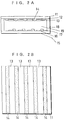
- Figs. 2a and 2b are sectional and frontal views of a prior art colour liquid crystal display.
- the reference numerals denote a glass substrate 11, transparent electrodes 12 composed of ITO or the like and patterned into stripes, colour filters 13 created on the transparent electrodes 12 by way of electro-deposition, light shielding layers 14 formed only in the gaps between colour filters by applying a photosensitive substance containing a light shielding substance such as carbon on the colour filters 13 and by exposing and developing it from the opposite side of the face where the colour filters are formed by utilising the colour filters as masks, and a second glass substrate 15 on which transparent electrodes 16 and thin film transistors 17 are formed.
- the colour liquid crystal display is formed by pasting the colour filter substrate 11 and the thin film transistor substrate 15 thus formed together by a sealing compound 18 so as to keep a predetermined gap therebetween and filling liquid crystal 19 in the gap.
- the colour liquid crystal display thus formed has good contrast owing to switching characteristics of the thin film transistor, and the colour filters are formed simply by electro-deposition, so that a high quality and low cost colour display may be obtained.
- the colour liquid crystal display of the prior art is simple to make because the light shielding layer is formed in self-alignment utilising the colour filters as the masks, no light shielding layer is formed inevitably where there is the colour filter.
- the colour filter is simple to make because it is formed by way of electro-deposition, it requires a wiring for feeding electricity and the colour filter is inevitably formed at part where there is no pixel.
- the whole periphery of the pixel could not be surrounded by the light shielding layer.
- the display using the thin film transistor allowed a high contrast, its characteristics is apt to be changed by light, and it has been necessary to shield outside light to stabilise its operation.
- a method of manufacturing a liquid crystal display including forming a plurality of electrodes on a substrate, electro-depositing filters on the electrodes, forming a light shielding layer such that the light shielding layer does not cover said filters, characterised in that an insulative resist is formed on the electrodes prior to electro-depositing said filters, the pattern of the insulative resist defining the location of the filters.
- the filters may be formed to have a thickness greater than that of the insulative resist, and the insulative resist may have the minimum thickness required to prevent electro-deposition of the filters thereon.
- the filters may be formed by electro-depositing cationic polymers, the insulative resist may be alkali-soluble, and the insulative resist may be removed after electro-depositing the filters.
- a method for manufacturing a multicolour liquid crystal display using colour filters comprising:
- a method for manufacturing a multicolour liquid crystal display using colour filters comprising:
- the periphery of the pixel of the colour display combined with a thin film transistor may be completely shielded and the leakage of light from the periphery of the pixel may be eliminated.
- the method may comprise;
- the point of the present invention lies in that how dot-shaped colour filters separated from each other in an isolated manner can be formed by way of electro-deposition. It is necessary to coat insulative resist on a part of a pixel electrode so as not to cause electro-deposition on that part.
- a problem of this method because the insulating resist is a useless layer when forming a light shielding layer later, is that of how the insulating layer should be handled so that it will not hamper the formation of the light shielding layer.
- both the colour filter and the insulating resist are resin, it is difficult to remove selectively only one of them. According to one aspect of the present invention, solutions for solving each problem have been found.
- the insulating resist For the first problem, a method of forming the insulating resist to be relatively thinner than the colour filter and of forming the light shielding layer thereon without peeling off the insulating resin was found. According to this method, although the light shielding layer on the electrode becomes thicker than the light shielding layer at the gap between the colour filters by the insulating resin, there exists less difference in level, thus causing no disturbance of orientation of the liquid crystal display, because the thickness of the resist is thinned to the minimum requirement which causes no electro-deposition. That is, it is a simple method requiring no process for peeling the insulating resin.
- a method of selecting an alkali as a peeling agent in peeling the insulating resin and of selecting a cationic resin as a resin to be electro-deposited was found.
- a photoresist generally there are solvent peeling type, alkali peeling type, nitric acid peeling type photoresists.
- the colour filter resin is apt to cause a swelling and to be dissolved because a strong organic solvent is used.
- the nitric acid peeling because the resin is oxidised and decomposed, the colour filter resin is also oxidised and decomposed in the same manner.
- the colour filter is not eroded in peeling and the insulating resin as long as a type of resin which is not neutralised and dissolved by alkali is selected as the colour filter resin because the peeling is carried out by neutral dissolution of a functional group of the resin.
- a phenolic novolak resin or the like is used as a positive resin and a substrate resin such as a synthetic rubber is used as a negative resin.
- a substrate resin such as a synthetic rubber
- peeling agents such as the alkali, nitric acid and solvent type peeling agents, the alkali dissolution type agent is commercially available.
- the electro-deposition there are two types of resin of an anion type in which poly-carboxylic acid is neutralised by alkali such as amine and a cation type in which poly-amine is neutralised by acid. While the anion type is electro-deposited at the anode, the deposited film is essentially an alkali-soluble type film and the colour filters are eroded by the alkali when the insulating resin is peeled by the alkali after forming the colour filters by way of electro-deposition.
- the colour filter is deposited at the cathode and the deposited film is essentially oxide-soluble and alkali-insoluble, the colour filters are not eroded when the insulating resin is peeled off by the alkali and the insulating resin can be peeled off readily.
- the cation type electro-deposition resin there are acrylic resin, epoxy resin, urethane resin, polybutadiene resin, polyamide resin and the like, and they are used singularly, in a mixed form or in combination with a bridging resin such as urethane resin and polyesther resin.
- All of the resins have a basic functional group such as amino group and an onium group such ammonium, sulfonium, phosfonium within the molecules and is used in a manner solubilized in water by acid or acid substance such as acetic acid, formic acid, propionic acid and lactic acid.
- the light shielding film When the light shielding film is formed in self-alignment by utilising the colour filters as masks in the same manner with the prior art technology after forming the colour filters in accordance with a desired pixel shape, not in stripes, the light shielding film covers the whole periphery of the pixel, thus enchancing the light shielding performance and providing an excellent display quality.
- Fig. 1 shows a section view of a multicolour liquid crystal display according to the present invention.
- the reference numerals denotes a glass substrate 1, transparent electrodes 2 composed of ITO or the like and patterned into stripes, colour filters 3 created on the transparent electrodes 2 by way of electro-deposition so that their shape coincides with a pixel, light shielding layers 4 formed by applying a photosensitive substance containing a light shielding substance such as carbon on the colour filters 3 and by exposing and developing it from the opposite side of the face where the colour filters are formed by utilising the colour filters as masks so that they cover the periphery of the colour filters.
- Figs. 3a through 3d' show the method for creating the above-mentioned colour filter substrate by section views and frontal views thereof.
- the reference numerals denote a glass substrate 21 and transparent electrodes 22 are formed in stripes by forming ITO and then patterning it.
- 0.1 ⁇ m of negative resist (V-259-PA, produced by Nippon Steel Chemical Co., Ltd.) was applied on the transparent electrodes 22. After that, it was exposed into a shape of desirable pixel and then developed by sodium carbonate solution to form insulating resists 23.
- a group of pixels to be coloured red was selected among the transparent electrodes 22, the transparent electrodes 22 anodised by an anionic polyester electro-deposition resin and dispersed solution of red pigment, and red colour filters 24 were formed by electro-deposition. Next, the same operation was repeated for green and blue to create colour filters 24' and 24'' with 1.5 ⁇ m of thickness.
- a black resist in which carbon was mixed into negative resist (V-259-PA, produced by Nippon Steel Chemical Co., Ltd.) was applied to colour filters, was exposed from the back side utilising the colour filters as masks and was developed to form a light shielding film 25.
- the colour filter substrate thus fabricated could be simply formed without being eroded by the strong alkali used in peeling off the insulating resist.
- the multicolour liquid crystal display is formed by pasting the colour filter substrate 1 thus formed in the manner completely shielding the periphery of the colour filter pixels and a second glass substrate 5 on which pixel transparent electrodes 6 and thin film transistors 7 are formed together by a sealing compound 8 so as to keep a predetermined gap therebetween and by filling liquid crystal 9 in the gap.
- the multicolour liquid crystal display is fabricated thus by the simple method, the periphery of the pixels is completely shielded and there is no degradation of the characteristic of the thin film transistor, thus showing a high display quality. Further, because the light shielding film has a difference in level of only 0.1 ⁇ m of the insulating resist, it allows a homogeneous orientation to be maintained, causing no orientation disorder.
- the colour filter substrate in the first embodiment was fabricated by a method shown in section views and frontal views in Figs. 4a through 4e'.
- the reference numeral 31 denotes a glass substrate, and transparent electrodes 32 are formed in stripes by forming ITO and then patterning it.
- insulating resist 33 1 ⁇ m of positive resist (OFPR-800, produced by Tokyo Ohka Kogyo Co., Ltd.) was applied on the transparent electrode 32. After that, it was exposed in a shape of desirable pixel and then developed by sodium carbonate solution to form an insulating resist 33.
- OFPR-800 produced by Tokyo Ohka Kogyo Co., Ltd.
- a group of pixels to be coloured red was selected among the transparent electrodes 32, the transparent electrodes 32 was cathodized by a cationic acrylic electro-deposition resin and dispersed solution of red pigment, and red colour filters 34 were formed by way of electro-deposition. Next, the same operation was repeated for green and blue to create colour filters 34' and 34'' with 1.5 ⁇ m of thickness.
- the insulating resist 33 was dissolved and peeled off by a strong alkali such as NaOH, KOH and tetramethylammonium hydroxide.
- a negative black resist (CK-5002, produced by Fuji-Hunt Electronics Technology Co., Ltd.) was applied on the colour filters, was exposed from the back side utilising the colour filters as masks and was developed to form a light shielding film 35.
- a method for manufacturing a multicolour liquid crystal display allows a periphery of pixels of a multicolour display combined with thin film transistors to be completely shielded and the leakage of light from the periphery of the pixels to be eliminated without hampering the advantages of the simple processes of forming colour filters by way of electro-deposition and of forming the light shielding film in self-alignment by fabricating the colour filter substrate of steps of:
Landscapes
- Physics & Mathematics (AREA)
- Nonlinear Science (AREA)
- General Physics & Mathematics (AREA)
- Mathematical Physics (AREA)
- Chemical & Material Sciences (AREA)
- Crystallography & Structural Chemistry (AREA)
- Optics & Photonics (AREA)
- Engineering & Computer Science (AREA)
- Manufacturing & Machinery (AREA)
- Liquid Crystal (AREA)
- Optical Filters (AREA)
Applications Claiming Priority (3)
| Application Number | Priority Date | Filing Date | Title |
|---|---|---|---|
| JP32098994 | 1994-12-22 | ||
| JP6320989A JPH08179302A (ja) | 1994-12-22 | 1994-12-22 | 多色液晶表示装置の製造方法 |
| EP95309428A EP0718664B1 (de) | 1994-12-22 | 1995-12-22 | Herstellungsverfahren einer Flussigkristall-Farbanzeigevorrichtung |
Related Parent Applications (1)
| Application Number | Title | Priority Date | Filing Date |
|---|---|---|---|
| EP95309428A Division EP0718664B1 (de) | 1994-12-22 | 1995-12-22 | Herstellungsverfahren einer Flussigkristall-Farbanzeigevorrichtung |
Publications (2)
| Publication Number | Publication Date |
|---|---|
| EP0932071A2 true EP0932071A2 (de) | 1999-07-28 |
| EP0932071A3 EP0932071A3 (de) | 1999-12-29 |
Family
ID=18127546
Family Applications (2)
| Application Number | Title | Priority Date | Filing Date |
|---|---|---|---|
| EP95309428A Expired - Lifetime EP0718664B1 (de) | 1994-12-22 | 1995-12-22 | Herstellungsverfahren einer Flussigkristall-Farbanzeigevorrichtung |
| EP99201345A Withdrawn EP0932071A3 (de) | 1994-12-22 | 1995-12-22 | Herstellungsverfahren einer Flussigkristall-Farbanzeigevorrichtung |
Family Applications Before (1)
| Application Number | Title | Priority Date | Filing Date |
|---|---|---|---|
| EP95309428A Expired - Lifetime EP0718664B1 (de) | 1994-12-22 | 1995-12-22 | Herstellungsverfahren einer Flussigkristall-Farbanzeigevorrichtung |
Country Status (6)
| Country | Link |
|---|---|
| US (1) | US5770349A (de) |
| EP (2) | EP0718664B1 (de) |
| JP (1) | JPH08179302A (de) |
| KR (1) | KR960024574A (de) |
| DE (1) | DE69520337T2 (de) |
| TW (1) | TW406203B (de) |
Families Citing this family (6)
| Publication number | Priority date | Publication date | Assignee | Title |
|---|---|---|---|---|
| JP3907804B2 (ja) | 1997-10-06 | 2007-04-18 | 株式会社半導体エネルギー研究所 | 液晶表示装置 |
| US6068953A (en) * | 1997-11-17 | 2000-05-30 | Ricoh Company, Ltd. | Color filter for liquid crystal display device |
| JP2000029013A (ja) * | 1998-07-10 | 2000-01-28 | Rohm Co Ltd | 液晶表示素子 |
| US6395576B1 (en) | 2000-06-14 | 2002-05-28 | Taiwan Semiconductor Manufacturing Company | High efficiency color filter process to improve color balance in semiconductor array imaging devices |
| JP3599047B2 (ja) * | 2001-06-25 | 2004-12-08 | セイコーエプソン株式会社 | カラーフィルタおよびその製造方法、カラーフィルタ用液滴材料着弾精度試験基板、液滴材料着弾精度の測定方法、電気光学装置、ならびに電子機器 |
| CN100410756C (zh) * | 2005-01-25 | 2008-08-13 | 统宝光电股份有限公司 | 彩色滤光基板及其制造方法 |
Family Cites Families (13)
| Publication number | Priority date | Publication date | Assignee | Title |
|---|---|---|---|---|
| JPS6111703A (ja) * | 1984-06-26 | 1986-01-20 | Citizen Watch Co Ltd | カラ−フイルタ−の製造方法 |
| JPH0727082B2 (ja) * | 1985-05-28 | 1995-03-29 | セイコー電子工業株式会社 | カラ−フイルタ−の製造方法 |
| JPH07117662B2 (ja) * | 1986-04-21 | 1995-12-18 | 神東塗料株式会社 | 微細な透明導電性回路パタ−ン上およびその間隙に機能性薄膜を形成する方法 |
| JPH01158401A (ja) * | 1987-12-15 | 1989-06-21 | Fujitsu Ltd | カラーフィルタの形成方法 |
| JPH0273305A (ja) * | 1988-09-09 | 1990-03-13 | Toppan Printing Co Ltd | カラーフィルタの製造方法 |
| JP2537562B2 (ja) * | 1990-05-28 | 1996-09-25 | シャープ株式会社 | 液晶表示装置のカラ―フィルタ―層の製造方法 |
| JPH04342231A (ja) * | 1991-05-20 | 1992-11-27 | Stanley Electric Co Ltd | 液晶表示装置用カラーフィルタ付基板の製造方法 |
| JPH0540258A (ja) * | 1991-08-06 | 1993-02-19 | Nippon Paint Co Ltd | 多色表示装置の製造方法 |
| JP3092869B2 (ja) * | 1991-10-02 | 2000-09-25 | シャープ株式会社 | 多色表示装置の製造方法 |
| JPH05203807A (ja) * | 1991-11-29 | 1993-08-13 | Seiko Instr Inc | カラーフィルターの製造方法 |
| JPH06273618A (ja) * | 1993-03-24 | 1994-09-30 | Dainippon Printing Co Ltd | カラーフィルタの製造方法 |
| US5578403A (en) * | 1993-07-26 | 1996-11-26 | Shinto Paint Co., Ltd. | Method for manufacture of a substrate having window-shaped and frame-shaped coating films on the surface thereof |
| EP0674208A1 (de) * | 1994-03-22 | 1995-09-27 | Shinto Paint Co., Ltd. | Herstellungsverfahren eines Farbfilters und einer Flüssigkristallanzeigevorrichtung |
-
1994
- 1994-12-22 JP JP6320989A patent/JPH08179302A/ja active Pending
-
1995
- 1995-12-22 EP EP95309428A patent/EP0718664B1/de not_active Expired - Lifetime
- 1995-12-22 EP EP99201345A patent/EP0932071A3/de not_active Withdrawn
- 1995-12-22 KR KR1019950054824A patent/KR960024574A/ko not_active Abandoned
- 1995-12-22 DE DE69520337T patent/DE69520337T2/de not_active Expired - Fee Related
-
1996
- 1996-05-22 TW TW085106052A patent/TW406203B/zh not_active IP Right Cessation
-
1997
- 1997-03-20 US US08/821,028 patent/US5770349A/en not_active Expired - Fee Related
Also Published As
| Publication number | Publication date |
|---|---|
| EP0718664A3 (de) | 1997-01-08 |
| EP0932071A3 (de) | 1999-12-29 |
| DE69520337D1 (de) | 2001-04-19 |
| KR960024574A (ko) | 1996-07-20 |
| EP0718664A2 (de) | 1996-06-26 |
| DE69520337T2 (de) | 2001-06-21 |
| US5770349A (en) | 1998-06-23 |
| EP0718664B1 (de) | 2001-03-14 |
| TW406203B (en) | 2000-09-21 |
| JPH08179302A (ja) | 1996-07-12 |
Similar Documents
| Publication | Publication Date | Title |
|---|---|---|
| EP0186710B1 (de) | Flüssigkristall-mehrfarbenanzeigevorrichtung | |
| KR100338428B1 (ko) | 차광층을가진기판의형성방법,차광층을가진기판,흑백표시박막트랜지스터(tft)어레이기판용대향전극기판및흑백표시액정디스플레이장치 | |
| US5503952A (en) | Method for manufacture of color filter and liquid crystal display | |
| EP0772072A1 (de) | Herstellungsverfahren eines Flüssigkristallanzeigeelements | |
| EP0718664B1 (de) | Herstellungsverfahren einer Flussigkristall-Farbanzeigevorrichtung | |
| US5439582A (en) | Process for producing multicolor display | |
| US4419425A (en) | Method for manufacturing color filter | |
| KR100698052B1 (ko) | 액정표시장치 및 이의 제조방법 | |
| EP0647871A1 (de) | Verfahren zur Herstellung eines Substrates überzogen mit einem Film in Fensterform und mit einem Film in Rahmenform | |
| US5712065A (en) | Process for fabricating a multicolor filter | |
| EP0636932A1 (de) | Methode zur Herstellung eines Substrats mit darauf in einer Fenster/Rahmen Struktur aufgetragenen Filmen | |
| JP2593670B2 (ja) | カラー表示装置の製造方法 | |
| KR101192752B1 (ko) | 인쇄판 및 이를 이용한 패터닝 방법 | |
| KR100832290B1 (ko) | 표시소자의 컬러필터기판 제조방법 | |
| EP0514808B1 (de) | Verfahren zum Herstellen einer Platte mit eingepasstem Farbfilter für eine Flüssigkristallanzeige | |
| JP2518207B2 (ja) | カラ−フイルタの形成方法 | |
| JP4306222B2 (ja) | 液晶表示装置 | |
| US7186350B2 (en) | Method for removing color resist for exposure alignment | |
| JP2664128B2 (ja) | 金属メッキマスクパターン | |
| JP2000029069A (ja) | 液晶表示装置およびその製造方法 | |
| JPH09133915A (ja) | 微細パターン形成方法及びマスター基板及びそれらを用いて形成されたカラーフィルター | |
| JP2000029070A (ja) | 薄膜トランジスタアレイ基板とその製造方法および液晶表示装置 | |
| JPH09258206A (ja) | カラーフィルタ層付駆動基板の製造方法 | |
| KR100233072B1 (ko) | 칼라필터 제조방법 | |
| JPH0843619A (ja) | カラーフィルターの製造方法 |
Legal Events
| Date | Code | Title | Description |
|---|---|---|---|
| PUAI | Public reference made under article 153(3) epc to a published international application that has entered the european phase |
Free format text: ORIGINAL CODE: 0009012 |
|
| 17P | Request for examination filed |
Effective date: 19990521 |
|
| AC | Divisional application: reference to earlier application |
Ref document number: 718664 Country of ref document: EP |
|
| AK | Designated contracting states |
Kind code of ref document: A2 Designated state(s): DE FR GB NL |
|
| R17P | Request for examination filed (corrected) |
Effective date: 19990519 |
|
| PUAL | Search report despatched |
Free format text: ORIGINAL CODE: 0009013 |
|
| AK | Designated contracting states |
Kind code of ref document: A3 Designated state(s): DE FR GB NL |
|
| 17Q | First examination report despatched |
Effective date: 20011114 |
|
| GRAH | Despatch of communication of intention to grant a patent |
Free format text: ORIGINAL CODE: EPIDOS IGRA |
|
| STAA | Information on the status of an ep patent application or granted ep patent |
Free format text: STATUS: THE APPLICATION IS DEEMED TO BE WITHDRAWN |
|
| 18D | Application deemed to be withdrawn |
Effective date: 20030826 |