EP0932258B1 - Verfahren und schaltung zur digitalen modulation sowie verfahren und schaltung zur digitalen demodulation - Google Patents
Verfahren und schaltung zur digitalen modulation sowie verfahren und schaltung zur digitalen demodulation Download PDFInfo
- Publication number
- EP0932258B1 EP0932258B1 EP97943166A EP97943166A EP0932258B1 EP 0932258 B1 EP0932258 B1 EP 0932258B1 EP 97943166 A EP97943166 A EP 97943166A EP 97943166 A EP97943166 A EP 97943166A EP 0932258 B1 EP0932258 B1 EP 0932258B1
- Authority
- EP
- European Patent Office
- Prior art keywords
- bits
- data
- block data
- translation
- block
- Prior art date
- Legal status (The legal status is an assumption and is not a legal conclusion. Google has not performed a legal analysis and makes no representation as to the accuracy of the status listed.)
- Expired - Lifetime
Links
- 238000000034 method Methods 0.000 title claims description 34
- 238000013519 translation Methods 0.000 claims description 90
- 230000015654 memory Effects 0.000 claims description 12
- 230000000694 effects Effects 0.000 description 21
- 238000010586 diagram Methods 0.000 description 11
- 238000001514 detection method Methods 0.000 description 7
- 230000001629 suppression Effects 0.000 description 7
- 230000001419 dependent effect Effects 0.000 description 4
- 230000009467 reduction Effects 0.000 description 3
- 230000007704 transition Effects 0.000 description 3
- 108091006146 Channels Proteins 0.000 description 2
- 230000008878 coupling Effects 0.000 description 2
- 238000010168 coupling process Methods 0.000 description 2
- 238000005859 coupling reaction Methods 0.000 description 2
- 230000003111 delayed effect Effects 0.000 description 2
- 238000011156 evaluation Methods 0.000 description 2
- 230000004048 modification Effects 0.000 description 2
- 238000012986 modification Methods 0.000 description 2
- 230000008569 process Effects 0.000 description 2
- 238000004891 communication Methods 0.000 description 1
- 238000011161 development Methods 0.000 description 1
- 230000018109 developmental process Effects 0.000 description 1
- 230000006872 improvement Effects 0.000 description 1
- 230000000644 propagated effect Effects 0.000 description 1
Images




Classifications
-
- H—ELECTRICITY
- H03—ELECTRONIC CIRCUITRY
- H03M—CODING; DECODING; CODE CONVERSION IN GENERAL
- H03M7/00—Conversion of a code where information is represented by a given sequence or number of digits to a code where the same, similar or subset of information is represented by a different sequence or number of digits
- H03M7/14—Conversion to or from non-weighted codes
-
- H—ELECTRICITY
- H03—ELECTRONIC CIRCUITRY
- H03M—CODING; DECODING; CODE CONVERSION IN GENERAL
- H03M13/00—Coding, decoding or code conversion, for error detection or error correction; Coding theory basic assumptions; Coding bounds; Error probability evaluation methods; Channel models; Simulation or testing of codes
- H03M13/31—Coding, decoding or code conversion, for error detection or error correction; Coding theory basic assumptions; Coding bounds; Error probability evaluation methods; Channel models; Simulation or testing of codes combining coding for error detection or correction and efficient use of the spectrum
-
- H—ELECTRICITY
- H03—ELECTRONIC CIRCUITRY
- H03M—CODING; DECODING; CODE CONVERSION IN GENERAL
- H03M5/00—Conversion of the form of the representation of individual digits
- H03M5/02—Conversion to or from representation by pulses
- H03M5/04—Conversion to or from representation by pulses the pulses having two levels
- H03M5/14—Code representation, e.g. transition, for a given bit cell depending on the information in one or more adjacent bit cells, e.g. delay modulation code, double density code
- H03M5/145—Conversion to or from block codes or representations thereof
Definitions
- the present invention relates to a digital modulation circuit, a digital modulation method, a digital demodulation circuit and a digital demodulation method. More specifically, the present invention relates to a digital modulation circuit and a digital modulation method for modulating an unknown data sequence to a recording signal waveform sequence or channel sequence to be recorded on a recording medium, and to a digital demodulation circuit and a digital demodulation method for demodulating the signal waveform sequence to a data sequence.
- a binary data sequence is modulated to an appropriate recording signal waveform sequence and recorded on a recording medium.
- a binary data sequence is subjected to RLL coding and further to NRZI modulation to be recorded on the recording medium. This enhances recording density.
- the binary data sequence may sometimes be, directly subjected to NRZ modulation or NRZI modulation to be recorded on the recording medium.
- RLL coding datawords of m bits each are successively cut out from an input data sequence, and each dataword is translated to a codeword each of n bits.
- This translation has a condition for enlarging a minimum value Tmin and reducing a maximum value Tmax of a time interval between adjacent transitions of the NRZI modulated recording signal. More specifically, there is a condition that in the RLL coded code sequence, the number of bits of "0" existing between a bit "1" and another bit “1" must be at least d and at most k.
- the RLL code translated to satisfy the condition is referred to as (d, k; m, n) RLL code.
- bit inversion interval in the signal to be recorded after NRZI modulation becomes wider than the bit inversion interval in the RLL code before NRZI modulation. Therefore, as compared with when the RLL code before NRZI modulation is recorded on a recording medium and reproduced, waveform distortion in the reproduced signal can be reduced when the recording signal after NRZI modulation is recorded on the recording medium and reproduced, and as a result, error in reading can be reduced.
- error in recording of approximately the same extent is tolerable, higher recording density can be attained when the recording signal after NRZI modulation is recorded on the recording medium, than when the recording signal before NRZI modulation is on the recording medium.
- Desired features of the recording signal waveform sequence are as follows.
- Tmin is calculated as a product of "d+1" and duration of channel bit, that is, a detection window width Tw.
- inversion interval of recording signals becomes smaller, so that the reproduced signals are more susceptible to distortion because of intersymbol interference. As a result, error in reading is more likely.
- larger Tmin is desirable.
- Tmax is calculated as a product of "k+1" and the detection window width Tw.
- a reproduction pulse cannot be obtained unless the polarity is inverted. Therefore, a clock cannot be directly generated from the reproduction pulse, which leads to clocks of lower accuracy.
- the interval of polarity inversion becomes longer, there will be much fluctuation in DC component, and therefore smaller Tmax is desirable.
- a recording apparatus and a reproducing apparatus have an AC coupling device. Therefore, when the recording signal has a DC component, recording signal waveform is distorted in the AC coupling device, which is not desirable. Further, it is not possible to recover in reproduction the DC component lost at the time of recording. Therefore, less DC component and less low frequency component are desired.
- DSV digital Sum Value
- DSV represents an accumulated value calculated from the start point of the waveform sequence of the recording signal, with the value of bit "1" regarded as "+1" and the value of bit "0" as "-1". If the absolute value of DSV is small, it means that the DC component or the low frequency component is small.
- CDS Codeword Digital Sum
- CDS represents DSV in each codeword, and smaller CDS represents smaller DC component or low frequency component of the corresponding codeword.
- Detection window width Tw is given by (m/n)T, which represents a time which can be used for detection of a reproduction bit, that is, resolution. Further, the detection window width Tw represents window margin against phase fluctuation of the reproduced signal caused by waveform or intersymbol interference or noise, and larger value is desirable.
- Lc The length of the preceding or succeeding codeword referred to at that time.
- Japanese Patent Laying-Open No. 52-128024 discloses a technique for making Tmin larger and making Tmax smaller in the recording signal after NRZI modulation.
- Japanese Patent Publication No. 1-27510 discloses a technique of coding (RLL coding) for reducing DC component of the recording signal after NRZI modulation, in which coding is performed so as not to reduce Tmin of the recording signal after NRZI modulation.
- RLL coding a technique of coding for reducing DC component of the recording signal after NRZI modulation, in which coding is performed so as not to reduce Tmin of the recording signal after NRZI modulation.
- blocks each of n bits are successively cut out from a code sequence after coding, and between adjacent blocks, redundancy bits each consisting of a plurality of bits are inserted.
- the code sequence with redundancy bits inserted is supplied to an NRZI modulation circuit.
- redundancy bits are selected dependent on whether code inversion is necessary between the blocks to which the redundancy bits are to be inserted, and on the state of the last part of the immediately preceding block. More specifically, the redundancy bits are selected so as to reduce DC component of the
- Japanese Patent Publication No. 5-34747 discloses a coding scheme in which rule of translation, i.e. a look-up table for translating a data sequence to RLL codes is adjusted in accordance with arrangement of data sequence, whereby Tmin of 1.5T, Tmax of 4.5T and Lc of 5T can be attained.
- Japanese Patent Publication No. 4-77991 discloses a technique for reducing DC component of the recording signal after NRZI modulation and to enlarge Tmin.
- datawords each of 8 bits are successively cut out from an input data sequence, and each dataword is translated to codewords each of 14 bits. Translation is performed such that in the translated code sequence, the number of bits of "0" is at least 1 and at most 8 between a bit "1" and another bit "1".
- Japanese Patent Laying-Open No. 6-311042 discloses a technique for sufficiently reducing DC component of the recording signal after NRZI modulation and to improve recording density DR (density ratio) by enlarging Tmin.
- datawords each of 8 bits are successively cut out from an input data sequence, and each dataword is translated to a codeword each of 17 bits.
- the translation is performed such that in the translated code sequence, the number of bits "0" existing between a bit "1" and another bit "1" is at least 2 and at most 9.
- the aforementioned codeword of 17 bits is obtained by adding redundancy bits of 2 bits, to a code of 15 bits corresponding to the dataword of 8 bits.
- two tables specifying correspondence between the datawords of 8 bits each to codes of 15 bits each are prepared, and three different types of redundancy bits each of 2 bits are prepared.
- said dataword of 8 bits is replaced. More specifically, said 8 bit dataword is replaced by a 17 bit codeword selected to reduce the DC component of the recording signal after NRZI modulation.
- EP-0593173-A2 discloses modulating by interleaved NRZI by inserting one bit per every n-bits of input data series, the frequency characteristics of bit rows varying by the polarity ("0" or "1") of the bit to be inserted are compared, and the bit row closer to the desired frequency characteristic is selected as output series, so that recording is effected by controlling the frequency characteristics of the digital signal.
- EP-0415853-A2 shows conventional NRZI modulation including several exclusive OR circuits.
- a main object of the present invention is to provide a digital modulation circuit, a digital modulation method, a digital demodulation circuit and a digital demodulation method allowing sufficient suppression of DC component and low frequency component of the recording signal.
- Another object of the present invention is to provide a digital modulation circuit, a digital modulation method, a digital demodulation circuit and a digital demodulation method allowing sufficient suppression of DC component and low frequency component of the recording signal while preventing reduction of Tmin or enlargement of Tmax.
- a still further object of the present invention is to provide a digital modulation circuit, a digital modulation method, a digital demodulation circuit and a digital demodulation method allowing improvement of resolution by enlarging Tw, while sufficiently suppressing DC component and low frequency component of their recording signal.
- a still further object of the present invention is to provide a digital modulation circuit, a digital modulation method, a digital demodulation circuit and a digital demodulation method allowing reduction in error in reproduction and reduction of error propagation in reproduction.
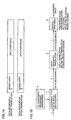
- FIGs. 1A and 1B are illustrations representing concept of the present invention.
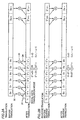
- Figs. 2A and 2B are illustrations representing translation and reverse translation by convolution operation shown in Figs. 1A and 1B.
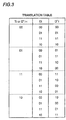
- Fig. 3 shows an example of data translation and reverse translation using a translation table.
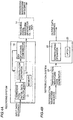
- Figs. 4A and 4B are schematic block diagrams of an embodiment of the present invention.
- Figs. 5A to 5D represent an example in which initial data are distributed to input block by convolution operation.
- Fig. 6 is a block diagram of a modulator in accordance with another embodiment of the present invention.
- Fig. 7 is a block diagram showing another specific example of the modulator.
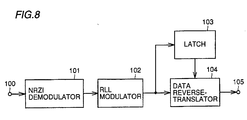
- Fig. 8 is a block diagram of a demodulator in accordance with an embodiment of the present invention.
- Fig. 9 is a block diagram showing another specific example of the modulator.
- Fig. 10 is a block diagram showing a still further example of the modulator.
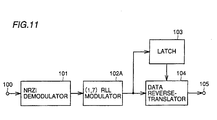
- Fig. 11 shows another specific example of the demodulator.
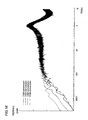
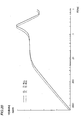
- Fig. 12 is a graph representing effect of suppression of DC component when initial data Tj having bit number t of 1, 2, 4 and 8 bits for the convolution operation are distributed as shown in Figs. 5A to 5D to be added to the input block of 80 bytes and (2, 7; 1, 2) RLL modulation is performed.
- Fig. 13 is a graph representing effect of suppression of DC component when (1, 7; 2, 3) RLL modulation is performed.
- Fig. 14 is a graph representing effect of suppressing DC component when initial data Tj having bit number t of 1, 2, 4 and 8 bits for convolution operation are distributed as shown in Figs. 5A to 5D and added to the input block of 40 bytes, and (1, 7; 2, 3) RLL modulation is performed.
- Fig. 15 is a graph representing effect of suppressing DC component when initial data Tj of bit number t of 1, 2, 4 and 8 bits for convolution operation are distributed as shown in Figs. 5A to 5D and added to the input block of 80 bytes, and RLL modulation is not performed.
- Fig. 16 is a graph representing effect of suppressing DC component when initial data Tj having the bit number t of 1, 2, 4 and 8 bits for convolution operation are distributed as shown in Fig. 5A to 5D and added to the input block of 160 bytes, and (2, 9; 8, 15) RLL modulation is performed.
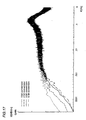
- Fig. 17 is a graph representing effect of suppressing DC component when (1, 7; 2, 3) RLL modulation is performed in the similar manner.
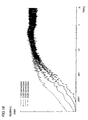
- Fig. 18 is a graph representing effect of suppressing DC component when initial data Tj having bit number t of 1, 2, 4 and 8 bits for convolution operation are added to the input block of 40 bytes and RLL modulation is not performed.
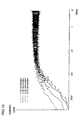
- Fig. 19 is a graph representing effect of suppressing DC component when initial data Tj having bit number t of 1, 2, 4 and 8 bits for convolution operation are added to the input block of 160 bytes and RLL modulation is not performed.
- Fig. 20 is a graph representing effect of suppressing high frequency component, when initial data Tj having bit number t of 8 bits for convolution operation is added to an input block of 80 bytes and (2, 7; 1, 2). RLL modulation is performed, and when (1, 7; 2, 3) RLL modulation is performed, with the abscissa normalized by a data bit frequency fb.
- Figs. 1A and 1B are illustrations representing the concept of the present invention.
- a pre-translation data sequence A on which initial translation data is multiplexed by j different types of initial data multiplexer 1 shown in Fig. 1A is applied to a data sequence translator 2 shown in Fig. 1B where convolution operation takes place to produce a translated data sequence B shown in Fig. 1A, and a desired recording waveform sequence is produced by a digital encoder 3.
- initial data selection information which minimizes DC component (absolute value of DSV) in the recording waveform sequence is applied in advance by a DC component measuring instrument 4 to data sequence translator 2, so that a recording block having minimum DC component is output.
- Figs. 2A and 2B are illustrations representing translation and reverse translation by convolution operation shown in Figs. 1A and 1B.
- respective data D 0 to D u-1 represent data each consisting of t bits.
- t bits may or may not be equal to m bits which are the unit of RLL modulation. RLL modulation may not be performed.
- j different types of initial data (translation number Tj) is assigned and multiplexed by first assigning means 31, and j different types of pre-translation block data are produced.
- the j different types of pre-translation block data are assigned by the second assigning means 32 to first operating means 33, starting from the leading code modulation unit except for initial data Tj, a current code modulation unit which is an object of translation and code modulation unit immediately preceding the current code modulation unit (initial data or translated code modulation unit) are subjected to exclusive OR operation by the first operating means 33, and replaced, by second operating means 34, with the current code modulation unit (convolution operation).
- the second operating means 34 also performs a process for setting the result of convolution operation as a preceding variable for the next convolution operation.
- translated block data D' 0 of the head code modulation unit except for the initial data is produced, which replaces D 0 .
- mod2 operation of the above described translated code modulation unit data D' 0 and the succeeding code modulation unit D 1 the next translated data D' 1 is produced in the similar manner, which replaces D 1 .
- convolution operation including exclusive OR operation and replacement operation is repeated until the last code modulation unit of the corresponding block.
- the current demodulation code unit which is an object of reverse-translation and a demodulation code unit immediately preceding the current demodulation code unit (initial data or pre-reverse-translation demodulation code unit) are subjected to exclusive OR operation and the current demodulation code unit is replaced (convolution operation), and accordingly, reverse-translated block data is produced. More specifically, by mod2 operation of the head demodulation code unit D 0 and initial data T j , reverse-translated data D 0 is produced, which replaces D' 0 .
- the next reverse-translated data D 1 is produced in the similar manner, which replaces D' 1 . Thereafter, in the similar manner, the process is repeated until the last demodulation code unit of the corresponding block.
- the t bits at the head of the input block contributing to data reverse-translation ("before reverse translation " of Fig. 2B) and immediately following t bits are subjected to exclusive OR operation
- the t bits at the head are replaced by the result of operation
- the immediately following t bits and t bits following the said immediately following t bits are subjected to exclusive OR operation
- the said immediately following t bits are replaced by the result of operation and thereafter, in the similar manner, convolution operation including the exclusive OR operation and the replacement operation is executed until the last of the input block, whereby the reverse-translated block of the input block is produced.
- Fig. 3 shows an example of data translation and reverse-translation using a translation table.
- Fig. 3 represents a 2 bit translation table, which allows translation using four different types of Tj at most. More specifically, by using the translation table shown in Fig. 3, it is possible to find the translated demodulation code unit D' i , from immediately preceding translated demodulation code unit D' i-1 or initial data number T j and pre-translation demodulation code unit D i .
- RLL coding is to be performed after translation
- RLL modulation may be performed on m bits of the sequence of demodulation code unit D' i of Fig. 3
- data translation reverse translation may be performed using 3 bit data after (a, k: 2, n) RLL modulation in place of 2 bits of data.
- the error propagates only to D i and D' i+1 .
- Figs. 4A and 4B are schematic block diagrams of an embodiment of the present invention.
- an input data sequence is multiplexed by j different types of initial data Tj by j different type initial data multiplexer 11, convolution operation is performed by convolution operator 12, and DSV absolute values are compared by a DSV operating comparator 13.
- the translated block which has the minimum absolute value by comparison is selected, and subjected to NRZ modulation or NRZI modulation by a recording signal waveform generator 14 to be used as a recording waveform sequence.
- a reproduced waveform sequence is translated to data by a reproduction waveform data generator 21, subjected to convolution operation by a convolution operator 22 and output as an output data sequence.
- Figs. 5A to 5D represent examples of distribution of initial data to input blocks by convolution operation.
- j different types of initial data Tj are multiplexed at the head of the input block.
- the initial data are multiplexed distributed within the block. More specifically, Fig. 5A shows an example in which 8 bits of initial data are multiplexed at the head of the input block, Fig. 5B shows an example in which the initial data are distributed 4 bits by 4 bits at two portions to be multiplexed, Fig. 5C shows an example in which the data are distributed 2 bits by 2 bits at four portions to be multiplexed and Fig. 5D shows an example in which the data are distributed bit by bit at eight portions to be multiplexed. Data translation efficiency is the same in any of these examples.
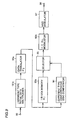
- Fig. 6 is a block diagram of a modulator in accordance with another embodiment of the present invention.
- an input block data of which code modulation unit consists of t bits are input from an input terminal 90, and at the head of each one block, each of j different types of initial data of t bits (translation number Tj) is multiplexed by a j different type initial data multiplexer 91a, so that j different types of multiplexed blocks (pre-translation block data) are produced.
- Data translator 92a For each of the j different types of multiplexed blocks (pre-translation block data) at the head of which j different types of initial data (translation number Tj) are multiplexed, data translation by the convolution operation described with reference to Fig. 2 above is performed by a data translator 92a, whereby j different types of translated block data are produced.
- Data translator 92a includes first and second assigning means 31, 32 and first and second operating means 33, 34 described with reference to Fig. 2.
- the j different types of translated block data are each stored in one block memory 93a and input to a j different type
- comparator 94 In the j different type
- Selector 95 When the translated block data having minimum absolute value of DSV is selected, information representing the result of selection is transmitted to a selector 95.
- Selector 95 reads the translated block data corresponding to the result of selection (the translated block data having the minimum absolute value of DSV) from the one block memory 93a and inputs the data to RLL modulator 96. Consequently, datawords of m bits are successively cut out from the data sequence by RLL modulator 96, each dataword is translated to a codeword of n bits and RLL modulated, and thereafter NRZI modulation is performed by an NRZI modulator 97.
- Fig. 6 represents a circuit for modulating an input block to a recording waveform sequence by RLL modulation and NRZI modulation, and therefore as the DSV absolute value to be compared, the DSV absolute value when each translated block data is subjected to RLL modulation and NRZI modulation is employed.
- This is a condition particular to the circuit shown in Fig. 6.
- the absolute value of DSV of j different types of translated blocks may be compared, the translated block having minimum absolute value of DSV may be selected and it may be used as a recording waveform sequence by NRZ modulation or NRZI modulation.
- the detection window width Tw can be enlarged and therefore reproduction resolution is improved.
- the object of which DSV is operated to suppress the DC component may be determined dependent on the desired recording waveform sequence. The same applies when it is used for the communication system.
- Fig. 7 is a block diagram showing another specific example of the modulator.
- the present embodiment is provided in order to reduce the number of one block memories. More specifically, in the specific example shown in Fig. 6 above, j different translated block data translated by using j different initial data (translation number Tj) are stored in 1 block memories 93a, and therefore 1 block memories 93a as a whole must have the capacity of j blocks. In view of this, in the present embodiment, only 1 block of capacity is required for 1 block memory 93b, as the multiplexed block (pre-translation block data) is stored. In the following, detailed description of portions similar to the specific example of Fig. 6 are not repeated.
- the input block data input through input terminal 90 is stored in 1 block memory 93b as well as to j different type initial data multiplexer 91a.
- each of j different types of initial data (translation number Tj) is multiplexed.
- Tj transmission number
- pre-translation block data multiplexed blocks
- the j different types of pre-translation block data are input to data translator 92a to be subjected to the above described convolution operation to be j different types of translated block data, absolute values of DSV after RLL modulation and NRZI modulation thereof are compared with each other by j different type
- Initial data (translation number Tj) corresponding to the detected translated block data is selected, and the result of selection is applied to initial data multiplexer 91b.
- initial data multiplexer 91b multiplexes the selected initial data (translation number Tj) at the head of input block data read from 1 block memory 93b, and applies the result to data translator 92b. Accordingly, data translator 92b performs data translation in accordance with the above described convolution operation, whereby the translated block data is produced.
- the translated block data is subjected to RLL modulation by an RLL modulator 96, and further to NRZI modulation by an NRZI modulator 97 and output.
- Fig. 8 is a block diagram of a demodulator in accordance with an embodiment of the present invention.
- the data input to the demodulator shown in Fig. 8 is first applied to an NRZI demodulator 101 to be subjected to NRZI demodulation, and thereafter to an RLL demodulator 102 to be subjected to RLL demodulation.
- the RLL demodulated data (pre-reverse-translation data) are applied to latch 103 and held therein, as well as to data reverse-translator 104.
- data reverse-translator 104 from delayed data input from latch 103 (immediately preceding demodulation code unit) and data which is the object of reverse-translation input from RLL demodulator 102 (current demodulation code unit), reverse-translation in accordance with convolution operation described above takes place. Consequently, the data is returned to data of the original description system.
- NRZI demodulator 101 and RLL demodulator 102 shown in Fig. 8 are not necessary and a demodulation circuit in accordance with the recording waveform sequence is appropriately provided, as shown in Fig. 4B.
- Fig. 9 shows another specific example of a modulator, which is a modification of Fig. 6.
- RLL modulator 96 shown in Fig. 6, (1, 7) RLL modulator 96A is used.
- absolute values of DSV when (1, 7; 2, 3) RLL modulation and NRZI modulation are performed are compared with each other, and a translated block data having minimum absolute value of DSV is selected.
- the absolute value of DSV to be compared may be a value at the last bit of the translated block data, for example, or it may be the absolute value of maximum amplitude within the translated block data.
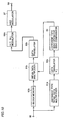
- Fig. 10 shows a still further specific example, which is a modification of Fig. 7. More specifically, in place of RLL modulator 96 shown in Fig. 7, an RLL modulator 96A is provided, and absolute values of DSV after (1, 7; 2, 3) RLL modulation and NRZI modulation are compared with each other by j different type
- Tj translation number
- Fig. 11 shows another specific example of a demodulator, showing an example of the demodulator of Fig. 8.
- RLL demodulator 102 shown in Fig. 8
- an (1, 7) RLL demodulator 102A is used in place of RLL demodulator 102 shown in Fig. 8.
- the input data is first applied to NRZI demodulator 101 to be subjected to NRZI demodulation and thereafter to (1, 7) RLL demodulator 102A to be subjected to RLL demodulation.
- the RLL demodulated data pre-reverse-translation data
- latch 103 pre-reverse-translation data
- data reverse translator 104 from delayed data input from latch 103 (immediately preceding demodulation code unit) and data which is the object of reverse-translation input from (1, 7) RLL demodulator 102A (current demodulation code unit), reverse-translation in accordance with convolution operation described above is performed. Thus the data are returned to the data of the original description system.
- Fig. 12 is a graph representing the effect of suppression of the DC component when initial data Tj having the bit number t of 1, 2, 4 and 8 bits respectively for the convolution operation are added to the input block of 80 bytes as shown in Figs. 5A to 5D and (2, 7; 1, 2) RLL modulation is performed
- Fig. 13 is a graph representing the effect of suppression of the DC component when (1, 2; 2, 3) RLL modulation is performed in the similar manner.
- Fig. 14 is a graph representing the effect of suppressing the DC component when initial data Tj having the bit number t of 1, 2, 4 and 8, respectively of initial data Tj for convolution operation are added to the input block of 40 bytes as shown in Figs. 5A to 5D and (1, 7; 2, 3) RLL modulation is performed.
- Fig. 15 is a graph representing the effect of suppressing the DC component when initial data Tj having the bit number t of 1, 2, 4 and 8 bits, respectively, of initial data Tj for the convolution operation are added to the input block of 80 bytes as shown in Figs. 5A to 5D and RLL modulation is not performed.
- Fig. 16 is a graph representing the effect of suppressing the DC component when initial data Tj having the bit number t of 1, 2, 4 and 8 bits respectively of initial data Tj for convolution operation are added to the input block of 160 bytes as shown in Figs. 5A to 5D and (2, 9; 8, 15) RLL modulation is performed.
- Fig. 17 is a diagram showing the effect of suppressing the DC component when initial data Tj having the bit number of 1, 2, 4 and 8 bits, respectively for convolution operation are added to the input block of 160 bytes as shown in Figs. 5A to 5D and (1, 7; 2, 3) RLL modulation is performed.
- Fig. 18 is a graph representing the effect of suppressing the DC component when initial data Tj having bit number t of 1, 2, 4 and 8 bits respectively for convolution operation are added to the input block of 40 bytes as shown in Figs. 5A to 5D, and RLL modulation is not performed.
- Fig. 19 is a graph representing the effect of suppressing the DC component when initial data Tj having the bit number t of 1, 2, 4 and 8 bits for convolution operation are added to the input block of 160 bytes and RLL modulation is not performed.
- Fig. 20 is a graph representing the effect of suppressing high frequency component, when initial data Tj having the bit number t of 1, 2, 4 and 8 bits respectively for the convolution operation are added to the input block of 80 bytes and (2, 7; 1, 2) RLL modulation is performed (solid line) and (1, 7; 2, 3) RLL modulation is performed (dotted line), with the abscissa normalized by data bit frequency fb.
- a plurality of different types of multiplexed blocks (pre-translation block data) provided by adding a plurality of different types of t bit data at the head of input blocks are translated by a plurality of different types of translated block data by convolution operation, DC components of these data are compared, and a translated block data having the minimum DC component is selected, whereby the DC component can sufficiently be suppressed, and recording density when the data sequence is recorded on a recording medium can be improved.
Landscapes
- Engineering & Computer Science (AREA)
- Theoretical Computer Science (AREA)
- Physics & Mathematics (AREA)
- Probability & Statistics with Applications (AREA)
- Signal Processing For Digital Recording And Reproducing (AREA)
Claims (19)
- Verfahren zum digitalen Modulieren mit dem Einsatz eines m-n-Modulationssystems zum Wandeln einer beliebigen Sequenz von m Bits in eine beliebige Sequenz von n Bits, wobei n ≥ m für die m-n-Wandlung von jeweils m Bits zu jeweils modulierten Daten von n Bits unter Einsatz von m Bits von digitalen Eingangsdaten als Codemodulationseinheit mit den Schritten:Multiplexen jeweils einer Anzahl von unterschiedlichen Arten von t Bit-Daten als Anfangsdaten auf einem Kopfteil von p-Bit-Eingangsblockdaten aus einer vorgegebenen Zahl von Datenübersetzungseinheiten, t Bits, zur Erzeugung einer Anzahl von unterschiedlichen Arten von Vorübersetzungsblockdaten, wobei t ≥ 2,für jede der Anzahl von unterschiedlichen Arten von Vorübersetzungs-Blockdaten das Durchführen einer Exklusiv-Oder Operation an t Bits am Kopfteil der Vorübersetzungs-Blockdaten und der direkt folgenden t Bits, Ersetzen der direkt folgenden t Bits durch das Resultat der Operation, Durchführen einer Exklusiv-Oder-Operation an den ersetzten t Bits und den direkt folgenden t Bits,Ersetzen der direkt folgenden t Bits durch das Ergebnis der Operation und anschließend, in der gleichen Weise, Durchführen einer Konvolutionsoperation, einschließlich der Exklusiv-Oder-Operation und des Ersetzungsvorgangs, bis zum Ende der Vorübersetzungs-Blockdaten zur Erzeugung ersetzter Blockdaten von jeweiligen Vorübersetzungs-Blockdaten, wobei die Exklusiv-Oder-Operationen bitweise für jeweils t Bits durchgeführt werden,Vergleichen von Gleichstromkomponenten von jeweiligen modulierten Blockdaten, die durch n-m-Modulation jedes der Anzahl von unterschiedlichen Arten von übersetzten Blockdaten erhalten wurden,Auswählen der Anfangsdaten entsprechend zu den modulierten Blockdaten, die einen kleinen Absolutwert der Gleichstromkomponente aufweisen, undErzeugen von m-n-modulierten Blockdaten entsprechend den vorübersetzten Blockdaten, die mit den ausgewählten Anfangsdaten multiplext sind.
- Verfahren zum digitalen Modulieren nach Anspruch 1, wobei die Auswahl durch Angabe von modulierten Blockdaten durchgeführt wird, die einen minimalen Absolutwert eines angesammelten Wertes der Gleichstromkomponente bei einem letzten Bit der modulierten Blockdaten aufweisen.
- Verfahren zum digitalen Modulieren nach Anspruch 1, wobei die Auswahl durchgeführt wird durch Angabe eines modulierten Blockdatums, das den minimalen Absolutwert der Maximalamplitude eines angesammelten Wertes der Gleichstromkomponente der modulierten Blockdaten aufweist.
- Verfahren der digitalen Modulation nach einem der Ansprüche 1 bis 3,
wobei das m-n-Modulationssystem ein (1,7; m, n)-RLL-Modulationssystem ist. - Digitale Modulationsschaltung, die ein n-m-Modulationssystem verwendet zum Übersetzen einer beliebten Sequenz von m Bits in eine beliebige Sequenz von n Bits, wobei n ≥ m, zum m-n-Modulieren von jeweils m Bits in modulierte Daten von jeweils n Bits unter Verwendung von jeweils n Bits von digitalen Eingabedaten als eine Code-Modulationseinheit mit:Multiplexmitteln (11, 81) zum Multiplexen von jeweils einer Anzahl von unterschiedlichen Typen von t-Bit-Daten als Anfangsdaten auf einem Kopfteil von P-Bit-Eingabeblockdaten aus einer vorgeschriebenen Anzahl von Datenübersetzungseinheiten, t Bits, zum Erzeugen einer Anzahl von unterschiedlichen Typen von Vorübersetzungsblockdaten, wobei t ≥ 2 ist;Datenübersetzungsmitteln (127, 92a) zum Durchführen für jede der Anzahl von unterschiedlichen Arten von Vorübersetzungs-Blockdaten, einer Exklusiv-Oder-Operation an t Bits auf dem Kopfteil der Vorübersetzungs-Blockdaten und der direkt folgenden t Bits, Ersetzen der direkt folgenden t Bits durch das Ergebnis der Operation, Durchführen einer Exklusiv-Oder-Operation an den ersetzten t Bits und den direkt folgenden t Bits und Ersetzen der direkt folgenden t Bits durch das Ergebnis der Operation und anschließendes Durchführen einer Konvolutionsoperation einschließlich der Exklusiv-Oder-Operation und der Ersetzungsoperation bis zum Ende des mulitplexten Blocks zur Erzeugung von jeweiligen Vorübersetzungs-Blockdaten, wobei die Exklusiv-Oder-Operationen bitweise für jeweils t Bits durchgeführt werden,Berechnungsmitteln (13, 94) zum Berechnen jeder der Gleichstromkomponenten jeder der jeweiligen modulierten Blockdaten, die durch m-n-Modulation jeder der Anzahl von unterschiedlichen Arten von übersetzten Blockdaten, die durch die Übersetzungsmittel übersetzt wurden, erhalten wurden, Vergleichsmitteln (13, 94) zum Vergleichen der Größe der absoluten Werte jeweiliger Gleichstromkomponenten, die durch die Berechnungsmittel ermittelt wurden, miteinander, Auswahlmitteln (91b, 95) zum Auswählen des Anfangsdatums, das dem modulierten Blockdatum entspricht, das einen kleinen Absolutwert der Gleichstromkomponente aufweist, die durch das Vergleichsmittel verglichen wurde, undModulationsmitteln (14, 96) zum Erzeugen von n-m-modulierten Blockdaten entsprechend dem Vorübersetzungsblockdaten, die mit dem Anfangsdatum multiplext sind, das durch das Auswahlmittel ausgewählt wurde.
- Digitale Modulationsschaltung nach Anspruch 5,
wobei das Auswahlmittel (91b, 95) das Anfangsdatum entsprechend zu dem modulierten Blockdatum auswählt, das den absoluten Minimalwert des angesammelten Wertes der Gleichstromkomponente am letzten Bit des modulierten Blockdatums aufweist. - Digitale Modulationsschaltung nach Anspruch 5,
wobei das Auswahlmittel (91b, 95) das Anfangsdatum entsprechend zu dem modulierten Blockdatum auswählt, das den absoluten Minimalwert der Maximalamplitude eines angesammelten Wertes der Gleichstromkomponente des modulierten Blockdatums aufweist. - Digitale Modulationsschaltung nach Anspruch 5,
mit ferner einem Speicher (12, 93a, 93b) zum Speichern jedes der übersetzten Blockdaten, wobei das Modulationsmittel (96) eine m-n-Modulation durch Lesen des übersetzten Blockdatums aus dem Speicher durchführt, das dem Anfangsdatum entspricht, das durch das Auswahlmittel ausgewählt wurde. - Digitale Modulationsschaltung nach Anspruch 5,
mit ferner:einem Speicher (93b) zum Speichern des Eingabeblockdatums, zweiten Multiplexmitteln (91b) zum Lesen von Eingangsblockdaten aus dem Speicher und zum Multiplexen von Anfangsdaten, die durch das Auswahlmittel ausgewählt wurden, undzweiten Datenübersetzungsmitteln (92b) zum Durchführen an den Vorübersetzungs-Blockdaten, die von den zweiten Multiplexmitteln ausgegeben wurden, einer Exklusiv-Oder-Operation an t Bits am Kopfteil und direkt folgenden t Bits undzum Ersetzen der direkt folgenden t Bits durch das Resultat der Operation, Durchführen einer Exklusiv-Oder-Operation an den ersetzten t Bits und den direkt folgenden t Bits undErsetzen der direkt folgenden t Bits durch das Resultat der Operation und anschließend in der gleichen Weise die Durchführung einer Konvolutionsoperation einschließlich der Exklusiv-Oder-Operation und der Ersetzungsoperation bis zum Ende der Vorübersetzungs-Blockdaten zum Erzeugen von ersetzten Blockdaten aus den Vorübersetzungs-Blockdaten, wobeidas Modulationsmittel (96) eine m-n-Modulation an den übersetzten Blockdaten durchführt, die von dem zweiten Datenübersetzungsmittel ausgegeben wurden. - Digitale Modulationsschaltung nach einem der Ansprüche 5 bis 9,
wobei das m-n-Modulationssystem ein (1,7; m, n)-RLL-Modulationssystem ist. - Verfahren zur digitalen Demodulation von Daten, die gemäß dem Verfahren nach Anspruch 1 moduliert wurden, mit den Schritten:
Durchführung einer n-m-Demodulation unter Verwendung jeweils n Bits von digitalen Eingangsdaten als eine Code-Demodulationseinheit zur Demodulierung von Daten von jeweils m Bits, wobei n ≥ m, zum aufeinanderfolgenden Erzeugen demodulierter Blockdaten aus einer vorgeschriebenen Anzahl von Datenrückübersetzungseinheiten, t Bits; und Durchführen einer Exklusiv-Oder-Operation an t Bits am Kopfteil der Demodulationsblockdaten und ihrer direkt folgenden t Bits und Ersetzen der t Bits an dem Kopfteil durch das Resultat der Operation, Durchführen einer Exklusiv-Oder-Operation an den direkt folgenden t Bits und t Bits direkt folgend den direkt folgenden t Bits und Ersetzen der direkt folgenden t Bits durch das Resultat der Operation und anschließend in der gleichen Weise das Durchführen einer Konvolutionsoperation, einschließlich der Exklusiv-Oder-Operation und der Ersetzungsoperation, bis zum Ende der demodulierten Blockdaten, wobei die Exklusiv-Oder-Operationen bitweise für jeweils t Bits durchgeführt werden. - Digitale Demodulatorschaltung mit:Demodulatormitteln (101) zur Durchführen einer n-m-Demodulation von Daten, die durch die Schaltung von Anspruch 5 moduliert wurden, unter Verwendung von jeweils n Bits von digitalen Eingangsdaten als Code-Demodulationseinheit zur Demodulation von Daten aus jeweils m Bits, wobei n ≥ m zum aufeinanderfolgenden Erzeugen demodulierter Blockdaten aus einer vorgeschriebenen Anzahl von rückübersetzten Dateneinheiten, t Bits,Haltemitteln (23, 103) zum Halten jeder Datenrückübersetzungseinheiten bis zur Beendigung der Ersetzung der Datenrückübersetzungseinheit undRückübersetzungsmitteln (22, 104) zur Durchführung einer Exklusiv-Oder-Operation an t Bits am Kopf der demodulierten Blockdaten, die durch die Demodulationsmittel erzeugt werden, und der direkt folgenden t Bits und Ersetzen von t Bits am Kopfteil durch das Resultat der Operation, Durchführen einer Exklusiv-Oder-Operation an den direkt folgenden t Bits und t Bits, die direkt den direkt folgenden t Bits folgen, und Ersetzen der direkt folgenden t Bits durch das Resultat der Operation, und anschließend Durchführen einer Konvolutionsoperation in der gleichen Weise, einschließlich der Exklusiv-Oder-Operation und der Ersetzungsoperation, bis zum Ende der demodulierten Blockdaten zur Erzeugung von rückübersetzten Blockdaten, wobei die Exklusiv-Oder-Operationen bitweise für jeweils t Bits durchgeführt werden.
- Digitale Demodulationsschaltung nach einem der Ansprüche 5 bis 10,
wobei die Anzahl von Bits t der Anfangsdaten innerhalb des Bereichs von - Digitale Modulationsschaltung nach einem der Ansprüche 5 bis 10,
wobei die Anzahl von Bits t der Anfangsdaten und die Anzahl der Bits p des Eingabeblocks, was ein ganzzeiliges Vielfaches der Bitzahl t ist, die Beziehung
0.003 ≤ t/p ≤ 0.015 erfüllt. - Digitale Modulationsschaltung nach Anspruch 14,
mit einem solchen Aufbau, daß bei einem Kopfteil jedes Eingabeteilblocks eines ganzzahligen Wertes p/z = P, der durch Dividieren des Eingangsblocks von p Bits durch einen ganzzahligen Wert z erhalten wurde, dividierte Anfangsdaten eines ganzzahligen Wertes t/z = t Bits, der durch Dividieren der Anfangsdaten von t Bits durch den ganzzahligen Wert z erhalten wurde, zur Erzeugung von multiplexten Divisionsblöcken addiert werden und Verarbeiten von jeweiligen multiplexten Divisionsblöcken in der gleichen Weise, wobei die Anzahl von Bits T jedes dividierten Anfangsdatums und die Anzahl von Bits p des Eingabedivisionsblocks, der ein ganzzahliges Vielfaches der Bitzahl T ist, die Beziehung von 160 ≤ p ≤ 1600 erfüllt. - Verfahren zur digitalen Modulation nach einem der Ansprüche 1 bis 5,
wobei die Anzahl der Bits p des Eingabeblocks, was ein ganzzahliges Vielfaches der Anzahl von Bits t der Anfangsdaten ist, innerhalb des Bereichs von 160 ≤ p ≤ 1600 Bits ist. - Verfahren zur digitalen Modulation nach einem der Ansprüche 1 bis 5,
wobei die Anzahl von Bits t des Anfangsdatums im Bereich von - Verfahren zur digitalen Modulation nach einem der Ansprüche 1 bis 5,
wobei die Anzahl der Bits t der Eingangsdaten und die Anzahl der Bits p des Eingabeblocks, was ein ganzzahliges Vielfaches der Bitzahl p ist, die Beziehung
0.003 ≤ t/p ≤ 0.015 erfüllt. - Verfahren zur digitalen Modulation nach Anspruch 18, mit den Schritten
am Kopfteil jedes Eingabedivisionsblocks für einen ganzzahligen Wert p/z = P Bits, der erhalten wurde durch Dividieren des Eingabeblocks von p Bits durch einen ganzzahligen Wert z, das Addieren von dividierten Anfangsdaten eines ganzzahligen Wertes t/z = t Bits, der erhalten wurde durch Dividieren des Anfangsblocks von t Bits durch einen ganzzahligen Wert z, zur Erzeugung multiplexter Divisionsblöcke und Verarbeitung jeweiliger multiplexter Divisionsblöcke in der gleichen Weise, wobei die Anzahl von Bits T jedes dividierten Anfangsdatums und die Anzahl von Bits p des Eingabedivisionsblocks, der ein ganzzahliges Vielfaches der
Bitzahl T ist, die Beziehung
0.003 ≤ T/p ≤ 0.015 erfüllt.
Priority Applications (1)
| Application Number | Priority Date | Filing Date | Title |
|---|---|---|---|
| EP00121443A EP1087532B1 (de) | 1996-10-13 | 1997-10-09 | Digitales Modulationsverfahren und Schaltung, digitales Demodulationsverfahren und Schaltung |
Applications Claiming Priority (5)
| Application Number | Priority Date | Filing Date | Title |
|---|---|---|---|
| JP29117196 | 1996-10-13 | ||
| JP29117196 | 1996-10-13 | ||
| JP31430696 | 1996-11-10 | ||
| JP31430696 | 1996-11-10 | ||
| PCT/JP1997/003632 WO1998017005A1 (en) | 1996-10-13 | 1997-10-09 | Method and circuit for digital modulation and method and circuit for digital demodulation |
Related Child Applications (1)
| Application Number | Title | Priority Date | Filing Date |
|---|---|---|---|
| EP00121443A Division EP1087532B1 (de) | 1996-10-13 | 1997-10-09 | Digitales Modulationsverfahren und Schaltung, digitales Demodulationsverfahren und Schaltung |
Publications (3)
| Publication Number | Publication Date |
|---|---|
| EP0932258A1 EP0932258A1 (de) | 1999-07-28 |
| EP0932258A4 EP0932258A4 (de) | 1999-12-08 |
| EP0932258B1 true EP0932258B1 (de) | 2002-03-27 |
Family
ID=26558428
Family Applications (2)
| Application Number | Title | Priority Date | Filing Date |
|---|---|---|---|
| EP97943166A Expired - Lifetime EP0932258B1 (de) | 1996-10-13 | 1997-10-09 | Verfahren und schaltung zur digitalen modulation sowie verfahren und schaltung zur digitalen demodulation |
| EP00121443A Expired - Lifetime EP1087532B1 (de) | 1996-10-13 | 1997-10-09 | Digitales Modulationsverfahren und Schaltung, digitales Demodulationsverfahren und Schaltung |
Family Applications After (1)
| Application Number | Title | Priority Date | Filing Date |
|---|---|---|---|
| EP00121443A Expired - Lifetime EP1087532B1 (de) | 1996-10-13 | 1997-10-09 | Digitales Modulationsverfahren und Schaltung, digitales Demodulationsverfahren und Schaltung |
Country Status (8)
| Country | Link |
|---|---|
| US (1) | US6654425B1 (de) |
| EP (2) | EP0932258B1 (de) |
| JP (1) | JP3091497B2 (de) |
| KR (1) | KR100354632B1 (de) |
| CN (1) | CN1157852C (de) |
| AU (1) | AU4472097A (de) |
| DE (2) | DE69732540T2 (de) |
| WO (1) | WO1998017005A1 (de) |
Families Citing this family (10)
| Publication number | Priority date | Publication date | Assignee | Title |
|---|---|---|---|---|
| WO1998016929A1 (en) * | 1996-10-11 | 1998-04-23 | Sanyo Electric Co., Ltd. | Digital recording method, digital disk, digital disk recording device, and digital disk reproducing device |
| US7034719B2 (en) | 2002-09-27 | 2006-04-25 | Samsung Electronics Co., Ltd. | Data modulating method and apparatus, data demodulating method and apparatus, and code arranging method |
| KR100424482B1 (ko) * | 2000-06-22 | 2004-03-24 | 엘지전자 주식회사 | 일련의 데이터 워드를 변조신호로 변환하는 방법 및 장치 |
| KR100724354B1 (ko) * | 2001-03-24 | 2007-06-04 | 엘지전자 주식회사 | 디지털 데이터 변조 방법 및 그 장치 |
| JP4132804B2 (ja) * | 2001-12-11 | 2008-08-13 | ソニー株式会社 | 変調装置および方法、記録媒体、並びにプログラム |
| KR100917884B1 (ko) * | 2003-03-13 | 2009-09-16 | 삼성전자주식회사 | 동기 코드워드의 패리티 정보를 이용하여 dc 억압이가능한 데이터 변조 방법 및 장치 |
| US8611195B2 (en) | 2003-11-21 | 2013-12-17 | Koninklijke Philips N.V. | Detection of data in burst cutting area of optical disk |
| PL1687823T3 (pl) * | 2003-11-21 | 2018-07-31 | Koninklijke Philips N.V. | Nagrywanie i odtwarzanie obszarów burst cutting area |
| JP2008004195A (ja) * | 2006-06-23 | 2008-01-10 | Toshiba Corp | ラン長制限装置及びラン長制限方法 |
| JP2008010033A (ja) * | 2006-06-27 | 2008-01-17 | Toshiba Corp | ディスク装置 |
Family Cites Families (29)
| Publication number | Priority date | Publication date | Assignee | Title |
|---|---|---|---|---|
| JPS52128024A (en) | 1976-04-20 | 1977-10-27 | Nec Corp | Binal data coding method |
| JPS5665314A (en) * | 1979-11-02 | 1981-06-03 | Sony Corp | Encoder for binary signal |
| JPS57132461A (en) | 1981-02-09 | 1982-08-16 | Sony Corp | Converter for binary data code |
| JPS5994214A (ja) | 1982-11-22 | 1984-05-30 | Hitachi Ltd | デイジタル信号記録装置 |
| JPS59123343A (ja) | 1982-12-29 | 1984-07-17 | Sony Corp | 2値信号の符号化方法 |
| JPS6069866A (ja) | 1983-09-26 | 1985-04-20 | Sanyo Electric Co Ltd | 2進デ−タの符号変換方法 |
| JPS6130818A (ja) * | 1984-07-23 | 1986-02-13 | Matsushita Electric Ind Co Ltd | デイジタル変調方法 |
| DE3587535T2 (de) * | 1984-10-01 | 1994-01-20 | Matsushita Electric Ind Co Ltd | Verfahren und Vorrichtung zur numerischen Datenkodierung. |
| US4609907A (en) | 1984-10-31 | 1986-09-02 | International Business Machines Corporation | Dual channel partial response system |
| JPS61196469A (ja) | 1985-02-25 | 1986-08-30 | Matsushita Electric Ind Co Ltd | デイジタル変調方法 |
| EP0193153B1 (de) | 1985-02-25 | 1991-11-13 | Matsushita Electric Industrial Co., Ltd. | Digitales Datenaufzeichnungs- und -wiedergabeverfahren |
| JPH071873B2 (ja) * | 1985-05-15 | 1995-01-11 | 松下電器産業株式会社 | 復調装置 |
| JPS63294133A (ja) * | 1987-05-27 | 1988-11-30 | Hitachi Ltd | ディジタル変復調方法および回路 |
| JPS6427510A (en) | 1987-07-23 | 1989-01-30 | Kinsee Eng Kk | Parallel moving apparatus |
| JP2666367B2 (ja) * | 1988-05-24 | 1997-10-22 | ソニー株式会社 | Mスクランブル回路 |
| JP2636902B2 (ja) | 1988-09-30 | 1997-08-06 | 日本電気ホームエレクトロニクス株式会社 | 9/10nrzi符号変換方法 |
| JP2870843B2 (ja) | 1989-08-31 | 1999-03-17 | ソニー株式会社 | 情報伝送装置 |
| JPH0468818A (ja) | 1990-07-06 | 1992-03-04 | Canon Inc | 符号化方法 |
| JPH0771007B2 (ja) * | 1992-02-13 | 1995-07-31 | ソニー株式会社 | ディジタルデータの復調方法 |
| DE69322054T2 (de) * | 1992-10-16 | 1999-04-01 | Matsushita Electric Industrial Co., Ltd., Kadoma, Osaka | Gerät zur Aufzeichnung von Datensignalen mittels Steuerung der Frequenzcharakteristiken der Datensignale |
| US5408500A (en) | 1993-02-17 | 1995-04-18 | Digital Equipment Corporation | Method and apparatus for transmission of local area network signals over a single unshielded twisted pair |
| JP3013651B2 (ja) | 1993-04-27 | 2000-02-28 | 日本ビクター株式会社 | デジタル変調装置 |
| JPH0846526A (ja) | 1994-05-25 | 1996-02-16 | Sony Corp | ディジタル信号の符号化方法、装置、復号装置及び符号化復号化方法 |
| US5657013A (en) * | 1994-05-25 | 1997-08-12 | Sony Corporation | Data recording apparatus |
| JP3316313B2 (ja) | 1994-09-28 | 2002-08-19 | 三洋電機株式会社 | 符号化装置 |
| US5537382A (en) | 1994-11-22 | 1996-07-16 | Optex Corporation | Partial response coding for a multi-level optical recording channel |
| US6079041A (en) * | 1995-08-04 | 2000-06-20 | Sanyo Electric Co., Ltd. | Digital modulation circuit and digital demodulation circuit |
| KR100213032B1 (ko) * | 1995-10-24 | 1999-08-02 | 윤종용 | 자기기록 재생장치에서 디지탈 신호 검출 장치 |
| WO1998016929A1 (en) * | 1996-10-11 | 1998-04-23 | Sanyo Electric Co., Ltd. | Digital recording method, digital disk, digital disk recording device, and digital disk reproducing device |
-
1997
- 1997-10-09 US US09/284,278 patent/US6654425B1/en not_active Expired - Fee Related
- 1997-10-09 WO PCT/JP1997/003632 patent/WO1998017005A1/ja not_active Ceased
- 1997-10-09 EP EP97943166A patent/EP0932258B1/de not_active Expired - Lifetime
- 1997-10-09 KR KR1019997003183A patent/KR100354632B1/ko not_active Expired - Fee Related
- 1997-10-09 DE DE69732540T patent/DE69732540T2/de not_active Expired - Fee Related
- 1997-10-09 EP EP00121443A patent/EP1087532B1/de not_active Expired - Lifetime
- 1997-10-09 JP JP10518178A patent/JP3091497B2/ja not_active Expired - Fee Related
- 1997-10-09 AU AU44720/97A patent/AU4472097A/en not_active Abandoned
- 1997-10-09 CN CNB971805059A patent/CN1157852C/zh not_active Expired - Fee Related
- 1997-10-09 DE DE69711410T patent/DE69711410T2/de not_active Expired - Fee Related
Also Published As
| Publication number | Publication date |
|---|---|
| DE69711410D1 (de) | 2002-05-02 |
| JP3091497B2 (ja) | 2000-09-25 |
| KR100354632B1 (ko) | 2002-10-04 |
| EP1087532B1 (de) | 2005-02-16 |
| EP1087532A1 (de) | 2001-03-28 |
| EP0932258A4 (de) | 1999-12-08 |
| DE69732540T2 (de) | 2006-03-30 |
| CN1157852C (zh) | 2004-07-14 |
| AU4472097A (en) | 1998-05-11 |
| KR20000049103A (ko) | 2000-07-25 |
| WO1998017005A1 (en) | 1998-04-23 |
| CN1240065A (zh) | 1999-12-29 |
| DE69732540D1 (de) | 2005-03-24 |
| DE69711410T2 (de) | 2002-11-14 |
| EP0932258A1 (de) | 1999-07-28 |
| US6654425B1 (en) | 2003-11-25 |
Similar Documents
| Publication | Publication Date | Title |
|---|---|---|
| US6141787A (en) | Digital modulation and demodulation | |
| US4760378A (en) | Method and apparatus for converting a run length limited code | |
| JP3985173B2 (ja) | 変調装置および方法、復調装置および方法、並びにデータ格納媒体 | |
| US6573848B2 (en) | Modulation system using encoding tables and method therefor | |
| US6150964A (en) | M=10 (2,10), D=3.75 runlength limited code for multi-level data | |
| KR100352353B1 (ko) | 신호변조방법,신호변조장치,신호복조방법및신호복조장치 | |
| US6127951A (en) | Modulating device, modulating device, demodulating device, demodulating device, and transmission medium run length limited coder/decoder with restricted repetition of minimum run of bit sequence | |
| PL180295B1 (pl) | Sposób kodowania sygnalu cyfrowego PL PL PL PL PL | |
| EP0932258B1 (de) | Verfahren und schaltung zur digitalen modulation sowie verfahren und schaltung zur digitalen demodulation | |
| US4672362A (en) | Binary data encoding and decoding process | |
| US7256718B2 (en) | Modulation apparatus and method | |
| JP3167638B2 (ja) | ディジタル変調方法と復調方法及びディジタル変調回路と復調回路 | |
| US4549167A (en) | Method of encoding and decoding binary data | |
| JPWO1998017005A1 (ja) | デジタル変調方法、デジタル変調回路、デジタル復調回路およびデジタル復調方法 | |
| EP0903864B1 (de) | Demodulator und Demodulationsverfahren | |
| US7274312B2 (en) | High rate coding for media noise | |
| KR20020011981A (ko) | 정보 코딩을 위한 장치 및 방법과, 그 코딩된 정보를디코딩하기 위한 장치 및 방법과, 변조신호 및 기록매체제조방법 | |
| US6477209B1 (en) | Method for encoding and decoding recording codes and method for inserting synchronization signals | |
| US5748118A (en) | M=7 (3,8) runlength limited code for multi-level data | |
| KR100752880B1 (ko) | 정보를 코딩/디코딩하는 방법 및 장치 | |
| JP2001044842A (ja) | 符号化回路、及びその方法 | |
| JP3234525B2 (ja) | ディジタル変調方法と復調方法及びディジタル変調回路と復調回路 | |
| US5670956A (en) | M=5 (3,7) runlength limited code for multi-level data | |
| US5663723A (en) | M=7 (1,3) runlength limited code for multi-level data |
Legal Events
| Date | Code | Title | Description |
|---|---|---|---|
| PUAI | Public reference made under article 153(3) epc to a published international application that has entered the european phase |
Free format text: ORIGINAL CODE: 0009012 |
|
| 17P | Request for examination filed |
Effective date: 19990401 |
|
| AK | Designated contracting states |
Kind code of ref document: A1 Designated state(s): DE FR GB NL |
|
| A4 | Supplementary search report drawn up and despatched |
Effective date: 19991022 |
|
| AK | Designated contracting states |
Kind code of ref document: A4 Designated state(s): DE FR GB NL |
|
| 17Q | First examination report despatched |
Effective date: 20000208 |
|
| GRAG | Despatch of communication of intention to grant |
Free format text: ORIGINAL CODE: EPIDOS AGRA |
|
| GRAG | Despatch of communication of intention to grant |
Free format text: ORIGINAL CODE: EPIDOS AGRA |
|
| GRAH | Despatch of communication of intention to grant a patent |
Free format text: ORIGINAL CODE: EPIDOS IGRA |
|
| REG | Reference to a national code |
Ref country code: GB Ref legal event code: IF02 |
|
| GRAH | Despatch of communication of intention to grant a patent |
Free format text: ORIGINAL CODE: EPIDOS IGRA |
|
| GRAA | (expected) grant |
Free format text: ORIGINAL CODE: 0009210 |
|
| AK | Designated contracting states |
Kind code of ref document: B1 Designated state(s): DE FR GB NL |
|
| REF | Corresponds to: |
Ref document number: 69711410 Country of ref document: DE Date of ref document: 20020502 |
|
| ET | Fr: translation filed | ||
| PLBE | No opposition filed within time limit |
Free format text: ORIGINAL CODE: 0009261 |
|
| STAA | Information on the status of an ep patent application or granted ep patent |
Free format text: STATUS: NO OPPOSITION FILED WITHIN TIME LIMIT |
|
| 26N | No opposition filed |
Effective date: 20021230 |
|
| PGFP | Annual fee paid to national office [announced via postgrant information from national office to epo] |
Ref country code: NL Payment date: 20041003 Year of fee payment: 8 |
|
| PGFP | Annual fee paid to national office [announced via postgrant information from national office to epo] |
Ref country code: GB Payment date: 20041006 Year of fee payment: 8 |
|
| PGFP | Annual fee paid to national office [announced via postgrant information from national office to epo] |
Ref country code: DE Payment date: 20041007 Year of fee payment: 8 |
|
| PGFP | Annual fee paid to national office [announced via postgrant information from national office to epo] |
Ref country code: FR Payment date: 20041008 Year of fee payment: 8 |
|
| PG25 | Lapsed in a contracting state [announced via postgrant information from national office to epo] |
Ref country code: GB Free format text: LAPSE BECAUSE OF NON-PAYMENT OF DUE FEES Effective date: 20051009 |
|
| PG25 | Lapsed in a contracting state [announced via postgrant information from national office to epo] |
Ref country code: NL Free format text: LAPSE BECAUSE OF NON-PAYMENT OF DUE FEES Effective date: 20060501 |
|
| PG25 | Lapsed in a contracting state [announced via postgrant information from national office to epo] |
Ref country code: DE Free format text: LAPSE BECAUSE OF NON-PAYMENT OF DUE FEES Effective date: 20060503 |
|
| GBPC | Gb: european patent ceased through non-payment of renewal fee |
Effective date: 20051009 |
|
| PG25 | Lapsed in a contracting state [announced via postgrant information from national office to epo] |
Ref country code: FR Free format text: LAPSE BECAUSE OF NON-PAYMENT OF DUE FEES Effective date: 20060630 |
|
| NLV4 | Nl: lapsed or anulled due to non-payment of the annual fee |
Effective date: 20060501 |
|
| REG | Reference to a national code |
Ref country code: FR Ref legal event code: ST Effective date: 20060630 |