EP0933962B1 - Rétablir un lien de communication sans fil après transfert - Google Patents
Rétablir un lien de communication sans fil après transfert Download PDFInfo
- Publication number
- EP0933962B1 EP0933962B1 EP99101822A EP99101822A EP0933962B1 EP 0933962 B1 EP0933962 B1 EP 0933962B1 EP 99101822 A EP99101822 A EP 99101822A EP 99101822 A EP99101822 A EP 99101822A EP 0933962 B1 EP0933962 B1 EP 0933962B1
- Authority
- EP
- European Patent Office
- Prior art keywords
- station
- target base
- channel
- synchronization
- base
- Prior art date
- Legal status (The legal status is an assumption and is not a legal conclusion. Google has not performed a legal analysis and makes no representation as to the accuracy of the status listed.)
- Expired - Lifetime
Links
- 238000004891 communication Methods 0.000 title claims description 102
- 238000000034 method Methods 0.000 claims description 21
- 238000001514 detection method Methods 0.000 claims description 2
- 230000001413 cellular effect Effects 0.000 description 8
- 238000012360 testing method Methods 0.000 description 8
- 238000010586 diagram Methods 0.000 description 5
- 230000005540 biological transmission Effects 0.000 description 3
- 230000000977 initiatory effect Effects 0.000 description 2
- 238000012986 modification Methods 0.000 description 2
- 230000004048 modification Effects 0.000 description 2
- 210000004271 bone marrow stromal cell Anatomy 0.000 description 1
- 230000001627 detrimental effect Effects 0.000 description 1
- 230000011664 signaling Effects 0.000 description 1
- 238000012795 verification Methods 0.000 description 1
Images
Classifications
-
- H—ELECTRICITY
- H04—ELECTRIC COMMUNICATION TECHNIQUE
- H04W—WIRELESS COMMUNICATION NETWORKS
- H04W36/00—Hand-off or reselection arrangements
- H04W36/06—Reselecting a communication resource in the serving access point
Definitions
- This invention relates generally to wireless communication systems, and more particularly to performing handoff in a wireless communication system.
- Dropped calls cause a loss of revenue to a wireless communication system operator, such as a cellular operating company, and also leads to customer dissatisfaction with wireless communication service. For example, cellular subscribers who lose communication on a cellular telephone call must call again and thereby be inconvenienced by the dropped call.
- US-A-5 544 224 discloses a method and apparatus for reestablishing a call after a call has been disconnected or after the quality of the call has become bad.
- GB-A-2 269 726 discloses alternative base-site transmission of a handoff command in a communication system.
- a serving base-station detects that a synchronization with a mobile station has been lost and chooses a target base-station to attempt to establish synchronization with the mobile station. If synchronization is established, the communication with the mobile station is re-established by the target base-station.
- the method and corresponding apparatus does not require any handoff-related signaling to the mobile station to essentially affect a communication handoff from the serving base-station to the target base-station.
- a method of re-establishing a communication in a wireless communication system which includes the steps of determining that synchronization on a communication channel between a mobile station and serving base-station has been lost and requesting, from the serving base-station, a target base-station to establish synchronization with the mobile station via the lost channel.
- the communication is re-established when the synchronization between the target base-station and the mobile station is established.
- the step of determining that synchronization has been lost is performed by the serving base-station and the channel further compromises a frequency and timeslot in a time division multiple access (TDMA) wireless communication system.
- TDMA time division multiple access
- the target base-station establishes synchronization and re-establishes the communication via a reserved channel the reserved channel being the same as the lost channel. Use of the reserved channel by the target base-station temporarily violates a channel reuse pattern associated with the target base-station.
- the method also includes the step of performing an intra-cell handoff at the target base-station from the reserved channel to a channel compatible with the channel reuse pattern associated with the target base-station when the target base-station re-establishes communication with the mobile station. The entire re-establishment of the communication is transparent to the mobile station.
- the target base-station is chosen from the list of suitable target base-stations which is provided to the serving base-station by the mobile station.
- the serving base-station likewise requests a plurality of target base-stations to establish synchronization with the mobile station via the channel. In this scenario, re-establishment of the communication is with the target base-station (out of plurality of target base-stations) which establishes synchronization with the mobile station.
- a base-station in a wireless communication system which includes a transceiver for transmitting and receiving a communication and synchronization information from a mobile station via a communication channel and a synchronization detection circuit for detecting when synchronization between the base-station and the mobile station has been lost.
- a controller requests a target base-station to establish synchronization and re-establish communication with the mobile station via a reserved channel, the reserved channel being the same as the communication channel when the synchronization between the base-station and the mobile station has been lost.
- the synchronization information can either be synchronization bursts or a mid-amble sequence, and a memory is used for storing information related to a channel in which the communication occurred and a mid-amble sequence.
- the request to the target base-station indudes the information related to the channel to be used by the target base-station for PDC and US TDMA applications, while the request to the target base-station includes the information related to the channel and the mid-amble sequence to be used by the target base-station for GSM applications.
- a wireless communication system for re-establishing a communication is also disclosed.
- a serving base-station includes a means for determining that synchronization on a communication channel between a mobile station and a serving base-station has been lost and a means for requesting a target base-station to establish synchronization with the mobile station via the lost channel.
- a target base-station within the wireless communication system includes a means for re-establishing the communication when synchronization between the target base-station and the mobile station is established via a reserved channel, the reserved channel being the same as the communication channel.
- the channel compromises a frequency and timeslot in a time division multiple access (TDMA) wireless communication system and the request to the target base-station includes the frequency and timeslot to be used by the target base-station.
- the frequency and timeslot to be used by the target base-station are reserved by the target base-station. Use of the reserved frequency and timeslot by the target base-station temporarily violates a channel reuse pattern associated with the target base-station.
- TDMA time division multiple access
- a target base-station in the wireless communication system are chosen from a list of suitable target base-stations which is provided to the serving base-station by the mobile station.
- the means for requesting could request a plurality of target base-stations to establish synchronization with the mobile station via the channel.
- the means for re-establishing the communication in this embodiment, re-establishes the communication with the target base-station (out of the plurality of target base-stations) which establishes synchronization with the mobile station.
- the serving base-station additionally attempts to establish synchronization and re-establish the communication when a loss of synchronization is detected.
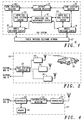
- FIG.1 illustrates a preferred embodiment of a wireless communication system 10.
- the wireless communication system 10 is preferably a cellular system such as that defined by the Digital Cellular Telecommunication System for PDC specification RCR Standard 27A (PDC standard).
- PDC standard Digital Cellular Telecommunication System for PDC specification RCR Standard 27A
- the present invention is applicable to other digital wireless communication systems such as USDC and GSM.
- the preferred embodiment wireless communication system is a time division multiple access (TDMA) communication system, but other wireless communication systems having similar message structure could likewise benefit from the improvement.
- TDMA time division multiple access
- the wireless communication system 10 includes an operations and maintenance center (OMC) 12, a gateway location register (GLR) 14, mobile switching centers (MSC) 16, home location registers (HLR) 18, and base-station systems (BSS) 20.
- the MSCs 16 are each connected to a public switched telephone network (PSTN) 22 using standard communication links.
- PSTN public switched telephone network
- each MSC 16 is connected to the OMC 12, a BSS 20, and an HLR 18.
- the GLR 14 is connected to the HLRs 18 and to the OMC 12.
- Each BSS 20 is connected to the OMC 12.
- a more detailed description of the architecture of the wireless communication system may be found in the PDC standard.
- FIG. 2 is a block diagram of the base station system 20 of FIG. 1.
- a base-station controller (BSC) 30 is coupled to a plurality of base-stations 32, 34, 36.
- each base-station 32, 34, 36 covers a predetermined coverage area and each have different channel reuse patterns as is well known in the art.
- base-station 32 is considered a serving base-station since it is in radio frequency (RF) communication with mobile station 38 via a TDMA channel.
- RF radio frequency
- the TDMA channel is comprised of a frequency and timeslot assignment.
- Base-stations 34, 36 are considered target base-stations since, if necessary, they are available to accept a communication handover of mobile station 38 as is well known in the art.
- the communication protocol between the mobile station 38 and the serving base-station 32 includes a verification of a synchronization pattern contained within the traffic channel frame structure which is transmitted/received every 20 msec.
- the mobile station 38 and the serving base-station 32 independently start internal timers each time that the synchronization pattern does not match an expected synchronization pattern.
- the method to establish or re-establish synchronization is performed with a synchronization burst (SB) exchange between the mobile station 38 and the serving base-station 32 on the assigned traffic channel.
- the synchronization burst exchange is a rapid repeat of a shortened burst containing a larger synchronization pattern (32 bits) that must be decoded and compared with an expected pattern by the opposite end of the communication link within a predetermined amount of time.
- the exchange starts with the SB1 signal bursts from serving base-station 32.
- mobile station 38 If mobile station 38 is able to receive and recognize the synchronization pattern, it will return a series of SB2 signal bursts which serving base-station 32 must be able to decode and compare with an expected pattern. If this is successful, a second exchange then occurs in the same fashion starting with SB3 and ending with SB4. If the exchange of SB1-SB4 bursts are successful, then normal traffic channel frames commence with the original synchronization pattern which is 20 bits in length. If this exchange is not successful, the call is dropped.
- GSM Groupe Special Mobile
- synchronization is accomplished by the use of mid-amble sequence within the traffic channel timeslot as is well known in the art. Briefly, when either the receiver in the mobile station 38 or the serving base-station 32 receives the traffic channel timeslot, the mid-amble sequence is compared with a known sequence stored locally in the mobile station 38 and the serving base-station 32. A correlation is performed between the received mid-amble sequence and the known sequence, and if the number of bit errors resulting from the correlation is below a predetermined threshold, synchronization is achieved. On the other hand, if the correlation produces bit errors greater than the threshold for a predetermined number of consecutive timeslots, then a loss of synchronization between the mobile station 38 and the serving base-station 32 is dedared.
- GSM Groupe Special Mobile
- the loss of synchronization is due to very low signal-to-noise (S/N) level in either the uplink (mobile station 38 to base-station 32 direction), downlink (base-station 32 to mobile station 38 direction), or both links.
- S/N signal-to-noise
- This condition is most prevalent in microcellular system configurations where increased channel reuse of traffic channel frequencies contributes to a higher level of co-channel and adjacent channel interference.
- the configuration shown in FIG. 2 could best be thought of as a microcellular wireless communication system; macrocellular wireless communication systems, however, suffer the same problems.
- the communication link is often susceptible to interference or low noise conditions as it moves into busy intersections or around street comers since the S/N level drops very quickly in these locations. As it only takes 200 msec.
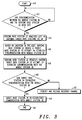
- FIG. 3 generally depicts a flow chart of communication re-establishment in accordance with the invention.
- the process starts at step 40 and proceeds to step 42 where a test determines whether synchronization between the mobile station 38 and the serving base-station 32 has been lost. This test is performed by the serving base-station 32. If the test is negative, the test is repeated. When positive, the process proceeds to step 44 where the serving base-station 32 analyzes a list of suitable target base-stations 34, 36. In the preferred embodiment, the list of suitable target base-stations 34, 36 is provided to the serving base-station 32 by the mobile station 38 by a well known procedure called mobile assisted handoff (MAHO).
- MAHO mobile assisted handoff
- mobile station 38 actually measures the signal level of signals transmitted from all target base-stations and transmits these measured results back to the serving base-station 32.
- the number of suitable target base-stations in the list is variable; in this description, only two target base-stations 34, 36 are on the list for clarity.
- serving base-station 32 chooses a target base-station (for example, target base-station 34) to attempt to establish synchronization with mobile station 38.
- the choice is based on the location in the list of target base-station 34.
- mobile station 38 during MAHO, would have reported to serving base-station 32 prior to loss of synchronization that target base-station 34 is transmitting the strongest signal out of all target base-stations 34, 36.
- serving base-station requests chosen target base-station 34 to attempt to establish synchronization with mobile station 38.
- the request from the serving base-station 32 to the target base-station 34 indudes the channel in which the re-establishment of the communication is to occur.
- the request indudes not only the channel in which the re-establishment of the communication is to occur but also the mid-amble sequence to be used to establish synchronization.
- the attempt by the target base-station 34 to establish synchronization in its attempt to re-establish the communication is performed on a channel reserved by the target base-station 34 and via the synchronization burst (SB) process described above.
- target base-station 34 Since the reserved channel used by target base-station 34 will be the same as the channel used between serving base-station 32 and mobile station 38, and as stated above, different base-stations 32, 34, 36 use different channel reuse patterns, use of the reserved channel by the target base-station 34 will temporarily violate the channel reuse pattern associated with target base-station 34.
- a test is performed to determine if target base-station 34 can establish synchronization with mobile station 38. If the test is negative, target base-station 34 will timeout and release the reserved channel at step 52 and the process ends at step 56. If the test is positive, target base-station 34 re-establishes communication with mobile station 38 at step 54 and the process again ends at step 56.
- the entire process described above with reference to FIG. 3 is transparent to mobile station 38.
- target base-station 34 Directly after communication is re-established by target base-station 34 to mobile station 38 in accordance with the invention, the communication is via a channel which violates the channel reuse pattern associated with target base-station 34. To mitigate the minor detrimental effects this may have, target base-station 34 performs an intra-cell handoff from the reserved channel to a channel compatible with the channel reuse pattern associated with target base-station 34. Additionally, while a negative test result at step 50 above assumes the process is complete, the process could equally return to step 46 where another target base-station (for example, target base-station 36) is chosen and the subsequent steps repeated. It is possible to try multiple target base-stations while mobile station 38 is "stranded" since dropped calls typically take up to five seconds to occur.
- another target base-station for example, target base-station 36
- step 46 in the preferred embodiment indicates that only a single target base-station 34 is chosen to attempt to establish synchronization as shown in FIG. 3, however, step 46 in an alternate embodiment could equally choose multiple target base-stations 34 and 36 to attempt to establish synchronization. In that instance, both target base-stations 34 and 36 would attempt to establish synchronization with mobile station 38 via the synchronization burst (SB) process described above, and the first target base-station 34 or 36 which established synchronization would re-establish communication with mobile station 38.
- SB synchronization burst
- serving base-station 32 when serving base-station 32 detects a loss of synchronization with mobile station 38, serving base-station 32 could likewise attempt to establish synchronization with mobile station 38 or disable its downlink transmission to mobile station 38 so that mobile station 38 can better receive downlink transmissions from target base-stations 32 and/or 34.
- FIG. 4 generally depicts a block diagram of a base-station suitable for initiating a communication re-establishment in accordance with the invention.
- the base-station is serving base-station 32, but one skilled in the art will realize that target base-stations 34 and 36 are similarly equipped.
- a transceiver (transmitter/receiver) 54 transmits and receives a communication and synchronization information from mobile station 38.
- the synchronization information is either synchronization bursts (SB) as implemented in PDC and US TDMA or a mid-amble sequence as implemented in GSM.
- SB synchronization bursts
- GSM Global System for Mobile Communications
- Coupled to transceiver 54 is a synchronization detector 52 which detects the loss of synchronization as described above.
- controller 50 When a loss of synchronization is detected, a signal is sent to controller 50 which requests a target base-station to establish synchronization and re-establish communication with mobile station 38 via the BSC 30. Coupled to controller 50 is a memory 56 which stores, inter alia, information related to a channel in which the communication occurred and a mid-amble sequence (for the GSM implementation).
Landscapes
- Engineering & Computer Science (AREA)
- Computer Networks & Wireless Communication (AREA)
- Signal Processing (AREA)
- Mobile Radio Communication Systems (AREA)
Claims (9)
- Procédé de re-établissement d'une communication dans un système de communication sans fil, le procédé comprenant les étapes de :détermination, par une station de base de desserte, du fait qu'une synchronisation sur un canal de communication entre une station mobile (38) et la station de base de desserte (32) a été perdue ;demande en requête, depuis la station de base de desserte (32), à une station de base cible (34) d'établir une synchronisation avec la station mobile (38) via le canal de communication ; etre-établissement de la communication lorsque la synchronisation entre la station de base cible (34) et la station mobile (38) est établie, où la station de base cible (34) établit une synchronisation et re-établit la communication via un canal réservé, le canal réservé étant le même que le canal de communication et où l'utilisation du canal réservé viole de façon temporaire un motif de réutilisation de canal qui est associé à la station de base cible (34).
- Procédé selon la revendication 1, comprenant l'étape consistant à réaliser un transfert intracellulaire au niveau de la station de base cible (34) depuis le canal réservé sur un canal compatible avec le motif de réutilisation de canal qui est associé à la station de base cible (34) lorsque la station de base cible (34) re-établit une communication avec la station mobile (38).
- Procédé selon la revendication 1, dans lequel la station de base cible (34) est choisie à partir d'une liste de stations de base cibles appropriées, où la liste de stations de base cibles appropriées est fournie à la station de base de desserte (32) par la station mobile (38).
- Station de base dans un système de communication sans fil, la station de base comprenant :un émetteur-récepteur pour émettre et recevoir une information de communication et de synchronisation depuis une station mobile (38) via un canal de communication ;un circuit de détection de synchronisation pour détecter lorsqu'une synchronisation entre la station de base et la station mobile (38) a été perdue ; etun contrôleur pour demander en requête à une station de base cible (34) d'établir une synchronisation et de re-établir une communication avec la station mobile (38) via un canal réservé lorsque la synchronisation entre la station de base et la station mobile (38) a été perdue, le canal réservé étant le même que le canal de communication et où l'utilisation du canal réservé viole de façon temporaire un motif de réutilisation de canal qui est associé à la station de base cible (34).
- Station de base selon la revendication 4, dans laquelle l'information de synchronisation est en outre caractérisée par soit des salves de synchronisation, soit une séquence de mi-ambule.
- Système de communication sans fil pour re-établir une communication, le système de communication sans fil comprenant :une station de base de desserte (32) comprenant :un moyen pour déterminer qu'une synchronisation sur un canal de communication entre une station mobile (38) et une station de base de desserte (32) a été perdue ; etun moyen pour demander en requête à une station de base cible (34) d'établir une synchronisation avec la station mobile (38) via le canal de communication ;une station de base cible (34) comprenant :un moyen pour re-établir la communication lorsqu'une synchronisation entre la station de base cible (34) et la station mobile (38) est établie, où la station de base cible (34) est agencée pour établir une synchronisation et pour re-établir la communication via un canal réservé, le canal réservé étant le même que le canal de communication et où l'utilisation du canal réservé viole de façon temporaire un motif de réutilisation de canal qui est associé à la station de base cible (34).
- Système de communication sans fil selon la revendication 6, dans lequel le canal de communication comprend en outre une fréquence et une fenêtre temporelle dans un système de communication sans fil à accès multiple par division temporelle (TDMA).
- Système de communication sans fil selon la revendication 7, dans lequel la requête sur la station de base cible (34) inclut la fréquence et la fenêtre temporelle à utiliser par la station de base cible (34), où la fréquence et la fenêtre temporelle à utiliser par la station de base cible (34) sont réservées par la station de base cible (34).
- Système de communication sans fil selon la revendication 6, dans lequel la station de base cible (34) est choisie à partir d'une liste de stations de base cibles appropriées et la liste de stations de base cibles appropriées est fournie à la station de base de desserte (32) par la station mobile (38).
Applications Claiming Priority (2)
| Application Number | Priority Date | Filing Date | Title |
|---|---|---|---|
| US16168 | 1993-02-10 | ||
| US09/016,168 US6091962A (en) | 1998-01-30 | 1998-01-30 | Method and apparatus for re-establishing a communication in a wireless communication system |
Publications (3)
| Publication Number | Publication Date |
|---|---|
| EP0933962A2 EP0933962A2 (fr) | 1999-08-04 |
| EP0933962A3 EP0933962A3 (fr) | 2000-03-15 |
| EP0933962B1 true EP0933962B1 (fr) | 2005-04-13 |
Family
ID=21775767
Family Applications (1)
| Application Number | Title | Priority Date | Filing Date |
|---|---|---|---|
| EP99101822A Expired - Lifetime EP0933962B1 (fr) | 1998-01-30 | 1999-01-28 | Rétablir un lien de communication sans fil après transfert |
Country Status (2)
| Country | Link |
|---|---|
| US (1) | US6091962A (fr) |
| EP (1) | EP0933962B1 (fr) |
Families Citing this family (21)
| Publication number | Priority date | Publication date | Assignee | Title |
|---|---|---|---|---|
| US6885866B1 (en) * | 1998-06-26 | 2005-04-26 | Nokia Corporation | Handover-method in a cellular radio system with two frequency bands |
| US6665539B2 (en) * | 1998-09-09 | 2003-12-16 | Qualcomm Inc. | Position location with low tolerance oscillator |
| US6765894B1 (en) * | 1999-07-05 | 2004-07-20 | Matsushita Electric Industrial Co, Ltd. | Communication terminal apparatus and base station apparatus |
| FI112753B (fi) | 2000-04-10 | 2003-12-31 | Nokia Corp | Menetelmä ja järjestely synkronoinnin säilyttämiseksi tiedonsiirtoyhteyden resetoinnin yhteydessä |
| US6337983B1 (en) * | 2000-06-21 | 2002-01-08 | Motorola, Inc. | Method for autonomous handoff in a wireless communication system |
| US7187709B1 (en) * | 2002-03-01 | 2007-03-06 | Xilinx, Inc. | High speed configurable transceiver architecture |
| US7171226B2 (en) * | 2002-11-19 | 2007-01-30 | General Motors Corporation | Communication retry method over digital wireless systems |
| EP1507422A1 (fr) * | 2003-08-14 | 2005-02-16 | Matsushita Electric Industrial Co., Ltd. | Selection d'une station de base pendant un transfert souple |
| US7551597B2 (en) | 2004-05-06 | 2009-06-23 | Telefonaktiebolaget L M Ericsson (Publ) | Methods and apparatus for fast downlink information of uplink out-of-synchronization |
| US7729701B2 (en) * | 2005-07-28 | 2010-06-01 | Motorola, Inc. | Method and system of accessing a de-keyed base station |
| US20080139205A1 (en) * | 2006-12-08 | 2008-06-12 | Motorola, Inc. | Method and apparatus for supporting handover in a communication network |
| US7747706B2 (en) * | 2007-07-30 | 2010-06-29 | Comverse Ltd. | System and methods for completion of attempts to access content |
| US7742409B2 (en) * | 2007-08-15 | 2010-06-22 | At&T Intellectual Property Ii, L.P. | Method and apparatus for compensating for performance degradation of an application session |
| EP2048897B1 (fr) * | 2007-10-12 | 2017-05-03 | Telefonaktiebolaget LM Ericsson (publ) | Procédé pour réduire le risque de coupures d'appels dans un réseau de communication mobile |
| US8265638B2 (en) * | 2008-03-27 | 2012-09-11 | Broadcom Corporation | Channel frequency reuse for narrow beam video streaming based upon mobile terminal location information |
| US8687567B2 (en) * | 2008-12-29 | 2014-04-01 | Verizon Patent And Licensing Inc. | Utilization of multiple access points to support multiple applications and services |
| US8374610B2 (en) | 2010-01-20 | 2013-02-12 | Research In Motion Limited | Systems and methods for independent setting of cell change network control mode and notification of cell change mode for uncontrolled cells |
| US9516559B2 (en) | 2010-01-20 | 2016-12-06 | Blackberry Limited | Methods of performing cell change without receiving description of resources in a target cell |
| US8817743B2 (en) | 2010-01-20 | 2014-08-26 | Blackberry Limited | Systems and methods for informing serving cell of target cell handover capability |
| US9661543B2 (en) | 2011-02-18 | 2017-05-23 | Blackberry Limited | Cell change notification control for CSG cells |
| CN104080137B (zh) * | 2013-03-29 | 2018-05-18 | 华为技术有限公司 | 小区切换的方法和用户设备 |
Family Cites Families (12)
| Publication number | Priority date | Publication date | Assignee | Title |
|---|---|---|---|---|
| US4811380A (en) * | 1988-01-29 | 1989-03-07 | Motorola, Inc. | Cellular radiotelephone system with dropped call protection |
| US5327577A (en) * | 1988-06-14 | 1994-07-05 | Telefonaktiebolaget L M Ericsson | Handover method for mobile radio system |
| US5280541A (en) * | 1991-10-24 | 1994-01-18 | Motorola, Inc. | Cordless telephone communication system link re-establishment protocol |
| GB2269726B (en) * | 1992-06-22 | 1996-08-28 | Motorola Inc | Alternate base-site transmission of a handoff command in a communication syste m |
| ES2163443T3 (es) * | 1993-05-20 | 2002-02-01 | Ericsson Telefon Ab L M | Restablecimiento de llamada tras desconexion. |
| JPH07284141A (ja) * | 1994-04-08 | 1995-10-27 | Oki Electric Ind Co Ltd | ハンドオーバ方法 |
| US5488640A (en) * | 1994-08-31 | 1996-01-30 | Motorola, Inc. | Method and apparatus for re-establishment of a communication |
| US5546464A (en) * | 1994-09-16 | 1996-08-13 | Ericsson Inc. | Method of and apparatus for selective resynchronization in a digital cellular communications system |
| US5752185A (en) * | 1994-11-21 | 1998-05-12 | Lucent Technologies Inc. | Disconnection management system for wireless voice communications |
| US5566225A (en) * | 1994-11-21 | 1996-10-15 | Lucent Technologies Inc. | Wireless data communications system for detecting a disabled condition and simulating a functioning mode in response to detection |
| US5943334A (en) * | 1996-12-20 | 1999-08-24 | Lucent Technologies Inc. | Method of using an intelligent mobile terminal for reconnecting calls in a wireless telecommunications system |
| US5913167A (en) * | 1997-02-28 | 1999-06-15 | Motorola, Inc. | Method for transferring a communication link in a wireless communication system |
-
1998
- 1998-01-30 US US09/016,168 patent/US6091962A/en not_active Expired - Lifetime
-
1999
- 1999-01-28 EP EP99101822A patent/EP0933962B1/fr not_active Expired - Lifetime
Also Published As
| Publication number | Publication date |
|---|---|
| EP0933962A3 (fr) | 2000-03-15 |
| US6091962A (en) | 2000-07-18 |
| EP0933962A2 (fr) | 1999-08-04 |
Similar Documents
| Publication | Publication Date | Title |
|---|---|---|
| EP0933962B1 (fr) | Rétablir un lien de communication sans fil après transfert | |
| KR100222631B1 (ko) | 이동국의 반속 및 전속 채널간의 핸드오프 방법 | |
| US6996400B2 (en) | Method of channel allocation for a mobile terminal moving in a cellular communication network | |
| RU2237363C2 (ru) | Способ и устройство для переключения ячеек | |
| KR100311765B1 (ko) | 이동전화통신시스템용기지국 | |
| CN100444680C (zh) | 用于软切换的方法和系统 | |
| US8665826B2 (en) | Adaptation of handover command size in a mobile telecommunication network | |
| EP0922372B1 (fr) | Systemes et procedes de communication radio pour un transfert assiste par mobiles entre un reseau prive et un reseau mobile public | |
| US20020032030A1 (en) | Communication system | |
| JP2001505726A (ja) | セルラーネットワークにおける適応式周波数プランニング | |
| US6859444B1 (en) | Method and apparatus for handover in TDMA mobile communications system | |
| WO1999052230A1 (fr) | Informations de signalisation de messages de communication dans un systeme cellulaire possedant une structure etroite de reutilisation de frequence | |
| US20040028015A1 (en) | Channel allocation in a communication system | |
| US20020085519A1 (en) | Method for selecting the way to perform a handover, and a cellular radio system | |
| US20070161374A1 (en) | Co-channel handover in a cellular network | |
| US20030171124A1 (en) | Communication traffic control method | |
| AU4667499A (en) | System for elimination of audible effects of handover | |
| EP1240803A2 (fr) | Reselection pour reseaux de transmission de donnees par paquets en temps reel | |
| WO2001026410A1 (fr) | Procede et appareil utilisant des trames alternees pour le transfert intercellulaire dans un systeme de communication mobile amrt | |
| JP3530135B2 (ja) | 移動通信システムにおける第2同期語の使用が自由な信号復号化 | |
| KR20050048643A (ko) | 시스템 간 접속 전환에 대한 준비를 위한 방법 및 이를구현하는 시스템 | |
| AU6174499A (en) | Method of and components for handing off radio calls in TDMA-based cordless communications systems | |
| KR100367410B1 (ko) | 이동 통신망의 핸드오버 방법 | |
| EP1220559A1 (fr) | Système de communication, unité de communication et méthode de localisation | |
| WO2002035861A2 (fr) | Repetition d'un appel |
Legal Events
| Date | Code | Title | Description |
|---|---|---|---|
| PUAI | Public reference made under article 153(3) epc to a published international application that has entered the european phase |
Free format text: ORIGINAL CODE: 0009012 |
|
| AK | Designated contracting states |
Kind code of ref document: A2 Designated state(s): FI SE |
|
| AX | Request for extension of the european patent |
Free format text: AL;LT;LV;MK;RO;SI |
|
| PUAL | Search report despatched |
Free format text: ORIGINAL CODE: 0009013 |
|
| AK | Designated contracting states |
Kind code of ref document: A3 Designated state(s): AT BE CH CY DE DK ES FI FR GB GR IE IT LI LU MC NL PT SE |
|
| AX | Request for extension of the european patent |
Free format text: AL;LT;LV;MK;RO;SI |
|
| 17P | Request for examination filed |
Effective date: 20000915 |
|
| AKX | Designation fees paid |
Free format text: FI SE |
|
| 17Q | First examination report despatched |
Effective date: 20031117 |
|
| REG | Reference to a national code |
Ref country code: DE Ref legal event code: 8566 |
|
| GRAP | Despatch of communication of intention to grant a patent |
Free format text: ORIGINAL CODE: EPIDOSNIGR1 |
|
| GRAS | Grant fee paid |
Free format text: ORIGINAL CODE: EPIDOSNIGR3 |
|
| GRAA | (expected) grant |
Free format text: ORIGINAL CODE: 0009210 |
|
| AK | Designated contracting states |
Kind code of ref document: B1 Designated state(s): FI SE |
|
| REG | Reference to a national code |
Ref country code: SE Ref legal event code: TRGR |
|
| PLBE | No opposition filed within time limit |
Free format text: ORIGINAL CODE: 0009261 |
|
| STAA | Information on the status of an ep patent application or granted ep patent |
Free format text: STATUS: NO OPPOSITION FILED WITHIN TIME LIMIT |
|
| 26N | No opposition filed |
Effective date: 20060116 |
|
| PGFP | Annual fee paid to national office [announced via postgrant information from national office to epo] |
Ref country code: FI Payment date: 20180129 Year of fee payment: 20 |
|
| PGFP | Annual fee paid to national office [announced via postgrant information from national office to epo] |
Ref country code: SE Payment date: 20180129 Year of fee payment: 20 |
|
| P01 | Opt-out of the competence of the unified patent court (upc) registered |
Effective date: 20230511 |