EP0935603B1 - Methode de synthese de genes - Google Patents
Methode de synthese de genes Download PDFInfo
- Publication number
- EP0935603B1 EP0935603B1 EP97945063A EP97945063A EP0935603B1 EP 0935603 B1 EP0935603 B1 EP 0935603B1 EP 97945063 A EP97945063 A EP 97945063A EP 97945063 A EP97945063 A EP 97945063A EP 0935603 B1 EP0935603 B1 EP 0935603B1
- Authority
- EP
- European Patent Office
- Prior art keywords
- oligonucleotides
- dna
- gene
- stranded
- template
- Prior art date
- Legal status (The legal status is an assumption and is not a legal conclusion. Google has not performed a legal analysis and makes no representation as to the accuracy of the status listed.)
- Expired - Lifetime
Links
Images


Classifications
-
- C—CHEMISTRY; METALLURGY
- C12—BIOCHEMISTRY; BEER; SPIRITS; WINE; VINEGAR; MICROBIOLOGY; ENZYMOLOGY; MUTATION OR GENETIC ENGINEERING
- C12N—MICROORGANISMS OR ENZYMES; COMPOSITIONS THEREOF; PROPAGATING, PRESERVING, OR MAINTAINING MICROORGANISMS; MUTATION OR GENETIC ENGINEERING; CULTURE MEDIA
- C12N15/00—Mutation or genetic engineering; DNA or RNA concerning genetic engineering, vectors, e.g. plasmids, or their isolation, preparation or purification; Use of hosts therefor
- C12N15/09—Recombinant DNA-technology
- C12N15/10—Processes for the isolation, preparation or purification of DNA or RNA
-
- C—CHEMISTRY; METALLURGY
- C07—ORGANIC CHEMISTRY
- C07K—PEPTIDES
- C07K14/00—Peptides having more than 20 amino acids; Gastrins; Somatostatins; Melanotropins; Derivatives thereof
- C07K14/195—Peptides having more than 20 amino acids; Gastrins; Somatostatins; Melanotropins; Derivatives thereof from bacteria
- C07K14/32—Peptides having more than 20 amino acids; Gastrins; Somatostatins; Melanotropins; Derivatives thereof from bacteria from Bacillus (G)
- C07K14/325—Bacillus thuringiensis crystal peptides, i.e. delta-endotoxins
-
- C—CHEMISTRY; METALLURGY
- C12—BIOCHEMISTRY; BEER; SPIRITS; WINE; VINEGAR; MICROBIOLOGY; ENZYMOLOGY; MUTATION OR GENETIC ENGINEERING
- C12N—MICROORGANISMS OR ENZYMES; COMPOSITIONS THEREOF; PROPAGATING, PRESERVING, OR MAINTAINING MICROORGANISMS; MUTATION OR GENETIC ENGINEERING; CULTURE MEDIA
- C12N15/00—Mutation or genetic engineering; DNA or RNA concerning genetic engineering, vectors, e.g. plasmids, or their isolation, preparation or purification; Use of hosts therefor
- C12N15/09—Recombinant DNA-technology
- C12N15/63—Introduction of foreign genetic material using vectors; Vectors; Use of hosts therefor; Regulation of expression
- C12N15/66—General methods for inserting a gene into a vector to form a recombinant vector using cleavage and ligation; Use of non-functional linkers or adaptors, e.g. linkers containing the sequence for a restriction endonuclease
-
- C—CHEMISTRY; METALLURGY
- C12—BIOCHEMISTRY; BEER; SPIRITS; WINE; VINEGAR; MICROBIOLOGY; ENZYMOLOGY; MUTATION OR GENETIC ENGINEERING
- C12N—MICROORGANISMS OR ENZYMES; COMPOSITIONS THEREOF; PROPAGATING, PRESERVING, OR MAINTAINING MICROORGANISMS; MUTATION OR GENETIC ENGINEERING; CULTURE MEDIA
- C12N15/00—Mutation or genetic engineering; DNA or RNA concerning genetic engineering, vectors, e.g. plasmids, or their isolation, preparation or purification; Use of hosts therefor
- C12N15/09—Recombinant DNA-technology
- C12N15/63—Introduction of foreign genetic material using vectors; Vectors; Use of hosts therefor; Regulation of expression
- C12N15/79—Vectors or expression systems specially adapted for eukaryotic hosts
- C12N15/82—Vectors or expression systems specially adapted for eukaryotic hosts for plant cells, e.g. plant artificial chromosomes (PACs)
- C12N15/8241—Phenotypically and genetically modified plants via recombinant DNA technology
- C12N15/8261—Phenotypically and genetically modified plants via recombinant DNA technology with agronomic (input) traits, e.g. crop yield
- C12N15/8271—Phenotypically and genetically modified plants via recombinant DNA technology with agronomic (input) traits, e.g. crop yield for stress resistance, e.g. heavy metal resistance
- C12N15/8279—Phenotypically and genetically modified plants via recombinant DNA technology with agronomic (input) traits, e.g. crop yield for stress resistance, e.g. heavy metal resistance for biotic stress resistance, pathogen resistance, disease resistance
- C12N15/8286—Phenotypically and genetically modified plants via recombinant DNA technology with agronomic (input) traits, e.g. crop yield for stress resistance, e.g. heavy metal resistance for biotic stress resistance, pathogen resistance, disease resistance for insect resistance
-
- Y—GENERAL TAGGING OF NEW TECHNOLOGICAL DEVELOPMENTS; GENERAL TAGGING OF CROSS-SECTIONAL TECHNOLOGIES SPANNING OVER SEVERAL SECTIONS OF THE IPC; TECHNICAL SUBJECTS COVERED BY FORMER USPC CROSS-REFERENCE ART COLLECTIONS [XRACs] AND DIGESTS
- Y02—TECHNOLOGIES OR APPLICATIONS FOR MITIGATION OR ADAPTATION AGAINST CLIMATE CHANGE
- Y02A—TECHNOLOGIES FOR ADAPTATION TO CLIMATE CHANGE
- Y02A40/00—Adaptation technologies in agriculture, forestry, livestock or agroalimentary production
- Y02A40/10—Adaptation technologies in agriculture, forestry, livestock or agroalimentary production in agriculture
- Y02A40/146—Genetically Modified [GMO] plants, e.g. transgenic plants
Definitions
- the present invention relates to a method of gene synthesis and more particularly to a gene synthesis method wherein the codons of a natural gene can be changed to allow optimal transcription and translation of the gene in transgenic organisms which prefer particular codons and other sequences that differ from those of the natural gene.
- the degeneracy of the genetic code permits substantial freedom in the choice of codons for any particular amino acid sequence.
- Transgenic organisms such as plants frequently prefer particular codons which, though they encode the same protein, may differ from the codons in the organism from which the gene was derived.
- U.S. Patent No. 5,380,831 to Adang et al. relates to the creation of insect resistant transgenic plants that express the Bacillus thuringiensis ( Bt ) toxin gene.
- the Bt crystal protein, an insect toxin is encoded by a full-length gene that is poorly expressed in transgenic plants.
- a synthetic gene encoding the protein containing codons preferred in plants was substituted for the natural sequence.
- the invention disclosed therein comprised a chemically synthesized gene encoding an insecticidal protein which is frequently equivalent to a native insecticidal protein of Bt.
- the synthetic gene was designed to be expressed in plants at a level higher than a native Bt gene.
- the approach used to assemble the Bt gene in the '831 patent is one of several methods for gene synthesis for genetic engineering manipulation. It consisted of designing an improved nucleotide sequence for the coding region and assembling the gene from a number of short chemically synthesized oligonucleotide segments. The DNA sequence to be synthesized was divided into segments, with lengths that can be synthesized, isolated and purified. The segments were then joined enzymatically to form the synthetic Bt gene.
- oligonucleotides e.g., hairpin loops
- the approach has low efficiency and is not reliable for construction of long synthetic DNA fragments.
- the method involves numerous steps and requires synthesis of both strands of the DNA. It requires purification of many short (50-70 nt) oligonucleotides by rather laborious and time consuming procedures.
- Use of T4 DNA ligase requires conventional temperatures (20° - 37°C) during assembly and ligation of oligonucleotides therefore contributing to the sensitivity of the method to secondary DNA structure.
- Yet another method for the synthetic assembly of oligonucleotides into long DNA fragments utilizes polymerase to fill in single-stranded gaps in annealed pairs of oligonucleotides.
- polymerase to fill in single-stranded gaps in annealed pairs of oligonucleotides.
- each segment must be cloned, a step which significantly delays the synthesis of long DNA fragments and greatly decreases the efficiency of the approach. Additionally, the approach can be used only for small DNA fragments.
- thermostable DNA polymerase influences the reliability of this technology with increased number of PCR steps.
- the present invention is a new method for assembly and construction of synthetic genes which are similar but not necessarily identical to a natural gene of interest.
- the method utilizes a combination of enzymatic and chemical synthesis of DNA and significantly reduces the cost, time and number of steps required for construction of synthetic genes.
- oligonucleotides of the gene to be created are assembled on a single-stranded partially homologous template DNA derived from the natural or wild-type gene. After annealing, the nicks between adjacent oligonucleotides are closed by a thermostable DNA ligase using repeated cycles of melting, annealing, and ligation.
- This template directed ligation (“TDL”) results in a new single-stranded synthetic DNA product which is subsequently amplified and isolated from the wild type template strand by the polymerase chain reaction (PCR) with short flanking primers that are complementary only to the new synthetic strand.
- PCR end-primers contain suitable restriction cleavage sites for cloning of the synthetic double-stranded DNA fragments.
- thermostable DNA ligase permits the process to be carried out at higher temperatures which decreases the formation of secondary structures (e.g. hairpin loops) that interfere with the assembly process.
- secondary structures e.g. hairpin loops
- the PCR is used only in the final step, thus avoiding the assembly of oligonucleotides, in contrast to PCR based methods for gene synthesis described in the preceding section.
- the gene assembly by ligation of oligonucleotides is preferable to assembly by PCR approach, because no new errors are introduced to the assembled DNA. Indeed, the analysis of the observed errors showed (Example 1) that these originate from chemical oligonucleotide synthesis - a common problem with any gene synthesis technology, and that using the PCR in the final step did not introduce additional errors.
- the disclosed TDL-PCR method for gene synthesis represents a general method which may be employed to create a synthetic version of a natural or wild-type gene from any plant or animal or any existing gene as long as the wild-type sequence is known and present.
- the simplicity of the method allows it to be widely used in areas where the routine re-synthesis of the sequences is required.
- microorganisms have genes in their genome that are not present in other higher organisms such as plants and vertebrates. Frequently such genes are not suited for expression in eukaryotic organisms and vice- versa.
- the monocot and the dicot genes differ by expression requirements, and therefore need to be reconstructed to fit different expression patterns.
- Fig. 1 is a schematic plan for gene synthesis according to the present invention.
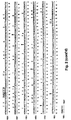
- Fig. 2 shows the nucleotide sequence of the synthetic cryIC gene. Where different, the native (bacterial) sequence is shown above. The amino acid sequence is shown below.
- the sequence of the new gene to be created is designed based on the known sequence of the wild-type gene. If the new gene will be used to transform a plant, then modifications will be made with respect to the plant's preferred codon's and to other fortuitous sequences resembling the signals which initiate various processing steps in transcription and translation of the gene. Avoidance of such signals can drastically increase expression of a transgenic in plants.
- Gene synthesis according to the present invention generally comprises three steps which are illustrated schematically in Fig.1.
- oligonucleotides each of a length of between 80-130 bases which collectively comprise the newly designed sequence, are chemically synthesized and phosphorylated by the conventional solid-phase method.
- a chemical phosphorylation is performed during the last step of automated oligonucleotide synthesis so that only the full- length oligonucleotides have a 5'-phosphate group.
- phosphorylated (i.e. full-length) oligonucleotides can be ligated with other adjacent oligonucleotides during the following TDL step thereby conveniently eliminating oligonucleotides that are too short.
- TDL template directed ligation
- the newly assembled and sealed single-stranded DNA is converted to the double-stranded fragment and subsequently amplified and selected from the wild type template strand by the PCR with short flanking primers that are complementary only to the new synthetic strand.
- flanking primers also contain sites for selected restriction enzymes in order to facilitate the cloning of an amplified DNA fragment.
- the above-described TDL-PCR method was employed to synthesize a cryIC gene which encodes a Bacillus thuringiensis (Bt) endotoxin.
- the natural gene was found to be poorly expressed in transgenic plants. Efficient transcription of native cry genes in plant cell nuclei was achieved by the removal of AT-rich sequences that cause mRNA instability or aberrant splicing, and the translation of cry mRNAs was enhanced by modification of their codon usage to make it more similar to that of the host plant.
- sequence context around translation start was modified to conform the eukaryot consensus (Kozak, 1990).
- crylCa5 design of the synthetic cryIC gene was based on the sequence of the corresponding wild-type gene ( crylCa5 , as in Fig. 2).
- crylCa5 sequence represents a consensus of all known cryIC genes and is identical in three B.thuringiensis strains K26-21, MR1-37 and sub sp.aizawai 7.29.
- Modifications of the synthetic cryIC gene ( s-cryIC ) sequence did not alter the amino acid sequence of the minimal toxic fragment of the Cry IC protoxin, containing N-terminal fragment with length of 630 amino acid residues (Fig 2).
- 258 bp of the bacterial cryIC sequence (EMBL X96682; 1890 bp) were changed such that 249 out of 630 codons were modified according to preferential codon usage in alfalfa and other dicotyledonous plants.
- These nucleotide exchanges also removed 21 potential plant polyadenylation signals, 12 ATTTA motives, 68 sequence blocks with 6 or more consecutive A or T nucleotides, as well as all sequence motifs containing 5 or more G+C or A+T nucleotides.
- sequences around the translation initiation site were changed in order to conform the eukaryotic consensus sequence, and a TAG stop codon was introduced downstream of amino acid codon 630.
- the G+C content of the bacterial cryIC gene was thus increased from 36.6% to 44.8% in the synthetic gene.
- Oligonucleotides were synthesized with an Applied Biosystems 380B DNA synthesizer, using a 1000 ⁇ controlled pore glass support (Millipore Eschborn, Germany). Except for primers located at the 5'-termini of TDL-PCR sequence blocks (see below), the 5'-ends of oligonucleotides were chemically phosphorylated with 5'-Phosphate-ONphosphoramidite (Clontech, Heidelberg, Germany) according to manufacture's manual in the final step of DNA synthesis. The synthesis products were deprotected with ammonium hydroxide, desalted on NAP25 (Pharmacia,Freiburg, Germany) columns, and used for TDL-PCR without additional purification.
- the designed DNA sequence of the s-cryIC gene (Fig. 2) was divided into three blocks separated by Hinc II and Bgl II cleavage sites.
- the BamH I- Hinc II block-I was constructed from eight, the Hinc II - Bgl II block-II from five, and the Bgl II- Bam HI block-III from seven oligonucleotides.
- the oligonucleotides were assembled on a single-stranded DNA template of phagemid pR1, carrying the 630 N-terminal codons of the wild-type B.thuringiensis cryIC gene (Fig. 1 and 2).
- Terminal oligonucleotides in each TDL-PCR block carried unique sequences on their 5' and 3' ends, which were not complementary with the template, but were matched to short PCR primers for selective amplification of the synthetic DNA strand. These PCR primers contained unique restriction enzyme cleavage sites used for cloning of the amplified double-stranded DNA fragments into pBluescript.
- the TDL-PCR block-I was PCR amplified by a 5'-primer (5' -AAGAGGATCCACCATGGAGGAGAAC-3 '), carrying a Bam HI site and a 3'-primer (5'-ATGATCTAGATGCAGTAGCG-3').
- the 3'-primer was complementary to an oligonucleotide (5 '-GTCAACTAACAAGGGAAGTTTATACGGACCCACGCT ACTGCATCTAGATCAT-3') at the 3'-end of block-I, that carried cryIC sequences with the Hinc II site, and unrelated overhang sequences with an Xba I site.
- the oligonucleotide at the 5'-end of block-II added unique DNA sequences with an Xho I site to the cryIC sequences upstream of the Hinc II site and matched a PCR primer (5'-GATAACTCGAGCGAGCCTA-3').
- the 3'-terminal oligonucleotide in block-II carried cryIC sequences extending to the Bgl II site and downstream overhang sequences with an Xba I site that were complementary to a PCR primer (5' -CCTGACTCTAGAAGATC-3').
- oligonucleotide located at the 5'-end of block-III an EcoR I site was added upstream to the Bgl II site of cryIC gene, fitting to a PCR primer (5'- CTGTCTGAATTCAAAGATC- 3').
- the oligonucleotide at the 3'-end of block-III carried a BamH I site, following the position of TAG stop codon in the pR1 phagemid, as well as adjacent unique sequences with a NotI site that were complementary to a PCR primer (5'-AGCATGCGGCCGCGGATCC-3').
- Template directed ligation (TDL) reactions were carried out at a template to oligonucleotide ratio 1:200 (a total of 0.05 pM of template versus 10 pM of each oligonucleotide) in a final volume of 50 ⁇ l using a reaction buffer (20 mM Tris.HCl (pH 7.5), 20 mM KCl, 10 mM MgCl 2 0,1% NP-40, 0.5 mM rATP, 1 mM DTT)-and 4 U Pfu DNA ligase (Stratagene), or any other similar thermostable DNA ligase.
- a reaction buffer (20 mM Tris.HCl (pH 7.5), 20 mM KCl, 10 mM MgCl 2 0,1% NP-40, 0.5 mM rATP, 1 mM DTT)-and 4 U Pfu DNA ligase (Stratagene), or any other similar thermostable DNA ligase.
- TDL reactions Thirty cycles of TDL reactions were used to obtain a desirable amount of a TDL product
- the temperature range during melting step is between 90 to 98°C with a preferable temperature of 92°, with 1 minute of required step time.
- Annealing and ligation were performed at a temperature range of 45 to 60°C with a preferable temperature of 52°C during required step time from 3 to 10 minutes.
- Melting step was followed by annealing and ligation step to obtain a TDL cycle which was repeated at least 30 times.
- a new portion ofrATP 0.5 mM
- 4 U of Pfu ligase was added.
- Temperature cycling during TDL step was done on a Perkin-Elmer thermal cycler (Norwalk, Conn.).
- thermostable DNA polymerase such as UITma (Perkin-Elmer) polymerase in 100 ⁇ l buffer (10 mM Tris.HCI (pH 9.0), 50 mM KCl and 0.1% Triton- X100), using of 30 cycles at 92°C for 1 min, 45°C for 1 min, and at 72°C for 1.5 minutes, with final extension for 10 minutes, at 72° C PCR amplifications were performed on a Perkin-Elmer (Norwalk, Conn.) thermal cycler.
- UITma Perkin-Elmer
- the amplified DNA fragments were gel purified, digested with Bam HI- Xba I (block-I), Xho I- Xba I (block-II), and Eco RI- Not I (block-III), then cloned in pBluescript SK+ to verify their DNA sequences.
- the synthetic cryIC gene coding for an N-terminal protoxin fragment of 630 amino acids was designed (Fig. 2) by exchanging 286 bp of the bacterial cryIC sequence (EMBL X96682; 1890 bp) such that 249 out of 630 codons were modified according to preferential codon usage in dicotyledonous plants. These exchanges removed 21 potential plant polyadenylation signals, 12 ATTTA motifs, 68 sequence blocks with 6 or more consecutive A/Ts, and all motifs containing 5 or more G+C or A+T nucleotides. Sequences around the translation initiation site were changed to conform to the eukaryotic consensus sequence, and a TAG stop codon was introduced downstream of amino acid codon 630.
- the G+C content of the cryIC gene was thus increased from 36.6% to 44.8%.
- the s-cryIC gene was synthesized from oligonucleotides of 70-130 bases that were chemically phosphorylated at their 5'-ends. Since chemical phosphorylation is performed as the last step of automated DNA synthesis, only full-length oligonucleotides contain the 5'-phosphate group.
- Bacterial cryIC sequences coding for the 630 N-terminal codons were cloned in a pBluescript vector to generate a single- stranded DNA template for ordered annealing of 5-8 synthetic oligonucleotides by partial base-pairing.
- thermostable Pfu -ligase using 30-60 cycles of repeated melting, annealing and ligation.
- this template directed ligation (TDL, Fig. 1) method provided a sequence specific selection for phosphorylated full-length oligonucleotides from a complex mixture of nonphosphorylated failure synthesis products, and yielded a linear amplification of single-stranded synthetic cryIC DNA segments generated by ligation. Therefore, except for desalting, no additional purifications of a crude oligonucleotide mixture after chemical DNA synthesis were necessary.
- the TDL ligation at high temperatures also circumvented potential problems of erroneous annealing.
- the synthetic cryIC sequences were converted to double-stranded DNA fragments and specifically amplified by PCR using short end-primers that did not anneal to the bacterial cryIC template carried by the pBluescript vector.
- the s-cryIC gene was thus synthesized from three sequence blocks that were combined by ligation of Hinc II and Bgl II digested DNA fragments, and cloned in pBluescript.
- Fig. 2 shows the nucleotide sequence of the synthetic cryIC gene (s-cryIC ). Nucleotides of the bacterial cryIC sequence ( b-cryIC ) exchanged in the synthetic gene are shown in the upper lanes. The amino acid sequence of the truncated CryIC- endotoxin is displayed in single letter code below the s-cryIC sequence. The nucleotide sequence of the s-cryIC region coding for 630 codons starts with an ATG codon in a sequence context fitting the eukaryotic consensus and terminates at aTAG stop codon.
- the errors (3 small deletions, 1 transversion and 1 transition) found in the TDL-PCR products were corrected by site-directed mutagenesis using a USE kit (Pharmacia) or by assembly of non-mutated restriction fragments.
- Plant gene expression constructs and transformation of alfalfa and tobacco Plant gene expression constructs and transformation of alfalfa and tobacco.
- the plant expression vector pPCV91 was constructed by modification of pPCV720.
- a Not I site in the RK2-domain was eliminated by filling in with DNA polymerase Klenow fragment, and a CaMV35S promoter with four repeats of the enhanced domain (-90 to - 418), was introduced into the Hind III site of pPCV720.
- this cassette contained 20 bp from the 3'-end of the untranslated ⁇ leader sequence of tobacco mosaic virus (TMV) RNA, whereas downstream of the Bam HI site it carried a polyadenylation signal sequence derived from the CaMV 35S RNA gene.
- a Bam HI site present in the mannopine synthase promoter(pmas) of pPCV720 was replaced by a Not I site using a Sau 3A- Not I adaptor (5'-GATCTGCGGCCGCA-3').
- the resulting vector pPCV91 carried three plant gene expression cassettes with unique Bam HI, Not I and Sal I cloning sites.
- the synthetic cryIC gene was cloned as a Bam HI fragment downstream of the CaMV35S promoter.
- pNS7 a synthetic pat gene, coding for a phosphinothricine acetyltransferase ( pat ) gene and a chi AII gene from Serratia marcescens were inserted into the Sal I and Not I sites located respectively downstream of the mas 1' and 2' promoters.
- a bacterial cryIC gene from B.thuringinesis sub sp.. aizawai 7.29 (EMBL X96682), carrying the 756 N-terminal codons of cryIC was cloned in pGIF1 in which it replaced the synthetic cryIC gene of pNS7.
- Vectors pNS6, pNS7 and pGIFI were conjugated to Agrobacterium tumefacines GV3101(pMP90RK), and used for transformation of alfalfa ( Medicago sativa L. var. Regen S clone RA3) and tobacco ( Nicotaina tabacum SRI) as described.
- alfalfa and tobacco tissue culture media contained respectively 40 ⁇ g/ml and 15 ⁇ g/ml of hygromycin were used.
- Bacterial and synthetic cryIC genes coding for the 630 N-terminal amino acids of the CryIC toxin (Fig. 2), were cloned into the Bam HI site of a pAEN4 vector carrying the CaMV35S gene expression cassette of pPCV91.
- Arabidopsis thaliana protoplast were isolated from root cultures and transformed by PEG-mediated DNA uptake, using 1.5 x 10 6 protoplast and 35 ⁇ g plasmid DNA in each experiment. The protoplast were harvested 48 hours after DNA uptake and lysed in SDS-sample buffer to separate proteins on 10% SDS-PAGE before immunoblotting.
- Leaf bioassay were performed with the Egyptian cotton leafworm ( Spodoptera littoralis ) and the beet armyworm ( Spodoptera exigua ) using neonate, 2-3rd. 3-4th, and 4-5-6th instar 'larvae. Ten larvae of selected developmental stage were placed on a moistened filter disc in Petri dishes with detached leaves from greenhouse grown plants. The assays were repeated 2-3 times for each plant. The mortality of neonate larvae was scored after 3 days, whereas the mortality of larvae from 2-4th and from 4-6th instar stages were evaluated respectively after 5 and 7 days.
- transgenic greenhouse grown alfalfa lines producing 0.02 to 0.1% of total soluble protein as CryIC and S.exigua larvae of the 3-4th instar stage were used.
- Three NS7 and three NS6 transgenic, as well as wild-type plants were infested with 15-20 larvae each.
- 25 larvae were placed in a Petri dish located between transgenic NS6 or NS7 and nontransgenic alfalfa plants in the greenhouse.
- Leaf damage was evaluated after 6 days.
Landscapes
- Health & Medical Sciences (AREA)
- Genetics & Genomics (AREA)
- Life Sciences & Earth Sciences (AREA)
- Chemical & Material Sciences (AREA)
- Engineering & Computer Science (AREA)
- Organic Chemistry (AREA)
- Biotechnology (AREA)
- General Engineering & Computer Science (AREA)
- Zoology (AREA)
- Molecular Biology (AREA)
- Wood Science & Technology (AREA)
- Bioinformatics & Cheminformatics (AREA)
- Biomedical Technology (AREA)
- Biophysics (AREA)
- Biochemistry (AREA)
- General Health & Medical Sciences (AREA)
- Physics & Mathematics (AREA)
- Microbiology (AREA)
- Plant Pathology (AREA)
- Crystallography & Structural Chemistry (AREA)
- Insects & Arthropods (AREA)
- Proteomics, Peptides & Aminoacids (AREA)
- Medicinal Chemistry (AREA)
- Gastroenterology & Hepatology (AREA)
- Pest Control & Pesticides (AREA)
- Cell Biology (AREA)
- Micro-Organisms Or Cultivation Processes Thereof (AREA)
- Agricultural Chemicals And Associated Chemicals (AREA)
- Preparation Of Compounds By Using Micro-Organisms (AREA)
- Breeding Of Plants And Reproduction By Means Of Culturing (AREA)
- Measuring Or Testing Involving Enzymes Or Micro-Organisms (AREA)
- Peptides Or Proteins (AREA)
Claims (9)
- Procédé pour construire une molécule d'ADN monocaténaire synthétique qui est similaire, mais non identique, à un gène naturel ou n'importe quel gêne existant, comprenant les étapes consistant :(a) à prendre un ADN monocaténaire dudit gène naturel ou existant comme matrice ;(b) à synthétiser chimiquement une pluralité d'oligonugléotides monocaténaires qui sont partiellement complémentaires de ladite matrice ; et à phosphoryler lesdits oligonucléotides à leur extrémité 5' ;(c) à anneler lesdits oligonucléotides à ladite matrice monocaténaire, à soumettre à une ligation les oligonucléotides adjacents les uns aux autres en utilisant une ADN-ligase thermo-stable et à mettre en oeuvre des cycles répétés de fusion, annelage et ligation pour former une séquence monocaténaire contiguë dudit ADN.
- Procédé pour construire une molécule d'ADN bicaténaire synthétique dérivée d'un gène naturel ou de n'importe quel gène existant, comprenant les étapes consistant :(a) à prendre un ADN monocaténaire dudit gène naturel ou existant comme matrice ;(b) à synthétiser chimiquement une pluralité d'oligonucléotides monocaténaires qui sont partiellement complémentaires de ladite matrice ; et à phosphoryler lesdits oligonucléotides à leur extrémité 5' ;(c) à anneler lesdits oligonucléotides à ladite matrice monocaténaire, à soumettre à une ligation les oligonucléotides adjacents les uns aux autres en utilisant une ADN-ligase thermo-stable et à mettre en oeuvre des cycles répétés de fusion, annelage et ligation pour former une séquence monocaténaire contiguë dudit ADN, et(d) à convertir ladite séquence monocaténaire contiguë en ADN bicaténaire et amplifier ce dernier en soumettant un mélange comprenant ladite séquence monocaténaire contiguë à une réaction en chaíne avec une polymérase.
- Procédé pour construire une molécule d'ADN bicaténaire synthétique suivant la revendication 2, dans lequel de courtes amorces adjacentes, complémentaires seulement du brin d'ADN synthétique, sont utilisées.
- Procédé suivant l'une quelconque des revendications précédentes, dans lequel les oligonucléotides sont produits par synthèse sur un synthétiseur d'ADN automatisé.
- Procédé suivant la revendication 4, dans lequel les oligonucléotides qui sont phosphorylés à leur extrémité 5' sont le résultat d'une étape de phosphorylation sur le synthétiseur d'ADN, ladite phosphorylation se produisant à la fin de la synthèse desdits oligonucléotides, oligonucléotides qui sont utilisés dans l'étape (c) sans autre purification.
- Procédé suivant l'une quelconque des revendications précédentes, dans lequel l'ADN-ligase thermostable est l'ADN-ligase Pfu.
- Procédé suivant la revendication 2 ou 3, dans lequel les amorces oligonucléotidiques pour les réactions en chaíne avec une polymérase comprennent en outre des sites pour des enzymes de restriction choisies.
- Procédé suivant la revendication 2 ou 3, dans lequel la molécule d'ADN bicaténaire synthétique comprend un gène de toxine de Bacillus thuringiensis.
- Procédé suivant la revendication 8, dans lequel le gène de toxine de Bacillus thuringiensis est un gène cryIC.
Applications Claiming Priority (3)
| Application Number | Priority Date | Filing Date | Title |
|---|---|---|---|
| US2789696P | 1996-10-07 | 1996-10-07 | |
| US27896P | 1996-10-07 | ||
| PCT/IB1997/001386 WO1998015567A2 (fr) | 1996-10-07 | 1997-10-06 | Methode de synthese de genes |
Publications (2)
| Publication Number | Publication Date |
|---|---|
| EP0935603A2 EP0935603A2 (fr) | 1999-08-18 |
| EP0935603B1 true EP0935603B1 (fr) | 2002-04-03 |
Family
ID=21840386
Family Applications (2)
| Application Number | Title | Priority Date | Filing Date |
|---|---|---|---|
| EP97945060A Withdrawn EP0948626A2 (fr) | 1996-10-07 | 1997-10-06 | Gene synthetique de bacillus thuringiensis codant une toxine crylca (crylc) |
| EP97945063A Expired - Lifetime EP0935603B1 (fr) | 1996-10-07 | 1997-10-06 | Methode de synthese de genes |
Family Applications Before (1)
| Application Number | Title | Priority Date | Filing Date |
|---|---|---|---|
| EP97945060A Withdrawn EP0948626A2 (fr) | 1996-10-07 | 1997-10-06 | Gene synthetique de bacillus thuringiensis codant une toxine crylca (crylc) |
Country Status (7)
| Country | Link |
|---|---|
| US (2) | US6110668A (fr) |
| EP (2) | EP0948626A2 (fr) |
| AR (2) | AR013845A1 (fr) |
| AU (1) | AU4635597A (fr) |
| DE (1) | DE69711667D1 (fr) |
| NZ (1) | NZ335358A (fr) |
| WO (2) | WO1998015630A2 (fr) |
Families Citing this family (57)
| Publication number | Priority date | Publication date | Assignee | Title |
|---|---|---|---|---|
| GB9701425D0 (en) | 1997-01-24 | 1997-03-12 | Bioinvent Int Ab | A method for in vitro molecular evolution of protein function |
| DE19736591A1 (de) * | 1997-08-22 | 1999-02-25 | Peter Prof Dr Hegemann | Verfahren zum Herstellen von Nukleinsäurepolymeren |
| US6670127B2 (en) | 1997-09-16 | 2003-12-30 | Egea Biosciences, Inc. | Method for assembly of a polynucleotide encoding a target polypeptide |
| FR2782323B1 (fr) * | 1998-08-12 | 2002-01-11 | Proteus | Procede de production in vitro de sequences polynucleotidiques recombinees, banques de sequences et sequences ainsi obtenues |
| US6991922B2 (en) | 1998-08-12 | 2006-01-31 | Proteus S.A. | Process for in vitro creation of recombinant polynucleotide sequences by oriented ligation |
| US6951719B1 (en) | 1999-08-11 | 2005-10-04 | Proteus S.A. | Process for obtaining recombined nucleotide sequences in vitro, libraries of sequences and sequences thus obtained |
| FR2793807B1 (fr) * | 1999-05-20 | 2003-05-16 | Biomethodes | Methode d'insertion d'un fragment d'acide nucleique dans un vecteur, ses applications et les kits pour sa mise en oeuvre |
| US8137906B2 (en) * | 1999-06-07 | 2012-03-20 | Sloning Biotechnology Gmbh | Method for the synthesis of DNA fragments |
| FR2795739B1 (fr) * | 1999-07-01 | 2003-08-15 | Agronomique Inst Nat Rech | Gene synthetique cryic et plantes transgeniques exprimant ledit gene |
| WO2002064804A2 (fr) * | 2001-02-13 | 2002-08-22 | University Of Florida | Double complexe promoteur bidirectionnel a activite promotrice amelioree dans le cadre de l'expression transgenique dans les eucaryotes |
| US7164992B1 (en) | 2001-03-22 | 2007-01-16 | Blue Heron Biotechnology, Inc. | Method and system for polynucleotide synthesis |
| ATE414767T1 (de) * | 2001-11-22 | 2008-12-15 | Sloning Biotechnology Gmbh | Nukleinsäure-linker und deren verwendung in der gensynthese |
| JP2005537784A (ja) * | 2002-04-23 | 2005-12-15 | ザ スクリップス リサーチ インスティテュート | 葉緑体におけるポリペプチドの発現、ならびにそのポリペプチドを発現するための組成物および方法 |
| US20040110184A1 (en) * | 2002-06-28 | 2004-06-10 | Dow Agrosciences Llc | Pesticidally active proteins and polynucleotides obtainable from Paenibacillus species |
| US7563600B2 (en) * | 2002-09-12 | 2009-07-21 | Combimatrix Corporation | Microarray synthesis and assembly of gene-length polynucleotides |
| WO2004029223A2 (fr) * | 2002-09-30 | 2004-04-08 | Parallele Bioscience, Inc. | Synthese et marquage de polynucleotides par ligature d'echantillonnage cinetique |
| US7090979B2 (en) * | 2002-11-22 | 2006-08-15 | The Regents Of The University Of California | Derivatized versions of ligase enzymes for constructing DNA sequences |
| US7425413B2 (en) * | 2003-12-09 | 2008-09-16 | Sacred Heart Medical Center | Methods of designing, synthesizing, and propagating reference nucleic acids |
| WO2005055724A1 (fr) * | 2003-12-15 | 2005-06-23 | International Centre For Genetic Engineering And Biotechnology | Compositions de biopesticides |
| CA2558749A1 (fr) * | 2004-02-27 | 2005-09-29 | President And Fellows Of Harvard College | Synthese de polynucleotides |
| GB0500703D0 (en) * | 2005-01-14 | 2005-02-23 | Bioinvent Int Ab | Molecular biology method |
| US20070004041A1 (en) * | 2005-06-30 | 2007-01-04 | Codon Devices, Inc. | Heirarchical assembly methods for genome engineering |
| WO2007005305A1 (fr) * | 2005-06-30 | 2007-01-11 | Syngenta Participations Ag | Procédés de criblage de polymorphismes d’hybridation spécifiques de gène (gshp) et leur utilisation dans la cartographie génétique et le développement d’un marqueur |
| CA2614042A1 (fr) * | 2005-07-06 | 2007-01-11 | Biochip Innovations Pty Ltd | Methode et trousse pour analyser une sequence d'acide nucleique cible |
| EP1816460B1 (fr) * | 2006-02-03 | 2009-07-22 | MTM Laboratories AG | Procédé pour effectuer un immunoessai dénaturante |
| PL1999141T3 (pl) | 2006-03-21 | 2011-10-31 | Bayer Cropscience Nv | Nowe geny kodujące białka owadobójcze |
| WO2007136834A2 (fr) * | 2006-05-19 | 2007-11-29 | Codon Devices, Inc. | Extension et ligature combinées pour l'assemblage d'acide nucléique |
| WO2008027558A2 (fr) | 2006-08-31 | 2008-03-06 | Codon Devices, Inc. | Assemblage itératif d'acides nucléiques utilisant l'activation de caractères codés par vecteurs |
| CN101600801B (zh) * | 2006-12-08 | 2013-01-02 | 先锋高级育种国际公司 | 新苏云金芽孢杆菌晶体多肽、多核苷酸及其组合物 |
| CN101688216B (zh) | 2007-06-01 | 2014-03-26 | 拜尔作物科学公司 | 编码杀虫蛋白质的新基因 |
| US9115352B2 (en) | 2008-03-31 | 2015-08-25 | Sloning Biotechnology Gmbh | Method for the preparation of a nucleic acid library |
| JP2013514772A (ja) | 2009-12-16 | 2013-05-02 | ダウ アグロサイエンシィズ エルエルシー | 改変されたCry1Ca殺虫性Cryタンパク質 |
| EP2637780B1 (fr) | 2010-11-12 | 2022-02-09 | Gen9, Inc. | Puces à protéines et leurs procédés d'utilisation et de fabrication |
| CN103502448B (zh) | 2010-11-12 | 2017-03-29 | Gen9股份有限公司 | 核酸合成的方法和设备 |
| WO2012131619A1 (fr) * | 2011-03-30 | 2012-10-04 | Metahelix Life Sciences Limited | Séquence nucléotidique, cassette d'expression, évènements transgéniques, cellules et procédés associés |
| UY34014A (es) | 2011-04-15 | 2012-11-30 | Dow Agrosciences Llc | Genes sintéticos para expresar proteínas en células de maíz, construcciones, plantas transgénicas, métodos para controlar pestes y composiciones |
| LT2944693T (lt) | 2011-08-26 | 2019-08-26 | Gen9, Inc. | Kompozicijos ir būdai, skirti nukleorūgščių didelio tikslumo sąrankai |
| US12595500B2 (en) | 2011-09-26 | 2026-04-07 | Life Technologies Corporation | High efficiency, small volume nucleic acid synthesis |
| CN103945931B (zh) | 2011-09-26 | 2017-03-22 | 基因技术股份公司 | 高效的小体积核酸合成 |
| WO2014153188A2 (fr) | 2013-03-14 | 2014-09-25 | Life Technologies Corporation | Synthèse hautement efficace de petits volumes d'acides nucléiques |
| US11692016B2 (en) | 2012-03-09 | 2023-07-04 | Vestaron Corporation | High gene expression yeast strain |
| KR20220047395A (ko) | 2012-03-09 | 2022-04-15 | 베스타론 코포레이션 | 독성 펩타이드 제조, 식물에서의 펩타이드 발현 및 시스테인 농후 펩타이드의 조합 |
| US9150853B2 (en) | 2012-03-21 | 2015-10-06 | Gen9, Inc. | Methods for screening proteins using DNA encoded chemical libraries as templates for enzyme catalysis |
| CN111876409A (zh) | 2012-04-24 | 2020-11-03 | Gen9股份有限公司 | 在体外克隆中分选核酸和多重制备物的方法 |
| AU2013280661A1 (en) | 2012-06-25 | 2015-01-22 | Gen9, Inc. | Methods for nucleic acid assembly and high throughput sequencing |
| WO2014165818A2 (fr) | 2013-04-05 | 2014-10-09 | T Cell Therapeutics, Inc. | Compositions et méthodes de prévention et de traitement du cancer de la prostate |
| US10407676B2 (en) | 2014-12-09 | 2019-09-10 | Life Technologies Corporation | High efficiency, small volume nucleic acid synthesis |
| EP3763818A1 (fr) | 2015-10-06 | 2021-01-13 | Pierce Biotechnology, Inc. | Dispositifs et procédés de production de protéines |
| GB201612011D0 (en) | 2016-07-11 | 2016-08-24 | Glaxosmithkline Ip Dev Ltd | Novel processes for the production of oligonucleotides |
| WO2018075269A1 (fr) | 2016-10-21 | 2018-04-26 | Vestaron Corporation | Peptides clivables et protéines insecticides et nématicides les comprenant |
| US20210147830A1 (en) | 2018-06-29 | 2021-05-20 | Thermo Fisher Scientific Geneart Gmbh | High throughput assembly of nucleic acid molecules |
| GB201905303D0 (en) | 2019-04-15 | 2019-05-29 | Thermo Fisher Scient Geneart Gmbh | Multiplex assembly of nucleic acid molecules |
| US20240025939A1 (en) | 2020-03-06 | 2024-01-25 | Life Technologies Corporation | High sequence fidelity nucleic acid synthesis and assembly |
| CN114316015B (zh) * | 2021-12-03 | 2024-06-14 | 河北大学 | 一种抗虫蛋白hRI及其编码基因和应用 |
| CN114891076B (zh) * | 2022-03-23 | 2023-05-12 | 中国农业科学院植物保护研究所 | 一种突变蛋白及其在防治草地贪夜蛾中的应用 |
| WO2024132094A1 (fr) | 2022-12-19 | 2024-06-27 | Thermo Fisher Scientific Geneart Gmbh | Extraction de molécules d'acide nucléique à séquence vérifiée |
| GB2628173A (en) | 2023-03-17 | 2024-09-18 | Thermo Fisher Scient Geneart Gmbh | Methods of producing modified nucleic acid sequences for eliminating adverse splicing events |
Family Cites Families (27)
| Publication number | Priority date | Publication date | Assignee | Title |
|---|---|---|---|---|
| US4652639A (en) * | 1982-05-06 | 1987-03-24 | Amgen | Manufacture and expression of structural genes |
| US5380831A (en) * | 1986-04-04 | 1995-01-10 | Mycogen Plant Science, Inc. | Synthetic insecticidal crystal protein gene |
| US4888286A (en) * | 1984-02-06 | 1989-12-19 | Creative Biomolecules, Inc. | Production of gene and protein analogs through synthetic gene design using double stranded synthetic oligonucleotides |
| US5367066A (en) * | 1984-10-16 | 1994-11-22 | Chiron Corporation | Oligonucleotides with selectably cleavable and/or abasic sites |
| FR2616444B1 (fr) * | 1987-06-10 | 1990-03-02 | Pasteur Institut | Sequences nucleotidiques codant pour des polypeptides dotes d'une activite larvicide vis-a-vis de lepidopteres |
| AU2810089A (en) * | 1987-11-19 | 1989-06-14 | Agracetus | Production of proteins in plants |
| GB8808892D0 (en) * | 1988-04-15 | 1988-05-18 | British Bio Technology | Gene synthesis |
| EP0447493A1 (fr) * | 1988-12-12 | 1991-09-25 | Plant Genetic Systems, N.V. | Nouvelle souche de bacillus thuringiensis |
| CA2024811A1 (fr) * | 1989-02-24 | 1990-08-25 | David A. Fischhoff | Genes synthetiques de vegetaux et methode de preparation |
| EP0400246A1 (fr) * | 1989-05-31 | 1990-12-05 | Plant Genetic Systems, N.V. | Prévention du développement de la résistance au Bt |
| US5126133A (en) * | 1989-06-27 | 1992-06-30 | Mycogen Corporation | Bacillus thuringiensis isolate active against lepidopteran pests, and genes encoding novel lepidopteran-active toxins |
| US5188960A (en) * | 1989-06-27 | 1993-02-23 | Mycogen Corporation | Bacillus thuringiensis isolate active against lepidopteran pests, and genes encoding novel lepidopteran-active toxins |
| US5246852A (en) * | 1989-06-27 | 1993-09-21 | Mycogen Corporation | Bacillus thuringiensis isolate active against lepidopteran pests, and genes encoding novel lepidopteran-active toxins |
| US5523211A (en) * | 1990-03-14 | 1996-06-04 | Her Majesty The Queen In Right Of Canada, As Represented By The National Research Council Of Canada | Identification, quantitation and purification of insecticidal proteins from Bacillus thuringiensis |
| US5187091A (en) * | 1990-03-20 | 1993-02-16 | Ecogen Inc. | Bacillus thuringiensis cryiiic gene encoding toxic to coleopteran insects |
| US5264364A (en) * | 1991-01-31 | 1993-11-23 | Ecogen Inc. | Bacillus thuringiensis cryIIIc(B) toxin gene and protein toxic to coleopteran insects |
| US5712248A (en) * | 1992-02-27 | 1998-01-27 | Sandoz Ltd. | Method of controlling insect with novel insecticidal protein |
| WO1993019202A2 (fr) * | 1992-03-10 | 1993-09-30 | The United States Of America, As Represented By The Secretary, Department Of Health & Human Services | Reaction a matrice echangeable |
| US5254852A (en) * | 1992-05-28 | 1993-10-19 | Night Vision General Partnership | Helmet-mounted night vision system and secondary imager |
| US5547843A (en) * | 1992-07-17 | 1996-08-20 | Associated Universities, Inc. | Method for promoting specific alignment of short oligonucleotides on nucleic acids |
| US5700672A (en) * | 1992-07-23 | 1997-12-23 | Stratagene | Purified thermostable pyrococcus furiousus DNA ligase |
| ATE181363T1 (de) * | 1992-11-24 | 1999-07-15 | Abbott Lab | Bacillus thuringiensis isolate die gegen lepidoptera-schädlinge aktiv sind |
| US5593840A (en) * | 1993-01-27 | 1997-01-14 | Oncor, Inc. | Amplification of nucleic acid sequences |
| US5441884A (en) * | 1993-07-08 | 1995-08-15 | Ecogen Inc. | Bacillus thuringiensis transposon TN5401 |
| US5322687A (en) * | 1993-07-29 | 1994-06-21 | Ecogen Inc. | Bacillus thuringiensis cryet4 and cryet5 toxin genes and proteins toxic to lepidopteran insects |
| US5556772A (en) * | 1993-12-08 | 1996-09-17 | Stratagene | Polymerase compositions and uses thereof |
| US5527883A (en) * | 1994-05-06 | 1996-06-18 | Mycogen Corporation | Delta-endotoxin expression in pseudomonas fluorescens |
-
1996
- 1996-12-20 US US08/769,802 patent/US6110668A/en not_active Expired - Fee Related
- 1996-12-23 US US08/771,986 patent/US6043415A/en not_active Expired - Fee Related
-
1997
- 1997-10-06 DE DE69711667T patent/DE69711667D1/de not_active Expired - Lifetime
- 1997-10-06 AU AU46355/97A patent/AU4635597A/en not_active Abandoned
- 1997-10-06 NZ NZ335358A patent/NZ335358A/en unknown
- 1997-10-06 WO PCT/IB1997/001382 patent/WO1998015630A2/fr not_active Ceased
- 1997-10-06 EP EP97945060A patent/EP0948626A2/fr not_active Withdrawn
- 1997-10-06 WO PCT/IB1997/001386 patent/WO1998015567A2/fr not_active Ceased
- 1997-10-06 EP EP97945063A patent/EP0935603B1/fr not_active Expired - Lifetime
- 1997-10-07 AR ARP970104618A patent/AR013845A1/es unknown
- 1997-10-07 AR ARP970104617A patent/AR008885A1/es unknown
Also Published As
| Publication number | Publication date |
|---|---|
| WO1998015630A3 (fr) | 1998-07-16 |
| WO1998015567A3 (fr) | 1998-07-16 |
| DE69711667D1 (de) | 2002-05-08 |
| WO1998015567A2 (fr) | 1998-04-16 |
| AR008885A1 (es) | 2000-02-23 |
| AR013845A1 (es) | 2001-01-31 |
| EP0935603A2 (fr) | 1999-08-18 |
| NZ335358A (en) | 2001-02-23 |
| US6110668A (en) | 2000-08-29 |
| US6043415A (en) | 2000-03-28 |
| AU4635597A (en) | 1998-05-05 |
| WO1998015630A2 (fr) | 1998-04-16 |
| EP0948626A2 (fr) | 1999-10-13 |
Similar Documents
| Publication | Publication Date | Title |
|---|---|---|
| EP0935603B1 (fr) | Methode de synthese de genes | |
| US5401836A (en) | Brassica regulatory sequence for root-specific or root-abundant gene expression | |
| CA1341172C (fr) | Gene d'une proteine synthetique cristalline ayant une fonction insecticide | |
| US5380831A (en) | Synthetic insecticidal crystal protein gene | |
| US5567600A (en) | Synthetic insecticidal crystal protein gene | |
| CN108130342B (zh) | 基于Cpf1的植物基因组定点编辑方法 | |
| WO1994002619A9 (fr) | Sequence regulatoire pour especes brassica destinee a l'expression genique a specificite radiculaire ou pour racine abondante | |
| CA2107583A1 (fr) | Genes de plante chimeriques contenant des elements regulateurs en amont du gene de l'helianthinine | |
| CA2108112A1 (fr) | Procede d'obtention d'un organisme transgenique resistant aux pathogenes | |
| CN108064297B (zh) | 小麦育性相关基因TaMS7及其应用方法 | |
| WO2019153902A1 (fr) | Méthode de substitution dirigée sur un site génomique d'une plante | |
| JP2000516806A (ja) | シュート分裂組織特異的プロモーター配列 | |
| Kjærsgård et al. | Sequence and RT-PCR expression analysis of two peroxidases from Arabidopsis thaliana belonging to a novel evolutionary branch of plant peroxidases | |
| CN116042573B (zh) | 一种提高引导编辑系统碱基编辑效率的方法 | |
| CN113462661B (zh) | 从玉米中分离的siz1蛋白及其编码基因和在品种改良中的应用 | |
| US7622636B2 (en) | Dehydrin gene from Avicennia marina responsible for conferring salt tolerance in plants | |
| KR100387948B1 (ko) | 식물 공변세포 특이적 유전자 발현 프로모터 | |
| WO2002036786A2 (fr) | Procede de selection de promoteurs de plante utiles pour commander l'expression d'un transgene | |
| CN118345099A (zh) | 棉花S-locus蛋白激酶基因及其在调控高温胁迫响应中的应用 | |
| CA2821660A1 (fr) | Alpha-mannosidases d'origine vegetale et leurs procedes d'utilisation | |
| EP0494215A1 (fr) | Promoteur de plantes a activation par la lumiere | |
| CN112239762A (zh) | 一种植物花粉管生长基因及应用 | |
| GB2355011A (en) | A delta-1-pyrroline-5-carboxylate synthetase promoter from Arabidopsis thaliana | |
| CN121915015A (zh) | 一种融合5′核酸外切酶与CRISPR-Cas12i2的编辑器及其构建与应用 | |
| CN117866972A (zh) | 来自烟草的抗斑萎病基因rtsw及其应用 |
Legal Events
| Date | Code | Title | Description |
|---|---|---|---|
| PUAI | Public reference made under article 153(3) epc to a published international application that has entered the european phase |
Free format text: ORIGINAL CODE: 0009012 |
|
| 17P | Request for examination filed |
Effective date: 19990507 |
|
| AK | Designated contracting states |
Kind code of ref document: A2 Designated state(s): DE FR GB |
|
| GRAG | Despatch of communication of intention to grant |
Free format text: ORIGINAL CODE: EPIDOS AGRA |
|
| 17Q | First examination report despatched |
Effective date: 20001114 |
|
| GRAG | Despatch of communication of intention to grant |
Free format text: ORIGINAL CODE: EPIDOS AGRA |
|
| GRAG | Despatch of communication of intention to grant |
Free format text: ORIGINAL CODE: EPIDOS AGRA |
|
| GRAG | Despatch of communication of intention to grant |
Free format text: ORIGINAL CODE: EPIDOS AGRA |
|
| GRAH | Despatch of communication of intention to grant a patent |
Free format text: ORIGINAL CODE: EPIDOS IGRA |
|
| REG | Reference to a national code |
Ref country code: GB Ref legal event code: IF02 |
|
| GRAH | Despatch of communication of intention to grant a patent |
Free format text: ORIGINAL CODE: EPIDOS IGRA |
|
| GRAA | (expected) grant |
Free format text: ORIGINAL CODE: 0009210 |
|
| AK | Designated contracting states |
Kind code of ref document: B1 Designated state(s): DE FR GB |
|
| PG25 | Lapsed in a contracting state [announced via postgrant information from national office to epo] |
Ref country code: FR Free format text: LAPSE BECAUSE OF FAILURE TO SUBMIT A TRANSLATION OF THE DESCRIPTION OR TO PAY THE FEE WITHIN THE PRESCRIBED TIME-LIMIT Effective date: 20020403 |
|
| REF | Corresponds to: |
Ref document number: 69711667 Country of ref document: DE Date of ref document: 20020508 |
|
| PG25 | Lapsed in a contracting state [announced via postgrant information from national office to epo] |
Ref country code: DE Free format text: LAPSE BECAUSE OF FAILURE TO SUBMIT A TRANSLATION OF THE DESCRIPTION OR TO PAY THE FEE WITHIN THE PRESCRIBED TIME-LIMIT Effective date: 20020704 |
|
| PG25 | Lapsed in a contracting state [announced via postgrant information from national office to epo] |
Ref country code: GB Free format text: LAPSE BECAUSE OF NON-PAYMENT OF DUE FEES Effective date: 20021006 |
|
| EN | Fr: translation not filed | ||
| PLBE | No opposition filed within time limit |
Free format text: ORIGINAL CODE: 0009261 |
|
| STAA | Information on the status of an ep patent application or granted ep patent |
Free format text: STATUS: NO OPPOSITION FILED WITHIN TIME LIMIT |
|
| 26N | No opposition filed |
Effective date: 20030106 |
|
| GBPC | Gb: european patent ceased through non-payment of renewal fee |
Effective date: 20021006 |